AB 1850: State slug.
- Session Year: 2023-2024
- House: Assembly
- Latest Version Date: 2024-09-27
Current Status:
Passed
(2024-09-27: Chaptered by Secretary of State - Chapter 668, Statutes of 2024.)
Introduced
In Committee
First Chamber
In Committee
Second Chamber
Enacted
Existing law establishes the state flag and the states emblems, including, among other things, the poppy as the official state flower, the California redwood as the official state tree, and the California gray whale as the official state marine mammal.
This bill would establish the banana slug (Ariolimax) as the official state slug.
The Legislature hereby finds and declares all of the following:
(a)California is its own Floristic Province due to the tremendous amount of endemic plant species present in the state, indicative of a unique evolutionary history. Banana slugs (Ariolimax) are an example of the rapid evolution that has made California extremely biologically diverse.
(b)Banana slugs belong to the Ariolimax genus, which includes Ariolimax dolichophallus, Ariolimax californicus, Ariolimax columbianus, Ariolimax stramineus, Ariolimax buttoni, Ariolimax brachyphallus, and all other future identified species.
(c)Banana slugs contribute to the health of their environment through their role as detritivores, including playing an important ecological role in cleaning up detritus, distributing seeds and spores, acting as pollinators, and eating poison oak (Toxicodendron diversilobum) and death angel mushrooms (Amanita ocreata).
(d)Banana slug mucus, which has been discovered to be a liquid crystal, has many uses for the banana slug, including locomotion, protection, nutrition, and as a means of sending chemical messages to mates and predators.
(e)Banana slugs have a symbiotic relationship with the state tree, the California redwood (Sequoia sempervirens, Sequoia gigantea), where their habitats overlap. Banana slugs do not eat the seedlings of the Coast Redwood, but instead eat the plants that compete with the seedlings for light, water, and nutrients. In return, the mature redwoods provide the banana slug with the cool, moist habitat they need.
(f)Banana slugs have oozed into popular culture. Since 1986, the banana slug has served as the iconic mascot of the University of California, Santa Cruz, as famously showcased in the 1994 movie Pulp Fiction.
(g)Banana slugs can be found throughout California, ranging from Del Norte County to San Diego County, and on the Channel Islands. Seven species of banana slugs in total have been identified in California, and only one of those species is known to be found outside of California.
(h)Naming the banana slug as the official state slug of California will promote appreciation, education, and research of banana slugs in this state.
SEC. 2.Section 425.13 is added to the Government Code, to read:425.13.The banana slug (Ariolimax) is the official state slug.
REVISIONS: HeadingLine 2.|
Date
|
Status
|
|---|---|
| Sep 27, 2024 | Chaptered by Secretary of State - Chapter 668, Statutes of 2024. |
| Sep 27, 2024 | Approved by the Governor. |
| Aug 27, 2024 | Enrolled and presented to the Governor at 12 p.m. |
| Aug 20, 2024 | In Assembly. Ordered to Engrossing and Enrolling. |
| Aug 19, 2024 | Read third time. Passed. Ordered to the Assembly. (Ayes 40. Noes 0. Page 520.). |
| May 29, 2024 | Read second time. Ordered to third reading. |
| May 28, 2024 | From committee: Do pass. (Ayes 11. Noes 0.) (May 28). |
| May 1, 2024 | Referred to Com. on G.O. |
| Apr 15, 2024 | In Senate. Read first time. To Com. on RLS. for assignment. |
| Apr 15, 2024 | Read third time. Passed. Ordered to the Senate. (Ayes 73. Noes 1. Page 4788.) |
| Mar 20, 2024 | Read second time. Ordered to third reading. |
| Mar 19, 2024 | Coauthors revised. |
| Mar 19, 2024 | From committee: Do pass. (Ayes 13. Noes 0.) (March 19). |
| Jan 29, 2024 | Referred to Com. on W., P., & W. |
| Jan 18, 2024 | From printer. May be heard in committee February 17. |
| Jan 17, 2024 | Read first time. To print. |
|
Date
|
Description
|
Location
|
Votes
|
|
|---|---|---|---|---|
| Aug 19, 2024 | Assembly 3rd Reading AB1850 Pellerin et al. By Laird | Senate Floor |
Passed |
|
| May 28, 2024 | Do pass | Senate Standing Committee on Governmental Organization |
Passed |
|
| Apr 15, 2024 | AB 1850 Pellerin Assembly Third Reading | Assembly Floor |
Passed |
|
| Mar 19, 2024 | Do pass. | Assembly Standing Committee on Water, Parks, and Wildlife |
Passed |
This list shows positions taken on this bill by organizations on the date displayed, which is linked to the original source.
Positions by individuals are not included.
|
Organization
|
Position
|
Date
|
|---|---|---|
| California State Parks Foundation | * Support | Mar 19, 2024 |
| Santa Cruz County Board of Supervisors | * Support | May 28, 2024 |
ASSEMBLY THIRD READING
ATR Bill Id:AB 1850
Author:(Pellerin)
As Introduced Ver:January 17, 2024
Majority vote
SUMMARY
Declares that the banana slug (Ariolimax) is the official state slug of California and makes findings and declarations regarding the environmental and social value of the banana slug.
Major Provisions
COMMENTS
California is home to over 200 species of snail and slug. In California, slugs and humans have had a long history. The Yurok people used the native banana slug as a food source in times of shortage. During the 1800s and early 1900s, German immigrants also used this native species for food. Slugs, however, have long been regarded worldwide as severe pests of agricultural and horticultural production. There are a total of 17 native slug species over six genera in California. The best researched and most well-known is the banana slug (Ariolimax).
Banana slug "fast" facts. Named for its resemblance to the yellow fruit, banana slugs are characterized by their yellowish tint with some sporting brown spots. If a banana slug needs to split, it can do so at a blistering speed of 6.5 inches/min. There are six described species of banana slug: A. buttoni, A. californicus californicus, A. californicus brachyphallus, A. columbianus, A. dolichophallus, A. stamineus, and a new species discovered at Mt. Palomar in San Diego County that is still being described. Banana slugs range from Central California to Alaska. The Pacific banana slug (A. columbianus) can grow up to 10 inches long, making it the largest land mollusk in North America and the second-largest species of terrestrial slug in the world. The Pacific banana slug is the only species that is also found outside of California.
Banana slugs, like all slugs, sense their environment using four regenerative tentacles: two on the top of their heads to function as eyes and two lower tentacles to feel and smell. Banana slugs secrete a layer of mucus to prevent their skin from drying out and help them glide along in the forest. This slime is also a defense mechanism against predators that might find a banana slug ripe for the taking because when ingested, the slime can make the hopeful hunters tongue go numb. Some animals, such as the Pacific Giant Salamanders and Northwestern Garter Snakes, find banana slugs quite appealing and are unbothered by the mucous or its numbing affect. Banana slugs are detritivores (decomposers) and support forest health by converting plant and animal matter to rich soil matter. Through this process they are also responsible for some amount of seed dispersal.
According to the Author
"The banana slug (Ariolimax) is an iconic symbol of California's famed temperate rainforest and an example of the rapid evolution that has made California extremely biologically diverse. Due to its quirky appearance and name, the banana slug is highly popular among both children and adults in California, and even serves as the beloved mascot of the University of California, Santa Cruz. Despite the cultural fascination with the banana slug, there is a dearth of academic research into this mollusk which can shed light on the evolutionary history of the state. This bill designates the banana slug as the official state slug of California in order to promote appreciation, education, and research of banana slugs in the state."
Arguments in Support
None on file
Arguments in Opposition
None on file
FISCAL COMMENTS
None. This bill is keyed non-fiscal.
VOTES
ASM WATER, PARKS, AND WILDLIFE: 13-0-2
YES: Papan, Mathis, Addis, Alanis, Alvarez, Bennett, Bonta, Gallagher, Davies, Luz Rivas, Schiavo, Villapudua, Weber
ABS, ABST OR NV: Garcia, Hart
UPDATED
VERSION: January 17, 2024
CONSULTANT: Stephanie Mitchell / W., P., & W. / (916) 319-2096 FN: 0002670
Date of Hearing: March 19, 2024
ASSEMBLY COMMITTEE ON WATER, PARKS, AND WILDLIFE
Diane Papan, Chair
ABPCA Bill Id:AB 1850 (
Author:Pellerin) – As Introduced Ver:January 17, 2024
SUBJECT: State slug
SUMMARY: Declares that the banana slug (Ariolimax) is the official state slug of California and makes findings and declarations regarding the environmental and social value of the banana slug.
EXISTING LAW:
- Declares, among other official emblems, that:
- The golden poppy (Eschscholzia californica) is the state flower (Government Code § 421);
- The California redwood (Sequoia sempervirens, Sequoia gigantean) is the state tree (Government Code § 422);
- The California red-legged frog (Rana draytonii) is the state amphibian (Government Code § 422.7);
- The California desert tortoise (Gopherus agassizii) is the state reptile (Government Code § 422.5);
- The California dog-face butterfly (Zerene eurydice) is the state insect (Government Code § 424.5); and
- The pallid bat (Antrozous pallidus) is the state bat (Government Code § 425.12).
- Does not identify an official state slug.
FISCAL EFFECT: None. This bill is keyed non-fiscal.
COMMENTS:
- Purpose of this bill. This bill declares that the banana slug (Ariolimax) is the official state slug of California in order to promote appreciation, education, and research of banana slugs in California. According to the author, “The banana slug (Ariolimax) is an iconic symbol of California’s famed temperate rainforest and an example of the rapid evolution that has made California extremely biologically diverse. Due to its quirky appearance and name, the banana slug is highly popular among both children and adults in California, and even serves as the beloved mascot of the University of California, Santa Cruz. Despite the cultural fascination with the banana slug, there is a dearth of academic research into this mollusk which can shed light on the evolutionary history of the state. [This bill] designates the banana slug as the official state slug of California in order to promote appreciation, education, and research of banana slugs in the state.”
- Background. California is renowned for its diverse landscapes, rich history, global influence, and its industrious and colorful people. The state represents its natural beauty, historical significance, and cultural identity with a unique array of official symbols. To celebrate this diversity, the state designates a number of state emblems that serve as reminders for residents and visitors alike of the state's distinct identity and the importance of preserving its heritage for future generations. As California continues to evolve and grow, its state emblems are intended to remain steadfast symbols of the state’s past, present, and future.
California is home to over 200 species of snail and slug.[1] In California, slugs and humans have had a long history. The Yurok people used the native banana slug as a food source in times of shortage. During the 1800s and early 1900s, German immigrants also used this native species for food. Slugs, however, have long been regarded worldwide as severe pests of agricultural and horticultural production.[2]
There are a total of 17 native slug species over six genera in California. The best researched and most well-known is the banana slug Ariolimax. Other native genera include:
- Hesperarion, which is similar, but smaller than, Ariolimax;
- Anadenulus cockerelli, the only species of its genus, which has been found Kern, Los Angeles, Orange, and San Diego Counties; and
- Prophysaon, which is known for its ability to self-amputate a portion of its tail.
Banana slug “fast” facts. Named for its resemblance to the yellow fruit, banana slugs are characterized by their yellowish tint with some sporting brown spots. If a banana slug needs to split, it can do so at a blistering speed of 6.5 inches/min. There are six described species of banana slug: A. buttoni, A. californicus californicus, A. californicus brachyphallus, A. columbianus, A. dolichophallus, A. stamineus, and a new species discovered at Mt. Palomar in San Diego County that is still being described. Banana slugs range from Central California to Alaska. The Pacific banana slug (A. columbianus) can grow up to 10 inches long, making it the largest land mollusk in North America and the second-largest species of terrestrial slug in the world. The Pacific banana slug is the only species that is also found outside of California.
Banana slugs, like all slugs, sense their environment using four, regenerative tentacles: two on the top of their heads to function as eyes and two lower tentacles to feel and smell. Banana slugs secrete a layer of mucus to prevent their skin from drying out and help them glide along in the forest. This slime is also a defense mechanism against predators that might find a banana slug ripe for the taking, because when ingested, the slime can make the hopeful hunters tongue go numb. Some animals such as the Pacific Giant Salamanders and Northwestern Garter Snakes, find banana slugs quite appealing and are unbothered by the mucous or its numbing affect.
Banana slugs are detritivores (decomposers) and support forest health by converting plant and animal matter to rich soil matter. Through this process they are also responsible for some amount of seed dispersal.
- Policy considerations. California is now represented by 44 symbols, 40 of which are codified: state amphibian, animal, bat, bird, colors, dance, dinosaur, fabric, flower, flag, folk dance, fossil, gemstone, gold rush ghost town, grass, historical society, insect, LGBTQ veterans memorial, lichen, marine fish, marine mammal, marine reptile, military museum, mineral, motto, mushroom, nickname, nuts, prehistoric artifact, reptile, rock, seal, silver rush ghost town, soil, song, sport, tall ship, tartan, tree, and Vietnam veterans memorial. (Government Code § 420–429.9). See “Related legislation” for a collection of current and unsuccessful state symbol legislation. The Committee may wish to consider, at what point does adding additional symbols make the designation meaningless?
Symbols present heartwarming opportunity for reflection, recognition, and civic engagement. Designating a new state symbol may briefly stir a media response, but does not materially accomplish any policy goal such as supporting habitat, research, or protections for the identified symbol. A 2002 LAO report estimates that each bill costs at least $18,000, which is over $30,000 today. So is it worth the cost? Other options are available to the Legislature, such as Resolutions, to establish state symbols. The Golden Trout (state fresh water fish), the California Coastal Trail (state trail), the California Consolidated Drum Band (state fife and drum band), and the Pasadena Playhouse (state theater) have all been established via resolutions. The Committee may wish to consider whether legislation is the most appropriate mechanism to provide recognition to any potential symbol?
Furthermore, this bill establishes an entire genus of slug (Ariolimax) as the state symbol. Other plant and animal state symbols have been specified to an individual species. This bill is effectively adopting every species of banana slug as the state symbol. This is not without precedence as California also has four state nuts (i.e., almond, pecan, pistachio, and walnut).
- Related legislation. AB 868 (Garcia) of 2021 would have established the date shake as the official state milkshake. AB 868 died in the Senate Governmental Organization Committee.
AB 1769 (Voepel) of 2018 would have established the California Vaquero Horse as the official state horse. AB 1769 died in the Assembly Governmental Organization Committee.
SB 73 (Hueso) of 2017 would have established the “San Salvador” as the official state ship of exploration. SB 73 died in the Senate Governmental Organization Committee.
AB 2470 (Nielsen) of 2012 would have established the sculpture in the Norther California Veterans Cemetery as the official state memorial for Vietnam veterans. AB 2470 died in the Assembly Veterans Affairs Committee.
AB 2063 (Huffman) of 2010 would have established the Chinook salmon as the official state anadromous fish. AB 2063 was vetoed by the governor.
SB 624 (Romero) of 2009 would have removed serpentine as the official state rock and lithological emblem. SB 624 died in the Assembly Rules Committee.
SB 1253 (Migden) of 2006 would have established zinfandel as the historic wine of California. SB 1253 was vetoed by the governor.
AB 2636 (House) of 2000 would have established the almond as the official state nut. AB 2636 died in the Assembly Governmental Organization Committee.
AB 3007 (Sher) of 1988 would have designated the banana slug the official state mollusk. AB 3007 was vetoed by the governor.
AB 1797 (Wood) of the current legislative session establishes the Dungeness crab as the official state crustacean. AB 1797 is pending before this Committee.
AB 2504 (Dixon) of the current legislative session establishes the black abalone as the official state seashell. AB 2504 is pending before this Committee.
AB 3118 (Wallis) of the current legislative session establishes solar energy as the official state energy. AB 3118 is pending before the Assembly Committee on Utilities and Energy.
REGISTERED SUPPORT / OPPOSITION:
Support
None on file
Opposition
None on file
Analysis Prepared by: Stephanie Mitchell / W., P., & W. / (916) 319-2096
Discussed in Hearing
 56SEC
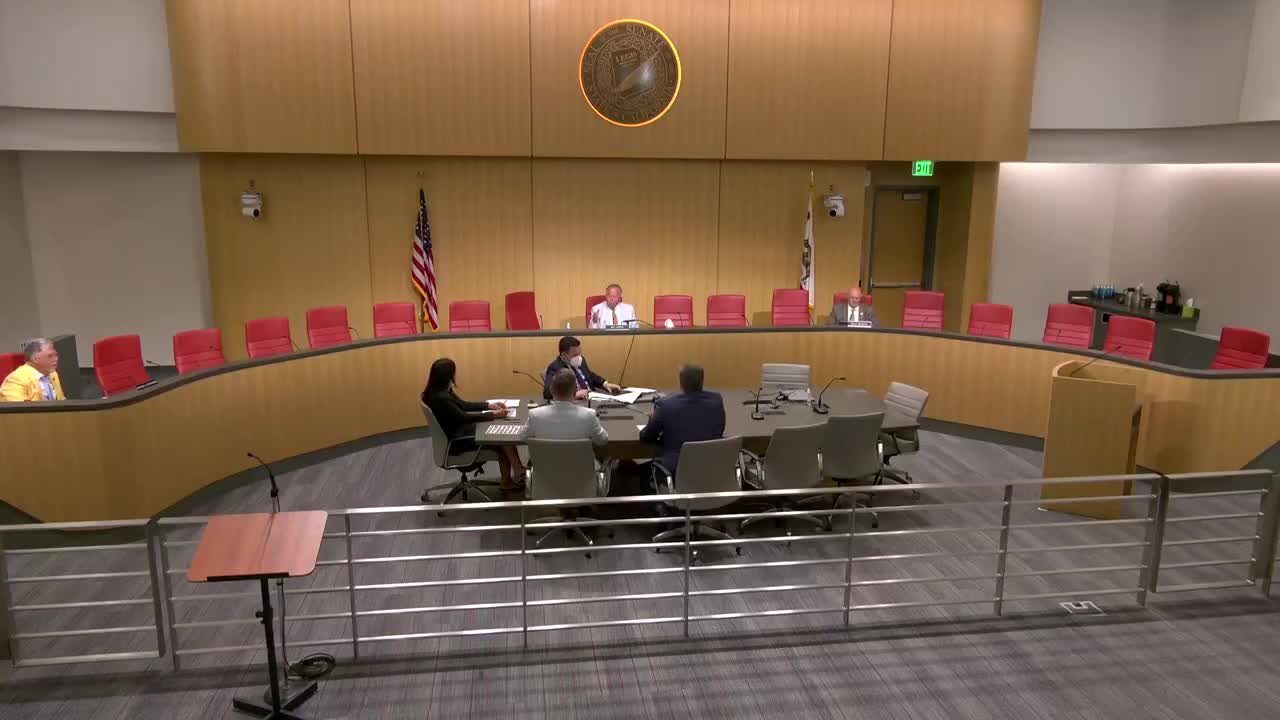
Senate Floor
 5MIN
Senate Standing Committee on Governmental Organization
 11MIN
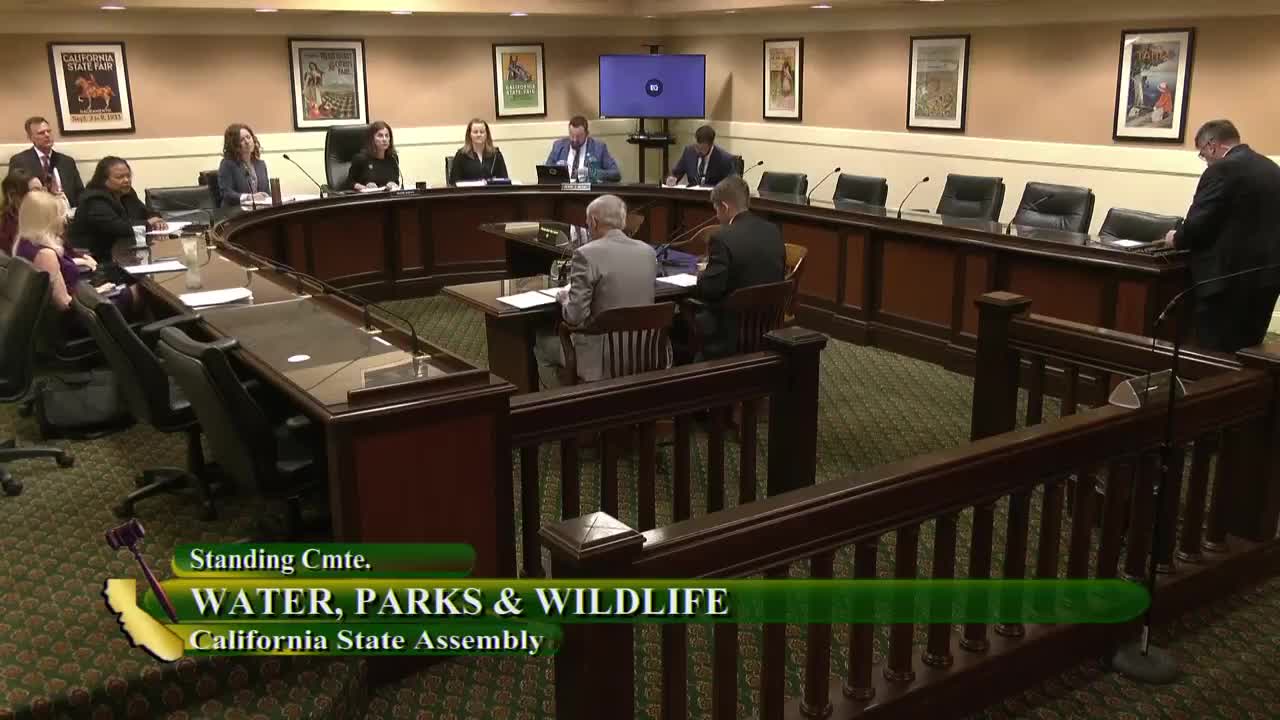
Assembly Standing Committee on Water, Parks, and Wildlife
Bill Author