AB 1887: Student financial aid: application deadlines: extension.
- Session Year: 2023-2024
- House: Assembly
- Latest Version Date: 2024-03-26
Current Status:
Passed
(2024-03-25: Chaptered by Secretary of State - Chapter 5, Statutes of 2024.)
Introduced
In Committee
First Chamber
In Committee
Second Chamber
Enacted
Existing law establishes the Student Aid Commission as the primary state agency for the administration of state-authorized student financial aid programs available to students attending all segments of postsecondary education. If the federal Free Application for Federal Student Aid is not available on or before October 1, 2023, existing law extends the application deadline for financial aid programs administered by the commission to April 2, 2024, for the 202425 award year only.
This bill would extend the April 2, 2024, application deadline for financial aid programs administered by the commission by one month.
This bill would declare that it is to take effect immediately as an urgency statute.
Existing law generally provides for the placement of foster youth in various placement settings and governs the provision of child welfare services, which is defined to mean public social services that are directed toward the accomplishment of specified purposes, including protecting and promoting the welfare of all children, preventing the unnecessary separation of children from their families, and restoring to their families children who have been removed. Existing law requires the State Department of Social Services, in consultation with county child welfare agencies and other specified entities, to implement a unified, family friendly, and child-centered resource family approval process to replace the existing multiple processes for licensing foster family homes, certifying foster homes by licensed foster family agencies, approving relatives and nonrelative extended family members as foster care providers, and approving guardians and adoptive families.This bill would require the department to convene a workgroup to create a report with recommendations to prevent housing instability among LGBTQ youth in foster care. The bill would require the workgroup to submit that report on or before January 1, 2026, as specified. The bill would repeal those provisions on January 1, 2028.Existing law generally provides for the placement of foster youth in various placement settings and governs the provision of child welfare services, which is defined to mean public social services that are directed toward the accomplishment of specified purposes, including protecting and promoting the welfare of all children, preventing the unnecessary separation of children from their families, and restoring to their families children who have been removed. Existing law requires the State Department of Social Services, in consultation with county child welfare agencies and other specified entities, to implement a unified, family friendly, and child-centered resource family approval process to replace the existing multiple processes for licensing foster family homes, certifying foster homes by licensed foster family agencies, approving relatives and nonrelative extended family members as foster care providers, and approving guardians and adoptive families.
This bill would require the department to convene a workgroup to create a report with recommendations to prevent housing instability among LGBTQ youth in foster care. The bill would require the workgroup to submit that report on or before January 1, 2026, as specified. The bill would repeal those provisions on January 1, 2028.
For the 202425 award year only, if the federal Free Application for Federal Student Aid (FAFSA) is not available on or before October 1, 2023, every financial aid program administered by the Student Aid Commission with an application deadline of March 2, 2024, shall have the application deadline extended to May 2, 2024. This extension applies, but is not limited, to all of the following financial aid programs:
(a)The Competitive Cal Grant A and B award program established pursuant to Article 5 (commencing with Section 69437) of Chapter 1.7 of Part 42 of Division 5 of Title 3 of the Education Code.
(b)The Cal Grant B Entitlement Program established pursuant to Article 3 (commencing with Section 69435) of Chapter 1.7 of Part 42 of Division 5 of Title 3 of the Education Code.
(c)The Cal Grant A Entitlement Program established pursuant to Article 2 (commencing with Section 69434) of Chapter 1.7 of Part 42 of Division 5 of Title 3 of the Education Code.
(d)The Cal Grant 4 Program established pursuant to Article 3 (commencing with Section 69425) of Chapter 1.5 of Part 42 of Division 5 of Title 3 of the Education Code.
(e)The Community College Transfer Cal Grant Entitlement Program established pursuant to Article 4 (commencing with Section 69436) of Chapter 1.7 of Part 42 of Division 5 of Title 3 of the Education Code.
(f)The Middle Class Scholarship Program established pursuant to Article 22 (commencing with Section 70020) of Chapter 2 of Part 42 of Division 5 of Title 3 of the Education Code.
SEC. 2.This act is an urgency statute necessary for the immediate preservation of the public peace, health, or safety within the meaning of Article IV of the California Constitution and shall go into immediate effect. The facts constituting the necessity are:
In order for California students to have sufficient time to complete the federal Free Application for Federal Student Aid, which provides access to federal Pell Grant awards, Cal Grant awards, Middle Class Scholarship Program awards, and institutional aid programs at institutions of higher education, and which has been delayed this year, it is necessary that this act take effect immediately.
For the 202425 award year only, if the federal Free Application for Federal Student Aid (FAFSA) is not available on or before October 1, 2023, every financial aid program administered by the Student Aid Commission with an application deadline of March 2, 2024, shall have the application deadline extended to April May 2, 2024. This extension applies, but is not limited, to all of the following financial aid programs:
(a)The Competitive Cal Grant A and B award program established pursuant to Article 5 (commencing with Section 69437) of Chapter 1.7 of Part 42 of Division 5 of Title 3 of the Education Code.
(b)The Cal Grant B Entitlement Program established pursuant to Article 3 (commencing with Section 69435) of Chapter 1.7 of Part 42 of Division 5 of Title 3 of the Education Code.
(c)The Cal Grant A Entitlement Program established pursuant to Article 2 (commencing with Section 69434) of Chapter 1.7 of Part 42 of Division 5 of Title 3 of the Education Code.
(d)The Cal Grant 4 Program established pursuant to Article 3 (commencing with Section 69425) of Chapter 1.5 of Part 42 of Division 5 of Title 3 of the Education Code.
(e)The Community College Transfer Cal Grant Entitlement Program established pursuant to Article 4 (commencing with Section 69436) of Chapter 1.7 of Part 42 of Division 5 of Title 3 of the Education Code.
(f)The Middle Class Scholarship Program established pursuant to Article 22 (commencing with Section 70020) of Chapter 2 of Part 42 of Division 5 of Title 3 of the Education Code.
SEC. 2.This act is an urgency statute necessary for the immediate preservation of the public peace, health, or safety within the meaning of Article IV of the California Constitution and shall go into immediate effect. The facts constituting the necessity are:
In order for California students to have sufficient time to complete the federal Free Application for Federal Student Aid, which provides access to federal Pell Grant awards, Cal Grant awards, Middle Class Scholarship Program awards, and institutional aid programs at institutions of higher education, and which has been delayed this year, it is necessary that this act take effect immediately.
SECTION 1.Section 16521.4 is added to the Welfare and Institutions Code, to read:16521.4.(a)(1)The department shall convene a workgroup to create a report with recommendations to prevent housing instability among LGBTQ youth in foster care.(2)The workgroup established pursuant to paragraph (1) shall address whether strengthening case management and services for those transitioning from foster care would eliminate housing instability among LGBTQ youth.(3)The report required pursuant to paragraph (1) shall be submitted on or before January 1, 2026.(b)(1)A report to be submitted pursuant to subdivision (a) shall be submitted in compliance with Section 9795 of the Government Code.(2)Pursuant to Section 10231.5 of the Government Code, this section is repealed on January 1, 2028.(a)(1)The department shall convene a workgroup to create a report with recommendations to prevent housing instability among LGBTQ youth in foster care.
(2)The workgroup established pursuant to paragraph (1) shall address whether strengthening case management and services for those transitioning from foster care would eliminate housing instability among LGBTQ youth.
(3)The report required pursuant to paragraph (1) shall be submitted on or before January 1, 2026.
(b)(1)A report to be submitted pursuant to subdivision (a) shall be submitted in compliance with Section 9795 of the Government Code.
(2)Pursuant to Section 10231.5 of the Government Code, this section is repealed on January 1, 2028.
|
Date
|
Status
|
|---|---|
| Mar 25, 2024 | Chaptered by Secretary of State - Chapter 5, Statutes of 2024. |
| Mar 25, 2024 | Approved by the Governor. |
| Mar 21, 2024 | Enrolled and presented to the Governor at 3 p.m. |
| Mar 21, 2024 | In Assembly. Ordered to Engrossing and Enrolling. |
| Mar 21, 2024 | Read third time. Urgency clause adopted. Passed. Ordered to the Assembly. (Ayes 37. Noes 0. Page 3385.). |
| Mar 20, 2024 | Read second time. Ordered to third reading. |
| Mar 20, 2024 | From committee: Do pass and re-refer to Com. on APPR. (Ayes 7. Noes 0.) (March 20). Re-referred to Com. on APPR. |
| Mar 20, 2024 | From committee: Do pass. (Ayes 7. Noes 0.) (March 20). |
| Mar 19, 2024 | Referred to Com. on ED. |
| Mar 18, 2024 | In Senate. Read first time. To Com. on RLS. for assignment. |
| Mar 18, 2024 | Joint Rule 62(a), file notice suspended. |
| Mar 18, 2024 | Joint Rule 62(a), file notice suspended. (Page 4393.) |
| Mar 18, 2024 | Read third time. Urgency clause adopted. Passed. Ordered to the Senate. (Ayes 74. Noes 0. Page 4394.). |
| Mar 18, 2024 | From committee: Do pass. (Ayes 10. Noes 0.) (March 18). |
| Mar 18, 2024 | Assembly Rule 63 suspended. (Page 4393.) |
| Mar 14, 2024 | Re-referred to Com. on HUM. S. |
| Mar 14, 2024 | Re-referred to Com. on HIGHER ED. pursuant to Assembly Rule 96. |
| Mar 14, 2024 | Joint Rule 62(a), file notice suspended. (Page 4369.) |
| Mar 13, 2024 | From committee chair, with author's amendments: Amend, and re-refer to Com. on HUM. S. Read second time and amended. |
| Feb 5, 2024 | Referred to Com. on HUM. S. |
| Jan 23, 2024 | From printer. May be heard in committee February 22. |
| Jan 22, 2024 | Read first time. To print. |
|
Date
|
Description
|
Location
|
Votes
|
|
|---|---|---|---|---|
| Mar 21, 2024 | Assembly 3rd Reading AB1887 Cervantes By Wiener Urgency Clause | Senate Floor |
Passed |
|
| Mar 20, 2024 | Do pass, but first be re-referred to the Committee on [Appropriations] | Senate Standing Committee on Education |
Passed |
|
| Mar 20, 2024 | Do pass | Senate Standing Committee on Appropriations |
Passed |
|
| Mar 18, 2024 | AB 1887 CERVANTES Third Reading Urgency | Assembly Floor |
Passed |
|
| Mar 18, 2024 | Do pass. | Assembly Standing Committee on Higher Education |
Passed |
This list shows positions taken on this bill by organizations on the date displayed, which is linked to the original source.
Positions by individuals are not included.
|
Organization
|
Position
|
Date
|
|---|---|---|
| Antelope Valley Community College District | ** Support | |
| Association of Independent California Colleges and Universities | * Support | Mar 20, 2024 |
| California Association Of Christian Colleges And Universities | ** Support | |
| California Community Colleges Chancellor's Office | * Support | Mar 20, 2024 |
| California Faculty Association | ** Support | |
| California Federation Of Teachers | * Support | Mar 20, 2024 |
| California State University, Office Of The Chancellor | ** Support | |
| California Student Aid Commission | ** Support | |
| Campaign For College Opportunity | * Support | Mar 20, 2024 |
| Cerritos College | ** Support | |
| Citrus College | * Support | Mar 20, 2024 |
| Community College League of California | ** Support | |
| Contra Costa Community College District | ** Support | |
| CSU System | * Support | Mar 20, 2024 |
| Education Trust West | * Support | Mar 20, 2024 |
| Faculty Association Of California Community Colleges | * Support | Mar 20, 2024 |
| Hispanas Organized for Political Equality | ** Support | |
| Kern Community College District | ** Support | |
| Lieutenant Governor Eleni Kounalakis | ** Support | |
| Long Beach City College | * Support | Mar 20, 2024 |
| Long Beach Community College District | ** Support | |
| Los Angeles Community College District | * Support | Mar 20, 2024 |
| Los Angeles Unified School District | * Support | Mar 20, 2024 |
| MGI Advocacy | * Support | Mar 18, 2024 |
| Mount San Antonio College | * Support | Mar 20, 2024 |
| Mt. San Antonio College | ** Support | |
| NextGen California | ** Support | |
| North Orange County Community College District | * Support | Mar 20, 2024 |
| Nossaman LLP | * Support | Mar 20, 2024 |
| Palo Verde Community College District | ** Support | |
| Pasadena Area Community College District | ** Support | |
| Peralta Community College District | ** Support | |
| Puente Learning Center | ** Support | |
| San Bernardino Community College District | ** Support | |
| San Diego Community College District | ** Support | |
| Santa Monica College | ** Support | |
| Santa Monica Community College District | ** Support | |
| Shaw Yoder Antwih Schmelzer & Lange | * Support | Mar 18, 2024 |
| Southern California College Attainment Network | * Support | Mar 20, 2024 |
| Southern California College Attainment Network | * Support | Mar 20, 2024 |
| Southwestern Community College District | ** Support | |
| The Institute for College Access & Success | ** Support | |
| uAspire | ** Support | |
| University of California | * Support | Mar 20, 2024 |
| W Strategies LLC. | * Support | Mar 18, 2024 |
SENATE RULES COMMITTEE Office of Senate Floor Analyses (916) 651-1520 Fax: (916) 327-4478 | AB 1887 |
THIRD READING
Bill No: AB 1887
Author: Cervantes (D)
Amended: 3/13/24 in Assembly
Vote: 27 - Urgency
SENATE EDUCATION COMMITTEE: 7-0, 3/20/24
AYES: Newman, Ochoa Bogh, Cortese, Glazer, Gonzalez, Smallwood-Cuevas, Wilk
SENATE APPROPRIATIONS COMMITTEE: 7-0, 3/20/24
AYES: Caballero, Jones, Ashby, Becker, Bradford, Seyarto, Wahab
ASSEMBLY FLOOR: 74-0, 3/18/24 - See last page for vote
SUBJECT: Student financial aid: application deadlines: extension
SOURCE: Author
DIGEST:
This bill is an urgency measure and extends the April 2, 2024 application deadline for financial aid programs administered by the California Student Aid Commission (Commission) by one month.
ANALYSIS:
Existing law:
- Establishes the Commission as the primary state agency for the administration of state-authorized student financial aid programs available to students attending all segments of postsecondary education. (Education Code (EC) § 69430 - 69433)
- Authorizes the Commission to approve financial aid deadline extension requested from local education agencies and institutions of higher education when extenuating circumstances outside the control of students create adverse effects on students’ ability to apply for aid by the statutory deadline. (EC § 69513.2)
- Extends, if the Federal Free Application for Federal Student Aid (FAFSA) is not available on or before October 1, 2023, the application deadline for financial aid programs administered by the Commission to April 2, 2024, for the 2024-25 award year only. (SB 117 (Senate Budget and Fiscal Review Committee, Chapter 50, Statutes of 2023))
This bill:
- Extends by one month, from April 2, 2024, to May 2, 2024, the application deadline for financial aid programs administered by the Commission.
- Includes an urgency clause, in order for California students to have sufficient time to complete the federal FAFSA, which has been delayed this year.
Comments
- Author’s statement. According to the author, “Making California students’ dreams of achieving higher education more affordable and accessible is among the Legislature’s highest duties. Unfortunately, delays and setbacks with the federal government’s implementation of the revamped federal Free Application for Federal Student Aid (FAFSA) have left many of our students unable to apply for federal or state financial aid. In particular, students with parents who are undocumented have been unable to complete the FAFSA due to an online error message that occurs if a parent’s Social Security number is not provided in the student’s application. If students are unable to complete the FAFSA, they are likewise ineligible for federal Pell Grant awards or state Cal Grant and Middle Class Scholarship financial aid. These FAFSA implementation issues have also rendered colleges and universities unable to provide prospective students with financial aid award offers, upending their traditional admission and enrollment timelines.”
The author further asserts, “Assembly Bill 1887 will extend the application deadline for state financial aid programs from April 2 to May 2. This will provide our students with additional time to complete the FAFSA, allow the federal government to have more time to solve the ongoing implementation issues with the new FAFSA, and match the decisions of many institutions of higher learning to extend their enrollment deadlines beyond the traditional May 1 cutoff. This bill will help ensure that more California students are able to complete the FAFSA, avail themselves of state Cal Grant or Middle Class Scholarship financial aid, and enable them to access the financial resources they need to begin their college educations in earnest.”
- Federal delays. A deadline extension is needed to account for the delays caused by the federal government’s rollout of the new FAFSA application. According to the latest update from the National College Attainment Network’s FAFSA Tracker on March 8, it was found that approximately 156,000 estimated high school seniors in California, only 27.7% of the class of 2024, had completed a FAFSA by March 1, representing a significant 42.8% decrease from where California stood at the same point last year. The United States Department of Education is making progress in resolving a key issue with the FAFSA, which will allow students with parental contributors who do not have a Social Security Number to successfully submit their FAFSA application. The one-month extension, in anticipation of a forthcoming fix, could ensure that students who have encountered difficulties may submit their applications and help address the backlog of applications overall.
Related/Prior Legislation
AB 2500 (Fong, 2024) (1) requires the commission to grant a postponement of an application deadline for financial aid programs administered by the commission pursuant to a formal request, and would authorize the commission to grant, without submission of a formal request, a deadline postponement for certain qualifying events, as provided; (2) authorizes the commission, on a permanent basis, to delegate the authority to grant a deadline postponement to the director of the commission; and (3) extends the 10-day timeline for submission of a formal request as specified. AB 2500 has been referred to the Assembly Higher Education Committee.
FISCAL EFFECT: Appropriation: No Fiscal Com.: Yes Local: No
According to the Senate Appropriations Committee:
- The proposed extension could enable additional students and families to complete and submit their federal Free Application for Federal Student Aid (FAFSA) forms in 2024-25. This would then allow these students (who would otherwise be unable) to apply for Cal Grants and Middle Class Scholarships (MCS). Since the Commission projects a significant decrease in spending for the Cal Grant program in 2024-25, this bill could result in a reduction of General Fund savings that the state would have otherwise seen under current law. The Commission estimates this reduction to be in the tens of millions of dollars, potentially as high as $100 million, as a result of the deadline extension.
- Program funding for the MCS spending is based on the funding level set in the annual budget act so it would not automatically decrease as a result of the FAFSA technical issues. However, the same amount of MCS funding could be distributed among a different number of recipients if the one-month extension is beneficial for students.
- Any additional workload to the Commission, the University of California, the California State University, or the California Community Colleges resulting from the deadline extension is expected to be minor and absorbable within existing resources.
SUPPORT: (Verified 3/20/24)
Lieutenant Governor Eleni Kounalakis
California Faculty Association
California Student Aid Commission
Community College League of California
Hispanas Organized for Political Equality
Long Beach Community College District
NextGen California
Puente Learning Center
Santa Monica Community College District
uAspire
OPPOSITION: (Verified 3/20/24)
None received
ASSEMBLY FLOOR: 74-0, 3/18/24
AYES: Addis, Aguiar-Curry, Alanis, Alvarez, Arambula, Bains, Bauer-Kahan, Bennett, Berman, Boerner, Bonta, Bryan, Juan Carrillo, Wendy Carrillo, Cervantes, Chen, Connolly, Davies, Dixon, Essayli, Flora, Mike Fong, Vince Fong, Friedman, Gabriel, Gallagher, Garcia, Gipson, Grayson, Haney, Holden, Hoover, Irwin, Jackson, Jones-Sawyer, Kalra, Lackey, Low, Lowenthal, Maienschein, Mathis, McCarty, McKinnor, Muratsuchi, Stephanie Nguyen, Ortega, Pacheco, Papan, Jim Patterson, Joe Patterson, Pellerin, Petrie-Norris, Quirk-Silva, Ramos, Reyes, Luz Rivas, Rodriguez, Blanca Rubio, Sanchez, Santiago, Schiavo, Ta, Ting, Valencia, Villapudua, Waldron, Wallis, Ward, Weber, Wicks, Wilson, Wood, Zbur, Robert Rivas
NO VOTE RECORDED: Calderon, Megan Dahle, Hart, Lee, Rendon, Soria
Prepared by: Olgalilia Ramirez / ED. / (916) 651-4105
3/21/24 8:53:29
**** END ****
SENATE COMMITTEE ON
Senator Anna Caballero, Chair
2023 - 2024 Regular Session
AB 1887 (Cervantes) - Student financial aid: application deadlines: extension
Version: | Policy Vote: ED. 7 - 0 |
Urgency: | Mandate: |
Hearing Date: | Consultant: |
Bill Summary:
This bill, an urgency measure, would extend the April 2, 2024 application deadline for financial aid programs administered by the California Student Aid Commission (Commission) by one month.
Fiscal Impact:
The proposed extension could enable additional students and families to complete and submit their federal Free Application for Federal Student Aid (FAFSA) forms in 2024-25. This would then allow these students (who would otherwise be unable) to apply for Cal Grants and Middle Class Scholarships (MCS). Since the Commission projects a significant decrease in spending for the Cal Grant program in 2024-25, this bill could result in a reduction of General Fund savings that the state would have otherwise seen under current law. The Commission estimates this reduction to be in the tens of millions of dollars, potentially as high as $100 million, as a result of the deadline extension.
Program funding for the MCS spending is based on the funding level set in the annual budget act so it would not automatically decrease as a result of the FAFSA technical issues. However, the same amount of MCS funding could be distributed among a different number of recipients if the one-month extension is beneficial for students.
- Any additional workload to the Commission, the University of California, the California State University, or the California Community Colleges resulting from the deadline extension is expected to be minor and absorbable within existing resources.
Background:
Existing law establishes the California Student Aid Commission as the primary state agency for the administration of state-authorized student financial aid programs available to students attending all segments of postsecondary education. The Cal Grant program is the state’s largest financial aid program and intended to help students with financial need to cover the costs of attending college. In addition to financial need, program eligibility is based on grade point average, California residency, and other criteria. There are multiple types of Cal Grant awards and the amount of aid that students receive depends on their award type and the segment of higher education that they attend. The Cal Grant A covers full systemwide tuition and fees at public universities and a fixed amount of tuition at private universities, while the Cal Grant B provides the same amount of tuition coverage (as the Cal Grant A) but also provides an “access award” for nontuition expenses such as food and housing. The Cal Grant C, which is only available to students enrolled in career technical education programs, provides lower award amounts for tuition and nontuition expenses.
The Middle Class Scholarship (MCS) program provides undergraduate students, including students pursuing a teaching credential, with a scholarship to account for the cost of attendance to attend a UC, CSU or community college bachelor’s degree program. Students with family income and assets up to $201,000 may be eligible for the MCS program.
The Commission is authorized to approve a financial aid deadline extension requested from local education agencies and institutions of higher education when extenuating circumstances outside the control of students create adverse effects on students’ ability to apply for aid by the statutory deadline. In 2021 and 2022, the Commission extended deadlines using this authority due to the COVID-19 pandemic at the request of higher education institutions and many K-12 districts.
Proposed Law:
This bill would extend the application deadline for financial aid programs administered by the Commission from April 2, 2024, to May 2, 2024. The bill also includes an urgency clause in order for California students to have sufficient time to complete the federal FAFSA, as specified.
Related Legislation:
AB 2500 (Fong, 2024) states that it is the Legislature’s intent to enact future legislation that would grant the Commission authority to approve a postponement of an application deadline for specified financial aid programs to the executive director, extend the 10-day timeline for submitting a formal request to 15 days, require a report to the Commission on extension requests, and authorize the Commission to automatically grant deadline extensions for certain qualifying events. AB 2500 is pending in the Assembly Higher Education Committee.
SB 117 (Committee on Budget and Fiscal Review, Chapter 50, Statutes of 2023) provides that if the FAFSA is not available on or before October 1, 2023, the application deadline for financial aid programs administered by the Commission shall be extended to April 2, 2024, for the 2024-25 award year only.
Staff Comments:
The proposed deadline extension is intended to address the delays caused by the federal government’s rollout of the new FAFSA application. According to the latest update from the National College Attainment Network’s FAFSA Tracker on March 8, 2024, approximately 156,000 high school seniors in California (or 27.7 percent of the class of 2024) had completed a FAFSA as of March 1, 2024. This represents a 42.8 decrease in completed applications in the state at the same point in 2023. The National College Attainment Network also estimates that schools serving larger shares of low-income students and minority students have had more severe decreases in applications compared to the prior year. The United States Department of Education is making progress in resolving a key issue with the FAFSA which will allow students with parental contributors who do not have a Social Security Number to successfully submit their FAFSA application.
The impact of the one-month extension will depend on whether the FAFSA technical issues are resolved during the extension window (between April 2 and May 2). If the issues are resolved, then the bill could enable students to complete their FAFSA forms and restore Cal Grant and Middle Class Scholarship eligibility to these students who would otherwise have been unable to apply. This would forgo an unspecified portion of the Cal Grant savings the state would have realized under current law. The Commission estimates that the 42.8 percent decline in FAFSA applications from California high school seniors for 2024-25 is expected to lead to a decrease of approximately 101,000 fewer applications and approximately 76,000 fewer Cal Grant awards paid in 2024-25. This reduction is estimated to yield savings of about $410.6 million in expenditures for program disbursements relative to what was anticipated in the 2024-25 Governor’s Budget. The Commission also estimates that the most significant drop in applications and changes to Cal Grant expenditures would occur for new filing students.
Further, the Commission indicates that extending the deadline could potentially enable Cal Grant recipients to also qualify for federal Pell Grant awards, providing additional financial support for these students.
-- END --
SENATE RULES COMMITTEE Office of Senate Floor Analyses (916) 651-1520 Fax: (916) 327-4478 | AB 1887 |
THIRD READING
Bill No: AB 1887
Author: Cervantes (D)
Amended: 3/13/24 in Assembly
Vote: 27 - Urgency
SENATE EDUCATION COMMITTEE: 7-0, 3/20/24
AYES: Newman, Ochoa Bogh, Cortese, Glazer, Gonzalez, Smallwood-Cuevas, Wilk
SENATE APPROPRIATIONS COMMITTEE: 7-0, 3/20/24
AYES: Caballero, Jones, Ashby, Becker, Bradford, Seyarto, Wahab
ASSEMBLY FLOOR: 74-0, 3/18/24 - See last page for vote
SUBJECT: Student financial aid: application deadlines: extension
SOURCE: Author
DIGEST:
This bill is an urgency measure and extends the April 2, 2024 application deadline for financial aid programs administered by the California Student Aid Commission (Commission) by one month.
ANALYSIS:
Existing law:
- Establishes the Commission as the primary state agency for the administration of state-authorized student financial aid programs available to students attending all segments of postsecondary education. (Education Code (EC) § 69430 - 69433)
- Authorizes the Commission to approve financial aid deadline extension requested from local education agencies and institutions of higher education when extenuating circumstances outside the control of students create adverse effects on students’ ability to apply for aid by the statutory deadline. (EC § 69513.2)
- Extends, if the Federal Free Application for Federal Student Aid (FAFSA) is not available on or before October 1, 2023, the application deadline for financial aid programs administered by the Commission to April 2, 2024, for the 2024-25 award year only. (SB 117 (Senate Budget and Fiscal Review Committee, Chapter 50, Statutes of 2023))
This bill:
- Extends by one month, from April 2, 2024, to May 2, 2024, the application deadline for financial aid programs administered by the Commission.
- Includes an urgency clause, in order for California students to have sufficient time to complete the federal FAFSA, which has been delayed this year.
Comments
- Author’s statement. According to the author, “Making California students’ dreams of achieving higher education more affordable and accessible is among the Legislature’s highest duties. Unfortunately, delays and setbacks with the federal government’s implementation of the revamped federal Free Application for Federal Student Aid (FAFSA) have left many of our students unable to apply for federal or state financial aid. In particular, students with parents who are undocumented have been unable to complete the FAFSA due to an online error message that occurs if a parent’s Social Security number is not provided in the student’s application. If students are unable to complete the FAFSA, they are likewise ineligible for federal Pell Grant awards or state Cal Grant and Middle Class Scholarship financial aid. These FAFSA implementation issues have also rendered colleges and universities unable to provide prospective students with financial aid award offers, upending their traditional admission and enrollment timelines.”
The author further asserts, “Assembly Bill 1887 will extend the application deadline for state financial aid programs from April 2 to May 2. This will provide our students with additional time to complete the FAFSA, allow the federal government to have more time to solve the ongoing implementation issues with the new FAFSA, and match the decisions of many institutions of higher learning to extend their enrollment deadlines beyond the traditional May 1 cutoff. This bill will help ensure that more California students are able to complete the FAFSA, avail themselves of state Cal Grant or Middle Class Scholarship financial aid, and enable them to access the financial resources they need to begin their college educations in earnest.”
- Federal delays. A deadline extension is needed to account for the delays caused by the federal government’s rollout of the new FAFSA application. According to the latest update from the National College Attainment Network’s FAFSA Tracker on March 8, it was found that approximately 156,000 estimated high school seniors in California, only 27.7% of the class of 2024, had completed a FAFSA by March 1, representing a significant 42.8% decrease from where California stood at the same point last year. The United States Department of Education is making progress in resolving a key issue with the FAFSA, which will allow students with parental contributors who do not have a Social Security Number to successfully submit their FAFSA application. The one-month extension, in anticipation of a forthcoming fix, could ensure that students who have encountered difficulties may submit their applications and help address the backlog of applications overall.
Related/Prior Legislation
AB 2500 (Fong, 2024) (1) requires the commission to grant a postponement of an application deadline for financial aid programs administered by the commission pursuant to a formal request, and would authorize the commission to grant, without submission of a formal request, a deadline postponement for certain qualifying events, as provided; (2) authorizes the commission, on a permanent basis, to delegate the authority to grant a deadline postponement to the director of the commission; and (3) extends the 10-day timeline for submission of a formal request as specified. AB 2500 has been referred to the Assembly Higher Education Committee.
FISCAL EFFECT: Appropriation: No Fiscal Com.: Yes Local: No
According to the Senate Appropriations Committee:
- The proposed extension could enable additional students and families to complete and submit their federal Free Application for Federal Student Aid (FAFSA) forms in 2024-25. This would then allow these students (who would otherwise be unable) to apply for Cal Grants and Middle Class Scholarships (MCS). Since the Commission projects a significant decrease in spending for the Cal Grant program in 2024-25, this bill could result in a reduction of General Fund savings that the state would have otherwise seen under current law. The Commission estimates this reduction to be in the tens of millions of dollars, potentially as high as $100 million, as a result of the deadline extension.
- Program funding for the MCS spending is based on the funding level set in the annual budget act so it would not automatically decrease as a result of the FAFSA technical issues. However, the same amount of MCS funding could be distributed among a different number of recipients if the one-month extension is beneficial for students.
- Any additional workload to the Commission, the University of California, the California State University, or the California Community Colleges resulting from the deadline extension is expected to be minor and absorbable within existing resources.
SUPPORT: (Verified 3/20/24)
California Faculty Association
California Student Aid Commission
Community College League of California
Hispanas Organized for Political Equality
Long Beach Community College District
NextGen California
Puente Learning Center
Santa Monica Community College District
uAspire
OPPOSITION: (Verified 3/20/24)
None received
ASSEMBLY FLOOR: 74-0, 3/18/24
AYES: Addis, Aguiar-Curry, Alanis, Alvarez, Arambula, Bains, Bauer-Kahan, Bennett, Berman, Boerner, Bonta, Bryan, Juan Carrillo, Wendy Carrillo, Cervantes, Chen, Connolly, Davies, Dixon, Essayli, Flora, Mike Fong, Vince Fong, Friedman, Gabriel, Gallagher, Garcia, Gipson, Grayson, Haney, Holden, Hoover, Irwin, Jackson, Jones-Sawyer, Kalra, Lackey, Low, Lowenthal, Maienschein, Mathis, McCarty, McKinnor, Muratsuchi, Stephanie Nguyen, Ortega, Pacheco, Papan, Jim Patterson, Joe Patterson, Pellerin, Petrie-Norris, Quirk-Silva, Ramos, Reyes, Luz Rivas, Rodriguez, Blanca Rubio, Sanchez, Santiago, Schiavo, Ta, Ting, Valencia, Villapudua, Waldron, Wallis, Ward, Weber, Wicks, Wilson, Wood, Zbur, Robert Rivas
NO VOTE RECORDED: Calderon, Megan Dahle, Hart, Lee, Rendon, Soria
Prepared by: Olgalilia Ramirez / ED. / (916) 651-4105
3/20/24 16:07:33
**** END ****
SENATE COMMITTEE ON APPROPRIATIONS
Senator Anna Caballero, Chair
2023 - 2024 Regular Session
AB 1887 (Cervantes) - Student financial aid: application deadlines: extension
Version: March 13, 2024 | Policy Vote: |
Urgency: Yes | Mandate: No |
Hearing Date: March 20, 2024 | Consultant: Lenin Del Castillo |
Bill Summary:
This bill, an urgency measure, would extend the April 2, 2024 application deadline for financial aid programs administered by the California Student Aid Commission (Commission) by one month.
Fiscal Impact:
The proposed extension could enable additional students and families to complete and submit their federal Free Application for Federal Student Aid (FAFSA) forms in 2024-25. This would then allow these students (who would otherwise be unable) to apply for Cal Grants and Middle Class Scholarships (MCS). Since the Commission projects a significant decrease in spending for the Cal Grant program in 2024-25, this bill could result in a reduction of General Fund savings that the state would have otherwise seen under current law. The Commission estimates this reduction to be in the tens of millions of dollars, potentially as high as $100 million, as a result of the deadline extension.
Program funding for the MCS spending is based on the funding level set in the annual budget act so it would not automatically decrease as a result of the FAFSA technical issues. However, the same amount of MCS funding could be distributed among a different number of recipients if the one-month extension is beneficial for students.
- Any additional workload to the Commission, the University of California, the California State University, or the California Community Colleges resulting from the deadline extension is expected to be minor and absorbable within existing resources.
Background:
Existing law establishes the California Student Aid Commission as the primary state agency for the administration of state-authorized student financial aid programs available to students attending all segments of postsecondary education. The Cal Grant program is the state’s largest financial aid program and intended to help students with financial need to cover the costs of attending college. In addition to financial need, program eligibility is based on grade point average, California residency, and other criteria. There are multiple types of Cal Grant awards and the amount of aid that students receive depends on their award type and the segment of higher education that they attend. The Cal Grant A covers full systemwide tuition and fees at public universities and a fixed amount of tuition at private universities, while the Cal Grant B provides the same amount of tuition coverage (as the Cal Grant A) but also provides an “access award” for nontuition expenses such as food and housing. The Cal Grant C, which is only available to students enrolled in career technical education programs, provides lower award amounts for tuition and nontuition expenses.
The Middle Class Scholarship (MCS) program provides undergraduate students, including students pursuing a teaching credential, with a scholarship to account for the cost of attendance to attend a UC, CSU or community college bachelor’s degree program. Students with family income and assets up to $201,000 may be eligible for the MCS program.
The Commission is authorized to approve a financial aid deadline extension requested from local education agencies and institutions of higher education when extenuating circumstances outside the control of students create adverse effects on students’ ability to apply for aid by the statutory deadline. In 2021 and 2022, the Commission extended deadlines using this authority due to the COVID-19 pandemic at the request of higher education institutions and many K-12 districts.
Proposed Law:
This bill would extend the application deadline for financial aid programs administered by the Commission from April 2, 2024, to May 2, 2024. The bill also includes an urgency clause in order for California students to have sufficient time to complete the federal FAFSA, as specified.
Related Legislation:
AB 2500 (Fong, 2024) states that it is the Legislature’s intent to enact future legislation that would grant the Commission authority to approve a postponement of an application deadline for specified financial aid programs to the executive director, extend the 10-day timeline for submitting a formal request to 15 days, require a report to the Commission on extension requests, and authorize the Commission to automatically grant deadline extensions for certain qualifying events. AB 2500 is pending in the Assembly Higher Education Committee.
SB 117 (Committee on Budget and Fiscal Review, Chapter 50, Statutes of 2023) provides that if the FAFSA is not available on or before October 1, 2023, the application deadline for financial aid programs administered by the Commission shall be extended to April 2, 2024, for the 2024-25 award year only.
Staff Comments:
The proposed deadline extension is intended to address the delays caused by the federal government’s rollout of the new FAFSA application. According to the latest update from the National College Attainment Network’s FAFSA Tracker on March 8, 2024, approximately 156,000 high school seniors in California (or 27.7 percent of the class of 2024) had completed a FAFSA as of March 1, 2024. This represents a 42.8 decrease in completed applications in the state at the same point in 2023. The National College Attainment Network also estimates that schools serving larger shares of low-income students and minority students have had more severe decreases in applications compared to the prior year. The United States Department of Education is making progress in resolving a key issue with the FAFSA which will allow students with parental contributors who do not have a Social Security Number to successfully submit their FAFSA application.
The impact of the one-month extension will depend on whether the FAFSA technical issues are resolved during the extension window (between April 2 and May 2). If the issues are resolved, then the bill could enable students to complete their FAFSA forms and restore Cal Grant and Middle Class Scholarship eligibility to these students who would otherwise have been unable to apply. This would forgo an unspecified portion of the Cal Grant savings the state would have realized under current law. The Commission estimates that the 42.8 percent decline in FAFSA applications from California high school seniors for 2024-25 is expected to lead to a decrease of approximately 101,000 fewer applications and approximately 76,000 fewer Cal Grant awards paid in 2024-25. This reduction is estimated to yield savings of about $410.6 million in expenditures for program disbursements relative to what was anticipated in the 2024-25 Governor’s Budget. The Commission also estimates that the most significant drop in applications and changes to Cal Grant expenditures would occur for new filing students.
Further, the Commission indicates that extending the deadline could potentially enable Cal Grant recipients to also qualify for federal Pell Grant awards, providing additional financial support for these students.
-- END --
SENATE COMMITTEE ON EDUCATION
Senator Josh Newman, Chair
2023 - 2024 Regular
Bill No: AB 1887 Hearing Date: March 20, 2024
Author: | |||
Version: | March 13, 2024 | ||
Urgency: | Yes | Fiscal: | Yes |
Consultant: | Olgalilia Ramirez | ||
Subject: Student financial aid: application deadlines: extension.
SUMMARY
This bill, an urgency measure, extends the April 2, 2024 application deadline for financial aid programs administered by the California Student Aid Commission (Commission) by one month.
BACKGROUND
1) Existing law establishes the California Student Aid Commission as the primary state agency for the administration of state-authorized student financial aid programs available to students attending all segments of postsecondary education. (Education Code (EC) § 69430 - 69433)
2) Existing law authorizes the Commission to approve financial aid deadline extension requested from local education agencies and institutions of higher education when extenuating circumstances outside the control of students create adverse effects on students’ ability to apply for aid by the statutory deadline. (EC § 69513.2)
3) If the Federal Free Application for Federal Student Aid (FAFSA) is not available on or before October 1, 2023, existing law extends the application deadline for financial aid programs administered by the Commission to April 2, 2024, for the 2024-25 award year only. (SB 117 Committee on Budget and Fiscal Review, Section 22 of Chapter 50 Statutes of 2023)
ANALYSIS
This bill, an urgency measure:
- Extends by one month, from April 2, 2024, to May 2, 2024, the application deadline for financial aid programs administered by the Commission.
- Includes an urgency clause, in order for California students to have sufficient time to complete the federal FAFSA, which has been delayed this year.
STAFF COMMENTS
- Need for the bill. According to the author, “Making California students’ dreams of achieving higher education more affordable and accessible is among the Legislature’s highest duties. Unfortunately, delays and setbacks with the federal government’s implementation of the revamped federal Free Application for Federal Student Aid (FAFSA) have left many of our students unable to apply for federal or state financial aid. In particular, students with parents who are undocumented have been unable to complete the FAFSA due to an online error message that occurs if a parent’s Social Security number is not provided in the student’s application. If students are unable to complete the FAFSA, they are likewise ineligible for federal Pell Grant awards or state Cal Grant and Middle Class Scholarship financial aid. These FAFSA implementation issues have also rendered colleges and universities unable to provide prospective students with financial aid award offers, upending their traditional admission and enrollment timelines.”
The author further asserts, “Assembly Bill 1887 will extend the application deadline for state financial aid programs from April 2 to May 2. This will provide our students with additional time to complete the FAFSA, allow the federal government to have more time to solve the ongoing implementation issues with the new FAFSA, and match the decisions of many institutions of higher learning to extend their enrollment deadlines beyond the traditional May 1 cutoff. This bill will help ensure that more California students are able to complete the FAFSA, avail themselves of state Cal Grant or Middle Class Scholarship financial aid, and enable them to access the financial resources they need to begin their college educations in earnest.”
- Federal delays. A deadline extension is needed to account for the delays caused by the federal government’s rollout of the new FAFSA application. According to the latest update from the National College Attainment Network’s FAFSA Tracker on March 8, it was found that approximately 156,000 estimated high school seniors in California, only 27.7% of the class of 2024, had completed a FAFSA by March 1, representing a significant 42.8% decrease from where California stood at the same point last year. The United States Department of Education is making progress in resolving a key issue with the FAFSA, which will allow students with parental contributors who do not have a Social Security Number to successfully submit their FAFSA application. The one-month extension, in anticipation of a forthcoming fix, could ensure that students who have encountered difficulties may submit their applications and help address the backlog of applications overall.
- An administrative fix is possible. Existing law grants the Commission the authority to approve financial aid deadline extension requests from local education agencies and institutions of higher education when extenuating circumstances outside the control of students create adverse effects on students’ ability to apply for aid by the statutory deadline. In 2021 and 2022, the Commission extended deadlines statewide using this process due to the COVID-19 emergency at the request of higher education institutions and many K-12 districts. Committee staff notes that prior to the introduction of this bill, the Commission planned to internally extend the financial aid deadline, which would have resulted in a comparable outcome.
- Related legislation.
AB 2500 (Fong, 2024) states that it is the Legislature’s intent to enact future legislation that would grant the Commission authority to approve a postponement of an application deadline for specified financial aid programs to the executive director, extend the 10-day timeline for submitting a formal request to 15 days, require a report to the Commission on extension requests, and authorize the Commission to automatically grant deadline extensions for certain qualifying events. AB 2500 is pending referral in the Assembly.
SUPPORT
None received
OPPOSITION
None received
-- END --
(Without Reference to File)
ASSEMBLY THIRD READING
ATR Bill Id:AB 1887
Author:(Cervantes)
As Amended Ver:March 13, 2024
2/3 vote. Urgency
SUMMARY
Extends the April 2, 2024, application deadline for financial aid programs administered by the California Student Aid Commission (CSAC) by one month.
Major Provisions
- Extends the Cal Grant application for financial aid programs administered by CSAC, by one month, from April 2, 2024, to May 2, 2024, for the 2024-25 award year only.
- Stipulates that this measure is an urgency statute necessary for the immediate preservation of the public peace, health, or safety within the meaning of Article IV of the California Constitution and shall go into immediate effect. The facts constituting the necessity are:
In order for California students to have sufficient time to complete the federal Free Application for Federal Student Aid (FAFSA), which provides access to federal Pell Grant awards, Cal Grant awards, Middle Class Scholarship (MCS) Program awards, and institutional aid programs at institutions of higher education, and which has been delayed this year, it is necessary that this measure take effect immediately.
COMMENTS
Urgency statute. This measure was substantially amended on March 13, 2024. The current version of this measure includes an urgency clause and, if chaptered, will take effect immediately.
Free Application for Federal Student Aid (FAFSA). There are currently three kinds of Cal Grants, A, B and C, of which eligibility is determined by the FAFSA or California Dream Act Application, a student's verified Cal Grant GPA, the type of California colleges a student listed on their FAFSA, and whether they are a recent high school graduate. Students are considered for a Cal Grant A, B, or C after they either establish eligibility for an Entitlement award (if they graduated from high school less than one year ago or transfer from a community college before age 28) or secure one of a limited number of Competitive awards (for any students that do not qualify for an Entitlement).
Federal changes. As part of federal COVID-19 related legislation signed into law in late December 2020, the process for applying for and receiving federal aid was simplified. The federal changes, initially were to commence with the 2023-24 academic year. However, the changes were delayed in June 2021, and are just going into effect commencing with the 2024-25 academic year. In part, the changes do the following:
- Simplify the FAFSA form. The FAFSA is the form students need to complete in order to receive any financial aid from the federal government to help pay for college.
Each year, over 13 million students who file the FAFSA get more than $120 billion in grants, work-study, and low-interest loans from the U.S. Department of Education. Additionally, many states, including California, and colleges use the FAFSA to determine which students will receive state and institutional financial aid—and how much they will receive.
Simplifying the FAFSA will not only make the form easier to fill out by eliminating two-thirds of the questions, but it will also affect the determination of financial need for low, middle, and high-income students.
- Change the Expected Family Contribution (EFC) to the Student Aid Index (SAI). While the SAI is similar in nature to the EFC, according to the Institute for College Access and Success, the name change will more accurately reflect the meaning of the calculation when determining student aid eligibility rather than an expectation of what a family can afford to pay for college.
Under the new model, a student applicant's SAI can be as low as -$1,500; however, the lowest EFC under the existing model is $0.
- Change how Pell Grant eligibility will be determined. Using the simplified FAFSA form, the Pell amounts will generally be determined by subtracting the SAI from the maximum Pell Grant award. Students who have a negative or zero SAI will receive the maximum amount available.
Applicants whose family adjusted gross income (AGI) falls below a specified percentage of the federal poverty level, will be guaranteed eligibility (regardless of their SAI). Further, applicants whose family AGI is up to 225% of the federal poverty level could also be eligible for the maximum award, and up to 400% of the federal poverty level for the minimum Pell award.
Continued challenges with the rollout of the new FAFSA application. As noted in the Federal changes section of this analysis, the United States Department of Education (USDE) made myriad changes to the federal FAFSA. While the changes seek to simplify the application form by reducing the number of questions students and families need to answer and transfer data directly from their previous tax filings, after over a year delay in implementing or launching the form, the USDE still did not release the new form for the 2024-25 award year until three months later than all prior years (released on December 30, 2023, instead of October 1, 2023).
Additionally, USDE is several months behind normal scheduling in sharing the student records that campuses use to make financial aid offers to students. Furthermore, the launch of the new form contained several technical glitches that have prevented mixed-status families (those in which a student has one parent without a social security number), from completing the new application form.
The USDE, on March 12, 2024, announced that it had made long-awaited technical updates that would enable mixed-status families to submit the FAFSA. However, the USDE also indicated that it had, "uncovered separate issues that still need to be resolved." Presently, it is unclear exactly what the newly uncovered issues entail, and when said issues will be resolved by USDE.
With the launch of the new application form delayed by several months, according to the National College Attainment Network, through March 8, 2024, the most recent data available at the time this analysis was published, in California, 30.7% of all the high school class of 2024 has submitted a FAFSA. Nationally, there have only been 1,275,781 submissions, a -32.9% change compared to last academic year.
With the already extended deadline to apply for financial aid fast approaching on April 2, 2024, should this measure become law, how will students know of the extension? According to CSAC, they would communicate the extension of the financial aid deadline across multiple channels. Additionally, CSAC has several methods by which to disseminate information to students and families, through local grant-funded organizations through the Cash for College and California Student Opportunity and Access Program, social media, and direct communications to students whom CSAC has contact information available.
Additionally, CSAC also has methods through which they can inform education partners about a deadline extension. The CSAC informs counselors and financial aid administrators about key updates through a special alert system that reaches thousands of professionals across California. Further, CSAC will notify executive leadership at K-12 school districts and postsecondary institutions directly. Lastly, CSAC will provide resources to legislators so that they can communicate the extension of the financial aid deadline to their constituents.
Intent to register? Typically, when students are accepted into a University of California (UC), California State University (CSU), or a California independent college or university, students traditionally have until around May 1 to officially inform the campus of their intent to register. With delays in the FAFSA application roll out, it has become evident that thousands of students will not be able to make an informed decision without knowing what their financial aid packages will entail.
Knowing the ongoing concerns with the rollout of the FAFSA form, the CSU and UC, both extended their intent to register deadline for all new students. As of publication of this analysis, the CSU has extended the intent to register from May 1, 2024, to May 15, 2024. However, Committee Staff understands that the CSU continues to closely monitor the ongoing challenges of the new FAFSA application form, including processing delays, and is committed to being as flexible as possible including extending the deadline past May 15, 2024, if necessary.
The UC has also extended their commitment deadline, from May 1, 2024, to May 15, 2024, with the exception of UC Berkeley, which did not extend to May 15 for non-California residents (meaning the deadline extension is only for prospective students who are from California). According to the UC, if the Cal Grant deadline is extended to May 2, students who apply on the deadline still have a week to receive their financial aid packages and make their decision by the extended commitment deadline. Further, according to the UC, students who apply earlier can receive their financial aid packages earlier. Lastly, for UC campuses that have less enrollment constraints and do not have waitlists may extend their commitment deadline to June 1, but, as of the time this analysis was published, the UC anticipates that most campuses will keep the May 15 deadline in order to ensure that they are meeting enrollment targets for resident, non-resident, and transfer students. The UC notes that if the commitment deadline is pushed out much further, it impacts processes like housing assignments, course placement, orientation scheduling, and student visa processing.
Senate Early Action Plan. The State Senate, on March 14, 2024, released their early action budget plan entitled, Protect Our Progress 2024 – Step One: Shrink the Shortfall. The Plan, in part, includes extending the FAFSA deadline in order to address delays from the federal government.
It is presently unclear if the Plan will be enacted before the current financial aid deadline of April 2, 2024.
According to the Author
"Due to the ongoing issues and delays with the implementation of FAFSA reform, many students need additional time to complete FAFSA so they can apply for state and federal financial aid. This is especially true for students with parents who are undocumented. The additional time will also hopefully allow the federal government to resolve many of the existing problems with the revamped FAFSA."
Further, the author contends that, "if students are unable to complete the FAFSA, they are likewise ineligible for federal Pell Grant awards or state Cal Grant and Middle Class Scholarship financial aid. These FAFSA implementation issues have also rendered colleges and universities unable to provide prospective students with financial aid award offers, upending their traditional admission and enrollment timelines."
Lastly, the author states, "Assembly Bill 1887 will extend the application deadline for state financial aid programs from April 2 to May 2. This will provide our students with additional time to complete the FAFSA, allow the federal government to have more time to solve the ongoing implementation issues with the new FAFSA, and match the decisions of many institutions of higher learning to extend their enrollment deadlines beyond the traditional May 1 cutoff. This bill will help ensure that more California students are able to complete the FAFSA, avail themselves of state Cal Grant or Middle Class Scholarship financial aid, and enable them to access the financial resources they need to begin their college educations in earnest."
Arguments in Support
According to the CSAC, "among the issues with the launch of the restructured FAFSA is that students with parents who do not have a Social Security number have found themselves unable to complete the online application. California students with parents who are undocumented have been unable to apply for federal financial aid through the FAFSA, even if they themselves are citizens of the United States. In 2023-24, over 100,000 California students had a parental contributor to their financial aid application that did not include a Social Security number. Assembly Bill 1887 extends the application deadline for state financial aid programs from April 2 to May 2. These programs include both Cal Grant aid and the Middle Class Scholarship. This helps ensure that more California students are able to complete the FAFSA to both inform their enrollment choices and to access the financial resources they need to begin their higher education journeys."
Arguments in Opposition
None on file.
FISCAL COMMENTS
There is no fiscal analysis on file.
VOTES
UPDATED
VERSION: March 13, 2024
CONSULTANT: Jeanice Warden / HIGHER ED. / (916) 319-3960 FN: 0002662
Date of Hearing: March 18, 2024
ASSEMBLY COMMITTEE ON HIGHER EDUCATION
Mike Fong, Chair
ABPCA Bill Id:AB 1887 (
Author:Cervantes) – As Amended Ver:March 13, 2024
SUBJECT: Student financial aid: application deadlines: extension.
SUMMARY: Extends the April 2, 2024, application deadline for financial aid programs administered by the California Student Aid Commission (CSAC) by one month. Specifically, this bill:
- Extends the Cal Grant application for financial aid programs administered by CSAC, by one month, from April 2, 2024, to May 2, 2024, for the 2024-25 award year only.
- Stipulates that this measure is an urgency statute necessary for the immediate preservation of the public peace, health, or safety within the meaning of Article IV of the California Constitution and shall go into immediate effect. The facts constituting the necessity are:
In order for California students to have sufficient time to complete the federal Free Application for Federal Student Aid (FAFSA), which provides access to federal Pell Grant awards, Cal Grant awards, Middle Class Scholarship (MCS) Program awards, and institutional aid programs at institutions of higher education, and which has been delayed this year, it is necessary that this measure take effect immediately.
EXISTING LAW: Federal law. The federal Pell Grant provides aid to students who demonstrate financial need. The Pell Grant award can be used for tuition and fees, books, supplies, transportation, and living expenses for the equivalent of up to six years of full-time enrollment. The maximum Pell Grant award is $7,395 for the award year 2023-24 (which covers the span of July 1, 2023, through June 30, 2024) (20 U.S.C. Section 1070).
Presently, it is anticipated that the maximum award will not change for the 2024-25 award year (which covers the span of July 1, 2024, through June 30, 2025).
State law.
- Establishes the CSAC for the purpose of administering specified student financial aid programs (Education Code (EC) Section 69510, et seq.).
- Establishes the Cal Grant program, administered by the CSAC, to provide grants to financially needy students to attend a college or university. The Cal Grant programs include both the entitlement and the competitive Cal Grant awards. The program consists of the Cal Grant A, Cal Grant B, and Cal Grant C programs, and eligibility is based upon financial need, grade point average (GPA), California residency, and other criteria. Maximum award amounts for the California State University (CSU) and the University of California (UC) are established in the annual Budget Act and have traditionally covered all systemwide tuition and fees. Supplemental Cal Grant awards programs are available to students with dependents and former and current foster youth attending CSU, UC, or a California Community College (CCC) to assist with non-tuition costs, such as living expenses (EC Sections 69430 – 69433 and Sections 69465 - 69470).
- Establishes, the Cal Grant Reform Act commencing in the 2024-2025 fiscal year, if General Fund moneys over the multiyear forecasts are available to support ongoing augmentations and actions, and if funding is provided in the annual Budget Act. Under the Act, the Cal Grant 2 and Cal Grant 4 programs are created. The Cal Grant 2 is for CCC students, and provides non-tuition support that grows annually with inflation. The Cal Grant 4 program is for students at the UC, CSU, and other institutions. The Act also states legislative intent that UC and CSU use institutional aid to cover non-tuition costs for their students (EC Sections 69424, 69425, and 69428).
- Establishes the MCS Program to offset a portion of tuition costs for students attending the UC and the CSU. Students with family income and assets up to $201,000 may be eligible. Starting in the 2022-23 academic year, MCS awards may be used to cover the total cost of attendance at UC and CSU (EC Section 70020, et seq.).
- Extends the Cal Grant priority deadline for financial aid programs administered by CSAC, if the FAFSA application form is not available on or before October 1, 2023, to April 2, 2024, for the 2024-25 award year only (Section 22 of Chapter 50 of the Statutes of 2023).
FISCAL EFFECT: Unknown
COMMENTS: Urgency statute. This measure was substantially amended on March 13, 2024. The current version of this measure includes an urgency clause and, if chaptered, will take effect immediately.
Need for the measure. According to the author, “due to the ongoing issues and delays with the implementation of FAFSA reform, many students need additional time to complete FAFSA so they can apply for state and federal financial aid. This is especially true for students with parents who are undocumented. The additional time will also hopefully allow the federal government to resolve many of the existing problems with the revamped FAFSA.”
Further, the author contends that, “if students are unable to complete the FAFSA, they are likewise ineligible for federal Pell Grant awards or state Cal Grant and Middle Class Scholarship financial aid. These FAFSA implementation issues have also rendered colleges and universities unable to provide prospective students with financial aid award offers, upending their traditional admission and enrollment timelines.”
Lastly, the author states, “Assembly Bill 1887 will extend the application deadline for state financial aid programs from April 2 to May 2. This will provide our students with additional time to complete the FAFSA, allow the federal government to have more time to solve the ongoing implementation issues with the new FAFSA, and match the decisions of many institutions of higher learning to extend their enrollment deadlines beyond the traditional May 1 cutoff. This bill will help ensure that more California students are able to complete the FAFSA, avail themselves of state Cal Grant or Middle Class Scholarship financial aid, and enable them to access the financial resources they need to begin their college educations in earnest.”
Free Application for Federal Student Aid (FAFSA). There are currently three kinds of Cal Grants, A, B and C, of which eligibility is determined by the FAFSA or California Dream Act Application, a student’s verified Cal Grant GPA, the type of California colleges a student listed on their FAFSA, and whether they are a recent high school graduate. Students are considered for a Cal Grant A, B, or C after they either establish eligibility for an Entitlement award (if they graduated from high school less than one year ago or transfer from a community college before age 28) or secure one of a limited number of Competitive awards (for any students that do not qualify for an Entitlement).
Federal changes. As part of federal COVID-19 related legislation signed into law in late December 2020, the process for applying for and receiving federal aid was simplified. The federal changes, initially were to commence with the 2023-24 academic year. However, the changes were delayed in June 2021, and are just going into effect commencing with the 2024-25 academic year. In part, the changes do the following:
- Simplify the FAFSA form. The FAFSA is the form students need to complete in order to receive any financial aid from the federal government to help pay for college.
Each year, over 13 million students who file the FAFSA get more than $120 billion in grants, work-study, and low-interest loans from the U.S. Department of Education. Additionally, many states, including California, and colleges use the FAFSA to determine which students will receive state and institutional financial aid—and how much they will receive.
Simplifying the FAFSA will not only make the form easier to fill out by eliminating two-thirds of the questions, but it will also affect the determination of financial need for low, middle, and high-income students.
- Change the Expected Family Contribution (EFC) to the Student Aid Index (SAI). While the SAI is similar in nature to the EFC, according to the Institute for College Access and Success, the name change will more accurately reflect the meaning of the calculation when determining student aid eligibility rather than an expectation of what a family can afford to pay for college.
Under the new model, a student applicant’s SAI can be as low as -$1,500; however, the lowest EFC under the existing model is $0.
Committee Staff understands that the goal of the negative SAI is to provide states and postsecondary institutions of learning a more nuanced picture of student need in order to best target institutional and campus-based aid.
- Change how Pell Grant eligibility will be determined. Using the simplified FAFSA form, the Pell amounts will generally be determined by subtracting the SAI from the maximum Pell Grant award. Students who have a negative or zero SAI will receive the maximum amount available.
Applicants whose family adjusted gross income (AGI) falls below a specified percentage of the federal poverty level, will be guaranteed eligibility (regardless of their SAI). Further, applicants whose family AGI is up to 225% of the federal poverty level could also be eligible for the maximum award, and up to 400% of the federal poverty level for the minimum Pell award.
Committee Staff understands that this additional eligibility layer is intended to enable students and families to make a simpler and earlier determination of their Pell eligibility than what was possible under the former system.
Continued challenges with the rollout of the new FAFSA application. As noted in the Federal changes section of this analysis, the U.S. Department of Education (USDE) made myriad changes to the federal FAFSA. While the changes seek to simplify the application form by reducing the number of questions students and families need to answer and transfer data directly from their previous tax filings, after over a year delay in implementing or launching the form, the USDE still did not release the new form for the 2024-25 award year until three months later than all prior years (released on December 30, 2023 instead of October 1, 2023).
Additionally, USDE is several months behind normal scheduling in sharing the student records that campuses use to make financial aid offers to students. Furthermore, the launch of the new form contained several technical glitches that have prevented mixed-status families (those in which a student has one parent without a social security number), from completing the new application form.
The USDE, on March 12, 2024, announced that it had made long-awaited technical updates that would enable mixed-status families to submit the FAFSA. However, the USDE also indicated that it had, “uncovered separate issues that still need to be resolved.” Presently, it is unclear exactly what the newly uncovered issues entail, and when said issues will be resolved by USDE.
With the launch of the new application form delayed by several months, according to the graph below by the National College Attainment Network, through March 8, 2024, the most recent data available at the time this analysis was published, in California, 30.7% of all the high school class of 2024 has submitted a FAFSA. Nationally, there have only been 1,275,781 submissions, a
-32.9% change compared to last academic year.

Data Source: National College Attainment Network’s FAFSA Tracker
Committee comments. With the already extended deadline to apply for financial aid fast approaching on April 2, 2024, should this measure become law, how will students know of the extension? According to CSAC, they would communicate the extension of the financial aid deadline across multiple channels. Additionally, CSAC has several methods by which to disseminate information to students and families, through local grant-funded organizations through the Cash for College and California Student Opportunity and Access Program, social media, and direct communications to students whom CSAC has contact information available.
Additionally, CSAC also has methods through which they can inform education partners about a deadline extension. The CSAC informs counselors and financial aid administrators about key updates through a special alert system that reaches thousands of professionals across California. Further, CSAC will notify executive leadership at K-12 school districts and postsecondary institutions directly. Lastly, CSAC will provide resources to legislators so that they can communicate the extension of the financial aid deadline to their constituents.
Intent to register? Typically, when students are accepted into a UC, CSU, or a California independent college or university, students traditionally have until around May 1 to officially inform the campus of their intent to register. With delays in the FAFSA application roll out, it has become evident that thousands of students will not be able to make an informed decision without knowing what their financial aid packages will entail.
Knowing the ongoing concerns with the rollout of the FAFSA form, the CSU and UC, both extended their intent to register deadline for all new students. As of publication of this analysis, the CSU has extended the intent to register from May 1, 2024, to May 15, 2024. However, Committee Staff understands that the CSU continues to closely monitor the ongoing challenges of the new FAFSA application form, including processing delays, and is committed to being as flexible as possible including extending the deadline past May 15, 2024, if necessary.
The UC has also extended their commitment deadline, from May 1, 2024, to May 15, 2024, with the exception of UC Berkeley, which did not extend to May 15 for non-California residents (meaning the deadline extension is only for prospective students who are from California). According to the UC, if the Cal Grant deadline is extended to May 2, students who apply on the deadline still have a week to receive their financial aid packages and make their decision by the extended commitment deadline. Further, according to the UC, students who apply earlier can receive their financial aid packages earlier. Lastly, for UC campuses that have less enrollment constraints and do not have waitlists may extend their commitment deadline to June 1, but, as of the time this analysis was published, the UC anticipates that most campuses will keep the May 15 deadline in order to ensure that they are meeting enrollment targets for resident, non-resident, and transfer students. The UC notes that if the commitment deadline is pushed out much further, it impacts processes like housing assignments, course placement, orientation scheduling, and student visa processing.
Senate Early Action Plan. The State Senate, on March 14, 2024, released their early action budget plan entitled, Protect Our Progress 2024 – Step One: Shrink the Shortfall. The Plan, in part, includes extending the FAFSA deadline in order to address delays from the federal government.
It is presently unclear if the Plan will be enacted before the current financial aid deadline of April 2, 2024.
Comments in support. According to the CSAC, “among the issues with the launch of the restructured FAFSA is that students with parents who do not have a Social Security number have found themselves unable to complete the online application. California students with parents who are undocumented have been unable to apply for federal financial aid through the FAFSA, even if they themselves are citizens of the United States. In 2023-24, over 100,000 California students had a parental contributor to their financial aid application that did not include a Social Security number. Assembly Bill 1887 extends the application deadline for state financial aid programs from April 2 to May 2. These programs include both Cal Grant aid and the Middle Class Scholarship. This helps ensure that more California students are able to complete the FAFSA to both inform their enrollment choices and to access the financial resources they need to begin their higher education journeys.”
Prior legislation. SB 117 (Senate Committee on Budget and Fiscal Review), Chapter 50, Statutes of 2023, in part, extends the Cal Grant priority deadline given the delayed launch of the new simplified FAFSA application forms, to April 2, 2024, for the 2024-25 award year only.
REGISTERED SUPPORT / OPPOSITION:
Support
Antelope Valley Community College District
Association of Independent California Colleges & Universities (AICCU)
California Association of Christian Colleges and Universities
California Faculty Association
California State University, Office of The Chancellor
California Student Aid Commission
Cerritos College
Citrus College
Contra Costa Community College District
Kern Community College District
Los Angeles Unified School District
Mt. San Antonio College
North Orange County Community College District
Palo Verde Community College District
Pasadena Area Community College District
Peralta Community College District
San Bernardino Community College District
San Diego Community College District
Santa Monica College
Southwestern Community College District
The Institute for College Access & Success
University of California
Opposition
None on file.
Analysis Prepared by: Jeanice Warden / HIGHER ED. / (916) 319-3960
Discussed in Hearing
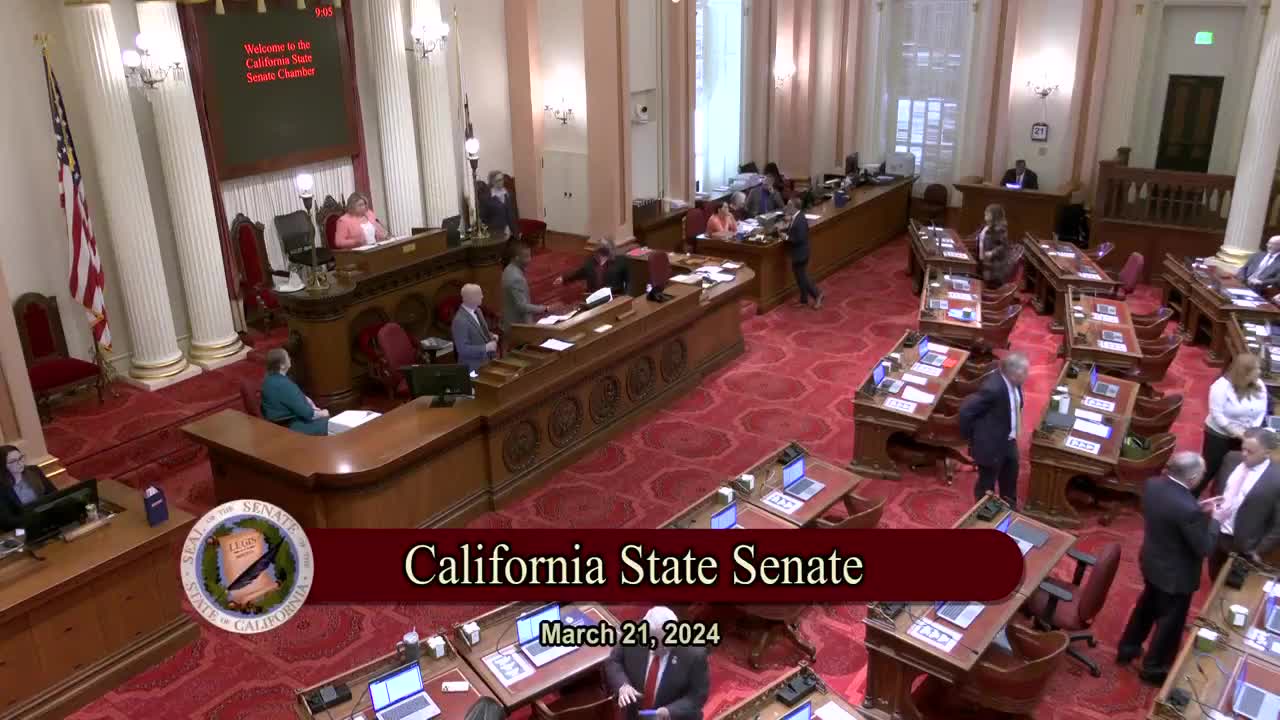 3MIN
Senate Floor
 15MIN
Senate Standing Committee on Appropriations
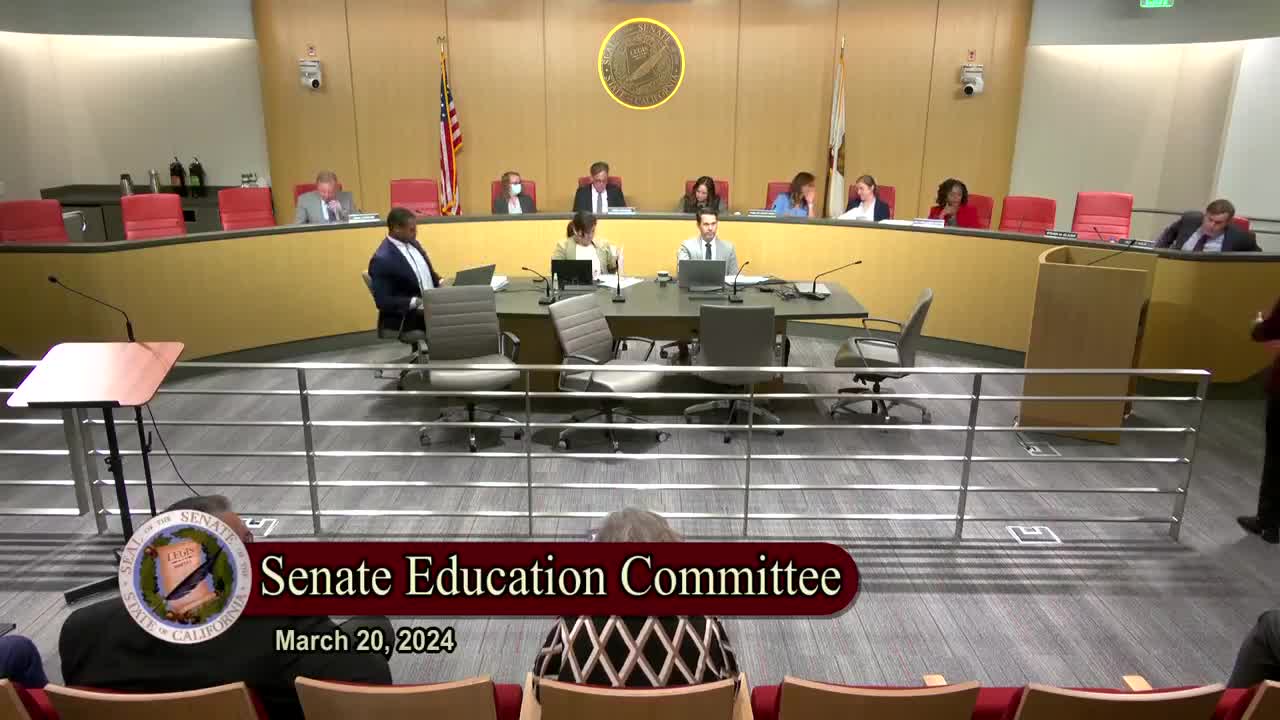 16MIN
Senate Standing Committee on Education
 17MIN
Assembly Standing Committee on Higher Education
 19MIN
Assembly Floor
 8MIN
Assembly Floor
Bill Author

Bill Co-Author(s):