AB 1905: Public postsecondary education: employment: settlements, informal resolutions, and retreat rights.
- Session Year: 2023-2024
- House: Assembly
- Latest Version Date: 2024-09-28
Current Status:
Passed
(2024-09-28: Chaptered by Secretary of State - Chapter 813, Statutes of 2024.)
Introduced
In Committee
First Chamber
In Committee
Second Chamber
Enacted
Existing law establishes the California Community Colleges, under the administration of the Board of Governors of the California Community Colleges, the California State University, under the administration of the Trustees of the California State University, and the University of California, under the administration of the Regents of the University of California as the 3 segments of public postsecondary education in the state. Existing law establishes the College of the Law, San Francisco, under the governance of the Board of Directors of the College of the Law, San Francisco, within the University of California.
This bill would require public postsecondary educational institutions, as defined, as a condition of receiving state financial assistance, to adopt a written policy containing certain provisions, including, among other provisions, a provision prohibiting a supervisor or administrator from providing an official letter of recommendation if the employee is the respondent in a sexual harassment complaint and the employee (1) is determined in a final administrative decision, as defined, to have committed sexual harassment, (2) resigns from their current position before a final administrative decision is made, or (3) enters into a settlement with the public postsecondary educational institution, as specified. The bill would require public postsecondary educational institutions, as a condition of receiving state financial assistance, to adopt a written policy on settlements and informal resolutions of complaints of sexual harassment in cases where the respondent is an employee of the public postsecondary educational institution and would require the written policy to include, among other things, a provision that requires specified approvals for sexual harassment settlement pffers and informal resolutions. By imposing new duties on community college districts, the bill would impose a state-mandated local program.
The California Constitution requires the state to reimburse local agencies and school districts for certain costs mandated by the state. Statutory provisions establish procedures for making that reimbursement.
This bill would provide that, if the Commission on State Mandates determines that the bill contains costs mandated by the state, reimbursement for those costs shall be made pursuant to the statutory provisions noted above.
Existing law establishes the California Community Colleges, under the administration of the Board of Governors of the California Community Colleges, the California State University, under the administration of the Trustees of the California State University, and the University of California, under the administration of the Regents of the University of California as the 3 segments of public postsecondary education in the state. Existing law establishes the College of the Law, San Francisco, under the governance of the Board of Directors of the College of the Law, San Francisco, within the University of California.
This bill would prohibit an employee of a public postsecondary educational institution, defined as any campus of the California Community Colleges, the California State University, the University of California, or the College of the Law, San Francisco, from being eligible for retreat rights and from receiving a letter of recommendation require public postsecondary educational institutions, as defined, as a condition of receiving state financial assistance, to adopt a written policy containing certain provisions, including, among other provisions, a provision prohibiting a supervisor or administrator from providing an official letter of recommendation if the employee is the respondent in a sexual harassment complaint and the employee (1) is determined in a final administrative decision, as defined, to have committed sexual harassment, (2) resigns from their current position before a final administrative decision is made, or (3) enters into a settlement with the public postsecondary educational institution. The bill would require public postsecondary educational institutions, as a condition of receiving state financial assistance, to adopt a written policy on settlements and informal resolutions of complaints of sexual harassment in cases where the respondent is an employee of the institution. The bill public postsecondary educational institution and would require the written policy to include, among other things, a provision that requires specified approvals for all offers of sexual harassment settlements and informal resolutions. By imposing new duties on community college districts, the bill would impose a state-mandated local program.
The California Constitution requires the state to reimburse local agencies and school districts for certain costs mandated by the state. Statutory provisions establish procedures for making that reimbursement.
This bill would provide that, if the Commission on State Mandates determines that the bill contains costs mandated by the state, reimbursement for those costs shall be made pursuant to the statutory provisions noted above.
Existing law establishes the California Community Colleges, under the administration of the Board of Governors of the California Community Colleges, the California State University, under the administration of the Trustees of the California State University, and the University of California, under the administration of the Regents of the University of California as the 3 segments of public postsecondary education in the state. Existing law establishes the College of the Law, San Francisco, under the governance of the Board of Directors of the College of the Law, San Francisco, within the University of California.
This bill would prohibit an employee of a public postsecondary educational institution, defined as any campus of the California Community Colleges, the California State University, the University of California, or the College of the Law, San Francisco, from being eligible for retreat rights and from receiving a letter of recommendation if the employee is the respondent in a sexual harassment complaint and the employee (1) is determined in a final administrative decision, as defined, to have committed sexual harassment, or the employee (2) resigns from their current position before a final administrative decision is made, as provided. The bill would retroactively apply those prohibitions to existing employment contracts between an employee and a public postsecondary educational institution, as provided. or (3) enters into a settlement with the public postsecondary educational institution. The bill would require public postsecondary educational institutions, as a condition of receiving state financial assistance, to adopt a written policy on settlements and informal resolutions of complaints of sexual harassment in cases where the respondent is an employee of the institution. The bill would require the written policy to include, among other things, a provision that requires specified approvals for all offers of sexual harassment settlements and informal resolutions. By imposing new duties on community college districts, the bill would impose a state-mandated local program.
The California Constitution requires the state to reimburse local agencies and school districts for certain costs mandated by the state. Statutory provisions establish procedures for making that reimbursement.
This bill would provide that, if the Commission on State Mandates determines that the bill contains costs mandated by the state, reimbursement for those costs shall be made pursuant to the statutory provisions noted above.
Existing law establishes the California Community Colleges, under the administration of the Board of Governors of the California Community Colleges, the California State University, under the administration of the Trustees of the California State University, and the University of California, under the administration of the Regents of the University of California as the 3 segments of public postsecondary education in the state. Existing law establishes the College of the Law, San Francisco, under the governance of the Board of Directors of the College of the Law, San Francisco, within the University of California.
This bill would prohibit an employee of a public postsecondary educational institution, defined as any campus of the California Community Colleges, the California State University, the University of California, or the College of the Law, San Francisco, from being eligible for retreat rights and from receiving a letter of recommendation if the employee is the respondent in a sexual harassment complaint and the employee is determined to have committed sexual harassment, or the employee resigns from their current position before a final administrative decision is made, as provided. The bill would retroactively apply those prohibitions to existing employment contracts between an employee and a public postsecondary educational institution, as provided. The bill would require public postsecondary educational institutions, as a condition of receiving state financial assistance, to adopt a written policy on settlements and informal resolutions of complaints of sexual harassment in cases where the respondent is an employee of the institution. The bill would require the written policy to include, among other things, a provision that requires specified approvals for all offers of sexual harassment settlements and informal resolutions. By imposing new duties on community college districts, the bill would impose a state-mandated local program.
The California Constitution requires the state to reimburse local agencies and school districts for certain costs mandated by the state. Statutory provisions establish procedures for making that reimbursement.
This bill would provide that, if the Commission on State Mandates determines that the bill contains costs mandated by the state, reimbursement for those costs shall be made pursuant to the statutory provisions noted above.
Existing law establishes the California State University and provides for its administration by the Trustees of the California State University. Existing law requires the trustees to provide by rule for the government of their appointees and employees.This bill would state the intent of the Legislature to enact future legislation related to settlements, removal from a position, retreat opportunities, and return to a tenured faculty position if, following a completed Title IX investigation, an administrator is found to be in violation of the California State University Title IX sexual harassment policy.Existing law establishes the California State University and provides for its administration by the Trustees of the California State University. Existing law requires the trustees to provide by rule for the government of their appointees and employees.
This bill would state the intent of the Legislature to enact future legislation related to settlements, removal from a position, retreat opportunities, and return to a tenured faculty position if, following a completed Title IX investigation, an administrator is found to be in violation of the California State University Title IX sexual harassment policy.
(a)It is the policy of the State of California, pursuant to Section 66251, that all persons, regardless of their sex, should enjoy freedom from discrimination of any kind in the postsecondary educational institutions of the state.
(b)(1)Notwithstanding Section 67400, in order to receive state financial assistance, as defined in Section 213, the appropriate governing board or body of each public postsecondary educational institution shall adopt a written policy that, at a minimum, includes, but is not limited to, all of the following provisions:
(A)If an administrator is required to relinquish tenure as a faculty member to become an administrator, then there shall be a provision prohibiting retreat rights if any of following have occurred:
(i)The employee is the respondent in a sexual harassment complaint filed with the public postsecondary educational institution and the employee is determined in a final administrative decision to have committed sexual harassment.
(ii)The employee is the respondent in a sexual harassment complaint filed with the public postsecondary educational institution and, before a final administrative decision is made, the employee resigns from their current position.
(iii)The employee is the respondent in a sexual harassment complaint filed with the public postsecondary educational institution and the employee has entered into a settlement with the public postsecondary educational institution.
(B)A provision requiring any administrator or supervisor who elects to provide an official letter of recommendation to an employee of the public postsecondary educational institution to consult with the appropriate entities to determine if the employee is a respondent in a sexual harassment complaint filed with the public postsecondary educational institution.
(C)A provision prohibiting the supervisor or administrator from providing an official letter of recommendation, if it is determined the employee is a respondent in a sexual harassment complaint, and any of the following has occurred:
(i)The employee is determined in a final administrative decision to have committed sexual harassment.
(ii)Before a final administrative decision is made, and while an investigation is pending, the employee resigns from their current position.
(iii)The employee enters into a settlement with the public postsecondary educational institution based on the allegations arising from the sexual harassment complaint.
(2)Paragraph (1) does not prohibit a public postsecondary educational institution from adopting a policy on employees ineligibility for retreat rights that is more expansive than the provisions described in paragraph (1), provided that the provisions described in paragraph (1) are incorporated into the policy.
(c)Notwithstanding Section 67400, in order to receive state financial assistance, as defined in Section 213, the appropriate governing board or body of each public postsecondary educational institution shall adopt a written policy on settlements and informal resolutions of complaints of sexual harassment in cases where the respondent is an employee of the public postsecondary educational institution. The written policy, at a minimum, shall include all of the following provisions:
(1)A provision that prohibits a settlement, an informal resolution, or both, from being offered or entered into if any of following apply:
(A)A complainant of the sexual harassment complaint filed against an employee respondent is a student.
(B)An employee respondent is accused of committing sexual assault, sexual violence, or sexual battery.
(C)The settlement or informal resolution includes a nondisclosure agreement.
(2)A provision that requires the campus chief executive officer to approve informal resolutions. The campus chief executive officer shall not delegate that responsibility to a designee.
(3)A provision that requires the campus chief executive officer to preliminarily approve all offers of sexual harassment settlements. The campus chief executive officer shall not delegate that responsibility to a designee.
(4)A provision that requires the governing board of a community college district, the Trustees of the California State University, the Regents of the University of California, or the Board of Directors of the College of the Law, San Francisco, as applicable, to approve offers of sexual harassment settlements that have been preliminarily approved by the campus chief executive officer pursuant to paragraph (3).
(d)For purposes of this section, the following definitions apply:
(1)Chief executive officer means the president of a community college campus or a California State University campus, the chancellor of a University of California campus, or the dean of the College of the Law, San Francisco.
(2)Complainant means an individual who is alleged to have been subjected to conduct that could constitute sexual or sex-based harassment.
(3)Final administrative decision means the written determination of whether or not sexual harassment occurred as determined by the decisionmaker following the final investigative report and a hearing, if a hearing is either required pursuant to Title IX of the Education Amendments of 1972 (20 U.S.C. Sec. 1681 et seq.) or federal regulations implementing those provisions, or is required by the public postsecondary educational institutions written policy on sex discrimination, including sexual harassment, and related grievance processes. If a party has filed a timely grievance or appeal, final administrative decision means after the grievance or appeal decision has been issued.
(4)Informal resolution means an agreement between a public postsecondary educational institution and a respondent and complainant for the purpose of resolving a complaint of sexual harassment before a final administrative decision is made.
(5)Public postsecondary educational institution means any campus of the California Community Colleges, the California State University, the University of California, or the College of the Law, San Francisco.
(6)Respondent means the person alleged to have engaged in prohibited conduct under Title IX of the federal Education Amendments of 1972 (20 U.S.C. Sec. 1681(a)(3)) or under a public postsecondary educational institutions written policy on sex discrimination, including sexual or sex-based harassment.
(7)Retreat rights means the ability of an administrator who was required to relinquish tenure as a faculty member to become an administrator to return to a faculty position if their administrative role comes to an end.
(8)Settlement means an agreement between a public postsecondary educational institution and a respondent for the purpose of resolving a complaint of sexual harassment. Settlement does not include a settlement reached in a civil action brought by the respondent against the public postsecondary educational institution.
(9)Student means a person who has gained admission and is matriculated at the public postsecondary educational institution.
SEC. 2.If the Commission on State Mandates determines that this act contains costs mandated by the state, reimbursement to local agencies and school districts for those costs shall be made pursuant to Part 7 (commencing with Section 17500) of Division 4 of Title 2 of the Government Code.
(a)It is the policy of the State of California, pursuant to Section 66251, that all persons, regardless of their sex, should enjoy freedom from discrimination of any kind in the postsecondary educational institutions of the state.
(b)(1)An employee of a public postsecondary educational institution shall be ineligible for retreat rights and shall not receive a letter of recommendation if the employee is the respondent in a sexual harassment complaint filed with the institution and any of the following occur:(A)The employee is determined in a final administrative decision to have committed sexual harassment.(B)Before a final administrative decision is made, the employee resigns from their current position.(C)The employee enters into a settlement with the public postsecondary educational institution.(b)(1)Notwithstanding Section 67400, in order to receive state financial assistance, as defined in Section 213, the appropriate governing board or body of each public postsecondary educational institution shall adopt a written policy that, at a minimum, includes, but is not limited to, all of the following provisions:
(A)If an administrator is required to relinquish tenure as a faculty member to become an administrator, then there shall be a provision prohibiting retreat rights if any of following have occurred:
(i)The employee is the respondent in a sexual harassment complaint filed with the public postsecondary educational institution and the employee is determined in a final administrative decision to have committed sexual harassment.
(ii)The employee is the respondent in a sexual harassment complaint filed with the public postsecondary educational institution and, before a final administrative decision is made, the employee resigns from their current position.
(iii)The employee is the respondent in a sexual harassment complaint filed with the public postsecondary educational institution and the employee has entered into a settlement with the public postsecondary educational institution.
(B)A provision requiring any administrator or supervisor who elects to provide an official letter of recommendation to an employee of the public postsecondary educational institution to consult with the appropriate entities to determine if the employee is a respondent in a sexual harassment complaint filed with the public postsecondary educational institution.
(C)A provision prohibiting the supervisor or administrator from providing an official letter of recommendation, if it is determined the employee is a respondent in a sexual harassment complaint, and any of the following has occurred:
(i)The employee is determined in a final administrative decision to have committed sexual harassment.
(ii)Before a final administrative decision is made, and while an investigation is pending, the employee resigns from their current position.
(iii)The employee enters into a settlement with the public postsecondary educational institution based on the allegations arising from the sexual harassment complaint.
(2)Paragraph (1) does not prohibit a public postsecondary educational institution from adopting a policy on employees ineligibility for retreat rights that is more expansive than the provisions described in paragraph (1), provided that the provisions described in paragraph (1) are incorporated into the policy.
(c)Notwithstanding Section 67400, in order to receive state financial assistance, as defined in Section 213, the appropriate governing board or body of each public postsecondary educational institution shall adopt a written policy on settlements and informal resolutions of complaints of sexual harassment in cases where the respondent is an employee of the public postsecondary educational institution. The written policy, at a minimum, shall include all of the following provisions:
(1)A provision that prohibits a settlement, an informal resolution, or both, from being offered or entered into if any of following apply:
(A)A complainant of the sexual harassment complaint filed against an employee respondent is a student.
(B)An employee respondent is accused of committing sexual assault, sexual violence, or sexual battery.
(C)The settlement or informal resolution includes a nondisclosure agreement.
(2)A provision that requires the campus chief executive officer to approve informal resolutions. The campus chief executive officer shall not delegate that responsibility to a designee.
(2)(3)A provision that requires the campus chief executive officer to preliminarily approve all offers of sexual harassment settlements and informal resolutions. settlements. The campus chief executive officer shall not delegate that responsibility to a designee.
(3)(4)A provision that requires the governing board of a community college district, the Trustees of the California State University, the Regents of the University of California, or the Board of Directors of the College of the Law, San Francisco, as applicable, to approve offers of sexual harassment settlements that have been preliminarily approved by the campus chief executive officer pursuant to paragraph (2). (3).
(d)For purposes of this section, the following definitions apply:
(1)Chief executive officer means the president of a community college campus or a California State University campus, the chancellor of a University of California campus, or the dean of the College of the Law, San Francisco.
(2)Complainant means an individual who is alleged to be the victim of conduct that could constitute sexual harassment.(3)Final administrative decision means the written determination of whether or not sexual harassment occurred as determined by the decisionmaker following the final investigative report and the hearing, if a hearing is required by Title IX of the federal Education Amendments of 1972 (20 U.S.C. Sec. 1681(a)(3)) or is required by the public postsecondary educational institutions written policy on sexual harassment.(2)Complainant means an individual who is alleged to have been subjected to conduct that could constitute sexual or sex-based harassment.
(3)Final administrative decision means the written determination of whether or not sexual harassment occurred as determined by the decisionmaker following the final investigative report and a hearing, if a hearing is either required pursuant to Title IX of the Education Amendments of 1972 (20 U.S.C. Sec. 1681 et seq.) or federal regulations implementing those provisions, or is required by the public postsecondary educational institutions written policy on sex discrimination, including sexual harassment, and related grievance processes. If a party has filed a timely grievance or appeal, final administrative decision means after the grievance or appeal decision has been issued.
(4)Informal resolution means an agreement between a public postsecondary educational institution and a respondent and complainant for the purpose of resolving a complaint of sexual harassment before a final administrative decision is made.
(5)Public postsecondary educational institution means any campus of the California Community Colleges, the California State University, the University of California, or the College of the Law, San Francisco.
(6)Respondent means the person accused of engaging in prohibited conduct under Title IX of the federal Education Amendments of 1972 (20 U.S.C. Sec. 1681(a)(3)) or under a public postsecondary educational institutions written policy on sexual harassment.(6)Respondent means the person alleged to have engaged in prohibited conduct under Title IX of the federal Education Amendments of 1972 (20 U.S.C. Sec. 1681(a)(3)) or under a public postsecondary educational institutions written policy on sex discrimination, including sexual or sex-based harassment.
(7)Retreat rights means the ability of an administrator who was required to relinquish tenure as a faculty member to become an administrator to return to a faculty position if their administrative role comes to an end.
(8)Settlement means an agreement between a public postsecondary educational institution and a respondent for the purpose of resolving a complaint of sexual harassment after a final administrative decision is made. harassment. Settlement does not include a settlement reached in a civil action brought by the respondent against the public postsecondary educational institution.
(9)Student means a person who has gained admission and is matriculated at the public postsecondary educational institution.
SEC. 2.If the Commission on State Mandates determines that this act contains costs mandated by the state, reimbursement to local agencies and school districts for those costs shall be made pursuant to Part 7 (commencing with Section 17500) of Division 4 of Title 2 of the Government Code.
(a)It is the policy of the State of California, pursuant to Section 66251, that all persons, regardless of their sex, should enjoy freedom from discrimination of any kind in the postsecondary educational institutions of the state.
(b)(1)An employee of a public postsecondary educational institution shall be ineligible for retreat rights and shall not receive a letter of recommendation if the employee is the respondent in a sexual harassment complaint filed with the institution and either any of the following occurs: occur:
(A)The employee is determined in a final administrative decision to have committed sexual harassment.
(B)Before a final administrative decision is made, the employee resigns from their current position.
(C)The employee enters into a settlement with the public postsecondary educational institution.
(2)Ineligibility for retreat rights pursuant to paragraph (1) is retroactive and applies to all employment contracts, including employment contracts that exist as of January 1, 2025, between an employee and a public postsecondary educational institution.(2)Paragraph (1) does not prohibit a public postsecondary educational institution from adopting a policy on employees ineligibility for retreat rights that is more expansive than the provisions described in paragraph (1), provided that the provisions described in paragraph (1) are incorporated into the policy.
(c)Notwithstanding Section 67400, in order to receive state financial assistance, as defined in Section 213, the appropriate governing board or body of each public postsecondary educational institution shall adopt a written policy on settlements and informal resolutions of complaints of sexual harassment in cases where the respondent is an employee of the institution. The written policy, at a minimum, shall include both all of the following provisions:
(1)A provision that prohibits a settlement, an informal resolution, or both, from being offered or entered into if any of following apply:
(A)A complainant of the sexual harassment complaint filed against an employee respondent is a student.
(B)An employee respondent is accused of committing sexual assault, sexual violence, or sexual battery.
(C)The settlement or informal resolution includes a nondisclosure agreement.
(2)A provision that requires the campus chief executive officer to preliminarily approve all offers of sexual harassment settlements and informal resolutions, and subsequently, requires resolutions. The campus chief executive officer shall not delegate that responsibility to a designee.
(3)A provision that requires the governing board of a community college district, the Trustees of the California State University, the Regents of the University of California, or the Board of Directors of the College of the Law, San Francisco, as applicable, to formally approve those offers of sexual harassment settlements and informal resolutions. that have been preliminarily approved by the campus chief executive officer pursuant to paragraph (2).
(d)For purposes of this section, the following definitions apply:
(1)Chief executive officer means the president of a community college campus or a California State University campus, the chancellor of a University of California campus, or the dean of the College of the Law, San Francisco.
(2)Complainant means an individual who is alleged to be the victim of conduct that could constitute sexual harassment.
(2)(3)Final administrative decision means the written determination of whether or not sexual harassment occurred as determined by the decisionmaker following the final investigative report and the subsequent hearing. hearing, if a hearing is required by Title IX of the federal Education Amendments of 1972 (20 U.S.C. Sec. 1681(a)(3)) or is required by the public postsecondary educational institutions written policy on sexual harassment.
(4)Informal resolution means an agreement between a public postsecondary educational institution and a respondent and complainant for the purpose of resolving a complaint of sexual harassment before a final administrative decision is made.
(3)(5)Public postsecondary educational institution means any campus of the California Community Colleges, the California State University, the University of California, or the College of the Law, San Francisco.
(4)(6)Respondent means the person accused of engaging in prohibited conduct under Title IX of the federal Education Amendments of 1972 (20 U.S.C. Sec. 1681(a)(3)) or under a public postsecondary educational institutions written policy on sexual harassment.
(5)(7)Retreat rights means the ability of an administrator who was required to relinquish tenure as a faculty member to become an administrator to return to a faculty position if their administrative role comes to an end.
(6)(8)Settlement or informal resolution means an agreement between a public postsecondary educational institution and a respondent for the purpose of resolving a complaint of sexual harassment before after a final administrative decision is made. Settlement does not include a settlement reached in a civil action brought by the respondent against the public postsecondary educational institution.
SEC. 2.If the Commission on State Mandates determines that this act contains costs mandated by the state, reimbursement to local agencies and school districts for those costs shall be made pursuant to Part 7 (commencing with Section 17500) of Division 4 of Title 2 of the Government Code.
REVISIONS: HeadingLine 2.(a)It is the policy of the State of California, pursuant to Section 66251, that all persons, regardless of their sex, should enjoy freedom from discrimination of any kind in the postsecondary educational institutions of the state.
(b)(1)An employee of a public postsecondary educational institution shall be ineligible for retreat rights and shall not receive a letter of recommendation if the employee is the respondent in a sexual harassment complaint filed with the institution and either of the following occurs:
(A)The employee is determined in a final administrative decision to have committed sexual harassment.
(B)Before a final administrative decision is made, the employee resigns from their current position.
(2)Ineligibility for retreat rights pursuant to paragraph (1) is retroactive and applies to all employment contracts, including employment contracts that exist as of January 1, 2025, between an employee and a public postsecondary educational institution.
(c)Notwithstanding Section 67400, in order to receive state financial assistance, as defined in Section 213, the appropriate governing board or body of each public postsecondary educational institution shall adopt a written policy on settlements and informal resolutions of complaints of sexual harassment in cases where the respondent is an employee of the institution. The written policy, at a minimum, shall include both of the following provisions:
(1)A provision that prohibits a settlement, an informal resolution, or both, from being offered or entered into if any of following apply:
(A)A complainant of the sexual harassment complaint filed against an employee respondent is a student.
(B)An employee respondent is accused of committing sexual assault, sexual violence, or sexual battery.
(C)The settlement or informal resolution includes a nondisclosure agreement.
(2)A provision that requires the campus chief executive officer to preliminarily approve all offers of sexual harassment settlements and informal resolutions, and subsequently, requires the governing board of a community college district, the Trustees of the California State University, the Regents of the University of California, or the Board of Directors of the College of the Law, San Francisco, as applicable, to formally approve those offers of settlements and informal resolutions.
(d)For purposes of this section, the following definitions apply:
(1)Chief executive officer means the president of a community college campus or a California State University campus, the chancellor of a University of California campus, or the dean of the College of the Law, San Francisco.
(2)Final administrative decision means the written determination of whether or not sexual harassment occurred as determined by the decisionmaker following the final investigative report and the subsequent hearing.
(3)Public postsecondary educational institution means any campus of the California Community Colleges, the California State University, the University of California, or the College of the Law, San Francisco.
(4)Respondent means the person accused of engaging in prohibited conduct under Title IX of the federal Education Amendments of 1972 (20 U.S.C. Sec. 1681(a)(3)) or under a public postsecondary educational institutions written policy on sexual harassment.
(5)Retreat rights means the ability of an administrator who was required to relinquish tenure as a faculty member to become an administrator to return to a faculty position if their administrative role comes to an end.
(6)Settlement or informal resolution means an agreement between a public postsecondary educational institution and a respondent for the purpose of resolving a complaint of sexual harassment before a final administrative decision is made.
SEC. 2.If the Commission on State Mandates determines that this act contains costs mandated by the state, reimbursement to local agencies and school districts for those costs shall be made pursuant to Part 7 (commencing with Section 17500) of Division 4 of Title 2 of the Government Code.
SECTION 1.It is the intent of the Legislature to enact future legislation related to settlements, removal from a position, retreat opportunities, and return to a tenured faculty position if, following a completed Title IX investigation, an administrator is found to be in violation of the California State University Title IX sexual harassment policy.It is the intent of the Legislature to enact future legislation related to settlements, removal from a position, retreat opportunities, and return to a tenured faculty position if, following a completed Title IX investigation, an administrator is found to be in violation of the California State University Title IX sexual harassment policy.
|
Date
|
Status
|
|---|---|
| Sep 28, 2024 | Chaptered by Secretary of State - Chapter 813, Statutes of 2024. |
| Sep 28, 2024 | Approved by the Governor. |
| Sep 11, 2024 | Enrolled and presented to the Governor at 4 p.m. |
| Aug 29, 2024 | Senate amendments concurred in. To Engrossing and Enrolling. (Ayes 75. Noes 0.). |
| Aug 29, 2024 | Assembly Rule 77 suspended. |
| Aug 28, 2024 | In Assembly. Concurrence in Senate amendments pending. May be considered on or after August 30 pursuant to Assembly Rule 77. |
| Aug 28, 2024 | Read third time. Passed. Ordered to the Assembly. (Ayes 39. Noes 0.). |
| Aug 19, 2024 | Read second time. Ordered to third reading. |
| Aug 15, 2024 | Read second time and amended. Ordered returned to second reading. |
| Aug 15, 2024 | From committee: Amend, and do pass as amended. (Ayes 7. Noes 0.) (August 15). |
| Aug 5, 2024 | In committee: Referred to APPR suspense file. |
| Jun 19, 2024 | From committee: Do pass and re-refer to Com. on APPR. (Ayes 10. Noes 0.) (June 18). Re-referred to Com. on APPR. |
| Jun 12, 2024 | From committee: Do pass and re-refer to Com. on JUD. with recommendation: To Consent Calendar. (Ayes 7. Noes 0.) (June 12). Re-referred to Com. on JUD. |
| May 29, 2024 | Referred to Coms. on ED. and JUD. |
| May 22, 2024 | In Senate. Read first time. To Com. on RLS. for assignment. |
| May 21, 2024 | Read third time. Passed. Ordered to the Senate. (Ayes 73. Noes 0. Page 5401.) |
| May 20, 2024 | Read second time. Ordered to third reading. |
| May 16, 2024 | From committee: Do pass. (Ayes 15. Noes 0.) (May 16). |
| May 8, 2024 | In committee: Set, first hearing. Referred to APPR. suspense file. |
| Apr 17, 2024 | From committee: Do pass and re-refer to Com. on APPR. with recommendation: To Consent Calendar. (Ayes 7. Noes 0.) (April 17). Re-referred to Com. on APPR. |
| Apr 10, 2024 | From committee: Do pass and re-refer to Com. on P.E. & R. (Ayes 11. Noes 0.) (April 9). Re-referred to Com. on P.E. & R. |
| Apr 10, 2024 | Coauthors revised. |
| Apr 8, 2024 | Re-referred to Com. on HIGHER ED. |
| Apr 4, 2024 | From committee chair, with author's amendments: Amend, and re-refer to Com. on HIGHER ED. Read second time and amended. |
| Mar 20, 2024 | Re-referred to Com. on HIGHER ED. |
| Mar 19, 2024 | From committee chair, with author's amendments: Amend, and re-refer to Com. on HIGHER ED. Read second time and amended. |
| Mar 18, 2024 | Referred to Coms. on HIGHER ED. and P.E. & R. |
| Jan 24, 2024 | From printer. May be heard in committee February 23. |
| Jan 23, 2024 | Read first time. To print. |
|
Date
|
Description
|
Location
|
Votes
|
|
|---|---|---|---|---|
| Aug 29, 2024 | AB 1905 Addis Concurrence in Senate Amendments | Assembly Floor |
Passed |
|
| Aug 28, 2024 | Assembly 3rd Reading AB1905 Addis et al. By Smallwood-Cuevas | Senate Floor |
Passed |
|
| Aug 15, 2024 | Do pass as amended | Senate Standing Committee on Appropriations |
Passed |
|
| Aug 5, 2024 | Placed on suspense file | Senate Standing Committee on Appropriations |
Passed |
|
| Jun 18, 2024 | Do pass, but first be re-referred to the Committee on [Appropriations] | Senate Standing Committee on Judiciary |
Passed |
|
| Jun 12, 2024 | Do pass, but first be re-referred to the Committee on [Judiciary] with the recommendation: To Consent Calendar | Senate Standing Committee on Education |
Passed |
|
| May 21, 2024 | AB 1905 Addis Assembly Third Reading | Assembly Floor |
Passed |
|
| May 16, 2024 | Do pass. | Assembly Standing Committee on Appropriations |
Passed |
|
| Apr 17, 2024 | Do pass and be re-referred to the Committee on [Appropriations] with recommendation: To Consent Calendar | Assembly Standing Committee on Public Employment and Retirement |
Passed |
|
| Apr 9, 2024 | Do pass and be re-referred to the Committee on [Public Employment and Retirement] | Assembly Standing Committee on Higher Education |
Passed |
This list shows positions taken on this bill by organizations on the date displayed, which is linked to the original source.
Positions by individuals are not included.
|
Organization
|
Position
|
Date
|
|---|---|---|
| Cal State Student Association | ** Support | |
| California Faculty Association | * Support | Jun 20, 2024 |
| California State University Employees Union | ** Support | |
| California Teachers Association | ** Support | |
| CFT- a Union of Educators & Classified Professionals, Aft, Afl-cio | ** Support | |
| Generation Up | ** Support | |
| Ignite | ** Support | |
| IGNITE National | ** Support | |
| Office of Lieutenant Governor Eleni Kounalakis | ** Support | |
| SAFE Campuses Coalition | ** Support | |
| Youth Power Project | ** Support |
CONCURRENCE IN SENATE AMENDMENTS
CSA1 Bill Id:AB 1905
Author:(Addis)
As Amended Ver:August 15, 2024
Majority vote
SUMMARY
Places conditions upon the use of settlements, informal resolutions, retreat rights, and letters of recommendations for employees at public higher education institutions who are the respondent in a sexual harassment complaint, as defined.
Senate Amendments
- Requires the public postsecondary education institutions adopt a policy prohibiting those who have relinquished tenure to become an administrator from returning to the classroom if the employee has a final finding of sexual harassment, has entered into a settlement with the institution due to a sexual harassment complaint, or has resign before a final finding of sexual harassment;
- Requires public postsecondary education institutions to adopt an official letter of recommendation policy that authorizes an administrator or supervisor who wishes to provide an official letter of recommendation to consult with the appropriate entities to determine if the employee has a sexual harassment complaint against them. If it found that the employee has a complaint against them, the supervisor or administrator would be prohibited from providing a letter of recommendation if a final finding of sexual harassment has been made against the employee, if the employee leaves before the investigation of the complaint is concluded, or if the employee elects to enter into a settlement;
- Requires the chief executive officer to approve informal resolutions and settlements. Prohibits the chief executive officer from delegating this responsibility;
- Amends the definition of final administrative decision to align with existing grievance procedures for the adjudicating of complaints; and,
- Adds a definition of student.
COMMENTS
Informal resolution. The UC and CSU each have a systemwide nondiscrimination policy each of their campuses are required to actualize when a complaint is filed. Each of the 73 community college districts (including the online college, CalBright), have policies governing the adjudication of complaints of sexual harassment.
All three systems have the ability for informal resolutions to take place. Informal resolutions are a form of mediation in which both parties of a complaint (the subject of the complaint and the filer) agree to a set of terms thereby dismissing the complaint. Informal resolutions must be concluded before a final determination of a complaint is made and they have to be entered into freely, an institution cannot coerce either party into an informal resolution. In some cases, it is possible for both parties to agree to a nondisclosure agreement (NDA) as part of the conditions for agreeing to an informal resolution. Informal resolutions are permitted when a complaint is between two employees; and therefore, any agreement should be included in the employees personnel file and should be permitted to be shared (verbally or physically) with future employers. This bill closes a loophole that otherwise may have permitted an informal resolutions to include an NDA that would prohibit the institution from sharing the content of the informal resolution.
In California, due to the desire of the State to provide additional protections to students, it is possible for a complaint of sexual harassment to be adjudicated on campus without the use of Title IX procedures. This bill closes a loophole in existing law by prohibiting all complaints of sexual harassment from utilizing an informal resolution when a student is the complainant and the respondent is an employee.
Settlements. Unlike informal resolutions which can occur up to an administrative determination of whether the complaint occurred or not, settlements can occur after a determination is made by the institution but before disciplinary sanctions are enforced. Furthermore, as defined by the public higher education institutions, settlements (as defined by this measure) only occur when a respondent is an employee. Settlements are often used if it appears that the employee is hostile towards the institution and is likely to either sue or appeal and require a Skelly hearing that could result in an overturn of the disciplinary sanction.
This bill prohibits the use of settlements for cases where the employee is accused and has been found to have more likely than not committed, sexual assault, sexual violence, or sexual battery. For purposes of this measure, sexual violence and sexual battery are defined as follows: sexual violence is the physical sexual acts perpetrated against a person without the person's affirmative consent, including rape; and, sexual battery means the intentional touching of another person's intimate parts without consent, intentionally causing a person to touch the intimate parts of another without consent, or using a person's own intimate part to intentionally touch another person's body without consent.
Furthermore, this bill prohibits the use of settlements when the complaint is filed by a student. While it is possible for "Skelly hearings" to result in the employee returning to campus as a faculty member, having an avenue by which a perpetrator can be rewarded with monetary settlements, letters of recommendation, or retreat rights is unfair to the campus culture and the restitution of the survivor.
Retreat Rights and Letters of Recommendation. Retreat rights are generally provided to faculty as an incentive for them to take administrative positions within a public higher education institution. The word generally is used because in the CSU Employment Union collective bargaining agreement, there is a section guaranteeing retreat rights to recently laid off classified staff. Retreat rights are contained within the agreement between the institution and the employee who is accepting the administrative position. In the collective bargaining agreements examined by the Assembly Higher Education Committee Staff, retreat rights are not listed nor guaranteed by collective bargaining agreements, with the exception of one administrative position at one CCC district. Retreat rights once agreed to are permitted unless the individual is dismissed or if there are clauses permitting the revoking of the privilege.
Letters of recommendation are positive endorsements of an employee by their current or previous place of employment. This bill prohibits letters of recommendations for any employee who has any finding of sexual harassment, who elects to resign from their position before a sexual harassment case is finalized, or enters into a settlement agreement with the institution.
According to the Author
"Under Title IX, California's public colleges and universities are charged with providing an educational environment free from discrimination on the basis of sex. Unfortunately, these institutions have fallen short in protecting their campus communities, allowing employees who have engaged in sexual harassment to retreat to teaching positions and receive generous settlements that include letters of recommendation. As a former educator myself, I know just how important it is that institutions support students, faculty, and staff that come forward to report discrimination and harassment. It is an unacceptable failure that California's public institutions of higher education are allowing known perpetrators to continue victimizing members of our campus communities. AB 1905 will prevent employees of California's public colleges and universities from being eligible for retreat rights or letters of recommendation if they have committed sexual harassment. This will ensure that California's public institutions of higher education make a stronger effort to create a safe and inclusive environment for students, faculty, and staff."
Arguments in Support
The California Faculty Association, which represents over 29,000 faculty at the CSU, simplifies the need for the measure as, "AB 1905's provisions directly align with our values by reinforcing the State of California's policy against sexual discrimination and by introducing measures to ensure that individuals found guilty of sexual harassment are held accountable for their actions. Specifically, we applaud AB 1905's approach to eliminating 'retreat rights' for employees determined, through a final administrative decision, to have committed sexual harassment. Additionally, the prohibition against providing letters of recommendation for such individuals is a necessary measure to prevent the perpetuation of harmful behaviors in educational settings. AB 1905's stringent restrictions on settlements and informal resolutions—especially in cases involving students or accusations of sexual assault, violence, or battery—demonstrate a commendable effort to protect the most vulnerable members of our community. The requirement for preliminary approval by campus chief executive officers and formal approval by the governing boards of settlements and informal resolutions underscores a commitment to transparency and accountability. The CFA recognizes the complexities of addressing sexual harassment within academic institutions. However, we believe that the guidelines proposed by AB 1905 provide a clear and effective framework for preventing, addressing, and ultimately reducing instances of sexual harassment."
Arguments in Opposition
None on file.
FISCAL COMMENTS
According to the Senate Committee on Appropriations:
- The Chancellor's Office estimates one-time Proposition 98 General Fund costs, likely between $13,000 and $21,000 per community college district or $1.5 million statewide, to update collective bargaining agreements regarding retreat rights and settlement agreements. This estimate would encompass the workload needed to draft the required language; consult with the necessary stakeholders including faculty and human resource administrators; and present the approved collective bargaining agreement for ratification by the local board of trustees.
- The University of California estimates one-time General Fund costs in the low hundreds of housands to support the development of new policies and procedures necessary to comply with the requirements of the bill. The UC also estimates ongoing General Fund costs of $3 million each year to ensure campus coordination and access to real-time information for staff and faculty employees. This estimate assumes 2.0 positions at a cost of $150,000 each for the UC's ten campuses.
- The California State University (CSU) indicates that any costs associated with updating its policies would be minor and absorbable since the Board of Trustees has already adopted similar policies on retreat rights and letters of reference.
VOTES:
ASM HIGHER EDUCATION: 11-0-0
YES: Mike Fong, Ta, Arambula, Boerner, Chen, Essayli, Irwin, Jackson, Low, Muratsuchi, Quirk-Silva
ASM PUBLIC EMPLOYMENT AND RETIREMENT: 7-0-0
YES: McKinnor, Lackey, Boerner, Vince Fong, Hart, Stephanie Nguyen, Luz Rivas
ASM APPROPRIATIONS: 15-0-0
YES: Wicks, Sanchez, Arambula, Bryan, Calderon, Wendy Carrillo, Dixon, Mike Fong, Grayson, Haney, Hart, Jim Patterson, Pellerin, Ta, Villapudua
ASSEMBLY FLOOR: 73-0-7
YES: Addis, Aguiar-Curry, Alanis, Alvarez, Arambula, Bains, Bauer-Kahan, Bennett, Berman, Boerner, Bonta, Bryan, Calderon, Juan Carrillo, Wendy Carrillo, Chen, Connolly, Davies, Dixon, Essayli, Flora, Mike Fong, Vince Fong, Gallagher, Garcia, Gipson, Grayson, Haney, Hart, Hoover, Irwin, Jackson, Jones-Sawyer, Kalra, Lackey, Lee, Low, Lowenthal, Maienschein, McCarty, McKinnor, Muratsuchi, Stephanie Nguyen, Ortega, Pacheco, Papan, Jim Patterson, Joe Patterson, Pellerin, Petrie-Norris, Quirk-Silva, Ramos, Rendon, Reyes, Rodriguez, Blanca Rubio, Sanchez, Santiago, Schiavo, Soria, Ta, Ting, Valencia, Villapudua, Waldron, Wallis, Ward, Weber, Wicks, Wilson, Wood, Zbur, Robert Rivas
ABS, ABST OR NV: Cervantes, Megan Dahle, Friedman, Gabriel, Holden, Mathis, Luz Rivas
SENATE FLOOR: 39-0-1
YES: Allen, Archuleta, Ashby, Atkins, Becker, Blakespear, Bradford, Caballero, Cortese, Dahle, Dodd, Durazo, Eggman, Glazer, Gonzalez, Grove, Hurtado, Jones, Laird, Limón, McGuire, Menjivar, Min, Newman, Nguyen, Niello, Ochoa Bogh, Padilla, Portantino, Roth, Rubio, Seyarto, Skinner, Smallwood-Cuevas, Stern, Umberg, Wahab, Wiener, Wilk
ABS, ABST OR NV: Alvarado-Gil
UPDATED
VERSION: August 15, 2024
CONSULTANT: Ellen Cesaretti-Monroy / HIGHER ED. / (916) 319-3960 FN: 0004590
SENATE RULES COMMITTEE Office of Senate Floor Analyses (916) 651-1520 Fax: (916) 327-4478 | AB 1905 |
THIRD READING
Bill No: AB 1905
Author: Addis (D), et al.
Amended: 8/15/24 in Senate
Vote: 21
SENATE EDUCATION COMMITTEE: 7-0, 6/12/24
AYES: Newman, Ochoa Bogh, Cortese, Glazer, Gonzalez, Limón, Wilk
SENATE JUDICIARY COMMITTEE: 10-0, 6/18/24
AYES: Umberg, Wilk, Allen, Ashby, Caballero, Durazo, Niello, Roth, Stern, Wahab
NO VOTE RECORDED: Laird
SENATE APPROPRIATIONS COMMITTEE: 7-0, 8/15/24
AYES: Caballero, Jones, Ashby, Becker, Bradford, Seyarto, Wahab
ASSEMBLY FLOOR: 73-0, 5/21/24 - See last page for vote
SUBJECT: Public postsecondary education: employment: settlements, informal resolutions, and retreat rights
SOURCE: Author
DIGEST:
This bill requires the California Community Colleges (CCC), California State University (CSU), and University of California (UC), as a condition of receiving state financial assistance, to each adopt a written policy that prohibits an employee from being eligible for retreat rights and from receiving a letter of recommendation if the employee is the respondent in a sexual harassment complaint where a final determination has been made, the employee resigned, or the employee enters into a settlement with the institution.
ANALYSIS:
Existing law:
Appointees and employees
- Requires the Trustees of the CSU to provide for, by rule, for the government of their appointees and employees, including but not limited to: appointment; classification; terms; duties; pay and overtime pay; uniform and equipment allowances; travel expenses and allowances; rates for housing and lodging; moving expenses; leave of absence; tenure; vacation; holidays; layoff; dismissal; demotion; suspension; sick leave; reinstatement; and employer’s contribution to employees’, annuitants’, and survivors’ health benefits plans. (Education Code (EC) § 89500)
- Requires a community college district, prior to making a decision relating to the continued employment of a contract employee, to meet certain requirements, including an evaluation of the employee and the governing board’s receipt of recommendations of the superintendent or president of the district or community college. (EC § 87607)
Disclosure of final administrative decision or final judicial decision
- Requires the governing board of a community college district to require, as part of the hiring process for an appointment to an academic or administrative position with that district, that the applicant disclose any final administrative decision or final judicial decision issued within the last seven years from the date of submission of the application determining that the applicant committed sexual harassment. (EC § 87604.5)
- Requires the Trustees of the CSU to require, as part of the hiring process for an appointment to an academic or administrative position with the CSU, that the applicant disclose any final administrative decision or final judicial decision issued within the last seven years from the date of submission of the application determining that the applicant committed sexual harassment. (EC § 89521)
- Requests the Regents of the UC to require, as part of the hiring process for an appointment to an academic or administrative position with UC, that the applicant disclose any final administrative decision or final judicial decision issued within the last seven years from the date of submission of the application determining that the applicant committed sexual harassment. (EC § 92612.1)
This bill:
Policy prohibiting retreat rights and letters of recommendation
- Requires the appropriate governing board or body of each public postsecondary educational institution, in order to receive state financial assistance, to adopt a written policy that, at a minimum, includes all of the following provisions:
- If an administrator is required to relinquish tenure as a faculty member to become an administrator, then there shall be a provision prohibiting retreat rights if any of the following have occurred:
- The employee is a respondent in a sexual harassment complaint filed with the institution and the employee is determined in a final administrative decision to have committed sexual harassment.
- The employee is a respondent in a sexual harassment complaint filed with the institution and, before a final administrative decision is made, the employee resigns from their current position.
- The employee is a respondent in a sexual harassment complaint filed with the institution and the employee has entered into a settlement with the institution.
- The employee is a respondent in a sexual harassment complaint filed with the institution and the employee is determined in a final administrative decision to have committed sexual harassment.
- A provision requiring any administrator or supervisor who elects to provide an official letter of recommendation to an employee of the institution to consult with the appropriate entities to determine if the employee is a respondent in a sexual harassment complaint filed with the institution.
- A provision prohibiting the supervisor or administrator from providing an official letter of recommendation, if it is determined the employee is a respondent in a sexual harassment complaint, and any of the following has occurred:
- The employee is determined in a final administrative decision to have committed sexual harassment.
- Before a final administrative decision is made, and while an investigation is pending, the employee resigns from their current position.
- The employee enters into a settlement with the institution based on the allegations arising from the sexual harassment complaint.
- The employee is determined in a final administrative decision to have committed sexual harassment.
- If an administrator is required to relinquish tenure as a faculty member to become an administrator, then there shall be a provision prohibiting retreat rights if any of the following have occurred:
- Specifies that the provisions above do not prohibit a public postsecondary educational institution from adopting a policy on employees’ ineligibility for retreat rights that is more expansive, provided that the provisions in #1 are incorporated into the policy.
Policy on settlements and information resolutions
- Requires the appropriate governing board or body of each public postsecondary educational institution, as a condition of receiving state financial assistance, to adopt a written policy on settlements and informal resolutions of complaints of sexual harassment in cases where the respondent is an employee of the institution. This bill notwithstands existing law that provides the Education Code applies to UC only to the extent that the UC Regent, by appropriate resolution, make that provision applicable.
- Requires the written policy, at a minimum, to include specified provisions, including a provision that prohibits a settlement, an informal resolution, or both, from being offered or entered into if specified conditions are met.
Comments
- Recent report on how postsecondary education institutions address sexual discrimination. Throughout 2023, staff from the Assembly Higher Education Committee and this committee hosted fact-finding briefings with representatives from the CCC, CSU, UC, and various California Independent Colleges and Universities to understand how higher education institutions are preventing and addressing sexual discrimination on campuses. The Assembly Higher Education Committee released a report that provides a synopsis of the information gleaned from the briefings and a compilation of legislative proposals for how the State can partner with higher education institutions to prevent and address discrimination in all its forms on college and university campuses throughout California. https://ahed.assembly.ca.gov/system/files/2024-02/a-call-to-action-report-2024_0.pdf
As mentioned in this report, “During the August 31, 2023, Joint Legislative Audit Committee Hearing, members of the Legislature expressed ongoing concern with the CSU’s policies for letters of recommendation and retreat rights, despite recent edits (California State Legislature, 2023). Retreat rights are only provided to tenured faculty and are generally used to encourage faculty to take administrative positions. Retreat rights are meant to be an incentive to help encourage faculty to leave the security of tenure and undertake administrative posts throughout the CCC, CSU, and UC. Retreat rights are collectively bargained and once granted are available to the grantee unless they are dismissed for cause.”
This bill addresses two of the recommendations in this report, specifically:- “Require all settlements at the CCC to be approved by the chief executive officer of the campus and the local governing board. Require all settlements at the CSU to be approved by the CSU campus president and the CSU Board of Trustees. Require all settlements at the UC to be approved by the UC campus chancellor and the UC Board of Regents.”
- “Prohibit the use of retreat rights for employees who are found to have violated the public higher education institution's nondiscrimination policy and/or rules of conduct for employees. Prohibit the use of letters of recommendation for employees who are found to have violated the public higher education institution's nondiscrimination policy and/or rules of conduct for employees.”
- “Require all settlements at the CCC to be approved by the chief executive officer of the campus and the local governing board. Require all settlements at the CSU to be approved by the CSU campus president and the CSU Board of Trustees. Require all settlements at the UC to be approved by the UC campus chancellor and the UC Board of Regents.”
- Builds upon bills from 2023. SB 791 (McGuire, Chapter 415, Statutes of 2023). As noted above, current law requires the governing board of a community college district and the Trustees of the CSU, and requests the Regents of the UC, to require an application for appointment to an academic or administrative position to disclose any final administrative or judicial decision issued within the last seven years determining that the applicant committed sexual harassment.
SB 808 (Dodd, Chapter 417, Statutes of 2023) required CSU to annually submit a report to the Legislature related to sexual harassment reports, complaints, investigations, hearings, and appeals. An earlier version of SB 808, as passed by the Senate Education Committee, would have required the CSU’s rules relating to tenure, layoff, dismissal, demotion, suspension, and reinstatement of academic and administrative employees to (a) require each campus president and, either a vice president or vice chancellor, to approve all sexual harassment settlements; (b) prohibit retreat rights for any campus president, provost, or other senior administrator who has violated any CSU or campus Title IX policy; and, (c) prohibit contract for retreat rights for any employee identified above who has been determined to have violated any CSU or campus Title IX policy. - Retreat rights and letters of recommendation. On March 24, 2024, the CSU Board of Trustees approved an updated retreat rights and letters of recommendation policy. The updated retreat right policy prohibits the authorization of retreat rights for anyone who has a finding of sexual harassment against them. The policy also permits the CSU to evaluate whether a person should receive retreat rights rather than automatically granting the option to retreat.
The CCCs do not have systemwide policy on retreat rights and letters of recommendation; these policies exist at the community college district level, and vary from district to district.
The UC does not have a policy on retreat rights because their faculty who become administrators are required to keep their faculty appointments while they serve as administrators. Therefore, provisions relative to retreat rights likely don’t apply to the UC. The UC does not have a systemwide policy relative to letters of recommendation. - Settlements and informal resolution. As noted in the Assembly Higher Education Committee analysis, the CCCs, CSU, and UC all have the ability for informal resolutions to take place. Informal resolutions are a form of mediation in which both parties of a complaint (complainant and respondent) agree to a set of terms, thereby dismissing the complaint. Informal resolutions must be concluded before a final determination of a complaint is made and must be entered into freely. Title IX prohibits an institution from offering an informal resolution when the complainant is a student and a respondent is an employee.
Under Title IX, it is permissible for the contents of an informal resolution to be made public or shared; however, it is not required. In some cases, it is possible for both parties to agree to a nondisclosure agreement (NDA) as part of the conditions for agreeing to an informal resolution.
Unlike informal resolutions which can occur up to an administrative determination of whether the complaint occurred or not, settlements can occur after a determination is made by the institution but before disciplinary sanctions are enforced. Furthermore, as defined by the public higher education institutions, settlements only occur when a respondent is an employee.
FISCAL EFFECT: Appropriation: No Fiscal Com.: Yes Local: Yes
According to the Senate Appropriations Committee, this bill would impose the following costs:
- The CCC Chancellor’s Office estimates one-time Proposition 98 General Fund costs, likely between $13,000 and $21,000 per community college district or $1.5 million statewide, to update collective bargaining agreements regarding retreat rights and settlement agreements. This estimate would encompass the workload needed to draft the required language; consult with the necessary stakeholders including faculty and human resource administrators; and present the approved collective bargaining agreement for ratification by the local board of trustees.
- The UC estimates one-time General Fund costs in the low hundreds of thousands to support the development of new policies and procedures necessary to comply with the requirements of the bill. The UC also estimates ongoing General Fund costs of $3 million each year to ensure campus coordination and access to real-time information for staff and faculty employees. This estimate assumes 2.0 positions at a cost of $150,000 each for the UC’s ten campuses.
- The CSU indicates that any costs associated with updating its policies would be minor and absorbable since the Board of Trustees has already adopted similar policies on retreat rights and letters of reference.
SUPPORT: (Verified 8/19/24)
Office of Lieutenant Governor Eleni Kounalakis
CFT — A Union of Educators & Classified Professionals, AFT, AFL-CIO
California State University Employees Union
California Teachers Association
Cal State Student Association
Generation Up
Ignite
SAFE Campuses Coalition
Youth Power Project
OPPOSITION: (Verified 8/19/24)
None received
ASSEMBLY FLOOR: 73-0, 5/21/24
AYES: Addis, Aguiar-Curry, Alanis, Alvarez, Arambula, Bains, Bauer-Kahan, Bennett, Berman, Boerner, Bonta, Bryan, Calderon, Juan Carrillo, Wendy Carrillo, Chen, Connolly, Davies, Dixon, Essayli, Flora, Mike Fong, Vince Fong, Gallagher, Garcia, Gipson, Grayson, Haney, Hart, Hoover, Irwin, Jackson, Jones-Sawyer, Kalra, Lackey, Lee, Low, Lowenthal, Maienschein, McCarty, McKinnor, Muratsuchi, Stephanie Nguyen, Ortega, Pacheco, Papan, Jim Patterson, Joe Patterson, Pellerin, Petrie-Norris, Quirk-Silva, Ramos, Rendon, Reyes, Rodriguez, Blanca Rubio, Sanchez, Santiago, Schiavo, Soria, Ta, Ting, Valencia, Villapudua, Waldron, Wallis, Ward, Weber, Wicks, Wilson, Wood, Zbur, Robert Rivas
NO VOTE RECORDED: Cervantes, Megan Dahle, Friedman, Gabriel, Holden, Mathis, Luz Rivas
Prepared by: Lynn Lorber / ED. / (916) 651-4105
8/19/24 12:35:47
SENATE COMMITTEE ON
Senator Anna Caballero, Chair
2023 - 2024 Regular Session
AB 1905 (Addis) - Public postsecondary education: employment: settlements, informal resolutions, and retreat rights
Version: | Policy Vote: |
Urgency: | Mandate: |
Hearing Date: | Consultant: |
Bill Summary:
This bill prohibits an employee of a public postsecondary educational institution from being eligible for retreat rights and from receiving a letter of recommendation if the employee is the respondent in a sexual harassment complaint, as specified.
*********** ANALYSIS ADDENDUM – SUSPENSE FILE ***********
The following information is revised to reflect amendments
adopted by the committee on August 15, 2024
Fiscal Impact:
- The Chancellor’s Office estimates one-time Proposition 98 General Fund costs, likely between $13,000 and $21,000 per community college district or $1.5 million statewide, to update collective bargaining agreements regarding retreat rights and settlement agreements. This estimate would encompass the workload needed to draft the required language; consult with the necessary stakeholders including faculty and human resource administrators; and present the approved collective bargaining agreement for ratification by the local board of trustees.
- The University of California estimates one-time General Fund costs in the low hundreds of thousands to support the development of new policies and procedures necessary to comply with the requirements of the bill. The UC also estimates ongoing General Fund costs of $3 million each year to ensure campus coordination and access to real-time information for staff and faculty employees. This estimate assumes 2.0 positions at a cost of $150,000 each for the UC’s ten campuses.
- The California State University (CSU) indicates that any costs associated with updating its policies would be minor and absorbable since the Board of Trustees has already adopted similar policies on retreat rights and letters of reference.
Author Amendments:
Make clarifying changes and provide each public postsecondary educational institution, in order to receive state financial assistance, to adopt a written policy that, at a minimum, includes the provisions currently specified in the bill that prohibit retreat rights and letters of recommendation for employees, as specified.
-- END --
SENATE COMMITTEE ON
Senator Anna Caballero, Chair
2023 - 2024 Regular Session
AB 1905 (Addis) - Public postsecondary education: employment: settlements, informal resolutions, and retreat rights
Version: | Policy Vote: |
Urgency: | Mandate: |
Hearing Date: | Consultant: |
Bill Summary:
This bill prohibits an employee of a public postsecondary educational institution from being eligible for retreat rights and from receiving a letter of recommendation if the employee is the respondent in a sexual harassment complaint, as specified.
Fiscal Impact:
- The Chancellor’s Office estimates one-time Proposition 98 General Fund costs, likely between $13,000 and $21,000 per community college district or $1.5 million statewide, to update collective bargaining agreements regarding retreat rights and settlement agreements. This estimate would encompass the workload needed to draft the required language; consult with the necessary stakeholders including faculty and human resource administrators; and present the approved collective bargaining agreement for ratification by the local board of trustees.
- The University of California estimates one-time General Fund costs in the low hundreds of thousands to support the development of new policies and procedures necessary to comply with the requirements of the bill. The UC also estimates ongoing General Fund costs of $3 million each year to ensure campus coordination and access to real-time information for staff and faculty employees. This estimate assumes 2.0 positions at a cost of $150,000 each for the UC’s ten campuses.
- The California State University (CSU) indicates that any costs associated with updating its policies would be minor and absorbable since the Board of Trustees has already adopted similar policies on retreat rights and letters of reference.
Background:
Existing law provides that, in part, "no person in the United States shall, on the basis of sex, be excluded from participation in, be denied the benefits of, or be subjected to discrimination under any educational program or activity receiving Federal financial assistance." The law provides that the enforcement of compliance is initiated upon the filing of a complaint alleging a violation of Title IX.
Existing law requires each school district and county office of education, or a local public or private agency that receives funding from the state or federal government, to designate a person to serve as the Title IX compliance coordinator to enforce compliance at the local level, including coordinating any complaints of non-compliance.
Existing law requires each educational institution in California (K-12 and postsecondary education) to have a written policy on sexual harassment, and requires schools to display the policy in a prominent location in the main administrative building or other area of the campus or schoolsite, be provided as part of any orientation program for new students, provided to each faculty member, administrative staff and support staff, and appear in any publication of the school that sets forth the rules, regulations, procedures, and standards of conduct.
Proposed Law:
This bill prohibits an employee of a public postsecondary educational institution from being eligible for retreat rights and from receiving a letter of recommendation if the employee is the respondent in a sexual harassment complaint filed with the institution and any of the following occur:
- The employee is determined in a final administrative decision to have committed sexual harassment.
- Before a final administrative decision is made, the employee resigns from their current position.
- The employee enters into a settlement with the public postsecondary educational institution.
This bill specifies that the provisions do not prohibit a public postsecondary educational institution from adopting a policy on employees’ ineligibility for retreat rights that is more expansive, as specified.
This bill requires the appropriate governing board or body of each public postsecondary educational institution, as a condition of receiving state financial assistance, to adopt a written policy on settlements and informal resolutions of complaints of sexual harassment in cases where the respondent is an employee of the institution. This bill also notwithstands existing law that provides the Education Code applies to UC only to the extent that the UC Regent, by appropriate resolution, make that provision applicable.
This bill requires the written policy, at a minimum, to include all of the following provisions:
- A provision that prohibits a settlement, an informal resolution, or both, from being offered or entered into, if any of following apply:
- A complainant of the sexual harassment complaint filed against an employee respondent is a student.
- An employee respondent is accused of committing sexual assault, sexual violence, or sexual battery.
- The settlement or informal resolution includes a nondisclosure agreement.
- A complainant of the sexual harassment complaint filed against an employee respondent is a student.
- A provision that requires the campus chief executive officer to preliminarily approve all offers of sexual harassment settlements and informal resolutions. The campus chief executive officer shall not delegate that responsibility to a designee.
- A provision that requires the governing board of a community college district, the CSU Trustees, the UC Regents, or the Board of Directors of the College of the Law, San Francisco, as applicable, to approve offers of sexual harassment settlements that have been preliminarily approved by the campus chief executive officer.
Staff Comments:
The Assembly Higher Education Committee released a report that provides a synopsis of the information gleaned from the briefings and a compilation of legislative proposals for how the State can partner with higher education institutions to prevent and address discrimination in all its forms on college and university campuses throughout California. As mentioned in this report, “During the August 31, 2023, Joint Legislative Audit Committee Hearing, members of the Legislature expressed ongoing concern with the CSU’s policies for letters of recommendation and retreat rights, despite recent edits (California State Legislature, 2023). Retreat rights are only provided to tenured faculty and are generally used to encourage faculty to take administrative positions. Retreat rights are meant to be an incentive to help encourage faculty to leave the security of tenure and undertake administrative posts throughout the CCC, CSU, and UC. Retreat rights are collectively bargained and once granted are available to the grantee unless they are dismissed for cause.”
This bill addresses the following recommendations included in the report:
- “Require all settlements at the CCC to be approved by the chief executive officer of the campus and the local governing board. Require all settlements at the CSU to be approved by the CSU campus president and the CSU Board of Trustees. Require all settlements at the UC to be approved by the UC campus chancellor and the UC Board of Regents.”
- “Prohibit the use of retreat rights for employees who are found to have violated the public higher education institution's nondiscrimination policy and/or rules of conduct for employees. Prohibit the use of letters of recommendation for employees who are found to have violated the public higher education institution's nondiscrimination policy and/or rules of conduct for employees.”
-- END --
SENATE COMMITTEE ON EDUCATION
Senator Josh Newman, Chair
2023 - 2024 Regular
Bill No: AB 1905 Hearing Date: June 12, 2024
Author: | |||
Version: | April 4, 2024 | ||
Urgency: | No | Fiscal: | Yes |
Consultant: | Lynn Lorber | ||
Subject: Public postsecondary education: employment: settlements, informal resolutions, and retreat rights.
NOTE: This bill has been referred to the Committees on Education and Judiciary. A "do pass" motion should include referral to the Committee on Judiciary.
SUMMARY
This bill prohibits an employee of a public postsecondary educational institution from being eligible for retreat rights and from receiving a letter of recommendation if the employee is the respondent in a sexual harassment complaint where a final determination has been made, the employee resigned, or the employee enters into a settlement with the institution.
BACKGROUND
Existing law:
Title IX
- Provides that, in part, "no person in the United States shall, on the basis of sex, be excluded from participation in, be denied the benefits of, or be subjected to discrimination under any educational program or activity receiving Federal financial assistance." Enforcement of compliance is initiated upon the filing of a complaint alleging a violation of Title IX. (Title IX of the Education Amendments of 1972 to the 1964 Civil Rights Act)
- Requires each school district and county office of education, or a local public or private agency that receives funding from the state or federal government, to designate a person to serve as the Title IX compliance coordinator to enforce compliance at the local level, including coordinating any complaints of non-compliance. (Title IX of the Education Amendments of 1972 to the 1964 Civil Rights Act)
- Requires each educational institution in California (K-12 and postsecondary education) to have a written policy on sexual harassment, and requires schools to display the policy in a prominent location in the main administrative building or other area of the campus or schoolsite, be provided as part of any orientation program for new students, provided to each faculty member, administrative staff and support staff, and appear in any publication of the school that sets forth the rules, regulations, procedures, and standards of conduct.
(Education Code (EC) § 231.5 and § 66281.5)
Appointees and employees
- Requires the Trustees of the California State University (CSU) to provide for, by rule, for the government of their appointees and employees, including but not limited to: appointment; classification; terms; duties; pay and overtime pay; uniform and equipment allowances; travel expenses and allowances; rates for housing and lodging; moving expenses; leave of absence; tenure; vacation; holidays; layoff; dismissal; demotion; suspension; sick leave; reinstatement; and employer’s contribution to employees’, annuitants’, and survivors’ health benefits plans. (EC § 89500)
- Requires a community college district, prior to making a decision relating to the continued employment of a contract employee, to meet certain requirements, including an evaluation of the employee and the governing board’s receipt of recommendations of the superintendent or president of the district or community college. (EC § 87607)
Disclosure of final administrative decision or final judicial decision
- Requires the governing board of a community college district to require, as part of the hiring process for an appointment to an academic or administrative position with that district, that the applicant disclose any final administrative decision or final judicial decision issued within the last seven years from the date of submission of the application determining that the applicant committed sexual harassment. (EC § 87604.5)
- Requires the Trustees of the CSU to require, as part of the hiring process for an appointment to an academic or administrative position with the CSU, that the applicant disclose any final administrative decision or final judicial decision issued within the last seven years from the date of submission of the application determining that the applicant committed sexual harassment. (EC § 89521)
- Requests the Regents of the University of California (UC) to require, as part of the hiring process for an appointment to an academic or administrative position with UC, that the applicant disclose any final administrative decision or final judicial decision issued within the last seven years from the date of submission of the application determining that the applicant committed sexual harassment. (EC § 92612.1)
Definitions
- Defines “postsecondary educational institution” as any campus of the UC, CSU, California Community Colleges (CCC), an independent institution of higher education, or a private postsecondary educational institution. (EC § 67456)
- Defines “independent institution of higher education” as nonpublic higher education institutions that grant undergraduate degrees, graduate degrees, or both, and that are formed as nonprofit corporations in this state and are accredited by an agency recognized by the United States Department of Education. (EC § 66010)
- Defines “final administrative decision” as the written determination of whether or not sexual harassment occurred as determined by the decisionmaker following the final investigative report and the subsequent hearing. (EC § 87604.5, § 89521, and § 92612.1)
- Defines “final judicial decision” as a final determination of a matter submitted to a court that is recorded in a judgment or order of that court. (EC § 87604.5, § 89521, and § 92612.1)
ANALYSIS
This bill:
Prohibits retreat rights and letters of recommendation
- Prohibits an employee of a public postsecondary educational institution from being eligible for retreat rights and from receiving a letter of recommendation if the employee is the respondent in a sexual harassment complaint filed with the institution and any of the following occur:
- The employee is determined in a final administrative decision to have committed sexual harassment.
- Before a final administrative decision is made, the employee resigns from their current position.
- The employee enters into a settlement with the public postsecondary educational institution.
- The employee is determined in a final administrative decision to have committed sexual harassment.
- Specifies that the provisions in #1 do not prohibit a public postsecondary educational institution from adopting a policy on employees’ ineligibility for retreat rights that is more expansive, provided that the provisions in #1 are incorporated into the policy.
Policy on settlements and information resolutions
- Requires the appropriate governing board or body of each public postsecondary educational institution, as a condition of receiving state financial assistance, to adopt a written policy on settlements and informal resolutions of complaints of sexual harassment in cases where the respondent is an employee of the institution. This bill notwithstands existing law that provides the Education Code applies to UC only to the extent that the UC Regent, by appropriate resolution, make that provision applicable.
- Requires the written policy, at a minimum, to include all of the following provisions:
- A provision that prohibits a settlement, an informal resolution, or both, from being offered or entered into if any of following apply:
- A complainant of the sexual harassment complaint filed against an employee respondent is a student.
- An employee respondent is accused of committing sexual assault, sexual violence, or sexual battery.
- The settlement or informal resolution includes a nondisclosure agreement.
- A complainant of the sexual harassment complaint filed against an employee respondent is a student.
- A provision that requires the campus chief executive officer to preliminarily approve all offers of sexual harassment settlements and informal resolutions. The campus chief executive officer shall not delegate that responsibility to a designee.
- A provision that requires the governing board of a community college district, the CSU Trustees, the UC Regents, or the Board of Directors of the College of the Law, San Francisco, as applicable, to approve offers of sexual harassment settlements that have been preliminarily approved by the campus chief executive officer.
- A provision that prohibits a settlement, an informal resolution, or both, from being offered or entered into if any of following apply:
- Defines the following:
- “Chief executive officer” means the president of a community college campus or a CSU campus, the Chancellor of a UC campus, or the dean of the College of the Law, San Francisco.
- “Complainant” means an individual who is alleged to be the victim of conduct that could constitute sexual harassment.
- “Final administrative decision” means the written determination of whether or not sexual harassment occurred as determined by the decisionmaker following the final investigative report and the hearing, if a hearing is required by Title IX or is required by the public postsecondary educational institution’s written policy on sexual harassment.
- “Informal resolution” means an agreement between a public postsecondary educational institution and a respondent and complainant for the purpose of resolving a complaint of sexual harassment before a final administrative decision is made.
- “Public postsecondary educational institution” means any campus of the CCCs, the CSU, the UC, or the College of the Law, San Francisco.
- “Respondent” means the person accused of engaging in prohibited conduct under Title IX or under a public postsecondary educational institution’s written policy on sexual harassment.
- “Retreat rights” means the ability of an administrator who was required to relinquish tenure as a faculty member to become an administrator to return to a faculty position if their administrative role comes to an end.
- “Settlement” means an agreement between a public postsecondary educational institution and a respondent for the purpose of resolving a complaint of sexual harassment after a final administrative decision is made. “Settlement” does not include a settlement reached in a civil action brought by the respondent against the public postsecondary educational institution.
- “Chief executive officer” means the president of a community college campus or a CSU campus, the Chancellor of a UC campus, or the dean of the College of the Law, San Francisco.
- States that it is the policy of the State of California that all persons, regardless of their sex, should enjoy freedom from discrimination of any kind in the postsecondary educational institutions of the state.
STAFF COMMENTS
- Need for the bill. According to the author, “Under Title IX, California’s public colleges and universities are charged with providing an educational environment free from discrimination on the basis of sex. Unfortunately, these institutions have fallen short in protecting their campus communities, allowing employees who have engaged in sexual harassment to retreat to teaching positions and receive generous settlements that include letters of recommendation.
“As an educator myself, I know just how important it is that institutions support students, faculty, and staff that come forward to report discrimination and harassment. It is an unacceptable failure that California’s public institutions of higher education are allowing known perpetrators to continue victimizing members of our campus communities.
“AB 1905 will prevent employees of California’s public colleges and universities from being eligible for retreat rights or letters of recommendation if they have committed sexual harassment. This will ensure that California’s public institutions of higher education make a stronger effort to create a safe and inclusive environment for students, faculty, and staff.” - Recent report on how postsecondary education institutions address sexual discrimination. Throughout 2023, staff from the Assembly Higher Education Committee and this committee hosted fact-finding briefings with representatives from the CCC, CSU, UC, and various California Independent Colleges and Universities to understand how higher education institutions are preventing and addressing sexual discrimination on campuses. The Assembly Higher Education Committee released a report that provides a synopsis of the information gleaned from the briefings and a compilation of legislative proposals for how the State can partner with higher education institutions to prevent and address discrimination in all its forms on college and university campuses throughout California. https://ahed.assembly.ca.gov/system/files/2024-02/a-call-to-action-report-2024_0.pdf
As mentioned in this report, “During the August 31, 2023, Joint Legislative Audit Committee Hearing, members of the Legislature expressed ongoing concern with the CSU’s policies for letters of recommendation and retreat rights, despite recent edits (California State Legislature, 2023). Retreat rights are only provided to tenured faculty and are generally used to encourage faculty to take administrative positions. Retreat rights are meant to be an incentive to help encourage faculty to leave the security of tenure and undertake administrative posts throughout the CCC, CSU, and UC. Retreat rights are collectively bargained and once granted are available to the grantee unless they are dismissed for cause.”
This bill addresses two of the recommendations in this report, specifically:- “Require all settlements at the CCC to be approved by the chief executive officer of the campus and the local governing board. Require all settlements at the CSU to be approved by the CSU campus president and the CSU Board of Trustees. Require all settlements at the UC to be approved by the UC campus chancellor and the UC Board of Regents.”
- “Prohibit the use of retreat rights for employees who are found to have violated the public higher education institution's nondiscrimination policy and/or rules of conduct for employees. Prohibit the use of letters of recommendation for employees who are found to have violated the public higher education institution's nondiscrimination policy and/or rules of conduct for employees.”
- “Require all settlements at the CCC to be approved by the chief executive officer of the campus and the local governing board. Require all settlements at the CSU to be approved by the CSU campus president and the CSU Board of Trustees. Require all settlements at the UC to be approved by the UC campus chancellor and the UC Board of Regents.”
- Builds upon bills from 2023. SB 791 (McGuire, Chapter 415, Statutes of 2023). As noted above, current law requires the governing board of a community college district and the Trustees of the CSU, and requests the Regents of the UC, to require an application for appointment to an academic or administrative position to disclose any final administrative or judicial decision issued within the last seven years determining that the applicant committed sexual harassment.
SB 808 (Dodd, Chapter 417, Statutes of 2023) requires CSU to annually submit a report to the Legislature related to sexual harassment reports, complaints, investigations, hearings, and appeals. An earlier version of SB 808, as passed by this Committee, would have required the CSU’s rules relating to tenure, layoff, dismissal, demotion, suspension, and reinstatement of academic and administrative employees to (a) require each campus president and, either a vice president or vice chancellor, to approve all sexual harassment settlements; (b) prohibit retreat rights for any campus president, provost, or other senior administrator who has violated any CSU or campus Title IX policy; and, (c) prohibit contract for retreat rights for any employee identified above who has been determined to have violated any CSU or campus Title IX policy. - Retreat rights and letters of recommendation. This bill prohibits an employee of a public postsecondary educational institution from being eligible for retreat rights and from receiving a letter of recommendation if the employee is the respondent in a sexual harassment complaint filed with the institution and (a) the employee is determined in a final administrative decision to have committed sexual harassment; (b) before a final administrative decision is made, the employee resigns from their current position; or, (c) the employee enters into a settlement with the public postsecondary educational institution.
On March 24, 2024, the CSU Board of Trustees approved an updated retreat rights and letters of recommendation policy. The updated retreat right policy prohibits the authorization of retreat rights for anyone who has a finding of sexual harassment against them. The policy also permits the CSU to evaluate whether a person should receive retreat rights rather than automatically granting the option to retreat.
The CCCs do not have systemwide policy on retreat rights and letters of recommendation; these policies exist at the community college district level, and vary from district to district.
The UC does not have a policy on retreat rights because their faculty who become administrators are required to keep their faculty appointments while they serve as administrators. Therefore, provisions relative to retreat rights likely don’t apply to the UC. The UC does not have a systemwide policy relative to letters of recommendation.
To the extent that retreat rights are detailed in employment contracts, those contracts could need to be adjusted fairly quickly in order to be effective when this bill becomes law (rather than waiting until the next time each contract is up for negotiation). - Settlements and informal resolution. As noted in the Assembly Higher Education Committee analysis, the CCCs, CSU, and UC all have the ability for informal resolutions to take place. Informal resolutions are a form of mediation in which both parties of a complaint (complainant and respondent) agree to a set of terms, thereby dismissing the complaint. Informal resolutions must be concluded before a final determination of a complaint is made and must be entered into freely. Title IX prohibits an institution from offering an informal resolution when the complainant is a student and a respondent is an employee.
Under Title IX, it is permissible for the contents of an informal resolution to be made public or shared; however, it is not required. In some cases, it is possible for both parties to agree to a nondisclosure agreement (NDA) as part of the conditions for agreeing to an informal resolution.
Unlike informal resolutions which can occur up to an administrative determination of whether the complaint occurred or not, settlements can occur after a determination is made by the institution but before disciplinary sanctions are enforced. Furthermore, as defined by the public higher education institutions, settlements only occur when a respondent is an employee.
This bill requires institutions to adopt policies that include a provision that prohibits a settlement, an informal resolution, or both, from being offered or entered into if (a) a complainant of the sexual harassment complaint filed against an employee respondent is a student; (b) An employee respondent is accused of committing sexual assault, sexual violence, or sexual battery; or, (c) the settlement or informal resolution includes a nondisclosure agreement.
This bill requires institutions to adopt policies that include (a) a provision that requires the campus chief executive officer to preliminarily approve all offers of sexual harassment settlements and informal resolutions; and, (b) a provision that requires the governing board of a community college district, the CSU Trustees, the UC Regents, or the Board of Directors of the College of the Law, San Francisco, as applicable, to approve offers of sexual harassment settlements that have been preliminarily approved by the campus chief executive officer. Should a campus chief executive officer have the option to deny sexual harassment settlements? Should the institution’s governing board have the authority to deny settlements? How are settlements handled that involve a campus President/Chancellor or system Chancellor/President? - Fiscal impact. According to the Assembly Appropriations Committee, this bill would impose the following costs:
- Minor and absorbable General Fund costs to the UC’s nine campuses.
- Minor and absorbable General Fund costs to the CSU’s 23 campuses. CSU indicates the CSU Board of Trustees recently adopted similar policies
- One-time Proposition 98 General Fund costs, of about $16,000 per CCC district, to update collective bargaining agreements regarding retreat rights and settlement agreements, to the extent collective bargaining agreements do not already address the requirements of this bill.
- Minor and absorbable General Fund costs to the UC’s nine campuses.
- Related legislation.
AB 810 (Friedman, 2024) (1) requests the governing board or body of an independent institution of higher education that receives state financial assistance, as part of the hiring process for specified positions, to require an applicant to disclose any final administrative decision or final judicial decision issued within the last seven years determining that the applicant committed sexual harassment; (2) requires the governing board of community college districts and the Trustees of the CSU (and requests the Regents of the UC), to require an applicant for an academic, athletic, or administrative position to sign a release form that authorizes the release of information by previous employers concerning any substantiated allegations of misconduct and, (3) requires the UC, CSU, CCC, independent institutions of higher education, and private postsecondary educational institutions, during the process to authorize a volunteer in an athletic department, to contact the current or former employer to determine if the applicant violated any employment policies. AB 810 is pending in the Senate Judiciary Committee.
AB 2407 (Hart, 2024) requires the California State Auditor to report, by September 1, 2026, and every three years thereafter, the results of an audit of the ability of the CCCs, the CSU, and the UC to address and prevent sexual harassment on campus. AB 2407 is scheduled to be heard in this committee on June 12, 2024.
SB 1166 (Dodd, 2024) (1) expands the scope of a currently-required CSU report containing a summation of the activities undertaken by each campus and by the systemwide Title IX office to also include outcomes of appeals, a list of personnel who are exempt from being a “responsible employee,” and a yet-to-be-developed annual report that compiles campus-based evaluations of how sex discrimination is addressed on campuses; and, (2) requests the UC and requires each community college district to also submit this report. SB 1166 is pending in the Assembly Higher Education Committee.
AB 2492 (Irwin, 2024) requires each public postsecondary education institution to establish specified positions and designate at least one person to fulfill each position, including a confidential student advocate, a confidential staff and faculty advocate, and a confidential respondent services coordinator. AB 2492 is scheduled to be heard in this committee on June 19, 2024.
AB 2047 (Mike Fong, 2024) requires the CSU and the UC to establish a systemwide Title IX office, a systemwide Office of Civil Rights, a position of civil rights officer, and establishes duties for the systemwide Office of Civil Rights, the civil rights coordinator, and Title IX coordinator. AB 2047 is scheduled to be heard in this committee on June 19, 2024.
AB 1790 (Connolly, 2024) requires the CSU to implement the recommendations provided in a 2023 California State Auditor report related to CSU’s handling of allegations of sexual harassment. AB 1790 is scheduled to be heard in this committee on June 12, 2024.
AB 2987 (Ortega, 2024) requires each campus of the CSU and the CCC, and requests each campus of the UC, provide updates on the status of complaints of sexual discrimination to complainants and respondents. AB 2987 is scheduled to be heard in this committee on June 12, 2024.
SB 1491 (Eggman, 2024) (1) requires the CSU Trustees and the governing board of each community college district to designate an employee at each of their respective campuses as a point of contact for the needs of lesbian, gay, bisexual, asexual, pansexual, transgender, gender-nonconforming, intersex and two-spirit faculty, staff, and students at the respective campus; (2) requires the point of contact to be a confidential employee, as specified; (3) requires the CSU Trustees and the governing board of each community college district to adopt and publish policies on harassment, intimidation, and bullying and include these policies within the rules and regulations governing student behavior; and, (4) requires California Student Aid Commission, beginning with the 2026-27 school year, to provide written notice to students who receive state financial aid whether their college or university has a religious school exemption from Title IX. SB 1491 is pending in the Assembly Higher Education Committee.
AB 2608 (Gabriel, 2024) expands currently required annual training for students on sexual violence and sexual harassment to also include topics related to alcohol- and drug-facilitated sexual assault and confidential support and care resources for situations that arise as a result of an act of sexual violence and/or sexual harassment. AB 2608 is scheduled to be heard in this committee on
June 12, 2024.
AB 2925 (Friedman, 2024) creates a requirement for specific anti-discrimination training or diversity, equity, and inclusion training offered by postsecondary education institutions to include training on how to combat and address discrimination against the five most targeted groups in the state. AB 2925 is scheduled to be heard in this committee on June 12, 2024.
AB 1575 (Irwin, 2024) authorizes students who receive a disciplinary notification the right to have an adviser of their choosing and requires postsecondary education institutions to provide training for the aforementioned adviser.
AB 1575 is pending in the Senate Judiciary Committee.
AB 2326 (Alvarez, 2024) recasts and modifies statutes that specify which individual or office within each public higher education segment is responsible for ensuring campus programs are free from discrimination, and who has the authority to oversee and monitor compliance with state and federal laws related to anti-discrimination, specifically including sexual harassment. AB 2326 is scheduled to be heard in this committee on June 12, 2024.
AB 2048 (Mike Fong, 2024) requires the Chancellor of the CCCs to convene a community college sexual harassment and Title IX working group to review policies and procedures, determine if existing district policies and procedures are adequate, determine to what extent a systemwide model of compliance would best assist community colleges, and review and determine if the CCC Chancellor’s Office is effective in its duty to monitor community colleges for their compliance with state and federal laws pertaining to sexual harassment. AB 2048 is scheduled to be heard in this committee on June 19, 2024.
SUPPORT
Office of Lieutenant Governor Eleni Kounalakis
California Federation of Teachers
California State Student Association
California State University Employees Union
Generation Up
Ignite
SAFE Campuses Coalition
Youth Power Project
OPPOSITION
None received
-- END --
Senator Thomas Umberg, Chair
2023-2024 Regular Session
Bill No: AB 1905 (Author:Addis)
Version: April 4, 2024
Hearing Date: June 18, 2024
Fiscal: Yes
Urgency: No
Consultant: ME
SUBJECT
Public postsecondary education: employment: settlements, informal resolutions, and retreat rights
DIGEST
In an effort to better protect students and faculty from sexual harassment at public postsecondary educational institutions, this bill requires the institutions to adopt policies that are more protective of sexually harassed students and faculty, as specified, and limits the retreat rights of and the provision of letters of recommendations to employees accused of sexual harassment in specified circumstances.
EXECUTIVE SUMMARY
In response to numerous reports of California public postsecondary educational institutions creating an environment that protects perpetrators of sexual harassment to the detriment of student and employee survivors, various legislators have introduced legislation to force public postsecondary educational institutions to create an environment that better protects students and employees from being victimized by sexual harassment. AB 1905 is one of the bills designed to create a safer environment in California’s public colleges and universities.
This bill prohibits an employee of a public postsecondary educational institution from being eligible for retreat rights and receiving a letter of recommendation if the employee is the respondent in a sexual harassment complaint filed with the institution and any of the following occur: the employee is determined in a final administrative decision to have committed sexual harassment; before a final administrative decision is made, the employee resigns from their current position; or the employee enters into a settlement with the public postsecondary educational institution. However, a public postsecondary educational institution may adopt a policy on employees’ ineligibility for retreat rights that is more expansive than the provision described above. This bill also provides that in order to receive state financial assistance, as defined, the appropriate governing board or body of each public postsecondary educational institution shall adopt a written policy on settlements and informal resolutions of complaints of sexual harassment in cases where the respondent is an employee of the institution that must, at a minimum, include, specified requirements. The requirements are that the campus chief executive officer must preliminarily approve all offers of sexual harassment settlements and informal resolutions and the governing board must approve offers of sexual harassment settlements that have been preliminarily approved by the campus chief executive officer. Additionally, a settlement, an informal resolution, or both, are prohibited from being offered or entered into if: a complainant of the sexual harassment complaint filed against an employee respondent is a student; an employee respondent is accused of committing sexual assault, sexual violence, or sexual battery; or the settlement or informal resolution includes a nondisclosure agreement.
AB 1905 is part of a package of bills that arise out of various new reports, an audit by the California State Auditor, and investigations by the Senate Education Committee and the Assembly Higher Education Committee. This bill is supported by Lieutenant Governor Eleni Kounalakis, California State University Employees Union, California Teachers Association, and CFT AFT, AFL-CIO. Opposition to this bill was received from Stop Abuse for Everyone, an organization that is opposed to a majority of the bill package but provided no specifics on why they are opposed to AB 1905. This bill passed out of the Senate Education Committee with a vote of 7 to 0.
PROPOSED CHANGES TO THE LAW
Existing law:
- Provides that no person in the United States shall, on the basis of sex, be excluded from participation in, be denied the benefits of, or be subjected to discrimination under any education program or activity receiving federal financial assistance. (Title IX of the Education Amendments of 1972 to the Civil Rights Act of 1964; 20 U.S.C. § 1681 (a).)
- Specifies that it is the policy of the State of California, pursuant to Education Code Section 66251 that all persons, regardless of their sex, should enjoy freedom from discrimination of any kind in the postsecondary educational institution of the state. (Educ. Code § 66281.5.)
- Provides that is the policy of the State of California to afford all persons, regardless of disability, gender, gender identity, gender expression, nationality, race or ethnicity, religion, sexual orientation, or any other basis that is contained in the prohibition of hate crimes set forth in subdivision (a) of Section 422.6 of the Penal Code, including immigration status, equal rights and opportunities in the postsecondary educational institutions of the state. (Educ. Code § 66251.)
- Defines sexual harassment as having the same meaning as defined in Education Code Section 212.5 and specifies that sexual harassment includes sexual battery, sexual violence, and sexual exploitation. (Educ. Code § 66262.5.)
- Defines sexual harassment as unwelcome sexual advances, requests for sexual favors, and other verbal, visual or physical conduct of a sexual nature, made by someone from or in the work or educational setting, as specified. (Educ. Code § 212.5.)
- Requires each educational institution in California (K-12 and postsecondary education) to have a written policy on sexual harassment, and requires schools to display the policy in a prominent location in the main administrative building or other area of the campus or schoolsite, be provided as part of any orientation program for new students, provided to each faculty member, administrative staff and support staff, and appear in any publication of the school that sets forth the rules, regulations, procedures and standards of conduct. (Educ. Code § 231.5 and § 66281.5.)
- Requires the Trustees of the CSU to provide for, by rule, for the government of their appointees and employees, including but not limited to: appointment; classification; terms; duties; pay and overtime pay; uniform and equipment allowances; travel expenses and allowances; rates for housing and lodging; moving expenses; leave of absence; tenure; vacation; holidays; layoff; dismissal; demotion; suspension; sick leave; reinstatement; and employer’s contribution to employees’, annuitants’, and survivors’ health benefits plans. (Educ. Code § 89500.)
- The federal Jeanne Clery Disclosure of Campus Security Policy and Campus Crime Statistics Act requires all higher education institutions that participate in federal student aid programs to prepare, publish, and distribute annual security reports disclosing specified campus crime statistics and campus security policies. Reportable crimes include homicides, sex offenses, robberies, aggravated assaults, domestic violence, dating violence, sexual assault, and stalking. (Title XX of U.S.C. § 1092.)
This bill:
- Asserts that it is the policy of the State of California, pursuant to Section 66251, that all persons, regardless of their sex, should enjoy freedom from discrimination of any kind in the postsecondary educational institutions of the state.
- Provides that an employee of a public postsecondary educational institution shall be ineligible for retreat rights and shall not receive a letter of recommendation if the employee is the respondent in a sexual harassment complaint filed with the institution and any of the following occur: the employee is determined in a final administrative decision to have committed sexual harassment; before a final administrative decision is made, the employee resigns from their current position; or the employee enters into a settlement with the public postsecondary educational institution.
- Provides that 2), above, does not prohibit a public postsecondary educational institution from adopting a policy on employees’ ineligibility for retreat rights that is more expansive than the provisions described in 2), provided that the provisions described in paragraph 2) are incorporated into the policy.
- Provides that in order to receive state financial assistance, as defined, the appropriate governing board or body of each public postsecondary educational institution shall adopt a written policy on settlements and informal resolutions of complaints of sexual harassment in cases where the respondent is an employee of the institution.
- Provides that the written policy described in 4), at a minimum, shall include:
- a provision that requires the campus chief executive officer to preliminarily approve all offers of sexual harassment settlements and informal resolutions. The campus chief executive officer shall not delegate that responsibility to a designee;
- a provision that requires the governing board of a community college district, CSU Trustees, UC Regents, or the Board of Directors of the College of the Law, San Francisco, as applicable, to approve offers of sexual harassment settlements that have been preliminarily approved by the campus chief executive officer pursuant to the above sentence; and
- a provision that prohibits a settlement, an informal resolution, or both, from being offered or entered into if a complainant of the sexual harassment complaint filed against an employee respondent is a student; an employee respondent is accused of committing sexual assault, sexual violence, or sexual battery; or the settlement or informal resolution includes a nondisclosure agreement.
- Defines the following:
- “Chief executive officer” means the president of a community college campus or a California State University campus, the chancellor of a University of California campus, or the dean of the College of the Law, San Francisco.
- “Complainant” means an individual who is alleged to be the victim of conduct that could constitute sexual harassment.
- “Final administrative decision” means the written determination of whether or not sexual harassment occurred as determined by the decisionmaker following the final investigative report and the hearing, if a hearing is required by Title IX of the federal Education Amendments of 1972 (20 U.S.C. Sec. 1681(a)(3)) or is required by the public postsecondary educational institution’s written policy on sexual harassment.
- “Informal resolution” means an agreement between a public postsecondary educational institution and a respondent and complainant for the purpose of resolving a complaint of sexual harassment before a final administrative decision is made.
- “Public postsecondary educational institution” means any campus of the California Community Colleges, the California State University, the University of California, or the College of the Law, San Francisco.
- “Respondent” means the person accused of engaging in prohibited conduct under Title IX of the federal Education Amendments of 1972 (20 U.S.C. Sec. 1681(a)(3)) or under a public postsecondary educational institution’s written policy on sexual harassment.
- “Retreat rights” means the ability of an administrator who was required to relinquish tenure as a faculty member to become an administrator to return to a faculty position if their administrative role comes to an end.
- “Settlement” means an agreement between a public postsecondary educational institution and a respondent for the purpose of resolving a complaint of sexual harassment after a final administrative decision is made. “Settlement” does not include a settlement reached in a civil action brought by the respondent against the public postsecondary educational institution.
COMMENTS
- Stated need for the bill
According to the author:
Under Title IX, California’s public colleges and universities are charged with providing an educational environment free from discrimination on the basis of sex. Unfortunately, these institutions have fallen short in protecting their campus communities, allowing employees who have engaged in sexual harassment to retreat to teaching positions and receive generous settlements that include letters of recommendation.
As an educator myself, I know just how important it is that institutions support students, faculty, and staff that come forward to report discrimination and harassment. It is an unacceptable failure that California’s public institutions of higher education are allowing known perpetrators to continue victimizing members of our campus communities.
AB 1905 will prevent employees of California’s public colleges and universities from being eligible for retreat rights or letters of recommendation if they have committed sexual harassment. This will ensure that California’s public institutions of higher education make a stronger effort to create a safe and inclusive environment for students, faculty, and staff.
2. Senate Education Committee and Assembly Higher Education Committee hosted fact finding briefings that resulted in a report[1] prepared by the Assembly Higher Education Committee with various legislative proposals to prevent and address discrimination on college and university campuses in California
According to the Senate Education Committee, staff from the Assembly Higher Education Committee and their Committee hosted fact-finding briefings with representatives from the California Community Colleges (CCCs), California State University (CSU), University of California (UC) and independent colleges and universities in California. Their goal was to understand how higher education institutions are preventing and addressing sexual discrimination on campuses. The Assembly Higher Education Committee released a report this year that highlights shortcomings with existing law and recommends proposals to prevent and address discrimination on California’s higher education campuses.
As explained in the Senate Education Committee analysis of SB 1491 (Eggman, 2024):
Throughout 2023, staff from the Assembly Higher Education Committee and [the Senate Education Committee] hosted fact-finding briefings with representatives from the CCC, CSU, UC and various California Independent Colleges and Universities to understand how higher education institutions are preventing and addressing sexual discrimination on campuses. The Assembly Higher Education Committee released a report that provides a synopsis of the information gleaned from the briefings and a compilation of legislative proposals for how the State can partner with higher education institutions to prevent and address discrimination in all its forms on college and university campuses throughout California. [The report is available at: https://ahed.assembly.ca.gov/system/files/2024-02/a-call-to-action-report-2024_0.pdf]
The provisions of this bill arise from these briefings and this report and are responses to recommendations 5 and 6 of the report.
As explained in the report:
Investigations conducted by EdSource found that multiple faculty at various CSU campuses were able to retain employment despite having violated the CSU’s nondiscrimination policies at other CSU campuses. After the faculty resigned from “Campus A” they were able to be employed by “Campus B” (Peele, et. al., 2022). The Los Angeles Times reported that a former CSU professor, who was found to have violated the CSU’s nondiscrimination policy and settled with the campus, was working at a community college near the CSU campus where the incident occurred (Timmko, A., 2022). In 2023, SB 791 (McGuire) Chapter 415, Statutes of 2023; required all campuses of the CCC and the CSU, and requested campuses of the UC to ask whether the applicant for an academic or administrative position has committed sexual harassment at their previous place of employment within the last seven years. While the bill is an excellent first step, it does not address a key loophole in the campus grievance procedures, which according to The Chronicle of Higher Education is exploited by legal experts: “We advise people when there’s an allegation to get out and start looking for a new school before there is a finding. We don’t have a lot of faith in the ability of schools to conduct fair investigations,” said Joshua A. Engel, a lawyer who represents faculty members and students accused of harassment. Engel has also taught criminal law and consulted with the federal government on Title IX matters” (Brown & Mangan, 2019). The hesitancy to share information between higher education institutions may reside in the fear that the sharing of information could lead to employee lawsuits or litigation should the disclosure request process fail to catch repeat harassers. To shield the institution from liability, institutions should consider a two-part response: (1) require that the applicants in the final stages of the hiring process sign releases allowing prior employers to respond to disclosure requests; and, (2) require that if a history of misconduct is discovered during employment, the campus will have grounds for dismissal.[2]
3. Instead of protecting students and faculty from sexual assault and sexual harassment, California public postsecondary educational institutions appear to have enacted policies and made decisions that allow abusers and harassers to remain on campus
Students from all three public higher education segments shared personal stories of instances where complaints were filed, investigations concluded with a finding of responsibility, and the responsible party continued to be employed even after a violation was found to have occurred. Permitting employees to return to work without an explanation has led to a deep level of mistrust between students and the administration at all three public higher education institutions.[3]
An investigative report by USA Today revealed mishandling of sexual harassment complaints by a leader of a public postsecondary educational institution[4] The investigation detailed a history of ignored and covered up allegations of sexual harassment by a high ranking CSU employee. Among other things, the report details allegations of retaliation against employees who complained about sexual harassment. The report states that their investigation revealed “a university president who not only took little meaningful action in response to years of sexual harassment complaints, but who publicly praised the perpetrator even after he was found at fault.”
A summary of information provided by CSU officials detailed how professors who had been found to have committed violations of sexual harassment policies at one CSU campus ended up employed at other CSU campuses.[5] Then-Chancellor Castro benefitted from retreat rights that allowed him to accept a tenured faculty position at a CSU campus as well as other monetary benefits. As these articles show, the current process at the CSU is not working to hold sexual harassers accountable.
In the 9th Circuit decision of Karasek v. Regents of the University of California, the Court of Appeals highlighted the following[6]:
Finally, the FAC alleges that UC had a powerful incentive to resolve cases through an informal process. The Jeanne Clery Disclosure of Campus Security Policy and Campus Crime Statistics Act requires UC to annually publish the number of “criminal . . . sex offenses, forcible or nonforcible,” that were “reported to campus security authorities or local police agencies” and that occurred on or around campus during the prior two years. 20 U.S.C. § 1092(f)(1)(F)(i). According to the FAC, UC “takes the position” that “it is not required to report the offense” pursuant to the Clery Act “if the matter is resolved informally.” Assuming that is true (as we must, at this stage), it is plausible that choosing to resolve sexual-misconduct complaints through an early resolution process enables UC to escape these statutory disclosure requirements.”
The bill defines “retreat rights” as the ability of an administrator who was required to relinquish tenure as a faculty member to become an administrator to return to a faculty position if their administrative role comes to an end. AB 1905 prohibits an employee of a public postsecondary educational institution from being eligible for retreat rights and receiving a letter of recommendation if the employee is the respondent in a sexual harassment complaint filed with the institution and any of the following occur: the employee is determined in a final administrative decision to have committed sexual harassment; before a final administrative decision is made, the employee resigns from their current position; or the employee enters into a settlement with the public postsecondary educational institution. However, a public postsecondary educational institution may adopt a policy on employees’ ineligibility for retreat rights that is more expansive than the provision described above.
Cal Matters explains that retreat right are common in higher education and “are a clause in some administrators’ contracts that allows them to leave their post and return to a faculty position[.]”[7] For example, the CSU defines “retreat” to mean “an Administrator's ability to be reassigned to a faculty position with or without tenure at a designated rank and within a designated department at the end of an administrative assignment.[8]” CSU Board of Trustees retreat policy “applies to all Administrator appointments made at any CSU campus or at the Chancellor's Office that include the option to Retreat to a faculty position.”
The following write up on pages 21 to 22 of the 2024 Assembly Higher Education Committee report, A Call to Action: How Postsecondary Education Institutions Can Address Sex Discrimination and Provide Educational Justice on Campus, relates to this bill:
WHAT ARE THE POLICIES GOVERNING “RETREAT RIGHTS” AND LETTERS OF RECOMMENDATION?
Since the initial USA Today article in 2022 as referenced above, concerns have been raised regarding settlements, retreat rights, and letters of recommendation. During the August 31, 2023 Joint Legislative Audit Committee Hearing, members of the Legislature expressed ongoing concern with the CSU’s policies for letters of recommendation and retreat rights, despite recent edits (California State Legislature, 2023). Retreat rights are only provided to tenured faculty and are generally used to encourage faculty to take administrative positions. Retreat rights are meant to be an incentive to help encourage faculty to leave the security of tenure and undertake administrative posts throughout the CCC, CSU, and UC. Retreat rights are collectively bargained and once granted are available to the grantee unless they are dismissed for cause. Settlements are a form of informal resolution used by campuses to settle with faculty and staff prior to a disciplinary sanction being levied. Settlements are often used if it appears that the employee is hostile towards the institution and is likely to either sue or appeal and require a Skelly hearing that could result in an overturn of the disciplinary sanction.
To be clear, the tolerance of sex discrimination by permitting employees with violations to receive perks like letters of recommendation and retreat rights is not only unfair to the survivors but demonstrates a greater concern that the colleges and universities are deliberately indifferent to complaints of sex discrimination on campus.
Colleges and universities should be doing everything within their power to prevent sexual harassment and discrimination on campus as the Ninth Circuit determined in Karasek v. Regents of the University of California 956 F.3d 1093 (9th Cir. 2020), that a campus could be held liable if it maintained a policy of deliberate indifference to particular incidents of harassment which heightened a risk of sexual harassment, and a future plaintiff was harassed as a result.
Under this bill an employee of a public postsecondary educational institution will not be eligible for retreat rights or to receive a letter of recommendation if the employee is a respondent in a sexual harassment complaint filed with the institution and the employee is determined to have committed sexual harassment in a final administrative decision. Additionally, in an effort to further protect the campus community from sexual harassers who resign prior to the final administrative decision, this bill prohibits the employee from being eligible for retreat rights and prohibits the employee from receiving a letter of recommendation if the employee resigns from their position before a final administrative decision is made regarding whether they have committed sexual harassment. Finally, the bill prohibits an employee of a public postsecondary educational institution from being eligible for retreat rights and receiving a letter of recommendation if the employee is the respondent in a sexual harassment complaint filed with the institution and the employee enters into a settlement with the institution. This last provision is designed to end the institutions’ practice of entering into settlements that ultimately result in perpetrators receiving letters of recommendation so that they can ultimately be employed elsewhere with the backing of a letter of recommendation and no mention of the sexual harassment or continue to be employed by the institution as they retreat to other positions in the institution.
This bill also provides that in order to receive state financial assistance, as defined, the appropriate governing board or body of each public postsecondary educational institution shall adopt a written policy on settlements and informal resolutions of complaints of sexual harassment in cases where the respondent is an employee of the institution that must, at a minimum, include, specified requirements. The requirements are that the campus chief executive officer must preliminarily approve all offers of sexual harassment settlements and informal resolutions and the governing board must approve offers of sexual harassment settlements that have been preliminarily approved by the campus chief executive officer. Additionally, a settlement, an informal resolution, or both, are prohibited from being offered or entered into if: a complainant of the sexual harassment complaint filed against an employee respondent is a student; an employee respondent is accused of committing sexual assault, sexual violence, or sexual battery; or the settlement or informal resolution includes a nondisclosure agreement.
4. Support
The SAFE Campuses Coalition, comprised of Generation Up, Inc., Ignite National, and the Youth Power Project, write the following in support of AB 1905:
California’s public colleges and universities are not doing enough to protect their students from the physical and emotional consequences of sexual violence and harassment. Underfunded resource offices and inadequate Title IX standards contribute to underreporting, and perpetuate unsafe campus environments. The recent audit report on the CSU system, “A Call to Action,” exposes the failures of current practices, but also provides a comprehensive set of legislative solutions. [citation omitted] We can do more to prevent sexual violence and harassment. We can do more to ensure that survivors have access to critical resources. We can do more to make California’s colleges and universities safer for all communities. Change is possible, and the time to act is now.
The California State University Employees Union writes the following in support of AB 1905:
Title IX policies at educational institutions aim to protect students, educators, and school employees against all forms of sex or gender discrimination, including sexual harassment, dating and domestic violence, and other forms of sexual misconduct. Despite the existence of these protections, sexual harassment and assault remain disturbingly pervasive across higher education institutions.
Allowing employees who have engaged in sexual harassment to receive perks like letters of recommendation and retreat rights is both unfair to survivors and creates the appearance that institutions are deliberately indifferent to complaints of sex discrimination on campus.
This measure will increase accountability as well as serve as a deterrent for committing sexual misconduct on our state campuses. Retreat rights, settlements, and letters of recommendations have rewarded the behavior of harassers and abusers for years. Students, faculty, and staff deserve to live, work, and learn in a safe environment and this measure will help restore the balance of power at our higher education institutions.
The CFT, AFT, AFL-CIO writes the following in support of the bill:
Title IX, a clause of the Federal Education Amendments of 1972, prohibits sex-based discrimination at higher education institutions that receive federal funding. The intent of this policy is to provide equal access to education regardless of sex. Sex-based discrimination can include sexual assault, stalking, domestic violence, dating violence, and sexual harassment. Under Title IX, higher education institutions are charged with doing everything in their power to prevent sexual harassment on their campuses. However, when complaints of sexual harassment are levied against the faculty and staff of these institutions, they are sometimes resolved by reaching a settlement or informal resolution with the respondent. Settlements may be used when campuses believe that an employee may be hostile towards the institution and likely to sue or appeal. Settlements and informal resolutions between higher education institutions and employees accused of sexual harassment may include components like retreat rights and conditions for letters of recommendation. Retreat rights are a benefit that allows a faculty member to opt to return to their former teaching position. They are provided to tenured faculty to encourage them to give up the security of tenure to take on an administrative position.
Despite the decades of reform, there are currently no state laws governing the content of settlements and informal resolutions of complaints of sexual harassment between public higher education institutions and their employees. This means that administrators who sexually harass students or their colleagues may be allowed to return to teaching positions where they interact directly with students. It also means that institutions may unknowingly hire faculty or staff who have committed sexual harassment, subjecting more students, faculty, and staff to this unacceptable behavior.
Tolerating sex-based discrimination by allowing employees who have engaged in sexual harassment to receive perks like letters of recommendation and retreat rights is both unfair to survivors and creates the appearance that institutions are deliberately indifferent to complaints of sex discrimination on campus.
AB 1905 prohibits employees of California’s public postsecondary institutions from being eligible for retreat rights or receiving letters of recommendation if they are the subject of a sexual harassment complaint and they are determined to have committed the harassment, they resign from their position before a final determination is made, or they enter into a settlement. It also requires institutions to adopt a written policy on settlements and informal resolutions of sexual harassment complaints when the respondent is an employee.
This policy will make college campuses safer for all members of a campus community.
SUPPORT
California State University Employees Union
California Teachers Association
CFT, AFT, AFL-CIO
Lieutenant Governor Eleni Kounalakis
OPPOSITION
Stop Abuse for Everyone
RELATED LEGISLATION
Pending Legislation:
SB 1166 (Dodd, 2024) expands the scope of a currently-required CSU report containing a summation of the activities undertaken by each campus and by the systemwide Title IX office to also include outcomes of appeals, a list of personnel who are exempt from being a “responsible employee,” and a yet-to-be-developed annual report that compiles campus-based evaluations of how sex discrimination is addressed on campuses. Requests the UC and requires each community college district to also submit this report. SB 1166 is pending in the Assembly Higher Education Committee.
SB 1491 (Eggman, 2024) requires the CSU Trustees and the governing board of each community college district, and requests the UC Regents, to designate an employee at each of their respective campuses as a point of contact for the needs of lesbian, gay, bisexual, asexual, pansexual, transgender, gender-nonconforming, intersex and two-spirit faculty, staff, and students at the respective campus. The bill requires the point of contact to be a confidential employee, as specified; requires the CSU Trustees and the governing board of each community college district to adopt and publish policies on harassment, intimidation, and bullying and include these policies within the rules and regulations governing student behavior; and, requires California Student Aid Commission, beginning with the 2026-27 school year, to provide written notice to students who receive state financial aid whether their college or university has a religious school exemption from Title IX. SB 1491 is pending in the Assembly Higher Education Committee.
AB 810 (Friedman, 2024) requires CCCs and CSU, and requests UC and private postsecondary education institutions, to implement a policy of requiring potential employees for academic, athletic, and administrative positions to disclose whether they have been the subject of a finding of sexual harassment and to permit the institution to contact past employers to inquire whether the applicant had any substantiated allegations of misconduct. AB 810 is scheduled to be heard in this Committee on the same day as AB 1905.
AB 1790 (Connelly, 2024) requires the CSU to take specified actions to implement the recommendations provided by the State Auditor’s report from 2022 titled “California State University: It Did Not Adequately or Consistently Address Some Allegations of Sexual Harassment.” AB 1790 is pending in the Senate Appropriations Committee.
AB 2047 (Mike Fong, 2024) requires the CCC, CSU, and UC to establish a systemwide Office of Civil Rights and establish the position of systemwide Title IX coordinator. AB 2047 is pending referral in the Senate Education Committee.
AB 2048 (Mike Fong, 2024) requires each campus of the CSU and UC, and each community college district, to establish, on or before July 1, 2026, a Title IX office in a private space for students and employees to disclose complaints of sex discrimination, including, but not limited to, sexual harassment; and, provides that the Title IX office is to be under the administration of a Title IX coordinator who is to be responsible for coordinating the campus’ implementation and compliance with the systemwide nondiscrimination policies. AB 2048 is pending in the Senate Education Committee.
AB 2326 (Alvarez, 2024) establishes which entities who are responsible for ensuring campus programs are free from discrimination and who has the authority to oversee and monitor compliance with state and federal laws; requires the chair of the CCC Board of Governors, the President of UC, and the Chancellor of CSU to present to the Legislature annually on the state of the system in preventing discrimination on campus; and, requires the systemwide governing boards to review the system’s nondiscrimination policies and to update them if necessary. AB 2326 is pending in this Committee.
AB 2407 (Hart, 2024) requires the State Auditor to conduct an audit every three years of the CCC, CSU, and UC regarding their respective handling and investigation of sexual harassment complaints. AB 2407 is pending in the Senate Education Committee.
AB 2492 (Irwin, 2024) requires each public postsecondary education institution to establish specified positions and designate at least one person to fulfill each position, including a confidential student advocate, a confidential staff and faculty advocate, and a confidential respondent services coordinator. AB 2492 is pending in the Senate Education Committee.
AB 2608 (Gabriel, 2024) expands currently required training for students on sexual violence and sexual harassment to include information regarding drug-facilitated sexual assault and information related to confidential support and care resources. AB 2608 is pending in the Senate Appropriations Committee.
AB 2987 (Ortega, 2024) requires each campus of the CSU and CCCs, and requests each campus of the UC, to provide status updates on the outcomes of complaints of sex discrimination to complainants and respondents, to the extent permissible under state and federal law; and, requires/requests that notice of a disciplinary action to the respondent be provided to the respondent within three schooldays of a decision. AB 2987 is pending in the Senate Appropriations Committee.
Prior Legislation:
SB 808 (Dodd, Ch. 417, Stats. 2023) required the CSU to annually submit a report to the Legislature related to sexual harassment reports, complaints, investigations, hearings, and appeals.
SB 791 (McGuire, Ch. 415, Stats. 2023) required the governing board of a community college district and the Trustees of the CSU, and requested the UC Regents, to require an application for appointment to an academic or administrative position to disclose any final administrative or judicial decision issued within the last seven years determining that the applicant committed sexual harassment.
AB 1844 (Medina, 2022) would have required disclosure of records of sexual assault and harassment allegations against employees by public postsecondary educational institutions when those employees seek future employment. AB 1844 died in the Assembly Appropriations Committee.
AB 2683 (Gabriel, Ch. 798, Stats. 2022) required the CCCs, CSU, and any independent institution of higher education or private postsecondary education institutions that receives state financial assistance to provide annual sexual harassment and sexual violence prevention training to students, as specified. Requested the UC to provide the same aforementioned annual training to students.
SB 493 (Jackson, Ch. 303, Stats. 2020) required postsecondary educational institutions to, among other things, adopt rules and procedures for the prevention of sexual harassment, and adopt and post on their Web sites the grievance procedures to resolve complaints of sexual harassment.
SB 1375 (Jackson, Ch. 655, Stats. 2016) required all schools receiving federal funding post the following information on their website: the name and contact information of their Title IX Coordinator; the rights of a pupil and the public, and the responsibilities of the school under Title IX; a description of how to file a complaint under Title IX. SB 1375 also required the State Superintendent of Public Instruction to electronically send an annual letter to all schools notifying them of this responsibility.
SB 1435 (Jackson, Ch. 633, Stats. 2016) requested that the “Health Framework for California Public Schools” include comprehensive information on the development of healthy relationships and be age and developmentally appropriate.
AB 2654 (Bonilla, Ch. 107, Stats. 2016) required postsecondary educational institutions to post their written policy on sexual harassment on their websites. AB 2654 also required the policy to include information on the complaint process and the timeline for the complaint process. The policy must include information on where to obtain the specific rules and procedures for pursuing available remedies and resources, both on and off campus.
SB 186 (Jackson, Ch. 232, Stats. 2015) enabled the governing board of a California community college district to exercise jurisdiction over student conduct that occurs off district property in cases of sexual assault and sexual exploitation, regardless of the victim’s affiliation with the college.
SB 665 (Block, 2015) would have required the Attorney General to establish a statewide Title IX Oversight Office, required postsecondary educational institutions to report specific data to this office and required each student to complete training on rape and sexual assault awareness and prevention annually. SB 665 was held in the Senate Appropriations Committee.
SB 695 (De León, Ch. 424, Stats. 2015) required K-12 school districts that require completion of a course in health education as a condition of high school graduation to include instruction in sexual assault and violence.
SB 967 (DeLeón, Ch. 748, Stats. 2014) required the governing boards of California community college districts, the Trustees of the California State University system, and the Regents of the University of California, as well as the governing boards of independent postsecondary institutions in California to adopt victim-centered sexual assault, domestic violence, dating violence, and stalking policies as a condition of receiving state funds for student financial assistance.
AB 1433 (Gatto, Ch. 798, Stats. 2014) required the governing board of each public, private and independent postsecondary educational institution, which receives public funds for student financial assistance, to adopt and implement written policies and procedures governing the reporting of specified crimes to law enforcement agencies.
AB 3133 (Roos, Ch. 1117, Stats. 1982) enacted the Sex Equity in Education Act, which, similar to its federal Title IX counterpart, prohibits discrimination in California schools on the basis of sex.
PRIOR VOTES:
Senate Education Committee (Ayes 7, Noes 0)
Assembly Floor (Ayes 73, Noes 0)
Assembly Appropriations Committee (Ayes 15, Noes 0)
Assembly Public Employment and Retirement Committee (Ayes 7, Noes 0)
Assembly Higher Education Committee (Ayes 11, Noes 0)
**************
A Call to Action: How Postsecondary Education Institutions Can Address Sex Discrimination and Provide Educational Justice on Campus; The California Assembly Committee on Higher Education (2024). ↑
A Call to Action: How Postsecondary Education Institutions Can Address Sex Discrimination and Provide Educational Justice on Campus; The California Assembly Committee on Higher Education (2024) ↑
2024 Assembly Higher Education Committee report, A Call to Action: How Postsecondary Education Institutions Can Address Sex Discrimination and Provide Educational Justice on Campus, p. 18. ↑
Fresno State president mishandled sexual harassment complaints. Now he leads all 23 Cal State colleges” by Kenny Jacoby, USA Today, Published Feb. 3, 2022 and updated Jan. 25, 2023. Available at Cal State chancellor Joseph Castro mishandled sexual harassment claims (usatoday.com) [as of June 8, 2024.]. ↑
New batch of CSU records shows professors disciplined for sexual harassment: Records show students suffered sexual advances from professors; EdSource (August 2, 2022) by Thomas Peele, Ashley A. Smith, and Daniel J. Willis; available at: New batch of CSU records shows professors disciplined for sexual harassment | EdSource [as of June 8, 2024]. ↑
Karasek v. Regents of the University of California, 956 F.3d 1093 (9th Cir. 2020). ↑
“Cal State sexual harassment scandal: Your questions answered” by Michaella Huck, Zaeem Shaikh, Julia Woock, and Felicia Mello, Cal Matters, April 11, 2022. ↑
(CSU Employment Policy Governing Administrator Employees’ Option to Retreat, PolicyStat ID 12715152, effective July 13, 2022, adopted by CSU Board of Trustees on November 16, 2022 by Resolution, Resolution No. RUFP 11-22-18, available at: https://calstate.policystat.com/policy/12715152/latest
[as of June 8, 2024].) ↑
ASSEMBLY THIRD READING
ATR Bill Id:AB 1905
Author:(Addis)
As Amended Ver:April 4, 2024
Majority vote
SUMMARY
Places conditions upon the use of settlements, informal resolutions, retreat rights, and letters of recommendations for public postsecondary education institutions of the state for employees who are the respondent in a sexual harassment complaint, as defined.
Major Provisions
- Removes the eligibility for an employee of a public postsecondary education to receive retreat rights or a letter of recommendation if the employee is the respondent in a sexual harassment complaint that was filed with the institution and either of the following has occurred:
- The employee is determined in a final administrative decision to have committed sexual harassment;
- The employee resigns from their current position, before a final administrative decision is made; or,
- The employee reaches a settlement with the public higher education institution.
- Permits public postsecondary education institutions the ability to adopt more expansive policies on when retreat rights and letters of recommendations privileges can be revoked for employees, but requires the policy to include the provision 2), as enumerated above.
- Requires, as a condition to receive state financial assistance, the appropriate governing board or body of each public postsecondary education institution to adopt a written policy on settlements and information resolutions for complaints of sexual harassment where the respondent is an employee of the institution. The written policy is to contain the following provisions:
- A prohibition on the use of information resolutions if the either of the following occur:
- The complainant who filed the sexual harassment complaint against the employee is a student; or,
- An employee respondent is accused of committing sexual assault, sexual violence, or sexual battery.
- A prohibition on the use of settlements if any of the following apply:
- The complainant who filed the sexual harassment complaint against the employee is a student;
- An employee respondent is accused of committing sexual assault, sexual violence, or sexual battery; or,
- The settlement includes a nondisclosure agreement.
- A requirement for the chief executive officer to approve all offers of sexual harassment settlements and informal resolutions. Prohibits the chief executive officer from delegating this responsibility to a designee.
- A requirement for the governing board of California Community College (CCC) district, Trustees of the California State University (CSU), the Regents of the University of California (UC), or the Board of Directors of the College of Law, San Francisco, as applicable, to approve any offer to settle an accusation of sexual harassment after the campus chief executive officer has approved the offer.
- A prohibition on the use of information resolutions if the either of the following occur:
COMMENTS
Informal resolution. The UC and CSU each have a systemwide nondiscrimination policy each of their campuses are required to actualize when a complaint is filed. Each of the 73 community college districts (including the online college, CalBright), have policies governing the adjudication of complaints of sexual harassment.
All three systems have the ability for informal resolutions to take place. Informal resolutions are a form of mediation in which both parties of a complaint (the subject of the complaint and the filer) agree to a set of terms thereby dismissing the complaint. Informal resolutions must be concluded before a final determination of a complaint is made and they have to be entered into freely, an institution cannot coerce either party into an informal resolution. In some cases, it is possible for both parties to agree to a nondisclosure agreement (NDA) as part of the conditions for agreeing to an informal resolution. Informal resolutions are permitted when a complaint is between two employees; and therefore, any agreement should be included in the employees personnel file and should be permitted to be shared (verbally or physically) with future employers. AB 1905 (Addis) closes a loophole that otherwise may have permitted an informal resolution to include an NDA that would prohibit the institution from sharing the content of the informal resolution.
In California, due to the desire of the State to provide additional protections to students, it is possible for a complaint of sexual harassment to be adjudicated on campus without the use of Title IX procedures. AB 1905 (Addis) closes a loophole in existing law by prohibiting all complaints of sexual harassment from utilizing an informal resolution when a student is the complainant and the respondent is an employee.
Settlements. Unlike informal resolutions which can occur up to an administrative determination of whether the complaint occurred or not, settlements can occur after a determination is made by the institution but before disciplinary sanctions are enforced. Furthermore, as defined by the public higher education institutions, settlements (as defined by this measure) only occur when a respondent is an employee. Settlements are often used if it appears that the employee is hostile towards the institution and is likely to either sue or appeal and require a Skelly hearing that could result in an overturn of the disciplinary sanction.
AB 1905 (Addis) prohibits the use of settlements for cases where the employee is accused and has been found to have more likely than not committed sexual assault, sexual violence, or sexual battery. For purposes of this measure, sexual violence and sexual battery are defined as follows: sexual violence is the physical sexual acts perpetrated against a person without the person's affirmative consent, including rape; and, sexual battery means the intentional touching of another person's intimate parts without consent, intentionally causing a person to touch the intimate parts of another without consent, or using a person's own intimate part to intentionally touch another person's body without consent.
Furthermore, 1905 (Addis) prohibits the use of settlements when the complaint is filed by a student. While it is possible for "Skelly hearings" to result in the employee returning to campus as a faculty member, having an avenue by which a perpetrator can be rewarded with monetary settlements, letters of recommendation, or retreat rights is unfair to the campus culture and the restitution of the survivor.
Retreat Rights and Letters of Recommendation. Retreat rights are generally provided to faculty as an incentive for them to take administrative positions within a public higher education institution. The word generally is used because in the CSU Employment Union collective bargaining agreement, there is a section guaranteeing retreat rights to recently laid off classified staff. Retreat rights are contained within the agreement between the institution and the employee who is accepting the administrative position. In the collective bargaining agreements examined by the Assembly Higher Education Committee Staff, retreat rights are not listed nor guaranteed by collective bargaining agreements, with the exception of one administrative position at one CCC district. Retreat rights once agreed to are permitted unless the individual is dismissed or if there are clauses permitting the revoking of the privilege.
Letters of recommendation are positive endorsements of an employee by their current or previous place of employment. AB 1905 (Addis) prohibits letters of recommendations for any employee who has any finding of sexual harassment, who elects to resign from their position before a sexual harassment case is finalized, or enters into a settlement agreement with the institution.
Please see the policy committees analyses for a full discussion of this bill.
According to the Author
"Under Title IX, California's public colleges and universities are charged with providing an educational environment free from discrimination on the basis of sex. Unfortunately, these institutions have fallen short in protecting their campus communities, allowing employees who have engaged in sexual harassment to retreat to teaching positions and receive generous settlements that include letters of recommendation. As a former educator myself, I know just how important it is that institutions support students, faculty, and staff that come forward to report discrimination and harassment. It is an unacceptable failure that California's public institutions of higher education are allowing known perpetrators to continue victimizing members of our campus communities. AB 1905 will prevent employees of California's public colleges and universities from being eligible for retreat rights or letters of recommendation if they have committed sexual harassment. This will ensure that California's public institutions of higher education make a stronger effort to create a safe and inclusive environment for students, faculty, and staff."
Arguments in Support
The California Faculty Association, which represents over 29,000 faculty at the CSU, simplifies the need for the measure as, "AB 1905's provisions directly align with our values by reinforcing the State of California's policy against sexual discrimination and by introducing measures to ensure that individuals found guilty of sexual harassment are held accountable for their actions. Specifically, we applaud AB 1905's approach to eliminating 'retreat rights' for employees determined, through a final administrative decision, to have committed sexual harassment. Additionally, the prohibition against providing letters of recommendation for such individuals is a necessary measure to prevent the perpetuation of harmful behaviors in educational settings. AB 1905's stringent restrictions on settlements and informal resolutions—especially in cases involving students or accusations of sexual assault, violence, or battery—demonstrate a commendable effort to protect the most vulnerable members of our community. The requirement for preliminary approval by campus chief executive officers and formal approval by the governing boards of settlements and informal resolutions underscores a commitment to transparency and accountability. The CFA recognizes the complexities of addressing sexual harassment within academic institutions. However, we believe that the guidelines proposed by AB 1905 provide a clear and effective framework for preventing, addressing, and ultimately reducing instances of sexual harassment."
Arguments in Opposition
None on file.
FISCAL COMMENTS
According to the Assembly Committee on Appropriations:
- Minor and absorbable General Fund costs to the University of California's nine campuses.
- Minor and absorbable General Fund costs to the California State University's (CSU) 23 campuses. CSU indicates the CSU Board of Trustees recently adopted similar policies.
- One-time Proposition 98 General Fund costs, of about $16,000 per California Community College (CCC) district, to update collective bargaining agreements regarding retreat rights and settlement agreements, to the extent collective bargaining agreements do not already address the requirements of this bill.
VOTES
ASM HIGHER EDUCATION: 11-0-0
YES: Mike Fong, Ta, Arambula, Boerner, Chen, Essayli, Irwin, Jackson, Low, Muratsuchi, Quirk-Silva
ASM PUBLIC EMPLOYMENT AND RETIREMENT: 7-0-0
YES: McKinnor, Lackey, Boerner, Vince Fong, Hart, Stephanie Nguyen, Luz Rivas
ASM APPROPRIATIONS: 15-0-0
YES: Wicks, Sanchez, Arambula, Bryan, Calderon, Wendy Carrillo, Dixon, Mike Fong, Grayson, Haney, Hart, Jim Patterson, Pellerin, Ta, Villapudua
UPDATED
VERSION: April 4, 2024
CONSULTANT: Ellen Cesaretti-Monroy / HIGHER ED. / (916) 319-3960 FN: 0003164
Date of Hearing: May 8, 2024
ASSEMBLY COMMITTEE ON APPROPRIATIONS
Buffy Wicks, Chair
ABPCA Bill Id:AB 1905
Author:(Addis) – As Amended Ver:April 4, 2024
Policy Committee: | Higher Education | Vote: | 11 - 0 |
Public Employment and Retirement | 7 - 0 | ||
|
|
Urgency: No State Mandated Local Program: Yes Reimbursable: Yes
SUMMARY:
This bill places conditions upon the use of settlements, informal resolutions, retreat rights, and letters of recommendations for public postsecondary institutions for an employee who is the respondent in a sexual harassment complaint.
Specifically, this bill prohibits the granting of “retreat rights” or letters of recommendation to an employee of a public postsecondary institution if the employee (a) is determined to have committed sexual misconduct, (b) resigns from their position before a final determination is made related to sexual misconduct, or (c) enters into a settlement with a public postsecondary institutions related to sexual misconduct. The bill also requires public postsecondary institutions, as a condition of receipt of state financial aid, to adopt a policy barring the use of settlements and informal resolutions with employees related to complaints of sexual harassment filed against an employee accused of serious sexual misconduct, complaints filed by a student against an employee, or if the settlement or informal resolution contains a nondisclosure agreement. Lastly, the bill requires preliminary approval by campus chief executive officers and formal approval by the governing boards of settlements and informal resolutions related to sexual misconduct.
FISCAL EFFECT:
- Minor and absorbable General Fund costs to the University of California’s nine campuses.
- Minor and absorbable General Fund costs to the California State University’s (CSU) 23 campuses. CSU indicates the CSU Board of Trustees recently adopted similar policies.
- One-time Proposition 98 General Fund costs, of about $16,000 per California Community College (CCC) district, to update collective bargaining agreements regarding retreat rights and settlement agreements. The state has 72 CCC districts.
If the Commission on State Mandates determines the bill’s requirements to be a reimbursable state mandate, the state would need to reimburse these costs to CCCs.
COMMENTS:
- Purpose. According to the author:
Under Title IX, California’s public colleges and universities are charged with providing an educational environment free from discrimination on the basis of sex. Unfortunately, these institutions have fallen short in protecting their campus communities, allowing employees who have engaged in sexual harassment to retreat to teaching positions and receive generous settlements that include letters of recommendation.
- Background. Recent investigations into instances of sexual misconduct by employees of California’s public postsecondary institutions revealed instances where employees found to have committed sexual misconduct were still provided retreat rights and letters of recommendation by their employers. Retreat rights, as defined by this bill, means the ability for an administrator, who was required to relinquish tenure as a faculty member and instead become an administrator, to return to a faculty position if their administrative role concludes. Retreat rights are typically used as an incentive to faculty to take administrative positions within a public higher education institution, however, they have also been used to temporarily remove a faculty member from a classroom after instances of sexual misconduct and later reinstate them.
This bill prohibits the granting of “retreat rights” or letters of recommendation to an employee of a public postsecondary institution if the employee is determined to have committed sexual misconduct, resigns from their position before a final determination is made related to sexual misconduct, or enters into a settlement with a public postsecondary institutions related to sexual misconduct.
Informal resolutions are a form of mediation in which both parties of a complaint agree to a set of terms thereby dismissing the complaint. Title IX of the federal Education Amendments of 1972 (Title IX) prohibits an institution from offering an informal resolution when the complainant is a student and a respondent is an employee. In California, however, it is possible for a complaint of sexual harassment to be adjudicated on campus without the use of Title IX procedures. Therefore, informal resolution may be used. In addition, in some cases both parties agree to a nondisclosure agreement (NDA) as part of the conditions for agreeing to an informal resolution, therefore prohibiting the institution from sharing the content of the information resolution.
This bill prohibits any complaint of sexual harassment from utilizing an informal resolution when a student is the complainant and the respondent is an employee. The bill also prohibits an informal resolutions to include an NDA that would prohibit the institution from sharing the content of the informal resolution.
Postsecondary institutions may settle with an employee involved in a sexual misconduct complaint if it appears that the employee is hostile towards the institution and is likely to either sue or appeal a disciplinary sanction.
This bill prohibits postsecondary institutions from using settlements for cases where the employee is accused and has been found to have more likely than not committed sexual assault, sexual violence, or sexual battery. In addition, this bill prohibits the use of settlements when the complaint is filed by a student.
- Related Legislation. This bill is part of the Assembly’s “Call to Action” bill package. The bill package includes several bills related to addressing sexual discrimination on college and university campuses.
Analysis Prepared by: Natasha Collins / APPR. / (916) 319-2081
Date of Hearing: April 17, 2024
ASSEMBLY COMMITTEE ON PUBLIC EMPLOYMENT AND RETIREMENT
Tina S. McKinnor, Chair
ABPCA Bill Id:AB 1905 (
Author:Addis) – As Amended Ver:April 4, 2024
SUBJECT: Public postsecondary education: employment: settlements, informal resolutions, and retreat rights
SUMMARY: Establishes certain prohibitions and requirements relating to public postsecondary institution employees, employers, and sexual harassment complaints, among other provisions. Specifically, this bill:
- Establishes as a state public policy that all persons, regardless of sex, should enjoy freedom from discrimination of any kind in the state’s postsecondary educational institutions.
- Prohibits public postsecondary educational institution employees from being eligible for retreat rights and from receiving a letter of recommendation if the employee is a respondent in a sexual harassment complaint filed with the institution if any of the following occur:
- The employee is determined to have committed sexual harassment in a final administrative decision;
- The employee resigns from their current position before a final administrative decision is made; or,
- The employee enters into a settlement with the public postsecondary institution.
- Establishes that the above-described provisions in item “2)” do not prohibit such institutions from adopting a policy on employees’ ineligibility for retreat rights that is more expansive than those provisions provided that, at minimum, those provisions are incorporated into that policy.
- Conditions a public postsecondary educational institution’s receipt of state financial assistance on the governing board or body of each adopting a written policy on settlements and informal resolutions of complaints of sexual harassment in cases where the respondent is an employee, and the written policy must include both of the following provisions:
- A prohibition on a settlement, informal resolution, or both, from being offered or entered into if: (i) a complaint of sexual harassment complaint filed against an employee is a student, (ii) an employee respondent is accused of committing assault, violence, or batter of a sexual nature, and (iii) the settlement or informal resolution includes a nondisclosure agreement.
- A requirement that: (i) the campus chief executive officer (CEO) preliminarily approve all sexual harassment settlement offers and informal resolutions; (ii) the campus CEO is prohibited from delegating that responsibility to a designee; and, (iii) the respective governing body of an educational institution, as described, to approve those offers of sexual harassment settlements preliminarily approved by the campus CEO.
- Defines the following terms:
- “Chief executive officer” to mean the president of a campus of a community college (CC) or California State University (CSU), chancellor of a University of California (UC), or dean of the San Francisco College of Law.
- “Complainant” to mean an individual who is the alleged victim of conduct that could constitute sexual harassment.
- “Final administrative action” to mean the written determination by the decision maker following the final investigative report and the hearing, if a hearing is required by Title XI of the federal Education Amendments of 1972 or is required by the public postsecondary educational institutions written policy on sexual harassment.
- “Informal resolution” to mean an agreement between a public postsecondary educational institution and a respondent and complainant for the purpose of resolving a sexual harassment complaint before a final administrative decision is made.
- “Public postsecondary educational institution” to mean any campus of the CC, CSU, UC, or San Francisco College of Law.
- “Respondent” to mean the person accused of engaging in prohibited conduct, as prescribed under specific federal law, or under a postsecondary educational institution’s written public policy on sexual harassment.
- “Settlement” to mean an agreement between a public postsecondary educational institution and a respondent for the purpose of resolving a sexual harassment complaint before a final administrative decision is made, but does not include a settlement reached in a civil action brought by the respondent against the public postsecondary educational institution.
- Includes a pro forma provision regarding a determination by the Commission on State Mandates, costs mandated by the state, and reimbursement for those costs.
EXISTING LAW:
- Establishes, pursuant to the federal Civil Rights Act of 1964, that harassment on the basis of sex is a violation of federal law, and expressly clarifies that unwelcome sexual advances, requests for sexual favors, and other verbal or physical conduct of a sexual nature under prescribed circumstances constitute sexual harassment, among other provisions.[1]
- Establishes a federal prohibition against sex-based discrimination in any school or other educational program that receives federal financial assistance.[2]
- Establishes the state’s policy to afford all persons, regardless of their disability, gender, gender identity, gender expression, nationality, race or ethnicity, religion, sexual orientation, or any other characteristic, as prescribed, including immigration status, equal rights, and opportunities in educational institutions.[3] The Education (Educ.) Code also establishes that its provisions in this regard are to prohibit acts that are contrary to that policy and to provide remedies.
- Defines “state financial assistance” to mean any funds or other form of financial aid appropriated or authorized pursuant to state or federal law administered by any state agency for the purpose of providing assistance to any educational institution for its own benefit or the benefit of any pupils admitted to the educational institution.[4]
- Defines “sexual harassment” to mean unwelcome sexual advances, requests for sexual favors, and other verbal, visual conduct of a sexual nature, made by someone from or in the work or educational setting, and prescribed conditions.[5]
- Requires, on or before July 1, 2006, the California Department of Education (CDE) to post information set forth in the federal regulations implementing Title IX in both English and Spanish at a reading level that may be comprehended by high school pupils.[6]
- Requires, on or before July 1, 2017, public and private schools (including school districts, county offices of education, and charter schools) that receive federal funds and are subject to Title IX requirements to prominently and conspicuously post on their internet websites, prescribed information relating to filing a Title IX complaint, among other requirements.[7]
- To provide notification of the prohibition against sexual harassment as a form of sexual discrimination and to provide notification of available remedies, requires each educational institution in the state to have a written policy on sexual harassment; that the policy be included in the educational institution’s policy statement, rather than distributed as an additional written document; that the policy include information on where to obtain the specific rules and procedures for reporting charges of sexual harassment and pursuing available remedies; that the policy be displayed in a prominent location, as defined; that a copy of the written policy be provided for each faculty member, and all administrative and support staff members at prescribed times, and among other things, that a copy of the written sexual harassment policy appear in any publication of the institution that sets for the comprehensive rules, regulations, procedures, and standards of conduct for the institution.[8]
FISCAL EFFECT: Unknown. This bill is flagged as fiscal by Legislative Counsel.
COMMENTS:
- Background: Need for the Bill
Information provided by the author states in part that, “[in] California, there are currently no state laws governing the content of settlements and informal resolutions of complaints of sexual harassment between public higher education institutions and their employees. This means that institutions may unknowingly hire faculty or staff who have committed sexual harassment, subjecting more students, faculty, and staff to this unacceptable behavior.
“There are also no state laws to prevent retreat rights from being exercised by employees with substantiated claims of sexual harassment. This means that administrators who sexually harass students and/or their colleagues may be allowed to retreat to teaching positions where they interact directly with students, faculty, and staff. Tolerating sex-based discrimination by allowing employees with violations to receive perks like letters of recommendation and retreat rights is not just unfair to the survivors of these incidents – it also creates the appearance that institutions are deliberately indifferent to complaints of sex discrimination on campus.
“Legislation is necessary because California’s public colleges and universities have demonstrated that they are unable to appropriately address substantiated claims of sexual harassment against their employees. As mentioned above, there are currently no state laws governing the content of settlements and informal resolutions of complaints of sexual harassment between public higher education institutions and their employees. There are also no state laws preventing retreat rights from being exercised by perpetrators of sexual harassment.
As a result of the intense scrutiny, in July 2022, the CSU Board of Trustees adopted a revised policy on recommendation letters, which states that the CSU will not provide any official positive letters of recommendation or reference, either verbally or in writing, for a current or former employee who: (i) is subject to a finding that the CSU employee has engaged in misconduct that resulted in the employee being non-retained, terminated, or separated through mutually agreed upon settlement terms; (ii) is currently under investigation for misconduct or violation of university policy (in abeyance until the completion of the investigation and any appeals); or (iii) has had their retirement benefits rescinded due to criminal misconduct associated with their official duties.[9] They also adopted a revised policy on retreat rights, which states that administrators would be ineligible to exercise their option to retreat to faculty positions under the following circumstances: (1) a finding has been made that resulted in the administrator being non-retained, terminated, or separated through mutually agreed upon settlement terms; or (2) the administrator's retirement benefits have been rescinded due to criminal misconduct associated with their official duties.”[10]
In addition, “[despite] these changes, a July 2023 report from the California State Auditor indicated that the CSU’s letter of recommendation policy “still allows official positive references in certain cases for individuals found responsible for sexual harassment.”[11] Specifically, the new policy permits official positive letters of recommendation, without disclosure of the employees' conduct that violated CSU's sexual harassment policy, for employees subject to findings of sexual harassment who received corrective action or discipline other than termination, non-retention, or separation. For example, the faculty member who had a substantiated finding of sexual harassment, sexual violence, or stalking could qualify for an official letter of recommendation if the discipline for their case did not include termination. The report recommended that the Chancellor’s Office “close gaps in its policy to further limit positive references for employees found to have engaged in sexual harassment.” In a letter responding to the report, the CSU said that the Chancellor’s Office intends to present policy revisions to address this concern to the Board of Trustees no later than early 2024.[12]
“Because our public higher education institutions have proven time and time again that they will not hold perpetrators accountable by decisively preventing all employees found to have engaged in harassment from returning to the classroom or receiving a recommendation, the Legislature should step in and require them to protect their students, faculty, and staff from sex-based discrimination. State leaders must enshrine guardrails in the law establishing bare minimum requirements for how our colleges and universities should handle perpetrators of sexual harassment.”
- The Scope of Title IX[13]
Title IX is a landmark federal civil rights law that was enacted as part of the Education Amendments of 1972, and as stated under “Existing Law,” it prohibits sex-based discrimination in any school or other educational program that receives federal financial assistance. The United States Department of Education’s (U.S. Dept. of Educ.) Office of Civil Rights is responsible for enforcing this law, among other statues.
Title IX applies to all schools, local and state educational agencies, and other institutions that receive federal financial assistance from the U.S. Dept. of Educ., including vocational rehabilitation agencies and education agencies. An educational or vocational institution that receives federal financial assistance from the U.S. Dept. of Educ. is required to operate its education program or activity in a nondiscriminatory manner free of discrimination based on sex, including sexual orientation and gender identity. In this respect, Title IX obligations include those relating to recruitment, admissions, and counseling; financial assistance; athletics; sex-based harassment, which encompasses sexual assault and other forms of sexual violence; treatment of pregnant and parenting students; treatment of LGBTQI+ students; discipline; single-sex education, and employment.
In addition, a federal financial assistance recipient or individual is prohibited from intimidating, threatening, coercing, or discriminating against any individual for the purpose of interfering with any right or privilege guaranteed by Title IX or its associated regulations, or because the individual has made a report or complaint, testified, assisted, or participated or refused to participate in a proceeding under Title IX. Retaliation in any way by a federal funds recipient is considered a violation of Title IX.
- What are Retreat Rights?
Relatively common in academic institutions, retreat rights are meant to provide employees an ability to “retreat” from the current position and return to the position previously held if fulfilling the duties or meeting the expectations of the position do not work out. Typically, such rights may be included in an employment contract between the employer and employee in the academic setting where such rights are typically afforded to an employee in a tenured position (i.e., faculty) – although not necessarily exclusive to that position – who then become employed in a nontenured position (i.e., administrator). In academic institutions, such rights may be an incentive for faculty members to take on leadership roles as an administrator without fear of permanently losing their academic standing.
In the case of an employee who is a respondent of a sexual harassment complaint, the ability to retreat from the current position and return to the position previously held prior to a final decision regarding the matter may allow the employee to continue their employment with the employer. While questions may arise as to social intricacies or morality of permitting continued employment during a pending sexual harassment complaint, recall that the allegations of the complaint must be substantiated and a final decision must be made, first – similar to a legal presumption of innocence, before disciplinary action is taken against a sexual harassment complaint respondent.
Nevertheless, under circumstances that involve a sexual harassment complaint, the granting and permitted exercise of “retreat rights” by a respondent employee (or employer) may be viewed as a means to attempt avoidance of the matter through creative arguments or reasoning built upon faulty notions that the respondent’s departure from the prior position resolves the complaint and the complaint, therefore, should be moot. However, this would dismiss and not appropriately or fully address the underlying behavior or conduct that resulted in the complaint being filed in the first place, and that the complainant would likely continue to work or learn in an uncomfortable (or potentially hostile) environment while the decision regarding the complaint remains pending.
- Suggestion to the Author for Consideration
As previously discussed, although this bill prohibits an employee who has been determined to have committed sexual harassment from “receiving” a letter of recommendation and imposes certain requirements on the institution regarding such matters, it does not address whether another employee, e.g., a colleague of the respondent during employment with the institution, may “offer” or “provide” a letter of recommendation to the employee or a third party on behalf of the employee who was determined to have committed sexual harassment.
Because the potential exists for creativity to circumvent the intent of the proposed statute, this may present a statutory loophole. One solution to resolve this potentiality might be to require that the institution to include in their policy, a prohibition against such acts by any (or all) employee(s) while employed by the institution. As such, the author may wish to address this matter if/as necessary and appropriate.
- Statement by the Author
Under Title IX, California’s public colleges and universities are charged with providing an educational environment free from discrimination on the basis of sex. Unfortunately, these institutions have fallen short in protecting their campus communities, allowing employees who have engaged in sexual harassment to retreat to teaching positions and receive generous settlements that include letters of recommendation,” and”… institutions [must] support students, faculty, and staff that come forward to report discrimination and harassment. It is an unacceptable failure that California’s public institutions of higher education are allowing known perpetrators to continue victimizing members of our campus communities. [This bill] will prevent employees of California’s public colleges and universities from being eligible for retreat rights or letters of recommendation if they have committed sexual harassment,” and “… will ensure that California’s public institutions of higher education make a stronger effort to create a safe and inclusive environment for students, faculty, and staff.”
- Comments by Supporters
Among other things, the Cal State Student Association states that, “[the] current absence of regulations governing the content of settlements and informal resolutions of sexual harassment complaints has created an environment where individuals accused of sexual harassment may evade meaningful accountability and return to positions where they continue to interact with students. This is not only unjust to survivors of harassment but also undermines the credibility of our institutions in addressing sex-based discrimination.”
- Comments by Opponents
None on file.
REGISTERED SUPPORT / OPPOSITION:
Support
California Faculty Association
California State Student Association
California State University Employees Union
Generation Up, Inc.
Ignite National
Safe Campuses Coalition
Youth Power Project
Opposition
None on file.
Analysis Prepared by: Michael Bolden / P. E. & R. / (916) 319-3957
Section 703, Title VII, United States Code; Part 1604.11, Title 29, Code of Federal Regulations. ↑
Section 1681 (a)(3), Title IX, United States Code. ↑
Sections 200 et seq., and 66281.5, of the Education (Educ.) Code. ↑
Section 213 of the Educ. Code. ↑
Section 212.5 of the Educ. Code. ↑
Section 221.6 of the Educ. Code. ↑
Section 221.61 of the Educ. Code. ↑
Section 231.5 of the Educ. Code. ↑
Employment Policy Governing the Provision of Employee References. California State University, effective August 3, 2022. ↑
Employment Policy Governing Administrator Employees' Option to Retreat, California State University, effective November 16, 2022. ↑
“California State University: It Did Not Adequately or Consistently Address Some Allegations of Sexual Harassment.” Office of the California State Auditor, July 18, 2023. ↑
California State University Response Letter, October, 1, 2023. ↑
“Title IX and Sex Discrimination.” Office of Civil Rights, U.S. Dept. of Educ. (Rev. August, 2021.) ↑
Date of Hearing: April 9, 2024
ASSEMBLY COMMITTEE ON HIGHER EDUCATION
Mike Fong, Chair
ABPCA Bill Id:AB 1905 (
Author:Addis) – As Amended Ver:April 04, 2024
[Note: This bill is double referred to the Public Employment and Retirement Committee and will be heard by that Committee as it related to issues under its jurisdiction.]
SUBJECT: Public postsecondary education: employment: settlements, informal resolutions, and retreat rights
SUMMARY: Places conditions upon the use of settlements, informal resolutions, retreat rights, and letters of recommendations for public postsecondary education institutions of the state for employees who are the respondent in a sexual harassment complaint, as defined. Specifically, this bill:
- Stipulates it is the policy of California, as specified, for all people regardless of their sex, should enjoy freedom from discrimination of any kind in the postsecondary education institutions in the State.
- Removes the eligibility for an employee of a public postsecondary education to receive retreat rights or a letter of recommendation if the employee is the respondent in a sexual harassment complaint that was filed with the institution and either of the following has occurred:
- The employee is determined in a final administrative decision to have committed sexual harassment;
- The employee resigns from their current position, before a final administrative decision is made; or,
- The employee reaches a settlement with the public higher education institution.
- Permits public postsecondary education institutions the ability to adopt more expansive policies on when retreat rights and letters of recommendations privileges can be revoked for employees, but requires the policy to include the provision (2) as enumerated above.
- Requires, as a condition to receive state financial assistance, the appropriate governing board or body of each public postsecondary education institution to adopt a written policy on settlements and information resolutions for complaints of sexual harassment where the respondent is an employee of the institution. The written policy is to contain the following provisions:
- A prohibition on the use of information resolutions if the either of the following occur:
- The complainant who filed the sexual harassment complaint against the employee is a student; or,
- An employee respondent is accused of committing sexual assault, sexual violence, or sexual battery.
- A prohibition on the use of settlements if any of the following apply:
- The complainant who filed the sexual harassment complaint against the employee is a student;
- An employee respondent is accused of committing sexual assault, sexual violence, or sexual battery; or,
- The settlement includes a nondisclosure agreement.
- A requirement for the chief executive officer to approve all offers of sexual harassment settlements and informal resolutions. Prohibits the chief executive officer from delegating this responsibility to a designee.
- A requirement for the governing board of California Community College (CCC) district, Trustees of the California State University (CSU), the Regents of the University of California (UC), or the Board of Directors of the College of Law, San Francisco, as applicable, to approve any offer to settle an accusation of sexual harassment after the campus chief executive officer has approved the offer.
- A prohibition on the use of information resolutions if the either of the following occur:
- Defines the following:
- “Chief executive officer” means the president of a CCC or CSU campus, the chancellor of a UC campus, or the dean of the College of Law, San Francisco;
- “Final administrative decision” means the written determination of whether or not sexual harassment occurred as determined by the decisionmaker following an investigative report and if applicable, the subsequent hearing;
- “Public postsecondary educational institution” means any campus of the CCC, CSU, UC, or the College of Law, San Francisco;
- “Respondent” means the person accused of engaging in prohibited conduct under Title IX of the federal Education Amendments of 1972 or under a public postsecondary educational institution’s policy on sexual harassment;
- “Retreat rights” means the ability of an administrator who was required to relinquish tenure as a faculty member to become an administrator to return to a faculty position if their administrative role come to an end;
- “Informal resolution” means an agreement between the institution and the respondent and the complainant for the purpose of resolving a complaint of sexual harassment before a final administrative decision is made;
- “Settlement” means an agreement between an institution and a respondent of terms to settle an accusation of sexual harassment after a final administrative decision is made. For purposes of this section, a settlement does not include a settlement reached in a civil action brought by the respondent against the public higher education institution.
- Establishes, if the Commission on State Mandates determines that this bill contains costs mandated by the state, the state shall reimburse the applicable entities.
EXISTING LAW: Federal law.
- No person in the United States will, on the basis of sex, be excluded from participation in, be denied the benefits of, or be subjected to discrimination under any education program or activity receiving Federal financial assistance except for specified circumstances including membership of fraternities and sororities (United States Code Title 20, Chapter 38, Section 1681… colloquially known as Title IX).
- Outlines the required response pursuant to Title IX, of a postsecondary higher education institution when the institution is made aware of an alleged sexual harassment incident on campus. The regulations include a requirement for a formal complaint, a grievance procedure for an investigation into whether the incident based on a standard of evidence occurred, and a method of appealing the outcome of the grievance process (Federal Code of Regulations Title 34, Subtitle B, Chapter 1, Subpart D, Section 106.45).
- Defines sexual harassment as conduct on the basis of sex that satisfies at least one of the following:
- An employee of the postsecondary education institution conditions aid, benefit, or services to a recipient on the individual’s participation in unwelcome sexual conduct;
- Unwelcome conduct determined by a reasonable person to be so severe, pervasive, and objectively offensive that it effectively denies a person equal access to the recipient’s education program or activity; an
- Sexual assault, dating violence, domestic violence, and stalking, as defined in the United States Code (Federal Code of Regulations, Title 34, Subpart D, Section 106.30).
State law.
- Establishes the UC as a public trust to be administered by the Regents and grants the Regents full powers of organization and governance subject only to legislative control as necessary to ensure the security of funds, compliance with terms of its endowments, and the statutory requirements around competitive bidding and contracts, sales of property, and the purchase of materials, goods, and services (Article IX, Section (9) (a) of the California Constitution).
- Defines “Sexual Harassment” as unwelcome sexual advances, requests for sexual favors, and other verbal, visual, or physical conduct of a sexual nature, made by someone from or in the work or educational setting under the following conditions: quid pro quo, as defined, and hostile workplace, as defined. Further defines “Sexual Harassment” as sexual violence, sexual battery, and sexual exploitation, as defined (Education Code (EDC) Section 66262.5 and 212.5).
- Requires the governing board or body of each postsecondary institution in the state, as a condition of receiving state funding, to comply with an array of conditions pertaining to protecting students from sexual harassment protections and to provide students with procedural protections relating to claims of sexual harassment (EDC Section 66281.8).
- Stipulates no provision of the Donahue Higher Education Act shall apply to the UC unless the UC Regents adopts the provision (EDC Section 67400).
FISCAL EFFECT: Unknown
COMMENTS: Quiet Resolutions. Due to the investigative journalism of EdSource, USA Today, and The Los Angeles Times, the public is now aware of a tool used by public higher education institutions to resolve complaints of sexual harassment that provide benefits to the respondent. Settlements have been used to resolve complaints of sexual harassment on public higher education campuses when the respondent is an employee. Without guardrails on the content of these settlements, the respondent and the institution negotiate for a mutually beneficial outcome. In some cases the institution successful removes the harasser from the campus, but at what cost? In order to persuade, the employee into agreeing to the institution’s conditions, the employee can ask for monetary compensation, nondisclosure agreements, retreat rights, and letters of recommendation.
In March 2022, USA Today, published an article about a settlement entered into by then-Chancellor Castro of the CSU when he was President of Fresno State University. The article alleged then-Chancellor Castro had failed to address 12 complaints against Mr. Llamas, until 2020 when a formal sexual harassment complaint lead to the University settling with Mr. Llamas. In exchange for resigning and agreeing to never being hired at another CSU campus, Mr. Llamas received $260,000, full retirement benefits, and a letter of recommendation. In the Summary Investigation Report of Fresno State published by the Law Office of Mary Lee Wegner and authorized by the CSU Board of Trustees, found that even in 2020 when the sexual harassment allegations were upheld, as President of the campus, Mr. Castro asked for Mr. Llamas to be able to exercise retreat rights and return to the classroom.
The investigative report concluded that in his role as President of Fresno State University, then-Chancellor Castro failed to uphold his duty to provide an educational environment free from discrimination, as “the absences of complaints is not necessarily an implicit endorsement that all is well”. However, the investigative report found that despite the large monetary payout and positive recommendation by the President of the campus for a violator of the sexual harassment policy, “the settlement did not violate CSU policies.”
In December 2022, EdSource, reported on a CSU Chico State professor, David Stachura, who was alleged to have had an inappropriate sexual affair with a graduate student and a complaint was filed against him. Despite a finding on September 14, 2020, that Professor Stachura had violated CSU policy by engaging in a consensual relationship with a student, “Chico State opted for a light discipline fearing anything harsher could have been overturned in arbitration since the student did not complain and the affair was consensual.”[1]
In his first settlement with Chico State, Professor Stachura agreed to withdraw his request for early promotion and a suspension in spring 2021, if the complaint was removed from his personnel file. Professor Stachura went on to be promoted to tenure and received an award as an “Outstanding Professor” the year after the investigation.
After being reinstated further reports were made of how Professor Stachura had allegedly harassed and made threatening comments towards colleagues who originally reported the first complaint. When the threats were investigated, despite finding him a potential threat to campus safety, the professor was once again re-instated. Female professors in the same department have stated they left Chico State out of fear for their lives.1 After the EdSource article became public, Professor Stachura was placed on leave as further investigations were conducted by the Chico State. On February 14, 2024, the CSU settled with Professor Stachura procuring his resignation and barred him from being re-hired by a CSU campus in exchange for: removing all evidence of all complaints, investigations, and findings from his personnel file, and establishing a nondisclosure agreement where the CSU would not tell of his past actions to future employers.
In California, there are no State laws that govern the contents of settlements as described above.
To the knowledge of Committee Staff, neither the CCC nor the UC have a systemwide policy regarding retreat rights and letters of recommendation and none of the public higher education systems have stipulations for settlements.
Author’s intent. As elucidated by the author, “Under Title IX, California’s public colleges and universities are charged with providing an educational environment free from discrimination on the basis of sex. Unfortunately, these institutions have fallen short in protecting their campus communities, allowing employees who have engaged in sexual harassment to retreat to teaching positions and receive generous settlements that include letters of recommendation.”
The author further contends, “as a former educator myself, I know just how important it is that institutions support students, faculty, and staff that come forward to report discrimination and harassment. It is an unacceptable failure that California’s public institutions of higher education are allowing known perpetrators to continue victimizing members of our campus communities.”
In closing, the author states, “AB 1905 will prevent employees of California’s public colleges and universities from being eligible for retreat rights or letters of recommendation if they have committed sexual harassment. This will ensure that California’s public institutions of higher education make a stronger effort to create a safe and inclusive environment for students, faculty, and staff.”
Informal resolution. The UC and CSU each have a systemwide nondiscrimination policy each of their campuses are required to actualize when a complaint is filed. Each of the 73 community college districts (including the online college, CalBright), have policies governing the adjudication of complaints of sexual harassment.
All three systems have the ability for informal resolutions to take place. Informal resolutions are a form of mediation in which both parties of a complaint (the subject of the complaint and the filer) agree to a set of terms thereby dismissing the complaint. Informal resolutions must be concluded before a final determination of a complaint is made and they have to be entered into freely, an institution cannot coerce either party into an informal resolution.
Title IX of the federal Education Amendments of 1972 (Title IX) prohibits an institution from offering an informal resolution when the complainant is a student and a respondent is an employee. In California, due to the desire of the State to provide additional protections to students, it is possible for a complaint of sexual harassment to be adjudicated on campus without the use of Title IX procedures. AB 1905 (Addis) closes a loophole in existing law by prohibiting all complaints of sexual harassment from utilizing an informal resolution when a student is the complainant and the respondent is an employee.
Under Title IX, it is permissible for the contents of an informal resolution to be made public or shared; however, it is not required. In some cases, it is possible for both parties to agree to a nondisclosure agreement (NDA) as part of the conditions for agreeing to an informal resolution. Informal resolutions are permitted when a complaint is between two employees; and therefore, any agreement should be included in the employees personnel file and should be permitted to be shared (verbally or physically) with future employers. AB 1905 (Addis) closes a loophole that otherwise may have permitted an informal resolutions to include an NDA that would prohibit the institution from sharing the content of the informal resolution.
Settlements. Unlike informal resolutions which can occur up to an administrative determination of whether the complaint occurred or not, settlements can occur after a determination is made by the institution. Furthermore, as defined by the public higher education institutions, settlements (as defined by this measure) only occur when a respondent is an employee. Settlements are often used if it appears that the employee is hostile towards the institution and is likely to either sue or appeal and require a Skelly hearing that could result in an overturn of the disciplinary sanction.
In the report, “A Call to Action”, published by this Committee, Skelly hearings are described as an additional appeal process afforded only to employees of public higher education institutions. The report further highlights that:
“[o]n a basic level, a Skelly hearing is in place to provide employees due process when a disciplinary sanction is levied against them by their employer. For non-sex discrimination cases, a Skelly hearing is often the first opportunity for an employee to appeal a disciplinary sanction and provides them their first opportunity to examine the evidence being used to warrant the sanction. In the case of sex discrimination complaints, Skelly hearings offer a rehearing of the case before a Skelly hearing officer who then renders a final verdict. For the UC, their policies and procedures also include a version of a Skelly hearing or a secondary hearing process before a Skelly hearing officer. Essentially an employee can have a hearing with a neutral hearing officer on whether the sex discrimination complaint occurred, have a disciplinary sanction levied against them, request a Skelly hearing, and then have their case re-litigated before a Skelly hearing officer.”
Settlements occur when an institution is concerned the employee will not accept the outcome of a sexual harassment complaint and will appeal the disciplinary sanction to the Skelly hearing officer.
The “A Call to Action” report highlights the need for settlements as “[i]n the Joint Legislative Audit Committee hearing on August 31, 2023, concerns were raised by representatives from Cozen O’Connor and the CSU Vice Chancellor for Human Resources that disciplinary sanctions are often overturned by the Skelly hearing process.”
During briefings with the public postsecondary education segments for the “A Call to Action” report, Committee Staff were informed settlements are a tool utilized to remove employees from the campus, when the case is likely to be overturned by the Skelly hearing officer.
AB 1905 (Addis) prohibits the use of settlements for cases where the employee is accused and has been found to have more likely than not committed, sexual assault, sexual violence, or sexual battery. For purposes of this measure, sexual violence and sexual battery are defined as follows: sexual violence is the physical sexual acts perpetrated against a person without the person’s affirmative consent, including rape; and, sexual battery means the intentional touching of another person’s intimate parts without consent, intentionally causing a person to touch the intimate parts of another without consent, or using a person’s own intimate part to intentionally touch another person’s body without consent.
Furthermore, 1905 (Addis) prohibits the use of settlements when the complaint is filed by a student. While it is possible for “Skelly hearings” to result in the overturn of a disciplinary sanction and the return to campus of a faculty member, having an avenue by which a perpetrator can be rewarded with monetary settlements, letters of recommendation, or retreat rights is unfair to the campus culture and the restitution of the survivor.
A recommendation was made in “A Call to Action” that would have “limited the overturn of a disciplinary sanction by Skelly hearings for complaints involving a finding of sexual assault, sexual violence, sexual battery, domestic violence, dating violence, or sexual exploitation, to cases where there were procedural irregularity, institutional bias, or insufficient due process affected the outcome.”
This recommendation in the “A Call to Action” report would have permitted the campuses to re-adjudicate the complaint, which could then lead to disciplinary sanctions being upheld instead of overturned.
Retreat Rights and Letters of Recommendation. Retreat rights are generally provided to faculty as an incentive for them to take administrative positions within a public higher education institution. The word generally is used because in the CSU Employment Union collective bargaining agreement, there is a section guaranteeing retreat rights to recently laid off classified staff. Retreat rights are contained within the agreement between the institution and the employee who is accepting the administrative position. In the collective bargaining agreements examined by Committee Staff, retreat rights are not always listed nor guaranteed by collective bargaining agreements, except for one position at one CCC district. Retreat rights once agreed to are permitted unless the individual is dismissed or if there are clauses permitting the revoking of the privilege.
During the August 31, 2023 Joint Legislative Audit Committee Hearing, members of the Legislature expressed ongoing concern with the CSU’s policies for letters of recommendation and retreat rights, despite recent edits to the CSU policy. On March 24, 2024, the CSU Board of Trustees, approved an updated retreat rights and letters of recommendation policy. The new retreat right policy prohibits the authorization of retreat rights for anyone who has a finding of sexual harassment against them. The new policy also permits the CSU to evaluate whether a person should receive retreat rights rather than automatically granting them. AB 1905 (Addis), further prohibits the use of retreat rights in settlements and extends the CSU policy of prohibiting the use of retreat rights for those who have a finding of sexual harassment to the CCC and the UC.
Letters of recommendation are positive endorsements of an employee by their current or previous place of employment. In 2023, the California State Auditor found that administrators who violated the CSU’s sexual harassment policies could still be eligible for a letter of recommendation. The previous policy at the CSU permitted letters of recommendation to be used even if the employee violated the CSU’s sexual harassment policies; unless, the employee was terminated, not retained, or separated from the institution. AB 1905 (Addis) prohibits letters of recommendations for any employee who has any finding of sexual harassment, who elects to resign from their position before a sexual harassment case is finalized, or enters into a settlement agreement with the institution.
Implications on collective bargaining agreements. A review of the collective bargaining agreements of the CSU faculty, CSU classified staff, four community college districts collective bargaining agreements for their classified staff and faculty, and two collective bargaining agreements for employees of the UC yielded the following results:
- Six collective bargaining agreements explicitly permitted the use of informal resolutions and provided for when in the complaint process the informal resolution could be used;
- Five collective bargaining agreements had language regarding settlements; specifically, stating that settlements could not be precedent making or ;
- Three collective bargaining agreements had language regarding retreat rights; but only one guaranteed it for a position on campus; and,
- Only one had a requirement that letter of recommendations be based on the content of the person’s personnel file.
Precedence. Brown University has limitations on all informal resolutions. Brown University only permits one informal resolution per respondent. Prior to the Trump Administration’s 2020 final regulations on Title IX, informal resolutions were not permitted for allegations of sexual assault.
The California State Legislature in the past has placed requirements for the adjudication of appeals requested by employees of the CCC and CSU when an institution wishes to levy a disciplinary action against the employee. The procedures are in the Education Code and in some cases do not require a re-negotiation of the collective bargaining agreement. Furthermore, iterations of bills have been heard by this Committee that would change the content of a collective bargaining agreement and have prevailed. However, what is being suggested here today is not subjective to collective bargaining in any of the collective bargaining agreements reviewed by Committee Staff.
Autonomy of the UC. The UC has autonomy from the Donahue Act in the Education Code where AB 1905 (Addis) would reside. Technically this bill “would” apply to all three segments; however, the UC would still have to agree to comply with the measure due to their constitutional autonomy.
Arguments support. The California Faculty Association, which represents over 29,000 faculty at the CSU, simplifies the need for the measure as, “AB 1905’s provisions directly align with our values by reinforcing the State of California's policy against sexual discrimination and by introducing measures to ensure that individuals found guilty of sexual harassment are held accountable for their actions. Specifically, we applaud AB 1905's approach to eliminating ‘retreat rights’ for employees determined, through a final administrative decision, to have committed sexual harassment. Additionally, the prohibition against providing letters of recommendation for such individuals is a necessary measure to prevent the perpetuation of harmful behaviors in educational settings. AB 1905's stringent restrictions on settlements and informal resolutions—especially in cases involving students or accusations of sexual assault, violence, or battery—demonstrate a commendable effort to protect the most vulnerable members of our community. The requirement for preliminary approval by campus chief executive officers and formal approval by the governing boards of settlements and informal resolutions underscores a commitment to transparency and accountability. The CFA recognizes the complexities of addressing sexual harassment within academic institutions. However, we believe that the guidelines proposed by AB 1905 provide a clear and effective framework for preventing, addressing, and ultimately reducing instances of sexual harassment.”
REGISTERED SUPPORT / OPPOSITION:
Support
California Faculty Association
California State Student Association
California State University Employees Union (CSUEU)
Opposition
None on file.
Analysis Prepared by: Ellen Cesaretti-Monroy / HIGHER ED. / (916) 319-3960
Peele, T. (2022, December 08). Chico State Professor Disciplined for Student Affair Allegedly Threatened Colleagues Who Complained. EdSource. ↑
Discussed in Hearing
 33SEC
Assembly Floor
 54SEC
Senate Floor
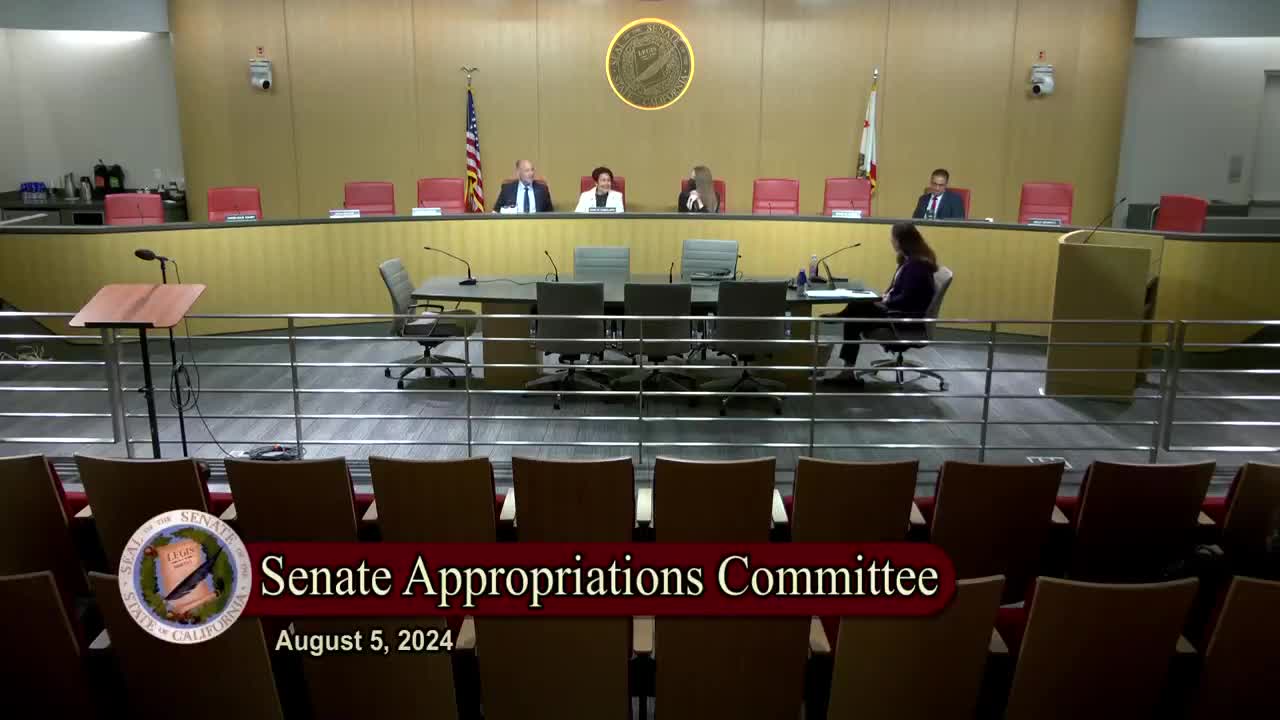 1MIN
Senate Standing Committee on Appropriations
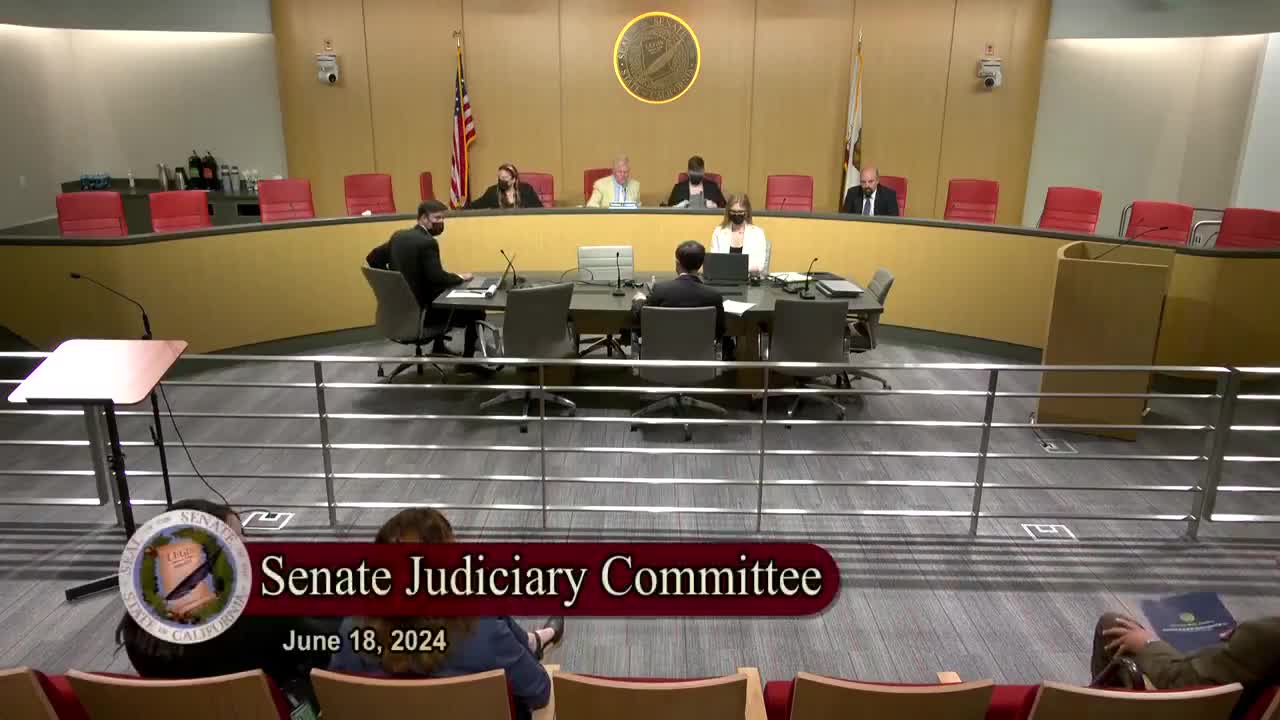 5MIN
Senate Standing Committee on Judiciary
 1MIN
Assembly Floor
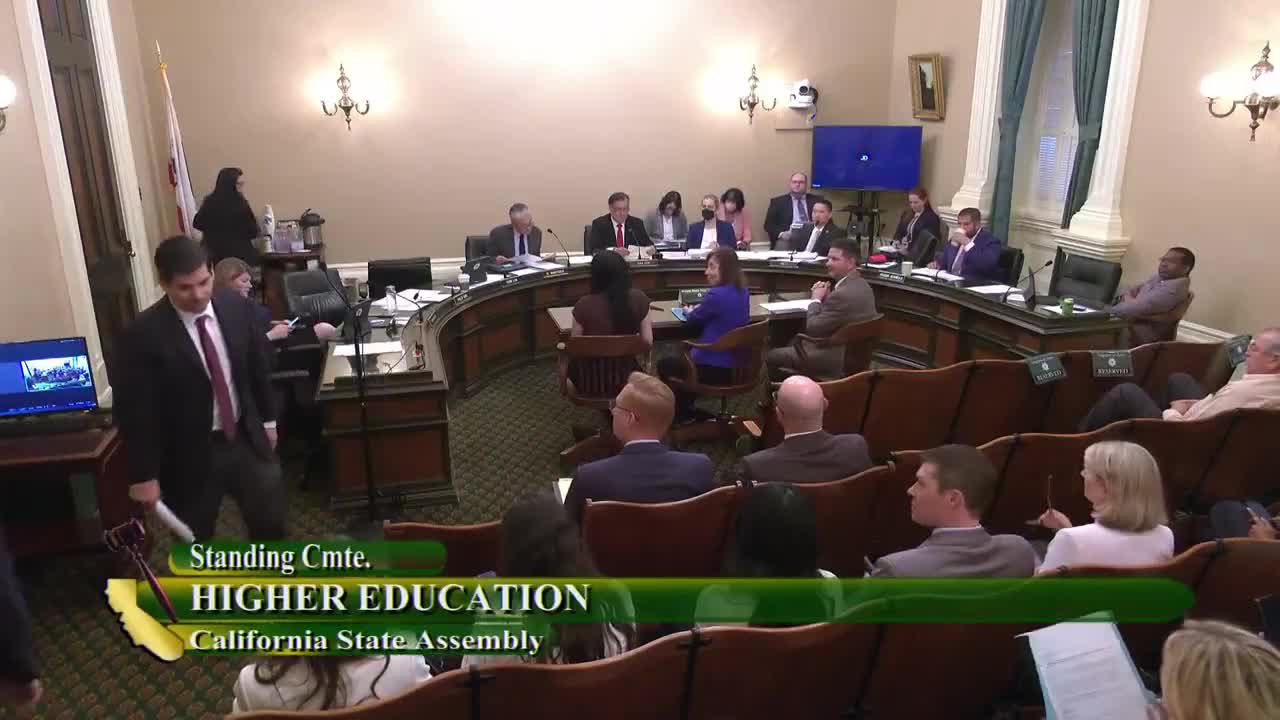 7MIN
Assembly Standing Committee on Higher Education
Bill Author


