AB 1935: Gaming: Indian Gaming Special Distribution Fund.
- Session Year: 2023-2024
- House: Assembly
- Latest Version Date: 2024-07-15
Current Status:
Passed
(2024-07-15: Chaptered by Secretary of State - Chapter 93, Statutes of 2024.)
Introduced
In Committee
First Chamber
In Committee
Second Chamber
Enacted
What does this bill do?
This bill stops California from requiring federally recognized tribes that run casino-style gaming to make quarterly payments into the Indian Gaming Special Distribution Fund for the two-year period from July 1, 2023, through June 30, 2025. It also lets the California Gambling Control Commission, if the Legislature chooses, refund any of those payments tribes already made for that period.
The summary is provided by generative AI which can make mistakes. For original language, please view the details in the table below.
Existing law establishes the Indian Gaming Special Distribution Fund for the receipt and deposit of moneys received by the state from Indian tribes pursuant to the terms of tribal-state gaming compacts, to be available for appropriation by the Legislature for programs designed to address gambling addiction, for support of state and local government agencies impacted by tribal gaming, for regulatory costs incurred by the state in connection with the implementation and administration of tribal gaming, and for payment of shortfalls in the Indian Gaming Revenue Sharing Trust Fund.
Existing law requires the Department of Finance, in consultation with the California Gambling Control Commission, to annually determine if total revenues estimated for the Indian Gaming Special Distribution Fund are anticipated to exceed estimated expenditures, transfers, reasonable reserves, or other adjustments from the fund for the current fiscal year. If so, the commission, upon approval by the department, is required to apply the excess funds to reduce, eliminate, satisfy, or partially satisfy, on a proportionate basis, the pro rata share payments required to be made to the fund by limited gaming tribes.
This bill would, for the 2-year period from July 1, 2023, through June 30, 2025, suspend the payment or collection of any quarterly payments required to be made by any gaming tribe to the fund pursuant to a tribal gaming compact, and would additionally require the commission, at the discretion of the Legislature, to refund any quarterly payment due during that time period that was already made.
This bill would declare that it is to take effect immediately as an urgency statute.
Existing law establishes the Indian Gaming Special Distribution Fund for the receipt and deposit of moneys received by the state from Indian tribes pursuant to the terms of tribal-state gaming compacts, to be available for appropriation by the Legislature for programs designed to address gambling addiction, for support of state and local government agencies impacted by tribal gaming, for regulatory costs incurred by the state in connection with the implementation and administration of tribal gaming, and for payment of shortfalls in the Indian Gaming Revenue Sharing Trust Fund.
Existing law requires the Department of Finance, in consultation with the California Gambling Control Commission, to annually determine if total revenues estimated for the Indian Gaming Special Distribution Fund are anticipated to exceed estimated expenditures, transfers, reasonable reserves, or other adjustments from the fund for the current fiscal year. If so, the commission, upon approval by the department, is required to apply the excess funds to reduce, eliminate, satisfy, or partially satisfy, on a proportionate basis, the pro rata share payments required to be made to the fund by limited gaming tribes.
This bill would, for a period of time to be determined by the Legislature, for the 2-year period from July 1, 2023, through June 30, 2025, suspend the payment or collection of any quarterly payments required to be made by any gaming tribe to the fund pursuant to a tribal gaming compact, and would additionally require the commission, at the discretion of the Legislature, to refund any quarterly payment due during that time period that was already made. The bill would require that the total sum of all moneys not collected or refunded pursuant to these provisions not exceed $83,100,000 and not be less than $20,000,000.
This bill would declare that it is to take effect immediately as an urgency statute.
Existing law establishes the Indian Gaming Special Distribution Fund for the receipt and deposit of moneys received by the state from Indian tribes pursuant to the terms of tribal-state gaming compacts, to be available for appropriation by the Legislature for programs designed to address gambling addiction, for support of state and local government agencies impacted by tribal gaming, for regulatory costs incurred by the state in connection with the implementation and administration of tribal gaming, and for payment of shortfalls in the Indian Gaming Revenue Sharing Trust Fund.
Existing law requires the Department of Finance, in consultation with the California Gambling Control Commission, to annually determine if total revenues estimated for the Indian Gaming Special Distribution Fund are anticipated to exceed estimated expenditures, transfers, reasonable reserves, or other adjustments from the fund for the current fiscal year. If so, the commission, upon approval by the department, is required to apply the excess funds to reduce, eliminate, satisfy, or partially satisfy, on a proportionate basis, the pro rata share payments required to be made to the fund by limited gaming tribes.
This bill would, for a specified period of time, period of time to be determined by the Legislature, suspend the payment or collection of any quarterly payments required to be made by any gaming tribe to the fund pursuant to a tribal gaming compact, and would additionally require the commission commission, at the discretion of the Legislature, to refund any quarterly payment due during that time period that was already made. The bill would require that the total sum of all moneys not collected or refunded pursuant to these provisions not exceed $83,100,000 and not be less than $20,000,000.
Existing law establishes the Indian Gaming Special Distribution Fund for the receipt and deposit of moneys received by the state from Indian tribes pursuant to the terms of tribal-state gaming compacts, to be available for appropriation by the Legislature for programs designed to address gambling addiction, for support of state and local government agencies impacted by tribal gaming, for regulatory costs incurred by the state in connection with the implementation and administration of tribal gaming, and for payment of shortfalls in the Indian Gaming Revenue Sharing Trust Fund.
Existing law requires the Department of Finance, in consultation with the California Gambling Control Commission, to annually determine if total revenues estimated for the Indian Gaming Special Distribution Fund are anticipated to exceed estimated expenditures, transfers, reasonable reserves, or other adjustments from the fund for the current fiscal year. If so, the commission, upon approval by the department, is required to apply the excess funds to reduce, eliminate, satisfy, or partially satisfy, on a proportionate basis, the pro rata share payments required to be made to the fund by limited gaming tribes.
This bill would, for a specified period of time, suspend the payment or collection of any quarterly payments required to be made by any gaming tribe to the fund pursuant to a tribal gaming compact, and would additionally require the commission to refund any quarterly payment due during that time period that was already made.
This bill would express the intent of the Legislature to enact legislation to reduce the current balance in the Indian Gaming Special Distribution Fund pursuant to tribal-state gaming compacts while maintaining sufficient balances to meet the requirements or stipulations of those compacts and existing law.Existing law establishes the Indian Gaming Special Distribution Fund for the receipt and deposit of moneys received by the state from Indian tribes pursuant to the terms of tribal-state gaming compacts, to be available for appropriation by the Legislature for programs designed to address gambling addiction, for support of state and local government agencies impacted by tribal gaming, for regulatory costs incurred by the state in connection with the implementation and administration of tribal gaming, and for payment of shortfalls in the Indian Gaming Revenue Sharing Trust Fund.
Existing law requires the Department of Finance, in consultation with the California Gambling Control Commission, to annually determine if total revenues estimated for the Indian Gaming Special Distribution Fund are anticipated to exceed estimated expenditures, transfers, reasonable reserves, or other adjustments from the fund for the current fiscal year. If so, the commission, upon approval by the department, is required to apply the excess funds to reduce, eliminate, satisfy, or partially satisfy, on a proportionate basis, the pro rata share payments required to be made to the fund by limited gaming tribes.
This bill would express the intent of the Legislature to enact legislation to reduce the current balance in the Indian Gaming Special Distribution Fund pursuant to tribal-state gaming compacts while maintaining sufficient balances to meet the requirements or stipulations of those compacts and existing law.
(a)Notwithstanding any other law and notwithstanding the terms of any tribal-state gaming compact, no tribe shall be required to pay, nor shall the state or any department, agency, or other entity thereof collect, any payment into the Indian Gaming Special Distribution Fund that is due from a tribe for the period of time from the quarter beginning on July 1, 2023, to the quarter ending on June 30, 2025, inclusive.
(b)Notwithstanding any other law, the California Gambling Control Commission shall, at the discretion of the Legislature, refund any payment already paid by a tribe into the Indian Gaming Special Distribution Fund that was due during the period of time described in subdivision (a).
(c)As used in this section, tribe means a federally recognized tribe that is conducting gaming operations in California pursuant to either a tribal-state class III gaming compact with the state or procedures issued by the Secretary of the United States Department of the Interior pursuant to Section 2710(d)(7)(B)(vii) of Title 25 of the United States Code.
SEC. 2.This act is an urgency statute necessary for the immediate preservation of the public peace, health, or safety within the meaning of Article IV of the California Constitution and shall go into immediate effect. The facts constituting the necessity are:
In order to enhance the economic development, stability, and self-sufficiency of the tribes, and to protect the interests of the California public at the earliest possible time, it is necessary that this act take effect immediately.
(a)Notwithstanding any other law and notwithstanding the terms of any tribal-state gaming compact, no tribe shall be required to pay, nor shall the state or any department, agency, or other entity thereof collect, any payment into the Indian Gaming Special Distribution Fund that is due from a tribe for a period of time, as determined by the Legislature. for the period of time from the quarter beginning on July 1, 2023 to the quarter ending on June 30, 2025, inclusive.
(b)Notwithstanding any other law, the California Gambling Control Commission shall, at the discretion of the Legislature, refund any payment already paid by a tribe into the Indian Gaming Special Distribution Fund that was due during the period of time described in subdivision (a).
(c)As used in this section, tribe means a federally recognized tribe that is conducting gaming operations in California pursuant to either a tribal-state class III gaming compact with the state or procedures issued by the Secretary of the United States Department of the Interior pursuant to Section 2710(d)(7)(B)(vii) of Title 25 of the United States Code.
(d)The total sum of all moneys not collected or refunded pursuant to this section shall not exceed eighty-three million and one-hundred thousand dollars ($83,100,000) and shall not be less than twenty million dollars ($20,000,000).SEC. 2.This act is an urgency statute necessary for the immediate preservation of the public peace, health, or safety within the meaning of Article IV of the California Constitution and shall go into immediate effect. The facts constituting the necessity are:
In order to enhance the economic development, stability, and self-sufficiency of the tribes, and to protect the interests of the California public at the earliest possible time, it is necessary that this act take effect immediately.
(a)Notwithstanding any other law and notwithstanding the terms of any tribal-state gaming compact, no tribe shall be required to pay, nor shall the state or any department, agency, or other entity thereof collect, any payment into the Indian Gaming Special Distribution Fund that is due from a tribe for the period of time commencing with the quarter beginning on ____ until the quarter ending on ____. a period of time, as determined by the Legislature.
(b)Notwithstanding any other law, the California Gambling Control Commission shall shall, at the discretion of the Legislature, refund any payment already paid by a tribe into the Indian Gaming Special Distribution Fund that was due during the period of time described in subdivision (a).
(c)As used in this section, tribe means a federally recognized tribe that is conducting gaming operations in California pursuant to either a tribal-state class III gaming compact with the state or procedures issued by the Secretary of the United States Department of the Interior pursuant to Section 2710(d)(7)(B)(vii) of Title 25 of the United States Code.
(d)The total sum of all moneys not collected or refunded pursuant to this section shall not exceed eighty-three million and one-hundred thousand dollars ($83,100,000) and shall not be less than twenty million dollars ($20,000,000).
(a)Notwithstanding any other law and notwithstanding the terms of any tribal-state gaming compact, no tribe shall be required to pay, nor shall the state or any department, agency, or other entity thereof collect, any payment into the Indian Gaming Special Distribution Fund that is due from a tribe for the period of time commencing with the quarter beginning on ____ until the quarter ending on ____.
(b)Notwithstanding any other law, the California Gambling Control Commission shall refund any payment already paid by a tribe into the Indian Gaming Special Distribution Fund that was due during the period of time described in subdivision (a).
(c)As used in this section, tribe means a federally recognized tribe that is conducting gaming operations in California pursuant to either a tribal-state class III gaming compact with the state or procedures issued by the Secretary of the United States Department of the Interior pursuant to Section 2710(d)(7)(B)(vii) of Title 25 of the United States Code.
SECTION 1.It is the intent of the Legislature to enact legislation to reduce the current balance in the Indian Gaming Special Distribution Fund pursuant to tribal-state gaming compacts, while maintaining sufficient balances to meet the requirements or stipulations of those compacts and Section 12012.85 of the Government Code.It is the intent of the Legislature to enact legislation to reduce the current balance in the Indian Gaming Special Distribution Fund pursuant to tribal-state gaming compacts, while maintaining sufficient balances to meet the requirements or stipulations of those compacts and Section 12012.85 of the Government Code.
|
Date
|
Status
|
|---|---|
| Jul 15, 2024 | Chaptered by Secretary of State - Chapter 93, Statutes of 2024. |
| Jul 15, 2024 | Approved by the Governor. |
| Jul 3, 2024 | Enrolled and presented to the Governor at 3 p.m. |
| Jun 27, 2024 | In Assembly. Ordered to Engrossing and Enrolling. |
| Jun 27, 2024 | Read third time. Urgency clause adopted. Passed. Ordered to the Assembly. (Ayes 40. Noes 0.). |
| Jun 26, 2024 | Read second time. Ordered to third reading. |
| Jun 26, 2024 | From committee: Do pass. (Ayes 7. Noes 0.) (June 26). |
| Jun 24, 2024 | Joint Rule 62(a) suspended. (Ayes 30. Noes 6. Page 4666.) |
| Jun 11, 2024 | From committee: Do pass and re-refer to Com. on APPR with recommendation: To Consent Calendar. (Ayes 15. Noes 0.) (June 11). Re-referred to Com. on APPR. |
| May 29, 2024 | Referred to Com. on G.O. |
| May 22, 2024 | In Senate. Read first time. To Com. on RLS. for assignment. |
| May 21, 2024 | Read third time. Urgency clause adopted. Passed. Ordered to the Senate. (Ayes 74. Noes 0. Page 5357.). |
| May 20, 2024 | Read second time. Ordered to third reading. |
| May 16, 2024 | Read second time and amended. Ordered returned to second reading. |
| May 16, 2024 | From committee: Amend, and do pass as amended. (Ayes 11. Noes 0.) (May 16). |
| May 16, 2024 | Assembly Rule 63 suspended. |
| May 1, 2024 | In committee: Set, first hearing. Referred to APPR. suspense file. |
| Apr 18, 2024 | From committee: Do pass and re-refer to Com. on APPR. with recommendation: To Consent Calendar. (Ayes 21. Noes 0.) (April 17). Re-referred to Com. on APPR. |
| Apr 15, 2024 | Re-referred to Com. on G.O. |
| Apr 11, 2024 | From committee chair, with author's amendments: Amend, and re-refer to Com. on G.O. Read second time and amended. |
| Mar 19, 2024 | Re-referred to Com. on G.O. |
| Mar 18, 2024 | Referred to Com. on G.O. |
| Mar 18, 2024 | From committee chair, with author's amendments: Amend, and re-refer to Com. on G.O. Read second time and amended. |
| Jan 26, 2024 | From printer. May be heard in committee February 25. |
| Jan 25, 2024 | Read first time. To print. |
|
Date
|
Description
|
Location
|
Votes
|
|
|---|---|---|---|---|
| Jun 27, 2024 | Assembly 3rd Reading AB1935 Blanca Rubio By Dodd Urgency Clause | Senate Floor |
Passed |
|
| Jun 26, 2024 | Do pass | Senate Standing Committee on Appropriations |
Passed |
|
| Jun 11, 2024 | Do pass, but first be re-referred to the Committee on [Appropriations] with the recommendation: To Consent Calendar | Senate Standing Committee on Governmental Organization |
Passed |
|
| May 21, 2024 | AB 1935 Blanca Rubio Third Reading Urgency | Assembly Floor |
Passed |
|
| May 16, 2024 | Do pass as amended. | Assembly Standing Committee on Appropriations |
Passed |
|
| Apr 17, 2024 | Do pass and be re-referred to the Committee on [Appropriations] with recommendation: To Consent Calendar | Assembly Standing Committee on Governmental Organization |
Passed |
This list shows positions taken on this bill by organizations on the date displayed, which is linked to the original source.
Positions by individuals are not included.
|
Organization
|
Position
|
Date
|
|---|---|---|
| California Nations Indian Gaming Association | ** Support | |
| Federated Indians Of Graton Rancheria | ** Support | |
| Morongo Band Of Mission Indians | ** Support | |
| Morongo Band Of Mission Indians | * Support | Jun 26, 2024 |
| Santa Ynez Band Of Chumash Indians | ** Support | |
| Senega | * Support | Jun 26, 2024 |
| Soboba band of Luceno Indians | * Support | Jun 26, 2024 |
SENATE COMMITTEE ON APPROPRIATIONS
Senator Anna Caballero, Chair
2023 - 2024 Regular Session
AB 1935 (Blanca Rubio) - Gaming: Indian Gaming Special Distribution Fund
Version: May 16, 2024 | Policy Vote: G.O. 15 - 0 |
Urgency: Yes | Mandate: No |
Hearing Date: June 26, 2024 | Consultant: Janelle Miyashiro |
Bill Summary:
AB 1935 suspends, from July 1, 2023 through June 30, 2025, the payment or collection of any quarterly payments required to be made by any gaming tribe to the Indian Gaming Special Distribution Fund (SDF) pursuant to a tribal-state gaming compact. AB 1935 also requires the Gambling Control Commission (GCC), at the discretion of the Legislature, to refund any payment already paid by a tribe into the SDF that was due during the specified time period.
Fiscal Impact:
- Minor and absorbable administrative costs to the GCC to suspend SDF payment collections and to refund payments already paid to the SDF.
- Total SDF revenue reduction of approximately $88.7 million. As of May 16, 2024, there are 33 tribes contributing to the SDF. GCC notes that due to the current solvency of the SDF and projected revenue balance of $224.1 million after expenditures for Fiscal Year 2024-25, there will be sufficient funds in the SDF to continue covering the state’s regulatory costs.
Background:
Existing law creates the SDF in the State Treasury for the receipt of revenue contributions made by tribal governments pursuant to Tribal-State Gaming Compacts and authorizes the Legislature to appropriate money from the SDF for the following purposes:
- Grants for programs designed to address gambling addiction.
- Grants for the support of state and local government agencies impacted by tribal government gaming.
- Compensation for regulatory costs incurred by the GCC and the Department of Justice (DOF) in connection with the implementation and administration of compacts.
- Payment of shortfalls that may occur in the Revenue Sharing Trust Fund (RSTF).
- Disbursements for the purpose of implementing the terms of tribal labor relations ordinances promulgated in accordance with the terms of tribal-state gaming compacts.
- Any other purpose specified by law.
On August 25, 2022, the California State Auditor (Auditor) released an audit report titled "Indian Gaming Special Distribution Fund." The Auditor reviewed records and processes at the GCC, the Department of Finance (DOF), the DOJ, and the California Department of Public Health (CDPH). The report concluded that the State could better manage the SDF and its problem gambling programs. In general, the Auditor concluded the following:
In our office’s audit of the management and use of the SDF, we determined that the State has not effectively managed the distribution fund, and it has allowed the fund to accumulate an excessive reserve. To reach this conclusion, we reviewed records and processes at the Commission, the DOF, the DOJ, and the CDPH. The Commission and DOF have not determined what constitutes a prudent reserve for the fund and its current reserve would cover nearly four years’ expenditures, much more than what a best practice indicates is appropriate. This excessive fund reserve has grown, in part, because the State has not aligned the distribution fund fees that it collects with the State’s costs to regulate tribal gaming. Furthermore, DOJ has not reimbursed the distribution fund for more than half of the hours that we identified in a previous audit as having been inappropriately charged to the distribution fund. We also found that DOJ continues to improperly charge the distribution fund for nontribal regulatory activities, and CDPH has not demonstrated that it effectively monitors or evaluates the problem gambling prevention and treatment programs for which the distribution fund pays.
On April 22, 2024, the Governor’s Office and leadership from the Tribal Alliance of Sovereign Indian Nations (TASIN) and California Nations Indian Gaming Association (CNIGA) met to discuss proposals to reduce the balance of the SDF. According to the Governor’s Office, the agreement from this meeting, as codified by this bill, will reduce the balance in the SDF by approximately $83 million through a refund and pause in payments for the two-year period beginning July 1, 2023 through June 30, 2025 pursuant to a tribal gaming compact.
Proposed Law:
- Provides that no tribe shall be required to pay, or the state or any state entity shall be required to collect, any payment into the SDF for the period of time from the quarter beginning on July 1, 2023 to the quarter ending on June 30, 2025, inclusive.
- Requires, at the Legislature’s discretion, the GCC shall, at the Legislature’s discretion, refund any payment already paid by a tribe into the SDF that was due during the specified period.
- Defines “tribe” as a federally recognized tribe that is conducting gaming operations in California pursuant to a tribal-state class III gaming compact with the state.
- States the measure is an urgency statute necessary to enhance the economic development, stability, and self-sufficiency of the tribes, and to protect the interests of the California public at the earliest possible time.
-- END --
SENATE RULES COMMITTEE Office of Senate Floor Analyses (916) 651-1520 Fax: (916) 327-4478 | AB 1935 |
THIRD READING
Bill No: AB 1935
Author: Blanca Rubio (D)
Amended: 5/16/24 in Assembly
Vote: 27 - Urgency
SENATE GOVERNMENTAL ORG. COMMITTEE: 15-0, 6/11/24
AYES: Dodd, Wilk, Alvarado-Gil, Archuleta, Ashby, Bradford, Glazer, Jones, Nguyen, Ochoa Bogh, Padilla, Portantino, Roth, Rubio, Seyarto
NO VOTE RECORDED: Smallwood-Cuevas
SENATE APPROPRIATIONS COMMITTEE: 7-0, 6/26/24
AYES: Caballero, Jones, Ashby, Becker, Bradford, Seyarto, Wahab
ASSEMBLY FLOOR: 74-0, 5/21/24 - See last page for vote
SUBJECT: Gaming: Indian Gaming Special Distribution Fund
SOURCE: Author
DIGEST: This bill suspends, for the two-year period from July 1, 2023, through June 30, 2025, the payment or collection of any quarterly payments required to be made by any gaming tribe to the Indian Gaming Special Distribution Fund (SDF) pursuant to a tribal-state gaming compact.
ANALYSIS:
Existing law:
- Establishes the Bureau of Gambling Control (Bureau) within the Department of Justice (DOJ). The Bureau, California Gambling Control Commission (Commission) and California Tribal Gaming Agencies (TGA) are jointly responsible for ensuring the fair and honest operation of tribal gaming in California in accordance with the Indian Gaming Regulatory Act of 1998 (IGRA).
- Provides, under IGRA, for the negotiation and execution of compacts for the purpose of authorizing Class III gaming on Indian lands within a state.
- Authorizes the Governor, under the California Constitution, to negotiate and conclude compacts, subject to ratification by the Legislature.
- Ratifies a number of tribal-state gaming compacts, and amendments of tribal-state gaming compacts between the State of California and specified Indian tribes.
- Establishes the SDF for the receipt and deposit of moneys received by the state from Indian tribes pursuant to the terms of tribal-state gaming compacts, to be available for appropriation by the Legislature for, among other things, regulatory costs incurred by the state in connection with the implementation and administration of tribal gaming.
- Provides, under the Gambling Control Act (Act), for the licensure and regulation of various legalized gambling activities and gambling establishments by the Commission and the enforcement of those activities and establishments by the Bureau.
- Requires DOJ, by no later than June 1, 2025, to develop and implement a formal time tracking policy and procedure for employees assigned to the Bureau to track those hours and others expenses that can be charged to the SDF.
This bill:
- Suspends, for the two-year period from July 1, 2023, through June 30, 2025, the payment or collection of any quarterly payments required to be made by any gaming tribe to the SDF pursuant to a tribal-state gaming compact.
- Requires the Commission, at the discretion of the Legislature, to refund any payment already paid by a Tribe into the SDF that was due during the time period described in the bill.
- Includes an Urgency Clause.
Background
- Author Statement. According to the author’s office, “recently signed and ratified Tribal-State Class III Gaming Compacts and Secretarial Procedures have changed the dynamics of future payments into the SDF. AB 1935 strikes a fair balance between the SDF’s long term financial stability and the ongoing dialogue and agreement between tribal interests and the governor’s office relating to different proposals to reduce the balance in the fund.”
- Tribal Gaming in California. In the March 2000 statewide primary election, voters approved Proposition 1A, which amended the California Constitution to allow the Governor to negotiate and enter into compacts authorizing gaming on tribal lands in California, subject to ratification by the Legislature. The statutory framework for the compacts had been established in 1988, when the U.S. Congress enacted IGRA. Before the IGRA, there was no federal gaming structure. Only federally recognized tribes have the right to operate casinos and to conduct other gaming activities under the IGRA. The stated purposes of IGRA include providing a legislative basis for the operation/regulation of Indian gaming, protecting gaming as a means of generating revenue for the tribes, encouraging economic development of these tribes, and protecting the enterprises from negative influences. IGRA authorizes Indian gaming through compacts between the State and federally recognized Indian tribes.
The State entered into 61 tribal compacts in 1999. Among other things, the compacts mandated that tribes contribute to the SDF. Since then, the State has signed new compacts and revised existing ones, all of which call for various amounts of contributions from the tribes into the SDF. Currently, 71 Tribes have signed and ratified Tribal-State gaming compacts with the State of California, and there are Secretarial Procedures in place with seven Tribes. The issuance of recent gaming procedures comes after a July 2022 decision from the Ninth Circuit Court of Appeals, where the majority determined that California had negotiated with several tribes in bad faith under the IGRA.
- State Agencies and Tribal Gaming. The Governor’s Office generally does the following: a) Oversees and implements government-to-government consultation between the Governor’s administration and California tribes; b) Negotiates and executes compacts with tribes; and c) Facilitates communication and consultations between tribes and state agencies.
The Commission generally does the following: a) Assures that licenses, approvals, and permits are not issued to or held by unqualified or disqualified persons; b) Serves as the administrator of the SDF; c) Distributes tribal gaming revenues to tribes without compacts or limited gaming; and d) Determines whether specific tribal employees and tribal vendors are suitable for employment.
The Bureau generally does the following: a) Conducts background investigations for specific tribal employees and tribal vendors and provides hiring recommendations to the Commission; b) Investigates complaints against holders of gambling licenses by members of the public; and c) Conducts audits of distribution fund fees.
- Indian Gaming Special Distribution Fund. Existing law creates the SDF in the State Treasury for the receipt of revenue contributions made by tribal governments pursuant to Tribal-State Gaming Compacts and authorizes the Legislature to appropriate money from the SDF for the following purposes: grants for programs designed to address gambling addiction; grants for the support of state and local government agencies impacted by tribal government gaming; compensation for regulatory costs incurred by the Commission and the DOJ in connection with the implementation and administration of compacts; payment of shortfalls that may occur in the Revenue Sharing Trust Fund (RSTF); disbursements for the purpose of implementing the terms of tribal labor relations ordinances promulgated in accordance with the terms of tribal-state gaming compacts; and, any other purpose specified by law.
- California State Auditor Audit of the SDF. On August 25, 2022, the California State Auditor (Auditor) released an audit report titled "Indian Gaming Special Distribution Fund." The Auditor reviewed records and processes at the Commission, the Department of Finance (DOF), the DOJ, and the California Department of Public Health (CDPH). The report concluded that the State could better manage the SDF and its problem gambling programs. In general, the Auditor’s concluded the following:
In our office’s audit of the management and use of the SDF, we determined that the State has not effectively managed the distribution fund, and it has allowed the fund to accumulate an excessive reserve. To reach this conclusion, we reviewed records and processes at the Commission, the DOF, the DOJ, and the CDPH. The Commission and DOF have not determined what constitutes a prudent reserve for the fund and its current reserve would cover nearly four years’ expenditures, much more than what a best practice indicates is appropriate. This excessive fund reserve has grown, in part, because the State has not aligned the distribution fund fees that it collects with the State’s costs to regulate tribal gaming. Furthermore, DOJ has not reimbursed the distribution fund for more than half of the hours that we identified in a previous audit as having been inappropriately charged to the distribution fund. We also found that DOJ continues to improperly charge the distribution fund for nontribal regulatory activities, and CDPH has not demonstrated that it effectively monitors or evaluates the problem gambling prevention and treatment programs for which the distribution fund pays.
According to the Governor’s office, the agreement, as codified by this bill, will reduce the balance in the SDF by approximately $83 million through a refund and pause in payments for the two-year period beginning July 1, 2023 through June 30, 2025 pursuant to a tribal gaming compact. Refunds are estimated at about $37.5 million, while ceased payments are estimated at approximately $45.5 million. This bill takes into account the current and future interests of the respective parties, as well as the overall solvency of the SDF.
Related/Prior Legislation
AB 553 (Ramos, Chapter 533, Statutes of 2023) required DOJ to develop and implement a policy and procedure for employees assigned to the Bureau to formally track those hours and other expenses that can be charged to the SDF, as specified.
AB 880 (Gray, Chapter 801, Statutes of 2018) established the Tribal Nation Grant Fund (TNGF) Panel and the TNGF Program, and authorized the TNGF Panel to award grants from available funds in the TNGF to nongaming and limited-gaming tribes, as specified.
AB 1355 (Gray, Chapter 118, Statutes of 2016) specified that the TNGF reflects a vision of facilitating the development of tribal institutions and improving the quality of life of tribal people throughout the state.
AB 2914 (Governmental Organization Committee, Chapter 110, Statutes of 2016) clarified provisions in law relating to the RSTF for the purpose of making distributions to eligible Indian Tribes.
AB 1916 (Hall, Chapter 600, Statutes of 2014) created the TGNF in the State Treasury, to be administered by the Commission, for the receipt and deposit of moneys received by the state from Indian tribes, pursuant to terms of tribal-state gaming compacts.
AB 1417 (Governmental Organization, Chapter 736, Statutes of 2011) appropriated $9.1 million form the SDF to the Commission to provide grants to local agencies for the purpose of mitigating the adverse impacts of tribal gaming.
AB 158 (Torrico, Chapter 754, Statutes of 2008) enacted several recommendations proposed by the Auditor relative to the allocation and uses of proceeds from the SDF.
AB 621 (Battin, Chapter 858, Statutes of 2003) established priorities and procedures for funding to local governments from the SDF for the purpose of mitigating impacts form tribal casinos.
AB 673 (Horton, Chapter 210, Statutes of 2003) provided for allocation of funds from the SDF for the purpose of backfilling shortfalls in the RSTF, for problem gambling prevention programs.
FISCAL EFFECT: Appropriation: No Fiscal Com.: Yes Local: No
SUPPORT: (Verified 6/25/24)
Augustine Band of Cahuilla Indians
California Nations Indian Gaming Association
Federated Indians of Graton Rancheria
Morongo Band of Mission Indians
Santa Ynez Band of Chumash Indians
OPPOSITION: (Verified 6/25/24)
None received
ARGUMENTS IN SUPPORT: According to Califorina Nations Indian Gaming Association, “the SDF was originally created in the 1999 gaming compacts for the purpose of reimbursing the state for the cost of regulation of tribal gaming, impacts on local communities, Indian Gaming Revenue Sharing Trust Fund backfill, and funding the state’s problem gambling program. However, two state audits, one done at the behest of CNIGA, revealed widespread mismanagement of the fund by the state and noted the SDF Surplus far exceeds standard recommended practices for such a fund. The State Auditor termed the $162 million surplus as ‘excessive’. Despite the growing surplus, the state continues to bill tribal governments as required under our compacts. AB 1935 reflects a fair and equitable compromise between your administration and tribes that would keep the SDF solvent and still allow for over $80 million in surplus to be suspended and refunded back to those tribes that paid into the SDF.”
ASSEMBLY FLOOR: 74-0, 5/21/24
AYES: Addis, Aguiar-Curry, Alanis, Alvarez, Arambula, Bains, Bauer-Kahan, Bennett, Berman, Boerner, Bonta, Bryan, Calderon, Juan Carrillo, Wendy Carrillo, Chen, Connolly, Davies, Dixon, Essayli, Flora, Mike Fong, Vince Fong, Gallagher, Garcia, Gipson, Grayson, Haney, Hart, Hoover, Irwin, Jackson, Jones-Sawyer, Kalra, Lackey, Lee, Low, Lowenthal, Maienschein, McCarty, McKinnor, Muratsuchi, Stephanie Nguyen, Ortega, Pacheco, Papan, Jim Patterson, Joe Patterson, Pellerin, Petrie-Norris, Quirk-Silva, Ramos, Rendon, Reyes, Luz Rivas, Rodriguez, Blanca Rubio, Sanchez, Santiago, Schiavo, Soria, Ta, Ting, Valencia, Villapudua, Waldron, Wallis, Ward, Weber, Wicks, Wilson, Wood, Zbur, Robert Rivas
NO VOTE RECORDED: Cervantes, Megan Dahle, Friedman, Gabriel, Holden, Mathis
Prepared by: Felipe Lopez / G.O. / (916) 651-1530
6/26/24 20:19:49
**** END ****
SENATE COMMITTEE ON GOVERNMENTAL ORGANIZATION
Senator Bill Dodd
Chair
2023 - 2024 Regular
Bill No: 1935 Hearing Date: 6/11/2024
Author: | |||
Version: | 5/16/2024 Amended | ||
Urgency: | Yes | Fiscal: | Yes |
Consultant: | Felipe Lopez | ||
SUBJECT: Gaming: Indian Gaming Special Distribution Fund
DIGEST: This bill suspends, for the two-year period from July 1, 2023, through June 30, 2025, the payment or collection of any quarterly payments required to be made by any gaming tribe to the Indian Gaming Special Distribution Fund (SDF) pursuant to a tribal-state gaming compact.
ANALYSIS:
Existing law:
- Establishes the Bureau of Gambling Control (Bureau) within the Department of Justice (DOJ). The Bureau, California Gambling Control Commission (Commission) and California Tribal Gaming Agencies (TGA) are jointly responsible for ensuring the fair and honest operation of tribal gaming in California in accordance with the Indian Gaming Regulatory Act of 1998 (IGRA).
- Provides, under IGRA, for the negotiation and execution of compacts for the purpose of authorizing Class III gaming on Indian lands within a state.
- Authorizes the Governor, under the California Constitution, to negotiate and conclude compacts, subject to ratification by the Legislature.
- Ratifies a number of tribal-state gaming compacts, and amendments of tribal-state gaming compacts between the State of California and specified Indian tribes.
- Establishes the SDF for the receipt and deposit of moneys received by the state from Indian tribes pursuant to the terms of tribal-state gaming compacts, to be available for appropriation by the Legislature for, among other things, regulatory costs incurred by the state in connection with the implementation and administration of tribal gaming.
- Provides, under the Gambling Control Act (Act), for the licensure and regulation of various legalized gambling activities and gambling establishments by the Commission and the enforcement of those activities and establishments by the Bureau.
- Requires DOJ, by no later than June 1, 2025, to develop and implement a formal time tracking policy and procedure for employees assigned to the Bureau to track those hours and others expenses that can be charged to the SDF.
This bill:
- Suspends, for the two-year period from July 1, 2023, through June 30, 2025, the payment or collection of any quarterly payments required to be made by any gaming tribe to the SDF pursuant to a tribal-state gaming compact.
- Requires the Commission, at the discretion of the Legislature, to refund any payment already paid by a Tribe into the SDF that was due during the time period described in the bill.
- Includes an Urgency Clause.
Background
Author Statement. According to the author’s office, “recently signed and ratified Tribal-State Class III Gaming Compacts and Secretarial Procedures have changed the dynamics of future payments into the SDF. AB 1935 strikes a fair balance between the SDF’s long term financial stability and the ongoing dialogue and agreement between tribal interests and the governor’s office relating to different proposals to reduce the balance in the fund.”
Tribal Gaming in California. In the March 2000 statewide primary election, voters approved Proposition 1A, which amended the California Constitution to allow the Governor to negotiate and enter into compacts authorizing gaming on tribal lands in California, subject to ratification by the Legislature. The statutory framework for the compacts had been established in 1988, when the U.S. Congress enacted IGRA. Before the IGRA, there was no federal gaming structure. Only federally recognized tribes have the right to operate casinos and to conduct other gaming activities under the IGRA. The stated purposes of IGRA include providing a legislative basis for the operation/regulation of Indian gaming, protecting gaming as a means of generating revenue for the tribes, encouraging economic development of these tribes, and protecting the enterprises from negative influences. IGRA authorizes Indian gaming through compacts between the State and federally recognized Indian tribes.
The State entered into 61 tribal compacts in 1999. Among other things, the compacts mandated that tribes contribute to the SDF. Since then, the State has signed new compacts and revised existing ones, all of which call for various amounts of contributions from the tribes into the SDF. Currently, 71 Tribes have signed and ratified Tribal-State gaming compacts with the State of California, and there are Secretarial Procedures in place with seven Tribes. The issuance of recent gaming procedures comes after a July 2022 decision from the Ninth Circuit Court of Appeals, where the majority determined that California had negotiated with several tribes in bad faith under the IGRA.
State Agencies and Tribal Gaming. The Governor’s Office generally does the following: 1) Oversees and implements government-to-government consultation between the Governor’s administration and California tribes; 2) Negotiates and executes compacts with tribes; and 3) Facilitates communication and consultations between tribes and state agencies.
The Commission generally does the following: 1) Assures that licenses, approvals, and permits are not issued to or held by unqualified or disqualified persons; 2) Serves as the administrator of the SDF; 3) Distributes tribal gaming revenues to tribes without compacts or limited gaming; and 4) Determines whether specific tribal employees and tribal vendors are suitable for employment.
The Bureau generally does the following: 1) Conducts background investigations for specific tribal employees and tribal vendors and provides hiring recommendations to the Commission; 2) Investigates complaints against holders of gambling licenses by members of the public; and 3) Conducts audits of distribution fund fees.
Indian Gaming Special Distribution Fund. Existing law creates the SDF in the State Treasury for the receipt of revenue contributions made by tribal governments pursuant to Tribal-State Gaming Compacts and authorizes the Legislature to appropriate money from the SDF for the following purposes: grants for programs designed to address gambling addiction; grants for the support of state and local government agencies impacted by tribal government gaming; compensation for regulatory costs incurred by the Commission and the DOJ in connection with the implementation and administration of compacts; payment of shortfalls that may occur in the Revenue Sharing Trust Fund (RSTF); disbursements for the purpose of implementing the terms of tribal labor relations ordinances promulgated in accordance with the terms of tribal-state gaming compacts; and, any other purpose specified by law.
California State Auditor Audit of the SDF. On August 25, 2022, the California State Auditor (Auditor) released an audit report titled "Indian Gaming Special Distribution Fund." The Auditor reviewed records and processes at the
Commission, the Department of Finance (DOF), the DOJ, and the California Department of Public Health (CDPH). The report concluded that the State could better manage the SDF and its problem gambling programs. In general, the Auditor’s concluded the following:
In our office’s audit of the management and use of the SDF, we determined that the State has not effectively managed the distribution fund, and it has allowed the fund to accumulate an excessive reserve. To reach this conclusion, we reviewed records and processes at the Commission, the DOF, the DOJ, and the CDPH. The Commission and DOF have not determined what constitutes a prudent reserve for the fund and its current reserve would cover nearly four years’ expenditures, much more than what a best practice indicates is appropriate. This excessive fund reserve has grown, in part, because the State has not aligned the distribution fund fees that it collects with the State’s costs to regulate tribal gaming. Furthermore, DOJ has not reimbursed the distribution fund for more than half of the hours that we identified in a previous audit as having been inappropriately charged to the distribution fund. We also found that DOJ continues to improperly charge the distribution fund for nontribal regulatory activities, and CDPH has not demonstrated that it effectively monitors or evaluates the problem gambling prevention and treatment programs for which the distribution fund pays.
According to the Governor’s office, the agreement, as codified by this bill, will reduce the balance in the SDF by approximately $83 million through a refund and pause in payments for the two-year period beginning July 1, 2023 through June 30, 2025 pursuant to a tribal gaming compact. Refunds are estimated at about $37.5 million, while ceased payments are estimated at approximately $45.5 million. This bill takes into account the current and future interests of the respective parties, as well as the overall solvency of the SDF.
Prior/Related Legislation
AB 553 (Ramos, Chapter 533, Statutes of 2023) requires DOJ to develop and implement a policy and procedure for employees assigned to the Bureau to formally track those hours and other expenses that can be charged to the SDF, as specified.
AB 880 (Gray, Chapter 801, Statutes of 2018) established the Tribal Nation Grant Fund (TNGF) Panel and the TNGF Program, and authorized the TNGF Panel to award grants from available funds in the TNGF to nongaming and limited-gaming tribes, as specified.
AB 1355 (Gray, Chapter 118, Statutes of 2016) specified that the TNGF reflects a vision of facilitating the development of tribal institutions and improving the quality of life of tribal people throughout the state.
AB 2914 (Governmental Organization Committee, Chapter 110, Statutes of 2016) clarified provisions in law relating to the RSTF for the purpose of making distributions to eligible Indian Tribes.
AB 1916 (Hall, Chapter 600, Statutes of 2014) created the TGNF in the State Treasury, to be administered by the Commission, for the receipt and deposit of moneys received by the state from Indian tribes, pursuant to terms of tribal-state gaming compacts.
AB 1417 (Governmental Organization, Chapter 736, Statutes of 2011) appropriated $9.1 million form the SDF to the Commission to provide grants to local agencies for the purpose of mitigating the adverse impacts of tribal gaming.
AB 158 (Torrico, Chapter 754, Statutes of 2008) enacted several recommendations proposed by the Auditor relative to the allocation and uses of proceeds from the SDF.
AB 621 (Battin, Chapter 858, Statutes of 2003) established priorities and procedures for funding to local governments from the SDF for the purpose of mitigating impacts form tribal casinos.
AB 673 (Horton, Chapter 210, Statutes of 2003) provided for allocation of funds from the SDF for the purpose of backfilling shortfalls in the RSTF, for problem gambling prevention programs.
FISCAL EFFECT: Appropriation: Fiscal Com.: Local:
SUPPORT:
Augustine Band of Cahuilla Indians
California Nations Indian Gaming Association (CNIGA)
Morongo Band of Mission Indians
Santa Ynez Band of Chumash Indians
OPPOSITION:
None received
ARGUMENTS IN SUPPORT: According to CNIGA, “the SDF was originally created in the 1999 gaming compacts for the purpose of reimbursing the state for the cost of regulation of tribal gaming, impacts on local communities, Indian Gaming Revenue Sharing Trust Fund backfill, and funding the state’s problem gambling program. However, two state audits, one done at the behest of CNIGA, revealed widespread mismanagement of the fund by the state and noted the SDF Surplus far exceeds standard recommended practices for such a fund. The State Auditor termed the $162 million surplus as ‘excessive’. Despite the growing surplus, the state continues to bill tribal governments as required under our compacts. AB 1935 reflects a fair and equitable compromise between your administration and tribes that would keep the SDF solvent and still allow for over $80 million in surplus to be suspended and refunded back to those tribes that paid into the SDF.”
ASSEMBLY THIRD READING
ATR Bill Id:AB 1935
Author:(Blanca Rubio)
As Amended Ver:May 16, 2024
2/3 vote. Urgency
SUMMARY
This bill would, for the 2-year period from July 1, 2023, through June 30, 2025, suspend the payment or collection of any quarterly payments required to be made by any gaming tribe to the Indian Gaming Special Distribution Fund (IGSDF) pursuant to a tribal gaming compact, and would additionally require the California Gambling Control Commission (CGCC), to refund any quarterly payment due during that time period that was already made, as specified.
Major Provisions
1) Provides that notwithstanding the terms of any tribal-state gaming compact, no tribe shall be required to pay, nor shall the state or any department, agency, or other entity thereof collect, any payment into the IGSDF that is due from a tribe for the period of time from the quarter beginning on July 1, 2023 to the quarter ending on June 30, 2025, inclusive.
2) Provides that the CGCC shall, at the discretion of the Legislature, refund any payment already paid by a tribe into the IGSDF that was due during the period of time, as described.
3) Defines "tribe" to mean a federally recognized tribe that is conducting gaming operations in California pursuant to either a tribal-state class III gaming compact with the state or procedures issued by the Secretary of the United States Department of the Interior pursuant to Section 2710(d)(7)(B)(vii) of Title 25 of the United States Code.
4) Contains an urgency clause.
COMMENTS
Background.
In the March 2000 statewide primary election, voters approved Proposition 1A, which amended the California Constitution to allow the Governor to negotiate and enter into compacts authorizing gaming on tribal lands in California, subject to ratification by the Legislature. The statutory framework for the compacts had been established in 1988, when the U.S. Congress enacted the Indian Gaming Regulatory Act (IGRA). Before the IGRA, there was no federal gaming structure. Only federally recognized tribes have the right to operate casinos and to conduct other gaming activities under the IGRA. The stated purposes of IGRA include providing a legislative basis for the operation/regulation of Indian gaming, protecting gaming as a means of generating revenue for the tribes, encouraging economic development of these tribes, and protecting the enterprises from negative influences. IGRA authorizes Indian gaming through compacts between the State and federally recognized Indian tribes.
The State entered into 61 tribal compacts starting in 1999. Among other things, the compacts mandated that tribes contribute to the IGSDF. Since then, the State has signed new compacts and revised existing ones, all of which call for various amounts of contributions from the tribes into the IGSDF. According to state law, the Legislature may appropriate funds from the IGSDF to meet four needs in a priority order. Currently, 71 Tribes have signed and ratified Tribal-State gaming compacts with the state, and there are Secretarial Procedures in place with 7 Tribes. The issuance of recent gaming procedures comes after a July 2022 decision from the Ninth Circuit Court of Appeals, where the majority determined that California had negotiated with several tribes in bad faith under the IGRA.
State law established the IGSDF effective January 2000 to pay for specific activities related to tribal gaming, such as regulating gaming operations and providing funding for programs to treat gambling addiction. A gaming tribe that operates certain gaming activities can enter into a compact with the State that governs the manner that the tribe conducts gaming operations in the state. These compacts subject tribal gaming operations to state regulation. The compacts usually require gaming tribes to pay a specified amount of their revenues from gaming activities into the IGSDF that the State may only use for specific purposes, as stated in law and the individual compact.
General State Agency Roles and Responsibilities Related to Tribal Gaming. The governor's office generally does the following: 1) Oversees and implements government-to-government consultation between the governor's administration and California tribes; 2) Negotiates and executes compacts with tribes; and 3) Facilitates communication and consultations between tribes and state agencies.
The CGCC generally does the following: 1) Assures that licenses, approvals, and permits are not issued to or held by unqualified or disqualified persons; 2) Serves as the administrator of the IGSDF; 3) Distributing tribal gaming revenues to tribes without compacts or limited gaming, and 4) Determines whether specific tribal employees and tribal vendors are suitable for employment.
The Bureau generally does the following: 1) Conducts background investigations for specific tribal employees and tribal vendors and provides hiring recommendations to the CGCC; 2) Investigates complaints against holders of gambling licenses by members of the public; and 3) Conducts audits of distribution fund fees.
Indian Gaming Special Distribution Fund. There is hereby created in the State Treasury a fund called the "Indian Gaming Special Distribution Fund" for the receipt and deposit of moneys received by the state from Indian tribes pursuant to the terms of tribal-state gaming compacts. These moneys shall be available for appropriation by the Legislature. Priority for funding from the IGSDF is in the following descending order:
- Payments to cover shortfalls in the RSTF, which distributes funding to tribes that do not significantly participate in gaming activities.
- Make grants for programs to address gambling addiction.
- The amount appropriated in the annual Budget Act for allocation between the DOJ and the CGCC for regulatory functions that directly relates to Indian gaming.
- Appropriations to support local government agencies impacted by tribal gaming.
Existing law requires the Department of Finance (DOF), in consultation with the CGCC, to annually determine if total revenues estimated for the IGSDF are anticipated to exceed estimated expenditures, transfers, reasonable reserves, or other adjustments from the fund for the current fiscal year. If so, the CGCC, upon approval by the Bureau, is required to apply the excess funds to reduce, eliminate, satisfy, or partially satisfy, on a proportionate basis, the pro rata share payments required to be made to the fund by limited gaming tribes under the terms of their tribal-state gaming compact.
According to the Governor's Budget for 2024-25, the IGSDF is expected to have a fund balance of approximately $224 million, with expenditures of around $40 million to achieve the needs listed above. It should be noted that if a majority of remaining tribes with compacts signed in 1999 and 2000 transition to new compacts or proceed through IGRA's remedial process, then the IGSDF fund balance would likely decrease for 2024-25 to a fund balance of approximately $173 million.
Revenue Sharing Trust Fund. Existing law establishes the RSTF in the State Treasury for the receipt and deposit of funds from gaming device license fees paid into the RSTF in accordance with the terms of specific tribal-state gaming compacts in order to make distributions to designated tribes. Revenue in the RSTF is available to CGCC, upon appropriation by the Legislature, for making distributions of $1.1 million annually to limited gaming (a tribe that operates fewer than 350 gaming devices) and non-compact tribes. For FY 2023-24, the CGCC estimates that 71 Tribes will be eligible for RSTF distributions of $1.1 million each, for total estimated RSTF payments of $78.1 million.
California State Auditor Audit of IGSDF. On August 25, 2022, the California State Auditor (CSA) released an audit report titled "Indian Gaming Special Distribution Fund." The State Auditor reviewed records and processes at the CGCC, the DOF, the DOJ, and the CDPH. The report concluded that the State could better manage the IGSDF and its problem gambling programs. In general, the CSA's conclusions were as follows: "In our office's audit of the management and use of the IGSDF, we determined that the State has not effectively managed the distribution fund, and it has allowed the fund to accumulate an excessive reserve. The GGCC and DOF have not determined what constitutes a prudent reserve for the fund and its current reserve would cover nearly four years' expenditures, much more than what a best practice indicates is appropriate. This excessive fund reserve has grown, in part, because the State has not aligned the distribution fund fees that it collects with the State's costs to regulate tribal gaming."
According to the Author
Recently signed and ratified Tribal-State Class III Gaming Compacts and Secretarial Procedures have changed the dynamics of future payments into the IGSDF. AB 1935 strikes a fair balance between the IGSDF's long-term financial stability and the ongoing dialogue and agreement between tribal interests and the governor's office relating to different proposals to reduce the balance of the fund.
According to the governor's office, the agreement will reduce the balance of the IGSDF by approximately $83 million through a refund and pause in payments for the two-year period beginning July 1, 2023, through June 30, 2025 pursuant to a tribal gaming compact. Refunds are estimated at about $37.5 million, while ceased payments are estimated at approximately $45.5 million. This bill takes into account the current and future interests of the respective parties, as well as the overall solvency of the IGSDF.
Arguments in Support
The California Nations Indian Gaming Association (CNIGA) states that this bill would codify the agreement between the administration and California's federally recognized gaming tribes on how to deal with the excessive surplus in the IGSDF, currently exceeding $160 million in non-general fund dollars. AB 1935 reflects a fair and equitable compromise between the administration and tribes that would keep the IGSDF solvent and still allow for over $80 million in surplus to be suspended and refunded back to those tribes that paid into the IGSDF.
The Santa Ynez Band of Chumash Indians writes, "An August 2022 audit report by the California State Auditor found several major problems with how the IGSDF is being administered by the CGCC. The audit found that the IGSDF has accumulated a grossly excessive reserve balance equivalent to four years of operation, far greater than the two month's reserve balance standard supported by the Government Finance Officers Association. The Chumash appreciates the introduction of AB 1935 to address the multitude of systematic problems the State Auditor identified within the IGSDF."
Arguments in Opposition
None on file
FISCAL COMMENTS
According to the Committee on Appropriations analysis, 1) IGSDF revenue loss of an unknown amount, likely between $20 million and $83.1 million. However, CGCC notes that even with such revenue loss, the IGSDF would remain solvent, with sufficient funds to support regulatory costs.
2) Negligible administrative costs to the CGCC or Department of Justice (DOJ).
VOTES
ASM GOVERNMENTAL ORGANIZATION: 21-0-1
YES: Blanca Rubio, Lackey, Addis, Bains, Lee, Davies, Dixon, Gabriel, Gipson, Haney, Jones‑Sawyer, Low, McKinnor, Pacheco, Papan, Jim Patterson, Ramos, Soria, Ta, Valencia, Wallis
ABS, ABST OR NV: Cervantes
ASM APPROPRIATIONS: 11-0-4
YES: Wicks, Arambula, Bryan, Calderon, Wendy Carrillo, Mike Fong, Grayson, Haney, Hart, Pellerin, Villapudua
ABS, ABST OR NV: Sanchez, Dixon, Jim Patterson, Ta
UPDATED
VERSION: May 16, 2024
CONSULTANT: Eric Johnson / G.O. / (916) 319-2531 FN: 0003389
Date of Hearing: May 1, 2024
ASSEMBLY COMMITTEE ON APPROPRIATIONS
Buffy Wicks, Chair
ABPCA Bill Id:AB 1935
Author:(Blanca Rubio) – As Amended Ver:April 11, 2024
Policy Committee: | Governmental Organization | Vote: | 21 - 0 |
|
| ||
|
|
Urgency: No State Mandated Local Program: No Reimbursable: No
SUMMARY:
This bill suspends, for a period of time to be determined by the Legislature, the payment by a gaming tribe due to the Indian Gaming Special Distribution Fund (IGSDF).
The total sum of such forgone revenue may not exceed $83.1 million or be less than $20 million. This bill also requires, at the discretion of the Legislature, the California Gambling Control Commission (CGCC) to refund an IGSDF payment already made by a tribe during the suspension period.
FISCAL EFFECT:
- IGSDF revenue loss of an amount between $20 million and $83.1 million. However, CGCC notes that even with such revenue loss, the IGSDF would remain solvent, with sufficient funds to support regulatory costs.
- Negligible administrative costs to the CGCC or Department of Justice (DOJ).
COMMENTS:
- Purpose. According to the author:
Recently signed and ratified Tribal-State Class III Gaming Compacts and Secretarial Procedures have changed the dynamics of future payments into the IGSDF. This bill seeks to strike a fair balance between the IGSDF’s long-term financial stability and the ongoing dialogue and interaction between tribal interests and the governor’s office. Although the bill’s stipulated amount for an IGSDF balance reduction ranges from $20 million to $83.1 million, discussions are currently underway to find a solution that takes into account the current and future interests of the respective parties.
This bill is supported by the Santa Ynez Band of Chumash Indians.
- Background.
Purpose of the IGSDF. Existing law allows the Governor to negotiate and enter into a compact with a tribe authorizing gaming on tribal lands in California. All negotiated compacts include a requirement that the tribe to contribute to the IGSDF. Appropriations from the IGSDF are prioritized as follows: (a) payments to cover shortfalls in the Indian Gaming Revenue Sharing Trust Fund, which distributes funding to tribes that do not significantly participate in gaming activities, (b) grants for programs to address gambling addiction, (c) the amount appropriated in the annual Budget Act for allocation between the DOJ and CGCC, and (d) appropriations to support local government agencies impacted by tribal gambling.
Existing law further requires the Department of Finance (DOF), in consultation with the CGCC, to annually determine if total revenues estimated for the IGSDF are anticipated to exceed estimated expenditures, transfers, reasonable reserves, or other adjustments from the IGSDF for the current year. If an excess is determined, the CGCC, upon approval by the DOJ’s Bureau of Gambling Control, is required to apply the excess funds to reduce or satisfy, on a proportionate basis, the pro rata share of payments required to be made to the IGSDF by limited-gaming tribes. According to the Governor’s proposed 2024-25 budget, the IGSDF is expected to have a fund balance of approximately $224 million, with all above-described expenditures estimated to total only $40 million.
In light of the IGSDF’s significant fund balance, this bill suspends required payments by tribes into the IGSDF, but limits forgone revenue to an amount between $20 million and $83.1 million. This bill allows the Legislature to determine the period of time for which payments would be suspended and whether the CGCC must refund a previously made payment. Generally, such budget-related actions are made by the Joint Legislative Budget Committee, although this bill does not specify how the Legislature would formally communicate such directives to the CGCC.
Audit of the Fund. The California State Auditor’s August 25, 2022, report on the IGSDF reviewed records and processes at the CGCC, DOF, DOJ, and California Department of Public Health, concluding the state could better manage the IGSDF and problem gambling programs. The audit concluded the IGSDF has an excessive reserve of $127 million, which is enough to pay for nearly four years of expenditures, noting “This excessive fund reserve has grown, in part, because the State has not aligned the distribution fund fees that it collects with the State’s costs to regulate tribal gaming.”
- Related Legislation. AB 553 (Ramos), Chapter 533, Statutes of 2023, requires, by June 1, 2025, the DOJ to implement procedures for employees to formally track workload hours and other expenses that can be charged to the IGSDF.
Analysis Prepared by: Irene Ho / APPR. / (916) 319-2081
Date of Hearing: April 17, 2024
ASSEMBLY COMMITTEE ON GOVERNMENTAL ORGANIZATION
Blanca Rubio, Chair
ABPCA Bill Id:AB 1935 (
Author:Blanca Rubio) – As Amended Ver:April 11, 2024
SUBJECT: Gaming: Indian Gaming Special Distribution Fund
SUMMARY: This bill would, for a period of time to be determined by the Legislature, suspend the payment or collection of any quarterly payments required to be made by any gaming tribe to the Indian Gaming Special Distribution Fund (IGSDF) pursuant to a tribal gaming compact, and would additionally require the California Gambling Control Commission (CGCC), at the discretion of the Legislature, to refund any quarterly payment due during that time period that was already made. The bill would require that the total sum of all moneys not collected or refunded pursuant to these provisions not exceed $83,100,000 and not be less than $20,000,000.
Specifically, this bill:
1) Provides notwithstanding any other law and notwithstanding the terms of any tribal-state gaming compact, no tribe shall be required to pay, nor shall the state or any department, agency, or other entity thereof collect, any payment into the IGSDF that is due from a tribe for a period of time, as determined by the Legislature.
2) Provides the California Gambling Control Commission shall, at the discretion of the Legislature, refund any payment already paid by a tribe into the IGSDF that was due during the period of time, as described above in (1).
3) The total sum of all moneys not collected or refunded pursuant to this bill shall not exceed $83,100,000 and shall not be less than $20,000,000.
4) Defines “tribe” to mean a federally recognized tribe that is conducting gaming operations in California pursuant to either a tribal-state class III gaming compact with the state or procedures issued by the Secretary of the United States Department of the Interior pursuant to Section 2710(d)(7)(B)(vii) of Title 25 of the United States Code.
EXISTING LAW:
1) Provides, under the federal Indian Gaming Regulatory Act of 1988, for the negotiation and execution of compacts for the purpose of authorizing class III gaming on Indian lands within a state. Additionally, the California Constitution authorizes the Governor to negotiate and conclude compacts, subject to ratification by the Legislature.
2) Provides, under the Gambling Control Act (Act), for the licensure and regulation of various legalized gambling activities and gambling establishments by the CGCC and the investigation and enforcement of those activities and establishments by the Bureau of Gambling Control (BGC or Bureau). (California Business and Professions § 19811)
3) Ratifies a number of tribal-state gaming compacts, and amendments of tribal-state gaming compacts, between the State of California and specified Indian tribes. (California Government Code § 12012.105)
4) Creates the IGSDF in the State Treasury and authorizes the Legislature to appropriate money to pay for specific activities related to tribal gaming, such as regulating tribal casinos and providing services to people suffering from problem gambling. Tribes that engage in gaming activities pay fees to the IGSDF that must be used by the state for specific activities. The CGCC, the DOJ, and the California Department of Public Health (CDPH) each have exclusive responsibilities that the distribution fund financially supports. (California Government Code § 12012.85)
5) Requires the Department of Justice (DOJ), by no later than June 1, 2025, to develop and implement a formal time tracking policy and procedure for employees assigned to the BGC to track those hours and other expenses that can be charged to the IGSDF. The law, commencing January 1, 2026, requires quarterly audits of timekeeping to ensure that only those hours and expenses directly related to tribal gaming are charged to the fund. (California Government Code § 15002.6)
6) Creates in the State Treasury the Indian Gaming Revenue Sharing Trust Fund (IGRSTF) for the receipt and deposit of moneys derived from gaming device license fees that are paid into the IGRSTF pursuant to the terms of specified tribal-state gaming compacts. Monies in the IGRSTF is available to the CGCC, upon appropriation by the Legislature, for making distributions of $1.1 million annually to tribes that do not have compacts or that have compacts and operate fewer than 350 gaming devices. (California Government Code § 12012.75)
7) Establishes the Tribal Nation Grant Panel (Panel) and the Tribal Nation Grant Fund Program, and authorizes the Panel to award grants from available funds in the Tribal Nation Grant Fund (TNGF) to nongaming and limited-gaming tribes, as specified. (California Government Code § 11126.4.5 12019.60 12019.35 and 12019.40)
FISCAL EFFECT: This bill is keyed fiscal by Legislative Counsel.
COMMENTS:
Purpose of the bill. According to the author’s office, “Recently signed and ratified Tribal-State Class III Gaming Compacts and Secretarial Procedures have changed the dynamics of future payments into the IGSDF. This bill seeks to strike a fair balance between the IGSDF's long-term financial stability and the ongoing dialogue and interaction between tribal interests and the governor's office. Although the bill's stipulated amount for an IGSDF balance reduction ranges from $20 million to $83.1 million, discussions are currently underway to find a solution that takes into account the current and future interests of the respective parties.
Background.
In the March 2000 statewide primary election, voters approved Proposition 1A, which amended the California Constitution to allow the Governor to negotiate and enter into compacts authorizing gaming on tribal lands in California, subject to ratification by the Legislature. The statutory framework for the compacts had been established in 1988, when the U.S. Congress enacted the Indian Gaming Regulatory Act (IGRA). Before the IGRA, there was no federal gaming structure. Only federally recognized tribes have the right to operate casinos and to conduct other gaming activities under the IGRA. The stated purposes of IGRA include providing a legislative basis for the operation/regulation of Indian gaming, protecting gaming as a means of generating revenue for the tribes, encouraging economic development of these tribes, and protecting the enterprises from negative influences. IGRA authorizes Indian gaming through compacts between the State and federally recognized Indian tribes.
The State entered into 61 tribal compacts starting in 1999. Among other things, the compacts mandated that tribes contribute to the IGSDF. Since then, the State has signed new compacts and revised existing ones, all of which call for various amounts of contributions from the tribes into the IGSDF. According to state law, the Legislature may appropriate funds from the IGSDF to meet four needs in a priority order. Currently, 71 Tribes have signed and ratified Tribal-State gaming compacts with the State of California, and there are Secretarial Procedures in place with 7 Tribes. The issuance of recent gaming procedures comes after a July 2022 decision from the Ninth Circuit Court of Appeals, where the majority determined that California had negotiated with several tribes in bad faith under the IGRA.
State law established the Indian Gaming Special Distribution Fund effective January 2000 to pay for specific activities related to tribal gaming, such as regulating gaming operations and providing funding for programs to treat gambling addiction. A gaming tribe that operates certain gaming activities can enter into a compact with the State that governs the manner that the tribe conducts gaming operations in the state. These compacts subject tribal gaming operations to state regulation. The compacts usually require gaming tribes to pay a specified amount of their revenues from gaming activities into the IGSDF that the State may only use for specific purposes, as stated in law and the individual compact.
General State Agency Roles and Responsibilities Related to Tribal Gaming. The Governor’s Office generally does the following: 1) Oversees and implements government-to-government consultation between the Governor’s administration and California tribes; 2) Negotiates and executes compacts with tribes; and 3) Facilitates communication and consultations between tribes and state agencies.
The CGCC generally does the following: 1) Assures that licenses, approvals, and permits are not issued to or held by unqualified or disqualified persons; 2) Serves as the administrator of the IGSDF; 3) Distributing tribal gaming revenues to tribes without compacts or limited gaming, and 4) Determines whether specific tribal employees and tribal vendors are suitable for employment.
The Bureau generally does the following: 1) Conducts background investigations for specific tribal employees and tribal vendors and provides hiring recommendations to the CGCC; 2) Investigates complaints against holders of gambling licenses by members of the public; and 3) Conducts audits of distribution fund fees.
Indian Gaming Special Distribution Fund. There is hereby created in the State Treasury a fund called the "Indian Gaming Special Distribution Fund" for the receipt and deposit of moneys received by the state from Indian tribes pursuant to the terms of tribal-state gaming compacts. These moneys shall be available for appropriation by the Legislature. Priority for funding from the IGSDF is in the following descending order:
• Payments to cover shortfalls in the RSTF, which distributes funding to tribes that do not significantly participate in gaming activities.
• Make grants for programs to address gambling addiction.
• The amount appropriated in the annual Budget Act for allocation between the DOJ and the CGCC for regulatory functions that directly relates to Indian gaming.
• Appropriations to support local government agencies impacted by tribal gaming.
Existing law requires the Department of Finance (DOF), in consultation with the CGCC, to annually determine if total revenues estimated for the IGSDF are anticipated to exceed estimated expenditures, transfers, reasonable reserves, or other adjustments from the fund for the current fiscal year. If so, the CGCC, upon approval by the Bureau, is required to apply the excess funds to reduce, eliminate, satisfy, or partially satisfy, on a proportionate basis, the pro rata share payments required to be made to the fund by limited gaming tribes under the terms of their tribal-state gaming compact.
According to the Governor's Budget for 2024-25, the IGSDF is expected to have a fund balance of approximately $224 million, with expenditures of around $40 million to achieve the needs listed above. It should be noted that if a majority of remaining tribes with compacts signed in 1999 and 2000 transition to new compacts or proceed through IGRA’s remedial process, then the IGSDF fund balance would likely decrease for 2024-25 to a fund balance of approximately $173 million.
Revenue Sharing Trust Fund. Existing law establishes the RSTF in the State Treasury for the receipt and deposit of funds from gaming device license fees paid into the RSTF in accordance with the terms of specific tribal-state gaming compacts in order to make distributions to designated tribes. Revenue in the RSTF is available to CGCC, upon appropriation by the Legislature, for making distributions of $1.1 million annually to limited gaming (a tribe that operates fewer than 350 gaming devices) and non-compact tribes. For FY 2023-24, the CGCC estimates that 71 Tribes will be eligible for RSTF distributions of $1.1 million each, for total estimated RSTF payments of $78.1 million.
Tribal Nation Grant Fund. This particular fund (referenced in recent compacts) was created to complement the RSTF by awarding grants and make other distributions from the fund to eligible tribes, as defined. The fund reflects a vision of facilitating tribal self-governance and improving the quality of life of tribal people throughout the state. Only non-gaming and limited gaming (350 or fewer gaming devices) tribes are eligible for these funds. Eligible tribes can apply for more than one grant, and more than one eligible tribe can apply jointly, but the funds cannot be used for gaming or per capita payments. Eligible purposes or projects may include, but are not limited to, development of curricula in a tribal language or culture, housing, support for compliance with the federal Indian Child Welfare Act, vocational training, community development, investments in tribal schools and colleges, support of tribal government institutions and tribal courts, non-gaming economic diversification, or investment in public health, information technology, renewable energy, water conservation, cultural preservation or awareness, educational programs, or scholarships. Grant allocations from the TNGF began in FY 2019-20.
California State Auditor Audit of IGSDF. On August 25, 2022, the California State Auditor (CSA) released an audit report titled "Indian Gaming Special Distribution Fund." The State Auditor reviewed records and processes at the CGCC, the DOF, the DOJ, and the CDPH. The report concluded that the State could better manage the IGSDF and its problem gambling programs. In general, the CSA’s conclusions were as follows: “In our office’s audit of the management and use of the IGSDF, we determined that the State has not effectively managed the distribution fund, and it has allowed the fund to accumulate an excessive reserve. To reach this conclusion, we reviewed records and processes at the CGCC, the DOF, the DOJ, and the CDPH. The GGCC and DOF have not determined what constitutes a prudent reserve for the fund and its current reserve would cover nearly four years’ expenditures, much more than what a best practice indicates is appropriate. This excessive fund reserve has grown, in part, because the State has not aligned the distribution fund fees that it collects with the State’s costs to regulate tribal gaming. Furthermore, DOJ has not reimbursed the distribution fund for more than half of the hours that we identified in a previous audit as having been inappropriately charged to the distribution fund. We also found that DOJ continues to improperly charge the distribution fund for nontribal regulatory activities, and CDPH has not demonstrated that it effectively monitors or evaluates the problem gambling prevention and treatment programs for which the distribution fund pays.”
In support. The Santa Ynez Band of Chumash Indians writes, “An August 2022 audit report by the California State Auditor found several major problems with how the IGSDF is being administered by the CGCC. The audit found that the IGSDF has accumulated a grossly excessive reserve balance equivalent to four years of operation, far greater than the two month’s reserve balance standard supported by the Government Finance Officers Association. It also found that the Bureau continues to improperly use the IGSDF to pay for nontribal gaming enforcement activities. The Chumash appreciate your introduction of AB 1935 to address the multitude of systematic problems the State Auditor identified within the IGSDF.”
Prior legislation. AB 553 (Ramos), Chapter 533, Statutes of 2023. Requires, by June 1, 2025, the DOJ to develop and implement a policy and procedure for employees assigned to the BGC to formally track those hours and other expenses that can be charged to the IGSDF, as specified.
AB 880 (Gray), Chapter 801, Statutes of 2018. Established the TNGF Panel and the TNGF Program, and authorized the Panel to award grants from available funds in the TNGF to nongaming and limited-gaming tribes, as specified. In addition, this bill established the Office of the Governor’s Tribal Advisor.
AB 1355 (Gray), Chapter 118, Statutes of 2016. Specified that the TNGF reflects a vision of facilitating the development of tribal institutions and improving the quality of life of tribal people throughout the state.
AB 2914 (Governmental Organization Committee), Chapter 110, Statutes of 2016. Clarified provisions in current law relating to the RSTF for the purpose of making distributions to eligible Indian tribes.
AB 1916 (Hall), Chapter 600, Statutes of 2014. Created the TNGF in the State Treasury, to be administered by the Commission, for the receipt and deposit of moneys received by the state from Indian tribes, pursuant to the terms of tribal-state gaming compacts.
AB 1417 (Governmental Organization Committee), Chapter 736, Statutes of 2011. Appropriated $9.1 million from the IGSDF to the CGCC to provide grants to local agencies for the purpose of mitigating the adverse impacts of tribal gaming.
AB 158 (Torrico), Chapter 754, Statutes of 2008. Enacted several recommendations proposed by the California State Auditor relative to the allocation and uses of proceeds from the IGSDF.
SB 621 (Battin), Chapter 858, Statutes of 2003. Established priorities and procedures for funding to local governments from the IGSDF for the purpose of mitigating impacts from tribal casinos.
AB 673 (Horton), Chapter 210, Statutes of 2003. Provided for allocation of funds from the IGSDF for the purpose of backfilling shortfalls in the RSTF, for problem gambling prevention programs.
REGISTERED SUPPORT / OPPOSITION:
Support
Santa Ynez Band of Chumash Indians
Opposition
None on file
Analysis Prepared by: Eric Johnson / G.O. / (916) 319-2531
Date of Hearing: April 17, 2024
ASSEMBLY COMMITTEE ON GOVERNMENTAL ORGANIZATION
Blanca Rubio, Chair
ABPCA Bill Id:AB 1935 (
Author:Blanca Rubio) – As Amended Ver:April 11, 2024
SUBJECT: Gaming: Indian Gaming Special Distribution Fund
SUMMARY: This bill would, for a period of time to be determined by the Legislature, suspend the payment or collection of any quarterly payments required to be made by any gaming tribe to the Indian Gaming Special Distribution Fund (IGSDF) pursuant to a tribal gaming compact, and would additionally require the California Gambling Control Commission (CGCC), at the discretion of the Legislature, to refund any quarterly payment due during that time period that was already made. The bill would require that the total sum of all moneys not collected or refunded pursuant to these provisions not exceed $83,100,000 and not be less than $20,000,000.
Specifically, this bill:
1) Provides notwithstanding any other law and notwithstanding the terms of any tribal-state gaming compact, no tribe shall be required to pay, nor shall the state or any department, agency, or other entity thereof collect, any payment into the IGSDF that is due from a tribe for a period of time, as determined by the Legislature.
2) Provides the California Gambling Control Commission shall, at the discretion of the Legislature, refund any payment already paid by a tribe into the IGSDF that was due during the period of time, as described above in (1).
3) The total sum of all moneys not collected or refunded pursuant to this bill shall not exceed $83,100,000 and shall not be less than $20,000,000.
4) Defines “tribe” to mean a federally recognized tribe that is conducting gaming operations in California pursuant to either a tribal-state class III gaming compact with the state or procedures issued by the Secretary of the United States Department of the Interior pursuant to Section 2710(d)(7)(B)(vii) of Title 25 of the United States Code.
EXISTING LAW:
1) Provides, under the federal Indian Gaming Regulatory Act of 1988, for the negotiation and execution of compacts for the purpose of authorizing class III gaming on Indian lands within a state. Additionally, the California Constitution authorizes the Governor to negotiate and conclude compacts, subject to ratification by the Legislature.
2) Provides, under the Gambling Control Act (Act), for the licensure and regulation of various legalized gambling activities and gambling establishments by the CGCC and the investigation and enforcement of those activities and establishments by the Bureau of Gambling Control (BGC or Bureau). (California Business and Professions § 19811)
3) Ratifies a number of tribal-state gaming compacts, and amendments of tribal-state gaming compacts, between the State of California and specified Indian tribes. (California Government Code § 12012.105)
4) Creates the IGSDF in the State Treasury and authorizes the Legislature to appropriate money to pay for specific activities related to tribal gaming, such as regulating tribal casinos and providing services to people suffering from problem gambling. Tribes that engage in gaming activities pay fees to the IGSDF that must be used by the state for specific activities. The CGCC, the DOJ, and the California Department of Public Health (CDPH) each have exclusive responsibilities that the distribution fund financially supports. (California Government Code § 12012.85)
Requires the Department of Justice (DOJ), by no later than June 1, 2025, to develop and implement a formal time tracking policy and procedure for employees assigned to the BGC to track those hours and other expenses that can be charged to the IGSDF. The law, commencing January 1, 2026, requires quarterly audits of timekeeping to ensure that only those hours and expenses directly related to tribal gaming are charged to the fund. (California Government Code § 15002.6)
5) Creates in the State Treasury the Indian Gaming Revenue Sharing Trust Fund (IGRSTF) for the receipt and deposit of moneys derived from gaming device license fees that are paid into the IGRSTF pursuant to the terms of specified tribal-state gaming compacts. Monies in the IGRSTF is available to the CGCC, upon appropriation by the Legislature, for making distributions of $1.1 million annually to tribes that do not have compacts or that have compacts and operate fewer than 350 gaming devices. (California Government Code § 12012.75)
6) Establishes the Tribal Nation Grant Panel (Panel) and the Tribal Nation Grant Fund Program, and authorizes the Panel to award grants from available funds in the Tribal Nation Grant Fund (TNGF) to nongaming and limited-gaming tribes, as specified. (California Government Code § 11126.4.5 12019.60 12019.35 and 12019.40)
FISCAL EFFECT: This bill is keyed fiscal by Legislative Counsel.
COMMENTS:
Purpose of the bill. According to the author’s office, “Recently signed and ratified Tribal-State Class III Gaming Compacts and Secretarial Procedures have changed the dynamics of future payments into the IGSDF. This bill seeks to strike a fair balance between the IGSDF's long-term financial stability and the ongoing dialogue and interaction between tribal interests and the governor's office. Although the bill's stipulated amount for an IGSDF balance reduction ranges from $20 million to $83.1 million, discussions are currently underway to find a solution that takes into account the current and future interests of the respective parties.
Background.
In the March 2000 statewide primary election, voters approved Proposition 1A, which amended the California Constitution to allow the Governor to negotiate and enter into compacts authorizing gaming on tribal lands in California, subject to ratification by the Legislature. The statutory framework for the compacts had been established in 1988, when the U.S. Congress enacted the Indian Gaming Regulatory Act (IGRA). Before the IGRA, there was no federal gaming structure. Only federally recognized tribes have the right to operate casinos and to conduct other gaming activities under the IGRA. The stated purposes of IGRA include providing a legislative basis for the operation/regulation of Indian gaming, protecting gaming as a means of generating revenue for the tribes, encouraging economic development of these tribes, and protecting the enterprises from negative influences. IGRA authorizes Indian gaming through compacts between the State and federally recognized Indian tribes.
The State entered into 61 tribal compacts starting in 1999. Among other things, the compacts mandated that tribes contribute to the IGSDF. Since then, the State has signed new compacts and revised existing ones, all of which call for various amounts of contributions from the tribes into the IGSDF. According to state law, the Legislature may appropriate funds from the IGSDF to meet four needs in a priority order. Currently, 71 Tribes have signed and ratified Tribal-State gaming compacts with the State of California, and there are Secretarial Procedures in place with 7 Tribes. The issuance of recent gaming procedures comes after a July 2022 decision from the Ninth Circuit Court of Appeals, where the majority determined that California had negotiated with several tribes in bad faith under the IGRA.
State law established the Indian Gaming Special Distribution Fund effective January 2000 to pay for specific activities related to tribal gaming, such as regulating gaming operations and providing funding for programs to treat gambling addiction. A gaming tribe that operates certain gaming activities can enter into a compact with the State that governs the manner that the tribe conducts gaming operations in the state. These compacts subject tribal gaming operations to state regulation. The compacts usually require gaming tribes to pay a specified amount of their revenues from gaming activities into the IGSDF that the State may only use for specific purposes, as stated in law and the individual compact.
General State Agency Roles and Responsibilities Related to Tribal Gaming. The Governor’s Office generally does the following: 1) Oversees and implements government-to-government consultation between the Governor’s administration and California tribes; 2) Negotiates and executes compacts with tribes; and 3) Facilitates communication and consultations between tribes and state agencies.
The CGCC generally does the following: 1) Assures that licenses, approvals, and permits are not issued to or held by unqualified or disqualified persons; 2) Serves as the administrator of the IGSDF; 3) Distributing tribal gaming revenues to tribes without compacts or limited gaming, and 4) Determines whether specific tribal employees and tribal vendors are suitable for employment.
The Bureau generally does the following: 1) Conducts background investigations for specific tribal employees and tribal vendors and provides hiring recommendations to the CGCC; 2) Investigates complaints against holders of gambling licenses by members of the public; and 3) Conducts audits of distribution fund fees.
Indian Gaming Special Distribution Fund. There is hereby created in the State Treasury a fund called the "Indian Gaming Special Distribution Fund" for the receipt and deposit of moneys received by the state from Indian tribes pursuant to the terms of tribal-state gaming compacts. These moneys shall be available for appropriation by the Legislature. Priority for funding from the IGSDF is in the following descending order:
• Payments to cover shortfalls in the RSTF, which distributes funding to tribes that do not significantly participate in gaming activities.
• Make grants for programs to address gambling addiction.
• The amount appropriated in the annual Budget Act for allocation between the DOJ and the CGCC for regulatory functions that directly relates to Indian gaming.
• Appropriations to support local government agencies impacted by tribal gaming.
Existing law requires the Department of Finance (DOF), in consultation with the CGCC, to annually determine if total revenues estimated for the IGSDF are anticipated to exceed estimated expenditures, transfers, reasonable reserves, or other adjustments from the fund for the current fiscal year. If so, the CGCC, upon approval by the Bureau, is required to apply the excess funds to reduce, eliminate, satisfy, or partially satisfy, on a proportionate basis, the pro rata share payments required to be made to the fund by limited gaming tribes under the terms of their tribal-state gaming compact.
According to the Governor's Budget for 2024-25, the IGSDF is expected to have a fund balance of approximately $224 million, with expenditures of around $40 million to achieve the needs listed above. It should be noted that if a majority of remaining tribes with compacts signed in 1999 and 2000 transition to new compacts or proceed through IGRA’s remedial process, then the IGSDF fund balance would likely decrease for 2024-25 to a fund balance of approximately $173 million.
Revenue Sharing Trust Fund. Existing law establishes the RSTF in the State Treasury for the receipt and deposit of funds from gaming device license fees paid into the RSTF in accordance with the terms of specific tribal-state gaming compacts in order to make distributions to designated tribes. Revenue in the RSTF is available to CGCC, upon appropriation by the Legislature, for making distributions of $1.1 million annually to limited gaming (a tribe that operates fewer than 350 gaming devices) and non-compact tribes. For FY 2023-24, the CGCC estimates that 71 Tribes will be eligible for RSTF distributions of $1.1 million each, for total estimated RSTF payments of $78.1 million.
Tribal Nation Grant Fund. This particular fund (referenced in recent compacts) was created to complement the RSTF by awarding grants and make other distributions from the fund to eligible tribes, as defined. The fund reflects a vision of facilitating tribal self-governance and improving the quality of life of tribal people throughout the state. Only non-gaming and limited gaming (350 or fewer gaming devices) tribes are eligible for these funds. Eligible tribes can apply for more than one grant, and more than one eligible tribe can apply jointly, but the funds cannot be used for gaming or per capita payments. Eligible purposes or projects may include, but are not limited to, development of curricula in a tribal language or culture, housing, support for compliance with the federal Indian Child Welfare Act, vocational training, community development, investments in tribal schools and colleges, support of tribal government institutions and tribal courts, non-gaming economic diversification, or investment in public health, information technology, renewable energy, water conservation, cultural preservation or awareness, educational programs, or scholarships. Grant allocations from the TNGF began in FY 2019-20.
California State Auditor Audit of IGSDF. On August 25, 2022, the California State Auditor (CSA) released an audit report titled "Indian Gaming Special Distribution Fund." The State Auditor reviewed records and processes at the CGCC, the DOF, the DOJ, and the CDPH. The report concluded that the State could better manage the IGSDF and its problem gambling programs. In general, the CSA’s conclusions were as follows: “In our office’s audit of the management and use of the IGSDF, we determined that the State has not effectively managed the distribution fund, and it has allowed the fund to accumulate an excessive reserve. To reach this conclusion, we reviewed records and processes at the CGCC, the DOF, the DOJ, and the CDPH. The GGCC and DOF have not determined what constitutes a prudent reserve for the fund and its current reserve would cover nearly four years’ expenditures, much more than what a best practice indicates is appropriate. This excessive fund reserve has grown, in part, because the State has not aligned the distribution fund fees that it collects with the State’s costs to regulate tribal gaming. Furthermore, DOJ has not reimbursed the distribution fund for more than half of the hours that we identified in a previous audit as having been inappropriately charged to the distribution fund. We also found that DOJ continues to improperly charge the distribution fund for nontribal regulatory activities, and CDPH has not demonstrated that it effectively monitors or evaluates the problem gambling prevention and treatment programs for which the distribution fund pays.”
In support. The Santa Ynez Band of Chumash Indians writes, “An August 2022 audit report by the California State Auditor found several major problems with how the IGSDF is being administered by the CGCC. The audit found that the IGSDF has accumulated a grossly excessive reserve balance equivalent to four years of operation, far greater than the two month’s reserve balance standard supported by the Government Finance Officers Association. It also found that the Bureau continues to improperly use the IGSDF to pay for nontribal gaming enforcement activities. The Chumash appreciate your introduction of AB 1935 to address the multitude of systematic problems the State Auditor identified within the IGSDF.”
Prior legislation. AB 553 (Ramos), Chapter 533, Statutes of 2023. Requires, by June 1, 2025, the DOJ to develop and implement a policy and procedure for employees assigned to the BGC to formally track those hours and other expenses that can be charged to the IGSDF, as specified.
AB 880 (Gray), Chapter 801, Statutes of 2018. Established the TNGF Panel and the TNGF Program, and authorized the Panel to award grants from available funds in the TNGF to nongaming and limited-gaming tribes, as specified. In addition, this bill established the Office of the Governor’s Tribal Advisor.
AB 1355 (Gray), Chapter 118, Statutes of 2016. Specified that the TNGF reflects a vision of facilitating the development of tribal institutions and improving the quality of life of tribal people throughout the state.
AB 2914 (Governmental Organization Committee), Chapter 110, Statutes of 2016. Clarified provisions in current law relating to the RSTF for the purpose of making distributions to eligible Indian tribes.
AB 1916 (Hall), Chapter 600, Statutes of 2014. Created the TNGF in the State Treasury, to be administered by the Commission, for the receipt and deposit of moneys received by the state from Indian tribes, pursuant to the terms of tribal-state gaming compacts.
AB 1417 (Governmental Organization Committee), Chapter 736, Statutes of 2011. Appropriated $9.1 million from the IGSDF to the CGCC to provide grants to local agencies for the purpose of mitigating the adverse impacts of tribal gaming.
AB 158 (Torrico), Chapter 754, Statutes of 2008. Enacted several recommendations proposed by the California State Auditor relative to the allocation and uses of proceeds from the IGSDF.
SB 621 (Battin), Chapter 858, Statutes of 2003. Established priorities and procedures for funding to local governments from the IGSDF for the purpose of mitigating impacts from tribal casinos.
AB 673 (Horton), Chapter 210, Statutes of 2003. Provided for allocation of funds from the IGSDF for the purpose of backfilling shortfalls in the RSTF, for problem gambling prevention programs.
REGISTERED SUPPORT / OPPOSITION:
Support
Santa Ynez Band of Chumash Indians
Opposition
None on file
Analysis Prepared by: Eric Johnson / G.O. / (916) 319-2531
Discussed in Hearing
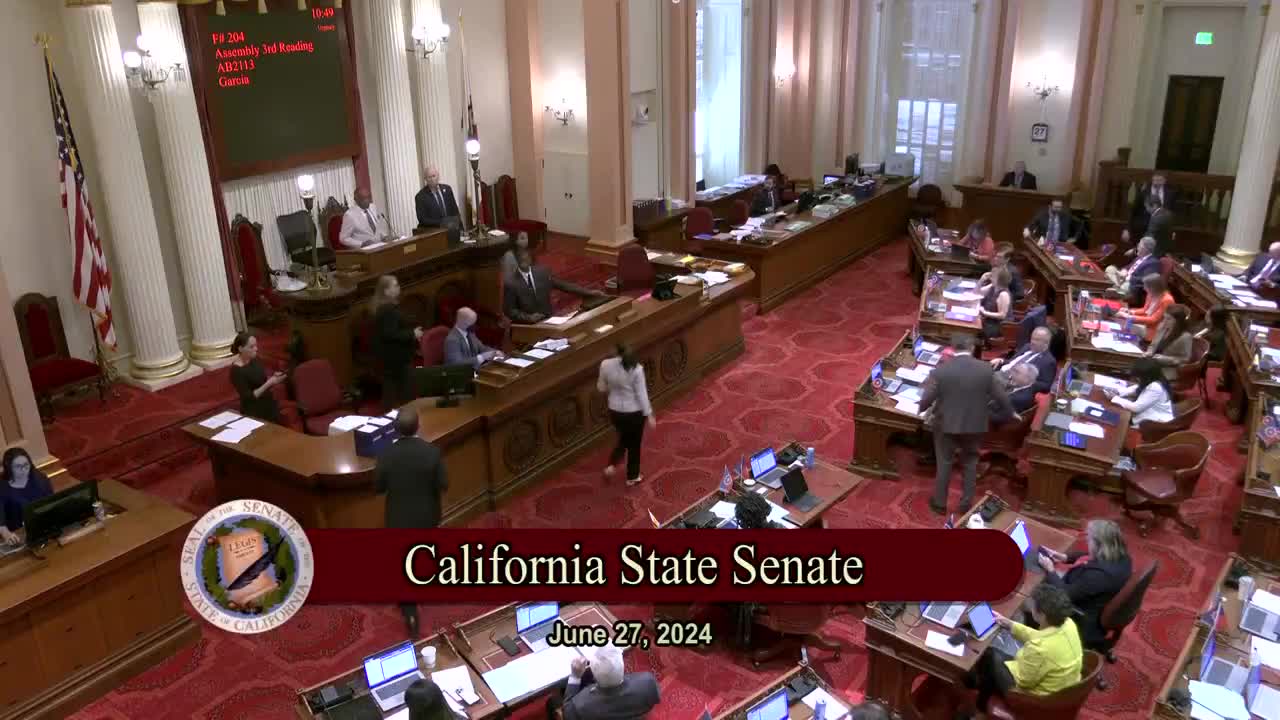 2MIN
Senate Floor
 2MIN
Senate Standing Committee on Appropriations
 1MIN
Assembly Floor
Bill Author

Bill Co-Author(s):