AB 1948: Homeless multidisciplinary personnel teams.
- Session Year: 2023-2024
- House: Assembly
- Latest Version Date: 2024-07-15
Current Status:
Passed
(2024-07-15: Chaptered by Secretary of State - Chapter 94, Statutes of 2024.)
Introduced
In Committee
First Chamber
In Committee
Second Chamber
Enacted
Existing law authorizes a county to establish a homeless adult and family multidisciplinary personnel team with the goal of facilitating the expedited identification, assessment, and linkage of homeless individuals to housing and supportive services within that county, and to allow provider agencies and members of the personnel team to share confidential information for the purpose of coordinating housing and supportive services to ensure continuity of care.
Existing law, until January 1, 2025, authorizes the Counties of Los Angeles, Orange, Riverside, San Bernardino, San Diego, Santa Clara, and Ventura to expand the goals of the homeless adult and family multidisciplinary personnel team to include facilitating the expedited identification, assessment, and linkage of individuals at risk of homelessness, as defined, to housing and supportive services, and the expedited prevention of homelessness.
This bill would additionally authorize the County of San Mateo to expand the goals of the homeless adult and family multidisciplinary personnel team, as specified above. The bill would also delete the January 1, 2025, repeal of these provisions, thereby making the provisions operative indefinitely.
This bill would make legislative findings and declarations as to the necessity of a special statute for the Counties of Los Angeles, Orange, Riverside, San Bernardino, San Diego, San Mateo, Santa Clara, and Ventura.
Existing law authorizes a county to establish a homeless adult and family multidisciplinary personnel team with the goal of facilitating the expedited identification, assessment, and linkage of homeless individuals to housing and supportive services within that county, and to allow provider agencies and members of the personnel team to share confidential information for the purpose of coordinating housing and supportive services to ensure continuity of care.
Existing law, until January 1, 2025, authorizes the Counties of Los Angeles, Orange, Riverside, San Bernardino, San Diego, Santa Clara, and Ventura to expand the goals of the homeless adult and family multidisciplinary personnel team to include facilitating the expedited identification, assessment, and linkage of individuals at risk of homelessness, as defined, to housing and supportive services, and the expedited prevention of homelessness.
This bill would delete the January 1, 2025, repeal of these provisions, thereby making the provisions operative indefinitely.
This bill would make legislative findings and declarations as to the necessity of a special statute for the Counties of Los Angeles, Orange, Riverside, San Bernardino, San Diego, Santa Clara, and Ventura.
(a)A homeless adult and family multidisciplinary personnel team established pursuant to Section 18999.8 in the Counties of Los Angeles, Orange, Riverside, San Bernardino, San Diego, San Mateo, Santa Clara, and Ventura may additionally have the goal of facilitating the expedited identification, assessment, and linkage of individuals at risk of homelessness to housing and supportive services within that county, and the goal of facilitating the expedited prevention of homelessness for those individuals.
(b)For the purposes of this section, individual at risk of homelessness means an individual who is indigent or receiving or eligible to receive public benefits in the form of cash aid, and who meets both of the following conditions:
(1)The individual experiences either of the following:
(A)Is exiting, or exited within the most recent 12 months, a state-funded or locally funded detention or treatment setting, including, but not limited to, a jail, prison, health facility, mental health facility, or substance use disorder treatment program.
(B)Is aging out, or aged out within the most recent 12 months, of the child welfare system or the juvenile justice system.
(2)The individual presents with, or received services within the most recent 12 months for, significant health, mental health, or substance use issues.
(c)The homeless adult and family multidisciplinary personnel teams described in this section shall also include persons who are trained in the prevention of homelessness.
(d)(1)Members of a homeless adult and family multidisciplinary personnel team engaged in the prevention of homelessness or linkage of housing and supportive services for individuals at risk of homelessness, may disclose to, and exchange with, one another, information and writings that relate to any information that may be designated as confidential under state law if the member of the team reasonably believes it is generally relevant to the identification of individuals at risk of homelessness or the prevention of homelessness or the provision of services.
(2)(A)The multidisciplinary personnel team member who first establishes contact with an individual at risk of homelessness, as defined in subdivision (b), shall notify the individual that the individuals confidential information may be shared for the purpose of coordinating housing and supportive services to ensure continuity of care and shall attempt to obtain the individuals consent for that information sharing.
(B)For individuals at risk of homelessness, members of the multidisciplinary personnel team may share with other members of the team confidential information for either of the following purposes:
(i)Identifying individuals at risk of homelessness, unless and until the individual affirmatively opts out of having their information shared.
(ii)Coordinating housing and supportive services to ensure continuity of care for a period not to exceed 30 days from the time a team member first establishes contact with the individual, or unless and until the individual affirmatively opts out of having their information shared, whichever occurs first.
(e)The confidentiality and privacy provisions contained in Section 18999.8 apply to information or writings disclosed, exchanged, or acquired pursuant to this section, and that information and writings shall not be disclosed in violation of existing federal or state privacy laws.
SEC. 2.The Legislature finds and declares that a special statute is necessary and that a general statute cannot be made applicable within the meaning of Section 16 of Article IV of the California Constitution because of the need to evaluate the outcomes of using a homeless adult and family multidisciplinary personnel team to serve individuals at risk of homelessness in the Counties of Los Angeles, Orange, Riverside, San Bernardino, San Diego, San Mateo, Santa Clara, and Ventura.
REVISIONS: HeadingLines 1 and 2.(a)A homeless adult and family multidisciplinary personnel team established pursuant to Section 18999.8 in the Counties of Los Angeles, Orange, Riverside, San Bernardino, San Diego, Santa Clara, and Ventura may additionally have the goal of facilitating the expedited identification, assessment, and linkage of individuals at risk of homelessness to housing and supportive services within that county, and the goal of facilitating the expedited prevention of homelessness for those individuals.
(b)For the purposes of this section, individual at risk of homelessness means an individual who is indigent or receiving or eligible to receive public benefits in the form of cash aid, and who meets both of the following conditions:
(1)The individual experiences either of the following:
(A)Is exiting, or exited within the most recent 12 months, a state-funded or locally funded detention or treatment setting, including, but not limited to, a jail, prison, health facility, mental health facility, or substance use disorder treatment program.
(B)Is aging out, or aged out within the most recent 12 months, of the child welfare system or the juvenile justice system.
(2)The individual presents with, or received services within the most recent 12 months for, significant health, mental health, or substance use issues.
(c)The homeless adult and family multidisciplinary personnel teams described in this section shall also include persons who are trained in the prevention of homelessness.
(d)(1)Members of a homeless adult and family multidisciplinary personnel team engaged in the prevention of homelessness or linkage of housing and supportive services for individuals at risk of homelessness, may disclose to, and exchange with, one another, information and writings that relate to any information that may be designated as confidential under state law if the member of the team reasonably believes it is generally relevant to the identification of individuals at risk of homelessness or the prevention of homelessness or the provision of services.
(2)(A)The multidisciplinary personnel team member who first establishes contact with an individual at risk of homelessness, as defined in subdivision (b), shall notify the individual that the individuals confidential information may be shared for the purpose of coordinating housing and supportive services to ensure continuity of care and shall attempt to obtain the individuals consent for that information sharing.
(B)For individuals at risk of homelessness, members of the multidisciplinary personnel team may share with other members of the team confidential information for either of the following purposes:
(i)Identifying individuals at risk of homelessness, unless and until the individual affirmatively opts out of having their information shared.
(ii)Coordinating housing and supportive services to ensure continuity of care for a period not to exceed 30 days from the time a team member first establishes contact with the individual, or unless and until the individual affirmatively opts out of having their information shared, whichever occurs first.
(e)The confidentiality and privacy provisions contained in Section 18999.8 apply to information or writings disclosed, exchanged, or acquired pursuant to this section, and that information and writings shall not be disclosed in violation of existing federal or state privacy laws.
(f)This section shall remain in effect only until January 1, 2025, and as of that date is repealed.SEC. 2.The Legislature finds and declares that a special statute is necessary and that a general statute cannot be made applicable within the meaning of Section 16 of Article IV of the California Constitution because of the need to evaluate the outcomes of using a homeless adult and family multidisciplinary personnel team to serve individuals at risk of homelessness in the Counties of Los Angeles, Orange, Riverside, San Bernardino, San Diego, Santa Clara, and Ventura.
|
Date
|
Status
|
|---|---|
| Jul 15, 2024 | Chaptered by Secretary of State - Chapter 94, Statutes of 2024. |
| Jul 15, 2024 | Approved by the Governor. |
| Jul 1, 2024 | Enrolled and presented to the Governor at 4 p.m. |
| Jun 20, 2024 | In Assembly. Ordered to Engrossing and Enrolling. |
| Jun 20, 2024 | Read third time. Passed. Ordered to the Assembly. (Ayes 36. Noes 0. Page 4624.). |
| Jun 13, 2024 | Read second time. Ordered to Consent Calendar. |
| Jun 12, 2024 | From committee: Do pass. To Consent Calendar. (Ayes 11. Noes 0.) (June 11). |
| Jun 4, 2024 | From committee: Do pass and re-refer to Com. on JUD. (Ayes 4. Noes 0.) (June 3). Re-referred to Com. on JUD. |
| May 1, 2024 | Referred to Coms. on HUMAN S. and JUD. |
| Apr 8, 2024 | In Senate. Read first time. To Com. on RLS. for assignment. |
| Apr 8, 2024 | Read third time. Passed. Ordered to the Senate. (Ayes 75. Noes 0. Page 4660.) |
| Apr 4, 2024 | Read second time. Ordered to third reading. |
| Apr 3, 2024 | From committee: Do pass. (Ayes 7. Noes 0.) (April 2). |
| Apr 3, 2024 | Coauthors revised. |
| Mar 13, 2024 | Re-referred to Com. on HUM. S. |
| Mar 12, 2024 | From committee chair, with author's amendments: Amend, and re-refer to Com. on HUM. S. Read second time and amended. |
| Feb 12, 2024 | Referred to Com. on HUM. S. |
| Jan 30, 2024 | From printer. May be heard in committee February 29. |
| Jan 29, 2024 | Read first time. To print. |
|
Date
|
Description
|
Location
|
Votes
|
|
|---|---|---|---|---|
| Jun 20, 2024 | Consent Calendar 2nd AB1948 Rendon et al. | Senate Floor |
Passed |
|
| Jun 11, 2024 | Do pass and be ordered to the Consent Calendar | Senate Standing Committee on Judiciary |
Passed |
|
| Jun 3, 2024 | Do pass, but first be re-referred to the Committee on [Judiciary] | Senate Standing Committee on Human Services |
Passed |
|
| Apr 8, 2024 | AB 1948 Rendon Assembly Third Reading | Assembly Floor |
Passed |
|
| Apr 2, 2024 | Do pass. | Assembly Standing Committee on Human Services |
Passed |
This list shows positions taken on this bill by organizations on the date displayed, which is linked to the original source.
Positions by individuals are not included.
|
Organization
|
Position
|
Date
|
|---|---|---|
| California State Association Of Counties | ** Support | |
| City Of Long Beach | * Support | Jun 3, 2024 |
| County of Los Angeles Department of Health Services | * Support | Apr 2, 2024 |
| County of San Bernardino | ** Support | |
| County of Ventura | ** Support | |
| John Burton Advocates for Youth | ** Support | |
| Los Angeles County | ** Support | |
| Los Angeles County Board of Supervisors | * Support | Jun 3, 2024 |
| Los Angeles County Sheriff'S Department | * Support | Apr 2, 2024 |
| Orange County Board of Supervisors | * Support | Jun 3, 2024 |
| Riverside County Board of Supervisors | * Support | Jun 3, 2024 |
| San Bernardino County | * Support | Jun 3, 2024 |
| San Mateo County Board of Supervisors | ** Support | |
| Steinberg Institute | ** Support | |
| Ventura County Board of Supervisors | * Support | Jun 3, 2024 |
SENATE RULES COMMITTEE Office of Senate Floor Analyses (916) 651-1520 Fax: (916) 327-4478 | AB 1948 |
THIRD READING
Bill No: AB 1948
Author: Rendon (D), Gipson (D) and Santiago (D), et al.
Amended: 3/12/24 in Assembly
Vote: 21
SENATE HUMAN SERVICES COMMITTEE: 4-0, 6/3/24
AYES: Alvarado-Gil, Ochoa Bogh, Blakespear, Menjivar
NO VOTE RECORDED: Hurtado
SENATE JUDICIARY COMMITTEE: 11-0, 6/11/24
AYES: Umberg, Wilk, Allen, Ashby, Caballero, Durazo, Laird, Niello, Roth, Stern, Wahab
ASSEMBLY FLOOR: 75-0, 4/8/24 - See last page for vote
SUBJECT: Homeless multidisciplinary personnel teams
SOURCE: Author
DIGEST:
This bill eliminates the sunset date of the provision that allows homeless adult and family multidisciplinary personnel teams (MDT) to serve “individuals at risk of homelessness” in specified counties.
ANALYSIS:
Existing law:
- Allows counties to create homeless adult and family multidisciplinary personnel team consisting of relevant local agencies to expedite identification, assessment, and linkage of homeless individuals to housing and supportive services. (WIC 18999.8)
- Requires homeless adult and family multidisciplinary personnel team members to share information about individuals experiencing homelessness in compliance with privacy laws and requires counties to set appropriate confidentiality protocols (WIC 18999.8(e))
- Authorizes homeless adult and family multidisciplinary personnel teams created in Los Angeles, Orange, Riverside, San Bernardino, San Diego, Santa Clara, and Ventura counties to include “individuals at risk of homelessness” in their programs until January 1, 2025. (WIC 18999.81)
- Defines “individual at risk of homelessness” as an individual who is indigent or receiving or eligible to receive public benefits in the form of cash aid, and who meets both of the following conditions:
- The individual experiences either of the following: exited a state-funded or locally funded detention or treatment setting within the last 12 months, or (is aging out, or aged out within the most recent 12 months, of the child welfare system or the juvenile justice system.
- The individual presents with, or received services within the most recent 12 months for, significant health, mental health, or substance use issues. (WIC 18999.81(b)
This bill:
- Authorizes the county of San Mateo to also expand their homeless adult and family MDT to include individuals at risk of homelessness.
- Removes the sunset date on the expanded provision.
- Declares that a special statute is needed.
Background
Point-In-Time Count. According to the Annual Homeless Assessment Report produced by Department of Housing and Urban Development (HUD) on the point-in time count in 2023, found there were 181,399 homeless people in California. Of those, 123,423 were unsheltered[1]. According to the 2023 Greater Los Angeles Homeless Count, there were 75,518 people experiencing homelessness in Los Angeles County, a nine percent increase from 2022.
The health, personal, and economic challenges that chronically homeless individuals and families face and the lack of effective, coordinated services to address these problems often lead to a cycle of housing instability and health deterioration. Health conditions of those experiencing long-term homelessness often prevent housing stability, while persistent homelessness impedes access to needed health and employment services. Consequently, people who are chronically homeless cycle through costly emergency-driven public systems – emergency shelters, emergency rooms, detoxification centers, criminal justice facilities – without getting the ongoing care they need to address severe mental illness, substance abuse disorders, or chronic health conditions.
Active Homeless Multidisciplinary Teams. After the passage of AB 210 (Santiago, Chapter 544, Statutes of 2017) Los Angeles County established a multidisciplinary team and published the required protocols. Participating county agencies led by the Department of Health Services, include law enforcement agencies, the Departments of Public Health and Mental, Social Services and Homeless Services Authority, among others. According to the County of Los Angeles, the Homelessness Prevention Unit (HPU) is an MDT established in 2022 that uses the expanded authority created by AB 728 (Santiago, Chapter 337, Statutes of 2019). Specifically it uses predictive modeling based on data from multiple county agencies to predict which county residents are likely to become homeless. This information helps case managers identify people who may benefit from county services.[2]. Individuals and families that agree to services receive four to six months of case management. An October 2023 report by the Chief Executive Office of the County of Los Angeles reported that the HPU was “serving 176 active clients” with the goal of serving “around 230 clients at any given time.”[3]
According to the County of Ventura, the Continuum of Care Alliance is an MDT that was established to provide services to individuals and families that are homeless or could become homeless. This Alliance consists of “community advocates, housing providers, county agencies, housing authorities, health care providers, city administrators, and non-profit organizations.” These counties and the others listed in this bill have information sharing protocols detailed on their website describing how they will share potentially sensitive and protected information about individuals within the parameters of the bill and established privacy safeguards. This bill would allow these counties with established programs to continue sharing information about those at risk of being homeless for the explicit purpose of connecting them with services while abiding by those same privacy safeguards.
Comments
According to the author, “AB 728 (Santiago, 2019) which established the expanded authority of homeless adult and family personnel teams provided an effective and now proven method to address the growing homelessness crisis in our state. We must use every tool we can to continue this work, including preventing homelessness in the first place. The ability to target and deliver the homelessness prevention solutions mentioned in AB 728 expires on January 1, 2025. Multidisciplinary personnel teams (MDTs) in the specified counties will no longer be able to utilize this particular authority to coordinate housing and resources for individuals at risk of homelessness. This would eliminate an important means of identifying people who are eligible for and likely to benefit from these services. [The bill] facilitated prevention by authorizing a limited expansion of Homeless MDTs to include care coordination for individuals at high-risk of homelessness. This authority has allowed MDTs in select counties to exchange relevant, but otherwise confidential, information on clients at imminent risk of becoming unhoused, for the purpose of service coordination.”
FISCAL EFFECT: Appropriation: No Fiscal Com.: No Local: No
SUPPORT: (Verified 6/13/24)
California State Association of Counties
City of Long Beach
County of Los Angeles Board of Supervisors
County of Riverside
County of Ventura
Los Angeles County Sheriff's Department
Orange; County of
San Bernardino County
San Mateo County Board of Supervisors
Steinberg Institute
OPPOSITION: (Verified 6/13/24)
None received
ASSEMBLY FLOOR: 75-0, 4/8/24
AYES: Addis, Aguiar-Curry, Alanis, Alvarez, Arambula, Bains, Bennett, Berman, Boerner, Bonta, Bryan, Calderon, Juan Carrillo, Wendy Carrillo, Cervantes, Chen, Connolly, Davies, Dixon, Essayli, Flora, Mike Fong, Vince Fong, Friedman, Gabriel, Gallagher, Garcia, Gipson, Grayson, Haney, Hart, Holden, Hoover, Irwin, Jackson, Kalra, Lackey, Lee, Low, Lowenthal, Maienschein, McKinnor, Muratsuchi, Stephanie Nguyen, Ortega, Pacheco, Papan, Jim Patterson, Joe Patterson, Pellerin, Petrie-Norris, Quirk-Silva, Ramos, Rendon, Reyes, Luz Rivas, Rodriguez, Blanca Rubio, Sanchez, Santiago, Schiavo, Soria, Ta, Ting, Valencia, Villapudua, Waldron, Wallis, Ward, Weber, Wicks, Wilson, Wood, Zbur, Robert Rivas
NO VOTE RECORDED: Bauer-Kahan, Megan Dahle, Jones-Sawyer, Mathis, McCarty
Prepared by: Naima Ford Antal / HUMAN S. / (916) 651-1524
6/14/24 13:27:11
**** END ****
HUD 2023 Continuum of Care Homeless Assistance Programs Homeless Populations and Subpopulations, California ↑
Ludden, Jennifer. Los Angeles is using AI to predict who might become homeless and help before they do. NPR. Oct. 4, 2023. Can AI predict, and try to prevent, homelessness? : NPR ↑
Los Angeles County Homeless Initiative. HOMELESS INITIATIVE QUARTERLY REPORT NO. 27. October 10, 2023. 1149945_homelessinitiativequarterlyreportno.27_itemno.47-aagendaoffebruary92016_ (2).pdf ↑
Senator Thomas Umberg, Chair
2023-2024 Regular Session
Bill No: AB 1948 (Author:Rendon)
Version: March 12, 2024
Hearing Date: June 11, 2024
Fiscal: No
Urgency: No
Consultant: CK
SUBJECT
Homeless multidisciplinary personnel teams
DIGEST
This bill removes the sunset date on the pilot program in several, specified counties that allows homeless adult and family multidisciplinary personnel teams (MDTs) to serve individuals at risk of homelessness, including through confidential data sharing, and extends the authority to San Mateo County.
EXECUTIVE SUMMARY
In order to gain the benefits of homeless adult and family MDTs in the fight to prevent homelessness, a five-year pilot program was created to allow these MDTs to serve this population, applying the same privacy protections in place and a requirement that the personnel be additional trained in homelessness prevention. The program operates in the Counties of Los Angeles, Orange, Riverside, San Bernardino, San Diego, Santa Clara, and Ventura until January 1, 2025.
This bill extends the program to include San Mateo County and removes the sunset date. The bill is sponsored by Los Angeles County. It is supported by a number of local governmental entities and the Steinberg Institute. The Committee has received no timely opposition. This bill passed out of the Senate Human Services Committee on a vote of 4 to 0.
PROPOSED CHANGES TO THE LAW
Existing law:
- Provides that a county may establish a homeless adult and family MDT to facilitate expedited identification, assessment, and linkage of homeless individuals to housing and supportive services within that county and to allow provider agencies and members of the personnel team to share confidential information for the purpose of coordinating housing and supportive services to ensure continuity of care. (Welf. & Inst. Code § 18999.8(a).)[1]
- Defines an MDT as any team of two or more persons who are trained in the identification and treatment of homeless adults and families, and who are qualified to provide a broad range of services related to homelessness. Provides that an MDT may include, but is not limited to, all of the following:
- mental health and substance abuse services personnel and practitioners or other trained counseling personnel;
- police officers, probation officers, or other law enforcement agents.
- legal counsel for the adult or family representing them in a criminal matter;
- medical personnel with sufficient training to provide health services;
- social services workers with experience or training in the provision of services to homeless adults or families or funding and eligibility for services;
- case managers or case coordinators responsible for referral, linkage, or coordination of care and services provided to adults or families;
- veterans services providers and counselors;
- domestic violence victim service organizations, as defined;
- any public or private school teacher, administrative officer, or certified pupil personnel employee; and
- housing or homeless services provider agencies and designated personnel. (Id. at (b).)
- Authorizes MDT members engaged in the identification, assessment, and linkage of housing and supportive services to homeless adults or families to disclose to, and exchange with, one another information and writings that relate to any information that may be designated as confidential under state law if the member believes it is generally relevant to the identification, reduction, or elimination of homelessness or the provision of services. Designates any discussion relating to this information as confidential and inadmissible in court proceedings. (Id. at (c).)
- Requires that the sharing of confidential information under these provisions be governed by protocols developed in each county describing how and what information may be shared by the homeless adult and family multidisciplinary personnel team to ensure that confidential information gathered by the team is not disclosed in violation of state or federal law. Establishes requirements for the development and content of the protocols, including requirements governing training and retention, protection, and destruction of the information. (Id. at (e).)
- Provides that every member of the MDT who receives information or records regarding adults and families in their capacity as a member of the team is subject to the same privacy and confidentiality obligations and the same confidentiality penalties as the person disclosing or providing the information or records. Requires that the information or records obtained be maintained in a manner that ensures the maximum protection of privacy and confidentiality rights. (Id. at (f).)
- Deems information and records communicated or provided to the MDT members by all providers and agencies as private and confidential and provides that the information and records are protected from discovery and disclosure by all applicable statutory and common law protections. Provides that existing civil and criminal penalties apply to the inappropriate disclosure of information held by the team members. (Id. at (h).)
- Creates a five-year pilot program, until January 1, 2025 that will allow the Counties of Los Angeles, Orange, Riverside, San Bernardino, San Diego, Santa Clara, and Ventura to expand the goal for their homeless adult and family MDTs to additionally include facilitating the expedited identification, assessment, and linkage of individuals at risk of homelessness to housing and supportive services within that county, and the goal of facilitating the expedited prevention of homelessness for those individuals. (§ 18999.81 (a).)
- Defines “individuals at risk of homelessness” to mean an individual who is indigent or receiving or eligible to receive public benefits in the form of cash aid, and who meets both of the following conditions:
- The individual experiences either of the following: is exiting, or exited within the most recent 12 months, a state-funded or locally funded detention or treatment setting, including, but not limited to, a jail, prison, health facility, mental health facility, or substance use disorder treatment program; or is aging out, or aged out within the most recent 12 months, of the child welfare system or juvenile justice system; and
- The individual presents with, or received services within the most recent 12 months for significant health, mental health, or substance use issues. (Id. at (b).)
- Requires the homeless adult and family MDTs for individuals at risk of homelessness to also include persons who are trained in the prevention of homelessness. (Id. at (c).)
- Permits members of a homeless adult and family MDT engaged in the prevention of homelessness or linkage of housing and supportive services for individuals at risk of homelessness, to disclose to, and exchange with, one another, information and writings that relate to any information that may be designated as confidential under state law if the member of the team reasonably believes it is generally relevant to the identification of individuals at risk of homelessness or the prevention of homelessness or the provision of services. (Id. at (d).)
- Requires the MPT member who first establishes contact with an individual at risk of homelessness to notify the individual that the individual’s confidential information may be shared for the purpose of coordinating housing and supportive services to ensure the continuity of care and to attempt to obtain the individual’s consent for that information sharing. (Ibid.)
- Permits members of a homeless adult and family MPT to share with other MPT members confidential information about an individual at risk of homelessness for either of the following purposes:
- Identifying individuals at risk of homelessness, unless and until the individual affirmatively opts out of having their information shared; and/or
- Coordinating housing and supportive services to ensure continuity of care for a period not to exceed 30 days from the time a team member first establishes contact with the individual, or unless and until the individual affirmatively opts out of having their information shared, whichever occurs first. (Ibid.)
- Provides that the confidentiality and privacy provisions governing adult and family MPTs that serve homeless individuals shall also apply to information or writings disclosed, exchanged, or acquired by adult and family MPTs that serve individuals at risk of homelessness, and that information and writings shall not be disclosed in violation of existing federal or state privacy laws. (Id. at (e).)
This bill:
- Removes the sunset date for the pilot program.
- Extends the authority for MPTs serving individuals at risk of homelessness to San Mateo County.
COMMENTS
- Utilizing MPTs to combat homelessness
To facilitate identification and assessment of homeless individuals and connect them with housing and supportive services, AB 210 (Santiago, Ch. 544, Stats. 2017) authorized counties to establish MPTs. Under AB 210, members of MPTs may share confidential information with other MPT members to ensure continuity of care, subject to protocols developed by the county.
AB 728 (Santiago, Ch. 337, Stats. 2019), sponsored by the Los Angeles County Board of Supervisors, established a pilot program in the Counties of Los Angeles, Orange, Riverside, San Bernardino, San Diego, Santa Clara, and Ventura, that expanded those provisions to apply to individuals at risk of being homeless. AB 728 allows for individuals to opt out of such sharing. The statute sunsets in 2025.
- Extending the AB 728 pilot programs indefinitely
This bill extends the AB 728 authority for MPTs serving individuals at risk of homelessness to San Mateo County and removes the sunset entirely.
According to the author:
AB 728 (Santiago of 2019) provided an effective and now proven method to address the growing homelessness crisis in our state. We must use every tool we can to continue this work, including preventing homelessness in the first place. The ability to target and deliver the homelessness prevention solutions mentioned in AB 728 expires on January 1, 2025. Multidisciplinary Personnel Teams in the specified counties will no longer be able to utilize this particular authority to coordinate housing and resources for individuals at risk of homelessness. This would eliminate an important means of identifying people who are eligible for and likely to benefit from these services. AB 1948 will indefinitely extend the availability of critical intervention and assistance, allowing these counties to endeavor to stop homelessness before it can occur.
Writing in support, the Steinberg Institute argues:
The ability of MDTs to coordinate resources and housing is a crucial preventive measure against homelessness. Without AB 1948, the authority enabling this coordinated effort would lapse, eliminating a proven method of assisting those on the precipice to become unhoused. By indefinitely extending the remit of MDTs, AB 1948 will sustain the momentum of these interventions and assist counties in continuing to provide this vital service. The Steinberg Institute believes that preventing homelessness before it occurs is not just compassionate policy but also fiscally responsible governance.
SUPPORT
Los Angeles County (sponsor)
California State Association of Counties
City of Long Beach
John Burton Advocates for Youth
Los Angeles County Sheriff’s Department
Orange County
San Bernardino County
San Mateo County Board of Supervisors
Steinberg Institute
OPPOSITION
None received
RELATED LEGISLATION
Pending Legislation: AB 1788 (Quirk-Silva, 2024) authorizes counties to establish mental health MDTs, as defined, with the goal of facilitating the expedited identification, assessment, and linkage of justice-involved persons diagnosed with a mental illness to supportive services within that county while incarcerated and upon release from county jail and to allow provider agencies and members of the personnel team to share confidential information, as specified, for the purpose of coordinating supportive services to ensure continuity of care. AB 1788 is currently in this Committee.
Prior Legislation:
AB 728 (Santiago, Ch. 337, Stats. 2019) See Comment 1.
AB 210 (Santiago, Ch. 544, Stats. 2017) See Comment 1.
PRIOR VOTES:
Senate Human Services Committee (Ayes 4, Noes 0)
Assembly Floor (Ayes 75, Noes 0)
Assembly Human Services Committee (Ayes 7, Noes 0)
**************
All further statutory references are to the Welfare and Institutions Code unless otherwise specified. ↑
SENATE COMMITTEE ON HUMAN SERVICES
Senator Alvarado-Gil, Chair
2023 - 2024 Regular
Bill No: | AB 1948 | ||
Author: | Rendon | ||
Version: | March 12, 2024 | Hearing Date: | June 3, 2024 |
Urgency: | No | Fiscal: | No |
Consultant: | Naima Ford Antal | ||
Subject: Homeless multidisciplinary personnel teams
SUMMARY
This bill eliminates the sunset date of the provision that allows homeless adult and family multidisciplinary personnel teams (MDT) to serve “individuals at risk of homelessness” in specified counties.
ABSTRACT
Existing Law:
- Allows counties to create homeless adult and family multidisciplinary personnel team consisting of relevant local agencies to expedite identification, assessment, and linkage of homeless individuals to housing and supportive services. (WIC 18999.8)
- Requires homeless adult and family multidisciplinary personnel team members to share information about individuals experiencing homelessness in compliance with privacy laws and requires counties to set appropriate confidentiality protocols (WIC 18999.8(e))
- Authorizes homeless adult and family multidisciplinary personnel teams created in Los Angeles, Orange, Riverside, San Bernardino, San Diego, Santa Clara, and Ventura counties to include “individuals at risk of homelessness” in their programs until January 1, 2025. (WIC 18999.81)
- Defines “individual at risk of homelessness” as an individual who is indigent or receiving or eligible to receive public benefits in the form of cash aid, and who meets both of the following conditions:
- The individual experiences either of the following: exited a state-funded or locally funded detention or treatment setting within the last 12 months, or (is aging out, or aged out within the most recent 12 months, of the child welfare system or the juvenile justice system.
- The individual presents with, or received services within the most recent 12 months for, significant health, mental health, or substance use issues. (WIC 18999.81(b)
This Bill:
- Authorizes the county of San Mateo to also expand their homeless adult and family MDT to include individuals at risk of homelessness.
- Removes the sunset date on the expanded provision.
- Declares that a special statute is needed.
FISCAL IMPACT
This bill has not been analyzed by a fiscal committee.
BACKGROUND AND DISCUSSION
Purpose of the Bill:
According to the author, “AB 728 (Santiago, 2019) which established the expanded authority of homeless adult and family personnel teams provided an effective and now proven method to address the growing homelessness crisis in our state. We must use every tool we can to continue this work, including preventing homelessness in the first place. The ability to target and deliver the homelessness prevention solutions mentioned in AB 728 expires on January 1, 2025. Multidisciplinary personnel teams (MDTs) in the specified counties will no longer be able to utilize this particular authority to coordinate housing and resources for individuals at risk of homelessness. This would eliminate an important means of identifying people who are eligible for and likely to benefit from these services. [The bill] facilitated prevention by authorizing a limited expansion of Homeless MDTs to include care coordination for individuals at high-risk of homelessness. This authority has allowed MDTs in select counties to exchange relevant, but otherwise confidential, information on clients at imminent risk of becoming unhoused, for the purpose of service coordination.”
Background:
Point- In- Time Count
According to the Annual Homeless Assessment Report produced by HUD on the point-in time count in 2023, found there were 181,399 homeless people in California. Of those, 123,423 were unsheltered[1]. According to the 2023 Greater Los Angeles Homeless Count, there were 75,518 people experiencing homelessness in Los Angeles County, a nine percent increase from 2022.
The health, personal, and economic challenges that chronically homeless individuals and families face and the lack of effective, coordinated services to address these problems often lead to a cycle of housing instability and health deterioration. Health conditions of those experiencing long-term homelessness often prevent housing stability, while persistent homelessness impedes access to needed health and employment services. Consequently, people who are chronically homeless cycle through costly emergency-driven public systems – emergency shelters, emergency rooms, detoxification centers, criminal justice facilities – without getting the ongoing care they need to address severe mental illness, substance abuse disorders, or chronic health conditions.
Active Homeless Multidisciplinary Teams
After the passage of AB 210 (Santiago, Chapter 544, Statutes of 2017) Los Angeles County established a multidisciplinary team and published the required protocols. Participating county agencies led by the Department of Health Services, include law enforcement agencies, the Departments of Public Health and Mental, Social Services and Homeless Services Authority, among others. According to the County of Los Angeles, the Homelessness Prevention Unit (HPU) is an MDT established in 2022 that uses the expanded authority created by AB 728 (Santiago, Chapter 337, Statutes of 2019). Specifically it uses predictive modeling based on data from multiple county agencies to predict which county residents are likely to become homeless. This information helps case managers identify people who may benefit from county services.[2]. Individuals and families that agree to services receive four to six months of case management. An October 2023 report by the Chief Executive Office of the County of Los Angeles reported that the HPU was “serving 176 active clients” with the goal of serving “around 230 clients at any given time.”[3]
According to the County of Ventura, the Continuum of Care Alliance is an MDT that was established to provide services to individuals and families that are homeless or could become homeless. This Alliance consists of “community advocates, housing providers, county agencies, housing authorities, health care providers, city administrators, and non-profit organizations.” These counties and the others listed in the bill have information sharing protocols detailed on their website describing how they will share potentially sensitive and protected information about individuals within the parameters of the bill and established privacy safeguards. This bill would allow these counties with established programs to continue sharing information about those at risk of being homeless for the explicit purpose of connecting them with services while abiding by those same privacy safeguards.
Related/Prior Legislation:
AB 210 (Santiago, Chapter 544, Statutes of 2017) Authorizes any county to establish a homeless adult, and family multidisciplinary personnel team with the goal of facilitating the expedited identification, assessment, and linkage of homeless individuals to housing and supportive services within that county and to allow provider agencies to share confidential information in order to coordinate housing and supportive services to ensure continuity of care.
AB 728 (Santiago, Chapter 337, Statutes of 2019) Authorized the Counties of Los Angeles, Orange, Riverside, San Bernardino, San Diego, Santa Clara, and Ventura, expand the goals of the homeless adult and family multidisciplinary personnel team target individuals at risk of homelessness, but not yet homeless.
COMMENTS
Removing the sunset date on this expanded provision of the homeless adult and family MDT allows counties to continue sharing data about residents that may be on the verge of experiencing homelessness. Making the statute permanent allows a homelessness program that use this provision to establish continuity and expand. It may also increase the likelihood more counties will use data exchange to prevent homelessness.
PRIOR VOTES
Assembly Floor: | 75 - 0 |
Assembly Human Services Committee: | 7 - 0 |
POSITIONS
Support:
County of Los Angeles Board of Supervisors (Sponsor)
California State Association of Counties
City of Long Beach
County of Riverside
Los Angeles County Sheriff's Department
Orange; County of
San Bernardino County
San Mateo County Board of Supervisors
Steinberg Institute
Oppose:
None
-- END --
HUD 2023 Continuum of Care Homeless Assistance Programs Homeless Populations and Subpopulations, California ↑
Ludden, Jennifer. Los Angeles is using AI to predict who might become homeless and help before they do. NPR. Oct. 4, 2023. Can AI predict, and try to prevent, homelessness? : NPR ↑
Los Angeles County Homeless Initiative. HOMELESS INITIATIVE QUARTERLY REPORT NO. 27. October 10, 2023. 1149945_HOMELESSINITIATIVEQUARTERLYREPORTNO.27_ITEMNO.47-AAGENDAOFFEBRUARY92016_ (2).pdf ↑
ASSEMBLY THIRD READING
ATR Bill Id:AB 1948
Author:(Rendon and Santiago)
As Amended Ver:March 12, 2024
Majority vote
SUMMARY
Allows the homeless adult and family multidisciplinary personnel teams (MDTs) established in the Counties of Los Angeles, Orange, Riverside, San Bernardino, San Diego, Santa Clara, and Ventura to continue indefinitely, and adds the County of San Mateo to the list of participating counties.
Major Provisions
- Removes the January 1, 2025, sunset that authorized homeless adult and family MDTs in specified counties to additionally have the goal of facilitating the expedited identification, assessment, and linkage of individuals at risk of homelessness to housing and supportive services with that county, and the goal of facilitating the expedited prevention of homelessness for those individuals.
- Adds the County of San Mateo to the list of counties authorized to establish homeless adult and family MDTs pursuant to 1) above.
COMMENTS
Background: Multidisciplinary Teams. AB 1049 (Bader), Chapter 353, Statutes of 1987, permitted the use of MDTs to allow for a coordinated interagency response to elder and child abuse cases. Prior to that, MDTs were a relatively new concept and had primarily existed as pilot projects administered at the county level. Specifically, child abuse MDTs were formed and operated at the county level and were enabled to share certain confidential information among team members in order to prevent, identify, and treat child abuse. MDTs also serve to facilitate coordination among the different participating agencies and entities to ensure decisions are made through a team decision-making process.
AB 210 (Santiago), Chapter 544, Statutes of 2017, authorized counties to develop a homeless adult and family MDT in order to identify and assess individuals experiencing homelessness and link them to housing and supportive services. AB 210 also allowed certain entities, including mental health service providers, law enforcement, schools, and social services representatives, to participate in homeless adult and family MDTs.
The scope of these MDTs serving adults and families experiencing homelessness was expanded through the enactment of AB 728 (Santiago), Chapter 337, Statutes of 2019, by including individuals at risk of homelessness within the purview of homeless adult and family MDTs. AB 728 defined an "individual at risk of homelessness" to mean an individual who is indigent or receiving or eligible to receive public benefits in the form of cash aid, and who meets both of the following conditions:
- Is exiting, or exited within the most recent 12 months, a state-funded or locally funded detention or treatment setting, including, but not limited to, a jail, prison, health facility, mental health facility, or substance use disorder treatment program or is aging out, or aged out within the most recent 12 months, of the child welfare system or the juvenile justice system; or,
- The individual presents with, or received services within the most recent 12 months for, significant health, mental health, or substance use issues.
AB 728 also specifically allowed the Counties of Los Angeles, Orange, Riverside, San Bernardino, San Diego, Santa Clara, and Ventura, who established MDTs pursuant to AB 210 to additionally have the goal of facilitating the expedited identification, assessment, and linkage of individuals at risk of homelessness to housing and supportive services within that county, until January 1, 2025. This authority has allowed MDTs in select counties to exchange relevant, but otherwise confidential, information on clients at risk of becoming homeless, for the purpose of service coordination.
This bill would remove the sunset date placed on these MDTs and would authorize the County of San Mateo to also establish a homeless and family MDT.
Homelessness in California. Homelessness can take many forms; federal law speaks to individuals who lack a fixed, regular, and adequate nighttime residence, which can include shared housing with others due to the loss of housing or economic hardship, living in emergency or transitional shelter, or having a nighttime residence that is not designed as a regular sleeping accommodation for human beings, such as cars.
As of 2023, over 171,000 people are experiencing homelessness in California, according to a report (The California Statewide Study of People Experiencing Homelessness [CASPEH]) issued through the Benioff Homelessness and Housing Initiative at the University of California, San Francisco. The issue of homelessness has escalated significantly in recent years. The 2022 Annual Homeless Assessment Report to Congress issued by the United States (U.S.) Department of Housing and Urban Development states that between 2007 and 2022, homelessness in California surged by more than 23% and notes that just from 2020 to 2022, the number of homeless individuals in the state increased by 6.2%. California now accounts for 28% of the entire nation's homeless population. Nearly half (47%) of individuals with chronic patterns of homelessness in the U.S. were in California (67,510 people). California also accounts for 56% of all unsheltered individuals with chronic patterns of homelessness in the United States (53,169 people).
Just in Los Angeles County alone, according to the 2023 Greater Los Angeles Homeless Count, there were 75,518 people experiencing homelessness on a given night, a 9% increase from 2022.
This bill authorizes select homeless and family MDTs to continue to link individuals at risk of homelessness to housing and supportive services to facilitate the expedited prevention of homelessness. As stated, an individual is considered at risk of homelessness if they are receiving or eligible to receive public benefits in the form of cash aid and if in the last year, they have exited a detention or treatment setting, such as jail, a mental health facility, or substance use disorder treatment program, or they are aging out of the child welfare system or the juvenile justice system, or if the individual presents with, or received services within the last year, significant health, mental health, or substance use issues.
Homeless Service Provider Agencies are defined as either a governmental or other agency that has as one of its purposes the identification, assessment, and linkage of housing or supportive services to homeless adults or families. Existing law allows a homeless provider agency to share information with certain entities, including social services, health services, probation, and law enforcement, among others.
Californians continue experiencing homelessness at an increasing rate. Many of these individuals suffer from chronic health, mental health, and substance-use disorders, and have had contact with the criminal justice system. Unaddressed, these factors contribute to these individuals' path to homelessness. If stabilized through coordinated multifaceted supportive services, individuals can avoid becoming homeless in the first place.
Many of these individuals at risk of becoming homeless have had contact with government entities before, and thus have information that can be shared in order to assist them and includes individuals who are indigent or receiving, or eligible to receive, public benefits in the form of cash aid. Below is a list of programs that provide cash aid and are also aimed at preventing homelessness that could potentially share information with a homeless and family MTD authorized by this bill:
- The California Work Opportunity and Responsibility to Kids (CalWORKs) Homeless Assistance (HA) Program was established to help families in the CalWORKs program meet the costs of securing or maintaining permanent housing or to provide emergency shelter when a family is experiencing homelessness. The HA Program provides payments for temporary shelter for up to 16 cumulative calendar days and assists with securing or maintaining housing, including security deposits, last month's rent, or up to two months of rent arrearages.
- The Bringing Families Home Program (BFH) focuses on homeless families involved with the child welfare system and aims to reduce the number of families in the child welfare system experiencing homelessness, increase family reunification, and prevent foster care placements. BFH offers housing supports to facilitate successful family reunification.
- The Housing and Disability Advocacy Program assists homeless and disabled individuals in applying for disability benefit programs while providing housing support. Participating counties offer outreach, case management, benefits advocacy, and housing supports.
- The Home Safe Program supports the safety and housing stability of individuals involved in Adult Protective Services who are experiencing or at imminent risk of homelessness due to elder or dependent adult abuse, neglect, self-neglect, or financial exploitation. The Home Safe Program provides housing-related assistance using evidence-based practices for homeless assistance and prevention.
Additionally, the California Interagency Council on Homelessness oversees the implementation of Housing First guidelines and regulations, identifies resources, benefits, and services to prevent and end homelessness in California.
Equity Implications: The CASPEH found that nearly half of single adults who are homeless are over the age of 50. This bill would allow counties that have established a homeless and family MDT to continue to serve individuals at risk of homelessness, while preserving client privacy and confidentiality protections, beyond January 1, 2025. Many of the individuals targeted by the provisions of this bill suffer from chronic health, mental health, and substance use disorders, oftentimes co-occurring, and have criminal justice system involvement. By continuing to allow the necessary information to be shared to effectively coordinate services, many individuals can avoid falling into homelessness, and assistance can be provided to those who are already living on the streets
According to the Author
According to the Author, "AB 728 (Santiago of 2019) provided an effective and now proven method to address the growing homelessness crisis in our state. We must use every tool we can to continue this work, including preventing homelessness in the first place. The ability to target and deliver the homelessness prevention solutions mentioned in AB 728 expires on January 1, 2025. Multidisciplinary Personnel Teams in the specified counties will no longer be able to utilize this particular authority to coordinate housing and resources for individuals at risk of homelessness. This would eliminate an important means of identifying people who are eligible for and likely to benefit from these services. [This bill] will indefinitely extend the availability of critical intervention and assistance, allowing these counties to endeavor to stop homelessness before it can occur."
Arguments in Support
The Office of the Sheriff in Los Angeles County writes in support that, "If stabilized through coordinated holistic supportive services, like those available in Los Angeles County, individuals can avoid becoming homeless. . . and would permit existing homeless MDTs to share information to coordinate housing and supportive services to ensure continuity of care families and individual at risk of homelessness. These MDTs would be required to adhere to the same processes, privacy, and confidentiality requirements as prescribed in current law."
Arguments in Opposition
None on file.
FISCAL COMMENTS
This bill was keyed non-fiscal by the Legislative Counsel.
VOTES
ASM HUMAN SERVICES: 7-0-0
YES: Lee, Essayli, Calderon, Gipson, Jackson, Ta, Ortega
UPDATED
VERSION: March 12, 2024
CONSULTANT: Jessica Langtry / HUM. S. / (916) 319-2089 FN: 0002688
Date of Hearing: April 2, 2024
ASSEMBLY COMMITTEE ON HUMAN SERVICES
Alex Lee, Chair
ABPCA Bill Id:AB 1948 (
Author:Rendon) – As Amended Ver:March 12, 2024
SUBJECT: Homeless multidisciplinary personnel teams
SUMMARY: Allows the homeless adult and family multidisciplinary personnel teams (MDTs) established in the Counties of Los Angeles, Orange, Riverside, San Bernardino, San Diego, Santa Clara, and Ventura to continue indefinitely, and adds the County of San Mateo to the list of participating counties. Specifically, this bill:
- Removes the January 1, 2025, sunset that authorized homeless adult and family MDTs in specified counties to additionally have the goal of facilitating the expedited identification, assessment, and linkage of individuals at risk of homelessness to housing and supportive services with that county, and the goal of facilitating the expedited prevention of homelessness for those individuals.
- Adds the County of San Mateo to the list of counties authorized to establish homeless adult and family MDTs pursuant to 1) above.
EXISTING LAW:
- Permits a county to establish a homeless adult and family MDT with the goal of facilitating the expedited identification, assessment, and linkage of homeless individuals to housing and supportive services within that county and to allow provider agencies and members of the MDT to share confidential information for the purpose of coordinating housing and supportive services to ensure continuity of care. (Welfare and Institutions Code [WIC] § 18999.8(a))
- Allows members of a homeless adult and family MDT engaged in the identification, assessment, and linkage of housing and supportive services to homeless adults or families to disclose to, and exchange with, one another, information and writings that may be designated as confidential under state law if the member of the team reasonably believes it is generally relevant to the identification, reduction, or elimination of homelessness or the provision of services. (WIC § 18999.8(c))
- Defines “homeless” as any recorded instance of an adult or family self-identifying as homeless within the most recent 12 months, or any element contained in service utilization records indicating that an adult or family experienced homelessness within the most recent 12 months. (WIC 18999.8 § (b)(1))
- Defines “homeless adult and family MDT” as any team of two or more persons who are trained in the identification and treatment of homeless adults and families, and who are qualified to provide a broad range of services related to homelessness. Further specifies that the MDT shall include, but not be limited to, mental health and substance abuse services personnel, law enforcement entities, legal counsel, and medical personnel, among other entities. (WIC 18999.8 § (b)(2))
- Defines “homeless service provider agency” as any governmental or other agency that has as one of its purposes the identification, assessment, and linkage of housing or supportive services to homeless adults or families, and further allows a homeless provider agency to share information with certain entities, including social services, health services, probation, and law enforcement, among others. (WIC 18999.8 § (b)(3))
- Allows any person trained and qualified to serve on an MDT to be deemed a part of the team as necessary, for the purposes of a particular case, provided the reasons for deeming the person a member of the team are specified in writing. (WIC § 18964)
- Authorizes a homeless adult and family MTD established pursuant to 1) above, in the Counties of Los Angeles, Orange, Riverside, San Bernardino, San Diego, Santa Clara, and Ventura to additionally have the goal of facilitating the expedited identification, assessment, and linkage of individuals at risk of homelessness to housing and supportive services within that county, and the goal of facilitating the expedited prevention of homelessness for those individuals. (WIC § 18999.81(a))
- Defines an “individual at risk of homelessness” as an individual who is indigent or receiving or eligible to receive public benefits in the form of cash aid, and who meets specified conditions. (WIC § 18999.81(b))
- Requires the homeless adult and family MTDs to also include persons who are trained in the prevention of homelessness. (WIC § 18999.81(c))
- Requires the MDT member who first establishes contact with an individual at risk of homelessness to notify the individual that the individual’s confidential information may be shared for the purpose of coordinating housing and supportive services to ensure continuity of care, and is required to attempt to obtain the individual’s consent for that information sharing. (WIC § 18999.81(d)(2)(A))
- Authorizes members of the MTD to share with other members of the team confidential information related to individuals at risk of homelessness, for either of the following purposes:
- Identifying individuals at risk of homelessness, unless and until the individual affirmatively opts out of having their information shared; or,
- Coordinating housing and supportive services to ensure continuity of care for a period not to exceed 30 days from the time a team member first establishes contact with the individual, or unless and until the individual affirmatively opts out of having their information shared, whichever occurs first. (WIC § 18999.81(d)(2)(B))
FISCAL EFFECT: This bill has been keyed nonfiscal by the Legislative Counsel.
COMMENTS:
Background: Multidisciplinary Teams. AB 1049 (Bader), Chapter 353, Statutes of 1987, permitted the use of MDTs to allow for a coordinated interagency response to elder and child abuse cases. Prior to that, MDTs were a relatively new concept and had primarily existed as pilot projects administered at the county level. Specifically, child abuse MDTs were formed and operated at the county level and were enabled to share certain confidential information among team members in order to prevent, identify, and treat child abuse. MDTs also serve to facilitate coordination among the different participating agencies and entities to ensure decisions are made through a team decision-making process.
AB 210 (Santiago), Chapter 544, Statutes of 2017, authorized counties to develop a homeless adult and family MDT in order to identify and assess individuals experiencing homelessness and link them to housing and supportive services. AB 210 also allowed certain entities, including mental health service providers, law enforcement, schools, and social services representatives, to participate in homeless adult and family MDTs.
The scope of these MDTs serving adults and families experiencing homelessness was expanded through the enactment of AB 728 (Santiago), Chapter 337, Statutes of 2019, by including individuals at risk of homelessness within the purview of homeless adult and family MDTs.
AB 728 defined an “individual at risk of homelessness” to mean an individual who is indigent or receiving or eligible to receive public benefits in the form of cash aid, and who meets both of the following conditions:
- Is exiting, or exited within the most recent 12 months, a state-funded or locally funded detention or treatment setting, including, but not limited to, a jail, prison, health facility, mental health facility, or substance use disorder treatment program or is aging out, or aged out within the most recent 12 months, of the child welfare system or the juvenile justice system; or,
- The individual presents with, or received services within the most recent 12 months for, significant health, mental health, or substance use issues.
AB 728 also specifically allowed the Counties of Los Angeles, Orange, Riverside, San Bernardino, San Diego, Santa Clara, and Ventura, who established MDTs pursuant to AB 210 to additionally have the goal of facilitating the expedited identification, assessment, and linkage of individuals at risk of homelessness to housing and supportive services within that county, until January 1, 2025. This authority has allowed MDTs in select counties to exchange relevant, but otherwise confidential, information on clients at risk of becoming homeless, for the purpose of service coordination.
This bill would remove the sunset date placed on these MDTs and would authorize the County of San Mateo to also establish a homeless and family MDT.
Homelessness in California. Homelessness can take many forms; federal law speaks to individuals who lack a fixed, regular, and adequate nighttime residence, which can include shared housing with others due to the loss of housing or economic hardship, living in emergency or transitional shelter, or having a nighttime residence that is not designed as a regular sleeping accommodation for human beings, such as cars.
As of 2023, over 171,000 people are experiencing homelessness in California, according to a report (The California Statewide Study of People Experiencing Homelessness [CASPEH]) issued through the Benioff Homelessness and Housing Initiative at the University of California, San Francisco. The issue of homelessness has escalated significantly in recent years. The 2022 Annual Homeless Assessment Report to Congress issued by the United States (U.S.) Department of Housing and Urban Development states that between 2007 and 2022, homelessness in California surged by more than 23% and notes that just from 2020 to 2022, the number of homeless individuals in the state increased by 6.2%. California now accounts for 28% of the entire nation’s homeless population. Nearly half (47%) of individuals with chronic patterns of homelessness in the U.S. were in California (67,510 people). California also accounts for 56% of all unsheltered individuals with chronic patterns of homelessness in the United States (53,169 people).
Just in Los Angeles County alone, according to the 2023 Greater Los Angeles Homeless Count, there were 75,518 people experiencing homelessness on a given night, a 9% increase from 2022.
This bill authorizes select homeless and family MDTs to continue to link individuals at risk of homelessness to housing and supportive services to facilitate the expedited prevention of homelessness. As stated, an individual is considered at risk of homelessness if they are receiving or eligible to receive public benefits in the form of cash aid and if in the last year, they have exited a detention or treatment setting, such as jail, a mental health facility, or substance use disorder treatment program, or they are aging out of the child welfare system or the juvenile justice system, or if the individual presents with, or received services within the last year, significant health, mental health, or substance use issues.
Homeless Service Provider Agencies are defined as either a governmental or other agency that has as one of its purposes the identification, assessment, and linkage of housing or supportive services to homeless adults or families. Existing law allows a homeless provider agency to share information with certain entities, including social services, health services, probation, and law enforcement, among others.
Californians continue experiencing homelessness at an increasing rate. Many of these individuals suffer from chronic health, mental health, and substance-use disorders, and have had contact with the criminal justice system. Unaddressed, these factors contribute to these individuals’ path to homelessness. If stabilized through coordinated multifaceted supportive services, individuals can avoid becoming homeless in the first place.
Many of these individuals at risk of becoming homeless have had contact with government entities before, and thus have information that can be shared in order to assist them and includes individuals who are indigent or receiving, or eligible to receive, public benefits in the form of cash aid. Below is a list of programs that provide cash aid and are also aimed at preventing homelessness that could potentially share information with a homeless and family MTD authorized by this bill:
- The California Work Opportunity and Responsibility to Kids (CalWORKs) Homeless Assistance (HA) Program was established to help families in the CalWORKs program meet the costs of securing or maintaining permanent housing or to provide emergency shelter when a family is experiencing homelessness. The HA Program provides payments for temporary shelter for up to 16 cumulative calendar days and assists with securing or maintaining housing, including security deposits, last month’s rent, or up to two months of rent arrearages.
- The Bringing Families Home Program (BFH) focuses on homeless families involved with the child welfare system and aims to reduce the number of families in the child welfare system experiencing homelessness, increase family reunification, and prevent foster care placements. BFH offers housing supports to facilitate successful family reunification.
- The Housing and Disability Advocacy Program (HDAP) assists homeless and disabled individuals in applying for disability benefit programs while providing housing support. Participating counties offer outreach, case management, benefits advocacy, and housing supports.
- The Home Safe Program supports the safety and housing stability of individuals involved in Adult Protective Services who are experiencing or at imminent risk of homelessness due to elder or dependent adult abuse, neglect, self-neglect, or financial exploitation. The Home Safe Program provides housing-related assistance using evidence-based practices for homeless assistance and prevention.
Additionally, the California Interagency Council on Homelessness oversees the implementation of Housing First guidelines and regulations, identifies resources, benefits, and services to prevent and end homelessness in California.
Author’s Statement: According to the Author, “AB 728 (Santiago of 2019) provided an effective and now proven method to address the growing homelessness crisis in our state. We must use every tool we can to continue this work, including preventing homelessness in the first place. The ability to target and deliver the homelessness prevention solutions mentioned in AB 728 expires on January 1, 2025. Multidisciplinary Personnel Teams in the specified counties will no longer be able to utilize this particular authority to coordinate housing and resources for individuals at risk of homelessness. This would eliminate an important means of identifying people who are eligible for and likely to benefit from these services. [This bill] will indefinitely extend the availability of critical intervention and assistance, allowing these counties to endeavor to stop homelessness before it can occur.”
Equity Implications: The CASPEH found that nearly half of single adults who are homeless are over the age of 50. This bill would allow counties that have established a homeless and family MDT to continue to serve individuals at risk of homelessness, while preserving client privacy and confidentiality protections, beyond January 1, 2025. Many of the individuals targeted by the provisions of this bill suffer from chronic health, mental health, and substance use disorders, oftentimes co-occurring, and have criminal justice system involvement. By continuing to allow the necessary information to be shared to effectively coordinate services, many individuals can avoid falling into homelessness, and assistance can be provided to those who are already living on the streets.
RELATED AND PRIOR LEGISLATION:
AB 728 (Santiago), Chapter 337, Statutes of 2019, allowed until January 1, 2025, the counties of Los Angeles, Orange, Riverside, San Bernardino, San Diego, Santa Clara, and Ventura who have established homeless adult and family MDTs to have the additional goal of facilitating expedited identification, assessment, and linkage of individuals at risk of homelessness to housing and supportive services, and the goal of facilitating the expedited prevention of homelessness for those individuals.
AB 210 (Santiago), Chapter 544, Statutes of 2017, allowed counties to develop homeless adult and family MDTs in order to facilitate identification and assessment of homeless individuals, link homeless individuals to housing and supportive services, and allow service providers to share confidential information to ensure continuity of care.
AB 2229 (Brownley), Chapter 464, Statutes of 2010, established time-limited authority for counties to create two-person MDTs engaged in the investigation of suspected child abuse or neglect.
AB 2322 (Feuer & Bass), Chapter 551, Statutes of 2010, broadened the scope of information that may be included in a county MDT computerized database to include information regarding nonrelatives living in the home of a child.
AB 1518 (Soto), Chapter 919, Statutes of 1999, established a three-year, three-county pilot in Alameda, San Bernardino, and Ventura counties to create an integrated coordinated case management system using MDTs for CalWORKs families with multiple barriers to employment.
AB 1049 (Bader), Chapter 353, Statutes of 1987, authorized the use of MDTs for both child and elder abuse.
REGISTERED SUPPORT / OPPOSITION:
Support
County of Los Angeles Board of Supervisors (Sponsor)
California State Association of Counties
City of Long Beach
County of San Bernardino
County of Ventura
John Burton Advocates for Youth
Los Angeles County
Los Angeles County Sheriff's Department
San Mateo County Board of Supervisors
Steinberg Institute
Opposition
None on file.
Analysis Prepared by: Jessica Langtry / HUM. S. / (916) 319-2089
Discussed in Hearing
 4MIN
Senate Standing Committee on Human Services
 1MIN
Assembly Floor
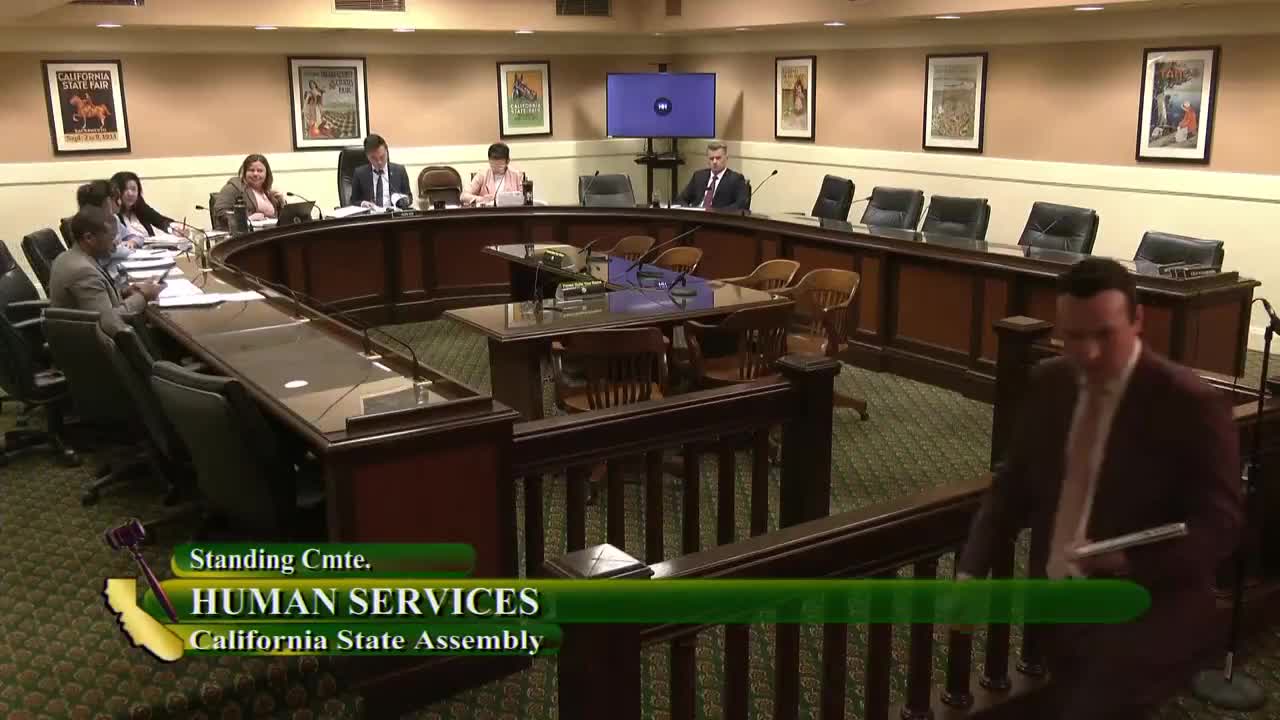 6MIN
Assembly Standing Committee on Human Services



Bill Co-Author(s):