AB 1960: Sentencing enhancements: property loss.
- Session Year: 2023-2024
- House: Assembly
- Latest Version Date: 2024-09-12
Current Status:
Passed
(2024-09-12: Chaptered by Secretary of State - Chapter 220, Statutes of 2024.)
Introduced
In Committee
First Chamber
In Committee
Second Chamber
Enacted
What does this bill do?
This bill adds consecutive prison terms for people who take, damage, or destroy property while committing or attempting a felony or who violate Penal Code section 496. It adds 1 year for losses over $50,000; 2 years over $200,000; 3 years over $1,000,000; 4 years over $3,000,000; plus 1 extra year for each additional $3,000,000, allows combining related losses from multiple crimes, and requires the dollar amounts to be charged and admitted by the defendant or proved to a judge or jury.
The summary is provided by generative AI which can make mistakes. For original language, please view the details in the table below.
State law, repealed as of January 1, 2018, required a court to impose an additional term of imprisonment, as specified, on a person who takes, damages, or destroys property in the commission or attempted commission of a felony, as specified.
This bill would, until January 1, 2030, create sentencing enhancements for taking, damaging, or destroying property in the commission or attempted commission of a felony, as specified. By adding new sentencing enhancements, this bill would impose a state-mandated local program.
The California Constitution requires the state to reimburse local agencies and school districts for certain costs mandated by the state. Statutory provisions establish procedures for making that reimbursement.
This bill would provide that no reimbursement is required by this act for a specified reason.
State law, repealed as of January 1, 2018, required a court to impose an additional term of imprisonment, as specified, on a person who takes, damages, or destroys property in the commission or attempted commission of a felony, as specified.
This bill would, until January 1, 2030, create sentencing enhancements for taking, damaging, or destroying property in the commission or attempted commission of a felony, as specified. By adding new sentencing enhancements, this bill would impose a state-mandated local program.
The bill would additionally make these provisions inoperative if a specified initiative is approved by the voters.The California Constitution requires the state to reimburse local agencies and school districts for certain costs mandated by the state. Statutory provisions establish procedures for making that reimbursement.
This bill would provide that no reimbursement is required by this act for a specified reason.
This bill would declare that it is to take effect immediately as an urgency statute.State law, repealed as of January 1, 2018, required a court to impose an additional term of imprisonment, as specified, on a person who takes, damages, or destroys property in the commission or attempted commission of a felony, as specified.
This bill would, until January 1, 2030, create sentencing enhancements for taking, damaging, or destroying property in the commission or attempted commission of a felony, as specified. By adding new sentencing enhancements, this bill would impose a state-mandated local program.
The bill would additionally make these provisions inoperative if a specified initiative is approved by the voters.
The California Constitution requires the state to reimburse local agencies and school districts for certain costs mandated by the state. Statutory provisions establish procedures for making that reimbursement.
This bill would provide that no reimbursement is required by this act for a specified reason.
This bill would declare that it is to take effect immediately as an urgency statute.
State law, repealed as of January 1, 2018, required a court to impose an additional term of imprisonment, as specified, on a person who takes, damages, or destroys property in the commission or attempted commission of a felony, as specified.
This bill would would, until January 1, 2030, create sentencing enhancements for taking, damaging, or destroying property in the commission or attempted commission of a felony, as specified. By adding new sentencing enhancements, this bill would impose a state-mandated local program.
The California Constitution requires the state to reimburse local agencies and school districts for certain costs mandated by the state. Statutory provisions establish procedures for making that reimbursement.
This bill would provide that no reimbursement is required by this act for a specified reason.
State law, repealed as of January 1, 2018, required a court to impose an additional term of imprisonment, as specified, on a person who takes, damages, or destroys property in the commission or attempted commission of a felony, as specified.
This bill would create sentencing enhancements for taking, damaging, or destroying property in the commission or attempted commission of a felony, as specified. By adding new sentencing enhancements, this bill would impose a state-mandated local program.
The California Constitution requires the state to reimburse local agencies and school districts for certain costs mandated by the state. Statutory provisions establish procedures for making that reimbursement.
This bill would provide that no reimbursement is required by this act for a specified reason.
(a)If a person takes, damages, or destroys property in the commission or attempted commission of a felony, or commits a felony in violation of Section 496, the court shall impose an additional and consecutive term of imprisonment as follows:
(1)If the loss or property value exceeds fifty thousand dollars ($50,000), the court shall impose an additional term of one year.
(2)If the loss or property value exceeds two hundred thousand dollars ($200,000), the court shall impose an additional term of two years.
(3)If the loss or property value exceeds one million dollars ($1,000,000), the court shall impose an additional term of three years.
(4)If the loss or property value exceeds three million dollars ($3,000,000), the court shall impose an additional term of four years.
(5)For each additional loss or property value of three million dollars ($3,000,000), the court shall impose a term of one year in addition to the term specified in paragraph (4).
(b)In an accusatory pleading involving multiple charges of taking, damage, or destruction, or multiple violations of Section 496, the additional terms provided in this section may be imposed if the aggregate losses to the victims or aggregate property values from all felonies exceed the amounts specified in this section and arise from a common scheme or plan. All pleadings under this section are subject to the rules of joinder and severance stated in Section 954.
(c)The additional terms provided in this section shall not be imposed unless the facts relating to the amounts provided in this section are charged in the accusatory pleading and admitted by the defendant or found to be true by the trier of fact.
(d)Notwithstanding any other law, the court may impose an enhancement pursuant to this section and another section on a single count.
(e)It is the intent of the Legislature that the provisions of this section be reviewed within five years to consider the effects of inflation on the additional terms imposed. This section shall remain in effect only until January 1, 2030, and as of that date is repealed, unless a later enacted statute that is enacted before January 1, 2030, deletes or extends that date.
SEC. 2.No reimbursement is required by this act pursuant to Section 6 of Article XIIIB of the California Constitution because the only costs that may be incurred by a local agency or school district will be incurred because this act creates a new crime or infraction, eliminates a crime or infraction, or changes the penalty for a crime or infraction, within the meaning of Section 17556 of the Government Code, or changes the definition of a crime within the meaning of Section 6 of Article XIIIB of the California Constitution.
(a)If a person takes, damages, or destroys property in the commission or attempted commission of a felony, or commits a felony in violation of Section 496, the court shall impose an additional and consecutive term of imprisonment as follows:
(1)If the loss or property value exceeds fifty thousand dollars ($50,000), the court shall impose an additional term of one year.
(2)If the loss or property value exceeds two hundred thousand dollars ($200,000), the court shall impose an additional term of two years.
(3)If the loss or property value exceeds one million dollars ($1,000,000), the court shall impose an additional term of three years.
(4)If the loss or property value exceeds three million dollars ($3,000,000), the court shall impose an additional term of four years.
(5)For each additional loss or property value of three million dollars ($3,000,000), the court shall impose a term of one year in addition to the term specified in paragraph (4).
(b)In an accusatory pleading involving multiple charges of taking, damage, or destruction, or multiple violations of Section 496, the additional terms provided in this section may be imposed if the aggregate losses to the victims or aggregate property values from all felonies exceed the amounts specified in this section and arise from a common scheme or plan. All pleadings under this section are subject to the rules of joinder and severance stated in Section 954.
(c)The additional terms provided in this section shall not be imposed unless the facts relating to the amounts provided in this section are charged in the accusatory pleading and admitted by the defendant or found to be true by the trier of fact.
(d)Notwithstanding any other law, the court may impose an enhancement pursuant to this section and another section on a single count.
(e)(1)It is the intent of the Legislature that the provisions of this section be reviewed within five years to consider the effects of inflation on the additional terms imposed. This section shall remain in effect only until January 1, 2030, and as of that date is repealed, unless a later enacted statute that is enacted before January 1, 2030, deletes or extends that date.
(2)If the proposed initiative measure titled The Homelessness, Drug Addiction, and Theft Reduction Act (Initiative 23-0017A1) is approved by the voters at the statewide general election on November 5, 2024, this section shall become inoperative on the fifth day after the Secretary of State files the statement of the vote for the election, and shall be repealed on January 1, 2025.SEC. 2.No reimbursement is required by this act pursuant to Section 6 of Article XIIIB of the California Constitution because the only costs that may be incurred by a local agency or school district will be incurred because this act creates a new crime or infraction, eliminates a crime or infraction, or changes the penalty for a crime or infraction, within the meaning of Section 17556 of the Government Code, or changes the definition of a crime within the meaning of Section 6 of Article XIIIB of the California Constitution.
SEC. 3.This act is an urgency statute necessary for the immediate preservation of the public peace, health, or safety within the meaning of Article IV of the California Constitution and shall go into immediate effect. The facts constituting the necessity are:To address the increase in community-based crime and retail theft and to provide broader public safety, it is necessary that this act take effect immediately.(a)If a person takes, damages, or destroys property in the commission or attempted commission of a felony, or commits a felony in violation of Section 496, the court shall impose an additional and consecutive term of imprisonment as follows:
(1)If the loss or property value exceeds fifty thousand dollars ($50,000), the court shall impose an additional term of one year.
(2)If the loss or property value exceeds two hundred thousand dollars ($200,000), the court shall impose an additional term of two years.
(3)If the loss or property value exceeds one million dollars ($1,000,000), the court shall impose an additional term of three years.
(4)If the loss or property value exceeds three million dollars ($3,000,000), the court shall impose an additional term of four years.
(5)For each additional loss or property value of three million dollars ($3,000,000), the court shall impose a term of one year in addition to the term specified in paragraph (4).
(b)In an accusatory pleading involving multiple charges of taking, damage, or destruction, or multiple violations of Section 496, the additional terms provided in this section may be imposed if the aggregate losses to the victims or aggregate property values from all felonies exceed the amounts specified in this section and arise from a common scheme or plan. All pleadings under this section are subject to the rules of joinder and severance stated in Section 954.
(c)The additional terms provided in this section shall not be imposed unless the facts relating to the amounts provided in this section are charged in the accusatory pleading and admitted by the defendant or found to be true by the trier of fact.
(d)Notwithstanding any other law, the court may impose an enhancement pursuant to this section and another section on a single count.
(e)(1)It is the intent of the Legislature that the provisions of this section be reviewed within five years to consider the effects of inflation on the additional terms imposed. This section shall remain in effect only until January 1, 2030, and as of that date is repealed, unless a later enacted statute that is enacted before January 1, 2030, deletes or extends that date.
(2)If the proposed initiative measure titled The Homelessness, Drug Addiction, and Theft Reduction Act (Initiative 23-0017A1) is approved by the voters at the statewide general election on November 5, 2024, this section shall become inoperative on the fifth day after the Secretary of State files the statement of the vote for the election, and shall be repealed on January 1, 2025.
SEC. 2.No reimbursement is required by this act pursuant to Section 6 of Article XIIIB of the California Constitution because the only costs that may be incurred by a local agency or school district will be incurred because this act creates a new crime or infraction, eliminates a crime or infraction, or changes the penalty for a crime or infraction, within the meaning of Section 17556 of the Government Code, or changes the definition of a crime within the meaning of Section 6 of Article XIIIB of the California Constitution.
SEC. 3.This act is an urgency statute necessary for the immediate preservation of the public peace, health, or safety within the meaning of Article IV of the California Constitution and shall go into immediate effect. The facts constituting the necessity are:
To address the increase in community-based crime and retail theft and to provide broader public safety, it is necessary that this act take effect immediately.
(a)If a person takes, damages, or destroys property in the commission or attempted commission of a felony, or commits a felony in violation of Section 496, the court shall impose an additional and consecutive term of imprisonment as follows:
(1)If the loss or property value exceeds fifty thousand dollars ($50,000), the court shall impose an additional term of one year.
(2)If the loss or property value exceeds two hundred thousand dollars ($200,000), the court shall impose an additional term of two years.
(3)If the loss or property value exceeds one million dollars ($1,000,000), the court shall impose an additional term of three years.
(4)If the loss or property value exceeds three million dollars ($3,000,000), the court shall impose an additional term of four years.
(5)For each additional loss or property value of three million dollars ($3,000,000), the court shall impose a term of one year in addition to the term specified in paragraph (4).
(b)In an accusatory pleading involving multiple charges of taking, damage, or destruction, or multiple violations of Section 496, the additional terms provided in this section may be imposed if the aggregate losses to the victims or aggregate property values from all felonies exceed the amounts specified in this section and arise from a common scheme or plan. All pleadings under this section are subject to the rules of joinder and severance stated in Section 954.
(c)The additional terms provided in this section shall not be imposed unless the facts relating to the amounts provided in this section are charged in the accusatory pleading and admitted by the defendant or found to be true by the trier of fact.
(d)Notwithstanding any other law, the court may impose an enhancement pursuant to this section and another section on a single count.
(e)It is the intent of the Legislature that the provisions of this section be reviewed within five years to consider the effects of inflation on the additional terms imposed. This section shall remain in effect only until January 1, 2030, and as of that date is repealed, unless a later enacted statute that is enacted before January 1, 2030, deletes or extends that date.
SEC. 2.No reimbursement is required by this act pursuant to Section 6 of Article XIIIB of the California Constitution because the only costs that may be incurred by a local agency or school district will be incurred because this act creates a new crime or infraction, eliminates a crime or infraction, or changes the penalty for a crime or infraction, within the meaning of Section 17556 of the Government Code, or changes the definition of a crime within the meaning of Section 6 of Article XIIIB of the California Constitution.
(a)If a person takes, damages, or destroys property in the commission or attempted commission of a felony, or commits a felony in violation of Section 496, the court shall impose an additional and consecutive term of imprisonment as follows:
(1)If the loss or property value exceeds fifty thousand dollars ($50,000), the court shall impose an additional term of one year.
(2)If the loss or property value exceeds two hundred thousand dollars ($200,000), the court shall impose an additional term of two years.
(3)If the loss or property value exceeds one million dollars ($1,000,000), the court shall impose an additional term of three years.
(4)If the loss or property value exceeds three million dollars ($3,000,000), the court shall impose an additional term of four years.
(5)For each additional loss or property value of three million dollars ($3,000,000), the court shall impose a term of one year in addition to the term specified in paragraph (4).
(b)In an accusatory pleading involving multiple charges of taking, damage, or destruction, or multiple violations of Section 496, the additional terms provided in this section may be imposed if the aggregate losses to the victims or aggregate property values from all felonies exceed the amounts specified in this section and arise from a common scheme or plan. All pleadings under this section are subject to the rules of joinder and severance stated in Section 954.
(c)The additional terms provided in this section shall not be imposed unless the facts relating to the amounts provided in this section are charged in the accusatory pleading and admitted by the defendant or found to be true by the trier of fact.
(d)Notwithstanding any other law, the court may impose an enhancement pursuant to this section and another section on a single count.
SEC. 2.No reimbursement is required by this act pursuant to Section 6 of Article XIIIB of the California Constitution because the only costs that may be incurred by a local agency or school district will be incurred because this act creates a new crime or infraction, eliminates a crime or infraction, or changes the penalty for a crime or infraction, within the meaning of Section 17556 of the Government Code, or changes the definition of a crime within the meaning of Section 6 of Article XIIIB of the California Constitution.
REVISIONS: HeadingLines 2 and 3.|
Date
|
Status
|
|---|---|
| Sep 12, 2024 | Chaptered by Secretary of State - Chapter 220, Statutes of 2024. |
| Sep 12, 2024 | Approved by the Governor. |
| Sep 3, 2024 | Enrolled and presented to the Governor at 3:30 p.m. |
| Aug 31, 2024 | Senate amendments concurred in. To Engrossing and Enrolling. (Ayes 64. Noes 4.). |
| Aug 29, 2024 | Assembly Rule 77 suspended. |
| Aug 28, 2024 | In Assembly. Concurrence in Senate amendments pending. May be considered on or after August 30 pursuant to Assembly Rule 77. |
| Aug 28, 2024 | Read third time. Passed. Ordered to the Assembly. (Ayes 34. Noes 2.). |
| Jul 1, 2024 | Read second time. Ordered to third reading. |
| Jun 30, 2024 | Read third time and amended. Ordered to second reading. |
| Jun 20, 2024 | Read second time and amended. Ordered to third reading. |
| Jun 19, 2024 | From committee: Amend, and do pass as amended. (Ayes 5. Noes 0.) (June 17). |
| Jun 17, 2024 | Motion to place on APPR. suspense file failed |
| Jun 17, 2024 | (Ayes 1. Noes 3.) (June 17) |
| Jun 11, 2024 | From committee: Do pass and re-refer to Com. on APPR. (Ayes 4. Noes 0.) (June 11). Re-referred to Com. on APPR. |
| May 29, 2024 | Referred to Com. on PUB S. |
| May 22, 2024 | In Senate. Read first time. To Com. on RLS. for assignment. |
| May 22, 2024 | Read third time. Passed. Ordered to the Senate. (Ayes 60. Noes 5. Page 5506.) |
| May 20, 2024 | Read second time. Ordered to third reading. |
| May 16, 2024 | Read second time and amended. Ordered returned to second reading. |
| May 16, 2024 | From committee: Amend, and do pass as amended. (Ayes 10. Noes 0.) (May 16). |
| May 16, 2024 | Assembly Rule 63 suspended. |
| Apr 17, 2024 | In committee: Set, first hearing. Referred to APPR. suspense file. |
| Apr 10, 2024 | From committee: Do pass and re-refer to Com. on APPR. (Ayes 7. Noes 0.) (April 9). Re-referred to Com. on APPR. |
| Apr 10, 2024 | Coauthors revised. |
| Feb 12, 2024 | Referred to Com. on PUB. S. |
| Jan 30, 2024 | From printer. May be heard in committee February 29. |
| Jan 29, 2024 | Read first time. To print. |
|
Date
|
Description
|
Location
|
Votes
|
|
|---|---|---|---|---|
| Aug 31, 2024 | AB 1960 Robert Rivas Concurrence in Senate Amendments By ZBUR | Assembly Floor |
Passed |
|
| Aug 28, 2024 | Assembly 3rd Reading AB1960 Robert Rivas et al. By Newman | Senate Floor |
Passed |
|
| Jun 17, 2024 | Do pass as amended | Senate Standing Committee on Appropriations |
Passed |
|
| Jun 17, 2024 | Placed on suspense file | Senate Standing Committee on Appropriations |
Failed |
|
| Jun 11, 2024 | Do pass, but first be re-referred to the Committee on [Appropriations] | Senate Standing Committee on Public Safety |
Passed |
|
| May 22, 2024 | AB 1960 Soria Assembly Third Reading | Assembly Floor |
Passed |
|
| May 16, 2024 | Do pass as amended. | Assembly Standing Committee on Appropriations |
Passed |
|
| Apr 9, 2024 | Do pass and be re-referred to the Committee on [Appropriations] | Assembly Standing Committee on Public Safety |
Passed |
This list shows positions taken on this bill by organizations on the date displayed, which is linked to the original source.
Positions by individuals are not included.
|
Organization
|
Position
|
Date
|
|---|---|---|
| A New PATH: Parents for Addiction Treatment and Healing | * Against | Apr 9, 2024 |
| Aclu California Action | ** Against | |
| All of Us or None | * Against | Jun 11, 2024 |
| Arcadia Police Officers' Association | ** Support | |
| Association For Los Angeles Deputy Sheriffs | ** Support | |
| Association of California Cities - Orange County | ** Support | |
| Attorney General Rob Bonta | * Support | Apr 9, 2024 |
| BOMA California | ** Support | |
| Burbank Police Officers' Association | ** Support | |
| California Business Properties Association | ** Support | |
| California Chamber Of Commerce | ** Support | |
| California Department of Justice | ** Support | |
| California District Attorneys Association | ** Support | |
| California Downtown Association | ** Support | |
| California Fuels And Convenience Alliance | * Support | Apr 9, 2024 |
| California Grocers Association | * Support | Apr 9, 2024 |
| California Hispanic Chambers Of Commerce | * Support | Apr 9, 2024 |
| California Narcotic Officers Association | * Against | Jun 11, 2024 |
| California Police Chiefs Association | ** Support | |
| California Public Defenders Association | ** Against | |
| California Reserve Peace Officers Association | ** Support | |
| California Retailers Association | ** Support | |
| California State Sheriffs' Association | ** Support | |
| Californians United for a Responsible Budget | ** Against | |
| City of Artesia | ** Support | |
| City Of Beverly Hills | * Support | Jun 11, 2024 |
| City of Buena Park | ** Support | |
| City of Concord | ** Support | |
| City of Crescent City | ** Support | |
| city of Cypress | ** Support | |
| City of Downey | ** Support | |
| City of Fountain Valley | ** Support | |
| City Of Fullerton | ** Support | |
| City of Lakeport | ** Support | |
| City of Los Alamitos | ** Support | |
| City Of Merced | ** Support | |
| City Of Mission Viejo | ** Support | |
| City Of Oakdale | ** Support | |
| City Of Palmdale | ** Support | |
| City of Rancho Palos Verdes | ** Support | |
| City of San Luis Obispo | ** Support | |
| City of Stanton | ** Support | |
| City of Stockton | ** Support | |
| City of Thousand Oaks | ** Support | |
| City of Whittier | ** Support | |
| Communities United for Restorative Youth Justice | ** Against | |
| Corona Police Officers Association | ** Support | |
| County of Orange, Office of The District Attorney/public Administrator | ** Support | |
| Culver City Police Officers' Association | ** Support | |
| Darrell Steinberg, Mayor Of Sacramento | ** Support | |
| Deputy Sheriffs Association of Monterey County | ** Support | |
| Downtown Santa Monica | ** Support | |
| Ella Baker Center For Human Rights | ** Against | |
| Felony Murder Elimination Project | * Against | Jun 11, 2024 |
| Friends Committee of Legislation in California | * Against | Jun 11, 2024 |
| FTIO | * Against | Jun 11, 2024 |
| Fullerton Police Officers' Association | ** Support | |
| Initiate Justice | ** Against | |
| Initiate Justice Action | ** Against | |
| League Of California Cities | * Support | Jun 13, 2024 |
| League of California Cities, Central Valley Division | ** Support | |
| Legal Services for Prisoners with Children | * Against | Jun 11, 2024 |
| Los Angeles Area Chamber Of Commerce | * Support | Apr 9, 2024 |
| Los Angeles County Business Federation | ** Support | |
| Los Angeles County Division, League of California Cities | ** Support | |
| Los Angeles County Sheriff'S Department | ** Support | |
| LSBC | * Against | Apr 9, 2024 |
| LSPC - All of Us or None | * Against | Jun 11, 2024 |
| Merced County District Attorney | ** Support | |
| Merced County District Attorney's Office | * Support | Apr 9, 2024 |
| Merced District Attorney | ** Support | |
| Murrieta Police Officers' Association | ** Support | |
| NAIOP of California | ** Support | |
| Newport Beach Police Association | ** Support | |
| Novato Police Officers Association | ** Support | |
| Orange County Business Council | ** Support | |
| Orange County District Attorney | ** Support | |
| Orange County Taxpayers Association | ** Support | |
| Palos Verdes Police Officers Association | ** Support | |
| Peace Officers Research Assn of CA (PORAC PAC) | * Support | Apr 9, 2024 |
| PLACER COUNTY DEPUTY SHERIFFS ASSOCIATION | ** Support | |
| Pomona Police Officers' Association | ** Support | |
| RIVERSIDE POLICE OFFICERS ASSOCIATION | ** Support | |
| Riverside Sheriffs' Association | ** Support | |
| San Francisco Public Defender | ** Against | |
| Santa Ana Police Officers Association | ** Support | |
| Southern California Leadership Council | ** Support | |
| Target Corporation | ** Support | |
| Town of Apple Valley | ** Support | |
| Uncommon Law | ** Against | |
| United Chamber Advocacy Network | ** Support | |
| Upland Police Officers Association | ** Support | |
| Vera Institute Of Justice | ** Against | |
| Young Women's Freedom Center | ** Against |
CONCURRENCE IN SENATE AMENDMENTS
CSA1 Bill Id:AB 1960
Author:(Robert Rivas)
As Amended Ver:June 30, 2024
Majority
SUMMARY
Re-enacts a sentence enhancement for felony offenses for a person who intentionally takes, damages, or destroys property, when the loss exceeds specified dollar amounts, but lowers the amounts to below 2017 levels when the enhancement sunset.
Senate Amendments
Senate amendments restore the bill to the original version passed by the Assembly.
COMMENTS
As passed by the Assembly, this bill:
- Provided that if a person takes, damages or destroys any property in the commission or attempted commission of a felony, or if a person commits receiving stolen property charged as a felony, the court shall impose an additional term of imprisonment as follows:
- If the loss or property value exceeds $50,000, the court shall impose an additional term of one year.
- If the loss or property value exceeds $200,000, the court shall impose an additional term of two years.
- If the loss or property value exceeds $1,000,000, the court shall impose an additional term of three years.
- If the loss or property value exceeds $3,000,000, the court shall impose an additional term of four years.
- For each additional loss or property value of $3,000,000, the court shall impose a term of one year in addition to the term of four years imposed for the loss of the first $3,000,000.
- Allowed imposition of this enhancement if the aggregate losses to the victims, or the aggregate property values from all felonies exceed the specified triggering amounts.
- Prohibited imposition of the enhancement unless the facts are charged in the accusatory pleading and admitted by the defendant or found to be true by the trier of fact.
- Stated that, notwithstanding any other law, the court may impose this enhancement and an enhancement pursuant to another Penal Code section on a single count.
- Stated that it is the intent of the Legislature that the additional terms of imprisonment be reviewed within five years to consider the effects of inflation.
- Contained a January 1, 2030 sunset date.
According to the Author
"AB 1960 provides prosecutors the tools to hold criminals accountable by imposing a stronger sentence for retail theft. The bill reinstates a tiered penalties enhancement system, if the value of the stolen or damaged property is exceptionally high. Specifically, it would provide a sentence enhancement up to five years when the property loss is more than $50,000. Our communities are hurting. Crime, especially retail theft, is not only a problem in my district. This is an issue plaguing the entire state. We must address it with urgency and action. This bill will do that and our communities will be safer as a result."
Arguments in Support
According to the California District Attorneys Association, "CDAA supports AB 1960, your bill to restore enhancements for felony excessive takings and destruction of property. Similar enhancements, on the books for decades in California, expired in 2018. It was the stated intent of the Legislature in 2018 (according to former Penal Code section 12022.6, subdivision (f)) to consider the effects of inflation on the additional terms imposed, but instead the Legislature let the law expire without doing so.
"We agree with your goal of directing that the punishment should fit the crime, a core principle of any enlightened system of criminal justice. Excessive takings and destruction of property should not be treated the same as those that are not. Under current law, a felony taking or destruction of property of over $3 million carries the same consequence as one involving $1,000. Your bill restores logic, deterrence, and accountability to this area of our criminal law."
Arguments in Opposition
According to the California Public Defenders Association, "AB 1960 would do nothing to assist victims but would serve to increase the time that a person would be incarcerated for a property offense. The enhancement thresholds were established many years ago, and have not been updated to keep pace with inflation, so they are would be broader in their application today than was the intent of the law that was allowed to sunset in 2018.
"Sentencing enhancements are a major expensive policy failure. They do not or address violence in any demonstrable way. Enhancements are, however, one of the drivers of mass incarceration, a systematic means of economically and politically disenfranchising Black, Latinx and Indigenous families and communities. Mass incarceration is a human rights and economic disaster for all California families depriving communities of health care, substance abuse treatment, housing and education."
FISCAL COMMENTS
According to the Senate Appropriations Committee, "Incarceration costs in the millions of dollars (General Fund) annually to the California Department of Corrections and Rehabilitation (CDCR). Total costs will depend on the number of enhancements imposed and the length of each enhancement. From 2015 to 2017, CDCR admitted an average of 48 offenders with an enhancement similar to the one in this bill, though some of those enhancements were stayed. The Legislative Analyst's Office (LAO) estimates that the average annual cost to incarcerate one person in CDCR is $133,000. If CDCR admits 25 additional offenders who each must serve a two-year sentence enhancement under this bill, the total cost of their incarceration resulting from this bill will be approximately $6.65 million over two years. Actual costs will likely be higher because the enhancement enacted by this bill is broader than previous similar enhancements and will likely apply to more defendants."
VOTES:
ASM PUBLIC SAFETY: 7-0-1
YES: McCarty, Alanis, Lackey, Stephanie Nguyen, Reyes, Wilson, Zbur
ABS, ABST OR NV: Ting
ASM APPROPRIATIONS: 10-0-5
YES: Wicks, Arambula, Calderon, Wendy Carrillo, Mike Fong, Grayson, Haney, Hart, Pellerin, Villapudua
ABS, ABST OR NV: Sanchez, Bryan, Dixon, Jim Patterson, Ta
ASSEMBLY FLOOR: 60-5-15
YES: Addis, Aguiar-Curry, Alanis, Alvarez, Bains, Bauer-Kahan, Bennett, Berman, Boerner, Juan Carrillo, Wendy Carrillo, Chen, Connolly, Davies, Dixon, Flora, Mike Fong, Vince Fong, Gabriel, Gallagher, Garcia, Gipson, Grayson, Hoover, Irwin, Lackey, Low, Lowenthal, Maienschein, McCarty, Muratsuchi, Stephanie Nguyen, Ortega, Pacheco, Papan, Jim Patterson, Joe Patterson, Pellerin, Petrie-Norris, Quirk-Silva, Ramos, Rendon, Reyes, Rodriguez, Blanca Rubio, Sanchez, Santiago, Schiavo, Soria, Ta, Valencia, Villapudua, Waldron, Wallis, Weber, Wicks, Wilson, Wood, Zbur, Robert Rivas
NO: Bonta, Bryan, Jones-Sawyer, Kalra, Lee
ABS, ABST OR NV: Arambula, Calderon, Cervantes, Megan Dahle, Essayli, Friedman, Haney, Hart, Holden, Jackson, Mathis, McKinnor, Luz Rivas, Ting, Ward
SENATE FLOOR: 34-2-4
YES: Allen, Archuleta, Ashby, Atkins, Becker, Blakespear, Bradford, Caballero, Cortese, Dahle, Dodd, Eggman, Glazer, Gonzalez, Grove, Hurtado, Jones, Laird, Limón, McGuire, Min, Newman, Nguyen, Niello, Ochoa Bogh, Padilla, Portantino, Roth, Rubio, Seyarto, Stern, Umberg, Wahab, Wilk
NO: Skinner, Smallwood-Cuevas
ABS, ABST OR NV: Alvarado-Gil, Durazo, Menjivar, Wiener
UPDATED
VERSION: June 30, 2024
CONSULTANT: Greg Pagan / PUB. S. / (916) 319-3744 FN: 0004961
CONCURRENCE IN SENATE AMENDMENTS
CSA1 Bill Id:AB 1960
Author:(Robert Rivas)
As Amended Ver:June 30, 2024
Majority
SUMMARY
Re-enacts a sentence enhancement for felony offenses for a person who intentionally takes, damages, or destroys property, when the loss exceeds specified dollar amounts, but lowers the amounts to below 2017 levels when the enhancement sunset.
Senate Amendments
Senate amendments restore the bill to the original version passed by the Assembly.
COMMENTS
As passed by the Assembly, this bill:
- Provided that if a person takes, damages or destroys any property in the commission or attempted commission of a felony, or if a person commits receiving stolen property charged as a felony, the court shall impose an additional term of imprisonment as follows:
- If the loss or property value exceeds $50,000, the court shall impose an additional term of one year.
- If the loss or property value exceeds $200,000, the court shall impose an additional term of two years.
- If the loss or property value exceeds $1,000,000, the court shall impose an additional term of three years.
- If the loss or property value exceeds $3,000,000, the court shall impose an additional term of four years.
- For each additional loss or property value of $3,000,000, the court shall impose a term of one year in addition to the term of four years imposed for the loss of the first $3,000,000.
- Allowed imposition of this enhancement if the aggregate losses to the victims, or the aggregate property values from all felonies exceed the specified triggering amounts.
- Prohibited imposition of the enhancement unless the facts are charged in the accusatory pleading and admitted by the defendant or found to be true by the trier of fact.
- Stated that, notwithstanding any other law, the court may impose this enhancement and an enhancement pursuant to another Penal Code section on a single count.
- Stated that it is the intent of the Legislature that the additional terms of imprisonment be reviewed within five years to consider the effects of inflation.
- Contained a January 1, 2030 sunset date.
According to the Author
"AB 1960 provides prosecutors the tools to hold criminals accountable by imposing a stronger sentence for retail theft. The bill reinstates a tiered penalties enhancement system, if the value of the stolen or damaged property is exceptionally high. Specifically, it would provide a sentence enhancement up to five years when the property loss is more than $50,000. Our communities are hurting. Crime, especially retail theft, is not only a problem in my district. This is an issue plaguing the entire state. We must address it with urgency and action. This bill will do that and our communities will be safer as a result."
Arguments in Support
According to the California District Attorneys Association, "CDAA supports AB 1960, your bill to restore enhancements for felony excessive takings and destruction of property. Similar enhancements, on the books for decades in California, expired in 2018. It was the stated intent of the Legislature in 2018 (according to former Penal Code section 12022.6, subdivision (f)) to consider the effects of inflation on the additional terms imposed, but instead the Legislature let the law expire without doing so.
"We agree with your goal of directing that the punishment should fit the crime, a core principle of any enlightened system of criminal justice. Excessive takings and destruction of property should not be treated the same as those that are not. Under current law, a felony taking or destruction of property of over $3 million carries the same consequence as one involving $1,000. Your bill restores logic, deterrence, and accountability to this area of our criminal law."
Arguments in Opposition
According to the California Public Defenders Association, "AB 1960 would do nothing to assist victims but would serve to increase the time that a person would be incarcerated for a property offense. The enhancement thresholds were established many years ago, and have not been updated to keep pace with inflation, so they are would be broader in their application today than was the intent of the law that was allowed to sunset in 2018.
"Sentencing enhancements are a major expensive policy failure. They do not or address violence in any demonstrable way. Enhancements are, however, one of the drivers of mass incarceration, a systematic means of economically and politically disenfranchising Black, Latinx and Indigenous families and communities. Mass incarceration is a human rights and economic disaster for all California families depriving communities of health care, substance abuse treatment, housing and education."
FISCAL COMMENTS
According to the Senate Appropriations Committee, "Incarceration costs in the millions of dollars (General Fund) annually to the California Department of Corrections and Rehabilitation (CDCR). Total costs will depend on the number of enhancements imposed and the length of each enhancement. From 2015 to 2017, CDCR admitted an average of 48 offenders with an enhancement similar to the one in this bill, though some of those enhancements were stayed. The Legislative Analyst's Office (LAO) estimates that the average annual cost to incarcerate one person in CDCR is $133,000. If CDCR admits 25 additional offenders who each must serve a two-year sentence enhancement under this bill, the total cost of their incarceration resulting from this bill will be approximately $6.65 million over two years. Actual costs will likely be higher because the enhancement enacted by this bill is broader than previous similar enhancements and will likely apply to more defendants."
VOTES:
ASM PUBLIC SAFETY: 7-0-1
YES: McCarty, Alanis, Lackey, Stephanie Nguyen, Reyes, Wilson, Zbur
ABS, ABST OR NV: Ting
ASM APPROPRIATIONS: 10-0-5
YES: Wicks, Arambula, Calderon, Wendy Carrillo, Mike Fong, Grayson, Haney, Hart, Pellerin, Villapudua
ABS, ABST OR NV: Sanchez, Bryan, Dixon, Jim Patterson, Ta
ASSEMBLY FLOOR: 60-5-15
YES: Addis, Aguiar-Curry, Alanis, Alvarez, Bains, Bauer-Kahan, Bennett, Berman, Boerner, Juan Carrillo, Wendy Carrillo, Chen, Connolly, Davies, Dixon, Flora, Mike Fong, Vince Fong, Gabriel, Gallagher, Garcia, Gipson, Grayson, Hoover, Irwin, Lackey, Low, Lowenthal, Maienschein, McCarty, Muratsuchi, Stephanie Nguyen, Ortega, Pacheco, Papan, Jim Patterson, Joe Patterson, Pellerin, Petrie-Norris, Quirk-Silva, Ramos, Rendon, Reyes, Rodriguez, Blanca Rubio, Sanchez, Santiago, Schiavo, Soria, Ta, Valencia, Villapudua, Waldron, Wallis, Weber, Wicks, Wilson, Wood, Zbur, Robert Rivas
NO: Bonta, Bryan, Jones-Sawyer, Kalra, Lee
ABS, ABST OR NV: Arambula, Calderon, Cervantes, Megan Dahle, Essayli, Friedman, Haney, Hart, Holden, Jackson, Mathis, McKinnor, Luz Rivas, Ting, Ward
UPDATED
VERSION: June 30, 2024
CONSULTANT: Greg Pagan / PUB. S. / (916) 319-3744 FN: 0004961
SENATE RULES COMMITTEE Office of Senate Floor Analyses (916) 651-1520 Fax: (916) 327-4478 | AB 1960 |
THIRD READING
Bill No: AB 1960
Author: Robert Rivas (D), et al.
Amended: 6/30/24 in Senate
Vote: 21
SENATE PUBLIC SAFETY COMMITTEE: 4-0, 6/11/24
AYES: Wahab, Bradford, Skinner, Wiener
NO VOTE RECORDED: Seyarto
SENATE APPROPRIATIONS COMMITTEE: 5-0, 6/17/24
AYES: Caballero, Ashby, Becker, Bradford, Wahab
NO VOTE RECORDED: Jones, Seyarto
ASSEMBLY FLOOR: 60-5, 5/22/24 - See last page for vote
SUBJECT: Sentencing enhancements: property loss
SOURCE: California District Attorneys Association
Merced County District Attorney
Orange County District Attorney
DIGEST:
This bill creates, until January 1, 2030, new sentencing enhancements of one, two, three, or four years respectively for taking, damaging or destroying any property in the commission or attempted commission of a felony or commission of a felony violation of receiving stolen property, if the loss or property value exceeds $50,000, $200,000, $1,000,000, or $3,000,000.
ANALYSIS:
Senate Floor Amendments of 6/30/24 remove the urgency clause and the inoperative clause.
- Divides theft into two degrees, petty theft and grand theft. (Penal (Pen.) Code § 486)
- Defines grand theft as when the money, labor, or real or personal property taken is of a value exceeding $950 dollars, except as specified. (Pen. Code § 487)
- States that petty theft is punishable by a fine not exceeding $1,000, by imprisonment in the county jail not exceeding six months, or both. (Pen. Code § 490)
- Defines “shoplifting” as entering a commercial establishment with intent to commit larceny while that establishment is open during regular business hours, where the value of the property that is taken or intended to be taken does not exceed $950 dollars. (Pen. Code § 459.5 subd. (a))
- States that any act of shoplifting must be charged as such, and that a person charged with shoplifting cannot also be charged with burglary or theft of the same property. (Pen. Code § 459.5 subd. (b))
- Punishes shoplifting as a misdemeanor, except where a person has a prior “super strike” or a registrable sex conviction, in which case the offense is punished as a felony by imprisonment in the county jail pursuant to realignment. (Pen. Code § 459.5 subd. (a))
- Provides that, notwithstanding the punishment for petty theft, if a person is required to register as a sex offender, has a prior “super strike conviction,” or has a conviction for a specified theft-related offense against an elder or dependent adult, and also has been convicted of a specified theft-related offense for which he or she was imprisoned, and is subsequently convicted of petty theft, then the person is to receive an enhanced punishment of imprisonment in the county jail not to exceed one year, or in the state prison. (Pen. Code § 666)
This bill:
- Provides that if a person takes, damages, or destroys property in the commission or attempted commission of a felony, or commits a felony violation of receiving stolen property, the court shall impose an additional and consecutive term of imprisonment as follows:
- If the loss or property value exceeds $50,000 the shall impose an additional term of one year;
- If the loss or property value exceeds $200,000 the court shall impose an additional term of two years;
- If the loss or property value exceeds $1,000,000, the court shall impose an additional term of three years;
- If the loss or property value exceeds $3,000,000, the court shall impose an additional term of four years;
- For each additional loss or property value of $3,000,000, the court shall impose a term of one year in addition to the term specified above.
- Provides that the additional terms provided in this section shall not be imposed unless the facts relating to the amounts provided in this section are charged in the accusatory pleading and admitted by the defendant or found to be true by the trier of fact.
- States that notwithstanding any other law, the court may impose an enhancement pursuant to this section and another section on a single count.
- Sunsets its provisions on January 1, 2030 and states that it is the intent of the Legislature that the provisions of this section be reviewed within five years to consider the effects of inflation on the additional terms imposed.
Background
Repealed “Excessive Takings” Enhancement. Until the law sunset in 2018, California had an “excessive takings” enhancement that would apply to taking or damaging of property that exceeded specified value thresholds. (Former Penal Code Section 12022.6) The law was enacted in 1977 and subsequently a sunset provision was included in the statute for the purpose of allowing the Legislature to consider the effects of inflation on the property value thresholds in the law. The sunset was extended several times through legislation until the law was allowed to sunset in 2018. The law as it read in 2017 required the court to apply an enhancement of one, two, three, or four years respectively whenever any person was convicted of a felony involving taking or damaging property that exceeded losses of $65,000, $200,000, $1,300,000 and $3,200,000.
AB 1511 (Low, 2018), would have reauthorized the enhancement statute with higher value thresholds, starting at $75,000 and going up to $3.7 million in property loss, and would have made the statute permanent. The bill was vetoed. Then Governor Brown’s veto message stated:
AB 1511 now seeks to re-enact this repealed enhancement, but omits any sunset provision similar to those that have been included with this statute since 1990. I see no reason to now permanently re-enact a repealed sentencing enhancement without corresponding evidence that it was effective in deterring crime. As I have said before, California has over 5,000 criminal provisions covering almost every conceivable form of human misbehavior. We can effectively manage our criminal justice system without 5,001.
This bill creates new enhancements that would apply to the same conduct that would have been covered by former Penal Code Section 12022.6. This bill requires the court to apply specified additional terms of imprisonment when the loss or property value resulting from a person’s taking, damaging or destroying of property in the commission of a felony or commission of a felony violation of receiving stolen property exceeds the following amounts: $50,000, $200,000, $1 million, and $3 million.
Notably, the threshold value amounts contained in this bill are lower than the values contained in Penal Code Section 12022.6 when the law was allowed to sunset in 2018. Specifically, that repealed statute, which was last adjusted for inflation in 2007 for the law to go into effect January 1, 2008, contained the following threshold amounts for the sentence enhancements to apply: $65,000, $200,000, $1.3 million, and $3.2 million.
FISCAL EFFECT: Appropriation: No Fiscal Com.: Yes Local: Yes
According to the Senate Committee on Appropriations: Incarceration costs in the millions of dollars (General Fund) annually to the California Department of Corrections and Rehabilitation (CDCR). Total costs will depend on the number of enhancements imposed and the length of each enhancement. From 2015 to 2017, CDCR admitted an average of 48 offenders with an enhancement similar to the one in this bill, though some of those enhancements were stayed. The Legislative Analyst’s Office (LAO) estimates that the average annual cost to incarcerate one person in CDCR is $133,000. If CDCR admits 25 additional offenders who each must serve a two-year sentence enhancement under this bill, the total cost of their incarceration resulting from this bill will be approximately $6.65 million over two years. Actual costs will likely be higher because the enhancement enacted by this bill is broader than previous similar enhancements and will likely apply to more defendants.
SUPPORT: (Verified 6/29/24)
California District Attorneys Association (co-source)
Merced County District Attorney (co-source)
Orange County District Attorney (co-source)
Darrell Steinberg, Mayor of Sacramento
Mayor Todd Gloria, City of San Diego
Arcadia Police Officers' Association
Association for Los Angeles Deputy Sheriffs
Association of California Cities - Orange County
Boma California
Burbank Police Officers' Association
California Business Properties Association
California Chamber of Commerce
California Department of Justice
California Downtown Association
California Police Chiefs Association
California Reserve Peace Officers Association
California Retailers Association
California State Sheriffs' Association
City of Artesia
City of Buena Park
City of Concord
City of Crescent City
City of Cypress
City of Downey
City of Fountain Valley
City of Fullerton
City of Lakeport
City of Los Alamitos
City of Merced
City of Mission Viejo
City of Oakdale
City of Palmdale
City of Rancho Palos Verdes
City of San Luis Obispo
City of Stanton
City of Stockton
City of Thousand Oaks
City of Whittier
Corona Police Officers Association
County of Orange, Office of The District Attorney/public Administrator
Culver City Police Officers' Association
Deputy Sheriffs' Association of Monterey County
Downtown Santa Monica
Fullerton Police Officers' Association
League of California Cities, Central Valley Division
Los Angeles County Business Federation
Los Angeles County Division, League of California Cities
Los Angeles County Sheriff's Department
Murrieta Police Officers' Association
NAIOP of California
Newport Beach Police Association
Novato Police Officers Association
Orange County Business Council
Orange County Taxpayers Association
Palos Verdes Police Officers Association
Placer County Deputy Sheriffs' Association
Pomona Police Officers' Association
Riverside Police Officers Association
Riverside Sheriffs' Association
Santa Ana Police Officers Association
Southern California Leadership Council
Target Corporation
Town of Apple Valley
United Chamber Advocacy Network
Upland Police Officers Association
OPPOSITION: (Verified 6/29/24)
ACLU California Action
California Public Defenders Association
Californians United for a Responsible Budget
Communities United for Restorative Youth Justice
Ella Baker Center for Human Rights
Initiate Justice
Initiate Justice Action
San Francisco Public Defender
Uncommon Law
Vera Institute of Justice
Young Women's Freedom Center
ARGUMENT IN SUPPORT: According to California Retailers Association:
Over the past several years, we have seen a troubling rise in organized retail theft and other large-scale property crimes across California, undermining the sense of safety and security in our communities. This criminal activity has forced businesses to spend millions annually on security measures, such as guards, cameras, and store redesigns. As businesses have significantly invested in securing their properties, thieves have become increasingly brazen through “smash and grab” incidents. Retail employees and customers are increasingly feeling unsafe, and the simple act of shopping has become burdensome for many. Those who deliberately target and destroy property in the commission of felonies must be held accountable.
Our communities have seen instances of groups using hammers to break jewelry cases, throwing objects through windows, destroying displays and entire aisles, and driving vehicles into buildings. By imposing stricter penalties for individuals damaging property through these acts, AB 1960 serves as a deterrent against “smash and grabs” and retail crime. It sends a clear message that such illicit and dangerous activities will not be tolerated, thereby helping to protect businesses, consumers, and communities from the adverse effects of criminal behavior.
ARGUMENT IN OPPOSITION: According to ACLU California Action:
Sentencing enhancements do not prevent crime, and will not will not address violence in any demonstrable way. Enhancements are, however, one of the drivers of mass incarceration, a systematic means of economically and politically disenfranchising Black, Latinx and Indigenous families and communities. Mass incarceration is a human rights and economic disaster for California families, and was built one bad bill at a time.
Extensive research has proven that overly long sentences, and the threat of such sentences do not reduce or prevent crime. In 2014, the National Academy of Sciences published a 444-page review of studies of sentencing policies1 and their positive and negative effects on crime rates and community safety. Among their conclusions were:
“Given the small crime prevention effects of long prison sentences and the possibly high financial, social, and human costs of incarceration, federal and state policy makers should revise current criminal justice policies to significantly reduce the rate of incarceration in the United States. In particular, they should re-examine policies regarding mandatory prison sentences and long sentences.”
Additionally, a 2015 report by the Ella Baker Center for Human Rights, Forward Together, and Research Action Design titled “Who Pays, The True Cost of Incarceration on Families” details how incarceration destabilizes entire families and communities. Many people who return from incarceration face extreme barriers to finding jobs and housing and reintegrating into society. Family members of incarcerated people also struggle with overwhelming debt from court costs visitation and telephone fees, and diminished family revenue. The longer the sentence, the more severe these problems.
ASSEMBLY FLOOR: 60-5, 5/22/24
AYES: Addis, Aguiar-Curry, Alanis, Alvarez, Bains, Bauer-Kahan, Bennett, Berman, Boerner, Juan Carrillo, Wendy Carrillo, Chen, Connolly, Davies, Dixon, Flora, Mike Fong, Vince Fong, Gabriel, Gallagher, Garcia, Gipson, Grayson, Hoover, Irwin, Lackey, Low, Lowenthal, Maienschein, McCarty, Muratsuchi, Stephanie Nguyen, Ortega, Pacheco, Papan, Jim Patterson, Joe Patterson, Pellerin, Petrie-Norris, Quirk-Silva, Ramos, Rendon, Reyes, Rodriguez, Blanca Rubio, Sanchez, Santiago, Schiavo, Soria, Ta, Valencia, Villapudua, Waldron, Wallis, Weber, Wicks, Wilson, Wood, Zbur, Robert Rivas
NOES: Bonta, Bryan, Jones-Sawyer, Kalra, Lee
NO VOTE RECORDED: Arambula, Calderon, Cervantes, Megan Dahle, Essayli, Friedman, Haney, Hart, Holden, Jackson, Mathis, McKinnor, Luz Rivas, Ting, Ward
Prepared by: Mary Kennedy / PUB. S. /
7/2/24 9:31:58
**** END ****
SENATE RULES COMMITTEE Office of Senate Floor Analyses (916) 651-1520 Fax: (916) 327-4478 | AB 1960 |
THIRD READING
Bill No: AB 1960
Author: Robert Rivas (D), et al.
Amended: 6/20/24 in Senate
Vote: 27- Urgency
SENATE PUBLIC SAFETY COMMITTEE: 4-0, 6/11/24
AYES: Wahab, Bradford, Skinner, Wiener
NO VOTE RECORDED: Seyarto
SENATE APPROPRIATIONS COMMITTEE: 5-0, 6/17/24
AYES: Caballero, Ashby, Becker, Bradford, Wahab
NO VOTE RECORDED: Jones, Seyarto
ASSEMBLY FLOOR: 60-5, 5/22/24 - See last page for vote
SUBJECT: Sentencing enhancements: property loss
SOURCE: California District Attorneys Association
Merced County District Attorney
Orange County District Attorney
DIGEST:
This bill creates, until January 1, 2030, new sentencing enhancements of 1, 2, 3, or 4 years respectively for taking, damaging or destroying any property in the commission or attempted commission of a felony or commission of a felony violation of receiving stolen property, if the loss or property value exceeds $50,000, $200,000, $1,000,000, or $3,000,000.
ANALYSIS:
Existing law:
- Divides theft into two degrees, petty theft and grand theft. (Pen. Code, § 486.)
- Defines grand theft as when the money, labor, or real or personal property taken is of a value exceeding $950 dollars, except as specified. (Pen. Code, § 487.)
- States that petty theft is punishable by a fine not exceeding $1,000, by imprisonment in the county jail not exceeding six months, or both. (Penal Code § 490.)
- Defines “shoplifting” as entering a commercial establishment with intent to commit larceny while that establishment is open during regular business hours, where the value of the property that is taken or intended to be taken does not exceed $950 dollars. (Pen. Code, § 459.5, subd. (a).)
- States that any act of shoplifting must be charged as such, and that a person charged with shoplifting cannot also be charged with burglary or theft of the same property. (Pen. Code, § 459.5, subd. (b).)
- Punishes shoplifting as a misdemeanor, except where a person has a prior “super strike” or a registrable sex conviction, in which case the offense is punished as a felony by imprisonment in the county jail pursuant to realignment. (Pen. Code, § 459.5, subd. (a).)
- Provides that, notwithstanding the punishment for petty theft, if a person is required to register as a sex offender, has a prior “super strike conviction,” or has a conviction for a specified theft-related offense against an elder or dependent adult, and also has been convicted of a specified theft-related offense for which he or she was imprisoned, and is subsequently convicted of petty theft, then the person is to receive an enhanced punishment of imprisonment in the county jail not to exceed one year, or in the state prison. (Pen. Code, § 666.)
This bill:
- Provides that if a person takes, damages, or destroys property in the commission or attempted commission of a felony, or commits a felony violation of receiving stolen property, the court shall impose an additional and consecutive term of imprisonment as follows:
- If the loss or property value exceeds $50,000 the shall impose an additional term of one year;
- If the loss or property value exceeds $200,000 the court shall impose an additional term of two years;
- If the loss or property value exceeds $1,000,000, the court shall impose an additional term of three years;
- If the loss or property value exceeds $3,000,000, the court shall impose an additional term of four years;
- For each additional loss or property value of $3,000,000, the court shall impose a term of one year in addition to the term specified above.
- Provides that the additional terms provided in this section shall not be imposed unless the facts relating to the amounts provided in this section are charged in the accusatory pleading and admitted by the defendant or found to be true by the trier of fact.
- States that notwithstanding any other law, the court may impose an enhancement pursuant to this section and another section on a single count.
- Sunsets its provisions on January 1, 2030 and states that it is the intent of the Legislature that the provisions of this section be reviewed within five years to consider the effects of inflation on the additional terms imposed.
- Contains an urgency clause.
- Provides that if the proposed initiative measure titled “The Homeless, Drug Addiction and Theft Reduction Act” (Initiative 23-0017A1) is approved by the voters at the statewide general election on November 5, 2024, this section shall become inoperative and shall be repealed on January 1, 2025.
Background
Until the law sunset in 2018, California had an “excessive takings” enhancement that would apply to taking or damaging of property that exceeded specified value thresholds. (Former Penal Code Section 12022.6.) The law was enacted in 1977 and subsequently a sunset provision was included in the statute for the purpose of allowing the Legislature to consider the effects of inflation on the property value thresholds in the law. The sunset was extended several times through legislation until the law was allowed to sunset in 2018. The law as it read in 2017 required the court to apply an enhancement of 1, 2, 3, or 4 years respectively whenever any person was convicted of a felony involving taking or damaging property that exceeded losses of $65,000, $200,000, $1,300,000 and $3,200,000.
AB 1511 (Low), of the 2017-2018 legislative session, would have reauthorized the enhancement statute with higher value thresholds, starting at $75,000 and going up to $3.7 million in property loss, and would have made the statute permanent. The bill was vetoed. Then Governor Brown’s veto message stated:
AB 1511 now seeks to re-enact this repealed enhancement, but omits any sunset provision similar to those that have been included with this statute since 1990. I see no reason to now permanently re-enact a repealed sentencing enhancement without corresponding evidence that it was effective in deterring crime. As I have said before, California has over 5,000 criminal provisions covering almost every conceivable form of human misbehavior. We can effectively manage our criminal justice system without 5,001.
This bill creates new enhancements that would apply to the same conduct that would have been covered by former Penal Code section 12022.6. This bill requires the court to apply specified additional terms of imprisonment when the loss or property value resulting from a person’s taking, damaging or destroying of property in the commission of a felony or commission of a felony violation of receiving stolen property exceeds the following amounts: $50,000, $200,000, $1 million, and $3 million.
Notably, the threshold value amounts contained in this bill are lower than the values contained in Penal Code section 12022.6 when the law was allowed to sunset in 2018. Specifically, that repealed statute, which was last adjusted for inflation in 2007 for the law to go into effect January 1, 2008, contained the following threshold amounts for the sentence enhancements to apply: $65,000, $200,000, $1.3 million, and $3.2 million.
FISCAL EFFECT: Appropriation: No Fiscal Com.: Yes Local: Yes
According to the Senate Appropriations Committee:
Incarceration costs in the millions of dollars (General Fund) annually to the California Department of Corrections and Rehabilitation (CDCR). Total costs will depend on the number of enhancements imposed and the length of each enhancement. From 2015 to 2017, CDCR admitted an average of 48 offenders with an enhancement similar to the one in this bill, though some of those enhancements were stayed. The Legislative Analyst’s Office (LAO) estimates that the average annual cost to incarcerate one person in CDCR is $133,000. If CDCR admits 25 additional offenders who each must serve a two-year sentence enhancement under this bill, the total cost of their incarceration resulting from this bill will be approximately $6.65 million over two years. Actual costs will likely be higher because the enhancement enacted by this bill is broader than previous similar enhancements and will likely apply to more defendants.
SUPPORT: (Verified 6/19/24)
California District Attorneys Association (co-source)
Merced District Attorney (co-source)
Orange County District Attorney (co-source)
Arcadia Police Officers' Association
Association for Los Angeles Deputy Sheriffs
Association of California Cities - Orange County
Boma California
Burbank Police Officers' Association
California Business Properties Association
California Chamber of Commerce
California Department of Justice
California Downtown Association
California Police Chiefs Association
California Reserve Peace Officers Association
California Retailers Association
City of Artesia
City of Buena Park
City of Concord
City of Crescent City
City of Cypress
City of Downey
City of Fountain Valley
City of Fullerton
City of Lakeport
City of Los Alamitos
City of Merced
City of Mission Viejo
City of Oakdale
City of Palmdale
City of Rancho Palos Verdes
City of San Luis Obispo
City of Stanton
City of Stockton
City of Thousand Oaks
City of Whittier
Corona Police Officers Association
County of Orange
Culver City Police Officers' Association
Darrell Steinberg, Mayor of Sacramento
Deputy Sheriffs' Association of Monterey County
Downtown Santa Monica
Fullerton Police Officers' Association
League of California Cities, Central Valley Division
Los Angeles County Business Federation
Los Angeles County Division, League of California Cities
Los Angeles County Sheriff's Department
Mayor Todd Gloria, City of San Diego
Murrieta Police Officers' Association
NAIOP of California
Newport Beach Police Association
Novato Police Officers Association
Orange County Business Council
Orange County Taxpayers Association
Palos Verdes Police Officers Association
Placer County Deputy Sheriffs' Association
Pomona Police Officers' Association
Riverside Police Officers Association
Riverside Sheriffs' Association
Santa Ana Police Officers Association
Southern California Leadership Council
Target Corporation
Town of Apple Valley
United Chamber Advocacy Network
Upland Police Officers Association
OPPOSITION: (Verified 6/19/24)
ACLU California Action
California Public Defenders Association
Californians United for A Responsible Budget
Communities United for Restorative Youth Justice
Ella Baker Center for Human Rights
Initiate Justice
Initiate Justice Action
San Francisco Public Defender
Uncommon Law
Vera Institute of Justice
Young Women's Freedom Center
ARGUMENT IN SUPPORT: According to California Retailers Association:
Over the past several years, we have seen a troubling rise in organized retail theft and other large-scale property crimes across California, undermining the sense of safety and security in our communities. This criminal activity has forced businesses to spend millions annually on security measures, such as guards, cameras, and store redesigns. As businesses have significantly invested in securing their properties, thieves have become increasingly brazen through “smash and grab” incidents. Retail employees and customers are increasingly feeling unsafe, and the simple act of shopping has become burdensome for many. Those who deliberately target and destroy property in the commission of felonies must be held accountable.
Our communities have seen instances of groups using hammers to break jewelry cases, throwing objects through windows, destroying displays and entire aisles, and driving vehicles into buildings. By imposing stricter penalties for individuals damaging property through these acts, AB 1960 serves as a deterrent against “smash and grabs” and retail crime. It sends a clear message that such illicit and dangerous activities will not be tolerated, thereby helping to protect businesses, consumers, and communities from the adverse effects of criminal behavior.
ARGUMENT IN OPPOSITION: According to ACLU California Action:
Sentencing enhancements do not prevent crime, and will not will not address violence in any demonstrable way. Enhancements are, however, one of the drivers of mass incarceration, a systematic means of economically and politically disenfranchising Black, Latinx and Indigenous families and communities. Mass incarceration is a human rights and economic disaster for California families, and was built one bad bill at a time.
Extensive research has proven that overly long sentences, and the threat of such sentences do not reduce or prevent crime. In 2014, the National Academy of Sciences published a 444-page review of studies of sentencing policies1 and their positive and negative effects on crime rates and community safety. Among their conclusions were:
“Given the small crime prevention effects of long prison sentences and the possibly high financial, social, and human costs of incarceration, federal and state policy makers should revise current criminal justice policies to significantly reduce the rate of incarceration in the United States. In particular, they should re-examine policies regarding mandatory prison sentences and long sentences.”
Additionally, a 2015 report by the Ella Baker Center for Human Rights, Forward Together, and Research Action Design titled “Who Pays, The True Cost of Incarceration on Families” details how incarceration destabilizes entire families and communities. Many people who return from incarceration face extreme barriers to finding jobs and housing and reintegrating into society. Family members of incarcerated people also struggle with overwhelming debt from court costs visitation and telephone fees, and diminished family revenue. The longer the sentence, the more severe these problems.
ASSEMBLY FLOOR: 60-5, 5/22/24
AYES: Addis, Aguiar-Curry, Alanis, Alvarez, Bains, Bauer-Kahan, Bennett, Berman, Boerner, Juan Carrillo, Wendy Carrillo, Chen, Connolly, Davies, Dixon, Flora, Mike Fong, Vince Fong, Gabriel, Gallagher, Garcia, Gipson, Grayson, Hoover, Irwin, Lackey, Low, Lowenthal, Maienschein, McCarty, Muratsuchi, Stephanie Nguyen, Ortega, Pacheco, Papan, Jim Patterson, Joe Patterson, Pellerin, Petrie-Norris, Quirk-Silva, Ramos, Rendon, Reyes, Rodriguez, Blanca Rubio, Sanchez, Santiago, Schiavo, Soria, Ta, Valencia, Villapudua, Waldron, Wallis, Weber, Wicks, Wilson, Wood, Zbur, Robert Rivas
NOES: Bonta, Bryan, Jones-Sawyer, Kalra, Lee
NO VOTE RECORDED: Arambula, Calderon, Cervantes, Megan Dahle, Essayli, Friedman, Haney, Hart, Holden, Jackson, Mathis, McKinnor, Luz Rivas, Ting, Ward
Prepared by: Stella Choe / PUB. S. /
6/24/24 11:12:18
**** END ****
SENATE COMMITTEE ON APPROPRIATIONS
Senator Anna Caballero, Chair
2023 - 2024 Regular Session
AB 1960 (Soria) - Sentencing enhancements: property loss
Version: May 16, 2024 | Policy Vote: PUB. S. 4 - 0 |
Urgency: No | Mandate: Yes |
Hearing Date: June 17, 2024 | Consultant: Liah Burnley |
Bill Summary:
AB 1960 creates sentencing enhancements for taking, damaging, or destroying property in the commission or attempted commission of a felony, as specified.
Fiscal Impact:
Incarceration costs in the millions of dollars (General Fund) annually to the California Department of Corrections and Rehabilitation (CDCR). Total costs will depend on the number of enhancements imposed and the length of each enhancement. From 2015 to 2017, CDCR admitted an average of 48 offenders with an enhancement similar to the one in this bill, though some of those enhancements were stayed. The Legislative Analyst’s Office (LAO) estimates that the average annual cost to incarcerate one person in CDCR is $133,000. If CDCR admits 25 additional offenders who each must serve a two-year sentence enhancement under this bill, the total cost of their incarceration resulting from this bill will be approximately $6.65 million over two years. Actual costs will likely be higher because the enhancement enacted by this bill is broader than previous similar enhancements and will likely apply to more defendants.
Background:
This bill re-enacts a sentencing enhancement for property crimes that result in high-value property loss. The previous version of this enhancement was allowed to sunset, and was therefore repealed on January 1, 2018. However, the enhancement enacted by this bill is different from previous enacted and proposed property loss enhancements in several key ways. First, the property values included in the bill do not account for inflation and are lower than some of the values included in the previous statute. Second, the previous enhancement contained an intent requirement, meaning that the enhancement applied only if the defendant destroyed property in the commission or attempted commission of a felony with the intent to cause the damage – for example, while committing arson. This bill does not contain an intent requirement, so it applies to a defendant who causes excessive damage during the commission or attempted commission of any felony, including those that require only recklessness.
Studies have shown that, in most circumstances, lengthy criminal sentences do not effectively deter crime. In light of the growing cost of incarceration and its limited utility in deterring crime, both the Little Hoover Commission and the Committee on Revision of the Penal Code have encouraged sentencing reform in California, including by limiting sentencing enhancements. AB 1511 (Low, 2018) would have re-enacted the enhancement. AB 1511 was vetoed by Governor Newsom, who wrote, “I see no reason to now permanently re-enact a repealed sentencing enhancement without corresponding evidence that it was effective in deterring crime.”
Proposed Law:
- Provides that if a person takes, damages or destroys any property in the commission or attempted commission of a felony, or if a person commits receiving stolen property charged as a felony, the court shall impose an additional term of imprisonment as follows:
- If the loss or property value exceeds $50,000, the court shall impose an additional term of one year;
- If the loss or property value exceeds $200,000, the court shall impose an additional term of two years;
- If the loss or property value exceeds $1,000,000, the court shall impose an additional term of three years;
- If the loss or property value exceeds $3,000,000, the court shall impose an additional term of four years; and,
- For each additional loss or property value of $3,000,000, the court shall impose a term of one year in addition to the term of four years imposed for the loss of the first $3,000,000.
- Allows imposition of this enhancement if the aggregate losses to the victims, or the aggregate property values from all felonies exceed the specified triggering amounts.
- Prohibits imposition of the enhancement unless the facts are charged in the accusatory pleading and admitted by the defendant or found to be true by the trier of fact.
- States that, notwithstanding any other law, the court may impose this enhancement and an enhancement pursuant to another Penal Code section on a single count.
- States that it is the intent of the Legislature that the additional terms of imprisonment be reviewed within five years to consider the effects of inflation.
- Contains a January 1, 2030 sunset date.
Related Legislation:
AB 1794 (McCarty) authorizes counties to operate a program to allow retailers to submit details of alleged shoplifting, organized retail theft, or grand theft directly to the district attorney through an online portal on the district attorney’s internet website. AB 1794 will be heard by this Committee today.
AB 1779 (Irwin) allows specified criminal actions for thefts to be consolidated and brought in any jurisdiction, subject to a hearing on consolidation of the offenses, as specified. AB 1779 will be heard by this Committee today.
AB 1802 (Jones-Sawyer) removes the sunset date on the organized retail theft statute and the regional property crimes task force. AB 1802 will be heard by this Committee today.
AB 1972 (Alanis) requires the existing regional crimes property task force to assist railroad police and specifies cargo theft as a property crime for consideration by the regional property crimes task force. AB 1972 will be heard by this Committee today.
AB 2943 (Zbur) makes it a crime for any person to possess property unlawfully that was acquired through one or more acts of shoplifting, theft, or burglary from a retail business, if the property is not possessed for personal use and the person has intent to sell, exchange, or return the merchandise for value, or the intent to act in concert with one or more persons to sell, exchange, or return the merchandise for value, and the value of the possessed property exceeds $950. AB 2943 will be heard by this Committee today.
AB 3209 (Berman) establishes a retail theft restraining order, as specified. AB 3209 will be heard by this Committee today.
SB 1144 (Skinner) revises the types of transactions that qualify a third-party seller as a “high-volume third-party seller,” relating to online marketplaces, as specified. SB 1144 is pending in the Assembly Appropriations Committee.
SB 1416 (Newman) reinstates sentencing enhancements for selling, exchanging, or returning for value, or attempting to sell, exchange, or return for value, any property acquired through one or more acts of shoplifting, theft, or burglary from a retail business, if the property value exceeds specified amounts. SB 1416 is pending in the Assembly Appropriations Committee.
SB 905 (Wiener) creates the new crime of forcibly entering a vehicle with intent to commit theft therein, as specified. SB 905 is pending in the Assembly Appropriations Committee.
SB 982 (Wahab) removes the sunset date on the organized retail theft statute. SB 982 is pending in the Assembly Appropriations Committee.
SB 1242 (Min) makes it a factor in aggravation if arson was carried out within a merchant’s premises in order to facilitate organized retail theft. SB 1242 is pending in the Assembly Appropriations Committee.
Staff Comments:
The fiscal impact of this bill cannot be known with certainty, as the actual impact will be dependent on numerous factors, including, but not limited to, judicial and prosecutorial discretion, and the factors unique to each case. However, this bill could substantially impact the General Fund. This is significant given that increased sentences do not deter crime, and according to the LAO, the General Fund faces a structural deficit in the tens of billions of dollars over the next several fiscal years.
As discussed above, this bill would increase incarceration costs. According to the Legislative Analyst’s Office (LAO), the state saves roughly $15,000 per year each time one fewer person needs to be housed in a prison. When taking into account the total costs of incarceration, including fixed costs for staffing and infrastructure in addition to the marginal cost of each inmate, the average annual per capita cost to confine a person in state prison is over $133,000. That’s because there are many other types of costs—including most staffing costs—that are only saved when capacity is reduced. Specifically, when a whole prison is deactivated, the state can save several tens of thousands of dollars per capita annually in addition to the population driven savings. Since 2021, the administration has deactivated several prisons and yards. CDCR estimates that these deactivations resulted in ongoing General Fund savings totaling about $620 million annually. The administration currently plans to deactivate additional prisons. The Governor’s 2024-25 budget proposes a $493 million decrease in CDCR funding, largely as a result of previous capacity reductions and the planned deactivation of a prison in March 2025. The LAO believes the state could deactivate around five additional prisons that collectively cost nearly $1 billion should they continue operating. As such, the LAO has recommended that the Legislature direct CDCR to begin planning to reduce capacity by deactivating prisons. Longer state prison sentences, like those proposed by this bill, would delay prison closures and the cost savings associated with them.
Proposed Amendments:
This bill will be amended to contain an urgency clause, allowing the bill’s provisions to take effect immediately upon approval of the Governor. Additionally, the bill will be amended to contain an inoperability clause stating that its provisions will become inoperative if the proposed initiative measure titled, “The Homelessness, Drug Addition, and Theft Reduction Act” (Initiative 23-0017A1) is approved by the voters at the statewide general election on November 5, 2024.
-- END --
SENATE COMMITTEE ON PUBLIC SAFETY
Senator Aisha Wahab, Chair
2023 - 2024 Regular
Bill No: AB 1960 Hearing Date: June 11, 2024
Author: | Soria | ||
Version: | May 16, 2024 | ||
Urgency: | No | Fiscal: | Yes |
Consultant: | SC | ||
Subject: Sentencing enhancements: property loss
HISTORY
Source: Merced County District Attorney
Orange County District Attorney
California District Attorneys Association
Prior Legislation: AB 1511 (Low), vetoed, 2018
AB 1705 (Niello), Ch. 420, Stats 2007
AB 916 (Canciamilla), held in Sen. Approps. Committee, 2005
AB 293 (Cunneen), 1997 Ch. 551, Stats 1997
Support: Arcadia Police Officers' Association; Association for Los Angeles Deputy Sheriffs; Association of California Cities - Orange County (ACC-OC); Boma California; Buena Park, City of; Burbank Police Officers' Association; California Business Properties Association; California Chamber of Commerce; California District Attorneys Association; California Downtown Association; California Police Chiefs Association; California Reserve Peace Officers Association; California Retailers Association; California State District Attorneys Association; California State Sheriffs' Association; City of Artesia; City of Buena Park; City of Concord; City of Crescent City; City of Cypress; City of Fountain Valley; City of Fullerton; City of Lakeport; City of Merced; City of Mission Viejo; City of Oakdale; City of Rancho Palos Verdes; City of San Luis Obispo; City of Stanton; City of Thousand Oaks; City of Whittier; Corona Police Officers Association; County of Orange, Through its Office of The District Attorney/Public Administrator; Culver City Police Officers' Association; Darrell Steinberg, Mayor of Sacramento; Deputy Sheriffs' Association of Monterey County; Downtown Santa Monica; Fullerton Police Officers' Association; League of California Cities, Central Valley Division; Los Angeles County Business Federation (BIZ-FED); Los Angeles County Division, League of California Cities; Los Angeles County Sheriff's Department; Mayor Todd Gloria, City of San Diego; Merced District Attorney; Murrieta Police Officers' Association; NAIOP of California; Newport Beach Police Association; Novato Police Officers Association; Orange County Business Council; Orange County Taxpayers Association; Palos Verdes Police Officers Association; Placer County Deputy Sheriffs' Association; Pomona Police Officers' Association; Riverside Police Officers Association; Riverside Sheriffs' Association; Santa Ana Police Officers Association; Southern California Leadership Council; Target Corporation; United Chamber Advocacy Network; Upland Police Officers Association
Opposition: ACLU California Action; California Public Defenders Association; Californians United for A Responsible Budget; Communities United for Restorative Youth Justice (CURYJ); Ella Baker Center for Human Rights; Initiate Justice; Initiate Justice Action; San Francisco Public Defender; Uncommon Law; Vera Institute of Justice; Young Women's Freedom Center
Assembly Floor Vote: 60 - 5
PURPOSE
The purpose of this bill is to create, until January 1, 2030, new sentencing enhancements of 1, 2, 3, or 4 years respectively for taking, damaging or destroying any property in the commission or attempted commission of a felony or commission of a felony violation of receiving stolen property, if the loss or property value exceeds $50,000, $200,000, $1,000,000, or $3,000,000.
Existing law divides theft into two degrees, petty theft and grand theft. (Pen. Code, § 486.)
Existing law defines grand theft as when the money, labor, or real or personal property taken is of a value exceeding $950 dollars, except as specified. (Pen. Code, § 487.)
Existing law states that petty theft is punishable by a fine not exceeding $1,000, by imprisonment in the county jail not exceeding six months, or both. (Penal Code § 490.)
Existing law defines “shoplifting” as entering a commercial establishment with intent to commit larceny while that establishment is open during regular business hours, where the value of the property that is taken or intended to be taken does not exceed $950 dollars. (Pen. Code, § 459.5, subd. (a).)
Existing law states that any act of shoplifting must be charged as such, and that a person charged with shoplifting cannot also be charged with burglary or theft of the same property. (Pen. Code, § 459.5, subd. (b).)
Existing law punishes shoplifting as a misdemeanor, except where a person has a prior “super strike” or a registrable sex conviction, in which case the offense is punished as a felony by imprisonment in the county jail pursuant to realignment. (Pen. Code, § 459.5, subd. (a).)
Existing law provides that, notwithstanding the punishment for petty theft, if a person is required to register as a sex offender, has a prior “super strike conviction,” or has a conviction for a specified theft-related offense against an elder or dependent adult, and also has been convicted of a specified theft-related offense for which he or she was imprisoned, and is subsequently convicted of petty theft, then the person is to receive an enhanced punishment of imprisonment in the county jail not to exceed one year, or in the state prison. (Pen. Code, § 666.)
This bill provides that if a person takes, damages, or destroys property in the commission or attempted commission of a felony, or commits a felony violation of receiving stolen property, the court shall impose an additional and consecutive term of imprisonment as follows:
- If the loss or property value exceeds $50,000 the shall impose an additional term of one year;
- If the loss or property value exceeds $200,000 the court shall impose an additional term of two years;
- If the loss or property value exceeds $1,000,000, the court shall impose an additional term of three years;
- If the loss or property value exceeds $3,000,000, the court shall impose an additional term of four years;
- For each additional loss or property value of $3,000,000, the court shall impose a term of one year in addition to the term specified above.
This bill provides that the additional terms provided in this section shall not be imposed unless the facts relating to the amounts provided in this section are charged in the accusatory pleading and admitted by the defendant or found to be true by the trier of fact.
This bill states that notwithstanding any other law, the court may impose an enhancement pursuant to this section and another section on a single count.
This bill sunsets its provisions on January 1, 2030 and states that it is the intent of the Legislature that the provisions of this section be reviewed within five years to consider the effects of inflation on the additional terms imposed.
COMMENTS
- Need for This Bill
AB 1960 provides prosecutors the ability to hold criminals accountable by imposing a stiffer sentence for retail theft. The bill reinstates a tiered penalty enhancement system, if the value of the stolen or damaged property is exceptionally high. Specifically, it would provide a sentence enhancement when the property loss is more than $50,000. Our communities are hurting. Crime, especially retail theft, is not only a problem in my district. This is an issue affecting the entire state. We must address it with urgency and action. This bill will do that and our cities will be safer as a result.
- Background: Enhancements
Existing law contains a variety of enhancements that can be used to increase the term of imprisonment a defendant will serve. Enhancements add time to a person’s sentence for factors relevant to the defendant such as prior criminal history or for specific facts related to the crime. Multiple enhancements can be imposed in a single case and can range from adding a specified number of years to a person’s sentence, or doubling a person’s sentence or even converting a determinate sentence into a life sentence.
A recent report on sentencing enhancements found that about 40% of individual prison admissions since 2015 have sentences lengthened by a sentence enhancement. Among the currently incarcerated, the prevalence of enhanced sentences is much higher, impacting the sentences of approximately 70% of people incarcerated as of 2022. Data shows that enhancements have been applied a total of 167,340 times to new prison admissions since 2015, and have been applied 197,274 times in the cases of those incarcerated as of July 2022. (Mia Bird et al., Sentence Enhancements in California, California Policy Lab (Mar. 2023) < https://www.capolicylab.org/wp-content/uploads/2023/03/Sentence-Enhancements-in-California.pdf> [as of June 3, 2024].)
According to the report, there are over 100 separate code sections in California law that can be used to enhance a person’s sentence and the most common enhancement is for a previous prison or jail sentence. (Ibid.) The report noted several recent legislative changes to enhancements that were enacted based on the recommendation of the Committee on the Revision of the Penal Code. (See Annual Report and Recommendations 2020, Committee on Revision of the Penal Code http://www.clrc.ca.gov/CRPC/Pub/Reports/CRPC_AR2020.pdf [as of June 3, 2024].)
AB 333 made updates to the gang enhancements which narrowed the definition of gang involvement. SB 483 built on legislation repealing one- and three-year enhancements for prior convictions and applied the repeal to people who were incarcerated and had the enhancements as part of their sentences. Finally, SB 81 provided guidance to judges that allowed them discretion in whether to dismiss sentence enhancements, unless in the judge’s perspective, not enhancing a sentence could endanger public safety (PC § 1385)
The enhancement reforms enacted by the legislature since 2018 have curtailed the frequency with which enhancements have been applied to prison terms. We observe this both in overall trends, as well as in analysis of specific reforms on specific enhancement categories. Figure 3 shows the number of admissions with enhancements (the blue line) for each month from the beginning of 2015 through the end of 2022 as well as the total number of enhancements (the orange line) imposed on these terms (each admission may include more than one enhancement). There is a clear drop in admissions with enhancements coinciding with the onset of the COVID-19 pandemic and the corresponding drop in admissions to CDCR. Given the unpredictable nature of the pandemic, and the rates at which people were released from prison to help slow the spread, it is difficult to tease apart which declines after 2020 are due to enhancement reforms or are pandemic related.
- Repealed “Excessive Takings” Enhancement
Until the law sunset in 2018, California had an “excessive takings” enhancement that would apply to taking or damaging of property that exceeded specified value thresholds. (Former Penal Code Section 12022.6.) The law was enacted in 1977 and subsequently a sunset provision was included in the statute for the purpose of allowing the Legislature to consider the effects of inflation on the property value thresholds in the law. The sunset was extended several times through legislation until the law was allowed to sunset in 2018. The law as it read in 2017 required the court to apply an enhancement of 1, 2, 3, or 4 years respectively whenever any person was convicted of a felony involving taking or damaging property that exceeded losses of $65,000, $200,000, $1,300,000 and $3,200,000.
AB 1511 (Low), of the 2017-2018 legislative session, would have reauthorized the enhancement statute with higher value thresholds, starting at $75,000 and going up to $3.7 million in property loss, and would have made the statute permanent. The bill was vetoed. Then Governor Brown’s veto message stated:
AB 1511 now seeks to re-enact this repealed enhancement, but omits any sunset provision similar to those that have been included with this statute since 1990. I see no reason to now permanently re-enact a repealed sentencing enhancement without corresponding evidence that it was effective in deterring crime. As I have said before, California has over 5,000 criminal provisions covering almost every conceivable form of human misbehavior. We can effectively manage our criminal justice system without 5,001.
This bill creates new enhancements that would apply to the same conduct that would have been covered by former Penal Code section 12022.6. This bill requires the court to apply specified additional terms of imprisonment when the loss or property value resulting from a person’s taking, damaging or destroying of property in the commission of a felony or commission of a felony violation of receiving stolen property exceeds the following amounts: $50,000, $200,000, $1 million, and $3 million.
Notably, the threshold value amounts contained in this bill are lower than the values contained in Penal Code section 12022.6 when the law was allowed to sunset in 2018. Specifically, that repealed statute, which was last adjusted for inflation in 2007 for the law to go into effect January 1, 2008, contained the following threshold amounts for the sentence enhancements to apply: $65,000, $200,000, $1.3 million, and $3.2 million.
- Renewed Efforts to Combat Property Crimes
“The Homelessness, Drug Addition, and Theft Reduction Act” is a new initiative that would make specific changes to laws enacted by Proposition 47, also known as the Safe Neighborhoods and Schools Act which was approved by the voters in November 2014. Proposition 47 reduced the penalties for certain drug and property crimes and directed that the resulting state savings be directed to mental health and substance abuse treatment, truancy and dropout prevention, and victims’ services. (See Legislative Analyst's Office analysis of Proposition 47 (See http://www.lao.ca.gov/ballot/2014/prop-47-110414.pdf [as of June 3, 2024].)
Specifically, the new initiative would reenact felony sentencing for petty theft with two prior thefts, allow multiple petty thefts to be aggregated to meet the $950 threshold without a showing that the acts were connected, and create new enhancements depending on the amount of property stolen or damaged. The initiative would also increase penalties for certain drug crimes, mandate treatment for certain offenders, and require courts to warn people convicted of drug distribution that they may be charged with murder in the future if someone dies after taking an illegal drug provided by that person. (https://ballotpedia.org/California_Drug_and_Theft_Crime_Penalties_and_Treatment-Mandated_Felonies_Initiative_(2024) [as of June 3, 2024].) The initiative is supported by various law enforcement, public officials, district attorneys, small businesses and retail corporations. (Id.) To qualify for the November 2024 ballot, the law requires 546,651 valid signatures by June 27, 2024; as of January 25, 2024, the campaign had notified the Secretary of State that 25% of the required signatures had been collected. (Id.) The initiative is currently pending signature verification. (https://www.sos.ca.gov/elections/ballot-measures/initiative-and-referendum-status/initiatives-and-referenda-pending-signature-verification [as of June 3, 2024].)
On January 9, 2024, Governor Newsom called for legislation to crack down on large scale property crimes committed by organized groups who profit from resale of stolen goods. (https://www.gov.ca.gov/2024/01/09/property-crime-framework/ [as of June 3, 2024).) The proposals include: 1) creating new penalties targeting those engaged in retail theft to resell, and those that resell the stolen property; 2) clarifying existing arrest authority so that police can arrest suspects of retail theft, even if they didn’t witness the crime in progress; 3) clarifying that theft amounts may be aggregated to reach the grand theft threshold; 4) creating new penalties for professional auto burglary, increasing penalties for the possession of items stolen from a vehicle with intent to resell, regardless of whether the vehicle was locked; 5) eliminating the sunset date for the organized retail crime statute; and 6) increasing penalties for large-scale resellers of stolen goods.
Both houses of the Legislature have announced legislative packages that include parts of the Governor’s proposals. (See https://www.latimes.com/california/story/2024-02-26/senate-leaders-respond-to-states-fentanyl-crisis-and-organized-retail-theft-problem-with-new-legislation [as of June 3, 2024) and https://www.latimes.com/california/story/2024-02-15/democratic-lawmakers-introduce-legislation-to-target-organized-retail-theft-online-resellers#:~:text=If%20passed%2C%20the%20bill%20would,if%20there%20were%20separate%20victims [as of June 3, 2024].)
- Amendments to be Taken in Appropriations Committee
This bill will be amended to contain an urgency clause, allowing the bill’s provisions to take effect immediately upon approval of the Governor. Additionally, the bill will be amended to contain an inoperability clause stating that its provisions will become inoperative if the proposed initiative measure titled, “The Homelessness, Drug Addition, and Theft Reduction Act” (Initiative 23-0017A1) is approved by the voters at the statewide general election on November 5, 2024.
- Argument in Support
According to California Retailers Association:
Over the past several years, we have seen a troubling rise in organized retail theft and other large-scale property crimes across California, undermining the sense of safety and security in our communities. This criminal activity has forced businesses to spend millions annually on security measures, such as guards, cameras, and store redesigns. As businesses have significantly invested in securing their properties, thieves have become increasingly brazen through “smash and grab” incidents. Retail employees and customers are increasingly feeling unsafe, and the simple act of shopping has become burdensome for many. Those who deliberately target and destroy property in the commission of felonies must be held accountable.
Our communities have seen instances of groups using hammers to break jewelry cases, throwing objects through windows, destroying displays and entire aisles, and driving vehicles into buildings. By imposing stricter penalties for individuals damaging property through these acts, AB 1960 serves as a deterrent against “smash and grabs” and retail crime. It sends a clear message that such illicit and dangerous activities will not be tolerated, thereby helping to protect businesses, consumers, and communities from the adverse effects of criminal behavior.
- Argument in Opposition
According to ACLU California Action:
Sentencing enhancements do not prevent crime, and will not will not address violence in any demonstrable way. Enhancements are, however, one of the drivers of mass incarceration, a systematic means of economically and politically disenfranchising Black, Latinx and Indigenous families and communities. Mass incarceration is a human rights and economic disaster for California families, and was built one bad bill at a time.
Extensive research has proven that overly long sentences, and the threat of such sentences do not reduce or prevent crime. In 2014, the National Academy of Sciences published a 444-page review of studies of sentencing policies1 and their positive and negative effects on crime rates and community safety. Among their conclusions were:
“Given the small crime prevention effects of long prison sentences and the possibly high financial, social, and human costs of incarceration, federal and state policy makers should revise current criminal justice policies to significantly reduce the rate of incarceration in the United States. In particular, they should re-examine policies regarding mandatory prison sentences and long sentences.”
Additionally, a 2015 report by the Ella Baker Center for Human Rights, Forward Together, and Research Action Design titled “Who Pays, The True Cost of Incarceration on Families” details how incarceration destabilizes entire families and communities. Many people who return from incarceration face extreme barriers to finding jobs and housing and reintegrating into society. Family members of incarcerated people also struggle with overwhelming debt from court costs visitation and telephone fees, and diminished family revenue. The longer the sentence, the more severe these problems.
-- END –
ASSEMBLY THIRD READING
ATR Bill Id:AB 1960
Author:(Soria)
As Amended Ver:May 16, 2024
Majority vote
SUMMARY
Re-enacts a sentence enhancement for felony offenses for a person who intentionally takes, damages, or destroys property, when the loss exceeds specified dollar amounts, but lowers the amounts to below 2017 levels when the enhancement sunset.
Major Provisions
- Provides that if a person takes, damages or destroys any property in the commission or attempted commission of a felony, or if a person commits receiving stolen property charged as a felony, the court shall impose an additional term of imprisonment as follows:
- If the loss or property value exceeds $50,000, the court shall impose an additional term of one year.
- If the loss or property value exceeds $200,000, the court shall impose an additional term of two years.
- If the loss or property value exceeds $1,000,000, the court shall impose an additional term of three years.
- If the loss or property value exceeds $3,000,000, the court shall impose an additional term of four years.
- For each additional loss or property value of $3,000,000, the court shall impose a term of one year in addition to the term of four years imposed for the loss of the first $3,000,000.
- Allows imposition of this enhancement if the aggregate losses to the victims, or the aggregate property values from all felonies exceed the specified triggering amounts.
- Prohibits imposition of the enhancement unless the facts are charged in the accusatory pleading and admitted by the defendant or found to be true by the trier of fact.
- States that, notwithstanding any other law, the court may impose this enhancement and an enhancement pursuant to another Penal Code section on a single count.
- States that it is the intent of the Legislature that the additional terms of imprisonment be reviewed within five years to consider the effects of inflation.
- Contains a January 1. 2030 sunset date.
COMMENTS
PRIOR LAW: Provided that when any person takes, damages or destroys any property in the commission or attempted commission of a felony, with the intent to cause that taking, damage, or destruction, the court shall impose an additional term as follows:
- If the loss exceeds $65,000, the court, in addition and consecutive to the punishment prescribed for the felony or attempted felony of which the defendant has been convicted, shall impose an additional term of one year;
- If the loss exceeds $200,000, the court, in addition and consecutive to the punishment prescribed for the felony or attempted felony of which the defendant has been convicted, shall impose an additional term of two years;
- If the loss exceeds $1.3 million, the court, in addition and consecutive to the punishment prescribed for the felony or attempted felony of which the defendant has been convicted, shall impose an additional term of three years; and,
- If the loss exceeds $3.2 million, the court, in addition and consecutive to the punishment prescribed for the felony or attempted felony of which the defendant has been convicted, shall impose an additional term of four years. (Former Penal Code, Section 12022.6 [Repealed as of January 1, 2018].)
According to the Author
"AB 1960 provides prosecutors the tools to hold criminals accountable by imposing a stronger sentence for retail theft. The bill reinstates a tiered penalties enhancement system, if the value of the stolen or damaged property is exceptionally high. Specifically, it would provide a sentence enhancement up to five years when the property loss is more than $50,000. Our communities are hurting. Crime, especially retail theft, is not only a problem in my district. This is an issue plaguing the entire state. We must address it with urgency and action. This bill will do that and our communities will be safer as a result."
Arguments in Support
According to the California District Attorneys Association, "CDAA supports AB 1960, your bill to restore enhancements for felony excessive takings and destruction of property. Similar enhancements, on the books for decades in California, expired in 2018. It was the stated intent of the Legislature in 2018 (according to former Penal Code section 12022.6, subdivision (f)) to consider the effects of inflation on the additional terms imposed, but instead the Legislature let the law expire without doing so.
"We agree with your goal of directing that the punishment should fit the crime, a core principle of any enlightened system of criminal justice. Excessive takings and destruction of property should not be treated the same as those that are not. Under current law, a felony taking or destruction of property of over $3 million carries the same consequence as one involving $1,000. Your bill restores logic, deterrence, and accountability to this area of our criminal law."
Arguments in Opposition
According to the California Public Defenders Association, "AB 1960 would do nothing to assist victims but would serve to increase the time that a person would be incarcerated for a property offense. The enhancement thresholds were established many years ago, and have not been updated to keep pace with inflation, so they are would be broader in their application today than was the intent of the law that was allowed to sunset in 2018.
"Sentencing enhancements are a major expensive policy failure. They do not or address violence in any demonstrable way. Enhancements are, however, one of the drivers of mass incarceration, a systematic means of economically and politically disenfranchising Black, Latinx and Indigenous families and communities. Mass incarceration is a human rights and economic disaster for all California families depriving communities of health care, substance abuse treatment, housing and education."
FISCAL COMMENTS
According to the Assembly Appropriations Committee, "Incarceration costs in the millions of dollars (General Fund) annually to the California Department of Corrections and Rehabilitation (CDCR). Total costs will depend on the number of enhancements imposed and the length of each enhancement. From 2015 to 2017, CDCR admitted an average of 48 offenders with an enhancement similar to the one in this bill, though some of those enhancements were stayed. The Legislative Analyst's Office (LAO) estimates that the average annual cost to incarcerate one person in CDCR is $133,000. If CDCR admits 25 additional offenders who each must serve a two-year sentence enhancement under this bill, the total cost of their incarceration resulting from this bill will be approximately $6.65 million over two years. Actual costs will likely be higher because the enhancement enacted by this bill is broader than previous similar enhancements and will likely apply to more defendants.
According to the Legislative Analyst's Office, the General Fund faces a structural deficit in the tens of billions of dollars over the next several fiscal years."
VOTES
ASM PUBLIC SAFETY: 7-0-1
YES: McCarty, Alanis, Lackey, Stephanie Nguyen, Reyes, Wilson, Zbur
ABS, ABST OR NV: Ting
ASM APPROPRIATIONS: 10-0-5
YES: Wicks, Arambula, Calderon, Wendy Carrillo, Mike Fong, Grayson, Haney, Hart, Pellerin, Villapudua
ABS, ABST OR NV: Sanchez, Bryan, Dixon, Jim Patterson, Ta
UPDATED
VERSION: May 16, 2024
CONSULTANT: Sandy Uribe / PUB. S. / (916) 319-3744 FN: 0003218
Date of Hearing: April 17, 2024
ASSEMBLY COMMITTEE ON APPROPRIATIONS
Buffy Wicks, Chair
ABPCA Bill Id:AB 1960
Author:(Soria) – As Introduced Ver:January 29, 2024
Policy Committee: | Public Safety | Vote: | 7 - 0 |
|
| ||
|
|
Urgency: No State Mandated Local Program: Yes Reimbursable: No
SUMMARY:
This bill enacts a sentence enhancement of one to five years that must be applied when a person takes, damages, or destroys property of a specified amount during the commission or attempted commission of a felony.
The length of the enhancement depends on the value of the loss, as follows:
- If the loss or property value exceeds $50,000, the court shall impose an additional term of one year.
- If the loss or property value exceeds $200,000, the court shall impose an additional term of two years.
- If the loss or property value exceeds $1,000,000, the court shall impose an additional term of three years.
- If the loss or property value exceeds $3,000,000, the court shall impose an additional term of four years.
- For each additional loss or property value of $3,000,000, the court shall impose a term of one year in addition to the term of four years imposed for the loss of the first $3,000,000.
FISCAL EFFECT:
Incarceration costs in the millions of dollars (General Fund) annually to the California Department of Corrections and Rehabilitation (CDCR). Total costs will depend on the number of enhancements imposed and the length of each enhancement. From 2015 to 2017, CDCR admitted an average of 48 offenders with an enhancement similar to the one in this bill, though some of those enhancements were stayed. The Legislative Analyst’s Office (LAO) estimates that the average annual cost to incarcerate one person in CDCR is $133,000. If CDCR admits 25 additional offenders who each must serve a two-year sentence enhancement under this bill, the total cost of their incarceration resulting from this bill will be approximately $6.65 million over two years. Actual costs will likely be higher because the enhancement enacted by this bill is broader than previous similar enhancements and will likely apply to more defendants.
According to the Legislative Analyst’s Office, the General Fund faces a structural deficit in the tens of billions of dollars over the next several fiscal years.
COMMENTS:
- Purpose. According to the author:
AB 1960 provides prosecutors the tools to hold criminals accountable by imposing a stronger sentence for retail theft. The bill reinstates a tiered penalties enhancement system, if the value of the stolen or damaged property is exceptionally high. Specifically, it would provide a sentence enhancement up to five years when the property loss is more than $50,000. Our communities are hurting. Crime, especially retail theft, is not only a problem in my district. This is an issue plaguing the entire state. We must address it with urgency and action. This bill will do that and our communities will be safer as a result.
- Background. This bill re-enacts a sentencing enhancement for property crimes that result in high-value property loss. The previous version of this enhancement was allowed to sunset, and was therefore repealed on January 1, 2018. However, the enhancement enacted by this bill is different from previous enacted and proposed property loss enhancements in several key ways. First, the property values included in the bill do not account for inflation and are lower than some of the values included in the previous statute. Second, the previous enhancement contained an intent requirement, meaning that the enhancement applied only if the defendant destroyed property in the commission or attempted commission of a felony with the intent to cause the damage – for example, while committing arson. This bill does not contain an intent requirement, so it applies to a defendant who causes excessive damage during the commission or attempted commission of any felony, including those that require only recklessness. Finally, this bill does not include a sunset date, which generally prompts the Legislature to consider adjusting the property damage values for inflation.
Studies have shown that, in most circumstances, lengthy criminal sentences do not effectively deter crime. In light of the growing cost of incarceration and its limited utility in deterring crime, both the Little Hoover Commission and the Committee on Revision of the Penal Code have encouraged sentencing reform in California, including by limiting sentencing enhancements.
- Related and Prior Legislation. AB 484 (Gabriel), of this legislative session, re-enacts a sentence enhancement for a person who intentionally takes, damages, or destroys property during specified property-related offenses. AB 484 authorizes, rather than requires, a court to impose this enhancement. AB 484 was held on this committee’s suspense file.
AB 1511 (Low) of the 2017-2018 Legislative Session, was substantially similar to AB 484. AB 1511 was vetoed by the Governor, who wrote, “I see no reason to now permanently re-enact a repealed sentencing enhancement without corresponding evidence that it was effective in deterring crime.”
AB 1705 (Niello), Chapter 420, Statutes of 2007, raised the dollar limits on the excessive takings enhancement and set a sunset date of January 1, 2018.
Analysis Prepared by: Annika Carlson / APPR. / (916) 319-2081
Date of Hearing:
Chief Counsel: Sandy Uribe
ASSEMBLY COMMITTEE ON PUBLIC SAFETY
Kevin McCarty, Chair
ABPCA Bill Id:AB 1960
Author:(Soria) – As Introduced Ver:January 29, 2024
SUMMARY:
Re-enacts a sentence enhancement for felony offenses for a person who intentionally takes, damages, or destroys property, when the loss exceeds specified dollar amounts, but lowers the amounts to below 2017 levels when the enhancement sunset. Specifically, this bill:
- Provides that if a person takes, damages or destroys any property in the commission or attempted commission of a felony, or if a person commits receiving stolen property charged as a felony, the court shall impose an additional term of imprisonment as follows:
- If the loss or property value exceeds $50,000, the court shall impose an additional term of one year.
- If the loss or property value exceeds $200,000, the court shall impose an additional term of two years.
- If the loss or property value exceeds $1,000,000, the court shall impose an additional term of three years.
- If the loss or property value exceeds $3,000,000, the court shall impose an additional term of four years.
- For each additional loss or property value of $3,000,000, the court shall impose a term of one year in addition to the term of four years imposed for the loss of the first $3,000,000.
- If the loss or property value exceeds $50,000, the court shall impose an additional term of one year.
- Allows imposition of this enhancement if the aggregate losses to the victims, or the aggregate property values from all felonies exceed the specified triggering amounts.
- Prohibits imposition of the enhancement unless the facts are charged in the accusatory pleading and admitted by the defendant or found to be true by the trier of fact.
- States that, notwithstanding any other law, the court may impose this enhancement and an enhancement pursuant to another Penal Code section on a single count.
EXISTING LAW:
- Defines grand theft as any theft where the money, labor, or real or personal property taken is of a value exceeding $950. (Pen. Code, § 487, subd. (a).)
- Defines embezzlement as the fraudulent appropriation of property by a person to whom it has been intrusted. (Pen. Code, § 503.)
- States that every person guilty of embezzlement is punishable in the manner prescribed for theft of property of the value or kind embezzled. (Pen. Code, § 514.)
- Specifies that if the embezzlement is of the public funds of the United States, or of this state, the offense is a felony punishable in the state prison, and the person convicted is prohibited from holding any office of honor, trust, or profit in this state. (Pen. Code, § 514.)
- Provides for a “white collar crime” enhancement which specifies that any person who commits two or more related felonies which involve a pattern of related felony conduct, and the pattern of related felony conduct involves fraud or embezzlement, shall receive an additional term of imprisonment in the state prison as specified, depending on the value of the property taken or the loss resulting from that conduct. (Pen. Code, § 186.11.)
PRIOR LAW:
- Provided that when any person takes, damages or destroys any property in the commission or attempted commission of a felony, with the intent to cause that taking, damage, or destruction, the court shall impose an additional term as follows:
- If the loss exceeds $65,000, the court, in addition and consecutive to the punishment prescribed for the felony or attempted felony of which the defendant has been convicted, shall impose an additional term of one year;
- If the loss exceeds $200,000, the court, in addition and consecutive to the punishment prescribed for the felony or attempted felony of which the defendant has been convicted, shall impose an additional term of two years;
- If the loss exceeds $1.3 million, the court, in addition and consecutive to the punishment prescribed for the felony or attempted felony of which the defendant has been convicted, shall impose an additional term of three years; and,
- If the loss exceeds $3.2 million, the court, in addition and consecutive to the punishment prescribed for the felony or attempted felony of which the defendant has been convicted, shall impose an additional term of four years. (Former Pen. Code, § 12022.6 [Repealed as of January 1, 2018].)
FISCAL EFFECT:
Unknown
COMMENTS:
- Author's Statement: According to the author, “AB 1960 provides prosecutors the tools to hold criminals accountable by imposing a stronger sentence for retail theft. The bill reinstates a tiered penalties enhancement system, if the value of the stolen or damaged property is exceptionally high. Specifically, it would provide a sentence enhancement up to five years when the property loss is more than $50,000. Our communities are hurting. Crime, especially retail theft, is not only a problem in my district. This is an issue plaguing the entire state. We must address it with urgency and action. This bill will do that and our communities will be safer as a result.”
- Great Takings Enhancement: Until January 1, 2018, state law required the court to impose an additional term of imprisonment, as specified, when any person takes, damages, or destroys any property in the commission or attempted commission of a felony, as specified.
This enhancement, known as the “great takings” enhancement, in former Penal Code section 12022.6 became effective in 1977. It appears that a sunset provision became effective in 1990. The sunset clause was re-written through legislation in 1992. The sunset was then extended from 1998 to 2008 by AB 293 (Cunneen), Chapter 551, Statutes of 1997. The sunset provision stated that the purpose of the provision is to allow the Legislature to consider the effects of inflation on the enhancement thresholds in the law.
AB 1705 (Niello), Chapter 420, Statutes of 2007, raised the dollar limits and contained a sunset date of January 1, 2018. Again, accompanying the sunset date was a statement of legislative intent which indicated that the provisions would be reviewed within 10 years to consider the effects of inflation on the additional terms imposed. For that reason section 12022.6 remained in effect only until January 1, 2018. AB 1511 (Low) of the 2017-2018 legislative session would have raised the amounts to trigger the enhancement to reflect the 2017 levels of inflation, but would have removed the sunset date. AB 1511 was vetoed. Therefore, by virtue of the sunset date in the prior legislation, this sentence enhancement was repealed.
This bill would enact a statutory framework providing enhanced punishment when an individual is convicted of crimes which result in the loss of specified dollar amounts of property, similar to the previous great taking enhancement but with several significant differences.
First, not only does this bill NOT adjust the values to account for inflation, some of the proposed values are actually LOWER than the threshold amounts in statute when the law sunset as described below:
Length of Enhancement | 2017 Value | Proposed Value |
One year | $65,000 | $50,000 |
Two years | $200,000 | $200,000 |
Three years | $1,300,000 | $1,000,000 |
Four years | $3,200,000 | $3,000,000 |
Taking into account the levels of inflation today, the proposed values relate to lower amounts of purchasing power than in 2017. [1] For example, as shown in the table below, stealing $50,000 of goods today would be like stealing approximately $40,000 of goods in 2017, which is lower than the value that was intended:
Proposed Value | 2017 Buying Power |
$50,000 | $40,000 |
$200,000 | $159,000 |
$1,000,000 | $794,000 |
$3,000,000 | $2,383,000 |
In fact, if we were to follow the legislate intent, the legislature should adjust the nominal values up to match the same levels of real purchasing power in 2017 to account for inflation as follows:
Length of Enhancement | 2017 Value | 2024 Value |
One year | $65,000 | $82,000 |
Two years | $200,000 | $250,000 |
Three years | $1,300,000 | $1,600,000 |
Four years | $3,200,000 | $4,000,000 |
In addition to lower threshold values, this bill has an additional provision allowing for enhanced punishment of one year over and above the maximum four year term in the former statute for every additional $3,000,000 in losses.
This bill also differs from the 2017 statutory framework in that it does not have an intent requirement. The former law provided for increased punishment when a person took damaged or destroyed property in the commission or attempted commission of a felony, “with the intent to cause that taking, damage or destruction.” (See former Pen. Code, § 12022.6, subd. (a).) Because this bill lacks an intent requirement, it’s application is significantly broader. So for example, while the former statute could have been applicable to damages caused by the commission of an arson, which requires intent, it could not have been applied to the offense of unlawfully causing, which only requires recklessness. (See Pen. Code, §§ 451.5 and 452.) In contrast, the sentence enhancement proposed by this bill a can be applied to any felony, regardless of mens rea.
Finally, this bill differs from the former statutory scheme in that it does not have a sunset date, thereby deleting the triggering mechanism for the Legislature to consider an adjustment to the value thresholds in statute based on inflation.
- Governor’s Veto Message: As noted above, in 2018, the Legislature passed AB 1511 (Low) which was similar to this bill; however, the measure was vetoed by former Governor Brown. In his veto message, the Governor said:
“This bill re-enacts and re-casts a previous enhancement for excessive takings which was allowed to sunset on January 1, 2018.
“Penal Code Section 12022.6 was enacted in 1977, and in 1990, AB 3087 added a sunset provision, repealing the statute as of July 1, 1992. That sunset date has been extended several times since then, first in 1992 (AB 939) extending the date to 1998, then in 1997 (AB 293) extending the date by 10 years, to 2008. In 2007, via AB 1705, the Legislature again extended the sunset 10 more years to 2018. The statute was not further extended at that time, and Penal Code Section 12022.6 was therefore repealed on January 1, 2018.
“AB 1511 now seeks to re-enact this repealed enhancement, but omits any sunset provision similar to those that have been included with this statute since 1990. I see no reason to now permanently re-enact a repealed sentencing enhancement without corresponding evidence that it was effective in deterring crime. As I have said before, California has over 5,000 criminal provisions covering almost every conceivable form of human misbehavior. We can effectively manage our criminal justice system without 5,001.”
As noted above, this bill also does not contain a sunset provision, thereby permanently re-enacting the law without triggering legislative review to consider its effectiveness or the effects of inflation.
- Research on the Deterrent Effect and Impact on State Prisons: According the U.S. Department of Justice, “Laws and policies designed to deter crime by focusing mainly on increasing the severity of punishment are ineffective partly because criminals know little about the sanctions for specific crimes. More severe punishments do not ‘chasten’ individuals convicted of crimes, and prisons may exacerbate recidivism.” (National Institute of Justice, U.S. Department of Justice, Five Things About Deterrence (June 5, 2016) <https://nij.ojp.gov/topics/articles/five-things-about-deterrence>)
In a 2014 report, the Little Hoover Commission also addressed the disconnect between science and sentencing – that is, putting away offenders for increasingly longer periods of time, with no evidence that lengthy incarceration, for many, brings any additional public safety benefit. (Little Hoover Commission, Sensible Sentencing for a Safer California (2014) at p. 4 https://lhc.ca.gov/sites/lhc.ca.gov/files/Reports/219/Report219.pdf.) Additionally, the Commission also explained how California’s sentencing structure and enhancements contributed to a 20-year state prison building boom: “California policymakers enacted hundreds of laws increasing sentence length, adding sentence enhancements and creating new sentencing laws. The end result was that every new prison the state built was quickly filled to capacity.” (Id. at p. 9.)
CDCR has informed this committee that in the three years preceding the repeal of this enhancement, the following number of admissions had one or more great taking enhancements applied to their case:
Year[2] | Number of Unique Offenders | Number of Unique Cases Per Offender | Number of PC 12022.6(a)(2) Enhancements | Number of PC 12022.6(a)(3) Enhancements | Number of PC 12022.6(a)(4) Enhancements | Aggregate Number of Enhancements |
2015 | 43 | 43 | 192 | 45 | 4 | 241 |
2016 | 49 | 49 | 159 | 38 | 4 | 201 |
2017 | 53 | 54 | 130 | 7 | 35 | 172 |
It should be noted, however, that some of these enhancements were stayed by the court and therefore did not affect the actual term of incarceration.
- Argument in Support: According to the California District Attorneys Association, “CDAA supports AB 1960, your bill to restore enhancements for felony excessive takings and destruction of property. Similar enhancements, on the books for decades in California, expired in 2018. It was the stated intent of the Legislature in 2018 (according to former Penal Code section 12022.6, subdivision (f)) to consider the effects of inflation on the additional terms imposed, but instead the Legislature let the law expire without doing so.
“We agree with your goal of directing that the punishment should fit the crime, a core principle of any enlightened system of criminal justice. Excessive takings and destruction of property should not be treated the same as those that are not. Under current law, a felony taking or destruction of property of over $3 million carries the same consequence as one involving $1,000. Your bill restores logic, deterrence, and accountability to this area of our criminal law.” - Argument in Opposition: According to the California Public Defenders Association, “AB 1960 would do nothing to assist victims but would serve to increase the time that a person would be incarcerated for a property offense. The enhancement thresholds were established many years ago, and have not been updated to keep pace with inflation, so they are would be broader in their application today than was the intent of the law that was allowed to sunset in 2018.
“Sentencing enhancements are a major expensive policy failure. They do not or address violence in any demonstrable way. Enhancements are, however, one of the drivers of mass incarceration, a systematic means of economically and politically disenfranchising Black, Latinx and Indigenous families and communities. Mass incarceration is a human rights and economic disaster for all California families depriving communities of health care, substance abuse treatment, housing and education.”
- Prior Legislation:
- AB 484 (Gabriel), of the 2023-2024 Legislative Session, would have re-enacted a sentence enhancement for specified property-related offenses for a person who intentionally takes, damages, or destroys property, when the loss exceeds specified dollar amounts, but would have authorized, rather than required, the court to impose the enhancement. AB 484 was held in the Assembly Appropriations Committee.
- AB 1511 (Low), of the 2017-2018 Legislative Session, would have re-enacted the enhancement for taking or destroying property during commission of a felony and raised the dollar amounts, based on inflation, required to trigger the enhancement. AB 1511 was vetoed by the Governor.
- AB 1705 (Niello), Chapter 420, Statutes of 2007, raised the dollar limits required to impose specified enhancements for taking, damaging, or destroying property and set a sunset date of January 1, 2018.
- AB 293 (Cunneen), Chapter 551, Statutes of 1997, extended the sunset date of the excessive takings enhancement for 10 years, from 1998 to 2008.
- AB 484 (Gabriel), of the 2023-2024 Legislative Session, would have re-enacted a sentence enhancement for specified property-related offenses for a person who intentionally takes, damages, or destroys property, when the loss exceeds specified dollar amounts, but would have authorized, rather than required, the court to impose the enhancement. AB 484 was held in the Assembly Appropriations Committee.
REGISTERED SUPPORT / OPPOSITION:
Support
Association for Los Angeles Deputy Sheriffs
California District Attorneys Association
California Police Chiefs Association
California State Sheriffs' Association
League of California Cities
Merced District Attorney
Orange County District Attorney
Opposition
California Public Defenders Association
Californians United for A Responsible Budget
Communities United for Restorative Youth Justice
Ella Baker Center for Human Rights
Initiate Justice
Initiate Justice Action
San Francisco Public Defender
Uncommon Law
Vera Institute of Justice
Young Women's Freedom Center
Analysis Prepared by:
Sandy Uribe / PUB. S. / (916) 319-3744
These figures were calculated using the Bureau of Labor Statistics inflation calculator: https://www.bls.gov/data/inflation_calculator.htm ↑
Year is based on the case's sentence pronounced date. For cases that were resentenced, the information is based on the original sentencing and excludes information post-resentencing. ↑
Discussed in Hearing
 1MIN
Assembly Floor
 3MIN
Senate Floor
 4MIN
Senate Standing Committee on Appropriations
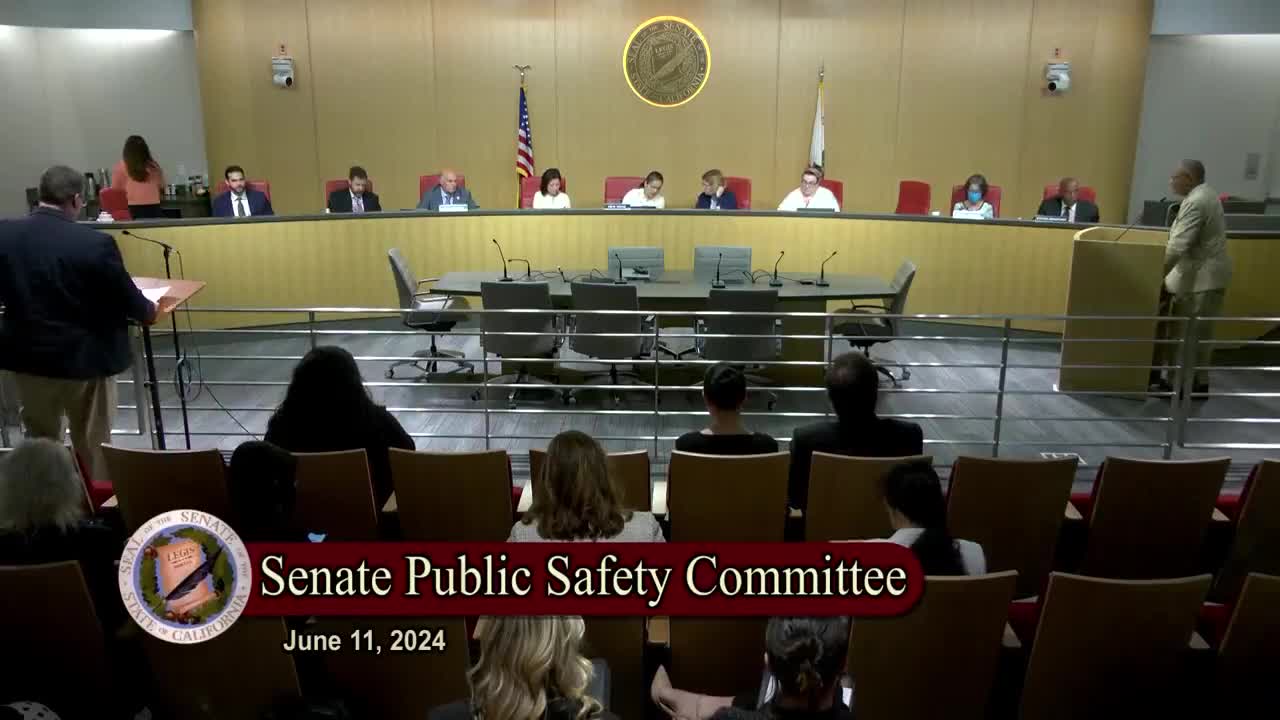 8MIN
Senate Standing Committee on Public Safety
 6MIN
Assembly Floor
 26MIN