AB 1992: Carbon sequestration: blue carbon and teal carbon demonstration projects.
- Session Year: 2023-2024
- House: Assembly
- Latest Version Date: 2024-09-04
Current Status:
Failed
(2024-09-22: Vetoed by Governor.)
Introduced
In Committee
First Chamber
In Committee
Second Chamber
Enacted
Existing law, the California Coastal Act of 1976, among other things, requires anyone wishing to perform or undertake any development in the coastal zone, except as specified, in addition to obtaining any other permit required by law from any local government or from any state, regional, or local agency, to obtain a coastal development permit from the California Coastal Commission or a local government, as provided.
This bill would authorize the commission to authorize blue carbon demonstration projects, as defined, in order to demonstrate and quantify the carbon sequestration potential of these projects to help inform the states natural and working lands and climate resilience strategies. The bill would, among other things, authorize the commission to require an applicant with a nonresidential project that impacts coastal wetland, subtidal, intertidal, or marine habitats or ecosystems to build or contribute to a blue carbon demonstration project. The bill would require these provisions to be implemented only upon an appropriation by the Legislature for its purposes.
Existing law establishes the Natural Resources Agency, composed of departments, boards, conservancies, and commissions responsible for the restoration, protection, and management of the states natural and cultural resources.
This bill would, commencing on January 1, 2028, authorize the Natural Resources Agency to authorize teal carbon demonstration projects, as defined, in order to demonstrate and quantify the carbon sequestration potential of these projects to help inform the states natural and working lands and climate resilience strategies. The bill would require the Natural Resources Agency to consult with certain state and federal agencies and entities in developing a teal carbon demonstration project program. The bill would, among other things, require project results to be provided to the Natural Resources Agency and posted on a public portion of its internet website. The bill would require these provisions to be implemented only upon an appropriation by the Legislature for its purposes.
Existing law, the California Coastal Act of 1976, among other things, requires anyone wishing to perform or undertake any development in the coastal zone, except as specified, in addition to obtaining any other permit required by law from any local government or from any state, regional, or local agency, to obtain a coastal development permit from the California Coastal Commission or a local government, as provided.
This bill would authorize the commission to authorize blue carbon demonstration projects, as defined, in order to demonstrate and quantify the carbon sequestration potential of these projects to help inform the states natural and working lands and climate resilience strategies. The bill would, among other things, authorize the commission to require an applicant with a nonresidential project that impacts coastal wetland, subtidal, intertidal, or marine habitats or ecosystems to build or contribute to a blue carbon demonstration project. The bill would require these provisions to be implemented only upon an appropriation by the Legislature for its purposes.
Existing law establishes the Natural Resources Agency, composed of departments, boards, conservancies, and commissions responsible for the restoration, protection, and management of the states natural and cultural resources.
This bill would would, commencing on January 1, 2028, authorize the Natural Resources Agency to authorize teal carbon demonstration projects, as defined, in order to demonstrate and quantify the carbon sequestration potential of these projects to help inform the states natural and working lands and climate resilience strategies. The bill would require the Natural Resources Agency to consult with certain state and federal agencies and entities in developing a teal carbon demonstration project program. The bill would, among other things, require project results to be provided to the Natural Resources Agency and posted on a public portion of its internet website. The bill would require these provisions to be implemented only upon an appropriation by the Legislature for its purposes.
Existing law, the California Coastal Act of 1976, among other things, requires anyone wishing to perform or undertake any development in the coastal zone, except as specified, in addition to obtaining any other permit required by law from any local government or from any state, regional, or local agency, to obtain a coastal development permit from the California Coastal Commission, Commission or a local government, as provided.
This bill would authorize the commission to authorize blue carbon demonstration projects, as defined, in order to demonstrate and quantify the carbon sequestration potential of these projects to help inform the states natural and working lands and climate resilience strategies. The bill would, among other things, authorize the commission to require an applicant with a nonresidential project that impacts coastal wetland, subtidal, intertidal, or marine habitats or ecosystems to build or contribute to a blue carbon demonstration project. The bill would require these provisions to be implemented only upon an appropriation by the Legislature for its purposes.
Existing law establishes the Natural Resources Agency, composed of departments, boards, conservancies, and commissions responsible for the restoration, protection, and management of the states natural and cultural resources.
This bill would authorize the Natural Resources Agency to authorize teal carbon demonstration projects, as defined, in order to demonstrate and quantify the carbon sequestration potential of these projects to help inform the states natural and working lands and climate resilience strategies. The bill would require the Natural Resources Agency to consult with certain state and federal agencies and entities in developing a teal carbon demonstration project program. The bill would, among other things, require project results to be provided to the Natural Resources Agency and posted on a public portion of its internet website. The bill would require these provisions to be implemented only upon an appropriation by the Legislature for its purposes.
Existing law, the California Coastal Act of 1976, among other things, requires anyone wishing to perform or undertake any development in the coastal zone, except as specified, in addition to obtaining any other permit required by law from any local government or from any state, regional, or local agency, to obtain a coastal development permit from the California Coastal Commission, as provided.
This bill would authorize the commission to authorize blue carbon demonstration projects, as defined, in order to demonstrate and quantify the carbon sequestration potential of these projects to help inform the states natural and working lands and climate resilience strategies. The bill would, among other things, authorize the commission to require an applicant with a nonresidential project that impacts coastal wetland, subtidal, intertidal, or marine habitats or ecosystems to build or contribute to a blue carbon demonstration project.
Existing law, the California Coastal Act of 1976, among other things, requires anyone wishing to perform or undertake any development in the coastal zone, except as specified, in addition to obtaining any other permit required by law from any local government or from any state, regional, or local agency, to obtain a coastal development permit from the California Coastal Commission, as provided.
This bill would authorize the commission to authorize blue carbon demonstration projects, as defined, in order to demonstrate and quantify the carbon sequestration potential of these projects to help inform the states natural and working lands and climate resilience strategies. The bill would, among other things, authorize the commission to require an applicant with a project that impacts coastal wetland, subtidal, intertidal, or marine habitats or ecosystems to build or contribute to a blue carbon demonstration project.
The Legislature finds and declares all of the following:
(a)California has set the targets to reduce carbon emissions 40 percent below 1990 levels by 2030 and 80 percent below 1990 levels by 2050.
(b)In 2020, Governor Gavin Newsom signed Executive Order No. N-82-20, directing the Natural Resources Agency, in consultation with other state agencies, to develop a Natural and Working Lands Climate Smart Strategy that serves as a framework to advance the states carbon neutrality goal and build climate resilience.
(c)Executive Order No. N-82-20 also set the goal to conserve at least 30 percent of state land and coastal waters by 2030 and a recent Natural Resources Agency report on implementation recognizes the need to restore degraded coastal and inland habitats to capture carbon and mitigate climate change impacts.
(d)Blue carbon, carbon held and stored in coastal vegetation, such as seagrasses and wetlands, holds great potential to help the state meet its climate goals. Recent studies have found that coastal wetlands in some instances capture carbon at a greater rate than tropical forests and store three to five times more carbon per equivalent area than these forests.
(e)The State Air Resources Boards draft 2022 scoping plan update does not specifically include blue carbon in the states natural and working lands inventory due, in part, to the limited availability of data and methodologies to inventory the stored carbon. The draft scoping plan includes certain noncoastal landscapes, including, among others, shrublands, grasslands, and wetlands, in its natural and working lands inventory, and notes the importance of further study and research to increase understanding of the various parameters that impact carbon sequestration. Teal carbon is stored in inland wetlands.
(f)Given the potential of blue and teal carbon sequestration, blue and teal carbon demonstration projects in California may help the state better understand how blue and teal carbon could potentially contribute to the state achieving its carbon neutrality and climate resilience goals.
SEC. 2.Section 12805.4 is added to the Government Code, to read:12805.4.(a)The Natural Resources Agency may authorize teal carbon demonstration projects in order to demonstrate and quantify the carbon sequestration potential of these projects to help inform the states natural and working lands and climate resilience strategies.
(b)The Natural Resources Agency shall consult with the State Air Resources Board, the Department of Fish and Wildlife, and other public entities, and seek consultation with applicable federal agencies, in developing a teal carbon demonstration project program.
(c)Each teal carbon demonstration project shall be designed, monitored, and have sufficient data collected in order to demonstrate the carbon uptake and sequestration achieved. This shall include an evaluation of relevant factors affecting the permanence of the sequestration. The project results shall be provided to the Natural Resources Agency and posted on a public portion of its internet website.
(d)(1)Designation as a teal carbon demonstration project shall not alter the requirement that the project obtain all applicable local, state, and federal permits.
(2)A teal carbon demonstration project, or a contribution to its funding, shall not be imposed as a condition of approval or occupancy of a residential project.
(e)For purposes of this section, teal carbon demonstration project means the restoration of inland wetland and ecosystems that can take up and sequester carbon. A teal carbon demonstration project is limited to all of the following:
(1)Ecologically appropriate locations where the habitat or ecosystem had historically occurred and subsequently become degraded or removed.
(2)The restoration of the habitat or ecosystem to its historical state to provide ecosystem services and habitat values, to the extent feasible.
(3)The use of diverse native species.
(f)This section shall be implemented only upon an appropriation by the Legislature for purposes of this section.
(g)This section shall become operative on January 1, 2028.
SEC. 3.Section 30100.3 is added to the Public Resources Code, to read:30100.3.Blue carbon demonstration project means the restoration of coastal wetland, subtidal, intertidal, or marine habitats or ecosystems, including, but not limited to, wetlands and seagrasses, that can take up and sequester carbon. A blue carbon demonstration project is limited to all of the following:
(a)Ecologically appropriate locations where the habitat or ecosystem had historically occurred and subsequently become degraded or removed.
(b)The restoration of the habitat or ecosystem to its historical state to provide ecosystem services and habitat values, to the extent feasible.
(c)The use of diverse native species.
SEC. 4.Section 30237 is added to the Public Resources Code, to read:30237.(a)The commission may authorize blue carbon demonstration projects in order to demonstrate and quantify the carbon sequestration potential of these projects to help inform the states natural and working lands and climate resilience strategies.
(b)The commission may require an applicant with a nonresidential project that impacts coastal wetland, subtidal, intertidal, or marine habitats or ecosystems to build or contribute to a blue carbon demonstration project.
(c)The commission shall consult with the State Air Resources Board, the Department of Fish and Wildlife, the State Coastal Conservancy, the State Lands Commission, and other public entities, and seek consultation with the United States Army Corps of Engineers and the National Oceanic and Atmospheric Administration, in developing the blue carbon demonstration project program.
(d)Each blue carbon demonstration project shall be designed, monitored, and have sufficient data collected in order to demonstrate the carbon uptake and sequestration achieved. This shall include an evaluation of relevant factors affecting the permanence of the sequestration. The results shall be presented to the commission in a public hearing.
(e)This section shall be implemented only upon an appropriation by the Legislature for purposes of this section.
The Legislature finds and declares all of the following:
(a)California has set the targets to reduce carbon emissions 40 percent below 1990 levels by 2030 and 80 percent below 1990 levels by 2050.
(b)In 2020, Governor Gavin Newsom signed Executive Order No. N-82-20, directing the Natural Resources Agency, in consultation with other state agencies, to develop a Natural and Working Lands Climate Smart Strategy that serves as a framework to advance the states carbon neutrality goal and build climate resilience.
(c)Executive Order No. N-82-20 also set the goal to conserve at least 30 percent of state land and coastal waters by 2030 and a recent Natural Resources Agency report on implementation recognizes the need to restore degraded coastal and inland habitats to capture carbon and mitigate climate change impacts.
(d)Blue carbon, carbon held and stored in coastal vegetation, such as seagrasses and wetlands, holds great potential to help the state meet its climate goals. Recent studies have found that coastal wetlands in some instances capture carbon at a greater rate than tropical forests and store three to five times more carbon per equivalent area than these forests.
(e)The State Air Resources Boards draft 2022 scoping plan update does not specifically include blue carbon in the states natural and working lands inventory due, in part, to the limited availability of data and methodologies to inventory the stored carbon. The draft scoping plan includes certain noncoastal landscapes, including, among others, shrublands, grasslands, and wetlands, in its natural and working lands inventory, and notes the importance of further study and research to increase understanding of the various parameters that impact carbon sequestration. Teal carbon is stored in inland wetlands.
(f)Given the potential of blue and teal carbon sequestration, blue and teal carbon demonstration projects in California may help the state better understand how blue and teal carbon could potentially contribute to the state achieving its carbon neutrality and climate resilience goals.
SEC. 2.Section 12805.4 is added to the Government Code, to read:12805.4.(a)The Natural Resources Agency may authorize teal carbon demonstration projects in order to demonstrate and quantify the carbon sequestration potential of these projects to help inform the states natural and working lands and climate resilience strategies.
(b)The Natural Resources Agency shall consult with the State Air Resources Board, the Department of Fish and Wildlife, and other public entities, and seek consultation with applicable federal agencies, in developing a teal carbon demonstration project program.
(c)Each teal carbon demonstration project shall be designed, monitored, and have sufficient data collected in order to demonstrate the carbon uptake and sequestration achieved. This shall include an evaluation of relevant factors affecting the permanence of the sequestration. The project results shall be provided to the Natural Resources Agency and posted on a public portion of its internet website.
(d)Designation as a teal carbon demonstration project shall not alter the requirement that the project obtain all applicable local, state, and federal permits.
(e)For purposes of this section, teal carbon demonstration project means the restoration of inland wetland and ecosystems that can take up and sequester carbon. A teal carbon demonstration project is limited to all of the following:
(1)Ecologically appropriate locations where the habitat or ecosystem had historically occurred and subsequently become degraded or removed.
(2)The restoration of the habitat or ecosystem to its historical state to provide ecosystem services and habitat values, to the extent feasible.
(3)The use of diverse native species.
(f)This section shall be implemented only upon an appropriation by the Legislature for purposes of this section.
SEC. 2.SEC. 3.Section 30100.3 is added to the Public Resources Code, to read:30100.3.Blue carbon demonstration project means the restoration of coastal wetland, subtidal, intertidal, or marine habitats or ecosystems, including, but not limited to, wetlands and seagrasses, that can take up and sequester carbon. A blue carbon demonstration project is limited to all of the following:
(a)Ecologically appropriate locations where the habitat or ecosystem had historically occurred and subsequently become degraded or removed.
(b)The restoration of the habitat or ecosystem to its historical state to provide ecosystem services and habitat values, to the extent feasible.
(c)The use of diverse native species.
SEC. 3.SEC. 4.Section 30237 is added to the Public Resources Code, to read:30237.(a)The commission may authorize blue carbon demonstration projects in order to demonstrate and quantify the carbon sequestration potential of these projects to help inform the states natural and working lands and climate resilience strategies.
(b)The commission may require an applicant with a nonresidential project that impacts coastal wetland, subtidal, intertidal, or marine habitats or ecosystems to build or contribute to a blue carbon demonstration project.
(c)The commission shall consult with the State Air Resources Board, the Department of Fish and Wildlife, the State Coastal Conservancy, the State Lands Commission, and other public entities, and seek consultation with the United States Army Corps of Engineers and the National Oceanic and Atmospheric Administration, in developing the blue carbon demonstration project program.
(d)Each blue carbon demonstration project shall be designed, monitored, and have sufficient data collected in order to demonstrate the carbon uptake and sequestration achieved. This shall include an evaluation of relevant factors affecting the permanence of the sequestration. The results shall be presented to the commission in a public hearing.
(e)This section shall be implemented only upon an appropriation by the Legislature for purposes of this section.
The Legislature finds and declares all of the following:
(a)California has set the targets to reduce carbon emissions 40 percent below 1990 levels by 2030 and 80 percent below 1990 levels by 2050.
(b)In 2020, Governor Gavin Newsom signed Executive Order No. N-82-20, directing the Natural Resources Agency, in consultation with other state agencies, to develop a Natural and Working Lands Climate Smart Strategy that serves as a framework to advance the states carbon neutrality goal and build climate resilience.
(c)Executive Order No. N-82-20 also set the goal to conserve at least 30 percent of state land and coastal waters by 2030 and a recent Natural Resources Agency report on implementation recognizes the need to restore degraded coastal habitats to capture carbon and mitigate climate change impacts.
(d)Blue carbon, carbon held and stored in coastal vegetation, such as seagrasses and wetlands, holds great potential to help the state meet its climate goals. Recent studies have found that coastal wetlands in some instances capture carbon at a greater rate than tropical forests and store three to five times more carbon per equivalent area than these forests.
(e)The State Air Resources Boards draft 2022 scoping plan update does not specifically include blue carbon in the states natural and working lands inventory due, in part, to the limited availability of data and methodologies to inventory the stored carbon.
(f)Given the potential of blue carbon sequestration, blue carbon demonstration projects in California may help the state better understand how blue carbon could potentially contribute to the state achieving its carbon neutrality and climate resilience goals.
SEC. 2.Section 30100.3 is added to the Public Resources Code, to read:30100.3.Blue carbon demonstration project means the restoration of coastal wetland, subtidal, intertidal, or marine habitats or ecosystems, including, but not limited to, wetlands and seagrasses, that can take up and sequester carbon. A blue carbon demonstration project is limited to all of the following:
(a)Ecologically appropriate locations where the habitat or ecosystem had historically occurred and subsequently become degraded or removed.
(b)The restoration of the habitat or ecosystem to its historical state to provide ecosystem services and habitat values, to the extent feasible.
(c)The use of diverse native species.
SEC. 3.Section 30237 is added to the Public Resources Code, to read:30237.(a)The commission may authorize blue carbon demonstration projects in order to demonstrate and quantify the carbon sequestration potential of these projects to help inform the states natural and working lands and climate resilience strategies.
(b)The commission may require an applicant with a nonresidential project that impacts coastal wetland, subtidal, intertidal, or marine habitats or ecosystems to build or contribute to a blue carbon demonstration project.
(c)The commission shall consult with the State Air Resources Board, the Department of Fish and Wildlife, the State Coastal Conservancy, the State Lands Commission, and other public entities, and seek consultation with the United States Army Corps of Engineers and the National Oceanic and Atmospheric Administration, in developing the blue carbon demonstration project program.
(d)Each blue carbon demonstration project shall be designed, monitored, and have sufficient data collected in order to demonstrate the carbon uptake and sequestration achieved. This shall include an evaluation of relevant factors affecting the permanence of the sequestration. The results shall be presented to the commission in a public hearing.
The Legislature finds and declares all of the following:
(a)California has set the targets to reduce carbon emissions 40 percent below 1990 levels by 2030 and 80 percent below 1990 levels by 2050.
(b)In 2020, Governor Gavin Newsom signed Executive Order No. N-82-20, directing the Natural Resources Agency, in consultation with other state agencies, to develop a Natural and Working Lands Climate Smart Strategy that serves as a framework to advance the states carbon neutrality goal and build climate resilience.
(c)Executive Order No. N-82-20 also set the goal to conserve at least 30 percent of state land and coastal waters by 2030 and a recent Natural Resources Agency report on implementation recognizes the need to restore degraded coastal habitats to capture carbon and mitigate climate change impacts.
(d)Blue carbon, carbon held and stored in coastal vegetation, such as seagrasses and wetlands, holds great potential to help the state meet its climate goals. Recent studies have found that coastal wetlands in some instances capture carbon at a greater rate than tropical forests and store three to five times more carbon per equivalent area than these forests.
(e)The State Air Resources Boards draft 2022 scoping plan update does not specifically include blue carbon in the states natural and working lands inventory due, in part, to the limited availability of data and methodologies to inventory the stored carbon.
(f)Given the potential of blue carbon sequestration, blue carbon demonstration projects in California may help the state better understand how blue carbon could potentially contribute to the state achieving its carbon neutrality and climate resilience goals.
SEC. 2.Section 30100.3 is added to the Public Resources Code, to read:30100.3.Blue carbon demonstration project means the restoration of coastal wetland, subtidal, intertidal, or marine habitats or ecosystems, including, but not limited to, wetlands and seagrasses, that can take up and sequester carbon. A blue carbon demonstration project is limited to all of the following:
(a)Ecologically appropriate locations where the habitat or ecosystem had historically occurred and subsequently become degraded or removed.
(b)The restoration of the habitat or ecosystem to its historical state to provide ecosystem services and habitat values, to the extent feasible.
(c)The use of diverse native species.
SEC. 3.Section 30237 is added to the Public Resources Code, to read:30237.(a)The commission may authorize blue carbon demonstration projects in order to demonstrate and quantify the carbon sequestration potential of these projects to help inform the states natural and working lands and climate resilience strategies.
(b)The commission may require an applicant with a project that impacts coastal wetland, subtidal, intertidal, or marine habitats or ecosystems to build or contribute to a blue carbon demonstration project.
(c)The commission shall consult with the State Air Resources Board, the Department of Fish and Wildlife, the State Coastal Conservancy, the State Lands Commission, and other public entities, and seek consultation with the United States Army Corps of Engineers and the National Oceanic and Atmospheric Administration, in developing the blue carbon demonstration project program.
(d)Each blue carbon demonstration project shall be designed, monitored, and have sufficient data collected in order to demonstrate the carbon uptake and sequestration achieved. This shall include an evaluation of relevant factors affecting the permanence of the sequestration. The results shall be presented to the commission in a public hearing.
|
Date
|
Status
|
|---|---|
| Sep 22, 2024 | Vetoed by Governor. |
| Sep 11, 2024 | Enrolled and presented to the Governor at 4 p.m. |
| Aug 30, 2024 | Senate amendments concurred in. To Engrossing and Enrolling. (Ayes 58. Noes 9.). |
| Aug 30, 2024 | In Assembly. Concurrence in Senate amendments pending. |
| Aug 29, 2024 | Read third time. Passed. Ordered to the Assembly. (Ayes 31. Noes 9.). |
| Aug 26, 2024 | Read second time. Ordered to third reading. |
| Aug 23, 2024 | Read third time and amended. Ordered to second reading. |
| Aug 19, 2024 | Read second time. Ordered to third reading. |
| Aug 15, 2024 | Read second time and amended. Ordered returned to second reading. |
| Aug 15, 2024 | From committee: Amend, and do pass as amended. (Ayes 5. Noes 2.) (August 15). |
| Jul 1, 2024 | In committee: Referred to suspense file. |
| Jun 18, 2024 | From committee: Do pass and re-refer to Com. on APPR. (Ayes 8. Noes 3.) (June 17). Re-referred to Com. on APPR. |
| May 29, 2024 | Referred to Com. on N.R. & W. |
| May 22, 2024 | In Senate. Read first time. To Com. on RLS. for assignment. |
| May 21, 2024 | Read third time. Passed. Ordered to the Senate. (Ayes 53. Noes 7. Page 5367.) |
| May 20, 2024 | Read second time. Ordered to third reading. |
| May 16, 2024 | Read second time and amended. Ordered returned to second reading. |
| May 16, 2024 | From committee: Amend, and do pass as amended. (Ayes 10. Noes 3.) (May 16). |
| May 16, 2024 | Assembly Rule 63 suspended. |
| Apr 10, 2024 | In committee: Set, first hearing. Referred to APPR. suspense file. |
| Mar 20, 2024 | From committee: Do pass and re-refer to Com. on APPR. (Ayes 7. Noes 0.) (March 19). Re-referred to Com. on APPR. |
| Feb 12, 2024 | Referred to Com. on NAT. RES. |
| Jan 31, 2024 | From printer. May be heard in committee March 1. |
| Jan 30, 2024 | Read first time. To print. |
|
Date
|
Description
|
Location
|
Votes
|
|
|---|---|---|---|---|
| Aug 30, 2024 | AB 1992 Boerner Concurrence in Senate Amendments | Assembly Floor |
Passed |
|
| Aug 29, 2024 | Assembly 3rd Reading AB1992 Boerner By Padilla | Senate Floor |
Passed |
|
| Aug 15, 2024 | Do pass as amended | Senate Standing Committee on Appropriations |
Passed |
|
| Jul 1, 2024 | Placed on suspense file | Senate Standing Committee on Appropriations |
Passed |
|
| Jun 17, 2024 | Do pass, but first be re-referred to the Committee on [Appropriations] | Senate Standing Committee on Natural Resources and Water |
Passed |
|
| May 21, 2024 | AB 1992 Boerner Assembly Third Reading | Assembly Floor |
Passed |
|
| May 16, 2024 | Do pass as amended. | Assembly Standing Committee on Appropriations |
Passed |
|
| Mar 19, 2024 | Do pass and be re-referred to the Committee on [Appropriations] | Assembly Standing Committee on Natural Resources |
Passed |
This list shows positions taken on this bill by organizations on the date displayed, which is linked to the original source.
Positions by individuals are not included.
|
Organization
|
Position
|
Date
|
|---|---|---|
| 350 Bay Area Action | ** Support | |
| Audubon California | * Support | Jun 17, 2024 |
| California Apartment Association | * Against | Mar 19, 2024 |
| California Building Industry Association | * Against | Mar 19, 2024 |
| California Department of Finance | ** Against | |
| California Environmental Voters | ** Support | |
| City of Encinitas | ** Support | |
| City Of San Diego | ** Support | |
| cleanearth4kids.org | ** Support | |
| Climate Reality Project California Coalition | * Support | Jun 17, 2024 |
| Outdoor Outreach | * Support | Jun 17, 2024 |
| SanDiego 350 | ** Support | |
| Sierra Club California | ** Support | |
| Solano County Democratic Central Committee | ** Support | |
| Surfrider Foundation San Diego County | ** Support | |
| Sustainable Rossmoor | ** Support | |
| The Climate Center | ** Support | |
| The Climate Reality Project San Diego | ** Support | |
| The Climate Reality Project South Central Coast | ** Support | |
| The Climate Reality Project, California Coalition | ** Support | |
| The Climate Reality Project, Los Angeles | ** Support | |
| The Climate Reality Project, San Fernando Valley | ** Support | |
| The Climate Reality Project, San Francisco Bay Area | ** Support | |
| Wild Coast | * Support | Jun 17, 2024 |
| Wild Coast San Diego | * Support | Mar 19, 2024 |
| Wildcoast | ** Support |
GOVERNOR'S VETO
GV Bill Id:AB 1992
Author:(Boerner)
As Enrolled Ver:September 4, 2024
2/3 vote
SUMMARY
Authorizes the California Coastal Commission (Commission) to authorize blue carbon demonstration projects, as defined, in order to demonstrate and quantify the carbon sequestration potential of these projects to help inform the state's natural and working lands and climate resilience strategies.
Senate Amendments
- Additionally authorize, commencing January 1, 2028, the California Natural Resources Agency (NRA) to authorize teal carbon demonstration projects on inland wetlands.
- Provide that a teal carbon demonstration project, or a contribution to its funding, shall not be imposed as a condition of approval or occupancy of a residential project.
Governor’s Veto Message
While I share the author's desire to accelerate novel nature-based climate solutions, this bill creates a new, unfunded program. In partnership with the Legislature, this year, my administration has enacted a balanced budget that avoids deep cuts to vital services and protected investments in education, health care, climate, public safety, housing, and social service programs that millions of Californians rely on. It is important to remain disciplined when considering bills with significant fiscal implications that are not included in the budget, such as this measure.
COMMENTS
Blue carbon refers to carbon dioxide that is absorbed from the atmosphere and stored in the ocean. Blue carbon is stored by seagrass, mangroves, tidal marshes, and other plants in coastal wetlands through photosynthesis. As these aquatic plants grow, they accumulate and bury organic matter in the soil. Actions to protect, restore, and sustainably manage the health and resiliency of these lands can greatly accelerate our progress to mitigate climate change and our ability to reduce worsening climate change impacts.
Teal carbon refers to the carbon stored in inland freshwater wetlands, such as marshes and swamps. These ecosystems are considered to be very effective at carbon capture and storage.
AB 1757 (C. Garcia), Chapter 341, Statutes of 2022, requires NRA to determine an ambitious range of targets for natural carbon sequestration, and for nature-based climate solutions, that reduce greenhouse gas emissions (GHGs) for 2030, 2038, and 2045, to support state goals to achieve carbon neutrality and foster climate adaptation and resilience.
Through blue and teal carbon demonstration projects, AB 1992 is intended to help advance those goals.
According to the Author
Several recent studies focusing on the importance of conserving coastal ecosystems have concluded coastal wetlands can store far greater amounts of carbon than they naturally release, which makes them one of the world's most important natural carbon sinks. Unfortunately, coastal habitats around the world are being lost at a rapid rate, largely due to coastal development for housing, ports, and commercial facilities. AB 1992 requires that coastal development permit applicants include in their planning and design how they plan to build or will contribute in promoting blue carbon projects where feasible. This requirement is consistent with the California Coastal Commission's task of working with local governments to protect the shoreline when approving developments in the coastal zone consistent with the California Ocean Protection Act.
Arguments in Support
California Environmental Voters writes, "The passage of AB 1992 is the next step in ensuring long-term conservation of these ecologically valuable resources. With the ability to require blue carbon demonstration projects, the Commission can be a proactive partner in reversing damage to coastal ecosystems, ensuring they remain a carbon storing resource rather than a carbon emitting problem."
Arguments in Opposition
None on file
FISCAL COMMENTS
According to the Senate Appropriations Committee:
- Ongoing costs to the Commission, likely in the low hundreds of thousands of dollars annually (General Fund or special fund such as the Greenhouse Gas Reduction Fund [GGRF] or Environmental License Plate Fund [ELPF]), to establish a blue carbon demonstration project program and conduct the additional level of project coordination, review, analysis, and ongoing mitigation monitoring.
- Ongoing costs to NRA, likely of a similar amount to that of the Coastal Commission, (General Fund or special fund such as GGRF or ELPF), to establish a teal carbon demonstration project program and conduct the additional level of project coordination, review, analysis, and ongoing mitigation monitoring.
- One-time costs, likely in the tens or low hundreds of thousands of dollars, for the California Air Resources Board (ARB) to provide consultation to the Commission and CNRA on the development of the blue and teal carbon demonstration project programs.
- Minor and absorbable costs to the Department of Fish and Wildlife, Commission, State Lands Commission, and other related departments.
VOTES
ASM NATURAL RESOURCES: 7-0-4
YES: Bryan, Bauer-Kahan, Friedman, Kalra, Muratsuchi, Pellerin, Wood
ABS, ABST OR NV: Flora, Hoover, Mathis, Wicks
ASM APPROPRIATIONS: 10-3-2
YES: Wicks, Arambula, Bryan, Calderon, Wendy Carrillo, Mike Fong, Grayson, Haney, Hart, Pellerin
NO: Dixon, Jim Patterson, Ta
ABS, ABST OR NV: Sanchez, Villapudua
ASSEMBLY FLOOR: 53-7-20
YES: Addis, Aguiar-Curry, Alvarez, Arambula, Bains, Bauer-Kahan, Bennett, Berman, Boerner, Bonta, Bryan, Calderon, Juan Carrillo, Wendy Carrillo, Connolly, Mike Fong, Garcia, Gipson, Haney, Hart, Irwin, Jackson, Jones-Sawyer, Kalra, Lee, Low, Lowenthal, Maienschein, McCarty, McKinnor, Muratsuchi, Stephanie Nguyen, Ortega, Pacheco, Papan, Pellerin, Petrie- Norris, Quirk-Silva, Ramos, Rendon, Reyes, Luz Rivas, Blanca Rubio, Santiago, Schiavo, Soria, Ting, Ward, Weber, Wicks, Wood, Zbur, Robert Rivas
NO: Dixon, Essayli, Vince Fong, Gallagher, Sanchez, Ta, Wallis
ABS, ABST OR NV: Alanis, Cervantes, Chen, Megan Dahle, Davies, Flora, Friedman, Gabriel, Grayson, Holden, Hoover, Lackey, Mathis, Jim Patterson, Joe Patterson, Rodriguez, Valencia, Villapudua, Waldron, Wilson
SENATE FLOOR: 31-9-0
YES: Allen, Archuleta, Ashby, Atkins, Becker, Blakespear, Bradford, Caballero, Cortese, Dodd, Durazo, Eggman, Glazer, Gonzalez, Hurtado, Laird, Limón, McGuire, Menjivar, Min, Newman, Padilla, Portantino, Roth, Rubio, Skinner, Smallwood-Cuevas, Stern, Umberg, Wahab, Wiener
NO: Alvarado-Gil, Dahle, Grove, Jones, Nguyen, Niello, Ochoa Bogh, Seyarto, Wilk
ASSEMBLY FLOOR: 58-9-12
YES: Addis, Aguiar-Curry, Alvarez, Arambula, Bains, Bauer-Kahan, Bennett, Berman, Boerner, Bonta, Bryan, Calderon, Juan Carrillo, Wendy Carrillo, Connolly, Mike Fong, Friedman, Gabriel, Garcia, Gipson, Haney, Hart, Holden, Irwin, Jackson, Jones-Sawyer, Kalra, Lee, Low, Lowenthal, Maienschein, McCarty, McKinnor, Muratsuchi, Stephanie Nguyen, Pacheco, Papan, Pellerin, Petrie-Norris, Quirk-Silva, Ramos, Rendon, Reyes, Luz Rivas, Rodriguez, Blanca Rubio, Santiago, Schiavo, Soria, Ting, Valencia, Waldron, Ward, Weber, Wicks, Wood, Zbur, Robert Rivas
NO: Alanis, Megan Dahle, Dixon, Essayli, Gallagher, Mathis, Joe Patterson, Sanchez, Wallis
ABS, ABST OR NV: Cervantes, Chen, Davies, Flora, Grayson, Hoover, Lackey, Ortega, Jim Patterson, Ta, Villapudua, Wilson
UPDATED
VERSION: September 4, 2024
CONSULTANT: Paige Brokaw / NAT. RES. / (916) 319-2092 FN: 0005106
CONCURRENCE IN SENATE AMENDMENTS
CSA1 Bill Id:AB 1992
Author:(Boerner)
As Amended Ver:August 23, 2024
Majority vote
SUMMARY
Authorizes the California Coastal Commission (Commission) to authorize blue carbon demonstration projects, as defined, in order to demonstrate and quantify the carbon sequestration potential of these projects to help inform the state's natural and working lands and climate resilience strategies.
Senate Amendments
- Additionally authorize, commencing January 1, 2028, the California Natural Resources Agency (NRA) to authorize teal carbon demonstration projects on inland wetlands.
- Provide that a teal carbon demonstration project, or a contribution to its funding, shall not be imposed as a condition of approval or occupancy of a residential project.
COMMENTS
Blue carbon refers to carbon dioxide that is absorbed from the atmosphere and stored in the ocean. Blue carbon is stored by seagrass, mangroves, tidal marshes, and other plants in coastal wetlands through photosynthesis. As these aquatic plants grow, they accumulate and bury organic matter in the soil. Actions to protect, restore, and sustainably manage the health and resiliency of these lands can greatly accelerate our progress to mitigate climate change and our ability to reduce worsening climate change impacts.
Teal carbon refers to the carbon stored in inland freshwater wetlands, such as marshes and swamps. These ecosystems are considered to be very effective at carbon capture and storage.
AB 1757 (C. Garcia), Chapter 341, Statutes of 2022, requires NRA to determine an ambitious range of targets for natural carbon sequestration, and for nature-based climate solutions, that reduce greenhouse gas emissions (GHGs) for 2030, 2038, and 2045, to support state goals to achieve carbon neutrality and foster climate adaptation and resilience.
Through blue and teal carbon demonstration projects, AB 1992 is intended to help advance those goals.
According to the Author
Several recent studies focusing on the importance of conserving coastal ecosystems have concluded coastal wetlands can store far greater amounts of carbon than they naturally release, which makes them one of the world's most important natural carbon sinks. Unfortunately, coastal habitats around the world are being lost at a rapid rate, largely due to coastal development for housing, ports, and commercial facilities. AB 1992 requires that coastal development permit applicants include in their planning and design how they plan to build or will contribute in promoting blue carbon projects where feasible. This requirement is consistent with the California Coastal Commission's task of working with local governments to protect the shoreline when approving developments in the coastal zone consistent with the California Ocean Protection Act.
Arguments in Support
California Environmental Voters writes, "The passage of AB 1992 is the next step in ensuring long-term conservation of these ecologically valuable resources. With the ability to require blue carbon demonstration projects, the Commission can be a proactive partner in reversing damage to coastal ecosystems, ensuring they remain a carbon storing resource rather than a carbon emitting problem."
Arguments in Opposition
None on file
FISCAL COMMENTS
According to the Senate Appropriations Committee:
- Ongoing costs to the Commission, likely in the low hundreds of thousands of dollars annually (General Fund or special fund such as the Greenhouse Gas Reduction Fund [GGRF] or Environmental License Plate Fund [ELPF]), to establish a blue carbon demonstration project program and conduct the additional level of project coordination, review, analysis, and ongoing mitigation monitoring.
- Ongoing costs to NRA, likely of a similar amount to that of the Coastal Commission, (General Fund or special fund such as GGRF or ELPF), to establish a teal carbon demonstration project program and conduct the additional level of project coordination, review, analysis, and ongoing mitigation monitoring.
- One-time costs, likely in the tens or low hundreds of thousands of dollars, for the California Air Resources Board (ARB) to provide consultation to the Commission and CNRA on the development of the blue and teal carbon demonstration project programs.
- Minor and absorbable costs to the Department of Fish and Wildlife, Commission, State Lands Commission, and other related departments.
VOTES:
ASM NATURAL RESOURCES: 7-0-4
YES: Bryan, Bauer-Kahan, Friedman, Kalra, Muratsuchi, Pellerin, Wood
ABS, ABST OR NV: Flora, Hoover, Mathis, Wicks
ASM APPROPRIATIONS: 10-3-2
YES: Wicks, Arambula, Bryan, Calderon, Wendy Carrillo, Mike Fong, Grayson, Haney, Hart, Pellerin
NO: Dixon, Jim Patterson, Ta
ABS, ABST OR NV: Sanchez, Villapudua
ASSEMBLY FLOOR: 53-7-20
YES: Addis, Aguiar-Curry, Alvarez, Arambula, Bains, Bauer-Kahan, Bennett, Berman, Boerner, Bonta, Bryan, Calderon, Juan Carrillo, Wendy Carrillo, Connolly, Mike Fong, Garcia, Gipson, Haney, Hart, Irwin, Jackson, Jones-Sawyer, Kalra, Lee, Low, Lowenthal, Maienschein, McCarty, McKinnor, Muratsuchi, Stephanie Nguyen, Ortega, Pacheco, Papan, Pellerin, Petrie-Norris, Quirk-Silva, Ramos, Rendon, Reyes, Luz Rivas, Blanca Rubio, Santiago, Schiavo, Soria, Ting, Ward, Weber, Wicks, Wood, Zbur, Robert Rivas
NO: Dixon, Essayli, Vince Fong, Gallagher, Sanchez, Ta, Wallis
ABS, ABST OR NV: Alanis, Cervantes, Chen, Megan Dahle, Davies, Flora, Friedman, Gabriel, Grayson, Holden, Hoover, Lackey, Mathis, Jim Patterson, Joe Patterson, Rodriguez, Valencia, Villapudua, Waldron, Wilson
SENATE FLOOR: 31-9-0
YES: Allen, Archuleta, Ashby, Atkins, Becker, Blakespear, Bradford, Caballero, Cortese, Dodd, Durazo, Eggman, Glazer, Gonzalez, Hurtado, Laird, Limón, McGuire, Menjivar, Min, Newman, Padilla, Portantino, Roth, Rubio, Skinner, Smallwood-Cuevas, Stern, Umberg, Wahab, Wiener
NO: Alvarado-Gil, Dahle, Grove, Jones, Nguyen, Niello, Ochoa Bogh, Seyarto, Wilk
UPDATED
VERSION: August 23, 2024
CONSULTANT: Paige Brokaw / NAT. RES. / (916) 319-2092 FN: 0004804
SENATE RULES COMMITTEE Office of Senate Floor Analyses (916) 651-1520 Fax: (916) 327-4478 | AB 1992 |
THIRD READING
Bill No: AB 1992
Author: Boerner (D)
Amended: 8/23/24 in Senate
Vote: 21
SENATE NATURAL RES. & WATER COMMITTEE: 8-3, 6/17/24
AYES: Min, Allen, Eggman, Hurtado, Laird, Limón, Padilla, Stern
NOES: Seyarto, Dahle, Grove
SENATE APPROPRIATIONS COMMITTEE: 5-2, 8/15/24
AYES: Caballero, Ashby, Becker, Bradford, Wahab
NOES: Jones, Seyarto
ASSEMBLY FLOOR: 53-7, 5/21/24 - See last page for vote
SUBJECT: Carbon sequestration: blue carbon and teal carbon demonstration projects
SOURCE: WILDCOAST
DIGEST:
This bill authorizes the California Coastal Commission and the California Natural Resources Agency to authorize blue and teal carbon demonstration projects in certain coastal areas and inland wetlands, respectively, as provided.
Senate floor amendments of 8/23/24 exclude residential projects from teal carbon demonstration projects, as specified, and delay the authority for the California Natural Resources Agency to authorize teal carbon demonstration projects until January 1, 2028.
ANALYSIS:
Existing law:
- Establishes the California Natural Resources Agency (CNRA) and California Coastal Commission (commission) in the CNRA.
- The commission was established by voter initiative in 1972 and was subsequently made permanent by the Legislature’s adoption of the California Coastal Act of 1976 ((Coastal Act) (Public Resources Code (PRC) §§30000 et seq.).
- The commission plans for and regulates the use of land and water in the coastal zone (which excludes the San Francisco Bay).
- Includes, in the Coastal Act, legislative findings and declarations that the basic goals of the state for the coastal zone include to protect, maintain, and, where feasible, enhance and restore the overall quality of the coastal zone environment and its natural and artificial resources, among other goals. (PRC §30001.5)
- Provides, in the Coastal Act, for the planning and regulation of development within the coastal zone, as defined.
- A person planning to perform or undertake any development in the coastal zone is required to obtain a coastal development permit (CDP) from the commission or local government enforcing a certified local coastal program (LCP). (PRC §30600)
- Development means, among other things, the placement or erection of any solid material or structure on land or in water. Structure means building, road, pipe, flume, conduit, and electrical power transmission and distribution lines, among other things. (PRC §30106)
- The coastal zone means the coastal land and waters of California, and includes the lands that extend inland generally 1,000 yards from the mean high tide line, as specified, with various exceptions including the San Francisco Bay. (PRC §30103)
- A person planning to perform or undertake any development in the coastal zone is required to obtain a coastal development permit (CDP) from the commission or local government enforcing a certified local coastal program (LCP). (PRC §30600)
- Provides that enactment of the Coastal Act does not increase, decrease, duplicate, or supersede the authority of any existing state agency, as specified. Requires that the commission not set standards or adopt regulations that duplicate regulatory controls established by any existing state agency pursuant to specific statutory requirements or authorization, as provided. (PRC §30401)
- Establishes the policy of the state that the protection and management of natural and working lands is an important strategy in meeting the state’s greenhouse gas (GHG) emissions reduction goals, and that the protection and management of those lands can result in the removal of carbon from the atmosphere and the sequestration of carbon in, above, and below the ground. (PRC §9001.5)
- Requires state agencies to work to maximize, where applicable and feasible, while promoting the state’s climate adaptation plan to promote the use of natural systems and natural infrastructure to reduce vulnerability to climate change related hazards by perpetuating or restoring ecosystem services, as provided. (PRC §71154)
- Provides that CNRA shall explore and may implement options to establish a more coordinated and efficient regulatory review and permitting process for coastal adaptation projects that use natural infrastructure where these projects are defined to include tidal marshes and sea grass, among other things. (PRC §71160)
- Requires CNRA to establish the Natural and Working Lands Climate Smart Strategy in coordination with other state entities, as provided. This includes creating a framework to advance the state’s climate goals and aligning funding mechanisms to advance the strategy. (Health and Safety Code (HSC) §39740.2)
- Requires CNRA on or before January 1, 2024 to determine an ambitious range of targets for natural carbon sequestration and for nature-based climate solutions to reduce GHGs emissions to support state goals to achieve carbon neutrality and foster climate adaptation and resilience. (HSC §38561.5)
- Requires CNRA on or before January 1, 2025 and every two years thereafter to publish data on its internet website on progress made in achieving targets for natural carbon sequestration and for nature-based climate solutions including state expenditures made to implement these targets. (HSC §38561.5)
This bill authorizes the commission and CNRA to authorize blue and teal carbon demonstration projects in certain coastal areas and inland wetlands, respectively, as provided. Specifically, this bill:
- Authorizes the commission to authorize blue carbon demonstration projects in order to demonstrate and quantify the carbon sequestration potential of these projects, as specified.
- Authorizes the commission to require an applicant with a nonresidential project that impacts coastal wetlands, subtidal, intertidal, or marine habitats or ecosystems to build or contribute to a blue carbon demonstration project.
- Requires the commission to consult with the State Air Resources Board and other public entities in developing the blue carbon demonstration project program.
- Requires each blue carbon demonstration project to be designed, monitored, and have sufficient data collection in order to demonstrate carbon uptake and sequestration, as provided.
- Requires the results of monitoring to be presented to the commission at a public hearing.
- Authorizes, starting January 1, 2028, CNRA to authorize teal carbon demonstration projects in order to demonstrate and quantify the carbon sequestration potential of these projects to help inform the state’s natural and working lands and climate resilience strategies.
- Requires CNRA to consult with certain state and other public entities in developing a teal carbon demonstration project program for the restoration of inland wetland and ecosystems that can take up and sequester carbon, as provided.
- Requires each teal carbon demonstration project to be designed, monitored, and have sufficient data collected in order to demonstrate the carbon uptake and sequestration achieved, as provided.
- Requires reported project data to be posted on CNRA’s website.
- Specifies that designation as a teal carbon demonstration project does not alter the requirement that the project obtain all applicable permits, as specified.
- Prohibits as a condition of approval or occupancy of a residential project, a teal carbon demonstration project or a contribution to its funding.
- Defines relevant terms, and makes several relevant legislative findings and declarations.
- Makes implementation of these provisions subject to appropriation.
Background
Lately, the state’s natural and working lands have received increasing attention for the important role they play in carbon uptake and sequestration. Healthy landscapes can sequester and store carbon, help avoid GHG emissions to the atmosphere, minimize impacts from climate change, and provide climate resilience. In addition to forested landscapes, coastal and inland wetlands and marine seagrass and seaweeds, such as eelgrass, can also be important carbon sinks. However, the vast majority of the state’s historical wetlands have been lost.
[Additional information and discussion may be found in the Senate Natural Resources and Water Committee’s bill analysis.]
FISCAL EFFECT: Appropriation: No Fiscal Com.: Yes Local: No
According to the Senate Appropriations Committee to a previous version:
- Ongoing costs to the Commission, likely in the low hundreds of thousands of dollars annually (General Fund or special fund such as the Greenhouse Gas Reduction Fund [GGRF] or Environmental License Plate Fund [ELPF]), to establish a blue carbon demonstration project program and conduct the additional level of project coordination, review, analysis, and ongoing mitigation monitoring.
- Ongoing costs to the California Natural Resources Agency, likely of a similar amount to that of the Coastal Commission, (General Fund or special fund such as GGRF or ELPF), to establish a teal carbon demonstration project program and conduct the additional level of project coordination, review, analysis, and ongoing mitigation monitoring.
- One-time costs, likely in the tens or low hundreds of thousands of dollars, for the California Air Resources Board (ARB) to provide consultation to the Commission and CNRA on the development of the blue and teal carbon demonstration project programs.
- Minor and absorbable costs to the Department of Fish and Wildlife, State Coastal Commission, State Lands Commission, and other related departments.
SUPPORT: (Verified 8/16/24)
WILDCOAST (source)
350 Bay Area Action
California Environmental Voters
City of San Diego
City of Encinitas
CleanEarth4Kids.org
SanDiego 350
Sierra Club California
Solano County Democratic Central Committee
Surfrider Foundation, San Diego County
Sustainable Rossmoor
The Climate Reality Project, California Coalition
The Climate Reality Project, San Fernando Valley
The Climate Reality Project, Los Angeles
The Climate Reality Project, San Diego
The Climate Reality Project, San Francisco Bay Area
The Climate Reality Project, South Central Coast
The Climate Center
OPPOSITION: (Verified 8/16/24)
California Department of Finance
ARGUMENTS IN SUPPORT: According to the author, “Several recent studies focusing on the importance of conserving coastal ecosystems have concluded coastal wetlands can store far greater amounts of carbon than they naturally release, which makes them one of the world’s most important natural carbon sinks. Unfortunately, coastal habitats around the world are being lost at a rapid rate, largely due to coastal development for housing, ports, and commercial facilities. AB 1992 requires that coastal development permit applicants include in their planning and design how they plan to build or will contribute in promoting blue carbon projects where feasible. This requirement is consistent with the California Coastal Commission’s task of working with local governments to protect the shoreline when approving developments in the coastal zone consistent with the California Ocean Protection Act.”
ARGUMENTS IN OPPOSITION: The California Department of Finance “is opposed to this bill because it results in significant General Fund impacts not included in the 2024 budget.”
ASSEMBLY FLOOR: 53-7, 5/21/24
AYES: Addis, Aguiar-Curry, Alvarez, Arambula, Bains, Bauer-Kahan, Bennett, Berman, Boerner, Bonta, Bryan, Calderon, Juan Carrillo, Wendy Carrillo, Connolly, Mike Fong, Garcia, Gipson, Haney, Hart, Irwin, Jackson, Jones-Sawyer, Kalra, Lee, Low, Lowenthal, Maienschein, McCarty, McKinnor, Muratsuchi, Stephanie Nguyen, Ortega, Pacheco, Papan, Pellerin, Petrie-Norris, Quirk-Silva, Ramos, Rendon, Reyes, Luz Rivas, Blanca Rubio, Santiago, Schiavo, Soria, Ting, Ward, Weber, Wicks, Wood, Zbur, Robert Rivas
NOES: Dixon, Essayli, Vince Fong, Gallagher, Sanchez, Ta, Wallis
NO VOTE RECORDED: Alanis, Cervantes, Chen, Megan Dahle, Davies, Flora, Friedman, Gabriel, Grayson, Holden, Hoover, Lackey, Mathis, Jim Patterson, Joe Patterson, Rodriguez, Valencia, Villapudua, Waldron, Wilson
Prepared by: Katharine Moore / N.R. & W. / (916) 651-4116
8/27/24 20:59:55
**** END ****
SENATE RULES COMMITTEE Office of Senate Floor Analyses (916) 651-1520 Fax: (916) 327-4478 | AB 1992 |
THIRD READING
Bill No: AB 1992
Author: Boerner (D)
Amended: 8/15/24 in Senate
Vote: 21
SENATE NATURAL RES. & WATER COMMITTEE: 8-3, 6/17/24
AYES: Min, Allen, Eggman, Hurtado, Laird, Limón, Padilla, Stern
NOES: Seyarto, Dahle, Grove
SENATE APPROPRIATIONS COMMITTEE: 5-2, 8/15/24
AYES: Caballero, Ashby, Becker, Bradford, Wahab
NOES: Jones, Seyarto
ASSEMBLY FLOOR: 53-7, 5/21/24 - See last page for vote
SUBJECT: Carbon sequestration: blue carbon and teal carbon demonstration projects
SOURCE: WILDCOAST
DIGEST:
This bill authorizes the California Coastal Commission and the California Natural Resources Agency to authorize blue and teal carbon demonstration projects in certain coastal areas and inland wetlands, respectively, as provided.
ANALYSIS:
Existing law:
- Establishes the California Natural Resources Agency (CNRA) and California Coastal Commission (commission) in the CNRA.
- The commission was established by voter initiative in 1972 and was subsequently made permanent by the Legislature’s adoption of the California Coastal Act of 1976 ((Coastal Act) (Public Resources Code (PRC) §§30000 et seq.).
- The commission plans for and regulates the use of land and water in the coastal zone (which excludes the San Francisco Bay).
- Includes, in the Coastal Act, legislative findings and declarations that the basic goals of the state for the coastal zone include to protect, maintain, and, where feasible, enhance and restore the overall quality of the coastal zone environment and its natural and artificial resources, among other goals. (PRC §30001.5)
- Provides, in the Coastal Act, for the planning and regulation of development within the coastal zone, as defined.
- A person planning to perform or undertake any development in the coastal zone is required to obtain a coastal development permit (CDP) from the commission or local government enforcing a certified local coastal program (LCP). (PRC §30600)
- Development means, among other things, the placement or erection of any solid material or structure on land or in water. Structure means building, road, pipe, flume, conduit, and electrical power transmission and distribution lines, among other things. (PRC §30106)
- The coastal zone means the coastal land and waters of California, and includes the lands that extend inland generally 1,000 yards from the mean high tide line, as specified, with various exceptions including the San Francisco Bay. (PRC §30103)
- A person planning to perform or undertake any development in the coastal zone is required to obtain a coastal development permit (CDP) from the commission or local government enforcing a certified local coastal program (LCP). (PRC §30600)
- Provides that enactment of the Coastal Act does not increase, decrease, duplicate, or supersede the authority of any existing state agency, as specified. Requires that the commission not set standards or adopt regulations that duplicate regulatory controls established by any existing state agency pursuant to specific statutory requirements or authorization, as provided. (PRC §30401)
- Establishes the policy of the state that the protection and management of natural and working lands is an important strategy in meeting the state’s greenhouse gas (GHG) emissions reduction goals, and that the protection and management of those lands can result in the removal of carbon from the atmosphere and the sequestration of carbon in, above, and below the ground. (PRC §9001.5)
- Requires state agencies to work to maximize, where applicable and feasible, while promoting the state’s climate adaptation plan to promote the use of natural systems and natural infrastructure to reduce vulnerability to climate change related hazards by perpetuating or restoring ecosystem services, as provided. (PRC §71154)
- Provides that CNRA shall explore and may implement options to establish a more coordinated and efficient regulatory review and permitting process for coastal adaptation projects that use natural infrastructure where these projects are defined to include tidal marshes and sea grass, among other things. (PRC §71160)
- Requires CNRA to establish the Natural and Working Lands Climate Smart Strategy in coordination with other state entities, as provided. This includes creating a framework to advance the state’s climate goals and aligning funding mechanisms to advance the strategy. (Health and Safety Code (HSC) §39740.2)
- Requires CNRA on or before January 1, 2024 to determine an ambitious range of targets for natural carbon sequestration and for nature-based climate solutions to reduce GHGs emissions to support state goals to achieve carbon neutrality and foster climate adaptation and resilience. (HSC §38561.5)
- Requires CNRA on or before January 1, 2025 and every two years thereafter to publish data on its internet website on progress made in achieving targets for natural carbon sequestration and for nature-based climate solutions including state expenditures made to implement these targets. (HSC §38561.5)
This bill authorizes the commission and CNRA to authorize blue and teal carbon demonstration projects in certain coastal areas and inland wetlands, respectively, as provided. Specifically, this bill would:
- Authorizes the commission to authorize blue carbon demonstration projects in order to demonstrate and quantify the carbon sequestration potential of these projects, as specified.
- Authorizes the commission to require an applicant with a nonresidential project that impacts coastal wetlands, subtidal, intertidal, or marine habitats or ecosystems to build or contribute to a blue carbon demonstration project.
- Requires the commission to consult with the State Air Resources Board and other public entities in developing the blue carbon demonstration project program.
- Requires each blue carbon demonstration project to be designed, monitored, and have sufficient data collection in order to demonstrate carbon uptake and sequestration, as provided.
- Requires the results of monitoring to be presented to the commission at a public hearing.
- Authorizes CNRA to authorize teal carbon demonstration projects in order to demonstrate and quantify the carbon sequestration potential of these projects to help imform the state’s natural and working lands and climate resilience strategies.
- Requires CNRA to consult with certain state and other public entities in developing a teal carbon demonstration project program for the restoration of inland wetland and ecosystems that can take up and sequester carbon, as provided.
- Requires each teal carbon demonstration project to be designed, monitored, and have sufficient data collected in order to demonstrate the carbon uptake and sequestration achieved, as provided.
- Requires reported project data to be posted on CNRA’s website.
- Specifies that designation as a teal carbon demonstration project does not alter the requirement that the project obtain all applicable permits, as specified.
- Defines relevant terms, and makes several relevant legislative findings and declarations.
- Makes implementation of these provisions subject to appropriation.
Background
Lately, the state’s natural and working lands have received increasing attention for the important role they play in carbon uptake and sequestration. Healthy landscapes can sequester and store carbon, help avoid GHG emissions to the atmosphere, minimize impacts from climate change, and provide climate resilience. In addition to forested landscapes, coastal and inland wetlands and marine seagrass and seaweeds, such as eelgrass, can also be important carbon sinks. However, the vast majority of the state’s historical wetlands have been lost.
[Additional information and discussion may be found in the Senate Natural Resources and Water Committee’s bill analysis.]
FISCAL EFFECT: Appropriation: No Fiscal Com.: Yes Local: No
According to the Senate Appropriations Committee:
- Ongoing costs to the Commission, likely in the low hundreds of thousands of dollars annually (General Fund or special fund such as the Greenhouse Gas Reduction Fund [GGRF] or Environmental License Plate Fund [ELPF]), to establish a blue carbon demonstration project program and conduct the additional level of project coordination, review, analysis, and ongoing mitigation monitoring.
- Ongoing costs to the California Natural Resources Agency, likely of a similar amount to that of the Coastal Commission, (General Fund or special fund such as GGRF or ELPF), to establish a teal carbon demonstration project program and conduct the additional level of project coordination, review, analysis, and ongoing mitigation monitoring.
- One-time costs, likely in the tens or low hundreds of thousands of dollars, for the California Air Resources Board (ARB) to provide consultation to the Commission and CNRA on the development of the blue and teal carbon demonstration project programs.
- Minor and absorbable costs to the Department of Fish and Wildlife, State Coastal Commission, State Lands Commission, and other related departments.
SUPPORT: (Verified 8/16/24)
WILDCOAST (source)
350 Bay Area Action
California Environmental Voters
City of San Diego
City of Encinitas
CleanEarth4Kids.org
SanDiego 350
Sierra Club California
Solano County Democratic Central Committee
Surfrider Foundation, San Diego County
Sustainable Rossmoor
The Climate Reality Project, California Coalition
The Climate Reality Project, San Fernando Valley
The Climate Reality Project, Los Angeles
The Climate Reality Project, San Diego
The Climate Reality Project, San Francisco Bay Area
The Climate Reality Project, South Central Coast
The Climate Center
OPPOSITION: (Verified 8/16/24)
California Department of Finance
ARGUMENTS IN SUPPORT: According to the author, “Several recent studies focusing on the importance of conserving coastal ecosystems have concluded coastal wetlands can store far greater amounts of carbon than they naturally release, which makes them one of the world’s most important natural carbon sinks. Unfortunately, coastal habitats around the world are being lost at a rapid rate, largely due to coastal development for housing, ports, and commercial facilities. AB 1992 requires that coastal development permit applicants include in their planning and design how they plan to build or will contribute in promoting blue carbon projects where feasible. This requirement is consistent with the California Coastal Commission’s task of working with local governments to protect the shoreline when approving developments in the coastal zone consistent with the California Ocean Protection Act.”
ARGUMENTS IN OPPOSITION: The California Department of Finance “is opposed to this bill because it results in significant General Fund impacts not included in the 2024 budget.”
ASSEMBLY FLOOR: 53-7, 5/21/24
AYES: Addis, Aguiar-Curry, Alvarez, Arambula, Bains, Bauer-Kahan, Bennett, Berman, Boerner, Bonta, Bryan, Calderon, Juan Carrillo, Wendy Carrillo, Connolly, Mike Fong, Garcia, Gipson, Haney, Hart, Irwin, Jackson, Jones-Sawyer, Kalra, Lee, Low, Lowenthal, Maienschein, McCarty, McKinnor, Muratsuchi, Stephanie Nguyen, Ortega, Pacheco, Papan, Pellerin, Petrie-Norris, Quirk-Silva, Ramos, Rendon, Reyes, Luz Rivas, Blanca Rubio, Santiago, Schiavo, Soria, Ting, Ward, Weber, Wicks, Wood, Zbur, Robert Rivas
NOES: Dixon, Essayli, Vince Fong, Gallagher, Sanchez, Ta, Wallis
NO VOTE RECORDED: Alanis, Cervantes, Chen, Megan Dahle, Davies, Flora, Friedman, Gabriel, Grayson, Holden, Hoover, Lackey, Mathis, Jim Patterson, Joe Patterson, Rodriguez, Valencia, Villapudua, Waldron, Wilson
Prepared by: Katharine Moore / N.R. & W. / (916) 651-4116
8/18/24 17:49:57
**** END ****
SENATE COMMITTEE ON
Senator Anna Caballero, Chair
2023 - 2024 Regular Session
AB 1992 (Boerner) - Coastal resources: coastal development permits: blue carbon demonstration projects
Version: | Policy Vote: |
Urgency: | Mandate: |
Hearing Date: | Consultant: |
Bill Summary:
This bill would authorize the California Coastal Commission to authorize blue carbon demonstration projects, as provided.
*********** ANALYSIS ADDENDUM – SUSPENSE FILE ***********
The following information is revised to reflect amendments
adopted by the committee on August 15, 2024
Fiscal Impact:
- Ongoing costs to the Commission, likely in the low hundreds of thousands of dollars annually (General Fund or special fund such as the Greenhouse Gas Reduction Fund [GGRF] or Environmental License Plate Fund [ELPF]), to establish a blue carbon demonstration project program and conduct the additional level of project coordination, review, analysis, and ongoing mitigation monitoring.
- Ongoing costs to the California Natural Resources Agency, likely of a similar amount to that of the Coastal Commission, (General Fund or special fund such as GGRF or ELPF), to establish a teal carbon demonstration project program and conduct the additional level of project coordination, review, analysis, and ongoing mitigation monitoring.
- One-time costs, likely in the tens or low hundreds of thousands of dollars, for the California Air Resources Board (ARB) to provide consultation to the Commission and CNRA on the development of the blue and teal carbon demonstration project programs.
- Minor and absorbable costs to the Department of Fish and Wildlife, State Coastal Commission, State Lands Commission, and other related departments.
Committee Amendments:
These amendments would allow CNRA, contingent upon an appropriation, to authorize teal carbon demonstration projects, defined as the restoration of inland wetland and ecosystems that can take up and sequester carbon, in order to demonstrate and quantify the carbon sequestration potential of these projects to help inform the state’s natural and working lands and climate resilience strategies. CNRA would be required to consult with ARB and other public entities in development of a teal carbon demonstration project program.
Lastly, committee amendments would make authorization of blue carbon demonstration projects by the Coastal Commission contingent upon an appropriation.
-- END --
SENATE COMMITTEE ON
Senator Anna Caballero, Chair
2023 - 2024 Regular Session
AB 1992 (Boerner) - Coastal resources: coastal development permits: blue carbon demonstration projects
Version: | Policy Vote: |
Urgency: | Mandate: |
Hearing Date: | Consultant: |
Bill Summary:
This bill would authorize the California Coastal Commission to authorize blue carbon demonstration projects, as provided.
Fiscal Impact:
- Ongoing costs to the Commission likely in the low hundreds of thousands of dollars annually (General Fund or special fund such as the Greenhouse Gas Reduction Fund or Environmental License Plate Fund) to establish a blue carbon demonstration project program and conduct the additional level of project coordination, review, analysis, and ongoing mitigation monitoring.
- One-time costs likely in the tens of thousands of dollars for the California Air Resources Board (ARB) to provide consultation to the Commission on the development of the blue carbon demonstration project program. ARB contends it would require one new position for one year to consult on the development of the program, at a one-time cost of approximately $220,000 (General Fund). It is reasonable to expect ARB to seek new resources to fulfill the consultation role this bill requires of it; it is unclear, however, that the work this bill creates for ARB would require the full-time attention of a staff member for a year.
- Minor and absorbable costs to the Department of Fish and Wildlife, State Coastal Commission, and State Lands Commission.
Background:
Lately, the state’s natural and working lands have received increased attention for the important role they play in carbon uptake and sequestration. Healthy landscapes can sequester and store carbon, help avoid greenhouse gas (GHG) emissions to the atmosphere, minimize impacts from climate change, and provide climate resilience. In addition to forested landscapes, coastal wetlands and marine seagrass and seaweeds, such as eelgrass, can also be important carbon sinks. However, in coastal California, human activity has led to a reduction in the coastal wetlands and the distribution and amount of seagrass beds.
California has lost on the order of 90% of its coastal wetlands. Even so, recent estimates indicate that on the order of 13.4 million tons of carbon are stored in California’s coastal wetlands. (As a point of reference, in 2019 state transportation sources emitted 47 million metric tons of carbon.) According to the National Marine Fisheries Service, there are as many as 15,000 acres statewide of eelgrass. One of the Ocean Protection Council’s strategic goals is to create an additional 1,000 acres of seagrass beds by 2025. Increasing eelgrass beds provides many important ecosystem services in addition to enhancing carbon sequestration.
Blue carbon, carbon held and stored in coastal vegetation, such as seagrasses and wetlands, holds great potential to help the state meet its climate goals. Recent studies have found that, in some instances, coastal wetlands capture carbon at a greater rate than tropical forests and store three to five times more carbon per equivalent area than these forests. However, the State Air Resources Board’s draft 2022 scoping plan update that lays out the state’s GHG emissions reduction strategy does not specifically include blue carbon in the state’s natural and working lands inventory due, in part, to the limited availability of data and methodologies to inventory the stored carbon.
The California Coastal Commission (commission) was established by voter initiative in 1972. The Legislature later made the commission permanent through the adoption of the California Coastal Act of 1976 (Coastal Act) (Public Resources Code (PRC) §§30000 et seq.). The commission plans for and regulates the use of land and water in the coastal zone (which excludes the San Francisco Bay).
The commission is an independent, quasi-judicial state agency, and its mission statement states that it “is committed to protecting and enhancing California’s coast and ocean for present and future generations.” The commission does so “through careful planning and regulation of environmentally sustainable development, rigorous use of science, strong public participation, education, and effective intergovernmental coordination.”
Coastal Act policies are the standards the commission uses to determine the permissibility of proposed developments subject to its jurisdiction.
Proposed Law:
This bill would authorize the Commission to authorize blue carbon demonstration projects, as provided. Specifically, this bill would:
- Authorize the commission to authorize blue carbon demonstration projects in order to demonstrate and quantify the carbon sequestration potential of these projects, as specified.
- Authorize the commission to require an applicant with a nonresidential project that impacts coastal wetlands, subtidal, intertidal, or marine habitats or ecosystems to build or contribute to a blue carbon demonstration project.
- Require the commission to consult with the State Air Resources Board and other public entities in developing the blue carbon demonstration project program.
- Require each blue carbon demonstration project to be designed, monitored, and have sufficient data collection in order to demonstrate carbon uptake and sequestration, as provided.
- Require the results of monitoring to be presented to the commission at a public hearing.
- Define relevant terms, and make several relevant legislative findings and declarations.
Related Legislation:
AB 1407 (Addis, 2023) would require the Ocean Protection Council, upon appropriation of funding by the Legislature, to establish a Kelp Forest and Estuary Restoration and Recovery Framework that has a goal of restoring a specified amount of kelp forest, eelgrass meadow, and oyster beds annually.
AB 45 (Boerner, 2023) would have authorized the commission to approve blue carbon demonstration projects, as provided. (This bill was held on the Suspense File in this committee.)
AB 1757 (C. Garcia & R. Rivas, Chapter 341, Statutes of 2022) requires the California Natural Resources Agency to determine on or before January 1, 2024, an ambitious range of targets for natural carbon sequestration, and for nature-based climate solutions, that reduce GHG emissions for 2030, 2038, and 2045, to support state goals to achieve carbon neutrality and foster climate adaptation and resilience.
AB 2593 (Boerner Horvath, 2022) would have authorized the commission to approve blue carbon projects, as defined. (This bill was held on the Suspense File in this committee.)
AB 2649 (C. Garcia, 2022) would have set annual targets for natural carbon sequestration starting in 2030 by requiring the removal of 60 million metric tons (MMT) of carbon dioxide equivalent per year, increasing to 75 MMT annually in 2035. (This bill was held on the Suspense File in this committee.)
AB 1298 (Mullin, 2020) would have appropriated an unspecified amount to the Ocean Protection Council for blue carbon projects that increase the ability of the ocean and coastal ecosystems to capture, sequester, and store carbon dioxide.
-- END --
SENATE COMMITTEE ON NATURAL RESOURCES AND WATER
Senator Dave Min, Chair
2023 - 2024 Regular
Bill No: AB 1992 Hearing Date: June 17, 2024
Author: | |||
Version: | Amended | ||
Urgency: | Fiscal: | ||
Consultant: | |||
Subject: Coastal resources: coastal development permits: blue carbon demonstration projects
SUMMARY
This bill would authorize the California Coastal Commission to authorize blue carbon demonstration projects, as provided.
BACKGROUND AND EXISTING LAW
Lately, the state’s natural and working lands have received increased attention for the important role they play in carbon uptake and sequestration. Healthy landscapes can sequester and store carbon, help avoid greenhouse gas (GHG) emissions to the atmosphere, minimize impacts from climate change, and provide climate resilience. In addition to forested landscapes, coastal wetlands and marine seagrass and seaweeds, such as eelgrass, can also be important carbon sinks. However, in coastal California, human activity has led to a reduction in the coastal wetlands and the distribution and amount of seagrass beds.
California has lost on the order of 90% of its coastal wetlands. Even so, recent estimates indicate that on the order of 13.4 million tons of carbon are stored in California’s coastal wetlands. (As a point of reference, in 2019 state transportation sources emitted 47 million metric tons of carbon.) According to the National Marine Fisheries Service, there are as many as 15,000 acres statewide of eelgrass. One of the Ocean Protection Council’s strategic goals is to create an additional 1,000 acres of seagrass beds by 2025. Increasing eelgrass beds provides many important ecosystem services in addition to enhancing carbon sequestration.
Blue carbon, carbon held and stored in coastal vegetation, such as seagrasses and wetlands, holds great potential to help the state meet its climate goals. Recent studies have found that, in some instances, coastal wetlands capture carbon at a greater rate than tropical forests and store three to five times more carbon per equivalent area than these forests. However, the State Air Resources Board’s draft 2022 scoping plan update that lays out the state’s GHG emissions reduction strategy does not specifically include blue carbon in the state’s natural and working lands inventory due, in part, to the limited availability of data and methodologies to inventory the stored carbon.
The California Coastal Commission (commission) was established by voter initiative in 1972. The Legislature later made the commission permanent through the adoption of the California Coastal Act of 1976 (Coastal Act) (Public Resources Code (PRC) §§30000 et seq.). The commission plans for and regulates the use of land and water in the coastal zone (which excludes the San Francisco Bay).
The commission is an independent, quasi-judicial state agency, and its mission statement states that it “is committed to protecting and enhancing California’s coast and ocean for present and future generations.” The commission does so “through careful planning and regulation of environmentally sustainable development, rigorous use of science, strong public participation, education, and effective intergovernmental coordination.”
Coastal Act policies are the standards the commission uses to determine the permissibility of proposed developments subject to its jurisdiction.
Existing law, pursuant to the Coastal Act:
- Establishes the commission in the California Natural Resources Agency.
- Includes legislative findings and declarations that the basic goals of the state for the coastal zone include to protect, maintain, and, where feasible, enhance and restore the overall quality of the coastal zone environment and its natural and artificial resources, among other goals. (PRC §30001.5)
- Provides for the planning and regulation of development within the coastal zone, as defined.
- A person planning to perform or undertake any development in the coastal zone is required to obtain a coastal development permit (CDP) from the commission or local government enforcing a certified local coastal program (LCP). (PRC §30600)
- Development means, among other things, the placement or erection of any solid material or structure on land or in water. Structure means building, road, pipe, flume, conduit, and electrical power transmission and distribution lines, among other things. (PRC §30106)
- The coastal zone means the coastal land and waters of California, and includes the lands that extend inland generally 1,000 yards from the mean high tide line, as specified, with various exceptions including the San Francisco Bay. (PRC §30103)
- A person planning to perform or undertake any development in the coastal zone is required to obtain a coastal development permit (CDP) from the commission or local government enforcing a certified local coastal program (LCP). (PRC §30600)
- Provides that enactment of the Coastal Act does not increase, decrease, duplicate, or supersede the authority of any existing state agency, as specified. Requires that the commission not set standards or adopt regulations that duplicate regulatory controls established by any existing state agency pursuant to specific statutory requirements or authorization, as provided. (PRC §30401)
Existing law states that it is the policy of the state that the protection and management of natural and working lands is an important strategy in meeting the state’s GHG emissions reduction goals, and that the protection and management of those lands can result in the removal of carbon from the atmosphere and the sequestration of carbon in, above, and below the ground. (PRC §9001.5)
Existing law provides that the California Natural Resources Agency shall explore and may implement options to establish a more coordinated and efficient regulatory review and permitting process for coastal adaptation projects that use natural infrastructure where these projects are defined to include tidal marshes and sea grass, among other things. (PRC §71160)
Existing law directs the Ocean Protection Council to establish the Ocean Acidification and Hypoxia Reduction program whose goals include incorporating consideration of carbon dioxide removal for eelgrass restoration projects, as provided. (PRC §35632)
PROPOSED LAW
This bill would authorize the commission to authorize blue carbon demonstration projects, as provided. Specifically, this bill would:
- Authorize the commission to authorize blue carbon demonstration projects in order to demonstrate and quantify the carbon sequestration potential of these projects, as specified.
- Authorize the commission to require an applicant with a nonresidential project that impacts coastal wetlands, subtidal, intertidal, or marine habitats or ecosystems to build or contribute to a blue carbon demonstration project.
- Require the commission to consult with the State Air Resources Board and other public entities in developing the blue carbon demonstration project program.
- Require each blue carbon demonstration project to be designed, monitored, and have sufficient data collection in order to demonstrate carbon uptake and sequestration, as provided.
- Require the results of monitoring to be presented to the commission at a public hearing.
- Define relevant terms, and make several relevant legislative findings and declarations.
ARGUMENTS IN SUPPORT
According to the author, “Several recent studies focusing on the importance of conserving coastal ecosystems have concluded coastal wetlands can store far greater amounts of carbon than they naturally release, which makes them one of the world’s most important natural carbon sinks. Unfortunately, coastal habitats around the world are being lost at a rapid rate, largely due to coastal development for housing, ports, and commercial facilities. AB 1992 requires that coastal development permit applicants include in their planning and design how they plan to build or will contribute in promoting blue carbon projects where feasible. This requirement is consistent with the California Coastal Commission’s task of working with local governments to protect the shoreline when approving developments in the coastal zone consistent with the California Ocean Protection Act.”
ARGUMENTS IN OPPOSITION
None received
COMMENTS
This bill may seem familiar to SNRW members. Substantially similar versions of this bill (AB 2593 (Boerner, 2022) and (AB 45 (Boerner, 2023)) have been heard and passed by this Committee in the last two years. Both of the two previous bills were held on suspense in the Senate Appropriations Committee.
This bill is permissive and relies entirely upon the commission’s existing policies and authority. To the extent that a proposed nonresidential development in the coastal zone impacts a coastal wetland, subtidal, intertidal, or marine habitats or ecosystems, the commission under its existing policies and authority could today require, as a condition of approval, what would be called a blue carbon demonstration project under the terms of this bill. In other words, the commission already has the authority to implement the purposes of this bill. This is important to recognize. Further, the terms of the bill are permissive. While the commission is authorized to designate a blue carbon demonstration project, it is not required to do so. There is merit, in the event that a coastal wetland, for example, is impacted by development, to ensuring that appropriate monitoring of carbon sequestration of any applicable required mitigation is conducted to help understand and inform what is very likely to become a quantifiable element of the state’s GHG emissions reduction strategy in the future. Coastal restoration efforts include ecosystem services benefits in addition to any GHG sequestration.
Data needs for blue carbon sequestration. According to the Assembly Natural Resources Committee, various models exist to evaluate carbon stocks and sequestration rates for different habitats. However, the California Ocean Science Trust has stated that more research is needed to provide clear estimates and to better understand blue carbon opportunities in California. Information gaps include understanding the differences in carbon sequestration rates for restored wetland habits versus mature blue carbon ecosystems; determining how macro-algae and kelp forests contribute to carbon export and burial; and, a need for improved mapping of existing California blue carbon habitats and field measurements of their GHG emissions.
Natural and working lands are an emerging and important element of the state’s GHG emissions reduction goals. Current law defines natural lands as lands consisting of forests, grasslands, deserts, freshwater and riparian systems, wetlands, coastal and estuarine areas, watersheds, wildlands, or wildlife habitat, or lands used for recreational purposes such as parks, urban and community forests, trails, greenbelts, and other similar open-space land. Natural and working lands cover approximately 90% of the state’s 105 million acres.
In October 2020, Governor Newsom outlined a comprehensive and results-oriented nature-based solutions agenda for California in Executive Order (EO) N-82-20. The EO called on the California Natural Resources Agency to enable enduring conservation measures on a broad range of landscapes, including natural areas and working lands, in partnership with land managers and natural resource user groups.
In response to the Governor’s EO, the state released the draft Natural and Working Lands Climate Smart Strategy in 2021, which describes how these lands can deliver on our climate change goals and identifies options to track nature-based climate action and measure progress. The state is committed to “track nature-based climate solutions and their outcomes, as well as to improve our understanding and ability to measure outcomes of climate smart actions. To improve over time, our efforts will need to be flexible; successful climate smart land management requires adaptive approaches that are continually reassessed as ecosystems are affected by climate change and our understanding of the processes at work grows.”
Although natural and working lands can remove carbon dioxide from the atmosphere and sequester it in soil and vegetation, disturbances such as severe wildfire, land degradation, and conversion can cause these landscapes to emit more carbon dioxide than they store.
Recent related legislation
AB 1407 (Addis, 2023) would require the Ocean Protection Council, upon appropriation of funding by the Legislature, to establish a Kelp Forest and Estuary Restoration and Recovery Framework that has a goal of restoring a specified amount of kelp forest, eelgrass meadow, and oyster beds annually. (This bill is inactive on the Senate floor.)
AB 45 (Boerner, 2023) would have authorized the commission to approve blue carbon demonstration projects, as provided. (This bill was hled on the suspense file in the Senate Appropriations Committee.)
AB 1757 (C. Garcia & R. Rivas, Chapter 341, Statutes of 2022) requires the California Natural Resources Agency to determine on or before January 1, 2024, an ambitious range of targets for natural carbon sequestration, and for nature-based climate solutions, that reduce GHG emissions for 2030, 2038, and 2045, to support state goals to achieve carbon neutrality and foster climate adaptation and resilience.
AB 2593 (Boerner Horvath, 2022) would have authorized the commission to approve blue carbon projects, as defined. (This bill was held on the suspense file in the Senate Appropriations Committee.)
AB 2649 (C. Garcia, 2022) would have set annual targets for natural carbon sequestration starting in 2030 by requiring the removal of 60 million metric tons (MMT) of carbon dioxide equivalent per year, increasing to 75 MMT annually in 2035. (The bill was held on the suspense file in the Senate Appropriations Committee.)
AB 1298 (Mullin, 2020) would have appropriated an unspecified amount to the Ocean Protection Council for blue carbon projects that increase the ability of the ocean and coastal ecosystems to capture, sequester, and store carbon dioxide. (This bill was held due to the COVID-19 pandemic and limits on how many bills policy committee could hear.)
SUGGESTED AMENDMENTS: none
SUPPORT
WILDCOAST (sponsor)
350 Bay Area Action
California Environmental Voters
City of San Diego
CleanEarth4Kids.org
The Climate Reality Project, California Coalition
The Climate Reality Project, San Fernando Valley
The Climate Reality Project, Los Angeles
The Climate Reality Project, San Diego
The Climate Reality Project, San Francisco Bay Area
The Climate Reality Project, South Central Coast
Solano County Democratic Central Committee
Sustainable Rossmoor
The Climate Center
OPPOSITION
None received
-- END --
ASSEMBLY THIRD READING
ATR Bill Id:AB 1992
Author:(Boerner)
As Amended Ver:May 16, 2024
Majority vote
SUMMARY
Authorizes the California Coastal Commission (Commission) to authorize blue carbon demonstration projects, as defined, in order to demonstrate and quantify the carbon sequestration potential of these projects to help inform the state's natural and working lands and climate resilience strategies.
Major Provisions
- Defines "blue carbon demonstration project" as the restoration of coastal wetland, subtidal, intertidal, or marine habitats or ecosystems, including, but not limited to, wetlands and seagrasses, that can take up and sequester carbon. Limits a blue carbon demonstration project to ecologically appropriate locations.
- Authorizes the Commission to authorize blue carbon demonstration projects in order to demonstrate and quantify the carbon sequestration potential of these projects to help inform the state's natural and working lands and climate resilience strategies. Authorizes the Commission to require an applicant with a nonresidential project that impacts coastal wetland, subtidal, intertidal, or marine habitats or ecosystems to build or contribute to a blue carbon demonstration project.
- Requires the Commission to consult with the Air Resources Board (ARB), the Department of Fish and Wildlife (CDFW), the State Coastal Conservancy (SCC), the State Lands Commission (SLC), and other public entities, and seek consultation with the United States Army Corps of Engineers and the National Oceanic and Atmospheric Administration, in developing the blue carbon demonstration project program.
- Requires each blue carbon demonstration project to be designed, monitored, and have sufficient data collected in order to demonstrate the carbon uptake and sequestration achieved.
COMMENTS
Blue carbon refers to carbon dioxide that is absorbed from the atmosphere and stored in the ocean. "Blue" refers to the watery nature of this storage. The vast majority of blue carbon is carbon dioxide that has dissolved directly into the ocean. Blue carbon refers is stored by seagrass, mangroves, tidal marshes, and other plants in coastal wetlands through photosynthesis. As these aquatic plants grow, they accumulate and bury organic matter in the soil. Water-logged sediments are very low in oxygen, allowing the carbon drawn from plants to stay trapped in the sediment for as long as it remains undisturbed. Actions to protect, restore, and sustainably manage the health and resiliency of these lands can greatly accelerate our progress to mitigate climate change and our ability to reduce worsening climate change impacts.
To advance that goal, AB 1992 would authorize blue carbon demonstration projects in order to demonstrate and quantify the carbon sequestration potential of these projects to help inform the state's natural and working lands and climate resilience strategies.
According to the Author
Several recent studies focusing on the importance of conserving coastal ecosystems have concluded coastal wetlands can store far greater amounts of carbon than they naturally release, which makes them one of the world's most important natural carbon sinks. Unfortunately, coastal habitats around the world are being lost at a rapid rate, largely due to coastal development for housing, ports, and commercial facilities. AB 1992 requires that coastal development permit applicants include in their planning and design how they plan to build or will contribute in promoting blue carbon projects where feasible. This requirement is consistent with the California Coastal Commission's task of working with local governments to protect the shoreline when approving developments in the coastal zone consistent with the California Ocean Protection Act.
Arguments in Support
California Environmental Voters writes, "The passage of AB 1992 is the next step in ensuring long-term conservation of these ecologically valuable resources. With the ability to require blue carbon demonstration projects, the Commission can be a proactive partner in reversing damage to coastal ecosystems, ensuring they remain a carbon storing resource rather than a carbon emitting problem."
Arguments in Opposition
None on file
FISCAL COMMENTS
According to the Assembly Appropriations Committee, this bill will result in:
- Ongoing annual costs to the Commission in the low hundreds of thousands of dollars. The Commission estimates ongoing annual costs of $216,000 (General Fund or special fund such as the Greenhouse Gas Reduction Fund or Environmental License Plate Fund) for one senior environmental scientist to establish a blue carbon demonstration project program and conduct the additional level of project coordination, review, analysis, and ongoing mitigation monitoring.
- One-time costs in the tens of thousands of dollars for ARB to provide consultation to the Commission on the development of the blue carbon demonstration project program.
- Minor and absorbable costs to CDFW, SCC, and SLC.
VOTES
ASM NATURAL RESOURCES: 7-0-4
YES: Bryan, Bauer-Kahan, Friedman, Kalra, Muratsuchi, Pellerin, Wood
ABS, ABST OR NV: Flora, Hoover, Mathis, Wicks
ASM APPROPRIATIONS: 10-3-2
YES: Wicks, Arambula, Bryan, Calderon, Wendy Carrillo, Mike Fong, Grayson, Haney, Hart, Pellerin
NO: Dixon, Jim Patterson, Ta
ABS, ABST OR NV: Sanchez, Villapudua
UPDATED
VERSION: May 16, 2024
CONSULTANT: Paige Brokaw / NAT. RES. / (916) 319-2092 FN: 0003331
Date of Hearing: April 10, 2024
ASSEMBLY COMMITTEE ON APPROPRIATIONS
Buffy Wicks, Chair
ABPCA Bill Id:AB 1992
Author:(Boerner) – As Introduced Ver:January 30, 2024
Policy Committee: | Natural Resources | Vote: | 7 - 0 |
|
| ||
|
|
Urgency: No State Mandated Local Program: No Reimbursable: No
SUMMARY:
This bill authorizes the California Coastal Commission (Commission) to authorize blue carbon demonstration projects.
Specifically, this bill, among other things:
- Authorizes the Commission to authorize blue carbon demonstration projects to demonstrate and quantify the carbon sequestration potential of these projects to help inform the state’s natural and working lands (NWL) and climate resilience strategies.
- Authorizes the Commission to require an applicant with a project that impacts coastal wetland, subtidal, intertidal, or marine habitats or ecosystems to build or contribute to a blue carbon demonstration project.
- Requires the Commission to consult with the Air Resources Board (ARB), Department of Fish and Wildlife (CDFW), State Coastal Conservancy (SCC), State Lands Commission (SLC), and other public entities, and seek consultation with the United States Army Corps of Engineers and the National Oceanic and Atmospheric Administration (NOAA), in developing the blue carbon demonstration project program.
- Requires each blue carbon demonstration project to be designed, monitored, and have sufficient data collected in order to demonstrate the carbon uptake and sequestration achieved, including an evaluation of relevant factors affecting the permanence of the sequestration. Requires the results to be presented to the Commission in a public hearing.
FISCAL EFFECT:
- Ongoing annual costs to the Commission in the low hundreds of thousands of dollars. The Commission estimates ongoing annual costs of $216,000 (General Fund or special fund such as the Greenhouse Gas Reduction Fund or Environmental License Plate Fund) for one senior environmental scientist to establish a blue carbon demonstration project program and conduct the additional level of project coordination, review, analysis, and ongoing mitigation monitoring.
- One-time costs in the tens of thousands of dollars for ARB to provide consultation to the Commission on the development of the blue carbon demonstration project program.
ARB contends it will require one new position for one year to consult on the development of the program, at a one-time cost of approximately $220,000 (General Fund). It is reasonable to expect ARB to seek new resources to fulfill the consultation role this bill requires of it; it is unclear, however, that the work this bill creates for ARB would require the full-time attention of a staff member for a year.
- Minor and absorbable costs to CDFW, SCC, and SLC.
According to the Legislative Analyst’s Office, the General Fund faces a structural deficit in the tens of billions of dollars over the next several fiscal years.
COMMENTS:
1) Purpose. The author notes studies showing coastal wetlands “can store far greater amounts of carbon than they naturally release, making them one of the world’s most important natural carbon sinks.” The author intends this bill to lead coastal development permit applicants to include in their planning and design how they plan to build or will contribute to a blue carbon demonstration project.
2) Background. Blue carbon refers to the carbon captured by ocean and coastal ecosystems and stored in seagrass, mangroves, tidal marshes, and coastal wetlands. Studies suggest that coastal blue carbon habitats annually sequester carbon at a rate 10 times greater than mature tropical forests, and store three to five times more carbon per equivalent area. However, coastal habitats around the world are being lost at a rapid rate, largely due to human activity. According to CCST, measuring carbon stocks that have already been captured by coastal habitats – and the rate at which more carbon is sequestered – is the first step in understanding their blue carbon potential in California. Consistent with this need, this bill authorizes the Commission to authorize blue carbon demonstration projects in order to demonstrate and quantify the carbon sequestration potential of these projects.
3) Support and Opposition. Several environmental groups and the City of San Diego are in support of this bill. Writing in support, The Climate Center contends that without the ability to require demonstration projects, development of the state’s coastlines will continue to degrade blue carbon ecosystems, turning them from a valuable carbon storing resource into a carbon emitting problem.
Writing in an oppose-unless-amended position, the California Apartment Association, the California Building Industry Association, and the California Association for Realtors state:
Unfortunately, AB 1992 leaves project developers at the mercy of the CCC who can require a project applicant to “contribute to a blue carbon demonstration project” without any guardrails or guidance. Under AB 1992, the CCC could potentially require the same amount of investment in a blue carbon project that is required to construct the housing unit(s) or project, essentially using a carbon reduction project as a “no growth” tool.
4) Related and Previous Legislation.
AB 45 (Boerner) of the current legislative session is identical to this bill and was held on the Senate Appropriations Committee’s suspense file.
AB 2593 (Boerner), of the 2021-2022 Legislative Session, was substantially similar to this bill and was held on the Senate Appropriations Committee’s suspense file.
Analysis Prepared by: Nikita Koraddi / APPR. / (916) 319-2081
Date of Hearing: March 19, 2024
ASSEMBLY COMMITTEE ON NATURAL RESOURCES
Isaac G. Bryan, Chair
ABPCA Bill Id:AB 1992 (
Author:Boerner) – As Introduced Ver:January 30, 2024
SUBJECT: Coastal resources: coastal development permits: blue carbon demonstration projects.
SUMMARY: Authorizes the California Coastal Commission (Commission) to authorize blue carbon demonstration projects, as defined, in order to demonstrate and quantify the carbon sequestration potential of these projects to help inform the state’s natural and working lands and climate resilience strategies.
EXISTING LAW:
Pursuant to the California Global Warming Solutions Act of 2006 (Health and Safety Code 38500 et seq.):
- Establishes the Air Resources Board (ARB) as the state agency responsible for monitoring and regulating sources emitting greenhouse gas (GHG) emissions.
- Requires ARB to approve a statewide GHG emissions limit equivalent to the statewide GHG emissions level in 1990 to be achieved by 2020 and to ensure that statewide GHG emissions are reduced to at least 40% below the 1990 level by 2030.
- States that it is the policy of the state that the protection and management of natural and working lands is an important strategy in meeting the state’s GHG emissions reduction goals, and that the protection and management of those lands can result in the removal of carbon from the atmosphere and the sequestration of carbon in, above, and below the ground.
Pursuant to the California Coastal Act of 1976 (Public Resources Code 30000, et seq.)
- Establishes the Commission to protect regional, state, and national interests in assuring the maintenance of the long-term productivity and economic vitality of coastal resources necessary for the well-being of the people of the state, avoid long-term costs to the public and a diminished quality of life resulting from the misuse of coastal resources, and coordinate and integrate the activities of the many agencies whose activities impact the coastal zone.
- Requires anyone planning to perform or undertake any development in the coastal zone to obtain a coastal development permit from the Commission.
THIS BILL:
- Finds and declares that given the potential of blue carbon sequestration, blue carbon demonstration projects in California may help the state better understand how blue carbon could potentially contribute to the state achieving its carbon neutrality and climate resilience goals.
- Defines “blue carbon demonstration project” as the restoration of coastal wetland, subtidal, intertidal, or marine habitats or ecosystems, including, but not limited to, wetlands and seagrasses, that can take up and sequester carbon. Limits a blue carbon demonstration project to ecologically appropriate locations where the habitat or ecosystem had historically existed and subsequently became degraded or removed; the restoration of the habitat or ecosystem to its historical state to provide ecosystem services and habitat values, to the extent feasible; and, the use of diverse native species.
- Authorizes the Commission to authorize blue carbon demonstration projects in order to demonstrate and quantify the carbon sequestration potential of these projects to help inform the state’s natural and working lands and climate resilience strategies.
- Authorizes the Commission to require an applicant with a project that impacts coastal wetland, subtidal, intertidal, or marine habitats or ecosystems to build or contribute to a blue carbon demonstration project.
- Requires the Commission to consult with ARB, the Department of Fish and Wildlife, the State Coastal Conservancy, the State Lands Commission, and other public entities, and seek consultation with the United States Army Corps of Engineers and the National Oceanic and Atmospheric Administration (NOAA), in developing the blue carbon demonstration project program.
- Requires each blue carbon demonstration project to be designed, monitored, and have sufficient data collected in order to demonstrate the carbon uptake and sequestration achieved. Requires this to include an evaluation of relevant factors affecting the permanence of the sequestration. Requires the results to be presented to the Commission in a public hearing.
FISCAL EFFECT: Unknown
COMMENTS:
- Author’s statement:
Several recent studies focusing on the importance of conserving coastal ecosystems have concluded coastal wetlands can store far greater amounts of carbon than they naturally release, which makes them one of the world’s most important natural carbon sinks. Unfortunately, coastal habitats around the world are being lost at a rapid rate, largely due to coastal development for housing, ports, and commercial facilities. AB 1992 requires that coastal development permit applicants include in their planning and design how they plan to build or will contribute in promoting blue carbon projects where feasible. This requirement is consistent with the California Coastal Commission’s task of working with local governments to protect the shoreline when approving developments in the coastal zone consistent with the California Ocean Protection Act.
- Blue carbon. Blue carbon refers to carbon dioxide that is absorbed from the atmosphere and stored in the ocean. “Blue” refers to the watery nature of this storage. The vast majority of blue carbon is carbon dioxide that has dissolved directly into the ocean. Blue carbon refers is stored by seagrass, mangroves, tidal marshes, and other plants in coastal wetlands through photosynthesis. As these aquatic plants grow, they accumulate and bury organic matter in the soil. Water-logged sediments are very low in oxygen, allowing the carbon drawn from plants to stay trapped in the sediment for as long as it remains undisturbed.

[Graphic from the National Oceanic and Atmospheric Administration[1]]
Seagrass, tidal marshes, and mangroves are sometimes referred to as “blue forests” in contrast to land-based forests. Blue forests equal just 0.05% of the plant biomass on land, but they can efficiently store high levels of carbon. Research indicates that coastal blue carbon habitats annually sequester carbon 10 times faster than mature tropical forests, and store 3-5 times more carbon per equivalent area.
Marshes sequester carbon in underground biomass due to high rates of organic sedimentation and anaerobic-dominated decomposition, a process where microorganisms break down biodegradable material in the absence of oxygen. Marshes are susceptible to eutrophication (a nutrient-induced increase in phytoplankton productivity) and pollution from oil and industrial chemicals. Introduced invasive species, sea-level rise, river damming, and decreased sedimentation are other long-term changes that affect marsh habitat, and in turn, may affect carbon sequestration potential.
Although seagrass makes up only 0.1% of area on the ocean floor, it accounts for approximately 10-18% of the total oceanic carbon capture. Researchers have studied how large-scale seaweed cultivation in the open ocean can act as a form of carbon sequestration and found that nearshore seaweed forests constitute a source of blue carbon, as seaweed debris is carried by wave currents into the middle and Deep Ocean, thereby sequestering carbon.
Because oceans cover 70% of the planet, and because more than 80% of the global carbon cycle is circulated through the ocean, ocean ecosystem restoration has great blue carbon development potential. Research is ongoing, but in some cases it has been found that these types of ecosystems remove far more carbon than terrestrial forests, and can store it for millennia.
As habitats that sequester carbon are altered and decreased, the natural carbon stored in these environments is being released into the atmosphere, accelerating the rate of climate change. Researchers indicate that if blue carbon ecosystems continue to decline at the current rate, 30% to 40% of tidal marshes and seagrasses could be gone in the next century.
International agreements aimed at curbing climate change have focused growing attention on coastal blue carbon. Not enough was known about the carbon storage in blue-carbon ecosystems for them to be included in the earliest National Greenhouse Gas Inventories. As the science advanced, the Intergovernmental Panel on Climate Change (IPCC) released guidance in 2013 for how countries participating in the Paris Climate Agreement should account for coastal blue carbon in their national inventories and their Nationally Determined Contributions, which are voluntary actions a country pledges to take to reduce its carbon emissions. Several years later, however, only a few countries aside from the United States had been able to incorporate blue carbon according to IPCC guidance.
Sadly, in coastal California, human activity has led to a reduction in the coastal wetlands and the distribution and amount of seagrass beds. California has lost on the order of 90% of its coastal wetlands. Despite that, recent estimates indicate that on the order of 13.4 million tons of carbon are stored in California’s coastal wetlands. Restoring coastal wetlands can further harness carbon sequestration potential and further California’s goals for reaching carbon neutrality.
- Blue carbon in California. In California, coastal blue carbon habitats include tidal salt marsh and seagrass (eelgrass). Currently, the state has about 296,500 acres of tidal salt marsh habitat and 14,800 acres of eelgrass.
Separate from their ability to sequester carbon, the state has long recognized the ecological value of these habitats. Current law (Fish and Game Code 2856) recognizes that kelp forests and seagrass beds, among other types of habitat should be represented in the types of areas reserved under the Marine Life Protection Act. Further, eelgrass beds are protected as “special aquatic sites” under the federal Clean Water Act guidelines and are designated as Essential Fish Habitat under the federal Magnuson-Stevens Fishery Conservation Management Act. The Ocean Protection Council’s (OPC) 2020 – 2025 Strategic Plan proposes developing new approaches to accelerate wetland and seagrass habitat creation and restoration “including developing and/or enhancing wetland and seagrass mitigation banking, blue carbon mitigation banking, cutting the green tape to accelerate habitat restoration and creation projects, green infrastructure projects, creative finance instruments, and other possible solutions.” Included in the Strategic Plan are goals to protect and/or restore an additional 10,000 acres of coastal wetlands and create an additional 1,000 acres of seagrass by 2025 and implementation of a statewide Kelp Restoration and Management Plan.
Nearly all the tidal marshes around San Francisco Bay have been lost since the 1850s due to commercial development and other anthropogenic pressures. California has undertaken an ambitious project to turn 15,000 acres of industrial salt ponds in the southern part of the bay back into tidal marshes to provide ecological and carbon-storage benefits.
These coastal ecosystems, already significantly disturbed directly by human activity, are also being profoundly and simultaneously impacted by climate change and warming coastal waters.
- Federal Efforts. NOAA has supported efforts to include coastal wetlands into the U.S. inventory of GHG emissions and sinks. They work collaboratively with the National Marine Fisheries Service, National Ocean Service, and Oceanic and Atmospheric Research offices, and sponsor the National Academies of Sciences, Engineering, and Medicine’s project, Developing a Research Agenda for Carbon Dioxide Removal and Reliable Sequestration. NOAA is working to make wetlands conservation and restoration profitable while reducing GHG emissions through blue carbon financial markets. This approach creates a financial incentive for restoration and conservation projects by helping to alleviate federal and state carbon taxes aimed at discouraging the use of fossil fuels.
In November 2021, U.S. Senate Oceans Caucus Co-Chairs Lisa Murkowski (R-AK) and Sheldon Whitehouse (D-RI) reintroduced the Blue Carbon for Our Planet Act, focused on conserving, restoring, and understanding coastal blue carbon ecosystems. While that legislation was not enacted, it illustrates the bipartisan acknowledgement and support for blue carbon investments at a federal level.
- Natural and working lands. Current law defines natural lands as lands consisting of forests, grasslands, deserts, freshwater and riparian systems, wetlands, coastal and estuarine areas, watersheds, wildlands, or wildlife habitat, or lands used for recreational purposes such as parks, urban and community forests, trails, greenbelts, and other similar open-space land. Natural and working lands cover approximately 90% of the state’s 105 million acres, including California Native American tribes’ ancestral and cultural lands and waters.
Healthy natural and working lands can sequester and store carbon and limit future carbon emissions into the atmosphere. International leaders recognize this timely opportunity. According to the United Nations Environment Program, “By working with nature, we have the potential to reduce emissions by more than a third of what is needed by 2030.”
In October 2020, Governor Newsom outlined a comprehensive and results-oriented nature-based solutions agenda for California in Executive Order (EO) N-82-20. The EO called on the California Natural Resources Agency (NRA) to enable enduring conservation measures on a broad range of landscapes, including natural areas and working lands, in partnership with land managers and natural resource user groups.
In response to the Governor’s EO, the state released the draft Natural and Working Lands Climate Smart Strategy in 2021, which describes how these lands can deliver on our climate change goals and identifies options to track nature-based climate action and measure progress. The state is committed to “track nature-based climate solutions and their outcomes, as well as to improve our understanding and ability to measure outcomes of climate smart actions. To improve over time, our efforts will need to be flexible; successful climate smart land management requires adaptive approaches that are continually reassessed as ecosystems are affected by climate change and our understanding of the processes at work grows.”
Although natural and working lands can remove carbon dioxide from the atmosphere and sequester it in soil and vegetation, disturbances such as severe wildfire, land degradation, and conversion can cause these landscapes to emit more carbon dioxide than they store.
California’s natural and working lands are not healthy and the critical ecosystem services they provide, including their ability to sequester carbon from the atmosphere, are at risk. Actions to protect, restore, and sustainably manage the health and resiliency of these lands can greatly accelerate our progress to mitigate climate change and our ability to reduce worsening climate change impacts.
To advance that goal, AB 1992 would authorize blue carbon demonstration projects in order to demonstrate and quantify the carbon sequestration potential of these projects to help inform the state’s natural and working lands and climate resilience strategies.
ARB’s 2017 Scoping Plan set a preliminary goal to reduce GHG emissions from natural and working lands by at least 15 – 20 million metric tons of carbon dioxide equivalents (MMT CO2e) by 2030.
The 2022 Scoping Plan for the first time includes modeling for seven land types within the natural and working land sector, including wetlands. The Scoping Plan notes:
Wetlands cover 2 percent of the state (roughly 1.7 million acres) and include inland and coastal wetlands, such as vernal pools, peatlands, mountain meadows, salt marshes, and mudflats. These lands are essential to California’s communities as they serve as hotspots for biodiversity, contain considerable carbon in the soil, are critical to the state’s water supply, and protect upland areas from flooding due to sea level rise and storms. Wetlands have been severely degraded through reclamation, diking, draining, and dredging practices in the past, resulting in the emissions of the carbon stored in the soils and the loss of ecosystem benefits. Climate smart strategies to restore and protect all the types of wetlands can reduce emissions while simultaneously improving the climate resilience of surrounding areas and improving the water quality and yield for the state. Restored wetlands also can reduce pressure on California’s aging water infrastructure. These benefits beyond emissions reductions will help in the future, as climate change is predicted to negatively affect water supply.
This bill’s findings declare that blue carbon is not currently included in the state’s natural and working lands inventory due, in part, to the limited availability of data and methodologies to inventory the stored carbon. While “blue carbon” is not explicitly referenced in the Scoping Plan update, the inclusion of wetlands under natural and working lands provides the opportunity to include blue carbon in the conversation as it relates to wetland restoration and meeting the state’s GHG goals.
- Counting GHG benefits. While various models exist to evaluate carbon stocks and sequestration rates for different habitats, the California Ocean Science Trust has stated that more research is needed to provide clear estimates and to better understand blue carbon opportunities in California. Information gaps include understanding the differences in carbon sequestration rates for restored wetland habits versus mature blue carbon ecosystems; determining how macro-algae and kelp forests contribute to carbon export and burial; and, better mapping of existing California blue carbon habitats and field measurements of their GHG emissions.
AB 1992 would allow the Commission to authorize blue carbon demonstration projects in order to demonstrate and quantify the carbon sequestration potential of these projects to help inform the state’s natural and working lands and climate resilience strategies.
Beyond data collection, this could help the state in meeting its strategic goals to restore wetlands, restore seagrass, achieve 30x30, and sequester GHGs to meet our climate goals.
- Related legislation:
AB 45 (Boerner, 2023) was identical to AB 1992. This bill was held in the Senate Appropriations Committee.
AB 1407 (Addis, 2023) would require the OPC, upon appropriation of funding by the Legislature, to establish a Kelp Forest and Estuary Restoration and Recovery Framework that has a goal of restoring a specified amount of kelp forest, eelgrass meadow, and oyster beds annually. This bill is on the Senate on the Inactive File.
AB 2593 (Boerner Horvath, 2022) would have authorized the Commission to approve blue carbon projects, as defined, in order to demonstrate and quantify the carbon sequestration potential of these projects to help inform the state’s natural and working lands and climate resilience strategies. This bill was held in the Senate Appropriations Committee.
AB 2649 (C. Garcia, 2022) would have set annual targets for natural carbon sequestration starting in 2030 by requiring the removal of 60 million metric tons of carbon equivalent (MMT CO2e) per year, increasing to 75 MMT CO2e annually in 2035. Defined “natural carbon sequestration” as "the removal and storage of atmospheric carbon dioxide equivalents by vegetation and soils on natural, working, and urban lands.” Much of the policy language from this bill was codified in the Budget Act to require ARB to establish goals for carbon sequestration in natural and working lands. The bill was subsequently held in the Senate.
AB 1298 (Mullin, 2020) would have appropriated an unspecified amount to the OPC for blue carbon projects that increase the ability of the ocean and coastal ecosystems to capture, sequester, and store carbon dioxide. This bill was held due to the COVID-19 pandemic and limits on how many bills policy committee could hear.
REGISTERED SUPPORT / OPPOSITION:
Support
350 Bay Area Action
California Environmental Voters
City of San Diego
Climate Reality Project, California Coalition
Sustainable Rossmoor
Opposition
California Apartment Association
California Association of Realtors
California Building Industry Association
Analysis Prepared by: Paige Brokaw / NAT. RES. /
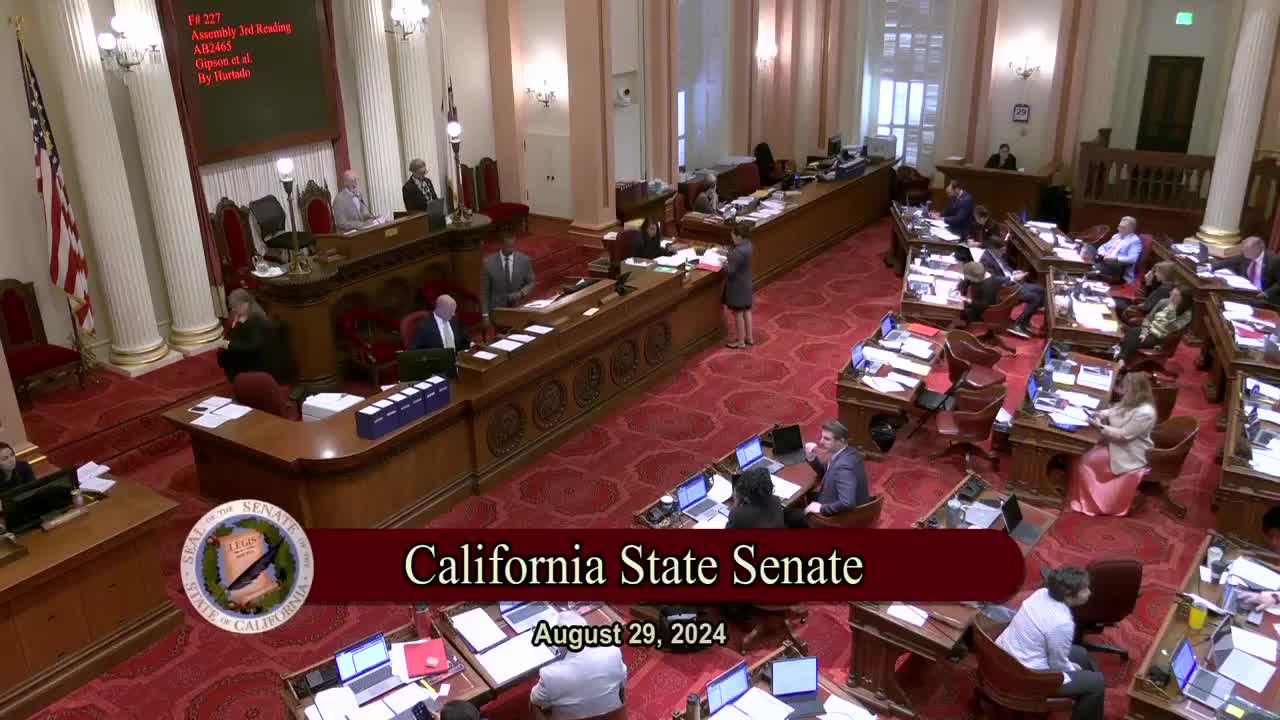
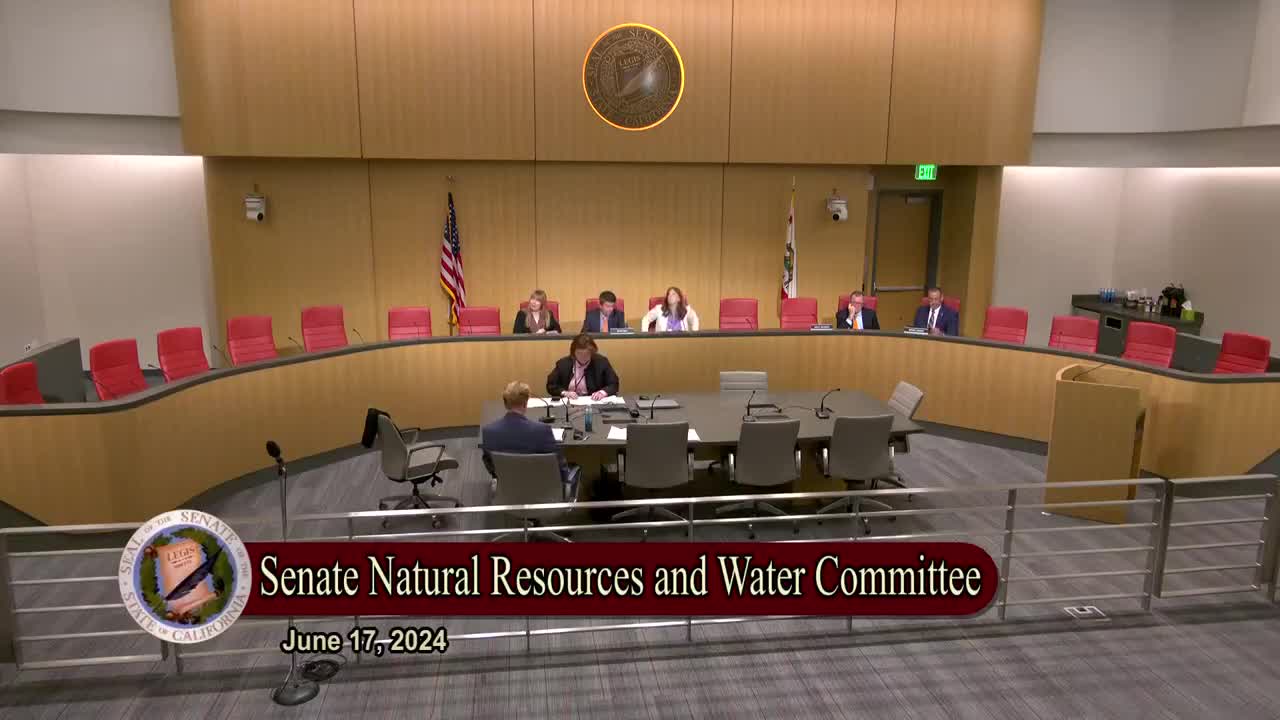
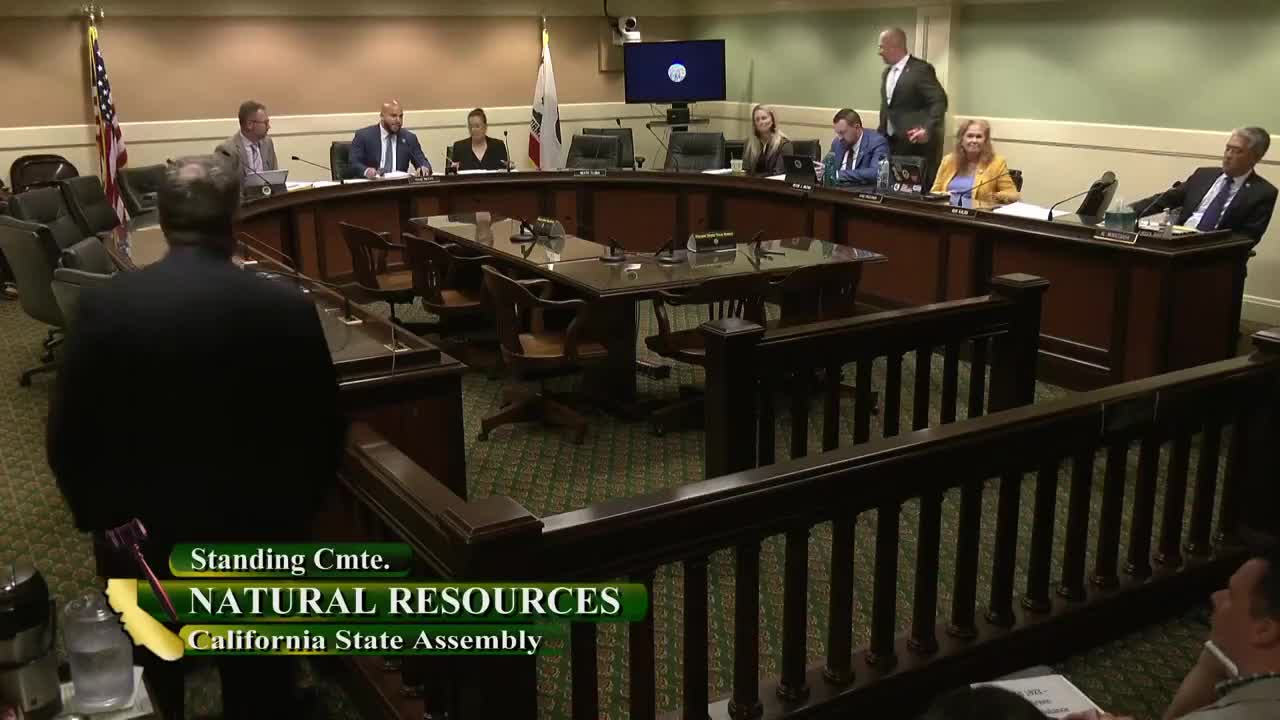
Bill Author

Bill Co-Author(s):