AB 2021: Crimes: selling or furnishing tobacco or related products and paraphernalia to underage persons.
- Session Year: 2023-2024
- House: Assembly
- Latest Version Date: 2024-09-22
Current Status:
Passed
(2024-09-22: Chaptered by Secretary of State - Chapter 371, Statutes of 2024.)
Introduced
In Committee
First Chamber
In Committee
Second Chamber
Enacted
What does this bill do?
The bill creates a separate, higher fine schedule for businesses (firms, corporations, retailers, and wholesalers) that sell or furnish tobacco, cigarette papers, blunt wraps, or related paraphernalia to people under 21: $500 for the first offense, $1,000 for the second, and $5,000 for any subsequent offense. Individual sellers remain subject to the lower fines ($200, $500, and $1,000), the bill preserves a defense if the seller checked and reasonably relied on an ID, and it exempts sales to active‑duty military who are 18 or older.
The summary is provided by generative AI which can make mistakes. For original language, please view the details in the table below.
Existing law prohibits the sale or furnishing of tobacco or tobacco products or paraphernalia, as specified, to a person who is under 21 years of age. Under existing law, a violation of this prohibition is punishable by a fine of $200 for the first offense, $500 for the 2nd offense, and $1,000 for the 3rd offense, either as a misdemeanor or by a civil action, as specified.
This bill would create a separate fine of $500 for the first offense, $1,000 for the 2nd offense, and $5,000 for any subsequent offense for firms, corporations, businesses, retailers, or wholesalers, who violate this prohibition.
Existing law prohibits the sale or furnishing of tobacco or tobacco products or paraphernalia, as specified, to a person who is under 21 years of age. Under existing law, a violation of this prohibition is punishable by a fine of $200 for the first offense, $500 for the 2nd offense, and $1,000 for the 3rd offense, either as a misdemeanor or by a civil action, as specified.
This bill would create a separate fine of $1,000 $500 for the first offense, $5,000 $1,000 for the 2nd offense, and $10,000 for the 3rd offense $5,000 for any subsequent offense for firms, corporations, businesses, retailers, or wholesalers, who violate this prohibition.
Existing law prohibits the sale or furnishing of tobacco or tobacco products or paraphernalia, as specified, to a person who is under 21 years of age. Under existing law, a violation of this prohibition is punishable by a fine of $200 for the first offense, $500 for the 2nd offense, and $1,000 for the 3rd offense, either as a misdemeanor or by a civil action, as specified.
This bill would increase these fines to create a separate fine of $1,000 for the first offense, $5,000 for the 2nd offense, and $10,000 for the 3rd offense. offense for firms, corporations, businesses, retailers, or wholesalers, who violate this prohibition.
Existing law prohibits the sale or furnishing of tobacco or tobacco products or paraphernalia, as specified, to a person who is under 21 years of age. Under existing law, a violation of this prohibition is punishable by a fine of $200 for the first offense, $500 for the 2nd offense, and $1,000 for the 3rd offense, either as a misdemeanor or by a civil action, as specified.
This bill would increase these fines to $1,000 for the first offense, $5,000 for the 2nd offense, and $10,000 for the 3rd offense.
(a)(1)(A)(i)A person who knowingly or under circumstances in which it has knowledge, or should otherwise have grounds for knowledge, sells, gives, or in any way furnishes to another person who is under 21 years of age any tobacco, cigarette, cigarette papers, or blunt wraps, or any other preparation of tobacco, or any other instrument or paraphernalia that is designed for the smoking or ingestion of tobacco, tobacco products, or any controlled substance, is subject to either a criminal action for a misdemeanor or a civil action brought by a city attorney, a county counsel, or a district attorney, punishable by a fine of two hundred dollars ($200) for the first offense, five hundred dollars ($500) for the second offense, and one thousand dollars ($1,000) for the third offense.
(ii)A firm, corporation, business, retailer, or wholesaler that under the circumstances described in clause (i) sells, gives, or in any way furnishes to another person who is under 21 years of age a product specified in clause (i) is subject to either a criminal action for a misdemeanor or a civil action brought by a city attorney, a county counsel, or a district attorney, punishable by a fine of five hundred dollars ($500) for the first offense, one thousand dollars ($1,000) for the second offense, and five thousand dollars ($5,000) for any subsequent offense.
(iii)This subparagraph does not apply to the sale, giving, or furnishing of any of the products specified in clause (i) to active duty military personnel who are 18 years of age or older. An identification card issued by the United States Armed Forces shall be used as proof of age for this purpose.
(B)Notwithstanding Section 1464 or any other law, 25 percent of each civil and criminal penalty collected pursuant to this subdivision shall be paid to the office of the city attorney, county counsel, or district attorney, whoever is responsible for bringing the successful action.
(C)Proof that a defendant, or their employee or agent, demanded, was shown, and reasonably relied upon evidence of majority shall be a defense to any action brought pursuant to this subdivision. Evidence of majority of a person is a facsimile of, or a reasonable likeness of, a document issued by a federal, state, county, or municipal government, or subdivision or agency thereof, including, but not limited to, a motor vehicle operators license, a registration certificate issued under the federal Military Selective Service Act (50 U.S.C. Sec. 3801 et seq.), or an identification card issued to a member of the Armed Forces.
(D)For purposes of this section, the person liable for selling or furnishing tobacco products to persons under 21 years of age by a tobacco vending machine shall be the person authorizing the installation or placement of the tobacco vending machine upon premises they manage or otherwise control and under circumstances in which they have knowledge, or should otherwise have grounds for knowledge, that the tobacco vending machine will be utilized by persons under 21 years of age.
(2)For purposes of this section, blunt wraps means cigar papers or cigar wrappers of all types that are designed for smoking or ingestion of tobacco products and contain less than 50 percent tobacco.
(b)A person, firm, or corporation that sells, or deals in tobacco or any preparation of tobacco, shall post conspicuously and keep so posted in their place of business at each point of purchase the notice required pursuant to subdivision (b) of Section 22952 of the Business and Professions Code, and a person failing to do so shall, upon conviction, be punished by a fine of fifty dollars ($50) for the first offense, one hundred dollars ($100) for the second offense, two hundred fifty dollars ($250) for the third offense, and five hundred dollars ($500) for the fourth offense and each subsequent violation of this provision, or by imprisonment in a county jail not exceeding 30 days.
(c)For purposes of determining the liability of persons, firms, or corporations controlling franchises or business operations in multiple locations for the second and subsequent violations of this section, each individual franchise or business location shall be deemed a separate entity.
(d)It is the Legislatures intent to regulate the subject matter of this section. As a result, a city, county, or city and county shall not adopt any ordinance or regulation inconsistent with this section.
(e)For purposes of this section, smoking has the same meaning as in subdivision (c) of Section 22950.5 of the Business and Professions Code.
(f)For purposes of this section, tobacco products means a product or device as defined in subdivision (d) of Section 22950.5 of the Business and Professions Code.
(a)(1)(A)(i)A person who knowingly or under circumstances in which it has knowledge, or should otherwise have grounds for knowledge, sells, gives, or in any way furnishes to another person who is under 21 years of age any tobacco, cigarette, cigarette papers, or blunt wraps, or any other preparation of tobacco, or any other instrument or paraphernalia that is designed for the smoking or ingestion of tobacco, tobacco products, or any controlled substance, is subject to either a criminal action for a misdemeanor or a civil action brought by a city attorney, a county counsel, or a district attorney, punishable by a fine of two hundred dollars ($200) for the first offense, five hundred dollars ($500) for the second offense, and one thousand dollars ($1,000) for the third offense.
(ii)A firm, corporation, business, retailer, or wholesaler that under the circumstances described in clause (i) sells, gives, or in any way furnishes to another person who is under 21 years of age a product specified in clause (i) is subject to either a criminal action for a misdemeanor or a civil action brought by a city attorney, a county counsel, or a district attorney, punishable by a fine of one thousand dollars ($1,000) five hundred dollars ($500) for the first offense, five thousand dollars ($5,000) one thousand dollars ($1,000) for the second offense, and ten thousand dollars ($10,000) five thousand dollars ($5,000) for any subsequent offense.
(iii)This subparagraph does not apply to the sale, giving, or furnishing of any of the products specified in clause (i) to active duty military personnel who are 18 years of age or older. An identification card issued by the United States Armed Forces shall be used as proof of age for this purpose.
(B)Notwithstanding Section 1464 or any other law, 25 percent of each civil and criminal penalty collected pursuant to this subdivision shall be paid to the office of the city attorney, county counsel, or district attorney, whoever is responsible for bringing the successful action.
(C)Proof that a defendant, or their employee or agent, demanded, was shown, and reasonably relied upon evidence of majority shall be a defense to any action brought pursuant to this subdivision. Evidence of majority of a person is a facsimile of, or a reasonable likeness of, a document issued by a federal, state, county, or municipal government, or subdivision or agency thereof, including, but not limited to, a motor vehicle operators license, a registration certificate issued under the federal Military Selective Service Act (50 U.S.C. Sec. 3801 et seq.), or an identification card issued to a member of the Armed Forces.
(D)For purposes of this section, the person liable for selling or furnishing tobacco products to persons under 21 years of age by a tobacco vending machine shall be the person authorizing the installation or placement of the tobacco vending machine upon premises they manage or otherwise control and under circumstances in which they have knowledge, or should otherwise have grounds for knowledge, that the tobacco vending machine will be utilized by persons under 21 years of age.
(2)For purposes of this section, blunt wraps means cigar papers or cigar wrappers of all types that are designed for smoking or ingestion of tobacco products and contain less than 50 percent tobacco.
(b)A person, firm, or corporation that sells, or deals in tobacco or any preparation of tobacco, shall post conspicuously and keep so posted in their place of business at each point of purchase the notice required pursuant to subdivision (b) of Section 22952 of the Business and Professions Code, and a person failing to do so shall, upon conviction, be punished by a fine of fifty dollars ($50) for the first offense, one hundred dollars ($100) for the second offense, two hundred fifty dollars ($250) for the third offense, and five hundred dollars ($500) for the fourth offense and each subsequent violation of this provision, or by imprisonment in a county jail not exceeding 30 days.
(c)For purposes of determining the liability of persons, firms, or corporations controlling franchises or business operations in multiple locations for the second and subsequent violations of this section, each individual franchise or business location shall be deemed a separate entity.
(d)It is the Legislatures intent to regulate the subject matter of this section. As a result, a city, county, or city and county shall not adopt any ordinance or regulation inconsistent with this section.
(e)For purposes of this section, smoking has the same meaning as in subdivision (c) of Section 22950.5 of the Business and Professions Code.
(f)For purposes of this section, tobacco products means a product or device as defined in subdivision (d) of Section 22950.5 of the Business and Professions Code.
(a)(1)(A)(i)Every person, firm, or corporation that A person who knowingly or under circumstances in which it has knowledge, or should otherwise have grounds for knowledge, sells, gives, or in any way furnishes to another person who is under 21 years of age any tobacco, cigarette, or cigarette papers, or blunt wraps, or any other preparation of tobacco, or any other instrument or paraphernalia that is designed for the smoking or ingestion of tobacco, tobacco products, or any controlled substance, is subject to either a criminal action for a misdemeanor or a civil action brought by a city attorney, a county counsel, or a district attorney, punishable by a fine of one thousand dollars ($1,000) for the first offense, five thousand dollars ($5,000) for the second offense, and ten thousand dollars ($10,000) for the third offense. two hundred dollars ($200) for the first offense, five hundred dollars ($500) for the second offense, and one thousand dollars ($1,000) for the third offense.
(ii)A firm, corporation, business, retailer, or wholesaler that under the circumstances described in clause (i) sells, gives, or in any way furnishes to another person who is under 21 years of age a product specified in clause (i) is subject to either a criminal action for a misdemeanor or a civil action brought by a city attorney, a county counsel, or a district attorney, punishable by a fine of one thousand dollars ($1,000) for the first offense, five thousand dollars ($5,000) for the second offense, and ten thousand dollars ($10,000) for any subsequent offense.
(ii)(iii)This subparagraph does not apply to the sale, giving, or furnishing of any of the products specified in clause (i) to active duty military personnel who are 18 years of age or older. An identification card issued by the United States Armed Forces shall be used as proof of age for this purpose.
(B)Notwithstanding Section 1464 or any other law, 25 percent of each civil and criminal penalty collected pursuant to this subdivision shall be paid to the office of the city attorney, county counsel, or district attorney, whoever is responsible for bringing the successful action.
(C)Proof that a defendant, or his or her their employee or agent, demanded, was shown, and reasonably relied upon evidence of majority shall be defense to any action brought pursuant to this subdivision. Evidence of majority of a person is a facsimile of, or a reasonable likeness of, a document issued by a federal, state, county, or municipal government, or subdivision or agency thereof, including, but not limited to, a motor vehicle operators license, a registration certificate issued under the federal Military Selective Service Act (50 U.S.C. Sec. 3801 et seq.), or an identification card issued to a member of the Armed Forces.
(D)For purposes of this section, the person liable for selling or furnishing tobacco products to persons under 21 years of age by a tobacco vending machine shall be the person authorizing the installation or placement of the tobacco vending machine upon premises he or she manages or otherwise controls they manage or otherwise control and under circumstances in which he or she has they have knowledge, or should otherwise have grounds for knowledge, that the tobacco vending machine will be utilized by persons under 21 years of age.
(2)For purposes of this section, blunt wraps means cigar papers or cigar wrappers of all types that are designed for smoking or ingestion of tobacco products and contain less than 50 percent tobacco.
(b)Every A person, firm, or corporation that sells, or deals in tobacco or any preparation thereof, of tobacco, shall post conspicuously and keep so posted in his, her, or their place of business at each point of purchase the notice required pursuant to subdivision (b) of Section 22952 of the Business and Professions Code, and any a person failing to do so shall, upon conviction, be punished by a fine of fifty dollars ($50) for the first offense, one hundred dollars ($100) for the second offense, two hundred fifty dollars ($250) for the third offense, and five hundred dollars ($500) for the fourth offense and each subsequent violation of this provision, or by imprisonment in a county jail not exceeding 30 days.
(c)For purposes of determining the liability of persons, firms, or corporations controlling franchises or business operations in multiple locations for the second and subsequent violations of this section, each individual franchise or business location shall be deemed a separate entity.
(d)It is the Legislatures intent to regulate the subject matter of this section. As a result, a city, county, or city and county shall not adopt any ordinance or regulation inconsistent with this section.
(e)For purposes of this section, smoking has the same meaning as in subdivision (c) of Section 22950.5 of the Business and Professions Code.
(f)For purposes of this section, tobacco products means a product or device as defined in subdivision (d) of Section 22950.5 of the Business and Professions Code.
(a)(1)(A)(i)Every person, firm, or corporation that knowingly or under circumstances in which it has knowledge, or should otherwise have grounds for knowledge, sells, gives, or in any way furnishes to another person who is under 21 years of age any tobacco, cigarette, or cigarette papers, or blunt wraps, or any other preparation of tobacco, or any other instrument or paraphernalia that is designed for the smoking or ingestion of tobacco, tobacco products, or any controlled substance, is subject to either a criminal action for a misdemeanor or a civil action brought by a city attorney, a county counsel, or a district attorney, punishable by a fine of two hundred dollars ($200) one thousand dollars ($1,000) for the first offense, five hundred dollars ($500) thousand dollars ($5,000) for the second offense, and one ten thousand dollars ($1,000) ($10,000) for the third offense.
(ii)This subparagraph does not apply to the sale, giving, or furnishing of any of the products specified in clause (i) to active duty military personnel who are 18 years of age or older. An identification card issued by the United States Armed Forces shall be used as proof of age for this purpose.
(B)Notwithstanding Section 1464 or any other law, 25 percent of each civil and criminal penalty collected pursuant to this subdivision shall be paid to the office of the city attorney, county counsel, or district attorney, whoever is responsible for bringing the successful action.
(C)Proof that a defendant, or his or her employee or agent, demanded, was shown, and reasonably relied upon evidence of majority shall be defense to any action brought pursuant to this subdivision. Evidence of majority of a person is a facsimile of, or a reasonable likeness of, a document issued by a federal, state, county, or municipal government, or subdivision or agency thereof, including, but not limited to, a motor vehicle operators license, a registration certificate issued under the federal Military Selective Service Act (50 U.S.C. Sec. 3801 et seq.), or an identification card issued to a member of the Armed Forces.
(D)For purposes of this section, the person liable for selling or furnishing tobacco products to persons under 21 years of age by a tobacco vending machine shall be the person authorizing the installation or placement of the tobacco vending machine upon premises he or she manages or otherwise controls and under circumstances in which he or she has knowledge, or should otherwise have grounds for knowledge, that the tobacco vending machine will be utilized by persons under 21 years of age.
(2)For purposes of this section, blunt wraps means cigar papers or cigar wrappers of all types that are designed for smoking or ingestion of tobacco products and contain less than 50 percent tobacco.
(b)Every person, firm, or corporation that sells, or deals in tobacco or any preparation thereof, shall post conspicuously and keep so posted in his, her, or their place of business at each point of purchase the notice required pursuant to subdivision (b) of Section 22952 of the Business and Professions Code, and any person failing to do so shall, upon conviction, be punished by a fine of fifty dollars ($50) for the first offense, one hundred dollars ($100) for the second offense, two hundred fifty dollars ($250) for the third offense, and five hundred dollars ($500) for the fourth offense and each subsequent violation of this provision, or by imprisonment in a county jail not exceeding 30 days.
(c)For purposes of determining the liability of persons, firms, or corporations controlling franchises or business operations in multiple locations for the second and subsequent violations of this section, each individual franchise or business location shall be deemed a separate entity.
(d)It is the Legislatures intent to regulate the subject matter of this section. As a result, a city, county, or city and county shall not adopt any ordinance or regulation inconsistent with this section.
(e)For purposes of this section, smoking has the same meaning as in subdivision (c) of Section 22950.5 of the Business and Professions Code.
(f)For purposes of this section, tobacco products means a product or device as defined in subdivision (d) of Section 22950.5 of the Business and Professions Code.
|
Date
|
Status
|
|---|---|
| Sep 22, 2024 | Chaptered by Secretary of State - Chapter 371, Statutes of 2024. |
| Sep 22, 2024 | Approved by the Governor. |
| Sep 3, 2024 | Enrolled and presented to the Governor at 3:30 p.m. |
| Aug 26, 2024 | Senate amendments concurred in. To Engrossing and Enrolling. (Ayes 75. Noes 0. Page 6574.). |
| Aug 20, 2024 | In Assembly. Concurrence in Senate amendments pending. May be considered on or after August 22 pursuant to Assembly Rule 77. |
| Aug 20, 2024 | Read third time. Passed. Ordered to the Assembly. (Ayes 34. Noes 2. Page 5231.). |
| Aug 6, 2024 | Read second time. Ordered to third reading. |
| Aug 5, 2024 | From committee: Be ordered to second reading pursuant to Senate Rule 28.8. |
| Jun 25, 2024 | From committee: Do pass and re-refer to Com. on APPR. (Ayes 4. Noes 1.) (June 25). Re-referred to Com. on APPR. |
| Jun 17, 2024 | From committee chair, with author's amendments: Amend, and re-refer to committee. Read second time, amended, and re-referred to Com. on PUB S. |
| May 28, 2024 | In committee: Set, first hearing. Hearing canceled at the request of author. |
| May 1, 2024 | Referred to Com. on PUB S. |
| Apr 18, 2024 | In Senate. Read first time. To Com. on RLS. for assignment. |
| Apr 18, 2024 | Read third time. Passed. Ordered to the Senate. (Ayes 72. Noes 0.) |
| Apr 11, 2024 | Read second time. Ordered to Consent Calendar. |
| Apr 10, 2024 | From committee: Do pass. To Consent Calendar. (Ayes 14. Noes 0.) (April 10). |
| Mar 21, 2024 | Re-referred to Com. on APPR. |
| Mar 20, 2024 | Read second time and amended. |
| Mar 19, 2024 | From committee: Amend, and do pass as amended and re-refer to Com. on APPR. (Ayes 8. Noes 0.) (March 12). |
| Feb 12, 2024 | Referred to Com. on PUB. S. |
| Feb 1, 2024 | From printer. May be heard in committee March 2. |
| Jan 31, 2024 | Read first time. To print. |
|
Date
|
Description
|
Location
|
Votes
|
|
|---|---|---|---|---|
| Aug 26, 2024 | AB 2021 Bauer-Kahan Concurrence in Senate Amendments | Assembly Floor |
Passed |
|
| Aug 20, 2024 | Assembly 3rd Reading AB2021 Bauer-Kahan By Becker | Senate Floor |
Passed |
|
| Jun 25, 2024 | Do pass, but first be re-referred to the Committee on [Appropriations] | Senate Standing Committee on Public Safety |
Passed |
|
| Apr 18, 2024 | AB 2021 Bauer-Kahan Consent Calendar Second Day Regular Session | Assembly Floor |
Passed |
|
| Apr 10, 2024 | Do pass. To Consent Calendar. | Assembly Standing Committee on Appropriations |
Passed |
|
| Mar 12, 2024 | Do pass as amended and be re-referred to the Committee on [Appropriations] | Assembly Standing Committee on Public Safety |
Passed |
This list shows positions taken on this bill by organizations on the date displayed, which is linked to the original source.
Positions by individuals are not included.
|
Organization
|
Position
|
Date
|
|---|---|---|
| California Attorneys For Criminal Justice | ** Against | |
| California District Attorneys Association | ** Support | |
| City of Alameda | ** Support | |
| cleanearth4kids.org | ** Support | |
| County Health Executive Association | * Support | Jun 25, 2024 |
| County Health Executives Association Of California | ** Support | |
| Liberty High School | * Support | Mar 12, 2024 |
| Liberty High School | * Support | Jun 25, 2024 |
| San Joaquin District Attorney's Office | * Support | Mar 12, 2024 |
CONCURRENCE IN SENATE AMENDMENTS
CSA1 Bill Id:AB 2021
Author:(Bauer-Kahan)
As Amended Ver:June 17, 2024
Majority vote
SUMMARY
Increases the fines for selling tobacco to a person under the age of 21.
Senate Amendments
Changes the amount of the fine for selling tobacco to a person under the age of 21 as follows:
- For a first offense, the fine shall be $500 rather than $1,000.
- For a second offense, the fine shall be $1,000 rather than $5,000.
- For any subsequent offense, the fine shall be $5,000 rather than $10,000 for just a third offense.
COMMENTS
As Passed by The Assembly, this bill:
- Stated that any business, firm, corporation, retailer, or wholesaler who sells, furnishes, or gives tobacco or tobacco products or paraphernalia, cigarettes, or cigarette papers, blunt wraps, or any other preparation of tobacco, or any other instrument or paraphernalia that is designed for the smoking or ingestion of tobacco, tobacco products, or any controlled substance to any person under the age of 21, the firm, corporation, retailer, or wholesaler will be subject to either a criminal action for a misdemeanor or a civil action brought by a city attorney, a county counsel, or a district attorney, punishable by a fine of one thousand dollars $1,000 for the first offense, $5,000 for the second offense, and $10,000 for the third offense.
- Made a conforming changes to existing law related to a business, firm, corporation, retailer, or wholesaler who sells tobacco to a person under the age of 21.
According to the Author
"Availability of tobacco based products is continuing to grow and our California youth are becoming its victims. We have a duty as a legislature to create a healthy tobacco free environment for our children. AB 2021 will safeguard our children by increasing penalties for sellers found responsible of selling tobacco products to people under the age of 21. Even with age and flavor constraints, 24,600 high school students in California reported consuming tobacco products. Sellers of tobacco products need to take seriously their mandate to verify buyers are of legal age of purchase and raising penalties will help ensure that happens. It is paramount that we take this next step in continuing the fight for a tobacco free generation."
Arguments in Support
According to CleanEarth4Kids.Org: "Tobacco is the leading cause of preventable death and disease in the US with especially high rates in the African American community. Over 45,000 African Americans die prematurely every year from tobacco-caused diseases with an estimated 85% smoking menthol-flavored cigarettes. Less than 10% of Black smokers used menthol cigarettes in the 1950s. The Black community has been the focus of the tobacco industry's predatory marketing, especially in low-income areas. Stopping menthol is not just a health issue, it is racial justice. Tobacco use during childhood and adolescence causes significant health problems such as respiratory diseases and cancer, memory and cognitive issues, and various heart diseases. Smoking also harms brain development. Vaping, a common medium of flavored tobacco, harms hippocampus-dependent memory. After four weeks of use, there are varying degrees of impairment on both short-term and long-term memory. CleanEarth4Kids.org asks you to protect our youth, water and environment by supporting AB 2021."
Arguments in Opposition
According to the California Attorneys for Criminal Justice, "The fine increase proposed by this bill ranges from five-fold to ten-fold for certain violations. While the State has a compelling interest in restricting tobacco use to adults who have reached 21 years of age, the considerable fine increase has great potential to harm small business owners who may not have had knowledge of the violation when it occurred.
"Under the theory of respondeat superior, a small business owner would face possible punishment and fine for the actions of a reckless employee working a register. A minimum fine of $1,000.00 represents the profit margin for weeks of sales for some corner stores. The maximum fine of $10,000.00 has the potential to bring financial strain to small business owners, many of whom operate in marginalized communities with underserved populations. Moreover, the potential for uneven enforcement in communities of color is high given the history of saturation patrols and disparate policing.
"The fines imposed in Penal Code Section 308 have remained unchanged for a number of decades and an increase commensurate with inflation may be warranted. However, the ten-fold increase for the maximum fine and other increases under AB 2021 are excessive. In comparison, a $10,000.00 fine eclipses the maximum fines allowable fines for many felony offenses. The increase proposed by AB 2021 has the potential to catastrophically impact small business owners, including those found in underserved and economically challenged communities. While AB 2021 is well intentioned to bolster prevention of sales of tobacco and tobacco-related products to those under the age of 21, the proposed fine increase is jarring and excessive in the context of the conduct covered by the statute."
FISCAL COMMENTS
According to the Assembly Appropriations Committee, "Potential increase in fine and fee revenue, to the extent that the fine and associated fees and assessments are collected from applicable businesses."
VOTES:
ASM PUBLIC SAFETY: 8-0-0
YES: McCarty, Alanis, Lackey, Stephanie Nguyen, Reyes, Ting, Wilson, Zbur
ASM APPROPRIATIONS: 14-0-1
YES: Wicks, Sanchez, Arambula, Bryan, Calderon, Dixon, Mike Fong, Grayson, Haney, Hart, Jim Patterson, Pellerin, Ta, Villapudua
ABS, ABST OR NV: Wendy Carrillo
ASSEMBLY FLOOR: 72-0-8
YES: Addis, Aguiar-Curry, Alanis, Alvarez, Bains, Bauer-Kahan, Bennett, Berman, Calderon, Juan Carrillo, Wendy Carrillo, Chen, Connolly, Davies, Dixon, Flora, Mike Fong, Vince Fong, Friedman, Gabriel, Gallagher, Garcia, Gipson, Grayson, Haney, Hart, Holden, Hoover, Irwin, Jackson, Jones-Sawyer, Kalra, Lackey, Lee, Low, Lowenthal, Maienschein, McCarty, McKinnor, Muratsuchi, Stephanie Nguyen, Ortega, Pacheco, Papan, Jim Patterson, Joe Patterson, Pellerin, Petrie-Norris, Quirk-Silva, Ramos, Rendon, Reyes, Luz Rivas, Rodriguez, Blanca Rubio, Sanchez, Santiago, Schiavo, Soria, Ta, Ting, Valencia, Villapudua, Waldron, Wallis, Ward, Weber, Wicks, Wilson, Wood, Zbur, Robert Rivas
ABS, ABST OR NV: Arambula, Boerner, Bonta, Bryan, Cervantes, Megan Dahle, Essayli, Mathis
SENATE FLOOR: 34-2-4
YES: Allen, Alvarado-Gil, Archuleta, Ashby, Atkins, Becker, Blakespear, Bradford, Caballero, Cortese, Dodd, Durazo, Eggman, Glazer, Gonzalez, Hurtado, Laird, Limón, McGuire, Menjivar, Min, Newman, Niello, Padilla, Portantino, Roth, Rubio, Skinner, Smallwood-Cuevas, Stern, Umberg, Wahab, Wiener, Wilk
NO: Jones, Seyarto
ABS, ABST OR NV: Dahle, Grove, Nguyen, Ochoa Bogh
UPDATED
VERSION: June 17, 2024
CONSULTANT: Kimberly Horiuchi / PUB. S. / (916) 319-3744 FN: 0004263
SENATE RULES COMMITTEE Office of Senate Floor Analyses (916) 651-1520 Fax: (916) 327-4478 | AB 2021 |
THIRD READING
Bill No: AB 2021
Author: Bauer-Kahan (D)
Amended: 6/17/24 in Senate
Vote: 21
SENATE PUBLIC SAFETY COMMITTEE: 4-1, 6/25/24
AYES: Wahab, Bradford, Skinner, Wiener
NOES: Seyarto
SENATE APPROPRIATIONS COMMITTEE: Senate Rule 28.8
ASSEMBLY FLOOR: 72-0, 4/18/24 (Consent) - See last page for vote
SUBJECT: Crimes: selling or furnishing tobacco or related products and paraphernalia to underage persons
SOURCE: Author
DIGEST:
This bill creates a separate fine for firms, corporations, businesses, retailers, or wholesalers that sell or furnish tobacco or tobacco products or paraphernalia to a person who is under 21 years of $500 for the first offense, $1,000 for the second offense, and $5,000 for any subsequent offense.
ANALYSIS:
Existing law:
- Provides that every person, firm, or corporation that knowingly or under circumstances in which it has knowledge, or should otherwise have grounds for knowledge, sells, gives, or in any way furnishes to another person who is under 21 years of age any tobacco, cigarette, or cigarette papers, or blunt wraps, or any other preparation of tobacco, or any other instrument or paraphernalia that is designed for the smoking or ingestion of tobacco, tobacco products, or any controlled substance, is subject to either a criminal action for a misdemeanor or a civil action brought by a city attorney, a county counsel, or a district attorney, punishable by a fine of $200 for the first offense, $500 for the second offense, and $1,000 for the third offense. (Pen. Code, § 308, subd. (a)(1)(A)(i).)
- Requires that 25 percent of each civil and criminal penalty collected be paid to the office of the city attorney, county counsel, or district attorney, whoever is responsible for bringing the successful action. (Pen. Code, § 308, subd. (a)(1)(B).)
- Provides that for purposes of determining the liability of persons, firms, or corporations controlling franchises or business operations in multiple locations for the second and subsequent violations of this section, each individual franchise or business location is deemed a separate entity. (Pen. Code, § 308, subd. (c).)
- Declares, via the Stop Tobacco Access to Kids Enforcement (“STAKE”) Act, the Legislature’s intent to reduce and eventually eliminate the illegal purchase and consumption of tobacco products by any person under 21. (Bus. & Prof. Code, § 22950 et seq.)
- Requires all moneys collected as civil penalties by the California Department of Public Health (CDPH) and other state agencies that enforce the STAKE Act to be deposited in the State Treasury to the credit of the Sale of Tobacco to Minors Control Account. (Bus. & Prof. Code, § 22953.)
- Requires any person engaging in the retail sale of tobacco products check the identification of tobacco purchasers, to establish the age of the purchaser, if the purchaser reasonably appears to be under 21 years of age. (Bus. & Prof. Code, § 22956.)
- Specifies that the STAKE Act establishes minimum state restrictions with respect to the legal age to purchase or possess tobacco products, but does not preempt or otherwise prohibit the adoption of a local standard that imposes a more restrictive legal age to purchase or possess tobacco products. Provides that a local standard that imposes a more restrictive legal age to purchase or possess tobacco products controls in the event of an inconsistency between state law and a local standard. (Bus. & Prof. Code, § 22964.)
This bill provides that any business, firm, corporation, retailer, or wholesaler who sells, furnishes, or gives tobacco or tobacco products or paraphernalia, cigarettes, or cigarette papers, blunt wraps, or any other preparation of tobacco, or any other instrument or paraphernalia that is designed for the smoking or ingestion of tobacco, tobacco products, or any controlled substance to any person under the age of 21, the firm, corporation, retailer, or wholesaler will be subject to either a criminal action for a misdemeanor or a civil action brought by a city attorney, a county counsel, or a district attorney, punishable by a fine of $500 for the first offense, $1,000 for the second offense, and $5,000 for any subsequent offense.
Background
Existing law includes a wide range of fines on business owners that violate the law by selling or furnishing tobacco products to people under the age of 21. The STAKE Act mandates that anyone selling tobacco products check the purchaser’s identification if the person reasonably appears to be under 21. (Bus. & Prof. Code, § 22956.) CDPH is the state governmental agency tasked with primary enforcement responsibility of the STAKE Act. (Bus. & Prof. Code, § 22957.) CDPH may assess civil penalties for any violation of the STAKE Act as follows: (1) a civil penalty of $400 to $600 for the first violation, (2) a civil penalty of $900 to $1,000 for the second violation within a five-year period, (3) a civil penalty of $1,200 to $1,800 for a third violation within a five-year period, (4) a civil penalty of $3,000 to $4,000 for a fourth violation within a five-year period, or (5) a civil penalty of $5,000 to $6,000 for a fifth violation within a five-year period. (Bus. & Prof. Code, § 22958, subd. (a).) In addition to escalating fines, upon the assessment of a third, fourth, or fifth uncontested violation, CDPH must notify the State Board of Equalization which must then assess a $250 civil penalty and suspend or revoke the vendor’s license to sell tobacco. (Bus. & Prof. Code, § 22958, subd. (b)(1).)
Additionally, federal law applies to the sale of tobacco. The Tobacco Control Act imposes fines as follows for the illegal sale of tobacco to a person under 21: (a) a warning for the first violation; (b) up to $279 for a second violation within a one-year period; (c) fines may increase for subsequent violations up to $11,182 and may include a no-tobacco-sale order which prohibits a vendor from selling tobacco for a specified period or permanently. (21 U.S.C. § 387 et seq.)
When an individual or business is assessed a criminal fine, the amount owed is the amount specified in the statute in additional to penalty assessments. For example, a $1,000 fine for a violation will result in total amount in excess of $4,000 once the penalty assessments are accounted for. The chart below describes how fines are assessed.
For a base fine of $1,000:
Penal Code § 1464 state penalty on fines | $1,000 ($10 for every $10) |
Penal Code § 1465.7 state surcharge | $200 (20%) |
Penal Code § 1465.8 court operations assessment | $40 ($40 per criminal conviction) |
Government Code § 70372 court construction penalty | $500 ($5 for every $10) |
Government Code § 70373 court facilities assessment | $30 ($30 for any felony or misdemeanor) |
Government Code § 76000 county penalty | $700 ($7 for every $10) |
Government Code § 76000.5 county EMS penalty | $200 ($2 for every $10) |
Government Code § 76104.6 Prop 69 DNA fund penalty | $100 ($1 for every $10 |
Government Code § 76104.7 state penalty | $400 ($4 for every $10) |
Total Fine with Assessments: | $4,170 |
FISCAL EFFECT: Appropriation: No Fiscal Com.: Yes Local: No
SUPPORT: (Verified 8/5/24)
California District Attorneys Association
City of Alameda
CleanEarth4kids.org
County Health Executives Association of California
OPPOSITION: (Verified 8/5/24)
California Attorneys for Criminal Justice
ARGUMENT IN SUPPORT:
The County Health Executives Association of California writes:
According to the U.S. Centers for Disease Control and Prevention (CDC), in 2023, 2.8 million middle school and high school students reported current use of any tobacco products. From 2022 to 2023, the CDC found a decline in current e-cigarette use among high school students … while no statistically significant change occurred among middle school students. Although a slight decline has occurred, youth tobacco use in the United States remains a major public health concern. Further, the CDC finds that youth who use multiple tobacco products are at higher risk for developing nicotine dependence and may be more likely to continue using into adulthood. Additionally, individuals who use tobacco products are at a significantly higher risk of developing severe health conditions, including cancer, heart disease, emphysema, and chronic bronchitis.
In addition, the CDC finds national, state, and local program activities have been shown to reduce and prevent youth tobacco product use when implemented together. Increasing penalties on tobacco products is a promising step toward protecting youth from lifelong harm caused by tobacco.
ARGUMENT IN OPPOSITION:
According to the California Attorneys for Criminal Justice:
While the State has a compelling interest in restricting tobacco use to adults who have reached 21 years of age, the considerable fine increase has great potential to harm small business owners. Under the theory of respondeat superior, a small business owner would face a fine for the actions of a reckless employee working a register. The maximum fine … has the potential to bring financial strain to small business owners, many of whom operate in marginalized communities with underserved populations. Additionally, there are often sting operations that are carried out. It would be more beneficial to focus these enforcement efforts on larger businesses as opposed to someone who runs a small business who may not be able to absorb the financial impact. CACJ suggests that AB 2021 be amended to only apply to businesses with ten or more employees.
ASSEMBLY FLOOR: 72-0, 4/18/24
AYES: Addis, Aguiar-Curry, Alanis, Alvarez, Bains, Bauer-Kahan, Bennett, Berman, Calderon, Juan Carrillo, Wendy Carrillo, Chen, Connolly, Davies, Dixon, Flora, Mike Fong, Vince Fong, Friedman, Gabriel, Gallagher, Garcia, Gipson, Grayson, Haney, Hart, Holden, Hoover, Irwin, Jackson, Jones-Sawyer, Kalra, Lackey, Lee, Low, Lowenthal, Maienschein, McCarty, McKinnor, Muratsuchi, Stephanie Nguyen, Ortega, Pacheco, Papan, Jim Patterson, Joe Patterson, Pellerin, Petrie-Norris, Quirk-Silva, Ramos, Rendon, Reyes, Luz Rivas, Rodriguez, Blanca Rubio, Sanchez, Santiago, Schiavo, Soria, Ta, Ting, Valencia, Villapudua, Waldron, Wallis, Ward, Weber, Wicks, Wilson, Wood, Zbur, Robert Rivas
NO VOTE RECORDED: Arambula, Boerner, Bonta, Bryan, Cervantes, Megan Dahle, Essayli, Mathis
Prepared by: Stephanie Jordan / PUB. S. /
8/6/24 16:10:42
**** END ****
SENATE COMMITTEE ON PUBLIC SAFETY
Senator Aisha Wahab, Chair
2023 - 2024 Regular
Bill No: AB 2021 Hearing Date: June 25, 2024
Author: | Bauer-Kahan | ||
Version: | June 17, 2024 | ||
Urgency: | No | Fiscal: | Yes |
Consultant: | SJ | ||
Subject: Crimes: selling or furnishing tobacco or related products and paraphernalia to underage persons
HISTORY
Source: Author
Prior Legislation: SB 7-X2 (Hernández), Ch. 8, Stats. 2016
SB 5-X2 (Leno), Ch. 7, Stats. 2016
SB 1927 (Hayden), Ch. 1009, Stats. 1994
Support: California District Attorneys Association; City of Alameda; CleanEarth4kids.org; County Health Executives Association of California
Opposition: California Attorneys for Criminal Justice
Assembly Floor Vote: 72 - 0
PURPOSE
The purpose of this bill is to create a separate fine for firms, corporations, businesses, retailers, or wholesalers that sell or furnish tobacco or tobacco products or paraphernalia to a person who is under 21 years of $1,000 for the first offense, $5,000 for the second offense, and $10,000 for the third offense.
Existing law provides that every person, firm, or corporation that knowingly or under circumstances in which it has knowledge, or should otherwise have grounds for knowledge, sells, gives, or in any way furnishes to another person who is under 21 years of age any tobacco, cigarette, or cigarette papers, or blunt wraps, or any other preparation of tobacco, or any other instrument or paraphernalia that is designed for the smoking or ingestion of tobacco, tobacco products, or any controlled substance, is subject to either a criminal action for a misdemeanor or a civil action brought by a city attorney, a county counsel, or a district attorney, punishable by a fine of $200 for the first offense, $500 for the second offense, and $1,000 for the third offense. (Pen. Code, § 308, subd. (a)(1)(A)(i).)
Existing law requires that 25 percent of each civil and criminal penalty collected be paid to the office of the city attorney, county counsel, or district attorney, whoever is responsible for bringing the successful action. (Pen. Code, § 308, subd. (a)(1)(B).)
Existing law provides that for purposes of determining the liability of persons, firms, or corporations controlling franchises or business operations in multiple locations for the second and subsequent violations of this section, each individual franchise or business location is deemed a separate entity. (Pen. Code, § 308, subd. (c).)
Existing law, the Stop Tobacco Access to Kids Enforcement (“STAKE”) Act, declares the Legislature’s intent to reduce and eventually eliminate the illegal purchase and consumption of tobacco products by any person under 21. (Bus. & Prof. Code, § 22950 et seq.)
Existing law requires all moneys collected as civil penalties by the Department of Public Health (CPDH) and other state agencies that enforce the STAKE Act to be deposited in the State Treasury to the credit of the Sale of Tobacco to Minors Control Account. (Bus. & Prof. Code, § 22953.)
Existing law requires any person engaging in the retail sale of tobacco products check the identification of tobacco purchasers, to establish the age of the purchaser, if the purchaser reasonably appears to be under 21 years of age. (Bus. & Prof. Code, § 22956.)
Existing law specifies that the STAKE Act establishes minimum state restrictions with respect to the legal age to purchase or possess tobacco products, but does not preempt or otherwise prohibit the adoption of a local standard that imposes a more restrictive legal age to purchase or possess tobacco products. Provides that a local standard that imposes a more restrictive legal age to purchase or possess tobacco products controls in the event of an inconsistency between state law and a local standard. (Bus. & Prof. Code, § 22964.)
This bill provides that any business, firm, corporation, retailer, or wholesaler who sells, furnishes, or gives tobacco or tobacco products or paraphernalia, cigarettes, or cigarette papers, blunt wraps, or any other preparation of tobacco, or any other instrument or paraphernalia that is designed for the smoking or ingestion of tobacco, tobacco products, or any controlled substance to any person under the age of 21, the firm, corporation, retailer, or wholesaler will be subject to either a criminal action for a misdemeanor or a civil action brought by a city attorney, a county counsel, or a district attorney, punishable by a fine of one thousand dollars $500 for the first offense, $1,000 for the second offense, and $5,000 for the third offense.
COMMENTS
- Need For This Bill
According to the author
Availability of tobacco based products is continuing to grow and our California youth are becoming its victims. We have a duty as a legislature to create a healthy tobacco free environment for our children. AB 2021 will safeguard our children by increasing penalties for sellers found responsible of selling tobacco products to people under the age of 21. Even with age and flavor constraints, 24,600 high school students in California reported consuming tobacco products. Sellers of tobacco products need to take seriously their mandate to verify buyers are of legal age of purchase and raising penalties will help ensure that happens. It is paramount that we take this next step in continuing the fight for a tobacco free generation.
- Tobacco-Related Enforcement
Existing law includes a wide range of fines on business owners that violate the law by selling or furnishing tobacco products to people under the age of 21. The STAKE Act mandates that anyone selling tobacco products check the purchaser’s identification if the person reasonably appears to be under 21. (Bus. & Prof. Code, § 22956.) CPDH is the state governmental agency tasked with primary enforcement responsibility of the STAKE Act. (Bus. & Prof. Code, § 22957.) CDPH may assess civil penalties for any violation of the STAKE Act as follows: (1) a civil penalty of $400 to $600 for the first violation, (2) a civil penalty of $900 to $1,000 for the second violation within a five-year period, (3) a civil penalty of $1,200 to $1,800 for a third violation within a five-year period, (4) a civil penalty of $3,000 to $4,000 for a fourth violation within a five-year period, or (5) a civil penalty of $5,000 to $6,000 for a fifth violation within a five-year period. (Bus. & Prof. Code, § 22958, subd. (a).) In addition to escalating fines, upon the assessment of a third, fourth, or fifth uncontested violation, CPDH must notify the State Board of Equalization which must then assess a $250 civil penalty and suspend or revoke the vendor’s license to sell tobacco. (Bus. & Prof. Code, § 22958, subd. (b)(1).)
Additionally, federal law applies to the sale of tobacco. The Tobacco Control Act imposes fines as follows for the illegal sale of tobacco to a person under 21: (a) a warning for the first violation; (b) up to $279 for a second violation within a one-year period; (c) fines may increase for subsequent violations up to $11,182 and may include a no-tobacco-sale order which prohibits a vendor from selling tobacco for a specified period or permanently. (21 U.S.C. § 387 et seq.)
- Penalty Assessments
When an individual or business is assessed a criminal fine, the amount owed is the amount specified in the statute in additional to penalty assessments. As such, penalty assessments will make the proposed fines in this bill much higher. For example, the $1,000 fine proposed in this bill for a first violation will result in total amount in excess of $4,000 once the penalty assessments are accounted for. The chart below describes how fines are assessed.
For a base fine of $1,000:
Penal Code § 1464 state penalty on fines | $1,000 ($10 for every $10) |
Penal Code § 1465.7 state surcharge | $200 (20%) |
Penal Code § 1465.8 court operations assessment | $40 ($40 per criminal conviction) |
Government Code § 70372 court construction penalty | $500 ($5 for every $10) |
Government Code § 70373 court facilities assessment | $30 ($30 for any felony or misdemeanor) |
Government Code § 76000 county penalty | $700 ($7 for every $10) |
Government Code § 76000.5 county EMS penalty | $200 ($2 for every $10) |
Government Code § 76104.6 Prop 69 DNA fund penalty | $100 ($1 for every $10 |
Government Code § 76104.7 state penalty | $400 ($4 for every $10) |
Total Fine with Assessments: | $4,170 |
The total amount owed increases depending on the amount of the base fine. The current penalty assessments essentially triple the base fine. Notably, the fines in Penal Code section 308 could be imposed in addition to the civil fines and penalties listed in Business and Professions Code section 22958 which levies fines up to $6,000.
- Argument in Support
The County Health Executives Association of California writes:
According to the U.S. Centers for Disease Control and Prevention (CDC), in 2023, 2.8 million middle school and high school students reported current use of any tobacco products. From 2022 to 2023, the CDC found a decline in current e-cigarette use among high school students … while no statistically significant change occurred among middle school students. Although a slight decline has occurred, youth tobacco use in the United States remains a major public health concern. Further, the CDC finds that youth who use multiple tobacco products are at higher risk for developing nicotine dependence and may be more likely to continue using into adulthood. Additionally, individuals who use tobacco products are at a significantly higher risk of developing severe health conditions, including cancer, heart disease, emphysema, and chronic bronchitis.
In addition, the CDC finds national, state, and local program activities have been shown to reduce and prevent youth tobacco product use when implemented together. Increasing penalties on tobacco products is a promising step toward protecting youth from lifelong harm caused by tobacco.
- Argument in Opposition
According to the California Attorneys for Criminal Justice:
While the State has a compelling interest in restricting tobacco use to adults who have reached 21 years of age, the considerable fine increase has great potential to harm small business owners. Under the theory of respondeat superior, a small business owner would face a fine for the actions of a reckless employee working a register. The maximum fine … has the potential to bring financial strain to small business owners, many of whom operate in marginalized communities with underserved populations. Additionally, there are often sting operations that are carried out. It would be more beneficial to focus these enforcement efforts on larger businesses as opposed to someone who runs a small business who may not be able to absorb the financial impact. CACJ suggests that AB 2021 be amended to only apply to businesses with ten or more employees.
-- END --
SENATE COMMITTEE ON PUBLIC SAFETY
Senator Aisha Wahab, Chair
2023 - 2024 Regular
Bill No: AB 2021 Hearing Date: May 28, 2024
Author: | Bauer-Kahan | ||
Version: | March 20, 2024 | ||
Urgency: | No | Fiscal: | Yes |
Consultant: | SJ | ||
Subject: Crimes: selling or furnishing tobacco or related products and paraphernalia to underage persons
HISTORY
Source: Author
Prior Legislation: SB 7-X2 (Hernández), Ch. 8, Stats. 2016
SB 5-X2 (Leno), Ch. 7, Stats. 2016
SB 1927 (Hayden), Ch. 1009, Stats. 1994
Support: California District Attorneys Association; City of Alameda; CleanEarth4kids.org; County Health Executives Association of California
Opposition: California Attorneys for Criminal Justice
Assembly Floor Vote: 72 - 0
PURPOSE
The purpose of this bill is to create a separate fine for firms, corporations, businesses, retailers, or wholesalers that sell or furnish tobacco or tobacco products or paraphernalia to a person who is under 21 years of $1,000 for the first offense, $5,000 for the second offense, and $10,000 for the third offense.
Existing law provides that every person, firm, or corporation that knowingly or under circumstances in which it has knowledge, or should otherwise have grounds for knowledge, sells, gives, or in any way furnishes to another person who is under 21 years of age any tobacco, cigarette, or cigarette papers, or blunt wraps, or any other preparation of tobacco, or any other instrument or paraphernalia that is designed for the smoking or ingestion of tobacco, tobacco products, or any controlled substance, is subject to either a criminal action for a misdemeanor or a civil action brought by a city attorney, a county counsel, or a district attorney, punishable by a fine of $200 for the first offense, $500 for the second offense, and $1,000 for the third offense. (Pen. Code, § 308, subd. (a)(1)(A)(i).)
Existing law requires that 25 percent of each civil and criminal penalty collected be paid to the office of the city attorney, county counsel, or district attorney, whoever is responsible for bringing the successful action. (Pen. Code, § 308, subd. (a)(1)(B).)
Existing law provides that for purposes of determining the liability of persons, firms, or corporations controlling franchises or business operations in multiple locations for the second and subsequent violations of this section, each individual franchise or business location is deemed a separate entity. (Pen. Code, § 308, subd. (c).)
Existing law, the Stop Tobacco Access to Kids Enforcement (“STAKE”) Act, declares the Legislature’s intent to reduce and eventually eliminate the illegal purchase and consumption of tobacco products by any person under 21. (Bus. & Prof. Code, § 22950 et seq.)
Existing law requires all moneys collected as civil penalties by the Department of Public Health (CPDH) and other state agencies that enforce the STAKE Act to be deposited in the State Treasury to the credit of the Sale of Tobacco to Minors Control Account. (Bus. & Prof. Code, § 22953.)
Existing law requires any person engaging in the retail sale of tobacco products check the identification of tobacco purchasers, to establish the age of the purchaser, if the purchaser reasonably appears to be under 21 years of age. (Bus. & Prof. Code, § 22956.)
Existing law specifies that the STAKE Act establishes minimum state restrictions with respect to the legal age to purchase or possess tobacco products, but does not preempt or otherwise prohibit the adoption of a local standard that imposes a more restrictive legal age to purchase or possess tobacco products. Provides that a local standard that imposes a more restrictive legal age to purchase or possess tobacco products controls in the event of an inconsistency between state law and a local standard. (Bus. & Prof. Code, § 22964.)
This bill provides that any business, firm, corporation, retailer, or wholesaler who sells, furnishes, or gives tobacco or tobacco products or paraphernalia, cigarettes, or cigarette papers, blunt wraps, or any other preparation of tobacco, or any other instrument or paraphernalia that is designed for the smoking or ingestion of tobacco, tobacco products, or any controlled substance to any person under the age of 21, the firm, corporation, retailer, or wholesaler will be subject to either a criminal action for a misdemeanor or a civil action brought by a city attorney, a county counsel, or a district attorney, punishable by a fine of one thousand dollars $1,000 for the first offense, $5,000 for the second offense, and $10,000 for the third offense.
COMMENTS
- Need For This Bill
According to the author
Availability of tobacco based products is continuing to grow and our California youth are becoming its victims. We have a duty as a legislature to create a healthy tobacco free environment for our children. AB 2021 will safeguard our children by increasing penalties for sellers found responsible of selling tobacco products to people under the age of 21. Even with age and flavor constraints, 24,600 high school students in California reported consuming tobacco products. Sellers of tobacco products need to take seriously their mandate to verify buyers are of legal age of purchase and raising penalties will help ensure that happens. It is paramount that we take this next step in continuing the fight for a tobacco free generation.
- Tobacco-Related Enforcement
Existing law includes a wide range of fines on business owners that violate the law by selling or furnishing tobacco products to people under the age of 21. The STAKE Act mandates that anyone selling tobacco products check the purchaser’s identification if the person reasonably appears to be under 21. (Bus. & Prof. Code, § 22956.) CPDH is the state governmental agency tasked with primary enforcement responsibility of the STAKE Act. (Bus. & Prof. Code, § 22957.) CDPH may assess civil penalties for any violation of the STAKE Act as follows: (1) a civil penalty of $400 to $600 for the first violation, (2) a civil penalty of $900 to $1,000 for the second violation within a five-year period, (3) a civil penalty of $1,200 to $1,800 for a third violation within a five-year period, (4) a civil penalty of $3,000 to $4,000 for a fourth violation within a five-year period, or (5) a civil penalty of $5,000 to $6,000 for a fifth violation within a five-year period. (Bus. & Prof. Code, § 22958, subd. (a).) In addition to escalating fines, upon the assessment of a third, fourth, or fifth uncontested violation, CPDH must notify the State Board of Equalization which must then assess a $250 civil penalty and suspend or revoke the vendor’s license to sell tobacco. (Bus. & Prof. Code, § 22958, subd. (b)(1).)
Additionally, federal law applies to the sale of tobacco. The Tobacco Control Act imposes fines as follows for the illegal sale of tobacco to a person under 21: (a) a warning for the first violation; (b) up to $279 for a second violation within a one-year period; (c) fines may increase for subsequent violations up to $11,182 and may include a no-tobacco-sale order which prohibits a vendor from selling tobacco for a specified period or permanently. (21 U.S.C. § 387 et seq.)
- Penalty Assessments
When an individual or business is assessed a criminal fine, the amount owed is the amount specified in the statute in additional to penalty assessments. As such, penalty assessments will make the proposed fines in this bill much higher. For example, the $1,000 fine proposed in this bill for a first violation will result in total amount in excess of $4,000 once the penalty assessments are accounted for. The chart below describes how fines are assessed.
For a base fine of $1,000:
Penal Code § 1464 state penalty on fines | $1,000 ($10 for every $10) |
Penal Code § 1465.7 state surcharge | $200 (20%) |
Penal Code § 1465.8 court operations assessment | $40 ($40 per criminal conviction) |
Government Code § 70372 court construction penalty | $500 ($5 for every $10) |
Government Code § 70373 court facilities assessment | $30 ($30 for any felony or misdemeanor) |
Government Code § 76000 county penalty | $700 ($7 for every $10) |
Government Code § 76000.5 county EMS penalty | $200 ($2 for every $10) |
Government Code § 76104.6 Prop 69 DNA fund penalty | $100 ($1 for every $10 |
Government Code § 76104.7 state penalty | $400 ($4 for every $10) |
Total Fine with Assessments: | $4,170 |
The total amount owed increases depending on the amount of the base fine. The current penalty assessments essentially triple the base fine. Notably, the fines in Penal Code section 308 could be imposed in addition to the civil fines and penalties listed in Business and Professions Code section 22958 which levies fines up to $6,000.
- Argument in Support
The County Health Executives Association of California writes:
According to the U.S. Centers for Disease Control and Prevention (CDC), in 2023, 2.8 million middle school and high school students reported current use of any tobacco products. From 2022 to 2023, the CDC found a decline in current e-cigarette use among high school students … while no statistically significant change occurred among middle school students. Although a slight decline has occurred, youth tobacco use in the United States remains a major public health concern. Further, the CDC finds that youth who use multiple tobacco products are at higher risk for developing nicotine dependence and may be more likely to continue using into adulthood. Additionally, individuals who use tobacco products are at a significantly higher risk of developing severe health conditions, including cancer, heart disease, emphysema, and chronic bronchitis.
In addition, the CDC finds national, state, and local program activities have been shown to reduce and prevent youth tobacco product use when implemented together. Increasing penalties on tobacco products is a promising step toward protecting youth from lifelong harm caused by tobacco.
- Argument in Opposition
According to the California Attorneys for Criminal Justice:
The fine increase proposed by this bill ranges from five-fold to ten-fold for certain violations. While the State has a compelling interest in restricting tobacco use to adults who have reached 21 years of age, the considerable fine increase has great potential to harm small business owners who may not have had knowledge of the violation when it occurred. Under the theory of respondeat superior, a small business owner would face possible punishment and fine for the actions of a reckless employee working a register. A minimum fine of $1,000.00 represents the profit margin for weeks of sales for some corner stores. The maximum fine of $10,000.00 has the potential to bring financial strain to small business owners, many of whom operate in marginalized communities with underserved populations. Moreover, the potential for uneven enforcement in communities of color is high given the history of saturation patrols and disparate policing.
The fines imposed in Penal Code Section 308 have remained unchanged for a number of decades and an increase commensurate with inflation may be warranted. However, the ten-fold increase for the maximum fine and other increases under AB 2021 are excessive. In comparison, a $10,000.00 fine eclipses the maximum fines allowable fines for many felony offenses. The increase proposed by AB 2021 has the potential to catastrophically impact small business owners, including those found in underserved and economically challenged communities.
While AB 2021 is well intentioned to bolster prevention of sales of tobacco and tobacco-related products to those under the age of 21, the proposed fine increase is jarring and excessive in the context of the conduct covered by the statute.
-- END --
Date of Hearing: April 10, 2024
ASSEMBLY COMMITTEE ON APPROPRIATIONS
Buffy Wicks, Chair
ABPCA Bill Id:AB 2021
Author:(Bauer-Kahan) – As Amended Ver:March 20, 2024
Policy Committee: | Public Safety | Vote: | 8 - 0 |
|
| ||
|
|
Urgency: No State Mandated Local Program: No Reimbursable: No
SUMMARY:
This bill increases the fine for a firm, corporation, business, retailer, or wholesaler (“applicable business”) convicted of selling tobacco to someone under the age of 21.
Specifically, this bill states that an applicable business subject to a misdemeanor criminal action or a civil action brought by a city attorney, county counsel, or district attorney may be punished by a fine of $1,000 for a first offense, $5,000 for a second offense, and $10,000 for any subsequent offense.
FISCAL EFFECT:
Potential increase in fine and fee revenue, to the extent that the fine and associated fees and assessments are collected from applicable businesses.
COMMENTS:
- Purpose. According to the author:
Availability of tobacco based products is continuing to grow and our California youth are becoming its victims. We have a duty as a legislature to create a healthy tobacco free environment for our children. AB 2021 will safeguard our children by increasing penalties for sellers found responsible of selling tobacco products to people under the age of 21. Even with age and flavor constraints, 24,600 high school students in California reported consuming tobacco products. Sellers of tobacco products need to take seriously their mandate to verify buyers are of legal age of purchase and raising penalties will help ensure that happens.
- Background. Under existing law, any person or applicable business who sells tobacco, tobacco products, or tobacco paraphernalia to a person under the age of 21 is subject to a criminal action for a misdemeanor or a civil action brought by a city attorney, county counsel, or district attorney. The current penalty is a fine of $200 for the first offense, $500 for the second offense, and $1,000 for the third offense. This bill maintains these fines for a person who commits a violation and adds higher fines for an applicable business that commits a violation. Under the bill, an applicable business is subject to fines of $1,000 for a first offense, $5,000 for a second offense, and $10,000 for any subsequent offense.
As discussed in more detail in the analysis of this bill by the Assembly Committee on Public Safety, existing law contains other fines and punishments for businesses that sell tobacco products to people under 21, including enforcement actions by the California Department of Public Health under the STAKE Act and applicable federal laws.
When a person or business is required to pay a criminal fine, the amount they actually owe is calculated by adding various fees and assessments to the base fine listed in statute. Standard charges include a state penalty assessment, county penalty assessment, county construction penalty assessment, DNA Fund penalty assessment, and others. Together, these additional fees and assessments can more than triple the original base fine provided in statute. For example, under this bill, a business assessed a $5,000 base fine for its second violation may ultimately be required to pay more than $20,000 in fines, fees, and assessments. Once collected, fine and fee revenue is distributed among numerous state funds and local funds, each of which may receive only a small portion of the revenue depending on the fund and the fee assessed.
Analysis Prepared by: Annika Carlson / APPR. / (916) 319-2081
Date of Hearing:
Counsel: Kimberly Horiuchi
ASSEMBLY COMMITTEE ON PUBLIC SAFETY
Kevin McCarty, Chair
ABPCA Bill Id:AB 2021
Author:(Bauer-Kahan) – As Introduced Ver:January 31, 2024
As Proposed to be Amended in Committee
SUMMARY:
Increases the fines for selling tobacco to a person under the age of 21. Specifically, this bill:
- States that any business, firm, corporation, retailer, or wholesaler who sells, furnishes, or gives tobacco or tobacco products or paraphernalia, cigarettes, or cigarette papers, blunt wraps, or any other preparation of tobacco, or any other instrument or paraphernalia that is designed for the smoking or ingestion of tobacco, tobacco products, or any controlled substance to any person under the age of 21, the firm, corporation, retailer, or wholesaler will be subject to either a criminal action for a misdemeanor or a civil action brought by a city attorney, a county counsel, or a district attorney, punishable by a fine of one thousand dollars $1,000 for the first offense, $5,000 for the second offense, and $10,000 for the third offense.
- Makes a conforming changes to existing law related to a business, firm, corporation, retailer, or wholesaler who sells tobacco to a person under the age of 21.
EXISTING LAW:
- States every person, firm, or corporation that knowingly or under circumstances in which it has knowledge, or should otherwise have grounds for knowledge, sells, gives, or in any way furnishes to another person who is under 21 years of age any tobacco, cigarette, or cigarette papers, or blunt wraps, or any other preparation of tobacco, or any other instrument or paraphernalia that is designed for the smoking or ingestion of tobacco, tobacco products, or any controlled substance, is subject to either a criminal action for a misdemeanor or a civil action brought by a city attorney, a county counsel, or a district attorney, punishable by a fine of $200 for the first offense, $500 for the second offense, and $1,000 for the third offense. (Pen. Code, § 308, subd. (a)(a)(A)(i).)
- Specifies any criminal fine for sales of tobacco to a person under the age of 21 does not apply to sales to any person on active military duty that is 18 years of age or older. (Pen. Code, § 308, subd. (a)(1)(A)(ii).)
- Provides that 25 percent of each civil and criminal penalty collected pursuant to this subdivision shall be paid to the office of the city attorney, county counsel, or district attorney, whoever is responsible for bringing the successful action. (Pen. Code, § 308, subd. (a)(1)(B).)
- States that for purposes of determining the liability of persons, firms, or corporations controlling franchises or business operations in multiple locations for the second and subsequent violations of this section, each individual franchise or business location shall be deemed a separate entity. (Pen. Code, § 308, subd. (c).)
- Provides that all moneys collected as civil penalties by the Department of Public Health and other state agencies that enforce the Stop Tobacco Access to Kids Enforcement (“STAKE”) Act shall be deposited in the State Treasury to the credit of the Sale of Tobacco to Minors Control Account that is hereby established. (Bus. & Prof. Code, 22953.)
- Requires any person engaging in the retail sale of tobacco products check the identification of tobacco purchasers, to establish the age of the purchaser, if the purchaser reasonably appears to be under 21 years of age. (Bus. & Prof. Code, § 22956.)
- Establishes that states must maintain specific restrictions with respect to the legal age to purchase or possess tobacco products, but makes clear that the STAKE Act does not preempt or otherwise prohibit the adoption of a local standard that imposes a more restrictive legal age to purchase or possess tobacco products. A local standard that imposes a more restrictive legal age to purchase or possess tobacco products shall control in the event of an inconsistency between state law and a local standard. (Bus. & Prof. Code, § 22964.)
FISCAL EFFECT:
Unknown
COMMENTS:
- Author’s Statement: According to the author: “Availability of tobacco based products is continuing to grow and our California youth are becoming its victims. We have a duty as a legislature to create a healthy tobacco free environment for our children. AB 2021 will safeguard our children by increasing penalties for sellers found responsible of selling tobacco products to people under the age of 21. Even with age and flavor constraints, 24,600 high school students in California reported consuming tobacco products. Sellers of tobacco products need to take seriously their mandate to verify buyers are of legal age of purchase and raising penalties will help ensure that happens. It is paramount that we take this next step in continuing the fight for a tobacco free generation.”
- Need for the Bill: According to information submitted by the author’s office, “The selling of nicotine based products to our youth is a rapidly growing problem with no end in sight. The seller’s financial profit is continuing to grow at the expense of our youth. While efforts have been made to ensure that sellers do not sell tobacco products to children and those under 21 years of age, the penalties for violating the law are preposterously low. For instance, a first violation results in the maximum of a $200 fine. When you factor in the sales enjoyed by tobacco vendors, these fines hardly act as meaningful deterrents.”
Existing law includes a wide range of fines on business owners that are caught selling tobacco products to people under the age of 21. The STAKE Act mandates that anyone selling tobacco products check the purchaser’s identification if the person reasonably looks like they are under 21. (Bus. & Prof. Code, § 22956.) The California Department of Public Health (“CDPH”) is responsible for enforcement of the STAKE Act. (Bus. & Prof. Code, § 22957.)
CDPH may assess fines for any violation of the STAKE Act, as follows: (1) a civil penalty of $400 to $600 for the first violation, (2) a civil penalty of $900 to $1,000 for the second violation within a five-year period, (3) a civil penalty of $1,200 to $1,800 for a third violation within a five-year period, (4) a civil penalty of $3,000 to $4,000 for a fourth violation within a five-year period, or (5) a civil penalty of $5,000 to $6,000 for a fifth violation within a five-year period. (Bus. & Prof. Code, 22958, subd. (a).)
In addition to escalating fines, CDPH may also suspend the vendor’s ability to sell cigarettes if they have suffered a third, fourth, or fifth violation. Business and Professions Code section
22958 states that if a violation is uncontested (meaning there is no defense to the underlying charge), the State Board of Equalization (BOE) must issue a civil penalty of $250 and suspend the vendor’s right to sell tobacco. BOE may assess suspensions as follows: (a) A 45-day suspension of the license for a third violation at the same location within a five-year period; (b) A 90-day suspension of the license for a fourth violation at the same location within a five-year period; and (c) revocation of the license for a fifth violation at the same location within a five-year period. (Bus. & Prof. Code, § 22958, subd. (b)(1).)
Additionally, federal law also applies to the sale of tobacco on the state level. The 2009 Tobacco Control Act imposes fines as follows for the illegal sale of tobacco to a person under legal age: (a) a warning for the first violation; (b) up to $279 for a second violation in one year; (c) fines may increase for subsequent violations up to $11,182 and may include a no-tobacco-sale order which prohibits a vendor from selling tobacco possibly forever. (21 U.S.C., § 388.) Additional fines and fees may also levied against vendors that do not post the required signage. (Pen. Code, § 308.)
Finally, according to the CDPH and other anti-tobacco organizations such as Tobacco Control, the rates of smoking has actually declined in the last several years for numerous target groups. One study conducted by the Herbert Wertheim School of Public Health at the University of California at San Diego found that between 1997 and 2020, cigarette smoking prevalence among those aged 18–24 years decreased from 29.1% to 5.4%.
From 2017 to 2019, both ever-vaping and past 30-day nicotine vaping (11.0% to 25.5%) surged among those 17–18 years, however there was no increase among those aged 18–24 years. Regression models demonstrated that the surge in vaping was independent of the decline in cigarette smoking. In the 24 most populous US states, exclusive vaping did increase among those aged 18–24 years, from 1.7% to 4.0% to equivalent to 40% of the decline in cigarette smoking between 2014–15 and 2018–19. Across these US states, the correlation between the changes in vaping and smoking prevalence was low (r=0.11). In the two US states with >US$1/fluid mL tax on e-cigarettes in 2017, cigarette smoking declined faster than the US average.[1] Since 1997, a large decline in cigarette smoking occurred in the US population under age 24 years, that was independent of the 2017–19 adolescent surge in past 30-day e-cigarette vaping. Further research is needed to assess whether the 2014–15 to 2018–19 increase in exclusive vaping in those aged 18–24 years is a cohort effect from earlier dependence on e-cigarette vaping as adolescents.[2]
While California still struggles to control adolescent vaping,[3] tobacco use and the rates of tobacco use have generally declined over the past 20 years. Assessing fines on business owners may make sense to discourage them from selling tobacco to people under the age of 21.
- Current Revenues Generated by Cigarette and Tobacco Taxes: California’s tax on tobacco raises considerable revenue for a variety of child-focused polices pertaining to education and health. According to the California Department of Tax and Fee Administration (CDTFA), cigarette and tobacco revenue breaks down accordingly: (a) fiscal year (FY) 2019-20: $1.7 billion; FY 2020-21: $1.7 billion; FY 2021-22: $1.5 billion; and (c) FY 2022-23: $1.3 billion.[4]
Revenue generated by the cigarette and tobacco tax has declined over the past five years consistent with the decline in smoking in California. Starting with fiscal year 2021-22, the tobacco products tax rate calculation is based on cigarette sales as reported to CDTFA by cigarette manufacturers and importers for the preceding November through January. Prior to fiscal year 2021-22, the rate calculation was based on the wholesale premium brand cigarette price as of March 1, as published by the Tobacco Merchants Association.
- Penalty Assessments: When a person or business is assessed a criminal fine, the amount owed is not just what the amount specified in the statute. While this bill may propose scheduled increases up to $10,000 for a third offense – the penalty assessments will make that fine much higher. Fines are assessed as follows:
For a base fine of $1,000:
Penal Code § 1464 state penalty on fines | $1,000 ($10 for every $10). |
Penal Code § 1465.7 state surcharge | $200 (20%) |
Penal Code §1465.8 court operations assessment | $40 ($40 per criminal offense) |
Government Code §70372 court construction penalty | $500 ($5 for every $10). |
Government Code §70373 assessment | $30 ($30 for any felony or misdemeanor |
Government Code §76000 penalty | $700 ($7 for every $10) |
Government Code §76000.5 EMS penalty | $200 ($2 for every $10) |
Government Code §76104.6 DNA fund penalty | $100 ($1 for every $10 |
Government Code §76104.9 additional DNA fund penalty | $400 ($4 for every $10) |
Total Fine with Assessments: | $4,170. |
The total amount would obviously increase depending on the amount of the base fine. Penalty assessments more than triples the total fine. Fines stated in the Penal Code are often misleading given the rates of penalty assessments in this state. The existing fines in Penal Code section 308 would also likely be in addition to the fines and penalties listed in Business and Professions Code section 22958 which levies fines up to $6000 before the penalty assessments. Therefore, this bill, combined with other sections of law would likely impose a large fine, possibly in the tens of thousands of dollars on a business that sells tobacco to a person under the age of 21.
- Local Ordinances: Numerous cities around California have local ordinances that also punish the unlawful sale of cigarettes and tobacco products to minors. While Penal Code section 308, subdivision (d) specifies that local agencies may not sell tobacco to anyone under the age of 21 (unless they are in the military), it also allows locals to have their own consistent restrictions. (Cohen v. Board of Supervisors (1985) 40 Cal. 3d 277; Bravo Vending v. City of Rancho Mirage (1993) 16 Cal. App. 4th 383.)
For example, the City of Concord recently adopted a local ordinance that tobacco retailers may no longer accept coupons or provide free or discounted tobacco products, and they may no longer sell cigarettes in packages less than 20 or cigars in packages of less than 10 (unless cigars cost more than $5 each). The City of Lancaster requires any tobacco retailer to submit a licensing request to the City Manager’s Office in the name of each proprietor proposing to conduct retail tobacco sales and shall be signed by each proprietor or an authorized agent thereof under penalty of perjury. (City of Lancaster Municipal Code, §5.42.050, subd. (a).) Failure to obtain a license from the City may result in a misdemeanor sentence, additional fines, and the suspension or revocation of their license to operate. (City of Lancaster Municipal Code, § 5.42.140).) Therefore, a business that sell cigarettes to people under the age of 21 will likely face significant local, state, and possibly federal fines as well as license suspension.
- Arguments in Support: According to CleanEarth4Kids.Org: “Tobacco is the leading cause of preventable death and disease in the US with especially high rates in the African American community. Over 45,000 African Americans die prematurely every year from tobacco-caused diseases with an estimated 85% smoking menthol-flavored cigarettes. Less than 10% of Black smokers used menthol cigarettes in the 1950s. The Black community has been the focus of the tobacco industry's predatory marketing, especially in low-income areas. Stopping menthol is not just a health issue, it is racial justice. Tobacco use during childhood and adolescence causes significant health problems such as respiratory diseases and cancer, memory and cognitive issues, and various heart diseases. Smoking also harms brain development. Vaping, a common medium of flavored tobacco, harms hippocampus-dependent memory. After four weeks of use, there are varying degrees of impairment on both short-term and long-term memory. CleanEarth4Kids.org asks you to protect our youth, water and environment by supporting AB 2021.”
- Arguments in Opposition: According to the California Attorneys for Criminal Justice, “The fine increase proposed by this bill ranges from five-fold to ten-fold for certain violations. While the State has a compelling interest in restricting tobacco use to adults who have reached 21 years of age, the considerable fine increase has great potential to harm small business owners who may not have had knowledge of the violation when it occurred.
Under the theory of respondeat superior, a small business owner would face possible punishment and fine for the actions of a reckless employee working a register. A minimum fine of $1,000.00 represents the profit margin for weeks of sales for some corner stores. The maximum fine of $10,000.00 has the potential to bring financial strain to small business owners, many of whom operate in marginalized communities with underserved populations. Moreover, the potential for uneven enforcement in communities of color is high given the history of saturation patrols and disparate policing.
“The fines imposed in Penal Code Section 308 have remained unchanged for a number of decades and an increase commensurate with inflation may be warranted. However, the ten-fold increase for the maximum fine and other increases under AB 2021 are excessive. In comparison, a $10,000.00 fine eclipses the maximum fines allowable fines for many felony offenses. The increase proposed by AB 2021 has the potential to catastrophically impact small business owners, including those found in underserved and economically challenged communities. While AB 2021 is well intentioned to bolster prevention of sales of tobacco and tobacco-related products to those under the age of 21, the proposed fine increase is jarring and excessive in the context of the conduct covered by the statute.”
- Prior Legislation:
- AB 1742 (Rivas) Chapter 454, Statutes of 2022 revises the Cigarette and Tobacco Products Tax Law to provide the Attorney General (AG) and the Department of Justice enhanced ability to enforce the Tobacco Master Settlement Agreement. The bill also provides that the California Cigarette Fire Safety and Firefighter Protection Act is to be administered by the AG instead of the State Fire Marshal, and that proposed markings of cigarette manufacturers are deemed approved if the AG fails to act within 30 days instead of the existing requirement of 10 days.
- SB 395 (Caballero), Chapter 489, Statutes of 2021 enacts the Healthy Outcomes and Prevention Education Act, which imposes the California Electronic Cigarette Excise Tax on the sale of electronic cigarettes, and directs proceeds of the tax to various purposes.
- AB 1742 (Rivas) Chapter 454, Statutes of 2022 revises the Cigarette and Tobacco Products Tax Law to provide the Attorney General (AG) and the Department of Justice enhanced ability to enforce the Tobacco Master Settlement Agreement. The bill also provides that the California Cigarette Fire Safety and Firefighter Protection Act is to be administered by the AG instead of the State Fire Marshal, and that proposed markings of cigarette manufacturers are deemed approved if the AG fails to act within 30 days instead of the existing requirement of 10 days.
REGISTERED SUPPORT / OPPOSITION:
Support
California District Attorneys Association
Cleanearth4kids.org
County Health Executives Association of California (CHEAC)
Oppose
California Attorneys for Criminal Justice
Analysis Prepared by:
Kimberly Horiuchi / PUB. S. / (916) 319-3744
Pierce JP, Luo M, McMenamin, et al (November 2023), Declines in cigarette smoking among US adolescents and young adults: indications of independence from e-cigarette vaping surge, Tobacco Control Published Online First: 08 November 2023. doi: 10.1136/tc-2022-057907; https://tobaccocontrol.bmj.com/content/early/2023/11/08/tc-2022-057907.info, last visited March 5, 2024. ↑
Id. ↑
California only stated regulating vape products in the past ten years. Progress may be more evident as time goes on. ↑
CDTFA Cigarette and Tobacco Revenue (Table 30A located at https://www.cdtfa.ca.gov/DataPortal/dataset.htm?url=CigTaxSurTaxRev, last visited March 5, 2024. ↑
Discussed in Hearing
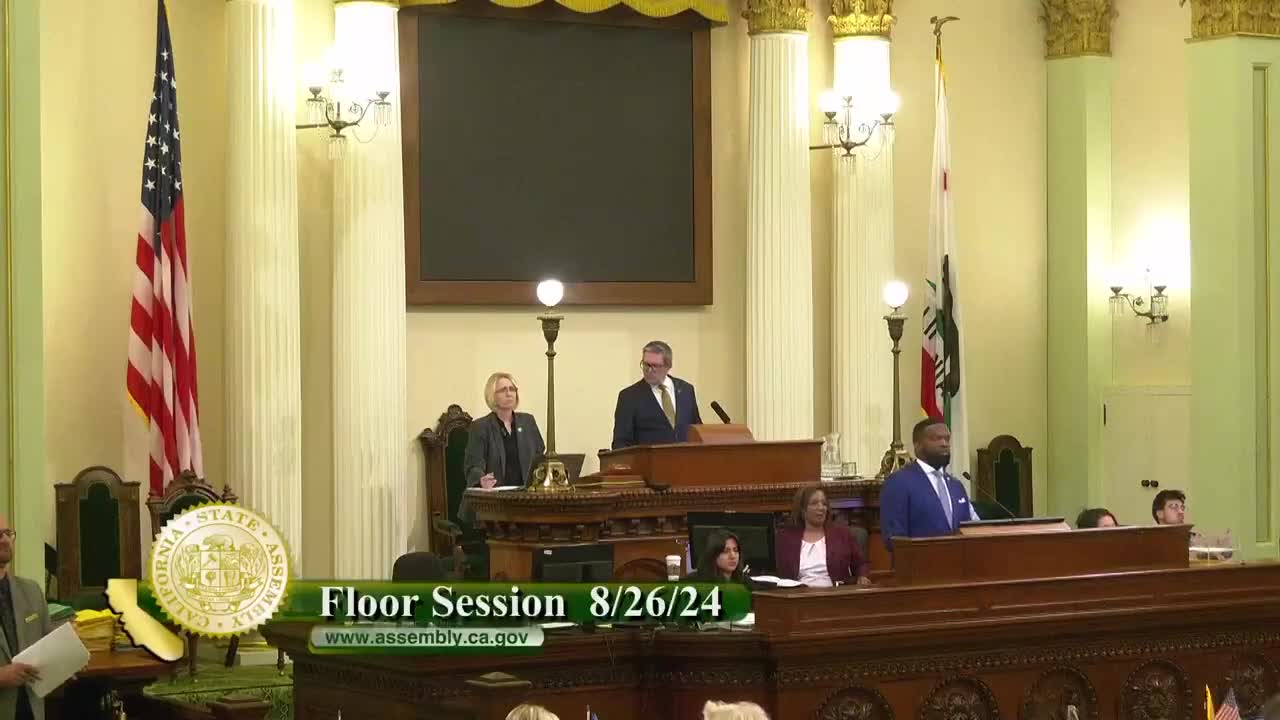 58SEC
Assembly Floor
 2MIN
Senate Floor
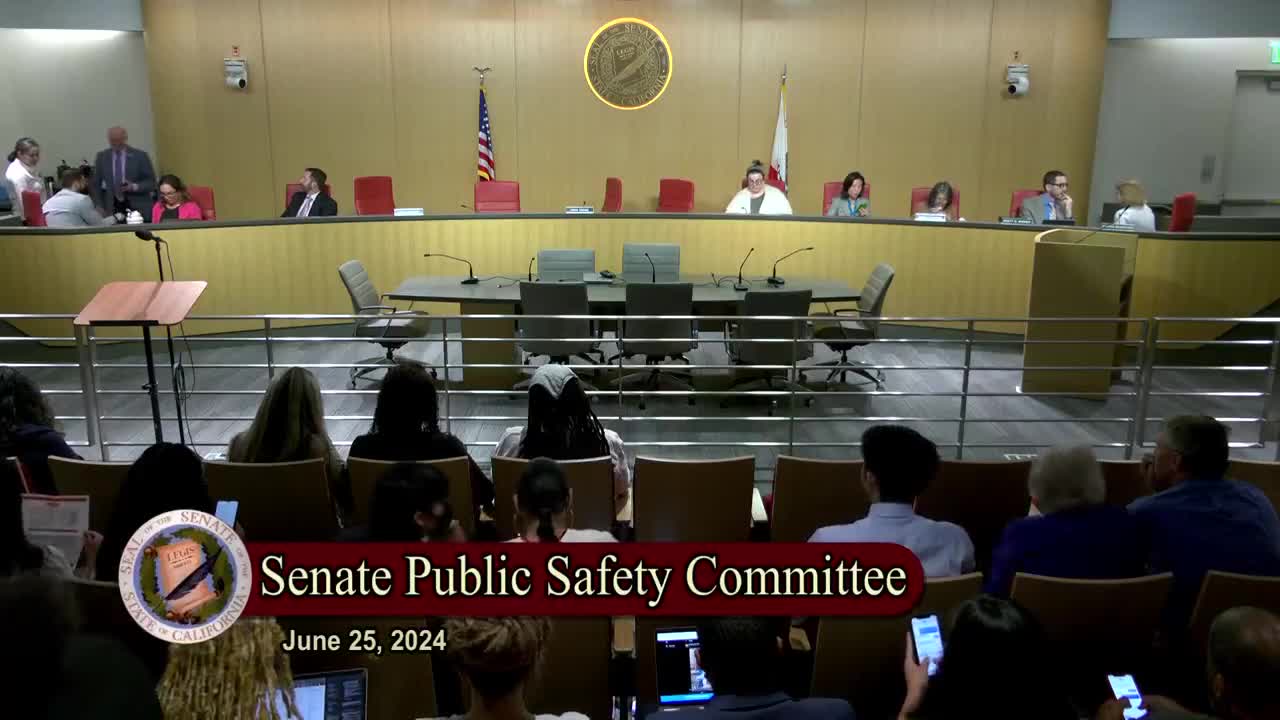 8MIN
Senate Standing Committee on Public Safety
 9MIN
Assembly Standing Committee on Public Safety
Bill Author

Bill Co-Author(s):