AB 2038: State parks: outdoor equity programs.
- Session Year: 2023-2024
- House: Assembly
- Latest Version Date: 2024-09-03
Current Status:
Failed
(2024-09-22: Vetoed by Governor.)
Introduced
In Committee
First Chamber
In Committee
Second Chamber
Enacted
Existing law requires the Director of Parks and Recreation to establish the Outdoor Equity Grants Program to increase the ability of underserved and at-risk populations to participate in outdoor environmental educational experiences at state parks and other public lands where outdoor environmental education programs take place. Existing law authorizes the Department of Parks and Recreation to enter into community access agreements with eligible entities to provide interpretive services and visitor services at units of the state parks system to underserved park users, as provided.
This bill would provide that use of a state park by an eligible entity, as defined, to provide outdoor equity programs, as defined, shall be considered an allowable public use of a unit of the state park system, and would require the department or an entity managing a unit of the state park system to treat this use in the same manner as general public use of the state park, as provided. The bill would, for planning purposes, require the eligible entity to notify the department or an entity managing the unit of the state park system at least 15 calendar days in advance of the planned activity and communicate any consequential changes to the planned activity or location before the start of the outdoor equity program.
Existing law requires the Director of Parks and Recreation to establish the Outdoor Equity Grants Program to increase the ability of underserved and at-risk populations to participate in outdoor environmental educational experiences at state parks and other public lands where outdoor environmental education programs take place. Existing law authorizes the Department of Parks and Recreation to enter into community access agreements with eligible entities to provide interpretive services and visitor services at units of the state parks system to underserved park users, as provided.
This bill would provide that use of a state park by an eligible entity, as defined, to provide outdoor equity programs, as defined, shall be considered an allowable public use of a unit of the state park system, and would require the department or an entity managing a unit of the state park system to treat this use in the same manner as general public use of the state park, as provided.
Existing law requires the Director of Parks and Recreation to establish the Outdoor Equity Grants Program to increase the ability of underserved and at-risk populations to participate in outdoor environmental educational experiences at state parks and other public lands where outdoor environmental education programs take place. Existing law authorizes the director to accept private funds to support the grant program and requires private funds donated for the grant program and funds appropriated by the Legislature for purposes of the grant program to be deposited into the California Outdoor Equity Account. Existing law requires that there be adequate donations or funds deposited in the account before the Department of Parks and Recreation commences program development activities for the grant program. Existing law prohibits the department from allocating general fund moneys appropriated by the Legislature to the department in the annual Budget Act for purposes of the grant program, except as authorized by the Legislature.This bill would make nonsubstantive changes to the provisions related to the prohibition and the commencement of program development activities.Existing law requires the Director of Parks and Recreation to establish the Outdoor Equity Grants Program to increase the ability of underserved and at-risk populations to participate in outdoor environmental educational experiences at state parks and other public lands where outdoor environmental education programs take place. Existing law authorizes the director to accept private funds to support the grant program and requires private funds donated for the grant program and funds appropriated by the Legislature for purposes of the grant program to be deposited into the California Outdoor Equity Account. Existing law requires that there be adequate donations or funds deposited in the account before the Department of Parks and Recreation commences program development activities for the grant program. Existing law prohibits the department from allocating general fund moneys appropriated by the Legislature to the department in the annual Budget Act for purposes of the grant program, except as authorized by the Legislature.
This bill would make nonsubstantive changes to the provisions related to the prohibition and the commencement of program development activities.
For purposes of this article, the following terms apply:
(a)Eligible entity means any of the following:
(1)A qualified nonprofit public benefit corporation organized pursuant to Part 2 (commencing with Section 5110) of Division 2 of Title 1 of the Corporations Code.
(2)A federally recognized Native American tribe.
(3)A California Native American tribe listed on the California Tribal Consultation List maintained by the Native American Heritage Commission.
(4)A certified community conservation corps, as defined in Section 14507.5.
(b)Outdoor equity programs means noncommercial activities organized by an eligible entity that provide underserved park users with outdoor experiences at state parks and other public lands and waters of the state.
(c)Underserved park users means populations who face barriers in accessing and using park services, and includes, but is not limited to, populations underserved because of geographic location, socioeconomic status, religion, special needs, such as language barriers, disabilities, immigration status, age, sexual orientation, or gender identity, and any other population determined to be underserved by the director.
5056.5.(a)Use of a state park by an eligible entity to provide outdoor equity programs to no more than 30 participating park visitors at once shall be considered an allowable public use of a unit of the state park system, and shall be treated by the department or an entity managing a unit of the state park system in the same manner as general public use of the state park, provided that the department or an entity managing a unit of the state park system does not confer on the eligible entity any benefit not conferred on the general public. For planning purposes, the eligible entity shall notify the department or an entity managing a unit of the state park system at least 15 calendar days in advance of the planned activity and communicate any consequential changes to the planned activity or location before the start of the outdoor equity program.
(b)Nothing in this section shall prevent the department from requiring a special event permit and any applicable fees of an eligible entity that, as part of providing an outdoor equity program, plans to engage in activities that typically require a special event permit, including, but not limited to, the use of amplified music, a public address system, a band, or a disc jockey, or the sale of food or other items.
(c)Nothing in this section shall prevent the department from entering into a community access agreement with an eligible entity pursuant to Section 5009.5.
For purposes of this article, the following definitions terms apply:
(a)Eligible entity means any of the following:
(1)A qualified nonprofit public benefit corporation organized pursuant to Part 2 (commencing with Section 5110) of Division 2 of Title 1 of the Corporations Code.
(2)A federally recognized Native American tribe.
(3)A California Native American tribe listed on the California Tribal Consultation List maintained by the Native American Heritage Commission.
(4)A certified community conservation corps, as defined in Section 14507.5.
(b)Outdoor equity programs means noncommercial activities organized by an eligible entity that provide underserved park users with outdoor experiences at state parks and other public lands and waters of the state.
(c)Underserved park users means populations who face barriers in accessing and using park services, and includes, but is not limited to, populations underserved because of geographic location, socioeconomic status, religion, special needs, such as language barriers, disabilities, immigration status, age, sexual orientation, or gender identity, and any other population determined to be underserved by the director.
5056.5.(a)Use of a state park by an eligible entity to provide outdoor equity programs to no more than 30 participating park visitors at once shall be considered an allowable public use of a unit of the state park system, and shall be treated by the department or an entity managing a unit of the state park system in the same manner as general public use of the state park, provided that the department or an entity managing a unit of the state park system does not confer on the eligible entity any benefit not conferred on the general public. For planning purposes, the eligible entity shall notify the department or an entity managing a unit of the state park system at least 15 calendar days in advance of the planned activity and communicate any consequential changes to the planned activity or location before the start of the outdoor equity program.
(b)Nothing in this section shall prevent the department from requiring a special event permit and any applicable fees of an eligible entity that, as part of providing an outdoor equity program, plans to engage in activities that typically require a special event permit, including, but not limited to, the use of amplified music, a public address system, a band, or a disc jockey, or the sale of food or other items.
(c)Nothing in this section shall prevent the department from entering into a community access agreement with an eligible entity pursuant to Section 5009.5.
For purposes of this article, the following definitions apply:
(a)Eligible entity means any of the following:
(1)A qualified nonprofit public benefit corporation organized pursuant to Part 2 (commencing with Section 5110) of Division 2 of Title 1 of the Corporations Code.
(2)A federally recognized Native American tribe.
(3)A California Native American tribe listed on the California Tribal Consultation List maintained by the Native American Heritage Commission.
(4)A certified community conservation corps, as defined in Section 14507.5.
(b)Outdoor equity programs means noncommercial activities organized by an eligible entity that provide underserved park users with outdoor experiences at state parks and other public lands and waters of the state.
(c)Underserved park users means populations who face barriers in accessing and using park services, and includes, but is not limited to, populations underserved because of geographic location, socioeconomic status, religion, special needs, such as language barriers, disabilities, immigration status, age, sexual orientation, or gender identity, and any other population determined to be underserved by the director.
5056.5.(a)Use of a state park by an eligible entity to provide outdoor equity programs to no more than 30 participating park visitors at once shall be considered an allowable public use of a unit of the state park system, and shall be treated by the department or an entity managing a unit of the state park system in the same manner as general public use of the state park, provided that the department or an entity managing a unit of the state park system does not confer on the eligible entity any benefit not conferred on the general public. For planning purposes, the eligible entity shall notify the department or an entity managing a unit of the state park system at least 15 calendar days in advance of the planned activity and communicate any consequential changes to the planned activity or location before the start of the outdoor equity program.
(b)Nothing in this section shall prevent the department from requiring a special event permit and any applicable fees of an eligible entity that, as part of providing an outdoor equity program, plans to engage in activities that typically require a special event permit, including, but not limited to, the use of amplified music, a public address system, a band, or a disc jockey, or the sale of food or other items.
(b)(c)Nothing in this section shall prevent the department from entering into a community access agreement with an eligible entity pursuant to Section 5009.5.
For purposes of this article, the following definitions apply:
(a)Eligible entity means any of the following:
(1)A qualified nonprofit public benefit corporation organized pursuant to Part 2 (commencing with Section 5110) of Division 2 of Title 1 of the Corporations Code.
(2)A federally recognized Native American tribe.
(3)A California Native American tribe listed on the California Tribal Consultation List maintained by the Native American Heritage Commission.
(4)A certified community conservation corps, as defined in Section 14507.5.
(b)Outdoor equity programs means noncommercial activities organized by an eligible entity that provide underserved park users with outdoor experiences at state parks and other public lands and waters of the state.
(c)Underserved park users means populations who face barriers in accessing and using park services, and includes, but is not limited to, populations underserved because of geographic location, socioeconomic status, religion, special needs, such as language barriers, disabilities, immigration status, or age, sexual orientation, or gender identity, and any other population determined to be underserved by the director.
5056.5.(a)Use of a state park by an eligible entity to provide outdoor equity programs to no more than 30 participating park visitors at once shall be considered an allowable public use of a unit of the state park system, and shall be treated by the department or an entity managing a unit of the state park system in the same manner as general public use of the state park, provided that the department or an entity managing a unit of the state park system does not confer on the eligible entity any benefit not conferred on the general public, except as described in subdivision (b). public. For planning purposes, the eligible entity shall notify the department or an entity managing a unit of the state park system at least 15 calendar days in advance of the planned activity and communicate any consequential changes to the planned activity or location before the start of the outdoor equity program.
(b)Nothing in this section shall prevent the department from providing additional benefits to an eligible entity pursuant to Section 5009.5 relating to community access agreements. entering into a community access agreement with an eligible entity pursuant to Section 5009.5.
For purposes of this article, the following definitions apply:
(a)Eligible entity means any of the following:
(1)A qualified nonprofit public benefit corporation organized pursuant to Part 2 (commencing with Section 5110) of Division 2 of Title 1 of the Corporations Code.
(2)A federally recognized Native American tribe.
(3)A California Native American tribe listed on the California Tribal Consultation List maintained by the Native American Heritage Commission.
(4)A certified community conservation corps, as defined in Section 14507.5.
(b)Outdoor equity programs means noncommercial activities organized by an eligible entity that provide underserved park users with outdoor experiences at state parks and other public lands and waters of the state.
(c)Underserved park users means populations who face barriers in accessing and using park services, and includes, but is not limited to, populations underserved because of geographic location, socioeconomic status, religion, special needs, such as language barriers, disabilities, immigration status, or age, sexual orientation, gender identity, and any other population determined to be underserved by the director.
5056.5.(a)Use of a state park by an eligible entity to provide outdoor equity programs to no more than 30 participating park visitors at once shall be considered an allowable public use of a unit of the state park system, and shall be treated by the department or an entity managing a unit of the state park system in the same manner as general public use of the state park, provided that the department or an entity managing a unit of the state park system does not confer on the eligible entity any benefit not conferred on the general public, except as described in subdivision (b).
(b)Nothing in this section shall prevent the department from providing additional benefits to an eligible entity pursuant to Section 5009.5 relating to community access agreements.
For purposes of this article, the following definitions apply:
(a)Eligible entity means any of the following:
(1)A qualified nonprofit public benefit corporation organized pursuant to Part 2 (commencing with Section 5110) of Division 2 of Title 1 of the Corporations Code.
(2)A federally recognized Native American tribe.
(3)A California Native American tribe listed on the California Tribal Consultation List maintained by the Native American Heritage Commission.
(b)Outdoor equity programs means noncommercial activities organized by an eligible entity that provide underserved park users with outdoor experiences at state parks and other public lands and waters of the state.
(c)Underserved park users means populations who face barriers in accessing and using park services, and includes, but is not limited to, populations underserved because of geographic location, socioeconomic status, religion, special needs, such as language barriers, disabilities, immigration status, or age, sexual orientation, gender identity, and any other population determined to be underserved by the director.
5056.5.(a)Use of a state park by an eligible entity to provide outdoor equity programs to no more than 30 participating park visitors at once shall be considered an allowable public use of a unit of the state park system, and shall be treated by the department or an entity managing a unit of the state park system in the same manner as general public use of the state park, provided that the department or an entity managing a unit of the state park system does not confer on the eligible entity any benefit not conferred on the general public, except as described in subdivision (b).
(b)Nothing in this section shall prevent the department from providing additional benefits to an eligible entity pursuant to Section 5009.5 relating to community access agreements.
SECTION 1.Section 5090.76 of the Public Resources Code is amended to read:5090.76.(a)Except as authorized by the Legislature, the department shall not allocate for the purposes of the grant program general fund moneys appropriated by the Legislature to the department in the annual Budget Act.(b)The director may accept private donations made for the support of the grant program. The director may solicit and accept private funding to help offset the costs of the grant program.(c)All moneys received pursuant to this section or appropriated by the Legislature for the purpose of the grant program shall be deposited in the California Outdoor Equity Account, which is hereby created within the State Parks and Recreation Fund.(d)Before commencing program development activities for the grant program, adequate donations or funds shall be deposited into the California Outdoor Equity Account. This amount shall be sufficient to administer the grant program and provide grant awards.(a)Except as authorized by the Legislature, the department shall not allocate for the purposes of the grant program any general fund moneys appropriated by the Legislature to the department in the annual Budget Act.
(b)The director may accept private donations made for the support of the grant program. The director may solicit and accept private funding to help offset the costs of the grant program.
(c)All moneys received pursuant to this section or appropriated by the Legislature for the purpose of the grant program shall be deposited in the California Outdoor Equity Account, which is hereby created within the State Parks and Recreation Fund.
(d)Before commencing any program development activities for the grant program, adequate donations or funds shall be deposited into the California Outdoor Equity Account. This amount shall be sufficient to administer the grant program and provide grant awards.
|
Date
|
Status
|
|---|---|
| Sep 22, 2024 | Vetoed by Governor. |
| Sep 11, 2024 | Enrolled and presented to the Governor at 4 p.m. |
| Aug 29, 2024 | Senate amendments concurred in. To Engrossing and Enrolling. (Ayes 76. Noes 0.). |
| Aug 29, 2024 | Assembly Rule 77 suspended. |
| Aug 28, 2024 | In Assembly. Concurrence in Senate amendments pending. May be considered on or after August 30 pursuant to Assembly Rule 77. |
| Aug 28, 2024 | Read third time. Passed. Ordered to the Assembly. (Ayes 39. Noes 0.). |
| Aug 23, 2024 | Ordered to special consent calendar. |
| Aug 19, 2024 | Read second time. Ordered to third reading. |
| Aug 15, 2024 | From committee: Do pass. (Ayes 7. Noes 0.) (August 15). |
| Jul 1, 2024 | In committee: Referred to suspense file. |
| Jun 24, 2024 | From committee chair, with author's amendments: Amend, and re-refer to committee. Read second time, amended, and re-referred to Com. on APPR. |
| Jun 18, 2024 | From committee: Do pass and re-refer to Com. on APPR. (Ayes 11. Noes 0.) (June 17). Re-referred to Com. on APPR. |
| Jun 5, 2024 | Referred to Com. on N.R. & W. |
| May 23, 2024 | In Senate. Read first time. To Com. on RLS. for assignment. |
| May 22, 2024 | Read third time. Passed. Ordered to the Senate. (Ayes 70. Noes 0. Page 5538.) |
| May 21, 2024 | Read second time. Ordered to third reading. |
| May 20, 2024 | Read second time and amended. Ordered returned to second reading. |
| May 20, 2024 | From committee: Amend, and do pass as amended. (Ayes 11. Noes 0.) (May 16). |
| May 8, 2024 | In committee: Set, first hearing. Referred to APPR. suspense file. |
| Apr 30, 2024 | Re-referred to Com. on APPR. |
| Apr 29, 2024 | Read second time and amended. |
| Apr 25, 2024 | From committee: Amend, and do pass as amended and re-refer to Com. on APPR. (Ayes 13. Noes 0.) (April 23). |
| Apr 9, 2024 | Re-referred to Com. on W., P., & W. |
| Apr 8, 2024 | From committee chair, with author's amendments: Amend, and re-refer to Com. on W., P., & W. Read second time and amended. |
| Mar 6, 2024 | Re-referred to Com. on W., P., & W. |
| Mar 4, 2024 | Referred to Com. on W., P., & W. |
| Mar 4, 2024 | From committee chair, with author's amendments: Amend, and re-refer to Com. on W., P., & W. Read second time and amended. |
| Feb 2, 2024 | From printer. May be heard in committee March 3. |
| Feb 1, 2024 | Read first time. To print. |
|
Date
|
Description
|
Location
|
Votes
|
|
|---|---|---|---|---|
| Aug 29, 2024 | AB 2038 Quirk-Silva Concurrence in Senate Amendments | Assembly Floor |
Passed |
|
| Aug 28, 2024 | Special Consent AB2038 Quirk-Silva et al. By Blakespear | Senate Floor |
Passed |
|
| Aug 15, 2024 | Do pass | Senate Standing Committee on Appropriations |
Passed |
|
| Jul 1, 2024 | Placed on suspense file | Senate Standing Committee on Appropriations |
Passed |
|
| Jun 17, 2024 | Do pass, but first be re-referred to the Committee on [Appropriations] | Senate Standing Committee on Natural Resources and Water |
Passed |
|
| May 22, 2024 | AB 2038 Quirk-Silva Assembly Third Reading | Assembly Floor |
Passed |
|
| May 16, 2024 | Do pass as amended. | Assembly Standing Committee on Appropriations |
Passed |
|
| Apr 23, 2024 | Do pass as amended and be re-referred to the Committee on [Appropriations] | Assembly Standing Committee on Water, Parks, and Wildlife |
Passed |
This list shows positions taken on this bill by organizations on the date displayed, which is linked to the original source.
Positions by individuals are not included.
|
Organization
|
Position
|
Date
|
|---|---|---|
| Azul | ** Support | |
| Black.surfers | ** Support | |
| California Association Of Local Conservation Corps | ** Support | |
| California Coastal Protection Network | ** Support | |
| California Mountain Biking Coalition | ** Support | |
| California Outdoor Recreation Partnership | ** Support | |
| California Park & Recreation Society | ** Support | |
| Camp Ocean Pines, INC | ** Support | |
| Casa De Amistad | ** Support | |
| Center For Biological Diversity | ** Support | |
| Central Coast State Parks Association | ** Support | |
| City Surf Project | ** Support | |
| Crystal Cove Conservancy | ** Support | |
| Earthroots Field School | ** Support | |
| Environment California | * Support | Jun 17, 2024 |
| Environmental Action Committee of West Marin | ** Support | |
| Environmental Protection Information Center | ** Support | |
| Environmental Traveling Companions | ** Support | |
| Exploring New Horizons Outdoor Schools | ** Support | |
| Friends of Friendship Park | ** Support | |
| Groundswell Community Project | ** Support | |
| Hipcamp, INC. | ** Support | |
| Institute for Public Strategies | ** Support | |
| Intersectional Environmentalist | ** Support | |
| Jewish Family Service of San Diego | ** Support | |
| Justice Outside | ** Support | |
| Latino Outdoors | ** Support | |
| Lily of The Valley Emmanuel Church of Jesus Christ | ** Support | |
| Los Angeles Neighborhood Land Trust | ** Support | |
| Los Padres ForestWatch | ** Support | |
| National Marine Manufacturers Association | ** Support | |
| Native Like Water - One World Bridge | ** Support | |
| Nature Collective | ** Support | |
| Nature For All | ** Support | |
| O'Neill Sea Odyssey | ** Support | |
| Oakland Parks and Recreation Foundation | ** Support | |
| OC Habitats | ** Support | |
| One Cool Earth | ** Support | |
| Outdoor Afro | ** Support | |
| Outdoor Outreach | ** Support | |
| Outward Bound Adventures | ** Support | |
| Pathloom | ** Support | |
| Refuge Armona | ** Support | |
| REI Co-op | ** Support | |
| Resource Renewal Institute | ** Support | |
| Salted Roots | ** Support | |
| San Diego Audubon Society | ** Support | |
| San Diego Coastkeeper | ** Support | |
| San Diego for Every Child | ** Support | |
| San Dieguito River Conservancy | ** Support | |
| Santa Barbara County Trails Council | ** Support | |
| Santa Barbara Maritime Museum | ** Support | |
| Save Mount Diablo | ** Support | |
| Surfrider Foundation | ** Support | |
| Ten Strands | ** Support | |
| The Wilderness Society | ** Support | |
| Treepeople | ** Support | |
| Trust for Public Land | ** Support | |
| UC Berkeley Student Environmental Resource Center | ** Support | |
| Un Mar De Colores | ** Support | |
| Urban Surf 4 Kids | ** Support | |
| VF Corporation | ** Support | |
| Wildcoast | ** Support | |
| Yes Nature to Neighborhoods | ** Support | |
| YMCA of San Diego County | ** Support | |
| YMCA of San Francisco | ** Support |
GOVERNOR'S VETO
GV Bill Id:AB 2038
Author:(Quirk-Silva)
As Enrolled Ver:September 3, 2024
2/3 vote
SUMMARY
Requires the Department of Parks and Recreation (State Parks) to treat the use of a state park by an eligible entity providing outdoor equity programs to up to 30 participants in the same manner as the use of the state park by the general public.
Governor's Veto Message
"This bill would prohibit [State Parks] from requiring special event permits, and associated fees, for outdoor recreation programming within the State Park System for groups of up to 30 people, as specified.
This bill is premature given the legislation I signed last year, Assembly Bill 1150 (Committee on Water, Parks, and Wildlife, 2023), which expanded and enhanced access to the State Park System for underserved park users, including free and reduced-cost access through the use of 'community access agreements' with nonprofit organizations.
COMMENTS
Access to parks and open/green spaces provides numerous benefits to the community, environment, and economy. The American Public Health Association's policy statement on Improving Health and Wellness through Access to Nature states: "People of all ages and abilities enjoy higher levels of health and well-being when they have nature nearby in parks, gardens, greenways, naturalized schoolyards and playgrounds, and natural landscaping around homes and workplaces. Access to nature has been related to lower levels of mortality and illness, higher levels of outdoor physical activity, restoration from stress, a greater sense of well-being, and greater social capital." "Access" embodies both physical (e.g., distance to a park) and social (e.g., safety) aspects and varies widely throughout California. Historical and continuing inequities, lack of access to transportation, lack of safety, and physical condition/maintenance of spaces are just some of the barriers to parks and open space access.
Recent access initiatives. Numerous efforts have been made in recent years to increase access to parks and open spaces. Many of these efforts rely on grants to nonprofit organizations and other qualified entities that offer outdoor experiences to underserved populations. For example, the Outdoor Equity Grants Program at State Parks is intended to increase the ability of underserved and at-risk populations to participate in outdoor environmental educational experiences at state parks and other public lands where outdoor environmental education programs take place. State Parks announced $57 million in grant funding to 125 communities in May 2022, and made $50 million for a second round of funding available in December 2023. In November 2023, the Youth Community Access Program at the Natural Resources Agency (NRA), funded by Proposition 64, and provided $18 million in funding to support 71 projects that expand access to parks, nature, and places of cultural and historic significance for youth in underserved communities.
Special Event Permits. Currently, community-based nonprofit organizations seeking to provide programming on State Parks property must typically apply for a special event permit. State Parks requires a completed special event permit and a nonrefundable $25 fee at least 30 days before an event for a permit to be processed. If an application is filed less than 30 days prior to the event, the filing fee may be increased up to $100. For events that require exclusive use areas, impact normal park use, and involve certain activities, State Parks assesses an activity fee. Activity fees vary depending on the event size, the number of participants, duration, location, staffing needs, and resource impacts. If there are any special requests or requirements that involve the use of personnel, State Parks charges the permittee according to the number of hours and staff classification involved.
Community Access Agreements. AB 1150 (Committee on Water, Parks, and Wildlife), Chapter 831, Statutes of 2023, created a process by which eligible entities, similarly defined by this bill, may enter into community access agreements with State Parks to provide interpretive services (activities and programs that help park users connect with the natural, cultural, and historical resources of the park system) to underserved park users. These community access agreements are a mechanism by which State Parks can coordinate with eligible entities to potentially provide personnel services, space, equipment, and free- or reduced-cost access to participants. Community access agreements are currently in the pilot stage with one being conducted in Northern California and another in Southern California.
According to the Author
"California is known around the world for its iconic and beautiful public state parks and beaches. Our outdoor spaces offer numerous benefits like better public health, recreational opportunities, youth development, and cultural connections. [This bill] ensures that community-based nonprofits and tribes offering outdoor programs can access state lands without extra fees or permits. This supports our commitment to inclusive outdoor access, supporting underserved communities, and follows the state's Outdoors for All Strategy."
Arguments in Support
Numerous environmental and recreation organizations write in support. According to the sponsor, Outdoor Outreach, this bill "would create a more equitable, streamlined process to support organizations that serve as trusted connectors to the outdoors for disadvantaged communities." Further, the sponsor maintains that this bill "strengthens California's commitment to expanding equitable access outlined in the state's 30x30 Initiative, the NRA's Outdoors for All Strategy, and California State Parks' Path Forward 5-Year Strategic Plan."
Arguments in Opposition
None on file.
FISCAL COMMENTS
According to the Senate Appropriations Committee, this bill has "unknown but potentially significant ongoing costs and forgone revenue, likely in excess of $150,000 annually (State Parks and Recreation Fund [SPRF]), due to State Parks being unable to require special event permits and associated fees as specified by this bill."
VOTES
ASM WATER, PARKS, AND WILDLIFE: 13-0-2
YES: Papan, Addis, Alanis, Alvarez, Bennett, Bonta, Gallagher, Davies, Hart, Luz Rivas, Schiavo, Villapudua, Weber
ABS, ABST OR NV: Mathis, Garcia
ASM APPROPRIATIONS: 11-0-4
YES: Wicks, Arambula, Bryan, Calderon, Wendy Carrillo, Mike Fong, Grayson, Haney, Hart, Pellerin, Villapudua
ABS, ABST OR NV: Sanchez, Dixon, Jim Patterson, Ta
ASSEMBLY FLOOR: 70-0-10
YES: Addis, Aguiar-Curry, Alanis, Alvarez, Arambula, Bains, Bauer-Kahan, Bennett, Berman, Boerner, Bonta, Bryan, Juan Carrillo, Wendy Carrillo, Chen, Connolly, Davies, Dixon, Flora, Mike Fong, Vince Fong, Gabriel, Garcia, Gipson, Grayson, Haney, Hart, Hoover, Irwin, Jackson, Jones-Sawyer, Kalra, Lackey, Lee, Low, Lowenthal, Maienschein, McCarty, McKinnor, Muratsuchi, Stephanie Nguyen, Ortega, Pacheco, Papan, Jim Patterson, Pellerin, Petrie-Norris, Quirk-Silva, Ramos, Rendon, Reyes, Rodriguez, Blanca Rubio, Sanchez, Santiago, Schiavo, Soria, Ta, Ting, Valencia, Villapudua, Waldron, Wallis, Ward, Weber, Wicks, Wilson, Wood, Zbur, Robert Rivas
ABS, ABST OR NV: Calderon, Cervantes, Megan Dahle, Essayli, Friedman, Gallagher, Holden, Mathis, Joe Patterson, Luz Rivas
SENATE FLOOR: 39-0-1
YES: Allen, Archuleta, Ashby, Atkins, Becker, Blakespear, Bradford, Caballero, Cortese, Dahle, Dodd, Durazo, Eggman, Glazer, Gonzalez, Grove, Hurtado, Jones, Laird, Limón, McGuire, Menjivar, Min, Newman, Nguyen, Niello, Ochoa Bogh, Padilla, Portantino, Roth, Rubio, Seyarto, Skinner, Smallwood-Cuevas, Stern, Umberg, Wahab, Wiener, Wilk
ABS, ABST OR NV: Alvarado-Gil
UPDATED
VERSION: September 3, 2024
CONSULTANT: Stephanie Mitchell / W., P., & W. / (916) 319-2096 FN: 0005111
CONCURRENCE IN SENATE AMENDMENTS
CSA1 Bill Id:AB 2038
Author:(Quirk-Silva)
As Amended Ver:June 24, 2024
Majority vote
SUMMARY
Requires the Department of Parks and Recreation (State Parks) to treat the use of a state park by an eligible entity providing outdoor equity programs to up to 30 participants in the same manner as the use of the state park by the general public.
Senate Amendments
Makes technical and clarifying changes.
COMMENTS
Access to parks and open/green spaces provides numerous benefits to the community, environment, and economy. The American Public Health Association's policy statement on Improving Health and Wellness through Access to Nature states: "People of all ages and abilities enjoy higher levels of health and well-being when they have nature nearby in parks, gardens, greenways, naturalized schoolyards and playgrounds, and natural landscaping around homes and workplaces. Access to nature has been related to lower levels of mortality and illness, higher levels of outdoor physical activity, restoration from stress, a greater sense of well-being, and greater social capital." "Access" embodies both physical (e.g., distance to a park) and social (e.g., safety) aspects and varies widely throughout California. Historical and continuing inequities, lack of access to transportation, lack of safety, and physical condition/maintenance of spaces are just some of the barriers to parks and open space access.
Recent access initiatives. Numerous efforts have been made in recent years to increase access to parks and open spaces. Many of these efforts rely on grants to nonprofit organizations and other qualified entities that offer outdoor experiences to underserved populations. For example, the Outdoor Equity Grants Program at State Parks is intended to increase the ability of underserved and at-risk populations to participate in outdoor environmental educational experiences at state parks and other public lands where outdoor environmental education programs take place. State Parks announced $57 million in grant funding to 125 communities in May 2022, and made $50 million for a second round of funding available in December 2023. In November 2023, the Youth Community Access Program at the Natural Resources Agency (NRA), funded by Proposition 64, and provided $18 million in funding to support 71 projects that expand access to parks, nature, and places of cultural and historic significance for youth in underserved communities.
Special Event Permits. Currently, community-based nonprofit organizations seeking to provide programming on State Parks property must typically apply for a special event permit. State Parks requires a completed special event permit and a nonrefundable $25 fee at least 30 days before an event for a permit to be processed. If an application is filed less than 30 days prior to the event, the filing fee may be increased up to $100. For events that require exclusive use areas, impact normal park use, and involve certain activities, State Parks assesses an activity fee. Activity fees vary depending on the event size, the number of participants, duration, location, staffing needs, and resource impacts. If there are any special requests or requirements that involve the use of personnel, State Parks charges the permittee according to the number of hours and staff classification involved.
Community Access Agreements. AB 1150 (Committee on Water, Parks, and Wildlife), Chapter 831, Statutes of 2023, created a process by which eligible entities, similarly defined by this bill, may enter into community access agreements with State Parks to provide interpretive services (activities and programs that help park users connect with the natural, cultural, and historical resources of the park system) to underserved park users. These community access agreements are a mechanism by which State Parks can coordinate with eligible entities to potentially provide personnel services, space, equipment, and free- or reduced-cost access to participants. Community access agreements are currently in the pilot stage with one being conducted in Northern California and another in Southern California.
According to the Author
"California is known around the world for its iconic and beautiful public state parks and beaches. Our outdoor spaces offer numerous benefits like better public health, recreational opportunities, youth development, and cultural connections. [This bill] ensures that community-based nonprofits and tribes offering outdoor programs can access state lands without extra fees or permits. This supports our commitment to inclusive outdoor access, supporting underserved communities, and follows the state's Outdoors for All Strategy."
Arguments in Support
Numerous environmental and recreation organizations write in support. According to the sponsor, Outdoor Outreach, this bill "would create a more equitable, streamlined process to support organizations that serve as trusted connectors to the outdoors for disadvantaged communities." Further, the sponsor maintains that this bill "strengthens California's commitment to expanding equitable access outlined in the state's 30x30 Initiative, the NRA's Outdoors for All Strategy, and California State Parks' Path Forward 5-Year Strategic Plan."
Arguments in Opposition
None on file.
FISCAL COMMENTS
According to the Senate Appropriations Committee, this bill has "unknown but potentially significant ongoing costs and forgone revenue, likely in excess of $150,000 annually (State Parks and Recreation Fund [SPRF]), due to State Parks being unable to require special event permits and associated fees as specified by this bill."
VOTES:
ASM WATER, PARKS, AND WILDLIFE: 13-0-2
YES: Papan, Addis, Alanis, Alvarez, Bennett, Bonta, Gallagher, Davies, Hart, Luz Rivas, Schiavo, Villapudua, Weber
ABS, ABST OR NV: Mathis, Garcia
ASM APPROPRIATIONS: 11-0-4
YES: Wicks, Arambula, Bryan, Calderon, Wendy Carrillo, Mike Fong, Grayson, Haney, Hart, Pellerin, Villapudua
ABS, ABST OR NV: Sanchez, Dixon, Jim Patterson, Ta
ASSEMBLY FLOOR: 70-0-10
YES: Addis, Aguiar-Curry, Alanis, Alvarez, Arambula, Bains, Bauer-Kahan, Bennett, Berman, Boerner, Bonta, Bryan, Juan Carrillo, Wendy Carrillo, Chen, Connolly, Davies, Dixon, Flora, Mike Fong, Vince Fong, Gabriel, Garcia, Gipson, Grayson, Haney, Hart, Hoover, Irwin, Jackson, Jones-Sawyer, Kalra, Lackey, Lee, Low, Lowenthal, Maienschein, McCarty, McKinnor, Muratsuchi, Stephanie Nguyen, Ortega, Pacheco, Papan, Jim Patterson, Pellerin, Petrie-Norris, Quirk-Silva, Ramos, Rendon, Reyes, Rodriguez, Blanca Rubio, Sanchez, Santiago, Schiavo, Soria, Ta, Ting, Valencia, Villapudua, Waldron, Wallis, Ward, Weber, Wicks, Wilson, Wood, Zbur, Robert Rivas
ABS, ABST OR NV: Calderon, Cervantes, Megan Dahle, Essayli, Friedman, Gallagher, Holden, Mathis, Joe Patterson, Luz Rivas
SENATE FLOOR: 39-0-1
YES: Allen, Archuleta, Ashby, Atkins, Becker, Blakespear, Bradford, Caballero, Cortese, Dahle, Dodd, Durazo, Eggman, Glazer, Gonzalez, Grove, Hurtado, Jones, Laird, Limón, McGuire, Menjivar, Min, Newman, Nguyen, Niello, Ochoa Bogh, Padilla, Portantino, Roth, Rubio, Seyarto, Skinner, Smallwood-Cuevas, Stern, Umberg, Wahab, Wiener, Wilk
ABS, ABST OR NV: Alvarado-Gil
UPDATED
VERSION: June 24, 2024
CONSULTANT: Stephanie Mitchell / W., P., & W. / (916) 319-2096 FN: 0004652
SENATE RULES COMMITTEE Office of Senate Floor Analyses (916) 651-1520 Fax: (916) 327-4478 | AB 2038 |
THIRD READING
Bill No: AB 2038
Author: Quirk-Silva (D), et al.
Amended: 6/24/24 in Senate
Vote: 21
SENATE NATURAL RES. & WATER COMMITTEE: 11-0, 6/17/24
AYES: Min, Seyarto, Allen, Dahle, Eggman, Grove, Hurtado, Laird, Limón, Padilla, Stern
SENATE APPROPRIATIONS COMMITTEE: 7-0, 8/15/24
AYES: Caballero, Jones, Ashby, Becker, Bradford, Seyarto, Wahab
ASSEMBLY FLOOR: 70-0, 5/22/24 - See last page for vote
SUBJECT: State parks: outdoor equity programs
SOURCE: Outdoor Outreach
DIGEST:
This bill requires the Department of Parks and Recreation (State Parks or department) to treat the use of a state park by an eligible entity providing outdoor equity programs to up to 30 participating visitors at once in the same manner as the use of the park by the public.
ANALYSIS:
Existing law:
- Establishes the Equitable Outdoor Access Act, which declares that it is an established policy of the state to:
- Ensure that all Californians have equitable opportunities to safe and affordable access to nature and access to the benefits of nature.
- Maximize public access to public lands, including the state’s cultural and natural resources, in a sustainable manner, where appropriate, with a special emphasis on creating and promoting opportunities for people and communities that face disproportionate barriers to access, as specified.
- Prevent and minimize the intentional and unwarranted limitation of sustainable public access to public lands, as specified. (Public Resources Code (PRC) §1002)
- Directs all relevant state agencies, as specified, to consider and incorporate, as appropriate, the state policy in (1) when revising, adopting, or establishing policies, regulations, or grant criteria, or making expenditures, to the extent the policies, regulations, grant criteria, or expenditures are not in conflict with an appropriation. (PRC §1002)
- Establishes State Parks within the California Natural Resources Agency (CNRA). Vests State Parks with control of the state park system. State Parks is responsible for administering, protecting, developing, and interpreting the state park system for the use and enjoyment of the public, protecting this system from damage, and preserving the peace. (PRC §§501, 5001, 5003, and 5008)
- Authorizes State Parks, through January 1, 2029, and contingent upon the availability of State Parks’ resources, to enter into community access agreements with eligible entities to provide interpretive services and visitor services at units of the state parks system to underserved park users, as specified. (PRC §5090.75)
- Provides that an eligible entity that enters into a community access agreement shall deliver interpretive services and visitor services to underserved park users, as specified.
- Provides that a community access agreement may include free or reduced-cost access for the eligible entity and participating members of the public, as specified.
- Requires the State Parks director to establish the Outdoor Equity Grants Program to increase the ability of underserved and at-risk populations to participate in outdoor environmental educational experiences at state parks and other public lands where outdoor environmental education programs take place. (PRC §5090.75)
This bill:
- Classifies the use of a state park by an eligible entity, as defined, to provide outdoor equity programs, as defined, to up to 30 participating park visitors at once as an allowable public use of the state park.
- Requires State Parks or an entity managing a unit of the state park system (managing entity) to treat the use identified in (1) in the same manner as general public use of the state park, provided that State Parks or the managing entity does not confer on the eligible entity any benefit not conferred on the general public.
- Requires the eligible entity, for planning purposes, to notify State Parks or the managing entity at least 15 calendar days in advance of the planned activity and communicate any consequential changes to the planned activity or location before the start of the outdoor equity program.
- Clarifies that this bill does not prevent State Parks from:
- Requiring a special event permit and any applicable fees of an eligible entity that, as part of providing an outdoor equity program, plans to engage in activities that typically require a special event permit, such as the use of amplified music, a public address system, a band, or a disc jockey, or the sale of food or other items.
- Entering into a community access agreement with an eligible entity.
- Define terms, including ‘eligible entity,’ ‘outdoor equity programs,’ and ‘underserved park users’.
Comments
- Need for the bill. Typically, community-based nonprofit organizations seeking to provide programming on State Parks’ property must apply for a special event permit, which allows for a one-time event. This process can impose administrative costs on both State Parks and community partners and limit the frequency of activities, which, in turn, can limit the impact of programs. For example, according to the author, in the summer, a permit for a four-hour beach event for a group of 12 youth can run as high as $240, with events restricted to weekdays and a maximum frequency of three times per month. Further elaborating on the need for the bill, the sponsor, Outdoor Outreach, notes the following, “Across the state, there is a double standard in who gets to enjoy and benefit from park and beach access: If you are a kid whose family has a car, parents with free time and money to pay entrance fees, the appropriate equipment and the right information, you are free to enjoy any state park or beach you want, anytime it is open to the public. However, if you are a kid who lacks these things, and you need the support of a nonprofit or tribal-run outdoor education program to help you connect to public lands and waters, you are impacted by operational restrictions that limit your visits to certain days of the year, certain park units, and oftentimes the frequency of times you can visit. If you are a California kid in the second group, you are much more likely to be low-income, a person of color, impacted by health and educational disparities, and from an environmental justice and climate vulnerable community.”
- Circumvents State Parks’ authority. This bill limits State Parks’ authority to regulate access to state parks. Specifically, this bill allows eligible entities, as defined, to bring groups of up to 30 individuals into state parks without first securing a special event permit. While the eligible entity must provide advance notice to State Parks of the planned activity, the bill does not allow State Parks to deny or require changes to the planned activity. To be clear, State Parks could require changes that it would require of the general public, but it could not require changes specific to the group. It is conceivable that State Parks might encounter challenges in this process. In particular, it could be difficult to verify an entity’s eligibility. Further, the arrival of groups at certain times that are providing their own programming could conflict with programming offered by State Parks or its partners.
- Connection to AB 1150. Last year the Legislature passed AB 1150 (Committee on Water, Parks, and Wildlife, Chapter 831, Statutes of 2023) in an effort to make it easier and less costly for community-based organizations to provide access programming for underserved park users. AB 1150 establishes a process by which eligible entities, which are similarly defined in this bill, may enter into community access agreements with State Parks to provide certain services to underserved park users, including programs that facilitate opportunities for high-quality outdoor recreation for these users. These community access agreements are a mechanism by which State Parks can coordinate with eligible entities to potentially provide personnel services, space, equipment, and free or reduced-cost access to the participants. The community access agreements are currently in the pilot stage with one being conducted in northern California and another in southern California.
The sponsor provided the following chart, lightly edited for length, to compare the key differences between the two bills:
Issue | AB 1150 | AB 2038 |
Intent: | Gives State Parks the authority to provide benefits to community access partners beyond what is provided to the general public. | Creates a statewide standard by which small noncommercial outdoor equity programs are afforded the same basic access to state lands as the general public, without additional restrictions or permitting requirements. |
Direction to State Parks: | Permissive legislation. State Parks can choose to enter into community access agreements when it determines it has the resources to do so and that it is in the best interest of the department. | Requires State Parks to treat eligible entities running activities the same as the general public. |
Furthers equitable access by: | Supporting the development of formal agreements that allow State Parks to provide special benefits to community organizations or tribal groups, including staff resources, use of park facilities, exclusive access, and the waiving of fees. | Supporting outdoor equity programs by ensuring the same basic access as the general public. |
Fees: | Allows State Parks the discretion to waive fees (park entrance, parking, facility use, lifeguards, special use, etc.) | Does not waive any park entrance or special use fees that apply to general public access. |
Special Event Permits: | Formal community access agreements eliminate the need for Special Event Permits. | Special Event Permits are still required for any activities for which they are typically required (i.e. “the use of amplified music, a public address system, a band, or a disc jockey, or the sale of food or other items.”) but not required for activities approved for the general public. |
Burden to State Parks staff: | Significant staff time required in both planning and implementation, including identifying community partners, developing formal community access agreements, and implementing activities. | Would require some State Parks’ staff time to develop an internal procedure to identify eligible entities. In implementation, significant potential reduction in staff resources due to not having to review and process Special Event permit requests from eligible entities. |
A key question for the Legislature is whether to allow State Parks time to implement the community access program in an effort to improve access before circumventing its authority via this bill. The author and sponsor contend that this bill is complementary to AB 1150. In particular, the sponsor provided the following:
“AB 2038 furthers equality, ensuring that small noncommercial outdoor equity programs have the same basic access to parks and beaches as the general public. AB 1150 furthers equity, allowing State Parks the ability to provide special benefits and services through formal partnerships with community groups that help further the state’s environmental justice, equitable access, and community engagement goals. The two pieces of legislation are compatible and complementary: AB 2038 supports equitable access to activities in State Park units already approved for the general public; and, AB 1150 gives the Department the ability to provide additional support and resources to the community groups running these programs.”
FISCAL EFFECT: Appropriation: No Fiscal Com.: Yes Local: No
According to the Senate Appropriations Committee:
- Unknown but potentially significant ongoing costs and forgone revenue, likely in excess of $150,000 annually (State Parks and Recreation Fund [SPRF]), due to State Parks being unable to require special event permits and associated fees as specified by this bill.
SUPPORT: (Verified 8/15/24)
Outdoor Outreach (source)
Azul
Black.Surfers
California Association of Local Conservation Corps
California Coastal Protection Network
California Mountain Biking Coalition
California Outdoors Recreation Partnership
California Park & Recreation Society
Camp Ocean Pines, INC
Casa De Amistad
Center for Biological Diversity
Central Coast State Parks Association
City Surf Project
Crystal Cover Conservancy
Earthroots Field School
Environmental Action Committee of West Marin
Environmental Protection Information Center
Environmental Traveling Companions
Exploring New Horizons Outdoor School
Friends of Friendship Park
Groundswell Community Project
Hipcamp, INC.
Institute for Public Strategies
Intersectional Environmentalist
Jewish Family Service of San Diego
Justice Outside
Latino Outdoors
Lily of The Valley Emmanuel Church of Jesus Christ
Los Angeles Neighborhood Land Trust
Los Padres ForestWatch
National Marine Manufacturers Association
Native Like Water - One World Bridge
Nature Collective
Nature for All
O'Neill Sea Odyssey
Oakland Parks and Recreation Foundation
OC Habitats
One Cool Earth
Outdoor Afro
Outward Bound Adventures
Pathloom
Refuge Armona
REI Co-op
Resource Renewal Institute
Salted Roots
San Diego Audubon Society
San Diego Coastkeeper
San Diego for Every Child
San Dieguito River Conservancy
Santa Barbara County Trails Council
Santa Barbara Maritime Museum
Save Mount Diablo
Surfrider Foundation
Ten Strands
The Wilderness Society
TreePeople
Trust for Public Land
UC Berkeley Student Environmental Resource Center
Un Mar De Colores
Urban Surf 4 Kids
VF Corporation
WILDCOAST
Yes Nature to Neighborhoods
YMCA of San Diego County
YMCA of San Francisco
OPPOSITION: (Verified 8/15/24)
None received
ARGUMENTS IN SUPPORT: According to the author, “California is known around the world for its iconic and beautiful public state parks and beaches. Our outdoor spaces offer numerous benefits like better public health, recreational opportunities, youth development, and cultural connections. [This bill] ensures that community-based nonprofits and tribes offering outdoor programs can access state lands without extra fees or permits. This supports our commitment to inclusive outdoor access, supporting underserved communities, and follows the state's Outdoors for All Strategy."
ASSEMBLY FLOOR: 70-0, 5/22/24
AYES: Addis, Aguiar-Curry, Alanis, Alvarez, Arambula, Bains, Bauer-Kahan, Bennett, Berman, Boerner, Bonta, Bryan, Juan Carrillo, Wendy Carrillo, Chen, Connolly, Davies, Dixon, Flora, Mike Fong, Vince Fong, Gabriel, Garcia, Gipson, Grayson, Haney, Hart, Hoover, Irwin, Jackson, Jones-Sawyer, Kalra, Lackey, Lee, Low, Lowenthal, Maienschein, McCarty, McKinnor, Muratsuchi, Stephanie Nguyen, Ortega, Pacheco, Papan, Jim Patterson, Pellerin, Petrie-Norris, Quirk-Silva, Ramos, Rendon, Reyes, Rodriguez, Blanca Rubio, Sanchez, Santiago, Schiavo, Soria, Ta, Ting, Valencia, Villapudua, Waldron, Wallis, Ward, Weber, Wicks, Wilson, Wood, Zbur, Robert Rivas
NO VOTE RECORDED: Calderon, Cervantes, Megan Dahle, Essayli, Friedman, Gallagher, Holden, Mathis, Joe Patterson, Luz Rivas
Prepared by: Catherine Baxter / N.R. & W. / (916) 651-4116
8/18/24 8:51:19
**** END ****
SENATE COMMITTEE ON APPROPRIATIONS
Senator Anna Caballero, Chair
2023 - 2024 Regular Session
AB 2038 (Quirk-Silva) - State parks: outdoor equity programs
Version: June 24, 2024 | Policy Vote: N.R. & W. 11 - 0 |
Urgency: No | Mandate: No |
Hearing Date: July 1, 2024 | Consultant: Ashley Ames |
Bill Summary:
This bill would require the Department of Parks and Recreation (State Parks or department) to treat the use of a state park by an eligible entity providing outdoor equity programs to up to 30 participating visitors at once in the same manner as the use of the park by the public.
Fiscal Impact:
- Unknown but potentially significant ongoing costs and forgone revenue, likely in excess of $150,000 annually (State Parks and Recreation Fund [SPRF]), due to State Parks being unable to require special event permits and associated fees as specified by this bill.
Background:
Parks and open/green spaces provide numerous benefits to the community, environment, and economy. Use of parks and open spaces is correlated with a number of mental and physical health benefits, including decreased risk of stress, anxiety, and depression, lessened symptoms of ADD/ADHD, as well as reduced risk of psychiatric illness for those with childhood exposure to open/green space. The American Public Health Association’s policy statement on Improving Health and Wellness through Access to Nature states: “People of all ages and abilities enjoy higher levels of health and well-being when they have nature nearby in parks, gardens, greenways, naturalized schoolyards and playgrounds, and natural landscaping around homes and workplaces. Access to nature has been related to lower levels of mortality and illness, higher levels of outdoor physical activity, restoration from stress, a greater sense of well-being, and greater social capital.”
Additionally, parks and open spaces provide environmental benefits as they can remove pollution and filter air, provide shade to reduce the urban heat island effect, attenuate noise, absorb water as an alternative to storm water control systems, and replenish local groundwater reservoirs. Parks and open space are also highly valued as economic drivers, as they have been found to increase property values and subsequent tax revenues by as much as 20%, draw new businesses and visitors to cities, and are reported to be among the top amenities sought after for people choosing a place to live.
Recent access initiatives. The state has made numerous efforts in recent years to increase access to parks and open space. For example, AB 1150 (Committee on Water, Parks, and Wildlife, Chapter 831, Statutes of 2023) authorizes State Parks to enter into community access agreements with specified entities to provide interpretive services and visitor services to underserved park users in state parks. AB 30 (Kalra, Chapter 939, Statutes of 2022) codified the state’s commitment to ensuring all Californians can benefit from, and have meaningful access to, the state’s rich cultural and natural resources.
AB 209 (Limón, Chapter 675, Statutes of 2019) directs State Parks to create an Outdoor Equity Grants Program to connect underserved and at-risk populations to outdoor environmental educational experiences at state parks and other public lands where outdoor environmental education programs take place. On May 27, 2022, State Parks announced $57 million in grant awards under this program after receiving $167.78 million in requests. On August 1, 2023, the department announced the availability of $50 million for a second round of grants.
The department’s Statewide Park Development and Community Revitalization Program has provided $1.16 billion in four grant rounds to create new parks and new recreation opportunities in underserved communities. In addition, the Youth Community Access Program at the California Natural Resources Agency (CNRA), which receives funding from Proposition 64, provides grants to expand access to parks, nature, and places of cultural and historic significance for youth in underserved communities.
The state has also invested in pass programs to remove barriers to access for certain populations. In particular, the State Library Parks Pass allows library patrons to check out state park passes from local libraries. The California State Park Adventure Pass program gives fourth graders and their families a free pass to access selected state parks for a year. The Golden Bear Pass makes it easier for families who receive CalWORKs to receive a free annual, vehicle day-use pass valid at over 200 state parks. People with permanent disabilities can receive a 50 percent discount for state parks facilities through the Disabled Discount Pass program.
Parks Forward report. In 2015, the Parks Forward Commission, established under Governor Brown, issued a report that made a number of recommendations to modernize and improve the state park system by 2025.[1] This included recommendations to expand park access to underserved communities and seek partnerships with organizations to help State Parks advance its mission.
The report stated that State Parks should implement a sustainable structure for working closely with a broad spectrum of partners, not only within the state park system, but across the landscape of local, state, tribal, and federal parks and protected lands. Some of the recommendations around partnerships included:
- Improving the organizational structure and capacity within State Parks to work closely with public agencies, California Indian tribes, nonprofit organizations, businesses, volunteers, civic leaders, and other partners and provide the resources necessary to facilitate, develop, and manage partnerships;
- Creating incentives to reward innovation and partnerships, and provide flexibility and support to encourage State Parks to work effectively with partners; and
- Enhancing State Parks’ ability to accept services, temporary staffing, resources, and projects developed by partners.
Outdoors for All initiative. This initiative seeks to expand parks and access to nature in communities with little outdoor space, support programs to connect people who lack access, and foster a sense of belonging for all Californians in the outdoors, among other things. The Outdoors for All strategy, released in November 2023, reports progress on equitable outdoor access, summarizes work underway, and identifies priorities and actions to achieve the goals of the initiative. Priority 3 seeks to connect people and the outdoors, noting the following:
“Transportation, information-related, administrative, and financial barriers limit Californians from getting to outdoor spaces. Through Outdoors for All, the state will increase Californians’ awareness of which outdoor spaces are nearby, what recreational activities they can do there, and how to safely reach these spaces by bike, bus, car, or walking. The state will also ease the processes for gaining entry fees, reservations, permits, equipment, and classes needed for some outdoor activities to increase access, especially for underserved communities and people with disabilities.”
Action 3.8 of Priority 3 prioritizes partnerships with nonprofits that provide youth and families from underserved communities and people with disabilities with access to state lands through supervised programming. In particular, with permission from nonprofits who are parties to the agreements, Action 3.8 proposes creating a library of Memoranda of Understanding (MOU) and other partnership agreements to serve as examples to help facilitate partnerships between federal, state, and local government partners.
Proposed Law:
This bill would:
- Classify the use of a state park by an eligible entity, as defined, to provide outdoor equity programs, as defined, to up to 30 participating park visitors at once as an allowable public use of the state park.
- Require State Parks or an entity managing a unit of the state park system (managing entity) to treat the use identified in (1) in the same manner as general public use of the state park, provided that State Parks or the managing entity does not confer on the eligible entity any benefit not conferred on the general public.
- Require the eligible entity, for planning purposes, to notify State Parks or the managing entity at least 15 calendar days in advance of the planned activity and communicate any consequential changes to the planned activity or location before the start of the outdoor equity program.
- Clarify that this bill does not prevent State Parks from:
- Requiring a special event permit and any applicable fees of an eligible entity that, as part of providing an outdoor equity program, plans to engage in activities that typically require a special event permit, such as the use of amplified music, a public address system, a band, or a disc jockey, or the sale of food or other items.
- Entering into a community access agreement with an eligible entity.
- Define terms, including ‘eligible entity,’ ‘outdoor equity programs,’ and ‘underserved park users.’
Related Legislation:
AB 1150 (Committee on Water, Parks, and Wildlife, Chapter 831, Statutes of 2023) authorizes State Parks to enter into community access agreements.
AB 30 (Kalra, Chapter 939, Statutes of 2022) codifies the state’s commitment to ensuring all Californians can benefit from, and have meaningful access to, the state’s rich cultural and natural resources.
AB 209 (Limón, Chapter 675, Statutes of 2019) directs State Parks to create an Outdoor Equity Grants Program to connect underserved and at-risk populations to outdoor environmental educational experiences at state parks and other public lands where outdoor environmental education programs take place.
AB 556 (Carrillo, 2019) would have required CNRA to develop and implement a community access program and authorized CNRA to develop a transportation-based grant program. The bill was vetoed by the Governor.
AB 2614 (Carrillo, 2018) would have required CNRA to implement a program to increase participation in outdoor recreational activities, especially for people living in disadvantaged communities. The bill was vetoed by the Governor.
SB 204 (Pavley, Chapter 573, Statutes of 2015), among other provisions, authorizes State Parks to accept donations from public or private sources to fund programs to benefit youth, and to enter into cooperative agreements with public or nonprofit organizations to provide service and learning opportunities for youth.
AB 988 (Mark Stone, 2015) would have created the Outdoor Environmental Education and Recreation Grants Program at State Parks to increase the ability of underserved and at-risk populations to participate in outdoor recreation and educational experiences. This bill was held on the Suspense File in this committee.
AB 2150 (Rendon, 2014), among other provisions, would have created a new division of Community Initiatives and Park Access within State Parks, and called for the development of a strategic action plan for improving park access and relevancy for underserved populations. This bill was vetoed by the Governor.
-- END --
A New Vision for California State Parks – Recommendations of the Parks Forward Initiative ↑
SENATE COMMITTEE ON NATURAL RESOURCES AND WATER
Senator Dave Min, Chair
2023 - 2024 Regular
Bill No: AB 2038 Hearing Date: June 17, 2024
Author: | |||
Version: | Amended | ||
Urgency: | Fiscal: | ||
Consultant: | |||
Subject: State parks: outdoor equity programs
SUMMARY
This bill would require the Department of Parks and Recreation (State Parks or department) to treat the use of a state park by an eligible entity providing outdoor equity programs to up to 30 participating visitors at once in the same manner as the use of the park by the public.
BACKGROUND AND EXISTING LAW
State Parks. State Parks’ mission is to provide for the health, inspiration, and education of the people of California by helping to preserve the state's extraordinary biological diversity, protecting its most valued natural and cultural resources, and creating opportunities for high-quality outdoor recreation. With 280 state park units, over 340 miles of coastline, 970 miles of lake and river frontage, 15,000 campsites, 5,200 miles of trails, 3,195 historic buildings, and more than 11,000 known prehistoric and historic archaeological sites, the department contains the largest and most diverse recreational, natural, and cultural heritage holdings of any state agency in the nation. More than 68 million people annually visit California’s state park system.
Inequitable access. “Access” embodies both physical (e.g., distance to a park) and social (e.g., language and safety) aspects and varies widely throughout California. The Center for American Progress recently published a report examining ethnic, racial, economic, and other demographic disparities in the current distribution of natural areas in the United States by comparing satellite and census data. The study found that communities of color are three times more likely than white communities to live in areas with a high proportion of natural area lost to human activity. The study identifies these areas as “nature-deprived” places. The report also found that 70% of low-income communities live in nature-deprived areas. The report noted that this inequitable distribution is the result of a long history of systemic racism and economic discrimination, including redlining, forced migration, and economic segregation.
These national findings have been reflected at the state level, with research showing that there are unfair park and outdoor access disparities based on race, ethnicity, income, poverty, youth, and access to cars. In Southern California, for instance, children of color disproportionately live in communities of concentrated poverty without enough places to play in parks and schools, and without access to cars or an adequate transit system to reach parks and school fields in other neighborhoods. According to the Trust for Public Land (TPL), one in three Californians do not live within a 10-minute walk to a quality park. According to a recent Hispanic Access Foundation report, 55% of Latinos in California lack access to open space, and significantly fewer acres of green space are present in many Black and Latino neighborhoods when compared to predominantly white neighborhoods.
Historical and continuing inequities, intersecting roadways, less acreage, lack of access to transportation, lack of safety, and physical condition/maintenance of spaces are just some of the barriers to parks and open space access. The COVID-19 pandemic also appears to have exacerbated existing inequities in access to parks and open spaces. In particular, efforts were made to limit access to these spaces to the communities in which parks were located in order to limit the spread of COVID between communities. Further, many parks limited parking, ensuring that only those who lived nearby could access these areas and public transit options were curtailed. Those without parks and greenspace, typically low income and marginalized communities, were left with significantly fewer options to access nature and recreate outside.
Benefits of access. Parks and open/green spaces provide numerous benefits to the community, environment, and economy. Use of parks and open spaces is correlated with a number of mental and physical health benefits, including decreased risk of stress, anxiety, and depression, lessened symptoms of ADD/ADHD, as well as reduced risk of psychiatric illness for those with childhood exposure to open/green space. The American Public Health Association’s policy statement on Improving Health and Wellness through Access to Nature states: “People of all ages and abilities enjoy higher levels of health and well-being when they have nature nearby in parks, gardens, greenways, naturalized schoolyards and playgrounds, and natural landscaping around homes and workplaces. Access to nature has been related to lower levels of mortality and illness, higher levels of outdoor physical activity, restoration from stress, a greater sense of well-being, and greater social capital.”
Additionally, parks and open spaces provide environmental benefits as they can remove pollution and filter air, provide shade to reduce the urban heat island effect, attenuate noise, absorb water as an alternative to storm water control systems, and replenish local groundwater reservoirs. Parks and open space are also highly valued as economic drivers, as they have been found to increase property values and subsequent tax revenues by as much as 20%, draw new businesses and visitors to cities, and are reported to be among the top amenities sought after for people choosing a place to live.
Recent access initiatives. The state has made numerous efforts in recent years to increase access to parks and open space. For example, AB 1150 (Committee on Water, Parks, and Wildlife, Chapter 831, Statutes of 2023) authorizes State Parks to enter into community access agreements with specified entities to provide interpretive services and visitor services to underserved park users in state parks. AB 30 (Kalra, Chapter 939, Statutes of 2022) codified the state’s commitment to ensuring all Californians can benefit from, and have meaningful access to, the state’s rich cultural and natural resources.
AB 209 (Limón, Chapter 675, Statutes of 2019) directs State Parks to create an Outdoor Equity Grants Program to connect underserved and at-risk populations to outdoor environmental educational experiences at state parks and other public lands where outdoor environmental education programs take place. On May 27, 2022, State Parks announced $57 million in grant awards under this program after receiving $167.78 million in requests. On August 1, 2023, the department announced the availability of $50 million for a second round of grants.
The department’s Statewide Park Development and Community Revitalization Program has provided $1.16 billion in four grant rounds to create new parks and new recreation opportunities in underserved communities. In addition, the Youth Community Access Program at the California Natural Resources Agency (CNRA), which receives funding from Proposition 64, provides grants to expand access to parks, nature, and places of cultural and historic significance for youth in underserved communities.
The state has also invested in pass programs to remove barriers to access for certain populations. In particular, the State Library Parks Pass allows library patrons to check out state park passes from local libraries. The California State Park Adventure Pass program gives fourth graders and their families a free pass to access selected state parks for a year. The Golden Bear Pass makes it easier for families who receive CalWORKs to receive a free annual, vehicle day-use pass valid at over 200 state parks. People with permanent disabilities can receive a 50 percent discount for state parks facilities through the Disabled Discount Pass program.
Parks Forward report. In 2015, the Parks Forward Commission, established under Governor Brown, issued a report that made a number of recommendations to modernize and improve the state park system by 2025.[1] This included recommendations to expand park access to underserved communities and seek partnerships with organizations to help State Parks advance its mission.
The report stated that State Parks should implement a sustainable structure for working closely with a broad spectrum of partners, not only within the state park system, but across the landscape of local, state, tribal, and federal parks and protected lands. Some of the recommendations around partnerships included:
- Improving the organizational structure and capacity within State Parks to work closely with public agencies, California Indian tribes, nonprofit organizations, businesses, volunteers, civic leaders, and other partners and provide the resources necessary to facilitate, develop, and manage partnerships;
- Creating incentives to reward innovation and partnerships, and provide flexibility and support to encourage State Parks to work effectively with partners; and
- Enhancing State Parks’ ability to accept services, temporary staffing, resources, and projects developed by partners.
Outdoors for All initiative. This initiative seeks to expand parks and access to nature in communities with little outdoor space, support programs to connect people who lack access, and foster a sense of belonging for all Californians in the outdoors, among other things. The Outdoors for All strategy, released in November 2023, reports progress on equitable outdoor access, summarizes work underway, and identifies priorities and actions to achieve the goals of the initiative. Priority 3 seeks to connect people and the outdoors, noting the following:
“Transportation, information-related, administrative, and financial barriers limit Californians from getting to outdoor spaces. Through Outdoors for All, the state will increase Californians’ awareness of which outdoor spaces are nearby, what recreational activities they can do there, and how to safely reach these spaces by bike, bus, car, or walking. The state will also ease the processes for gaining entry fees, reservations, permits, equipment, and classes needed for some outdoor activities to increase access, especially for underserved communities and people with disabilities.”
Action 3.8 of Priority 3 prioritizes partnerships with nonprofits that provide youth and families from underserved communities and people with disabilities with access to state lands through supervised programming. In particular, with permission from nonprofits who are parties to the agreements, Action 3.8 proposes creating a library of Memoranda of Understanding (MOU) and other partnership agreements to serve as examples to help facilitate partnerships between federal, state, and local government partners.
Existing law:
- Establishes the Equitable Outdoor Access Act, which declares that it is an established policy of the state to:
- Ensure that all Californians have equitable opportunities to safe and affordable access to nature and access to the benefits of nature.
- Maximize public access to public lands, including the state’s cultural and natural resources, in a sustainable manner, where appropriate, with a special emphasis on creating and promoting opportunities for people and communities that face disproportionate barriers to access, as specified.
- Prevent and minimize the intentional and unwarranted limitation of sustainable public access to public lands, as specified. Public Resources Code (PRC) §1002.
- Directs all relevant state agencies, as specified, to consider and incorporate, as appropriate, the state policy in (1) when revising, adopting, or establishing policies, regulations, or grant criteria, or making expenditures, to the extent the policies, regulations, grant criteria, or expenditures are not in conflict with an appropriation. PRC §1002.
- Establishes State Parks within CNRA. Vests State Parks with control of the state park system. State Parks is responsible for administering, protecting, developing, and interpreting the state park system for the use and enjoyment of the public, protecting this system from damage, and preserving the peace. PRC §§501, 5001, 5003, and 5008.
- Authorizes State Parks, through January 1, 2029, and contingent upon the availability of State Parks’ resources, to enter into community access agreements with eligible entities to provide interpretive services and visitor services at units of the state parks system to underserved park users, as specified. PRC §5090.75.
- Provides that an eligible entity that enters into a community access agreement shall deliver interpretive services and visitor services to underserved park users, as specified.
- Provides that a community access agreement may include free or reduced-cost access for the eligible entity and participating members of the public, as specified.
- Requires the State Parks director to establish the Outdoor Equity Grants Program to increase the ability of underserved and at-risk populations to participate in outdoor environmental educational experiences at state parks and other public lands where outdoor environmental education programs take place. PRC §5090.75.
PROPOSED LAW
This bill would:
- Classify the use of a state park by an eligible entity, as defined, to provide outdoor equity programs, as defined, to up to 30 participating park visitors at once as an allowable public use of the state park.
- Require State Parks or an entity managing a unit of the state park system (managing entity) to treat the use identified in (1) in the same manner as general public use of the state park, provided that State Parks or the managing entity does not confer on the eligible entity any benefit not conferred on the general public.
- Require the eligible entity, for planning purposes, to notify State Parks or the managing entity at least 15 calendar days in advance of the planned activity and communicate any consequential changes to the planned activity or location before the start of the outdoor equity program.
- Clarify that this bill does not prevent State Parks from:
- Requiring a special event permit and any applicable fees of an eligible entity that, as part of providing an outdoor equity program, plans to engage in activities that typically require a special event permit, such as the use of amplified music, a public address system, a band, or a disc jockey, or the sale of food or other items.
- Entering into a community access agreement with an eligible entity.
- Define terms, including ‘eligible entity,’ ‘outdoor equity programs,’ and ‘underserved park users.’
ARGUMENTS IN SUPPORT
According to the author, “California is known around the world for its iconic and beautiful public state parks and beaches. Our outdoor spaces offer numerous benefits like better public health, recreational opportunities, youth development, and cultural connections. [This bill] ensures that community-based nonprofits and tribes offering outdoor programs can access state lands without extra fees or permits. This supports our commitment to inclusive outdoor access, supporting underserved communities, and follows the state's Outdoors for All Strategy."
ARGUMENTS IN OPPOSITION
None received.
COMMENTS
Need for the bill. Typically, community-based nonprofit organizations seeking to provide programming on State Parks’ property must apply for a special event permit, which allows for a one-time event. This process can impose administrative costs on both State Parks and community partners and limit the frequency of activities, which, in turn, can limit the impact of programs. For example, according to the author, in the summer, a permit for a four-hour beach event for a group of 12 youth can run as high as $240, with events restricted to weekdays and a maximum frequency of three times per month. Further elaborating on the need for the bill, the sponsor, Outdoor Outreach, notes the following:
“Across the state, there is a double standard in who gets to enjoy and benefit from park and beach access: If you are a kid whose family has a car, parents with free time and money to pay entrance fees, the appropriate equipment and the right information, you are free to enjoy any state park or beach you want, anytime it is open to the public. However, if you are a kid who lacks these things, and you need the support of a nonprofit or tribal-run outdoor education program to help you connect to public lands and waters, you are impacted by operational restrictions that limit your visits to certain days of the year, certain park units, and oftentimes the frequency of times you can visit. If you are a California kid in the second group, you are much more likely to be low-income, a person of color, impacted by health and educational disparities, and from an environmental justice and climate vulnerable community.”
Circumvents State Parks authority. This bill limits State Parks’ authority to regulate access to state parks. Specifically, this bill allows eligible entities, as defined, to bring groups of up to 30 individuals into state parks without first securing a special event permit. While the eligible entity must provide advance notice to State Parks of the planned activity, the bill does not allow State Parks to deny or require changes to the planned activity. To be clear, State Parks could require changes that it would require of the general public, but it could not require changes specific to the group. It is conceivable that State Parks might encounter challenges in this process. In particular, it could be difficult to verify an entity’s eligibility. Further, the arrival of groups at certain times that are providing their own programming could conflict with programming offered by State Parks or its partners.
Connection to AB 1150. As noted in the Background, last year the Legislature passed AB 1150 (Committee on Water, Parks, and Wildlife, Chapter 831, Statutes of 2023) in an effort to make it easier and less costly for community-based organizations to provide access programming for underserved park users. AB 1150 establishes a process by which eligible entities, which are similarly defined in AB 2038, may enter into community access agreements with State Parks to provide certain services to underserved park users, including programs that facilitate opportunities for high-quality outdoor recreation for these users. These community access agreements are a mechanism by which State Parks can coordinate with eligible entities to potentially provide personnel services, space, equipment, and free or reduced-cost access to the participants. The community access agreements are currently in the pilot stage with one being conducted in northern California and another in southern California.
The sponsor provided the following chart, lightly edited for length, to compare the key differences between the two bills:
Issue | AB 1150 | AB 2038 |
Intent: | Gives State Parks the authority to provide benefits to community access partners beyond what is provided to the general public. | Creates a statewide standard by which small noncommercial outdoor equity programs are afforded the same basic access to state lands as the general public, without additional restrictions or permitting requirements. |
Direction to State Parks: | Permissive legislation. State Parks can choose to enter into community access agreements when it determines it has the resources to do so and that it is in the best interest of the department. | Requires State Parks to treat eligible entities running activities the same as the general public. |
Furthers equitable access by: | Supporting the development of formal agreements that allow State Parks to provide special benefits to community organizations or tribal groups, including staff resources, use of park facilities, exclusive access, and the waiving of fees. | Supporting outdoor equity programs by ensuring the same basic access as the general public. |
Fees: | Allows State Parks the discretion to waive fees (park entrance, parking, facility use, lifeguards, special use, etc.) | Does not waive any park entrance or special use fees that apply to general public access. |
Special Event Permits: | Formal community access agreements eliminate the need for Special Event Permits. | Special Event Permits are still required for any activities for which they are typically required (i.e. “the use of amplified music, a public address system, a band, or a disc jockey, or the sale of food or other items.”) but not required for activities approved for the general public. |
Burden to State Parks staff: | Significant staff time required in both planning and implementation, including identifying community partners, developing formal community access agreements, and implementing activities. | Would require some State Parks’ staff time to develop an internal procedure to identify eligible entities. In implementation, significant potential reduction in staff resources due to not having to review and process Special Event permit requests from eligible entities. |
The Committee may wish to ask the author to clarify the need for this bill given the passage of AB 1150 last year. Further, a key question for the Committee is whether to allow State Parks time to implement the community access program in an effort to improve access before circumventing its authority via this bill.
It is worth noting that the author and sponsor contend that this bill is complementary to AB 1150. In particular, the sponsor provided the following:
“AB 2038 furthers equality, ensuring that small noncommercial outdoor equity programs have the same basic access to parks and beaches as the general public. AB 1150 furthers equity, allowing State Parks the ability to provide special benefits and services through formal partnerships with community groups that help further the state’s environmental justice, equitable access, and community engagement goals. The two pieces of legislation are compatible and complementary: AB 2038 supports equitable access to activities in State Park units already approved for the general public; and, AB 1150 gives the Department the ability to provide additional support and resources to the community groups running these programs.”
Related legislation.
AB 1150 (Committee on Water, Parks, and Wildlife, Chapter 831, Statutes of 2023) authorizes State Parks to enter into community access agreements.
AB 30 (Kalra, Chapter 939, Statutes of 2022) codifies the state’s commitment to ensuring all Californians can benefit from, and have meaningful access to, the state’s rich cultural and natural resources.
AB 209 (Limón, Chapter 675, Statutes of 2019) directs State Parks to create an Outdoor Equity Grants Program to connect underserved and at-risk populations to outdoor environmental educational experiences at state parks and other public lands where outdoor environmental education programs take place.
AB 556 (Carrillo, 2019) would have required CNRA to develop and implement a community access program and authorized CNRA to develop a transportation-based grant program. The bill was vetoed by the Governor.
AB 2614 (Carrillo, 2018) would have required CNRA to implement a program to increase participation in outdoor recreational activities, especially for people living in disadvantaged communities. The bill was vetoed by the Governor.
SB 204 (Pavley, Chapter 573, Statutes of 2015), among other provisions, authorizes State Parks to accept donations from public or private sources to fund programs to benefit youth, and to enter into cooperative agreements with public or nonprofit organizations to provide service and learning opportunities for youth.
AB 988 (Mark Stone, 2015) would have created the Outdoor Environmental Education and Recreation Grants Program at State Parks to increase the ability of underserved and at-risk populations to participate in outdoor recreation and educational experiences. This bill was held in the Senate Appropriations Committee.
AB 2150 (Rendon, 2014), among other provisions, would have created a new division of Community Initiatives and Park Access within State Parks, and called for the development of a strategic action plan for improving park access and relevancy for underserved populations. This bill was vetoed by the Governor.
SUPPORT
Outdoor Outreach (sponsor)
Azul
Black.Surfers
California Association of Local Conservation Corps
California Coastal Protection Network
California Mountain Biking Coalition
California Outdoors Recreation Partnership
California Park & Recreation Society
Camp Ocean Pines, INC
Casa De Amistad
Center for Biological Diversity
Central Coast State Parks Association
City Surf Project
Earthroots Field School
Environmental Action Committee of West Marin
Environmental Protection Information Center
Environmental Traveling Companions
Exploring New Horizons Outdoor School
Friends of Friendship Park
Groundswell Community Project
Hipcamp, INC.
Institute for Public Strategies
Intersectional Environmentalist
Jewish Family Service of San Diego
Justice Outside
Latino Outdoors
Lily of The Valley Emmanuel Church of Jesus Christ
Los Angeles Neighborhood Land Trust
Los Padres ForestWatch
Native Like Water - One World Bridge
Nature Collective
Nature for All
O'Neill Sea Odyssey
Oakland Parks and Recreation Foundation
OC Habitats
One Cool Earth
Outdoor Afro
Outward Bound Adventures
Pathloom
Refuge Armona
REI Co-op
Resource Renewal Institute
Salted Roots
San Diego Audubon Society
San Diego Coastkeeper
San Diego for Every Child
San Dieguito River Conservancy
Santa Barbara County Trails Council
Santa Barbara Maritime Museum
Save Mount Diablo
Surfrider Foundation
Ten Strands
The Wilderness Society
Trust for Public Land
UC Berkeley Student Environmental Resource Center
Un Mar De Colores
Urban Surf 4 Kids
VF Corporation
WILDCOAST
Yes Nature to Neighborhoods
YMCA of San Diego County
YMCA of San Francisco
OPPOSITION
None Received
-- END –
A New Vision for California State Parks – Recommendations of the Parks Forward Initiative ↑
ASSEMBLY THIRD READING
ATR Bill Id:AB 2038
Author:(Quirk-Silva)
As Amended Ver:May 20, 2024
Majority vote
SUMMARY
Requires the Department of Parks and Recreation (State Parks) to treat the use of a state park by an eligible entity in the same manner as general public use of the state park.
Major Provisions
- Provides that the use of a state park by an eligible entity, as defined, to provide outdoor equity programs to no more than 30 participating park visitors at once shall be considered an allowable public use of a unit of the state park system, and shall be treated by State Parks or an entity managing a unit of the state park system in the same manner as general public use of the state park, provided that State Parks or an entity managing a unit of the state park system does not confer on the eligible entity any benefit not conferred on the general public.
- Requires the eligible entity to notify State Parks or an entity managing a unit of the state park system at least 15 calendar days in advance of the planned activity and communicate any consequential changes to the planned activity or location before the start of the outdoor equity program.
- Provides that nothing in this bill prevents State Parks from requiring a special event permit and applicable fees of an eligible entity if the planned activity would typically require a special event permit.
- Provides that nothing in this bill prevents State Parks from entering into a community access agreement with an eligible entity.
COMMENTS
Access to parks and open/green spaces provides numerous benefits to the community, environment, and economy. The American Public Health Association's policy statement on Improving Health and Wellness through Access to Nature states: "People of all ages and abilities enjoy higher levels of health and well-being when they have nature nearby in parks, gardens, greenways, naturalized schoolyards and playgrounds, and natural landscaping around homes and workplaces. Access to nature has been related to lower levels of mortality and illness, higher levels of outdoor physical activity, restoration from stress, a greater sense of well-being, and greater social capital." "Access" embodies both physical (e.g., distance to a park) and social (e.g., safety) aspects and varies widely throughout California. Historical and continuing inequities, lack of access to transportation, lack of safety, and physical condition/maintenance of spaces are just some of the barriers to parks and open space access.
Recent access initiatives. Numerous efforts have been made in recent years to increase access to parks and open spaces. Many of these efforts rely on grants to nonprofit organizations and other qualified entities that offer outdoor experiences to underserved populations. For example, the Outdoor Equity Grants Program at State Parks is intended to increase the ability of underserved and at-risk populations to participate in outdoor environmental educational experiences at state parks and other public lands where outdoor environmental education programs take place. State Parks announced $57 million in grant funding to 125 communities in May 2022, and made $50 million for a second round of funding available in December 2023. In November 2023, the Youth Community Access Program at the Natural Resources Agency (NRA), funded by Proposition 64, and provided $18 million in funding to support 71 projects that expand access to parks, nature, and places of cultural and historic significance for youth in underserved communities.
Special Event Permits. Currently, community-based nonprofit organizations seeking to provide programming on State Parks property must typically apply for a special event permit. State Parks requires a completed special event permit and a nonrefundable $25 fee at least 30 days before an event for a permit to be processed. If an application is filed less than 30 days prior to the event, the filing fee may be increased up to $100. For events that require exclusive use areas, impact normal park use, and involve certain activities, State Parks assesses an activity fee. Activity fees vary depending on the event size, the number of participants, duration, location, staffing needs, and resource impacts. If there are any special requests or requirements that involve the use of personnel, State Parks charges the permittee according to the number of hours and staff classification involved.
Community Access Agreements. AB 1150 (Committee on Water, Parks, and Wildlife), Chapter 831, Statutes of 2023, created a process by which eligible entities, similarly defined by this bill, may enter into community access agreements with State Parks to provide interpretive services (activities and programs that help park users connect with the natural, cultural, and historical resources of the park system) to underserved park users. These community access agreements are a mechanism by which State Parks can coordinate with eligible entities to potentially provide personnel services, space, equipment, and free- or reduced-cost access to participants. Community access agreements are currently in the pilot stage with one being conducted in Northern California and another in Southern California.
According to the Author
"California is known around the world for its iconic and beautiful public state parks and beaches. Our outdoor spaces offer numerous benefits like better public health, recreational opportunities, youth development, and cultural connections. [This bill] ensures that community-based nonprofits and tribes offering outdoor programs can access state lands without extra fees or permits. This supports our commitment to inclusive outdoor access, supporting underserved communities, and follows the state's Outdoors for All Strategy."
Arguments in Support
Numerous environmental and recreation organizations write in support saying that this bill would "create a framework for more equitable access to support organizations that serve as trusted connectors to the outdoors for disadvantaged communities. This legislation strengthens California's commitment to expanding equitable access outlined in the state's 30x30 Initiative, the [NRA's] Outdoors for All Strategy, and California State Parks' Path Forward 5-Year Strategic Plan."
Arguments in Opposition
None on file.
FISCAL COMMENTS
According to the Assembly Appropriations Committee, foregone revenue to State Parks of an unknown amount, possibly in the low hundreds of thousands of dollars, from a reduction in special event permit and activity fees [State Park and Recreation Fund (SPRF)]. Special event permit fees vary based on a number of factors.
According to the Legislative Analyst's Office (LAO), the SPRF is projected to have an annual gap of approximately $15 million between its estimated revenues (roughly $255 million) and projected expenditures (roughly $270 million) in each of the next few years. This structural deficit would cause SPRF to deplete its remaining fund balance [which is estimated to total $71 million at the end of fiscal year (FY) 2023–24] and become insolvent by FY 2028–29.
VOTES
ASM WATER, PARKS, AND WILDLIFE: 13-0-2
YES: Papan, Addis, Alanis, Alvarez, Bennett, Bonta, Gallagher, Davies, Hart, Luz Rivas, Schiavo, Villapudua, Weber
ABS, ABST OR NV: Mathis, Garcia
ASM APPROPRIATIONS: 11-0-4
YES: Wicks, Arambula, Bryan, Calderon, Wendy Carrillo, Mike Fong, Grayson, Haney, Hart, Pellerin, Villapudua
ABS, ABST OR NV: Sanchez, Dixon, Jim Patterson, Ta
UPDATED
VERSION: May 20, 2024
CONSULTANT: Stephanie Mitchell / W., P., & W. / (916) 319-2096 FN: 0003332
Date of Hearing: May 8, 2024
ASSEMBLY COMMITTEE ON APPROPRIATIONS
Buffy Wicks, Chair
ABPCA Bill Id:AB 2038
Author:(Quirk-Silva) – As Amended Ver:April 29, 2024
Policy Committee: | Water, Parks and Wildlife | Vote: | 13 - 0 |
|
| ||
|
|
Urgency: No State Mandated Local Program: No Reimbursable: No
SUMMARY:
This bill requires the Department of Parks and Recreation (State Parks) to treat the use of a state park by an eligible entity in the same manner as general public use of the state park, as specified.
Specifically, this bill:
- Provides that the use of a state park by an eligible entity, as defined, to provide outdoor equity programs to no more than 30 participating park visitors at once shall be considered an allowable public use of a unit of the state park system, and shall be treated by State Parks or an entity managing a unit of the state park system in the same manner as general public use of the state park, provided that State Parks or an entity managing a unit of the state park system does not confer on the eligible entity any benefit not conferred on the general public.
- Requires the eligible entity to notify State Parks or an entity managing a unit of the state park system at least 15 calendar days in advance of the planned activity and communicate any consequential changes to the planned activity or location before the start of the outdoor equity program.
- Provides that nothing in this bill prevents State Parks from entering into a community access agreement with an eligible entity, as specified.
FISCAL EFFECT:
Foregone revenue to State Parks of an unknown amount, possibly in the low hundreds of thousands of dollars, from a reduction in special event permit and activity fees (State Park and Recreation Fund (SPRF)). Special event permit fees vary based on a number of factors. See comment two below for more details.
According to the Legislative Analyst’s Office (LAO), the SPRF is projected to have an annual gap of approximately $15 million between its estimated revenues (roughly $255 million) and projected expenditures (roughly $270 million) in each of the next few years. This structural deficit would cause SPRF to deplete its remaining fund balance (which is estimated to total $71 million at the end of fiscal year (FY) 2023 24) and become insolvent by FY 2028 29. See comment two below for more details.
COMMENTS:
1) Purpose. According to the author:
California is known around the world for its iconic and beautiful public state parks and beaches. Our outdoor spaces offer numerous benefits like better public health, recreational opportunities, youth development, and cultural connections. [This bill] ensures that community-based nonprofits and tribes offering outdoor programs can access state lands without extra fees or permits. This supports our commitment to inclusive outdoor access, supporting underserved communities, and follows the state's Outdoors for All Strategy.
2) Background.
Special Event Permits and Community Access Agreements. Currently, community-based nonprofit organizations seeking to provide programming on State Parks property must typically apply for a special event permit. State Parks requires a completed special event permit and a nonrefundable $25 fee at least 30 days before an event for a permit to be processed. If an application is filed less than 30 days prior to the event, the filing fee may be increased up to $100. For events that require exclusive use areas, impact normal park use, and involve certain activities, State Parks assesses an activity fee. Activity fees vary depending on the event size, the number of participants, duration, location, staffing needs, and resource impacts. If there are any special requests or requirements that involve the use of personnel, State Parks charges the permittee according to the number of hours and staff classification involved.
AB 1150 (Committee on Water, Parks, and Wildlife), Chapter 831, Statutes of 2023, created a process by which eligible entities, similarly defined by this bill, may enter into community access agreements with State Parks to provide interpretive services (activities and programs that help park users connect with the natural, cultural, and historical resources of the park system) to underserved park users. These community access agreements are a mechanism by which State Parks can coordinate with eligible entities to potentially provide personnel services, space, equipment, and free- or reduced-cost access to participants. Community access agreements are currently in the pilot stage with one being conducted in Northern California and another in Southern California.
State Parks and Recreation Fund. The SPRF is State Parks’ primary ongoing funding source and is mostly supported by user fees. According to the LAO, in recent years, for a variety of reasons, yearly expenditures from the SPRF have exceeded its typical level of annual revenues. During the pandemic, the General Fund provided $114 million in one‑time support to offset anticipated reductions in revenues resulting from park closures. However, this and other one-time transfers have not addressed the long‑term trends affecting the solvency of the SPRF. Generating sufficient, long-term sources of funding for State Parks operations and maintenance has been an ongoing challenge, raising the question of how far the state should go in discounting or eliminating certain fees. The more State Parks discounts or eliminates certain fees, the more the state may need to offset lost revenues with the General Fund or cut or eliminate other improvements, services, and programs. This is particularly relevant as State Parks’ large backlog of deferred maintenance is estimated at over $1 billion.
Analysis Prepared by: Nikita Koraddi / APPR. / (916) 319-2081
Date of Hearing: April 23, 2024
ASSEMBLY COMMITTEE ON WATER, PARKS, AND WILDLIFE
Diane Papan, Chair
ABPCA Bill Id:AB 2038 (
Author:Quirk-Silva) – As Amended Ver:April 8, 2024
SUBJECT: State parks: outdoor equity programs
SUMMARY: Requires the Department of Parks and Recreation (State Parks) to treat the use of a park by an eligible entity the same as general public use of the state park. Specifically, this bill:
- Requires that the use of a state park by an eligible entity be treated the same as the use by the general public by State Parks or the managing entity if:
- An eligible entity is providing outdoor equity programs;
- There will be less than 30 participating park visitors; and
- State Parks does not confer any additional benefit to the eligible entity that is not conferred on the general public.
- Does not prevent State Parks from providing additional benefits to an eligible entity pursuant to community access agreements.
- Defines “eligible entity” as a qualified nonprofit public benefit corporation, a federally recognized Native American tribe, a California Native American tribe listed on the California Tribal Consultation List maintained by the Native American Heritage Commission, or a certified community conservation corps, as defined.
- Defines “outdoor equity programs” as noncommercial activities organized by an eligible entity that provide underserved park users with outdoor experiences at state parks and other public lands and waters of the state.
- Defines “underserved park users” as populations who face barriers in accessing and using park services, and includes, populations underserved because of geographic location, socioeconomic status, religion, special needs, such as language barriers, disabilities, immigration status, or age, sexual orientation, gender identity, and any other population determined to be underserved by the director.
EXISTING LAW:
- Authorized State Parks to enter into community access agreements with eligible entities to provide interpretive services and visitor services at units of the state parks system to underserved park users and allows the department to provide additional services and free or reduced costs [Public Resources Code (PRC) § 5009.5].
- Authorizes State Parks to enter into various agreements, including agreements with private, nonprofit public benefit corporations or other private entities, as may be appropriate, to assist State Parks in its efforts to secure long-term private funding sources for any and all units of the state park system and to ensure that they are preserved and open for public use and enjoyment. Provides that the authority to enter into those agreements shall include, but not be limited to, securing donations, memberships, corporate and individual sponsorships, and marketing and licensing agreements (PRC § 5009.3; § 5080.44).
- Authorizes State Parks, as a means of furthering the interpretive and educational functions of the state park system, to enter into an agreement to act cooperatively with a nonprofit cooperating association engaged in educational or interpretive work in a state park system unit, as the Director of State Parks may designate, whereby the cooperating association would furnish educational and interpretive materials, or educational and interpretative materials and services, for sale to the public (PRC § 513).
FISCAL EFFECT: Unknown. This bill is keyed fiscal.
COMMENTS:
- Purpose of this bill. This bill requires State Parks to treat the use of a park by an eligible entity the same as general public use of the state park. According to the author, “California is known around the world for its iconic and beautiful public state parks and beaches. Our outdoor spaces offer numerous benefits like better public health, recreational opportunities, youth development, and cultural connections. [This bill] ensures that community-based nonprofits and tribes offering outdoor programs can access state lands without extra fees or permits. This supports our commitment to inclusive outdoor access, supporting underserved communities, and follows the state's Outdoors for All Strategy.”
- Background. Access to parks and open/green spaces provides numerous benefits to the community, environment, and economy. The American Public Health Association’s policy statement on Improving Health and Wellness through Access to Nature states: “People of all ages and abilities enjoy higher levels of health and well-being when they have nature nearby in parks, gardens, greenways, naturalized schoolyards and playgrounds, and natural landscaping around homes and workplaces. Access to nature has been related to lower levels of mortality and illness, higher levels of outdoor physical activity, restoration from stress, a greater sense of well-being, and greater social capital.”[1]
Inequitable access to parks. Historical and continuing inequities, lack of access to transportation, lack of safety, and physical condition/maintenance of spaces are just some of the barriers to parks and open space access. “Access” embodies both physical (e.g., distance to a park) and social (e.g., safety) aspects and varies widely throughout California. The Trust for Public Land’s (TPL) 2022 ParkScore index found that one in three Americans do not live within a 10 minute walk to a quality park. According to TPL, two California cities rank among the top 10 in the nation with parks access (San Francisco #7 and Irvine #8] while California cities like Riverside, Stockton, Los Angeles, Chula Vista, Bakersfield, Santa Ana, and Fresno rank among the bottom quarter for parks access of the 100 most populated cities in the United States.[2]
According to The Nature Gap: Confronting Racial and Economic Disparities in the Destruction and Protection of Nature in America, a 2020 Hispanic Access Foundation and Center for American Progress report, 55% of Hispanic or Latino populations in California lack access to open space, and significantly fewer acres of green space are present in many Black, Hispanic, and Latino neighborhoods when compared to predominantly white neighborhoods.[3] The COVID-19 pandemic also appears to have exacerbated existing inequities in access to parks and open spaces with lower income and underserved communities experiencing an even greater lack of access.
Recent access initiatives. Numerous efforts have been made in recent years to increase access to parks and open spaces. Many of these efforts rely on grants to nonprofit organizations and other qualified entities that offer outdoor experiences to underserved populations. For example, the Outdoor Equity Grants Program at State Parks is intended to increase the ability of underserved and at-risk populations to participate in outdoor environmental educational experiences at state parks and other public lands where outdoor environmental education programs take place. State Parks announced $57 million in grant funding to 125 communities in May 2022, and made $50 million for a second round of funding available in December 2023.[4] In November 2023, the Youth Community Access Program at the California Natural Resources Agency (CNRA), funded by Proposition 64, and provided $18 million in funding to support 71 projects that expand access to parks, nature, and places of cultural and historic significance for youth in underserved communities.[5]
Parks Forward report. In 2015, the Parks Forward Commission, established under Governor Brown, issued a report that made a number of recommendations to modernize and improve the state park system by 2025.[6] This included recommendations to expand park access to underserved communities and seek partnerships with organizations to help State Parks advance its mission.
The report stated that State Parks should implement a sustainable structure for working closely with a broad spectrum of partners, not only within the state park system, but across the landscape of local, state, tribal, and federal parks and protected lands. Some of the recommendations around partnerships included:
- Improving the organizational structure and capacity within State Parks to work closely with public agencies, California Indian tribes, nonprofit organizations, businesses, volunteers, civic leaders, and other partners and provide the resources necessary to facilitate, develop, and manage partnerships;
- Create incentives to reward innovation and partnerships, and provide flexibility and support to encourage State Parks to work effectively with partners; and
- Enhance State Parks’ ability to accept services, temporary staffing, resources, and projects developed by partners
Current permit process. Currently, community-based nonprofit organizations seeking to provide programming on State Parks property must typically apply for a Special Event permit. Utilizing this existing mechanism imposes administrative costs on both State Parks and community partners and often limits the frequency of activities, which, in turn, can limit the impact of programs.
Community Access Agreements. Just last year, AB 1150 created a process by which eligible entities, similarly defined by this bill, may enter into community access agreements with State Parks to provide interpretive services (activities and programs that help park users connect with the natural, cultural, and historical resources of the park system) to underserved park users. These community access agreements are a mechanism by which State Parks can coordinate with eligible entities to potentially provide personnel services, space, equipment, and free or reduced-cost access to the participants. The community access agreements are currently in the pilot stage with one being conducted in northern California and another in southern California.
- Policy considerations. With community access agreements being a relatively new initiative, it is possible to view this bill as redundant. According to the sponsor, this bill is needed to allow outdoor equity programs, which would not otherwise need additional support from State Parks, to enter state parks without requiring a Special Event permit. They argue that if several family groups were to enter at state park to recreate, the families would not need a special event permit; however, an organized group using resources in a similar manner would be required to obtain a permit. This argument has merit, although there are practical benefits Special Event permits grant an entity. For example, outdoor equity programs that would enable 30 participants to arrive en mass may trigger additional staffing needs for State Parks and, without advanced notice, would prevent State Parks from communicating with an eligible entity about park closures, other special events occurring on that day, or other considerations. Additionally advanced notice provides the eligible entity to communicate its intention and clarify its qualifications as an eligible entity before entering a park. Finally, there has been some confusion regarding the distinction between the community access agreements and this bill and the additional services State Parks may need to provide.
- Proposed committee amendments. To ensure access for these groups and clarify the distinction between benefits provided through this bill and the established community access agreements, the committee may wish to ask the author to accept the following amendments:
(a) Use of a state park by an eligible entity to provide outdoor equity programs to no more than 30 participating park visitors at once shall be considered an allowable public use of a unit of the state park system, and shall be treated by the department or an entity managing a unit of the state park system in the same manner as general public use of the state park, provided that the department or an entity managing a unit of the state park system does not confer on the eligible entity any benefit not conferred on the general public, except as described in subdivision (b). For planning purposes, the eligible entity shall notify the department or entity managing a unit of the state park system at least 15 calendar days in advance of the planned activity and communicate any consequential changes to activity or location prior the start of the outdoor equity program.
(b) Nothing in this section shall prevent the department from entering into a community access agreements with an eligible entity pursuant to Section 5009.5. providing additional benefits to an eligible entity pursuant to Section 5009.5 relating to community access agreements.
- Arguments in support. Numerous environmental and recreation organizations write in support saying that this bill would “create a framework for more equitable access to support organizations that serve as trusted connectors to the outdoors for disadvantaged communities. This legislation strengthens California’s commitment to expanding equitable access outlined in the state’s 30x30 Initiative, the [CNRA’s] Outdoors for All Strategy, and California State Parks’ Path Forward 5-Year Strategic Plan.”
- Related legislation. AB 1150 (Assembly Water, Parks, and Wildlife Committee), Chapter 831, Statutes of 2023, authorized State Parks to enter into community access agreements with eligible entities to provide interpretive services and visitor services at units of the state parks system to underserved park users.
AB 209 (Limon), Chapter 675, Statutes of 2019, creates the Outdoor Equity Grant Program, which focuses on outdoor access programs at state parks and other public lands for underserved and at-risk youth.
AB 556 (Carrillo) of 2019 would have required the CNRA to develop and implement a community access program and authorized the CNRA to develop a transportation-based grant program. AB 556 was vetoed by the Governor.
AB 2614 (Carrillo) of 2018 would have required the CNRA to implement a program to increase participation in outdoor recreational activities, especially for people living in disadvantaged communities. AB 2614 was vetoed by the Governor.
SB 204 (Pavley), Chapter 573, Statutes of 2015, among other provisions, authorizes State Parks to accept donations from public or private sources to fund programs to benefit youth, and to enter into cooperative agreements with public or nonprofit organizations to provide service and learning opportunities for youth.
AB 988 (Mark Stone) of 2015 would have created the Outdoor Environmental Education and Recreation Grants Program at State Parks to increase the ability of underserved and at-risk populations to participate in outdoor recreation and educational experiences. AB 988 was held in the Senate Appropriations Committee.
AB 2150 (Rendon) of 2014, among other provisions, proposed to create a new division of Community Initiatives and Park Access within State Parks, and called for the development of a strategic action plan for improving park access and relevancy for underserved populations. AB 2150 was vetoed by the Governor.
REGISTERED SUPPORT / OPPOSITION:
Support
Outdoor Outreach (Sponsor)
Azul
Black.surfers
California Association of Local Conservation Corps
California Coastal Protection Network
California Mountain Biking Coalition (CAMTB)
California Outdoors Recreation Partnership (CORP)
Camp Ocean Pines, INC
Casa De Amistad
Center for Biological Diversity
Central Coast State Parks Association
City Surf Project
Earthroots Field School
Environmental Action Committee of West Marin
Environmental Protection Information Center
Environmental Traveling Companions (ETC)
Exploring New Horizons Outdoor Schools
Friends of Friendship Park
Groundswell Community Project
Hipcamp, INC.
Institute for Public Strategies
Intersectional Environmentalist
Jewish Family Service of San Diego
Justice Outside
Latino Outdoors
Lily of The Valley Emmanuel Church of Jesus Christ
Los Angeles Neighborhood Land Trust
Los Padres Forestwatch
Native Like Water - One World Bridge
Nature Collective
Nature for All
O'neill Sea Odyssey
Oakland Parks and Recreation Foundation
OC Habitats
One Cool Earth
Outdoor Afro
Outward Bound Adventures
Pathloom
Refuge Armona
REI
Resource Renewal Institute
Salted Roots
San Diego Audubon Society
San Diego Coastkeeper
San Diego for Every Child
San Dieguito River Conservancy
Santa Barbara County Trails Council
Santa Barbara Maritime Museum
Surfrider Foundation
Ten Strands
The Wilderness Society
Trust for Public Land
UC Berkeley Student Environmental Resource Center
Un Mar De Colores
Urban Surf 4 Kids
VF Corporation
Wildcoast
Yes Nature to Neighborhoods
YMCA of San Diego County
YMCA of San Francisco
Opposition
None on file
Analysis Prepared by: Stephanie Mitchell / W., P., & W. / (916) 319-2096
https://www.apha.org/policies-and-advocacy/public-health-policy-statements/policy-database/2014/07/08/09/18/improving-health-and-wellness-through-access-to-nature ↑
https://www.tpl.org/parkscore ↑
https://hispanicaccess.org/news-resources/research-library/item/978-the-nature-gap-confronting-racial-and-economic-disparities-in-the-destruction-and-protection-of-nature-in-america ↑
See https://www.parks.ca.gov/?page_id=30443 for more information. ↑
See https://resources.ca.gov/grants/youth for more information. ↑
A New Vision for California State Parks – Recommendations of the Parks Forward Initiative ↑
Discussed in Hearing
 58SEC
Assembly Floor
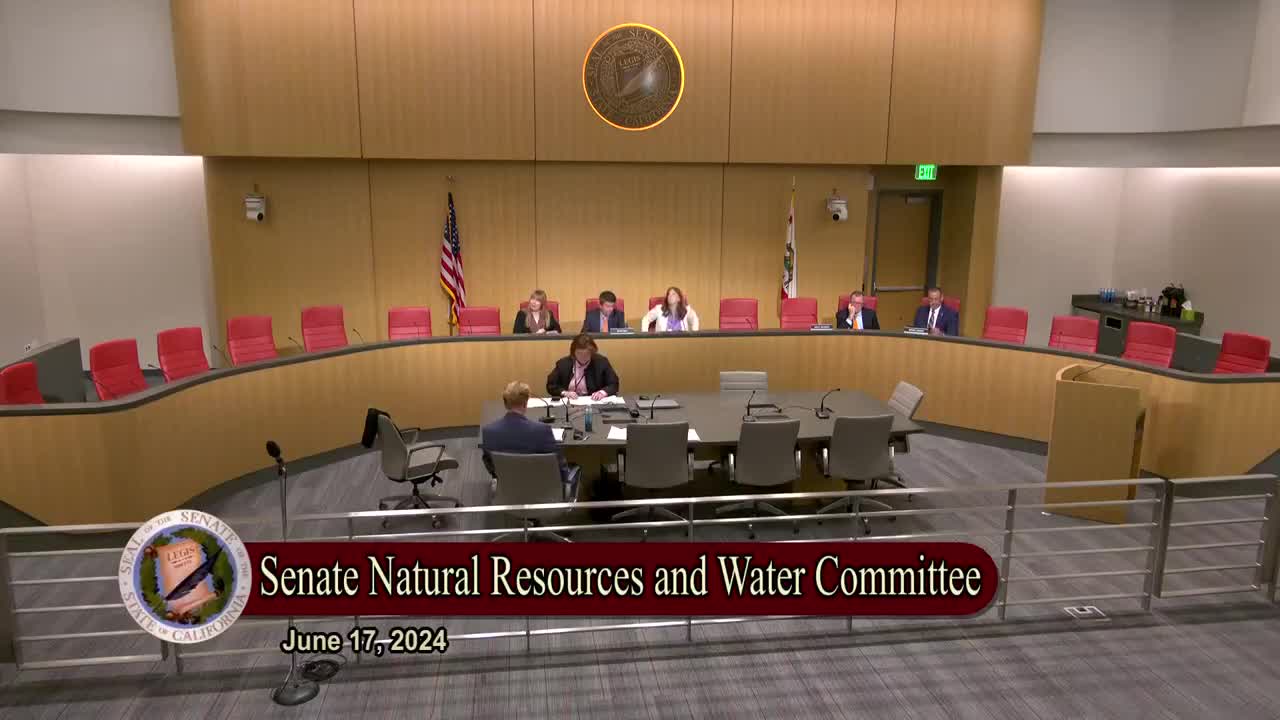 8MIN
Senate Standing Committee on Natural Resources and Water
 2MIN
Assembly Floor
 8MIN
Assembly Standing Committee on Water, Parks, and Wildlife
 46SEC
Assembly Standing Committee on Water, Parks, and Wildlife
Bill Author

Bill Co-Author(s):