AB 2046: Educational programs: single gender schools and classes.
- Session Year: 2023-2024
- House: Assembly
- Latest Version Date: 2024-09-22
Current Status:
Passed
(2024-09-22: Chaptered by Secretary of State - Chapter 373, Statutes of 2024.)
Introduced
In Committee
First Chamber
In Committee
Second Chamber
Enacted
What does this bill do?
This bill extends through July 1, 2031 the rule letting very large California school districts (those with about 250,000 or more students) and charter schools they authorize that were single‑gender on July 1, 2017, continue single‑gender schools or classes. Those schools must adopt policies showing how they will follow federal sex‑discrimination rules (Title IX), limit school sizes, enroll students based on gender identity, evaluate the single‑gender program at least every two years and share results, and the State Department of Education can order corrective action up to requiring the school become coeducational if rules are violated.
The summary is provided by generative AI which can make mistakes. For original language, please view the details in the table below.
Existing law authorizes, until January 1, 2025, a school district with an average daily attendance of 250,000 or more pupils to maintain any single gender schools and classes that were enrolling pupils as of July 1, 2017, if certain requirements are met, and authorizes, until January 1, 2025, a charter school authorized by a school district with an average daily attendance of 250,000 or more pupils that was operating as a single gender school or with single gender classes as of July 1, 2017, to be maintained as a single gender school or to maintain single gender classes, if those same requirements are met. Existing law requires, until January 1, 2025, a school district that maintains a single gender school or class, and a charter school maintained as a single gender school or that maintains a single gender class to conduct certain evaluations at least once every 2 years, and to report the findings of those evaluations to the State Department of Education and specified legislative committees.
This bill, among other things, would extend the operation of these provisions through June 30, 2031. If the department finds that one or more of the above-described single gender schools or single gender classes fails to comply with certain federal regulations or these provisions, the bill, until July 1, 2031, would require the department to order corrective action, as specified.
Existing law authorizes, until January 1, 2025, a school district with an average daily attendance of 250,000 or more pupils to maintain any single gender schools and classes that were enrolling pupils as of July 1, 2017, if certain requirements are met and authorizes a charter school authorized by a school district with an average daily attendance of 250,000 or more pupils that was operating as a single gender school or with single gender classes as of July 1, 2017, to be maintained as a single gender school or to maintain single gender classes, if those same requirements are met. Existing law requires, until January 1, 2025, a school district that maintains a single gender school or class, and a charter school maintained as a single gender school or that maintains a single gender class to conduct certain evaluations at least once every 2 years, and to report the findings of those evaluations to the State Department of Education and specified legislative committees.
This bill bill, among other things, would extend the operation of these provisions through June 30, 2035. 2031. If the department finds that one or more of the above-described single gender schools or single gender classes fails to comply with certain federal regulations or these provisions, the bill, until July 1, 2031, would require the department to order corrective action, as specified.
Existing law authorizes, until January 1, 2025, a school district with an average daily attendance of 250,000 or more pupils to maintain any single gender schools and classes that were enrolling pupils as of July 1, 2017, if certain requirements are met and authorizes a charter school authorized by a school district with an average daily attendance of 250,000 or more pupils that was operating as a single gender school or with single gender classes as of July 1, 2017, to be maintained as a single gender school or to maintain single gender classes, if those same requirements are met. Existing law requires, until January 1, 2025, a school district that maintains a single gender school or class, and a charter school maintained as a single gender school or that maintains a single gender class to conduct certain evaluations at least once every 2 years, and to report the findings of those evaluations to the State Department of Education and specified legislative committees.
This bill would extend the operation of these provisions through June 30, 2035.
(a)(1)Notwithstanding Section 220 as it relates to discrimination on the basis of gender, and subdivisions (a) and (b) of Section 221.5, a school district with an average daily attendance of 250,000 or more pupils may maintain any single gender schools and classes that were enrolling pupils as of July 1, 2017, provided that the governing board of the school district has adopted a policy that addresses how the school district will ensure compliance with Title IX regulations (34 C.F.R. Part 106).
(2)Notwithstanding Section 220 as it relates to discrimination on the basis of gender, and subdivisions (a) and (b) of Section 221.5, a charter school authorized by a school district with an average daily attendance of 250,000 or more pupils may be maintained as a single gender school or may maintain single gender classes, only if, as of July 1, 2017, the school operated as a single gender school or operated single gender classes, provided that the governing body of the charter school has adopted a policy that addresses how the charter school will ensure compliance with Title IX regulations (34 C.F.R. Part 106).
(3)(A)A school continuing to operate as a single gender school pursuant to this section shall not have a total pupil enrollment exceeding 700 pupils.
(B)A coeducational school maintaining existing single gender classes pursuant to this section shall not have a total pupil enrollment exceeding 1,000 pupils. This subparagraph shall not apply for single gender classes authorized pursuant to subdivision (b) of Section 221.5 or of the kinds described in paragraphs (1) to (4), inclusive, of subdivision (a) of Section 106.34 of Title 34 of the Code of Federal Regulations.
(4)Any corrective action ordered by the department before July 1, 2017, and applicable to a school maintained under this section shall remain in effect.
(5)A school continuing to operate a single gender class or as a single gender school pursuant to this section shall enroll pupils in the class or school, as applicable, based on the pupils gender identity.
(b)A policy adopted pursuant to subdivision (a) shall include, but not necessarily be limited to, all of the following requirements:
(1)The single gender aspect of the school or classes will serve an important school district or charter school objective to do either of the following:
(A)Improve the educational achievement of its pupils through the school districts or charter schools overall established policy to provide diverse educational opportunities, provided that the single gender nature of the school or classes is substantially related to achieving that objective.
(B)Meet the particular, identified educational needs of its pupils, provided that the single gender nature of the school or classes is substantially related to achieving that objective.
(2)The school district or charter school will implement its objective in an evenhanded manner.
(3)Pupil enrollment in a single gender school or classes will be voluntary.
(4)(A)Except as provided in subparagraph (B), the school district or charter school will provide to all pupils a substantially equal coeducational class, extracurricular activity, or program in the same subject.
(B)Subparagraph (A) shall not apply to a nonvocational charter school that is a single school that is not part of a network or chain of charter schools or a charter school management organization that has more than one school.
SEC. 2.Section 232.4 of the Education Code is amended to read:232.4.(a)A school district that maintains an existing single gender school or classes or a charter school that is an existing single gender school or that continues existing single gender classes, pursuant to Section 232.2, shall conduct the following evaluations at least once every two years:
(1)An evaluation of whether the single gender aspect of the school or classes is based upon genuine justifications and does not rely on overly broad generalizations about the different talents, capacities, or preferences of different genders and that the single gender nature of the school or classes is substantially related to the achievement of the important objective for the school or classes.
(2)An evaluation that examines whether the single gender school or class has been effective as compared to coeducational schools.
(3)An evaluation of the impact of the single gender school or class on pupils who identify as lesbian, gay, bisexual, transgender, questioning, or gender nonconforming.
(b)The metrics that the school district or charter school will use to evaluate the single gender school or class shall be included in the policy adopted pursuant to subdivision (a) of Section 232.2, and the evidence in the evaluation shall include, but need not be limited to, the evidence described in the United States Department of Educations Office for Civil Rights Questions and Answers on Title IX and Single-Sex Elementary and Secondary Classes and Extracurricular Activities of December 1, 2014.
(c)The school district or charter school shall submit the findings of the evaluations required pursuant to subdivision (a) to the Senate Committee on Education, the Assembly Committee on Education, the Assembly Committee on Judiciary, the Senate Committee on Judiciary, and the department. The school district or charter school shall also make the evaluation findings available to the public on its internet website. In the event that the department finds that one or more of the single gender schools or single gender classes fail to comply with the requirements of Title IX regulations (34 C.F.R. Part 106), or the requirements of this section, the department shall order corrective action up to and including requiring that the school or classes become coeducational.
(d)Except as otherwise provided in this article and subdivision (b) of Section 221.5, no public elementary or secondary school, including a charter school, shall operate as a single gender school or with single gender classes. This subdivision does not prohibit the operation of single gender classes of the kinds described in paragraphs (1) to (4), inclusive, of subdivision (a) of Section 106.34 of Title 34 of the Code of Federal Regulations.
SEC. 3.Section 232.6 of the Education Code is amended to read:232.6.This article shall become inoperative on July 1, 2031, and as of January 1, 2032, is repealed.
(a)(1)Notwithstanding Section 220 as it relates to discrimination on the basis of gender, and subdivisions (a) and (b) of Section 221.5, a school district with an average daily attendance of 250,000 or more pupils may maintain any single gender schools and classes that were enrolling pupils as of July 1, 2017, provided that the governing board of the school district has adopted a policy that addresses how the school district will ensure compliance with Title IX regulations (34 C.F.R. Part 106).
(2)Notwithstanding Section 220 as it relates to discrimination on the basis of gender, and subdivisions (a) and (b) of Section 221.5, a charter school authorized by a school district with an average daily attendance of 250,000 or more pupils may be maintained as a single gender school or may maintain single gender classes, only if, as of July 1, 2017, the school operated as a single gender school or operated single gender classes, provided that the governing body of the charter school has adopted a policy that addresses how the charter school will ensure compliance with Title IX regulations (34 C.F.R. Part 106).
(3)(A)A school continuing to operate as a single gender school pursuant to this section shall not have a total pupil enrollment exceeding 700 pupils.
(B)A coeducational school maintaining existing single gender classes pursuant to this section shall not have a total pupil enrollment exceeding 1,000 pupils. This subparagraph shall not apply for single gender classes authorized pursuant to subdivision (b) of Section 221.5 or of the kinds described in paragraphs (1) to (4), inclusive, of subdivision (a) of Section 106.34 of Title 34 of the Code of Federal Regulations.
(4)Any corrective action ordered by the department before July 1, 2017, and applicable to a school maintained under this section shall remain in effect.
(5)A school continuing to operate a single gender class or as a single gender school pursuant to this section shall enroll pupils in the class or school, as applicable, based on the pupils gender identity.
(b)A policy adopted pursuant to subdivision (a) shall include, but not necessarily be limited to, all of the following requirements:
(1)The single gender aspect of the school or classes will serve an important school district or charter school objective to do either of the following:
(A)Improve the educational achievement of its pupils through the school districts or charter schools overall established policy to provide diverse educational opportunities, provided that the single gender nature of the school or classes is substantially related to achieving that objective.
(B)Meet the particular, identified educational needs of its pupils, provided that the single gender nature of the school or classes is substantially related to achieving that objective.
(2)The school district or charter school will implement its objective in an evenhanded manner.
(3)Pupil enrollment in a single gender school or classes will be voluntary.
(4)(A)Except as provided in subparagraph (B), the school district or charter school will provide to pupils of both genders all pupils a substantially equal coeducational class, extracurricular activity, or program in the same subject.
(B)Subparagraph (A) shall not apply to a nonvocational charter school that is a single school that is not part of a network or chain of charter schools or a charter school management organization that has more than one school.
SEC. 2.Section 232.4 of the Education Code is amended to read:232.4.(a)A school district that maintains an existing single gender school or classes or a charter school that is an existing single gender school or that continues existing single gender classes, pursuant to Section 232.2, shall conduct the following evaluations at least once every two years:
(1)An evaluation of whether the single gender aspect of the school or classes is based upon genuine justifications and does not rely on overly broad generalizations about the different talents, capacities, or preferences of either gender different genders and that the single gender nature of the school or classes is substantially related to the achievement of the important objective for the school or classes.
(2)An evaluation that examines whether the single gender school or class has been effective as compared to coeducational schools.
(3)An evaluation of the impact of the single gender school or class on pupils who identify as lesbian, gay, bisexual, transgender, questioning, or gender nonconforming.
(b)The metrics that the school district or charter school will use to evaluate the single gender school or class shall be included in the policy adopted pursuant to subdivision (a) of Section 232.2, and the evidence in the evaluation shall include, but need not be limited to, the evidence described in the United States Department of Educations Office for Civil Rights Questions and Answers on Title IX and Single-Sex Elementary and Secondary Classes and Extracurricular Activities of December 1, 2014.
(c)The school district or charter school shall submit the findings of the evaluations required pursuant to subdivision (a) to the Senate Committee on Education, the Assembly Committee on Education, the Assembly Committee on Judiciary, the Senate Committee on Judiciary, and the department. The school district or charter school shall also make the evaluation findings available to the public on its internet website. In the event that the department finds that one or more of the single gender schools or single gender classes fail to comply with the requirements of Title IX regulations (34 C.F.R. Part 106), or the requirements of this section, the department shall order corrective action up to and including requiring that the school or classes become coeducational.
(d)Except as otherwise provided in this article and subdivision (b) of Section 221.5, no public elementary or secondary school, including a charter school, shall operate as a single gender school or with single gender classes. This subdivision does not prohibit the operation of single gender classes of the kinds described in paragraphs (1) to (4), inclusive, of subdivision (a) of Section 106.34 of Title 34 of the Code of Federal Regulations.
SEC. 3.Section 232.6 of the Education Code is amended to read:232.6.This article shall become inoperative on July 1, 2035, 2031, and as of January 1, 2036, 2032, is repealed.
(a)(1)Notwithstanding Section 220 as it relates to discrimination on the basis of gender, and subdivisions (a) and (b) of Section 221.5, a school district with an average daily attendance of 250,000 or more pupils may maintain any single gender schools and classes that were enrolling pupils as of July 1, 2017, provided that the governing board of the school district has adopted a policy that addresses how the school district will ensure compliance with Title IX regulations (34 C.F.R. Part 106), as they read on October 25, 2006. 106).
(2)Notwithstanding Section 220 as it relates to discrimination on the basis of gender, and subdivisions (a) and (b) of Section 221.5, a charter school authorized by a school district with an average daily attendance of 250,000 or more pupils may be maintained as a single gender school or may maintain single gender classes, only if, as of July 1, 2017, the school operated as a single gender school or operated single gender classes, provided that the governing body of the charter school has adopted a policy that addresses how the charter school will ensure compliance with Title IX regulations (34 C.F.R. Part 106), as they read on October 25, 2006. 106).
(3)(A)A school continuing to operate as a single gender school pursuant to this section shall not have a total pupil enrollment exceeding 700 pupils.
(B)A coeducational school maintaining existing single gender classes pursuant to this section shall not have a total pupil enrollment exceeding 1,000 pupils. This subparagraph shall not apply for single gender classes authorized pursuant to subdivision (b) of Section 221.5 or of the kinds described in paragraphs (1) to (4), inclusive, of subdivision (a) of Section 106.34 of Title 34 of the Code of Federal Regulations.
(4)Any corrective action ordered by the department before July 1, 2017, and applicable to a school maintained under this section shall remain in effect.
(b)A policy adopted pursuant to subdivision (a) shall include, but not necessarily be limited to, all of the following requirements:
(1)The single gender aspect of the school or classes will serve an important school district or charter school objective to do either of the following:
(A)Improve the educational achievement of its pupils through the school districts or charter schools overall established policy to provide diverse educational opportunities, provided that the single gender nature of the school or classes is substantially related to achieving that objective.
(B)Meet the particular, identified educational needs of its pupils, provided that the single gender nature of the school or classes is substantially related to achieving that objective.
(2)The school district or charter school will implement its objective in an evenhanded manner.
(3)Pupil enrollment in a single gender school or classes will be voluntary.
(4)(A)Except as provided in subparagraph (B), the school district or charter school will provide to pupils of both genders a substantially equal coeducational class, extracurricular activity, or program in the same subject.
(B)Subparagraph (A) shall not apply to a nonvocational charter school that is a single school that is not part of a network or chain of charter schools or a charter school management organization that has more than one school.
SEC. 2.Section 232.4 of the Education Code is amended to read:232.4.(a)A school district that maintains an existing single gender school or classes or a charter school that is an existing single gender school or that continues existing single gender classes, pursuant to Section 232.2, shall conduct the following evaluations at least once every two years:
(1)An evaluation of whether the single gender aspect of the school or classes is based upon genuine justifications and does not rely on overly broad generalizations about the different talents, capacities, or preferences of either gender and that the single gender nature of the school or classes is substantially related to the achievement of the important objective for the school or classes.
(2)An evaluation that examines whether the single gender school or class has been effective as compared to coeducational schools.
(3)An evaluation of the impact of the single gender school or class on pupils who identify as lesbian, gay, bisexual, transgender, questioning, or gender nonconforming.
(b)The metrics that the school district or charter school will use to evaluate the single gender school or class shall be included in the policy adopted pursuant to subdivision (a) of Section 232.2, and the evidence in the evaluation shall include, but need not be limited to, the evidence described in the United States Department of Educations Office for Civil Rights Questions and Answers on Title IX and Single-Sex Elementary and Secondary Classes and Extracurricular Activities of December 1, 2014.
(c)The school district or charter school shall submit the findings of the evaluations required pursuant to subdivision (a) to the Senate Committee on Education, the Assembly Committee on Education, the Assembly Committee on Judiciary, the Senate Committee on Judiciary, and the department. In the event that the department finds that one or more of the single gender schools or single gender classes fail to comply with the requirements of Title IX regulations (34 C.F.R. Part 106), as they read on October 25, 2006, the department shall order corrective action up to and including requiring that the school or classes become coeducational.
(d)Except as otherwise provided in this article and subdivision (b) of Section 221.5, no public elementary or secondary school, including a charter school, shall operate as a single gender school or with single gender classes. This subdivision does not prohibit the operation of single gender classes of the kinds described in paragraphs (1) to (4), inclusive, of subdivision (a) of Section 106.34 of Title 34 of the Code of Federal Regulations.
SEC. 3.Section 232.6 of the Education Code is amended to read:232.6.This article shall remain in effect only until January 1, 2025, become inoperative on July 1, 2035, and as of that date January 1, 2036, is repealed.
|
Date
|
Status
|
|---|---|
| Sep 22, 2024 | Chaptered by Secretary of State - Chapter 373, Statutes of 2024. |
| Sep 22, 2024 | Approved by the Governor. |
| Sep 5, 2024 | Enrolled and presented to the Governor at 4 p.m. |
| Aug 27, 2024 | Senate amendments concurred in. To Engrossing and Enrolling. (Ayes 65. Noes 0.). |
| Aug 27, 2024 | Assembly Rule 77 suspended. |
| Aug 26, 2024 | In Assembly. Concurrence in Senate amendments pending. May be considered on or after August 28 pursuant to Assembly Rule 77. |
| Aug 26, 2024 | Read third time. Passed. Ordered to the Assembly. (Ayes 30. Noes 8.). |
| Aug 6, 2024 | Read second time. Ordered to third reading. |
| Aug 5, 2024 | From committee: Be ordered to second reading pursuant to Senate Rule 28.8. |
| Jun 19, 2024 | From committee: Do pass and re-refer to Com. on APPR. (Ayes 8. Noes 0.) (June 18). Re-referred to Com. on APPR. |
| Jun 6, 2024 | Read second time and amended. Re-referred to Com. on JUD. |
| Jun 5, 2024 | From committee: Amend, and do pass as amended and re-refer to Com. on JUD. (Ayes 5. Noes 1.) (June 5). |
| May 29, 2024 | In committee: Set, first hearing. Hearing canceled at the request of author. |
| May 1, 2024 | Referred to Coms. on ED. and JUD. |
| Apr 18, 2024 | In Senate. Read first time. To Com. on RLS. for assignment. |
| Apr 18, 2024 | Read third time. Passed. Ordered to the Senate. (Ayes 72. Noes 0.) |
| Apr 11, 2024 | Read second time. Ordered to Consent Calendar. |
| Apr 10, 2024 | From committee: Do pass. To Consent Calendar. (Ayes 14. Noes 0.) (April 10). |
| Mar 21, 2024 | From committee: Do pass and re-refer to Com. on APPR. with recommendation: To Consent Calendar. (Ayes 7. Noes 0.) (March 20). Re-referred to Com. on APPR. |
| Feb 12, 2024 | Referred to Com. on ED. |
| Feb 2, 2024 | From printer. May be heard in committee March 3. |
| Feb 1, 2024 | Read first time. To print. |
|
Date
|
Description
|
Location
|
Votes
|
|
|---|---|---|---|---|
| Aug 27, 2024 | AB 2046 Bryan Concurrence in Senate Amendments | Assembly Floor |
Passed |
|
| Aug 26, 2024 | Assembly 3rd Reading AB2046 Bryan By Bradford | Senate Floor |
Passed |
|
| Jun 18, 2024 | Do pass, but first be re-referred to the Committee on [Appropriations] | Senate Standing Committee on Judiciary |
Passed |
|
| Jun 5, 2024 | Do pass as amended, but first amend, and re-refer to the Committee on [Judiciary] | Senate Standing Committee on Education |
Passed |
|
| Apr 18, 2024 | AB 2046 Bryan Consent Calendar Second Day Regular Session | Assembly Floor |
Passed |
|
| Apr 10, 2024 | Do pass. To Consent Calendar. | Assembly Standing Committee on Appropriations |
Passed |
|
| Mar 20, 2024 | Do pass and be re-referred to the Committee on [Appropriations] with recommendation: To Consent Calendar | Assembly Standing Committee on Education |
Passed |
This list shows positions taken on this bill by organizations on the date displayed, which is linked to the original source.
Positions by individuals are not included.
|
Organization
|
Position
|
Date
|
|---|---|---|
| California Charter Schools Association | ** Support | |
| Charter Schools Development Center | ** Support | |
| Los Angeles Unified School District | ** Support |
CONCURRENCE IN SENATE AMENDMENTS
CSA1 Bill Id:AB 2046
Author:(Bryan)
As Amended Ver:June 6, 2024
Majority vote
SUMMARY
Authorizes a school district with an average daily attendance (ADA) of 250,000 or more to maintain any single gender schools and classes that were enrolling pupils as of July 1, 2017, provided specified conditions are met, until July 1, 2031.
Senate Amendments
- Extends by six years and six months the authority for a school district with an ADA of 250,000 or more to operate single gender schools and classes.
- Requires a school continuing to operate a single gender class or as a single gender school to enroll pupils in the class or school, as applicable, based on the pupil's gender identity.
- Requires the school district or charter school operating a single gender school or classes to also make evaluation findings available to the public on its website.
- Requires, if the California Department of Education (CDE) finds that one or more of specified single gender schools or classes fails to comply with certain federal regulations or the provisions of this bill, the CDE to order specified corrective action.
COMMENTS
Single gender schools in the Los Angeles Unified School District (LAUSD). AB 23 (Ridley-Thomas), Chapter 654, Statutes of 2017, authorizes a school district with an ADA of 400,000 or more (note: this was reduced to an ADA of 250,000 or more by SB 913 (Hertzberg), Chapter 920, Statutes of 2022) to maintain any single gender schools and classes that were enrolling pupils as of July 1, 2017, provided specified conditions are met. Therefore, in effect, the LAUSD is the only school district authorized to maintain a single gender school. The LAUSD maintains the following single gender school sites, all of which existed when the law passed, three of which are LAUSD schools and one is an independent charter school authorized by the LAUSD. In total, the four schools included in the evaluation enrolled 1,787 students, which included 487 males in two of the schools and 1,300 females in three of the schools in 2022-23.
- Boys Academic Leadership Academy (BALA) serves all male students, is co-located on the campus of Washington Preparatory High School, and describes itself as a "STEAM academy with an emphasis on mentorship, leadership and a college pathway in the related fields of STEAM learning."
- Girls Academic Leadership Academy (GALA) serves all female students, is co-located on the campus of Washington Preparatory High School, and describes itself as a "STEAM academy with an emphasis on mentorship, leadership and a college pathway in the related fields of STEAM learning."
- Girls Athletic Leadership School Los Angeles (GALS LA) is a charter school serving all female students, is co-located on the campus of Panorama High School with plans to move into a new facility of its own in 2023-24, and describes itself as a "Health and wellness approach in a small school environment to provide a rigorous college-prep middle school program for girls."
- Young Oak Kim Academy (YOKA) serves male and female students, who are separated by gender in their core academic and physical education classes, and describes itself as a "STEAM middle school focused on college and career readiness."
Student outcomes. Student performance is mixed at the single gender schools in the LAUSD, with student groups at some school sites performing better than their matched peers, particularly for female students. For additional information regarding the academic performance and other performance measures of the four LAUSD single gender schools, please see the Assembly Education Committee analysis of the bill.
Evidence of commitment to meeting the needs of individual students. According to the 2023, AB 23 (2017) Single Gender Schools Final Evaluation Report, student engagement and wellness were strongly supported in single gender schools during the pandemic by utilizing small groups, some of the extracurricular clubs, and offering increased mental health supports. "Though the effect of the pandemic could be felt in all schools, the single gender schools' approach to making adaptations to it demonstrated how a commitment to a vision and mission for student engagement, resulted in strengthened school communities. Enrollment data and [LAUSD] School Experience Survey (SES) results show in large part a trajectory that is sustained over time, with plans to increase recruitment and enrollment in two of the four schools continuing in 2023-24."
The research on single gender schools is mixed. Some studies indicate that students in single gender schools perform better academically than students in coeducational schools, some support the superiority of coeducational schools, and some find no difference. Most research on the topic of single gender schools in the United States took place in the 1990s and early 2000s.
According to a 2014 Psychological Bulletin meta-analysis of 184 studies of both U.S. and international students, The Effects of Single-Sex Compared with Coeducational Schooling on Students' Performance and Attitudes, "Results from the highest quality studies, then, do not support the view that [single gender] schooling provides benefits compared with [coeducational] schooling." Of the U.S. studies available at the time of the meta-analysis, the study results failed to find substantial advantages of single gender schooling for African Americans and Latinos…there is no evidence of an advantage for SS schooling for U.S. ethnic minorities, but the authors acknowledge that the issue has not been sufficiently studied with high-quality methods. According to a 2005 document from the U.S. Department of Education, Office of Planning, Evaluation, and Policy Development, Single-Sex Versus Coeducational Schooling: A Systemic Review, a "preponderance of studies…yields results lending support to [single gender] schooling," while a "limited number…provide evidence favoring [coeducational] schooling." Other studies found no difference. However, the review found that the studies suffered from a "dearth of quality…across all outcomes." Specifically, many studies had "conceptual or interpretive flaws," "lacked well-developed hypotheses," and had hypotheses that "were often not linked directly to the outcomes being studied."
According to the Author
"In 2017, AB 23 paved the way for single-gender classes and schools as a pilot program in Los Angeles. This innovative approach expanded educational opportunities and aligned with community goals by creating focused school programs. These programs aimed to enhance the representation of women and minorities in critical fields such as science, technology, engineering, mathematics, and leadership—for both boys and girls. Unfortunately, during the years 2020-2022, the pilot program was affected by the COVID-19 pandemic. AB 23 initially allowed single-gender schools to operate until January 1, 2025, with evaluations conducted at least once every two years. The evidence from these independent evaluations demonstrates great results. GALA students consistently outperform their peers on standardized assessments, BALA students achieve higher GPAs, and both GALA and GALS LA foster an inclusive environment where LGBTQ+ students feel accepted. Student surveys reveal higher levels of happiness and belonging within these schools compared to other co-ed schools in the district. AB 2046 will continue to empower students, promote diversity, and contribute to educational excellence by providing the pilot program more time to collect data."
Arguments in Support
The LAUSD, the sponsor of this bill, writes, "AB 23 authorized any school district with an enrollment of at least 400,000 (later reduced to 250,000 through a different bill unrelated to this issue) to offer single gender education until January 1, 2025, as long as certain provisions were met. Among those provisions was the requirement for regular reports to the Legislature assessing the ongoing justification for offering a single gender school, the effectiveness of single-gender schools compared to their co-educational counterparts and the impact of single-gender schools on LGBTQIA+ students. While the results from these reports are promising, the evaluations were substantially impacted by the disruptions of the COVID-19 pandemic. For this reason, we believe it is appropriate to extend the authorization until 2035 to allow for a longitudinal assessment."
Arguments in Opposition
None on file
FISCAL COMMENTS
According to the Senate Appropriations Committee, pursuant to Senate Rule 28.8, negligible state costs.
VOTES:
ASM EDUCATION: 7-0-0
YES: Muratsuchi, Addis, Alvarez, Bonta, Flora, Hoover, McCarty
ASM APPROPRIATIONS: 14-0-1
YES: Wicks, Sanchez, Arambula, Bryan, Calderon, Dixon, Mike Fong, Grayson, Haney, Hart, Jim Patterson, Pellerin, Ta, Villapudua
ABS, ABST OR NV: Wendy Carrillo
ASSEMBLY FLOOR: 72-0-8
YES: Addis, Aguiar-Curry, Alanis, Alvarez, Bains, Bauer-Kahan, Bennett, Berman, Calderon, Juan Carrillo, Wendy Carrillo, Chen, Connolly, Davies, Dixon, Flora, Mike Fong, Vince Fong, Friedman, Gabriel, Gallagher, Garcia, Gipson, Grayson, Haney, Hart, Holden, Hoover, Irwin, Jackson, Jones-Sawyer, Kalra, Lackey, Lee, Low, Lowenthal, Maienschein, McCarty, McKinnor, Muratsuchi, Stephanie Nguyen, Ortega, Pacheco, Papan, Jim Patterson, Joe Patterson, Pellerin, Petrie-Norris, Quirk-Silva, Ramos, Rendon, Reyes, Luz Rivas, Rodriguez, Blanca Rubio, Sanchez, Santiago, Schiavo, Soria, Ta, Ting, Valencia, Villapudua, Waldron, Wallis, Ward, Weber, Wicks, Wilson, Wood, Zbur, Robert Rivas
ABS, ABST OR NV: Arambula, Boerner, Bonta, Bryan, Cervantes, Megan Dahle, Essayli, Mathis
SENATE FLOOR: 31-8-1
YES: Allen, Archuleta, Ashby, Atkins, Becker, Blakespear, Bradford, Caballero, Cortese, Dodd, Durazo, Eggman, Glazer, Gonzalez, Hurtado, Laird, Limón, McGuire, Menjivar, Min, Newman, Padilla, Portantino, Roth, Rubio, Skinner, Smallwood-Cuevas, Stern, Umberg, Wahab, Wiener
NO: Alvarado-Gil, Dahle, Grove, Jones, Nguyen, Ochoa Bogh, Seyarto, Wilk
ABS, ABST OR NV: Niello
UPDATED
VERSION: June 6, 2024
CONSULTANT: Marguerite Ries / ED. / (916) 319-2087 FN: 0004688
CONCURRENCE IN SENATE AMENDMENTS
CSA1 Bill Id:AB 2046
Author:(Bryan)
As Amended Ver:June 6, 2024
Majority vote
SUMMARY
Authorizes a school district with an average daily attendance (ADA) of 250,000 or more to maintain any single gender schools and classes that were enrolling pupils as of July 1, 2017, provided specified conditions are met, until July 1, 2031.
Senate Amendments
- Extends by six years and six months the authority for a school district with an ADA of 250,000 or more to operate single gender schools and classes.
- Requires a school continuing to operate a single gender class or as a single gender school to enroll pupils in the class or school, as applicable, based on the pupil's gender identity.
- Requires the school district or charter school operating a single gender school or classes to also make evaluation findings available to the public on its website.
- Requires, if the California Department of Education (CDE) finds that one or more of specified single gender schools or classes fails to comply with certain federal regulations or the provisions of this bill, the CDE to order specified corrective action.
COMMENTS
Single gender schools in the Los Angeles Unified School District (LAUSD). AB 23 (Ridley-Thomas), Chapter 654, Statutes of 2017, authorizes a school district with an ADA of 400,000 or more (note: this was reduced to an ADA of 250,000 or more by SB 913 (Hertzberg), Chapter 920, Statutes of 2022) to maintain any single gender schools and classes that were enrolling pupils as of July 1, 2017, provided specified conditions are met. Therefore, in effect, the LAUSD is the only school district authorized to maintain a single gender school. The LAUSD maintains the following single gender school sites, all of which existed when the law passed, three of which are LAUSD schools and one is an independent charter school authorized by the LAUSD. In total, the four schools included in the evaluation enrolled 1,787 students, which included 487 males in two of the schools and 1,300 females in three of the schools in 2022-23.
- Boys Academic Leadership Academy (BALA) serves all male students, is co-located on the campus of Washington Preparatory High School, and describes itself as a "STEAM academy with an emphasis on mentorship, leadership and a college pathway in the related fields of STEAM learning."
- Girls Academic Leadership Academy (GALA) serves all female students, is co-located on the campus of Washington Preparatory High School, and describes itself as a "STEAM academy with an emphasis on mentorship, leadership and a college pathway in the related fields of STEAM learning."
- Girls Athletic Leadership School Los Angeles (GALS LA) is a charter school serving all female students, is co-located on the campus of Panorama High School with plans to move into a new facility of its own in 2023-24, and describes itself as a "Health and wellness approach in a small school environment to provide a rigorous college-prep middle school program for girls."
- Young Oak Kim Academy (YOKA) serves male and female students, who are separated by gender in their core academic and physical education classes, and describes itself as a "STEAM middle school focused on college and career readiness."
Student outcomes. Student performance is mixed at the single gender schools in the LAUSD, with student groups at some school sites performing better than their matched peers, particularly for female students. For additional information regarding the academic performance and other performance measures of the four LAUSD single gender schools, please see the Assembly Education Committee analysis of the bill.
Evidence of commitment to meeting the needs of individual students. According to the 2023, AB 23 (2017) Single Gender Schools Final Evaluation Report, student engagement and wellness were strongly supported in single gender schools during the pandemic by utilizing small groups, some of the extracurricular clubs, and offering increased mental health supports. "Though the effect of the pandemic could be felt in all schools, the single gender schools' approach to making adaptations to it demonstrated how a commitment to a vision and mission for student engagement, resulted in strengthened school communities. Enrollment data and [LAUSD] School Experience Survey (SES) results show in large part a trajectory that is sustained over time, with plans to increase recruitment and enrollment in two of the four schools continuing in 2023-24."
The research on single gender schools is mixed. Some studies indicate that students in single gender schools perform better academically than students in coeducational schools, some support the superiority of coeducational schools, and some find no difference. Most research on the topic of single gender schools in the United States took place in the 1990s and early 2000s.
According to a 2014 Psychological Bulletin meta-analysis of 184 studies of both U.S. and international students, The Effects of Single-Sex Compared with Coeducational Schooling on Students' Performance and Attitudes, "Results from the highest quality studies, then, do not support the view that [single gender] schooling provides benefits compared with [coeducational] schooling." Of the U.S. studies available at the time of the meta-analysis, the study results failed to find substantial advantages of single gender schooling for African Americans and Latinos…there is no evidence of an advantage for SS schooling for U.S. ethnic minorities, but the authors acknowledge that the issue has not been sufficiently studied with high-quality methods. According to a 2005 document from the U.S. Department of Education, Office of Planning, Evaluation, and Policy Development, Single-Sex Versus Coeducational Schooling: A Systemic Review, a "preponderance of studies…yields results lending support to [single gender] schooling," while a "limited number…provide evidence favoring [coeducational] schooling." Other studies found no difference. However, the review found that the studies suffered from a "dearth of quality…across all outcomes." Specifically, many studies had "conceptual or interpretive flaws," "lacked well-developed hypotheses," and had hypotheses that "were often not linked directly to the outcomes being studied."
According to the Author
"In 2017, AB 23 paved the way for single-gender classes and schools as a pilot program in Los Angeles. This innovative approach expanded educational opportunities and aligned with community goals by creating focused school programs. These programs aimed to enhance the representation of women and minorities in critical fields such as science, technology, engineering, mathematics, and leadership—for both boys and girls. Unfortunately, during the years 2020-2022, the pilot program was affected by the COVID-19 pandemic. AB 23 initially allowed single-gender schools to operate until January 1, 2025, with evaluations conducted at least once every two years. The evidence from these independent evaluations demonstrates great results. GALA students consistently outperform their peers on standardized assessments, BALA students achieve higher GPAs, and both GALA and GALS LA foster an inclusive environment where LGBTQ+ students feel accepted. Student surveys reveal higher levels of happiness and belonging within these schools compared to other co-ed schools in the district. AB 2046 will continue to empower students, promote diversity, and contribute to educational excellence by providing the pilot program more time to collect data."
Arguments in Support
The LAUSD, the sponsor of this bill, writes, "AB 23 authorized any school district with an enrollment of at least 400,000 (later reduced to 250,000 through a different bill unrelated to this issue) to offer single gender education until January 1, 2025, as long as certain provisions were met. Among those provisions was the requirement for regular reports to the Legislature assessing the ongoing justification for offering a single gender school, the effectiveness of single-gender schools compared to their co-educational counterparts and the impact of single-gender schools on LGBTQIA+ students. While the results from these reports are promising, the evaluations were substantially impacted by the disruptions of the COVID-19 pandemic. For this reason, we believe it is appropriate to extend the authorization until 2035 to allow for a longitudinal assessment."
Arguments in Opposition
None on file
FISCAL COMMENTS
According to the Senate Appropriations Committee, pursuant to Senate Rule 28.8, negligible state costs.
VOTES:
ASM EDUCATION: 7-0-0
YES: Muratsuchi, Addis, Alvarez, Bonta, Flora, Hoover, McCarty
ASM APPROPRIATIONS: 14-0-1
YES: Wicks, Sanchez, Arambula, Bryan, Calderon, Dixon, Mike Fong, Grayson, Haney, Hart, Jim Patterson, Pellerin, Ta, Villapudua
ABS, ABST OR NV: Wendy Carrillo
ASSEMBLY FLOOR: 72-0-8
YES: Addis, Aguiar-Curry, Alanis, Alvarez, Bains, Bauer-Kahan, Bennett, Berman, Calderon, Juan Carrillo, Wendy Carrillo, Chen, Connolly, Davies, Dixon, Flora, Mike Fong, Vince Fong, Friedman, Gabriel, Gallagher, Garcia, Gipson, Grayson, Haney, Hart, Holden, Hoover, Irwin, Jackson, Jones-Sawyer, Kalra, Lackey, Lee, Low, Lowenthal, Maienschein, McCarty, McKinnor, Muratsuchi, Stephanie Nguyen, Ortega, Pacheco, Papan, Jim Patterson, Joe Patterson, Pellerin, Petrie-Norris, Quirk-Silva, Ramos, Rendon, Reyes, Luz Rivas, Rodriguez, Blanca Rubio, Sanchez, Santiago, Schiavo, Soria, Ta, Ting, Valencia, Villapudua, Waldron, Wallis, Ward, Weber, Wicks, Wilson, Wood, Zbur, Robert Rivas
ABS, ABST OR NV: Arambula, Boerner, Bonta, Bryan, Cervantes, Megan Dahle, Essayli, Mathis
UPDATED
VERSION: June 6, 2024
CONSULTANT: Marguerite Ries / ED. / (916) 319-2087 FN: 0004688
SENATE RULES COMMITTEE Office of Senate Floor Analyses (916) 651-1520 Fax: (916) 327-4478 | AB 2046 |
THIRD READING
Bill No: AB 2046
Author: Bryan (D)
Amended: 6/6/24 in Senate
Vote: 21
SENATE EDUCATION COMMITTEE: 5-1, 6/5/24
AYES: Newman, Cortese, Glazer, Gonzalez, Smallwood-Cuevas
NOES: Jones
NO VOTE RECORDED: Wilk
SENATE JUDICIARY COMMITTEE: 8-0, 6/18/24
AYES: Umberg, Allen, Ashby, Caballero, Durazo, Roth, Stern, Wahab
NO VOTE RECORDED: Wilk, Laird, Niello
SENATE APPROPRIATIONS COMMITTEE: Senate Rule 28.8
ASSEMBLY FLOOR: 72-0, 4/18/24 (Consent) - See last page for vote
SUBJECT: Educational programs: single gender schools and classes
SOURCE: Los Angeles Unified School District
DIGEST:
This bill extends by six years and six months the authority for the Los Angeles Unified School District (LAUSD) to operate single gender schools and classes.
ANALYSIS:
Existing federal law:
- Establishes Title IX, providing that, in part, “no person in the United States shall, on the basis of sex, be excluded from participation in, be denied the benefits of, or be subjected to discrimination under any educational program or activity receiving Federal financial assistance.” Enforcement of compliance is initiated upon the filing of a complaint alleging a violation of Title IX. (Title IX of the Education Amendments of 1972 to the 1964 Civil Rights Act)
- Prohibits, with exception, an institution that receives federal financial assistance from providing or otherwise carrying out any of its education programs or activities separately on the basis of sex, or require or refuse participation therein by any of its students on the basis of sex. (Code of Federal Regulations (CFR), Title 34, § 106.34)
- Provide an exception to the general prohibition against separate programs or activities on the basis of sex for non-vocational classes or extracurricular activities in an elementary or secondary school if all of the following conditions are met:
- Each single-sex class or extracurricular activity is based on the recipient's important objective:
- To improve educational achievement of its students, through a recipient's overall established policy to provide diverse educational opportunities, provided that the single-sex nature of the class or extracurricular activity is substantially related to achieving that objective.
- To meet the particular, identified educational needs of its students, provided that the single-sex nature of the class or extracurricular activity is substantially related to achieving that objective.
- To improve educational achievement of its students, through a recipient's overall established policy to provide diverse educational opportunities, provided that the single-sex nature of the class or extracurricular activity is substantially related to achieving that objective.
- The recipient implements its objective in an evenhanded manner;
- Student enrollment in a single-sex class or extracurricular activity is completely voluntary; and
- The recipient provides to all other students, including students of the excluded sex, a substantially equal coeducational class or extracurricular activity in the same subject or activity. (34 CFR § 106.34)
- Each single-sex class or extracurricular activity is based on the recipient's important objective:
Existing state law:
- Prohibits discrimination on the basis of disability, gender, gender identity, gender expression, nationality, race or ethnicity, religion, or sexual orientation in any program or activity conducted by an educational institution that receives, or benefits from, state financial assistance or enrolls pupils who receive state student financial aid. (Education Code (EC) § 220)
- States that it is the policy of the state for elementary and secondary school classes and courses, including nonacademic and elective classes and courses, to be conducted without regard to the sex of the pupil enrolled in these classes and courses. (EC § 221.5)
- Authorizes a school district with an average daily attendance of 250,000 or more students to maintain any single gender schools and classes that were enrolling students as of July 1, 2017, provided that the governing board of the school district has adopted a policy that addresses how the school district will ensure compliance with Title IX regulations. Existing law extends this provision to charter schools that are authorized by a school district with an average daily attendance of 250,000 or more students. (EC § 232.2)
- Caps total student enrollment at a single gender school at 700 students, and caps total student enrollment in a single gender class maintained by a coeducational school at 1,000 students. (EC § 232.2)
- Requires a school district that maintains an existing single gender school or classes or a charter school that is an existing single gender school or that continues existing single gender classes, to conduct the following evaluations at least once every two years:
- An evaluation of whether the single gender aspect of the school or classes is based upon genuine justifications and does not rely on overly broad generalizations about the different talents, capacities, or preferences of either gender and that the single gender nature of the school or classes is substantially related to the achievement of the important objective for the school or classes.
- An evaluation that examines whether the single gender school or class has been effective as compared to coeducational schools.
- An evaluation of the impact of the single gender school or class on students who identify as lesbian, gay, bisexual, transgender, questioning, or gender nonconforming. (EC § 232.4)
- An evaluation of whether the single gender aspect of the school or classes is based upon genuine justifications and does not rely on overly broad generalizations about the different talents, capacities, or preferences of either gender and that the single gender nature of the school or classes is substantially related to the achievement of the important objective for the school or classes.
- Requires the school district or charter school to submit the findings of the evaluations to the Senate Committee on Education, the Assembly Committee on Education, the Assembly Committee on Judiciary, the Senate Committee on Judiciary, and the California Department of Education (CDE). (EC § 232.4)
- Requires CDE, if it finds that one or more of the single gender schools or single gender classes fail to comply with the requirements of Title IX regulations to order corrective action up to and including requiring that the school or classes become coeducational. (EC § 232.4)
- Sunsets the authority to maintain single gender schools or classes on January 1, 2025. (EC § 232.6)
This bill:
- Extends by six years and six months, from January 1, 2025 to July 1, 2031, the authority for LAUSD to operate single gender schools and classes.
- Requires a school continuing to operate a single gender class or school to enroll students based on the student’s gender identity.
- Requires the school district or charter school to make the evaluation findings available to the public on its website.
- Clarifies that CDE is to order corrective action if the CDE finds that a single gender school or class fails to comply with the requirements of this bill.
- Updates gendered references.
Comments
- Need for the bill. According to the author, “In 2017, AB 23 paved the way for single-gender classes and schools as a pilot program in Los Angeles. This innovative approach expanded educational opportunities and aligned with community goals by creating focused school programs. These programs aimed to enhance the representation of women and minorities in critical fields such as science, technology, engineering, mathematics, and leadership—for both boys and girls. Unfortunately, during the years 2020-2022, the pilot program was affected by the COVID-19 pandemic.
“AB 23 initially allowed single-gender schools to operate until January 1, 2025, with evaluations conducted at least once every two years. The evidence from these independent evaluations demonstrates great results. GALA students consistently outperform their peers on standardized assessments, BALA students achieve higher GPAs, and both GALA and GALS LA foster an inclusive environment where LGBTQ+ students feel accepted. Student surveys reveal higher levels of happiness and belonging within these schools compared to other co-ed schools in the district. AB 2046 will continue to empower students, promote diversity, and contribute to educational excellence by providing the pilot program more time to collect data.” - Single gender schools. LAUSD maintains four single gender schools:
- Young Oak Kim Academy (YOKA) is a grade 6 to 8 middle school that began in the 2009-10 school year that serves boys and girls, who are separated by gender in their core academic and PE classes. YOKA is a “STEAM middle school focused on college and career readiness.”
- Girls Academic Leadership Academy (GALA) began in 2016-17 enrolling students in grade 6 and grade 9 only, expanding by one middle and one high school grade each year to offer a “highly rigorous, college preparatory curriculum focused on STEM.” In 2022-23, GALA enrolled students in grades 6 to 12.
- Boys Academic Leadership Academy (BALA) began in 2017-18 serving 6th and 7th graders expanding up to grade 12. BALA also describes itself as “a STEAM academy with an emphasis on mentorship, leadership, and a college pathway in the related fields of STEAM learning.”
- Girls Athletic Leadership School Los Angeles (GALS LA) is an independent charter middle school for girls in grades 6 to 8, which began in the 2016-17 school year. GALS LA describes its emphasis as a “health and wellness approach in a small school environment to provide a rigorous college-prep middle school program for girls.”
- Evaluations of single gender schools. Existing law requires LAUSD to complete a biennial evaluation of their single gender schools, and must include the following components in the evaluations:
- Whether the single gender aspect of the school or classes is based upon genuine justifications and does not rely on overly broad generalizations about the different talents, capacities, or preferences of either gender and that the single gender nature of the school or classes is substantially related to the achievement of the important objective for the school or classes.
- Whether the single gender school or class has been effective as compared to coeducational schools.
- The impact of the single gender school or class on students who identify as lesbian, gay, bisexual, transgender, questioning, or gender nonconforming.
- Whether the single gender aspect of the school or classes is based upon genuine justifications and does not rely on overly broad generalizations about the different talents, capacities, or preferences of either gender and that the single gender nature of the school or classes is substantially related to the achievement of the important objective for the school or classes.
Evaluations were completed in 2019, 2021, and 2023. The 2023 report provides frequencies and statistical analysis from all school years in which data is currently available.
The report notes, “However, with the disruption in the consistent collection of assessment information, the outcome analysis provides an incomplete picture with respect to drawing conclusions with regard to student outcomes at each and across the schools. However, there are promising outcomes to report related to 2022 assessment data, the most recent statewide administration, with some areas of concern in two of the four schools.”
“Relative to genuine justifications for the single gender school, the evaluation found that the single gender approach of each school attracted parents and students who are committed to the vision and mission of the school without the use of overly broad generalizations regarding the talents, capacities, or preferences by gender. The evaluation noted “the firm connection initially observed in the previous report between the original vision for the schools to connections and strong practices related to supporting the social and emotional learning of students and engagement in a school community that cares about its students and their families’ wellbeing. Structural supports embedded in each school’s day-to-day approach such as strong and very connected advisory groups, the GALS LA series, and BALA’s house system each show the school’s commitment to how the student community is structured and how wellbeing is emphasized.”
FISCAL EFFECT: Appropriation: No Fiscal Com.: Yes Local: No
SUPPORT: (Verified 8/5/24)
Los Angeles Unified School District (Source)
California Charter Schools Association
Charter Schools Development Center
OPPOSITION: (Verified 8/5/24)
None received
ASSEMBLY FLOOR: 72-0, 4/18/24
AYES: Addis, Aguiar-Curry, Alanis, Alvarez, Bains, Bauer-Kahan, Bennett, Berman, Calderon, Juan Carrillo, Wendy Carrillo, Chen, Connolly, Davies, Dixon, Flora, Mike Fong, Vince Fong, Friedman, Gabriel, Gallagher, Garcia, Gipson, Grayson, Haney, Hart, Holden, Hoover, Irwin, Jackson, Jones-Sawyer, Kalra, Lackey, Lee, Low, Lowenthal, Maienschein, McCarty, McKinnor, Muratsuchi, Stephanie Nguyen, Ortega, Pacheco, Papan, Jim Patterson, Joe Patterson, Pellerin, Petrie-Norris, Quirk-Silva, Ramos, Rendon, Reyes, Luz Rivas, Rodriguez, Blanca Rubio, Sanchez, Santiago, Schiavo, Soria, Ta, Ting, Valencia, Villapudua, Waldron, Wallis, Ward, Weber, Wicks, Wilson, Wood, Zbur, Robert Rivas
NO VOTE RECORDED: Arambula, Boerner, Bonta, Bryan, Cervantes, Megan Dahle, Essayli, Mathis
Prepared by: Lynn Lorber / ED. / (916) 651-4105
8/7/24 13:38:09
**** END ****
Senator Thomas Umberg, Chair
2023-2024 Regular Session
Bill No: AB 2046 (Author:Bryan)
Version: June 6, 2024
Hearing Date: June 18, 2024
Fiscal: Yes
Urgency: No
Consultant: AWM
SUBJECT
Educational programs: single gender schools and classes
DIGEST
This bill extends the sunset on provisions allowing the Los Angeles Unified School District (LAUSD) to maintain single-gender schools or classes, as specified, from January 1, 2025, until January 1, 2032, and clarifies that a single-gender school or class must enroll students based on the pupil’s gender identity.
EXECUTIVE SUMMARY
In 2017, the Legislature enacted AB 23 (Ridley-Thomas, Ch. 654, Stats. 2017), which expressly authorized schools in LAUSD to operate as single-gender schools or with single-gender classes until January 1, 2025.[1] At the time AB 23 passed, there were already single-gender schools and schools with single-gender classes serving students in LAUSD, with more planned; yet there was ongoing uncertainty over whether these single-gender schools and classes were permissible under state and federal law, including the federal Title IX[2] and state and federal equal protection guarantees.
AB 23 established a firmer legal foundation for these single-gender schools and classes, by, among other things, establishing guardrails for how single-gender schools and classes may operate. At the same time, however, AB 23 reflected Legislative ambivalence about the value of single-gender education. Stakeholders raised doubts about the actual impact of single-gender education; questioned whether single-gender education served to reinforce, rather than dispel, gender-based stereotypes; and noted that single-gender education could exclude pupils who identify as nonbinary or agender. In light of these concerns, AB 23’s permission for single-gender schools and classes was given a sunset date of January 1, 2025. AB 23 also requires LAUSD to compile a biannual report evaluating the effectiveness of the single-gender classes and schools, including assessments of whether the single-gender aspect is based on genuine justifications that are not reliant on stereotypes and of the impact of single-gender education on LGBTQ students.
The AB 23 single-gender program is set to sunset at the end of this year. According to the author, LAUSD, and supporters of the bill, however, the COVID-19 pandemic—which wrought havoc on education at all levels—was so disruptive that the data gathered under AB 23 will not provide an accurate assessment of the merits of single-gender education. This bill, therefore, extends the sunset on the single-gender program until the 2030-2031 school year, giving LAUSD six more school years in which to experiment with single-gender education. The bill also makes minor clarifying changes, including specifying that a pupil may attend a single-gender school or class based on the student’s gender identity.
This bill is sponsored by LAUSD and is supported by the California Charter Schools Association and the Charter Schools Development Center. This Committee has not received timely opposition to this bill. The Senate Education Committee passed this bill with a vote of 5-1.
PROPOSED CHANGES TO THE LAW
Existing constitutional law:
- Prohibits a state from denying to any person within its jurisdiction the equal protection of the laws. (U.S. Const., 14th amend., § 1.)
- Provides that a person may not be denied equal protection of the laws; provided that nothing in the California Constitution imposes upon the State of California or any public entity, board, or official any obligations or responsibilities which exceed those imposed by the Equal Protection Clause of the 14th Amendment to the United States Constitution with respect to the use of pupil school assignment or pupil transportation. (Cal. Const., art. I, § 7.)
- Provides that the state shall not discriminate against, or grant preferential treatment to, any individual or group on the basis of race, sex, color, ethnicity, or national origin in the operation of public employment, public education, or public contracting, except that bona fide qualifications based on sex which are reasonably necessary to the normal operation of public employment, public education, or public contracting are permitted.
- Nothing in 3) shall be interpreted as prohibiting action which must be taken to establish or maintain eligibility for any federal program, where ineligibility would result in a loss of federal funds to the state.
- “State” includes, but is not necessarily limited to, the state itself, any city, county, city and county, public university system, school district, special district, or any other political subdivision or governmental instrumentality of or within the state. (Cal. Const., art. I, § 31.)
Existing federal law and regulations:
- Provide that no person in the United States shall, on the basis of sex, be excluded from participation in, be denied the benefits of, or be subjected to discrimination under any education program or activity receiving federal financial assistance. (20 U.S.C. §§ 1681 et seq. (Title IX).)
- Establish an exception to Title IX’s general prohibition on discrimination on the basis of sex for the operation of single-sex elementary or secondary schools, provided that the school operating the single-sex school provides students of the excluded sex a substantially equal single-sex school or coeducational school.
- If the school is a charter school that is a single-sex school local educational agency, it does not need to provide a substantially equal school to members of the excluded sex.
- In determining whether members of the excluded sex have been provided with a substantially equal alternative, the Department of Education will consider a number of factors, including: the policies and criteria of admission, the educational benefits provided, including the quality, range, and content of curriculum and other services and the quality and availability of books, instructional materials, and technology, the quality and range of extracurricular offerings, the qualifications of faculty and staff, geographic accessibility, the quality, accessibility, and availability of facilities and resources, and intangible features, such as reputation of faculty. (34 C.F.R. § 106.34.)
Existing state law:
- Provides that it is the policy of the State of California to afford all persons in public schools, regardless of their disability, gender, gender identity, gender expression, nationality, race or ethnicity, religion, sexual orientation, or any other characteristic that is contained in the definition of hate crimes set forth in Penal Code section 422.55, including immigration status, equal rights and opportunities in the educational institutions of the state. (Ed. Code, § 200.)
- Provides that no person shall be subjected to discrimination on the basis of disability, gender, gender identity, gender expression, nationality, race or ethnicity, religion, sexual orientation, or any other characteristic that is contained in the definition of hate crimes set forth in Penal Code section 422.55, including immigration status, in any program or activity conducted by an educational institution that receives, or benefits from, state financial assistance, or enrolls pupils who receive state student financial aid. (Ed. Code, § 220.)
- Provides that it is the policy of the state that elementary and secondary school classes and courses, including nonacademic and elective classes and courses, be conducted without regard to the sex of the pupil enrolled in these classes and courses; and that a school district shall not prohibit a pupil from enrolling in any class or course, or require a pupil to enroll in a particular class or course, on the basis of the pupil’s sex. (Ed. Code, § 221.5(a)-(c).)
- Provides that a pupil shall be permitted to participate in sex-segregated school programs and activities, including athletic teams and competitions, and use facilities consistent with their gender identity, irrespective of the gender listed on the school’s records. (Ed. Code, § 221.5(f).)
- Finds and declares that there are existing single-gender schools and classes in California that may assist the state in evaluating whether or not single-gender education aligned with Title IX is beneficial to pupils. (Ed. Code, § 232.)
- Permits, notwithstanding 2) and 3) as they relate to discrimination on the basis of gender, a school district with an average daily attendance of 250,000 or more pupils to maintain any single-gender schools and classes that were enrolling pupils as of July 1, 2017, provided that the governing board of the school district has adopted a policy that addresses how the school district will ensure compliance with Title IX regulations as they read on October 25, 2006. (Ed. Code, § 232.2(a)(1).)
- Permits, notwithstanding 2) and 3) as they relate to discrimination on the basis of gender, a charter school authorized by a school district with an average daily attendance of 250,000 or more pupils to be maintained as a single-gender school or to maintain single-gender classes when the school operated as a single-gender school or offered single-gender classes as of July 1, 2017, provided that the governing board of the school district has adopted a policy that addresses how the school district will ensure compliance with Title IX regulations as they read on October 25, 2006. (Ed. Code, § 232.2(a)(2).)
- Provides that a school that continues to operate as a single-gender school pursuant to 6) or 7) shall not have a total pupil enrollment exceeding 700 pupils, and that a coeducational school maintaining existing single-gender classes pursuant to 6) or 7) shall not have a total pupil enrollment exceeding 1,000 pupils, unless the single-gender classes are authorized under other existing state or federal law. (Ed. Code, § 232.2(a)(3).)
- Requires a policy adopted pursuant to 6) or 7) to include, at a minimum, all of the following requirements:
- The single-gender aspect of the school or classes will serve an important school district or charter school objective to either (1) improve the educational achievement of its pupils through the school district’s or charter school’s overall established policy to provide diverse educational opportunities, provided that the single-gender nature of the school or classes is substantially related to achieving that objective; or (2) meet the particular, identified educational needs of its pupils, provided that the single-gender nature of the school or classes is substantially related to achieving that objective.
- The school district or charter school will implement its objective in an evenhanded manner.
- Pupil enrollment in a single-gender school or classes will be voluntary.
- The school district or charter school will provide to pupils of both genders a substantially equal coeducational class, extracurricular activity, or program in the same subject, unless the school is a nonvocational charter school that is a single school that is not part of a network or chain of charter schools or a charter school management organization that has more than one school. (Ed. Code, § 232.2(b).)
- Requires a school district or charter school that maintains an existing single-gender school or classes shall conduct the following evaluations at least once every two years:
- An evaluation of whether the single-gender aspect of the school or classes is based upon genuine justifications and does not rely on overly broad generalizations about the different talents, capacities, or preferences of either gender and that the single-gender nature of the school or classes is substantially related to the achievement of the important objective for the school or classes.
- An evaluation that examines whether the single-gender school or class has been effective as compared to coeducational schools.
- An evaluation of the impact of the single-gender school or class on pupils who identify as lesbian, gay, bisexual, transgender, questioning, or gender nonconforming. (Ed. Code, § 232.4(a).)
- Requires the metrics used to evaluate the single-gender school or class to be included in the policy adopted pursuant to 9), and for the evidence in the evaluation to include, at a minimum, the evidence described in the United States Department of Education’s Office for Civil Rights “Questions and Answers on Title IX and Single-Sex Elementary and Secondary Classes and Extracurricular Activities” of December 1, 2014. (Ed. Code, § 232.4(b).)
- Requires the school district or charter school to submit the findings of the evaluations required pursuant to 9) to the Senate Committee on Education, the Assembly Committee on Education, the Assembly Committee on Judiciary, the Senate Committee on Judiciary, and the California Department of Education (DOE). In the event that the DOE finds that one or more of the single-gender schools or classes fails to comply with the requirements of Title IX regulations as they read on October 25, 2026, the DOE shall order corrective action up to and including requiring that the school or classes become coeducational. (Ed. Code, § 232.4(c).)
- Provides that, except as set forth in 5)-12) or as otherwise provided in Education Code section 221.5 or Title IX, no public elementary or secondary school, including a charter school, shall operate as a single-gender school or with single classes. (Ed. Code, § 232.4(d).)
- Provides that 5)-13) will sunset on January 1, 2025. (Ed. Code, § 232.6.)
This bill:
- Eliminates the requirement that, in complying with federal Title IX regulations, a single-gender school or class comply with those regulations as they read on October 25, 2006.
- Clarifies that a school operating a single-gender school or class must enroll pupils in the class or school based on the pupil’s gender identity.
- Requires a school district or charter school to make its biannual evaluations of the single-gender school or class publicly available on its website.
- Extends the sunset on single-gender schools and classes so that it will become inoperative on July 1, 2031, and be repealed as of January 1, 2032.
- Makes nonsubstantive and technical conforming changes.
COMMENTS
- Author’s comment
According to the author:
In 2017, AB 23 paved the way for single-gender classes and schools as a pilot program in Los Angeles. This innovative approach expanded educational opportunities and aligned with community goals by creating focused school programs. These programs aimed to enhance the representation of women and minorities in critical fields such as science, technology, engineering, mathematics, and leadership—for both boys and girls. Unfortunately, during the years 2020-2022, the pilot program was affected by the COVID-19 pandemic.
AB 23 initially allowed single-gender schools to operate until January 1, 2025, with evaluations conducted at least once every two years. The evidence from these independent evaluations demonstrates great results. GALA students consistently outperform their peers on standardized assessments, BALA students achieve higher GPAs, and both GALA and GALS LA foster an inclusive environment where LGBTQ+ students feel accepted. Student surveys reveal higher levels of happiness and belonging within these schools compared to other co-ed schools in the district. AB 2046 will continue to empower students, promote diversity, and contribute to educational excellence by providing the pilot program more time to collect data.
2. Background on single-gender schools and AB 23
The value of single-gender education is a hotly debated issue. As explained by the Senate Judiciary Committee’s analysis of AB 23:
The impact of gender segregated schooling has been studied extensively. It is possible to find results that support the idea that gender segregated schools lead to better outcomes for female students. The National Coalition of Girls Schools, for example, points to three studies that it claims found, among other things, that students attending girls’ schools are “more likely to have an experience supporting their learning,” more likely to report higher aspirations and motivation, and have more “favorable outcomes” in math, science, and computer skills, than girls in coed schools.
In general however, the data seems to be more mixed or inconclusive, particularly when the studies attempt to isolate the effect of gender segregated schooling alone. A 2014 meta-analysis that took into account numerous studies done on gender segregated education summarized its conclusions as follows:
Overall, does [single-sex] schooling confer the advantages claimed by its proponents? According to this meta-analysis, the answer appears to be no, or not much. When one looks at the results for the controlled studies (i.e. those that used the best research methods), [single-sex] schooling generally produced only trivial advantages over [coeducational] […]. There is little evidence of an advantage of [single-sex] schooling for girls or boys for any of the outcomes.”[3]
In the face of this ambiguity, California launched the Single-Gender Academies Pilot Program in the 1990s. It didn’t go so well:
As originally envisioned, the program was to have 10 pairs of gender segregated schools, each consisting of one boys’ school and one girls’ school. Only six proposals materialized, however, so only 12 gender segregated schools were ever established under the program. Later proposals to extend further funding to the schools failed and within a few short years, all of the gender segregated schools had closed or converted to coeducational formats.[4]
The issue of single-gender education came back to the Legislature in 2017. At the time, there were two LAUSD schools operating as single-gender schools or offering single-gender classes, with one more in the works, and the California Department of Education had ordered one of those schools to integrate all but its STEM classes.[5] Faced with uncertainty about whether any of the single-gender LAUSD schools could continue to operate, the Legislature enacted AB 23, which granted “school districts with average daily attendance of 400,000 or more pupils”—meaning only LAUSD—to operate single-gender schools or schools offering single-gender classes.[6]
AB 23 was not an unconditional endorsement of single-gender education, however. AB 23’s authorization for single-gender schools and classes is set to sunset on January 1, 2025, so that the Legislature could revisit the authorization.[7] In addition to the sunset, AB 23 imposed a number of restrictions on single-gender schools and classes, including requiring policies to ensure compliance with Title IX, requiring that the single-gender aspect of the school or classes serve an important objective related to educational goals, and requiring that pupil enrollment in single-gender schools or classes be voluntary.[8] AB 23 also imposed a reporting requirement on LAUSD, requiring biannual evaluations of all of the following:
(1) An evaluation of whether the single gender aspect of the school or classes is based upon genuine justifications and does not rely on overly broad generalizations about the different talents, capacities, or preferences of either gender and that the single gender nature of the school or classes is substantially related to the achievement of the important objective for the school or classes.
(2) An evaluation that examines whether the single gender school or class has been effective as compared to coeducational schools.
(3) An evaluation of the impact of the single gender school or class on pupils who identify as lesbian, gay, bisexual, transgender, questioning, or gender nonconforming.[9]
3. Status of the AB 23 project
There are currently four schools operating within LAUSD pursuant to the AB 23 pilot: the Boys Academic Leadership Academy (BALA), the Girls Academic Leadership Academy (GALA), the Girls Athletic Leadership School Los Angeles (GALS LA) and Young Oak Kim Academy (YOKA).[10] BALA, GALA, and YOKA are public schools, and GALS LA is an independent charter school authorized by LAUSD.[11] BALA and GALA are campuses with pupils in grades 6 through 12 and focus on STEM.[12] YOKA is a sixth-to-eighth grade middle school focused on STEAM which serves pupils of all genders but separates them by gender for math, science, English, history, and physical education classes.[13] GALS LA is a sixth-to-eighth grade middle school with a focus on college prep for girls.[14] YOKA and GALA already existed when AB 23 was passed, while BALA and GALS LA opened shortly thereafter.[15] In the 2022-2023 academic year, there were 1,787 pupils—487 boys and 1,300 girls—enrolled in the four schools combined.[16]
Based on the most recent evaluation conducted pursuant to AB 23, it is difficult to draw broad conclusions about all four schools.
- GALA is so popular that it has a waiting list, and its pupils’ test scores in math and science match or exceed pupils’ scores at peer schools; on the other hand, GALA students are significantly more economically advantaged than LAUSD as a whole.[17]
- BALA is experiencing lower-than-desired enrollment and its pupils’ test scores generally match the test scores of pupils at peer schools; yet BALA’s students’ grade point averages tend to be higher than their peers’, and BALA has been applauded for its work with pupils with individualized educational programs (IEPs) and special education resources.[18]
- GALS LA is also below its desired enrollment, though it is in the process of moving to a standalone facility which might attract more students.[19] GALS LA students in all grades performed better than their peers on some metrics, but were still not up to grade level.[20] GALS LA also reports, however, that its single-gender approach has been beneficial in providing increased attention to girls with learning disabilities—studies have shown that boys are referred to support for learning disabilities at twice the rate of girls, even though they experience learning disabilities at the same rates—and that the school is able to give support to pupils who should have previously received speech or other forms of therapy but were not recognized in the coeducational environment.[21]
- YOKA has “a relatively low percentage of students who meet or exceed” specified academic standards, as compared to pupils at peer schools, when examined at the schoolwide level.[22] YOKA has noted that its staffing model, which requires teachers to teach single-gender core classes and co-educational elective classes, raises “consistent challenges…in terms of understanding and preparing teachers with effective approaches to classroom behavior exhibited in the different settings.”[23] YOKA is planning to offer professional development for staff but has no current plans to change its structure.[24]
The report also notes that the schools vary in terms of providing LGBTQ-accepting environments. GALS LA has begun to call itself “a school serving ‘Girls+’… serv[ing] students who are gender fluid, transgender, students who identify as girls, nonbinary students, and ‘everything in between.’ ”[25] GALA reports a much higher rate of students reporting that LGBTQ students are accepted at their school than the LAUSD average; YOKA’s reported rates are also higher than the LAUSD average, though by a slimmer margin.[26] “BALA’s approach to inclusion of [LGBTQ] students was not outrightly visible.”[27]
4. This bill extends the sunset on LAUSD’s single-gender schools and classes pilot project, allowing single-gender schools and classes to be maintained through the 2030-2031 school year
The single-gender school and classes program in LAUSD is set to sunset at the end of this year.[28] According to LAUSD, the sponsor of the bill, the program and the ability to evaluate the success of the single-gender classes and schools was “substantially impacted by the disruptions of the COVID-19 pandemic.” This bill, therefore, extends the sunset on the single-educational program in LAUSD to allow it to run through the 2030-2031 school year. The bill also makes technical amendments, including clarifying that a single-gender school or class must enroll a pupil based on the pupil’s gender identity.
The Senate Education Committee considered this bill from an educational standpoint and passed the bill with a vote of 5-1, with amendments. The amendments shortened the extended sunset date in the bill—from July 1, 2035, to July 1, 2031—and added the clarifying language regarding students’ gender identities. According to the author, the schools in the pilot already admit students based on their gender identity, so these amendments simply codify existing practices.
For purposes of this Committee’s jurisdiction, the bill generally presents the same legal issues that were present in AB 23. The legal landscape has shifted somewhat since 2017, however: in April 2024, the United States Department of Education announced that it was adopting new regulations to clarify that Title IX prohibits discrimination on the basis of sexual orientation and gender identity.[29] The regulations are set to take effect on August 1, 2024,[30] though 26 states have sued to block their implementation.[31] If the regulations take effect, they will not modify the regulations permitting single-gender schools and classes under specified circumstances,[32] so it does not appear that the new federal regulations are intended to prohibit single-gender education. The new Title IX regulations do, however, make it imperative for the LAUSD schools to ensure that they are not discriminating against transgender, nonbinary, agender, or other gender-expansive pupils; the amendments made by the Senate Education Committee appear consistent with these requirements. If the bill passes and the program is extended through 2031, the Legislature may wish to closely examine the schools’ success in providing educational opportunities to LGBTQ pupils when deciding whether to permit single-gender education schools and classes on a permanent basis.
5. Arguments in support
According to LAUSD, the bill’s sponsor:
In 2017, Los Angeles Unified first sought approval from the Legislature to offer single-gender educational opportunities to our students through the passage of AB 23 (Ridley-Thomas). AB 23 supported the diverse families Los Angeles Unified serves, some of which prefer a single-gender educational environment for their children. It also offered the opportunity to increase the representation of women and students of color in the areas of science, technology, engineering, math, and leadership.
Among those provisions of AB 23 was the requirement for regular reports to the Legislature assessing the ongoing justification for offering a single gender school, the effectiveness of single-gender schools compared to their co-educational counterparts and the impact of single-gender schools on LGBTQIA+ students. While the results from these reports are promising, the evaluations were substantially impacted by the disruptions of the COVID-19 pandemic. For this reason, we believe it is appropriate to extend the authorization until 2035 to allow for a longitudinal assessment.
SUPPORT
LAUSD (sponsor)
California Charter Schools Association
Charter Schools Development Center
OPPOSITION
None known
RELATED LEGISLATION
Pending Legislation: None known.
Prior Legislation:
SB 913 (Hertzberg, Ch. 920, Stats. 2022) among other things, reduced the attendance threshold for school districts that may maintain single-gender public schools, from an average daily attendance of 400,000 to an average daily attendance of 250,000.
AB 23 (Ridley-Thomas, Ch. 654, Stats. 2017) expressly authorized public schools in school districts with an average daily attendance of 400,000 or more to establish gender segregated schools and instructional programs, provided that the school district (1) adopts policies addressing compliance with federal prohibitions on gender-based discrimination, and (2) submits biannual evaluations to the Legislature relating to the single-gender schools. AB 23 is discussed in greater detail in Part 2 of this analysis.
PRIOR VOTES:
Senate Education Committee (Ayes 5, Noes 1)
Assembly Floor (Ayes 72, Noes 0)
Assembly Appropriations Committee (Ayes 14, Noes 0)
Assembly Education Committee (Ayes 7, Noes 0)
**************
The bill did not specifically name LAUSD, but limited its application to schools with an average daily attendance of 400,000 pupils or more, a criterion that only LAUSD satisfied. AB 23 (Ridley-Thomas, Ch. 654, Stats. 2017.) The daily pupil attendance requirement was subsequently lowered to 250,000, in recognition of reduced pupil attendance rates during the COVID-19 pandemic; LAUSD is still the only school district that qualifies for the single-gender program. (See SB 913 (Hertzberg, Ch. 920, Stats. 2022).) ↑
20 U.S.C. §§ 1681 et seq. ↑
Sen. Com. on Judiciary, Analysis of Assem. Bill No. 23 (2017-2018 Reg. Sess.) as amended May 30, 2017, p. 8 (footnotes omitted). ↑
Id. at p. 9. ↑
Id. at p. 7. ↑
AB 23 (Ridley-Thomas, Ch. 654, Stats. 2017). ↑
Ed. Code, § 232.6. ↑
Id., § 232.2. ↑
Id., § 232.4. ↑
LAUSD Single Gender Classes & Schools Evaluation, AB 23 Evaluation Report #3 (Oct. 11, 2023), p. iv. ↑
Ibid. ↑
Id. at p. 1. “STEM” stands for science, technology, engineering, and mathematics; “STEAM” is STEM plus art. ↑
LAUSD Single Gender Classes & Schools Evaluation, supra, at pp. 1, 11. ↑
Id. at p. 1. ↑
Id. at p. 4. ↑
Ibid. ↑
Id. at pp. 9, 14, 17-18. ↑
Id. at pp. 12-14. ↑
Id. at p. 13. ↑
Id. at p. 19. ↑
Id. at p. 20. ↑
Ibid. ↑
Id. at p. 16. ↑
Ibid. ↑
Id. at p. 25. ↑
Ibid. ↑
Ibid. ↑
Ed. Code, § 232.6. ↑
U.S. Dept. of Education, Press Release: U.S. Department of Education Releases Final Title IX Regulations, Providing Vital Protections Against Sex Discrimination (Apr. 19, 2024), https://www.ed.gov/news/press-releases/us-department-education-releases-final-title-ix-regulations-providing-vital-protections-against-sex-discrimination; see U.S. Dept. of Education, 4000-01-U, Amendments to 34 C.F.R. pt. 106, § 106.10 (unofficial version), available at https://www2.ed.gov/about/offices/list/ocr/docs/t9-unofficial-final-rule-2024.pdf. (All links in this analysis are current as of June 13, 2024. ↑
U.S. Dept. of Education, 4000-01-U, Amendments to 34 C.F.R. pt. 106, supra, p. 1. ↑
Miranda, More than half of states sue to block Biden Title IX rule protecting LGBTQ+ students, Virginia Mercury (May 21, 2024), https://virginiamercury.com/2024/05/21/more-than-half-of-states-including-virginia-sue-to-block-biden-title-ix-rule-protecting-lgbtq-students/. ↑
See generally U.S. Dept. of Education, 4000-01-U, Amendments to 34 C.F.R. pt. 106, supra; 34 C.F.R. § 106.34. ↑
SENATE COMMITTEE ON EDUCATION
Senator Josh Newman, Chair
2023 - 2024 Regular
Bill No: Hearing Date: June 5, 2024
Author: | Bryan | ||
Version: |
| ||
Urgency: | Fiscal: | ||
Consultant: | |||
Subject: .
NOTE: This bill has been referred to the Committees on Education and Judiciary. A "do pass" motion should include referral to the Committee on Judiciary.
SUMMARY
This bill extends by 10 years and six months the authority for the Los Angeles Unified School District (LAUSD) to operate single gender schools and classes.
BACKGROUND
Existing federal law:
- Establishes Title IX, providing that, in part, “no person in the United States shall, on the basis of sex, be excluded from participation in, be denied the benefits of, or be subjected to discrimination under any educational program or activity receiving Federal financial assistance.” Enforcement of compliance is initiated upon the filing of a complaint alleging a violation of Title IX. (Title IX of the Education Amendments of 1972 to the 1964 Civil Rights Act)
- Prohibits, with exception, an institution that receives federal financial assistance from providing or otherwise carrying out any of its education programs or activities separately on the basis of sex, or require or refuse participation therein by any of its students on the basis of sex. (Code of Federal Regulations (CFR), Title 34, § 106.34)
- Provide an exception to the general prohibition against separate programs or activities on the basis of sex for non-vocational classes or extracurricular activities in an elementary or secondary school if all of the following conditions are met:
- Each single-sex class or extracurricular activity is based on the recipient's important objective:
- To improve educational achievement of its students, through a recipient's overall established policy to provide diverse educational opportunities, provided that the single-sex nature of the class or extracurricular activity is substantially related to achieving that objective; or
- To meet the particular, identified educational needs of its students, provided that the single-sex nature of the class or extracurricular activity is substantially related to achieving that objective;
- To improve educational achievement of its students, through a recipient's overall established policy to provide diverse educational opportunities, provided that the single-sex nature of the class or extracurricular activity is substantially related to achieving that objective; or
- The recipient implements its objective in an evenhanded manner;
- Student enrollment in a single-sex class or extracurricular activity is completely voluntary; and
- The recipient provides to all other students, including students of the excluded sex, a substantially equal coeducational class or extracurricular activity in the same subject or activity. (34 CFR § 106.34)
- Each single-sex class or extracurricular activity is based on the recipient's important objective:
Existing state law:
- Prohibits discrimination on the basis of disability, gender, gender identity, gender expression, nationality, race or ethnicity, religion, or sexual orientation in any program or activity conducted by an educational institution that receives, or benefits from, state financial assistance or enrolls pupils who receive state student financial aid. (Education Code (EC) § 220)
- States that it is the policy of the state for elementary and secondary school classes and courses, including nonacademic and elective classes and courses, to be conducted without regard to the sex of the pupil enrolled in these classes and courses. (EC § 221.5)
- Authorizes a school district with an average daily attendance of 250,000 or more students to maintain any single gender schools and classes that were enrolling students as of July 1, 2017, provided that the governing board of the school district has adopted a policy that addresses how the school district will ensure compliance with Title IX regulations. Existing law extends this provision to charter schools that are authorized by a school district with an average daily attendance of 250,000 or more students. (EC § 232.2)
- Caps total student enrollment at a single gender school at 700 students, and caps total student enrollment in a single gender class maintained by a coeducational school at 1,000 students. (EC § 232.2)
- Requires a school district that maintains an existing single gender school or classes or a charter school that is an existing single gender school or that continues existing single gender classes, to conduct the following evaluations at least once every two years:
- An evaluation of whether the single gender aspect of the school or classes is based upon genuine justifications and does not rely on overly broad generalizations about the different talents, capacities, or preferences of either gender and that the single gender nature of the school or classes is substantially related to the achievement of the important objective for the school or classes.
- An evaluation that examines whether the single gender school or class has been effective as compared to coeducational schools.
- An evaluation of the impact of the single gender school or class on students who identify as lesbian, gay, bisexual, transgender, questioning, or gender nonconforming. (EC § 232.4)
- An evaluation of whether the single gender aspect of the school or classes is based upon genuine justifications and does not rely on overly broad generalizations about the different talents, capacities, or preferences of either gender and that the single gender nature of the school or classes is substantially related to the achievement of the important objective for the school or classes.
- Requires the school district or charter school to submit the findings of the evaluations to the Senate Committee on Education, the Assembly Committee on Education, the Assembly Committee on Judiciary, the Senate Committee on Judiciary, and the California Department of Education (CDE). (EC § 232.4)
- Requires CDE, if it finds that one or more of the single gender schools or single gender classes fail to comply with the requirements of Title IX regulations to order corrective action up to and including requiring that the school or classes become coeducational. (EC § 232.4)
- Sunsets the authority to maintain single gender schools or classes on January 1, 2025. (EC § 232.6)
ANALYSIS
This bill extends by 10 years and six months, from January 1, 2025 to July 1, 2035, the authority for LAUSD to operate single gender schools and classes.
STAFF COMMENTS
- Need for the bill. According to the author, “In 2017, AB 23 paved the way for single-gender classes and schools as a pilot program in Los Angeles. This innovative approach expanded educational opportunities and aligned with community goals by creating focused school programs. These programs aimed to enhance the representation of women and minorities in critical fields such as science, technology, engineering, mathematics, and leadership—for both boys and girls. Unfortunately, during the years 2020-2022, the pilot program was affected by the COVID-19 pandemic.
“AB 23 initially allowed single-gender schools to operate until January 1, 2025, with evaluations conducted at least once every two years. The evidence from these independent evaluations demonstrates great results. GALA students consistently outperform their peers on standardized assessments, BALA students achieve higher GPAs, and both GALA and GALS LA foster an inclusive environment where LGBTQ+ students feel accepted. Student surveys reveal higher levels of happiness and belonging within these schools compared to other co-ed schools in the district. AB 2046 will continue to empower students, promote diversity, and contribute to educational excellence by providing the pilot program more time to collect data.” - Single gender schools. LAUSD maintains four single gender schools:
- Young Oak Kim Academy (YOKA) is a grade 6 to 8 middle school that began in the 2009-10 school year that serves boys and girls, who are separated by gender in their core academic and PE classes. YOKA is a “STEAM middle school focused on college and career readiness.”
- Girls Academic Leadership Academy (GALA) began in 2016-17 enrolling students in grade 6 and grade 9 only, expanding by one middle and one high school grade each year to offer a “highly rigorous, college preparatory curriculum focused on STEM.” In 2022-23, GALA enrolled students in grades 6 to 12.
- Boys Academic Leadership Academy (BALA) began in 2017-18 serving 6th and 7th graders expanding up to grade 12. BALA also describes itself as “a STEAM academy with an emphasis on mentorship, leadership, and a college pathway in the related fields of STEAM learning.”
- Girls Athletic Leadership School Los Angeles (GALS LA) is an independent charter middle school for girls in grades 6 to 8, which began in the 2016-17 school year. GALS LA describes its emphasis as a “health and wellness approach in a small school environment to provide a rigorous college-prep middle school program for girls.”
- Evaluations of single gender schools. Existing law requires LAUSD to complete a biennial evaluation of their single gender schools, and must include the following components in the evaluations:
- Whether the single gender aspect of the school or classes is based upon genuine justifications and does not rely on overly broad generalizations about the different talents, capacities, or preferences of either gender and that the single gender nature of the school or classes is substantially related to the achievement of the important objective for the school or classes.
- Whether the single gender school or class has been effective as compared to coeducational schools.
- The impact of the single gender school or class on students who identify as lesbian, gay, bisexual, transgender, questioning, or gender nonconforming.
- Whether the single gender aspect of the school or classes is based upon genuine justifications and does not rely on overly broad generalizations about the different talents, capacities, or preferences of either gender and that the single gender nature of the school or classes is substantially related to the achievement of the important objective for the school or classes.
Evaluations were completed in 2019, 2021, and 2023. The 2023 report provides frequencies and statistical analysis from all school years in which data is currently available. The report notes, “However, with the disruption in the consistent collection of assessment information, the outcome analysis provides an incomplete picture with respect to drawing conclusions with regard to student outcomes at each and across the schools. However, there are promising outcomes to report related to 2022 assessment data, the most recent statewide administration, with some areas of concern in two of the four schools.”
Highlights of the 2023 evaluation include:
- Relative to genuine justifications for the single gender school:
- According to BALA’s mission statement, the aim of the school is to prepare boys for college by providing them with an education focused on science, technology, engineering, arts, and mathematics (STEAM). Though not mentioned specifically in BALA’s mission or vision statements, staff emphasize how the school’s small and personalized design has allowed the school to address gaps in learning for its population when they arrive as middle schoolers.
BALA’s enrollment has hovered at just over 80 students and has not yet met expectations for fully implementing the six grade levels originally envisioned for the school. However, a high proportion of students that qualify for special education have continued to select and remain in the school. Based on parent focus groups conducted during the most recent site visit and responses from the parent School Experience Survey related to overall Future focus, there is evidence to indicate that BALA is filling a need for the families it serves. - As stated in its mission, GALA recognizes a gap between male and female achievement and participation in STEM education and an underrepresentation of women working in STEM fields. GALA’s goal is to address this inequity in representation in STEM fields by providing an intensive STEM education, in an effort to increase girls’ access to and participation in STEM activities.
- The GALS LA vision references the mind-body connection and posits it as a vital aspect of education in order to address the physical, emotional, and psychosocial needs of female adolescents to encourage them to become “leaders of their own lives.”
GALS LA emphasizes movement integrated into the school day for the self-development of girls in building confidence, leadership, and voice. GALS LA emphasizes experiential learning and utilization of technology in the classroom. While the school community (during focus groups, interviews, and in classroom and observations of activities) provides evidence of an enthusiastic commitment to the vision, the direct connection between a single gender model and overall physical and mental wellbeing is less evident in the literature, especially related to connecting physical activity with the academic performance of girls. - YOKA’s more general mission statement asserts that a single-sex environment devoted to STEAM education and project-based learning will help students to explore their “passion.” YOKA was established in 2009-10 as the result of parent interest in a public school option for single gender education at the middle school level. The founding principal responded to this interest by designing a small school with an academy approach to incorporate STEAM learning to support development of self-confidence to pursue rigorous classes in single gender classrooms and bolster achievement of girls and boys of color in math and science courses when they transitioned to high school.
Since it opened, YOKA has used different configurations for its single gender approach, from the original academy concept to coeducational classes to currently implementing single gender core classes (math, science, English and history) and PE with coeducational electives and shared outdoor space for students to mix at breaks, lunch, and in after school programming.
While YOKA’s initial selection of a single gender model for STEAM learning was a response to parent requests and the vision of the founding principal, the commitment to single gender education has become less clear over time with changes in leadership and other staffing. The evidence collected through the evaluation suggests that it is the intent of the single gender aspect of the school to bolster the self-esteem of boys and girls in higher level math and science classes; that by separating classes by gender, this will foster self-confidence less evident in a coeducational setting.
- According to BALA’s mission statement, the aim of the school is to prepare boys for college by providing them with an education focused on science, technology, engineering, arts, and mathematics (STEAM). Though not mentioned specifically in BALA’s mission or vision statements, staff emphasize how the school’s small and personalized design has allowed the school to address gaps in learning for its population when they arrive as middle schoolers.
In summary, the evaluation found that the single gender approach of each school attracted parents and students who are committed to the vision and mission of the school without the use of overly broad generalizations regarding the talents, capacities, or preferences by gender.
- Relative to effectiveness:
- For 2021-22, the average English language arts (ELA) scores of a sample of BALA students was compared to sample scores from matched peers at its set of comparison schools. BALA students performed slightly better than their matched peers in 6th and 7th grades. Both BALA students and their matched peers scored well below standard, with scores that only met standards about three levels below their respective grades.
For math, BALA students underperformed their matched counterparts at all grade levels and neither BALA nor their peers met standards - scoring well below the standard. One bright spot is the grade point averages for BALA students. All grades were higher than their matched counterparts in grades 6, 7, 8, and 9. School staff argue that the numbers “don’t tell the whole story,” and in focus groups conducted during the last four years, BALA educators insist they see significant growth in their students as leaders and scholars in other ways, such as students’ project-based learning activities, supports delivered through its approach to special education inclusion, and exposure to hands-on learning in BALA’s curriculum. - The effectiveness of GALA’s rigorous focus on advanced math and science classes is evidenced by its percentage of those who met or exceed ELA and math standards on the state assessments. This is further evidenced when scores are compared to those of their matched peers at mixed-gender schools, which includes socioeconomic status in the one-to-one student match. Note that GALA enrolls students from throughout LAUSD and from other districts and its overall percentage of students qualifying for free and reduced lunch was 38% in 2022-23 compared to the district average of 81% and the slightly lower average rate of 79% among the comparison schools identified for the matched student level outcome data analysis.
The student level analysis for this evaluation also demonstrated that GALA students in 11th and 12th grades took a significantly higher number of math or science courses in 2021-22 than their matched counterparts.
Furthermore, grade point averages for GALA students in grades 6 through 10 were higher than their matched counterparts. - GALS LA students performed significantly better than their matched peers in ELA in 7th and 8th grades and met or exceeded standards. GALS LA students in 6th grade performed slightly better than their counterparts, but did not meet the standard. For math, GALS LA students in all grades performed better than their matched peers and were statistically significant; however, the scores for both groups were below the grade level standard. Grade point averages for GALS LA students in all grades were higher than their matched counterparts.
In addition to its impact on academic performance, GALS LA staff reported its single gender approach is providing increased attention for girls with learning disabilities. In focus groups conducted by the evaluator, administrators claimed that a single gender environment had increased the identification of students who needed extra support because girls in traditional coeducational schools are often under identified for special needs. - For ELA, the average scores of comparison groups outperformed female YOKA students for both school years. For boys, again the average scores of matched peers outperformed YOKA students. The average scores of both YOKA and comparison scores were below the standard.
In math, the average scores of male YOKA students were comparable to those of their matched peers. For 2021-22, the average ELA scores of the sample of YOKA students was compared to sample scores from matched peers at the same comparison schools and analyzed separately by gender. Male 6th and 7th graders at YOKA in 2021-22 performed no better than their matched peers and both groups scored substantially below grade level in ELA. Male 8th graders at YOKA significantly outperformed their peers on average in 2021-22 though still somewhat below grade level. Male 6th and 8th graders at YOKA performed no better or worse in math in 2022 on average than their matched peers. However, YOKA 7th graders significantly underperformed compared to the matched students. Both groups scored substantially below standards on average in all grade levels.
Female 6th, 7th, and 8th graders at YOKA in 2021-22 performed no better than their matched peers and both groups scored below grade level in ELA. Female 6th and 7th graders at YOKA performed no better or worse in mathematics in 2021-22 on average than their matched peers. However, female YOKA 8th graders significantly underperformed compared to the matched students. Both groups scored substantially below standards on average in all grade levels. Female and male YOKA students earned the same grade point average, on average, as their matched peers in grade levels 6, 7, and 8.
- For 2021-22, the average English language arts (ELA) scores of a sample of BALA students was compared to sample scores from matched peers at its set of comparison schools. BALA students performed slightly better than their matched peers in 6th and 7th grades. Both BALA students and their matched peers scored well below standard, with scores that only met standards about three levels below their respective grades.
- Relative to the impact on students who identify as LGBTQIA+, the evaluation found that “These four schools varied somewhat in how schools are working with LGBTQIA+ students, with stronger and more deliberate policies and practices observed at GALS LA and GALA compared to those of YOKA and BALA.”
- At GALS LA and GALA, as all-girl schools, the LGBTQIA+ student groups were more active and visible than at the other two schools. This is at least true in terms of the schools having a more deliberate approach to understanding identity development and education in this area based on site visit information and the clubs, activities, and curriculum related to gender identity embedded in school programming.
- As a member of the International Coalition of Girls’ Schools, which has taken a strong stance on gender identity, GALS LA reported that they have begun to call themselves a school serving “Girls +.” According to GALS LA, the idea behind Girl + is to serve students who are gender fluid, transgender, students who identify as girls, nonbinary students, and “everything in between.'' GALS LA states that they are committed to staying educated on topics relating to gender and will continue to modify and change policies as necessary. GALS LA is also a member of the International Coalition of Girls’ Schools and, similarly, uses approaches that emphasize inclusion and support self-identity.
- BALA’s approach to inclusion of LGBTQIA+ students was not outrightly visible while at YOKA, students and staff identified the variations in what LGBTQIA+ students may experience in an all girls classroom versus all-boys versus co-ed. Specifically, there were concerns related experiences of bullying being more present in the all-boys classes. Information from the School Experience Survey provided above also provides a reference point related to gender identity acceptance that illustrates some of these concerns. When asked if LGBTQIA+ students were accepted at their school, BALA students consistently agreed at rates lower than comparison schools and LAUSD district wide.
- At GALS LA and GALA, as all-girl schools, the LGBTQIA+ student groups were more active and visible than at the other two schools. This is at least true in terms of the schools having a more deliberate approach to understanding identity development and education in this area based on site visit information and the clubs, activities, and curriculum related to gender identity embedded in school programming.
In summary, the evaluation noted “the firm connection initially observed in the previous report between the original vision for the schools to connections and strong practices related to supporting the social and emotional learning of students and engagement in a school community that cares about its students and their families’ wellbeing. Structural supports embedded in each school’s day-to-day approach such as strong and very connected advisory groups, the GALS LA series, and BALA’s house system each show the school’s commitment to how the student community is structured and how wellbeing is emphasized.”
- Students who identify as non-binary or intersex. Existing law requires the biennial evaluation of the single gender schools to include the impact of the single gender school or class on students who identify as lesbian, gay, bisexual, transgender, questioning, or gender nonconforming. Enrollment in a single gender school is voluntary and, according to the 2023 evaluation, the application process allows for all students to enroll based on their own gender identity.
While existing law prohibits schools from discriminating on the basis of disability, gender, gender identity, gender expression, nationality, race or ethnicity, religion, or sexual orientation in any program or activity, it is worth clarifying that single gender schools are required to enroll students who are non-binary or intersex. Staff recommends an amendment to specify that students shall be admitted to and enrolled in a single gender school or class based on the student’s gender identity. - Author’s clarifying amendments. The author wishes to amend this bill as follows:
- Change “pupils of both genders” to “all pupils.”
- Change “either gender” to “different genders.”
- Require LAUSD or charter school to also make the evaluation findings available to the public on its website.
- Change “pupils of both genders” to “all pupils.”
- Why just the existing schools in LAUSD? Existing law authorizes a school district with an average daily attendance of 250,000 or more students to maintain any single gender schools and classes that were enrolling students as of July 1, 2017. Existing law also allows charter schools authorized by LAUSD to operate single gender schools and classes if the school or class has been operating as such prior to July 1, 2017. Therefore, LAUSD is the only school district authorized to operate single gender schools and classes (due to the district’s size and their operation of single gender schools prior to July 1, 2017.
Should other school districts be allowed to maintain single gender schools and classes? Should LAUSD to allowed to maintain single gender schools in addition to the four existing single gender schools in the district? - Is ten years too long? This bill extends by 10 years and six months, from January 1, 2025 to July 1, 2035, the authority for LAUSD to operate single gender schools and classes. Sunset extensions are typically granted for five or even seven years. Considering when the biennial evaluations are due, staff recommends an amendment to shorten the sunset extension to six years.
- Fiscal impact. According to the Assembly Appropriations Committee analysis, this bill would impose ongoing Proposition 98 General Fund cost pressures every two years, until January 1, 2035, likely in the tens of thousands of dollars, to LAUSD to produce evaluations of the single-gender schools and classes it operates and authorizes. Because LAUSD voluntarily operates and authorizes single-gender schools and classes, the costs of producing the evaluations is not a reimbursable state mandate.
SUPPORT
Los Angeles Unified School District (sponsor)
California Charter Schools Association
Charter Schools Development Center
OPPOSITION
None received
-- END --
Date of Hearing: April 10, 2024
ASSEMBLY COMMITTEE ON APPROPRIATIONS
Buffy Wicks, Chair
ABPCA Bill Id:AB 2046
Author:(Bryan) – As Introduced Ver:February 1, 2024
Policy Committee: | Education | Vote: | 7 - 0 |
|
| ||
|
|
Urgency: No State Mandated Local Program: No Reimbursable: No
SUMMARY:
This bill extends the sunset for the operation of existing single-gender schools and classes, from January 1, 2025, until July 1, 2035.
Specifically, this bill authorizes a school district with an average daily attendance of 250,000 or more students to maintain any single-gender schools and classes that were enrolling students as of July 1, 2017, provided specified conditions are met, until July 1, 2035. Among these conditions is a requirement that school districts operating or authorizing single-gender schools or classes conduct and submit program evaluations every two years.
FISCAL EFFECT:
Ongoing Proposition 98 General Fund cost pressures every two years, until January 1, 2035, likely in the tens of thousands of dollars, to Los Angeles Unified School District (LAUSD) to produce evaluations of the single-gender schools and classes it operates and authorizes.
Because LAUSD voluntarily operates and authorizes single-gender schools and classes, the costs of producing the evaluations is not a reimbursable state mandate.
COMMENTS:
Background. AB 23 (Ridley-Thomas), Chapter 654, Statutes of 2017, authorized a school district with an average daily attendance of 400,000 or more students to maintain single-gender schools and classes until January 1, 2025, if the school district had enrolled students in the single-gender schools and classes as of July 1, 2017, and had adopted a policy that addresses how the school district will ensure compliance with Title IX regulations. The only school district in the state with average daily attendance above 400,000 students at the time was LAUSD.
SB 913 (Hertzberg), Chapter 920, Statutes of 2022, reduced the threshold for operating single-gender schools and classes from 400,000 or more to 250,000 or more in average daily attendance due to declining enrollment at LAUSD. (LAUSD is still the only school district in the state with average daily attendance above 250,000.) Current law also allows charter schools authorized by school districts with average daily attendance of 250,000 students or more to operate single-gender schools and classes if the program meets the aforementioned requirements.
Current law requires a school district that maintains single-gender schools and classes or authorizes a single-gender charter school or classes to conduct evaluations every two years and submit the evaluations to the Legislature and others. The evaluations, among other things, are to evaluate the effectiveness of single-gender schools and classes as compared to coeducational schools and to ensure compliance with Title IX. If CDE finds a school is not complying with Title IX, current law requires CDE to order corrective action.
Currently, LAUSD has four single-gender schools, one of which is a charter school. In total, the schools enroll almost 2,000 students.
This bill extends the sunset of the operation of single-gender schools and classes from January 1, 2025, to July 1, 2035.
Analysis Prepared by: Natasha Collins / APPR. / (916) 319-2081
Date of Hearing: March 20, 2024
ASSEMBLY COMMITTEE ON EDUCATION
Al Muratsuchi, Chair
ABPCA Bill Id:AB 2046 (
Author:Bryan) – As Introduced Ver:February 1, 2024
SUBJECT: Educational programs: single gender schools and classes
SUMMARY: Authorizes a school district with an average daily attendance (ADA) of 250,000 or more to maintain any single gender schools and classes that were enrolling pupils as of July 1, 2017, provided specified conditions are met, until July 1, 2035. Specifically, this bill:
- Authorizes a school district with an ADA of 250,000 or more pupils, and a charter school authorized by a school district with an ADA of 250,000 or more to maintain any single gender schools and classes that were enrolling pupils as of July 1, 2017, provided that the governing board of the school district has adopted a policy that addresses how the school district will ensure compliance with Title IX regulations. (34 C.F.R. Part 106)
- Extends the authorization to maintain any single gender schools and classes, as specified, until July 1, 2035.
EXISTING LAW:
Federal law:
- Prohibits discrimination on the basis of sex in any federally funded educational program or activity. (Title IX of the Education Amendments of 1972)
- Makes an exception to the general prohibition against sex discrimination for non-vocational classes or extracurricular activities in an elementary or secondary school if:
- Each single-sex class or extracurricular activity is based on the recipient's important objective to:
- Improve educational achievement of its students, through a recipient's overall established policy to provide diverse educational opportunities, provided that the single-sex nature of the class or extracurricular activity is substantially related to achieving that objective; or
- Meet the particular, identified educational needs of its students, provided that the single-sex nature of the class or extracurricular activity is substantially related to achieving that objective.
- The school implements its objective in an evenhanded manner;
- Student enrollment in a single-sex class or extracurricular activity is completely voluntary; and
- The recipient provides to all other students, including students of the excluded sex, a substantially equal coeducational class or extracurricular activity in the same subject or activity. (34 CFR 106.34)
- Provides an exception to (d) for a non-vocational public charter school that is a single school local educational agency (LEA) under state law.
- Each single-sex class or extracurricular activity is based on the recipient's important objective to:
State law:
- Authorizes a school district with an ADA of 250,000 or more pupils to maintain any single gender schools and classes that were enrolling pupils as of July 1, 2017, provided that the governing board of the school district has adopted a policy that addresses how the school district will ensure compliance with Title IX regulations (34 C.F.R. Part 106), as they read on October 25, 2006. (Education Code (EC) 232.2)
- Authorizes a charter school authorized by a school district with an ADA of 250,000 or more pupils to be maintained as a single gender school or may maintain single gender classes, only if, as of July 1, 2017, the school operated as a single gender school or operated single gender classes, provided that the governing body of the charter school has adopted a policy that addresses how the charter school will ensure compliance with Title IX regulations (34 C.F.R. Part 106), as they read on October 25, 2006. (EC 232.2)
- States that these requirements remain in effect only until January 1, 2025, and as of that date are repealed. (EC 232.6)
- Requires a school continuing to operate as a single gender school, as specified, to not have a total pupil enrollment exceeding 700 pupils.
- Requires a coeducational school maintaining existing single gender classes, as specified, to not have a total pupil enrollment exceeding 1,000 pupils.
- Requires any corrective action ordered by the California Department of Education (CDE) before July 1, 2017, and applicable to a school maintained, as specified, to remain in effect.
- Requires a policy adopted pursuant (1) and (2), above, to include, but not necessarily be limited to, all of the following requirements:
- The single gender aspect of the school or classes will serve an important school district or charter school objective to do either of the following:
- Improve the educational achievement of its pupils through the school district’s or charter school’s overall established policy to provide diverse educational opportunities, provided that the single gender nature of the school or classes is substantially related to achieving that objective; or
- Meet the particular, identified educational needs of its pupils, provided that the single gender nature of the school or classes is substantially related to achieving that objective.
- The school district or charter school will implement its objective in an evenhanded manner;
- Pupil enrollment in a single gender school or classes will be voluntary; and
- The school district or charter school will provide to pupils of both genders a substantially equal coeducational class, extracurricular activity, or program in the same subject, except a nonvocational charter school that is a single school that is not part of a network or chain of charter schools or a charter school management organization that has more than one school. (EC 232.2)
- The single gender aspect of the school or classes will serve an important school district or charter school objective to do either of the following:
- Requires a school district that maintains an existing single gender school or classes or a charter school that is an existing single gender school or that continues existing single gender classes, as specified, to conduct the following evaluations at least once every two years:
- An evaluation of whether the single gender aspect of the school or classes is based upon genuine justifications and does not rely on overly broad generalizations about the different talents, capacities, or preferences of either gender and that the single gender nature of the school or classes is substantially related to the achievement of the important objective for the school or classes;
- An evaluation that examines whether the single gender school or class has been effective as compared to coeducational schools; and
- An evaluation of the impact of the single gender school or class on pupils who identify as lesbian, gay, bisexual, transgender, questioning, or gender nonconforming.
- Requires the metrics that the school district or charter school will use to evaluate the single gender school or class to be included in the policy adopted pursuant (1), above, and requires the evidence in the evaluation to include, but not be limited to, the evidence described in the United States Department of Education’s Office for Civil Rights “Questions and Answers on Title IX and Single-Sex Elementary and Secondary Classes and Extracurricular Activities” of December 1, 2014.
- Requires the school district or charter school to submit the findings of the evaluations required pursuant to (1), above, to the Senate Committee on Education, the Assembly Committee on Education, the Assembly Committee on Judiciary, the Senate Committee on Judiciary, and the CDE. In the event that the CDE finds that one or more of the single gender schools or single gender classes fails to comply with the requirements of Title IX regulations (34 C.F.R. Part 106), as they read on October 25, 2006, requires the CDE to order corrective action up to and including requiring that the school or classes become coeducational.
- Requires, except as specified, that no public elementary or secondary school, including a charter school, to operate as a single gender school or with single gender classes. (EC 232.4)
- Prohibits discrimination on the basis of disability, gender, gender identity, gender expression, nationality, race or ethnicity, religion, sexual orientation, or any other characteristic that is contained in the definition of hate crimes set forth in Section 422.55 of the Penal Code, including immigration status, in any program or activity conducted by an educational institution that receives, or benefits from, state financial assistance, or enrolls pupils who receive state student financial aid. (EC 220)
FISCAL EFFECT: Unknown
COMMENTS:
Need for the bill. According to the author, “In 2017, AB 23 paved the way for single-gender classes and schools as a pilot program in Los Angeles. This innovative approach expanded educational opportunities and aligned with community goals by creating focused school programs. These programs aimed to enhance the representation of women and minorities in critical fields such as science, technology, engineering, mathematics, and leadership—for both boys and girls. Unfortunately, during the years 2020-2022, the pilot program was affected by the COVID-19 pandemic.
“AB 23 initially allowed single-gender schools to operate until January 1, 2025, with evaluations conducted at least once every two years. The evidence from these independent evaluations demonstrates great results. GALA students consistently outperform their peers on standardized assessments, BALA students achieve higher GPAs, and both GALA and GALS LA foster an inclusive environment where LGBTQ+ students feel accepted. Student surveys reveal higher levels of happiness and belonging within these schools compared to other co-ed schools in the district.
“AB 2046 will continue to empower students, promote diversity, and contribute to educational excellence by providing the pilot program more time to collect data.”
Single gender schools in the Los Angeles Unified School District (LAUSD). AB 23 (Ridley-Thomas), Chapter 654, Statutes of 2017, authorizes a school district with an ADA of 400,000 or more (note: this was reduced to an ADA of 250,000 or more by SB 913 (Hertzberg), Chapter 920, Statutes of 2022) to maintain any single gender schools and classes that were enrolling pupils as of July 1, 2017, provided specified conditions are met. Therefore, in effect, the LAUSD is the only school district authorized to maintain a single gender school.
The LAUSD maintains the following single gender school sites, all of which existed when the law passed, three of which are LAUSD schools and one is an independent charter school authorized by the LAUSD. In total, the four schools included in the evaluation enrolled 1,787 students, which included 487 males in two of the schools and 1,300 females in three of the schools in 2022-23.
- Boys Academic Leadership Academy (BALA) serves all male students, is co-located on the campus of Washington Preparatory High School, and describes itself as a “STEAM academy with an emphasis on mentorship, leadership and a college pathway in the related fields of STEAM learning.”
- Girls Academic Leadership Academy (GALA) serves all female students, is co-located on the campus of Washington Preparatory High School, and describes itself as a “STEAM academy with an emphasis on mentorship, leadership and a college pathway in the related fields of STEAM learning.”
- Girls Athletic Leadership School Los Angeles (GALS LA) is a charter school serving all female students, is co-located on the campus of Panorama High School with plans to move into a new facility of its own in 2023-24, and describes itself as a “Health and wellness approach in a small school environment to provide a rigorous college-prep middle school program for girls.”
- Young Oak Kim Academy (YOKA) serves male and female students, who are separated by gender in their core academic and physical education classes, and describes itself as a “STEAM middle school focused on college and career readiness.”
Name of School | Year Established | Grade Levels | 2022-23 Enrollment | 2022-23 % Free or Reduced- Priced Meal | 2022-23 Demographics | 2021-22 % Chronic Absenteeism |
BALA | 2017-18 | 6-12 | 86 | 88% | 72% African American 26% Hispanic 2% Two or more races | 29.2% |
GALA | 2016-17 | 6-12 | 758 | 38% | 26% Hispanic 14% African American 35% White 10% Asian 9% Two or more races 6% Other | 14.5% |
GALS LA | 2016-17 | 6-8 | 157 | 86% | 80% Hispanic 11% African American 3% White 0% Asian 1% Two or more races 5% Other | 8.7% |
YOKA | 2009-10 | 6-8 | 768 | 99% | 93% Hispanic 0% African American 1% White 1% Asian 0% Two or more races 5% Other | 14.1% |
LAUSD | TK-12 | 290,773 | 81% | 76% Hispanic 4% African American 5% White 2% Asian 1% Two or more races 12% Other | 40.3% |
Student outcomes. Student performance is mixed at the single gender schools in the LAUSD, with student groups at some school sites performing better than their matched peers, particularly for female students. According to the 2023 statutorily required evaluation report, AB 23 (2017) Single Gender Schools Final Evaluation Report, students at the four LAUSD single gender schools produced the following academic outcomes:
Girls Academic Leadership Academy (GALA)
- In 2022, students outperformed their matched peers’ English Language Arts (ELA) scores at 6th, 7th, 8th, and 11th grades, and were statistically significant for 6th and 7th graders, but not 8th and 11 graders.
- In 2022, students outperformed their matched counterparts in math. In 7th and 11th grade, all average scores (with the exception of 8th grade) met or exceeded the standard.
- In 2021-22, students in 11th and 12th grades took significantly more math or science courses than their matched counterparts.
Girls Athletic Leadership School Los Angeles (GALS LA)
- In 2022, students performed substantially better than their matched peers in 7th and 8th grades and met or exceeded standards for ELA.
- In 2022, 6th graders performed better than their peers but had not met the grade level standard in ELA.
- Students performed at higher levels that were statistically significant compared to their matched peers in all grades, though the scores for both groups were below the grade level standard in math.
Boys Academic Leadership Academy (BALA)
- In 2022, students performed slightly better than their matched peers in 6th and 7th grades for ELA but the differences were not statistically significant and well below the grade level standard.
- In 2022, for math, while students outperformed their matched peers at all grade levels, both groups were scoring well below the grade level standard.
Young Oak Kim Academy (YOKA)
- In 2022, 8th grade male student performance in ELA was higher and statistically significant compared to their matched peers though still somewhat below grade level.
- In 2022, female student performance at YOKA in 2022 indicated that all grades performed no better than their matched peers in ELA and in math, with 8th grade girls at YOKA underperforming their matched peers.
Authors of the 2023 evaluation report noted, “Gaps in statewide testing that were the result of the pandemic were challenges to both data collection and interpretation of assessment data from year to year. In addition, the results from 2022 reflect a wide range of pandemic-related learning issues prevalent across the education sector.”
Evidence of commitment to meeting the needs of individual students. According to the 2023, AB 23 (2017) Single Gender Schools Final Evaluation Report, student engagement and wellness were strongly supported in single gender schools during the pandemic by utilizing small groups, some of the extracurricular clubs, and offering increased mental health supports. “Though the effect of the pandemic could be felt in all schools, the single gender schools’ approach to making adaptations to it demonstrated how a commitment to a vision and mission for student engagement, resulted in strengthened school communities. Enrollment data and [LAUSD] School Experience Survey (SES) results show in large part a trajectory that is sustained over time, with plans to increase recruitment and enrollment in two of the four schools continuing in 2023-24.” The Committee may wish to consider that the SES, administered to students, staff, and parents annually and, according to the LAUSD, is an important aspect of the district’s internal data analysis and school performance measurement system. SES results are used to report on the district’s California Dashboard as its school climate measure. SES student survey results provide a point of comparison to other schools and the district as a whole demonstrating these differences.
According to the evaluation report, throughout the existence of the four LAUSD pilot schools, including the period of distance learning during the COVID-10 pandemic, the vision for the schools is aligned with current practice – as evidenced by the supports provided for the social and emotional learning of students, and an engaged school community. Structural supports embedded in each school’s day-to-day approach (such as strong and very connected advisory groups, the GALS LA series, and BALA’s house system) each show the school’s commitment to how the student community is structured and how well being is emphasized.
School Experience Survey Student Data. The following table reflects the results of three components of the 2021-22 SES:
- Belongingness Composite: The authors of the evaluation report created a composite measure called “school belongingness,” which consists of an average percentage of students who agree or strongly agree on six related items from the survey. These include:
- I am happy to be at this school.
- I feel like I am part of this school.
- Teachers care if I’m absent from school.
- I feel accepted for who I am at this school.
- I feel safe at this school.
- Kids at this school are kind to each other.
- LGBTQIA+ Acceptance: LGBTQIA+ (lesbian, gay, bisexual, transgender, and/or queer) students at this school are accepted.
- Overall Social Awareness Composite: The authors of the evaluation report created a composite measure called “overall social awareness,” which consists of an average percentage of students who agree or strongly agree on five related items from the survey. These include:
- How often did you compliment others' accomplishments?
- How well did you get along with students who are different from you?
- When others disagreed with you, how respectful were you of their views?
- How clearly were you able to describe your feelings?
- How carefully did you listen to other people's points of view?
2021-22 SES Student % Agree or Strongly Agree | |||
Belongingness Composite | LGBTQIA+ Acceptance | Overall Social Awareness Composite | |
BALA | 68% | 47% | 59% |
GALA | 72% | 95% | 77% |
GALS LA | 65% | 88% | 64% |
YOKA | 65% | 70% | 62% |
The research on single gender schools is mixed. Some studies indicate that students in single gender schools perform better academically than students in coeducational schools, some support the superiority of coeducational schools, and some find no difference. Most research on the topic of single gender schools in the United States took place in the 1990s and early 2000s.
According to a 2004 British Journal of Sociology of Education article, Effects of Single‐Sex Versus Co‐Educational Classes and Schools on Gender Differences in Progress in Language and Mathematics Achievement, of the sample of approximately 4,000 pupils, 330 classes (190 single‐sex), 180 teachers and 50 schools (20 single‐sex) the results indicated that for boys the gender composition of the classes had more impact than the gender composition of the schools, whereas for girls the gender composition of the schools was more important. Further, boys made more progress in language (and not in mathematics) in co‐educational classes even after taking into account the selective nature of the classes. Girls made more progress for mathematics (but not in language) in single‐sex than in co‐educational schools. On the other hand, a 2005 American Psychology review of research, The Gender Similarities Hypothesis, concluded that single gender schools are based on an “overinflated claim of gender differences” that is not supported by the research and that can reinforce gender stereotypes and biases.
According to a 2014 Psychological Bulletin meta-analysis of 184 studies of both U.S. and international students, The Effects of Single-Sex Compared with Coeducational Schooling on Students’ Performance and Attitudes, “Results from the highest quality studies, then, do not support the view that [single gender] schooling provides benefits compared with [coeducational] schooling.” Of the U.S. studies available at the time of the meta-analysis, the study results failed to find substantial advantages of single gender schooling for African Americans and Latinos…there is no evidence of an advantage for SS schooling for U.S. ethnic minorities, but the authors acknowledge that the issue has not been sufficiently studied with high-quality methods.
According to a 2005 document from the U.S. Department of Education, Office of Planning, Evaluation, and Policy Development, Single-Sex Versus Coeducational Schooling: A Systemic Review, a “preponderance of studies…yields results lending support to [single gender] schooling,” while a “limited number…provide evidence favoring [coeducational] schooling.” Other studies found no difference. However, the review found that the studies suffered from a “dearth of quality…across all outcomes.” Specifically, many studies had “conceptual or interpretive flaws,” “lacked well-developed hypotheses,” and had hypotheses that “were often not linked directly to the outcomes being studied.”
Prior pilot program. In his 1996 State of the State address, Governor Pete Wilson called for the creation of single gender academies. Later that year, the education budget trailer bill appropriated $5 million to establish the California Single Gender Academies Pilot Program. The program provided start-up funding for 10 pairs of single gender schools (each pair consisted of one school for boys and one for girls) at the rate of $500,000 per pair. Grant recipients were authorized to expend the funds over a two-and-a-half period. Although the budget provided funding for 10 pairs of schools, the CDE received and funded only six proposals for six pairs, or a total of 12 schools.
In the next year, the Governor proposed to re-appropriate $2 million for second-year funding for the established schools and another $3 million to expand the program. A staff analysis of the budget request by the Senate Budget Subcommittee #1 on Education questioned the need to appropriate funds for the ongoing costs of the established schools when the pilot program was intended to provide only start-up funding. Moreover, allocating funds on a per-school basis, rather than a per-student basis, resulted in large differences in the amount of funding per student, which ranged from $8,000 per student for one district to $2,700 per student in another. The staff analysis also noted that the grant funds tended to be used for ongoing, rather than start-up costs and were typically used for purposes that are not unique to a single gender environment. For these reasons, the Governor’s request was denied and no further funding was provided for the pilot program.
The only evaluation of the pilot program was conducted with support from the Ford and Spencer Foundations. According to the 2001 report, Is Single Gender Schooling Viable in the Public Sector? Lessons from California's Pilot Program, four pairs of schools closed after two years and one more closed the next year. It is not known when the last pair of schools closed. The report states that the program was hampered by implementation challenges: “[Recipients] had very little time to think about the plan for the single gender academies, engage the support of constituencies, recruit qualified teachers, and advertise the new schooling option for students.” The report also concluded that “single gender academies were not sustainable under California's policy framework.” Specifically, “Most district administrators, concerned about improved literacy, high stakes accountability, and Title IX threats, were quick to terminate their support for single-sex schools.”
Gender equity and gender stereotyping. The 2001 Ford Foundation report also considered the impact of single gender schools on gender equity and gender stereotyping. They found that the teachers and schools in the pilot program attempted to achieve gender equity by offering the same curriculum to boys and girls. But they also found that instructional practices were different, based on perceived differences in learning styles and modalities between boys and girls and questioned whether single gender instruction accommodates gender differences or reinforces gender stereotypes.
Related legislation. SB 913 (Hertzberg), Chapter 920, Statutes of 2022, reduces the threshold of ADA, from 400,000 to 250,000, which provides very large school districts some flexibility relative to several provisions in the EC, thereby reflecting the drop in enrollment in the state’s largest school district.
AB 23 (Ridley-Thomas), Chapter 654, Statutes of 2017, authorizes a school district with an ADA of 400,000 or more to maintain any single gender schools and classes that were enrolling pupils as of July 1, 2017, provided specified conditions are met.
SB 416 (Huff), Chapter 538, Statutes of 2015, repeals numerous provisions of the EC for categorical programs that are considered obsolete or unnecessary in light of the passage of the Local Control Funding Formula (LCFF) legislation, including the Single Gender Academies Pilot Program.
Arguments in support. The LAUSD, the sponsor of this bill, writes, “AB 23 authorized any school district with an enrollment of at least 400,000 (later reduced to 250,000 through a different bill unrelated to this issue) to offer single gender education until January 1, 2025, as long as certain provisions were met. Among those provisions was the requirement for regular reports to the Legislature assessing the ongoing justification for offering a single gender school, the effectiveness of single-gender schools compared to their co-educational counterparts and the impact of single-gender schools on LGBTQIA+ students. While the results from these reports are promising, the evaluations were substantially impacted by the disruptions of the COVID-19 pandemic. For this reason, we believe it is appropriate to extend the authorization until 2035 to allow for a longitudinal assessment.”
REGISTERED SUPPORT / OPPOSITION:
Support
Charter Schools Development Center
International Coalition of Girls' Schools
Los Angeles Unified School District
Opposition
None on file
Analysis Prepared by: Marguerite Ries / ED. / (916) 319-2087
Discussed in Hearing
 56SEC
Assembly Floor
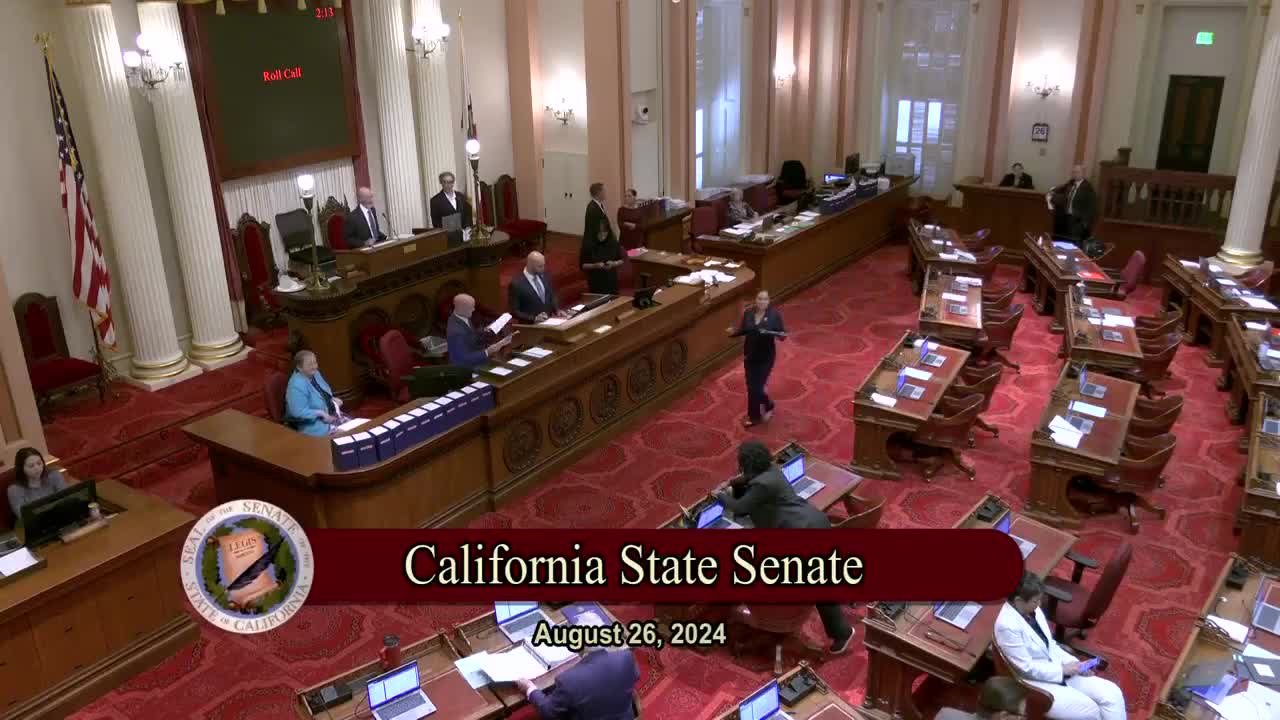 2MIN
Senate Floor
 4MIN
Senate Standing Committee on Judiciary
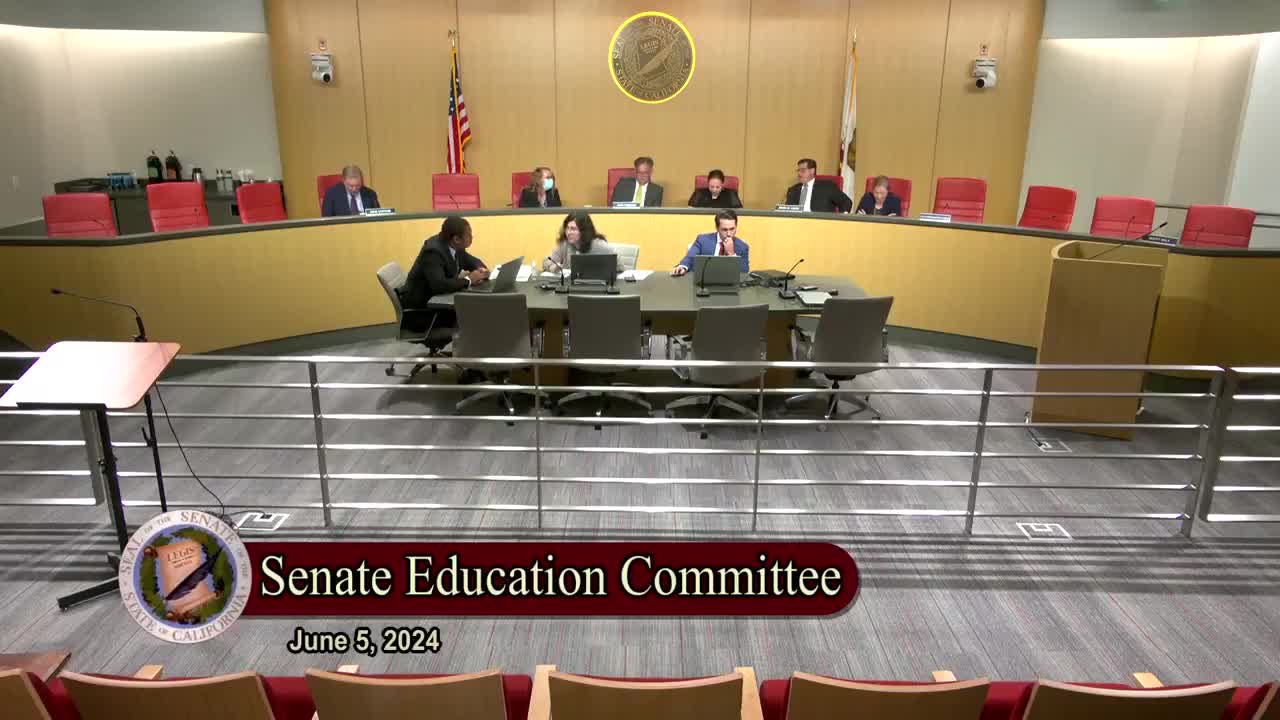 7MIN
Senate Standing Committee on Education
Bill Author

Bill Co-Author(s):