AB 2098: California Health Facilities Financing Authority Act: nondesignated hospitals: loan repayment.
- Session Year: 2023-2024
- House: Assembly
- Latest Version Date: 2024-09-05
Current Status:
Failed
(2024-09-28: Vetoed by Governor.)
Introduced
In Committee
First Chamber
In Committee
Second Chamber
Enacted
Under existing law, the California Health Facilities Financing Authority Act (act) authorizes the California Health Facilities Financing Authority to, among other things, make loans from the continuously appropriated California Health Facilities Financing Authority Fund to participating health institutions, as defined, for financing or refinancing the acquisition, construction, or remodeling of health facilities. Under the act, the authority is authorized to issue revenue bonds to provide the funds for achieving these purposes. Existing law appropriates $40,000,000 to provide cashflow loans to nondesignated public hospitals, as needed, due to the financial impacts of the COVID-19 public health emergency. Existing law requires the nondesignated public hospitals participating in this loan program to repay and discharge the loan within 24 months of the date of the loan.
This bill would extend the repayment requirements for nondesignated public hospitals participating in the loan program that had received a loan approval from, and entered into a loan and security agreement with, the authority by requiring those hospitals to begin monthly repayments on the loan 24 months after the date of the loan, and discharge the loan within 72 months of the date of the loan, as prescribed. The bill would require the monthly payments to be amortized over the term of the loan, at 0% interest. By removing restrictions limiting the expenditure of moneys appropriated for purposes of these loans, the bill would make an appropriation.
Under existing law, the California Health Facilities Financing Authority Act (act) authorizes the California Health Facilities Financing Authority to, among other things, make loans from the continuously appropriated California Health Facilities Financing Authority Fund to participating health institutions, as defined, for financing or refinancing the acquisition, construction, or remodeling of health facilities. Under the act, the authority is authorized to issue revenue bonds to provide the funds for achieving these purposes. Existing law appropriates $40,000,000 to provide cashflow loans to nondesignated public hospitals, as needed, due to the financial impacts of the COVID-19 public health emergency. Existing law requires the nondesignated public hospitals participating in this loan program to repay and discharge the loan within 24 months of the date of the loan.
This bill would extend the repayment requirements for nondesignated public hospitals participating in the loan program, that had received a loan approval from, and entered into a loan and security agreement with, the authority by requiring those hospitals to begin monthly repayments on the loan 24 months after the date of the loan, and discharge the loan within 72 months of the date of the loan, as prescribed. The bill would require the monthly payments to be amortized over the term of the loan, at 0% interest. By removing restrictions limiting the expenditure of moneys appropriated for purposes of these loans, the bill would make an appropriation.
Under existing law, the California Health Facilities Financing Authority Act (act) authorizes the California Health Facilities Financing Authority to, among other things, make loans from the continuously appropriated California Health Facilities Financing Authority Fund to participating health institutions, as defined, for financing or refinancing the acquisition, construction, or remodeling of health facilities. Under the act, the authority is authorized to issue revenue bonds to provide the funds for achieving these purposes. Existing law appropriates $40,000,000 to provide cashflow loans to nondesignated public hospitals, as needed, due to the financial impacts of the COVID-19 public health emergency. Existing law requires the nondesignated public hospitals participating in this loan program to repay and discharge the loan within 24 months of the date of the loan.
This bill would extend the repayment requirements for nondesignated public hospitals participating in the loan program, by requiring those hospitals to begin monthly repayments on the loan 24 months after the date of the loan, and discharge the loan within 72 months of the date of the loan, as prescribed. The bill would require the monthly payments to be amortized over the term of the loan, at 0% interest. By removing restrictions limiting the expenditure of moneys appropriated for purposes of these loans, the bill would make an appropriation.
The following definitions apply for purposes of this section:
(a)Authority means the California Health Facilities Financing Authority.
(b)Nondesignated public hospital means a public hospital as that term is defined in subdivision (l) of Section 14165.55 of the Welfare and Institutions Code, excluding those affiliated with county health systems.
129401.(a)The authority shall extend the repayment period as described in subdivision (b) for nondesignated public hospitals participating in the loan program authorized under Provision (1) of Item 0977-101-0001 of Section 2.00 of the Budget Act of 2022 (Chapter 45 of the Statutes of 2022) that had received a loan approval from, and entered into a loan and security agreement with, the authority.
(b)Notwithstanding Provision (1)(e) of Item 0977-101-0001 of Section 2.00 of the Budget Act of 2022 (Chapter 45 of the Statutes of 2022) and any other law to the contrary, a nondesignated public hospital participating in the loan program described in subdivision (a) that had received a loan approval from, and entered into a loan and security agreement with, the authority shall be required to begin monthly repayments on the loan 24 months after the date of that loan, and shall discharge the loan within 72 months of the date of that loan. The monthly payments shall be amortized over the term of the loan, at 0 percent interest. There shall be no prepayment penalty.
(c)Except as provided in subdivision (b), this section shall not be construed to amend or otherwise affect the requirements of, or the authorities conferred to implement, the loan program pursuant to Provision (1) of Item 0977-101-0001 of Section 2.00 of the Budget Act of 2022 (Chapter 45 of the Statutes of 2022).
The following definitions apply for purposes of this section:
(a)Authority means the California Health Facilities Financing Authority.
(b)Nondesignated public hospital means a public hospital as that term is defined in subdivision (l) of Section 14165.55 of the Welfare and Institutions Code, excluding those affiliated with county health systems.
129400.129401.(a)The California Health Facilities Financing Authority authority shall extend the repayment period as described in subdivision (b) for nondesignated public hospitals participating in the loan program authorized under Provision (1) of Item 0977-101-0001 of Section 2.00 of the Budget Act of 2022 (Chapter 45 of the Statutes of 2022). 2022) that had received a loan approval from, and entered into a loan and security agreement with, the authority.
(b)Notwithstanding Provision (1)(e) of Item 0977-101-0001 of Section 2.00 of the Budget Act of 2022 (Chapter 45 of the Statutes of 2022) and any other law to the contrary, a nondesignated public hospital participating in the loan program described in subdivision (a) that had received a loan approval from, and entered into a loan and security agreement with, the authority shall be required to begin monthly repayments on the loan 24 months after the date of that loan, and shall discharge the loan within 72 months of the date of that loan. The monthly payments shall be amortized over the term of the loan, at 0 percent interest. There shall be no prepayment penalty.
(c)Except as provided in subdivision (b), this section shall not be construed to amend or otherwise affect the requirements of, or the authorities conferred to implement, the loan program pursuant to Provision (1) of Item 0977-101-0001 of Section 2.00 of the Budget Act of 2022 (Chapter 45 of the Statutes of 2022).
(d)For purposes of this section, nondesignated public hospital means a public hospital as that term is defined in subdivision (l) of Section 14165.55 of the Welfare and Institutions Code, excluding those affiliated with county health systems.(a)The California Health Facilities Financing Authority shall extend the repayment period as described in subdivision (b) for nondesignated public hospitals participating in the loan program authorized under Provision (1) of Item 0977-101-0001 of Section 2.00 of the Budget Act of 2022 (Chapter 45 of the Statutes of 2022).
(b)Notwithstanding Provision (1)(e) of Item 0977-101-0001 of Section 2.00 of the Budget Act of 2022 (Chapter 45 of the Statutes of 2022) and any other law to the contrary, a nondesignated public hospital participating in the loan program described in subdivision (a) shall be required to begin monthly repayments on the loan 24 months after the date of that loan, and shall discharge the loan within 72 months of the date of that loan. The monthly payments shall be amortized over the term of the loan, at 0 percent interest. There shall be no prepayment penalty.
(c)Except as provided in subdivision (b), this section shall not be construed to amend or otherwise affect the requirements of, or the authorities conferred to implement, the loan program pursuant to Provision (1) of Item 0977-101-0001 of Section 2.00 of the Budget Act of 2022 (Chapter 45 of the Statutes of 2022).
(d)For purposes of this section, nondesignated public hospital means a public hospital as that term is defined in subdivision (l) of Section 14165.55 of the Welfare and Institutions Code, excluding those affiliated with county health systems.
SECTION 1.Section 47 of Chapter 45 of the Statutes of 2022 is amended to read:Sec. 47.Item 0977-101-0001 of Section 2.00 of the Budget Act of 2022 is amended to read:0977-101-0001For local assistance, California Health Facilities Financing Authority65,000,000Schedule:(1)0885-Health Facilities Grants and Loans65,000,000Provisions:1.(a)The amount appropriated in this item is available for the California Health Facilities Financing Authority to provide cashflow loans not to exceed $40,000,000 to nondesignated public hospitals, as needed, due to the financial impacts of the COVID-19 public health emergency.(b)Of the funds identified in subprovision (a), the California Health Facilities Financing Authority may allocate an amount not to exceed one percent of each hospitals loan. The Department of Finance may transfer up to $400,000 to Item 0977-001-0001 to administer the loans. Any funds transferred shall be available for encumbrance or expenditure until June 30, 2025.(c)The California Health Facilities Financing Authority shall determine, in consultation with nondesignated public hospitals, the application process, eligibility criteria, and methodology for distribution of the loans pursuant to this provision.(d)In administering the loan program in this item, the California Health Facilities Financing Authority shall not be subject to the rulemaking provisions of the Administrative Procedure Act (Chapter 3.5 (commencing with Section 11340) of Part 1 of Division 3 of Title 2 of the Government Code).(e)Notwithstanding any other law, a nondesignated public hospital participating in the loan program described in this item shall be required to begin monthly repayments on the loan 24 months after the date of the loan, and shall discharge the loan within 72 months of the date of the loan. The monthly payments shall be amortized over the term of the loan, at zero percent interest. There shall be no prepayment penalty.(f)Security for the cashflow loans in subprovisions (a) and (b) will be Medi-Cal reimbursements due to these nondesignated public hospitals from the State Department of Health Care Services. The California Health Facilities Financing Authoritys recoupment of these cashflow loans may not exceed 20 percent of the nondesignated public hospitals respective Medi-Cal checkwrite payments until the loans amount have been satisfied.(g)For purposes of this provision, the following definitions apply:(1)Nondesignated public hospital means a public hospital as that term is defined in subdivision (l) of Section 14165.55 of the Welfare and Institutions Code, excluding those affiliated with county health systems.2.(a)Of the amount appropriated in this item, $25,000,000 is available for encumbrance or expenditure until June 30, 2028, for the California Health Facilities Financing Authority to implement the Specialty Dental Clinic Grant Program to support the construction, expansion, modification, or adaptation of specialty dental clinics in California to increase access to oral health care for the special health care needs populations.(b)The Department of Finance may transfer up to $1,250,000 to Item 0977-001-0001 to administer the grants. Any funds transferred shall be available for encumbrance or expenditure until June 30, 2030.(c)The California Health Facilities Finance Authority shall determine, in consultation with the California Dental Association and other stakeholders representing patients with special health care needs, disability and consumer advocates, and specialty dental providers, the competitive grant program application process, eligibility criteria, and methodology for distribution of the grants, up to $5,000,000 per eligible entity, pursuant to this provision.(d)The California Health Facilities Financing Authority shall prioritize applications that do the following: support timely access, reduce geographic shortages, increase equity, and support quality of care, giving priority to applications that include plans to reduce the need for dental care using sedation or general anesthesia, including, but not limited to, prevention, early intervention, behavior support services and intervention, provider education, and community outreach activities that bring care to community sites.(e)Entities shall meet the criteria established by the California Health Facilities Financing Authority, which, at a minimum, shall include:(1)A commitment to provide services to special needs populations, regardless of payer or health insurance provider, for a minimum of ten years upon final completion of construction, expansion, modification, or adaption of specialty dental clinics. The special needs population shall constitute at least 50 percent of the facilitys total patient caseload. To the extent an eligible entity does not maintain the minimum patient caseload above, the entity shall repay the amount of the grant back to the California Health Facilities Financing Authority within five years at an interest rate established by the California Health Facilities Financing Authority(2)The eligible entity shall be enrolled and certified as a provider with the Medi-Cal program and, if applicable, provide copies of valid contracts with local Medi-Cal managed care plans.(3)Submission of plans to the California Health Facilities Financing Authority that demonstrate the proposed entitys ability to serve patients with physical, cognitive, or developmental disabilities.(4)Proof of appropriate licensure of the facility or providers, including, but not limited to, professional licensure and applicable permits for general anesthesia, medical general anesthesia, conscious sedation, and oral conscious sedation.(h)Special health care needs populations include children and adults who have disabilities that prevent them from receiving routine or specialty care due to their physical, developmental, or cognitive condition.(i)Notwithstanding subdivision (e) of Section 15432 of the Government Code, eligible entities may include the following:(1)Facilities licensed under Chapter 1 (commencing with Section 1200) of Division 2 of the Health and Safety Code that provide, or intend to provide, dental services.(2)Facilities licensed under Section 1250 of the Health and Safety Code that provide, or intend to provide, dental services.(3)Licensed providers with the Medical or Dental Board of California that provide, or intend to provide, dental services.(4)A dental college located in the state approved by the California Dental Board or the Commission on Dental Accreditation of the American Dental Association.(j)Notwithstanding Chapter 3.5 (commencing with Section 11340) of Part 1 of Division 3 of Title 2 of the Government Code, the California Health Facilities Financing Authority may implement, interpret, or make specific this provision, in whole or in part, by means of information notices or other similar instructions, without taking any further regulatory action.(k)For purposes of implementing this provision, the California Health Facilities Financing Authority may enter into exclusive or nonexclusive contracts, or amend existing contracts, on a bid or negotiated basis. Contracts entered into or amended pursuant to this provision shall be exempt from Chapter 6 (commencing with Section 14825) of Part 5.5 of Division 3 of Title 2 of the Government Code, Section 19130 of the Government Code, and Part 2 (commencing with Section 10100) of Division 2 of the Public Contract Code.0977-101-0001For local assistance, California Health Facilities Financing Authority | 65,000,000 | ||||||
| Schedule: | |||||||
| (1) | 0885-Health Facilities Grants and Loans | 65,000,000 | |||||
| Provisions: | |||||||
| 1. | (a) | The amount appropriated in this item is available for the California Health Facilities Financing Authority to provide cashflow loans not to exceed $40,000,000 to nondesignated public hospitals, as needed, due to the financial impacts of the COVID-19 public health emergency. | |||||
| (b) | Of the funds identified in subprovision (a), the California Health Facilities Financing Authority may allocate an amount not to exceed one percent of each hospitals loan. The Department of Finance may transfer up to $400,000 to Item 0977-001-0001 to administer the loans. Any funds transferred shall be available for encumbrance or expenditure until June 30, 2025. | ||||||
| (c) | The California Health Facilities Financing Authority shall determine, in consultation with nondesignated public hospitals, the application process, eligibility criteria, and methodology for distribution of the loans pursuant to this provision. | ||||||
| (d) | In administering the loan program in this item, the California Health Facilities Financing Authority shall not be subject to the rulemaking provisions of the Administrative Procedure Act (Chapter 3.5 (commencing with Section 11340) of Part 1 of Division 3 of Title 2 of the Government Code). | ||||||
| (e) | Notwithstanding Sections 15432 and 15451.5 of the Government Code, nondesignated public hospitals shall be required to repay and discharge the loan within 24 months of the date of the loan. Notwithstanding any other law, a nondesignated public hospital participating in the loan program described in this item shall be required to begin monthly repayments on the loan 24 months after the date of the loan, and shall discharge the loan within 72 months of the date of the loan. The monthly payments shall be amortized over the term of the loan, at zero percent interest. There shall be no prepayment penalty. | ||||||
| (f) | Security for the cashflow loans in subprovisions (a) and (b) will be Medi-Cal reimbursements due to these nondesignated public hospitals from the State Department of Health Care Services. The California Health Facilities Financing Authoritys recoupment of these cashflow loans may not exceed 20 percent of the nondesignated public hospitals respective Medi-Cal checkwrite payments until the loans amount have been satisfied. | ||||||
| (g) | For purposes of this provision, the following definitions apply: | ||||||
| (1) | Nondesignated public hospital means a public hospital as that term is defined in subdivision (l) of Section 14165.55 of the Welfare and Institutions Code, excluding those affiliated with county health systems. | ||||||
| 2. | (a) | Of the amount appropriated in this item, $25,000,000 is available for encumbrance or expenditure until June 30, 2028, for the California Health Facilities Financing Authority to implement the Specialty Dental Clinic Grant Program to support the construction, expansion, modification, or adaptation of specialty dental clinics in California to increase access to oral health care for the special health care needs populations. | |||||
| (b) | The Department of Finance may transfer up to $1,250,000 to Item 0977-001-0001 to administer the grants. Any funds transferred shall be available for encumbrance or expenditure until June 30, 2030. | ||||||
| (c) | The California Health Facilities Finance Authority shall determine, in consultation with the California Dental Association and other stakeholders representing patients with special health care needs, disability and consumer advocates, and specialty dental providers, the competitive grant program application process, eligibility criteria, and methodology for distribution of the grants, up to $5,000,000 per eligible entity, pursuant to this provision. | ||||||
| (d) | The California Health Facilities Financing Authority shall prioritize applications that do the following: support timely access, reduce geographic shortages, increase equity, and support quality of care, giving priority to applications that include plans to reduce the need for dental care using sedation or general anesthesia, including, but not limited to, prevention, early intervention, behavior support services and intervention, provider education, and community outreach activities that bring care to community sites. | ||||||
| (e) | Entities shall meet the criteria established by the California Health Facilities Financing Authority, which, at a minimum, shall include: | ||||||
| (1) | A commitment to provide services to special needs populations, regardless of payer or health insurance provider, for a minimum of ten years upon final completion of construction, expansion, modification, or adaption of specialty dental clinics. The special needs population shall constitute at least 50 percent of the facilitys total patient caseload. To the extent an eligible entity does not maintain the minimum patient caseload above, the entity shall repay the amount of the grant back to the California Health Facilities Financing Authority within five years at an interest rate established by the California Health Facilities Financing Authority | ||||||
| (2) | The eligible entity shall be enrolled and certified as a provider with the Medi-Cal program and, if applicable, provide copies of valid contracts with local Medi-Cal managed care plans. | ||||||
| (3) | Submission of plans to the California Health Facilities Financing Authority that demonstrate the proposed entitys ability to serve patients with physical, cognitive, or developmental disabilities. | ||||||
| (4) | Proof of appropriate licensure of the facility or providers, including, but not limited to, professional licensure and applicable permits for general anesthesia, medical general anesthesia, conscious sedation, and oral conscious sedation. | ||||||
| (h) | Special health care needs populations include children and adults who have disabilities that prevent them from receiving routine or specialty care due to their physical, developmental, or cognitive condition. | ||||||
| (i) | Notwithstanding subdivision (e) of Section 15432 of the Government Code, eligible entities may include the following: | ||||||
| (1) | Facilities licensed under Chapter 1 (commencing with Section 1200) of Division 2 of the Health and Safety Code that provide, or intend to provide, dental services. | ||||||
| (2) | Facilities licensed under Section 1250 of the Health and Safety Code that provide, or intend to provide, dental services. | ||||||
| (3) | Licensed providers with the Medical or Dental Board of California that provide, or intend to provide, dental services. | ||||||
| (4) | A dental college located in the state approved by the California Dental Board or the Commission on Dental Accreditation of the American Dental Association. | ||||||
| (j) | Notwithstanding Chapter 3.5 (commencing with Section 11340) of Part 1 of Division 3 of Title 2 of the Government Code, the California Health Facilities Financing Authority may implement, interpret, or make specific this provision, in whole or in part, by means of information notices or other similar instructions, without taking any further regulatory action. | ||||||
| (k) | For purposes of implementing this provision, the California Health Facilities Financing Authority may enter into exclusive or nonexclusive contracts, or amend existing contracts, on a bid or negotiated basis. Contracts entered into or amended pursuant to this provision shall be exempt from Chapter 6 (commencing with Section 14825) of Part 5.5 of Division 3 of Title 2 of the Government Code, Section 19130 of the Government Code, and Part 2 (commencing with Section 10100) of Division 2 of the Public Contract Code. | ||||||
|
Date
|
Status
|
|---|---|
| Sep 28, 2024 | Vetoed by Governor. |
| Sep 12, 2024 | Enrolled and presented to the Governor at 4 p.m. |
| Aug 31, 2024 | Senate amendments concurred in. To Engrossing and Enrolling. (Ayes 77. Noes 0.). |
| Aug 30, 2024 | In Assembly. Concurrence in Senate amendments pending. |
| Aug 30, 2024 | Read third time. Passed. Ordered to the Assembly. (Ayes 40. Noes 0.). |
| Aug 26, 2024 | Ordered to special consent calendar. |
| Aug 19, 2024 | Read second time. Ordered to third reading. |
| Aug 15, 2024 | Read second time and amended. Ordered returned to second reading. |
| Aug 15, 2024 | From committee: Amend, and do pass as amended. (Ayes 7. Noes 0.) (August 15). |
| Aug 5, 2024 | In committee: Referred to APPR suspense file. |
| Jun 26, 2024 | From committee: Do pass and re-refer to Com. on APPR with recommendation: To Consent Calendar. (Ayes 11. Noes 0.) (June 26). Re-referred to Com. on APPR. |
| Jun 5, 2024 | Referred to Com. on HEALTH. |
| May 24, 2024 | In Senate. Read first time. To Com. on RLS. for assignment. |
| May 23, 2024 | Read third time. Passed. Ordered to the Senate. (Ayes 72. Noes 0. Page 5646.) |
| May 6, 2024 | Ordered to third reading. |
| May 6, 2024 | From Consent Calendar. |
| May 2, 2024 | Read second time. Ordered to Consent Calendar. |
| May 1, 2024 | From committee: Do pass. To Consent Calendar. (Ayes 14. Noes 0.) (May 1). |
| Apr 17, 2024 | From committee: Do pass and re-refer to Com. on APPR. (Ayes 16. Noes 0.) (April 16). Re-referred to Com. on APPR. |
| Apr 1, 2024 | Re-referred to Com. on HEALTH. |
| Mar 21, 2024 | Referred to Coms. on HEALTH and BUDGET. |
| Mar 21, 2024 | From committee chair, with author's amendments: Amend, and re-refer to Com. on HEALTH. Read second time and amended. |
| Feb 6, 2024 | From printer. May be heard in committee March 7. |
| Feb 5, 2024 | Read first time. To print. |
|
Date
|
Description
|
Location
|
Votes
|
|
|---|---|---|---|---|
| Aug 31, 2024 | AB 2098 Garcia Concurrence in Senate Amendments | Assembly Floor |
Passed |
|
| Aug 30, 2024 | Special Consent AB2098 Garcia et al. By Padilla | Senate Floor |
Passed |
|
| Aug 15, 2024 | Do pass as amended | Senate Standing Committee on Appropriations |
Passed |
|
| Aug 5, 2024 | Placed on suspense file | Senate Standing Committee on Appropriations |
Passed |
|
| Jun 26, 2024 | Do pass, but first be re-referred to the Committee on [Appropriations] with the recommendation: To Consent Calendar | Senate Standing Committee on Health |
Passed |
|
| May 23, 2024 | AB 2098 Garcia Assembly Third Reading | Assembly Floor |
Passed |
|
| May 1, 2024 | Do pass. To Consent Calendar. | Assembly Standing Committee on Appropriations |
Passed |
|
| Apr 16, 2024 | Do pass and be re-referred to the Committee on [Appropriations] | Assembly Standing Committee on Health |
Passed |
This list shows positions taken on this bill by organizations on the date displayed, which is linked to the original source.
Positions by individuals are not included.
|
Organization
|
Position
|
Date
|
|---|---|---|
| Association of California Healthcare Districts | ** Support | |
| California Hospital Association | ** Support | |
| California Special Districts Association | ** Support | |
| Clinicas de Salud del Pueblo, Inc. | ** Support | |
| District Hospital Leadership Forum | ** Support | |
| El Centro Regional Medical Center | ** Support | |
| Hazel Hawkins Memorial Hospital | ** Support | |
| Kaweah Health Care District | ** Support | |
| Oak Valley Hospital District | ** Support | |
| Palo Verde Hospital | ** Support | |
| Palomar Health | ** Support | |
| Pioneer Healthcare Districts | ** Support | |
| San Gorgonio Memorial Hospital | ** Support | |
| Sonoma Valley Hospital | ** Support | |
| TODEC Legal Center | ** Support | |
| Tri-City Medical Center | ** Support |
GOVERNOR'S VETO
GV Bill Id:AB 2098
Author:(Garcia)
As Enrolled Ver:September 5, 2024
2/3 vote
SUMMARY
Extends the repayment requirements for nondesignated public hospitals participating in a California Health Facilities Financing Authority (CHFFA) loan program to require monthly repayments on the loan 24 months after the date of that loan.
Senate Amendments
Clarify that the provisions of the bill apply to nondesignated public hospitals participating in the loan program that had received a loan approval from, and entered into a loan and security agreement with CHFFA.
Governor's Veto Message
This bill would change the repayment period for certain bridge loans provided to district hospitals through the California Health Facilities Financing Authority (CHFFA) from requiring repayment within two years of the date of the loan, to instead requiring hospitals to make monthly payments within 24 months of the date of the loan and full repayment within 72 months.
Hospitals are critical to the health and safety of our communities, and it is a priority of my Administration to assist hospitals that are struggling financially. For this reason, together with the Legislature, in 2022 we funded the Public Hospital Bridge Loan Program II with $40 million, and we authorized $300 million for the Distressed Hospital Loan Program. Many of the hospitals affected by this bill received both. While I support efforts to ensure loan repayment requirements are feasible, this bill would advantage one subset of hospital loans above others that did not receive such an extension. Extending the timeline for repayment will affect our budget structure in the out years, and would be better discussed as a part of the annual budget process.
COMMENTS
- CHFFA. CHFFA administers various loan programs for public and non-profit hospitals. In order to meet the requirements for CHFFA financing, an institution must be a public hospital, a private non-profit corporation, or an association authorized by the laws of California to provide or operate a health facility and undertake the financing or refinancing of a project. Generally, non-profit, licensed health facilities in the State of California including adult day health centers, community clinics, developmentally disabled centers, and drug and alcohol rehabilitation centers are eligible for financing. Applicants must be approved by a resolution of the CHFFA Members at a regularly scheduled public meeting. In addition to initial eligibility, CHFFA requires borrowers to comply with its Bond Issuance Guidelines per bond rating category and provide loan security provisions and bond covenants that correspond with its rating. Savings resulting from issuance of tax-exempt bonds for borrowers must be transferred to the consuming public via lower or contained costs for delivery of health services.
- CHFFA "Bridge" loans. During the pandemic district and municipal hospitals were struggling with staffing shortages, supply shortages, and increased expenses. The Department of Health Care Services also transitioned its Medi-Cal managed care program from a Fiscal Year to Calendar Year and this impacted the timing of Medi-Cal supplemental programs, delaying over a $100 million of payments annually. The District Hospital Leadership Forum (DHLF), the sponsor of this bill, worked with the Legislature on two $40 million loan programs, accomplished through budget actions in 2021 and 2022, administered by CHFFA to "bridge" some of the cash flow gap for those hospitals most in need. These interest free loans had a two-year repayment term as it was expected that hospitals would exit the pandemic and return to a better fiscal situation. Payments on the first round of loans, implemented in the 2021 budget bill are coming due this year, and are not affected by the provisions of this bill.
This bill seeks to change the loan repayment terms for the loans awarded in the 2022 budget bill, to 24 months after the date of the loan, and to discharge the loan within 72 months of the date of that loan, similar to the Distressed Hospital Loan Program (DHLP).
- DHLP. AB 112 (Committee on Budget), Chapter 6, Statutes of 2023, established the DHLP, until January 1, 2032, which will provide interest free cashflow loans to not-for-profit hospitals and public hospitals, as defined, in significant financial distress, or to governmental entities representing closed hospitals. The DHLP is jointly administered by the Department of Health Care Access and Information (HCAI) and CHFFA. The following hospitals received a total of $300 million in financial support:
- Beverly Hospital $5 million*;
- Dameron Hospital Association $29 million;
- El Centro Regional Medical Center (El Centro) $28 million;
- Hayward Sisters Hospital, dba St. Rose Hospital $17.65 million;
- Hazel Hawkins Memorial $10 million (HH subsequently declared bankruptcy and declined it loan award);
- John C. Fremont Healthcare District $9.35 million;
- Kaweah Delta Health Care District $20.75 million;
- Madera Community Hospital $2 million**;
- Martin Luther King, Jr. Community Hospital $14 million;
- Palo Verde Hospital $8.5 million;
- Pioneers Memorial Healthcare District $28 million;
- Ridgecrest Regional Hospital $5.5 million;
- San Gorgonio Memorial Healthcare District $9.8 million;
- Sonoma Valley Hospital $3.1 million;
- TriCity Medical Center $33.2 million; and,
- Watsonville Community Hospital $8.3 million.
* Beverly Hospital in Montebello was awarded a $5 million dollar bridge loan to cover operational costs while the hospital was purchased out of bankruptcy, which they subsequently declined.
** Madera Community Hospital, which has been closed since December 2022 and filed for bankruptcy in March 2023, received a $2 million bridge loan to cover basic operational costs for the facility while working with potential partners to reopen. On April 8, 2024, it was announced that Madera was approved for a $57 million DHLP loan, and that the Department of Public Health approved a Change of Management Application filed by American Advanced Management, Inc.
The loans are at zero-interest and are repayable over 72 months, with an initial 18-month grace period at the beginning of the loan term. The program will sunset on December 31, 2031. HCAI and CHFFA received 30 applicants for the program, however, not all hospitals were awarded funds. During the extensive loan application review process, HCAI considered a diverse set of criteria. Hospitals that demonstrated the greatest levels of financial distress, at-risk of closing in the near term, and had a well-founded plan to remain open and provide services and care, were prioritized and issued loans through the program. Hospitals that did not receive funds from the program demonstrated less financial distress when compared to other hospitals that applied. Many of the district hospitals that received bridge loans, also received DHLP funds.
According to the Author
Hospitals and health care providers are still facing extremely high levels of inflation, and for the district and municipal hospitals already experiencing financial challenges, repaying these loans at this time is pushing some to the brink of financial insolvency. The author concludes that by giving these hospitals an additional four years to repay the loans, we can ensure that vital services will be available to patients when and where they need it.
Arguments in Support
The DHLF is the sponsor of this bill and notes that in 2023, the Legislature established a new DHLP to provide loans to California's most vulnerable hospitals. DHLF states that because so many district and municipal hospitals are on the brink of financial insolvency, nearly half of the DHLP loans and available funds were allocated to support district and municipal hospitals. Unfortunately, since the public health emergency, California's district and municipal hospitals have liquidated their reserves and now are facing significant financial distress—struggling with rising inflation and increased labor costs. Given that district and municipal hospitals only represent 8% of hospitals statewide, qualifying for this level of support with short-term loans provides a real-time assessment of the financial status for these providers and the inherent risk of access to health care in the communities they serve.
DHLF contends that these public safety net hospitals need more time to repay the CHFFA bridge loans and this bill provides them with the much-needed lifeline.
Arguments in Opposition
There is no known opposition to this bill.
FISCAL COMMENTS
According to the Senate Appropriations Committee, General Fund costs of $383,958 in fiscal years 2025-26 through 2028-29 for state administration for CHFFA.
VOTES
ASM HEALTH: 16-0-0
YES: Bonta, Waldron, Aguiar-Curry, Arambula, Wendy Carrillo, Flora, Haney, Jones-Sawyer, Maienschein, McCarty, Joe Patterson, Rodriguez, Sanchez, Santiago, Schiavo, Weber
ASM APPROPRIATIONS: 14-0-1
YES: Wicks, Sanchez, Arambula, Bryan, Calderon, Wendy Carrillo, Dixon, Mike Fong, Grayson, Haney, Hart, Pellerin, Ta, Villapudua
ABS, ABST OR NV: Jim Patterson
ASSEMBLY FLOOR: 72-0-8
YES: Addis, Aguiar-Curry, Alanis, Alvarez, Arambula, Bains, Bauer-Kahan, Bennett, Berman, Boerner, Bonta, Bryan, Calderon, Juan Carrillo, Wendy Carrillo, Chen, Connolly, Davies, Dixon, Flora, Mike Fong, Vince Fong, Friedman, Gabriel, Gallagher, Garcia, Gipson, Grayson, Haney, Hart, Hoover, Irwin, Jackson, Jones-Sawyer, Kalra, Lackey, Lee, Low, Lowenthal, Maienschein, McCarty, McKinnor, Muratsuchi, Stephanie Nguyen, Ortega, Pacheco, Papan, Jim Patterson, Joe Patterson, Pellerin, Petrie-Norris, Quirk-Silva, Ramos, Rendon, Reyes, Rodriguez, Sanchez, Santiago, Schiavo, Soria, Ta, Ting, Valencia, Villapudua, Waldron, Wallis, Ward, Weber, Wilson, Wood, Zbur, Robert Rivas
ABS, ABST OR NV: Cervantes, Megan Dahle, Essayli, Holden, Mathis, Luz Rivas, Blanca Rubio, Wicks
SENATE FLOOR: 40-0-0
YES: Allen, Alvarado-Gil, Archuleta, Ashby, Atkins, Becker, Blakespear, Bradford, Caballero, Cortese, Dahle, Dodd, Durazo, Eggman, Glazer, Gonzalez, Grove, Hurtado, Jones, Laird, Limón, McGuire, Menjivar, Min, Newman, Nguyen, Niello, Ochoa Bogh, Padilla, Portantino, Roth, Rubio, Seyarto, Skinner, Smallwood-Cuevas, Stern, Umberg, Wahab, Wiener, Wilk
ASSEMBLY FLOOR: 77-0-2
YES: Addis, Aguiar-Curry, Alanis, Alvarez, Arambula, Bains, Bauer-Kahan, Bennett, Berman, Boerner, Bonta, Bryan, Juan Carrillo, Wendy Carrillo, Cervantes, Chen, Connolly, Megan Dahle, Davies, Dixon, Essayli, Flora, Mike Fong, Friedman, Gabriel, Gallagher, Garcia, Gipson, Grayson, Haney, Hart, Holden, Hoover, Irwin, Jackson, Jones-Sawyer, Kalra, Lackey, Lee, Low, Lowenthal, Maienschein, Mathis, McCarty, McKinnor, Muratsuchi, Stephanie Nguyen, Pacheco, Papan, Jim Patterson, Joe Patterson, Pellerin, Petrie-Norris, Quirk-Silva, Ramos, Rendon, Reyes, Luz Rivas, Rodriguez, Blanca Rubio, Sanchez, Santiago, Schiavo, Soria, Ta, Ting, Valencia, Villapudua, Waldron, Wallis, Ward, Weber, Wicks, Wilson, Wood, Zbur, Robert Rivas
ABS, ABST OR NV: Calderon, Ortega
UPDATED
VERSION: September 5, 2024
CONSULTANT: Lara Flynn / HEALTH / (916) 319-2097 FN: 0005144
CONCURRENCE IN SENATE AMENDMENTS
CSA1 Bill Id:AB 2098
Author:(Garcia)
As Amended Ver:August 15, 2024
2/3 vote
SUMMARY
Extends the repayment requirements for nondesignated public hospitals participating in a California Health Facilities Financing Authority (CHFFA) loan program to require monthly repayments on the loan 24 months after the date of that loan.
Senate Amendments
Clarify that the provisions of the bill apply to nondesignated public hospitals participating in the loan program that had received a loan approval from, and entered into a loan and security agreement with CHFFA.
COMMENTS
- CHFFA. CHFFA administers various loan programs for public and non-profit hospitals. In order to meet the requirements for CHFFA financing, an institution must be a public hospital, a private non-profit corporation, or an association authorized by the laws of California to provide or operate a health facility and undertake the financing or refinancing of a project. Generally, non-profit, licensed health facilities in the State of California including adult day health centers, community clinics, developmentally disabled centers, and drug and alcohol rehabilitation centers are eligible for financing. Applicants must be approved by a resolution of the CHFFA Members at a regularly scheduled public meeting. In addition to initial eligibility, CHFFA requires borrowers to comply with its Bond Issuance Guidelines per bond rating category and provide loan security provisions and bond covenants that correspond with its rating. Savings resulting from issuance of tax-exempt bonds for borrowers must be transferred to the consuming public via lower or contained costs for delivery of health services.
- CHFFA "Bridge" loans. During the pandemic district and municipal hospitals were struggling with staffing shortages, supply shortages, and increased expenses. The Department of Health Care Services also transitioned its Medi-Cal managed care program from a Fiscal Year to Calendar Year and this impacted the timing of Medi-Cal supplemental programs, delaying over a $100 million of payments annually. The District Hospital Leadership Forum (DHLF), the sponsor of this bill, worked with the Legislature on two $40 million loan programs, accomplished through budget actions in 2021 and 2022, administered by CHFFA to "bridge" some of the cash flow gap for those hospitals most in need. These interest free loans had a two-year repayment term as it was expected that hospitals would exit the pandemic and return to a better fiscal situation. Payments on the first round of loans, implemented in the 2021 budget bill are coming due this year, and are not affected by the provisions of this bill.
This bill seeks to change the loan repayment terms for the loans awarded in the 2022 budget bill, to 24 months after the date of the loan, and to discharge the loan within 72 months of the date of that loan, similar to the Distressed Hospital Loan Program (DHLP).
- DHLP. AB 112 (Committee on Budget), Chapter 6, Statutes of 2023, established the DHLP, until January 1, 2032, which will provide interest free cashflow loans to not-for-profit hospitals and public hospitals, as defined, in significant financial distress, or to governmental entities representing closed hospitals. The DHLP is jointly administered by the Department of Health Care Access and Information (HCAI) and CHFFA. The following hospitals received a total of $300 million in financial support:
- Beverly Hospital $5 million*;
- Dameron Hospital Association $29 million;
- El Centro Regional Medical Center (El Centro) $28 million;
- Hayward Sisters Hospital, dba St. Rose Hospital $17.65 million;
- Hazel Hawkins Memorial $10 million (HH subsequently declared bankruptcy and declined it loan award);
- John C. Fremont Healthcare District $9.35 million;
- Kaweah Delta Health Care District $20.75 million;
- Madera Community Hospital $2 million**;
- Martin Luther King, Jr. Community Hospital $14 million;
- Palo Verde Hospital $8.5 million;
- Pioneers Memorial Healthcare District $28 million;
- Ridgecrest Regional Hospital $5.5 million;
- San Gorgonio Memorial Healthcare District $9.8 million;
- Sonoma Valley Hospital $3.1 million;
- TriCity Medical Center $33.2 million; and,
- Watsonville Community Hospital $8.3 million.
* Beverly Hospital in Montebello was awarded a $5 million dollar bridge loan to cover operational costs while the hospital was purchased out of bankruptcy, which they subsequently declined.
** Madera Community Hospital, which has been closed since December 2022 and filed for bankruptcy in March 2023, received a $2 million bridge loan to cover basic operational costs for the facility while working with potential partners to reopen. On April 8, 2024, it was announced that Madera was approved for a $57 million DHLP loan, and that the Department of Public Health approved a Change of Management Application filed by American Advanced Management, Inc.
The loans are at zero-interest and are repayable over 72 months, with an initial 18-month grace period at the beginning of the loan term. The program will sunset on December 31, 2031. HCAI and CHFFA received 30 applicants for the program, however, not all hospitals were awarded funds. During the extensive loan application review process, HCAI considered a diverse set of criteria. Hospitals that demonstrated the greatest levels of financial distress, at-risk of closing in the near term, and had a well-founded plan to remain open and provide services and care, were prioritized and issued loans through the program. Hospitals that did not receive funds from the program demonstrated less financial distress when compared to other hospitals that applied. Many of the district hospitals that received bridge loans, also received DHLP funds.
According to the Author
Hospitals and health care providers are still facing extremely high levels of inflation, and for the district and municipal hospitals already experiencing financial challenges, repaying these loans at this time is pushing some to the brink of financial insolvency. The author concludes that by giving these hospitals an additional four years to repay the loans, we can ensure that vital services will be available to patients when and where they need it.
Arguments in Support
The DHLF is the sponsor of this bill and notes that in 2023, the Legislature established a new DHLP to provide loans to California's most vulnerable hospitals. DHLF states that because so many district and municipal hospitals are on the brink of financial insolvency, nearly half of the DHLP loans and available funds were allocated to support district and municipal hospitals. Unfortunately, since the public health emergency, California's district and municipal hospitals have liquidated their reserves and now are facing significant financial distress—struggling with rising inflation and increased labor costs. Given that district and municipal hospitals only represent 8% of hospitals statewide, qualifying for this level of support with short-term loans provides a real-time assessment of the financial status for these providers and the inherent risk of access to health care in the communities they serve.
DHLF contends that these public safety net hospitals need more time to repay the CHFFA bridge loans and this bill provides them with the much-needed lifeline.
Arguments in Opposition
There is no known opposition to this bill.
FISCAL COMMENTS
According to the Senate Appropriations Committee, General Fund costs of $383,958 in fiscal years 2025-26 through 2028-29 for state administration for CHFFA.
VOTES:
ASM HEALTH: 16-0-0
YES: Bonta, Waldron, Aguiar-Curry, Arambula, Wendy Carrillo, Flora, Haney, Jones-Sawyer, Maienschein, McCarty, Joe Patterson, Rodriguez, Sanchez, Santiago, Schiavo, Weber
ASM APPROPRIATIONS: 14-0-1
YES: Wicks, Sanchez, Arambula, Bryan, Calderon, Wendy Carrillo, Dixon, Mike Fong, Grayson, Haney, Hart, Pellerin, Ta, Villapudua
ABS, ABST OR NV: Jim Patterson
ASSEMBLY FLOOR: 72-0-8
YES: Addis, Aguiar-Curry, Alanis, Alvarez, Arambula, Bains, Bauer-Kahan, Bennett, Berman, Boerner, Bonta, Bryan, Calderon, Juan Carrillo, Wendy Carrillo, Chen, Connolly, Davies, Dixon, Flora, Mike Fong, Vince Fong, Friedman, Gabriel, Gallagher, Garcia, Gipson, Grayson, Haney, Hart, Hoover, Irwin, Jackson, Jones-Sawyer, Kalra, Lackey, Lee, Low, Lowenthal, Maienschein, McCarty, McKinnor, Muratsuchi, Stephanie Nguyen, Ortega, Pacheco, Papan, Jim Patterson, Joe Patterson, Pellerin, Petrie-Norris, Quirk-Silva, Ramos, Rendon, Reyes, Rodriguez, Sanchez, Santiago, Schiavo, Soria, Ta, Ting, Valencia, Villapudua, Waldron, Wallis, Ward, Weber, Wilson, Wood, Zbur, Robert Rivas
ABS, ABST OR NV: Cervantes, Megan Dahle, Essayli, Holden, Mathis, Luz Rivas, Blanca Rubio, Wicks
UPDATED
VERSION: August 15, 2024
CONSULTANT: Lara Flynn / HEALTH / (916) 319-2097, Natalie Pita / HEALTH / (916) 319-2097 FN: 0004168
SENATE RULES COMMITTEE Office of Senate Floor Analyses (916) 651-1520 Fax: (916) 327-4478 | AB 2098 |
THIRD READING
Bill No: AB 2098
Author: Garcia (D), et al.
Amended: 8/15/24 in Senate
Vote: 27
SENATE HEALTH COMMITTEE: 11-0, 6/26/24
AYES: Roth, Nguyen, Glazer, Gonzalez, Grove, Hurtado, Limón, Menjivar, Rubio, Smallwood-Cuevas, Wiener
SENATE APPROPRIATIONS COMMITTEE: 7-0, 8/15/24
AYES: Caballero, Jones, Ashby, Becker, Bradford, Seyarto, Wahab
ASSEMBLY FLOOR: 72-0, 5/23/24 - See last page for vote
SUBJECT: California Health Facilities Financing Authority Act: nondesignated hospitals: loan repayment
SOURCE: District Hospital Leadership Forum
DIGEST:
This bill extends the repayment period for specified bridge loans for district hospitals, made through the California Health Facilities Financing Authority under authorization and funding from the 2022 Budget Act and which are required to be repaid within two years of the date of the loan, to instead require hospitals to make monthly payments within 24 months of the date of the loan, and for the loan to be repaid within 72 months of the date of the loan.
ANALYSIS:
Existing law:
- Establishes the California Health Facilities Financing Authority (CHFFA), consisting of nine members, led by the State Treasurer who serves as the chair, and the executive director, who is appointed by the State Treasurer. States the intent of the Legislature to provide financing to health institutions that can demonstrate the financial feasibility of their projects, and that any savings experienced by the health institution be passed on to the consuming public through lower charges or containment of the rate of increase in hospital rates. [Government Code (GOV) §15430, et seq.]
- Permits CHFFA, among other powers, to make secured or unsecured loans to any participating health institution in connection with the financing of a project or working capital. [GOV §15438]
- Defines “participating health institution,” for purposes of being able to participate in CHFFA financing mechanisms, as a city or county, a district hospital, or a nonprofit corporation that operates a health facility, and that undertakes the financing of the construction, renovation, furnishing, or equipping of, or financing or refinancing the acquisition of, a health facility. [GOV §15432(e) and (f)]
- Defines “working capital” as moneys to be used by, or on behalf of, a participating health institution to pay or prepay maintenance or operation expenses or any other costs that would be treated as an expense item, under generally accepted accounting principles, in connection with the ownership or operation of a health facility, including, but not limited to, reserves for maintenance or operation expenses, and interest not to exceed two years on any loan for working capital. [GOV §15432(h)]
- Requires a participating health institution that is a private nonprofit corporation or association and that borrows money to finance working capital, other than as part of the cost of a project, to repay and discharge the loan within 24 months of the loan date. [GOV §15451.5]
- Defines “designated public hospital,” for purposes of various provisions of law governing the Medi-Cal program, as consisting of a list of hospitals that generally includes county hospitals and University of California hospitals. [Welfare and Institutions Code (WIC) §14166.1(d)]
- Defines “nondesignated public hospital” as a hospital that is not designated as a specialty hospital, and that is operated or owned by a local health care district, or that is owned by another public entity that is not among the list of “designated public hospitals” identified in 6) above. [WIC §14166.1(f)]
This bill:
- Requires CHFFA to extend the repayment period for nondesignated public hospitals participating in a specified loan program authorized by the Budget Act of 2022, known as the Nondesignated Public Hospital Bridge Loan Program II (Bridge Loan II), currently required to be paid off within 24 months of the date of the loan, by requiring these hospitals to instead begin making monthly payments 24 months after the date of the loan, and to discharge the loan within 72 months of the date of the loan. Requires the monthly payments to be amortized over the term of the loan at 0% interest.
- Prohibits this bill from being construed to amend or otherwise affect the requirements of the loan program beyond the extension of the repayment period and required monthly payments.
- Defines “nondesignated public hospital,” by cross referencing an existing definition of nondesignated public hospitals, but excluding those that are affiliated with county health systems.
Comments
- Author’s statement. According to the author, hospitals and health care providers are still facing extremely high levels of inflation, and for the district and municipal hospitals already experiencing financial challenges, repaying these loans at this time is pushing some to the brink of financial insolvency. By giving these hospitals an additional four years to repay the loans, we can ensure that vital services will be available to patients when and where they need them.
- Background on the Bridge Loan Programs. SB 170 (Skinner, Chapter 240, Statutes of 2021), which enacted the Budget Act of 2021, included a line item appropriating $40 million to CHFFA to “provide cash flow loans to nondesignated public hospitals as needed, due to the financial impacts of the COVID-19 public health emergency.” The loans are required to be repaid within 24 months of the date of the loan, and to be secured by Medi-Cal reimbursements that are due to the nondesignated public hospitals. CHFFA is permitted to recoup these cash flow loans at a maximum of 20% of their Medi-Cal payments until the loans are repaid. The following year, the Budget Act of 2022 enacted the Bridge Loan Program II, where another $40 million was appropriated to CHFFA for the same purpose. Under both of these programs, there was no monthly payment required, but the full amount was due at the end of the 24-month period. In addition to extending the repayment period out to 72 months, this bill is also requiring monthly payments to begin at 24 months.
All funds have been awarded from both programs. The initial $40 million was disbursed in two rounds, with 14 different hospitals getting loans. Nine hospitals received funding from the Bridge Loan Program II. According to information from the sponsor, loans from the first Bridge Loan Program became due in February of this year, and have all been paid in full. This bill only affects loans under the Bridge Loan Program II, which will start to become due in December of this year. Of the nine Bridge Loan Program II loans that are affected by this bill, loan amounts range from $600,000 for Palo Verde Healthcare District, to $9.85 million for Kaweah Delta Medical Center. - What led to the cash crunch for nondesignated public hospitals? While the Budget Acts that appropriated funds for both Bridge Loan Programs simply cited the “financial impacts of the COVID-19 public health emergency,” CHFFA’s website describes the programs as directed toward hospitals that are “affected by financial delays associated with the transition from the Public Hospital Redesign and Incentives in Medi-Cal Program (PRIME) to the Quality Incentive Program (QIP). Both PRIME and QIP are forms of quality incentive payment programs under Medi-Cal. Both designated public hospitals and nondesignated public hospitals were eligible to participate in the PRIME program, which lasted for five years, ending on June 30, 2020. Separately, QIP was established in 2017, but it was only for designated public hospitals initially. While payments under PRIME were distributed quarterly, the payments under QIP from Medi-Cal managed care plans were generally paid to hospitals two years in arrears. When the Department of Health Care Services (DHCS) switched from a state fiscal year to a calendar year for Medi-Cal rate setting (effective January 1, 2021), nondesignated public hospitals were added to the QIP program for the last six months of 2020 to help ease the transition from the termination of the PRIME program and the transition to calendar year Medi-Cal rate setting. While designated public hospitals had been participating in both PRIME and QIP since 2017, for nondesignated public hospitals, the transition from PRIME to QIP led to a loss of cash flow. This was compounded by the impact of the COVID-19 pandemic that was happening at the same time.
- Distressed Hospital Loan Program (DHLP) has similar six-year repayment. The author and sponsor point to the loan terms of the DHLP as a model for this bill. The DHLP was established through AB 112 (Committee on Budget, Chapter 6, Statutes of 2023), following the closure of Madera Community Hospital, in an effort to prevent further hospital closures and to help facilitate the reopening of Madera. AB 112 initially funded the DHLP at $150 million, but an additional $150 million was later appropriated to make it a $300 million loan program. After development of an application process and reviewing applications from 30 hospitals, the Department of Health Care Access and Information (HCAI) awarded loans to 17 hospitals. Under the terms of the DHLP, the loans are interest free, and hospitals are to begin making monthly payments 18 months following disbursement of the loan. The loans are required to be repaid within 72 months of the date of the loan. The DHLP also required HCAI to develop, in consultation with CHFFA and upon the approval of the Department of Finance, a process for hospitals who received DHLP loans to request forgiveness or loan modifications. According to HCAI, they are currently in the process of developing this application, and hope to have it completed by the end of this summer.
- Background on existing CHFFA programs. CHFFA was created to be the state's vehicle for providing financial assistance to public and nonprofit health care providers primarily through loans funded by the issuance of tax-exempt bonds. To this end, CHFFA administers the Bond Financing Program and the Tax-Exempt Equipment Financing Program. CHFFA also provides direct loans to small and rural health facilities through the Healthcare Expansion Loan Program (HELP) II Financing Program. Additionally, CHFFA administers several grant programs, including the Children's Hospital Programs, the Community Services Infrastructure Grant Program, and the Investment in Mental Health Wellness Grant Program. Under the Mental Health Wellness grant program, Counties can apply for funding to develop a continuum of crisis services to children and youth up to 21 years old in four categories: crisis residential treatment, crisis stabilization, mobile crisis support teams, and family respite care. There was an initial allocation of about $40 million for this Mental Health Wellness grant program.
By borrowing through CHFFA’s tax-exempt bond financing program, health facilities can likely obtain lower interest rates than they would through conventional bonds. Generally, non-profit, licensed health facilities in California, including adult day health centers, community clinics, skilled nursing facilities, developmentally disabled centers, hospitals, and drug and alcohol rehabilitation centers are eligible for CHFFA financing. Proceeds from CHFFA financing may be used for project-related costs, including: construction; remodeling and renovation; land acquisition (as part of the proposed project); acquisition of existing health facilities; purchase or lease of equipment; refinancing or refunding of prior debt; working capital for start-up facilities; costs of bond issuance; feasibility studies; and, reimbursement of prior expenses. Under statute, savings resulting from issuance of tax-exempt bonds for borrowers must be transferred to the consuming public through lower or contained costs for delivery of health services. Since its first bond issuance in 1981, CHFFA’s bond financing program has issued 639 bonds for an aggregate total of approximately $46 billion, with 275 health facilities availing themselves of this financing.
FISCAL EFFECT: Appropriation: Yes Fiscal Com.: Yes Local: No
According to Senate Appropriations Committee, General Fund costs of $383,958 in fiscal years 2025-26 through 2028-29 for state administration for CHFFA.
SUPPORT: (Verified 8/16/24)
District Hospital Leadership Forum (source)
Association of California Healthcare Districts
California Hospital Association
California Special Districts Association
Clinicas De Salud Del Pueblo, INC.
El Centro Regional Medical Center
Hazel Hawkins Memorial Hospital
Kaweah Health Care District
Oak Valley Hospital District
Palo Verde Hospital
Palomar Health
Pioneer Healthcare Districts
San Gorgonio Memorial Hospital
Sonoma Valley Hospital
Todec Legal Center
Tri-City Medical Center
OPPOSITION: (Verified 8/16/24)
None received
ARGUMENTS IN SUPPORT: This bill is sponsored by the District Hospital Leadership Forum (DHLF), which states that during the pandemic, district and municipal hospitals struggled with staffing shortages, supply shortages, and increased expenses like most hospitals in California. During that time, DHCS also transitioned the managed care rate setting practices for its contracted health plans from a state fiscal year to a calendar year, which delayed the issuance of more than $100 million worth of critical Medi-Cal supplemental payments to district and municipal hospitals. DHLF states that it worked with the Legislature to provide two $40 million loan programs to bridge the cash flow gap for these public safety net hospitals. These loans had a two-year repayment term as it was expected that hospitals would exit the pandemic and return to a better fiscal situation. Unfortunately, since the public health emergency, many facilities have liquidated their reserves and are facing significant financial distress. Despite these challenges, to date all the district and municipal hospitals that received Year 1 bridge loans have repaid those loans in full and on time. This bill provides district and municipal hospitals with the additional time needed to repay the Year 2 bridge loans.
ASSEMBLY FLOOR: 72-0, 5/23/24
AYES: Addis, Aguiar-Curry, Alanis, Alvarez, Arambula, Bains, Bauer-Kahan, Bennett, Berman, Boerner, Bonta, Bryan, Calderon, Juan Carrillo, Wendy Carrillo, Chen, Connolly, Davies, Dixon, Flora, Mike Fong, Vince Fong, Friedman, Gabriel, Gallagher, Garcia, Gipson, Grayson, Haney, Hart, Hoover, Irwin, Jackson, Jones-Sawyer, Kalra, Lackey, Lee, Low, Lowenthal, Maienschein, McCarty, McKinnor, Muratsuchi, Stephanie Nguyen, Ortega, Pacheco, Papan, Jim Patterson, Joe Patterson, Pellerin, Petrie-Norris, Quirk-Silva, Ramos, Rendon, Reyes, Rodriguez, Sanchez, Santiago, Schiavo, Soria, Ta, Ting, Valencia, Villapudua, Waldron, Wallis, Ward, Weber, Wilson, Wood, Zbur, Robert Rivas
NO VOTE RECORDED: Cervantes, Megan Dahle, Essayli, Holden, Mathis, Luz Rivas, Blanca Rubio, Wicks
Prepared by: Vincent D. Marchand / HEALTH / (916) 651-4111
8/19/24 10:47:18
**** END ****
SENATE COMMITTEE ON APPROPRIATIONS
Senator Anna Caballero, Chair
2023 - 2024 Regular Session
AB 2098 (Garcia) - California Health Facilities Financing Authority Act: nondesignated hospitals: loan repayment
Version: March 21, 2024 | Policy Vote: HEALTH 11 - 0 |
Urgency: No | Mandate: No |
Hearing Date: August 15, 2024 | Consultant: Agnes Lee |
Bill Summary:
AB 2098 would extend the loan repayment period under the Nondesignated Public Hospital Bridge Loan Program.
*********** ANALYSIS ADDENDUM – SUSPENSE FILE ***********
The following information is revised to reflect amendments
adopted by the committee on August 15, 2024
Fiscal Impact:
General Fund costs of $383,958 in fiscal years 2025-26 through 2028-29 for state administration for the California Health Facilities Financing Authority (CHFFA).
Author Amendments:
Further clarify that a nondesignated public hospital participating in the loan program that had received a loan approval from, and entered into a loan and security agreement with, the CHFFA is subject to the bill’s provisions.
-- END --
SENATE COMMITTEE ON APPROPRIATIONS
Senator Anna Caballero, Chair
2023 - 2024 Regular Session
AB 2098 (Garcia) - California Health Facilities Financing Authority Act: nondesignated hospitals: loan repayment
Version: March 21, 2024 | Policy Vote: HEALTH 11 - 0 |
Urgency: No | Mandate: No |
Hearing Date: August 5, 2024 | Consultant: Agnes Lee |
Bill Summary:
AB 2098 would extend the loan repayment period under the Nondesignated Public Hospital Bridge Loan Program.
Fiscal Impact:
The California Health Facilities Financing Authority (CHFFA) estimates General Fund costs of $383,958 in fiscal years 2025-26 through 2028-29 for state administration.
Background:
Current law authorizes CHFFA to make secured or unsecured loans to a participating health institution, as specified, in connection with the financing of a project or working capital. Current law defines “participating health institution,” for purposes of being able to participate in CHFFA financing mechanisms, as a city or county, a district hospital, or a nonprofit corporation that operates a health facility, and that undertakes the financing of the construction, renovation, furnishing, or equipping of, or financing or refinancing the acquisition of, a health facility.
The Budget Act of 2022 included $40 million for the CHFFA to “provide cash flow loans to nondesignated public hospitals as needed, due to the financial impacts of the COVID-19 public health emergency.” CHFFA’s program rules specify:
- Zero percent interest rate
- Loans must be paid back within 24 months
- Loans to be repaid in one balloon payment at the end of 24 months
- No early payment/prepayment penalty
- Loans are secured by the borrower’s Medi-Cal reimbursements (if the loan defaults, twenty percent of the borrower’s Medi-Cal checkwrite payments will be intercepted until the program loan amount has been satisfied)
Proposed Law:
AB 2098 would require CHFFA to extend the loan repayment period by requiring participating nondesignated public hospitals to begin making monthly payments 24 months after the date of the loan, and to discharge the loan within 72 months of the date of the loan.
-- END --
SENATE COMMITTEE ON HEALTH
Senator Richard Roth, Chair
BILL NO: AB 2098
AUTHOR: | Garcia | ||
VERSION: | March 21, 2024 | ||
HEARING DATE: | June 26, 2024 | ||
CONSULTANT: | Vincent D. Marchand | ||
SUBJECT: California Health Facilities Financing Authority Act: nondesignated hospitals: loan repayment
SUMMARY:
- Extends the repayment period for specified bridge loans for district hospitals, made through the California Health Facilities Financing Authority under authorization and funding from the 2022 Budget Act and which are required to be repaid within two years of the date of the loan, to instead require hospitals to make monthly payments within 24 months of the date of the loan, and for the loan to be repaid within 72 months of the date of the loan.
Existing law:
- Establishes the California Health Facilities Financing Authority (CHFFA), consisting of nine members, led by the State Treasurer who serves as the chair, and the executive director, who is appointed by the State Treasurer. States the intent of the Legislature to provide financing to health institutions that can demonstrate the financial feasibility of their projects, and that any savings experienced by the health institution be passed on to the consuming public through lower charges or containment of the rate of increase in hospital rates. [GOV §15430, et seq.]
- Permits CHFFA, among other powers, to make secured or unsecured loans to any participating health institution in connection with the financing of a project or working capital. [GOV §15438]
- Defines “participating health institution,” for purposes of being able to participate in CHFFA financing mechanisms, as a city or county, a district hospital, or a nonprofit corporation that operates a health facility, and that undertakes the financing of the construction, renovation, furnishing, or equipping of, or financing or refinancing the acquisition of, a health facility. [GOV §15432(e) and (f)]
- Defines “working capital” as moneys to be used by, or on behalf of, a participating health institution to pay or prepay maintenance or operation expenses or any other costs that would be treated as an expense item, under generally accepted accounting principles, in connection with the ownership or operation of a health facility, including, but not limited to, reserves for maintenance or operation expenses, and interest not to exceed two years on any loan for working capital. [GOV §15432(h)]
- Requires a participating health institution that is a private nonprofit corporation or association and that borrows money to finance working capital, other than as part of the cost of a project, to repay and discharge the loan within 24 months of the loan date. [GOV §15451.5]
- Defines “designated public hospital,” for purposes of various provisions of law governing the Medi-Cal program, as consisting of a list of hospitals that generally includes county hospitals and University of California hospitals. [WIC §14166.1(d)]
- Defines “nondesignated public hospital” as a hospital that is not designated as a specialty hospital, and that is operated or owned by a local health care district, or that is owned by another public entity that is not among the list of “designated public hospitals” identified in 6) above. [WIC §14166.1(f)]
This bill:
- Requires CHFFA to extend the repayment period for nondesignated public hospitals participating in a specified loan program authorized by the Budget Act of 2022, known as the Nondesignated Public Hospital Bridge Loan Program II (Bridge Loan II), currently required to be paid off within 24 months of the date of the loan, by requiring these hospitals to instead begin making monthly payments 24 months after the date of the loan, and to discharge the loan within 72 months of the date of the loan. Requires the monthly payments to be amortized over the term of the loan at 0% interest.
- Prohibits this bill from being construed to amend or otherwise affect the requirements of the loan program beyond the extension of the repayment period and required monthly payments.
- Defines “nondesignated public hospital,” by cross referencing an existing definition of nondesignated public hospitals, but excluding those that are affiliated with county health systems.
FISCAL EFFECT:
According to the Assembly Appropriations Committee, costs to CHFFA of $384,000 over four years for staff to engage counsel, update guidelines, update and execute loan agreements, develop amortization schedules and track monthly payments (General Fund).
PRIOR VOTES:
Assembly Floor: | 72 - 0 |
Assembly Appropriations Committee: | 14 - 0 |
Assembly Health Committee: | 16 - 0 |
COMMENTS:
- Author’s statement. According to the author, hospitals and health care providers are still facing extremely high levels of inflation, and for the district and municipal hospitals already experiencing financial challenges, repaying these loans at this time is pushing some to the brink of financial insolvency. By giving these hospitals an additional four years to repay the loans, we can ensure that vital services will be available to patients when and where they need them.
- Background on the Bridge Loan Programs. SB 170 (Skinner, Chapter 240, Statutes of 2021), which enacted the Budget Act of 2021, included a line item appropriating $40 million to CHFFA to “provide cash flow loans to nondesignated public hospitals as needed, due to the financial impacts of the COVID-19 public health emergency.” The loans are required to be repaid within 24 months of the date of the loan, and to be secured by Medi-Cal reimbursements that are due to the nondesignated public hospitals. CHFFA is permitted to recoup these cash flow loans at a maximum of 20% of their Medi-Cal payments until the loans are repaid. The following year, the Budget Act of 2022 enacted the Bridge Loan Program II, where another $40 million was appropriated to CHFFA for the same purpose. Under both of these programs, there was no monthly payment required, but the full amount was due at the end of the 24-month period. In addition to extending the repayment period out to 72 months, this bill is also requiring monthly payments to begin at 24 months.
All funds have been awarded from both programs. The initial $40 million was disbursed in two rounds, with 14 different hospitals getting loans. Nine hospitals received funding from the Bridge Loan Program II. According to information from the sponsor, loans from the first Bridge Loan Program became due in February of this year, and have all been paid in full. This bill only affects loans under the Bridge Loan Program II, which will start to become due in December of this year. Of the nine Bridge Loan Program II loans that are affected by this bill, loan amounts range from $600,000 for Palo Verde Healthcare District, to $9.85 million for Kaweah Delta Medical Center. - What led to the cash crunch for nondesignated public hospitals? While the Budget Acts that appropriated funds for both Bridge Loan Programs simply cited the “financial impacts of the COVID-19 public health emergency,” CHFFA’s website describes the programs as directed toward hospitals that are “affected by financial delays associated with the transition from the Public Hospital Redesign and Incentives in Medi-Cal Program (PRIME) to the Quality Incentive Program (QIP). Both PRIME and QIP are forms of quality incentive payment programs under Medi-Cal. Both designated public hospitals and nondesignated public hospitals were eligible to participate in the PRIME program, which lasted for five years, ending on June 30, 2020. Separately, QIP was established in 2017, but it was only for designated public hospitals initially. While payments under PRIME were distributed quarterly, the payments under QIP from Medi-Cal managed care plans were generally paid to hospitals two years in arrears. When the Department of Health Care Services (DHCS) switched from a state fiscal year to a calendar year for Medi-Cal rate setting (effective January 1, 2021), nondesignated public hospitals were added to the QIP program for the last six months of 2020 to help ease the transition from the termination of the PRIME program and the transition to calendar year Medi-Cal rate setting. While designated public hospitals had been participating in both PRIME and QIP since 2017, for nondesignated public hospitals, the transition from PRIME to QIP led to a loss of cash flow. This was compounded by the impact of the COVID-19 pandemic that was happening at the same time.
- Distressed Hospital Loan Program (DHLP) has similar six-year repayment. The author and sponsor point to the loan terms of the DHLP as a model for this bill. The DHLP was established through AB 112 (Committee on Budget, Chapter 6, Statutes of 2023), following the closure of Madera Community Hospital, in an effort to prevent further hospital closures and to help facilitate the reopening of Madera. AB 112 initially funded the DHLP at $150 million, but an additional $150 million was later appropriated to make it a $300 million loan program. After development of an application process and reviewing applications from 30 hospitals, the Department of Health Care Access and Information (HCAI) awarded loans to 17 hospitals. Under the terms of the DHLP, the loans are interest free, and hospitals are to begin making monthly payments 18 months following disbursement of the loan. The loans are required to be repaid within 72 months of the date of the loan. The DHLP also required HCAI to develop, in consultation with CHFFA and upon the approval of the Department of Finance, a process for hospitals who received DHLP loans to request forgiveness or loan modifications. According to HCAI, they are currently in the process of developing this application, and hope to have it completed by the end of this summer.
- Background on existing CHFFA programs. CHFFA was created to be the state's vehicle for providing financial assistance to public and nonprofit health care providers primarily through loans funded by the issuance of tax-exempt bonds. To this end, CHFFA administers the Bond Financing Program and the Tax-Exempt Equipment Financing Program. CHFFA also provides direct loans to small and rural health facilities through the Healthcare Expansion Loan Program (HELP) II Financing Program. Additionally, CHFFA administers several grant programs, including the Children's Hospital Programs, the Community Services Infrastructure Grant Program, and the Investment in Mental Health Wellness Grant Program. Under the Mental Health Wellness grant program, Counties can apply for funding to develop a continuum of crisis services to children and youth up to 21 years old in four categories: crisis residential treatment, crisis stabilization, mobile crisis support teams, and family respite care. There was an initial allocation of about $40 million for this Mental Health Wellness grant program.
By borrowing through CHFFA’s tax-exempt bond financing program, health facilities can likely obtain lower interest rates than they would through conventional bonds. Generally, non-profit, licensed health facilities in California, including adult day health centers, community clinics, skilled nursing facilities, developmentally disabled centers, hospitals, and drug and alcohol rehabilitation centers are eligible for CHFFA financing. Proceeds from CHFFA financing may be used for project-related costs, including: construction; remodeling and renovation; land acquisition (as part of the proposed project); acquisition of existing health facilities; purchase or lease of equipment; refinancing or refunding of prior debt; working capital for start-up facilities; costs of bond issuance; feasibility studies; and, reimbursement of prior expenses. Under statute, savings resulting from issuance of tax-exempt bonds for borrowers must be transferred to the consuming public through lower or contained costs for delivery of health services. Since its first bond issuance in 1981, CHFFA’s bond financing program has issued 639 bonds for an aggregate total of approximately $46 billion, with 275 health facilities availing themselves of this financing. - Related legislation. AB 2637 (Schiavo) repeals the requirement that CHFFA working capital loans to health facilities be repaid within two years. AB 2637 is set for hearing on June 26, 2024 in this Committee.
AB 2271 (Ortega) requires the loan of $17.65 million that St. Rose Hospital in Hayward received from the DHLP to be forgiven, if Alameda Health System acquires the hospital and the Department of Finances approves of the loan forgiveness. AB 2271 passed the Senate Health Committee by a vote of 11-0 on June 19, 2024. - Prior legislation. AB 112 (Committee on Budget, Chapter 6, Statutes of 2023), established the DHLP to provide interest free cash-flow loans to not-for-profit hospitals and public hospitals, as defined, in significant financial distress, or to governmental entities representing closed hospitals. Requires HCAI to administer the DHLP and to enter into an interagency agreement with CHFFA to implement the DHLP.
SB 45 (Roth of 2022) would have established the California Acute Care Psychiatric Hospital Loan Fund to provide zero-interest loans to qualifying county applicants for the purpose of constructing or renovating acute care psychiatric hospitals or psychiatric health facilities, or renovating or expanding general acute care hospitals in order to add or expand an inpatient psychiatric unit. SB 45 was held on the Assembly Appropriations Committee suspense file. - Support. This bill is sponsored by the District Hospital Leadership Forum (DHLF), which states that during the pandemic, district and municipal hospitals struggled with staffing shortages, supply shortages, and increased expenses like most hospitals in California. During that time, DHCS also transitioned the managed care rate setting practices for its contracted health plans from a state fiscal year to a calendar year, which delayed the issuance of more than $100 million worth of critical Medi-Cal supplemental payments to district and municipal hospitals. DHLF states that it worked with the Legislature to provide two $40 million loan programs to bridge the cash flow gap for these public safety net hospitals. These loans had a two-year repayment term as it was expected that hospitals would exit the pandemic and return to a better fiscal situation. Unfortunately, since the public health emergency, many facilities have liquidated their reserves and are facing significant financial distress. Despite these challenges, to date all the district and municipal hospitals that received Year 1 bridge loans have repaid those loans in full and on time. This bill provides district and municipal hospitals with the additional time needed to repay the Year 2 bridge loans.
SUPPORT AND OPPOSITION:
Support: District Hospital Leadership Forum (sponsor)
Association of California Healthcare Districts
California Hospital Association
California Special Districts Association
Clinicas De Salud Del Pueblo, INC.
El Centro Regional Medical Center
Hazel Hawkins Memorial Hospital
Kaweah Health Care District
Oak Valley Hospital District
Palo Verde Hospital
Palomar Health
Pioneer Healthcare Districts
San Gorgonio Memorial Hospital
Sonoma Valley Hospital
Todec Legal Center
Tri-City Medical Center
Oppose: None received
-- END --
ASSEMBLY THIRD READING
ATR Bill Id:AB 2098
Author:(Garcia)
As Amended Ver:March 21, 2024
2/3 vote
SUMMARY
Extends the repayment requirements for nondesignated public hospitals participating in a California Health Facilities Financing Authority (CHFFA) loan program.
Major Provisions
COMMENTS
- CHFFA. CHFFA administers various loan programs for public and non-profit hospitals. In order to meet the requirements for CHFFA financing, an institution must be a public hospital, a private non-profit corporation, or an association authorized by the laws of California to provide or operate a health facility and undertake the financing or refinancing of a project. Generally, non-profit, licensed health facilities in the State of California including adult day health centers, community clinics, developmentally disabled centers, and drug and alcohol rehabilitation centers are eligible for financing. Applicants must be approved by a resolution of the CHFFA Members at a regularly scheduled public meeting. In addition to initial eligibility, CHFFA requires borrowers to comply with its Bond Issuance Guidelines per bond rating category and provide loan security provisions and bond covenants that correspond with its rating. Savings resulting from issuance of tax-exempt bonds for borrowers must be transferred to the consuming public via lower or contained costs for delivery of health services.
- CHFFA "Bridge" loans. During the pandemic district and municipal hospitals were struggling with staffing shortages, supply shortages, and increased expenses. The Department of Health Care Services also transitioned its Medi-Cal managed care program from a Fiscal Year to Calendar Year and this impacted the timing of Medi-Cal supplemental programs, delaying over a $100 million of payments annually. The District Hospital Leadership Forum (DHLF), the sponsor of this bill, worked with the Legislature on two $40 million loan programs, accomplished through budget actions in 2021 and 2022, administered by CHFFA to "bridge" some of the cash flow gap for those hospitals most in need. These interest free loans had a two-year repayment term as it was expected that hospitals would exit the pandemic and return to a better fiscal situation. Payments on the first round of loans, implemented in the 2021 budget bill are coming due this year, and are not affected by the provisions of this bill.
This bill seeks to change the loan repayment terms for the loans awarded in the 2022 budget bill, to 24 months after the date of the loan, and to discharge the loan within 72 months of the date of that loan, similar to the Distressed Hospital Loan Program (DHLP).
- DHLP. AB 112 (Committee on Budget), Chapter 6, Statutes of 2023, established the DHLP, until January 1, 2032, which will provide interest free cashflow loans to not-for-profit hospitals and public hospitals, as defined, in significant financial distress, or to governmental entities representing closed hospitals. The DHLP is jointly administered by the Department of Health Care Access and Information (HCAI) and CHFFA. The following hospitals received a total of $300 million in financial support:
- Beverly Hospital $5 million*;
- Dameron Hospital Association $29 million;
- El Centro Regional Medical Center (El Centro) $28 million;
- Hayward Sisters Hospital, dba St. Rose Hospital $17.65 million;
- Hazel Hawkins Memorial $10 million (HH subsequently declared bankruptcy and declined it loan award);
- John C. Fremont Healthcare District $9.35 million;
- Kaweah Delta Health Care District $20.75 million;
- Madera Community Hospital $2 million**;
- Martin Luther King, Jr. Community Hospital $14 million;
- Palo Verde Hospital $8.5 million;
- Pioneers Memorial Healthcare District $28 million;
- Ridgecrest Regional Hospital $5.5 million;
- San Gorgonio Memorial Healthcare District $9.8 million;
- Sonoma Valley Hospital $3.1 million;
- TriCity Medical Center $33.2 million; and,
- Watsonville Community Hospital $8.3 million.
* Beverly Hospital in Montebello was awarded a $5 million dollar bridge loan to cover operational costs while the hospital was purchased out of bankruptcy, which they subsequently declined.
** Madera Community Hospital, which has been closed since December 2022 and filed for bankruptcy in March 2023, received a $2 million bridge loan to cover basic operational costs for the facility while working with potential partners to reopen. On April 8, 2024, it was announced that Madera was approved for a $57 million DHLP loan, and that the Department of Public Health approved a Change of Management Application filed by American Advanced Management, Inc.
The loans are at zero-interest and are repayable over 72 months, with an initial 18-month grace period at the beginning of the loan term. The program will sunset on December 31, 2031. HCAI and CHFFA received 30 applicants for the program, however, not all hospitals were awarded funds. During the extensive loan application review process, HCAI considered a diverse set of criteria. Hospitals that demonstrated the greatest levels of financial distress, at-risk of closing in the near term, and had a well-founded plan to remain open and provide services and care, were prioritized and issued loans through the program. Hospitals that did not receive funds from the program demonstrated less financial distress when compared to other hospitals that applied. Many of the district hospitals that received bridge loans, also received DHLP funds.
According to the Author
Hospitals and health care providers are still facing extremely high levels of inflation, and for the district and municipal hospitals already experiencing financial challenges, repaying these loans at this time is pushing some to the brink of financial insolvency. The author concludes that by giving these hospitals an additional four years to repay the loans, we can ensure that vital services will be available to patients when and where they need it.
Arguments in Support
DHLF is the sponsor of this bill and states that because so many district and municipal hospitals are on the brink of financial insolvency, nearly half of the DHLP loans and available funds were allocated to support district and municipal hospitals. Unfortunately, since the public health emergency, California's district and municipal hospitals have liquidated their reserves and now are facing significant financial distress—struggling with rising inflation and increased labor costs. Given that district and municipal hospitals only represent 8% of hospitals statewide, qualifying for this level of support with short-term loans provides a real-time assessment of the financial status for these providers and the inherent risk of access to health care in the communities they serve. DHLF concludes that these public safety net hospitals need more time to repay the CHFFA bridge loans and this provides them with the much-needed lifeline, and is asking the legislature for support to extend the repayment term of CHFFA bridge loans issued to district and municipal hospitals to match the term of the DHLP.
Arguments in Opposition
There is no known opposition to this bill.
FISCAL COMMENTS
According to the Assembly Appropriations Committee, costs to CHFFA of $384,000 over four years for staff to engage counsel, update guidelines, update and execute loan agreements, develop amortization schedules and track monthly payments (General Fund).
VOTES
ASM HEALTH: 16-0-0
YES: Bonta, Waldron, Aguiar-Curry, Arambula, Wendy Carrillo, Flora, Haney, Jones-Sawyer, Maienschein, McCarty, Joe Patterson, Rodriguez, Sanchez, Santiago, Schiavo, Weber
ASM APPROPRIATIONS: 14-0-1
YES: Wicks, Sanchez, Arambula, Bryan, Calderon, Wendy Carrillo, Dixon, Mike Fong, Grayson, Haney, Hart, Pellerin, Ta, Villapudua
ABS, ABST OR NV: Jim Patterson
UPDATED
VERSION: March 21, 2024
CONSULTANT: Lara Flynn / HEALTH / (916) 319-2097 FN: 0002885
Date of Hearing: May 1, 2024
ASSEMBLY COMMITTEE ON APPROPRIATIONS
Buffy Wicks, Chair
ABPCA Bill Id:AB 2098
Author:(Garcia) – As Amended Ver:March 21, 2024
Policy Committee: | Health | Vote: | 16 - 0 |
|
| ||
|
|
Urgency: No State Mandated Local Program: No Reimbursable: No
SUMMARY:
This bill extends the repayment requirements for a hospital that has received a loan from the California Health Facilities Financing Authority (CHFFA) Nondesignated Hospital Bridge Loan Program.
Specifically, this bill:
- Requires CHFFA to extend the repayment period as described in 2, below, for a nondesignated public hospital participating in the loan program authorized under the Budget Act of 2022.
- Requires a nondesignated public hospital participating in the loan program described in 1, above, be required to begin monthly repayments on the loan 24 months after the date of that loan, and to discharge the loan within 72 months of the date of that loan.
- Requires the monthly payments be amortized over the term of the loan, at 0% interest, and prohibits a prepayment penalty.
- Defines, for purposes of this bill, “nondesignated public hospital” to mean a public hospital as defined for purposes of Medi-Cal rate stabilization, excluding those affiliated with county health systems.
FISCAL EFFECT:
Costs to CHFFA of $384,000 over four years for staff to engage counsel, update guidelines, update and execute loan agreements, develop amortization schedules and track monthly payments (General Fund).
COMMENTS:
- Purpose. This bill is sponsored by the District Hospital Leadership Forum. According to the author:
Hospitals and health care providers are still facing extremely high levels of inflation, and for the district and municipal hospitals already experiencing financial challenges, repaying these loans at this time is pushing some to the brink of financial insolvency. By giving these hospitals an additional four years to repay the loans, we can ensure that vital services will be available to patients when and where they need it.
- CHFFA Nondesignated Hospital Bridge Loan Programs. During the COVID-19 pandemic, district and municipal hospitals struggled with staffing shortages, supply shortages, and increased expenses. The Department of Health Care Services (DHCS) also transitioned its Medi-Cal managed care program from a state fiscal year to a calendar year, delaying over $100 million of Medi-Cal supplemental program payments. The District Hospital Leadership Forum, the sponsor of this bill, worked with the Legislature on two $40 million loan programs, accomplished through the Budget Act of 2021 (SB 170 (Skinner), Chapter 240, Statutes of 2021) and Budget Act of 2022 (AB 170 (Ting), Chapter 43, Statutes of 2022), to be administered by CHFFA to “bridge” some of the cash flow gap for those hospitals most in need. These interest-free loans had a two-year repayment term, as it was expected that hospitals would exit the pandemic and return to a better fiscal situation. This bill changes the repayment terms for the loans awarded through the 2022 program to be similar to the Distressed Hospital Loan Program (DHLP). Payments on the first round of loans, implemented in the 2021 budget bill, are coming due this year, and are not affected by this bill.
- DHLP. AB 112 (Committee on Budget), Chapter 6, Statutes of 2023, established the DHLP to provide interest-free cashflow loans to not-for-profit hospitals and public hospitals, as defined, in significant financial distress, or to governmental entities representing closed hospitals. The Department of Health Care Access and Information (HCAI) and CHFFA jointly administer the DHLP. The loans are repayable over 72 months, with an initial 18-month grace period at the beginning of the loan term. The program will sunset on December 31, 2031.
- Budget Letter. Assemblymembers Garcia, Dahle, Flora, and Jim Patterson jointly submitted a letter to the Assembly Committee on Budget to request the extension of repayment periods for the bridge loans provided to district and municipal hospitals in state fiscal years 2021-22 and 2022-23.
Analysis Prepared by: Allegra Kim / APPR. / (916) 319-2081
Date of Hearing: April 16, 2024
ASSEMBLY COMMITTEE ON HEALTH
Mia Bonta, Chair
ABPCA Bill Id:AB 2098
Author:((Garcia) – As Amended Ver:March 21, 2024
SUBJECT: California Health Facilities Financing Authority Act: nondesignated hospitals: loan repayment.
SUMMARY: Extends the repayment requirements for nondesignated public hospitals participating in a California Health Facilities Financing Authority (CHFFA) loan program. Specifically, this bill:
- Requires CHFFA to extend the repayment period as described in 2) below for nondesignated public hospitals participating in the loan program authorized under the Budget Act of 2022.
- Requires a nondesignated public hospital participating in the loan program described in 1) above to be required to begin monthly repayments on the loan 24 months after the date of that loan, and to discharge the loan within 72 months of the date of that loan. Requires the monthly payments to be amortized over the term of the loan, at 0% interest. Prohibits a prepayment penalty.
- Prohibits this bill be construed to amend or otherwise affect the requirements of, or the authorities conferred to implement, the loan program described in 1) above.
- Defines, for purposes of this bill, “nondesignated public hospital” to mean a public hospital as that term is defined in existing law for purposes of Medi-Cal rate stabilization, excluding those affiliated with county health systems.
EXISTING LAW:
- Establishes Department of Health Care Access and Information (HCAI) in the California Health and Human Services Agency to expand equitable access to quality, affordable health care for all Californians through resilient facilities, actionable information, and the health workforce each community needs. [Health and Safety Code (HSC) § 127000, et seq.]
- Establishes CHFFA within the office of the State Treasurer to be the State's vehicle for providing financial assistance to public and non-profit health care providers through loans, grants, and tax-exempt bonds. [Government Code (GOV) § 15430 et seq.]
- Defines “health facility,” for purposes of CHFFA eligibility, to mean a facility, place, or building that is licensed, accredited, or certified and organized, maintained, and operated for the diagnosis, care, prevention, and treatment of human illness, or physical, mental, or developmental disability, including convalescence and rehabilitation and including care during and after pregnancy, or for any one or more of these purposes, including, but not limited to, a general acute care hospital (GACH) that is a health facility having a duly constituted governing body with overall administrative and professional responsibility and an organized medical staff that provides 24-hour inpatient care, including the following basic services: medical, nursing, surgical, anesthesia, laboratory, radiology, pharmacy, and dietary services. [GOV § 15432]
- Authorizes CHFFA to make secured or unsecured loans to, or purchase secured or unsecured loans of, any participating health institution in accordance with an agreement between CHFFA and the participating health institution to refinance indebtedness incurred by that participating health institution or a participating health institution that controls or manages, is controlled or managed by, is under common control or management with, or is affiliated with that participating health institution, in connection with projects undertaken or for health facilities acquired or for working capital. [GOV § 15432 (j)]
- Authorizes CHFFA, if a participating health institution seeking financing for a project that does not meet the guidelines with respect to bond rating, to give special consideration, on a case-by-case basis, to financing the project if the participating health institution demonstrates to the satisfaction of CHFFA the financial feasibility of the project, and the performance of significant community service. [GOV § 15438.5]
- Specifies, for or the purposes of 4) above, a participating health institution that performs a significant community service is one that contracts with Medi-Cal or that can demonstrate, with the burden of proof being on the participating health institution, that it has fulfilled at least two of the following criteria:
- On or before January 1, 1991, has established, and agrees to maintain, a 24-hour basic emergency medical service open to the public with a physician and surgeon on duty, or is a children’s hospital that jointly provides basic or comprehensive emergency services in conjunction with another licensed hospital. Prohibits this criterion from being utilized in a circumstance where a small and rural hospital has not established a 24-hour basic emergency medical service with a physician and surgeon on duty or will operate a designated trauma center on a continuing basis during the life of the revenue bonds issued by the authority;
- Has adopted, and agrees to maintain on a continuing basis during the life of the revenue bonds issued by CHFFA, a policy, approved and recorded by the facility’s board of directors, of treating all patients without regard to ability to pay, including, but not limited to, emergency room walk-in patients;
- Has provided and agrees to provide care, on a continuing basis during the life of the revenue bonds issued by the authority, to Medi-Cal and uninsured patients in an amount not less than 5% of the facility’s adjusted inpatient days as reported on an annual basis to HCAI; and/or,
- Has budgeted at least 5% of its net operating income to meeting the medical needs of uninsured patients and to providing other services, including, but not limited to, community education, primary care outreach in ambulatory settings, and unmet nonmedical needs, such as food, shelter, clothing, or transportation for vulnerable populations in the community, and agrees to continue that policy during the life of the revenue bonds issued by CHFFA. [Id.]
- Establishes the Distressed Hospital Loan Program (DHLP) until January 1, 2032, which will provide interest free cashflow loans to not-for-profit hospitals and public hospitals, as defined, in significant financial distress, or to governmental entities representing closed hospitals. Requires HCAI to administer the DHLP and to enter into an interagency agreement with CHFFA to implement the DHLP. [HSC §129381]
FISCAL EFFECT: Unknown. This bill has not yet been analyzed by a fiscal committee.
COMMENTS:
- PURPOSE OF THIS BILL. According to the author, hospitals and health care providers are still facing extremely high levels of inflation, and for the district and municipal hospitals already experiencing financial challenges, repaying these loans at this time is pushing some to the brink of financial insolvency. The author concludes that by giving these hospitals an additional four years to repay the loans, we can ensure that vital services will be available to patients when and where they need it.
- BACKGROUND.
- CHFFA. CHFFA administers various loan programs for public and non-profit hospitals. In order to meet the requirements for CHFFA financing, an institution must be a public hospital, a private non-profit corporation, or an association authorized by the laws of California to provide or operate a health facility and undertake the financing or refinancing of a project. Generally, non-profit, licensed health facilities in the State of California including adult day health centers, community clinics, developmentally disabled centers, and drug and alcohol rehabilitation centers are eligible for financing. Applicants must be approved by a resolution of the CHFFA Members at a regularly scheduled public meeting. In addition to initial eligibility, CHFFA requires borrowers to comply with its Bond Issuance Guidelines per bond rating category and provide loan security provisions and bond covenants that correspond with its rating. Savings resulting from issuance of tax-exempt bonds for borrowers must be transferred to the consuming public via lower or contained costs for delivery of health services.
- CHFFA “Bridge” loans. During the pandemic district and municipal hospitals were struggling with staffing shortages, supply shortages, and increased expenses. The Department of Health Care Services (DHCS) also transitioned its Medi-Cal managed care program from a Fiscal Year to Calendar Year and this impacted the timing of Medi-Cal supplemental programs, delaying over a $100 million of payments annually. The District Hospital Leadership Forum (DHLF), the sponsor of this bill, worked with the Legislature on two $40 million loan programs, accomplished through budget actions in 2021 and 2022, administered by CHFFA to “bridge” some of the cash flow gap for those hospitals most in need. These interest free loans had a two-year repayment term as it was expected that hospitals would exit the pandemic and return to a better fiscal situation. Payments on the first round of loans, implemented in the 2021 budget bill are coming due this year, and are not affected by the provisions of this bill.
This bill seeks to change the loan repayment terms for the loans awarded in the 2022 budget bill, to 24 months after the date of the loan, and to discharge the loan within 72 months of the date of that loan, similar to the DHLP. - DHLP. AB 112 (Committee on Budget), Chapter 6, Statutes of 2023, established the DHLP, until January 1, 2032, which will provide interest free cashflow loans to not-for-profit hospitals and public hospitals, as defined, in significant financial distress, or to governmental entities representing closed hospitals. The DHLP is jointly administered by HCAI and CHFFA. The following hospitals received a total of $300 million in financial support:
- Beverly Hospital $5 million*;
- Dameron Hospital Association $29 million;
- El Centro Regional Medical Center (El Centro) $28 million;
- Hayward Sisters Hospital, dba St. Rose Hospital $17.65 million;
- Hazel Hawkins Memorial $10 million (HH subsequently declared bankruptcy and declined it loan award);
- John C. Fremont Healthcare District $9.35 million;
- Kaweah Delta Health Care District $20.75 million;
- Madera Community Hospital $2 million**;
- Martin Luther King, Jr. Community Hospital $14 million;
- Palo Verde Hospital $8.5 million;
- Pioneers Memorial Healthcare District $28 million;
- Ridgecrest Regional Hospital $5.5 million;
- San Gorgonio Memorial Healthcare District $9.8 million;
- Sonoma Valley Hospital $3.1 million;
- TriCity Medical Center $33.2 million; and,
- Watsonville Community Hospital $8.3 million.
* Beverly Hospital in Montebello was awarded a $5 million dollar bridge loan to cover operational costs while the hospital was purchased out of bankruptcy, which they subsequently declined.
** Madera Community Hospital, which has been closed since December 2022 and filed for bankruptcy in March 2023, received a $2 million bridge loan to cover basic operational costs for the facility while working with potential partners to reopen. On April 8, 2024, it was announced that Madera was approved for a $57 million DHLP loan, and that the Department of Public Health approved a Change of Management Application filed by American Advanced Management, Inc.
The loans are at zero-interest and are repayable over 72 months, with an initial 18-month grace period at the beginning of the loan term. The program will sunset on December 31, 2031. HCAI and CHFFA received 30 applicants for the program, however, not all hospitals were awarded funds. During the extensive loan application review process, HCAI considered a diverse set of criteria. Hospitals that demonstrated the greatest levels of financial distress, at-risk of closing in the near term, and had a well-founded plan to remain open and provide services and care, were prioritized and issued loans through the program. Hospitals that did not receive funds from the program demonstrated less financial distress when compared to other hospitals that applied. Many of the district hospitals that received bridge loans, also received DHLP funds.
- Imperial County Hospitals. The Assembly Budget Subcommittee No. 1 on Health hearing held an Oversight Hearing on Hospital Financing and Closures on March 11, 2024. The University of California (UC) San Diego Health CEO’s testimony gave insight into the situation specifically with rural hospitals like those in Imperial County, the author of this bill’s district. Patty Maysent testified that “Forty-five percent of Imperial County residents have Medi-Cal coverage, among the highest in the state, and health care providers are reimbursed at 25 to 35 cents on the dollar. Low reimbursement rates from Medi-Cal and Medicare, coupled with financial losses during COVID and the need to take out debt to meet its 2020 seismic requirements put El Centro on the brink of closure at the end of 2022. Leadership at the time decided to close obstetrical services and prepare for potential bankruptcy.
“To prevent the hospital from closing, UC San Diego Health agreed to assume day-to-day
operational, clinical, and financial management in February 2023. Since then and with support from the state, the city of El Centro, and the management team, El Centro is on track to achieve positive cash flow by the end of this year. El Centro team could not have accomplished this turn-around without the $28 million loan the hospital received from the DHLF. Those funds are being leveraged to complete the construction required to achieve California’s 2030 mandated seismic compliance, to pay down bond principal and interest, to help fund necessary investments in an electronic medical records system and other capital equipment, and to fund payroll. By the end of this year, El Centro will be a fully seismically-compliant hospital and will be on the path to financial stability. That said, the future of the hospital and health care in general in Imperial County depend on needed growth, physician and workforce recruitment and development, and other investments so patients do not have to leave Imperial Valley to receive care such as cancer treatment, critical care, or cardiology interventions. Loan forgiveness will help El Centro maintain the financial stability it needs to continue serving the Imperial Valley community.”
- SUPPORT. DHLF is the sponsor of this bill and states that because so many district and municipal hospitals are on the brink of financial insolvency, nearly half of the DHLP loans and available funds were allocated to support district and municipal hospitals. Unfortunately, since the public health emergency, California’s district and municipal hospitals have liquidated their reserves and now are facing significant financial distress—struggling with rising inflation and increased labor costs. Given that district and municipal hospitals only represent 8% of hospitals statewide, qualifying for this level of support with short-term loans provides a real-time assessment of the financial status for these providers and the inherent risk of access to health care in the communities they serve. DHLF concludes that these public safety net hospitals need more time to repay the CHFFA bridge loans and this provides them with the much-needed lifeline, and is asking the legislature for support to extend the repayment term of CHFFA bridge loans issued to district and municipal hospitals to match the term of the DHLP.
- RELATED LEGISLATION. AB 3275 (Soria) requires a health care service plan or health insurer to reimburse a claim for a small and rural provider, critical access provider, or distressed provider within 10 business days after receipt of the claim, or, if the health care service plan or health insurer contests or denies the claim, to notify the claimant within five business days that the claim is contested or denied. AB 3275 is pending in the Assembly Health Committee.
5) PREVIOUS LEGISLATION.
- AB 412 established the DHLP, until January 1, 2032, which will provide interest free cashflow loans to not-for-profit hospitals and public hospitals, as defined, in significant financial distress, or to governmental entities representing closed hospitals. Requires HCAI to administer the DHLP and to enter into an interagency agreement with CHFFA to implement the DHLP.
- AB 1131 (Garcia) of 2023 would establish the Hospitals First Revolving Fund, administered by the HCAI, to offer grants and low-cost loans to hospitals in rural and medically underserved communities to prevent the closure of a hospital or facilitate the reopening of a closed hospital. AB 1131 was held in the Assembly Appropriations Committee.
- SB 45 (Roth) would have established the California Acute Care Psychiatric Hospital Loan Fund within CHFFA and would continuously appropriate moneys in that fund to CHFFA to provide loans to qualifying county or city and county applicants for the purpose of building or renovating acute care psychiatric hospitals, psychiatric health facilities, or psychiatric units in GACHs, as defined. Requires CHFFA to develop an application for county or city and county applicants by January 1, 2025. SB 45 was held in the Assembly Appropriations Committee.
6) DOUBLE REFERRAL. This bill is double referred. Upon passage of this Committee, it will be referred to the Assembly Committee on Budget.
REGISTERED SUPPORT / OPPOSITION:
Support
District Hospital Leadership Forum (sponsor)
California Hospital Association
Opposition
None on file.
Analysis Prepared by: Lara Flynn / HEALTH / (916) 319-2097
Discussed in Hearing
 1MIN
Assembly Floor
 33SEC
Senate Standing Committee on Appropriations
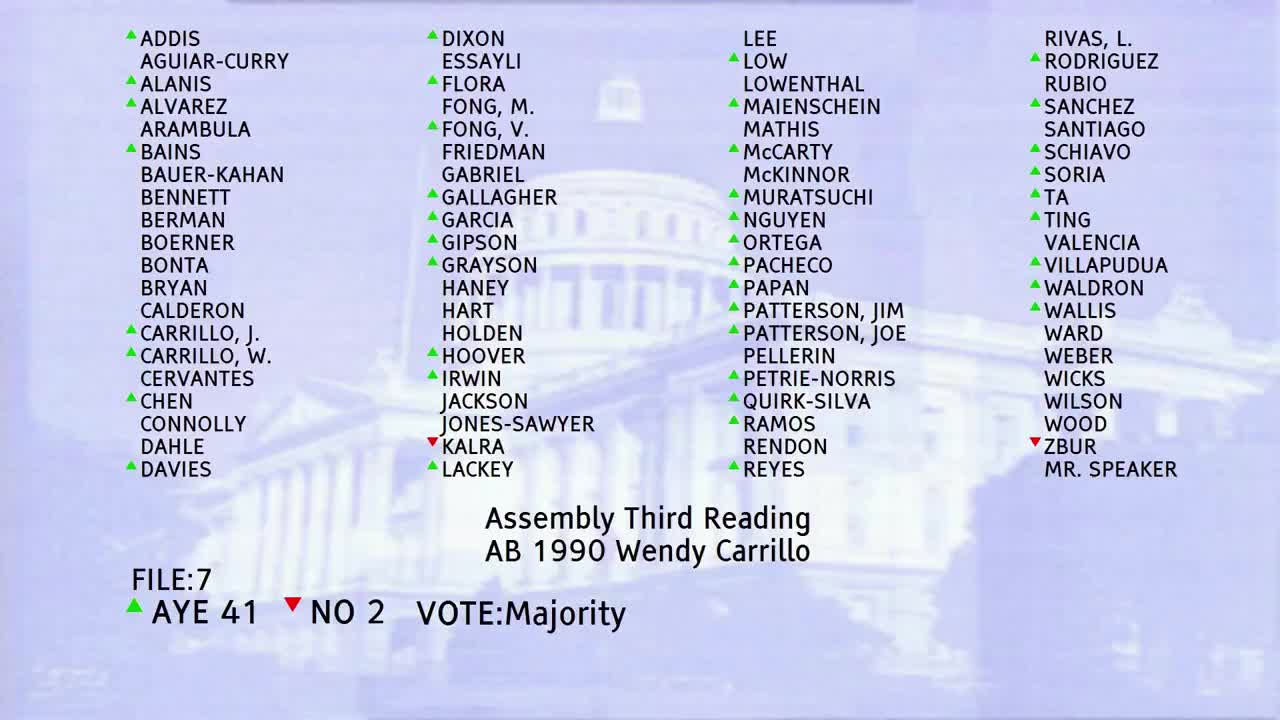 5MIN
Assembly Floor
 3MIN
Assembly Standing Committee on Health
Bill Author