AB 2106: Probation.
- Session Year: 2023-2024
- House: Assembly
- Latest Version Date: 2024-09-30
Current Status:
Passed
(2024-09-30: Chaptered by Secretary of State - Chapter 1007, Statutes of 2024.)
Introduced
In Committee
First Chamber
In Committee
Second Chamber
Enacted
What does this bill do?
The bill requires courts to order state‑licensed or certified drug treatment or drug education for people charged with controlled substance offenses who are placed on probation when a probation officer finds an appropriate program with available space. If a person willfully fails to attend or follow the program, the court may revoke and reimpose probation; the court must assess ability to pay, set a sliding fee if needed, and waive costs for people state law finds unable to pay.
The summary is provided by generative AI which can make mistakes. For original language, please view the details in the table below.
Existing law authorizes courts to suspend the imposition or execution of punishments in misdemeanor cases and instead enforce the terms of probation for a period not to exceed one year, except for offenses for which existing law prescribes specific probation lengths.
This bill would require, in instances where a defendant is charged with a controlled substance offense and granted probation, the court to order a drug treatment program or drug education, if an appropriate program with capacity to accept the defendant has been identified by the probation officer, as specified. The bill would authorize a court to revoke probation and impose a new grant of probation if the court determines the defendant has willfully failed to comply with the treatment program or education.
By expanding the duties of probation officers, this bill would impose a state-mandated local program.
The California Constitution requires the state to reimburse local agencies and school districts for certain costs mandated by the state. Statutory provisions establish procedures for making that reimbursement.
This bill would provide that, if the Commission on State Mandates determines that the bill contains costs mandated by the state, reimbursement for those costs shall be made pursuant to the statutory provisions noted above.
Existing law authorizes courts to suspend the imposition or execution of punishments in misdemeanor cases and instead enforce the terms of probation for a period not to exceed one year, except for offenses for which existing law prescribes specific probation lengths.
This bill would require, in instances where a defendant is charged with a controlled substance offense and granted probation, the court to order a drug treatment program or drug education, if an appropriate program with capacity to accept the defendant has been identified by the probation officer. officer, as specified. The bill would authorize a court to revoke probation and impose a new grant of probation if the court determines the defendant has willfully failed to comply with the treatment program or education.
By expanding the duties of probation officers, this bill would impose a state-mandated local program.
The California Constitution requires the state to reimburse local agencies and school districts for certain costs mandated by the state. Statutory provisions establish procedures for making that reimbursement.
This bill would provide that, if the Commission on State Mandates determines that the bill contains costs mandated by the state, reimbursement for those costs shall be made pursuant to the statutory provisions noted above.
Existing law authorizes courts to suspend the imposition or execution of punishments in misdemeanor cases and instead enforce the terms of probation for a period not to exceed one year, except for offenses for which existing law prescribes specific probation lengths.
This bill would require, in instances where a defendant is charged with a controlled substances substance offense and granted probation, the term of probation to be a period not exceeding 2 years in misdemeanor cases, and upon those terms and conditions as the court determines, including a court-mandated the court to order a drug treatment program or drug education. education, if an appropriate program with capacity to accept the defendant has been identified by the probation officer. The bill would require a court to reduce a probation term upon a showing that the defendant successfully completed a court-mandated drug treatment program. authorize a court to revoke probation and impose a new grant of probation if the court determines the defendant has willfully failed to comply with the treatment program or education.
By extending the duration of probation, expanding the duties of probation officers, this bill would impose a state-mandated local program.
The California Constitution requires the state to reimburse local agencies and school districts for certain costs mandated by the state. Statutory provisions establish procedures for making that reimbursement.
This bill would provide that, if the Commission on State Mandates determines that the bill contains costs mandated by the state, reimbursement for those costs shall be made pursuant to the statutory provisions noted above.
Existing law authorizes the court, in the order granting probation, courts to suspend the imposition or execution of sentence and direct the suspension to continue for a period of time not exceeding 2 years, and in misdemeanor cases, punishments in misdemeanor cases and instead enforce the terms of probation for a period not to exceed one year. year, except for offenses for which existing law prescribes specific probation lengths.
This bill would require, in instances where a defendant is charged with a controlled substances offense and granted probation, the term of probation to be a period not exceeding 2 years in misdemeanor cases and not exceeding 3 years in felony cases, cases, and upon those terms and conditions as the court determines, including a court-mandated drug treatment program or drug education. The bill would require a court to reduce a probation term upon a showing that the defendant successfully completed a court-mandated drug treatment program.
By extending the duration of probation, this bill would impose a state-mandated local program.
The California Constitution requires the state to reimburse local agencies and school districts for certain costs mandated by the state. Statutory provisions establish procedures for making that reimbursement.
This bill would provide that, if the Commission on State Mandates determines that the bill contains costs mandated by the state, reimbursement for those costs shall be made pursuant to the statutory provisions noted above.
Existing law authorizes the court, in the order granting probation, to suspend the imposition or execution of sentence and direct the suspension to continue for a period of time not exceeding 2 years, and in misdemeanor cases, for a period not to exceed one year.
This bill would require, in instances where a defendant is charged with a controlled substances offense and granted probation, the term of probation to be a period not exceeding 2 years in misdemeanor cases and not exceeding 3 years in felony cases, and upon those terms and conditions as the court determines, including a court-mandated drug treatment program as a condition of their probation. or drug education. The bill would require a court to reduce a probation term upon a showing that the defendant successfully completed a court-mandated drug treatment program.
By extending the duration of probation, this bill would impose a state-mandated local program.
The California Constitution requires the state to reimburse local agencies and school districts for certain costs mandated by the state. Statutory provisions establish procedures for making that reimbursement.
This bill would provide that, if the Commission on State Mandates determines that the bill contains costs mandated by the state, reimbursement for those costs shall be made pursuant to the statutory provisions noted above.
Existing law authorizes the court, in the order granting probation, to suspend the imposition or execution of sentence and direct the suspension to continue for a period of time not exceeding 2 years, and in misdemeanor cases, for a period not to exceed one year.
This bill would require, in instances where a defendant is charged with a controlled substances offense and granted probation, the term of probation to be a period not exceeding 2 years in misdemeanor cases and not exceeding 3 years in felony cases, and upon those terms and conditions as the court determines, including a court-mandated drug treatment program as a condition of their probation. The bill would require a court to reduce a probation term upon a showing that the defendant successfully completed a court-mandated drug treatment program.
By extending the duration of probation, this bill would impose a state-mandated local program.
The California Constitution requires the state to reimburse local agencies and school districts for certain costs mandated by the state. Statutory provisions establish procedures for making that reimbursement.
This bill would provide that, if the Commission on State Mandates determines that the bill contains costs mandated by the state, reimbursement for those costs shall be made pursuant to the statutory provisions noted above.
Under existing law, a person sentenced to imprisonment in a state prison or in a county jail for a felony offense, as specified, may, during that period of confinement, be deprived of only those rights as is reasonably related to legitimate penological interests. Existing law enumerates certain civil rights of these prisoners.This bill would make technical, nonsubstantive changes to those provisions.Under existing law, a person sentenced to imprisonment in a state prison or in a county jail for a felony offense, as specified, may, during that period of confinement, be deprived of only those rights as is reasonably related to legitimate penological interests. Existing law enumerates certain civil rights of these prisoners.
This bill would make technical, nonsubstantive changes to those provisions.
(a)(1)In instances where a defendant is charged with a controlled substance offense and granted probation, the court shall order a drug treatment program or drug education pursuant to Section 11373 of the Health and Safety Code if an appropriate program with capacity to accept the defendant has been identified by the probation officer.
(2)If, at any point during the probation period, evidence is presented that the defendant is not in compliance with the treatment program or education, the court may revoke probation and, upon a determination that the defendant has willfully failed to comply with the treatment program or education, impose a new grant of probation pursuant to subdivision (e) of Section 1203.2.
(3)When referring a person pursuant to this subdivision, the court shall determine the persons ability to pay. If the court finds that the person is financially unable to pay, the court shall develop a sliding fee schedule for the program based on the persons ability to pay. A person who meets the criteria set forth in Section 68632 of the Government Code shall not be responsible for any costs.
(b)For purposes of this section, drug treatment program means a state-licensed or state-certified community drug treatment program, which may include one or more of the following: drug education, outpatient services, narcotic replacement therapy, residential treatment, detoxification services, and aftercare services.
SEC. 2.If the Commission on State Mandates determines that this act contains costs mandated by the state, reimbursement to local agencies and school districts for those costs shall be made pursuant to Part 7 (commencing with Section 17500) of Division 4 of Title 2 of the Government Code.
(a)(1)Notwithstanding Section 1203a, in instances where a defendant is charged with a controlled substances offense and granted probation, the term of probation shall be for a period not exceeding two years in misdemeanor cases, and upon those terms and conditions as the court shall determine, including a court-mandated In instances where a defendant is charged with a controlled substance offense and granted probation, the court shall order a drug treatment program or drug education pursuant to Section 11373 of the Health and Safety Code. Code if an appropriate program with capacity to accept the defendant has been identified by the probation officer.
(2)Notwithstanding paragraph (1), the court shall reduce a probation term upon a showing that the defendant successfully completed a court-mandated drug treatment program.(2)If, at any point during the probation period, evidence is presented that the defendant is not in compliance with the treatment program or education, the court may revoke probation and, upon a determination that the defendant has willfully failed to comply with the treatment program or education, impose a new grant of probation pursuant to subdivision (e) of Section 1203.2.
(b)For purposes of this section, the following terms have the following meanings:
(1)Drug drug treatment program means a state-licensed or state-certified community drug treatment program, which may include one or more of the following: drug education, outpatient services, narcotic replacement therapy, residential treatment, detoxification services, and aftercare services.
(2)Successfully completed means that a defendant who has had drug treatment imposed as a condition of probation has completed the prescribed course of drug treatment as recommended by the treatment provider and ordered by the court. Completion of treatment shall not require cessation of narcotic replacement therapy.SEC. 2.If the Commission on State Mandates determines that this act contains costs mandated by the state, reimbursement to local agencies and school districts for those costs shall be made pursuant to Part 7 (commencing with Section 17500) of Division 4 of Title 2 of the Government Code.
(a)(1)Notwithstanding Sections 1203a and 1203.1, Section 1203a, in instances where a defendant is charged with a controlled substances offense and granted probation, the term of probation shall be for a period not exceeding two years in misdemeanor cases and not exceeding three years in felony cases, cases, and upon those terms and conditions as the court shall determine, including a court-mandated drug treatment program or drug education pursuant to Section 11373 of the Health and Safety Code.
(2)Notwithstanding paragraph (1), the court shall reduce a probation term upon a showing that the defendant successfully completed a court-mandated drug treatment program.
(b)For purposes of this section, the following terms have the following meanings:
(1)Drug treatment program means a state-licensed or state-certified community drug treatment program, which may include one or more of the following: drug education, outpatient services, narcotic replacement therapy, residential treatment, detoxification services, and aftercare services.
(2)Successfully completed means that a defendant who has had drug treatment imposed as a condition of probation has completed the prescribed course of drug treatment as recommended by the treatment provider and ordered by the court. Completion of treatment shall not require cessation of narcotic replacement therapy.
SEC. 2.If the Commission on State Mandates determines that this act contains costs mandated by the state, reimbursement to local agencies and school districts for those costs shall be made pursuant to Part 7 (commencing with Section 17500) of Division 4 of Title 2 of the Government Code.
(a)(1)Notwithstanding Sections 1203a and 1203.1, in instances where a defendant is charged with a controlled substances offense and granted probation, the term of probation shall be for a period not exceeding two years in misdemeanor cases and not exceeding three years in felony cases, and upon those terms and conditions as the court shall determine, including a court-mandated drug treatment program as a condition of their probation. or drug education pursuant to Section 11373 of the Health and Safety Code.
(2)Notwithstanding paragraph (1), the court shall reduce a probation term upon a showing that the defendant successfully completed a court-mandated drug treatment program.
(b)For purposes of this section, the following terms have the following meanings:
(1)Drug treatment program means a state-licensed or state-certified community drug treatment program, which may include one or more of the following: drug education, outpatient services, narcotic replacement therapy, residential treatment, detoxification services, and aftercare services.
(2)Successfully completed means that a defendant who has had drug treatment imposed as a condition of probation has completed the prescribed course of drug treatment as recommended by the treatment provider and ordered by the court. Completion of treatment shall not require cessation of narcotic replacement therapy.
SEC. 2.If the Commission on State Mandates determines that this act contains costs mandated by the state, reimbursement to local agencies and school districts for those costs shall be made pursuant to Part 7 (commencing with Section 17500) of Division 4 of Title 2 of the Government Code.
(a)(1)Notwithstanding Sections 1203a and 1203.1, in instances where a defendant is charged with a controlled substances offense and granted probation, the term of probation shall be for a period not exceeding two years in misdemeanor cases and not exceeding three years in felony cases, and upon those terms and conditions as the court shall determine, including a court-mandated drug treatment program as a condition of their probation.
(2)Notwithstanding paragraph (1), the court shall reduce a probation term upon a showing that the defendant successfully completed a court-mandated drug treatment program.
(b)For purposes of this section, the following terms have the following meanings:
(1)Drug treatment program means a state-licensed or state-certified community drug treatment program, which may include one or more of the following: drug education, outpatient services, narcotic replacement therapy, residential treatment, detoxification services, and aftercare services.
(2)Successfully completed means that a defendant who has had drug treatment imposed as a condition of probation has completed the prescribed course of drug treatment as recommended by the treatment provider and ordered by the court. Completion of treatment shall not require cessation of narcotic replacement therapy.
SEC. 2.If the Commission on State Mandates determines that this act contains costs mandated by the state, reimbursement to local agencies and school districts for those costs shall be made pursuant to Part 7 (commencing with Section 17500) of Division 4 of Title 2 of the Government Code.
SECTION 1.Section 2601 of the Penal Code is amended to read:2601.Each person described in Section 2600 shall have the following civil rights:(a)Except as provided in Section 2225 of the Civil Code, to inherit, own, sell, or convey real or personal property, including all written and artistic material produced or created by the person during the period of imprisonment. However, to the extent authorized in Section 2600, the Department of Corrections may restrict or prohibit sales or conveyances that are made for business purposes.(b)To correspond, confidentially, with any member of the State Bar or holder of public office, provided that the prison authorities may open and inspect incoming mail to search for contraband.(c)(1)To purchase, receive, and read any and all newspapers, periodicals, and books accepted for distribution by the United States Post Office. Pursuant to this section, prison authorities may exclude any of the following matter:(A)Obscene publications or writings, and mail containing information concerning where, how, or from whom this matter may be obtained.(B)Any matter of a character tending to incite murder, arson, riot, violent racism, or any other form of violence.(C)Any matter concerning gambling or a lottery.(2)Nothing in this section shall be construed as limiting the right of prison authorities to do the following:(A)Open and inspect any and all packages received by an inmate.(B)Establish reasonable restrictions as to the number of newspapers, magazines, and books that the inmate may have in their cell or elsewhere in the prison at one time.(d)To initiate civil actions, subject to a three dollar ($3) filing fee to be collected by the Department of Corrections, in addition to any other filing fee authorized by law, and subject to Title 3a (commencing with Section 391) of the Code of Civil Procedure.(e)To marry.(f)To create a power of appointment.(g)To make a will.(h)To receive all benefits provided for in Sections 3370 and 3371 of the Labor Code and in Section 5069.Subject only to the provisions of that section, each Each person described in Section 2600 shall have the following civil rights:
(a)Except as provided in Section 2225 of the Civil Code, to inherit, own, sell, or convey real or personal property, including all written and artistic material produced or created by the person during the period of imprisonment. However, to the extent authorized in Section 2600, the Department of Corrections may restrict or prohibit sales or conveyances that are made for business purposes.
(b)To correspond, confidentially, with any member of the State Bar or holder of public office, provided that the prison authorities may open and inspect incoming mail to search for contraband.
(c)(1)To purchase, receive, and read any and all newspapers, periodicals, and books accepted for distribution by the United States Post Office. Pursuant to this section, prison authorities may exclude any of the following matter:
(A)Obscene publications or writings, and mail containing information concerning where, how, or from whom this matter may be obtained.
(B)Any matter of a character tending to incite murder, arson, riot, violent racism, or any other form of violence.
(C)Any matter concerning gambling or a lottery.
(2)Nothing in this section shall be construed as limiting the right of prison authorities to do the following:
(A)Open and inspect any and all packages received by an inmate.
(B)Establish reasonable restrictions as to the number of newspapers, magazines, and books that the inmate may have in his or her their cell or elsewhere in the prison at one time.
(d)To initiate civil actions, subject to a three dollar ($3) filing fee to be collected by the Department of Corrections, in addition to any other filing fee authorized by law, and subject to Title 3a (commencing with Section 391) of the Code of Civil Procedure.
(e)To marry.
(f)To create a power of appointment.
(g)To make a will.
(h)To receive all benefits provided for in Sections 3370 and 3371 of the Labor Code and in Section 5069.
|
Date
|
Status
|
|---|---|
| Sep 30, 2024 | Chaptered by Secretary of State - Chapter 1007, Statutes of 2024. |
| Sep 30, 2024 | Approved by the Governor. |
| Sep 11, 2024 | Enrolled and presented to the Governor at 4 p.m. |
| Aug 29, 2024 | Senate amendments concurred in. To Engrossing and Enrolling. (Ayes 70. Noes 0.). |
| Aug 28, 2024 | In Assembly. Concurrence in Senate amendments pending. May be considered on or after August 30 pursuant to Assembly Rule 77. |
| Aug 28, 2024 | Assembly Rule 77 suspended. |
| Aug 27, 2024 | Read third time. Passed. Ordered to the Assembly. (Ayes 37. Noes 0.). |
| Aug 19, 2024 | Read second time. Ordered to third reading. |
| Aug 15, 2024 | Read second time and amended. Ordered returned to second reading. |
| Aug 15, 2024 | From committee: Amend, and do pass as amended. (Ayes 6. Noes 0.) (August 15). |
| Aug 5, 2024 | In committee: Referred to APPR suspense file. |
| Jul 3, 2024 | Read second time and amended. Re-referred to Com. on APPR. |
| Jul 2, 2024 | From committee: Amend, and do pass as amended and re-refer to Com. on APPR. (Ayes 4. Noes 0.) (July 2). |
| Jun 5, 2024 | Referred to Com. on PUB S. |
| May 24, 2024 | In Senate. Read first time. To Com. on RLS. for assignment. |
| May 23, 2024 | Read third time. Passed. Ordered to the Senate. (Ayes 53. Noes 0. Page 5599.) |
| May 20, 2024 | Read second time. Ordered to third reading. |
| May 16, 2024 | Read second time and amended. Ordered returned to second reading. |
| May 16, 2024 | From committee: Amend, and do pass as amended. (Ayes 10. Noes 0.) (May 16). |
| May 16, 2024 | Assembly Rule 63 suspended. |
| May 1, 2024 | In committee: Set, first hearing. Referred to APPR. suspense file. |
| Apr 24, 2024 | Re-referred to Com. on APPR. |
| Apr 23, 2024 | Read second time and amended. |
| Apr 22, 2024 | From committee: Amend, and do pass as amended and re-refer to Com. on APPR. (Ayes 8. Noes 0.) (April 16). |
| Apr 1, 2024 | Re-referred to Com. on PUB. S. |
| Mar 21, 2024 | Referred to Com. on PUB. S. |
| Mar 21, 2024 | From committee chair, with author's amendments: Amend, and re-refer to Com. on PUB. S. Read second time and amended. |
| Feb 6, 2024 | From printer. May be heard in committee March 7. |
| Feb 5, 2024 | Read first time. To print. |
|
Date
|
Description
|
Location
|
Votes
|
|
|---|---|---|---|---|
| Aug 29, 2024 | AB 2106 McCarty Concurrence in Senate Amendments | Assembly Floor |
Passed |
|
| Aug 27, 2024 | Assembly 3rd Reading AB2106 McCarty By Wahab | Senate Floor |
Passed |
|
| Aug 15, 2024 | Do pass as amended | Senate Standing Committee on Appropriations |
Passed |
|
| Aug 5, 2024 | Placed on suspense file | Senate Standing Committee on Appropriations |
Passed |
|
| Jul 2, 2024 | Do pass as amended, but first amend, and re-refer to the Committee on [Appropriations] | Senate Standing Committee on Public Safety |
Passed |
|
| May 23, 2024 | AB 2106 McCarty Assembly Third Reading | Assembly Floor |
Passed |
|
| May 16, 2024 | Do pass as amended. | Assembly Standing Committee on Appropriations |
Passed |
|
| Apr 16, 2024 | Do pass as amended and be re-referred to the Committee on [Appropriations] | Assembly Standing Committee on Public Safety |
Passed |
This list shows positions taken on this bill by organizations on the date displayed, which is linked to the original source.
Positions by individuals are not included.
|
Organization
|
Position
|
Date
|
|---|---|---|
| Aclu California Action | ** Against | |
| All of Us or None Los Angeles | ** Against | |
| AntiRecidivism Coalition Arc | * Neutral | Jul 2, 2024 |
| California District Attorneys Association | ** Support | |
| California Public Defenders Association | ** Against | |
| Californians for Safety & Justice | * Neutral | Jul 2, 2024 |
| Californians United for a Responsible Budget | ** Against | |
| CDAA | * Support | Jul 2, 2024 |
| Chief Probation Officers Of California | * Neutral | Jul 2, 2024 |
| County Behavioral Health Directors Association of California | ** Against | |
| Ella Baker Center For Human Rights | ** Against | |
| Felony Murder Elimination Project | ** Against | |
| Friends Committee On Legislation Of California | ** Against | |
| Legal Services for Prisoners with Children | ** Against | |
| Reform Alliance | ** Against | |
| Reform Alliance | * Neutral | Jul 2, 2024 |
| San Francisco Public Defender's Office | * Against | Apr 16, 2024 |
| Smart Justice California | ** Against | |
| Uncommon Law | ** Against | |
| Vera Institute Of Justice | ** Against |
CONCURRENCE IN SENATE AMENDMENTS
CSA1 Bill Id:AB 2106
Author:(McCarty)
As Amended Ver:August 15, 2024
Majority vote
SUMMARY
Requires a court to order drug treatment or drug education when a defendant is charged with a controlled substance offense and granted probation, if there is an appropriate program with capacity to accept the defendant.
Senate Amendments
- Require the court, in instances where a defendant is charged with a controlled substance offense and granted probation, to order a drug treatment program or drug education, as specified, if an appropriate program with capacity to accept the defendant has been identified by the probation officer.
- Authorize the court, if at any point during the probation period, evidence is presented that the defendant is not in compliance with the treatment program or education, to revoke probation and, upon a determination that the defendant has willfully failed to comply with the treatment program or education, impose a new grant of probation, as specified.
- Require the court, when referring a person granted probation for a controlled substance offense to a drug treatment or drug education program, to determine the person's ability to pay; and, if the court finds that the person is financially unable to pay, to develop a sliding fee schedule for the program based on the person's ability to pay.
- Provide that persons receiving specified benefits shall not be responsible for any costs.
- Remove the increase in the maximum term of probation in misdemeanor cases for defendants charged and granted probation for controlled substance offenses from one year to two years, and remove the requirement that the court reduce that term of probation if the defendant successfully completed a court-mandated treatment program.
- Delete the definition of "successfully completed."
COMMENTS
As Passed by the Assembly, this bill:
- Required, in instances where a defendant is charged with a controlled substances offense and granted probation, the term of probation to be for a period not exceeding two years in misdemeanor cases, and upon those terms and conditions as the court shall determine, including a court-mandated drug treatment program or drug education, as specified.
- Required the court to reduce a probation term upon a showing that the defendant successfully completed a court-mandated drug treatment program.
- Defined "drug treatment program" as a state-licensed or state-certified community drug treatment program, which may include one or more of the following: drug education, outpatient services, narcotic replacement therapy, residential treatment, detoxification services, and aftercare services.
- Defined "Successfully completed" as a defendant who has had drug treatment imposed as a condition of probation has completed the prescribed course of drug treatment as recommended by the treatment provider and ordered by the court. Completion of treatment shall not require cessation of narcotic replacement therapy.
According to the Author
"Californians with substance use disorder (SUD) face their addictions without comprehensive and successful rehabilitation programs. Because of this, California faces a revolving door of repeat offenders stealing to feed their addiction, and our communities continue to suffer to address our inmate populations and keep our residents and businesses safe."
Arguments in Support
According to the California District Attorneys Association, "As you well know, many drug offenders today lack the incentives to address their drug addictions. Your bill, allowing courts to order longer probation terms, will help them succeed. Your bill also authorizes courts to shorten probation terms and therefore reward those who succeed in their treatment programs."
Arguments in Opposition
According to Smart Justice, "Existing law authorizes the court to impose probation for a period not to exceed one year in misdemeanor cases and two years in felony cases. This bill would increase the maximum term of probation to 2 years in misdemeanor cases and 3 years in felony cases if the case involves controlled substances. The bill would also direct a court to reduce the period of probation if the defendant successfully completes a court-mandated drug treatment program.
"We understand this bill is intended to encourage a person to complete a drug program because of the incentive to reduce a probationary period. This approach is unlikely to succeed due to the many existing barriers to substance use treatment. Currently, most individuals on probation are simply ordered to participate in AA or NA programs but not provided any access to effective substance use treatment. Almost no one successfully manages an addiction to opioids through NA or AA meetings and more time on probation will not improve outcomes.
"Rather, much more must be done to ensure that every person in California has access to high quality substance use treatment on demand. For example, successful programs like the CA Bridge program, which provides emergency room patients with access to medically assisted treatment and support navigating the barriers to treatment, can be replicated for those in contact with the criminal legal system."
FISCAL COMMENTS
According to the Senate Appropriations Committee:
- Unknown, potentially significant cost pressure to the state funded trial court system (Trial Court Trust Fund, General Fund) to adjudicate proceedings ordering a concerning the defendants participation in a drug treatment program and increased parole revocation proceedings as a result of bill. Certain rights to the defendants are attached to criminal proceedings, including the right to a jury trial and the right to counsel (at public expense if the defendants are unable to afford the costs of representation) and creating new felonies, with increased penalties, could lead to lengthier and more complex court proceedings with attendant workload and resource costs to the court. An eight-hour court day costs approximately $8,000 in staff in workload. If the bill results in only 12 or more days spent in court, trial court costs could be in the hundreds of thousands of dollars. While the courts are not funded on a workload basis, an increase in workload could result in delayed court services and would put pressure on the General Fund to fund additional staff and resources and to increase the amount appropriated to backfill for trial court operations. The Budget Act of 2024, for the fiscal year beginning July 1, 2024, includes a $97 million reduction to the trial courts, a commensurate reduction of up to 7.95 percent to the budget for the state-level judiciary, and a reduction of the trial court state-level emergency reserve in the Trial Court Trust Fund from $10 million to $5 million. The Budget Act also includes a $37.3 million General Fund backfill for the Trial Court Trust Fund to address the continued decline in civil fee and criminal fine and penalty revenues expected in fiscal year 2024‒25.
- Unknown, potentially significant costs (local funds, General Fund) to county probation departments to supervise people on probation for longer periods of time under this bill. As the number of people on probation in California has dropped the number of county probation personnel has also declined. If five counties must each hire an additional probation officer to manage the increased probation workload resulting from this bill, at an average salary of $75,000, the resulting annual cost would be $375,000 plus benefits. It is not clear whether the county probation duties imposed by this bill constitute a reimbursable state mandate or whether they may be subject to Proposition 30 (2012). Proposition 30 provides that legislation enacted after September 30, 2012, that has an overall effect of increasing the costs already borne by a local agency for programs or levels of service mandated by realignment applies to local agencies only to the extent the state provides annual funding for the cost increase. Proposition 30 has not been litigated and its scope is unclear.
- Unknown potentially significant costs (local funds, General Fund) to the counties of to incarcerate people who violate probation. This bill could increase the maximum period of probation for specified drug offenses, if a person fails to comply with a treatment program. The longer a defendant remains on probation, the more likely they will violate probation and be incarcerated. Although county incarceration costs are generally not considered reimbursable state mandates, overcrowding in county jails creates cost pressure on the General Fund because the state has historically granted new funding to counties to offset overcrowding resulting from 2011 public safety realignment.
VOTES:
ASM PUBLIC SAFETY: 8-0-0
YES: McCarty, Alanis, Lackey, Stephanie Nguyen, Reyes, Ting, Wilson, Zbur
ASM APPROPRIATIONS: 10-0-5
YES: Wicks, Arambula, Calderon, Wendy Carrillo, Mike Fong, Grayson, Haney, Hart, Pellerin, Villapudua
ABS, ABST OR NV: Sanchez, Bryan, Dixon, Jim Patterson, Ta
ASSEMBLY FLOOR: 53-0-27
YES: Addis, Alanis, Alvarez, Bains, Bennett, Berman, Boerner, Juan Carrillo, Wendy Carrillo, Chen, Connolly, Davies, Dixon, Flora, Mike Fong, Vince Fong, Gabriel, Gallagher, Garcia, Gipson, Grayson, Hoover, Irwin, Jones-Sawyer, Lackey, Low, Maienschein, McCarty, Muratsuchi, Stephanie Nguyen, Ortega, Pacheco, Papan, Jim Patterson, Joe Patterson, Pellerin, Petrie-Norris, Quirk-Silva, Ramos, Reyes, Rodriguez, Sanchez, Schiavo, Soria, Ta, Ting, Villapudua, Waldron, Wallis, Wicks, Wilson, Zbur, Robert Rivas
ABS, ABST OR NV: Aguiar-Curry, Arambula, Bauer-Kahan, Bonta, Bryan, Calderon, Cervantes, Megan Dahle, Essayli, Friedman, Haney, Hart, Holden, Jackson, Kalra, Lee, Lowenthal, Mathis, McKinnor, Rendon, Luz Rivas, Blanca Rubio, Santiago, Valencia, Ward, Weber, Wood
SENATE FLOOR: 39-0-1
YES: Allen, Alvarado-Gil, Archuleta, Ashby, Atkins, Becker, Blakespear, Bradford, Caballero, Cortese, Dahle, Dodd, Durazo, Eggman, Glazer, Gonzalez, Grove, Hurtado, Jones, Laird, Limón, McGuire, Menjivar, Min, Newman, Nguyen, Niello, Padilla, Portantino, Roth, Rubio, Seyarto, Skinner, Smallwood-Cuevas, Stern, Umberg, Wahab, Wiener, Wilk
ABS, ABST OR NV: Ochoa Bogh
UPDATED
VERSION: August 15, 2024
CONSULTANT: Andrew Ironside / PUB. S. / (916) 319-3744 FN: 0004810
SENATE RULES COMMITTEE Office of Senate Floor Analyses (916) 651-1520 Fax: (916) 327-4478 | AB 2106 |
THIRD READING
Bill No: AB 2106
Author: McCarty (D)
Amended: 8/15/24 in Senate
Vote: 21
SENATE PUBLIC SAFETY COMMITTEE: 4-0, 7/2/24
AYES: Wahab, Bradford, Skinner, Wiener
NO VOTE RECORDED: Seyarto
SENATE APPROPRIATIONS COMMITTEE: 6-0, 8/15/24
AYES: Caballero, Jones, Ashby, Becker, Seyarto, Wahab
NO VOTE RECORDED: Bradford
ASSEMBLY FLOOR: 53-0, 5/23/24 - See last page for vote
SUBJECT: Probation
SOURCE: Author
DIGEST:
- This bill requires the court to order a drug treatment program or drug education in instances where a defendant is granted probation for a controlled substance offense if an appropriate program with capacity to accept the defendant has been identified by the probation officer, and authorizes the court to revoke probation and impose a new grant of probation if, at any point during the probation period, evidence is presented that the defendant is not in compliance with the treatment program or education.
ANALYSIS:
Existing law:
- Defines “probation” as the suspension of the imposition or execution of a sentence and the order of conditional and revocable release in the community under the supervision of the probation officer. (Pen. Code, § 1203, subd. (a).)
- Requires the court, upon a conviction of specified a controlled substance offense and when recommended by the probation officer, to require as a condition of probation that the defendant not use or be under the influence of any controlled substance, and that the defendant submit to drug and substance abuse testing as directed by the probation officer. (Pen. Code 1203.1ab, subd. (a).)
- Requires a person convicted of a nonviolent drug possession offense to receive probation, except as provided. Requires the court to require, as a condition of probation, participation in and completion of an appropriate drug treatment program. (Pen. Code, § 1210.1, subd. (a).)
- Requires the trial court to order, after conviction for a drug offense and as a condition of probation, the person to complete successfully a controlled substance education or treatment program, as appropriate for the individual, as described, or if none is available, from a local community agency designated by the court. (Health & Saf. Code, § 11373, subd. (a)(1).)
- Defines “complete successfully” to mean that a defendant who has had controlled substance education or treatment imposed as a condition of probation has completed the prescribed course of controlled substance education or treatment as recommended by the treatment provider and ordered by the court. Provides that completion of education or treatment does not require cessation of narcotic replacement therapy. (Health & Saf. Code, § 11373, subd. (a)(2).)
- Requires the court to determine the person’s ability to pay for a controlled substance education or treatment program. Provides that if the court finds that the person is financially unable to pay, the court may develop a sliding fee schedule for the program based on the person’s ability to pay. Provides that a person who meets the criteria set forth in Section 68632 of the Government Code is not responsible for any costs.
This bill:
- Requires the court to order a drug treatment program or drug education pursuant to Section 11373 of the Health and Safety Code in instances where a defendant is charged with a controlled substance offense and granted probation if an appropriate program with capacity to accept the defendant has been identified by the probation officer.
- Authorizes the court to revoke probation and, upon a determination that the defendant has willfully failed to comply with the treatment program or education, impose a new grant of probation pursuant to subdivision (e) of Section 1203.2 if, at any point during the probation period, evidence is presented that the defendant is not in compliance with the treatment program or education.
- Defines “drug treatment program” to mean a state-licensed or state-certified community drug treatment program, which may include one or more of the following: drug education, outpatient services, narcotic replacement therapy, residential treatment, detoxification services, and aftercare services.
- Requires the court determine the defendant’s ability to pay. Requires the court to develop a sliding fee schedule based on the person’s ability to pay. Provides that a person who meets the criteria set forth in Section 68632 of the Government Code is not responsible for any costs.
Background
Under current law, when the court grants probation to a person convicted of any drug offense, it must order the defendant to complete successfully a controlled substance education or treatment program. “Complete successfully” means that a defendant who has had controlled substance education or treatment imposed as a condition of probation has completed the prescribed course of controlled substance education or treatment as recommended by the treatment provider and ordered by the court. Completion of education or treatment does not require cessation of narcotic replacement therapy. When ordering a person to complete a drug education or treatment program, the court is required to determine the person’s ability to pay. If the court finds that the person is financially unable to pay, the court may develop a sliding fee schedule, and individuals who meet certain criteria are not required to pay for their drug treatment or education.
FISCAL EFFECT: Appropriation: No Fiscal Com.: Yes Local: Yes
According to the Senate Appropriations Committee, Unknown, potentially significant cost pressure to the state funded trial court system (Trial Court Trust Fund, General Fund) to adjudicate proceedings ordering a concerning the defendants participation in a drug treatment program and increased parole revocation proceedings as a result of bill. Certain rights to the defendants are attached to criminal proceedings, including the right to a jury trial and the right to counsel (at public expense if the defendants are unable to afford the costs of representation) and creating new felonies, with increased penalties, could lead to lengthier and more complex court proceedings with attendant workload and resource costs to the court. An eight-hour court day costs approximately $8,000 in staff in workload. If the bill results in only 12 or more days spent in court, trial court costs could be in the hundreds of thousands of dollars. While the courts are not funded on a workload basis, an increase in workload could result in delayed court services and would put pressure on the General Fund to fund additional staff and resources and to increase the amount appropriated to backfill for trial court operations. The Budget Act of 2024, for the fiscal year beginning July 1, 2024, includes a $97 million reduction to the trial courts, a commensurate reduction of up to 7.95 percent to the budget for the state-level judiciary, and a reduction of the trial court state-level emergency reserve in the Trial Court Trust Fund from $10 million to $5 million. The Budget Act also includes a $37.3 million General Fund backfill for the Trial Court Trust Fund to address the continued decline in civil fee and criminal fine and penalty revenues expected in fiscal year 2024‒25. Unknown, potentially significant costs (local funds, General Fund) to county probation departments to supervise people on probation for longer periods of time under this bill. As the number of people on probation in California has dropped the number of county probation personnel has also declined.
If five counties must each hire an additional probation officer to manage the increased probation workload resulting from this bill, at an average salary of $75,000, the resulting annual cost would be $375,000 plus benefits. It is not clear whether the county probation duties imposed by this bill constitute a reimbursable state mandate or whether they may be subject to Proposition 30 (2012). Proposition 30 provides that legislation enacted after September 30, 2012, that has an overall effect of increasing the costs already borne by a local agency for programs or levels of service mandated by realignment applies to local agencies only to the extent the state provides annual funding for the cost increase. Proposition 30 has not been litigated and its scope is unclear.
Unknown potentially significant costs (local funds, General Fund) to the counties of to incarcerate people who violate probation. This bill could increase the maximum period of probation for specified drug offenses, if a person fails to comply with a treatment program. The longer a defendant remains on probation, the more likely they will violate probation and be incarcerated. Although county incarceration costs are generally not considered reimbursable state mandates, overcrowding in county jails creates cost pressure on the General Fund because the state has historically granted new funding to counties to offset overcrowding resulting from 2011 public safety realignment.
SUPPORT: (Verified 8/15/24)
California District Attorneys Association
OPPOSITION: (Verified 8/15/24)
ACLU California Action
All of Us or None Los Angeles
California Public Defenders Association
Californians United for a Responsible Budget
County Behavioral Health Directors Association of California
Ella Baker Center for Human Rights
Legal Services for Prisoner With Children
Reform Alliance
ASSEMBLY FLOOR: 53-0, 5/23/24
AYES: Addis, Alanis, Alvarez, Bains, Bennett, Berman, Boerner, Juan Carrillo, Wendy Carrillo, Chen, Connolly, Davies, Dixon, Flora, Mike Fong, Vince Fong, Gabriel, Gallagher, Garcia, Gipson, Grayson, Hoover, Irwin, Jones-Sawyer, Lackey, Low, Maienschein, McCarty, Muratsuchi, Stephanie Nguyen, Ortega, Pacheco, Papan, Jim Patterson, Joe Patterson, Pellerin, Petrie-Norris, Quirk-Silva, Ramos, Reyes, Rodriguez, Sanchez, Schiavo, Soria, Ta, Ting, Villapudua, Waldron, Wallis, Wicks, Wilson, Zbur, Robert Rivas
NO VOTE RECORDED: Aguiar-Curry, Arambula, Bauer-Kahan, Bonta, Bryan, Calderon, Cervantes, Megan Dahle, Essayli, Friedman, Haney, Hart, Holden, Jackson, Kalra, Lee, Lowenthal, Mathis, McKinnor, Rendon, Luz Rivas, Blanca Rubio, Santiago, Valencia, Ward, Weber, Wood
Prepared by: Stephanie Jordan / PUB. S. /
8/18/24 17:50:03
**** END ****
SENATE COMMITTEE ON
Senator Anna Caballero, Chair
2023 - 2024 Regular Session
AB 2106 (McCarty) - Probation
Version: | Policy Vote: |
Urgency: | Mandate: |
Hearing Date: | Consultant: |
Bill Summary:
AB 2106 would require, for defendants charged with a controlled substance offense and granted probation, the court to order the defendant to participate in a drug treatment program or drug education, as specified.
*********** ANALYSIS ADDENDUM – SUSPENSE FILE ***********
The following information is revised to reflect amendments
adopted by the committee on August 15, 2024
Fiscal Impact:
- Unknown, potentially significant cost pressure to the state funded trial court system (Trial Court Trust Fund, General Fund) to adjudicate proceedings ordering a concerning the defendants participation in a drug treatment program and increased parole revocation proceedings as a result of bill. Certain rights to the defendants are attached to criminal proceedings, including the right to a jury trial and the right to counsel (at public expense if the defendants are unable to afford the costs of representation) and creating new felonies, with increased penalties, could lead to lengthier and more complex court proceedings with attendant workload and resource costs to the court. An eight-hour court day costs approximately $8,000 in staff in workload. If the bill results in only 12 or more days spent in court, trial court costs could be in the hundreds of thousands of dollars. While the courts are not funded on a workload basis, an increase in workload could result in delayed court services and would put pressure on the General Fund to fund additional staff and resources and to increase the amount appropriated to backfill for trial court operations. The Budget Act of 2024, for the fiscal year beginning July 1, 2024, includes a $97 million reduction to the trial courts, a commensurate reduction of up to 7.95 percent to the budget for the state-level judiciary, and a reduction of the trial court state-level emergency reserve in the Trial Court Trust Fund from $10 million to $5 million. The Budget Act also includes a $37.3 million General Fund backfill for the Trial Court Trust Fund to address the continued decline in civil fee and criminal fine and penalty revenues expected in fiscal year 2024‒25.
- Unknown, potentially significant costs (local funds, General Fund) to county probation departments to supervise people on probation for longer periods of time under this bill. As the number of people on probation in California has dropped the number of county probation personnel has also declined. If five counties must each hire an additional probation officer to manage the increased probation workload resulting from this bill, at an average salary of $75,000, the resulting annual cost would be $375,000 plus benefits. It is not clear whether the county probation duties imposed by this bill constitute a reimbursable state mandate or whether they may be subject to Proposition 30 (2012). Proposition 30 provides that legislation enacted after September 30, 2012, that has an overall effect of increasing the costs already borne by a local agency for programs or levels of service mandated by realignment applies to local agencies only to the extent the state provides annual funding for the cost increase. Proposition 30 has not been litigated and its scope is unclear.
- Unknown potentially significant costs (local funds, General Fund) to the counties of to incarcerate people who violate probation. This bill could increase the maximum period of probation for specified drug offenses, if a person fails to comply with a treatment program. The longer a defendant remains on probation, the more likely they will violate probation and be incarcerated. Although county incarceration costs are generally not considered reimbursable state mandates, overcrowding in county jails creates cost pressure on the General Fund because the state has historically granted new funding to counties to offset overcrowding resulting from 2011 public safety realignment.
Author Amendments:
These amendments provide that, when referring a person to treatment, the court shall determine the person’s ability to pay. If the court finds that the person is financially unable to pay, the court shall develop a sliding fee schedule for the program based on the person’s ability to pay.
-- END --
SENATE COMMITTEE ON
Senator Anna Caballero, Chair
2023 - 2024 Regular Session
AB 2106 (McCarty) - Probation
Version: | Policy Vote: |
Urgency: | Mandate: |
Hearing Date: | Consultant: |
Bill Summary:
AB 2106 would require, for defendants charged with a controlled substance offense and granted probation, the court to order the defendant to participate in a drug treatment program or drug education, as specified.
Fiscal Impact:
- Unknown, potentially significant cost pressure to the state funded trial court system (Trial Court Trust Fund, General Fund) to adjudicate proceedings ordering a concerning the defendants participation in a drug treatment program and increased parole revocation proceedings as a result of bill. Certain rights to the defendants are attached to criminal proceedings, including the right to a jury trial and the right to counsel (at public expense if the defendants are unable to afford the costs of representation) and creating new felonies, with increased penalties, could lead to lengthier and more complex court proceedings with attendant workload and resource costs to the court. An eight-hour court day costs approximately $8,000 in staff in workload. If the bill results in only 12 or more days spent in court, trial court costs could be in the hundreds of thousands of dollars. While the courts are not funded on a workload basis, an increase in workload could result in delayed court services and would put pressure on the General Fund to fund additional staff and resources and to increase the amount appropriated to backfill for trial court operations. The Budget Act of 2024, for the fiscal year beginning July 1, 2024, includes a $97 million reduction to the trial courts, a commensurate reduction of up to 7.95 percent to the budget for the state-level judiciary, and a reduction of the trial court state-level emergency reserve in the Trial Court Trust Fund from $10 million to $5 million. The Budget Act also includes a $37.3 million General Fund backfill for the Trial Court Trust Fund to address the continued decline in civil fee and criminal fine and penalty revenues expected in fiscal year 2024‒25.
- Unknown, potentially significant costs (local funds, General Fund) to county probation departments to supervise people on probation for longer periods of time under this bill. As the number of people on probation in California has dropped the number of county probation personnel has also declined. If five counties must each hire an additional probation officer to manage the increased probation workload resulting from this bill, at an average salary of $75,000, the resulting annual cost would be $375,000 plus benefits. In addition, it is unclear to what extent probation would be responsible for the costs of the treatment programs specified in this bill. It is not clear whether the county probation duties imposed by this bill constitute a reimbursable state mandate or whether they may be subject to Proposition 30 (2012). Proposition 30 provides that legislation enacted after September 30, 2012, that has an overall effect of increasing the costs already borne by a local agency for programs or levels of service mandated by realignment applies to local agencies only to the extent the state provides annual funding for the cost increase. Proposition 30 has not been litigated and its scope is unclear.
- Unknown potentially significant costs (local funds, General Fund) to the counties of to incarcerate people who violate probation. This bill could increase the maximum period of probation for specified drug offenses, if a person fails to comply with a treatment program. The longer a defendant remains on probation, the more likely they will violate probation and be incarcerated. Although county incarceration costs are generally not considered reimbursable state mandates, overcrowding in county jails creates cost pressure on the General Fund because the state has historically granted new funding to counties to offset overcrowding resulting from 2011 public safety realignment. (See Staff Comments)
Background:
Under Proposition 36, any person convicted of a nonviolent drug possession offense must be granted probation, unless otherwise precluded by law. (Pen. Code, § 1210.1, subd. (a).) Generally, if a court imposes probation, a defendant’s sentence is suspended and they are released into the community under the supervision of a probation officer. If the defendant violates the terms of their probation, they may be sentenced to a term in county jail, even if the violation was technical and was not a criminal offense. The longer a defendant remains on probation, the more likely they will violate probation and be incarcerated.
Current law already requires a trial court to order a person granted probation subsequent to a conviction for any controlled substance offense to complete successfully a controlled substance education or treatment program, as appropriate for the individual. (Health & Saf. Code, § 11373, subd. (a)(1).) If an education or treatment program is not available, the court must designate a local community agency to offer education or treatment.
Proposed Law:
- Provides that, in instances where a defendant is charged with a controlled substance offense and granted probation, the court shall order a drug treatment program or drug education, as specified, if an appropriate program with capacity to accept the defendant has been identified by the probation officer.
- Provides that, if at any point during the probation period, evidence is presented that the defendant is not in compliance with the treatment program or education, the court may revoke probation and, upon a determination that the defendant has willfully failed to comply with the treatment program or education, impose a new grant of probation, as specified.
Related Legislation: AB 1950 (Kamlager), Chapter 328, Statutes of 2020, limited probation to two years for a felony and one year for a misdemeanor.
Staff Comments: This bill provides that if at any point during the probation period, that the defendant is not in compliance with the treatment program or education, the court may revoke probation and, impose a new grant of probation, impose a new grant of probation pursuant to subdivision (e) of Section 1203.2. If probation is revokes, Section 1203.2, subdivision (e), provides, in relevant part: “the court may again place the person on probation for that period and with those terms and conditions as it could have done immediately following conviction.”
For illustrative purposes a defendant who fails to comply with their treatment program during the last month of probation, could have their probation revoked, and the court could impose a new grant of probation for up to one year for a misdemeanor and two years for a felony. A person could end up spending nearly four years on probation for a controlled substance offense.
In 2020, the Legislature limited the total amount of time a person can spend on probation-- to two years for a felony and one year for a misdemeanor. This bill would have the effect of rolling back these changes and increasing the amount of time a person can be on probation.
-- END --
SENATE COMMITTEE ON PUBLIC SAFETY
Senator Aisha Wahab, Chair
2023 - 2024 Regular
Bill No: AB 2106 Hearing Date: July 2, 2024
Author: | McCarty | ||
Version: | May 16, 2024 | ||
Urgency: | No | Fiscal: | Yes |
Consultant: | SJ | ||
Subject: Probation
HISTORY
Source: Author
Prior Legislation: SB 46 (Roth), Ch. 481, Stats. 2023
AB 890 (Joe Patterson), Ch. 818, Stats. 2023
AB 1360 (McCarty), Ch. 685, Stats. 2023
AB 1950 (Kamlager), Ch. 328, Stats. 2020
Support: California District Attorneys Association; (if amended) Chief Probation Officers of California
Opposition: ACLU California Action; All of Us or None Los Angeles; California Public Defenders Association; Californians United for a Responsible Budget; County Behavioral Health Directors Association of California; Ella Baker Center for Human Rights; Legal Services for Prisoner With Children; Reform Alliance; Smart Justice California; Vera Institute of Justice
Assembly Floor Vote: 53 - 0
PURPOSE
The purpose of this bill is to increase the maximum term of probation in misdemeanor drug cases from one year to two years and to require a court to reduce the term of probation if the defendant completes a drug treatment program, as defined.
Existing law defines “probation” as the suspension of the imposition or execution of a sentence and the order of conditional and revocable release in the community under the supervision of the probation officer. (Pen. Code, § 1203, subd. (a).)
Existing law authorizes the court to order up to one year of probation for misdemeanors, except when an offense specifies the probation term. (Pen. Code, § 1203a.)
Existing law authorizes the court to order up to two years of probation for felonies, except as specified. (Pen. Code, § 1203.1, subds. (a), (m).)
Existing law requires the court, upon a conviction of specified a controlled substance offense and when recommended by the probation officer, to require as a condition of probation that the defendant not use or be under the influence of any controlled substance, and that the defendant submit to drug and substance abuse testing as directed by the probation officer. (Pen. Code 1203.1ab, subd. (a).)
Existing law requires a person convicted of a nonviolent drug possession offense to receive probation, except as provided. Requires the court to require, as a condition of probation, participation in and completion of an appropriate drug treatment program. (Pen. Code, § 1210.1, subd. (a).)
Existing law requires the trial court to order, after conviction for a drug offense and as a condition of probation, the person to complete successfully a controlled substance education or treatment program, as appropriate for the individual, as described, or if none is available, from a local community agency designated by the court. (Health & Saf. Code, § 11373, subd. (a)(1).)
Existing law defines “complete successfully” to mean that a defendant who has had controlled substance education or treatment imposed as a condition of probation has completed the prescribed course of controlled substance education or treatment as recommended by the treatment provider and ordered by the court. Provides that completion of education or treatment does not require cessation of narcotic replacement therapy. (Health & Saf. Code, § 11373, subd. (a)(2).)
Existing law makes it unlawful to possess several specified controlled substances, including heroin, cocaine, cocaine base, opium, hydrocodone, and fentanyl. Provides that the punishment is imprisonment in the county jail for not more than one year unless the person has one or more prior convictions for a serious or violent felony, as specified, or for an offense requiring sex offender registration, in which case it is punishable as a felony. (Health & Saf. Code, § 11350, subd. (a).)
Existing law makes it unlawful to possess several specified controlled substances, including methamphetamine, amphetamine, phencyclidine (PCP), and gamma hydroxybutyric acid (GHB). Provides that the punishment is imprisonment in the county jail for not more than one year unless the person has one or more prior convictions for a serious or violent felony, as specified, or for an offense requiring sex offender registration, in which case it is punishable as a felony. (Health & Saf. Code, § 11377, subd. (a).)
This bill requires, in instances where a defendant is charged with a controlled substances offense and granted probation, the term of probation be for a period not exceeding two years in misdemeanor cases, and upon those terms and conditions as the court determines, including a court-mandated drug treatment program or drug education pursuant to Section 11373 of the Health and Safety Code.
This bill requires the court to reduce a probation term upon a showing that the defendant successfully completed a court-mandated drug treatment program.
This bill defines the following terms:
- “Drug treatment program” means a state-licensed or state-certified community drug treatment program, which may include one or more of the following: drug education, outpatient services, narcotic replacement therapy, residential treatment, detoxification services, and aftercare services.
- “Successfully completed” means that a defendant who has had drug treatment imposed as a condition of probation has completed the prescribed course of drug treatment as recommended by the treatment provider and ordered by the court. Provides that completion of treatment does not require cessation of narcotic replacement therapy.
COMMENTS
- Need For This Bill
According to the author:
Despite spending millions of dollars on post-release rehabilitative programs, services and resources, California has achieved limited success in its rehabilitation of formerly incarcerated people with substance use disorder (SUD). California had the second highest inmate population in 2021 the nation in the most incarcerated people, with only 50,000 being granted parole that same year. The state does not encourage enrollment into rehabilitation programs for those suffering from SUD to the extent it should. It was noted that in 2020-2021 only 8,213 people were enrolled into which, only 2 of 5 parolees that did participate ever completed rehabilitative services offered to them.
AB 2106 would remedy these problems in the rehabilitation system by creating probation terms for controlled substance offenders that; accurately resolve issues of sobriety, establish supportive facilities, programs and comprehensive services. Misdemeanor offenders’ probation period will be a maximum of 2 years and a maximum of 3 years for felony offenders. The bill will require court mandated drug treatment programs for those suffering from SUDs as part of their probationary period, allowing them to access services to improve their wellbeing.
- Probation
Probation is the suspension of a custodial sentence and a conditional release of a defendant into the community. Probation can be “formal” or “informal.” Formal probation is under the direction and supervision of a probation officer. Under informal probation, a defendant is not supervised by a probation officer but instead reports to the court. In general, the level of probation supervision will be linked to the level of risk the probationer presents to the community.
Probation can include a sentence in county jail before the conditional release to the community. Defendants convicted of misdemeanors, and most felonies, are eligible for probation based on the discretion of the court. When considering the imposition of probation, the court must evaluate the safety of the public, the nature of the offense the interests of justice, the loss to the victim, and the needs of the defendant. (Pen. Code, § 1202.7.)
The court has broad discretion to impose conditions that foster the defendant’s rehabilitation and protect the public safety. (People v. Carbajal (1995) 10 Cal.4th 1114, 1120.) A valid condition must be reasonably related to the offense and aimed at deterring such misconduct in the future. (Id. at p. 1121.)
Prior to 2021, when a defendant was convicted of a felony, the court could impose a term of probation for up to five years, or no longer than the prison term that can be imposed if the maximum prison term exceeds five years. (Pen. Code, § 1203.1.) In misdemeanor cases, the court could impose a term of probation for up to three years, or no longer than the maximum term of imprisonment if more than three years. (Pen. Code, § 1203a.) AB 1950 (Kamlager), Chapter 328, Statutes of 2020, limited probation to two years for a felony and one year for a misdemeanor, except as provided.
Current law requires a trial court to order a person granted probation subsequent to a conviction for any controlled substance offense to complete successfully a controlled substance education or treatment program, as appropriate for the individual. (Health & Saf. Code, § 11373, subd. (a)(1).) If an education or treatment program is not available, the court must designate a local community agency to offer education or treatment. (Ibid.) “Complete successfully” is defined as meaning that “a defendant who has had controlled substance education or treatment imposed as a condition of probation has completed the prescribed course of controlled substance education or treatment as recommended by the treatment provider and ordered by the court.” (Health & Saf. Code, § 11373, subd. (a)(2).) Under Proposition 36, any person convicted of a nonviolent drug possession offense must be granted probation, unless otherwise precluded by law. (Pen. Code, § 1210.1, subd. (a).)
- AB 1950
As noted above, AB 1950 (Kamlager), Chapter 328, Statutes of 2020, generally reduced the maximum length of probation terms to two years for a felony and one year for a misdemeanor. AB 1950 explicitly provided that it did not apply to offenses with a specified probation term in statute, and additionally excluded specified violent felonies and specified theft-related offenses in which the value of the stolen property exceeds $25,000.
The arguments in support of and against AB 1950 were outlined as follows:
Proponents of reducing the length of probation terms argue that probation supervision is most beneficial in the early part of a probation term. In addition, advocates argue that increased levels of supervision can lead to increased involvement with the criminal justice system due to the likelihood that minor violations will be detected. The proponents of probation reform further contend that reducing the length of probation terms would enable probation officers to more effectively manage their caseloads by focusing resources on those most at risk of reoffending.
Opponents of this bill assert that a case-by-case approach is needed rather than an across the board decrease in the length of probation terms. Additionally, some argue that the bill is unnecessary given that the courts currently enjoy some discretion with respect to the length of the probation period it may order as well as the authority to terminate probation early. (Sen. Com. on Public Safety, Analysis of Assem. Bill 1950 (2019-2020 Reg. Sess.) as amended Jun. 10, 2020, p. 5.)
- Effect of This Bill
This bill increases the maximum term of probation in misdemeanor drug cases from one year to two years. It also requires a court to reduce the term of probation if the defendant completes a drug treatment program, defined as “a state-licensed or state-certified community drug treatment program.”
- Argument in Support
The California District Attorneys Association writes:
AB 2106 … will incentivize convicted drug offenders to participate in and successfully complete court-ordered drug treatment programs as conditions of probation.
…[M]any drug offenders today lack the incentives to address their drug addictions. …[A]llowing courts to order longer probation terms, will help them succeed. [This] bill also authorizes a court to shorten probation terms and therefore reward those who succeed in their treatment programs.
- Argument in Opposition
According to Smart Justice:
Existing law authorizes the court to impose probation for a period not to exceed one year in misdemeanor cases and two years in felony cases. This bill would double the maximum term of probation to 2 years in misdemeanor cases. The bill would also direct a court to reduce the period of probation if the defendant successfully completes a court-mandated drug treatment program.
We understand this bill is intended to encourage a person to complete a drug program because of the incentive to reduce a probationary period. This approach is unlikely to succeed due to the many existing barriers to substance use treatment. Currently, most individuals on probation are simply ordered to participate in AA or NA programs but not provided any access to effective substance use treatment. The bill mandates participation in “a state-licensed or state-certified community drug treatment program.” But there is a severe shortage of such programs California and this bill does nothing to increase treatment capacity. Thus, the vast majority of individuals will not be able to comply with the treatment mandate in the bill even if they wanted to do so.
Much more must be done to ensure that every person in California has access to high quality substance use treatment on demand. For example, successful programs like the CA Bridge program, which provides emergency room patients with access to medically assisted treatment and support navigating the barriers to treatment, can be replicated for those in contact with the criminal legal system. This bill, however, fails to increase treatment to access in any way.
Instead, by doubling the amount of time a person is on misdemeanor probation, this bill increases the period of time a person is under surveillance by the criminal legal system, increasing the risks of incarceration for minor, technical violations. In passing … AB 1950, the Legislature recognized that longer periods of probation are counter-productive and do not lead to better outcomes.
-- END --
ASSEMBLY THIRD READING
ATR Bill Id:AB 2106
Author:(McCarty)
As Amended Ver:May 16, 2024
Majority vote
SUMMARY
Increases the term of probation for persons convicted of a misdemeanor controlled substance offense.
Major Provisions
- Requires, in instances where a defendant is charged with a controlled substances offense and granted probation, the term of probation to be for a period not exceeding two years in misdemeanor cases, and upon those terms and conditions as the court shall determine, including a court-mandated drug treatment program or drug education, as specified.
- Requires the court to reduce a probation term upon a showing that the defendant successfully completed a court-mandated drug treatment program.
- Defines "drug treatment program" as a state-licensed or state-certified community drug treatment program, which may include one or more of the following: drug education, outpatient services, narcotic replacement therapy, residential treatment, detoxification services, and aftercare services.
- Defines "Successfully completed" as a defendant who has had drug treatment imposed as a condition of probation has completed the prescribed course of drug treatment as recommended by the treatment provider and ordered by the court. Completion of treatment shall not require cessation of narcotic replacement therapy.
COMMENTS
Effect of the Bill: Probation is the suspension of a custodial sentence and a conditional release of a defendant into the community. Probation can be "formal" or "informal." "Formal" probation is under the direction and supervision of a probation officer. Under "Informal" probation, a defendant is not supervised by a probation officer but instead reports to the court. Sometimes a defendant on formal probation is moved to a "banked" caseload at the discretion of the probation officer if the probation officer concludes that the defendant presents a low risk. A defendant on a "banked" caseload has a lower level of contact with a probation officer than a defendant on regular supervision under formal probation. As a general proposition, the level of probation supervision will be linked to the level of risk the probationer presents to the community.
Probation can include a sentence in county jail before the conditional release to the community. Defendants convicted of misdemeanors, and most felonies, are eligible for probation based on the discretion of the court. When considering the imposition of probation, the court evaluates the safety of the public, the nature of the offense the interests of justice, the loss to the victim, and the needs of the defendant. (Pen. Code, § 1202.7.) The court also has broad discretion to impose conditions that foster the defendant's rehabilitation and protect public safety. (People v. Carbajal (1995) 10 Cal.4th 1114, 1120.) A valid condition must be reasonably related to the offense and aimed at deterring misconduct in the future. (Id. at 1121.)
To the extent that a probationer is not complying with the treatment or counseling directed by the court during a probationary period, the court can revoke the defendant's probation until the defendant is back in compliance. The period while probation is revoked tolls the running of time towards the end point of the probationary period. That tolling process would effectively extend the probationary period for individuals that are not in compliance with the conditions of their probation.
Prior to 2021, when a defendant was convicted of a felony, the court could impose a term of probation for up to five years, or no longer than the prison term that can be imposed if the maximum prison term exceeds five years. (Penal Code, Section 1203.1.) In misdemeanor cases, the court could impose a term of probation for up to three years, or no longer than the maximum term of imprisonment if more than three years. (Penal Code, Section 1203a.) AB 1950 (Kamlager), Chapter 328, Statutes of 2020, limited probation to two years for a felony and one year for a misdemeanor.
Existing law requires a trial court to order a person granted probation subsequent to a conviction for any controlled substance offense to secure education or treatment in a local community agency. (Health & Safety Code, Section 11373, subd. (a).) Under Proposition 36, any person convicted of a nonviolent drug possession offense must be granted probation, unless otherwise precluded by law. (Penal Code, Section 1210.1, subd. (a).) A person convicted of drug trafficking may be granted probation if the trial court determines that there are circumstances in mitigation of the punishment prescribed by law or that the ends of justice would be served by granting probation to the person, and that person is not otherwise precluded by law from receiving probation. (Penal Code, Section 1203, subd. (b)(3).)
This bill would increase the term of probation to be for a period not exceeding two years in misdemeanor cases and not exceeding three years in felony cases. It also requires a court to reduce the term of probation if a defendant completes a drug treatment program, as defined.
According to the Author
"Californians with substance use disorder (SUD) face their addictions without comprehensive and successful rehabilitation programs. Because of this, California faces a revolving door of repeat offenders stealing to feed their addiction, and our communities continue to suffer to address our inmate populations and keep our residents and businesses safe."
Arguments in Support
According to the California District Attorneys Association, "As you well know, many drug offenders today lack the incentives to address their drug addictions. Your bill, allowing courts to order longer probation terms, will help them succeed. Your bill also authorizes courts to shorten probation terms and therefore reward those who succeed in their treatment programs."
Arguments in Opposition
According to Smart Justice, "Existing law authorizes the court to impose probation for a period not to exceed one year in misdemeanor cases and two years in felony cases. This bill would increase the maximum term of probation to 2 years in misdemeanor cases and 3 years in felony cases if the case involves controlled substances. The bill would also direct a court to reduce the period of probation if the defendant successfully completes a court-mandated drug treatment program.
"We understand this bill is intended to encourage a person to complete a drug program because of the incentive to reduce a probationary period. This approach is unlikely to succeed due to the many existing barriers to substance use treatment. Currently, most individuals on probation are simply ordered to participate in AA or NA programs but not provided any access to effective substance use treatment. Almost no one successfully manages an addiction to opioids through NA or AA meetings and more time on probation will not improve outcomes.
"Rather, much more must be done to ensure that every person in California has access to high quality substance use treatment on demand. For example, successful programs like the CA Bridge program, which provides emergency room patients with access to medically assisted treatment and support navigating the barriers to treatment, can be replicated for those in contact with the criminal legal system."
FISCAL COMMENTS
According to the Assembly Appropriations Committee:
- Costs (local funds, General Fund) of an unknown but potentially significant amount to county probation departments to supervise people on probation for longer periods of time under this bill. It is not clear whether the county probation duties imposed by this bill constitute a reimbursable state mandate or whether they may be subject to Proposition 30 (2012). Proposition 30 provides that legislation enacted after September 30, 2012, that has an overall effect of increasing the costs already borne by a local agency for programs or levels of service mandated by realignment applies to local agencies only to the extent the state provides annual funding for the cost increase. Proposition 30 has not been litigated and its scope is unclear.
- Non-reimbursable costs (local funds, General Fund) to the counties of an unknown but potentially significant amount to incarcerate people who violate probation. This bill increases the maximum period of probation for specified drug offenses from one year to two years for misdemeanors. The longer a defendant remains on probation, the more likely they will violate probation and be incarcerated. Although county incarceration costs are generally not considered reimbursable state mandates, overcrowding in county jails creates cost pressure on the General Fund because the state has historically granted new funding to counties to offset overcrowding resulting from 2011 public safety realignment.
VOTES
ASM PUBLIC SAFETY: 8-0-0
YES: McCarty, Alanis, Lackey, Stephanie Nguyen, Reyes, Ting, Wilson, Zbur
ASM APPROPRIATIONS: 10-0-5
YES: Wicks, Arambula, Calderon, Wendy Carrillo, Mike Fong, Grayson, Haney, Hart, Pellerin, Villapudua
ABS, ABST OR NV: Sanchez, Bryan, Dixon, Jim Patterson, Ta
UPDATED
VERSION: May 16, 2024
CONSULTANT: Andrew Ironside / PUB. S. / (916) 319-3744 FN: 0003271
Date of Hearing: May 1, 2024
ASSEMBLY COMMITTEE ON APPROPRIATIONS
Buffy Wicks, Chair
ABPCA Bill Id:AB 2106
Author:(McCarty) – As Amended Ver:April 23, 2024
Policy Committee: | Public Safety | Vote: | 8 - 0 |
|
| ||
|
|
Urgency: No State Mandated Local Program: Yes Reimbursable: Yes
SUMMARY:
This bill increases the maximum term of probation a person convicted of a specified drug offense must serve.
FISCAL EFFECT:
- Costs (local funds, General Fund) to county probation departments to supervise people on probation for longer periods of time under this bill. As the number of people on probation in California has dropped (see below), the number of county probation personnel has also declined. If five counties must each hire an additional probation officer to manage the increased probation workload resulting from this bill, at an average salary of $75,000, the resulting annual cost would be $375,000 plus benefits. It is not clear whether the county probation duties imposed by this bill constitute a reimbursable state mandate or whether they may be subject to Proposition 30 (2012). Proposition 30 provides that legislation enacted after September 30, 2012, that has an overall effect of increasing the costs already borne by a local agency for programs or levels of service mandated by realignment applies to local agencies only to the extent the state provides annual funding for the cost increase. Proposition 30 has not been litigated and its scope is unclear.
- Non-reimbursable costs (local funds, General Fund) to the counties of an unknown but potentially significant amount to incarcerate people who violate probation. This bill increases the maximum period of probation for specified drug offenses, from one year to two years for misdemeanor cases and from two years to three years in felony cases. The longer a defendant remains on probation, the more likely they will violate probation and be incarcerated. Although county incarceration costs are generally not considered reimbursable state mandates, overcrowding in county jails creates cost pressure on the General Fund because the state has historically granted new funding to counties to offset overcrowding resulting from 2011 public safety realignment.
According to the LAO, the General Fund faces a structural deficit in the tens of billions of dollars over the next several fiscal years.
COMMENTS:
- Purpose. According to the author:
Californians with substance use disorder (SUD) face their addictions without comprehensive and successful rehabilitation programs. Because of this, California faces a revolving door of repeat offenders stealing to feed their addiction, and our communities continue to suffer to address our inmate populations and keep our residents and businesses safe.
- Background. Generally, if a court imposes probation, a defendant’s sentence is suspended and they are released into the community under the supervision of a probation officer. If the defendant violates the terms of their probation, they may be sentenced to a term in county jail, even if the violation was technical and was not a criminal offense. The longer a defendant remains on probation, the more likely they will violate probation and be incarcerated. In 2020, the Legislature passed and the Governor signed AB 1950 (Kamlager), Chapter 328, Statutes of 2020, which limited probation to two years for a felony and one year for a misdemeanor.
According to data from the Department of Justice, there were approximately 151,000 adults on supervised probation in the state at the end of 2022. Of those, about 83% were on probation for a felony offense, with about 17% on probation for a misdemeanor. The actual number of people on probation is likely much higher because this data does not include subsequent grants of probation given to people already under supervised probation in the same county. Regardless, the current probation population appears to be at its lowest since the early 1980s.
This bill increases the maximum term of probation for a person convicted of a drug offense, from one year to two years for a misdemeanor offense and from two years to three years for a felony offense. If a defendant completes a specified drug treatment program, the bill requires the court to reduce the defendant’s term of probation.
Analysis Prepared by: Annika Carlson / APPR. / (916) 319-2081
Date of Hearing: April 16, 2024
Counsel: Andrew Ironside
ASSEMBLY COMMITTEE ON
Kevin McCarty, Chair
ABPCA Bill Id:
Author:() – As Ver:
As Proposed to Be Amended in Committee
SUMMARY:
Increases the term of probation for persons convicted of a controlled substance offense. Specifically, this bill:
- Requires, in instances where a defendant is charged with a controlled substances offense and granted probation, the term of probation to be for a period not exceeding two years in misdemeanor cases and not exceeding three years in felony cases, and upon those terms and conditions as the court shall determine, including a court-mandated drug treatment program or drug education, as specified.
- Requires the court to reduce a probation term upon a showing that the defendant successfully completed a court-mandated drug treatment program.
- Defines “drug treatment program” as a state-licensed or state-certified community drug treatment program, which may include one or more of the following: drug education, outpatient services, narcotic replacement therapy, residential treatment, detoxification services, and aftercare services.
- Defines “Successfully completed” as a defendant who has had drug treatment imposed as a condition of probation has completed the prescribed course of drug treatment as recommended by the treatment provider and ordered by the court. Completion of treatment shall not require cessation of narcotic replacement therapy.
EXISTING LAW:
- Defines “probation” as the suspension of the imposition or execution of a sentence and the order of conditional and revocable release in the community under the supervision of the probation officer. (Pen. Code, § 1203, subd. (a).)
- Authorizes the court to order up to one year of probation for misdemeanors, except when an offense requires specific probation lengths. (Pen. Code, § 1203a.)
- Authorizes the court to order up to two years of probation for felonies. (Pen. Code, § 1203.1. subd. (a).)
- Requires the court, upon a conviction of specified a controlled substance offense and when recommended by the probation officer, to require as a condition of probation that the defendant shall not use or be under the influence of any controlled substance, and that the defendant submit to drug and substance abuse testing as directed by the probation officer. (Pen. Code 1203.1ab, subd. (a).)
- Requires a person convicted of a nonviolent drug possession offense to receive probation. (Pen. Code, § 1210.1(a).)
- Provides that a court may not deny a defendant probation because of their inability to pay the fine for specified controlled substance offenses. (Health & Saf. Code, § 11350, subd. (b).)
- Requires the trial court to order a defendant, as a condition of probation, to secure education or treatment from a local community agency designated by the court, if the service is available and is likely to benefit from the service, whenever that person is granted probation by the court after conviction for a violation of any controlled substance offense. (Health & Saf. Code, § 11373, subd. (a).)
- Requires the court to require, as a condition of probation, participation in and completion of an appropriate drug treatment program. (Pen. Code, § 1210.1, subd. (a).)
- Authorizes the court, if it determines that there are circumstances in mitigation of the punishment prescribed by law or that the ends of justice would be served by granting probation to the person, to place a person convicted of a felony on probation if that person is not otherwise precluded by law from being placed on probation. (Pen. Code, § 1203, subd. (b)(3).)
- Makes it unlawful to possess several specified controlled substances, including heroin, cocaine, cocaine base, opium, hydrocodone, and fentanyl. Provides that the punishment is imprisonment in the county jail for not more than one year unless the person has one or more prior convictions for a serious or violent felony, as specified, or for an offense requiring sex offender registration, in which case it is punishable as a felony. (Health & Saf. Code, § 11350, subd. (a).)
- Makes it unlawful to possess several specified controlled substances, including methamphetamine, amphetamine, phencyclidine (PCP), and gamma hydroxybutyric acid (GHB). Provides that the punishment is imprisonment in the county jail for not more than one year unless the person has one or more prior convictions for a serious or violent felony, as specified, or for an offense requiring sex offender registration, in which case it is punishable as a felony. (Health & Saf. Code, § 11377, subd. (a).)
- Makes it unlawful for a person to possess for sale, or purchase for purpose of sale, several specified controlled substances, including heroin, cocaine, cocaine base, opium, and fentanyl. Provides that the punishment is imprisonment in the county jail for two, three, or four years. (Health & Saf. Code, §§ 11351, 11351.5.)
- Makes it unlawful for a person to transport, import, sell, furnish, administer, or give away, or offer or attempt to transport, import, sell, furnish, administer, or give away several specified controlled substances, including cocaine, cocaine base, heroin, and fentanyl. Provides that the punishment is imprisonment in the county jail for three, four, or five years. Provides that the punishment for transporting those specified controlled substances within the state between noncontiguous counties is imprisonment in the county jail for three, six, or nine years. (Health & Saf. Code, § 11352.)
- Makes it unlawful to possess for sale several specified controlled substances, including methamphetamine, amphetamine, and GHB. Provides that the punishment is imprisonment in the county jail for 16 months, two years, or three years. (Health & Saf. Code, § 11378.)
- Makes it unlawful to possess PCP for sale. Provides that the punishment is imprisonment in the county jail for three, four, or five years. (Health & Saf. Code, § 11378.5.)
- Makes it unlawful for a person to transport, import into this state, sell, furnish, administer, or give away, or offer to transport, import into this state, sell, furnish, administer, or give away, or attempt to import into this state or transport specified controlled substances, including methamphetamine, amphetamine, and GHB. Provides that the punishment is imprisonment in the county jail for two, three, or four years. Provides that the punishment for transporting those specified controlled substances within the state between noncontiguous counties is imprisonment in the county jail for three, six, or nine years. (Health & Saf. Code, § 11379.)
- Makes it unlawful for a person to transport, import into this state, sell, furnish, administer, or give away, or offer to transport, import into this state, sell, furnish, administer, or give away, or attempt to import into this state or transport PCP or its analogs. Provides that the punishment is imprisonment in the county jail for three, four, or five years. Provides that the punishment for transporting those specified controlled substances within the state between noncontiguous counties is imprisonment in the county jail for three, six, or nine years. (Health & Saf. Code, § 11379.5.)
FISCAL EFFECT:
Unknown
COMMENTS:
- Author's Statement: According to the author, “Californians with substance use disorder (SUD) face their addictions without comprehensive and successful rehabilitation programs. Because of this, California faces a revolving door of repeat offenders stealing to feed their addiction, and our communities continue to suffer to address our inmate populations and keep our residents and businesses safe.”
- Effect of the Bill: Probation is the suspension of a custodial sentence and a conditional release of a defendant into the community. Probation can be “formal” or “informal.” “Formal” probation is under the direction and supervision of a probation officer. Under “Informal” probation, a defendant is not supervised by a probation officer but instead reports to the court. Sometimes a defendant on formal probation is moved to a “banked” caseload at the discretion of the probation officer if the probation officer concludes that the defendant presents a low risk. A defendant on a “banked” caseload has a lower level of contact with a probation officer than a defendant on regular supervision under formal probation. As a general proposition, the level of probation supervision will be linked to the level of risk the probationer presents to the community.
Probation can include a sentence in county jail before the conditional release to the community. Defendants convicted of misdemeanors, and most felonies, are eligible for probation based on the discretion of the court. When considering the imposition of probation, the court evaluates the safety of the public, the nature of the offense the interests of justice, the loss to the victim, and the needs of the defendant. (Pen. Code, § 1202.7.) The court also has broad discretion to impose conditions that foster the defendant’s rehabilitation and protect public safety. (People v. Carbajal (1995) 10 Cal.4th 1114, 1120.) A valid condition must be reasonably related to the offense and aimed at deterring misconduct in the future. (Id. at 1121.)
To the extent that a probationer is not complying with the treatment or counseling directed by the court during a probationary period, the court can revoke the defendant’s probation until the defendant is back in compliance. The period while probation is revoked tolls the running of time towards the end point of the probationary period. That tolling process would effectively extend the probationary period for individuals that are not in compliance with the conditions of their probation.
Prior to 2021, when a defendant was convicted of a felony, the court could impose a term of probation for up to five years, or no longer than the prison term that can be imposed if the maximum prison term exceeds five years. (Pen. Code, § 1203.1.) In misdemeanor cases, the court could impose a term of probation for up to three years, or no longer than the maximum term of imprisonment if more than three years. (Pen. Code, § 1203a.) AB 1950 (Kamlager), Chapter 328, Statutes of 2020, limited probation to two years for a felony and one year for a misdemeanor.
Existing law requires a trial court to order a person granted probation subsequent to a conviction for any controlled substance offense to secure education or treatment in a local community agency. (Health & Saf. Code, § 11373, subd. (a).) Under Proposition 36, any person convicted of a nonviolent drug possession offense must be granted probation, unless otherwise precluded by law. (Pen. Code, § 1210.1, subd. (a).) A person convicted of drug trafficking may be granted probation if the trial court determines that there are circumstances in mitigation of the punishment prescribed by law or that the ends of justice would be served by granting probation to the person, and that person is not otherwise precluded by law from receiving probation. (Pen. Code, § 1203, subd. (b)(3).)
This bill would increase the term of probation to be for a period not exceeding two years in misdemeanor cases and not exceeding three years in felony cases. It also requires a court to reduce the term of probation if a defendant completes a drug treatment program, as defined. - Argument in Support: None submitted.
- Argument in Opposition: According to Smart Justice, “Existing law authorizes the court to impose probation for a period not to exceed one year in misdemeanor cases and two years in felony cases. This bill would increase the maximum term of probation to 2 years in misdemeanor cases and 3 years in felony cases if the case involves controlled substances. The bill would also direct a court to reduce the period of probation if the defendant successfully completes a court-mandated drug treatment program.
“We understand this bill is intended to encourage a person to complete a drug program because of the incentive to reduce a probationary period. This approach is unlikely to succeed due to the many existing barriers to substance use treatment. Currently, most individuals on probation are simply ordered to participate in AA or NA programs but not provided any access to effective substance use treatment. Almost no one successfully manages an addiction to opioids through NA or AA meetings and more time on probation will not improve outcomes.
“Rather, much more must be done to ensure that every person in California has access to high quality substance use treatment on demand. For example, successful programs like the CA Bridge program, which provides emergency room patients with access to medically assisted treatment and support navigating the barriers to treatment, can be replicated for those in contact with the criminal legal system.” - Related Legislation: AB 3222 (Wilson), would have established the Drug Court Success Incentives Pilot Program, which would authorize the Counties of Sacramento, San Diego, and Solano to offer up to $500 per month of supportive services to adult defendants who participate in the county’s drug court to encourage participation in, and successful completion of, drug court. AB 697 was held in suspense in the Assembly Appropriations Committee.
- Prior Legislation:
- AB 697 (Davies), was substantially similar to AB 3222 above. AB 697 was held in suspense in the Assembly Appropriations Committee.
- AB 890 (Joe Patterson), Chapter 818, Statutes of 2023, required a court to order a defendant who is granted probation for specified drug offenses involving fentanyl and other specified opiates to complete a fentanyl and synthetic opiate education program.
- AB 1360 (McCarty), Chapter 685, Statutes of 2023, authorized the Counties of San Joaquin, Santa Clara, and Yolo to establish pilot programs to offer secured residential treatment for qualifying individuals suffering from substance use disorders (SUDs) who have been convicted of drug-motivated felony crimes.
- SB 46 (Roth), Chapter 481, Statutes of 2023, required the county drug program administrator and representatives of the court and county probation department, with input from substance use treatment providers, to design and implement an approval and renewal process for controlled substance education and treatment.
- SB 904 (Bates), of the 2021-2022 Legislative Session, was substantially similar to SB 46 above. SB 904 was held in the Assembly Appropriations Committee in the Suspense File.
- AB 1750 (Davies), of the 2021-2022 Legislative Session, was similar to SB 46 above. AB 1750 was held in the Assembly Appropriations Committee on the Suspense File.
- AB 1928 (McCarty), of the 2021-2022 Legislative Session, was substantially similar to AB 1360 above. AB 1928 was held in the Assembly Appropriations Committee on the Suspense File.
- AB 644 (Waldron), Chapter 59, Statutes of 2021, changed the existing requirement for the California MAT Re-Entry Incentive Program that a person participate in an institutional substance abuse program in order to be eligible for a reduction to the period of parole to a requirement that the person has been enrolled or participated in a post-release substance abuse program.
- AB 653 (Waldron), Chapter 745, Statutes of 2021, established the MAT Grant Program, in order for the Board of State and Community Corrections to award grants to counties for purposes relating to the treatment of substance use disorders and the provision of medication-assisted treatment.
- AB 1304 (Waldron), Chapter 325, Statutes of 2020, required a person to participate in a post-release substance abuse program rather than an institutional substance abuse program in order to be eligible for a 30-day reduction to the period of parole for every six months of treatment that is not ordered by the court, up to a maximum 90-day reduction.
- SB 194 (Anderson), Legislative Session of 2017-2018, would have authorized a court to place the person on probation for a new period of probation that exceeds the statutory maximum when the order setting aside the judgment, the revocation of probation, or both was made before the expiration of the probationary period. AB 194 was held on the Senate Appropriation’s Suspense File.
REGISTERED SUPPORT / OPPOSITION:
Support
None
Opposition
Californians for Safety and Justice
California Public Defenders Association
Ella Baker Center for Human Rights
Felony Murder Elimination Project
Friends Committee on Legislation of California
Legal Services for Prisoner With Children
Reform Alliance
Smart Justice California, a Project of Tides Advocacy
Uncommon Law
Analysis Prepared by:
Discussed in Hearing
 50SEC
Assembly Floor
 2MIN
Senate Floor
 53SEC
Senate Standing Committee on Appropriations
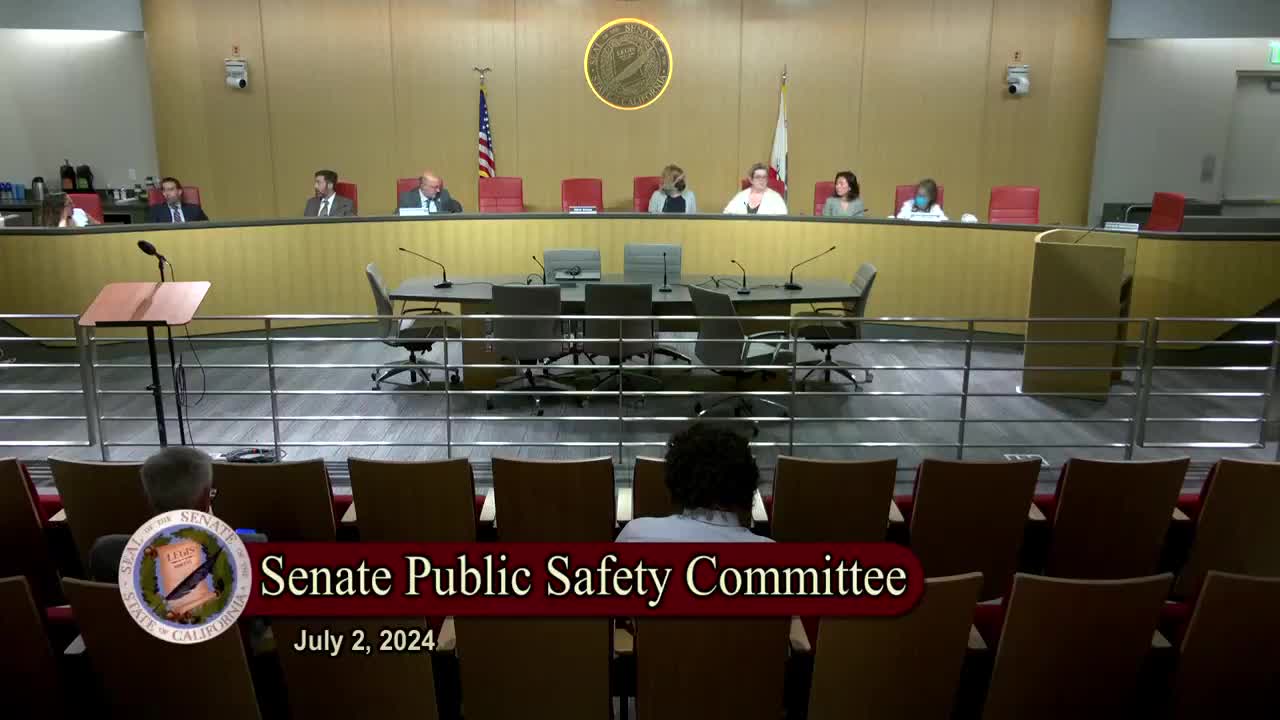 4MIN
Senate Standing Committee on Public Safety
 1MIN
Assembly Floor
 18MIN
Assembly Standing Committee on Public Safety
Bill Author

Bill Co-Author(s):