AB 2115: Controlled substances: clinics.
- Session Year: 2023-2024
- House: Assembly
- Latest Version Date: 2024-09-27
Current Status:
Passed
(2024-09-27: Chaptered by Secretary of State - Chapter 634, Statutes of 2024.)
Introduced
In Committee
First Chamber
In Committee
Second Chamber
Enacted
What does this bill do?
The bill lets practitioners at registered nonprofit or free clinics give narcotic medicines from clinic stock to relieve a patient’s acute opioid withdrawal while the clinic arranges referral to treatment, and requires clinics to follow specific labeling, recordkeeping, and dispensing policies (assessment, linking to ongoing care, and limits on repeated doses). It also allows a practitioner to directly give up to a three‑day supply of a Schedule II (high‑risk) opioid to start maintenance or detox treatment, requires the state to update narcotic treatment program rules to match recent federal regulations, and removes LAAM from the list of allowed treatment drugs.
The summary is provided by generative AI which can make mistakes. For original language, please view the details in the table below.
Existing law, the Pharmacy Law, provides for the licensure and regulation of pharmacists by the California State Board of Pharmacy and makes a violation of the act a crime. Under existing law, specified clinics, including surgical clinics, may purchase drugs at wholesale for administration or dispensing to the clinics patients. Existing law requires these clinics to maintain certain records and to obtain a license from the board. Existing law prohibits specified substances from being dispensed by a nonprofit or free clinic, as defined.
This bill would authorize a practitioner authorized to prescribe a narcotic drug at a nonprofit or free clinic, as specified, to dispense the narcotic drug from clinic supply for the purpose of relieving acute withdrawal symptoms while arrangements are being made for referral for treatment, as described, and would require the clinic dispensing the narcotic to be subject to specified reporting, labeling, and recordkeeping requirements. The bill would require clinics with a supply of narcotic drugs being dispensed pursuant to these provisions to establish policies or procedures for dispensing the narcotics, as specified. Because the bill would specify additional requirements under the Pharmacy Law, a violation of which would be a crime, it would impose a state-mandated local program.
Existing law classifies certain controlled substances into designated schedules. Existing law prohibits a controlled substance classified in Schedule II from being dispensed without a prescription, except when dispensed directly to the user in an amount not to exceed a 72-hour supply for the patient when the patient is not expected to require any additional amount of the controlled substance beyond the 72 hours.
This bill would additionally authorize a practitioner to directly dispense no more than a 3-day supply of a Schedule II controlled substance to be dispensed to the ultimate user at one time for the purpose of initiating maintenance treatment or detoxification treatment, as specified.
Existing law requires the State Department of Health Care Services to regulate and license narcotic treatment programs, including in the use of narcotic replacement therapy and medication-assisted treatment. Existing regulation specifies certain requirements and considerations for a patient to be eligible for treatment at a licensed narcotic treatment program, such as a medical evaluation conducted by the program, laboratory tests for disease, and minimum monthly participation in counseling, among others. Existing regulation also imposes specified criteria to be considered before a patient is eligible for take-home doses of medication.
This bill would require the department to amend specified regulations regarding narcotic treatment programs to comply with federal regulations pertaining to dispensing of narcotic drugs for maintenance treatment or detoxification treatment. The bill would require the department to adopt these regulations by April 30, 2029.
Existing law authorizes the use of specific medications for use in narcotic replacement therapy and medication-assisted treatment by licensed narcotic treatment programs, including Levo-alpha-acetylmethadol (LAAM). Existing law states the intent of the Legislature that take-home doses of narcotic replacement therapy medications are to be provided if the patient is clearly adhering to the requirements of the program and if daily attendance at a clinic would be incompatible with gainful employment, education, responsible homemaking, and retirement or medical disability, or as otherwise specified.
This bill would remove LAAM from the list of authorized medications for use in narcotic replacement therapy and medication-assisted treatment by licensed narcotic treatment programs and would make conforming changes. The bill would remove from the statement of the Legislatures intent the requirement that daily attendance at a clinic would be incompatible with gainful employment, education, responsible homemaking, and retirement or medical disability.
The California Constitution requires the state to reimburse local agencies and school districts for certain costs mandated by the state. Statutory provisions establish procedures for making that reimbursement.
This bill would provide that no reimbursement is required by this act for a specified reason.
This bill would declare that it is to take effect immediately as an urgency statute.
Existing law, the Pharmacy Law, provides for the licensure and regulation of pharmacists by the California State Board of Pharmacy and makes a violation of the act a crime. Under existing law, specified clinics, including surgical clinics, may purchase drugs at wholesale for administration or dispensing to the clinics patients. Existing law requires these clinics to maintain certain records and to obtain a license from the board. Existing law prohibits specified substances from being dispensed by a nonprofit or free clinic, as defined.
This bill would authorize a practitioner authorized to prescribe a narcotic drug at a nonprofit or free clinic, as specified, to dispense the narcotic drug from clinic supply for the purpose of relieving acute withdrawal symptoms while arrangements are being made for referral for treatment, as described, and would require the clinic dispensing the narcotic to be subject to specified reporting, labeling, and recordkeeping requirements. The bill would require clinics with a supply of narcotic drugs being dispensed pursuant to these provisions to establish policies or procedures for dispensing the narcotics, as specified. Because the bill would specify additional requirements under the Pharmacy Law, a violation of which would be a crime, it would impose a state-mandated local program.
Existing law classifies certain controlled substances into designated schedules. Existing law prohibits a controlled substance classified in Schedule II from being dispensed without a prescription, except when dispensed directly to the user in an amount not to exceed a 72-hour supply for the patient when the patient is not expected to require any additional amount of the controlled substance beyond the 72 hours.
This bill would instead additionally authorize a practitioner to directly dispense no more than a 3-day supply of a Schedule II controlled substance to be dispensed to one person or for one persons use the ultimate user at one time for the purpose of initiating maintenance treatment or detoxification treatment, as specified.
Existing law requires the State Department of Health Care Services to regulate and license narcotic treatment programs, including in the use of narcotic replacement therapy and medication-assisted treatment. Existing regulation specifies certain requirements and considerations for a patient to be eligible for treatment at a licensed narcotic treatment program, such as a medical evaluation conducted by the program, laboratory tests for disease, and minimum monthly participation in counseling, among others. Existing regulation also imposes specified criteria to be considered before a patient is eligible for take-home doses of medication.
This bill would require the department to amend specified regulations regarding narcotic treatment programs to comply with federal regulations pertaining to dispensing of narcotic drugs for maintenance treatment or detoxification treatment. The bill would require the department to adopt these regulations by April 30, 2029.
Existing law authorizes the use of specific medications for use in narcotic replacement therapy and medication-assisted treatment by licensed narcotic treatment programs, including Levo-alpha-acetylmethadol (LAAM). Existing law states the intent of the Legislature that take-home doses of narcotic replacement therapy medications are to be provided if the patient is clearly adhering to the requirements of the program and if daily attendance at a clinic would be incompatible with gainful employment, education, responsible homemaking, and retirement or medical disability, or as otherwise specified.
This bill would remove LAAM from the list of authorized medications for use in narcotic replacement therapy and medication-assisted treatment by licensed narcotic treatment programs and would make conforming changes. The bill would remove from the statement of the Legislatures intent the requirement that daily attendance at a clinic would be incompatible with gainful employment, education, responsible homemaking, and retirement or medical disability.
The California Constitution requires the state to reimburse local agencies and school districts for certain costs mandated by the state. Statutory provisions establish procedures for making that reimbursement.
This bill would provide that no reimbursement is required by this act for a specified reason.
This bill would declare that it is to take effect immediately as an urgency statute.
Existing law, the Pharmacy Law, provides for the licensure and regulation of pharmacists by the California State Board of Pharmacy and makes a violation of the act a crime. Under existing law, specified clinics, including surgical clinics, may purchase drugs at wholesale for administration or dispensing to the clinics patients. Existing law requires these clinics to maintain certain records and to obtain a license from the board. Existing law prohibits specified substances from being dispensed by a nonprofit or free clinic, as defined.
This bill would authorize a practitioner authorized to prescribe a narcotic drug at a nonprofit or free clinic, as specified, to dispense the narcotic drug from clinic supply for the purpose of relieving acute withdrawal symptoms while arrangements are being made for referral for treatment, as described, and would require the clinic dispensing the narcotic to be subject to specified reporting, labeling, and recordkeeping requirements. The bill would require clinics with a supply of narcotic drugs being dispensed pursuant to these provisions to establish policies or procedures for dispensing the narcotics, as specified. Because the bill would specify additional requirements under the Pharmacy Law, a violation of which would be a crime, it would impose a state-mandated local program.
Existing law classifies certain controlled substances into designated schedules. Existing law prohibits a controlled substance classified in Schedule II from being dispensed without a prescription, except when dispensed directly to the user in an amount not to exceed a 72-hour supply for the patient when the patient is not expected to require any additional amount of the controlled substance beyond the 72 hours.
This bill would instead authorize a practitioner to directly dispense no more than a 3-day supply of a Schedule II controlled substance to be dispensed to one person or for one persons use at one time for the purpose of initiating maintenance treatment or detoxification treatment, as specified.
Existing law requires the State Department of Health Care Services to regulate and license narcotic treatment programs, including in the use of narcotic replacement therapy and medication-assisted treatment. Existing regulation specifies certain requirements and considerations for a patient to be eligible for treatment at a licensed narcotic treatment program, such as a medical evaluation conducted by the program, laboratory tests for disease, and minimum monthly participation in counseling, among others. Existing regulation also imposes specified criteria to be considered before a patient is eligible for take-home doses of medication, requires revocation of those privileges if a patient tests positive for illicit substances on 2 consecutive monthly samples, and prescribes criteria for the restoration of those privileges, including test results that are negative for illicit substances. Existing regulation requires a patient who is absent from a program for 2 weeks without contacting the program be terminated from the program. medication.
This bill would specify that medical evaluation may be conducted by any health care provider, if it is verified by a narcotic treatment program practitioner, would authorize a program to allow patients to refuse or delay laboratory tests for disease, and would state that a patient receiving maintenance treatment is not precluded from receiving medication by a refusal to participate in counseling. The bill would revise the criteria to be considered prior to providing a patient with take-home medication privileges to include the absence of active substance use disorders and known recent diversion activity and the regularity of attendance for supervised medication administration, among others. The bill would state that a practitioner is not required to restrict a patients take-home medication privileges if the patient tests positive for an illicit substance as described above and a practitioner is not required to establish a specified number of negative tests to restore those privileges to a patient. The bill would authorize a program to allow a patient to be absent from the program for up to 30 days without contact before requiring that they be terminated from the program.This bill would require the department to amend specified regulations regarding narcotic treatment programs to comply with federal regulations pertaining to dispensing of narcotic drugs for maintenance treatment or detoxification treatment. The bill would require the department to adopt these regulations by April 30, 2029.
Existing law authorizes the use of specific medications for use in narcotic replacement therapy and medication-assisted treatment by licensed narcotic treatment programs, including Levo-alpha-acetylmethadol (LAAM). Existing law states the intent of the Legislature that take-home doses of narcotic replacement therapy medications are to be provided if the patient is clearly adhering to the requirements of the program and if daily attendance at a clinic would be incompatible with gainful employment, education, responsible homemaking, and retirement or medical disability, or as otherwise specified.
This bill would remove LAAM from the list of authorized medications for use in narcotic replacement therapy and medication-assisted treatment by licensed narcotic treatment programs and would make conforming changes. The bill would remove from the statement of the Legislatures intent the requirement that daily attendance at a clinic would be incompatible with gainful employment, education, responsible homemaking, and retirement or medical disability.
The California Constitution requires the state to reimburse local agencies and school districts for certain costs mandated by the state. Statutory provisions establish procedures for making that reimbursement.
This bill would provide that no reimbursement is required by this act for a specified reason.
This bill would declare that it is to take effect immediately as an urgency statute.
Existing law, the Pharmacy Law, provides for the licensure and regulation of pharmacists by the California State Board of Pharmacy and makes a violation of the act a crime. Under existing law, specified clinics, including surgical clinics, may purchase drugs at wholesale for administration or dispensing to the clinics patients. Existing law requires these clinics to maintain certain records and to obtain a license from the board. Existing law prohibits specified substances from being dispensed by a nonprofit or free clinic, as defined.
This bill would authorize a practitioner authorized to prescribe a narcotic drug at a nonprofit or free clinic, as specified, to dispense the narcotic drug from clinic supply for the purpose of relieving acute withdrawal symptoms while arrangements are being made for referral for treatment, as described, and would require the clinic dispensing the narcotic to be subject to specified reporting, labeling, and recordkeeping requirements. The bill would require clinics with a supply of narcotic drugs being dispensed pursuant to these provisions to establish policies or procedures for dispensing the narcotics, as specified. Because the bill would specify additional requirements under the Pharmacy Law, a violation of which would be a crime, it would impose a state-mandated local program.
Existing law requires the State Department of Health Care Services to regulate and license narcotic treatment programs, including in the use of narcotic replacement therapy and medication-assisted treatment. Existing regulation specifies certain requirements and considerations for a patient to be eligible for treatment at a licensed narcotic treatment program, such as a medical evaluation conducted by the program, laboratory tests for disease, and minimum monthly participation in counseling, among others. Existing regulation also imposes specified criteria to be considered before a patient is eligible for take-home doses of medication, requires revocation of those privileges if a patient tests positive for illicit substances on 2 consecutive monthly samples, and prescribes criteria for the restoration of those privileges, including test results that are negative for illicit substances. Existing regulation requires a patient who is absent from a program for 2 weeks without contacting the program be terminated from the program.
This bill would specify that medical evaluation may be conducted by any health care provider, if it is verified by a narcotic treatment program practitioner, would authorize a program to allow patients to refuse or delay laboratory tests for disease, and would state that a patient receiving maintenance treatment is not precluded from receiving medication by a refusal to participate in counseling. The bill would revise the criteria to be considered prior to providing a patient with take-home medication privileges to include the absence of active substance use disorders and known recent diversion activity and the regularity of attendance for supervised medication administration, among others. The bill would state that a practitioner is not required to restrict a patients take-home medication privileges if the patient tests positive for an illicit substance as described above and a practitioner is not required to establish a specified number of negative tests to restore those privileges to a patient. The bill would authorize a program to allow a patient to be absent from the program for up to 30 days without contact before requiring that they be terminated from the program.
The California Constitution requires the state to reimburse local agencies and school districts for certain costs mandated by the state. Statutory provisions establish procedures for making that reimbursement.
This bill would provide that no reimbursement is required by this act for a specified reason.
Existing law, the Pharmacy Law, provides for the licensure and regulation of pharmacists by the California State Board of Pharmacy and makes a violation of the act a crime. Under existing law, specified clinics, including surgical clinics, may purchase drugs at wholesale for administration or dispensing to the clinics patients. Existing law requires these clinics to maintain certain records and to obtain a license from the board. Existing law prohibits specified substances from being dispensed by a nonprofit or free clinic, as defined.
This bill would authorize a practitioner authorized to prescribe a narcotic drug at a nonprofit or free clinic clinic, as specified, to dispense a the narcotic drug from clinic supply for the purpose of relieving acute withdrawal symptoms while arrangements are being made for referral for treatment, as described, and would require the clinic dispensing the narcotic to be subject to specified labeling reporting, labeling, and recordkeeping requirements. Because the bill would specify additional requirements under the Pharmacy Law, a violation of which would be a crime, it would impose a state-mandated local program.
Existing law requires the State Department of Health Care Services to regulate and license narcotic treatment programs, including in the use of narcotic replacement therapy and medication-assisted treatment. Existing regulation specifies certain requirements and considerations for a patient to be eligible for treatment at a licensed narcotic treatment program, such as a medical evaluation conducted by the program, laboratory tests for disease, and minimum monthly participation in counseling, among others. Existing regulation also imposes specified criteria to be considered before a patient is eligible for take-home doses of medication, requires revocation of those privileges if a patient tests positive for illicit substances on 2 consecutive monthly samples, and prescribes criteria for the restoration of those privileges, including test results that are negative for illicit substances. Existing regulation requires a patient who is absent from a program for 2 weeks without contacting the program be terminated from the program.
This bill would specify that medical evaluation may be conducted by any health care provider, if it is verified by a narcotic treatment program practitioner, would authorize a program to allow patients to refuse or delay laboratory tests for disease, and would state that a patient receiving maintenance treatment is not precluded from receiving medication by a refusal to participate in counseling. The bill would revise the criteria to be considered prior to providing a patient with take-home medication privileges to include the absence of active substance use disorders and known recent diversion activity and the regularity of attendance for supervised medication administration, among others. The bill would state that a practitioner is not required to restrict a patients take-home medication privileges if the patient tests positive for an illicit substance as described above and a practitioner is not required to establish a specified number of negative tests to restore those privileges to a patient. The bill would authorize a program to allow a patient to be absent from the program for up to 30 days without contact before requiring that they be terminated from the program.
The California Constitution requires the state to reimburse local agencies and school districts for certain costs mandated by the state. Statutory provisions establish procedures for making that reimbursement.
This bill would provide that no reimbursement is required by this act for a specified reason.
Existing law, the Pharmacy Law, provides for the licensure and regulation of pharmacists by the California State Board of Pharmacy and makes a violation of the act a crime. Under existing law, specified clinics, including surgical clinics, may purchase drugs at wholesale for administration or dispensing to the clinics patients. Existing law requires these clinics to maintain certain records and to obtain a license from the board. Existing law prohibits specified substances from being dispensed by a nonprofit or free clinic, as defined.
This bill would authorize a nonprofit or free clinic to dispense a narcotic drug for the purpose of relieving acute withdrawal symptoms while arrangements are being made for referral for treatment, as described, and would require the clinic dispensing the narcotic to be subject to specified labeling and recordkeeping requirements. Because the bill would specify additional requirements under the Pharmacy Law, a violation of which would be a crime, it would impose a state-mandated local program.
The California Constitution requires the state to reimburse local agencies and school districts for certain costs mandated by the state. Statutory provisions establish procedures for making that reimbursement.
This bill would provide that no reimbursement is required by this act for a specified reason.
(a)Except as described in subdivision (b), a Schedule II controlled substance shall not be dispensed by the clinic. This limitation does not prohibit a physician dispensing a Schedule II drug to the extent permitted by law.
(b)A practitioner authorized to prescribe a narcotic drug at a clinic registered with the board pursuant to this chapter and with any necessary federal agencies may dispense that narcotic drug from clinic supply for the purpose of relieving acute withdrawal symptoms when necessary while arrangements are being made for referral for treatment consistent with Section 1306.07(b) of Title 21 of the Code of Federal Regulations.
(c)A narcotic drug that is dispensed from a clinics supply pursuant to subdivision (b) is subject to the requirements of subdivision (d) of Section 11165 of the Health and Safety Code, the labeling requirements imposed upon pharmacists by Section 4076, the recordkeeping requirements of this chapter, and all of the packaging requirements of good pharmaceutical practice, including, but not limited to, the use of childproof containers.
(d)A clinic with a supply of narcotic drugs that is being dispensed pursuant to subdivision (b) shall establish policies or procedures for dispensing, including, but not limited to, all of the following:
(1)Assessment of the patients ability to safely manage and self-administer a narcotic drug for the purposes of treating withdrawal.
(2)Assessment of the patients appropriateness for medications for opioid use disorder.
(3)Connecting patients to ongoing treatment for opioid use disorder.
(4)Limiting dispensing to patients who return for repeated withdrawal medication to ensure treatment is not renewed or extended.
(e)The dispensing of a narcotic drug shall be performed only by a physician, a pharmacist, or other person lawfully authorized to dispense drugs, and only in compliance with all applicable laws and regulations.
(f)It is the intent of the Legislature that a clinic from which narcotic drugs are dispensed operate under appropriate registration and licensing and prioritize safe and secure storage, including any inventory reconciliation methodology, consistent with regulations, to prevent loss or diversion of controlled substances.
SEC. 2.Section 11158 of the Health and Safety Code is amended to read:11158.(a) Except as provided in Section 11159 or in subdivision (b) of this section, no controlled substance classified in Schedule II shall be dispensed without a prescription meeting the requirements of this chapter. Except as provided in Section 11159 or when dispensed directly to an ultimate user by a practitioner, other than a pharmacist or pharmacy, no controlled substance classified in Schedule III, IV, or V may be dispensed without a prescription meeting the requirements of this chapter.
(b)A practitioner specified in Section 11150 may dispense a controlled substance classified in Schedule II, which may be from a hospital pharmacy inventory, directly to an ultimate user in either of the following circumstances:
(1)In an amount not to exceed a 72-hour supply for the patient in accordance with directions for use given by the dispensing practitioner only where the patient is not expected to require any additional amount of the controlled substance beyond the 72 hours.
(2)For the purpose of initiating maintenance treatment or detoxification treatment, or both, for a person with an opioid use disorder. Not more than a three-day supply of such medication may be dispensed to the person at one time while arrangements are being made for referral for treatment. Such emergency treatment may not be renewed or extended.
(c) Except as otherwise prohibited or limited by law, a practitioner specified in Section 11150, may administer controlled substances in the regular practice of their profession.
SEC. 3.Section 11839.01 is added to the Health and Safety Code, to read:11839.01.(a)(1)Notwithstanding any other law, the department shall amend Chapter 4 (commencing with Section 10000) of Division 4 of Title 9 of the California Code of Regulations to comply with Part 8 of Title 42 of the Code of Federal Regulations, as published in the Federal Register on February 2, 2024 (89 FR 7528).
(2)In the event that Part 8 of Title 42 of the Code of Federal Regulations, as published on February 2, 2024, in the Federal Register (89 FR 7528), renders state narcotic treatment program regulations inconsistent with, but not in violation of, federal narcotic treatment program requirements, the department may amend Chapter 4 (commencing with Section 10000) of Division 4 of Title 9 of the California Code of Regulations to align with the Code of Federal Regulations.
(b)(1)Notwithstanding Chapter 3.5 (commencing with Section 11340) of Part 1 of Division 3 of Title 2 of the Government Code, the department may implement, interpret, or make specific this section, in whole or in part, by means of plan or county letters, information notices, plan or provider bulletins, or other similar instructions, without taking any further regulatory action.
(2)By April 30, 2029, the department shall adopt any regulations necessary to implement this section in accordance with the requirements of Chapter 3.5 (commencing with Section 11340) of Part 1 of Division 3 of Title 2 of the Government Code.
SEC. 4.Section 11839.2 of the Health and Safety Code is amended to read:11839.2.The following medications are authorized for use in narcotic replacement therapy and medication-assisted treatment by licensed narcotic treatment programs:
(a)Methadone.
(b)Buprenorphine products or combination of products approved by the federal Food and Drug Administration for maintenance or detoxification of opioid dependence.
(c)Any other medication approved by the federal Food and Drug Administration for the purpose of narcotic replacement treatment or medication-assisted treatment of substance use disorders.
(d)Notwithstanding Chapter 3.5 (commencing with Section 11340) of Part 1 of Division 3 of Title 2 of the Government Code, the department may implement, interpret, or make specific this section by means of plan or provider bulletins, or similar instructions. The department shall adopt regulations by no later than January 1, 2021.
SEC. 5.Section 11839.3 of the Health and Safety Code is amended to read:11839.3.(a)In addition to the duties authorized by other statutes, the department shall perform all of the following:
(1)License the establishment of narcotic treatment programs in this state to use narcotic replacement therapy in the treatment of addicted persons whose addiction was acquired or supported by the use of a narcotic drug or drugs, not in compliance with a physician and surgeons legal prescription, except that the Research Advisory Panel shall have authority to approve methadone research programs. The department shall establish and enforce the criteria for the eligibility of patients to be included in the programs, program operation guidelines, such as dosage levels, recordkeeping and reporting, urinalysis requirements, take-home doses of controlled substances authorized for use pursuant to Section 11839.2, security against redistribution of the narcotic replacement drugs, and any other regulations that are necessary to protect the safety and well-being of the patient, the local community, and the public, and to carry out this chapter. A program may admit a patient to narcotic maintenance or narcotic detoxification treatment at the discretion of the medical director. The program shall assign a unique identifier to, and maintain an individual record for, each patient of the program. The arrest and conviction records and the records of pending charges against a person seeking admission to a narcotic treatment program shall be furnished to narcotic treatment program directors upon written request of the narcotic treatment program director provided the request is accompanied by a signed release from the person whose records are being requested.
(2)Inspect narcotic treatment programs in this state and ensure that programs are operating in accordance with the law and regulations. The department shall have sole responsibility for compliance inspections of all programs in each county. Annual compliance inspections shall consist of an evaluation by onsite review of the operations and records of licensed narcotic treatment programs compliance with applicable state and federal laws and regulations and the evaluation of input from local law enforcement and local governments, regarding concerns about the narcotic treatment program. At the conclusion of each inspection visit, the department shall conduct an exit conference to explain the cited deficiencies to the program staff and to provide recommendations to ensure compliance with applicable laws and regulations. The department shall provide an inspection report to the licensee within 30 days of the completed onsite review describing the program deficiencies. A corrective action plan shall be required from the program within 30 days of receipt of the inspection report. All corrective actions contained in the plan shall be implemented within 30 days of receipt of approval by the department of the corrective action plan submitted by the narcotic treatment program. For programs found not to be in compliance, a subsequent inspection of the program shall be conducted within 30 days after the receipt of the corrective action plan in order to ensure that corrective action has been implemented satisfactorily. Subsequent inspections of the program shall be conducted to determine and ensure that the corrective action has been implemented satisfactorily. For purposes of this requirement, compliance shall mean to have not committed any of the grounds for suspension or revocation of a license provided for under subdivision (a) of Section 11839.9 or paragraph (2) of subdivision (b) of Section 11839.9. Inspection of narcotic treatment programs shall be based on objective criteria including, but not limited to, an evaluation of the programs adherence to all applicable laws and regulations and input from local law enforcement and local governments. Nothing in this section shall preclude counties from monitoring their contract providers for compliance with contract requirements.
(3)Charge and collect licensure fees. In calculating the licensure fees, the department shall include staff salaries and benefits, related travel costs, and state operational and administrative costs. Fees shall be used to offset licensure and inspection costs, not to exceed actual costs.
(4)Study and evaluate, on an ongoing basis, narcotic treatment programs including, but not limited to, the adherence of the programs, to all applicable laws and regulations and the impact of the programs on the communities in which they are located.
(5)Provide advice, consultation, and technical assistance to narcotic treatment programs to ensure that the programs comply with all applicable laws and regulations and to minimize any negative impact that the programs may have on the communities in which they are located.
(6)In its discretion, to approve local agencies or bodies to assist it in carrying out this chapter provided that the department may not delegate responsibility for inspection or any other licensure activity without prior and specific statutory approval. However, the department shall evaluate recommendations made by county alcohol and drug program administrators regarding licensing activity in their respective counties.
(7)The director may grant exceptions to the regulations adopted under this chapter if the director determines that this action would improve treatment services or achieve greater protection to the health and safety of patients, the local community, or the general public. An exception shall not be granted if it is contrary to, or less stringent than, the federal laws and regulations that govern narcotic treatment programs.
(b)It is the intent of the Legislature in enacting this section, in order to protect the general public and local communities, that take-home doses of narcotic replacement therapy medications authorized for use pursuant to Section 11839.2 shall only be provided when the patient is clearly adhering to the requirements of the program, or if the program is closed on Sundays or holidays and providing a take-home dose is not contrary to federal laws and regulations governing narcotic treatment programs. The department shall define satisfactory adherence and shall ensure that patients not satisfactorily adhering to their programs shall not be provided take-home doses. A narcotic treatment program medical director shall determine whether or not to dilute take-home doses.
(c)There is established in the State Treasury the Narcotic Treatment Program Licensing Trust Fund. All licensure fees collected from the providers of narcotic treatment services shall be deposited in this fund. Except as otherwise provided in this section, if funds remain in this fund after appropriation by the Legislature and allocation for the costs associated with narcotic treatment licensure actions and inspection of narcotic treatment programs, a percentage of the excess funds shall be annually rebated to the licensees based on the percentage their licensing fee is of the total amount of fees collected by the department. A reserve equal to 10 percent of the total licensure fees collected during the preceding fiscal year may be held in each trust account to reimburse the department if the actual cost for the licensure and inspection exceed fees collected during a fiscal year.
(d)Notwithstanding any provision of this code or regulations to the contrary, the department shall have sole responsibility and authority for determining if a state narcotic treatment program license shall be granted and for administratively establishing the maximum treatment capacity of a license. However, the department shall not increase the capacity of a program unless it determines that the licensee is operating in full compliance with applicable laws and regulations.
SEC. 6.No reimbursement is required by this act pursuant to Section 6 of Article XIIIB of the California Constitution because the only costs that may be incurred by a local agency or school district will be incurred because this act creates a new crime or infraction, eliminates a crime or infraction, or changes the penalty for a crime or infraction, within the meaning of Section 17556 of the Government Code, or changes the definition of a crime within the meaning of Section 6 of Article XIIIB of the California Constitution.
SEC. 7.This act is an urgency statute necessary for the immediate preservation of the public peace, health, or safety within the meaning of Article IV of the California Constitution and shall go into immediate effect. The facts constituting the necessity are:
To enable the State Department of Health Care Services to meet the federal Substance Abuse and Mental Health Services Administration requirements relating to opioid treatment programs and the standards for treatment of opioid use disorder by the October 2, 2024, compliance deadline, it is necessary that this act take effect immediately.
(a)Except as described in subdivision (b), a Schedule II controlled substance shall not be dispensed by the clinic. This limitation does not prohibit a physician dispensing a Schedule II drug to the extent permitted by law.
(b)A practitioner authorized to prescribe a narcotic drug at a clinic registered with the board pursuant to this chapter and with any necessary federal agencies may dispense that narcotic drug from clinic supply for the purpose of relieving acute withdrawal symptoms when necessary while arrangements are being made for referral for treatment consistent with Section 1306.07(b) of Title 21 of the Code of Federal Regulations.
(c)A narcotic drug that is dispensed from a clinics supply pursuant to subdivision (b) is subject to the requirements of subdivision (d) of Section 11165 of the Health and Safety Code, the labeling requirements imposed upon pharmacists by Section 4076, the recordkeeping requirements of this chapter, and all of the packaging requirements of good pharmaceutical practice, including, but not limited to, the use of childproof containers.
(d)A clinic with a supply of narcotic drugs that is being dispensed pursuant to subdivision (b) shall establish policies or procedures for dispensing, including, but not limited to, all of the following:
(1)Assessment of the patients ability to safely manage and self-administer a narcotic drug for the purposes of treating withdrawal.
(2)Assessment of the patients appropriateness for medications for opioid use disorder.
(3)Connecting patients to ongoing treatment for opioid use disorder.
(4)Limiting dispensing to patients who return for repeated withdrawal medication to ensure treatment is not renewed or extended.
(e)The dispensing of a narcotic drug shall be performed only by a physician, a pharmacist, or other person lawfully authorized to dispense drugs, and only in compliance with all applicable laws and regulations.
(f)It is the intent of the Legislature that a clinic from which narcotic drugs are dispensed operate under appropriate registration and licensing and prioritize safe and secure storage, including any inventory reconciliation methodology, consistent with regulations, to prevent loss or diversion of controlled substances.
SEC. 2.Section 11158 of the Health and Safety Code is amended to read:11158.(a) Except as provided in Section 11159 or in subdivision (b) of this section, no controlled substance classified in Schedule II shall be dispensed without a prescription meeting the requirements of this chapter. Except as provided in Section 11159 or when dispensed directly to an ultimate user by a practitioner, other than a pharmacist or pharmacy, no controlled substance classified in Schedule III, IV, or V may be dispensed without a prescription meeting the requirements of this chapter.
(b)A practitioner specified in Section 11150 may dispense directly a controlled substance classified in Schedule II, which may be from a hospital pharmacy inventory, to one person or for one persons use at one time for the purpose of initiating maintenance treatment or detoxification treatment, or both. Not more than a three-day supply of the medication may be dispensed to the person or for the persons use at one time while arrangements are being made for referral for treatment. Such emergency treatment may not be renewed or extended. Practitioners dispensing drugs pursuant to this subdivision shall meet the requirements of subdivision (b) of Section 11164. directly to an ultimate user in either of the following circumstances:
(1)In an amount not to exceed a 72-hour supply for the patient in accordance with directions for use given by the dispensing practitioner only where the patient is not expected to require any additional amount of the controlled substance beyond the 72 hours.
(2)For the purpose of initiating maintenance treatment or detoxification treatment, or both, for a person with an opioid use disorder. Not more than a three-day supply of such medication may be dispensed to the person at one time while arrangements are being made for referral for treatment. Such emergency treatment may not be renewed or extended.
(c) Except as otherwise prohibited or limited by law, a practitioner specified in Section 11150, may administer controlled substances in the regular practice of their profession.
SEC. 3.Section 11839.01 is added to the Health and Safety Code, to read:11839.01.(a)(1)Notwithstanding any other law, the department shall amend Chapter 4 (commencing with Section 10000) of Division 4 of Title 9 of the California Code of Regulations to comply with Part 8 of Title 42 of the Code of Federal Regulations, as published in the Federal Register on February 2, 2024 (89 FR 7528).
(2)In the event that Part 8 of Title 42 of the Code of Federal Regulations, as published on February 2, 2024, in the Federal Register (89 FR 7528), renders state narcotic treatment program regulations inconsistent with, but not in violation of, federal narcotic treatment program requirements, the department may amend Chapter 4 (commencing with Section 10000) of Division 4 of Title 9 of the California Code of Regulations to align with the Code of Federal Regulations.
(b)(1)Notwithstanding Chapter 3.5 (commencing with Section 11340) of Part 1 of Division 3 of Title 2 of the Government Code, the department may implement, interpret, or make specific this section, in whole or in part, by means of plan or county letters, information notices, plan or provider bulletins, or other similar instructions, without taking any further regulatory action.
(2)By April 30, 2029, the department shall adopt any regulations necessary to implement this section in accordance with the requirements of Chapter 3.5 (commencing with Section 11340) of Part 1 of Division 3 of Title 2 of the Government Code.
SEC. 4.Section 11839.2 of the Health and Safety Code is amended to read:11839.2.The following medications are authorized for use in narcotic replacement therapy and medication-assisted treatment by licensed narcotic treatment programs:
(a)Methadone.
(b)Buprenorphine products or combination of products approved by the federal Food and Drug Administration for maintenance or detoxification of opioid dependence.
(c)Any other medication approved by the federal Food and Drug Administration for the purpose of narcotic replacement treatment or medication-assisted treatment of substance use disorders.
(d)Notwithstanding Chapter 3.5 (commencing with Section 11340) of Part 1 of Division 3 of Title 2 of the Government Code, the department may implement, interpret, or make specific this section by means of plan or provider bulletins, or similar instructions. The department shall adopt regulations by no later than January 1, 2021.
SEC. 5.Section 11839.3 of the Health and Safety Code is amended to read:11839.3.(a)In addition to the duties authorized by other statutes, the department shall perform all of the following:
(1)License the establishment of narcotic treatment programs in this state to use narcotic replacement therapy in the treatment of addicted persons whose addiction was acquired or supported by the use of a narcotic drug or drugs, not in compliance with a physician and surgeons legal prescription, except that the Research Advisory Panel shall have authority to approve methadone research programs. The department shall establish and enforce the criteria for the eligibility of patients to be included in the programs, program operation guidelines, such as dosage levels, recordkeeping and reporting, urinalysis requirements, take-home doses of controlled substances authorized for use pursuant to Section 11839.2, security against redistribution of the narcotic replacement drugs, and any other regulations that are necessary to protect the safety and well-being of the patient, the local community, and the public, and to carry out this chapter. A program may admit a patient to narcotic maintenance or narcotic detoxification treatment at the discretion of the medical director. The program shall assign a unique identifier to, and maintain an individual record for, each patient of the program. The arrest and conviction records and the records of pending charges against a person seeking admission to a narcotic treatment program shall be furnished to narcotic treatment program directors upon written request of the narcotic treatment program director provided the request is accompanied by a signed release from the person whose records are being requested.
(2)Inspect narcotic treatment programs in this state and ensure that programs are operating in accordance with the law and regulations. The department shall have sole responsibility for compliance inspections of all programs in each county. Annual compliance inspections shall consist of an evaluation by onsite review of the operations and records of licensed narcotic treatment programs compliance with applicable state and federal laws and regulations and the evaluation of input from local law enforcement and local governments, regarding concerns about the narcotic treatment program. At the conclusion of each inspection visit, the department shall conduct an exit conference to explain the cited deficiencies to the program staff and to provide recommendations to ensure compliance with applicable laws and regulations. The department shall provide an inspection report to the licensee within 30 days of the completed onsite review describing the program deficiencies. A corrective action plan shall be required from the program within 30 days of receipt of the inspection report. All corrective actions contained in the plan shall be implemented within 30 days of receipt of approval by the department of the corrective action plan submitted by the narcotic treatment program. For programs found not to be in compliance, a subsequent inspection of the program shall be conducted within 30 days after the receipt of the corrective action plan in order to ensure that corrective action has been implemented satisfactorily. Subsequent inspections of the program shall be conducted to determine and ensure that the corrective action has been implemented satisfactorily. For purposes of this requirement, compliance shall mean to have not committed any of the grounds for suspension or revocation of a license provided for under subdivision (a) of Section 11839.9 or paragraph (2) of subdivision (b) of Section 11839.9. Inspection of narcotic treatment programs shall be based on objective criteria including, but not limited to, an evaluation of the programs adherence to all applicable laws and regulations and input from local law enforcement and local governments. Nothing in this section shall preclude counties from monitoring their contract providers for compliance with contract requirements.
(3)Charge and collect licensure fees. In calculating the licensure fees, the department shall include staff salaries and benefits, related travel costs, and state operational and administrative costs. Fees shall be used to offset licensure and inspection costs, not to exceed actual costs.
(4)Study and evaluate, on an ongoing basis, narcotic treatment programs including, but not limited to, the adherence of the programs, to all applicable laws and regulations and the impact of the programs on the communities in which they are located.
(5)Provide advice, consultation, and technical assistance to narcotic treatment programs to ensure that the programs comply with all applicable laws and regulations and to minimize any negative impact that the programs may have on the communities in which they are located.
(6)In its discretion, to approve local agencies or bodies to assist it in carrying out this chapter provided that the department may not delegate responsibility for inspection or any other licensure activity without prior and specific statutory approval. However, the department shall evaluate recommendations made by county alcohol and drug program administrators regarding licensing activity in their respective counties.
(7)The director may grant exceptions to the regulations adopted under this chapter if the director determines that this action would improve treatment services or achieve greater protection to the health and safety of patients, the local community, or the general public. An exception shall not be granted if it is contrary to, or less stringent than, the federal laws and regulations that govern narcotic treatment programs.
(b)It is the intent of the Legislature in enacting this section, in order to protect the general public and local communities, that take-home doses of narcotic replacement therapy medications authorized for use pursuant to Section 11839.2 shall only be provided when the patient is clearly adhering to the requirements of the program, or if the program is closed on Sundays or holidays and providing a take-home dose is not contrary to federal laws and regulations governing narcotic treatment programs. The department shall define satisfactory adherence and shall ensure that patients not satisfactorily adhering to their programs shall not be provided take-home doses. A narcotic treatment program medical director shall determine whether or not to dilute take-home doses.
(c)There is established in the State Treasury the Narcotic Treatment Program Licensing Trust Fund. All licensure fees collected from the providers of narcotic treatment services shall be deposited in this fund. Except as otherwise provided in this section, if funds remain in this fund after appropriation by the Legislature and allocation for the costs associated with narcotic treatment licensure actions and inspection of narcotic treatment programs, a percentage of the excess funds shall be annually rebated to the licensees based on the percentage their licensing fee is of the total amount of fees collected by the department. A reserve equal to 10 percent of the total licensure fees collected during the preceding fiscal year may be held in each trust account to reimburse the department if the actual cost for the licensure and inspection exceed fees collected during a fiscal year.
(d)Notwithstanding any provision of this code or regulations to the contrary, the department shall have sole responsibility and authority for determining if a state narcotic treatment program license shall be granted and for administratively establishing the maximum treatment capacity of a license. However, the department shall not increase the capacity of a program unless it determines that the licensee is operating in full compliance with applicable laws and regulations.
SEC. 6.No reimbursement is required by this act pursuant to Section 6 of Article XIIIB of the California Constitution because the only costs that may be incurred by a local agency or school district will be incurred because this act creates a new crime or infraction, eliminates a crime or infraction, or changes the penalty for a crime or infraction, within the meaning of Section 17556 of the Government Code, or changes the definition of a crime within the meaning of Section 6 of Article XIIIB of the California Constitution.
SEC. 7.This act is an urgency statute necessary for the immediate preservation of the public peace, health, or safety within the meaning of Article IV of the California Constitution and shall go into immediate effect. The facts constituting the necessity are:
To enable the State Department of Health Care Services to meet the federal Substance Abuse and Mental Health Services Administration requirements relating to opioid treatment programs and the standards for treatment of opioid use disorder by the October 2, 2024, compliance deadline, it is necessary that this act take effect immediately.
(a)Except as described in subdivision (b), a Schedule II controlled substance shall not be dispensed by the clinic. This limitation does not prohibit a physician dispensing a Schedule II drug to the extent permitted by law.
(b)A practitioner authorized to prescribe a narcotic drug at a clinic registered with the board pursuant to this chapter and with any necessary federal agencies may dispense that narcotic drug from clinic supply for the purpose of relieving acute withdrawal symptoms when necessary while arrangements are being made for referral for treatment consistent with Section 1306.07(b) of Title 21 of the Code of Federal Regulations.
(c)A narcotic drug that is dispensed from a clinics supply pursuant to subdivision (b) is subject to the requirements of subdivision (d) of Section 11165 of the Health and Safety Code, the labeling requirements imposed upon pharmacists by Section 4076, the recordkeeping requirements of this chapter, and all of the packaging requirements of good pharmaceutical practice, including, but not limited to, the use of childproof containers.
(d)A clinic with a supply of narcotic drugs that is being dispensed pursuant to subdivision (b) shall establish policies or procedures for dispensing, including, but not limited to, all of the following:
(1)Assessment of the patients ability to safely manage and self-administer a narcotic drug for the purposes of treating withdrawal.
(2)Assessment of the patients appropriateness for medications for opioid use disorder.
(3)Connecting patients to ongoing treatment for opioid use disorder.
(4)Limiting dispensing to patients who return for repeated withdrawal medication to ensure treatment is not renewed or extended.
(e)The dispensing of a narcotic drug shall be performed only by a physician, a pharmacist, or other person lawfully authorized to dispense drugs, and only in compliance with all applicable laws and regulations.
(f)It is the intent of the Legislature that a clinic from which narcotic drugs are dispensed operate under appropriate registration and licensing and prioritize safe and secure storage, including any inventory reconciliation methodology, consistent with regulations, to prevent loss or diversion of controlled substances.
SEC. 2.Section 11839.35 is added to the Health and Safety Code, to read:11839.35.(a)A medical evaluation of a patient prior to admittance to a detoxification or maintenance treatment may be conducted by any health care provider, if it is verified by a narcotic treatment program practitioner as true and accurate and it is transmitted in accordance with all applicable privacy laws.(b)A narcotic treatment program may authorize a patient to decline laboratory testing for disease or may authorize a patient to complete that testing within two weeks of the date of admittance to the program.(c)A narcotic treatment program shall not deny a patient maintenance treatment due to the length of time a person has been addicted to opiates.(d)A patient receiving maintenance treatment is not precluded from receiving medication for opiate use disorder by refusing to participate in counseling services.(e)A narcotic treatment program practitioner shall update a patients treatment plan annually.(f)The initial dose of methadone provided to a patient in a narcotic treatment program shall not exceed 50 milligrams unless the practitioner finds sufficient medical rationale that a higher dose is clinically indicated. The practitioner shall document that rationale in the patients records.(g)Notwithstanding subdivision (b) of Section 11839.3, a decision to dispense take-home doses of narcotic replacement therapy medications shall be determined by a medical practitioner, who shall consider, among other pertinent factors, all of the following criteria:(1)The absence of active substance use disorders, other physical or behavioral health conditions that increase the risk of patient harm as it relates to the potential for overdose, or the ability to function safely.(2)The regularity of attendance for supervised medication administration.(3)The absence of serious behavioral problems that endanger the patient, the public, or others.(4)The absence of known recent diversion activity.(5)Whether take-home medication can be safely transported and stored.(6)Any other criteria that the medical director or medical practitioner considers relevant to the patients safety and the publics health.(h)A decision to dispense take-home medication shall not be contingent on the length of time a patient has participated in treatment. A patient eligible for take-home medication may receive up to a seven-day take-home supply of medication. After 15 days of treatment, a patient may receive up to a two-week take-home supply of medication, and after 31 days in treatment may receive a 28-day take-home supply of medication.(i)A medical practitioner is not required to restrict a patients take-home medication privileges if that patients monthly bodily specimen has tested positive for illicit drugs in two consecutive months.(j)In restoring a patients take-home medication privileges, a practitioner is not required to impose any requirement that the patients monthly bodily specimen test negative for illicit drugs for any specified period of time.(k)A patient may be absent from a maintenance treatment program for up to 30 days, without contacting the program.(l)The department shall review existing regulations promulgated pursuant to this chapter and remove outdated, stigmatizing language and obsolete references.SEC. 2.Section 11158 of the Health and Safety Code is amended to read:11158.(a) Except as provided in Section 11159 or in subdivision (b) of this section, no controlled substance classified in Schedule II shall be dispensed without a prescription meeting the requirements of this chapter. Except as provided in Section 11159 or when dispensed directly to an ultimate user by a practitioner, other than a pharmacist or pharmacy, no controlled substance classified in Schedule III, IV, or V may be dispensed without a prescription meeting the requirements of this chapter.
(b) A practitioner specified in Section 11150 may dispense directly to an ultimate user a controlled substance classified in Schedule II in an amount not to exceed a 72-hour supply for the patient in accordance with directions for use given by the dispensing practitioner only where the patient is not expected to require any additional amount of the controlled substance beyond the 72 hours. Practitioners dispensing drugs pursuant to this subdivision shall meet the requirements of subdivision (f) of Section 11164.(b)A practitioner specified in Section 11150 may dispense directly a controlled substance classified in Schedule II, which may be from a hospital pharmacy inventory, to one person or for one persons use at one time for the purpose of initiating maintenance treatment or detoxification treatment, or both. Not more than a three-day supply of the medication may be dispensed to the person or for the persons use at one time while arrangements are being made for referral for treatment. Such emergency treatment may not be renewed or extended. Practitioners dispensing drugs pursuant to this subdivision shall meet the requirements of subdivision (b) of Section 11164.
(c) Except as otherwise prohibited or limited by law, a practitioner specified in Section 11150, may administer controlled substances in the regular practice of his or her their profession.
SEC. 3.Section 11839.01 is added to the Health and Safety Code, to read:11839.01.(a)(1)Notwithstanding any other law, the department shall amend Chapter 4 (commencing with Section 10000) of Division 4 of Title 9 of the California Code of Regulations to comply with Part 8 of Title 42 of the Code of Federal Regulations, as published in the Federal Register on February 2, 2024 (89 FR 7528).
(2)In the event that Part 8 of Title 42 of the Code of Federal Regulations, as published on February 2, 2024, in the Federal Register (89 FR 7528), renders state narcotic treatment program regulations inconsistent with, but not in violation of, federal narcotic treatment program requirements, the department may amend Chapter 4 (commencing with Section 10000) of Division 4 of Title 9 of the California Code of Regulations to align with the Code of Federal Regulations.
(b)(1)Notwithstanding Chapter 3.5 (commencing with Section 11340) of Part 1 of Division 3 of Title 2 of the Government Code, the department may implement, interpret, or make specific this section, in whole or in part, by means of plan or county letters, information notices, plan or provider bulletins, or other similar instructions, without taking any further regulatory action.
(2)By April 30, 2029, the department shall adopt any regulations necessary to implement this section in accordance with the requirements of Chapter 3.5 (commencing with Section 11340) of Part 1 of Division 3 of Title 2 of the Government Code.
SEC. 4.Section 11839.2 of the Health and Safety Code is amended to read:11839.2.The following medications are authorized for use in narcotic replacement therapy and medication-assisted treatment by licensed narcotic treatment programs:
(a)Methadone.
(b)Levo-alpha-acetylmethadol (LAAM) as specified in paragraph (10) of subdivision (c) of Section 11055. (c)(b)Buprenorphine products or combination of products approved by the federal Food and Drug Administration for maintenance or detoxification of opioid dependence.
(d)(c)Any other medication approved by the federal Food and Drug Administration for the purpose of narcotic replacement treatment or medication-assisted treatment of substance use disorders.
(e)(d)Notwithstanding Chapter 3.5 (commencing with Section 11340) of Part 1 of Division 3 of Title 2 of the Government Code, the department may implement, interpret, or make specific this section by means of plan or provider bulletins, or similar instructions. The department shall adopt regulations by no later than January 1, 2021.
SEC. 5.Section 11839.3 of the Health and Safety Code is amended to read:11839.3.(a)In addition to the duties authorized by other statutes, the department shall perform all of the following:
(1)License the establishment of narcotic treatment programs in this state to use narcotic replacement therapy in the treatment of addicted persons whose addiction was acquired or supported by the use of a narcotic drug or drugs, not in compliance with a physician and surgeons legal prescription, except that the Research Advisory Panel shall have authority to approve methadone or LAAM research programs. The department shall establish and enforce the criteria for the eligibility of patients to be included in the programs, program operation guidelines, such as dosage levels, recordkeeping and reporting, urinalysis requirements, take-home doses of controlled substances authorized for use pursuant to Section 11839.2, security against redistribution of the narcotic replacement drugs, and any other regulations that are necessary to protect the safety and well-being of the patient, the local community, and the public, and to carry out this chapter. A program may admit a patient to narcotic maintenance or narcotic detoxification treatment at the discretion of the medical director. The program shall assign a unique identifier to, and maintain an individual record for, each patient of the program. The arrest and conviction records and the records of pending charges against a person seeking admission to a narcotic treatment program shall be furnished to narcotic treatment program directors upon written request of the narcotic treatment program director provided the request is accompanied by a signed release from the person whose records are being requested.
(2)Inspect narcotic treatment programs in this state and ensure that programs are operating in accordance with the law and regulations. The department shall have sole responsibility for compliance inspections of all programs in each county. Annual compliance inspections shall consist of an evaluation by onsite review of the operations and records of licensed narcotic treatment programs compliance with applicable state and federal laws and regulations and the evaluation of input from local law enforcement and local governments, regarding concerns about the narcotic treatment program. At the conclusion of each inspection visit, the department shall conduct an exit conference to explain the cited deficiencies to the program staff and to provide recommendations to ensure compliance with applicable laws and regulations. The department shall provide an inspection report to the licensee within 30 days of the completed onsite review describing the program deficiencies. A corrective action plan shall be required from the program within 30 days of receipt of the inspection report. All corrective actions contained in the plan shall be implemented within 30 days of receipt of approval by the department of the corrective action plan submitted by the narcotic treatment program. For programs found not to be in compliance, a subsequent inspection of the program shall be conducted within 30 days after the receipt of the corrective action plan in order to ensure that corrective action has been implemented satisfactorily. Subsequent inspections of the program shall be conducted to determine and ensure that the corrective action has been implemented satisfactorily. For purposes of this requirement, compliance shall mean to have not committed any of the grounds for suspension or revocation of a license provided for under subdivision (a) of Section 11839.9 or paragraph (2) of subdivision (b) of Section 11839.9. Inspection of narcotic treatment programs shall be based on objective criteria including, but not limited to, an evaluation of the programs adherence to all applicable laws and regulations and input from local law enforcement and local governments. Nothing in this section shall preclude counties from monitoring their contract providers for compliance with contract requirements.
(3)Charge and collect licensure fees. In calculating the licensure fees, the department shall include staff salaries and benefits, related travel costs, and state operational and administrative costs. Fees shall be used to offset licensure and inspection costs, not to exceed actual costs.
(4)Study and evaluate, on an ongoing basis, narcotic treatment programs including, but not limited to, the adherence of the programs, to all applicable laws and regulations and the impact of the programs on the communities in which they are located.
(5)Provide advice, consultation, and technical assistance to narcotic treatment programs to ensure that the programs comply with all applicable laws and regulations and to minimize any negative impact that the programs may have on the communities in which they are located.
(6)In its discretion, to approve local agencies or bodies to assist it in carrying out this chapter provided that the department may not delegate responsibility for inspection or any other licensure activity without prior and specific statutory approval. However, the department shall evaluate recommendations made by county alcohol and drug program administrators regarding licensing activity in their respective counties.
(7)The director may grant exceptions to the regulations adopted under this chapter if he or she the director determines that this action would improve treatment services or achieve greater protection to the health and safety of patients, the local community, or the general public. An exception shall not be granted if it is contrary to, or less stringent than, the federal laws and regulations that govern narcotic treatment programs.
(b)It is the intent of the Legislature in enacting this section, in order to protect the general public and local communities, that take-home doses of narcotic replacement therapy medications authorized for use pursuant to Section 11839.2 shall only be provided when the patient is clearly adhering to the requirements of the program, and if daily attendance at a clinic would be incompatible with gainful employment, education, responsible homemaking, retirement or medical disability, or if the program is closed on Sundays or holidays and providing a take-home dose is not contrary to federal laws and regulations governing narcotic treatment programs. The department shall define satisfactory adherence and shall ensure that patients not satisfactorily adhering to their programs shall not be provided take-home doses. A narcotic treatment program medical director shall determine whether or not to dilute take-home doses.
(c)There is established in the State Treasury the Narcotic Treatment Program Licensing Trust Fund. All licensure fees collected from the providers of narcotic treatment services shall be deposited in this fund. Except as otherwise provided in this section, if funds remain in this fund after appropriation by the Legislature and allocation for the costs associated with narcotic treatment licensure actions and inspection of narcotic treatment programs, a percentage of the excess funds shall be annually rebated to the licensees based on the percentage their licensing fee is of the total amount of fees collected by the department. A reserve equal to 10 percent of the total licensure fees collected during the preceding fiscal year may be held in each trust account to reimburse the department if the actual cost for the licensure and inspection exceed fees collected during a fiscal year.
(d)Notwithstanding any provision of this code or regulations to the contrary, the department shall have sole responsibility and authority for determining if a state narcotic treatment program license shall be granted and for administratively establishing the maximum treatment capacity of a license. However, the department shall not increase the capacity of a program unless it determines that the licensee is operating in full compliance with applicable laws and regulations.
SEC. 3.SEC. 6.No reimbursement is required by this act pursuant to Section 6 of Article XIIIB of the California Constitution because the only costs that may be incurred by a local agency or school district will be incurred because this act creates a new crime or infraction, eliminates a crime or infraction, or changes the penalty for a crime or infraction, within the meaning of Section 17556 of the Government Code, or changes the definition of a crime within the meaning of Section 6 of Article XIIIB of the California Constitution.
SEC. 7.This act is an urgency statute necessary for the immediate preservation of the public peace, health, or safety within the meaning of Article IV of the California Constitution and shall go into immediate effect. The facts constituting the necessity are:
To enable the State Department of Health Care Services to meet the federal Substance Abuse and Mental Health Services Administration requirements relating to opioid treatment programs and the standards for treatment of opioid use disorder by the October 2, 2024, compliance deadline, it is necessary that this act take effect immediately.
(a)Except as described in subdivision (b), a Schedule II controlled substance shall not be dispensed by the clinic. This limitation does not prohibit a physician dispensing a Schedule II drug to the extent permitted by law.
(b)A practitioner authorized to prescribe a narcotic drug at a clinic registered with the board pursuant to this chapter and with any necessary federal agencies may dispense that narcotic drug from clinic supply for the purpose of relieving acute withdrawal symptoms when necessary while arrangements are being made for referral for treatment consistent with Section 1306.07(b) of Title 21 of the Code of Federal Regulations.
(c)A narcotic drug that is dispensed from a clinics supply pursuant to subdivision (b) is subject to the requirements of subdivision (d) of Section 11165 of the Health and Safety Code, the labeling requirements imposed upon pharmacists by Section 4076, the recordkeeping requirements of this chapter, and all of the packaging requirements of good pharmaceutical practice, including, but not limited to, the use of childproof containers.
(d)A clinic with a supply of narcotic drugs that is being dispensed pursuant to subdivision (b) shall establish policies or procedures for dispensing, including, but not limited to, all of the following:
(1)Assessment of the patients ability to safely manage and self-administer a narcotic drug for the purposes of treating withdrawal.
(2)Assessment of the patients appropriateness for medications for opioid use disorder.
(3)Connecting patients to ongoing treatment for opioid use disorder.
(4)Limiting dispensing to patients who return for repeated withdrawal medication to ensure treatment is not renewed or extended.
(d)(e)The dispensing of a narcotic drug shall be performed only by a physician, a pharmacist, or other person lawfully authorized to dispense drugs, and only in compliance with all applicable laws and regulations.
(e)(f)It is the intent of the Legislature that a clinic from which narcotic drugs are dispensed operate under appropriate registration and licensing and prioritize safe and secure storage, including any inventory reconciliation methodology, consistent with regulations, to prevent loss or diversion of controlled substances.
SEC. 2.Section 11839.35 is added to the Health and Safety Code, to read:11839.35.(a)A medical evaluation of a patient prior to admittance to a detoxification or maintenance treatment may be conducted by any health care provider, if it is verified by a narcotic treatment program practitioner as true and accurate and it is transmitted in accordance with all applicable privacy laws.
(b)A narcotic treatment program may authorize a patient to decline laboratory testing for disease or may authorize a patient to complete that testing within two weeks of the date of admittance to the program.
(c)A narcotic treatment program shall not deny a patient maintenance treatment due to the length of time a person has been addicted to opiates.
(d)A patient receiving maintenance treatment is not precluded from receiving medication for opiate use disorder by refusing to participate in counseling services.
(e)A narcotic treatment program practitioner shall update a patients treatment plan annually.
(f)The initial dose of methadone provided to a patient in a narcotic treatment program shall not exceed 50 milligrams unless the practitioner finds sufficient medical rationale that a higher dose is clinically indicated. The practitioner shall document that rationale in the patients records.
(g)Notwithstanding subdivision (b) of Section 11839.3, a decision to dispense take-home doses of narcotic replacement therapy medications shall be determined by a medical practitioner, who shall consider, among other pertinent factors, all of the following criteria:
(1)The absence of active substance use disorders, other physical or behavioral health conditions that increase the risk of patient harm as it relates to the potential for overdose, or the ability to function safely.
(2)The regularity of attendance for supervised medication administration.
(3)The absence of serious behavioral problems that endanger the patient, the public, or others.
(4)The absence of known recent diversion activity.
(5)Whether take-home medication can be safely transported and stored.
(6)Any other criteria that the medical director or medical practitioner considers relevant to the patients safety and the publics health.
(h)A decision to dispense take-home medication shall not be contingent on the length of time a patient has participated in treatment. A patient eligible for take-home medication may receive up to a seven-day take-home supply of medication. After 15 days of treatment, a patient may receive up to a two-week take-home supply of medication, and after 31 days in treatment may receive a 28-day take-home supply of medication.
(i)A medical practitioner is not required to restrict a patients take-home medication privileges if that patients monthly bodily specimen has tested positive for illicit drugs in two consecutive months.
(j)In restoring a patients take-home medication privileges, a practitioner is not required to impose any requirement that the patients monthly bodily specimen test negative for illicit drugs for any specified period of time.
(k)A patient may be absent from a maintenance treatment program for up to 30 days, without contacting the program.
(l)The department shall review existing regulations promulgated pursuant to this chapter and remove outdated, stigmatizing language and obsolete references.
SEC. 3.No reimbursement is required by this act pursuant to Section 6 of Article XIIIB of the California Constitution because the only costs that may be incurred by a local agency or school district will be incurred because this act creates a new crime or infraction, eliminates a crime or infraction, or changes the penalty for a crime or infraction, within the meaning of Section 17556 of the Government Code, or changes the definition of a crime within the meaning of Section 6 of Article XIIIB of the California Constitution.
(a)Except as described in subdivision (b), a Schedule II controlled substance shall not be dispensed by the clinic. This limitation does not prohibit a physician dispensing a Schedule II drug to the extent permitted by law.
(b)A clinic practitioner authorized to prescribe a narcotic drug at a clinic registered with the board pursuant to this chapter and with any necessary federal agencies may dispense a Schedule II controlled substance if the substance being dispensed is a narcotic drug that narcotic drug from clinic supply for the purpose of relieving acute withdrawal symptoms when necessary while arrangements are being made for referral for treatment consistent with Section 1306.07(b) of Title 21 of the Code of Federal Regulations.
(c)A clinic dispensing a Schedule II controlled substance narcotic drug that is dispensed from a clinics supply pursuant to subdivision (b) is subject to the requirements of subdivision (d) of Section 11165 of the Health and Safety Code, the labeling requirements imposed upon pharmacists by Section 4076, the recordkeeping requirements of this chapter, and all of the packaging requirements of good pharmaceutical practice, including, but not limited to, the use of childproof containers.
(d)The dispensing of a narcotic drug shall be performed only by a physician, a pharmacist, or other person lawfully authorized to dispense drugs, and only in compliance with all applicable laws and regulations.
(e)It is the intent of the Legislature that a clinic from which narcotic drugs are dispensed operate under appropriate registration and licensing and prioritize safe and secure storage, including any inventory reconciliation methodology, consistent with regulations, to prevent loss or diversion of controlled substances.
SEC. 2.Section 11839.35 is added to the Health and Safety Code, to read:11839.35.(a)A medical evaluation of a patient prior to admittance to a detoxification or maintenance treatment may be conducted by any health care provider, if it is verified by a narcotic treatment program practitioner as true and accurate and it is transmitted in accordance with all applicable privacy laws.
(b)A narcotic treatment program may authorize a patient to decline laboratory testing for disease or may authorize a patient to complete that testing within two weeks of the date of admittance to the program.
(c)A narcotic treatment program shall not deny a patient maintenance treatment due to the length of time a person has been addicted to opiates.
(d)A patient receiving maintenance treatment is not precluded from receiving medication for opiate use disorder by refusing to participate in counseling services.
(e)A narcotic treatment program practitioner shall update a patients treatment plan annually.
(f)The initial dose of methadone provided to a patient in a narcotic treatment program shall not exceed 50 milligrams unless the practitioner finds sufficient medical rationale that a higher dose is clinically indicated. The practitioner shall document that rationale in the patients records.
(g)Notwithstanding subdivision (b) of Section 11839.3, a decision to dispense take-home doses of narcotic replacement therapy medications shall be determined by a medical practitioner, who shall consider, among other pertinent factors, all of the following criteria:
(1)The absence of active substance use disorders, other physical or behavioral health conditions that increase the risk of patient harm as it relates to the potential for overdose, or the ability to function safely.
(2)The regularity of attendance for supervised medication administration.
(3)The absence of serious behavioral problems that endanger the patient, the public, or others.
(4)The absence of known recent diversion activity.
(5)Whether take-home medication can be safely transported and stored.
(6)Any other criteria that the medical director or medical practitioner considers relevant to the patients safety and the publics health.
(h)A decision to dispense take-home medication shall not be contingent on the length of time a patient has participated in treatment. A patient eligible for take-home medication may receive up to a seven-day take-home supply of medication. After 15 days of treatment, a patient may receive up to a two-week take-home supply of medication, and after 31 days in treatment may receive a 28-day take-home supply of medication.
(i)A medical practitioner is not required to restrict a patients take-home medication privileges if that patients monthly bodily specimen has tested positive for illicit drugs in two consecutive months.
(j)In restoring a patients take-home medication privileges, a practitioner is not required to impose any requirement that the patients monthly bodily specimen test negative for illicit drugs for any specified period of time.
(k)A patient may be absent from a maintenance treatment program for up to 30 days, without contacting the program.
(l)The department shall review existing regulations promulgated pursuant to this chapter and remove outdated, stigmatizing language and obsolete references.
SEC. 3.No reimbursement is required by this act pursuant to Section 6 of Article XIIIB of the California Constitution because the only costs that may be incurred by a local agency or school district will be incurred because this act creates a new crime or infraction, eliminates a crime or infraction, or changes the penalty for a crime or infraction, within the meaning of Section 17556 of the Government Code, or changes the definition of a crime within the meaning of Section 6 of Article XIIIB of the California Constitution.
(a)Except as described in subdivision (b), a Schedule II controlled substance shall not be dispensed by the clinic. This limitation does not prohibit a physician dispensing a Schedule II drug to the extent permitted by law.
(b)A clinic may dispense a Schedule II controlled substance if the substance being dispensed is a narcotic drug for the purpose of relieving acute withdrawal symptoms when necessary while arrangements are being made for referral for treatment consistent with Section 1306.07(b) of Title 21 of the Code of Federal Regulations.
(c)A clinic dispensing a Schedule II controlled substance pursuant to subdivision (b) is subject to the labeling requirements imposed upon pharmacists by Section 4076, the recordkeeping requirements of this chapter, and all of the packaging requirements of good pharmaceutical practice, including, but not limited to, the use of childproof containers.
SEC. 2.Section 11839.35 is added to the Health and Safety Code, to read:11839.35.(a)A medical evaluation of a patient prior to admittance to a detoxification or maintenance treatment may be conducted by any health care provider, if it is verified by a narcotic treatment program practitioner as true and accurate and it is transmitted in accordance with all applicable privacy laws.
(b)A narcotic treatment program may authorize a patient to decline laboratory testing for disease or may authorize a patient to complete that testing within two weeks of the date of admittance to the program.
(c)A narcotic treatment program shall not deny a patient maintenance treatment due to the length of time a person has been addicted to opiates.
(d)A patient receiving maintenance treatment is not precluded from receiving medication for opiate use disorder by refusing to participate in counseling services.
(e)A narcotic treatment program practitioner shall update a patients treatment plan annually.
(f)The initial dose of methadone provided to a patient in a narcotic treatment program shall not exceed 50 milligrams unless the practitioner finds sufficient medical rationale that a higher dose is clinically indicated. The practitioner shall document that rationale in the patients records.
(g)Notwithstanding subdivision (b) of Section 11839.3, a decision to dispense take-home doses of narcotic replacement therapy medications shall be determined by a medical practitioner, who shall consider, among other pertinent factors, all of the following criteria:
(1)The absence of active substance use disorders, other physical or behavioral health conditions that increase the risk of patient harm as it relates to the potential for overdose, or the ability to function safely.
(2)The regularity of attendance for supervised medication administration.
(3)The absence of serious behavioral problems that endanger the patient, the public, or others.
(4)The absence of known recent diversion activity.
(5)Whether take-home medication can be safely transported and stored.
(6)Any other criteria that the medical director or medical practitioner considers relevant to the patients safety and the publics health.
(h)A decision to dispense take-home medication shall not be contingent on the length of time a patient has participated in treatment. A patient eligible for take-home medication may receive up to a seven-day take-home supply of medication. After 15 days of treatment, a patient may receive up to a two-week take-home supply of medication, and after 31 days in treatment may receive a 28-day take-home supply of medication.
(i)A medical practitioner is not required to restrict a patients take-home medication privileges if that patients monthly bodily specimen has tested positive for illicit drugs in two consecutive months.
(j)In restoring a patients take-home medication privileges, a practitioner is not required to impose any requirement that the patients monthly bodily specimen test negative for illicit drugs for any specified period of time.
(k)A patient may be absent from a maintenance treatment program for up to 30 days, without contacting the program.
(l)The department shall review existing regulations promulgated pursuant to this chapter and remove outdated, stigmatizing language and obsolete references.
SEC. 2.SEC. 3.No reimbursement is required by this act pursuant to Section 6 of Article XIIIB of the California Constitution because the only costs that may be incurred by a local agency or school district will be incurred because this act creates a new crime or infraction, eliminates a crime or infraction, or changes the penalty for a crime or infraction, within the meaning of Section 17556 of the Government Code, or changes the definition of a crime within the meaning of Section 6 of Article XIIIB of the California Constitution.
No (a)Except as described in subdivision (b), a Schedule II controlled substance shall not be dispensed by the clinic. This limitation shall not be construed to does not prohibit a physician dispensing a Schedule II drug to the extent permitted by law.
(b)A clinic may dispense a Schedule II controlled substance if the substance being dispensed is a narcotic drug for the purpose of relieving acute withdrawal symptoms when necessary while arrangements are being made for referral for treatment consistent with Section 1306.07(b) of Title 21 of the Code of Federal Regulations.
(c)A clinic dispensing a Schedule II controlled substance pursuant to subdivision (b) is subject to the labeling requirements imposed upon pharmacists by Section 4076, the recordkeeping requirements of this chapter, and all of the packaging requirements of good pharmaceutical practice, including, but not limited to, the use of childproof containers.
SEC. 2.No reimbursement is required by this act pursuant to Section 6 of Article XIIIB of the California Constitution because the only costs that may be incurred by a local agency or school district will be incurred because this act creates a new crime or infraction, eliminates a crime or infraction, or changes the penalty for a crime or infraction, within the meaning of Section 17556 of the Government Code, or changes the definition of a crime within the meaning of Section 6 of Article XIIIB of the California Constitution.
|
Date
|
Status
|
|---|---|
| Sep 27, 2024 | Chaptered by Secretary of State - Chapter 634, Statutes of 2024. |
| Sep 27, 2024 | Approved by the Governor. |
| Sep 12, 2024 | Enrolled and presented to the Governor at 4 p.m. |
| Aug 31, 2024 | Urgency clause adopted. Senate amendments concurred in. To Engrossing and Enrolling. (Ayes 77. Noes 0.). |
| Aug 31, 2024 | In Assembly. Concurrence in Senate amendments pending. |
| Aug 30, 2024 | Read third time. Urgency clause adopted. Passed. Ordered to the Assembly. (Ayes 38. Noes 0.). |
| Aug 27, 2024 | Read second time. Ordered to third reading. |
| Aug 26, 2024 | Read third time and amended. Ordered to second reading. |
| Aug 26, 2024 | Joint Rule 61 suspended. |
| Aug 19, 2024 | Read second time. Ordered to third reading. |
| Aug 15, 2024 | Read second time and amended. Ordered returned to second reading. |
| Aug 15, 2024 | From committee: Amend, and do pass as amended. (Ayes 6. Noes 0.) (August 15). |
| Aug 5, 2024 | In committee: Referred to APPR suspense file. |
| Jul 3, 2024 | From committee: Do pass and re-refer to Com. on APPR. (Ayes 9. Noes 0.) (July 3). Re-referred to Com. on APPR. |
| Jun 24, 2024 | From committee: Do pass and re-refer to Com. on HEALTH. (Ayes 12. Noes 0.) (June 24). Re-referred to Com. on HEALTH. |
| Jun 17, 2024 | From committee chair, with author's amendments: Amend, and re-refer to committee. Read second time, amended, and re-referred to Com. on B., P. & E. D. |
| Jun 5, 2024 | Referred to Coms. on B., P. & E. D. and HEALTH. |
| May 23, 2024 | In Senate. Read first time. To Com. on RLS. for assignment. |
| May 22, 2024 | Read third time. Passed. Ordered to the Senate. (Ayes 67. Noes 0. Page 5557.) |
| May 21, 2024 | Assembly Rule 69(d) suspended. (Page 5352.) |
| May 20, 2024 | Read third time and amended. Ordered to third reading. (Page 5291.) |
| May 16, 2024 | Ordered to third reading. |
| May 16, 2024 | From Consent Calendar. |
| May 9, 2024 | Read second time. Ordered to Consent Calendar. |
| May 8, 2024 | From committee: Do pass. To Consent Calendar. (Ayes 15. Noes 0.) (May 8). |
| Apr 24, 2024 | From committee: Do pass and re-refer to Com. on APPR. (Ayes 16. Noes 0.) (April 23). Re-referred to Com. on APPR. |
| Apr 16, 2024 | From committee: Do pass and re-refer to Com. on HEALTH. (Ayes 17. Noes 0.) (April 16). Re-referred to Com. on HEALTH. |
| Apr 2, 2024 | Re-referred to Com. on B. & P. |
| Apr 2, 2024 | In committee: Hearing postponed by committee. |
| Apr 1, 2024 | From committee chair, with author's amendments: Amend, and re-refer to Com. on B. & P. Read second time and amended. |
| Mar 21, 2024 | In committee: Hearing postponed by committee. |
| Feb 26, 2024 | Referred to Coms. on B. & P. and HEALTH. |
| Feb 6, 2024 | From printer. May be heard in committee March 7. |
| Feb 5, 2024 | Read first time. To print. |
|
Date
|
Description
|
Location
|
Votes
|
|
|---|---|---|---|---|
| Aug 31, 2024 | AB 2115 Haney Concurrence - Urgency Added | Assembly Floor |
Passed |
|
| Aug 30, 2024 | Assembly 3rd Reading AB2115 Haney By Wiener Urgency Clause | Senate Floor |
Passed |
|
| Aug 15, 2024 | Do pass as amended | Senate Standing Committee on Appropriations |
Passed |
|
| Aug 5, 2024 | Placed on suspense file | Senate Standing Committee on Appropriations |
Passed |
|
| Jul 3, 2024 | Do pass, but first be re-referred to the Committee on [Appropriations] | Senate Standing Committee on Health |
Passed |
|
| Jun 24, 2024 | Do pass, but first be re-referred to the Committee on [Health] | Senate Standing Committee on Business, Professions and Economic Development |
Passed |
|
| May 22, 2024 | AB 2115 Haney Assembly Third Reading | Assembly Floor |
Passed |
|
| May 8, 2024 | Do pass. To Consent Calendar. | Assembly Standing Committee on Appropriations |
Passed |
|
| Apr 23, 2024 | Do pass and be re-referred to the Committee on [Appropriations] | Assembly Standing Committee on Health |
Passed |
|
| Apr 16, 2024 | Do pass and be re-referred to the Committee on [Health] | Assembly Standing Committee on Business and Professions |
Passed |
This list shows positions taken on this bill by organizations on the date displayed, which is linked to the original source.
Positions by individuals are not included.
|
Organization
|
Position
|
Date
|
|---|---|---|
| Alameda County Board of Supervisors | ** Support | |
| Attorney General Rob Bonta | ** Support | |
| California Association of Alcohol and Drug Program Executives | ** Support | |
| California Association of California Opioid Maintenance Providers | * Indeterminate | Apr 23, 2024 |
| California Association Of Public Hospitals Health Systems | ** Support | |
| California Hospital Association | ** Support | |
| California Opioid Maintenance Providers (Comp) | * Neutral | Apr 16, 2024 |
| California Opioid Maintenance Providers Association | * Indeterminate | Jul 3, 2024 |
| California Pan - Ethnic Health Network | ** Support | |
| California Society Of Addiction Medicine | ** Support | |
| California State Association of Psychiatrists | * Support | Apr 23, 2024 |
| California State Board of Pharmacy | ** Support | |
| City and County of San Francisco | ** Support | |
| County Behavioral Health Directors Association | * Support | Jun 24, 2024 |
| County Behavioral Health Directors Association of California | ** Support | |
| County Of Alameda | * Support | Jul 3, 2024 |
| County of Los Angeles Board of Supervisors | ** Support | |
| County Of San Diego | ** Support | |
| County of Santa Clara | ** Support | |
| Drug Policy Alliance | ** Support | |
| Glide | ** Support | |
| HealthRight 360 | ** Support | |
| Mothers Against Drug Addiction and Deaths | ** Support | |
| National Coalition to Liberate Methadone | ** Support | |
| North East Medical Services | ** Support | |
| Office of Lieutenant Governor Eleni Kounalakis | ** Support | |
| Planned Parenthood Affiliates Of California | * Support | Jul 3, 2024 |
| Political Solutions Inc | * Support | Jul 3, 2024 |
| R Street Institute | ** Support | |
| San Francisco Board of Supervisors | ** Support | |
| San Francisco Community Clinic Consortium | ** Support | |
| San Francisco Department Of Public Health | ** Support | |
| san francisco marin medical society | ** Support | |
| San Francisco Mayor London Breed | * Support | Jul 3, 2024 |
| San Francisco Municipal Transportation Agency | ** Support | |
| San Mateo County Board of Supervisors | ** Support | |
| Santa Clara County Board of Supervisors | * Support | Jul 3, 2024 |
| SF Black and Jewish Unity Coalition | ** Support | |
| Smart Justice California, a project of Tides Advocacy | ** Support | |
| Steinberg Institute | ** Support | |
| Supervisor Joel Engardio, San Francisco Board of Supervisors | ** Support | |
| The Association for Multidisciplinary Education and Research in Substance Use | ** Support | |
| The Association for Multidisciplinary Education and Research in Substance Use and Addiction | ** Support | |
| Treatment on Demand Coalition | ** Support | |
| UC Davis Medical Center | * Support | Jun 24, 2024 |
| UCSF | * Support | Jul 3, 2024 |
| University of California, San Francisco | * Support | Jul 3, 2024 |
CONCURRENCE IN SENATE AMENDMENTS
CSA1 Bill Id:AB 2115
Author:(Haney)
As Amended Ver:August 26, 2024
2/3 vote. Urgency
SUMMARY
Authorizes specified practitioners to dispense a three-day supply of Methadone directly to a person with an opioid use disorder (OUD) for the purpose of initiating medication-assisted treatment (MAT) and requires the California Department of Health Care Services (DHCS) to amend state regulations pertaining to narcotic treatment programs (NTP) to align with federal regulations.
Senate Amendments
- Require a clinic with a supply of narcotic drugs that is being dispensed for the purpose of relieving acute withdrawal symptoms while arrangements are being made for referral for treatment to establish policies or procedures for dispensing, as specified.
- Strike Section 2 of the bill which sought to codify and expand upon numerous federal regulations governing medications for the treatment of OUD.
- Authorize specified practitioners to dispense a Schedule II controlled substance (Methadone), which may be from a hospital pharmacy inventory, directly to an ultimate user in either of the following circumstances:
- In an amount not to exceed a 72-hour supply for the patient in accordance with directions for use given by the dispensing practitioner only where the patient is not expected to require any additional amount of the controlled substance beyond the 72 hours.
- For the purpose of initiating maintenance treatment or detoxification treatment, or both, for a person with an OUD. Not more than a three-day supply of such medication may be dispensed to the person at one time while arrangements are being made for referral for treatment. Such emergency treatment may not be renewed or extended.
- Require the DHCS to update regulations pertaining to the "Three-Day Rule" or the "72-Hour Rule" to comply with federal regulations as published on February 2, 2024, and allow the CDPH to update state regulations in the future to align with federal NTP requirements.
- Delete levo-alpha-acetylmethadol from the list of medications that are authorized for use in narcotic replacement therapy and medication-assisted treatment by licensed NTPs.
- Revises intent language to delete the condition that take-home doses of narcotic replacement therapy medications may only be provided if, in part, daily attendance at a clinic would be incompatible with gainful employment, education, responsible homemaking, retirement or medical disability.
- Add an urgency clause.
- Replace gendered language and make conforming changes.
COMMENTS
Methadone. Methadone is an opioid medication that is used to treat OUD in conjunction with behavioral health therapies. It reduces opioid cravings and withdrawal and limits the effects of opioids. As a full opioid agonist, methadone works by activating opioid receptors in the brain, though its effects are slower and long-lasting, preventing the same euphoric effect associated with other opioids. Nonetheless, while methadone is generally safe and effective when taken as prescribed, it can be misused, and overdose and death are possible. As a Schedule II drug, methadone is highly regulated. Methadone is frequently marketed under the brand names Dolophine and Methadose, among others.
Three-Day Rule. The federal Easy Medication Access and Treatment for Opioid Addiction Act, as incorporated into a short-term funding bill signed on December 11, 2020, directs the United States Drug Enforcement Administration (DEA) to its regulations "so that practitioners . . . are allowed to dispense not more than a three-day supply of narcotic drugs to one person or for one person's use at one time for the purpose of initiating maintenance treatment or detoxification treatment (or both)." Accordingly, the DEA expanded and revised this regulation in August 2023 to allow non-physician practitioners to prescribe narcotic drugs under the "Three Day Rule" or the "72-Hour Rule." By alleviating the burden on patients, the intent was to increase retention in treatment and recovery and reduce relapse and opioid-related overdoses. This bill would expressly authorize specified practitioners to dispense a three-day supply of Schedule II controlled substances such Methadone for the purpose of initiating maintenance treatment or detoxification treatment, or both, for a person with an opioid use disorder. Additionally, this bill would allow a practitioner who is authorized to prescribe narcotic drugs and non-profit and free clinics to do so from the clinic's supply for the purpose of relieving acute withdrawal symptoms when necessary while arrangements are being made for referral for treatment, subject to specified conditions and requirements.
Opioid Treatment Program Regulations. Federal regulations on opioid treatment programs (OTPs), which include those that dispense methadone, are governed by the Substance Abuse and Mental Health Services Administration (SAMHSA) and the DEA. These regulations are designed to ensure the safe and effective provision of MAT for individuals with opioid use disorder (OUD). OTPs must adhere to stringent federal requirements regarding program operations, patient care, staff qualifications, and security measures to prevent diversion and misuse of controlled substances such as methadone. Recent changes in federal regulations have focused on enhancing access to MAT and reducing barriers to treatment. This bill would require the DHCS to align state regulations with federal regulations governing OTPs.
According to the Author
"We need to dismantle the barriers to methadone access, such as the regulatory restrictions, negative stigma, and a lack of understanding by the public. Untreated drug addiction has been the most devastating and deadly epidemic and ensuring that individuals suffering from opioid addiction have easy access to methadone treatment is essential in reducing the rates of overdose deaths. By fostering a more supportive environment, we can encourage those struggling with addiction to seek help without fear of judgment. We need to normalize and prioritize this effective treatment option, breaking down the barriers that prevent so many from receiving the help they desperately need. [This bill] will transform California from a state with the most restrictive methadone laws into a state that leads in accessibility for methadone treatment by providing the most meaningful update of California's methadone laws in over a decade, and bring us in line with federal methadone standards."
Arguments in Support
As the sponsor, the City and County of San Francisco write in support:
The overdose crisis is one of the largest public health issues facing San Francisco. In 2023, 813 people died from drug overdose in the City.1 Significant inequities exist – Black/African Americans in San Francisco are disproportionally affected, with an opioid overdose death rate that is more than five times higher than the citywide rate. Expanding access to methadone for vulnerable populations is essential to addressing the overdose crisis in San Francisco. Methadone is a gold standard medical treatment for opioid use disorder (OUD) and is the most well-studied pharmacotherapy for OUD. Methadone reduces all-cause and overdose mortality, increases treatment engagement, and prevents harm related to injection drug use.
Patients face multiple barriers to accessing methadone for the treatment of OUD, as it can only be dispensed in a limited number of situations. Federal Drug Enforcement Agency (DEA) recently increased the situations when methadone can be provided and now allows clinics to dispense 72 hours of methadone while referring a person to an Opioid Treatment Program (aka methadone clinic). However, current California law does not fully align with this new DEA flexibility. AB 2115 would address this issue and allow clinics to dispense 72 hours of methadone while referring a person to a methadone clinic. This will allow people increased access to methadone for the treatment of OUD while waiting to enroll in a methadone clinic, such as on weekends and evenings. Overall, this change would lower the barrier to patients receiving opioid withdrawal management services, improve linkage to longer term treatment at methadone clinics, and reduce ongoing opioid use and overdose risk.
Substance use disorders, especially opioid use disorder continues to be a significant issue across the state and in San Francisco. With increased access to methadone treatment, the City will be better able to address the needs of individuals suffering from these issues.
Arguments in Opposition
No opposition on file.
FISCAL COMMENTS
According to the Senate Appropriations Committee:
- Unknown costs for the Department of Health Care Services (DHCS) to amend its regulations related to NTPs to comply with federal narcotic dispensing regulations (General Fund and Narcotic Treatment Program Licensing Trust Fund).
- The California State Board of Pharmacy notes minor and absorbable costs related to updating educational information in the board's newsletter and law webinar (Pharmacy Board Continent Fund).
VOTES:
ASM BUSINESS AND PROFESSIONS: 17-0-1
YES: Berman, Flora, Alanis, Bains, Juan Carrillo, Chen, Dixon, Grayson, Irwin, Jackson, Ward, Lowenthal, McKinnor, Stephanie Nguyen, Pellerin, Sanchez, Zbur
ABS, ABST OR NV: Soria
ASM HEALTH: 16-0-0
YES: Bonta, Waldron, Aguiar-Curry, Arambula, Wendy Carrillo, Flora, Haney, Jones-Sawyer, Maienschein, McCarty, Joe Patterson, Rodriguez, Sanchez, Santiago, Schiavo, Weber
ASM APPROPRIATIONS: 15-0-0
YES: Wicks, Sanchez, Arambula, Bryan, Calderon, Wendy Carrillo, Dixon, Mike Fong, Friedman, Haney, Hart, Jim Patterson, Pellerin, Ta, Villapudua
ASSEMBLY FLOOR: 67-0-13
YES: Addis, Aguiar-Curry, Alvarez, Arambula, Bains, Bauer-Kahan, Bennett, Berman, Boerner, Bonta, Bryan, Juan Carrillo, Wendy Carrillo, Chen, Connolly, Davies, Dixon, Mike Fong, Vince Fong, Gabriel, Garcia, Gipson, Grayson, Haney, Hart, Hoover, Irwin, Jackson, Jones-Sawyer, Kalra, Lackey, Lee, Low, Lowenthal, Maienschein, McCarty, McKinnor, Muratsuchi, Stephanie Nguyen, Ortega, Pacheco, Papan, Jim Patterson, Pellerin, Petrie-Norris, Quirk-Silva, Ramos, Rendon, Reyes, Rodriguez, Blanca Rubio, Sanchez, Santiago, Schiavo, Ta, Ting, Valencia, Villapudua, Waldron, Wallis, Ward, Weber, Wicks, Wilson, Wood, Zbur, Robert Rivas
ABS, ABST OR NV: Alanis, Calderon, Cervantes, Megan Dahle, Essayli, Flora, Friedman, Gallagher, Holden, Mathis, Joe Patterson, Luz Rivas, Soria
SENATE FLOOR: 38-0-2
YES: Allen, Alvarado-Gil, Archuleta, Ashby, Atkins, Becker, Blakespear, Bradford, Caballero, Cortese, Dahle, Dodd, Durazo, Eggman, Glazer, Gonzalez, Grove, Hurtado, Jones, Laird, Limón, McGuire, Menjivar, Min, Newman, Niello, Ochoa Bogh, Padilla, Portantino, Roth, Rubio, Skinner, Smallwood-Cuevas, Stern, Umberg, Wahab, Wiener, Wilk
ABS, ABST OR NV: Nguyen, Seyarto
UPDATED
VERSION: August 26, 2024
CONSULTANT: Kaitlin Curry / B. & P. / (916) 319-3301 FN: 0005030
SENATE RULES COMMITTEE Office of Senate Floor Analyses (916) 651-1520 Fax: (916) 327-4478 | AB 2115 |
THIRD READING
Bill No: AB 2115
Author: Haney (D)
Amended: 8/26/24 in Senate
Vote: 27 - Urgency
SENATE BUS., PROF. & ECON. DEV. COMMITTEE: 12-0, 6/24/24
AYES: Ashby, Nguyen, Alvarado-Gil, Archuleta, Becker, Dodd, Eggman, Glazer, Menjivar, Niello, Smallwood-Cuevas, Wilk
NO VOTE RECORDED: Roth
SENATE HEALTH COMMITTEE: 9-0, 7/3/24
AYES: Roth, Glazer, Gonzalez, Hurtado, Limón, Menjivar, Rubio, Smallwood-Cuevas, Wiener
NO VOTE RECORDED: Nguyen, Grove
SENATE APPROPRIATIONS COMMITTEE: 6-0, 8/15/24
AYES: Caballero, Jones, Ashby, Becker, Bradford, Wahab
NO VOTE RECORDED: Seyarto
ASSEMBLY FLOOR: 67-0, 5/22/24 - See last page for vote
SUBJECT: Controlled substances: clinics
SOURCE: Author
DIGEST:
This bill is an urgency measure that authorizes a clinic to dispense methadone to relieve acute withdrawal symptoms when necessary while arranging for a referral to a narcotic treatment program (NTP) and updates requirements for participation in NTPs.
Senate Floor Amendments of 8/23/24 made various conforming changes to the authority for a practitioner to dispense a Schedule II controlled substance, which may be from a hospital pharmacy inventory, directly to an ultimate user.
ANALYSIS:
Existing law:
- States that a prescription for a controlled substance shall only be issued for a legitimate medical purpose by an individual practitioner acting in the usual course of his or her professional practice, and that the responsibility for the proper prescribing and dispensing of controlled substances is upon the prescribing practitioner, but a corresponding responsibility rests with the pharmacist who fills the prescription. (Health and Safety Code (HSC) § 11153)
- Requires a prescriber to offer a prescription for naloxone hydrochloride (NH) or another drug approved by the Food and Drug Administration (FDA) for the complete or partial reversal of opioid depression to a patient when certain circumstances are present. (BPC § 741(b-c))
- Specifies certain requirements regarding the dispensing and furnishing of dangerous drugs and devices, and prohibits a person from furnishing any dangerous drug or device except upon the prescription of a physician, dentist, podiatrist, optometrist, veterinarian or naturopathic doctor. (BPC § 4059)
- Outlines various authorities and restrictions for the administration and dispensing of drugs at specified nonprofit, free, tribal, student health, and multispecialty clinics licensed by the Board of Pharmacy (Board), including a prohibition on a clinic dispensing a Schedule II controlled substance, although a physician may dispense a schedule II drug to the extent permitted by law. (BPC §§ 4180, 4184)
- Requires the Department of Health Care Services (DHCS) to license NTPs to use narcotic replacement therapy in the treatment of addicted persons whose addiction was acquired or supported by the use of a narcotic drug or drugs, not in compliance with a physician and surgeon’s legal prescription. Requires DHCS to, among other responsibilities, evaluate NTPs including the impacts of NTPs on the communities within which they are located. (HSC § 11839.3)
- States legislative intent that, in order to protect the general public and local communities, take-home doses of narcotic replacement therapy medications shall only be provided when the patient is clearly adhering to the requirements of the program, and if daily attendance at a clinic would be incompatible with gainful employment, education, responsible homemaking, retirement or medical disability, or if the program is closed on Sundays or holidays and providing a take-home dose is not contrary to federal laws and regulations governing narcotic treatment programs. (Id.)
This bill:
- Updates rules for clinic drug dispensing by allowing a practitioner authorized to prescribe a narcotic drug at a clinic registered with the Board and with any necessary federal agencies to dispense that narcotic drug from clinic supply for the purpose of relieving acute withdrawal symptoms when necessary while arrangements are being made for referral for treatment.
- Specifies that a narcotic drug dispensed pursuant to 1) is subject to various standards for dispensing, including labeling, recordkeeping, and packaging requirements. States legislative intent that a clinic from which narcotic drugs are dispensed operate under appropriate registration and licensing and prioritize safe and secure storage, including any inventory reconciliation methodology, consistent with regulations, to prevent loss or diversion of controlled substances.
- Authorizes a practitioner to dispense a Schedule II controlled substance, which may be from a hospital pharmacy inventory, directly to an ultimate user in an amount not to exceed a 72-hour supply for the patient in accordance with directions for use given by the dispensing practitioner or for the purpose of initiating maintenance treatment or detoxification treatment, or both, for a person with an opioid use disorder. Provides that not more than a three-day supply may be dispensed to the person at one time while arrangements are being made for referral to treatment. Prohibits such emergency treatment from being renewed or extended.
- Requires DHCS to update regulations and declares that this bill is an urgency statute necessary for the immediate preservation of the public peace, health and that in order to enable DHCS to meet the federal Substance Abuse and Mental Health Services Administration requirements relating to opioid treatment programs and the standards for treatment of opioid use disorder by the October 2, 2024, compliance deadline, it is necessary that this act take effect immediately.
Background
Opioids. Opioids are a class of drugs prescribed and administered by health professionals to manage pain. The term “opioid” is commonly used to describe both naturally occurring opiates derived from the opium poppy as well as their manufactured synthetics. Common examples of prescription opioids include oxycodone (OxyContin, Percocet); hydrocodone (Vicodin, Norco, Lorcet); codeine; and morphine. Heroin is also an opioid, but is ineligible for lawful prescription in the United States. In addition to providing pain relief, opioids can be used as a cough suppressant, an antidiarrheal, a method of sedation, and a treatment for shortness of breath.
The majority of pharmaceutical opioids are Schedule II drugs under the federal Controlled Substances Act, considered by the DEA to have a high potential for abuse that may lead to severe psychological or physical dependence. However, combination drugs containing lower doses of opioids combined with other active ingredients are typically less restricted; for example, cough syrups containing low doses of codeine are frequently classified Schedule V medications.
In October of 2017, the White House declared the opioid crisis a national public health emergency, formally recognizing what had long been understood to be a growing epidemic responsible for devastation in communities across the country. According to the Centers for Disease Control and Prevention (CDC), as many as 50,000 Americans died of an opioid overdose in 2016, representing a 28 percent increase over the previous year. The California Department of Public Health estimated that nearly 2,000 Californians died of an opioid overdose in 2016.
The nature of the country’s opioid crisis has evolved over the past several years as illicitly manufactured fentanyl has replaced prescribed pain management medication as the dominant source of opioid-related overdoses. Fentanyl is a synthetic opioid that is up to 100 times stronger than morphine. Fentanyl is often pressed into pills to imitate more common (and less potent) pharmaceutical products, and other drugs can be unknowingly “laced” with fentanyl. Over 70,000 Americans died of a fentanyl overdose in 2021, including 5,961 deaths in California – approximately 83% of all opioid-related deaths in California.
The abuse of prescription drugs was historically viewed as a criminal concern analogous to street narcotics cases regularly investigated by law enforcement. In recent years, however, an expert consensus has evolved around the opinion that the opioid crisis must be addressed through the lens of public health policy. It is widely accepted that health professionals must continue to play a critical role in any meaningful solutions through safe-prescribing and the medication-assisted treatment of opioid use disorder.
According to the federal Substance Abuse and Mental Health Services Administration, research shows that a combination of medication and therapy can successfully treat substance use disorders, and for some, medications can help sustain recovery. Medications are also used to prevent or reduce opioid overdose. The FDA has approved several different medications to treat opioid use disorders (OUD), including buprenorphine, methadone, and naltrexone, the most common medications used to treat opioid use disorders to short-acting opioids such as heroin, morphine, and codeine, as well as semi-synthetic opioids like oxycodone and hydrocodone. These medications are safe to use for months, years, or even a lifetime. These medications operate to normalize brain chemistry, block the euphoric effects of opioids, relieve physiological cravings, and normalize body functions without the negative and euphoric effects of the substance used.
Three-Day Rule. The Easy Medication Access and Treatment for Opioid Addiction Act was signed into federal law on December 11, 2020 as Public Law 116–215. One of the provisions of the Act directed DEA to revise 21 CFR 1306.07(b) “so that practitioners . . . are allowed to dispense not more than a three-day supply of narcotic drugs to one person or for one person's use at one time for the purpose of initiating maintenance treatment or detoxification treatment (or both).” On August 8, 2023, the DEA expanded and revised this regulation to allow non-physician practitioners to prescribe narcotic drugs under the “Three Day Rule.”
FISCAL EFFECT: Appropriation: No Fiscal Com.: Yes Local: Yes
According to the Senate Appropriations Committee, this bill will result in unknown costs for DHCS to amend its regulations related to NTPs to comply with federal narcotic dispensing regulations and minor and absorbable costs to the Board related to updating educational information in its newsletter and law webinar.
SUPPORT: (Verified 8/23/24)
San Francisco Department of Public Health (source)
Alameda County Board of Supervisors
Attorney General Rob Bonta
California Association of Alcohol and Drug Program Executives
California Association of Public Hospitals & Health Systems
California Hospital Association
California Pan - Ethnic Health Network
California Society of Addiction Medicine
City and County of San Francisco
County Behavioral Health Directors Association of California
County of Los Angeles Board of Supervisors
County of San Diego
County of Santa Clara
Drug Policy Alliance
Healthright 360
Mothers Against Drug Addiction and Deaths
National Coalition to Liberate Methadone
North East Medical Services
Office of Lieutenant Governor Eleni Kounalakis
R Street Institute
San Francisco Board of Supervisors
San Francisco Community Clinic Consortium
San Francisco Marin Medical Society
San Francisco Municipal Transportation Agency
San Mateo County Board of Supervisors
SFBlack and Jewish Unity Coalition
Smart Justice California, a Project of Tides Advocacy
Steinberg Institute
The Association for Multidisciplinary Education and Research in Substance Use
and Addiction
Treatment on Demand Coalition
OPPOSITION: (Verified 8/23/24)
None received
ARGUMENTS IN SUPPORT: Supporters write that expanding access to methadone for vulnerable populations is essential to addressing the overdose crisis. Methadone reduces the risk of dying, increases treatment engagement, and prevents harm related to injection drug use. People with an OUD face multiple barriers to accessing methadone for the treatment, as it can only be dispensed in a limited number of situations. Federal Drug Enforcement Agency (DEA) recently increased the situations when methadone can be provided and now allows clinics to dispense 72 hours of methadone while referring a person to an Opioid Treatment Program (aka methadone clinic). However, current California law does not fully align with this new DEA flexibility. AB 2115 would address this issue and allow non-profit and free clinics with a Board of Pharmacy license and DEA license to dispense 72 hours of methadone while referring a person to a methadone clinic. This will allow people increased access to methadone for the treatment of OUD while waiting to enroll in a methadone clinic, such as on weekends and evenings. Overall, this change would lower the barrier to patients receiving opioid withdrawal management services, improve linkage to longer term treatment at methadone clinics, and reduce ongoing opioid use and overdose risk. Substance use disorders, especially opioid use disorder, continue to be a significant issue across the state. With increased access to methadone treatment, we will be better able to address the needs of individuals facing an opioid use disorder.
ASSEMBLY FLOOR: 67-0, 5/22/24
AYES: Addis, Aguiar-Curry, Alvarez, Arambula, Bains, Bauer-Kahan, Bennett, Berman, Boerner, Bonta, Bryan, Juan Carrillo, Wendy Carrillo, Chen, Connolly, Davies, Dixon, Mike Fong, Vince Fong, Gabriel, Garcia, Gipson, Grayson, Haney, Hart, Hoover, Irwin, Jackson, Jones-Sawyer, Kalra, Lackey, Lee, Low, Lowenthal, Maienschein, McCarty, McKinnor, Muratsuchi, Stephanie Nguyen, Ortega, Pacheco, Papan, Jim Patterson, Pellerin, Petrie-Norris, Quirk-Silva, Ramos, Rendon, Reyes, Rodriguez, Blanca Rubio, Sanchez, Santiago, Schiavo, Ta, Ting, Valencia, Villapudua, Waldron, Wallis, Ward, Weber, Wicks, Wilson, Wood, Zbur, Robert Rivas
NO VOTE RECORDED: Alanis, Calderon, Cervantes, Megan Dahle, Essayli, Flora, Friedman, Gallagher, Holden, Mathis, Joe Patterson, Luz Rivas, Soria
Prepared by: Sarah Mason / B., P. & E.D. /
8/27/24 20:59:48
**** END ****
SENATE RULES COMMITTEE Office of Senate Floor Analyses (916) 651-1520 Fax: (916) 327-4478 | AB 2115 |
THIRD READING
Bill No: AB 2115
Author: Haney (D)
Amended: 8/15/24 in Senate
Vote: 27- Urgency
SENATE BUS., PROF. & ECON. DEV. COMMITTEE: 12-0, 6/24/24
AYES: Ashby, Nguyen, Alvarado-Gil, Archuleta, Becker, Dodd, Eggman, Glazer, Menjivar, Niello, Smallwood-Cuevas, Wilk
NO VOTE RECORDED: Roth
SENATE HEALTH COMMITTEE: 9-0, 7/3/24
AYES: Roth, Glazer, Gonzalez, Hurtado, Limón, Menjivar, Rubio, Smallwood-Cuevas, Wiener
NO VOTE RECORDED: Nguyen, Grove
SENATE APPROPRIATIONS COMMITTEE: 6-0, 8/15/24
AYES: Caballero, Jones, Ashby, Becker, Bradford, Wahab
NO VOTE RECORDED: Seyarto
ASSEMBLY FLOOR: 67-0, 5/22/24 - See last page for vote
SUBJECT: Controlled substances: clinics
SOURCE: San Francisco Department of Public Health
DIGEST:
This bill, an urgency measure, authorizes a clinic to dispense methadone to relieve acute withdrawal symptoms when necessary while arranging for a referral to a narcotic treatment program (NTP) and updates requirements for participation in NTPs.
ANALYSIS:
Existing law:
- States that a prescription for a controlled substance shall only be issued for a legitimate medical purpose by an individual practitioner acting in the usual course of his or her professional practice, and that the responsibility for the proper prescribing and dispensing of controlled substances is upon the prescribing practitioner, but a corresponding responsibility rests with the pharmacist who fills the prescription. (Health and Safety Code (HSC) § 11153)
- Requires a prescriber to offer a prescription for naloxone hydrochloride (NH) or another drug approved by the Food and Drug Administration (FDA) for the complete or partial reversal of opioid depression to a patient when certain circumstances are present. (Business and Professions Code (BPC) § 741(b-c))
- Specifies certain requirements regarding the dispensing and furnishing of dangerous drugs and devices, and prohibits a person from furnishing any dangerous drug or device except upon the prescription of a physician, dentist, podiatrist, optometrist, veterinarian or naturopathic doctor. (BPC § 4059)
- Outlines various authorities and restrictions for the administration and dispensing of drugs at specified nonprofit, free, tribal, student health, and multispecialty clinics licensed by the Board of Pharmacy (Board), including a prohibition on a clinic dispensing a Schedule II controlled substance, although a physician may dispense a schedule II drug to the extent permitted by law. (BPC §§ 4180, 4184)
- Requires the Department of Health Care Services (DHCS) to license NTPs to use narcotic replacement therapy in the treatment of addicted persons whose addiction was acquired or supported by the use of a narcotic drug or drugs, not in compliance with a physician and surgeon’s legal prescription. Requires DHCS to, among other responsibilities, evaluate NTPs including the impacts of NTPs on the communities within which they are located. (HSC § 11839.3)
- States legislative intent that, in order to protect the general public and local communities, take-home doses of narcotic replacement therapy medications shall only be provided when the patient is clearly adhering to the requirements of the program, and if daily attendance at a clinic would be incompatible with gainful employment, education, responsible homemaking, retirement or medical disability, or if the program is closed on Sundays or holidays and providing a take-home dose is not contrary to federal laws and regulations governing narcotic treatment programs. (Id.)
This bill:
- Updates rules for clinic drug dispensing by allowing a practitioner authorized to prescribe a narcotic drug at a clinic registered with the Board and with any necessary federal agencies to dispense that narcotic drug from clinic supply for the purpose of relieving acute withdrawal symptoms when necessary while arrangements are being made for referral for treatment.
- Specifies that a narcotic drug dispensed pursuant to 1) is subject to various standards for dispensing, including labeling, recordkeeping, and packaging requirements. States legislative intent that a clinic from which narcotic drugs are dispensed operate under appropriate registration and licensing and prioritize safe and secure storage, including any inventory reconciliation methodology, consistent with regulations, to prevent loss or diversion of controlled substances.
- Authorizes a practitioner to dispense a Schedule II controlled substance, which may be from a hospital pharmacy inventory, directly to one person or for one person’s use at one time for the purpose of initiating maintenance treatment or detoxification treatment, or both. Provides that not more than a three-day supply of the medication may be dispensed to the person or for the person’s use at one time while arrangements are being made for referral for treatment and that such emergency treatment may not be renewed or extended.
- Requires DHCS to update regulations and declares that this bill is an urgency statute necessary for the immediate preservation of the public peace, health and that in order to enable DHCS to meet the federal Substance Abuse and Mental Health Services Administration requirements relating to opioid treatment programs and the standards for treatment of opioid use disorder by the October 2, 2024, compliance deadline, it is necessary that this act take effect immediately.
Background
Opioids. Opioids are a class of drugs prescribed and administered by health professionals to manage pain. The term “opioid” is commonly used to describe both naturally occurring opiates derived from the opium poppy as well as their manufactured synthetics. Common examples of prescription opioids include oxycodone (OxyContin, Percocet); hydrocodone (Vicodin, Norco, Lorcet); codeine; and morphine. Heroin is also an opioid, but is ineligible for lawful prescription in the United States. In addition to providing pain relief, opioids can be used as a cough suppressant, an antidiarrheal, a method of sedation, and a treatment for shortness of breath.
The majority of pharmaceutical opioids are Schedule II drugs under the federal Controlled Substances Act, considered by the DEA to have a high potential for abuse that may lead to severe psychological or physical dependence. However, combination drugs containing lower doses of opioids combined with other active ingredients are typically less restricted; for example, cough syrups containing low doses of codeine are frequently classified Schedule V medications.
In October of 2017, the White House declared the opioid crisis a national public health emergency, formally recognizing what had long been understood to be a growing epidemic responsible for devastation in communities across the country. According to the Centers for Disease Control and Prevention (CDC), as many as 50,000 Americans died of an opioid overdose in 2016, representing a 28 percent increase over the previous year. The California Department of Public Health estimated that nearly 2,000 Californians died of an opioid overdose in 2016.
The nature of the country’s opioid crisis has evolved over the past several years as illicitly manufactured fentanyl has replaced prescribed pain management medication as the dominant source of opioid-related overdoses. Fentanyl is a synthetic opioid that is up to 100 times stronger than morphine. Fentanyl is often pressed into pills to imitate more common (and less potent) pharmaceutical products, and other drugs can be unknowingly “laced” with fentanyl. Over 70,000 Americans died of a fentanyl overdose in 2021, including 5,961 deaths in California – approximately 83% of all opioid-related deaths in California.
The abuse of prescription drugs was historically viewed as a criminal concern analogous to street narcotics cases regularly investigated by law enforcement. In recent years, however, an expert consensus has evolved around the opinion that the opioid crisis must be addressed through the lens of public health policy. It is widely accepted that health professionals must continue to play a critical role in any meaningful solutions through safe-prescribing and the medication-assisted treatment of opioid use disorder.
According to the federal Substance Abuse and Mental Health Services Administration, research shows that a combination of medication and therapy can successfully treat substance use disorders, and for some, medications can help sustain recovery. Medications are also used to prevent or reduce opioid overdose. The FDA has approved several different medications to treat opioid use disorders (OUD), including buprenorphine, methadone, and naltrexone, the most common medications used to treat opioid use disorders to short-acting opioids such as heroin, morphine, and codeine, as well as semi-synthetic opioids like oxycodone and hydrocodone. These medications are safe to use for months, years, or even a lifetime. These medications operate to normalize brain chemistry, block the euphoric effects of opioids, relieve physiological cravings, and normalize body functions without the negative and euphoric effects of the substance used.
Three-Day Rule. The Easy Medication Access and Treatment for Opioid Addiction Act was signed into federal law on December 11, 2020 as Public Law 116–215. One of the provisions of the Act directed DEA to revise 21 CFR 1306.07(b) “so that practitioners . . . are allowed to dispense not more than a three-day supply of narcotic drugs to one person or for one person's use at one time for the purpose of initiating maintenance treatment or detoxification treatment (or both).” On August 8, 2023, the DEA expanded and revised this regulation to allow non-physician practitioners to prescribe narcotic drugs under the “Three Day Rule.”
FISCAL EFFECT: Appropriation: No Fiscal Com.: Yes Local: Yes
According to the Senate Committee on Appropriations, this bill will result in unknown costs for DHCS to amend its regulations related to NTPs to comply with federal narcotic dispensing regulations and minor and absorbable costs to the Board related to updating educational information in its newsletter and law webinar.
SUPPORT: (Verified 8/19/24)
San Francisco Department of Public Health (source)
Alameda County Board of Supervisors
Attorney General Rob Bonta
California Association of Alcohol and Drug Program Executives
California Association of Public Hospitals & Health Systems
California Hospital Association
California Pan - Ethnic Health Network
California Society of Addiction Medicine
City and County of San Francisco
County Behavioral Health Directors Association of California
County of Los Angeles Board of Supervisors
County of San Diego
County of Santa Clara
Drug Policy Alliance
Healthright 360
Mothers Against Drug Addiction and Deaths
National Coalition to Liberate Methadone
North East Medical Services
Office of Lieutenant Governor Eleni Kounalakis
R Street Institute
San Francisco Board of Supervisors
San Francisco Community Clinic Consortium
San Francisco Marin Medical Society
San Francisco Municipal Transportation Agency
San Mateo County Board of Supervisors
SFBlack and Jewish Unity Coalition
Smart Justice California, a Project of Tides Advocacy
Steinberg Institute
The Association for Multidisciplinary Education and Research in Substance Use
and Addiction
Treatment on Demand Coalition
OPPOSITION: (Verified 8/19/24)
None received
ARGUMENTS IN SUPPORT: Supporters write that expanding access to methadone for vulnerable populations is essential to addressing the overdose crisis. Methadone reduces the risk of dying, increases treatment engagement, and prevents harm related to injection drug use. People with an OUD face multiple barriers to accessing methadone for the treatment, as it can only be dispensed in a limited number of situations. Federal Drug Enforcement Agency (DEA) recently increased the situations when methadone can be provided and now allows clinics to dispense 72 hours of methadone while referring a person to an Opioid Treatment Program (aka methadone clinic). However, current California law does not fully align with this new DEA flexibility. AB 2115 would address this issue and allow non-profit and free clinics with a Board of Pharmacy license and DEA license to dispense 72 hours of methadone while referring a person to a methadone clinic. This will allow people increased access to methadone for the treatment of OUD while waiting to enroll in a methadone clinic, such as on weekends and evenings. Overall, this change would lower the barrier to patients receiving opioid withdrawal management services, improve linkage to longer term treatment at methadone clinics, and reduce ongoing opioid use and overdose risk. Substance use disorders, especially opioid use disorder, continue to be a significant issue across the state. With increased access to methadone treatment, we will be better able to address the needs of individuals facing an opioid use disorder,
ASSEMBLY FLOOR: 67-0, 5/22/24
AYES: Addis, Aguiar-Curry, Alvarez, Arambula, Bains, Bauer-Kahan, Bennett, Berman, Boerner, Bonta, Bryan, Juan Carrillo, Wendy Carrillo, Chen, Connolly, Davies, Dixon, Mike Fong, Vince Fong, Gabriel, Garcia, Gipson, Grayson, Haney, Hart, Hoover, Irwin, Jackson, Jones-Sawyer, Kalra, Lackey, Lee, Low, Lowenthal, Maienschein, McCarty, McKinnor, Muratsuchi, Stephanie Nguyen, Ortega, Pacheco, Papan, Jim Patterson, Pellerin, Petrie-Norris, Quirk-Silva, Ramos, Rendon, Reyes, Rodriguez, Blanca Rubio, Sanchez, Santiago, Schiavo, Ta, Ting, Valencia, Villapudua, Waldron, Wallis, Ward, Weber, Wicks, Wilson, Wood, Zbur, Robert Rivas
NO VOTE RECORDED: Alanis, Calderon, Cervantes, Megan Dahle, Essayli, Flora, Friedman, Gallagher, Holden, Mathis, Joe Patterson, Luz Rivas, Soria
Prepared by: Sarah Mason / B., P. & E.D. /
8/19/24 12:35:49
**** END ****
SENATE COMMITTEE ON APPROPRIATIONS
Senator Anna Caballero, Chair
2023 - 2024 Regular Session
AB 2115 (Haney) - Controlled substances: clinics
Version: June 17, 2024 | Policy Vote: B., P. & E.D. 12 - 0, HEALTH 9 - 0 |
Urgency: No | Mandate: Yes |
Hearing Date: August 15, 2024 | Consultant: Janelle Miyashiro |
Bill Summary:
AB 2115 updates requirements for participation in narcotic treatment programs (NTPs) and authorizes specified practitioners at a nonprofit or free clinic to dispense a narcotic drug from clinic supply to relieve acute withdrawal symptoms when necessary while arranging referral to a NTP.
*********** ANALYSIS ADDENDUM – SUSPENSE FILE ***********
The following information is revised to reflect amendments
adopted by the committee on August 15, 2024
Fiscal Impact:
- Unknown costs for the Department of Health Care Services (DHCS) to amend its regulations related to NTPs to comply with federal narcotic dispensing regulations (General Fund and Narcotic Treatment Program Licensing Trust Fund).
- The California State Board of Pharmacy notes minor and absorbable costs related to updating educational information in the board’s newsletter and law webinar (Pharmacy Board Continent Fund).
Author Amendments:
- Add an urgency clause.
- Conform dispensing requirements to federal Drug Enforcement Administration “Three Day Rule” regulations.
- Requires DHCS to amend its regulations related to NTPs and adopt those regulations by April 30, 2029.
- Remove Levo-alpha-acetylmethadol (LAAM) from the list of authorized medications for use in narcotic replacement therapy and medication-assisted treatment by licensed NTPs.
- Make other technical and conforming changes.
-- END --
SENATE COMMITTEE ON
Senator Anna Caballero, Chair
2023 - 2024 Regular Session
AB 2115 (Haney) - Controlled substances: clinics
Version: | Policy Vote: |
Urgency: | Mandate: |
Hearing Date: | Consultant: |
Bill Summary:
AB 2115 updates requirements for participation in narcotic treatment programs (NTPs) and authorizes specified practitioners at a nonprofit or free clinic to dispense a narcotic drug from clinic supply to relieve acute withdrawal symptoms when necessary while arranging referral to a NTP.
Fiscal Impact:
- The Department of Health Care Services (DHCS) reports costs of $162,000 in Fiscal Year (FY) 2025-26 and $153,000 in FY 2026-27 and ongoing (General Fund and Narcotic Treatment Program Licensing Trust Fund).
- The California State Board of Pharmacy notes minor and absorbable costs related to updating educational information in the board’s newsletter and law webinar (Pharmacy Board Continent Fund).
Background:
Federal regulations for NTPs, also referred to as “methadone clinics,” are governed by Substance Abuse and Mental Health Services Administration (SAMHSA) and the DEA. These regulations are designed to ensure the safe and effective provision of medication-assisted treatment (MAT) for individuals with substance use disorder. NTPs must adhere to stringent federal requirements regarding program operations, patient care, staff qualifications, and security measures to prevent diversion and misuse of the methadone or other dispensed medications. SAMHSA’s final rule on medication for opioid use disorder, effective April 2, 2024, updated federal regulations to enhance access to MAT and reduce barriers to treatment. This bill seeks to conform California law to parts of these updated regulations.
Proposed Law:
- Authorizes a prescriber authorized to prescribe a narcotic drug at a board-registered nonprofit or free clinic to dispense that narcotic drug from clinic supply for the purpose of relieving acute withdrawal symptoms when necessary while arrangements are being made for referral for treatment.
- Provides that a narcotic drug dispensed from a clinic’s supply is subject to specified labeling, recordkeeping, and packaging requirements.
- Requires a clinic with a supply of narcotic drugs that is being dispensed pursuant to the above to establish policies or procedures for dispensing, including all of the following:
- Assessment of the patient’s ability to safely manage and self-administer a narcotic drug for the purposes of treating withdrawal.
- Assessment of the patient’s appropriateness for medications for opioid use disorder.
- Connecting patients to ongoing treatment for opioid use disorder.
- Limiting dispensing to patients who return for repeated withdrawal medication to ensure treatment is not renewed or extended.
- Specifies that the dispensing of a narcotic drug be performed only by a physician, a pharmacist, or other person lawfully authorized to dispense drugs, and only in compliance with all applicable laws and regulations.
- Authorizes any health care provider to conduct a medical evaluation of a patient prior to admittance to detoxification or maintenance treatment if it is verified by a NTP practitioner as true and accurate and it is transmitted in accordance with all applicable privacy laws.
- Authorizes a NTP to allow a patient to decline laboratory testing for disease or allow the patient to complete that testing within two weeks of the date of admittance to the program.
- Prohibits a NTP from denying a patient maintenance treatment due to the length of time a person has been addicted to opiates and specifies that a patient receiving maintenance treatment is not precluded from receiving medication for opiate use disorder by refusing to participate in counseling services.
- Requires a NTP practitioner to update a patient’s treatment plan annually.
- Specifies that the initial dose of methadone provided to a patient in a NTP shall not exceed 50 milligrams unless the practitioner finds sufficient medical rationale that a higher dose is clinically indicated.
- Specifies that a decision to dispense take-home doses of narcotic replacement therapy medications shall be determined by a medical practitioner considering the following:
- The absence of active substance use disorders, other physical or behavioral health conditions that increase the risk of patient harm as it relates to the potential for overdose, or the ability to function safely.
- The regularity of attendance for supervised medication administration.
- The absence of serious behavioral problems that endanger the patient, the public, or others.
- The absence of known recent diversion activity.
- Whether take-home medication can be safely transported and stored.
- Any other criteria that the medical director or medical practitioner considers relevant to the patient’s safety and the public’s health.
- Clarifies that a decision to dispense take-home medication is not contingent on the length of time a patient has participated in treatment. Authorizes a patient eligible for take-home medication to receive up to a seven-day take-home supply of medication and, after 15 days of treatment, authorizes a patient to receive up to a two-week take-home supply of medication, and after 31 days in treatment may receive a 28-day take-home supply of medication.
- Provides that a medical practitioner is not required to restrict a patient’s take-home medication privileges if that patient’s monthly bodily specimen has tested positive for illicit drugs in two consecutive months and that in restoring a patient’s take-home medication privileges, a practitioner is not required to impose any requirement that the patient’s monthly bodily specimen test negative for illicit drugs for any specified period of time.
- Authorizes a patient to be absent from a maintenance treatment program for up to 30 days, without contacting the program.
- Requires DHCS to review existing regulations promulgated pursuant to this chapter and remove outdated, stigmatizing language and obsolete references.
-- END --
SENATE COMMITTEE ON HEALTH
Senator Richard Roth, Chair
BILL NO: AB 2115
AUTHOR: | Haney | ||
VERSION: | June 17, 2024 | ||
HEARING DATE: | July 3, 2024 | ||
CONSULTANT: | Reyes Diaz | ||
SUBJECT: Controlled substances: clinics
SUMMARY:
Makes various changes to the administration of and patient treatment requirements for admission to a licensed narcotic treatment program to align with federal law. Permits a practitioner to administer or dispense directly (but not prescribe) a narcotic drug listed in any schedule to a narcotic-dependent person for the purpose of maintenance or detoxification treatment if the practitioner meets specified conditions.
Existing federal law:
Narcotic Treatment Programs (NTPs)
- Requires NTPs to require each patient to undergo an initial medical examination. Permits a patient to commence treatment with medication for opioid use disorder (MOUD), assuming no contraindications, after the screening examination has been completed. Both the screening examination and full examination must be completed by an appropriately licensed practitioner. If the licensed practitioner is not an opioid treatment program (OTP, known as NTPs in this state) practitioner, the screening examination must be completed no more than seven days prior to NTP admission. Where the examination is performed outside of the NTP, the written results and narrative of the examination, as well as available lab testing results, must be transmitted, consistent with applicable privacy laws, to the NTP, and verified by an NTP practitioner. [21 CFR §8.12(f)(2)]
- Requires a full in-person physical examination, including the results of serology and other tests that are considered to be clinically appropriate, to be completed within 14 calendar days following a patient’s admission to the NTP. The full exam can be completed by a non-NTP practitioner, if the exam is verified by a licensed NTP practitioner as being true and accurate and transmitted in accordance with applicable privacy laws. [21 CFR §8.12(f)(2)]
Clinics that are not NTPs
- Permits a practitioner to administer or dispense directly (but not prescribe) a narcotic drug listed in any schedule to a narcotic dependent person for the purpose of maintenance or detoxification treatment if the practitioner meets both of the following conditions:
- The practitioner is separately registered with the federal Drug Enforcement Administration (DEA) as an NTP; and,
- The practitioner is in compliance with DEA regulations regarding treatment qualifications, security, records, and unsupervised use of the drugs under the federal Controlled Substances Act. [21 CFR §1306.07(a)]
- Provides that nothing prohibits a practitioner, who is not specifically registered to conduct an NTP, from dispensing (but not prescribing) narcotic drugs, in accordance with applicable federal, state, and local laws relating to controlled substances, to one person or for one person’s use at one time for the purpose of initiating maintenance treatment or detoxification treatment (or both). Permits no more than a three-day supply (“the three-day rule”) of such medication to be dispensed to the person or for the person’s use at one time while arrangements are being made for referral for treatment. Prohibits this emergency treatment from being renewed or extended. [21 CFR §1306.07(b)]
- Provides that federal regulations on the administering or dispensing of narcotic drugs is not intended to impose any limitations on a physician or authorized hospital staff to administer or dispense narcotic drugs in a hospital to maintain or detoxify a person as an incidental adjunct to medical or surgical treatment of conditions other than addiction, or to administer or dispense narcotic drugs to persons with intractable pain in which no relief or cure is possible or none has been found after reasonable efforts. [21 CFR §1306.07(c)]
Existing state law:
NTPs
- Grants the Department of Health Care Services (DHCS) the sole authority in state government to administer, license, certify, and regulate all substance use disorder (SUD) functions and programs, including the licensure of NTPs to use narcotic replacement therapy in the treatment of persons whose SUD was acquired or supported by the use of a narcotic drug or drugs, not in compliance with a physician and surgeon’s legal prescription. [HSC §11750, et seq. and §11839.3]
- Prohibits a person from treating someone with a SUD for addiction to a narcotic drug, except in NTPs licensed by DHCS, among other specified settings. Requires a narcotic controlled substance in the continuing treatment of addiction to a controlled substance to be used only in DHCS-licensed NTPs. [HSC §11217]
- Requires the NTP medical director, before admitting an applicant to detoxification or maintenance treatment, to either conduct a medical evaluation or document his or her review and concurrence of a medical evaluation conducted by the physician extender. [9 CCR §10270(a)]
- Prohibits a patient’s first-day dose of methadone from exceeding 30 milligrams unless the dose is divided and the initial portion of the dose is 30 milligrams or less and the subsequent portion is administered to the patient separately after a period of observation as prescribed by the NTP medical director or program physician. Prohibits the total dose of methadone for the first day from exceeding 40 milligrams unless the NTP medical director or program physician determines that 40 milligrams is not sufficient to suppress the patient’s opioid abstinence symptoms, and documents in the patient's record the basis for their determination. [9 CCR §10355(d)(1) and (2)]
State and County Program Evaluation
- Permits DHCS to establish reasonable criteria to evaluate the performance of programs and services that are described in the county contract for SUD services by doing the following:
- Reviewing and conducting evaluation studies of service delivery to clients in programs receiving state allocated funds;
- Conducting investigative reporting;
- Disseminating evaluation studies, reports, articles, and other reference documents; and,
- Evaluating the administration of county SUD programs to determine whether the county provides for adequate administration of the county SUD program. [HSC §11825 and §11826]
- States that the Legislature recognizes local program effectiveness may be evaluated in a variety of ways, but should reflect the needs and priorities of the local community and attempt to measure the achievement of objectives determined through a planning process. States that the Legislature further recognizes the conducting of these evaluations is essential to holding county SUD programs accountable for their use of funds and increasing program effectiveness. States that the Legislature recognizes the beneficial results of the local evaluation process to those participating in this process. States the Legislature’s desire to encourage experimentation and diversity in the methods utilized by counties to evaluate the SUD programs’ achievement of their objectives, including, but not limited to, evaluations of individuals’ progress, changes in utilization rates, changes in community attitudes, and measurement of specific programmatic goals in order to advance knowledge about the effectiveness of programs in alleviating SUD problems. [HSC §11827]
- Requires each county to ensure the evaluation of all funded programs to determine whether they have achieved their objectives as determined in the planning process. Permits DHCS, recognizing the difficulty and expense of conducting effective county SUD program evaluation, to assist counties in developing evaluation designs to measure progress of those who use substances, changes in community attitudes toward inappropriate alcohol use and other drug problems, changes in the incidence and prevalence of alcohol and other drug problems within the county, or other objectives identified in the planning process. Permits DHCS, in cooperation with counties that choose to participate, to assist and fund counties to implement the evaluation designs developed. Permits counties to contract with public or private agencies and utilize allocated funds for purposes of conducting the evaluations. [HSC §11828]
Clinics that are not NTPs
- Permits a physician to prescribe, dispense, or administer prescription drugs, including prescription controlled substances, to a person with a SUD under the physician treatment for a purpose other than maintenance on, or detoxification from, prescription drugs or controlled substances. [BPC §2241(a)]
- Permits prescription drugs or controlled substances to be administered or applied by a physician, or by a registered nurse acting under their instruction and supervision, under circumstances that include, among other things, treatment of persons with SUD. [BPC §2241(c)]
- Permits a licensed physician to treat a person with a SUD for addiction in any office or medical facility, which, in their professional judgment, is medically proper for the rehabilitation and treatment of the person. Permits a licensed physician to administer to a person with a SUD, under their direct care, those medications and therapeutic agents, which, in their judgment, are medically necessary provided that they do not administer any narcotic drug. [HSC §11217.5]
- Permits DHCS to study and evaluate all NTPs on an ongoing basis to determine the effectiveness of their effort to aid patients in altering their lifestyles and treating their opioid addiction. Requires NTPs to furnish DHCS information and reports it requests to facilitate such study and evaluation. [9 CCR §10060]
- Prohibits a Schedule II controlled substance from being dispensed by specified clinics. Prohibits this limitation from being construed to prohibit a physician dispensing a Schedule II drug to the extent permitted by law. [BPC §4184]
This bill:
NTPs
- Makes various changes to the administration of and patient treatment requirements for admission to a NTP to align with federal law, including:
- Permitting a medical evaluation of a patient prior to admittance to a detoxification or maintenance treatment to be conducted by any health care provider if it is verified by a NTP practitioner as true and accurate and it is transmitted in accordance with all applicable privacy laws;
- Permitting a NTP to authorize a patient to decline laboratory testing for disease or may authorize a patient to complete that testing within two weeks of the date of admittance to the NTP;
- Prohibiting a NTP from denying a patient maintenance treatment due to the length of time a person has been addicted to opiates;
- Specifying that a patient receiving maintenance treatment is not precluded from receiving medication for opiate use disorder by refusing to participate in counseling services;
- Requiring a NTP practitioner to update a patient’s treatment plan annually;
- Prohibiting the initial dose of methadone provided to a patient in a NTP from exceeding 50 milligrams, unless the practitioner finds sufficient medical rationale that a higher dose is clinically indicated, and documents that rationale in the patient’s records;
- Requiring a decision to dispense take-home doses of narcotic replacement therapy medications to be determined by a NTP medical practitioner, who shall consider, among other pertinent factors, all of the following criteria:
- The absence of active SUDs, other physical or behavioral health conditions that increase the risk of patient harm as it relates to the potential for overdose, or the ability to function safely;
- The regularity of attendance for supervised medication administration;
- The absence of serious behavioral problems that endanger the patient, the public, or others;
- The absence of known recent diversion activity;
- Whether take-home medication can be safely transported and stored; and,
- Any other criteria that the NTP medical director or medical practitioner considers relevant to the patient’s safety and the public’s health.
- Prohibiting a decision to dispense take-home medication from being contingent on the length of time a patient has participated in treatment. A patient eligible for take-home medication may receive up to a seven-day take-home supply of medication. After 15 days of treatment, a patient may receive up to a two-week take-home supply of medication, and after 31 days in treatment may receive a 28-day take-home supply of medication;
- Specifying that a NTP medical practitioner is not required to restrict a patient’s take-home medication privileges even if that patient’s monthly bodily specimen has tested positive for illicit drugs in two consecutive months;
- Specifying a NTP practitioner is not required to impose any requirement that the patient’s monthly bodily specimen test negative for illicit drugs for any specified period of time in order to restore the patient’s take-home medication privileges; and,
- Permitting a patient to be absent from the NTP’s maintenance treatment program for up to 30 days, without contacting the program.
- Requires DHCS to review existing NTP regulations and remove outdated, stigmatizing language and obsolete references.
Clinics that are not NTPs
- Permits a practitioner authorized to prescribe a narcotic drug at a clinic registered with the California Board of Pharmacy and with any necessary federal agencies to dispense that narcotic drug from clinic supply for the purpose of relieving acute withdrawal symptoms in patients addicted to narcotic drugs when necessary while arrangements are being made for referral for treatment consistent with the three-day rule in federal law.
- Requires a narcotic drug that is dispensed from a clinic’s supply to be subject to the requirements of the state’s Controlled Substance Utilization Review and Evaluation System (CURES); the labeling requirements imposed upon pharmacists; the recordkeeping requirements prescriptions; and, all of the packaging requirements of good pharmaceutical practice, including, but not limited to, the use of childproof containers.
- Requires a clinic with a supply of narcotic drugs that is being dispensed pursuant to 1) above to establish policies or procedures for dispensing, including, but not limited to:
- Assessment of the patient’s ability to safely manage and self-administer a narcotic drug for the purposes of treating withdrawal;
- Assessment of the patient’s appropriateness for medications for opioid use disorder;
- Connecting patients to ongoing treatment for opioid use disorder; and,
- Limiting dispensing to patients who return for repeated withdrawal medication to ensure treatment is not renewed or extended.
- Requires the dispensing of a narcotic drug to be performed only by a physician, a pharmacist, or other person lawfully authorized to dispense drugs, and only in compliance with all applicable laws and regulations.
- States the intent of the Legislature that a clinic from which narcotic drugs are dispensed, operate under appropriate registration and licensing, and prioritize safe and secure storage, including any inventory reconciliation methodology, consistent with regulations, to prevent loss or diversion of controlled substances.
FISCAL EFFECT:
According to the Assembly Appropriations Committee, one-time General Fund costs to DHCS of an unknown amount, likely less than $150,000. The California State Board of Pharmacy anticipates that the fiscal impact will be minor and absorbable and will primarily be focused on education through the Board's newsletter and law webinar.
PRIOR VOTES:
Senate Business, Professions and Economic Development Committee: | 12 - 0 |
Assembly Floor: | 67 - 0 |
Assembly Appropriations Committee: | 15 - 0 |
Assembly Health committee: | 16 - 0 |
Assembly Business and Professions Committee: | 17 - 0 |
COMMENTS:
- Author’s statement. According to the author, we need to dismantle the barriers to methadone access, such as the regulatory restrictions, negative stigma, and a lack of understanding by the public. Untreated drug addiction has been the most devastating and deadly epidemic, and ensuring that individuals suffering from opioid addiction have easy access to methadone treatment is essential in reducing the rates of overdose deaths. By fostering a more supportive environment, we can encourage those struggling with addiction to seek help without fear of judgment. We need to normalize and prioritize this effective treatment option, breaking down the barriers that prevent so many from receiving the help they desperately need. This bill will transform California from a state with the most restrictive methadone laws into a state that leads in accessibility for methadone treatment by providing the most meaningful update of California’s methadone laws in over a decade, and bring us in line with federal methadone standards.
- Methadone. According to the Substance Abuse and Mental Health Services Administration (SAMHSA), methadone, a long-acting full opioid agonist and schedule II controlled medication, is used to treat opioid use disorder (OUD). Methadone used to treat those with a confirmed diagnosis of OUD can only be dispensed through a SAMHSA-certified NTPs. Methadone is approved by the federal Food and Drug Administration (FDA) to treat OUD as well as for pain management. When taken as prescribed, methadone is safe and effective. Methadone helps individuals achieve and sustain recovery and to reclaim active and meaningful lives, and is one component of a comprehensive treatment plan, which includes counseling and other behavioral health therapies to provide patients with a whole-person approach. Under federal law, patients receiving treatment in NTPs must be able to receive counseling through the NTP, along with medical, vocational, educational, and other assessment and treatment services. Methadone is safe and effective when taken as prescribed and is specifically tailored for the individual patient (and doses are often adjusted and readjusted) and is never to be shared with or given to others. This is particularly important for patients who take methadone at home and are not required to take medication under direct supervision at a NTP.
- NTPs, methadone regulations, and the three-day rule at other clinics. Federal regulations for NTPs, also referred to as “methadone clinics,” are governed by SAMHSA and the DEA. These regulations are designed to ensure the safe and effective provision of medication-assisted treatment (MAT) for individuals with SUD. NTPs must adhere to stringent federal requirements regarding program operations, patient care, staff qualifications, and security measures to prevent diversion and misuse of the methadone or other dispensed medications. SAMHSA’s final rule on MOUD, effective April 2, 2024, updated federal regulations to enhance access to MAT and reduce barriers to treatment. This bill seeks to conform California law to parts of these updated regulations. Significant changes include:
- Modernizing patient admission requirements, basing a patient’s appropriateness for NTP services on diagnosis of severe or moderate opioid misuse, rather than requiring patients to have at least one year of a documented OUD before receiving NTP services;
- Increasing utilization of telehealth, allowing patients to have assessments performed remotely, as well as permitting patient history to be transmitted to the NTP via this technology;
- Increasing total allowable milligrams on a patient’s first day at the NTP to be 50 milligrams, rather than the previous 30 milligrams, to help stabilize patients who may have a higher opioid tolerance;
- Expanding access to all NTP services in remote and underserved communities by permitting NTP mobile units and medication units to offer all the services that its parent, brick and mortar NTP provides; and,
- Expanding the definition of “practitioner” to allow other appropriately licensed professionals to administer and dispense MOUDs.
Additionally, the DEA expanded and revised its regulation in August 2023 pertaining to its “three-day rule,” or the “72-hour rule.” The three-day rule for medication dispensing by physicians regulates the frequency at medications can be dispensed to patients with SUD when they are in need of emergency care and do not have access to MOUD. According to this rule, physicians are allowed to dispense up to a 72-hour supply of a schedule II controlled substance (methadone) to patients who are stable in their treatment, or to any patient with an SUD who will be starting treatment. According to the sponsor of this bill, physicians at clinics that are not NTPs currently provide medication to patients using the three-day rule federal authority from their own supply of medications, not the clinic’s supply. California law does not allow for physicians to use the clinic’s supply for this purpose, and the sponsor has indicated safety and logistics concerns for physicians in this situation, which is why this bill proposes to allow a clinic’s supply to be used to meet the provision this bill.
- DHCS’s tracking of SUD programs. DHCS tracks and evaluates SUD treatment programs and patient outcomes through the following two reporting systems:
- The California Outcomes Measurement System Treatment (CalOMS Tx). CalOMS Tx is the state’s data collection and reporting system for SUD treatment services. Data collected facilitates improvements in treatment services delivered to those in need. This data collection is key to ensuring quality improvements that positively affect the lives of SUD service recipients, their families, communities, and public health and social systems. CalOMS Tx data is due to DHCS by the 15th of each month, or approximately within 45 days of the report month. Counties and direct providers may submit their monthly CalOMS Tx data as soon as it is available, or at any time during the report month (the calendar month in which the admissions, discharges, or annual updates occur); and,
- The Drug and Alcohol Treatment Access Report (DATAR). DATAR is a DHCS system to collect data on SUD treatment capacity and waiting lists and is considered a supplement to CalOMS Tx. All SUD treatment providers that receive state or federal funding through the state or the county, certified Drug Medi-Cal providers, and NTPs must report whether or not they receive public funding. DATAR reports are due each month by the 10th of the following month.
- Double referral. This bill was heard in the Senate Business, Professions, and Economic Development Committee on June 24, 2024, and passed with a 12-0 vote.
- Related legislation. SB 1468 (Ochoa Bough and Roth) requires each board that licenses a prescriber of narcotic drugs to develop informational and educational material regarding the federal DEA’s “three-day rule.” SB 1468 is pending in the Assembly Appropriations Committee.
AB 2376 (Bains) permits a general acute care hospital or acute psychiatric hospital to provide chemical dependency recovery services (CDRS) as a supplemental service within the same building, or in a separate building on campus that meets specified structural requirements. AB 2376 expands these services to include medications for addiction treatment and medically managed voluntary inpatient detoxification. AB 2376 deletes the requirements for CDRS to be provided in a hospital building that provides only these services, or has been removed from general acute care use. AB 2376 is set for hearing on July 3, 2024, in this Committee.
- Prior legislation. AB 816 (Haney, Chapter 456, Statutes of 2023) authorizes a minor who is 16 years of age or older to consent to replacement narcotic therapy that uses buprenorphine at a physician’s office, clinic, or health facility, by a licensed physician and surgeon or other health care provider whether or not the minor also has the consent of a parent or guardian.
AB 663 (Haney, Chapter 539, Statutes of 2023) authorizes a county, city and county or special hospital authority to operate one or more mobile units as an extension of a pharmacy license held by the county, city and county or special hospital authority.
- Support. Supporters of this bill, including the San Francisco Department of Public Health (SFDPH) as the sponsor, state that the overdose crisis is one of the largest public health issues facing San Francisco. In 2023, 813 people died from drug overdose in the city. Significant inequities exist—Blacks in San Francisco are disproportionally affected, with an opioid overdose death rate that is more than five times higher than the citywide rate. Expanding access to methadone for vulnerable populations is essential to addressing the overdose crisis in San Francisco. Methadone is a gold standard medical treatment for OUD and is the most well studied pharmacotherapy for OUD. Methadone reduces all-cause and overdose mortality, increases treatment engagement, and prevents harm related to injection drug use. Supporters further argue that patients face multiple barriers to accessing methadone treatment, as it can only be dispensed in a limited number of settings. The DEA recently increased the situations when methadone can be provided, and now allows clinics to dispense three days’ worth of methadone while working on referring a person to a methadone clinic. However, California law does not fully align with this new DEA flexibility. This bill would address this issue and allow clinics to dispense three days of methadone for the treatment of a person’s OUD. This will allow people increased access to methadone for the treatment of OUD while waiting to enroll in a methadone clinic, such as on weekends and evenings. Overall, this change would lower the barrier to patients receiving opioid withdrawal management services, improve linkage to longer-term treatment at methadone clinics, and reduce ongoing opioid use and overdose risk. OUD continues to be a significant issue across the state and the city of San Francisco. With increased access to methadone treatment, the city will be better able to address the needs of individuals suffering from these issues.
- Letter of concern. The California Opioid Maintenance Providers (COMP) says its perspective is based on its members’ decades of experience in treating OUD with medication and behavioral health interventions. Methadone, commonly used to treat OUD in an NTP, is a schedule II narcotic that is very effective when used correctly but can be deadly when misused, either intentionally or unintentionally. There is substantial evidence that when methadone is prescribed outside of the structured NTP setting, without all the resources to ensure safety, there are significant increases in overdose and death among both patients and community members. As such, COMP worked with the author of this bill and sponsors to insert safety precautions and anticipate those additions as the legislative process allows for, but there is still work to do. COMP argues this bill creates a new, untested program and thus it is critical to evaluate its safety and efficacy, as well as ensure it doesn’t create unintended consequences. As such, COMP requests that participating clinics collect and report data regarding the number of unique patients receiving medication under the program, number of repeat visits by patients, number of doses dispensed to each patient in total, and the number of patients referred to community treatment programs. COMP states it is critical to determine how this approach to facilitating access to OUD treatment in the community works. If these data requirements are not added to the bill, then COMP requests that the provisions of this bill be limited to a pilot program in the City and County of San Francisco.
- Should clinics that are not NTPs report to DHCS? This bill permits a clinic’s supply of a narcotic controlled substance to be used by physicians to be dispensed to patients who need relief from acute withdrawal symptoms as arrangements are made for referral to treatment. The sponsors envision that the authority given in this bill would be largely used by federally qualified health centers (FQHCs), where physicians, they say for years, have dispensed these medications to patients from their own supply using the federal three-day rule. COMP, which has requested specific information be reported regarding the expansion in this bill, argues that information should be available in order to assess and track the outcomes of patients, as well as whether or not patients who receive three days of medication actually present to and enter formal treatment for their SUD. While DHCS hosts two databases to which SUD providers are required to report, the sponsors contend that FQHCs do not have the required systems to report to DHCS, as they have not historically been required to, and FQHCs have been performing this function without being required to report. The sponsors also argue that entities can apply to the California Department of Justice to access information this bill requires FQHCs to report through CURES.
The Legislature, particularly the Senate, has been invested in improving data collection and reporting requirements to DHCS in the behavioral health space—most notably in the mental health realm—as large reforms have been recently implemented, including revisions to the Lanterman-Petris-Short Act, which authorizes the involuntary detention of individuals; revamping the Mental Health Services Act and renaming it the Behavioral Health Services Act, which includes robust reporting and data collection for greater accountability for counties; and, implementing the Community Assistance, Recovery and Empowerment Court, or CARE Court, to assist the most acute homeless individuals in accessing treatment through a court process.
To address these issue, the author may wish to amend this bill to require clinics to report the following basic information to DHCS in order to assist the state in telling the most comprehensive story regarding SUDs experienced in state:
- The number of unique patients receiving medication;
- The number of repeat visits by patients to the clinics;
- The number of doses dispensed to each patient in total; and,
- The number of patients who were dispensed medication that resulted in accessing treatment in treatment programs.
SUPPORT AND OPPOSITION:
Support: San Francisco Department of Public Health (sponsor)
Association for Multidisciplinary Education and Research in Substance Use and Addiction
California Association of Alcohol and Drug Program Executives
California Association of Public Hospitals and Health Systems
California Hospital Association
City and County of San Francisco
County Behavioral Health Directors Association of California
County of Alameda
County of San Diego
County of San Mateo
County of Santa Clara
GLIDE
HealthRIGHT 360
North East Medical Services
R Street Institute
San Francisco Marin Medical Society
Smart Justice California
Steinberg Institute
Oppose: None received
-- END --
SENATE COMMITTEE ON
BUSINESS, PROFESSIONS AND ECONOMIC DEVELOPMENT
Senator Angelique Ashby, Chair
2023 - 2024 Regular
Bill No: Hearing Date: June 24, 2024
Author: | |||
Version: | June 17, 2024 | ||
Urgency: | No | Fiscal: | Yes |
Consultant: | Sarah Mason | ||
Subject:
SUMMARY:
Authorizes a clinic to dispense methadone to relieve acute withdrawal symptoms when necessary while arranging for a referral to a narcotic treatment program (NTP) and updates requirements for participation in NTPs.
NOTE: This bill is double-referred to the Senate Committee on Health, second.
Existing law:
- Establishes the Uniform Controlled Substances Act, which regulates controlled substances and defines an opiate as any substance having an addiction-forming or addiction-sustaining liability similar to morphine or being capable of conversion into a drug having addiction-forming or addiction-sustaining liability. (Health and Safety Code (HSC) § 11100)
- Prohibits any person other than a physician, dentist, podiatrist, veterinarian, ND (according to certain supervision and protocol requirements), pharmacist (according to certain authorization and according to certain policies and procedures), CNM (if furnished or ordered incidentally to the provision of family planning services, routine health care or perinatal care, or care rendered consistent with the CNM’s practice; occurs under physician and surgeon supervision; and is in accordance with standardized procedures or protocols as specified), NP (if it is consistent with a NP’s educational preparation or for which clinical competency has been established and maintained; occurs under physician and surgeon supervision; and is in accordance with standardized procedures or protocols as specified); a pharmacist or registered nurse or PA acting within the scope of an experimental health workforce project authorized by the Office of Statewide Health Planning and Development (HSC §§ 128125 et seq.); an optometrist licensed under the Optometry Practice Act, or an out-of-state prescriber acting in an emergency situation from writing or issuing a prescription for a controlled substance.
(HSC § 11150) - States that a prescription for a controlled substance shall only be issued for a legitimate medical purpose by an individual practitioner acting in the usual course of his or her professional practice, and that the responsibility for the proper prescribing and dispensing of controlled substances is upon the prescribing practitioner, but a corresponding responsibility rests with the pharmacist who fills the prescription. (HSC § 11153)
- Requires a prescriber to offer a prescription for naloxone hydrochloride (NH) or another drug approved by the Food and Drug Administration (FDA) for the complete or partial reversal of opioid depression to a patient when one or more of the following circumstances are present:
- The prescription dosage is 90 or more morphine milligram equivalents of an opioid medication per day.
- An opioid medication is prescribed concurrently with a prescription for benzodiazepine.
- The patient presents with an increased risk for overdose, as specified. (BPC § 741(a))
- Requires a prescriber to provide education on overdose prevention and the use of NH to patients, a minor’s parent or guardian, and one or more persons designated by the patient, as specified. (BPC § 741(b-c))
- Specifies certain requirements regarding the dispensing and furnishing of dangerous drugs and devices, and prohibits a person from furnishing any dangerous drug or device except upon the prescription of a physician, dentist, podiatrist, optometrist, veterinarian or naturopathic doctor. (BPC § 4059)
- Outlines various authorities and restrictions for the administration and dispensing of drugs at specified nonprofit, free, tribal, student health, and multispecialty clinics licensed by the Board of Pharmacy (Board), including a prohibition on a clinic dispensing a Schedule II controlled substance, although a physician may dispense a schedule II drug to the extent permitted by law. (BPC §§ 4180, 4184)
- Requires the Department of Health Care Services (DHCS) to license NTPs to use narcotic replacement therapy in the treatment of addicted persons whose addiction was acquired or supported by the use of a narcotic drug or drugs, not in compliance with a physician and surgeon’s legal prescription. Requires DHCS to, among other responsibilities, evaluate NTPs including the impacts of NTPs on the communities within which they are located. (HSC § 11839.3)
- States legislative intent that, in order to protect the general public and local communities, take-home doses of narcotic replacement therapy medications shall only be provided when the patient is clearly adhering to the requirements of the program, and if daily attendance at a clinic would be incompatible with gainful employment, education, responsible homemaking, retirement or medical disability, or if the program is closed on Sundays or holidays and providing a take-home dose is not contrary to federal laws and regulations governing narcotic treatment programs. (Id.)
This bill:
- Updates rules for clinic drug dispensing by allowing a practitioner authorized to prescribe a narcotic drug at a clinic registered with the Board and with any necessary federal agencies to dispense that narcotic drug from clinic supply for the purpose of relieving acute withdrawal symptoms when necessary while arrangements are being made for referral for treatment.
- Specifies that a narcotic drug dispensed pursuant to 1) is subject to various standards for dispensing, including labeling, recordkeeping, and packaging requirements. States legislative intent that a clinic from which narcotic drugs are dispensed operate under appropriate registration and licensing and prioritize safe and secure storage, including any inventory reconciliation methodology, consistent with regulations, to prevent loss or diversion of controlled substances.
- Requires a clinic dispensing pursuant to 1) to establish policies or procedures for dispensing, including, but not limited to, all of the following:
- Assessment of the patient’s ability to safely manage and self-administer a narcotic drug for the purposes of treating withdrawal.
- Assessment of the patient’s appropriateness for medications for opioid use disorder.
- Connecting patients to ongoing treatment for opioid use disorder.
- Limiting dispensing to patients who return for repeated withdrawal medication to ensure treatment is not renewed or extended.
- Specifies that the dispensing of a narcotic drug pursuant to 1) can only be performed by a physician, a pharmacist, or other person lawfully authorized to dispense drugs, and only in compliance with all applicable laws and regulations.
- Authorizes any health care provider to conduct a medical evaluation of a patient prior to admittance to detoxification or maintenance treatment if it is verified by a NTP practitioner as true and accurate and it is transmitted in accordance with all applicable privacy laws.
- Authorizes a NTP to allow a patient to decline laboratory testing for disease or allow the patient to complete that testing within two weeks of the date of admittance to the program.
- Prohibits a NTP from denying a patient maintenance treatment due to the length of time a person has been addicted to opiates and specifies that a patient receiving maintenance treatment is not precluded from receiving medication for opiate use disorder by refusing to participate in counseling services.
- Requires a NTP practitioner to update a patient’s treatment plan annually.
- Specifies that the initial dose of methadone provided to a patient in a NTP shall not exceed 50 milligrams unless the practitioner finds sufficient medical rationale that a higher dose is clinically indicated.
- Specifies that a decision to dispense take-home doses of narcotic replacement therapy medications shall be determined by a medical practitioner considering the following:
- The absence of active substance use disorders, other physical or behavioral health conditions that increase the risk of patient harm as it relates to the potential for overdose, or the ability to function safely.
- The regularity of attendance for supervised medication administration.
- The absence of serious behavioral problems that endanger the patient, the public, or others.
- The absence of known recent diversion activity.
- Whether take-home medication can be safely transported and stored.
- Any other criteria that the medical director or medical practitioner considers relevant to the patient’s safety and the public’s health.
- Clarifies that a decision to dispense take-home medication is not contingent on the length of time a patient has participated in treatment. Authorizes a patient eligible for take-home medication to receive up to a seven-day take-home supply of medication and, after 15 days of treatment, authorizes a patient to receive up to a two-week take-home supply of medication, and after 31 days in treatment may receive a 28-day take-home supply of medication.
- Provides that a medical practitioner is not required to restrict a patient’s take-home medication privileges if that patient’s monthly bodily specimen has tested positive for illicit drugs in two consecutive months and that in restoring a patient’s take-home medication privileges, a practitioner is not required to impose any requirement that the patient’s monthly bodily specimen test negative for illicit drugs for any specified period of time.
- Authorizes a patient to be absent from a maintenance treatment program for up to 30 days, without contacting the program.
- Requires DHCS to review existing regulations promulgated pursuant to this chapter and remove outdated, stigmatizing language and obsolete references.
FISCAL EFFECT:
This bill is keyed fiscal by Legislative Counsel. According to the Assembly Committee on Appropriations, the bill will result in one-time General Fund costs to DHCS of an unknown amount, likely less than $150,000 and minor and absorbable costs to the Board of Pharmacy for education.
COMMENTS:
- Purpose. This bill is sponsored by the San Francisco Department of Public Health. According to the Author, “During the COVID-19 pandemic, the federal government relaxed many of the counties methadone restrictions leading to a higher success rate of methadone enrollment. In April of 2024, the COVID era methadone rules were officially adopted and made permanent. However, California continues to have outdated regulations on methadone that are more restrictive than federal regulations and prevent people from getting treatment.” The Author adds that “With less than 60% of counties in California not having an opioid treatment program it is pivotal that people have easy access to care. Especially when existing literature on [Medication Assisted Treatment] confirms that these treatments reduce deaths, and help people recover from addiction…”
The Author notes that patients frequently are turned off of methadone treatment due to the burden of having to report to a clinic daily for observed doses. Research from COVID-19 exemptions found that loosened take-home restrictions did not result in increased methadone overdose deaths or diversion as previously feared, hence prompting SAMHSA to revise federal take-home guidelines. Removing these barriers and placing the decision-making about safety to the community into the hands of the medical providers at the [opioid treatment program (OTP)] increases the acceptability of this treatment among patients, particularly early in treatment and among patients who are able to stop using opioids with the help of methadone but may still be using non-opioid (but “illicit”) substances.
The Author also indicates that one of the most frequently cited reasons for not admitting a patient to treatment at an OTP is the absence of sufficient medical providers at the OTP to complete the intake. This change can expand the OTP medical staffing without cost to the OTPs. Further, hospital and clinic assessments are at times more thorough (due to having more resources than OTPs), such as having access to ECG assessments for cardiac health, more thorough laboratory assessments, medication reconciliation, etc.
According to the Author, studies since the early 1990s have found that required counseling does not improve treatment retention and is rarely therapeutic. During the COVID-19 Pandemic, OTPs relaxed these requirements. One study found that patients and staff have also reported during COVID, loosened counseling mandates seemed to be associated with improved treatment experiences. Furthermore, OTPs are chronically understaffed, and the requirement to provide 50 minutes of counseling monthly leads to programs limiting the number of patients they serve.
The Author further states that patients who use fentanyl have a very high tolerance to opioids and require higher methadone doses. When patients do not receive adequate methadone dosages do not achieve relief from withdrawal, leading them to continue to use fentanyl while in treatment and have an increased risk of overdose and death. Prescribing medical providers are trained in how to appropriately dose methadone to a person in a way that is both safe and efficacious. This policy allows prescribing medical providers to use their clinical expertise to enact effective treatment.
- Background.
Opioids. Opioids are a class of drugs prescribed and administered by health professionals to manage pain. The term “opioid” is commonly used to describe both naturally occurring opiates derived from the opium poppy as well as their manufactured synthetics. Common examples of prescription opioids include oxycodone (OxyContin, Percocet); hydrocodone (Vicodin, Norco, Lorcet); codeine; and morphine. Heroin is also an opioid, but is ineligible for lawful prescription in the United States. In addition to providing pain relief, opioids can be used as a cough suppressant, an antidiarrheal, a method of sedation, and a treatment for shortness of breath.
The majority of pharmaceutical opioids are Schedule II drugs under the federal Controlled Substances Act, considered by the DEA to have a high potential for abuse that may lead to severe psychological or physical dependence. However, combination drugs containing lower doses of opioids combined with other active ingredients are typically less restricted; for example, cough syrups containing low doses of codeine are frequently classified Schedule V medications.
In October of 2017, the White House declared the opioid crisis a national public health emergency, formally recognizing what had long been understood to be a growing epidemic responsible for devastation in communities across the country. According to the Centers for Disease Control and Prevention (CDC), as many as 50,000 Americans died of an opioid overdose in 2016, representing a 28 percent increase over the previous year. The California Department of Public Health estimated that nearly 2,000 Californians died of an opioid overdose in 2016.
The nature of the country’s opioid crisis has evolved over the past several years as illicitly manufactured fentanyl has replaced prescribed pain management medication as the dominant source of opioid-related overdoses. Fentanyl is a synthetic opioid that is up to 100 times stronger than morphine. Fentanyl is often pressed into pills to imitate more common (and less potent) pharmaceutical products, and other drugs can be unknowingly “laced” with fentanyl. Over 70,000 Americans died of a fentanyl overdose in 2021, including 5,961 deaths in California – approximately 83% of all opioid-related deaths in California.
The abuse of prescription drugs was historically viewed as a criminal concern analogous to street narcotics cases regularly investigated by law enforcement. In recent years, however, an expert consensus has evolved around the opinion that the opioid crisis must be addressed through the lens of public health policy. It is widely accepted that health professionals must continue to play a critical role in any meaningful solutions through safe-prescribing and the medication-assisted treatment of opioid use disorder.
According to the federal Substance Abuse and Mental Health Services Administration, research shows that a combination of medication and therapy can successfully treat substance use disorders, and for some, medications can help sustain recovery. Medications are also used to prevent or reduce opioid overdose. The FDA has approved several different medications to treat opioid use disorders (OUD), including buprenorphine, methadone, and naltrexone, the most common medications used to treat opioid use disorders to short-acting opioids such as heroin, morphine, and codeine, as well as semi-synthetic opioids like oxycodone and hydrocodone. These medications are safe to use for months, years, or even a lifetime. These medications operate to normalize brain chemistry, block the euphoric effects of opioids, relieve physiological cravings, and normalize body functions without the negative and euphoric effects of the substance used.
Three-Day Rule. The Easy Medication Access and Treatment for Opioid Addiction Act was signed into federal law on December 11, 2020 as Public Law 116–215. One of the provisions of the Act directed DEA to revise 21 CFR 1306.07(b) “so that practitioners . . . are allowed to dispense not more than a three-day supply of narcotic drugs to one person or for one person's use at one time for the purpose of initiating maintenance treatment or detoxification treatment (or both).” On August 8, 2023, the DEA expanded and revised this regulation to allow non-physician practitioners to prescribe narcotic drugs under the “Three Day Rule.”
- Arguments in Support. Supporters write that” expanding access to methadone for vulnerable populations is essential to addressing the overdose crisis. Methadone reduces the risk of dying, increases treatment engagement, and prevents harm related to injection drug use. People with an OUD face multiple barriers to accessing methadone for the treatment, as it can only be dispensed in a limited number of situations. Federal Drug Enforcement Agency (DEA) recently increased the situations when methadone can be provided and now allows clinics to dispense 72 hours of methadone while referring a person to an Opioid Treatment Program (aka methadone clinic). However, current California law does not fully align with this new DEA flexibility. AB 2115 would address this issue and allow non-profit and free clinics with a Board of Pharmacy license and DEA license to dispense 72 hours of methadone while referring a person to a methadone clinic. This will allow people increased access to methadone for the treatment of OUD while waiting to enroll in a methadone clinic, such as on weekends and evenings. Overall, this change would lower the barrier to patients receiving opioid withdrawal management services, improve linkage to longer term treatment at methadone clinics, and reduce ongoing opioid use and overdose risk. Substance use disorders, especially opioid use disorder, continue to be a significant issue across the state. With increased access to methadone treatment, we will be better able to address the needs of individuals facing an opioid use disorder.”
- Comments. The California Opioid Maintenance Providers (COMP) note that they operate nearly 120 state and federal-licensed facilities and serve more than 40,000 patients daily. They write that their members strongly support the intent of expanding access to evidence-based treatment services for individuals with OUDs but believe that it is critical to evaluate the safety of the new authority provided through this bill. COMP requests data regarding the number of unique patients receiving medication under the provisions of the bill, the number of repeat visits by patients, the number of doses dispensed to each patient in total, and the number of admissions to treatment in community treatment programs. COMP notes that it is critical to determine how this approach to treating OUD in the community works. COMP states that “if these data requirements are not added to the bill, then we request that the allowance of clinics to dispense Schedule II narcotics for the treatment of OUD be limited to a pilot program in San Francisco County.
SUPPORT AND OPPOSITION:
Support:
Alameda County Board of Supervisors
California Association of Public Hospitals & Health Systems
California Society of Addiction Medicine
City and County of San Francisco
County Behavioral Health Directors Association of California
County of San Diego
County of Santa Clara
Drug Policy Alliance
Healthright 360
Mothers Against Drug Addiction and Deaths
National Coalition to Liberate Methadone
North East Medical Services
R Street Institute
San Francisco Board of Supervisors
San Francisco Community Clinic Consortium
San Francisco Marin Medical Society
San Mateo County Board of Supervisors
SF Black and Jewish Unity Coalition
Smart Justice California, a Project of Tides Advocacy
Steinberg Institute
The Association for Multidisciplinary Education and Research in Substance Use and
Addiction
Treatment on Demand Coalition
Opposition:
None received
-- END --
ASSEMBLY THIRD READING
ATR Bill Id:AB 2115
Author:(Haney)
As Amended Ver:May 20, 2024
Majority vote
SUMMARY
Allows a practitioner who is authorized to prescribe a narcotic drug at a clinic registered with the Board of Pharmacy and with any necessary federal agencies to dispense that narcotic drug from the clinic's supply for the purpose of relieving acute withdrawal symptoms when necessary while arrangements are being made for referral to opioid addiction treatment.
Major Provisions
- Allows a practitioner who is authorized to prescribe a narcotic drug at a clinic registered with the Board of Pharmacy and with any necessary federal agencies to dispense that narcotic drug from the clinic's supply for the purpose of relieving acute withdrawal symptoms when necessary while arrangements are being made for referral to opioid addiction treatment.
- Subjects a narcotic drug that is dispensed from a clinic's supply to Controlled Substance Utilization Review and Evaluation System (CURES) database reporting requirements.
- Specifies that the dispensing of a narcotic drug shall be performed only by a physician, a pharmacist, or other person lawfully authorized to dispense drugs, and only in compliance with all applicable laws and regulations.
- Specifies that it is the intent of the Legislature that a clinic from which narcotic drugs are dispensed operate under appropriate registration and licensing and prioritize safe and secure storage, including any inventory reconciliation methodology, consistent with regulations, to prevent loss or diversion of controlled substances.
- Authorizes a medical evaluation of a patient prior to admittance to a detoxification or maintenance treatment to be conducted by any health care provider, if it is verified by a narcotic treatment program practitioner as true and accurate and it is transmitted in accordance with all applicable privacy laws.
- Permits a narcotic treatment program to authorize a patient to decline laboratory testing for disease or to complete that testing within two weeks of the date of admittance to the program.
- Prohibits a narcotic treatment program from denying a patient maintenance treatment due to the length of time a person has been addicted to opiates.
- Specifies that a patient receiving maintenance treatment is not precluded from receiving medication for opiate use disorder by refusing to participate in counseling services.
- Requires a narcotic treatment program practitioner to update a patient's treatment plan annually.
- Specifies that the initial dose of methadone provided to a patient in a narcotic treatment program cannot exceed 50 milligrams unless the practitioner finds sufficient medical rationale that a higher dose is clinically indicated, and requires the practitioner to document that rationale in the patient's records.
- Authorizes a medical practitioner to determine whether to dispense take-home doses of narcotic replacement therapy medications, and requires the medical practitioner to consider specified criteria.
- Prohibits a decision to dispense take-home medication from being made contingent on the length of time a patient has participated in treatment. A patient eligible for take-home medication may receive up to a seven-day take-home supply of medication. After 15 days of treatment, a patient may receive up to a two-week take-home supply of medication, and after 31 days in treatment may receive a 28-day take-home supply of medication.
- Specifies that a medical practitioner is not required to restrict a patient's take-home medication privileges if that patient's monthly bodily specimen has tested positive for illicit drugs in two consecutive months.
- Specifies that a practitioner is not required to impose, as a condition of restoring a patient's take-home medication privileges, any requirement that the patient's monthly bodily specimen test negative for illicit drugs for any specified period of time.
- Allows a patient to be absent from a maintenance treatment program for up to 30 days, without contacting the program.
COMMENTS
Methadone. Methadone is an opioid medication that is used to treat OUD in conjunction with behavioral health therapies. It reduces opioid cravings and withdrawal and limits the effects of opioids. As a full opioid agonist, methadone works by activating opioid receptors in the brain, though its effects are slower and long-lasting, preventing the same euphoric effect associated with other opioids. Nonetheless, while methadone is generally safe and effective when taken as prescribed, it can be misused and overdose and death are possible. As a Schedule II drug, methadone is highly regulated. Methadone is frequently marketed under the brand names Dolophine and Methadose, among others.
Three-Day Rule. The federal Easy Medication Access and Treatment for Opioid Addiction Act, as incorporated into a short-term funding bill signed on December 11, 2020, directs the United States Drug Enforcement Administration (DEA) to its regulations "so that practitioners . . . are allowed to dispense not more than a three-day supply of narcotic drugs to one person or for one person's use at one time for the purpose of initiating maintenance treatment or detoxification treatment (or both)." Accordingly, the DEA expanded and revised this regulation in August 2023 to allow non-physician practitioners to prescribe narcotic drugs under the "Three Day Rule" or the "72-Hour Rule."
The Three-Day Rule for methadone dispensing by physicians regulates the frequency at which methadone can be dispensed to patients in opioid addiction treatment programs. According to this rule, physicians are allowed to dispense up to a 72-hour supply of methadone to patients who are stable in their treatment. This means that patients who have been consistently adherent to their treatment plan and have shown progress in their recovery may receive a three-day supply of methadone at a time, rather than needing to visit the clinic daily for their dose. Certain criteria must be met for a patient to qualify for extended take-home doses, such as negative drug screens and compliance with program requirements.
The primary goal of the Three-Day Rule is to increase flexibility and convenience for patients in methadone treatment programs while ensuring the safe and effective management of their addiction. Allowing for dispensing of methadone by clinics to alleviate acute withdrawal symptoms, coupled with arrangements for referral to narcotic treatment programs and the relaxation of participation restrictions, draws on the principles of harm reduction and patient-centered care. By allowing clinics to dispense methadone for symptom relief, individuals in distress can access immediate support, potentially reducing the likelihood of relapse and overdose deaths. This approach emphasizes the importance of mitigating harm associated with opioid use while respecting individual autonomy and dignity.
This bill would allow patients in California to take full advantage of the Three-Day Rule by authorizing practitioners at nonprofit or free clinics to dispense methadone to relieve acute withdrawal symptoms while arrangements are being made for referral for treatment. The clinic would be required to comply with specified labeling, recordkeeping, and packaging requirements, including the use of childproof containers. The author believes this authority will improve health outcomes for patients in need of treatment and improve the likelihood of linkage to a treatment program.
Opioid Treatment Program Regulations. Federal regulations on opioid treatment programs (OTPs), which include those that dispense methadone, are governed by the Substance Abuse and Mental Health Services Administration (SAMHSA) and the DEA. These regulations are designed to ensure the safe and effective provision of medication-assisted treatment (MAT) for individuals with opioid use disorder. OTPs must adhere to stringent federal requirements regarding program operations, patient care, staff qualifications, and security measures to prevent diversion and misuse of controlled substances like methadone.
Recent changes in federal regulations have focused on enhancing access to MAT and reducing barriers to treatment. One significant change includes the expansion of telehealth services for OTPs, allowing patients to receive counseling and medication management remotely, particularly beneficial during the COVID-19 pandemic. Additionally, there has been an emphasis on increasing flexibility in take-home medication doses, as demonstrated by the implementation of the 72-hour rule for methadone dispensing. These changes aim to improve treatment retention, reduce the burden on patients, and promote better outcomes in opioid addiction treatment programs, while maintaining stringent oversight to ensure the safety and effectiveness of MAT.
This bill includes provisions aimed at aligning state requirements with and the flexibility now allowed under federal law. For example, state law requires that the medical director of a treatment program "conduct a medical evaluation" of the patient, whereas the recently revised federal regulations allow for the examination to be completed by a non-OTP practitioner if verified as true and accurate by an OTP practitioner. This bill would update California law to make this and similar adjustments to California law to align with the relaxed federal regulations.
According to the Author
"We need to dismantle the barriers to methadone access, such as the regulatory restrictions, negative stigma, and a lack of understanding by the public. Untreated drug addiction has been the most devastating and deadly epidemic and ensuring that individuals suffering from opioid addiction have easy access to methadone treatment is essential in reducing the rates of overdose deaths. By fostering a more supportive environment, we can encourage those struggling with addiction to seek help without fear of judgment. We need to normalize and prioritize this effective treatment option, breaking down the barriers that prevent so many from receiving the help they desperately need. [This bill] will transform California from a state with the most restrictive methadone laws into a state that leads in accessibility for methadone treatment by providing the most meaningful update of California's methadone laws in over a decade, and bring us in line with federal methadone standards."
Arguments in Support
As the sponsor of this bill, the City and County of San Francisco writes in support:
Patients face multiple barriers to accessing methadone for the treatment of OUD, as it can only be dispensed in a limited number of situations. Federal Drug Enforcement Agency (DEA) recently increased the situations when methadone can be provided and now allows clinics to dispense 72 hours of methadone while referring a person to an Opioid Treatment Program (aka methadone clinic). However, current California law does not fully align with this new DEA flexibility. [This bill] would address this issue and allow clinics to dispense 72 hours of methadone while referring a person to a methadone clinic. This will allow people increased access to methadone for the treatment of OUD while waiting to enroll in a methadone clinic, such as on weekends and evenings. Overall, this change would lower the barrier to patients receiving opioid withdrawal management services, improve linkage to longer term treatment at methadone clinics, and reduce ongoing opioid use and overdose risk.
Arguments in Opposition
None on file
FISCAL COMMENTS
According to the Assembly Appropriations Committee, one-time General Fund costs to DHCS of an unknown amount, likely less than $150,000. The California State Board of Pharmacy anticipates that the fiscal impact will be minor and absorbable and will primarily be focused on education through the Board's newsletter and law webinar.
VOTES
ASM BUSINESS AND PROFESSIONS: 17-0-1
YES: Berman, Flora, Alanis, Bains, Juan Carrillo, Chen, Dixon, Grayson, Irwin, Jackson, Ward, Lowenthal, McKinnor, Stephanie Nguyen, Pellerin, Sanchez, Zbur
ABS, ABST OR NV: Soria
ASM HEALTH: 16-0-0
YES: Bonta, Waldron, Aguiar-Curry, Arambula, Wendy Carrillo, Flora, Haney, Jones-Sawyer, Maienschein, McCarty, Joe Patterson, Rodriguez, Sanchez, Santiago, Schiavo, Weber
ASM APPROPRIATIONS: 15-0-0
YES: Wicks, Sanchez, Arambula, Bryan, Calderon, Wendy Carrillo, Dixon, Mike Fong, Friedman, Haney, Hart, Jim Patterson, Pellerin, Ta, Villapudua
UPDATED
VERSION: May 20, 2024
CONSULTANT: Kaitlin Curry / B. & P. / (916) 319-3301 FN: 0003412
ASSEMBLY THIRD READING
ATR Bill Id:AB 2115
Author:(Haney)
As Amended Ver:April 1, 2024
Majority vote
SUMMARY
Authorizes a clinic to dispense methadone to relieve acute withdrawal symptoms when necessary while arranging for a referral to a narcotic treatment program and eases restrictions on participation in narcotic treatment programs.
Major Provisions
- Specifies that a clinic may dispense a Schedule II controlled substance if the substance being dispensed is a narcotic drug for the purpose of relieving acute withdrawal symptoms when necessary while arrangements are being made for referral for treatment consistent with federal regulations.
- Subjects a clinic that is dispensing a Schedule II controlled substance to specified labeling, recordkeeping, and packaging requirements.
- Authorizes a medical evaluation of a patient prior to admittance to a detoxification or maintenance treatment to be conducted by any health care provider, if it is verified by a narcotic treatment program practitioner as true and accurate and it is transmitted in accordance with all applicable privacy laws.
- Permits a narcotic treatment program to authorize a patient to decline laboratory testing for disease or to complete that testing within two weeks of the date of admittance to the program.
- Prohibits a narcotic treatment program from denying a patient maintenance treatment due to the length of time a person has been addicted to opiates.
- Specifies that a patient receiving maintenance treatment is not precluded from receiving medication for opiate use disorder by refusing to participate in counseling services.
- Requires a narcotic treatment program practitioner to update a patient's treatment plan annually.
- Specifies that the initial dose of methadone provided to a patient in a narcotic treatment program cannot exceed 50 milligrams unless the practitioner finds sufficient medical rationale that a higher dose is clinically indicated, and requires the practitioner to document that rationale in the patient's records.
- Authorizes a medical practitioner to determine whether to dispense take-home doses of narcotic replacement therapy medications, and requires the medical practitioner to consider specified criteria.
- Prohibits a decision to dispense take-home medication from being made contingent on the length of time a patient has participated in treatment. A patient eligible for take-home medication may receive up to a seven-day take-home supply of medication. After 15 days of treatment, a patient may receive up to a two-week take-home supply of medication, and after 31 days in treatment may receive a 28-day take-home supply of medication.
- Specifies that a medical practitioner is not required to restrict a patient's take-home medication privileges if that patient's monthly bodily specimen has tested positive for illicit drugs in two consecutive months.
- Specifies that a practitioner is not required to impose, as a condition of restoring a patient's take-home medication privileges, any requirement that the patient's monthly bodily specimen test negative for illicit drugs for any specified period of time.
- Allows a patient to be absent from a maintenance treatment program for up to 30 days, without contacting the program.
COMMENTS
Methadone. Methadone is an opioid medication that is used to treat Opioid Use Disorder (OUD) in conjunction with behavioral health therapies. It reduces opioid cravings and withdrawal and limits the effects of opioids. As a full opioid agonist, methadone works by activating opioid receptors in the brain, though its effects are slower and long-lasting, preventing the same euphoric effect associated with other opioids. Nonetheless, while methadone is generally safe and effective when taken as prescribed, it can be misused and overdose and death are possible. As a Schedule II drug, methadone is highly regulated. Methadone is frequently marketed under the brand names Dolophine and Methadose, among others.
Three-Day Rule. The federal Easy Medication Access and Treatment for Opioid Addiction Act, as incorporated into a short-term funding bill signed on December 11, 2020, directs the United States Drug Enforcement Administration (DEA) to its regulations "so that practitioners . . . are allowed to dispense not more than a three-day supply of narcotic drugs to one person or for one person's use at one time for the purpose of initiating maintenance treatment or detoxification treatment (or both)." Accordingly, the DEA expanded and revised this regulation in August 2023 to allow non-physician practitioners to prescribe narcotic drugs under the "Three Day Rule" or the "72-Hour Rule."
The Three-Day Rule for methadone dispensing by physicians regulates the frequency at which methadone can be dispensed to patients in opioid addiction treatment programs. According to this rule, physicians are allowed to dispense up to a 72-hour supply of methadone to patients who are stable in their treatment. This means that patients who have been consistently adherent to their treatment plan and have shown progress in their recovery may receive a three-day supply of methadone at a time, rather than needing to visit the clinic daily for their dose. Certain criteria must be met for a patient to qualify for extended take-home doses, such as negative drug screens and compliance with program requirements.
The primary goal of the Three-Day Rule is to increase flexibility and convenience for patients in methadone treatment programs while ensuring the safe and effective management of their addiction. Allowing for dispensing of methadone by clinics to alleviate acute withdrawal symptoms, coupled with arrangements for referral to narcotic treatment programs and the relaxation of participation restrictions, draws on the principles of harm reduction and patient-centered care. By allowing clinics to dispense methadone for symptom relief, individuals in distress can access immediate support, potentially reducing the likelihood of relapse and overdose deaths. This approach emphasizes the importance of mitigating harm associated with opioid use while respecting individual autonomy and dignity.
This bill would allow patients in California to take full advantage of the Three-Day Rule by authorizing nonprofit or free clinics to dispense methadone to relieve acute withdrawal symptoms while arrangements are being made for referral for treatment. The clinic would be required to comply with specified labeling recordkeeping, and packaging requirements, including the use of childproof containers. The author believes this authority will improve health outcomes for patients in need of treatment and improve the likelihood of linkage to a treatment program.
Opioid Treatment Program Regulations. Federal regulations on opioid treatment programs (OTPs), which include those that dispense methadone, are governed by the Substance Abuse and Mental Health Services Administration (SAMHSA) and the DEA. These regulations are designed to ensure the safe and effective provision of medication-assisted treatment (MAT) for individuals with opioid use disorder. OTPs must adhere to stringent federal requirements regarding program operations, patient care, staff qualifications, and security measures to prevent diversion and misuse of controlled substances like methadone.
Recent changes in federal regulations have focused on enhancing access to MAT and reducing barriers to treatment. One significant change includes the expansion of telehealth services for OTPs, allowing patients to receive counseling and medication management remotely, particularly beneficial during the COVID-19 pandemic. Additionally, there has been an emphasis on increasing flexibility in take-home medication doses, as demonstrated by the implementation of the 72-hour rule for methadone dispensing. These changes aim to improve treatment retention, reduce the burden on patients, and promote better outcomes in opioid addiction treatment programs, while maintaining stringent oversight to ensure the safety and effectiveness of MAT.
This bill includes provisions aimed at aligning state requirements with, and the flexibility now allowed under, federal law. For example, state law requires that the medical director of a treatment program "conduct a medical evaluation" of the patient, whereas the recently revised federal regulations allow for the examination to be completed by a non-OTP practitioner if verified as true and accurate by an OTP practitioner. This bill would update California law to make this and similar adjustments to California law to align with the relaxed federal regulations.
According to the Author
"We need to dismantle the barriers to methadone access, such as the regulatory restrictions, negative stigma, and a lack of understanding by the public. Untreated drug addiction has been the most devastating and deadly epidemic and ensuring that individuals suffering from opioid addiction have easy access to methadone treatment is essential in reducing the rates of overdose deaths. By fostering a more supportive environment, we can encourage those struggling with addiction to seek help without fear of judgment. We need to normalize and prioritize this effective treatment option, breaking down the barriers that prevent so many from receiving the help they desperately need. [This bill] will transform California from a state with the most restrictive methadone laws into a state that leads in accessibility for methadone treatment by providing the most meaningful update of California's methadone laws in over a decade, and bring us in line with federal methadone standards."
Arguments in Support
As the sponsor of this bill, the City and County of San Francisco writes in support:
Patients face multiple barriers to accessing methadone for the treatment of OUD, as it can only be dispensed in a limited number of situations. Federal Drug Enforcement Agency (DEA) recently increased the situations when methadone can be provided and now allows clinics to dispense 72 hours of methadone while referring a person to an Opioid Treatment Program (aka methadone clinic). However, current California law does not fully align with this new DEA flexibility. [This bill] would address this issue and allow clinics to dispense 72 hours of methadone while referring a person to a methadone clinic. This will allow people increased access to methadone for the treatment of OUD while waiting to enroll in a methadone clinic, such as on weekends and evenings. Overall, this change would lower the barrier to patients receiving opioid withdrawal management services, improve linkage to longer term treatment at methadone clinics, and reduce ongoing opioid use and overdose risk.
Arguments in Opposition
None on file.
FISCAL COMMENTS
According to the Assembly Appropriations Committee, one-time General Fund costs to Department of Health Care Services (DHCS) of an unknown amount, likely less than $150,000. The California State Board of Pharmacy anticipates that the fiscal impact will be minor and absorbable and will primarily be focused on education through the Board's newsletter and law webinar.
VOTES
ASM BUSINESS AND PROFESSIONS: 17-0-1
YES: Berman, Flora, Alanis, Bains, Juan Carrillo, Chen, Dixon, Grayson, Irwin, Jackson, Ward, Lowenthal, McKinnor, Stephanie Nguyen, Pellerin, Sanchez, Zbur
ABS, ABST OR NV: Soria
ASM HEALTH: 16-0-0
YES: Bonta, Waldron, Aguiar-Curry, Arambula, Wendy Carrillo, Flora, Haney, Jones-Sawyer, Maienschein, McCarty, Joe Patterson, Rodriguez, Sanchez, Santiago, Schiavo, Weber
ASM APPROPRIATIONS: 15-0-0
YES: Wicks, Sanchez, Arambula, Bryan, Calderon, Wendy Carrillo, Dixon, Mike Fong, Friedman, Haney, Hart, Jim Patterson, Pellerin, Ta, Villapudua
UPDATED
VERSION: April 1, 2024
CONSULTANT: Kaitlin Curry / B. & P. / (916) 319-3301 FN: 0002972
Date of Hearing: May 8, 2024
ASSEMBLY COMMITTEE ON APPROPRIATIONS
Buffy Wicks, Chair
ABPCA Bill Id:AB 2115
Author:(Haney) – As Amended Ver:April 1, 2024
Policy Committee: | Business and Professions | Vote: | 17 - 0 |
Health | 16 - 0 | ||
|
|
Urgency: No State Mandated Local Program: Yes Reimbursable: No
SUMMARY:
This bill authorizes a nonprofit or free clinic to dispense methadone to relieve acute withdrawal symptoms while making arrangements for referral for treatment, and eases restrictions on participation in narcotic treatment programs.
Specifically, this bill:
- Authorizes a nonprofit or free clinic to dispense, when necessary, a Schedule II controlled substance for the relief of acute withdrawal symptoms while making arrangements for referral for treatment consistent with federal regulations, and subject to labeling, recordkeeping, and packaging requirements.
- Allows any health care provider to conduct a medical evaluation of a patient prior to admittance to a detoxification or maintenance treatment program, if the evaluation is verified by a narcotic treatment program practitioner as true and accurate, among other conditions.
- Authorizes a narcotic treatment program to allow a patient to decline or delay, for up to two weeks after admittance, laboratory testing for disease.
- Prohibits a narcotic treatment program from denying a patient maintenance treatment due to the length of time a person has been addicted to opiates.
- Specifies that a patient receiving maintenance treatment is not precluded from receiving medication for opiate use disorder for refusing to participate in counseling services.
- Prohibits the initial dose of methadone provided to a patient in a narcotic treatment program from exceeding 50 milligrams without sufficient medical rationale, and requires the practitioner to document that rationale.
- Requires a decision to dispense take-home doses of narcotic replacement therapy medications to be determined by a medical practitioner, as specified.
- Permits a patient to be absent from a maintenance treatment program for up to 30 days without contacting the program.
- Requires the Department of Health Care Services (DHCS) to review existing regulations and remove outdated, stigmatizing language and obsolete references.
FISCAL EFFECT:
One-time General Fund costs to DHCS of an unknown amount, likely less than $150,000.
The California State Board of Pharmacy anticipates that the fiscal impact will be minor and absorbable and will primarily be focused on education through the Board’s newsletter and law webinar.
COMMENTS:
- Purpose. This bill is sponsored by the San Francisco Department of Public Health. According to the author:
We need to dismantle the barriers to methadone access, such as the regulatory restrictions, negative stigma, and a lack of understanding by the public. Untreated drug addiction has been the most devastating and deadly epidemic and ensuring that individuals suffering from opioid addiction have easy access to methadone treatment is essential in reducing the rates of overdose deaths. By fostering a more supportive environment, we can encourage those struggling with addiction to seek help without fear of judgment. We need to normalize and prioritize this effective treatment option, breaking down the barriers that prevent so many from receiving the help they desperately need. AB 2115 will transform California from a state with the most restrictive methadone laws into a state that leads in accessibility for methadone treatment by providing the most meaningful update of California’s methadone laws in over a decade, and bring us in line with federal methadone standards.
- Requested Amendments. The California Association of Alcohol and Drug Program Executives (CAADPE) supports the intent of this bill, but argues the bill should be amended to limit the dispensing of medication-assisted treatment (MAT) to one episode per patient, with a maximum duration of three days to ensure patient and community safety, and mitigate the risks of diversion, misuse, and potential overdose. CAADPE also requests the author establish a robust tracking or reporting process to systematically gather relevant data. CAADPE also requests the inclusion of a requirement to query the Controlled Substance Utilization Review and Evaluation System database, explicit provisions regarding storage requirements, and explicit mention of entities qualified to dispense MAT, which are already requirements under current law.
- Related Legislation. SB 1468 (Ochoa Bogh) requires each health professional licensing board that licenses a prescriber to develop informational and educational material regarding the “Three Day Rule” in order to ensure prescriber awareness of existing MAT pathways to serve patients with substance use disorder. SB 1468 is pending in Senate Appropriations Committee.
Analysis Prepared by: Allegra Kim / APPR. / (916) 319-2081
Date of Hearing: April 23, 2024
ASSEMBLY COMMITTEE ON HEALTH
Mia Bonta, Chair
ABPCA Bill Id:AB 2115
Author:(Haney) – As Amended Ver:April 1, 2024
SUBJECT: Controlled substances: clinics.
SUMMARY: Authorizes nonprofit or free clinics to dispense methadone to relieve acute withdrawal symptoms when necessary while arrangements are being made for referral for treatment. Eases restrictions on participation in narcotic treatment programs. Specifically, this bill:
- Authorizes a nonprofit or free clinic to dispense a Schedule II controlled substance if the substance being dispensed is a narcotic drug for the purpose of relieving acute withdrawal symptoms when necessary while arrangements are being made for referral for treatment consistent with federal regulations.
- Subjects a nonprofit or free clinic dispensing a Schedule II controlled substance to the specified labeling, recordkeeping, and packaging requirements.
- Permits any health care provider to conduct a medical evaluation of a patient prior to admittance to a detoxification or maintenance treatment program, if it is verified by a narcotic treatment program practitioner as true and accurate and it is transmitted in accordance with all applicable privacy laws.
- Permits a narcotic treatment program to authorize a patient to decline laboratory testing for disease or to authorize a patient to complete that testing within two weeks of the date of admittance to the program.
- Prohibits a narcotic treatment program from denying a patient maintenance treatment due to the length of time a person has been addicted to opiates.
- Specifies that a patient receiving maintenance treatment is not precluded from receiving medication for opiate use disorder by refusing to participate in counseling services.
- Requires a narcotic treatment program practitioner to update a patient’s treatment plan annually.
- Prohibits the initial dose of methadone provided to a patient in a narcotic treatment program from exceeding 50 milligrams unless the practitioner finds sufficient medical rationale that a higher dose is clinically indicated. Requires the practitioner to document that rationale in the patient’s records.
- Requires a decision to dispense take-home doses of narcotic replacement therapy medications to be determined by a medical practitioner. Requires the medical practitioner to consider, among other pertinent factors, all of the following criteria:
- The absence of active substance use disorders, other physical or behavioral health conditions that increase the risk of patient harm as it relates to the potential for overdose, or the ability to function safely;
- The regularity of attendance for supervised medication administration;
- The absence of serious behavioral problems that endanger the patient, the public, or others;
- The absence of known recent diversion activity;
- Whether take-home medication can be safely transported and stored; and,
- Any other criteria that the medical director or medical practitioner considers relevant to the patient’s safety and the public’s health.
- Prohibits a decision to dispense take-home medication to be contingent on the length of time a patient has participated in treatment. Enables a patient eligible for take-home medication to receive up to a seven-day take-home supply of medication. Permits, after 15 days of treatment, a patient to receive up to a two-week take-home supply of medication, and after 31 days in treatment a 28-day take-home supply of medication.
- Specifies that a medical practitioner is not required to restrict a patient’s take-home medication privileges if that patient’s monthly bodily specimen has tested positive for illicit drugs in two consecutive months.
- Specifies that in restoring a patient’s take-home medication privileges, a practitioner is not required to impose any requirement that the patient’s monthly bodily specimen test negative for illicit drugs for any specified period of time.
- Permits a patient to be absent from a maintenance treatment program for up to 30 days, without contacting the program.
- Requires the Department of Health Care Services (DHCS) to review existing regulations promulgated pursuant to this bill and remove outdated, stigmatizing language and obsolete references.
EXISTING LAW:
- Defines “dispense” as the furnishing of drugs or devices upon a prescription from a physician, nurse practitioner, dentist, optometrist, podiatrist, veterinarian, or naturopathic doctor acting within the scope of their practice. [Business and Professions Code (BPC) §4024]
- Defines “controlled substance” as any substance included in the exhaustive “Standards and Schedules” list of the Health and Safety Code. [BPC §4021]
- Classifies methadone as a Schedule II controlled substance. [Health and Safety Code (HSC) §11055(c)(14)-(15)]
- Authorizes methadone and other specified medications to be used for narcotic replacement therapy and medication-assisted treatment by licensed narcotic treatment programs. [HSC §11839.2]
- Requires DHCS to license narcotic treatment programs to use narcotic replacement therapy in the treatment of addicted persons whose addiction was acquired or supported by the use of a narcotic drug or drugs, not in compliance with a physician and surgeon’s legal prescription. [HSC §11839.3]
- Defines “community clinic” as a clinic operated by a tax-exempt nonprofit corporation that is supported and maintained in whole or in part by donations, bequests, gifts, grants, government funds or contributions that may be in the form of money, goods, or services. Requires in a community clinic, any charges to the patient to be based on the patient’s ability to pay, utilizing a sliding fee scale. [HSC §1204(a)(1)(A)]
- Defines “free clinic” to mean a clinic operated by a tax-exempt, nonprofit corporation supported in whole or in part by voluntary donations, bequests, gifts, grants, government funds or contributions, that may be in the form of money, goods, or services. Prohibits a free clinic from charging directly to the patient for services rendered or for drugs, medicines, appliances, or apparatuses furnished. [HSC §1204(a)(1)(B)]
- Authorizes the following clinics to purchase drugs at wholesale for administration or dispensing, under the direction of a physician and surgeon, to patients registered for care at the clinic: a licensed nonprofit community clinic or free clinic; a primary care clinic owned or operated by a county; a clinic operated by a federally recognized Indian tribe or tribal organization; a clinic operated by a primary care community or free clinic that is operated on separate premises from a licensed clinic; a student health center operated by a public institution of higher education; and a nonprofit multispecialty clinic. [BPC §4180(a)(1)]
- Requires each clinic to keep records of the kind and amounts of drugs purchased, administered, and dispensed. Requires records to be available and maintained for a minimum of three years for inspection by all specified personnel. [BPC §4180(a)(2)]
- Requires each clinic location to be licensed and requires clinics to notify the Board Of Pharmacy of address changes. [BPC §4180(b)]
- As a condition of licensure, requires each clinic to comply with all applicable laws and regulations of the California Department of Public Health (DPH) relating to the drug distribution service to ensure that inventories, security procedures, training, protocol development, recordkeeping, packaging, labeling, dispensing, and patient consultation occur in a manner that is consistent with the promotion and protection of the health and safety of the public. [BPC §4181(a)]
- Specifies that the dispensing of drugs in a clinic can only be done by a physician, pharmacist, or other person lawfully authorized to dispense drugs, and only in compliance with all applicable laws and regulations. [BPC § 4181(b)]
- Requires clinics to retain a consulting pharmacist to approve policies and procedures and to certify in writing quarterly that the clinic is, or is not, operating in compliance with the requirements of the Pharmacy Law. [BPC §4192]
- Prohibits a Schedule II controlled substance from being dispensed by a clinic, although a physician may dispense a schedule II drug to the extent permitted by law. [BPC §4184]
EXISTING STATE REGULATIONS:
- Requires the medical director of a narcotic treatment program to conduct a medical evaluation, as specified, or document their review and concurrence of a medical evaluation conducted by the physician extender before admitting an applicant to detoxification or maintenance treatment. [California Code of Regulations (CCR) §10270(a)]
- Requires applicants to have a confirmed documented history of at least one year of addiction to opioids to be accepted as patients for maintenance treatment. [CCR §10270(d)(1)]
- Requires the primary counselor at a narcotic treatment program to, upon completion of the initial treatment plan, arrange for the patient to receive a minimum of 50 minutes of counseling services per calendar month. [CCR §10345(a)]
- Authorizes the medical director to adjust or waive at any time after admission, by medical order, the minimum number of minutes of counseling services per calendar month, and requires documentation of rationale for the medical order to adjust or waive counseling services in the patient's treatment plan. [CCR §10345(e)]
- Requires the primary counselor at a narcotic treatment program to evaluate and update the patient's maintenance treatment plan whenever necessary or at least once every three months from the date of admission. [CCR §10305(f)]
- Specifies that a patient’s first-day dose of methadone cannot exceed 30 milligrams unless the dose is divided and the initial portion of the dose is 30 milligrams or less and the subsequent portion is administered to the patient separately after a period of observation as prescribed by the medical director or program physician. [CCR §10355(d)(1)]
- Specifies that the total dose of methadone for the first day cannot exceed 40 milligrams unless the medical director or program physician determines that 40 milligrams is not sufficient to suppress the patient's opioid abstinence symptoms, and documents in the patient's record the basis for their determination. [CCR §10355(d)(2)]
- Specifies that methadone may only be provided to a patient as take-home medication if the medical director or program physician has determined, in their clinical judgment, that the patient is responsible in handling narcotic medications, is adhering to program requirements, and has documented their rationale in the patient's record. Requires rationale to be based on consideration of the following criteria:
- Absence of use of illicit drugs and abuse of other substances, including alcohol;
- Regularity of program attendance for replacement narcotic therapy and counseling services;
- Absence of serious behavioral problems while at the program;
- Absence of known criminal activity, including the selling or distributing of illicit drugs;
- Stability of the patient's home environment and social relationships;
- Length of time in maintenance treatment;
- Assurance that take-home medication can be safely stored within the patient's home; and,
- Whether the rehabilitative benefit to the patient derived from decreasing the frequency of program attendance outweighs the potential risks of diversion. [CCR §10370(a)]
- Requires narcotic treatment programs to adhere to the following methadone take-home medication schedules:
- Step I Level - Day 1 through 90 of continuous maintenance treatment, the medical director or program physician may grant the patient a single dose of take-home supply of medication per week. The patient must attend the program at least six times per week for observed ingestion.
- Step II Level - Day 91 through 180 of continuous maintenance treatment, the medical director or program physician may grant the patient not more than a two-day take-home supply of medication per week. The patient must attend the program at least five times per week for observed ingestion.
- Step III Level - Day 181 through 270 of continuous maintenance treatment, the medical director or program physician may grant the patient not more than a three-day take-home supply of medication per week. The patient must attend the program at least four times per week for observed ingestion.
- Step IV Level - Day 271 through one year of continuous treatment, the medical director or program physician may grant the patient not more than a six-day take-home supply of medication per week. The patient must attend the program at least one time per week for observed ingestion.
- Step V Level - After one year of continuous treatment, the medical director or program physician may grant the patient not more than a two-week supply of medication. The patient must attend the program at least two times per month for observed ingestion.
- Step VI Level - After two years of continuous treatment, the medical director or program physician may grant the patient not more than a one-month take-home supply of medication. The patient must attend the program at least one time per month for observed ingestion. [CCR §10375(a)]
- Requires the medical director or program physician to restrict a patient’s take-home medication privileges by moving the patient back at least one step level on the take-home medication schedule for any of the following reasons:
- Patients on step level schedules I through V who have submitted at least two consecutive monthly body specimens which have tested positive for illicit drugs and/or negative for the narcotic medication administered or dispensed by the program, unless the program physician invalidates the accuracy of the test results;
- Patients on step level schedule VI who have submitted at least two monthly body specimens within the last four consecutive months which have tested positive for illicit drugs and/or negative for the narcotic medication administered or dispensed by the program, unless the program physician invalidates the accuracy of the test results;
- Patients, after receiving a supply of take-home medication, are inexcusably absent from or miss a scheduled appointment with the program without authorization from the program staff; or,
- The patient is no longer a suitable candidate for take-home medication privileges as presently scheduled, based on consideration of specified criteria. [CCR §10390(a)(1)]
- Specifies that if a patient in maintenance treatment misses appointments for two weeks or more without notifying the program, the patient's treatment must be terminated by the medical director or program physician and the discharge must be noted in the patient's record. Requires if the discharged patient returns for care and is accepted into the program, the patient to be readmitted as a new patient and documentation for the new readmission to be noted in the patient's record. [CCR §10300(b)]
EXISTING FEDERAL REGULATIONS:
- Authorizes a practitioner who is registered with the federal Drug Enforcement Administration (DEA) as a narcotic treatment program and is in compliance with DEA regulations regarding treatment qualifications, security, records, and unsupervised use of narcotic drugs to administer and dispense (but not prescribe) a narcotic drug listed in any schedule to a narcotic dependent person for the purpose of maintenance or detoxification treatment. [Code of Federal Regulations (CFR) §1306.07(a)]
- Authorizes a practitioner who is not registered with the DEA to conduct a narcotic treatment program to dispense (but not prescribe) narcotic drugs, in accordance with applicable Federal, State, and local laws related to controlled substances, to a person or for one person’s use at one time for the purpose of initiating maintenance treatment or detoxification treatment (or both). [CFR §1306.07(b)]
- Prohibits more than a three-day supply of narcotic drug medication from being dispensed while arrangements are being made for referral for treatment, and prohibits such emergency treatment from being renewed or extended. [CFR §1306.07(b)]
- Authorizes a practitioner to administer or dispense (including prescribe) any Schedule III, IV, or V narcotic drug approved by the Food and Drug Administration (FDA) specifically for use in maintenance or detoxification treatment to a narcotic dependent person if the practitioner complies with specified requirements. [CFR §1306.07(d)]
- Requires opioid treatment programs (OTP) to maintain current procedures designed to ensure that patients are admitted to treatment by qualified personnel who have determined, using accepted medical criteria, that the person meets diagnostic criteria for a moderate to severe opioid use disorder (OUD); the individual has an active moderate to severe OUD, or OUD in remission, or is at high risk for recurrence or overdose. [CFR §8.12(e)(1)]
- Requires an OTP to require each patient to undergo an initial medical exam comprised of a screening examination to ensure that the patient meets criteria for admission and that there are no contraindications to treatment with medications for OUD (MOUD) and a full history and examination, to determine the patient's broader health status, with lab testing as determined to be required by an appropriately licensed practitioner. Specifies that a patient's refusal to undergo lab testing for co-occurring physical health conditions should not preclude them from access to treatment, provided such refusal does not have potential to negatively impact treatment with medications. [CFR §8.12(f)(2)(i)]
- Requires the screening examination and full examination to be completed by an appropriately licensed practitioner. Requires if the practitioner is not an OTP practitioner, the screening examination to be completed no more than seven days prior to OTP admission. Requires where the examination is performed outside of the OTP, the written results and narrative of the examination, as well as available lab testing results, to be transmitted, consistent with applicable privacy laws, to the OTP, and verified by an OTP practitioner. [CFR §8.12(f)(2)(ii)]
- Specifies that a full in-person physical examination, including the results of serology and other tests that are considered to be clinically appropriate, must be completed within 14 calendar days following a patient's admission to the OTP. Authorizes the full exam to be completed by a non-OTP practitioner, if the exam is verified by a licensed OTP practitioner as being true and accurate and transmitted in accordance with applicable privacy laws. [CFR §8.12(f)(2)(iii)]
- Requires a patient’s care plan to be reviewed and updated to reflect responses to treatment and recovery support services, and adjustments made that reflect changes in the context of the person's life, their current needs for and interests in medical, psychiatric, social, and psychological services, and current needs for and interests in education, vocational training, and employment services. [CFR §8.12(f)(4)(i)]
- Specifies that patients refusal of counseling cannot not preclude them from receiving MOUD. [CFR §8.12(f)(5)(i)]
- Requires the initial dose of methadone for each new patient enrolled in an OTP to be individually determined and requires the following to be considered: the type(s) of opioid(s) involved in the patient's OUD, other medications or substances being taken, medical history, and severity of opioid withdrawal. Prohibits the total dose for the first day from exceeding 50 milligrams unless the OTP practitioner finds sufficient medical rationale, including but not limited to if the patient is transferring from another OTP on a higher dose that has been verified, and documents in the patient's record that a higher dose was clinically indicated. [CFR §8.12(h)(3)(ii)]
- Specifies that OTP decisions on dispensing MOUD to patients for unsupervised use must be determined by an appropriately licensed OTP medical practitioner or the medical director. In determining which patients may receive unsupervised medication doses, the medical director or program medical practitioner must consider, among other pertinent factors that indicate that the therapeutic benefits of unsupervised doses outweigh the risks, the following criteria:
- Absence of active substance use disorders, other physical or behavioral health conditions that increase the risk of patient harm as it relates to the potential for overdose, or the ability to function safely;
- Regularity of attendance for supervised medication administration;
- Absence of serious behavioral problems that endanger the patient, the public or others;
- Absence of known recent diversion activity;
- Whether take-home medication can be safely transported and stored; and,
- Any other criteria that the medical director or medical practitioner considers relevant to the patient's safety and the public's health. [CFR §8.12(i)(2)]
- Authorizes during the first 14 days of treatment, the take-home supply of methadone to be limited to seven days. From 15 days of treatment, the take-home supply is limited to 14 days. From 31 days of treatment, the take-home supply provided to a patient is not to exceed 28 days. It remains within the OTP practitioner's discretion to determine the number of take-home doses up and the rationale underlying the decision to provide unsupervised doses of methadone must be documented in the patient's clinical record. [CFR §8.12(i)(3)]
FISCAL EFFECT: Unknown. This bill has not yet been analyzed by a fiscal committee.
COMMENTS:
- PURPOSE OF THIS BILL. According to the author, we need to dismantle barriers to methadone access, such as the regulatory restrictions, negative stigma, and a lack of understanding by the public. The author continues that untreated drug addiction has been a devastating and deadly epidemic and ensuring that individuals suffering from opioid addiction have easy access to methadone treatment is essential in reducing the rates of overdose deaths. The author argues that by fostering a more supportive environment, we can encourage those struggling with addiction to seek help without fear of judgment. The author concludes that this bill will transform California from a state with the most restrictive methadone laws into a state that leads in accessibility for methadone treatment by providing the most meaningful update of California’s methadone laws in over a decade, and bring us in line with federal methadone standards.
- BACKGROUND. California is facing an overdose epidemic. According to a California Health Care Foundation report, 9% of Californians have met the criteria for a substance use disorder (SUD) within the last year. While the health care system is moving toward acknowledging SUDs as a chronic illness, only about 10% of people with an SUD within the last year received treatment. Overdose deaths from both opioids and psychostimulants (such as amphetamines), are soaring. This issue, compounded by the increased availability of fentanyl, has resulted in a ten-fold increase in fentanyl related deaths between 2015 and 2019. DPH’s Opioid Overdose Dashboard reported 7,385 deaths related to “any” opioid overdose in 2022, with 6,473 (87.7%) of those deaths fentanyl related.
- Fentanyl. Fentanyl is a potent synthetic opioid drug approved by the FDA for use as an analgesic and anesthetic. It is approximately 50 times stronger than heroin and 100 times stronger than morphine. First developed in 1959, it was introduced in the 1960s as an intravenous anesthetic. Fentanyl is legally manufactured and distributed in the United States; however, there are two types of fentanyl: pharmaceutical fentanyl and illicitly manufactured fentanyl. Both are considered synthetic opioids. Pharmaceutical fentanyl is prescribed by doctors to treat severe pain, especially after surgery and for advanced-stage cancer. Most recently, cases of fentanyl-related overdoses are linked to illicitly manufactured fentanyl that is distributed through illegal drug markets for its heroin-like effect. It is often added to other drugs because of its extreme potency, which makes drugs cheaper, more powerful, more addictive, and more dangerous.
- Methadone. Methadone is an opioid medication that is used to treat OUD in conjunction with behavioral health therapies. It reduces opioid cravings and withdrawal and limits the effects of opioids. As a full opioid agonist, methadone works by activating opioid receptors in the brain, though its effects are slower and long-lasting, preventing the same euphoric effect associated with other opioids. Nonetheless, while methadone is generally safe and effective when taken as prescribed, it can be misused and overdose and death are possible. As a Schedule II drug, methadone is highly regulated. Methadone is frequently marketed under the brand names Dolophine and Methadose, among others.
- OTP & Methadone Regulations. Federal regulations on OTPs, which include those that dispense methadone, are governed by the Substance Abuse and Mental Health Services Administration (SAMHSA) and the DEA. These regulations are designed to ensure the safe and effective provision of medication-assisted treatment (MAT) for individuals with OUD. OTPs must adhere to stringent federal requirements regarding program operations, patient care, staff qualifications, and security measures to prevent diversion and misuse of controlled substances like methadone. Recent changes in federal regulations have focused on enhancing access to MAT and reducing barriers to treatment. One significant change includes the expansion of telehealth services for OTPs, allowing patients to receive counseling and medication management remotely, particularly beneficial during the COVID-19 pandemic.
Additionally, there has been an emphasis on increasing flexibility in take-home medication doses. The federal Easy Medication Access and Treatment for Opioid Addiction Act, as incorporated into a short-term funding bill signed in 2020, directs the DEA to revise its regulations “so that practitioners . . . are allowed to dispense not more than a three-day supply of narcotic drugs to one person or for one person’s use at one time for the purpose of initiating maintenance treatment or detoxification treatment (or both).” Accordingly, the DEA expanded and revised this regulation in August 2023 to allow non-physician practitioners to prescribe narcotic drugs under the “Three Day Rule” or the “72-Hour Rule.”
The Three Day Rule for methadone dispensing by physicians regulates the frequency at which methadone can be dispensed to patients in OTPs. According to this rule, physicians are allowed to dispense up to a 72-hour supply of methadone to patients who are stable in their treatment. This means that patients who have been consistently adherent to their treatment plan and have shown progress in their recovery may receive a three-day supply of methadone at a time, rather than needing to visit the clinic daily for their dose. Certain criteria must be met for a patient to qualify for extended take-home doses, such as negative drug screens and compliance with program requirements.
The primary goal of the Three Day Rule is to increase flexibility and convenience for patients in methadone treatment programs while ensuring the safe and effective management of their addiction. Allowing for dispensing of methadone by clinics to alleviate acute withdrawal symptoms, coupled with arrangements for referral to narcotic treatment programs and the relaxation of participation restrictions, draws on the principles of harm reduction and patient-centered care. By allowing clinics to dispense methadone for symptom relief, individuals in distress can access immediate support, potentially reducing the likelihood of relapse and overdose deaths. This approach emphasizes the importance of mitigating harm associated with opioid use while respecting individual autonomy and dignity. Research published in Lancet Public Health supports this shift in practice. A study synthesizing the effects of COVID flexibilities on take home doses of methadone found that take home doses were associated with a lower probability of treatment discontinuation, with patients reporting feelings of pride, liberation, stability, and reduced stigma. Providers also noted greater adherence to treatment and improved autonomy and motivations to change amongst their patients.
This bill would allow patients in California to take full advantage of the Three Day Rule by authorizing nonprofit or free clinics to dispense methadone to relieve acute withdrawal symptoms while arrangements are being made for referral for treatment. The clinic would be required to comply with specified labeling recordkeeping, and packaging requirements, including the use of childproof containers. The author believes this authority will improve health outcomes for patients in need of treatment and improve the likelihood of linkage to a treatment program. These changes aim to improve treatment retention, reduce the burden on patients, and promote better outcomes in opioid addiction treatment programs, while maintaining stringent oversight to ensure the safety and effectiveness of MAT.
- SUPPORT. The San Francisco Department of Public Health (SFDPH) is sponsoring this bill, stating that patients face multiple barriers to accessing methadone for the treatment of OUD, as it can only be dispensed in a limited number of situations. SFDPH continues that the DEA recently increased the situations when methadone can be provided and now allows clinics to dispense 72 hours of methadone while referring a person to an OTP. SFDPH argues that current California law does not fully align with this new DEA flexibility, but this bill will address this issue and allow clinics to dispense 72 hours of methadone while referring a person to a methadone clinic. SFDPH concludes that overall, this change would lower the barrier to patients receiving opioid withdrawal management services, improve linkage to longer term treatment at methadone clinics, and reduce ongoing opioid use and overdose risk.
- SUPPORT WITH AMENDMENTS. The California Association of Alcohol and Drug Program Executives (CAADPE) supports the intent of this bill and believes it can be strengthened greatly with amendments. CAADPE argues that this bill should be amended to limit the dispensing of medication-assisted treatment to one episode per patient, with a maximum duration of three days to ensure patient and community safety, and mitigate the risks of diversion, misuse, and potential overdose. CAADPE also requests the author to establish a robust tracking or reporting process to systematically gather relevant data. CAADPE also requests the inclusion of a requirement to query the Controlled Substance Utilization Review and Evaluation System database, explicit provisions regarding storage requirements, and explicit mention of entities qualified to dispense MAT, which are already requirements under current law.
- RELATED LEGISLATION. SB 1468 (Ochoa Bogh) requires each health professional licensing board that licenses a prescriber to develop informational and educational material regarding the “Three Day Rule” in order to ensure prescriber awareness of existing medication-assisted treatment pathways to serve patients with substance use disorder. SB 1468 is pending in the Senate Appropriations Committee.
- PREVIOUS LEGISLATION.
- AB 663 (Haney), Chapter 539, Statutes of 2023, allows county-operated mobile pharmacies to carry and dispense buprenorphine and buprenorphine/naloxone combination medications for the treatment of OUD and authorizes the operation of multiple mobile units within one jurisdiction.
- AB 816 (Haney), Chapter 456, Statutes of 2023, authorizes a minor who is 16 years of age or older to consent to replacement narcotic abuse treatment that uses buprenorphine, as specified.
- DOUBLE REFERRAL. This bill is double referred, it passed the Assembly Committee on Business and Professions with a 17-0 vote on April 16, 2024.
REGISTERED SUPPORT / OPPOSITION:
Support
San Francisco Department of Public Health (sponsor)
Supervisor Joel Engardio, San Francisco Board of Supervisors
California Society of Addiction Medicine
County of San Diego
County of Santa Clara
HealthRIGHT 360
Mothers Against Drug Addiction and Deaths
R Street Institute
San Francisco Community Clinic Consortium
San Mateo County Board of Supervisors
Smart Justice California, a Project of Tides Advocacy
Steinberg Institute
Opposition
None on file.
Analysis Prepared by: Riana King / HEALTH / (916) 319-2097
Date of Hearing: April 16, 2024
ASSEMBLY COMMITTEE ON BUSINESS AND PROFESSIONS
Marc Berman, Chair
ABPCA Bill Id:AB 2115
Author:(Haney) – As Amended Ver:April 1, 2024
SUBJECT: Controlled substances: clinics.
SUMMARY: Authorizes a clinic to dispense methadone to relieve acute withdrawal symptoms when necessary while arranging for a referral to a narcotic treatment program and eases restrictions on participation in narcotic treatment programs.
EXISTING LAW:
- Defines “dispense” as the furnishing of drugs or devices upon a prescription from a physician, nurse practitioner, dentist, optometrist, podiatrist, veterinarian, or naturopathic doctor acting within the scope of their practice. (Business and Professions Code (BPC) § 4024)
- Defines “controlled substance” as any substance listed in Chapter 2 (commencing with Section 11053) of Division 10 of the Health and Safety Code. (BPC § 4021)
- Classifies methadone as a Schedule II controlled substance. (Health and Safety Code (HSC) § 11055(c)(14)-(15))
- Authorizes methadone and other specified medications to be used for narcotic replacement therapy and medication-assisted treatment by licensed narcotic treatment programs. (HSC § 11839.2)
- Requires the State Department of Health Care Services (DHCS or Department) to license narcotic treatment programs to use narcotic replacement therapy in the treatment of addicted persons whose addiction was acquired or supported by the use of a narcotic drug or drugs, not in compliance with a physician and surgeon’s legal prescription. (HSC § 11839.3)
- Defines “community clinic” as a clinic operated by a tax-exempt nonprofit corporation that is supported and maintained in whole or in part by donations, bequests, gifts, grants, government funds or contributions that may be in the form of money, goods, or services. In a community clinic, any charges to the patient shall be based on the patient’s ability to pay, utilizing a sliding fee scale. (HSC § 1204(a)(1)(A))
- Defines “free clinic” to mean a clinic operated by a tax-exempt, nonprofit corporation supported in whole or in part by voluntary donations, bequests, gifts, grants, government funds or contributions, that may be in the form of money, goods, or services. In a free clinic there shall be no charges directly to the patient for services rendered or for drugs, medicines, appliances, or apparatuses furnished. (HSC § 1204(a)(1)(B))
- Authorizes the following clinics to purchase drugs at wholesale for administration or dispensing, under the direction of a physician and surgeon, to patients registered for care at the clinic: licensed nonprofit community clinic or free clinic; primary care clinic owned or operated by a county; a clinic operated by a federally recognized Indian tribe or tribal organization; a clinic operated by a primary care community of free clinic that is operated on separate premises from a licensed clinic; a student health center operated by a public institution of higher education; and a nonprofit multispecialty clinic. (BPC § 4180(a)(1))
- Requires each clinic to keep records of the kind and amounts of drugs purchased, administered, and dispensed. Records must be available and maintained for a minimum of three years for inspection by all specified personnel. (BPC § 4180(a)(2))
- Requires each clinic location to be licensed and requires clinics to notify the BOP of address changes. (BPC § 4180(b))
- As a condition of licensure, required each clinic to comply with all applicable laws and regulations of the CDPH relating to the drug distribution service to ensure that inventories, security procedures, training, protocol development, recordkeeping, packaging, labeling, dispensing, and patient consultation occur in a manner that is consistent with the promotion and protection of the health and safety of the public. (BPC § 4181(a))
- Specifies that the dispensing of drugs in a clinic can only be done by a physician, pharmacist, or other person lawfully authorized to dispense drugs, and only in compliance with all applicable laws and regulations. (BPC § 4181(b))
- Requires clinics to retain a consulting pharmacist to approve policies and procedures and to certify in writing quarterly that the clinic is, or is not, operating in compliance with the requirements of the Pharmacy Law. (BPC § 4192)
- Prohibits a Schedule II controlled substance from being dispensed by a clinic, although a physician may dispense a schedule II drug to the extent permitted by law. (BPC § 4184)
STATE REGULATIONS:
- Requires the medical director of a narcotic treatment program to conduct a medical evaluation, as specified, or document their review and concurrence of a medical evaluation conducted by the physician extender before admitting an applicant to detoxification or maintenance treatment. (California Code of Regulations (CCR) § 10270(a))
- Requires applicants to have a confirmed documented history of at least one year of addiction to opioids to be accepted as patients for maintenance treatment. (CCR § 10270(d)(1))
- Require the primary counselor at a narcotic treatment program to, upon completion of the initial treatment plan, arrange for the patient to receive a minimum of fifty minutes of counseling services per calendar month. (CCR § 10345(a))
- Authorizes the medical director to adjust or waive any time after admission, by medical order, the minimum number of minutes of counseling services per calendar month, and shall document the rationale for the medical order to adjust or waive counseling services in the patient's treatment plan. (CCR § 10345(e))
- Requires the primary counselor at a narcotic treatment program to evaluate and update the patient's maintenance treatment plan whenever necessary or at least once every three months from the date of admission. (CCR § 10305(f))
- Specifies that a patient’s first-day dose of methadone cannot exceed 30 milligrams unless the dose is divided and the initial portion of the dose is 30 milligrams or less and the subsequent portion is administered to the patient separately after a period of observation as prescribed by the medical director or program physician. (CCR § 10355(d)(1))
- Specifies that the total dose of methadone for the first day shall not exceed 40 milligrams unless the medical director or program physician determines that 40 milligrams is not sufficient to suppress the patient's opioid abstinence symptoms, and documents in the patient's record the basis for his/her determination. (CCR § 10355(d)(2))
- Specifies that methadone may only be provided to a patient as take-home medication if the medical director or program physician has determined, in their clinical judgment, that the patient is responsible in handling narcotic medications, is adhering to program requirements, and has documented their rationale in the patient's record. Their rationale must be based on consideration of the following criteria:
- Absence of use of illicit drugs and abuse of other substances, including alcohol;
- Regularity of program attendance for replacement narcotic therapy and counseling services;
- Absence of serious behavioral problems while at the program;
- Absence of known criminal activity, including the selling or distributing of illicit drugs;
- Stability of the patient's home environment and social relationships;
- Length of time in maintenance treatment;
- Assurance that take-home medication can be safely stored within the patient's home; and
- Whether the rehabilitative benefit to the patient derived from decreasing the frequency of program attendance outweighs the potential risks of diversion. (CCR § 10370(a))
- Requires narcotic treatment programs to adhere to the following methadone take-home medication schedules:
- Step I Level - Day 1 through 90 of continuous maintenance treatment, the medical director or program physician may grant the patient a single dose of take-home supply of medication per week. The patient must attend the program at least six times per week for observed ingestion.
- Step II Level - Day 91 through 180 of continuous maintenance treatment, the medical director or program physician may grant the patient not more than a two-day take-home supply of medication per week. The patient must attend the program at least five times per week for observed ingestion.
- Step III Level - Day 181 through 270 of continuous maintenance treatment, the medical director or program physician may grant the patient not more than a three-day take-home supply of medication per week. The patient must attend the program at least four times per week for observed ingestion.
- Step IV Level - Day 271 through one year of continuous treatment, the medical director or program physician may grant the patient not more than a six-day take-home supply of medication per week. The patient must attend the program at least one time per week for observed ingestion.
- Step V Level - After one year of continuous treatment, the medical director or program physician may grant the patient not more than a two-week supply of medication. The patient must attend the program at least two times per month for observed ingestion.
- Step VI Level - After two years of continuous treatment, the medical director or program physician may grant the patient not more than a one-month take-home supply of medication. The patient must attend the program at least one time per month for observed ingestion. (CCR § 10375(a))
- Requires the medical director or program physician to restrict a patient’s take-home medication privileges by moving the patient back at least one step level on the take-home medication schedule for any of the following reasons:
- Patients on step level schedules I through V who have submitted at least two consecutive monthly body specimens which have tested positive for illicit drugs and/or negative for the narcotic medication administered or dispensed by the program, unless the program physician invalidates the accuracy of the test results.
- Patients on step level schedule VI who have submitted at least two monthly body specimens within the last four consecutive months which have tested positive for illicit drugs and/or negative for the narcotic medication administered or dispensed by the program, unless the program physician invalidates the accuracy of the test results.
- Patients, after receiving a supply of take-home medication, are inexcusably absent from or miss a scheduled appointment with the program without authorization from the program staff.
- The patient is no longer a suitable candidate for take-home medication privileges as presently scheduled, based on consideration of specified criteria. (CCR § 10390(a)(1))
- Specifies that is a patient in maintenance treatment misses appointments for two weeks or more without notifying the program, the patient's treatment must be terminated by the medical director or program physician and the discharge must be noted in the patient's record. If the discharged patient returns for care and is accepted into the program, the patient must be readmitted as a new patient and documentation for the new readmission must be noted in the patient's record. (CCR § 10300(b))
FEDERAL REGULATIONS:
- Authorizes a practitioner who is registered with the DEA as a narcotic treatment program and is in compliance with DEA regulations regarding treatment qualifications, security, records, and unsupervised use of narcotic drugs to administer and dispense (but not prescribe) a narcotic drug listed in any schedule to a narcotic dependent person for the purpose of maintenance or detoxification treatment. (Code of Federal Regulations (CFR) § 1306.07(a))
- Authorizes a practitioner who is not registered with the DEA to conduct a narcotic treatment program to dispense (but not prescribe) narcotic drugs, in accordance with applicable Federal, State, and local laws related to controlled substances, to a person or for one person’s use at one time for the purpose of initiating maintenance treatment or detoxification treatment (or both). (CFR § 1306.07(b))
- Prohibits more than a three-day supply of narcotic drug medication from being dispensed while arrangements are being made for referral for treatment, and prohibits such emergency treatment from being renewed or extended. (CFR § 1306.07(b))
- Authorizes a practitioner to administer or dispense (including prescribe) any Schedule III, IV, or V narcotic drug approved by the Food and Drug Administration specifically for use in maintenance or detoxification treatment to a narcotic dependent person if the practitioner complies with specified requirements. (CFR § 1306.07(d))
- Require opioid treatment programs (OTP) to maintain current procedures designed to ensure that patients are admitted to treatment by qualified personnel who have determined, using accepted medical criteria, that the person meets diagnostic criteria for a moderate to severe OUD; the individual has an active moderate to severe opioid use disorder (OUD), or OUD in remission, or is at high risk for recurrence or overdose. (FCR § 8.12(e)(1))
- Requires an OTP to require each patient to undergo an initial medical exam comprised of a screening examination to ensure that the patient meets criteria for admission and that there are no contraindications to treatment with medications for OUD (MOUD) and a full history and examination, to determine the patient's broader health status, with lab testing as determined to be required by an appropriately licensed practitioner. Specifies that a patient's refusal to undergo lab testing for co-occurring physical health conditions should not preclude them from access to treatment, provided such refusal does not have potential to negatively impact treatment with medications. (CFR § 8.12(f)(2)(i))
- Require the screening examination and full examination to be completed by an appropriately licensed practitioner. If the practitioner is not an OTP practitioner, the screening examination must be completed no more than seven days prior to OTP admission. Where the examination is performed outside of the OTP, the written results and narrative of the examination, as well as available lab testing results, must be transmitted, consistent with applicable privacy laws, to the OTP, and verified by an OTP practitioner. (CFR § 8.12(f)(2)(ii))
- Specify that a full in-person physical examination, including the results of serology and other tests that are considered to be clinically appropriate, must be completed within 14 calendar days following a patient's admission to the OTP. The full exam can be completed by a non-OTP practitioner, if the exam is verified by a licensed OTP practitioner as being true and accurate and transmitted in accordance with applicable privacy laws. (CFR § 8.12(f)(2)(iii))
- Requires a patient’s care plan to be reviewed and updated to reflect responses to treatment and recovery support services, and adjustments made that reflect changes in the context of the person's life, their current needs for and interests in medical, psychiatric, social, and psychological services, and current needs for and interests in education, vocational training, and employment services. (CFR § 8.12(f)(4)(i))
- Specify that patient refusal of counseling cannot not preclude them from receiving MOUD. (CFR § 8.12(f)(5)(i))
- Requires the initial dose of methadone for each new patient enrolled in an OTP to be individually determined and requires the following to be considered: the type(s) of opioid(s) involved in the patient's OUD, other medications or substances being taken, medical history, and severity of opioid withdrawal. The total dose for the first day should not exceed 50 milligrams unless the OTP practitioner finds sufficient medical rationale, including but not limited to if the patient is transferring from another OTP on a higher dose that has been verified, and documents in the patient's record that a higher dose was clinically indicated. (CFR § 8.12(h)(3)(ii))
- Specify that OTP decisions on dispensing MOUD to patients for unsupervised use must be determined by an appropriately licensed OTP medical practitioner or the medical director. In determining which patients may receive unsupervised medication doses, the medical director or program medical practitioner must consider, among other pertinent factors that indicate that the therapeutic benefits of unsupervised doses outweigh the risks, the following criteria:
- Absence of active substance use disorders, other physical or behavioral health conditions that increase the risk of patient harm as it relates to the potential for overdose, or the ability to function safely;
- Regularity of attendance for supervised medication administration;
- Absence of serious behavioral problems that endanger the patient, the public or others;
- Absence of known recent diversion activity;
- Whether take-home medication can be safely transported and stored; and
- Any other criteria that the medical director or medical practitioner considers relevant to the patient's safety and the public's health. (CFR § 8.12(i)(2))
- Authorize during the first 14 days of treatment, the take-home supply of methadone to be limited to 7 days. From 15 days of treatment, the take-home supply is limited to 14 days. From 31 days of treatment, the take-home supply provided to a patient is not to exceed 28 days. It remains within the OTP practitioner's discretion to determine the number of take-home doses up and the rationale underlying the decision to provide unsupervised doses of methadone must be documented in the patient's clinical record. (CFR § 8.12(i)(3))
THIS BILL:
- Specifies that a clinic may dispense a Schedule II controlled substance if the substance being dispensed is a narcotic drug for the purpose of relieving acute withdrawal symptoms when necessary while arrangements are being made for referral for treatment consistent with federal regulations.
- Subjects a clinic that is dispensing a Schedule II controlled substance to specified labeling, recordkeeping, and packaging requirements.
- Authorizes a medical evaluation of a patient prior to admittance to a detoxification or maintenance treatment to be conducted by any health care provider, if it is verified by a narcotic treatment program practitioner as true and accurate and it is transmitted in accordance with all applicable privacy laws.
- Permits a narcotic treatment program to authorize a patient to decline laboratory testing for disease or to complete that testing within two weeks of the date of admittance to the program.
- Prohibits a narcotic treatment program from imposing additional requirements on a patient who is pregnant.
- Prohibits a narcotic treatment program from denying a patient maintenance treatment due to the length of time a person has been addicted to opiates.
- Specifies that a patient receiving maintenance treatment is not precluded from receiving medication for opiate use disorder by refusing to participate in counseling services.
- Requires a narcotic treatment program practitioner to update a patient’s treatment plan annually.
- Specifies that the initial dose of methadone provided to a patient in a narcotic treatment program cannot exceed 50 milligrams unless the practitioner finds sufficient medical rationale that a higher dose is clinically indicated, and requires the practitioner to document that rationale in the patient’s records.
- Authorizes a medical practitioner to determine whether to dispense take-home doses of narcotic replacement therapy medications, and requires the medical practitioner to consider, among other pertinent factors, all of the following criteria:
- The absence of active substance use disorders, other physical or behavioral health conditions that increase the risk of patient harm as it relates to the potential for overdose, or the ability to function safely.
- The regularity of attendance for supervised medication administration.
- The absence of serious behavioral problems that endanger the patient, the public, or others.
- The absence of known recent diversion activity.
- Whether take-home medication can be safely transported and stored.
- Any other criteria that the medical director or medical practitioner considers relevant to the patient’s safety and the public’s health.
- Prohibits a decision to dispense take-home medication from being made contingent on the length of time a patient has participated in treatment. A patient eligible for take-home medication may receive up to a seven-day take-home supply of medication. After 15 days of treatment, a patient may receive up to a two-week take-home supply of medication, and after 31 days in treatment may receive a 28-day take-home supply of medication.
- Specifies that a medical practitioner is not required to restrict a patient’s take-home medication privileges if that patient’s monthly bodily specimen has tested positive for illicit drugs in two consecutive months, and that a practitioner is not required to impose any requirement that the patient’s monthly bodily specimen test negative for illicit drugs for any specified period of time as a condition of restoring a patient’s take-home medication privileges.
- Allows a patient to be absent from a maintenance treatment program for up to 30 days, without contacting the program.
- Requires the DHCS to review existing regulations and remove outdated, stigmatizing language and obsolete references.
FISCAL EFFECT: Unknown. This bill is keyed fiscal by Legislative Counsel.
COMMENTS:
Purpose. The bill is sponsored by the San Francisco Department of Public Health. According to the author:
We need to dismantle the barriers to methadone access, such as the regulatory restrictions, negative stigma, and a lack of understanding by the public. Untreated drug addiction has been the most devastating and deadly epidemic and ensuring that individuals suffering from opioid addiction have easy access to methadone treatment is essential in reducing the rates of overdose deaths. By fostering a more supportive environment, we can encourage those struggling with addiction to seek help without fear of judgment. We need to normalize and prioritize this effective treatment option, breaking down the barriers that prevent so many from receiving the help they desperately need. [This bill] will transform California from a state with the most restrictive methadone laws into a state that leads in accessibility for methadone treatment by providing the most meaningful update of California’s methadone laws in over a decade, and bring us in line with federal methadone standards.
Background.
Overview of the Opioid Crisis. Opioids are a class of drugs prescribed and administered by health professionals to manage pain. The term “opioid” is commonly used to describe both naturally occurring opiates derived from the opium poppy as well as their manufactured synthetics. Common examples of prescription opioids include oxycodone (OxyContin, Percocet); hydrocodone (Vicodin, Norco, Lorcet); codeine; and morphine. Heroin is also an opioid, but is ineligible for lawful prescription in the United States.
In addition to providing pain relief, opioids can be used as a cough suppressant, an antidiarrheal, a method of sedation, and a treatment for shortness of breath. The majority of pharmaceutical opioids are Schedule II drugs under the federal Controlled Substances Act, considered by the federal Drug Enforcement Administration (DEA) to have a high potential for abuse that may lead to severe psychological or physical dependence. However, combination drugs containing lower doses of opioids combined with other active ingredients are typically less restricted; for example, cough syrups containing low doses of codeine are frequently classified Schedule V medications.
In October of 2017, the White House declared the opioid crisis a national public health emergency, formally recognizing what had long been understood to be a growing epidemic responsible for devastation in communities across the country. According to the Centers for Disease Control and Prevention (CDC), as many as 50,000 Americans died of an opioid overdose in 2016, representing a 28 percent increase over the previous year. The California Department of Public Health estimated that nearly 2,000 Californians died of an opioid overdose in 2016.
The nature of the country’s opioid crisis has evolved over the past several years as illicitly manufactured fentanyl has replaced prescribed pain management medication as the dominant source of opioid-related overdoses. Fentanyl is a synthetic opioid that is up to 100 times stronger than morphine. Fentanyl is often pressed into pills to imitate more common (and less potent) pharmaceutical products, and other drugs can be unknowingly “laced” with fentanyl. Over 70,000 Americans died of a fentanyl overdose in 2021, including 5,961 deaths in California – approximately 83% of all opioid-related deaths in California.
The abuse of prescription drugs was historically viewed as a criminal concern analogous to street narcotics cases regularly investigated by law enforcement. In recent years, however, an expert consensus has evolved around the opinion that the opioid crisis must be addressed through the lens of public health policy. It is widely accepted that health professionals must continue to play a critical role in any meaningful solutions through safe-prescribing and the medication-assisted treatment of opioid use disorder.
Methadone. Methadone is an opioid medication that is used to treat OUD in conjunction with behavioral health therapies.[1] It reduces opioid cravings and withdrawal and limits the effects opioids. As a full opioid agonist, methadone works by activating opioid receptors in the brain, though its effects are slower and long-lasting, preventing the same euphoric effect associated with other opioids. Nonetheless, while methadone is generally safe and effective when taken as prescribed, it can be misused and overdose and death are possible. As a Schedule II drug, methadone is highly regulated. Methadone is frequently marketed under the brand names Dolophine and Methadose, among others.
Three-Day Rule. The federal Easy Medication Access and Treatment for Opioid Addiction Act, as incorporated into a short-term funding bill signed on December 11, 2020, directs the DEA to its regulations “so that practitioners . . . are allowed to dispense not more than a three-day supply of narcotic drugs to one person or for one person’s use at one time for the purpose of initiating maintenance treatment or detoxification treatment (or both).” Accordingly, the DEA expanded and revised this regulation in August 2023 to allow non-physician practitioners to prescribe narcotic drugs under the “Three Day Rule” or the “72-Hour Rule.”
The Three Day Rule for methadone dispensing by physicians regulates the frequency at which methadone can be dispensed to patients in opioid addiction treatment programs. According to this rule, physicians are allowed to dispense up to a 72-hour supply of methadone to patients who are stable in their treatment. This means that patients who have been consistently adherent to their treatment plan and have shown progress in their recovery may receive a three-day supply of methadone at a time, rather than needing to visit the clinic daily for their dose. Certain criteria must be met for a patient to qualify for extended take-home doses, such as negative drug screens and compliance with program requirements.
The primary goal of the Three Day Rule is to increase flexibility and convenience for patients in methadone treatment programs while ensuring the safe and effective management of their addiction. Allowing for dispensing of methadone by clinics to alleviate acute withdrawal symptoms, coupled with arrangements for referral to narcotic treatment programs and the relaxation of participation restrictions, draws on the principles of harm reduction and patient-centered care. By allowing clinics to dispense methadone for symptom relief, individuals in distress can access immediate support, potentially reducing the likelihood of relapse and overdose deaths. This approach emphasizes the importance of mitigating harm associated with opioid use while respecting individual autonomy and dignity.
This bill would allow patients in California to take full advantage of the Three Day Rule by authorizing nonprofit or free clinics to dispense methadone to relieve acute withdrawal symptoms while arrangements are being made for referral for treatment. The clinic would be required to comply with specified labeling recordkeeping, and packaging requirements, including the use of childproof containers. The author believes this authority will improve health outcomes for patients in need of treatment and improve the likelihood of linkage to a treatment program.
Opioid Treatment Program Regulations. Federal regulations on opioid treatment programs (OTPs), which include those that dispense methadone, are governed by the Substance Abuse and Mental Health Services Administration (SAMHSA) and the DEA. These regulations are designed to ensure the safe and effective provision of medication-assisted treatment (MAT) for individuals with opioid use disorder. OTPs must adhere to stringent federal requirements regarding program operations, patient care, staff qualifications, and security measures to prevent diversion and misuse of controlled substances like methadone.
Recent changes in federal regulations have focused on enhancing access to MAT and reducing barriers to treatment. One significant change includes the expansion of telehealth services for OTPs, allowing patients to receive counseling and medication management remotely, particularly beneficial during the COVID-19 pandemic. Additionally, there has been an emphasis on increasing flexibility in take-home medication doses, as demonstrated by the implementation of the 72-hour rule for methadone dispensing. These changes aim to improve treatment retention, reduce the burden on patients, and promote better outcomes in opioid addiction treatment programs, while maintaining stringent oversight to ensure the safety and effectiveness of MAT.
This bill includes provisions aimed at aligning state requirements with and the flexibility now allowed under federal law. For example, state law requires that the medical director of a treatment program “conduct a medical evaluation” of the patient, whereas the recently revised federal regulations allow for the examination to be completed by a non-OTP practitioner if verified as true and accurate by an OTP practitioner. This bill would update California law to make this and similar adjustments to California law to align with the relaxed federal regulations.
Current Related Legislation.
SB 1468 (Ochoa Bogh) requires each health professional licensing board that licenses a prescriber to develop informational and educational material regarding the federal Drug Enforcement Administration’s (DEA) “Three Day Rule” in order to ensure prescriber awareness of existing medication-assisted treatment pathways to serve patients with substance use disorder. SB 1468 is pending in the Senate Appropriations Committee.
Prior Related Legislation.
AB 663 (Haney), Chapter 539, Statutes of 2023, allows county-operated mobile pharmacies to carry and dispense buprenorphine and buprenorphine/naloxone combination medications for the treatment of OUD and authorizes the operation of multiple mobile units within one jurisdiction.
AB 816 (Haney), Chapter 456, Statutes of 2023, authorizes a minor who is 16 years of age or older to consent to replacement narcotic abuse treatment that uses buprenorphine, as specified.
ARGUMENTS IN SUPPORT:
As the sponsor of this bill, the City and County of San Francisco writes in support:
Patients face multiple barriers to accessing methadone for the treatment of OUD, as it can only be dispensed in a limited number of situations. Federal Drug Enforcement Agency (DEA) recently increased the situations when methadone can be provided and now allows clinics to dispense 72 hours of methadone while referring a person to an Opioid Treatment Program (aka methadone clinic). However, current California law does not fully align with this new DEA flexibility. AB 2115 would address this issue and allow clinics to dispense 72 hours of methadone while referring a person to a methadone clinic. This will allow people increased access to methadone for the treatment of OUD while waiting to enroll in a methadone clinic, such as on weekends and evenings. Overall, this change would lower the barrier to patients receiving opioid withdrawal management services, improve linkage to longer term treatment at methadone clinics, and reduce ongoing opioid use and overdose risk.
ARGUMENTS IN OPPOSITION:
None on file
POLICY ISSUE(S) FOR CONSIDERATION:
While there is no formal opposition to this bill, concerns have been raised that provisions in the bill relating to the Three Day Rule should be amended to ensure that methadone is dispensed safely and that a “warm hand-off” to an OTP occurs. It should be noted that because methadone is a Schedule II controlled substance, a myriad of requirements aimed at preventing diversion and abuse already apply when the drug is dispensed by a health care practitioner regardless of setting. Nevertheless, the author may wish to consider clarifying the applicability of these safeguards. The author should continue to work with all stakeholders to ensure that the language in the bill is ultimately sufficient to promote confidence in the preservation of public safety while not sacrificing the additional flexibility now afforded under federal law.
REGISTERED SUPPORT:
City and County of San Francisco (Sponsor)
California Society of Addiction Medicine
California State Board of Pharmacy
County of Santa Clara
Glide
Healthright 360
National Coalition to Liberate Methadone
R Street Institute
San Mateo County Board of Supervisors
Smart Justice California, a Project of Tides Advocacy
Steinberg Institute
Supervisor Joel Engardio, San Francisco Board of Supervisors
The Association for Multidisciplinary Education and Research in Substance Use and Addiction
REGISTERED OPPOSITION:
None on file
Analysis Prepared by: Kaitlin Curry / B. & P. / (916) 319-3301, Robert Sumner / B. & P. / (916) 319-3301
Discussed in Hearing
 1MIN
Assembly Floor
 2MIN
Senate Floor
 1MIN
Senate Standing Committee on Appropriations
 40MIN
Senate Standing Committee on Health
 12MIN
Senate Standing Committee on Business, Professions and Economic Development
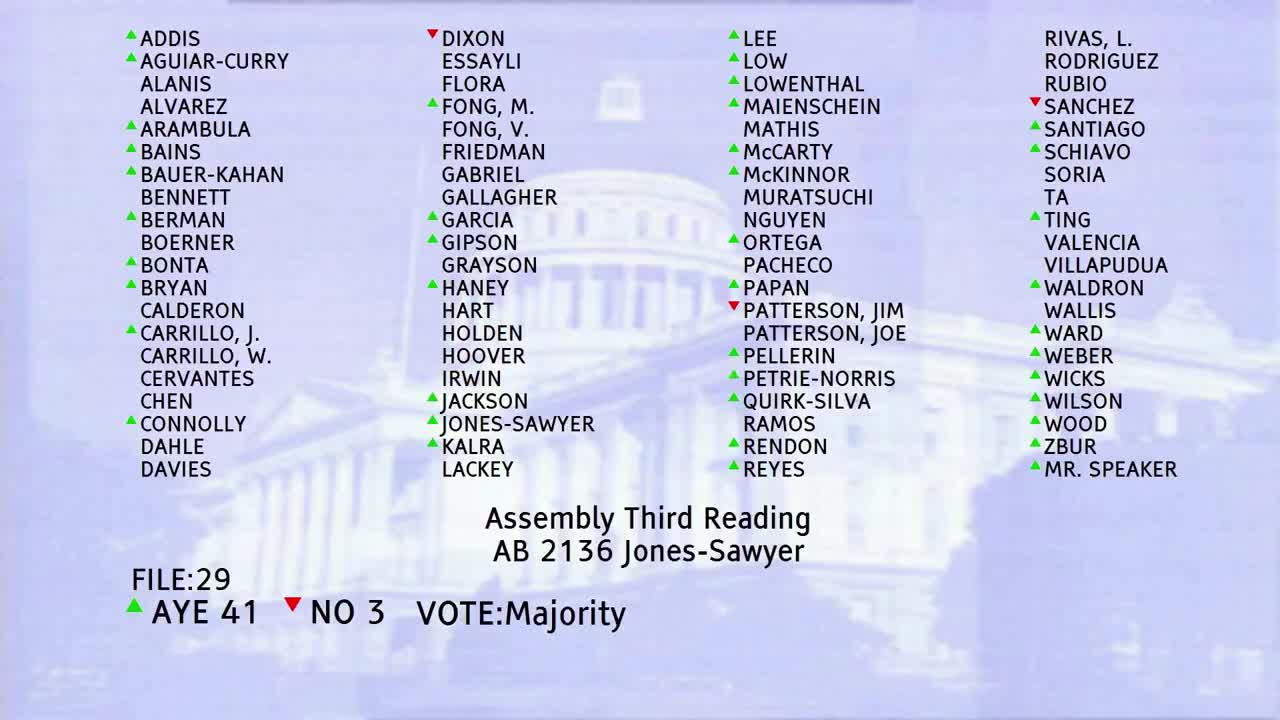 1MIN
Assembly Floor
 49SEC
Assembly Standing Committee on Human Services
 11MIN
Assembly Standing Committee on Health
Bill Author

Bill Co-Author(s):