AB 2146: Product safety: recreational water safety: wearable personal flotation devices: infants and children.
- Session Year: 2023-2024
- House: Assembly
- Latest Version Date: 2024-09-20
Current Status:
Passed
(2024-09-20: Chaptered by Secretary of State - Chapter 307, Statutes of 2024.)
Introduced
In Committee
First Chamber
In Committee
Second Chamber
Enacted
Existing law prohibits a person from using a recreational vessel unless, among other things, there is at least one wearable personal flotation device on board the vessel for each person on the vessel, as provided. Existing law provides for the establishment and enforcement of various product safety standards for consumer products, as provided. Existing law provides various requirements relating to safe recreational water use.
This bill would, on or after January 1, 2026, prohibit a person or entity from manufacturing, selling, delivering, distributing, holding, or offering for sale in commerce in this state a wearable personal flotation device, as defined, that is not approved by the United States Coast Guard.
Existing law prohibits a person from operating a motorboat, sailboat, or vessel, unless every person who is on board and who is under 13 years of age is wearing a United States Coast Guard-approved wearable personal flotation device. Existing law provides for the establishment and enforcement of various product safety standards for consumer products, as provided. Existing law provides various requirements relating to safe recreational water use.
This bill would, on or after January 1, 2026, prohibit a person or entity from manufacturing, selling, delivering, distributing, holding, or offering for sale in commerce in this state a wearable personal flotation device, as defined, that is not approved by the United States Coast Guard.
Existing law prohibits a person from operating a motorboat, sailboat, or vessel, unless every person who is on board and who is under 13 years of age is wearing a United States Coast Guard-approved wearable personal flotation device. Existing law provides for the establishment and enforcement of various product safety standards for consumer products, as provided.
This bill would, on or after January 1, 2026, prohibit a person or entity from manufacturing, selling, delivering, distributing, holding, or offering for sale in commerce in this state a personal flotation device, as defined, that is not approved by the United States Coast Guard.
Existing law provides for the establishment and enforcement of various product safety standards for consumer products, and prohibits a commercial dealer, manufacturer, importer, distributor, wholesaler, or retailer from placing into the stream of commerce a product that is unsafe, knowing that the product is unsafe. Existing law authorizes unsafe products to be retrofitted under certain conditions, as provided. This bill would make nonsubstantive, technical changes to these provisions.Existing law provides for the establishment and enforcement of various product safety standards for consumer products, and prohibits a commercial dealer, manufacturer, importer, distributor, wholesaler, or retailer from placing into the stream of commerce a product that is unsafe, knowing that the product is unsafe. Existing law authorizes unsafe products to be retrofitted under certain conditions, as provided.
This bill would make nonsubstantive, technical changes to these provisions.
For purposes of this article, wearable personal flotation device means a lifejacket, puddle jumper, water wings, or other flotation device designed to be worn or attached to the body of an infant or child.
116023.5.On or after January 1, 2026, a person or entity shall not manufacture, sell, distribute, deliver, hold, or offer for sale in commerce in this state a wearable personal flotation device that is not approved by the United States Coast Guard.
For purposes of this article, wearable personal flotation device means a lifejacket, puddle jumper, water wings, or other flotation device designed to be worn or attached to the body of an infant or child.
116023.5.On or after January 1, 2026, a person or entity shall not manufacture, sell, deliver, distribute, distribute, deliver, hold, or offer for sale in commerce in this state a wearable personal flotation device that is not approved by the United States Coast Guard.
For purposes of this article, wearable personal flotation device means a lifejacket, puddle jumper, water wings, or other flotation device designed to be worn or attached to the body of an infant or child.
116023.5.On or after January 1, 2026, a person or entity shall not manufacture, sell, deliver, distribute, hold, or offer for sale in commerce in this state a wearable personal flotation device that is not approved by the United States Coast Guard.
SECTION 1.Article 6 (commencing with Section 108670) is added to Chapter 5 of Part 3 of Division 104 of the Health and Safety Code, to read:6.Personal Flotation Devices108670.For purposes of this article, wearable personal flotation device means a lifejacket, puddle jumper, water wings, or other flotation device designed to be worn or attached to the body of an infant or child.108670.5.On or after January 1, 2026, a person or entity shall not manufacture, sell, deliver, distribute, hold, or offer for sale in commerce in this state a wearable personal flotation device that is not approved by the United States Coast Guard.For purposes of this article, wearable personal flotation device is means a lifejacket, buoyancy aid, puddle jumper, water wings, or other flotation device evaluated, tested, and approved by the United States Coast Guard, and includes flotation devices designed to be worn or attached to the body of infants or children, such as water wings and floats. an infant or child.
108670.5.On or after January 1, 2026, a person or entity shall not manufacture, sell, deliver, distribute, hold, or offer for sale in commerce in this state a wearable personal flotation device that is not approved by the United States Coast Guard.
For purposes of this article, personal wearable personal flotation device is a lifejacket, buoyancy aid, or flotation device evaluated, tested, and approved by the United States Coast Guard, and includes flotation devices used by designed to be worn or attached to the body of infants and or children, such as water wings and floats.
108670.5.On or after January 1, 2026, a person or entity shall not manufacture, sell, deliver, distribute, hold, or offer for sale in commerce in this state a wearable personal flotation device that is not approved by the United States Coast Guard.
For purposes of this article, personal flotation device is a lifejacket, buoyancy aid, or flotation device evaluated, tested, and approved by the United States Coast Guard, and includes flotation devices used by infants and children, such as water wings and floats.
108670.5.On or after January 1, 2026, a person or entity shall not manufacture, sell, deliver, distribute, hold, or offer for sale in commerce in this state a personal flotation device that is not approved by the United States Coast Guard.
SECTION 1.Section 108044 of the Health and Safety Code is amended to read:108044.(a)A commercial dealer, manufacturer, importer, distributor, wholesaler, or retailer shall not manufacture, remanufacture, distribute, sell at wholesale or retail, contract to sell or resell, lease or sublet, or otherwise place into the stream of commerce, a product that is unsafe, as defined in subdivision (b), knowing that the product is unsafe.(b)A product shall be deemed unsafe for purposes of this chapter only if it meets one or both of the following criteria:(1)The product has been recalled because it does not conform to state or federal laws and regulations setting forth standards for the product.(2)The product has been recalled for any safety hazard reason in cooperation with the federal Consumer Product Safety Commission or its staff, or voluntarily recalled for any safety hazard reason by the products commercial dealer, manufacturer, importer, distributor, or wholesaler, and the recall has not been rescinded.(c)(1)An unsafe product, as determined pursuant to subdivision (b), may be retrofitted if the retrofit has been approved by the agency issuing the recall or warning, or the agency responsible for approving the retrofit if it is different from the agency issuing the recall or warning.(2)A retrofitted product may be sold if it is accompanied at the time of sale by a notice declaring that it is safe to use. The notice shall include all of the following:(A)A description of the original problem that made the recalled product unsafe.(B)A description of the retrofit that explains how the original problem was eliminated and declaring that the product is now safe to use.(C)The name and address of the commercial dealer, manufacturer, importer, distributor, or wholesaler who accomplished the retrofit, certifying that the work was done, along with the name and model number of the product retrofitted.(3)The commercial dealer, manufacturer, importer, distributor, or wholesaler is responsible for ensuring that the notice described in paragraph (2) is present with the retrofitted product at the time of sale. This paragraph and paragraph (2) shall not apply, and the product may be sold, if either subparagraph (A) or (B) applies:(A)The retrofit meets all of the following:(i)The product requires assembly by the consumer.(ii)The retrofit kit is provided with the product by the commercial dealer, manufacturer, importer, distributor, or wholesaler.(iii)The retrofit kit is accompanied at the time of sale by instructions explaining how to apply the retrofit.(B)The seller of a previously unsold product or the entity to whom unsold products had been returned under the terms of the recall accomplishes the approved or recommended repair prior to sale.(a)No A commercial dealer, manufacturer, importer, distributor, wholesaler, or retailer shall not manufacture, remanufacture, distribute, sell at wholesale or retail, contract to sell or resell, lease, lease or sublet, or otherwise place into the stream of commerce, a product that is unsafe, as defined in subdivision (b), knowing that the product is unsafe.
(b)A product shall be deemed unsafe for purposes of this chapter only if it meets one or both of the following criteria:
(1)The product has been recalled because it does not conform to state or federal laws and regulations setting forth standards for the product.
(2)The product has been recalled for any safety hazard reason in cooperation with the federal Consumer Product Safety Commission or its staff, or voluntarily recalled for any safety hazard reason by the products commercial dealer, manufacturer, importer, distributor, or wholesaler, and the recall has not been rescinded.
(c)(1)An unsafe product, as determined pursuant to subdivision (b), may be retrofitted if the retrofit has been approved by the agency issuing the recall or warning, or the agency responsible for approving the retrofit if it is different from the agency issuing the recall or warning.
(2)A retrofitted product may be sold if it is accompanied at the time of sale by a notice declaring that it is safe to use. The notice shall include all of the following:
(A)A description of the original problem that made the recalled product unsafe.
(B)A description of the retrofit that explains how the original problem was eliminated and declaring that it the product is now safe to use.
(C)The name and address of the commercial dealer, manufacturer, importer, distributor, or wholesaler who accomplished the retrofit, certifying that the work was done, along with the name and model number of the product retrofitted.
(3)The commercial dealer, manufacturer, importer, distributor, or wholesaler is responsible for ensuring that the notice described in paragraph (2) is present with the retrofitted product at the time of sale. This paragraph and paragraph (2) shall not apply, and the product may be sold, if either subparagraph (A) or (B) applies:
(A)The retrofit meets all of the following:
(i)The product requires assembly by the consumer.
(ii)The retrofit kit is provided with the product by the commercial dealer, manufacturer, importer, distributor, or wholesaler.
(iii)The retrofit kit is accompanied at the time of sale by instructions explaining how to apply the retrofit.
(B)The seller of a previously unsold product or the entity to whom unsold products had been returned under the terms of the recall accomplishes the approved or recommended repair prior to sale.
|
Date
|
Status
|
|---|---|
| Sep 20, 2024 | Chaptered by Secretary of State - Chapter 307, Statutes of 2024. |
| Sep 20, 2024 | Approved by the Governor. |
| Sep 10, 2024 | Enrolled and presented to the Governor at 4:30 p.m. |
| Aug 28, 2024 | Senate amendments concurred in. To Engrossing and Enrolling. (Ayes 77. Noes 0.). |
| Aug 21, 2024 | In Assembly. Concurrence in Senate amendments pending. May be considered on or after August 23 pursuant to Assembly Rule 77. |
| Aug 21, 2024 | Read third time. Passed. Ordered to the Assembly. (Ayes 33. Noes 0. Page 5268.). |
| Jul 3, 2024 | Read second time. Ordered to third reading. |
| Jul 2, 2024 | Read third time and amended. Ordered to second reading. |
| Jun 13, 2024 | Ordered to third reading. |
| Jun 13, 2024 | From Consent Calendar. |
| Jun 6, 2024 | Read second time and amended. Ordered to consent calendar. |
| Jun 5, 2024 | From committee: Amend, and do pass as amended. To Consent Calendar. (Ayes 11. Noes 0.) (June 5). |
| May 29, 2024 | Referred to Com. on HEALTH. |
| May 22, 2024 | In Senate. Read first time. To Com. on RLS. for assignment. |
| May 21, 2024 | Read third time. Passed. Ordered to the Senate. (Ayes 74. Noes 0. Page 5348.) |
| May 16, 2024 | Read third time and amended. Ordered to third reading. |
| May 6, 2024 | Read second time. Ordered to third reading. |
| May 2, 2024 | Read second time and amended. Ordered returned to second reading. |
| May 1, 2024 | From committee: Amend, and do pass as amended. (Ayes 11. Noes 0.) (April 30). |
| Apr 1, 2024 | Re-referred to Com. on P. & C.P. |
| Mar 21, 2024 | Referred to Com. on P. & C.P. |
| Mar 21, 2024 | From committee chair, with author's amendments: Amend, and re-refer to Com. on P. & C.P. Read second time and amended. |
| Feb 7, 2024 | From printer. May be heard in committee March 8. |
| Feb 6, 2024 | Read first time. To print. |
|
Date
|
Description
|
Location
|
Votes
|
|
|---|---|---|---|---|
| Aug 28, 2024 | AB 2146 Rodriguez Concurrence in Senate Amendments | Assembly Floor |
Passed |
|
| Aug 21, 2024 | Assembly 3rd Reading AB2146 Rodriguez et al. By Rubio | Senate Floor |
Passed |
|
| Jun 5, 2024 | Do pass as amended, and be ordered to the Consent Calendar | Senate Standing Committee on Health |
Passed |
|
| May 21, 2024 | AB 2146 Rodriguez Assembly Third Reading | Assembly Floor |
Passed |
|
| Apr 30, 2024 | Do pass as amended. | Assembly Standing Committee on Privacy and Consumer Protection |
Passed |
This list shows positions taken on this bill by organizations on the date displayed, which is linked to the original source.
Positions by individuals are not included.
|
Organization
|
Position
|
Date
|
|---|---|---|
| California Coalition for Childrens Safety and Health | ** Support |
CONCURRENCE IN SENATE AMENDMENTS
CSA1 Bill Id:AB 2146
Author:(Rodriguez)
As Amended Ver:July 2, 2024
Majority vote
SUMMARY
Requires a wearable personal flotation device, as defined, to be approved by the United States Coast Guard (USCG), on or after January 1, 2026.
- On or after January 1, 2026, prohibits a person or entity from manufacturing, selling, distributing, delivering, holding, or offering for sale in commerce in this state a wearable personal flotation device that is not approved by the USCG.
- Defines "wearable personal flotation device" as a lifejacket, puddle jumper, water wings, or other flotation device designed to be worn or attached to the body of an infant or child.
Senate Amendments:
Makes technical, non-substantive changes.
COMMENTS
Water wings and floaties vs. life-saving devices. According to the U.S. Consumer Product Safety Commission (CPSC), in June 2023, "drowning is the number one cause of accidental death among young children under age four. CPSC encourages all kids to learn how to swim, and parents should consider the regular use of life jackets (not inflatable water wings). Parents and caregivers should designate a Water Watcher—someone who watches children in the water at all times."[1] Similarly, the Centers for Disease Control and Prevention (CDC) state unequivocally that "'Floaties,' arm bands, or water wings do not prevent children from drowning and can easily slip off, especially when kids jump into water. Water wings can produce a false sense of safety for parents and children and can inhibit a child's ability to learn to swim. A U.S. Coast Guard-approved life jacket is more protective."[2]
Prominent experts in this field have denounced water wings as a potential safety hazard that should be avoided. Although they seem like flotation devices, water wings are actually categorized as "toys" by the US Consumer Product Safety Commission, and thus must meet the American Society for Testing Materials International (ASTM) toy standards. The ASTM F963-17 toy standard has a mandatory warning requirement for aquatic toys, which states:
5.4 Aquatic Toys—Aquatic toys and their packages shall carry safety labeling in accordance with 5.3, consisting of the signal word "WARNING" and contain, at a minimum, the following text or equivalent text which clearly conveys the same warning: This is not a lifesaving device. Do not leave a child unattended while the device is in use. In addition, no advertising copy or graphics shall state or imply that the child will be safe with such a toy if left unsupervised."[3]
Indeed, multiple warnings labels on water wings for purchase online have variations of the suggested wording for aquatic toys, including, "WARNING! This is not a lifesaving device," "Do not leave child unattended while in use," "WARNING! Will not prevent drowning," "WARNING! Choking hazard."
The American Academy of Pediatrics Technical Report posted August 1, 2021 states:
US Coast Guard–approved life jackets now include a model similar to the inflatable arm floats popular among preschoolers because it facilitates floating (e.g., the Puddle Jumper). Parents need to check that any life jacket fits appropriately and is US Coast Guard approved because there are many similar products that do not meet safety requirements. It is important to recognize that air-filled swimming aids (such as inflatable armbands) are toys that can deflate or slip off and should not be used in place of life jackets.[4]
Even with numerous safety organizations, federal agencies, and expert proponents of water safety advising that water wings and floaties are not life-saving devices meant to prevent drowning, the majority of parents believe otherwise. An April 2023 Harris Poll online survey on behalf of Pool and Hot Tub Alliance found that 66% of parents believe that floaties and water wings keep children safe in the water, despite the fact that these devices are not recognized as safe personal flotation devices.[5] This understandable gap between the perceived utility and actual function of these toys masquerading as flotation devices poses a very substantial consumer protection concern with potentially lethal consequences.
Analysis. California has taken many measures to promote water safety to prevent drowning incidents, including: requiring youths to wear life jackets when travelling on a water vessel; requiring homes to install safety measures, such as fencing with self-closing gates and alarms; and increasing awareness and education on water safety. This bill is an additional measure to ensure water safety for young Californians and their families by requiring, beginning in 2026, wearable personal flotation devices commercially available in California to be approved by the U.S. Coast Guard. Such approvals apply to the types of flotation devices, such as puddle jumpers, commonly used in pools.
Tellingly, the Coast Guard does not approve water wings and floaties, which have been denounced by experts as unsafe both because they can be unreliable and they can induce a false sense of confidence. Given the widespread misperception by parents that water wings and floaties are legitimate flotation devices rather than mere pool toys, as well the fact that the leading cause of death for children ages one to four is drowning, limiting the market to flotation devices that are actually safe to use as flotation devices seems prudent. Moreover, such protections could help protect disadvantaged communities most likely to be affected by child drownings.
The types of wearable flotation devices approved by the USCG are categorized by their performance in the conditions for which they're designed to be worn. For community and backyard pools and calm interior waterways, Types III and V are appropriate choices. Most infant and children's puddle jumpers and wearable personal flotation devices fall under these types and USCG has approved certain puddle jumpers that can be worn in place of a Type III life jacket in calm, shallow waters. These flotation devices are more comfortable than types I and II, less restrictive to better facilitate movement, and come in more sizes and configurations.
Several brands including Body Glove, Aqua Leisure, Airhead, and Puddle Jumper offer USCG-approved wearable personal flotation devices in sizes ranging from infant through adult. Many can be purchased online directly from these companies, online retailers like Amazon, and at brick and mortar retailers such as Walmart, Kohl's, and Dick's Sporting Goods.
Water safety and equity. Some consumers have grown up with a pool, competed on swim team, or perhaps they read up on safety products and recalls affecting infant and child products on the market. Other consumers lack the time or access to resources to read publications or articles on product safety; some might also face language barriers when shopping for products, water recreation may not be common within their community, and economic barriers can lead to purchasing the least expensive flotation device that may not be intended to prevent drowning. Such factors can lead to disproportionate impacts on vulnerable communities. According to the CDC and CPSC, some racial and ethnic groups experience higher rates of drowning. For example, CPSC's data reveals:
Stark racial disparities in drowning fatalities. Where race was identified, African American children made up 21% of all fatal drownings while making up only 15% of the population. Forty-five percent of 5-14 year-olds who fatally drowned were African Americans. Data from collaborator organizations confirms that Black and Hispanic children continue to drown at higher rates and have disproportionately lower swimming ability than white children.[6]
According to the Author
As a public servant, some of the most difficult conversations are those where constituents share their tragic experiences. Last year, a young child in my district suffered from a harrowing drowning incident. While he fortunately survived, he and his family have started the long and costly process of recovery and adapting to living with new disabilities. Drownings are preventable, and nobody should endure the pain and difficulty that come from these tragedies. Therefore, I introduced AB 2146 to prevent one of the most common causes of drowning, a false sense of security.
According to the Center of Disease Control and Prevention (CDC), drowning is the leading cause of death for children between the ages of one and four, and the second leading cause of death for children between the ages of five and fourteen. In recent years, the state has taken several steps to promote water safety to prevent drowning incidents, including requiring youth to wear life jackets when traveling on a water vessel and requiring homes with pools to install safety measures. Despite these efforts, there are consumer products, such as water wings and floaties, on the market that fail to keep children safe while in the water.
As a former emergency medical technician for more than 30 years, I have responded to different types of medical emergencies, including tragic drowning events. At times, parents are under the belief that water wings are life-saving devices. Unfortunately, this misconception could not be further from the truth. The CDC has stated that these products create a false sense of safety for parents and children, and could impede a child's ability to learn to swim. By banning personal floatation devices not approved by the U.S. Coast Guard, AB 2146 would protect families from purchasing products not intended to preserve a life.
Arguments in Support
California Coalition for Children's Safety and Health writes:
The California Coalition for Children's Safety and Health (CCCSH) supports your bill AB 2146 that will bring long overdue updates and reforms not only protect consumers but elevate the correct life vests as life-saving floatation drowning prevention devices. Life vests play a significant role in helping all ages of Californians be safe when around not just pools, but the many open bodies of water in our state – lakes, rivers, and ocean fronts. Everyone who is not proficient at swimming needs to wear a coast guard approved life vest to prevent them from drowning. AB 2146 will help ensure the life vest floatation device is an approved life vest. For everyone boating or engaging in water sports or recreation involving moving water such as rivers, ocean, around canals, etc. should have an approved and certified life vest.
Arguments in Opposition
None on file.
FISCAL COMMENTS
Unknown. This bill is keyed non-fiscal by the Legislative Counsel.
VOTES:
ASM PRIVACY AND CONSUMER PROTECTION: 11-0-0
YES: Bauer-Kahan, Joe Patterson, Bryan, Chen, Dixon, Irwin, Lowenthal, Ortega, Ward, Wicks, Wilson
ASSEMBLY FLOOR: 74-0-6
YES: Addis, Aguiar-Curry, Alanis, Alvarez, Arambula, Bains, Bauer-Kahan, Bennett, Berman, Boerner, Bonta, Bryan, Calderon, Juan Carrillo, Wendy Carrillo, Chen, Connolly, Davies, Dixon, Essayli, Flora, Mike Fong, Vince Fong, Gallagher, Garcia, Gipson, Grayson, Haney, Hart, Hoover, Irwin, Jackson, Jones-Sawyer, Kalra, Lackey, Lee, Low, Lowenthal, Maienschein, McCarty, McKinnor, Muratsuchi, Stephanie Nguyen, Ortega, Pacheco, Papan, Jim Patterson, Joe Patterson, Pellerin, Petrie-Norris, Quirk-Silva, Ramos, Rendon, Reyes, Luz Rivas, Rodriguez, Blanca Rubio, Sanchez, Santiago, Schiavo, Soria, Ta, Ting, Valencia, Villapudua, Waldron, Wallis, Ward, Weber, Wicks, Wilson, Wood, Zbur, Robert Rivas
ABS, ABST OR NV: Cervantes, Megan Dahle, Friedman, Gabriel, Holden, Mathis
SENATE FLOOR: 33-0-7
YES: Allen, Alvarado-Gil, Archuleta, Ashby, Blakespear, Caballero, Cortese, Dahle, Dodd, Durazo, Eggman, Glazer, Gonzalez, Grove, Hurtado, Jones, Laird, Limón, McGuire, Min, Newman, Nguyen, Niello, Ochoa Bogh, Padilla, Portantino, Roth, Rubio, Seyarto, Stern, Umberg, Wiener, Wilk
ABS, ABST OR NV: Atkins, Becker, Bradford, Menjivar, Skinner, Smallwood-Cuevas, Wahab
UPDATED
VERSION: July 2, 2024
CONSULTANT: Mimi Holtkamp / P. & C.P. / (916) 319-2200 FN: 0004371
CDC, "Injury Prevention & Control: Summer Swim Safety," Summer Swim Safety | Features | Injury Center | CDC. ↑
Ibid. ↑
Water Safety Council of Fresno County, "Flotation Devices", https://www.watersafe.org/flotation-devices. ↑
Sarah A. Denny, MD FAAP; Linda Quan, MD, FAAP; Julie Gilchrist, MD, FAAP; Tracy McCallin MD, FAAP; Rohit Shenoi, MD, FAAP; Shabana Yusuf, MD, FAAP; Jeffrey Weiss, MD, FAAP; Benjamin Hoffman, MD, FAAP, "Prevention of Drowning", American Academy of Pediatrics, August 1, 2021, publications.aap.org/pediatrics/article/148/2. ↑
Today, "The Myth About Floaties and Water Wings That All Parents Should Know," www.today.com/parents/parents/shouldnt-rely-floaties-water-wings-kids. ↑
U.S. Consumer Product Safety Commission, "New CPSC Drowning Data Calls for Caution This Swim Season", Poolsafely.gov. ↑
SENATE RULES COMMITTEE Office of Senate Floor Analyses (916) 651-1520 Fax: (916) 327-4478 | AB 2146 |
CONSENT
Bill No: AB 2146
Author: Rodriguez (D)
Amended: 7/2/24 in Senate
Vote: 21
SENATE HEALTH COMMITTEE: 11-0, 6/5/24
AYES: Roth, Nguyen, Glazer, Gonzalez, Grove, Hurtado, Limón, Menjivar, Rubio, Smallwood-Cuevas, Wiener
ASSEMBLY FLOOR: 74-0, 5/21/24 - See last page for vote
SUBJECT: Product safety: recreational water safety: wearable personal flotation devices: infants and children
SOURCE: Author
DIGEST:
This bill prohibits a person or entity, on or after January 1, 2026, from manufacturing, selling, distributing, delivering, holding, or offering for sale in commerce in California, a wearable personal floatation device that is not approved by the U.S. Coast Guard.
Senate floor amendments of 7/2/24 add Senator Rubio as a co-author and makes a technical, non-substantive change.
ANALYSIS:
Existing federal law permits the U.S. Coast Guard to prescribe regulations for the design, construction, performance, testing, carriage, use, and inspection of lifesaving equipment on commercial and recreational vessels. [Title 46 U.S. Code §4102(b) and §4502(c)]
Existing state law:
- Establishes standards and requirements for safe recreational water use, including for the recreational use of reservoirs and public beaches, swimming pool sanitation and safety, wave pool and wave basin standards, life saving devices, and ocean water-contact sports. [Health and Safety Code §115825 - 116090]
- Prohibits a person from operating a motorboat, sailboat, or vessel unless every person under age 13 who is on board is wearing a U.S. Coast Guard-approved wearable personal flotation device. This does not apply to children under 13 years of age who are:
- On a sailboat and are restrained by a harness tethered to the sailboat;
- In an enclosed cabin; or,
- On a motorboat, sailboat, or vessel engaged in an emergency rescue situation. [Harbors and Navigation Code §658.3]
This bill:
- Defines “wearable flotation device” as a lifejacket, puddle jumper, water wings, or other flotation device designed to be worn or attached to the body of an infant or child.
- Prohibits a person or entity from manufacturing, selling, delivering, holding, or offering for sale of a wearable flotation device that is not approved by the U.S. Coast Guard, on or after January 1, 2026.
Comments
- Author’s statement. According to the author, as a public servant, some of the most difficult conversations are those where constituents share their tragic experiences. Last year, a young child in my district suffered from a harrowing drowning incident. While he fortunately survived, he and his family have started the long and costly process of recovery and adapting to living with new disabilities. Drownings are preventable, and nobody should endure the pain and difficulty that come from these tragedies. Therefore, I introduced this bill to prevent one of the most common causes of drowning, a false sense of security. As an emergency medical technician for more than 30 years, I have responded to different types of medical emergencies, including tragic drowning events. At times, parents are under the belief that water wings are life-saving devices. Unfortunately, this misconception could not be further from the truth. The Centers for Disease Control and Prevention (CDC) has stated that these products create a false sense of safety for parents and children, and could impede a child’s ability to learn to swim and I’ve seen this phenomenon first hand in some of the drowning calls to which I have responded. By banning personal floatation devices not approved by the U.S. Coast Guard, this bill would protect families from purchasing products not intended to preserve a life.
- Drownings in California. Each year, near-drowning incidents result in long-term health problems, including life-long disabilities and brain damage. The California Water Safety Coalition highlights that 12,588 California residents died from drowning between 1991 and 2020, with approximately one in every 100,000 Californians dying from drowning annually. The CDC asserts that there are racial disparities in drowning rates, with Black people drowning at one and a half times higher and Native American people at two and a half times higher than White people in the U.S. According to the CDC, drowning is the leading cause of death for children up to age four, and the second leading cause of unintentional injury death for children ages five to 14. The California Department of Developmental Services (DDS) reports that in 2022, there were a total of 43 drownings reported for children ages zero through five residing in California.
- Wearable personal floatation devices. According to the CDC, approximately 85% of people who drowned while boating in 2022 were not wearing a life jacket. The CDC highlights that life jackets reduce the risk of drowning while boating for people of all ages and swimming abilities. They should be used by children for all activities in and around natural water, as well as by weaker swimmers of all ages in and around natural water and swimming pools. “Floaties,” or water wings, do not prevent children from drowning and can easily slip off, especially when jumping into water. Water wings can produce a false sense of safety for parents and children. A 2022 survey conducted by The Harris Poll on behalf of the Pool & Hot Tub Alliance found that 66% of parents believe that floaties and water wings keep children safe in the water, despite the fact that the CDC does not recognize either of these devices as safe personal flotation devices.
Related/Prior Legislation
AB 2866 (Pellerin, 2024) requires child daycare facilities regulated by the Department of Social Services be subject to the Swimming Pool Safety Act. The bill is set for hearing on July 3, 2024 in the Senate Health Committee.
AB 638 (Frazier, Chapter 75, Statutes of 2015) prohibited a person from operating a motorboat, sailboat, or vessel of any length unless every person under 13 years of age on board is every a wearable personal flotation device.
AB 299 (Brown of 2015) would have required the California Department of Public Health to create a submersion incident report form for the reporting of all statewide drownings or nonfatal drownings. The bill was held on the Assembly Appropriations Committee suspense file.
SB 427 (Monning, Chapter 256, Statutes of 2013) deleted the requirements that the U.S. Coast Guard-approved flotation device be of a specific type and requires that it be used in accordance with approval labels and manufacturer’s instructions.
SB 717 (Runner, Chapter 610, Statutes of 2009) increased age requirement for use of a United States Coast Guard-approved life vest when aboard a motorboat, sailboat, or vessel from a person who is 11 years of age or younger to a person who is 13 years of age or younger.
AB 2538 (Brewer, Chapter 398, Statutes of 2000) increased age requirement for use of a U.S. Coast Guard-approved life vest when aboard a motorboat, sailboat, or vessel from a person six years or younger to a person 11 years or younger.
AB 1287 (Davies of 1999) would have increased age requirement for use of a U.S. Coast Guard-approved life vest when aboard a motorboat, sailboat, or vessel from a person 6 years or younger to a person 11 years or younger. The bill was vetoed by Governor Gray Davis.
FISCAL EFFECT: Appropriation: No Fiscal Com.: No Local: No
SUPPORT: (Verified 7/1/24)
California Coalition for Children’s Safety and Health
OPPOSITION: (Verified 7/1/24)
None received
ARGUMENTS IN SUPPORT: The California Coalition for Children’s Safety and Health writes that the bill will bring long overdue reforms that will help protect consumers as well as help promote the safest floatation devices for swimming. Life vests play an important role in helping Californians of all ages be safe in and around pools and natural waters. Everyone not proficient at swimming should wear the U.S. Coast Guard-approved life vests when in and around waters. Everyone boating or engaging in water sports should wear a U.S. Coast Guard-approve life vest as well.
ASSEMBLY FLOOR: 74-0, 5/21/24
AYES: Addis, Aguiar-Curry, Alanis, Alvarez, Arambula, Bains, Bauer-Kahan, Bennett, Berman, Boerner, Bonta, Bryan, Calderon, Juan Carrillo, Wendy Carrillo, Chen, Connolly, Davies, Dixon, Essayli, Flora, Mike Fong, Vince Fong, Gallagher, Garcia, Gipson, Grayson, Haney, Hart, Hoover, Irwin, Jackson, Jones-Sawyer, Kalra, Lackey, Lee, Low, Lowenthal, Maienschein, McCarty, McKinnor, Muratsuchi, Stephanie Nguyen, Ortega, Pacheco, Papan, Jim Patterson, Joe Patterson, Pellerin, Petrie-Norris, Quirk-Silva, Ramos, Rendon, Reyes, Luz Rivas, Rodriguez, Blanca Rubio, Sanchez, Santiago, Schiavo, Soria, Ta, Ting, Valencia, Villapudua, Waldron, Wallis, Ward, Weber, Wicks, Wilson, Wood, Zbur, Robert Rivas
NO VOTE RECORDED: Cervantes, Megan Dahle, Friedman, Gabriel, Holden, Mathis
Prepared by: Margarita Niemann / HEALTH / (916) 651-4111
7/2/24 15:16:43
**** END ****
SENATE RULES COMMITTEE Office of Senate Floor Analyses (916) 651-1520 Fax: (916) 327-4478 | AB 2146 |
THIRD READING
Bill No: AB 2146
Author: Rodriguez (D)
Amended: 6/6/24 in Senate
Vote: 21
SENATE HEALTH COMMITTEE: 11-0, 6/5/24
AYES: Roth, Nguyen, Glazer, Gonzalez, Grove, Hurtado, Limón, Menjivar, Rubio, Smallwood-Cuevas, Wiener
ASSEMBLY FLOOR: 74-0, 5/21/24 - See last page for vote
SUBJECT: Product safety: recreational water safety: wearable personal flotation devices: infants and children
SOURCE: Author
DIGEST:
This bill prohibits a person or entity, on or after January 1, 2026, from manufacturing, selling, delivering, distributing, holding, or offering for sale in commerce in California, a wearable personal floatation device that is not approved by the U.S. Coast Guard.
ANALYSIS: Existing federal law permits the U.S. Coast Guard to prescribe regulations for the design, construction, performance, testing, carriage, use, and inspection of lifesaving equipment on commercial and recreational vessels. [46 U.S. Code §4102(b) and §4502(c)]
Existing state law:
- Establishes standards and requirements for safe recreational water use, including for the recreational use of reservoirs and public beaches, swimming pool sanitation and safety, wave pool and wave basin standards, life saving devices, and ocean water-contact sports. [HSC §115825 - 116090]
- Prohibits a person from operating a motorboat, sailboat, or vessel unless every person under age 13 who is on board is wearing a U.S. Coast Guard-approved wearable personal flotation device. This does not apply to children under 13 years of age who are:
- On a sailboat and are restrained by a harness tethered to the sailboat;
- In an enclosed cabin; or,
- On a motorboat, sailboat, or vessel engaged in an emergency rescue situation. [HNC §658.3]
This bill:
- Defines “wearable flotation device” as a lifejacket, puddle jumper, water wings, or other flotation device designed to be worn or attached to the body of an infant or child.
- Prohibits a person or entity from manufacturing, selling, delivering, holding, or offering for sale of a wearable flotation device that is not approved by the U.S. Coast Guard, on or after January 1, 2026.
Comments
- Author’s statement. According to the author, “as a public servant, some of the most difficult conversations are those where constituents share their tragic experiences. Last year, a young child in my district suffered from a harrowing drowning incident. While he fortunately survived, he and his family have started the long and costly process of recovery and adapting to living with new disabilities. Drownings are preventable, and nobody should endure the pain and difficulty that come from these tragedies. Therefore, I introduced this bill to prevent one of the most common causes of drowning, a false sense of security. As an emergency medical technician for more than 30 years, I have responded to different types of medical emergencies, including tragic drowning events. At times, parents are under the belief that water wings are life-saving devices. Unfortunately, this misconception could not be further from the truth. The Centers for Disease Control and Prevention (CDC) has stated that these products create a false sense of safety for parents and children, and could impede a child’s ability to learn to swim and I’ve seen this phenomenon first hand in some of the drowning calls to which I have responded. By banning personal floatation devices not approved by the U.S. Coast Guard, this bill would protect families from purchasing products not intended to preserve a life.”
- Drownings in California. Each year, near-drowning incidents result in long-term health problems, including life-long disabilities and brain damage. The California Water Safety Coalition highlights that 12,588 California residents died from drowning between 1991 and 2020, with approximately one in every 100,000 Californians dying from drowning annually. The CDC asserts that there are racial disparities in drowning rates, with Black people drowning at one and a half times higher and Native American people at two and a half times higher than White people in the U.S. According to the CDC, drowning is the leading cause of death for children up to age four, and the second leading cause of unintentional injury death for children ages five to 14. The California Department of Developmental Services (DDS) reports that in 2022, there were a total of 43 drownings reported for children ages zero through five residing in California.
- Wearable personal floatation devices. According to the CDC, approximately 85% of people who drowned while boating in 2022 were not wearing a life jacket. The CDC highlights that life jackets reduce the risk of drowning while boating for people of all ages and swimming abilities. They should be used by children for all activities in and around natural water, as well as by weaker swimmers of all ages in and around natural water and swimming pools. “Floaties,” or water wings, do not prevent children from drowning and can easily slip off, especially when jumping into water. Water wings can produce a false sense of safety for parents and children. A 2022 survey conducted by The Harris Poll on behalf of the Pool & Hot Tub Alliance found that 66% of parents believe that floaties and water wings keep children safe in the water, despite the fact that the CDC does not recognize either of these devices as safe personal flotation devices.
Related/Prior Legislation
AB 2866 (Pellerin, 2024) requires child daycare facilities regulated by the Department of Social Services be subject to the Swimming Pool Safety Act.
AB 2866 is pending in the Senate Human Services Committee.
AB 638 (Frazier, Chapter 75, Statutes of 2015) prohibited a person from operating a motorboat, sailboat, or vessel of any length unless every person under 13 years of age on board is every a wearable personal flotation device.
AB 299 (Brown, 2015) would have required the California Department of Public Health to create a submersion incident report form for the reporting of all statewide drownings or nonfatal drownings. AB 299 was held on the Assembly Appropriations suspense file.
SB 427 (Monning, Chapter 256, Statutes of 2013) deleted the requirements that the U.S. Coast Guard-approved flotation device be of a specific type and requires that it be used in accordance with approval labels and manufacturer’s instructions.
SB 717 (Runner, Chapter 610, Statutes of 2009) increased age requirement for use of a United States Coast Guard-approved life vest when aboard a motorboat, sailboat, or vessel from a person who is 11 years of age or younger to a person who is 13 years of age or younger.
AB 2538 (Brewer, Chapter 398, Statutes of 2000) increased age requirement for use of a U.S. Coast Guard-approved life vest when aboard a motorboat, sailboat, or vessel from a person 6 years or younger to a person 11 years or younger.
AB 1287 (Davies, 1999) would have increased age requirement for use of a U.S. Coast Guard-approved life vest when aboard a motorboat, sailboat, or vessel from a person 6 years or younger to a person 11 years or younger. AB 1287 was vetoed by Governor Gray Davis, who stated:
“There may well be reasonable measures we can adopt to enhance the safety of boat operators, but unfortunately, this bill will not accomplish that goal. There is little evidence that a written test alone will improve the piloting skills of motor boat operators or reduce boating accidents. Until such evidence is brought forth, I do not believe it is appropriate to require millions of Californians who enjoy boating as recreation to run the gauntlet of yet another government bureaucracy to obtain licenses to pilot their boats.”
FISCAL EFFECT: Appropriation: No Fiscal Com.: No Local: No
SUPPORT: (Verified 6/5/24)
California Coalition for Children’s Safety and Health
OPPOSITION: (Verified 6/5/24)
None received
ARGUMENTS IN SUPPORT: The California Coalition for Children’s Safety and Health (CCCSH) writes that the bill will bring long overdue reforms that will help protect consumers as well as help promote the safest floatation devices for swimming. Life vests play an important role in helping Californians of all ages be safe in and around pools and natural waters. Everyone not proficient at swimming should wear the U.S. Coast Guard-approved life vests when in and around waters. Everyone boating or engaging in water sports should wear a U.S. Coast Guard-approve life vest as well.
ASSEMBLY FLOOR: 74-0, 5/21/24
AYES: Addis, Aguiar-Curry, Alanis, Alvarez, Arambula, Bains, Bauer-Kahan, Bennett, Berman, Boerner, Bonta, Bryan, Calderon, Juan Carrillo, Wendy Carrillo, Chen, Connolly, Davies, Dixon, Essayli, Flora, Mike Fong, Vince Fong, Gallagher, Garcia, Gipson, Grayson, Haney, Hart, Hoover, Irwin, Jackson, Jones-Sawyer, Kalra, Lackey, Lee, Low, Lowenthal, Maienschein, McCarty, McKinnor, Muratsuchi, Stephanie Nguyen, Ortega, Pacheco, Papan, Jim Patterson, Joe Patterson, Pellerin, Petrie-Norris, Quirk-Silva, Ramos, Rendon, Reyes, Luz Rivas, Rodriguez, Blanca Rubio, Sanchez, Santiago, Schiavo, Soria, Ta, Ting, Valencia, Villapudua, Waldron, Wallis, Ward, Weber, Wicks, Wilson, Wood, Zbur, Robert Rivas
NO VOTE RECORDED: Cervantes, Megan Dahle, Friedman, Gabriel, Holden, Mathis
Prepared by: Margarita Niemann / HEALTH / (916) 651-4111
6/14/24 10:43:00
**** END ****
SENATE RULES COMMITTEE Office of Senate Floor Analyses (916) 651-1520 Fax: (916) 327-4478 | AB 2146 |
CONSENT
Bill No: AB 2146
Author: Rodriguez (D)
Amended: 6/6/24 in Senate
Vote: 21
SENATE HEALTH COMMITTEE: 11-0, 6/5/24
AYES: Roth, Nguyen, Glazer, Gonzalez, Grove, Hurtado, Limón, Menjivar, Rubio, Smallwood-Cuevas, Wiener
ASSEMBLY FLOOR: 74-0, 5/21/24 - See last page for vote
SUBJECT: Product safety: wearable personal flotation devices: infants and children
SOURCE: Author
DIGEST:
This bill prohibits a person or entity, on or after January 1, 2026, from manufacturing, selling, delivering, distributing, holding, or offering for sale in commerce in California, a wearable personal floatation device that is not approved by the U.S. Coast Guard.
ANALYSIS:
Existing federal law:
Permits the U.S. Coast Guard to prescribe regulations for the design, construction, performance, testing, carriage, use, and inspection of lifesaving equipment on commercial and recreational vessels. [46 U.S. Code §4102(b) and §4502(c)]
Existing state law:
- Establishes standards and requirements for safe recreational water use, including for the recreational use of reservoirs and public beaches, swimming pool sanitation and safety, wave pool and wave basin standards, life saving devices, and ocean water-contact sports. [HSC §115825 - 116090]
- Prohibits a person from operating a motorboat, sailboat, or vessel unless every person under age 13 who is on board is wearing a U.S. Coast Guard-approved wearable personal flotation device. This does not apply to children under 13 years of age who are:
- On a sailboat and are restrained by a harness tethered to the sailboat;
- In an enclosed cabin; or,
- On a motorboat, sailboat, or vessel engaged in an emergency rescue situation. [HNC §658.3]
This bill:
- Defines “wearable flotation device” as a lifejacket, puddle jumper, water wings, or other flotation device designed to be worn or attached to the body of an infant or child.
- Prohibits a person or entity from manufacturing, selling, delivering, holding, or offering for sale of a wearable flotation device that is not approved by the U.S. Coast Guard, on or after January 1, 2026.
Comments
- Author’s statement. According to the author, “as a public servant, some of the most difficult conversations are those where constituents share their tragic experiences. Last year, a young child in my district suffered from a harrowing drowning incident. While he fortunately survived, he and his family have started the long and costly process of recovery and adapting to living with new disabilities. Drownings are preventable, and nobody should endure the pain and difficulty that come from these tragedies. Therefore, I introduced this bill to prevent one of the most common causes of drowning, a false sense of security. As an emergency medical technician for more than 30 years, I have responded to different types of medical emergencies, including tragic drowning events. At times, parents are under the belief that water wings are life-saving devices. Unfortunately, this misconception could not be further from the truth. The Centers for Disease Control and Prevention (CDC) has stated that these products create a false sense of safety for parents and children, and could impede a child’s ability to learn to swim and I’ve seen this phenomenon first hand in some of the drowning calls to which I have responded. By banning personal floatation devices not approved by the U.S. Coast Guard, this bill would protect families from purchasing products not intended to preserve a life.”
- Drownings in California. Each year, near-drowning incidents result in long-term health problems, including life-long disabilities and brain damage. The California Water Safety Coalition highlights that 12,588 California residents died from drowning between 1991 and 2020, with approximately one in every 100,000 Californians dying from drowning annually. The CDC asserts that there are racial disparities in drowning rates, with Black people drowning at one and a half times higher and Native American people at two and a half times higher than White people in the U.S. According to the CDC, drowning is the leading cause of death for children up to age four, and the second leading cause of unintentional injury death for children ages five to 14. The California Department of Developmental Services (DDS) reports that in 2022, there were a total of 43 drownings reported for children ages zero through five residing in California.
- Wearable personal floatation devices. According to the CDC, approximately 85% of people who drowned while boating in 2022 were not wearing a life jacket. The CDC highlights that life jackets reduce the risk of drowning while boating for people of all ages and swimming abilities. They should be used by children for all activities in and around natural water, as well as by weaker swimmers of all ages in and around natural water and swimming pools. “Floaties,” or water wings, do not prevent children from drowning and can easily slip off, especially when jumping into water. Water wings can produce a false sense of safety for parents and children. A 2022 survey conducted by The Harris Poll on behalf of the Pool & Hot Tub Alliance found that 66% of parents believe that floaties and water wings keep children safe in the water, despite the fact that the CDC does not recognize either of these devices as safe personal flotation devices.
Related/Prior Legislation
AB 2866 (Pellerin, 2024) would require child daycare facilities regulated by the Department of Social Services be subject to the Swimming Pool Safety Act.
AB 2866 is pending in the Senate Human Services Committee.
AB 638 (Frazier, Chapter 75, Statutes of 2015) prohibited a person from operating a motorboat, sailboat, or vessel of any length unless every person under 13 years of age on board is every a wearable personal flotation device.
AB 299 (Brown, 2015) would have required the California Department of Public Health to create a submersion incident report form for the reporting of all statewide drownings or nonfatal drownings. AB 299 was held on the Assembly Appropriations suspense file.
SB 427 (Monning, Chapter 256, Statutes of 2013) deleted the requirements that the U.S. Coast Guard-approved flotation device be of a specific type and requires that it be used in accordance with approval labels and manufacturer’s instructions.
SB 717 (Runner, Chapter 610, Statutes of 2009) increased age requirement for use of a United States Coast Guard-approved life vest when aboard a motorboat, sailboat, or vessel from a person who is 11 years of age or younger to a person who is 13 years of age or younger.
AB 2538 (Brewer, Chapter 398, Statutes of 2000) increased age requirement for use of a U.S. Coast Guard-approved life vest when aboard a motorboat, sailboat, or vessel from a person 6 years or younger to a person 11 years or younger.
AB 1287 (Davies, 1999) would have increased age requirement for use of a U.S. Coast Guard-approved life vest when aboard a motorboat, sailboat, or vessel from a person 6 years or younger to a person 11 years or younger. AB 1287 was vetoed by Governor Gray Davis, who stated:
“There may well be reasonable measures we can adopt to enhance the safety of boat operators, but unfortunately, this bill will not accomplish that goal. There is little evidence that a written test alone will improve the piloting skills of motor boat operators or reduce boating accidents. Until such evidence is brought forth, I do not believe it is appropriate to require millions of Californians who enjoy boating as recreation to run the gauntlet of yet another government bureaucracy to obtain licenses to pilot their boats.”
FISCAL EFFECT: Appropriation: No Fiscal Com.: No Local: No
SUPPORT: (Verified 6/5/24)
California Coalition for Children’s Safety and Health
OPPOSITION: (Verified 6/5/24)
None received
ARGUMENTS IN SUPPORT: The California Coalition for Children’s Safety and Health (CCCSH) writes that the bill will bring long overdue reforms that will help protect consumers as well as help promote the safest floatation devices for swimming. Life vests play an important role in helping Californians of all ages be safe in and around pools and natural waters. Everyone not proficient at swimming should wear the U.S. Coast Guard-approved life vests when in and around waters. Everyone boating or engaging in water sports should wear a U.S. Coast Guard-approve life vest as well.
ASSEMBLY FLOOR: 74-0, 5/21/24
AYES: Addis, Aguiar-Curry, Alanis, Alvarez, Arambula, Bains, Bauer-Kahan, Bennett, Berman, Boerner, Bonta, Bryan, Calderon, Juan Carrillo, Wendy Carrillo, Chen, Connolly, Davies, Dixon, Essayli, Flora, Mike Fong, Vince Fong, Gallagher, Garcia, Gipson, Grayson, Haney, Hart, Hoover, Irwin, Jackson, Jones-Sawyer, Kalra, Lackey, Lee, Low, Lowenthal, Maienschein, McCarty, McKinnor, Muratsuchi, Stephanie Nguyen, Ortega, Pacheco, Papan, Jim Patterson, Joe Patterson, Pellerin, Petrie-Norris, Quirk-Silva, Ramos, Rendon, Reyes, Luz Rivas, Rodriguez, Blanca Rubio, Sanchez, Santiago, Schiavo, Soria, Ta, Ting, Valencia, Villapudua, Waldron, Wallis, Ward, Weber, Wicks, Wilson, Wood, Zbur, Robert Rivas
NO VOTE RECORDED: Cervantes, Megan Dahle, Friedman, Gabriel, Holden, Mathis
Prepared by: Margarita Niemann / HEALTH / (916) 651-4111
6/6/24 10:46:00
**** END ****
SENATE COMMITTEE ON HEALTH
Senator Richard Roth, Chair
BILL NO: AB 2146
AUTHOR: | Rodriguez | ||
VERSION: | May 16, 2024 | ||
HEARING DATE: | June 5, 2024 | ||
CONSULTANT: | Margarita Niemann | ||
SUBJECT: Product safety: wearable personal flotation devices: infants and children
SUMMARY:
Prohibits a person or entity, on or after January 1, 2026, from manufacturing, selling, delivering, distributing, holding, or offering for sale in commerce in California, a wearable personal floatation device that is not approved by the U.S. Coast Guard.
Existing state law:
- Establishes standards and requirements for safe recreational water use, including for the recreational use of reservoirs and public beaches, swimming pool sanitation and safety, wave pool and wave basin standards, life saving devices, and ocean water-contact sports. [HSC §115825 - 116090]
- Prohibits a person from operating a motorboat, sailboat, or vessel unless every person under age 13 who is on board is wearing a U.S. Coast Guard-approved wearable personal flotation device. This does not apply to children under 13 years of age who are:
- On a sailboat and are restrained by a harness tethered to the sailboat;
- In an enclosed cabin; or,
- On a motorboat, sailboat, or vessel engaged in an emergency rescue situation. [HNC §658.3]
Existing federal law: Permits the U.S. Coast Guard to prescribe regulations for the design, construction, performance, testing, carriage, use, and inspection of lifesaving equipment on commercial and recreational vessels. [46 U.S. Code §4102(b) and §4502(c)]
This bill:
- Defines “wearable flotation device” as a lifejacket, puddle jumper, water wings, or other flotation device designed to be worn or attached to the body of an infant or child.
- Prohibits a person or entity from manufacturing, selling, delivering, holding, or offering for sale of a wearable flotation device that is not approved by the U.S. Coast Guard, on or after January 1, 2026.
FISCAL EFFECT:
This bill is keyed non-fiscal.
PRIOR VOTES:
Assembly Floor: | 74 - 0 |
Assembly Privacy and Consumer Protection Committee: | 11 - 0 |
COMMENTS:
- Author’s statement. According to the author, as a public servant, some of the most difficult conversations are those where constituents share their tragic experiences. Last year, a young child in my district suffered from a harrowing drowning incident. While he fortunately survived, he and his family have started the long and costly process of recovery and adapting to living with new disabilities. Drownings are preventable, and nobody should endure the pain and difficulty that come from these tragedies. Therefore, I introduced this bill to prevent one of the most common causes of drowning, a false sense of security. As an emergency medical technician for more than 30 years, I have responded to different types of medical emergencies, including tragic drowning events. At times, parents are under the belief that water wings are life-saving devices. Unfortunately, this misconception could not be further from the truth. The Centers for Disease Control and Prevention (CDC) has stated that these products create a false sense of safety for parents and children, and could impede a child’s ability to learn to swim and I’ve seen this phenomenon first hand in some of the drowning calls to which I have responded. By banning personal floatation devices not approved by the U.S. Coast Guard, this bill would protect families from purchasing products not intended to preserve a life.
- Drownings in California. Each year, near-drowning incidents result in long-term health problems, including life-long disabilities and brain damage. The California Water Safety Coalition highlights that 12,588 California residents died from drowning between 1991 and 2020, with approximately one in every 100,000 Californians dying from drowning annually. The CDC asserts that there are racial disparities in drowning rates, with Black people drowning at one and a half times higher and Native American people at two and a half times higher than White people in the U.S. According to the CDC, drowning is the leading cause of death for children up to age four, and the second leading cause of unintentional injury death for children ages five to 14. The California Department of Developmental Services (DDS) reports that in 2022, there were a total of 43 drownings reported for children ages zero through five residing in California.
- Wearable personal floatation devices. According to the CDC, approximately 85% of people who drowned while boating in 2022 were not wearing a life jacket. The CDC highlights that life jackets reduce the risk of drowning while boating for people of all ages and swimming abilities. They should be used by children for all activities in and around natural water, as well as by weaker swimmers of all ages in and around natural water and swimming pools. “Floaties,” or water wings, do not prevent children from drowning and can easily slip off, especially when jumping into water. Water wings can produce a false sense of safety for parents and children. A 2022 survey conducted by The Harris Poll on behalf of the Pool & Hot Tub Alliance found that 66% of parents believe that floaties and water wings keep children safe in the water, despite the fact that the CDC does not recognize either of these devices as safe personal flotation devices.
- Related legislation. AB 2866 (Pellerin) would require child daycare facilities regulated by the Department of Social Services be subject to the Swimming Pool Safety Act. AB 2866 is pending in the Senate Rules Committee.
- Prior legislation. AB 638 (Frazier, Chapter 75, Statutes of 2015) prohibits a person from operating a motorboat, sailboat, or vessel of any length unless every person under 13 years of age on board is every a wearable personal flotation device.
AB 299 (Brown of 2015) would have required the California Department of Public Health to create a submersion incident report form for the reporting of all statewide drownings or nonfatal drownings. AB 299 was held on the Assembly Appropriations suspense file.
SB 427 (Monning, Chapter 256, Statutes of 2013) deletes the requirements that the U.S. Coast Guard-approved flotation device be of a specific type and requires that it be used in accordance with approval labels and manufacturer’s instructions.
SB 717 (Runner, Chapter 610, Statutes of 2009) increased age requirement for use of a United States Coast Guard-approved life vest when aboard a motorboat, sailboat, or vessel from a person who is 11 years of age or younger to a person who is 13 years of age or younger.
AB 2538 (Brewer, Chapter 398, Statutes of 2000) increased age requirement for use of a U.S. Coast Guard-approved life vest when aboard a motorboat, sailboat, or vessel from a person 6 years or younger to a person 11 years or younger.
AB 1287 (Davies of 1999) would have increased age requirement for use of a U.S. Coast Guard-approved life vest when aboard a motorboat, sailboat, or vessel from a person 6 years or younger to a person 11 years or younger. AB 1287 was vetoed by Governor Gray Davis, who stated: There may well be reasonable measures we can adopt to enhance the safety of boat operators, but unfortunately, this bill will not accomplish that goal. There is little evidence that a written test alone will improve the piloting skills of motor boat operators or reduce boating accidents. Until such evidence is brought forth, I do not believe it is appropriate to require millions of Californians who enjoy boating as recreation to run the gauntlet of yet another government bureaucracy to obtain licenses to pilot their boats.
- Support. The California Coalition for Children’s Safety and Health (CCCSH) writes that the bill will bring long overdue reforms that will help protect consumers as well as help promote the safest floatation devices for swimming. Life vests play an important role in helping Californians of all ages be safe in and around pools and natural waters. Everyone not proficient at swimming should wear the U.S. Coast Guard-approved life vests when in and around waters. Everyone boating or engaging in water sports should wear a U.S. Coast Guard-approve life vest as well.
- Amendments. This bill is currently drafted in a section of the law related to product safety, but its subject is more appropriately placed in the section of law related to safe recreational water use. The author has agreed to amendments to move this bill’s provisions to a new article of Chapter 5 of Part 10 of Division 104 of the Health and Safety Code.
SUPPORT AND OPPOSITION:
Support: California Coalition for Children’s Safety and Health
Oppose: None received.
-- END --
ASSEMBLY THIRD READING
ATR Bill Id:AB 2146
Author:(Rodriguez)
As Amended Ver:May 16, 2024
Majority vote
SUMMARY
Requires a wearable personal flotation device, as defined, to be approved by the United States Coast Guard (USCG), on or after January 1, 2026.
Major Provisions
- On or after January 1, 2026, prohibits a person or entity from manufacturing, selling, delivering, distributing, holding, or offering for sale in commerce in this state a wearable personal flotation device that is not approved by the USCG.
- Defines "wearable personal flotation device" as a lifejacket, puddle jumper, water wings, or other flotation device designed to be worn or attached to the body of an infant or child.
COMMENTS
Water wings and floaties vs. life-saving devices. According to the U.S. Consumer Product Safety Commission (CPSC), in June 2023, "drowning is the number one cause of accidental death among young children under age four. CPSC encourages all kids to learn how to swim, and parents should consider the regular use of life jackets (not inflatable water wings). Parents and caregivers should designate a Water Watcher—someone who watches children in the water at all times."[1] Similarly, the Centers for Disease Control and Prevention (CDC) state unequivocally that "'Floaties,' arm bands, or water wings do not prevent children from drowning and can easily slip off, especially when kids jump into water. Water wings can produce a false sense of safety for parents and children and can inhibit a child's ability to learn to swim. A U.S. Coast Guard-approved life jacket is more protective."[2]
Prominent experts in this field have denounced water wings as a potential safety hazard that should be avoided. Although they seem like flotation devices, water wings are actually categorized as "toys" by the US Consumer Product Safety Commission, and thus must meet the American Society for Testing Materials International (ASTM) toy standards. The ASTM F963-17 toy standard has a mandatory warning requirement for aquatic toys which states:
5.4 Aquatic Toys—Aquatic toys and their packages shall carry safety labeling in accordance with 5.3, consisting of the signal word "WARNING" and contain, at a minimum, the following text or equivalent text which clearly conveys the same warning: This is not a lifesaving device. Do not leave a child unattended while the device is in use. In addition, no advertising copy or graphics shall state or imply that the child will be safe with such a toy if left unsupervised."[3]
Indeed, multiple warnings labels on water wings for purchase online have variations of the suggested wording for aquatic toys, including, "WARNING! This is not a lifesaving device," "Do not leave child unattended while in use," "WARNING! Will not prevent drowning," "WARNING! Choking hazard."
The American Academy of Pediatrics Technical Report posted August 1, 2021 states:
US Coast Guard–approved life jackets now include a model similar to the inflatable arm floats popular among preschoolers because it facilitates floating (e.g., the Puddle Jumper). Parents need to check that any life jacket fits appropriately and is US Coast Guard approved because there are many similar products that do not meet safety requirements. It is important to recognize that air-filled swimming aids (such as inflatable armbands) are toys that can deflate or slip off and should not be used in place of life jackets.[4]
Even with numerous safety organizations, federal agencies, and expert proponents of water safety advising that water wings and floaties are not life-saving devices meant to prevent drowning, the majority of parents believe otherwise. An April 2023 Harris Poll online survey on behalf of Pool and Hot Tub Alliance found that 66% of parents believe that floaties and water wings keep children safe in the water, despite the fact that these devices are not recognized as safe personal flotation devices.[5] This understandable gap between the perceived utility and actual function of these toys masquerading as flotation devices poses a very substantial consumer protection concern with potentially lethal consequences.
Analysis. The state has taken many measures to promote water safety to prevent drowning incidents including requiring youths to wear life jackets when travelling on a water vessel, requiring homes to install safety measures such as fencing with self-closing gates and alarms, and increasing awareness and education on water safety. This bill is an additional measure to ensure water safety for young Californians and their families by requiring wearable personal flotation devices commercially available in California to be approved by the U.S. Coast Guard. Such approvals apply to the types of flotation devices, such as puddle jumpers, commonly used in pools.
Tellingly, the Coast Guard does not approve water wings and floaties, which have been denounced by experts as unsafe both because they can be unreliable and they can induce a false sense of confidence. Given the widespread misperception by parents that water wings and floaties are legitimate flotation devices rather than mere pool toys, as well the fact that the leading cause of death for children ages one to four is drowning, limiting the market to flotation devices that are actually safe to use as flotation devices seems prudent. Moreover, such protections could help protect disadvantaged communities most likely to be affected by child drownings.
The types of wearable flotation devices approved by the USCG are categorized by their performance in the conditions for which they are designed to be worn. For community and backyard pools and calm interior waterways, Types III and V are appropriate choices. Most infant and children's puddle jumpers and wearable personal flotation devices fall under these types and USCG has approved certain puddle jumpers that can be worn in place of a Type III life jacket in calm, shallow waters. These flotation devices are more comfortable than types I and II, less restrictive to better facilitate movement, and come in more sizes and configurations.
Several brands including Body Glove, Aqua Leisure, Airhead, and Puddle Jumper offer USCG-approved wearable personal flotation devices in sizes ranging from infant through adult. Many can be purchased online directly from these companies, online retailers like Amazon, and at brick and mortar retailers such as Walmart, Kohl's, and Dick's Sporting Goods.
Water safety and equity. Some consumers have grown up with a pool, competed on swim team, or perhaps they read up on safety products and recalls affecting infant and child products on the market. Other consumers lack the time or access to resources to read publications or articles on product safety; some might also face language barriers when shopping for products, water recreation may not be common within their community, and economic barriers can lead to purchasing the least expensive flotation device that may not be intended to prevent drowning. Such factors can lead to disproportionate impacts on vulnerable communities. According to the CDC and CPSC, some racial and ethnic groups experience higher rates of drowning. For example, CPSC's data reveals:
Stark racial disparities in drowning fatalities. Where race was identified, African American children made up 21% of all fatal drownings while making up only 15% of the population. 45% of 5-14 year-olds who fatally drowned were African Americans. Data from collaborator organizations confirms that Black and Hispanic children continue to drown at higher rates and have disproportionately lower swimming ability than white children.[6]
According to the Authorcpsc
As a public servant, some of the most difficult conversations are those where constituents share their tragic experiences. Last year, a young child in my district suffered from a harrowing drowning incident. While he fortunately survived, he and his family have started the long and costly process of recovery and adapting to living with new disabilities. Drownings are preventable, and nobody should endure the pain and difficulty that come from these tragedies. Therefore, I introduced AB 2146 to prevent one of the most common causes of drowning, a false sense of security.
According to the Center of Disease Control and Prevention (CDC), drowning is the leading cause of death for children between the ages of one and four, and the second leading cause of death for children between the ages of five and fourteen. In recent years, the state has taken several steps to promote water safety to prevent drowning incidents, including requiring youth to wear life jackets when traveling on a water vessel and requiring homes with pools to install safety measures. Despite these efforts, there are consumer products, such as water wings and floaties, on the market that fail to keep children safe while in the water.
As a former emergency medical technician for more than 30 years, I have responded to different types of medical emergencies, including tragic drowning events. At times, parents are under the belief that water wings are life-saving devices. Unfortunately, this misconception could not be further from the truth. The CDC has stated that these products create a false sense of safety for parents and children, and could impede a child's ability to learn to swim. By banning personal floatation devices not approved by the U.S. Coast Guard, AB 2146 would protect families from purchasing products not intended to preserve a life.
Arguments in Support
California Coalition for Children's Safety and Health writes:
The California Coalition for Children's Safety and Health (CCCSH) supports your bill AB 2146 that will bring long overdue updates and reforms not only protect consumers but elevate the correct life vests as life-saving floatation drowning prevention devices. Life vests play a significant role in helping all ages of Californians be safe when around not just pools, but the many open bodies of water in our state – lakes, rivers, and ocean fronts. Everyone who is not proficient at swimming needs to wear a coast guard approved life vest to prevent them from drowning. AB 2146 will help ensure the life vest floatation device is an approved life vest. For everyone boating or engaging in water sports or recreation involving moving water such as rivers, ocean, around canals, etc. should have an approved and certified life vest.
Arguments in Opposition
None on file.
FISCAL COMMENTS
Unknown. This bill is keyed non-fiscal by the Legislative Counsel.
VOTES
ASM PRIVACY AND CONSUMER PROTECTION: 11-0-0
YES: Bauer-Kahan, Joe Patterson, Bryan, Chen, Dixon, Irwin, Lowenthal, Ortega, Ward, Wicks, Wilson
UPDATED
VERSION: May 16, 2024
CONSULTANT: Mimi Holtkamp / P. & C.P. / (916) 319-2200 FN: 0002961
CDC, "Injury Prevention & Control: Summer Swim Safety," Summer Swim Safety | Features | Injury Center | CDC. ↑
Ibid. ↑
Water Safety Council of Fresno County, "Flotation Devices", https://www.watersafe.org/flotation-devices. ↑
Sarah A. Denny, MD FAAP; Linda Quan, MD, FAAP; Julie Gilchrist, MD, FAAP; Tracy McCallin MD, FAAP; Rohit Shenoi, MD, FAAP; Shabana Yusuf, MD, FAAP; Jeffrey Weiss, MD, FAAP; Benjamin Hoffman, MD, FAAP, "Prevention of Drowning", American Academy of Pediatrics, August 1, 2021, publications.aap.org/pediatrics/article/148/2. ↑
Today, "The Myth About Floaties and Water Wings That All Parents Should Know," www.today.com/parents/parents/shouldnt-rely-floaties-water-wings-kids. ↑
U.S. Consumer Product Safety Commission, "New CPSC Drowning Data Calls for Caution This Swim Season", Poolsafely.gov. ↑
ASSEMBLY THIRD READING
ATR Bill Id:AB 2146
Author:(Rodriguez)
As Amended Ver:May 2, 2024
Majority vote
SUMMARY
Requires wearable personal flotation devices to be approved by the United States Coast Guard (USCG).
Major Provisions
- On or after January 1, 2026, prohibits a person or entity from manufacturing, selling, delivering, distributing, holding, or offering for sale in commerce in this state a wearable personal flotation device that is not approved by the USCG.
- Defines "wearable personal flotation device" as a lifejacket, buoyancy aid, or flotation device evaluated, tested, and approved by the United States Coast Guard, and includes flotation devices designed to be worn or attached to the body of an infant or child, such as water wings and floats.
COMMENTS
Water wings and floaties vs. life-saving devices. According to the United States (U.S.) Consumer Product Safety Commission (CPSC), in June 2023, "drowning is the number one cause of accidental death among young children under age four. CPSC encourages all kids to learn how to swim, and parents should consider the regular use of life jackets (not inflatable water wings). Parents and caregivers should designate a Water Watcher—someone who watches children in the water at all times."[1] Similarly, the Centers for Disease Control and Prevention (CDC) state unequivocally that "'Floaties,' arm bands, or water wings do not prevent children from drowning and can easily slip off, especially when kids jump into water. Water wings can produce a false sense of safety for parents and children and can inhibit a child's ability to learn to swim. A U.S. Coast Guard-approved life jacket is more protective."[2]
Prominent experts in this field have denounced water wings as a potential safety hazard that should be avoided. Although they seem like flotation devices, water wings are actually categorized as "toys" by the US Consumer Product Safety Commission, and thus must meet the American Society for Testing Materials International (ASTM) toy standards. The ASTM F963-17 toy standard has a mandatory warning requirement for aquatic toys which states:
5.4 Aquatic Toys—Aquatic toys and their packages shall carry safety labeling in accordance with 5.3, consisting of the signal word "WARNING" and contain, at a minimum, the following text or equivalent text which clearly conveys the same warning: This is not a lifesaving device. Do not leave a child unattended while the device is in use. In addition, no advertising copy or graphics shall state or imply that the child will be safe with such a toy if left unsupervised."[3]
Indeed, multiple warnings labels on water wings for purchase online have variations of the suggested wording for aquatic toys, including, "WARNING! This is not a lifesaving device," "Do not leave child unattended while in use," "WARNING! Will not prevent drowning," "WARNING! Choking hazard."
The American Academy of Pediatrics Technical Report posted August 1, 2021 states:
US Coast Guard–approved life jackets now include a model similar to the inflatable arm floats popular among preschoolers because it facilitates floating (e.g., the Puddle Jumper). Parents need to check that any life jacket fits appropriately and is U.S. Coast Guard approved because there are many similar products that do not meet safety requirements. It is important to recognize that air-filled swimming aids (such as inflatable armbands) are toys that can deflate or slip off and should not be used in place of life jackets.[4]
Even with numerous safety organizations, federal agencies, and expert proponents of water safety advising that water wings and floaties are not life-saving devices meant to prevent drowning, the majority of parents believe otherwise. An April 2023 Harris Poll online survey on behalf of Pool and Hot Tub Alliance found that 66% of parents believe that floaties and water wings keep children safe in the water, despite the fact that these devices are not recognized as safe personal flotation devices.[5] This understandable gap between the perceived utility and actual function of these toys masquerading as flotation devices poses a very substantial consumer protection concern with potentially lethal consequences.
Analysis. The state has taken many measures to promote water safety to prevent drowning incidents including requiring youths to wear life jackets when travelling on a water vessel, requiring homes to install safety measures such as fencing with self-closing gates and alarms, and increasing awareness and education on water safety. This bill is an additional measure to ensure water safety for young Californians and their families by requiring wearable personal flotation devices commercially available in California to be approved by the U.S. Coast Guard. Such approvals apply to the types of flotation devices, such as puddle jumpers, commonly used in pools.
Tellingly, the Coast Guard does not approve water wings and floaties, which have been denounced by experts as unsafe both because they can be unreliable and they can induce a false sense of confidence. Given the widespread misperception by parents that water wings and floaties are legitimate flotation devices rather than mere pool toys, as well the fact that the leading cause of death for children ages one to four is drowning, limiting the market to flotation devices that are actually safe to use as flotation devices seems prudent. Moreover, such protections could help protect disadvantaged communities most likely to be affected by child drownings.
The types of wearable flotation devices approved by the USCG are categorized by their performance in the conditions for which they're designed to be worn. For community and backyard pools and calm interior waterways, Types III and V are appropriate choices. Most infant and children's puddle jumpers and wearable personal flotation devices fall under these types and USCG has approved certain puddle jumpers that can be worn in place of a Type III life jacket in calm, shallow waters. These flotation devices are more comfortable than types I and II, less restrictive to better facilitate movement, and come in more sizes and configurations.
Several brands including Body Glove, Aqua Leisure, Airhead, and Puddle Jumper offer USCG-approved wearable personal flotation devices in sizes ranging from infant through adult. Many can be purchased online directly from these companies, online retailers like Amazon, and at brick and mortar retailers such as Walmart, Kohl's, and Dick's Sporting Goods.
Water safety and equity. Some consumers have grown up with a pool, competed on swim team, or perhaps they read up on safety products and recalls affecting infant and child products on the market. Other consumers lack the time or access to resources to read publications or articles on product safety; some might also face language barriers when shopping for products, water recreation may not be common within their community, and economic barriers can lead to purchasing the least expensive flotation device that may not be intended to prevent drowning. Such factors can lead to disproportionate impacts on vulnerable communities. According to the CDC and CPSC, some racial and ethnic groups experience higher rates of drowning. For example, CPSC's data reveals:
Stark racial disparities in drowning fatalities. Where race was identified, African American children made up 21% of all fatal drownings while making up only 15% of the population. [45%] of 5-14 year-olds who fatally drowned were African Americans. Data from collaborator organizations confirms that Black and Hispanic children continue to drown at higher rates and have disproportionately lower swimming ability than white children.[6]
According to the Author
As a public servant, some of the most difficult conversations are those where constituents share their tragic experiences. Last year, a young child in my district suffered from a harrowing drowning incident. While he fortunately survived, he and his family have started the long and costly process of recovery and adapting to living with new disabilities. Drownings are preventable, and nobody should endure the pain and difficulty that come from these tragedies. Therefore, I introduced AB 2146 to prevent one of the most common causes of drowning, a false sense of security.
According to the Center of Disease Control and Prevention (CDC), drowning is the leading cause of death for children between the ages of one and four, and the second leading cause of death for children between the ages of five and fourteen. In recent years, the state has taken several steps to promote water safety to prevent drowning incidents, including requiring youth to wear life jackets when traveling on a water vessel and requiring homes with pools to install safety measures. Despite these efforts, there are consumer products, such as water wings and floaties, on the market that fail to keep children safe while in the water.
As a former emergency medical technician for more than 30 years, I have responded to different types of medical emergencies, including tragic drowning events. At times, parents are under the belief that water wings are life-saving devices. Unfortunately, this misconception could not be further from the truth. The CDC has stated that these products create a false sense of safety for parents and children, and could impede a child's ability to learn to swim. By banning personal floatation devices not approved by the U.S. Coast Guard, AB 2146 would protect families from purchasing products not intended to preserve a life.
Arguments in Support
California Coalition for Children's Safety and Health writes:
The California Coalition for Children's Safety and Health (CCCSH) supports your bill AB 2146 that will bring long overdue updates and reforms not only protect consumers but elevate the correct life vests as life-saving floatation drowning prevention devices. Life vests play a significant role in helping all ages of Californians be safe when around not just pools, but the many open bodies of water in our state – lakes, rivers, and ocean fronts. Everyone who is not proficient at swimming needs to wear a coast guard approved life vest to prevent them from drowning. AB 2146 will help ensure the life vest floatation device is an approved life vest. For everyone boating or engaging in water sports or recreation involving moving water such as rivers, ocean, around canals, etc. should have an approved and certified life vest.
Arguments in Opposition
None.
FISCAL COMMENTS
Unknown.
VOTES
ASM PRIVACY AND CONSUMER PROTECTION: 11-0-0
YES: Bauer-Kahan, Joe Patterson, Bryan, Chen, Dixon, Irwin, Lowenthal, Ortega, Ward, Wicks, Wilson
UPDATED
VERSION: May 2, 2024
CONSULTANT: Mimi Holtkamp / P. & C.P. / (916) 319-2200 FN: 0002891
CDC, "Injury Prevention & Control: Summer Swim Safety," Summer Swim Safety | Features | Injury Center | CDC. ↑
Ibid. ↑
Water Safety Council of Fresno County, "Flotation Devices", https://www.watersafe.org/flotation-devices. ↑
Sarah A. Denny, MD FAAP; Linda Quan, MD, FAAP; Julie Gilchrist, MD, FAAP; Tracy McCallin MD, FAAP; Rohit Shenoi, MD, FAAP; Shabana Yusuf, MD, FAAP; Jeffrey Weiss, MD, FAAP; Benjamin Hoffman, MD, FAAP, "Prevention of Drowning", American Academy of Pediatrics, August 1, 2021, publications.aap.org/pediatrics/article/148/2. ↑
Today, "The Myth About Floaties and Water Wings That All Parents Should Know," www.today.com/parents/parents/shouldnt-rely-floaties-water-wings-kids ↑
U.S. Consumer Product Safety Commission, "New CPSC Drowning Data Calls for Caution This Swim Season", Poolsafely.gov. ↑
Date of Hearing: April 30, 2024
ASSEMBLY COMMITTEE ON PRIVACY AND CONSUMER PROTECTION
Rebecca Bauer-Kahan, Chair
ABPCA Bill Id:AB 2146 (
Author:Rodriguez) – As Amended Ver:March 21, 2024
AS PROPOSED TO BE AMENDED
SUBJECT: Product safety: personal flotation devices
SYNOPSIS
The footloose and fancy free days of playing in a pool during summer can quickly turn horrific if supervision of infants and children wanes, if even for a moment. Between 2018 and 2020, an average of 371 children under 15 years old fatally drowned in a pool or spa each year, and in 2022 there were 6,400 non-fatal drowning injuries estimated in the same age group. Individuals who suffer from a nonfatal drowning can experience long-term and costly health problems, including brain damage or permanent disability
The American Red Cross recommends that “children, inexperienced swimmers, and all boaters should wear U.S. Coast Guard-approved life jackets.” With the number of personal flotation devices (PFDs) on the market for children and adults, and the differences between a flotation device, buoyancy aid, life vest, and swim vest, finding a safe product can be an overwhelming task. Meanwhile, several agencies and experts have cautioned that certain products, such as water wings, are unsafe because they can easily deflate or slip off and create a false sense of security in children and parents. In response to a harrowing drowning incident in his district, the author has introduced this bill, which would require, beginning in 2026, that all wearable PFDs made available in California be USCG-approved. This change would help eliminate confusion for consumers when choosing a safe and reliable PFD by removing from the market certain flotation devices that do not meet this standard.
The suggested Committee amendments clarify that the “personal flotation devices” that must be USCG-approved applies only to wearable personal flotation devices designed to be worn or attached to the body. Pool toys and lounge floats would thus not be affected by this bill’s requirements.
SUMMARY: Requires wearable personal flotation devices to be approved by the United States Coast guard (USCG). Specifically, this bill:
- On or after January 1, 2026, prohibits a person or entity from manufacturing, selling, delivering, distributing, holding, or offering for sale in commerce in this state a wearable personal flotation device that is not approved by the USCG.
- Defines “wearable personal flotation device” as a lifejacket, buoyancy aid, or flotation device evaluated, tested, and approved by the United States Coast Guard, and includes flotation devices designed to be worn or attached to the body of an infant or child, such as water wings and floats.
EXISTING LAW:
- Requires every person who is on board a motorboat, sailboat, or vessel when underway and who is under 13 years of age, to wear a United States Coast Guard-approved wearable personal flotation device that is used in accordance with approval labels and manufacturer’s instructions, except as provided. (Harb. & Nav. Code § 658.3(a).)
- Declares that no person may use a recreational boat unless at least one personal flotation device (PFD) of any of the following types is on board for each person:
- Type I PFD.
- Type II PFD.
- Type III PFD. (Cal. Code § 6565.5.)
3) Under federal law, USCG sets minimum standards for recreational vessels and associated safety equipment. To meet these standards, required equipment must be USGC “approved” or “certified” by the Commandant of the USCG. This means that the product meets USCG specifications, standards, and regulations for performance, construction, or materials. (USC. Code of Fed Regulations, Chap. 1, Sub. Chap. Q, §160.)
FISCAL EFFECT: As currently in print this bill is keyed non-fiscal.
COMMENTS:
1) Not all things that float are created equal. A quick search online will bring up hundreds of flotation devices, life vests, swim vests, swim aids, water wings, puddle jumpers—the list goes on. Understanding which products are actual drowning-prevention devices can be confusing and can potentially lead parents to unwittingly rely on unsafe products to keep their child afloat.
Water wings and floaties vs. life-saving devices. According to the U.S. Consumer Product Safety Commission (CPSC), in June 2023, “drowning is the number one cause of accidental death among young children under age four. CPSC encourages all kids to learn how to swim, and parents should consider the regular use of life jackets (not inflatable water wings). Parents and caregivers should designate a Water Watcher—someone who watches children in the water at all times.”1 Similarly, the Centers for Disease Control and Prevention (CDC) state unequivocally that “‘Floaties,’ arm bands, or water wings do not prevent children from drowning and can easily slip off, especially when kids jump into water. Water wings can produce a false sense of safety for parents and children and can inhibit a child’s ability to learn to swim. A U.S. Coast Guard-approved life jacket is more protective.”[1]
Prominent experts in this field have denounced water wings as a potential safety hazard that should be avoided. Although they seem like flotation devices, water wings are actually categorized as “toys” by the US Consumer Product Safety Commission, and thus must meet the American Society for Testing Materials International (ASTM) toy standards. The ASTM F963-17 toy standard has a mandatory warning requirement for aquatic toys which states:
5.4 Aquatic Toys—Aquatic toys and their packages shall carry safety labeling in accordance with 5.3, consisting of the signal word “WARNING” and contain, at a minimum, the following text or equivalent text which clearly conveys the same warning: This is not a lifesaving device. Do not leave a child unattended while the device is in use. In addition, no advertising copy or graphics shall state or imply that the child will be safe with such a toy if left unsupervised.”[2]
Indeed, multiple warnings labels on water wings for purchase online have variations of the suggested wording for aquatic toys, including, “WARNING! This is not a lifesaving device,” “Do not leave child unattended while in use,” “WARNING! Will not prevent drowning,” “WARNING! Choking hazard.”
The American Academy of Pediatrics Technical Report posted August 1, 2021 states:
US Coast Guard–approved life jackets now include a model similar to the inflatable arm floats popular among preschoolers because it facilitates floating (e.g., the Puddle Jumper). Parents need to check that any life jacket fits appropriately and is US Coast Guard approved because there are many similar products that do not meet safety requirements. It is important to recognize that air-filled swimming aids (such as inflatable armbands) are toys that can deflate or slip off and should not be used in place of life jackets.[3]
Moreover, according to Ambrose “Rowdy” Gaines IV, an Olympic swimmer and member of the Pool & Hot Tub Alliance—a non-profit organization that promotes swimming and water safety—one of the most prevalent myths is the assumption that floaties and water wings are safe. Floaties can give parents a false sense of security and keep children in a vertical position in the water, preventing them from learning the essential life-saving skill of floating on their backs.[4] Jim Spiers, co-founder and CEO of SwimJim, an aquatics education program, and president of the nonprofit Stop Drowning Now, says about floaties: “Kids can slip them off their arms, they can tip over, so it’s a huge issue. . . . They’re an aid—they’re not a rescue device, and parents should not look at them as a rescue device or as the babysitter in the pool.” [5]
Even with numerous safety organizations, federal agencies, and expert proponents of water safety advising that water wings and floaties are not life-saving devices meant to prevent drowning, the majority of parents believe otherwise. An April 2023 Harris Poll online survey on behalf of Pool and Hot Tub Alliance found that 66% of parents believe that floaties and water wings keep children safe in the water, despite the fact that these devices are not recognized as safe personal flotation devices.[6] This understandable gap between the perceived utility and actual function of these toys masquerading as flotation devices poses a very substantial consumer protection concern with potentially lethal consequences.
2) Author’s statement. The author notes:
As a public servant, some of the most difficult conversations are those where constituents share their tragic experiences. Last year, a young child in my district suffered from a harrowing drowning incident. While he fortunately survived, he and his family have started the long and costly process of recovery and adapting to living with new disabilities. Drownings are preventable, and nobody should endure the pain and difficulty that come from these tragedies. Therefore, I introduced AB 2146 to prevent one of the most common causes of drowning, a false sense of security.
According to the Center of Disease Control and Prevention (CDC), drowning is the leading cause of death for children between the ages of one and four, and the second leading cause of death for children between the ages of five and fourteen. In recent years, the state has taken several steps to promote water safety to prevent drowning incidents, including requiring youth to wear life jackets when traveling on a water vessel and requiring homes with pools to install safety measures. Despite these efforts, there are consumer products, such as water wings and floaties, on the market that fail to keep children safe while in the water.
As a former emergency medical technician for more than 30 years, I have responded to different types of medical emergencies, including tragic drowning events. At times, parents are under the belief that water wings are life-saving devices. Unfortunately, this misconception could not be further from the truth. The CDC has stated that these products create a false sense of safety for parents and children, and could impede a child’s ability to learn to swim. By banning personal floatation devices not approved by the U.S. Coast Guard, AB 2146 would protect families from purchasing products not intended to preserve a life.
3) Coast Guard approval of flotation devices. The USCG approves life vests and life preservers that meet certain specifications, standards, and regulations for performance, construction, or materials. The USCG-approved devices are categorized into 4 types:
- TYPE I: This type of life jacket has the greatest required inherent buoyancy and turns most unconscious persons in the water from a face down position to a vertical and slightly backward position, therefore, greatly increasing one’s chance of survival. It is for use in open water and oceans.
- TYPE II: This jacket intended to turn some unconscious persons from a face down position in the water to a position where the wearer's respiration is not impeded.
- TYPE III: This jacket is designed to support a conscious user in the water in an upright position. It is very comfortable and comes in many styles. This life jacket is often used for water sports and should be used only when it is expected that the rescue can be done quickly.
- Type V: This jacket is approved for restricted uses or activities such as boardsailing, or commercial white water rafting. These devices may not be suitable for other boating activities. The label indicates whether a particular design of Type V can be used in specific application, what restrictions or limitations apply, and its performance type.
The types of wearable flotation devices approved by the USCG are categorized by their performance in the conditions for which they’re designed to be worn. For community and backyard pools and calm interior waterways, Types III and V are appropriate choices. Most infant and children’s puddle jumpers and wearable personal flotation devices fall under these types and USCG has approved certain puddle jumpers that can be worn in place of a Type III life jacket in calm, shallow waters. These flotation devices are more comfortable than types I and II, less restrictive to better facilitate movement, and come in more sizes and configurations.
Several brands including Body Glove, Aqua Leisure, Airhead, and Puddle Jumper offer USCG-approved wearable personal flotation devices in sizes ranging from infant through adult. Many can be purchased online directly from these companies, online retailers like Amazon, and at brick and mortar retailers such as Walmart, Kohl’s, and Dick’s Sporting Goods.
4) Water safety and equity. Some consumers have grown up with a pool, competed on swim team, or perhaps they read up on safety products and recalls affecting infant and child products on the market. Other consumers lack the time or access to resources to read publications or articles on product safety; some might also face language barriers when shopping for products, water recreation may not be common within their community, and economic barriers can lead to purchasing the least expensive flotation device that may not be intended to prevent drowning. Such factors can lead to disproportionate impacts on vulnerable communities. According to the CDC and CPSC, some racial and ethnic groups experience higher rates of drowning. For example, CPSC’s data reveals:
Stark racial disparities in drowning fatalities. Where race was identified, African American children made up 21% of all fatal drownings while making up only 15% of the population. Forty-five percent of 5-14 year-olds who fatally drowned were African Americans. Data from collaborator organizations confirms that Black and Hispanic children continue to drown at higher rates and have disproportionately lower swimming ability than white children.[7]
5) Analysis. The state has taken many measures to promote water safety to prevent drowning incidents including requiring youths to wear life jackets when travelling on a water vessel, requiring homes to install safety measures such as fencing with self-closing gates and alarms, and increasing awareness and education on water safety. This bill is an additional measure to ensure water safety for young Californians and their families by requiring wearable personal flotation devices commercially available in California to be approved by the U.S. Coast Guard. Such approvals apply to the types of flotation devices, such as puddle jumpers, commonly used in pools.
Tellingly, the Coast Guard does not approve water wings and floaties, which have been denounced by experts as unsafe both because they can be unreliable and they can induce a false sense of confidence. Given the widespread misperception by parents that water wings and floaties are legitimate flotation devices rather than mere pool toys, as well the fact that the leading cause of death for children ages one to four is drowning, limiting the market to flotation devices that are actually safe to use as flotation devices seems prudent. Moreover, such protections could help protect disadvantaged communities most likely to be affected by child drownings.
6) Proposed Amendments. The suggested amendments agreed to by the author narrow the bill to apply only to wearable flotation devices:
108670. For purposes of this article, “wearable personal flotation device” is a lifejacket, buoyancy aid, or flotation device evaluated, tested, and approved by the United States Coast Guard, and includes flotation devices designed to be worn or attached to the body of used by infants and or children, such water wings and floats.
108670.5. On or after January 1, 2026, a person or entity shall not manufacture, sell, deliver, distribute, hold, or offer for sale in commerce in this state a wearable personal flotation device that is not approved by the United States Coast Guard.
Going forward, the author is encouraged to continue to refine the bill to clarify which products would be exempt from this measure, such as water toys and pool floats and to further clarify that puddle jumpers and arm floats are included as devices to be USCG- approved as wearable flotation devices designed to be worn or attached to the body.
7) Related Legislation. AB 1445 (Arambula, Chapter 370, Statutes of 2023) authorized a drowning or injury prevention organization to provide informational materials on water safety and education to a public school, and authorized, beginning with the 2024-25 school year and upon receipt of the materials, a public school to provide the materials to parents of pupils.
AB 638 (Frazier, Chapter 75, Statutes of 2015) prohibited a person from operating a motorboat, sailboat, or vessel of any length unless every person on board under the age of 13 is wearing a personal flotation device (PFD) while the vessel is underway.
SB 717 (Runner, Chapter 610, Statutes of 2009) made numerous changes to the Harbors and Navigation Code, which increased age requirement for use of a United States Coast Guard-approved life vest when aboard a motorboat, sailboat, or vessel from a person under the age of 11 years to a person under the age of 13 years.
AB 2538 (Brewer, Chapter 398, Statutes of 2000) required that any person who is being towed behind a vessel, who is using a personal watercraft (PWC) wear a United States Coast Guard-approved life vest. Increased the age requirement for use of a United States Coast Guard-approved life vest when aboard a motorboat, sailboat, or vessel from a person under the age of 6 years to a person under the age of 11.
ARGUMENTS IN SUPPORT: California Coalition for Children’s Safety and Health writes:
The California Coalition for Children’s Safety and Health (CCCSH) supports your bill AB 2146 that will bring long overdue updates and reforms not only protect consumers but elevate the correct life vests as life-saving floatation drowning prevention devices. Life vests play a significant role in helping all ages of Californians be safe when around not just pools, but the many open bodies of water in our state – lakes, rivers, and ocean fronts. Everyone who is not proficient at swimming needs to wear a coast guard approved life vest to prevent them from drowning. AB 2146 will help ensure the life vest floatation device is an approved life vest. For everyone boating or engaging in water sports or recreation involving moving water such as rivers, ocean, around canals, etc. should have an approved and certified life vest.
REGISTERED SUPPORT / OPPOSITION:
Support
California Coalition for Children’s Safety and Health
Opposition
None on file.
Analysis Prepared by: Mimi Holtkamp / P. & C.P. / (916) 319-2200
CDC, “Injury Prevention & Control: Summer Swim Safety,” Summer Swim Safety | Features | Injury Center | CDC. ↑
Water Safety Council of Fresno County, “Flotation Devices”, https://www.watersafe.org/flotation-devices. ↑
Sarah A. Denny, MD FAAP; Linda Quan, MD, FAAP; Julie Gilchrist, MD, FAAP; Tracy McCallin MD, FAAP; Rohit Shenoi, MD, FAAP; Shabana Yusuf, MD, FAAP; Jeffrey Weiss, MD, FAAP; Benjamin Hoffman, MD, FAAP, “Prevention of Drowning”, American Academy of Pediatrics, August 1, 2021, publications.aap.org/pediatrics/article/148/2. ↑
Today, “The Myth About Floaties and Water Wings That All Parents Should Know,” www.today.com/parents/parents/shouldnt-rely-floaties-water-wings-kids. ↑
Ibid. ↑
Ibid. ↑
U.S. Consumer Product Safety Commission, “New CPSC Drowning Data Calls for Caution This Swim Season”, Poolsafely.gov. ↑
Discussed in Hearing
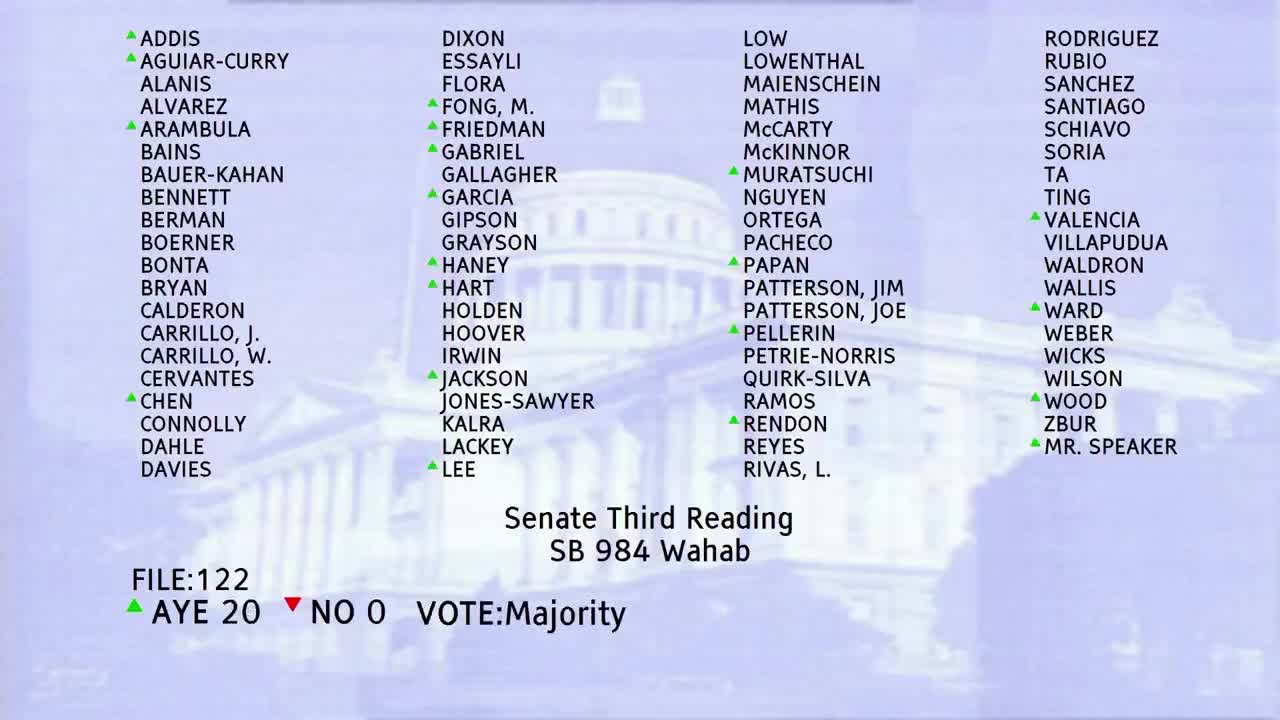 58SEC
Assembly Floor
 2MIN
Senate Floor
 1MIN
Assembly Floor
 4MIN
Assembly Standing Committee on Privacy and Consumer Protection
Bill Author

Bill Co-Author(s):
