AB 2225: Discovery: prehospital emergency medical care person or personnel review committees.
- Session Year: 2023-2024
- House: Assembly
- Latest Version Date: 2024-09-20
Current Status:
Passed
(2024-09-20: Chaptered by Secretary of State - Chapter 329, Statutes of 2024.)
Introduced
In Committee
First Chamber
In Committee
Second Chamber
Enacted
Existing law exempts from discovery as evidence the proceedings and records of specified organized committees of health care professionals and review committees having the responsibility of evaluation and improvement of the quality of care.
This bill would extend this exemption, for purposes of civil proceedings only, to the proceedings and records of prehospital emergency medical care person or personnel organized committees and review committees, as described above.
Existing law exempts from discovery as evidence the proceedings and records of specified organized committees of health care professionals and review committees having the responsibility of evaluation and improvement of the quality of care.
This bill would extend this exemption, for purposes of civil proceedings only, to the proceedings and records of emergency medical services prehospital emergency medical care person or personnel organized committees and review committees, as described above.
Existing law exempts from discovery as evidence the proceedings and records of specified organized committees of health care professionals and review committees having the responsibility of evaluation and improvement of the quality of care.
This bill would extend this exemption, for purposes of civil proceedings only, to the proceedings and records of emergency medical services organized committees and review committees, as described above.
(a)Neither the proceedings nor the records of organized committees of medical, medical-dental, podiatric, registered dietitian, psychological, marriage and family therapist, licensed clinical social worker, professional clinical counselor, pharmacist, prehospital emergency medical care person or personnel, or veterinary staffs, or of a peer review body, as defined in Section 805 of the Business and Professions Code, having the responsibility of evaluation and improvement of the quality of care rendered in the hospital, or for that peer review body, or medical or dental review or dental hygienist review or chiropractic review or podiatric review or registered dietitian review or pharmacist review or veterinary review or acupuncturist review or licensed midwife review or prehospital emergency medical care person or personnel review committees of local medical, dental, dental hygienist, podiatric, dietetic, pharmacist, veterinary, acupuncture, chiropractic, or prehospital emergency medical care person or personnel societies, marriage and family therapist, licensed clinical social worker, professional clinical counselor, or psychological review committees of state or local marriage and family therapist, state or local licensed clinical social worker, state or local licensed professional clinical counselor, or state or local psychological associations or societies or licensed midwife associations or societies having the responsibility of evaluation and improvement of the quality of care, shall be subject to discovery.
(b)Except as hereinafter provided, a person in attendance at a meeting of any of the committees described in subdivision (a) shall not be required to testify as to what transpired at that meeting.
(c)The prohibition relating to discovery or testimony does not apply to the statements made by a person in attendance at a meeting of any of the committees described in subdivision (a) if that person is a party to an action or proceeding the subject matter of which was reviewed at that meeting, to a person requesting hospital staff privileges, or in an action against an insurance carrier alleging bad faith by the carrier in refusing to accept a settlement offer within the policy limits.
(d)The prohibitions in this section do not apply to medical, dental, dental hygienist, podiatric, dietetic, psychological, marriage and family therapist, licensed clinical social worker, professional clinical counselor, pharmacist, veterinary, acupuncture, midwifery, chiropractic, or prehospital emergency medical care person or personnel society committees that exceed 10 percent of the membership of the society, nor to any of those committees if a person serves upon the committee when his or her own conduct or practice is being reviewed.
(e)The amendments made to this section by Chapter 1081 of the Statutes of 1983, or at the 1985 portion of the 198586 Regular Session of the Legislature, at the 1990 portion of the 198990 Regular Session of the Legislature, at the 2000 portion of the 19992000 Regular Session of the Legislature, at the 2011 portion of the 201112 Regular Session of the Legislature, at the 2015 portion of the 201516 Regular Session of the Legislature, or at the 2024 portion of the 202324 Regular Session of the Legislature, do not exclude the discovery or use of relevant evidence in a criminal action.
(f)For purposes of this section, prehospital emergency medical care person or personnel has the same meaning as defined in paragraph (1) of subdivision (a) of Section 1797.188 of the Health and Safety Code.
(a)Neither the proceedings nor the records of organized committees of medical, medical-dental, podiatric, registered dietitian, psychological, marriage and family therapist, licensed clinical social worker, professional clinical counselor, pharmacist, prehospital emergency medical care person or personnel, or veterinary staffs, or emergency medical services in hospitals, or of a peer review body, as defined in Section 805 of the Business and Professions Code, having the responsibility of evaluation and improvement of the quality of care rendered in the hospital, or for that peer review body, or medical or dental review or dental hygienist review or chiropractic review or podiatric review or registered dietitian review or pharmacist review or veterinary review or acupuncturist review or licensed midwife review or emergency medical services review or prehospital emergency medical care person or personnel review committees of local medical, dental, dental hygienist, podiatric, dietetic, pharmacist, veterinary, acupuncture, chiropractic, or emergency medical services prehospital emergency medical care person or personnel societies, marriage and family therapist, licensed clinical social worker, professional clinical counselor, or psychological review committees of state or local marriage and family therapist, state or local licensed clinical social worker, state or local licensed professional clinical counselor, or state or local psychological associations or societies or licensed midwife associations or societies having the responsibility of evaluation and improvement of the quality of care, shall be subject to discovery.
(b)Except as hereinafter provided, a person in attendance at a meeting of any of the committees described in subdivision (a) shall not be required to testify as to what transpired at that meeting.
(c)The prohibition relating to discovery or testimony does not apply to the statements made by a person in attendance at a meeting of any of the committees described in subdivision (a) if that person is a party to an action or proceeding the subject matter of which was reviewed at that meeting, to a person requesting hospital staff privileges, or in an action against an insurance carrier alleging bad faith by the carrier in refusing to accept a settlement offer within the policy limits.
(d)The prohibitions in this section do not apply to medical, dental, dental hygienist, podiatric, dietetic, psychological, marriage and family therapist, licensed clinical social worker, professional clinical counselor, pharmacist, veterinary, acupuncture, midwifery, chiropractic, or emergency medical services prehospital emergency medical care person or personnel society committees that exceed 10 percent of the membership of the society, nor to any of those committees if a person serves upon the committee when his or her own conduct or practice is being reviewed.
(e)The amendments made to this section by Chapter 1081 of the Statutes of 1983, or at the 1985 portion of the 198586 Regular Session of the Legislature, at the 1990 portion of the 198990 Regular Session of the Legislature, at the 2000 portion of the 19992000 Regular Session of the Legislature, at the 2011 portion of the 201112 Regular Session of the Legislature, at the 2015 portion of the 201516 Regular Session of the Legislature, or at the 2024 portion of the 202324 Regular Session of the Legislature, do not exclude the discovery or use of relevant evidence in a criminal action.
(f)For purposes of this section, prehospital emergency medical care person or personnel has the same meaning as defined in paragraph (1) of subdivision (a) of Section 1797.188 of the Health and Safety Code.
(a)Neither the proceedings nor the records of organized committees of medical, medical-dental, podiatric, registered dietitian, psychological, marriage and family therapist, licensed clinical social worker, professional clinical counselor, pharmacist, or veterinary staffs staffs, or emergency medical services in hospitals, or of a peer review body, as defined in Section 805 of the Business and Professions Code, having the responsibility of evaluation and improvement of the quality of care rendered in the hospital, or for that peer review body, or medical or dental review or dental hygienist review or chiropractic review or podiatric review or registered dietitian review or pharmacist review or veterinary review or acupuncturist review or licensed midwife review or emergency medical services review committees of local medical, dental, dental hygienist, podiatric, dietetic, pharmacist, veterinary, acupuncture, or chiropractic chiropractic, or emergency medical services societies, marriage and family therapist, licensed clinical social worker, professional clinical counselor, or psychological review committees of state or local marriage and family therapist, state or local licensed clinical social worker, state or local licensed professional clinical counselor, or state or local psychological associations or societies or licensed midwife associations or societies having the responsibility of evaluation and improvement of the quality of care, shall be subject to discovery.
(b)Except as hereinafter provided, a person in attendance at a meeting of any of the committees described in subdivision (a) shall not be required to testify as to what transpired at that meeting.
(c)The prohibition relating to discovery or testimony does not apply to the statements made by a person in attendance at a meeting of any of the committees described in subdivision (a) if that person is a party to an action or proceeding the subject matter of which was reviewed at that meeting, to a person requesting hospital staff privileges, or in an action against an insurance carrier alleging bad faith by the carrier in refusing to accept a settlement offer within the policy limits.
(d)The prohibitions in this section do not apply to medical, dental, dental hygienist, podiatric, dietetic, psychological, marriage and family therapist, licensed clinical social worker, professional clinical counselor, pharmacist, veterinary, acupuncture, midwifery, or chiropractic chiropractic, or emergency medical services society committees that exceed 10 percent of the membership of the society, nor to any of those committees if a person serves upon the committee when his or her own conduct or practice is being reviewed.
(e)The amendments made to this section by Chapter 1081 of the Statutes of 1983, or at the 1985 portion of the 198586 Regular Session of the Legislature, at the 1990 portion of the 198990 Regular Session of the Legislature, at the 2000 portion of the 19992000 Regular Session of the Legislature, at the 2011 portion of the 201112 Regular Session of the Legislature, or at the 2015 portion of the 201516 Regular Session of the Legislature, or at the 2024 portion of the 202324 Regular Session of the Legislature, do not exclude the discovery or use of relevant evidence in a criminal action.
|
Date
|
Status
|
|---|---|
| Sep 20, 2024 | Chaptered by Secretary of State - Chapter 329, Statutes of 2024. |
| Sep 20, 2024 | Approved by the Governor. |
| Aug 27, 2024 | Enrolled and presented to the Governor at 12 p.m. |
| Aug 20, 2024 | In Assembly. Ordered to Engrossing and Enrolling. |
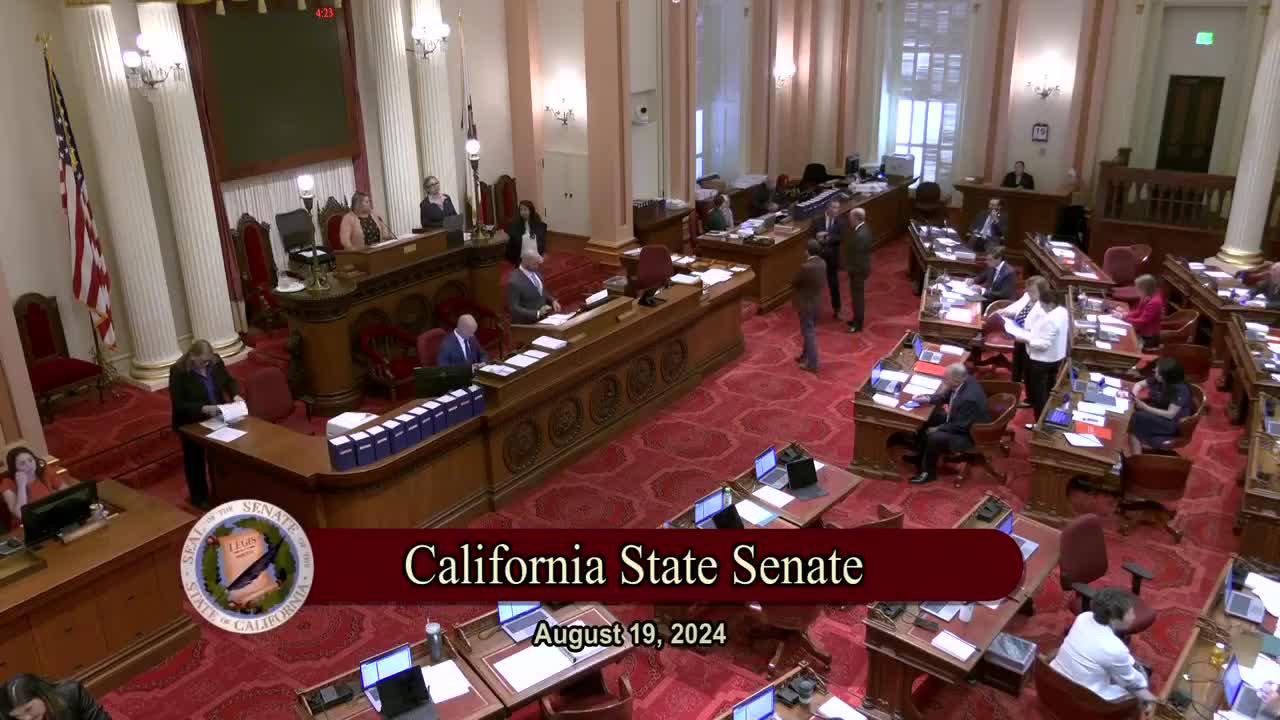
| Aug 19, 2024 | Read third time. Passed. Ordered to the Assembly. (Ayes 40. Noes 0. Page 5203.). |
| Jun 20, 2024 | Ordered to third reading. |
| Jun 20, 2024 | From Consent Calendar. |
| Jun 13, 2024 | Read second time. Ordered to Consent Calendar. |
| Jun 12, 2024 | From committee: Do pass. To Consent Calendar. (Ayes 11. Noes 0.) (June 11). |
| May 1, 2024 | Referred to Com. on JUD. |
| Apr 1, 2024 | In Senate. Read first time. To Com. on RLS. for assignment. |
| Apr 1, 2024 | Read third time. Passed. Ordered to the Senate. (Ayes 72. Noes 0. Page 4534.) |
| Mar 20, 2024 | Read second time. Ordered to Consent Calendar. |
| Mar 19, 2024 | From committee: Do pass. To Consent Calendar. (Ayes 12. Noes 0.) (March 19). |
| Mar 18, 2024 | Re-referred to Com. on JUD. |
| Mar 14, 2024 | From committee chair, with author's amendments: Amend, and re-refer to Com. on JUD. Read second time and amended. |
| Feb 26, 2024 | Referred to Com. on JUD. |
| Feb 8, 2024 | From printer. May be heard in committee March 9. |
| Feb 7, 2024 | Read first time. To print. |
|
Date
|
Description
|
Location
|
Votes
|
|
|---|---|---|---|---|
| Aug 19, 2024 | Assembly 3rd Reading AB2225 Rodriguez By Limón | Senate Floor |
Passed |
|
| Jun 11, 2024 | Do pass and be ordered to the Consent Calendar | Senate Standing Committee on Judiciary |
Passed |
|
| Apr 1, 2024 | AB 2225 Rodriguez Consent Calendar Second Day Regular Session | Assembly Floor |
Passed |
|
| Mar 19, 2024 | Do pass. To Consent Calendar. | Assembly Standing Committee on Judiciary |
Passed |
This list shows positions taken on this bill by organizations on the date displayed, which is linked to the original source.
Positions by individuals are not included.
|
Organization
|
Position
|
Date
|
|---|---|---|
| California Fire Chiefs Association | ** Support | |
| California Professional Firefighters | ** Support | |
| Emergency Medical Service Administrators Association of California | ** Support | |
| EMS Medical Directors Association of California | ** Support | |
| Fire Districts Association Of California | ** Support | |
| National Association of EMS Physicians | ** Support |
SENATE RULES COMMITTEE Office of Senate Floor Analyses (916) 651-1520 Fax: (916) 327-4478 | AB 2225 |
THIRD READING
Bill No: AB 2225
Author: Rodriguez (D)
Amended: 3/14/24 in Assembly
Vote: 21
SENATE JUDICIARY COMMITTEE: 11-0, 6/11/24
AYES: Umberg, Wilk, Allen, Ashby, Caballero, Durazo, Laird, Niello, Roth, Stern, Wahab
ASSEMBLY FLOOR: 72-0, 4/1/24 (Consent) - See last page for vote
SUBJECT: Discovery: prehospital emergency medical care person or personnel review committees
SOURCE: Author
DIGEST:
This bill adds prehospital emergency medical care person or personnel organized committees and review committees to the list of organized medical committees and peer review bodies whose proceedings and records are currently exempt from discovery in civil litigation.
ANALYSIS:
Existing law:
- Exempts from discovery the proceedings and records of organized committees of medical, medical-dental, podiatric, registered dietitian, psychological, marriage and family therapist, licensed clinical social worker, professional clinical counselor, pharmacist, or veterinary staffs in hospitals or of their peer review committees that have the responsibility of evaluation and improvement of the quality of care. (Evid. Code § 1157(a).)
- Provides that, except as otherwise provided, no person in attendance at a meeting of any of those committees shall be required to testify as to what transpired at that meeting. Existing law provides that the prohibition relating to discovery or testimony does not apply to the statements made by any person in attendance at a meeting of any of those committees who is a party to an action or proceeding the subject matter of which was reviewed at that meeting, or to any person requesting hospital staff privileges, or in any action against an insurance carrier alleging bad faith by the carrier in refusing to accept a settlement offer within the policy limits. (Evid. Code § 1157(b), (c).)
- Provides that the prohibitions do not apply to medical, dental, dental hygienist, podiatric, dietetic, psychological, marriage and family therapist, licensed clinical social worker, professional clinical counselor, pharmacist, veterinary, acupuncture, midwifery, or chiropractic society committees that exceed 10 percent of the membership of the society, nor to any of those committees if a person serves upon the committee when their own conduct or practice is being reviewed. (Evid. Code § 1157(d).)
- Requires organized committees and peer review committees of specified health care professionals to report to the professional licensing board whenever a disciplinary action is taken against a member. (Bus. & Prof. Code § 805.)
- Defines “prehospital emergency medical care person or personnel” as any of the following: an authorized registered nurse or mobile intensive care nurse, emergency medical technician-I, emergency medical technician-II, emergency medical technician-paramedic, lifeguard, firefighter, or peace officer, as defined or described, or a physician and surgeon who provides prehospital emergency medical care or rescue services. (Health & Saf. Code § 1797.188(a)(1).)
This bill adds prehospital emergency medical care persons or personnel, as defined in Section 1797.188 of the Health and Safety Code, to the list of health care professionals whose organized and peer review committee proceedings and records are exempt from discovery pursuant to Section 1157.
Background
Under existing law, Section 805 of the Business and Professions Code, various specified healing arts professions and mental health professions have instituted a peer review body which reviews basic qualifications, staff privileges, employment, medical outcomes, or professional conduct of the license holders. The purpose of these peer review bodies is to make recommendations to improve the quality of service and if necessary to improve the educational aspects of licensure.
To ensure the effectiveness of these proceedings and thereby to arguably elevate the quality of in-hospital medical practice, Section 1157 of the Evidence Code exempts the proceedings and records of organized committees of specified health care professionals including medical, medical-dental, podiatric, psychological, marriage and family therapist, licensed clinical social worker, or veterinary staffs in hospitals or their “Section 805” peer review committees that have the responsibility of evaluation and improvement of the quality of care from discovery.
This bill adds to this list the organized committees and peer review committees of prehospital emergency medical care persons or personnel. The bill is supported by the League of California Cities and various fire response associations, including the California Fire Chiefs Association.
Comment
Exempting proceedings and records from discovery. Under existing law, Section 805 of the Business and Professions Code, various specified healing arts professions and mental health professions have instituted a peer review body which reviews basic qualifications, staff privileges, employment, medical outcomes, or professional conduct of the license holders. The purpose of these peer review bodies is to make recommendations to improve the quality of service and, if necessary, to improve the educational aspects of licensure.
To ensure the effectiveness of these proceedings and thereby to arguably elevate the quality of health care, Section 1157 of the Evidence Code exempts the proceedings and records of organized committees of medical, medical-dental, podiatric, registered dietitian, psychological, marriage and family therapist, licensed clinical social worker, professional clinical counselor, pharmacist, or veterinary staffs in hospitals or their “Section 805” peer review committees that have the responsibility of evaluation and improvement of the quality of care from discovery.
The law also prohibits any person in attendance at a meeting of any of these committees from being required to testify as to what transpired at the meeting, except in limited circumstances (such as where the person is a party to an action or proceeding the subject matter of which was reviewed at that meeting). As such, this section reflects a policy that favors ensuring confidentiality for staff in order to encourage their candor in peer review proceedings over the policy in favor of ensuring access of litigants to evidence produced by those peer review bodies. The public policy underlining the enactment of Evidence Code Section 1157 was expressed by the court in Matchett v. Superior Court (1974) 40 Cal.App.3d 623. In that case, the court stated that:
. . . the quality of in-hospital medical care depends heavily upon the (peer review) committee members’ frankness in evaluating their associates’ medical skills. . . although composed of volunteer professionals, these committees are affected with a strong element of public interest. . .
California law recognizes this public interest by endowing the practitioner-members of the hospital staff committees without measure of immunity from damage claims arising from committees activities. Evidence Code section 1157 expresses a legislative judgment that the public interest in medical staff candor extends beyond damage immunity and requires a degree of confidentiality. . . Section 1157 was enacted upon the theory that external access to peer investigations conducted by staff committees stifles candor and inhibits objectivity. It evinces a legislative judgment that the quality of in-hospital medical practice will be elevated by armoring staff inquiries with a measure of confidentiality.
This confidentiality exacts a social cost because it impairs malpractice plaintiffs’ access to evidence. In a damage suit for in-hospital malpractice against doctor or hospital or both, unavailability of recorded evidence of incompetence might seriously jeopardize or even prevent the plaintiff’s recovery. Section 1157 represents a legislative choice between competing public concerns. It embraces the goal of medical staff candor at the cost of impairing plaintiffs’ access to evidence.[1]
Extending the Section 1157 exemptions. This exemption from discovery originally applied to physicians, dentists, podiatrists, dietitians, and veterinarians. Over the last 40 years, it has been extended multiple times to include additional health care professionals such as psychologist (SB 328 (Presley, Chapter 725, Statutes of 1985)), acupuncturists (SB 1279 (Torres, Chapter 815, Statutes of 1994)), marriage and family therapists and licensed clinical social workers (AB 2374 (Lempert, Chapter 136, Statutes of 2000)), professional clinical counselors (SB 146 (Wyland, Chapter 381, Statutes of 2011)), and pharmacists (SB 672 (Hernandez, Chapter 274, Statutes of 2015)).
This bill now includes prehospital emergency medical care persons or personnel. This is defined to include an authorized registered nurse or mobile intensive care nurse, emergency medical technician-I, emergency medical technician-II, emergency medical technician-paramedic, lifeguard, firefighter, or peace officer, as defined or described, or a physician and surgeon who provides prehospital emergency medical care or rescue services.
The goal of extending this exemption from discovery is to ensure candid assessments and objectivity are encouraged in this additional field.
According to the author:
With over 30 years in emergency medical services (EMS), I know firsthand the challenges of providing high-quality emergency response and care. Our commitment extends around the clock, serving every patient regardless of their ability to pay or legal status. This mission requires intricate coordination among paramedics, emergency medical technicians, physicians, nurses, dispatchers, and other healthcare professionals.
Like all healthcare providers, EMS professionals are dedicated to continuously evaluating and enhancing the quality of care we provide. To safeguard public health and ensure the delivery of high-quality care, various medical professionals, including physicians and chiropractors, have established peer review committees that provide feedback and report disciplinary actions.
Recognizing the importance of candid discussions in these committees, the Legislature has exempted the peer review records of fourteen professions from standard discovery and evidence admissibility in litigation. Unfortunately, EMS is not listed among these exemptions provided to other healthcare professionals involved with the evaluation and improvement of the quality of care provided to patients.
Granting EMS peer review committee records the same protection from the discovery process would allow EMS professionals to candidly discuss their performance without fear of legal action being taken against them. AB 2225 would improve public health outcomes and allow EMS professionals to serve patients more effectively wherever and whenever they are needed.
FISCAL EFFECT: Appropriation: No Fiscal Com.: No Local: No
SUPPORT: (Verified 6/13/24)
California Fire Chiefs Association
California Professional Firefighters
California Special Districts Association
Fire Districts Association of California
League of California Cities
OPPOSITION: (Verified 6/13/24)
None received
ARGUMENTS IN SUPPORT: The California Professional Firefighters write:
The peer review quality assurance/quality improvement (QA/QI) process is a vital piece of ensuring the highest level of care and service by EMS personnel while they are out in the field serving the public. Public safety and emergency medical personnel operate in high-pressure and high-stakes environments, and as such it is necessary to constantly be examining the operations, procedures, and decisions that were made in order to seek continuous improvement and correction. Peer review committees are mandated by law, and ensure that EMS personnel are held to the highest standards [] thorough discussion and evaluation.
Unfortunately, unlike other medical professions where these venues are protected from discovery during civil litigation procedures in order to protect their important work, EMS peer review committees do not have similar explicit exemptions in law.
The threat of having these discussions used as evidence in a civil trial procedure can have a negative impact on their effectiveness, as personnel may fear the consequences of speaking openly. AB 2225 creates an exemption for EMS QA/QI processes from discovery in civil litigation similar to the exemptions that already exist for 10 other medical professions, thereby ensuring that QA/QI is robust.
ASSEMBLY FLOOR: 72-0, 4/1/24
AYES: Addis, Aguiar-Curry, Alanis, Arambula, Bains, Bauer-Kahan, Bennett, Berman, Boerner, Bonta, Calderon, Juan Carrillo, Wendy Carrillo, Chen, Connolly, Davies, Dixon, Essayli, Flora, Mike Fong, Vince Fong, Friedman, Gabriel, Gallagher, Garcia, Gipson, Grayson, Hart, Holden, Hoover, Irwin, Jackson, Jones-Sawyer, Kalra, Lackey, Lee, Lowenthal, Maienschein, McCarty, McKinnor, Muratsuchi, Stephanie Nguyen, Ortega, Pacheco, Papan, Joe Patterson, Pellerin, Petrie-Norris, Quirk-Silva, Ramos, Rendon, Reyes, Luz Rivas, Rodriguez, Blanca Rubio, Sanchez, Santiago, Schiavo, Soria, Ta, Ting, Valencia, Villapudua, Waldron, Wallis, Ward, Weber, Wicks, Wilson, Wood, Zbur, Robert Rivas
NO VOTE RECORDED: Alvarez, Bryan, Cervantes, Megan Dahle, Haney, Low, Mathis, Jim Patterson
Prepared by: Christian Kurpiewski / JUD. / (916) 651-4113
6/20/24 16:49:39
**** END ****
Matchett, 40 Cal.App.3d at 629 (internal citation and footnotes omitted). ↑
SENATE RULES COMMITTEE Office of Senate Floor Analyses (916) 651-1520 Fax: (916) 327-4478 | AB 2225 |
CONSENT
Bill No: AB 2225
Author: Rodriguez (D)
Amended: 3/14/24 in Assembly
Vote: 21
SENATE JUDICIARY COMMITTEE: 11-0, 6/11/24
AYES: Umberg, Wilk, Allen, Ashby, Caballero, Durazo, Laird, Niello, Roth, Stern, Wahab
ASSEMBLY FLOOR: 72-0, 4/1/24 (Consent) - See last page for vote
SUBJECT: Discovery: prehospital emergency medical care person or personnel review committees
SOURCE: Author
DIGEST:
This bill adds prehospital emergency medical care person or personnel organized committees and review committees to the list of organized medical committees and peer review bodies whose proceedings and records are currently exempt from discovery in civil litigation.
ANALYSIS:
Existing law:
- Exempts from discovery the proceedings and records of organized committees of medical, medical-dental, podiatric, registered dietitian, psychological, marriage and family therapist, licensed clinical social worker, professional clinical counselor, pharmacist, or veterinary staffs in hospitals or of their peer review committees that have the responsibility of evaluation and improvement of the quality of care. (Evid. Code § 1157(a).)
- Provides that, except as otherwise provided, no person in attendance at a meeting of any of those committees shall be required to testify as to what transpired at that meeting. Existing law provides that the prohibition relating to discovery or testimony does not apply to the statements made by any person in attendance at a meeting of any of those committees who is a party to an action or proceeding the subject matter of which was reviewed at that meeting, or to any person requesting hospital staff privileges, or in any action against an insurance carrier alleging bad faith by the carrier in refusing to accept a settlement offer within the policy limits. (Evid. Code § 1157(b), (c).)
- Provides that the prohibitions do not apply to medical, dental, dental hygienist, podiatric, dietetic, psychological, marriage and family therapist, licensed clinical social worker, professional clinical counselor, pharmacist, veterinary, acupuncture, midwifery, or chiropractic society committees that exceed 10 percent of the membership of the society, nor to any of those committees if a person serves upon the committee when their own conduct or practice is being reviewed. (Evid. Code § 1157(d).)
- Requires organized committees and peer review committees of specified health care professionals to report to the professional licensing board whenever a disciplinary action is taken against a member. (Bus. & Prof. Code § 805.)
- Defines “prehospital emergency medical care person or personnel” as any of the following: an authorized registered nurse or mobile intensive care nurse, emergency medical technician-I, emergency medical technician-II, emergency medical technician-paramedic, lifeguard, firefighter, or peace officer, as defined or described, or a physician and surgeon who provides prehospital emergency medical care or rescue services. (Health & Saf. Code § 1797.188(a)(1).)
This bill adds prehospital emergency medical care persons or personnel, as defined in Section 1797.188 of the Health and Safety Code, to the list of health care professionals whose organized and peer review committee proceedings and records are exempt from discovery pursuant to Section 1157.
Background
Under existing law, Section 805 of the Business and Professions Code, various specified healing arts professions and mental health professions have instituted a peer review body which reviews basic qualifications, staff privileges, employment, medical outcomes, or professional conduct of the license holders. The purpose of these peer review bodies is to make recommendations to improve the quality of service and if necessary to improve the educational aspects of licensure.
To ensure the effectiveness of these proceedings and thereby to arguably elevate the quality of in-hospital medical practice, Section 1157 of the Evidence Code exempts the proceedings and records of organized committees of specified health care professionals including medical, medical-dental, podiatric, psychological, marriage and family therapist, licensed clinical social worker, or veterinary staffs in hospitals or their “Section 805” peer review committees that have the responsibility of evaluation and improvement of the quality of care from discovery.
This bill adds to this list the organized committees and peer review committees of prehospital emergency medical care persons or personnel. The bill is supported by the League of California Cities and various fire response associations, including the California Fire Chiefs Association.
Comment
Exempting proceedings and records from discovery. Under existing law, Section 805 of the Business and Professions Code, various specified healing arts professions and mental health professions have instituted a peer review body which reviews basic qualifications, staff privileges, employment, medical outcomes, or professional conduct of the license holders. The purpose of these peer review bodies is to make recommendations to improve the quality of service and, if necessary, to improve the educational aspects of licensure.
To ensure the effectiveness of these proceedings and thereby to arguably elevate the quality of health care, Section 1157 of the Evidence Code exempts the proceedings and records of organized committees of medical, medical-dental, podiatric, registered dietitian, psychological, marriage and family therapist, licensed clinical social worker, professional clinical counselor, pharmacist, or veterinary staffs in hospitals or their “Section 805” peer review committees that have the responsibility of evaluation and improvement of the quality of care from discovery.
The law also prohibits any person in attendance at a meeting of any of these committees from being required to testify as to what transpired at the meeting, except in limited circumstances (such as where the person is a party to an action or proceeding the subject matter of which was reviewed at that meeting). As such, this section reflects a policy that favors ensuring confidentiality for staff in order to encourage their candor in peer review proceedings over the policy in favor of ensuring access of litigants to evidence produced by those peer review bodies. The public policy underlining the enactment of Evidence Code Section 1157 was expressed by the court in Matchett v. Superior Court (1974) 40 Cal.App.3d 623. In that case, the court stated that:
. . . the quality of in-hospital medical care depends heavily upon the (peer review) committee members’ frankness in evaluating their associates’ medical skills. . . although composed of volunteer professionals, these committees are affected with a strong element of public interest. . .
California law recognizes this public interest by endowing the practitioner-members of the hospital staff committees without measure of immunity from damage claims arising from committees activities. Evidence Code section 1157 expresses a legislative judgment that the public interest in medical staff candor extends beyond damage immunity and requires a degree of confidentiality. . . Section 1157 was enacted upon the theory that external access to peer investigations conducted by staff committees stifles candor and inhibits objectivity. It evinces a legislative judgment that the quality of in-hospital medical practice will be elevated by armoring staff inquiries with a measure of confidentiality.
This confidentiality exacts a social cost because it impairs malpractice plaintiffs’ access to evidence. In a damage suit for in-hospital malpractice against doctor or hospital or both, unavailability of recorded evidence of incompetence might seriously jeopardize or even prevent the plaintiff’s recovery. Section 1157 represents a legislative choice between competing public concerns. It embraces the goal of medical staff candor at the cost of impairing plaintiffs’ access to evidence.[1]
Extending the Section 1157 exemptions. This exemption from discovery originally applied to physicians, dentists, podiatrists, dietitians, and veterinarians. Over the last 40 years, it has been extended multiple times to include additional health care professionals such as psychologist (SB 328 (Presley, Chapter 725, Statutes of 1985)), acupuncturists (SB 1279 (Torres, Chapter 815, Statutes of 1994)), marriage and family therapists and licensed clinical social workers (AB 2374 (Lempert, Chapter 136, Statutes of 2000)), professional clinical counselors (SB 146 (Wyland, Chapter 381, Statutes of 2011)), and pharmacists (SB 672 (Hernandez, Chapter 274, Statutes of 2015)).
This bill now includes prehospital emergency medical care persons or personnel. This is defined to include an authorized registered nurse or mobile intensive care nurse, emergency medical technician-I, emergency medical technician-II, emergency medical technician-paramedic, lifeguard, firefighter, or peace officer, as defined or described, or a physician and surgeon who provides prehospital emergency medical care or rescue services.
The goal of extending this exemption from discovery is to ensure candid assessments and objectivity are encouraged in this additional field.
According to the author:
With over 30 years in emergency medical services (EMS), I know firsthand the challenges of providing high-quality emergency response and care. Our commitment extends around the clock, serving every patient regardless of their ability to pay or legal status. This mission requires intricate coordination among paramedics, emergency medical technicians, physicians, nurses, dispatchers, and other healthcare professionals.
Like all healthcare providers, EMS professionals are dedicated to continuously evaluating and enhancing the quality of care we provide. To safeguard public health and ensure the delivery of high-quality care, various medical professionals, including physicians and chiropractors, have established peer review committees that provide feedback and report disciplinary actions.
Recognizing the importance of candid discussions in these committees, the Legislature has exempted the peer review records of fourteen professions from standard discovery and evidence admissibility in litigation. Unfortunately, EMS is not listed among these exemptions provided to other healthcare professionals involved with the evaluation and improvement of the quality of care provided to patients.
Granting EMS peer review committee records the same protection from the discovery process would allow EMS professionals to candidly discuss their performance without fear of legal action being taken against them. AB 2225 would improve public health outcomes and allow EMS professionals to serve patients more effectively wherever and whenever they are needed.
FISCAL EFFECT: Appropriation: No Fiscal Com.: No Local: No
SUPPORT: (Verified 6/13/24)
California Fire Chiefs Association
California Professional Firefighters
California Special Districts Association
Fire Districts Association of California
League of California Cities
OPPOSITION: (Verified 6/13/24)
None received
ARGUMENTS IN SUPPORT: The California Professional Firefighters write:
The peer review quality assurance/quality improvement (QA/QI) process is a vital piece of ensuring the highest level of care and service by EMS personnel while they are out in the field serving the public. Public safety and emergency medical personnel operate in high-pressure and high-stakes environments, and as such it is necessary to constantly be examining the operations, procedures, and decisions that were made in order to seek continuous improvement and correction. Peer review committees are mandated by law, and ensure that EMS personnel are held to the highest standards [] thorough discussion and evaluation.
Unfortunately, unlike other medical professions where these venues are protected from discovery during civil litigation procedures in order to protect their important work, EMS peer review committees do not have similar explicit exemptions in law.
The threat of having these discussions used as evidence in a civil trial procedure can have a negative impact on their effectiveness, as personnel may fear the consequences of speaking openly. AB 2225 creates an exemption for EMS QA/QI processes from discovery in civil litigation similar to the exemptions that already exist for 10 other medical professions, thereby ensuring that QA/QI is robust.
ASSEMBLY FLOOR: 72-0, 4/1/24
AYES: Addis, Aguiar-Curry, Alanis, Arambula, Bains, Bauer-Kahan, Bennett, Berman, Boerner, Bonta, Calderon, Juan Carrillo, Wendy Carrillo, Chen, Connolly, Davies, Dixon, Essayli, Flora, Mike Fong, Vince Fong, Friedman, Gabriel, Gallagher, Garcia, Gipson, Grayson, Hart, Holden, Hoover, Irwin, Jackson, Jones-Sawyer, Kalra, Lackey, Lee, Lowenthal, Maienschein, McCarty, McKinnor, Muratsuchi, Stephanie Nguyen, Ortega, Pacheco, Papan, Joe Patterson, Pellerin, Petrie-Norris, Quirk-Silva, Ramos, Rendon, Reyes, Luz Rivas, Rodriguez, Blanca Rubio, Sanchez, Santiago, Schiavo, Soria, Ta, Ting, Valencia, Villapudua, Waldron, Wallis, Ward, Weber, Wicks, Wilson, Wood, Zbur, Robert Rivas
NO VOTE RECORDED: Alvarez, Bryan, Cervantes, Megan Dahle, Haney, Low, Mathis, Jim Patterson
Prepared by: Christian Kurpiewski / JUD. / (916) 651-4113
6/13/24 13:55:02
**** END ****
Matchett, 40 Cal.App.3d at 629 (internal citation and footnotes omitted). ↑
Senator Thomas Umberg, Chair
2023-2024 Regular Session
Bill No: AB 2225 (Author:Rodriguez)
Version: March 14, 2024
Hearing Date: June 11, 2024
Fiscal: No
Urgency: No
Consultant: CK
SUBJECT
Discovery: prehospital emergency medical care person or personnel review committees
DIGEST
This bill adds prehospital emergency medical care person or personnel organized committees and review committees to the list of organized medical committees and peer review bodies whose proceedings and records are currently exempt from discovery in civil litigation.
EXECUTIVE SUMMARY
Under existing law, Section 805 of the Business and Professions Code, various specified healing arts professions and mental health professions have instituted a peer review body which reviews basic qualifications, staff privileges, employment, medical outcomes, or professional conduct of the license holders. The purpose of these peer review bodies is to make recommendations to improve the quality of service and if necessary to improve the educational aspects of licensure.
To ensure the effectiveness of these proceedings and thereby to arguably elevate the quality of in-hospital medical practice, Section 1157 of the Evidence Code exempts the proceedings and records of organized committees of specified health care professionals including medical, medical-dental, podiatric, psychological, marriage and family therapist, licensed clinical social worker, or veterinary staffs in hospitals or their “Section 805” peer review committees that have the responsibility of evaluation and improvement of the quality of care from discovery.
This bill adds to this list the organized committees and peer review committees of prehospital emergency medical care persons or personnel. The bill is supported by the League of California Cities and various fire response associations, including the California Fire Chiefs Association. The Committee has not received any timely opposition.
PROPOSED CHANGES TO THE LAW
Existing law:
- Exempts from discovery the proceedings and records of organized committees of medical, medical-dental, podiatric, registered dietitian, psychological, marriage and family therapist, licensed clinical social worker, professional clinical counselor, pharmacist, or veterinary staffs in hospitals or of their peer review committees that have the responsibility of evaluation and improvement of the quality of care. (Evid. Code § 1157(a).)
- Provides that, except as otherwise provided, no person in attendance at a meeting of any of those committees shall be required to testify as to what transpired at that meeting. Existing law provides that the prohibition relating to discovery or testimony does not apply to the statements made by any person in attendance at a meeting of any of those committees who is a party to an action or proceeding the subject matter of which was reviewed at that meeting, or to any person requesting hospital staff privileges, or in any action against an insurance carrier alleging bad faith by the carrier in refusing to accept a settlement offer within the policy limits. (Evid. Code § 1157(b), (c).)
- Provides that the prohibitions do not apply to medical, dental, dental hygienist, podiatric, dietetic, psychological, marriage and family therapist, licensed clinical social worker, professional clinical counselor, pharmacist, veterinary, acupuncture, midwifery, or chiropractic society committees that exceed 10 percent of the membership of the society, nor to any of those committees if a person serves upon the committee when their own conduct or practice is being reviewed. (Evid. Code § 1157(d).)
- Requires organized committees and peer review committees of specified health care professionals to report to the professional licensing board whenever a disciplinary action is taken against a member. (Bus. & Prof. Code § 805.)
- Defines “prehospital emergency medical care person or personnel” as any of the following: an authorized registered nurse or mobile intensive care nurse, emergency medical technician-I, emergency medical technician-II, emergency medical technician-paramedic, lifeguard, firefighter, or peace officer, as defined or described, or a physician and surgeon who provides prehospital emergency medical care or rescue services. (Health & Saf. Code § 1797.188(a)(1).)
This bill adds prehospital emergency medical care persons or personnel, as defined in Section 1797.188 of the Health and Safety Code, to the list of health care professionals whose organized and peer review committee proceedings and records are exempt from discovery pursuant to Section 1157.
COMMENTS
- Exempting proceedings and records from discovery
Under existing law, Section 805 of the Business and Professions Code, various specified healing arts professions and mental health professions have instituted a peer review body which reviews basic qualifications, staff privileges, employment, medical outcomes, or professional conduct of the license holders. The purpose of these peer review bodies is to make recommendations to improve the quality of service and, if necessary, to improve the educational aspects of licensure.
To ensure the effectiveness of these proceedings and thereby to arguably elevate the quality of health care, Section 1157 of the Evidence Code exempts the proceedings and records of organized committees of medical, medical-dental, podiatric, registered dietitian, psychological, marriage and family therapist, licensed clinical social worker, professional clinical counselor, pharmacist, or veterinary staffs in hospitals or their “Section 805” peer review committees that have the responsibility of evaluation and improvement of the quality of care from discovery.
The law also prohibits any person in attendance at a meeting of any of these committees from being required to testify as to what transpired at the meeting, except in limited circumstances (such as where the person is a party to an action or proceeding the subject matter of which was reviewed at that meeting). As such, this section reflects a policy that favors ensuring confidentiality for staff in order to encourage their candor in peer review proceedings over the policy in favor of ensuring access of litigants to evidence produced by those peer review bodies. The public policy underlining the enactment of Evidence Code Section 1157 was expressed by the court in Matchett v. Superior Court (1974) 40 Cal.App.3d 623. In that case, the court stated that:
. . . the quality of in-hospital medical care depends heavily upon the (peer review) committee members’ frankness in evaluating their associates’ medical skills. . . although composed of volunteer professionals, these committees are affected with a strong element of public interest. . .
California law recognizes this public interest by endowing the practitioner-members of the hospital staff committees without measure of immunity from damage claims arising from committees activities. Evidence Code section 1157 expresses a legislative judgment that the public interest in medical staff candor extends beyond damage immunity and requires a degree of confidentiality. . . Section 1157 was enacted upon the theory that external access to peer investigations conducted by staff committees stifles candor and inhibits objectivity. It evinces a legislative judgment that the quality of in-hospital medical practice will be elevated by armoring staff inquiries with a measure of confidentiality.
This confidentiality exacts a social cost because it impairs malpractice plaintiffs’ access to evidence. In a damage suit for in-hospital malpractice against doctor or hospital or both, unavailability of recorded evidence of incompetence might seriously jeopardize or even prevent the plaintiff’s recovery. Section 1157 represents a legislative choice between competing public concerns. It embraces the goal of medical staff candor at the cost of impairing plaintiffs’ access to evidence.[1]
- Extending the Section 1157 exemptions
This exemption from discovery originally applied to physicians, dentists, podiatrists, dietitians, and veterinarians. Over the last 40 years, it has been extended multiple times to include additional health care professionals such as psychologist (SB 328 (Presley, Ch. 725, Stats. 1985)), acupuncturists (SB 1279 (Torres, Ch. 815, Stats. 1994)), marriage and family therapists and licensed clinical social workers (AB 2374 (Lempert, Ch. 136, Stats. 2000)), professional clinical counselors (SB 146 (Wyland, Ch. 381, Stat. 2011)), and pharmacists (SB 672 (Hernandez, Ch. 274, Stats. 2015)).
This bill now includes prehospital emergency medical care persons or personnel. This is defined to include an authorized registered nurse or mobile intensive care nurse, emergency medical technician-I, emergency medical technician-II, emergency medical technician-paramedic, lifeguard, firefighter, or peace officer, as defined or described, or a physician and surgeon who provides prehospital emergency medical care or rescue services.
The goal of extending this exemption from discovery is to ensure candid assessments and objectivity are encouraged in this additional field.
According to the author:
With over 30 years in emergency medical services (EMS), I know firsthand the challenges of providing high-quality emergency response and care. Our commitment extends around the clock, serving every patient regardless of their ability to pay or legal status. This mission requires intricate coordination among paramedics, emergency medical technicians, physicians, nurses, dispatchers, and other healthcare professionals.
Like all healthcare providers, EMS professionals are dedicated to continuously evaluating and enhancing the quality of care we provide. To safeguard public health and ensure the delivery of high-quality care, various medical professionals, including physicians and chiropractors, have established peer review committees that provide feedback and report disciplinary actions.
Recognizing the importance of candid discussions in these committees, the Legislature has exempted the peer review records of fourteen professions from standard discovery and evidence admissibility in litigation. Unfortunately, EMS is not listed among these exemptions provided to other healthcare professionals involved with the evaluation and improvement of the quality of care provided to patients.
Granting EMS peer review committee records the same protection from the discovery process would allow EMS professionals to candidly discuss their performance without fear of legal action being taken against them. AB 2225 would improve public health outcomes and allow EMS professionals to serve patients more effectively wherever and whenever they are needed.
The California Professional Firefighters write:
The peer review quality assurance/quality improvement (QA/QI) process is a vital piece of ensuring the highest level of care and service by EMS personnel while they are out in the field serving the public. Public safety and emergency medical personnel operate in high-pressure and high-stakes environments, and as such it is necessary to constantly be examining the operations, procedures, and decisions that were made in order to seek continuous improvement and correction. Peer review committees are mandated by law, and ensure that EMS personnel are held to the highest standards [] thorough discussion and evaluation.
Unfortunately, unlike other medical professions where these venues are protected from discovery during civil litigation procedures in order to protect their important work, EMS peer review committees do not have similar explicit exemptions in law.
The threat of having these discussions used as evidence in a civil trial procedure can have a negative impact on their effectiveness, as personnel may fear the consequences of speaking openly. AB 2225 creates an exemption for EMS QA/QI processes from discovery in civil litigation similar to the exemptions that already exist for 10 other medical professions, thereby ensuring that QA/QI is robust.
SUPPORT
California Fire Chiefs Association
California Professional Firefighters
California Special Districts Association
Fire Districts Association of California
League of California Cities
OPPOSITION
None received
RELATED LEGISLATION
Pending Legislation: None known.
Prior Legislation:
SB 672 (Hernandez, Ch. 274, Stats. 2015) See Comment 2.
SB 146 (Wyland, Ch. 381, Stats. 2011) See Comment 2.
AB 2374 (Lempert, Ch. 136, Stats. 2000) See Comment 2.
SB 1279 (Ch. 815, Stats. 1994) See Comment 2.
SB 328 (Presley, Ch. 725, Stats. 1985.) See Comment 2.
PRIOR VOTES:
Assembly Floor (Ayes 72, Noes 0)
Assembly Judiciary Committee (Ayes 12, Noes 0)
**************
Matchett, 40 Cal.App.3d at 629 (internal citation and footnotes omitted). ↑
Date of Hearing: March 19, 2024
ASSEMBLY COMMITTEE ON JUDICIARY
Ash Kalra, Chair
ABPCA Bill Id:AB 2225
Author:Rodriguez – As Amended Ver:March 14, 2024
PROPOSED CONSENT
SUBJECT: Discovery: prehospital emergency medical care person or personnel review committees
KEY ISSUE: Should peer review records of prehospital emergency medical care person or personnel be exempt from discovery in the same manner that peer review records of other medical professionals are currently exempt?
SYNOPSIS
This non-controversial bill would add prehospital emergency medical care person or personnel (EMS professionals) to the list of medical professionals whose peer review records are exempt from discovery under the Evidence Code. The rationale for exempting medical peer review records from discovery requests is to encourage maximum candor in the evaluation of medical professionals. Peer review ensures that professionals candidly discuss all facets of patient care without the fear that such discussions might be used in legal actions against them. This allows peers to learn from possible errors, leading to public benefit through improved patient outcomes and safety. Multiple medical professions utilize the peer review committee system. The Business and Professions Code requires the creation of peer review committees to assess the performance of licensed physicians and improved medical care quality, among other things. The B&P Code outlines a comprehensive and fair process for peer-review that emphasizes transparency, fairness, and due process. The Legislature has recognized the importance of a robust peer review process in safeguarding patient safety and enhancing the quality of care by exempting 14 professions’ peer review records from discovery under the Evidence Code. The exemption does not, as a general rule, apply to the statements of any person who is a party to an action pertaining to the subject matter of the peer review. This measure is co-sponsored by California Fire Chiefs Association and the Fire Districts of California. It is supported by the Emergency Medical Services Administrators’ Association of California, the California Chapter of the National Association of EMS Physicians, and California Professional Firefighters. There is no known opposition.
SUMMARY: Adds “prehospital emergency medical care person or personnel” to the existing list of medical professionals whose peer review proceedings and records are exempt from civil discovery and required testimony.
EXISTING LAW:
- Exempts from civil discovery requests the proceedings and records of committees of medical, medical-dental, podiatric, registered dietitian, psychological, marriage and family therapist, licensed clinical social worker, professional clinical counselor, pharmacist, or veterinary staffs in hospitals, or of a peer review body having the responsibility of evaluation and improvement of the quality of care rendered in the hospital, or for any medical, dental, dental hygienist, podiatric, dietetic, pharmacist, veterinary, acupuncture, or chiropractic societies, marriage and family therapist, licensed clinical social worker, professional clinical counselor, or psychological review committees, as specified. Specifies that any person in attendance at a meeting of any of these organized committees shall not be required to testify as to what transpired at that meeting. (Evidence Code Section 1157 (a)-(b).)
- Specifies that the prohibition against discovery and testimony as to peer review records and proceedings does not apply to the statements of a person at a peer review meeting if that person is a party to an action or proceeding, the subject matter of which was reviewed at the meeting, or to a person requesting staff privileges, or in an action against an insurance carrier alleging bad faith by the carrier in refusing to accept a settlement offer within the policy limits. (Evidence Code Section 1157 (c).)
- Specifies that the prohibition against discovery and testimony does not apply to medical, dental, dental hygienist, podiatric, dietetic, psychological, marriage and family therapist, licensed clinical social worker, professional clinical counselor, pharmacist, veterinary, acupuncture, midwifery, or chiropractic society committees that exceed 10 percent of the membership of the society, nor to any of those committees if any person serves upon the committee when his or her own conduct or practice is being reviewed. (Evidence Code Section 1157 (d).)
- Defines “peer review,” for purposes of the healing arts, to mean a process by which a peer review body reviews basic qualifications, staff privileges, employment, medical outcomes, or professional conduct of medical professionals in order to make recommendations for quality improvement or education; determine whether a medical professional may continue to practice, or determine the parameters of that practice; assess and improve the quality of care rendered in a health care facility, clinic, or other setting providing medical services; or to engage in other activities, as specified. Requires the medical chief of staff, executive officer, medical director or other administrator of a peer review body to file a report with the appropriate licensing board, as specified. (Business and Professions Code Section 805.)
- Defines “prehospital emergency medical care person or personnel” as an authorized registered nurse or mobile intensive care nurse, emergency medical technician-I, emergency medical technician-II, emergency medical technician-paramedic, lifeguard, firefighter, or peace officer, as defined, or a physician and surgeon who provides prehospital emergency medical care or rescue services. (Health and Safety Code Section 1797.188.)
FISCAL EFFECT: As currently in print this bill is keyed non-fiscal.
COMMENTS: Existing law provides for the establishment of peer review committees in order to evaluate the performance of licensed medical professionals, assess and improve the quality of medical care, and, if necessary, determine whether a medical professional may continue to practice. Medical peer review bodies must submit reports to their appropriate licensing boards whenever taking disciplinary action, including the denial of staff privileges or employment to a medical professional.
Because an effective peer review process is essential to patient safety and quality of care, the Legislature has exempted medical peer review records from the usual rules governing the discovery and admissibility of evidence in litigation. Section 1157 of the Evidence Code, in particular, expressly exempts from discovery the peer review proceedings and records of many different medical professionals: doctors, dentists, podiatrists, dieticians, psychologists, marriage and family therapists, clinical social workers, veterinarians, chiropractors, pharmacists, and acupuncturists, among others. Section 1157 also specifies that any person in attendance at a meeting of any of these organized committees cannot be required to testify as to what transpired at that meeting. The policy rationale for exempting medical peer review records and not compelling testimony from peer review participants is to encourage maximum candor in the evaluation of medical professionals. However, prehospital emergency medical care person or personnel, more commonly known as EMS professionals, are notably absent from the list of medical professionals who currently are covered by Section 1157. The author explains how his personal experience informed his decision to bring this measure adding EMS professionals to the list:
With over 30 years in emergency medical services (EMS), I know firsthand the challenges of providing high-quality emergency response and care. Our commitment extends around the clock, serving every patient regardless of their ability to pay or legal status. This mission requires intricate coordination among paramedics, emergency medical technicians, physicians, nurses, dispatchers, and other healthcare professionals.
Like all healthcare providers, EMS professionals are dedicated to continuously evaluating and enhancing the quality of care we provide. To safeguard public health and ensure the delivery of high-quality care, various medical professionals, including physicians and chiropractors, have established peer review committees that provide feedback and report disciplinary actions.
Recognizing the importance of candid discussions in these committees, the Legislature has exempted the peer review records of fourteen professions from standard discovery and evidence admissibility in litigation. Unfortunately, EMS is not listed among these exemptions provided to other healthcare professionals involved with the evaluation and improvement of the quality of care provided to patients.
Granting EMS peer review committee records the same protection from the discovery process would allow EMS professionals to candidly discuss their performance without fear of legal action being taken against them. AB 2225 would improve public health outcomes and allow EMS professionals to serve patients more effectively wherever and whenever they are needed.
The author further explains how existing law – which does not protect EMS professionals’ peer review committee records from discovery – might compromise their quality of care:
EMS professionals currently face the vulnerability of their peer review discussions being exposed and potentially used against them in legal claims for damages. Consequently, some EMS agencies in California have been forced to delegate their Quality Assurance (QA) activities to external entities, such as hospitals, for supervision. This delegation could compromise prehospital care oversight quality by removing it from the direct purview of those most familiar with its nuances, undermining the fundamental tenet of peer review: evaluation by one’s peers.
ARGUMENTS IN SUPPORT: The co-sponsors of this measure, the California Fire Chiefs Association (CalChiefs) and the Fire Districts Association of California (FDAC), write in support of the bill:
EMS professionals provide healthcare in a variety of challenging environments, including homes, offices, jails, streets, and remote areas across California. They offer around-the-clock care to everyone. This process requires intricate coordination among paramedics, emergency medical technicians, physicians, nurses, and dispatchers. Committed to excellence, EMS professionals continuously strive to evaluate and enhance the quality of care they deliver.
Multiple professions already utilize the peer review committee system. Acknowledging the vital importance of a robust peer review process in safeguarding patient safety and enhancing the quality of care, the Legislature has shielded fourteen professions by excluding their medical peer review records from standard discovery processes and rules of evidence admissibility in litigation as specified in § 1157 of the Evidence Code. This exemption, along with the policy against compelling testimony from peer review participants, aims to foster maximum openness in evaluating medical professionals. It ensures that professionals can candidly discuss all facets of patient care without the fear that such discussions might be used in legal actions against them. This allows peers to learn from possible errors, leading to public benefit through improved patient outcomes and safety.
EMS professionals currently face the vulnerability of their peer review discussions being exposed and potentially used against them in legal claims for damages. Consequently, some EMS agencies in California have been forced to delegate their Quality Assurance (QA) activities to external entities, such as hospitals, for supervision. This delegation could compromise prehospital care oversight quality by removing it from the direct purview of those most familiar with its nuances, undermining the fundamental tenet of peer review: evaluation by one’s peers.
The California Chapter of the National Association of EMS Physicians also supports AB 2225:
AB 2225 would extend, for purposes of civil proceedings only, the exemption from discovery as evidence the proceedings and records of specified emergency medical services (EMS) organized committees and review committees. As already recognized by the legislature for other health care professionals and review committees pursuant to California Evidence Code Section 1157, the ability of EMS professionals/organizations to perform these organized review processes in a manner exempt from civil evidence discovery is necessary to enable the honest and frank discussions that are essential to our ongoing patient safety and quality improvement activities.
REGISTERED SUPPORT / OPPOSITION:
Support
California Fire Chiefs Association (co-sponsor)
California Professional Firefighters
Emergency Medical Services Administrators’ Association of California (EMSAAC)
EMS Medical Directors’ Association of California (EMDAC)
Fire Districts Association of California (co-sponsor)
National Association of EMS Physicians
Opposition
None on file
Analysis Prepared by: Shiran Zohar / JUD. / (916) 319-2334
Bill Author

Bill Co-Author(s):