AB 2231: Pawnbrokers: education.
- Session Year: 2023-2024
- House: Assembly
- Latest Version Date: 2024-09-12
Current Status:
Passed
(2024-09-12: Chaptered by Secretary of State - Chapter 223, Statutes of 2024.)
Introduced
In Committee
First Chamber
In Committee
Second Chamber
Enacted
Existing law defines every person engaged in the business of receiving goods in pledge as security for a loan as a pawnbroker and requires those persons to apply to the chief of police, the sheriff, or the police commission for a license permitting the licensee to engage in the business of pawnbroker. Existing law requires the licensing authority to accept an application for and grant a license to engage in the business of pawnbroker, if the applicant has complied with specified requirements, including filing a surety bond and a financial statement, and if they have not been convicted of an attempt to receive stolen property or any other offense involving stolen property, as specified. Existing law also requires a pawnbroker to comply with a specified reporting requirement imposed upon secondhand dealers. Existing law creates the California Pawn and SecondhandDealer System (CAPSS), a statewide, uniform, electronic reporting system that receives secondhand dealer reports and is operated by the Department of Justice. Existing law requires every secondhand dealer to electronically report daily, or no later than the next business day, after receipt or purchase of secondhand tangible personal property, to the CAPSS, all secondhand tangible personal property that they have purchased, taken in trade, taken in pawn, accepted for sale on consignment, or accepted for auctioning, as specified.
This bill, the Pawnbroker Education Act, would establish the California Pawnbroker Education Council, governed by a board of directors, as specified. The bill would require the council to establish fees sufficient to support its functions and to cover the reasonable regulatory costs of administering these provisions. The bill would require the council, on or before January 1, 2026, to develop and establish a standard course and curriculum in pawnbroker transactions that includes at least 8 hours of prelicensing education to be completed by an applicant for licensure, and 8 hours of continuing education to be completed by a licensee or their designated representative, as a condition precedent to being issued, or renewing, a pawnbrokers license. The bill would require the curriculum to meet minimum standards for compliance with state and federal law applicable to the pawnbroker business including, the CAPSS reporting requirements described above. The bill would require individuals, entities, agencies, and associations that propose to offer educational courses that satisfy the prelicensing and continuing education requirements determined by the council to apply for and obtain the approval of the council. The bill would require the council, beginning on January 1, 2026, to issue a certificate to an applicant for a pawnbroker license, or to a licensee applying for renewal of a pawnbroker license, who has satisfied the educational requirements, and to maintain records verifying completion of the educational requirements for at least 2 years. The bill would repeal these provisions on January 1, 2029.
Existing law defines every person engaged in the business of receiving goods in pledge as security for a loan as a pawnbroker and requires those persons to apply to the chief of police, the sheriff, or the police commission for a license permitting the licensee to engage in the business of pawnbroker. Existing law requires the licensing authority to accept an application for and grant a license to engage in the business of pawnbroker, if the applicant has complied with specified requirements, including filing a surety bond and a financial statement, and if they have not been convicted of an attempt to receive stolen property or any other offense involving stolen property, as specified. Existing law also requires a pawnbroker to comply with a specified reporting requirement imposed upon secondhand dealers. Existing law creates the California Pawn and SecondhandDealer System (CAPSS), a statewide, uniform, electronic reporting system that receives secondhand dealer reports and is operated by the Department of Justice. Existing law requires every secondhand dealer to electronically report daily, or no later than the next business day, after receipt or purchase of secondhand tangible personal property, to the CAPSS, all secondhand tangible personal property that they have purchased, taken in trade, taken in pawn, accepted for sale on consignment, or accepted for auctioning, as specified.
This bill, the Pawnbroker Education Act, would establish the California Pawnbroker Education Council, governed by a board of directors, as specified. The bill would require the council council, on or before January 1, 2026, to develop and establish a standard course and curriculum in pawnbroker transactions that includes at least 8 hours of prelicensing education to be completed by an applicant for licensure, and 8 hours of continuing education to be completed by an applicant for licensure or a licensee or their designated representative, as a condition precedent to being issued, or renewing, a pawnbrokers license. The bill would require the curriculum to meet minimum standards for compliance with state and federal law applicable to the pawnbroker business including, the CAPSS reporting requirements described above. The bill would require individuals, entities, agencies, and associations that propose to offer educational courses that satisfy the prelicensing and continuing education requirements determined by the council to apply for and obtain the approval of the council. The bill would require the council council, beginning on January 1, 2026, to issue a certificate to an applicant for a pawnbroker license, or to a licensee applying for renewal of a pawnbroker license, who has satisfied the educational requirements requirements, and to maintain records verifying completion of the educational requirements for at least 2 years. The bill would repeal these provisions on January 1, 2029.
Existing law defines every person engaged in the business of receiving goods in pledge as security for a loan as a pawnbroker and requires those persons to apply to the chief of police, the sheriff, or the police commission for a license permitting the licensee to engage in the business of pawnbroker. Existing law requires the licensing authority to accept an application for and grant a license to engage in the business of pawnbroker, if the applicant has complied with specified requirements, including filing a surety bond and a financial statement, and if they have not been convicted of an attempt to receive stolen property or any other offense involving stolen property, as specified. Existing law also requires a pawnbroker to comply with a specified reporting requirement imposed upon secondhand dealers. Existing law creates the California Pawn and SecondhandDealer System (CAPSS), a statewide, uniform, electronic reporting system that receives secondhand dealer reports and is operated by the Department of Justice. Existing law requires every secondhand dealer to electronically report daily, or no later than the next business day, after receipt or purchase of secondhand tangible personal property, to the CAPSS, all secondhand tangible personal property that they have purchased, taken in trade, taken in pawn, accepted for sale on consignment, or accepted for auctioning, as specified.
This bill, the Pawnbroker Education Act, would establish the California Pawnbroker Education Council, governed by a board of directors, as specified. The bill would require the council to develop and establish a standard course and curriculum in pawnbroker transactions that includes at least 8 hours of prelicensing education and 8 hours of continuing education to be completed by an applicant for licensure or a licensee as a condition precedent to being issued, or renewing, a pawnbrokers license. The bill would require the curriculum to meet minimum standards for compliance with state and federal law applicable to the pawnbroker business including, the CAPSS reporting requirements described above. The bill would require individuals, entities, agencies, and association associations that propose to offer educational courses that satisfy the prelicensing and continuing education requirements determined by the council to apply for and obtain the approval of the council. The bill would require the council to issue a certificate to an applicant for a pawnbroker license, or a licensee applying for renewal of a pawnbroker license, who has satisfied the educational requirements and to maintain records verifying completion of the educational requirements for at least 2 years. The bill would repeal these provisions on January 1, 2029.
Existing law defines every person engaged in the business of receiving goods in pledge as security for a loan as a pawnbroker and requires those persons to apply to the chief of police, the sheriff, or the police commission for a license permitting the licensee to engage in the business of pawnbroker. Existing law requires the licensing authority to accept an application for and grant a license to engage in the business of pawnbroker, if the applicant has complied with specified requirements, including filing a surety bond and a financial statement, and if they have not been convicted of an attempt to receive stolen property or any other offense involving stolen property, as specified. Existing law also requires a pawnbroker to comply with a specified reporting requirement imposed upon secondhand dealers. Existing law creates the California Pawn and SecondhandDealer System (CAPSS), a statewide, uniform, electronic reporting system that receives secondhand dealer reports and is operated by the Department of Justice. Existing law requires every secondhand dealer to electronically report daily, or no later than the next business day, after receipt or purchase of secondhand tangible personal property, to the CAPSS, all secondhand tangible personal property that they have purchased, taken in trade, taken in pawn, accepted for sale on consignment, or accepted for auctioning, as specified.
This bill, the Pawnbroker Education Act, would establish the California Pawnbroker Education Council, governed by a board of directors, as specified. The bill would require the council to develop and establish a standard course and curriculum in pawnbroker transactions that includes at least 8 hours of prelicensing education and 8 hours of continuing education to be completed by an applicant for licensure or a licensee as a condition precedent to being issued, or renewing, a pawnbrokers license. The bill would require the curriculum to meet minimum standards for compliance with state and federal law applicable to the pawnbroker business including, the CAPSS reporting requirements described above. The bill would require individuals, entities, agencies, and association that propose to offer educational courses that satisfy the prelicensing and continuing education requirements determined by the council to apply for and obtain the approval of the council. The bill would require the council to issue a certificate to an applicant for a pawnbroker license, or a licensee applying for renewal of a pawnbroker license, who has satisfied the educational requirements and to maintain records verifying completion of the educational requirements for at least 2 years.
(a)The chief of police, the sheriff, or, where appropriate, the police commission shall accept an application for and grant a license permitting the licensee to engage in the business of pawnbroker, as defined in Section 21000, at the address indicated on the application, to an applicant who has complied with the requirements of Sections 21303, 21303.5, 21304, and 21305 and has not been convicted of an attempt to receive stolen property or any other offense involving stolen property. Prior to the granting of a license, the licensing authority shall submit the application to the Department of Justice. If the Department of Justice does not comment on the application within 30 days thereafter, the licensing authority shall grant the applicant a license. All forms for application and licensure, and license renewal, shall be prescribed and provided by the Department of Justice. A fee shall be charged to the applicant by the Department of Justice, as specified in Section 21642.5 of the Business and Professions Code, for processing the initial license application and funding the single, statewide, uniform electronic reporting system set forth in Section 21628 of the Business and Professions Code. The licensing authority shall collect the fee and transmit the fee to the Department of Justice. In addition, the police chief, sheriff, or, where appropriate, the police commission, may charge a fee to the applicant not to exceed the actual costs incurred to process the application and to collect and transmit the fee charged by the Department of Justice.
(b)For the purposes of this section, convicted means a plea or verdict of guilty or a conviction following a plea of nolo contendere.
(c)Notwithstanding subdivisions (a) and (b), no person shall be denied a pawnbrokers license solely on the grounds that they violated any provision contained in Chapter 1 (commencing with Section 21000) or Chapter 2 (commencing with Section 21200), or any provision contained in Article 4 (commencing with Section 21625) or Article 5 (commencing with Section 21650) of Chapter 9 of Division 8 of the Business and Professions Code, unless the violation demonstrates a pattern of conduct.
(d)This section shall remain in effect only until January 1, 2029, and as of that date is repealed.
SEC. 1.5.Section 21300 is added to the Financial Code, to read:21300.(a)The chief of police, the sheriff, or, where appropriate, the police commission shall accept an application for and grant a license permitting the licensee to engage in the business of pawnbroker, as defined in Section 21000, at the address indicated on the application, to an applicant who has complied with the requirements of Sections 21303, 21304, and 21305 and has not been convicted of an attempt to receive stolen property or any other offense involving stolen property. Prior to the granting of a license, the licensing authority shall submit the application to the Department of Justice. If the Department of Justice does not comment on the application within 30 days thereafter, the licensing authority shall grant the applicant a license. All forms for application and licensure, and license renewal, shall be prescribed and provided by the Department of Justice. A fee shall be charged to the applicant by the Department of Justice, as specified in Section 21642.5 of the Business and Professions Code, for processing the initial license application and funding the single, statewide, uniform electronic reporting system set forth in Section 21628 of the Business and Professions Code. The licensing authority shall collect the fee and transmit the fee to the Department of Justice. In addition, the police chief, sheriff, or, where appropriate, the police commission, may charge a fee to the applicant not to exceed the actual costs incurred to process the application and to collect and transmit the fee charged by the Department of Justice.
(b)For the purposes of this section, convicted means a plea or verdict of guilty or a conviction following a plea of nolo contendere.
(c)Notwithstanding subdivisions (a) and (b), no person shall be denied a pawnbrokers license solely on the grounds that they violated any provision contained in Chapter 1 (commencing with Section 21000) or Chapter 2 (commencing with Section 21200), or any provision contained in Article 4 (commencing with Section 21625) or Article 5 (commencing with Section 21650) of Chapter 9 of Division 8 of the Business and Professions Code, unless the violation demonstrates a pattern of conduct.
(d)This section shall become operative on January 1, 2029.
SEC. 2.Section 21303.5 is added to the Financial Code, to read:21303.5.(a)On and after January 1, 2026, as a condition precedent to issuing a new pawnbrokers license, the applicant shall complete at least eight hours of prelicensing education approved by the California Pawnbroker Education Council pursuant to Chapter 4 (commencing with Section 21400) and submit to the licensing agency a certificate of completion issued by the council pursuant to Section 21409.
(b)On and after January 1, 2026, as a condition precedent to renewing a pawnbrokers license, the applicant shall complete at least eight hours of continuing education approved by the California Pawnbrokers Education Council pursuant to Chapter 4 (commencing with Section 21400) and submit to the licensing agency a certificate of completion issued by the council pursuant to Section 21409.
(c)This section shall remain in effect only until January 1, 2029, and as of that date is repealed.
SEC. 3.Chapter 4 (commencing with Section 21400) is added to Division 8 of the Financial Code, to read:4.Pawnbroker Education Act21400.This chapter shall be known, and may be cited, as the Pawnbroker Education Act.
21401.The Legislature finds and declares all of the following:
(a)Pawnbroker businesses provide a valuable source of short-term credit for economically vulnerable consumers and the states unbanked population, as everyone who seeks a pawn loan can borrow money regardless of creditworthiness.
(b)Individuals who use pawnbroker loans in this state use those loans for, among other things, paying for the necessities of life.
(c)The Legislature recognizes that education for licensed pawnbrokers, as defined in this chapter, will ensure the highest standards of conduct and compliance with state and federal laws applicable to pawnbroker businesses.
(d)In order to continuously improve the competence of licensed pawnbrokers, the Legislature encourages all licensees to regularly engage in continuing education related to the profession, as defined in this chapter.
21403.(a)The California Pawnbroker Education Council is hereby established to carry out the responsibilities and duties described in this chapter.
(b)The council shall be governed by a board of directors composed of, but not limited to, members who shall be chosen in the following manner:
(1)One member shall be a representative of the California Police Chiefs Association or California State Sheriffs Association, unless those entities choose not to appoint a member to the council.
(2)One member shall be appointed by the Secondhand Dealer and Pawnbroker Unit of the Department of Justice, unless the department chooses not to appoint a member to the council.
(3)Four members shall be licensed pawnbrokers who are California residents selected by a professional society, association, or other entity, the membership of which is composed of licensed pawnbrokers. The professional society, association, or other entity shall have a dues-paying membership in California of at least 200 individuals, have been established in or before 2000, and have bylaws that require its members to comply with a code of ethics.
(4)One member shall be a licensed attorney who is a California resident selected by a professional society, association, or other entity described in paragraph (3).
(c)Each member of the board of directors shall serve a term of two years.
(d)The council may take any reasonable actions necessary to carry out the responsibilities and duties set forth in this chapter, including, but not limited to, hiring staff, entering into contracts, and developing policies, procedures, rules, and bylaws to implement this chapter.
(e)The council shall establish fees sufficient to support the functions of the council and to cover the reasonable costs of administering this chapter.
21405.(a)The council shall, on or before January 1, 2026, develop and establish a standard course and curriculum in pawnbroker transactions that shall include at least eight hours of prelicensing education to be taken by an applicant for licensure, and eight hours of continuing education to be taken by a licensee or their designated representative.
(b)The curriculum established by the council shall meet minimum standards for education in the following areas:
(1)Compliance with federal laws applicable to the pawnbroker business, including, but not limited to, bankruptcy, search and seizure, anti-money laundering, and lending laws.
(2)Compliance with state laws applicable to the pawnbroker business (Division 8 (commencing with Section 21000)) and the reporting requirements imposed upon secondhand dealers pursuant to Article 4 (commencing with Section 21625) of Chapter 9 of Division 8 of the Business and Professions Code.
(c)The curriculum may include any other training that the council deems to be relevant to the efficient and lawful operation of a pawnbroker business.
21407.(a)Individuals, entities, agencies, and associations that propose to offer educational courses that satisfy the prelicensing or continuing education requirements of this chapter shall apply for and obtain the approval of the council.
(b)The council shall develop policies, procedures, rules, or bylaws governing the requirements described in this chapter and the process for applying to become, approving, denying the approval of, imposing correction action upon, or withdrawing the approval of, an educational course provider. These policies, procedures, rules, or bylaws shall address topics including, but not limited to, what constitutes an acceptable curriculum and facility requirements.
21409.(a)Beginning on January 1, 2026, the council shall issue a certificate to an applicant for a pawnbroker license, or a licensee applying for renewal of a pawnbroker license, who has satisfied the educational requirements of this chapter.
(b)The council shall maintain records verifying completion of the initial prelicensing education and continuing education for a period of not less than two years.
21411.Nothing in this chapter authorizes the council to approve, deny, revoke, or suspend a license issued pursuant to Section 21300.
21413.This chapter shall remain in effect only until January 1, 2029, and as of that date is repealed.
(a)The chief of police, the sheriff, or, where appropriate, the police commission shall accept an application for and grant a license permitting the licensee to engage in the business of pawnbroker, as defined in Section 21000, at the address indicated on the application, to an applicant who has complied with the requirements of Sections 21303, 21303.5, 21304, and 21305 and has not been convicted of an attempt to receive stolen property or any other offense involving stolen property. Prior to the granting of a license, the licensing authority shall submit the application to the Department of Justice. If the Department of Justice does not comment on the application within 30 days thereafter, the licensing authority shall grant the applicant a license. All forms for application and licensure, and license renewal, shall be prescribed and provided by the Department of Justice. A fee shall be charged to the applicant by the Department of Justice, as specified in Section 21642.5 of the Business and Professions Code, for processing the initial license application and funding the single, statewide, uniform electronic reporting system set forth in Section 21628 of the Business and Professions Code. The licensing authority shall collect the fee and transmit the fee to the Department of Justice. In addition, the police chief, sheriff, or, where appropriate, the police commission, may charge a fee to the applicant not to exceed the actual costs incurred to process the application and to collect and transmit the fee charged by the Department of Justice.
(b)For the purposes of this section, convicted means a plea or verdict of guilty or a conviction following a plea of nolo contendere.
(c)Notwithstanding subdivisions (a) and (b), no person shall be denied a pawnbrokers license solely on the grounds that they violated any provision contained in Chapter 1 (commencing with Section 21000) or Chapter 2 (commencing with Section 21200), or any provision contained in Article 4 (commencing with Section 21625) or Article 5 (commencing with Section 21650) of Chapter 9 of Division 8 of the Business and Professions Code, unless the violation demonstrates a pattern of conduct.
(d)This section shall remain in effect only until January 1, 2029, and as of that date is repealed.
SEC. 1.5.Section 21300 is added to the Financial Code, to read:21300.(a)The chief of police, the sheriff, or, where appropriate, the police commission shall accept an application for and grant a license permitting the licensee to engage in the business of pawnbroker, as defined in Section 21000, at the address indicated on the application, to an applicant who has complied with the requirements of Sections 21303, 21304, and 21305 and has not been convicted of an attempt to receive stolen property or any other offense involving stolen property. Prior to the granting of a license, the licensing authority shall submit the application to the Department of Justice. If the Department of Justice does not comment on the application within 30 days thereafter, the licensing authority shall grant the applicant a license. All forms for application and licensure, and license renewal, shall be prescribed and provided by the Department of Justice. A fee shall be charged to the applicant by the Department of Justice, as specified in Section 21642.5 of the Business and Professions Code, for processing the initial license application and funding the single, statewide, uniform electronic reporting system set forth in Section 21628 of the Business and Professions Code. The licensing authority shall collect the fee and transmit the fee to the Department of Justice. In addition, the police chief, sheriff, or, where appropriate, the police commission, may charge a fee to the applicant not to exceed the actual costs incurred to process the application and to collect and transmit the fee charged by the Department of Justice.
(b)For the purposes of this section, convicted means a plea or verdict of guilty or a conviction following a plea of nolo contendere.
(c)Notwithstanding subdivisions (a) and (b), no person shall be denied a pawnbrokers license solely on the grounds that they violated any provision contained in Chapter 1 (commencing with Section 21000) or Chapter 2 (commencing with Section 21200), or any provision contained in Article 4 (commencing with Section 21625) or Article 5 (commencing with Section 21650) of Chapter 9 of Division 8 of the Business and Professions Code, unless the violation demonstrates a pattern of conduct.
(d)This section shall become operative on January 1, 2029.
SEC. 2.Section 21303.5 is added to the Financial Code, to read:21303.5.(a)On and after January 1, 2026, as a condition precedent to issuing a new pawnbrokers license, the applicant shall complete at least eight hours of prelicensing education approved by the California Pawnbroker Education Council pursuant to Chapter 4 (commencing with Section 21400) and submit to the licensing agency a certificate of completion issued by the council pursuant to Section 21409.
(b)On and after January 1, 2026, as a condition precedent to renewing a pawnbrokers license, the applicant shall complete at least eight hours of continuing education approved by the California Pawnbrokers Education Council pursuant to Chapter 4 (commencing with Section 21400) and submit to the licensing agency a certificate of completion issued by the council pursuant to Section 21409.
(c)This section shall remain in effect only until January 1, 2029, and as of that date is repealed.
SEC. 3.Chapter 4 (commencing with Section 21400) is added to Division 8 of the Financial Code, to read:4.Pawnbroker Education Act21400.This chapter shall be known, and may be cited, as the Pawnbroker Education Act.
21401.The Legislature finds and declares all of the following:
(a)Pawnbroker businesses provide a valuable source of short-term credit for economically vulnerable consumers and the states unbanked population, as everyone who seeks a pawn loan can borrow money regardless of creditworthiness.
(b)Individuals who use pawnbroker loans in this state use those loans for, among other things, paying for the necessities of life.
(c)The Legislature recognizes that education for licensed pawnbrokers, as defined in this chapter, will ensure the highest standards of conduct and compliance with state and federal laws applicable to pawnbroker businesses.
(d)In order to continuously improve the competence of licensed pawnbrokers, the Legislature encourages all licensees to regularly engage in continuing education related to the profession, as defined in this chapter.
21403.(a)The California Pawnbroker Education Council is hereby established to carry out the responsibilities and duties described in this chapter.
(b)The council shall be governed by a board of directors composed of, but not limited to, members who shall be chosen in the following manner:
(1)One member shall be a representative of the California Police Chiefs Association or California State Sheriffs Association, unless those entities choose not to appoint a member to the council.
(2)One member shall be appointed by the Secondhand Dealer and Pawnbroker Unit of the Department of Justice, unless the department chooses not to appoint a member to the council.
(3)Four members shall be licensed pawnbrokers who are California residents selected by a professional society, association, or other entity, the membership of which is composed of licensed pawnbrokers. The professional society, association, or other entity shall have a dues-paying membership in California of at least 200 individuals, have been established in or before 2000, and have bylaws that require its members to comply with a code of ethics.
(4)One member shall be a licensed attorney who is a California resident selected by a professional society, association, or other entity described in paragraph (3).
(c)Each member of the board of directors shall serve a term of two years.
(d)The council may take any reasonable actions necessary to carry out the responsibilities and duties set forth in this chapter, including, but not limited to, hiring staff, entering into contracts, and developing policies, procedures, rules, and bylaws to implement this chapter.
(e)The council may shall establish fees sufficient to support the functions of the council and to cover the reasonable regulatory cost costs of administering this chapter.
21405.(a)The council shall, on or before January 1, 2026, develop and establish a standard course and curriculum in pawnbroker transactions that shall include at least eight hours of prelicensing education to be taken by an applicant for licensure, and eight hours of continuing education to be taken by a licensee or their designated representative.
(b)The curriculum established by the council shall meet minimum standards for education in the following areas:
(1)Compliance with federal laws applicable to the pawnbroker business, including, but not limited to, bankruptcy, search and seizure, anti-money laundering, and lending laws.
(2)Compliance with state laws applicable to the pawnbroker business (Division 8 (commencing with Section 21000)) and the reporting requirements imposed upon secondhand dealers pursuant to Article 4 (commencing with Section 21625) of Chapter 9 of Division 8 of the Business and Professions Code.
(c)The curriculum may include any other training that the council deems to be relevant to the efficient and lawful operation of a pawnbroker business.
21407.(a)Individuals, entities, agencies, and associations that propose to offer educational courses that satisfy the prelicensing or continuing education requirements of this chapter shall apply for and obtain the approval of the council.
(b)The council shall develop policies, procedures, rules, or bylaws governing the requirements described in this chapter and the process for applying to become, approving, denying the approval of, imposing correction action upon, or withdrawing the approval of, an educational course provider. These policies, procedures, rules, or bylaws shall address topics including, but not limited to, what constitutes an acceptable curriculum and facility requirements.
21409.(a)Beginning on January 1, 2026, the council shall issue a certificate to an applicant for a pawnbroker license, or a licensee applying for renewal of a pawnbroker license, who has satisfied the educational requirements of this chapter.
(b)The council shall maintain records verifying completion of the initial prelicensing education and continuing education for a period of not less than two years.
21411.Nothing in this chapter authorizes the council to approve, deny, revoke, or suspend a license issued pursuant to Section 21300.
21413.This chapter shall remain in effect only until January 1, 2029, and as of that date is repealed.
(a)The chief of police, the sheriff, or, where appropriate, the police commission shall accept an application for and grant a license permitting the licensee to engage in the business of pawnbroker, as defined in Section 21000, at the address indicated on the application, to an applicant who has complied with the requirements of Sections 21303, 21303.5, 21304, and 21305 and has not been convicted of an attempt to receive stolen property or any other offense involving stolen property. Prior to the granting of a license, the licensing authority shall submit the application to the Department of Justice. If the Department of Justice does not comment on the application within 30 days thereafter, the licensing authority shall grant the applicant a license. All forms for application and licensure, and license renewal, shall be prescribed and provided by the Department of Justice. A fee shall be charged to the applicant by the Department of Justice, as specified in Section 21642.5 of the Business and Professions Code, for processing the initial license application and funding the single, statewide, uniform electronic reporting system set forth in Section 21628 of the Business and Professions Code. The licensing authority shall collect the fee and transmit the fee to the Department of Justice. In addition, the police chief, sheriff, or, where appropriate, the police commission, may charge a fee to the applicant not to exceed the actual costs incurred to process the application and to collect and transmit the fee charged by the Department of Justice.
(b)For the purposes of this section, convicted means a plea or verdict of guilty or a conviction following a plea of nolo contendere.
(c)Notwithstanding subdivisions (a) and (b), no person shall be denied a pawnbrokers license solely on the grounds that they violated any provision contained in Chapter 1 (commencing with Section 21000) or Chapter 2 (commencing with Section 21200), or any provision contained in Article 4 (commencing with Section 21625) or Article 5 (commencing with Section 21650) of Chapter 9 of Division 8 of the Business and Professions Code, unless the violation demonstrates a pattern of conduct.
(d)This section shall remain in effect only until January 1, 2029, and as of that date is repealed.
SEC. 1.5.Section 21300 is added to the Financial Code, to read:21300.(a)The chief of police, the sheriff, or, where appropriate, the police commission shall accept an application for and grant a license permitting the licensee to engage in the business of pawnbroker, as defined in Section 21000, at the address indicated on the application, to an applicant who has complied with the requirements of Sections 21303, 21304, and 21305 and has not been convicted of an attempt to receive stolen property or any other offense involving stolen property. Prior to the granting of a license, the licensing authority shall submit the application to the Department of Justice. If the Department of Justice does not comment on the application within 30 days thereafter, the licensing authority shall grant the applicant a license. All forms for application and licensure, and license renewal, shall be prescribed and provided by the Department of Justice. A fee shall be charged to the applicant by the Department of Justice, as specified in Section 21642.5 of the Business and Professions Code, for processing the initial license application and funding the single, statewide, uniform electronic reporting system set forth in subdivision (j) of Section 21628 of the Business and Professions Code. The licensing authority shall collect the fee and transmit the fee to the Department of Justice. In addition, the police chief, sheriff, or, where appropriate, the police commission, may charge a fee to the applicant not to exceed the actual costs incurred to process the application and to collect and transmit the fee charged by the Department of Justice.
(b)For the purposes of this section, convicted means a plea or verdict of guilty or a conviction following a plea of nolo contendere.
(c)Notwithstanding subdivisions (a) and (b), no person shall be denied a pawnbrokers license solely on the grounds that they violated any provision contained in Chapter 1 (commencing with Section 21000) or Chapter 2 (commencing with Section 21200), or any provision contained in Article 4 (commencing with Section 21625) or Article 5 (commencing with Section 21650) of Chapter 9 of Division 8 of the Business and Professions Code, unless the violation demonstrates a pattern of conduct.
(d)This section shall become operative on January 1, 2029.
SEC. 2.Section 21303.5 is added to the Financial Code, to read:21303.5.(a)As On and after January 1, 2026, as a condition precedent to issuing a new pawnbrokers license, the applicant shall complete at least eight hours of prelicensing education approved by the California Pawnbroker Education Council pursuant to Chapter 4 (commencing with Section 21400) and submit to the licensing agency a certificate of completion issued by the council pursuant to Section 21409.
(b)As On and after January 1, 2026, as a condition precedent to renewing a pawnbrokers license, the applicant shall complete at least eight hours of continuing education approved by the California Pawnbrokers Education Council pursuant to Chapter 4 (commencing with Section 21400) and submit to the licensing agency a certificate of completion issued by the council pursuant to Section 21409.
(c)This section shall remain in effect only until January 1, 2029, and as of that date is repealed.
SEC. 3.Chapter 4 (commencing with Section 21400) is added to Division 8 of the Financial Code, to read:4.Pawnbroker Education Act21400.This chapter shall be known, and may be cited, as the Pawnbroker Education Act.
21401.The Legislature finds and declares all of the following:
(a)Pawnbroker businesses provide a valuable source of short-term credit for economically vulnerable consumers and the states unbanked population, as everyone who seeks a pawn loan can borrow money regardless of creditworthiness.
(b)Individuals who use pawnbroker loans in this state use those loans for, among other things, paying for the necessities of life.
(c)The Legislature recognizes that education for licensed pawnbrokers, as defined in this chapter, will ensure the highest standards of conduct and compliance with state and federal laws applicable to pawnbroker businesses.
(d)In order to continuously improve the competence of licensed pawnbrokers, the Legislature encourages all licensees to regularly engage in continuing education related to the profession, as defined in this chapter.
21403.(a)The California Pawnbroker Education Council is hereby established to carry out the responsibilities and duties described in this chapter.
(b)The council shall be governed by a board of directors composed of, but not limited to, members who shall be chosen in the following manner:
(1)One member shall be a representative of the California Police Chiefs Association or California State Sheriffs Association, unless those entities choose not to appoint a member to the council.
(2)One member shall be appointed by the Secondhand Dealer and Pawnbroker Unit of the Department of Justice, unless the department chooses not to appoint a member to the council.
(3)Four members shall be licensed pawnbrokers who are California residents selected by a professional society, association, or other entity, the membership of which is composed of licensed pawnbrokers. The professional society, association, or other entity shall have a dues-paying membership in California of at least 200 individuals, have been established in or before 2000, and have bylaws that require its members to comply with a code of ethics.
(4)One member shall be a licensed attorney who is a California resident selected by a professional society, association, or other entity described in paragraph (3).
(c)Each member of the board of directors shall serve a term of two years.
(d)The council may take any reasonable actions necessary to carry out the responsibilities and duties set forth in this chapter, including, but not limited to, hiring staff, entering into contracts, and developing policies, procedures, rules, and bylaws to implement this chapter.
(e)The council may establish fees sufficient to support the functions of the council and to cover the reasonable regulatory cost of administering this chapter.
21405.(a)The council shall shall, on or before January 1, 2026, develop and establish a standard course and curriculum in pawnbroker transactions that shall include at least eight hours of prelicensing education, education to be taken by an applicant for licensure, and eight hours of continuing education to be taken by an applicant for licensure or a licensee, a licensee or their designated representative.
(b)The curriculum established by the council shall meet minimum standards for education in the following areas:
(1)Compliance with federal laws applicable to the pawnbroker business, including, but not limited to, bankruptcy, search and seizure, anti-money laundering, and lending laws.
(2)Compliance with state laws applicable to the pawnbroker business (Division 8 (commencing with Section 21000)) and the reporting requirements imposed upon secondhand dealers pursuant to Article 4 (commencing with Section 21625) of Chapter 9 of Division 8 of the Business and Professions Code.
(c)The curriculum may include any other training that the council deems to be relevant to the efficient and lawful operation of a pawnbroker business.
21407.(a)Individuals, entities, agencies, and associations that propose to offer educational courses that satisfy the prelicensing or continuing education requirements of this chapter shall apply for and obtain the approval of the council.
(b)The council shall develop policies, procedures, rules, or bylaws governing the requirements described in this chapter and the process for applying to become, approving, denying the approval of, imposing correction action upon, or withdrawing the approval of, an educational course provider. These policies, procedures, rules, or bylaws shall address topics including, but not limited to, what constitutes an acceptable curriculum and facility requirements.
21409.(a)The Beginning on January 1, 2026, the council shall issue a certificate to an applicant for a pawnbroker license, or a licensee applying for renewal of a pawnbroker license, who has satisfied the educational requirements of this chapter.
(b)The council shall maintain records verifying completion of the initial prelicensing education and continuing education for a period of not less than two years.
21411.Nothing in this chapter authorizes the council to approve, deny, revoke, or suspend a license issued pursuant to Section 21300.
21413.This chapter shall remain in effect only until January 1, 2029, and as of that date is repealed.
(a)The chief of police, the sheriff, or, where appropriate, the police commission shall accept an application for and grant a license permitting the licensee to engage in the business of pawnbroker, as defined in Section 21000, at the address indicated on the application, to an applicant who has complied with the requirements of Sections 21303, 21303.5, 21304, and 21305 and has not been convicted of an attempt to receive stolen property or any other offense involving stolen property. Prior to the granting of a license, the licensing authority shall submit the application to the Department of Justice. If the Department of Justice does not comment on the application within 30 days thereafter, the licensing authority shall grant the applicant a license. All forms for application and licensure, and license renewal, shall be prescribed and provided by the Department of Justice. A fee shall be charged to the applicant by the Department of Justice, as specified in Section 21642.5 of the Business and Professions Code, for processing the initial license application and funding the single, statewide, uniform electronic reporting system set forth in Section 21628 of the Business and Professions Code. The licensing authority shall collect the fee and transmit the fee to the Department of Justice. In addition, the police chief, sheriff, or, where appropriate, the police commission, may charge a fee to the applicant not to exceed the actual costs incurred to process the application and to collect and transmit the fee charged by the Department of Justice.
(b)For the purposes of this section, convicted means a plea or verdict of guilty or a conviction following a plea of nolo contendere.
(c)Notwithstanding subdivisions (a) and (b), no person shall be denied a pawnbrokers license solely on the grounds that they violated any provision contained in Chapter 1 (commencing with Section 21000) or Chapter 2 (commencing with Section 21200), or any provision contained in Article 4 (commencing with Section 21625) or Article 5 (commencing with Section 21650) of Chapter 9 of Division 8 of the Business and Professions Code, unless the violation demonstrates a pattern of conduct.
(d)This section shall remain in effect only until January 1, 2029, and as of that date is repealed.
SEC. 1.5.Section 21300 is added to the Financial Code, to read:21300.(a)The chief of police, the sheriff, or, where appropriate, the police commission shall accept an application for and grant a license permitting the licensee to engage in the business of pawnbroker, as defined in Section 21000, at the address indicated on the application, to an applicant who has complied with the requirements of Sections 21303, 21304, and 21305 and has not been convicted of an attempt to receive stolen property or any other offense involving stolen property. Prior to the granting of a license, the licensing authority shall submit the application to the Department of Justice. If the Department of Justice does not comment on the application within 30 days thereafter, the licensing authority shall grant the applicant a license. All forms for application and licensure, and license renewal, shall be prescribed and provided by the Department of Justice. A fee shall be charged to the applicant by the Department of Justice, as specified in Section 21642.5 of the Business and Professions Code, for processing the initial license application and funding the single, statewide, uniform electronic reporting system set forth in subdivision (j) of Section 21628 of the Business and Professions Code. The licensing authority shall collect the fee and transmit the fee to the Department of Justice. In addition, the police chief, sheriff, or, where appropriate, the police commission, may charge a fee to the applicant not to exceed the actual costs incurred to process the application and to collect and transmit the fee charged by the Department of Justice.
(b)For the purposes of this section, convicted means a plea or verdict of guilty or a conviction following a plea of nolo contendere.
(c)Notwithstanding subdivisions (a) and (b), no person shall be denied a pawnbrokers license solely on the grounds that they violated any provision contained in Chapter 1 (commencing with Section 21000) or Chapter 2 (commencing with Section 21200), or any provision contained in Article 4 (commencing with Section 21625) or Article 5 (commencing with Section 21650) of Chapter 9 of Division 8 of the Business and Professions Code, unless the violation demonstrates a pattern of conduct.
(d)This section shall become operative on January 1, 2029.
SEC. 2.Section 21303.5 is added to the Financial Code, to read:21303.5.(a)As a condition precedent to issuing a pawnbrokers license, the applicant shall complete at least eight hours of prelicensing education approved by the California Pawnbroker Education Council pursuant to Chapter 4 (commencing with Section 21400) and submit to the licensing agency a certificate of completion issued by the council pursuant to Section 21409.
(b)As a condition precedent to renewing a pawnbrokers license, the applicant shall complete at least eight hours of continuing education approved by the California Pawnbrokers Education Council pursuant to Chapter 4 (commencing with Section 21400) and submit to the licensing agency a certificate of completion issued by the council pursuant to Section 21409.
(c)This section shall remain in effect only until January 1, 2029, and as of that date is repealed.
SEC. 3.Chapter 4 (commencing with Section 21400) is added to Division 8 of the Financial Code, to read:4.Pawnbroker Education Act21400.This chapter shall be known, and may be cited, as the Pawnbroker Education Act.
21401.The Legislature finds and declares all of the following:
(a)Pawnbroker businesses provide a valuable source of short-term credit for economically vulnerable consumers and the states unbanked population, as everyone who seeks a pawn loan can borrow money regardless of creditworthiness.
(b)Individuals who use pawnbroker loans in this state use those loans for, among other things, paying for the necessities of life.
(c)The Legislature recognizes that education for licensed pawnbrokers, as defined in this chapter, will ensure the highest standards of conduct and compliance with state and federal laws applicable to pawnbroker businesses.
(d)In order to continuously improve the competence of licensed pawnbrokers, the Legislature encourages all licensees to regularly engage in continuing education related to the profession, as defined in this chapter.
21403.(a)The California Pawnbroker Education Council is hereby established to carry out the responsibilities and duties described in this chapter.
(b)The council shall be governed by a board of directors composed of, but not limited to, members who shall be chosen in the following manner:
(1)One member shall be a representative of the California Police Chiefs Association or California State Sheriffs Association, unless those entities choose not to appoint a member to the council.
(2)One member shall be appointed by the Secondhand Dealer and Pawnbroker Unit of the Department of Justice, unless the department chooses not to appoint a member to the council.
(3)Four members shall be licensed pawnbrokers who are California residents selected by a professional society, association, or other entity, the membership of which is composed of licensed pawnbrokers. The professional society, association, or other entity shall have a dues-paying membership in California of at least 200 individuals, have been established in or before 2000, and have bylaws that require its members to comply with a code of ethics.
(4)One member shall be a licensed attorney who is a California resident selected by a professional society, association, or other entity described in paragraph (3).
(c)Each member of the board of directors shall serve a term of two years.
(d)The council may take any reasonable actions necessary to carry out the responsibilities and duties set forth in this chapter, including, but not limited to, hiring staff, entering into contracts, and developing policies, procedures, rules, and bylaws to implement this chapter.
(e)The council may establish fees sufficient to support the functions of the council and to cover the reasonable regulatory cost of administering this chapter.
21405.(a)The council shall develop and establish a standard course and curriculum in pawnbroker transactions that shall include at least eight hours of prelicensing education, and eight hours of continuing education to be taken by an applicant for licensure or a licensee, or their designated representative.
(b)The curriculum established by the council shall meet minimum standards for education in the following areas:
(1)Compliance with federal laws applicable to the pawnbroker business, including, but not limited to, bankruptcy, search and seizure, anti-money laundering, and lending laws.
(2)Compliance with state laws applicable to the pawnbroker business (Division 8 (commencing with Section 21000)) and the reporting requirements imposed upon secondhand dealers pursuant to Article 4 (commencing with Section 21625) of Chapter 9 of Division 8 of the Business and Professions Code.
(c)The curriculum may include any other training that the council deems to be relevant to the efficient and lawful operation of a pawnbroker business.
21407.(a)Individuals, entities, agencies, and associations that propose to offer educational courses that satisfy the prelicensing or continuing education requirements of this chapter shall apply for and obtain the approval of the council.
(b)The council shall develop policies, procedures, rules, or bylaws governing the requirements described in this chapter and the process for applying to become, approving, denying the approval of, imposing correction action upon, or withdrawing the approval of, an educational course provider. These policies, procedures, rules, or bylaws shall address topics including, but not limited to, what constitutes an acceptable curriculum and facility requirements.
21409.(a)The council shall issue a certificate to an applicant for a pawnbroker license, or a licensee applying for renewal of a pawnbroker license, who has satisfied the educational requirements of this chapter.
(b)The council shall maintain records verifying completion of the initial prelicensing education and continuing education for a period of not less than two years.
21410.21411.Nothing in this chapter authorizes the council to approve, deny, revoke, or suspend a license issued pursuant to Section 21300.
21413.This chapter shall remain in effect only until January 1, 2029, and as of that date is repealed.
(a)The chief of police, the sheriff, or, where appropriate, the police commission shall accept an application for and grant a license permitting the licensee to engage in the business of pawnbroker, as defined in Section 21000, at the address indicated on the application, to an applicant who has complied with the requirements of Sections 21303, 21303.5, 21304, and 21305 and has not been convicted of an attempt to receive stolen property or any other offense involving stolen property. Prior to the granting of a license, the licensing authority shall submit the application to the Department of Justice. If the Department of Justice does not comment on the application within 30 days thereafter, the licensing authority shall grant the applicant a license. All forms for application and licensure, and license renewal, shall be prescribed and provided by the Department of Justice. A fee shall be charged to the applicant by the Department of Justice, as specified in Section 21642.5 of the Business and Professions Code, for processing the initial license application and funding the single, statewide, uniform electronic reporting system set forth in Section 21628 of the Business and Professions Code. The licensing authority shall collect the fee and transmit the fee to the Department of Justice. In addition, the police chief, sheriff, or, where appropriate, the police commission, may charge a fee to the applicant not to exceed the actual costs incurred to process the application and to collect and transmit the fee charged by the Department of Justice.
(b)For the purposes of this section, convicted means a plea or verdict of guilty or a conviction following a plea of nolo contendere.
(c)Notwithstanding subdivisions (a) and (b), no person shall be denied a pawnbrokers license solely on the grounds that they violated any provision contained in Chapter 1 (commencing with Section 21000) or Chapter 2 (commencing with Section 21200), or any provision contained in Article 4 (commencing with Section 21625) or Article 5 (commencing with Section 21650) of Chapter 9 of Division 8 of the Business and Professions Code, unless the violation demonstrates a pattern of conduct.
SEC. 2.Section 21303.5 is added to the Financial Code, to read:21303.5.(a)As a condition precedent to issuing a pawnbrokers license, the applicant shall complete at least eight hours of prelicensing education approved by the California Pawnbroker Education Council pursuant to Chapter 4 (commencing with Section 21400) and submit to the licensing agency a certificate of completion issued by the council pursuant to Section 21409.
(b)As a condition precedent to renewing a pawnbrokers license, the applicant shall complete at least eight hours of continuing education approved by the California Pawnbrokers Education Council pursuant to Chapter 4 (commencing with Section 21400) and submit to the licensing agency a certificate of completion issued by the council pursuant to Section 21409.
SEC. 3.Chapter 4 (commencing with Section 21400) is added to Division 8 of the Financial Code, to read:4.Pawnbroker Education Act21400.This chapter shall be known, and may be cited, as the Pawnbroker Education Act.
21401.The Legislature finds and declares all of the following:
(a)Pawnbroker businesses provide a valuable source of short-term credit for economically vulnerable consumers and the states unbanked population, as everyone who seeks a pawn loan can borrow money regardless of creditworthiness.
(b)Individuals who use pawnbroker loans in this state use those loans for, among other things, paying for the necessities of life.
(c)The Legislature recognizes that education for licensed pawnbrokers, as defined in this chapter, will ensure the highest standards of conduct and compliance with state and federal laws applicable to pawnbroker businesses.
(d)In order to continuously improve the competence of licensed pawnbrokers, the Legislature encourages all licensees to regularly engage in continuing education related to the profession, as defined in this chapter.
21403.(a)The California Pawnbroker Education Council is hereby established to carry out the responsibilities and duties described in this chapter.
(b)The council shall be governed by a board of directors composed of, but not limited to, members who shall be chosen in the following manner:
(1)One member shall be a representative of the California Police Chiefs Association or California State Sheriffs Association, unless those entities choose not to appoint a member to the council.
(2)One member shall be appointed by the Secondhand Dealer and Pawnbroker Unit of the Department of Justice, unless the department chooses not to appoint a member to the council.
(3)Four members shall be licensed pawnbrokers who are California residents selected by a professional society, association, or other entity, the membership of which is composed of licensed pawnbrokers. The professional society, association, or other entity shall have a dues-paying membership in California of at least 200 individuals, have been established in or before 2000, and have bylaws that require its members to comply with a code of ethics.
(4)One member shall be a licensed attorney who is a California resident selected by a professional society, association, or other entity described in paragraph (3).
(c)Each member of the board of directors shall serve a term of two years.
(d)The council may take any reasonable actions necessary to carry out the responsibilities and duties set forth in this chapter, including, but not limited to, hiring staff, entering into contracts, and developing policies, procedures, rules, and bylaws to implement this chapter.
(e)The council may establish fees sufficient to support the functions of the council and to cover the reasonable regulatory cost of administering this chapter.
21405.(a)The council shall develop and establish a standard course and curriculum in pawnbroker transactions that shall include at least eight hours of prelicensing education, and eight hours of continuing education to be taken by an applicant for licensure or a licensee, or their designated representative.
(b)The curriculum established by the council shall meet minimum standards for education in the following areas:
(1)Compliance with federal laws applicable to the pawnbroker business, including, but not limited to, bankruptcy, search and seizure, anti-money laundering, and lending laws.
(2)Compliance with state laws applicable to the pawnbroker business (Division 8 (commencing with Section 21000)) and the reporting requirements imposed upon secondhand dealers pursuant to Article 4 (commencing with Section 21625) of Chapter 9 of Division 8 of the Business and Professions Code.
(c)The curriculum may include any other training that the council deems to be relevant to the efficient and lawful operation of a pawnbroker business.
21407.(a)Individuals, entities, agencies, and associations that propose to offer educational courses that satisfy the prelicensing or continuing education requirements of this chapter shall apply for and obtain the approval of the council.
(b)The council shall develop policies, procedures, rules, or bylaws governing the requirements described in this chapter and the process for applying to become, approving, denying the approval of, imposing correction action upon, or withdrawing the approval of, an educational course provider. These policies, procedures, rules, or bylaws shall address topics including, but not limited to, what constitutes an acceptable curriculum and facility requirements.
21409.(a)The council shall issue a certificate to an applicant for a pawnbroker license, or a licensee applying for renewal of a pawnbroker license, who has satisfied the educational requirements of this chapter.
(b)The council shall maintain records verifying completion of the initial prelicensing education and continuing education for a period of not less than two years.
21410.Nothing in this chapter authorizes the council to approve, deny, revoke, or suspend a license issued pursuant to Section 21300.
(a)The chief of police, the sheriff, or, where appropriate, the police commission shall accept an application for and grant a license permitting the licensee to engage in the business of pawnbroker, as defined in Section 21000, at the address indicated on the application, to an applicant who has complied with the requirements of Sections 21303, 21303.5, 21304, and 21305 and has not been convicted of an attempt to receive stolen property or any other offense involving stolen property. Prior to the granting of a license, the licensing authority shall submit the application to the Department of Justice. If the Department of Justice does not comment on the application within 30 days thereafter, the licensing authority shall grant the applicant a license. All forms for application and licensure, and license renewal, shall be prescribed and provided by the Department of Justice. A fee shall be charged to the applicant by the Department of Justice, as specified in Section 21642.5 of the Business and Professions Code, for processing the initial license application and funding the single, statewide, uniform electronic reporting system set forth in subdivision (j) of Section 21628 of the Business and Professions Code. The licensing authority shall collect the fee and transmit the fee to the Department of Justice. In addition, the police chief, sheriff, or, where appropriate, the police commission, may charge a fee to the applicant not to exceed the actual costs incurred to process the application and to collect and transmit the fee charged by the Department of Justice.
(b)For the purposes of this section, convicted means a plea or verdict of guilty or a conviction following a plea of nolo contendere.
(c)Notwithstanding subdivisions (a) and (b), no person shall be denied a pawnbrokers license solely on the grounds that he or she they violated any provision contained in Chapter 1 (commencing with Section 21000) or Chapter 2 (commencing with Section 21200), or any provision contained in Article 4 (commencing with Section 21625) or Article 5 (commencing with Section 21650) of Chapter 9 of Division 8 of the Business and Professions Code, unless the violation demonstrates a pattern of conduct.
SEC. 2.Section 21303.5 is added to the Financial Code, to read:21303.5.(a)As a condition precedent to issuing a pawnbrokers license, the applicant shall complete at least eight hours of prelicensing education approved by the California Pawnbroker Education Council pursuant to Chapter 4 (commencing with Section 21400) and submit to the licensing agency a certificate of completion issued by the council pursuant to Section 21409.
(b)As a condition precedent to renewing a pawnbrokers license, the applicant shall complete at least eight hours of continuing education approved by the California Pawnbrokers Education Council pursuant to Chapter 4 (commencing with Section 21400) and submit to the licensing agency a certificate of completion issued by the council pursuant to Section 21409.
SEC. 3.Chapter 4 (commencing with Section 21400) is added to Division 8 of the Financial Code, to read:4.Pawnbroker Education Act21400.This chapter shall be known, and may be cited, as the Pawnbroker Education Act.
21401.The Legislature finds and declares all of the following:
(a)Pawnbroker businesses provide a valuable source of short-term credit for economically vulnerable consumers and the states unbanked population, as everyone who seeks a pawn loan can borrow money regardless of creditworthiness.
(b)Individuals who use pawnbroker loans in this state use those loans for, among other things, paying for the necessities of life.
(c)The Legislature recognizes that education for licensed pawnbrokers, as defined in this chapter, will ensure the highest standards of conduct and compliance with state and federal laws applicable to pawnbroker businesses.
(d)In order to continuously improve the competence of licensed pawnbrokers, the Legislature encourages all licensees to regularly engage in continuing education related to the profession, as defined in this chapter.
21403.(a)The California Pawnbroker Education Council is hereby established to carry out the responsibilities and duties described in this chapter.
(b)The council shall be governed by a board of directors composed of, but not limited to, members who shall be chosen in the following manner:
(1)One member shall be a representative of the California Police Chiefs Association or California State Sheriffs Association, unless those entities choose not to appoint a member to the council.
(2)One member shall be appointed by the Secondhand Dealer and Pawnbroker Unit of the Department of Justice, unless the department chooses not to appoint a member to the council.
(3)Four members shall be licensed pawnbrokers who are California residents selected by a professional society, association, or other entity, the membership of which is composed of licensed pawnbrokers. The professional society, association, or other entity shall have a dues-paying membership in California of at least 200 individuals, have been established in or before 2000, and have bylaws that require its members to comply with a code of ethics.
(4)One member shall be a licensed attorney who is a California resident selected by a professional society, association, or other entity described in paragraph (3).
(c)Each member of the board of directors shall serve a term of two years.
(d)The council may take any reasonable actions necessary to carry out the responsibilities and duties set forth in this chapter, including, but not limited to, hiring staff, entering into contracts, and developing policies, procedures, rules, and bylaws to implement this chapter.
(e)The council may establish fees sufficient to support the functions of the council and to cover the reasonable regulatory cost of administering this chapter.
21405.(a)The council shall develop and establish a standard course and curriculum in pawnbroker transactions that shall include at least eight hours of prelicensing education, and eight hours of continuing education to be taken by an applicant for licensure or a licensee, or their designated representative.
(b)The curriculum established by the council shall meet minimum standards for education in the following areas:
(1)Compliance with federal laws applicable to the pawnbroker business, including, but not limited to, bankruptcy, search and seizure, anti-money laundering, and lending laws.
(2)Compliance with state laws applicable to the pawnbroker business (Division 8 (commencing with Section 21000)) and the reporting requirements imposed upon secondhand dealers pursuant to Article 4 (commencing with Section 21625) of Chapter 9 of Division 8 of the Business and Professions Code.
(c)The curriculum may include any other training that the council deems to be relevant to the efficient and lawful operation of a pawnbroker business.
21407.(a)Individuals, entities, agencies, and associations that propose to offer educational courses that satisfy the prelicensing or continuing education requirements of this chapter shall apply for and obtain the approval of the council.
(b)The council shall develop policies, procedures, rules, or bylaws governing the requirements described in this chapter and the process for applying to become, approving, denying the approval of, imposing correction action upon, or withdrawing the approval of, an educational course provider. These policies, procedures, rules, or bylaws shall address topics including, but not limited to, what constitutes an acceptable curriculum and facility requirements.
21409.(a)The council shall issue a certificate to an applicant for a pawnbroker license, or a licensee applying for renewal of a pawnbroker license, who has satisfied the educational requirements of this chapter.
(b)The council shall maintain records verifying completion of the initial prelicensing education and continuing education for a period of not less than two years.
|
Date
|
Status
|
|---|---|
| Sep 12, 2024 | Chaptered by Secretary of State - Chapter 223, Statutes of 2024. |
| Sep 12, 2024 | Approved by the Governor. |
| Sep 5, 2024 | Enrolled and presented to the Governor at 4 p.m. |
| Aug 27, 2024 | Senate amendments concurred in. To Engrossing and Enrolling. (Ayes 71. Noes 0.). |
| Aug 27, 2024 | Assembly Rule 77 suspended. |
| Aug 26, 2024 | In Assembly. Concurrence in Senate amendments pending. May be considered on or after August 28 pursuant to Assembly Rule 77. |
| Aug 26, 2024 | Read third time. Passed. Ordered to the Assembly. (Ayes 34. Noes 1.). |
| Aug 19, 2024 | Read second time. Ordered to third reading. |
| Aug 15, 2024 | Read second time and amended. Ordered returned to second reading. |
| Aug 15, 2024 | From committee: Amend, and do pass as amended. (Ayes 6. Noes 1.) (August 15). |
| Aug 5, 2024 | In committee: Referred to APPR suspense file. |
| Jul 3, 2024 | Read second time and amended. Re-referred to Com. on APPR. |
| Jul 3, 2024 | From committee: Amend, and do pass as amended and re-refer to Com. on APPR. (Ayes 11. Noes 0.) (July 1). |
| Jun 5, 2024 | Referred to Com. on B., P. & E. D. |
| May 23, 2024 | In Senate. Read first time. To Com. on RLS. for assignment. |
| May 22, 2024 | Read third time. Passed. Ordered to the Senate. (Ayes 66. Noes 0. Page 5541.) |
| May 21, 2024 | Read second time. Ordered to third reading. |
| May 20, 2024 | Read second time and amended. Ordered returned to second reading. |
| May 20, 2024 | From committee: Amend, and do pass as amended. (Ayes 11. Noes 1.) (May 16). |
| May 8, 2024 | In committee: Set, first hearing. Referred to APPR. suspense file. |
| Apr 18, 2024 | Re-referred to Com. on APPR. |
| Apr 17, 2024 | Read second time and amended. |
| Apr 16, 2024 | From committee: Amend, and do pass as amended and re-refer to Com. on APPR. (Ayes 16. Noes 0.) (April 16). |
| Apr 2, 2024 | From committee: Do pass and re-refer to Com. on B. & P. (Ayes 7. Noes 0.) (April 1). Re-referred to Com. on B. & P. |
| Feb 26, 2024 | Referred to Coms. on B. & F. and B. & P. |
| Feb 9, 2024 | From printer. May be heard in committee March 10. |
| Feb 8, 2024 | Read first time. To print. |
|
Date
|
Description
|
Location
|
Votes
|
|
|---|---|---|---|---|
| Aug 27, 2024 | AB 2231 Gipson Concurrence in Senate Amendments | Assembly Floor |
Passed |
|
| Aug 26, 2024 | Assembly 3rd Reading AB2231 Gipson By Roth | Senate Floor |
Passed |
|
| Aug 15, 2024 | Do pass as amended | Senate Standing Committee on Appropriations |
Passed |
|
| Aug 5, 2024 | Placed on suspense file | Senate Standing Committee on Appropriations |
Passed |
|
| Jul 1, 2024 | Do pass as amended, but first amend, and re-refer to the Committee on [Appropriations] | Senate Standing Committee on Business, Professions and Economic Development |
Passed |
|
| May 22, 2024 | AB 2231 Gipson Assembly Third Reading | Assembly Floor |
Passed |
|
| May 16, 2024 | Do pass as amended. | Assembly Standing Committee on Appropriations |
Passed |
|
| Apr 16, 2024 | Do pass as amended and be re-referred to the Committee on [Appropriations] | Assembly Standing Committee on Business and Professions |
Passed |
|
| Apr 1, 2024 | Do pass and be re-referred to the Committee on [Business and Professions] | Assembly Standing Committee on Banking and Finance |
Passed |
This list shows positions taken on this bill by organizations on the date displayed, which is linked to the original source.
Positions by individuals are not included.
|
Organization
|
Position
|
Date
|
|---|---|---|
| California Pawnbrokers Association | ** Support | |
| former Senator | * Support | Apr 1, 2024 |
CONCURRENCE IN SENATE AMENDMENTS
CSA1 Bill Id:AB 2231
Author:(Gipson)
As Amended Ver:August 15, 2024
Majority vote
SUMMARY
Establishes, until January 1, 2029, the California Pawnbroker Education Council (Council) for the purposes of creating a required curriculum for licensed pawnbrokers.
Senate Amendments
Delay requirement for continuing education certificate to January 1, 2026, and require the Council to establish fees to support the functions of the council and cover its reasonable costs of administration.
COMMENTS
Pawn loans allow individuals to obtain immediate cash by offering collateral to a pawn shop. Typically, the loan amount is determined as a percentage of the item's value, assessed by the pawnbroker. Pawn loans commonly amount to approximately 50% of the item's resale value, though this percentage may vary depending on the type of item.
Every pawn loan for which goods are received as security must be evidenced by a written contract, with a copy provided to the customer. Legally, the loan agreement must specify a minimum loan period of four months. Pawnbrokers are obligated to keep every pledged item throughout the designated loan period as outlined in the contract.
State law establishes the timeline for when, and the process by which, a pledged article can be sold. If any pledged article is not redeemed during the loan period and the customer and pawnbroker do not mutually agree in writing to extend that period, the pawnbroker must notify the customer within one month after the loan period expires. This notice works to extend the right of redemption for 10 days from the date of mailing or electronic transmission of that notice.
If any pledged article is not redeemed within the 10-day notice period, the pawnbroker becomes automatically vested with title to the pledged article. The pawnbroker may then sell or dispose of the property as he or she wishes.
Under state law, California's Department of Justice (DOJ) regulates pawnbrokers and enforces California's Financial Code provisions governing the industry. However, in practice, the bulk of pawnbroker oversight occurs at the local level, with the chief of police, sheriff, or police commissioner running the licensing process and administering and enforcing state law. Under this model, the DOJ provides pertinent information to local licensing agencies, such as background check results and a license number. Moreover, the DOJ has implemented a statewide uniform electronic reporting system called the California Automated Pawn and Secondhand Dealer System (CAPPS), for pawnbrokers to use to submit transaction information to DOJ.
This bill creates new continuing education requirements for licensed pawnbrokers. According to the bill's sponsor, these requirements will help uphold the integrity of California's pawn industry, protect consumers, and enhance the quality of service. Council membership would include representatives from DOJ and local licensing authorities, but a majority of members will be industry representatives.
According to the Author
"AB 2231 proposes mandatory education for all pawnbrokers before receiving licensure, and continuing education every two years coinciding with the pawnbroker's license renewal. Mandatory education will establish and maintain professional standards essential to protecting both consumers and pawnbrokers. Pawnbrokers have long served as an essential service to underserved communities that are unbanked, or have insufficient credit scores, to acquire short term loans from traditional banks. Ensuring that Pawnbrokers have adequate training in laws and regulations, business practices, security, and ethics will help them service their communities to their fullest capabilities. Educated pawnbrokers are also better able to provide advice and guidance to consumers."
Arguments in Support
AB 2231 is sponsored by the California Pawnbroker Association, whose letter argues:
"Pawnbrokers who are properly educated and trained are better able to assess the value of items that are pawned, detect counterfeit items commonly used as collateral, and therefore protect themselves from making a loan not supported by the collateral. Educated pawnbrokers are also better able to provide advice and guidance to consumers. Mandatory education will establish and maintain professional standards essential to protecting both consumers and pawnbrokers."
Arguments in Opposition
None received.
FISCAL COMMENTS
According to the Senate Appropriations Committee:
- Unknown General Fund or other special fund costs to support the operations of the Council until fee revenue can cover its administrative costs. Initial costs to stand up the Council will include hiring and onboarding staff, entering into contracts, and developing policies and rules for the Council. Other costs will likely include IT costs to develop and build an application intake and tracking system that can maintain records of prelicensing and continuing eucation completion.
The bill specifies that the Council shall establish fees to cover its administrative costs. It is unknown at what level fees would need to be set to support the Council's operations.
- DOJ anticipates costs to serve on the Council to be absorbable within existing resources.
VOTES:
ASM BANKING AND FINANCE: 7-0-2
YES: Grayson, Chen, Mike Fong, Maienschein, Petrie-Norris, Blanca Rubio, Soria
ABS, ABST OR NV: Cervantes, Dixon
ASM BUSINESS AND PROFESSIONS: 16-0-2
YES: Berman, Flora, Alanis, Bains, Juan Carrillo, Chen, Grayson, Irwin, Jackson, Ward, Lowenthal, McKinnor, Stephanie Nguyen, Pellerin, Soria, Zbur
ABS, ABST OR NV: Dixon, Sanchez
ASM APPROPRIATIONS: 11-1-3
YES: Wicks, Arambula, Bryan, Calderon, Wendy Carrillo, Mike Fong, Grayson, Haney, Hart, Pellerin, Villapudua
NO: Jim Patterson
ABS, ABST OR NV: Sanchez, Dixon, Ta
ASSEMBLY FLOOR: 66-0-14
YES: Addis, Aguiar-Curry, Alanis, Alvarez, Arambula, Bains, Bauer-Kahan, Bennett, Berman, Boerner, Bonta, Bryan, Juan Carrillo, Wendy Carrillo, Chen, Connolly, Davies, Mike Fong, Vince Fong, Gabriel, Garcia, Gipson, Grayson, Haney, Hart, Hoover, Irwin, Jackson, Jones-Sawyer, Kalra, Lackey, Lee, Low, Lowenthal, Maienschein, McCarty, McKinnor, Muratsuchi, Stephanie Nguyen, Ortega, Pacheco, Papan, Jim Patterson, Pellerin, Petrie-Norris, Quirk-Silva, Ramos, Rendon, Reyes, Rodriguez, Blanca Rubio, Santiago, Schiavo, Soria, Ting, Valencia, Villapudua, Waldron, Wallis, Ward, Weber, Wicks, Wilson, Wood, Zbur, Robert Rivas
ABS, ABST OR NV: Calderon, Cervantes, Megan Dahle, Dixon, Essayli, Flora, Friedman, Gallagher, Holden, Mathis, Joe Patterson, Luz Rivas, Sanchez, Ta
SENATE FLOOR: 35-1-4
YES: Allen, Alvarado-Gil, Archuleta, Ashby, Atkins, Becker, Blakespear, Bradford, Caballero, Cortese, Dodd, Durazo, Eggman, Glazer, Gonzalez, Grove, Hurtado, Laird, Limón, McGuire, Menjivar, Min, Newman, Padilla, Portantino, Roth, Rubio, Seyarto, Skinner, Smallwood-Cuevas, Stern, Umberg, Wahab, Wiener, Wilk
NO: Jones
ABS, ABST OR NV: Dahle, Nguyen, Niello, Ochoa Bogh
UPDATED
VERSION: August 15, 2024
CONSULTANT: Luke Reidenbach / B. & F. / (916) 319-3081 FN: 0004711
CONCURRENCE IN SENATE AMENDMENTS
CSA1 Bill Id:AB 2231
Author:(Gipson)
As Amended Ver:August 15, 2024
Majority vote
SUMMARY
Establishes, until January 1, 2029, the California Pawnbroker Education Council (Council) for the purposes of creating a required curriculum for licensed pawnbrokers.
Senate Amendments
Delay requirement for continuing education certificate to January 1, 2026, and require the Council to establish fees to support the functions of the council and cover its reasonable costs of administration.
COMMENTS
Pawn loans allow individuals to obtain immediate cash by offering collateral to a pawn shop. Typically, the loan amount is determined as a percentage of the item's value, assessed by the pawnbroker. Pawn loans commonly amount to approximately 50% of the item's resale value, though this percentage may vary depending on the type of item.
Every pawn loan for which goods are received as security must be evidenced by a written contract, with a copy provided to the customer. Legally, the loan agreement must specify a minimum loan period of four months. Pawnbrokers are obligated to keep every pledged item throughout the designated loan period as outlined in the contract.
State law establishes the timeline for when, and the process by which, a pledged article can be sold. If any pledged article is not redeemed during the loan period and the customer and pawnbroker do not mutually agree in writing to extend that period, the pawnbroker must notify the customer within one month after the loan period expires. This notice works to extend the right of redemption for 10 days from the date of mailing or electronic transmission of that notice.
If any pledged article is not redeemed within the 10-day notice period, the pawnbroker becomes automatically vested with title to the pledged article. The pawnbroker may then sell or dispose of the property as he or she wishes.
Under state law, California's Department of Justice (DOJ) regulates pawnbrokers and enforces California's Financial Code provisions governing the industry. However, in practice, the bulk of pawnbroker oversight occurs at the local level, with the chief of police, sheriff, or police commissioner running the licensing process and administering and enforcing state law. Under this model, the DOJ provides pertinent information to local licensing agencies, such as background check results and a license number. Moreover, the DOJ has implemented a statewide uniform electronic reporting system called the California Automated Pawn and Secondhand Dealer System (CAPPS), for pawnbrokers to use to submit transaction information to DOJ.
This bill creates new continuing education requirements for licensed pawnbrokers. According to the bill's sponsor, these requirements will help uphold the integrity of California's pawn industry, protect consumers, and enhance the quality of service. Council membership would include representatives from DOJ and local licensing authorities, but a majority of members will be industry representatives.
According to the Author
"AB 2231 proposes mandatory education for all pawnbrokers before receiving licensure, and continuing education every two years coinciding with the pawnbroker's license renewal. Mandatory education will establish and maintain professional standards essential to protecting both consumers and pawnbrokers. Pawnbrokers have long served as an essential service to underserved communities that are unbanked, or have insufficient credit scores, to acquire short term loans from traditional banks. Ensuring that Pawnbrokers have adequate training in laws and regulations, business practices, security, and ethics will help them service their communities to their fullest capabilities. Educated pawnbrokers are also better able to provide advice and guidance to consumers."
Arguments in Support
AB 2231 is sponsored by the California Pawnbroker Association, whose letter argues:
"Pawnbrokers who are properly educated and trained are better able to assess the value of items that are pawned, detect counterfeit items commonly used as collateral, and therefore protect themselves from making a loan not supported by the collateral. Educated pawnbrokers are also better able to provide advice and guidance to consumers. Mandatory education will establish and maintain professional standards essential to protecting both consumers and pawnbrokers."
Arguments in Opposition
None received.
FISCAL COMMENTS
According to the Senate Appropriations Committee:
- Unknown General Fund or other special fund costs to support the operations of the Council until fee revenue can cover its administrative costs. Initial costs to stand up the Council will include hiring and onboarding staff, entering into contracts, and developing policies and rules for the Council. Other costs will likely include IT costs to develop and build an application intake and tracking system that can maintain records of prelicensing and continuing eucation completion.
The bill specifies that the Council shall establish fees to cover its administrative costs. It is unknown at what level fees would need to be set to support the Council's operations.
- DOJ anticipates costs to serve on the Council to be absorbable within existing resources.
VOTES:
ASM BANKING AND FINANCE: 7-0-2
YES: Grayson, Chen, Mike Fong, Maienschein, Petrie-Norris, Blanca Rubio, Soria
ABS, ABST OR NV: Cervantes, Dixon
ASM BUSINESS AND PROFESSIONS: 16-0-2
YES: Berman, Flora, Alanis, Bains, Juan Carrillo, Chen, Grayson, Irwin, Jackson, Ward, Lowenthal, McKinnor, Stephanie Nguyen, Pellerin, Soria, Zbur
ABS, ABST OR NV: Dixon, Sanchez
ASM APPROPRIATIONS: 11-1-3
YES: Wicks, Arambula, Bryan, Calderon, Wendy Carrillo, Mike Fong, Grayson, Haney, Hart, Pellerin, Villapudua
NO: Jim Patterson
ABS, ABST OR NV: Sanchez, Dixon, Ta
ASSEMBLY FLOOR: 66-0-14
YES: Addis, Aguiar-Curry, Alanis, Alvarez, Arambula, Bains, Bauer-Kahan, Bennett, Berman, Boerner, Bonta, Bryan, Juan Carrillo, Wendy Carrillo, Chen, Connolly, Davies, Mike Fong, Vince Fong, Gabriel, Garcia, Gipson, Grayson, Haney, Hart, Hoover, Irwin, Jackson, Jones-Sawyer, Kalra, Lackey, Lee, Low, Lowenthal, Maienschein, McCarty, McKinnor, Muratsuchi, Stephanie Nguyen, Ortega, Pacheco, Papan, Jim Patterson, Pellerin, Petrie-Norris, Quirk-Silva, Ramos, Rendon, Reyes, Rodriguez, Blanca Rubio, Santiago, Schiavo, Soria, Ting, Valencia, Villapudua, Waldron, Wallis, Ward, Weber, Wicks, Wilson, Wood, Zbur, Robert Rivas
ABS, ABST OR NV: Calderon, Cervantes, Megan Dahle, Dixon, Essayli, Flora, Friedman, Gallagher, Holden, Mathis, Joe Patterson, Luz Rivas, Sanchez, Ta
UPDATED
VERSION: August 15, 2024
CONSULTANT: Luke Reidenbach / B. & F. / (916) 319-3081 FN: 0004711
SENATE RULES COMMITTEE Office of Senate Floor Analyses (916) 651-1520 Fax: (916) 327-4478 | AB 2231 |
THIRD READING
Bill No: AB 2231
Author: Gipson (D)
Amended: 8/15/24 in Senate
Vote: 21
SENATE BUS., PROF. & ECON. DEV. COMMITTEE: 11-0, 7/1/24
AYES: Ashby, Alvarado-Gil, Archuleta, Becker, Dodd, Eggman, Glazer, Menjivar, Roth, Smallwood-Cuevas, Wilk
NO VOTE RECORDED: Nguyen, Niello
SENATE APPROPRIATIONS COMMITTEE: 6-1, 8/15/24
AYES: Caballero, Ashby, Becker, Bradford, Seyarto, Wahab
NOES: Jones
ASSEMBLY FLOOR: 66-0, 5/22/24 - See last page for vote
SUBJECT: Pawnbrokers: education
SOURCE: California Pawnbrokers Association
DIGEST:
This bill establishes the California Pawnbroker Education Counsel (CPEC) and requires the CPEC to develop and establish a standard course and curriculum in pawnbroker transactions, as specified, and requires the CPEC to issue a certificate of completion to an applicant for a pawnbroker license, as specified, until January 1, 2029.
ANALYSIS:
Existing law:
- Defines a “secondhand dealer” to mean and include any person, copartnership, firm, or corporation whose business includes buying, selling, trading, taking in pawn, accepting for sale on consignment, accepting for auctioning, or auctioning secondhand tangible personal property. A “secondhand dealer” does not include a “coin dealer” or participants at gun shows or events, as specified. (BPC § 21626(a))
- Defines “tangible personal property” for purposes of the secondhand dealer act to mean all secondhand tangible personal property that bears a serial number or personalized initials or inscription, or bears evidence of having a serial number, as specified. (BPC § 21627(a))
- Defines “CAPSS” to mean the California Pawn and Secondhand Dealer System, which is a single, statewide, uniform electronic reporting system that receives secondhand dealer reports and is operated by the Department of Justice (DOJ) and maintenance and operation of CAPSS is funded by the Secondhand Dealer and Pawnbroker Fund. (BPC § 2167.5)
- Defines “pawnbroker” as a person engaged in the business of receiving goods, including motor vehicles, in pledge as security for a loan. (Financial Code (FIN) § 21000)
- Establishes various requirements and proscriptions in the practice of pawnbrokers making loans and accepting pledged goods as security for that loan. (FIN §§ 21200 – 21209)
- Provides for the licensure of pawnbrokers by city chiefs of police, county sheriffs, or police commissions. (FIN § 21300)
- Provides that pawnbroker licenses must be renewed biennially and may be subjected to forfeiture by the licensing authority for breach of specified conditions. (FIN § 21301)
This bill:
- Requires a pawnbroker applicant as a condition precedent to the issuance of a pawnbroker’s license to complete at least eight hours of prelicensure education approved by the CPEC and submit to the licensing agency a certificate of completion issued by the CPEC, until January 1, 2029.
- Requires, a condition of renewal of a pawnbrokers’ license, an applicant to complete at least eight hours of continuing education (CE) approved by the CPEC and submit to the licensing agency a certificate of completion, until January 1, 2028.
- Establishes the CPEC to carry out the responsibilities and duties, as specified, and requires the CPEC to be governed by a board of directors, composed of, but not limited to members who are to be chosen in the following manner:
- One member is to be a representative of the California Police Chiefs Association or California State Sheriffs’ Association, unless those entities choose not to appoint a member;
- One member is to be appointed by the Secondhand Dealer and Pawnbroker Unit of the DOJ, unless the DOJ chooses not to appoint;
- Four members are to be licensed pawnbrokers who are California residents selected by a professional society, association, or other entity, the membership of which is composed of licensed pawnbrokers. The professional society, association, or other entity must have a dues-paying membership of which is composed of licensed pawnbrokers and must have a dues paying membership in California of at least 200 individuals, have been established before 2000, and have bylaws that require its members to comply with a code of ethics; and,
- One member is a licensed attorney who is a California resident selected by a professional society, association, or other entity in (c) above.
- Sets board member term limits at two years.
- Authorizes the CPEC to take any reasonable actions necessary to carry out the responsibilities and duties, including, but not limited to, hiring staff, entering into contracts, developing policies, procedures, rules, and bylaws to implement the CPEC.
- Requires the CPEC to establish fees sufficient to support the functions of the CPEC and to cover the reasonable cost of administration.
- Requires the CPEC to develop and establish a standard course and curriculum in pawnbroker transactions that shall include at least eight hours of prelicensing education, and eight hours of CE, which is to be taken by an applicant for licensure or a licensee, or their designated representative.
- Requires the curriculum established by the council to meet minimum content standards, as specified.
Background
Pursuant to (BPC § 21641), local entities such as police chiefs, the sheriff, or where appropriate, the police commission, have the responsibility to incorporate the secondhand dealer licensing process into their local programs. It is the responsibility of the local licensing agency to administer, maintain, and enforce state law regarding the secondhand dealer licenses. Persons, entities, or corporations wishing to conduct business as a secondhand dealer, must first apply for a specific license to conduct the business with the local licensing agency (chief of police or sheriff) who then receives background check results and a license number issued by the DOJ's Secondhand Dealer and Pawnbroker Unit. An initial application for local licensure consists of fingerprints, a licensing fee and evidence of a surety bond. Secondhand dealers are required to renew their licenses biennially.
Once secondhand dealers have received the appropriate license from the local agency, in addition to any other locally required business licenses or permits needed to operate, they are eligible to transact business with a wide variety of tangible personal property. Under current law, if someone is operating as a secondhand dealer without a license, are subject to punishment for unlawful conduct.
This bill creates a new education mandate for persons seeking to enter the pawnbroker profession by requiring an applicant for a license to complete an eight-hour education course prior to obtaining a license. In addition, a licensed pawnbroker will be required to complete eight hours of CE as part of biennial licensure renewal from a local agency.
To develop and establish the standard course and curriculum, this bill would create the CPEC governed by a board of directors comprised of representatives of the pawnbroker industry, the DOJ, and local law enforcement. The CPEC would issue certificates of completion to applicants and pawnbrokers seeking renewal of their licenses, which would be provided to the local licensing authority as proof of their compliance. The author believes that a council is the appropriate entity to administer the new education requirements for pawnbrokers, while still reserving for local law enforcement the principle responsibilities of licensing pawnbrokers in California. The CPEC will be responsible for creating two separate courses, an initial licensing course and a CE course. Both are required to be eight hours in length.
The newly created CPEC will be required to establish the curriculum for a course in pawnbroker transactions. Both the pre-licensure course and the CE course must be eight hours. The curriculum must meet minimum standards for education in the designated areas including compliance with federal and state laws applicable to the pawnbroker business, including California daily reporting requirements. The CPEC can incorporate additional materials related to the pawnbroker business as it determines. This bill would require the CPEC to approve education providers who want to provide the education.
FISCAL EFFECT: Appropriation: No Fiscal Com.: Yes Local: No
According to the Senate Committee on Appropriations, this bill will result in unknown General Fund or other special fund costs to support the operations of the Council until fee revenue can cover its administrative costs. The Department of Justice (DOJ) anticipates costs to serve on the Council to be absorbable within existing resources.
SUPPORT: (Verified 8/15/24)
California Pawnbrokers Association (source)
OPPOSITION: (Verified 8/15/24)
None received
ARGUMENTS IN SUPPORT: The California Pawnbrokers Association writes in support and notes, “Mandatory education will ensure that pawnbrokers are up-to-date on the latest laws and regulations. The pawn industry is constantly changing, and pawnbrokers need to be aware of new laws and regulations in order to comply with them.”
ASSEMBLY FLOOR: 66-0, 5/22/24
AYES: Addis, Aguiar-Curry, Alanis, Alvarez, Arambula, Bains, Bauer-Kahan, Bennett, Berman, Boerner, Bonta, Bryan, Juan Carrillo, Wendy Carrillo, Chen, Connolly, Davies, Mike Fong, Vince Fong, Gabriel, Garcia, Gipson, Grayson, Haney, Hart, Hoover, Irwin, Jackson, Jones-Sawyer, Kalra, Lackey, Lee, Low, Lowenthal, Maienschein, McCarty, McKinnor, Muratsuchi, Stephanie Nguyen, Ortega, Pacheco, Papan, Jim Patterson, Pellerin, Petrie-Norris, Quirk-Silva, Ramos, Rendon, Reyes, Rodriguez, Blanca Rubio, Santiago, Schiavo, Soria, Ting, Valencia, Villapudua, Waldron, Wallis, Ward, Weber, Wicks, Wilson, Wood, Zbur, Robert Rivas
NO VOTE RECORDED: Calderon, Cervantes, Megan Dahle, Dixon, Essayli, Flora, Friedman, Gallagher, Holden, Mathis, Joe Patterson, Luz Rivas, Sanchez, Ta
Prepared by: Elissa Silva / B., P. & E.D. / 916-651-4104
8/19/24 10:47:23
**** END ****
SENATE COMMITTEE ON
Senator Anna Caballero, Chair
2023 - 2024 Regular Session
AB 2231 (Gipson) - Pawnbrokers: education
Version: | Policy Vote: |
Urgency: | Mandate: |
Hearing Date: | Consultant: |
Bill Summary:
AB 2231 establishes the California Pawnbroker Education Council (CPEC) and tasks CPEC with developing a standard prelicensure education and continuing education (CE) course and curriculum relevant to the lawful operation of a pawnbroker business, as specified. AB 2231 requires CPEC to issue a certificate of completion to an applicant for a license or a licensee applying for renewal who has satisfied prelicensure and CE educational requirements.
*********** ANALYSIS ADDENDUM – SUSPENSE FILE ***********
The following information is revised to reflect amendments
adopted by the committee on August 15, 2024
Fiscal Impact:
- Unknown General Fund or other special fund costs to support the operations of the Council until fee revenue can cover its administrative costs. Initial costs to stand-up CPEC will include hiring and onboarding staff, entering into contracts, and developing policies and rules for the Council. Other costs will likely include IT costs to develop and build an application intake and tracking system that can maintain records of prelicensing and CE completion.
The bill specifies that CPEC shall establish fees to cover its administrative costs. It is unknown at what level fees would need to be set to support CPEC’s operations.
- The Department of Justice (DOJ) anticipates costs to serve on the Council to be absorbable within existing resources.
Committee Amendments:
Specify CPEC shall establish fees to cover its administrative costs.
-- END --
SENATE COMMITTEE ON APPROPRIATIONS
Senator Anna Caballero, Chair
2023 - 2024 Regular Session
AB 2231 (Gipson) - Pawnbrokers: education
Version: July 3, 2024 | Policy Vote: B., P. & E.D. 11 - 0 |
Urgency: No | Mandate: No |
Hearing Date: August 5, 2024 | Consultant: Janelle Miyashiro |
Bill Summary:
AB 2231 establishes the California Pawnbroker Education Council (CPEC) and tasks CPEC with developing a standard prelicensure education and continuing education (CE) course and curriculum relevant to the lawful operation of a pawnbroker business, as specified. AB 2231 requires CPEC to issue a certificate of completion to an applicant for a license or a licensee applying for renewal who has satisfied prelicensure and CE educational requirements.
Fiscal Impact:
- Unknown, potentially significant General Fund or other special fund costs to support the operations of the Council until fee revenue can cover its regulatory costs. Initial costs to stand-up CPEC will include hiring and onboarding staff, entering into contracts, and developing policies and rules for the Council. Other costs will likely include IT costs to develop and build an application intake and tracking system that can maintain records of prelicensing and CE completion.
It is unknown at what level fees would need to be set to support CPEC’s operations. Generally, as the bill does not establish a fee amount, the Council will likely need to do so through regulation, a process that may take up to 18 months to complete. CPEC would not be able to charge fees until regulations are complete, so may need continued General Fund or other special fund support until fees are established.
- The Department of Justice (DOJ) anticipates costs to serve on the Council to be absorbable within existing resources.
Background:
Secondhand dealers include persons whose business comprises buying, selling, trading, taking in pawn, accepting for sale on consignment, accepting for auctioning or auctioning secondhand tangible personal property.
Local entities such as police chiefs, the sheriff, or where appropriate, the police commission, have the responsibility to incorporate the secondhand dealer licensing process into their local programs. It is the responsibility of the local licensing agency to administer, maintain, and enforce state law regarding the secondhand dealer licenses. Persons, entities, or corporations wishing to conduct business as a secondhand dealer, must first apply for a specific license to conduct the business with the local licensing agency (chief of police or sheriff) who then receives background check results and a license number issued by the DOJ's Secondhand Dealer and Pawnbroker Unit. An initial application for local licensure consists of fingerprints, a licensing fee and evidence of a surety bond. Secondhand dealers are required to renew their licenses biennially.
Once secondhand dealers have received the appropriate license from the local agency, in addition to any other locally required business licenses or permits needed to operate, they are eligible to transact business with a wide variety of tangible personal property.
Pawnbroker applicants must demonstrate that they have obtained a $20,000 non-revocable surety bond and that they have $100,000 either in assets or as a posted bond. These are the only current prelicensure requirements and pawnbrokers may continue to renew their license every two years as long as they meet these requirements and do not subsequently commit any misconduct.
Pawnbrokers are required to abide by the reporting requirements specified in the Business and Professions Code under the requirements of the California Pawn and Secondhand Dealer System (CAPSS), which is operated by the DOJ. Pawnbrokers must also adhere to stringent financial operations as specified for pawnbrokers in the Financial Code (FC). Pawnbrokers provide loans that are secured by personal property that the borrower leaves with the pawnbroker. The FC specifies the fees that a pawnbroker can assess and establishes the timeframe for which they can assess fees of a borrower. Pawnbrokers are subject to lending regulations and are subject to licensure removal if they violate provisions of the FC.
Proposed Law:
- Establishes the Pawnbroker Education Act (Act) and the CPEC.
- Requires CPEC to develop policies, procedures, rules, or bylaws governing the requirements of the Act and the process for applying to become, approving, denying the approval of, imposing correction action upon, or withdrawing the approval of, an educational course provider. Requires these policies, procedures, rules, or bylaws to address topics including, but not limited to, what constitutes an acceptable curriculum and facility requirements.
- Provides that CPEC be governed by a board of directors composed of members chosen in the following manner:
- One member shall be a representative of the California Police Chiefs Association or California State Sheriffs’ Association, unless those entities choose not to appoint a member to CPEC.
- One member shall be appointed by DOJ’s Secondhand Dealer and Pawnbroker Unit, unless DOJ chooses not to appoint a member to CPEC.
- Four members shall be licensed pawnbrokers who are California residents selected by a professional society, association, or other entity, the membership of which is composed of licensed pawnbrokers. The professional society, association, or other entity shall have a dues-paying membership in California of at least 200 individuals, have been established in or before 2000, and have bylaws that require its members to comply with a code of ethics.
- One member shall be a licensed attorney who is a California resident selected by a professional society, association, or other entity, as specified.
- Specifies each member of the board of directors of CPEC serve a two-year term.
- Authorizes CPEC to take any reasonable actions necessary to carry out the responsibilities and duties under the Act, including hiring staff, entering into contracts, and developing policies, procedures, rules, and bylaws to implement provisions of the Act.
- Authorizes CPEC to establish fees sufficient to support the council’s functions and to cover the reasonable regulatory cost of administering the Act.
- By January 1, 2026, requires CPEC to develop and establish a standard course and curriculum in pawnbroker transactions that include at least eight hours of prelicensing education to be taken by an applicant for licensure and at least eight hours of CE to be taken by a licensee or their designated representative.
- Authorizes the CPEC-established curriculum to include any training the council deems to be relevant to the lawful operation of a pawnbroker business, and requires the curriculum to meet minimum standards for education in the following areas:
- Compliance with federal laws applicable to the pawnbroker business, including, but not limited to, bankruptcy, search and seizure, anti-money laundering, and lending laws.
- Compliance with state laws applicable to the pawnbroker business and the reporting requirements imposed upon secondhand dealers, as specified.
- Requires individuals, entities, agencies, and associations offering educational courses that satisfy the prelicensing or CE requirements of the Act to apply for and obtain the approval of CPEC.
- Beginning January 1, 2026, requires CPEC to issue a certificate to an applicant for a pawnbroker license, or a licensee applying for renewal of a pawnbroker license, who has satisfied the prescribed prelicensure and CE educational requirements.
- Requires CPEC to maintain records verifying completion of the initial prelicensing education and CE for a period of at least two years.
- Beginning January 1, 2026 as a condition for a new pawnbroker’s license, requires an applicant to complete at least eight hours of CPEC-approved prelicensing education and submit a certificate of completion to the licensing agency.
- Beginning January 1, 2026 as a condition the renewal of a pawnbroker’s license, requires an applicant to complete at least eight hours of CEPEC-approved CE and submit a certificate of completion to the licensing agency.
- Sunsets the above provisions on January 1, 2029.
- States legislative findings and declarations.
-- END --
SENATE COMMITTEE ON
BUSINESS, PROFESSIONS AND ECONOMIC DEVELOPMENT
Senator Angelique Ashby, Chair
2023 - 2024 Regular
Bill No: Hearing Date: July 1, 2024
Author: | |||
Version: |
| ||
Urgency: | Fiscal: | ||
Consultant: | |||
Subject:
SUMMARY:
Until January 1, 2029, establishes the California Pawnbroker Education Counsel (CPEC) and requires the CPEC to develop and establish a standard course and curriculum in pawnbroker transactions, as specified, and requires the CPEC to issue a certificate of completion to an applicant for a pawnbroker license, as specified.
Existing law:
- States that it is the intent of the Legislature to curtail the dissemination of stolen property and to facilitate the recovery of stolen property by means of a uniform, statewide, state-administered program of regulation of persons whose principal business is the buying, selling, trading, auctioning, or taking in pawn of tangible personal property and to aid the State Board of Equalization to detect possible sales tax evasion. Further, it is the intent of the Legislature in enacting this article to require the uniform statewide reporting of tangible personal property acquired by persons whose principal business is the buying, selling, trading, auctioning, or taking in pawn of tangible personal property, unless the property or the transaction is specifically exempt herein, for the purpose of correlating these reports with other reports of city, county, and city and county law enforcement agencies and further utilizing the services of the Department of Justice to aid in tracing and recovering stolen property. (Business and Professions Code (BPC) § 21625)
- Defines a “secondhand dealer” to mean and include any person, copartnership, firm, or corporation whose business includes buying, selling, trading, taking in pawn, accepting for sale on consignment, accepting for auctioning, or auctioning secondhand tangible personal property. A “secondhand dealer” does not include a “coin dealer” or participants at gun shows or events, as specified. (BPC § 21626(a))
- Defines “tangible personal property” for purposes of the secondhand dealer act to mean all secondhand tangible personal property that bears a serial number or personalized initials or inscription, or bears evidence of having a serial number, as specified. (BPC § 21627(a))
- Defines “CAPSS” to mean the California Pawn and SecondhandDealer System, which is a single, statewide, uniform electronic reporting system that receives secondhand dealer reports and is operated by the Department of Justice (DOJ) and maintenance and operation of CAPSS is funded by the Secondhand Dealer and Pawnbroker Fund. (BPC § 2167.5)
- Requires every secondhand dealer or coin dealer to report daily to CAPSS, no later than the next business day excluding weekends and holidays after receipt or purchase of secondhand tangible personal property all secondhand tangible personal property, except for firearms, which they have purchased, taken in trade, taken in pawn, accepted for sale on consignment, or accepted for auctioning, as specified. (BPC § 21628(a))
- Requires every person dealing in secondhand goods, wares or merchandise, either as a pawnbroker or otherwise, who buys or receives as a pledge any builders’ tools to keep a register, which must contain the following information:
- The place, date and hour of the sale or pledge of any such tools;
- The name, address and description of the seller or pledger;
- A description of the tools, including all numbers, letters, names and other identification marks;
- The name and address of the individual to whom such tools were sold or pledged. (BPC § 21551)
7) Defines “pawnbroker” as a person engaged in the business of receiving goods, including motor vehicles, in pledge as security for a loan. (Financial Code (FIN) § 21000)
8) Establishes various requirements and proscriptions in the practice of pawnbrokers making loans and accepting pledged goods as security for that loan. (FIN §§ 21200 – 21209)
9) Requires representatives of the pawnbroker industry to poll their members annually to gather data relating to the current financial condition of the state’s pawn industry. (FIN § 21205)
- Provides for the licensure of pawnbrokers by city chiefs of police, county sheriffs, or police commissions. (FIN § 21300)
- Prohibits any person to act as a pawnbroker or represent themselves as a pawnbroker or pawnbroker business entity unless they are licensed. (FIN § 21300.1)
- Provides that pawnbroker licenses must be renewed biennially and may be subjected to forfeiture by the licensing authority for breach of specified conditions. (FIN § 21301)
- Requires the advertisement of services as a pawnbroker to include the pawnbroker’s license number. (FIN § 21301.1)
- Authorizes a district attorney or the Attorney General to bring an action for violations of law relating to the regulation of pawnbrokers. (FIN § 21302)
- Requires pawnbrokers to file a $20,000 nonrevocable surety bond with their issuing authority as a condition of licensure. (FIN § 21303)
- Requires each applicant for licensure as a pawnbroker to file a financial statement with their issuing authority confirming that they have $100,000 in either liquid assets or as a nonrevocable surety bond. (FIN § 21304)
- Prohibits pawnbroker licenses from being transferred or assigned. (FIN § 21305)
This bill:
- Requires a pawnbroker applicant as a condition precedent to the issuance of a pawnbroker’s license to complete at least eight hours of prelicensure education approved by the California Pawnbroker Education Council (CPEC) and submit to the licensing agency a certificate of completion issued by the CPEC, until January 1, 2029.
- Requires, a condition of renewal of a pawnbrokers’ license, an applicant to complete at least eight hours of continuing education (CE) approved by the CPEC and submit to the licensing agency a certificate of completion, until January 1, 2028.
- Establishes the CPEC to carry out the responsibilities and duties, as specified, and requires the CPEC to be governed by a board of directors, composed of, but not limited to members who are to be chosen in the following manner:
- One member is to be a representative of the California Police Chiefs Association or California State Sheriffs’ Association, unless those entities choose not to appoint a member;
- One member is to be appointed by the Secondhand Dealer and Pawnbroker Unit of the DOJ, unless the DOJ chooses not to appoint;
- Four members are to be licensed pawnbrokers who are California residents selected by a professional society, association, or other entity, the membership of which is composed of licensed pawnbrokers. The professional society, association, or other entity must have a dues-paying membership of which is composed of licensed pawnbrokers and must have a dues paying membership in California of at least 200 individuals, have been established before 2000, and have bylaws that require its members to comply with a code of ethics; and,
- One member is a licensed attorney who is a California resident selected by a professional society, association, or other entity in (c) above.
- Sets board member term limits at two years.
- Authorizes the CPEC to take any reasonable actions necessary to carry out the responsibilities and duties, including, but not limited to, hiring staff, entering into contracts, developing policies, procedures, rules, and bylaws to implement the CPEC.
- Authorizes the CPEC to establish fees sufficient to support the functions of the CPEC and to cover the reasonable regulatory cost of administration.
- Requires the CPEC to develop and establish a standard course and curriculum in pawnbroker transactions that shall include at least eight hours of prelicensing education, and eight hours of continuing education to be taken by an applicant for licensure or a licensee, or their designated representative.
- Requires the curriculum established by the council to meet minimum content standards, as specified.
FISCAL EFFECT:
According to the Assembly Committee on Appropriations the bill
will result in costs of approximately $109,000 in fiscal year (FY) 2024-25 and $201,000 in FY 2025-26 and annually thereafter to the DOJ for one additional staff position and increased staff workload across DOJ units to participate in Council activities related to the development, standardization, and regulation of curriculum and certification.
COMMENTS:
- Purpose. The California Pawnbrokers Association is the sponsor of this bill. According to the Author, “CAPA believes that more pawn shops will survive if continued education was required for every pawn shop in the state. One of the CAPA's top priorities is to ensure that all pawnbrokers in California are properly educated and trained. CAPA believes that mandatory continued education is essential to protect consumers and ensure the integrity of the pawn industry.
There are many benefits to mandatory continued education for pawnbrokers. First, it helps to ensure that pawnbrokers are up-to-date on the latest laws and regulations. This is important because the pawn industry is constantly changing, and pawnbrokers need to be aware of new laws and regulations in order to comply with them.
Second, mandatory continued education helps to improve the quality of service that pawnbrokers provide to consumers. Pawnbrokers who are properly educated and trained are better able to assess the value of items that are pawned, and they are also better able to provide advice and guidance to consumers.
Third, mandatory continued education helps to protect consumers from fraud. Pawnbrokers who are properly educated and trained are less likely to engage in fraudulent or deceptive practices.”
- Background.
Licensing Requirements for Secondhand Dealers. Regulation of secondhand dealers, which include pawnbrokers, began in 1980. The intent of regulation was to provide law enforcement agencies with a means to curtail the selling of stolen property and to facilitate its recovery by way of a uniform statewide, state administered secondhand dealer licensing and reporting program. Secondhand dealers include persons whose business comprises buying, selling, trading, taking in pawn, accepting for sale on consignment, accepting for auctioning or auctioning secondhand tangible personal property.
California Pawn and Secondhand Dealer System (CAPSS). In 1959, the state added a requirement that secondhand dealers wait thirty days before selling an item in order to provide law enforcement with time to investigate potential matches. That year, the reporting requirement changed to a daily paper report to both local law enforcement agencies and the DOJ.
In 2000, the state passed legislation establishing a framework for secondhand dealers to make their required reports completed electronically. However, the system remained unfunded for over a decade. During this decade, secondhand dealers submitted paper work on a form referred to as the JUS 123, which was typically delivered to local law enforcement and considered an inefficient way of investigating stolen property crimes. Legislation in 2012 ultimately funded a new statewide electronic system known as CAPSS, operated by the DOJ and paid for through increased licensing fees obtained from secondhand dealers who were willing to contribute to the cost of a more streamlined electronic reporting system.
Pursuant to BPC § 21641, local entities such as police chiefs, the sheriff, or where appropriate, the police commission, have the responsibility to incorporate the secondhand dealer licensing process into their local programs. It is the responsibility of the local licensing agency to administer, maintain, and enforce state law regarding the secondhand dealer licenses. Persons, entities, or corporations wishing to conduct business as a secondhand dealer, must first apply for a specific license to conduct the business with the local licensing agency (chief of police or sheriff) who then receives background check results and a license number issued by the DOJ's Secondhand Dealer and Pawnbroker Unit. An initial application for local licensure consists of fingerprints, a licensing fee and evidence of a surety bond. Secondhand dealers are required to renew their licenses biennially.
Once secondhand dealers have received the appropriate license from the local agency, in addition to any other locally required business licenses or permits needed to operate, they are eligible to transact business with a wide variety of tangible personal property. Under current law, if someone is operating as a secondhand dealer without a license, they are subject to punishment for unlawful conduct.
Pawnbroker applicants must demonstrate that they have obtained a $20,000 non-revocable surety bond and that they have $100,000 either in assets or as a posted bond. These are the only current prelicensure requirements and pawnbrokers may continue to renew their license every two years as long as they meet these requirements and do not subsequently commit any misconduct. Pawnbrokers are required to abide by the reporting requirements specified in the BPC under the requirements of the CAPSS, and must adhere to stringent financial operations as specified for pawnbrokers in the Financial Code (FC). Pawnbrokers provide loans that are secured by personal property that the borrower leaves with the pawnbroker. Current law (FC) specifies the fees that a pawnbroker can assess and establishes the timeframe for which they can assess fees of a borrower. Pawnbrokers are subject to lending regulations and are subject to licensure removal if they violate provisions of the FC.
This bill creates a new education mandate for persons seeking to enter the pawnbroker profession by requiring an applicant for a license to complete an eight-hour education course prior to obtaining a license. In addition, a licensed pawnbroker will be required to complete eight hours of CE as part of biennial licensure renewal from a local agency.
Creation of the CPEC. To develop and establish the standard course and curriculum, that a pawnbroker would be required to complete, this bill would create the CPEC governed by a board of directors comprised of representatives of the pawnbroker industry, the DOJ, and local law enforcement. The CPEC would then issue certificates of completion to applicants and pawnbrokers seeking renewal of their licenses, which would be provided to the local licensing authority as proof of their compliance. The author believes that a council is the appropriate entity to administer the new education requirements for pawnbrokers, while still reserving for local law enforcement the principle responsibilities of licensing pawnbrokers in California. The CPEC will be responsible for creating two separate courses, an initial licensing course and a CE course. Both are required to be eight hours in length. As currently drafted, nothing in this bill would require the CPEC to update, revise or alter the education, although nothing would prevent the CPEC from updating the educational requirements either.
The newly created CPEC will be required to establish the curriculum for a course in pawnbroker transactions. Both the pre-licensure course and the CE course must be eight hours. The curriculum must meet minimum standards for education in the designated areas including compliance with federal and state laws applicable to the pawnbroker business, including California daily reporting requirements. The CPEC can incorporate additional materials related to the pawnbroker business as it determines. This bill would require the CPEC to approve education providers who want to provide the education.
- Related Legislation. SB 1198 (Roth of 2024) would increase the caps on certain fees collected by pawnbrokers and authorizes a remote transaction fee. (Status: this bill is pending in the Assembly Committee on Appropriations.)
SB 1317 (Bradford, Chapter 723, Statutes of 2022) eliminated the requirement that secondhand dealers report personally identifying information regarding the seller or pledger of secondhand goods to the CAPSS database, and instead required that this information to be kept on file and available upon request by law enforcement.
AB 1993 (Gipson, Chapter 184, Statutes of 2018) replaced the prior 30 day period of time during which a secondhand dealer may not sell tangible personal property upon reporting the acquisition to CAPSS with a requirement that secondhand dealers may not sell an item within five days of reporting the acquisition and then must collect and retain buyer information if the property is sold within the following two days.
AB 1751 (Low, Chapter 793, Statutes of 2016) clarified what descriptive categories may be required by the DOJ for secondhand goods reported by dealers through CAPSS.
AB 1182 (Santiago, Chapter 749, Statutes of 2015) narrowed the definition of “tangible personal property” and required the DOJ to annually update the list of items which represent a significant class of stolen goods.
AB 632 (Eggman, Chapter 169, Statutes of 2015) authorized specified unique identifying numbers to be used as the serial number reported for handheld electronic devices.
SB 762 (Hill, Chapter 318, Statutes of 2013) clarified the interests of licensed pawnbrokers and secondhand dealers relating to the seizure and disposition of property during a criminal investigation or case.
AB 391 (Pan, Chapter 172, Statutes of 2012) required secondhand dealers and coin dealers to report certain information to the DOJ through CAPSS and instituted a new $30 license fee.
SB 1520 (Schiff, Chapter 994, Statutes of 2000) created a framework for the DOJ to develop a new electronic reporting system that would eventually be CAPSS.
- Policy Issues for Consideration and Suggested Author Amendment.
Delayed Implementation. This bill requires an applicant for a local pawnbroker license to obtain 8-hours of prelicensure education; however, the course is not developed as the PEC has yet to be formally established. As currently drafted, this bill is set to take effect on January 1, 2025, requiring both the completion of a course and complete CE in order to obtain a license or get renewal, which likely does not provide sufficient time for the PEC to establish any course content or curriculum. The author should amend the bill to require the CPEC to establish the course content no later than January 1, 2026 and ensure current license holders have sufficient time to complete the required curriculum.
Should a Designated Representative be Eligible to Take the Prelicensure Course? As currently drafted, this bill would allow both the prelicensure and the CE course to be taken by a designative representative. The author should amend the bill to strike the authorization for a designated representative to complete the required prelicensure education on behalf of the pawnbroker applicant and limit this to only CE.
SUPPORT AND OPPOSITION:
Support:
None received
Opposition:
None received
-- END --
ASSEMBLY THIRD READING
ATR Bill Id:AB 2231
Author:(Gipson)
As Amended Ver:May 20, 2024
Majority vote
SUMMARY
Establishes, until January 1, 2029, the California Pawnbroker Education Council (Council) for the purposes of creating a required curriculum for licensed pawnbrokers.
Major Provisions
- Establishes the Council, comprised of specified members serving a two-year term.
- Authorizes the Council to take any reasonable actions necessary to carry out the required duties and responsibilities, including hiring staff, entering into contracts, and developing policies, procedures, rules, and bylaws. The Council may also establish fees sufficient to support its functions.
- Requires the Council to develop and establish a standard course and curriculum in pawnbroker transactions that include at least eight hours of pre-licensing education and eight hours of continuing education, to be taken by an applicant for licensure or a licensee, or their designated representative.
- Requires, as a condition for licensure, an applicant for a pawnbroker's license to complete at least eight hours of education approved by the Council, and requires an applicant for license renewal to complete at least eight hours of continuing education. The applicant must submit to the licensing agency a certificate of completion issued by the Council.
- Establishes a sunset date of January 1, 2029.
COMMENTS
Pawn loans allow individuals to obtain immediate cash by offering collateral to a pawn shop. Typically, the loan amount is determined as a percentage of the item's value, assessed by the pawnbroker. Pawn loans commonly amount to approximately 50% of the item's resale value, though this percentage may vary depending on the type of item.
Every pawn loan for which goods are received as security must be evidenced by a written contract, with a copy provided to the customer. Legally, the loan agreement must specify a minimum loan period of four months. Pawnbrokers are obligated to keep every pledged item throughout the designated loan period as outlined in the contract.
State law establishes the timeline for when, and the process by which, a pledged article can be sold. If any pledged article is not redeemed during the loan period and the customer and pawnbroker do not mutually agree in writing to extend that period, the pawnbroker must notify the customer within one month after the loan period expires. This notice works to extend the right of redemption for a period of 10 days from the date of mailing or electronic transmission of that notice.
If any pledged article is not redeemed within the 10-day notice period, the pawnbroker becomes automatically vested with title to the pledged article. The pawnbroker may then sell or dispose of the property as he or she wishes.
Under state law, California's Department of Justice (DOJ) regulates pawnbrokers and enforces California's Financial Code provisions governing the industry. However, in practice, the bulk of pawnbroker oversight occurs at the local level, with the chief of police, sheriff, or police commissioner running the licensing process and administering and enforcing state law. Under this model, the DOJ provides pertinent information to local licensing agencies, such as background check results and a license number. Moreover, the DOJ has implemented a statewide uniform electronic reporting system called the California Automated Pawn and Secondhand Dealer System (CAPPS), for pawnbrokers to use to submit transaction information to DOJ.
This bill creates new continuing education requirements for licensed pawnbrokers. According to the bill's sponsor, these requirements will help uphold the integrity of California's pawn industry, protect consumers, and enhance the quality of service. Council membership would include representatives from DOJ and local licensing authorities, but a majority of members will be industry representatives.
This bill will also align California with a handful of other states that require some form of continuing education for licensed pawnbrokers. For example, Ohio requires pawnbrokers to have eight hours of continuing education every two years as a condition for licensure.
According to the Author
"AB 2231 proposes mandatory education for all pawnbrokers before receiving licensure, and continuing education every two years coinciding with the pawnbroker's license renewal. Mandatory education will establish and maintain professional standards essential to protecting both consumers and pawnbrokers. Pawnbrokers have long served as an essential service to underserved communities that are unbanked, or have insufficient credit scores, to acquire short term loans from traditional banks. Ensuring that Pawnbrokers have adequate training in laws and regulations, business practices, security, and ethics will help them service their communities to their fullest capabilities. Educated pawnbrokers are also better able to provide advice and guidance to consumers."
Arguments in Support
AB 2231 is sponsored by the California Pawnbroker Association, whose letter argues:
"Pawnbrokers who are properly educated and trained are better able to assess the value of items that are pawned, detect counterfeit items commonly used as collateral, and therefore protect themselves from making a loan not supported by the collateral. Educated pawnbrokers are also better able to provide advice and guidance to consumers. Mandatory education will establish and maintain professional standards essential to protecting both consumers and pawnbrokers."
Arguments in Opposition
None on file.
FISCAL COMMENTS
According to the Assembly Appropriations Committee:
Costs of approximately $109,000 in fiscal year (FY) 2024-25 and $201,000 in FY 2025-26 and annually thereafter, until January 1, 2029, to the DOJ for one additional staff position and increased staff workload across DOJ units to participate in Council activities related to the development, standardization, and regulation of curriculum and certification (Secondhand Dealer and Pawnbroker Account).
VOTES
ASM BANKING AND FINANCE: 7-0-2
YES: Grayson, Chen, Mike Fong, Maienschein, Petrie-Norris, Blanca Rubio, Soria
ABS, ABST OR NV: Cervantes, Dixon
ASM BUSINESS AND PROFESSIONS: 16-0-2
YES: Berman, Flora, Alanis, Bains, Juan Carrillo, Chen, Grayson, Irwin, Jackson, Ward, Lowenthal, McKinnor, Stephanie Nguyen, Pellerin, Soria, Zbur
ABS, ABST OR NV: Dixon, Sanchez
ASM APPROPRIATIONS: 11-1-3
YES: Wicks, Arambula, Bryan, Calderon, Wendy Carrillo, Mike Fong, Grayson, Haney, Hart, Pellerin, Villapudua
NO: Jim Patterson
ABS, ABST OR NV: Sanchez, Dixon, Ta
UPDATED
VERSION: May 20, 2024
CONSULTANT: Luke Reidenbach / B. & F. / (916) 319-3081 FN: 0003098
Date of Hearing: May 8, 2024
ASSEMBLY COMMITTEE ON APPROPRIATIONS
Buffy Wicks, Chair
ABPCA Bill Id:AB 2231
Author:(Gipson) – As Amended Ver:April 17, 2024
Policy Committee: | Banking and Finance | Vote: | 7 - 0 |
Business and Professions | 16 - 0 | ||
|
|
Urgency: No State Mandated Local Program: No Reimbursable: No
SUMMARY:
This bill establishes the California Pawnbroker Education Council (Council) and requires the Council to develop pre-licensing education and continuing education coursework for a pawnbroker licensee.
Specifically, this bill:
- Establishes the Council, a non-state entity governed by a board of directors meeting certain membership requirements. For example, one member must be a representative of one of two statewide law enforcement associations and one member must be appointed by the Department of Justice’s (DOJ’s) Secondhand Dealer and Pawnbroker Unit, unless those entities choose not to appoint a member to the Council. Other members must be selected by a professional association of licensed pawnbrokers.
- Authorizes the Council to establish reasonable fees sufficient to support Council functions.
- Requires the Council to develop the standard course and curriculum necessary for licensure, to be taken by an applicant or the applicant’s designated representative, and requires entities proposing to offer such educational courses to apply for and obtain Council approval.
- Requires an applicant for a pawnbroker’s license to complete at least eight hours of Council-approved pre-licensing education and requires an applicant for a license renewal to complete at least eight hours of Council-approved continuing education.
- Requires the Council to issue a certificate to such applicants who satisfy the Council’s education requirements, which the applicant must submit to the licensing agency to obtain licensure, and requires the Council to maintain completion records for at least two years.
FISCAL EFFECT:
Costs of approximately $109,000 in fiscal year (FY) 2024-25 and $201,000 in FY 2025-26 and annually thereafter to the DOJ for one additional staff position and increased staff workload across DOJ units to participate in Council activities related to the development, standardization, and regulation of curriculum and certification (Secondhand Dealer and Pawnbroker Account).
COMMENTS:
- Purpose. According to the author:
Mandatory education will establish and maintain professional standards essential to protecting both consumers and pawnbrokers. Pawnbrokers have long served as an essential service to underserved communities that are unbanked, or have insufficient credit scores, to acquire short term loans from traditional banks. Ensuring that Pawnbrokers have adequate training in laws and regulations, business practices, security, and ethics will help them service their communities to their fullest capabilities.
This bill is sponsored by the California Pawnbrokers Association.
- Regulation of Pawnbrokers. Existing law tasks DOJ with regulating pawnbrokers and enforcing Financial Code provisions governing the industry. However, in practice, the bulk of pawnbroker oversight occurs at the local level, with the chief of police, sheriff, or police commissioner running the licensing process and enforcing state law. Under this model, DOJ provides pertinent information to local licensing agencies, such as background check results and a license number. However, DOJ maintains a statewide uniform electronic reporting system, the California Automated Pawn and Secondhand Dealer System, for pawnbrokers to use to submit transaction information to DOJ.
This bill creates new pre-licensing and continuing education requirements for pawnbrokers, overseen by a quasi-governmental Council. This bill requires one Council member each be a representative of a local licensing entity and DOJ, but provides that such entities may choose to not appoint a member. For its part, DOJ anticipates appointing a member and participating in Council activities. Nonetheless, a majority of members will be industry representatives. As noted in the Assembly Banking and Finance Committee’s analysis of this bill, considerations to strengthen the continuing education requirement include expanding this bill’s requirements to all of a licensee’s employees, not just one “designated representative,” and assigning greater control over the curriculum to DOJ.
Analysis Prepared by: Irene Ho / APPR. / (916) 319-2081
Date of Hearing: April 16, 2024
ASSEMBLY COMMITTEE ON BUSINESS AND PROFESSIONS
Marc Berman, Chair
ABPCA Bill Id:AB 2231
Author:(Gipson) – As Introduced Ver:February 8, 2024
NOTE: This bill is double referred and previously passed the Assembly Committee on Banking and Finance on a 7-0-2 vote.
SUBJECT: Pawnbrokers: education.
SUMMARY: Requires pawnbrokers to complete both prelicensing education and continuing education as a condition of local licensure, and establishes a California Pawnbrokers Education Council for the purpose of approving educational courses for pawnbrokers.
EXISTING LAW:
- Defines “pawnbroker” as a person engaged in the business of receiving goods, including motor vehicles, in pledge as security for a loan. (Financial Code (FIN) § 21000)
- Establishes various requirements and proscriptions in the practice of pawnbrokers making loans and accepting pledged goods as security for that loan. (FIN §§ 21200 – 21209)
- Requires representatives of the pawnbroker industry to poll their members annually to gather data relating to the current financial condition of the state’s pawn industry. (FIN § 21205)
- Provides for the licensure of pawnbrokers by city chiefs of police, county sheriffs, or police commissions. (FIN § 21300)
- Prohibits any person to act as a pawnbroker or represent themselves as a pawnbroker or pawnbrokerage business entity unless they are licensed. (FIN § 21300.1)
- Provides that pawnbroker licenses must be renewed biannually and may be subjected to forfeiture by the licensing authority for breach of specified conditions. (FIN § 21301)
- Requires the advertisement of services as a pawnbroker to include the pawnbroker’s license number. (FIN § 21301.1)
- Authorizes a district attorney or the Attorney General to bring an action for violations of law relating to the regulation of pawnbrokers. (FIN § 21302)
- Requires pawnbrokers to file a $20,000 nonrevokable surety bond with their issuing authority as a condition of licensure. (FIN § 21303)
- Requires each applicant for licensure as a pawnbroker to file a financial statement with their issuing authority confirming that they have $100,000 in either liquid assets or as a nonrevocable surety bond. (FIN § 21304)
- Prohibits pawnbroker licenses from being transferred or assigned. (FIN § 21305)
- States that it is the intent of the Legislature to curtail the dissemination of stolen property and to facilitate the recovery of stolen property by means of a uniform, statewide, state-administered program of regulation of persons whose principal business is the buying, selling, trading, auctioning, or taking in pawn of tangible personal property. (Business and Professions Code (BPC) § 21625)
- Defines “secondhand dealer” to mean any person, copartnership, firm, or corporation whose business includes buying, selling, trading, taking in pawn, accepting for sale on consignment, accepting for auctioning, or auctioning secondhand tangible personal property, excluding coin dealers or participants at gun shows. (BPC § 21626)
- Defines “tangible personal property” as all secondhand tangible personal property that bears or appears to have once beared a serial number or personalized initials or inscription and that is purchased by a secondhand dealer or a pawnbroker. Additionally defines “tangible personal property” as property received in pledge as security for a loan by a pawnbroker and property determined by the Attorney General to constitute a significant class of stolen goods according to the most recent property crime data. (BPC § 21627)
- Establishes the California Pawn and SecondhandDealer System (CAPSS), which is a single, statewide, uniform electronic reporting system that receives secondhand dealer reports and is operated by the Department of Justice (DOJ). (BPC § 21627.5)
- Provides for the licensure of secondhand dealers by city chiefs of police, county sheriffs, or police commissions. (BPC § 21641)
THIS BILL:
- Establishes the Pawnbroker Education Act and makes various findings and declarations in support of requiring pawnbrokers to meet education requirements.
- Establishes the California Pawnbroker Education Council, governed by a board of directors consisting of the following members appointed by the following entities:
- One member appointed by either the California Police Chiefs Association or California State Sheriffs’ Association.
- One member appointed by the Secondhand Dealer and Pawnbroker Unit of the DOJ.
- Four members who are licensed pawnbrokers, appointed by a professional society, association, or other entity composed of at least 200 licensed pawnbroker established in or before 2000, and whose bylaws require its members to comply with a code of ethics.
- One member who is a licensed attorney who is a California resident, appointed by the professional society, association, or entity described above.
- Provides that each member of the board of directors may serve a term of two years.
- Authorizes the council to take reasonable actions necessary to carry out its responsibilities and duties, including, but not limited to, hiring staff, entering into contracts, and developing policies, procedures, rules, and bylaws to implement the Pawnbroker Education Act.
- Allows for the council to establish fees sufficient to support the functions of the council and to cover the reasonable regulatory cost of administering the Pawnbroker Education Act.
- Requires the council to develop and establish a standard course and curriculum in specified state and federal laws relating to pawnbroker transactions, including at least eight hours of prelicensing education, and eight hours of continuing education to be taken by an applicant for licensure or a licensee, or their designated representative.
- Allows for the curriculum developed by the council to include any other training that the council deems to be relevant to the efficient and lawful operation of a pawnbroker business.
- Requires entities that propose to offer educational courses that satisfy the prelicensing or continuing education requirements for pawnbrokers to obtain approval from the council.
- Provides that the council shall develop policies, procedures, rules, or bylaws governing the requirements described in the Pawnbroker Education Act and the process for applying to become, approving, denying the approval of, imposing correction action upon, or withdrawing the approval of, an educational course provider.
- Requires the council to issue a certificate to an applicant for a pawnbroker license, or a licensee applying for renewal of a pawnbroker license, who has satisfied the educational requirements of the Pawnbroker Education Act.
- Requires the council to maintain records verifying completion of the initial prelicensing education and continuing education for a period of not less than two years.
- Requires applicants for licensure as pawnbrokers to first complete at least eight hours of prelicensing education approved by the council and to submit to their licensing authority a certificate of completion issued by the council.
- Requires pawnbrokers to complete at least eight hours of continuing education approved by the council and to submit to their licensing authority a certificate of completion issued by the council as a condition of renewing their licenses.
FISCAL EFFECT: Unknown; this bill is keyed fiscal by the Legislative Counsel.
COMMENTS:
Purpose. This bill is sponsored by the California Pawnbrokers Association. According to the author:
“AB 2231 proposes mandatory education for all pawnbrokers before receiving licensure, and continuing education every two years coinciding with the pawnbroker’s license renewal. Mandatory education will establish and maintain professional standards essential to protecting both consumers and pawnbrokers. Pawnbrokers have long served as an essential service to underserved communities that are unbanked, or have insufficient credit scores, to acquire short term loans from traditional banks. Ensuring that Pawnbrokers have adequate training in laws and regulations, business practices, security, and ethics will help them service their communities to their fullest capabilities. Educated pawnbrokers are also better able to provide advice and guidance to consumers.”
Background.
California has long regulated sellers of secondhand goods. In 1937, a law was enacted to require secondhand dealers to report new acquisitions of property to local law enforcement so that these items could potentially be matched with stolen goods. In 1959, this requirement was combined with a requirement that secondhand dealers wait a specified number of days before selling an item in order to provide law enforcement with time to investigate possible matches. The reporting requirement was also modified that year to consist of a daily paper report to both local law enforcement agencies and the DOJ. In 2000, legislation was passed establishing a framework for secondhand dealers to make their required reports electronically. Legislation in 2012 finally funded a new statewide electronic system known as CAPSS, operated by the DOJ and paid for through increased licensing fees obtained from secondhand dealers.
Pawnbrokers are a category of secondhand dealers who receive property in pledge as security for a loan. The Financial Code outlines a series of requirements and prohibitions in regards to how much a pawnbroker can charge for a specific loan amount, as well as when and how pledged property may be sold in the event the loan is not repaid. Statute additionally requires pawnbrokers to make various specified disclosures to pledgors during the process and sets requirements for loan contracts.
Licensure of pawnbrokers was first established through the enactment of Senate Bill 939 (Dills) in 1993. The bill represented a compromise between the Collateral Loan and Secondhand Dealers Association—the sponsors of SB 939—and representatives of law enforcement, who argued that general licensure of secondhand dealers was insufficient to ensure adequate oversight of pawnbrokers. In exchange for establishing stronger licensing requirements specific to pawnbrokers, the bill also streamlined a number of provisions in the Financial Code relating to loans made in exchange for the pledging of property.
While state law provides that the DOJ is responsible for enforcing requirements under the Financial Code relating to secondhand dealers, the licensing of pawnbrokers is primarily a responsibility of local law enforcement. Statute provides that applications for licensure are made to the chief of police, the sheriff, or, where appropriate, the police commission through forms prescribed and provided by the DOJ. The local law enforcement submits the completed application form to the DOJ, which then has up to 30 days to comment on the application. If the DOJ does not comment, statute requires the license to be granted. Fees can be charged by both the local licensing agency and by the DOJ, which pays for the CAPSS database.
To be eligible for licensure as a pawnbroker under current law, an applicant must pay the required fees and demonstrate that they have obtained a $20,000 nonrevokable surety bond and that they have $100,000 either in assets or as a posted security bond. They must also undergo a criminal history check to ascertain that they have not been convicted of any disqualifying offenses. These are the only current prelicensure requirements, and pawnbrokers may continue to renew their license as long as they meet these requirements and as long as they do not subsequently commit any misconduct.
This bill would establish new education requirements as a prerequisite for both obtaining an initial license and for renewing a license as a pawnbroker. Each would consist of eight hours of education as part of a standard course and curriculum in pawnbroker transactions. This course and curriculum would be required to include compliance with state and federal laws applicable to the pawnbroker business.
To develop and establish the standard course and curriculum, this bill would create the California Pawnbroker Education Council, governed by a board of directors comprised of representatives of the pawnbroker industry, the DOJ, and local law enforcement. The council would then issue certificates of completion to applicants and pawnbrokers seeking renewal of their licenses, which would be provided to the local licensing authority as proof of their compliance. The author believes that a council is the appropriate entity to administer the new education requirements for pawnbrokers, while still reserving for local law enforcement the principle responsibilities of licensing pawnbrokers in California.
Current Related Legislation.
AB 2412 (Reyes) would establish a California Body Contouring Council to regulate the practice of body contouring through the administration of a certification program. This bill is pending in this committee.
Prior Related Legislation.
SB 1317 (Bradford, Chapter 723, Statutes of 2022) eliminated the requirement that secondhand dealers report personally identifying information regarding the seller or pledger of secondhand goods to the CAPSS database, and instead required that this information to be kept on file and available upon request by law enforcement.
AB 1993 (Gipson, Chapter 184, Statutes of 2018) replaced the prior 30 day period of time in which a secondhand dealer may not sell tangible personal property upon reporting the acquisition to CAPSS with a requirement that secondhand dealers may not sell an item within five days of reporting the acquisition and then must collect and retain buyer information if the property is sold within the following two days.
AB 1751 (Low, Chapter 793, Statutes of 2016) clarified what descriptive categories may be required by the DOJ for secondhand goods reported by dealers through CAPSS.
AB 1182 (Santiago, Chapter 749, Statutes of 2015) narrowed the definition of “tangible personal property” and required the DOJ to annually update the list of items which represent a significant class of stolen goods.
AB 632 (Eggman, Chapter 169, Statutes of 2015) authorized specified unique identifying numbers to be used as the serial number reported for handheld electronic devices.
SB 782 (Hill, Chapter 318, Statutes of 2013) clarified the interests of licensed pawnbrokers and secondhand dealers relating to the seizure and disposition of property during a criminal investigation or case.
AB 391 (Pan, Chapter 172, Statutes of 2012) required secondhand dealers and coin dealers to report certain information to the DOJ through CAPSS and instituted a new $30 license fee.
SB 1520 (Schiff, Chapter 994, Statutes of 2000) created a framework for the DOJ to develop a new electronic reporting system that would eventually be CAPSS.
SB 939 (Dills, Chapter 782, Statutes of 1993) established a comprehensive licensing scheme for pawnbrokers.
ARGUMENTS IN SUPPORT:
The California Pawnbrokers Association (CPA) is sponsoring this bill. According to the CPA: “Pawnbrokers who are properly educated and trained are better able to assess the value of items that are pawned, detect counterfeit items commonly used as collateral, and therefore protect themselves from making a loan not supported by the collateral. Educated pawnbrokers are also better able to provide advice and guidance to consumers. Mandatory education will establish and maintain professional standards essential to protecting both consumers and pawnbrokers.”
ARGUMENTS IN OPPOSITION:
None on file.
POLICY ISSUE(S) FOR CONSIDERATION:
General Issues with Nongovernmental Councils. There are currently three councils that to varying degrees serve regulatory functions pursuant to California law. The California Council for Interior Design Certification (CCIDC) was created in 1991 by Senate Bill 153 (Craven) to provide title protection for voluntarily certified interior designers. The California Tax Education Council (CTEC) was created in 1997 by Senate Bill 1077 (Greene), which replaced a licensing program for tax preparers under the Department of Consumer Affairs (DCA) with a less onerous registration program under a private nonprofit. Finally, the California Massage Therapy Council (CAMTC) was created in 2009 after multiple failed attempts to establish licensure of massage therapists by a state licensing board. While certification by CAMTC is voluntary under state law, it is frequently required as part of local ordinances, making it function similarly to a license.
Each of the three nonprofit councils currently established under the Business and Professions Code is subject to the Legislature’s sunset review process. In recent years, a number of issues have been raised in the respective background papers for each entity highlighting identified deficiencies that are arguably intrinsic to the nongovernmental council model. Many of these issues relate to the inapplicability of various “good government” laws to private councils that while nongovernmental, effectively serve functions traditionally administered by government agencies in regards to licensure and oversight.
For example, an issue raised in multiple sunset background papers is that none of the three nonprofit councils are required to comply with the California Public Records Act (CPRA). The CPRA generally provides that “public records are open to inspection at all times during the office hours of the state or local agency and every person has a right to inspect any public record.” The CPRA defines “state agency” as “every state office, officer, department, bureau, board, and commission or other state body or agency.” This definition almost certainly does not apply to private councils, as confirmed in relevant court decisions related to similar entities.
Another law, the Bagley-Keene Open Meeting Act, requires meetings of regulatory bodies to be noticed and allow for participation by public. The intent of Bagley-Keene is “that actions of state agencies be taken openly and that their deliberation be conducted openly.” The law defines “state bodies” as “a board, commission, committee, or similar multimember body that exercises any authority of a state body delegated to it by that state body.” Because this definition does not expressly apply to statutorily empowered nonprofits, sunset bills for each of the existing councils have expressly required compliance with Bagley-Keene; however, there have been reported difficulties with several of these entities demonstrating compliance with those requirements.
Similarly, the Office of State Audits and Investigations at the Department of Finance generally has broad authority to inquire into the budgets of state entities. However, this authority is based on the definition of “state agency” as codified in Section 11000 of the Government Code, which includes “every state office, officer, department, division, bureau, board, and commission.” A nonprofit council is not included among the specified entities falling under this statute’s definition of “state agency.”
It also appears that not all of the state’s whistleblower laws apply to nonprofit councils. Both the California Whistleblower Protection Act and the Whistleblower Protection Act utilize the limited definition in Section 11000 of the Government Code. These laws, which protect employees and other persons who disclose improper activities by public bodies, would therefore likely also not apply to statutorily created nonprofits.
California’s Administrative Procedure Act (APA) includes a variety of additional laws aimed at preserving transparency in rulemaking and due process administrative hearings by state agencies. Provisions of the APA establish entities such as the Office of Administrative Law (OAL), which oversees public participation in agency regulations, and the Office of Administrative Hearings (OAH), which adjudicates administrative disputes. The portions of the APA relating to OAL and rulemaking again utilize the Section 11000 definition of “state agency,” likely its provisions inapplicable to private nonprofits; it is unclear to what extend provisions relating to OAH would apply absent express preemption or adoption in statute.
Finally, the Political Reform Act of 1974 enacted a number of safeguards to hold public decision-makers accountable and ensure that they “perform their duties in an impartial manner, free from bias caused by their own financial interests.” The California Fair Political Practices Commission (FPPC) has relatively broad authority to determine who is subject to the requirements imposed by the Act. It is not entirely clear whether a nonprofit council would be considered applicable. An FPPC advisory letter (referred to as the Siegel Letter) lays out four factors in determining whether an entity must comply with the Act: (1) Whether the impetus for the formation of the entity originated with a government agency; (2) Whether the entity is substantially funded by a government agency; (3) Whether one of the entity’s principle purposes is rendering services typically performed by public agencies; and (4) Whether the entity is otherwise treated as a public entity by statute. Absent further guidance by the FPPC, it is possible that because private councils likely do not fulfil each of the Siegel Letter’s four factors, they would likely be ruled inapplicable to the Act.
While the potential inapplicability of each of these laws may be viewed as a substantial flaw in the private council model, it was also arguably part of the Legislature’s intent in creating it. The fact that nongovernmental councils do not have to comply with various bureaucratic processes and requirements allows for more flexibility and efficiency. It has been argued that this results in those bodies operating more expeditious and at less cost to fee payers.
These advantages must then be weighed against the disadvantages. An essential component of this equation is whether professionals are required to receive permission from a council to engage in providing services, as opposed to receiving some other competitive advantage, such as title protection or the marketing advantages of certification. If a nongovernmental entity is responsible for determining whether an individual is afforded the property right of their ability to earn a living through their profession or trade, it can be argued that this responsibility is carried out with the accountability and transparency required of government agencies.
In the case of this bill, the California Pawnbrokers Education Council would not ultimately be charged with approving or denying pawnbroker licenses. This important function would still be vested in government agencies at the local level in collaboration with the DOJ. Instead, the proposed council would be serving a singular purpose: developing and approving education courses and curricula for purposes of the bill’s provisions requiring applicants and licensees to regularly receive education on laws relating to pawnbrokers. While receiving a certificate of compliance from the council would be mandatory, the council would serve more as an education accreditor than a licensing entity, and it is therefore not necessarily inappropriate for it to be established as a nongovernmental entity. The author may wish to amend the bill to make this distinction clear.
AMENDMENTS:
To clarify that the California Pawnbrokers Education Council is not intended to serve as a licensing body and that this responsibility remains solely that of local government and the DOJ, add a new subdivision to Section 3 of the bill as follows:
Nothing in this chapter authorizes the council to approve, deny, revoke, or suspend a license required pursuant to Section 21300.
REGISTERED SUPPORT:
California Pawnbrokers Association (Sponsor)
REGISTERED OPPOSITION:
None on file.
Analysis Prepared by: Robert Sumner / B. & P. / (916) 319-3301
Date of Hearing: April 1, 2024
ASSEMBLY COMMITTEE ON BANKING AND FINANCE
Timothy Grayson, Chair
ABPCA Bill Id:AB 2231 (
Author:Gipson) – As Introduced Ver:February 8, 2024
SUBJECT: Pawnbrokers: education
SUMMARY: Establishes the California Pawnbroker Education Council (Council) for the purposes of creating a required curriculum for licensed pawnbrokers.
Specifically, this bill:
- Establishes the Council, comprised of at least the following members serving a two-year term:
- A representative of the California Police Chiefs Association or the California State Sheriffs’ Association, unless those entities choose not to appoint a member.
- Someone appointed by the Secondhand Dealer and Pawnbroker Unit of the Department of Justice (DOJ), unless the DOJ chooses not to appoint a member.
- Four licensed pawnbrokers and one licensed attorney selected by a professional society, association, or other entity whose membership is comprised of licensed pawnbrokers and has at least 200 individual members and was established prior to 2000.
- Authorizes the Council to take any reasonable actions necessary to carry out the required duties and responsibilities, including hiring staff, entering into contracts, and developing policies, procedures, rules, and bylaws. The Council may also establish fees sufficient to support its functions.
- Requires the Council to develop and establish a standard course and curriculum in pawnbroker transactions that include at least eight hours of pre-licensing education and eight hours of continuing education, to be taken by an applicant for licensure or a licensee, or their designated representative. The curriculum shall cover, at a minimum, the following topics:
- Compliance with federal laws applicable to the pawnbroker business, including, but not limited to, bankruptcy, search and seizure, anti-money laundering, and lending laws.
- Compliance with state laws applicable to the pawnbroker business and the reporting requirements imposed upon secondhand dealers.
- Requires, as a condition for licensure, an applicant for a pawnbroker’s license to complete at least eight hours of education approved by the Council, and requires an applicant for license renewal to complete at least eight hours of continuing education. The applicant must submit to the licensing agency a certificate of completion issued by the Council.
- Requires the Council to develop policies, procedures, rules, or bylaws governing the process for applying to become, approving, denying the approval of, imposing correction action upon, or withdrawing the approval of, an educational course provider. These policies, procedures, rules, or bylaws shall address topics including, but not limited to, what constitutes an acceptable curriculum and facility requirements.
EXISTING LAW:
- Defines a pawnbroker as any person engaged in the business of receiving goods, including motor vehicles, in pledge as security for a loan, and defines pledged property as property held as security for a loan, the title to which remains with the pledgor (i.e., the borrower) and not the pawnbroker (Financial Code Sections 21000 and 21002).
- Provides for the licensing of pawnbrokers by a chief of police, sheriff, or police commission (Financial Code Section 21300).
FISCAL EFFECT: Unknown. This bill is keyed Fiscal by Legislative Counsel.
COMMENTS:
- Purpose.
According to the author:
AB 2231 proposes mandatory education for all pawnbrokers before receiving licensure, and continuing education every two years coinciding with the pawnbroker’s license renewal. Mandatory education will establish and maintain professional standards essential to protecting both consumers and pawnbrokers. Pawnbrokers have long served as an essential service to underserved communities that are unbanked, or have insufficient credit scores, to acquire short term loans from traditional banks. Ensuring that Pawnbrokers have adequate training in laws and regulations, business practices, security, and ethics will help them service their communities to their fullest capabilities. Educated pawnbrokers are also better able to provide advice and guidance to consumers.
- Background on pawn loans.
- How do pawn loans work?
Pawn loans allow individuals to obtain immediate cash by offering collateral to a pawn shop. Typically, the loan amount is determined as a percentage of the item's value, assessed by the pawnbroker. Pawn loans commonly amount to approximately 50% of the item's resale value, though this percentage may vary depending on the type of item.
Every pawn loan for which goods are received as security must be evidenced by a written contract, with a copy provided to the customer. Legally, the loan agreement must specify a minimum loan period of four months. Pawnbrokers are obligated to keep every pledged item throughout the designated loan period as outlined in the contract.
State law establishes the timeline for when, and the process by which, a pledged article can be sold. If any pledged article is not redeemed during the loan period and the customer and pawnbroker do not mutually agree in writing to extend that period, the pawnbroker must notify the customer within one month after the loan period expires. This notice works to extend the right of redemption for a period of 10 days from the date of mailing or electronic transmission of that notice.
If any pledged article is not redeemed within the 10-day notice period, the pawnbroker becomes automatically vested with title to the pledged article. The pawnbroker may then sell or dispose of the property as he or she wishes.
- Who uses pawn loans?
When consumers face difficulty qualifying for credit from traditional sources such as banks and credit unions, they often resort to alternative financial services (AFS) providers like payday lenders or auto title lenders. These borrowers pose higher risks for lenders, leading many AFS providers to offer credit at significantly higher costs compared to mainstream credit products. A pawnbroker is another type of AFS provider that offers a financial solution to consumers who may have few options.
Surveys conducted by the Consumer Financial Protection Bureau (CFPB) and the Federal Deposit Insurance Corporation (FDIC) indicate that pawn loan borrowers are more likely to be unbanked, often unable to qualify for more economical credit alternatives, and likely grappling with significant income or expense shocks.
In 2021, the CFPB analyzed consumer behavior in their use of three AFS products: auto title loans, payday loans, and pawn loans. Based on the survey results, CFPB concluded that those who rely on these products valued the speed, discretion, and the lack of a credit check as key reasons for deciding on their choice, and 77% of the consumers using these AFS products had experienced a financial shock and had difficulty paying a bill. Moreover, while just a small share of consumers use these products, those who do use them tend to use them repeatedly.
Pawn loans are also more likely to be used by those without traditional bank accounts. According to the FDIC, 5.6% of unbanked households used a pawnshop loan in 2019 compared to 1.1% of banked households.[1]
- How are pawn shops regulated?
Under state law, California's Department of Justice (DOJ) regulates pawnbrokers and enforces California's Financial Code provisions governing the industry. However, in practice, the bulk of pawnbroker oversight occurs at the local level, with the chief of police, sheriff, or police commissioner running the licensing process and administering and enforcing state law. Under this model, the DOJ provides pertinent information to local licensing agencies, such as background check results and a license number. Moreover, the DOJ has implemented a statewide uniform electronic reporting system called the California Automated Pawn and Secondhand Dealer System (CAPPS), for pawnbrokers to use to submit transaction information to DOJ.
- What does AB 2231 do?
AB 2231 creates new continuing education requirements for licensed pawnbrokers. According to the bill’s sponsor, these requirements will help uphold the integrity of California’s pawn industry, protect consumers, and enhance the quality of service. Council membership would include representatives from DOJ and local licensing authorities, but a majority of members will be industry representatives.
This bill will also align California with a handful of other states that require some form of continuing education for licensed pawnbrokers. For example, Ohio requires pawnbrokers to have eight hours of continuing education every two years as a condition for licensure. However, unlike AB 2231, Ohio’s curriculum must be directly approved by the Superintendent of Financial Institution after consulting with an industry representative.[2]
One key policy consideration for committee members is whether the proposed Council, primarily comprised of industry representatives, will effectively achieve the stated objectives and meaningfully improve outcomes for both industry and borrowers. Or, to put it another way: why can’t the industry educate itself? The implication of AB 2231’s continuing education requirement is that some portion of the pawnbroker industry would greatly benefit from required training on topics such as federal anti-money laundering laws, and this need justifies the creation of a quasi-governmental body with dedicated staff and new procedures.
As the bill moves through the legislative process, the author may wish to consider the following changes to strengthen the continuing education requirement so that it is a meaningful policy intervention. First, as currently drafted, AB 2231 requires only one “designated representative” of a licensee to complete the education requirement. This means that in many cases a pawnbroker’s employees interacting with customers may not receive this education and may not be fully up to speed on these topics. The author may wish to consider expanding this bill to apply to all of a licensee’s employees. Second, the author may wish to assign greater control over the curriculum to the DOJ, similar to the process seen in Ohio.
Importantly, AB 2231 does not supplant the existing rules for pawnbrokers, nor does it allow “education” to replace compliance with federal or state laws. AB 2231’s education requirement is purely additive to the many rules that pawnbrokers must follow.
- Support.
AB 2231 is sponsored by the California Pawnbroker Association, whose letter argues:
Pawnbrokers who are properly educated and trained are better able to assess the value of items that are pawned, detect counterfeit items commonly used as collateral, and therefore protect themselves from making a loan not supported by the collateral. Educated pawnbrokers are also better able to provide advice and guidance to consumers. Mandatory education will establish and maintain professional standards essential to protecting both consumers and pawnbrokers.
REGISTERED SUPPORT / OPPOSITION:
Support
The California Pawnbrokers Association (Sponsor)
Opposition
None on file.
Analysis Prepared by: Luke Reidenbach / B. & F. / (916) 319-3081
https://www.fdic.gov/analysis/household-survey/index.html ↑
Discussed in Hearing
 53SEC
Assembly Floor
 2MIN
Senate Floor
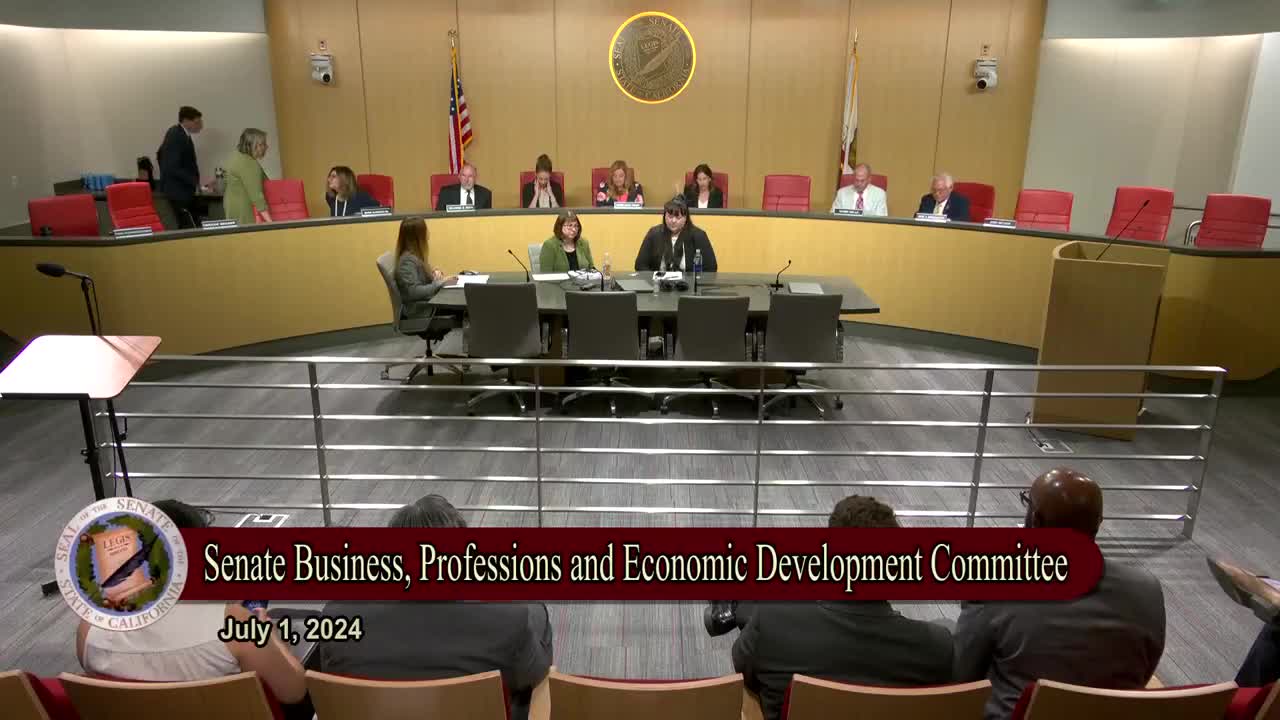 11MIN
Senate Standing Committee on Business, Professions and Economic Development
 52SEC
Assembly Floor
 4MIN
Assembly Standing Committee on Business and Professions
 12MIN
Assembly Standing Committee on Banking and Finance
Bill Author

Bill Co-Author(s):