AB 2284: County employees’ retirement: compensation.
- Session Year: 2023-2024
- House: Assembly
- Latest Version Date: 2024-09-28
Current Status:
Passed
(2024-09-28: Chaptered by Secretary of State - Chapter 824, Statutes of 2024.)
Introduced
In Committee
First Chamber
In Committee
Second Chamber
Enacted
Existing law, the California Public Employees Pension Reform Act of 2013 (PEPRA), generally requires a public retirement system, as defined, to modify its plan or plans to comply with the act. PEPRA, among other things, establishes new defined benefit formulas and caps on pensionable compensation.
The County Employees Retirement Law of 1937 (CERL) authorizes counties to establish retirement systems pursuant to its provisions in order to provide pension benefits to their employees. CERL generally vests management of each retirement system in a board of retirement.
CERL defines compensation earnable by a member, for the purpose of calculating benefits, to mean the average compensation, as determined by the board, for the period under consideration upon the basis of the average number of days ordinarily worked by persons in the same grade or class of positions during the period, and the same rate of pay, subject to certain exceptions.
This bill would authorize a retirement system, to the extent it has not defined grade in the above-described circumstances, to define grade to mean a number of employees considered together because they share similarities in job duties, schedules, unit recruitment requirements, work location, collective bargaining unit, or other logical work-related group or class, as specified. The bill would specify that these provisions shall not become operative in a county until the board of supervisors of that county, by resolution adopted by majority vote, makes the provisions applicable in that county.
Existing law, the California Public Employees Pension Reform Act of 2013 (PEPRA), generally requires a public retirement system, as defined, to modify its plan or plans to comply with the act. PEPRA, among other things, establishes new defined benefit formulas and caps on pensionable compensation.
The County Employees Retirement Law of 1937 (CERL) authorizes counties to establish retirement systems pursuant to its provisions in order to provide pension benefits to their employees. CERL generally vests management of each retirement system in a board of retirement.
CERL defines compensation earnable by a member, for the purpose of calculating benefits, to mean the average compensation, as determined by the board, for the period under consideration upon the basis of the average number of days ordinarily worked by persons in the same grade or class of positions during the period, and the same rate of pay, subject to certain exceptions.
This bill would authorize a retirement system, to the extent it has not defined grade in the above-described circumstances, to define grade to mean a number of employees considered together because they share similarities in job duties, schedules, unit recruitment requirements, work location, collective bargaining unit, or other logical work-related group or class, as specified.
Existing law, the California Public Employees Pension Reform Act of 2013 (PEPRA), generally requires a public retirement system, as defined, to modify its plan or plans to comply with the act. PEPRA, among other things, establishes new defined benefit formulas and caps on pensionable compensation.
The County Employees Retirement Law of 1937 (CERL) authorizes counties to establish retirement systems pursuant to its provisions in order to provide pension benefits to their employees. CERL generally vests management of each retirement system in a board of retirement.
CERL defines compensation earnable by a member, for the purpose of calculating benefits, to mean the average compensation, as determined by the board, for the period under consideration upon the basis of the average number of days ordinarily worked by persons in the same grade or class of positions during the period, and the same rate of pay, subject to certain exceptions.
This bill would authorize a retirement system, to the extent it has not defined grade in the above-described circumstances, to define grade to mean a number of employees considered together because they share similarities in job duties, schedules, unit recruitment requirements, work location, collective bargaining unit, or other logical work-related grouping. group or class, as specified.
Existing law, the California Public Employees Pension Reform Act of 2013 (PEPRA), generally requires a public retirement system, as defined, to modify its plan or plans to comply with the act. PEPRA, among other things, establishes new defined benefit formulas and caps on pensionable compensation.
The County Employees Retirement Law of 1937 (CERL) authorizes counties to establish retirement systems pursuant to its provisions in order to provide pension benefits to their employees. CERL generally vests management of each retirement system in a board of retirement.
CERL defines compensation earnable by a member, for the purpose of calculating benefits, to mean the average compensation, as determined by the board, for the period under consideration upon the basis of the average number of days ordinarily worked by persons in the same grade or class of positions during the period, and the same rate of pay, subject to certain exceptions.
This bill would authorize a retirement system, to the extent it has not defined grade in the above-described circumstances, to define grade to mean a number of employees considered together because they share similarities in job duties, schedules, unit recruitment requirements, work location, collective bargaining unit, or other logical work-related grouping.
(a)(1)Compensation earnable by a member means the average compensation as determined by the board, for the period under consideration upon the basis of the average number of days ordinarily worked by persons in the same grade or class of positions during the period, and at the same rate of pay. The computation for any absence shall be based on the compensation of the position held by the member at the beginning of the absence. Compensation, as defined in Section 31460, that has been deferred shall be deemed compensation earnable when earned, rather than when paid.
(2)(A)To the extent a retirement system has not defined grade, it may define grade, as described in paragraph (1), to mean a number of employees considered together because they share similarities in job duties, schedules, unit recruitment requirements, work location, collective bargaining unit, or other logical work-related group or class. A single employee shall not constitute a group or class.
(B)Subparagraph (A) shall not be operative in any county until the board of supervisors of that county, by resolution adopted by majority vote, makes that subparagraph applicable in the county. Nothing in subparagraph (A) shall change the holding in Alameda County Deputy Sheriffs Association v. Alameda County Employees Retirement Association (2020) 9 Cal.5th 1032, and to the extent that there is any conflict between this section and the holding in that case, the latter shall prevail.
(b)Compensation earnable does not include, in any case, the following:
(1)Any compensation determined by the board to have been paid to enhance a members retirement benefit under that system. That compensation may include:
(A)Compensation that had previously been provided in kind to the member by the employer or paid directly by the employer to a third party other than the retirement system for the benefit of the member, and which was converted to and received by the member in the form of a cash payment in the final average salary period.
(B)Any one-time or ad hoc payment made to a member, but not to all similarly situated members in the members grade or class.
(C)Any payment that is made solely due to the termination of the members employment, but is received by the member while employed, except those payments that do not exceed what is earned and payable in each 12-month period during the final average salary period regardless of when reported or paid.
(2)Payments for unused vacation, annual leave, personal leave, sick leave, or compensatory time off, however denominated, whether paid in a lump sum or otherwise, in an amount that exceeds that which may be earned and payable in each 12-month period during the final average salary period, regardless of when reported or paid.
(3)Payments for additional services rendered outside of normal working hours, whether paid in a lump sum or otherwise.
(4)Payments made at the termination of employment, except those payments that do not exceed what is earned and payable in each 12-month period during the final average salary period, regardless of when reported or paid.
(c)The terms of subdivision (b) are intended to be consistent with and not in conflict with the holdings in Salus v. San Diego County Employees Retirement Association (2004) 117 Cal.App.4th 734 and In re Retirement Cases (2003) 110 Cal.App.4th 426.
(d)Nothing in this section shall change the holding in Alameda County Deputy Sheriffs Association v. Alameda County Employees Retirement Association (2020) 9 Cal.5th 1032, and to the extent that there is any conflict between this section and the holding in that case, the latter shall prevail.(a)(1)Compensation earnable by a member means the average compensation as determined by the board, for the period under consideration upon the basis of the average number of days ordinarily worked by persons in the same grade or class of positions during the period, and at the same rate of pay. The computation for any absence shall be based on the compensation of the position held by the member at the beginning of the absence. Compensation, as defined in Section 31460, that has been deferred shall be deemed compensation earnable when earned, rather than when paid.
(2)To the extent a retirement system has not defined grade, it may define grade, as described in paragraph (1), to mean a number of employees considered together because they share similarities in job duties, schedules, unit recruitment requirements, work location, collective bargaining unit, or other logical work-related group or class. A single employee shall not constitute a group or class.
(b)Compensation earnable does not include, in any case, the following:
(1)Any compensation determined by the board to have been paid to enhance a members retirement benefit under that system. That compensation may include:
(A)Compensation that had previously been provided in kind to the member by the employer or paid directly by the employer to a third party other than the retirement system for the benefit of the member, and which was converted to and received by the member in the form of a cash payment in the final average salary period.
(B)Any one-time or ad hoc payment made to a member, but not to all similarly situated members in the members grade or class.
(C)Any payment that is made solely due to the termination of the members employment, but is received by the member while employed, except those payments that do not exceed what is earned and payable in each 12-month period during the final average salary period regardless of when reported or paid.
(2)Payments for unused vacation, annual leave, personal leave, sick leave, or compensatory time off, however denominated, whether paid in a lump sum or otherwise, in an amount that exceeds that which may be earned and payable in each 12-month period during the final average salary period, regardless of when reported or paid.
(3)Payments for additional services rendered outside of normal working hours, whether paid in a lump sum or otherwise.
(4)Payments made at the termination of employment, except those payments that do not exceed what is earned and payable in each 12-month period during the final average salary period, regardless of when reported or paid.
(c)The terms of subdivision (b) are intended to be consistent with and not in conflict with the holdings in Salus v. San Diego County Employees Retirement Association (2004) 117 Cal.App.4th 734 and In re Retirement Cases (2003) 110 Cal.App.4th 426.
(d)This section is intended to be consistent with and not in conflict with Nothing in this section shall change the holding in Alameda County Deputy Sheriffs Association v. Alameda County Employees Retirement Association (2020) 9 Cal.5th 1032. 1032, and to the extent that there is any conflict between this section and the holding in that case, the latter shall prevail.
(a)(1)Compensation earnable by a member means the average compensation as determined by the board, for the period under consideration upon the basis of the average number of days ordinarily worked by persons in the same grade or class of positions during the period, and at the same rate of pay. The computation for any absence shall be based on the compensation of the position held by the member at the beginning of the absence. Compensation, as defined in Section 31460, that has been deferred shall be deemed compensation earnable when earned, rather than when paid.
(2)To the extent a retirement system has not defined grade, it may define grade, as described in paragraph (1), to mean a number of employees considered together because they share similarities in job duties, schedules, unit recruitment requirements, work location, collective bargaining unit, or other logical work-related group or class. A single employee shall not constitute a group or class.
(b)Compensation earnable does not include, in any case, the following:
(1)Any compensation determined by the board to have been paid to enhance a members retirement benefit under that system. That compensation may include:
(A)Compensation that had previously been provided in kind to the member by the employer or paid directly by the employer to a third party other than the retirement system for the benefit of the member, and which was converted to and received by the member in the form of a cash payment in the final average salary period.
(B)Any one-time or ad hoc payment made to a member, but not to all similarly situated members in the members grade or class.
(C)Any payment that is made solely due to the termination of the members employment, but is received by the member while employed, except those payments that do not exceed what is earned and payable in each 12-month period during the final average salary period regardless of when reported or paid.
(2)Payments for unused vacation, annual leave, personal leave, sick leave, or compensatory time off, however denominated, whether paid in a lump sum or otherwise, in an amount that exceeds that which may be earned and payable in each 12-month period during the final average salary period, regardless of when reported or paid.
(3)Payments for additional services rendered outside of normal working hours, whether paid in a lump sum or otherwise.
(4)Payments made at the termination of employment, except those payments that do not exceed what is earned and payable in each 12-month period during the final average salary period, regardless of when reported or paid.
(c)The terms of subdivision (b) are intended to be consistent with and not in conflict with the holdings in Salus v. San Diego County Employees Retirement Association (2004) 117 Cal.App.4th 734 and In re Retirement Cases (2003)110 (2003) 110 Cal.App.4th 426.
(d)This section is intended to be consistent with and not in conflict with the holding in Alameda County Deputy Sheriffs Association v. Alameda County Employees Retirement Association (2020) 9 Cal.5th 1032.
(a)(1)Compensation earnable by a member means the average compensation as determined by the board, for the period under consideration upon the basis of the average number of days ordinarily worked by persons in the same grade or class of positions during the period, and at the same rate of pay. The computation for any absence shall be based on the compensation of the position held by the member at the beginning of the absence. Compensation, as defined in Section 31460, that has been deferred shall be deemed compensation earnable when earned, rather than when paid.
(2)To the extent a retirement system has not defined grade, it may define grade, as described in paragraph (1), to mean a number of employees considered together because they share similarities in job duties, schedules, unit recruitment requirements, work location, collective bargaining unit, or other logical work-related grouping. group or class. A single employee shall not constitute a group or class.
(b)Compensation earnable does not include, in any case, the following:
(1)Any compensation determined by the board to have been paid to enhance a members retirement benefit under that system. That compensation may include:
(A)Compensation that had previously been provided in kind to the member by the employer or paid directly by the employer to a third party other than the retirement system for the benefit of the member, and which was converted to and received by the member in the form of a cash payment in the final average salary period.
(B)Any one-time or ad hoc payment made to a member, but not to all similarly situated members in the members grade or class.
(C)Any payment that is made solely due to the termination of the members employment, but is received by the member while employed, except those payments that do not exceed what is earned and payable in each 12-month period during the final average salary period regardless of when reported or paid.
(2)Payments for unused vacation, annual leave, personal leave, sick leave, or compensatory time off, however denominated, whether paid in a lump sum or otherwise, in an amount that exceeds that which may be earned and payable in each 12-month period during the final average salary period, regardless of when reported or paid.
(3)Payments for additional services rendered outside of normal working hours, whether paid in a lump sum or otherwise.
(4)Payments made at the termination of employment, except those payments that do not exceed what is earned and payable in each 12-month period during the final average salary period, regardless of when reported or paid.
(c)The terms of subdivision (b) are intended to be consistent with and not in conflict with the holdings in Salus v. San Diego County Employees Retirement Association (2004) 117 Cal.App.4th 734 and In re Retirement Cases (2003)110 Cal.App.4th 426.
(a)(1)Compensation earnable by a member means the average compensation as determined by the board, for the period under consideration upon the basis of the average number of days ordinarily worked by persons in the same grade or class of positions during the period, and at the same rate of pay. The computation for any absence shall be based on the compensation of the position held by the member at the beginning of the absence. Compensation, as defined in Section 31460, that has been deferred shall be deemed compensation earnable when earned, rather than when paid.
(2)To the extent a retirement system has not defined grade, it may define grade, as described in paragraph (1), to mean a number of employees considered together because they share similarities in job duties, schedules, unit recruitment requirements, work location, collective bargaining unit, or other logical work-related grouping.
(b)Compensation earnable does not include, in any case, the following:
(1)Any compensation determined by the board to have been paid to enhance a members retirement benefit under that system. That compensation may include:
(A)Compensation that had previously been provided in kind to the member by the employer or paid directly by the employer to a third party other than the retirement system for the benefit of the member, and which was converted to and received by the member in the form of a cash payment in the final average salary period.
(B)Any one-time or ad hoc payment made to a member, but not to all similarly situated members in the members grade or class.
(C)Any payment that is made solely due to the termination of the members employment, but is received by the member while employed, except those payments that do not exceed what is earned and payable in each 12-month period during the final average salary period regardless of when reported or paid.
(2)Payments for unused vacation, annual leave, personal leave, sick leave, or compensatory time off, however denominated, whether paid in a lump sum or otherwise, in an amount that exceeds that which may be earned and payable in each 12-month period during the final average salary period, regardless of when reported or paid.
(3)Payments for additional services rendered outside of normal working hours, whether paid in a lump sum or otherwise.
(4)Payments made at the termination of employment, except those payments that do not exceed what is earned and payable in each 12-month period during the final average salary period, regardless of when reported or paid.
(c)The terms of subdivision (b) are intended to be consistent with and not in conflict with the holdings in Salus v. San Diego County Employees Retirement Association (2004) 117 Cal.App.4th 734 and In re Retirement Cases (2003)110 Cal.App.4th 426.
|
Date
|
Status
|
|---|---|
| Sep 28, 2024 | Chaptered by Secretary of State - Chapter 824, Statutes of 2024. |
| Sep 28, 2024 | Approved by the Governor. |
| Sep 5, 2024 | Enrolled and presented to the Governor at 4 p.m. |
| Aug 27, 2024 | Senate amendments concurred in. To Engrossing and Enrolling. (Ayes 77. Noes 0.). |
| Aug 27, 2024 | Assembly Rule 77 suspended. |
| Aug 26, 2024 | In Assembly. Concurrence in Senate amendments pending. May be considered on or after August 28 pursuant to Assembly Rule 77. |
| Aug 26, 2024 | Read third time. Passed. Ordered to the Assembly. (Ayes 39. Noes 0.). |
| Jun 27, 2024 | Read second time and amended. Ordered to third reading. |
| Jun 26, 2024 | From committee: Amend, and do pass as amended. (Ayes 5. Noes 0.) (June 26). |
| Jun 13, 2024 | In committee: Hearing postponed by committee. |
| Jun 10, 2024 | From committee chair, with author's amendments: Amend, and re-refer to committee. Read second time, amended, and re-referred to Com. on L., P.E. & R. |
| Jun 5, 2024 | Referred to Com. on L., P.E. & R. |
| May 24, 2024 | In Senate. Read first time. To Com. on RLS. for assignment. |
| May 23, 2024 | Read third time. Passed. Ordered to the Senate. (Ayes 72. Noes 0. Page 5645.) |
| May 20, 2024 | Read third time and amended. Ordered to third reading. (Page 5324.) |
| May 20, 2024 | Assembly Rule 69(b)(1) suspended. (Page 5324.) |
| Apr 22, 2024 | Read second time. Ordered to third reading. |
| Apr 18, 2024 | Read second time and amended. Ordered returned to second reading. |
| Apr 17, 2024 | From committee: Amend, and do pass as amended. (Ayes 7. Noes 0.) (April 17). |
| Feb 26, 2024 | Referred to Com. on P.E. & R. |
| Feb 9, 2024 | From printer. May be heard in committee March 10. |
| Feb 8, 2024 | Read first time. To print. |
|
Date
|
Description
|
Location
|
Votes
|
|
|---|---|---|---|---|
| Aug 27, 2024 | AB 2284 Grayson Concurrence in Senate Amendments | Assembly Floor |
Passed |
|
| Aug 26, 2024 | Assembly 3rd Reading AB2284 Grayson By Umberg | Senate Floor |
Passed |
|
| Jun 26, 2024 | Do pass as amended | Senate Standing Committee on Labor, Public Employment and Retirement |
Passed |
|
| May 23, 2024 | AB 2284 Grayson Assembly Third Reading | Assembly Floor |
Passed |
|
| Apr 17, 2024 | Do pass as amended. | Assembly Standing Committee on Public Employment and Retirement |
Passed |
This list shows positions taken on this bill by organizations on the date displayed, which is linked to the original source.
Positions by individuals are not included.
|
Organization
|
Position
|
Date
|
|---|---|---|
| Association Of Orange County Deputy Sheriffs | ** Support | |
| Burbank Police Officers' Association | * Support | Jun 26, 2024 |
| California Fraternal Order of Police | ** Support | |
| California Professional Firefighters | ** Support | |
| County Of Kern | ** Against | |
| Kern County Employees' Retirement Association | ** Against | |
| Long Beach Police Officers Association | ** Support | |
| Orange County Employees Retirement System | ** Support | |
| Sacramento County Deputy Sheriffs Association | ** Support | |
| Sacramento County Deputy Sheriffs' Association | ** Support | |
| San Bernardino County Employees Retirement Association | ** Against | |
| san bernardino county sheriff's employees' benefit association | ** Support |
CONCURRENCE IN SENATE AMENDMENTS
CSA1 Bill Id:AB 2284
Author:(Grayson)
As Amended Ver:June 27, 2024
Majority vote
SUMMARY
Makes changes to the County Employees' Retirement Law (CERL) by authorizing a CERL retirement system to define "grade," as provided, for purposes of compensation and retirement.
Senate Amendments
- Establish that the definition of "grade" that may be implemented by a CERL system that has not defined this term is not operative until the respective county board of supervisors adopts a resolution by majority vote to make the provision regarding this term apply.
- Revise the provision relating to the California Supreme Court's holding in Alameda County Deputy Sheriff's Association v. Alameda County Employees' Retirement Association (2020) 9 Cal.5th 1032, as previously added by the Assembly, by explicitly establishing superiority of the court's holding in that case if there is a conflict between the statute and the court's holding.
COMMENTS
Background Regarding Administration of the CERL
Currently, 20 counties operate separate retirement systems under the CERL. The counties are: Los Angeles, Orange, San Diego, Alameda, San Bernardino, Sacramento, Contra Costa, San Mateo, Fresno, Ventura, Kern, San Joaquin, Santa Barbara, Marin, Sonoma, Stanislaus, Tulare, Merced, Imperial, and Mendocino.
The CERL establishes "classes" of each county operating a retirement system which mirror the population of each county as ascertained and determined pursuant to Section 28020 of the Government Code. For example, under the CERL, Los Angeles County is of the first class; Orange County is of the second class; San Diego County is of the third class; Alameda County is of the fourth class; and so forth. None of these counties are within the same class.
Where the Public Employees' Retirement Law and the Teachers' Retirement Law for statewide public employee retirement systems establish uniform standards that commonly apply to members, participating agencies and school districts governed by those laws, respectively, the CERL generally provides uniform standards in the administration of retirement benefits by county employee retirement system, and also recognizes and allows for a modicum of difference in the administration of retirement benefits since each CERL jurisdiction is separate and unique.
The Public Employees' Pension Reform Act (PEPRA) of 2013, and More (Relatively Recent) Litigation
Among other things, the PEPRA sought to control pension spiking through several mechanisms. One way is to prohibit retirement systems from including compensation in pension calculations in a manner that inflates the amount of a retirement benefit payable to public employees, unless the employer paid the reported compensation to all the employees in the same grade or class, and the employer and employee paid contributions for such compensation to the system. Thus, for example, if all employees of a certain grade receive a certain type of pay or pay item, it is more likely to be includable. However, if only some of the employees of a certain grade receive that type of pay or pay item, a retirement system likely, if not probably, must exclude it from being calculated towards a retirement benefit as compensation earnable.
A number of CERL systems continue to face challenges, including legal challenges, regarding regulations and/or administrative decisions (including variations among the CERL systems as to each) that involve the PEPRA, PEPRA compliance, and compensation earnable as to what is included and excluded from a CERL member's compensation for purposes of calculating a lifetime retirement allowance or benefit more than 10 years after the Legislature enacted the PEPRA, and over four years after the court's Alameda ruling.
Historically, additional compensation items beyond base pay increase or inflate an employee's salary in a manner that may not fully be paid for by the employer and employee through required contributions during the employment to fully account for a retirement allowance payable for life at the time the employee retires. Addressing such underfunded liabilities is but one among a number of other substantive and significant public policy reasons for the Legislature enacting the PEPRA. Generally, the aforementioned challenges (including legal challenges) primarily emanate from employees who receive or obtain other compensation items added to their base pay followed by a belief of entitlement to, and subsequent claim that, for example, the inclusion of the additional compensation items beyond base pay for purposes of calculating a retirement are a contractual right (via memorandum of understanding, collective bargaining agreement, or other agreement), or, apply to certain specific grades, groups, or class of positions, among other beliefs and claims.
Both the Legislature's enactment of the PEPRA and the court's subsequent ruling in Alameda regarding such matters expressly made clear as to what constitutes compensation earnable for purposes of calculating a retirement, and the court's holding in Alameda further expressed that retirement benefits are not established by contract. However, another relatively recent legal claim of action brought by retired peace officers assert similar claims under similar notions and seek inclusion of overtime pay as compensation earnable relating to grade, group, or class of position. (Szewczyk v. Orange County Employees Retirement System (2023). Case # 30-22-01268984-CU-WM-CJC.) It is important to note that the subjects of this legal claim are identical to the subject and provisions of this bill.
This Bill
This bill treads on a long and sensitive history regarding public employee retirement – both pre- and post-PEPRA – that includes ongoing litigation, and a California Supreme Court decision about what can and cannot be included in the calculation of a public employee's retirement benefit, and seeks to permit some CERL retirement systems to calculate a pension benefit inclusive of certain types of compensation that employers pay to some, but not all, employees in the same grade.
Please see the policy committee analysis for a full discussion of this bill.
According to the Author
"[The] CERL oversees retirement systems for county and district employees in counties that adopt its provisions…; [however, the CERL] lacks a precise definition of 'grade' for determining pensionable compensation. On the other hand, [the Public Employees' Retirement Law] provides a clear definition of 'grade' as 'a grouping of employees who share job duties, schedules, work locations, collective bargaining units, or other logical classifications related to their work.' The absence of a clearly defined definition under CERL has led to ambiguity regarding retirement benefits, resulting in public servants receiving reduced pensionable compensation for the work they have performed."
Arguments in Support
The California Professional Firefighters state, among other things, that, an ambiguity under the CERL "… has caused a number of issues for retirees as well as for the systems that are working to provide their retirements. One such example is within the Orange County Sheriff's Department, where considerable disagreement has arisen over the determination of whether certain compensation items are pensionable based on the grouping of employees by their class or grade without a set definition of those terms," and "… [this] has led to significant legal interaction and the potential that those employees may face reduced retirement. This [bill] will create stability and certainty for the employees and retirees who rely on their pensions after a career of public service to the people of California."
Among other things, various peace officer entities state that, "[this] clarification is necessary to prevent retirees, who depend on an accurate, complete administration of their CERL benefits, from having those benefits reduced."
Arguments in Opposition
Among other things, the San Bernardino County Employees' Retirement Association (SBCERA) states that, "[this bill] would undermine the Legislature's pension reform efforts and subsequent court decisions…, [and in blurring] the lines between employers and retirement systems [would allow CERL systems] to determine what employment grade their members fall under. Retirement systems are not – and should not be – parties to labor negotiations between member agencies and their employees."
In addition, the SBCERA states that, this bill would "…create major inconsistencies among the 20 counties operating retirement systems under the CERL, [that] would likely spawn litigation as some retirement systems could boost members' pensions by lumping them into job categories despite memorandums of understandings or contracts they were hired under while other systems continue to base calculations on job categories legally established and negotiated by their member agencies.
The Kern County Board of Supervisors states that, "[this bill] sets a dangerous precedent as it would create overreach into responsibilities reserved for employers by giving retirement systems the ability to determine whether employees fall within a defined "grade" as well as employees' eligibility for certain pensionable pay." Rather than, "…clarify statutory interpretation of the [CERL] or promote administrative efficiency…, [this bill] introduces the potential to undermine pension reform and the judicial determinations implemented after the Alameda decision…."
Among other things, the Kern County Employees' Retirement Association (KCERA) states that, "… the bill's proposed definition of the word "grade" is overbroad, vague, and ambiguous and will necessarily invite claims and litigation over "grade" determinations and pensionability, either form active members whose pensionable pays were redesignated after the Alameda decision or from employers who oppose the retirement system's authority to determine whether member employees fall within an employment "grade" or not…, [which] may generate statewide legal challenges and associated delay and uncertainty about how to interpret and apply members' 'compensation earnable.'"
FISCAL COMMENTS
None. This bill is keyed nonfiscal by Legislative Counsel.
VOTES:
ASM PUBLIC EMPLOYMENT AND RETIREMENT: 7-0-0
YES: McKinnor, Lackey, Boerner, Vince Fong, Hart, Stephanie Nguyen, Luz Rivas
ASSEMBLY FLOOR: 72-0-8
YES: Addis, Aguiar-Curry, Alanis, Alvarez, Arambula, Bains, Bauer-Kahan, Bennett, Berman, Boerner, Bonta, Bryan, Calderon, Juan Carrillo, Wendy Carrillo, Chen, Connolly, Davies, Dixon, Flora, Mike Fong, Vince Fong, Friedman, Gabriel, Gallagher, Garcia, Gipson, Grayson, Haney, Hart, Hoover, Irwin, Jackson, Jones-Sawyer, Kalra, Lackey, Lee, Low, Lowenthal, Maienschein, McCarty, McKinnor, Muratsuchi, Stephanie Nguyen, Ortega, Pacheco, Papan, Jim Patterson, Joe Patterson, Pellerin, Petrie-Norris, Quirk-Silva, Ramos, Rendon, Reyes, Rodriguez, Sanchez, Santiago, Schiavo, Soria, Ta, Ting, Valencia, Villapudua, Waldron, Wallis, Ward, Weber, Wilson, Wood, Zbur, Robert Rivas
ABS, ABST OR NV: Cervantes, Megan Dahle, Essayli, Holden, Mathis, Luz Rivas, Blanca Rubio, Wicks
SENATE FLOOR: 40-0-0
YES: Allen, Alvarado-Gil, Archuleta, Ashby, Atkins, Becker, Blakespear, Bradford, Caballero, Cortese, Dahle, Dodd, Durazo, Eggman, Glazer, Gonzalez, Grove, Hurtado, Jones, Laird, Limón, McGuire, Menjivar, Min, Newman, Nguyen, Niello, Ochoa Bogh, Padilla, Portantino, Roth, Rubio, Seyarto, Skinner, Smallwood-Cuevas, Stern, Umberg, Wahab, Wiener, Wilk
UPDATED
VERSION: June 27, 2024
CONSULTANT: Michael Bolden / P. E. & R. / (916) 319-3957 FN: 0004692
CONCURRENCE IN SENATE AMENDMENTS
CSA1 Bill Id:AB 2284
Author:(Grayson)
As Amended Ver:June 27, 2024
Majority vote
SUMMARY
Makes changes to the County Employees' Retirement Law (CERL) by authorizing a CERL retirement system to define "grade," as provided, for purposes of compensation and retirement.
Senate Amendments
- Establish that the definition of "grade" that may be implemented by a CERL system that has not defined this term is not operative until the respective county board of supervisors adopts a resolution by majority vote to make the provision regarding this term apply.
- Revise the provision relating to the California Supreme Court's holding in Alameda County Deputy Sheriff's Association v. Alameda County Employees' Retirement Association (2020) 9 Cal.5th 1032, as previously added by the Assembly, by explicitly establishing superiority of the court's holding in that case if there is a conflict between the statute and the court's holding.
COMMENTS
Background Regarding Administration of the CERL
Currently, 20 counties operate separate retirement systems under the CERL. The counties are: Los Angeles, Orange, San Diego, Alameda, San Bernardino, Sacramento, Contra Costa, San Mateo, Fresno, Ventura, Kern, San Joaquin, Santa Barbara, Marin, Sonoma, Stanislaus, Tulare, Merced, Imperial, and Mendocino.
The CERL establishes "classes" of each county operating a retirement system which mirror the population of each county as ascertained and determined pursuant to Section 28020 of the Government Code. For example, under the CERL, Los Angeles County is of the first class; Orange County is of the second class; San Diego County is of the third class; Alameda County is of the fourth class; and so forth. None of these counties are within the same class.
Where the Public Employees' Retirement Law and the Teachers' Retirement Law for statewide public employee retirement systems establish uniform standards that commonly apply to members, participating agencies and school districts governed by those laws, respectively, the CERL generally provides uniform standards in the administration of retirement benefits by county employee retirement system, and also recognizes and allows for a modicum of difference in the administration of retirement benefits since each CERL jurisdiction is separate and unique.
The Public Employees' Pension Reform Act (PEPRA) of 2013, and More (Relatively Recent) Litigation
Among other things, the PEPRA sought to control pension spiking through several mechanisms. One way is to prohibit retirement systems from including compensation in pension calculations in a manner that inflates the amount of a retirement benefit payable to public employees, unless the employer paid the reported compensation to all the employees in the same grade or class, and the employer and employee paid contributions for such compensation to the system. Thus, for example, if all employees of a certain grade receive a certain type of pay or pay item, it is more likely to be includable. However, if only some of the employees of a certain grade receive that type of pay or pay item, a retirement system likely, if not probably, must exclude it from being calculated towards a retirement benefit as compensation earnable.
A number of CERL systems continue to face challenges, including legal challenges, regarding regulations and/or administrative decisions (including variations among the CERL systems as to each) that involve the PEPRA, PEPRA compliance, and compensation earnable as to what is included and excluded from a CERL member's compensation for purposes of calculating a lifetime retirement allowance or benefit more than 10 years after the Legislature enacted the PEPRA, and over four years after the court's Alameda ruling.
Historically, additional compensation items beyond base pay increase or inflate an employee's salary in a manner that may not fully be paid for by the employer and employee through required contributions during the employment to fully account for a retirement allowance payable for life at the time the employee retires. Addressing such underfunded liabilities is but one among a number of other substantive and significant public policy reasons for the Legislature enacting the PEPRA. Generally, the aforementioned challenges (including legal challenges) primarily emanate from employees who receive or obtain other compensation items added to their base pay followed by a belief of entitlement to, and subsequent claim that, for example, the inclusion of the additional compensation items beyond base pay for purposes of calculating a retirement are a contractual right (via memorandum of understanding, collective bargaining agreement, or other agreement), or, apply to certain specific grades, groups, or class of positions, among other beliefs and claims.
Both the Legislature's enactment of the PEPRA and the court's subsequent ruling in Alameda regarding such matters expressly made clear as to what constitutes compensation earnable for purposes of calculating a retirement, and the court's holding in Alameda further expressed that retirement benefits are not established by contract. However, another relatively recent legal claim of action brought by retired peace officers assert similar claims under similar notions and seek inclusion of overtime pay as compensation earnable relating to grade, group, or class of position. (Szewczyk v. Orange County Employees Retirement System (2023). Case # 30-22-01268984-CU-WM-CJC.) It is important to note that the subjects of this legal claim are identical to the subject and provisions of this bill.
This Bill
This bill treads on a long and sensitive history regarding public employee retirement – both pre- and post-PEPRA – that includes ongoing litigation, and a California Supreme Court decision about what can and cannot be included in the calculation of a public employee's retirement benefit, and seeks to permit some CERL retirement systems to calculate a pension benefit inclusive of certain types of compensation that employers pay to some, but not all, employees in the same grade.
Please see the policy committee analysis for a full discussion of this bill.
According to the Author
"[The] CERL oversees retirement systems for county and district employees in counties that adopt its provisions…; [however, the CERL] lacks a precise definition of 'grade' for determining pensionable compensation. On the other hand, [the Public Employees' Retirement Law] provides a clear definition of 'grade' as 'a grouping of employees who share job duties, schedules, work locations, collective bargaining units, or other logical classifications related to their work.' The absence of a clearly defined definition under CERL has led to ambiguity regarding retirement benefits, resulting in public servants receiving reduced pensionable compensation for the work they have performed."
Arguments in Support
The California Professional Firefighters state, among other things, that, an ambiguity under the CERL "… has caused a number of issues for retirees as well as for the systems that are working to provide their retirements. One such example is within the Orange County Sheriff's Department, where considerable disagreement has arisen over the determination of whether certain compensation items are pensionable based on the grouping of employees by their class or grade without a set definition of those terms," and "… [this] has led to significant legal interaction and the potential that those employees may face reduced retirement. This [bill] will create stability and certainty for the employees and retirees who rely on their pensions after a career of public service to the people of California."
Among other things, various peace officer entities state that, "[this] clarification is necessary to prevent retirees, who depend on an accurate, complete administration of their CERL benefits, from having those benefits reduced."
Arguments in Opposition
Among other things, the San Bernardino County Employees' Retirement Association (SBCERA) states that, "[this bill] would undermine the Legislature's pension reform efforts and subsequent court decisions…, [and in blurring] the lines between employers and retirement systems [would allow CERL systems] to determine what employment grade their members fall under. Retirement systems are not – and should not be – parties to labor negotiations between member agencies and their employees."
In addition, the SBCERA states that, this bill would "…create major inconsistencies among the 20 counties operating retirement systems under the CERL, [that] would likely spawn litigation as some retirement systems could boost members' pensions by lumping them into job categories despite memorandums of understandings or contracts they were hired under while other systems continue to base calculations on job categories legally established and negotiated by their member agencies.
The Kern County Board of Supervisors states that, "[this bill] sets a dangerous precedent as it would create overreach into responsibilities reserved for employers by giving retirement systems the ability to determine whether employees fall within a defined "grade" as well as employees' eligibility for certain pensionable pay." Rather than, "…clarify statutory interpretation of the [CERL] or promote administrative efficiency…, [this bill] introduces the potential to undermine pension reform and the judicial determinations implemented after the Alameda decision…."
Among other things, the Kern County Employees' Retirement Association (KCERA) states that, "… the bill's proposed definition of the word "grade" is overbroad, vague, and ambiguous and will necessarily invite claims and litigation over "grade" determinations and pensionability, either form active members whose pensionable pays were redesignated after the Alameda decision or from employers who oppose the retirement system's authority to determine whether member employees fall within an employment "grade" or not…, [which] may generate statewide legal challenges and associated delay and uncertainty about how to interpret and apply members' 'compensation earnable.'"
FISCAL COMMENTS
None. This bill is keyed nonfiscal by Legislative Counsel.
VOTES:
ASM PUBLIC EMPLOYMENT AND RETIREMENT: 7-0-0
YES: McKinnor, Lackey, Boerner, Vince Fong, Hart, Stephanie Nguyen, Luz Rivas
ASSEMBLY FLOOR: 72-0-8
YES: Addis, Aguiar-Curry, Alanis, Alvarez, Arambula, Bains, Bauer-Kahan, Bennett, Berman, Boerner, Bonta, Bryan, Calderon, Juan Carrillo, Wendy Carrillo, Chen, Connolly, Davies, Dixon, Flora, Mike Fong, Vince Fong, Friedman, Gabriel, Gallagher, Garcia, Gipson, Grayson, Haney, Hart, Hoover, Irwin, Jackson, Jones-Sawyer, Kalra, Lackey, Lee, Low, Lowenthal, Maienschein, McCarty, McKinnor, Muratsuchi, Stephanie Nguyen, Ortega, Pacheco, Papan, Jim Patterson, Joe Patterson, Pellerin, Petrie-Norris, Quirk-Silva, Ramos, Rendon, Reyes, Rodriguez, Sanchez, Santiago, Schiavo, Soria, Ta, Ting, Valencia, Villapudua, Waldron, Wallis, Ward, Weber, Wilson, Wood, Zbur, Robert Rivas
ABS, ABST OR NV: Cervantes, Megan Dahle, Essayli, Holden, Mathis, Luz Rivas, Blanca Rubio, Wicks
UPDATED
VERSION: June 27, 2024
CONSULTANT: Michael Bolden / P. E. & R. / (916) 319-3957 FN: 0004692
SENATE RULES COMMITTEE Office of Senate Floor Analyses (916) 651-1520 Fax: (916) 327-4478 | AB 2284 |
THIRD READING
Bill No: AB 2284
Author: Grayson (D)
Amended: 6/27/24 in Senate
Vote: 21
SENATE LABOR, PUB. EMP. & RET. COMMITTEE: 5-0, 6/26/24
AYES: Smallwood-Cuevas, Wilk, Cortese, Durazo, Laird
ASSEMBLY FLOOR: 72-0, 5/23/24 - See last page for vote
SUBJECT: County employees’ retirement: compensation
SOURCE: California Fraternal Order of Police
California Professional Firefighters
DIGEST:
This bill authorizes, for purposes of determining what compensation can be included in “compensation earnable” used to calculate a County Employee Retirement Law (CERL) system pension, that a CERL retirement system that has not defined “grade,” may define it to mean a number of employees considered together because they share similarities in job duties, schedules, unit recruitment requirements, work location, collective bargaining unit, or other logical work-related grouping.
The bill’s provisions shall not be operative in any county until the board of supervisors, by resolution adopted by majority vote, makes the provision applicable in that county. If the provisions conflict with the holding in Alameda County Deputy Sheriff’s Association v. Alameda County Employees’ Retirement Association (2020) 9 Cal.5th 1032, the Alameda holding shall prevail.
ANALYSIS:
Existing law:
- Establishes the County Employees Retirement Law of 1937 Act (referred to as “37 Act” or “CERL”) consisting of twenty county retirement systems to provide defined benefit pension benefits to public county or district employees, as specified. (Government Code § 31450 et seq.)
- Provides that CERL retirement system members are entitled, upon retirement for service, to receive a retirement allowance consisting of their service retirement annuity, their current service pension, and their prior service pension, as specified. (GC § 31673)
- Establishes benefit provisions for the general defined benefit plan that each member county can adopt by resolution. Existing law also provides specific plan elements by statute to particular systems, as specified. Thus, while CERL retirement systems have similar characteristics each has its own particular benefit structure and requirements. (e.g., GC § 31461.1)
- Defines “compensation earnable” and “pensionable compensation”[1], as specified, in the CERL, and as amended by PEPRA, which is the member’s compensation that a pension system may include in calculating the member’s pension benefit. Existing law also specifically excludes certain forms of compensation from pension benefit calculations in order to prevent manipulation of pension benefits in contravention of the theory and successful operation of a pension system. (GC § 31461 and GC § 7522.34)
- Establishes PEPRA, a comprehensive reform of public pension law designed to stabilize public pension systems while preserving the objective of ensuring that public employees who dedicate a lifetime of service to California receive retirement security in their old age (GC § 7522 et seq.).
- Excludes the following forms of compensation from compensation earnable:
- Any compensation determined by the board to have been paid to enhance a member’s retirement benefit under that system, including:
- Compensation that had previously been provided in kind to the member by the employer or paid directly by the employer to a third party other than the retirement system for the benefit of the member, and which was converted to and received by the member in the form of a cash payment in the final average salary period.
- Any one-time or ad hoc payment made to a member, but not to all similarly situated members in the member’s grade or class.
- Any payment that is made solely due to the termination of the member’s employment, but is received by the member while employed, except those payments that do not exceed what is earned and payable in each 12-month period during the final average salary period regardless of when reported or paid.
- Payments for unused vacation, annual leave, personal leave, sick leave, or compensatory time off, however denominated, whether paid in a lump sum or otherwise, in an amount that exceeds that which may be earned and payable in each 12-month period during the final average salary period, regardless of when reported or paid.
- Payments for additional services rendered outside of normal working hours, whether paid in a lump sum or otherwise.
- Payments made at the termination of employment, except those payments that do not exceed what is earned and payable in each 12-month period during the final average salary period, regardless of when reported or paid. (GC § 31461)
- Any compensation determined by the board to have been paid to enhance a member’s retirement benefit under that system, including:
This bill:
- Amends the definition of “compensation earnable” in the CERL to allow a CERL retirement system, to the extent it has not defined “grade,” to define “grade” to mean a number of employees considered together because they share similarities in job duties, schedules, unit recruitment requirements, work location, collective bargaining unit, or other logical work-related group or class. A single employee shall not constitute a group or class.
- Provides that this bill’s provisions shall not be operative in any county until the board of supervisors, by resolution adopted by majority vote, makes the provision applicable in that county.
- Provides that nothing in this bill shall change the holding in Alameda County Deputy Sheriff’s Association v. Alameda County Employees’ Retirement Association (2020) 9 Cal.5th 1032, and to the extent that there is any conflict between this bill and the holding in that case, the latter shall prevail.
Background:
This bill treads on long and sensitive history arising out of several legislative initiatives, court cases, and a CA Supreme Court decision about what can and cannot be included in the calculation of a public employee’s retirement benefit.[2] The bill seeks to permit a CERL retirement system to calculate pension benefits using compensation that employers pay to some, but not all, employees in the same grade.
Under PEPRA, this is impermissible. PEPRA sought to control pension spiking through several mechanisms[3]. One way is to prohibit retirement systems from including compensation in pension calculations unless the employer paid the reported compensation to all the employees in the same grade or class. Thus, if all Sheriff Deputy - Grade 1 employees receive a pay item, it is more likely to be includable. If only some of the Sheriff Deputy – Grade 1 employees receive that pay item, a retirement system probably must exclude it from compensation earnable.[4]
However, a sheriff’s department (or other county employer) may well have groups of people in the same position classification who their employer assigns to very different work duties and activities, with different corresponding pay items. The sponsors provide such rationale in arguing that the retirement system should be able to differentiate between a Sheriff Deputy - Grade 1 who is a patrol officer and one who is a county jail bailiff. Both have the same title and the same grade but their pay, duties, and their hours may be substantially different.
By authorizing CERL retirement systems to define “grade”, this bill would allow the retirement system to treat those deputies differently so that pay items received by one subset but not all of the deputies, could be included in their pension calculations. Under the revised “grade” definition, the retirement system could include the special pay items received by some employees, but not all, in compensation earnable.
A sponsor makes an equity argument that the Legislature should treat CERL systems like CalPERS and points out that the law for CalPERS does define grade and class in a way that permits it to look to the substantive duties and responsibilities of the class of employees for whom the employer is reporting the pay item.
What they do not say, is that CalPERS also has several criteria that are not in the CERL system that place further controls on what is includable. For example, CalPERS defines “payrate” and requires that payrate be limited to “employment for services rendered on a full-time basis during normal working hours.” This rule effectively excludes overtime pay, a pay item which presumably this bill would enable CERL retirement systems to include by regrouping some employees who get overtime pay because of their different work schedule than other employees in the same grade.
The CalPERS equity argument also seems vulnerable to the fact that CalPERS is a much more uniform system than CERL, which has twenty different systems whose boards apply CERL in different ways through their various, discrete administrative interpretations and, in some instances, CERL provisions that apply only to specific systems.
A further concern is that although the bill’s language is permissive (i.e., the bill doesn’t require a retirement system to define “grade” if it doesn’t want to), this bill may well result in further pressure and further litigation against all CERL systems to define grade in a manner that allows inclusion of pay items to compensation earnable that heretofore, PEPRA and many systems have determined are not includable.
The opposition makes a strong additional point that this bill grants authority to define grade and class to the retirement system when the authority for classifying positions traditionally and legally rests with the county employer. One wonders whether the problem going forward could be resolved by the county simply creating discrete grades or classes for functionally discrete job positions.
On the other hand, supporters make a strong argument that the bill is necessary through their examples of employees in the same grade who receive different pay items because the employer pays for skill sets that really do distinguish one group of employees from another. It is unclear why those positions cannot be re-classified so that the two groups are in different classifications.
In any event, the bill’s provisions only apply to a CERL system after its county board of supervisors adopts the bill’s provisions, as specified and the amendments clarify that this bill shall not supersede the holding in Alameda.
Comments
Need for this bill?According to the author:
In California, there are two primary public employee retirement systems: the County Employees Retirement Law of 1937 (CERL) and the Public Employment Retirement Law (PERL). CERL oversees retirement systems for county and district employees in counties that adopt its provisions under Government Code Section 31500. However, CERL lacks a precise definition of ‘grade’ for determining pensionable compensation. On the other hand, PERL provides a clear definition of ‘grade’ as ‘a grouping of employees who share job duties, schedules, work locations, collective bargaining units, or other logical classifications related to their work.’ The absence of a clearly defined definition under CERL has led to ambiguity regarding retirement benefits, resulting in public servants receiving reduced pensionable compensation for the work they have performed. [5]
Related/Prior Legislation
AB 3025 (Valencia, 2024) requires CERL system employers to (1) reimburse their pension systems for pension overpayments made to retired members, survivors, or beneficiaries in violation of PEPRA and Alameda prohibitions on disallowed compensation; (2) pay those retirees, survivors, or beneficiaries, an amount equal to 20 percent of the actuarial equivalent present value of their “lost” pension benefit due to recalculating the benefit without the disallowed compensation; (3) cease reporting disallowed compensation for active members, as specified, and require CERL retirement systems to credit employer contributions and return member contributions on the disallowed compensation; and (4) other related activities to facilitate the above objectives. This bill is currently pending in the Senate Judiciary Committee.
AB 2493 (Chen, 2022) would have been substantially similar to AB 3025. The bill would have made several changes to CERL provisions regarding pension calculation adjustments arising from erroneous inclusion of disallowed compensation. The bill would have required CERL county employers to: (1) reimburse their respective retirement system for pension overpayments made to peace officer and firefighter retirees arising from erroneous employer reporting of disallowed compensation, and (2) pay affected retirees a lump sum amount equal to 20 percent of the actuarial equivalent present value of a retiree’s “lost” pension going forward due to the system’s recalculation of the retiree’s benefit to exclude the disallowed compensation, among other provisions. The bill died on the Assembly Inactive File.
AB 826 (Irwin, 2021) originally would have, for all CERL systems, amended the definition of “compensation earnable” to include any form of remuneration, as specified, including if the employer made the remuneration available to any person in the same grade or class of positions and would have defined “Grade or class of positions” to mean a number of employees considered together because they share similarities in job duties, work location, collective bargaining unit, or other logical, work-related grouping. The author narrowed the bill to apply only to Ventura County’s retirement system. Nevertheless, the Governor vetoed the bill. His veto message stated the following:
This bill expands the definitions of ‘compensation’ and ‘compensation earnable’ in the County Employees Retirement Law of 1937 (1937 Act or CERL) that are applicable to legacy members of the Ventura County Employee Retirement Association (VCERA) who retire on or before December 31, 2025, to include an employee's flexible benefit allowance.
While I am sympathetic to workers who may see a reduction in their anticipated pension because of prior misinterpretations of what constitutes ‘compensation’ and ‘compensation earnable,’ this bill would inappropriately incentivize noncompliance with the Public Employees' Pension Reform Act (PEPRA). The provisions, while more narrow than prior iterations, attempt to circumvent recent court decisions, undermine the intent of the PEPRA, and expose the local governments to increased costs and litigation.
FISCAL EFFECT: Appropriation: No Fiscal Com.: No Local: No
SUPPORT: (Verified 6/27/24)
California Fraternal Order of Police (co-source)
California Professional Firefighters (co-source)
Association of Orange County Deputy Sheriffs
Long Beach Police Officers Association
Orange County Employees Retirement System
Sacramento County Deputy Sheriffs Association
Sacramento County Deputy Sheriffs' Association
San Bernardino County Sheriff's Employees' Benefit Association
OPPOSITION: (Verified 6/27/24)
County of Kern
Kern County Employees' Retirement Association
San Bernardino County Employees’ Retirement Association
ARGUMENTS IN SUPPORT: According to the California Professional Firefighters, “While the Public Employees Retirement Law (PERL) that governs the California Public Employee Retirement System (CalPERS) provides a clear definition of ‘group or class of employment’ that is utilized as part of its definition of pensionable compensation, CERL does not contain a mirrored definition to provide clarity to that aspect of compensation earnable.
“This ambiguity has caused a number of issues for retirees as well as for the systems that are working to provide their retirements. This is particularly applicable to safety positions within agencies who contract with 1937 Act Retirement systems where there are multiple special types of occupations and training standards to meet unique challenges in the field.
“AB 2284 addresses this ambiguity by creating a definition of ‘grade’ similar to the one found in PERL for ‘group’ in order to provide lasting clarity. A 37 Act system that has not already implemented a definition of ‘grade’ may do so in a manner similar to the definition in PERL by grouping employees in logical manners consistent with the performance of their employment. This measure will create parity and consistency between the two retirement systems and eliminate the ambiguity that exists on whether certain pay items are pensionable.
“This consistency will also create stability and certainty for the employees and retirees who rely on their pensions after a career of public service to the people of California. By ensuring that both employers and employees are able to understand the terms of the retirements offered by their 1937 Act systems, it will create clarity for all parties and allow for dignified and secure retirements.”
According to a coalition of peace officer associations, including the Association of Orange County Deputy Sheriffs, “While ‘grade’ is not clearly defined under CERL, a similar term is defined within the Public Employee Retirement Law (PERL), a law which oversees the administration of the California Public Employee Retirement System (CalPERS). The definition provided by PERL relates to ‘group or class employment,’ and describes employees who share similarities in job duties, work location, collective bargaining unit, or other logical work-related categorizations. AB 2284 (Grayson) would remedy the lack of clarity that exists within CERL by aligning the definition for the word ‘grade’ to that of the definition for the word ‘group’ within PERL.
“This clarification is necessary in order to prevent retirees, who depend on an accurate, complete administration of their CERL benefits, from having those benefits reduced. These retirees, who have spent their careers in service of their communities, deserve to retire with security, and with the entirety of the benefits they have earned.”
ARGUMENTS IN OPPOSITION: According to the San Bernardino County Employees’ Retirement Association, “(This bill) would conflate the role of retirement systems with the role of the employers they serve, likely leading to extensive litigation over members’ compensation earnable determinations—a primary factor in calculating members’ guaranteed lifetime pension allowance.
“AB 2284 seeks to give County Employee Retirement Law (CERL) systems the authorization to define ‘grade’ as it relates to members’ job duties, schedules, unit recruitment requirements, work location, collective bargaining unit, or logical work-related group or class. CERL systems that adopt the change could ‘reclassify’ members without an employer’s consent so certain members could—despite the bill’s assurances—claim compensation items that would otherwise be excluded by the Public Employees’ Pension Reform Act of 2013 (PEPRA) and/or the California Supreme Court’s decision in Alameda County Deputy Sheriff’s Assn. v. Alameda County Employees’ Retirement Assn. (2020) 9 Cal.5th 1032 (Alameda) in their pension calculations.
“This alone would undermine the Legislature’s pension reform efforts and subsequent court decisions. The legislation would also blur the lines between employers and retirement systems by allowing county retirement systems to determine what employment grade their members fall under. Retirement systems are not—and should not be—parties to labor negotiations between member agencies and their employees.”
ASSEMBLY FLOOR: 72-0, 5/23/24
AYES: Addis, Aguiar-Curry, Alanis, Alvarez, Arambula, Bains, Bauer-Kahan, Bennett, Berman, Boerner, Bonta, Bryan, Calderon, Juan Carrillo, Wendy Carrillo, Chen, Connolly, Davies, Dixon, Flora, Mike Fong, Vince Fong, Friedman, Gabriel, Gallagher, Garcia, Gipson, Grayson, Haney, Hart, Hoover, Irwin, Jackson, Jones-Sawyer, Kalra, Lackey, Lee, Low, Lowenthal, Maienschein, McCarty, McKinnor, Muratsuchi, Stephanie Nguyen, Ortega, Pacheco, Papan, Jim Patterson, Joe Patterson, Pellerin, Petrie-Norris, Quirk-Silva, Ramos, Rendon, Reyes, Rodriguez, Sanchez, Santiago, Schiavo, Soria, Ta, Ting, Valencia, Villapudua, Waldron, Wallis, Ward, Weber, Wilson, Wood, Zbur, Robert Rivas
NO VOTE RECORDED: Cervantes, Megan Dahle, Essayli, Holden, Mathis, Luz Rivas, Blanca Rubio, Wicks
Prepared by: Glenn Miles / L., P.E. & R. / (916) 651-1556
6/28/24 13:06:20
Compensation earnable is the terminology used in the CERL and “pensionable compensation” is the terminology used in PEPRA. Specifically, in relevant part, GC § 31461(a) defines compensation earnable as the average compensation as determined by the board, for the period under consideration upon the basis of the average number of days ordinarily worked by persons in the same grade or class of positions during the period, and at the same rate of pay. ↑
Please see our committee policy analysis for AB 826 (Irwin, 2021) for an overview of the issues behind this and other legislation involving amendments to compensation earnable in the CERL system. ↑
Pension spiking occurs when employers and employees inflate compensation with special pay prior to retirement in order to boost an employee’s pension. It is disfavored because it avoids the pension system design of collecting contributions over the course of an employee’s career that correspond with the expected liability of the employee’s pension benefit. Effectively, pension spiking passes costs on to the next generation, who may well have less generous pension benefits than current employees. ↑
Nomenclature for example’s sake only and not intended to represent an actual grade or class. Also, for clarity, the employee still receives the pay item from the employer but the retirement system cannot use that pay item in calculating the employee’s eventual pension benefit. ↑
Apologies to the California State Teachers’ Retirement System (CalSTRS), which is indeed one of the “primary” public employee retirement systems in California, the University of California Retirement System, as well as other independent, charter city retirement systems. The committee interprets the author to mean systems that cover the majority of peace officers and firefighters. ↑
SENATE COMMITTEE ON LABOR, PUBLIC EMPLOYMENT AND RETIREMENT
Senator Lola Smallwood-Cuevas, Chair
2023 - 2024 Regular
Bill No: AB 2284 Hearing Date: June 26, 2024
Author: | Grayson | ||
Version: | June 10, 2024 | ||
Urgency: | No | Fiscal: | No |
Consultant: | Glenn Miles | ||
SUBJECT: County employees’ retirement: compensation
KEY ISSUE
This bill authorizes, for purposes of determining what compensation can be included in “compensation earnable” used to calculate a County Employee Retirement Law (CERL) system pension, that a CERL retirement system that has not defined “grade,” may define it to mean a number of employees considered together because they share similarities in job duties, schedules, unit recruitment requirements, work location, collective bargaining unit, or other logical work-related grouping.
ANALYSIS
Existing law:
- Establishes the County Employees Retirement Law of 1937 Act (referred to as “37 Act” or “CERL”) consisting of twenty county retirement systems to provide defined benefit pension benefits to public county or district employees, as specified. (Government Code § 31450 et seq.)
- Provides that CERL retirement system members are entitled, upon retirement for service, to receive a retirement allowance consisting of their service retirement annuity, their current service pension, and their prior service pension, as specified. (GC § 31673)
- Establishes benefit provisions for the general defined benefit plan that each member county can adopt by resolution. Existing law also provides specific plan elements by statute to particular systems, as specified. Thus, while CERL retirement systems have similar characteristics each has its own particular benefit structure and requirements. (e.g., GC § 31461.1)
- Defines “compensation earnable” and “pensionable compensation”[1], as specified, in the CERL, and as amended by PEPRA, which is the member’s compensation that a pension system may include in calculating the member’s pension benefit. Existing law also specifically excludes certain forms of compensation from pension benefit calculations in order to prevent manipulation of pension benefits in contravention of the theory and successful operation of a pension system. (GC § 31461 and GC § 7522.34)
- Establishes PEPRA, a comprehensive reform of public pension law designed to stabilize public pension systems while preserving the objective of ensuring that public employees who dedicate a lifetime of service to California receive retirement security in their old age (GC § 7522 et seq.).
- Excludes the following forms of compensation from compensation earnable:
- Any compensation determined by the board to have been paid to enhance a member’s retirement benefit under that system, including:
- Compensation that had previously been provided in kind to the member by the employer or paid directly by the employer to a third party other than the retirement system for the benefit of the member, and which was converted to and received by the member in the form of a cash payment in the final average salary period.
- Any one-time or ad hoc payment made to a member, but not to all similarly situated members in the member’s grade or class.
- Any payment that is made solely due to the termination of the member’s employment, but is received by the member while employed, except those payments that do not exceed what is earned and payable in each 12-month period during the final average salary period regardless of when reported or paid.
- Payments for unused vacation, annual leave, personal leave, sick leave, or compensatory time off, however denominated, whether paid in a lump sum or otherwise, in an amount that exceeds that which may be earned and payable in each 12-month period during the final average salary period, regardless of when reported or paid.
- Payments for additional services rendered outside of normal working hours, whether paid in a lump sum or otherwise.
- Payments made at the termination of employment, except those payments that do not exceed what is earned and payable in each 12-month period during the final average salary period, regardless of when reported or paid. (GC § 31461)
This bill:
- Amends the definition of “compensation earnable” in the CERL to allow a CERL retirement system, to the extent it has not defined “grade,” to define “grade” to mean a number of employees considered together because they share similarities in job duties, schedules, unit recruitment requirements, work location, collective bargaining unit, or other logical work-related group or class. A single employee shall not constitute a group or class.
- Provides that nothing in this bill shall change the holding in Alameda County Deputy Sheriff’s Association v. Alameda County Employees’ Retirement Association (2020) 9 Cal.5th 1032, and to the extent that there is any conflict between this bill and the holding in that case, the latter shall prevail.
COMMENTS
1. Background:
This bill treads on long and sensitive history arising out of several legislative initiatives, court cases, and a CA Supreme Court decision about what can and cannot be included in the calculation of a public employee’s retirement benefit.[2] The bill seeks to permit a CERL retirement system to calculate pension benefits using compensation that employers pay to some, but not all, employees in the same grade.
Under PEPRA, this is impermissible. PEPRA sought to control pension spiking through several mechanisms[3]. One way is to prohibit retirement systems from including compensation in pension calculations unless the employer paid the reported compensation to all the employees in the same grade or class. Thus, if all Sheriff Deputy - Grade 1 employees receive a pay item, it is more likely to be includable. If only some of the Sheriff Deputy – Grade 1 employees receive that pay item, a retirement system probably must exclude it from compensation earnable.[4]
However, a sheriff’s department (or other county employer) may well have groups of people in the same position classification who their employer assigns to very different work duties and activities, with different corresponding pay items. The sponsors provide such rationale in arguing that the retirement system should be able to differentiate between a Sheriff Deputy - Grade 1 who is a patrol officer and one who is a county jail bailiff. Both have the same title and the same grade but their pay, duties, and their hours may be substantially different.
By authorizing CERL retirement systems to define “grade”, this bill would allow the retirement system to treat those deputies differently so that pay items received by one subset but not all of the deputies, could be included in their pension calculations. Under the revised “grade” definition, the retirement system could include the special pay items received by some employees, but not all, in compensation earnable.
The sponsor makes an equity argument that the Legislature should treat CERL systems like CalPERS and points out that the law for CalPERS does define grade and class in a way that permits it to look to the substantive duties and responsibilities of the class of employees for whom the employer is reporting the pay item.
What they do not say, is that CalPERS also has several criteria that are not in the CERL system that place further controls on what is includable. For example, CalPERS defines “payrate” and requires that payrate be limited to “employment for services rendered on a full-time basis during normal working hours.” This rule effectively excludes overtime pay, a pay item which presumably this bill would enable CERL retirement systems to include by regrouping some employees who get overtime pay because of their different work schedule than other employees in the same grade.
The CalPERS equity argument also seems vulnerable to the fact that CalPERS is a much more uniform system than CERL, which has twenty different systems whose boards apply CERL in different ways through their various, discrete administrative interpretations and, in some instances, CERL provisions that apply only to specific systems.
A further concern is that although the bill’s language is permissive (i.e., the bill doesn’t require a retirement system to define “grade” if it doesn’t want to), this bill may well result in further pressure and further litigation against all CERL systems to define grade in a manner that allows inclusion of pay items to compensation earnable that heretofore, PEPRA and many systems have determined are not includable.
The opposition makes a strong additional point that this bill grants authority to define grade and class to the retirement system when the authority for classifying positions traditionally and legally rests with the county employer. One wonders whether the problem going forward could be resolved by the county simply creating discrete grades or classes for functionally discrete job positions.
On the other hand, supporters make a strong argument that the bill is necessary through their examples of employees in the same grade who receive different pay items because the employer pays for skill sets that really do distinguish one group of employees from another. It is unclear why those positions cannot be re-classified so that the two groups are in different classifications.
In any event, the committee recommends the amendments below to require that the bill’s provisions only apply to a CERL system after its county board of supervisors adopts the bill’s provisions, as specified. These amendments partially address the opposition’s concerns that the supervisors and not the systems are the appropriate authority to determine grade and class. Additionally, the CERL commonly uses this language throughout its provisions to provide flexibility among the 20 different systems.
The proposed committee amendments also re-order the clarifying language that this bill shall not supersede the Alameda decision by placing the language in the appropriate provision.
2. Need for this bill?
According to the author:
“In California, there are two primary public employee retirement systems: the County Employees Retirement Law of 1937 (CERL) and the Public Employment Retirement Law (PERL). CERL oversees retirement systems for county and district employees in counties that adopt its provisions under Government Code Section 31500. However, CERL lacks a precise definition of ‘grade’ for determining pensionable compensation. On the other hand, PERL provides a clear definition of ‘grade’ as ‘a grouping of employees who share job duties, schedules, work locations, collective bargaining units, or other logical classifications related to their work.’ The absence of a clearly defined definition under CERL has led to ambiguity regarding retirement benefits, resulting in public servants receiving reduced pensionable compensation for the work they have performed.” [5]
3. Proponent Arguments:
According to the California Professional Firefighters:
“While the Public Employees Retirement Law (PERL) that governs the California Public Employee Retirement System (CalPERS) provides a clear definition of ‘group or class of employment’ that is utilized as part of its definition of pensionable compensation, CERL does not contain a mirrored definition to provide clarity to that aspect of compensation earnable.”
“This ambiguity has caused a number of issues for retirees as well as for the systems that are working to provide their retirements. This is particularly applicable to safety positions within agencies who contract with 1937 Act Retirement systems where there are multiple special types of occupations and training standards to meet unique challenges in the field.
AB 2284 addresses this ambiguity by creating a definition of ‘grade’ similar to the one found in PERL for ‘group’ in order to provide lasting clarity. A 37 Act system that has not already implemented a definition of ‘grade’ may do so in a manner similar to the definition in PERL by grouping employees in logical manners consistent with the performance of their employment. This measure will create parity and consistency between the two retirement systems and eliminate the ambiguity that exists on whether certain pay items are pensionable.”
“This consistency will also create stability and certainty for the employees and retirees who rely on their pensions after a career of public service to the people of California. By ensuring that both employers and employees are able to understand the terms of the retirements offered by their 1937 Act systems, it will create clarity for all parties and allow for dignified and secure retirements.”
According to a coalition of peace officer associations, including the Association of Orange County Deputy Sheriffs:
“While ‘grade’ is not clearly defined under CERL, a similar term is defined within the Public Employee Retirement Law (PERL), a law which oversees the administration of the California Public Employee Retirement System (CalPERS). The definition provided by PERL relates to ‘group or class employment,’ and describes employees who share similarities in job duties, work location, collective bargaining unit, or other logical work-related categorizations. AB 2284 (Grayson) would remedy the lack of clarity that exists within CERL by aligning the definition for the word ‘grade’ to that of the definition for the word ‘group’ within PERL.
“This clarification is necessary in order to prevent retirees, who depend on an accurate, complete administration of their CERL benefits, from having those benefits reduced. These
retirees, who have spent their careers in service of their communities, deserve to retire with security, and with the entirety of the benefits they have earned.”
4. Opponent Arguments:
According to the San Bernardino County Employees’ Retirement Association:
“ (This bill) would conflate the role of retirement systems with the role of the employers they serve, likely leading to extensive litigation over members’ compensation earnable determinations—a primary factor in calculating members’ guaranteed lifetime pension allowance.”
“AB 2284 seeks to give County Employee Retirement Law (CERL) systems the authorization to define ‘grade’ as it relates to members’ job duties, schedules, unit recruitment requirements, work location, collective bargaining unit, or logical work-related group or class. CERL systems that adopt the change could ‘reclassify’ members without an employer’s consent so certain members could—despite the bill’s assurances—claim compensation items that would otherwise be excluded by the Public Employees’ Pension Reform Act of 2013 (PEPRA) and/or the California Supreme Court’s decision in Alameda County Deputy Sheriff’s Assn. v. Alameda County Employees’ Retirement Assn. (2020) 9 Cal.5th 1032 (Alameda) in their pension calculations.”
“This alone would undermine the Legislature’s pension reform efforts and subsequent court decisions. The legislation would also blur the lines between employers and retirement systems by allowing county retirement systems to determine what employment grade their members fall under. Retirement systems are not—and should not be—parties to labor negotiations between member agencies and their employees.”
5. Recommended Committee Amendments
We recommend the following amendments (1) to be consistent with the structure of the CERL and in order to clarify that the responsibility of defining grade and class of positions falls on the county not on the county retirement system and (2) to emphasize that this change not be relied on for any argument that would seek to overturn or modify the holding in Alameda:
Government Code § 31461 …
(a) (3) Paragraph (2) of subdivision (a) of this section shall not be operative in any county until the board of supervisors, by resolution adopted by majority vote, makes the provision applicable in that county. Furthermore, nothing in this paragraph (2) shall change the holding in Alameda County Deputy Sheriff’s Association v. Alameda County Employees’ Retirement Association (2020) 9 Cal.5th 1032, and to the extent that there is any conflict between this section and the holding in that case, the latter shall prevail.
…
(d) Nothing in this section shall change the holding in Alameda County Deputy Sheriff’s Association v. Alameda County Employees’ Retirement Association (2020) 9 Cal.5th 1032, and to the extent that there is any conflict between this section and the holding in that case, the latter shall prevail.
6. Prior Legislation:
AB 3025 (Valencia, 2024) would require CERL system employers to (1) reimburse their pension systems for pension overpayments made to retired members, survivors, or beneficiaries in violation of PEPRA and Alameda prohibitions on disallowed compensation; (2) pay those retirees, survivors, or beneficiaries, an amount equal to 20 percent of the actuarial equivalent present value of their “lost” pension benefit due to recalculating the benefit without the disallowed compensation; (3) cease reporting disallowed compensation for active members, as specified, and require CERL retirement systems to credit employer contributions and return member contributions on the disallowed compensation; and (4) other related activities to facilitate the above objectives. This bill is currently pending in the Senate Judiciary Committee.
AB 2493 (Chen, 2022) was substantially similar to AB 3025. AB 2493 would have made several changes to CERL provisions regarding pension calculation adjustments arising from erroneous inclusion of disallowed compensation. The bill would have required CERL county employers to: (1) reimburse their respective retirement system for pension overpayments made to peace officer and firefighter retirees arising from erroneous employer reporting of disallowed compensation, and (2) pay affected retirees a lump sum amount equal to 20 percent of the actuarial equivalent present value of a retiree’s “lost” pension going forward due to the system’s recalculation of the retiree’s benefit to exclude the disallowed compensation, among other provisions. The bill died on the Assembly Inactive File.
AB 826 (Irwin, 2021) originally would have, for all CERL systems, amended the definition of “compensation earnable” to include any form of remuneration, as specified, including if the employer made the remuneration available to any person in the same grade or class of positions and would have defined “Grade or class of positions” to mean a number of employees considered together because they share similarities in job duties, work location, collective bargaining unit, or other logical, work-related grouping. The author narrowed the bill to apply only to Ventura County’s retirement system. Nevertheless, the Governor vetoed the bill. His veto message stated the following:
“This bill expands the definitions of ‘compensation’ and ‘compensation earnable’ in the County Employees Retirement Law of 1937 (1937 Act or CERL) that are applicable to legacy members of the Ventura County Employee Retirement Association (VCERA) who retire on or before December 31, 2025, to include an employee's flexible benefit allowance.
While I am sympathetic to workers who may see a reduction in their anticipated pension because of prior misinterpretations of what constitutes ‘compensation’ and ‘compensation earnable,’ this bill would inappropriately incentivize noncompliance with the Public Employees' Pension Reform Act (PEPRA). The provisions, while more narrow than prior iterations, attempt to circumvent recent court decisions, undermine the intent of the PEPRA, and expose the local governments to increased costs and litigation.”
SUPPORT
California Fraternal Order of Police (Co-sponsor)
California Professional Firefighters (Co-sponsor)
Association of Orange County Deputy Sheriffs
Long Beach Police Officers Association
Orange County Employees Retirement System
Sacramento County Deputy Sheriffs Association
Sacramento County Deputy Sheriffs' Association
San Bernardino County Sheriff's Employees' Benefit Association
OPPOSITION
San Bernardino County Employees’ Retirement Association
-- END --
Compensation earnable is the terminology used in the CERL and “pensionable compensation” is the terminology used in PEPRA. Specifically, in relevant part, GC § 31461(a) defines compensation earnable as the average compensation as determined by the board, for the period under consideration upon the basis of the average number of days ordinarily worked by persons in the same grade or class of positions during the period, and at the same rate of pay. ↑
Please see our committee policy analysis for AB 826 (Irwin, 2021) for an overview of the issues behind this and other legislation involving amendments to compensation earnable in the CERL system. ↑
Pension spiking occurs when employers and employees inflate compensation with special pay prior to retirement in order to boost an employee’s pension. It is disfavored because it avoids the pension system design of collecting contributions over the course of an employee’s career that correspond with the expected liability of the employee’s pension benefit. Effectively, pension spiking passes costs on to the next generation, who may well have less generous pension benefits than current employees. ↑
Nomenclature for example’s sake only and not intended to represent an actual grade or class. Also, for clarity, the employee still receives the pay item from the employer but the retirement system cannot use that pay item in calculating the employee’s eventual pension benefit. ↑
Apologies to the California State Teachers’ Retirement System (CalSTRS), which is indeed one of the “primary” public employee retirement systems in California, the University of California Retirement System, as well as other independent, charter city retirement systems. The committee interprets the author to mean systems that cover the majority of peace officers and firefighters. ↑
ASSEMBLY THIRD READING
ATR Bill Id:AB 2284
Author:(Grayson)
As Amended Ver:May 20, 2024
Majority vote
SUMMARY
Makes changes to the County Employees' Retirement Law (CERL) by authorizing a CERL retirement system to define "grade," among other provisions, relating to compensation and retirement.
Major Provisions
- Authorize a CERL system that has not defined "grade," as this term is described in the CERL statutory definition of "compensation earnable", to define it to mean a number of employees considered together because they share similarities in job duties, schedules, unit recruitment requirements, work location, collective bargaining unit, or other logical work-related group or class. A single employee shall not constitute a group or class.
- Expressly state that Section 31461 of the Government Code is intended to be consistent with and not in conflict with the California Supreme Court's holding in Alameda County Deputy Sheriff's Association v. Alameda County Employees' Retirement Association (2020) 9 Cal.5th 1032, otherwise commonly referred to as "Alameda."
COMMENTS
Background Regarding Administration of the CERL
Twenty counties currently operate separate retirement systems under the CERL. The counties are: Los Angeles, Orange, San Diego, Alameda, San Bernardino, Sacramento, Contra Costa, San Mateo, Fresno, Ventura, Kern, San Joaquin, Santa Barbara, Marin, Sonoma, Stanislaus, Tulare, Merced, Imperial, and Mendocino.
The CERL establishes "classes" of each county operating a retirement system which mirror the population of each county as ascertained and determined pursuant to Section 28020 of the Government Code. For example, under the CERL, Los Angeles County is of the first class; Orange County is of the second class; San Diego County is of the third class; Alameda County is of the fourth class; and so forth. None of these counties are within the same class.
Where the Public Employees' Retirement Law (PERL) and the Teachers' Retirement Law for statewide public employee retirement systems establish uniform standards that commonly apply to members, participating agencies and school districts governed by those laws, respectively, the CERL generally provides uniform standards in the administration of retirement benefits by county employee retirement system, and also recognizes and allows for a modicum of difference in the administration of retirement benefits since each CERL jurisdiction is separate and unique.
Each CERL system operates pursuant to the CERL and, on occasion, an issue might arise related to the administration of retirement benefits. However, the issue may only be applicable to an individual system due to its interpretation of a provision in the CERL, or interpretation of a CERL provision that is specific to that jurisdiction. For example, AB 2076, (Rodriguez) Chapter 97, Statutes of 2018 provides authority to the Los Angeles County Employees Retirement Association (LACERA) – a CERL system – to reconsider its decisions regarding the effective date of a disability retirement during a specific period. That measure only applied to LACERA because the issue sought to be addressed only existed in that system.
The practical and operational mechanics of the CERL permit such variation; however, this variation has resulted in concerning substantial challenges (including legal challenges) that may be exacerbated, as proposed by this bill. Nevertheless, this bill proposes a definition that is similar to a provision within the PERL administered by the California Public Employees' Retirement System, and provides clarity relating to the court's holding in Alameda.
The California Supreme Court Holding in the Alameda Decision
In the court's Alameda ruling, which addressed matters involving compensation earnable and discussed, among other CERL provisions (including the Section proposed to be amended by this bill), the California Supreme Court upheld the Legislature's amendments to the CERL via the Public Employees' Pension Reform Act (PEPRA) of 2013 that affected compensation earnable directly relating to the retirement benefit calculation for CERL legacy members ("pre-PEPRA" members), and rejected the state's arguments to abolish the "California Rule" relating to vested rights in retirement benefits.
Here, the court found that CERL legacy members did not have a contractual right to the calculation of compensation earnable under the CERL that was inconsistent with the amendments made to Section 31461 of the Gov. Code (re: compensation earnable) by the PEPRA. Although the PEPRA changed the law regarding items that can be included in compensation earnable from what was in effect based on its prior ruling in Ventura County Deputy Sheriff's Assn. v. Ventura County Employees' Retirement Assn. (1997) 16 Cal.4th 483; Case No. S055682, this did not constitute an impairment of CERL legacy members' vested rights because: (i) the changes made by the PEPRA were made for the constitutionally permissible purpose of eliminating "pension spiking;" and, (ii) no "comparable offsetting advantage" [criteria relating to vested rights under the California Rule] was required because providing such an advantage would undermine, or otherwise be inconsistent with, that constitutionally permissible purpose.
The court also reaffirmed the California Rule in rejecting the state's arguments that the amendments were prospective only; however, the court created an exception to "comparable advantages" as part of the California Rule when such advantages would undermine, or otherwise be inconsistent with, the permissible purpose of a modification to a pension plan. The court also emphasized that its decision in Alameda was limited to the specific matter before it, and its ruling did not go beyond that matter.
Relevance to this Bill and Additional Relatively Recent Litigation
A number of CERL systems continue to face challenges, including legal challenges, regarding regulations and/or administrative decisions (including variations among the CERL systems as to each) that involve the PEPRA, PEPRA compliance, and compensation earnable as to what is included and excluded from a CERL member's compensation for purposes of calculating a lifetime retirement allowance or benefit more than 10 years after the Legislature enacted the PEPRA, and more than three years after the court's Alameda ruling.
Historically, additional compensation items beyond base pay increase or inflate an employee's salary in a manner that may not fully be paid for by the employer and employee through required contributions during the employment to fully account for a retirement allowance payable for life at the time the employee retires. Addressing such underfunded liabilities is but one among a number of other substantive and significant public policy reasons for the Legislature enacting the PEPRA. Generally, the aforementioned challenges (including legal challenges) primarily emanate from employees who receive or obtain other compensation items added to their base pay followed by a belief and subsequent claim that, for example, the inclusion of the additional compensation items beyond base pay for purposes of calculating a retirement are a contractual right (via memorandum of understanding, collective bargaining agreement, or other agreement), or, apply to certain specific grades, groups, or class of positions, among other beliefs and claims.
Both the Legislature's enactment of the PEPRA and the court's subsequent ruling in Alameda regarding such matters expressly made clear as to what constitutes compensation earnable for purposes of calculating a retirement, and the Alameda holding further expressed that retirement benefits are not established by contract. However, another relatively recent legal claim of action brought by former local public employees assert similar claims under similar notions and seek inclusion of overtime pay as compensation earnable and relating to grade, group, or class of position. (Szewczyk v. Orange County Employees Retirement System (2023). Case # 30-22-01268984-CU-WM-CJC.) It is important to note that these subjects are identical to the subject and provisions of this bill.
When considering the PEPRA state public policy and the court affirming legislative enactment of that act in its Alameda holding, to fully address these matters, this bill also further expressly states by crystalizing that Section 31461 of the Government Code (again, which defines "compensation earnable"), in toto, is intended to be consistent, and not in conflict, with the court's holding in Alameda.
Please see the policy committee analysis for a full discussion of this bill.
According to the Author
"This bill bridges the gap within the CERL statute by aligning its definition of "grade" with PERL's definition of "group." This amendment ensures consistency by providing a clear and uniform understanding of "grade," thereby reducing legal complexities for all involved parties. Ultimately, this clarity facilitates secure retirements for employees under the CERL system."
Arguments in Support
The California Professional Firefighters state, among other things, that, an ambiguity under the CERL "… has caused a number of issues for retirees as well as for the systems that are working to provide their retirements. One such example is within the Orange County Sheriff's Department, where considerable disagreement has arisen over the determination of whether certain compensation items are pensionable based on the grouping of employees by their class or grade without a set definition of those terms," and "… [this] has led to significant legal interaction and the potential that those employees may face reduced retirement. This [bill] will create stability and certainty for the employees and retirees who rely on their pensions after a career of public service to the people of California."
Among other things, various peace officer entities, state that, "[this] clarification is necessary to prevent retirees, who depend on an accurate, complete administration of their CERL benefits, from having those benefits reduced," among other things."
Arguments in Opposition
None.
FISCAL COMMENTS
None.
VOTES
ASM PUBLIC EMPLOYMENT AND RETIREMENT: 7-0-0
YES: McKinnor, Lackey, Boerner, Vince Fong, Hart, Stephanie Nguyen, Luz Rivas
UPDATED
VERSION: May 20, 2024
CONSULTANT: Michael Bolden / P. E. & R. / (916) 319-3957 FN: 0003451
ASSEMBLY THIRD READING
ATR Bill Id:AB 2284
Author:(Grayson)
As Introduced Ver:February 8, 2024
Majority vote
SUMMARY
Makes changes to the County Employees' Retirement Law (CERL) by authorizing a CERL retirement system to define "grade," as specified, for purposes of compensation and retirement.
Major Provisions
Authorizes a CERL system that has not defined "grade," as this term is described in the CERL statutory definition of "compensation earnable", to define it to mean a number of employees considered together because they share similarities in job duties, schedules, unit recruitment requirements, work location, collective bargaining unit, or other logical work-related group or class. A single employee shall not constitute a group or class.
COMMENTS
Background Regarding Administration of the CERL
20 counties currently operate separate retirement systems under the CERL. The counties are: Los Angeles, Orange, San Diego, Alameda, San Bernardino, Sacramento, Contra Costa, San Mateo, Fresno, Ventura, Kern, San Joaquin, Santa Barbara, Marin, Sonoma, Stanislaus, Tulare, Merced, Imperial, and Mendocino.
The CERL establishes "classes" of each county operating a retirement system which mirror the population of each county as ascertained and determined pursuant to Section 28020 of the Government Code. For example, under the CERL, Los Angeles County is of the first class; Orange County is of the second class; San Diego County is of the third class; Alameda County is of the fourth class; and so forth. None of these counties are within the same class.
Where the Public Employees' Retirement Law (PERL) and the Teachers' Retirement Law for statewide public employee retirement systems establish uniform standards that commonly apply to members, participating agencies and school districts governed by those laws, respectively, the CERL generally provides uniform standards in the administration of retirement benefits by county employee retirement system, and also recognizes and allows for a modicum of difference in the administration of retirement benefits since each CERL jurisdiction is separate and unique.
Each CERL system operates pursuant to the CERL and, on occasion, an issue might arise related to the administration of retirement benefits. However, the issue may only be applicable to an individual system due to its interpretation of a provision in the CERL, or interpretation of a CERL provision that is specific to that jurisdiction. For example, AB 2076 (Rodriguez), Chapter 97, Statutes of 2018 provides authority to the Los Angeles County Employees Retirement Association (LACERA) – a CERL system – to reconsider its decisions regarding the effective date of a disability retirement during a specific period. That measure only applied to LACERA because the issue sought to be addressed only existed in that system.
The practical and operational mechanics of the CERL permit such variation; however, this variation has resulted in concerning substantial challenges (including legal challenges) that may be exacerbated, as proposed by this bill. Nevertheless, this bill proposes a definition that is similar to a provision within the PERL administered by the California Public Employees' Retirement System.
Please see the policy committee analysis for a full discussion of this bill.
According to the Author
"This bill bridges the gap within the CERL statute by aligning its definition of "grade" with PERL's definition of "group." This amendment ensures consistency by providing a clear and uniform understanding of "grade," thereby reducing legal complexities for all involved parties. Ultimately, this clarity facilitates secure retirements for employees under the CERL system."
Arguments in Support
The California Professional Firefighters state, among other things, that an ambiguity under the CERL "… has caused a number of issues for retirees as well as for the systems that are working to provide their retirements. One such example is within the Orange County Sheriff's Department, where considerable disagreement has arisen over the determination of whether certain compensation items are pensionable based on the grouping of employees by their class or grade without a set definition of those terms," and "… [this] has led to significant legal interaction and the potential that those employees may face reduced retirement. This [bill] will create stability and certainty for the employees and retirees who rely on their pensions after a career of public service to the people of California."
Among other things, various peace officer entities, state that, "[this] clarification is necessary to prevent retirees, who depend on an accurate, complete administration of their CERL benefits, from having those benefits reduced," among other things."
Arguments in Opposition
None.
FISCAL COMMENTS
None.
VOTES
ASM PUBLIC EMPLOYMENT AND RETIREMENT: 7-0-0
YES: McKinnor, Lackey, Boerner, Vince Fong, Hart, Stephanie Nguyen, Luz Rivas
UPDATED
VERSION: February 8, 2024
CONSULTANT: Michael Bolden / P. E. & R. / (916) 319-3957 FN: 0002748
Date of Hearing: April 17, 2024
ASSEMBLY COMMITTEE ON PUBLIC EMPLOYMENT AND RETIREMENT
Tina S. McKinnor, Chair
ABPCA Bill Id:AB 2284 (
Author:Grayson) – As Introduced Ver:February 8, 2024
SUBJECT: County employees’ retirement: compensation
SUMMARY: Makes changes to the County Employees’ Retirement Law (CERL) by authorizing a CERL retirement system to define “grade,” as specified, for purposes of compensation and retirement. Specifically, this bill:
Authorizes a CERL system that has not defined “grade,” as this term is described in the CERL statutory definition of “compensation earnable”, to define it to mean a number of employees considered together because they share similarities in job duties, schedules, unit recruitment requirements, work location, collective bargaining unit, or other logical work-related grouping.
EXISTING LAW:
- Provides, pursuant to Section 17 of Article XVI of the California Constitution, that the boards of California's public retirement systems have "plenary authority and fiduciary responsibility for… administration of the system."
- Provides under the California Constitution that "the members of the retirement board of a public pension or retirement system shall discharge their duties with respect to the system solely in the interest of, and for the exclusive purposes of providing benefits to, participants and their beneficiaries, minimizing employer contributions thereto, and defraying reasonable expenses of administrating the system….”[1]
- Establishes the CERL which governs 20 independent county retirement associations and provides for retirement systems for county and district employees in those counties adopting its provisions. Currently, 20 counties operate such systems that commonly are referred to as “CERL systems,” “1937 Act systems,” or “’37 Act systems.” These systems are regulated by, and administer, the CERL (also commonly referred to as the “1937 Act”, or “’37 Act).”[2]
- Establishes that the purpose of the CERL is to recognize a public obligation to county and district employees who become incapacitated by age or long service in public employment and its accompanying physical disabilities by making provision for retirement compensation and death benefit as additional elements of compensation for future services and to provide a means by which public employees who become incapacitated may be replaced by more capable employees to the betterment of public service without prejudice and without inflicting a hardship upon the employees removed.[3]
- Defines “compensation earnable” (applied to “legacy” or “classic,” i.e., non-PEPRA, members) to mean the average compensation as determined by the retirement board, for the period under consideration upon the basis of the average number of days ordinarily worked by persons in the same grade or class of positions during the period, and at the same rate of pay, and among other things, that when compensation has been deferred, as specified, it is deemed as “compensation earnable” when earned, rather than when paid.[4]
- Expressly excludes specified types of compensation or payments from the definition of “compensation earnable,”[5] and provides that these exclusions are intended to be consistent, and not in conflict, with specified case law.[6]
- Establishes the Public Employees’ Pension Reform Act of 2013 (PEPRA) – a comprehensive reform of public employee retirement that, among other things, increased contributions towards retirement, decreased benefit formulas, and increased the age of retirement that apply to new members of the system first hired on or after January 1, 2013, and made changes that apply to all members towards resolving unfunded liabilities, manipulation of compensation for purposes of calculating a retirement allowance (i.e., pensions spiking), double-dipping, and other prescribed best practice measures.[7]
FISCAL EFFECT: None. This bill is keyed nonfiscal by Legislative Counsel.
COMMENTS:
- Background: Need for the Bill
Information provided by the author states that, “[in] California, there are two primary public employee retirement [laws]: CERL and the PERL. However, CERL lacks a precise definition of "grade" for determining pensionable compensation. On the other hand, PERL provides a clear definition of "grade" as "a grouping of employees who share job duties, schedules, work locations, collective bargaining units, or other logical classifications related to their work." The absence of a clearly defined definition under CERL has led to ambiguity regarding retirement benefits, resulting in public servants receiving reduced pensionable compensation for the work they have performed.
“[This bill] aims to provide counties operating under the CERL with instructions for calculating pensionable compensation. The counties and cities have the ability to use the definitions for the sake of calculating pensionable compensation. This legislation serves as a valuable resource for both counties and employees, offering clear guidelines to ensure fair and consistent determination of pension benefits.”
- Background Regarding Administration of the CERL
As previously discussed under “Existing Law,” 20 counties currently operate separate retirement systems under the CERL. The counties are: Los Angeles, Orange, San Diego, Alameda, San Bernardino, Sacramento, Contra Costa, San Mateo, Fresno, Ventura, Kern, San Joaquin, Santa Barbara, Marin, Sonoma, Stanislaus, Tulare, Merced, Imperial, and Mendocino.
The CERL establishes “classes” of each county operating a retirement system which mirror the population of each county as ascertained and determined pursuant to Section 28020 of the Government Code. For example, under the CERL, Los Angeles County is of the first class; Orange County is of the second class; San Diego County is of the third class; Alameda County is of the fourth class; and so forth. None of these counties are within the same class.
Where the Public Employees’ Retirement Law and the Teachers’ Retirement Law for statewide public employee retirement systems establish uniform standards that commonly apply to members, participating agencies and school districts governed by those laws, respectively, the CERL generally provides uniform standards in the administration of retirement benefits by county employee retirement system, and also recognizes and allows for a modicum of difference in the administration of retirement benefits since each CERL jurisdiction is separate and unique.
Each CERL system operates pursuant to the CERL and, on occasion, an issue might arise related to the administration of retirement benefits. However, the issue may only be applicable to an individual system due to its interpretation of a provision in the CERL, or interpretation of a CERL provision that is specific to that jurisdiction. For example, Chapter 97, Statutes of 2018 (Assembly Bill 2076, Rodriguez) provides authority to the Los Angeles County Employees Retirement Association (LACERA) – a CERL system – to reconsider its decisions regarding the effective date of a disability retirement during a specific period. That measure only applied to LACERA because the issue sought to be addressed only existed in that system.
The practical and operational mechanics of the CERL permit such variation. However, this variation has resulted in concerning substantial challenges that, in one particular instance, required subsequent actions by some, not all, CERL systems to align their administration of retirement to the requirements of the PEPRA following a decision by the California Supreme Court.
- Variations in CERL Administration Can Have Unintended Consequences and Result in Negative Experience: A Particular Inconsistency Resulted in Required Actions Following a Legal Decision by the California Supreme Court
As mentioned, while certain provisions of the CERL commonly apply to all CERL systems, the law allows a modicum of variation in the administration of retirement benefits since each CERL system is separate and unique.
In some ways, the permissible variation of interpreting, applying, and administering the CERL and other relevant public employee retirement laws among the CERL systems represents a concerning example of a dichotomy that can result in substantial challenges, of which one instance in particular set the stage for a considerable inconsistency among them that also affected a number of legacy (i.e., pre-PEPRA) members.
This concern was most evident following the effectuation of the PEPRA where a number of CERL systems misinterpreted or erroneously applied certain provisions of the PEPRA which amended the CERL, and this was followed by the California Supreme Court’s decision in Alameda, a legal case which consolidated three separate, but similar legal cases, resulting in those systems adjusting legacy member retirement benefits to become PEPRA compliant.[8]
In that decision, which addressed matters involving the same Section of the Gov. Code (among others) that this bill seeks to amend, the court upheld the Legislature’s amendments to the CERL via the PEPRA that affected compensation earnable directly relating to the retirement benefit calculation for CERL legacy members, and rejected the state’s arguments to abolish the “California Rule” relating to vested rights in retirement benefits.
Here, the court found that CERL legacy members did not have a contractual right to the calculation of compensation earnable under the CERL that was inconsistent with the amendments made to Section 31461 of the Gov. Code (re: compensation earnable) by the PEPRA. Although the PEPRA changed the law regarding items that can be included in compensation earnable from what was in effect based on its prior ruling in Ventura,[9] this did not constitute an impairment of CERL legacy members’ vested rights because: i) the changes made by the PEPRA were made for the constitutionally permissible purpose of eliminating “pension spiking;” and, ii) no “comparable offsetting advantage” (criteria relating to vested rights under the California Rule) was required because providing such an advantage would undermine, or otherwise be inconsistent with, that constitutionally permissible purpose. (Emphasis added.)
The court also reaffirmed the California Rule in rejecting the state’s arguments that the amendments were prospective only; however, the court created an exception to “comparable advantages” as part of the California Rule when such advantages would undermine, or otherwise be inconsistent with, the permissible purpose of a modification to a pension plan. The court also emphasized that its decision in Alameda was limited to the specific matter before it, and its ruling did not go beyond that matter.
Following the court’s decision in Alameda, because a number of CERL systems misinterpreted or erroneously included disallowed compensation towards calculating retirement benefit for CERL legacy members that was inconsistent with the PEPRA, those systems had the tedious task of reversing the inclusion of disallowed compensation from the calculation of affected CERL legacy members’ retirement benefits, and appropriately recalculated and accordingly adjusted their benefits. These necessary actions were then followed by subsequent potential litigation by some CERL legacy members who disagreed with the court’s decision as well as CERL system actions to become PEPRA compliant.
Meanwhile, the CERL systems that correctly interpreted and applied the amendment to the CERL via the PEPRA as intended by the Legislature’s enactment of the act, were not required to take those steps and their legacy members were not affected.
- Under the CERL, Certain Forms of Compensation Used to Calculate a Retirement Benefit Remain a Subject of Controversy. This Bill Promotes Additional Inconsistency Among CERL Systems, and Potentially Invites Additional Future Litigation Regarding Such Compensation Following Enactment of the PEPRA, and the Court’s Alameda Decision
The subject of this bill remains a subject of controversy, which also is demonstrated and fully discussed in this committee’s analysis of a prior bill (Assembly Bill 2493 (Chen), 2022) that sought to make changes to the same Section of the Gov. Code proposed to be amended by this bill, as briefly discussed under “Prior or Related Legislation” further below.
Appreciating the modicum of permissible variation in administering the CERL among the various CERL systems, this bill would add to that variation by authorizing those CERL systems that have not defined “grade,” to define and apply it as specified. This change would be somewhat consistent with similar phraseology, a definition, and application of a similar provision under the Public Employees’ Retirement Law (administered by the California Public Employees’ Retirement System). However, this bill proposes to further add to that permissible administrative variation among CERL systems by authorizing some CERL systems to use the proposed definition, where others that have a different definition would not be authorized to do so. This added variation potentially may result in confusion particularly among CERL members that may migrate among employers covered by different CERL systems. To the extent that such migrations occur among CERL systems that utilize different definitions, what is proposed may serve as the impetus for additional future litigation, again, regarding this same section of the Gov. Code; albeit, relating to a different matter, but for similar reasons – the inclusion of certain forms of compensation used to calculate a retirement that were prohibited pursuant to the PEPRA, which was affirmed by the court in Alameda (id.).
- Proposed Committee Amendments
Notwithstanding the discussion, should the committee decide to advance this bill, the committee first, may wish to impress upon the necessity for the proposed amendment below to further clarify the proposed definition in a manner that would be similar to a provision within the PERL[10], to read as follows and for the following reasons:
31461. (a) (1) “Compensation earnable” by a member means the average compensation as determined by the board, for the period under consideration upon the basis of the average number of days ordinarily worked by persons in the same grade or class of positions during the period, and at the same rate of pay. The computation for any absence shall be based on the compensation of the position held by the member at the beginning of the absence. Compensation, as defined in Section 31460, that has been deferred shall be deemed “compensation earnable” when earned, rather than when paid.
(2) To the extent a retirement system has not defined “grade,” it may define “grade,” as described in paragraph (1), to mean a number of employees considered together because they share similarities in job duties, schedules, unit recruitment requirements, work location, collective bargaining unit, or other logical work-related grouping. A single employee shall not constitute a grade within a class of position or class of positions.
While the current proposed statutory change, arguably, may be viewed as expressly clear as to its intent, practical application and effect,: (i) because of variations in CERL administration among these systems; (ii) appreciating the historical and ongoing controversy regarding the section of code proposed to amended by this bill; (iii) to provide increased clarity regarding the proposed statutory change to guard against potentially creative arguments, including legal arguments, that a single grade or class of position supposedly should be among others similarly situated for purposes of compensation earnable and calculating a retirement benefit; (iv) to establish increased statutory clarity in a manner that reduces, if not eliminates, the likelihood of such creative arguments prevailing upon a CERL board or court (if litigated); and, that (v) CERL members also may migrate to a CalPERS-covered employer; thus, becoming subject to similar provisions in the PERL, the proposed amendment would serve as an added guardrail to curtail potential abusive pension practices or schemes to inflate compensation earnable for purposes of calculating a retirement benefit – the costs of which ultimately may be borne by taxpayers.
It is, however, acknowledged that the proposed amendment would not resolve the overall concerns regarding administrative variations among the CERL systems as to this particular matter, nor the possibility of additional litigation in the future.
- Statement by the Author
The author states that, “[this bill] bridges the gap within the CERL statute by aligning its definition of "grade" with PERL's definition of "group." This amendment ensures consistency by providing a clear and uniform understanding of "grade," thereby reducing legal complexities for all involved parties. Ultimately, this clarity facilitates secure retirements for employees under the CERL system.”
- Comments by Supporters
The California Professional Firefighters state, among other things, that, an ambiguity under the CERL “… has caused a number of issues for retirees as well as for the systems that are working to provide their retirements. One such example is within the Orange County Sheriff’s Department, where considerable disagreement has arisen over the determination of whether certain compensation items are pensionable based on the grouping of employees by their class or grade without a set definition of those terms,” and “… [this] has led to significant legal interaction and the potential that those employees may face reduced retirement. This [bill] will create stability and certainty for the employees and retirees who rely on their pensions after a career of public service to the people of California.”
Among other things, various peace officer entities, state that, “[this] clarification is necessary to prevent retirees, who depend on an accurate, complete administration of their CERL benefits, from having those benefits reduced,” among other things.”
- Comments by Opponents
None on file.
- Prior or Related Legislation
Assembly Bill 3025 (Valencia, 2024) proposes to require CERL-covered employers to discontinue reporting disallowed compensation; CERL systems to credit contributions on such compensation against future employer contributions to the benefit of the employer; and, the employer return to the member, contributions paid by, or on behalf of, the member, as provided, and among other provisions. This bill is currently pending in the Assembly Committee on Public Employment and Retirement.
Assembly Bill 2493 (Chen, 2022) sought to make changes to the Section 31461 of the Gov. Code relating to compensation earnable under the CERL that arose from erroneous inclusion of disallowed compensation towards calculating a retirement benefit following enactment of the PEPRA, and the Alameda decision, among other provisions. This bill was held and died on the Assembly unfinished business file.
Chapter 297, Statutes of 2012 (Assembly Bill 197, Buchanan) clarified certain provisions in the conference committee report creating the PEPRA.
Chapter 296, Statutes of 2012 (Assembly Bill 340, Furutani) established the PEPRA.
REGISTERED SUPPORT / OPPOSITION:
Support
California Professional Firefighters (Sponsor)
Association of Orange County Deputy Sheriffs
California Fraternal Order of Police
Long Beach Police Officers Association
Sacramento County Deputy Sheriffs’ Association
San Bernardino County Sheriff's Employees' Benefit Association
Opposition
None on file.
Analysis Prepared by: Michael Bolden / P. E. & R. / (916) 319-3957
Section 17, art. XVI, Cal. Const. ↑
Sections 31450 et seq. of the Government (Gov.) Code. ↑
Section 31451 of the Gov. Code. ↑
Section 31461 (a) of the Gov. Code. ↑
Sections 31461 (b) and 31461.6 of the Gov. Code. ↑
Section 31461 (c) of the Gov. Code. ↑
Sections 7522.02 et seq. of the Gov. Code. ↑
Alameda County Deputy Sheriff’s Assn. v. Alameda County Employees’ Retirement Assn. (2020) 9 Cal.5th 1032. The three separate, but similar legal cases that were consolidated into a single case by the Ca. Supreme Court were Alameda, (id.); Contra Costa County Deputy Sheriffs Assn. v. Contra Costa County Employees’ Ret. Assn., and American Fed. of State, County and Municipal Employees v. Merced County Employees’ Retirement Assn. ↑
Ventura County Deputy Sheriff’s Assn. v. Ventura County Employees’ Retirement Assn. (1997) 16 Cal.4th 483; Case No. S055682 ↑
Section 20636 (e) (1) of the Gov. Code. ↑
Discussed in Hearing
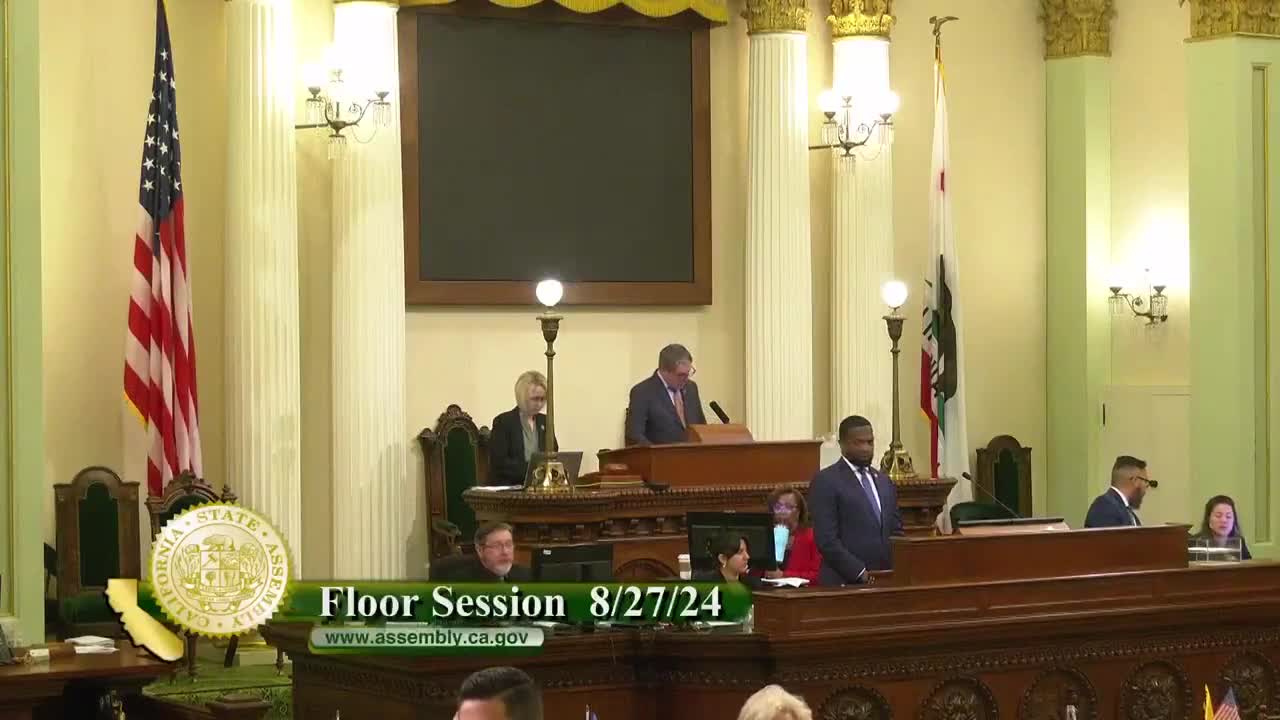 1MIN
Assembly Floor
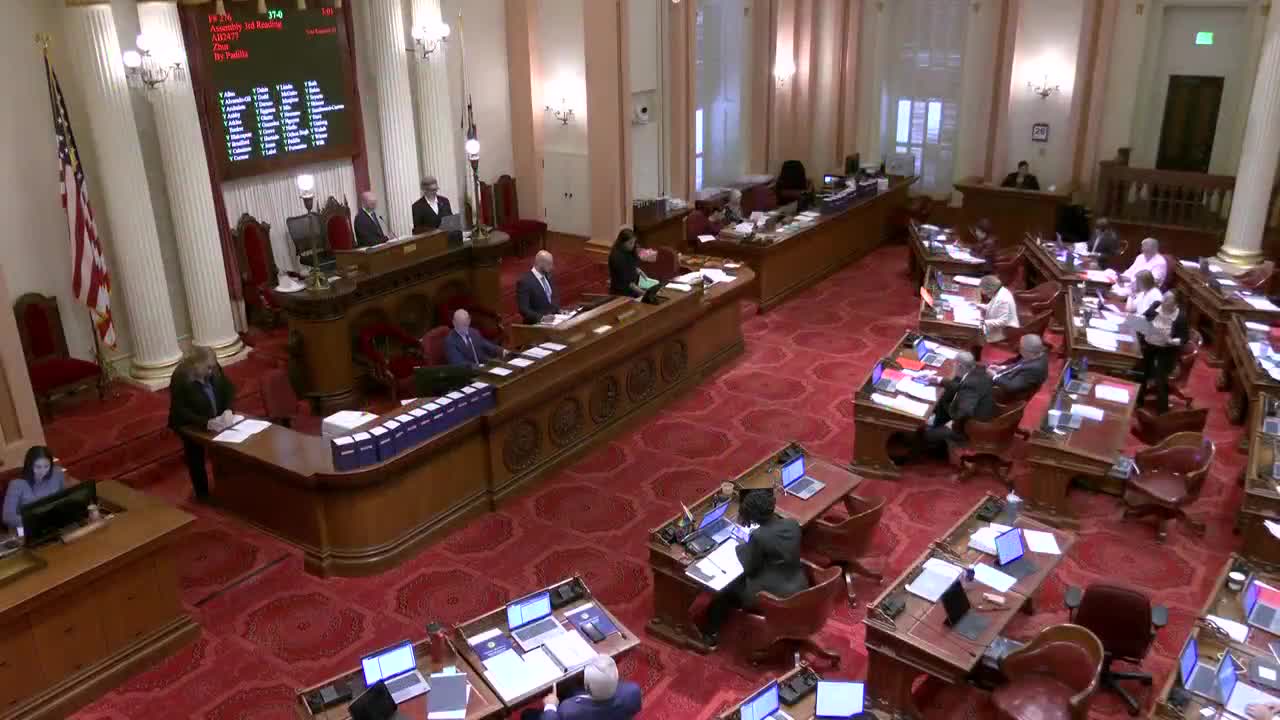 1MIN
Senate Floor
 5MIN
Senate Standing Committee on Labor, Public Employment and Retirement
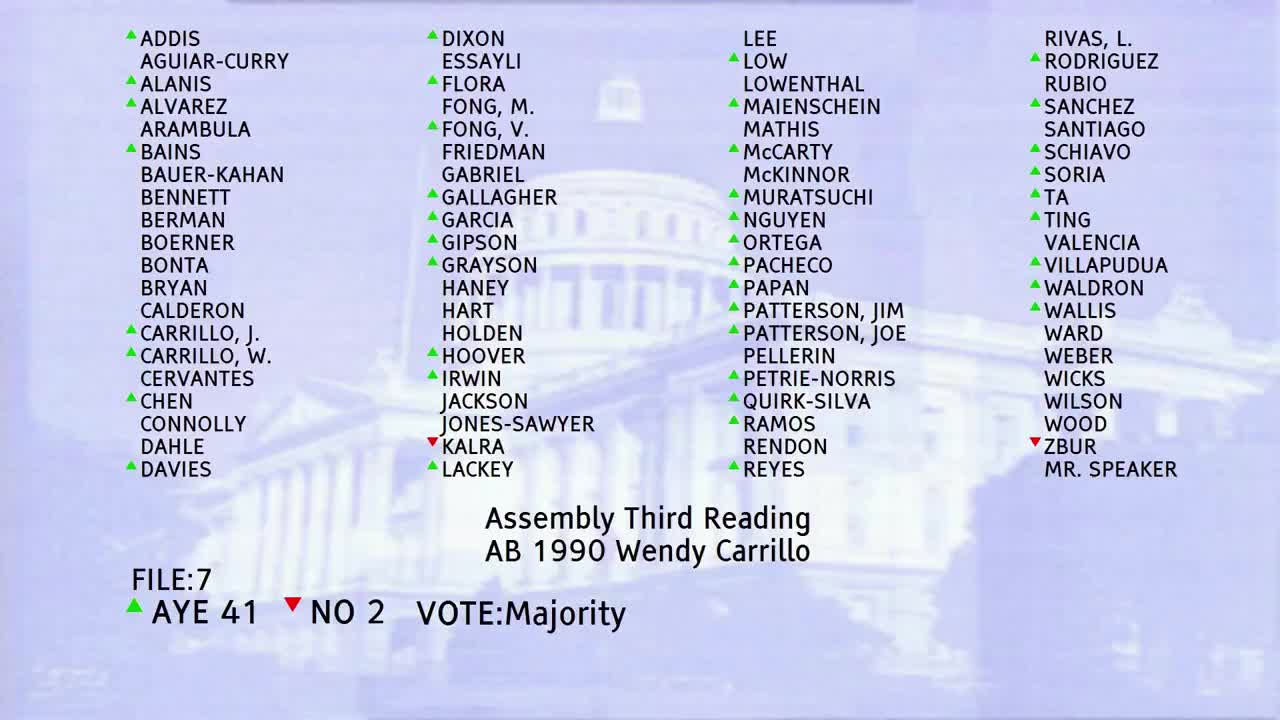 58SEC
Assembly Floor
 4MIN
Assembly Standing Committee on Public Employment and Retirement
Bill Author

Bill Co-Author(s):