AB 2325: San Francisco Bay Area Rapid Transit District: officers and employees: designation and appointment.
- Session Year: 2023-2024
- House: Assembly
- Latest Version Date: 2024-07-15
Current Status:
Passed
(2024-07-15: Chaptered by Secretary of State - Chapter 106, Statutes of 2024.)
Introduced
In Committee
First Chamber
In Committee
Second Chamber
Enacted
What does this bill do?
The bill replaces the treasurer and controller positions at the San Francisco Bay Area Rapid Transit District with a chief financial officer who is hired and can be removed by the district’s general manager. The chief financial officer will be in charge of the district’s money and take over duties such as receiving tax and bond proceeds, safekeeping or depositing securities, signing bond interest coupons, handling notices and redemptions, keeping records, and the general manager may assign other finance staff to perform those duties.
The summary is provided by generative AI which can make mistakes. For original language, please view the details in the table below.
Existing law establishes the San Francisco Bay Area Rapid Transit District, governed by a board of directors, with specified powers and duties relative to the construction and operation of a rapid transit system. Under existing law, the officers of the district consist of the members of the board, a secretary, a general manager, a general counsel, a treasurer, a controller, and other officers, assistants, and deputies that the board may provide for by ordinance or resolution, as specified. Existing law requires the board to appoint, and authorizes the board to remove, the secretary, the general manager, the general counsel, the treasurer, and the controller. Existing law requires all other officers and employees of the district to be appointed by, and to serve at the pleasure of, the general manager.
This bill would eliminate the positions of the treasurer and controller, would create the position of the chief financial officer subject to appointment and removal by the general manager, would transfer all of the duties previously assigned to the treasurer to the chief financial officer, and would make other related changes in this regard. The bill would authorize the general manager to designate other financial personnel to undertake any of the duties or responsibilities assigned to the chief financial officer.
Existing law establishes the San Francisco Bay Area Rapid Transit District, governed by a board of directors, with specified powers and duties relative to the construction and operation of a rapid transit system. Under existing law, the officers of the district consist of the members of the board, a secretary, a general manager, a general counsel, a treasurer, a controller, and other officers, assistants, and deputies that the board may provide for by ordinance or resolution, as specified. Existing law requires the board to appoint, and authorizes the board to remove, the secretary, the general manager, the general counsel, the treasurer, and the controller. Existing law requires all other officers and employees of the district to be appointed by, and to serve at the pleasure of, the general manager.
This bill would eliminate the positions of the treasurer and controller as specifically designated officers of the district and as positions subject to appointment and removal by the board. The bill would also eliminate specified qualifications applicable to the controller. controller, would create the position of the chief financial officer subject to appointment and removal by the general manager, would transfer all of the duties previously assigned to the treasurer to the chief financial officer, and would make other related changes in this regard. The bill would authorize the general manager to designate other financial personnel to undertake any of the duties or responsibilities assigned to the chief financial officer.
Existing law establishes the San Francisco Bay Area Rapid Transit District, governed by a board of directors, with specified powers and duties relative to the construction and operation of a rapid transit system. Under existing law, the officers of the district consist of the members of the board, a secretary, a general manager, a general counsel, a treasurer, a controller, and other officers, assistants, and deputies that the board may provide for by ordinance or resolution, as specified. Existing law requires the board to appoint, and authorizes the board to remove, the secretary, the general manager, the general counsel, the treasurer, and the controller. Existing law requires all other officers and employees of the district to be appointed by, and to serve at the pleasure of, the general manager.
This bill would eliminate the treasurer and controller as specifically designated officers of the district and as positions subject to appointment and removal by the board. The bill would also eliminate specified qualifications applicable to the controller.
(a)The officers of the district shall consist of the following:
(1)The members of the board of directors.
(2)A president and a vice president of the board, each of whom shall be a member of the board.
(3)A secretary.
(4)A general manager.
(5)A general counsel.
(6)Any other or subordinate officers, assistants, and deputies as the board may deem necessary and provide for by ordinance or resolution.
(b)The general counsel shall be a person admitted to practice law in the Supreme Court of California and shall have been actively engaged in the practice of law for not less than 10 years next preceding appointment pursuant to Section 28811.
SEC. 2.Section 28811 of the Public Utilities Code is amended to read:28811.(a)The secretary, general manager, and general counsel shall be appointed by and may be removed by the affirmative votes of a majority of the members of the board of directors. All other officers and employees shall be appointed by the general manager and shall serve at the pleasure of the general manager, subject to the provisions of this part relating to personnel.
(b)The general manager shall appoint a chief financial officer and may designate other financial personnel to undertake any of the duties or responsibilities assigned to the chief financial officer under this part.
SEC. 3.Section 28817 of the Public Utilities Code is amended to read:28817.The chief financial officer shall be the custodian of the funds of the district and shall make payments only upon warrants duly and regularly signed by the general manager. The chief financial officer shall keep an account of all receipts and disbursements.
SEC. 4.Section 28818 of the Public Utilities Code is amended to read:28818.(a)With the consent of the general manager, who shall seek consent from the board when deemed necessary, the chief financial officer may:
(1)Authorize any state or national bank in this state, a federally chartered or state chartered savings and loan association, or a trust company authorized to act as such in this state, to receive as the agent of the chief financial officer deposits of any securities acquired by the district.
(2)Place and maintain for safekeeping with any state or national bank in this state, a federally chartered or state chartered savings and loan association, or a trust company authorized to act as such in this state, any securities owned by the district.
(3)Make deposits of securities for safekeeping pursuant to the provisions of Section 53608 of the Government Code.
(b)The financial institution selected pursuant to subdivision (a) shall have a total paid-in capital of at least one million dollars ($1,000,000). The chief financial officer shall take from the financial institution a receipt for the securities, and neither the chief financial officer nor the district is responsible for the custody and safe return of the securities until they are withdrawn from the financial institution by the chief financial officer. Any financial institution to which securities are delivered, either as agent or depositary for the chief financial officer, shall make such disposition of the securities as the chief financial officer directs and is responsible only for strict compliance with written instructions given to it by the chief financial officer. All such securities are at all times subject to the order of the chief financial officer.
SEC. 5.Section 29128 of the Public Utilities Code is amended to read:29128.The districts taxes levied pursuant to this article shall be collected at the same time and in the same manner as county taxes. When collected, the net amount, ascertained as provided in this article, shall be paid to the chief financial officer of the district, under the general requirements and penalties provided by law for the settlement of other taxes. The district may adopt the alternative procedure of tax collection and apportionment established by Chapter 3 (commencing at Section 4701) of Part 8 of Division 1 of the Revenue and Taxation Code and any amendments to that chapter. If the district adopts that alternative procedure, the district may thereafter abandon the alternative procedure at the end of any fiscal year of the district.
SEC. 6.Section 29180 of the Public Utilities Code is amended to read:29180.The district may prescribe the form of bonds issued pursuant to this chapter, and of the interest coupons attached to those bonds. Bonds shall be signed by the president of the board, or by another member of the board designated by the board by resolution for that purpose, and countersigned by the secretary of the district and the seal of the district shall be affixed to those bonds. The interest coupons on the bonds shall be numbered consecutively and signed by the chief financial officer of the district. The signature on all coupons and one signature on the bonds may be engraved, lithographed, or printed facsimile signature. The seal of the district may be affixed to any bond by mechanical reproduction of a facsimile of the seal. In case any officer whose signature or countersignature appearing on the bonds or coupons shall cease to be an officer of the district before the delivery of the bonds to the purchaser, that signature or countersignature shall nevertheless be valid and sufficient for all purposes, the same as if that officer had remained in office until the delivery of the bonds. If the district appoints a registration agent, fiscal agent, or other agent to authenticate bonds, any bond of the district, whether in coupon or registered form, may be signed by the facsimile signatures of the officers of the district with a facsimile seal of the district affixed mechanically or otherwise reproduced on the bonds, provided that the bonds shall be authenticated by the fiscal agent, registration agent, or other agent appointed by the district for that purpose. Any agent appointed by the district to authenticate registered bonds or exchange bonds of different denominations, or coupon bonds for registered bonds, or vice versa, shall be a bank or trust company authorized to transact, and transacting, business in the State of California or the State of New York.
SEC. 7.Section 29214 of the Public Utilities Code is amended to read:29214.The proceeds of any sale of refunding bonds for cash shall be deposited with the chief financial officer or depositary, as determined by the district, to the credit of the Funding Fund, and applied only to refunding the indebtedness for which the bonds are issued.
SEC. 8.Section 29220 of the Public Utilities Code is amended to read:29220.When sufficient money is in the Funding Fund to redeem one or more outstanding past due bonds, notes, or other evidences of indebtedness, or to redeem one or more of the outstanding bonds, notes, or other evidences of indebtedness, that are subject to call or payment before maturity, and that are proposed to be funded or refunded, the chief financial officer shall publish a notice that the chief financial officer is prepared to pay the bond, note, or other evidence of indebtedness and give its number, if any, in that notice. The notice shall be published once a week for two weeks in a newspaper of general circulation in the district, if there is one. Copies of that advertisement may be published in any newspaper or financial publication in the United States. If the bond, note, or other evidence of indebtedness to be called for redemption or refunded is not presented for redemption on or before the date specified for redemption, as set forth on the face of the outstanding bond, note, or other evidence of indebtedness, interest upon it shall cease.
SEC. 9.Section 29221 of the Public Utilities Code is amended to read:29221.At the same time, the chief financial officer shall deposit in the post office a copy of the notice, enclosed in a sealed envelope, postage prepaid, addressed to the registered owner of any such bond, note, or other evidence of indebtedness, registered pursuant to this part, whose address appears upon the record in the chief financial officers office. If the bond, note, or other evidence of indebtedness is not presented within the time specified in the notice, the interest upon it ceases and the amount due shall be set aside for the payment when presented.
SEC. 10.Section 29222 of the Public Utilities Code is amended to read:29222.When any outstanding bonds, notes, or other evidences of indebtedness are surrendered and paid, the chief financial officer shall cancel them by endorsing on their faces the amount for which they are received, Canceled, and the date of cancellation.
SEC. 11.Section 29223 of the Public Utilities Code is amended to read:29223.The chief financial officer shall keep a record of bonds, notes, or other evidences of indebtedness redeemed, and report the redemption to the board. At the end of each month in which there has been a redemption, a report of the redemption shall be made accompanied by the bonds, notes, or other evidences of indebtedness that have been taken up and canceled or by a certificate of their destruction by any bank or trust company appointed by the board as fiscal agent or paying agent for those bonds, notes, or other evidences of indebtedness and authorized to destroy bonds, notes, or coupons, or other evidences of indebtedness upon payment of them.
SEC. 12.Section 29280 of the Public Utilities Code is amended to read:29280.When a bond, note, interest coupon, or other evidence of indebtedness payable from funds in the custody of the chief financial officer of the district is presented to the chief financial officer for payment and is not paid for want of funds, the chief financial officer shall endorse upon it Not paid for want of funds, the date of presentation, and a serial number indicating the order of presentation, and shall sign or stamp their name on it.
SEC. 13.Section 29281 of the Public Utilities Code is amended to read:29281.Upon receipt of the first money in the treasury applicable to their payment, the chief financial officer shall set apart the amount necessary to pay the past due bonds, notes, coupons, or other evidences of indebtedness that have been registered for want of funds. The chief financial officer shall give notice by registered mail to the owner or holder of the registered bonds, notes, coupons, and other evidences of indebtedness, at the address last filed, stating that the chief financial officer is ready to pay for them. The bonds, notes, coupons, and other evidences of indebtedness shall be paid from that money, in the order of their registration.
SEC. 14.Section 29282 of the Public Utilities Code is amended to read:29282.If the registered bonds, notes, coupons, and other evidences of indebtedness are not presented for payment within 30 days from mailing of the notice, the chief financial officer shall apply the fund set aside to the payment of the unpaid registered bonds, notes, coupons, and other evidences of indebtedness next in order, until all registered bonds, notes, coupons, and other evidences of indebtedness have been called.
(a)The officers of the district shall consist of the members following:
(1)The members of the board of directors; a directors.
(2)A president and a vice president of the board, each of whom shall be a member of the board; a secretary, a general manager, a general counsel, and such board.
(3)A secretary.
(4)A general manager.
(5)A general counsel.
(6)Any other or subordinate officers, assistants, and deputies as the board may deem necessary and provide for by ordinance or resolution.
(b)The general counsel shall be a person admitted to practice law in the Supreme Court of California and shall have been actively engaged in the practice of law for not less than ten 10 years next preceding appointment pursuant to Section 28811.
SEC. 2.Section 28811 of the Public Utilities Code is amended to read:28811.(a)The secretary, general manager, and general counsel shall be appointed by and may be removed by the affirmative votes of a majority of the members of the board of directors. All other officers and employees shall be appointed by the general manager and shall serve at the pleasure of the general manager, subject to the provisions of this part relating to personnel.
(b)The general manager shall appoint a chief financial officer and may designate other financial personnel to undertake any of the duties or responsibilities assigned to the chief financial officer under this part.
SEC. 3.Section 28817 of the Public Utilities Code is amended to read:28817.The treasurer chief financial officer shall be the custodian of the funds of the district and shall make payments only upon warrants duly and regularly signed by the general manager. He The chief financial officer shall keep an account of all receipts and disbursements. With the approval of the board, the treasurer and general manager may designate alternates to act for them.
SEC. 4.Section 28818 of the Public Utilities Code is amended to read:28818.(a)With the consent of the board, the treasurer general manager, who shall seek consent from the board when deemed necessary, the chief financial officer may:
(a)(1)Authorize any state or national bank in this state, a federally chartered or state chartered savings and loan association, or a trust company authorized to act as such in this state, to receive as his the agent of the chief financial officer deposits of any securities acquired by the district.
(b)(2)Place and maintain for safekeeping with any state or national bank in this state, a federally chartered or state chartered savings and loan association, or a trust company authorized to act as such in this state, any securities owned by the district.
(c)(3)Make deposits of securities for safekeeping pursuant to the provisions of Section 53608 of the Government Code.
The(b)The financial institution selected pursuant to subdivision (a) shall have a total paid-in capital of at least one million dollars ($1,000,000). The treasurer chief financial officer shall take from the financial institution a receipt for the securities, and neither the treasurer chief financial officer nor the district is responsible for the custody and safe return of the securities until they are withdrawn from the financial institution by the treasurer. chief financial officer. Any financial institution to which securities are delivered, either as agent or depositary for the treasurer, chief financial officer, shall make such disposition of the securities as the treasurer chief financial officer directs and is responsible only for strict compliance with written instructions given to it by the treasurer. chief financial officer. All such securities are at all times subject to the order of the treasurer. chief financial officer.
SEC. 5.Section 29128 of the Public Utilities Code is amended to read:29128.The districts taxes so levied pursuant to this article shall be collected at the same time and in the same manner as county taxes. When collected collected, the net amount, ascertained as provided in this article, shall be paid to the treasurer chief financial officer of the district, under the general requirements and penalties provided by law for the settlement of other taxes. The district may adopt the alternative procedure of tax collection and apportionment established by Chapter 3 (commencing at Section 4701) of Part 8 of Division 1 of the Revenue and Taxation Code and any amendments thereof; provided, however, that to that chapter. If the district adopts that alternative procedure, the district may thereafter abandon said the alternative procedure at the end of any fiscal year of the district.
SEC. 6.Section 29180 of the Public Utilities Code is amended to read:29180.The district may prescribe the form of such bonds, bonds issued pursuant to this chapter, and of the interest coupons attached thereto. to those bonds. Bonds shall be signed by the president of the board (or such other board, or by another member of the board as the board shall by resolution designate) designated by the board by resolution for that purpose, and countersigned by the secretary of the district and the seal of the district shall be affixed thereto. to those bonds. The interest coupons on said the bonds shall be numbered consecutively and signed by the treasurer chief financial officer of said the district. The signature on all coupons and one signature on the bonds may be engraved, lithographed, or printed facsimile signature. The seal of the district may be affixed to any bond by mechanical reproduction of a facsimile thereof. of the seal. In case any officer whose signature or countersignature appearing on the bonds or coupons shall cease to be such an officer of the district before the delivery of such the bonds to the purchaser, such that signature or countersignature shall nevertheless be valid and sufficient for all purposes, the same as if such that officer had remained in office until the delivery of the bonds. If the district appoints a registration agent, fiscal agent, or other agent to authenticate bonds, any bond of the district, whether in coupon or registered form, may be signed by the facsimile signatures of the officers of the district with a facsimile seal of the district affixed mechanically or otherwise reproduced thereon, on the bonds, provided that such the bonds shall be authenticated by the fiscal agent, registration agent, or other agent appointed by the district for that purpose. Any agent appointed by the district to authenticate registered bonds or exchange bonds of different denominations, or coupon bonds for registered bonds, or vice versa, shall be a bank or trust company authorized to transact, and transacting, business in the State of California or the State of New York.
SEC. 7.Section 29214 of the Public Utilities Code is amended to read:29214.The proceeds of any sale of refunding bonds for cash shall be deposited with the treasurer chief financial officer or depositary, as determined by the district, to the credit of the Funding Fund, and applied only to refunding the indebtedness for which the bonds are issued.
SEC. 8.Section 29220 of the Public Utilities Code is amended to read:29220.When sufficient money is in the Funding Fund to redeem one or more outstanding past due bonds, notes notes, or other evidences of indebtedness, or to redeem one or more of the outstanding bonds, notes notes, or other evidences of indebtedness, which that are subject to call or payment before maturity, and which that are proposed to be funded or refunded, the treasurer chief financial officer shall publish a notice that he the chief financial officer is prepared to pay the bond, note note, or other evidence of indebtedness (giving its number, if any). and give its number, if any, in that notice. The notice shall be published once a week for two weeks in a newspaper of general circulation in the district, if there is one. Copies of such that advertisement may be published in any newspaper or financial publication in the United States. If the bond, note note, or other evidence of indebtedness to be called for redemption or refunded is not presented for redemption on or before the date specified for redemption, as set forth on the face of such the outstanding bond, note note, or other evidence of indebtedness, interest thereon upon it shall cease.
SEC. 9.Section 29221 of the Public Utilities Code is amended to read:29221.At the same time, the treasurer chief financial officer shall deposit in the post office a copy of the notice, enclosed in a sealed envelope, postage prepaid, addressed to the registered owner of any such bond, note, or other evidence of indebtedness, registered pursuant to this part, whose address appears upon the record in the treasurers chief financial officers office. If the bond, note, or other evidence of indebtedness is not presented within the time specified in the notice, the interest upon it ceases and the amount due shall be set aside for the payment when presented.
SEC. 10.Section 29222 of the Public Utilities Code is amended to read:29222.When any outstanding bonds, notes notes, or other evidence evidences of indebtedness are surrendered and paid, the treasurer chief financial officer shall cancel them by endorsing on their faces the amount for which they are received, Canceled, and the date of cancellation.
SEC. 11.Section 29223 of the Public Utilities Code is amended to read:29223.The treasurer chief financial officer shall keep a record of bonds, notes, or other evidences of indebtedness redeemed, and report the redemption to the board. At the end of each month in which there has been a redemption, a report thereof of the redemption shall be made accompanied by the bonds, notes, or other evidence evidences of indebtedness which that have been taken up and canceled or by a certificate of their destruction by any bank or trust company appointed by the board as fiscal agent or paying agent for such those bonds, notes, or other evidences of indebtedness and authorized to destroy bonds, notes, or coupons, or other evidence evidences of indebtedness upon payment thereof. of them.
SEC. 12.Section 29280 of the Public Utilities Code is amended to read:29280.When a bond, note, interest coupon, or other evidence of indebtedness payable from funds in the custody of the treasurer chief financial officer of the district is presented to him the chief financial officer for payment and is not paid for want of funds, he the chief financial officer shall endorse upon it Not paid for want of funds, the date of presentation, and a serial number indicating the order of presentation, and shall sign or stamp his name thereon. their name on it.
SEC. 13.Section 29281 of the Public Utilities Code is amended to read:29281.Upon receipt of the first money in the treasury applicable to their payment, the treasurer chief financial officer shall set apart the amount necessary to pay the past due bonds, notes, coupons coupons, or other evidence evidences of indebtedness that have been registered for want of funds. He The chief financial officer shall give notice by registered mail to the owner or holder of the registered bonds, notes, coupons, and other evidences of indebtedness, at the address last filed, stating that he the chief financial officer is ready to pay for them. The bonds, notes, coupons coupons, and other evidences of indebtedness shall be paid from such that money, in the order of their registration.
SEC. 14.Section 29282 of the Public Utilities Code is amended to read:29282.If the registered bonds, notes, coupons, and other evidences of indebtedness are not presented for payment within 30 days from mailing of the notice, the treasurer chief financial officer shall apply the fund set aside to the payment of the unpaid registered bonds, notes, coupons, and other evidences of indebtedness next in order, until all registered bonds, notes, coupons, and other evidences of indebtedness have been called.
(a)The officers of the district shall consist of the members of the board of directors; a president and a vice president of the board, each of whom shall be a member of the board; a secretary, a general manager, a general counsel, a treasurer, a controller, and such other or subordinate officers, assistants, and deputies as the board may deem necessary and provide for by ordinance or resolution.
The
(b)The general counsel shall be a person admitted to practice law in the Supreme Court of California and shall have been actively engaged in the practice of law for not less than ten (10) years next preceding his appointment. appointment pursuant to Section 28811.
The person appointed controller shall have been actively engaged in the practice of accounting for not less than seven (7) years next preceding his appointment.SEC. 2.Section 28811 of the Public Utilities Code is amended to read:28811.The secretary, general manager, and general counsel, treasurer, and controller counsel shall be appointed by and may be removed by the affirmative votes of a majority of the members of the board of directors. All other officers and employees shall be appointed by the general manager and shall serve at his pleasure, the pleasure of the general manager, subject to the provisions of this part relating to personnel.
|
Date
|
Status
|
|---|---|
| Jul 15, 2024 | Chaptered by Secretary of State - Chapter 106, Statutes of 2024. |
| Jul 15, 2024 | Approved by the Governor. |
| Jul 1, 2024 | Enrolled and presented to the Governor at 4 p.m. |
| Jun 24, 2024 | Senate amendments concurred in. To Engrossing and Enrolling. (Ayes 74. Noes 0. Page 5988.). |
| Jun 20, 2024 | In Assembly. Concurrence in Senate amendments pending. May be considered on or after June 22 pursuant to Assembly Rule 77. |
| Jun 20, 2024 | Read third time. Passed. Ordered to the Assembly. (Ayes 36. Noes 0. Page 4624.). |
| Jun 13, 2024 | Read second time. Ordered to Consent Calendar. |
| Jun 12, 2024 | From committee: Do pass. To Consent Calendar. (Ayes 15. Noes 0.) (June 11). |
| May 30, 2024 | From committee chair, with author's amendments: Amend, and re-refer to committee. Read second time, amended, and re-referred to Com. on TRANS. |
| May 22, 2024 | Referred to Com. on TRANS. |
| May 9, 2024 | In Senate. Read first time. To Com. on RLS. for assignment. |
| May 9, 2024 | Read third time. Passed. Ordered to the Senate. (Ayes 65. Noes 0. Page 5162.) |
| May 2, 2024 | Read second time. Ordered to Consent Calendar. |
| May 1, 2024 | From committee: Do pass. To Consent Calendar. (Ayes 9. Noes 0.) (May 1). |
| Feb 26, 2024 | Referred to Com. on L. GOV. |
| Feb 13, 2024 | From printer. May be heard in committee March 14. |
| Feb 12, 2024 | Read first time. To print. |
|
Date
|
Description
|
Location
|
Votes
|
|
|---|---|---|---|---|
| Jun 24, 2024 | AB 2325 Lee Concurrence in Senate Amendments | Assembly Floor |
Passed |
|
| Jun 20, 2024 | Consent Calendar 2nd AB2325 Lee | Senate Floor |
Passed |
|
| Jun 11, 2024 | Do pass and be ordered to the Consent Calendar | Senate Standing Committee on Transportation |
Passed |
|
| May 9, 2024 | AB 2325 Lee Consent Calendar Second Day Regular Session | Assembly Floor |
Passed |
|
| May 1, 2024 | Do pass. To Consent Calendar. | Assembly Standing Committee on Local Government |
Passed |
This list shows positions taken on this bill by organizations on the date displayed, which is linked to the original source.
Positions by individuals are not included.
|
Organization
|
Position
|
Date
|
|---|---|---|
| Bay Area Council | ** Support | |
| Bay Area Rapid Transit District | ** Support | |
| San Francisco Bay Area Planning & Urban Research Association | ** Support | |
| Seamless Bay Area | ** Support |
CONCURRENCE IN SENATE AMENDMENTS
CSA1 Bill Id:AB 2325
Author:(Lee)
As Amended Ver:May 30, 2024
Majority vote
SUMMARY
This bill eliminates the treasurer and controller as specifically designated officers of the Bay Area Rapid Transit District (BART) and as positions subject to appointment and removal by the District Board. This bill creates the position of the chief financial officer (CFO), subject to appointment and removal by the general manager and transfers all duties from the eliminated positions to the CFO.
Senate Amendments
- Require the general manager to appoint a CFO to take over the duties of the eliminated positions, as specified, and allow the general manger to designate other financial personnel to undertake any of the duties or responsibilities assigned to the CFO.
- Make numerous conforming and technical changes.
COMMENTS
Bay Area Rapid Transit District. BART is a special district created by the State of California consisting of Alameda County, Contra Costa County, Santa Clara County, San Mateo County and the City and County of San Francisco. BART connects San Francisco with cities in the East Bay and northern San Mateo County operating on five lines, 131 miles of track with 50 stations in five counties. According to BART, ridership has been impacted by the COVID-19 pandemic and remote work trends in the Bay Area. Prior to the pandemic, BART served 405,000 trips on an average weekday. Bart was formed by the Legislature in 1957 and opened for service in 1972. BART currently has a nine-member board of directors directly elected by its nine election districts.
BART Inspector General. Senate Bill 595 (Beall), Chapter 650, Statutes of 2017, which authorized Regional Measure 3 (RM3), also created the BART IG. The measure, which raised toll rates on the Bay Area's seven state-owned bridges, was approved by voters in 2018 in the City and County of San Francisco, Alameda, Contra Costa, Marin, Napa, San Mateo, Santa Clara, Solano, and Sonoma Counties.
The IG was established to ensure BART makes effective use of bridge toll and other revenue and operates efficiently, effectively, and in compliance with applicable federal and state laws. Duties and responsibilities for the BART IG include, among others, conducting fraud and waste investigations, conducting audits, making recommendations to improve the efficiency and effectiveness of BART programs and operations, identifying opportunities to improve the data used to determine project resource allocations, and identifying and recommending best practices in the delivery of capital projects.
In the IG's Fiscal Year 2023 Annual Report to the California Legislature, the IG noted that "We determined that the District would benefit by consolidating financial operations under a Chief Financial Officer (CFO) within the span of control of the General Manager. A CFO structure will assist BART with its improvement efforts and better position the District to be more flexible and responsive to changes in transit and the economy, and make the most of its revenues." The IG also stated that, "Management has hired a consulting team to develop options and scenarios for a financial organizational structure based on the recommendation from the OIG's audit. These options along with a recommendation will be shared with the Financial Structure Ad Hoc Committee (see below) and the Board of Directors. The consulting team will provide a roadmap for implementing the recommended structure, including addressing change management. Staff is working to identify an author to carry legislation for amending the BART Act, which is required to place a Chief Financial Officer (CFO) position under the span of control of the General Manager." The expected implantation of this IG recommendation is July 2025.
According to the Author
According to the author, "This bill will allow the BART system to improve its financial management structure by consolidating responsibility in a Chief Financial Officer (CFO) that reports to the district's General Manager. This aligns with the Inspector General's recommendation in their 2023 report to the Legislature. To explain this recommendation, the Inspector General states, 'We determined that the District would benefit by consolidating financial operations under a Chief Financial Officer (CFO) within the span of control of the General Manager. A CFO structure will assist BART with its improvement efforts and better position the District to be more flexible and responsive to changes in transit and the economy, and make the most of its revenues."
Arguments in Support
According to BART, "Under existing law, the Board of Directors of the San Francisco Bay Area Rapid Transit District (BART) may appoint and remove specific officers, including a Controller-Treasurer. Currently, BART's Controller-Treasurer has full authority over accounting, treasury, and risk management functions, while the General Manager oversees operating and capital budgets, financial planning, financial reporting, grant administration, funding strategies, financial analysis, and other related functions.
"This financial structure is unique compared to other transit agencies and is not optimal for efficient and transparent financial management. After an audit of BART's financial functions by the Office of the BART Inspector General and consultations with stakeholders including an ad-hoc Financial Structure Committee of the Board of Directors, the creation of a Chief Financial Officer (CFO) position, reporting to the General Manager, was recommended and unanimously supported by the Board. A CFO would oversee all functions currently under the Controller-Treasurer, in addition to the financial activities under the General Manager's purview. The CFO will also have the authority to implement strategic business changes to streamline BART's financial forecasting, budgeting, and reporting of financial data."
"AB 2325 addresses the bifurcated reporting lines of BART's financial functions by removing the Controller-Treasurer as a Board-appointed officer. This allows for the merging of all financial functions under the CFO. The new structure will create greater accountability under the General Manager and is part of BART's commitment to using our limited financial resources in the most efficient manner possible. Author amendments, to be taken in your committee, make conforming changes to BART's statute by replacing references to the 'treasurer' with 'chief financial officer.' Amendments also clarify the General Manager shall appoint the CFO and may designate other financial personnel to perform duties assigned to that position."
Arguments in Opposition
None on file.
FISCAL COMMENTS
None.
VOTES:
ASM LOCAL GOVERNMENT: 9-0-0
YES: Juan Carrillo, Waldron, Essayli, Haney, Kalra, Pacheco, Ramos, Ward, Wilson
ASSEMBLY FLOOR: 65-0-15
YES: Addis, Aguiar-Curry, Alanis, Alvarez, Arambula, Bauer-Kahan, Bennett, Berman, Boerner, Bonta, Bryan, Calderon, Juan Carrillo, Wendy Carrillo, Chen, Connolly, Davies, Dixon, Essayli, Mike Fong, Vince Fong, Friedman, Gallagher, Garcia, Gipson, Hart, Holden, Hoover, Irwin, Jackson, Jones-Sawyer, Kalra, Lackey, Lee, Lowenthal, Maienschein, McCarty, McKinnor, Muratsuchi, Ortega, Pacheco, Papan, Jim Patterson, Joe Patterson, Pellerin, Quirk‑Silva, Ramos, Rendon, Reyes, Rodriguez, Blanca Rubio, Sanchez, Santiago, Soria, Ta, Valencia, Villapudua, Waldron, Ward, Weber, Wicks, Wilson, Wood, Zbur, Robert Rivas
ABS, ABST OR NV: Bains, Cervantes, Megan Dahle, Flora, Gabriel, Grayson, Haney, Low, Mathis, Stephanie Nguyen, Petrie-Norris, Luz Rivas, Schiavo, Ting, Wallis
SENATE FLOOR: 36-0-4
YES: Archuleta, Ashby, Atkins, Becker, Blakespear, Bradford, Caballero, Cortese, Dahle, Dodd, Eggman, Glazer, Gonzalez, Hurtado, Jones, Laird, Limón, McGuire, Menjivar, Min, Newman, Nguyen, Niello, Ochoa Bogh, Padilla, Portantino, Roth, Rubio, Seyarto, Skinner, Smallwood-Cuevas, Stern, Umberg, Wahab, Wiener, Wilk
ABS, ABST OR NV: Allen, Alvarado-Gil, Durazo, Grove
UPDATED
VERSION: May 30, 2024
CONSULTANT: Jimmy MacDonald / L. GOV. / (916) 319-3958 FN: 0003577
SENATE RULES COMMITTEE Office of Senate Floor Analyses (916) 651-1520 Fax: (916) 327-4478 | AB 2325 |
CONSENT
Bill No: AB 2325
Author: Lee (D)
Amended: 5/30/24 in Senate
Vote: 21
SENATE TRANSPORTATION COMMITTEE: 15-0, 6/11/24
AYES: Cortese, Niello, Allen, Archuleta, Becker, Blakespear, Dahle, Dodd, Gonzalez, Limón, Newman, Nguyen, Portantino, Seyarto, Umberg
ASSEMBLY FLOOR: 65-0, 5/9/24 (Consent) - See last page for vote
SUBJECT: San Francisco Bay Area Rapid Transit District: officers and employees: designation and appointment
SOURCE: Bay Area Rapid Transit District
DIGEST:
This bill eliminates the treasurer and controller as specifically designated officers of the Bay Area Rapid Transit District and as positions subject to appointment and removal by the District Board. This bill creates the position of the chief financial officer, (CFO) subject to appointment and removal by the general manager and transfers all duties from the eliminated positions to the CFO.
ANALYSIS:
Existing law:
- Requires the officers of the Bay Area Rapid Transit District (BART) to consist of the members of the board of directors; a president and a vice president of the board, each of whom shall be a member of the board; a secretary, a general manager, a general counsel, a treasurer, a controller, and such other or subordinate officers, assistants, and deputies as the board may deem necessary and provide for by ordinance or resolution. The person appointed controller shall have been actively engaged in the practice of accounting for not less than 7 years preceding his appointment. (Public Utilities Code (PUC) §28810)
- Requires the secretary, general manager, general counsel, treasurer, and controller of BART to be appointed by and may be removed by the affirmative votes of a majority of the members of the board of directors. All other officers and employees shall be appointed by the general manager and shall serve at his pleasure, as specified. (PUC §28811)
- Establishes an independent office of the BART Inspector General (IG) to ensure that BART makes effective use of bridge toll revenue and other revenue and operates efficiently, effectively, and in compliance with applicable federal and state laws. (PUC § 28840)
- Requires the treasurer to obtain consent of the board in order to exercise their authority to: (PUC § 28818)
- Authorize any state or national bank, a federally chartered or state chartered savings and loan association, or a trust company authorized by the state, to receive as their agent deposits of any securities acquired by the district;
- Place and maintain for safekeeping with any of these entities any securities owned by the district; or
- Make deposits of securities for safekeeping.
This bill:
- Removes the requirement for the officers of BART to include a treasurer and controller.
- Removes the requirement that the person appointed controller of BART to have been actively engaged in accounting for at least seven years and removes the requirement that the controller and treasurer of BART be appointed or removed by the votes of a majority of the members of the board of directors.
- Requires the general manager to appoint a chief financial officer (CFO) and authorizes the general manager to designate other financial personnel to undertake any of the duties or responsibilities assigned to the CFO.
- Reassigns the duties of the treasurer and controller to the CFO, and requires the CFO to obtain consent from the general manager, rather than the entire board, unless otherwise deemed necessary, in order to fulfill specified duties.
- Makes other technical and clarifying changes.
Comments
- Purpose of bill. According to the author, “This bill will allow the BART system to improve its financial management structure by consolidating responsibility in a Chief Financial Officer (CFO) that reports to the district’s General Manager. This aligns with the Inspector General’s recommendation in their 2023 report to the Legislature. To explain this recommendation, the Inspector General states, “We determined that the District would benefit by consolidating financial operations under a Chief Financial Officer (CFO) within the span of control of the General Manager. A CFO structure will assist BART with its improvement efforts and better position the District to be more flexible and responsive to changes in transit and the economy, and make the most of its revenues.””
- Bay Area Rapid Transit District. BART is a special district created by the State of California consisting of Alameda County, Contra Costa County, Santa Clara County, San Mateo County and the City and County of San Francisco. BART connects San Francisco with cities in the East Bay and northern San Mateo County operating on five lines, 131 miles of track with 50 stations in five counties. BART was formed by the Legislature in 1957 and opened for service in 1972.
Prior to the pandemic, BART served 405,000 trips on an average weekday. Since the pandemic, BART and other transit operators in the state have experienced huge declines in ridership. In 2022, BART’s ridership was only 29% of 2019 levels, with the continuance of remote work being a major factor. Throughout the pandemic, California’s transit operators sustained service with help from federal COVID-19 relief packages, with BART receiving roughly $1.6 billion. However, with federal funds running out, BART and others are looking to the state for financial assistance. Specifically, BART is predicting operating deficits of $140 million by fiscal year 2024-2025 and up to $290 million for fiscal year 2025-2026. The Legislature is currently discussing possible transit operating assistance as part of the state budget process.
BART is governed by a nine-member board of directors directly elected by its nine election districts. The chief executive and administrative officer of the District is the General Manager, a position appointed by and responsible to the Board of Directors. The General Manager is responsible for general oversight and leadership to ensure the development and delivery of BART’s programs and projects, as well as coordination and consultation with BART’s internal and external stakeholders. In addition to the General Manager, BART’s executive structure includes five other officers that report directly to the Board: the
Controller-Treasurer, General Counsel, District Secretary, Independent Police Auditor, and Inspector General. With the exception of these five offices or departments, the bulk of the District’s operations report directly to the General Manager, including nine executive-level officers. While current law establishes a Controller and a Treasurer as positions, it permits the Board of Directors to combine the positions. Board Resolution No. 1958 combined the offices of the Treasurer and Controller into the single Office of the Controller-Treasurer.
- BART IG. Senate Bill 595 (Beall, Chapter 650, Statutes of 2017), which authorized Regional Measure 3, also created the BART IG. The measure, which raised toll rates on the Bay Area’s seven state-owned bridges, was approved by voters in 2018 in the City and County of San Francisco, Alameda, Contra Costa, Marin, Napa, San Mateo, Santa Clara, Solano, and Sonoma Counties.
The IG was established to ensure BART makes effective use of bridge toll and other revenue and operates efficiently, effectively, and in compliance with applicable federal and state laws. Duties and responsibilities for the BART IG include, conducting fraud and waste investigations, conducting audits, making recommendations to improve the efficiency and effectiveness of BART programs and operations, identifying opportunities to improve the data used to determine project resource allocations, and identifying and recommending best practices in the delivery of capital projects.
- Chief future officer. Every year the office of the BART IG submits a report to the Legislature. In 2022, the IG contracted with Sjoberg Evashenk Consulting to complete a performance audit of the organizational structure of the financial operations of BART. Based on the findings of this audit, in the IG’s 2023 annual report to the Legislature they suggested replacing BART’s current financial management structure with that of a CFO. This suggestion has been unanimously supported by the Board of Directors.
Currently, BART’s Controller-Treasurer has full authority over accounting, treasury, and risk management functions, while the General Manager oversees operating and capital budgets, financial planning, financial reporting, grant administration, funding strategies, financial analysis, and other related functions. This structure is unusual; the consulting firm evaluated 11 peer transit agencies and found that they all centralized financial operations under a single CFO or equivalent position. The firm found that a structure that unifies rather than bifurcates financial related functions is most likely to provide the flexibility, agility, and innovation required of BART over the next decades. One key benefit of consolidation would be to create greater accountability when one executive is responsible for all financial matters. A CFO structure reduces the risk of uncertainty of the Board not knowing which executive or manager to turn to for information or financial leadership.
FISCAL EFFECT: Appropriation: No Fiscal Com.: No Local: No
SUPPORT: (Verified 6/12/24)
Bay Area Rapid Transit District (source)
Bay Area Council
San Francisco Bay Area Planning & Urban Research Association
Seamless Bay Area
OPPOSITION: (Verified 6/12/24)
None received
ASSEMBLY FLOOR: 65-0, 5/9/24
AYES: Addis, Aguiar-Curry, Alanis, Alvarez, Arambula, Bauer-Kahan, Bennett, Berman, Boerner, Bonta, Bryan, Calderon, Juan Carrillo, Wendy Carrillo, Chen, Connolly, Davies, Dixon, Essayli, Mike Fong, Vince Fong, Friedman, Gallagher, Garcia, Gipson, Hart, Holden, Hoover, Irwin, Jackson, Jones-Sawyer, Kalra, Lackey, Lee, Lowenthal, Maienschein, McCarty, McKinnor, Muratsuchi, Ortega, Pacheco, Papan, Jim Patterson, Joe Patterson, Pellerin, Quirk-Silva, Ramos, Rendon, Reyes, Rodriguez, Blanca Rubio, Sanchez, Santiago, Soria, Ta, Valencia, Villapudua, Waldron, Ward, Weber, Wicks, Wilson, Wood, Zbur, Robert Rivas
NO VOTE RECORDED: Bains, Cervantes, Megan Dahle, Flora, Gabriel, Grayson, Haney, Low, Mathis, Stephanie Nguyen, Petrie-Norris, Luz Rivas, Schiavo, Ting, Wallis
Prepared by: Jacob O'Connor / TRANS. / (916) 651-4121
6/12/24 12:19:05
**** END ****
SENATE COMMITTEE ON TRANSPORTATION
Senator Dave Cortese, Chair
2023 - 2024 Regular
Bill No: AB 2325 Hearing Date: 6/11/2024
Author: | Lee | ||
Version: | 5/30/2024 Amended | ||
Urgency: | No | Fiscal: | No |
Consultant: | Jacob O'Connor | ||
SUBJECT: San Francisco Bay Area Rapid Transit District: officers and employees: designation and appointment
DIGEST: This bill eliminates the treasurer and controller as specifically designated officers of the Bay Area Rapid Transit District and as positions subject to appointment and removal by the District Board. This bill creates the position of the chief financial officer, (CFO) subject to appointment and removal by the general manager and transfers all duties from the eliminated positions to the CFO.
ANALYSIS:
Existing law:
- Requires the officers of the Bay Area Rapid Transit District (BART) to consist of the members of the board of directors; a president and a vice president of the board, each of whom shall be a member of the board; a secretary, a general manager, a general counsel, a treasurer, a controller, and such other or subordinate officers, assistants, and deputies as the board may deem necessary and provide for by ordinance or resolution. The person appointed controller shall have been actively engaged in the practice of accounting for not less than 7 years preceding his appointment. (PUC §28810)
- Requires the secretary, general manager, general counsel, treasurer, and controller of BART to be appointed by and may be removed by the affirmative votes of a majority of the members of the board of directors. All other officers and employees shall be appointed by the general manager and shall serve at his pleasure, as specified. (PUC §28811)
- Establishes an independent office of the BART Inspector General (IG) to ensure that BART makes effective use of bridge toll revenue and other revenue and operates efficiently, effectively, and in compliance with applicable federal and state laws. (PUC § 28840)
- Requires the treasurer to obtain consent of the board in order to exercise their authority to: (PUC § 28818)
- Authorize any state or national bank, a federally chartered or state chartered savings and loan association, or a trust company authorized by the state, to receive as their agent deposits of any securities acquired by the district;
- Place and maintain for safekeeping with any of these entities any securities owned by the district; or
- Make deposits of securities for safekeeping.
This bill:
- Removes the requirement for the officers of BART to include a treasurer and controller.
- Removes the requirement that the person appointed controller of BART to have been actively engaged in accounting for at least seven years and removes the requirement that the controller and treasurer of BART be appointed or removed by the votes of a majority of the members of the board of directors.
- Requires the general manager to appoint a chief financial officer (CFO) and authorizes the general manager to designate other financial personnel to undertake any of the duties or responsibilities assigned to the CFO.
- Reassigns the duties of the treasurer and controller to the CFO, and requires the CFO to obtain consent from the general manager, rather than the entire board, unless otherwise deemed necessary, in order to fulfill specified duties.
- Makes other technical and clarifying changes.
COMMENTS:
- Purpose of bill. According to the author “This bill will allow the BART system to improve its financial management structure by consolidating responsibility in a Chief Financial Officer (CFO) that reports to the district’s General Manager. This aligns with the Inspector General’s recommendation in their 2023 report to the Legislature. To explain this recommendation, the Inspector General states, “We determined that the District would benefit by consolidating financial operations under a Chief Financial Officer (CFO) within the span of control of the General Manager. A CFO structure will assist BART with its improvement efforts and better position the District to be more flexible and responsive to changes in transit and the economy, and make the most of its revenues.””
- Bay Area Rapid Transit District. BART is a special district created by the State of California consisting of Alameda County, Contra Costa County, Santa Clara County, San Mateo County and the City and County of San Francisco. BART connects San Francisco with cities in the East Bay and northern San Mateo County operating on five lines, 131 miles of track with 50 stations in five counties. BART was formed by the Legislature in 1957 and opened for service in 1972.
Prior to the pandemic, BART served 405,000 trips on an average weekday. Since the pandemic, BART and other transit operators in the state have experienced huge declines in ridership. In 2022, BART’s ridership was only 29% of 2019 levels, with the continuance of remote work being a major factor. Throughout the pandemic, California’s transit operators sustained service with help from federal COVID-19 relief packages, with BART receiving roughly $1.6 billion. However, with federal funds running out, BART and others are looking to the state for financial assistance. Specifically, BART is predicting operating deficits of $140 million by fiscal year 2024-2025 and up to $290 million for fiscal year 2025-2026. The Legislature is currently discussing possible transit operating assistance as part of the state budget process.
BART is governed by a nine-member board of directors directly elected by its nine election districts. The chief executive and administrative officer of the District is the General Manager, a position appointed by and responsible to the Board of Directors. The General Manager is responsible for general oversight and leadership to ensure the development and delivery of BART’s programs and projects, as well as coordination and consultation with BART’s internal and external stakeholders. In addition to the General Manager, BART’s executive structure includes five other officers that report directly to the Board: the
Controller-Treasurer, General Counsel, District Secretary, Independent Police Auditor, and Inspector General. With the exception of these five offices or departments, the bulk of the District’s operations report directly to the General Manager, including nine executive-level officers. While current law establishes a Controller and a Treasurer as positions, it permits the Board of Directors to combine the positions. Board Resolution No. 1958 combined the offices of the Treasurer and Controller into the single Office of the Controller-Treasurer.
- BART IG. Senate Bill 595 (Beall, Chapter 650, Statutes of 2017), which authorized Regional Measure 3, also created the BART IG. The measure, which raised toll rates on the Bay Area’s seven state-owned bridges, was approved by voters in 2018 in the City and County of San Francisco, Alameda, Contra Costa, Marin, Napa, San Mateo, Santa Clara, Solano, and Sonoma Counties.
The IG was established to ensure BART makes effective use of bridge toll and other revenue and operates efficiently, effectively, and in compliance with applicable federal and state laws. Duties and responsibilities for the BART IG include, conducting fraud and waste investigations, conducting audits, making recommendations to improve the efficiency and effectiveness of BART programs and operations, identifying opportunities to improve the data used to determine project resource allocations, and identifying and recommending best practices in the delivery of capital projects.
- Chief future officer. Every year the office of the BART IG submits a report to the Legislature. In 2022, the IG contracted with Sjoberg Evashenk Consulting to complete a performance audit of the organizational structure of the financial operations of BART. Based on the findings of this audit, in the IG’s 2023 annual report to the Legislature they suggested replacing BART’s current financial management structure with that of a CFO. This suggestion has been unanimously supported by the Board of Directors.
Currently, BART’s Controller-Treasurer has full authority over accounting, treasury, and risk management functions, while the General Manager oversees operating and capital budgets, financial planning, financial reporting, grant administration, funding strategies, financial analysis, and other related functions. This structure is unusual; the consulting firm evaluated 11 peer transit agencies and found that they all centralized financial operations under a single CFO or equivalent position. The firm found that a structure that unifies rather than bifurcates financial related functions is most likely to provide the flexibility, agility, and innovation required of BART over the next decades. One key benefit of consolidation would be to create greater accountability when one executive is responsible for all financial matters. A CFO structure reduces the risk of uncertainty of the Board not knowing which executive or manager to turn to for information or financial leadership.
FISCAL EFFECT: Appropriation: Fiscal Com.: Local:
POSITIONS: (Communicated to the committee before noon on Wednesday,
June 5, 2024.)
SUPPORT:
Bay Area Rapid Transit District (sponsor)
Bay Area Council
San Francisco Bay Area Planning & Urban Research Association (SPUR)
Seamless Bay Area
OPPOSITION:
None Received
-- END --
Date of Hearing: May 1, 2024
ASSEMBLY COMMITTEE ON LOCAL GOVERNMENT
Juan Carrillo, Chair
ABPCA Bill Id:AB 2325 (
Author:Lee) – As Introduced Ver:February 12, 2024
SUBJECT: San Francisco Bay Area Rapid Transit District: officers: designation and appointment.
SUMMARY: Eliminates the treasurer and controller as specifically designated officers of the Bay Area Rapid Transit District (BART) and as positions subject to appointment and removal by the BART Board. Specifically, this bill:
- Removes the treasurer and controller as specifically designated officers of BART.
- Eliminates the treasurer and controller as positions subject to appointment and removal by the BART Board.
- Deletes the requirement that the person appointed controller to have been actively engaged in the practice of accounting for not less than 7 years next preceding their appointment.
- Makes other technical and clarifying changes.
EXISTING LAW:
- Requires the officers of BART to consist of the members of the board of directors; a president and a vice president of the board, each of whom shall be a member of the board; a secretary, a general manager, a general counsel, a treasurer, a controller, and such other or subordinate officers, assistants, and deputies as the board may deem necessary and provide for by ordinance or resolution. The general counsel shall be a person admitted to practice law in the Supreme Court of California and shall have been actively engaged in the practice of law for not less than 10 years next preceding his appointment. The person appointed controller shall have been actively engaged in the practice of accounting for not less than 7 years next preceding his appointment (PUC 28810).
- Requires the secretary, general manager, general counsel, treasurer, and controller of BART to be appointed by and may be removed by the affirmative votes of a majority of the members of the board of directors. All other officers and employees shall be appointed by the general manager and shall serve at his pleasure, as specified (PUC § 28811).
- Establishes an independent office of the BART Inspector General (IG) to ensure that BART makes effective use of bridge toll revenue and other revenue and operates efficiently, effectively, and in compliance with applicable federal and state laws (PUC § 28840).
FISCAL EFFECT: None.
COMMENTS:
- Bay Area Rapid Transit District. BART is a special district created by the State of California consisting of Alameda County, Contra Costa County, Santa Clara County, San Mateo County and the City and County of San Francisco. BART connects San Francisco with cities in the East Bay and northern San Mateo County operating on five lines, 131 miles of track with 50 stations in five counties. According to BART, ridership has been impacted by the COVID-19 pandemic and remote work trends in the Bay Area. Prior to the pandemic, BART served 405,000 trips on an average weekday. Bart was formed by the Legislature in 1957 and opened for service in 1972. BART currently has a nine-member board of directors directly elected by its nine election districts.
- BART Inspector General. Senate Bill 595 (Beall), Chapter 650, Statutes of 2017, which authorized Regional Measure 3 (RM3), also created the BART IG. The measure, which raised toll rates on the Bay Area’s seven state-owned bridges, was approved by voters in 2018 in the City and County of San Francisco, Alameda, Contra Costa, Marin, Napa, San Mateo, Santa Clara, Solano, and Sonoma Counties.
The IG was established to ensure BART makes effective use of bridge toll and other revenue and operates efficiently, effectively, and in compliance with applicable federal and state laws. Duties and responsibilities for the BART IG include, among others, conducting fraud and waste investigations, conducting audits, making recommendations to improve the efficiency and effectiveness of BART programs and operations, identifying opportunities to improve the data used to determine project resource allocations, and identifying and recommending best practices in the delivery of capital projects.
In the IG’s Fiscal Year 2023 Annual Report to the California Legislature, the IG noted that “We determined that the District would benefit by consolidating financial operations under a Chief Financial Officer (CFO) within the span of control of the General Manager. A CFO structure will assist BART with its improvement efforts and better position the District to be more flexible and responsive to changes in transit and the economy, and make the most of its revenues.” The IG also stated that, “Management has hired a consulting team to develop options and scenarios for a financial organizational structure based on the recommendation from the OIG's audit. These options along with a recommendation will be shared with the Financial Structure Ad Hoc Committee (see below) and the Board of Directors. The consulting team will provide a roadmap for implementing the recommended structure, including addressing change management. Staff is working to identify an author to carry legislation for amending the BART Act, which is required to place a Chief Financial Officer (CFO) position under the span of control of the General Manager.” The expected implantation of this IG recommendation is July 2025.
- Bills Summary and Author’s Statement. This bill eliminates the treasurer and controller as specifically designated officers of the district and as positions subject to appointment and removal by the board. This bill also makes technical and conforming changes to law governing BART. BART is the sponsor of this bill.
According to the author, “This bill will allow the BART system to improve its financial management structure by consolidating responsibility in a Chief Financial Officer (CFO) that reports to the district’s General Manager. This aligns with the Inspector General’s recommendation in their 2023 report to the Legislature.
“To explain this recommendation, the Inspector General states, ‘We determined that the District would benefit by consolidating financial operations under a Chief Financial Officer (CFO) within the span of control of the General Manager. A CFO structure will assist BART with its improvement efforts and better position the District to be more flexible and responsive to changes in transit and the economy, and make the most of its revenues.’ (p. 7)”
- Arguments in Support. According to BART, sponsor of this bill, “Currently, BART’s Controller-Treasurer has full authority over accounting, treasury, and risk management functions, while the General Manager oversees operating and capital budgets, financial planning, financial reporting, grant administration, funding strategies, financial analysis, and other related functions.
“This financial structure is unique compared to other transit agencies and is not optimal for efficient and transparent financial management. After an audit of BART’s financial functions by the Office of the BART Inspector General and consultations with stakeholders including an ad-hoc Financial Structure Committee of the Board of Directors, the creation of a Chief Financial Officer (CFO) position, reporting to the General Manager, was recommended and unanimously supported by the Board. A CFO would oversee all functions currently under the Controller-Treasurer, in addition to the financial activities under the General Manager’s purview. The CFO will also have the authority to implement strategic business changes to streamline BART’s financial forecasting, budgeting, and reporting of financial data.
“AB 2325 addresses the bifurcated reporting lines of BART’s financial functions by removing the Controller-Treasurer as a Board-appointed officer. This allows for the merging of all financial functions under the CFO. The new structure will create greater accountability under the General Manager and is part of BART’s commitment to using our limited financial resources in the most efficient manner possible. In addition to the language in AB 2325, BART is seeking amendments to replace references to the ‘treasurer’ within the Public Utilities Code with ‘chief financial officer or other finance personnel designated by the general manager’ to conform with the District’s new financial structure.”
- Arguments in Opposition. None on file.
REGISTERED SUPPORT / OPPOSITION:
Support
Bay Area Rapid Transit District [SPONSOR]
Bay Area Council
San Francisco Bay Area Planning & Urban Research Association (SPUR)
Seamless Bay Area
Opposition
None on file
Analysis Prepared by: Jimmy MacDonald / L. GOV. / (916) 319-3958
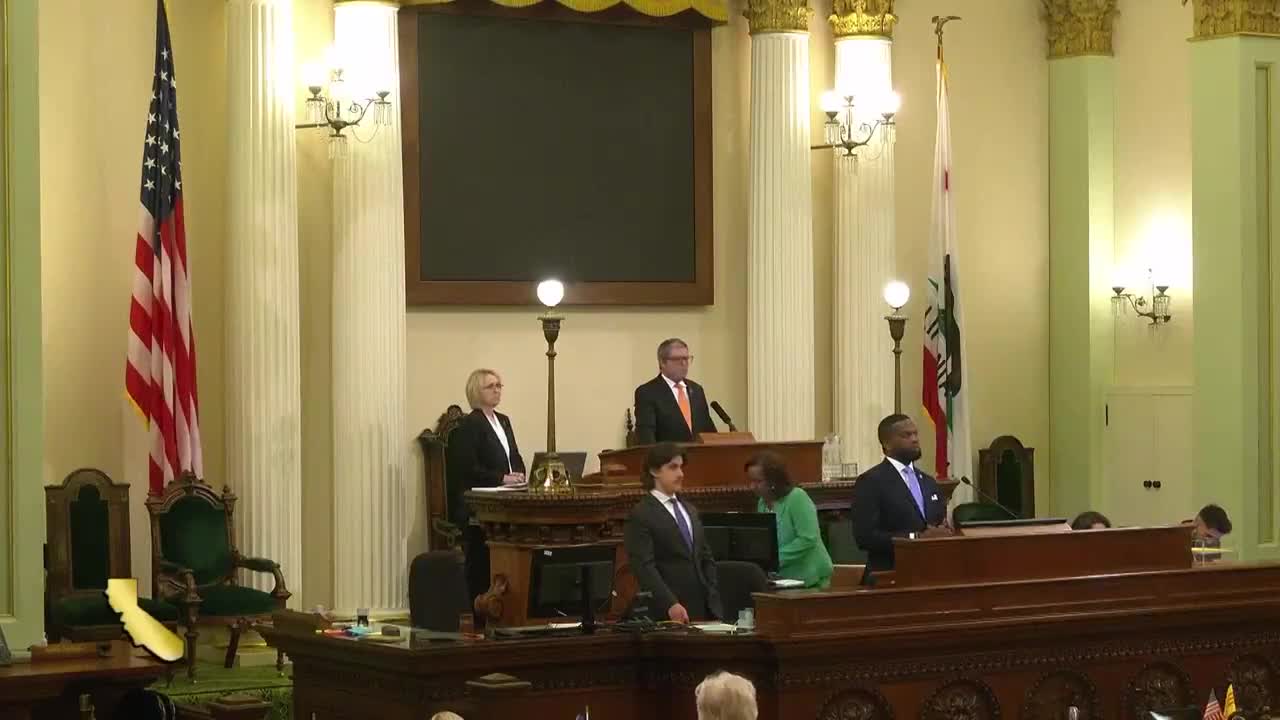
Bill Author

Bill Co-Author(s):