AB 2335: Public employment: compensation and classification.
- Session Year: 2023-2024
- House: Assembly
- Latest Version Date: 2024-08-28
Current Status:
Failed
(2024-09-14: Vetoed by Governor.)
Introduced
In Committee
First Chamber
In Committee
Second Chamber
Enacted
What does this bill do?
The bill lets the state’s personnel department identify and fix pay and classification inequities among comparable state jobs, requires it to consider factors like the origins and history of the work, and authorizes salary adjustments (including retroactive pay) to maintain or restore historical pay relationships even if they exceed current appropriations. It also requires state agencies’ equal employment plans to report both underrepresentation and overrepresentation of groups by race, ethnicity, and gender in each job category. The department must include bargaining‑unit statistics in pay‑equity reports and negotiate salary changes to close any gaps found.
The summary is provided by generative AI which can make mistakes. For original language, please view the details in the table below.
(1)The California Constitution provides that the civil service includes every officer and employee of the state, except as provided, and requires that in the civil service, permanent appointment and promotion be made under a merit-based system ascertained by competitive examination. Existing law, the State Civil Service Act, prescribes a comprehensive personnel system for the state with appointments to be based on merit and fitness established by competitive tests.
Existing law states the purposes of the State Civil Service Act, including, among others, to provide a comprehensive personnel system in which positions involving comparable duties and responsibilities are similarly classified and compensated.
This bill would expand that purpose to include that the compensation relationship between state civil positions with comparable duties and responsibilities is maintained.
(2)The State Civil Service Act requires each state agency to establish an equal opportunity plan that includes, at a minimum, identifying the areas of significant underutilization of specific groups based on race, ethnicity, and gender within each department and job category level, as provided.
This bill would additionally require the plan to identify the areas of significant overutilization of specific groups, as provided.
(3)Existing law requires the Department of Human Resources to establish and adjust salary ranges for each class of position in the state civil service based on the principle that like salaries should be paid for comparable duties and responsibilities, as specified. Existing law prohibits the department from making an adjustment that would require expenditures in excess of existing appropriations that may be used for salary increase purposes.
This bill would require the department to consider any relevant factor, including the origins and history of the work, including the manner in which wages have been set, in determining whether compensation and classification inequities exist between bargaining units within the state civil service. The bill would require the department to ensure that the principle that like salaries be paid for comparable duties and responsibilities is maintained when determining the distribution of appropriations used for adjusting salaries and would authorize the department to make adjustments requiring expenditures in excess of existing appropriations if the adjustments are necessary to maintain or restore historical salary relationships, as specified. The bill would require the department to make a change in salary range retroactive if made for that purpose.
Existing law requires the department to submit to parties meeting and conferring, and to the Legislature, reports on 2 groups of bargaining units biennially, beginning on either February 1, 2025, or February 1, 2026, depending on the group, on the findings of the department relating to the salaries of employees in comparable occupations in private industry and other governmental agencies.
This bill would, instead, require the reports to include findings of the department relating to the salaries of employees in comparable classifications, occupational groups, or bargaining units within state civil service, in private business, and other public employment, as specified.
(4)Existing law requires the Department of Human Resources to evaluate all state civil service classifications in the Personnel Classification Plan and prepare a detailed report, as specified, on gender and ethnicity pay equity in each classification where there is an underrepresentation of women and minorities.
This bill would additionally require the report to include where there is an overrepresentation of women and minorities and statistical information for each bargaining unit, as specified. The bill would require the department to negotiate salaries to close any gaps found, as specified, and would require that an increase in total compensation resulting from this evaluation be implemented through a memorandum of understanding, as specified. The bill would require the department, in determining whether inequities exist, to consider any relevant factor, including the origins and history of the work, including the manner in which wages have been set.
(1)The California Constitution provides that the civil service includes every officer and employee of the state, except as provided, and requires that in the civil service, permanent appointment and promotion be made under a merit-based system ascertained by competitive examination. Existing law, the State Civil Service Act, prescribes a comprehensive personnel system for the state, state with appointments to be based on merit and fitness established by competitive tests.
Existing law states the purposes of the State Civil Service Act, including, among others, to provide a comprehensive personnel system in which positions involving comparable duties and responsibilities are similarly classified and compensated.
This bill would expand that purpose to include that the compensation relationship between state civil positions with comparable duties and responsibilities is maintained.
(2)Existing law establishes the Commission on the Status of Women and Girls and requires the commission to evaluate the compensation and classification plans for state civil service and related employees and certain other employees in higher education and to determine where compensation and classification inequities exist based on comparability of the value of work. Existing law requires the commission to give primary consideration to identifying and correcting inequities between female dominated and male dominated classes of employees in state service. Existing law requires the commission, by January 1, 2003, to report to the Legislature and certain other parties findings necessary to implement principles of equitable compensation and classification based on comparability of value of work as part of the state compensation and classification plans and negotiated agreements. Existing law conditions the implementation of these provisions on funding, as prescribed.This bill would instead require the commission to give primary consideration to identifying and correcting inequities between jobs that employ a higher proportion of females than males and males than females and would require the commission to consider any relevant factor, including specified factors including, among others, the origins and history of the work and any systemic undervaluation of the work, as specified. The bill would extend the deadline for the above-described report to January 1, 2026.(3)(2)The State Civil Service Act requires each state agency to establish an equal opportunity plan that includes, at a minimum, identifying the areas of significant underutilization of specific groups based on race, ethnicity, and gender, gender within each department and job category level, as provided.
This bill would additionally require the plan to identify the areas of significant overutilization of specific groups, as provided.
(4)(3)Existing law requires the Department of Human Resources to establish and adjust salary ranges for each class of position in the state civil service based on the principle that like salaries should be paid for comparable duties and responsibilities, as specified. Existing law prohibits the department from making an adjustment that would require expenditures in excess of existing appropriations that may be used for salary increase purposes.
This bill would require the department to consider any relevant factor, including the same factors the bill would require the Commission on the Status of Women and Girls to consider, as described above, in determining whether compensation and classification inequities exist between bargaining units within the state civil service. The bill would require the department to ensure that the principle that like salaries be paid for comparable duties and responsibilities is maintained when determining the distribution of appropriations used for adjusting salaries and would authorize the department to make adjustments requiring expenditures in excess of existing appropriations if the adjustments are necessary to maintain or restore historical salary relationships, as specified. The bill would require the department to make a change in salary range retroactive if made for that purpose.
Existing law requires the department to submit to parties meeting and conferring, and to the Legislature, reports on 2 groups of bargaining units biennially, beginning on either February 1, 2025, or February 1, 2026, depending on the group, on the findings of the department relating to the salaries of employees in comparable occupations in private industry and other governmental agencies.
The bill would, instead, require the reports to include findings of the department relating to the salaries of employees in comparable classifications, occupational groups, or bargaining units within state civil service, in private business, and other public employment, as specified.
(5)(4)Existing law requires the Department of Human Resources to evaluate all state civil service classifications in the Personnel Classification Plan, Plan and prepare a detailed report, as specified, on gender and ethnicity pay equity in each classification where there is an underrepresentation of women and minorities.
This bill would additionally require the report to include where there is an overrepresentation of women and minorities and statistical information for each bargaining unit, as specified. The bill would require the department to negotiate salaries to close any gaps found, as specified, and would require that an increase in total compensation resulting from this evaluation be implemented through a memorandum of understanding, as specified. The bill would require the department, in determining whether inequities exist, to consider any relevant factor, including those factors the bill would require the Commission on the Status of Women and Girls and the department to consider, as described above. the origins and history of the work, including the manner in which wages have been set.
(1)The California Constitution provides that the civil service includes every officer and employee of the state, except as provided, and requires that in the civil service, permanent appointment and promotion be made under a merit-based system ascertained by competitive examination. Existing law, the State Civil Service Act, prescribes a comprehensive personnel system for the state, with appointments to be based on merit and fitness established by competitive tests.
Existing law states the purposes of the State Civil Service Act, including, among others, to provide a comprehensive personnel system in which positions involving comparable duties and responsibilities are similarly classified and compensated.
This bill would expand that purpose to include that the compensation relationship between state civil positions with comparable duties and responsibilities is maintained.
(2)Existing law establishes the Commission on the Status of Women and Girls and requires the commission to evaluate the compensation and classification plans for state civil service and related employees and certain other employees in higher education and to determine where compensation and classification inequities exist based on comparability of the value of work. Existing law requires the commission to give primary consideration to identifying and correcting inequities between female dominated and male dominated classes of employees in state service. Existing law requires the commission, by January 1, 2003, to report to the Legislature and certain other parties findings necessary to implement principles of equitable compensation and classification based on comparability of value of work as part of the state compensation and classification plans and negotiated agreements. Existing law conditions the implementation of these provisions on funding, as prescribed.
This bill would instead require the commission to give primary consideration to identifying and correcting inequities between jobs that employ a higher proportion of females than males and males than females and would require the commission to consider any relevant factor, including specified factors including, among others, the origins and history of the work and any systemic undervaluation of the work, as specified. The bill would extend the deadline for the above-described report to January 1, 2026.
(3)The State Civil Service Act requires each state agency to establish an equal opportunity plan that includes, at a minimum, identifying the areas of significant underutilization of specific groups based on race, ethnicity, and gender, within each department and job category level, as provided.
This bill would additionally require the plan to identify the areas of significant overutilization of specific groups, as provided.
(4)Existing law requires the Department of Human Resources to establish and adjust salary ranges for each class of position in the state civil service based on the principle that like salaries should be paid for comparable duties and responsibilities, as specified. Existing law prohibits the department from making an adjustment that would require expenditures in excess of existing appropriations that may be used for salary increase purposes.
This bill would require the department to consider any relevant factor, including the same factors the bill would require the Commission on the Status of Women and Girls to consider, as described above, in determining whether compensation and classification inequities exist between bargaining units within the state civil service. The bill would require the department to ensure that the principle that like salaries be paid for comparable duties and responsibilities is maintained when determining the distribution of appropriations used for adjusting salaries and would authorize the department to make adjustments requiring expenditures in excess of existing appropriations if the adjustments are necessary to maintain or restore historical salary relationships, as specified. The bill would require the department to make a change in salary range retroactive if made for that purpose.
Existing law requires the department to submit to parties meeting and conferring, and to the Legislature, reports on 2 groups of bargaining units biennially, beginning on either February 1, 2025, or February 1, 2026, depending on the group, on the findings of the department relating to the salaries of employees in comparable occupations in private industry and other governmental agencies.
The bill would, instead, require the reports to include findings of the department relating to the salaries of employees in comparable classifications, occupational groups, or bargaining units within state civil service, in private business, and other public employment, as specified.
(5)Existing law requires the Department of Human Resources to evaluate all state civil service classifications in the Personnel Classification Plan, and prepare a detailed report, as specified, on gender and ethnicity pay equity in each classification where there is an underrepresentation of women and minorities.
This bill would additionally require the report to include where there is an overrepresentation of women and minorities and statistical information for each bargaining unit, as specified. The bill would require the department to negotiate salaries to close any gaps found, as specified, and would require that an increase in total compensation resulting from this evaluation be implemented through a memorandum of understanding, as specified. The bill would require the department, in determining whether inequities exist, to consider any relevant factor, including those factors the bill would require the Commission on the Status of Women and Girls and the department to consider, as described above.
Existing law requires the Department of Human Resources to establish and adjust salary ranges for each class of position in the state civil service, as specified. Existing law requires the department to submit to parties meeting and conferring and to the Legislature reports on 2 groups of bargaining units biennially, beginning on either February 1, 2025, or February 1, 2026, depending on the group, on the findings of the department relating to the salaries of employees in comparable occupations in private industry and other governmental agencies.This bill would make nonsubstantive changes to that report requirement.Existing law requires the Department of Human Resources to establish and adjust salary ranges for each class of position in the state civil service, as specified. Existing law requires the department to submit to parties meeting and conferring and to the Legislature reports on 2 groups of bargaining units biennially, beginning on either February 1, 2025, or February 1, 2026, depending on the group, on the findings of the department relating to the salaries of employees in comparable occupations in private industry and other governmental agencies.
This bill would make nonsubstantive changes to that report requirement.
It is the purpose of this part:
(a)To facilitate the operation of Article VII of the Constitution.
(b)To promote and increase economy and efficiency in the state service.
(c)To provide a comprehensive personnel system for the state civil service, in which:
(1)Positions involving comparable duties and responsibilities are similarly classified and compensated and the compensation relationship between state civil service positions with comparable duties and responsibilities is maintained.
(2)Appointments are based upon merit and fitness ascertained through practical and competitive examination.
(3)State civil service employment is made a career by providing for security of tenure and the advancement of employees within the service insofar as consistent with the best interests of the state.
(4)The rights and interests of the state civil service employee are given consideration insofar as consistent with the best interests of the state.
(5)Applicants and employees are treated in an equitable manner without regard to political affiliation, race, color, sex, religious creed, national origin, ancestry, marital status, age, sexual orientation, disability, political or religious opinions or nonjob-related factors.
(6)Tenure of civil service employment is subject to good behavior, efficiency, the necessity of the performance of the work, and the appropriation of sufficient funds.
SEC. 2.Section 19797 of the Government Code is amended to read:19797.(a)Each state agency shall develop, update annually, and implement an equal employment opportunity plan which shall, at a minimum, identify the areas of significant underutilization and overutilization of specific groups based on race, ethnicity, and gender, within each department by job category and level, contain an equal employment opportunity analysis of all job categories and levels within the hiring jurisdiction, and include an explanation and specific actions for removing any non-job-related employment barriers.
(b)(1)Each state agency shall, before January 1, 2024, and once every two years thereafter, establish a plan to recruit, attract, and retain employees identified pursuant to subdivision (a). Agency plans shall be submitted to the department.
(2)The department shall, by January 1, 2024, develop and implement a monitoring and compliance program and work closely with state agencies to address deficiencies and provide guidance and recommendations for meeting their goals and other required benchmarks.
SEC. 3.Section 19826 of the Government Code is amended to read:19826.(a)The department shall establish and adjust salary ranges for each class of position in the state civil service subject to any merit limits contained in Article VII of the California Constitution. The salary range shall be based on the principle that like salaries shall be paid for comparable duties and responsibilities. In establishing or changing these ranges, consideration shall be given to the factors described in subdivision (c) and the prevailing rates for comparable service between classifications, occupational groups, or bargaining units within state civil service, in other public employment, and in private business. The department shall ensure that the principle that like salaries be paid for comparable duties and responsibilities for classifications between bargaining units within state civil service is maintained when determining the distribution of appropriations used for salary adjustment purposes. The department shall make no adjustments that require expenditures in excess of existing appropriations that may be used for salary increase purposes, except the department may make those adjustments if the adjustments are to maintain or restore historical equitable salary relationships between comparable classifications within state civil service. If any salary adjustments are required to maintain or restore equitable salary relationships, the department shall make a change in salary range retroactive to the date of application of this change.
(b)Notwithstanding any other law, the department shall not establish, adjust, or recommend a salary range for any employees in an appropriate unit where an employee organization has been chosen as the exclusive representative pursuant to Section 3520.5.
(c)In determining whether compensation and classification inequities exist between bargaining units within state civil service, the department shall consider any relevant factor, including, but not limited to, all of the following:
(1)The origins and history of the work, including the manner in which wages have been set.
(2)Any social, cultural, or historical considerations.
(3)The extent to which classifications perform functionally related services or work toward established common goals.
(4)The extent to which classifications have common skills, working conditions, job duties, or similar educational or training requirements.
(5)The extent to which the employees have common supervision.
(6)The effect of classifications on the efficiency of operations of the employer.
(7)Any systemic undervaluation of the work as a result of any of the following:
(A)Failure by the parties to properly assess or consider the remuneration that should have been paid to properly account for the nature of the work, the levels of responsibility associated with the work, the conditions under which the work is performed, and the degree of effort required to perform the work.
(B)Lack of effective bargaining in the relevant market, industry, sector, or occupation.
(C)Occupational segregation or occupational segmentation in respect to the work.
(d)The department shall submit to the parties meeting and conferring pursuant to Section 3517 and to the Legislature a report containing the findings of the department relating to the salaries of employees in comparable classifications, occupational groups, or bargaining units within state civil service, in private business, and other public employment. The report shall separate findings related to the salaries of rank-and-file employees from supervisors and managerial classifications within each bargaining unit. The report shall be made as follows:
(1)For Bargaining Units 2, 5, 6, 7, 9, 10, 12, 13, 16, 18, and 19, on February 1, 2025, and biennially thereafter.
(2)For Bargaining Units 1, 3, 4, 5, 8, 11, 14, 15, 17, 20, and 21, on February 1, 2026, and biennially thereafter.
(e)If this section is in conflict with the provisions of a memorandum of understanding reached pursuant to Section 3517.5, the memorandum of understanding shall be controlling without further legislative action, except that if the provisions of a memorandum of understanding require the expenditure of funds, the provisions shall not become effective unless approved by the Legislature in the annual Budget Act.
SEC. 4.Section 19827.2 of the Government Code is amended to read:19827.2.(a)The Legislature, having recognized December 1980 statistics from the U.S. Department of Labor, finds: that 60 percent of all women 18 to 64 are in the workforce, that two-thirds of all those women are either the head of a household or had husbands whose earnings were less than ten thousand dollars ($10,000), and that most women are in the workforce because of economic need; that the average working woman has earned less than the average working man, not only because of the lack of educational and employment opportunities in the past, but because of segregation into historically undervalued occupations where wages have been depressed; and that a failure to reassess the basis on which salaries in state service are established will perpetuate these pay inequities, which have a particularly discriminatory impact on minority and older women; and, therefore, it is the intent of the Legislature in enacting this statute to establish a state policy of setting salaries on the basis of comparability of the value of the work for jobs that employ a higher proportion of females than males.
(b)The department shall evaluate all state civil service classifications in the Personnel Classification Plan and prepare a detailed report on gender and ethnicity pay equity in each classification and bargaining unit where there is an underrepresentation or overrepresentation of women and minorities. The department shall review and analyze existing information, including studies from other jurisdictions that are relevant to setting salaries for state civil service jobs that employ a higher proportion of females than males.
(1)The department shall negotiate salaries to close any gaps found based upon the comparability of the value of the work between state civil service jobs that employ a higher proportion of females than males and state civil service jobs that employ a higher proportion of males than females.
(2)(A)An increase in total compensation resulting from this section shall be implemented through a memorandum of understanding negotiated pursuant to the Ralph C. Dills Act (Chapter 10.3 (commencing with Section 3512) of Division 4 of Title 1).
(B)Notwithstanding subparagraph (A), failure of the parties to reach agreement for a memorandum of understanding pursuant to the Ralph C. Dills Act does not relieve the state of the duty to adjust total compensation as identified in the review and evaluation required by this section.
(3)The information required by this subdivision shall be provided on an annual basis to the appropriate policy committee of the Legislature and to the parties meeting and conferring pursuant to Section 3517.
(c)In determining whether compensation and classification inequities exist between bargaining units within state civil service and whether work is currently undervalued or has historically been undervalued, the department shall consider any relevant factor, including, but not limited to, all of the following:
(1)The origins and history of the work, including the manner in which wages have been set.
(2)Any social, cultural, or historical considerations.
(3)The extent to which classifications perform functionally related services or work toward established common goals.
(4)The extent to which classifications have common skills, working conditions, job duties, or similar educational or training requirements.
(5)The extent to which the employees have common supervision.
(6)The effect of classifications on the efficiency of operations of the employer.
(7)Any systemic undervaluation of the work as a result of any of the following:
(A)Failure by the parties to properly assess or consider the remuneration that should have been paid to properly account for the nature of the work, the levels of responsibility associated with the work, the conditions under which the work is performed, and the degree of effort required to perform the work.
(B)Lack of effective bargaining in the relevant market, industry, sector, or occupation.
(C)Occupational segregation or occupational segmentation in respect to the work.
(d)The report described in subdivision (b) shall include at least the following:
(1)The departments efforts that are consistent with existing state and federal law toward meeting the goals of pay equity for women and minorities.
(2)Statistical information for each state civil service classification.
(3)Statistical information for each bargaining unit, separating out the associated supervisory and managerial classes from the rank-and-file classes.
(e)For the purpose of implementing this section, the following definitions apply:
(1)Salary means the amount of money or credit received as compensation for service rendered, exclusive of mileage, traveling allowances, and other sums received for actual and necessary expenses incurred in the performance of the states business, but including the reasonable value of board, rent, housing, lodging, or similar advantages received from the state.
(2)Comparability of the value of the work means the value of the work performed by an employee, or group of employees within a class or salary range, in relation to the value of the work of another employee, or group of employees, to any class or salary range within state service.
(3)Skill means the skill required in the performance of the work, including any type of intellectual or physical skill acquired by the employee through experience, training, education, or natural ability.
(4)Effort means the effort required in the performance of the work, including any intellectual or physical effort.
(5)Responsibility means the responsibility required in the performance of the work, including the extent to which the employer relies on the employee to perform the work, the importance of the duties, and the accountability of the employee for the work of others and for resources.
(6)Working conditions means the conditions under which the work of an employee is performed, including physical or psychological factors.
(f)If the provisions of this section are in conflict with the provisions of a memorandum of understanding reached pursuant to Section 3517.5, the memorandum of understanding shall be controlling without further legislative action, except that if the provisions of a memorandum of understanding require the expenditure of funds, the provisions shall not become effective unless approved by the Legislature in the annual Budget Act.
It is the purpose of this part:
(a)To facilitate the operation of Article VII of the Constitution.
(b)To promote and increase economy and efficiency in the state service.
(c)To provide a comprehensive personnel system for the state civil service, in which:
(1)Positions involving comparable duties and responsibilities are similarly classified and compensated and the compensation relationship between state civil service positions with comparable duties and responsibilities is maintained.
(2)Appointments are based upon merit and fitness ascertained through practical and competitive examination.
(3)State civil service employment is made a career by providing for security of tenure and the advancement of employees within the service insofar as consistent with the best interests of the state.
(4)The rights and interests of the state civil service employee are given consideration insofar as consistent with the best interests of the state.
(5)Applicants and employees are treated in an equitable manner without regard to political affiliation, race, color, sex, religious creed, national origin, ancestry, marital status, age, sexual orientation, disability, political or religious opinions or nonjob-related factors.
(6)Tenure of civil service employment is subject to good behavior, efficiency, the necessity of the performance of the work, and the appropriation of sufficient funds.
SEC. 3.SEC. 2.Section 19797 of the Government Code is amended to read:19797.(a)Each state agency shall develop, update annually, and implement an equal employment opportunity plan which shall, at a minimum, identify the areas of significant underutilization and overutilization of specific groups based on race, ethnicity, and gender, within each department by job category and level, contain an equal employment opportunity analysis of all job categories and levels within the hiring jurisdiction, and include an explanation and specific actions for removing any non-job-related employment barriers.
(b)(1)Each state agency shall, before January 1, 2024, and once every two years thereafter, establish a plan to recruit, attract, and retain employees identified pursuant to subdivision (a). Agency plans shall be submitted to the department.
(2)The department shall, by January 1, 2024, develop and implement a monitoring and compliance program and work closely with state agencies to address deficiencies and provide guidance and recommendations for meeting their goals and other required benchmarks.
SEC. 4.SEC. 3.Section 19826 of the Government Code is amended to read:19826.(a)The department shall establish and adjust salary ranges for each class of position in the state civil service subject to any merit limits contained in Article VII of the California Constitution. The salary range shall be based on the principle that like salaries shall be paid for comparable duties and responsibilities. In establishing or changing these ranges, consideration shall be given to the factors described in subdivision (c) and the prevailing rates for comparable service between classifications, occupational groups, or bargaining units within state civil service, in other public employment, and in private business. The department shall ensure that the principle that like salaries be paid for comparable duties and responsibilities for classifications between bargaining units within state civil service is maintained when determining the distribution of appropriations used for salary adjustment purposes. The department shall make no adjustments that require expenditures in excess of existing appropriations that may be used for salary increase purposes, except the department may make those adjustments if the adjustments are to maintain or restore historical equitable salary relationships between comparable classifications within state civil service. If any salary adjustments are required to maintain or restore equitable salary relationships, the department shall make a change in salary range retroactive to the date of application of this change.
(b)Notwithstanding any other law, the department shall not establish, adjust, or recommend a salary range for any employees in an appropriate unit where an employee organization has been chosen as the exclusive representative pursuant to Section 3520.5.
(c)In determining whether compensation and classification inequities exist between bargaining units within state civil service, the department shall consider any relevant factor, including, but not limited to, all of the following:
(1)The origins and history of the work, including the manner in which wages have been set.
(2)Any social, cultural, or historical considerations.
(3)The extent to which classifications perform functionally related services or work toward established common goals.
(4)The extent to which classifications have common skills, working conditions, job duties, or similar educational or training requirements.
(5)The extent to which the employees have common supervision.
(6)The effect of classifications on the efficiency of operations of the employer.
(7)Any systemic undervaluation of the work as a result of any of the following:
(A)Failure by the parties to properly assess or consider the remuneration that should have been paid to properly account for the nature of the work, the levels of responsibility associated with the work, the conditions under which the work is performed, and the degree of effort required to perform the work.
(B)Lack of effective bargaining in the relevant market, industry, sector, or occupation.
(C)Occupational segregation or occupational segmentation in respect to the work.
(d)The department shall submit to the parties meeting and conferring pursuant to Section 3517 and to the Legislature a report containing the findings of the department relating to the salaries of employees in comparable classifications, occupational groups, or bargaining units within state civil service, in private business, and other public employment. The report shall separate findings related to the salaries of rank-and-file employees from supervisors and managerial classifications within each bargaining unit. The report shall be made as follows:
(1)For Bargaining Units 2, 5, 6, 7, 9, 10, 12, 13, 16, 18, and 19, on February 1, 2025, and biennially thereafter.
(2)For Bargaining Units 1, 3, 4, 5, 8, 11, 14, 15, 17, 20, and 21, on February 1, 2026, and biennially thereafter.
(e)If this section is in conflict with the provisions of a memorandum of understanding reached pursuant to Section 3517.5, the memorandum of understanding shall be controlling without further legislative action, except that if the provisions of a memorandum of understanding require the expenditure of funds, the provisions shall not become effective unless approved by the Legislature in the annual Budget Act.
SEC. 5.SEC. 4.Section 19827.2 of the Government Code is amended to read:19827.2.(a)The Legislature, having recognized December 1980 statistics from the U.S. Department of Labor, finds: that 60 percent of all women 18 to 64 are in the workforce, that two-thirds of all those women are either the head of a household or had husbands whose earnings were less than ten thousand dollars ($10,000), and that most women are in the workforce because of economic need; that the average working woman has earned less than the average working man, not only because of the lack of educational and employment opportunities in the past, but because of segregation into historically undervalued occupations where wages have been depressed; and that a failure to reassess the basis on which salaries in state service are established will perpetuate these pay inequities, which have a particularly discriminatory impact on minority and older women; and, therefore, it is the intent of the Legislature in enacting this statute to establish a state policy of setting salaries on the basis of comparability of the value of the work for jobs that employ a higher proportion of females than males.
(b)The department shall evaluate all state civil service classifications in the Personnel Classification Plan and prepare a detailed report on gender and ethnicity pay equity in each classification and bargaining unit where there is an underrepresentation or overrepresentation of women and minorities. The department shall review and analyze existing information, including studies from other jurisdictions that are relevant to setting salaries for state civil service jobs that employ a higher proportion of females than males.
(1)The department shall negotiate salaries to close any gaps found based upon the comparability of the value of the work between state civil service jobs that employ a higher proportion of females than males and state civil service jobs that employ a higher proportion of males than females.
(2)(A)An increase in total compensation resulting from this section shall be implemented through a memorandum of understanding negotiated pursuant to the Ralph C. Dills Act (Chapter 10.3 (commencing with Section 3512) of Division 4 of Title 1).
(B)Notwithstanding subparagraph (A), failure of the parties to reach agreement for a memorandum of understanding pursuant to the Ralph C. Dills Act does not relieve the state of the duty to adjust total compensation as identified in the review and evaluation required by this section.
(3)The information required by this subdivision shall be provided on an annual basis to the appropriate policy committee of the Legislature and to the parties meeting and conferring pursuant to Section 3517.
(c)In determining whether compensation and classification inequities exist between bargaining units within state civil service and whether work is currently undervalued or has historically been undervalued, the department shall consider any relevant factor, including, but not limited to, all of the following:
(1)The origins and history of the work, including the manner in which wages have been set.
(2)Any social, cultural, or historical considerations.
(3)The extent to which classifications perform functionally related services or work toward established common goals.
(4)The extent to which classifications have common skills, working conditions, job duties, or similar educational or training requirements.
(5)The extent to which the employees have common supervision.
(6)The effect of classifications on the efficiency of operations of the employer.
(7)Any systemic undervaluation of the work as a result of any of the following:
(A)Failure by the parties to properly assess or consider the remuneration that should have been paid to properly account for the nature of the work, the levels of responsibility associated with the work, the conditions under which the work is performed, and the degree of effort required to perform the work.
(B)Lack of effective bargaining in the relevant market, industry, sector, or occupation.
(C)Occupational segregation or occupational segmentation in respect to the work.
(d)The report described in subdivision (b) shall include at least the following:
(1)The departments efforts that are consistent with existing state and federal law toward meeting the goals of pay equity for women and minorities.
(2)Statistical information for each state civil service classification.
(3)Statistical information for each bargaining unit, separating out the associated supervisory and managerial classes from the rank-and-file classes.
(e)For the purpose of implementing this section, the following definitions apply:
(1)Salary means the amount of money or credit received as compensation for service rendered, exclusive of mileage, traveling allowances, and other sums received for actual and necessary expenses incurred in the performance of the states business, but including the reasonable value of board, rent, housing, lodging, or similar advantages received from the state.
(2)Comparability of the value of the work means the value of the work performed by an employee, or group of employees within a class or salary range, in relation to the value of the work of another employee, or group of employees, to any class or salary range within state service.
(3)Skill means the skill required in the performance of the work, including any type of intellectual or physical skill acquired by the employee through experience, training, education, or natural ability.
(4)Effort means the effort required in the performance of the work, including any intellectual or physical effort.
(5)Responsibility means the responsibility required in the performance of the work, including the extent to which the employer relies on the employee to perform the work, the importance of the duties, and the accountability of the employee for the work of others and for resources.
(6)Working conditions means the conditions under which the work of an employee is performed, including physical or psychological factors.
(f)If the provisions of this section are in conflict with the provisions of a memorandum of understanding reached pursuant to Section 3517.5, the memorandum of understanding shall be controlling without further legislative action, except that if the provisions of a memorandum of understanding require the expenditure of funds, the provisions shall not become effective unless approved by the Legislature in the annual Budget Act.
The commission shall do all of the following:
(a)Evaluate the compensation and classification plans for state civil service and related employees and the employees of the University of California, the college named in Section 92200 of the Education Code, and the California State University conferred under the Higher Education Employer-Employee Relations Act on the basis of objective, job-related criteria in order to advise the Legislature of the explicit worth or value of those services and positions.
(b)Determine where compensation and classification inequities exist based on comparability of the value of work, giving primary consideration to identifying and correcting inequities between female dominated and male dominated classes of employees in state service. state service jobs that employ a higher proportion of females than males and state service jobs that employ a higher proportion of males than females.
(c)In determining whether compensation and classification inequities exist between bargaining units within state civil service and whether work is currently undervalued or has historically been undervalued, the commission shall consider any relevant factor, including, but not limited to, all of the following:
(1)The origins and history of the work, including the manner in which wages have been set.
(2)Any social, cultural, or historical considerations.
(3)The extent to which classifications perform functionally related services or work toward established common goals.
(4)The extent to which classifications have common skills, working conditions, job duties, or similar educational or training requirements.
(5)The extent to which the employees have common supervision.
(6)The effect of classifications on the efficiency of operations of the employer.
(7)Any systemic undervaluation of the work as a result of any of the following:
(A)Failure by the parties to properly assess or consider the remuneration that should have been paid to properly account for the nature of the work, the levels of responsibility associated with the work, the conditions under which the work is performed, and the degree of effort required to perform the work.
(B)Lack of effective bargaining in the relevant market, industry, sector, or occupation.
(C)Occupational segregation or occupational segmentation in respect to the work.
(c)(d)Report, by January 1, 2003, 2026, to the Legislature and to the parties meeting and conferring pursuant to Sections 3517 and 3570 all findings as may be required in order to implement the principles of equitable compensation and classification based on comparability of value of work as part of the state compensation and classification plans and negotiated agreements, including, but not limited to, factor values, comparative job ratings, gender makeup of all job classifications, present salary structures, policy recommendations, and annual cost estimates for the implementation of an equitable compensation program.
(d)(e)This section shall not be implemented unless and until funds are appropriated by the Legislature in the annual Budget Act or another statute.
SEC. 2.Section 18500 of the Government Code is amended to read:18500.It is the purpose of this part:
(a)To facilitate the operation of Article VII of the Constitution.
(b)To promote and increase economy and efficiency in the state service.
(c)To provide a comprehensive personnel system for the state civil service, in which:
(1)Positions involving comparable duties and responsibilities are similarly classified and compensated. compensated and the compensation relationship between state civil service positions with comparable duties and responsibilities is maintained.
(2)Appointments are based upon merit and fitness ascertained through practical and competitive examination.
(3)State civil service employment is made a career by providing for security of tenure and the advancement of employees within the service insofar as consistent with the best interests of the state.
(4)The rights and interests of the state civil service employee are given consideration insofar as consistent with the best interests of the state.
(5)Applicants and employees are treated in an equitable manner without regard to political affiliation, race, color, sex, religious creed, national origin, ancestry, marital status, age, sexual orientation, disability, political or religious opinions or nonjob-related factors.
(6)Tenure of civil service employment is subject to good behavior, efficiency, the necessity of the performance of the work, and the appropriation of sufficient funds.
SEC. 3.Section 19797 of the Government Code is amended to read:19797.(a)Each state agency shall develop, update annually, and implement an equal employment opportunity plan which shall, at a minimum, identify the areas of significant underutilization and overutilization of specific groups based on race, ethnicity, and gender, within each department by job category and level, contain an equal employment opportunity analysis of all job categories and levels within the hiring jurisdiction, and include an explanation and specific actions for removing any non-job-related employment barriers.
(b)(1)Each state agency shall, prior to before January 1, 2024, and once every two years thereafter, establish a plan to recruit, attract, and retain employees identified pursuant to subdivision (a). Agency plans shall be submitted to the department.
(2)The department shall, by January 1, 2024, develop and implement a monitoring and compliance program and work closely with state agencies to address deficiencies and provide guidance and recommendations for meeting their goals and other required benchmarks.
SECTION 1.SEC. 4.Section 19826 of the Government Code is amended to read:19826.(a)The department shall establish and adjust salary ranges for each class of position in the state civil service subject to any merit limits contained in Article VII of the California Constitution. The salary range shall be based on the principle that like salaries shall be paid for comparable duties and responsibilities. In establishing or changing these ranges, consideration shall be given to the factors described in subdivision (c) and the prevailing rates for comparable service between classifications, occupational groups, or bargaining units within state civil service, in other public employment employment, and in private business. The department shall ensure that the principle that like salaries be paid for comparable duties and responsibilities for classifications between bargaining units within state civil service is maintained when determining the distribution of appropriations used for salary adjustment purposes. The department shall make no adjustments that require expenditures in excess of existing appropriations that may be used for salary increase purposes. The department may purposes, except the department may make those adjustments if the adjustments are to maintain or restore historical equitable salary relationships between comparable classifications within state civil service. If any salary adjustments are required to maintain or restore equitable salary relationships, the department shall make a change in salary range retroactive to the date of application of this change.
(b)Notwithstanding any other law, the department shall not establish, adjust, or recommend a salary range for any employees in an appropriate unit where an employee organization has been chosen as the exclusive representative pursuant to Section 3520.5.
(c)In determining whether compensation and classification inequities exist between bargaining units within state civil service, the department shall consider any relevant factor, including, but not limited to, all of the following:
(1)The origins and history of the work, including the manner in which wages have been set.
(2)Any social, cultural, or historical considerations.
(3)The extent to which classifications perform functionally related services or work toward established common goals.
(4)The extent to which classifications have common skills, working conditions, job duties, or similar educational or training requirements.
(5)The extent to which the employees have common supervision.
(6)The effect of classifications on the efficiency of operations of the employer.
(7)Any systemic undervaluation of the work as a result of any of the following:
(A)Failure by the parties to properly assess or consider the remuneration that should have been paid to properly account for the nature of the work, the levels of responsibility associated with the work, the conditions under which the work is performed, and the degree of effort required to perform the work.
(B)Lack of effective bargaining in the relevant market, industry, sector, or occupation.
(C)Occupational segregation or occupational segmentation in respect to the work.
(c)(d)(1)On February 1, 2025, and biennially thereafter, the The department shall submit to the parties meeting and conferring pursuant to Section 3517 and to the Legislature a report containing the findings of the department relating to the salaries of employees in comparable occupations in private industry and other governmental agencies for classifications, occupational groups, or bargaining units within state civil service, in private business, and other public employment. The report shall separate findings related to the salaries of rank-and-file employees from supervisors and managerial classifications within each bargaining unit. The report shall be made as follows: Bargaining
(1)For Bargaining Units 2, 5, 6, 7, 9, 10, 12, 13, 16, 18, and 19. 19, on February 1, 2025, and biennially thereafter.
(2)On February 1, 2026, and biennially thereafter, the department shall submit to the parties meeting and conferring pursuant to Section 3517 and to the Legislature a report containing the findings of the department relating to the salaries of employees in comparable occupations in private industry and other governmental agencies for For Bargaining Units 1, 3, 4, 5, 8, 11, 14, 15, 17, 20, and 21. 21, on February 1, 2026, and biennially thereafter.
(d)(e)If this section is in conflict with the provisions of a memorandum of understanding reached pursuant to Section 3517.5, the memorandum of understanding shall be controlling without further legislative action, except that if the provisions of a memorandum of understanding require the expenditure of funds, the provisions shall not become effective unless approved by the Legislature in the annual Budget Act.
SEC. 5.Section 19827.2 of the Government Code is amended to read:19827.2.(a)The Legislature, having recognized December 1980 statistics from the U.S. Department of Labor, finds: that 60 percent of all women 18 to 64 are in the workforce, that two-thirds of all those women are either the head of a household or had husbands whose earnings were less than ten thousand dollars ($10,000), and that most women are in the workforce because of economic need; that the average working woman has earned less than the average working man, not only because of the lack of educational and employment opportunities in the past, but because of segregation into historically undervalued occupations where wages have been depressed; and that a failure to reassess the basis on which salaries in state service are established will perpetuate these pay inequities, which have a particularly discriminatory impact on minority and older women; and, therefore, it is the intent of the Legislature in enacting this statute to establish a state policy of setting salaries on the basis of comparability of the value of the work for jobs that employ a higher proportion of females than males.
(b)The department shall evaluate all state civil service classifications in the Personnel Classification Plan and prepare a detailed report on gender and ethnicity pay equity in each classification and bargaining unit where there is an underrepresentation or overrepresentation of women and minorities. The department shall review and analyze existing information, including studies from other jurisdictions that are relevant to setting salaries for state civil service jobs that employ a higher proportion of females than males. This
(1)The department shall negotiate salaries to close any gaps found based upon the comparability of the value of the work between state civil service jobs that employ a higher proportion of females than males and state civil service jobs that employ a higher proportion of males than females.
(2)(A)An increase in total compensation resulting from this section shall be implemented through a memorandum of understanding negotiated pursuant to the Ralph C. Dills Act (Chapter 10.3 (commencing with Section 3512) of Division 4 of Title 1).
(B)Notwithstanding subparagraph (A), failure of the parties to reach agreement for a memorandum of understanding pursuant to the Ralph C. Dills Act does not relieve the state of the duty to adjust total compensation as identified in the review and evaluation required by this section.
(3)The information required by this subdivision shall be provided on an annual basis to the appropriate policy committee of the Legislature and to the parties meeting and conferring pursuant to Section 3517.
(c)In determining whether compensation and classification inequities exist between bargaining units within state civil service and whether work is currently undervalued or has historically been undervalued, the department shall consider any relevant factor, including, but not limited to, all of the following:
(1)The origins and history of the work, including the manner in which wages have been set.
(2)Any social, cultural, or historical considerations.
(3)The extent to which classifications perform functionally related services or work toward established common goals.
(4)The extent to which classifications have common skills, working conditions, job duties, or similar educational or training requirements.
(5)The extent to which the employees have common supervision.
(6)The effect of classifications on the efficiency of operations of the employer.
(7)Any systemic undervaluation of the work as a result of any of the following:
(A)Failure by the parties to properly assess or consider the remuneration that should have been paid to properly account for the nature of the work, the levels of responsibility associated with the work, the conditions under which the work is performed, and the degree of effort required to perform the work.
(B)Lack of effective bargaining in the relevant market, industry, sector, or occupation.
(C)Occupational segregation or occupational segmentation in respect to the work.
(c)(d)The report described in subdivision (b) shall include at least the following:
(1)The departments efforts that are consistent with existing state and federal law toward meeting the goals of pay equity for women and minorities.
(2)Statistical information for each state civil service classification.
(3)Statistical information for each bargaining unit, separating out the associated supervisory and managerial classes from the rank-and-file classes.
(d)(e)For the purpose of implementing this section, the following definitions apply:
(1)Salary means, except as otherwise provided in Section 18539.5, means the amount of money or credit received as compensation for service rendered, exclusive of mileage, traveling allowances, and other sums received for actual and necessary expenses incurred in the performance of the states business, but including the reasonable value of board, rent, housing, lodging, or similar advantages received from the state.
(2)Comparability of the value of the work means the value of the work performed by an employee, or group of employees within a class or salary range, in relation to the value of the work of another employee, or group of employees, to any class or salary range within state service.
(3)Skill means the skill required in the performance of the work, including any type of intellectual or physical skill acquired by the employee through experience, training, education, or natural ability.
(4)Effort means the effort required in the performance of the work, including any intellectual or physical effort.
(5)Responsibility means the responsibility required in the performance of the work, including the extent to which the employer relies on the employee to perform the work, the importance of the duties, and the accountability of the employee for the work of others and for resources.
(6)Working conditions means the conditions under which the work of an employee is performed, including physical or psychological factors.
(e)(f)If the provisions of this section are in conflict with the provisions of a memorandum of understanding reached pursuant to Section 3517.5, the memorandum of understanding shall be controlling without further legislative action, except that if the provisions of a memorandum of understanding require the expenditure of funds, the provisions shall not become effective unless approved by the Legislature in the annual Budget Act.
REVISIONS: HeadingLine 2.(a)The department shall establish and adjust salary ranges for each class of position in the state civil service subject to any merit limits contained in Article VII of the California Constitution. The salary range shall be based on the principle that like salaries shall be paid for comparable duties and responsibilities. In establishing or changing these ranges, consideration shall be given to the prevailing rates for comparable service in other public employment and in private business. The department shall make no adjustments that require expenditures in excess of existing appropriations that may be used for salary increase purposes. The department may make a change in salary range retroactive to the date of application of this change.
(b)Notwithstanding any other law, the department shall not establish, adjust, or recommend a salary range for any employees in an appropriate unit where an employee organization has been chosen as the exclusive representative pursuant to Section 3520.5.
(c)(1)On February 1, 2025, and biennially thereafter, the department shall submit to the parties meeting and conferring pursuant to Section 3517 and to the Legislature, Legislature a report containing the departments findings of the department relating to the salaries of employees in comparable occupations in private industry and other governmental agencies for Bargaining Units 2, 5, 6, 7, 9, 10, 12, 13, 16, 18, and 19.
(2)On February 1, 2026, and biennially thereafter, the department shall submit to the parties meeting and conferring pursuant to Section 3517 and to the Legislature a report containing the departments findings of the department relating to the salaries of employees in comparable occupations in private industry and other governmental agencies for Bargaining Units 1, 3, 4, 5, 8, 11, 14, 15, 17, 20, and 21.
(d)If this section is in conflict with the provisions of a memorandum of understanding reached pursuant to Section 3517.5, the memorandum of understanding shall be controlling without further legislative action, except that if the provisions of a memorandum of understanding require the expenditure of funds, the provisions shall not become effective unless approved by the Legislature in the annual Budget Act.
|
Date
|
Status
|
|---|---|
| Sep 14, 2024 | Vetoed by Governor. |
| Sep 3, 2024 | Enrolled and presented to the Governor at 3:30 p.m. |
| Aug 26, 2024 | In Assembly. Ordered to Engrossing and Enrolling. |
| Aug 26, 2024 | Read third time. Passed. Ordered to the Assembly. (Ayes 31. Noes 7.). |
| Aug 19, 2024 | Read second time. Ordered to third reading. |
| Aug 15, 2024 | From committee: Do pass. (Ayes 5. Noes 2.) (August 15). |
| Aug 5, 2024 | In committee: Referred to APPR suspense file. |
| Jun 26, 2024 | From committee: Do pass and re-refer to Com. on APPR. (Ayes 5. Noes 0.) (June 26). Re-referred to Com. on APPR. |
| Jun 12, 2024 | Referred to Com. on L., P.E. & R. |
| May 22, 2024 | In Senate. Read first time. To Com. on RLS. for assignment. |
| May 21, 2024 | Read third time. Passed. Ordered to the Senate. (Ayes 65. Noes 1. Page 5370.) |
| May 20, 2024 | Read second time. Ordered to third reading. |
| May 16, 2024 | Read second time and amended. Ordered returned to second reading. |
| May 16, 2024 | From committee: Amend, and do pass as amended. (Ayes 11. Noes 1.) (May 16). |
| May 16, 2024 | Assembly Rule 63 suspended. |
| May 8, 2024 | In committee: Set, first hearing. Referred to APPR. suspense file. |
| Apr 17, 2024 | From committee: Do pass and re-refer to Com. on APPR. (Ayes 5. Noes 0.) (April 17). Re-referred to Com. on APPR. |
| Apr 17, 2024 | Coauthors revised. |
| Apr 1, 2024 | Re-referred to Com. on P.E. & R. |
| Mar 21, 2024 | Referred to Com. on P.E. & R. |
| Mar 21, 2024 | From committee chair, with author's amendments: Amend, and re-refer to Com. on P.E. & R. Read second time and amended. |
| Feb 13, 2024 | From printer. May be heard in committee March 14. |
| Feb 12, 2024 | Read first time. To print. |
|
Date
|
Description
|
Location
|
Votes
|
|
|---|---|---|---|---|
| Aug 26, 2024 | Assembly 3rd Reading AB2335 McKinnor et al. By Cortese | Senate Floor |
Passed |
|
| Aug 15, 2024 | Do pass | Senate Standing Committee on Appropriations |
Passed |
|
| Aug 5, 2024 | Placed on suspense file | Senate Standing Committee on Appropriations |
Passed |
|
| Jun 26, 2024 | Do pass, but first be re-referred to the Committee on [Appropriations] | Senate Standing Committee on Labor, Public Employment and Retirement |
Passed |
|
| May 21, 2024 | AB 2335 McKinnor Assembly Third Reading | Assembly Floor |
Passed |
|
| May 16, 2024 | Do pass as amended. | Assembly Standing Committee on Appropriations |
Passed |
|
| Apr 17, 2024 | Do pass and be re-referred to the Committee on [Appropriations] | Assembly Standing Committee on Public Employment and Retirement |
Passed |
This list shows positions taken on this bill by organizations on the date displayed, which is linked to the original source.
Positions by individuals are not included.
|
Organization
|
Position
|
Date
|
|---|---|---|
| California Association Of Professional Scientists | ** Support | |
| California Department of Public Health | * Support | Jun 26, 2024 |
| CAPS, UAW Local 1115 | * Support | Jun 26, 2024 |
| Central Coast Regional Water Quality Control Board | * Support | Apr 17, 2024 |
| UAW | * Support | Jun 26, 2024 |
GOVERNOR'S VETO
GV Bill Id:AB 2335
Author:(McKinnor)
As Enrolled Ver:August 28, 2024
2/3 vote
SUMMARY
Makes changes to various existing laws relating to the compensation relationship between state civil service positions with comparable duties and responsibilities for purposes of pay equity, among other provisions. Specifically, this bill would:
- Require that positions involving comparable duties and responsibilities are similarly classified and compensated and the compensation relationship between state civil service positions with comparable duties and responsibilities is maintained.
- Require each state agency to develop and annually update an equal employment opportunity plan that must, at minimum, identify areas of significant underutilization and overutilization of specific groups.
- Require, relating to the California Department of Human Resources (CalHR) establishing and adjusting salary ranges for each class of position in the state civil service subject to prescribed California constitutional limitations, the CalHR to also base the salary range on certain prescribed factors and the prevailing rates for comparable service between classifications, occupational groups, or bargaining units (BUs) within the state civil service.
Among other things, the CalHR also must: (i) ensure that the principle that like salaries be paid for comparable duties and responsibilities for the classifications between BUs within the state civil service is maintained when determining the distribution of appropriations used for salary adjustment purposes; and, (ii) make no adjustments that require expenditures in existing appropriations that may be used for salary increase purposes, except that it authorized to make adjustments if they are to maintain and restore historical equitable salary relationships between comparable classifications within the state civil service, and must do so.
- Require, relating to reports that the CalHR must submit to the parties meeting and conferring pursuant to the Ralph C. Dills Act (Dills Act) governing state employer-employee relations, and the Legislature, that the report contain CalHR's findings relating to the salaries of employees in comparable classifications; occupational groups; or BUs within the state civil service; private business, and other employment; to separate findings related to rank-and-file employees from supervisorial and managerial classifications within each BU; and, prescribes the dates in which the report must be to BUs.
- Require, relating to the CalHR's evaluation of all state civil service classifications in the Personnel Classification Plan (PCP), that: (a) the CalHR negotiate salaries to close gaps found based on the comparability of the value of work between state civil service jobs that employer a higher proportion of females to males and vice versa; and, (b) increases in compensation in this regard must be collective bargained, as provided; however, if the parties fail to reach an agreement, the state is not relieved of its duty to adjust total compensation identified in the prescribed review and evaluation, and among other things, prescribes the factors to be considered for determining whether compensation and classification inequities exist between BUs in the state civil service.
Governor's Veto Message
"This bill would create new requirements for the California Department of Human Resources (CalHR) when evaluating compensation and base salary ranges on prescribed factors, and the prevailing rates for comparable service between classifications, occupational groups, or other bargaining units.
"[This bill] would circumvent CalHR's salary-setting authority and the collective bargaining process and significantly change the way state civil service employee salary adjustments or increases are negotiated. The state has a robust process for analyzing compensation practices and addresses those items through the collective bargaining process.
COMMENTS
The Governor's California Equal Pay Pledge
On January 27, 2022, the Governor's Office announced this initiative to "…close the gender pay gap…;" the creation of a "Chief Equity Officer" position to "lead efforts to improve state hiring and other procedures with an equity focus, including efforts to achieve pay parity among the state government workforce…" and included a $1.4 million in a blueprint "to improve awareness of state pay equity rights and inform enforcement efforts against those that violate equal pay laws." Among other things, the announcement also state's that, "[w]e can't reach gender equity or close persistent gender and racial wealth gaps without reaching pay equity."
This Bill
This bill proposes to address pay disparities and classification imbalances within public employment, notably by broadening the scope of corrective measures by: (i) introducing a significant addition to existing equal opportunity plans; (ii) requiring the identification of areas of significant underutilization and overutilization of specific groups to ensure a more comprehensive approach to addressing employment disparities; (iii) enhancing evaluation processes for gender and ethnicity pay equity by expanding the scope of evaluation by the CalHR to include underrepresentation and overrepresentation of women and minorities in state civil service classifications; (d) refining salary range adjustments; and, (iv) permitting adjustments beyond existing appropriations if necessary to maintain or restore historical salary relationships.
Please see the policy committee analyses for a full discussion of this bill.
According to the Author
"This bill will advance equity in public employment and address longstanding disparities, particularly concerning gender-based pay inequities and classification imbalances. By taking these steps, the objective is to create a more fair and inclusive public employment system that maximizes benefits for underserved and marginalized communities…," [towards furthering] our commitment to equity and justice in the workforce."
Arguments in Support
Among other things, the California Association of Professional Scientists (CAPS), UAW states that, "[this bill] will restore the historical pay equity between State Scientists and their engineering colleagues who perform nearly identical job duties. State scientists' salaries lag their local government and federal counterparts, and other state employees that do substantially similar work, between 30 and 40 percent. If California is going to be able to hire and retain these scientists in the competitive world we live in, it will only come by improving promotional salary relationships that will enable California to compete for, and retain, the scientific expertise they require while minimizing the costs associated with high employee turnover and low morale."
Arguments in Opposition
None.
FISCAL COMMENTS
According to the Assembly Appropriations Committee, this bill would result in the following:
- Unknown, though likely minor, costs to state departments to include additional information related to overutilization.
- One-time General Fund costs, of an unknown, but likely minor amount, to CalHR to make certain adjustments to its processes to consider certain variables and to modify current reports.
- Ongoing, likely significant General Fund costs for CalHR to: (a) make adjustments requiring expenditures in excess of existing appropriations to maintain or restore historical salary relationships and apply these changes retroactively, if the adjustments are necessary, and (b) negotiate salaries to close gaps found based on the comparability of the value of the work between state civil service jobs that employ a higher proportion of females than males and state civil service jobs that employ a higher proportion of males than females. According to the CAPS, state scientists' salaries lag other state employees that do substantially similar work by upwards of 40%.
VOTES
ASM PUBLIC EMPLOYMENT AND RETIREMENT: 5-0-2
YES: McKinnor, Boerner, Hart, Stephanie Nguyen, Luz Rivas
ABS, ABST OR NV: Lackey, Vince Fong
ASM APPROPRIATIONS: 11-1-3
YES: Wicks, Arambula, Bryan, Calderon, Wendy Carrillo, Mike Fong, Grayson, Haney, Hart, Pellerin, Villapudua
NO: Sanchez
ABS, ABST OR NV: Dixon, Jim Patterson, Ta
ASSEMBLY FLOOR: 65-1-14
YES: Addis, Aguiar-Curry, Alanis, Alvarez, Arambula, Bains, Bauer-Kahan, Bennett, Berman, Boerner, Bonta, Bryan, Calderon, Juan Carrillo, Wendy Carrillo, Connolly, Davies, Flora, Mike Fong, Garcia, Gipson, Grayson, Haney, Hart, Hoover, Irwin, Jackson, Jones-Sawyer, Kalra, Lee, Low, Lowenthal, Maienschein, McCarty, McKinnor, Muratsuchi, Stephanie Nguyen, Ortega, Pacheco, Papan, Joe Patterson, Pellerin, Petrie-Norris, Quirk-Silva, Ramos, Rendon, Reyes, Rodriguez, Blanca Rubio, Santiago, Schiavo, Soria, Ta, Ting, Valencia, Villapudua, Waldron, Wallis, Ward, Weber, Wicks, Wilson, Wood, Zbur, Robert Rivas
NO: Sanchez
ABS, ABST OR NV: Cervantes, Chen, Megan Dahle, Dixon, Essayli, Vince Fong, Friedman, Gabriel, Gallagher, Holden, Lackey, Mathis, Jim Patterson, Luz Rivas
SENATE FLOOR: 32-7-1
YES: Allen, Archuleta, Ashby, Atkins, Becker, Blakespear, Bradford, Caballero, Cortese, Dodd, Durazo, Eggman, Glazer, Gonzalez, Hurtado, Laird, Limón, McGuire, Menjivar, Min, Newman, Padilla, Portantino, Roth, Rubio, Skinner, Smallwood-Cuevas, Stern, Umberg, Wahab, Wiener, Wilk
NO: Alvarado-Gil, Dahle, Grove, Jones, Nguyen, Niello, Seyarto
ABS, ABST OR NV: Ochoa Bogh
UPDATED
VERSION: August 28, 2024
CONSULTANT: Michael Bolden / P. E. & R. / (916) 319-3957 FN: 0005076
SENATE RULES COMMITTEE Office of Senate Floor Analyses (916) 651-1520 Fax: (916) 327-4478 | AB 2335 |
THIRD READING
Bill No: AB 2335
Author: McKinnor (D), et al.
Amended: 5/16/24 in Assembly
Vote: 21
SENATE LABOR, PUB. EMP. & RET. COMMITTEE: 5-0, 6/26/24
AYES: Smallwood-Cuevas, Wilk, Cortese, Durazo, Laird
SENATE APPROPRIATIONS COMMITTEE: 5-2, 8/15/24
AYES: Caballero, Ashby, Becker, Bradford, Wahab
NOES: Jones, Seyarto
ASSEMBLY FLOOR: 65-1, 5/21/24 - See last page for vote
SUBJECT: Public employment: compensation and classification
SOURCE: California Association of Professional Scientists
DIGEST:
This bill requires the state to do the following: (1) pay like salaries for comparable duties and responsibilities within State Civil Service to address state employee pay inequities; (2) maintain or restore the historic salary relationship among State Civil Service classifications and bargaining units to ensure that the state provides comparable pay for work that is fundamentally the same; (3) close any gender pay inequities that may exist between state civil service jobs and classifications performing like work.
ANALYSIS:
Existing law:
- States that the purpose of the State Civil Service act is the following:
- To facilitate the operation of the constitutional requirement that the state civil service consist of all state officers and employees, as specified, and be based on merit.
- To promote and increase economy and efficiency in the state service.
- To provide a comprehensive personnel system for the state civil service, in which:
- Positions involving comparable duties and responsibilities are similarly classified and compensated.
- Appointments are based upon merit and fitness ascertained through practical and competitive examination.
- State civil service employment is made a career by providing for security of tenure and the advancement of employees within the service insofar as consistent with the best interests of the state.
- The rights and interests of the state civil service employee are given consideration insofar as consistent with the best interests of the state.
- Applicants and employees are treated in an equitable manner without regard to political affiliation, race, color, sex, religious creed, national origin, ancestry, marital status, age, sexual orientation, disability, political or religious opinions or nonjob-related factors.
- Tenure of civil service employment is subject to good behavior, efficiency, the necessity of the performance of the work, and the appropriation of sufficient funds. (Government Code (GC) § 18500)
- Requires each state agency to develop, as specified, an equal employment opportunity plan to identify the areas of significant underutilization of specific groups based on race, ethnicity, and gender, within each department by job category and level, contain an equal employment opportunity analysis of all job categories and levels within the hiring jurisdiction, and include an explanation and specific actions for removing any non-job-related employment barriers. (GC § 19797)
- Requires the California Department of Human Resources (CalHR) to establish and adjust salary ranges for each class of position in the state civil service, as specified, based on the principle that the state shall pay like salaries for comparable duties and responsibilities. (GC § 19826)
- Requires CalHR to evaluate all state civil service classifications in the Personnel Classification Plan (PCP) and prepare a detailed report on gender and ethnicity pay equity in each classification and bargaining unit where there is an underrepresentation of women and minorities. Current law also requires CalHR to review and analyze existing information, including studies from other jurisdictions that are relevant to setting salaries for state civil service jobs that employ a higher proportion of females than males and report this information to the Legislature and the employer and employee representatives, as specified. (GC § 19827.2 (b))
- Requires the PCP pay equity report to include at least the following:
- CalHR’s efforts that are consistent with existing state and federal law toward meeting the goals of pay equity for women and minorities.
- Statistical information for each state civil service classification. (GC § 19827.2 (d))
- Defines “salary” to mean the amount of money or credit received as compensation for service rendered, exclusive of mileage, traveling allowances, and other sums received for actual and necessary expenses incurred in the performance of the state’s business, but including the reasonable value of board, rent, housing, lodging, or similar advantages received from the state and makes reference to an exception as otherwise provided in GC § 18539.5, which does not exist in current code. (GC § 19827.2 (e) (1))
This bill:
- Specifies that the Civil Service Act’s purpose includes the requirement that the compensation relationship between state civil service positions with comparable duties and responsibilities be maintained.
- Requires that state agencies’ equal employment opportunity plans also identify the areas of significant overutilization of specific groups, as specified.
- Requires CalHR to consider the following factors when adjusting salary ranges, as specified:
- The origins and history of the work, including the manner in which wages have been set.
- Any social, cultural, or historical considerations.
- The extent to which classifications perform functionally related services or work toward established common goals.
- The extent to which classifications have common skills, working conditions, job duties, or similar educational or training requirements.
- The extent to which the employees have common supervision.
- The effect of classifications on the efficiency of operations of the employer.
- Any systemic undervaluation of the work as a result of any of the following:
- Failure by the parties to properly assess or consider the remuneration that should have been paid to properly account for the nature of the work, the levels of responsibility associated with the work, the conditions under which the work is performed, and the degree of effort required to perform the work.
- Lack of effective bargaining in the relevant market, industry, sector, or occupation.
- Occupational segregation or occupational segmentation in respect to the work.
- Prevailing rates for comparable service between classifications, occupational groups, or bargaining units within state civil service and other public employment.
- Requires CalHR to ensure that the principle that like salaries be paid for comparable duties and responsibilities for classifications between bargaining units within state civil service is maintained when determining the distribution of appropriations used for salary adjustment purposes.
- Authorizes CalHR to make expenditures in excess of existing appropriations that may be used for salary increase purposes to make salary adjustments if the adjustments are to maintain or restore historical equitable salary relationships between comparable classifications within state civil service.
- Requires CalHR, if any salary adjustments are required to maintain or restore equitable salary relationships, to make a change in salary range retroactive to the date of application of this change.
- Requires CalHR to submit to the state and to employee representatives, as specified, a report containing its findings relating to the salaries of employees in comparable classifications, occupational groups, or bargaining units within state civil service, in private business, and other public employment. The report shall separate findings related to the salaries of rank-and-file employees from supervisors and managerial classifications within each bargaining unit. The report shall be made as follows:
- For Bargaining Units 2, 5, 6, 7, 9, 10, 12, 13, 16, 18, and 19, on February 1, 2025, and biennially thereafter.
- For Bargaining Units 1, 3, 4, 5, 8, 11, 14, 15, 17, 20, and 21, on February 1, 2026, and biennially thereafter.
- Requires CalHR to also evaluate all state civil service classifications in the Personnel Classification Plan and prepare a detailed report on gender and ethnicity pay equity in each classification and bargaining unit where there is an overrepresentation of women and minorities.
- Requires CalHR to negotiate salaries to close any gaps found based upon the comparability of the value of the work between state civil service jobs that employ a higher proportion of females than males and state civil service jobs that employ a higher proportion of males than females.
- Requires the state to implement an increase in total compensation resulting from this provision through a memorandum of understanding negotiated pursuant to the Ralph C. Dills Act (Chapter 10.3 (commencing with Section 3512) of Division 4 of Title 1).
- Provides that a failure of the bargaining parties to reach agreement for a memorandum of understanding does not relieve the state of the duty to adjust total compensation as identified in the review and evaluation required by this section.
- Requires CalHR to provide the information mandated by this provision on an annual basis to the appropriate policy committee of the Legislature and to the parties meeting and conferring, as specified.
- Requires CalHR to consider any relevant factor, including, but not limited to, all of the following in determining whether compensation and classification inequities exist between bargaining units within state civil service and whether work is currently undervalued or has historically been undervalued:
- The origins and history of the work, including the manner in which wages have been set.
- Any social, cultural, or historical considerations.
- The extent to which classifications perform functionally related services or work toward established common goals.
- The extent to which classifications have common skills, working conditions, job duties, or similar educational or training requirements.
- The extent to which the employees have common supervision.
- The effect of classifications on the efficiency of operations of the employer.
- Any systemic undervaluation of the work as a result of any of the following:
- Failure by the parties to properly assess or consider the remuneration that the state should have paid to account properly for the nature of the work, the levels of responsibility associated with the work, the conditions under which the employees perform the work, and the degree of effort required to perform the work.
- Lack of effective bargaining in the relevant market, industry, sector, or occupation.
- Occupational segregation or occupational segmentation in respect to the work.
- Requires CalHR’s PCP pay equity report to also include statistical information for each bargaining unit, separating out the associated supervisory and managerial classes from the rank-and-file classes.
- Deletes an apparent obsolete reference to GC § 18539.5 which provided an exception to the current definition of “salary”, for purposes of implementing the Personnel Compensation Plan and the pay equity report.
Background
This bill appears to have two fundamental objectives: (1) require the state to adjust salary ranges within the state civil service to account for pay inequities among positions that do similar work and originating in historic discrimination against women and minorities and (2) require the state to retroactively adjust salary ranges of positions that historically held some relative parity based on their similar work functions but that have significantly diverged over time (eg., state scientists and state engineers).
Comments
According to the author, “(AB 2335) aims to strengthen existing laws related to public employment by addressing gender-based pay disparities, broadening equal opportunity plans, refining salary range adjustments, and improving evaluation and reporting mechanisms for greater transparency and accountability in addressing employment inequities.”
Related/Prior Legislation:
AB 2872 (Calderon, 2024) requires that sworn members of the California Department of Insurance (CDI) who are rank-and-file members of State Bargaining Unit 7 (BU 7 – Protective Services and Public Safety) be paid the same compensation as rank-and-file sworn peace officer employees of the California Department of Justice (DOJ). The bill is currently pending on the suspense file in the Senate Appropriations Committee.
AB 1677 (McKinnor, 2023) would have required the University of California, Berkeley Labor Center (UCB Labor Center) to undertake a study of the existing salary structure of rank-and-file scientists in State Bargaining Unit 10 (BU 10), and provide recommendations, if applicable, for alternative salary models for state BU 10. The Governor vetoed the bill. His veto message stated the following:
This bill’s requirements to implement any increase in compensation resulting from the study effectively circumvents the collective bargaining process and limits the state’s ability to consider various economic factors that impact the state or BU 10 members when proposing compensation packages during negotiations.
AB 1254 (Flora, 2023) would require comparative pay for rank-and-file state Bargaining Unit (BU) 8 firefighters employed by the California Department of Forestry and Fire Protection (CAL FIRE) similar to those of other California fire departments, as specified. The Senate Appropriations Committee has held this bill on its suspense file.
AB 1604 (Holden, Chapter 313, Statutes of 2022) established the Upward Mobility Act of 2022, to modify state civil service examination and appointment practices for the purpose of increasing diversity of applicant pools on employment lists, determining areas of compliance for nonmerit-related audits; and promoting successful achievement of upward mobility goals for underrepresented state employees, as specified.
AB 105 (Holden, 2021) proposed to establish the Upward Mobility Act of 2021 relating to state civil service, among other provisions. The bill was similar to AB 1604 (Holden, 2022). The Governor vetoed AB 105.
AB 316 (Cooper, Chapter 312, Statutes of 2022) required CalHR to prepare and submit a report to appropriate committees of the Legislature, as provided, on gender and ethnicity pay equity in each classification under the Personnel Classification Plan (PCP) where there is an underrepresentation of women and minorities, among other provisions.
FISCAL EFFECT: Appropriation: No Fiscal Com.: Yes Local: No
According to the Senate Appropriations Committee:
- The California Department of Human Resources (CalHR) indicates that it would incur annual costs of $1.8 million to implement the provisions of the bill (General Fund).
- The bill would result in increased employee compensation costs by an undetermined amount resulting from its requirement to make adjustments to salaries to close gaps found between state civil service jobs that employ a higher proportion of females than males and state civil service jobs that employ a higher proportion of males than females. Additionally, there would be additional costs related to requiring expenditures in excess of existing appropriations to maintain or restore historical salary relationships and apply these changes retroactively. The magnitude of these costs is unknown but likely significant (General Fund and special funds).
SUPPORT: (Verified 8/15/24)
California Association of Professional Scientists (source)
OPPOSITION: (Verified 8/15/24)
None received
ARGUMENTS IN SUPPORT: According to the California Association of Professional Scientists:
“AB 2335 will restore the historical pay equity between State Scientists and their engineering colleagues who perform nearly identical job duties. State Scientists’ salaries lag their local government and federal counterparts, and other state employees that do substantially similar work, by upwards of 40 percent. This is inconsistent with this administration’s declared priority of establishing equity.”
“As the State’s largest employer, it’s critical for the State of California, to lead by example and work to create a California where all employees are valued, respected, and paid equitably. Providing equitable pay is essential for promoting gender equality, attracting and retaining state employees, and enhancing the State’s ability to be the employer of choice.”
ASSEMBLY FLOOR: 65-1, 5/21/24
AYES: Addis, Aguiar-Curry, Alanis, Alvarez, Arambula, Bains, Bauer-Kahan, Bennett, Berman, Boerner, Bonta, Bryan, Calderon, Juan Carrillo, Wendy Carrillo, Connolly, Davies, Flora, Mike Fong, Garcia, Gipson, Grayson, Haney, Hart, Hoover, Irwin, Jackson, Jones-Sawyer, Kalra, Lee, Low, Lowenthal, Maienschein, McCarty, McKinnor, Muratsuchi, Stephanie Nguyen, Ortega, Pacheco, Papan, Joe Patterson, Pellerin, Petrie-Norris, Quirk-Silva, Ramos, Rendon, Reyes, Rodriguez, Blanca Rubio, Santiago, Schiavo, Soria, Ta, Ting, Valencia, Villapudua, Waldron, Wallis, Ward, Weber, Wicks, Wilson, Wood, Zbur, Robert Rivas
NOES: Sanchez
NO VOTE RECORDED: Cervantes, Chen, Megan Dahle, Dixon, Essayli, Vince Fong, Friedman, Gabriel, Gallagher, Holden, Lackey, Mathis, Jim Patterson, Luz Rivas
Prepared by: Glenn Miles / L., P.E. & R. / (916) 651-1556
8/18/24 9:07:35
**** END ****
SENATE COMMITTEE ON APPROPRIATIONS
Senator Anna Caballero, Chair
2023 - 2024 Regular Session
AB 2335 (McKinnor) - Public employment: compensation and classification
Version: May 16, 2024 | Policy Vote: L., P.E. & R. 5 - 0 |
Urgency: No | Mandate: No |
Hearing Date: August 5, 2024 | Consultant: Robert Ingenito |
Bill Summary:
AB 2335 would require the State to (1) pay like salaries for comparable duties and responsibilities within state civil service, (2) maintain or restore the historic salary relationship among civil service classifications and bargaining units, and (3) close any gender pay inequities that may exist between state civil service jobs and classifications performing like work.
Fiscal Impact:
- The California Department of Human Resources (CalHR) indicates that it would incur annual costs of $1.8 million to implement the provisions of the bill (General Fund, see Staff Comments).
- The bill would result in increased employee compensation costs by an undetermined amount resulting from its requirement to make adjustments to salaries to close gaps found between state civil service jobs that employ a higher proportion of females than males and state civil service jobs that employ a higher proportion of males than females. Additionally, there would be additional costs related to requiring expenditures in excess of existing appropriations to maintain or restore historical salary relationships and apply these changes retroactively. The magnitude of these costs is unknown but likely significant (General Fund and special funds).
Background:
Current law tasks CalHR with establishing and adjusting salary ranges for each class of position in the state civil service based on the principle that like salaries should be paid for comparable duties and responsibilities. Existing law prohibits the department from making an adjustment that would require expenditures in excess of existing appropriations that may be used for salary increase purposes.
Proposed Law:
This bill would, among other things, do the following:
- Specify that the Civil Service Act’s purpose include the requirement that the compensation relationship between state civil service positions with comparable duties and responsibilities be maintained.
- Require that state agencies’ equal employment opportunity plans also identify the areas of significant overutilization of specific groups, as specified.
- Require CalHR to consider specified factors when adjusting salary ranges.
- Require CalHR to ensure that the principle that like salaries be paid for comparable duties and responsibilities for classifications between bargaining units within state civil service is maintained when determining the distribution of appropriations used for salary adjustment purposes.
- Authorize CalHR to make expenditures in excess of existing appropriations that may be used for salary increase purposes to make salary adjustments if the adjustments are to maintain or restore historical equitable salary relationships between comparable classifications within state civil service.
- Require CalHR, if any salary adjustments are required to maintain or restore equitable salary relationships, to make a change in salary range retroactive to the date of application of this change.
- Require CalHR to submit to the state and to employee representatives, as specified, a report containing its findings relating to the salaries of employees in comparable classifications, occupational groups, or bargaining units within state civil service, in private business, and other public employment. The report shall separate findings related to the salaries of rank-and-file employees from supervisors and managerial classifications within each bargaining unit.
- Require CalHR to also evaluate all state civil service classifications in the Personnel Classification Plan and prepare a detailed report on gender and ethnicity pay equity in each classification and bargaining unit where there is an overrepresentation of women and minorities.
- Require CalHR to negotiate salaries to close any gaps found based upon the comparability of the value of the work between state civil service jobs that employ a higher proportion of females than males and state civil service jobs that employ a higher proportion of males than females.
- Require the state to implement an increase in total compensation resulting from this provision through a memorandum of understanding negotiated pursuant to the Ralph C. Dills Act (Chapter 10.3 (commencing with Section 3512) of Division 4 of Title 1).
- Provide that a failure of the bargaining parties to reach agreement for a memorandum of understanding does not relieve the state of the duty to adjust total compensation as identified in the review and evaluation required by this section.
- Requires CalHR to provide the information mandated by this provision on an annual basis to the appropriate policy committee of the Legislature and to the parties meeting and conferring, as specified.
- Require CalHR to consider any relevant factor, including specified ones, in determining whether compensation and classification inequities exist between bargaining units within state civil service and whether work is currently undervalued or has historically been undervalued.
- Require CalHR’s PCP pay equity report to also include statistical information for each bargaining unit, separating out the associated supervisory and managerial classes from the rank-and-file classes.
Related Legislation:
- AB 2872 (Calderon) would require that sworn members of the California Department of Insurance (CDI) who are rank-and-file members of State Bargaining Unit 7 (BU 7 – Protective Services and Public Safety) be paid the same compensation as rank-and-file sworn peace officer employees of the California Department of Justice (DOJ). This bill is currently pending in this Committee.
- AB 1677 (McKinnor, 2023) would have required the University of California, Berkeley Labor Center (UCB Labor Center) to undertake a study of the existing salary structure of rank-and-file scientists in State Bargaining Unit 10 (BU 10), and provide recommendations, if applicable, for alternative salary models for state BU 10. The bill was vetoed by the Governor.
- AB 1254 (Flora, 2023) would require comparative pay for rank-and-file state Bargaining Unit (BU) 8 firefighters employed by the California Department of Forestry and Fire Protection (CAL FIRE) similar to those of other California fire departments, as specified. The bill was held under submission on the Suspense File of this Committee.
- AB 1604 (Holden, Chapter 313, Statutes of 2022) established the Upward Mobility Act of 2022, to modify state civil service examination and appointment practices for the purpose of increasing diversity of applicant pools on employment lists, determining areas of compliance for nonmerit-related audits; and promoting successful achievement of upward mobility goals for underrepresented state employees, as specified.
- AB 105 (Holden, 2021) would have established the Upward Mobility Act of 2021 relating to state civil service, among other provisions. This bill was similar to AB 1604 (Holden, 2022), and was vetoed by the Governor.
- AB 316 (Cooper, Chapter 312, Statutes of 2022) requires CalHR to prepare and submit a report to appropriate committees of the Legislature, as provided, on gender and ethnicity pay equity in each classification under the Personnel Classification Plan (PCP) where there is an underrepresentation of women and minorities, among other provisions.
Staff Comments:
CalHR notes that it would require ten positions to perform the workload required by the bill. This workload would include conducting a “comparable worth” classification analyses of all civil service positions based on duties plus multiple new contextual factors, and maintaining the classification plan based on new methodologies for analyzing classification and pay based on gender pay equity. The department indicates that, should outside consultation be needed to identify new disaggregated data sources for compensation studies, an undetermined amount of funding may be needed to procure a consultant.
The bill’s workload would also require CalHR to complete the development and maintenance of new methodologies for analyzing total compensation and gender pay equity. Specific duties would include (1) conducting research on state and national compensation data that meets the specific requirements of the bill, (2) developing surveys, research tools, and methodologies to gather new survey data or disaggregate existing survey data, (3) conducting annual surveys of private and public employees to gather statistically significant compensation data, and (4) conducting ongoing surveys and compensation analysis to meet requirements under the bill.
-- END --
SENATE COMMITTEE ON LABOR, PUBLIC EMPLOYMENT AND RETIREMENT
Senator Lola Smallwood-Cuevas, Chair
2023 - 2024 Regular
Bill No: AB 2335 Hearing Date: June 26, 2024
Author: | McKinnor | ||
Version: | May 16, 2024 | ||
Urgency: | No | Fiscal: | Yes |
Consultant: | Glenn Miles | ||
SUBJECT: Public employment: compensation and classification
KEY ISSUE
This bill requires the state to do the following: (1) pay like salaries for comparable duties and responsibilities within State Civil Service to address state employee pay inequities; (2) maintain or restore the historic salary relationship among State Civil Service classifications and bargaining units to ensure that the state provides comparable pay for work that is fundamentally the same; (3) close any gender pay inequities that may exist between state civil service jobs and classifications performing like work.
ANALYSIS
Existing law:
- States that the purpose of the State Civil Service act is the following:
- To facilitate the operation of the constitutional requirement that the state civil service consist of all state officers and employees, as specified, and be based on merit.
- To promote and increase economy and efficiency in the state service.
- To provide a comprehensive personnel system for the state civil service, in which:
- Positions involving comparable duties and responsibilities are similarly classified and compensated.
- Appointments are based upon merit and fitness ascertained through practical and competitive examination.
- State civil service employment is made a career by providing for security of tenure and the advancement of employees within the service insofar as consistent with the best interests of the state.
- The rights and interests of the state civil service employee are given consideration insofar as consistent with the best interests of the state.
- Applicants and employees are treated in an equitable manner without regard to political affiliation, race, color, sex, religious creed, national origin, ancestry, marital status, age, sexual orientation, disability, political or religious opinions or nonjob-related factors.
- Tenure of civil service employment is subject to good behavior, efficiency, the necessity of the performance of the work, and the appropriation of sufficient funds. (Government Code (GC) § 18500)
- Requires each state agency to develop, as specified, an equal employment opportunity plan to identify the areas of significant underutilization of specific groups based on race, ethnicity, and gender, within each department by job category and level, contain an equal employment opportunity analysis of all job categories and levels within the hiring jurisdiction, and include an explanation and specific actions for removing any non-job-related employment barriers. (GC § 19797)
- Requires the California Department of Human Resources (CalHR) to establish and adjust salary ranges for each class of position in the state civil service, as specified, based on the principle that the state shall pay like salaries for comparable duties and responsibilities. (GC § 19826)
- Requires CalHR to evaluate all state civil service classifications in the Personnel Classification Plan (PCP) and prepare a detailed report on gender and ethnicity pay equity in each classification and bargaining unit where there is an underrepresentation of women and minorities. Current law also requires CalHR to review and analyze existing information, including studies from other jurisdictions that are relevant to setting salaries for state civil service jobs that employ a higher proportion of females than males and report this information to the Legislature and the employer and employee representatives, as specified. (GC § 19827.2 (b))
- Requires the PCP pay equity report to include at least the following:
- CalHR’s efforts that are consistent with existing state and federal law toward meeting the goals of pay equity for women and minorities.
- Statistical information for each state civil service classification. (GC § 19827.2 (d))
- Defines “salary” to mean the amount of money or credit received as compensation for service rendered, exclusive of mileage, traveling allowances, and other sums received for actual and necessary expenses incurred in the performance of the state’s business, but including the reasonable value of board, rent, housing, lodging, or similar advantages received from the state and makes reference to an exception as otherwise provided in GC § 18539.5, which does not exist in current code. (GC § 19827.2 (e) (1))
This bill:
- Specifies that the Civil Service Act’s purpose includes the requirement that the compensation relationship between state civil service positions with comparable duties and responsibilities be maintained.
- Requires that state agencies’ equal employment opportunity plans also identify the areas of significant overutilization of specific groups, as specified.
- Requires CalHR to consider the following factors when adjusting salary ranges, as specified:
- The origins and history of the work, including the manner in which wages have been set.
- Any social, cultural, or historical considerations.
- The extent to which classifications perform functionally related services or work toward established common goals.
- The extent to which classifications have common skills, working conditions, job duties, or similar educational or training requirements.
- The extent to which the employees have common supervision.
- The effect of classifications on the efficiency of operations of the employer.
- Any systemic undervaluation of the work as a result of any of the following:
- Failure by the parties to properly assess or consider the remuneration that should have been paid to properly account for the nature of the work, the levels of responsibility associated with the work, the conditions under which the work is performed, and the degree of effort required to perform the work.
- Lack of effective bargaining in the relevant market, industry, sector, or occupation.
- Occupational segregation or occupational segmentation in respect to the work.
- Prevailing rates for comparable service between classifications, occupational groups, or bargaining units within state civil service and other public employment.
- Requires CalHR to ensure that the principle that like salaries be paid for comparable duties and responsibilities for classifications between bargaining units within state civil service is maintained when determining the distribution of appropriations used for salary adjustment purposes.
- Authorizes CalHR to make expenditures in excess of existing appropriations that may be used for salary increase purposes to make salary adjustments if the adjustments are to maintain or restore historical equitable salary relationships between comparable classifications within state civil service.
- Requires CalHR, if any salary adjustments are required to maintain or restore equitable salary relationships, to make a change in salary range retroactive to the date of application of this change.
- Requires CalHR to submit to the state and to employee representatives, as specified, a report containing its findings relating to the salaries of employees in comparable classifications, occupational groups, or bargaining units within state civil service, in private business, and other public employment. The report shall separate findings related to the salaries of rank-and-file employees from supervisors and managerial classifications within each bargaining unit. The report shall be made as follows:
- For Bargaining Units 2, 5, 6, 7, 9, 10, 12, 13, 16, 18, and 19, on February 1, 2025, and biennially thereafter.
- For Bargaining Units 1, 3, 4, 5, 8, 11, 14, 15, 17, 20, and 21, on February 1, 2026, and biennially thereafter.
- Requires CalHR to also evaluate all state civil service classifications in the Personnel Classification Plan and prepare a detailed report on gender and ethnicity pay equity in each classification and bargaining unit where there is an overrepresentation of women and minorities.
- Requires CalHR to negotiate salaries to close any gaps found based upon the comparability of the value of the work between state civil service jobs that employ a higher proportion of females than males and state civil service jobs that employ a higher proportion of males than females.
- Requires the state to implement an increase in total compensation resulting from this provision through a memorandum of understanding negotiated pursuant to the Ralph C. Dills Act (Chapter 10.3 (commencing with Section 3512) of Division 4 of Title 1).
- Provides that a failure of the bargaining parties to reach agreement for a memorandum of understanding does not relieve the state of the duty to adjust total compensation as identified in the review and evaluation required by this section.
- Requires CalHR to provide the information mandated by this provision on an annual basis to the appropriate policy committee of the Legislature and to the parties meeting and conferring, as specified.
- Requires CalHR to consider any relevant factor, including, but not limited to, all of the following in determining whether compensation and classification inequities exist between bargaining units within state civil service and whether work is currently undervalued or has historically been undervalued:
- The origins and history of the work, including the manner in which wages have been set.
- Any social, cultural, or historical considerations.
- The extent to which classifications perform functionally related services or work toward established common goals.
- The extent to which classifications have common skills, working conditions, job duties, or similar educational or training requirements.
- The extent to which the employees have common supervision.
- The effect of classifications on the efficiency of operations of the employer.
- Any systemic undervaluation of the work as a result of any of the following:
- Failure by the parties to properly assess or consider the remuneration that the state should have paid to account properly for the nature of the work, the levels of responsibility associated with the work, the conditions under which the employees perform the work, and the degree of effort required to perform the work.
- Lack of effective bargaining in the relevant market, industry, sector, or occupation.
- Occupational segregation or occupational segmentation in respect to the work.
- Requires CalHR’s PCP pay equity report to also include statistical information for each bargaining unit, separating out the associated supervisory and managerial classes from the rank-and-file classes.
- Deletes an apparent obsolete reference to GC § 18539.5 which provided an exception to the current definition of “salary”, for purposes of implementing the Personnel Compensation Plan and the pay equity report.
COMMENTS
1. Background:
This bill appears to have two fundamental objectives: (1) require the state to adjust salary ranges within the state civil service to account for pay inequities among positions that do similar work and originating in historic discrimination against women and minorities and (2) require the state to retroactively adjust salary ranges of positions that historically held some relative parity based on their similar work functions but that have significantly diverged over time (eg., state scientists and state engineers).
The bill also appears to provide subtle but specific appropriation authority to carry out its objective by authorizing CalHR to make expenditures in excess of existing appropriations for salary increase purposes to make salary adjustments if the adjustments are to maintain or restore historical equitable salary relationships between comparable classifications within state civil service (See paragraph 5 above in the This Bill section).
2. Need for this bill?
According to the author:
“(AB 2335) aims to strengthen existing laws related to public employment by addressing gender-based pay disparities, broadening equal opportunity plans, refining salary range adjustments, and improving evaluation and reporting mechanisms for greater transparency and accountability in addressing employment inequities.”
3. Proponent Arguments:
According to the California Association of Professional Scientists:
“AB 2335 will restore the historical pay equity between State Scientists and their engineering colleagues who perform nearly identical job duties. State Scientists’ salaries lag their local government and federal counterparts, and other state employees that do substantially similar work, by upwards of 40 percent. This is inconsistent with this administration’s declared priority of establishing equity.”
“As the State’s largest employer, it’s critical for the State of California, to lead by example and work to create a California where all employees are valued, respected, and paid equitably. Providing equitable pay is essential for promoting gender equality, attracting and retaining state employees, and enhancing the State’s ability to be the employer of choice.”
4. Opponent Arguments:
None received.
5. Prior/ Related Legislation:
AB 2872 (Calderon, 2024) would require that sworn members of the California Department of Insurance (CDI) who are rank-and-file members of State Bargaining Unit 7 (BU 7 – Protective Services and Public Safety) be paid the same compensation as rank-and-file sworn peace officer employees of the California Department of Justice (DOJ). This bill is currently pending in the Senate Committee on Labor, Public Employment and Retirement.
AB 1677 (McKinnor, 2023) would have required the University of California, Berkeley Labor Center (UCB Labor Center) to undertake a study of the existing salary structure of rank-and-file scientists in State Bargaining Unit 10 (BU 10), and provide recommendations, if applicable, for alternative salary models for state BU 10. The Governor vetoed the bill. His veto message stated the following:
“This bill’s requirements to implement any increase in compensation resulting from the study effectively circumvents the collective bargaining process and limits the state’s ability to consider various economic factors that impact the state or BU 10 members when proposing compensation packages during negotiations.”
AB 1254 (Flora, 2023) would require comparative pay for rank-and-file state Bargaining Unit (BU) 8 firefighters employed by the California Department of Forestry and Fire Protection (CAL FIRE) similar to those of other California fire departments, as specified. The Senate Appropriations Committee has held this bill on its suspense file.
AB 1604 (Holden, Chapter 313, Statutes of 2022) established the Upward Mobility Act of 2022, to modify state civil service examination and appointment practices for the purpose of increasing diversity of applicant pools on employment lists, determining areas of compliance for nonmerit-related audits; and promoting successful achievement of upward mobility goals for underrepresented state employees, as specified.
AB 105 (Holden, 2021) proposed to establish the Upward Mobility Act of 2021 relating to state civil service, among other provisions. This bill was similar to AB 1604 (Holden, 2022). The Governor vetoed AB 105.
AB 316 (Cooper, Chapter 312, Statutes of 2022) requires CalHR to prepare and submit a report to appropriate committees of the Legislature, as provided, on gender and ethnicity pay equity in each classification under the Personnel Classification Plan (PCP) where there is an underrepresentation of women and minorities, among other provisions.
SUPPORT
California Association of Professional Scientists (Sponsor)
OPPOSITION
None received.
-- END --
ASSEMBLY THIRD READING
ATR Bill Id:AB 2335
Author:(McKinnor)
As Amended Ver:May 16, 2024
Majority vote
SUMMARY
Makes changes to various existing laws relating to the compensation relationship between state civil service positions with comparable duties and responsibilities for purposes of pay equity, among other provisions.
Major Provisions
- Require that positions involving comparable duties and responsibilities are similarly classified and compensated and the compensation relationship between state civil service positions with comparable duties and responsibilities is maintained.
- Require each state agency to develop and annually update an equal employment opportunity plan that must, at minimum, identify areas of significant underutilization and overutilization of specific groups.
- Require, relating to the California Department of Human Resources (CalHR) establishing and adjusting salary ranges for each class of position in the state civil service subject to prescribed California constitutional limitations, the CalHR to also base the salary range on certain prescribed factors and the prevailing rates for comparable service between classifications, occupational groups, or bargaining units (BUs) within the state civil service.
Among other things, the CalHR also must: (i) ensure that the principle that like salaries be paid for comparable duties and responsibilities for the classifications between BUs within the state civil service is maintained when determining the distribution of appropriations used for salary adjustment purposes; and, (ii) make no adjustments that require expenditures in existing appropriations that may be used for salary increase purposes, except that it authorized to make adjustments if they are to maintain and restore historical equitable salary relationships between comparable classifications within the state civil service, and must do so.
- Require, relating to reports that the CalHR must submit to the parties meeting and conferring pursuant to the Ralph C. Dills Act (Dills Act) governing state employer-employee relations, and the Legislature, that the report contain CalHR's findings relating to the salaries of employees in comparable classifications; occupational groups; or BUs within the state civil service; private business, and other employment; to separate findings related to rank-and-file employees from supervisorial and managerial classifications within each BU; and, prescribes the dates in which the report must be to BUs.
- Require, relating to the CalHR's evaluation of all state civil service classifications in the Personnel Classification Plan (PCP), that: a) the CalHR negotiate salaries to close gaps found based on the comparability of the value of work between state civil service jobs that employer a higher proportion of females to males and vice versa; and, b) increases in compensation in this regard must be collective bargained, as provided; however, if the parties fail to reach an agreement, the state is not relieved of its duty to adjust total compensation identified in the prescribed review and evaluation, and among other things, prescribes the factors to be considered for determining whether compensation and classification inequities exist between BUs in the state civil service.
COMMENTS
The Governor's California Equal Pay Pledge
On January 27, 2022, the Governor's Office announced this initiative to "…close the gender pay gap…;" the creation of a "Chief Equity Officer" position to "lead efforts to improve state hiring and other procedures with an equity focus, including efforts to achieve pay parity among the state government workforce…" and included a $1.4 million in a blueprint "to improve awareness of state pay equity rights and inform enforcement efforts against those that violate equal pay laws." Among other things, the announcement also state's that, "[w]e can't reach gender equity or close persistent gender and racial wealth gaps without reaching pay equity."
This Bill
This bill proposes to address pay disparities and classification imbalances within public employment, notably by broadening the scope of corrective measures by: (i) introducing a significant addition to existing equal opportunity plans; (ii) requiring the identification of areas of significant underutilization and overutilization of specific groups to ensure a more comprehensive approach to addressing employment disparities; (iii) enhancing evaluation processes for gender and ethnicity pay equity by expanding the scope of evaluation by the CalHR to include underrepresentation and overrepresentation of women and minorities in state civil service classifications; (d) refining salary range adjustments; and, (iv) permitting adjustments beyond existing appropriations if necessary to maintain or restore historical salary relationships.
Please see the policy committee analysis for a full discussion of this bill.
According to the Author
"This bill will advance equity in public employment and address longstanding disparities, particularly concerning gender-based pay inequities and classification imbalances. By taking these steps, the objective is to create a more fair and inclusive public employment system that maximizes benefits for underserved and marginalized communities…," [towards furthering] our commitment to equity and justice in the workforce."
Arguments in Support
Among other things, the California Association of Professional Scientists (CAPS), UAW states that, "[this bill] will restore the historical pay equity between State Scientists and their engineering colleagues who perform nearly identical job duties. State scientists' salaries lag their local government and federal counterparts, and other state employees that do substantially similar work, between 30 and 40%. If California is going to be able to hire and retain these scientists in the competitive world we live in, it will only come by improving promotional salary relationships that will enable California to compete for, and retain, the scientific expertise they require while minimizing the costs associated with high employee turnover and low morale."
Arguments in Opposition
None.
FISCAL COMMENTS
According to the Assembly Appropriations Committee, this bill would result in the following:
- Unknown, though likely minor, costs to state departments to include additional information related to overutilization.
- One-time General Fund costs, of an unknown, but likely minor amount, to CalHR to make certain adjustments to its processes to consider certain variables and to modify current reports.
- Ongoing, likely significant General Fund costs for CalHR to: a) make adjustments requiring expenditures in excess of existing appropriations to maintain or restore historical salary relationships and apply these changes retroactively, if the adjustments are necessary, and b) negotiate salaries to close gaps found based on the comparability of the value of the work between state civil service jobs that employ a higher proportion of females than males and state civil service jobs that employ a higher proportion of males than females. According to the CAPS, state scientists' salaries lag other state employees that do substantially similar work by upwards of 40%.
VOTES
ASM PUBLIC EMPLOYMENT AND RETIREMENT: 5-0-2
YES: McKinnor, Boerner, Hart, Stephanie Nguyen, Luz Rivas
ABS, ABST OR NV: Lackey, Vince Fong
ASM APPROPRIATIONS: 11-1-3
YES: Wicks, Arambula, Bryan, Calderon, Wendy Carrillo, Mike Fong, Grayson, Haney, Hart, Pellerin, Villapudua
NO: Sanchez
ABS, ABST OR NV: Dixon, Jim Patterson, Ta
UPDATED
VERSION: May 16, 2024
CONSULTANT: Michael Bolden / P. E. & R. / (916) 319-3957 FN: 0003217
Date of Hearing: May 8, 2024
ASSEMBLY COMMITTEE ON APPROPRIATIONS
Buffy Wicks, Chair
ABPCA Bill Id:AB 2335
Author:(McKinnor) – As Amended Ver:March 21, 2024
Policy Committee: | Public Employment and Retirement | Vote: | 5 - 0 |
|
| ||
|
|
Urgency: No State Mandated Local Program: No Reimbursable: No
SUMMARY:
This bill makes changes to various provisions of existing law related to pay equity within civil service.
Specifically, this bill:
- Requires the Commission on the Status of Women and Girls to submit in a report by January 1, 2026, its findings related to implementing equitable compensation and classification.
- Requires each state agency to include additional information related to overutilization for specific groups based on race, ethnicity, and gender within their department in their annually updated equal employment opportunity plan.
- Directs the Department of Human Resources (CalHR), when establishing or adjusting salary ranges for each class of position in the state civil service, to consider additional factors, including any social, cultural, or historical considerations and the extent to which the employees have common supervision, among other variables.
- Requires CalHR, when determining the distribution of appropriations used for salary adjustment purposes for civil service positions, to ensure that like salaries are paid for comparable duties and responsibilities for classifications between bargaining units within state civil service. The bill authorizes CalHR to make adjustments requiring expenditures in excess of existing appropriations if the adjustments are necessary to maintain or restore historical salary relationships. The bill specifies the change is to be made retroactively.
- Adjusts the current biennial reporting CalHR submits to parties meeting and conferring to require CalHR provide separate findings related to the salaries of rank-and-file employees from supervisors and managerial classifications within each bargaining unit, among other changes.
- Requires CalHR to negotiate salaries to close gaps found based on the comparability of the value of the work between state civil service jobs that employ a higher proportion of females than males and state civil service jobs that employ a higher proportion of males than females. The bill requires CalHR to consider certain variables in determining whether compensation and classifications exist, including social, cultural, or historical considerations and the extent to which the employees have common supervision, among other variables. The bill requires the increase in total compensation to be implemented though a memorandum of understanding.
FISCAL EFFECT:
- One-time General Fund costs to the Commission on the Status of Women and Girls, likely in the mid hundreds of thousands of dollars, to produce the required report. Costs would likely be to fund several staff positions and a research contract.
- Unknown, though likely minor, costs to state departments to include additional information related to overutilization for specific groups based on race, ethnicity, and gender within their department in their annually updated equal employment opportunity plan.
- One-time General Fund costs, of an unknown, but likely minor amount, to CalHR to make certain adjustments to its processes to consider certain variables and to modify current reports.
- Ongoing, likely significant General Fund costs for CalHR to (a) make adjustments requiring expenditures in excess of existing appropriations to maintain or restore historical salary relationships and apply these changes retroactively, if the adjustments are necessary, and (b) negotiate salaries to close gaps found based on the comparability of the value of the work between state civil service jobs that employ a higher proportion of females than males and state civil service jobs that employ a higher proportion of males than females.
The magnitude of these costs is unknown, but could be substantial. For example, according to the California Association of Professional Scientists, state scientists’ salaries lag other state employees that do substantially similar work by upwards of 40%.
COMMENTS:
- Purpose. This bill is sponsored by the California Association of Professional Scientists, who write:
The bill requires like salaries be paid for comparable duties and responsibilities within State Civil Service and helps address State Scientist pay inequities. AB 2335 requires the state to maintain or restore the historic salary relationship among state classifications and bargaining units to ensure that comparable pay is being provided for work that is fundamentally the same. It also requires the state to close any gender pay inequities that may exist between state civil service jobs and classifications performing like work.
- Background. The Legislature created the Commission on the Status of Women and Girls with the mission of “developing recommendations which will enable women to make the maximum contribution to society.” The Commission is comprised of 17 members appointed by the Governor, Senate, and Assembly, and others. Among other duties, current law tasks the commission to evaluate the compensation and classification plans for state civil service and other employees to determine where compensation and classification inequities exist based on comparability of the value of work and submit a report to the Legislature and parties meeting and conferring by January 1, 2003.
This bill tasks the Commission with similar, updated purposes by January 1, 2026.
Current law tasks CalHR with establishing and adjusting salary ranges for each class of position in the state civil service based on the principle that like salaries should be paid for comparable duties and responsibilities. Existing law prohibits the department from making an adjustment that would require expenditures in excess of existing appropriations that may be used for salary increase purposes.
This bill requires CalHR to consider other factors in determining whether pay inequities exist in state civil service and authorizes CalHR to make adjustments in excess of existing appropriations if it finds inequities.
Current law further requires CalHR to evaluate state civil service classifications and prepare pay equity reports in certain classifications.
The bill requires CalHR to consider additional variables in this evaluation and to negotiate salaries to close gaps it finds.
Analysis Prepared by: Natasha Collins / APPR. / (916) 319-2081
Date of Hearing: April 17, 2024
ASSEMBLY COMMITTEE ON PUBLIC EMPLOYMENT AND RETIREMENT
Tina S. McKinnor, Chair
ABPCA Bill Id:AB 2335 (
Author:McKinnor) – As Amended Ver:March 21, 2024
SUBJECT: Public employment: compensation and classification
SUMMARY: Makes changes to various existing laws relating to the state civil service, and the Commission on the Status of Women and Girls (Commission), for purposes of pay equity, among other provisions. Specifically, this bill:
- Makes the following changes to various statutes relating to the state civil service:
- Requires that positions involving comparable duties and responsibilities are similarly classified and compensated and the compensation relationship between state civil service positions with comparable duties and responsibilities is maintained.
- Requires each state agency to develop and annually update an equal employment opportunity plan that must, at minimum identify areas of significant underutilization and overutilization of specific groups, as specified.
- Requires, relating to the California Department of Human Resources (CalHR) establishing and adjusting salary ranges for each class of position in the state civil service subject to prescribed California constitutional limitations, the CalHR to also base the salary range on certain prescribed factors and the prevailing rates for comparable service between classifications, occupational groups, or bargaining units (BUs) within the state civil service.
Among other things, the CalHR also must: (i) ensure that the principle that like salaries be paid for comparable duties and responsibilities for the classifications between BUs within the state civil service is maintained when determining the distribution of appropriations used for salary adjustment purposes; and, (ii) make no adjustments that require expenditures in existing appropriations that may be used for salary increase purposes, except that it authorized to make adjustments if they are to maintain and restore historical equitable salary relationships between comparable classifications within the state civil service, and must do so.
- Requires, relating to reports that the CalHR must submit to the parties meeting and conferring pursuant to the Ralph C. Dills Act (Dills Act) governing state employer-employee relations, and the Legislature, that the report contain CalHR’s findings relating to the salaries of employees in comparable classifications, occupational groups, or BUs within the state civil service, private business, and other employment, and to separate finding related to rank-and-file employees from supervisorial and managerial classifications within each BU, and prescribes the dates in which the report must be to BUs.
- Requires, relating to the CalHR’s evaluation of all state civil service classifications in the Personnel Classification Plan (PCP), that: (i) the CalHR negotiate salaries to close gaps found based on the comparability of the value of work between state civil service jobs that employer a higher proportion of females to males and vice versa; and, (ii) increases in compensation in this regard must be collective bargained, as provided; however, if the parties fail to reach an agreement, the state is not relieved of its duty to adjust total compensation identified in the prescribed review and evaluation, and among other things, prescribes the factors to be considered for determining whether compensation and classification inequities exist between BUs in the state civil service.
- Makes technical changes for these purposes.
- Makes the following change relating to determinations that the Commission must make relating to the comparability of the value of work:
- Modifies, by adding certain prescribed factors, that the Commission must consider when determining/identifying, considering, and correcting inequities based on the comparability of the value of work between state civil service jobs that employ a higher proportion of females to males, and vice versa.
- Changes the date by which the Commission must submit a report to the Legislature from January 1, 2003, to January 1, 2026, for purposes relating to this bill.
EXISTING LAW:
- Following a legislative finding and declaration that despite women having greater equality in California than in many states, they are still not able to contribute to society according to their full potential, establishes the Commission on the Status of Women and Girls for which is purpose, among other things, is to develop recommendations that will enable women to make the maximum contribution to society.[1]
- Provides, pursuant to Section 1 of Article VII of the California Constitution, that the civil service includes every officer and employee of the state except as otherwise provided, and that in the civil service, permanent appointment and promotion be made under a general system based on merit ascertained by competitive examination.
- Establishes the State Civil Service Act to facilitate the operation of the Constitution’s merit principle for the state civil service, and requires, pursuant to that act, state employment to be based on the merit principle; that appointments are based upon merit and fitness ascertained through practical and competitive examination, and that tenure of civil service employment is subject to good behavior.[2]
- Establishes, pursuant to Section 3, Article VII of the California Constitution, the State Personnel Board (SPB) which must enforce civil service statutes, and by majority vote of all its members, prescribe probationary periods and classifications, adopt other rules authorized by statute, and review disciplinary actions. In addition, the Executive Officer of the SPB is required to administer civil service statutes under the rules of the SPB.
- Establishes the California Department of Human Resources (CalHR), which succeeds to and is vested with the powers and duties of the former Department of Personnel Administration, to operate the state civil service system pursuant to Article VII of the California Constitution, applicable sections of the Government (Gov.) Code, the merit principle, and applicable rules adopted by the SPB.[3]
- Requires the SPB to prescribe rules consistent with a merit based civil service system to govern appointments classifications, examinations, probationary periods, disciplinary actions, and other matters related to the SPB’s authority under Article VII of the California Constitution. Existing law also authorizes the SPB to conduct audits and investigations of the personnel practices of the CalHR and appointing authorities to ensure compliance with civil service policies, procedures, and statutes, and to post notices of proposed changes to regulations for public comment.[4]
- Requires the CalHR and the SPB to enter into a memorandum of understanding to determine areas of compliance for nonmerit-related audits and to train SPB staff on the areas of compliance.[5]
- Creates the state civil service that includes every officer and employee of the State except a limited number of specified, exempted officers and employees. Existing law also requires that the state make “permanent appointment and promotion in the civil service under a general system based on merit ascertained by competitive examination.” Case law and custom refer to this provision as the merit principle and it governs the administration of the state’s civil service system.[6]
- Authorizes the CalHR to provide by rule for compensation to employees who are required to report back to work after completion of the normal workday, workweek, or when off duty, among other provisions.[7]
- Establishes that the provisions within an Memorandum of Understanding (MOU) must be controlling if the immediately aforementioned statutory provisions are in conflict, as provided.[8]
- Requires the CalHR to establish and adjust salary ranges for each class of position within the state civil service subject to any merit limits, as provided, and that the salary range be based on the principle that like salaries must be paid for comparable duties and responsibilities. In establishing or changing these ranges, consideration must be given to prevailing rates for comparable service in other public employment and private business, and the CalHR must not make adjustments that require expenditures in excess of existing appropriations that may be used for salary increases, but may make a change in a salary range retroactive to the date of application of the change.[9]
- Governs collective bargaining in the private sector under the federal National Labor Relations Act (NLRA) but leaves to the states the regulation of collective bargaining in their respective public sectors.[10]
While the NLRA and the decisions of its National Labor Relations Board (NLRB) often provide persuasive precedent in interpreting state collective bargaining law, public employees generally have no collective bargaining rights absent specific statutory authority establishing those rights.
- Provides several statutory frameworks under California law to provide public employees collective bargaining rights, govern public employer-employee relations, and limit labor strife and economic disruption in the public sector through a reasonable method of resolving disputes regarding wages, hours and other terms and conditions of employment between public employers and recognized public employee organizations or their exclusive representatives. These include the Ralph C. Dills Act, commonly referred to as the “Dills Act,” which provides collective bargaining rights for state employees of the executive branch and establishes a process for determining wages, hours, and terms and conditions of employment for represented employees.[11]
- Establishes, pursuant to the Dills Act, that the scope of representation is limited to wages, hours, and other terms and conditions of employment, excepting consideration of the merits, necessity, or organization of any service or activity provided by law or executive order.[12]
- Requires, pursuant to the Dills Act, the Governor or its representatives to meet and confer in good faith regarding wages, hours, and other terms and conditions of employment with representatives of recognized employee organizations.[13]
- Establishes the Public Employee Relations Board (PERB), a quasi-judicial administrative agency, to administer the collective bargaining statutes covering public employees, including the Dills Act and employees of the state. The PERB consists of five members appointed by the Governor by and with the advice and consent of the Senate, and is charged with adjudicating unfair labor practice claims under the various acts.[14]
- Establishes, relating to the State Civil Service and Equal Employment Opportunity (EEO), the EEO Program.[15] This program requires, among other things, each state agency to be responsible for an effective EEO Program that also must include a reasonable accommodation policy, and the CalHR to perform certain functions relating to the program, as prescribed. In addition, for purposes of this program, the following terms are defined:
- “EEO” to mean ensuring nondiscrimination and providing equal access to state jobs, work assignments, training, and other employment related opportunities for all qualified job applicants and employees.
- “Underutilization” to mean having a statistically significant, smaller percentage of persons of a group in an occupation or at a level in a state agency than would reasonably be expected by their percentage representation in the relevant labor force. An identified underutilization is not necessarily indicative of a denial of equal employment opportunity, but warrants an analysis of the cause of the underutilization.
FISCAL EFFECT: Unknown. This bill is flagged as fiscal by Legislative Counsel.
COMMENTS:
- Background: Need for the Bill
Information provided by the author states that, “[this bill] aims to address gender-based pay disparities and classification imbalances within public employment, notably by broadening the scope of corrective measures. It mandates the [Commission] to identify and rectify imbalances between job categories with a higher proportion of either gender, extending reporting deadlines for this purpose. Additionally, the bill introduces a significant addition to existing equal opportunity plans, requiring the identification of areas of significant overutilization of specific groups to ensure a more comprehensive approach to addressing employment disparities. Furthermore, [this bill] enhances evaluation processes for gender and ethnicity pay equity, expanding the scope of evaluation by the CalHR to include overrepresentation of women and minorities in state civil service classifications,” and “refines salary range adjustments, permitting adjustments beyond existing appropriations if necessary to maintain or restore historical salary relationships. Overall, the bill aims to strengthen existing laws related to public employment by addressing gender-based pay disparities, broadening equal opportunity plans, refining salary range adjustments, and improving evaluation and reporting mechanisms for greater transparency and accountability in addressing employment inequities.”
- Background Regarding the Commission on the Status of Women and Girls
Established as a state agency in 1965, the Commission regularly assesses state laws, practices, and conditions affecting the state’s women and girls towards gender equity in health, safety, employment, education, and equal representation in the military and media by providing leadership through research, policy and program development, education, outreach and collaboration, advocacy, and strategic partnerships.
The Commission is comprised of 17 members (9 public members, 6 Members of the Legislature, and 2 statutory members) appointed by the Governor, Senate, and Assembly, or statutory.[16]
- The Governor’s California Equal Pay Pledge
On January 27, 2022, the Governor’s Office announced this initiative to “…close the gender pay gap…;” the creation of a “Chief Equity Officer” position to “lead efforts to improve state hiring and other procedures with an equity focus, including efforts to achieve pay parity among the state government workforce…” and included a $1.4 million in a blueprint “to improve awareness of state pay equity rights and inform enforcement efforts against those that violate equal pay laws.”
Among other things, the announcement also state’s that, “[w]e can’t reach gender equity or close persistent gender and racial wealth gaps without reaching pay equity.”[17]
In alignment with this initiative, this bill may be viewed as a measure of actionable accountability towards ensuring that the goals of the administration’s “Equal Pay Pledge” are realized.
- CalHR Executive Branch (State Employment) Demographic Data
Each year, the CalHR provides demographic data regarding state employees that is publicly available. This data includes state employees by occupational group; intake and advancements; classifications by detailed Standard Occupational Classification (SOC) occupational group by major SOC group, and disability parity by department, to name a few.[18]
Among other information discussed, the “2020 Annual Census of Employees in Sate Civil Service” displays various data points for employment by gender/ethnicity, and be department.[19]
- Conflict Notice: Information for the Author
The author is informed that the Office of Legislative Counsel has issued a conflict notice regarding this bill and Senate Bill 130 (Committee on Budget and Fiscal Review).
A conflict exists when two or more bills and/or constitutional amendments amend, add, repeal, or amend and renumber the same section, article, chapter, division, title, or heading.
The enactment of these measures in their current form could give rise to a serious legal problem that may be avoided by appropriate amendments. As such, the author is advised to address this matter.
- Statement by the Author
The author states that, “[this bill] will advance equity in public employment and address longstanding disparities, particularly concerning gender-based pay inequities and classification imbalances. [It] expands the mandate of the [Commission], enhances equal opportunity plans, refines salary adjustments, and improves evaluation and reporting mechanisms. By taking these steps, [the objective is] to create a more fair and inclusive public employment system that maximizes benefits for underserved and marginalized communities. [This bill] will further our commitment to equity and justice in the workforce."
- Comments by Supporters
Among other things, the California Association of Professional Scientists states that, things, that,
“[this bill] will restore the historical pay equity between State Scientists and their engineering colleagues who perform nearly identical job duties. State scientists’ salaries lag their local government and federal counterparts, and other state employees that do substantially similar work, between 30 and 40 percent. If California is going to be able to hire and retain these scientists in the competitive world we live in, it will only come by improving promotional salary relationships that will enable California to compete for, and retain, the scientific expertise they require while minimizing the costs associated with high employee turnover and low morale.”
- Comments by Opponents
None on file.
- Prior or Related Legislation
Assembly Bill 2872 (Calderon, 2024) proposes to require that sworn members of the California Department of Insurance (CDI) who are rank-and-file members of State Bargaining Unit 7 (BU 7 – Protective Services and Public Safety) be paid the same compensation as rank-and-file sworn peace officer employees of the California Department of Justice (DOJ). This bill is currently pending in the Assembly Committee on Public Employment and Retirement.
Assembly Bill 1667 (McKinnor, 2023) proposed to require the University of California (UC) at Berkeley Labor Center (UCB Labor Center) to undertake a study of the existing salary structure, among other associated items, of rank-and-file scientists in State Bargaining Unit 10 (BU 10), and provide recommendations, if applicable, for alternative salary models for state BU 10, among other provisions. This bill was vetoed by the Governor stating that:
“This bill’s requirements to implement any increase in compensation resulting from the study effectively circumvents the collective bargaining process and limits the state’s ability to consider various economic factors that impact the state or BU 10 members when proposing compensation packages during negotiations.”
Assembly Bill 1254 (Flora, 2023) proposed to require comparative pay for rank-and-file state Bargaining Unit (BU) 8 firefighters employed by the California Department of Forestry and Fire Protection (CAL FIRE) similar to those of other California fire departments, as specified, and among other provisions. This bill was held by the Senate Appropriations Committee.
Chapter 313, Statutes of 2022 (Assembly Bill 1604, Holden) made changes to existing law relating to certain processes or practices of the SPB and the CalHR that involve proposed changes to regulations; compliance for nonmerit-related audits; examinations, hiring, recruitment and retention; diversity; and, state departmental upward mobility programs, pertaining to administration of the state civil service.
Assembly Bill 105 (Holden, 2021) proposed to establish the Upward Mobility Act of 2021 relating to state civil service, among other provisions. This bills was vetoed by the Governor stating:
“This bill would modify several processes related to civil service job announcements, examinations, classifications, and hiring practices. Additionally, it would require certain boards and commissions to include appointed representatives of underrepresented groups and institute new data collection requirements.
“I believe that California has a responsibility to recruit and retain a workforce that reflects California's diversity and treats all of our employees with respect, dignity, and equity. My Administration remains committed to furthering that cause and that's why we have established the California Leads as an Employer Initiative. The goal of this initiative is to implement policies that promote a diverse and inclusive workforce reflective of California, ensure a respectful workplace free of harassment, and address gender and racial pay gaps in the state workforce. Additionally, we established a Chief Equity Officer at the Government Operations Agency this year who will focus on diversifying state hiring, recruitment, retention, and training.”
The Governor’s veto message further states that, “[w]hile the goals of Assembly Bill 105 are laudable, elements of the bill conflict with existing constitutional requirements, labor agreements, and current data collection efforts. Therefore, it may have unintended consequences that warrant further consideration. Furthermore, as [this bill] would cost tens of millions of dollars, these one-time and significant ongoing costs should be considered through the annual state budget process.
“I would encourage the author to collaborate with the Administration to address these concerns and look forward to continued partnership as we continue to work to build a more inclusive state government.”
Chapter 312, Statutes of 2022 (Assembly Bill 316, Cooper) requires the CalHR to prepare and submit a report to appropriate committees of the Legislature, as provided, on gender and ethnicity pay equity in each classification under the Personnel Classification Plan (PCP) where there is an underrepresentation of women and minorities, among other provisions.
Assembly Bill 271 (Cooper, 2019) proposed to require state agencies to submit information pertaining to their progress toward gender and ethnic pay equity and gender and minority workforce representation to the CalHR so that it can prepare a report thereon and develop plans for agencies to achieve pay equity and workforce representation, among other provisions. This bill died on the Senate Inactive File.
Assembly Bill 1916 (Cooper, 2018) proposed to requires an evaluation and biennial report by the CalHR on gender and ethnicity pay equity for all civil service classifications where there is an underrepresentation of women and minorities. The former Governor vetoed this bill stating that:
“The information called for by this bill is currently provided by [CalHR] and the State Controller’s office. …it is reasonably complete and provides a basis for sound legislative review.”
Chapter 866, Statutes of 2016 (SB 1063, Hall) amends the Equal Pay Act to prohibit employers from paying employees a wage rate less than the rate paid to employees of a different race or ethnicity for substantially similar work.
Chapter 856, Statutes of 2016 (AB 1676, Campos and Gonzalez) provides that prior salary cannot, by itself, justify any disparity in compensation.
Chapter 776, Statutes of 2017 (AB 46, Cooper) expands the California Equal Pay Equity Act to public sector employers.
Chapter 546, Statutes of 2015 (SB 358, Jackson) also known as the “California Equal Pay Act,” prohibits public and private employers from paying any employee at wage rates less than the rates paid to employees of the opposite sex, race or ethnicity in the same establishment for equal work on jobs the performance of which requires equal skill, effort and responsibility, and which are performed under similar working conditions.
REGISTERED SUPPORT / OPPOSITION:
Support
California Association of Professional Scientists, UAW (Sponsor)
Opposition
None on file.
Analysis Prepared by: Michael Bolden / P. E. & R. / (916) 319-3957
Sections 8240 et seq. of the Gov. Code. ↑
Sections 18500 et seq. of the Gov. Code. ↑
Section 18502 (a) of the Gov. Code. ↑
Section 18502 (b), ibid. ↑
Section 18502 (b) (2) of the Gov. Code. ↑
Sections 1 and 4, art. VII, Cal. Const. ↑
Section 19849.1 (a) of the Gov. Code. ↑
Section 19849.1 (b) of the Gov. Code. ↑
Section 19826 (a) of the Gov. Code. ↑
Sections 151, et seq., Title 29, United States Code. ↑
Sections 3512, et seq. of the Gov. Code. ↑
Section 3516 of the Gov. Code. ↑
Section 3517 of the Gov. Code. ↑
Sections 3541 et seq. of the Gov. Code. ↑
Sections 19790 et seq. of the Gov. Code. ↑
“California Signs Equal Pay Pledge, Highlights Investments and Actions to Advance Pay and Gender Equity.” January 27, 2022, Office of Governor Gavin Newsom. ↑
Statewide Reports, CalHR. ↑
“2020 Annual Census of Employees in State Civil Service.” CalHR, September 2022. ↑
Discussed in Hearing
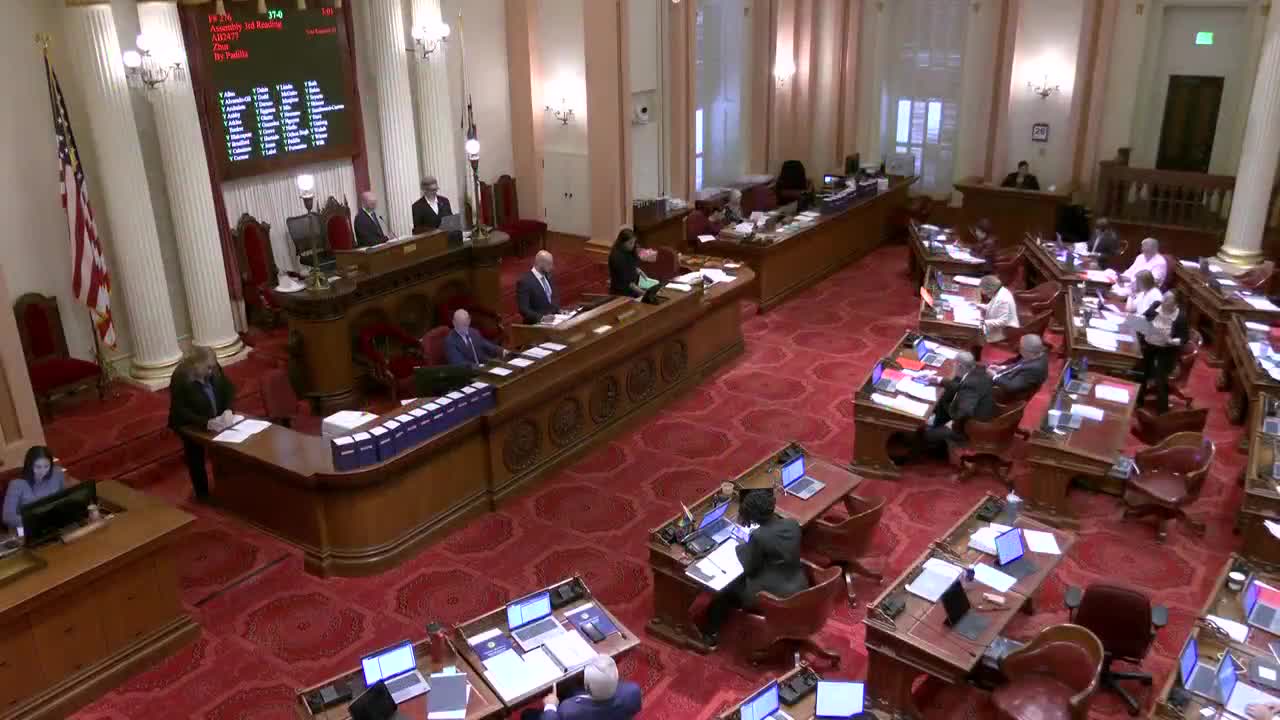 2MIN
Senate Floor
 1MIN
Senate Standing Committee on Appropriations
 6MIN
Senate Standing Committee on Labor, Public Employment and Retirement
 1MIN
Assembly Floor
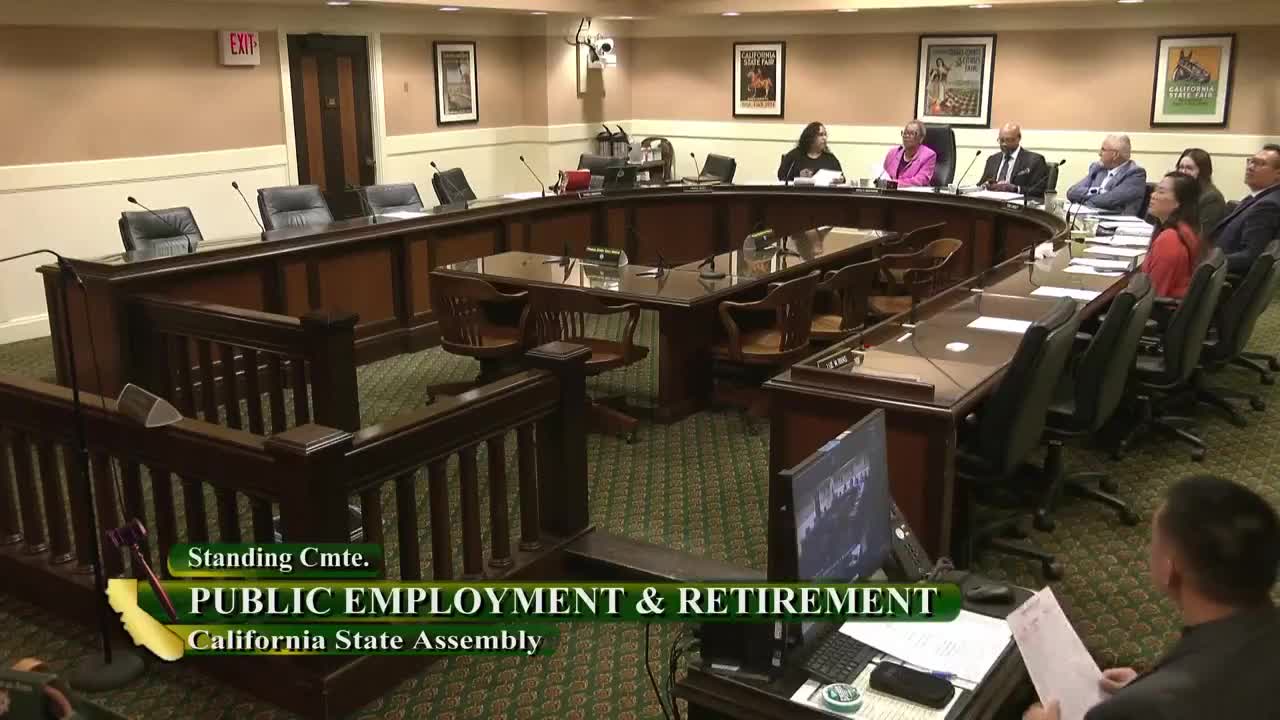 7MIN
Assembly Standing Committee on Public Employment and Retirement
Bill Author

Bill Co-Author(s):
