AB 2340: Medi-Cal: EPSDT services: informational materials.
- Session Year: 2023-2024
- House: Assembly
- Latest Version Date: 2024-09-25
Current Status:
Passed
(2024-09-25: Chaptered by Secretary of State - Chapter 564, Statutes of 2024.)
Introduced
In Committee
First Chamber
In Committee
Second Chamber
Enacted
What does this bill do?
The bill requires the state to produce clear, written materials that explain EPSDT (early and periodic screening, diagnostic, and treatment) services available through Medi‑Cal, including youth‑focused content for beneficiaries aged 12 to under 21. The materials must include federally required information (including age‑specific schedules from the American Academy of Pediatrics/Bright Futures and medically necessary services), be regularly updated and tested for clarity and cultural/linguistic appropriateness, and be given to beneficiaries or their parents/authorized representatives by Medi‑Cal plans and the state at enrollment and annually.
The summary is provided by generative AI which can make mistakes. For original language, please view the details in the table below.
Existing law establishes the Medi-Cal program, which is administered by the State Department of Health Care Services and under which qualified low-income individuals receive medically necessary health care services, through fee-for-service or managed care delivery systems. The Medi-Cal program is, in part, governed and funded by federal Medicaid program provisions. Under existing law, early and periodic screening, diagnostic, and treatment (EPSDT) services are covered under Medi-Cal for an individual under 21 years of age in accordance with certain federal provisions.
Existing federal regulations require the state to provide for a combination of written and oral methods designed to inform individuals eligible for EPSDT services, or their families, about the EPSDT program, within 60 days of the individuals initial Medicaid eligibility determination and, in the case of families that have not utilized EPSDT services, annually thereafter, as specified. Under those regulations, required information includes, among other components, the benefits of preventive health care and the services available under the EPSDT program and where and how to obtain those services.
This bill would require the department to prepare written informational materials that effectively explain and clarify the scope and nature of EPSDT services, as defined, that are available under the Medi-Cal program. Under the bill, the materials would include, but would not be limited to, the information required in the above-described federal regulations or their successor. Under the bill, the informational materials would also include content designed for youth, for purposes of delivery of that content to a beneficiary who is 12 years of age or older but under 21 years of age.
The bill would authorize the department to standardize the materials, as specified, and would require the department to regularly review the materials to ensure that they are up to date. The bill would require the department to test the quality, clarity, and cultural concordance of translations of the informational materials with Medi-Cal beneficiaries, in order to ensure that the materials use clear and nontechnical language that effectively informs beneficiaries.
The bill would require the department or a Medi-Cal managed care plan, to provide to a beneficiary who is eligible for EPSDT services, or to the parent or other authorized representative of that beneficiary, as applicable, the informational materials within a maximum number of calendar days after that beneficiarys enrollment in a managed care plan or initial Medi-Cal eligibility determination and annually thereafter, as specified by the department.
Existing law establishes the Medi-Cal program, which is administered by the State Department of Health Care Services and under which qualified low-income individuals receive medically necessary health care services, through fee-for-service or managed care delivery systems. The Medi-Cal program is, in part, governed and funded by federal Medicaid program provisions. Under existing law, early and periodic screening, diagnostic, and treatment (EPSDT) services are covered under Medi-Cal for an individual under 21 years of age in accordance with certain federal provisions.
Existing federal regulations require the state to provide for a combination of written and oral methods designed to inform individuals eligible for EPSDT services, or their families, about the EPSDT program, within 60 days of the individuals initial Medicaid eligibility determination and, in the case of families that have not utilized EPSDT services, annually thereafter, as specified. Under those regulations, required information includes, among other components, the benefits of preventive health care and the services available under the EPSDT program and where and how to obtain those services.
This bill would require the department to prepare written informational materials that effectively explain and clarify the scope and nature of EPSDT services, as defined, that are available under the Medi-Cal program. Under the bill, the materials would include, but would not be limited to, the information required in the above-described federal regulations or their successor. Under the bill, the informational materials would also include content designed for youth, for purposes of delivery of that content to a beneficiary who is 12 years of age or older but under 21 years of age.
The bill would authorize the department to standardize the materials, as specified, and would require the department to regularly review the materials to ensure that they are up to date. The bill would require the department to test the quality, clarity, and cultural concordance of translations of the informational materials with Medi-Cal beneficiaries, in order to ensure that the materials use clear and nontechnical language that effectively informs beneficiaries.
The bill would require the department or a Medi-Cal managed care plan, depending on the delivery system, to provide to a beneficiary who is eligible for EPSDT services, or to the parent or other authorized representative of that beneficiary, as applicable, the informational materials within 60 a maximum number of calendar days after that beneficiarys enrollment in a managed care plan or initial Medi-Cal eligibility determination and annually thereafter. thereafter, as specified by the department.
Existing law establishes the Medi-Cal program, which is administered by the State Department of Health Care Services and under which qualified low-income individuals receive medically necessary health care services, through fee-for-service or managed care delivery systems. The Medi-Cal program is, in part, governed and funded by federal Medicaid program provisions. Under existing law, early and periodic screening, diagnostic, and treatment (EPSDT) services are covered under Medi-Cal for an individual under 21 years of age in accordance with certain federal provisions.
Existing federal regulations require the state to provide for a combination of written and oral methods designed to inform individuals eligible for EPSDT services, or their families, about the EPSDT program, within 60 days of the individuals initial Medicaid eligibility determination and, in the case of families that have not utilized EPSDT services, annually thereafter, as specified. Under those regulations, required information includes, among other components, the benefits of preventive health care and the services available under the EPSDT program and where and how to obtain those services.
This bill would require the department to prepare written informational materials that effectively explain and clarify the scope and nature of EPSDT services, as defined, that are available under the Medi-Cal program. Under the bill, the materials would include, but would not be limited to, the information required in the above-described federal regulations or their successor. Under the bill, the informational materials would also include content designed for youth, for purposes of delivery of that content to a beneficiary who is eligible for EPSDT services and who is 12 years of age or older but under 21 years of age.
The bill would authorize the department to standardize the materials, as specified, and would require the department to regularly review the materials to ensure that they are up to date. The bill would require the department to test the quality, clarity, and cultural concordance of translations of the informational materials with Medi-Cal beneficiaries, in order to ensure that the materials use clear and nontechnical language that effectively informs beneficiaries.
The bill would require the department or a Medi-Cal managed care plan, depending on the delivery system, to provide to a beneficiary who is eligible for EPSDT services, or to the parent or other authorized representative of that beneficiary, as applicable, the informational materials within 60 calendar days after that beneficiarys initial Medi-Cal eligibility determination and annually thereafter.
Existing law establishes the Medi-Cal program, which is administered by the State Department of Health Care Services and under which qualified low-income individuals receive medically necessary health care services, through fee-for-service or managed care delivery systems. The Medi-Cal program is, in part, governed and funded by federal Medicaid program provisions. Under existing law, early and periodic screening, diagnostic, and treatment (EPSDT) services are covered under Medi-Cal for an individual under 21 years of age in accordance with certain federal provisions.
Under existing law, for an individual under 21 years of age, a service is medically necessary if the service meets the standards set forth in one of those federal EPSDT provisions, including the correction or amelioration of defects and physical and mental illnesses and conditions discovered by the screening services, whether or not those services are covered under the state plan. Existing law sets forth other provisions on medical necessity standards for covered benefits provided in a Medi-Cal behavioral health delivery system.This bill would prohibit limits on EPSDT services when those services are medically necessary. The bill would require a Medi-Cal managed care plan to cover all medically necessary EPSDT services, unless otherwise carved out of the contract between the managed care plan and the department, regardless of whether those services are covered under the Medi-Cal State Plan.The bill would establish definitions for EPSDT services and medically necessary by making references to the above-described provisions. The bill would specify that EPSDT services also include all age-specific assessments and services listed under the most current periodicity schedule by the American Academy of Pediatrics (AAP) and Bright Futures, and any other medically necessary assessments and services that exceed those listed by AAP and Bright Futures.The bill would require the department and its contractors to accurately reflect these provisions in any model evidence-of-coverage documents, beneficiary handbooks, and related material.Existing federal regulations require the state to provide for a combination of written and oral methods designed to inform individuals eligible for EPSDT services, or their families, about the EPSDT program, within 60 days of the individuals initial Medicaid eligibility determination and, in the case of families that have not utilized EPSDT services, annually thereafter, as specified. Under those regulations, required information includes, among other components, the benefits of preventive health care and the services available under the EPSDT program and where and how to obtain those services.
This bill would require the department to prepare written informational materials that effectively explain and clarify the scope and nature of EPSDT services, as defined, that are available under the Medi-Cal program. Under the bill, the materials would include, but would not be limited to, the information required in the above-described federal regulations or their successor. Under the bill, the informational materials would also include content designed for youth, for purposes of delivery of that content to a beneficiary who is eligible for EPSDT services and who is 12 years of age or older but under 21 years of age.
The bill would authorize the department to standardize the materials, as specified, and would require the department to regularly review the materials to ensure that they are up to date. The bill would require the department to test the quality, clarity, and cultural concordance of translations of the informational materials with Medi-Cal beneficiaries, in order to ensure that the materials use clear and nontechnical language that effectively informs beneficiaries.
The bill would require the department or a Medi-Cal managed care plan, depending on the delivery system, to provide to a beneficiary who is eligible for EPSDT services, or to the parent or other authorized representative of that beneficiary, as applicable, the informational materials within 60 calendar days after that beneficiarys initial Medi-Cal eligibility determination and annually thereafter.
Existing law establishes the Medi-Cal program, which is administered by the State Department of Health Care Services and under which qualified low-income individuals receive medically necessary health care services, through fee-for-service or managed care delivery systems. The Medi-Cal program is, in part, governed and funded by federal Medicaid program provisions. Under existing law, early and periodic screening, diagnostic, and treatment (EPSDT) services are covered under Medi-Cal for an individual under 21 years of age in accordance with certain federal provisions.
Under existing law, for an individual under 21 years of age, a service is medically necessary if the service meets the standards set forth in one of those federal EPSDT provisions, including the correction or amelioration of defects and physical and mental illnesses and conditions discovered by the screening services, whether or not those services are covered under the state plan. Existing law sets forth other provisions on medical necessity standards for covered benefits provided in a Medi-Cal behavioral health delivery system.
This bill would prohibit limits on EPSDT services when those services are medically necessary. The bill would require a Medi-Cal managed care plan to cover all medically necessary EPSDT services, unless otherwise carved out of the contract between the managed care plan and the department, regardless of whether those services are covered under the Medi-Cal State Plan.
The bill would establish definitions for EPSDT services and medically necessary by making references to the above-described provisions. The bill would specify that EPSDT services also include all age-specific assessments and services listed under the most current periodicity schedule by the American Academy of Pediatrics (AAP) and Bright Futures, and any other medically necessary assessments and services that exceed those listed by AAP and Bright Futures.
The bill would require the department and its contractors to accurately reflect these provisions in any model evidence-of-coverage documents, beneficiary handbooks, and related material.
(a)The department shall prepare written informational materials that effectively explain and clarify the scope and nature of early and periodic screening, diagnostic, and treatment (EPSDT) services that are available under the Medi-Cal program. The informational materials shall use clear and nontechnical language.
(b)(1)The informational materials shall include, but not be limited to, the information required in Section 441.56(a) of Title 42 of the Code of Federal Regulations or its successor.
(2)The informational materials shall include content designed for youth, for purposes of delivery of that content to the beneficiaries described in paragraph (2) of subdivision (d).
(3)The department may standardize the informational materials for use by the department and Medi-Cal managed care plans, as deemed appropriate by the department to implement this section.
(c)(1)The department shall, in consultation with stakeholders, regularly review the informational materials to ensure that the materials are up to date.
(2)To ensure that the informational materials use clear and nontechnical language that effectively informs Medi-Cal beneficiaries, the department shall test the quality, clarity, and cultural concordance of translations of the informational materials with Medi-Cal beneficiaries.
(d)(1)A Medi-Cal managed care plan shall provide to the respective beneficiary who is eligible for EPSDT services, or to the parent or other authorized representative of that beneficiary, as applicable, the informational materials described in this section within a maximum number of calendar days, as specified by the department, after that beneficiarys enrollment in a managed care plan and annually thereafter for beneficiaries who continue to be enrolled with the same Medi-Cal Managed Care Plan. For beneficiaries in fee-for-service Medi-Cal, the Department or its representative shall provide to the respective beneficiary who is eligible for EPSDT services, or to the parent or other authorized representative of that beneficiary, as applicable, the informational materials described in this section within 60 calendar days after that beneficiarys initial Medi-Cal eligibility determination and annually thereafter, for beneficiaries who continue to be enrolled in fee-for-service Medi-Cal.
(2)The department or the Medi-Cal managed care plan, as applicable, shall provide the content designed for youth, as described in paragraph (2) of subdivision (b), to a beneficiary who is 12 years of age or older but under 21 years of age, in accordance with the schedule described in paragraph (1).
(e)For purposes of this section, the following definitions apply:
(1)EPSDT services means services covered under subdivision (v) of Section 14132 and that meet the standards set forth in Section 1396d(r) of Title 42 of the United States Code.
(A)In addition to the screening, vision, dental, and hearing services described in Section 1396d(r)(1)-(4) of Title 42 of the United States Code, EPSDT services include such other necessary health care, diagnostic services, treatment, and other measures described in Section 1396d(a) of Title 42 of the United States Code to correct or ameliorate defects and physical and mental illnesses and conditions discovered by the screening services, whether or not those services are covered under the Medi-Cal State plan, in accordance with Section 1396d(r)(5) of Title 42 of the United States Code.
(B)EPSDT services also include all age-specific assessments and services listed under the most current periodicity schedule by the American Academy of Pediatrics (AAP) and Bright Futures, and any other medically necessary assessments and services that exceed those listed by AAP and Bright Futures.
(2)A service is medically necessary if it meets the applicable medical necessity standards set forth in Sections 14059.5 and 14184.402.
(a)The department shall prepare written informational materials that effectively explain and clarify the scope and nature of early and periodic screening, diagnostic, and treatment (EPSDT) services that are available under the Medi-Cal program. The informational materials shall use clear and nontechnical language.
(b)(1)The informational materials shall include, but not be limited to, the information required in Section 441.56(a) of Title 42 of the Code of Federal Regulations or its successor.
(2)The informational materials shall include content designed for youth, for purposes of delivery of that content to the beneficiaries described in paragraph (2) of subdivision (d).
(3)The department may standardize the informational materials for use by the department and Medi-Cal managed care plans, as deemed appropriate by the department to implement this section.
(c)(1)The department shall, in consultation with stakeholders, regularly review the informational materials to ensure that the materials are up to date.
(2)To ensure that the informational materials use clear and nontechnical language that effectively informs Medi-Cal beneficiaries, the department shall test the quality, clarity, and cultural concordance of translations of the informational materials with Medi-Cal beneficiaries.
(d)(1)The department, for purposes of Medi-Cal beneficiaries under the fee-for-service delivery system, or a Medi-Cal managed care plan, for purposes of Medi-Cal beneficiaries under the managed care delivery system, A Medi-Cal managed care plan shall provide to the respective beneficiary who is eligible for EPSDT services, or to the parent or other authorized representative of that beneficiary, as applicable, the informational materials described in this section within a maximum number of calendar days, as specified by the department, after that beneficiarys enrollment in a managed care plan and annually thereafter for beneficiaries who continue to be enrolled with the same Medi-Cal Managed Care Plan. For beneficiaries in fee-for-service Medi-Cal, the Department or its representative shall provide to the respective beneficiary who is eligible for EPSDT services, or to the parent or other authorized representative of that beneficiary, as applicable, the informational materials described in this section within 60 calendar days after that beneficiarys initial Medi-Cal eligibility determination and annually thereafter. thereafter, for beneficiaries who continue to be enrolled in fee-for-service Medi-Cal.
(2)The department or the Medi-Cal managed care plan, as applicable, shall provide the content designed for youth, as described in paragraph (2) of subdivision (b), to a beneficiary who is 12 years of age or older but under 21 years of age, in accordance with the schedule described in paragraph (1).
(e)For purposes of this section, the following definitions apply:
(1)EPSDT services means services covered under subdivision (v) of Section 14132 and that meet the standards set forth in Section 1396d(r) of Title 42 of the United States Code.
(A)In addition to the screening, vision, dental, and hearing services described in Section 1396d(r)(1)-(4) of Title 42 of the United States Code, EPSDT services include such other necessary health care, diagnostic services, treatment, and other measures described in Section 1396d(a) of Title 42 of the United States Code to correct or ameliorate defects and physical and mental illnesses and conditions discovered by the screening services, whether or not those services are covered under the Medi-Cal State plan, in accordance with Section 1396d(r)(5) of Title 42 of the United States Code.
(B)EPSDT services also include all age-specific assessments and services listed under the most current periodicity schedule by the American Academy of Pediatrics (AAP) and Bright Futures, and any other medically necessary assessments and services that exceed those listed by AAP and Bright Futures.
(2)A service is medically necessary if it meets the applicable medical necessity standards set forth in Sections 14059.5 and 14184.402.
(a)The department shall prepare written informational materials that effectively explain and clarify the scope and nature of early and periodic screening, diagnostic, and treatment (EPSDT) services that are available under the Medi-Cal program. The informational materials shall use clear and nontechnical language.
(b)(1)The informational materials shall include, but not be limited to, the information required in Section 441.56(a) of Title 42 of the Code of Federal Regulations or its successor.
(2)The informational materials shall include content designed for youth, for purposes of delivery of that content to the beneficiaries described in paragraph (2) of subdivision (d).
(3)The department may standardize the informational materials for use by the department and Medi-Cal managed care plans, as deemed appropriate by the department to implement this section.
(c)(1)The department shall, in consultation with stakeholders, regularly review the informational materials to ensure that the materials are up to date.
(2)To ensure that the informational materials use clear and nontechnical language that effectively informs Medi-Cal beneficiaries, the department shall test the quality, clarity, and cultural concordance of translations of the informational materials with Medi-Cal beneficiaries.
(d)(1)The department, for purposes of Medi-Cal beneficiaries under the fee-for-service delivery system, or a Medi-Cal managed care plan, for purposes of Medi-Cal beneficiaries under the managed care delivery system, shall provide to the respective beneficiary who is eligible for EPSDT services, or to the parent or other authorized representative of that beneficiary, as applicable, the informational materials described in this section within 60 calendar days after that beneficiarys initial Medi-Cal eligibility determination and annually thereafter.
(2)The department or the Medi-Cal managed care plan, as applicable, shall provide the content designed for youth, as described in paragraph (2) of subdivision (b), to a beneficiary who is eligible for EPSDT services and who is 12 years of age or older but under 21 years of age, in accordance with the schedule described in paragraph (1).
(e)For purposes of this section, the following definitions apply:
(1)EPSDT services means services covered under subdivision (v) of Section 14132 and that meet the standards set forth in Section 1396d(r) of Title 42 of the United States Code.
(A)In addition to the screening, vision, dental, and hearing services described in Section 1396d(r)(1)-(4) of Title 42 of the United States Code, EPSDT services include such other necessary health care, diagnostic services, treatment, and other measures described in Section 1396d(a) of Title 42 of the United States Code to correct or ameliorate defects and physical and mental illnesses and conditions discovered by the screening services, whether or not those services are covered under the Medi-Cal State plan, in accordance with Section 1396d(r)(5) of Title 42 of the United States Code.
(B)EPSDT services also include all age-specific assessments and services listed under the most current periodicity schedule by the American Academy of Pediatrics (AAP) and Bright Futures, and any other medically necessary assessments and services that exceed those listed by AAP and Bright Futures.
(2)A service is medically necessary if it meets the applicable medical necessity standards set forth in Sections 14059.5 and 14184.402.
(a)For Medi-Cal beneficiaries under 21 years of age, early and periodic screening, diagnostic, and treatment (EPSDT) services are covered benefits under the Medi-Cal program when medically necessary, as defined in subdivision (e).
(b)Limits, including, but not limited to, caps on the number of covered visits, on EPSDT services shall not be imposed when those services are medically necessary.
(c)A Medi-Cal managed care plan shall meet both of the following conditions with regard to EPSDT services:
(1)The managed care plan shall provide and cover all medically necessary EPSDT services, unless otherwise carved out of the contract between the managed care plan and the department, regardless of whether those services are covered under the Medi-Cal State Plan.
(2)The managed care plan shall not impose limits on medically necessary EPSDT services, in accordance with subdivision (b).
(d)The department and its contractors shall accurately reflect the provisions of this section in any model evidence-of-coverage documents, beneficiary handbooks, and related material.
(e)For purposes of this section, the following definitions apply:
(1)EPSDT services means services covered under subdivision (v) of Section 14132 and that meet the standards set forth in Section 1396d(r) of Title 42 of the United States Code.
(A)In addition to the screening, vision, dental, and hearing services described in Section 1396d(r)(1)-(4) of Title 42 of the United States Code, EPSDT services include such other necessary health care, diagnostic services, treatment, and other measures described in Section 1396d(a) of Title 42 of the United States Code to correct or ameliorate defects and physical and mental illnesses and conditions discovered by the screening services, whether or not those services are covered under the Medi-Cal State plan, in accordance with Section 1396d(r)(5) of Title 42 of the United States Code.
(B)EPSDT services also include all age-specific assessments and services listed under the most current periodicity schedule by the American Academy of Pediatrics (AAP) and Bright Futures, and any other medically necessary assessments and services that exceed those listed by AAP and Bright Futures.
(2)A service is medically necessary if it meets the applicable medical necessity standards set forth in Sections 14059.5 and 14184.402.
|
Date
|
Status
|
|---|---|
| Sep 25, 2024 | Chaptered by Secretary of State - Chapter 564, Statutes of 2024. |
| Sep 25, 2024 | Approved by the Governor. |
| Sep 3, 2024 | Enrolled and presented to the Governor at 3:30 p.m. |
| Aug 26, 2024 | Senate amendments concurred in. To Engrossing and Enrolling. (Ayes 77. Noes 0. Page 6569.). |
| Aug 21, 2024 | In Assembly. Concurrence in Senate amendments pending. May be considered on or after August 23 pursuant to Assembly Rule 77. |
| Aug 21, 2024 | Read third time. Passed. Ordered to the Assembly. (Ayes 33. Noes 0. Page 5270.). |
| Aug 8, 2024 | Read second time. Ordered to third reading. |
| Aug 7, 2024 | Read third time and amended. Ordered to second reading. |
| Jun 25, 2024 | Read second time. Ordered to third reading. |
| Jun 24, 2024 | From committee: Be ordered to second reading pursuant to Senate Rule 28.8. |
| Jun 13, 2024 | From committee: Do pass and re-refer to Com. on APPR with recommendation: To Consent Calendar. (Ayes 10. Noes 0.) (June 12). Re-referred to Com. on APPR. |
| May 29, 2024 | Referred to Com. on HEALTH. |
| May 16, 2024 | In Senate. Read first time. To Com. on RLS. for assignment. |
| May 16, 2024 | Read third time. Passed. Ordered to the Senate. (Ayes 71. Noes 0.) |
| May 9, 2024 | Read second time. Ordered to Consent Calendar. |
| May 8, 2024 | From committee: Do pass. To Consent Calendar. (Ayes 15. Noes 0.) (May 8). |
| Apr 17, 2024 | From committee: Do pass and re-refer to Com. on APPR. with recommendation: To Consent Calendar. (Ayes 16. Noes 0.) (April 16). Re-referred to Com. on APPR. |
| Apr 8, 2024 | Re-referred to Com. on HEALTH. |
| Apr 4, 2024 | From committee chair, with author's amendments: Amend, and re-refer to Com. on HEALTH. Read second time and amended. |
| Apr 2, 2024 | Re-referred to Com. on HEALTH. |
| Apr 1, 2024 | From committee chair, with author's amendments: Amend, and re-refer to Com. on HEALTH. Read second time and amended. |
| Feb 26, 2024 | Referred to Com. on HEALTH. |
| Feb 13, 2024 | From printer. May be heard in committee March 14. |
| Feb 12, 2024 | Read first time. To print. |
|
Date
|
Description
|
Location
|
Votes
|
|
|---|---|---|---|---|
| Aug 26, 2024 | AB 2340 Bonta Concurrence in Senate Amendments | Assembly Floor |
Passed |
|
| Aug 21, 2024 | Assembly 3rd Reading AB2340 Bonta et al. By Rubio | Senate Floor |
Passed |
|
| Jun 12, 2024 | Do pass, but first be re-referred to the Committee on [Appropriations] with the recommendation: To Consent Calendar | Senate Standing Committee on Health |
Passed |
|
| May 16, 2024 | AB 2340 Bonta Consent Calendar Second Day Regular Session | Assembly Floor |
Passed |
|
| May 8, 2024 | Do pass. To Consent Calendar. | Assembly Standing Committee on Appropriations |
Passed |
|
| Apr 16, 2024 | Do pass and be re-referred to the Committee on [Appropriations] with recommendation: To Consent Calendar | Assembly Standing Committee on Health |
Passed |
This list shows positions taken on this bill by organizations on the date displayed, which is linked to the original source.
Positions by individuals are not included.
|
Organization
|
Position
|
Date
|
|---|---|---|
| AltaMed Health Services | * Support | Jun 21, 2024 |
| America's Physician Groups | * Support | Jun 19, 2024 |
| American Academy Of Pediatrics, California | ** Support | |
| California Academy Of Family Physicians | ** Support | |
| California Association For Health Services At Home | ** Support | |
| California Dental Association | ** Support | |
| California Teachers Association | ** Support | |
| Children Now | ** Support | |
| ChildrenS Choice Dental Care | ** Support | |
| Coalition for Adequate Funding for Special Education | ** Support | |
| County Health Executives Association Of California | ** Support | |
| Easterseals Northern California | ** Support | |
| Equality California | * Support | Jun 21, 2024 |
| Health Officers Association Of California | ** Support | |
| Leadingage California | * Support | Jun 19, 2024 |
| National Center for Youth Law | ** Support | |
| National Health Law Program | ** Support | |
| Planned Parenthood Affiliates Of California | * Support | Jun 19, 2024 |
| Reproductive Freedom for all California | * Support | Jun 21, 2024 |
| Special Needs Network | ** Support | |
| Steinberg Institute | ** Support | |
| The Children's Partnership | ** Support | |
| The Council of Autism Service Providers | ** Support | |
| UCSF | * Support | Jun 19, 2024 |
| western center on law & poverty | ** Support |
CONCURRENCE IN SENATE AMENDMENTS
CSA1 Bill Id:AB 2340
Author:(Bonta)
As Amended Ver:August 07, 2024
Majority vote
SUMMARY
Requires the Department of Health Care Services (DHCS) to take specified actions in DHCS's implementation of federal regulations requiring states to share informational materials about early and periodic screening, diagnostic, and treatment (EPSDT) services with Medi-Cal beneficiaries under 21 and their families.
Senate Amendments
Clarify the responsible party and applicable timeline for sharing informational materials, depending on whether a beneficiary is enrolled in a Medi-Cal managed care plan.
COMMENTS
- EPSDT and Children's Preventive Health Services in Medi-Cal. Federal law establishes an entitlement to the EPSDT benefit, forming the foundation for children's coverage under Medicaid. State law provides limited direction to DHCS on how to implement EPSDT. The EPSDT benefit provides a comprehensive array of prevention, diagnostic, and treatment services for individuals under the age of 21 who are enrolled in Medi-Cal. Under EPSDT, Medi-Cal covers periodic screening assessments for infants, children, and adolescents under 21 years of age, as specified in the American Academy of Pediatrics (AAP) Bright Futures® preventive healthcare periodicity schedule. The AAP Bright Futures® periodicity schedule provides clear, comprehensive guidance on recommended services at each well-child visit, corresponding to each age milestone up to age 21.
EPSDT is an expansive entitlement for children. In addition to screening, vision, dental, hearing and other preventive services, coverage also includes such other diagnostic and treatment services federally allowable under Medicaid to "correct or ameliorate defects and physical and mental illnesses and conditions," whether or not those services are covered under the Medicaid State Plan. Federal regulations require Medicaid programs to provide informational materials describing this entitlement to the families of program beneficiaries under 21.
- Children Now Report Card. In their recently issued 2024 California Children's Report Card that measures numerous aspects of children's well-being, Children Now gave California a D for preventive screenings, D+ for health care access and accountability, and a D+ in supporting mental health. Overall, outside of health care coverage where California receives an A-, the report card paints a fairly dire picture of children's access to and utilization of health care. Children Now indicates, for instance, only one in four California children in Medi-Cal receive important blood lead and developmental screenings, California's kids are dangerously behind on routine vaccinations, and California lags far behind national benchmarks for Medi-Cal care usage.
According to recent state data downloaded from Centers for Medicare and Medicaid Services data portal on children's preventive care measures, California's numbers continue to significantly lag that of other states.
- Bureau of State Audits (BSA) Audits. A recent state audit in 2019 found millions of children enrolled in Medi-Cal do not receive all required preventive services; that DHCS delegates responsibilities to ensure access and use of children's preventive services to managed care plans, but it does not provide effective guidance and oversight; and that many of the state's children do not have adequate access to Medi-Cal providers who can deliver the required pediatric preventive services. In November 2023, the BSA issued another audit, this time related to children's access to behavioral health care in Medi-Cal. BSA found many Medi-Cal managed care plans are unable to provide children with timely access to behavioral health care, as well as weaknesses in the way DHCS and Department Managed Health Care measure timely access.
- DHCS Response to the September 2022 Audit; Current Efforts. DHCS fully implemented a number of the audit recommendations. In their audit responses, DHCS also cites a number of ongoing initiatives to improve children's health care in Medi-Cal. DHCS notes the March 2022 brief, "Medi-Cal's Strategy to Support Health and Opportunity for Children and Families" (Strategy), is a forward-looking policy agenda for children and families enrolled in Medi-Cal, intended to solidify DHCS' accountability and oversight of children's services. Strategies include, for example, new leadership structure at DHCS, including a "child health champion;" and increasing pediatric care performance standards for managed care plans.
DHCS also began an education and outreach campaign regarding EPSDT for enrollees, providers, and managed care plans to support families (further discussed below).
Low Medi-Cal rates were also cited in the audit as an impediment to increasing pediatric care access. The 2023-24 Budget Act increased rates for primary care, obstetric, and non-specialty mental health services for providers in Medi-Cal effective for dates of service on or after January 1, 2024. The 2024-25 Budget Act provides further increases for primary care and other routine and preventive services, such as vision screening and vaccine administration, beginning January 1, 2026.
- "Medi-Cal for Kids and Teens" EPSDT Education and Outreach Campaign. As noted above, DHCS's Strategy document included an education and outreach campaign. DHCS notes it is designed to supplement work DHCS has undertaken to advance EPSDT awareness and close gaps and disparities in care that have grown particularly egregious during the COVID-19 public health emergency. The Strategy indicates, as part of this campaign, that DHCS intends to coordinate with a range of child-serving stakeholders, including other state and local agencies and many others, to deliver targeted messaging related to prevention and early intervention services available under EPSDT. DHCS notes training, technical assistance, policy guidance, and model communications to enhance understanding of EPSDT will be available to plans, providers, and these child-serving stakeholders.
In February 2023, DHCS released a consumer-tested outreach toolkit that includes brochures specific to Medi-Cal services for children and teens under EPSDT that are intended to be shared annually with beneficiaries, as well as a "Know Your Rights Guide" detailing what actions beneficiaries can take if they are denied services. DHCS has designed and distributed the materials under the name "Medi-Cal for Kids and Teens" to refer to coverage and requirements that apply to Medi-Cal beneficiaries under 21 pursuant to EPSDT. These written materials also include a brochure designed specifically for teens and young adults.
- Guidance to Managed Care Plans. DHCS issued All-Plan Letter (APL) 19-010 in 2019 and an updated letter in 2023, APL 23-005, to clarify and provide guidance to Medi-Cal managed care plans, on their obligations to provide health services under EPSDT. These plans provide coverage to the vast majority of Medi-Cal enrolled children. Beginning in 2023, plans are required to mail DHCS-supplied outreach and education materials consisting of the age appropriate material and "Medi-Cal for Kids & Teens: Your Medi-Cal Rights" letter to Members under the age of 21 on an annual basis. For new members, plans are required to mail the materials within seven calendar days of enrollment in the plan, with similar requirements for 2024 and ongoing, except beginning in 2024 materials may be shared electronically. Plans were required to mail out the first set of materials to existing Members beginning June 1, 2023. For 2023, DHCS will translate the brochures and letter into DHCS's threshold languages.
According to the Author
Despite the Medi-Cal entitlement to early and periodic screening and preventive health care services, California lags far behind other states in providing regular, preventive health care to Medicaid-enrolled infants and children. Unfortunately, utilization has not recovered post-pandemic, and in fact it has continued to decline. This is unacceptable, and behind the statistics are the lives of vulnerable children.
When we miss the mark, we miss opportunities to provide these children the screening, early intervention, and treatment they need to stay healthy. We must reverse this trend, and one common-sense thing we can do is ensure every eligible child and family receives timely, relevant, and user-friendly information about the comprehensive children's health care services that are recommended and covered by Medi-Cal. This alone will not address the crisis in children's preventive care, but it will set the long-term foundation for greater success by ensuring the informational materials are meaningful, culturally concordant, and provided timely, and include materials that speak directly to the needs of youth and encourage them to seek preventive health care and other health care they need.
Arguments in Support
This bill is supported by children's advocates, health care providers, a mental health advocacy organization and health consumer advocacy organization. Children Now writes in support that California policymakers must ensure that every young child receives required routine health screenings in a timely way and that disparities in children's health are addressed, and that this bill will ensure the regular delivery of relevant, high-quality, timely and culturally concordant informational materials about EPSDT covered services. The California Dental Association writes that early detection and prevention are essential in preventing dental disease and the informational materials about EPSDT covered services to will help increase awareness and utilization.
Arguments in Opposition
There is no known opposition.
FISCAL COMMENTS
According to the Senate Appropriations Committee, pursuant to Senate Rule 28.8, negligible state costs.
VOTES:
ASM HEALTH: 16-0-0
YES: Bonta, Waldron, Aguiar-Curry, Arambula, Wendy Carrillo, Flora, Haney, Jones-Sawyer, Maienschein, McCarty, Joe Patterson, Rodriguez, Sanchez, Santiago, Schiavo, Weber
ASM APPROPRIATIONS: 15-0-0
YES: Wicks, Sanchez, Arambula, Bryan, Calderon, Wendy Carrillo, Dixon, Mike Fong, Friedman, Haney, Hart, Jim Patterson, Pellerin, Ta, Villapudua
ASSEMBLY FLOOR: 71-0-9
YES: Aguiar-Curry, Alanis, Arambula, Bains, Bauer-Kahan, Bennett, Berman, Boerner, Bonta, Bryan, Calderon, Juan Carrillo, Wendy Carrillo, Chen, Connolly, Davies, Dixon, Essayli, Mike Fong, Friedman, Gabriel, Gallagher, Garcia, Grayson, Haney, Hart, Holden, Hoover, Jackson, Jones-Sawyer, Kalra, Lackey, Lee, Low, Lowenthal, Maienschein, McCarty, McKinnor, Muratsuchi, Stephanie Nguyen, Ortega, Pacheco, Papan, Jim Patterson, Joe Patterson, Pellerin, Petrie-Norris, Quirk-Silva, Ramos, Rendon, Reyes, Luz Rivas, Rodriguez, Blanca Rubio, Sanchez, Santiago, Schiavo, Soria, Ta, Ting, Valencia, Villapudua, Waldron, Wallis, Ward, Weber, Wicks, Wilson, Wood, Zbur, Robert Rivas
ABS, ABST OR NV: Addis, Alvarez, Cervantes, Megan Dahle, Flora, Vince Fong, Gipson, Irwin, Mathis
SENATE FLOOR: 33-0-7
YES: Allen, Alvarado-Gil, Archuleta, Ashby, Blakespear, Caballero, Cortese, Dahle, Dodd, Durazo, Eggman, Glazer, Gonzalez, Grove, Hurtado, Jones, Laird, Limón, McGuire, Min, Newman, Nguyen, Niello, Ochoa Bogh, Padilla, Portantino, Roth, Rubio, Seyarto, Stern, Umberg, Wiener, Wilk
ABS, ABST OR NV: Atkins, Becker, Bradford, Menjivar, Skinner, Smallwood-Cuevas, Wahab
UPDATED
VERSION: August 07, 2024
CONSULTANT: Lisa Murawski / HEALTH / (916) 319-2097 FN: 0004359
SENATE RULES COMMITTEE Office of Senate Floor Analyses (916) 651-1520 Fax: (916) 327-4478 | AB 2340 |
THIRD READING
Bill No: AB 2340
Author: Bonta (D), et al.
Amended: 8/7/24 in Senate
Vote: 21
SENATE HEALTH COMMITTEE: 10-0, 6/12/24
AYES: Roth, Nguyen, Glazer, Gonzalez, Grove, Hurtado, Limón, Menjivar, Rubio, Wiener
NO VOTE RECORDED: Smallwood-Cuevas
SENATE APPROPRIATIONS COMMITTEE: Senate Rule 28.8
ASSEMBLY FLOOR: 71-0, 5/16/24 (Consent) - See last page for vote
SUBJECT: Medi-Cal: EPSDT services: informational materials
SOURCE: Author
DIGEST:
This bill requires the Department of Health Care Services (DHCS), to prepare written materials that explain early and periodic screening, diagnosis, and treatment services available under the Medi-Cal program; and, to annually distribute, or require Medi-Cal managed care plans to distribute, to Medi-Cal recipients under 21 years of age.
Senate Floor Amendments of 8/7/24 modify the timelines and entity responsible for sending the informational written materials to Medi-Cal recipients dependent on whether the recipient is in Medi-Cal fee-for-service or a Medi-Cal managed care plan.
ANALYSIS:
Existing federal law:
- Requires coverage for individuals under age 21 of all necessary health care, diagnostic services, treatment, and other measures to correct or ameliorate defects and physical and mental illnesses and conditions discovered by the screening services, whether or not such services are covered under the State plan, known as the Early and Periodic Screening, Diagnosis, and Treatment (EPSDT) benefit. [Title 42 United States Code §1396d]
- Requires state Medicaid agencies to provide for combinations of written and oral methods to effectively inform all EPSDT individuals and their families, including those who are blind, deaf, unable to read or understand English, about the EPSDT program with the following information in clear, nontechnical language within 60 days of their initial Medicaid eligibility and annually thereafter:
- The benefits of preventive health care;
- The services available under the EPSDT program and where and how to obtain those services;
- That the services provided under the EPSDT program are without cost to eligible individuals; and
- That necessary transportation and scheduling assistance is available to the EPSDT eligible individual upon request. [Title 42 Code of Federal Regulations §441.56]
Existing state law:
- Establishes the Medi-Cal program, which is administered by the DHCS, and under which qualified low-income individuals receive health care services. [Welfare and Institutions Code (WIC) §14000, et seq.]
- Establishes a schedule of benefits under the Medi-Cal program, which includes benefits required under federal law and benefits provided at the state’s option, both of which are funded with federal and state dollars. The schedule of benefits include all medically necessary services covered under the federal EPSDT benefit for individuals under 21 years of age. [WIC §14132, §14059.5, §14184.402]
- Requires Medi-Cal managed care plans (Medi-Cal plans) to include developmental screening services for individuals zero to three years of age, inclusive, that comply with the periodicity schedule and standardized and validated developmental screening tools established by the Bright Future Guidelines and Recommendations for Preventive Pediatric Care. [WIC §14132.195]
This bill:
- Requires DHCS to prepare written informational materials that effectively explain in clear, non-technical language, the following information:
- The benefits of preventive health care;
- The EPSDT services available under the Medi-Cal program and where and how to obtain those services;
- That the EPSDT services provided are without cost to eligible individuals; and,
- That necessary transportation and scheduling assistance is available to the EPSDT eligible individual upon request.
- Requires the materials to include content designed for youth to be provided to recipients who are between ages 12 and 21.
- Allows DHCS to standardize the informational materials for use by DHCS and the Medi-Cal plans as deemed appropriate by DHCS. Requires DHCS, in consultation with stakeholders, to regularly review the informational materials to ensure the materials are up to date.
- Requires DHCS or its representative, for recipients in the fee-for-service delivery system, to provide the materials to recipients or parents, or other authorized representatives, within 60 days of the recipient’s initial Medi-Cal eligibility determination and annually thereafter. Requires a Medi-Cal managed care plan, for recipients enrolled in a plan, to provide the materials to recipients or parents within a maximum number of calendar days as specified by DHCS, after the recipient’s enrollment in the plan, and annually thereafter.
- Requires DHCS or the Medi-Cal plan to provide the content designed for youth between 12 and 21 years of age.
- Defines EPSDT services as those services required under the federal EPSDT benefit in federal law and regulation, whether or not those services are covered under the Medi-Cal state plan, as well as all age-specific assessments and services listed under the most current periodicity schedule by the American Academy of Pediatrics (AAP) and Bright Futures, and any other medically necessary assessments and services that exceed those listed in those schedules.
Background
- EPSDT. The purpose of EPSDT is to discover and treat childhood health conditions before they become serious or disabling. States must inform all Medicaid-eligible families about the benefit, screen children at reasonable intervals, diagnose and treat any health problems found, and report certain data regarding EPSDT participation annually to the Centers for Medicare & Medicaid Services (CMS). According to CMS, the EPSDT benefit is more robust than the Medicaid benefit for adults, and the goal is to assure that individual children get the health care they need when they need it—the right care to the right child at the right time in the right setting. For example, services that are optional benefits under federal law for adults in Medi-Cal (such as dental, eyeglasses, physical and occupational therapy and pharmacy) are required goods and services under EPSDT. All Medi-Cal plans must provide EPSDT preventive services, including screenings, designed to identify health and developmental issues as early as possible. Medi-Cal plans must provide plan enrollees with appropriate referrals for diagnosis and treatment without delay.
- State Auditor report findings. In September 2022, the State Auditor issued a follow up report to a 2019 audit on the delivery of preventive services to children in Medi-Cal, finding that DHCS has been unsuccessful in increasing the percentage of children receiving the preventive services required by Medi‑Cal. In fact, from fiscal years 2018–19 through 2020–21, DHCS provided these services to less than half of the children in Medi‑Cal, leaving an average of 2.9 million children per year missing at least some preventive services. This was worse than the results cited in the 2019 report. The percentage of children in Medi‑Cal receiving the required amounts of preventive care continued to be even lower among certain age groups during the most recent three fiscal years. For example, nearly three quarters of two-year-olds in Medi‑Cal did not receive the required number of preventive services, which includes blood lead testing and screening for developmental disorders. The follow up report also found in the more than three years since its initial recommendations were issued, DHCS fully implemented just six of the 14 recommendations. The report specifically called out DHCS’s failure to distribute outreach materials during the pandemic, failure to ensure that provider directories were accurate, and failure to increase the number of providers available. The report renewed the eight remaining recommendations from its 2019 report, including a specific recommendation that DHCS include clearer and more comprehensive information about all the preventive services that children are eligible for, to eligible children and their families. DHCS indicated in its response to the audit that these materials were under development, would include information on preventive services as well as the other available EPSDT services, would be user tested, and would be tested for health literacy.
- Recent DHCS efforts to improve children’s access to health care. In March 2022, DHCS issues a brief “Medi-Cal’s Strategy to Support Health and Opportunity for Children and Families” intended as a forward-looking strategy to unify existing and newly proposed child and family health initiatives and to increase DHCS’s accountability and oversight of children’s services. Among the strategies included in the brief were a new leadership structure at DHCS, including a “child health champion”; a new population health requirement to establish clear, enforceable requirements for Medi-Cal plans to identify and serve children in need of care coordination; an outreach and education campaign regarding EPSDT for families, providers, and plans; increased pediatric performance standards for Medi-Cal plans; a plan requirement to provide more services in schools by school-affiliated health providers; and enhanced payments to pediatric providers to increase the use of key preventative and screening services for children. In January of 2024, DHCS increased primary care provider rates, as required by CMS and the recently passed Managed Care Organization tax.
DHCS also recently rebranded EPSDT services as “Medi-Cal for Kids and Teens” as part of its EPSDT outreach and education campaign. In February 2023, DHCS released a consumer-tested outreach toolkit that includes brochures specific to Medi-Cal services for children and teens under EPSDT that are intended to be shared annually with recipients, as well as a “Know Your Rights Guide” detailing what actions recipients can take if they are denied services. These written materials also include a brochure designed specifically for teens and young adults. According to DHCS, training, technical assistance, policy guidance, and model communications to enhance understanding of EPSDT will be available to plans, providers, and other child-serving stakeholders. DHCS issued All-Plan Letter 23-005 in 2023 to instruct Medi-Cal plans on their outreach requirements, which includes using DHCS-supplied outreach and education brochures on the availability of EPSDT services within seven days of enrollment in the plan and on an annual basis thereafter.
Comments
- Author’s statement. According to the author, “despite the Medi-Cal entitlement to EPSDT services, California lags far behind other states in providing regular, preventive health care to Medicaid-enrolled infants and children. Prior to 2020, California ranked 40th nationwide for utilization of children’s preventive services, or 10 percentage points below the national average. During the COVID-19 pandemic, this utilization fell dramatically. Unfortunately, utilization has not recovered post-pandemic, and in fact, it has continued to decline. This is unacceptable, and behind the statistics are the lives of vulnerable children. When we miss the mark, we miss opportunities to provide these children the screening, early intervention, and treatment they need to stay healthy. We must reverse this trend. One common-sense thing we can do is ensure every eligible child and family receives timely, relevant, and user-friendly information about the comprehensive children’s health care services that are recommended and covered by Medi-Cal. This alone will not address the crisis in children’s preventive care, but will set the long-term foundation for greater success by ensuring the informational materials are meaningful, culturally concordant, provided timely, and include materials that speak directly to the needs of youth and encourage them to seek the health care they need.”
- Policy comment. This bill largely codifies both federal regulation on outreach and education for EPSDT services as well as actions that DHCS has recently undertaken. Nonetheless, considering the poor record with regards to children’s access to health services in the Medi-Cal program, such codification is warranted.
FISCAL EFFECT: Appropriation: No Fiscal Com.: Yes Local: No
SUPPORT: (Verified 8/6/24)
American Academy of Pediatrics, California
California Academy of Family Physicians
California Association for Health Services At Home
California Dental Association
California Teachers Association
Children Now
Children’s Choice Dental Care
Coalition for Adequate Funding for Special Education
County Health Executives Association of California
Easterseals Northern California
Health Officers Association of California
National Center for Youth Law
National Health Law Program
Special Needs Network
Steinberg Institute
The Children's Partnership
The Council of Autism Service Providers
Western Center on Law & Poverty
OPPOSITION: (Verified 8/6/24)
None received
ARGUMENTS IN SUPPORT: Supporters include a number of children’s and health care advocates as well as health providers. The Children’s Partnership states that while Medi-Cal has made efforts to raise awareness about its comprehensive children’s benefit and to increase access and quality, Medi-Cal’s performance in well-child care and mental health care remain disturbingly low. They point to the multiple audits showing the Medi-Cal program’s poor numbers for basic preventive and behavioral health services for children. Children Now writes that as pointed out in their 2024 California Children’s Report Card, only one in four California children in Medi-Cal receive important blood lead and developmental screenings. Black children are more likely to be harmed by toxins like lead, less likely to be screened for high blood lead levels, and less likely to be screened for the developmental delays that may result from lead exposure. California policymakers must ensure that every young child receives required routine health screenings in a timely way and that disparities in children’s health are addressed.
ASSEMBLY FLOOR: 71-0, 5/16/24
AYES: Aguiar-Curry, Alanis, Arambula, Bains, Bauer-Kahan, Bennett, Berman, Boerner, Bonta, Bryan, Calderon, Juan Carrillo, Wendy Carrillo, Chen, Connolly, Davies, Dixon, Essayli, Mike Fong, Friedman, Gabriel, Gallagher, Garcia, Grayson, Haney, Hart, Holden, Hoover, Jackson, Jones-Sawyer, Kalra, Lackey, Lee, Low, Lowenthal, Maienschein, McCarty, McKinnor, Muratsuchi, Stephanie Nguyen, Ortega, Pacheco, Papan, Jim Patterson, Joe Patterson, Pellerin, Petrie-Norris, Quirk-Silva, Ramos, Rendon, Reyes, Luz Rivas, Rodriguez, Blanca Rubio, Sanchez, Santiago, Schiavo, Soria, Ta, Ting, Valencia, Villapudua, Waldron, Wallis, Ward, Weber, Wicks, Wilson, Wood, Zbur, Robert Rivas
NO VOTE RECORDED: Addis, Alvarez, Cervantes, Megan Dahle, Flora, Vince Fong, Gipson, Irwin, Mathis
Prepared by: Jen Flory / HEALTH / (916) 651-4111
8/8/24 16:16:54
**** END ****
ThSENATE RULES COMMITTEE Office of Senate Floor Analyses (916) 651-1520 Fax: (916) 327-4478 | AB 2340 |
THIRD READING
Bill No: AB 2340
Author: Bonta (D)
Amended: 4/4/24 in Assembly
Vote: 21
SENATE HEALTH COMMITTEE: 10-0, 6/12/24
AYES: Roth, Nguyen, Glazer, Gonzalez, Grove, Hurtado, Limón, Menjivar, Rubio, Wiener
NO VOTE RECORDED: Smallwood-Cuevas
SENATE APPROPRIATIONS COMMITTEE: Senate Rule 28.8
ASSEMBLY FLOOR: 71-0, 5/16/24 (Consent) - See last page for vote
SUBJECT: Medi-Cal: EPSDT services: informational materials
SOURCE: Author
DIGEST:
This bill requires the Department of Health Care Services (DHCS), to prepare written materials that explain early and periodic screening, diagnosis, and treatment services available under the Medi-Cal program; and, to annually distribute, or require Medi-Cal managed care plans to distribute, to Medi-Cal recipients under 21 years of age.
ANALYSIS:
Existing federal law:
- Requires coverage for individuals under age 21 of all necessary health care, diagnostic services, treatment, and other measures to correct or ameliorate defects and physical and mental illnesses and conditions discovered by the screening services, whether or not such services are covered under the State plan, known as the Early and Periodic Screening, Diagnosis, and Treatment (EPSDT) benefit. [42 USC §1396d]
- Requires state Medicaid agencies to provide for combinations of written and oral methods to effectively inform all EPSDT individuals and their families, including those who are blind, deaf, unable to read or understand English, about the EPSDT program with the following information in clear, nontechnical language within 60 days of their initial Medicaid eligibility and annually thereafter:
- The benefits of preventive health care;
- The services available under the EPSDT program and where and how to obtain those services;
- That the services provided under the EPSDT program are without cost to eligible individuals; and
- That necessary transportation and scheduling assistance is available to the EPSDT eligible individual upon request. [42 CFR §441.56]
Existing state law:
- Establishes the Medi-Cal program, which is administered by the DHCS, and under which qualified low-income individuals receive health care services. [WIC §14000, et seq.]
- Establishes a schedule of benefits under the Medi-Cal program, which includes benefits required under federal law and benefits provided at the state’s option, both of which are funded with federal and state dollars. The schedule of benefits include all medically necessary services covered under the federal EPSDT benefit for individuals under 21 years of age. [WIC §14132, §14059.5, §14184.402]
- Requires Medi-Cal managed care plans (Medi-Cal plans) to include developmental screening services for individuals zero to three years of age, inclusive, that comply with the periodicity schedule and standardized and validated developmental screening tools established by the Bright Future Guidelines and Recommendations for Preventive Pediatric Care. [WIC §14132.195]
This bill:
- Requires DHCS to prepare written informational materials that effectively explain in clear, non-technical language, the following information:
- The benefits of preventive health care;
- The EPSDT services available under the Medi-Cal program and where and how to obtain those services;
- That the EPSDT services provided are without cost to eligible individuals; and,
- That necessary transportation and scheduling assistance is available to the EPSDT eligible individual upon request.
- Requires the materials to include content designed for youth to be provided to recipients who are between ages 12 and 21.
- Allows DHCS to standardize the informational materials for use by DHCS and the Medi-Cal plans as deemed appropriate by DHCS. Requires DHCS, in consultation with stakeholders, to regularly review the informational materials to ensure the materials are up to date.
- Requires DHCS, for recipients in the fee-for-service delivery system, and a Medi-Cal plan, for recipients enrolled in plans, to provide the materials to recipients or parents, or other authorized representatives, within 60 days of the recipient’s initial Medi-Cal eligibility determination and annually thereafter. Requires DHCS or the Medi-Cal plan to provide the content designed for youth between 12 and 21 years of age.
- Defines EPSDT services as those services required under the federal EPSDT benefit in federal law and regulation, whether or not those services are covered under the Medi-Cal state plan, as well as all age-specific assessments and services listed under the most current periodicity schedule by the American Academy of Pediatrics (AAP) and Bright Futures, and any other medically necessary assessments and services that exceed those listed in those schedules.
Background
- EPSDT. The purpose of EPSDT is to discover and treat childhood health conditions before they become serious or disabling. States must inform all Medicaid-eligible families about the benefit, screen children at reasonable intervals, diagnose and treat any health problems found, and report certain data regarding EPSDT participation annually to the Centers for Medicare & Medicaid Services (CMS). According to CMS, the EPSDT benefit is more robust than the Medicaid benefit for adults, and the goal is to assure that individual children get the health care they need when they need it—the right care to the right child at the right time in the right setting. For example, services that are optional benefits under federal law for adults in Medi-Cal (such as dental, eyeglasses, physical and occupational therapy and pharmacy) are required goods and services under EPSDT. All Medi-Cal plans must provide EPSDT preventive services, including screenings, designed to identify health and developmental issues as early as possible. Medi-Cal plans must provide plan enrollees with appropriate referrals for diagnosis and treatment without delay.
- State Auditor report findings. In September 2022, the State Auditor issued a follow up report to a 2019 audit on the delivery of preventive services to children in Medi-Cal, finding that DHCS has been unsuccessful in increasing the percentage of children receiving the preventive services required by Medi‑Cal. In fact, from fiscal years 2018–19 through 2020–21, DHCS provided these services to less than half of the children in Medi‑Cal, leaving an average of 2.9 million children per year missing at least some preventive services. This was worse than the results cited in the 2019 report. The percentage of children in Medi‑Cal receiving the required amounts of preventive care continued to be even lower among certain age groups during the most recent three fiscal years. For example, nearly three quarters of two-year-olds in Medi‑Cal did not receive the required number of preventive services, which includes blood lead testing and screening for developmental disorders. The follow up report also found in the more than three years since its initial recommendations were issued, DHCS fully implemented just six of the 14 recommendations. The report specifically called out DHCS’s failure to distribute outreach materials during the pandemic, failure to ensure that provider directories were accurate, and failure to increase the number of providers available. The report renewed the eight remaining recommendations from its 2019 report, including a specific recommendation that DHCS include clearer and more comprehensive information about all the preventive services that children are eligible for, to eligible children and their families. DHCS indicated in its response to the audit that these materials were under development, would include information on preventive services as well as the other available EPSDT services, would be user tested, and would be tested for health literacy.
- Recent DHCS efforts to improve children’s access to health care. In March 2022, DHCS issues a brief “Medi-Cal’s Strategy to Support Health and Opportunity for Children and Families” intended as a forward-looking strategy to unify existing and newly proposed child and family health initiatives and to increase DHCS’s accountability and oversight of children’s services. Among the strategies included in the brief were a new leadership structure at DHCS, including a “child health champion”; a new population health requirement to establish clear, enforceable requirements for Medi-Cal plans to identify and serve children in need of care coordination; an outreach and education campaign regarding EPSDT for families, providers, and plans; increased pediatric performance standards for Medi-Cal plans; a plan requirement to provide more services in schools by school-affiliated health providers; and enhanced payments to pediatric providers to increase the use of key preventative and screening services for children. In January of 2024, DHCS increased primary care provider rates, as required by CMS and the recently passed Managed Care Organization tax.
DHCS also recently rebranded EPSDT services as “Medi-Cal for Kids and Teens” as part of its EPSDT outreach and education campaign. In February 2023, DHCS released a consumer-tested outreach toolkit that includes brochures specific to Medi-Cal services for children and teens under EPSDT that are intended to be shared annually with recipients, as well as a “Know Your Rights Guide” detailing what actions recipients can take if they are denied services. These written materials also include a brochure designed specifically for teens and young adults. According to DHCS, training, technical assistance, policy guidance, and model communications to enhance understanding of EPSDT will be available to plans, providers, and other child-serving stakeholders. DHCS issued All-Plan Letter 23-005 in 2023 to instruct Medi-Cal plans on their outreach requirements, which includes using DHCS-supplied outreach and education brochures on the availability of EPSDT services within seven days of enrollment in the plan and on an annual basis thereafter.
Comments
- Author’s statement. According to the author, “despite the Medi-Cal entitlement to EPSDT services, California lags far behind other states in providing regular, preventive health care to Medicaid-enrolled infants and children. Prior to 2020, California ranked 40th nationwide for utilization of children’s preventive services, or 10 percentage points below the national average. During the COVID-19 pandemic, this utilization fell dramatically. Unfortunately, utilization has not recovered post-pandemic, and in fact, it has continued to decline. This is unacceptable, and behind the statistics are the lives of vulnerable children. When we miss the mark, we miss opportunities to provide these children the screening, early intervention, and treatment they need to stay healthy. We must reverse this trend. One common-sense thing we can do is ensure every eligible child and family receives timely, relevant, and user-friendly information about the comprehensive children’s health care services that are recommended and covered by Medi-Cal. This alone will not address the crisis in children’s preventive care, but will set the long-term foundation for greater success by ensuring the informational materials are meaningful, culturally concordant, provided timely, and include materials that speak directly to the needs of youth and encourage them to seek the health care they need.”
- Policy comment. This bill largely codifies both federal regulation on outreach and education for EPSDT services as well as actions that DHCS has recently undertaken. Nonetheless, considering the poor record with regards to children’s access to health services in the Medi-Cal program, such codification is warranted.
FISCAL EFFECT: Appropriation: No Fiscal Com.: Yes Local: No
SUPPORT: (Verified 6/25/24)
American Academy of Pediatrics, California
California Academy of Family Physicians
California Association for Health Services At Home
California Dental Association
California Teachers Association
Children Now
Children’s Choice Dental Care
Coalition for Adequate Funding for Special Education
County Health Executives Association of California
Easterseals Northern California
Health Officers Association of California
National Center for Youth Law
National Health Law Program
Special Needs Network
Steinberg Institute
The Children's Partnership
The Council of Autism Service Providers
Western Center on Law & Poverty
OPPOSITION: (Verified 6/25/24)
None received
ARGUMENTS IN SUPPORT: Supporters include a number of children’s and health care advocates as well as health providers. The Children’s Partnership states that while Medi-Cal has made efforts to raise awareness about its comprehensive children’s benefit and to increase access and quality, Medi-Cal’s performance in well-child care and mental health care remain disturbingly low. They point to the multiple audits showing the Medi-Cal program’s poor numbers for basic preventive and behavioral health services for children. Children Now write that as pointed out in their 2024 California Children’s Report Card, only one in four California children in Medi-Cal receive important blood lead and developmental screenings. Black children are more likely to be harmed by toxins like lead, less likely to be screened for high blood lead levels, and less likely to be screened for the developmental delays that may result from lead exposure. California policymakers must ensure that every young child receives required routine health screenings in a timely way and that disparities in children’s health are addressed.
ASSEMBLY FLOOR: 71-0, 5/16/24
AYES: Aguiar-Curry, Alanis, Arambula, Bains, Bauer-Kahan, Bennett, Berman, Boerner, Bonta, Bryan, Calderon, Juan Carrillo, Wendy Carrillo, Chen, Connolly, Davies, Dixon, Essayli, Mike Fong, Friedman, Gabriel, Gallagher, Garcia, Grayson, Haney, Hart, Holden, Hoover, Jackson, Jones-Sawyer, Kalra, Lackey, Lee, Low, Lowenthal, Maienschein, McCarty, McKinnor, Muratsuchi, Stephanie Nguyen, Ortega, Pacheco, Papan, Jim Patterson, Joe Patterson, Pellerin, Petrie-Norris, Quirk-Silva, Ramos, Rendon, Reyes, Luz Rivas, Rodriguez, Blanca Rubio, Sanchez, Santiago, Schiavo, Soria, Ta, Ting, Valencia, Villapudua, Waldron, Wallis, Ward, Weber, Wicks, Wilson, Wood, Zbur, Robert Rivas
NO VOTE RECORDED: Addis, Alvarez, Cervantes, Megan Dahle, Flora, Vince Fong, Gipson, Irwin, Mathis
Prepared by: Jen Flory / HEALTH / (916) 651-4111
6/25/24 13:08:27
**** END ****
SENATE COMMITTEE ON HEALTH
Senator Richard Roth, Chair
BILL NO: AB 2340
AUTHOR: | Bonta | ||
VERSION: | April 4, 2024 | ||
HEARING DATE: | June 12, 2024 | ||
CONSULTANT: | Jen Flory | ||
SUBJECT: Medi-Cal: EPSDT services: informational materials.
SUMMARY:
- Requires the Department of Health Care Services to prepare written materials that explain early and periodic screening, diagnosis, and treatment services available under the Medi-Cal program; and, to annually distribute, or require Medi-Cal managed care plans to distribute, to Medi-Cal recipients under 21 years of age.
Existing federal law
- Requires coverage for individuals under age 21 of all necessary health care, diagnostic services, treatment, and other measures to correct or ameliorate defects and physical and mental illnesses and conditions discovered by the screening services, whether or not such services are covered under the State plan, known as the Early and Periodic Screening, Diagnosis, and Treatment (EPSDT) benefit. [42 USC §1396d]
- Requires state Medicaid agencies to provide for combinations of written and oral methods to effectively inform all EPSDT individuals and their families, including those who are blind, deaf, unable to read or understand English, about the EPSDT program with the following information in clear, nontechnical language within 60 days of their initial Medicaid eligibility and annually thereafter:
- The benefits of preventive health care;
- The services available under the EPSDT program and where and how to obtain those services;
- That the services provided under the EPSDT program are without cost to eligible individuals; and
- That necessary transportation and scheduling assistance is available to the EPSDT eligible individual upon request. [42 CFR §441.56]
Existing state law:
- Establishes the Medi-Cal program, which is administered by the Department of Health Care Services (DHCS), and under which qualified low-income individuals receive health care services. [WIC §14000, et seq.]
- Establishes a schedule of benefits under the Medi-Cal program, which includes benefits required under federal law and benefits provided at the state’s option, both of which are funded with federal and state dollars. The schedule of benefits include all medically necessary services covered under the federal EPSDT benefit for individuals under 21 years of age. [WIC §14132, §14059.5, §14184.402]
- Requires Medi-Cal managed care plans (Medi-Cal plans) to include developmental screening services for individuals zero to three years of age, inclusive, that comply with the periodicity schedule and standardized and validated developmental screening tools established by the Bright Future Guidelines and Recommendations for Preventive Pediatric Care. [WIC §14132.195]
This bill:
- Requires DHCS to prepare written informational materials that effectively explain in clear, non-technical language, the following information:
- The benefits of preventive health care;
- The EPSDT services available under the Medi-Cal program and where and how to obtain those services;
- That the EPSDT services provided are without cost to eligible individuals; and,
- That necessary transportation and scheduling assistance is available to the EPSDT eligible individual upon request.
- Requires the materials to include content designed for youth to be provided to recipients who are between ages 12 and 21.
- Allows DHCS to standardize the informational materials for use by DHCS and the Medi-Cal plans as deemed appropriate by DHCS. Requires DHCS, in consultation with stakeholders, to regularly review the informational materials to ensure the materials are up to date.
- Requires DHCS, for recipients in the fee-for-service delivery system, and a Medi-Cal plan, for recipients enrolled in plans, to provide the materials to recipients or parents, or other authorized representatives, within 60 days of the recipient’s initial Medi-Cal eligibility determination and annually thereafter. Requires DHCS or the Medi-Cal plan to provide the content designed for youth between 12 and 21 years of age.
- Defines EPSDT services as those services required under the federal EPSDT benefit in federal law and regulation, whether or not those services are covered under the Medi-Cal state plan, as well as all age-specific assessments and services listed under the most current periodicity schedule by the American Academy of Pediatrics (AAP) and Bright Futures, and any other medically necessary assessments and services that exceed those listed in those schedules.
FISCAL EFFECT:
According to the Assembly Appropriations Committee, DHCS states it is already producing educational materials regarding EPSDT and this bill re-states existing law. No costs to DHCS.
PRIOR VOTES:
Assembly Floor: | 71 - 0 |
Assembly Appropriations Committee: | 15 - 0 |
Assembly Health Committee: | 16 - 0 |
COMMENTS:
- Author’s statement. According to the author, despite the Medi-Cal entitlement to EPSDT services, California lags far behind other states in providing regular, preventive health care to Medicaid-enrolled infants and children. Prior to 2020, California ranked 40th nationwide for utilization of children’s preventive services, or 10 percentage points below the national average. During the COVID-19 pandemic, this utilization fell dramatically. Unfortunately, utilization has not recovered post-pandemic, and in fact, it has continued to decline. This is unacceptable, and behind the statistics are the lives of vulnerable children. When we miss the mark, we miss opportunities to provide these children the screening, early intervention, and treatment they need to stay healthy. We must reverse this trend. One common-sense thing we can do is ensure every eligible child and family receives timely, relevant, and user-friendly information about the comprehensive children’s health care services that are recommended and covered by Medi-Cal. This alone will not address the crisis in children’s preventive care, but will set the long-term foundation for greater success by ensuring the informational materials are meaningful, culturally concordant, provided timely, and include materials that speak directly to the needs of youth and encourage them to seek the health care they need.
- EPSDT. The purpose of EPSDT is to discover and treat childhood health conditions before they become serious or disabling. States must inform all Medicaid-eligible families about the benefit, screen children at reasonable intervals, diagnose and treat any health problems found, and report certain data regarding EPSDT participation annually to the Centers for Medicare & Medicaid Services (CMS). According to CMS, the EPSDT benefit is more robust than the Medicaid benefit for adults, and the goal is to assure that individual children get the health care they need when they need it—the right care to the right child at the right time in the right setting. For example, services that are optional benefits under federal law for adults in Medi-Cal (such as dental, eyeglasses, physical and occupational therapy and pharmacy) are required goods and services under EPSDT. All Medi-Cal plans must provide EPSDT preventive services, including screenings, designed to identify health and developmental issues as early as possible. Medi-Cal plans must provide plan enrollees with appropriate referrals for diagnosis and treatment without delay.
- Additional children’s preventive services required under the Affordable Care Act. The Affordable Care Act specified that coverage of preventive care and screenings must be conducted with evidence-informed, comprehensive guidelines supported by the Health Resources and Services Administration (HRSA), an agency of the U.S. Department of Health and Human Services. HRSA participated in the development of, and provides ongoing support to, the national health promotion and prevention initiative known as Bright Futures, which is led by the AAP. The AAP develops theory- and evidence-based guidance and recommendations for preventive care screenings and well-child visits for children and regularly publishes updated tools and resources for use by clinicians and state agencies. These tools include the “Bright Futures Guidelines” and the “Recommendations for Preventive Pediatric Health Care,” which is also known as the “periodicity schedule.” The periodicity schedule indicates specific preventive screenings and procedures that are to be provided to children at age-specific periodic intervals from birth through age 21. Medi-Cal plans are required to use the current Bright Futures periodicity schedule and guidelines for enrollees under age 21, including health and developmental screening services, physical examination, dental services, vision services, and hearing services. Medi-Cal plans must provide all age-specific assessments and services required by the plan contract and the Bright Futures periodicity schedule.
- State Auditor report findings. In September 2022, the State Auditor issued a follow up report to a 2019 audit on the delivery of preventive services to children in Medi-Cal, finding that DHCS has been unsuccessful in increasing the percentage of children receiving the preventive services required by Medi‑Cal. In fact, from fiscal years 2018–19 through 2020–21, DHCS provided these services to less than half of the children in Medi‑Cal, leaving an average of 2.9 million children per year missing at least some preventive services. This was worse than the results cited in the 2019 report. The percentage of children in Medi‑Cal receiving the required amounts of preventive care continued to be even lower among certain age groups during the most recent three fiscal years. For example, nearly three quarters of two-year-olds in Medi‑Cal did not receive the required number of preventive services, which includes blood lead testing and screening for developmental disorders. The follow up report also found in the more than three years since its initial recommendations were issued, DHCS fully implemented just six of the 14 recommendations. The report specifically called out DHCS’s failure to distribute outreach materials during the pandemic, failure to ensure that provider directories were accurate, and failure to increase the number of providers available. The report renewed the eight remaining recommendations from its 2019 report, including a specific recommendation that DHCS include clearer and more comprehensive information about all the preventive services that children are eligible for, to eligible children and their families. DHCS indicated in its response to the audit that these materials were under development, would include information on preventive services as well as the other available EPSDT services, would be user tested, and would be tested for health literacy.
- Recent DHCS efforts to improve children’s access to health care. In March 2022, DHCS issues a brief “Medi-Cal’s Strategy to Support Health and Opportunity for Children and Families” intended as a forward-looking strategy to unify existing and newly proposed child and family health initiatives and to increase DHCS’s accountability and oversight of children’s services. Among the strategies included in the brief were a new leadership structure at DHCS, including a “child health champion”; a new population health requirement to establish clear, enforceable requirements for Medi-Cal plans to identify and serve children in need of care coordination; an outreach and education campaign regarding EPSDT for families, providers, and plans; increased pediatric performance standards for Medi-Cal plans; a plan requirement to provide more services in schools by school-affiliated health providers; and enhanced payments to pediatric providers to increase the use of key preventative and screening services for children. In January of 2024, DHCS increased primary care provider rates, as required by CMS and the recently passed Managed Care Organization tax.
DHCS also recently rebranded EPSDT services as “Medi-Cal for Kids and Teens” as part of its EPSDT outreach and education campaign. In February 2023, DHCS released a consumer-tested outreach toolkit that includes brochures specific to Medi-Cal services for children and teens under EPSDT that are intended to be shared annually with recipients, as well as a “Know Your Rights Guide” detailing what actions recipients can take if they are denied services. These written materials also include a brochure designed specifically for teens and young adults. According to DHCS, training, technical assistance, policy guidance, and model communications to enhance understanding of EPSDT will be available to plans, providers, and other child-serving stakeholders. DHCS issued All-Plan Letter 23-005 in 2023 to instruct Medi-Cal plans on their outreach requirements, which includes using DHCS-supplied outreach and education brochures on the availability of EPSDT services within seven days of enrollment in the plan and on an annual basis thereafter.
- Related legislation. AB 2466 (Carrillo) would have implemented a number of recommendations from a state audit related to improving monitoring and oversight of the accuracy of provider networks and timely access to care for Medi-Cal plans. AB 2466 was held on the Assembly Appropriations committee suspense file.
- Prior legislation. AB 1202 (Lackey of 2023) would have required DHCS to prepare a report to the Legislature that includes information and analysis on the adequacy of each Medi-Cal plan’s network for pediatric primary care, including the number and geographic distribution of providers and the plan’s compliance with established time or distance and appointment-time standards. AB 1202 was vetoed by Governor Newsom, who stated: “this bill's data collection and reporting requirements are largely duplicative of existing efforts . . . Further, DHCS is currently developing the CalAIM dashboard, which will include additional data that aligns with what this bill calls for. The existing data that is available should be evaluated and leveraged before adding new administrative requirements”.
AB 1004 (McCarty, Chapter 387, Statutes of 2019) requires that screenings provided as an EPSDT benefit include developmental screenings for individuals zero to three and requires Medi-Cal plans to ensure that providers who contract with these plans provide the screenings according to the Bright Futures Guidelines and Recommendations for Preventive Pediatric Health Care.
SB 1287 (Hernandez, Chapter 855, Statutes of 2017), codified medical necessity for EPSDT in alignment with federal law.
- Support. Supporters include a number of children’s and health care advocates as well as health providers. The Children’s Partnership states that while Medi-Cal has made efforts to raise awareness about its comprehensive children’s benefit and to increase access and quality, Medi-Cal’s performance in well-child care and mental health care remain disturbingly low. They point to the multiple audits showing the Medi-Cal program’s poor numbers for basic preventive and behavioral health services for children. Children Now write that as pointed out in their 2024 California Children’s Report Card, only one in four California children in Medi-Cal receive important blood lead and developmental screenings. Black children are more likely to be harmed by toxins like lead, less likely to be screened for high blood lead levels, and less likely to be screened for the developmental delays that may result from lead exposure. California policymakers must ensure that every young child receives required routine health screenings in a timely way and that disparities in children’s health are addressed.
- Policy comment. This bill largely codifies both federal regulation on outreach and education for EPSDT services as well as actions that DHCS has recently undertaken. Nonetheless, considering the poor record with regards to children’s access to health services in the Medi-Cal program, such codification is warranted.
SUPPORT AND OPPOSITION:
Support: California Academy of Family Physicians
California Association for Health Services At Home
California Dental Association
Children Now
Children’s Choice Dental Care
Coalition for Adequate Funding for Special Education
County Health Executives Association of California
Easterseals Northern California
Health Officers Association of California
National Center for Youth Law
National Health Law Program
Special Needs Network
Steinberg Institute
The Children's Partnership
The Council of Autism Service Providers
Western Center on Law & Poverty
Oppose: None received
-- END --
Date of Hearing: May 8, 2024
ASSEMBLY COMMITTEE ON APPROPRIATIONS
Buffy Wicks, Chair
ABPCA Bill Id:AB 2340
Author:(Bonta) – As Amended Ver:April 4, 2024
Policy Committee: | Health | Vote: | 16 - 0 |
|
| ||
|
|
Urgency: No State Mandated Local Program: No Reimbursable: No
SUMMARY:
This bill requires the Department of Health Care Services (DHCS) to prepare written materials that clearly explain, in nontechnical language, the scope and nature of early and periodic screening, diagnostic, and treatment (EPSDT) services available under the Medi-Cal program, and provide these materials to every EPSDT-eligible beneficiary or their parent within 60 days of their initial eligibility determination and annually thereafter. This bill also codifies state policy concerning the provision of EPSDT services on a specified schedule and certain other medically necessary services.
FISCAL EFFECT:
DHCS states it is already producing educational materials regarding EPSDT and the bill re-states existing law. No costs to DHCS.
COMMENTS:
- Purpose. According to the author:
Despite the Medi-Cal entitlement to early and periodic screening and preventive health care services, California lags far behind other states in providing regular, preventive health care to Medicaid-enrolled infants and children. Prior to 2020, California ranked 40th nationwide for utilization of children’s preventive services, or 10 percentage points below the national average. During the COVID-19 pandemic, this utilization fell dramatically. Unfortunately, utilization has not recovered post-pandemic, and in fact it has continued to decline. This is unacceptable, and behind the statistics are the lives of vulnerable children.
When we miss the mark, we miss opportunities to provide these children the screening, early intervention, and treatment they need to stay healthy. We must reverse this trend. One common-sense thing we can do is ensure every eligible child and family receives timely, relevant, and user-friendly information about the comprehensive children’s health care services that are recommended and covered by Medi-Cal. This alone will not address the crisis in children’s preventive care, but it will set the long-term foundation for greater success by ensuring the informational materials are meaningful, culturally concordant, and provided timely, and include materials that speak directly to the needs of youth and encourage them to seek preventive health care and other health care they need.
- Background. Federal law establishes an entitlement to the EPSDT benefit, forming the foundation for children’s coverage under Medicaid. EPSDT is an expansive entitlement for children. In addition to screening, vision, dental, hearing and other preventive services, coverage also includes such other diagnostic and treatment services federally allowable under Medicaid to “correct or ameliorate defects and physical and mental illnesses and conditions,” whether or not those services are covered under the Medicaid State plan. Limits, such as caps on the number of covered visits, on EPSDT services are not allowed when those services are medically necessary.
Each state must adopt an evidence-based schedule of recommended screening and preventive services as a component of EPSDT services. Medi-Cal covers periodic screening assessments for infants, children, and adolescents under 21 years of age, as specified in the American Academy of Pediatrics (AAP) Bright Futures preventive health care schedule. The AAP Bright Futures periodicity schedule provides clear, comprehensive guidance on recommended services at each well-child visit, corresponding to each age milestone up to age 21. For example, it specifies developmental screening is recommended at well-child visits occurring at nine months, 18 months, and 30 months of age. This bill defines EPSDT services to include all age-specific assessments and services listed under the most current AAP Bright Futures periodicity schedule, consistent with current practice.
In recent years, state audits have highlighted the fact that many children in Medi-Cal are not receiving preventive services. An addition, Children Now indicates only one in four California children in Medi-Cal receive important blood lead and developmental screenings, California’s kids are dangerously behind on routine vaccinations, and California lags far behind national benchmarks for Medi-Cal care usage.
- Related Legislation.
AB 2237 (Aguiar-Curry) streamlines the transfer of specialty mental health services for children and youth who move across county lines. AB 2237 is pending in this committee.
AB 2466 (Carrillo) attempts to address children’s access to care in Medi-Cal by tightening requirements under which Medi-Cal managed care plans can request alternative access standards for network adequacy, establishing more stringent compliance standards for time and access standards, and related items. AB 2466 is pending in this committee.
AB 1202 (Lackey), of the current legislative session, would have required DHCS to prepare a public report including information on each Medi-Cal managed care plan's network adequacy for pediatric primary care, data on beneficiaries, and reporting on DHCS' efforts to improve access. AB 1202 was vetoed by Governor Newsom, who expressed concerns the reporting was duplicative with current and pending DHCS efforts.
Analysis Prepared by: Allegra Kim / APPR. / (916) 319-2081
Date of Hearing: April 16, 2024
ASSEMBLY COMMITTEE ON HEALTH
Mia Bonta, Chair
ABPCA Bill Id:AB 2340
Author:((Bonta) – As Amended Ver:April 4, 2024
SUBJECT: Medi-Cal: EPSDT services: informational materials.
SUMMARY: Requires the Department of Health Care Services (DHCS) to take specified actions in DHCS’s implementation of federal regulations requiring states to share informational materials about early and periodic screening, diagnostic, and treatment (EPSDT) services with Medi-Cal beneficiaries under 21 and their families. Specifically, this bill:
- Requires DHCS, per federal regulation, to use clear and nontechnical language in preparation of written informational materials that effectively explain and clarify the scope and nature of the EPSDT benefit, and requires DHCS, in implementing this federal regulation, to test the quality, clarity, and cultural concordance of translations of the informational materials with Medi-Cal beneficiaries.
- Authorizes DHCS to standardize informational materials for use by DHCS and Medi-Cal managed care plans, as deemed appropriate by DHCS.
- Requires DHCS to, in consultation with stakeholders, regularly review the informational materials to ensure materials are up-to-date.
- Requires DHCS, for purposes of Medi-Cal beneficiaries under the fee-for-service (FFS) delivery system, or a Medi-Cal managed care plan, for purposes of Medi-Cal beneficiaries under the managed care delivery system, to provide informational materials to youth and their parents or guardians, as applicable, within 60 calendar days after that beneficiary’s initial Medi-Cal eligibility determination and annually thereafter.
- Requires informational materials to include content designed for youth, and requires this information to be delivered to a Medi-Cal eligible beneficiary who is 12 years of age or older but under 21 years of age.
- Defines EPSDT services to include all age-specific assessments and services listed under, and codifies current state policy that covers services on, the “Bright Futures” periodicity schedule issued by the American Academy of Pediatrics (AAP), and any other medically necessary assessments and services that exceed those listed by AAP and Bright Futures.
EXISTING FEDERAL LAW: Defines EPSDT to include vision, dental, hearing and other screening and preventive services at regular intervals, as well as such other diagnostic and treatment services federally allowable under Medicaid to correct or ameliorate defects and physical and mental illnesses and conditions, whether or not those services are covered under the Medicaid State plan. [Title 42 U.S. Code § 1396d(r)]
EXISTING FEDERAL REGULATION: Requires state Medicaid agencies to:
- Provide for a combination of written and oral methods designed to inform effectively all EPSDT eligible individuals or their families about EPSDT.
- Using clear and nontechnical language, provide information about the following:
- The benefits of preventive health care;
- Services available under EPSDT and where and how to obtain those services;
- Costs of care; and,
- Coverage of transportation and scheduling assistance.
- Effectively inform those individuals who are blind or deaf, or who cannot read or understand the English language.
- Provide assurance to the federal Centers for Medicare and Medicaid Service (CMS) that processes are in place to effectively inform individuals, generally, within 60 days of the individual's initial Medicaid eligibility determination and in the case of families which have not utilized EPSDT services, annually thereafter. [42 Code of Federal Regulations § 441.56]
EXISTING STATE LAW:
- Establishes the Medi-Cal Program, administered by DHCS, to provide comprehensive health benefits to low-income individuals who meet specified eligibility criteria. [Welfare and Institutions Code (WIC) § 14000 et seq.]
- Establishes a schedule of benefits under the Medi-Cal program, which includes federally required and optional Medicaid benefits, subject to utilization controls. [WIC §14132]
- Establishes EPSDT as a Medi-Cal benefit for any individual under 21 years of age is covered, consistent with the requirements of federal law, as specified. [WIC §14132(v)]
FISCAL EFFECT: Unknown. This bill has not yet been reviewed by a fiscal committee.
COMMENTS:
- PURPOSE OF THIS BILL. According to the author, despite the Medi-Cal entitlement to early and periodic screening and preventive health care services, California lags far behind other states in providing regular, preventive health care to Medicaid-enrolled infants and children. Prior to 2020, California ranked 40th nationwide for utilization of children’s preventive services, or 10 percentage points below the national average. During the COVID-19 pandemic, this utilization fell dramatically. Unfortunately, the author indicates, utilization has not recovered post-pandemic, and in fact it has continued to decline. The author notes this is unacceptable, and behind the statistics are the lives of vulnerable children.
When we miss the mark, the author argues, we miss opportunities to provide these children the screening, early intervention, and treatment they need to stay healthy. The author states we must reverse this trend, and that one common-sense thing we can do is ensure every eligible child and family receives timely, relevant, and user-friendly information about the comprehensive children’s health care services that are recommended and covered by Medi-Cal. This alone will not address the crisis in children’s preventive care, the author notes, but it will set the long-term foundation for greater success by ensuring the informational materials are meaningful, culturally concordant, and provided timely, and include materials that speak directly to the needs of youth and encourage them to seek preventive health care and other health care they need.
- BACKGROUND.
- EPSDT and Children’s Preventive Health Services in Medi-Cal. Federal law establishes an entitlement to the EPSDT benefit, forming the foundation for children’s coverage under Medicaid. State law provides limited direction to DHCS on how to implement EPSDT. The EPSDT benefit provides a comprehensive array of prevention, diagnostic, and treatment services for individuals under the age of 21 who are enrolled in Medi-Cal. Under EPSDT, Medi-Cal covers periodic screening assessments for infants, children, and adolescents under 21 years of age, as specified in the AAP Bright Futures® preventive healthcare periodicity schedule. The AAP Bright Futures® periodicity schedule provides clear, comprehensive guidance on recommended services at each well-child visit, corresponding to each age milestone up to age 21. For instance, it specifies developmental screening is recommended at well-child visits occurring at nine months, 18 months, and 30 months of age.
Each state must adopt an evidence-based schedule of recommended screening and preventive services as a component of EPSDT services; this bill defines EPSDT services to include all age-specific assessments and services listed under the most current AAP Bright Futures® periodicity schedule, consistent with current practice.
- EPSDT and Children’s Preventive Health Services in Medi-Cal. Federal law establishes an entitlement to the EPSDT benefit, forming the foundation for children’s coverage under Medicaid. State law provides limited direction to DHCS on how to implement EPSDT. The EPSDT benefit provides a comprehensive array of prevention, diagnostic, and treatment services for individuals under the age of 21 who are enrolled in Medi-Cal. Under EPSDT, Medi-Cal covers periodic screening assessments for infants, children, and adolescents under 21 years of age, as specified in the AAP Bright Futures® preventive healthcare periodicity schedule. The AAP Bright Futures® periodicity schedule provides clear, comprehensive guidance on recommended services at each well-child visit, corresponding to each age milestone up to age 21. For instance, it specifies developmental screening is recommended at well-child visits occurring at nine months, 18 months, and 30 months of age.
EPSDT is an expansive entitlement for children. In addition to screening, vision, dental, hearing and other preventive services, coverage also includes such other diagnostic and treatment services federally allowable under Medicaid to “correct or ameliorate defects and physical and mental illnesses and conditions,” whether or not those services are covered under the Medicaid State plan. Limits, such as caps on the number of covered visits, on EPSDT services are not allowed when those services are medically necessary.
- Bureau of State Audits (BSA) Audit. In March 2019, BSA released an audit entitled “Department of Health Care Services - Millions of Children in Medi-Cal Are Not Receiving Preventive Health Services,” regarding DHCS' oversight of the delivery of preventive services to children in Medi-Cal. BSA found the following:
- An annual average of 2.4 million children enrolled in Medi-Cal do not receive all required preventive services;
- Many of the state's children do not have adequate access to Medi-Cal providers who can deliver the required pediatric preventive services;
- Limited provider access is due, in part, to low Medi-Cal reimbursement rates;
- States with higher utilization rates offer financial incentive programs that California could implement, but it would likely require additional funding;
- DHCS delegates responsibilities to ensure access and use of children's preventive services to managed care plans, but it does not provide effective guidance and oversight;
- DHCS does not provide adequate information to plans, providers, and beneficiaries about the services it expects children to receive;
- DHCS does not ensure that plans regularly identify and address underutilization of children's preventive services; and,
- DHCS has not followed up on plans' efforts to mitigate cultural disparities in the usage of preventive services.
- Bureau of State Audits (BSA) Audit. In March 2019, BSA released an audit entitled “Department of Health Care Services - Millions of Children in Medi-Cal Are Not Receiving Preventive Health Services,” regarding DHCS' oversight of the delivery of preventive services to children in Medi-Cal. BSA found the following:
On April 30, 2019, the Joint Legislative Audit Committee and Assembly Committee on Health held a joint hearing to review the audit report and the DHCS response. On November 4, 2019, the Assembly Committee on Health and Senate Committee on Health held a joint informational hearing to review findings and recommendations related to the audit, as well as the standard Six Month Auditee Implementation Progress Report.
- Follow-Up Audit Findings. On September 3, 2022, the BSA issued a follow-up audit to the original 2019 audit, titled “Department of Health Care Services Is Still Not Doing Enough to Ensure That Children in Medi‑Cal Receive Preventive Health Services.” The BSA found DHCS made progress in implementing the 2019 audit's recommendations, but it had yet to fully implement eight of the 14 recommendations. According to data analyzed by the BSA, from fiscal years 2018–19 through 2020–21, less than half of all children in Medi-Cal received all required preventive services, leaving an average of 2.9 million children per year missing at least some preventive services. BSA found in fiscal year 2020–21, less than 42% of children received the required number of preventive services, which compares unfavorably to a pre-pandemic level of almost 48% in fiscal year 2018–19.
The audit noted concerns related to DHCS doing limited outreach and not distributing outreach materials during the COVID-19 pandemic as well as continued concerns about the accuracy of provider directories. The audit also notes DHCS approved nearly 10,500 exceptions related to managed care time and distance standards for pediatric services. - DHCS Response to the September 2022 Audit; Current Efforts. As noted, DHCS fully implemented six of the audit recommendations and seven more recommendations are partially implemented. In their audit responses, DHCS also cites a number of ongoing initiatives to improve children’s health care in Medi-Cal. Some of the initiatives have been implemented and others are in development. DHCS notes the March 2022 brief, “Medi-Cal's Strategy to Support Health and Opportunity for Children and Families” (Strategy), is a forward-looking policy agenda for children and families enrolled in Medi-Cal, intended to unify common threads of existing and newly proposed child and family health initiatives, and solidify DHCS’ accountability and oversight of children’s services. A number of these strategies are supportive of ensuring continued focus on children’s health and increasing utilization of children’s preventive services. They include:
- A new leadership structure at DHCS, including a “child health champion;”
- Implementing a new population health management strategy to ensure plans identify and serve children in need of care coordination;
- Increasing pediatric and maternity care performance standards for managed care plans;
- Support school partnerships by requiring plans to provide Medi-Cal services, including preventive services and adolescent health services, provided in schools or by school-affiliated health providers, as well as an all-payer fee schedule for behavioral health services provided at schools;
- Streamline DHCS pediatric dashboards to enhance transparency and increase usability;
- Enhance and sustain payments to pediatric providers to increase use of key preventive and screening services for children and families;
- Implement expanded postpartum eligibility for 12 months and new maternal and child-focused benefits, including dyadic, community health worker, and doula services, and clarify family therapy coverage;
- Launch Enhanced Care Management for children; and,
- Conducting an education and outreach campaign regarding EPSDT for enrollees, providers, and managed care plans to support families (further discussed below).
- Follow-Up Audit Findings. On September 3, 2022, the BSA issued a follow-up audit to the original 2019 audit, titled “Department of Health Care Services Is Still Not Doing Enough to Ensure That Children in Medi‑Cal Receive Preventive Health Services.” The BSA found DHCS made progress in implementing the 2019 audit's recommendations, but it had yet to fully implement eight of the 14 recommendations. According to data analyzed by the BSA, from fiscal years 2018–19 through 2020–21, less than half of all children in Medi-Cal received all required preventive services, leaving an average of 2.9 million children per year missing at least some preventive services. BSA found in fiscal year 2020–21, less than 42% of children received the required number of preventive services, which compares unfavorably to a pre-pandemic level of almost 48% in fiscal year 2018–19.
With respect to vi), above, DHCS has proposed in the 2024 Governor’s Budget to increase rates to 100% of Medicare for procedure codes utilized for evaluation and management for primary care and specialty office visits, preventative services, and care management; obstetric services; non-specialty mental health services; vaccine administration; and vision (optometric) services; and to apply additional equity adjustment payments. These increased payments are posited to increase health care provider participation in Medi-Cal, which may assist children and families gain greater access to providers like pediatricians.
- 2023 Audit on Children’s Access to Behavioral Health in Medi-Cal. In November 2023, the BSA issued another audit, this time related to children’s access to behavioral health care in Medi-Cal. BSA found many Medi-Cal managed care plans are unable to provide children with timely access to behavioral health care, as well as weaknesses in the way DHCS and Department Managed Health Care measure timely access. BSA recommended different ways to monitor compliance, and recommended, among other things, that DHCS revise its agreements with managed care plans to require them to demonstrate efforts to recruit new providers to underserved areas and to implement a policy outlining when noncompliance with standards justifies financial penalties. DHCS acknowledged and agreed with many of the recommendations and is in process of researching feasibility and incorporating the recommendations into new and ongoing measurement and compliance monitoring activities over the next couple of years.
- Children Now Report Card. In their recently issued 2024 California Children’s Report Card that measures numerous aspects of children’s well-being, Children Now gave California a D for preventive screenings, D+ for health care access and accountability, and a D+ in supporting mental health. Overall, outside of health care coverage where California receives an A-, the report card paints a fairly dire picture of children’s access to and utilization of health care. Children Now indicates, for instance, only one in four California children in Medi-Cal receive important blood lead and developmental screenings, California’s kids are dangerously behind on routine vaccinations, and California lags far behind national benchmarks for Medi-Cal care usage.
- Comparative Data for Infants and Toddlers Well-Child Visits. According to recent state data downloaded from Centers for Medicare and Medicaid Services data portal on children’s preventive care measures, California’s numbers continue to raise alarm. For instance, 2022 data for a key metric measured as part of the Child Core Set of federally required quality metrics, “Percentage of Children who had Six or More Well-Child Visits with a Primary Care Practitioner during the First 15 Months of Life,” indicates California’s percentage was 36.8%, while the median rate across 48 reporting states was 57.5%. California’s rate lagged far below the 51.3% cutoff for the bottom quartile for this metric.
Percentage of Children who had Six or More Well-Child Visits with a Primary Care Practitioner during the First 15 Months of Life (Selected Comparisons of State Medicaid Program Data) | |
Connecticut | 77.4 |
New York | 66.7 |
Florida | 59.4 |
Median | 57.5 |
Bottom Quartile | 51.3 |
California | 36.8 |
Source: Data.cms.gov | |
Although this is a common quality metric, it should be noted it does not measure how many children received all recommended care (e.g., the number of well-child visits that are recommended). Specifically, the AAP Bright Futures schedule recommends a first week visit (three to five days old); visits at one, two, four, six, nine, 12, and 15 months old—a total of eight visits in the first 15 months. The metric is slightly more forgiving, in that it measures the percentage who had at least six visits.
For another key metric, the “Percentage of Children who had Two or More Well-Child Visits with a Primary Care Practitioner during the 15th to 30th Months of Life,” California ranks below the median of 65.1%.
Percentage of Children who had Two or More Well-Child Visits with a Primary Care Practitioner during the 15th to 30th Months of Life (Selected Comparisons of State Medicaid Program Data) | |
Connecticut | 82.3 |
New York | 78.2 |
Florida | 72.1 |
Median | 65.1 |
Bottom Quartile | 60.4 |
California | 62.4 |
Source: Data.cms.gov | |
- “Medi-Cal for Kids and Teens” EPSDT Education and Outreach Campaign. As noted above, DHCS’s Strategy document included an education and outreach campaign. DHCS notes it is designed to supplement work DHCS has undertaken to advance EPSDT awareness and close gaps and disparities in care that have grown particularly egregious during the COVID-19 public health emergency. The Strategy indicates, as part of this campaign, that DHCS intends to coordinate with a range of child-serving stakeholders, including other state and local agencies and many others, to deliver targeted messaging related to prevention and early intervention services available under EPSDT. DHCS notes training, technical assistance, policy guidance, and model communications to enhance understanding of EPSDT will be available to plans, providers, and these child-serving stakeholders.
In February 2023, DHCS released a consumer-tested outreach toolkit that includes brochures specific to Medi-Cal services for children and teens under EPSDT that are intended to be shared annually with beneficiaries, as well as a “Know Your Rights Guide” detailing what actions beneficiaries can take if they are denied services. DHCS has designed and distributed the materials under the name “Medi-Cal for Kids and Teens” to refer to coverage and requirements that apply to Medi-Cal beneficiaries under 21 pursuant to EPSDT. These written materials also include a brochure designed specifically for teens and young adults. - Guidance to Managed Care Plans. DHCS issued All-Plan Letter (APL) 19-010 in 2019 and an updated letter in 2023, APL 23-005, to clarify and provide guidance to Medi-Cal managed care plans, on their obligations to provide health services under EPSDT. These plans provide coverage to the vast majority of Medi-Cal enrolled children. According to APL 23-005, plans are required to publish the DHCS materials and a related “Medi-Cal for Kids & Teens: Your Medi-Cal Rights” letter on their websites. Plans may include their logo on the DHCS supplied outreach and education brochures, but cannot make any other changes to the brochures or letter. Beginning in 2023, plans are required to mail these DHCS supplied outreach and education materials consisting of the age appropriate material and “Medi-Cal for Kids & Teens: Your Medi-Cal Rights” letter to Members under the age of 21 on an annual basis. For new members, plans are required to mail the materials within seven calendar days of enrollment in the plan. Plans were required to mail out the first set of materials to existing Members beginning June 1, 2023. For 2023, DHCS will translate the brochures and letter into DHCS’s threshold languages.
Beginning in 2024 and on an annual basis by January 1 of each calendar year, plans are required to mail or share electronically DHCS supplied materials for existing members under the age of 21. For new Members, plans are required to mail or share electronically, DHCS supplied materials within seven calendar days of enrollment in the plan. Starting in January 2024, plans are also required to ensure all their network providers complete EPSDT-specific training no less than every two years. - Requirements of this Bill. Given the need to communicate ongoing with youth and families about the importance of regular preventive care and other covered services as their needs change, the author indicates this bill would codify the ongoing distribution of informational materials to ensure the outreach and education effort is ongoing and not limited to a one-time campaign. It further specifies materials must be shared with all children and youth and their families annually ongoing. Federal regulations and current Medi-Cal managed care contracts require a process to inform families who have not utilized EPSDT services; the DHCS APL discussed above also requires plans to share these materials annually but allows plans to share these materials electronically after 2024. This bill also requires youth-specific materials be developed and shared with youth, consistent with current practice.
- “Medi-Cal for Kids and Teens” EPSDT Education and Outreach Campaign. As noted above, DHCS’s Strategy document included an education and outreach campaign. DHCS notes it is designed to supplement work DHCS has undertaken to advance EPSDT awareness and close gaps and disparities in care that have grown particularly egregious during the COVID-19 public health emergency. The Strategy indicates, as part of this campaign, that DHCS intends to coordinate with a range of child-serving stakeholders, including other state and local agencies and many others, to deliver targeted messaging related to prevention and early intervention services available under EPSDT. DHCS notes training, technical assistance, policy guidance, and model communications to enhance understanding of EPSDT will be available to plans, providers, and these child-serving stakeholders.
Federal regulations also require a combination of written and oral methods to effectively inform all EPSDT eligible individuals (or their families) about the EPSDT program, using clear and non-technical language, including for those who do not understand English. Accordingly, this bill requires DHCS to test the quality, clarity, and cultural concordance of translations of the informational materials with Medi-Cal beneficiaries to ensure Medi-Cal is clearly communicating with California’s diverse populations.
- SUPPORT. This bill is supported by children’s advocates, health care providers, a mental health advocacy organization and health consumer advocacy organization. Children Now writes in support that California policymakers must ensure that every young child receives required routine health screenings in a timely way and that disparities in children’s health are addressed, and that this bill will ensure the regular delivery of relevant, high-quality, timely and culturally concordant informational materials about EPSDT covered services. The California Dental Association writes that early detection and prevention are essential in preventing dental disease and the informational materials about EPSDT covered services to will help increase awareness and utilization. The Children’s Partnership writes in support to uplift the importance of the bill’s requirements related to youth-specific, and also shares additional ideas about improving access to EPSDT services, including guaranteeing stable coverage through multi-year continuous enrollment, redirecting penalties from child-related health plan performance to a designated fund for children’s health care access, and providing EPSDT training and leveraging culturally concordant community partners, such as community health workers, promotoras, or community health representatives to directly educate and assist families connect with preventive and mental health care for their children.
- RELATED LEGISLATION.
- AB 2237 (Aguiar-Curry) streamlines the transfer of specialty mental health services for children and youth who move across county lines. AB 2237 was heard by the Assembly Health Committee on April 9, 2024, and it passed out on a vote of 16-0.
- AB 2466 (Carrillo) is intended to address children’s access to care in Medi-Cal by tightening requirements under which Medi-Cal managed care plans can request alternative access standards for network adequacy, establishing more stringent compliance standards for time and access standards, and related items. AB 2466 is pending in the Assembly Health Committee.
- PREVIOUS LEGISLATION.
- AB 1202 (Lackey) of 2023 would have required DHCS to prepare a public report including information on each Medi-Cal managed care plan's network adequacy of pediatric primary care, data on beneficiaries, and reporting on DHCS' efforts to improve access. AB 1202 was vetoed by Governor Newsom on concerns the reporting was duplicative with current and pending DHCS efforts.
- SB 1287 (Hernandez), Chapter 855, Statutes of 2017, codified medical necessity for EPSDT in alignment with federal law.
REGISTERED SUPPORT / OPPOSITION:
Support
California Association for Health Services At Home
California Dental Association
Children Now
Coalition for Adequate Funding for Special Education
National Health Law Program
Steinberg Institute
The Children's Partnership
The Council of Autism Service Providers
Western Center on Law & Poverty, Inc.
Opposition
None on file.
Analysis Prepared by: Lisa Murawski / HEALTH / (916) 319-2097
Discussed in Hearing
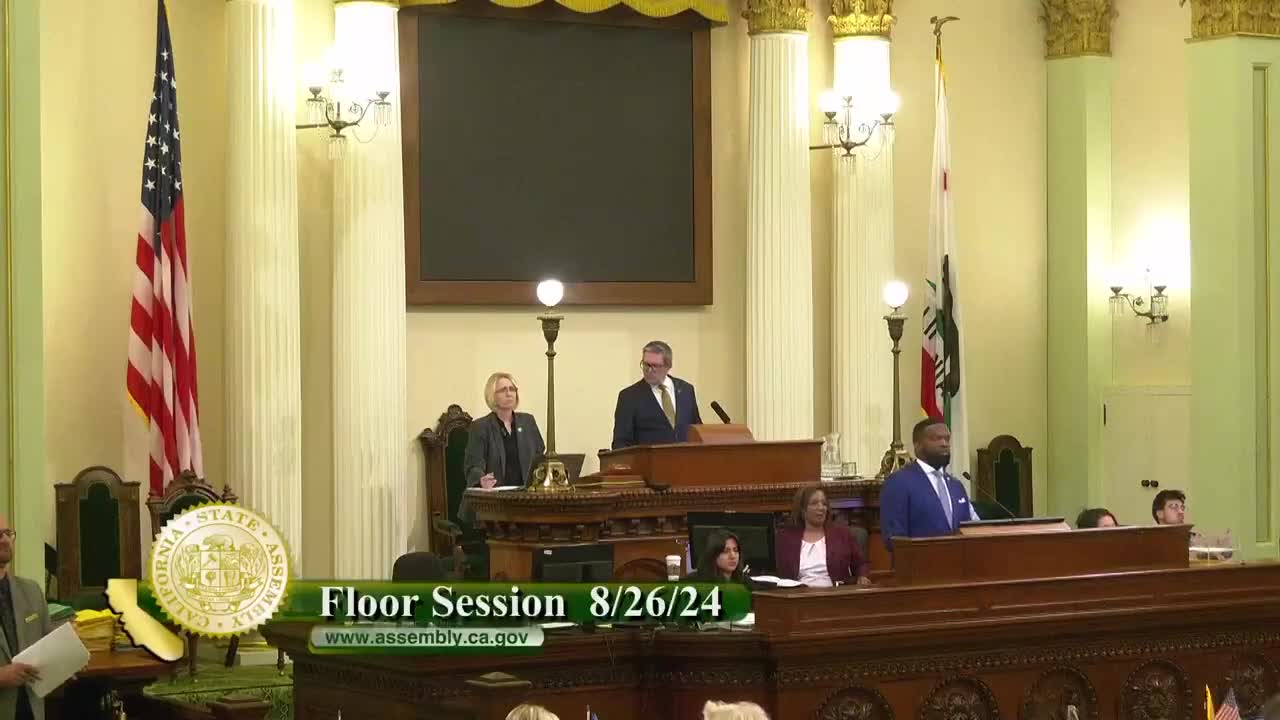 50SEC
Assembly Floor
 1MIN
Senate Floor
 10MIN
Senate Standing Committee on Health
Bill Author

Bill Co-Author(s):