AB 2347: Summary proceedings for obtaining possession of real property: procedural requirements.
- Session Year: 2023-2024
- House: Assembly
- Latest Version Date: 2024-09-24
Current Status:
Passed
(2024-09-24: Chaptered by Secretary of State - Chapter 512, Statutes of 2024.)
Introduced
In Committee
First Chamber
In Committee
Second Chamber
Enacted
Existing law requires a defendant, in a summary proceeding for obtaining possession of real property, to file a response within five days, excluding specified days, after the complaint is served on the defendant. Existing law permits a defendant in such a proceeding to, on or before the day fixed for their appearance, appear and answer or demur.
This bill would extend the time in which a defendant, in a summary proceeding for obtaining possession of real property, must file a response from 5 to 10 days, excluding specified days, after the complaint is served on the defendant. The bill would specify additional procedures and deadlines for filing a demurrer or a motion to strike a complaint as well as an opposition to and reply in support of such a motion.
Existing law requires a defendant, in a summary proceeding for obtaining possession of real property, to file a response within five days, excluding specified days, after the complaint is served on the defendant. Existing law requires the clerk in such a proceeding, upon written application of the plaintiff and proof of service of the summons and complaint, to enter the default of any defendant served with a summons who does not appear and defend. permits a defendant in such a proceeding to, on or before the day fixed for their appearance, appear and answer or demur.
This bill would extend the time in which a defendant, in a summary proceeding for obtaining possession of real property, must file a response from 5 to 10 days, excluding specified days, after the complaint is served on the defendant. The bill would additionally require the clerk in such a proceeding to enter the default of any defendant served with a summons who does not appear and defend only upon written application of the plaintiff no sooner than three court days following the filing of the proof of service of the summons and complaint. The bill would also specify additional procedures and deadlines for filing a demurrer or a motion to strike a complaint as well as an opposition to and reply in support of such a motion.
Existing law requires a defendant, in a summary proceeding for obtaining possession of real property, to file a response within five days, excluding specified days, after the complaint is served on the defendant. Existing law requires the clerk in such a proceeding, upon written application of the plaintiff and proof of service of the summons and complaint, to enter the default of any defendant served with a summons who does not appear and defend.
This bill would extend the time in which a defendant, in a summary proceeding for obtaining possession of real property, must file a response from 5 to 10 days, excluding specified days, after the complaint is served on the defendant. The bill would additionally require the clerk in such a proceeding to enter the default of any defendant served with a summons who does not appear and defend only upon written application of the plaintiff no sooner than three court days following the filing of the proof of service of the summons and complaint. The bill would also specify procedures and deadlines for filing a demurrer or a motion to strike a complaint as well as an opposition to and reply in support of such a motion.
Existing law requires a defendant, in a summary proceeding for obtaining possession of real property, to file a response within five days, excluding specified days, after the complaint is served on the defendant. Existing law requires the clerk in such a proceeding, upon written application of the plaintiff and proof of service of the summons and complaint, to enter the default of any defendant served with a summons who does not appear and defend. Under existing law, the return of a registered process server, as specified, upon process or notice establishes a presumption, affecting the burden of producing evidence, of the facts stated in the return.
This bill would extend the time in which a defendant, in a summary proceeding for obtaining possession of real property, must file a response from 5 to 10 days, excluding specified days, after the complaint is served on the defendant. The bill would require the plaintiff in such an action to promptly file a proof of service of the summons and complaint with the clerk and mail a copy thereof to the defendant. The bill would additionally require the clerk in such a proceeding to enter the default of any defendant served with a summons who does not appear and defend only upon written application of the plaintiff no sooner than three court days following the required filing of the proof of service of the summons and complaint. The bill would provide that in such a summary proceeding, if the court denies a motion to set aside a judgment, enforcement of the judgment must be stayed for no less than 10 days from the date of service of the order denying the motion. The bill would specify that the presumption of the facts stated in the return of a registered process server does not apply to a summary proceeding for obtaining possession of real property, as specified.
Existing law requires a defendant, in a summary proceeding for obtaining possession of real property, to file a response within five days, excluding specified days, after the complaint is served on the defendant. Existing law requires the clerk in such a proceeding, upon written application of the plaintiff and proof of service of the summons and complaint, to enter the default of any defendant served with a summons who does not appear and defend. Under existing law, the return of a registered process server, as specified, upon process or notice establishes a presumption, affecting the burden of producing evidence, of the facts stated in the return.
This bill would extend the time in which a defendant, in a summary proceeding for obtaining possession of real property, must file a response from 5 to 10 days, excluding specified days, after the complaint is served on the defendant. The bill would require the plaintiff in such an action to promptly file a proof of service of the summons and complaint with the clerk and mail a copy thereof to the defendant. The bill would additionally require the clerk in such a proceeding to enter the default of any defendant served with a summons who does not appear and defend only upon written application of the plaintiff no sooner than three days following the required filing of the proof of service of the summons and complaint. The bill would provide that in such a summary proceeding, if the court denies a motion to set aside a judgment, enforcement of the judgment must be stayed for no less than 10 days from the date of service of the order denying the motion. The bill would specify that the presumption of the facts stated in the return of a registered process server does not apply to a summary proceeding for obtaining possession of real property, as specified.
Existing law requires the caption of a notice of hearing of petition for administration of a decedents estate to be in 8-point type or larger and the text to be in 7-point type or larger.This bill would require the caption of the notice to be 12-point type or larger and the text to be in 10-point type or larger.Existing law requires the caption of a notice of hearing of petition for administration of a decedents estate to be in 8-point type or larger and the text to be in 7-point type or larger.
This bill would require the caption of the notice to be 12-point type or larger and the text to be in 10-point type or larger.
(a)The summons shall be in the form specified in Section 412.20 except that when the defendant is served, the defendants response shall be filed within 10 days, excluding Saturdays and Sundays and other judicial holidays, after the complaint is served upon the defendant.
(b)If service is completed by mail or in person through the Secretary of States address confidentiality program under Chapter 3.1 (commencing with Section 6205) of Division 7 of Title 1 of the Government Code, the defendant shall have an additional five court days to file a response.
(c)Except as otherwise provided in this section, the summons shall be issued and served and returned in the same manner as a summons in a civil action.
SEC. 2.Section 1170 of the Code of Civil Procedure is amended to read:1170.(a)On or before the day fixed for their appearance, the defendant may appear and answer, demur, or move to strike any portion of the complaint.
(b)(1)Notwithstanding any other law, in any action under this chapter in which the defendant demurs or moves to strike the complaint or any portion thereof, the hearing on the motion shall be not less than five court days nor more than seven court days after the filing of the notice of motion. For good cause shown, the court may order the hearing held on a later date on notice prescribed by the court. All moving and supporting papers shall accompany the notice of the motion and shall be served in compliance with this section and Section 1010.6 or 1013.
(2)An opposition and reply to an opposition may be made orally at the time of the hearing. If a party seeks to have a written opposition considered in advance of the hearing, the written opposition shall be filed and served on or before the court day before the hearing. Service shall be by personal delivery, electronic service, fax transmission, express mail, or other means consistent with Sections 1010, 1010.6, 1011, 1012, and 1013, and reasonably calculated to ensure delivery to the other party or parties no later than the close of business on the court day before the hearing. The court, in its discretion, may consider written opposition filed later.
(a)The summons shall be in the form specified in Section 412.20 except that when the defendant is served, the defendants response shall be filed within 10 days, excluding Saturdays and Sundays and other judicial holidays, after the complaint is served upon the defendant.
(b)If service is completed by mail or in person through the Secretary of States address confidentiality program under Chapter 3.1 (commencing with Section 6205) of Division 7 of Title 1 of the Government Code, the defendant shall have an additional five court days to file a response.
(c)Except as otherwise provided in this section, the summons shall be issued and served and returned in the same manner as a summons in a civil action.
SEC. 2.Section 1170 of the Code of Civil Procedure is amended to read:1170.(a)On or before the day fixed for their appearance, the defendant may appear and answer or demur. answer, demur, or move to strike any portion of the complaint.
(b)(1)Notwithstanding any other law, in any action under this chapter in which the defendant demurs or moves to strike the complaint or any portion thereof, the time for making hearing on the motion shall be not less than three five court days nor more than seven court days after the filing of the notice of motion. For good cause shown, the court may order the hearing held on a later date on notice prescribed by the court. All moving and supporting papers shall be filed not less than three court days nor more than seven court days before the hearing. Notice of a demurrer or motion to strike shall be given accompany the notice of the motion and shall be served in compliance with this section and Section 1010.6 or 1013.
(2)An opposition and reply to an opposition may be made orally at the time of the hearing. If a party seeks to have a written opposition considered in advance of the hearing, the written opposition shall be filed and served on or before the court day before the hearing. Service shall be by personal delivery, electronic service, fax transmission, express mail, or other means consistent with Sections 1010, 1010.6, 1011, 1012, and 1013, and reasonably calculated to ensure delivery to the other party or parties no later than the close of business on the court day before the hearing. The court, in its discretion, may consider written opposition filed later.
(a)The summons shall be in the form specified in Section 412.20 except that when the defendant is served, the defendants response shall be filed within 10 days, excluding Saturdays and Sundays and other judicial holidays, after the complaint is served upon the defendant.
(b)If service is completed by mail or in person through the Secretary of States address confidentiality program under Chapter 3.1 (commencing with Section 6205) of Division 7 of Title 1 of the Government Code, the defendant shall have an additional five court days to file a response.
(c)Except as otherwise provided in this section, the summons shall be issued and served and returned in the same manner as a summons in a civil action.
SEC. 2.Section 1169 of the Code of Civil Procedure is amended to read:1169.(a)If, at the time appointed, any defendant served with a summons does not appear and defend, the clerk, upon written application of the plaintiff no sooner than three court days following the filing of the proof of service of summons and complaint, shall enter the default of any defendant so served, and, if requested by the plaintiff, immediately shall enter judgment for restitution of the premises and shall issue a writ of execution thereon. The application for default judgment and the default judgment shall include a place to indicate that the judgment includes tenants, subtenants, if any, named claimants, if any, and any other occupants of the premises. Thereafter, the plaintiff may apply to the court for any other relief demanded in the complaint, including the costs, against the defendant, or defendants, or against one or more of the defendants.SEC. 3.SEC. 2.Section 1170 of the Code of Civil Procedure is amended to read:1170.(a)On or before the day fixed for their appearance, the defendant may appear and answer or demur.
(b)(1)Notwithstanding any other law, in any action under this chapter in which the defendant demurs or moves to strike the complaint or any portion thereof, the time for making the motion shall be not less than three court days nor more than seven court days after the filing of the notice of motion. For good cause shown, the court may order the hearing held on a later date on notice prescribed by the court. All moving and supporting papers shall be filed not less than three court days nor more than seven court days before the hearing. Notice of a demurrer or motion to strike shall be given in compliance with this section and Section 1010.6 or 1013.
(2)An opposition and reply to an opposition may be made orally at the time of the hearing. If a party seeks to have a written opposition considered in advance of the hearing, the written opposition shall be filed and served on or before the court day before the hearing. Service shall be by personal delivery, electronic service, fax transmission, express mail, or other means consistent with Sections 1010, 1010.6, 1011, 1012, and 1013, and reasonably calculated to ensure delivery to the other party or parties no later than the close of business on the court day before the hearing. The court, in its discretion, may consider written opposition filed later.
(a)The summons shall be in the form specified in Section 412.20 except that when the defendant is served, the defendants response shall be filed within 10 days, excluding Saturdays and Sundays and other judicial holidays, after the complaint is served upon the defendant.
(b)If service is completed by mail or in person through the Secretary of States address confidentiality program under Chapter 3.1 (commencing with Section 6205) of Division 7 of Title 1 of the Government Code, the defendant shall have an additional five court days to file a response.
(c)Except as otherwise provided in this section, the summons shall be issued and served and returned in the same manner as a summons in a civil action.
SEC. 2.Section 1169 of the Code of Civil Procedure is amended to read:1169.(a)If, at the time appointed, any defendant served with a summons does not appear and defend, the clerk, upon written application of the plaintiff no sooner than three court days following the filing of the proof of service of summons and complaint, shall enter the default of any defendant so served, and, if requested by the plaintiff, immediately shall enter judgment for restitution of the premises and shall issue a writ of execution thereon. The application for default judgment and the default judgment shall include a place to indicate that the judgment includes tenants, subtenants, if any, named claimants, if any, and any other occupants of the premises. Thereafter, the plaintiff may apply to the court for any other relief demanded in the complaint, including the costs, against the defendant, or defendants, or against one or more of the defendants.
SEC. 3.Section 1170 of the Code of Civil Procedure is amended to read:1170.(a)On or before the day fixed for their appearance, the defendant may appear and answer or demur.
(b)(1)Notwithstanding any other law, in any action under this chapter in which the defendant demurs or moves to strike the complaint or any portion thereof, the time for making the motion shall be not less than three days nor more than seven days after the filing of the notice of motion. For good cause shown, the court may order the hearing held on a later date on notice prescribed by the court. All moving and supporting papers shall be filed not less than three days nor more than seven days before the hearing. Notice of a demurrer or motion to strike shall be given in compliance with this section and Section 1010.6 or 1013.
(2)An opposition and reply to an opposition may be made orally at the time of the hearing. If a party seeks to have a written opposition considered in advance of the hearing, the written opposition shall be filed and served on or before the court day before the hearing. Service shall be by personal delivery, electronic service, fax transmission, express mail, or other means consistent with Sections 1010, 1010.6, 1011, 1012, and 1013, and reasonably calculated to ensure delivery to the other party or parties no later than the close of business on the court day before the hearing. The court, in its discretion, may consider written opposition filed later.
(a)The summons shall be in the form specified in Section 412.20 except that when the defendant is served, the defendants response shall be filed within 10 days, excluding Saturdays and Sundays and other judicial holidays, after the complaint is served upon the defendant.
(b)If service is completed by mail or in person through the Secretary of States address confidentiality program under Chapter 3.1 (commencing with Section 6205) of Division 7 of Title 1 of the Government Code, the defendant shall have an additional five court days to file a response.
SEC. 2.Section 1169 of the Code of Civil Procedure is amended to read:1169.(a)If, at the time appointed, any defendant served with a summons does not appear and defend, the clerk, upon written application of the plaintiff no sooner than three court days following the filing of the proof of service of summons and complaint, shall enter the default of any defendant so served, and, if requested by the plaintiff, immediately shall enter judgment for restitution of the premises and shall issue a writ of execution thereon. The application for default judgment and the default judgment shall include a place to indicate that the judgment includes tenants, subtenants, if any, named claimants, if any, and any other occupants of the premises. Thereafter, the plaintiff may apply to the court for any other relief demanded in the complaint, including the costs, against the defendant, or defendants, or against one or more of the defendants.
SEC. 3.Section 1170 of the Code of Civil Procedure is amended to read:1170.(a)On or before the day fixed for his their appearance, the defendant may appear and answer or demur.
(b)(1)Notwithstanding any other law, in any action under this chapter in which the defendant demurs or moves to strike the complaint or any portion thereof, the time for making the motion shall be not less than three days nor more than seven days after the filing of the notice of motion. For good cause shown, the court may order the hearing held on a later date on notice prescribed by the court. All moving and supporting papers shall be filed not less than three days nor more than seven days before the hearing. Notice of a demurrer or motion to strike shall be given in compliance with this section and Section 1010.6 or 1013.
(2)An opposition and reply to an opposition may be made orally at the time of the hearing. If a party seeks to have a written opposition considered in advance of the hearing, the written opposition shall be filed and served on or before the court day before the hearing. Service shall be by personal delivery, electronic service, fax transmission, express mail, or other means consistent with Sections 1010, 1010.6, 1011, 1012, and 1013, and reasonably calculated to ensure delivery to the other party or parties no later than the close of business on the court day before the hearing. The court, in its discretion, may consider written opposition filed later.
(a)The summons shall be in the form specified in Section 412.20 except that when the defendant is served, the defendants response shall be filed within 10 days, excluding Saturdays and Sundays and other judicial holidays, after the complaint is served upon the defendant.
(b)If service is completed by mail or in person through the Secretary of States address confidentiality program under Chapter 3.1 (commencing with Section 6205) of Division 7 of Title 1 of the Government Code, the defendant shall have an additional five court days to file a response.
(c)Proof of service of the summons and complaint shall be promptly filed with the clerk of the court and a copy thereof mailed to the defendant.(d)In all other respects the summons shall be issued and served and returned in the same manner as a summons in a civil action.SEC. 3.SEC. 2.Section 1169 of the Code of Civil Procedure is amended to read:1169.(a)If, at the time appointed, any defendant served with a summons does not appear and defend, the clerk, upon written application of the plaintiff no sooner than three court days, excluding Saturdays and Sundays and other judicial holidays, days following the filing of the proof of service of summons and complaint pursuant to subdivision (c) of Section 1167, complaint, shall enter the default of any defendant so served, and, if requested by the plaintiff, immediately shall enter judgment for restitution of the premises and shall issue a writ of execution thereon. The application for default judgment and the default judgment shall include a place to indicate that the judgment includes tenants, subtenants, if any, named claimants, if any, and any other occupants of the premises. Thereafter, the plaintiff may apply to the court for any other relief demanded in the complaint, including the costs, against the defendant, or defendants, or against one or more of the defendants.
SEC. 4.Section 647 of the Evidence Code is amended to read:647.Except in an action filed pursuant to Chapter 4 (commencing with Section 1159) of Title 3 of Part 3 of the Code of Civil Procedure, the return of a process server registered pursuant to Chapter 16 (commencing with Section 22350) of Division 8 of the Business and Professions Code upon process or notice establishes a presumption, affecting the burden of producing evidence, of the facts stated in the return.In an action filed pursuant to Chapter 4 (commencing with Section 1159) of Title 3 of Part 3, if the court denies a motion to set aside a judgment, enforcement of the judgment shall be stayed for no less than 10 days from the date of service of the order denying the motion.
SEC. 2.Section 1167 of the Code of Civil Procedure is amended to read:1167.(a)The summons shall be in the form specified in Section 412.20 except that when the defendant is served, the defendants response shall be filed within five 10 days, excluding Saturdays and Sundays and other judicial holidays, after the complaint is served upon the defendant.
(b)If service is completed by mail or in person through the Secretary of States address confidentiality program under Chapter 3.1 (commencing with Section 6205) of Division 7 of Title 1 of the Government Code, the defendant shall have an additional five court days to file a response.
(c)Proof of service of the summons and complaint shall be promptly filed with the clerk of the court and a copy thereof mailed to the defendant.
(c)(d)In all other respects the summons shall be issued and served and returned in the same manner as a summons in a civil action.
SEC. 3.Section 1169 of the Code of Civil Procedure is amended to read:1169.If, at the time appointed, any defendant served with a summons does not appear and defend, the clerk, upon written application of the plaintiff and proof of the service of summons and complaint, no sooner than three days, excluding Saturdays and Sundays and other judicial holidays, following the filing of the proof of service of summons and complaint pursuant to subdivision (c) of Section 1167, shall enter the default of any defendant so served, and, if requested by the plaintiff, immediately shall enter judgment for restitution of the premises and shall issue a writ of execution thereon. The application for default judgment and the default judgment shall include a place to indicate that the judgment includes tenants, subtenants, if any, named claimants, if any, and any other occupants of the premises. Thereafter, the plaintiff may apply to the court for any other relief demanded in the complaint, including the costs, against the defendant, or defendants, or against one or more of the defendants.
SEC. 4.Section 647 of the Evidence Code is amended to read:647.The Except in an action filed pursuant to Chapter 4 (commencing with Section 1159) of Title 3 of Part 3 of the Code of Civil Procedure, the return of a process server registered pursuant to Chapter 16 (commencing with Section 22350) of Division 8 of the Business and Professions Code upon process or notice establishes a presumption, affecting the burden of producing evidence, of the facts stated in the return.
SECTION 1.Section 8123 of the Probate Code is amended to read:8123.The caption of a notice under this article shall be in 12-point type or larger and the text shall be in 10-point type or larger.The caption of a notice under this article shall be in 8-point 12-point type or larger and the text shall be in 7-point 10-point type or larger.
|
Date
|
Status
|
|---|---|
| Sep 24, 2024 | Chaptered by Secretary of State - Chapter 512, Statutes of 2024. |
| Sep 24, 2024 | Approved by the Governor. |
| Sep 9, 2024 | Enrolled and presented to the Governor at 3:30 p.m. |
| Aug 28, 2024 | Senate amendments concurred in. To Engrossing and Enrolling. (Ayes 52. Noes 16.). |
| Aug 28, 2024 | In Assembly. Concurrence in Senate amendments pending. May be considered on or after August 30 pursuant to Assembly Rule 77. |
| Aug 28, 2024 | Assembly Rule 77 suspended. |
| Aug 27, 2024 | Read third time. Passed. Ordered to the Assembly. (Ayes 23. Noes 9.). |
| Aug 21, 2024 | Read second time. Ordered to third reading. |
| Aug 20, 2024 | Read third time and amended. Ordered to second reading. |
| Aug 5, 2024 | Read second time and amended. Ordered to third reading. |
| Jul 3, 2024 | From committee: Amend, and do pass as amended. (Ayes 9. Noes 2.) (July 2). |
| Jun 21, 2024 | In committee: Set, first hearing. Hearing canceled at the request of author. |
| Jun 17, 2024 | From committee chair, with author's amendments: Amend, and re-refer to committee. Read second time, amended, and re-referred to Com. on JUD. |
| Jun 5, 2024 | Referred to Com. on JUD. |
| May 24, 2024 | In Senate. Read first time. To Com. on RLS. for assignment. |
| May 24, 2024 | Read third time. Passed. Ordered to the Senate. (Ayes 48. Noes 12. Page 5667.) |
| May 21, 2024 | Read third time and amended. Ordered to third reading. (Page 5348.) |
| May 2, 2024 | Read second time. Ordered to third reading. |
| May 1, 2024 | From committee: Do pass. (Ayes 8. Noes 1.) (April 30). |
| Apr 23, 2024 | Re-referred to Com. on JUD. |
| Apr 22, 2024 | From committee chair, with author's amendments: Amend, and re-refer to Com. on JUD. Read second time and amended. |
| Mar 20, 2024 | Re-referred to Com. on JUD. |
| Mar 19, 2024 | From committee chair, with author's amendments: Amend, and re-refer to Com. on JUD. Read second time and amended. |
| Feb 26, 2024 | Referred to Com. on JUD. |
| Feb 13, 2024 | From printer. May be heard in committee March 14. |
| Feb 12, 2024 | Read first time. To print. |
|
Date
|
Description
|
Location
|
Votes
|
|
|---|---|---|---|---|
| Aug 28, 2024 | AB 2347 Kalra Concurrence in Senate Amendments | Assembly Floor |
Passed |
|
| Aug 27, 2024 | Assembly 3rd Reading AB2347 Kalra By Durazo | Senate Floor |
Passed |
|
| Jul 2, 2024 | Do pass as amended | Senate Standing Committee on Judiciary |
Passed |
|
| May 24, 2024 | AB 2347 Kalra Assembly Third Reading | Assembly Floor |
Passed |
|
| Apr 30, 2024 | Do pass. | Assembly Standing Committee on Judiciary |
Passed |
This list shows positions taken on this bill by organizations on the date displayed, which is linked to the original source.
Positions by individuals are not included.
|
Organization
|
Position
|
Date
|
|---|---|---|
| Aclu California Action | ** Support | |
| Apartment Association of Greater Los Angeles | ** Against | |
| Apartment Association Of Orange County | ** Against | |
| Bay Area Regional Health Inequities Initiative | ** Support | |
| California Advocates for Nursing Home Reform | ** Support | |
| California Apartment Association | * Against | Apr 30, 2024 |
| California Association Of Realtors | ** Against | |
| California Democratic Party | ** Support | |
| California Democratic Party Renters Council | ** Support | |
| California Housing Partnership Corporation | ** Support | |
| California Rental Housing Association | ** Against | |
| California Rural Legal Assistance Foundation | ** Support | |
| Centro Legal de la Raza | ** Support | |
| Child Care Law Center | ** Support | |
| City of San Jose | ** Support | |
| Disability Rights California | ** Support | |
| East Bay Rental Housing Association | ** Against | |
| Family Violence Appellate Project | ** Support | |
| Homeless Policy Practicum | ** Support | |
| Housing and Economic Rights Advocates | ** Support | |
| Housing California | ** Support | |
| Housing Now! CA | ** Support | |
| Inner City Law Center | ** Support | |
| Judicial Council of California | ** Against | |
| Justice in Aging | ** Support | |
| Kate Bell Strategies | ** Against | |
| Leadership Counsel for Justice & Accountability | ** Support | |
| Legal Aid of Sonoma County | ** Support | |
| Legal Aid Society of San Diego | ** Support | |
| Legal Services of Northern California | ** Support | |
| Long Beach Forward | ** Support | |
| Mutual Housing California | * Support | Jul 2, 2024 |
| Neighborhood Legal Services of Los Angeles County | ** Support | |
| Promotoras de Salud de Orange County | * Support | Jul 2, 2024 |
| Public Counsel | ** Support | |
| Public Law Center | ** Support | |
| Resident Reunited Network | * Support | Jul 2, 2024 |
| Resident United Network | * Support | Jul 2, 2024 |
| Residents United Network | * Support | Jul 2, 2024 |
| Southern California Rental Housing Association | * Against | Apr 30, 2024 |
| Techequity Action | ** Support | |
| The Children's Partnership | ** Support | |
| Urban Habitat | ** Support | |
| western center on law and poverty | ** Support |
CONCURRENCE IN SENATE AMENDMENTS
CSA1 Bill Id:AB 2347
Author:(Kalra)
As Amended Ver:August 20, 2024
Majority vote
SUMMARY
Enacts various procedural changes to landlord-tenant law, including specified extensions of time for tenants to respond to notices and eviction papers.
Major Provisions
- Extends the time for defendant's response to be filed from five court days to 10 court days after the unlawful detainer complaint and summons is served on the defendant.
- Establishes that where the defendant demurs or moves to strike any portion of the complaint, they must file the moving or supporting papers no less than five court days and no more than seven court days after the filing of the notice of the motion.
- Provides that a court may extend the above timeline for good cause shown.
- Provides that an opposition and reply to an opposition may be made orally at the time of the hearing on the demurrer or motion to strike; if a party wants the court to consider a written opposition in advance of the hearing, the written opposition must be filed and served on or before the hearing, as provided.
- Gives the court discretion to consider a later filed written opposition.
Senate Amendments
Clarify procedures and timelines related to filing and opposing demurrers and motions to strike in unlawful detainer actions.
COMMENTS
Unlawful detainers generally. In California, almost all involuntary residential and commercial evictions must take place through the judicial process. Landlords may not simply kick a tenant out on their own. (Civil Code Section 789.3.) Instead, landlords must request an order from a judge. If, after giving the tenant an opportunity to respond, the judge agrees that the landlord is entitled to reclaim the rental property, the judge will issue a writ of possession in the landlord's favor. Sheriff's deputies then execute the writ of possession. First, they post a notice giving the tenants five days' advance warning of the impending lockout. Then, on the appointed day, the sheriff deputies will physically remove the tenants from the property, if they have not left already, and stand by while the locks are changed. These judicial proceedings are known as unlawful detainers and they are governed by their own special statutes: Code of Civil Procedure Sections (CCP) 1159 to 1179a.
Unlawful detainers and the judicial process. To obtain an order from a judge, a landlord seeking to evict a tenant from their property must file an unlawful detainer action. In many respects, unlawful detainer actions are just fast-tracked versions of other standard civil proceedings, with all of the usual pleadings, motions, discovery, trial, and opportunities to appeal. Unlike most civil legal cases, which can take years to wind through the court process, however, eviction cases are summary proceedings.
For example, in unlawful detainer cases, a defendant must file a response to an unlawful detainer complaint within five court days after service. (CCP Sections 1167 and 1167.3.) That is significantly shorter than the customary 30 days for response that normally is permitted in non-unlawful detainer civil cases. (CCP Sections 412.20, 430.40, 471.5.) Similarly condensed timelines apply to summary judgment and discovery motions (CCP Sections 1170.7, 1170.8), deadline for discovery responses (CCP Sections 2030.260, 2033.250, 2031.260), and deposition and trial setting (CCP Sections 2025.270, 1170.5, 1179a).
The purpose behind the summary nature of eviction proceedings is to enable landlords to recover possession of their rental property relatively quickly – though cases can last for a few months if the courts are backlogged. "The unlawful detainer statutes were, enacted to provide an adequate expeditious and summary procedure for regaining possession of real property wrongfully withheld by a tenant. The rights and remedies afforded a landlord by the statutory provisions are given in lieu of his common law rights and remedies which included the right to enter and expel the tenant by force." (Mobil Oil Corp. v. Superior Court (1978) 79 Cal.App.3d 486, 494.)
The danger behind determining something as critical as shelter on such a quick timeline is that due process can easily be compromised. For the low-income tenants that make up the vast majority of eviction case defendants, that danger is exacerbated by factors such as unequal access to legal counsel, an imbalance in resources, inexperience with legal matters, inadequate childcare, inability to take time off of work, and lack of transportation to court. Tenants sometimes lose their homes, for example, simply because they miss the very tight deadlines involved in the eviction process.
This bill retains the summary nature of unlawful detainer proceedings, but extends the time period for responding to the complaint, from five court days to 10 court days. The bill also clarifies the timeline and procedures for responding to an unlawful detainer complaint; requiring a party to file the moving or supporting papers not less than five court days and no more than seven court days after the filing of the notice of motion.
Extension of time for tenant to file an answer to an eviction would help tenants have their day in court and prevent avoidable default evictions. When a tenant falls behind on their rent, the landlord must give the tenant a short window to get caught up before proceeding with the eviction. Specifically, a landlord is not supposed to file an eviction lawsuit until after the landlord has given the tenant a three-day notice to pay up and those three days have expired. (CCP Section 1161(2).) Similarly, if the tenant has violated some term of the lease that can be cured – having a pet, for example, or parking a car in an unassigned spot – the landlord is not supposed to file an eviction lawsuit until after giving the tenant notice of the problem and three days in which to fix the problem. (CCP Section 1161(3).) In 2019, the law was amended to clarify that the three-day notice excludes Saturdays, Sundays, and other judicial holidays. After the expiration of the three court days, the landlord may file an unlawful detainer action. Under existing law, tenants have five court days from the moment they are served with an eviction lawsuit to file an official answer telling the court their side of the story. If the tenant fails to answer within this timeframe, the landlord may request a default judgment from the court immediately upon the sixth day. (CCP Section 1167.) As a result, the tenant may lose the case without ever getting their day in court, even if the tenant has a meritorious defense to the eviction.
If responding to an eviction lawsuit were a simple matter, such a short time frame might be sufficient. In practice, however, there are tremendous barriers for tenants to do so. Deciphering the legal forms is complex; making a well-founded legal argument is even harder; private attorneys are expensive; and legal aid services are in short supply. Procedurally, tenants in most jurisdictions travel to the courthouse (landlords' attorneys typically file electronically), wait in line, fill out the forms, make copies, and figure out how to serve process. To do so, most tenants will have to miss work and, if they have children, arrange for childcare. For elderly and disabled tenants, the short timeframe in which to respond is all the more difficult to meet. Data from 2018 shows that roughly 40% of unlawful detainer proceedings resulted in default judgments. (Preston and Inglis, California Evictions are Fast and Frequent (May 2018) Tenants Together, available at http://www.tenantstogether.org/sites/tenantstogether.org/files/CA_Evictions_are_Fast_and_
Frequent.pdf, at p. 2.)
This measure ensures that tenants have additional time in the eviction process and can help prevent avoidable evictions.
Establishing guidelines and procedures for demurrer and motion to strike timelines in eviction cases. This measure establishes that whenever a defendant demurs or moves to strike in response to an unlawful detainer action, the defendant must make the motion between five to seven days after filing the notice of motion. This measure establishes that the court may extend the time, upon a showing of good cause, and that opposition and reply may be made orally. It further provides that if a party wants to file a written opposition, it must be served and filed on or before the court day before the hearing.
According to the Author
A notice of a court case and the right to defend oneself is fundamental in our justice system. In eviction cases, tenants' due process rights are often at risk due to the timelines for service and judgment. Without adequate service, tenants lose their opportunity to answer and face an increased risk of losing their home. [This bill] will prevent landlords from circumventing the proper service of tenants and provide the necessary time for tenants to actually exercise their rights by requiring landlords to file proof of service with the court prior to requesting a default judgement.
Arguments in Support
The California Rural Legal Assistance Foundation (CRLAF) and the Western Center on Law and Poverty (WCLP), the sponsors of this measure, explain the importance of providing tenants with five additional days to respond to a complaint:
The right to defend oneself in court is a fundamental constitutional right. In eviction cases, tenants' due process rights are already at heightened risk of being compromised because the law requires courts to process the cases quickly. When a tenant receives an eviction summons and complaint via personal service, the tenant has just five days to respond. This is a challenging timeline for tenants, especially given that most tenants, and particularly lower-income tenants, lack access to an attorney. If a tenant doesn't file a response in that time, the landlord can get a default judgment against the tenant—i.e., win the case—without the tenant ever getting their day in court. Extending the time to answer by five days will afford tenants more time to seek advice, marshal their evidence and file an appropriate response.
The sponsors also explain how the proof of service filing-requirement will help tenants:
In addition, under current law, the landlord is not required to file proof that they served the summons and complaint until after the tenant's time to respond has expired. As a result, some tenants may know a case has been filed against them—for instance because the court is required to mail them notice of the filing—but have never received the summons and compliant, have been properly served, or know what is being alleged against them. However, they can't go to the court to determine whether, how and on what date the landlord is claiming to have served the tenant because there will be no proof of service on file. Meanwhile, the very short timeline to respond is ticking away.
Without this information, the tenant who waits for proper service does so at their peril. As a result of either mistake (the wrong person was served) or fraud (no service was ever made), a landlord claiming proper service can obtain a default judgment after the time to answer expires, even if the tenant was not served. Too often, the first a tenant learns that the landlord is claiming proper service and that the time to answer has passed is when the sheriff shows up at the tenant's door. By then, the tenant faces an uphill battle of convincing a court to set aside the default judgment and give the tenant a right to be heard in court.
All of this could be avoided by ensuring, as AB [this bill] does, that a proof of service is on file with the court several days in advance of the expiration of the time to answer. With that information, a tenant who has not been properly served can determine how or whether to respond. This simple change will preserve the due process rights of tenants, conserve court resources and ensure fairness and transparency for all parties.
Arguments in Opposition
The Apartment Association of Orange County and the East Bay Rental Housing Association write that they oppose the bill for the following reasons, among others:
- Although this bill more than doubles the amount of time for a defendant to respond to an unlawful detainer while remaining in possession of the rental unit at issue, it does not address the core issue pertaining to timely judgment relating to unlawful detainer litigation.
- Currently, the average length of time of unlawful detainer ("ud") litigation through judgment on contested ud cases is three to four months. The current litigation process actually harms tenants losing possession on a residential rental unit by incurring rental debt for four to five months, as opposed to one or two months; which creates an impossible financial burden on tenants who are being evicted for non-payment of rent.
- Because finalization of the litigation process takes so long, a property owner is forced to pass on a previous tenant's failure to pay rent (for months) on to a subsequent tenant when rental rates must be increased to the maximum allowable amount pursuant to law due financial loss created by a tenant and exacerbated by the courts.
AB 2347 is a proverbial "band-aid"; it should be amended to focus on addressing the core issues of unlawful detainer litigation, which is to create law that shortens the standardized litigation process of UDs for more practicable outcomes.
FISCAL COMMENTS
None.
VOTES:
ASM JUDICIARY: 8-1-3
YES: Kalra, Bauer-Kahan, Bryan, Connolly, Haney, Maienschein, McKinnor, Reyes
NO: Essayli
ABS, ABST OR NV: Dixon, Pacheco, Sanchez
ASSEMBLY FLOOR: 48-12-20
YES: Addis, Aguiar-Curry, Alvarez, Arambula, Bains, Bennett, Berman, Boerner, Bonta, Bryan, Calderon, Juan Carrillo, Wendy Carrillo, Connolly, Mike Fong, Friedman, Gabriel, Garcia, Gipson, Grayson, Haney, Hart, Irwin, Jackson, Jones-Sawyer, Kalra, Lee, Low, Lowenthal, McCarty, McKinnor, Muratsuchi, Stephanie Nguyen, Ortega, Pacheco, Papan, Pellerin, Petrie-Norris, Reyes, Santiago, Schiavo, Soria, Ting, Ward, Weber, Wilson, Zbur, Robert Rivas
NO: Alanis, Chen, Davies, Dixon, Flora, Vince Fong, Gallagher, Hoover, Jim Patterson, Joe Patterson, Ta, Wallis
ABS, ABST OR NV: Bauer-Kahan, Cervantes, Megan Dahle, Essayli, Holden, Lackey, Maienschein, Mathis, Quirk-Silva, Ramos, Rendon, Luz Rivas, Rodriguez, Blanca Rubio, Sanchez, Valencia, Villapudua, Waldron, Wicks, Wood
SENATE FLOOR: 24-9-7
YES: Allen, Ashby, Atkins, Becker, Bradford, Caballero, Cortese, Durazo, Eggman, Gonzalez, Hurtado, Laird, Limón, McGuire, Menjivar, Padilla, Roth, Rubio, Skinner, Smallwood-Cuevas, Stern, Umberg, Wahab, Wiener
NO: Alvarado-Gil, Dahle, Grove, Jones, Nguyen, Niello, Ochoa Bogh, Seyarto, Wilk
ABS, ABST OR NV: Archuleta, Blakespear, Dodd, Glazer, Min, Newman, Portantino
UPDATED
VERSION: August 20, 2024
CONSULTANT: Shiran Zohar / JUD. / (916) 319-2334 FN: 0004328
SENATE RULES COMMITTEE Office of Senate Floor Analyses (916) 651-1520 Fax: (916) 327-4478 | AB 2347 |
THIRD READING
Bill No: AB 2347
Author: Kalra (D)
Amended: 8/20/24 in Senate
Vote: 21
SENATE JUDICIARY COMMITTEE: 9-2, 7/2/24
AYES: Umberg, Allen, Ashby, Caballero, Durazo, Laird, Roth, Stern, Wahab
NOES: Wilk, Niello
ASSEMBLY FLOOR: 48-12, 5/24/24 - See last page for vote
SUBJECT: Summary proceedings for obtaining possession of real property: procedural requirements
SOURCE: California Rural Legal Assistance Foundation
Western Center on Law and Poverty
DIGEST:
This bill expands the time that a tenant of residential real property has to file an answer to an unlawful detainer from five days to ten days, and specifies timelines and procedures for a defendant to file a demurrer or motion to strike.
Senate Floor Amendments of 8/20/24 make clarifying changes, amend the timeline for when a hearing on a demurrer or motion to strike must be held, and clarify that all moving and supporting papers must accompany the notice of the motion.
ANALYSIS:
Existing law:
- Provides that a tenant has committed unlawful detainer when they continue in possession of the property without the landlord's permission after:
- the tenant remains in possession of the premises after the expiration of the term of the tenancy without permission of the landlord or otherwise not permitted by law;
- the tenant's nonpayment of rent and service of a 3-day notice to pay or quit, stating the amount that is due;
- the tenant has breached a covenant of the lease or failed to perform other conditions under the lease, and after service of a 3-day notice requiring performance of such covenants or conditions;
- the tenant has breached a covenant of the lease prohibiting subletting, assignment, or waste; has committed or permitted a nuisance on the premises; or used the premises for an unlawful purpose; and after
- the tenant gives written notice of the tenant’s intention to terminate the tenancy, but fails to deliver possession of the premises to the landlord at the specified time. (Code of Civ. Proc. § 1161.)
- Requires a tenant defendant in an unlawful detainer action to respond to a notice of summons within five days, excluding weekends and court holidays, of being served with the notice. Specifies that, if service is completed by mail or the Secretary of State’s address confidentiality program, the defendant must file within ten days. (Code of Civ. Proc. § 1167.)
- Requires entry of default and default judgment against the defendant if they fail to appear and defend against the unlawful detainer action, if upon written application of the plaintiff with proof of service of the summons and complaint. Provides that the court must issue a writ of execution, and thereafter the plaintiff may apply to the court for any other relief demanded in the complaint, including costs. (Code of Civ. Proc. 1169.)
- Specifies that, on or before the day set for a defendant’s appearance in the unlawful detainer action, the defendant may appear and answer or demur. (Code of Civ. Proc. § 1170.)
This bill:
- Extends the period for a tenant’s response to an unlawful detainer complaint and summons from five days to ten days.
- Specifies that, on or before the day fixed for their appearance, a defendant in an unlawful detainer action may appear and answer, demur, or move to strike any portion of the complaint.
- Specifies that, if a defendant demurs or files a motion to strike in an unlawful detainer action, the hearing on the motion must occur within five to seven court days after the filing of the notice of motion. Specifies that, for good cause shown, the court may order the hearing on the motion be held on a later date on notice prescribed by the court. Specifies that all moving and supporting papers must accompany the notice of the motion and be served in compliance with Code of Civil Procedure sections 1010.6 or 10103.
- Specifies that an opposition and reply to an opposition to a demurrer or motion to strike may be made orally at the time of the hearing, or can be made in writing at least one day before the hearing, and must be filed and served upon the other party, on or before the court day before the hearing. Specifies that service of such a filing must be by personal delivery, electronic service, fax transmission, express mail, or other means, as specified, and reasonably calculated to ensure delivery to the other party or parties no later than the close of business the day before the hearing. Provides that a court may consider written opposition filed later than the day before the hearing, at the court’s discretion.
Comments
According to the author:
AB 2347 seeks to prevent default judgements that evict a tenant based on improper service of summons by requiring landlords to file proof of service with the court and providing tenants with a meaningful amount of time to respond. In eviction cases, because the response period for tenants is uniquely short, proper notice of a court filing is critical. Unfortunately, unscrupulous landlords and process servers claim proper service even though none occurred, known as “sewer service.” This is not only a major violation of tenants’ constitutional rights, but the result is the extreme consequence of tenants losing their homes. AB 2347 will combat sewer service and provide the necessary time for tenants to actually exercise their rights.
FISCAL EFFECT: Appropriation: No Fiscal Com.: No Local: No
SUPPORT: (Verified 8/21/24)
California Rural Legal Assistance Foundation (co-source)
Western Center on Law and Poverty (co-source)
ACLU California Action
Bay Area Regional Health Inequities Initiative
California Advocates for Nursing Home Reform
California Democratic Party
California Democratic Party Renters Council
California Housing Partnership Corporation
Centro Legal De La Raza
Child Care Law Center
City of San Jose
Disability Rights California
Family Violence Appellate Project
Homeless Policy Practicum
Housing and Economic Rights Advocates
Housing California
Housing Now! CA
Inner City Law Center
Justice in Aging
Leadership Counsel for Justice & Accountability
Legal Aid of Sonoma County
Legal Aid Society of San Diego
Legal Services of Northern California
Long Beach Forward
Neighborhood Legal Services of Los Angeles County
Public Counsel
Public Law Center
Techequity Action
The Children's Partnership
Urban Habitat
OPPOSITION: (Verified 8/21/24)
Apartment Association of Greater Los Angeles
Apartment Association of Orange County
California Association of Realtors
California Rental Housing Association
East Bay Rental Housing Association
ARGUMENTS IN SUPPORT: According to the Western Center for Law and Poverty, which is the sponsor of this bill:
[AB 2347 ensures] that tenants’ due process rights are protected in an eviction action. This bill will require a proof of service of the summons and complaint to be filed prior to a landlord requesting a default judgment and allow tenants a meaningful time to file a response. The right to defend oneself in court is a fundamental constitutional right. In eviction cases, tenants’ due process rights are already at heightened risk of being compromised because the law requires courts to process the cases quickly. When a tenant receives an eviction summons and complaint via personal service, the tenant has just five days to respond. This is a challenging timeline for tenants, especially given that most tenants, and particularly lower-income tenants, lack access to an attorney. If a tenant doesn’t file a response in that time, the landlord can get a default judgment against the tenant—i.e., win the case—without the tenant ever getting their day in court. Extending the time to answer by five days will afford tenants more time to seek advice, marshal their evidence and file an appropriate response.
In addition, under current law, the landlord is not required to file proof that they served the summons and complaint until after the tenant’s time to respond has expired. As a result, some tenants may know a case has been filed against them—for instance because the court is required to mail them notice of the filing—but have never received the summons and compliant, have been properly served, or know what is being alleged against them. However, they can’t go to the court to determine whether, how and on what date the landlord is claiming to have served the tenant because there will be no proof of service on file. Meanwhile, the very short timeline to respond is ticking away.
Without this information, the tenant who waits for proper service does so at their peril. As a result of either mistake (the wrong person was served) or fraud (no service was ever made), a landlord claiming proper service can obtain a default judgment after the time to answer expires, even if the tenant was not served. Too often, the first a tenant learns that the landlord is claiming proper service and that the time to answer has passed is when the sheriff shows up at the tenant’s door. By then, the tenant faces an uphill battle of convincing a court to set aside the default judgment and give the tenant a right to be heard in court.
All of this could be avoided by ensuring, as AB 2347 does, that a proof of service is on file with the court several days in advance of the expiration of the time to answer. With that information, a tenant who has not been properly served can determine how or whether to respond. This simple change will preserve the due process rights of tenants, conserve court resources and ensure fairness and transparency for all parties.
ARGUMENTS IN OPPOSITION: According to the California Rental Housing Association, which is opposed to this bill:
It is important to note that the vast majority (over 95%) of unlawful detainers are due to non-payment of rent. While last month's Household Census survey shows renters concerned about evictions, California consistently has the LOWEST eviction rates of the 10 most populous states, with 2.2 pre-COVID eviction filings per 100 rental households as compared to 9 per 100 in New York and 16 per 100 in Michigan.
Currently the timeframe is 5 “court” days, but the bill would double this time to 10 “court” days. Unlawful detainer/eviction judgments already take several months in litigation and this bill would unnecessarily add to this timeframe. Additionally, residents are provided legal resources for a robust and timely response in the unlawful detainer/eviction process.
ASSEMBLY FLOOR: 48-12, 5/24/24
AYES: Addis, Aguiar-Curry, Alvarez, Arambula, Bains, Bennett, Berman, Boerner, Bonta, Bryan, Calderon, Juan Carrillo, Wendy Carrillo, Connolly, Mike Fong, Friedman, Gabriel, Garcia, Gipson, Grayson, Haney, Hart, Irwin, Jackson, Jones-Sawyer, Kalra, Lee, Low, Lowenthal, McCarty, McKinnor, Muratsuchi, Stephanie Nguyen, Ortega, Pacheco, Papan, Pellerin, Petrie-Norris, Reyes, Santiago, Schiavo, Soria, Ting, Ward, Weber, Wilson, Zbur, Robert Rivas
NOES: Alanis, Chen, Davies, Dixon, Flora, Vince Fong, Gallagher, Hoover, Jim Patterson, Joe Patterson, Ta, Wallis
NO VOTE RECORDED: Bauer-Kahan, Cervantes, Megan Dahle, Essayli, Holden, Lackey, Maienschein, Mathis, Quirk-Silva, Ramos, Rendon, Luz Rivas, Rodriguez, Blanca Rubio, Sanchez, Valencia, Villapudua, Waldron, Wicks, Wood
Prepared by: Ian Dougherty / JUD. / (916) 651-4113
8/21/24 16:12:29
**** END ****
SENATE RULES COMMITTEE Office of Senate Floor Analyses (916) 651-1520 Fax: (916) 327-4478 | AB 2347 |
THIRD READING
Bill No: AB 2347
Author: Kalra (D)
Amended: 8/5/24 in Senate
Vote: 21
SENATE JUDICIARY COMMITTEE: 9-2, 7/2/24
AYES: Umberg, Allen, Ashby, Caballero, Durazo, Laird, Roth, Stern, Wahab
NOES: Wilk, Niello
ASSEMBLY FLOOR: 48-12, 5/24/24 - See last page for vote
SUBJECT: Summary proceedings for obtaining possession of real property: procedural requirements
SOURCE: California Rural Legal Assistance Foundation
Western Center on Law and Poverty
DIGEST:
This bill expands the time that a tenant of residential real property has to file an answer to an unlawful detainer from five days to ten days, and specifies timelines and procedures for a defendant to file a demurrer or motion to strike.
ANALYSIS:
Existing law:
- Provides that a tenant has committed unlawful detainer when they continue in possession of the property without the landlord's permission after:
- The tenant remains in possession of the premises after the expiration of the term of the tenancy without permission of the landlord or otherwise not permitted by law;
- The tenant's nonpayment of rent and service of a 3-day notice to pay or quit, stating the amount that is due;
- The tenant has breached a covenant of the lease or failed to perform other conditions under the lease, and after service of a 3-day notice requiring performance of such covenants or conditions;
- The tenant has breached a covenant of the lease prohibiting subletting, assignment, or waste; has committed or permitted a nuisance on the premises; or used the premises for an unlawful purpose; and after
- The tenant gives written notice of the tenant’s intention to terminate the tenancy, but fails to deliver possession of the premises to the landlord at the specified time. (Code of Civ. Proc. § 1161.)
- Requires a tenant defendant in an unlawful detainer action to respond to a notice of summons within five days, excluding weekends and court holidays, of being served with the notice. Specifies that, if service is completed by mail or the Secretary of State’s address confidentiality program, the defendant must file within ten days. (Code of Civ. Proc. § 1167.)
- Requires entry of default and default judgment against the defendant if they fail to appear and defend against the unlawful detainer action, if upon written application of the plaintiff with proof of service of the summons and complaint. Provides that the court must issue a writ of execution, and thereafter the plaintiff may apply to the court for any other relief demanded in the complaint, including costs. (Code of Civ. Proc. 1169.)
- Specifies that, on or before the day set for a defendant’s appearance in the unlawful detainer action, the defendant may appear and answer or demur. (Code of Civ. Proc. § 1170.)
This bill:
- Extends the period for a tenant’s response to an unlawful detainer complaint and summons from five days to ten days.
- Specifies that, if a defendant demurs or files a motion to strike in an unlawful detainer action, the defendant must file the motion within three to seven court days after the filing of the notice of motion. Specifies that, for good cause shown, the court may order the hearing on the motion be held on a later date on notice prescribed by the court. Specifies that all moving and supporting papers must be filed between three to seven court days before the hearing. Specifies that notice of a demurrer or motion to strike must be provided in compliance with that section and Code of Civil Procedure sections 1010.6 or 10103.
- Specifies that an opposition and reply to an opposition to a demurrer or motion to strike may be made orally at the time of the hearing, or can be made in writing at least one day before the hearing, and must be filed and served upon the other party, on or before the court day before the hearing. Specifies that service of such a filing must be by personal delivery, electronic service, fax transmission, express mail, or other means, as specified, and reasonably calculated to ensure delivery to the other party or parties no later than the close of business the day before the hearing. Provides that a court may consider written opposition filed later than the day before the hearing, at the court’s discretion.
FISCAL EFFECT: Appropriation: No Fiscal Com.: No Local: No
SUPPORT: (Verified 7/19/24)
California Rural Legal Assistance Foundation (co-source)
Western Center on Law and Poverty (co-source)
ACLU California Action
Bay Area Regional Health Inequities Initiative
California Advocates for Nursing Home Reform
California Democratic Party
California Democratic Party Renters Council
California Housing Partnership Corporation
Centro Legal De La Raza
Child Care Law Center
City of San Jose
Disability Rights California
Family Violence Appellate Project
Homeless Policy Practicum
Housing and Economic Rights Advocates
Housing California
Housing Now! CA
Inner City Law Center
Justice in Aging
Leadership Counsel for Justice & Accountability
Legal Aid of Sonoma County
Legal Aid Society of San Diego
Legal Services of Northern California
Long Beach Forward
Neighborhood Legal Services of Los Angeles County
Public Counsel
Public Law Center
Techequity Action
The Children's Partnership
Urban Habitat
Western Center on Law & Poverty
OPPOSITION: (Verified 7/19/24)
Apartment Association of Greater Los Angeles
Apartment Association of Orange County
California Association of Realtors
California Rental Housing Association
East Bay Rental Housing Association
Judicial Council of California
ARGUMENTS IN SUPPORT: According to the Western Center for Law and Poverty:
[AB 2347 ensures] that tenants’ due process rights are protected in an eviction action. This bill will require a proof of service of the summons and complaint to be filed prior to a landlord requesting a default judgment and allow tenants a meaningful time to file a response.
The right to defend oneself in court is a fundamental constitutional right. In eviction cases, tenants’ due process rights are already at heightened risk of being compromised because the law requires courts to process the cases quickly. When a tenant receives an eviction summons and complaint via personal service, the tenant has just five days to respond. This is a challenging timeline for tenants, especially given that most tenants, and particularly lower-income tenants, lack access to an attorney. If a tenant doesn’t file a response in that time, the landlord can get a default judgment against the tenant—i.e., win the case—without the tenant ever getting their day in court. Extending the time to answer by five days will afford tenants more time to seek advice, marshal their evidence and file an appropriate response.
In addition, under current law, the landlord is not required to file proof that they served the summons and complaint until after the tenant’s time to respond has expired. As a result, some tenants may know a case has been filed against them—for instance because the court is required to mail them notice of the filing—but have never received the summons and compliant, have been properly served, or know what is being alleged against them. However, they can’t go to the court to determine whether, how and on what date the landlord is claiming to have served the tenant because there will be no proof of service on file. Meanwhile, the very short timeline to respond is ticking away.
Without this information, the tenant who waits for proper service does so at their peril. As a result of either mistake (the wrong person was served) or fraud (no service was ever made), a landlord claiming proper service can obtain a default judgment after the time to answer expires, even if the tenant was not served. Too often, the first a tenant learns that the landlord is claiming proper service and that the time to answer has passed is when the sheriff shows up at the tenant’s door. By then, the tenant faces an uphill battle of convincing a court to set aside the default judgment and give the tenant a right to be heard in court.
All of this could be avoided by ensuring, as AB 2347 does, that a proof of service is on file with the court several days in advance of the expiration of the time to answer. With that information, a tenant who has not been properly served can determine how or whether to respond. This simple change will preserve the due process rights of tenants, conserve court resources and ensure fairness and transparency for all parties.
ARGUMENTS IN OPPOSITION: According to the California Rental Housing Association:
It is important to note that the vast majority (over 95%) of unlawful detainers are due to non-payment of rent. While last month's Household Census survey shows renters concerned about evictions, California consistently has the LOWEST eviction rates of the 10 most populous states, with 2.2 pre-COVID eviction filings per 100 rental households as compared to 9 per 100 in New York and 16 per 100 in Michigan.
Currently the timeframe is 5 “court” days, but the bill would double this time to 10 “court” days. Unlawful detainer/eviction judgments already take several months in litigation and this bill would unnecessarily add to this timeframe.
Additionally, residents are provided legal resources for a robust and timely response in the unlawful detainer/eviction process.
ASSEMBLY FLOOR: 48-12, 5/24/24
AYES: Addis, Aguiar-Curry, Alvarez, Arambula, Bains, Bennett, Berman, Boerner, Bonta, Bryan, Calderon, Juan Carrillo, Wendy Carrillo, Connolly, Mike Fong, Friedman, Gabriel, Garcia, Gipson, Grayson, Haney, Hart, Irwin, Jackson, Jones-Sawyer, Kalra, Lee, Low, Lowenthal, McCarty, McKinnor, Muratsuchi, Stephanie Nguyen, Ortega, Pacheco, Papan, Pellerin, Petrie-Norris, Reyes, Santiago, Schiavo, Soria, Ting, Ward, Weber, Wilson, Zbur, Robert Rivas
NOES: Alanis, Chen, Davies, Dixon, Flora, Vince Fong, Gallagher, Hoover, Jim Patterson, Joe Patterson, Ta, Wallis
NO VOTE RECORDED: Bauer-Kahan, Cervantes, Megan Dahle, Essayli, Holden, Lackey, Maienschein, Mathis, Quirk-Silva, Ramos, Rendon, Luz Rivas, Rodriguez, Blanca Rubio, Sanchez, Valencia, Villapudua, Waldron, Wicks, Wood
Prepared by: Ian Dougherty / JUD. / (916) 651-4113
8/7/24 13:38:19
**** END ****
Senator Thomas Umberg, Chair
2023-2024 Regular Session
Bill No: AB 2347 (Author:Kalra)
Version: June 17, 2024
Hearing Date: July 2, 2024
Fiscal: No
Urgency: No
Consultant: ID
SUBJECT
Summary proceedings for obtaining possession of real property: procedural requirements
DIGEST
This bill expands the time that a tenant of residential real property has to file an answer to an unlawful detainer from five days to ten days, requires that a landlord must file proof of service at least three days before they may request a default, and specifies timelines and procedures for a defendant to file a demurrer or motion to strike.
EXECUTIVE SUMMARY
California is experiencing a significant shortage in available and affordable housing. In light of these circumstances, far too many Californians are finding themselves facing eviction from their landlord. Yet landlords cannot simply change the locks on a tenant and kick the tenant out on their own. Instead, they must pursue an order to obtain possession of the premises from the tenant through filing an unlawful detainer complaint in court. Unlawful detainer proceedings are summary proceedings and utilize shortened timelines and deadlines than most civil cases. For example, a tenant must respond to an unlawful detainer complaint within five days, and the court must set a trial date within 20 days if a trial is requested. Because of this shortened timeline, and because of landlords that do not properly serve tenants with the summons and complaint, many tenants do not file their answer within the case’s shortened timeline and thus face eviction without having an opportunity to be heard. This bill addresses these concerns by expanding the timeline for a tenant to respond from five days to ten, and by requiring proof of service to be filed at least three days before a landlord may request a default judgement. This bill also makes a number of changes regarding other motions that may be filed in an unlawful detainer case. AB 2347 is sponsored by the California Rural Legal Assistance Foundation and the Western Center on Law and Poverty, is supported by a variety of other groups, and is opposed by the California Association of Realtors and a variety of housing associations.
PROPOSED CHANGES TO THE LAW
Existing law:
- Provides that a tenant has committed unlawful detainer when they continue in possession of the property without the landlord's permission after:
- the tenant remains in possession of the premises after the expiration of the term of the tenancy without permission of the landlord or otherwise not permitted by law;
- the tenant's nonpayment of rent and service of a 3-day notice to pay or quit, stating the amount that is due;
- the tenant has breached a covenant of the lease or failed to perform other conditions under the lease, and after service of a 3-day notice requiring performance of such covenants or conditions;
- the tenant has breached a covenant of the lease prohibiting subletting, assignment, or waste; has committed or permitted a nuisance on the premises; or used the premises for an unlawful purpose; and after
- the tenant gives written notice of the tenant’s intention to terminate the tenancy, but fails to deliver possession of the premises to the landlord at the specified time. (Code of Civ. Proc. § 1161.)
- Requires a tenant defendant in an unlawful detainer action to respond to a notice of summons within five days, excluding weekends and court holidays, of being served with the notice. Specifies that, if service is completed by mail or the Secretary of State’s address confidentiality program, the defendant must file within ten days. (Code of Civ. Proc. § 1167.)
- Requires entry of default and default judgment against the defendant if they fail to appear and defend against the unlawful detainer action, if upon written application of the plaintiff with proof of service of the summons and complaint. Provides that the court must issue a writ of execution, and thereafter the plaintiff may apply to the court for any other relief demanded in the complaint, including costs. (Code of Civ. Proc. 1169.)
- Specifies that, on or before the day set for a defendant’s appearance in the unlawful detainer action, the defendant may appear and answer or demur. (Code of Civ. Proc. § 1170.)
This bill:
- Extends the period for a tenant’s response to an unlawful detainer complaint and summons from five days to ten days.
- Specifies that, if a defendant served with a summons in an unlawful detainer action does not appear and defend against the complaint at the time appointed, the clerk must enter a default against the defendant, if the plaintiff makes a written application for such ruling no sooner than three days after the filing of the proof of service of summons and complaint.
- Specifies that, if a defendant demurs or files a motion to strike in an unlawful detainer action, the defendant must file the motion within three to seven days after the filing of the notice of motion. Specifies that, for good cause shown, the court may order the hearing on the motion be held on a later date on notice prescribed by the court. Specifies that all moving and supporting papers must be filed between three to seven days before the hearing. Specifies that notice of a demurrer or motion to strike must be provided in compliance with that section and Code of Civil Procedure sections 1010.6 or 10103.
- Specifies that an opposition and reply to an opposition to a demurrer or motion to strike may be made orally at the time of the hearing, or can be made in writing at least one day before the hearing, and must be filed and served upon the other party, on or before the court day before the hearing. Specifies that service of such a filing must be by personal delivery, electronic service, fax transmission, express mail, or other means, as specified, and reasonably calculated to ensure delivery to the other party or parties no later than the close of business the day before the hearing. Provides that a court may consider written opposition filed later than the day before the hearing, at the court’s discretion.
COMMENTS
- Author’s statement
According to the author:
AB 2347 seeks to prevent default judgements that evict a tenant based on improper service of summons by requiring landlords to file proof of service with the court and providing tenants with a meaningful amount of time to respond. In eviction cases, because the response period for tenants is uniquely short, proper notice of a court filing is critical. Unfortunately, unscrupulous landlords and process servers claim proper service even though none occurred, known as “sewer service.” This is not only a major violation of tenants’ constitutional rights, but the result is the extreme consequence of tenants losing their homes. AB 2347 will combat sewer service and provide the necessary time for tenants to actually exercise their rights.
- California’s housing and eviction crisis
Almost 17 million Californians rent their apartments or homes, accounting for about 44 percent of all individuals in the state.[1] However, at the same time, California is experiencing a significant shortage in available housing. Some estimates suggest that the state currently has a shortfall of 1,283,734 affordable and available rental homes.[2] This combination of high demand and low supply has led California to have incredibly low rental vacancy rates, far below the national average and that of most states.[3] The tight supply has resulted in stiff competition for the available housing, and available affordable housing, that exists in many of California’s communities. It has also resulted in high and increasing rents, which are far outpacing many Californians’ income. Thus, significant numbers of California renters pay a disproportionate amount of their income toward rent and struggle to make ends meet. In 2019, 51.8 percent of California renters were cost-burdened, in which their rent costs exceeded 30 percent of their household income, and 27.3 percent were severely cost-burdened, in which their rent costs exceeded 50 percent of their household income.[4]
In light of these extremely high rents and tight rental markets, far too many Californians are finding themselves facing eviction from their landlord. It is estimated that at least 140,000 eviction cases are filed every year in California, affecting half a million renters.[5] While the number of eviction cases filed in the state were significantly depressed during the COVID-19 pandemic due to the statewide eviction moratorium, data shows that evictions significantly increased in 2023 with the end of the moratorium.[6] Data and multiple studies also have demonstrated a strong link between homelessness and the cost of housing and with increases in eviction filings, suggesting that California’s increasing rental rates and eviction filings contribute directly to the state’s growing population of individuals experiencing homelessness.[7] When someone is evicted, they may have difficulty finding new housing due to having an eviction on their record. Moreover, their lives are significantly uprooted as they have to move and lose the housing they have.
- The eviction process in California
In order to ensure that a tenant’s rights are respected and that they have an opportunity to be heard before being forced out of the property they rent, California law closely prescribes when a landlord may evict a tenant and the process that must be followed to do so. Landlords may only evict tenants for specified reasons, including for when a tenant defaults on payment of rent, violates a term of the rental agreement without correcting within three days of notice, and committing waste on the premises. (Code of Civ. Proc. § 1161.) Moreover, landlords cannot simply change the locks on a tenant and kick the tenant out on their own. (Civ. Code § 789.3.) Instead, they must pursue an order to obtain possession of the premises from the tenant through filing an unlawful detainer complaint in court. If the judge or the jury rules for the landlord, the court will issue a writ of possession. The county sheriff will then execute the writ of possession by first notifying the tenant that they have five days to vacate the premises before being forcibly removed. If the tenant wins the case, they will be allowed to remain on the premises, and may even be owed money from the landlord.
An unlawful detainer proceeding is very similar to standard civil proceedings, though with significantly shortened timelines. The unlawful detainer process is governed by Code of Civil Procedure Sections 1159 to 1179. This set of laws and procedures recognize the importance of housing to tenants, and the significant disruption that eviction poses to tenants. However, to balance these interests with the interests of landlords to be able to promptly re-gain possession of their properties if the current tenant is not paying rent or is subject to eviction, the unlawful detainer process is also a summary proceeding, meaning that it is a streamlined, fast-tracked judicial proceeding. The law requires that unlawful detainers take precedence in a court’s civil docket. (Code of Civ. Proc. § 1179a.) And data shows that unlawful detainer cases are often very quick proceedings: 60% of unlawful detainers are resolved within 30 days.[8]
In order to evict a tenant, a landlord often must first notify the tenant of the deficiency and provide a short window to correct it. If the tenant is behind on rent, the landlord must notify the tenant of the delinquent rent and request that the tenant pay, and provide for three days, not including weekends and holidays, for the tenant to pay the amount due. (Code of Civ. Procedure § 1161(2).) If the tenant does not pay the amount due within the three days, the landlord may file an unlawful detainer action in court and request a judicial order that the tenant be evicted. The landlord must also provide three-days’ notice and opportunity to correct when a tenant has violated a term of the rental agreement that can be cured. (Code of Civ. Procedure § 1161(3).)
A landlord may then file an unlawful detainer complaint in court. The landlord must serve the tenant with a copy of the complaint and a summons notifying them of the court case. Service must be completed by providing the papers to the tenant in person, or if they are not available in person, by leaving the papers with a person of suitable age at their residence or place of business, or by posting the papers on the property if the person’s residence and business addresses cannot be ascertained. (Code of Civ. Proc. §§ 415.10, 415.20.) While the landlord must serve the tenant, proof of service of the summons need only be filed with the court within 60 days of the filing of the complaint, or at the time that the landlord files a motion for default. (Code of Civ. Proc. §§ 1167.1; 1169.)
Generally, a defendant may either answer the complaint, by conceding or contesting the allegations in the complaint, or they can demur. (Code of Civ. Proc. § 1170.) A demurrer alleges that the complaint is legally deficient, such as by failing to state a cognizable claim, rather than challenging the factual allegations in the complaint. The tenant must file a response to the unlawful detainer complaint within five court days of being served with the complaint. (Code of Civ. Proc. §§ 1167 and 1167.3.) However, if service is completed by mail or through the Secretary of State’s address confidentiality program, the tenant has an additional five court days to file their response. (Code of Civ. Proc. § 1167(b).) This timeline is markedly shorter than standard civil proceedings, in which the defendant is typically provided 30 days to respond to a complaint. (Code of Civ. Procedure §§ 412.20; 430.40; 471.5.) If a defendant answers the landlord’s complaint, and requests a trial, the trial must be held within 20 days of the request for a trial, unless extended by agreement of the parties. (Code of Civ. Proc. § 1170.5.) Parties in unlawful detainer proceedings also may file motions for summary judgement, make motions for discovery, and conduct depositions. (Code of Civ. Proc. §§ 1170.7, 1170.8.) In each of these contexts, the timelines for notice are also shortened.
The consequences for not responding to the complaint can be swift and significant. If the tenant does not provide their answer to the complaint to the court within the required five days, the landlord can immediately request that the judge rule in their favor. This is called a default judgement, and the landlord can make it immediately to the court upon the tenant’s failure to answer the complaint, if the landlord makes such a request and includes proof of service of the summons and complaint. (Code of Civ. Proc. § 1169.) In such a scenario, the tenant has forfeited their right to contest the allegations and argue their case, and the court can immediately issue a writ of possession and any other remedies or relief the landlord is requesting, such as an award for unpaid rent and costs. Data suggests around 40% of all unlawful detainer cases result in a default judgement.[9] After a default judgement, a tenant’s options to reverse the court’s decision and set aside the default are limited and not easy to obtain. They must file a motion to set aside the judgement, and generally must do so within six months for specific reasons, like for mistake or for not having received actual notice. (Code of Civ. Proc. §§ 473(b), 473.5.)
- AB 2347 proposes to provide tenants with greater protections in responding to evictions
- AB 2347 provides tenants with more time to respond to unlawful detainer complaints
AB 2347 proposes to provide tenants with an extra five days to respond to an unlawful detainer complaint, so that they have ten days in total to respond. The author asserts that this is necessary because the current timeline is not sufficient time for the tenant to learn of the allegations, find an attorney, collect evidence, and respond. For tenants, particularly low-income tenants, who lack access to an attorney or cannot afford an attorney, this timeline may be particularly difficult.
Considering that ten days is still considerably less than the 30-day timeline most civil cases allow for a defendant to respond, AB 2347’s extension likely is not unduly burdensome on landlords. Additionally, given that the consequences of an eviction can be so dire for a tenant, it may be good public policy to provide the tenant slightly more time than currently provided so that they can find an attorney and respond before receiving a default. There are also other factors which could impact a tenant’s ability to respond within the short timeline currently required, for example: they may live in an area far from the courthouse, may not have access to reliable transportation for which to travel to the courthouse or an attorney’s office, they may live in an area with few attorneys or legal services providers, or they may live in an area of the state frequented by hazardous weather conditions that make travel difficult. As previously noted, around 40% of all unlawful detainer cases result in a default judgement, in which the tenant did not respond in time to present their case. This Committee generally favors ensuring all parties have a fair chance to be heard and have their day in court; providing tenants more time to respond to an unlawful detainer complaint may help ensure they receive notice of an unlawful detainer action against them and have adequate time to respond.
- AB 2347 ensures tenants receive notice of the unlawful detainer action
AB 2347 also requires that a landlord file proof of service with the court at least three days before filing a motion for a default judgement, instead of the current statutory scheme in which the landlord need only file the proof of service simultaneously with their request for default. The author asserts that this will ensure that tenants and their attorneys know what service the landlord is alleging they completed upon the tenant before the tenant is required to respond to the complaint, so that they may challenge the service in time if it is invalid. If the landlord must file the proof of service with the court, it will be on file on the case and available to the tenant and their attorney. Currently, tenants and their attorneys may not know how the landlord is claiming that they properly served the tenant until it is too late, therefore precluding tenants from challenging the service or fully answering the allegations in the complaint. If a tenant does not know what method of service the landlord is alleging was completed, they will be unable to determine which timeline for their response applies as well, as the timeline changes depending on the method of service.
The author asserts this is particularly important, along with the extended time to respond to the complaint, because of the risk of improper service and landlords and process servers who claim service was completed when none was completed. While it is difficult to know exactly how often tenants are not being properly served in unlawful detainer cases, the astounding 40% of unlawful detainer cases that result in default suggests that some not insignificant number of tenants are not being properly served.
If a tenant never received actual notice of the eviction proceeding against them, the first time that they become aware of the case may be when the court mails them a notice of unlawful detainer action, a form required to be mailed by the court to defendants in unlawful detainers to notify them of the protections from public access to the court records that apply for the first 60 days of the case. (Code of Civ. Proc. § 1161.2.) However, if that is the only document the tenant receives, they will nevertheless not be aware of the specific allegations being levied against them, or when exactly they must provide the court their answer. The tenant can go to the court to review the file on the case to determine the charges, but under current law they would not have access to the proof of service until after the deadline for their response has run and the landlord has filed their motion for default judgement. AB 2347 attempts to address this by requiring the landlord to file the proof of service at least three days before a motion of default, which would help guarantee that the tenant could determine the exact method of service alleged and the remaining time they have to respond by inspecting the court file on the case. The tenant would then also have at least three days before the filing of the motion for default judgement to potentially file their answer or to challenge the sufficiency of the service before the judge enters a default judgement.
The issue of proper service and notice of the charges against a tenant is one that raises significant constitutional concerns, as the requirement that a defendant be served is derived from the Constitution’s guarantee of due process. The Fourteenth Amendment of the United States Constitution ensures all persons in the United States protection against deprivation of life, liberty, or property without “due process of law.”[10] A core aspect of this guarantee of due process is procedural due process, which relates to the adjudicative procedures a person is due in order to be able to ensure that they are heard and protected against a mistaken or unjustified deprivation of life, liberty, or property. As the United States Supreme Court has stated: “for more than a century the central meaning of procedural due process has been clear: parties whose rights are to be affected are entitled to be heard; and in order that they may enjoy that right they must first be notified.”[11] Thus, ensuring that a defendant is properly notified through service is a fundamental constitutional requirement. When a defendant is not served, it is a deprivation of their right to be heard and a miscarriage of justice. The author asserts that AB 2347 will help ensure tenants’ rights to be heard and that they are notified of their landlord’s allegations against them, as is required by this constitutional guarantee of due process.
- AB 2347 conforms timelines for ancillary motions
AB 2347 also makes a variety of changes to the requirements relating to motions to strike or demurrers. It specifies that, if a tenant is going to file a demurrer or a motion to strike, they must do so within three to seven days of the filing of the notice of motion. AB 2347 also requires all moving and supporting papers for such motions to be filed at least three to seven days before the hearing on the motion. A motion to strike is similar to a demurrer in that it is a request that some part of a party’s pleading or answer be removed from the record, such as to prevent consideration of irrelevant or prejudicial allegations. All motions filed within an unlawful detainer case are heard at a hearing separate from a hearing on the complaint, usually on a court’s motions calendar. AB 2347 specifies that, if the court delays the hearing on a demurrer or motion to strike, it must be for good cause shown. AB 2347 also specifies a timeline for any opposition filed in response to the other party’s filing, and for a reply to opposition. It specifies both may be made orally at the hearing, or that if it is being filed in writing before the hearing, it must be filed at least one day before the hearing and properly served. However, AB 2347 provides that he court may consider late written opposition at its discretion. These changes add a more stringent timeline on a tenant’s filing of a demurrer or motion to strike, and for the hearings on such motions. These amendments were made by the author through conversations and negotiations with the California Apartment Association, which is now neutral on the bill.
- Amendments
The author has agreed to accept amendments in this Committee that will remove Section Two of the bill, and amendments that will specify that the timelines in Section Three of the bill related to motions for demurrer are “court” days. A full mock-up of these amendments are attached at the end of this analysis.
- Arguments in support
According to the Western Center for Law and Poverty, which is the sponsor of AB 2347:
[AB 2347 ensures] that tenants’ due process rights are protected in an eviction action. This bill will require a proof of service of the summons and complaint to be filed prior to a landlord requesting a default judgment and allow tenants a meaningful time to file a response.
The right to defend oneself in court is a fundamental constitutional right. In eviction cases, tenants’ due process rights are already at heightened risk of being compromised because the law requires courts to process the cases quickly. When a tenant receives an eviction summons and complaint via personal service, the tenant has just five days to respond. This is a challenging timeline for tenants, especially given that most tenants, and particularly lower-income tenants, lack access to an attorney. If a tenant doesn’t file a response in that time, the landlord can get a default judgment against the tenant—i.e., win the case—without the tenant ever getting their day in court. Extending the time to answer by five days will afford tenants more time to seek advice, marshal their evidence and file an appropriate response.
In addition, under current law, the landlord is not required to file proof that they served the summons and complaint until after the tenant’s time to respond has expired. As a result, some tenants may know a case has been filed against them—for instance because the court is required to mail them notice of the filing—but have never received the summons and compliant, have been properly served, or know what is being alleged against them. However, they can’t go to the court to determine whether, how and on what date the landlord is claiming to have served the tenant because there will be no proof of service on file. Meanwhile, the very short timeline to respond is ticking away.
Without this information, the tenant who waits for proper service does so at their peril. As a result of either mistake (the wrong person was served) or fraud (no service was ever made), a landlord claiming proper service can obtain a default judgment after the time to answer expires, even if the tenant was not served. Too often, the first a tenant learns that the landlord is claiming proper service and that the time to answer has passed is when the sheriff shows up at the tenant’s door. By then, the tenant faces an uphill battle of convincing a court to set aside the default judgment and give the tenant a right to be heard in court.
All of this could be avoided by ensuring, as AB 2347 does, that a proof of service is on file with the court several days in advance of the expiration of the time to answer. With that information, a tenant who has not been properly served can determine how or whether to respond. This simple change will preserve the due process rights of tenants, conserve court resources and ensure fairness and transparency for all parties.
- Arguments in opposition
According to the California Rental Housing Association, which is opposed to AB 2347:
It is important to note that the vast majority (over 95%) of unlawful detainers are due to non-payment of rent. While last month's Household Census survey shows renters concerned about evictions, California consistently has the LOWEST eviction rates of the 10 most populous states, with 2.2 pre-COVID eviction filings per 100 rental households as compared to 9 per 100 in New York and 16 per 100 in Michigan.
Currently the timeframe is 5 “court” days, but the bill would double this time to 10 “court” days. Unlawful detainer/eviction judgments already take several months in litigation and this bill would unnecessarily add to this timeframe.
Additionally, residents are provided legal resources for a robust and timely response in the unlawful detainer/eviction process.
SUPPORT
California Rural Legal Assistance Foundation (sponsor)
Western Center on Law and Poverty (co-sponsor)
ACLU California Action
Bay Area Regional Health Inequities Initiative
California Housing Partnership Corporation
City of San Jose
Housing Now! CA
Inner City Law Center
Long Beach Forward
Neighborhood Legal Services of Los Angeles County
Techequity Action
The Children's Partnership
Urban Habitat
OPPOSITION
Apartment Association of Orange County
California Association of Realtors
California Rental Housing Association
East Bay Rental Housing Association
RELATED LEGISLATION
Pending Legislation: AB 2304 (Lee, 2024) extends requirements that the court only allow access to unlawful detainer records when a landlord prevails within 60 days of the filing of the action to unlawful detainer cases involving mobilehomes. AB 2304 is currently in the Senate Judiciary Committee.
Prior Legislation:
SB 676 (Bates, 2021) would have authorized a defendant in an unlawful detainer action to file a motion to strike on or before the date fixed for the defendant’s appearance as a response to the complaint, and would have authorized a party to file a motion for summary adjudication in the same manner as a motion for summary judgement. SB 676 died in the Senate Judiciary Committee.
AB 2343 (Chiu, Ch. 260, Stats. 2018) provided that the three-day notice period a landlord must give a tenant in certain circumstances before filing an unlawful detainer action excludes court holidays and weekends. AB 2343 also clarified that the period in which a defendant must respond to a notice of summons in an unlawful detainer action does not include court holidays and weekends.
AB 2819 (Chiu, Ch. 336, Stats. 2016) provided that a court may dismiss an unlawful detainer proceeding without prejudice if a proof of service of the summons upon the tenant is not filed with the court within 60 days of the complaint’s filing.
PRIOR VOTES:
Assembly Floor (Ayes 48, Noes 12)
Assembly Judiciary Committee (Ayes 8, Noes 1)
**************
Mock-up of Proposed Amendments to AB 2347 (Kalra)
(Amendments may be subject to technical changes by Legislative Counsel)
Mock-up based on Version Number 95 - Amended Senate 6/17/24
The people of the State of California do enact as follows:
SECTION 1. Section 1167 of the Code of Civil Procedure is amended to read:
1167. (a) The summons shall be in the form specified in Section 412.20 except that when the defendant is served, the defendant’s response shall be filed within 10 days, excluding Saturdays and Sundays and other judicial holidays, after the complaint is served upon the defendant.
(b) If service is completed by mail or in person through the Secretary of State’s address confidentiality program under Chapter 3.1 (commencing with Section 6205) of Division 7 of Title 1 of the Government Code, the defendant shall have an additional five court days to file a response.
(c) Except as otherwise provided in this section, the summons shall be issued and served and returned in the same manner as a summons in a civil action.
SEC. 2. Section 1169 of the Code of Civil Procedure is amended to read:
1169. (a) If, at the time appointed, any defendant served with a summons does not appear and defend, the clerk, upon written application of the plaintiff no sooner than three court days following the filing of the proof of service of summons and complaint, shall enter the default of any defendant so served, and, if requested by the plaintiff, immediately shall enter judgment for restitution of the premises and shall issue a writ of execution thereon. The application for default judgment and the default judgment shall include a place to indicate that the judgment includes tenants, subtenants, if any, named claimants, if any, and any other occupants of the premises. Thereafter, the plaintiff may apply to the court for any other relief demanded in the complaint, including the costs, against the defendant, or defendants, or against one or more of the defendants.
SEC. 3SEC. 2. Section 1170 of the Code of Civil Procedure is amended to read:
1170. (a)On or before the day fixed for their appearance, the defendant may appear and answer or demur.
(b) (1)Notwithstanding any other law, in any action under this chapter in which the defendant demurs or moves to strike the complaint or any portion thereof, the time for making the motion shall be not less than three court days nor more than seven court days after the filing of the notice of motion. For good cause shown, the court may order the hearing held on a later date on notice prescribed by the court. All moving and supporting papers shall be filed not less than three court days nor more than seven court days before the hearing. Notice of a demurrer or motion to strike shall be given in compliance with this section and Section 1010.6 or 1013.
(2) An opposition and reply to an opposition may be made orally at the time of the hearing. If a party seeks to have a written opposition considered in advance of the hearing, the written opposition shall be filed and served on or before the court day before the hearing. Service shall be by personal delivery, electronic service, fax transmission, express mail, or other means consistent with Sections 1010, 1010.6, 1011, 1012, and 1013, and reasonably calculated to ensure delivery to the other party or parties no later than the close of business on the court day before the hearing. The court, in its discretion, may consider written opposition filed later.
Monica Davalos et al, California’s 17 Million Renters Face Housing Instability and Inequity Before and After COVID-19, California Budget & Policy Center (Jan. 2021), available at https://calbudgetcenter.org/resources/renters-face-housing-instability-and-inequity-before-and-after-covid-19/. ↑
California Housing Partnership, “Housing Needs Dashboard,” Mar. 2024, available at https://chpc.net/housingneeds/. ↑
Alexa Mae Asperin, California has least amount of vacant housing in US, study shows, FOX 11 News (Aug. 21, 2023), available at https://www.foxla.com/news/california-vacant-housing-us-census-study; see also Federal Reserve Bank of St. Louis, Rental Vacancy Rate for California (accessed Jun. 3, 2024), available at https://fred.stlouisfed.org/series/CARVAC. ↑
Davalos supra note 1, p. 3. ↑
Aimee Inglis and Dean Prestion, California Evictions Are Fact, Frequent, and Underreported, Tenants Together (May 2018), available at https://www.tenantstogether.org/tt-report-california-evictions-are-fast-frequent-and-underreported. ↑
Jeanne Kuang, “Across California, eviction cases have returned to – or surpassed – pre-pandemic levels,” Cal Matters (Nov. 21, 2023), available at https://calmatters.org/housing/homelessness/2023/11/california-evictions-post-pandemic/. ↑
Margot Kushel et al, “California Statewide Study of People Experiencing Homelessness, UCSF Benioff Homelessness and Housing Initiative (Jun. 2023), available at https://homelessness.ucsf.edu/our-impact/studies/california-statewide-study-people-experiencing-homelessness; Alex Horowitz et al, “How housing costs drive levels of homelessness: data from metro areas highlights strong connection,” The Pew Charitable Trusts (Aug. 22, 2023), available at https://www.pewtrusts.org/en/research-and-analysis/articles/2023/08/22/how-housing-costs-drive-levels-of-homelessness. ↑
Inglis, supra note 5, p. 2. ↑
Inglis, supra note 5, p. 2. ↑
U.S. Const. Art. XIV, Sec. 1. ↑
Fuentes v. Shevin (1972), 407 U.S. 67, 80; Wilkinson v. Austin (2005), 545 U.S. 209, 226. ↑
Senator Thomas Umberg, Chair
2023-2024 Regular Session
Bill No: AB 2347 (Author:Kalra)
Version: June 17, 2024
Hearing Date: July 2, 2024
Fiscal: No
Urgency: No
Consultant: ID
SUBJECT
Summary proceedings for obtaining possession of real property: procedural requirements
DIGEST
This bill expands the time that a tenant of residential real property has to file an answer to an unlawful detainer from five days to ten days, requires that a landlord must file proof of service at least three days before they may request a default, and specifies timelines and procedures for a defendant to file a demurrer or motion to strike.
EXECUTIVE SUMMARY
California is experiencing a significant shortage in available and affordable housing. In light of these circumstances, far too many Californians are finding themselves facing eviction from their landlord. Yet landlords cannot simply change the locks on a tenant and kick the tenant out on their own. Instead, they must pursue an order to obtain possession of the premises from the tenant through filing an unlawful detainer complaint in court. Unlawful detainer proceedings are summary proceedings and utilize shortened timelines and deadlines than most civil cases. For example, a tenant must respond to an unlawful detainer complaint within five days, and the court must set a trial date within 20 days if a trial is requested. Because of this shortened timeline, and because of landlords that do not properly serve tenants with the summons and complaint, many tenants do not file their answer within the case’s shortened timeline and thus face eviction without having an opportunity to be heard. This bill addresses these concerns by expanding the timeline for a tenant to respond from five days to ten, and by requiring proof of service to be filed at least three days before a landlord may request a default judgement. This bill also makes a number of changes regarding other motions that may be filed in an unlawful detainer case. AB 2347 is sponsored by the California Rural Legal Assistance Foundation and the Western Center on Law and Poverty, is supported by a variety of other groups, and is opposed by the California Association of Realtors and a variety of housing associations.
PROPOSED CHANGES TO THE LAW
Existing law:
- Provides that a tenant has committed unlawful detainer when they continue in possession of the property without the landlord's permission after:
- the tenant remains in possession of the premises after the expiration of the term of the tenancy without permission of the landlord or otherwise not permitted by law;
- the tenant's nonpayment of rent and service of a 3-day notice to pay or quit, stating the amount that is due;
- the tenant has breached a covenant of the lease or failed to perform other conditions under the lease, and after service of a 3-day notice requiring performance of such covenants or conditions;
- the tenant has breached a covenant of the lease prohibiting subletting, assignment, or waste; has committed or permitted a nuisance on the premises; or used the premises for an unlawful purpose; and after
- the tenant gives written notice of the tenant’s intention to terminate the tenancy, but fails to deliver possession of the premises to the landlord at the specified time. (Code of Civ. Proc. § 1161.)
- Requires a tenant defendant in an unlawful detainer action to respond to a notice of summons within five days, excluding weekends and court holidays, of being served with the notice. Specifies that, if service is completed by mail or the Secretary of State’s address confidentiality program, the defendant must file within ten days. (Code of Civ. Proc. § 1167.)
- Requires entry of default and default judgment against the defendant if they fail to appear and defend against the unlawful detainer action, if upon written application of the plaintiff with proof of service of the summons and complaint. Provides that the court must issue a writ of execution, and thereafter the plaintiff may apply to the court for any other relief demanded in the complaint, including costs. (Code of Civ. Proc. 1169.)
- Specifies that, on or before the day set for a defendant’s appearance in the unlawful detainer action, the defendant may appear and answer or demur. (Code of Civ. Proc. § 1170.)
This bill:
- Extends the period for a tenant’s response to an unlawful detainer complaint and summons from five days to ten days.
- Specifies that, if a defendant served with a summons in an unlawful detainer action does not appear and defend against the complaint at the time appointed, the clerk must enter a default against the defendant, if the plaintiff makes a written application for such ruling no sooner than three days after the filing of the proof of service of summons and complaint.
- Specifies that, if a defendant demurs or files a motion to strike in an unlawful detainer action, the defendant must file the motion within three to seven days after the filing of the notice of motion. Specifies that, for good cause shown, the court may order the hearing on the motion be held on a later date on notice prescribed by the court. Specifies that all moving and supporting papers must be filed between three to seven days before the hearing. Specifies that notice of a demurrer or motion to strike must be provided in compliance with that section and Code of Civil Procedure sections 1010.6 or 10103.
- Specifies that an opposition and reply to an opposition to a demurrer or motion to strike may be made orally at the time of the hearing, or can be made in writing at least one day before the hearing, and must be filed and served upon the other party, on or before the court day before the hearing. Specifies that service of such a filing must be by personal delivery, electronic service, fax transmission, express mail, or other means, as specified, and reasonably calculated to ensure delivery to the other party or parties no later than the close of business the day before the hearing. Provides that a court may consider written opposition filed later than the day before the hearing, at the court’s discretion.
COMMENTS
- Author’s statement
According to the author:
AB 2347 seeks to prevent default judgements that evict a tenant based on improper service of summons by requiring landlords to file proof of service with the court and providing tenants with a meaningful amount of time to respond. In eviction cases, because the response period for tenants is uniquely short, proper notice of a court filing is critical. Unfortunately, unscrupulous landlords and process servers claim proper service even though none occurred, known as “sewer service.” This is not only a major violation of tenants’ constitutional rights, but the result is the extreme consequence of tenants losing their homes. AB 2347 will combat sewer service and provide the necessary time for tenants to actually exercise their rights.
- California’s housing and eviction crisis
Almost 17 million Californians rent their apartments or homes, accounting for about 44 percent of all individuals in the state.[1] However, at the same time, California is experiencing a significant shortage in available housing. Some estimates suggest that the state currently has a shortfall of 1,283,734 affordable and available rental homes.[2] This combination of high demand and low supply has led California to have incredibly low rental vacancy rates, far below the national average and that of most states.[3] The tight supply has resulted in stiff competition for the available housing, and available affordable housing, that exists in many of California’s communities. It has also resulted in high and increasing rents, which are far outpacing many Californians’ income. Thus, significant numbers of California renters pay a disproportionate amount of their income toward rent and struggle to make ends meet. In 2019, 51.8 percent of California renters were cost-burdened, in which their rent costs exceeded 30 percent of their household income, and 27.3 percent were severely cost-burdened, in which their rent costs exceeded 50 percent of their household income.[4]
In light of these extremely high rents and tight rental markets, far too many Californians are finding themselves facing eviction from their landlord. It is estimated that at least 140,000 eviction cases are filed every year in California, affecting half a million renters.[5] While the number of eviction cases filed in the state were significantly depressed during the COVID-19 pandemic due to the statewide eviction moratorium, data shows that evictions significantly increased in 2023 with the end of the moratorium.[6] Data and multiple studies also have demonstrated a strong link between homelessness and the cost of housing and with increases in eviction filings, suggesting that California’s increasing rental rates and eviction filings contribute directly to the state’s growing population of individuals experiencing homelessness.[7] When someone is evicted, they may have difficulty finding new housing due to having an eviction on their record. Moreover, their lives are significantly uprooted as they have to move and lose the housing they have.
- The eviction process in California
In order to ensure that a tenant’s rights are respected and that they have an opportunity to be heard before being forced out of the property they rent, California law closely prescribes when a landlord may evict a tenant and the process that must be followed to do so. Landlords may only evict tenants for specified reasons, including for when a tenant defaults on payment of rent, violates a term of the rental agreement without correcting within three days of notice, and committing waste on the premises. (Code of Civ. Proc. § 1161.) Moreover, landlords cannot simply change the locks on a tenant and kick the tenant out on their own. (Civ. Code § 789.3.) Instead, they must pursue an order to obtain possession of the premises from the tenant through filing an unlawful detainer complaint in court. If the judge or the jury rules for the landlord, the court will issue a writ of possession. The county sheriff will then execute the writ of possession by first notifying the tenant that they have five days to vacate the premises before being forcibly removed. If the tenant wins the case, they will be allowed to remain on the premises, and may even be owed money from the landlord.
An unlawful detainer proceeding is very similar to standard civil proceedings, though with significantly shortened timelines. The unlawful detainer process is governed by Code of Civil Procedure Sections 1159 to 1179. This set of laws and procedures recognize the importance of housing to tenants, and the significant disruption that eviction poses to tenants. However, to balance these interests with the interests of landlords to be able to promptly re-gain possession of their properties if the current tenant is not paying rent or is subject to eviction, the unlawful detainer process is also a summary proceeding, meaning that it is a streamlined, fast-tracked judicial proceeding. The law requires that unlawful detainers take precedence in a court’s civil docket. (Code of Civ. Proc. § 1179a.) And data shows that unlawful detainer cases are often very quick proceedings: 60% of unlawful detainers are resolved within 30 days.[8]
In order to evict a tenant, a landlord often must first notify the tenant of the deficiency and provide a short window to correct it. If the tenant is behind on rent, the landlord must notify the tenant of the delinquent rent and request that the tenant pay, and provide for three days, not including weekends and holidays, for the tenant to pay the amount due. (Code of Civ. Procedure § 1161(2).) If the tenant does not pay the amount due within the three days, the landlord may file an unlawful detainer action in court and request a judicial order that the tenant be evicted. The landlord must also provide three-days’ notice and opportunity to correct when a tenant has violated a term of the rental agreement that can be cured. (Code of Civ. Procedure § 1161(3).)
A landlord may then file an unlawful detainer complaint in court. The landlord must serve the tenant with a copy of the complaint and a summons notifying them of the court case. Service must be completed by providing the papers to the tenant in person, or if they are not available in person, by leaving the papers with a person of suitable age at their residence or place of business, or by posting the papers on the property if the person’s residence and business addresses cannot be ascertained. (Code of Civ. Proc. §§ 415.10, 415.20.) While the landlord must serve the tenant, proof of service of the summons need only be filed with the court within 60 days of the filing of the complaint, or at the time that the landlord files a motion for default. (Code of Civ. Proc. §§ 1167.1; 1169.)
Generally, a defendant may either answer the complaint, by conceding or contesting the allegations in the complaint, or they can demur. (Code of Civ. Proc. § 1170.) A demurrer alleges that the complaint is legally deficient, such as by failing to state a cognizable claim, rather than challenging the factual allegations in the complaint. The tenant must file a response to the unlawful detainer complaint within five court days of being served with the complaint. (Code of Civ. Proc. §§ 1167 and 1167.3.) However, if service is completed by mail or through the Secretary of State’s address confidentiality program, the tenant has an additional five court days to file their response. (Code of Civ. Proc. § 1167(b).) This timeline is markedly shorter than standard civil proceedings, in which the defendant is typically provided 30 days to respond to a complaint. (Code of Civ. Procedure §§ 412.20; 430.40; 471.5.) If a defendant answers the landlord’s complaint, and requests a trial, the trial must be held within 20 days of the request for a trial, unless extended by agreement of the parties. (Code of Civ. Proc. § 1170.5.) Parties in unlawful detainer proceedings also may file motions for summary judgement, make motions for discovery, and conduct depositions. (Code of Civ. Proc. §§ 1170.7, 1170.8.) In each of these contexts, the timelines for notice are also shortened.
The consequences for not responding to the complaint can be swift and significant. If the tenant does not provide their answer to the complaint to the court within the required five days, the landlord can immediately request that the judge rule in their favor. This is called a default judgement, and the landlord can make it immediately to the court upon the tenant’s failure to answer the complaint, if the landlord makes such a request and includes proof of service of the summons and complaint. (Code of Civ. Proc. § 1169.) In such a scenario, the tenant has forfeited their right to contest the allegations and argue their case, and the court can immediately issue a writ of possession and any other remedies or relief the landlord is requesting, such as an award for unpaid rent and costs. Data suggests around 40% of all unlawful detainer cases result in a default judgement.[9] After a default judgement, a tenant’s options to reverse the court’s decision and set aside the default are limited and not easy to obtain. They must file a motion to set aside the judgement, and generally must do so within six months for specific reasons, like for mistake or for not having received actual notice. (Code of Civ. Proc. §§ 473(b), 473.5.)
- AB 2347 proposes to provide tenants with greater protections in responding to evictions
- AB 2347 provides tenants with more time to respond to unlawful detainer complaints
AB 2347 proposes to provide tenants with an extra five days to respond to an unlawful detainer complaint, so that they have ten days in total to respond. The author asserts that this is necessary because the current timeline is not sufficient time for the tenant to learn of the allegations, find an attorney, collect evidence, and respond. For tenants, particularly low-income tenants, who lack access to an attorney or cannot afford an attorney, this timeline may be particularly difficult.
Considering that ten days is still considerably less than the 30-day timeline most civil cases allow for a defendant to respond, AB 2347’s extension likely is not unduly burdensome on landlords. Additionally, given that the consequences of an eviction can be so dire for a tenant, it may be good public policy to provide the tenant slightly more time than currently provided so that they can find an attorney and respond before receiving a default. There are also other factors which could impact a tenant’s ability to respond within the short timeline currently required, for example: they may live in an area far from the courthouse, may not have access to reliable transportation for which to travel to the courthouse or an attorney’s office, they may live in an area with few attorneys or legal services providers, or they may live in an area of the state frequented by hazardous weather conditions that make travel difficult. As previously noted, around 40% of all unlawful detainer cases result in a default judgement, in which the tenant did not respond in time to present their case. This Committee generally favors ensuring all parties have a fair chance to be heard and have their day in court; providing tenants more time to respond to an unlawful detainer complaint may help ensure they receive notice of an unlawful detainer action against them and have adequate time to respond.
- AB 2347 ensures tenants receive notice of the unlawful detainer action
AB 2347 also requires that a landlord file proof of service with the court at least three days before filing a motion for a default judgement, instead of the current statutory scheme in which the landlord need only file the proof of service simultaneously with their request for default. The author asserts that this will ensure that tenants and their attorneys know what service the landlord is alleging they completed upon the tenant before the tenant is required to respond to the complaint, so that they may challenge the service in time if it is invalid. If the landlord must file the proof of service with the court, it will be on file on the case and available to the tenant and their attorney. Currently, tenants and their attorneys may not know how the landlord is claiming that they properly served the tenant until it is too late, therefore precluding tenants from challenging the service or fully answering the allegations in the complaint. If a tenant does not know what method of service the landlord is alleging was completed, they will be unable to determine which timeline for their response applies as well, as the timeline changes depending on the method of service.
The author asserts this is particularly important, along with the extended time to respond to the complaint, because of the risk of improper service and landlords and process servers who claim service was completed when none was completed. While it is difficult to know exactly how often tenants are not being properly served in unlawful detainer cases, the astounding 40% of unlawful detainer cases that result in default suggests that some not insignificant number of tenants are not being properly served.
If a tenant never received actual notice of the eviction proceeding against them, the first time that they become aware of the case may be when the court mails them a notice of unlawful detainer action, a form required to be mailed by the court to defendants in unlawful detainers to notify them of the protections from public access to the court records that apply for the first 60 days of the case. (Code of Civ. Proc. § 1161.2.) However, if that is the only document the tenant receives, they will nevertheless not be aware of the specific allegations being levied against them, or when exactly they must provide the court their answer. The tenant can go to the court to review the file on the case to determine the charges, but under current law they would not have access to the proof of service until after the deadline for their response has run and the landlord has filed their motion for default judgement. AB 2347 attempts to address this by requiring the landlord to file the proof of service at least three days before a motion of default, which would help guarantee that the tenant could determine the exact method of service alleged and the remaining time they have to respond by inspecting the court file on the case. The tenant would then also have at least three days before the filing of the motion for default judgement to potentially file their answer or to challenge the sufficiency of the service before the judge enters a default judgement.
The issue of proper service and notice of the charges against a tenant is one that raises significant constitutional concerns, as the requirement that a defendant be served is derived from the Constitution’s guarantee of due process. The Fourteenth Amendment of the United States Constitution ensures all persons in the United States protection against deprivation of life, liberty, or property without “due process of law.”[10] A core aspect of this guarantee of due process is procedural due process, which relates to the adjudicative procedures a person is due in order to be able to ensure that they are heard and protected against a mistaken or unjustified deprivation of life, liberty, or property. As the United States Supreme Court has stated: “for more than a century the central meaning of procedural due process has been clear: parties whose rights are to be affected are entitled to be heard; and in order that they may enjoy that right they must first be notified.”[11] Thus, ensuring that a defendant is properly notified through service is a fundamental constitutional requirement. When a defendant is not served, it is a deprivation of their right to be heard and a miscarriage of justice. The author asserts that AB 2347 will help ensure tenants’ rights to be heard and that they are notified of their landlord’s allegations against them, as is required by this constitutional guarantee of due process.
- AB 2347 conforms timelines for ancillary motions
AB 2347 also makes a variety of changes to the requirements relating to motions to strike or demurrers. It specifies that, if a tenant is going to file a demurrer or a motion to strike, they must do so within three to seven days of the filing of the notice of motion. AB 2347 also requires all moving and supporting papers for such motions to be filed at least three to seven days before the hearing on the motion. A motion to strike is similar to a demurrer in that it is a request that some part of a party’s pleading or answer be removed from the record, such as to prevent consideration of irrelevant or prejudicial allegations. All motions filed within an unlawful detainer case are heard at a hearing separate from a hearing on the complaint, usually on a court’s motions calendar. AB 2347 specifies that, if the court delays the hearing on a demurrer or motion to strike, it must be for good cause shown. AB 2347 also specifies a timeline for any opposition filed in response to the other party’s filing, and for a reply to opposition. It specifies both may be made orally at the hearing, or that if it is being filed in writing before the hearing, it must be filed at least one day before the hearing and properly served. However, AB 2347 provides that he court may consider late written opposition at its discretion. These changes add a more stringent timeline on a tenant’s filing of a demurrer or motion to strike, and for the hearings on such motions. These amendments were made by the author through conversations and negotiations with the California Apartment Association, which is now neutral on the bill.
- Amendments
The author has agreed to accept amendments in this Committee that will remove Section Two of the bill, and amendments that will specify that the timelines in Section Three of the bill related to motions for demurrer are “court” days. A full mock-up of these amendments are attached at the end of this analysis.
- Arguments in support
According to the Western Center for Law and Poverty, which is the sponsor of AB 2347:
[AB 2347 ensures] that tenants’ due process rights are protected in an eviction action. This bill will require a proof of service of the summons and complaint to be filed prior to a landlord requesting a default judgment and allow tenants a meaningful time to file a response.
The right to defend oneself in court is a fundamental constitutional right. In eviction cases, tenants’ due process rights are already at heightened risk of being compromised because the law requires courts to process the cases quickly. When a tenant receives an eviction summons and complaint via personal service, the tenant has just five days to respond. This is a challenging timeline for tenants, especially given that most tenants, and particularly lower-income tenants, lack access to an attorney. If a tenant doesn’t file a response in that time, the landlord can get a default judgment against the tenant—i.e., win the case—without the tenant ever getting their day in court. Extending the time to answer by five days will afford tenants more time to seek advice, marshal their evidence and file an appropriate response.
In addition, under current law, the landlord is not required to file proof that they served the summons and complaint until after the tenant’s time to respond has expired. As a result, some tenants may know a case has been filed against them—for instance because the court is required to mail them notice of the filing—but have never received the summons and compliant, have been properly served, or know what is being alleged against them. However, they can’t go to the court to determine whether, how and on what date the landlord is claiming to have served the tenant because there will be no proof of service on file. Meanwhile, the very short timeline to respond is ticking away.
Without this information, the tenant who waits for proper service does so at their peril. As a result of either mistake (the wrong person was served) or fraud (no service was ever made), a landlord claiming proper service can obtain a default judgment after the time to answer expires, even if the tenant was not served. Too often, the first a tenant learns that the landlord is claiming proper service and that the time to answer has passed is when the sheriff shows up at the tenant’s door. By then, the tenant faces an uphill battle of convincing a court to set aside the default judgment and give the tenant a right to be heard in court.
All of this could be avoided by ensuring, as AB 2347 does, that a proof of service is on file with the court several days in advance of the expiration of the time to answer. With that information, a tenant who has not been properly served can determine how or whether to respond. This simple change will preserve the due process rights of tenants, conserve court resources and ensure fairness and transparency for all parties.
- Arguments in opposition
According to the California Rental Housing Association, which is opposed to AB 2347:
It is important to note that the vast majority (over 95%) of unlawful detainers are due to non-payment of rent. While last month's Household Census survey shows renters concerned about evictions, California consistently has the LOWEST eviction rates of the 10 most populous states, with 2.2 pre-COVID eviction filings per 100 rental households as compared to 9 per 100 in New York and 16 per 100 in Michigan.
Currently the timeframe is 5 “court” days, but the bill would double this time to 10 “court” days. Unlawful detainer/eviction judgments already take several months in litigation and this bill would unnecessarily add to this timeframe.
Additionally, residents are provided legal resources for a robust and timely response in the unlawful detainer/eviction process.
SUPPORT
California Rural Legal Assistance Foundation (sponsor)
Western Center on Law and Poverty (co-sponsor)
ACLU California Action
Bay Area Regional Health Inequities Initiative
California Housing Partnership Corporation
City of San Jose
Housing Now! CA
Inner City Law Center
Long Beach Forward
Neighborhood Legal Services of Los Angeles County
Techequity Action
The Children's Partnership
Urban Habitat
OPPOSITION
Apartment Association of Orange County
California Association of Realtors
California Rental Housing Association
East Bay Rental Housing Association
Kate Bell Strategies
RELATED LEGISLATION
Pending Legislation: AB 2304 (Lee, 2024) extends requirements that the court only allow access to unlawful detainer records when a landlord prevails within 60 days of the filing of the action to unlawful detainer cases involving mobilehomes. AB 2304 is currently in the Senate Judiciary Committee.
Prior Legislation:
SB 676 (Bates, 2021) would have authorized a defendant in an unlawful detainer action to file a motion to strike on or before the date fixed for the defendant’s appearance as a response to the complaint, and would have authorized a party to file a motion for summary adjudication in the same manner as a motion for summary judgement. SB 676 died in the Senate Judiciary Committee.
AB 2343 (Chiu, Ch. 260, Stats. 2018) provided that the three-day notice period a landlord must give a tenant in certain circumstances before filing an unlawful detainer action excludes court holidays and weekends. AB 2343 also clarified that the period in which a defendant must respond to a notice of summons in an unlawful detainer action does not include court holidays and weekends.
AB 2819 (Chiu, Ch. 336, Stats. 2016) provided that a court may dismiss an unlawful detainer proceeding without prejudice if a proof of service of the summons upon the tenant is not filed with the court within 60 days of the complaint’s filing.
PRIOR VOTES:
Assembly Floor (Ayes 48, Noes 12)
Assembly Judiciary Committee (Ayes 8, Noes 1)
**************
Mock-up of Proposed Amendments to AB 2347 (Kalra)
(Amendments may be subject to technical changes by Legislative Counsel)
Mock-up based on Version Number 95 - Amended Senate 6/17/24
The people of the State of California do enact as follows:
SECTION 1. Section 1167 of the Code of Civil Procedure is amended to read:
1167. (a) The summons shall be in the form specified in Section 412.20 except that when the defendant is served, the defendant’s response shall be filed within 10 days, excluding Saturdays and Sundays and other judicial holidays, after the complaint is served upon the defendant.
(b) If service is completed by mail or in person through the Secretary of State’s address confidentiality program under Chapter 3.1 (commencing with Section 6205) of Division 7 of Title 1 of the Government Code, the defendant shall have an additional five court days to file a response.
(c) Except as otherwise provided in this section, the summons shall be issued and served and returned in the same manner as a summons in a civil action.
SEC. 2. Section 1169 of the Code of Civil Procedure is amended to read:
1169. (a) If, at the time appointed, any defendant served with a summons does not appear and defend, the clerk, upon written application of the plaintiff no sooner than three court days following the filing of the proof of service of summons and complaint, shall enter the default of any defendant so served, and, if requested by the plaintiff, immediately shall enter judgment for restitution of the premises and shall issue a writ of execution thereon. The application for default judgment and the default judgment shall include a place to indicate that the judgment includes tenants, subtenants, if any, named claimants, if any, and any other occupants of the premises. Thereafter, the plaintiff may apply to the court for any other relief demanded in the complaint, including the costs, against the defendant, or defendants, or against one or more of the defendants.
SEC. 3SEC. 2. Section 1170 of the Code of Civil Procedure is amended to read:
1170. (a)On or before the day fixed for their appearance, the defendant may appear and answer or demur.
(b) (1)Notwithstanding any other law, in any action under this chapter in which the defendant demurs or moves to strike the complaint or any portion thereof, the time for making the motion shall be not less than three calendar days nor more than seven calendar days after the filing of the notice of motion. For good cause shown, the court may order the hearing held on a later date on notice prescribed by the court. All moving and supporting papers shall be filed not less than three calendar days nor more than seven calendar days before the hearing. Notice of a demurrer or motion to strike shall be given in compliance with this section and Section 1010.6 or 1013.
(2) An opposition and reply to an opposition may be made orally at the time of the hearing. If a party seeks to have a written opposition considered in advance of the hearing, the written opposition shall be filed and served on or before the court day before the hearing. Service shall be by personal delivery, electronic service, fax transmission, express mail, or other means consistent with Sections 1010, 1010.6, 1011, 1012, and 1013, and reasonably calculated to ensure delivery to the other party or parties no later than the close of business on the court day before the hearing. The court, in its discretion, may consider written opposition filed later.
Monica Davalos et al, California’s 17 Million Renters Face Housing Instability and Inequity Before and After COVID-19, California Budget & Policy Center (Jan. 2021), available at https://calbudgetcenter.org/resources/renters-face-housing-instability-and-inequity-before-and-after-covid-19/. ↑
California Housing Partnership, “Housing Needs Dashboard,” Mar. 2024, available at https://chpc.net/housingneeds/. ↑
Alexa Mae Asperin, California has least amount of vacant housing in US, study shows, FOX 11 News (Aug. 21, 2023), available at https://www.foxla.com/news/california-vacant-housing-us-census-study; see also Federal Reserve Bank of St. Louis, Rental Vacancy Rate for California (accessed Jun. 3, 2024), available at https://fred.stlouisfed.org/series/CARVAC. ↑
Davalos supra note 1, p. 3. ↑
Aimee Inglis and Dean Prestion, California Evictions Are Fact, Frequent, and Underreported, Tenants Together (May 2018), available at https://www.tenantstogether.org/tt-report-california-evictions-are-fast-frequent-and-underreported. ↑
Jeanne Kuang, “Across California, eviction cases have returned to – or surpassed – pre-pandemic levels,” Cal Matters (Nov. 21, 2023), available at https://calmatters.org/housing/homelessness/2023/11/california-evictions-post-pandemic/. ↑
Margot Kushel et al, “California Statewide Study of People Experiencing Homelessness, UCSF Benioff Homelessness and Housing Initiative (Jun. 2023), available at https://homelessness.ucsf.edu/our-impact/studies/california-statewide-study-people-experiencing-homelessness; Alex Horowitz et al, “How housing costs drive levels of homelessness: data from metro areas highlights strong connection,” The Pew Charitable Trusts (Aug. 22, 2023), available at https://www.pewtrusts.org/en/research-and-analysis/articles/2023/08/22/how-housing-costs-drive-levels-of-homelessness. ↑
Inglis, supra note 5, p. 2. ↑
Inglis, supra note 5, p. 2. ↑
U.S. Const. Art. XIV, Sec. 1. ↑
Fuentes v. Shevin (1972), 407 U.S. 67, 80; Wilkinson v. Austin (2005), 545 U.S. 209, 226. ↑
ASSEMBLY THIRD READING
ATR Bill Id:AB 2347
Author:(Kalra)
As Amended Ver:May 21, 2024
Majority vote
SUMMARY
Enacts various procedural changes to landlord-tenant law, including specified extensions of time for tenants to respond to notices and eviction papers.
Major Provisions
- Extends the time for defendant's response to be filed from five court days to 10 court days after the unlawful detainer complaint and summons is served on the defendant.
- Prohibits the clerk from entering default in an unlawful detainer action less than three court days after the plaintiff files the proof of service of the summons and complaint.
- Specifies procedures and deadlines for filing a demurrer or a motion to strike a complaint as well as an opposition to and reply in support of such a motion.
COMMENTS
Unlawful detainers generally. In California, almost all involuntary residential and commercial evictions must take place through the judicial process. Landlords may not simply kick a tenant out on their own. (Civil Code Section 789.3.) Instead, landlords must request an order from a judge. If, after giving the tenant an opportunity to respond, the judge agrees that the landlord is entitled to reclaim the rental property, the judge will issue a writ of possession in the landlord's favor. Sheriff's deputies then execute the writ of possession. First, they post a notice giving the tenants five days' advance warning of the impending lockout. Then, on the appointed day, the sheriff deputies will physically remove the tenants from the property, if they have not left already, and stand by while the locks are changed. These judicial proceedings are known as unlawful detainers and they are governed by their own special statutes: Code of Civil Procedure Sections (CCP) 1159 to 1179a.
Unlawful detainers and the judicial process. To obtain an order from a judge, a landlord seeking to evict a tenant from their property must file an unlawful detainer action. In many respects, unlawful detainer actions are just fast-tracked versions of other standard civil proceedings, with all of the usual pleadings, motions, discovery, trial, and opportunities to appeal. Unlike most civil legal cases, which can take years to wind through the court process, however, eviction cases are summary proceedings.
For example, in unlawful detainer cases, a defendant must file a response to an unlawful detainer complaint within five court days after service. (CCP Sections 1167 and 1167.3.) That is significantly shorter than the customary 30 days for response that normally is permitted in non-unlawful detainer civil cases. (CCP Sections 412.20, 430.40, 471.5.) Similarly condensed timelines apply to summary judgment and discovery motions (CCP Sections 1170.7, 1170.8), deadline for discovery responses (CCP Sections 2030.260, 2033.250, 2031.260), and deposition and trial setting (CCP Sections 2025.270, 1170.5, 1179a).
The purpose behind the summary nature of eviction proceedings is to enable landlords to recover possession of their rental property relatively quickly – though cases can last for a few months if the courts are backlogged. "The unlawful detainer statutes were, enacted to provide an adequate expeditious and summary procedure for regaining possession of real property wrongfully withheld by a tenant. The rights and remedies afforded a landlord by the statutory provisions are given in lieu of his common law rights and remedies which included the right to enter and expel the tenant by force." (Mobil Oil Corp. v. Superior Court (1978) 79 Cal.App.3d 486, 494.)
The danger behind determining something as critical as shelter on such a quick timeline is that due process can easily be compromised. For the low-income tenants that make up the vast majority of eviction case defendants, that danger is exacerbated by factors such as unequal access to legal counsel, an imbalance in resources, inexperience with legal matters, inadequate childcare, inability to take time off of work, and lack of transportation to court. Tenants sometimes lose their homes, for example, simply because they miss the very tight deadlines involved in the eviction process.
This bill retains the summary nature of unlawful detainer proceedings, while enacting the following modest changes to landlord-tenant law aimed at protecting tenants' due process rights: 1) extend the time period, from five court days to 10 court days, for a tenant to file an answer to an unlawful detainer complaint; and 2) require a proof of service of summons and complaint in an unlawful detainer action to be filed at least three court days before filing an entry of default.
Extension of time for tenant to file an answer to an eviction would help tenants have their day in court and prevent avoidable default evictions. When a tenant falls behind on their rent, the landlord must give the tenant a short window to get caught up before proceeding with the eviction. Specifically, a landlord is not supposed to file an eviction lawsuit until after the landlord has given the tenant a three-day notice to pay up and those three days have expired. (CCP Section 1161(2).) Similarly, if the tenant has violated some term of the lease that can be cured – having a pet, for example, or parking a car in an unassigned spot – the landlord is not supposed to file an eviction lawsuit until after giving the tenant notice of the problem and three days in which to fix the problem. (CCP Section 1161(3).) In 2019, the law was amended to clarify that the three-day notice excludes Saturdays, Sundays, and other judicial holidays. After the expiration of the three court days, the landlord may file an unlawful detainer action. Under existing law, tenants have five court days from the moment they are served with an eviction lawsuit to file an official answer telling the court their side of the story. If the tenant fails to answer within this timeframe, the landlord may request a default judgment from the court immediately upon the sixth day. (CCP Section 1167.) As a result, the tenant may lose the case without ever getting their day in court, even if the tenant has a meritorious defense to the eviction.
If responding to an eviction lawsuit were a simple matter, such a short time frame might be sufficient. In practice, however, there are tremendous barriers for tenants to do so. Deciphering the legal forms is complex; making a well-founded legal argument is even harder; private attorneys are expensive; and legal aid services are in short supply. Procedurally, tenants in most jurisdictions travel to the courthouse (landlords' attorneys typically file electronically), wait in line, fill out the forms, make copies, and figure out how to serve process. To do so, most tenants will have to miss work and, if they have children, arrange for childcare. For elderly and disabled tenants, the short timeframe in which to respond is all the more difficult to meet. Data from 2018 shows that roughly 40% of unlawful detainer proceedings resulted in default judgments. (Preston and Inglis, California Evictions are Fast and Frequent (May 2018) Tenants Together, available at http://www.tenantstogether.org/sites/tenantstogether.org/files/CA_Evictions_are_Fast_and_
Frequent.pdf, at p. 2.)
This measure ensures that tenants have additional time in the eviction process and can help prevent avoidable evictions.
Ensuring proper service of process for the summons and complaint in evictions. Existing law, CCP Section 1169, allows the landlord to file proof of service of the summons and complaint with the clerk simultaneously at the time the clerk enters a default judgment, assuming, of course, that the tenant has failed to appear and defend the unlawful detainer action. The bill seeks to change this by requiring the landlord to file proof of service of the summons and complaint with the clerk prior to the time when the clerk enters a default judgment. According to the author, abuse of service of process by some process servers and unscrupulous landlords is still a problem. This measure would help reduce such abuse and ensure that the tenant has actual service of the summons and complaint before it is too late and a default judgment has been entered. This bill would require entry of default judgment to occur at least three court days after proof of service of the summons and complaint has been filed with the court clerk. By requiring the proof of service be filed in advance of the entry of default, the tenant (and any legal help they may have) could determine whether, how and on what date the landlord is claiming to have served the tenant. Armed with this information before a default is entered, a tenant could challenge service if there was mistake (the wrong person was served) or fraud (no service was ever made), without facing the uphill battle of convincing the court to set aside the default judgment and give them the right to be heard in court.
This requirement means that landlords or their agents would no longer be able to execute both of these tasks on the same visit, possibly necessitating a second trip to the court clerk in that time period, unless the court in question is one of the increasing number of courts in the state that allows electronic filing. Opposition explains that this poses an administrative hurdle and increased costs. Discussions between the author and opposition have been productive. The parties are discussing possible alternatives to minimize the administrative burden on landlords, while ensuring that the proof of service is filed at least three court days before default judgment is entered.
Establishing guidelines and procedures for demurrer and motion to strike timelines in eviction cases. This measure establishes that whenever a defendant demurs or moves to strike in response to an unlawful detainer action, the defendant must make the motion between three to seven days after filing the notice of motion. This measure establishes that the court may extend the time, upon a showing of good cause, and that opposition and reply may be made orally. It further provides that if a party wants to file a written opposition, it must be served and filed on or before the court day before the hearing.
According to the Author
A notice of a court case and the right to defend oneself is fundamental in our justice system. In eviction cases, tenants' due process rights are often at risk due to the timelines for service and judgment. Without adequate service, tenants lose their opportunity to answer and face an increased risk of losing their home. [This bill] will prevent landlords from circumventing the proper service of tenants and provide the necessary time for tenants to actually exercise their rights by requiring landlords to file proof of service with the court prior to requesting a default judgement.
Arguments in Support
The California Rural Legal Assistance Foundation (CRLAF) and the Western Center on Law and Poverty (WCLP), the sponsors of this measure, explain the importance of providing tenants with five additional days to respond to a complaint:
The right to defend oneself in court is a fundamental constitutional right. In eviction cases, tenants' due process rights are already at heightened risk of being compromised because the law requires courts to process the cases quickly. When a tenant receives an eviction summons and complaint via personal service, the tenant has just five days to respond. This is a challenging timeline for tenants, especially given that most tenants, and particularly lower-income tenants, lack access to an attorney. If a tenant doesn't file a response in that time, the landlord can get a default judgment against the tenant—i.e., win the case—without the tenant ever getting their day in court. Extending the time to answer by five days will afford tenants more time to seek advice, marshal their evidence and file an appropriate response.
The sponsors also explain how the proof of service filing-requirement will help tenants:
In addition, under current law, the landlord is not required to file proof that they served the summons and complaint until after the tenant's time to respond has expired. As a result, some tenants may know a case has been filed against them—for instance because the court is required to mail them notice of the filing—but have never received the summons and compliant, have been properly served, or know what is being alleged against them. However, they can't go to the court to determine whether, how and on what date the landlord is claiming to have served the tenant because there will be no proof of service on file. Meanwhile, the very short timeline to respond is ticking away.
Without this information, the tenant who waits for proper service does so at their peril. As a result of either mistake (the wrong person was served) or fraud (no service was ever made), a landlord claiming proper service can obtain a default judgment after the time to answer expires, even if the tenant was not served. Too often, the first a tenant learns that the landlord is claiming proper service and that the time to answer has passed is when the sheriff shows up at the tenant's door. By then, the tenant faces an uphill battle of convincing a court to set aside the default judgment and give the tenant a right to be heard in court.
All of this could be avoided by ensuring, as AB [this bill] does, that a proof of service is on file with the court several days in advance of the expiration of the time to answer. With that information, a tenant who has not been properly served can determine how or whether to respond. This simple change will preserve the due process rights of tenants, conserve court resources and ensure fairness and transparency for all parties.
Arguments in Opposition
The Apartment Association of Orange County and the East Bay Rental Housing Association write that they oppose the bill for the following reasons, among others:
- Although this bill more than doubles the amount of time for a defendant to respond to an unlawful detainer while remaining in possession of the rental unit at issue, it does not address the core issue pertaining to timely judgment relating to unlawful detainer litigation.
- Currently, the average length of time of unlawful detainer ("ud") litigation through judgment on contested ud cases is three to four months. The current litigation process actually harms tenants losing possession on a residential rental unit by incurring rental debt for four to five months, as opposed to one or two months; which creates an impossible financial burden on tenants who are being evicted for non-payment of rent.
- Because finalization of the litigation process takes so long, a property owner is forced to pass on a previous tenant's failure to pay rent (for months) on to a subsequent tenant when rental rates must be increased to the maximum allowable amount pursuant to law due financial loss created by a tenant and exacerbated by the courts.
AB 2347 is a proverbial "band-aid"; it should be amended to focus on addressing the core issues of unlawful detainer litigation, which is to create law that shortens the standardized litigation process of UDs for more practicable outcomes.
FISCAL COMMENTS
None.
VOTES
ASM JUDICIARY: 8-1-3
YES: Kalra, Bauer-Kahan, Bryan, Connolly, Haney, Maienschein, McKinnor, Reyes
NO: Essayli
ABS, ABST OR NV: Dixon, Pacheco, Sanchez
UPDATED
VERSION: May 21, 2024
CONSULTANT: Shiran Zohar / JUD. / (916) 319-2334 FN: 0003470
ASSEMBLY THIRD READING
ATR Bill Id:AB 2347
Author:(Kalra)
As Amended Ver:April 22, 2024
Majority vote
SUMMARY
Enacts various procedural changes to landlord-tenant law, including specified extensions of time for tenants to respond to notices and eviction papers.
Major Provisions
- Extends the time for defendant's response to be filed from five court days to 10 court days after the unlawful detainer complaint and summons is served on the defendant.
- Prohibits the clerk from entering default in an unlawful detainer action less than three court days after the plaintiff files the proof of service of the summons and complaint.
COMMENTS
Unlawful detainers generally. In California, almost all involuntary residential and commercial evictions must take place through the judicial process. Landlords may not simply kick a tenant out on their own. (Civil Code Section 789.3.) Instead, landlords must request an order from a judge. If, after giving the tenant an opportunity to respond, the judge agrees that the landlord is entitled to reclaim the rental property, the judge will issue a writ of possession in the landlord's favor. Sheriff's deputies then execute the writ of possession. First, they post a notice giving the tenants five days' advance warning of the impending lockout. Then, on the appointed day, the sheriff deputies will physically remove the tenants from the property, if they have not left already, and stand by while the locks are changed. These judicial proceedings are known as unlawful detainers and they are governed by their own special statutes: Code of Civil Procedure Sections (CCP) 1159 to 1179a.
Unlawful detainers and the judicial process. To obtain an order from a judge, a landlord seeking to evict a tenant from their property must file an unlawful detainer action. In many respects, unlawful detainer actions are just fast-tracked versions of other standard civil proceedings, with all of the usual pleadings, motions, discovery, trial, and opportunities to appeal. Unlike most civil legal cases, which can take years to wind through the court process, however, eviction cases are summary proceedings.
For example, in unlawful detainer cases, a defendant must file a response to an unlawful detainer complaint within five court days after service. (CCP Sections 1167 and 1167.3.) That is significantly shorter than the customary 30 days for response that normally is permitted in non-unlawful detainer civil cases. (CCP Sections 412.20, 430.40, 471.5.) Similarly condensed timelines apply to summary judgment and discovery motions (CCP Sections 1170.7, 1170.8), deadline for discovery responses (CCP Sections 2030.260, 2033.250, 2031.260), and deposition and trial setting (CCP Sections 2025.270, 1170.5, 1179a).
The purpose behind the summary nature of eviction proceedings is to enable landlords to recover possession of their rental property relatively quickly – though cases can last for a few months if the courts are backlogged. "The unlawful detainer statutes were, enacted to provide an adequate expeditious and summary procedure for regaining possession of real property wrongfully withheld by a tenant. The rights and remedies afforded a landlord by the statutory provisions are given in lieu of his common law rights and remedies which included the right to enter and expel the tenant by force." (Mobil Oil Corp. v. Superior Court (1978) 79 Cal.App.3d 486, 494.)
The danger behind determining something as critical as shelter on such a quick timeline is that due process can easily be compromised. For the low-income tenants that make up the vast majority of eviction case defendants, that danger is exacerbated by factors such as unequal access to legal counsel, an imbalance in resources, inexperience with legal matters, inadequate childcare, inability to take time off of work, and lack of transportation to court. Tenants sometimes lose their homes, for example, simply because they miss the very tight deadlines involved in the eviction process.
This bill retains the summary nature of unlawful detainer proceedings, while enacting the following modest changes to landlord-tenant law aimed at protecting tenants' due process rights: 1) extend the time period, from five court days to 10 court days, for a tenant to file an answer to an unlawful detainer complaint; and 2) require a proof of service of summons and complaint in an unlawful detainer action to be filed at least three court days before filing an entry of default.
Extension of time for tenant to file an answer to an eviction would help tenants have their day in court and prevent avoidable default evictions. When a tenant falls behind on their rent, the landlord must give the tenant a short window to get caught up before proceeding with the eviction. Specifically, a landlord is not supposed to file an eviction lawsuit until after the landlord has given the tenant a three-day notice to pay up and those three days have expired. (CCP Section 1161(2).) Similarly, if the tenant has violated some term of the lease that can be cured – having a pet, for example, or parking a car in an unassigned spot – the landlord is not supposed to file an eviction lawsuit until after giving the tenant notice of the problem and three days in which to fix the problem. (CCP Section 1161(3).) In 2019, the law was amended to clarify that the three-day notice excludes Saturdays, Sundays and other judicial holidays. After the expiration of the three court days, the landlord may file an unlawful detainer action. Under existing law, tenants have five court days from the moment they are served with an eviction lawsuit to file an official answer telling the court their side of the story. If the tenant fails to answer within this timeframe, the landlord may request a default judgment from the court immediately upon the sixth day. (CCP Section 1167.) As a result, the tenant may lose the case without ever getting their day in court, even if the tenant has a meritorious defense to the eviction.
If responding to an eviction lawsuit were a simple matter, such a short time frame might be sufficient. In practice, however, there are tremendous barriers for tenants to do so. Deciphering the legal forms is complex; making a well-founded legal argument is even harder; private attorneys are expensive; and legal aid services are in short supply. Procedurally, tenants in most jurisdictions travel to the courthouse (landlords' attorneys typically file electronically), wait in line, fill out the forms, make copies, and figure out how to serve process. To do so, most tenants will have to miss work and, if they have children, arrange for childcare. For elderly and disabled tenants, the short timeframe in which to respond is all the more difficult to meet. Data from 2018 shows that roughly 40 percent of unlawful detainer proceedings resulted in default judgments. (Preston and Inglis, California Evictions are Fast and Frequent (May 2018) Tenants Together, available at http://www.tenantstogether.org/sites/tenantstogether.org/files/CA_Evictions_are_Fast_and_
Frequent.pdf, at p. 2.)
This measure ensures that tenants have additional time in the eviction process and can help prevent avoidable evictions.
Ensuring proper service of process for the summons and complaint in evictions. Existing law, CCP Section 1169, allows the landlord to file proof of service of the summons and complaint with the clerk simultaneously at the time the clerk enters a default judgment, assuming, of course, that the tenant has failed to appear and defend the unlawful detainer action. The bill seeks to change this by requiring the landlord to file proof of service of the summons and complaint with the clerk prior to the time when the clerk enters a default judgment. According to the author, abuse of service of process by some process servers and unscrupulous landlords is still a problem. This measure would help reduce such abuse and ensure that the tenant has actual service of the summons and complaint before it is too late and a default judgment has been entered. This bill would require entry of default judgment to occur at least three court days after proof of service of the summons and complaint has been filed with the court clerk. By requiring the proof of service be filed in advance of the entry of default, the tenant (and any legal help they may have) could determine whether, how and on what date the landlord is claiming to have served the tenant. Armed with this information before a default is entered, a tenant could challenge service if there was mistake (the wrong person was served) or fraud (no service was ever made), without facing the uphill battle of convincing the court to set aside the default judgment and give them the right to be heard in court.
This requirement means that landlords or their agents would no longer be able to execute both of these tasks on the same visit, possibly necessitating a second trip to the court clerk in that time period, unless the court in question is one of the increasing number of courts in the state that allows electronic filing. Opposition explains that this poses an administrative hurdle and increased costs. Discussions between the author and opposition have been productive. The parties are discussing possible alternatives to minimize the administrative burden on landlords, while ensuring that the proof of service is filed at least three court days before default judgment is entered.
According to the Author
A notice of a court case and the right to defend oneself is fundamental in our justice system. In eviction cases, tenants' due process rights are often at risk due to the timelines for service and judgment. Without adequate service, tenants lose their opportunity to answer and face an increased risk of losing their home. [This bill] will prevent landlords from circumventing the proper service of tenants and provide the necessary time for tenants to actually exercise their rights by requiring landlords to file proof of service with the court prior to requesting a default judgement.
Arguments in Support
The California Rural Legal Assistance Foundation (CRLAF) and the Western Center on Law and Poverty (WCLP), the sponsors of this measure, explain the importance of providing tenants with five additional days to respond to a complaint:
The right to defend oneself in court is a fundamental constitutional right. In eviction cases, tenants' due process rights are already at heightened risk of being compromised because the law requires courts to process the cases quickly. When a tenant receives an eviction summons and complaint via personal service, the tenant has just five days to respond. This is a challenging timeline for tenants, especially given that most tenants, and particularly lower-income tenants, lack access to an attorney. If a tenant doesn't file a response in that time, the landlord can get a default judgment against the tenant—i.e., win the case—without the tenant ever getting their day in court. Extending the time to answer by five days will afford tenants more time to seek advice, marshal their evidence and file an appropriate response.
The sponsors also explain how the proof of service filing-requirement will help tenants:
In addition, under current law, the landlord is not required to file proof that they served the summons and complaint until after the tenant's time to respond has expired. As a result, some tenants may know a case has been filed against them—for instance because the court is required to mail them notice of the filing—but have never received the summons and compliant, have been properly served, or know what is being alleged against them. However, they can't go to the court to determine whether, how and on what date the landlord is claiming to have served the tenant because there will be no proof of service on file. Meanwhile, the very short timeline to respond is ticking away.
Without this information, the tenant who waits for proper service does so at their peril. As a result of either mistake (the wrong person was served) or fraud (no service was ever made), a landlord claiming proper service can obtain a default judgment after the time to answer expires, even if the tenant was not served. Too often, the first a tenant learns that the landlord is claiming proper service and that the time to answer has passed is when the sheriff shows up at the tenant's door. By then, the tenant faces an uphill battle of convincing a court to set aside the default judgment and give the tenant a right to be heard in court.
All of this could be avoided by ensuring, as AB [this bill] does, that a proof of service is on file with the court several days in advance of the expiration of the time to answer. With that information, a tenant who has not been properly served can determine how or whether to respond. This simple change will preserve the due process rights of tenants, conserve court resources and ensure fairness and transparency for all parties.
Arguments in Opposition
The California Apartment Association opposes this measure unless amended, arguing that the measure delays the unlawful detainer process:
The unlawful detainer process is intended to provide an expedited process for rental property owners to regain possession of their property when a tenant has failed to pay the rent or has violated the lease. The formal court process comes only after the tenant has received notices demanding payment of rent or notices to stop destructive or abusive behavior that interferes with the quiet enjoyment of other tenants in the building. Despite the expedited nature of the process, the law does give tenants additional opportunities during the formal court eviction process to extend the process with various motions, discovery, and the right to a jury trial. A judgment can also be delayed if the tenant claims a hardship. All the while, rental property owners must continue to pay the mortgage and other costs at the property despite an eviction process that can last months.
We are certainly willing to work with you to provide a solution for those tenants who claim they have not received service of a summons and complaint. We do not believe that extending the tenant's response to a summons and complaint from 5 to 10 days, however, addresses the issue of inadequate service
FISCAL COMMENTS
None.
VOTES
ASM JUDICIARY: 8-1-3
YES: Kalra, Bauer-Kahan, Bryan, Connolly, Haney, Maienschein, McKinnor, Reyes
NO: Essayli
ABS, ABST OR NV: Dixon, Pacheco, Sanchez
UPDATED
VERSION: April 22, 2024
CONSULTANT: Shiran Zohar / JUD. / (916) 319-2334 FN: 0002816
Date of Hearing: April 30, 2024
ASSEMBLY COMMITTEE ON JUDICIARY
Ash Kalra, Chair
ABPCA Bill Id:AB 2347
Author:(Kalra) – As Amended Ver:April 22, 2024
SUBJECT: Summary proceedings for obtaining possession of real property: procedural requirements
KEY ISSUE: should a number of changes be made to landlord-tenant laws that would provide a reasonable extension of time for tenants to respond to an eviction action and ensure that they receive proper service consistent with their due process rights?
SYNOPSIS
This bill, co-sponsored by Western Center on Law and Poverty (WCLP) and California Rural Legal Assistance Foundation (CRLAF), would enact the following changes to landlord-tenant law: (1) require a proof of service of summons and complaint in an unlawful detainer action to be filed at least 3 court days before filing an entry of default; and (2) extend the time period, from five court days to 10 court days, for a tenant to file an answer to an unlawful detainer complaint. The bill is supported by a host of legal aid organizations and tenant advocacy groups, who believe these reforms are needed to protect vulnerable tenants, avoid needless evictions, and stem the tide of homelessness. The bill is opposed by landlords, apartment associations, and the Realtors Association, among others. Opponents contend the extension of time to respond to an unlawful detainer complaint will delay the eviction process and that the requirement to file a proof of service of the complaint and summons before entering their default will impose additional administrative burdens that will further delay the eviction process. The author and the California Apartment Association have been working to resolve some of the concerns raised by the opposition.
SUMMARY: Enacts various procedural changes to landlord-tenant law, including specified extensions of time for tenants to respond to notices and eviction papers. Specifically, this bill:
- Extends the time for defendant’s response to be filed from 5 court days to 10 court days after the unlawful detainer complaint and summons is served on the defendant.
- Prohibits the clerk from entering default in an unlawful detainer action less than three court days after the plaintiff files the proof of service of the summons and complaint.
EXISTING LAW:
- Provides that a tenant has committed unlawful detainer when he or she continues in possession of the property without the landlord's permission after the tenant's nonpayment of rent and service of a 3-day notice to pay or quit, stating the amount that is due. (Code of Civil Procedure Section 1161(2). All further statutory references are to the Code of Civil Procedure, unless otherwise indicated.)
- Provides that a tenant has committed unlawful detainer when he or she continues in possession of the property without the landlord's permission after the tenant has breached a covenant of the lease or failed to perform other conditions under the lease and after service of a 3-day notice requiring performance of such covenants or conditions. (Section 1161(3).)
- Provides that a tenant has committed unlawful detainer when he or she continues in possession of the property without the landlord's permission after the tenant has breached a covenant of the lease prohibiting subletting, assignment, or waste; has committed or permitted a nuisance on the premises; or used the premises for an unlawful purpose. (Section 1161(4).)
- Provides the defendant in an unlawful detainer action with 5 court days to respond to a notice of summons. Requires entry of default judgment against the defendant if he or she fails to appear and defend. (Section 1167.)
- Requires the court clerk, upon written application of the plaintiff and when simultaneously presented with proof of the service of summons and complaint, to enter a default judgment against any defendant so served if that person fails to appear and defend in an unlawful detainer action. (Section 1169.)
FISCAL EFFECT: As currently in print this bill is keyed non-fiscal.
COMMENTS: California is facing a growing crisis of skyrocketing rents and a real lack of affordable rental housing. Our state has the fifth largest economy in the world, but also has the highest poverty rate in the country when factoring for housing costs. Approximately 17 million Californians, constituting 44 percent of the state’s population, rent their homes. (California Budget and Policy Center, California’s 17 Million Renters Face Housing Instability and Inequity Before and After COVID-19 (Jan. 2021).) A significant portion of these renters face financial strain, with over 52 percent paying more than 30 percent of their income in rent, and 27 percent being severely burdened, allocating over 50 percent of their income to rent. Black households are nearly 50 percent more likely to experience severe cost burdens compared to white households. (California Housing Partnership, California Affordable Housing Needs Report 2021 (March 2021).) Accordingly, the author and the sponsors of this legislation believe that preserving existing tenancies and ensuring tenants’ due process rights are especially crucial in this environment. The author explains:
A notice of a court case and the right to defend oneself is fundamental in our justice system. In eviction cases, tenants’ due process rights are often at risk due to the timelines for service and judgment. Without adequate service, tenants lose their opportunity to answer and face an increased risk of losing their home. AB 2347 will prevent landlords from circumventing the proper service of tenants and provide the necessary time for tenants to actually exercise their rights by requiring landlords to file proof of service with the court prior to requesting a default judgement.
Unlawful detainers generally. In California, almost all involuntary residential and commercial evictions must take place through the judicial process. Landlords may not simply kick a tenant out on their own. (Civil Code Section 789.3.) Instead, landlords must request an order from a judge. If, after giving the tenant an opportunity to respond, the judge agrees that the landlord is entitled to reclaim the rental property, the judge will issue a writ of possession in the landlord’s favor. Sheriff’s deputies then execute the writ of possession. First, they post a notice giving the tenants five days’ advance warning of the impending lockout. Then, on the appointed day, the sheriff deputies will physically remove the tenants from the property, if they have not left already, and stand by while the locks are changed. These judicial proceedings are known as unlawful detainers and they are governed by their own special statutes: Code of Civil Procedure Sections 1159 to 1179a.
Unlawful detainers and the judicial process. To obtain an order from a judge, a landlord seeking to evict a tenant from their property must file an unlawful detainer action. In many respects, unlawful detainer actions are just fast-tracked versions of other standard civil proceedings, with all of the usual pleadings, motions, discovery, trial, and opportunities to appeal. Unlike most civil legal cases, which can take years to wind through the court process, however, eviction cases are summary proceedings.
For example, in unlawful detainer cases, a defendant must file a response to an unlawful detainer complaint within five court days after service. (Sections 1167 and 1167.3.) That is significantly shorter than the customary 30 days for response that normally is permitted in non-unlawful detainer civil cases. (Sections 412.20, 430.40, 471.5.) Similarly condensed timelines apply to summary judgment and discovery motions (Sections 1170.7, 1170.8), deadline for discovery responses (Sections 2030.260, 2033.250, 2031.260), and deposition and trial setting (Sections 2025.270, 1170.5, 1179a).
The purpose behind the summary nature of eviction proceedings is to enable landlords to recover possession of their rental property relatively quickly – though cases can last for a few months if the courts are backlogged. “The unlawful detainer statutes were, … enacted to provide an adequate expeditious and summary procedure for regaining possession of real property wrongfully withheld by a tenant. The rights and remedies afforded a landlord by the statutory provisions are given in lieu of his common law rights and remedies which included the right to enter and expel the tenant by force.” (Mobil Oil Corp. v. Superior Court (1978) 79 Cal.App.3d 486, 494.)
The danger behind determining something as critical as shelter on such a quick timeline is that due process can easily be compromised. For the low-income tenants that make up the vast majority of eviction case defendants, that danger is exacerbated by factors such as unequal access to legal counsel, an imbalance in resources, inexperience with legal matters, inadequate childcare, inability to take time off of work, and lack of transportation to court. Tenants sometimes lose their homes, for example, simply because they miss the very tight deadlines involved in the eviction process.
This bill would retain the summary nature of unlawful detainer proceedings, while enacting the following modest changes to landlord-tenant law aimed at protecting tenants’ due process rights: (1) extend the time period, from five court days to 10 court days, for a tenant to file an answer to an unlawful detainer complaint; and (2) require a proof of service of summons and complaint in an unlawful detainer action to be filed at least three court days before filing an entry of default.
Extension of time for tenant to file an answer to an eviction would help tenants have their day in court and prevent avoidable default evictions. When a tenant falls behind on their rent, the landlord must give the tenant a short window to get caught up before proceeding with the eviction. Specifically, a landlord is not supposed to file an eviction lawsuit until after the landlord has given the tenant a three-day notice to pay up and those three days have expired. (Section 1161(2).) Similarly, if the tenant has violated some term of the lease that can be cured – having a pet, for example, or parking a car in an unassigned spot – the landlord is not supposed to file an eviction lawsuit until after giving the tenant notice of the problem and three days in which to fix the problem. (Section 1161(3).) In 2019, the law was amended to clarify that the three-day notice excludes Saturdays, Sundays and other judicial holidays. After the expiration of the three court days, the landlord may file an unlawful detainer action. Under existing law, tenants have five court days from the moment they are served with an eviction lawsuit to file an official answer telling the court their side of the story. If the tenant fails to answer within this timeframe, the landlord may request a default judgment from the court immediately upon the sixth day. (Section 1167.) As a result, the tenant may lose the case without ever getting their day in court, even if the tenant has a meritorious defense to the eviction.
If responding to an eviction lawsuit were a simple matter, such a short time frame might be sufficient. In practice, however, there are tremendous barriers for tenants to do so. Deciphering the legal forms is complex; making a well-founded legal argument is even harder; private attorneys are expensive; and legal aid services are in short supply. Procedurally, tenants in most jurisdictions travel to the courthouse (landlords’ attorneys typically file electronically), wait in line, fill out the forms, make copies, and figure out how to serve process. To do so, most tenants will have to miss work and, if they have children, arrange for childcare. For elderly and disabled tenants, the short timeframe in which to respond is all the more difficult to meet. Data from 2018 shows that roughly 40 percent of unlawful detainer proceedings resulted in default judgments. (Preston and Inglis, California Evictions are Fast and Frequent (May 2018) Tenants Together, available at http://www.tenantstogether.org/sites/tenantstogether.org/files/CA_Evictions_are_Fast_and_
Frequent.pdf, at p. 2.)
This measure ensures that tenants have additional time in the eviction process and can help prevent avoidable evictions.
Ensuring proper service of process for the summons and complaint in evictions. Existing law, Code of Civil Procedure 1169, allows the landlord to file proof of service of the summons and complaint with the clerk simultaneously at the time the clerk enters a default judgment, assuming, of course, that the tenant has failed to appear and defend the unlawful detainer action. The bill seeks to change this by requiring the landlord to file proof of service of the summons and complaint with the clerk prior to the time when the clerk enters a default judgment. According to the author, abuse of service of process by some process servers and unscrupulous landlords is still a problem. This measure would help reduce such abuse and ensure that the tenant has actual service of the summons and complaint before it is too late and a default judgment has been entered. This bill would require entry of default judgment to occur at least three court days after proof of service of the summons and complaint has been filed with the court clerk. By requiring the proof of service be filed in advance of the entry of default, the tenant (and any legal help they may have) could determine whether, how and on what date the landlord is claiming to have served the tenant. Armed with this information before a default is entered, a tenant could challenge service if there was mistake (the wrong person was served) or fraud (no service was ever made), without facing the uphill battle of convincing the court to set aside the default judgment and give them the right to be heard in court.
This requirement means that landlords or their agents would no longer be able to execute both of these tasks on the same visit, possibly necessitating a second trip to the court clerk in that time period, unless the court in question is one of the increasing number of courts in the state that allows electronic filing. Opposition explains that this poses an administrative hurdle and increased costs. Discussions between the author and opposition have been productive. The parties are discussing possible alternatives to minimize the administrative burden on landlords, while ensuring that the proof of service is filed at least three court days before default judgment is entered.
ARGUMENTS IN SUPPORT: CRLAF and WCLP, the sponsors of this measure, explain the importance of providing tenants with five additional days to respond to a complaint:
The right to defend oneself in court is a fundamental constitutional right. In eviction cases, tenants’ due process rights are already at heightened risk of being compromised because the law requires courts to process the cases quickly. When a tenant receives an eviction summons and complaint via personal service, the tenant has just five days to respond. This is a challenging timeline for tenants, especially given that most tenants, and particularly lower-income tenants, lack access to an attorney. If a tenant doesn’t file a response in that time, the landlord can get a default judgment against the tenant—i.e., win the case—without the tenant ever getting their day in court. Extending the time to answer by five days will afford tenants more time to seek advice, marshal their evidence and file an appropriate response.
The sponsors, CRLAF and WCLP, also explain how the proof of service filing-requirement will help tenants:
In addition, under current law, the landlord is not required to file proof that they served the summons and complaint until after the tenant’s time to respond has expired. As a result, some tenants may know a case has been filed against them—for instance because the court is required to mail them notice of the filing—but have never received the summons and compliant, have been properly served, or know what is being alleged against them. However, they can’t go to the court to determine whether, how and on what date the landlord is claiming to have served the tenant because there will be no proof of service on file. Meanwhile, the very short timeline to respond is ticking away.
Without this information, the tenant who waits for proper service does so at their peril. As a result of either mistake (the wrong person was served) or fraud (no service was ever made), a landlord claiming proper service can obtain a default judgment after the time to answer expires, even if the tenant was not served. Too often, the first a tenant learns that the landlord is claiming proper service and that the time to answer has passed is when the sheriff shows up at the tenant’s door. By then, the tenant faces an uphill battle of convincing a court to set aside the default judgment and give the tenant a right to be heard in court.
All of this could be avoided by ensuring, as AB 2347 does, that a proof of service is on file with the court several days in advance of the expiration of the time to answer. With that information, a tenant who has not been properly served can determine how or whether to respond. This simple change will preserve the due process rights of tenants, conserve court resources and ensure fairness and transparency for all parties.
ARGUMENTS IN OPPOSITION: The California Apartment Association opposes this measure unless amended, arguing that the measure delays the unlawful detainer process:
The unlawful detainer process is intended to provide an expedited process for rental property owners to regain possession of their property when a tenant has failed to pay the rent or has violated the lease. The formal court process comes only after the tenant has received notices demanding payment of rent or notices to stop destructive or abusive behavior that interferes with the quiet enjoyment of other tenants in the building. Despite the expedited nature of the process, the law does give tenants additional opportunities during the formal court eviction process to extend the process with various motions, discovery, and the right to a jury trial. A judgment can also be delayed if the tenant claims a hardship. All the while, rental property owners must continue to pay the mortgage and other costs at the property despite an eviction process that can last months.
We are certainly willing to work with you to provide a solution for those tenants who claim they have not received service of a summons and complaint. We do not believe that extending the tenant’s response to a summons and complaint from 5 to 10 days, however, addresses the issue of inadequate service.
REGISTERED SUPPORT / OPPOSITION:
Support
California Rural Legal Assistance Foundation (co-sponsor)
Western Center on Law & Poverty, INC. (co-sponsor)
California Advocates for Nursing Home Reform
California Democratic Party Renters Council
Centro Legal De LA Raza
Child Care Law Center
Disability Rights California
Family Violence Appellate Project
Housing and Economic Rights Advocates
Inner City Law Center
Justice in Aging
Leadership Counsel for Justice & Accountability
Legal Aid of Sonoma County
Legal Aid Society of San Diego
Legal Services of Northern California
Public Counsel
Public Law Center
Opposition
Apartment Association of Orange County
California Association of Realtors
East Bay Rental Housing Association
California Apartment Association (unless amended)
Analysis Prepared by: Shiran Zohar / JUD. / (916) 319-2334
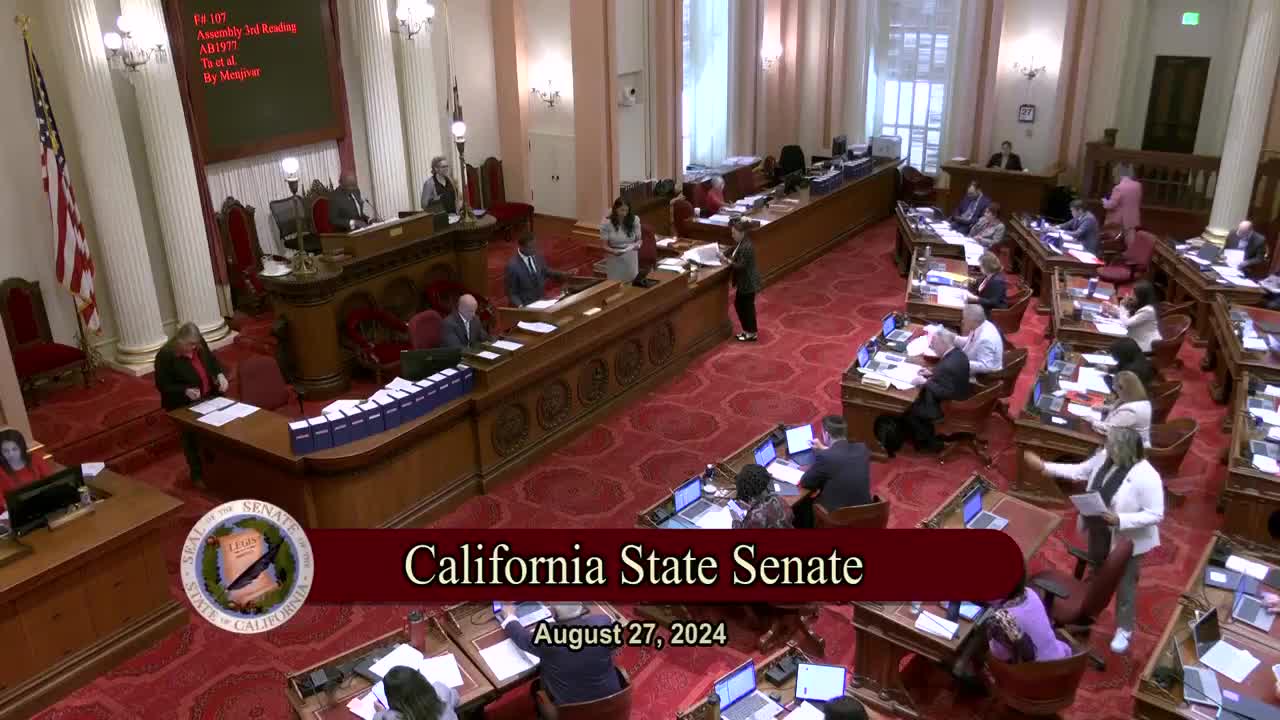
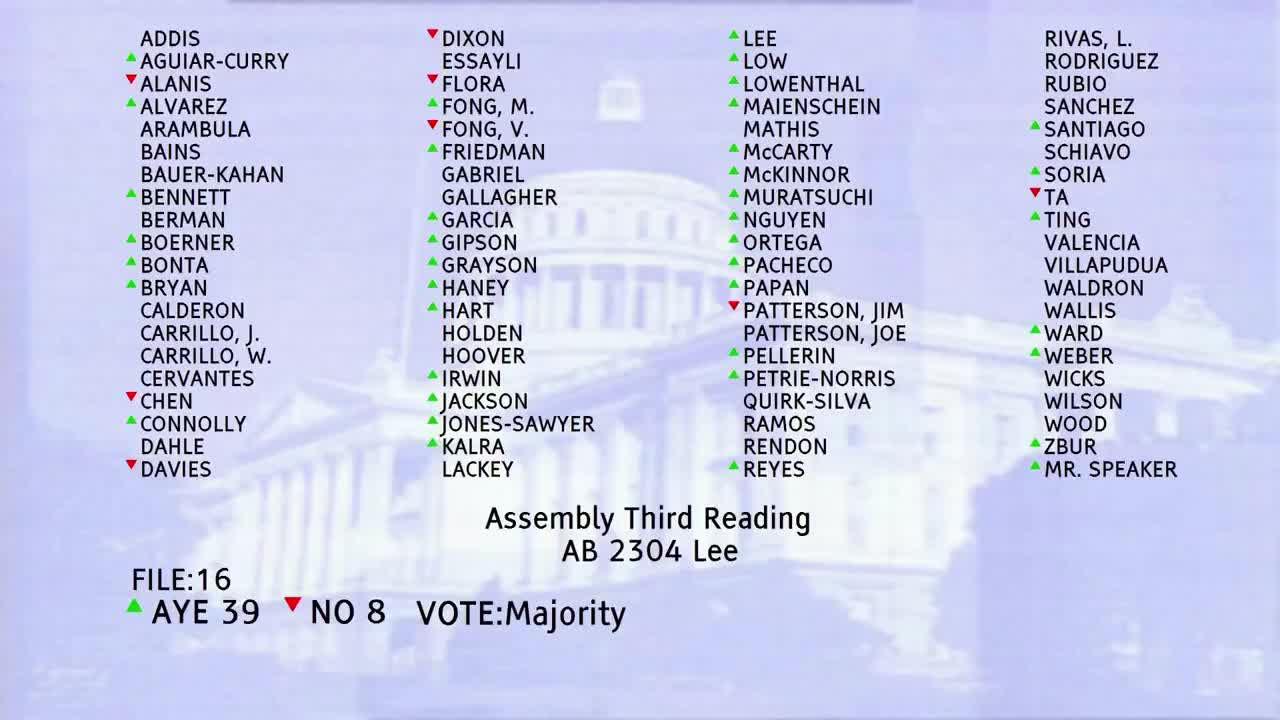

Bill Author

Bill Co-Author(s):