AB 2359: Alcoholic beverage control: neighborhood-restricted special on-sale general licenses.
- Session Year: 2023-2024
- House: Assembly
- Latest Version Date: 2024-09-22
Current Status:
Passed
(2024-09-22: Chaptered by Secretary of State - Chapter 393, Statutes of 2024.)
Introduced
In Committee
First Chamber
In Committee
Second Chamber
Enacted
The Alcoholic Beverage Control Act, administered by the Department of Alcoholic Beverage Control, regulates the sale and distribution of alcoholic beverages and the granting of licenses for the manufacture, distribution, and sale of alcoholic beverages within the state. The act also provides for a limitation on the amount of on-sale general licenses that may be issued by the department based on the population of the county in which the licensed premises are located, as provided. Existing law provides an exception to the license limitation for a county of the 6th class, as specified, for up to 5 new original neighborhood-restricted special on-sale general licenses for premises located within specified census tracts in that county until a total of 30 new licenses are issued. Existing law limits the total number of these licenses that may be concurrently held in each specified neighborhood.
This bill would increase the total number of new licenses authorized under this provision from 30 to 40 and would increase, for 2 of the specified neighborhoods, the total authorized number of licenses for each neighborhood from 5 to 10 licenses. The bill would update certain census tract numbers to reflect splits made to those tracts in the 2020 Census and would additionally authorize the issuance of a license for a premises located in census tract 352020.
Existing law requires an applicant for a neighborhood-restricted special on-sale general license to conduct a preapplication meeting with neighbors and members of the community, as specified, before submitting an application for a license.
This bill would delete the preapplication meeting requirement.
Existing law prohibits the holder of a neighborhood-restricted special on-sale general license from exercising the rights and privileges granted by an off-sale beer and wine license.
This bill, commencing January 1, 2025, would instead authorize the exercise of specified off-sale privileges. The bill would prohibit the holder of a neighborhood-restricted special on-sale general license that was issued before January 1, 2025, from exercising those off-sale privileges unless the department approves a petition by the licensee, as specified.
This bill would make legislative findings and declarations as to the necessity of a special statute for the City and County of San Francisco.
(a)Notwithstanding this chapter, in any county of the sixth class, the department may issue no more than a total of five new original neighborhood-restricted special on-sale general licenses to premises located in any of the census tracts listed in subdivision (b) per year beginning on January 1, 2017, until a total of 40 new licenses authorized by this section are issued.
(b)To qualify for a license issued pursuant to this section, the premises for which the license would apply shall be located within one of the following United States Bureau of Census census tracts, corresponding to those identified within the 2020 Census, located within the City and County of San Francisco, subject to the following limitations:
(1)United States Bureau of the Census census tract 612000, 232000, 234000, 233000, or 230030. No more than a total of 10 neighborhood-restricted special on-sale general licenses shall be concurrently held at premises located within all of these tracts.
(2)United States Bureau of the Census census tract 258000 or 257020. No more than a total of four neighborhood-restricted special on-sale general licenses shall be concurrently held at premises located within all of these tracts.
(3)United States Bureau of the Census census tract 264030. No more than a total of two neighborhood-restricted special on-sale general licenses shall be concurrently held at premises located within this tract.
(4)United States Bureau of the Census census tract 255010, 255020, 256000, 260020, 260010, 260040, 261000, or 263010. No more than a total of 10 neighborhood-restricted special on-sale general licenses shall be concurrently held at premises located within all of these tracts.
(5)United States Bureau of the Census census tract 309000, 310000, or 312010. No more than a total of four neighborhood-restricted special on-sale general licenses shall be concurrently held at premises located within all of these tracts.
(6)United States Bureau of the Census census tract 330010, 330020, 329010, 328010, 353000, or 354000. No more than a total of five neighborhood-restricted special on-sale general licenses shall be concurrently held at premises located within all of these tracts.
(7)United States Bureau of the Census census tract 328020, 329020, 351010, 351020, 352010, or 352020. No more than a total of five neighborhood-restricted special on-sale general licenses shall be concurrently held at premises located within all of these tracts.
(c)In issuing the licenses pursuant to this section, the department shall follow the procedure set forth in Section 23961. A license shall not be issued pursuant to this section to an applicant until any existing on-sale licenses issued to the applicant for the same premises are canceled.
(d)(1)A person who currently holds an on-sale general license for a premises, who currently holds any interest in an on-sale general license for a premises, who has held an on-sale general license for a premises within the 12 months before the date of the drawing required by Section 23961, or who has held any interest in an on-sale general license for a premises within the 12 months before the date of the drawing required by Section 23961, shall not apply for a license issued pursuant to this section for that licensed premises.
(2)In addition to the other requirements of this section, an application for a neighborhood-restricted on-sale general license shall be subject to all the requirements that apply to an on-sale general license for a bona fide eating place.
(e)(1)A license issued pursuant to this section shall not be transferred between counties.
(2)Except as provided in paragraphs (3) and (4), a license issued pursuant to this section shall not be transferred to any other premises.
(3)Paragraph (2) shall not apply to any licensee whose premises have been destroyed as a result of fire or any act of God or other force beyond the control of the licensee, for whom the provisions of Section 24081 shall apply.
(4)The department may allow a license issued pursuant to this section to be transferred within the same neighborhood, as described in paragraphs (1) to (7), inclusive, of subdivision (b).
(5)A license issued pursuant to this section shall not be transferred to any person, partnership, limited partnership, limited liability company, or corporation. This provision shall not apply to licenses transferred under Section 24071, 24071.1, or 24071.2.
(f)Following the cancellation or revocation of a license issued pursuant to this section, the department may issue one additional new original neighborhood-restricted special on-sale general license following the procedure set forth in Section 23961 and the provisions of this section.
(g)A person that holds a neighborhood-restricted special on-sale general license issued pursuant to this section shall not exchange that license for an on-sale license for public premises.
(h)Except as specified herein, a neighborhood-restricted special on-sale general license may exercise all of the privileges, and is subject to all the restrictions, of an on-sale general license for a bona fide eating place.
(i)(1)Commencing January 1, 2025, subject to paragraph (2), a licensee may exercise off-sale privileges pursuant to Sections 23401 and 23401.5. This section does not limit the authority of the department to impose conditions on a license pursuant to Article 1.5 (commencing with Section 23800).
(2)The holder of a neighborhood restricted special on-sale general license issued before January 1, 2025, shall not exercise off-sale privileges pursuant to Section 23401 and 23401.5 unless the department approves a petition submitted by the licensee requesting to exercise off-sale privileges. If the department determines that good cause exists to deny the petition, in whole or in part, the department shall endorse the prohibition or other restriction as a condition on the license, which is subject to Article 1.5 (commencing with Section 23800). The licensee may make a written request for hearing on the denial of a petition in the same manner as provided in Section 23805.
(j)The department shall adopt rules and regulations to enforce this section.
SEC. 2.The Legislature finds and declares that a special statute is necessary and that a general statute cannot be made applicable within the meaning of Section 16 of Article IV of the California Constitution because of the unique distribution and market conditions of liquor licenses in the City and County of San Francisco, that apply only to the City and County of San Francisco.
(a)Notwithstanding this chapter, in any county of the sixth class, the department may issue no more than a total of five new original neighborhood-restricted special on-sale general licenses to premises located in any of the census tracts listed in subdivision (b) per year beginning on January 1, 2017, until a total of 30 40 new licenses authorized by this section are issued.
(b)To qualify for a license issued pursuant to this section, the premises for which the license would apply shall be located within one of the following United States Bureau of Census census tracts, corresponding to those identified within the 2010 2020 Census, located within the City and County of San Francisco, subject to the following limitations:
(1)United States Bureau of the Census census tract 612000, 232000, 234000, 233000, or 230030. No more than a total of five 10 neighborhood-restricted special on-sale general licenses shall be concurrently held at premises located within all of these tracts.
(2)United States Bureau of the Census census tract 258000 or 257020. No more than a total of four neighborhood-restricted special on-sale general licenses shall be concurrently held at premises located within all of these tracts.
(3)United States Bureau of the Census census tract 264030. No more than a total of two neighborhood-restricted special on-sale general licenses shall be concurrently held at premises located within this tract.
(4)United States Bureau of the Census census tract 255000, 255010, 255020, 256000, 260020, 260010, 260040, 261000, or 263010. No more than a total of five 10 neighborhood-restricted special on-sale general licenses shall be concurrently held at premises located within all of these tracts.
(5)United States Bureau of the Census census tract 309000, 310000, or 312010. No more than a total of four neighborhood-restricted special on-sale general licenses shall be concurrently held at premises located within all of these tracts.
(6)United States Bureau of the Census census tract 330000, 330010, 330020, 329010, 328010, 353000, or 354000. No more than a total of five neighborhood-restricted special on-sale general licenses shall be concurrently held at premises located within all of these tracts.
(7)United States Bureau of the Census census tract 328020, 329020, 351000, or 352010. 351010, 351020, 352010, or 352020. No more than a total of five neighborhood-restricted special on-sale general licenses shall be concurrently held at premises located within all of these tracts.
(c)In issuing the licenses pursuant to this section, the department shall follow the procedure set forth in Section 23961. A license shall not be issued pursuant to this section to an applicant until any existing on-sale licenses issued to the applicant for the same premises are canceled.
(d)(1)A person who currently holds an on-sale general license for a premises, who currently holds any interest in an on-sale general license for a premises, who has held an on-sale general license for a premises within the 12 months before the date of the drawing required by Section 23961, or who has held any interest in an on-sale general license for a premises within the 12 months before the date of the drawing required by Section 23961, shall not apply for a license issued pursuant to this section for that licensed premises.
(2)In addition to the other requirements of this section, an application for a neighborhood-restricted on-sale general license shall be subject to all the requirements that apply to an on-sale general license for a bona fide eating place.
(3)Before submitting an application for a license issued pursuant to this section, the applicant shall conduct a minimum of one preapplication meeting to discuss the application with neighbors and members of the community within the census tract in which the premises are located.(A)The applicant shall hold the meeting either on the premises or at an alternate location within a one-mile radius of the premises.(B)The applicant shall mail notification of the preapplication meeting to all of the following individuals and organizations at least 14 calendar days before the meeting:(i)Each resident within a 500-foot radius of the premises for which the license is to be issued.(ii)Any relevant neighborhood associations for the neighborhood in which the premises is located, as identified on a list maintained by the Planning Department of the City and County of San Francisco.(iii)The Chief of Police for the San Francisco Police Department.(C)Applicants for a neighborhood-restricted special on-sale general license shall submit, on a form provided by the department, signed verification by the local governing body of the area in which the applicant premises are located, or its designated subordinated officer or body, that states the applicant has completed the preapplication meeting pursuant to this section.(e)(1)A license issued pursuant to this section shall not be transferred between counties.
(2)Except as provided in paragraphs (3) and (4), a license issued pursuant to this section shall not be transferred to any other premises.
(3)Paragraph (2) shall not apply to any licensee whose premises have been destroyed as a result of fire or any act of God or other force beyond the control of the licensee, for whom the provisions of Section 24081 shall apply.
(4)The department may allow a license issued pursuant to this section to be transferred within the same neighborhood, as described in paragraphs (1) to (7), inclusive, of subdivision (b).
(5)A license issued pursuant to this section shall not be transferred to any person, partnership, limited partnership, limited liability company, or corporation. This provision shall not apply to licenses transferred under Section 24071, 24071.1, or 24071.2.
(f)Following the cancellation or revocation of a license issued pursuant to this section, the department may issue one additional new original neighborhood-restricted special on-sale general license following the procedure set forth in Section 23961 and the provisions of this section.
(g)A person that holds a neighborhood-restricted special on-sale general license issued pursuant to this section shall not exchange that license for an on-sale license for public premises.
(h)Except as specified herein, a neighborhood-restricted special on-sale general license may exercise all of the privileges, and is subject to all the restrictions, of an on-sale general license for a bona fide eating place.
(i)A neighborhood-restricted special on-sale general license issued pursuant to this section shall not, with respect to beer and wine, authorize the exercise of the rights and privileges granted by an off-sale beer and wine license.(i)(1)Commencing January 1, 2025, subject to paragraph (2), a licensee may exercise off-sale privileges pursuant to Sections 23401 and 23401.5. This section does not limit the authority of the department to impose conditions on a license pursuant to Article 1.5 (commencing with Section 23800).
(2)The holder of a neighborhood restricted special on-sale general license issued before January 1, 2025, shall not exercise off-sale privileges pursuant to Section 23401 and 23401.5 unless the department approves a petition submitted by the licensee requesting to exercise off-sale privileges. If the department determines that good cause exists to deny the petition, in whole or in part, the department shall endorse the prohibition or other restriction as a condition on the license, which is subject to Article 1.5 (commencing with Section 23800). The licensee may make a written request for hearing on the denial of a petition in the same manner as provided in Section 23805.
(j)The department shall adopt rules and regulations to enforce this section.
SEC. 2.The Legislature finds and declares that a special statute is necessary and that a general statute cannot be made applicable within the meaning of Section 16 of Article IV of the California Constitution because of the unique distribution and market conditions of liquor licenses in the City and County of San Francisco, that apply only to the City and County of San Francisco.
REVISIONS: HeadingLine 3.|
Date
|
Status
|
|---|---|
| Sep 22, 2024 | Chaptered by Secretary of State - Chapter 393, Statutes of 2024. |
| Sep 22, 2024 | Approved by the Governor. |
| Aug 27, 2024 | Enrolled and presented to the Governor at 12 p.m. |
| Aug 20, 2024 | In Assembly. Ordered to Engrossing and Enrolling. |
| Aug 20, 2024 | Read third time. Passed. Ordered to the Assembly. (Ayes 39. Noes 0. Page 5224.). |
| Jun 11, 2024 | Read second time. Ordered to third reading. |
| Jun 10, 2024 | From committee: Be ordered to second reading pursuant to Senate Rule 28.8. |
| May 28, 2024 | From committee: Do pass and re-refer to Com. on APPR. (Ayes 12. Noes 0.) (May 28). Re-referred to Com. on APPR. |
| May 8, 2024 | Referred to Com. on G.O. |
| Apr 25, 2024 | In Senate. Read first time. To Com. on RLS. for assignment. |
| Apr 25, 2024 | Read third time. Passed. Ordered to the Senate. (Ayes 75. Noes 0. Page 4998.) |
| Apr 18, 2024 | Read second time. Ordered to Consent Calendar. |
| Apr 17, 2024 | From committee: Do pass. To Consent Calendar. (Ayes 15. Noes 0.) (April 17). |
| Apr 4, 2024 | From committee: Do pass and re-refer to Com. on APPR. (Ayes 21. Noes 0.) (April 3). Re-referred to Com. on APPR. |
| Apr 4, 2024 | Coauthors revised. |
| Feb 26, 2024 | Referred to Com. on G.O. |
| Feb 13, 2024 | From printer. May be heard in committee March 14. |
| Feb 12, 2024 | Read first time. To print. |
|
Date
|
Description
|
Location
|
Votes
|
|
|---|---|---|---|---|
| Aug 20, 2024 | Assembly 3rd Reading AB2359 Ting et al. By Wiener | Senate Floor |
Passed |
|
| May 28, 2024 | Do pass, but first be re-referred to the Committee on [Appropriations] | Senate Standing Committee on Governmental Organization |
Passed |
|
| Apr 25, 2024 | AB 2359 Ting Consent Calendar Second Day Regular Session | Assembly Floor |
Passed |
|
| Apr 17, 2024 | Do pass. To Consent Calendar. | Assembly Standing Committee on Appropriations |
Passed |
|
| Apr 3, 2024 | Do pass and be re-referred to the Committee on [Appropriations] | Assembly Standing Committee on Governmental Organization |
Passed |
This list shows positions taken on this bill by organizations on the date displayed, which is linked to the original source.
Positions by individuals are not included.
|
Organization
|
Position
|
Date
|
|---|---|---|
| Alcohol Justice | ** Against | |
| City and County of San Francisco | ** Support | |
| Economic Development on Third | ** Support | |
| Eomm INC | ** Support | |
| Excelsior Action Group | ** Support | |
| Excelsior Outer Mission Merchants | ** Support | |
| Golden Gate Restaurant Association | ** Support | |
| San Francisco Board of Supervisors | ** Support |
SENATE RULES COMMITTEE Office of Senate Floor Analyses (916) 651-1520 Fax: (916) 327-4478 | AB 2359 |
THIRD READING
Bill No: AB 2359
Author: Ting (D) and Haney (D), et al.
Introduced: 2/12/24
Vote: 21
SENATE GOVERNMENTAL ORG. COMMITTEE: 12-0, 5/28/24
AYES: Dodd, Wilk, Alvarado-Gil, Archuleta, Glazer, Jones, Nguyen, Padilla, Portantino, Roth, Seyarto, Smallwood-Cuevas
NO VOTE RECORDED: Ashby, Bradford, Ochoa Bogh, Rubio
SENATE APPROPRIATIONS COMMITTEE: Senate Rule 28.8
ASSEMBLY FLOOR: 75-0, 4/25/24 (Consent) - See last page for vote
SUBJECT: Alcoholic beverage control: neighborhood-restricted special on-sale general licenses
SOURCE: City and County of San Francisco
DIGEST: This bill revises an existing exemption in law by authorizing the Department of Alcoholic Beverage Control (ABC) to issue no more than five new original neighborhood-restricted special on-sale general licenses (Type 87 licenses) per year, until a total of 40 licenses (currently 30) are issued, to premises located in specific census tracts within the City and County of San Francisco, as specified.
ANALYSIS:
Existing law:
- Establishes the Department of ABC and grants it exclusive authority to administer the provisions of the ABC Act in accordance with laws enacted by the Legislature. This involves licensing individuals and businesses associated with the manufacture, importation, and sale of alcoholic beverages in this State and the collection of license fees.
- Provides that the Department of ABC must deny an application for a license if issuance would create a law enforcement problem, or if issuance would result in, or add to, an undue concentration of licenses in the area where the license is desired. However, for liquor stores and other specified retail licenses, the Department of ABC is authorized to issue a license if the respective local government determines that public convenience or necessity would be served by granting the license.
- Caps the number of new on-sale and off-sale general licenses issued by the Department of ABC. The ratios are one on-sale general license for each 2,000 persons in the county in which the premises are situated and one off-sale general license for each 2,500 persons.
- Defines an “on-sale” license as authorizing the sale of all types of alcoholic beverages: namely, beer, wine and distilled spirits, for consumption on the premises (such as at a restaurant or bar) and an “off-sale” license as authorizing the sale of all types of alcoholic beverages for consumption off the premises in original, sealed containers.
- Defines “bona fide public eating place” to mean a place which is regularly and in a bona fide manner used and kept open for the serving of meals to guests for compensation and which has suitable kitchen facilities connected therewith, containing conveniences for cooking an assortment of foods which may be required for ordinary meals, the kitchen of which must be kept in a sanitary condition with the proper amount of refrigeration for keeping of food on said premises and must comply with all the regulations of the local Department of Health.
- Authorizes, beginning January 1, 2017, the Department of ABC to issue no more than five new original neighborhood-restricted special on-sale general licenses, for premises located within specified City and County of San Francisco neighborhoods, subject to certain requirements and restrictions.
- Provides that in Napa County, from January 1, 2017, to December 31, 2017, the Department of ABC, in addition to those licenses currently issued under the law may issue no more than five additional new original on-sale general licenses for bona fide public eating places. Any premises to qualify for a license shall have a seating capacity for 25 or more diners.
- Authorizes, beginning January 1, 2018, the Department of ABC to issue no more than five new original neighborhood-restricted special on-sale general licenses per year, until a total of 30 licenses are issued, to premises located in any of the census tracts, as specified, within the City and County of San Francisco.
- Authorizes, beginning on January 1, 2018, the Department of ABC, to issue a maximum of 20 new original on-sale general licenses, over a four-year period, in the County of Napa, as specified.
This bill:
- Increases the total number of new Type 87 licenses authorized under current law from 30 to 40 and would increase, for two of the specified neighborhoods, the total authorized number of licenses for each neighborhood from five to 10 licenses.
- Updates certain census tract numbers to reflect splits made to those tracts in the 2020 Census and would additionally authorize the issuance of a license for premises located in a specified census tract.
- Deletes a requirement that an applicant for a Type 87 to conduct a pre-application meeting with neighbors and members of the community, as specified, before submitting an application for a license.
- Provides, commencing, January 1, 2025, a licensee may exercise off-sale privileges pursuant to the ABC Act.
- Provides that the holder of a Type 87 license issued before January 1, 2025, shall continue to not exercise off-sale privileges unless the Department of ABC approves a petition submitted by the licensee requesting to exercise off-sale privileges, as specified.
Background
Author Statement. According to the author’s office, “in 2016, the California Legislature created a new type of liquor license – the ‘Type 87’ neighborhood liquor license. This special license was created to spur economic development in San Francisco’s outer commercial corridors by providing a limited number of affordable, nontransferable full liquor licenses to restaurants in specific neighborhoods in San Francisco. The program has been very successful but recent challenges, including the aftermath of the Covid-19 pandemic, have underscored the need to expand the program. AB 2359 strengthens the neighborhood liquor license program by increasing the total number of available Type 87 licenses to 40, raising the cap on licensed in two neighborhoods, and making other technical changes.”
Type 87 Alcohol license. Before the signing of SB 1285 (Leno, Chapter 790, Statutes of 2016) no new liquor licenses had been issued in San Francisco in over 80 years. In 2017, the Legislature passed AB 471 (Ting, Chapter 442, Statutes of 2017) that created a neighborhood restricted liquor license (Type 87) program for San Francisco's outer neighborhoods, providing these areas much needed economic boost. Businesses benefited from the increased traffic that successful restaurants and bars bring by adding variety, reducing vacancies, creating new jobs, and providing space for community socializing.
AB 471 allowed for a total of 30 Type 87 licenses, five awarded per year until 2023 within a set of enumerated census tracts around seven San Francisco commercial corridors. Those corridors are Third Street in the Bayview, Mission Street in the Excelsior, Ocean Avenue, San Bruno Avenue, Noriega Street, Taraval Street, and Visitacion Valley. Type 87 licenses are only issued for bona fide eating places and allow the sale of beer, wine, and distilled spirits for consumption on the licensed premises and are not transferable to other neighborhoods. The Type 87 liquor license was designated to mirror the Type 47 license.
The license requires unique public notification and community interaction during the formal application process. When more than five businesses apply for one in any given year, a random drawing is held. Before this passage of the above-mentioned bills, new restaurants and bars typically had to buy their liquor licenses from other businesses that have closed or wanted to sell their license. This license type is subject to Responsible Beverage Service (RBS) requirements and requires alcohol servers and managers of alcohol servers to be RBS certified. To date, 24 of the 30 available Type 87 licenses have been used by businesses to launch or strengthen neighborhood-serving establishments.
This bill makes various changes to the Type 87 alcohol license program. First, it increases the number of licenses available through the program from 30 to 40 alcohol licenses and raises the caps on the number of licenses in the Bayview and Excelsior neighborhoods. The bill also removes the prohibition for new Type 87 licensees being able to offer to-go alcohol sales to reflect new privileges that have been given to similar licensees. Finally, the bill eliminates the requirement that an applicant for a Type 87 to conduct a pre-application meeting with neighbors and members of the community. According to the author’s office this is unnecessary and redundant since alcohol applicants already have to give public notice when applying for new alcohol licenses.
Type 47 Alcohol License. An on-sale general eating-place license, or Type 47 license, authorizes the consumption of beer, wine, and distilled spirits for consumption on the licensed premise. The licensee is required to operate and maintain the licensed premises as a bona fide eating-place, which must include suitable kitchen facilities. The licensee must make actual and substantial sales of meals for consumption on the premises. Generally, this means that the business must generate at least 51% of all gross sales from food. As such, a Type 47 license is one of the most common types of liquor licenses for restaurants in California.
Some common businesses that use the Type 47 license include full-service restaurants, hotels and resorts, bowling alleys, golf courses and other eating establishments. As of February 29, 2024, there were approximately 15,934 on-sale general (Type 47) licenses statewide.
Alcohol License Limitation. Existing law provides for a limitation on the number of new on-sale general licenses that may be issued in a given year by the Department of ABC based on the population growth of the county in which the licensed premises are located. The ratio is one on-sale general license for each 2,000 residents. For example, if a county grows by 10,000 people in a given year, the Department ABC will issue five new licenses in that county.
If the Department of ABC receives more applications than there are licenses available, a public drawing is held. To participate in such a drawing, an applicant must have been a resident of California for at least 90 days prior to the date of the scheduled drawing. Successful drawing participants will be notified that they have 90 days to complete a formal application for their specific premises. The cost of these new licenses is $15,835 each.
Individuals seeking to open a full-service restaurant with a bar or cocktail menu who fail to obtain a liquor license through this process typically must locate an existing licensed owner willing to sell their license. Usually, that is done by contacting a liquor license broker. The cost of obtaining a license on the secondary market is driven by supply and demand and can reach upwards of $400,000.
Impact on Counties. As previously noted, when a county experiences a population growth, the Department of ABC issues additional licenses based on the population growth; currently 2,000 residents per one on-sale license. While this system tends to work for some counties, there are a substantial number of counties where the demand for alcohol licenses far outweighs the current number of alcohol licenses in those counties. The reasons for the lack of licenses are generally a lack of population growth or because of the amount of tourism in the particular county, which results in higher demand for these types of businesses.
For example, in Napa County the number of visitors to Napa continues to increase while the population of the county has not grown. While the majority of visitors to Napa take day trips, more than one million of these visitors spend at least one night in local lodgings. Tourism has therefore become one of the major economic drivers in the region. While legislation in 2017 authorized the issuance of five additional licenses over a four-year span, demand far outweighs the availability of these licenses. In 2018 for instance, while the Department of ABC issued five new licenses to Napa, there were a total of 38 applications for those five licenses.
According to the Department of ABC, in 2022 there were 31 counties that were eligible for more licenses because of population growth and 27 counties that were not eligible for more licenses because of a lack of population. Of those 27 counties, five counties received a handful of licenses through special legislation.
Issuance of Additional Licenses. Over the years, various counties have sponsored legislation to authorize the Department of ABC to issue additional Type 47 licenses in their county. Generally, these bills receive unanimous support in the Legislature and signed into law. Once those bills become law, the Department of ABC, if there are more applicants than there are licenses available to be issued, holds a random drawing that establishes priority rankings to apply for alcohol licenses. Applicants must still go through the normal application process, which includes local posting requirements and pay all appropriate fees.
Related/Prior Legislation
AB 2589 (Joe Patterson, 2024) authorizes the Department of ABC to issue up to two additional new original on-sale general licenses for bona fide public eating-places per year in each county to premises where the operation of a bona fide public eating-place is, or is located in, a retail center, as defined. (Pending in the Senate Governmental Organization Committee)
SB 1028 (Alvarado- Gil, 2024) authorizes the Department of ABC, in counties that have reached its limit of on-sale general licenses, to issue up to 10 additional new original on-sale general licenses for bona fide public eating-places, as specified. (Held on the Senate Appropriations Suspense File)
AB 1668 (Patterson, Chapter 282, Statutes of 2023) authorized the Department of ABC to issue no more than 10 new original on-sale general licenses for bona fide public eating places in the County of Placer, as specified.
FISCAL EFFECT: Appropriation: No Fiscal Com.: Yes Local: No
SUPPORT: (Verified 6/10/24)
City and County of San Francisco (source)
Economic Development on Third
Excelsior Action Group
Excelsior Outer Mission Merchants
Golden Gate Restaurant Association
San Francisco Board of Supervisors
OPPOSITION: (Verified 6/10/24)
Alcohol Justice
ARGUMENTS IN SUPPORT: According to the City and County of San Francisco, “California’s population-based limits on the number of full liquor licenses available in each county have effectively capped the number of full licenses for restaurants and bars in San Francisco for 80 years. Existing licenses often reach prices exceeding $200,000 on the secondary market, which makes them inaccessible to small businesses in our outer neighborhoods. To advance economic growth, AB 2359 would increase the total number of Type 87 licenses by ten licenses, with the per-neighborhood allocations for the Excelsior and Bayview each increased by five additional licenses. This legislation would also make technical fixes to improve the Type 87 program, including allowing licensees to seek the ability to offer to-go alcohol sales and removing duplicative notification requirements.”
ARGUMENTS IN OPPOSITION: Alcohol Justice argues “as it stands, San Francisco has among the most on-sale outlets per person of any jurisdiction in the state, and is asking for even more. At the same time, representatives of the city are decrying the current unviability of existing alcohol licenses, and seeking legislative remedy for that. Indeed, AB 2359 seeks to make its special licenses viable under the deregulatory measures proposed to “save” retail alcohol industry. Yet we are to believe that the current demand for alcohol consumption is insufficient to sustain the current licensees in the city and the city desperately needs more licenses?”
ASSEMBLY FLOOR: 75-0, 4/25/24
AYES: Addis, Aguiar-Curry, Alanis, Alvarez, Arambula, Bains, Bauer-Kahan, Bennett, Berman, Bonta, Bryan, Calderon, Juan Carrillo, Wendy Carrillo, Cervantes, Chen, Connolly, Davies, Dixon, Essayli, Flora, Mike Fong, Vince Fong, Friedman, Gabriel, Garcia, Gipson, Grayson, Haney, Holden, Hoover, Irwin, Jackson, Jones-Sawyer, Kalra, Lackey, Lee, Low, Lowenthal, Maienschein, McCarty, McKinnor, Muratsuchi, Stephanie Nguyen, Ortega, Pacheco, Papan, Jim Patterson, Joe Patterson, Pellerin, Petrie-Norris, Quirk-Silva, Ramos, Rendon, Reyes, Luz Rivas, Rodriguez, Blanca Rubio, Sanchez, Santiago, Schiavo, Soria, Ta, Ting, Valencia, Villapudua, Waldron, Wallis, Ward, Weber, Wicks, Wilson, Wood, Zbur, Robert Rivas
NO VOTE RECORDED: Boerner, Megan Dahle, Gallagher, Hart, Mathis
Prepared by: Felipe Lopez / G.O. / (916) 651-1530
6/11/24 9:53:58
**** END ****
SENATE COMMITTEE ON GOVERNMENTAL ORGANIZATION
Senator Bill Dodd
Chair
2023 - 2024 Regular
Bill No: 2359 Hearing Date: 5/28/2024
Author: | , et al. | ||
Version: | 2/12/2024 Introduced | ||
Urgency: | No | Fiscal: | Yes |
Consultant: | Felipe Lopez | ||
SUBJECT: Alcoholic beverage control: neighborhood-restricted special on-sale general licenses
DIGEST: This bill revises an existing exemption in law by authorizing the Department of Alcoholic Beverage Control (ABC) to issue no more than five new original neighborhood-restricted special on-sale general licenses (Type 87 licenses) per year, until a total of 40 licenses (currently 30) are issued, to premises located in specific census tracts within the City and County of San Francisco, as specified.
ANALYSIS:
Existing law:
- Establishes the Department of ABC and grants it exclusive authority to administer the provisions of the ABC Act in accordance with laws enacted by the Legislature. This involves licensing individuals and businesses associated with the manufacture, importation, and sale of alcoholic beverages in this State and the collection of license fees.
- Provides that the Department of ABC must deny an application for a license if issuance would create a law enforcement problem, or if issuance would result in, or add to, an undue concentration of licenses in the area where the license is desired. However, for liquor stores and other specified retail licenses, the Department of ABC is authorized to issue a license if the respective local government determines that public convenience or necessity would be served by granting the license.
- Caps the number of new on-sale and off-sale general licenses issued by the Department of ABC. The ratios are one on-sale general license for each 2,000 persons in the county in which the premises are situated and one off-sale general license for each 2,500 persons.
- Defines an “on-sale” license as authorizing the sale of all types of alcoholic beverages: namely, beer, wine and distilled spirits, for consumption on the premises (such as at a restaurant or bar) and an “off-sale” license as authorizing the sale of all types of alcoholic beverages for consumption off the premises in original, sealed containers.
- Defines “bona fide public eating place” to mean a place which is regularly and in a bona fide manner used and kept open for the serving of meals to guests for compensation and which has suitable kitchen facilities connected therewith, containing conveniences for cooking an assortment of foods which may be required for ordinary meals, the kitchen of which must be kept in a sanitary condition with the proper amount of refrigeration for keeping of food on said premises and must comply with all the regulations of the local Department of Health.
- Authorizes, beginning January 1, 2017, the Department of ABC to issue no more than five new original neighborhood-restricted special on-sale general licenses, for premises located within specified City and County of San Francisco neighborhoods, subject to certain requirements and restrictions.
- Provides that in Napa County, from January 1, 2017, to December 31, 2017, the Department of ABC, in addition to those licenses currently issued under the law may issue no more than five additional new original on-sale general licenses for bona fide public eating places. Any premises to qualify for a license shall have a seating capacity for 25 or more diners.
- Authorizes, beginning January 1, 2018, the Department of ABC to issue no more than five new original neighborhood-restricted special on-sale general licenses per year, until a total of 30 licenses are issued, to premises located in any of the census tracts, as specified, within the City and County of San Francisco.
- Authorizes, beginning on January 1, 2018, the Department of ABC, to issue a maximum of 20 new original on-sale general licenses, over a four-year period, in the County of Napa, as specified.
This bill:
- Increases the total number of new Type 87 licenses authorized under current law from 30 to 40 and would increase, for two of the specified neighborhoods, the total authorized number of licenses for each neighborhood from five to 10 licenses.
- Updates certain census tract numbers to reflect splits made to those tracts in the 2020 Census and would additionally authorize the issuance of a license for premises located in a specified census tract.
- Deletes a requirement that an applicant for a Type 87 to conduct a pre-application meeting with neighbors and members of the community, as specified, before submitting an application for a license.
- Provides, commencing, January 1, 2025, a licensee may exercise off-sale privileges pursuant to the ABC Act.
- Provides that the holder of a Type 87 license issued before January 1, 2025, shall continue to not exercise off-sale privileges unless the Department of ABC approves a petition submitted by the licensee requesting to exercise off-sale privileges, as specified.
Background
Author Statement. According to the author’s office, “in 2016, the California Legislature created a new type of liquor license – the ‘Type 87’ neighborhood liquor license. This special license was created to spur economic development in San Francisco’s outer commercial corridors by providing a limited number of affordable, nontransferable full liquor licenses to restaurants in specific neighborhoods in San Francisco. The program has been very successful but recent challenges, including the aftermath of the Covid-19 pandemic, have underscored the need to expand the program. AB 2359 strengthens the neighborhood liquor license program by increasing the total number of available Type 87 licenses to 40, raising the cap on licensed in two neighborhoods, and making other technical changes.”
Type 87 Alcohol license. Before the signing of SB 1285 (Leno, Chapter 790, Statutes of 2016) no new liquor licenses had been issued in San Francisco in over 80 years. In 2017, the Legislature passed AB 471 (Ting, Chapter 442, Statutes of 2017) that created a neighborhood restricted liquor license (Type 87) program for San Francisco's outer neighborhoods, providing these areas much needed economic boost. Businesses benefited from the increased traffic that successful restaurants and bars bring by adding variety, reducing vacancies, creating new jobs, and providing space for community socializing.
AB 471 allowed for a total of 30 Type 87 licenses, five awarded per year until 2023 within a set of enumerated census tracts around seven San Francisco commercial corridors. Those corridors are Third Street in the Bayview, Mission Street in the Excelsior, Ocean Avenue, San Bruno Avenue, Noriega Street, Taraval Street, and Visitacion Valley. Type 87 licenses are only issued for bona fide eating places and allow the sale of beer, wine, and distilled spirits for consumption on the licensed premises and are not transferable to other neighborhoods. The Type 87 liquor license was designated to mirror the Type 47 license.
The license requires unique public notification and community interaction during the formal application process. When more than five businesses apply for one in any given year, a random drawing is held. Before this passage of the above-mentioned bills, new restaurants and bars typically had to buy their liquor licenses from other businesses that have closed or wanted to sell their license. This license type is subject to Responsible Beverage Service (RBS) requirements and requires alcohol servers and managers of alcohol servers to be RBS certified. To date, 24 of the 30 available Type 87 licenses have been used by businesses to launch or strengthen neighborhood-serving establishments.
This bill makes various changes to the Type 87 alcohol license program. First, it increases the number of licenses available through the program from 30 to 40 alcohol licenses and raises the caps on the number of licenses in the Bayview and Excelsior neighborhoods. The bill also removes the prohibition for new Type 87 licensees being able to offer to-go alcohol sales to reflect new privileges that have been given to similar licensees. Finally, the bill eliminates the requirement that an applicant for a Type 87 to conduct a pre-application meeting with neighbors and members of the community. According to the author’s office this is unnecessary and redundant since alcohol applicants already have to give public notice when applying for new alcohol licenses.
Type 47 Alcohol License. An on-sale general eating-place license, or Type 47 license, authorizes the consumption of beer, wine, and distilled spirits for consumption on the licensed premise. The licensee is required to operate and maintain the licensed premises as a bona fide eating-place, which must include suitable kitchen facilities. The licensee must make actual and substantial sales of meals for consumption on the premises. Generally, this means that the business must generate at least 51% of all gross sales from food. As such, a Type 47 license is one of the most common types of liquor licenses for restaurants in California.
Some common businesses that use the Type 47 license include full-service restaurants, hotels and resorts, bowling alleys, golf courses and other eating establishments. As of February 29, 2024, there were approximately 15,934 on-sale general (Type 47) licenses statewide.
Alcohol License Limitation. Existing law provides for a limitation on the number of new on-sale general licenses that may be issued in a given year by the Department of ABC based on the population growth of the county in which the licensed premises are located. The ratio is one on-sale general license for each 2,000 residents. For example, if a county grows by 10,000 people in a given year, the Department ABC will issue five new licenses in that county.
If the Department of ABC receives more applications than there are licenses available, a public drawing is held. To participate in such a drawing, an applicant must have been a resident of California for at least 90 days prior to the date of the scheduled drawing. Successful drawing participants will be notified that they have 90 days to complete a formal application for their specific premises. The cost of these new licenses is $15,835 each.
Individuals seeking to open a full-service restaurant with a bar or cocktail menu who fail to obtain a liquor license through this process typically must locate an existing licensed owner willing to sell their license. Usually, that is done by contacting a liquor license broker. The cost of obtaining a license on the secondary market is driven by supply and demand and can reach upwards of $400,000.
Impact on Counties. As previously noted, when a county experiences a population growth, the Department of ABC issues additional licenses based on the population growth; currently 2,000 residents per one on-sale license. While this system tends to work for some counties, there are a substantial number of counties where the demand for alcohol licenses far outweighs the current number of alcohol licenses in those counties. The reasons for the lack of licenses are generally a lack of population growth or because of the amount of tourism in the particular county, which results in higher demand for these types of businesses.
For example, in Napa County the number of visitors to Napa continues to increase while the population of the county has not grown. While the majority of visitors to Napa take day trips, more than one million of these visitors spend at least one night in local lodgings. Tourism has therefore become one of the major economic drivers in the region. While legislation in 2017 authorized the issuance of five additional licenses over a four-year span, demand far outweighs the availability of these licenses. In 2018 for instance, while the Department of ABC issued five new licenses to Napa, there were a total of 38 applications for those five licenses.
According to the Department of ABC, in 2022 there were 31 counties that were eligible for more licenses because of population growth and 27 counties that were not eligible for more licenses because of a lack of population. Of those 27 counties, five counties received a handful of licenses through special legislation.
Issuance of Additional Licenses. Over the years, various counties have sponsored legislation to authorize the Department of ABC to issue additional Type 47 licenses in their county. Generally, these bills receive unanimous support in the Legislature and signed into law. Once those bills become law, the Department of ABC, if there are more applicants than there are licenses available to be issued, holds a random drawing that establishes priority rankings to apply for alcohol licenses. Applicants must still go through the normal application process, which includes local posting requirements and pay all appropriate fees.
Prior/Related Legislation
AB 2589 (Joe Patterson, 2024) would authorize the Department of ABC to issue up to two additional new original on-sale general licenses for bona fide public eating-places per year in each county to premises where the operation of a bona fide public eating-place is, or is located in, a retail center, as defined. (Pending on the Assembly Floor)
SB 1028 (Alvarado- Gil, 2024) would authorize the Department of ABC, in counties that have reached its limit of on-sale general licenses, to issue up to 10 additional new original on-sale general licenses for bona fide public eating-places, as specified. (Held on the Senate Appropriations Suspense File)
AB 1668 (Patterson, Chapter 282, Statutes of 2023) authorizes the Department of ABC to issue no more than 10 new original on-sale general licenses for bona fide public eating places in the County of Placer, as specified.
SB 1452 (Dahle, Chapter 889, Statutes of 2022) authorized, beginning on January 1, 2022, the Department of ABC to issue up to 10 new original on-sale general licenses for bona fide public eating places in both the County of El Dorado and in the County of Shasta, as specified.
AB 2459 (Bigelow, Chapter 53, Statutes of 2020) authorizes the Department of ABC to issue up to 10 additional new original on-sale general licenses in Mariposa County and up to 10 additional new original on-sale general licenses per year in Napa County for a period of five years.
SB 866 (Dodd, 2020) would have authorized the Department of ABC to issue up to 10 additional new original on-sale general licenses per year to bona fide public eating places in Napa County for a period of five years. (Never heard in Senate Governmental Organization Committee)
SB 352 (Dodd, 2019) would have authorized the Department of ABC in counties that have reached its limit of on-sale general licenses, to issue up to 10 additional new original on-sale general licenses for bona fide eating places following the year the limit is reached. (Held in the Assembly Appropriations Suspense File)
AB 471 (Ting, Chapter 442, Statutes of 2017) authorized the Department of ABC to issue no more than five new original neighborhood-restricted special on-sale general licenses per year, until a total of 30 licenses are issues, to premises located in any of the census tracts, as specified, within the City and County of San Francisco. Additionally, authorized the Department of ABC to issue a maximum of 20 new original on-sale general licenses, over a four-year period, in the County of Napa, as specified.
SB 1285 (Leno, Chapter 790, Statutes of 2016) authorized, beginning January 1, 2017, the Department of ABC to issue no more than a total of five new original “neighborhood-restricted” special on-sale general licenses, for premises located within specified City and County of San Francisco neighborhoods, subject to certain requirements and restrictions.
AB 1670 (Dodd, Chapter 347, Statutes of 2016) authorized the Department of ABC to issue a maximum of five new original on-sale general licenses, over a one-year period, for bona fide public eating-places in the County of Napa, as specified.
AB 1558 (Mathis, Chapter 256, Statutes of 2016) authorized the Department of ABC to issue, over a two-year period, five additional new on-sale general licenses for restaurants, with a seating capacity of 50 or more, in Inyo County.
FISCAL EFFECT: Appropriation: Fiscal Com.: Local:
SUPPORT:
City and County of San Francisco (Source)
Economic Development on Third
Excelsior Action Group
Excelsior Outer Mission Merchants
Golden Gate Restaurant Association
San Francisco Board of Supervisors
OPPOSITION:
Alcohol Justice
ARGUMENTS IN SUPPORT: According to the City and County of San Francisco, “California’s population-based limits on the number of full liquor licenses available in each county have effectively capped the number of full licenses for restaurants and bars in San Francisco for 80 years. Existing licenses often reach prices exceeding $200,000 on the secondary market, which makes them inaccessible to small businesses in our outer neighborhoods. To advance economic growth, AB 2359 would increase the total number of Type 87 licenses by ten licenses, with the per-neighborhood allocations for the Excelsior and Bayview each increased by five additional licenses. This legislation would also make technical fixes to improve the Type 87 program, including allowing licensees to seek the ability to offer to-go alcohol sales and removing duplicative notification requirements.”
ARGUMENTS IN OPPOSITION: Alcohol Justice argues “as it stands, San Francisco has among the most on-sale outlets per person of any jurisdiction in the state, and is asking for even more. At the same time, representatives of the city are decrying the current unviability of existing alcohol licenses, and seeking legislative remedy for that. Indeed, AB 2359 seeks to make its special licenses viable under the deregulatory measures proposed to “save” retail alcohol industry. Yet we are to believe that the current demand for alcohol consumption is insufficient to sustain the current licensees in the city and the city desperately needs more licenses?”
Date of Hearing: April 17, 2024
ASSEMBLY COMMITTEE ON APPROPRIATIONS
Buffy Wicks, Chair
ABPCA Bill Id:AB 2359
Author:(Ting) – As Introduced Ver:February 12, 2024
Policy Committee: | Governmental Organization | Vote: | 21 - 0 |
|
| ||
|
|
Urgency: No State Mandated Local Program: No Reimbursable: No
SUMMARY:
This bill expands the Type 87 license program operative in the City and County of San Francisco administered by the Department of Alcoholic Beverage Control (ABC).
Specifically, this bill:
- Increases, from 30 to 40, the overall number of Type 87 licenses authorized in the City and County of San Francisco and increases, from 5 to 10, the number of licenses authorized within two specified neighborhood tracts.
- Repeals the requirement that a license applicant, prior to submitting an application, conduct a preapplication meeting with neighbors and members of the community.
- Authorizes, beginning January 1, 2025, limited off-sale privileges for new licensees. For a license issued before January 1, 2025, ABC must first approve a petition by that licensee to exercise off-sale privileges. The licensee may request a hearing if ABC determines good cause exists to deny the licensee’s petition.
FISCAL EFFECT:
Minor and absorbable costs to ABC to issue 10 additional licenses and oversee any related investigation and enforcement workload.
Any additional workload generated by this bill should be covered by corresponding licensing fees. However, this committee sees a wide array of bills that propose to modify the scope of alcohol laws. Generally, modest expansions such as the changes proposed by this bill do not generate major new enforcement workload for ABC, but taken together, these proposals could lead to significant new costs and future budget requests.
COMMENTS:
- Purpose. According to the author:
[The Type 87] license was created to spur economic development in San Francisco’s outer commercial corridors by providing a limited number of affordable, nontransferable full liquor licenses to restaurants in specific neighborhoods in San Francisco. The program has been very successful but recent challenges, including the aftermath of the Covid-19 pandemic, have underscored the need to expand the program.
- Support and Opposition. This bill is sponsored by the City and County of San Francisco, which notes existing neighborhood-specific limits means the Excelsior and Bayview neighborhoods are “no longer eligible for new Type 87 licenses, even though advocates and small businesses in these communities have expressed that additional licenses would further support restaurant attraction and retention efforts and boost neighborhood vitality.” This bill is also supported by the Golden Gate Restaurant Association and other local business groups.
This bill is opposed by Alcohol Justice, which argues “limitations on alcohol outlet density are one of the fundamental strategies to restrain alcohol harm” and notes San Francisco already “has among the most on-sale outlets per person of any jurisdiction in the state, and is asking for even more.”
- Limited On-sale General Licenses. An on-sale general license for a business primarily serving food as a “bona fide eating place” (Type 47) allows the licensee to also serve beer, wine and distilled spirits for consumption on the licensed premises. Existing law limits the number of new on-sale general licenses ABC may issue based on the population growth of the county in which the licensed premises are located. The ratio is one on-sale general license for each 2,000 residents. Because many counties have reached their caps, businesses seeking a license may need to buy one on the secondary market, which can cost up to $400,000. While ABC’s formula generally works for most counties, demand for licenses far outweighs the population-based allotment in some counties, generally due to the county’s slower population growth or the local economy’s reliance on tourism.
AB 471 (Ting), Chapter 442, Statutes of 2017, created a neighborhood-restricted on-sale general license (Type 87), allowing 30 new Type 87 licenses, with a certain number of licenses reserved for enumerated census tract corridors (Third Street in the Bayview, Mission Street in the Excelsior, Ocean Avenue, San Bruno Avenue, Noriega Street, Taraval Street, and Visitacion Valley). To date, ABC has issued 24 of 30 available Type 87 licenses. This bill increases the allowable number of Type 87 licenses to 40, with five new licenses each in the Bayview and Excelsior neighborhoods, and allows licensees to offer to-go alcohol sales, consistent with privileges extended to other bona fide eating place licensees.
- Related Legislation. AB 1668 (Joe Patterson), Chapter 282, Statutes of 2023, authorized ABC to issue up to 10 additional new original on-sale general licenses for bona fide public eating places in the County of Placer.
AB 2589 (Joe Patterson) authorizes ABC to issue up to two additional new original on-sale general licenses for bona fide eating places per year in each county, if the premises is located in a retail center. AB 2589 is pending hearing in the Assembly Governmental Organization Committee.
SB 1028 (Alvardo-Gil) authorizes ABC to issue up to 10 additional new original on-sale general licenses for bona fide eating places in counties that have reached their limit of new licenses. SB 1028 is pending on the Senate Appropriations Committee’s suspense file.
Analysis Prepared by: Irene Ho / APPR. / (916) 319-2081
Date of Hearing: April 3, 2024
ASSEMBLY COMMITTEE ON GOVERNMENTAL ORGANIZATION
Blanca Rubio, Chair
ABPCA Bill Id:AB 2359 (
Author:Ting) – As Introduced Ver:February 12, 2024
SUBJECT: Alcoholic beverage control: neighborhood-restricted special on-sale general licenses
SUMMARY: Revises an existing exception in law by authorizing the Department of Alcoholic Beverage Control (ABC) to issue no more than five new original neighborhood-restricted special on-sale general licenses (Type 87) per year, until a total of 40 licenses (currently 30) are issued, to premises located in specified census tracts, as specified, within the City and County of San Francisco. Specifically, this bill:
1) Increases the total number of new Type 87 licenses authorized under current law from 30 to 40 and would increase, for 2 of the specified neighborhoods, the total authorized number of licenses for each neighborhood from 5 to 10 licenses. The bill would update certain census tract numbers to reflect splits made to those tracts in the 2020 Census and would additionally authorize the issuance of a license for a premises located in census tract 352020.
2) Deletes a requirement that an applicant for a Type 87 to conduct a pre-application meeting with neighbors and members of the community, as specified, before submitting an application for a license.
3) Provides commencing January 1, 2025, a licensee may exercise off-sale privileges pursuant to the Act. This provision would not limit the authority of the department to impose conditions on a license, as specified.
4) Provides the holder of a Type 87 issued before January 1, 2025, shall not exercise off-sale privileges, as defined, unless ABC approves a petition submitted by the licensee requesting to exercise off-sale privileges. If ABC determines that good cause exists to deny the petition, in whole or in part, the department shall endorse the prohibition or other restriction as a condition on the license, as defined. The licensee may make a written request for hearing on the denial of a petition in the same manner, as provided.
EXISTING LAW:
1) Establishes ABC and grants it exclusive authority to administer the provisions of the Act in accordance with laws enacted by the Legislature. This involves licensing individuals and businesses associated with the manufacture, importation, and sale of alcoholic beverages in this State and the collection of license fees.
2) Provides that ABC must deny an application for a license if issuance would create a law enforcement problem, or if issuance would result in, or add to, an undue concentration of licenses in the area where the license is desired. However, for liquor stores and other specified retail licenses, the department is authorized to issue a license if the respective local government determines that public convenience or necessity would be served by granting the license.
3) Caps the number of new on-sale and off-sale general licenses issued by ABC. The ratios are one on-sale general license for each 2,000 persons in the county in which the premises are situated and one off-sale general license for each 2,500 persons. (California Business and Professions § 23816 and 23817)
4) Defines an “on-sale” license as authorizing the sale of all types of alcoholic beverages: namely, beer, wine and distilled spirits, for consumption on the premises (such as at a restaurant or bar) and an “off-sale” license as authorizing the sale of all types of alcoholic beverages for consumption off the premises in original, sealed containers. (California Business and Professions § 23393, 23394, 23396 and 23399)
5) Defines “bona fide public eating place” to mean a place which is regularly and in a bona fide manner used and kept open for the serving of meals to guests for compensation and which has suitable kitchen facilities connected therewith, containing conveniences for cooking an assortment of foods which may be required for ordinary meals, the kitchen of which must be kept in a sanitary condition with the proper amount of refrigeration for keeping of food on said premises and must comply with all the regulations of the local Department of Health. (California Business and Professions § 23038)
6) Provides that in Napa County, from January 1, 2017, to December 31, 2017, ABC, in addition to those licenses currently issued under the law may issue no more than five additional new original on-sale general licenses for bona fide public eating places, for a period of one-year. Any premises to qualify for a license shall have a seating capacity for 50 or more diners. (California Business and Professions § 23826.10)
7) Authorizes, beginning January 1, 2017, ABC to issue no more than five new original neighborhood-restricted special on-sale general licenses, for premises located within specified City and County of San Francisco neighborhoods, subject to certain requirements and restrictions. (California Business and Professions § 23826.13)
8) Authorizes, beginning January 1, 2018, ABC to issue no more than five new original neighborhood-restricted special on-sale general licenses per year (Type 87), until a total of 30 licenses are issued, to premises located in any of the census tracts, as specified, within the City and County of San Francisco. Type 87 licenses are to be issued only for bona fide eating places and authorize the sale of beer, wine and distilled spirits for consumption on the licensed premises. Type 87 licenses require unique public notification and community interaction/approval during the formal application process and are generally non-transferrable to any other entity or to another location outside the census tracts, as defined. (California Business and Professions § 23826.13)
9) Authorizes, beginning on January 1, 2021, ABC to issue a total of 10 new original on-sale genera licenses in Mariposa County and up to 10 additional new original on-sale general licenses per year in Napa County over a 5-year period. (California Business and Professions § 23826.10)
10) Provides for 58 counties and 58 "classes" of counties – one county to each class based on their 1970 Census populations – the City and County of San Francisco is a county of the 6th class. (California Government Code § 28020)
FISCAL EFFECT: This bill is keyed fiscal by Legislative Counsel.
COMMENTS:
Purpose of the bill. The author states that “in 2016, the California Legislature created a new type of liquor license – the “Type 87” neighborhood liquor license. This special license was created to spur economic development in San Francisco’s outer commercial corridors by providing a limited number of affordable, nontransferable full liquor licenses to restaurants in specific neighborhoods in San Francisco. The program has been very successful but recent challenges, including the aftermath of the Covid-19 pandemic, have underscored the need to expand the program.”
The author adds that this bill strengthens the neighborhood liquor license program by increasing the total number of available Type 87 licenses to 40, allows additional neighborhoods to participate, raises the caps on licenses in two neighborhoods, and makes other technical changes.”
Background.
Type 47 alcohol license. A Type 47 license is specifically designated for businesses that primarily serve food ("bona fide eating place"). The license is meant for those who seek to serve beer, wine, and distilled spirits for consumption on the licenses premises. The license holder must maintain suitable kitchen facilities and make actual and substantial sales of meals for consumption on the premises. Generally, this means that the business must generate at least 51% of all gross sales from food. Minors are allowed on the premises.
A Type 47 license is one of the most common types of liquor licenses for restaurants in California. Some common businesses that use the Type 47 license include full-service restaurants, hotels and resorts, bowling alleys, golf courses, and other eating establishment. There are 17,097 on-sale general (Type 47) licenses statewide.
Creation of Type 87 license in 2016. Before the creation of SB 1285 (Leno), Chapter 790, Statutes of 2016 no new liquor licenses had been issued in San Francisco in over 80 years. In 2017, the Legislature passed AB 471 (Ting), Chapter 442 that created a neighborhood restricted liquor license (Type 87) program for San Francisco's outer neighborhoods, providing these areas much needed economic boost. Businesses benefited from the increased traffic that successful restaurants and bars bring by adding variety, reducing vacancies, creating new jobs, and providing space for community socializing.
AB 471 allowed for a total of 30 Type 87 licenses, five awarded per year until 2023 within a set of enumerated census tracts around seven target San Francisco commercial corridors. Those corridors are Third Street in the Bayview, Mission Street in the Excelsior, Ocean Avenue, San Bruno Avenue, Noriega Street, Taraval Street, and Visitacion Valley. Type 87 licenses are only issued for bona fide eating places and allow the sale of beer, wine, and distilled spirits for consumption on the licensed premises. The Type 87 liquor license was designated to mirror the Type 47 license.
The license requires unique public notification and community interaction during the formal application process. When more than five businesses apply for one in any given year, a random drawing is held. Before this passage of the above-mentioned bills, new restaurants and bars typically had to buy their liquor licenses from other businesses that have closed or wanted to sell their license. This license type is subject to Responsible Beverage Service (RBS) requirements and requires alcohol servers and managers of alcohol servers to be RBS certified. To date, 24 of the 30 available Type 87 licenses have been used by businesses to launch or strengthen neighborhood-serving establishments.
Alcohol license limitation. There are more than 60 different types of ABC licenses authorized in California, each with its own set of privileges and obligations specific to the category of license involved. Existing law provides for a limit on the number of new on-sale general licenses ABC may issue each year based on the population growth of the county in which the licensed premises are located. The ratio is one on-sale general license for each 2,000 residents. For example, if a county grows by 10,000 people in a specific year, the department will issue five new licenses in that county.
If ABC receives more applications than there are licenses available, a public drawing is held. To take part in such a drawing, an applicant must have been a resident of California for at least 90 days prior to the scheduled drawing. ABC notifies successful drawing participants that they have 90 days to complete a formal application for their specific premises. The cost of these new licenses is $17,335 each.
Individuals seeking to open a full-service restaurant with a bar or cocktail menu who cannot obtain a liquor license through this process must locate an existing licensed owner willing to sell their license. This usually happens by contacting an alcohol license broker. The cost of acquiring a license on the secondary market is driven by supply and demand and can reach upwards of $400,000.
Impact on counties. As previously noted, when a county experiences population growth, ABC issues additional licenses based on the population growth; currently 2,000 residents per one on-sale general license. While this system tends to work for most counties, there are a substantial number of counties where the demand for alcohol licenses far outweighs the current number of alcohol licenses in those counties. The reasons for the lack of licenses are generally a lack of population growth or because of the amount of tourism in the particular county, which results in higher demand for these types of businesses.
For example, in the County of Napa, the number of visitors continues to increase while the population of the county has not grown. While the majority of visitors to Napa take day trips, more than one million of these visitors spend at least one night in local lodgings. Tourism has thus become one of the major economic drivers in the region. In 2016, AB 1670 (Dodd), Chapter 347 authorized ABC to issue up to five additional new original on-sale general licenses to bona fide public eating places in the county, for a one-year period. While the bill allowed for the issuance of the five new licenses, demand far outweighed the availability of these licenses. In 2017, when ABC issued the five new licenses, there were a total of 38 applications for those five licenses.
In support. The City and County of San Francisco is the sponsor of this bill. The sponsor notes that California’s population-based limits on the number of full liquor licenses available in each county have effectively capped the number of full licenses for restaurants and bars in San Francisco for 80 years. Existing licenses often reach prices exceeding $200,000 on the secondary market, which makes them inaccessible to small businesses in our outer neighborhoods. Through the innovative Type 87 license, entrepreneurs in our outer neighborhoods have been able to access non-transferable full liquor licenses directly from the ABC for an affordable application fee.
Under existing neighborhood-specific limits, the Excelsior and Bayview neighborhoods are no longer eligible for new Type 87 licenses, even though advocates and small businesses in these communities have expressed that additional licenses would further support restaurant attraction and retention efforts and boost neighborhood vitality.
Supporters further state to advance economic growth, this bill would increase the total number of Type 87 licenses by ten licenses, with the per-neighborhood allocations for the Excelsior and Bayview each increased by five additional licenses. This measure would also make technical fixes to improve the effectiveness of Type 87 licenses, including allowing licensees to seek the ability to offer to-go alcohol sales and removing duplicative notification requirements.
Supporters conclude that the existing Type 87 license has delivered important benefits to small businesses in San Francisco’s outer neighborhoods. Additional licenses will provide new opportunities for Excelsior and Bayview entrepreneurs to build and sustain important community gathering spaces.
In opposition. According to Alcohol Justice, “Alcohol-related deaths in California have skyrocketed since the COVID-19 pandemic. In 2015, the CDC reported approximately 11,000 alcohol-related deaths annually in the state (Esser et al., 2020). By 2021, that had climbed to 19,335 annually, an increase of over 8,000 per year (CA DPH, 2023). As it stands, San Francisco has among the most on-sale outlets per person of any jurisdiction in the state, and is asking for even more. At the same time, representatives of the city are decrying the current unviability of existing alcohol licensees, and seeking legislative remedy for that. Indeed, AB 2359 seeks to make its special licenses viable under the deregulatory measures proposed to “save” the retail alcohol industry.”
Policy statement. It should be noted, this bill would not diminish the value of any existing liquor license because these new licenses will continue to not be transferrable to a new business owner in the specified census tracts. Furthermore, the owners of existing full liquor licenses across San Francisco would remain able to sell or transfer their licenses citywide and reap the value of their investment on the private market.
Related legislation. AB 2589 (Joe Patterson) of 2024. This bill would authorize the ABC to issue up to 2 additional new original on-sale general licenses for bona fide public eating places per year in each county to premises where the operation of a bona fide public eating place is, or is located in, a retail center, as defined. The bill would require the ABC to follow specified procedures concerning the issuance of these licenses, and would authorize the department to designate these licenses as on-sale general for special use. (Pending in the Assembly Committee Governmental Organization)
AB 3195 (Haney) of 2024. This bill, beginning January 1, 2025, would allow an on-sale licensee, or their agent or employee, to sell or give alcoholic beverages until 4 a.m. on Fridays, Saturdays, and certain holidays if the licensee holds an additional serving hours license that the bill would create, as specified. The bill, beginning January 1, 2025, would authorize the department to issue an additional serving hours license if the local governing body of the city in which the licensed premises is located adopts an ordinance that meets certain requirements, as specified. (Pending in the Assembly Committee Governmental Organization)
SB 1028 (Alvarado-Gil) of 2024. This bill would authorize the ABC, in counties that have reached its limit of on-sale general licenses, to issue up to 10 additional new original on-sale general licenses for bona fide eating-places, as specified. (Pending in the Senate Committee on Appropriations)
Prior legislation. AB 1668 (Joe Patterson), Chapter 282, Statutes of 2023. Authorized the ABC to issue no more than a total of 10 additional new original on-sale general licenses for bona fide public eating places in the County of Placer. The bill prohibits the department from issuing more than four of these licenses per year. The bill prohibits transferring the new licenses out of the county or sold for a price greater than the original fee paid by the seller.
SB 1452 (B. Dahle), Chapter 889, Statutes of 2022. Authorized the ABC to issue no more than a total of 10 new original on-sale general licenses for bona fide public eating places in both the County of El Dorado and in the County of Shasta, as specified.
AB 2459 (Bigelow), Chapter 53, Statutes of 2020. Authorized ABC to issue no more than a total of 10 additional new original on-sale general licenses for bona fide public eating places in Mariposa County and up to 10 additional new original on-sale general licenses per year to bona fide public eating places in the County of Napa over a 5-year period.
AB 1311(Ting), Chapter 358, Statutes of 2019. Authorized ABC to allow specified alcoholic beverage licenses in the City and County of San Francisco to be transferred within the same neighborhood.
AB 471 (Ting), Chapter 442, Statutes of 2017. Authorized ABC to issue no more than five new original neighborhood-restricted special on-sale general licenses per year, until a total of 30 licenses are issued, to premises located in any of the census tracts, as specified, within the City and County of San Francisco. Additionally, authorized ABC to issue a maximum of 20 new original on-sale general licenses, over a four-year period, in Napa County, as specified.
AB 1670 (Dodd), Chapter 347, Statutes of 2016. Authorized ABC to issue no more than 5 additional new original on-sale general licenses to bona fide public eating places in the County of Napa with a seating capacity of 25 or more diners, for a period of one-year.
SB 1285 (Leno), Chapter 790, Statutes of 2016. Authorized, beginning January 1, 2017, ABC to issue no more than a total of five new original “neighborhood-restricted” special on-sale general licenses, for premises located within specified City and County of San Francisco neighborhoods, subject to certain requirements and restrictions.
AB 1558 (Mathis), Chapter 256, Statutes of 2016. Authorized ABC to issue, over a two-year period, five additional new on-sale general licenses for restaurants, with a seating capacity of 50 or more, in Inyo County.
REGISTERED SUPPORT / OPPOSITION:
Support
City and County of San Francisco
Economic Development on Third
Eomm INC
Excelsior Action Group
Golden Gate Restaurant Association (GGRA)
Oppose
Alcohol Justice
Analysis Prepared by: Eric Johnson / G.O. / (916) 319-2531
Discussed in Hearing
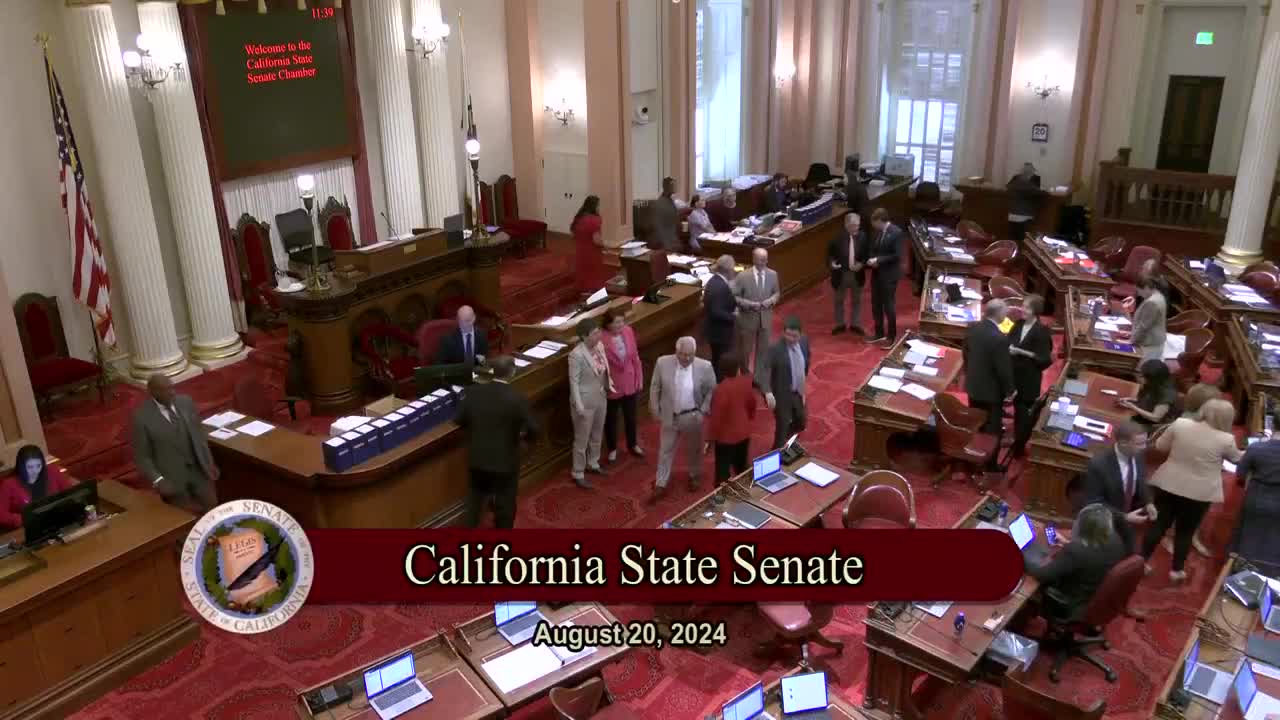 1MIN
Senate Floor
 2MIN
Senate Standing Committee on Governmental Organization
 4MIN



