AB 2371: Electrified security fences.
- Session Year: 2023-2024
- House: Assembly
- Latest Version Date: 2024-09-14
Current Status:
Passed
(2024-09-14: Chaptered by Secretary of State - Chapter 235, Statutes of 2024.)
Introduced
In Committee
First Chamber
In Committee
Second Chamber
Enacted
Existing law authorizes an owner of real property to install and operate on their property an electrified security fence that has specified technical characteristics and is used to protect and secure commercial, manufacturing, or industrial property, or property zoned under another designation, but legally authorized to be used for a commercial, manufacturing, or industrial purpose.
This bill would, until January 1, 2028, instead authorize an owner of real property to install and operate on their property an electrified security fence that is powered by an electrical energizer, driven by solar-charged batteries of no more than 12 volt of direct current, and used to protect and secure manufacturing or industrial property, or property zoned under another designation, but legally authorized to be used for a commercial purpose that stores, parks, services, sells, or rents vehicles and other materials, as specified.
Existing law prohibits an owner of real property from installing and operating an electrified security fence if a local ordinance prohibits that installation and operation. Existing law requires, if a local ordinance allows the installation and operation of an electrified security fence, that the installation and operation of the fence meets both the requirements of that ordinance and other specified requirements.
This bill would, until January 1, 2028, for manufacturing or industrial property, or property that is legally authorized to be used for specified commercial purposes, that meets specified requirements, instead prohibit a city, county, or city and county from prohibiting the installation and operation of an electrified security fence or requiring a permit or approval that is in addition to an alarm system permit issued by the city, county, or city and county. The bill would, however, authorize a city or county to require an administrative permit confirming the fence meets the statutes requirements, as provided. The bill would, until January 1, 2028, prohibit an owner of real property that is not manufacturing or industrial property, or property that is legally authorized to be used for specified commercial purposes, from installing and operating an electrified security fence if a local ordinance prohibits that installation and operation, and would authorize a local ordinance to prohibit the installation of an electrified security fence if that fence fails to meet specified requirements.
Existing law requires an owner of real property who installs and operates an electrified security fence on their property to ensure that, among other things, the fence meets the 2006 international standards and specifications of the International Electrotechnical Commission (IEC), as specified, and the height of the fence does not exceed 10 feet or 2 feet higher than an existing perimeter fence that is not less than 5 feet in height.
This bill would, until January 1, 2028, update the IEC standards and specifications, and provide that the perimeter fence may be a perimeter wall and is nonelectrified. This bill would also require, until January 1, 2028, that the fence include a device that enables first responders to deactivate the fence in response to an emergency, if required by a city, county, or city and county.
The bill would include findings that changes proposed by this bill address a matter of statewide concern rather than a municipal affair and, therefore, apply to all cities, including charter cities.
This bill would declare that it is to take effect immediately as an urgency statute.
Existing law authorizes an owner of real property to install and operate on their property an electrified security fence that has specified technical characteristics and is used to protect and secure commercial, manufacturing, or industrial property, or property zoned under another designation, but legally authorized to be used for a commercial, manufacturing, or industrial purpose.
This bill would, until January 1, 2028, instead authorize an owner of real property to install and operate on their property an electrified security fence that is powered by an electrical energizer, driven by solar-charged batteries of no more than 12 volt of direct current, and used to protect and secure manufacturing or industrial property, or property zoned under another designation, but legally authorized to be used for a commercial purpose that stores, parks, services, sells, or rents vehicles and other materials, as specified.
Existing law prohibits an owner of real property from installing and operating an electrified security fence if a local ordinance prohibits that installation and operation. Existing law requires, if a local ordinance allows the installation and operation of an electrified security fence, that the installation and operation of the fence meets both the requirements of that ordinance and other specified requirements.
This bill would, until January 1, 2028, for manufacturing or industrial property, or property that is legally authorized to be used for specified commercial purposes, that meets specified requirements, instead prohibit a city, county, or city and county from prohibiting the installation and operation of an electrified security fence or requiring a permit or approval that is in addition to an alarm system permit issued by the city, county, or city and county. The bill would, however, authorize a city or county to require an administrative permit from the State Fire Marshal or chief building official confirming the fence meets the statutes requirements, as provided. The bill would, until January 1, 2028, prohibit an owner of real property that is not manufacturing or industrial property, or property that is legally authorized to be used for specified commercial purposes, from installing and operating an electrified security fence if a local ordinance prohibits that installation and operation, and would authorize a local ordinance to prohibit the installation of an electrified security fence if that fence fails to meet specified requirements.
Existing law requires an owner of real property who installs and operates an electrified security fence on their property to ensure that, among other things, the fence meets the 2006 international standards and specifications of the International Electrotechnical Commission (IEC), as specified, and the height of the fence does not exceed 10 feet or 2 feet higher than an existing perimeter fence that is not less than 5 feet in height.
This bill would, until January 1, 2028, update the IEC standards and specifications, and provide that the perimeter fence may be a perimeter wall and is nonelectrified. This bill would also require, until January 1, 2028, that the fence include a device that enables first responders to deactivate the fence in response to an emergency, if required by a city, county, or city and county.
The bill would include findings that changes proposed by this bill address a matter of statewide concern rather than a municipal affair and, therefore, apply to all cities, including charter cities.
This bill would declare that it is to take effect immediately as an urgency statute.
Existing law authorizes an owner of real property to install and operate on their property an electrified security fence that has specified technical characteristics and is used to protect and secure commercial, manufacturing, or industrial property, or property zoned under another designation, but legally authorized to be used for a commercial, manufacturing, or industrial purpose.
This bill would would, until January 1, 2028, instead authorize an owner of real property to install and operate on their property an electrified security fence that is powered by an electrical energizer, driven by solar-charged batteries of no more than 12 volt of direct current, and used to protect and secure manufacturing or industrial property, or property zoned under another designation, but legally authorized to be used for a commercial purpose that stores, parks, services, sells, or rents vehicles and other materials, as specified.
Existing law prohibits an owner of real property from installing and operating an electrified security fence if a local ordinance prohibits that installation and operation. Existing law requires, if a local ordinance allows the installation and operation of an electrified security fence, that the installation and operation of the fence meets both the requirements of that ordinance and other specified requirements.
This bill, instead, would, bill would, until January 1, 2028, for manufacturing or industrial property, or property that is legally authorized to be used for specified commercial purposes, that meets specified requirements, instead prohibit a city, county, or city and county from prohibiting the installation and operation of an electrified security fence or requiring a permit or approval that is in addition to an alarm system permit issued by the city, county, or city and county. The bill would, however, authorize a city or county to require an administrative permit from the State Fire Marshal or chief building official confirming the fence meets the statutes requirements, as provided. The bill would would, until January 1, 2028, prohibit an owner of real property that is not manufacturing or industrial property, or property that is legally authorized to be used for specified commercial purposes, from installing and operating an electrified security fence if a local ordinance prohibits that installation and operation, and would authorize a local ordinance to prohibit the installation of an electrified security fence if that fence fails to meet specified requirements.
Existing law requires an owner of real property who installs and operates an electrified security fence on their property to ensure that, among other things, the fence meets the 2006 international standards and specifications of the International Electrotechnical Commission (IEC), as specified, and the height of the fence does not exceed 10 feet or 2 feet higher than an existing perimeter fence that is not less than 5 feet in height.
This bill would would, until January 1, 2028, update the IEC standards and specifications, and provide that the perimeter fence may be a perimeter wall and is nonelectrified. This bill would also require require, until January 1, 2028, that the fence include a device that enables first responders to deactivate the fence in response to an emergency, if required by a city, county, or city and county.
The bill would include findings that changes proposed by this bill address a matter of statewide concern rather than a municipal affair and, therefore, apply to all cities, including charter cities.
This bill would declare that it is to take effect immediately as an urgency statute.
Existing law authorizes an owner of real property to install and operate on their property an electrified security fence that has specified technical characteristics and is used to protect and secure commercial, manufacturing, or industrial property, or property zoned under another designation, but legally authorized to be used for a commercial, manufacturing, or industrial purpose.
This bill would instead authorize an owner of real property to install and operate on their property an electrified security fence that is powered by an electrical energizer, driven by solar-charged batteries of no more than 12 volt of direct current, and used to protect and secure manufacturing or industrial property, or property zoned under another designation, but legally authorized to be used for a commercial purpose that stores, parks, services, sells, or rents vehicles and other materials, as specified.
Existing law prohibits an owner of real property from installing and operating an electrified security fence if a local ordinance prohibits that installation and operation. Existing law requires, if a local ordinance allows the installation and operation of an electrified security fence, that the installation and operation of the fence meets both the requirements of that ordinance and other specified requirements.
This bill, instead, would, for manufacturing or industrial property, or property that is legally authorized to be used for specified commercial purposes, that meets specified requirements, prohibit a city, county, or city and county from prohibiting the installation and operation of an electrified security fence or requiring a permit or approval that is in addition to an alarm system permit issued by the city, county, or city and county. The bill would prohibit an owner of real property that is not manufacturing or industrial property, or property that is legally authorized to be used for specified commercial purposes, from installing and operating an electrified security fence if a local ordinance prohibits that installation and operation, and would authorize a local ordinance to prohibit the installation of an electrified security fence if that fence fails to meet specified requirements.
Existing law requires an owner of real property who installs and operates an electrified security fence on their property to ensure that, among other things, the fence is identified by prominently placed warning signs, meets the 2006 international standards and specifications of the International Electrotechnical Commission (IEC), as specified, and the height of the fence does not exceed 10 feet or 2 feet higher than an existing perimeter fence that is not less than 5 feet in height.
This bill would update the IEC standards and specifications, and provide that the perimeter fence may be a perimeter wall and is nonelectrified. This bill would also require that the fence include a device that enables first responders to deactivate the fence in response to an emergency, if required by a city, county, or city and county.
The bill would include findings that changes proposed by this bill address a matter of statewide concern rather than a municipal affair and, therefore, apply to all cities, including charter cities.
This bill would declare that it is to take effect immediately as an urgency statute.
Existing law authorizes an owner of real property to install and operate on their property an electrified security fence that has specified technical characteristics and is used to protect and secure commercial, manufacturing, or industrial property, or property zoned under another designation, but legally authorized to be used for a commercial, manufacturing, or industrial purpose.
This bill would instead authorize an owner of real property to install and operate on their property an electrified security fence that is powered by an electrical energizer, driven by solar-charged batteries of no more than 12 volt of direct current, and used to protect and secure manufacturing or industrial property, or property zoned under another designation, but legally authorized to be used for a commercial purpose that stores, parks, services, sells, or rents vehicles and other materials, as specified.
Existing law prohibits an owner of real property from installing and operating an electrified security fence if a local ordinance prohibits that installation and operation. Existing law requires, if a local ordinance allows the installation and operation of an electrified security fence, that the installation and operation of the fence meets both the requirements of that ordinance and other specified requirements.
This bill, instead, would, for manufacturing or industrial property, or property that is legally authorized to be used for specified commercial purposes, that meets specified requirements, prohibit a city, county, or city and county from prohibiting the installation and operation of an electrified security fence or requiring a permit or approval that is in addition to an alarm system permit issued by the city, county, or city and county. The bill would prohibit an owner of real property that is not manufacturing or industrial property, or property that is legally authorized to be used for specified commercial purposes, from installing and operating an electrified security fence if a local ordinance prohibits that installation and operation, and would authorize a local ordinance to prohibit the installation of an electrified security fence if that fence fails to meet specified requirements.
Existing law requires an owner of real property who installs and operates an electrified security fence on their property to ensure that, among other things, the fence is identified by prominently placed warning signs, as specified, and the height of the fence does not exceed 10 feet or 2 feet higher than an existing perimeter fence that is not less than 5 feet in height.
This bill would provide that the perimeter fence may be a perimeter wall and is nonelectrified. This bill would also require that the fence include a device that enables first responders to deactivate the fence in response to an emergency, if required by a city, county, or city and county.
The bill would include findings that changes proposed by this bill address a matter of statewide concern rather than a municipal affair and, therefore, apply to all cities, including charter cities.
This bill would declare that it is to take effect immediately as an urgency statute.
(a)As used in this chapter, electrified security fence means any fence, other than an electrified fence as defined in Section 17151 of the Food and Agricultural Code, that meets the following requirements:
(1)The electrified security fence is powered by an electrical energizer, driven by solar-charged batteries of no more than 12 volts of direct current, with both of the following output characteristics:
(A)The impulse repetition rate does not exceed 1 hertz (hz).
(B)The impulse duration does not exceed 10 milliseconds, or 10/1000 of a second.
(2)The electrified security fence is used to protect and secure manufacturing or industrial property, or property zoned under another designation, but legally authorized to be used for a commercial purpose that stores, parks, services, sells, or rents vehicles, vessels, equipment, materials, freight, or utility infrastructure within an outdoor lot or yard, provided that the secured area does not include any existing residential or hospitality uses.
(b)An owner of real property may install and operate an electrified security fence on their property, subject to all of the following:
(1)The property is not located in a residential zone and falls within the description of property described in paragraph (2) of subdivision (a).
(2)The electrified security fence meets the standards and specifications of the International Electrotechnical Commission for electric security fence energizers in International Standard IEC 60335, Part 2-76:2018.
(3)The electrified security fence is identified by prominently placed warning signs that are legible from both sides of the fence. At a minimum, the warning signs shall meet all of the following criteria:
(A)The warning signs are placed at each gate and access point, and at intervals along the electrified security fence not exceeding 30 feet.
(B)The warning signs are adjacent to any other signs relating to chemical, radiological, or biological hazards.
(C)The warning signs are marked with a written warning or a commonly recognized symbol for shock, a written warning or a commonly recognized symbol to warn people with pacemakers, and a written warning or commonly recognized symbol about the danger of touching the electrified security fence in wet conditions.
(4)The height of the electrified security fence does not exceed 10 feet or 2 feet higher than an existing nonelectrified perimeter fence or wall, whichever is greater. The electrified security fence shall be located behind a nonelectrified perimeter fence or wall that is not less than five feet in height.
(5)The electrified security fence includes a device that enables first responders to deactivate the electrified security fence in response to an emergency, if utilized by a city, county, or city and county.
(c)The electrified security fence may interface with a monitored alarm device in a manner that enables the alarm system to transmit a signal intended to summon the business, a monitoring service, or both the business and a monitoring service, in response to an intrusion or burglary.
(d)(1)An owner of real property not specified in paragraph (2) of subdivision (a) shall not install or operate an electrified security fence where a local ordinance prohibits the installation or operation of an electrified security fence. A local ordinance may prohibit the installation and operation of an electrified security fence that does not comply with subdivisions (a) to (c), inclusive. A local ordinance that prohibits or regulates only the installation or operation of an electrified fence as defined in Section 17151 of the Food and Agricultural Code shall not be construed to apply to an electrified security fence.
(2)For property specified under paragraph (2) of subdivision (a) and in compliance with subdivisions (a) to (c), inclusive, a city, county, or city and county ordinance, regulation, or code shall not prohibit the installation and operation of an electrified security fence, nor require a permit or approval that is in addition to an alarm system permit issued by the city, county, or city and county. A city, county, or city and county may require an administrative permit confirming the fence meets the requirements of this section if it is on a property abutting a property in residential use, or within 300 feet of a public park, childcare facility, recreation center, community center, or school facility.
(e)Nothing in this section shall be construed to alter the authority of a jurisdiction to adopt and enforce an ordinance relating to nonelectrified perimeter fences or walls as legally authorized, if applicable.
(f)This section shall remain in effect only until January 1, 2028, and as of that date is repealed.
SEC. 2.Section 835 is added to the Civil Code, to read:835.(a)As used in this chapter, electrified security fence means any fence, other than an electrified fence as defined in Section 17151 of the Food and Agricultural Code, that meets the following requirements:
(1)The fence is powered by an electrical energizer with both of the following output characteristics:
(A)The impulse repetition rate does not exceed 1 hertz (hz).
(B)The impulse duration does not exceed 10 milliseconds, or 10/1000 of a second.
(2)The fence is used to protect and secure commercial, manufacturing, or industrial property, or property zoned under another designation, but legally authorized to be used for a commercial, manufacturing, or industrial purpose.
(b)An owner of real property may install and operate an electrified security fence on their property, subject to all of the following:
(1)The property is not located in a residential zone.
(2)The fence meets the 2006 international standards and specifications of the International Electrotechnical Commission for electric fence energizers in International Standard IEC 60335, Part 2-76.
(3)The fence is identified by prominently placed warning signs that are legible from both sides of the fence. At a minimum, the warning signs shall meet all of the following criteria:
(A)The warning signs are placed at each gate and access point, and at intervals along the fence not exceeding 30 feet.
(B)The warning signs are adjacent to any other signs relating to chemical, radiological, or biological hazards.
(C)The warning signs are marked with a written warning or a commonly recognized symbol for shock, a written warning or a commonly recognized symbol to warn people with pacemakers, and a written warning or commonly recognized symbol about the danger of touching the fence in wet conditions.
(4)The height of the fence does not exceed 10 feet or 2 feet higher than an existing perimeter fence, whichever is greater. The electrified security fence shall be located behind a perimeter fence that is not less than 5 feet in height.
(c)The electrified security fence may interface with a monitored alarm device in a manner that enables the alarm system to transmit a signal intended to summon the business, a monitoring service, or both the business and a monitoring service, in response to an intrusion or burglary.
(d)(1)An owner of real property shall not install or operate an electrified security fence where a local ordinance prohibits the installation or operation of an electrified security fence. A local ordinance that prohibits or regulates only the installation or operation of an electrified fence as defined in Section 17151 of the Food and Agricultural Code does not apply to an electrified security fence.
(2)If a local ordinance allows the installation and operation of an electrified security fence, the installation and operation of the fence shall meet the requirements of that ordinance and the requirements of subdivision (b).
(e)This section shall become operative on January 1, 2028.
SEC. 3.The Legislature finds and declares that the protection of life and property is a matter of statewide concern and is not a municipal affair as that term is used in Section 5 of Article XI of the California Constitution. Therefore, Section 1 of this act amending Section 835 of the Civil Code applies to all cities, including charter cities.
SEC. 4.This act is an urgency statute necessary for the immediate preservation of the public peace, health, or safety within the meaning of Article IV of the California Constitution and shall go into immediate effect. The facts constituting the necessity are:
To protect and secure businesses, employees, and other stakeholders from escalating incidences of trespass that have led to theft of valuable assets and risks to employee safety, it is necessary that this act take effect immediately.
(a)As used in this chapter, electrified security fence means any fence, other than an electrified fence as defined in Section 17151 of the Food and Agricultural Code, that meets the following requirements:
(1)The electrified security fence is powered by an electrical energizer, driven by solar-charged batteries of no more than 12 volts of direct current, with both of the following output characteristics:
(A)The impulse repetition rate does not exceed 1 hertz (hz).
(B)The impulse duration does not exceed 10 milliseconds, or 10/1000 of a second.
(2)The electrified security fence is used to protect and secure manufacturing or industrial property, or property zoned under another designation, but legally authorized to be used for a commercial purpose that stores, parks, services, sells, or rents vehicles, vessels, equipment, materials, freight, or utility infrastructure within an outdoor lot or yard, provided that the secured area does not include any existing residential or hospitality uses.
(b)An owner of real property may install and operate an electrified security fence on their property, subject to all of the following:
(1)The property is not located in a residential zone and falls within the description of property described in paragraph (2) of subdivision (a).
(2)The electrified security fence meets the standards and specifications of the International Electrotechnical Commission for electric security fence energizers in International Standard IEC 60335, Part 2-76:2018.
(3)The electrified security fence is identified by prominently placed warning signs that are legible from both sides of the fence. At a minimum, the warning signs shall meet all of the following criteria:
(A)The warning signs are placed at each gate and access point, and at intervals along the electrified security fence not exceeding 30 feet.
(B)The warning signs are adjacent to any other signs relating to chemical, radiological, or biological hazards.
(C)The warning signs are marked with a written warning or a commonly recognized symbol for shock, a written warning or a commonly recognized symbol to warn people with pacemakers, and a written warning or commonly recognized symbol about the danger of touching the electrified security fence in wet conditions.
(4)The height of the electrified security fence does not exceed 10 feet or 2 feet higher than an existing nonelectrified perimeter fence or wall, whichever is greater. The electrified security fence shall be located behind a nonelectrified perimeter fence or wall that is not less than five feet in height.
(5)The electrified security fence includes a device that enables first responders to deactivate the electrified security fence in response to an emergency, if utilized by a city, county, or city and county.
(c)The electrified security fence may interface with a monitored alarm device in a manner that enables the alarm system to transmit a signal intended to summon the business, a monitoring service, or both the business and a monitoring service, in response to an intrusion or burglary.
(d)(1)An owner of real property not specified in paragraph (2) of subdivision (a) shall not install or operate an electrified security fence where a local ordinance prohibits the installation or operation of an electrified security fence. A local ordinance may prohibit the installation and operation of an electrified security fence that does not comply with subdivisions (a) to (c), inclusive. A local ordinance that prohibits or regulates only the installation or operation of an electrified fence as defined in Section 17151 of the Food and Agricultural Code shall not be construed to apply to an electrified security fence.
(2)For property specified under paragraph (2) of subdivision (a) and in compliance with subdivisions (a) to (c), inclusive, a city, county, or city and county ordinance, regulation, or code may shall not prohibit the installation and operation of an electrified security fence, nor require a permit or approval that is in addition to an alarm system permit issued by the city, county, or city and county. A city, county, or city and county may require an administrative permit from the State Fire Marshal or chief building official confirming the fence meets the requirements of this section if it is on a property abutting a property in residential use, or within 300 feet of a public park, childcare facility, recreation center, community center, or school facility.
(e)Nothing in this section shall be construed to alter the authority of a jurisdiction to adopt and enforce an ordinance relating to nonelectrified perimeter fences or walls as legally authorized, if applicable.
(f)This section shall remain in effect only until January 1, 2028, and as of that date is repealed.
SEC. 2.Section 835 is added to the Civil Code, to read:835.(a)As used in this chapter, electrified security fence means any fence, other than an electrified fence as defined in Section 17151 of the Food and Agricultural Code, that meets the following requirements:
(1)The fence is powered by an electrical energizer with both of the following output characteristics:
(A)The impulse repetition rate does not exceed 1 hertz (hz).
(B)The impulse duration does not exceed 10 milliseconds, or 10/1000 of a second.
(2)The fence is used to protect and secure commercial, manufacturing, or industrial property, or property zoned under another designation, but legally authorized to be used for a commercial, manufacturing, or industrial purpose.
(b)An owner of real property may install and operate an electrified security fence on their property, subject to all of the following:
(1)The property is not located in a residential zone.
(2)The fence meets the 2006 international standards and specifications of the International Electrotechnical Commission for electric fence energizers in International Standard IEC 60335, Part 2-76.
(3)The fence is identified by prominently placed warning signs that are legible from both sides of the fence. At a minimum, the warning signs shall meet all of the following criteria:
(A)The warning signs are placed at each gate and access point, and at intervals along the fence not exceeding 30 feet.
(B)The warning signs are adjacent to any other signs relating to chemical, radiological, or biological hazards.
(C)The warning signs are marked with a written warning or a commonly recognized symbol for shock, a written warning or a commonly recognized symbol to warn people with pacemakers, and a written warning or commonly recognized symbol about the danger of touching the fence in wet conditions.
(4)The height of the fence does not exceed 10 feet or 2 feet higher than an existing perimeter fence, whichever is greater. The electrified security fence shall be located behind a perimeter fence that is not less than 5 feet in height.
(c)The electrified security fence may interface with a monitored alarm device in a manner that enables the alarm system to transmit a signal intended to summon the business, a monitoring service, or both the business and a monitoring service, in response to an intrusion or burglary.
(d)(1)An owner of real property shall not install or operate an electrified security fence where a local ordinance prohibits the installation or operation of an electrified security fence. A local ordinance that prohibits or regulates only the installation or operation of an electrified fence as defined in Section 17151 of the Food and Agricultural Code does not apply to an electrified security fence.
(2)If a local ordinance allows the installation and operation of an electrified security fence, the installation and operation of the fence shall meet the requirements of that ordinance and the requirements of subdivision (b).
(e)This section shall become operative on January 1, 2028.
SEC. 3.The Legislature finds and declares that the protection of life and property is a matter of statewide concern and is not a municipal affair as that term is used in Section 5 of Article XI of the California Constitution. Therefore, Section 1 of this act amending Section 835 of the Civil Code applies to all cities, including charter cities.
SEC. 4.This act is an urgency statute necessary for the immediate preservation of the public peace, health, or safety within the meaning of Article IV of the California Constitution and shall go into immediate effect. The facts constituting the necessity are:
To protect and secure businesses, employees, and other stakeholders from escalating incidences of trespass that have led to theft of valuable assets and risks to employee safety, it is necessary that this act take effect immediately.
(a)As used in this chapter, electrified security fence means any fence, other than an electrified fence as defined in Section 17151 of the Food and Agricultural Code, that meets the following requirements:
(1)The electrified security fence is powered by an electrical energizer, driven by solar-charged batteries of no more than 12 volts of direct current, with both of the following output characteristics:
(A)The impulse repetition rate does not exceed 1 hertz (hz).
(B)The impulse duration does not exceed 10 milliseconds, or 10/1000 of a second.
(2)The electrified security fence is used to protect and secure manufacturing or industrial property, or property zoned under another designation, but legally authorized to be used for a commercial purpose that stores, parks, services, sells, or rents vehicles, vessels, equipment, materials, freight, or utility infrastructure within an outdoor lot or yard, provided that the secured area does not include any existing residential or hospitality uses.
(b)An owner of real property may install and operate an electrified security fence on their property, subject to all of the following:
(1)The property is not located in a residential zone and falls within the description of property described in paragraph (2) of subdivision (a).
(2)The electrified security fence meets the standards and specifications of the International Electrotechnical Commission for electric security fence energizers in International Standard IEC 60335, Part 2-76:2018.
(3)The electrified security fence is identified by prominently placed warning signs that are legible from both sides of the fence. At a minimum, the warning signs shall meet all of the following criteria:
(A)The warning signs are placed at each gate and access point, and at intervals along the electrified security fence not exceeding 30 feet.
(B)The warning signs are adjacent to any other signs relating to chemical, radiological, or biological hazards.
(C)The warning signs are marked with a written warning or a commonly recognized symbol for shock, a written warning or a commonly recognized symbol to warn people with pacemakers, and a written warning or commonly recognized symbol about the danger of touching the electrified security fence in wet conditions.
(4)The height of the electrified security fence does not exceed 10 feet or 2 feet higher than an existing nonelectrified perimeter fence or wall, whichever is greater. The electrified security fence shall be located behind a nonelectrified perimeter fence or wall that is not less than five feet in height.
(5)The electrified security fence includes a device that enables first responders to deactivate the electrified security fence in response to an emergency, if utilized by a city, county, or city and county.
(c)The electrified security fence may interface with a monitored alarm device in a manner that enables the alarm system to transmit a signal intended to summon the business, a monitoring service, or both the business and a monitoring service, in response to an intrusion or burglary.
(d)(1)An owner of real property not specified in paragraph (2) of subdivision (a) shall not install or operate an electrified security fence where a local ordinance prohibits the installation or operation of an electrified security fence. A local ordinance may prohibit the installation and operation of an electrified security fence that does not comply with subdivisions (a) to (c), inclusive. A local ordinance that prohibits or regulates only the installation or operation of an electrified fence as defined in Section 17151 of the Food and Agricultural Code shall not be construed to apply to an electrified security fence.
(2)For property specified under paragraph (2) of subdivision (a) and in compliance with subdivisions (a) to (c), inclusive, a city, county, or city and county ordinance, regulation, or code may not prohibit the installation and operation of an electrified security fence, nor require a permit or approval that is in addition to an alarm system permit issued by the city, county, or city and county. A city, county, or city and county may require an administrative permit from the State Fire Marshal or chief building official confirming the fence meets the requirements of this section if it is on a property abutting a property in residential use, or within 300 feet of a public park, childcare facility, recreation center, community center, or school facility.
(e)Nothing in this section shall be construed to alter the authority of a jurisdiction to adopt and enforce an ordinance relating to nonelectrified perimeter fences or walls as legally authorized, if applicable.
(f)This section shall remain in effect only until January 1, 2028, and as of that date is repealed.
SEC. 2.The Legislature finds and declares that Section 1 of this act amending Section 835 of the Civil Code addresses a matter of statewide concern rather than a municipal affair as that term is used in Section 5 of Article XI of the California Constitution. Therefore, Section 1 of this act applies to all cities, including charter cities.SEC. 2.Section 835 is added to the Civil Code, to read:835.(a)As used in this chapter, electrified security fence means any fence, other than an electrified fence as defined in Section 17151 of the Food and Agricultural Code, that meets the following requirements:
(1)The fence is powered by an electrical energizer with both of the following output characteristics:
(A)The impulse repetition rate does not exceed 1 hertz (hz).
(B)The impulse duration does not exceed 10 milliseconds, or 10/1000 of a second.
(2)The fence is used to protect and secure commercial, manufacturing, or industrial property, or property zoned under another designation, but legally authorized to be used for a commercial, manufacturing, or industrial purpose.
(b)An owner of real property may install and operate an electrified security fence on their property, subject to all of the following:
(1)The property is not located in a residential zone.
(2)The fence meets the 2006 international standards and specifications of the International Electrotechnical Commission for electric fence energizers in International Standard IEC 60335, Part 2-76.
(3)The fence is identified by prominently placed warning signs that are legible from both sides of the fence. At a minimum, the warning signs shall meet all of the following criteria:
(A)The warning signs are placed at each gate and access point, and at intervals along the fence not exceeding 30 feet.
(B)The warning signs are adjacent to any other signs relating to chemical, radiological, or biological hazards.
(C)The warning signs are marked with a written warning or a commonly recognized symbol for shock, a written warning or a commonly recognized symbol to warn people with pacemakers, and a written warning or commonly recognized symbol about the danger of touching the fence in wet conditions.
(4)The height of the fence does not exceed 10 feet or 2 feet higher than an existing perimeter fence, whichever is greater. The electrified security fence shall be located behind a perimeter fence that is not less than 5 feet in height.
(c)The electrified security fence may interface with a monitored alarm device in a manner that enables the alarm system to transmit a signal intended to summon the business, a monitoring service, or both the business and a monitoring service, in response to an intrusion or burglary.
(d)(1)An owner of real property shall not install or operate an electrified security fence where a local ordinance prohibits the installation or operation of an electrified security fence. A local ordinance that prohibits or regulates only the installation or operation of an electrified fence as defined in Section 17151 of the Food and Agricultural Code does not apply to an electrified security fence.
(2)If a local ordinance allows the installation and operation of an electrified security fence, the installation and operation of the fence shall meet the requirements of that ordinance and the requirements of subdivision (b).
(e)This section shall become operative on January 1, 2028.
SEC. 3.The Legislature finds and declares that the protection of life and property is a matter of statewide concern and is not a municipal affair as that term is used in Section 5 of Article XI of the California Constitution. Therefore, Section 1 of this act amending Section 835 of the Civil Code applies to all cities, including charter cities.
SEC. 3.SEC. 4.This act is an urgency statute necessary for the immediate preservation of the public peace, health, or safety within the meaning of Article IV of the California Constitution and shall go into immediate effect. The facts constituting the necessity are:
To protect and secure businesses, employees, and other stakeholders from escalating incidences of trespass that have led to theft of valuable assets and risks to employee safety, it is necessary that this act take effect immediately.
(a)As used in this chapter, electrified security fence means any fence, other than an electrified fence as defined in Section 17151 of the Food and Agricultural Code, that meets the following requirements:
(1)The electrified security fence is powered by an electrical energizer, driven by solar-charged batteries of no more than 12 volts of direct current, with both of the following output characteristics:
(A)The impulse repetition rate does not exceed 1 hertz (hz).
(B)The impulse duration does not exceed 10 milliseconds, or 10/1000 of a second.
(2)The electrified security fence is used to protect and secure manufacturing or industrial property, or property zoned under another designation, but legally authorized to be used for a commercial purpose that stores, parks, services, sells, or rents vehicles, vessels, equipment, materials, freight, or utility infrastructure within an outdoor lot or yard, provided that the secured area does not include any existing residential or hospitality uses.
(b)An owner of real property may install and operate an electrified security fence on their property, subject to all of the following:
(1)The property is not located in a residential zone and falls within the description of property described in paragraph (2) of subdivision (a).
(2)The electrified security fence meets the 2006 international standards and specifications of the International Electrotechnical Commission for electric security fence energizers in International Standard IEC 60335, Part 2-76. Part 2-76:2018.
(3)The electrified security fence is identified by prominently placed warning signs that are legible from both sides of the fence. At a minimum, the warning signs shall meet all of the following criteria:
(A)The warning signs are placed at each gate and access point, and at intervals along the electrified security fence not exceeding 30 feet.
(B)The warning signs are adjacent to any other signs relating to chemical, radiological, or biological hazards.
(C)The warning signs are marked with a written warning or a commonly recognized symbol for shock, a written warning or a commonly recognized symbol to warn people with pacemakers, and a written warning or commonly recognized symbol about the danger of touching the electrified security fence in wet conditions.
(4)The height of the electrified security fence does not exceed 10 feet or 2 feet higher than an existing nonelectrified perimeter fence or wall, whichever is greater. The electrified security fence shall be located behind a nonelectrified perimeter fence or wall that is not less than five feet in height.
(5)The electrified security fence includes a device that enables first responders to deactivate the electrified security fence in response to an emergency, if utilized by a city, county, or city and county.
(c)The electrified security fence may interface with a monitored alarm device in a manner that enables the alarm system to transmit a signal intended to summon the business, a monitoring service, or both the business and a monitoring service, in response to an intrusion or burglary.
(d)(1)An owner of real property not specified in paragraph (2) of subdivision (a) shall not install or operate an electrified security fence where a local ordinance prohibits the installation or operation of an electrified security fence. A local ordinance may prohibit the installation and operation of an electrified security fence that does not comply with subdivisions (a) to (c), inclusive. A local ordinance that prohibits or regulates only the installation or operation of an electrified fence as defined in Section 17151 of the Food and Agricultural Code does not shall not be construed to apply to an electrified security fence.
(2)For property specified under paragraph (2) of subdivision (a) and in compliance with subdivisions (a) to (c), inclusive, a city, county, or city and county ordinance, regulation, or code may not prohibit the installation and operation of an electrified security fence, nor require a permit or approval that is in addition to an alarm system permit issued by the city, county, or city and county.
(e)Nothing in this section shall be construed to alter the authority of a jurisdiction to adopt and enforce an ordinance relating to nonelectrified perimeter fences or walls as legally authorized, if applicable.
SEC. 2.The Legislature finds and declares that Section 1 of this act amending Section 835 of the Civil Code addresses a matter of statewide concern rather than a municipal affair as that term is used in Section 5 of Article XI of the California Constitution. Therefore, Section 1 of this act applies to all cities, including charter cities.
SEC. 3.This act is an urgency statute necessary for the immediate preservation of the public peace, health, or safety within the meaning of Article IV of the California Constitution and shall go into immediate effect. The facts constituting the necessity are:
To protect and secure businesses, employees, and other stakeholders from escalating incidences of trespass that have led to theft of valuable assets and risks to employee safety, it is necessary that this act take effect immediately.
(a)As used in this chapter, electrified security fence means any fence, other than an electrified fence as defined in Section 17151 of the Food and Agricultural Code, that meets the following requirements:
(1)The electrified security fence is powered by an electrical energizer energizer, driven by solar-charged batteries of no more than 12 volts of direct current, with both of the following output characteristics:
(A)The impulse repetition rate does not exceed 1 hertz (hz).
(B)The impulse duration does not exceed 10 milliseconds, or 10/1000010/1000 of a second.
(2)The electrified security fence is used to protect and secure commercial, manufacturing, manufacturing or industrial property, or property zoned under another designation, but legally authorized to be used for a commercial, manufacturing, or industrial purpose. commercial purpose that stores, parks, services, sells, or rents vehicles, vessels, equipment, materials, freight, or utility infrastructure within an outdoor lot or yard, provided that the secured area does not include any residential or hospitality uses.
(b)An owner of real property may install and operate an electrified security fence on their property, subject to all of the following:
(1)The property is not located in a residential zone. zone and falls within the description of property described in paragraph (2) of subdivision (a).
(2)The electrified security fence meets the 2006 international standards and specifications of the International Electrotechnical Commission for electric fence energizers in International Standard IEC 60335, Part 2-76.
(3)The electrified security fence is identified by prominently placed warning signs that are legible from both sides of the fence. At a minimum, the warning signs shall meet all of the following criteria:
(A)The warning signs are placed at each gate and access point, and at intervals along the electrified security fence not exceeding 30 feet.
(B)The warning signs are adjacent to any other signs relating to chemical, radiological, or biological hazards.
(C)The warning signs are marked with a written warning or a commonly recognized symbol for shock, a written warning or a commonly recognized symbol to warn people with pacemakers, and a written warning or commonly recognized symbol about the danger of touching the electrified security fence in wet conditions.
(4)The height of the electrified security fence does not exceed 10 feet or 2 feet higher than an existing nonelectrified perimeter fence, fence or wall, whichever is greater. The electrified security fence shall be located behind a nonelectrified perimeter fence or wall that is not less than 5 five feet in height.
(5)The fence includes a device that enables first responders to deactivate the electrified security fence in response to an emergency, if utilized by a city, county, or city and county.
(c)The electrified security fence may interface with a monitored alarm device in a manner that enables the alarm system to transmit a signal intended to summon the business, a monitoring service, or both the business and a monitoring service, in response to an intrusion or burglary.
(d)(1)An owner of real property not specified in paragraph (2) of subdivision (a) shall not install or operate an electrified security fence where a local ordinance prohibits the installation or operation of an electrified security fence. A local ordinance may prohibit the installation and operation of an electrified security fence that does not comply with subdivisions (a) to (c), inclusive. A local ordinance that prohibits or regulates only the installation or operation of an electrified fence as defined in Section 17151 of the Food and Agricultural Code does not apply to an electrified security fence.
(2)If a local ordinance allows For property specified under paragraph (2) of subdivision (a) and in compliance with subdivisions (a) to (c), inclusive, a city, county, or city and county ordinance, regulation, or code may not prohibit the installation and operation of an electrified security fence, the installation and operation of the fence shall meet the requirements of that ordinance and the requirements of subdivision (b). nor require a permit or approval that is in addition to an alarm system permit issued by the city, county, or city and county.
(e)Nothing in this section shall be construed to alter the authority of a jurisdiction to adopt and enforce an ordinance relating to nonelectrified perimeter fences or walls as legally authorized, if applicable.
SEC. 2.The Legislature finds and declares that Section 1 of this act amending Section 835 of the Civil Code addresses a matter of statewide concern rather than a municipal affair as that term is used in Section 5 of Article XI of the California Constitution. Therefore, Section 1 of this act applies to all cities, including charter cities.
SEC. 3.This act is an urgency statute necessary for the immediate preservation of the public peace, health, or safety within the meaning of Article IV of the California Constitution and shall go into immediate effect. The facts constituting the necessity are:
To protect and secure businesses, employees, and other stakeholders from escalating incidences of trespass that have led to theft of valuable assets and risks to employee safety, it is necessary that this act take effect immediately.
|
Date
|
Status
|
|---|---|
| Sep 14, 2024 | Chaptered by Secretary of State - Chapter 235, Statutes of 2024. |
| Sep 14, 2024 | Approved by the Governor. |
| Aug 28, 2024 | Enrolled and presented to the Governor at 4 p.m. |
| Aug 22, 2024 | Urgency clause adopted. Senate amendments concurred in. To Engrossing and Enrolling. (Page 6430.). |
| Aug 20, 2024 | In Assembly. Concurrence in Senate amendments pending. May be considered on or after August 22 pursuant to Assembly Rule 77. |
| Aug 20, 2024 | Read third time. Urgency clause adopted. Passed. Ordered to the Assembly. (Ayes 40. Noes 0. Page 5240.). |
| Aug 15, 2024 | Read second time. Ordered to third reading. |
| Aug 14, 2024 | Read third time and amended. Ordered to second reading. |
| Aug 5, 2024 | Read second time and amended. Ordered to third reading. |
| Jul 3, 2024 | From committee: Amend, and do pass as amended. (Ayes 7. Noes 0.) (July 3). |
| Jun 26, 2024 | From committee: Do pass and re-refer to Com. on L. GOV. (Ayes 11. Noes 0.) (June 25). Re-referred to Com. on L. GOV. |
| May 8, 2024 | Referred to Coms. on JUD. and L. GOV. |
| Apr 25, 2024 | In Senate. Read first time. To Com. on RLS. for assignment. |
| Apr 25, 2024 | Read third time. Urgency clause adopted. Passed. Ordered to the Senate. (Ayes 73. Noes 0. Page 4990.). |
| Apr 15, 2024 | Read second time. Ordered to third reading. |
| Apr 11, 2024 | From committee: Do pass. (Ayes 9. Noes 0.) (April 10). |
| Apr 2, 2024 | Re-referred to Com. on L. GOV. |
| Apr 1, 2024 | From committee chair, with author's amendments: Amend, and re-refer to Com. on L. GOV. Read second time and amended. |
| Feb 26, 2024 | Referred to Com. on L. GOV. |
| Feb 13, 2024 | From printer. May be heard in committee March 14. |
| Feb 12, 2024 | Read first time. To print. |
|
Date
|
Description
|
Location
|
Votes
|
|
|---|---|---|---|---|
| Aug 22, 2024 | AB 2371 Juan Carrillo Concurrence in Senate Amendments | Assembly Floor |
Passed |
|
| Aug 20, 2024 | Assembly 3rd Reading AB2371 Juan Carrillo et al. By Rubio Urgency Clause | Senate Floor |
Passed |
|
| Jul 3, 2024 | Do pass as amended | Senate Standing Committee on Local Government |
Passed |
|
| Jun 25, 2024 | Do pass, but first be re-referred to the Committee on [Local Government] | Senate Standing Committee on Judiciary |
Passed |
|
| Apr 25, 2024 | AB 2371 Juan Carrillo Third Reading Urgency | Assembly Floor |
Passed |
|
| Apr 10, 2024 | Do pass. | Assembly Standing Committee on Local Government |
Passed |
This list shows positions taken on this bill by organizations on the date displayed, which is linked to the original source.
Positions by individuals are not included.
|
Organization
|
Position
|
Date
|
|---|---|---|
| A.G.M. LLC | ** Support | |
| A.L. Lease Company | ** Support | |
| A.l. Lease Company Oakland | ** Support | |
| AAA Fire Protection | ** Support | |
| ABF Freight Systems Inc. | ** Support | |
| Abf Freight Systems INC. California | ** Support | |
| Agm LLC San Diego | ** Support | |
| Alfred Louie, Inc. | ** Support | |
| All Points Manufacturing | ** Support | |
| All Points Manufacturing Vallejo | ** Support | |
| Amarok LLC | ** Support | |
| American Cylinder Head INC Oakland | ** Support | |
| American Cylinder Head Inc. | ** Support | |
| American Pavement Systems | ** Support | |
| American Pavement Systems Modesto | ** Support | |
| Anaheim Chamber Of Commerce | ** Support | |
| Arrowhead Towing | ** Support | |
| Arrowhead Towing Antioch | ** Support | |
| Associated Coffee San Leandro | ** Support | |
| Astro Turf | ** Support | |
| Astro Turf Fresno | ** Support | |
| AT Industrial Products | ** Support | |
| Auto Empire Bakersfield | ** Support | |
| Automotive Engineering Bakersfield | ** Support | |
| Bakersfield Cotton Warehouse | ** Support | |
| Bay Area Council | ** Support | |
| Best RV Center | ** Support | |
| Best Rv Turlock | ** Support | |
| Brightview Landscaping Sacramento | ** Support | |
| Bryan Industrial Properties | ** Support | |
| Bryan Industrial Properties Anaheim | ** Support | |
| Budd Van Lines | ** Support | |
| Budd Van Lines Corona | ** Support | |
| CAL Fire | * Support | Jun 25, 2024 |
| Cal Fire Firefighters | * Support | Apr 10, 2024 |
| CAL FIRE, Local 2881 | ** Support | |
| Cal-Coast Machinery | ** Support | |
| Caliber Collision | ** Support | |
| California Business Properties Association | * Support | Jul 3, 2024 |
| California Chamber Of Commerce | ** Support | |
| California Fuels And Convenience Alliance | ** Support | |
| California Hispanic Chamber Of Commerce | ** Support | |
| California Landscape Contractor'S Association | ** Support | |
| California Manufacturers And Technology Association | ** Support | |
| California Retailer's Association | * Support | Jun 25, 2024 |
| California Self Storage Association | ** Support | |
| California State Association Of Counties | ** Against | |
| California Trucking Association | ** Support | |
| Canteen of Coastal California | ** Support | |
| Canteen of Coastal California Oxnard | ** Support | |
| Capitol City Towing | ** Support | |
| Capitol City Towing Sacramento | ** Support | |
| Castro Towing | ** Support | |
| Castro Towing Mojave | ** Support | |
| Certified Collision Center | ** Support | |
| City Wide Towing | ** Support | |
| Coalition for Small and Disabled Veteran Businesses | ** Support | |
| Collins Electrical | ** Support | |
| Collins Electrical Stockton | ** Support | |
| Commercial Van Interiors | ** Support | |
| Copart Inc. | ** Support | |
| Crime Survivors Resource Center | ** Support | |
| D&M Kitchen and Bath Supply | ** Support | |
| D&m Kitchen and Bath Supply Stockton | ** Support | |
| David Knott INC. Fresno | ** Support | |
| David Knott, Inc. | ** Support | |
| E-Recycling of California | ** Support | |
| E-recycling of California Hayward | ** Support | |
| Enterprise Rent-A-Car Company of Sacramento | ** Support | |
| Family Business Association of California | ** Support | |
| Filo America | ** Support | |
| Filo America City of Commerce | ** Support | |
| Fleet Yards South Gate | ** Support | |
| Fleet Yards, Inc. | ** Support | |
| FREEDOM FARMS | ** Support | |
| Freedom Farms Bakersfield | ** Support | |
| Gachina Landscape Management | ** Support | |
| Gachina Landscape Management Menlo Park | ** Support | |
| Galey’s Marine | ** Support | |
| Galey’s Marine Bakersfield | ** Support | |
| Gbh Cultivation Parlier | ** Support | |
| GBH Cultivation, LLC | ** Support | |
| Gold Rush Distribution | ** Support | |
| Gold Rush Distribution San Ramon | ** Support | |
| Golden Empire Gleaners | ** Support | |
| Golden Empire Gleaners Bakersfield | ** Support | |
| Golf Cars of Riverside | ** Support | |
| Great American Titan Worldwide | ** Support | |
| Great American Titan Worldwide Santa Fe Springs | ** Support | |
| Harper Construction | ** Support | |
| Holt Cat of California | ** Support | |
| Hunter Logistics | ** Support | |
| Hunter Logistics Los Angeles | ** Support | |
| Jb Wholesale Srs Distribution Hesperia | ** Support | |
| JB Wholesale, SRS Distribution | ** Support | |
| JS West | ** Support | |
| Js West Kerman | ** Support | |
| Junk-atique Bakersfield | ** Support | |
| Junk-Atique Outlet | ** Support | |
| KVL Tires | ** Support | |
| Kvl Tires Fontana | ** Support | |
| League Of California Cities | ** Against | |
| Lee’s Iron & Metal | ** Support | |
| Lee’s Iron Metal Vista | ** Support | |
| Lkq Corporation | ** Support | |
| Mckinney Trailer Rentals | ** Support | |
| Mckinney Trailer Rentals Stockton | ** Support | |
| Mission Valley Truck Center | ** Support | |
| Mission Valley Truck Center San Jose | ** Support | |
| National Federation Of Independent Business | ** Support | |
| Pacific Commercial Truck Body Vernon | ** Support | |
| Pacific Commercial Truck Body, Inc. | ** Support | |
| Papé Material Handling | ** Support | |
| Pape Material Handling Whittier | ** Support | |
| PAPER PULP & FILM | ** Support | |
| Peace Officers Research Association Of California | ** Support | |
| Pennhall | ** Support | |
| Pennhall California | ** Support | |
| Peterson CAT | ** Support | |
| Peterson Cat San Leandro | ** Support | |
| Pinnacle Power Services | ** Support | |
| Pinnacle Power Services Vallejo | ** Support | |
| Pulp Paper & Film Services Fresno | ** Support | |
| Quadrant Concrete | ** Support | |
| Quadrant Concrete Atwater | ** Support | |
| QUINN Caterpillar | ** Support | |
| Reimer Transport | ** Support | |
| Reimer Transport Fresno | ** Support | |
| Republic Services | ** Support | |
| Robert V. Jensen INC. Fresno | ** Support | |
| Robert V. Jensen, Inc. | ** Support | |
| Roto Rooter | ** Support | |
| Roto-Rooter | ** Support | |
| Ry-den Truck Center | ** Support | |
| Ry-den Truck Center Fresno | ** Support | |
| Sa Recycling | ** Support | |
| Sa Recycling Orange | ** Support | |
| Saia Ltc Freight | ** Support | |
| Saia LTL Freight | ** Support | |
| Salinas Valley Ford | * Support | Apr 10, 2024 |
| Salinas Valley Ford Dealership | ** Support | |
| Scelzi Enterprise | ** Support | |
| Scelzi Enterprises Fresno | ** Support | |
| Schneider Resources California | ** Support | |
| Schneider Resources, Inc. | ** Support | |
| Sea Wolf Group Corporation | ** Support | |
| Sea Wolf Group Corporation Wilmington | ** Support | |
| Security Industry Associaton | * Support | Jun 25, 2024 |
| Self Storage Association | ** Support | |
| Stotz Equipment | ** Support | |
| Stotz Equipment Montclair | ** Support | |
| Taxicab Paratransit Association Of California | * Support | Apr 10, 2024 |
| Temecula Motorsports | ** Support | |
| Total Landscape | ** Support | |
| Total Landscape Bakersfield | ** Support | |
| TourCoach Charter & Tours | ** Support | |
| Tourcoach Charter & Tours City of Commerce | ** Support | |
| Tw Metals | ** Support | |
| United Rentals California | ** Support | |
| United Rentals Menifee | ** Support | |
| United Rentals Modesto | ** Support | |
| VALLEY INDUSTRY AND COMMERCE ASSOCIATION | ** Support | |
| Velocity Vehicle Group | ** Support | |
| Velocity Vehicle Group Fontana | ** Support | |
| West Coast Imports | ** Support | |
| West Coast Imports City of Commerce | ** Support |
CONCURRENCE IN SENATE AMENDMENTS
CSA1 Bill Id:AB 2371
Author:(Juan Carrillo and Flora)
As Amended Ver:August 14, 2024
2/3 vote. Urgency
SUMMARY
Generally prohibits, until January 1, 2028, cities and counties from prohibiting the installation and operation of an electrified security fence on specified industrial, manufacturing, or specified commercial property, or from requiring a permit or approval for such fences when the fence is compliant with specified requirements for electrified security fences, except that a city or county may require an administrative permit confirming that the electrified security fence meets statutory standards when the fence is on a property that abuts a property in residential use, or is within 300 feet of a public park, childcare facility, recreation center, community center, or school facility.
Senate Amendments
- Allow a city or county to require an administrative permit confirming that an electrified security fence meets the requirements of existing law and this bill if it is on a property abutting a property in residential use, or within 300 feet of a public park, childcare facility, recreation center, community center, or school facility.
- Add a sunset date of January 1, 2028.
COMMENTS
Electrified security fences are used in industrial and commercial areas to protect property located within the perimeter of the fences, such as equipment yards or commercial storage facilities. The fences are designed to provide a physical and psychological deterrent to potential intruders, and are required to have visible warning signs about the danger of coming into contact with the electrified security fence.
The sale and use of electric fences is generally prohibited in California unless the electrical current is limited and regulated by an electrical controller that meets or exceed specified standards. Electrified fences that comply with these standards should not ordinarily cause lasting physical harm to animals or people who come in contact with one, because the length of electric shock delivered by the fence is very brief.
Until 2015, the installation and operation of electric fences was exclusively governed by provisions within the Food and Agriculture Code. This led to some confusion or hesitancy on the part of local governments when companies applied to install and operate such fences in commercial or industrial settings, causing permitting delays. In response, California enacted SB 582 (Hall), Chapter 273, Statutes of 2015. The resulting Civil Code Section 835 authorized property owners to install and operate electrified fences outside of residential settings, provided that the fences meet specified requirements and there is no local ordinance prohibiting the installation of such fences.
AB 358 (Flora), Chapter 148, Statutes of 2021, made additional changes. Among those, the bill allowed the installation and operation of electrified security fences on property that is commercial, manufacturing, or industrial property, as well as property zoned under another designation, but legally authorized for commercial, manufacturing, or industrial use. The bill also increased the permissible height of an electrified security fence from a maximum of ten feet to the greater of 10 feet or two feet higher than the accompanying perimeter fence, and reduced the permissible height of the perimeter fence accompanying an electrified security fence from a minimum of six feet to a minimum of five feet.
According to the Author
Commercial property owners statewide face escalating incidences of trespass and criminal activity such as theft, vandalism and threats to employee health and safety, which, in some cases, resulted in the closure of businesses and loss of jobs. Businesses statewide desperately seek help from their local governments to allow effective and safe technology solutions to secure their property and protect their employees.
Current state law for electrified security alarm technology has been in effect for more than eight years and has safely and effectively secured over 1,000 properties. However, current law has been inconsistently interpreted and applied by some local governments, leading to inequitable responses, or excessive and inefficient permitting processes. In many cases where this security alarm technology may be allowed, some local governments often require unduly lengthy permitting processes that leave businesses and their employees vulnerable to ongoing criminal exploitation.
Arguments in Support
The Family Business Association of California and AMAROK, LLC., sponsors of this bill, write, "…This bill will enable property owners and businesses to install and employ this security technology in a timely manner, while still allowing local government authorities to regulate or prohibit installations that do not comply with all requirements under State law. Despite the existing statute's clear requirements for the safe installation and operation of this security alarm technology, great disparity remains among local governments with widely varying local permitting requirements and timelines. These permitting disparities range from one day in a few local jurisdictions to as long as two years in many others due to protracted permitting processes that are never required of other alarm system permit applications…
"Over the past 8 years, more than 1,000 businesses statewide have been permitted for this security technology under Section 835 and are safely and effectively securing their properties and protecting their employees. However, experience shows that more than 97% of applications submitted to local government for the installation and operation of this security technology take well over 90 days to process. Even more detrimental, more than two-thirds of these permit applications are subjected to excessive permitting processes and delays of 6 months to 3 years to obtain approval. In contrast, local governments typically issue other security/burglar alarm permits over the counter or within a few days. This disparity leaves businesses that store vehicles, construction equipment and other forms of large inventory outdoors vulnerable to escalating property crime and significant economic and job losses.
"An unfortunate example is the preventable incident experienced by the family-owned business, Salinas Valley Ford Truck Center in 2021. During the fifth month of waiting for the City of Salinas to approve a permit for an electrified security fence alarm system, a criminal breached the property's chain link fence and committed arson, burning a multi-generation dealership to the ground. The tragedy here was preventable. Had this security alarm technology been permitted in a timely manner, it would have prevented the total loss of the dealership and jobs for 24 employees. A prominent RV sales and service company in La Mirada, Camping World, is another example. Camping World experienced repetitive criminal trespass and the grand theft of multiple Class-A RVs from its vehicle lot while city staff considered and developed a permit application process for nearly two years. This not only subjected Camping World and its customers to property loss and financial costs, but of most concern posed a grave risk to public safety due to stolen RVs being driven by criminals on city streets and highways.
"These examples of hardship imposed on business property owners due to unreasonable delays by local government departments are not unique. [This bill] provides a concrete solution to overcome these barriers for businesses that urgently need this safe and proven security alarm technology to enhance public safety in the workplace and the community as a whole.
Arguments in Opposition
None on file.
FISCAL COMMENTS
None.
VOTES:
ASM LOCAL GOVERNMENT: 9-0-0
YES: Juan Carrillo, Waldron, Essayli, Haney, Kalra, Pacheco, Ramos, Ward, Wilson
ASSEMBLY FLOOR: 73-0-7
YES: Addis, Aguiar-Curry, Alanis, Alvarez, Arambula, Bains, Bennett, Berman, Boerner, Bonta, Bryan, Calderon, Juan Carrillo, Wendy Carrillo, Cervantes, Chen, Connolly, Davies, Dixon, Essayli, Flora, Mike Fong, Vince Fong, Friedman, Gabriel, Garcia, Gipson, Grayson, Haney, Holden, Hoover, Irwin, Jackson, Jones-Sawyer, Kalra, Low, Lowenthal, Maienschein, McCarty, McKinnor, Muratsuchi, Stephanie Nguyen, Ortega, Pacheco, Papan, Jim Patterson, Joe Patterson, Pellerin, Petrie-Norris, Quirk-Silva, Ramos, Rendon, Reyes, Luz Rivas, Rodriguez, Blanca Rubio, Sanchez, Santiago, Schiavo, Soria, Ta, Ting, Valencia, Villapudua, Waldron, Wallis, Ward, Weber, Wicks, Wilson, Wood, Zbur, Robert Rivas
ABS, ABST OR NV: Bauer-Kahan, Megan Dahle, Gallagher, Hart, Lackey, Lee, Mathis
SENATE FLOOR: 40-0-0
YES: Allen, Alvarado-Gil, Archuleta, Ashby, Atkins, Becker, Blakespear, Bradford, Caballero, Cortese, Dahle, Dodd, Durazo, Eggman, Glazer, Gonzalez, Grove, Hurtado, Jones, Laird, Limón, McGuire, Menjivar, Min, Newman, Nguyen, Niello, Ochoa Bogh, Padilla, Portantino, Roth, Rubio, Seyarto, Skinner, Smallwood-Cuevas, Stern, Umberg, Wahab, Wiener, Wilk
UPDATED
VERSION: August 14, 2024
CONSULTANT: Angela Mapp / L. GOV. / (916) 319-3958 FN: 0003878
SENATE RULES COMMITTEE Office of Senate Floor Analyses (916) 651-1520 Fax: (916) 327-4478 | AB 2371 |
THIRD READING
Bill No: AB 2371
Author: Juan Carrillo (D) and Flora (R), et al.
Amended: 8/14/24 in Senate
Vote: 27 - Urgency
SENATE JUDICIARY COMMITTEE: 11-0, 6/25/24
AYES: Umberg, Wilk, Allen, Ashby, Caballero, Durazo, Laird, Niello, Roth, Stern, Wahab
SENATE LOCAL GOVERNMENT COMMITTEE: 7-0, 7/3/24
AYES: Durazo, Seyarto, Dahle, Glazer, Skinner, Wahab, Wiener
ASSEMBLY FLOOR: 73-0, 4/25/24 - See last page for vote
SUBJECT: Electrified security fences
SOURCE: AMAROK LLC
Family Business Association
DIGEST:
This bill prohibits local cities, counties, and cities and counties from prohibiting the installation and operation of an electrified security fence on specified industrial, manufacturing, or specified commercial property, or from requiring a permit or approval for such fences, as specified, when the fence is compliant with the law’s requirements for electrified security fences, except that a city, county, or city and county may require an administrative permit confirming that the electrified security fence meets the statutory standards when the fence is on a property that abuts a property in residential use, or is within 300 feet of a public park, childcare facility, recreation center, community center, or school facility, and the bill also makes various changes to the standards for such fences.
Senate Floor Amendments of 8/14/24 eliminate an incorrect reference to the State Fire Marshall and to not specify what entity a city, county, or city and county may require to approve the administrative permit allowed by this bill.
ANALYSIS:
Existing law:
- Defines, for the purposes of the following provisions, “electrified security fence” to mean any fence, other than an electrified fence as defined in Section 17151 of the Food and Agricultural Code, that meets the following requirements:
- The fence is powered by an electrical energizer with both of the following output characteristics:
- The impulse repetition rate does not exceed 1 hertz (hz).
- The impulse duration does not exceed 10 milliseconds, or 10/10000 of a second.
- The fence is used to protect and secure commercial, manufacturing, or industrial property, or property zoned under another designation, but legally authorized to be used for a commercial, manufacturing, or industrial purpose. (Civ. Code § 835(a).)
- The fence is powered by an electrical energizer with both of the following output characteristics:
- Allows an owner of real property to install and operate an electrified security fence on their property, subject to all of the following:
- The property is not located in a residential zone.
- The fence meets the 2006 international standards and specifications of the International Electrotechnical Commission for electric fence energizers in “International Standard IEC 60335, Part 2-76.”
- The fence is identified by prominently placed warning signs that are legible from both sides of the fence. At a minimum, the warning signs shall meet all of the following criteria:
- The warning signs are placed at each gate and access point, and at intervals along the fence not exceeding 30 feet.
- The warning signs are adjacent to any other signs relating to chemical, radiological, or biological hazards.
- The warning signs are marked with a written warning or a commonly recognized symbol for shock, a written warning or a commonly recognized symbol to warn people with pacemakers, and a written warning or commonly recognized symbol about the danger of touching the fence in wet conditions.
- The height of the fence does not exceed 10 feet or 2 feet higher than an existing perimeter fence, whichever is greater. The electrified security fence shall be located behind a perimeter fence that is not less than five feet in height. (Civ. Code § 835(b).)
- Permits an electrified security fence to interface with a monitored alarm device in a manner that enables the alarm system to transmit a signal intended to summon the business, a monitoring service, or both the business and a monitoring service, in response to an intrusion or burglary. (Civ. Code § 835(c).)
- Provides that an owner of real property shall not install or operate an electrified security fence where a local ordinance prohibits the installation or operation of an electrified security fence. Specifies that a local ordinance that prohibits or regulates only the installation or operation of an electrified fence as defined in Section 17151 of the Food and Agricultural Code does not apply to an electrified security fence. (Civ. Code § 835(d)(1).)
- Requires that, if a local ordinance allows the installation and operation of an electrified security fence, the installation and operation of the fence must meet the requirements of that ordinance and the requirements of subdivision (b) of Section 835 of the Civil Code. (Civ. Code § 835(d)(2).)
- Defines “electrified fence” for purposes of the Food and Agriculture Code to mean any fence and appurtenant devices, including, but not limited to, fences and devices used in animal control, and including, but not limited to, a fence consisting of a single strand of wire supported by posts or other fixtures, which has an electrical charge or is connected to a source of electrical current, and which is so designed or placed that a person or animal coming into contact with the conductive element of the fence receives an electrical shock. Clarifies that an electrified fence for its provisions does not include an electrified security fence as described in Section 835 of the Civil Code. (Food & Ag. Code § 17151.)
This bill:
- Makes changes to the definition of an electrified security fence, as follows:
- The electrified security fence is powered by an electrical energizer that is driven by solar-charged batteries of no more than 12 volts of direct current.
- The electrified security fence is used to protect and secure manufacturing or industrial property, or property zoned under another designation, but legally authorized to be used for a commercial purpose that stores, parks, services, sells, or rents vehicles, vessels, equipment, materials, freight, or utility infrastructure within an outdoor lot or yard, provided that the secured area does not include any existing residential or hospitality uses.
- Specifies the types of property where an owner of real property may install and operate an electrified security fence, to include property that is not located in a residential zone and falls within the description of property described above.
- Specifies that the perimeter fence that is required under existing law to be installed with an electrified security fence may be a fence or wall, and must be non-electrified.
- Specifies that such electrified security fences must meet the standards and specifications of the International Electrotechnical Commission in “International Standard IEC 60335, Part 2-27:2018.”
- Requires an electrified security fence to include a device that enables first responders to deactivate the electrified security fence in response to an emergency, if devices are utilized by a city, county, or city and county.
- Provides that an owner of real property not specified in (1)(b), above, may not install or operate an electrified security fence where a local ordinance prohibits the installation or operation of an electrified security fence.
- Provides that a local ordinance may prohibit the installation and operation of an electrified security fence that does not comply with the specifications for an electrified security fence provided by this bill.
- Provides that, for property specified in (1)(b), above, that is in compliance with the requirements of this bill, a city, county, or city and county ordinance, regulation, or code may not prohibit the installation and operation of an electrified security fence, nor require a permit or approval that is in addition to an alarm system permit issued by the city or county.
- Specifies that a city, county, or city and county may require an administrative permit confirming the fence meets the requirements of this section if it is on a property abutting a property in residential use, or within 300 feet of a public park, childcare facility, recreation center, community center, or school facility.
- Provides that nothing in this bill or existing law governing the installation and operation of electrified security fences shall be construed to alter the authority of a jurisdiction to adopt and enforce an ordinance relating to non-electrified perimeter fences or walls as legally authorized, if applicable.
- Specifies that this bill’s amendments to current law will be repealed on January 1, 2028.
- Provides that this bill is an urgency statute necessary for the immediate preservation of the public peace, health, or safety within the meaning of Article IV of the California Constitution and shall go into immediate effect. The facts constituting the necessity are: To protect and secure businesses, employees, and other stakeholders from escalating incidences of trespass that have led to theft of valuable assets and risks to employee safety, it is necessary that this act take effect immediately.
Comments
Note on previous opposition The League of California Cities and California State Association of Counties were previously opposed to AB 2371, but have removed their opposition with the amendments taken in the Senate Local Government Committee.
FISCAL EFFECT: Appropriation: No Fiscal Com.: No Local: No
SUPPORT: (Verified 7/22/24)
Amarok LLC (co-source)
Family Business Association of California (co-source)
A.L. Lease Company
AAA Fire Protection
ABF Freight Systems Inc.
A.G.M. LLC
Alfred Louie, Inc.
All Points Manufacturing
American Cylinder Head Inc.
American Pavement Systems
Anaheim Chamber of Commerce
Arrowhead Towing
Associated Coffee San Leandro
Astro Turf
AT Industrial Products
Auto Empire Bakersfield
Automotive Engineering Bakersfield
Bakersfield Cotton Warehouse
Bay Area Council
Best RV Center
Brightview Landscaping Sacramento
Bryan Industrial Properties
Budd Van Lines
Cal-Coast Machinery
Cal FIRE, Local 2881
Caliber Collision
California Chamber of Commerce
California Fuels and Convenience Alliance
California Hispanic Chamber of Commerce
California Landscape Contractor's Association
California Manufacturers and Technology Association
California Self Storage Association
California Trucking Association
Canteen of Coastal California
Capitol City Towing
Castro Towing
Certified Collision Center
City Wide Towing
Coalition for Small and Disabled Veteran Businesses
Collins Electrical
Commercial Van Interiors
Copart INC.
Crime Survivors Resource Center
D&M Kitchen and Bath Supply
David Knott, Inc.
Enterprise Rent-A-Car Company of Sacramento
E-recycling of California
Filo America
Fleet Yards, Inc.
Freedom Farms
Gachina Landscape Management
Galey’s Marine
GBH Cultivation, LLC
Golden Empire Gleaners
Gold Rush Distribution
Golf Cars of Riverside
Great American Titan Worldwide
Harper Construction
Holt CAT of California
Hunter Logistics
JB Wholesale, SRS Distribution
JS West
Junk-Atique Outlet
KVL Tires
Lee’s Iron & Metal
LKQ Corporation
Mckinney Trailer Rentals
Mission Valley Truck Center
National Federation of Independent Business
Pacific Commercial Truck Body, Inc.
Papé Material Handling
Paper Pulp & Film
Peace Officers’ Research Association of California
Pennhall
Peterson CAT
Pinnacle Power Services
Quadrant Concrete
QUINN Caterpillar
Reimer Transport
Republic Services
Robert V. Jensen, Inc.
Roto-Rooter
Ry-den Truck Center
SA Recycling
SAIA LTL Freight
Salinas Valley Ford Dealership
Scelzi Enterprise
Schneider Resources, Inc.
Sea Wolf Group Corporation
Self Storage Association
Stotz Equipment
Temecula Motorsports
Total Landscape
TourCoach Charter & Tours
TW Metals
United Rentals California
United Rentals Menifee
United Rentals Modesto
Valley Industry and Commerce Association
Velocity Vehicle Group
West Coast Imports
OPPOSITION: (Verified 7/22/24)
None received
ARGUMENTS IN SUPPORT: According to AMAROK, LLC, which is the sponsor of AB 2371:
California Civil Code Section 835 (Section 835) was established in 2015 (SB 582, Hall) to ensure that only electrified security fence systems that meet specified safety standards in statute are authorized for installation on manufacturing, industrial and commercial properties in California. AB 2371 adds to Section 835 by creating uniformity in the local permitting requirements for manufacturing, industrial and specified commercial properties in need of this security alarm technology. This bill will enable property owners and businesses to install and employ this security technology in a timely manner, while still allowing local government authorities to regulate or prohibit installations that do not comply with all requirements under State law.
Despite the existing statute’s clear requirements for the safe installation and operation of this security alarm technology, great disparity remains among local governments with widely varying local permitting requirements and timelines. These permitting disparities range from one day in a few local jurisdictions to as long as two years in many others due to protracted permitting processes that are never required of other alarm system permit applications.
Over the past 8 years, more than 1,000 businesses statewide have been permitted for this security technology under Section 835 and are safely and effectively securing their properties and protecting their employees. However, close to 400 businesses are currently waiting for permits to protect their assets with an average delay over 1 year and growing. In contrast, local governments typically issue other security/burglar alarm permits over the counter or within a few days. This disparity leaves businesses that store vehicles, construction equipment and other forms of large inventory outdoors vulnerable to escalating property crime and significant economic and job losses.
An unfortunate example is the preventable incident experienced by the family-owned business, Salinas Valley Ford Truck Center in 2021. During the fifth month of waiting for the City of Salinas to approve a permit for an electrified security fence alarm system, a criminal breached the property’s chain link fence and committed arson, burning a multi-generation dealership to the ground. The tragedy here was preventable. Had this security alarm technology been permitted in a timely manner, it would have prevented the total loss of the dealership and jobs for 24 employees.
A prominent RV sales and service company in La Mirada, Camping World, is another example. Camping World experienced repetitive criminal trespass and the grand theft of multiple Class-A RVs from its vehicle lot while city staff considered and developed a permit application process for nearly two years. This not only subjected Camping World and its customers to property loss and financial costs, but of most concern posed a grave risk to public safety due to stolen RVs being driven by criminals on city streets and highways.
These examples of hardship imposed on business property owners due to unreasonable delays by local government departments are not unique. AB 2371 provides a concrete solution to overcome these barriers for businesses that urgently need this safe and proven security alarm technology to enhance public safety in the workplace and the community as a whole.
ASSEMBLY FLOOR: 73-0, 4/25/24
AYES: Addis, Aguiar-Curry, Alanis, Alvarez, Arambula, Bains, Bennett, Berman, Boerner, Bonta, Bryan, Calderon, Juan Carrillo, Wendy Carrillo, Cervantes, Chen, Connolly, Davies, Dixon, Essayli, Flora, Mike Fong, Vince Fong, Friedman, Gabriel, Garcia, Gipson, Grayson, Haney, Holden, Hoover, Irwin, Jackson, Jones-Sawyer, Kalra, Low, Lowenthal, Maienschein, McCarty, McKinnor, Muratsuchi, Stephanie Nguyen, Ortega, Pacheco, Papan, Jim Patterson, Joe Patterson, Pellerin, Petrie-Norris, Quirk-Silva, Ramos, Rendon, Reyes, Luz Rivas, Rodriguez, Blanca Rubio, Sanchez, Santiago, Schiavo, Soria, Ta, Ting, Valencia, Villapudua, Waldron, Wallis, Ward, Weber, Wicks, Wilson, Wood, Zbur, Robert Rivas
NO VOTE RECORDED: Bauer-Kahan, Megan Dahle, Gallagher, Hart, Lackey, Lee, Mathis
Prepared by: Ian Dougherty / JUD. / (916) 651-4113
8/16/24 12:47:36
**** END ****
SENATE RULES COMMITTEE Office of Senate Floor Analyses (916) 651-1520 Fax: (916) 327-4478 | AB 2371 |
THIRD READING
Bill No: AB 2371
Author: Juan Carrillo (D) and Flora (R), et al.
Amended: 8/5/24 in Senate
Vote: 27 - Urgency
SENATE JUDICIARY COMMITTEE: 11-0, 6/25/24
AYES: Umberg, Wilk, Allen, Ashby, Caballero, Durazo, Laird, Niello, Roth, Stern, Wahab
SENATE LOCAL GOVERNMENT COMMITTEE: 7-0, 7/3/24
AYES: Durazo, Seyarto, Dahle, Glazer, Skinner, Wahab, Wiener
ASSEMBLY FLOOR: 73-0, 4/25/24 - See last page for vote
SUBJECT: Electrified security fences
SOURCE: AMAROK LLC
Family Business Association
DIGEST:
This bill prohibits local cities, counties, and cities and counties from prohibiting the installation and operation of an electrified security fence on specified industrial, manufacturing, or specified commercial property, or from requiring a permit or approval for such fences, as specified, when the fence is compliant with the law’s requirements for electrified security fences, except that a city, county, or city and county may require an administrative permit confirming that the electrified security fence meets the statutory standards when the fence is on a property that abuts a property in residential use, or is within 300 feet of a public park, childcare facility, recreation center, community center, or school facility, and the bill also makes various changes to the standards for such fences.
ANALYSIS:
Existing law:
- Defines, for the purposes of the following provisions, “electrified security fence” to mean any fence, other than an electrified fence as defined in Section 17151 of the Food and Agricultural Code, that meets the following requirements:
- The fence is powered by an electrical energizer with both of the following output characteristics:
- The impulse repetition rate does not exceed 1 hertz (hz).
- The impulse duration does not exceed 10 milliseconds, or 10/10000 of a second.
- The fence is used to protect and secure commercial, manufacturing, or industrial property, or property zoned under another designation, but legally authorized to be used for a commercial, manufacturing, or industrial purpose. (Civ. Code § 835(a).)
- The fence is powered by an electrical energizer with both of the following output characteristics:
- Allows an owner of real property to install and operate an electrified security fence on their property, subject to all of the following:
- The property is not located in a residential zone.
- The fence meets the 2006 international standards and specifications of the International Electrotechnical Commission for electric fence energizers in “International Standard IEC 60335, Part 2-76.”
- The fence is identified by prominently placed warning signs that are legible from both sides of the fence. At a minimum, the warning signs shall meet all of the following criteria:
- The warning signs are placed at each gate and access point, and at intervals along the fence not exceeding 30 feet.
- The warning signs are adjacent to any other signs relating to chemical, radiological, or biological hazards.
- The warning signs are marked with a written warning or a commonly recognized symbol for shock, a written warning or a commonly recognized symbol to warn people with pacemakers, and a written warning or commonly recognized symbol about the danger of touching the fence in wet conditions.
- The height of the fence does not exceed 10 feet or 2 feet higher than an existing perimeter fence, whichever is greater. The electrified security fence shall be located behind a perimeter fence that is not less than five feet in height. (Civ. Code § 835(b).)
- Permits an electrified security fence to interface with a monitored alarm device in a manner that enables the alarm system to transmit a signal intended to summon the business, a monitoring service, or both the business and a monitoring service, in response to an intrusion or burglary. (Civ. Code § 835(c).)
- Provides that an owner of real property shall not install or operate an electrified security fence where a local ordinance prohibits the installation or operation of an electrified security fence. Specifies that a local ordinance that prohibits or regulates only the installation or operation of an electrified fence as defined in Section 17151 of the Food and Agricultural Code does not apply to an electrified security fence. (Civ. Code § 835(d)(1).)
- Requires that, if a local ordinance allows the installation and operation of an electrified security fence, the installation and operation of the fence must meet the requirements of that ordinance and the requirements of subdivision (b) of Section 835 of the Civil Code. (Civ. Code § 835(d)(2).)
- Defines “electrified fence” for purposes of the Food and Agriculture Code to mean any fence and appurtenant devices, including, but not limited to, fences and devices used in animal control, and including, but not limited to, a fence consisting of a single strand of wire supported by posts or other fixtures, which has an electrical charge or is connected to a source of electrical current, and which is so designed or placed that a person or animal coming into contact with the conductive element of the fence receives an electrical shock. Clarifies that an electrified fence for its provisions does not include an electrified security fence as described in Section 835 of the Civil Code. (Food & Ag. Code § 17151.)
This bill:
- Makes changes to the definition of an electrified security fence, as follows:
- The electrified security fence is powered by an electrical energizer that is driven by solar-charged batteries of no more than 12 volts of direct current.
- The electrified security fence is used to protect and secure manufacturing or industrial property, or property zoned under another designation, but legally authorized to be used for a commercial purpose that stores, parks, services, sells, or rents vehicles, vessels, equipment, materials, freight, or utility infrastructure within an outdoor lot or yard, provided that the secured area does not include any existing residential or hospitality uses.
- Specifies the types of property where an owner of real property may install and operate an electrified security fence, to include property that is not located in a residential zone and falls within the description of property described above.
- Specifies that the perimeter fence that is required under existing law to be installed with an electrified security fence may be a fence or wall, and must be non-electrified.
- Specifies that such electrified security fences must meet the standards and specifications of the International Electrotechnical Commission in “International Standard IEC 60335, Part 2-27:2018.”
- Requires an electrified security fence to include a device that enables first responders to deactivate the electrified security fence in response to an emergency, if devices are utilized by a city, county, or city and county.
- Provides that an owner of real property not specified in 1)(b), above, may not install or operate an electrified security fence where a local ordinance prohibits the installation or operation of an electrified security fence.
- Provides that a local ordinance may prohibit the installation and operation of an electrified security fence that does not comply with the specifications for an electrified security fence provided by this bill.
- Provides that, for property specified in 1)(b), above, that is in compliance with the requirements of this bill, a city, county, or city and county ordinance, regulation, or code may not prohibit the installation and operation of an electrified security fence, nor require a permit or approval that is in addition to an alarm system permit issued by the city or county.
- Specifies that a city, county, or city and county may require an administrative permit from the State Fire Marshal or chief building official confirming the fence meets the requirements of this section if it is on a property abutting a property in residential use, or within 300 feet of a public park, childcare facility, recreation center, community center, or school facility.
- Provides that nothing in this bill or existing law governing the installation and operation of electrified security fences shall be construed to alter the authority of a jurisdiction to adopt and enforce an ordinance relating to non-electrified perimeter fences or walls as legally authorized, if applicable.
- Specifies that this bill’s amendments to current law will be repealed on January 1, 2028.
- Provides that this bill is an urgency statute necessary for the immediate preservation of the public peace, health, or safety within the meaning of Article IV of the California Constitution and shall go into immediate effect. Provides that the facts constituting the necessity are: to protect and secure businesses, employees, and other stakeholders from escalating incidences of trespass that have led to theft of valuable assets and risks to employee safety, it is necessary that this act take effect immediately.
Comments
Note on previous opposition. The League of California Cities and California State Association of Counties were previously opposed to AB 2371, but have removed their opposition with the amendments taken in the Senate Local Government Committee.
FISCAL EFFECT: Appropriation: No Fiscal Com.: No Local: No
SUPPORT: (Verified 7/22/24)
Amarok LLC (co-source)
Family Business Association of California (co-source)
A.L. Lease Company
AAA Fire Protection
ABF Freight Systems Inc.
A.G.M. LLC
Alfred Louie, Inc.
All Points Manufacturing
American Cylinder Head Inc.
American Pavement Systems
Anaheim Chamber of Commerce
Arrowhead Towing
Associated Coffee San Leandro
Astro Turf
AT Industrial Products
Auto Empire Bakersfield
Automotive Engineering Bakersfield
Bakersfield Cotton Warehouse
Bay Area Council
Best RV Center
Brightview Landscaping Sacramento
Bryan Industrial Properties
Budd Van Lines
Cal-Coast Machinery
Cal FIRE, Local 2881
Caliber Collision
California Chamber of Commerce
California Fuels and Convenience Alliance
California Hispanic Chamber of Commerce
California Landscape Contractor's Association
California Manufacturers and Technology Association
California Self Storage Association
California Trucking Association
Canteen of Coastal California
Capitol City Towing
Castro Towing
Certified Collision Center
City Wide Towing
Coalition for Small and Disabled Veteran Businesses
Collins Electrical
Commercial Van Interiors
Copart INC.
Crime Survivors Resource Center
D&M Kitchen and Bath Supply
David Knott, Inc.
Enterprise Rent-A-Car Company of Sacramento
E-recycling of California
Filo America
Fleet Yards, Inc.
Freedom Farms
Gachina Landscape Management
Galey’s Marine
GBH Cultivation, LLC
Golden Empire Gleaners
Gold Rush Distribution
Golf Cars of Riverside
Great American Titan Worldwide
Harper Construction
Holt CAT of California
Hunter Logistics
JB Wholesale, SRS Distribution
JS West
Junk-Atique Outlet
KVL Tires
Lee’s Iron & Metal
LKQ Corporation
Mckinney Trailer Rentals
Mission Valley Truck Center
National Federation of Independent Business
Pacific Commercial Truck Body, Inc.
Papé Material Handling
Paper Pulp & Film
Peace Officers’ Research Association of California
Pennhall
Peterson CAT
Pinnacle Power Services
Quadrant Concrete
QUINN Caterpillar
Reimer Transport
Republic Services
Robert V. Jensen, Inc.
Roto-Rooter
Ry-den Truck Center
SA Recycling
SAIA LTL Freight
Salinas Valley Ford Dealership
Scelzi Enterprise
Schneider Resources, Inc.
Sea Wolf Group Corporation
Self Storage Association
Stotz Equipment
Temecula Motorsports
Total Landscape
TourCoach Charter & Tours
TW Metals
United Rentals California
United Rentals Menifee
United Rentals Modesto
Valley Industry and Commerce Association
Velocity Vehicle Group
West Coast Imports
OPPOSITION: (Verified 7/22/24)
None received
ARGUMENTS IN SUPPORT: According to AMAROK, LLC:
California Civil Code Section 835 (Section 835) was established in 2015 (SB 582, Hall) to ensure that only electrified security fence systems that meet specified safety standards in statute are authorized for installation on manufacturing, industrial and commercial properties in California. AB 2371 adds to Section 835 by creating uniformity in the local permitting requirements for manufacturing, industrial and specified commercial properties in need of this security alarm technology. This bill will enable property owners and businesses to install and employ this security technology in a timely manner, while still allowing local government authorities to regulate or prohibit installations that do not comply with all requirements under State law.
Despite the existing statute’s clear requirements for the safe installation and operation of this security alarm technology, great disparity remains among local governments with widely varying local permitting requirements and timelines. These permitting disparities range from one day in a few local jurisdictions to as long as two years in many others due to protracted permitting processes that are never required of other alarm system permit applications.
Over the past 8 years, more than 1,000 businesses statewide have been permitted for this security technology under Section 835 and are safely and effectively securing their properties and protecting their employees. However, close to 400 businesses are currently waiting for permits to protect their assets with an average delay over 1 year and growing. In contrast, local governments typically issue other security/burglar alarm permits over the counter or within a few days. This disparity leaves businesses that store vehicles, construction equipment and other forms of large inventory outdoors vulnerable to escalating property crime and significant economic and job losses.
An unfortunate example is the preventable incident experienced by the family-owned business, Salinas Valley Ford Truck Center in 2021. During the fifth month of waiting for the City of Salinas to approve a permit for an electrified security fence alarm system, a criminal breached the property’s chain link fence and committed arson, burning a multi-generation dealership to the ground. The tragedy here was preventable. Had this security alarm technology been permitted in a timely manner, it would have prevented the total loss of the dealership and jobs for 24 employees.
A prominent RV sales and service company in La Mirada, Camping World, is another example. Camping World experienced repetitive criminal trespass and the grand theft of multiple Class-A RVs from its vehicle lot while city staff considered and developed a permit application process for nearly two years. This not only subjected Camping World and its customers to property loss and financial costs, but of most concern posed a grave risk to public safety due to stolen RVs being driven by criminals on city streets and highways.
These examples of hardship imposed on business property owners due to unreasonable delays by local government departments are not unique. AB 2371 provides a concrete solution to overcome these barriers for businesses that urgently need this safe and proven security alarm technology to enhance public safety in the workplace and the community as a whole.
ASSEMBLY FLOOR: 73-0, 4/25/24
AYES: Addis, Aguiar-Curry, Alanis, Alvarez, Arambula, Bains, Bennett, Berman, Boerner, Bonta, Bryan, Calderon, Juan Carrillo, Wendy Carrillo, Cervantes, Chen, Connolly, Davies, Dixon, Essayli, Flora, Mike Fong, Vince Fong, Friedman, Gabriel, Garcia, Gipson, Grayson, Haney, Holden, Hoover, Irwin, Jackson, Jones-Sawyer, Kalra, Low, Lowenthal, Maienschein, McCarty, McKinnor, Muratsuchi, Stephanie Nguyen, Ortega, Pacheco, Papan, Jim Patterson, Joe Patterson, Pellerin, Petrie-Norris, Quirk-Silva, Ramos, Rendon, Reyes, Luz Rivas, Rodriguez, Blanca Rubio, Sanchez, Santiago, Schiavo, Soria, Ta, Ting, Valencia, Villapudua, Waldron, Wallis, Ward, Weber, Wicks, Wilson, Wood, Zbur, Robert Rivas
NO VOTE RECORDED: Bauer-Kahan, Megan Dahle, Gallagher, Hart, Lackey, Lee, Mathis
Prepared by: Ian Dougherty / JUD. / (916) 651-4113
8/7/24 13:38:20
**** END ****
SENATE COMMITTEE ON LOCAL GOVERNMENT
Senator María Elena Durazo, Chair
2023 - 2024 Regular
Bill No: | AB 2371 | Hearing Date: | 7/3/24 |
Author: | Juan Carrillo | Fiscal: | No |
Version: | 4/1/24 | Consultant: | Favorini-Csorba |
Electrified security fences
Prohibits local governments from banning or requiring a permit other than an alarm system permit for certain electric fences that protect industrial or commercial property.
Background
The California Constitution allows cities and counties to “make and enforce within its limits, all local, police, sanitary and other ordinances and regulations not in conflict with general laws.” It is from this fundamental power (commonly called the police power) that cities and counties derive their authority to regulate behavior to preserve the health, safety, and welfare of the public—including land use authority. Cities and counties use their police power to require permits for constructing or operating improvements to land to ensure that neighboring land uses.
Electric fences. Electric fences are fences that provide a direct current throughout the fence’s wires so they provide an electric shock when touched. Electrified fences work by sending high voltage pulses of electricity at regular intervals through conductive materials in the fence like metal wires. While traditionally used in the agricultural context to keep in livestock, electrified fences are being increasingly used in the commercial context as a product to protect businesses’ properties and equipment. Such systems typically will trigger an alarm if disturbed, and may be combined with cameras or other surveillance systems. Although the use of electrified fences for commercial purposes has been increasing, local jurisdictions have at times approached such fences in different ways to ensure the safety of the fences and that they are not located in areas that may place residents at risk. Some jurisdictions require that businesses and properties obtain permits before constructing an electrified fence.
While electrified fences usually use high voltage, they ordinarily should not cause significant harm to a person because the duration of the shock is very brief. However, in different conditions, such as when more conductive materials like water are present, the risks of receiving a substantial current and being harmed increase. Shocks closer to the heart or to people with pacemakers pose greater risks.
Prior to 2015, the only statutes regulating electric fences were provisions of the Food and Agriculture Code, relating to agricultural electrified fences. Reportedly, this resulted in hesitancy and delays on the part of local jurisdictions when companies applied to install electrified fences on industrial or commercial properties. However, in 2015, the Legislature enacted SB 582 (Hall, 2015) to authorize and regulate the use of electrified fences on commercial, manufacturing, or industrial property. SB 582 explicitly permitted property owners to install and operate specified electrified security fences to protect commercial, manufacturing, or industrial property, or property zoned for another designation that is authorized to be used for such a purpose. However, it provides a variety of limitations and requirements, including that:
- The property is not located in a residential zone;
- The fence meets certain international standards;
- The fence has prominent warning signs on both sides of the fence; and
- The fence meets certain height restrictions and is located behind a perimeter fence.
However, SB 582 also provides for some local control relating to the installation of such permits, preventing an owner of property from installing or operating an electrified security fence where a local ordinance prohibits the installation or operation of an electrified fence. SB 582 specified that, if a local ordinance permits electrified security fences, the installation and operation of the fence must meet the requirements of that ordinance, in addition to the requirements imposed by SB 582.
Subsequent to SB 582, the Legislature further clarified the limits and contours of local control over the installation and operation of electrified security fences in AB 358 (Flora, 2021). AB 358 specified any prohibition of an agricultural electrified fence under the Food and Agricultural Code does not apply to an electrified security fence for industrial, manufacturing, or industrial purposes.
Proposed Law
Assembly Bill 2371 disallows a city or county from prohibiting the installation and operation of, or requiring a permit other than an alarm system permit for, certain electric fences. To qualify, the electric fence must:
- Be used to protect and secure manufacturing or industrial property, or property zoned under another designation, but legally authorized to be used for a commercial purpose that stores, parks, services, sells, or rents vehicles, vessels, equipment, materials, freight, or utility infrastructure within an outdoor lot or yard, provided that the secured area does not include any existing residential or hospitality uses;
- Include a device to let first responders deactivate the electrified security fence;
- Be powered by an electrical energizer driven by solar-charged batteries of no more than 12 volts of direct current; and
- Meet other requirements in existing law for electric fences, including that the property the fence is installed on is not in a residential zone.
AB 2371 provides it does not alter the authority of a jurisdiction to adopt and enforce an ordinance relating to non-electrified perimeter fences or walls as legally authorized, if applicable.
AB 2371 makes other technical and conforming changes, and includes findings and declarations to support its purposes.
Comments
1. Purpose of the bill. According to the author, “Commercial property owners throughout California face escalating incidences of trespass and criminal activity such as theft, vandalism and threats to employee health and safety, which, in some cases, resulted in the closure of businesses and loss of jobs. Businesses statewide desperately seek help from their local governments to allow effective and safe security technology solutions to secure their property and protect their employees. Current state law for electrified security fence alarm technology has been in effect for more than eight years and has safely and effectively secured over 1,000 properties without a single instance of harm or concern about appearance.
“However, current law has been inconsistently interpreted and applied by a number of local governments, leading to inequitable responses, or excessive and inefficient permitting processes. In many cases where this security alarm technology may be allowed, local governments often require unduly lengthy permitting processes that leave businesses and their employees vulnerable to ongoing criminal exploitation.
2. Home rule. The California Constitution tasks cities and counties with protecting the welfare of their citizens. Those citizens elect their city councils and boards of supervisors to represent their interests. Local governments require permits or impose limitations on the types of land uses to address concerns within their communities and to evaluate specific projects within the context of the local community. Some jurisdictions in the state have chosen to prohibit electric fences for various reasons, from safety concerns to aesthetics. In doing so, local officials weigh the tradeoffs between limiting the property protection that may be afforded by an electric fence against other concerns such as proximity to locations where sensitive groups, such as children or the elderly, might frequent. If local elected officials are not sufficiently responsive to the desires of their constituents to install electric fences, their constituents have opportunities to make their voices heard. AB 2371 stems from a desire to grant additional options to property owners to protect their property from theft or damage by requiring local governments to allow electric fences for commercial sites and removing their ability to require permits. But in doing so, it takes away the ability of local governments to exercise their judgment and weigh tradeoffs in the service of protecting all individuals within their jurisdiction.
3. Protecting sensitive sites. The Senate Judiciary Committee approved AB 2371 at its June 25th hearing on a vote of 11-0, with a commitment from the author to take the amendments to impose a three-year sunset and allow local agencies to require permits for electric fences on a property that abuts a residential use or is within 300 feet of a public park or school facility. These amendments are intended to address concerns that electric fences near sites where more sensitive groups, such as children, are likely to occur. However, there are additional areas that are frequented by sensitive groups. In addition to the Senate Judiciary amendments, the Committee may wish to consider amending AB 2371 to grant local agencies the ability to require permits for fences near additional sensitive sites, such as daycares, health facilities, community centers, places of worship, and recreation centers.
4. Charter city. The California Constitution allows cities that adopt charters to control their own “municipal affairs.” In all other matters, charter cities must follow the general, statewide laws. However, the Constitution does not define “municipal affairs,” leaving it to the courts to determine whether a topic is a municipal affair or an issue of statewide concern. AB 2371 specifies that it applies to all cities, including charter cities. To support this assertion, the bill includes a legislative finding that it addresses a matter of statewide concern. However, the bill does not include a reason as to why it is a statewide concern. The Committee may wish to consider amending AB 2371 to provide further justification for the statewide concern.
5. Urgent! As an urgency statute, SB 739 must be approved by a two-thirds vote of each house of the Legislature. Regular legislation takes effect on January 1 following its passage, but urgency bills take effect as soon as they are passed, signed, and chaptered.
6. Related legislation. AB 2371 is substantially similar to AB 1531 (Flora, 2023). That measure was never heard in the Assembly Local Government Committee.
Assembly Actions
Assembly Local Government Committee: 9-0
Assembly Floor: 73-0
Support and Opposition
(6/28/24)
Support: A.l. Lease Company Oakland
AAA Fire Protection
Abf Freight Systems INC. California
Agm LLC San Diego
Alfred Louie INC Bakersfield
All Points Manufacturing Vallejo
Amarok LLC
American Cylinder Head INC Oakland
American Pavement Systems Modesto
Anaheim Chamber of Commerce
Arrowhead Towing Antioch
Associated Coffee San Leandro
Astro Turf Fresno
At Industrial Products
Auto Empire Bakersfield
Automotive Engineering Bakersfield
Bay Area Council
Best Rv Turlock
Bryan Industrial Properties Anaheim
Budd Van Lines Corona
Cal Fire Local 2881
Calchamber
California Fuels and Convenience Alliance
California Hispanic Chamber of Commerce
California Landscape Contractor's Association
California Manufacturers and Technology Association
California Self Storage Association
California Trucking Association
Canteen of Coastal California Oxnard
Capitol City Towing Sacramento
Castro Towing Mojave
Coalition for Small and Disabled Veteran Businesses
Collins Electrical Stockton
Copart INC.
Crime Survivors Resource Center
D&m Kitchen and Bath Supply Stockton
David Knott INC. Fresno
E-recycling of California Hayward
Enterprise Rent a Car Company Sacrament
Family Business Association of California
Filo America City of Commerce
Fleet Yards South Gate
Freedom Farms Bakersfield
Gachina Landscape Management Menlo Park
Galey’s Marine Bakersfield
Gbh Cultivation Parlier
Gold Rush Distribution San Ramon
Golden Empire Gleaners Bakersfield
Golf Cars of Riverside
Great American Titan Worldwide Santa Fe Springs
Harper Construction
Holt Cat of California
Hunter Logistics Los Angeles
Jb Wholesale Srs Distribution Hesperia
Js West Kerman
Junk-atique Bakersfield
Kvl Tires Fontana
Lee’s Iron Metal Vista
Lkq Corporation
Mckinney Trailer Rentals Stockton
Mission Valley Truck Center San Jose
National Federation of Independent Business
Pacific Commercial Truck Body Vernon
Pape Material Handling Whittier
Peace Officers Research Association of California (PORAC)
Pennhall California
Peterson Cat San Leandro
Pinnacle Power Services Vallejo
Pulp Paper & Film Services Fresno
Quadrant Concrete Atwater
Quinn Caterpillar California
Reimer Transport Fresno
Republic Services - Western Region
Republic Services Anaheim
Robert V. Jensen INC. Fresno
Roto Rooter
Ry-den Truck Center Fresno
Sa Recycling Orange
Saia Ltc Freigh
Scelzi Enterprises Fresno
Schneider Resources California
Sea Wolf Group Corporation Wilmington
Self Storage Association
Stotz Equipment Montclair
Temecula Motorsports
Total Landscape Bakersfield
Tourcoach Charter & Tours City of Commerce
Tw Metals
United Rentals California
United Rentals Menifee
United Rentals Modesto
Valley Industry and Commerce Association (VICA)
Velocity Vehicle Group Fontana
West Coast Imports City of Commerce
Opposition: California State Association of Counties (CSAC)
League of California Cities
-- END --
Senator Thomas Umberg, Chair
2023-2024 Regular Session
Bill No: AB 2371 (Author:Juan Carrillo)
Version: April 1, 2024
Hearing Date: June 25, 2024
Fiscal: No
Urgency: Yes
Consultant: ID
SUBJECT
Electrified security fences
DIGEST
This bill prohibits local cities, counties, and cities and counties from prohibiting the installation and operation of an electrified security fence on specified industrial or manufacturing property, or from requiring a permit or approval for such fences, as specified, when the fence is compliant with the law’s requirements for electrified security fences, and makes various changes to the requirements for such fences.
EXECUTIVE SUMMARY
Electrified fences are fences charged with enough electrical current through conductive material like metal wire so that they deliver a shock when touched. In 2015, the Legislature enacted a law to establish the basic requirements for electrified fences used for security purposes on commercial, industrial, or manufacturing property. The law specified that electrical security fences may not be installed or operated where local jurisdictions prohibit such electrical security fences. The law additionally specified that, if a local ordinance allows the installation and operation of an electrified security fence, the installation and operation of the fence must meet the law’s requirements as well as the requirements of that local ordinance. This bill proposes to change various requirements on such electrified security fences, and to specify that such fences include ones used to protect and secure property legally authorized to store, park, service, sell, or rent vehicles, equipment, materials, freight, or utility infrastructure, as specified. This bill also prohibits a city, county, or city and county from prohibiting the installation and operation of a compliant electrified security fence, and prohibits a city or county from requiring a permit or approval that is in addition to an alarm system permit. This bill contains an urgency clause. AB 2371 is sponsored by the company AMAROK LLC and the Family Business Association, and is supported by numerous businesses and business associations. It is opposed by the League of California Cities and the California State Association of Cities. If the bill passes this Committee, it will next be heard by the Senate Local Government Committee.
PROPOSED CHANGES TO THE LAW
Existing law:
- Defines, for the purposes of the following provisions, “electrified security fence” to mean any fence, other than an electrified fence as defined in Section 17151 of the Food and Agricultural Code, that meets the following requirements:
- The fence is powered by an electrical energizer with both of the following output characteristics:
- The impulse repetition rate does not exceed 1 hertz (hz).
- The impulse duration does not exceed 10 milliseconds, or 10/10000 of a second.
- The fence is used to protect and secure commercial, manufacturing, or industrial property, or property zoned under another designation, but legally authorized to be used for a commercial, manufacturing, or industrial purpose. (Civ. Code § 835(a).)
- The fence is powered by an electrical energizer with both of the following output characteristics:
- Allows an owner of real property to install and operate an electrified security fence on their property, subject to all of the following:
- The property is not located in a residential zone.
- The fence meets the 2006 international standards and specifications of the International Electrotechnical Commission for electric fence energizers in “International Standard IEC 60335, Part 2-76.”
- The fence is identified by prominently placed warning signs that are legible from both sides of the fence. At a minimum, the warning signs shall meet all of the following criteria:
- The warning signs are placed at each gate and access point, and at intervals along the fence not exceeding 30 feet.
- The warning signs are adjacent to any other signs relating to chemical, radiological, or biological hazards.
- The warning signs are marked with a written warning or a commonly recognized symbol for shock, a written warning or a commonly recognized symbol to warn people with pacemakers, and a written warning or commonly recognized symbol about the danger of touching the fence in wet conditions.
- The height of the fence does not exceed 10 feet or 2 feet higher than an existing perimeter fence, whichever is greater. The electrified security fence shall be located behind a perimeter fence that is not less than five feet in height. (Civ. Code § 835(b).)
- Permits an electrified security fence to interface with a monitored alarm device in a manner that enables the alarm system to transmit a signal intended to summon the business, a monitoring service, or both the business and a monitoring service, in response to an intrusion or burglary. (Civ. Code § 835(c).)
- Provides that an owner of real property shall not install or operate an electrified security fence where a local ordinance prohibits the installation or operation of an electrified security fence. Specifies that a local ordinance that prohibits or regulates only the installation or operation of an electrified fence as defined in Section 17151 of the Food and Agricultural Code does not apply to an electrified security fence. (Civ. Code § 835(d)(1).)
- Requires that, if a local ordinance allows the installation and operation of an electrified security fence, the installation and operation of the fence must meet the requirements of that ordinance and the requirements of subdivision (b) of Section 835 of the Civil Code. (Civ. Code § 835(d)(2).)
- Defines “electrified fence” for purposes of the Food and Agriculture Code to mean any fence and appurtenant devices, including, but not limited to, fences and devices used in animal control, and including, but not limited to, a fence consisting of a single strand of wire supported by posts or other fixtures, which has an electrical charge or is connected to a source of electrical current, and which is so designed or placed that a person or animal coming into contact with the conductive element of the fence receives an electrical shock. Clarifies that an electrified fence for its provisions does not include an electrified security fence as described in Section 835 of the Civil Code. (Food & Ag. Code § 17151.)
This bill:
- Makes changes to the definition of an electrified security fence, as follows:
- The electrified security fence is powered by an electrical energizer that is driven by solar-charged batteries of no more than 12 volts of direct current.
- The electrified security fence is used to protect and secure manufacturing or industrial property, or property zoned under another designation, but legally authorized to be used for a commercial purpose that stores, parks, services, sells, or rents vehicles, vessels, equipment, materials, freight, or utility infrastructure within an outdoor lot or yard, provided that the secured area does not include any existing residential or hospitality uses.
- Specifies the types of property where an owner of real property may install and operate an electrified security fence, to include property that is not located in a residential zone and falls within the description of property described above.
- Specifies that the perimeter fence that is required under existing law to be installed with an electrified security fence may be a fence or wall, and must be non-electrified.
- Specifies that such electrified security fences must meet the standards and specifications of the International Electrotechnical Commission in “International Standard IEC 60335, Part 2-27:2018.”
- Requires an electrified security fence to include a device that enables first responders to deactivate the electrified security fence in response to an emergency, if devices are utilized by a city, county, or city and county.
- Provides that an owner of real property not specified in (1)(b), above, may not install or operate an electrified security fence where a local ordinance prohibits the installation or operation of an electrified security fence.
- Provides that a local ordinance may prohibit the installation and operation of an electrified security fence that does not comply with the specifications for an electrified security fence provided by this bill.
- Provides that, for property specified in (1)(b), above, that is in compliance with the requirements of this bill, a city, county, or city and county ordinance, regulation, or code may not prohibit the installation and operation of an electrified security fence, nor require a permit or approval that is in addition to an alarm system permit issued by the city or county.
- Provides that nothing in this bill or existing law governing the installation and operation of electrified security fences shall be construed to alter the authority of a jurisdiction to adopt and enforce an ordinance relating to non-electrified perimeter fences or walls as legally authorized, if applicable.
- Finds and declares that this bill addresses a matter of statewide concern rather than a municipal affair as that term is used in Section 5 of Article XI of the California Constitution. Therefore, this bill applies to all cities, including charter cities.
- Provides that this bill is an urgency statute necessary for the immediate preservation of the public peace, health, or safety within the meaning of Article IV of the California Constitution and shall go into immediate effect. The facts constituting the necessity are: To protect and secure businesses, employees, and other stakeholders from escalating incidences of trespass that have led to theft of valuable assets and risks to employee safety, it is necessary that this act take effect immediately.
COMMENTS
- Author’s statement
According to the author:
Commercial property owners throughout California face escalating incidences of trespass and criminal activity such as theft, vandalism and threats to employee health and safety, which, in some cases, resulted in the closure of businesses and loss of jobs. Businesses statewide desperately seek help from their local governments to allow effective and safe security technology solutions to secure their property and protect their employees. Current state law for electrified security fence alarm technology has been in effect for more than eight years and has safely and effectively secured over 1,000 properties without a single instance of harm or concern about appearance.
However, current law has been inconsistently interpreted and applied by a number of local governments, leading to inequitable responses, or excessive and inefficient permitting processes. In many cases where this security alarm technology may be allowed, local governments often require unduly lengthy permitting processes that leave businesses and their employees vulnerable to ongoing criminal exploitation.
- The use of electrified fences on commercial properties
Electrified fences are fences that provide a direct current throughout the fence’s wires so that they provide an electric shock when touched. Electrified fences work by sending high voltage pulses of electricity at regular intervals through conductive materials in the fence like metal wires. While traditionally used in the agricultural context to keep in livestock, electrified fences are being increasingly used in the commercial context as a product to protect businesses’ properties and equipment. Such systems typically will trigger an alarm if disturbed, and may be combined with cameras or other surveillance systems. Although the use of electrified fences for commercial purposes has been increasing, local jurisdictions have at times approached such fences in different ways to ensure the safety of the fences and that they are not located in areas that may place residents at risk.[1] Some jurisdictions require that businesses and properties obtain permits before constructing an electrified fence.
While electrified fences usually use high voltage, they ordinarily should not cause significant harm to a person because the duration of the shock is very brief.[2] However, in different conditions, such as when more conductive materials like water are present, the risks of receiving a substantial current and being harmed increase.[3] Shocks closer to the heart or to those with pacemakers pose greater risks.
- California’s legislation around electrified fences
Prior to 2015, the only statutes regulating electric fences were provisions of the Food and Agriculture Code, relating to agricultural electrified fences. Reportedly, this resulted in hesitancy and delays on the part of local jurisdictions when companies applied to install electrified fences on industrial or commercial properties.[4] However, in 2015, the Legislature enacted SB 582 (Hall, Ch. 273, Stats. 2015) to create Civil Code Section 835 to authorize and regulate the use of electrified fences on commercial, manufacturing, or industrial property. SB 582 explicitly permitted property owners to install and operate specified electrified security fences to protect commercial, manufacturing, or industrial property, or property zoned for another designation that is authorized to be used for such a purpose. (Civ. Code § 835(b).) However, it provides a variety of limitations and requirements, including that: the property is not located in a residential zone; the fence meets certain international standards; the fence has prominent warning signs on both sides of the fence; and that the fence meets certain height restrictions and is located behind a perimeter fence. (Civ. Code § 835(b).) However, SB 582 also provides for some local control relating to the installation of such permits, providing that an owner of property may not install or operate an electrified security fence where a local ordinance prohibits the installation or operation of an electrified fence. SB 583 specified that, if a local ordinance permits electrified security fences, the installation and operation of the fence must meet the requirements of that ordinance, in addition to the requirements created by SB 582.
Subsequent to SB 582, the Legislature further clarified the limits and contours of local control over the installation and operation of electrified security fences in AB 358 (Flora, Ch. 148, Stats. 2021). SB 358 specified that any prohibition of an agricultural electrified fence under the Food and Agricultural Code does not apply to an electrified security fence for industrial, manufacturing, or industrial purposes. (Civ. Code § 835(d).)
- AB 2371 proposes to mandate that local jurisdictions approve electrified fences
AB 2371 proposes to limit local jurisdictions’ ability to create additional requirements for the approval of a request to install an electrified security fence. It specifies that, for manufacturing or industrial property, or property used to store, service, park, sell, or rent vehicles, equipment, freight, or utility infrastructure that meets the specified requirements for an electrified security fence, a local ordinance may not prohibit the installation and operation of the electrified security fence, nor require a permit or approval in addition to any alarm system permit used by the local jurisdiction. This prohibition effectively means that, if a property owner proposes to install and operate an electrified security fence that meets the requirements of Civil Code Section 835, the city or county cannot place additional requirements on the fence or require the owner to apply for and receive a permit from the city first. These provisions of AB 2371 are substantially similar to AB 1531 (Flora, 2023) from 2023 that failed to pass the Assembly Local Government Committee.
AB 2371 also makes a number of changes to the requirements for compliant electrified security fences. It specifies that an electrified security fence under its provisions is one that is powered by an electrical energizer driven by solar-charged batteries of no more than 12 volts of direct current. It also updates the code’s reference to the international standards to reference more recent standards than the 2006 standards currently referenced.
Because AB 2371 is an urgency measure, its prohibition on such denials and permits by cities or counties would go into immediate effect on the date of enactment.
- Considerations and the concerns raised by opposition
There are a variety of considerations and concerns raised by AB 2371’s provisions. The opposition raises concerns that its requirements on local cities and counties forces those local jurisdictions to accept electrified security fences in every instance, and thus poses risks to residents where it may be installed near a residential or hospitality facility. The opposition points to the fact that cities are being required to approve housing sometimes without discretion, such that it is possible housing could be built next to a property with an electrified fence. Once a property has installed a fence, AB 2371 would not allow any process for revisiting the fence’s approval if housing later is developed next to the electrified property. As the opposition states: “Considering the potential hazards an electrified security fence can pose to the public, it is critically important for local governments to retain their discretion on a case-by-case basis to ensure installation of such fences is safe and appropriate for the given area.”
Additionally, there may be some implementation concerns with AB 2371, considering that it is an urgency measure. For example, how will local jurisdictions be able to promptly verify that proposed electrified fences meet the new, updated standards added by AB 2371, and how will local jurisdictions adjust their application process to be in compliance with AB 2371’s prohibition on permit processes and restrictions without any time for them to do so before the law takes effect? This may well disrupt many currently-pending applications and cities’ current review processes, without providing them time to adjust for or implement the new rules.
Lastly, AB 2371 is sponsored by a private company that specifically makes and sells electrified security fences. Thus, if AB 2371 passes, it will directly benefit the sponsor and require local jurisdictions to approve installation of the sponsor’s product. While that is not in and of itself a constitutional concern, it does raise questions about whether AB 2371’s provisions and added requirements for compliant electrified security fences would give the sponsor a competitive marketplace advantage. For example, AB 2371 requires that compliant fences be powered by solar-powered batteries. While the sponsor’s systems apparently all operate on solar-powered batteries, it is not clear whether the entire industry of electrified security fences relies on solar-powered batteries. As AB 2371 would be making solar-powered batteries a requirement for fences that cannot be denied installation or operation, it could advantage the sponsor’s business over other electrified security fence companies whose products do not utilize solar-powered batteries to power their fences.
- Amendments
The author has agreed to accept amendments that would: allow a local jurisdiction to require an administrative permit to confirm that an electrified security fence complies with the statute’s provisions if the fence is on a property that abuts a property in residential use or that is within 300 feet of a public park or school facility; and would sunset the bill’s amendments by January 1, 2028. A mock-up of these amendments are attached at the end of this analysis.
- Arguments in support
According to AMAROK, LLC, which is the sponsor of AB 2371:
California Civil Code Section 835 (Section 835) was established in 2015 (SB 582, Hall) to ensure that only electrified security fence systems that meet specified safety standards in statute are authorized for installation on manufacturing, industrial and commercial properties in California. AB 2371 adds to Section 835 by creating uniformity in the local permitting requirements for manufacturing, industrial and specified commercial properties in need of this security alarm technology. This bill will enable property owners and businesses to install and employ this security technology in a timely manner, while still allowing local government authorities to regulate or prohibit installations that do not comply with all requirements under State law.
Despite the existing statute’s clear requirements for the safe installation and operation of this security alarm technology, great disparity remains among local governments with widely varying local permitting requirements and timelines. These permitting disparities range from one day in a few local jurisdictions to as long as two years in many others due to protracted permitting processes that are never required of other alarm system permit applications.
Over the past 8 years, more than 1,000 businesses statewide have been permitted for this security technology under Section 835 and are safely and effectively securing their properties and protecting their employees. However, close to 400 businesses are currently waiting for permits to protect their assets with an average delay over 1 year and growing. In contrast, local governments typically issue other security/burglar alarm permits over the counter or within a few days. This disparity leaves businesses that store vehicles, construction equipment and other forms of large inventory outdoors vulnerable to escalating property crime and significant economic and job losses.
An unfortunate example is the preventable incident experienced by the family-owned business, Salinas Valley Ford Truck Center in 2021. During the fifth month of waiting for the City of Salinas to approve a permit for an electrified security fence alarm system, a criminal breached the property’s chain link fence and committed arson, burning a multi-generation dealership to the ground. The tragedy here was preventable. Had this security alarm technology been permitted in a timely manner, it would have prevented the total loss of the dealership and jobs for 24 employees.
A prominent RV sales and service company in La Mirada, Camping World, is another example. Camping World experienced repetitive criminal trespass and the grand theft of multiple Class-A RVs from its vehicle lot while city staff considered and developed a permit application process for nearly two years. This not only subjected Camping World and its customers to property loss and financial costs, but of most concern posed a grave risk to public safety due to stolen RVs being driven by criminals on city streets and highways.
These examples of hardship imposed on business property owners due to unreasonable delays by local government departments are not unique. AB 2371 provides a concrete solution to overcome these barriers for businesses that urgently need this safe and proven security alarm technology to enhance public safety in the workplace and the community as a whole.
- Arguments in opposition
According to the League of California Cities, which is opposed to AB 2371:
[AB 2371] would prohibit local governments from banning electrified security fences within areas zoned for manufacturing, industrial property, or property zoned under another designation as long as the fence is authorized to be used for a commercial purpose that stores, parks, services, sells, or rents vehicles, vessels, equipment, materials, freight, or utility infrastructure within an outdoor lot or yard so long as the land does not include any residential or hospitality uses.
AB 2371 would force local governments to permit and allow for electrified security fences if such installations meet the requirements in subdivision (b) of Section 835 of the California Civil Code; or ban their installation altogether.
Considering the potential hazards an electrified security fence can pose to the public, it is critically important for local governments to retain their discretion on a case-by-case basis to ensure installation of such fences is safe and appropriate for the given area. While existing law may help establish minimum standards for the installation of electrified security fences, it simply cannot account for all community circumstances that may require additional discretion. Local governments are best suited to balance the needs of their residents and businesses to ensure potentially hazardous facilities are installed safely and appropriately. Unfortunately, this bill fails to strike that balance.
Although the bill specifies that if there is a residential or hospitality use near the facility electrified fences may be prohibited by the local government, it fails to account for recent legislation that forced cities to approve housing, by-right, without discretions or environmental review in commercial, rental, and parking zones. As local governments continue to address the need for more housing, local governments need discretion to balance competing needs.
SUPPORT
AMAROK LLC (sponsor)
Family Business Association (co-sponsor)
A.G.M. LLC
A.L. Lease Company
AAA Fire Protection
ABF Freight System Inc.
Alfred Louie, Inc.
All Points Manufacturing
American Cylinder Head Inc.
American Pavement Systems
Anaheim Chamber of Commerce
Arrowhead Towing
Associated Coffee San Leandro
Astro Turf
AT Industrial Products
Auto Empire Bakersfield
Automotive Engineering Bakersfield
Bakersfield Cotton Warehouse
Bay Area Council
Best RV Center
Brightview Landscaping Sacramento
Bryan Industrial Properties
Budd Van Lines
Cal-Coast Machinery
Cal FIRE, Local 2881
Caliber Collision
California Fuels & Convenience Alliance
California Landscape Contractors Association
California Trucking Association
Canteen of Coastal California
Capitol City Towing
Castro Towing
Certified Collision Center
City Wide Towing
Coalition for Small & Disabled Veteran Businesses
Collins Electrical
Commercial Van Interiors
Crime Survivors
D&M Kitchen & Bath Supply
David Knott, Inc.
Enterprise Rent-A-Car Company of Sacramento
E-Recycling of California
Filo America
Fleet Yards, Inc.
Freedom Farms
Gachina Landscape Management
Galey’s Marine
GBH Cultivation, LLC
Gold Empire Cleaners
Gold Rush Distribution
Golf Cars of Riverside
Great American and Titan Worldwide
Harper Construction
Holt CAT of California
JB Wholesale, SRS Distribution
JS West
Junk-Atique Outlet
KVL Tires
Lees Iron & Metal
McKinney Trailer
Mission Valley Truck Center
National Federation of Independent Business
Pacific Commercial Truck Body, Inc.
Papé Material Handling
Paper Pulp & Film
Peace Officers’ Research Association of California
Pennhall
Peterson CAT
Pinnacle Power Services
Quadrant Concrete
QUINN Caterpillar
Reimer Transport
Republic Services
Republic Services – Western Region
Robert V. Jensen, Inc.
Roto-Rooter
Ry-Den Truck Centre
SA Recycling
SAIA LTL Freight
Salinas Valley Ford Dealership
Scelzi Enterprise
Schneider Resources, Inc.
Sea Wolf Group Corp.
Stotz Equipment
Temecula Motorsports
Total Landscape
TourCoach Charter and Tours
TW Metals in Commerce California
United Rentals CA
United Rentals Menifee
United Rentals Modesto
Valley Industry and Commerce Association
Velocity Vehicle Group
West Coast Imports
OPPOSITION
California State Association of Counties
League of California Cities
RELATED LEGISLATION
Pending Legislation: None known.
Prior Legislation:
AB 1531 (Flora, 2023) would have authorized a local ordinance to prohibit the installation of an electrified security fence only if the fence fails to meet specified requirements, and would have prohibited a local jurisdiction from requiring a permit or approval for a compliant fence in addition to an alarm system permit. AB 1531 died in the Assembly Local Government Committee.
SB 358 (Flora, Ch. 148, Stats. 2021) authorized the installation and operation of an electrified security fence to protect and secure commercial, manufacturing, or industrial property, or property zoned under another designation but legally authorized to be used for a commercial, manufacturing, or industrial purpose. Specified that a local ordinance that prohibits or regulates only specified animal control fencing does not apply to an electrified security fence.
AB 582 (Hall, Ch. 273, Stats. 2015) authorized an owner of property to install and operate an electrical security fence, as defined, if the property is not in a residential zone, the fence has prominent warning signs, certain height restrictions are met, the fence is behind a perimeter fence, and the fence meets other specified technical and local requirements. Specifies that, if a local ordinance allows electrical security fences, the installation and operation of the fence must meet the requirements of that ordinance in addition to AB 582’s requirements.
PRIOR VOTES:
Assembly Floor (Ayes 73, Noes 0)
Assembly Local Government Committee (Ayes 9, Noes 0)
**************
MOCK-UP OF PROPOSED AMENDMENTS FOR AB 2371 (Juan Carrillo)
(subject to any technical or corrective changes made by legislative counsel)
THE PEOPLE OF THE STATE OF CALIFORNIA DO ENACT AS FOLLOWS:
SECTION 1.
Section 835 of the Civil Code is amended to read:
835.
(a) As used in this chapter, “electrified security fence” means any fence, other than an electrified fence as defined in Section 17151 of the Food and Agricultural Code, that meets the following requirements:
(1) The electrified security fence is powered by an electrical energizer, driven by solar-charged batteries of no more than 12 volts of direct current, with both of the following output characteristics:
(A) The impulse repetition rate does not exceed 1 hertz (hz).
(B) The impulse duration does not exceed 10 milliseconds, or 10/1000 of a second.
(2) The electrified security fence is used to protect and secure manufacturing or industrial property, or property zoned under another designation, but legally authorized to be used for a commercial purpose that stores, parks, services, sells, or rents vehicles, vessels, equipment, materials, freight, or utility infrastructure within an outdoor lot or yard, provided that the secured area does not include any existing residential or hospitality uses.
(b) An owner of real property may install and operate an electrified security fence on their property, subject to all of the following:
(1) The property is not located in a residential zone and falls within the description of property described in paragraph (2) of subdivision (a).
(2) The electrified security fence meets the 2006 international standards and specifications of the International Electrotechnical Commission for electric security fence energizers in “International Standard IEC 60335, Part 2-76.” Part 2-76:2018.”
(3) The electrified security fence is identified by prominently placed warning signs that are legible from both sides of the fence. At a minimum, the warning signs shall meet all of the following criteria:
(A) The warning signs are placed at each gate and access point, and at intervals along the electrified security fence not exceeding 30 feet.
(B) The warning signs are adjacent to any other signs relating to chemical, radiological, or biological hazards.
(C) The warning signs are marked with a written warning or a commonly recognized symbol for shock, a written warning or a commonly recognized symbol to warn people with pacemakers, and a written warning or commonly recognized symbol about the danger of touching the electrified security fence in wet conditions.
(4) The height of the electrified security fence does not exceed 10 feet or 2 feet higher than an existing nonelectrified perimeter fence or wall, whichever is greater. The electrified security fence shall be located behind a nonelectrified perimeter fence or wall that is not less than five feet in height.
(5) The electrified security fence includes a device that enables first responders to deactivate the electrified security fence in response to an emergency, if utilized by a city, county, or city and county.
(c) The electrified security fence may interface with a monitored alarm device in a manner that enables the alarm system to transmit a signal intended to summon the business, a monitoring service, or both the business and a monitoring service, in response to an intrusion or burglary.
(d) (1) An owner of real property not specified in paragraph (2) of subdivision (a) shall not install or operate an electrified security fence where a local ordinance prohibits the installation or operation of an electrified security fence. A local ordinance may prohibit the installation and operation of an electrified security fence that does not comply with subdivisions (a) to (c), inclusive. A local ordinance that prohibits or regulates only the installation or operation of an electrified fence as defined in Section 17151 of the Food and Agricultural Code does not shall not be construed to apply to an electrified security fence.
(2) For property specified under paragraph (2) of subdivision (a) and in compliance with subdivisions (a) to (c), inclusive, a city, county, or city and county ordinance, regulation, or code may not prohibit the installation and operation of an electrified security fence, nor require a permit or approval that is in addition to an alarm system permit issued by the city, county, or city and county. A city or county may require an administrative permit from the Fire Marshall or Chief Building Official confirming the fence meets the statute’s requirements, if it is on a property abutting a property in residential use, or within 300 feet of a public park or school facility.
(e) Nothing in this section shall be construed to alter the authority of a jurisdiction to adopt and enforce an ordinance relating to nonelectrified perimeter fences or walls as legally authorized, if applicable.
(f) This section shall remain in effect only until January 1, 2028, and as of that date is repealed.
SEC. 2. Section 835 is added to the Civil Code, to read:
835. (a) As used in this chapter, “electrified security fence” means any fence, other than an electrified fence as defined in Section 17151 of the Food and Agricultural Code, that meets the following requirements:
(1) The fence is powered by an electrical energizer with both of the following output characteristics:
(A) The impulse repetition rate does not exceed 1 hertz (hz).
(B) The impulse duration does not exceed 10 milliseconds, or 10/10000 of a second.
(2) The fence is used to protect and secure commercial, manufacturing, or industrial property, or property zoned under another designation, but legally authorized to be used for a commercial, manufacturing, or industrial purpose.
(b) An owner of real property may install and operate an electrified security fence on their property, subject to all of the following:
(1) The property is not located in a residential zone.
(2) The fence meets the 2006 international standards and specifications of the International Electrotechnical Commission for electric fence energizers in “International Standard IEC 60335, Part 2-76.”
(3) The fence is identified by prominently placed warning signs that are legible from both sides of the fence. At a minimum, the warning signs shall meet all of the following criteria:
(A) The warning signs are placed at each gate and access point, and at intervals along the fence not exceeding 30 feet.
(B) The warning signs are adjacent to any other signs relating to chemical, radiological, or biological hazards.
(C) The warning signs are marked with a written warning or a commonly recognized symbol for shock, a written warning or a commonly recognized symbol to warn people with pacemakers, and a written warning or commonly recognized symbol about the danger of touching the fence in wet conditions.
(4) The height of the fence does not exceed 10 feet or 2 feet higher than an existing perimeter fence, whichever is greater. The electrified security fence shall be located behind a perimeter fence that is not less than 5 feet in height.
(c) The electrified security fence may interface with a monitored alarm device in a manner that enables the alarm system to transmit a signal intended to summon the business, a monitoring service, or both the business and a monitoring service, in response to an intrusion or burglary.
(d) (1) An owner of real property shall not install or operate an electrified security fence where a local ordinance prohibits the installation or operation of an electrified security fence. A local ordinance that prohibits or regulates only the installation or operation of an electrified fence as defined in Section 17151 of the Food and Agricultural Code does not apply to an electrified security fence.
(2) If a local ordinance allows the installation and operation of an electrified security fence, the installation and operation of the fence shall meet the requirements of that ordinance and the requirements of subdivision (b).
(e) This section shall become operative on January 1, 2028.
SEC. 2. SEC. 3.
The Legislature finds and declares that Section 1 of this act amending Section 835 of the Civil Code addresses a matter of statewide concern rather than a municipal affair as that term is used in Section 5 of Article XI of the California Constitution. Therefore, Section 1 of this act applies to all cities, including charter cities.
SEC. 3. SEC. 4.
This act is an urgency statute necessary for the immediate preservation of the public peace, health, or safety within the meaning of Article IV of the California Constitution and shall go into immediate effect. The facts constituting the necessity are:
To protect and secure businesses, employees, and other stakeholders from escalating incidences of trespass that have led to theft of valuable assets and risks to employee safety, it is necessary that this act take effect immediately.
See, City News Service, “LA leaders say not so fast on electric fence proposal,” Los Angeles Daily News (Oct. 9, 2019), available at https://www.dailynews.com/2019/10/09/la-leaders-say-not-so-fast-on-electric-fence-proposal/; James Taylor, “Some Sacramento car dealerships considering electric fences to deter thieves, but some residents express concern,” CBS News (Mar. 20, 2023), available at https://www.cbsnews.com/sacramento/news/sacramento-dealership-electric-fence-theives/. ↑
John Webster, Safety of electric security fences, University of Wisconsin-Madison (2021), available at https://static.spokanecity.org/documents/projects/electric-fence-text-amendment-update/electric-fence-university-wisconsin-report.pdf. ↑
Id. ↑
See Senate Judiciary Committee, Analysis: AB 582 (Apr. 7, 2015). ↑
ASSEMBLY THIRD READING
ATR Bill Id:AB 2371
Author:(Juan Carrillo and Flora)
As Amended Ver:April 1, 2024
2/3 vote. Urgency
SUMMARY
Makes a number of changes to state law regulating the installation and operation of electrified security fences.
Major Provisions
Makes changes to the definition of an electrified security fence, as follows:
- The electrified security fence is powered by an electrical energizer that is driven by solar-charged batteries of no more than 12 volts of direct current
- The electrified security fence is used to protect and secure manufacturing or industrial property, or property zoned under another designation, but legally authorized to be used for a commercial purpose that stores, parks, services, sells, or rents vehicles, vessels, equipment, materials, freight, or utility infrastructure within an outdoor lot or yard, provided that the secured area does not include any existing residential or hospitality uses.
Specifies the types of property where an owner of real property may install and operate an electrified security fence to include property that is not located in a residential zone and falls within the description of property described in 2), above.
Specifies that the perimeter fence that is required under existing law to be installed with an electrified security fence may be a fence or wall, and must be non-electrified.
Requires an electrified security fence to include a device that enables first responders to deactivate the electrified security fence in response to an emergency, if utilized by a city, county, or city and county.
Provides that an owner of real property not specified in 2), above, shall not install or operate an electrified security fence where a local ordinance prohibits the installation or operation of an electrified security fence.
Provides that a local ordinance may prohibit the installation and operation of an electrified security fence that does not comply with the specifications for an electrified security fence as provided in existing law and this bill.
Clarifies that a local ordinance that prohibits or regulates only the installation or operation of an electrified fence as defined in Section 17151 of the Food and Agricultural Code shall not be construed to apply to an electrified security fence.
Provides that a city, county, or city and county (city or county) ordinance, regulation, or code may not prohibit the installation and operation of an electrified security fence, nor require a permit or approval that is in addition to an alarm system permit issued by the city or county for property specified in 2), above, and in compliance with the specifications for an electrified security fence and the types of property it may be located on as provided in existing law and this bill.
Provides that nothing in this bill or existing law governing the installation and operation of electrified security fences shall be construed to alter the authority of a jurisdiction to adopt and enforce an ordinance relating to nonelectrified perimeter fences or walls as legally authorized, if applicable.
COMMENTS
Electrified security fences are used in industrial and commercial areas to protect property located within the perimeter of the fences, such as equipment yards or commercial storage facilities. The fences are designed to provide a physical and psychological deterrent to potential intruders, and are required to have visible warning signs about the danger of coming into contact with the electrified security fence.
The sale and use of electric fences is generally prohibited in California unless the electrical current is limited and regulated by an electrical controller that meets or exceed specified standards. Electrified fences that comply with these standards should not ordinarily cause lasting physical harm to animals or people who come in contact with one, because the length of electric shock delivered by the fence is very brief.
Until 2015, the installation and operation of electric fences was exclusively governed by provisions within the Food and Agriculture Code. This led to some confusion or hesitancy on the part of local governments when companies applied to install and operate such fences in commercial or industrial settings, causing permitting delays. In response, California enacted SB 582 (Hall), Chapter 273, Statutes of 2015. The resulting Civil Code Section 835 authorized property owners to install and operate electrified fences outside of residential settings, provided that the fences meet specified requirements and there is no local ordinance prohibiting the installation of such fences.
AB 358 (Flora), Chapter 148, Statutes of 2021, made additional changes. Among those, the bill allowed the installation and operation of electrified security fences on property that is commercial, manufacturing, or industrial property, as well as property zoned under another designation, but legally authorized for commercial, manufacturing, or industrial use. The bill also increased the permissible height of an electrified security fence from a maximum of ten feet to the greater of 10 feet or two feet higher than the accompanying perimeter fence, and reduced the permissible height of the perimeter fence accompanying an electrified security fence from a minimum of six feet to a minimum of five feet.
According to the Author
Commercial property owners statewide face escalating incidences of trespass and criminal activity such as theft, vandalism and threats to employee health and safety, which, in some cases, resulted in the closure of businesses and loss of jobs. Businesses statewide desperately seek help from their local governments to allow effective and safe technology solutions to secure their property and protect their employees.
Current state law for electrified security alarm technology has been in effect for more than eight years and has safely and effectively secured over 1,000 properties. However, current law has been inconsistently interpreted and applied by some local governments, leading to inequitable responses, or excessive and inefficient permitting processes. In many cases where this security alarm technology may be allowed, some local governments often require unduly lengthy permitting processes that leave businesses and their employees vulnerable to ongoing criminal exploitation.
Arguments in Support
The Family Business Association of California and AMAROK, LLC., sponsors of this bill, write, "…This bill will enable property owners and businesses to install and employ this security technology in a timely manner, while still allowing local government authorities to regulate or prohibit installations that do not comply with all requirements under State law. Despite the existing statute's clear requirements for the safe installation and operation of this security alarm technology, great disparity remains among local governments with widely varying local permitting requirements and timelines. These permitting disparities range from one day in a few local jurisdictions to as long as two years in many others due to protracted permitting processes that are never required of other alarm system permit applications…
"Over the past 8 years, more than 1,000 businesses statewide have been permitted for this security technology under Section 835 and are safely and effectively securing their properties and protecting their employees. However, experience shows that more than 97% of applications submitted to local government for the installation and operation of this security technology take well over 90 days to process. Even more detrimental, more than two-thirds of these permit applications are subjected to excessive permitting processes and delays of 6 months to 3 years to obtain approval. In contrast, local governments typically issue other security/burglar alarm permits over the counter or within a few days. This disparity leaves businesses that store vehicles, construction equipment and other forms of large inventory outdoors vulnerable to escalating property crime and significant economic and job losses.
"An unfortunate example is the preventable incident experienced by the family-owned business, Salinas Valley Ford Truck Center in 2021. During the fifth month of waiting for the City of Salinas to approve a permit for an electrified security fence alarm system, a criminal breached the property's chain link fence and committed arson, burning a multi-generation dealership to the ground. The tragedy here was preventable. Had this security alarm technology been permitted in a timely manner, it would have prevented the total loss of the dealership and jobs for 24 employees. A prominent RV sales and service company in La Mirada, Camping World, is another example. Camping World experienced repetitive criminal trespass and the grand theft of multiple Class-A RVs from its vehicle lot while city staff considered and developed a permit application process for nearly two years. This not only subjected Camping World and its customers to property loss and financial costs, but of most concern posed a grave risk to public safety due to stolen RVs being driven by criminals on city streets and highways.
"These examples of hardship imposed on business property owners due to unreasonable delays by local government departments are not unique. [This bill] provides a concrete solution to overcome these barriers for businesses that urgently need this safe and proven security alarm technology to enhance public safety in the workplace and the community as a whole."
Arguments in Opposition
The League of California Cities writes, "(Cal Cities) regretfully must take a position of oppose unless amended on [this bill], which would prohibit local governments from banning electrified security fences within areas zoned for manufacturing, industrial property, or property zoned under another designation as long as the fence is authorized to be used for a commercial purpose that stores, parks, services, sells, or rents vehicles, vessels, equipment, materials, freight, or utility infrastructure within an outdoor lot or yard so long as the land does not include any residential or hospitality uses. As drafted, [this bill] would force local governments to permit and allow for electrified security fences if such installations meet the requirements in subdivision (b) of Section 835 of the California Civil Code; or ban their installation altogether.
"Considering the potential hazards an electrified security fence can pose to the public, it is critically important for local governments to retain their discretion on a case-by-case basis to ensure installation of such fences is safe and appropriate for the given area. While existing law may help establish minimum standards for the installation of electrified security fences, it simply cannot account for all community circumstances that may require additional discretion. Local governments are best suited to balance the needs of their residents and businesses to ensure potentially hazardous facilities are installed safely and appropriately. Unfortunately, this bill fails to strike that balance.
"Although the bill specifies that if there is a residential or hospitality use near the facility electrified fences may be prohibited by the local government, it fails to account for recent legislation that forced cities to approve housing, by right, without discretions or environmental review in commercial, rental, and parking zones. As local governments continue to address the need for more housing, local governments need discretion to balance competing needs.
"We appreciate the author's interest in bringing this measure forward and remain committed to work with them to resolve our concerns about the bill's limit of local government's authority to determine what is best for its respective community. Unfortunately, at this time Cal Cities respectfully opposes unless amended AB 2371."
FISCAL COMMENTS
None.
VOTES
ASM LOCAL GOVERNMENT: 9-0-0
YES: Juan Carrillo, Waldron, Essayli, Haney, Kalra, Pacheco, Ramos, Ward, Wilson
UPDATED
VERSION: April 1, 2024
CONSULTANT: Angela Mapp / L. GOV. / (916) 319-3958 FN: 0002737
Date of Hearing: April 10, 2024
ASSEMBLY COMMITTEE ON LOCAL GOVERNMENT
Juan Carrillo, Chair
ABPCA Bill Id:AB 2371 (
Author:Juan Carrillo) – As Amended Ver:April 1, 2024
SUBJECT: Electrified security fences.
SUMMARY: Makes a number of changes to state law regulating the installation and operation of electrified security fences. Specifically, this bill:
- Makes changes to the definition of an electrified security fence, as follows:
- The electrified security fence is powered by an electrical energizer that is driven by solar-charged batteries of no more than 12 volts of direct current
- The electrified security fence is used to protect and secure manufacturing or industrial property, or property zoned under another designation, but legally authorized to be used for a commercial purpose that stores, parks, services, sells, or rents vehicles, vessels, equipment, materials, freight, or utility infrastructure within an outdoor lot or yard, provided that the secured area does not include any existing residential or hospitality uses.
- Specifies the types of property where an owner of real property may install and operate an electrified security fence to include property that is not located in a residential zone and falls within the description of property described in 1)b), above.
- Specifies that the perimeter fence that is required under existing law to be installed with an electrified security fence may be a fence or wall, and must be nonelectrified.
- Requires an electrified security fence to include a device that enables first responders to deactivate the electrified security fence in response to an emergency, if utilized by a city, county, or city and county.
- Provides that an owner of real property not specified in 1)b), above, shall not install or operate an electrified security fence where a local ordinance prohibits the installation or operation of an electrified security fence.
- Provides that a local ordinance may prohibit the installation and operation of an electrified security fence that does not comply with the specifications for an electrified security fence as provided in existing law and this bill.
- Clarifies that a local ordinance that prohibits or regulates only the installation or operation of an electrified fence as defined in Section 17151 of the Food and Agricultural Code shall not be construed to apply to an electrified security fence.
- Provides that a city, county, or city and county (city or county) ordinance, regulation, or code may not prohibit the installation and operation of an electrified security fence, nor require a permit or approval that is in addition to an alarm system permit issued by the city or county for property specified in 1)b), above, and in compliance with the specifications for an electrified security fence and the types of property it may be located on as provided in existing law and this bill.
- Provides that nothing in this bill or existing law governing the installation and operation of electrified security fences shall be construed to alter the authority of a jurisdiction to adopt and enforce an ordinance relating to nonelectrified perimeter fences or walls as legally authorized, if applicable.
- Makes a number of technical, correcting and conforming changes.
- Finds and declares that this bill addresses a matter of statewide concern rather than a municipal affair as that term is used in Section 5 of Article XI of the California Constitution. Therefore, this bill applies to all cities, including charter cities.
- Provides that this bill is an urgency statute necessary for the immediate preservation of the public peace, health, or safety within the meaning of Article IV of the California Constitution and shall go into immediate effect. The facts constituting the necessity are: To protect and secure businesses, employees, and other stakeholders from escalating incidences of trespass that have led to theft of valuable assets and risks to employee safety, it is necessary that this act take effect immediately.
EXISTING LAW:
- Allows an owner of real property to install and operate an electrified security fence on their property, subject to all of the following:
- The property is not located in a residential zone.
- The fence meets the 2006 international standards and specifications of the International Electrotechnical Commission for electric fence energizers in “International Standard IEC 60335, Part 2-76.”
- The fence is identified by prominently placed warning signs that are legible from both sides of the fence. At a minimum, the warning signs shall meet all of the following criteria:
- The warning signs are placed at each gate and access point, and at intervals along the fence not exceeding 30 feet.
- The warning signs are adjacent to any other signs relating to chemical, radiological, or biological hazards.
- The warning signs are marked with a written warning or a commonly recognized symbol for shock, a written warning or a commonly recognized symbol to warn people with pacemakers, and a written warning or commonly recognized symbol about the danger of touching the fence in wet conditions.
- The height of the fence does not exceed 10 feet or 2 feet higher than an existing perimeter fence, whichever is greater. The electrified security fence shall be located behind a perimeter fence that is not less than 5 feet in height. [Civil Code (CIV) § 835]
- Allows an electrified security fence to interface with a monitored alarm device in a manner that enables the alarm system to transmit a signal intended to summon the business, a monitoring service, or both the business and a monitoring service, in response to an intrusion or burglary. (CIV § 835)
- Provides that an owner of real property shall not install or operate an electrified security fence where a local ordinance prohibits the installation or operation of an electrified security fence. (CIV § 835)
- Provides that a local ordinance that prohibits or regulates only the installation or operation of an electrified fence as defined in Section 17151 of the Food and Agricultural Code does not apply to an electrified security fence. (CIV § 835)
- Requires, if a local ordinance allows the installation and operation of an electrified security fence, the installation and operation of the fence to meet the requirements of that ordinance and the requirements outlined in 1), above. (CIV § 835)
- Defines, for the purposes of the provisions above, “electrified security fence” to mean any fence, other than an electrified fence as defined in Section 17151 of the Food and Agricultural Code, that meets the following requirements:
- The fence is powered by an electrical energizer with both of the following output characteristics:
- The impulse repetition rate does not exceed 1 hertz (hz).
- The impulse duration does not exceed 10 milliseconds, or 10/10000 of a second.
- The fence is used to protect and secure commercial, manufacturing, or industrial property, or property zoned under another designation, but legally authorized to be used for a commercial, manufacturing, or industrial purpose. (CIV § 835)
- The fence is powered by an electrical energizer with both of the following output characteristics:
- Defines “electrified fence” for purposes of the Food and Agriculture Code to mean any fence and appurtenant devices, including, but not limited to, fences and devices used in animal control, and including, but not limited to, a fence consisting of a single strand of wire supported by posts or other fixtures, which has an electrical charge or is connected to a source of electrical current and which is so designed or placed that a person or animal coming into contact with the conductive element of the fence receives an electrical shock; and clarifies that it does not include an electrified security fence as described in Section 835 of the Civil Code. [Food and Agricultural Code (FAC) § 17151]
- Provides that no electrified fences shall be offered for sale, sold, installed, or used in this state, or otherwise connected to a source of electrical current, unless the electrical current is limited and regulated by an electrical controller which meets or exceeds the standards or specifications of the National Electrical Code of the National Fire Protection Association, international standards of the International Electrotechnical Commission, or the Underwriters Laboratories for intermittent type electric fence or electrified fence controllers. (FAC § 17152)
FISCAL EFFECT: None
COMMENTS:
- Author’s Statement. According to the author, “Commercial property owners statewide face escalating incidences of trespass and criminal activity such as theft, vandalism and threats to employee health and safety, which, in some cases, resulted in the closure of businesses and loss of jobs. Businesses statewide desperately seek help from their local governments to allow effective and safe technology solutions to secure their property and protect their employees.
“Current state law for electrified security alarm technology has been in effect for more than eight years and has safely and effectively secured over 1,000 properties. However, current law has been inconsistently interpreted and applied by some local governments, leading to inequitable responses, or excessive and inefficient permitting processes. In many cases where this security alarm technology may be allowed, some local governments often require unduly lengthy permitting processes that leave businesses and their employees vulnerable to ongoing criminal exploitation.”
- Bill Summary. This bill makes a number of changes to law governing the installation and operation of electrified security fences. It specifies the types of property on which an electrified security fence may be installed by requiring the property to be manufacturing or industrial property, or property zoned under another designation, but legally authorized to be used for a commercial purpose that stores, parks, services, sells, or rents vehicles, vessels, equipment, materials, freight, or utility infrastructure within an outdoor lot or yard, provided that the secured area does not include any existing residential or hospitality uses (in addition to property not located in a residential zone, as required pursuant to existing law).
This bill provides that a city or county ordinance, regulation, or code may not prohibit the installation and operation of an electrified security fence, nor require a permit or approval that is in addition to an alarm system permit issued by the city or county for this type of property that complies with the specifications for an electrified security fence and the types of property it may be located on as provided in existing law and this bill. A local ordinance may prohibit the installation and operation of an electrified security fence that does not comply with the specifications for an electrified security fence as provided in existing law and this bill.
This bill clarifies that an owner of real property that does not meet the description above may not install or operate an electrified security fence where a local ordinance prohibits the installation or operation of an electrified security fence.
This bill requires an electrified security fence to include a device that enables first responders to deactivate the electrified security fence in response to an emergency, if utilized by a city, county, or city and county. This bill also specifies that the perimeter fence that is required under existing law to be installed with an electrified security fence may be a fence or wall, and must be nonelectrified.
This bill clarifies that nothing in this bill or existing law governing the installation and operation of electrified security fences shall be construed to alter the authority of a jurisdiction to adopt and enforce an ordinance relating to nonelectrified perimeter fences or walls as legally authorized, if applicable.
This bill is sponsored by the Family Business Association of California and AMAROK, LLC.
- Background. Electrified security fences are used in industrial and commercial areas to protect property located within the perimeter of the fences, such as equipment yards or commercial storage facilities. The fences are designed to provide a physical and psychological deterrent to potential intruders, and are required to have visible warning signs about the danger of coming into contact with the electrified security fence.
The sale and use of electric fences is generally prohibited in California unless the electrical current is limited and regulated by an electrical controller that meets or exceed specified standards. Electrified fences that comply with these standards should not ordinarily cause lasting physical harm to animals or people who come in contact with one, because the length of electric shock delivered by the fence is very brief.
Until 2015, the installation and operation of electric fences was exclusively governed by provisions within the Food and Agriculture Code. This led to some confusion or hesitancy on the part of local governments when companies applied to install and operate such fences in commercial or industrial settings, causing permitting delays. In response, California enacted SB 582 (Hall), Chapter 273, Statutes of 2015. The resulting Civil Code Section 835 authorized property owners to install and operate electrified fences outside of residential settings, provided that the fences meet specified requirements and there is no local ordinance prohibiting the installation of such fences.
AB 358 (Flora), Chapter 148, Statutes of 2021, made additional changes. Among those, the bill allowed the installation and operation of electrified security fences on property that is commercial, manufacturing, or industrial property, as well as property zoned under another designation, but legally authorized for commercial, manufacturing, or industrial use. The bill also increased the permissible height of an electrified security fence from a maximum of ten feet to the greater of 10 feet or two feet higher than the accompanying perimeter fence, and reduced the permissible height of the perimeter fence accompanying an electrified security fence from a minimum of six feet to a minimum of five feet.
- Previous Legislation. AB 358 (Flora), Chapter 148, Statutes of 2021, made a number of changes to state law regulating the installation and operation of electrified security fences.
SB 582 (Hall), Chapter 273, Statutes of 2015, authorized a property owner to install and operate an electrified fence on their property if the property is not in a residential zone, the fence meets specified requirements, and a local ordinance does not prohibit the installation of such a fence.
- Arguments in Support. The Family Business Association of California and AMAROK, LLC., sponsors of this bill, write, “…This bill will enable property owners and businesses to install and employ this security technology in a timely manner, while still allowing local government authorities to regulate or prohibit installations that do not comply with all requirements under State law. Despite the existing statute’s clear requirements for the safe installation and operation of this security alarm technology, great disparity remains among local governments with widely varying local permitting requirements and timelines. These permitting disparities range from one day in a few local jurisdictions to as long as two years in many others due to protracted permitting processes that are never required of other alarm system permit applications…
“Over the past 8 years, more than 1,000 businesses statewide have been permitted for this security technology under Section 835 and are safely and effectively securing their properties and protecting their employees. However, experience shows that more than 97% of applications submitted to local government for the installation and operation of this security technology take well over 90 days to process. Even more detrimental, more than two-thirds of these permit applications are subjected to excessive permitting processes and delays of 6 months to 3 years to obtain approval. In contrast, local governments typically issue other security/burglar alarm permits over the counter or within a few days. This disparity leaves businesses that store vehicles, construction equipment and other forms of large inventory outdoors vulnerable to escalating property crime and significant economic and job losses.
“An unfortunate example is the preventable incident experienced by the family-owned business, Salinas Valley Ford Truck Center in 2021. During the fifth month of waiting for the City of Salinas to approve a permit for an electrified security fence alarm system, a criminal breached the property’s chain link fence and committed arson, burning a multi-generation dealership to the ground. The tragedy here was preventable. Had this security alarm technology been permitted in a timely manner, it would have prevented the total loss of the dealership and jobs for 24 employees. A prominent RV sales and service company in La Mirada, Camping World, is another example. Camping World experienced repetitive criminal trespass and the grand theft of multiple Class-A RVs from its vehicle lot while city staff considered and developed a permit application process for nearly two years. This not only subjected Camping World and its customers to property loss and financial costs, but of most concern posed a grave risk to public safety due to stolen RVs being driven by criminals on city streets and highways.
“These examples of hardship imposed on business property owners due to unreasonable delays by local government departments are not unique. AB 2371 provides a concrete solution to overcome these barriers for businesses that urgently need this safe and proven security alarm technology to enhance public safety in the workplace and the community as a whole.”
- Arguments in Opposition. The League of California Cities writes, “(Cal Cities) regretfully must take a position of oppose unless amended on AB 2371, which would prohibit local governments from banning electrified security fences within areas zoned for manufacturing, industrial property, or property zoned under another designation as long as the fence is authorized to be used for a commercial purpose that stores, parks, services, sells, or rents vehicles, vessels, equipment, materials, freight, or utility infrastructure within an outdoor lot or yard so long as the land does not include any residential or hospitality uses. As drafted, AB 2371 would force local governments to permit and allow for electrified security fences if such installations meet the requirements in subdivision (b) of Section 835 of the California Civil Code; or ban their installation altogether.
“Considering the potential hazards an electrified security fence can pose to the public, it is critically important for local governments to retain their discretion on a case-by-case basis to ensure installation of such fences is safe and appropriate for the given area. While existing law may help establish minimum standards for the installation of electrified security fences, it simply cannot account for all community circumstances that may require additional discretion. Local governments are best suited to balance the needs of their residents and businesses to ensure potentially hazardous facilities are installed safely and appropriately. Unfortunately, this bill fails to strike that balance.
“Although the bill specifies that if there is a residential or hospitality use near the facility electrified fences may be prohibited by the local government, it fails to account for recent legislation that forced cities to approve housing, by right, without discretions or environmental review in commercial, rental, and parking zones. As local governments continue to address the need for more housing, local governments need discretion to balance competing needs.
“We appreciate the author’s interest in bringing this measure forward and remain committed to work with them to resolve our concerns about the bill’s limit of local government’s authority to determine what is best for its respective community. Unfortunately, at this time Cal Cities respectfully opposes unless amended AB 2371.”
- Urgency Clause. This bill contains an urgency clause and requires a 2/3 vote of each house.
REGISTERED SUPPORT / OPPOSITION:
Support
AMAROK, LLC. [SPONSOR]
Family Business Association of California [SPONSOR]
A.l. Lease Company Oakland
AAA Fire Protection
Abf Freight Systems INC. California
Agm LLC San Diego
Alfred Louie INC Bakersfield
All Points Manufacturing Vallejo
American Cylinder Head INC Oakland
American Pavement Systems Modesto
Arrowhead Towing Antioch
Associated Coffee San Leandro
Astro Turf Fresno
At Industrial Products
Auto Empire Bakersfield
Automotive Engineering Bakersfield
Best Rv Turlock
Bryan Industrial Properties Anaheim
Budd Van Lines Corona
Calchamber
California Fuels and Convenience Alliance
California Landscape Contractor's Association
California Manufacturers and Technology Association
California Self Storage Association
California Trucking Association
Canteen of Coastal California Oxnard
Capitol City Towing Sacramento
Castro Towing Mojave
Coalition for Small and Disabled Veteran Businesses
Collins Electrical Stockton
Copart INC.
Crime Survivors Resource Center
D&m Kitchen and Bath Supply Stockton
David Knott INC. Fresno
E-recycling of California Hayward
Enterprise Rent a Car Company Sacrament
Filo America City of Commerce
Fleet Yards South Gate
Freedom Farms Bakersfield
Gachina Landscape Management Menlo Park
Galey’s Marine Bakersfield
Gbh Cultivation Parlier
Gold Rush Distribution San Ramon
Golden Empire Gleaners Bakersfield
Golf Cars of Riverside
Great American Titan Worldwide Santa Fe Springs
Harper Construction
Holt Cat of California
Hunter Logistics Los Angeles
Jb Wholesale Srs Distribution Hesperia
Js West Kerman
Junk-atique Bakersfield
Kvl Tires Fontana
Lee’s Iron Metal Vista
Lkq Corporation
Mckinney Trailer Rentals Stockton
Mission Valley Truck Center San Jose
National Federation of Independent Business
Pacific Commercial Truck Body Vernon
Pape Material Handling Whittier
Peace Officers Research Association of California (PORAC)
Pennhall California
Peterson Cat San Leandro
Pinnacle Power Services Vallejo
Pulp Paper & Film Services Fresno
Quadrant Concrete Atwater
Quinn Caterpillar California
Reimer Transport Fresno
Republic Services - Western Region
Republic Services Anaheim
Robert V. Jensen INC. Fresno
Roto Rooter
Ry-den Truck Center Fresno
Sa Recycling Orange
Saia Ltc Freight
Scelzi Enterprises Fresno
Schneider Resources California
Sea Wolf Group Corporation Wilmington
Self Storage Association
Stotz Equipment Montclair
Temecula Motorsports
Total Landscape Bakersfield
Tourcoach Charter & Tours City of Commerce
Tw Metals
United Rentals California
United Rentals Menifee
United Rentals Modesto
Velocity Vehicle Group Fontana
West Coast Imports City of Commerce
Opposition
League of California Cities
Analysis Prepared by: Angela Mapp / L. GOV. / (916) 319-3958
Discussed in Hearing
 1MIN
Assembly Floor
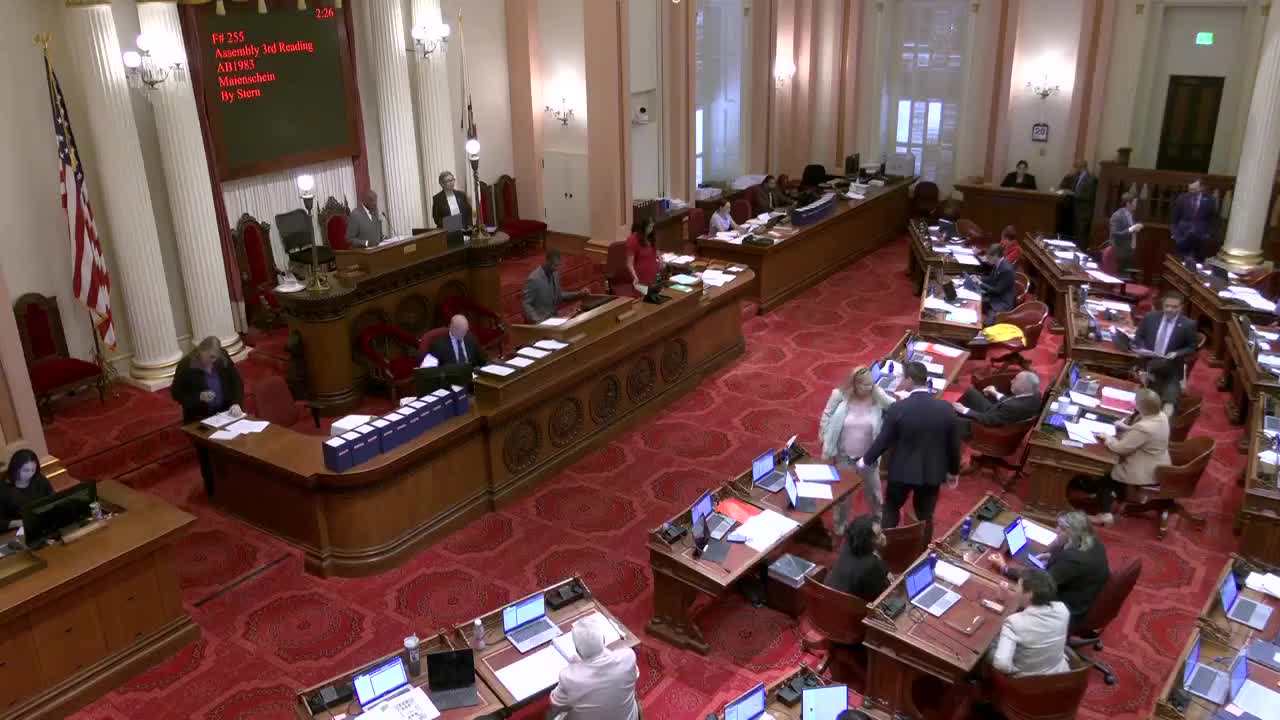 1MIN
Senate Floor
 10MIN
Senate Standing Committee on Local Government
 12MIN
Senate Standing Committee on Judiciary
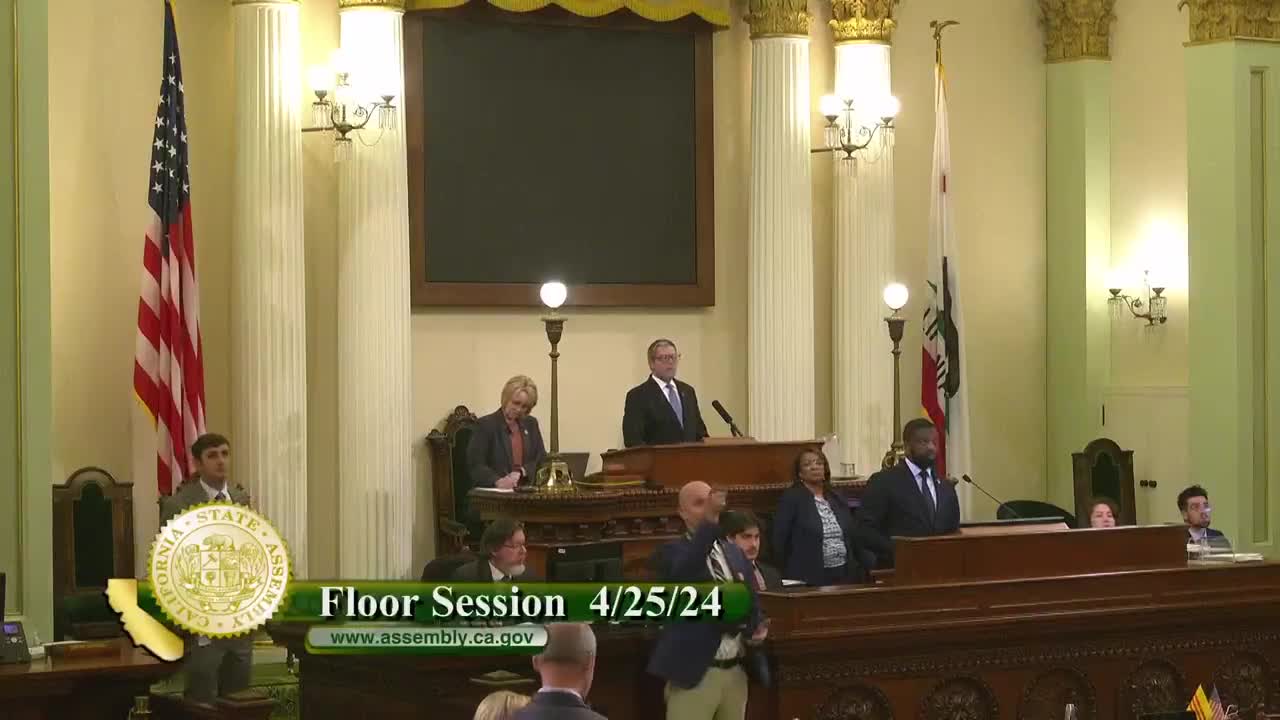 2MIN
Assembly Floor
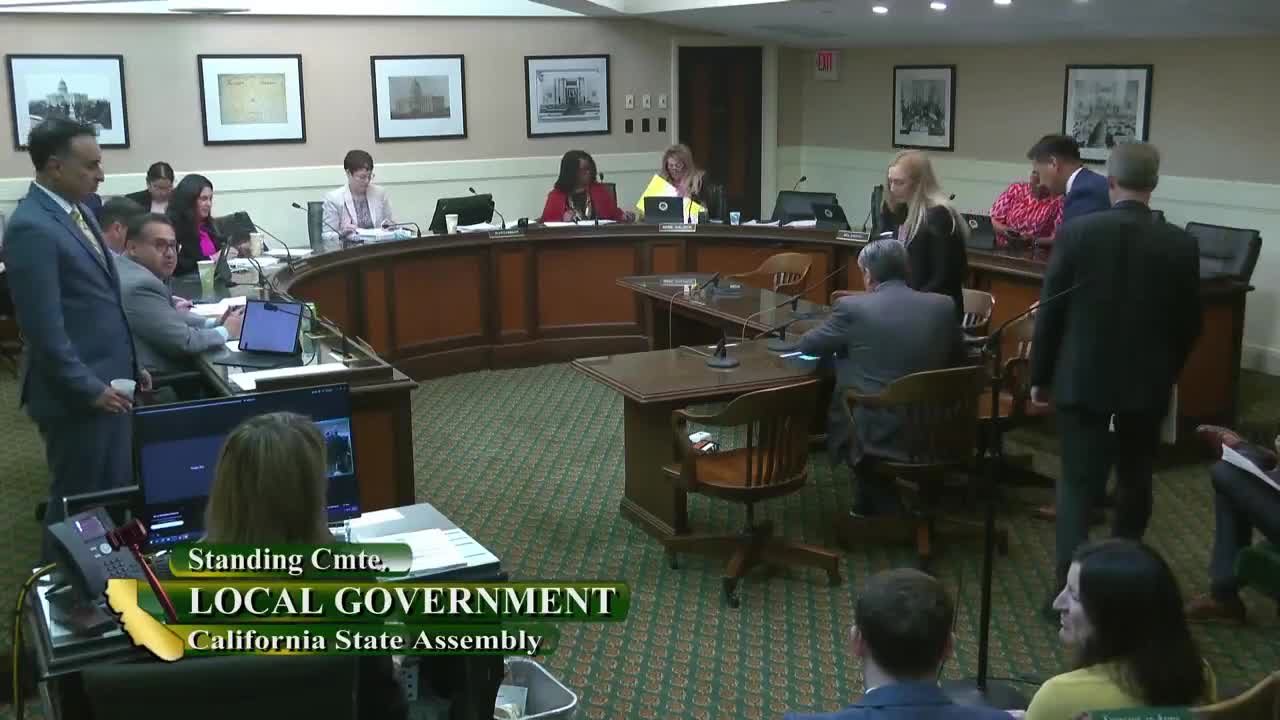 12MIN