AB 2381: California state preschool programs: reimbursement rates.
- Session Year: 2023-2024
- House: Assembly
- Latest Version Date: 2024-09-05
Current Status:
Failed
(2024-09-27: Vetoed by Governor.)
Introduced
In Committee
First Chamber
In Committee
Second Chamber
Enacted
What does this bill do?
This bill changes how California state preschool contractors are paid for contracts that begin on or after July 1, 2025. Reimbursement will be the smallest of three amounts: the contract’s stated maximum reimbursable amount, the net reimbursable program costs (the actual eligible program costs), or the adjusted child‑days of enrollment for certified children multiplied by the contract rate.
The summary is provided by generative AI which can make mistakes. For original language, please view the details in the table below.
Existing law, the Early Education Act, among other things, requires the Superintendent of Public Instruction to administer all California state preschool programs. Existing law requires the State Department of Education, in collaboration with the State Department of Social Services, to implement a reimbursement system plan that establishes reasonable standards and assigned reimbursement rates, which vary with the length of the program year and the hours of service, for purposes of the act. Existing law requires those contractors who, as of December 31, 2021, received the established standard reimbursement rate to be reimbursed at the greater of the 75th percentile of the 2018 regional market rate survey or the contract per-child reimbursement amount as of December 31, 2021, as increased by a specified cost-of-living adjustment.
This bill would instead require, for a contract whose period of performance begins on and after July 1, 2025, the contract reimbursement to be based on the lesser of the maximum reimbursable amount stated in the contract, the net reimbursable program costs, or the product of the adjusted child days of enrollment for certified children times the contract rate set forth in the above-described provisions.
Existing law, the California Child Day Care Facilities Act, provides for the licensure and regulation of child day care facilities by the State Department of Social Services.This bill would state the intent of the Legislature to enact legislation relating to childcare.Existing law, the California Child Day Care Facilities Act, provides for the licensure and regulation of child day care facilities by the State Department of Social Services.
This bill would state the intent of the Legislature to enact legislation relating to childcare.
(a)The department, in collaboration with the State Department of Social Services, shall implement a reimbursement system plan that establishes reasonable standards and assigned reimbursement rates, which vary with the length of the program year and the hours of service.
(1)Parent fees shall be used to pay reasonable and necessary costs for providing additional services.
(2)The department may establish any regulations deemed advisable concerning conditions of service and hours of enrollment for children in the programs.
(b)(1)(A)Commencing July 1, 2021, the standard reimbursement rate shall be twelve thousand nine hundred sixty-eight dollars ($12,968).
(B)Commencing July 1, 2021, the standard reimbursement rate for part-day California state preschool programs shall be five thousand six hundred twenty-one dollars ($5,621).
(2)Commencing in the 202223 fiscal year, the standard reimbursement rates described in paragraph (1) shall be increased by the cost-of-living adjustment granted by the Legislature annually pursuant to Section 42238.15.
(c)(1)Commencing January 1, 2022, contractors who, as of December 31, 2021, received the standard reimbursement rate established in this section shall be reimbursed at the greater of the following:
(A)The 75th percentile of the 2018 regional market rate survey.
(B)The contract per-child reimbursement amount as of December 31, 2021, as increased by the cost-of-living adjustment pursuant to paragraph (2) of subdivision (b).
(2)Commencing July 1, 2022, subject to available funding, the department may issue temporary rate increases to contractors that exceed the rates specified in paragraph (1) and the reimbursement rate supplements described in Section 51 of Chapter 571 of the Statutes of 2022.
(3)In accordance with federal requirements for Child Care Stabilization Grants appropriated pursuant to the federal American Rescue Plan Act of 2021 (Public Law 117-2), contractors shall provide information via a one-time application or survey in advance of receiving American Rescue Plan Act funds. The department shall specify the timeline and format in which this information shall be submitted, and the information shall include, but not be limited to, all of the following:
(A)Address, including ZIP Code.
(B)Race and ethnicity.
(C)Gender.
(D)Whether the provider is open and available to provide childcare services or closed due to the COVID-19 public health emergency.
(E)What types of federal relief funds have been received from the state.
(F)Use of federal relief funds received.
(G)Documentation that the provider met certifications as required by federal law.
(4)Rate increases shall be subject to federal usage limitations and federal and state program eligibility requirements.
(d)(1)Notwithstanding subdivisions (b) and (c), for the 202324 fiscal year and the 202425 fiscal year, the cost-of-living adjustment required pursuant to subdivisions (b) and (c) shall instead be zero.
(2)It is the intent of the Legislature that any adjustments in the 202324 fiscal year and the 202425 fiscal years related to reimbursement for programs funded pursuant to this section will be subject to a ratified agreement, and subject to future legislation providing for appropriations related to the budget bill.
(e)For a contract whose period of performance begins on and after July 1, 2025, the contract reimbursement shall be based on the lesser of the following:
(1)The maximum reimbursable amount stated in the contract.
(2)Net reimbursable program costs.
(3)The product of the adjusted child days of enrollment for certified children times the contract rate set forth in this section.
SECTION 1.It is the intent of the Legislature to enact legislation relating to childcare.It is the intent of the Legislature to enact legislation relating to childcare.
|
Date
|
Status
|
|---|---|
| Sep 27, 2024 | Vetoed by Governor. |
| Sep 13, 2024 | Enrolled and presented to the Governor at 4 p.m. |
| Aug 31, 2024 | In Assembly. Ordered to Engrossing and Enrolling. |
| Aug 30, 2024 | Read third time. Passed. Ordered to the Assembly. (Ayes 39. Noes 0.). |
| Aug 28, 2024 | Ordered to third reading. |
| Aug 28, 2024 | From special consent calendar by Senator Padilla |
| Aug 23, 2024 | Ordered to special consent calendar. |
| Aug 19, 2024 | Read second time. Ordered to third reading. |
| Aug 15, 2024 | From committee: Do pass. (Ayes 7. Noes 0.) (August 15). |
| Aug 5, 2024 | In committee: Referred to APPR suspense file. |
| Jul 3, 2024 | From committee: Do pass and re-refer to Com. on APPR. (Ayes 7. Noes 0.) (July 3). Re-referred to Com. on APPR. |
| Jun 17, 2024 | In committee: Hearing postponed by committee. |
| Jun 5, 2024 | Referred to Com. on ED. |
| May 23, 2024 | In Senate. Read first time. To Com. on RLS. for assignment. |
| May 22, 2024 | Read third time. Passed. Ordered to the Senate. (Ayes 72. Noes 0. Page 5473.) |
| May 20, 2024 | Read second time. Ordered to third reading. |
| May 16, 2024 | From committee: Do pass. (Ayes 15. Noes 0.) (May 16). |
| May 8, 2024 | In committee: Set, first hearing. Referred to APPR. suspense file. |
| Apr 24, 2024 | From committee: Do pass and re-refer to Com. on APPR. with recommendation: To Consent Calendar. (Ayes 6. Noes 0.) (April 23). Re-referred to Com. on APPR. |
| Apr 11, 2024 | From committee: Do pass and re-refer to Com. on HUM. S. with recommendation: To Consent Calendar. (Ayes 7. Noes 0.) (April 10). Re-referred to Com. on HUM. S. |
| Apr 1, 2024 | Re-referred to Com. on ED. |
| Mar 21, 2024 | Referred to Coms. on ED. and HUM. S. |
| Mar 21, 2024 | From committee chair, with author's amendments: Amend, and re-refer to Com. on ED. Read second time and amended. |
| Feb 13, 2024 | From printer. May be heard in committee March 14. |
| Feb 12, 2024 | Read first time. To print. |
|
Date
|
Description
|
Location
|
Votes
|
|
|---|---|---|---|---|
| Aug 30, 2024 | Assembly 3rd Reading AB2381 Bonta By Ashby | Senate Floor |
Passed |
|
| Aug 15, 2024 | Do pass | Senate Standing Committee on Appropriations |
Passed |
|
| Aug 5, 2024 | Placed on suspense file | Senate Standing Committee on Appropriations |
Passed |
|
| Jul 3, 2024 | Do pass, but first be re-referred to the Committee on [Appropriations] | Senate Standing Committee on Education |
Passed |
|
| May 22, 2024 | AB 2381 Bonta Assembly Third Reading | Assembly Floor |
Passed |
|
| May 16, 2024 | Do pass. | Assembly Standing Committee on Appropriations |
Passed |
|
| Apr 23, 2024 | Do pass and be re-referred to the Committee on [Appropriations] with recommendation: To Consent Calendar | Assembly Standing Committee on Human Services |
Passed |
|
| Apr 10, 2024 | Do pass and be re-referred to the Committee on [Human Services] with recommendation: To Consent Calendar | Assembly Standing Committee on Education |
Passed |
This list shows positions taken on this bill by organizations on the date displayed, which is linked to the original source.
Positions by individuals are not included.
|
Organization
|
Position
|
Date
|
|---|---|---|
| California Alternative Payment Program Association | ** Support | |
| California County Superintendents | ** Support | |
| Child Care Providers United California | * Support | Jul 3, 2024 |
| Early Care And Education Consortium | ** Support | |
| EveryChild California | ** Support | |
| Los Angeles County Office Of Education | ** Support | |
| Saint Vincent’s Day Home | ** Support | |
| Santa Clara County Office Of Education | ** Support | |
| Santa Clara County School Boards Association | ** Support | |
| SEIU California | ** Support | |
| Silicon Valley Community Foundation | ** Support | |
| State Superintendent of Public Instruction Tony Thurmond | ** Support | |
| Thriving Families California | ** Support | |
| Yolo County Office of Education | * Support | Jul 3, 2024 |
GOVERNOR'S VETO
GV Bill Id:AB 2381
Author:(Bonta)
As Enrolled Ver:September 5, 2024
2/3 vote
SUMMARY
Requires that, as of July 1, 2025, a California State Preschool Program (CSPP) contractor be reimbursed based upon the lesser of the contract amount, the net costs to operate the program, or the reimbursement rate multiplied by the number of children enrolled.
Major Provisions
- Requires that, as of July 1, 2025, the contract reimbursement rate for a CSPP be based on the lesser of:
- The maximum reimbursable amount stated in the contract;
- Net reimbursable program costs; or
- The product of the adjusted child-days of enrollment multiplied by the contract rate.
Governor's Veto Message
This bill modifies the reimbursement methodology for California State Preschool Program contractors by eliminating attendance as a factor, thereby basing reimbursement on enrollment.
I thank the author for their commitment to strengthening the early learning and care system. Although recent federal regulations establish related requirements for child care and development programs administered by the California Department of Social Services (CDSS), this bill does not make similar changes to the reimbursement methodology applicable to those programs. I am directing the Department of Finance and CDSS to include necessary changes for meeting these federal requirements and ensuring alignment across programs, including the California State Preschool Program, as a part of the 2025-26 budget process.
COMMENTS
Focus on enrollment versus attendance. Based upon current regulations, CSPP contractors are reimbursed based on the lesser of the total contract amount, the net program costs, or the level of enrollment as adjusted by an attendance factor. This bill would remove the attendance factor, so that the third factor for consideration for reimbursement would be the level of enrollment of children in the CSPP, regardless of their actual attendance. This would align CSPP providers with Head Start and the private pay market and help to cover their fixed costs, as they rebuild their enrollment which suffered significantly during the COVID-19 pandemic and has yet to fully recover.
According to the Author
"Access to early learning opportunities is a key determinant to the future success of a child. Research shows that children from disadvantaged communities gain more substantial benefits than their affluent peers from attending free, high-quality preschool. This is why we created the California State Preschool Program (CSPP) to provide a core class curriculum that is developmentally, culturally, and linguistically appropriate for the children served. Unfortunately, we saw a significant enrollment decline in 2020 due to the COVID-19 pandemic. Although enrollment has risen since 2020, it is still well below pre-pandemic levels. AB 2831 will strengthen the early learning and care system by allowing CSPPs to be funded based on enrollment, aligning them with Head Start and the private pay market, and helping to stabilize programs as they recover from the pandemic. This will ensure that CSPPs are able to cover their fixed costs, allowing them to focus more on the sustainability and quality of their programs, giving California children the early learning opportunities that they deserve."
Arguments in Support
The State Superintendent of Public Instruction, Tony Thurmond, sponsor of the bill, writes "Funding CSPP programs based on enrollment will ensure programs have the resources to focus on the sustainability and quality of their programs to enable them to take advantage of this opportunity. It will enable programs to cover fixed costs that do not change based on enrollment and focus more on the sustainability and quality of their programs, including, but not limited to, allowing programs to focus on increasing supports for dual language learners, children with disabilities, and other children requiring additional support; improving retention of existing staff and providing professional development; and hiring new staff as needed.
The enrollment funding model aligns with Head Start and the private pay market in addition to the ongoing rate reform process and August 2022 recommendations issued by the Rate and Quality Workgroup convened by the California Department of Social Services and the California Department of Education. These recommendations reflect the importance of supporting the stability of the early education field and the need to fund programs based on the true cost of care and to implement an enrollment-based funding model."
Arguments in Opposition
None on file
FISCAL COMMENTS
According to the Assembly Appropriations Committee, "While this bill does not increase funding for CSPP contracts, the bill allows additional avenues for a CSPP contractor to earn its existing state contract, meaning less money would likely be returned to the state, likely in excess of $150,000."
VOTES
ASM EDUCATION: 7-0-0
YES: Muratsuchi, Addis, Alvarez, Bonta, Flora, Hoover, McCarty
ASM HUMAN SERVICES: 6-0-1
YES: Lee, Essayli, Calderon, Gipson, Jackson, Ortega
ABS, ABST OR NV: Mathis
ASM APPROPRIATIONS: 15-0-0
YES: Wicks, Sanchez, Arambula, Bryan, Calderon, Wendy Carrillo, Dixon, Mike Fong, Grayson, Haney, Hart, Jim Patterson, Pellerin, Ta, Villapudua
ASSEMBLY FLOOR: 72-0-8
YES: Addis, Aguiar-Curry, Alanis, Alvarez, Arambula, Bains, Bauer-Kahan, Bennett, Berman, Boerner, Bonta, Bryan, Juan Carrillo, Wendy Carrillo, Chen, Connolly, Davies, Dixon, Flora, Mike Fong, Vince Fong, Gabriel, Gallagher, Garcia, Gipson, Grayson, Haney, Hart, Hoover, Irwin, Jackson, Jones-Sawyer, Kalra, Lackey, Lee, Low, Lowenthal, Maienschein, McCarty, McKinnor, Muratsuchi, Stephanie Nguyen, Ortega, Pacheco, Papan, Jim Patterson, Joe Patterson, Pellerin, Petrie-Norris, Quirk-Silva, Ramos, Rendon, Reyes, Rodriguez, Blanca Rubio, Sanchez, Santiago, Schiavo, Soria, Ta, Ting, Valencia, Villapudua, Waldron, Wallis, Ward, Weber, Wicks, Wilson, Wood, Zbur, Robert Rivas
ABS, ABST OR NV: Calderon, Cervantes, Megan Dahle, Essayli, Friedman, Holden, Mathis, Luz Rivas
SENATE FLOOR: 40-0-0
YES: Allen, Alvarado-Gil, Archuleta, Ashby, Atkins, Becker, Blakespear, Bradford, Caballero, Cortese, Dahle, Dodd, Durazo, Eggman, Glazer, Gonzalez, Grove, Hurtado, Jones, Laird, Limón, McGuire, Menjivar, Min, Newman, Nguyen, Niello, Ochoa Bogh, Padilla, Portantino, Roth, Rubio, Seyarto, Skinner, Smallwood-Cuevas, Stern, Umberg, Wahab, Wiener, Wilk
UPDATED
VERSION: September 5, 2024
CONSULTANT: Debbie Look / ED. / (916) 319-2087 FN: 0005173
SENATE RULES COMMITTEE Office of Senate Floor Analyses (916) 651-1520 Fax: (916) 327-4478 | AB 2381 |
THIRD READING
Bill No: AB 2381
Author: Bonta (D)
Amended: 3/21/24 in Assembly
Vote: 21
SENATE EDUCATION COMMITTEE: 7-0, 7/3/24
AYES: Newman, Ochoa Bogh, Cortese, Glazer, Gonzalez, Smallwood-Cuevas, Wilk
SENATE APPROPRIATIONS COMMITTEE: 7-0, 8/15/24
AYES: Caballero, Jones, Ashby, Becker, Bradford, Seyarto, Wahab
ASSEMBLY FLOOR: 72-0, 5/22/24 - See last page for vote
SUBJECT: California state preschool programs: reimbursement rates
SOURCE: Superintendent of Public Instruction Tony Thurmond
Santa Clara Office of Education
DIGEST:
This bill modifies the reimbursement methodology for state preschool contractors by eliminating attendance as a factor, thereby basing reimbursement on enrollment.
ANALYSIS:
Existing law:
- Requires the California Department of Education (CDE), in collaboration with the State Department of Social Services, to implement a reimbursement system plan that establishes reasonable standards and assigned reimbursement rates, which vary with the length of the program year and the hours of service. (Education Code (EC) § 8242)
Standard reimbursement rate (SRR)
- Establishes the SRR at $12,968, beginning July 1, 2021. (EC § 8242)
- Increases the SRR, beginning in the 2022–23 fiscal year, by the cost-of-living adjustment annually granted by the Legislature. (EC § 8242)
- Provides that state preschool contractors who, as of December 31, 2021, received the SRR, to be reimbursed at the greater of the following, beginning January 1, 2022:
- The 75th percentile of the 2018 regional market rate (RMR) survey.
- The contract per-child reimbursement amount as of December 31, 2021, as increased by the cost-of-living adjustment. (EC § 8242)
- The 75th percentile of the 2018 regional market rate (RMR) survey.
- Authorizes CDE to issue temporary rate increases, beginning July 1, 2022 and subject to available funding, to contractors that exceed the rates specified in # 4 and specified reimbursement rate supplements. (EC § 8242)
- Provides that the cost-of-living adjustment for the 2023-24 and 2024-25 fiscal years is zero. (EC § 8242)
Regional market rate (RMR)
- Establishes the RMR ceilings at the greater of, beginning January 1, 2022:
- The 75th percentile of the 2018 RMR survey for that region; or,
- The RMR ceiling that existed in that region on December 31, 2021. (Welfare and Institutions Code (WIC) § 10374.5)
- The 75th percentile of the 2018 RMR survey for that region; or,
Reimbursement rate reform
- Requires the Governor and the Child Care Providers Union, consistent with their June 25, 2021 agreement, to establish a Joint Labor Management Committee to develop recommendations for a single reimbursement rate structure that addresses quality standards for equity and accessibility while supporting positive learning and developmental outcomes for children. (WIC § 10280.2)
- Requires the Department of Social Services, in consultation with CDE, to convene a working group separate from the Joint Labor Management Committee pursuant to # 8, to assess the methodology for establishing reimbursement rates and the existing quality standards for childcare and preschool programs, as specified. Existing law requires the workgroup to provide recommendations by August 15, 2022, including, but not limited to, recommendations on alignment of workforce competencies with rate reform. (WIC § 10280.2)
Reimbursement methodology
- Requires, from July 1, 2023, to June 30, 2025, the contract reimbursement amount to be based on the lesser of either of the following, if a program is open and operating in accordance with their approved program calendar and remains open and offering services through the program year:
- One hundred percent of the contract maximum reimbursable amount.
- Net reimbursable program costs.
- One hundred percent of the contract maximum reimbursable amount.
- Requires (after the provisions in #10 expire) that state preschool contractors be reimbursed for services based upon the lesser of the following:
- The maximum reimbursable amount as stated in the annual preschool contract;
- The net reimbursable program costs; or,
- The product of the adjusted child-days of enrollment for certified children, times the contract rate per child day of enrollment, times the actual percentage of attendance plus 5 percent, but in no case to exceed 100 percent of enrollment. (California Code of Regulations, Title 5, § 17812)
- The maximum reimbursable amount as stated in the annual preschool contract;
This bill modifies the reimbursement methodology for state preschool contractors by eliminating attendance as a factor, thereby basing reimbursement on enrollment. Specifically, this bill:
- Requires that state preschool contractors whose contract begins on and after July 1, 2025, be reimbursed based on the lesser of the following:
- The maximum reimbursable amount stated in the contract.
- Net reimbursable program costs.
- The product of the adjusted child days of enrollment for certified children times the contract rate.
- The maximum reimbursable amount stated in the contract.
Comments
- Need for the bill. According to the author, “Access to early learning opportunities is a key determinant to the future success of a child. Research shows that children from disadvantaged communities gain more substantial benefits than their affluent peers from attending free, high-quality preschool. This is why we created the California State Preschool Program (CSPP) in 2008 to provide a core class curriculum that is developmentally, culturally, and linguistically appropriate for the children served. Unfortunately, we saw a significant enrollment decline in 2020 due to the COVID-19 pandemic. Although enrollment has risen since 2020, it is still well below pre-pandemic levels. AB 2831 will strengthen the early learning and care system by allowing CSPPs to be funded based on enrollment, aligning them with Head Start and the private pay market, and helping to stabilize programs as they recover from the pandemic. This will ensure that CSPPs are able to cover their fixed costs, allowing them to focus more on the sustainability and quality of their programs, giving California children the early learning opportunities that they deserve.”
- Reimbursement based on enrollment vs attendance. Existing regulations provide that state preschool contractors are to be reimbursed based on the lesser of the total contract amount, the net program costs, or the level of enrollment as adjusted by an attendance factor. This bill removes the attendance factor, so that the third factor for consideration for reimbursement would be the level of enrollment, regardless of their actual attendance. This change aligns the state preschool reimbursement methodology with Head Start and the private pay market, and helps to cover fixed costs as providers continue to struggle to rebuild enrollment after massive losses during the pandemic.
This bill does not increase funding for state preschool contracts. This bill allows additional avenues for state preschool contractors to “earn” their existing state contract, thereby utilizing more of the funding in their contract and returning less “unearned” funding to the state (a loss of savings to the state).
Related/Prior Legislation
AB 51 (Bonta, 2024) (a) requires the Department of Social Services, in collaboration with CDE, to consider adopting regulations to support childcare providers impacted by the expansion of transitional kindergarten as reimbursement rates are updated and modified to align to an alternative methodology; (b) requires CDE to contract with childcare resource and referral programs to expand existing services to include navigation and referral services to early learning and care programs and for transitional kindergarten; and, (c) requests the University of California (UC) to study the impact of transitional kindergarten on the early childcare and education ecosystem. The bill is pending on the Senate inactive file.
AB 555 (Juan Carrillo, 2023) would have increased priority for the enrollment of three-year olds in state preschool programs by giving equal priority to three-and four-year olds and extends specified adjustment factors to part-day state preschool programs. The bill was held in the Senate Appropriations Committee.
AB 596 (Reyes, 2023) would have (a) required the Department of Social Services, in collaboration with CDE, to develop and implement an alternative methodology for calculating subsidy payment rates for child care services and state preschool program services; and, (b) required the Department of Social Services, in consultation with CDE, to develop an equitable sliding scale for the payment of family fees and prohibit family fees from being collected until the new equitable sliding scale is implemented; and increase reimbursements to state preschool and child care providers, as specified. The bill was held in the Senate Appropriations Committee.
SB 246 (Leyva, 2021) would have required the Department of Social Services to establish a single reimbursement rate for early learning and care programs, including variation for regional costs and quality adjustment factors. The bill was held in the Assembly.
FISCAL EFFECT: Appropriation: No Fiscal Com.: Yes Local: No
According to the Senate Appropriations Committee, while this bill would not increase funding for state preschool contracts, it could result in the loss of savings to the state. Specifically, the bill would modify the reimbursement methodology for a contractor to earn its existing state contract and thereby retain unspent preschool funds that would otherwise revert to the General Fund. The extent of the forgone savings is unknown, but such reversions are typically redistributed for other purposes in subsequent years.
SUPPORT: (Verified 8/15/24)
State Superintendent of Public Instruction, Tony Thurmond (co-source)
Santa Clara County Office of Education (co-source)
California County Superintendents
Early Care and Education Consortium
EveryChild California
Los Angeles County Office of Education
Saint Vincent’s Day Home
Santa Clara County School Boards Association
SEIU California
Silicon Valley Community Foundation
Thriving Families California
OPPOSITION: (Verified 8/15/24)
None received
ASSEMBLY FLOOR: 72-0, 5/22/24
AYES: Addis, Aguiar-Curry, Alanis, Alvarez, Arambula, Bains, Bauer-Kahan, Bennett, Berman, Boerner, Bonta, Bryan, Juan Carrillo, Wendy Carrillo, Chen, Connolly, Davies, Dixon, Flora, Mike Fong, Vince Fong, Gabriel, Gallagher, Garcia, Gipson, Grayson, Haney, Hart, Hoover, Irwin, Jackson, Jones-Sawyer, Kalra, Lackey, Lee, Low, Lowenthal, Maienschein, McCarty, McKinnor, Muratsuchi, Stephanie Nguyen, Ortega, Pacheco, Papan, Jim Patterson, Joe Patterson, Pellerin, Petrie-Norris, Quirk-Silva, Ramos, Rendon, Reyes, Rodriguez, Blanca Rubio, Sanchez, Santiago, Schiavo, Soria, Ta, Ting, Valencia, Villapudua, Waldron, Wallis, Ward, Weber, Wicks, Wilson, Wood, Zbur, Robert Rivas
NO VOTE RECORDED: Calderon, Cervantes, Megan Dahle, Essayli, Friedman, Holden, Mathis, Luz Rivas
Prepared by: Lynn Lorber / ED. / (916) 651-4105
8/22/24 12:07:56
**** END ****
SENATE RULES COMMITTEE Office of Senate Floor Analyses (916) 651-1520 Fax: (916) 327-4478 | AB 2381 |
THIRD READING
Bill No: AB 2381
Author: Bonta (D)
Amended: 3/21/24 in Assembly
Vote: 21
SENATE EDUCATION COMMITTEE: 7-0, 7/3/24
AYES: Newman, Ochoa Bogh, Cortese, Glazer, Gonzalez, Smallwood-Cuevas, Wilk
SENATE APPROPRIATIONS COMMITTEE: 7-0, 8/15/24
AYES: Caballero, Jones, Ashby, Becker, Bradford, Seyarto, Wahab
ASSEMBLY FLOOR: 72-0, 5/22/24 - See last page for vote
SUBJECT: California state preschool programs: reimbursement rates
SOURCE: Superintendent of Public Instruction Tony Thurmond
Santa Clara Office of Education
DIGEST:
This bill modifies the reimbursement methodology for state preschool contractors by eliminating attendance as a factor, thereby basing reimbursement on enrollment.
ANALYSIS:
Existing law:
- Requires the California Department of Education (CDE), in collaboration with the State Department of Social Services, to implement a reimbursement system plan that establishes reasonable standards and assigned reimbursement rates, which vary with the length of the program year and the hours of service. (Education Code (EC) § 8242)
Standard reimbursement rate (SRR)
- Establishes the SRR at $12,968, beginning July 1, 2021. (EC § 8242)
- Increases the SRR, beginning in the 2022–23 fiscal year, by the cost-of-living adjustment annually granted by the Legislature. (EC § 8242)
- Provides that state preschool contractors who, as of December 31, 2021, received the SRR, to be reimbursed at the greater of the following, beginning January 1, 2022:
- The 75th percentile of the 2018 regional market rate (RMR) survey.
- The contract per-child reimbursement amount as of December 31, 2021, as increased by the cost-of-living adjustment. (EC § 8242)
- The 75th percentile of the 2018 regional market rate (RMR) survey.
- Authorizes CDE to issue temporary rate increases, beginning July 1, 2022 and subject to available funding, to contractors that exceed the rates specified in # 4 and specified reimbursement rate supplements. (EC § 8242)
- Provides that the cost-of-living adjustment for the 2023-24 and 2024-25 fiscal years is zero. (EC § 8242)
Regional market rate (RMR)
- Establishes the RMR ceilings at the greater of, beginning January 1, 2022:
- The 75th percentile of the 2018 RMR survey for that region; or,
- The RMR ceiling that existed in that region on December 31, 2021. (Welfare and Institutions Code (WIC) § 10374.5)
- The 75th percentile of the 2018 RMR survey for that region; or,
Reimbursement rate reform
- Requires the Governor and the Child Care Providers Union, consistent with their June 25, 2021 agreement, to establish a Joint Labor Management Committee to develop recommendations for a single reimbursement rate structure that addresses quality standards for equity and accessibility while supporting positive learning and developmental outcomes for children. (WIC § 10280.2)
- Requires the Department of Social Services, in consultation with CDE, to convene a working group separate from the Joint Labor Management Committee pursuant to # 8, to assess the methodology for establishing reimbursement rates and the existing quality standards for childcare and preschool programs, as specified. Existing law requires the workgroup to provide recommendations by August 15, 2022, including, but not limited to, recommendations on alignment of workforce competencies with rate reform. (WIC § 10280.2)
Reimbursement methodology
- Requires, from July 1, 2023, to June 30, 2025, the contract reimbursement amount to be based on the lesser of either of the following, if a program is open and operating in accordance with their approved program calendar and remains open and offering services through the program year:
- One hundred percent of the contract maximum reimbursable amount.
- Net reimbursable program costs.
- One hundred percent of the contract maximum reimbursable amount.
- Requires (after the provisions in #10 expire) that state preschool contractors be reimbursed for services based upon the lesser of the following:
- The maximum reimbursable amount as stated in the annual preschool contract;
- The net reimbursable program costs; or,
- The product of the adjusted child-days of enrollment for certified children, times the contract rate per child day of enrollment, times the actual percentage of attendance plus 5 percent, but in no case to exceed 100 percent of enrollment. (California Code of Regulations, Title 5, § 17812)
- The maximum reimbursable amount as stated in the annual preschool contract;
This bill modifies the reimbursement methodology for state preschool contractors by eliminating attendance as a factor, thereby basing reimbursement on enrollment. Specifically, this bill:
- Requires that state preschool contractors whose contract begins on and after July 1, 2025, be reimbursed based on the lesser of the following:
- The maximum reimbursable amount stated in the contract.
- Net reimbursable program costs.
- The product of the adjusted child days of enrollment for certified children times the contract rate.
- The maximum reimbursable amount stated in the contract.
Comments
- Need for the bill. According to the author, “Access to early learning opportunities is a key determinant to the future success of a child. Research shows that children from disadvantaged communities gain more substantial benefits than their affluent peers from attending free, high-quality preschool. This is why we created the California State Preschool Program (CSPP) in 2008 to provide a core class curriculum that is developmentally, culturally, and linguistically appropriate for the children served. Unfortunately, we saw a significant enrollment decline in 2020 due to the COVID-19 pandemic. Although enrollment has risen since 2020, it is still well below pre-pandemic levels. AB 2831 will strengthen the early learning and care system by allowing CSPPs to be funded based on enrollment, aligning them with Head Start and the private pay market, and helping to stabilize programs as they recover from the pandemic. This will ensure that CSPPs are able to cover their fixed costs, allowing them to focus more on the sustainability and quality of their programs, giving California children the early learning opportunities that they deserve.”
- Reimbursement based on enrollment vs attendance. Existing regulations provide that state preschool contractors are to be reimbursed based on the lesser of the total contract amount, the net program costs, or the level of enrollment as adjusted by an attendance factor. This bill removes the attendance factor, so that the third factor for consideration for reimbursement would be the level of enrollment, regardless of their actual attendance. This change aligns the state preschool reimbursement methodology with Head Start and the private pay market, and helps to cover fixed costs as providers continue to struggle to rebuild enrollment after massive losses during the pandemic.
This bill does not increase funding for state preschool contracts. This bill allows additional avenues for state preschool contractors to “earn” their existing state contract, thereby utilizing more of the funding in their contract and returning less “unearned” funding to the state (a loss of savings to the state).
Related/Prior Legislation
AB 51 (Bonta, 2024) (a) requires the Department of Social Services, in collaboration with CDE, to consider adopting regulations to support childcare providers impacted by the expansion of transitional kindergarten as reimbursement rates are updated and modified to align to an alternative methodology; (b) requires CDE to contract with childcare resource and referral programs to expand existing services to include navigation and referral services to early learning and care programs and for transitional kindergarten; and, (c) requests the University of California (UC) to study the impact of transitional kindergarten on the early childcare and education ecosystem. The bill is pending on the Senate inactive file.
AB 555 (Juan Carrillo, 2023) would have increased priority for the enrollment of three-year olds in state preschool programs by giving equal priority to three-and four-year olds and extends specified adjustment factors to part-day state preschool programs. The bill was held in the Senate Appropriations Committee.
AB 596 (Reyes, 2023) would have (a) required the Department of Social Services, in collaboration with CDE, to develop and implement an alternative methodology for calculating subsidy payment rates for child care services and state preschool program services; and, (b) required the Department of Social Services, in consultation with CDE, to develop an equitable sliding scale for the payment of family fees and prohibit family fees from being collected until the new equitable sliding scale is implemented; and increase reimbursements to state preschool and child care providers, as specified. The bill was held in the Senate Appropriations Committee.
SB 246 (Leyva, 2021) would have required the Department of Social Services to establish a single reimbursement rate for early learning and care programs, including variation for regional costs and quality adjustment factors. The bill was held in the Assembly.
FISCAL EFFECT: Appropriation: No Fiscal Com.: Yes Local: No
According to the Senate Appropriations Committee, while this bill would not increase funding for state preschool contracts, it could result in the loss of savings to the state. Specifically, the bill would modify the reimbursement methodology for a contractor to earn its existing state contract and thereby retain unspent preschool funds that would otherwise revert to the General Fund. The extent of the forgone savings is unknown, but such reversions are typically redistributed for other purposes in subsequent years.
SUPPORT: (Verified 8/15/24)
State Superintendent of Public Instruction, Tony Thurmond (co-source)
Santa Clara County Office of Education (co-source)
California County Superintendents
Early Care and Education Consortium
EveryChild California
Los Angeles County Office of Education
Santa Clara County School Boards Association
SEIU California
Silicon Valley Community Foundation
Thriving Families California
OPPOSITION: (Verified 8/15/24)
None received
ASSEMBLY FLOOR: 72-0, 5/22/24
AYES: Addis, Aguiar-Curry, Alanis, Alvarez, Arambula, Bains, Bauer-Kahan, Bennett, Berman, Boerner, Bonta, Bryan, Juan Carrillo, Wendy Carrillo, Chen, Connolly, Davies, Dixon, Flora, Mike Fong, Vince Fong, Gabriel, Gallagher, Garcia, Gipson, Grayson, Haney, Hart, Hoover, Irwin, Jackson, Jones-Sawyer, Kalra, Lackey, Lee, Low, Lowenthal, Maienschein, McCarty, McKinnor, Muratsuchi, Stephanie Nguyen, Ortega, Pacheco, Papan, Jim Patterson, Joe Patterson, Pellerin, Petrie-Norris, Quirk-Silva, Ramos, Rendon, Reyes, Rodriguez, Blanca Rubio, Sanchez, Santiago, Schiavo, Soria, Ta, Ting, Valencia, Villapudua, Waldron, Wallis, Ward, Weber, Wicks, Wilson, Wood, Zbur, Robert Rivas
NO VOTE RECORDED: Calderon, Cervantes, Megan Dahle, Essayli, Friedman, Holden, Mathis, Luz Rivas
Prepared by: Lynn Lorber / ED. / (916) 651-4105
8/18/24 9:07:41
**** END ****
SENATE COMMITTEE ON APPROPRIATIONS
Senator Anna Caballero, Chair
2023 - 2024 Regular Session
AB 2381 (Bonta) - California state preschool programs: reimbursement rates
Version: March 21, 2024 | Policy Vote: ED. 7 - 0 |
Urgency: No | Mandate: No |
Hearing Date: August 5, 2024 | Consultant: Lenin Del Castillo |
Bill Summary:
This bill changes the reimbursement methodology for which a California State Preschool Program (CSDPP) contractor may earn their state contract by eliminating attendance as a factor, thereby basing reimbursement on enrollment.
Fiscal Impact:
While this bill would not increase funding for CSPP contracts, it could result in the loss of savings to the state. Specifically, the bill would modify the reimbursement methodology for a contractor to earn its existing state contract and thereby retain unspent preschool funds that would otherwise revert to the General Fund. The extent of the forgone savings is unknown, but such reversions are typically redistributed for other purposes in subsequent years.
Background:
Existing law establishes the “Early Education Act” to provide an inclusive and cost-effective preschool program that provides high-quality learning experiences, coordinated services, and referrals for families to access health and social-emotional support services through full- and part-day programs and provides that all families have equitable access to a high-quality preschool program, regardless of race or ethnic status, cultural, religious, or linguistic background, family composition, or children with exceptional needs. The law defines “California state preschool program” as programs that offer part-day and/or full-day educational programs for eligible three- and four-year-old children, and authorizes these programs to be offered by a public, private, or proprietary agency, and operated in childcare centers or family childcare homes operating through a family childcare home education network.
Existing law requires the Superintendent of Public Instruction to administer all state preschool programs, and requires these programs to include part-day and full-day age and developmentally appropriate programs that are designed to facilitate the transition to kindergarten for three- and four-year old children and that provide early learning and care, health services, social services, nutritional services, parent education and parent participation, evaluation, and staff development. The law defines “three-year-old children” as children who will have their third birthday on or before December 1 of the fiscal year in which they are enrolled in a state preschool program. Children who have their third birthday on or after December 2 of the fiscal year, may be enrolled in a state preschool program on or after their third birthday.
Existing law requires that CSPP contractors be reimbursed for services based upon the lesser of the following:
- The maximum reimbursable amount as stated in the annual preschool contract;
- The net reimbursable program costs; or,
- The maximum reimbursable amount as stated in the annual preschool contract;
The product of the adjusted child-days of enrollment for certified children, times the contract rate per child day of enrollment, times the actual percentage of attendance plus 5 percent, but in no case to exceed 100 percent of enrollment.
Proposed Law:
This bill requires that CSPP contractors whose contract begins on and after July 1, 2025, be reimbursed based on the lesser of the following:
- The maximum reimbursable amount stated in the contract.
- Net reimbursable program costs.
- The product of the adjusted child days of enrollment for certified children times the contract rate.
- The maximum reimbursable amount stated in the contract.
Related Legislation:
AB 596 (Reyes, 2023) requires the California Department of Social Services (CDSS), in collaboration with CDE, to develop and implement an alternative reimbursement rate setting methodology with specified characteristics for child care and development programs and state preschool programs by the 2027–28 fiscal year. It also requires reimbursement for child care and state preschool providers to be based on program enrollment rather than attendance records. AB 596 is pending in this Committee.
AB 555 (Carrillo, 2023) would increase priority for the enrollment of three-year olds in state preschool programs by giving equal priority to three-and four-year olds and extends specified adjustment factors to part-day state preschool programs. This bill was held on the Suspense File in this Committee
Staff Comments:
This bill codifies existing regulations relative to reimbursements to allow state preschool programs to be reimbursed based upon enrollment rather than attendance. This could potentially result in an unknown loss in savings to the extent funding contractors based on enrollment rather than attendance incentivizes contractors to enroll more children and earn more of their contracts than they currently are.
-- END --
SENATE COMMITTEE ON EDUCATION
Senator Josh Newman, Chair
2023 - 2024 Regular
Bill No: Hearing Date: July 3, 2024
Author: | Bonta | ||
Version: |
| ||
Urgency: | Fiscal: | ||
Consultant: | |||
Subject: .
SUMMARY
This bill modifies the reimbursement methodology for state preschool contractors by eliminating attendance as a factor, thereby basing reimbursement on enrollment.
BACKGROUND
- Existing law requires the California Department of Education (CDE), in collaboration with the State Department of Social Services, to implement a reimbursement system plan that establishes reasonable standards and assigned reimbursement rates, which vary with the length of the program year and the hours of service. (Education Code (EC) § 8242)
Standard reimbursement rate (SRR)
- Establishes the SRR at $12,968, beginning July 1, 2021. (EC § 8242)
- Increases the SRR, beginning in the 2022–23 fiscal year, by the cost-of-living adjustment annually granted by the Legislature. (EC § 8242)
- Provides that state preschool contractors who, as of December 31, 2021, received the SRR, to be reimbursed at the greater of the following, beginning January 1, 2022:
- The 75th percentile of the 2018 regional market rate (RMR) survey.
- The contract per-child reimbursement amount as of December 31, 2021, as increased by the cost-of-living adjustment. (EC § 8242)
- The 75th percentile of the 2018 regional market rate (RMR) survey.
- Authorizes CDE to issue temporary rate increases, beginning July 1, 2022 and subject to available funding, to contractors that exceed the rates specified in # 4 and specified reimbursement rate supplements. (EC § 8242)
- Provides that the cost-of-living adjustment for the 2023-24 and 2024-25 fiscal years is zero. (EC § 8242)
Regional market rate (RMR)
- Establishes the RMR ceilings at the greater of, beginning January 1, 2022:
- The 75th percentile of the 2018 RMR survey for that region; or,
- The RMR ceiling that existed in that region on December 31, 2021. (Welfare and Institutions Code (WIC) § 10374.5)
- The 75th percentile of the 2018 RMR survey for that region; or,
Reimbursement rate reform
- Requires the Governor and the Child Care Providers Union, consistent with their June 25, 2021 agreement, to establish a Joint Labor Management Committee to develop recommendations for a single reimbursement rate structure that addresses quality standards for equity and accessibility while supporting positive learning and developmental outcomes for children. (WIC § 10280.2)
- Requires the Department of Social Services, in consultation with CDE, to convene a working group separate from the Joint Labor Management Committee pursuant to # 8, to assess the methodology for establishing reimbursement rates and the existing quality standards for childcare and preschool programs, as specified. Existing law requires the workgroup to provide recommendations by August 15, 2022, including, but not limited to, recommendations on alignment of workforce competencies with rate reform. (WIC § 10280.2)
Reimbursement methodology
- Requires that state preschool contractors be reimbursed for services based upon the lesser of the following:
- The maximum reimbursable amount as stated in the annual preschool contract;
- The net reimbursable program costs; or,
- The product of the adjusted child-days of enrollment for certified children, times the contract rate per child day of enrollment, times the actual percentage of attendance plus 5 percent, but in no case to exceed 100 percent of enrollment. (California Code of Regulations, Title 5, § 17812)
- The maximum reimbursable amount as stated in the annual preschool contract;
ANALYSIS
This bill modifies the reimbursement methodology for state preschool contractors by eliminating attendance as a factor, thereby basing reimbursement on enrollment. Specifically, this bill:
- Requires that state preschool contractors whose contract begins on and after July 1, 2025, be reimbursed based on the lesser of the following:
- The maximum reimbursable amount stated in the contract.
- Net reimbursable program costs.
- The product of the adjusted child days of enrollment for certified children times the contract rate.
- The maximum reimbursable amount stated in the contract.
STAFF COMMENTS
- Need for the bill. According to the author, “Access to early learning opportunities is a key determinant to the future success of a child. Research shows that children from disadvantaged communities gain more substantial benefits than their affluent peers from attending free, high-quality preschool. This is why we created the California State Preschool Program (CSPP) in 2008 to provide a core class curriculum that is developmentally, culturally, and linguistically appropriate for the children served. Unfortunately, we saw a significant enrollment decline in 2020 due to the COVID-19 pandemic. Although enrollment has risen since 2020, it is still well below pre-pandemic levels. AB 2831 will strengthen the early learning and care system by allowing CSPPs to be funded based on enrollment, aligning them with Head Start and the private pay market, and helping to stabilize programs as they recover from the pandemic. This will ensure that CSPPs are able to cover their fixed costs, allowing them to focus more on the sustainability and quality of their programs, giving California children the early learning opportunities that they deserve.”
- Reimbursement based on enrollment vs attendance. Existing regulations provide that state preschool contractors are to reimbursed based on the lesser of the total contract amount, the net program costs, or the level of enrollment as adjusted by an attendance factor. This bill removes the attendance factor, so that the third factor for consideration for reimbursement would be the level of enrollment, regardless of their actual attendance. This change aligns the state preschool reimbursement methodology with Head Start and the private pay market, and helps to cover fixed costs as providers continue to struggle to rebuild enrollment after massive losses during the pandemic. This bill does not increase funding for state preschool contracts. This bill allows additional avenues for state preschool contractors to “earn” its existing state contract, thereby utilizing more of the funding in their contract and returning less “unearned” funding to the state (a loss of savings to the state).
- Fiscal impact. The Assembly Appropriations Committee analysis notes that while this bill does not increase funding for state preschool contracts, the bill allows additional avenues for a state preschool contractor to earn its existing state contract, meaning less money would likely be returned to the state, likely in excess of $150,000.
- Related legislation.
AB 51 (Bonta, 2024) (a) requires the Department of Social Services, in collaboration with CDE, to consider adopting regulations to support childcare providers impacted by the expansion of transitional kindergarten as reimbursement rates are updated and modified to align to an alternative methodology; (b) requires CDE to contract with childcare resource and referral programs to expand existing services to include navigation and referral services to early learning and care programs and for transitional kindergarten; and, (c) requests the University of California (UC) to study the impact of transitional kindergarten on the early childcare and education ecosystem. AB 51 is pending on the Senate inactive file.
AB 555 (Juan Carrillo, 2023) would have increased priority for the enrollment of three-year olds in state preschool programs by giving equal priority to three-and four-year olds and extends specified adjustment factors to part-day state preschool programs. AB 555 was held in the Senate Appropriations Committee.
AB 596 (Reyes, 2023) would have (a) required the Department of Social Services, in collaboration with CDE, to develop and implement an alternative methodology for calculating subsidy payment rates for child care services and state preschool program services; and, (b) required the Department of Social Services, in consultation with CDE, to develop an equitable sliding scale for the payment of family fees and prohibit family fees from being collected until the new equitable sliding scale is implemented; and increase reimbursements to state preschool and child care providers, as specified. AB 596 was held in the Senate Appropriations Committee.
SB 246 (Leyva, 2021) would have required the Department of Social Services to establish a single reimbursement rate for early learning and care programs, including variation for regional costs and quality adjustment factors. SB 246 was held in the Assembly.
SUPPORT
State Superintendent of Public Instruction, Tony Thurmond (Co-Sponsor)
Santa Clara County Office of Education (Co-Sponsor)
Early Care and Education Consortium
EveryChild California
Los Angeles County Office of Education
Santa Clara County Office of Education
Santa Clara County School Boards Association
Thriving Families California
OPPOSITION
None received
-- END --
ASSEMBLY THIRD READING
ATR Bill Id:AB 2381
Author:(Bonta)
As Amended Ver:March 21, 2024
Majority vote
SUMMARY
Requires that, as of July 1, 2025, a California State Preschool Program (CSPP) contractor be reimbursed based upon the lesser of the contract amount, the net costs to operate the program, or the reimbursement rate multiplied by the number of children enrolled.
Major Provisions
- Requires that, as of July 1, 2025, the contract reimbursement rate for a CSPP be based on the lesser of:
- The maximum reimbursable amount stated in the contract;
- Net reimbursable program costs; or
- The product of the adjusted child-days of enrollment multiplied by the contract rate.
COMMENTS
Focus on enrollment versus attendance. Based upon current regulations, CSPP contractors are reimbursed based on the lesser of the total contract amount, the net program costs, or the level of enrollment as adjusted by an attendance factor. This bill would remove the attendance factor, so that the third factor for consideration for reimbursement would be the level of enrollment of children in the CSPP, regardless of their actual attendance. This would align CSPP providers with Head Start and the private pay market and help to cover their fixed costs, as they rebuild their enrollment which suffered significantly during the COVID-19 pandemic and has yet to fully recover.
According to the Author
"Access to early learning opportunities is a key determinant to the future success of a child. Research shows that children from disadvantaged communities gain more substantial benefits than their affluent peers from attending free, high-quality preschool. This is why we created the California State Preschool Program (CSPP) to provide a core class curriculum that is developmentally, culturally, and linguistically appropriate for the children served. Unfortunately, we saw a significant enrollment decline in 2020 due to the COVID-19 pandemic. Although enrollment has risen since 2020, it is still well below pre-pandemic levels. AB 2831 will strengthen the early learning and care system by allowing CSPPs to be funded based on enrollment, aligning them with Head Start and the private pay market, and helping to stabilize programs as they recover from the pandemic. This will ensure that CSPPs are able to cover their fixed costs, allowing them to focus more on the sustainability and quality of their programs, giving California children the early learning opportunities that they deserve."
Arguments in Support
The State Superintendent of Public Instruction, Tony Thurmond, sponsor of the bill, writes "Funding CSPP programs based on enrollment will ensure programs have the resources to focus on the sustainability and quality of their programs to enable them to take advantage of this opportunity. It will enable programs to cover fixed costs that do not change based on enrollment and focus more on the sustainability and quality of their programs, including, but not limited to, allowing programs to focus on increasing supports for dual language learners, children with disabilities, and other children requiring additional support; improving retention of existing staff and providing professional development; and hiring new staff as needed.
The enrollment funding model aligns with Head Start and the private pay market in addition to the ongoing rate reform process and August 2022 recommendations issued by the Rate and Quality Workgroup convened by the California Department of Social Services and the California Department of Education. These recommendations reflect the importance of supporting the stability of the early education field and the need to fund programs based on the true cost of care and to implement an enrollment-based funding model."
Arguments in Opposition
None on file.
FISCAL COMMENTS
According to the Assembly Appropriations Committee, "While this bill does not increase funding for CSPP contracts, the bill allows additional avenues for a CSPP contractor to earn its existing state contract, meaning less money would likely be returned to the state, likely in excess of $150,000."
VOTES
ASM EDUCATION: 7-0-0
YES: Muratsuchi, Addis, Alvarez, Bonta, Flora, Hoover, McCarty
ASM HUMAN SERVICES: 6-0-1
YES: Lee, Essayli, Calderon, Gipson, Jackson, Ortega
ABS, ABST OR NV: Mathis
ASM APPROPRIATIONS: 15-0-0
YES: Wicks, Sanchez, Arambula, Bryan, Calderon, Wendy Carrillo, Dixon, Mike Fong, Grayson, Haney, Hart, Jim Patterson, Pellerin, Ta, Villapudua
UPDATED
VERSION: March 21, 2024
CONSULTANT: Debbie Look / ED. / (916) 319-2087 FN: 0003125
Date of Hearing: May 8, 2024
ASSEMBLY COMMITTEE ON APPROPRIATIONS
Buffy Wicks, Chair
ABPCA Bill Id:AB 2381
Author:(Bonta) – As Amended Ver:March 21, 2024
Policy Committee: | Education | Vote: | 7 - 0 |
Human Services | 6 - 0 | ||
|
|
Urgency: No State Mandated Local Program: No Reimbursable: No
SUMMARY:
This bill makes changes, effective July 1, 2025, to the way a California State Preschool Program (CSPP) contractor may earn their state contract. Specifically, this bill codifies existing provisions related to CSPP contractors earning their contracts and adds a provision allowing CSPP contractors to be paid for their level of enrollment, rather than their enrollment adjusted for attendance.
FISCAL EFFECT:
While this bill does not increase funding for CSPP contracts, the bill allows additional avenues for a CSPP contractor to earn its existing state contract, meaning less money would likely be returned to the state, likely in excess of $150,000.
COMMENTS:
- Purpose. According to the author:
AB 2831 will strengthen the early learning and care system by allowing CSPPs to be funded based on enrollment, aligning them with Head Start and the private pay market, and helping to stabilize programs as they recover from the pandemic. This will ensure that CSPPs are able to cover their fixed costs, allowing them to focus more on the sustainability and quality of their programs, giving California children the early learning opportunities that they deserve.
- Background. CSPP is administered by the California Department of Education (CDE) through CSPP contractors. CSPP provides both part-day and full-day services to eligible three and four year olds. CSPP can be offered in various settings, including childcare centers, family childcare network homes or in school settings. CSPP contractors include local educational agencies (LEAs) and community-based providers. Approximately two-thirds of children in CSPP are served by LEAs, and the remainder are served by community-based organizations. Over 100,000 students are served in CSPP.
Under current regulations, CSPP contractors must earn their contracted amount by either showing they fulfilled their entire contract with the state to serve a certain number of students as agreed to in their contract. If they are not able to fulfill that contract’s terms and earn the agreed to amount of funding associated with that contract, the CSPP contractor may instead either (a) be paid for their net program costs or (b) be paid for their level of student enrollment as adjusted by an attendance factor. During the pandemic, due to increased absenteeism, CSPP contractors were, in addition, able to be paid for their level of enrollment of children in the CSPP, regardless of their actual attendance.
This bill codifies existing regulations related to CSPP contractors earning their contracts and codifies a COVID-era provision allowing CSPP contractors to be paid for their level of enrollment, rather than their enrollment adjusted for attendance.
- Related Legislation. AB 555 (Juan Carrillo) included language similar to this bill in addition to other provisions. This bill was held in the Senate Appropriations Committee.
Analysis Prepared by: Natasha Collins / APPR. / (916) 319-2081
Date of Hearing: April 23, 2024
ASSEMBLY COMMITTEE ON HUMAN SERVICES
Alex Lee, Chair
ABPCA Bill Id:AB 2381 (
Author:Bonta) – As Amended Ver:March 21, 2024
SUBJECT: California state preschool programs: reimbursement rates
SUMMARY: Requires, beginning July 1, 2025, the contract reimbursement for a California State Preschool Program (CSPP) be based on the lesser of the following:
- The maximum reimbursable amount stated in the contract;
- Net reimbursable program costs; or,
- The product of the adjusted child days of enrollment for certified children times the contract rate.
EXISTING LAW:
- Transfers responsibility for specified childcare programs, other than the CSPP, from the California Department of Education (CDE) to the California Department of Social Services (CDSS) effective July 1, 2021. (Welfare and Institutions Code [WIC] 10203 § et seq.)
- Establishes the Child Care and Development Services Act to provide childcare and development services as part of a comprehensive, coordinated, and cost-effective system serving children from birth to 13 years of age and their parents, including a full range of supervision, health, and support services through full- and part-time programs. (WIC § 10207 et seq.)
- States the intent of the Legislature is that all families have access to childcare and development services, through resource and referral (R&R) where appropriate, and regardless of demographic background or special needs, and that families are provided the opportunity to attain financial stability through employment, while maximizing growth and development of their children and enhancing their parenting skills through participation in childcare and development programs. (WIC § 10207.5)
- Requires CDSS, in consultation with CDE, to establish a fee schedule for families using preschool and childcare and development services, and, further states legislative intent that the new fee schedule be simple and easy to implement. (Education Code [EDC] § 10290(a))
- Defines “CSPP” to mean those programs that offer part-day and/or full-day educational programs for eligible three- and four-year-old children. These programs may be offered by a public, private, or proprietary agency, and operated in childcare centers or family childcare homes operating through a family childcare home education network. (EDC § 8205)
- Requires the Superintendent of Public Instruction to use the fee schedule developed in conjunction with CDSS, as specified, for families using full-day preschool. (EDC § 8252(a))
- Requires that CSPP contractors be reimbursed for services based upon the lesser of the following:
- The maximum reimbursable amount as stated in the annual preschool contract;
- The net reimbursable program costs; or,
- The product of the adjusted child-days of enrollment for certified children, times the contract rate per child day of enrollment, times the actual percentage of attendance plus 5%, but in no case to exceed 100% of enrollment. (5 California Code of Regulations § 17812)
FISCAL EFFECT: Unknown, this bill has not been analyzed by a fiscal committee.
COMMENTS:
Background: Regional Market Rate (RMR) versus Standard Reimbursement Rate (SRR). Voucher-based programs are reimbursed using the RMR, which is determined by a survey of licensed childcare providers and prevailing market rates within a specific region. This survey, conducted every two to three years, reflects the prices charged by providers to families, often tailored to local affordability rather than actual cost. This data is utilized by the Legislature to establish reimbursement ceilings for each county, different early learning and care environments, such as centers and family childcare homes, and based on additional service attributes, such as part-day or full-day care, and age group. Currently, the RMR ceilings, effective January 1, 2022, are set to either the 75th percentile of the 2018 RMR survey for that region or the RMR ceiling that existed in that region on December 31, 2021, whichever is higher. RMR levels typically only increase when the state takes action to use a higher percentile of the survey or the most recent survey.
Direct contracts with the state that cater to a specified number of eligible children, such as the CSPP and general childcare and development (CCTR) program determine their rates through the SRR, which is a fixed rate established annually in the state budget. The SRR is modified based on the duration of care and the child's age, with higher rates allocated for children with limited English proficiency or disabilities. Unlike the RMR, the SRR remains constant across different geographic areas, neglecting regional cost variations. Nonetheless, the SRR undergoes an annual adjustment to accommodate changes in the cost of living, as mandated by law. According to the February 2023 report by the LAO, the current SRR stands at $54.93 per day for childcare and $55.27 for state preschool. In 2021-22, the state shifted direct contract providers to the RMR to the extent the RMR was higher than the SRR.
The primary differences between RMR- and SRR-funded programs are, among others, as follows:
Regional Market Rate (RMR) | Standard Reimbursement Rate (SRR) |
|
|
|
|
|
|
Actual Costs of Care. As also noted by this Committee in the AB 596 (Reyes) of 2023 analysis, a key component of the childcare reimbursement rate conversation is that oftentimes the reimbursement rates paid to providers do not cover the true cost of care. Recent increases in inflation have resulted in higher costs to providers when purchasing the supplies necessary to maintain quality care, such as milk, baby formula, and baby wipes. A March 2023 brief from the Child Care Resource Center demonstrates that the cost of providing care for a preschooler in a full-time childcare center exceeds the current reimbursement rate and the 2018 rate when adjusted for inflation. For example, in San Bernardino County, the 75th percentile of the 2018 RMR survey equates to a rate of $983.03; when adjusted for inflation in 2023, this reimbursement rate should be $1,092. The brief notes that the monthly cost of care in the region is approximately $1,908.17, which results in a funding gap of $925.14 for providers in San Bernardino County. In Los Angeles County, this gap is $987.33, in Alameda County this gap is $717.05, and in Butte County, this gap is $537.30.
Childcare reimbursement rates have also lagged when compared to increases in the minimum wage. A March 2023 report from the California Budget & Policy Center notes that, while minimum wage has increased 55% from 2016-17 to 2022-23,
…The rate ceilings for childcare providers across all 58 counties generally have not kept pace with the rising minimum wage after the most recent increase to payment rates enacted in 2021-22. In the state’s most populous county – Los Angeles – payment rates for licensed centers care for preschool-age children increased by less than half as much as the statewide minimum wage. Providers in some counties, such as Riverside County, saw miniscule rate increases of less than 5%. And in 27 counties, due to weaknesses in the rate-setting methodology, licensed centers have not received a single rate increase for care for preschool-age children since 2016-17. Policymakers have not consistently updated the SRR each year so that contract providers can keep pace with rising staff costs and the increasing price of food and supplies. From 2016-17 to 2022-23, the SRR increased by 36.6%, falling short of the 55% increase in the state minimum wage.
Rate and Quality Workgroup (RQWG) Final Report. AB 131 (Committee on Budget), Chapter 116, Statutes of 2021, established a RQWG to be convened by CDSS with diverse stakeholder representation to assess the methodology for establishing reimbursement rates and the existing quality standards for childcare and development and preschool programs. AB 131 required the workgroup to submit recommendations to the Legislature no later than August 15, 2022. The workgroup met over a dozen times between January and August 2022 and included the perspectives of early learning and care providers, APPs, childcare experts, families, and representatives of CDSS and CDE.
In a summary of its findings, the report states:
Despite the strengths and quality currently present in California’s early learning and care programs, and the critical and nurturing role that the predominately women of color workforce plays in educating and caring for California’s young ones, the current reimbursement rate-setting methodology establishes rates that are not sufficient to cover the true cost of providing early learning and care services in accordance with current state licensing and program quality requirements. The historic [SRR] approach failed to account for or differentiate for the cost of meeting the various program quality standards required of different early learning and care programs. The current approach of using a [RMR] survey of prices that programs are charging families institutionalizes race- and income-based inequities by establishing low rates in low-income areas where programs are offsetting their prices so that families can afford to pay. In addition, a history of opaque policy choices and changes have resulted in an exceptionally complex and unaligned set of base rates and adjustment factors that are virtually unnavigable by programs, educators, and families. The result is inequitable access to early learning and care opportunities that meet child and family needs, and exceptionally low compensation for program owners and educators.
As a result of its work, the RQWG identified four core recommendations:
- Ensure equity is foundational to all change – work toward equity as an outcome and implement equity as a process;
- Replace the current methodology of using a market price survey to set rates with an alternative methodology, which uses cost estimates/models to set base rates to compensate early learning and care programs. The cost of care for meeting current state requirements will become the basis of the reimbursement rate, including wage scales that set a living wage floor;
- Create a single rate structure that specifies base rates and that is designed to address historical inequities. This structure should specify separate base rates for family, friend, and neighbor-care and home-based and center-based early learning and care and should differentiate base rates for meeting different sets of state standards; and,
- Continuously evaluate the rate-setting methodology to address equity and adjust for changing conditions and rising costs.
The RQWG made rate reform recommendations similar to those made by previous reports, including:
- The Master Plan on Early Learning and Care which was developed by the California Health and Human Services Agency, in consultation with stakeholders, and recommended in its December 2020 report that, among other things, California adopt a tiered reimbursement rate with appropriate adjustments in order to support equity, simplicity, and quality. The Master Plan also recommended designing a sliding scale for family contributions, which could increase equity in both access and outcomes for families.
- Assembly Blue Ribbon Commission on Early Childhood Education was initiated by California Assembly Speaker Anthony Rendon in consultation with stakeholders, and recommended in its April 2019 report that California implement comprehensive rate reform through a multi-step process, and, in the long-term, that reimbursement rates for Title 5 and Title 22 programs include competitive compensation that increases with quality improvement, among other recommendations.
- First 5 California Reimbursement Rate Workgroup released its report in November 2018 and recommended that California implement comprehensive rate reform by, among other things, incentivizing quality, using the RMR to reimburse all counties at a rate that considers regional economic costs, and conduct ongoing reviews of rate changes to understand their impacts on the childcare system and make adjustments as needed.
In its conclusion, the RQWG writes, “A funding structure that supports programs and educators’ abilities to provide the quality early learning and care they are working to provide now (without adequate resources) is integral to realizing the positive impacts of early learning and care for children, families, and the broader California economy and society. The time has come for California to create the systems and policies that allow these positive impacts to finally be realized in more equitable ways.”
This bill seeks to eliminate the attendance factor, making the level of enrollment the sole consideration for reimbursement. By doing so, CSPP providers would be brought in line with Head Start and the private pay market, aiding in covering their fixed costs. This bill does not include other childcare options and does not address the overall need for rate reform within the childcare sector.
Author’s Statement: According to the Author, “Access to early learning opportunities is a key determinant to the future success of a child. Research shows that children from disadvantaged communities gain more substantial benefits than their affluent peers from attending free, high-quality preschool. This is why we created the California State Preschool Program (CSPP) in 2008 to provide a core class curriculum that is developmentally, culturally, and linguistically appropriate for the children served. Unfortunately, we saw a significant enrollment decline in 2020 due to the COVID-19 pandemic. Although enrollment has risen since 2020, it is still well below pre-pandemic levels. AB 2831 will strengthen the early learning and care system by allowing CSPPs to be funded based on enrollment, aligning them with Head Start and the private pay market, and helping to stabilize programs as they recover from the pandemic. This will ensure that CSPPs are able to cover their fixed costs, allowing them to focus more on the sustainability and quality of their programs, giving California children the early learning opportunities that they deserve.”
Equity Implications: Adjustment to reimbursement rates based on enrollment will likely provide relief to CSPP providers and help keep businesses afloat. This bill does not factor in other childcare models and rate reform necessary for those providers to also stay afloat. As recommended by the RQWG, this bill does not create a single rate structure that specifies base rates and that is designed to address historical inequities. However, this is a positive step towards a rate that could benefit providers.
RELATED AND PRIOR LEGISLATION:
AB 51 (Bonta) of the current legislative session, makes numerous changes to support a mixed delivery pre-kindergarten system, including amending the income eligibility threshold; requires CDE to reserve a portion of CSPP contracts for providers negatively impacted by the implementation of transitional kindergarten (TK); requires the development of regulations on comingling of children with and without subsidies in CSPP classrooms; requires Expanded Learning Opportunities Programs serving TK pupils to be developmentally appropriate for students in TK; expands the roles and responsibilities of R&R agencies; and, requires the development of a new reimbursement rate schedule for CSPP. AB 51 is currently on the inactive file in the Senate.
AB 555 (Juan Carrillo) of 2023, included language similar to this bill that proposed to increase the priority for eligible 3-year old children in CSPP, and to amend adjustment factors for CSPP rates. AB 555 was held on the Senate Appropriations Committee suspense file.
AB 596 (Reyes) of 2023, see comments above. AB 596 was held on the Senate Appropriations Committee suspense file.
AB 1352 (Bonta) of 2023, would have created a statewide childcare pilot subcommittee of the Universal Pre-Kindergarten Mixed Delivery Quality and Access Workgroup to propose, evaluate, and collect evidence to support the creation of statewide pilot policies for childcare programs, permitted a local planning council to apply to CDE and CDSS to adopt an approved statewide pilot policy, and delayed the expiration of existing pilot projects from July 1, 2023, until July 1, 2025. AB 1352 was substantially amended on May 18, 2023, such that it is now relative to governing boards of schoold districts.
REGISTERED SUPPORT / OPPOSITION:
Support
California Alternative Payment Program Association
Early Care and Education Consortium
Santa Clara County Office of Education
State Superintendent of Public Instruction Tony Thurmond
Opposition
None on file.
Analysis Prepared by: Alexandria Smith / HUM. S. / (916) 319-2089
Date of Hearing: April 10, 2024
ASSEMBLY COMMITTEE ON EDUCATION
Al Muratsuchi, Chair
ABPCA Bill Id:AB 2381 (
Author:Bonta) – As Amended Ver:March 21, 2024
[Note: This bill was double referred to the Assembly Human Services Committee and will be heard by that Committee as it relates to issues under its jurisdiction.]
SUBJECT: California state preschool programs: reimbursement rates
SUMMARY: Requires that, as of July 1, 2025, a California State Preschool Program (CSPP) contractor be reimbursed based upon the lesser of the contract amount, the net costs to operate the program, or the reimbursement rate multiplied by the number of children enrolled. Specifically, this bill:
- Requires that, as of July 1, 2025, the contract reimbursement rate for a CSPP be based on the lesser of:
- The maximum reimbursable amount stated in the contract;
- Net reimbursable program costs; or
- The product of the adjusted child-days of enrollment multiplied by the contract rate.
EXISTING LAW:
- Establishes the “Early Education Act” to provide an inclusive and cost-effective preschool program that provides high-quality learning experiences, coordinated services, and referrals for families to access health and social-emotional support services through full- and part-day programs and that all families have equitable access to a high-quality preschool program, regardless of race or ethnic status, cultural, religious, or linguistic background, family composition, or children with exceptional needs. (Education Code (EC) 8200 et seq.)
- Defines “CSPP” to mean those programs that offer part-day and/or full-day educational programs for eligible three- and four-year-old children. These programs may be offered by a public, private, or proprietary agency, and operated in childcare centers or family childcare homes operating through a family childcare home education network. (EC 8205)
- Requires the CSPP to include, but not be limited to, part-day age and developmentally appropriate programs designed to facilitate the transition to kindergarten for three- and four-year-old children in educational development, health services, social services, nutritional services, parent education and parent participation, evaluation, and staff development. (EC 8235)
- Requires that CSPP contractors be reimbursed for services based upon the lesser of the following:
- The maximum reimbursable amount as stated in the annual preschool contract; or
- The net reimbursable program costs; or
- The product of the adjusted child-days of enrollment for certified children, times the contract rate per child day of enrollment, times the actual percentage of attendance plus 5%, but in no case to exceed 100% of enrollment. (5 California Code of Regulations. (California Code of Regulations (CCR) 17812)
- Requires a part-day CSPP to be for a minimum of three hours per day for 175 days per year and a full-day CSPP for 246 days per year. (EC 8207)
- Provides that families seeking part-day CSPP must meet at least one requirement in the following areas to be eligible for state preschool:
- A family is a current aid recipient; income eligible; homeless; or one whose children are recipients of protective services, or whose children have been identified as being abused, neglected, or exploited, or at risk of being abused, neglected, or exploited; or
- A child with exceptional needs, defined as:
- Children under three years of age who have been determined to be eligible for early intervention services pursuant to the California Early Intervention Services Act; or
- Children who have been determined to be eligible for special education and related services by an individualized education program (IEP) team according to law for children with disabilities.
- Has a member of its household who is certified to receive benefits from Medi-Cal, CalFresh, the California Food Assistance Program, the California Special Supplemental Nutrition Program for Women, Infants, and Children, the federal Food Distribution Program on Indian Reservations, Head Start, Early Head Start, or any other designated means-tested government program. (EC 8205, EC 8208)
- Authorizes a CSPP to provide services to children in families whose income is no more than 15% above the income eligibility threshold, after all eligible three- and four-year old children have been enrolled, and limits this provision to no more than 10% of children enrolled. (EC 8208)
- Requires that families seeking full-day CSPP meet both of the following requirements:
- The family is a current aid recipient; income eligible; homeless; or one whose children are recipients of protective services, or whose children have been identified as being abused, neglected, or exploited, or at risk of being abused, neglected, or exploited; or has a child with exception needs; or has a member of the household who is eligible for specified means-tested government programs; and
- The family needs the childcare services because of either of the following:
- The child is homeless; is a recipient of child protective services; is being neglected, abused, or exploited, or at risk of being neglected, abused, or exploited;
- The child’s parents are engaged in vocational training; engaged in an educational program for English learners or to attain a high school diploma; employed or seeking employment; seeking permanent housing; or incapacitated.
- Requires a CSPP contractor to reserve a portion of its full-day enrollment for three and four-year old children with exceptional needs as follows:
- From July 1, 2022, to June 30, 2023: at least 5%;
- From July 1, 2023, to June 30, 2024: at least 7.5%; and
- Beginning July 1, 2024: at least 10%.
- Establishes the Standard Reimbursement Rate (SRR) beginning July 1, 2021, at $12,968 for full-day CSPP and $5,621 for part-day CSPP, and requires, beginning with the 2022-23 fiscal year, that the SRR be increased by a cost of living adjustment (COLA), as specified. Requires that, beginning January 1, 2022, contractors receiving the SRR be reimbursed for the greater of the 75th percentile of the 2018 Regional Market Rate (RMR) survey or the contracted per child reimbursement rate as of December 31, 2021, as increased by the COLA. (EC 8242)
- Establishes, beginning January 1, 2022, the RMR ceilings at the greater of the 75th percentile of the 2018 RMR survey for that region or the RMR ceiling that existed in that region on December 31, 2021. (Welfare and Institutions Code (WIC) 10374.5)
- Requires the California Department of Education (CDE), in collaboration with the Department of Social Services (DSS), to implement a plan that establishes reasonable standards and assigned reimbursement rates for childcare and development services, to vary by length of program year and hours of service, establishes amounts for, and provides for an annual cost-of-living adjustment to, the SRR for contracted providers, and provides for adjustments to the SRR based upon specified reimbursement factors. (EC 8242)
- Requires the Governor and the Child Care Providers Union (CCPU), consistent with the agreement dated June 25, 2021, to establish a Joint Labor Management Committee (JLMC) to develop recommendations for a single reimbursement rate structure that addresses quality standards for equity and accessibility while supporting positive learning and developmental outcomes for children. (WIC 10280.2)
- Requires the DSS, in consultation with the CDE, to convene a working group separate from the JLMC, to assess the methodology for establishing reimbursement rates and the existing quality standards for childcare and development and preschool programs, as specified. Further, requires the workgroup to, no later than August 15, 2022, provide recommendations, including, but not limited to, recommendations on how the DSS should define childcare workforce competencies and how these competencies would align with rate reform, to the JLMC, Department of Finance (DOF), and the Joint Legislative Budget Committee. (WIC 10280.2)
FISCAL EFFECT: Unknown
COMMENTS:
Need for the bill. According to the author, “Access to early learning opportunities is a key determinant to the future success of a child. Research shows that children from disadvantaged communities gain more substantial benefits than their affluent peers from attending free, high-quality preschool. This is why we created the California State Preschool Program (CSPP) to provide a core class curriculum that is developmentally, culturally, and linguistically appropriate for the children served. Unfortunately, we saw a significant enrollment decline in 2020 due to the COVID-19 pandemic. Although enrollment has risen since 2020, it is still well below pre-pandemic levels. AB 2831 will strengthen the early learning and care system by allowing CSPPs to be funded based on enrollment, aligning them with Head Start and the private pay market, and helping to stabilize programs as they recover from the pandemic. This will ensure that CSPPs are able to cover their fixed costs, allowing them to focus more on the sustainability and quality of their programs, giving California children the early learning opportunities that they deserve.”
Focus on enrollment versus attendance. Based upon current regulations, CSPP contractors are reimbursed based on the lesser of the total contract amount, the net program costs, or the level of enrollment as adjusted by an attendance factor. This bill would remove the attendance factor, so that the third factor for consideration for reimbursement would be the level of enrollment of children in the CSPP, regardless of their actual attendance. This would align CSPP providers with Head Start and the private pay market and help to cover their fixed costs, as they rebuild their enrollment which suffered significantly during the COVID-19 pandemic and has yet to fully recover.
Reimbursement for childcare is complex. Subsidized childcare providers in California are reimbursed based upon either the RMR or SRR:
- RMR. Voucher-based programs, including CalWORKs and the Alternative Payment Programs (APP), are required to follow Title 22 health and safety regulations and are reimbursed based upon the RMR. In California, the RMR survey collects data about the prices that early learning and care programs charge for nonsubsidized care, in addition to other information. This information is then used by the Legislature to determine the reimbursement ceilings for each county, determine ceilings across different early learning and care settings (e.g., centers, family childcare homes), and used to determine ceilings based on other characteristics of the services provided (e.g., part-day, full-day, age group). Federal regulations require the use of the most recent survey in determining reimbursement ceilings, but states have flexibility in how they use the survey results. Specifically, states can set reimbursement ceilings at a certain percentile of the survey. As of June 2022, the reimbursement ceilings in California were based on the 2018 RMR survey, inclusive of a hold harmless provision.
- SRR. Until January 1, 2022, California used the SRR for most direct contract programs that follow Title 5 education quality standards in addition to Title 22. These include the CSPP and general childcare (CCTR). The SRR is specified in the annual Budget Act. The SRR was structured as a base rate with adjustment factors for length of service (hours enrolled per day) and specific populations (e.g., infants, children with severe disabilities, limited and non-English speaking). These adjustment factors were applied to the SRR on a per child basis. The SSR is a single statewide rate with no regional variation. The SRR was lower for some programs than the rate they would have received through the RMR, even though the SRR-reimbursed programs were required to meet additional educational program quality requirements in addition to licensing standards.
In 2021-22, the state shifted direct contract providers to the RMR to the extent that the relevant RMR was higher than the SRR. The current weighted statewide average is $12,698 per child for full-day CSPP and $5,621 for part-day CSPP.
Childcare reimbursements fail to support quality childcare. The U.S. Department of the Treasury (DOT) notes that the following factors contribute to the market failure of early learning and care:
- Quality early learning and care services benefit society by supporting overall positive child development outcomes and supporting families’ abilities to work;
- Most families are unable to pay for the cost of quality early learning and care for their children;
- Early learning and care programs do not receive sufficient revenue, either by private fees collected from families or by the public subsidy system, to meet the true cost of providing quality care, having the impact of limiting the extent to which families can access care and learning opportunities for their children; and
- Early learning and care educators are underpaid. In part, this is because early learning and care educators are disproportionately women of color who are undervalued and underpaid in the labor market broadly.
The DOT also describes how the federal and state governments contribute to the market failure through the reimbursement rate system:
- The current institutionalized structure for rate setting, using an RMR survey, sets rates based on prices charged to families, which programs often deflate based on families’ abilities to pay. This regionalized rate-setting structure institutionalizes low rates in low-income areas;
- Government subsidies and current levels of public investment fail to provide sufficient funding to cover the cost of providing quality early learning and care;
- Government has not invested sufficient funds to ensure families can afford child care;
- Early learning and care programs make ends meet by limiting the compensation and benefits provided to their staff or themselves;
- There is a shortage of licensed child care programs and early learning and care opportunities for the children and families that need them; and
- The impacts of these failures are disproportionately felt by low-income women of color, from the family fees they pay to utilize early learning and care services for their children to the low wages they receive when providing these services themselves.
Actual costs of care. A key component of the childcare reimbursement rate conversation is that often the reimbursement rates paid to providers do not cover the true cost of care. Recent increases in inflation have resulted in higher costs to providers when purchasing the supplies necessary to maintain quality care, such as milk, baby formula, and baby wipes. A March 2023 brief from the Child Care Resource Center demonstrates that the cost of providing care for a preschooler in a full-time childcare center exceeds the current reimbursement rate and the 2018 rate when adjusted for inflation.
Childcare reimbursement rates have also lagged when compared to increases in the minimum wage. A March 2023 report from the California Budget & Policy Center notes that, while the minimum wage has increased 55% from 2016-17 to 2022-23:
The rate ceilings for childcare providers across all 58 counties generally have not kept pace with the rising minimum wage after the most recent increase to payment rates enacted in 2021-22. In the state’s most populous county, Los Angeles, payment rates for licensed childcare centers for preschool-aged children increased by less than half as much as the statewide minimum wage. Providers in some counties, such as Riverside County, saw minuscule rate increases of less than 5%. In 27 counties, due to weaknesses in the rate-setting methodology, licensed centers have not received a single rate increase for care for preschool-age children since 2016-17. Policymakers have not consistently updated the SRR each year so that contract providers can keep pace with rising staff costs and the increasing price of food and supplies. From 2016-17 to 2022-23, the SRR increased by 36.6%, falling short of the 55% increase in the state minimum wage.
Master Plan for Early Learning and Care. The Budget Act of 2020 appropriated $5 million for a long-term strategic plan to provide a roadmap to comprehensive, quality, and affordable childcare and preschool for children from birth through age twelve, including a fiscal framework that provides for ongoing funding to significantly expand early learning and care in the state, including options to generate needed revenues and examine alternative funding streams. The final report, California for All Kids, Master Plan for Early Learning and Care, was released in December 2020. The report recommends the adoption of a tiered reimbursement rate with appropriate adjustments:
Adopting a new reimbursement rate structure provides an anchor to transform the early learning and care system around the key values of equity and quality. The current structure has multiple independent rates. It lacks cohesion. Moving to a tiered reimbursement rate would facilitate connections that are currently lacking and help clarify and encourage workforce development, a key factor in improving quality. California’s subsidy reimbursement structure shares some features in common with other states but differs most notably in reimbursing for higher quality.
UPK Mixed Delivery Quality and Access Workgroup. In September 2022, AB 185 (Committee on Budget), Chapter 571, Statutes of 2022, established the Universal Pre-K Mixed Delivery Quality and Access Workgroup in order to provide recommendations on best practices for increasing access to high-quality universal preschool programs for three- and four-year old children offered through a mixed-delivery model. The provisions of AB 185 required the workgroup to be established no later than December 1, 2022, and required the Superintendent of Public Instruction (SPI), in consultation with the Director of the DSS, to provide a report to the Legislature and DOF no later than January 15, 2023. The 2023 budget extended the deadline for the delivery of the workgroup’s report.
Rate and Quality Workgroup (RQWG). The RQWG, established by AB 131, Chapter 116, Statutes of 2021, and administered by the DSS, was formed. Members of the RQWG include representatives from CCPU, state-funded center-based contractors, childcare and development experts, family representatives, Head Start programs, Alternative Payment Programs (APP), and the administration. The RQWG was tasked with making recommendations to:
- Work toward equity as an outcome and implement equity as a process;
- Replace the current methodology for setting rates with an alternative methodology that would, among other things, set a living wage floor;
- Create a single rate structure to address historical inequities; and,
- Continuously reevaluate the rate-setting methodology to address equity and adjust for changing conditions and rising costs.
Among the final recommendations of the RQWG are the following:
- Use an alternative methodology instead of the current market rate survey to set base rates to compensate early learning and care providers for the cost of meeting current state requirements. The price of early learning and care in a broken market should no longer be the basis for setting reimbursement rates;
- Create a single rate structure that specifies base rates and is designed to address historical inequities; and
- Continuously evaluate the rate-setting methodology to address equity and adjust for changing conditions and rising costs.
Urgent need for reimbursement rate increases. The RQWG, recognizing the urgency of the crisis in California’s childcare system, further recommends that the state not wait for alternative methodology approval from the federal government before raising current reimbursement rates. They recommend that the state invest more funding for reimbursement rates immediately, as providers are struggling to maintain programs with current funding based upon 2018 market rates.
This bill does not address the overall need for rate reform within the childcare sector, however, it does potentially provide some relief to CSPP providers by allowing them to be reimbursed on the lesser of their contract amount, their net operating costs, or by the number of children enrolled rather than the attendance levels. As enrollment has failed to return to pre-COVID levels, many providers have struggled to meet their fixed costs.
Arguments in support. The State Superintendent of Public Instruction, Tony Thurmond, sponsor of the bill, writes “Funding CSPP programs based on enrollment will ensure programs have the resources to focus on the sustainability and quality of their programs to enable them to take advantage of this opportunity. It will enable programs to cover fixed costs that do not change based on enrollment and focus more on the sustainability and quality of their programs, including, but not limited to, allowing programs to focus on increasing supports for dual language learners, children with disabilities, and other children requiring additional support; improving retention of existing staff and providing professional development; and hiring new staff as needed.
The enrollment funding model aligns with Head Start and the private pay market in addition to the ongoing rate reform process and August 2022 recommendations issued by the Rate and Quality Workgroup convened by the California Department of Social Services and the California Department of Education. These recommendations reflect the importance of supporting the stability of the early education field and the need to fund programs based on the true cost of care and to implement an enrollment-based funding model.”
Related legislation. AB 555 (Juan Carrillo) of the 2023-24 session included language similar to this bill as proposing to increase the priority for eligible 3-year old children in CSPP, and to amend adjustment factors for CSPP rates. This bill was held in the Senate Appropriations Committee.
AB 1352 (Bonta) of the 2023-24 Session would have created a statewide childcare pilot subcommittee of the Universal Pre-Kindergarten Mixed Delivery Quality and Access Workgroup to propose, evaluate, and collect evidence to support the creation of statewide pilot policies for childcare programs, permitted a local planning council to apply to CDE and CDSS to adopt an approved statewide pilot policy, and delayed the expiration of existing pilot projects from July 1, 2023, until July 1, 2025. This bill was held in the Senate Education Committee.
AB 51 (Bonta) of the 2023-24 Session would have made numerous changes to support a mixed delivery pre-kindergarten (pre-k) system, including amending the income eligibility threshold; requiring the CDE to reserve a portion of CSPP contracts for providers negatively impacted by the implementation of TK; requiring the development of regulations on comingling of children with and without subsidies in CSPP classrooms; requiring Expanded Learning Opportunities Programs (ELOP) serving TK pupils to be developmentally appropriate for students in TK; expanding the roles and responsibilities of Resource and Referral (R&R) agencies; and requiring the development of a new reimbursement rate schedule for CSPP. This bill was held on the inactive bill in the Senate.
AB 596 (Reyes) of the 2023-24 Session would have required the DSS, in consultation with the CDE, to develop and implement an alternative methodology for calculating subsidy payment rates for childcare and CSPP services, required the development of an equitable sliding scale for the payment of family fees, and prohibited family fees from being collected until the sliding scale was implemented. This bill was held in the Senate Appropriations Committee.
AB 210 (Committee on Budget), Chapter 62, Statutes of 2022, extends the 2021-22 Budget Act actions taken during the COVID-19 pandemic to waive family fees for childcare and create hold harmless policies for the 2022-23 fiscal year, including CSPP.
AB 131 (Committee on Budget) Chapter 116, Statutes of 2021, among other things, establishes a Rate Reform workgroup to be convened by CDSS for recommendations on rate methodology and existing program standards, including licensing standards, quality and environmental standards, and workforce competencies. Further, it requires the workgroup to submit recommendations to the Legislature no later than August 15, 2022 in order to inform the Joint Labor Management Committee recommendations on a single reimbursement rate system.
SB 246 (Leyva) of the 2021-22 Session would have required the DSS to establish a single reimbursement rate for early learning and care programs, including variation for regional costs and quality adjustment factors. This bill was held in the Assembly Education Committee.
REGISTERED SUPPORT / OPPOSITION:
Support
State Superintendent of Public Instruction Tony Thurmond
Opposition
None on file
Analysis Prepared by: Debbie Look / ED. / (916) 319-2087
Discussed in Hearing
 50SEC
Senate Floor
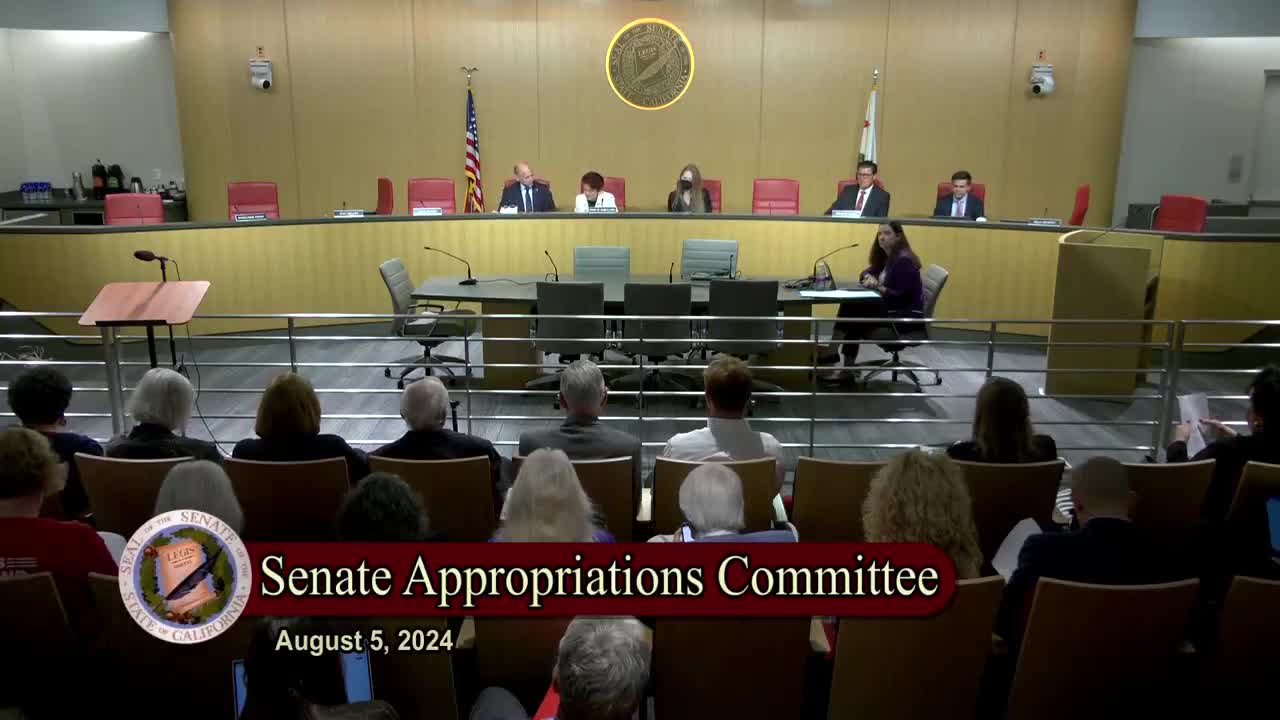 25SEC
Senate Standing Committee on Appropriations
 7MIN
Senate Standing Committee on Education
 1MIN
Assembly Floor
Bill Author
Bill Co-Author(s):