AB 2395: California State University: extension programs, special session, and self-supporting instructional programs: revenues.
- Session Year: 2023-2024
- House: Assembly
- Latest Version Date: 2024-09-28
Current Status:
Passed
(2024-09-28: Chaptered by Secretary of State - Chapter 828, Statutes of 2024.)
Introduced
In Committee
First Chamber
In Committee
Second Chamber
Enacted
Existing law establishes the California State University, under the administration of the Trustees of the California State University, as one of the segments of public postsecondary education in the state. Existing law authorizes the Trustees of the California State University to transmit any revenues, including fees and charges required by the trustees, received by the trustees from extension programs, special session, and other self-supporting instructional programs to the Treasurer and if transmitted, requires the revenues to be deposited in the State University Continuing Education Revenue Fund, a continuously appropriated fund. Existing law appropriates all revenues from that fund to the trustees for the support and development of self-supporting instructional programs of the California State University.
The bill would instead appropriate all revenues from the State University Continuing Education Revenue Fund to the trustees for the support and development of instructional programs of the California State University. By expanding the scope of an existing appropriation, the bill would make an appropriation.
Existing law requires the chief fiscal officer of each campus of the California State University to deposit and maintain in specified trust accounts, or in the continuously appropriated California State University Trust Fund, specified moneys received in connection with certain sources or purposes, including fees for extension programs, special sessions, and other self-supporting instructional programs.
This bill would authorize the trustees to transmit the revenues received by the trustees from extension programs, special session, or self-supporting instructional programs to the chief fiscal officer of a university campus, and would require those transmitted moneys to be deposited in specified trust accounts or in the continuously appropriated California State University Trust Fund. By adding a potential source of revenue to a continuously appropriated fund, the bill would make an appropriation.
The bill would require, on or before March 31 of each year, the California State University to submit a report to the Department of Finance and the appropriate fiscal and policy committees of the Legislature on the revenue generated from extension programs, special session, or self-supporting instructional programs, as specified.
Existing law establishes the California State University, under the administration of the Trustees of the California State University, as one of the segments of public postsecondary education in the state. Existing law authorizes the Trustees of the California State University to transmit any revenues, including fees and charges required by the trustees, received by the trustees from extension programs, special session, and other self-supporting instructional programs to the Treasurer and if transmitted, requires the revenues to be deposited in the State University Continuing Education Revenue Fund, a continuously appropriated fund. Existing law appropriates all revenues from that fund to the trustees for the support and development of self-supporting instructional programs of the California State University.
The bill would instead appropriate all revenues from the State University Continuing Education Revenue Fund to the trustees for the support and development of instructional programs of the California State University. By expanding the scope of an existing appropriation, the bill would make an appropriation.
Existing law requires the chief fiscal officer of each campus of the California State University to deposit and maintain in specified trust accounts, or in the continuously appropriated California State University Trust Fund, specified moneys received in connection with certain sources or purposes, including fees for extension programs, special sessions, and other self-supporting instructional programs.
This bill would authorize the trustees to transmit the revenues received by the trustees from extension programs, special session, or self-supporting instructional programs to the chief fiscal officer of a university campus, and would require those transmitted moneys to be deposited in specified trust accounts or in the continuously appropriated California State University Trust Fund. By adding a potential source of revenue to a continuously appropriated fund, the bill would make an appropriation.
(a)Notwithstanding any other law, revenues received by the Trustees of the California State University from extension programs, special session, or self-supporting instructional programs, including, but not limited to, fees and charges required by the trustees, may be transmitted to either of the following:
(1)The Treasurer and, if transmitted, shall be deposited by that officer in the State Treasury to the credit of the State University Continuing Education Revenue Fund, which is hereby created, and which is hereby designated as successor to the State College Extension Program Revenue Fund.
(2)The chief fiscal officer of one or more campuses of the California State University, and, if transmitted, shall be deposited by the chief fiscal officer in accordance with Section 89721.
(b)All revenues in the State University Continuing Education Revenue Fund are hereby appropriated, without regard to fiscal years, to the trustees for the support and development of instructional programs of the California State University. However, proposed expenditures or obligations to be incurred during any fiscal year from the State University Continuing Education Revenue Fund, other than expenditures or obligations authorized by subdivision (d), shall be contained in the budget submitted for that fiscal year by the Governor pursuant to Section 12 of Article IV of the Constitution, and shall be subject to Article 2 (commencing with Section 13320) of Chapter 3 of Part 3 of Division 3 of Title 2 of the Government Code.
(c)Moneys in the State University Continuing Education Revenue Fund may be invested by the Treasurer, upon approval of the trustees, in those eligible securities listed in Section 16430 of the Government Code. All interest or other earnings received pursuant to the investments shall be deposited to the credit of the State University Continuing Education Revenue Fund.
(d)All revenues received by the trustees under this section may be pledged for the acquisition, construction, and improvement of facilities for extension programs, special session, and other self-supporting instructional programs pursuant to the State University Revenue Bond Act of 1947 (Article 2 (commencing with Section 90010) of Chapter 8), and may also be pledged to supplement other revenue funded projects relating to debt obligations issued by the trustees pursuant to the State University Revenue Bond Act of 1947.
(e)On or before March 31 of each year, the California State University shall submit a report on the implementation of this section to the Department of Finance and, in compliance with Section 9795 of the Government Code, the appropriate fiscal and policy committees of the Legislature. The report shall include, but is not limited to, all of the following:
(1)The total amount of revenue generated from extension programs, special session, or self-supporting instructional programs in the prior three fiscal years, by campus.
(2)Of the amounts identified in paragraph (1), the amount transmitted to the Treasurer pursuant to paragraph (1) of subdivision (a) and the amount transmitted to the chief fiscal officer of each campus pursuant to paragraph (2) of subdivision (a).
(3)The total amount of expenditures from revenue generated from extension programs, special session, or self-supporting instructional programs in the prior three fiscal years and the purposes for which those funds were expended.
SEC. 2.Section 89721 of the Education Code is amended to read:89721.Notwithstanding any other law, the chief fiscal officer of each campus of the California State University shall deposit into and maintain in local trust accounts or in trust accounts in accordance with Sections 16305 to 16305.7, inclusive, of the Government Code, or in the California State University Trust Fund, moneys received in connection with the following sources or purposes:
(a)Gifts, bequests, devises, and donations received under Section 89720.
(b)Any student loan or scholarship fund program, including, but not limited to, student loan programs of the state, federal government, including programs referred to in Section 89723, local government, or private sources.
(c)Advance payment for anticipated expenditures or encumbrances in connection with federal grants or contracts.
(d)Room, board, and similar expenses of students enrolled in the international program of the California State University.
(e)Cafeteria replacement funds.
(f)Miscellaneous receipts in the nature of deposits subject to return upon approval of a proper application.
(g)Fees and charges for services, materials, and facilities authorized by Section 89700 if these fees or charges are required of those persons who, at their option, use the services or facilities, or are provided the materials, for which the fees or charges are made. Fees and charges so received and deposited shall be used solely to meet the costs of providing these services, materials, and facilities.
(h)Fees for instructionally related activities as defined by the trustees and as authorized by Section 89700 and revenues derived from the conduct of the instructionally related activities. The trustees shall have all authority necessary to administer and use the fees and revenues received and deposited to support such instructionally related activities.
(i)Fees for parking, health facilities or health services, and for extension programs, special sessions, or self-supporting instructional programs.
(j)Revenue received by the trustees from the California State Lottery Education Fund pursuant to Section 8880.5 of the Government Code.
(k)Moneys received by the trustees for research, workshops, conferences, institutes, and special projects.
(l)Moneys collected as higher education fees and income from students of any campus of the California State University and from other persons pursuant to Section 89700. The Controller shall have the authority to audit the expenditure of these funds.
(a)Notwithstanding any other law, revenues received by the Trustees of the California State University from extension programs, special session, or self-supporting instructional programs, including including, but not limited to, fees and charges required by the trustees, may be transmitted to either of the following:
(1)The Treasurer and, if transmitted, shall be deposited by that officer in the State Treasury to the credit of the State University Continuing Education Revenue Fund, which is hereby created, and which is hereby designated as successor to the State College Extension Program Revenue Fund.
(2)The chief fiscal officer of one or more campuses of the California State University, and, if transmitted, shall be deposited by the chief fiscal officer in accordance with Section 89721.
(b)All revenues in the State University Continuing Education Revenue Fund are hereby appropriated, without regard to fiscal years, to the trustees for the support and development of instructional programs of the California State University. However, proposed expenditures or obligations to be incurred during any fiscal year from the State University Continuing Education Revenue Fund, other than expenditures or obligations authorized by subdivision (d), shall be contained in the budget submitted for that fiscal year by the Governor pursuant to Section 12 of Article IV of the Constitution, and shall be subject to Article 2 (commencing with Section 13320) of Chapter 3 of Part 3 of Division 3 of Title 2 of the Government Code.
(c)Moneys in the State University Continuing Education Revenue Fund may be invested by the Treasurer, upon approval of the trustees, in those eligible securities listed in Section 16430 of the Government Code. All interest or other earnings received pursuant to the investments shall be deposited to the credit of the State University Continuing Education Revenue Fund.
(d)All revenues received by the trustees under this section may be pledged for the acquisition, construction, and improvement of facilities for extension programs, special session, and other self-supporting instructional programs pursuant to the State University Revenue Bond Act of 1947 (Article 2 (commencing with Section 90010) of Chapter 8), and may also be pledged to supplement other revenue funded projects relating to debt obligations issued by the trustees pursuant to the State University Revenue Bond Act of 1947.
(e)On or before March 31 of each year, the California State University shall submit a report on the implementation of this section to the Department of Finance and, in compliance with Section 9795 of the Government Code, the appropriate fiscal and policy committees of the Legislature. The report shall include, but is not limited to, all of the following:
(1)The total amount of revenue generated from extension programs, special session, or self-supporting instructional programs in the prior three fiscal years, by campus.
(2)Of the amounts identified in paragraph (1), the amount transmitted to the Treasurer pursuant to paragraph (1) of subdivision (a) and the amount transmitted to the chief fiscal officer of each campus pursuant to paragraph (2) of subdivision (a).
(3)The total amount of expenditures from revenue generated from extension programs, special session, or self-supporting instructional programs in the prior three fiscal years and the purposes for which those funds were expended.
SEC. 2.Section 89721 of the Education Code is amended to read:89721.Notwithstanding any other law, the chief fiscal officer of each campus of the California State University shall deposit into and maintain in local trust accounts or in trust accounts in accordance with Sections 16305 to 16305.7, inclusive, of the Government Code, or in the California State University Trust Fund, moneys received in connection with the following sources or purposes:
(a)Gifts, bequests, devises, and donations received under Section 89720.
(b)Any student loan or scholarship fund program, including including, but not limited to, student loan programs of the state, federal government, including programs referred to in Section 89723, local government, or private sources.
(c)Advance payment for anticipated expenditures or encumbrances in connection with federal grants or contracts.
(d)Room, board, and similar expenses of students enrolled in the international program of the California State University.
(e)Cafeteria replacement funds.
(f)Miscellaneous receipts in the nature of deposits subject to return upon approval of a proper application.
(g)Fees and charges for services, materials, and facilities authorized by Section 89700 if these fees or charges are required of those persons who, at their option, use the services or facilities, or are provided the materials, for which the fees or charges are made. Fees and charges so received and deposited shall be used solely to meet the costs of providing these services, materials, and facilities.
(h)Fees for instructionally related activities as defined by the trustees and as authorized by Section 89700 and revenues derived from the conduct of the instructionally related activities. The trustees shall have all authority necessary to administer and use the fees and revenues received and deposited to support such instructionally related activities.
(i)Fees for parking, health facilities or health services, and for extension programs, special sessions, or self-supporting instructional programs.
(j)Revenue received by the trustees from the California State Lottery Education Fund pursuant to Section 8880.5 of the Government Code.
(k)Moneys received by the trustees for research, workshops, conferences, institutes, and special projects.
(l)Moneys collected as higher education fees and income from students of any campus of the California State University and from other persons pursuant to Section 89700. The Controller shall have the authority to audit the expenditure of these funds.
(a)Notwithstanding any other provision of law, revenues received by the Trustees of the California State University from extension programs, special session, and other or self-supporting instructional programs, including but not limited to, fees and charges required by the trustees, may be transmitted to either of the following:
the
(1)The Treasurer and, if transmitted, shall be deposited by that officer in the State Treasury to the credit of the State University Continuing Education Revenue Fund, which is hereby created, and which is hereby designated as successor to the State College Extension Program Revenue Fund.
(2)The chief fiscal officer of one or more campuses of the California State University, and, if transmitted, shall be deposited by the chief fiscal officer in accordance with Section 89721.
(b)All revenues are hereby appropriated, without regard to fiscal years, to the trustees for the support and development of self-supporting instructional programs of the California State University. However, proposed expenditures or obligations to be incurred during any fiscal year from the State University Continuing Education Revenue Fund, other than expenditures or obligations authorized by subdivision (d), shall be contained in the budget submitted for that fiscal year by the Governor pursuant to Section 12 of Article IV of the Constitution, and shall be subject to Article 2 (commencing with Section 13320) of Chapter 3 of Part 3 of Division 3 of Title 2 of the Government Code.
(c)Moneys in the State University Continuing Education Revenue Fund may be invested by the Treasurer, upon approval of the trustees, in those eligible securities listed in Section 16430 of the Government Code. All interest or other earnings received pursuant to the investments shall be deposited to the credit of the State University Continuing Education Revenue Fund.
(d)All revenues received by the trustees under this section may be pledged for the acquisition, construction, and improvement of facilities for extension programs, special session, and other self-supporting instructional programs pursuant to the State University Revenue Bond Act of 1947 (Article 2 (commencing with Section 90010) of Chapter 8), and may also be pledged to supplement other revenue funded projects relating to debt obligations issued by the trustees pursuant to the State University Revenue Bond Act of 1947.
SEC. 2.Section 89721 of the Education Code is amended to read:89721.Notwithstanding any other provision of law, the chief fiscal officer of each campus of the California State University shall deposit into and maintain in local trust accounts or in trust accounts in accordance with Sections 16305 to 16305.7, inclusive, of the Government Code, or in the California State University Trust Fund, moneys received in connection with the following sources or purposes:
(a)Gifts, bequests, devises, and donations received under Section 89720.
(b)Any student loan or scholarship fund program, including but not limited to, student loan programs of the state, federal government (including government, including programs referred to in Section 89723), 89723, local government, or private sources.
(c)Advance payment for anticipated expenditures or encumbrances in connection with federal grants or contracts.
(d)Room, board, and similar expenses of students enrolled in the international program of the California State University.
(e)Cafeteria replacement funds.
(f)Miscellaneous receipts in the nature of deposits subject to return upon approval of a proper application.
(g)Fees and charges for services, materials, and facilities authorized by Section 89700 if these fees or charges are required of those persons who, at their option, use the services or facilities, or are provided the materials, for which the fees or charges are made. Fees and charges so received and deposited shall be used solely to meet the costs of providing these services, materials, and facilities.
(h)Fees for instructionally related activities as defined by the trustees and as authorized by Section 89700 and revenues derived from the conduct of the instructionally related activities. The trustees shall have all authority necessary to administer and use the fees and revenues received and deposited to support such instructionally related activities.
(i)Fees for parking, health facilities or health services, and for extension programs, special sessions, and other or self-supporting instructional programs.
(j)Revenue received by the trustees from the California State Lottery Education Fund pursuant to Section 8880.5 of the Government Code.
(k)Moneys received by the trustees for research, workshops, conferences, institutes, and special projects.
(l)Moneys collected as higher education fees and income from students of any campus of the California State University and from other persons pursuant to Section 89700. The Controller shall have the authority to audit the expenditure of these funds.
|
Date
|
Status
|
|---|---|
| Sep 28, 2024 | Chaptered by Secretary of State - Chapter 828, Statutes of 2024. |
| Sep 28, 2024 | Approved by the Governor. |
| Sep 9, 2024 | Enrolled and presented to the Governor at 3:30 p.m. |
| Aug 28, 2024 | In Assembly. Ordered to Engrossing and Enrolling. |
| Aug 27, 2024 | Read third time. Passed. Ordered to the Assembly. (Ayes 31. Noes 8.). |
| Aug 19, 2024 | Read second time. Ordered to third reading. |
| Aug 15, 2024 | From committee: Do pass. (Ayes 5. Noes 2.) (August 15). |
| Jun 24, 2024 | In committee: Referred to suspense file. |
| Jun 12, 2024 | From committee: Do pass and re-refer to Com. on APPR. (Ayes 6. Noes 0.) (June 12). Re-referred to Com. on APPR. |
| May 29, 2024 | Referred to Com. on ED. |
| May 22, 2024 | In Senate. Read first time. To Com. on RLS. for assignment. |
| May 21, 2024 | Read third time. Passed. Ordered to the Senate. (Ayes 63. Noes 6. Page 5371.) |
| May 20, 2024 | Read second time. Ordered to third reading. |
| May 16, 2024 | Read second time and amended. Ordered returned to second reading. |
| May 16, 2024 | From committee: Amend, and do pass as amended. (Ayes 12. Noes 3.) (May 16). |
| May 16, 2024 | Assembly Rule 63 suspended. |
| Apr 24, 2024 | In committee: Set, first hearing. Referred to APPR. suspense file. |
| Apr 10, 2024 | From committee: Do pass and re-refer to Com. on APPR. (Ayes 9. Noes 1.) (April 9). Re-referred to Com. on APPR. |
| Mar 4, 2024 | Referred to Com. on HIGHER ED. |
| Feb 13, 2024 | From printer. May be heard in committee March 14. |
| Feb 12, 2024 | Read first time. To print. |
|
Date
|
Description
|
Location
|
Votes
|
|
|---|---|---|---|---|
| Aug 27, 2024 | Assembly 3rd Reading AB2395 Quirk-Silva By Newman | Senate Floor |
Passed |
|
| Aug 15, 2024 | Do pass | Senate Standing Committee on Appropriations |
Passed |
|
| Jun 24, 2024 | Placed on suspense file | Senate Standing Committee on Appropriations |
Passed |
|
| Jun 12, 2024 | Do pass, but first be re-referred to the Committee on [Appropriations] | Senate Standing Committee on Education |
Passed |
|
| May 21, 2024 | AB 2395 Quirk-Silva Assembly Third Reading | Assembly Floor |
Passed |
|
| May 16, 2024 | Do pass as amended. | Assembly Standing Committee on Appropriations |
Passed |
|
| Apr 9, 2024 | Do pass and be re-referred to the Committee on [Appropriations] | Assembly Standing Committee on Higher Education |
Passed |
This list shows positions taken on this bill by organizations on the date displayed, which is linked to the original source.
Positions by individuals are not included.
|
Organization
|
Position
|
Date
|
|---|---|---|
| California Competes: Higher Education for a Strong Economy | ** Support | |
| California State University Long Beach | * Support | Jun 12, 2024 |
| California State University, Office Of The Chancellor | ** Support | |
| CSU Long Beach | * Support | Apr 9, 2024 |
| Southern California College Attainment Network | ** Support |
SENATE RULES COMMITTEE Office of Senate Floor Analyses (916) 651-1520 Fax: (916) 327-4478 | AB 2395 |
THIRD READING
Bill No: AB 2395
Author: Quirk-Silva (D)
Amended: 5/16/24 in Assembly
Vote: 21
SENATE EDUCATION COMMITTEE: 6-0, 6/12/24
AYES: Newman, Ochoa Bogh, Cortese, Glazer, Gonzalez, Limón
NO VOTE RECORDED: Wilk
SENATE APPROPRIATIONS COMMITTEE: 5-2, 8/15/24
AYES: Caballero, Ashby, Becker, Bradford, Wahab
NOES: Jones, Seyarto
ASSEMBLY FLOOR: 63-6, 5/21/24 - See last page for vote
SUBJECT: California State University: extension programs, special session, and self-supporting instructional programs: revenues
SOURCE: California State University, Office of the Chancellor
DIGEST:
This bill expands how revenues from California State University’s (CSU) continuing education program may be spent and authorizes the CSU Board of Trustees to transmit continuing education program revenues directly to CSU campus trust funds.
ANALYSIS:
Existing law:
1) Confers upon the CSU Trustees the powers, duties, and functions with respect to the management, administration, control of the CSU system and provides that the Trustees are responsible for the rule of government of their appointees and employees. (Education Code (EC) § 66606 and 89500, et seq.)
2) Authorizes CSU Trustees to transmit any revenues, including fees and charges required by the Trustees, received by the Trustees from extension programs, special session, and other self-supporting instructional programs to the Treasurer and if transmitted, requires the revenues to be deposited in the State University Continuing Education Revenue Fund, a continuously appropriated fund. Existing law appropriates all revenues from that fund to the trustees for the support and development of self-supporting instructional programs of the CSU. (EC § 89704)
3) Requires the CSU ensure that tuition fees adequate, in the long run, to meet the cost of maintaining special sessions in the CSU must be required of, and collected from, students enrolled in each special session pursuant to rules and regulations prescribed by the CSU Trustees. Defines “special sessions” as self-supporting instructional programs conducted by the CSU. Stipulates that the special sessions must include, but not necessarily be limited to, career enrichment and retraining programs. States that the intent of the Legislature is for said programs, currently offered on a self-supporting basis by the CSU during summer sessions, may be provided throughout the year, and must be known as special sessions. Stipulates that self-supporting special sessions must not supplant, as specified, regular course offerings available on a non-self-supporting basis during the regular academic year. Defines Supplant, as reducing the number of state-supported course offerings while increasing the number of self-supporting versions of that course. Requires, each CSU campus, to the extent possible, that any course required as a condition of undergraduate degree completion for a state-supported matriculated student must be offered as a state-supported course. Prohibits a campus from requiring a state-supported matriculated student to enroll in a special session course in order to fulfill a graduation requirement for a state-supported degree program. (EC § 89708)
4) Requires the chief fiscal officer of each campus of the CSU to deposit and
maintain in specified trust accounts, or in the continuously appropriated CSU Trust Fund, specified moneys received in connection with certain sources or purposes, including fees for extension programs, special sessions, and other self-supporting instructional programs. (EC § 89721)
This bill expands how revenues from CSU’s continuing education program may be spent and authorizes the CSU Board of Trustees to transmit continuing education program revenues directly to CSU campus trust funds. Specifically, this bill:
- Authorizes, in addition to the State University Continuing Education Revenue fund held by the state treasurer, the transmission of revenues that the CSU Trustees receive from extension programs, special session, or self-supporting instructional programs to the chief fiscal officer of one or more CSU campuses to deposit into the campuses’ local trust fund, other trust funds, or the CSU Trust Fund.
- Expands the use of revenues appropriated from the existing State University Continuing Education Revenue Fund for the support and development of any instructional program instead of those instructional programs that are only self-supporting.
- Requires that the CSU, by March 31 of each year, submit a report on the implementation of the bill’s provisions to the Department of Finance and the Legislature and that the report include, but is not limited to, all of the following:
- The total amount of revenue generated from extension programs, special session, or self-supporting instructional programs in the prior three fiscal years, by campus.
- Of the identified amounts, the amount transmitted to the state treasurer and the amount transmitted to the chief fiscal officer of each campus.
- The total amount of expenditures from revenue generated from extension programs, special session, or self-supporting instructional programs in the prior three fiscal years and the purposes for which those funds were expended.
Comments
- Need for the bill. According to the author, “The California State University system is the largest and most diverse four-year public university network in the nation, with twenty-three campuses and seven off-campus centers aimed at educating our future workforce. Despite significant technological advancements and shifts in educational methods since the 1970s, dated laws restrict how CSU administrators can use continuing education funds. AB 2395 aims to enhance CSU's flexibility in utilizing these funds to foster innovative and accessible academic programs, and permits merging continuing education revenues with other campus funds, enabling a broader range of academic offerings and student services.”
- Professional and Continuing Education at CSU. Each CSU campus has offerings in professional and continuing education, known as PaCE (sometimes referred to as extended education), which provides programs geared to adult learners and working professionals. As highlighted in the CSU Board of Trustees May 2023 agenda, the Continuing Education Reserve Fund Act in 1971 required each university within the CSU system to create extended education units to meet the emerging needs of a changing workforce, featuring academic flexibility and supplementary delivery methods. Between 2010 and 2014, PaCE awarded approximately 50,000 professional development certificates in areas such as business, information technology, health care, trade, and transportation. Today, PaCE offers 200 degree programs and more than 150 professional certificates, with an enrollment that will culminate in more than 17,000 students in 2021. Of those students, nearly 11,000 were served by only eight universities. PaCE programs offer flexible schedules with year-round, weekend, and evening course offerings. While the composition of these campus programs vary considerably, most maintain the following common instructional elements:
- Special session degree (baccalaureate and masters), certificate, and credential programs.
- Open University permits individuals to enroll in regular university courses on a space-available basis, pay self-support fees and earn university academic credit.
- Contract and extension credit.
- Non-credit certificates, courses, and programs.
- Continuing education units
- Self-supported program. PaCE is self-supported, which means that courses typically require students to pay fees that cover the entire cost of the course, without any financial support from the state. There is variation in course fees across campus PaCE programs. PaCE also collects revenue from contracts with businesses and organizations for customized trainings. In contrast, state-supported programs, which are traditional degree programs, are funded by a mix of state funding and student tuition fees. PaCE funds meet the cost of maintaining PaCE’s operations, and any additional revenue that exceeds the cost of operations are reinvested in program development and other aspects of student support. CSU internal policies (Executive Order 1102) and state statute (EC § 89704 and 89708) regulate PaCE fees. Given its self-support model, PaCE enrollment is not considered in overall the CSU FTE enrollment goals currently articulated in the Governor’s Budget Compact. Under current law PaCE offerings cannot supplant existing CSU degree programs.
- What is the problem? According to CSU, the Commission on PaCE led by two campus presidents and includes faculty, provosts, deans, and representatives from statewide workforce partners, reported in 2023 that, unlike the UC, existing statutory restrictions on continuing education revenues prevent the CSU from using these funds to develop innovative new programs or promote broader academic efforts to support students. “For example, current restrictions prevent these funds from being used for collaboration between academic departments and continuing education staff to develop workforce preparation strategies to expand student access. Specifically, AB 2395 would modify Education Code 89704 to allow campus continuing education revenues to be deposited in either the original continuing education fund or the campus operating fund. This would enable continuing education revenues to be leveraged with other campus funds to support broader academic offerings and student services.” Examples of such offerings include:
- Partnerships with local employers – Existing campus faculty can invest time to work with local employers to establish more strategic workforce training to meet existing needs.
- Career placement programs and internships – These programs provide on-site experience to students and help prepare them for the workplace.
- Student retention programs – Campuses can scale-up current efforts to ensure students stay enrolled and complete their degree.
- Re-engage former students with unfinished degrees – CSU’s Second Start Pilot Program seeks to provide former students with a pathway to return to college and earn their college degree. Long-term funding is necessary to identify students, develop tailored-degree programs, and provide student support to complete their degree.
- Regional Education Centers – Multiple CSU campuses could unite to serve as education hubs to provide 4-year degrees to students place bound to specific regions.
- Online Education – Internet and technology upgrades are periodically needed at campuses to ensure reliable services to those who rely on online education.
It is unclear whether changes to statute are necessary in order for continuing education revenues to be used for the purposes of academic support such as those listed above. However, staff understands that campuses are seeking clear statutory authority to do so.
FISCAL EFFECT: Appropriation: Yes Fiscal Com.: Yes Local: No
According to the Senate Appropriations Committee analysis, this bill has the following fiscal impact: “While the bill would not result in direct costs to the state, there could be potentially significant special fund shifts from the State University Continuing Education Revenue Fund to CSU campus trust funds for the purposes of supporting and developing CSU programs. A precise amount of the fund shifts is unknown and would depend on the decisions of the CSU Board of Trustees. As of the 2023-24 fiscal year, the balance in the State University Continuing Education Revenue Fund at the State Treasury is approximately $329 million.”
SUPPORT: (Verified 8/15/24)
California State University, Office of the Chancellor (source)
California Competes: Higher Education for a Strong Economy
Southern California College Attainment Network
OPPOSITION: (Verified 8/15/24)
1 Individual
ASSEMBLY FLOOR: 63-6, 5/21/24
AYES: Addis, Aguiar-Curry, Alvarez, Arambula, Bains, Bauer-Kahan, Bennett, Berman, Boerner, Bonta, Bryan, Calderon, Juan Carrillo, Wendy Carrillo, Chen, Connolly, Davies, Flora, Mike Fong, Garcia, Gipson, Grayson, Haney, Hart, Irwin, Jackson, Jones-Sawyer, Kalra, Lee, Low, Lowenthal, Maienschein, McCarty, McKinnor, Muratsuchi, Stephanie Nguyen, Ortega, Pacheco, Papan, Pellerin, Petrie-Norris, Quirk-Silva, Ramos, Rendon, Reyes, Rodriguez, Blanca Rubio, Santiago, Schiavo, Soria, Ta, Ting, Valencia, Villapudua, Waldron, Wallis, Ward, Weber, Wicks, Wilson, Wood, Zbur, Robert Rivas
NOES: Dixon, Essayli, Vince Fong, Gallagher, Joe Patterson, Sanchez
NO VOTE RECORDED: Alanis, Cervantes, Megan Dahle, Friedman, Gabriel, Holden, Hoover, Lackey, Mathis, Jim Patterson, Luz Rivas
Prepared by: Olgalilia Ramirez / ED. / (916) 651-4105
8/18/24 9:07:42
**** END ****
SENATE COMMITTEE ON
Senator Anna Caballero, Chair
2023 - 2024 Regular Session
AB 2395 (Quirk-Silva) - California State University: extension programs, special session, and self-supporting instructional programs: revenues
Version: | Policy Vote: |
Urgency: | Mandate: |
Hearing Date: | Consultant: |
Bill Summary:
This bill expands how revenues from California State University’s (CSU) continuing education program may be spent and authorizes the CSU Board of Trustees to transmit continuing education program revenues directly to CSU campus trust funds for these uses.
Fiscal Impact:
While the bill would not result in direct costs to the state, there could be potentially significant special fund shifts from the State University Continuing Education Revenue Fund to CSU campus trust funds for the purposes of supporting and developing CSU programs. A precise amount of the fund shifts is unknown and would depend on the decisions of the CSU Board of Trustees. As of the 2023-24 fiscal year, the balance in the State University Continuing Education Revenue Fund at the State Treasury is approximately $329 million.
Background:
Existing law authorizes the CSU Trustees to transmit any revenues, including fees and charges required by the Trustees, received by the Trustees from extension programs, special session, and other self-supporting instructional programs to the Treasurer and if transmitted, requires the revenues to be deposited in the State University Continuing Education Revenue Fund, a continuously appropriated fund. Existing law appropriates all revenues from that fund to the trustees for the support and development of self-supporting instructional programs of the CSU.
Existing law requires the CSU to ensure that tuition fees are adequate, in the long run, to meet the cost of maintaining special sessions in the CSU must be required of, and collected from, students enrolled in each special session pursuant to rules and regulations prescribed by the CSU Trustees. The law defines “special sessions” as self-supporting instructional programs conducted by the CSU and stipulates that the special sessions must include, but not necessarily be limited to, career enrichment and retraining programs.
Existing law requires each CSU campus, to the extent possible, that any course required as a condition of undergraduate degree completion for a state-supported matriculated student must be offered as a state-supported course. It prohibits a campus from requiring a state-supported matriculated student to enroll in a special session course in order to fulfill a graduation requirement for a state-supported degree program.
Existing law requires the chief fiscal officer of each campus of the CSU to deposit and maintain in specified trust accounts, or in the continuously appropriated CSU Trust Fund, specified moneys received in connection with certain sources or purposes, including fees for extension programs, special sessions, and other self-supporting instructional programs.
Proposed Law:
This bill authorizes the transmission of revenues that the CSU Trustees receive from extension programs, special session, or self-supporting instructional programs to the chief fiscal officer of one or more CSU campuses to deposit into the campuses’ local trust fund, other trust funds, or the CSU Trust Fund.
This bill expands the use of revenues appropriated from the existing State University Continuing Education Revenue Fund for the support and development of any instructional program instead of those instructional programs that are only self-supporting.
This bill requires that the CSU, by March 31 of each year, submit a report on the implementation of the bill’s provisions to the Department of Finance and the Legislature and that the report include, but is not limited to, all of the following:
- The total amount of revenue generated from extension programs, special session, or self-supporting instructional programs in the prior three fiscal years, by campus.
- Of the identified amounts, the amount transmitted to the state treasurer and the amount transmitted to the chief fiscal officer of each campus.
- The total amount of expenditures from revenue generated from extension programs, special session, or self-supporting instructional programs in the prior three fiscal years and the purposes for which those funds were expended.
Staff Comments:
Each CSU campus has offerings in professional and continuing education, known as PaCE and sometimes referred to as extended education, which provides programs geared to adult learners and working professionals. PaCE is self-supported where the courses typically require students to pay fees that cover the entire cost, without any financial support from the state. There is variation in course fees across campus PaCE programs. PaCE also collects revenue from contracts with businesses and organizations for customized trainings. In contrast, state-supported programs, which are traditional degree programs, are funded by a mix of state funding and student tuition fees. PaCE funds meet the cost of maintaining PaCE’s operations, and any additional revenue that exceeds the cost of operations are reinvested in program development and other aspects of student support.
According to CSU, the Commission on PaCE reported in 2023 that existing statutory restrictions on continuing education revenues prevent the CSU from using these funds to develop innovative new programs or promote broader academic efforts to support students. This bill would modify existing statute to allow campus continuing education revenues to be deposited in either the original continuing education fund or the campus operating fund and enable them to be leveraged with other campus funds to support broader academic offerings and student services.
-- END --
SENATE COMMITTEE ON EDUCATION
Senator Josh Newman, Chair
2023 - 2024 Regular
Bill No: Hearing Date: June 12, 2024
Author: | Quirk-Silva | ||
Version: |
| ||
Urgency: | Fiscal: | ||
Consultant: | |||
Subject: .
SUMMARY
This bill expands how revenues from California State University’s (CSU) continuing education program may be spent and authorizes the CSU Board of Trustees to transmit continuing education program revenues directly to CSU campus trust funds.
BACKGROUND
Existing law:
1) Confers upon the CSU Trustees the powers, duties, and functions with respect to
the management, administration, control of the CSU system and provides that the Trustees are responsible for the rule of government of their appointees and employees. (Education Code (EC) § 66606 and 89500, et seq.)
2) Authorizes CSU Trustees to transmit any revenues, including fees and charges
required by the Trustees, received by the Trustees from extension programs, special session, and other self-supporting instructional programs to the Treasurer and if transmitted, requires the revenues to be deposited in the State University Continuing Education Revenue Fund, a continuously appropriated fund. Existing law appropriates all revenues from that fund to the trustees for the support and development of self-supporting instructional programs of the CSU. (EC § 89704)
3) Requires the CSU ensure that tuition fees adequate, in the long run, to meet the
cost of maintaining special sessions in the CSU must be required of, and collected from, students enrolled in each special session pursuant to rules and regulations prescribed by the CSU Trustees. Defines “special sessions” as self-supporting instructional programs conducted by the CSU. Stipulates that the special sessions must include, but not necessarily be limited to, career enrichment and retraining programs. States that the intent of the Legislature is for said programs, currently offered on a self-supporting basis by the CSU during summer sessions, may be provided throughout the year, and must be known as special sessions. Stipulates that self-supporting special sessions must not supplant, as specified, regular course offerings available on a non-self-supporting basis during the regular academic year. Defines Supplant, as reducing the number of state-supported course offerings while increasing the number of self-supporting versions of that course. Requires, each CSU campus, to the extent possible, that any course required as a condition of undergraduate degree completion for a state-supported matriculated student must be offered as a state-supported course. Prohibits a campus from requiring a state-supported matriculated student to enroll in a special session course in order to fulfill a graduation requirement for a state-supported degree program. (EC § 89708)
4) Requires the chief fiscal officer of each campus of the CSU to deposit and
maintain in specified trust accounts, or in the continuously appropriated CSU Trust Fund, specified moneys received in connection with certain sources or purposes, including fees for extension programs, special sessions, and other self-supporting instructional programs. (EC § 89721)
ANALYSIS
This bill expands how revenues from CSU’s continuing education program may be spent and authorizes the CSU Board of Trustees to transmit continuing education program revenues directly to CSU campus trust funds. Specifically, it:
- Authorizes, in addition to the State University Continuing Education Revenue fund held by the state treasurer, the transmission of revenues that the CSU Trustees receive from extension programs, special session, or self-supporting instructional programs to the chief fiscal officer of one or more CSU campuses to deposit into the campuses’ local trust fund, other trust funds, or the CSU Trust Fund.
- Expands the use of revenues appropriated from the existing State University Continuing Education Revenue Fund for the support and development of any instructional program instead of those instructional programs that are only self-supporting.
- Requires that the CSU, by March 31 of each year, submit a report on the implementation of the bill’s provisions to the Department of Finance and the Legislature and that the report include, but is not limited to, all of the following:
- The total amount of revenue generated from extension programs, special
session, or self-supporting instructional programs in the prior three fiscal years, by campus.
- Of the identified amounts, the amount transmitted to the
state treasurer and the amount transmitted to the chief fiscal officer of each campus.
- The total amount of expenditures from revenue generated from extension
programs, special session, or self-supporting instructional programs in the prior three fiscal years and the purposes for which those funds were expended
STAFF COMMENTS
- Need for the bill. According to the author, “The California State University system is the largest and most diverse four-year public university network in the nation, with twenty-three campuses and seven off-campus centers aimed at educating our future workforce. Despite significant technological advancements and shifts in educational methods since the 1970s, dated laws restrict how CSU administrators can use continuing education funds. AB 2395 aims to enhance CSU's flexibility in utilizing these funds to foster innovative and accessible academic programs, and permits merging continuing education revenues with other campus funds, enabling a broader range of academic offerings and student services.”
- Professional and Continuing Education at CSU. Each CSU campus has offerings in professional and continuing education, known as PaCE (sometimes referred to as extended education), which provides programs geared to adult learners and working professionals. As highlighted in the CSU Board of Trustees May 2023 agenda, the Continuing Education Reserve Fund Act in 1971 required each university within the CSU system to create extended education units to meet the emerging needs of a changing workforce, featuring academic flexibility and supplementary delivery methods. Between 2010 and 2014, PaCE awarded approximately 50,000 professional development certificates in areas such as business, information technology, health care, trade, and transportation. Today, PaCE offers 200 degree programs and more than 150 professional certificates, with an enrollment that will culminated in more than 17,000 students in 2021. Of those students, nearly 11,000 were served by only eight universities. PaCE programs offer flexible schedules with year-round, weekend, and evening course offerings. While the composition of these campus programs vary considerably, most maintain the following common instructional elements:
- Special session degree (baccalaureate and masters), certificate, and credential programs.
- Open University permits individuals to enroll in regular university courses on a space-available basis, pay self-support fees and earn university academic credit.
- Contract and extension credit.
- Non-credit certificates, courses, and programs.
- Continuing education units
- Self-supported program. PaCE is self-supported, which means that courses typically require students to pay fees that cover the entire cost of the course, without any financial support from the state. There is variation in course fees across campus PaCE programs. PaCE also collects revenue from contracts with businesses and organizations for customized trainings. In contrast, state-supported programs, which are traditional degree programs, are funded by a mix of state funding and student tuition fees. PaCE funds meet the cost of maintaining PaCE’s operations, and any additional revenue that exceeds the cost of operations are reinvested in program development and other aspects of student support. CSU internal policies (Executive Order 1102) and state statute (EC § 89704 and 89708) regulate PaCE fees. Given its self-support model, PaCE enrollment is not considered in overall the CSU FTE enrollment goals currently articulated in the Governor’s Budget Compact. Under current law PaCE offerings cannot supplant existing CSU degree programs.
- What is the problem? According to CSU, the Commission on PaCE led by two campus presidents and includes faculty, provosts, deans, and representatives from statewide workforce partners, reported in 2023 that, unlike the UC, existing statutory restrictions on continuing education revenues prevent the CSU from using these funds to develop innovative new programs or promote broader academic efforts to support students. “For example, current restrictions prevent these funds from being used for collaboration between academic departments and continuing education staff to develop workforce preparation strategies to expand student access. Specifically, AB 2395 would modify Education Code 89704 to allow campus continuing education revenues to be deposited in either the original continuing education fund or the campus operating fund. This would enable continuing education revenues to be leveraged with other campus funds to support broader academic offerings and student services.” Examples of such offerings include:
- Partnerships with local employers – Existing campus faculty can invest time to work with local employers to establish more strategic workforce training to meet existing needs.
- Career placement programs and internships – These programs provide on-site experience to students and help prepare them for the workplace.
- Student retention programs – Campuses can scale-up current efforts to ensure students stay enrolled and complete their degree.
- Re-engage former students with unfinished degrees – CSU’s Second Start Pilot Program seeks to provide former students with a pathway to return to college and earn their college degree. Long-term funding is necessary to identify students, develop tailored-degree programs, and provide student support to complete their degree.
- Regional Education Centers – Multiple CSU campuses could unite to serve as education hubs to provide 4-year degrees to students place bound to specific regions.
- Online Education – Internet and technology upgrades are periodically needed at campuses to ensure reliable services to those who rely on online education.
It is unclear whether changes to statute are necessary in order for continuing education revenues to be used for the purposes of academic support such as those listed above. However, staff understands that campuses are seeking clear statutory authority to do so.
- Fiscal impact. According to the Assembly Appropriations Analysis, this bill would have the following fiscal impact:
Special Fund shifts, of an unknown but potentially significant amount, from the State University Continuing Education Revenue Fund for purposes of supporting and developing self-supporting CSU programs to CSU campus trust funds for the purposes of supporting and developing CSU programs. Fund shifts could total in the millions of dollars, depending on the decisions of the CSU Board of Trustees.
Current law authorizes the CSU Board of Trustees to transmit revenues received from PaCE programs to the State Treasury to be deposited into the State University Continuing Education Revenue Fund. Current law appropriates the funds in the State University Continuing Education Revenue Fund to the CSU Board of Trustees for the support and development of self-supporting instructional programs at CSU. Current law requires proposed expenditures of these funds be included in the Governor’s January budget proposal to the Legislature, unless the funds are for facilities to benefit PaCE programs.
As of the 2023 fiscal year, the balance in the State University Continuing Education Revenue Fund at the State Treasury is about $329 million. The fund balance has grown over time from $198 million in the 2014 fiscal year.
SUPPORT
California State University, Office of the Chancellor (Sponsor)
California Competes: Higher Education for a Strong Economy
Southern California College Attainment Network
OPPOSITION
One individual
-- END --
ASSEMBLY THIRD READING
ATR Bill Id:AB 2395
Author:(Quirk-Silva)
As Amended Ver:May 16, 2024
Majority vote
SUMMARY
Authorizes the California State University (CSU) Trustees to transmit the revenues received by the Trustees from extension programs, special session, or self-supporting instructional programs to the chief fiscal officer of a CSU campus, and requires the transmitted moneys to be deposited in specified trust accounts or in the continuously appropriated CSU Trust Fund.
Major Provisions
- Authorizes the CSU Trustees to transmit revenues received by the Trustees from extension programs, special session, or self-supporting instructional programs to the chief fiscal officer of one or more campus of the CSU and requires that, if revenues are transmitted, the chief fiscal officer must deposit the funds, as specified.
- Requires the CSU, on or before March 31 of each year, to submit a report on the implementation of this measure, to the Department of Finance and the appropriate fiscal and policy committees of the Legislature.
- Requires the report, pursuant to 2), above, to include specified metrics, including, but not limited to, the total amount of revenue generated from extension programs, special sessions, or self-supporting instructional programs in the prior three fiscal years, by campus.
- Makes clarifying and technical changes.
COMMENTS
According to the CSU, examples of program opportunities being discussed at campuses which can be supported under this measure include the following:
- Partnerships with local employers. Existing campus faculty can invest time to work with local employers to establish more strategic workforce training to meet existing needs;
- Career placement programs and internships. These programs provide on-site experience to students and help prepare them for the workplace;
- Student retention programs. Campuses can scale-up current efforts to ensure students stay enrolled and complete their degree;
- Re-engage former students with unfinished degrees. CSU's Second Start Pilot Program seeks to provide former students with a pathway to return to college and earn their college degree. Long-term funding is necessary to identify students, develop tailored-degree programs, and provide student support to complete their degree;
- Regional Education Centers. Multiple CSU campuses could unite to serve as education hubs to provide four-year degrees to students place bound to specific regions; and,
- Online Education. Internet and technology upgrades are periodically needed at campuses to ensure reliable services to those who rely on online education.
Professional and Continuing Education (PaCE) at CSU. At the May 2023 CSU Board of Trustees Meeting (held May 21 – 24, 2023), the Trustees had an agenda item (2) regarding PaCE. The materials presented to the Trustees on this agenda item, highlighted that, in 1971, the Continuing Education Reserve Fund (CERF) Act required each university within the CSU system to create extended education units to meet the emerging needs of a changing workforce featuring academic flexibility and supplementary delivery methods.
Between 2010- 2014, PaCE awarded approximately 50,000 professional development certificates in areas such as business, information technology, health care and trade and transportation. Today PaCE offers 200 degree programs and more than 150 professional certificates with an enrollment that culminated in more than 17,000 students in 2021. Of those students, nearly 11,000 were served by only eight universities. The Commission on Professional and Continuing Education is charged by the CSU Board of Trustees to facilitate, promote and self-support programs within the CSU. It focuses on policies, procedures and student success strategies pertaining to PaCE programs and the improvement of access, equity and utilization of the educational resources of the CSU system.
The Commission's leadership is comprised of: 1) Two university presidents, appointed by the CSU Chancellor for a three-year term; 2) Four full-time faculty members, appointed for one-year terms; 3) Two provosts/vice presidents, appointed for two-year staggered terms; 4) Three university deans of PaCE, appointed for three-year, non-consecutive staggered terms; 5) Three members of the Chancellor's Office Staff with subject matter expertise; 6) Two campus level directors-at-large, appointed for two-year terms; and, 7) The assistant vice chancellor and employer partners as ex-officio members of the Commission.
Unlike CSU state-supported degree programs, PaCE does not depend on state general fund appropriations. PaCE collects student fees for degree programs as well as revenue from contracts with businesses and organizations for customized trainings. These funds meet the cost of maintaining PaCE's operations, and any additional revenue that exceeds the cost of operations are reinvested in the program development and other key aspects of student support. PaCE fees are regulated by CSU Executive Order 1102: "Fee Policy: Frequently Asked Questions | CSU (calstate.edu)" and existing law.
The Fee Policy, breaks down various CSU fee types into six different categories:
- Category I fees are systemwide mandatory fees (e.g., systemwide tuition) that must be paid to apply to, enroll in, or attend the university, or to pay the full cost of instruction required of some students by statute;
- Category II fees are campus-based mandatory fees required for enrollment in the CSU;
- Category III fees are miscellaneous course fees for state-support instruction, such as materials and services used in academic courses;
- Category IV fees are for services, use of facilities or fines;
- Category V fees are charged by self-support operations on campus, such as parking, housing or extended education. Self-support programs are defined as those not receiving state general fund appropriations; instead, fees are collected to pay the full cost of the program; and,
- Category VI fees are systemwide voluntary fees, such as the Student Involvement and Representation Fee.
Because PaCE is a self-support model, PaCE enrollment is not considered in CSU's full-time-equivalent (FTE) overall enrollment goals currently articulated in the Governor's Budget Compact with CSU. PaCE offerings cannot supplant existing CSU degree programs; instead, they serve to fill in gaps that are not currently addressed by state-supported offerings.
According to the Board materials, as the landscape of the traditional four-year degree model changes, PaCE is well positioned to help the CSU expand its reach by providing additional offerings for the adult learner. While PaCE enrollment does not contribute toward meeting state-support enrollment targets set in the Annual State Budget, the CSU contends that it does provide a complementary opportunity to meet unique educational and workforce needs in California.
The chart below, from the CSU Chancellor's Office, reflects the CSU's systemwide fund balances for the past decade.
Year | PaCE Fund Balance |
2023 | $328,577,215 |
2022 | $341,898,431 |
2021 | $318,483,854 |
2020 | $282,556,103 |
2019 | $242,250,551 |
2018 | $235,598,496 |
2017 | $231,481,957 |
2016 | $239,835,164 |
2015 | $245,201,059 |
2014 | $198,041,452 |
The Board materials suggested that CSU seek to amend existing law in order to create more options for the use of self-support funds to meet the CSU's missions. This measure appears to align with the recommendation.
According to the Author
"The California State University system is the largest and most diverse four-year public university network in the nation, with 23 campuses and seven off-campus centers aimed at educating our future workforce. Despite significant technological advancements and shifts in educational methods since the 1970s, dated laws restrict how CSU administrators can use continuing education funds."
The author contends that, "AB 2395 provides the CSU campuses increased flexibility in utilizing continuing education funds in order to develop and expand innovative and accessible academic programming."
Arguments in Support
According to the CSU, the sponsors of this measure, "in recent years, higher education has evolved toward more flexible practices. The CSU must keep pace as the state strives to serve a more diverse population of students whose academic and career goals may not be served by traditional methods. Innovation and access must be elevated in order to keep up with the emerging needs of students and employers and this legislation will allow the CSU to do that."
Further, as noted by California Competes: Higher Education for a Strong Economy, "AB 2395 would allow CSU universities the flexibility to leverage continuing education revenues with other campus funds to support broader academic and workforce development offerings. Examples of important program opportunities being discussed at CSU universities which can be supported under this bill include new partnerships with local employers, career placement programs, internships, adult learner and returning student programs, student retention programs, and a greater use of online education."
Arguments in Opposition
According to an individual who wrote in opposition, "AB 2395 as written, would appropriate all revenues from the State University Continuing Education Revenue Fund to the Trustees for the support and development of instructional programs of the California State University. By expanding the scope of an existing appropriation, the bill would make an appropriation."
Further, the individual states, "the major fiscal effect of AB 2395 would be a steady erosion of self-support instruction to the point that it will not be able to be self-supporting within a few short years and the CSU will become much more dependent on state support than it already is."
FISCAL COMMENTS
According to the Assembly Committee on Appropriations:
- Special Fund shifts, of an unknown but potentially significant amount, from the State University Continuing Education Revenue Fund for purposes of supporting and developing self-supporting CSU programs to CSU campus trust funds for the purposes of supporting and developing CSU programs. Fund shifts could total in the millions of dollars, depending on the decisions of the CSU Board of Trustees.
- The State University Continuing Education Revenue Fund holds about $329 million, as of 2023.
- Ongoing General Fund costs to CSU, of an unknown amount, to provide annual reporting on the use of continued education funds.
VOTES
ASM HIGHER EDUCATION: 9-1-1
YES: Mike Fong, Ta, Arambula, Boerner, Chen, Irwin, Jackson, Muratsuchi, Quirk-Silva
NO: Essayli
ABS, ABST OR NV: Low
ASM APPROPRIATIONS: 12-3-0
YES: Wicks, Arambula, Bryan, Calderon, Wendy Carrillo, Mike Fong, Grayson, Haney, Hart, Pellerin, Ta, Villapudua
NO: Sanchez, Dixon, Jim Patterson
UPDATED
VERSION: May 16, 2024
CONSULTANT: Jeanice Warden / HIGHER ED. / (916) 319-3960 FN: 0003395
Date of Hearing: April 24, 2024
ASSEMBLY COMMITTEE ON APPROPRIATIONS
Buffy Wicks, Chair
ABPCA Bill Id:AB 2395
Author:(Quirk-Silva) – As Introduced Ver:February 12, 2024
Policy Committee: | Higher Education | Vote: | 9 - 1 |
|
| ||
|
|
Urgency: No State Mandated Local Program: No Reimbursable: No
SUMMARY:
This bill expands how revenues from California State University’s (CSU) continuing education program may be spent and authorizes the CSU Board of Trustees to transmit continuing education program revenues directly to CSU campus trust funds for these expanded uses.
Specifically, this bill expands what the CSU Board of Trustees may appropriate continuing education revenues toward, from the support and development of self-supporting CSU instructional programs to the support and development of any CSU instructional program. This bill also authorizes the CSU Board of Trustees to transmit revenues received from continuing education to the chief fiscal officer of one or more CSU campuses directly. The bill maintains the authorization in current law for the Board of Trustee to transmit the revenues to the State Treasurer to be deposited in the State University Continuing Education Revenue Fund.
FISCAL EFFECT:
Special Fund shifts, of an unknown but potentially significant amount, from the State University Continuing Education Revenue Fund for purposes of supporting and developing self-supporting CSU programs to CSU campus trust funds for the purposes of supporting and developing CSU programs. Fund shifts could total in the millions of dollars, depending on the decisions of the CSU Board of Trustees.
The State University Continuing Education Revenue Fund holds about $329 million, as of 2023.
COMMENTS:
- Purpose. According to a supporter of this bill, California Competes:
AB 2395 would allow CSU universities the flexibility to leverage continuing education revenues with other campus funds to support broader academic and workforce development offerings. Examples of important program opportunities being discussed at CSU universities which can be supported under this bill include new partnerships with local employers, career placement programs, internships, adult learner and returning student programs, student retention programs, and a greater use of online education.
This bill is sponsored by the CSU Chancellor’s Office.
- Background. CSU refers to its continuing education programs as Professional and Continuing Education (PaCE). PaCE programs are self-supporting, meaning they are not supported with state funds and are instead operate entirely on student fees. PaCE offers self-support degree and certificate programs, courses, professional development, and personal enrichment courses. Fees can vary by CSU campus and CSU calculates fees for degree programs on a per-unit basis. The average range for a self-supported undergraduate degree completion program is $400 to $500 per unit. Students in PaCE include traditional and high school students, working professionals, students re-entering the workforce or university, international students, and leisure learners. Courses are generally taught by university faculty and industry experts and use in-person and online formats.
PaCE has grown in recent years and today PaCE offers 200 degree programs and more than 150 professional certificates with an enrollment of more than 17,000 students in the 2021 academic year. Of those students, nearly 11,000 were served by eight CSU campuses.
Current law authorizes the CSU Board of Trustees to transmit revenues received from PaCE programs to the State Treasury to be deposited into the State University Continuing Education Revenue Fund. Current law appropriates the funds in the State University Continuing Education Revenue Fund to the CSU Board of Trustees for the support and development of self-supporting instructional programs at CSU. Current law requires proposed expenditures of these funds be included in the Governor’s January budget proposal to the Legislature, unless the funds are for facilities to benefit PaCE programs.
As of the 2023 fiscal year, the balance in the State University Continuing Education Revenue Fund at the State Treasury is about $329 million dollars. The fund balance has grown over time from $198 million in the 2014 fiscal year.
This bill modifies the requirement that PaCE funds be appropriated for the support and development of self-supporting instructional programs and, instead, states that the funds may be appropriated for the support and development of instructional programs. In addition, this bill authorizes the CSU Board of Trustees to transmit continuing education funds to the chief fiscal officer of one or more CSU campuses to deposit into the campuses’ local trust fund, other trust funds, or the California State University Trust Fund.
Analysis Prepared by: Natasha Collins / APPR. / (916) 319-2081
Date of Hearing: April 9, 2024
ASSEMBLY COMMITTEE ON HIGHER EDUCATION
Mike Fong, Chair
ABPCA Bill Id:AB 2395 (
Author:Quirk-Silva) – As Introduced Ver:February 12, 2024
SUBJECT: California State University: extension programs, special session, and self-supporting instructional programs: revenues.
SUMMARY: Authorizes the California State University (CSU) Trustees to transmit the revenues received by the Trustees from extension programs, special session, or self-supporting instructional programs to the chief fiscal officer of a CSU campus, and requires the transmitted moneys to be deposited in specified trust accounts or in the continuously appropriated CSU Trust Fund. Specifically, this bill:
- Authorizes the CSU Trustees to transmit revenues received by the Trustees from extension programs, special session, or self-supporting instructional programs to the chief fiscal officer of one or more campus of the CSU and requires that, if revenues are transmitted, the chief fiscal officer must deposit the funds, as specified.
- Makes clarifying and technical changes.
EXISTING LAW:
- Confers upon the CSU Trustees the powers, duties, and functions with respect to the management, administration, control of the CSU system and provides that the Trustees are responsible for the rule of government of their appointees and employees (Education Code (EC) Sections 66606 and 89500, et seq.).
- Authorizes CSU Trustees to transmit any revenues, including fees and charges required by the Trustees, received by the Trustees from extension programs, special session, and other self-supporting instructional programs to the Treasurer and if transmitted, requires the revenues to be deposited in the State University Continuing Education Revenue Fund, a continuously appropriated fund. Existing law appropriates all revenues from that fund to the trustees for the support and development of self-supporting instructional programs of the CSU (EC Section 89704).
- Requires the CSU ensure that tuition fees adequate, in the long run, to meet the cost of maintaining special sessions in the CSU must be required of, and collected from, students enrolled in each special session pursuant to rules and regulations prescribed by the CSU Trustees. Defines “special sessions,” as self-supporting instructional programs conducted by the CSU. Stipulates that the special sessions must include, but not necessarily be limited to, career enrichment and retraining programs. States that the intent of the Legislature is for said programs, currently offered on a self-supporting basis by the CSU during summer sessions, may be provided throughout the year, and must be known as special sessions. Stipulates that self-supporting special sessions must not supplant, as specified, regular course offerings available on a non-self-supporting basis during the regular academic year. Defines Supplant, as reducing the number of state-supported course offerings while increasing the number of self-supporting versions of that course. Requires, each CSU campus, to the extent possible, that any course required as a condition of undergraduate degree completion for a state-supported matriculated student must be offered as a state-supported course. Prohibits a campus from requiring a state-supported matriculated student to enroll in a special session course in order to fulfill a graduation requirement for a state-supported degree program (EC Section 89708).
- Requires the chief fiscal officer of each campus of the CSU to deposit and maintain in specified trust accounts, or in the continuously appropriated CSU Trust Fund, specified moneys received in connection with certain sources or purposes, including fees for extension programs, special sessions, and other self-supporting instructional programs (EC Section 89721).
FISCAL EFFECT: Unknown
COMMENTS: Need for the measure. According to the author, “the California State University system is the largest and most diverse four-year public university network in the nation, with 23 campuses and seven off-campus centers aimed at educating our future workforce. Despite significant technological advancements and shifts in educational methods since the 1970s, dated laws restrict how CSU administrators can use continuing education funds.”
The author contends that, “AB 2395 provides the CSU campuses increased flexibility in utilizing continuing education funds in order to develop and expand innovative and accessible academic programming.”
According to the CSU, examples of program opportunities being discussed at campuses which can be supported under this measure include the following:
- Partnerships with local employers. Existing campus faculty can invest time to work with local employers to establish more strategic workforce training to meet existing needs;
- Career placement programs and internships. These programs provide on-site experience to students and help prepare them for the workplace;
- Student retention programs. Campuses can scale-up current efforts to ensure students stay enrolled and complete their degree;
- Re-engage former students with unfinished degrees. CSU’s Second Start Pilot Program seeks to provide former students with a pathway to return to college and earn their college degree. Long-term funding is necessary to identify students, develop tailored-degree programs, and provide student support to complete their degree;
- Regional Education Centers. Multiple CSU campuses could unite to serve as education hubs to provide 4-year degrees to students place bound to specific regions; and,
- Online Education. Internet and technology upgrades are periodically needed at campuses to ensure reliable services to those who rely on online education.
Professional and Continuing Education (PaCE) at CSU. At the May 2023 CSU Board of Trustees Meeting (held May 21 – 24, 2023), the Trustees had an agenda item (2) regarding PaCE. The materials presented to the Trustees on this agenda item, highlighted that, in 1971, the Continuing Education Reserve Fund (CERF) Act required each university within the CSU system to create extended education units to meet the emerging needs of a changing workforce featuring academic flexibility and supplementary delivery methods.
Between 2010- 2014, PaCE awarded approximately 50,000 professional development certificates in areas such as business, information technology, health care and trade and transportation. Today PaCE offers 200 degree programs and more than 150 professional certificates with an enrollment that culminated in more than 17,000 students in 2021. Of those students, nearly 11,000 were served by only eight universities. The Commission on Professional and Continuing Education is charged by the CSU Board of Trustees to facilitate, promote and self-support programs within the CSU. It focuses on policies, procedures and student success strategies pertaining to PaCE programs and the improvement of access, equity and utilization of the educational resources of the CSU system.
The Commission’s leadership is comprised of: (1) Two university presidents, appointed by the CSU Chancellor for a three-year term; (2) Four full-time faculty members, appointed for one-year terms; (3) Two provosts/vice presidents, appointed for two-year staggered terms; (4) Three university deans of PaCE, appointed for three-year, non-consecutive staggered terms; (5) Three members of the Chancellor’s Office Staff with subject matter expertise; (6) Two campus level directors-at-large, appointed for two-year terms; and, (7) The assistant vice chancellor and employer partners as ex-officio members of the Commission.
Unlike CSU state-supported degree programs, PaCE does not depend on state general fund appropriations. PaCE collects student fees for degree programs as well as revenue from contracts with businesses and organizations for customized trainings. These funds meet the cost of maintaining PaCE’s operations, and any additional revenue that exceeds the cost of operations are reinvested in the program development and other key aspects of student support. PaCE fees are regulated by CSU Executive Order 1102: Fee Policy: Frequently Asked Questions | CSU (calstate.edu) and existing law.
The Fee Policy, breaks down various CSU fee types into six different categories:
- Category I fees are systemwide mandatory fees (e.g., systemwide tuition) that must be paid to apply to, enroll in, or attend the university, or to pay the full cost of instruction required of some students by statute;
- Category II fees are campus-based mandatory fees required for enrollment in the CSU;
- Category III fees are miscellaneous course fees for state-support instruction, such as materials and services used in academic courses;
- Category IV fees are for services, use of facilities or fines;
- Category V fees are charged by self-support operations on campus, such as parking, housing or extended education. Self-support programs are defined as those not receiving state general fund appropriations; instead, fees are collected to pay the full cost of the program; and,
- Category VI fees are systemwide voluntary fees, such as the Student Involvement and Representation Fee.
Because PaCE is a self-support model, PaCE enrollment is not considered in CSU’s full-time-equivalent (FTE) overall enrollment goals currently articulated in the Governor’s Budget Compact with CSU. PaCE offerings cannot supplant existing CSU degree programs; instead, they serve to fill in gaps that are not currently addressed by state-supported offerings.
According to the Board materials, as the landscape of the traditional four-year degree model changes, PaCE is well positioned to help the CSU expand its reach by providing additional offerings for the adult learner. While PaCE enrollment does not contribute toward meeting state-support enrollment targets set in the Annual State Budget, the CSU contends that it does provide a complementary opportunity to meet unique educational and workforce needs in California.
The chart below, from the CSU Chancellor’s Office, reflects the CSU’s systemwide fund balances for the past decade.
Year | PaCE Fund Balance |
2023 | $328,577,215 |
2022 | $341,898,431 |
2021 | $318,483,854 |
2020 | $282,556,103 |
2019 | $242,250,551 |
2018 | $235,598,496 |
2017 | $231,481,957 |
2016 | $239,835,164 |
2015 | $245,201,059 |
2014 | $198,041,452 |
The Board materials suggested that CSU seek to amend existing law in order to create more options for the use of self-support funds to meet the CSU’s missions. This measure appears to align with the recommendation.
Arguments in support. According to the CSU, the sponsors of this measure, “in recent years, higher education has evolved toward more flexible practices. The CSU must keep pace as the state strives to serve a more diverse population of students whose academic and career goals may not be served by traditional methods. Innovation and access must be elevated in order to keep up with the emerging needs of students and employers and this legislation will allow the CSU to do that.”
Further, as noted by California Competes: Higher Education for a Strong Economy, “AB 2395 would allow CSU universities the flexibility to leverage continuing education revenues with other campus funds to support broader academic and workforce development offerings. Examples of important program opportunities being discussed at CSU universities which can be supported under this bill include new partnerships with local employers, career placement programs, internships, adult learner and returning student programs, student retention programs, and a greater use of online education.”
REGISTERED SUPPORT / OPPOSITION:
Support
California Competes: Higher Education for a Strong Economy
California State University, Office of the Chancellor (Sponsor)
Opposition
One individual
Analysis Prepared by: Jeanice Warden / HIGHER ED. / (916) 319-3960
Discussed in Hearing
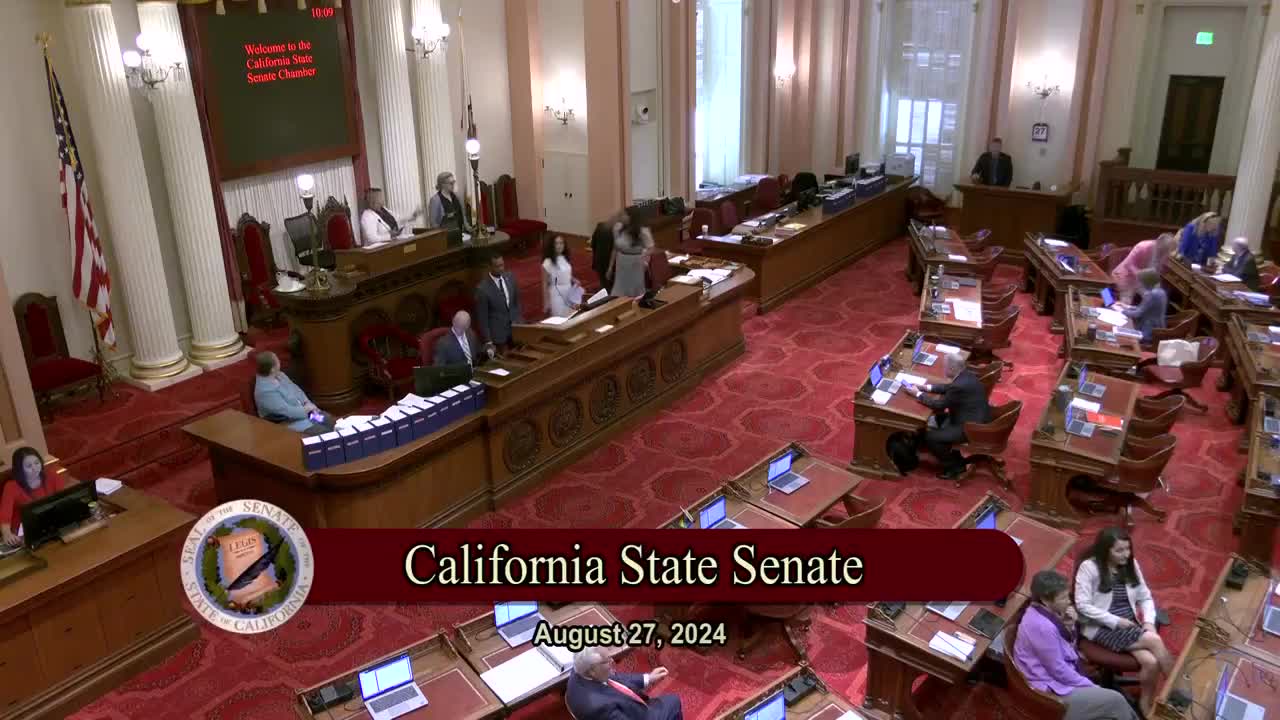 3MIN
Senate Floor
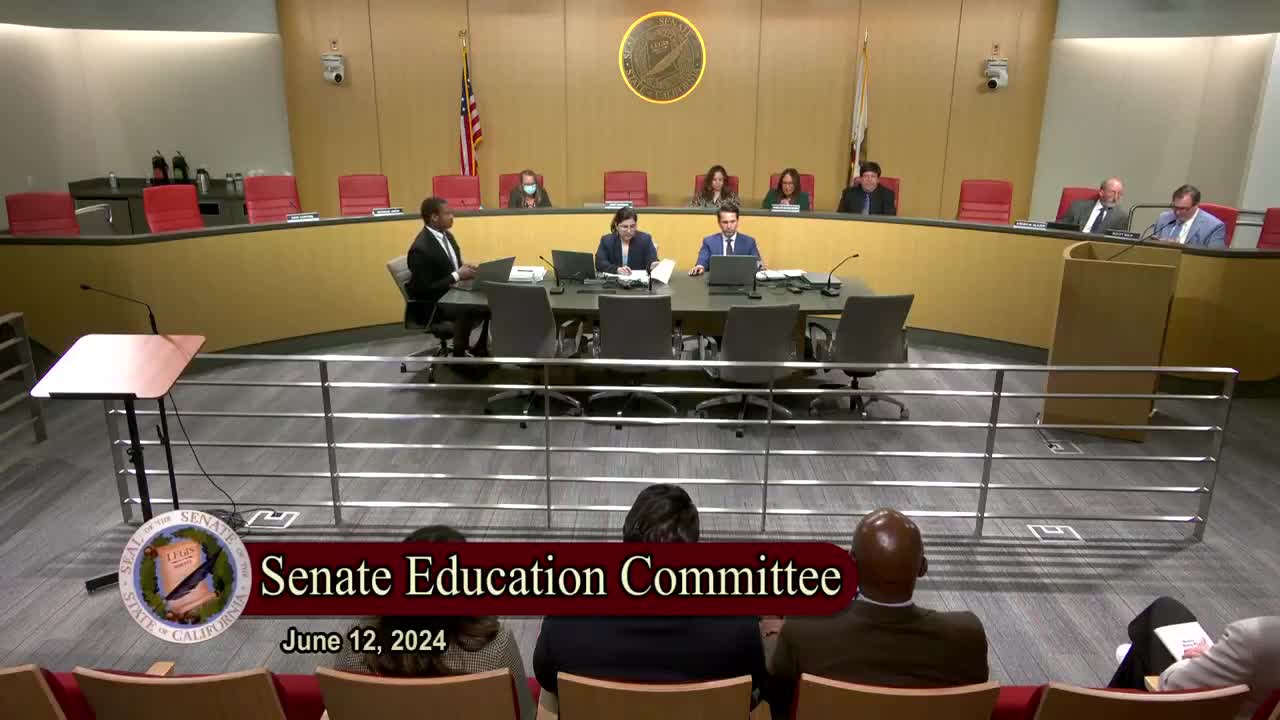 14MIN
Senate Standing Committee on Education
 2MIN
Assembly Floor
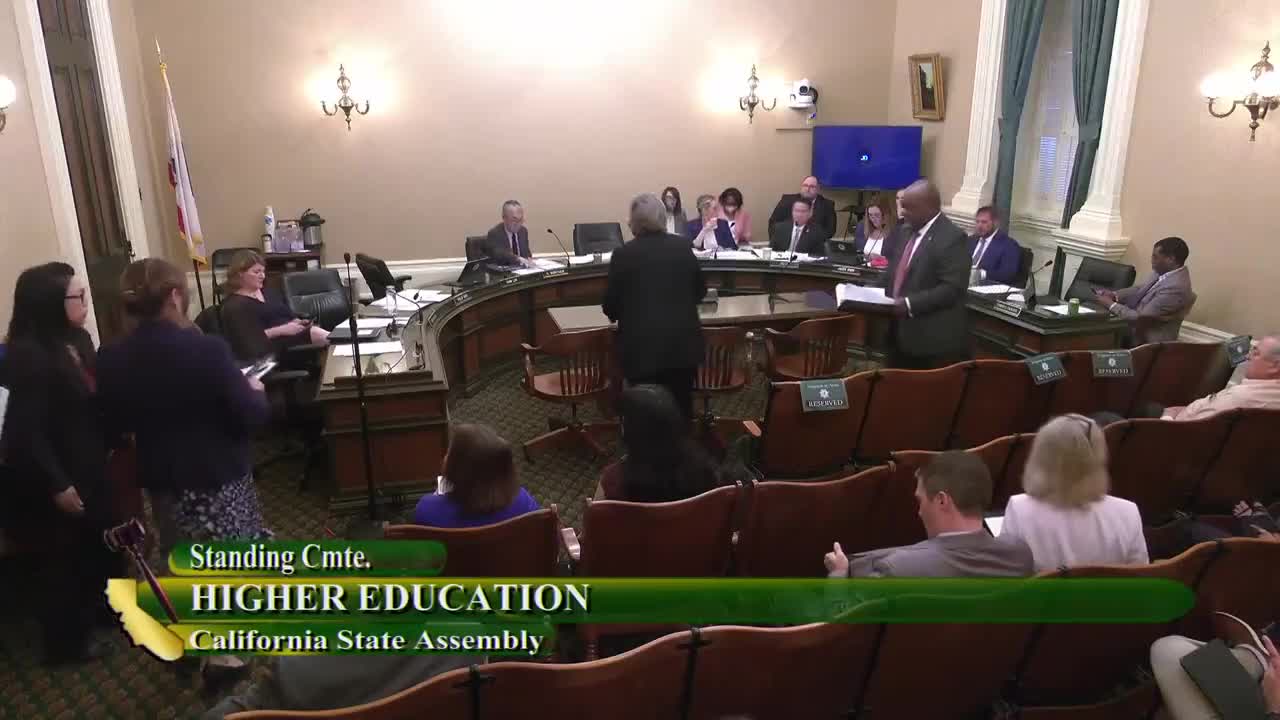 11MIN
Assembly Standing Committee on Higher Education
Bill Author

Bill Co-Author(s):