AB 2397: Child support: special needs trusts.
- Session Year: 2023-2024
- House: Assembly
- Latest Version Date: 2024-06-26
Current Status:
Passed
(2024-06-26: Chaptered by Secretary of State - Chapter 25, Statutes of 2024.)
Introduced
In Committee
First Chamber
In Committee
Second Chamber
Enacted
Existing law continues the parental duty to support an unmarried child who has attained 18 years of age, is a full-time high school student, and who is not self-supporting, until the time the child completes grade 12 or attains 19 years of age, whichever occurs first. Existing law provides that both parents have an equal responsibility to support their child in the manner suitable to the childs circumstances. Existing law also provides that both parents have an equal responsibility to maintain, to the extent of their ability, a child of whatever age who is incapacitated from earning a living and without sufficient means. Existing law authorizes the establishment of a special needs trust if a court makes specific determinations, including that the minor or person with a disability has a disability that substantially impairs the individuals ability to provide for their own care.
This bill would authorize a court to order that a support payment be paid to a special needs trust, as specified.
Existing law continues the parental duty to support an unmarried child who has attained 18 years of age, is a full-time high school student, and who is not self-supporting, until the time the child completes grade 12 or attains 19 years of age, whichever occurs first. Existing law provides that both parents have an equal responsibility to support their child in the manner suitable to the childs circumstances. Existing law also provides that both parents have an equal responsibility to maintain, to the extend extent of their ability, a child of whatever age who is incapacitated from earning a living and without sufficient means. Existing law authorizes the establishment of a special needs trust if a court makes specific determinations, including that the minor or person with a disability has a disability that substantially impairs the individuals ability to provide for their own care.
This bill would authorize a court to order that a support payment be paid to a special needs trust, as specified.
Existing law continues the parental duty to support an unmarried child who has attained 18 years of age, is a full-time high school student, and who is not self-supporting, until the time the child completes grade 12 or attains 19 years of age, whichever occurs first. Existing law provides that both parents have an equal responsibility to support their child in the manner suitable to the childs circumstances. Existing law also provides that both parents have an equal responsibility to maintain, to the extend of their ability, a child of whatever age who is incapacitated from earning a living and without sufficient means. Existing law authorizes the establishment of a special needs trust if a court makes specific determinations, including that the minor or person with a disability has a disability that substantially impairs the individuals ability to provide for their own care.
This bill would authorize a court to order that a support payment be paid to a special needs trust, as specified.
Existing law continues the parental duty to support an unmarried child who has attained 18 years of age, is a full-time high school student, and who is not self-supporting, until the time the child completes grade 12 or attains 19 years of age, whichever occurs first. Existing law provides that both parents have an equal responsibility to support their child in the manner suitable to the childs circumstances. Existing law authorizes the establishment of a special needs trust if a court makes specific determinations, including that the minor or person with a disability has a disability that substantially impairs the individuals ability to provide for their own care.
This bill would authorize a court to order that a support payment be paid to a special needs trust, as specified.
(a)Each parent of a child has an equal responsibility to maintain, to the extent of their ability, their child of whatever age who is incapacitated from earning a living and without sufficient means.
(b)The court may order that a support payment be paid to a special needs trust. For purposes of this section, special needs trust means a trust that meets the requirements described in subparagraph (A) or (C) of paragraph (4) of subsection (d) of Section 1396p of Title 42 of the United States Code and paragraph (3) or (4) of subdivision (a) of Section 50489.9 of Title 22 of the California Code of Regulations.
(c)This section does not limit the duty of support under Sections 3900 and 3901.
(a)The father and mother have Each parent of a child has an equal responsibility to maintain, to the extent of their ability, a their child of whatever age who is incapacitated from earning a living and without sufficient means.
(b)The court may order that a support payment be paid to a special needs trust. For purposes of this section, special needs trust means a trust that meets the requirements described in subparagraph (A) or (C) of paragraph (4) of subsection (D) (d) of Section 1396p of Title 42 of the United States Code and paragraphs paragraph (3) or (4) of subdivision (a) of Section 50489.9 of Title 22 of the California Code of Regulations.
(c)This section does not limit the duty of support under Sections 3900 and 3901.
(a)The father and mother have an equal responsibility to maintain, to the extent of their ability, a child of whatever age who is incapacitated from earning a living and without sufficient means.
(b)The court may order that a support payment be paid to a special needs trust established under Section 3604 of the Probate Code. trust. For purposes of this section, special needs trust means a trust that meets the requirements described in paragraph (4) of subsection (D) of Section 1396p of Title 42 of the United States Code and paragraphs (3) or (4) of subdivision (a) of Section 50489.9 of Title 22 of the California Code of Regulations.
(c)This section does not limit the duty of support under Sections 3900 and 3901.
(a)The father and mother have an equal responsibility to maintain, to the extent of their ability, a child of whatever age who is incapacitated from earning a living and without sufficient means.
(b)The court may order that a support payment be paid to a special needs trust established under Section 3604 of the Probate Code.
(b)Nothing in this section limits(c)This section does not limit the duty of support under Sections 3900 and 3901.
|
Date
|
Status
|
|---|---|
| Jun 26, 2024 | Chaptered by Secretary of State - Chapter 25, Statutes of 2024. |
| Jun 26, 2024 | Approved by the Governor. |
| Jun 20, 2024 | Enrolled and presented to the Governor at 3 p.m. |
| Jun 17, 2024 | Enrolled measure version corrected. |
| Jun 13, 2024 | Senate amendments concurred in. To Engrossing and Enrolling. (Ayes 76. Noes 0. Page 5850.). |
| Jun 10, 2024 | In Assembly. Concurrence in Senate amendments pending. May be considered on or after June 12 pursuant to Assembly Rule 77. |
| Jun 10, 2024 | Read third time. Passed. Ordered to the Assembly. (Ayes 37. Noes 0. Page 4395.). |
| Jun 5, 2024 | Read second time. Ordered to Consent Calendar. |
| Jun 4, 2024 | From committee: Do pass. To Consent Calendar. (Ayes 11. Noes 0.) (June 4). |
| May 24, 2024 | From committee chair, with author's amendments: Amend, and re-refer to committee. Read second time, amended, and re-referred to Com. on JUD. |
| May 1, 2024 | Referred to Com. on JUD. |
| Apr 15, 2024 | In Senate. Read first time. To Com. on RLS. for assignment. |
| Apr 15, 2024 | Read third time. Passed. Ordered to the Senate. (Ayes 75. Noes 0. Page 4777.) |
| Apr 11, 2024 | From Consent Calendar by request of Assembly Member Essayli. To Third Reading. |
| Apr 10, 2024 | Read second time. Ordered to Consent Calendar. |
| Apr 9, 2024 | From committee: Do pass. To Consent Calendar. (Ayes 12. Noes 0.) (April 9). |
| Apr 3, 2024 | Re-referred to Com. on JUD. |
| Apr 2, 2024 | From committee chair, with author's amendments: Amend, and re-refer to Com. on JUD. Read second time and amended. |
| Feb 26, 2024 | Referred to Com. on JUD. |
| Feb 13, 2024 | From printer. May be heard in committee March 14. |
| Feb 12, 2024 | Read first time. To print. |
|
Date
|
Description
|
Location
|
Votes
|
|
|---|---|---|---|---|
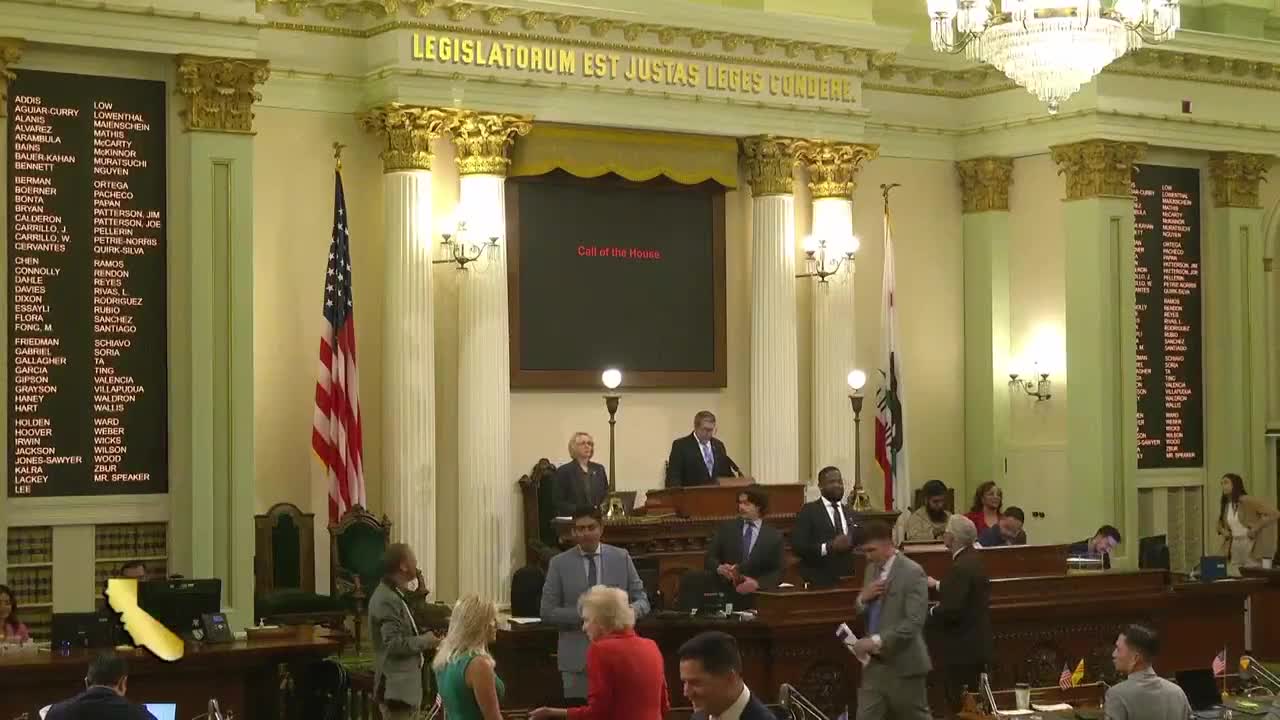
| Jun 13, 2024 | AB 2397 Maienschein Concurrence in Senate Amendments | Assembly Floor |
Passed |
|
| Jun 10, 2024 | Consent Calendar 2nd AB2397 Maienschein | Senate Floor |
Passed |
|
| Jun 4, 2024 | Do pass and be ordered to the Consent Calendar | Senate Standing Committee on Judiciary |
Passed |
|
| Apr 15, 2024 | AB 2397 Maienschein Assembly Third Reading | Assembly Floor |
Passed |
|
| Apr 9, 2024 | Do pass. To Consent Calendar. | Assembly Standing Committee on Judiciary |
Passed |
This list shows positions taken on this bill by organizations on the date displayed, which is linked to the original source.
Positions by individuals are not included.
|
Organization
|
Position
|
Date
|
|---|---|---|
| Educate. Advocate. | ** Support | |
| Families for Early Autism Treatment | ** Support | |
| Family Law Section, Los Angeles County Bar Association | ** Support | |
| The Arc and United Cerebral Palsy California Collaboration | ** Support |
CONCURRENCE IN SENATE AMENDMENTS
CSA1 Bill Id:AB 2397
Author:(Maienschein)
As Amended Ver:May 24, 2024
Majority vote
SUMMARY
Authorizes a court to assign child support payments to a special needs trust, as defined.
Major Provisions
- Authorizes a court to order that a child support payment be paid to a special needs trust, as defined.
- Defines "special needs trust" to mean a trust that meets the requirements described in paragraph (4) of subsection (d) of Section 1396p of Title 42 of the United States Code and paragraphs (3) or (4) of subdivision (a) of Section 50489.9 of Title 22 of the California Code of Regulations.
Senate Amendments
Change "mother and father have" to "each parent of a child has"
COMMENTS
Supplemental Security Income, known as (SSI), is a federal benefit available to low-income persons (usually under 65) who are blind or disabled, with "disabled" defined for these purposes to mean a person with a permeant disability that prevents them from working and earning a living. (20 CFR Section 416.905.) As a means-tested program, SSI benefits may be denied or reduced if the beneficiary has assets or income in excess of a threshold amount. However, since 1993 federal law has provided that assets held in a special needs trust (sometimes called a supplemental needs trust) are not counted for purposes of determining eligibility or benefits for SSI, Medicaid, and other federal welfare programs. A primary purpose for establishing a special needs trust, therefore, is to preserve funds that can improve the beneficiary's quality of life without disqualifying that person from eligibility for SSI and other benefits. While the impact of the special needs trust on SSI benefits is a matter of federal law and policy, the special needs trust itself is established under state law. (Probate Code Section 3604.)
While California parents of a disabled adult child may establish a special needs trust in order that the child may continue to receive SSI and other public benefits, in cases where the parents have divorced child support payments create a special problem. Because SSI counts two-thirds of the child support payments as "income" paid to the child, child support payments will substantially reduce the SSI benefit. For example, child support payments of $600 per month would lead to a $400 reduction in SSI benefits. This is a substantial amount when one considers that the maximum monthly SSI benefit in California in 2024 is $1,182.94. But if the child support payments are deposited in special needs trust, the SSI benefit will not be affected. However, according to some judges, while federal law apparently assumes that child support payments may be paid to a special needs trust, state law does not expressly authorize the court to assign child support payments to a special needs trust.
This bill address this problem by expressly authorizing a court to assign child support payments to a special needs trust that meets the criteria and definitions of federal law.
According to the Author
According to the author, this bill "is a simple clarifying measure that gives the courts explicit authority to assign child support for children with disabilities to a special needs trust so that they do not risk losing their social security benefits. Absent this authority, a child who receives child support is at risk of having that 'income' counted against them when determining eligibility for SSI benefits that are critical in assisting persons with disabilities."
Arguments in Support
The Arc and United Cerebral Palsy California Collaboration, the sponsor, puts it quite concisely: "This bill will allow the court to order a support payment be paid to a special need trust."
The Family Law Section of the Los Angeles County Bar Association (FLS-LA) supports this bill because it will "allow the Family Court discretion to order that child support for an incapacitated adult child be paid either to the child's custodial parent or to a Special Needs Trust." FLS-LA believes that this will substantially modify the existing statutory framework under which the court must order that adult child support be paid to the child's custodial parent, as the payments are deemed child support. "Granting the Court the discretion to order the support to be paid to a Special Needs Trust," FLS-LA contends, "will ensure that the support ordered by the Court to be paid for the adult child is used strictly for the child's needs, and not spent at the discretion of the custodial parent on expenses which may not only include the child's needs."
Arguments in Opposition
No opposition on file.
FISCAL COMMENTS
None.
VOTES:
ASM JUDICIARY: 12-0-0
YES: Kalra, Dixon, Ting, Bryan, Connolly, Haney, Maienschein, McKinnor, Pacheco, Reyes, Sanchez, Waldron
ASSEMBLY FLOOR: 75-0-5
YES: Addis, Aguiar-Curry, Alanis, Alvarez, Arambula, Bains, Bauer-Kahan, Bennett, Berman, Boerner, Bonta, Bryan, Calderon, Juan Carrillo, Cervantes, Chen, Connolly, Davies, Dixon, Flora, Mike Fong, Vince Fong, Friedman, Gabriel, Gallagher, Garcia, Gipson, Grayson, Haney, Hart, Holden, Hoover, Irwin, Jackson, Jones-Sawyer, Kalra, Lackey, Lee, Lowenthal, Maienschein, McCarty, McKinnor, Muratsuchi, Stephanie Nguyen, Ortega, Pacheco, Papan, Jim Patterson, Joe Patterson, Pellerin, Petrie-Norris, Quirk-Silva, Ramos, Rendon, Reyes, Luz Rivas, Rodriguez, Blanca Rubio, Sanchez, Santiago, Schiavo, Soria, Ta, Ting, Valencia, Villapudua, Waldron, Wallis, Ward, Weber, Wicks, Wilson, Wood, Zbur, Robert Rivas
ABS, ABST OR NV: Wendy Carrillo, Megan Dahle, Essayli, Low, Mathis
SENATE FLOOR: 37-0-3
YES: Alvarado-Gil, Archuleta, Ashby, Atkins, Becker, Blakespear, Bradford, Caballero, Cortese, Dahle, Dodd, Durazo, Eggman, Glazer, Gonzalez, Grove, Jones, Laird, Limón, McGuire, Menjivar, Min, Newman, Nguyen, Niello, Ochoa Bogh, Padilla, Portantino, Roth, Rubio, Seyarto, Skinner, Stern, Umberg, Wahab, Wiener, Wilk
ABS, ABST OR NV: Allen, Hurtado, Smallwood-Cuevas
UPDATED
VERSION: May 24, 2024
CONSULTANT: Tom Clark / JUD. / (916) 319-2334 FN: 0003520
SENATE RULES COMMITTEE Office of Senate Floor Analyses (916) 651-1520 Fax: (916) 327-4478 | AB 2397 |
CONSENT
Bill No: AB 2397
Author: Maienschein (D)
Amended: 5/24/24 in Senate
Vote: 21
SENATE JUDICIARY COMMITTEE: 11-0, 6/4/24
AYES: Umberg, Wilk, Ashby, Caballero, Durazo, Laird, Niello, Roth, Stern, Wahab, Wiener
ASSEMBLY FLOOR: 75-0, 4/15/24 - See last page for vote
SUBJECT: Child support: special needs trusts
SOURCE: Arc & United Cerebral Palsy California Collaboration
DIGEST:
This bill clarifies that a family court may order a support payment for a child of any age who is incapacitated and unable to earn a living and without sufficient means to be paid into a special needs fund, as defined.
ANALYSIS:
Existing federal law:
- Count, for purposes of determining whether a person is eligible for, and the amount of, SSI payments, the person’s earned and unearned income, as defined: (42 U.S.C. 1382a(a)(2).)
- “Unearned income” includes support payments that are cash or in-kind contributions to meet some or all of a person’s needs for food or shelter, made voluntarily or by court order. (20 C.F.R. § 416.1121(b).)
- When a parent receives current child support payments for a minor child, two-thirds of the support payment is treated as income for purposes of calculating SSI benefits. (Social Security Administration, Program Operations Manual System (POMS) SI 00830.420 (eff. 12/11/23).)
- When a parent receives current support payments for an adult child after the child reaches age of majority, the support payments are counted as income to the adult child even if they do not live with or receive any of the child support payments. (Social Security Administration, Program Operations Manual System (POMS) SI 00830.420 (eff. 12/11/23).)
- Provides that trusts that contain the assets of an individual who is under the age of 65 years and that meet specified criteria, are not treated as the individual’s available resources for purposes of determining a person’s eligibility for, and their entitled amount of, certain public benefits, including SSI. (42 U.S.C. § 1396p(d)(4)(A), (C).)
- A person is “disabled” if they are unable to engage in any substantial gainful activity by reason of any medically determinable or mental impairment which can be expected to result in death or which has lasted or can be expected to last for a continuous period of not fewer than twelve months. (42 U.S.C. § 1382c(a)(3).)
Existing state law:
- Provides that a child’s parents have an equal responsibility to maintain, to the extent of their ability, a child of whatever age who is incapacitated from earning a living and without sufficient means. (Fam. Code, § 3910.)
- Provides that, if a parent has the duty for the support of the parent’s child and willfully fails to so provide, the other parent, or the child by a guardian ad litem, may bring an action in the family court of appropriate jurisdiction against the parent to enforce the duty. (Fam. Code, § 4000.)
- Establishes procedures for assessing the need for, determining the amount of, and collecting court-ordered child support. (Fam. Code, pt. 2, ch. 2, §§ 4000 et seq.)
- Provides that a conservator of the person may be appointed for a person who is unable to provide properly for their personal needs for physical health, food, clothing, or shelter; and a conservator of the estate may be appointed for a person who is substantially unable to manage their own financial resources or resist fraud or undue influence. A conservator of the person and estate may be appointed if both sets of criteria are met. (Prob. Code, § 1801(a)-(c).)
- Provides for the establishment of a special needs trust when a payment has been made to an adult with a disability in a conservatorship, or for whom a conservatorship is appropriate, in connection with a money judgment or offer to compromise, as specified. The special needs trust shall be subject to the continuing jurisdiction of the probate court, as specified. (Prob. Code, § 3604.)
- Establishes continuing court jurisdiction over a trust created, or funded, by a court order pursuant to the Probate Code, and impose specified restrictions on the trust instruments, including heightened reporting and court approval requirements for trust instruments for trusts that will have total assets of $20,000 or less after receipt of the property ordered by the court. (Cal. Rules of Court, rule 7.903.)
This bill:
- Permits a family court ordering a support payment for a child who is incapacitated from earning a living and without sufficient means to order that the support be paid to a special needs trust.
- Provides that a “special needs trust,” for purposes of 1), means a trust that meets the requirements of section 1396p(d)(4)(A) or (C) of Title 42 of the United States Code and paragraphs (3) or (4) of subdivision (a) of section 50489.9 of Title 22 of the California Code of Regulations.
- Makes technical and nonsubstantive conforming changes.
Comments
Federal law establishes a number of benefits programs for persons who are unable to perform substantial work due to a physical and/or mental condition, including Supplemental Security Income (SSI). A person’s eligibility for SSI eligibility is based on their income and resources; persons with income and resources above a set ceiling are not eligible for SSI. Under current federal law and regulations, two-thirds of child support paid by a parent to support a disabled minor child, and the full amount of child support paid to support a disabled adult child, is counted as income that can render the disabled adult ineligible for SSI or reduce their SSI payments. Federal law establishes an exemption, however, for a disabled individual’s assets held in a special needs trust established for the benefit of a disabled individual, provided that the trust meets certain criteria.
According to the author, and sponsor of this bill, “many courts in the state already order child support payments for disabled children and adults to be paid into special needs trusts to prevent child support payments from reducing the child’s SSI eligibility. Some courts, however, have expressed uncertainty about whether they have that authority in the absence of an explicit authorizing statute. This bill provides that explicit authorization, thereby clarifying that courts may order payment of child support into a special needs trust that satisfies specified state and federal requirements.”
FISCAL EFFECT: Appropriation: No Fiscal Com.: No Local: No
SUPPORT: (Verified 6/5/24)
Arc & United Cerebral Palsy California Collaboration (source)
California Judges Association
Educate.Advocate
Families for Early Autism Treatment
Family Law Section of the Los Angeles Bar Association
OPPOSITION: (Verified 6/5/24)
None received
ARGUMENTS IN SUPPORT: According to the California Judges Association:
SSI is a means-tested program, meaning benefits may be denied or reduced based on the beneficiaries' assets. Minors or adult dependent children risk having their SSI and other benefits denied or reduced if they receive child support payments. To avoid these potential reductions, parents can create a special needs trust. While federal law permits child support payments to be made to a special needs trust, state law does not explicitly authorize courts to direct child support payments to such trusts.
AB 2397 aims to clarify that if a special needs trust exists for a minor or adult dependent child, child support payments can be directed to that trust. This bill is designed to prevent child support from jeopardizing eligibility for government benefits. However, the assessment of need and consideration of the benefits received would still be required.
ASSEMBLY FLOOR: 75-0, 4/15/24
AYES: Addis, Aguiar-Curry, Alanis, Alvarez, Arambula, Bains, Bauer-Kahan, Bennett, Berman, Boerner, Bonta, Bryan, Calderon, Juan Carrillo, Cervantes, Chen, Connolly, Davies, Dixon, Flora, Mike Fong, Vince Fong, Friedman, Gabriel, Gallagher, Garcia, Gipson, Grayson, Haney, Hart, Holden, Hoover, Irwin, Jackson, Jones-Sawyer, Kalra, Lackey, Lee, Lowenthal, Maienschein, McCarty, McKinnor, Muratsuchi, Stephanie Nguyen, Ortega, Pacheco, Papan, Jim Patterson, Joe Patterson, Pellerin, Petrie-Norris, Quirk-Silva, Ramos, Rendon, Reyes, Luz Rivas, Rodriguez, Blanca Rubio, Sanchez, Santiago, Schiavo, Soria, Ta, Ting, Valencia, Villapudua, Waldron, Wallis, Ward, Weber, Wicks, Wilson, Wood, Zbur, Robert Rivas
NO VOTE RECORDED: Wendy Carrillo, Megan Dahle, Essayli, Low, Mathis
Prepared by: Allison Whitt Meredith / JUD. / (916) 651-4113
6/5/24 13:33:15
**** END ****
Senator Thomas Umberg, Chair
2023-2024 Regular Session
Bill No: AB 2397 (Author:Maienschein)
Version: May 24, 2024
Hearing Date: June 4, 2024
Fiscal: No
Urgency: No
Consultant: AWM
SUBJECT
Child support: special needs trusts
DIGEST
This bill clarifies that a family court may order a support payment for a child of any age who is incapacitated and unable to earn a living and without sufficient means to be paid into a special needs fund, as defined.
EXECUTIVE SUMMARY
Federal law establishes a number of benefits programs for persons who are unable to perform substantial work due to a physical and/or mental condition, including Supplemental Security Income (SSI). A person’s eligibility for SSI eligibility is based on their income and resources; persons with income and resources above a set ceiling are not eligible for SSI. Under current federal law and regulations, two-thirds of child support paid by a parent to support a disabled minor child, and the full amount of child support paid to support a disabled adult child, is counted as income that can render the disabled adult ineligible for SSI or reduce their SSI payments. Federal law establishes an exemption, however, for a disabled individual’s assets held in a special needs trust established for the benefit of a disabled individual, provided that the trust meets certain criteria.
According to the author and sponsor of this bill, many courts in the state already order child support payments for disabled children and adults to be paid into special needs trusts to prevent child support payments from reducing the child’s SSI eligibility. Some courts, however, have expressed uncertainty about whether they have that authority in the absence of an explicit authorizing statute. This bill provides that explicit authorization, thereby clarifying that courts may order payment of child support into a special needs trust that satisfies specified state and federal requirements.
This bill is sponsored by the Arc & United Cerebral Palsy California Collaboration and is supported by the California Judges Association, Educate.Advocate, Families for Early Autism Treatment, and the Family Law Section of the Los Angeles Bar Association. The Committee has not received timely opposition to this bill.
PROPOSED CHANGES TO THE LAW
Existing state law, regulations, and Rules of Court:
- Provide that a child’s parents have an equal responsibility to maintain, to the extent of their ability, a child of whatever age who is incapacitated from earning a living and without sufficient means. (Family Code, § 3910.)
- Provide that, if a parent has the duty for the support of the parent’s child and willfully fails to so provide, the other parent, or the child by a guardian ad litem, may bring an action in the family court of appropriate jurisdiction against the parent to enforce the duty. (Fam. Code, § 4000.)
- Establish procedures for assessing the need for, determining the amount of, and collecting court-ordered child support. (Fam. Code, pt. 2, ch. 2, §§ 4000 et seq.)
- Provide that a conservator of the person may be appointed for a person who is unable to provide properly for their personal needs for physical health, food, clothing, or shelter; and a conservator of the estate may be appointed for a person who is substantially unable to manage their own financial resources or resist fraud or undue influence. A conservator of the person and estate may be appointed if both sets of criteria are met. (Prob. Code, § 1801(a)-(c).)
- Provide for the establishment of a special needs trust when a payment has been made to an adult with a disability in a conservatorship, or for whom a conservatorship is appropriate, in connection with a money judgment or offer to compromise, as specified. The special needs trust shall be subject to the continuing jurisdiction of the probate court, as specified. (Prob. Code, § 3604.)
- Establish continuing court jurisdiction over a trust created, or funded, by a court order pursuant to the Probate Code, and impose specified restrictions on the trust instruments, including heightened reporting and court approval requirements for trust instruments for trusts that will have total assets of $20,000 or less after receipt of the property ordered by the court. (Cal. Rules of Court, rule 7.903.)
Existing federal law and regulations:
- Count, for purposes of determining whether a person is eligible for, and the amount of, SSI payments, the person’s earned and unearned income, as defined. (42 U.S.C. 1382a(a)(2).)
- “Unearned income” includes support payments that are cash or in-kind contributions to meet some or all of a person’s needs for food or shelter, made voluntarily or by court order. (20 C.F.R. § 416.1121(b).)
- When a parent receives current child support payments for a minor child, two-thirds of the support payment is treated as income for purposes of calculating SSI benefits. (Social Security Administration, Program Operations Manual System (POMS) SI 00830.420 (eff. 12/11/23).)
- When a parent receives current support payments for an adult child after the child reaches age of majority, the support payments are counted as income to the adult child even if they do not live with or receive any of the child support payments. (Social Security Administration, Program Operations Manual System (POMS) SI 00830.420 (eff. 12/11/23).)
- Provide that trusts that contain the assets of an individual who is under the age of 65 years and that meet specified criteria, are not treated as the individual’s available resources for purposes of determining a person’s eligibility for, and their entitled amount of, certain public benefits, including SSI. (42 U.S.C. § 1396p(d)(4)(A), (C).)
- A person is “disabled” if they are unable to engage in any substantial gainful activity by reason of any medically determinable or mental impairment which can be expected to result in death or which has lasted or can be expected to last for a continuous period of not fewer than twelve months. (42 U.S.C. § 1382c(a)(3).)
This bill:
- Permits a family court ordering a support payment for a child who is incapacitated from earning a living and without sufficient means to order that the support be paid to a special needs trust.
- Provides that a “special needs trust,” for purposes of 1), means a trust that meets the requirements of section 1396p(d)(4)(A) or (C) of Title 42 of the United States Code and paragraphs (3) or (4) of subdivision (a) of section 50489.9 of Title 22 of the California Code of Regulations.
- Makes technical and nonsubstantive conforming changes.
COMMENTS
- Author’s comment
According to the author:
Assembly Bill 2397 is a simple clarifying measure that gives the courts explicit authority to assign child support for children with disabilities to a special needs trust so that they do not risk losing their social security benefits. Absent this authority, a child who receives child support is at risk of having that “income” counted against them when determining eligibility for SSI benefits that are critical in assisting persons with disabilities.
2. This bill clarifies that a court may order a parent obligated to pay support for a child with special needs to pay the support into a special needs trust
California law requires a parent to support, to the extent they are able, a child of any age who is incapacitated from earning a living and who does not have sufficient means to support themselves.[1] In cases where the child’s parents are divorced or separated, a court can order one parent to pay child support to the other parent for the maintenance of their disabled child, whether the child is a minor or an adult.[2]
Federal law establishes a number of benefits programs for persons who are unable to perform substantial work due to a physical and/or mental condition, including SSI.[3] A person’s eligibility for SSI eligibility is based on their income and resources; persons with income and resources above a set ceiling are not eligible for SSI.[4] Under current federal law and regulations, two-thirds of child support paid by a parent to support a disabled minor child, and the full amount of child support paid to support a disabled adult child, is counted as income when calculating an individual’s SSI eligibility.[5] As a practical matter, this means that a parent’s payment of child support can cancel out a disabled adult’s SSI benefits.[6]
Federal law establishes an exception to this general rule, by exempting from the calculation of “income” a disabled individual’s assets held in a special needs trust established for the benefit of the disabled individual.[7] To qualify for this exemption, the special needs trust must meet certain criteria, including providing that any trust assets remaining in the trust upon the beneficiary’s death be paid to the state.[8] According to the author and sponsor, many courts in the state already order child support payments for disabled children and adults to be paid into special needs trusts, so as to prevent child support payments from reducing the child’s SSI eligibility. Some courts, however, have expressed uncertainty about whether they have the authority to make such an order in the absence of an explicit authorizing statute.
3. This bill clarifies that a court may order a parent’s child support payments for a disabled child be paid to a special needs trust
This bill clarifies that a family court, when making an order of child support for a child who is incapacitated from earning a living and without sufficient means, may order that the parent pay the support funds into a special needs trust. The bill specifies that the special needs trust must comply with the relevant federal statutes that will exempt the trust’s assets from the calculation of income for purposes of SSI eligibility, as well as relevant California regulations.
4. Arguments in support
According to the California Judges Association:
SSI is a means-tested program, meaning benefits may be denied or reduced based on the beneficiaries' assets. Minors or adult dependent children risk having their SSI and other benefits denied or reduced if they receive child support payments. To avoid these potential reductions, parents can create a special needs trust. While federal law permits child support payments to be made to a special needs trust, state law does not explicitly authorize courts to direct child support payments to such trusts.
AB 2397 aims to clarify that if a special needs trust exists for a minor or adult dependent child, child support payments can be directed to that trust. This bill is designed to prevent child support from jeopardizing eligibility for government benefits. However, the assessment of need and consideration of the benefits received would still be required.
SUPPORT
Arc & United Cerebral Palsy California Collaboration (sponsor)
California Judges Association
Educate.Advocate
Families for Early Autism Treatment
Family Law Section of the Los Angeles Bar Association
OPPOSITION
None received
RELATED LEGISLATION
Pending Legislation: None known.
Prior Legislation: None known.
PRIOR VOTES:
Assembly Floor (Ayes 75, Noes 0)
Assembly Judiciary Committee (Ayes 12, Noes 0)
**************
ASSEMBLY THIRD READING
ATR Bill Id:AB 2397
Author:(Maienschein)
As Amended Ver:April 2, 2024
Majority vote
SUMMARY
Authorizes a court to assign child support payments to a special needs trust, as defined.
Major Provisions
- Authorizes a court to order that a child support payment be paid to a special needs trust, as defined.
- Defines "special needs trust" to mean a trust that meets the requirements described in paragraph (4) of subsection (d) of Section 1396p of Title 42 of the United States Code and paragraphs (3) or (4) of subdivision (a) of Section 50489.9 of Title 22 of the California Code of Regulations.
COMMENTS
Supplemental Security Income, known as (SSI), is a federal benefit available to low-income persons (usually under 65) who are blind or disabled, with "disabled" defined for these purposes to mean a person with a permeant disability that prevents them from working and earning a living. (20 CFR Section 416.905.) As a means-tested program, SSI benefits may be denied or reduced if the beneficiary has assets or income in excess of a threshold amount. However, since 1993 federal law has provided that assets held in a special needs trust (sometimes called a supplemental needs trust) are not counted for purposes of determining eligibility or benefits for SSI, Medicaid, and other federal welfare programs. A primary purpose for establishing a special needs trust, therefore, is to preserve funds that can improve the beneficiary's quality of life without disqualifying that person from eligibility for SSI and other benefits. While the impact of the special needs trust on SSI benefits is a matter of federal law and policy, the special needs trust itself is established under state law. (Probate Code Section 3604.)
While California parents of a disabled adult child may establish a special needs trust in order that the child may continue to receive SSI and other public benefits, in cases where the parents have divorced child support payments create a special problem. Because SSI counts two-thirds of the child support payments as "income" paid to the child, child support payments will substantially reduce the SSI benefit. For example, child support payments of $600 per month would lead to a $400 reduction in SSI benefits. This is a substantial amount when one considers that the maximum monthly SSI benefit in California in 2024 is $1,182.94. But if the child support payments are deposited in special needs trust, the SSI benefit will not be affected. However, according to some judges, while federal law apparently assumes that child support payments may be paid to a special needs trust, state law does not expressly authorize the court to assign child support payments to a special needs trust.
This bill address this problem by expressly authorizing a court to assign child support payments to a special needs trust that meets the criteria and definitions of federal law.
According to the Author
According to the author, this bill "is a simple clarifying measure that gives the courts explicit authority to assign child support for children with disabilities to a special needs trust so that they do not risk losing their social security benefits. Absent this authority, a child who receives child support is at risk of having that 'income' counted against them when determining eligibility for SSI benefits that are critical in assisting persons with disabilities."
Arguments in Support
The Arc and United Cerebral Palsy California Collaboration, the sponsor, puts it quite concisely: "This bill will allow the court to order a support payment be paid to a special need trust."
The Family Law Section of the Los Angeles County Bar Association (FLS-LA) supports this bill because it will "allow the Family Court discretion to order that child support for an incapacitated adult child be paid either to the child's custodial parent or to a Special Needs Trust." FLS-LA believes that this will substantially modify the existing statutory framework under which the court must order that adult child support be paid to the child's custodial parent, as the payments are deemed child support. "Granting the Court the discretion to order the support to be paid to a Special Needs Trust," FLS-LA contends, "will ensure that the support ordered by the Court to be paid for the adult child is used strictly for the child's needs, and not spent at the discretion of the custodial parent on expenses which may not only include the child's needs."
Arguments in Opposition
No opposition on file.
FISCAL COMMENTS
None.
VOTES
ASM JUDICIARY: 12-0-0
YES: Kalra, Dixon, Ting, Bryan, Connolly, Haney, Maienschein, McKinnor, Pacheco, Reyes, Sanchez, Waldron
UPDATED
VERSION: April 2, 2024
CONSULTANT: Tom Clark / JUD. / (916) 319-2334 FN: 0002716
Date of Hearing: April 9, 2024
ASSEMBLY COMMITTEE ON JUDICIARY
Ash Kalra, Chair
ABPCA Bill Id:AB 2397
Author:(Maienschein) – As Amended Ver:April 2, 2024
proposed consent
SUBJECT: Child support: special needs trusts
KEY ISSUE: should courts be authorized to assign child support payments to a special needs trust, as permitted by federal law, so that disabled adults will not lose crucial federal benefits?
SYNOPSIS
As a general rule non-custodial parents must make child support payments until the child is 18 years of age, or if the child is still in high school, until the child graduates or turns 19, whichever comes first. However, existing law states that both parents have a continuing and equal obligation to support, to the extent of their ability, a child of any age who “is incapacitated from earning a living and without sufficient means.” Under federal law, disabled adults who are “incapacitated from earning a living” are eligible for various federal benefits, including Supplemental Security Income (SSI). Unfortunately for disabled adult children and their parents, SSI treats two-thirds of the child support payment as “income” for the purpose of determining SSI benefits. For example, a $600 per month child support payment would lead to a $400 reduction in the disabled adult’s SSI benefit. Federal lawmakers soon realized that it was counterproductive to penalize the dependent adult and parents because the non-custodial parent fulfilled child support obligations. Therefore, in 1993 Congress amended the Social Security Act to provide that funds deposited in a “special needs trust” would not count as “income” and, as such, would not result in a reduction of federal health and welfare benefits, including SSI benefits.
Despite this federal policy – and despite the fact that state law already provides for the establishment of a special needs trust for disabled adults – some judges in California have contended that, without an express state-level statute, they have no clear legal authority to assign child support payments to a special needs trust. This straight-forward measure would provide that express legal authority, so that disabled adults do not lose essential SSI benefits and suffer a corresponding decline in quality of life. The bill is sponsored by The Arc and United Cerebral Palsy California Collaboration and supported by family law attorneys and groups that advocate on behalf of disabled adults and their families. There is no registered opposition to this bill.
SUMMARY: Authorizes a court to assign child support payments to a special needs trust, as defined.
- Authorizes a court to order that a child support payment be paid to a special needs trust, as defined.
- Defines “special needs trust” to mean a trust that meets the requirements described in paragraph (4) of subsection (d) of Section 1396p of Title 42 of the United States Code and paragraphs (3) or (4) of subdivision (a) of Section 50489.9 of Title 22 of the California Code of Regulations.
EXISTING LAW:
- Provides under federal law that funds deposited in a special needs trust, as described, shall not be counted for purposes of determining eligibility or benefits for designated public benefits, including Social Security Income. (42 USC 1396p (d)(4) (A).)
- Provides that both parents have an equal responsibility to maintain, to the extent of their ability, a child of whatever age who is incapacitated from earning a living and without sufficient means. (Family Code Section 3910.)
- Authorizes the establishment of a special needs trust if a court makes specific determinations, including that the minor or person with a disability has a disability that substantially impairs the individual’s ability to provide for their own care. (Probate Code Section 3604.)
FISCAL EFFECT: As currently in print this bill is keyed non-fiscal.
COMMENTS: According to the author, this bill “is a simple clarifying measure that gives the courts explicit authority to assign child support for children with disabilities to a special needs trust so that they do not risk losing their social security benefits. Absent this authority, a child who receives child support is at risk of having that ‘income’ counted against them when determining eligibility for SSI benefits that are critical in assisting persons with disabilities.”
Supplemental Security Income and “special needs trust.” Supplemental Security Income, known as SSI, is a federal benefit available to low-income persons (usually under 65) who are blind or disabled, with “disabled” defined for these purposes to mean a person with a permeant disability that prevents them from working and earning a living. (20 CFR Section 416.905.) As a means-tested program, SSI benefits may be denied or reduced if the beneficiary has assets or income in excess of a threshold amount. However, since 1993 federal law has provided that assets held in a special needs trust (sometimes called a supplemental needs trust) are not counted for purposes of determining eligibility or benefits for SSI, Medicaid, and other federal welfare programs. A primary purpose for establishing a special needs trust, therefore, is to preserve funds that can improve the beneficiary’s quality of life without disqualifying that person from eligibility for SSI and other benefits. While the impact of the special needs trust on SSI benefits is a matter of federal law and policy, the special needs trust itself is established under state law. (Probate Code Section 3604.)
While California parents of a disabled adult child may establish a special needs trust in order that the child may continue to receive SSI and other public benefits, in cases where the parents have divorced child support payments create a special problem. Because SSI counts two-thirds of the child support payments as “income” paid to the child, child support payments will substantially reduce the SSI benefit. For example, child support payments of $600 per month would lead to a $400 reduction in SSI benefits. This is a substantial amount when one considers that the maximum monthly SSI benefit in California in 2024 is $1,182.94. But if the child support payments are deposited in special needs trust, the SSI benefit will not be affected. However, according to some judges, while federal law apparently assumes that child support payments may be paid to a special needs trust, state law does not expressly authorize the court to assign child support payments to a special needs trust.
This bill address this problem by expressly authorizing a court to assign child support payments to a special needs trust that meets the criteria and definitions of federal law.
ARGUMENTS IN SUPPORT: The Arc and United Cerebral Palsy California Collaboration, the sponsor, puts it quite concisely: “This bill will allow the court to order a support payment be paid to a special need trust.”
The Family Law Section of the Los Angeles County Bar Association (FLS-LA) supports this bill because it will “allow the Family Court discretion to order that child support for an incapacitated adult child be paid either to the child’s custodial parent or to a Special Needs Trust.” FLS-LA believes that this will substantially modify the existing statutory framework under which the court must order that adult child support be paid to the child’s custodial parent, as the payments are deemed child support. “Granting the Court the discretion to order the support to be paid to a Special Needs Trust,” FLS-LA contends, “will ensure that the support ordered by the Court to be paid for the adult child is used strictly for the child’s needs, and not spent at the discretion of the custodial parent on expenses which may not only include the child’s needs.”
REGISTERED SUPPORT / OPPOSITION:
Support
The Arc and United Cerebral Palsy California Collaboration (sponsor)
Educate. Advocate.
Families for Early Autism Treatment
Family Law Section Los Angeles County Bar Association
Opposition
None on file
Analysis Prepared by: Tom Clark / JUD. / (916) 319-2334
Bill Author

Bill Co-Author(s):