AB 2427: Electric vehicle charging stations: permitting: curbside charging.
- Session Year: 2023-2024
- House: Assembly
- Latest Version Date: 2024-09-25
Current Status:
Passed
(2024-09-25: Chaptered by Secretary of State - Chapter 567, Statutes of 2024.)
Introduced
In Committee
First Chamber
In Committee
Second Chamber
Enacted
Existing law creates the Governors Office of Business and Economic Development, known as GO-Biz, and requires GO-Biz to serve the Governor as the lead entity for economic strategy and the marketing of California on issues relating to business development, private sector investment, and economic growth. Existing law continues into existence the zero-emission vehicle (ZEV) division within GO-Biz as the Zero-Emission Vehicle Market Development Office. Existing law references GO-Bizs Electric Vehicle Charging Station Permitting Guidebook, which recommends best practices for electric vehicle supply equipment permitting.
This bill would require the office to develop a model permitting checklist, model zoning ordinances, and best practices for permit costs and permit review timelines to help local governments permit curbside charging stations as part of the offices development of the Electric Vehicle Charging Station Permitting Guidebook or any subsequent updates. The bill would also require the office to consult with local governments, electric vehicle service providers, and utilities while developing the above-described materials.
Existing law, the Planning and Zoning Law, authorizes the legislative body of any county or city to adopt prescribed zoning ordinances within its jurisdiction. Existing law declares that it is the policy of the state to promote and encourage the use of electric vehicle charging stations and to limit obstacles to their use. Existing law prescribes various requirements on the review and approval of applications to install electric vehicle charging stations. Existing law requires every city, county, and city and county to administratively approve an application to install electric vehicle charging stations and hydrogen-fueling stations through the issuance of a building permit or similar nondiscretionary permit and requires the review of an application to install an electric vehicle charging station or a hydrogen-fueling station to be limited to the building officials review of whether it meets all health and safety requirements of local, state, and federal law. Existing law defines electric vehicle charging station or charging station for these purposes.
This bill would require local agencies to, among other things, develop a checklist that includes all of the information required for a complete application for a permit or other authorization to install an electric vehicle charging station within the public right-of-way, as defined. As part of that process, this bill would require local agencies to consider the Electric Vehicle Charging Station Permitting Guidebook from the Governors Office of Business and Economic Development. The bill would require local agencies with populations of 250,000 or more to comply with these provisions by January 1, 2027, and local agencies with populations of fewer than 250,000 residents to comply with these provisions by January 1, 2029. The bill would define various terms for these purposes. By imposing additional duties on local agencies, this bill would impose a state-mandated local program.
The bill would include findings that changes proposed by this bill address a matter of statewide concern rather than a municipal affair and, therefore, apply to all cities, including charter cities.
The California Constitution requires the state to reimburse local agencies and school districts for certain costs mandated by the state. Statutory provisions establish procedures for making that reimbursement.
This bill would provide that, if the Commission on State Mandates determines that the bill contains costs mandated by the state, reimbursement for those costs shall be made pursuant to the statutory provisions noted above.
Existing law creates the Governors Office of Business and Economic Development, known as GO-Biz, and requires GO-Biz to serve the Governor as the lead entity for economic strategy and the marketing of California on issues relating to business development, private sector investment, and economic growth. Existing law continues into existence the zero-emission vehicle (ZEV) division within GO-Biz as the Zero-Emission Vehicle Market Development Office. Existing law references GO-Bizs Electric Vehicle Charging Station Permitting Guidebook, which recommends best practices for electric vehicle supply equipment permitting.
This bill would require the office to develop a model permitting checklist, model zoning ordinances, and best practices for permit costs and permit review timelines to help local governments permit curbside charging stations as part of the offices development of the Electric Vehicle Charging Station Permitting Guidebook or any subsequent updates. The bill would also require the office to consult with local governments, electric vehicle service providers, and utilities while developing the above-described materials.
Existing law, the Planning and Zoning Law, authorizes the legislative body of any county or city to adopt prescribed zoning ordinances within its jurisdiction. Existing law declares that it is the policy of the state to promote and encourage the use of electric vehicle charging stations and to limit obstacles to their use. Existing law prescribes various requirements on the review and approval of applications to install electric vehicle charging stations. Existing law requires every city, county, and city and county to administratively approve an application to install electric vehicle charging stations and hydrogen-fueling stations through the issuance of a building permit or similar nondiscretionary permit and requires the review of an application to install an electric vehicle charging station or a hydrogen-fueling station to be limited to the building officials review of whether it meets all health and safety requirements of local, state, and federal law. Existing law defines electric vehicle charging station or charging station for these purposes.
This bill would require local agencies to, among other things, develop a checklist that includes all of the information required for a complete application for a permit or other authorization to install an electric vehicle charging station within the public right-of-way, as defined. As part of that process, this bill would require local agencies to consider the Electric Vehicle Charging Station Permitting Guidebook from the Governors Office of Business and Economic Development. The bill would require local agencies with populations of 250,000 or more to comply with these provisions by January 1, 2027, and local agencies with populations of fewer than 250,000 residents to comply with these provisions by January 1, 2029. The bill would define various terms for these purposes. By imposing additional duties on local agencies, this bill would impose a state-mandated local program.
Existing law requires the State Energy Resources Conservation and Development Commission (Energy Commission) to develop and adopt an investment plan to determine priorities and opportunities for the Clean Transportation Program. As part of the development of the investment plan, existing law requires the Energy Commission, in consultation with the State Air Resources Board, to assess whether electric vehicle charging station infrastructure is disproportionately deployed by population density, geographical area, or population income level, including whether direct current fast charging stations are disproportionately distributed and whether access to these charging stations is disproportionately available, as specified.This bill would require the Energy Commission to additionally assess curbside charging needs by income level, population density, multifamily housing density, renter density, and geographical area to support equitable overnight charging access and the states 2035 electric vehicle adoption goal. The bill would require the commission, as part of the assessment, to identify barriers and solutions to support the installation of curbside charging stations, as provided.The bill would include findings that changes proposed by this bill address a matter of statewide concern rather than a municipal affair and, therefore, apply to all cities, including charter cities.
The California Constitution requires the state to reimburse local agencies and school districts for certain costs mandated by the state. Statutory provisions establish procedures for making that reimbursement.
This bill would provide that, if the Commission on State Mandates determines that the bill contains costs mandated by the state, reimbursement for those costs shall be made pursuant to the statutory provisions noted above.
Existing law creates the Governors Office of Business and Economic Development, known as GO-Biz, and requires GO-Biz to serve the Governor as the lead entity for economic strategy and the marketing of California on issues relating to business development, private sector investment, and economic growth. Existing law continues into existence the zero-emission vehicle (ZEV) division within GO-Biz as the Zero-Emission Vehicle Market Development Office. Existing law references GO-Bizs Electric Vehicle Charging Station Permitting Guidebook, which recommends best practices for electric vehicle supply equipment permitting.
This bill would require the office to develop a model permitting checklist, model zoning ordinances, and best practices for permit costs and permit review timelines to help local governments permit curbside charging stations as part of the offices development of the Electric Vehicle Charging Station Permitting Guidebook or any subsequent updates. The bill would also require the office to consult with local governments, electric vehicle service providers, and utilities while developing the above-described materials.
Existing law, the Planning and Zoning Law, authorizes the legislative body of any county or city to adopt prescribed zoning ordinances within its jurisdiction. Existing law declares that it is the policy of the state to promote and encourage the use of electric vehicle charging stations and to limit obstacles to their use. Existing law prescribes various requirements on the review and approval of applications to install electric vehicle charging stations. Existing law requires every city, county, and city and county to administratively approve an application to install electric vehicle charging stations and hydrogen-fueling stations through the issuance of a building permit or similar nondiscretionary permit and requires the review of an application to install an electric vehicle charging station or a hydrogen-fueling station to be limited to the building officials review of whether it meets all health and safety requirements of local, state, and federal law. Existing law defines electric vehicle charging station or charging station for these purposes.
This bill would require local agencies to, among other things, develop a checklist that includes all of the information required for a complete application for a permit or other authorization to install an electric vehicle charging station within the public right-of-way, as defined. As part of that process, this bill would require local agencies to consider the Electric Vehicle Charging Station Permitting Guidebook from the Governors Office of Business and Economic Development. The bill would require local agencies with populations of 250,000 or more to comply with these provisions by January 1, 2027, and local agencies with populations of fewer than 250,000 residents to comply with these provisions by January 1, 2029. The bill would define various terms for these purposes. By imposing additional duties on local agencies, this bill would impose a state-mandated local program.
Existing law requires the State Energy Resources Conservation and Development Commission (Energy Commission) to develop and adopt an investment plan to determine priorities and opportunities for the Clean Transportation Program. As part of the development of the investment plan, existing law requires the Energy Commission, in consultation with the State Air Resources Board, to assess whether electric vehicle charging station infrastructure is disproportionately deployed by population density, geographical area, or population income level, including whether direct current fast charging stations are disproportionately distributed and whether access to these charging stations is disproportionately available, as specified.
This bill would require the Energy Commission to additionally assess curbside charging needs by income level, population density, multifamily housing density, renter density, and geographical area to support equitable overnight charging access and the states 2035 electric vehicle adoption goal. The bill would require the commission, as part of the assessment, to identify barriers and solutions to support the installation of curbside charging stations, as provided.
The bill would include findings that changes proposed by this bill address a matter of statewide concern rather than a municipal affair and, therefore, apply to all cities, including charter cities.
The California Constitution requires the state to reimburse local agencies and school districts for certain costs mandated by the state. Statutory provisions establish procedures for making that reimbursement.
This bill would provide that, if the Commission on State Mandates determines that the bill contains costs mandated by the state, reimbursement for those costs shall be made pursuant to the statutory provisions noted above.
Existing law creates the Governors Office of Business and Economic Development, known as GO-Biz, and requires GO-Biz to serve the Governor as the lead entity for economic strategy and the marketing of California on issues relating to business development, private sector investment, and economic growth. Existing law continues into existence the zero-emission vehicle (ZEV) division within GO-Biz as the Zero-Emission Vehicle Market Development Office. Existing law references GO-Bizs Electric Vehicle Charging Station Permitting Guidebook, which recommends best practices for electric vehicle supply equipment permitting.
This bill would require the office to develop a model permitting checklist, model zoning ordinances, and best practices for permit costs and permit review timelines to help local governments permit curbside charging stations as part of the offices development of the Electric Vehicle Charging Station Permitting Guidebook or any subsequent updates. The bill would also require the office to consult with local governments, electric vehicle service providers, and utilities while developing the above-described materials.
Existing law, the Planning and Zoning Law, authorizes the legislative body of any county or city to adopt prescribed zoning ordinances within its jurisdiction. Existing law declares that it is the policy of the state to promote and encourage the use of electric vehicle charging stations and to limit obstacles to their use. Existing law prescribes various requirements on the review and approval of applications to install electric vehicle charging stations. Existing law requires every city, county, and city and county to administratively approve an application to install electric vehicle charging stations and hydrogen-fueling stations through the issuance of a building permit or similar nondiscretionary permit and requires the review of an application to install an electric vehicle charging station or a hydrogen-fueling station to be limited to the building officials review of whether it meets all health and safety requirements of local, state, and federal law. Existing law defines electric vehicle charging station or charging station for these purposes.
This bill would require local agencies to, among other things, develop a model permitting checklist that includes all applicable requirements to of the information required for a complete application for a permit the installation of or other authorization to install an electric vehicle charging stations in station within the public right-of-way, as defined. As part of that process, this bill would require local agencies to consider the Electric Vehicle Charging Station Permitting Guidebook from the Governors Office of Business and Economic Development. The bill would require local agencies with populations of 250,000 or more to comply with these provisions by January 1, 2027, and local agencies with populations of fewer than 250,000 residents to comply with these provisions by January 1, 2029. The bill would define various terms for these purposes. By imposing additional duties on local agencies, this bill would impose a state-mandated local program.
Existing law requires the State Energy Resources Conservation and Development Commission (Energy Commission) to develop and adopt an investment plan to determine priorities and opportunities for the Clean Transportation Program. As part of the development of the investment plan, existing law requires the Energy Commission, in consultation with the State Air Resources Board, to assess whether electric vehicle charging station infrastructure is disproportionately deployed by population density, geographical area, or population income level, including whether direct current fast charging stations are disproportionately distributed and whether access to these charging stations is disproportionately available, as specified.
This bill would require the Energy Commission to additionally assess curbside charging needs by income level, population density, multifamily housing density, renter density, and geographical area to support equitable overnight charging access and the states 2035 electric vehicle adoption goal. The bill would require the commission, as part of the assessment, to identify barriers and solutions to support the installation of curbside charging stations, as provided.
The bill would include findings that changes proposed by this bill address a matter of statewide concern rather than a municipal affair and, therefore, apply to all cities, including charter cities.
The California Constitution requires the state to reimburse local agencies and school districts for certain costs mandated by the state. Statutory provisions establish procedures for making that reimbursement.
This bill would provide that, if the Commission on State Mandates determines that the bill contains costs mandated by the state, reimbursement for those costs shall be made pursuant to the statutory provisions noted above.
Existing law creates the Governors Office of Business and Economic Development, known as GO-Biz, and requires GO-Biz to serve the Governor as the lead entity for economic strategy and the marketing of California on issues relating to business development, private sector investment, and economic growth. Existing law continues into existence the zero-emission vehicle (ZEV) division within GO-Biz as the Zero-Emission Vehicle Market Development Office. Existing law references GO-Bizs Electric Vehicle Charging Station Permitting Guidebook, which recommends best practices for electric vehicle supply equipment permitting.
This bill would require the office to develop a model permitting checklist, model zoning ordinances, and best practices for permit costs and permit review timelines to help local governments permit curbside charging stations as part of the offices development of the Electric Vehicle Charging Station Permitting Guidebook or any subsequent updates. The bill would also require the office to consult with local governments, electric vehicle service providers, and utilities while developing the above-described materials.
Existing law, the Planning and Zoning Law, authorizes the legislative body of any county or city to adopt prescribed zoning ordinances within its jurisdiction. Existing law declares that it is the policy of the state to promote and encourage the use of electric vehicle charging stations and to limit obstacles to their use. Existing law prescribes various requirements on the review and approval of applications to install electric vehicle charging stations. Existing law requires every city, county, and city and county to administratively approve an application to install electric vehicle charging stations and hydrogen-fueling stations through the issuance of a building permit or similar nondiscretionary permit and requires the review of an application to install an electric vehicle charging station or a hydrogen-fueling station to be limited to the building officials review of whether it meets all health and safety requirements of local, state, and federal law. Existing law defines electric vehicle charging station or charging station for these purposes.
This bill would require local agencies to, among other things, develop a model permitting checklist that includes all applicable requirements to permit the installation of electric vehicle charging stations in the public right-of-way, as defined. As part of that process, this bill would require local agencies to consider the Electric Vehicle Charging Station Permitting Guidebook from the Governors Office of Business and Economic Development. The bill would require local agencies with populations of 250,000 or more to comply with these provisions by January 1, 2027, and local agencies with populations of fewer than 250,000 residents to comply with these provisions by January 1, 2029. The bill would define various terms for these purposes. By imposing additional duties on local agencies, this bill would impose a state-mandated local program.
Existing law requires the State Energy Resources Conservation and Development Commission (Energy Commission) to develop and adopt an investment plan to determine priorities and opportunities for the Clean Transportation Program. As part of the development of the investment plan, existing law requires the Energy Commission, in consultation with the State Air Resources Board, to assess whether electric vehicle charging station infrastructure is disproportionately deployed by population density, geographical area, or population income level, including whether direct current fast charging stations are disproportionately distributed and whether access to these charging stations is disproportionately available, as specified.
This bill would require the Energy Commission to additionally assess curbside charging needs by income level, population density, multifamily housing density, renter density, and geographical area to support equitable overnight charging access and the states 2035 electric vehicle adoption goal. The bill would require the commission, as part of the assessment, to identify barriers and solutions to support the installation of curbside charging stations, as provided.
The bill would include findings that changes proposed by this bill address a matter of statewide concern rather than a municipal affair and, therefore, apply to all cities, including charter cities.
The California Constitution requires the state to reimburse local agencies and school districts for certain costs mandated by the state. Statutory provisions establish procedures for making that reimbursement.
This bill would provide that, if the Commission on State Mandates determines that the bill contains costs mandated by the state, reimbursement for those costs shall be made pursuant to the statutory provisions noted above.
(a)(1)The zero-emission vehicle division within the Governors Office of Business and Economic Development is hereby continued in existence within the Governors Office of Business and Economic Development as the Zero-Emission Vehicle Market Development Office. The office shall continue to be administered by a deputy director appointed by, and serving at the pleasure of, the Governor.
(2)The office shall steer the development of a shared, cross-agency definition of equity, and set an equity agenda for the deployment of light-, medium-, and heavy-duty zero-emission vehicles, the supporting infrastructure, and workforce development.
(3)Until January 1, 2028, the Zero-Emission Vehicle Equity Advocate is hereby established within the office. The advocate shall be appointed by, and shall serve at the pleasure of, the Governor.
(4)The office shall serve as a point of contact for stakeholders to provide concerns and suggestions related to the states progress in equitably achieving the states zero-emission vehicle deployment goals.
(5)The office shall provide information and coordinate policy and procedural changes with relevant state entities, including, but not limited to, the State Air Resources Board, the State Energy Resources Conservation and Development Commission, the Transportation Agency, and the California Transportation Commission, as needed, to ensure consistency among equity definitions, criteria, and targets used in the states zero-emission vehicle and infrastructure programs and to ensure best practices related to equity are incorporated into state planning for zero-emission vehicle deployment, funding, and program design.
(6)In order to facilitate alignment of equity goals, the office may convene meetings or task forces that include state agencies, local government, utilities, labor, community-based organizations, air pollution control districts, air quality management districts, or private sector actors key to advancing zero-emission transportation goals.
(b)(1)The office shall develop and adopt an equity action plan as part of the ZEV Market Development Strategy that considers optimizing for equity benefits in zero-emission vehicle deployment.
(2)The equity action plan shall include all of the following:
(A)Recommendations on actionable steps and metrics to measure and improve access to zero-emission vehicles, public and private charging infrastructure, and zero-emission vehicle transportation options in low-income, disadvantaged, and historically underserved communities, including, but not limited to, shared vehicles and other alternatives to single-owner vehicle ownership.
(B)Recommendations to advance equity by reducing pollution driven by the transportation sector and related industries in low-income, disadvantaged, and historically underserved communities, including emissions from medium- and heavy-duty vehicles, and by supporting an equitable zero-emission vehicle industry and workforce.
(C)Strategies implemented and steps taken to embed equity in the states overall ZEV Market Development Strategy.
(3)The office shall assess progress towards the equity action plan as part of the update to the ZEV Market Development Strategy and notify the relevant policy committees of the Legislature of the information provided in that update. This assessment shall include, but is not limited to, metrics tracking both of the following:
(A)State funding spent toward the deployment of zero-emission vehicle ownership and supporting infrastructure in disadvantaged and low-income communities, and the number and type of vehicles, including light-, medium-, and heavy-duty zero-emission vehicles, state and federal subsidies for zero-emission vehicles, different ownership structures for zero-emission vehicles, or charging infrastructure deployed with this funding.
(B)State funding for multiyear projects that advance deployment of zero-emission vehicles in communities identified as disadvantaged communities prioritized by severity of air pollution from mobile sources, lack of charging infrastructure and electric vehicles, and transportation or transit deserts. The office shall also identify where projects are located.
(4)In developing the equity action plan, the office shall coordinate and partner with community organizations, local entities, state agencies, and other private and public stakeholders to steer an equitable zero-emission vehicle deployment. The office shall include information on the constituencies coordinated with to develop or advance equity actions in zero market development in the equity action plan.
(c)(1)As a part of the offices development of the Electric Vehicle Charging Station Permitting Guidebook or any subsequent updates, the office shall develop a model permitting checklist, model zoning ordinances, and best practices for permit costs and permit review timelines to help local governments permit curbside charging stations.
(2)As part of the process described in paragraph (1), the office shall, at a minimum, consult with local governments, electric vehicle service providers, and utilities.
SEC. 2.Section 65850.72 is added to the Government Code, to read:65850.72.(a)For purposes of this section, the following definitions apply:
(1)Electric vehicle charging station or charging station means any level of electric vehicle supply equipment station that is designed and built in compliance with Article 625 of the California Electrical Code (Part 3 of Title 24 of the California Code of Regulations), as it reads on the effective date of this section, and delivers electricity from a source outside an electric vehicle into a plug-in electric vehicle.
(2)Local agency means a city, including a charter city, county, or city and county.
(3)Public right-of-way means the area along or upon any public road or highway under the control of a local agency.
(b)A local agency shall:
(1)Develop a checklist that includes all of the information required for a complete application for a permit or other authorization to install an electric vehicle charging station within the public right-of-way.
(2)Identify all applicable fees and charges as part of the permitting or authorization process.
(3)Identify any criteria adopted by the governing body of the local agency to determine appropriate locations within the public right-of-way for installation of an electric vehicle charging station.
(c)As part of the process described in subdivision (b), local agencies shall consider the Electric Vehicle Charging Station Permitting Guidebook from the Governors Office of Business and Economic Development to support their implementation of this section.
(d)The information developed pursuant to this section shall be published on a publicly accessible internet website if the local agency has an internet website.
(e)A local agency that determines that there are no appropriate locations within the public right-of-way for installation of an electric vehicle charging station shall publish that information pursuant to subdivision (d).
(f)(1)A local agency with a population of 250,000 or more residents shall comply with this section by January 1, 2027.
(2)A local agency with a population of fewer than 250,000 residents shall comply with this section by January 1, 2029.
SEC. 3.The Legislature finds and declares that ensuring access to electric vehicle charging stations, including curbside charging stations, is a matter of statewide concern rather than a municipal affair as that term is used in Section 5 of Article XI of the California Constitution. Therefore, Section 2 of this act applies to all cities, including charter cities.
SEC. 4.If the Commission on State Mandates determines that this act contains costs mandated by the state, reimbursement to local agencies and school districts for those costs shall be made pursuant to Part 7 (commencing with Section 17500) of Division 4 of Title 2 of the Government Code.
(a)(1)The zero-emission vehicle division within the Governors Office of Business and Economic Development is hereby continued in existence within the Governors Office of Business and Economic Development as the Zero-Emission Vehicle Market Development Office. The office shall continue to be administered by a deputy director appointed by, and serving at the pleasure of, the Governor.
(2)The office shall steer the development of a shared, cross-agency definition of equity, and set an equity agenda for the deployment of light-, medium-, and heavy-duty zero-emission vehicles, the supporting infrastructure, and workforce development.
(3)Until January 1, 2028, the Zero-Emission Vehicle Equity Advocate is hereby established within the office. The advocate shall be appointed by, and shall serve at the pleasure of, the Governor.
(4)The office shall serve as a point of contact for stakeholders to provide concerns and suggestions related to the states progress in equitably achieving the states zero-emission vehicle deployment goals.
(5)The office shall provide information and coordinate policy and procedural changes with relevant state entities, including, but not limited to, the State Air Resources Board, the State Energy Resources Conservation and Development Commission, the Transportation Agency, and the California Transportation Commission, as needed, to ensure consistency among equity definitions, criteria, and targets used in the states zero-emission vehicle and infrastructure programs and to ensure best practices related to equity are incorporated into state planning for zero-emission vehicle deployment, funding, and program design.
(6)In order to facilitate alignment of equity goals, the office may convene meetings or task forces that include state agencies, local government, utilities, labor, community-based organizations, air pollution control districts, air quality management districts, or private sector actors key to advancing zero-emission transportation goals.
(b)(1)The office shall develop and adopt an equity action plan as part of the ZEV Market Development Strategy that considers optimizing for equity benefits in zero-emission vehicle deployment.
(2)The equity action plan shall include all of the following:
(A)Recommendations on actionable steps and metrics to measure and improve access to zero-emission vehicles, public and private charging infrastructure, and zero-emission vehicle transportation options in low-income, disadvantaged, and historically underserved communities, including, but not limited to, shared vehicles and other alternatives to single-owner vehicle ownership.
(B)Recommendations to advance equity by reducing pollution driven by the transportation sector and related industries in low-income, disadvantaged, and historically underserved communities, including emissions from medium- and heavy-duty vehicles, and by supporting an equitable zero-emission vehicle industry and workforce.
(C)Strategies implemented and steps taken to embed equity in the states overall ZEV Market Development Strategy.
(3)The office shall assess progress towards the equity action plan as part of the update to the ZEV Market Development Strategy and notify the relevant policy committees of the Legislature of the information provided in that update. This assessment shall include, but is not limited to, metrics tracking both of the following:
(A)State funding spent toward the deployment of zero-emission vehicle ownership and supporting infrastructure in disadvantaged and low-income communities, and the number and type of vehicles, including light-, medium-, and heavy-duty zero-emission vehicles, state and federal subsidies for zero-emission vehicles, different ownership structures for zero-emission vehicles, or charging infrastructure deployed with this funding.
(B)State funding for multiyear projects that advance deployment of zero-emission vehicles in communities identified as disadvantaged communities prioritized by severity of air pollution from mobile sources, lack of charging infrastructure and electric vehicles, and transportation or transit deserts. The office shall also identify where projects are located.
(4)In developing the equity action plan, the office shall coordinate and partner with community organizations, local entities, state agencies, and other private and public stakeholders to steer an equitable zero-emission vehicle deployment. The office shall include information on the constituencies coordinated with to develop or advance equity actions in zero market development in the equity action plan.
(c)(1)As a part of the offices development of the Electric Vehicle Charging Station Permitting Guidebook or any subsequent updates, the office shall develop a model permitting checklist, model zoning ordinances, and best practices for permit costs and permit review timelines to help local governments permit curbside charging stations.
(2)As part of the process described in paragraph (1), the office shall, at a minimum, consult with local governments, electric vehicle service providers, and utilities.
SEC. 2.Section 65850.72 is added to the Government Code, to read:65850.72.(a)For purposes of this section, the following definitions apply:
(1)Electric vehicle charging station or charging station means any level of electric vehicle supply equipment station that is designed and built in compliance with Article 625 of the California Electrical Code (Part 3 of Title 24 of the California Code of Regulations), as it reads on the effective date of this section, and delivers electricity from a source outside an electric vehicle into a plug-in electric vehicle.
(2)Local agency means a city, including a charter city, county, or city and county.
(3)Public right-of-way means the area along or upon any public road or highway under the control of a local agency.
(b)A local agency shall:
(1)Develop a checklist that includes all of the information required for a complete application for a permit or other authorization to install an electric vehicle charging station within the public right-of-way.
(2)Identify all applicable fees and charges as part of the permitting or authorization process.
(3)Identify any locations within the public right-of-way that are approved by the local agency for installation of an electric vehicle charging station, and any criteria adopted by the governing body of the local agency to determine appropriate locations within the public right-of-way for installation of an electric vehicle charging station.
(c)As part of the process described in subdivision (b), local agencies shall consider the Electric Vehicle Charging Station Permitting Guidebook from the Governors Office of Business and Economic Development to support their implementation of this section.
(d)The information developed pursuant to this section shall be published on a publicly accessible internet website if the local agency has an internet website.
(e)A local agency that complies with paragraph (3) of subdivision (b) and determines that there are no appropriate approved locations within the public right-of-way for installation of an electric vehicle charging station shall publish that information pursuant to subdivision (d).
(f)(1)A local agency with a population of 250,000 or more residents shall comply with this section by January 1, 2027.
(2)A local agency with a population of fewer than 250,000 residents shall comply with this section by January 1, 2029.
SEC. 3.The Legislature finds and declares that ensuring access to electric vehicle charging stations, including curbside charging stations, is a matter of statewide concern rather than a municipal affair as that term is used in Section 5 of Article XI of the California Constitution. Therefore, Section 2 of this act applies to all cities, including charter cities.
SEC. 4.If the Commission on State Mandates determines that this act contains costs mandated by the state, reimbursement to local agencies and school districts for those costs shall be made pursuant to Part 7 (commencing with Section 17500) of Division 4 of Title 2 of the Government Code.
(a)(1)The zero-emission vehicle division within the Governors Office of Business and Economic Development is hereby continued in existence within the Governors Office of Business and Economic Development as the Zero-Emission Vehicle Market Development Office. The office shall continue to be administered by a deputy director appointed by, and serving at the pleasure of, the Governor.
(2)The office shall steer the development of a shared, cross-agency definition of equity, and set an equity agenda for the deployment of light-, medium-, and heavy-duty zero-emission vehicles, the supporting infrastructure, and workforce development.
(3)Until January 1, 2028, the Zero-Emission Vehicle Equity Advocate is hereby established within the office. The advocate shall be appointed by, and shall serve at the pleasure of, the Governor.
(4)The office shall serve as a point of contact for stakeholders to provide concerns and suggestions related to the states progress in equitably achieving the states zero-emission vehicle deployment goals.
(5)The office shall provide information and coordinate policy and procedural changes with relevant state entities, including, but not limited to, the State Air Resources Board, the State Energy Resources Conservation and Development Commission, the Transportation Agency, and the California Transportation Commission, as needed, to ensure consistency among equity definitions, criteria, and targets used in the states zero-emission vehicle and infrastructure programs and to ensure best practices related to equity are incorporated into state planning for zero-emission vehicle deployment, funding, and program design.
(6)In order to facilitate alignment of equity goals, the office may convene meetings or task forces that include state agencies, local government, utilities, labor, community-based organizations, air pollution control districts, air quality management districts, or private sector actors key to advancing zero-emission transportation goals.
(b)(1)The office shall develop and adopt an equity action plan as part of the ZEV Market Development Strategy that considers optimizing for equity benefits in zero-emission vehicle deployment.
(2)The equity action plan shall include both of the following:
(A)Recommendations on actionable steps and metrics to measure and improve access to zero-emission vehicles, public and private charging infrastructure, and zero-emission vehicle transportation options in low-income, disadvantaged, and historically underserved communities, including, but not limited to, shared vehicles and other alternatives to single-owner vehicle ownership.
(B)Recommendations to advance equity by reducing pollution driven by the transportation sector and related industries in low-income, disadvantaged, and historically underserved communities, including emissions from medium- and heavy-duty vehicles, and by supporting an equitable zero-emission vehicle industry and workforce.
(3)The office shall assess progress towards the equity action plan as part of the update to the ZEV Market Development Strategy and notify the relevant policy committees of the Legislature of the information provided in that update. This assessment shall include, but is not limited to, metrics tracking both of the following:
(A)State funding spent toward the deployment of zero-emission vehicle ownership and supporting infrastructure in disadvantaged and low-income communities, and the number and type of vehicles, including light-, medium-, and heavy-duty zero-emission vehicles, state and federal subsidies for zero-emission vehicles, different ownership structures for zero-emission vehicles, or charging infrastructure deployed with this funding.
(B)State funding for multiyear projects that advance deployment of zero-emission vehicles in communities identified as disadvantaged communities prioritized by severity of air pollution from mobile sources, lack of charging infrastructure and electric vehicles, and transportation or transit deserts.
(4)In developing the equity action plan, the office shall coordinate and partner with community organizations, local entities, state agencies, and other private and public stakeholders to steer an equitable zero-emission vehicle deployment.
(c)(1)As a part of the offices development of the Electric Vehicle Charging Station Permitting Guidebook or any subsequent updates, the office shall develop a model permitting checklist, model zoning ordinances, and best practices for permit costs and permit review timelines to help local governments permit curbside charging stations.
(2)As part of the process described in paragraph (1), the office shall, at a minimum, consult with local governments, electric vehicle service providers, and utilities.
SEC. 2.Section 65850.72 is added to the Government Code, to read:65850.72.(a)For purposes of this section, the following definitions apply:
(1)Electric vehicle charging station or charging station means any level of electric vehicle supply equipment station that is designed and built in compliance with Article 625 of the California Electrical Code (Part 3 of Title 24 of the California Code of Regulations), as it reads on the effective date of this section, and delivers electricity from a source outside an electric vehicle into a plug-in electric vehicle.
(2)Local agency means a city, including a charter city, county, or city and county.
(3)Public right-of-way means the area along or upon any public road or highway under the control of a local agency.
(b)A local agency shall:
(1)Develop a checklist that includes all of the information required for a complete application for a permit or other authorization to install an electric vehicle charging station within the public right-of-way.
(2)Identify all applicable fees and charges as part of the permitting or authorization process.
(3)Identify any locations within the public right-of-way that are approved by the local agency for installation of an electric vehicle charging station, and any criteria adopted by the governing body of the local agency to determine appropriate locations within the public right-of-way for installation of an electric vehicle charging station.
(c)As part of the process described in subdivision (b), local agencies shall consider the Electric Vehicle Charging Station Permitting Guidebook from the Governors Office of Business and Economic Development to support their implementation of this section.
(d)The information developed pursuant to this section shall be published on a publicly accessible internet website if the local agency has an internet website.
(e)A local agency that complies with paragraph (3) of subdivision (b) and determines that there are no appropriate approved locations within the public right-of-way for installation of an electric vehicle charging station shall publish that information pursuant to subdivision (d).
(f)(1)A local agency with a population of 250,000 or more residents shall comply with this section by January 1, 2027.
(2)A local agency with a population of fewer than 250,000 residents shall comply with this section by January 1, 2029.
SEC. 3.Section 25231 of the Public Resources Code is amended to read:25231.(a)The commission, in consultation with the State Air Resources Board, shall, as part of the development of the plan prepared pursuant to Section 44272.5 of the Health and Safety Code, assess whether charging station infrastructure is disproportionately deployed by population density, geographical area, or population income level, including low-, middle-, and high-income levels. This includes whether direct current fast charging stations are disproportionately distributed and whether access to these charging stations is disproportionately available. Upon making a finding that charging station infrastructure has been disproportionately deployed, the commission shall use moneys from the Alternative and Renewable Fuel and Vehicle Technology Fund, to the extent authorized by law, and other mechanisms, including incentives, to more proportionately deploy new charging station infrastructure, unless the commission makes a finding that the disproportionate deployment is reasonable and furthers state energy or environmental policy as articulated by the commission.(b)The commission shall additionally assess curbside charging needs by income level, population density, multifamily housing density, renter density, and geographical area to support equitable overnight charging access and the states 2035 electric vehicle adoption goal. The commission shall identify barriers and solutions to support the installation of curbside charging stations, including increasing the suitability and capacity of existing infrastructure, such as utility, light, and telecommunication poles, to host curbside chargers.(c)For purposes of this section, charging station means the removable equipment that provides alternating or direct current to the battery electric vehicle or plug-in hybrid electric vehicle, but does not include the supporting charging infrastructure, such as wiring, conduit, and electric panels.SEC. 4.SEC. 3.The Legislature finds and declares that ensuring access to electric vehicle charging stations, including curbside charging stations, is a matter of statewide concern rather than a municipal affair as that term is used in Section 5 of Article XI of the California Constitution. Therefore, Section 2 of this act applies to all cities, including charter cities.
SEC. 5.SEC. 4.If the Commission on State Mandates determines that this act contains costs mandated by the state, reimbursement to local agencies and school districts for those costs shall be made pursuant to Part 7 (commencing with Section 17500) of Division 4 of Title 2 of the Government Code.
(a)(1)The zero-emission vehicle division within the Governors Office of Business and Economic Development is hereby continued in existence within the Governors Office of Business and Economic Development as the Zero-Emission Vehicle Market Development Office. The office shall continue to be administered by a deputy director appointed by, and serving at the pleasure of, the Governor.
(2)The office shall steer the development of a shared, cross-agency definition of equity, and set an equity agenda for the deployment of light-, medium-, and heavy-duty zero-emission vehicles, the supporting infrastructure, and workforce development.
(3)Until January 1, 2028, the Zero-Emission Vehicle Equity Advocate is hereby established within the office. The advocate shall be appointed by, and shall serve at the pleasure of, the Governor.
(4)The office shall serve as a point of contact for stakeholders to provide concerns and suggestions related to the states progress in equitably achieving the states zero-emission vehicle deployment goals.
(5)The office shall provide information and coordinate policy and procedural changes with relevant state entities, including, but not limited to, the State Air Resources Board, the State Energy Resources Conservation and Development Commission, the Transportation Agency, and the California Transportation Commission, as needed, to ensure consistency among equity definitions, criteria, and targets used in the states zero-emission vehicle and infrastructure programs and to ensure best practices related to equity are incorporated into state planning for zero-emission vehicle deployment, funding, and program design.
(6)In order to facilitate alignment of equity goals, the office may convene meetings or task forces that include state agencies, local government, utilities, labor, community-based organizations, air pollution control districts, air quality management districts, or private sector actors key to advancing zero-emission transportation goals.
(b)(1)The office shall develop and adopt an equity action plan as part of the ZEV Market Development Strategy that considers optimizing for equity benefits in zero-emission vehicle deployment.
(2)The equity action plan shall include both of the following:
(A)Recommendations on actionable steps and metrics to measure and improve access to zero-emission vehicles, public and private charging infrastructure, and zero-emission vehicle transportation options in low-income, disadvantaged, and historically underserved communities, including, but not limited to, shared vehicles and other alternatives to single-owner vehicle ownership.
(B)Recommendations to advance equity by reducing pollution driven by the transportation sector and related industries in low-income, disadvantaged, and historically underserved communities, including emissions from medium- and heavy-duty vehicles, and by supporting an equitable zero-emission vehicle industry and workforce.
(3)The office shall assess progress towards the equity action plan as part of the update to the ZEV Market Development Strategy and notify the relevant policy committees of the Legislature of the information provided in that update. This assessment shall include, but is not limited to, metrics tracking both of the following:
(A)State funding spent toward the deployment of zero-emission vehicle ownership and supporting infrastructure in disadvantaged and low-income communities, and the number and type of vehicles, including light-, medium-, and heavy-duty zero-emission vehicles, state and federal subsidies for zero-emission vehicles, different ownership structures for zero-emission vehicles, or charging infrastructure deployed with this funding.
(B)State funding for multiyear projects that advance deployment of zero-emission vehicles in communities identified as disadvantaged communities prioritized by severity of air pollution from mobile sources, lack of charging infrastructure and electric vehicles, and transportation or transit deserts.
(4)In developing the equity action plan, the office shall coordinate and partner with community organizations, local entities, state agencies, and other private and public stakeholders to steer an equitable zero-emission vehicle deployment.
(c)(1)As a part of the offices development of the Electric Vehicle Charging Station Permitting Guidebook or any subsequent updates, the office shall develop a model permitting checklist, model zoning ordinances, and best practices for permit costs and permit review timelines to help local governments permit curbside charging stations.
(2)As part of the process described in paragraph (1), the office shall, at a minimum, consult with local governments, electric vehicle service providers, and utilities.
SEC. 2.Section 65850.72 is added to the Government Code, to read:65850.72.(a)For purposes of this section, the following definitions apply:
(1)Electric vehicle charging station or charging station means any level of electric vehicle supply equipment station that is designed and built in compliance with Article 625 of the California Electrical Code (Part 3 of Title 24 of the California Code of Regulations), as it reads on the effective date of this section, and delivers electricity from a source outside an electric vehicle into a plug-in electric vehicle.
(2)Local agency means a city, including a charter city, county, or city and county.
(3)Public right-of-way means the area along or upon any public road or highway under the control of a local agency.
(b)A local agency shall:
(1)Develop a checklist that includes all of the information required for a complete application for a permit or other authorization to install an electric vehicle charging station within the public right-of-way.
(2)Identify all applicable fees and charges as part of the permitting or authorization process.
(3)Identify any locations within the public right-of-way that are approved by the local agency for installation of an electric vehicle charging station, and any criteria adopted by the governing body of the local agency to determine appropriate locations within the public right-of-way for installation of an electric vehicle charging station.
(c)As part of the process described in subdivision (b), local agencies shall consider the Electric Vehicle Charging Station Permitting Guidebook from the Governors Office of Business and Economic Development to support their implementation of this section.
(d)The information developed pursuant to this section shall be published on a publicly accessible internet website if the local agency has an internet website.
(e)A local agency that complies with paragraph (3) of subdivision (b) and determines that there are no appropriate approved locations within the public right-of-way for installation of an electric vehicle charging station shall publish that information pursuant to subdivision (d).
(e)(f)(1)A local agency with a population of 250,000 or more residents shall comply with this section by January 1, 2027.
(2)A local agency with a population of fewer than 250,000 residents shall comply with this section by January 1, 2029.
SEC. 3.Section 25231 of the Public Resources Code is amended to read:25231.(a)The commission, in consultation with the State Air Resources Board, shall, as part of the development of the plan prepared pursuant to Section 44272.5 of the Health and Safety Code, assess whether charging station infrastructure is disproportionately deployed by population density, geographical area, or population income level, including low-, middle-, and high-income levels. This includes whether direct current fast charging stations are disproportionately distributed and whether access to these charging stations is disproportionately available. Upon making a finding that charging station infrastructure has been disproportionately deployed, the commission shall use moneys from the Alternative and Renewable Fuel and Vehicle Technology Fund, to the extent authorized by law, and other mechanisms, including incentives, to more proportionately deploy new charging station infrastructure, unless the commission makes a finding that the disproportionate deployment is reasonable and furthers state energy or environmental policy as articulated by the commission.
(b)The commission shall additionally assess curbside charging needs by income level, population density, multifamily housing density, renter density, and geographical area to support equitable overnight charging access and the states 2035 electric vehicle adoption goal. The commission shall identify barriers and solutions to support the installation of curbside charging stations, including increasing the suitability and capacity of existing infrastructure, such as utility, light, and telecommunication poles, to host curbside chargers.
(c)For purposes of this section, charging station means the removable equipment that provides alternating or direct current to the battery electric vehicle or plug-in hybrid electric vehicle, but does not include the supporting charging infrastructure, such as wiring, conduit, and electric panels.
SEC. 4.The Legislature finds and declares that Section 2 of this act adding Section 65850.72 to the Government Code addresses ensuring access to electric vehicle charging stations, including curbside charging stations, is a matter of statewide concern rather than a municipal affair as that term is used in Section 5 of Article XI of the California Constitution. Therefore, Section 2 of this act applies to all cities, including charter cities.
SEC. 5.If the Commission on State Mandates determines that this act contains costs mandated by the state, reimbursement to local agencies and school districts for those costs shall be made pursuant to Part 7 (commencing with Section 17500) of Division 4 of Title 2 of the Government Code.
(a)(1)The zero-emission vehicle division within the Governors Office of Business and Economic Development is hereby continued in existence within the Governors Office of Business and Economic Development as the Zero-Emission Vehicle Market Development Office. The office shall continue to be administered by a deputy director appointed by, and serving at the pleasure of, the Governor.
(2)The office shall steer the development of a shared, cross-agency definition of equity, and set an equity agenda for the deployment of light-, medium-, and heavy-duty zero-emission vehicles, the supporting infrastructure, and workforce development.
(3)Until January 1, 2028, the Zero-Emission Vehicle Equity Advocate is hereby established within the office. The advocate shall be appointed by, and shall serve at the pleasure of, the Governor.
(4)The office shall serve as a point of contact for stakeholders to provide concerns and suggestions related to the states progress in equitably achieving the states zero-emission vehicle deployment goals.
(5)The office shall provide information and coordinate policy and procedural changes with relevant state entities, including, but not limited to, the State Air Resources Board, the State Energy Resources Conservation and Development Commission, the Transportation Agency, and the California Transportation Commission, as needed, to ensure consistency among equity definitions, criteria, and targets used in the states zero-emission vehicle and infrastructure programs and to ensure best practices related to equity are incorporated into state planning for zero-emission vehicle deployment, funding, and program design.
(6)In order to facilitate alignment of equity goals, the office may convene meetings or task forces that include state agencies, local government, utilities, labor, community-based organizations, air pollution control districts, air quality management districts, or private sector actors key to advancing zero-emission transportation goals.
(b)(1)The office shall develop and adopt an equity action plan as part of the ZEV Market Development Strategy that considers optimizing for equity benefits in zero-emission vehicle deployment.
(2)The equity action plan shall include both of the following:
(A)Recommendations on actionable steps and metrics to measure and improve access to zero-emission vehicles, public and private charging infrastructure, and zero-emission vehicle transportation options in low-income, disadvantaged, and historically underserved communities, including, but not limited to, shared vehicles and other alternatives to single-owner vehicle ownership.
(B)Recommendations to advance equity by reducing pollution driven by the transportation sector and related industries in low-income, disadvantaged, and historically underserved communities, including emissions from medium- and heavy-duty vehicles, and by supporting an equitable zero-emission vehicle industry and workforce.
(3)The office shall assess progress towards the equity action plan as part of the update to the ZEV Market Development Strategy and notify the relevant policy committees of the Legislature of the information provided in that update. This assessment shall include, but is not limited to, metrics tracking both of the following:
(A)State funding spent toward the deployment of zero-emission vehicle ownership and supporting infrastructure in disadvantaged and low-income communities, and the number and type of vehicles, including light-, medium-, and heavy-duty zero-emission vehicles, state and federal subsidies for zero-emission vehicles, different ownership structures for zero-emission vehicles, or charging infrastructure deployed with this funding.
(B)State funding for multiyear projects that advance deployment of zero-emission vehicles in communities identified as disadvantaged communities prioritized by severity of air pollution from mobile sources, lack of charging infrastructure and electric vehicles, and transportation or transit deserts.
(4)In developing the equity action plan, the office shall coordinate and partner with community organizations, local entities, state agencies, and other private and public stakeholders to steer an equitable zero-emission vehicle deployment.
(c)(1)As a part of the offices development of the Electric Vehicle Charging Station Permitting Guidebook or any subsequent updates, the office shall develop a model permitting checklist, model zoning ordinances, and best practices for permit costs and permit review timelines to help local governments permit curbside charging stations.
(2)As part of the process described in paragraph (1), the office shall, at a minimum, consult with local governments, electric vehicle service providers, and utilities.
SEC. 2.Section 65850.72 is added to the Government Code, to read:65850.72.(a)For purposes of this section, the following definitions apply:
(1)Electric vehicle charging station or charging station means any level of electric vehicle supply equipment station that is designed and built in compliance with Article 625 of the California Electrical Code (Part 3 of Title 24 of the California Code of Regulations), as it reads on the effective date of this section, and delivers electricity from a source outside an electric vehicle into a plug-in electric vehicle.
(2)Local agency means a city, including a charter city, county, or city and county.
(3)Public right-of-way means the area between property lines of a street, easement, tract, or other area dedicated to the movement of vehicles, pedestrians, or goods. along or upon any public road or highway under the control of a local agency.
(b)A local agency shall:
(1)Develop a permitting checklist that includes all applicable requirements to of the information required for a complete application for a permit the installation of or other authorization to install an electric vehicle charging stations in station within the public right-of-way.
(2)Identify all applicable fees and charges as part of the permitting or authorization process.
(3)Identify specific locations or location criteria regarding where electric vehicle charging stations are better suited to be installed in the public right-of-way.(3)Identify any locations within the public right-of-way that are approved by the local agency for installation of an electric vehicle charging station, and any criteria adopted by the governing body of the local agency to determine appropriate locations within the public right-of-way for installation of an electric vehicle charging station.
(c)As part of the process described in subdivision (b), local agencies shall consider the Electric Vehicle Charging Station Permitting Guidebook from the Governors Office of Business and Economic Development to support their implementation of this section.
(d)The information developed pursuant to this section shall be published on a publicly accessible internet website if the local agency has an internet website.
(e)(1)A local agency with a population of 250,000 or more residents shall comply with this section by January 1, 2027.
(2)A local agency with a population of fewer than 250,000 residents shall comply with this section by January 1, 2029.
SEC. 3.Section 25231 of the Public Resources Code is amended to read:25231.(a)The commission, in consultation with the State Air Resources Board, shall, as part of the development of the plan prepared pursuant to Section 44272.5 of the Health and Safety Code, assess whether charging station infrastructure is disproportionately deployed by population density, geographical area, or population income level, including low-, middle-, and high-income levels. This includes whether direct current fast charging stations are disproportionately distributed and whether access to these charging stations is disproportionately available. Upon making a finding that charging station infrastructure has been disproportionately deployed, the commission shall use moneys from the Alternative and Renewable Fuel and Vehicle Technology Fund, to the extent authorized by law, and other mechanisms, including incentives, to more proportionately deploy new charging station infrastructure, unless the commission makes a finding that the disproportionate deployment is reasonable and furthers state energy or environmental policy as articulated by the commission.
(b)The commission shall additionally assess curbside charging needs by income level, population density, multifamily housing density, renter density, and geographical area to support equitable overnight charging access and the states 2035 electric vehicle adoption goal. The commission shall identify barriers and solutions to support the installation of curbside charging stations, including increasing the suitability and capacity of existing infrastructure, such as utility, light, and telecommunication poles, to host curbside chargers.
(c)For purposes of this section, charging station means the removable equipment that provides alternating or direct current to the battery electric vehicle or plug-in hybrid electric vehicle, but does not include the supporting charging infrastructure, such as wiring, conduit, and electric panels.
SEC. 4.The Legislature finds and declares that Section 2 of this act adding Section 65850.72 to the Government Code addresses a matter of statewide concern rather than a municipal affair as that term is used in Section 5 of Article XI of the California Constitution. Therefore, Section 2 of this act applies to all cities, including charter cities.
SEC. 5.If the Commission on State Mandates determines that this act contains costs mandated by the state, reimbursement to local agencies and school districts for those costs shall be made pursuant to Part 7 (commencing with Section 17500) of Division 4 of Title 2 of the Government Code.
REVISIONS: HeadingLine 2.(a)(1)The zero-emission vehicle division within the Governors Office of Business and Economic Development is hereby continued in existence within the Governors Office of Business and Economic Development as the Zero-Emission Vehicle Market Development Office. The office shall continue to be administered by a deputy director appointed by, and serving at the pleasure of, the Governor.
(2)The office shall steer the development of a shared, cross-agency definition of equity, and set an equity agenda for the deployment of light-, medium-, and heavy-duty zero-emission vehicles, the supporting infrastructure, and workforce development.
(3)Until January 1, 2028, the Zero-Emission Vehicle Equity Advocate is hereby established within the office. The advocate shall be appointed by, and shall serve at the pleasure of, the Governor.
(4)The office shall serve as a point of contact for stakeholders to provide concerns and suggestions related to the states progress in equitably achieving the states zero-emission vehicle deployment goals.
(5)The office shall provide information and coordinate policy and procedural changes with relevant state entities, including, but not limited to, the State Air Resources Board, the State Energy Resources Conservation and Development Commission, the Transportation Agency, and the California Transportation Commission, as needed, to ensure consistency among equity definitions, criteria, and targets used in the states zero-emission vehicle and infrastructure programs and to ensure best practices related to equity are incorporated into state planning for zero-emission vehicle deployment, funding, and program design.
(6)In order to facilitate alignment of equity goals, the office may convene meetings or task forces that include state agencies, local government, utilities, labor, community-based organizations, air pollution control districts, air quality management districts, or private sector actors key to advancing zero-emission transportation goals.
(b)(1)The office shall develop and adopt an equity action plan as part of the ZEV Market Development Strategy that considers optimizing for equity benefits in zero-emission vehicle deployment.
(2)The equity action plan shall include both of the following:
(A)Recommendations on actionable steps and metrics to measure and improve access to zero-emission vehicles, public and private charging infrastructure, and zero-emission vehicle transportation options in low-income, disadvantaged, and historically underserved communities, including, but not limited to, shared vehicles and other alternatives to single-owner vehicle ownership.
(B)Recommendations to advance equity by reducing pollution driven by the transportation sector and related industries in low-income, disadvantaged, and historically underserved communities, including emissions from medium- and heavy-duty vehicles, and by supporting an equitable zero-emission vehicle industry and workforce.
(3)The office shall assess progress towards the equity action plan as part of the update to the ZEV Market Development Strategy and notify the relevant policy committees of the Legislature of the information provided in that update. This assessment shall include, but is not limited to, metrics tracking both of the following:
(A)State funding spent toward the deployment of zero-emission vehicle ownership and supporting infrastructure in disadvantaged and low-income communities, and the number and type of vehicles, including light-, medium-, and heavy-duty zero-emission vehicles, state and federal subsidies for zero-emission vehicles, different ownership structures for zero-emission vehicles, or charging infrastructure deployed with this funding.
(B)State funding for multiyear projects that advance deployment of zero-emission vehicles in communities identified as disadvantaged communities prioritized by severity of air pollution from mobile sources, lack of charging infrastructure and electric vehicles, and transportation or transit deserts.
(4)In developing the equity action plan, the office shall coordinate and partner with community organizations, local entities, state agencies, and other private and public stakeholders to steer an equitable zero-emission vehicle deployment.
(c)(1)As a part of the offices development of the Electric Vehicle Charging Station Permitting Guidebook or any subsequent updates, the office shall develop a model permitting checklist, model zoning ordinances, and best practices for permit costs and permit review timelines to help local governments permit curbside charging stations.
(2)As part of the process described in paragraph (1), the office shall, at a minimum, consult with local governments, electric vehicle service providers, and utilities.
SEC. 2.Section 65850.72 is added to the Government Code, to read:65850.72.(a)For purposes of this section, the following definitions apply:
(1)Electric vehicle charging station or charging station means any level of electric vehicle supply equipment station that is designed and built in compliance with Article 625 of the California Electrical Code (Part 3 of Title 24 of the California Code of Regulations), as it reads on the effective date of this section, and delivers electricity from a source outside an electric vehicle into a plug-in electric vehicle.
(2)Local agency means a city, including a charter city, county, or city and county.
(3)Public right-of-way means the area between property lines of a street, easement, tract, or other area dedicated to the movement of vehicles, pedestrians, or goods.
(b)A local agency shall:
(1)Develop a permitting checklist that includes all applicable requirements to permit the installation of electric vehicle charging stations in the public right-of-way.
(2)Identify all applicable fees and charges as part of the permitting process.
(3)Identify specific locations or location criteria regarding where electric vehicle charging stations are better suited to be installed in the public right-of-way.
(c)As part of the process described in subdivision (b), local agencies shall consider the Electric Vehicle Charging Station Permitting Guidebook from the Governors Office of Business and Economic Development to support their implementation of this section.
(d)The information developed pursuant to this section shall be published on a publicly accessible internet website if the local agency has an internet website.
(e)(1)A local agency with a population of 250,000 or more residents shall comply with this section by January 1, 2027.
(2)A local agency with a population of fewer than 250,000 residents shall comply with this section by January 1, 2029.
SEC. 3.Section 25231 of the Public Resources Code is amended to read:25231.(a)The commission, in consultation with the State Air Resources Board, shall, as part of the development of the plan prepared pursuant to Section 44272.5 of the Health and Safety Code, assess whether charging station infrastructure is disproportionately deployed by population density, geographical area, or population income level, including low-, middle-, and high-income levels. This includes whether direct current fast charging stations are disproportionately distributed and whether access to these charging stations is disproportionately available. Upon making a finding that charging station infrastructure has been disproportionately deployed, the commission shall use moneys from the Alternative and Renewable Fuel and Vehicle Technology Fund, to the extent authorized by law, as well as and other mechanisms, including incentives, to more proportionately deploy new charging station infrastructure, unless the commission makes a finding that the disproportionate deployment is reasonable and furthers state energy or environmental policy as articulated by the commission.
(b)The commission shall additionally assess curbside charging needs by income level, population density, multifamily housing density, renter density, and geographical area to support equitable overnight charging access and the states 2035 electric vehicle adoption goal. The commission shall identify barriers and solutions to support the installation of curbside charging stations, including increasing the suitability and capacity of existing infrastructure, such as utility, light, and telecommunication poles, to host curbside chargers.
(b)(c)For purposes of this section, charging station means the removable equipment that provides alternating or direct current to the battery electric vehicle or plug-in hybrid electric vehicle, but does not include the supporting charging infrastructure, such as wiring, conduit, and electric panels.
SEC. 4.The Legislature finds and declares that Section 2 of this act adding Section 65850.72 to the Government Code addresses a matter of statewide concern rather than a municipal affair as that term is used in Section 5 of Article XI of the California Constitution. Therefore, Section 2 of this act applies to all cities, including charter cities.
SEC. 5.If the Commission on State Mandates determines that this act contains costs mandated by the state, reimbursement to local agencies and school districts for those costs shall be made pursuant to Part 7 (commencing with Section 17500) of Division 4 of Title 2 of the Government Code.
|
Date
|
Status
|
|---|---|
| Sep 25, 2024 | Chaptered by Secretary of State - Chapter 567, Statutes of 2024. |
| Sep 25, 2024 | Approved by the Governor. |
| Sep 9, 2024 | Enrolled and presented to the Governor at 3:30 p.m. |
| Aug 28, 2024 | Senate amendments concurred in. To Engrossing and Enrolling. (Ayes 76. Noes 0.). |
| Aug 27, 2024 | Assembly Rule 77 suspended. |
| Aug 26, 2024 | In Assembly. Concurrence in Senate amendments pending. May be considered on or after August 28 pursuant to Assembly Rule 77. |
| Aug 26, 2024 | Read third time. Passed. Ordered to the Assembly. (Ayes 30. Noes 4.). |
| Aug 20, 2024 | Read second time and amended. Ordered to third reading. |
| Aug 19, 2024 | From committee: Amend, and do pass as amended. (Ayes 4. Noes 0.) (August 15). |
| Jul 1, 2024 | In committee: Referred to suspense file. |
| Jun 19, 2024 | Withdrawn from committee. |
| Jun 19, 2024 | Re-referred to Com. on APPR. |
| Jun 17, 2024 | From committee chair, with author's amendments: Amend, and re-refer to committee. Read second time, amended, and re-referred to Com. on E., U. & C. |
| Jun 12, 2024 | Read second time and amended. Re-referred to Com. on E., U. & C. |
| Jun 11, 2024 | From committee: Amend, and do pass as amended and re-refer to Com. on E., U. & C. (Ayes 5. Noes 0.) (June 11). |
| Jun 5, 2024 | Referred to Coms. on L. GOV. and E., U. & C. |
| May 24, 2024 | In Senate. Read first time. To Com. on RLS. for assignment. |
| May 23, 2024 | Read third time. Passed. Ordered to the Senate. (Ayes 71. Noes 0. Page 5629.) |
| May 20, 2024 | Read second time. Ordered to third reading. |
| May 16, 2024 | Joint Rule 62(a), file notice suspended. (Page 5215.) |
| May 16, 2024 | From committee: Do pass. (Ayes 15. Noes 0.) (May 16). |
| May 15, 2024 | In committee: Set, first hearing. Referred to APPR. suspense file. |
| Apr 23, 2024 | From committee: Do pass and re-refer to Com. on APPR. (Ayes 15. Noes 0.) (April 22). Re-referred to Com. on APPR. |
| Apr 11, 2024 | From committee: Do pass and re-refer to Com. on TRANS. (Ayes 9. Noes 0.) (April 10). Re-referred to Com. on TRANS. |
| Apr 11, 2024 | Coauthors revised. |
| Apr 3, 2024 | Re-referred to Com. on L. GOV. |
| Apr 2, 2024 | From committee chair, with author's amendments: Amend, and re-refer to Com. on L. GOV. Read second time and amended. |
| Mar 4, 2024 | Referred to Coms. on L. GOV. and TRANS. |
| Feb 14, 2024 | From printer. May be heard in committee March 15. |
| Feb 13, 2024 | Read first time. To print. |
|
Date
|
Description
|
Location
|
Votes
|
|
|---|---|---|---|---|
| Aug 28, 2024 | AB 2427 McCarty Concurrence in Senate Amendments | Assembly Floor |
Passed |
|
| Aug 26, 2024 | Assembly 3rd Reading AB2427 McCarty et al. By Becker | Senate Floor |
Passed |
|
| Aug 15, 2024 | Do pass as amended | Senate Standing Committee on Appropriations |
Passed |
|
| Jul 1, 2024 | Placed on suspense file | Senate Standing Committee on Appropriations |
Passed |
|
| Jun 11, 2024 | Do pass as amended, but first amend, and re-refer to the Committee on [Energy, Utilities and Communications] | Senate Standing Committee on Local Government |
Passed |
|
| May 23, 2024 | AB 2427 McCarty Assembly Third Reading | Assembly Floor |
Passed |
|
| May 16, 2024 | Do pass. | Assembly Standing Committee on Appropriations |
Passed |
|
| Apr 22, 2024 | Do pass and be re-referred to the Committee on [Appropriations] | Assembly Standing Committee on Transportation |
Passed |
|
| Apr 10, 2024 | Do pass and be re-referred to the Committee on [Transportation] | Assembly Standing Committee on Local Government |
Passed |
This list shows positions taken on this bill by organizations on the date displayed, which is linked to the original source.
Positions by individuals are not included.
|
Organization
|
Position
|
Date
|
|---|---|---|
| Advanced Energy United | ** Support | |
| Alliance For Automotive Innovation | ** Support | |
| Aprea and Company | * Support | Apr 22, 2024 |
| California Building Officials | ** Support | |
| California Center For Sustainable Energy | ** Support | |
| California Electric Transportation Coalition | ** Support | |
| California Environmental Voters | ** Support | |
| California New Car Dealers Association | ** Support | |
| California State Association Of Counties | * Indeterminate | Apr 22, 2024 |
| Calstart INC. | ** Support | |
| Chargepoint, Inc | ** Support | |
| City of Alameda | ** Support | |
| City of Foster City | ** Support | |
| CivicWell | ** Support | |
| Civicwell Coalition for Clean Air | ** Support | |
| Climate Action California | * Support | Apr 22, 2024 |
| County of Los Angeles Board of Supervisors | ** Support | |
| Electric Vehicle Charging Association | ** Support | |
| Flo | * Support | Apr 22, 2024 |
| Flo | * Support | Apr 10, 2024 |
| Flo Services | ** Support | |
| Flo Services Usa, INC. | ** Support | |
| Flow EV Charging | * Support | Jun 12, 2024 |
| Itselectric | ** Support | |
| League Of California Cities | * Indeterminate | Apr 22, 2024 |
| Plug In America | ** Support | |
| Rivian | ** Support | |
| Rural County Representatives Of California | * Indeterminate | Apr 22, 2024 |
| Sacramento County Young Democrats | ** Support | |
| Streets Are For Everyone | ** Support | |
| UC Berkeley | * Support | Apr 10, 2024 |
| Union Of Concerned Scientists | ** Support | |
| Valley CAN | ** Support |
CONCURRENCE IN SENATE AMENDMENTS
CSA1 Bill Id:AB 2427
Author:(McCarty)
As Amended Ver:August 20, 2024
Majority vote
SUMMARY
Requires local agencies to undertake specified actions regarding the permitting of electric vehicle charging stations in the public right-of-way, and adds specified information to the Electric Vehicle Charging Station Permitting Guidebook (Guidebook) developed by the Governor's Office of Business and Economic Development (GO-Biz).
Senate Amendments
- Remove provisions that would have required additional information to be included in the investment plan for the Clean Transportation Program (CTP) the California Energy Commission (CEC) must develop pursuant to existing law.
- Remove provisions that would have required a local agency to identify any locations within the public right-of-way that are approved by the local agency for installation of an electric vehicle charging station.
- Require a local agency that determines that there are no appropriate approved locations within the public right-of-way for installation of an electric vehicle charging station to publish that information on a publicly accessible internet website, if the local agency has an internet website.
- Make clarifying and conforming changes.
COMMENTS
- Background. California has been steadily expanding its policies supporting the adoption of EV technology and infrastructure, beginning with incentives for purchasing EVs and requirements on automakers to manufacture specified percentages of EVs in relation to their production of conventional cars. This was followed by statutes governing the degree of authority Common Interest Developments (CIDs) can exercise over the installation of EV charging infrastructure, and prohibitions against specified membership and fee requirements for the privilege of using an EV charging station.
In 2012, the Governor issued an Executive Order directing the California Air Resources Board (CARB), the California Energy Commission (CEC), the California Public Utilities Commission (PUC), and other relevant agencies working with the California Plug-In Electric Vehicle Collaborative and the Fuel Cell Partnership to develop benchmarks to help support and facilitate the rapid commercialization of zero emission vehicles (ZEVs). The order directed these agencies to establish benchmarks to help the state's ZEV infrastructure support 1.5 million EVs by 2025. Furthering this goal, the Governor's Office of Planning and Research and the State Architect published guidelines to address physical accessibility standards and design guidelines for the installation of EV charging stations throughout California.
To further these efforts, at the end of 2020, Governor Newsom issued Executive Order (EO) N-79-20, which required 100% of in-state sales of new passenger cars and trucks to be zero-emission by 2035. This EO tasked CARB with developing and proposing passenger vehicle and truck regulations requiring increasing volumes of new zero-emission vehicles sold in the State towards that goal. The EO also directed the CEC to update the biennial statewide assessment of zero-emission vehicle infrastructure required by AB 2127 (Ting) Chapter 365, Statutes of 2018, to support the level of EV adoption required by the EO.
- AB 1236 of 2015. Responding to the patchwork of California's EV permitting structure and the uncertainty it posed to installers, AB 1236 (Chiu), Chapter 598, Statutes of 2015, placed significant new requirements into law regarding applications to install EV charging stations. AB 1236 required counties and cities to administratively approve an application to install EV charging stations through the issuance of a building permit or similar nondiscretionary permit, and limited review of an application to whether it meets all health and safety requirements of local, state, and federal law. Requirements of local law were limited to those standards and regulations necessary to ensure that the EV charging station will not have a specific, adverse impact upon the public health or safety. AB 1236 allowed a county or city to require an applicant to apply for a use permit under certain circumstances.
AB 1236 also required local agencies to adopt an ordinance that creates an expedited, streamlined permitting process for EV charging stations. Local agencies must adopt a checklist of all requirements with which EV charging stations must comply to be eligible for expedited review. An application that satisfies the information requirements in the checklist is deemed complete. A local agency must approve the application and issue all required permits once the local agency confirms the application and supporting documents are complete and meet the requirements of the checklist. If a local agency receives an incomplete application, it must issue a written correction notice detailing all deficiencies in the application and any additional information required to be eligible for expedited permit issuance.
- 2019 GO-Biz Guidebook. GO-Biz in July 2019 published the first edition of its "EV Charging Station Permitting Guidebook." The 2019 GO-Biz Guidebook noted, "To support California's ambitious ZEV deployment goals – 5 million ZEVs in California by 2030 – the state is prioritizing the development of infrastructure to support these vehicles, in the form of plug-in EV charging stations and hydrogen fueling stations. At the most fundamental level, infrastructure enables the deployment of ZEVs. When consumers look to buy a new or used car, they need confirmation that it will be able to take them where they want to go. Widespread availability of infrastructure ensures that Californians will have that confidence…Ultimately, a successful transition to zero emissions hinges on success at the local level."
According to the 2019 GO-Biz Guidebook, "Plug-in EVs (PEVs) as a percentage of new passenger car sales continue to increase. PEV sales exceeded 5% of all new passenger car sales in California 2017 and comprised approximately 8% of sales in 2018. In total, well over 600,000 PEVs have been sold in California as of the publishing of this document. With the increasing popularity of ZEVs and increasing ZEV sales, the need for ZEV infrastructure is increasingly important."
The 2019 GO-Biz Guidebook also reported that there were 20,653 public chargers in California as of June 25, 2019. This included:
- Level 1 (4–5 miles of range per hour) – 367 chargers at 169 sites;
- Level 2 (12–70 miles of range per hour) – 17,216 chargers at 4,764 sites; and,
- DC Fast (3–20 miles of range per minute) – 3,070 chargers at 685 sites.
- 2019 GO-Biz Guidebook's Findings and Recommendations on Permitting. The 2019 GO-Biz Guidebook stated, "When AB 1236 was being developed, permitting processes and actual timelines varied widely – in many cases adding considerable delay to the station development process. Delays continue to come from both sides of the equation. Both (local governments) and station developers have reported frustrations with incomplete information…Unfortunately, due to lack of awareness, enforcement, and inconsistent application across the state, a wide variance in permitting processes persists."
The Guidebook generally recommended as best practices that local agencies determine if an application is complete within five business days, and provide approval to build within 15 business days. It did note, however, that "it is important to consider the unique circumstances of some typical installations." For fast-charging stations in particular, the Guidebook pointed out some of the additional considerations not associated with single-family residential charging stations, such as potential requirements for more power, a dedicated power drop, and complex trenching and associated rights-of-way issues.
- AB 970 of 2021. In response to the 2019 GO-Biz Guidebook's recommendations, AB 970 (McCarty), Chapter 710, Statutes of 2021, established specific time frames in which local agencies must complete and approve permits for EV charging stations. Under the bill, an application to install an EV charging station is deemed complete if the building official of the city or county has not either deemed the application complete or written a correction notice detailing the deficiencies in the application within specified time periods. Applications are deemed approved 20 business days after the application was deemed complete for an installation of up to 25 charging stations at a single site, or 40 business days for an installation of more than 25 charging stations, if certain conditions are met.
According to the Author
Clean cars are key to California meeting our climate, clean air, and renewable energy goals. In order to meet our ambitious zero emissions vehicle (ZEV) goals, California must ensure fast, accessible, and universal charging infrastructure gets deployed to support the ZEV transition.
Access to charging infrastructure must also consider access and equity. This bill increases access and equity in charging by allowing curbside charging to become part of the city permitting process, making it easier to deploy curbside chargers and giving residents in multi-family dwellings the ability to charge conveniently. This also further incentivizes people who live in urban areas to purchase ZEVs.
Arguments in Support
FLO EV Charging and It's Electric, sponsors of this measure, write, "Home charging is considered the most convenient, cost-effective charging solution to advance EV adoption. And yet, the California Energy Commission found that no more than 33% of multi-family housing residents have access to home charging and that lower income residents, and residents who identify as Black, African American, Hispanic, or Latino have the lowest access to home charging.
"Chargers installed in the public right-of-way (PROW), also known as curbside chargers, are one solution to increase residents' access to cost-effective and convenient charging. However, given the unique challenges of development in the PROW, curbside charging is not common. Best practices to accelerate curbside charging deployment are still evolving, and local permitting processes applicable to curbside charging are not yet widespread. To normalize curbside charging and realize its benefits, the state must partner with local governments to clarify local permitting requirements.
"AB 2427 (McCarty) overcomes these challenges by not only requiring local governments to develop applicable permitting requirements to make installing curbside chargers easier, but it also tasks the Governor's Office of Business and Economic Development with developing model tools, resources, and best practices to help local governments with this process."
Arguments in Opposition
None on file.
FISCAL COMMENTS
According to the Senate Appropriations Committee:
- GO-Biz estimates one-time costs of approximately $94,000 over two years to create a model permitting checklist, model zoning ordinances, and to determine best practices for local governments to use for permitting curbside EV charging stations. (General Fund)
- Unknown significant local costs for cities and counties to develop and post on public agency websites a specified permitting checklist, comprehensive lists of permitting fees and charges, and to identify any criteria used to determine those appropriate locations. Some of these costs would likely be reimbursable from the General Fund, subject to a determination by the Commission on State Mandates.
VOTES:
ASM LOCAL GOVERNMENT: 9-0-0
YES: Juan Carrillo, Waldron, Essayli, Haney, Kalra, Pacheco, Ramos, Ward, Wilson
ASM TRANSPORTATION: 15-0-0
YES: Wilson, Davies, Aguiar-Curry, Juan Carrillo, Hart, Hoover, Jackson, Ortega, Papan, Sanchez, Ting, Valencia, Wallis, Ward, Wicks
ASM APPROPRIATIONS: 15-0-0
YES: Wicks, Sanchez, Arambula, Bryan, Calderon, Wendy Carrillo, Dixon, Mike Fong, Grayson, Haney, Hart, Jim Patterson, Pellerin, Ta, Villapudua
ASSEMBLY FLOOR: 71-0-9
YES: Addis, Aguiar-Curry, Alanis, Alvarez, Arambula, Bains, Bauer-Kahan, Bennett, Berman, Boerner, Bonta, Bryan, Calderon, Wendy Carrillo, Chen, Connolly, Davies, Dixon, Flora, Mike Fong, Vince Fong, Friedman, Gabriel, Gallagher, Garcia, Gipson, Grayson, Haney, Hart, Hoover, Irwin, Jackson, Jones-Sawyer, Kalra, Lackey, Lee, Low, Lowenthal, Maienschein, McCarty, McKinnor, Muratsuchi, Stephanie Nguyen, Ortega, Pacheco, Papan, Jim Patterson, Joe Patterson, Pellerin, Petrie-Norris, Quirk-Silva, Ramos, Rendon, Reyes, Rodriguez, Sanchez, Santiago, Schiavo, Soria, Ta, Ting, Valencia, Villapudua, Waldron, Wallis, Ward, Weber, Wilson, Wood, Zbur, Robert Rivas
ABS, ABST OR NV: Juan Carrillo, Cervantes, Megan Dahle, Essayli, Holden, Mathis, Luz Rivas, Blanca Rubio, Wicks
SENATE FLOOR: 31-4-5
YES: Allen, Archuleta, Ashby, Atkins, Becker, Blakespear, Bradford, Caballero, Cortese, Dodd, Durazo, Eggman, Glazer, Gonzalez, Hurtado, Laird, Limón, McGuire, Menjivar, Min, Newman, Padilla, Portantino, Roth, Rubio, Skinner, Smallwood-Cuevas, Stern, Umberg, Wahab, Wiener
NO: Alvarado-Gil, Dahle, Grove, Jones
ABS, ABST OR NV: Nguyen, Niello, Ochoa Bogh, Seyarto, Wilk
UPDATED
VERSION: August 20, 2024
CONSULTANT: Angela Mapp / L. GOV. / (916) 319-3958 FN: 0004694
CONCURRENCE IN SENATE AMENDMENTS
CSA1 Bill Id:AB 2427
Author:(McCarty)
As Amended Ver:August 20, 2024
Majority vote
SUMMARY
Requires local agencies to undertake specified actions regarding the permitting of electric vehicle charging stations in the public right-of-way, and adds specified information to the Electric Vehicle Charging Station Permitting Guidebook (Guidebook) developed by the Governor's Office of Business and Economic Development (GO-Biz).
Senate Amendments
- Remove provisions that would have required additional information to be included in the investment plan for the Clean Transportation Program (CTP) the California Energy Commission (CEC) must develop pursuant to existing law.
- Remove provisions that would have required a local agency to identify any locations within the public right-of-way that are approved by the local agency for installation of an electric vehicle charging station.
- Require a local agency that determines that there are no appropriate approved locations within the public right-of-way for installation of an electric vehicle charging station to publish that information on a publicly accessible internet website, if the local agency has an internet website.
- Make clarifying and conforming changes.
COMMENTS
- Background. California has been steadily expanding its policies supporting the adoption of EV technology and infrastructure, beginning with incentives for purchasing EVs and requirements on automakers to manufacture specified percentages of EVs in relation to their production of conventional cars. This was followed by statutes governing the degree of authority Common Interest Developments (CIDs) can exercise over the installation of EV charging infrastructure, and prohibitions against specified membership and fee requirements for the privilege of using an EV charging station.
In 2012, the Governor issued an Executive Order directing the California Air Resources Board (CARB), the California Energy Commission (CEC), the California Public Utilities Commission (PUC), and other relevant agencies working with the California Plug-In Electric Vehicle Collaborative and the Fuel Cell Partnership to develop benchmarks to help support and facilitate the rapid commercialization of zero emission vehicles (ZEVs). The order directed these agencies to establish benchmarks to help the state's ZEV infrastructure support 1.5 million EVs by 2025. Furthering this goal, the Governor's Office of Planning and Research and the State Architect published guidelines to address physical accessibility standards and design guidelines for the installation of EV charging stations throughout California.
To further these efforts, at the end of 2020, Governor Newsom issued Executive Order (EO) N-79-20, which required 100% of in-state sales of new passenger cars and trucks to be zero-emission by 2035. This EO tasked CARB with developing and proposing passenger vehicle and truck regulations requiring increasing volumes of new zero-emission vehicles sold in the State towards that goal. The EO also directed the CEC to update the biennial statewide assessment of zero-emission vehicle infrastructure required by AB 2127 (Ting) Chapter 365, Statutes of 2018, to support the level of EV adoption required by the EO.
- AB 1236 of 2015. Responding to the patchwork of California's EV permitting structure and the uncertainty it posed to installers, AB 1236 (Chiu), Chapter 598, Statutes of 2015, placed significant new requirements into law regarding applications to install EV charging stations. AB 1236 required counties and cities to administratively approve an application to install EV charging stations through the issuance of a building permit or similar nondiscretionary permit, and limited review of an application to whether it meets all health and safety requirements of local, state, and federal law. Requirements of local law were limited to those standards and regulations necessary to ensure that the EV charging station will not have a specific, adverse impact upon the public health or safety. AB 1236 allowed a county or city to require an applicant to apply for a use permit under certain circumstances.
AB 1236 also required local agencies to adopt an ordinance that creates an expedited, streamlined permitting process for EV charging stations. Local agencies must adopt a checklist of all requirements with which EV charging stations must comply to be eligible for expedited review. An application that satisfies the information requirements in the checklist is deemed complete. A local agency must approve the application and issue all required permits once the local agency confirms the application and supporting documents are complete and meet the requirements of the checklist. If a local agency receives an incomplete application, it must issue a written correction notice detailing all deficiencies in the application and any additional information required to be eligible for expedited permit issuance.
- 2019 GO-Biz Guidebook. GO-Biz in July 2019 published the first edition of its "EV Charging Station Permitting Guidebook." The 2019 GO-Biz Guidebook noted, "To support California's ambitious ZEV deployment goals – 5 million ZEVs in California by 2030 – the state is prioritizing the development of infrastructure to support these vehicles, in the form of plug-in EV charging stations and hydrogen fueling stations. At the most fundamental level, infrastructure enables the deployment of ZEVs. When consumers look to buy a new or used car, they need confirmation that it will be able to take them where they want to go. Widespread availability of infrastructure ensures that Californians will have that confidence…Ultimately, a successful transition to zero emissions hinges on success at the local level."
According to the 2019 GO-Biz Guidebook, "Plug-in EVs (PEVs) as a percentage of new passenger car sales continue to increase. PEV sales exceeded 5% of all new passenger car sales in California 2017 and comprised approximately 8% of sales in 2018. In total, well over 600,000 PEVs have been sold in California as of the publishing of this document. With the increasing popularity of ZEVs and increasing ZEV sales, the need for ZEV infrastructure is increasingly important."
The 2019 GO-Biz Guidebook also reported that there were 20,653 public chargers in California as of June 25, 2019. This included:
- Level 1 (4–5 miles of range per hour) – 367 chargers at 169 sites;
- Level 2 (12–70 miles of range per hour) – 17,216 chargers at 4,764 sites; and,
- DC Fast (3–20 miles of range per minute) – 3,070 chargers at 685 sites.
- 2019 GO-Biz Guidebook's Findings and Recommendations on Permitting. The 2019 GO-Biz Guidebook stated, "When AB 1236 was being developed, permitting processes and actual timelines varied widely – in many cases adding considerable delay to the station development process. Delays continue to come from both sides of the equation. Both (local governments) and station developers have reported frustrations with incomplete information…Unfortunately, due to lack of awareness, enforcement, and inconsistent application across the state, a wide variance in permitting processes persists."
The Guidebook generally recommended as best practices that local agencies determine if an application is complete within five business days, and provide approval to build within 15 business days. It did note, however, that "it is important to consider the unique circumstances of some typical installations." For fast-charging stations in particular, the Guidebook pointed out some of the additional considerations not associated with single-family residential charging stations, such as potential requirements for more power, a dedicated power drop, and complex trenching and associated rights-of-way issues.
- AB 970 of 2021. In response to the 2019 GO-Biz Guidebook's recommendations, AB 970 (McCarty), Chapter 710, Statutes of 2021, established specific time frames in which local agencies must complete and approve permits for EV charging stations. Under the bill, an application to install an EV charging station is deemed complete if the building official of the city or county has not either deemed the application complete or written a correction notice detailing the deficiencies in the application within specified time periods. Applications are deemed approved 20 business days after the application was deemed complete for an installation of up to 25 charging stations at a single site, or 40 business days for an installation of more than 25 charging stations, if certain conditions are met.
According to the Author
Clean cars are key to California meeting our climate, clean air, and renewable energy goals. In order to meet our ambitious zero emissions vehicle (ZEV) goals, California must ensure fast, accessible, and universal charging infrastructure gets deployed to support the ZEV transition.
Access to charging infrastructure must also consider access and equity. This bill increases access and equity in charging by allowing curbside charging to become part of the city permitting process, making it easier to deploy curbside chargers and giving residents in multi-family dwellings the ability to charge conveniently. This also further incentivizes people who live in urban areas to purchase ZEVs.
Arguments in Support
FLO EV Charging and It's Electric, sponsors of this measure, write, "Home charging is considered the most convenient, cost-effective charging solution to advance EV adoption. And yet, the California Energy Commission found that no more than 33% of multi-family housing residents have access to home charging and that lower income residents, and residents who identify as Black, African American, Hispanic, or Latino have the lowest access to home charging.
"Chargers installed in the public right-of-way (PROW), also known as curbside chargers, are one solution to increase residents' access to cost-effective and convenient charging. However, given the unique challenges of development in the PROW, curbside charging is not common. Best practices to accelerate curbside charging deployment are still evolving, and local permitting processes applicable to curbside charging are not yet widespread. To normalize curbside charging and realize its benefits, the state must partner with local governments to clarify local permitting requirements.
"AB 2427 (McCarty) overcomes these challenges by not only requiring local governments to develop applicable permitting requirements to make installing curbside chargers easier, but it also tasks the Governor's Office of Business and Economic Development with developing model tools, resources, and best practices to help local governments with this process."
Arguments in Opposition
None on file.
FISCAL COMMENTS
According to the Senate Appropriations Committee:
- GO-Biz estimates one-time costs of approximately $94,000 over two years to create a model permitting checklist, model zoning ordinances, and to determine best practices for local governments to use for permitting curbside EV charging stations. (General Fund)
- Unknown significant local costs for cities and counties to develop and post on public agency websites a specified permitting checklist, comprehensive lists of permitting fees and charges, and to identify any criteria used to determine those appropriate locations. Some of these costs would likely be reimbursable from the General Fund, subject to a determination by the Commission on State Mandates.
VOTES:
ASM LOCAL GOVERNMENT: 9-0-0
YES: Juan Carrillo, Waldron, Essayli, Haney, Kalra, Pacheco, Ramos, Ward, Wilson
ASM TRANSPORTATION: 15-0-0
YES: Wilson, Davies, Aguiar-Curry, Juan Carrillo, Hart, Hoover, Jackson, Ortega, Papan, Sanchez, Ting, Valencia, Wallis, Ward, Wicks
ASM APPROPRIATIONS: 15-0-0
YES: Wicks, Sanchez, Arambula, Bryan, Calderon, Wendy Carrillo, Dixon, Mike Fong, Grayson, Haney, Hart, Jim Patterson, Pellerin, Ta, Villapudua
ASSEMBLY FLOOR: 71-0-9
YES: Addis, Aguiar-Curry, Alanis, Alvarez, Arambula, Bains, Bauer-Kahan, Bennett, Berman, Boerner, Bonta, Bryan, Calderon, Wendy Carrillo, Chen, Connolly, Davies, Dixon, Flora, Mike Fong, Vince Fong, Friedman, Gabriel, Gallagher, Garcia, Gipson, Grayson, Haney, Hart, Hoover, Irwin, Jackson, Jones-Sawyer, Kalra, Lackey, Lee, Low, Lowenthal, Maienschein, McCarty, McKinnor, Muratsuchi, Stephanie Nguyen, Ortega, Pacheco, Papan, Jim Patterson, Joe Patterson, Pellerin, Petrie-Norris, Quirk-Silva, Ramos, Rendon, Reyes, Rodriguez, Sanchez, Santiago, Schiavo, Soria, Ta, Ting, Valencia, Villapudua, Waldron, Wallis, Ward, Weber, Wilson, Wood, Zbur, Robert Rivas
ABS, ABST OR NV: Juan Carrillo, Cervantes, Megan Dahle, Essayli, Holden, Mathis, Luz Rivas, Blanca Rubio, Wicks
UPDATED
VERSION: August 20, 2024
CONSULTANT: Angela Mapp / L. GOV. / (916) 319-3958 FN: 0004694
SENATE RULES COMMITTEE Office of Senate Floor Analyses (916) 651-1520 Fax: (916) 327-4478 | AB 2427 |
THIRD READING
Bill No: AB 2427
Author: McCarty (D), et al.
Amended: 6/17/24 in Senate
Vote: 21
SENATE LOCAL GOVERNMENT COMMITTEE: 5-0, 6/11/24
AYES: Durazo, Glazer, Skinner, Wahab, Wiener
NO VOTE RECORDED: Seyarto, Dahle
SENATE APPROPRIATIONS COMMITTEE: 4-0, 8/15/24
AYES: Caballero, Ashby, Becker, Wahab
NO VOTE RECORDED: Jones, Bradford, Seyarto
ASSEMBLY FLOOR: 71-0, 5/23/24 - See last page for vote
SUBJECT: Electric vehicle charging stations: permitting: curbside charging
SOURCE: Flo Services Usa, INC.
itselectric
DIGEST:
This bill requires a city or county to take specified actions regarding the permitting of electric vehicle (EV) charging stations in the public right-of-way.
ANALYSIS:
Existing law:
- Allows a city or county to make and enforce within its limits, all local, police, sanitary, and other ordinances and regulations not in conflict with general laws. This includes land use authority and the power to enact zoning ordinances and specify permitting requirements for development projects within their jurisdiction.
- Pursuant to AB 1236 (Chiu, 2015) and subsequent legislation:
- Requires cities and counties to administratively approve an application to install an EV charging station through the issuance of a building permit or similar nondiscretionary permit.
- Limits review of an application is limited to the building official’s review of whether it meets all health and safety requirements of local, state, and federal law.
- Allows a county or city may require an applicant to apply for a use permit if the building official makes a finding, based on substantial evidence, that the EV charging station could have a specific, adverse impact upon the public health and safety. The decisions of the building official may be appealed to the planning commission of the local agency.
- Requires that EV charging stations meet state and local laws including the state building code, electrical code, energy code, fire code, and any locally adopted building codes that are more restrictive than state standards.
- Prohibits a local agency from denying an application for a use permit to install an EV charging station unless it makes written findings based upon substantial evidence in the record that the proposed installation will have a specific, adverse impact upon the public health or safety, and there is no feasible method to satisfactorily mitigate or avoid the specific, adverse impact. The findings must include the basis for the rejection of potential feasible alternatives of preventing the adverse impact. Any conditions imposed on an application to install an EV charging station must be designed to mitigate the specific, adverse impact upon the public health and safety at the lowest cost possible.
This bill:
- Requires cities and counties to:
- Develop a checklist that includes all of the information required for a complete application for a permit or other authorization to install an EV charging station within the public right-of-way;
- Identify all applicable fees and charges as part of the permitting or authorization process; and
- Identify any criteria adopted by the governing body of the local agency to determine appropriate locations within the public right-of-way for installation of an EV charging station.
- Consider the EV Charging Station Permitting Guidebook published by the Governor’s Office of Business and Economic Development (GO-Biz).
- Publish the above information on a publicly accessible website if the local agency has a website.
- Requires a city or county that determines that there are no appropriate locations within the public right-of-way for installation of an EV charging station to publish that information on its website.
- Requires cities and counties of 250,000 or more residents to comply with these requirements by January 1, 2027, and the remaining cities and counties to comply by January 1, 2029.
- Requires GO-Biz to:
- Develop a model permitting checklist, model zoning ordinances, and best practices for permit costs and permit review timelines to help local governments permit curbside charging stations.
- Consult with local governments, EV service providers, and utilities when developing the resources pursuant to a).
- Includes findings and declarations to support its purposes.
Background
As an alternative to gasoline-based vehicles, California has more electric vehicles (EVs)—and the charging stations used to fuel them—than any other state in the nation. California has established ambitious EV infrastructure and vehicle targets for the state—250,000 shared EV chargers, including 10,000 direct current fast chargers, by 2025. These targets were set to put California on the path to host 5 million zero emissions vehicles (ZEVs) by 2030. The state currently has over 1.1 million EVs on the roads and over 105,000 publicly-available chargers to support them, according to the California Energy Commission.
In July 2019, GO-Biz published the first edition of its “Electric Vehicle Charging Station Permitting Guidebook.” The GO-Biz Guidebook states, “When AB 1236 was being developed, permitting processes and actual timelines varied widely – in many cases adding considerable delay to the station development process. Delays continue to come from both sides of the equation. Both [local governments] and station developers have reported frustrations with incomplete information…Unfortunately, due to lack of awareness, enforcement, and inconsistent application across the state, a wide variance in permitting processes persists.”
Home charging access. According to a 2022 report by the California Energy Commission (CEC), “[multifamily homes] have less access to high-quality parking options and home charging than [single family homes]. The results also suggest that lower-income residents have less access to these as well. Finally, the analysis revealed disparities among different races/ethnicities — as respondents who identified as Black, African American, Hispanic, or Latino — generally have lower access to charging than other races/ethnicities.” The report also examines future scenarios for home charging and notes, “in a fleet composed entirely of [EVs] even in the most optimistic scenario, which requires parking behavior changes and new electrical installations, about 30 percent of those vehicles are without access to home charging. Those drivers would have to rely on more of a gas station model or other public and workplace charging options.” One proposed solution is the installation of “curbside chargers”—installing publicly-accessible EV chargers in the public right-of-way, such as on sidewalks, next to street parking spots that enable users to charge their EVs while the vehicle is parked. These curbside chargers differ from EV charging stations that are outside of the right-of-way
Two companies that deploy curbside chargers, Flo EV Charging and itselectric, say that curbside chargers can improve access for multifamily households that want to charge EVs near their homes. They want the Legislature to make it easier to deploy curbside chargers.
Comments
- Purpose of the bill. According to the author, “Clean cars are key to California meeting our climate, clean air, and renewable energy goals. In order to meet our ambitious zero emissions vehicle (ZEV) goals, California must ensure fast, accessible, and universal charging infrastructure gets deployed to support the ZEV transition. Access to charging infrastructure must also consider access and equity. AB 2427 increases access and equity in charging by allowing curbside charging to become part of the city permitting process, making it easier to deploy curbside chargers and giving residents in multi-family dwellings the ability to charge conveniently. This also further incentivizes people who live in urban areas to purchase ZEVs.”
- When you have a hammer… The sponsors of this measure, who install curbside chargers, argue curbside charging is an important measure to increase access to EV chargers for individuals who live in multifamily homes. While the CEC’s report on charger access notes that curbside charging could be a component, it also notes that education and behavior modification will be critical to increasing access to EV chargers. Similarly, the City of Oakland’s ZEV Action Plan states that although curbside chargers can increase access, “Frontline communities have unique mobility and public infrastructure needs, which require more staff involvement, education, and outreach in project development and implementation…. Simply installing an EV charger in these communities with no additional amenities, education, or programming may not be helpful or immediately relevant.” This bill requires identification of suitable areas for curbside chargers, but lacks other components to ensure that curbside chargers truly further equity. The bill contains no requirement that local governments or EV charger installers offer education to marginalized communities or install chargers in those communities. Does this bill sufficiently further equity in charger access?
- The right way in the right of way. This bill requires local agencies to identify the criteria they use to designate areas in the public right-of-way for chargers. Not all communities are likely to have suitable infrastructure or needs for chargers in the right-of-way. For example, many rural communities lack sidewalks or other infrastructure in the right-of-way that would facilitate installation or use of chargers. This bill allows these communities to say that there are no appropriate locations for these chargers, as long as they post it on their website.
FISCAL EFFECT: Appropriation: No Fiscal Com.: Yes Local: Yes
According to the Senate Appropriations Committee:
- GO-Biz estimates one-time costs of approximately $94,000 over two years to create a model permitting checklist, model zoning ordinances, and to determine best practices for local governments to use for permitting curbside EV charging stations. (General Fund)
- Unknown significant local costs for cities and counties to develop and post on public agency websites a specified permitting checklist, comprehensive lists of permitting fees and charges, and to identify any criteria used to determine appropriate locations for EV charging stations. Some of these costs would likely be reimbursable from the General Fund, subject to a determination by the Commission on State Mandates.
SUPPORT: (Verified 8/19/24)
Flo Services Usa, INC. (co-source)
itselectric (co-source)
Advanced Energy United
Alliance for Automotive Innovation
California Building Officials
California Center for Sustainable Energy
California Electric Transportation Coalition
California Environmental Voters
California New Car Dealers Association
Calstart INC.
Chargepoint, INC
City of Alameda
City of Foster City
Civicwell Coalition for Clean Air
County of Los Angeles Board of Supervisors
Electric Vehicle Charging Association
Plug in America
Rivian
Sacramento County Young Democrats
Streets are For Everyone
Union of Concerned Scientists
Valley Can
OPPOSITION: (Verified 8/19/24)
None received
ASSEMBLY FLOOR: 71-0, 5/23/24
AYES: Addis, Aguiar-Curry, Alanis, Alvarez, Arambula, Bains, Bauer-Kahan, Bennett, Berman, Boerner, Bonta, Bryan, Calderon, Wendy Carrillo, Chen, Connolly, Davies, Dixon, Flora, Mike Fong, Vince Fong, Friedman, Gabriel, Gallagher, Garcia, Gipson, Grayson, Haney, Hart, Hoover, Irwin, Jackson, Jones-Sawyer, Kalra, Lackey, Lee, Low, Lowenthal, Maienschein, McCarty, McKinnor, Muratsuchi, Stephanie Nguyen, Ortega, Pacheco, Papan, Jim Patterson, Joe Patterson, Pellerin, Petrie-Norris, Quirk-Silva, Ramos, Rendon, Reyes, Rodriguez, Sanchez, Santiago, Schiavo, Soria, Ta, Ting, Valencia, Villapudua, Waldron, Wallis, Ward, Weber, Wilson, Wood, Zbur, Robert Rivas
NO VOTE RECORDED: Juan Carrillo, Cervantes, Megan Dahle, Essayli, Holden, Mathis, Luz Rivas, Blanca Rubio, Wicks
Prepared by: Anton Favorini-Csorba / L. GOV. / (916) 651-4119
8/19/24 12:35:53
**** END ****
SENATE COMMITTEE ON APPROPRIATIONS
Senator Anna Caballero, Chair
2023 - 2024 Regular Session
AB 2427 (McCarty) - Electric vehicle charging stations: permitting: curbside charging
Version: June 17, 2024 | Policy Vote: L. GOV. 5 - 0 |
Urgency: No | Mandate: Yes |
Hearing Date: August 15, 2024 | Consultant: Mark McKenzie |
Bill Summary:
AB 2427 would require the Governor’s Office of Business and Economic Development (GO-Biz) to develop a model permitting checklist, model zoning ordinances, and best practices for permit costs and review for inclusion in updates to its Electric Vehicle Permitting Guidebook (Guidebook) to help local governments permit curbside electric vehicle (EV) charging stations. The bill would also require cities and counties to develop a checklist with requirements for permitting installation of EV charging stations in the public right-of-way, to identify all fees and charges associated with the permitting process, and to identify any locations within the public right-of-way that are approved for installation of an EV charging station, as specified.
*********** ANALYSIS ADDENDUM – SUSPENSE FILE ***********
The following information is revised to reflect amendments
adopted by the committee on August 15, 2024
Fiscal Impact:
- GO-Biz estimates one-time costs of approximately $94,000 over two years to create a model permitting checklist, model zoning ordinances, and to determine best practices for local governments to use for permitting curbside EV charging stations. (General Fund)
- Unknown significant local costs for cities and counties to develop and post on public agency websites a specified permitting checklist, comprehensive lists of permitting fees and charges, and to identify any criteria used to determine those appropriate locations. Some of these costs would likely be reimbursable from the General Fund, subject to a determination by the Commission on State Mandates.
Committee Amendments:
Delete the requirement for a local agency to identify any locations within the public right-of-way that are approved by the local agency for installation of an EV charging station, and make a conforming change.
-- END --
SENATE COMMITTEE ON APPROPRIATIONS
Senator Anna Caballero, Chair
2023 - 2024 Regular Session
AB 2427 (McCarty) - Electric vehicle charging stations: permitting: curbside charging
Version: June 17, 2024 | Policy Vote: L. GOV. 5 - 0 |
Urgency: No | Mandate: Yes |
Hearing Date: July 1, 2024 | Consultant: Mark McKenzie |
Bill Summary:
AB 2427 would require the Governor’s Office of Business and Economic Development (GO-Biz) to develop a model permitting checklist, model zoning ordinances, and best practices for permit costs and review for inclusion in updates to its Electric Vehicle Permitting Guidebook (Guidebook) to help local governments permit curbside electric vehicle (EV) charging stations. The bill would also require cities and counties to develop a checklist with requirements for permitting installation of EV charging stations in the public right-of-way, to identify all fees and charges associated with the permitting process, and to identify any locations within the public right-of-way that are approved for installation of an EV charging station, as specified.
Fiscal Impact:
- GO-Biz estimates one-time costs of approximately $94,000 over two years to create a model permitting checklist, model zoning ordinances, and to determine best practices for local governments to use for permitting curbside EV charging stations. (General Fund)
- Unknown significant local costs for cities and counties to develop and post on public agency websites a specified permitting checklist, comprehensive lists of permitting fees and charges, and to identify any locations within the public right-of-way that are approved for installation of EV charging stations, as well as the criteria used to determine those appropriate locations. Some of these costs would likely be reimbursable from the General Fund, subject to a determination by the Commission on State Mandates. See Staff Comments.
Background:
Existing law requires every city and county to administratively approve an application to install EV charging stations and hydrogen-fueling stations through the issuance of a building permit or similar nondiscretionary permit within specified timeframes. Local government review of an application must be limited to the building official’s review of whether it meets all health and safety requirements of local, state, and federal law. Existing law prohibits a city or county from denying an application for a use permit to install an EV charging station or a hydrogen-fueling station unless it makes specified written findings that the charging station could have a specific adverse impact upon public health and safety.
Existing law creates GO-Biz, and the Zero-Emission Vehicle Market Development Office within GO-Biz. In 2019, GO-Biz published the first edition of the Electric Vehicle Charging Station Permitting Guidebook, which is intended to hasten the transition to plug-in electric vehicles by simplifying the deployment of electric vehicle charging stations. The Guidebook helps create a shared foundation of understanding for how cities, counties, and developers can work together to streamline the planning, permitting, installation, and ongoing operation of charging stations and supporting equipment. Regarding curbside charging within the public right-of-way, the 2023 second edition of the Guidebook notes the following:
“Some local jurisdictions are implementing curbside charging programs (i.e., Level 2 or DCFC charging stations on-street in the public right of way). While this is not currently a prominent strategy in California, it may be a promising option, especially for providing charging opportunities for residents of multi-family housing when off-street parking is limited, advancing rideshare vehicle electrification, and providing more equitable distribution of infrastructure. While curbside chargers have many configurations and applications, they can be generally categorized as follows: (1) Level 2 stations or DC fast chargers that (2) are either attached to existing infrastructure or installed on entirely new infrastructure. Installing curbside chargers on existing infrastructure could potentially save costs, because civil engineering work to do trenching and wiring, typically the costliest part of charger installations, can be avoided entirely. However, this is highly site specific and not all utilities in California currently offer all curbside applications.”
GO-Biz has developed an online tracker that indicates the status of city and county development of streamlined permitting processes for EV charging stations, and has developed a “Permitting Electric Vehicle Charging Stations Scorecard” to grade each jurisdictions efforts based on seven specified criteria. As of June 6, 2024, 324 cities are fully streamlined, with an additional 80 that are partially streamlined. The remaining 130 cities and counties have not complied with the streamlining requirements in existing law.
Proposed Law:
AB 2427 would impose new requirements on GO-Biz and cities and counties to facilitate permitting of EV charging stations in the public right-of-way. Specifically, this bill would:
- Require GO-Biz, as part of its development or updates to the Guidebook, to consult with local governments, EV service providers, and utilities to develop a model permitting checklist, model zoning ordinances, and best practices for permit costs and permit review timelines to help local governments permit curbside charging stations.
- Require cities and counties to consider the GO-Biz Guidebook and do all of the following:
- Develop a checklist that includes all of the information required to complete a permit application or other authorization to install an EV charging station in the public right-of-way.
- Identify all applicable fees and charges as part of the permitting process.
- Identify any locations within the public right-of-way that are approved by the local agency for installation of an EV charging station, and any criteria used to determine appropriate locations for those installations within the right-of-way.
- Publish this information on a publicly accessible website, if the local agency has a website.
- Require a local agency that determines there are no appropriate approved locations within the public right-of-way for installation of an EV charging station to publish that information on its website.
- Require a local agency with a population of 250,000 or more to comply with these requirements by January 1, 2027, and require all other cities and counties to comply by January 1, 2029.
Related Legislation:
AB 1504 (McCarty), which was held on the Assembly Appropriations Committee’s Suspense File last year, would have required cities and counties to complete a plan for the installation of EV charging stations in the public right-of-way, and would have updated the requirements of the statewide assessment of necessary EV charging infrastructure prepared by the California Energy Commission.
AB 2559 (Petrie-Norris), which is currently pending in the Senate Business, Professions, and Economic Development Committee, would require GO-Biz to create and maintain a publicly accessible internet website to collect information and report delays and denials regarding all applicable forms of permitting for zero-emission vehicle infrastructure.
Staff Comments:
This bill would impose a state-mandated local program by requiring cities and counties to develop a checklist with requirements for permitting installation of EV charging stations in the public right-of-way, to identify all fees and charges associated with the permitting process, and to identify any locations within the public right-of-way that are approved for installation of an EV charging station, as specified. Staff notes that local costs associated with developing the permitting checklist and posting information on fees and charges associated with the permitting process are not likely to be state-reimbursable because local agencies have general authority to charge and adjust planning and permitting fees to cover their administrative costs. However, cities and counties are likely to incur significant costs to assess the entirety of each jurisdiction’s public right-of-way to identify any locations that are appropriate for the installation of EV charging stations, and to develop and publish criteria for making those determinations. These costs could be reimbursable from the state General Fund, subject to a determination by the Commission on State Mandates.
-- END --
SENATE COMMITTEE ON LOCAL GOVERNMENT
Senator María Elena Durazo, Chair
2023 - 2024 Regular
Bill No: | AB 2427 | Hearing Date: | 6/11/24 |
Author: | McCarty | Fiscal: | Yes |
Version: | 4/2/24 | Consultant: | Favorini-Csorba |
Electric vehicle charging stations: permitting: curbside charging
Requires a city or county to take specified actions regarding the permitting of electric vehicle charging station in the public right-of-way.
Background
As an alternative to gasoline-based vehicles, California has more electric vehicles (EVs)—and the charging stations used to fuel them—than any other state in the nation. California has established ambitious EV infrastructure and vehicle targets for the state—250,000 shared EV chargers, including 10,000 direct current fast chargers, by 2025. These targets were set to put California on the path to host 5 million zero emissions vehicles (ZEVs) by 2030. The state currently has over 1.1 million EVs on the roads and over 105,000 publicly-available chargers to support them, according to the California Energy Commission.
Both EVs and charging stations have grown significantly in recent years, due to a rapidly growing list of state policies that support the adoption of EV technology and infrastructure, beginning with incentives for purchasing EVs via tax credits and requirements on automakers to manufacture specified percentages of EVs in relation to their production of conventional cars. Other key policies recently adopted include:
- A 2012 Executive Order directed relevant state agencies to develop benchmarks to help support and facilitate the rapid commercialization of ZEVs. The order directed these agencies to establish benchmarks to help the state's ZEV infrastructure support 1.5 million ZEVs by 2025. Currently, EVs are the dominant type of ZEVs on the road.
- AB 1092 (Levine, 2013) required the California Building Standards Commission to adopt mandatory standards for the installation of EV charging infrastructure for parking spaces in newly constructed multifamily dwellings and nonresidential development in the next triennial edition of the California Building Standards Code adopted after January 1, 2014. Those standards were adopted as part of the Commission’s 2013 intervening code cycle.
- AB 2565 (Muratsuchi, 2014) required an owner of a commercial or residential property to approve the installation of an EV charging station if it meets specified requirements and complies with the owner's process for approving a modification to the property. It also made a term in a lease of a commercial property executed, renewed, or extended on or after January 1, 2015, void and unenforceable if it prohibits or unreasonably restricts the installation of an EV charging station in a parking space.
- The Governor’s Office of Planning and Research (OPR) created several resources to help achieve the goals in the Governor's Executive Order, including a “ZEV guidebook.” The guidebook highlights many aspects of ZEV readiness, including necessary infrastructure, land use permitting guidelines, the need to green local fleets, and incentives and outreach. It also offers a number of tools and templates, including a checklist that guides both permit applicants and building department staff through the process of charging station installation.
EV charger streamlining. Responding to the patchwork of California’s EV permitting structure and the uncertainty it posed to installers, AB 1236 (Chiu, 2015) placed significant new requirements into law regarding applications to install EV charging stations. AB 1236 requires counties and cities to administratively approve an application to install EV charging stations through the issuance of a building permit or similar nondiscretionary permit. Review of an application is limited to the building official’s review of whether it meets all health and safety requirements of local, state, and federal law. However, a county or city may require an applicant to apply for a use permit if the building official makes a finding, based on substantial evidence, that the EV charging station could have a specific, adverse impact upon the public health and safety. The decisions of the building official may be appealed to the planning commission of the local agency.
AB 1236 prohibits a local agency from denying an application for a use permit to install an EV charging station unless it makes written findings based upon substantial evidence in the record that the proposed installation will have a specific, adverse impact upon the public health or safety, and there is no feasible method to satisfactorily mitigate or avoid the specific, adverse impact. The findings must include the basis for the rejection of potential feasible alternatives of preventing the adverse impact. Any conditions imposed on an application to install an EV charging station must be designed to mitigate the specific, adverse impact upon the public health and safety at the lowest cost possible. An EV charging station must meet specified applicable health and safety requirements and performance standards.
AB 1236 also requires every local agency to adopt an ordinance that creates an expedited, streamlined permitting process for EV charging stations. Local agencies must adopt a checklist of all requirements with which EV charging stations must comply to be eligible for expedited review. An application that satisfies the information requirements in the checklist is deemed complete. A local agency must approve the application and issue all required permits once the local agency confirms the application and supporting documents are complete and meet the requirements of the checklist. If a local agency receives an incomplete application, it must issue a written correction notice detailing all deficiencies in the application and any additional information required to be eligible for expedited permit issuance.
More recently, AB 970 (McCarty, 2021) updated these requirements to deem an application to install an EV charging station complete if the local building official hasn’t identified deficiencies after:
- Five business days for applications to construct at least one and up to 25 charging stations at a single site; or
- 10 business days for applications to construct over 25 charging stations at a single site.
AB 970 also deems approved an application to install an EV charging station 20 business days after the application was deemed complete for an installation of up to 25 charging stations at a single site, or 40 business days for an installation of more than 25 charging stations, if the building official hasn’t acted on the application.
GO-Biz Guidebook. In July 2019, the Governor’s Office of Business and Economic Development (GO-Biz) published the first edition of its “Electric Vehicle Charging Station Permitting Guidebook.” The GO-Biz Guidebook states, “When AB 1236 was being developed, permitting processes and actual timelines varied widely – in many cases adding considerable delay to the station development process. Delays continue to come from both sides of the equation. Both [local governments] and station developers have reported frustrations with incomplete information…Unfortunately, due to lack of awareness, enforcement, and inconsistent application across the state, a wide variance in permitting processes persists.”
EV charger streamlining compliance. Not all cities and counties have adopted the expedited permitting requirements of AB 1236. GO-Biz tracks local compliance with AB 1236 through an online tracker and as of June 6th, 2024, 324 cities and counties in the state are fully streamlined, while an additional 86 are partially so. However, the remaining 130 cities and counties are not streamlined.
Home charging access. According to a 2022 report by the California Energy Commission (CEC), “[multifamily homes] have less access to high-quality parking options and home charging than [single family homes]. The results also suggest that lower-income residents have less access to these as well. Finally, the analysis revealed disparities among different races/ethnicities — as respondents who identified as Black, African American, Hispanic, or Latino — generally have lower access to charging than other races/ethnicities.” The report also examines future scenarios for home charging and notes, “in a fleet composed entirely of [EVs] even in the most optimistic scenario, which requires parking behavior changes and new electrical installations, about 30 percent of those vehicles are without access to home charging. Those drivers would have to rely on more of a gas station model or other public and workplace charging options.” One proposed solution is the installation of “curbside chargers”—installing publicly-accessible EV chargers in the public right-of-way, such as on sidewalks, next to street parking spots that enable users to charge their EVs while the vehicle is parked. These curbside chargers differ from EV charging stations that are outside of the right-of-way
Two companies that deploy curbside chargers , Flo EV Charging and itselectric, say that curbside chargers can improve access for multifamily households that want to charge EVs near their homes. They want the Legislature to make it easier to deploy curbside chargers.
Proposed Law
Assembly Bill 2427 requires a city or county to take specified actions regarding the permitting of EV charging station in the public right-of-way and requires GO-Biz and CEC to take specified actions regarding curbside charging stations.
Local permitting. AB 2427 requires cities and counties to:
- Develop a checklist that includes all of the information required for a complete application for a permit or other authorization to install an EV charging station within the public right-of-way;
- Identify all applicable fees and charges as part of the permitting or authorization process; and
- Identify any locations within the public right-of-way that are approved by the local agency for installation of an EV charging station, and any criteria adopted by the governing body of the local agency to determine appropriate locations within the public right-of-way for installation of an EV charging station.
Cities and counties must consider the EV Charging Station Permitting Guidebook and publish the information required by the bill on their website.
Cities and counties of 250,000 or more residents must comply with these requirements by January 1, 2027, and the remaining cities and counties must comply by January 1, 2029.
CEC and GO-Biz requirements. AB 2427 requires GO-Biz, as part of updating its EV Charging Station Permitting Guidebook, to develop a model permitting checklist, zoning ordinances, and best practices for permit costs and review timelines to help local governments permit curbside charging stations. In doing so, GO-Biz must consult with local governments, EV service providers, and utilities.
The bill also requires CEC to assess curbside charging needs by income level, population density, multifamily housing density, renter density, and geographical area to support equitable overnight charging access and the state’s 2035 EV adoption goal when developing the investment plan for the Clean Transportation Program. The CEC must identify barriers and solutions to support the installation of curbside charging stations, including increasing the suitability and capacity of existing infrastructure, such as utility, light, and telecommunication poles, to host curbside chargers.
AB 2427 defines its terms and includes findings and declarations to support its purposes.
Comments
1. Purpose of the bill. According to the author, “Clean cars are key to California meeting our climate, clean air, and renewable energy goals. In order to meet our ambitious zero emissions vehicle (ZEV) goals, California must ensure fast, accessible, and universal charging infrastructure gets deployed to support the ZEV transition. Access to charging infrastructure must also consider access and equity. AB 2427 increases access and equity in charging by allowing curbside charging to become part of the city permitting process, making it easier to deploy curbside chargers and giving residents in multi-family dwellings the ability to charge conveniently. This also further incentivizes people who live in urban areas to purchase ZEVs.”
2. The right way in the right of way. The California Constitution charges cities and counties with the responsibility and authority to look out for their residents’ health, safety, and welfare. In doing so, local officials must often balance competing considerations. In the context of the installing EV chargers in the public right of way, local agencies weigh the need for accessible EV chargers against other concerns that can include:
- Uses of the public right of way by residents, who may include users with mobility impairments or others that have difficulty navigating around chargers;
- Effects of excavations on utilities such as electricity, gas, water, sewer and wireless and broadband services;
- Sufficiency of infrastructure needed to support curbside EV chargers, including questions as simple as whether a road has a curb at all; and
- The timing of other improvements to the right of way. For example, if a local agency is planning significant work in the right of way, a local agency may want to prohibit new installations until that work is complete.
AB 2427 requires local agencies to identify the criteria they use to designate areas for chargers. But the bill is unclear whether local agencies could adopt criteria that ultimately exclude chargers from the right-of-way altogether. For example, many rural communities lack sidewalks or other infrastructure in the right-of-way that would facilitate installation or use of chargers. Those communities might find that there are no suitable locations for chargers in the right-of-way. Because of the lack of clarity in the bill, AB 2427 raises the question of whether the bill requires local agencies to permit EV chargers in the right of way. If so, AB 2427 may limit the ability of local governments to sufficiently consider the impacts of EV chargers on other uses of the right of way, elevating EV chargers over other uses of the right of way. The Committee may wish to consider amending AB 2427 to explicitly state that the bill doesn’t require a local agency to permit installation of electric vehicle charging stations within the public right of way.
3. When you have a hammer… The sponsors of this measure, who install curbside chargers, argue curbside charging is an important measure to increase access to EV chargers for individuals who live in multifamily homes. While the CEC’s report on charger access notes that curbside charging could be a component, it also notes that education and behavior modification will be critical to increasing access to EV chargers. Similarly, the City of Oakland’s ZEV Action Plan states that although curbside chargers can increase access, “Frontline communities have unique mobility and public infrastructure needs, which require more staff involvement, education, and outreach in project development and implementation…. Simply installing an EV charger in these communities with no additional amenities, education, or programming may not be helpful or immediately relevant.” AB 2427 requires identification of suitable areas for curbside chargers, but lacks other components to ensure that curbside chargers truly further equity. The bill contains no requirement that local governments or EV charger installers offer education to marginalized communities or install chargers in those communities. AB 2427 may even negatively impact the ability of local governments to impose such equity requirements. In other contexts, such as broadband deployment, local governments have used their control over the public right-of-way to require broadband companies to deploy in underserved areas or otherwise increase equitable access to that service. To the extent that AB 2427 limits local government control over the right-of-way regarding EV chargers, the bill may limit the tools that local governments have to further equity in charging access.
4. Charter city. The California Constitution allows cities that adopt charters to control their own “municipal affairs.” In all other matters, charter cities must follow the general, statewide laws. Because the Constitution doesn’t define “municipal affairs,” the courts determine whether a topic is a municipal affair or whether it’s an issue of statewide concern. AB 2427 includes a legislative finding and declaration that it is a matter of statewide concern, but doesn’t include a reason justifying this statement. Accordingly, it is unclear whether this bill will apply to charter cities. The Committee may wish to consider amending AB 2427 to state the reason that it addresses a matter of statewide concern.
5. Mandate. The California Constitution generally requires the state to reimburse local agencies for their costs when the state imposes new programs or additional duties on them. Because AB 2427 imposes new duties on local officials, Legislative Counsel says it creates a new state-mandated local program. AB 2427 says that if the Commission on State Mandates determines that the bill contains a reimbursable state mandate, reimbursement must be made pursuant to existing statutory provisions.
6. Double-referred. The Senate Rules Committee has ordered a double referral AB 2427: first to the Senate Governance and Finance Committee to hear issues related to local permitting, and then to the Senate Energy, Utilities, and Communications Committee.
7. More of the same. AB 1176 (Zbur), which the Committee approved at its June 5th hearing on a vote of 5-2, includes a requirement that has significant overlap with AB 2427’s provisions. AB 1176 requires cities and counties with a population of 75,000 or greater to, on or after January 1, 2026, but no later than January 1, 2029, prepare and adopt an electrification or other similar plan that includes consideration of opportunities for creating public electric charging corridors on public streets.
Assembly Actions
Assembly Local Government Committee: 15-0
Assembly Transportation Committee: 9-0
Assembly Appropriations Committee: 15-0
Assembly Floor: 71-0
Support and Opposition
(6/7/24)
Support: Flo Services Usa, INC. (Co-Sponsor)
Itselectric (Co-Sponsor)
Advanced Energy United
Alliance for Automotive Innovation
California Building Officials
California Electric Transportation Coalition
California Environmental Voters (formerly Clcv)
California New Car Dealers Association
Calstart INC.
Chargepoint, INC
City of Foster City
Civicwell (formally the Local Government Commission)
Coalition for Clean Air
Electric Vehicle Charging Association
Plug in America
Rivian
Streets are For Everyone (SAFE) (ORG)
Union of Concerned Scientists
Valley Can (clean Air Now)
Opposition: None received.
-- END --
ASSEMBLY THIRD READING
ATR Bill Id:AB 2427
Author:(McCarty)
As Amended Ver:April 2, 2024
Majority vote
SUMMARY
Requires local agencies to undertake specified actions regarding the permitting of electric vehicle charging stations in the public right-of-way, and adds specified information to the Electric Vehicle Charging Station Permitting Guidebook developed by the Governor's Office of Business and Economic Development (GO-Biz Guidebook) and the investment plan for the Clean Transportation Program (CTP) the California Energy Commission (CEC) must develop pursuant to existing law.
Major Provisions
- Requires local agencies to:
- Develop a checklist that includes all of the information required for a complete application for a permit or other authorization to install an electric vehicle charging station within the public right-of-way.
- Identify all applicable fees and charges as part of the permitting or authorization process.
- Identify any locations within the public right-of-way that are approved by the local agency for installation of an electric vehicle charging station, and any criteria adopted by the governing body of the local agency to determine appropriate locations within the public right-of-way for installation of an electric vehicle charging station.
- Requires, as part of the process described above, local agencies to consider the Go-Biz Guidebook to support their implementation of the requirements outlined above.
- Requires the information developed pursuant to the requirements outlined above to be published on a publicly accessible internet website if the local agency has an internet website.
- Requires a local agency with a population of 250,000 or more residents to comply with the requirements outlined above by January 1, 2027, and requires a local agency with a population of fewer than 250,000 residents to comply with the requirements outlined above by January 1, 2029.
- Requires GO-Biz, as a part of the development of the GO-Biz Guidebook or any subsequent updates, to develop a model permitting checklist, model zoning ordinances, and best practices for permit costs and permit review timelines to help local governments permit curbside charging stations. In doing so, GO-Biz must, at a minimum, consult with local governments, electric vehicle service providers, and utilities.
- Requires, when developing the investment plan for the CTP, the CEC to additionally assess curbside charging needs by income level, population density, multifamily housing density, renter density, and geographical area to support equitable overnight charging access and the state's 2035 electric vehicle adoption goal. The CEC shall identify barriers and solutions to support the installation of curbside charging stations, including increasing the suitability and capacity of existing infrastructure, such as utility, light, and telecommunication poles, to host curbside chargers.
COMMENTS
- Background. California has been steadily expanding its policies supporting the adoption of EV technology and infrastructure, beginning with incentives for purchasing EVs and requirements on automakers to manufacture specified percentages of EVs in relation to their production of conventional cars. This was followed by statutes governing the degree of authority Common Interest Developments (CIDs) can exercise over the installation of EV charging infrastructure, and prohibitions against specified membership and fee requirements for the privilege of using an EV charging station.
In 2012, the Governor issued an Executive Order directing the California Air Resources Board (CARB), the California Energy Commission (CEC), the California Public Utilities Commission (PUC), and other relevant agencies working with the California Plug-In Electric Vehicle Collaborative and the Fuel Cell Partnership to develop benchmarks to help support and facilitate the rapid commercialization of zero emission vehicles (ZEVs). The order directed these agencies to establish benchmarks to help the state's ZEV infrastructure support 1.5 million EVs by 2025. Furthering this goal, the Governor's Office of Planning and Research and the State Architect published guidelines to address physical accessibility standards and design guidelines for the installation of EV charging stations throughout California.
To further these efforts, at the end of 2020, Governor Newsom issued Executive Order (EO) N-79-20, which required 100% of in-state sales of new passenger cars and trucks to be zero-emission by 2035. This EO tasked CARB with developing and proposing passenger vehicle and truck regulations requiring increasing volumes of new zero-emission vehicles sold in the State towards that goal. The EO also directed the CEC to update the biennial statewide assessment of zero-emission vehicle infrastructure required by AB 2127 (Ting) Chapter 365, Statutes of 2018, to support the level of EV adoption required by the EO.
- AB 1236 of 2015. Responding to the patchwork of California's EV permitting structure and the uncertainty it posed to installers, AB 1236 (Chiu), Chapter 598, Statutes of 2015, placed significant new requirements into law regarding applications to install EV charging stations. AB 1236 required counties and cities to administratively approve an application to install EV charging stations through the issuance of a building permit or similar nondiscretionary permit, and limited review of an application to whether it meets all health and safety requirements of local, state, and federal law. Requirements of local law were limited to those standards and regulations necessary to ensure that the EV charging station will not have a specific, adverse impact upon the public health or safety. AB 1236 allowed a county or city to require an applicant to apply for a use permit under certain circumstances.
AB 1236 also required local agencies to adopt an ordinance that creates an expedited, streamlined permitting process for EV charging stations. Local agencies must adopt a checklist of all requirements with which EV charging stations must comply to be eligible for expedited review. An application that satisfies the information requirements in the checklist is deemed complete. A local agency must approve the application and issue all required permits once the local agency confirms the application and supporting documents are complete and meet the requirements of the checklist. If a local agency receives an incomplete application, it must issue a written correction notice detailing all deficiencies in the application and any additional information required to be eligible for expedited permit issuance.
- 2019 GO-Biz Guidebook. GO-Biz in July 2019 published the first edition of its "EV Charging Station Permitting Guidebook." The 2019 GO-Biz Guidebook noted, "To support California's ambitious ZEV deployment goals – 5 million ZEVs in California by 2030 – the state is prioritizing the development of infrastructure to support these vehicles, in the form of plug-in EV charging stations and hydrogen fueling stations. At the most fundamental level, infrastructure enables the deployment of ZEVs. When consumers look to buy a new or used car, they need confirmation that it will be able to take them where they want to go. Widespread availability of infrastructure ensures that Californians will have that confidence…Ultimately, a successful transition to zero emissions hinges on success at the local level."
According to the 2019 GO-Biz Guidebook, "Plug-in EVs (PEVs) as a percentage of new passenger car sales continue to increase. PEV sales exceeded 5% of all new passenger car sales in California 2017 and comprised approximately 8% of sales in 2018. In total, well over 600,000 PEVs have been sold in California as of the publishing of this document. With the increasing popularity of ZEVs and increasing ZEV sales, the need for ZEV infrastructure is increasingly important."
The 2019 GO-Biz Guidebook also reported that there were 20,653 public chargers in California as of June 25, 2019. This included:
- Level 1 (4–5 miles of range per hour) – 367 chargers at 169 sites;
- Level 2 (12–70 miles of range per hour) – 17,216 chargers at 4,764 sites; and,
- DC Fast (3–20 miles of range per minute) – 3,070 chargers at 685 sites.
- 2019 GO-Biz Guidebook's Findings and Recommendations on Permitting. The 2019 GO-Biz Guidebook stated, "When AB 1236 was being developed, permitting processes and actual timelines varied widely – in many cases adding considerable delay to the station development process. Delays continue to come from both sides of the equation. Both (local governments) and station developers have reported frustrations with incomplete information…Unfortunately, due to lack of awareness, enforcement, and inconsistent application across the state, a wide variance in permitting processes persists."
The Guidebook generally recommended as best practices that local agencies determine if an application is complete within five business days, and provide approval to build within 15 business days. It did note, however, that "it is important to consider the unique circumstances of some typical installations." For fast-charging stations in particular, the Guidebook pointed out some of the additional considerations not associated with single-family residential charging stations, such as potential requirements for more power, a dedicated power drop, and complex trenching and associated rights-of-way issues.
- AB 970 of 2021. In response to the 2019 GO-Biz Guidebook's recommendations, AB 970 (McCarty), Chapter 710, Statutes of 2021, established specific time frames in which local agencies must complete and approve permits for EV charging stations. Under the bill, an application to install an EV charging station is deemed complete if the building official of the city or county has not either deemed the application complete or written a correction notice detailing the deficiencies in the application within specified time periods. Applications are deemed approved 20 business days after the application was deemed complete for an installation of up to 25 charging stations at a single site, or 40 business days for an installation of more than 25 charging stations, if certain conditions are met.
- Clean Transportation Program. The CTP uses funds collected from vehicle and vessel registration, vehicle identification plates, and smog abatement fees to provide up to $100 million annually for grants, revolving loans, loan guarantees, and other financial assistance to accelerate the development and deployment of clean, efficient, low carbon alternative fuels and technologies. In administering the CTP, the CEC must develop and adopt an investment plan, in consultation with an advisory body and through a public process, to determine priorities for the investment of funds and technologies to achieve the goals of the CTP.
According to the Author
Clean cars are key to California meeting our climate, clean air, and renewable energy goals. In order to meet our ambitious zero emissions vehicle (ZEV) goals, California must ensure fast, accessible, and universal charging infrastructure gets deployed to support the ZEV transition.
Access to charging infrastructure must also consider access and equity. This bill increases access and equity in charging by allowing curbside charging to become part of the city permitting process, making it easier to deploy curbside chargers and giving residents in multi-family dwellings the ability to charge conveniently. This also further incentivizes people who live in urban areas to purchase ZEVs.
Arguments in Support
FLO EV Charging and It's Electric, sponsors of this measure, write, "Home charging is considered the most convenient, cost-effective charging solution to advance EV adoption. And yet, the California Energy Commission found that no more than 33% of multi-family housing residents have access to home charging and that lower income residents, and residents who identify as Black, African American, Hispanic, or Latino have the lowest access to home charging.
"Chargers installed in the public right-of-way (PROW), also known as curbside chargers, are one solution to increase residents' access to cost-effective and convenient charging. However, given the unique challenges of development in the PROW, curbside charging is not common. Best practices to accelerate curbside charging deployment are still evolving, and local permitting processes applicable to curbside charging are not yet widespread. To normalize curbside charging and realize its benefits, the state must partner with local governments to clarify local permitting requirements.
"AB 2427 (McCarty) overcomes these challenges by not only requiring local governments to develop applicable permitting requirements to make installing curbside chargers easier, but it also tasks the Governor's Office of Business and Economic Development with developing model tools, resources, and best practices to help local governments with this process."
Arguments in Opposition
None on file.
FISCAL COMMENTS
According to the Assembly Appropriations Committee:
- Go-Biz estimates one-time General Fund (GF) costs of $94,200 over two years for staff to develop a model permitting checklist, model zoning ordinances, and best practices to help local governments permit curbside EV charging stations.
- The CEC estimates ongoing costs of approximately $190,000 annually to collaborate with cities, counties, utilities, and state agencies to assess data availability, collect and standardize data, and coordinate with existing staff on analysis. Additionally, the CEC estimates a one-time cost of approximately $250,000 for contract support to gather data. (Alternative Renewable Fuels and Vehicle Technology Fund.)
- Local costs (GF, local funds) to each city and county of an unknown amount, but potentially substantial statewide, to develop a checklist that includes all of the information required for a complete application for a permit or other authorization to install an EV charging station within the public right-of-way. These costs are potentially reimbursable by the state, subject to a determination by the Commission on State Mandates.
According to the Legislative Analyst's Office, the General Fund faces a structural deficit in the tens of billions of dollars over the next several fiscal years.
VOTES
ASM LOCAL GOVERNMENT: 9-0-0
YES: Juan Carrillo, Waldron, Essayli, Haney, Kalra, Pacheco, Ramos, Ward, Wilson
ASM TRANSPORTATION: 15-0-0
YES: Wilson, Davies, Aguiar-Curry, Juan Carrillo, Hart, Hoover, Jackson, Ortega, Papan, Sanchez, Ting, Valencia, Wallis, Ward, Wicks
ASM APPROPRIATIONS: 15-0-0
YES: Wicks, Sanchez, Arambula, Bryan, Calderon, Wendy Carrillo, Dixon, Mike Fong, Grayson, Haney, Hart, Jim Patterson, Pellerin, Ta, Villapudua
UPDATED
VERSION: April 2, 2024
CONSULTANT: Angela Mapp / L. GOV. / (916) 319-3958 FN: 0002991
Date of Hearing: May 15, 2024
ASSEMBLY COMMITTEE ON APPROPRIATIONS
Buffy Wicks, Chair
ABPCA Bill Id:AB 2427
Author:(McCarty) – As Amended Ver:April 2, 2024
Policy Committee: | Local Government | Vote: | 9 - 0 |
Transportation | 15 - 0 | ||
|
|
Urgency: No State Mandated Local Program: Yes Reimbursable: Yes
SUMMARY:
This bill requires the Governor’s Office of Business and Economic Development (GO-Biz) to develop a model permitting checklist to help local governments permit curbside electric vehicle (EV) charging stations. This bill also requires the California Energy Commission (CEC) to assess curbside charging needs, as specified, when developing the investment plan for the Clean Transportation Program.
Specifically, this bill:
- Requires GO-Biz, when developing its EV Charging Station Permitting Guidebook (Guidebook), or any subsequent updates, to develop a model permitting checklist, model zoning ordinances, and best practices for permit costs and permit review timelines to help local governments permit curbside charging stations. Requires GO-Biz, as part of this process, to consult with local governments, EV service providers, and utilities.
- Requires each local agency to:
- Develop a checklist that includes all the information required for a complete application for a permit or other authorization to install an EV charging station within the public right-of-way.
- Identify all applicable fees and charges as part of the permitting or authorization process.
- Identify locations within the public right-of-way approved by the local agency for installation of an EV charging station, and any criteria adopted by the governing body of the local agency to determine appropriate locations within the public right-of-way for installation of an EV charging station.
- Requires a local agency to consider the Go-Biz Guidebook to support its implementation of the requirements outlined above.
- Requires a local agency to publish the checklist and other information developed per the above process on a publicly accessible internet website if the local agency has a website.
- Requires a local agency with a population of 250,000 or more to comply with the above requirements by January 1, 2027; requires the remaining local agencies to comply by January 1, 2029.
- Requires the CEC, when developing the investment plan for the Clean Transportation Program, to:
- Additionally assess curbside charging needs by income level, population density, multifamily housing density, renter density, and geographical area to support equitable overnight charging access and the state’s 2035 electric vehicle adoption goal.
- Identify barriers and solutions to support the installation of curbside charging stations, including increasing the suitability and capacity of existing infrastructure, such as utility, light, and telecommunication poles, to host curbside chargers.
FISCAL EFFECT:
- Go-Biz estimates one-time General Fund (GF) costs of $94,200 over two years for staff to develop a model permitting checklist, model zoning ordinances, and best practices to help local governments permit curbside EV charging stations.
- The CEC estimates ongoing costs of approximately $190,000 annually to collaborate with cities, counties, utilities, and state agencies to assess data availability, collect and standardize data, and coordinate with existing staff on analysis. Additionally, the CEC estimates a one-time cost of approximately $250,000 for contract support to gather data. (Alternative Renewable Fuels and Vehicle Technology Fund.)
- Local costs (GF, local funds) to each city and county of an unknown amount, but potentially substantial statewide, to develop a checklist that includes all of the information required for a complete application for a permit or other authorization to install an EV charging station within the public right-of-way. These costs are potentially reimbursable by the state, subject to a determination by the Commission on State Mandates.
According to the Legislative Analyst’s Office, the General Fund faces a structural deficit in the tens of billions of dollars over the next several fiscal years.
COMMENTS:
- Purpose. According to the author:
Clean cars are key to California meeting our climate, clean air, and renewable energy goals. In order to meet our ambitious zero emissions vehicle (ZEV) goals, California must ensure fast, accessible, and universal charging infrastructure gets deployed to support the ZEV transition. Access to charging infrastructure must also consider access and equity. [This bill] increases access and equity in charging by allowing curbside charging to become part of the city permitting process, making it easier to deploy curbside chargers and giving residents in multi-family dwellings the ability to charge conveniently. This also further incentivizes people who live in urban areas to purchase ZEVs.
- Background. The CEC projects California will need one million chargers to support seven million light-duty electric vehicles in 2030. Today there are approximately 100,000 publicly available charging stations throughout the state.
GO-Biz published the first edition of its Guidebook in 2019. The Guidebook generally recommended, as best practices, local agencies determine complete and approve EV charging station applications within specified time frames. However, for fast-charging stations in particular, the Guidebook pointed out additional considerations, such as potential requirements for more power, a dedicated power drop, and complex trenching and associated rights-of-way issues.
The CEC found that no more than 33% of multi-family housing residents have access to home charging and that lower income residents, and residents who identify as Black, African American, Hispanic, or Latino have the lowest access to home charging. According to FLO EV Charging and It’s Electric, sponsors of this measure:
Chargers installed in the public right-of-way (PROW), also known as curbside chargers, are one solution to increase residents’ access to cost-effective and convenient charging. However, given the unique challenges of development in the PROW, curbside charging is not common. Best practices to accelerate curbside charging deployment are still evolving, and local permitting processes applicable to curbside charging are not yet widespread. To normalize curbside charging and realize its benefits, the state must partner with local governments to clarify local permitting requirements.
The author seeks to facilitate the curbside EV charging station permitting process by requiring Go-Biz to develop a model permitting checklist and related best practices to support local governments in permitting curbside charging stations.
- Related Legislation. AB 1504 (McCarty), of this legislative session, requires cities and counties to complete a plan for the installation of EV charging stations in the public right-of-way, and makes changes to the statewide assessment of EV charging infrastructure the CEC must prepare pursuant to existing law. AB 1504 was held on this committee’s suspense file.
AB 2559 (Petrie-Norris), of this legislative session, requires GO-Biz to create and maintain a publicly accessible internet website to collect information and report delays and denials in the permitting of EV service equipment. AB 2559 is pending in this committee.
Analysis Prepared by: Jennifer Swenson / APPR. / (916) 319-2081
Date of Hearing: April 22, 2024
ASSEMBLY COMMITTEE ON TRANSPORTATION
Lori D. Wilson, Chair
ABPCA Bill Id:AB 2427 (
Author:McCarty) – As Introduced Ver:February 13, 2024
SUBJECT: Electric vehicle charging stations: permitting: curbside charging
SUMMARY: Requires the Governor’s Office of Business and Economic Development (GO-Biz) to develop a model permitting checklist to help local governments permit curbside electric vehicle (EV) charging stations and requires local agencies to develop a checklist for a permit to install an EV charging station. Specifically, this bill:
- Requires local agencies to:
- Develop a checklist that includes all of the information required for a complete application for a permit or other authorization to install an EV charging station within the public right-of-way; and,
- Publish the checklist on a publicly accessible internet website if the local agency has an internet website.
- Requires GO-Biz to:
- Develop a model permitting checklist, model zoning ordinances, and best practices for permit costs and permit review timelines to help local governments permit curbside charging stations, as a part of the development of the GO-Biz Guidebook; and,
- Consult with local governments, electric vehicle service providers, and utilities.
- Requires the California Energy Commission (CEC) to:
- Assess curbside charging needs by income level, population density, multifamily housing density, renter density, and geographical area to support equitable overnight charging access and the state’s 2035 electric vehicle adoption goal, when developing the investment plan for the Clean Transportation Program (CTP); and,
- Identify barriers and solutions to support the installation of curbside charging stations, including increasing the suitability and capacity of existing infrastructure, such as utility, light, and telecommunication poles, to host curbside chargers.
EXISTING LAW:
- Requires CEC, working with the California Air Resources Board (CARB) and the Public Utilities Commission (CPUC), to prepare a statewide assessment of the electric vehicle charging infrastructure needed to support the levels of electric vehicle adoption required for the state to meet its goals of putting at least five million zero-emission vehicles (ZEVs) on California roads by 2030, and of reducing greenhouse gas (GHG) emissions to 40% below 1990 levels by 2030. (Public Resources Code (PRC) 25229)
- Establishes CTP, administered by CEC, with funding from vehicle and vessel registration, vehicle identification plates, and smog-abatement fees that provide up to $100 million annually for grants, revolving loans, loan guarantees, and other financial assistance to accelerate the development and deployment of clean, efficient, low carbon alternative fuels and technologies. The fees that fund CTP sunset January 1, 2024. (Health and Safety Code (HSC) 44272)
- Requires CEC to develop and adopt an investment plan, in consultation with an advisory body and through a public process, to determine priorities for investment of funds and technologies to achieve the goals of the CTP. Requires CEC to submit a draft update each January, coincident with the Governor’s Budget. (HSC 44272.5 and 44272.7)
- Requires CEC, in consultation with CARB, as part of the development of the investment plan, to assess whether charging station infrastructure is disproportionately deployed, and, to use CTP funding to more proportionately deploy new charging station infrastructure, unless CEC makes a finding that the disproportionate deployment is reasonable and furthers state energy or environmental policy. (PRC 25231)
- Establishes the zero-emission vehicle division within GO-Biz as the Zero-Emission Vehicle Market Development Office, and is required to serve as a point of contact for stakeholders to provide concerns and suggestions related to the state’s progress in equitably achieving the state’s zero-emission vehicle deployment goals, and provide information and coordinate policy and procedural changes with relevant state entities. (Government Code (GOV) Section 12100.151)
FISCAL EFFECT: Unknown
COMMENTS: Nearly 40% of California's greenhouse gas (GHG) emissions are generated by the transportation sector, which includes both the light-duty (passenger) and medium- and heavy-duty fleets. Heavy-duty diesel trucks also contribute to unhealthy levels of ozone, inhalable particulate matter, carbon monoxide, NOx, and sulfur dioxide, affecting local air quality. In the transportation sector, measures to reduce GHG emissions include requiring the use of low carbon fuels, cleaner vehicles, and strategies to promote sustainable communities and improved transportation choices that reduce growth in number of vehicle miles traveled.
California has been steadily expanding its policies supporting the adoption of EV technology and infrastructure, beginning with incentives for purchasing EVs and requirements on automakers to manufacture specified percentages of EVs in relation to their production of conventional cars. This was followed by statutes governing the degree of authority Common Interest Developments (CIDs) can exercise over the installation of EV charging infrastructure, and prohibitions against specified membership and fee requirements for the privilege of using an EV charging station.
In 2020, Governor Newsom issued Executive Order (EO) N-79-20, which required 100% of in-state sales of new passenger cars and trucks to be zero-emission by 2035. This EO tasked CARB with developing and proposing passenger vehicle and truck regulations requiring increasing volumes of new zero-emission vehicles sold in the State towards that goal. The EO also directed the CEC to update the biennial statewide assessment of zero-emission vehicle infrastructure required to support the level of EV adoption required by the EO.
The CEC found that no more than 33% of multi-family housing residents have access to home charging. The CEC also determined that the state will need 2.1 million chargers by 2035, of which approximately 380,000 are needed for multi-family housing residents. Home charging is considered to be the most convenient, cost-effective charging solution to advance EV adoption.
Local EV charging requirements. Existing law requires local agencies to adopt an ordinance that creates an expedited, streamlined permitting process for EV charging stations. Local agencies must adopt a checklist of all requirements with which EV charging stations must comply to be eligible for expedited review. An application that satisfies the information requirements in the checklist is deemed complete. A local agency must approve the application and issue all required permits once the local agency confirms the application and supporting documents are complete and meet the requirements of the checklist.
Existing law establishes specific time frames in which local agencies must complete and approve permits for EV charging stations. An application to install an EV charging station is deemed complete if the building official of the city or county has not either deemed the application complete or written a correction notice detailing the deficiencies in the application within specified time periods. Applications are deemed approved 20 business days after the application was deemed complete for an installation of up to 25 charging stations at a single site, or 40 business days for an installation of more than 25 charging stations, if certain conditions are met.
GO-Biz Guidebook. GO-Biz published the first edition of its “EV Charging Station Permitting Guidebook” in July 2019. GO-Biz Guidebook notes, “To support California’s ambitious ZEV deployment goals – 5 million ZEVs in California by 2030 – the state is prioritizing the development of infrastructure to support these vehicles, in the form of plug-in EV charging stations and hydrogen fueling stations. At the most fundamental level, infrastructure enables the deployment of ZEVs. When consumers look to buy a new or used car, they need confirmation that it will be able to take them where they want to go. Widespread availability of infrastructure ensures that Californians will have that confidence…Ultimately, a successful transition to zero emissions hinges on success at the local level.”
Today ZEVs are 25% of all new car sales and most of these are electric vehicles that must to plugged in to charge. Increasing numbers of EVs depend on readily available charging stations.
Unfortunately, according to GO-Biz delays in installing EV charging stations “come from both sides of the equation. Both (local governments) and station developers have reported frustrations with incomplete information…Unfortunately, due to lack of awareness, enforcement, and inconsistent application across the state, a wide variance in permitting processes persists.” It is recommended as best practices that local agencies determine if an application is complete within five business days, and provide approval to build within 15 business days. The GO-Biz Guidebook notes, however, that “it is important to consider the unique circumstances of some typical installations.” For fast-charging stations in particular, the Guidebook pointed out some of the additional considerations not associated with single-family residential charging stations, such as potential requirements for more power, a dedicated power drop, and complex trenching and associated rights-of-way issues.
The CTP, administered by the CEC, uses funds collected from vehicle and vessel registration, vehicle identification plates, and smog abatement fees to develop fueling and charging infrastructure for EVs, adopt alternative fuel and advanced technology vehicles, and expand in-state production of alternative, low-carbon renewable fuel.
This bill requires locals to develop a comprehensive checklist to install an EV charging station within the public right-of-way, and for it to be published on the local agency website, requires Go-Biz develop a permitting checklist to help local governments permit curbside charging stations as part of the Guidebook, and requires the CEC to broadly assess the need for curbside charging under the CTP and identify barriers to installing charging infrastructure.
According to the author, “Clean cars are key to California meeting our climate, clean air, and renewable energy goals. In order to meet our ambitious zero emissions vehicle (ZEV) goals, California must ensure fast, accessible, and universal charging infrastructure gets deployed to support the ZEV transition. Access to charging infrastructure must also consider access and equity. AB 2427 increases access and equity in charging by allowing curbside charging to become part of the city permitting process, making it easier to deploy curbside chargers and giving residents in multi-family dwellings the ability to charge conveniently. This also further incentivizes people who live in urban areas to purchase ZEVs.”
In support, FLO (sponsor) writes, “Chargers installed in the public right-of-way (PROW), also known as curbside chargers, are one solution to increase residents’ access to cost-effective and convenient charging. However, given the unique challenges of development in the PROW, curbside charging is not common. Best practices to accelerate curbside charging deployment are still evolving, and local permitting processes applicable to curbside charging are not yet widespread. To normalize curbside charging and realize its benefits, the state must partner with local governments to clarify local permitting requirements.
Committee comments. The author, local stakeholders, and the sponsor of this bill have stated they will work in good faith to continue to address any issues that arise, including permissive language relating to permitting charging stations in the public right-of-way. The author may wish to consider the following amendment:
SEC. 2. Section 65850.72: (f) If a local agency does not allow installation of electric vehicle charging stations within the public right-of-way, the governing body shall publish that on a publicly accessible internet website if that local agency has an internet website.
Previous legislation. AB 2559 (Petrie-Norris) of 2024 requires the GO-Biz to create and maintain a publicly accessible internet website to collect information and report delays and denials in the permitting of electric vehicle service equipment (EVSE).
AB 1504 (McCarty) of 2023 would have required cities and counties to complete a plan for the installation of EV charging stations in the public right-of-way, and made changes to the statewide assessment of EV charging infrastructure the CEC must prepare pursuant to existing law
SB 507 (Gonzalez) of 2023 would have expanded the scope of information the CEC must consider when assessing the state’s need for EV charging infrastructure. SB 507 was held in the Senate Appropriations Committee.
AB 970 (McCarty), Chapter 710, Statutes of 2021, established specific time frames in which local agencies must approve permits for EV charging stations.
AB 1236 (Chiu), Chapter 598, Statutes of 2015, required counties and cities to administratively approve applications to install EV charging stations, and create an expedited, streamlined permitting process for EV charging stations.
AB 2127 (Ting), Chapter 365, Statutes of 2017, required the CEC to conduct a statewide assessment of the EV charging infrastructure needed to support the levels of EV adoption required for the state to meet its goals of putting at least five million ZEVs on California roads by 2030 and of reducing emissions of GHG to 40% below 1990 levels by 2030.
REGISTERED SUPPORT / OPPOSITION:
Support
California Building Officials
California Electric Transportation Coalition
California Environmental Voters
Calstart
Chargepoint
Civicwell
Coalition for Clean Air
Electric Vehicle Charging Association
Flo Services
itselectric
Plug in America
Rivian
Union of Concerned Scientists
Valley Can
Opposition
None on file
Analysis Prepared by: Julia Kingsley / TRANS. / (916) 319-2093
Date of Hearing: April 10, 2024
ASSEMBLY COMMITTEE ON LOCAL GOVERNMENT
Juan Carrillo, Chair
ABPCA Bill Id:AB 2427 (
Author:McCarty) – As Amended Ver:April 2, 2024
SUBJECT: Electric vehicle charging stations: permitting: curbside charging.
SUMMARY: Requires local agencies to undertake specified actions regarding the permitting of electric vehicle charging stations in the public right-of-way, and adds specified information to the Electric Vehicle Charging Station Permitting Guidebook developed by the Governor’s Office of Business and Economic Development (GO-Biz Guidebook) and the investment plan for the Clean Transportation Program the California Energy Commission (CEC) must develop pursuant to existing law. Specifically, this bill:
- Requires local agencies to:
- Develop a checklist that includes all of the information required for a complete application for a permit or other authorization to install an electric vehicle charging station within the public right-of-way.
- Identify all applicable fees and charges as part of the permitting or authorization process.
- Identify any locations within the public right-of-way that are approved by the local agency for installation of an electric vehicle charging station, and any criteria adopted by the governing body of the local agency to determine appropriate locations within the public right-of-way for installation of an electric vehicle charging station.
- Requires, as part of the process described above, local agencies to consider the Go-Biz Guidebook to support their implementation of the requirements outlined above.
- Requires the information developed pursuant to the requirements outlined above to be published on a publicly accessible internet website if the local agency has an internet website.
- Requires a local agency with a population of 250,000 or more residents to comply with the requirements outlined above by January 1, 2027.
- Requires a local agency with a population of fewer than 250,000 residents to comply with the requirements outlined above by January 1, 2029.
- Provides, for purposes of the requirements outlined above, the following definitions:
- “Electric vehicle charging station” or “charging station” means any level of electric vehicle supply equipment station that is designed and built in compliance with Article 625 of the California Electrical Code (Part 3 of Title 24 of the California Code of Regulations), as it reads on the effective date of this section, and delivers electricity from a source outside an electric vehicle into a plug-in electric vehicle.
- “Local agency” means a city, including a charter city, county, or city and county.
- “Public right-of-way” means the area along or upon any public road or highway under the control of a local agency.
- Requires GO-Biz, as a part of the development of the GO-Biz Guidebook or any subsequent updates, to develop a model permitting checklist, model zoning ordinances, and best practices for permit costs and permit review timelines to help local governments permit curbside charging stations. In doing so, GO-Biz must, at a minimum, consult with local governments, electric vehicle service providers, and utilities.
- Requires, when developing the investment plan for the Clean Transportation Program, the CEC to additionally assess curbside charging needs by income level, population density, multifamily housing density, renter density, and geographical area to support equitable overnight charging access and the state’s 2035 electric vehicle adoption goal. The CEC shall identify barriers and solutions to support the installation of curbside charging stations, including increasing the suitability and capacity of existing infrastructure, such as utility, light, and telecommunication poles, to host curbside chargers.
- Finds and declares that Section 2 of this bill adding Section 65850.72 to the Government Code addresses a matter of statewide concern rather than a municipal affair as that term is used in Section 5 of Article XI of the California Constitution. Therefore, Section 2 of this bill applies to all cities, including charter cities.
- Provides that, if the Commission on State Mandates determines that this bill contains costs mandated by the state, reimbursement to local agencies and school districts for those costs shall be made pursuant to current law governing state mandated local costs.
FISCAL EFFECT: This bill is keyed fiscal and contains a state-mandated local program.
COMMENTS:
- Bill Summary. This bill requires local agencies to:
- Develop a checklist that includes all of the information required for a complete application for a permit or other authorization to install an electric vehicle charging station within the public right-of-way.
- Identify all applicable fees and charges as part of the permitting or authorization process.
- Identify any locations within the public right-of-way that are approved by the local agency for installation of an electric vehicle charging station, and any criteria adopted by the governing body of the local agency to determine appropriate locations within the public right-of-way for installation of an electric vehicle charging station.
Local agencies must consider the Go-Biz Guidebook to support their implementation of the requirements outlined above.
This bill requires the information developed pursuant to the requirements outlined above to be published on a publicly accessible internet website, if the local agency has an internet website. A local agency with a population of 250,000 or more residents must comply with the requirements outlined above by January 1, 2027. A local agency with a population of fewer than 250,000 residents must comply by January 1, 2029.
This bill also requires GO-Biz, as a part of the development of the GO-Biz Guidebook or any subsequent updates, to develop a model permitting checklist, model zoning ordinances, and best practices for permit costs and permit review timelines to help local governments permit curbside charging stations.
This bill requires, when developing the investment plan for the Clean Transportation Program, the CEC to additionally assess curbside charging needs by income level, population density, multifamily housing density, renter density, and geographical area to support equitable overnight charging access and the state’s 2035 electric vehicle adoption goal. The CEC must identify barriers and solutions to support the installation of curbside charging stations, including increasing the suitability and capacity of existing infrastructure, such as utility, light, and telecommunication poles, to host curbside chargers.
This bill is sponsored by FLO EV Charging and It’s Electric.
- Author’s Statement. According to the author, “Clean cars are key to California meeting our climate, clean air, and renewable energy goals. In order to meet our ambitious zero emissions vehicle (ZEV) goals, California must ensure fast, accessible, and universal charging infrastructure gets deployed to support the ZEV transition.
“Access to charging infrastructure must also consider access and equity. AB 2427 increases access and equity in charging by allowing curbside charging to become part of the city permitting process, making it easier to deploy curbside chargers and giving residents in multi-family dwellings the ability to charge conveniently. This also further incentivizes people who live in urban areas to purchase ZEVs.”
- Background. California has been steadily expanding its policies supporting the adoption of EV technology and infrastructure, beginning with incentives for purchasing EVs and requirements on automakers to manufacture specified percentages of EVs in relation to their production of conventional cars. This was followed by statutes governing the degree of authority Common Interest Developments (CIDs) can exercise over the installation of EV charging infrastructure, and prohibitions against specified membership and fee requirements for the privilege of using an EV charging station.
In 2012, the Governor issued an Executive Order directing the California Air Resources Board (CARB), the California Energy Commission (CEC), the California Public Utilities Commission (PUC), and other relevant agencies working with the California Plug-In Electric Vehicle Collaborative and the Fuel Cell Partnership to develop benchmarks to help support and facilitate the rapid commercialization of zero emission vehicles (ZEVs). The order directed these agencies to establish benchmarks to help the state's ZEV infrastructure support 1.5 million EVs by 2025. Furthering this goal, the Governor’s Office of Planning and Research and the State Architect published guidelines to address physical accessibility standards and design guidelines for the installation of EV charging stations throughout California.
To further these efforts, at the end of 2020, Governor Newsom issued Executive Order (EO) N-79-20, which required 100% of in-state sales of new passenger cars and trucks to be zero-emission by 2035. This EO tasked CARB with developing and proposing passenger vehicle and truck regulations requiring increasing volumes of new zero-emission vehicles sold in the State towards that goal. The EO also directed the CEC to update the biennial statewide assessment of zero-emission vehicle infrastructure required by AB 2127 (Ting) Chapter 365, Statutes of 2018, to support the level of EV adoption required by the EO.
- AB 1236 of 2015. Responding to the patchwork of California’s EV permitting structure and the uncertainty it posed to installers, AB 1236 (Chiu), Chapter 598, Statutes of 2015, placed significant new requirements into law regarding applications to install EV charging stations. AB 1236 required counties and cities to administratively approve an application to install EV charging stations through the issuance of a building permit or similar nondiscretionary permit, and limited review of an application to whether it meets all health and safety requirements of local, state, and federal law. Requirements of local law were limited to those standards and regulations necessary to ensure that the EV charging station will not have a specific, adverse impact upon the public health or safety. AB 1236 allowed a county or city to require an applicant to apply for a use permit under certain circumstances.
AB 1236 also required local agencies to adopt an ordinance that creates an expedited, streamlined permitting process for EV charging stations. Local agencies must adopt a checklist of all requirements with which EV charging stations must comply to be eligible for expedited review. An application that satisfies the information requirements in the checklist is deemed complete. A local agency must approve the application and issue all required permits once the local agency confirms the application and supporting documents are complete and meet the requirements of the checklist. If a local agency receives an incomplete application, it must issue a written correction notice detailing all deficiencies in the application and any additional information required to be eligible for expedited permit issuance.
- 2019 GO-Biz Guidebook. GO-Biz in July 2019 published the first edition of its “EV Charging Station Permitting Guidebook.” The 2019 GO-Biz Guidebook noted, “To support California’s ambitious ZEV deployment goals – 5 million ZEVs in California by 2030 – the state is prioritizing the development of infrastructure to support these vehicles, in the form of plug-in EV charging stations and hydrogen fueling stations. At the most fundamental level, infrastructure enables the deployment of ZEVs. When consumers look to buy a new or used car, they need confirmation that it will be able to take them where they want to go. Widespread availability of infrastructure ensures that Californians will have that confidence…Ultimately, a successful transition to zero emissions hinges on success at the local level.”
According to the 2019 GO-Biz Guidebook, “Plug-in EVs (PEVs) as a percentage of new passenger car sales continue to increase. PEV sales exceeded 5% of all new passenger car sales in California 2017 and comprised approximately 8% of sales in 2018. In total, well over 600,000 PEVs have been sold in California as of the publishing of this document. With the increasing popularity of ZEVs and increasing ZEV sales, the need for ZEV infrastructure is increasingly important.”
The 2019 GO-Biz Guidebook also reported that there were 20,653 public chargers in California as of June 25, 2019. This included:
- Level 1 (4–5 miles of range per hour) – 367 chargers at 169 sites;
- Level 2 (12–70 miles of range per hour) – 17,216 chargers at 4,764 sites; and,
- DC Fast (3–20 miles of range per minute) – 3,070 chargers at 685 sites.
- 2019 GO-Biz Guidebook’s Findings and Recommendations on Permitting. The 2019 GO-Biz Guidebook stated, “When AB 1236 was being developed, permitting processes and actual timelines varied widely – in many cases adding considerable delay to the station development process. Delays continue to come from both sides of the equation. Both (local governments) and station developers have reported frustrations with incomplete information…Unfortunately, due to lack of awareness, enforcement, and inconsistent application across the state, a wide variance in permitting processes persists.”
The Guidebook generally recommended as best practices that local agencies determine if an application is complete within five business days, and provide approval to build within 15 business days. It did note, however, that “it is important to consider the unique circumstances of some typical installations.” For fast-charging stations in particular, the Guidebook pointed out some of the additional considerations not associated with single-family residential charging stations, such as potential requirements for more power, a dedicated power drop, and complex trenching and associated rights-of-way issues.
- AB 970 of 2021. In response to the 2019 GO-Biz Guidebook’s recommendations, AB 970 (McCarty), Chapter 710, Statutes of 2021, established specific time frames in which local agencies must complete and approve permits for EV charging stations. Under the bill, an application to install an EV charging station is deemed complete if the building official of the city or county has not either deemed the application complete or written a correction notice detailing the deficiencies in the application within specified time periods. Applications are deemed approved 20 business days after the application was deemed complete for an installation of up to 25 charging stations at a single site, or 40 business days for an installation of more than 25 charging stations, if certain conditions are met.
- Related Legislation. AB 2559 (Petrie-Norris) requires the Governor’s Office of Business and Economic Development (GO-Biz) to create and maintain a publicly accessible internet website to collect information and report delays and denials in the permitting of electric vehicle service equipment (EVSE). AB 2559 is pending in this Committee.
- Previous Legislation. AB 1504 (McCarty) of 2023 would have required cities and counties to complete a plan for the installation of EV charging stations in the public right-of-way, and made changes to the statewide assessment of EV charging infrastructure the CEC must prepare pursuant to existing law
SB 507 (Gonzalez) would have expanded the scope of information the CEC must consider when assessing the state’s need for EV charging infrastructure. SB 507 was held in the Senate Appropriations Committee.
AB 970 (McCarty), Chapter 710, Statutes of 2021, established specific time frames in which local agencies must approve permits for EV charging stations.
AB 1236 (Chiu), Chapter 598, Statutes of 2015, required counties and cities to administratively approve applications to install EV charging stations, and create an expedited, streamlined permitting process for EV charging stations.
AB 2127 (Ting), Chapter 365, Statutes of 2017, required the CEC to conduct a statewide assessment of the EV charging infrastructure needed to support the levels of EV adoption required for the state to meet its goals of putting at least five million ZEVs on California roads by 2030 and of reducing emissions of GHG to 40% below 1990 levels by 2030.
- Arguments in Support. FLO EV Charging and It’s Electric, sponsors of this measure, write, “Home charging is considered the most convenient, cost-effective charging solution to advance EV adoption. And yet, the California Energy Commission found that no more than 33% of multi-family housing residents have access to home charging and that lower income residents, and residents who identify as Black, African American, Hispanic, or Latino have the lowest access to home charging.
“Chargers installed in the public right-of-way (PROW), also known as curbside chargers, are one solution to increase residents’ access to cost-effective and convenient charging. However, given the unique challenges of development in the PROW, curbside charging is not common. Best practices to accelerate curbside charging deployment are still evolving, and local permitting processes applicable to curbside charging are not yet widespread. To normalize curbside charging and realize its benefits, the state must partner with local governments to clarify local permitting requirements.
“AB 2427 (McCarty) overcomes these challenges by not only requiring local governments to develop applicable permitting requirements to make installing curbside chargers easier, but it also tasks the Governor’s Office of Business and Economic Development with developing model tools, resources, and best practices to help local governments with this process.”
- Arguments in Opposition. None on file.
- Double-Referral. This bill is double-referred to the Transportation Committee.
REGISTERED SUPPORT / OPPOSITION:
Support
Flo Services Usa, INC. [SPONSOR]
Itselectric [SPONSOR]
California Building Officials
California Electric Transportation Coalition
California Environmental Voters (formerly Clcv)
California New Car Dealers Association
Calstart INC.
Chargepoint, INC
Civicwell (formally the Local Government Commission)
Coalition for Clean Air
Electric Vehicle Charging Association
Plug in America
Rivian
Union of Concerned Scientists
Valley Can (clean Air Now)
Opposition
None on file.
Analysis Prepared by: Angela Mapp / L. GOV. / (916) 319-3958
Discussed in Hearing
 54SEC
Assembly Floor
 2MIN
Senate Floor
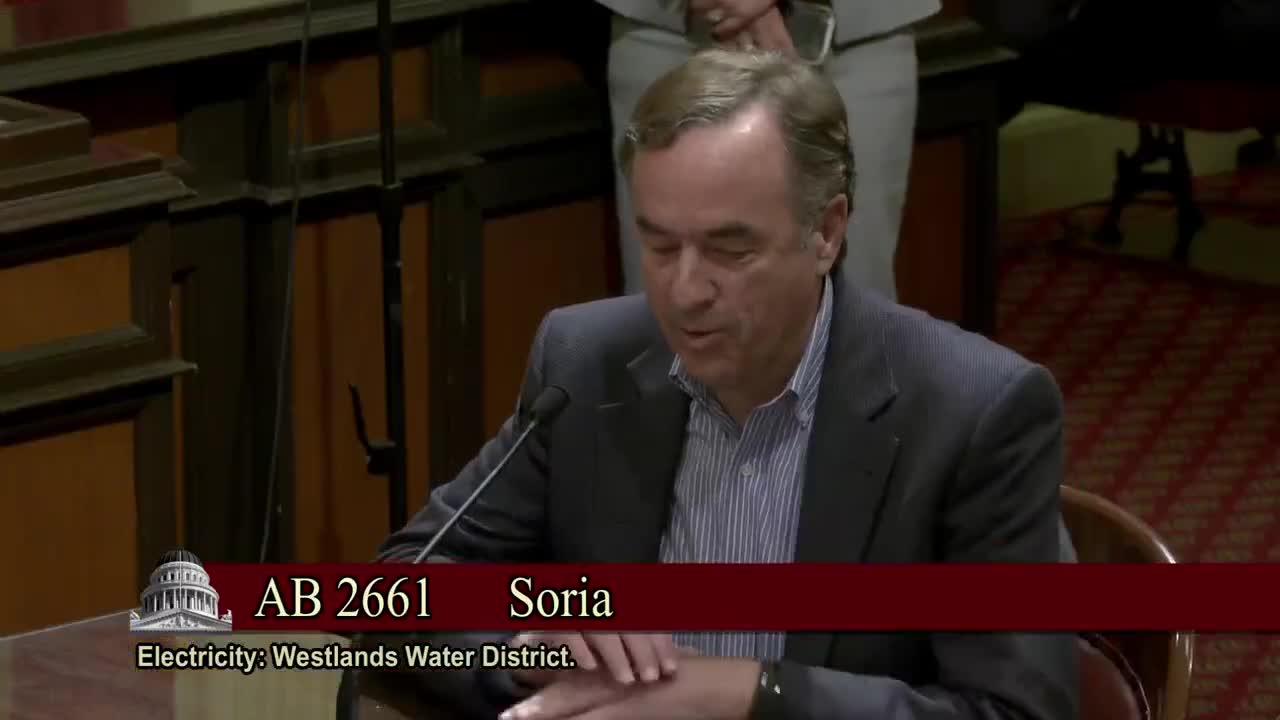 7MIN
Senate Standing Committee on Local Government
 39SEC
Assembly Floor
 7MIN
Assembly Standing Committee on Transportation
 51SEC
Assembly Standing Committee on Transportation
 10MIN
Assembly Standing Committee on Local Government
Bill Author