AB 2441: School safety: mandatory notifications.
- Session Year: 2023-2024
- House: Assembly
- Latest Version Date: 2024-08-23
Current Status:
Failed
(2024-08-31: Ordered to inactive file at the request of Senator Gonzalez.)
Introduced
In Committee
First Chamber
In Committee
Second Chamber
Enacted
What does this bill do?
The bill prevents students enrolled in a district from facing a criminal charge and fine for willfully disturbing a public school or school meeting. It also narrows principals’ police‑reporting duties by removing the requirement to report a student’s possession of certain controlled substances, while keeping required reports for drug sales and for incidents that trigger the federal Gun‑Free Schools Act (for example, a student bringing a firearm or weapon to campus).
The summary is provided by generative AI which can make mistakes. For original language, please view the details in the table below.
(1)Existing law provides that a person who willfully disturbs a public school or a public school meeting is guilty of a misdemeanor and subject to a fine of not more than $500.
TheThis bill would exempt from those misdemeanor and fine provisions a person who, at the time of the disturbance, is a pupil of the school district.
(2)Existing law requires, whenever an employee of a school district or county superintendent of schools is attacked, assaulted, or physically threatened by a pupil, the employee and a person under whose direction or supervision the employee is employed who has knowledge of the incident to promptly report the incident to specified law enforcement authorities. Under existing law, failure to make the report is an infraction punishable by a fine of not more than $1,000.This bill would expressly authorize, instead of require, an employee who is physically threatened by a pupil to report the incident, would eliminate the duty of a person under whose direction or supervision the employee is employed who has knowledge of the incident to report it, and would make conforming changes. The bill instead would require, whenever an employee is subject to an attack by a pupil that causes bodily harm sufficient to require immediate medical attention, the employee to notify specified law enforcement authorities and would eliminate the duty of a person under whose direction or supervision the employee is employed who has knowledge of the incident to report it. The bill would eliminate the above-described infraction provision for failure to make the report.(3)(2)Existing state law requires the principal of a school or the principals designee to notify the appropriate law enforcement authorities of the county or city in which the school is situated of certain acts committed by a pupil that may be unlawful, including, among others, the selling or possession of narcotics or other designated controlled or regulated substances, and acts of assault, as specified.
This bill instead would eliminate the requirement that the principal or principals designee notify the appropriate law enforcement authorities of possession of designated controlled or regulated substances by a pupil. The bill would require that the principal or principals designee notify the appropriate law enforcement authorities if a pupils act requires notification pursuant to the federal Gun-Free Schools Act of 1994, which conditions certain federal funding on a criminal or juvenile delinquency referral policy for a student who brings a firearm or weapon to a school.
(1)Existing law provides that any a person who willfully disturbs any a public school or any a public school meeting is guilty of a misdemeanor and subject to a fine of not more than $500.
The bill would exempt from those misdemeanor and fine provisions a person who, at the time of the disturbance, is a pupil of the school district.
(2)Existing law requires, if any whenever an employee of a school district or county superintendent of schools is attacked, assaulted, or physically threatened by any a pupil, the employee and any a person under whose direction or supervision the employee is employed who has knowledge of the incident are required to promptly report the incident to specified law enforcement authorities. Under existing law, failure to make the report is an infraction punishable by a fine of not more than $1,000.
This bill would expressly authorize, instead of require, the employee who was the target of the incident an employee who is physically threatened by a pupil to report it, the incident, would eliminate the duty of a person supervising or directing under whose direction or supervision the employee is employed who has knowledge of the incident to report it, and would make conforming changes. The bill instead would require, whenever an employee is subject to an attack by a pupil that causes bodily harm sufficient to require immediate medical attention, the employee to notify specified law enforcement authorities and would eliminate the duty of a person under whose direction or supervision the employee is employed who has knowledge of the incident to report it. The bill would eliminate the above-described infraction provision for failure to make the report.
(3)Existing state law requires the principal of a school or the principals designee to notify the appropriate law enforcement authorities of the county or city in which the school is situated of certain acts committed by a pupil that may be unlawful, including, among others, the selling or possession of narcotics or other designated controlled or regulated substances, and acts of assault, as specified.
This bill instead would eliminate the requirement that the principal or principals designee notify the appropriate law enforcement authorities of possession of designated controlled or regulated substances by a pupil. The bill would require that the principal or principals designee notify the appropriate law enforcement authorities if a pupils act requires notification pursuant to the federal Gun-Free Schools Act of 1994, which conditions certain federal funding on a criminal or juvenile delinquency referral policy for a student who brings a firearm or weapon to a school.
(1)Existing law provides that any person who willfully disturbs any public school or any public school meeting is guilty of a misdemeanor and subject to a fine of not more than $500.
The bill would exempt from those misdemeanor and fine provisions a person who, at the time of the disturbance, is a pupil of the school district.
(2)Existing law requires, if any employee of a school district or county superintendent of schools is attacked, assaulted, or physically threatened by any pupil, the employee and any person under whose direction or supervision the employee is employed who has knowledge of the incident are required to promptly report the incident to specified law enforcement authorities. Under existing law, failure to make the report is an infraction punishable by a fine of not more than $1,000 and acts by specified persons to inhibit or impede the making of the report is an infraction punishable by a fine of not less than $500 and not more than $1,000.
This bill would delete those infraction provisions for a failure to report and for inhibiting or impeding the making of the report. The bill would authorize, instead of require, the employee who was the target of the incident to make that notification and prohibit the governing board of a school district, a member of the governing board, a county superintendent of schools, and an employee of a school district or of the office of any county superintendent of schools from imposing any sanctions against a person making that notification. The bill would strongly encourage an employee of a school district or of the office of a county superintendent of schools to employ other means of correction, as provided, before considering a law enforcement referral. report it, would eliminate the duty of a person supervising or directing the employee to report it, and would make conforming changes.
(3)The federal Gun-Free Schools Act prohibits a local educational agency from receiving certain federal funds unless the local educational agency has a policy requiring referral to the criminal justice or juvenile delinquency system of any student who brings a firearm or weapon to a school served by the local educational agency. Existing law, the Gun-Free School Zone Act of 1995, provides that any person who possesses a firearm in a place that the person knows, or reasonably should know, is a school zone is guilty of a crime, as provided.Existing(3)Existing state law requires the principal of a school or the principals designee to notify the appropriate law enforcement authorities of the county or city in which the school is situated of certain acts committed by a pupil that may be unlawful, including, among others, the selling or possession of narcotics or other designated controlled or regulated substances, and acts of assault, as specified. Under existing law, a principal, the principals designee, or any other person reporting certain known or suspected acts is not civilly or criminally liable as a result of making any report authorized by these provisions unless it can be proven that a false report was made and that the person knew the report was false or the report was made with reckless disregard for the truth or falsity of the report, as provided.
This bill instead would require that notification only if the pupils acts require notification under the federal Gun Free Schools Act, a pupils acts violate the Gun-Free School Zone Act of 1995, or a pupil or nonpupils acts include possessing, selling, or otherwise furnishing a firearm or possessing an explosive. The bill would no longer provide the above-described exemption from civil or criminal liability for the making of a report under these provisions. eliminate the requirement that the principal or principals designee notify the appropriate law enforcement authorities of possession of designated controlled or regulated substances by a pupil. The bill would require that the principal or principals designee notify the appropriate law enforcement authorities if a pupils act requires notification pursuant to the federal Gun-Free Schools Act of 1994, which conditions certain federal funding on a criminal or juvenile delinquency referral policy for a student who brings a firearm or weapon to a school.
(1)Existing law provides that any person who willfully disturbs any public school or any public school meeting is guilty of a misdemeanor and subject to a fine of not more than $500.
The bill would exempt from those misdemeanor and fine provisions a person who, at the time of the disturbance, is a pupil of the school district.
(2)Existing law requires, if any employee of a school district or county superintendent of schools is attacked, assaulted, or physically threatened by any pupil, the employee and any person under whose direction or supervision the employee is employed who has knowledge of the incident are required to promptly report the incident to specified law enforcement authorities. Under existing law, failure to make the report is an infraction punishable by a fine of not more than $1,000 and acts by specified persons to inhibit or impede the making of the report is an infraction punishable by a fine of not less than $500 and not more than $1,000.
This bill would delete those infraction provisions for a failure to report and for inhibiting or impeding the making of the report. The bill would authorize, instead of require, the employee who was the target of the incident to make that notification and prohibit the governing board of a school district, a member of the governing board, a county superintendent of schools, and an employee of a school district or of the office of any county superintendent of schools from imposing any sanctions against a person making that notification. The bill would strongly encourage an employee of a school district or of the office of a county superintendent of schools to employ other means of correction, as provided, before considering a law enforcement referral.
(3)The federal Gun-Free Schools Act prohibits a local educational agency from receiving certain federal funds unless the local educational agency has a policy requiring referral to the criminal justice or juvenile delinquency system of any student who brings a firearm or weapon to a school served by the local educational agency. Existing law, the Gun-Free School Zone Act of 1995, provides that any person who possesses a firearm in a place that the person knows, or reasonably should know, is a school zone is guilty of a crime, as provided.
Existing state law requires the principal of a school or the principals designee to notify the appropriate law enforcement authorities of the county or city in which the school is situated of certain acts committed by a pupil that may be unlawful, including, among others, the selling or possession of narcotics or other designated controlled or regulated substances, and acts of assault, as specified. Under existing law, a principal, the principals designee, or any other person reporting certain known or suspected acts is not civilly or criminally liable as a result of making any report authorized by these provisions unless it can be proven that a false report was made and that the person knew the report was false or the report was made with reckless disregard for the truth or falsity of the report, as provided.
This bill instead would require that notification only if the pupils acts require notification under the federal Gun Free Schools Act, a pupils acts violate the Gun-Free School Zone Act of 1995, or a pupil or nonpupils acts include possessing, selling, or otherwise furnishing a firearm or possessing an explosive. The bill would no longer provide the above-described exemption from civil or criminal liability for the making of a report under these provisions.
(a)A person who willfully disturbs a public school or a public school meeting is guilty of a misdemeanor, and shall be punished by a fine of not more than five hundred dollars ($500).
(b)This section shall not apply to a pupil who is enrolled in the school district at the time of the willful disturbance described in subdivision (a).
SEC. 2.Section 44014 of the Education Code is amended to read:44014.(a)(1)Whenever an employee of a school district or of the office of a county superintendent of schools is physically threatened by a pupil, the employee may notify the appropriate law enforcement authorities of the county or city in which the incident occurred.(2)Whenever an employee of a school district or of the office of a county superintendent of schools is subject to an attack by a pupil that causes bodily harm sufficient to require immediate medical attention, the employee shall notify the appropriate law enforcement authorities of the county or city in which the incident occurred.(b)A member of the governing board of a school district, a county superintendent of schools, or an employee of a school district or the office of a county superintendent of schools, shall not directly or indirectly inhibit or impede the making of the report pursuant to subdivision (a). An act to inhibit or impede the making of a report shall be an infraction, and shall be punishable by a fine of not less than five hundred dollars ($500) and not more than one thousand dollars ($1,000).(c)The governing board of a school district, a member of the governing board of a school district, a county superintendent of schools, or an employee of a school district or of the office of a county superintendent of schools shall not impose any sanctions against a person for making a report pursuant to subdivision (a).SEC. 3.SEC. 2.Section 48902 of the Education Code is amended to read:48902.(a)The principal of a school or the principals designee shall, before the suspension or expulsion of a pupil, notify the appropriate law enforcement authorities of the county or city in which the school is located of any acts of the pupil that may violate Section 245 of the Penal Code.
(b)The principal of a school or the principals designee shall, within one schoolday after suspension or expulsion of a pupil, notify, by telephone or any other appropriate method chosen by the school, the appropriate law enforcement authorities of the county or the school district in which the school is located of any acts of the pupil that may violate subdivision (d) of Section 48900.
(c)Notwithstanding subdivision (b), the principal of a school or the principals designee shall notify the appropriate law enforcement authorities of the county or city in which the school is located of any acts of a pupil that may involve the sale of narcotics or of a controlled substance.
(d)The principal of a school or the principals designee shall notify the appropriate law enforcement authorities of the county or city in which the school is located of an act of a pupil that requires notification pursuant to the federal Gun-Free Schools Act of 1994 (20 U.S.C. Sec. 7961(h)), an act of a pupil that violates Section 626.9 or 626.10 of the Penal Code, or an act described in paragraph (1) or (5) of subdivision (c) of Section 48915 committed by a pupil or nonpupil on a schoolsite.
(e)A principal, the principals designee, or any other person reporting a known or suspected act is not civilly or criminally liable as a result of making a report authorized by this article unless it can be proven that a false report was made and that the person knew the report was false or the report was made with reckless disregard for the truth or falsity of the report.
(f)The principal of a school or the principals designee reporting a criminal act committed by a schoolage individual with exceptional needs, as defined in Section 56026, shall ensure that copies of the special education and disciplinary records of the pupil are transmitted, as described in Section 1415(k)(6) of Title 20 of the United States Code, for consideration by the appropriate authorities to whom the principal of the school or the principals designee reports the criminal act. Any copies of the pupils special education and disciplinary records may be transmitted only to the extent permissible under the federal Family Educational Rights and Privacy Act of 1974 (20 U.S.C. Sec. 1232g et seq.).
(a)Any A person who willfully disturbs any a public school or any a public school meeting is guilty of a misdemeanor, and shall be punished by a fine of not more than five hundred dollars ($500).
(b)This section shall not apply to a pupil who is enrolled in the school district at the time of the willful disturbance described in subdivision (a).
SEC. 2.Section 44014 of the Education Code is amended to read:44014.(a)(1)Whenever any an employee of a school district or of the office of a county superintendent of schools is attacked, assaulted, or physically threatened by any a pupil, the employee may notify the appropriate law enforcement authorities of the county or city in which the incident occurred.
(2)Whenever an employee of a school district or of the office of a county superintendent of schools is subject to an attack by a pupil that causes bodily harm sufficient to require immediate medical attention, the employee shall notify the appropriate law enforcement authorities of the county or city in which the incident occurred.
(b)A member of the governing board of a school district, a county superintendent of schools, or an employee of any a school district or the office of any a county superintendent of schools, shall not directly or indirectly inhibit or impede the making of the report pursuant to subdivision (a). An act to inhibit or impede the making of a report shall be an infraction, and shall be punishable by a fine of not less than five hundred dollars ($500) and not more than one thousand dollars ($1,000).
(c)The governing board of a school district, a member of the governing board of a school district, a county superintendent of schools, or an employee of a school district or of the office of a county superintendent of schools shall not impose any sanctions against a person for making a report pursuant to subdivision (a).
SEC. 3.Section 48902 of the Education Code is amended to read:48902.(a)The principal of a school or the principals designee shall, before the suspension or expulsion of any a pupil, notify the appropriate law enforcement authorities of the county or city in which the school is located of any acts of the pupil that may violate Section 245 of the Penal Code.
(b)The principal of a school or the principals designee shall, within one schoolday after suspension or expulsion of any a pupil, notify, by telephone or any other appropriate method chosen by the school, the appropriate law enforcement authorities of the county or the school district in which the school is located of any acts of the pupil that may violate subdivision (d) of Section 48900.
(c)Notwithstanding subdivision (b), the principal of a school or the principals designee shall notify the appropriate law enforcement authorities of the county or city in which the school is located of any acts of a pupil that may involve the sale of narcotics or of a controlled substance.
(d)The principal of a school or the principals designee shall notify the appropriate law enforcement authorities of the county or city in which the school is located of an act of a pupil that requires notification pursuant to the federal Gun-Free Schools Act of 1994 (20 U.S.C. Sec. 7961(h)), an act of a pupil that violates Section 626.9 or 626.10 of the Penal Code, or an act described in paragraph (1) or (5) of subdivision (c) of Section 48915 committed by a pupil or nonpupil on a schoolsite.
(e)A principal, the principals designee, or any other person reporting a known or suspected act is not civilly or criminally liable as a result of making any a report authorized by this article unless it can be proven that a false report was made and that the person knew the report was false or the report was made with reckless disregard for the truth or falsity of the report.
(f)The principal of a school or the principals designee reporting a criminal act committed by a schoolage individual with exceptional needs, as defined in Section 56026, shall ensure that copies of the special education and disciplinary records of the pupil are transmitted, as described in Section 1415(k)(6) of Title 20 of the United States Code, for consideration by the appropriate authorities to whom the principal of the school or the principals designee reports the criminal act. Any copies of the pupils special education and disciplinary records may be transmitted only to the extent permissible under the federal Family Educational Rights and Privacy Act of 1974 (20 U.S.C. Sec. 1232g et seq.).
(a)Any person who willfully disturbs any public school or any public school meeting is guilty of a misdemeanor, and shall be punished by a fine of not more than five hundred dollars ($500).
(b)This section shall not apply to a pupil who is enrolled in the school district at the time of the willful disturbance described in subdivision (a).
SEC. 2.Section 44014 of the Education Code is amended to read:44014.(a)Whenever any employee of a school district or of the office of a county superintendent of schools is attacked, assaulted, or physically threatened by any pupil, the employee may notify the appropriate law enforcement authorities of the county or city in which the incident occurred.
(b)An employee of a school district or of the office of a county superintendent of schools is strongly encouraged to employ other means of correction, as described in subdivision (b) of Section 48900.5, before considering a law enforcement referral.(b)A member of the governing board of a school district, a county superintendent of schools, or an employee of any school district or the office of any county superintendent of schools, shall not directly or indirectly inhibit or impede the making of the report pursuant to subdivision (a). An act to inhibit or impede the making of a report shall be an infraction, and shall be punishable by a fine of not less than five hundred dollars ($500) and not more than one thousand dollars ($1,000).
(c)The governing board of a school district, a member of the governing board of a school district, a county superintendent of schools, or an employee of a school district or of the office of a county superintendent of schools shall not impose any sanctions against a person for making a report pursuant to subdivision (a) for making the report. (a).
SEC. 3.Section 48902 of the Education Code is amended to read:48902.(a)The principal of a school or the principals designee shall notify the appropriate law enforcement authorities of the county or city in which the school is located of an act of a pupil that requires notification pursuant to the federal Gun-Free Schools Act (20 U.S.C. Sec. 7961(h)), an act of a pupil that violates Section 626.9 of the Penal Code, or an act, of a pupil or nonpupil, described in paragraph (1) or (5) of subdivision (c) of Section 48915.(b)The principal of a school or the principals designee reporting a criminal act committed by a schoolage individual with exceptional needs, as defined in Section 56026, shall ensure that copies of the special education and disciplinary records of the pupil are transmitted, as described in Section 1415(k)(6) of Title 20 of the United States Code, for consideration by the appropriate authorities to whom the principal of the school or the principals designee reports the criminal act. Any copies of the pupils special education and disciplinary records may be transmitted only to the extent permissible under the federal Family Educational Rights and Privacy Act of 1974 (20 U.S.C. Sec. 1232g et seq.).SEC. 3.Section 48902 of the Education Code is amended to read:48902.(a)The principal of a school or the principals designee shall, before the suspension or expulsion of any pupil, notify the appropriate law enforcement authorities of the county or city in which the school is situated, located of any acts of the pupil that may violate Section 245 of the Penal Code.
(b)The principal of a school or the principals designee shall, within one schoolday after suspension or expulsion of any pupil, notify, by telephone or any other appropriate method chosen by the school, the appropriate law enforcement authorities of the county or the school district in which the school is situated located of any acts of the pupil that may violate subdivision (c) or (d) of Section 48900.
(c)Notwithstanding subdivision (b), the principal of a school or the principals designee shall notify the appropriate law enforcement authorities of the county or city in which the school is located of any acts of a pupil that may involve the sale of narcotics or of a controlled substance.
(c)Notwithstanding subdivision (b), the(d)The principal of a school or the principals designee shall notify the appropriate law enforcement authorities of the county or city in which the school is located of any acts an act of a pupil that may involve the possession or sale of narcotics or of a controlled substance or a violation of requires notification pursuant to the federal Gun-Free Schools Act of 1994 (20 U.S.C. Sec. 7961(h)), an act of a pupil that violates Section 626.9 or 626.10 of the Penal Code. The principal of a school or the principals designee shall report any act specified Code, or an act described in paragraph (1) or (5) of subdivision (c) of Section 48915 committed by a pupil or nonpupil on a schoolsite to the city police or county sheriff with jurisdiction over the school and the school security department or the school police department, as applicable. schoolsite.
(d)(e)A principal, the principals designee, or any other person reporting a known or suspected act described in subdivision (a) or (b) is not civilly or criminally liable as a result of making any report authorized by this article unless it can be proven that a false report was made and that the person knew the report was false or the report was made with reckless disregard for the truth or falsity of the report.
(e)(f)The principal of a school or the principals designee reporting a criminal act committed by a schoolage individual with exceptional needs, as defined in Section 56026, shall ensure that copies of the special education and disciplinary records of the pupil are transmitted, as described in Section 1415(k)(6) of Title 20 of the United States Code, for consideration by the appropriate authorities to whom he or she the principal of the school or the principals designee reports the criminal act. Any copies of the pupils special education and disciplinary records may be transmitted only to the extent permissible under the federal Family Educational Rights and Privacy Act of 1974 (20 U.S.C. Sec. 1232g et seq.).
(a)Any person who willfully disturbs any public school or any public school meeting is guilty of a misdemeanor, and shall be punished by a fine of not more than five hundred dollars ($500).
(b)This section shall not apply to a pupil who is enrolled in the school district at the time of the willful disturbance described in subdivision (a).
SEC. 2.Section 44014 of the Education Code is amended to read:44014.(a)Whenever any employee of a school district or of the office of a county superintendent of schools is attacked, assaulted, or physically threatened by any pupil, it shall be the duty of the employee, and the duty of any person under whose direction or supervision the employee is employed in the public school system who has knowledge of the incident, to promptly report the incident to the employee may notify the appropriate law enforcement authorities of the county or city in which the incident occurred. Failure to make the report shall be an infraction punishable by a fine of not more than one thousand dollars ($1,000).
(b)Compliance with school district governing board procedures relating to the reporting of, or facilitation of reporting of, the incidents specified in subdivision (a) shall not exempt a person under a duty to make the report prescribed by subdivision (a) from making the report.(c)A member of the governing board of a school district, a county superintendent of schools, or an employee of any school district or the office of any county superintendent of schools, shall not directly or indirectly inhibit or impede the making of the report prescribed by subdivision (a) by a person under a duty to make the report. An act to inhibit or impede the making of a report shall be an infraction, and shall be punishable by a fine of not less than five hundred dollars ($500) and not more than one thousand dollars ($1,000).(b)An employee of a school district or of the office of a county superintendent of schools is strongly encouraged to employ other means of correction, as described in subdivision (b) of Section 48900.5, before considering a law enforcement referral.
(d)Neither the(c)The governing board of a school district, a member of the governing board, board of a school district, a county superintendent of schools, nor or an employee of a school district or of the office of any a county superintendent of schools shall not impose any sanctions against a person under a duty to make the report prescribed by making a report pursuant to subdivision (a) for making the report.
SEC. 3.Section 48902 of the Education Code is amended to read:48902.(a)The principal of a school or the principals designee shall, before the suspension or expulsion of any pupil, shall notify the appropriate law enforcement authorities of the county or city in which the school is situated, located of any acts an act of the a pupil that may violate Section 245 of the Penal Code. requires notification pursuant to the federal Gun-Free Schools Act (20 U.S.C. Sec. 7961(h)), an act of a pupil that violates Section 626.9 of the Penal Code, or an act, of a pupil or nonpupil, described in paragraph (1) or (5) of subdivision (c) of Section 48915.
(b)The principal of a school or the principals designee shall, within one schoolday after suspension or expulsion of any pupil, notify, by telephone or any other appropriate method chosen by the school, the appropriate law enforcement authorities of the county or the school district in which the school is situated of any acts of the pupil that may violate subdivision (c) or (d) of Section 48900.(c)Notwithstanding subdivision (b), the principal of a school or the principals designee shall notify the appropriate law enforcement authorities of the county or city in which the school is located of any acts of a pupil that may involve the possession or sale of narcotics or of a controlled substance or a violation of Section 626.9 or 626.10 of the Penal Code. The principal of a school or the principals designee shall report any act specified in paragraph (1) or (5) of subdivision (c) of Section 48915 committed by a pupil or nonpupil on a schoolsite to the city police or county sheriff with jurisdiction over the school and the school security department or the school police department, as applicable.(d)A principal, the principals designee, or any other person reporting a known or suspected act described in subdivision (a) or (b) is not civilly or criminally liable as a result of making any report authorized by this article unless it can be proven that a false report was made and that the person knew the report was false or the report was made with reckless disregard for the truth or falsity of the report.(e)(b)The principal of a school or the principals designee reporting a criminal act committed by a schoolage individual with exceptional needs, as defined in Section 56026, shall ensure that copies of the special education and disciplinary records of the pupil are transmitted, as described in Section 1415(k)(6) of Title 20 of the United States Code, for consideration by the appropriate authorities to whom he or she the principal of the school or the principals designee reports the criminal act. Any copies of the pupils special education and disciplinary records may be transmitted only to the extent permissible under the federal Family Educational Rights and Privacy Act of 1974 (20 U.S.C. Sec. 1232g et seq.).
|
Date
|
Status
|
|---|---|
| Aug 31, 2024 | Ordered to inactive file at the request of Senator Gonzalez. |
| Aug 29, 2024 | Reconsideration granted. (Ayes 40. Noes 0.) |
| Aug 29, 2024 | Read third time. Refused passage. (Ayes 20. Noes 14.). |
| Aug 29, 2024 | Motion to reconsider made by Senator Bradford. |
| Aug 26, 2024 | Read second time. Ordered to third reading. |
| Aug 23, 2024 | Read third time and amended. Ordered to second reading. |
| Aug 6, 2024 | Read second time. Ordered to third reading. |
| Aug 5, 2024 | From committee: Be ordered to second reading pursuant to Senate Rule 28.8. |
| Jul 3, 2024 | Read second time and amended. Re-referred to Com. on APPR. |
| Jul 3, 2024 | From committee: Amend, and do pass as amended and re-refer to Com. on APPR. (Ayes 5. Noes 2.) (July 3). |
| Jun 7, 2024 | In committee: Hearing postponed by committee. |
| Jun 5, 2024 | Referred to Com. on ED. |
| May 24, 2024 | In Senate. Read first time. To Com. on RLS. for assignment. |
| May 23, 2024 | Read third time. Passed. Ordered to the Senate. (Ayes 41. Noes 22. Page 5649.) |
| May 16, 2024 | Read second time. Ordered to third reading. |
| May 15, 2024 | From committee: Do pass. (Ayes 9. Noes 4.) (May 15). |
| May 1, 2024 | Re-referred to Com. on APPR. |
| Apr 30, 2024 | Read second time and amended. |
| Apr 29, 2024 | From committee: Amend, and do pass as amended and re-refer to Com. on APPR. (Ayes 5. Noes 2.) (April 24). |
| Feb 26, 2024 | Referred to Com. on ED. |
| Feb 14, 2024 | From printer. May be heard in committee March 15. |
| Feb 13, 2024 | Read first time. To print. |
|
Date
|
Description
|
Location
|
Votes
|
|
|---|---|---|---|---|
| Aug 29, 2024 | Assembly 3rd Reading AB2441 Kalra et al. By Bradford Reconsider | Senate Floor |
Passed |
|
| Aug 29, 2024 | Assembly 3rd Reading AB2441 Kalra et al. By Bradford | Senate Floor |
Failed |
|
| Jul 3, 2024 | Do pass as amended, but first amend, and re-refer to the Committee on [Appropriations] | Senate Standing Committee on Education |
Passed |
|
| May 23, 2024 | AB 2441 Kalra Assembly Third Reading | Assembly Floor |
Passed |
|
| May 15, 2024 | Do pass. | Assembly Standing Committee on Appropriations |
Passed |
|
| Apr 24, 2024 | Do pass as amended and be re-referred to the Committee on [Appropriations] | Assembly Standing Committee on Education |
Passed |
This list shows positions taken on this bill by organizations on the date displayed, which is linked to the original source.
Positions by individuals are not included.
|
Organization
|
Position
|
Date
|
|---|---|---|
| Aclu California Action | ** Support | |
| Administrators Association of San Diego City Schools | ** Against | |
| Alliance for Boys and Men of Color | ** Support | |
| Alliance for Children's Rights | ** Support | |
| Alliance San Diego | ** Support | |
| Asian Americans Advancing Justice Southern California | ** Support | |
| Association Of California School Administrators | ** Support | |
| Back to the Start | ** Support | |
| Be Smooth | ** Support | |
| Bill Wilson Center | ** Support | |
| Black Organizing Project | ** Support | |
| Black Parallel School board | ** Support | |
| Brothers, Sons, Selves | ** Support | |
| California Black Power Network | ** Support | |
| California Federation Of Teachers | ** Support | |
| California for Safety and Justice | ** Support | |
| California Immigrant Policy Center | ** Support | |
| California Narcotic Officers Association | * Against | Jul 3, 2024 |
| California Police Chiefs Association | ** Against | |
| California Public Defenders Association | ** Support | |
| California School-Based Health Alliance | ** Support | |
| California State Sheriffs' Association | ** Against | |
| California Youth Empowerment Network | ** Support | |
| Californians for Justice | ** Support | |
| Cancel the Contract | ** Support | |
| Center For Public Interest LawChildrenS Advocacy InstituteUniversity Of San Diego | ** Support | |
| Center on Juvenile and Criminal Justice | ** Support | |
| Child Care Law Center | ** Support | |
| Children Now | ** Support | |
| Children's Defense Fund-California | ** Support | |
| CHISPA | ** Support | |
| Coleman Advocates for Children and Youth | ** Support | |
| Communities United for Restorative Youth Justice | ** Support | |
| Community Asset Development Redefining Education | ** Support | |
| Community Interventions | ** Support | |
| Congregations Organized for Prophetic Engagement | ** Support | |
| Courage California | ** Support | |
| Culver City Democratic Club | ** Support | |
| Disability Rights California | ** Support | |
| Dolores Huerta Foundation | ** Support | |
| East Bay Community Law Center | ** Support | |
| Equal Justice Society | ** Support | |
| Freedom 4 Youth | ** Support | |
| Fresh Lifelines for Youth | ** Support | |
| Indivisible Ca Statestrong | ** Support | |
| Initiate Justice | ** Support | |
| Legal Services for Prisoners with Children | ** Support | |
| Mental Health America of California | ** Support | |
| Milpa Collective | ** Support | |
| National Center for Youth Law | ** Support | |
| National Health Law Program | ** Support | |
| On The Move | ** Support | |
| Orange County Justice Initiative | ** Support | |
| Orange County Sheriff's Department | ** Against | |
| Pacific Juvenile Defender Center | ** Support | |
| Peace Officers Research Association Of California | ** Against | |
| Public Advocates | ** Support | |
| Public Counsel | ** Support | |
| Riverside County Sheriff Chad Bianco | * Against | Jul 3, 2024 |
| Riverside Sheriffs Association | * Against | Apr 24, 2024 |
| Sacramento County Sheriff Jim Cooper | ** Against | |
| San Jose Unified Equity Coalition | ** Support | |
| San Lorenzo Unified School District | * Support | Apr 24, 2024 |
| Santa Clara County Office Of Education | ** Support | |
| Small School Districts Association | ** Support | |
| Social Justice Learning Institute | ** Support | |
| Southeast Asia Resource Action Center | ** Support | |
| Students Deserve | ** Support | |
| The Amelia Ann Adams Whole Life Center | ** Support | |
| The Children's Partnership | ** Support | |
| The Collective for Liberatory Lawyering | ** Support | |
| Voices for Progress | ** Support | |
| Young Women's Freedom Center | ** Support | |
| Youth Justice Education Clinic, Center for Juvenile Law and Policy, Loyola Law School | ** Support | |
| Youth Law Center | ** Support |
CONCURRENCE IN SENATE AMENDMENTS
CSA1 Bill Id:AB 2441
Author:(Kalra)
As Amended Ver:August 23, 2024
Majority vote
SUMMARY
Eliminates criminal penalties for "willful disturbance" of a school or school meeting by students enrolled in the school district, removes mandatory notifications, and grants a school principal discretion to report specified incidents, including the possession of narcotics or other controlled substances, to law enforcement if it does not include a firearm, as specified.
Senate Amendments
Removes references to the requirement to notify law enforcement when an employee of a school district or county office of education being attacked, assaulted, or physically threatened by a pupil, and thus reverts to current law, requiring such notifications.
COMMENTS
School-to-prison pipeline. The school-to-prison pipeline is a term often used to describe the connection between exclusionary punishments like suspensions and expulsions and involvement in the criminal justice system. Research indicates that a variety of factors contribute to the school-to-prison pipeline. Some studies indicate that school personnel may be biased in the ways they respond to Black students. The lack of teacher preparation and support has been documented to be one of the contributing factors as well. Researchers have also referred to the similarities between urban schools and other schools with high concentrations of Black students, showing that schools with high concentrations of Black students implement more punitive approaches to discipline. Finally, living in poverty increases the chances that Black students will endure the effects of institutional discrimination associated with the American educational system. (Morgan, 2021)
Disparities in the rate of school suspensions. The disproportionate incidence of suspensions and expulsions among certain populations of students, including African American students, has gained nationwide attention in recent years. A 2018 report by the U.S. Government Accountability Office (GAO), K-12 Education: Discipline Disparities for Black Students, Boys, and Students with Disabilities, found that black students, boys, and students with disabilities were disproportionately disciplined in K-12 schools, based upon an analysis of Civil Rights Data Collection (CRDC) data.
Concerns regarding law enforcement presence on school campuses. In recent years, concerns have been raised regarding the role of law enforcement officers on school campuses, as in some cases, police officers have become involved in administering disciplinary actions. Some contend that the increase in student-police interactions has resulted in thousands of students being pushed into the school-to-prison pipeline. A 2016 report by the American Civil Liberties Union (ACLU) of California notes that student-police interactions may be disproportionally impacting certain student groups.
The National Association of School Resource Officers (NASRO) notes that school resource officers (SROs) who follow NASRO's best practices do not arrest students for disciplinary issues that would be handled by teachers or administrators if the SRO were not present. They contend that SROs help troubled students avoid involvement with the juvenile justice system.
According to the Author
"For far too long, the over-policing of children in our public schools has fueled the school-to-prison pipeline, and it is time to end this harmful practice and protect future generations of students. Research shows that there are long-term effects on youth when they come in contact with law enforcement, juvenile, or criminal legal systems. Students are less likely to graduate high school and more likely to wind up in jail or prison if they make contact with law enforcement. Our existing system has led to alarming disparities in the type of students who are most likely to suffer from these actions. Black students, Latino students, students of color, and students with disabilities are disproportionately referred to law enforcement, cited, and arrested. Referring students to law enforcement will only cause further harm to the minor than correcting their behavior or addressing the issue.
Teachers and staff still retain the right to call law enforcement if they feel that is the right response. However, giving California educators the flexibility to support students with alternative methods and needed services for their behavioral issues will give students an opportunity to get the help and resources they need. These laws require notification regardless of the particular circumstances of the incident or the individual student's situation. Furthermore, California students can also be criminally prosecuted for "willful disturbance" of public schools or public school meetings. This provision has led to students being arrested for offenses such as knocking on classroom doors during class.
AB 2441 is the next step to keep students in the classroom where they can safely learn and thrive. This bill will eliminate some state mandates for schools to notify law enforcement, thereby empowering schools to adopt non-punitive, supportive, trauma-informed, and health-based approaches to school-related behaviors, which will give educators the flexibility to determine when to notify law enforcement and eliminate the criminal penalty against students for "willful disturbance" of public schools and public school meetings."
Arguments in Support
The American Civil Liberties Union California Action, a co-sponsor writes, "Existing law often forces teachers, school administrators, and staff to notify law enforcement about certain school-related behavior even when they would prefer to address the issue with more effective alternative approaches. When an incident falls under the mandatory notification requirements, educators are not allowed to consider the totality of the circumstances and use their discretion.
AB 2441 makes positive and commonsense changes to existing law. First, it eliminates outdated, zero tolerance mandates for school notification of law enforcement, thereby empowering schools to adopt non-punitive, supportive, trauma-informed, and health-based approaches to school-related behaviors. These alternatives to addressing student behavior have been shown to promote campus safety and positive student mental health.
Decades of research show that young people suffer long-term harm when they experience even minimal contact with the juvenile or criminal-legal systems. Young people arrested in school are less likely to graduate from high school and more likely to become incarcerated. Our existing system has also led to troubling disparities in the type of students who are most likely to suffer these long-term consequences. Alarmingly, Black, Indigenous, and Latinx students, as well as students with disabilities, are disproportionately referred to law enforcement, cited, and arrested.
Twenty-five percent of law enforcement stops of students were redirected to a referral to a school administrator or counselor. California's mandatory notifications law forced these children to have unnecessary police contact even though the appropriate intervention was available in the school already. For these stops and others, law enforcement interactions create an incalculable mental, physical, and emotional toll on the well-being of students, parents, and families. And the data shows that Black students are especially vulnerable to the harms of these stops–Black students have the highest rate of being handcuffed as a result of a stop, but the lowest rate of being referred to a school counselor. The data also indicates that schools refer students with disabilities to law enforcement at a higher rate than other students."
Arguments in Opposition
The Orange County Sheriff's Department writes, "By eliminating requirements for school personnel to notify law enforcement of unlawful activity, this bill erodes the collaboration between law enforcement and school staff that is necessary to prevent threats and keep our students safe.
The bill removes penalties for students who willfully disturb a school. The proposed change and the author's press statement suggest that a partnership between school personnel and their local law enforcement is negative or detrimental to students. If passed this bill could very well be a first step toward prohibiting proven best practices like the use of school resource officers."
FISCAL COMMENTS
According to the Assembly Appropriations Committee, "minor Proposition 98 General Fund costs to school districts to provide guidance to school principals and other school employees on updated requirements related to reporting student incidents to law enforcement."
VOTES:
ASM EDUCATION: 5-2-0
YES: Muratsuchi, Addis, Alvarez, Bonta, McCarty
NO: Flora, Hoover
ASM APPROPRIATIONS: 9-4-2
YES: Wicks, Arambula, Bryan, Wendy Carrillo, Mike Fong, Grayson, Haney, Hart, Pellerin
NO: Sanchez, Dixon, Jim Patterson, Ta
ABS, ABST OR NV: Calderon, Villapudua
ASSEMBLY FLOOR: 41-22-17
YES: Addis, Aguiar-Curry, Alvarez, Arambula, Bauer-Kahan, Bennett, Berman, Bonta, Bryan, Juan Carrillo, Connolly, Mike Fong, Friedman, Gabriel, Garcia, Haney, Hart, Jackson, Jones-Sawyer, Kalra, Lee, Low, Lowenthal, McCarty, McKinnor, Muratsuchi, Ortega, Papan, Pellerin, Quirk-Silva, Rendon, Reyes, Santiago, Ting, Ward, Weber, Wicks, Wilson, Wood, Zbur, Robert Rivas
NO: Alanis, Bains, Chen, Davies, Dixon, Flora, Vince Fong, Gallagher, Grayson, Hoover, Irwin, Lackey, Pacheco, Jim Patterson, Joe Patterson, Petrie-Norris, Ramos, Rodriguez, Sanchez, Ta, Waldron, Wallis
ABS, ABST OR NV: Boerner, Calderon, Wendy Carrillo, Cervantes, Megan Dahle, Essayli, Gipson, Holden, Maienschein, Mathis, Stephanie Nguyen, Luz Rivas, Blanca Rubio, Schiavo, Soria, Valencia, Villapudua
SENATE FLOOR: 20-14-6
YES: Allen, Ashby, Atkins, Becker, Blakespear, Bradford, Cortese, Durazo, Eggman, Gonzalez, Laird, Limón, McGuire, Menjivar, Padilla, Skinner, Smallwood-Cuevas, Stern, Wahab, Wiener
NO: Alvarado-Gil, Archuleta, Caballero, Dahle, Glazer, Grove, Hurtado, Jones, Min, Nguyen, Niello, Ochoa Bogh, Seyarto, Wilk
ABS, ABST OR NV: Dodd, Newman, Portantino, Roth, Rubio, Umberg
SENATE FLOOR: 40-0-0
YES: Allen, Alvarado-Gil, Archuleta, Ashby, Atkins, Becker, Blakespear, Bradford, Caballero, Cortese, Dahle, Dodd, Durazo, Eggman, Glazer, Gonzalez, Grove, Hurtado, Jones, Laird, Limón, McGuire, Menjivar, Min, Newman, Nguyen, Niello, Ochoa Bogh, Padilla, Portantino, Roth, Rubio, Seyarto, Skinner, Smallwood-Cuevas, Stern, Umberg, Wahab, Wiener, Wilk
UPDATED
VERSION: August 23, 2024
CONSULTANT: Debbie Look / ED. / (916) 319-2087 FN: 0004911
SENATE RULES COMMITTEE Office of Senate Floor Analyses (916) 651-1520 Fax: (916) 327-4478 | AB 2441 |
THIRD READING
Bill No: AB 2441
Author: Kalra (D), et al.
Amended: 8/23/24 in Senate
Vote: 21
SENATE EDUCATION COMMITTEE: 5-2, 7/3/24
AYES: Newman, Cortese, Glazer, Gonzalez, Smallwood-Cuevas
NOES: Ochoa Bogh, Wilk
SENATE APPROPRIATIONS COMMITTEE: Senate Rule 28.8
ASSEMBLY FLOOR: 41-22, 5/23/24 - See last page for vote
SUBJECT: School safety: mandatory notifications
SOURCE: ACLU California Action
Alliance for Boys and Men of Color
Black Organizing Project
Disability Rights California
Dolores Huerta Foundation
Public Counsel
DIGEST:
- This bill clarifies willful disturbances at a public school meeting does not apply to students enrolled in the school district at the time of the willful disturbance and requires a school principal, or their designee, to report incidents, as specified to law enforcement.
Senate Floor Amendments of 8/23/24 removes the amendments made to section 44014 of the education code and reverts section 44014 of the education code back to existing law, requiring mandatory notification to law enforcement if a pupil attacks, assaults, or physically threatens an employee of a school district or of the office of a county superintendent of schools.
ANALYSIS:
Existing law:
- Provides that any person who willfully disturbs any public school or any public school meeting is guilty of a misdemeanor, and shall be punished by a fine of not more than $500 and requires local educational agencies (LEAs) notify law enforcement. (Education Code (EC) § 32210)
- Requires the principal of a school, or their designee, shall notify law enforcement of any acts of a pupil that may involve the possession or sale of narcotics or of a controlled substance. (EC § 48902)
- Requires the principal or superintendent of schools to immediately suspend and recommend expulsion of a pupil that he or she determines has committed any of the following acts at school or at a school activity off school grounds:
- Possessing, selling, or otherwise furnishing a firearm, as specified.
- Brandishing a knife at another person.
- Unlawfully selling of controlled substances, as specified in Chapter 2 (commencing with Section 11053) of the Health and Safety Code.
- Committing or attempting to commit a sexual assault as specified.
- Possession of an explosive. (EC § 48915)
- Establishes the Gun-Free School Zone Act of 1995, as specified. (Penal (PEN) Code § 626.9)
- Any person, except a duly appointed peace officer a full-time paid peace officer of another state or the federal government who is carrying out official duties while in this state, a person summoned by any officer to assist in making arrests or preserving the peace while the person is actually engaged in assisting any officer, or a member of the military forces of this state or the United States who is engaged in the performance of his or her duties, who brings or possesses any dirk, dagger, ice pick, knife having a blade longer than 21/2 inches, folding knife with a blade that locks into place, razor with an unguarded blade, taser, or stun gun, any instrument that expels a metallic projectile, such as a BB or a pellet, through the force of air pressure, CO2 pressure, or spring action, or any spot marker gun, upon the grounds of, or within, any public or private school providing instruction in kindergarten or any of grades 1 to 12, inclusive, is guilty of a public offense, punishable by imprisonment in a county jail not exceeding one year, or by imprisonment as specified. (Pen Code § 626.10 (a))
This bill:
- Clarifies existing law regarding any person who willful disturbances a public school meeting, does not apply to a pupil who is enrolled in the school district at the time of the willful disturbance.
- Requires the principal of a school or the principal’s designee to notify law enforcement if a pupil sells, rather than possesses or sells as stipulated in statute, of a narcotic or controlled substance.
- Requires the principal of a school or the principal’s designee to notify law enforcement if a pupil possesses a firearm, weapon, or knife, as specified, or possesses, sells, or furnishes, a firearm; brandishes a knife at another person; unlawfully sells a controlled substance, as specified, commits or attempts to commit sexual assault, or possess an explosive.
Comments
- Need for the bill. According to the author, “For far too long, the over-policing of children in our public schools has fueled the school-to-prison pipeline, and it is time to end this harmful practice and protect future generations of students. Research shows that there are long-term effects on youth when they come in contact with law enforcement, juvenile, or criminal legal systems. Students are less likely to graduate high school and more likely to wind up in jail or prison if they make contact with law enforcement. Our existing system has led to alarming disparities in the type of students who are most likely to suffer from these actions. Black students, Latino students, students of color, and students with disabilities are disproportionately referred to law enforcement, cited, and arrested. Referring students to law enforcement will only cause further harm to the minor than correcting their behavior or addressing the issue.
“Teachers and staff still retain the right to call law enforcement if they feel that is the right response. However, giving California educators the flexibility to support students with alternative methods and needed services for their behavioral issues will give students an opportunity to get the help and resources they need. These laws require notification regardless of the particular circumstances of the incident or the individual student’s situation. Furthermore, California students can also be criminally prosecuted for “willful disturbance” of public schools or public school meetings. This provision has led to students being arrested for offenses such as knocking on classroom doors during class. “
“AB 2441 is the next step to keep students in the classroom where they can safely learn and thrive. This bill will eliminate some state mandates for schools to notify law enforcement, thereby empowering schools to adopt non-punitive, supportive, trauma-informed, and health-based approaches to school-related behaviors, which will give educators the flexibility to determine when to notify law enforcement, eliminate prosecution of school staff who choose to not report incidents, and eliminate the criminal penalty against students for “willful disturbance” of public schools and public school meetings.”
- Guns Free Schools Act (GFSA) of 1994. In 1994, Congress passed the Gun-Free Schools Act, which required states receiving federal funds to enact legislation requiring LEAs to expel, for at least one year, any student who is determined to have brought a firearm or weapon to school. The GFSA further required LEAs to develop policies requiring referral to the criminal justice or juvenile delinquency system for any student who brings a firearm or weapon to school. In a law review published the by University of Illinois Chicago (UIC), they found that “deterring violence and disruptive outbursts can be an important part of maintaining classroom order and safety, both of which are important goals in educational environments. However, by outlawing otherwise normal behavior and calling it disruptive, zero tolerance policies have created an environment where children are not students who are there to learn, but are treated as suspected criminals.” Since 2010, the Legislature has made tremendous strides in removing zero-tolerance policies while ensuring student and employee safety.
This bill would require the principal of a school or the principal’s designee to notify law enforcement if a pupil sells, rather than possesses or sales as stipulated in statute, of a narcotic or controlled substance. Furthermore, require the principal of a school or the principal’s designee to notify law enforcement if a pupil possess a firearm, weapon, or knife, as specified, or possesses, sells, or furnishes, a firearm; brandishes a knife at another person; unlawfully sells a controlled substance, as specified, commits or attempts to commit sexual assault, or possess an explosive.
- Students Of Color Are Disproportionally Suspended or Expelled. A 2018 report by the U.S. Government Accountability Office (GAO) highlighted the disproportionate discipline rates for black students, boys, and students with disabilities in K-12 schools, based on Civil Rights Data Collection (CRDC) data. Despite a 2% decline in overall exclusionary discipline practices in U.S. public schools from 2015-16 to 2017-18, there was an increase in school-related arrests, expulsions with educational services, and referrals to law enforcement. According to the report, the disproportionate disciplinary actions result from implicit bias among teachers and staff, leading to differential judgment of student behaviors based on race and sex.
- Progress in California’s Suspension and Expulsion Rates, But Disproportionality Still Remains. Data from the CDE shows that while the number of suspensions and expulsions decreased over the 10-year period from 2012-13 to 2022-23, the number of African American students suspended or expelled remains significantly above their proportionate enrollment:
- Total suspensions for all offenses dropped 44%, from 609,810 to 337,507;
- African American students made up 6% of enrollment in 2012-13 and 5% in 2022-23, but received 19% of total suspensions in 2012-13 and 15% in 2022-23;
- Total expulsions dropped by 44% over the 10-year period, from 8,564 in 2012-13 to 4,750 in 2022-23; and
- African American students accounted for 13% of total expulsions in 20212-13 and 12% in 2022-23.
- Restorative Justice in Schools. In a 2019 study conducted by WestEd, Restorative Justice in U.S. Schools, “Educators across the United States have been looking to restorative justice as an alternative to exclusionary disciplinary actions. Two significant developments have partly driven the popularity of restorative justice in schools. First, there is a growing perception that zero-tolerance policies, popular in the United States during the 1980s– 1990s, have harmed students and schools, generally, and had a particularly pernicious impact on Black students and students with disabilities.”
“Restorative justice is viewed as a remedy to the uneven enforcement and negative consequences that many people associate with exclusionary punishment,” according to the study. Exclusionary discipline can leave the victim without closure and fail to resolve the harmful situation. In contrast, because restorative justice involves the victim and the community in the process, it can open the door for more communication and resolutions to problems that do not include exclusionary punishments like suspension. Unlike punitive approaches, which rely on deterrence as the sole preventative measure for misconduct, restorative justice uses community-building to improve relationships, reducing the frequency of punishable offenses while yielding a range of benefits. There are a variety of practices that fall under the restorative justice umbrella that schools may implement. These practices include victim-offender mediation conferences; group conferences; and various circles that can be classified as community-building, peace-making, or restorative.”
FISCAL EFFECT: Appropriation: No Fiscal Com.: Yes Local: No
ACLU California Action (Co-Source)
Alliance for Boys and Men of Color (Co-Source)
Black Organizing Project (Co-Source)
Disability Rights California (Co-Source)
Dolores Huerta Foundation (Co-Source)
Public Counsel (Co-Source)
Alliance for Children's Rights
Asian Americans Advancing Justice-Southern California
Association of California School Administrators
Back to the Start
Bill Wilson Center
Brothers, Sons, Selves
California Black Power Network
California Federation of Teachers
California Immigrant Policy Center
California School-Based Health Alliance
California Youth Empowerment Network
Californians for Justice
Cancel the Contract
Center for Public Interest Law/Children's Advocacy Institute/University of San Diego
Center on Juvenile and Criminal Justice
Children Now
Children's Defense Fund-California
Chispa
Communities United for Restorative Youth Justice
Courage California
Culver City Democratic Club
East Bay Community Law Center
Equal Justice Society
Fresh Lifelines for Youth
Indivisible CA StateStrong
Initiate Justice
Mental Health America of California
National Center for Youth Law
National Health Law Program
On the Move
Orange County Justice Initiative
Pacific Juvenile Defender Center
Public Advocates
Santa Clara County Office of Education
Small School Districts Association
Social Justice Learning Institute
Southeast Asia Resource Action Center
The Children's Partnership
The Collective for Liberatory Lawyering
Youth Justice Education Clinic, Center for Juvenile Law and Policy, Loyola Law School
OPPOSITION: (Verified 8/26/24)
Administrators Association of San Diego City Schools
California Police Chiefs Association
California State Sheriffs' Association
Peace Officers Research Association of California
Sacramento County Sheriff Jim Cooper
ARGUMENTS IN SUPPORT: According to the American Civil Liberties Union California Action, “California’s Education Code contains outdated zero-tolerance mandates for law enforcement involvement in student behavioral issues. These mandates force teachers, school administrators, and staff to notify law enforcement about all instances of several categories of student behavior, even when the educator would prefer to address the issue with more effective alternative approaches. AB 2441 makes positive and commonsense changes to existing law. First, the bill protects students from criminal charges for “willful disturbance” of a school or school meeting. Closing this loophole will protect students from being criminally prosecuted for age-appropriate behavior, such as knocking on classroom doors or running inside a school. Second, the bill amends some of the Education Code’s mandatory notification requirements, changing law enforcement notifications for two categories of student behaviors from mandatory to optional. Educators still retain their right to engage law enforcement in response to behavior if they choose. The first category of behavior covered by this part of AB 2441 is instances of student possession or use of alcohol or controlled substances (not sale or distribution of those substances). This Legislature has affirmed in recent legislation that youth substance use is a public health issue, not a criminal issue, and deserves a health-focused response.”
ARGUMENTS IN OPPOSITION: According to the Peace Officers' Research Association of California (PORAC), “AB 2441 is a problematic bill because in a case where a student assaults a teacher, the student will not be held accountable for their actions. This bill removes the requirement to report these incidents and merely turns it into a suggestion. Mandatory notifications and positive law enforcement encounters protect all parties involved. This legislation is bad and may result in more egregious behavior by students without consequences and more potential violent incidents, up to and including death, on our campuses.”
ASSEMBLY FLOOR: 41-22, 5/23/24
AYES: Addis, Aguiar-Curry, Alvarez, Arambula, Bauer-Kahan, Bennett, Berman, Bonta, Bryan, Juan Carrillo, Connolly, Mike Fong, Friedman, Gabriel, Garcia, Haney, Hart, Jackson, Jones-Sawyer, Kalra, Lee, Low, Lowenthal, McCarty, McKinnor, Muratsuchi, Ortega, Papan, Pellerin, Quirk-Silva, Rendon, Reyes, Santiago, Ting, Ward, Weber, Wicks, Wilson, Wood, Zbur, Robert Rivas
NOES: Alanis, Bains, Chen, Davies, Dixon, Flora, Vince Fong, Gallagher, Grayson, Hoover, Irwin, Lackey, Pacheco, Jim Patterson, Joe Patterson, Petrie-Norris, Ramos, Rodriguez, Sanchez, Ta, Waldron, Wallis
NO VOTE RECORDED: Boerner, Calderon, Wendy Carrillo, Cervantes, Megan Dahle, Essayli, Gipson, Holden, Maienschein, Mathis, Stephanie Nguyen, Luz Rivas, Blanca Rubio, Schiavo, Soria, Valencia, Villapudua
Prepared by: Kordell Hampton / ED. / (916) 651-4105
8/26/24 17:01:12
**** END ****
SENATE RULES COMMITTEE Office of Senate Floor Analyses (916) 651-1520 Fax: (916) 327-4478 | AB 2441 |
THIRD READING
Bill No: AB 2441
Author: Kalra (D), et al.
Amended: 7/3/24 in Senate
Vote: 21
SENATE EDUCATION COMMITTEE: 5-2, 7/3/24
AYES: Newman, Cortese, Glazer, Gonzalez, Smallwood-Cuevas
NOES: Ochoa Bogh, Wilk
SENATE APPROPRIATIONS COMMITTEE: Senate Rule 28.8
ASSEMBLY FLOOR: 41-22, 5/23/24 - See last page for vote
SUBJECT: School safety: mandatory notifications
SOURCE: ACLU California Action
Alliance for Boys and Men of Color
Black Organizing Project
Disability Rights California
Dolores Huerta Foundation
Public Counsel
DIGEST:
This bill eliminates criminal penalties for “willful disturbance” of a school or school meeting by students, removes mandatory notifications, as specified, and grants a school principal discretion to report specified incidents, including the possession of narcotics or other controlled substances, to law enforcement if it does not include a firearm, as specified.
ANALYSIS:
Existing law:
Education Code (EC)
- Provides that any person who willfully disturbs any public school or any public school meeting is guilty of a misdemeanor, and shall be punished by a fine of not more than $500 and requires local educational agencies (LEAs) notify law enforcement. (EC § 32210)
- Authorizes an employee of a LEA or county office of education (COE) to promptly report the incident to local law enforcement if an employee is attacked, assaulted, or physically threatened by any pupil. Failure to make the report shall be an infraction punishable by a fine of not more than $1,000. A member of the governing school board, a county superintendent of schools, or an employee of a LEA or COE shall not directly or indirectly inhibit or impede the making of the report prescribed by a person under a duty to make the report or shall be subject to a fine not less than $500 and not more than $1,000. Current law also specifies that the governing school board, a county superintendent of schools, or an employee of a LEA or COE shall impose any sanctions against a person under a duty to make the report. (EC § 44014)
- Requires the principal of a school, or their designee, to notify law enforcement of any acts of assault before a pupil is suspended or expelled. (EC § 48902)
- Requires the principal of a school, or their designee, to notify law enforcement by telephone or any other appropriate method of any acts the pupil that may violate within one day of a pupil’s expulsion or suspension. (EC § 48902)
- Requires the principal of a school, or their designee, shall notify law enforcement of any acts of a pupil that may involve the possession or sale of narcotics or of a controlled substance. (EC § 48902)
- Requires the principal or superintendent of schools to immediately suspend and recommend expulsion of a pupil that he or she determines has committed any of the following acts at school or at a school activity off school grounds as specified. (EC § 48915 (c)(1)-(5))
This bill:
- Clarifies existing law regarding any person who willfully disturbs any public school or any public school meeting is guilty of a misdemeanor, and shall be punished by a fine of not more than $500, does not apply to a pupil who is enrolled in the school district at the time of the willful disturbance.
- Allows, rather than requires, a school employee of a LEA or of the county superintendent of schools who is physically threatened by any pupil, to notify the appropriate law enforcement authorities of the county or city in which the incident occurred and removes the related provision regarding compliance with a school district governing boards reporting procedures.
- Requires a school employee of a LEA or of the county superintendent of schools who is subject to an attack by a pupil that causes bodily harm sufficient to require immediate medical attention, to notify appropriate law enforcement authorities of the county or city in which the incident occurred.
- Clarifies a member of the governing board of a school district, a county superintendent of schools, or an employee of any school district or the office of any county superintendent of schools cannot directly or indirectly inhibiting or impeding a school employee from making of the report and specifies such an act to inhibit or impede a school employee from making a report must be an infraction and punishable by a fine of not less than $500 and not more than $1000.
- Clarifies the governing board or member of a school district, a county superintendent of schools cannot impose any sanctions against a person for making a report to law enforcement
- Requires the principal of a school or the principal’s designee to notify the appropriate law enforcement authorities of the county or city in which the school is located of an act of a pupil that requires notification pursuant to the federal Gun-Free Schools Act of 1994, an act of a pupil that violates Penal code, as specified, or acts committed by a pupil or nonpupil on a schoolsite, as specified.
Comments
- Need for the bill. According to the author, “For far too long, the over-policing of children in our public schools has fueled the school-to-prison pipeline, and it is time to end this harmful practice and protect future generations of students. Research shows that there are long-term effects on youth when they come in contact with law enforcement, juvenile, or criminal legal systems. Students are less likely to graduate high school and more likely to wind up in jail or prison if they make contact with law enforcement. Our existing system has led to alarming disparities in the type of students who are most likely to suffer from these actions. Black students, Latino students, students of color, and students with disabilities are disproportionately referred to law enforcement, cited, and arrested. Referring students to law enforcement will only cause further harm to the minor than correcting their behavior or addressing the issue.
“Teachers and staff still retain the right to call law enforcement if they feel that is the right response. However, giving California educators the flexibility to support students with alternative methods and needed services for their behavioural issues will give students an opportunity to get the help and resources they need. These laws require notification regardless of the particular circumstances of the incident or the individual student’s situation. Furthermore, California students can also be criminally prosecuted for “willful disturbance” of public schools or public school meetings. This provision has led to students being arrested for offenses such as knocking on classroom doors during class.
“AB 2441 is the next step to keep students in the classroom where they can safely learn and thrive. This bill will eliminate some state mandates for schools to notify law enforcement, thereby empowering schools to adopt non-punitive, supportive, trauma-informed, and health-based approaches to school-related behaviors, which will give educators the flexibility to determine when to notify law enforcement, eliminate prosecution of school staff who choose to not report incidents, and eliminate the criminal penalty against students for “willful disturbance” of public schools and public school meetings.”
- Guns Free Schools Act (GFSA) of 1994. In 1994, Congress passed the Gun-Free Schools Act, which required states receiving federal funds to enact legislation requiring LEAs to expel, for at least one year, any student who is determined to have brought a firearm or weapon to school. The GFSA further required LEAs to develop policies requiring referral to the criminal justice or juvenile delinquency system for any student who brings a firearm or weapon to school. In a law review published the University of Illinois Chicago (UIC), they found that “deterring violence and disruptive outbursts can be an important part of maintaining classroom order and safety, both of which are important goals in educational environments. However, by outlawing otherwise normal behavior and calling it disruptive, zero tolerance policies have created an environment where children are not students who are there to learn, but are treated as suspected criminals.” Since 2010, the Legislature has made tremendous strides in removing zero-tolerance policies while ensuring student and employee safety.
This bill allows, rather than require, a school employee who is physically threatened by any pupil, to notify the appropriate law enforcement authorities while maintaining the requirement that a principal of a school or their designee must notify law enforcement authorities of an act by a pupil that requires notification to law enforcement pursuant to the federal Gun-Free Schools Act of 1994, which includes possession of a firearm or weapon, as specified, or the sale of narcotics or a controlled substances.
- Students Of Color Are Disproportionally Suspended or Expelled. A 2018 report by the U.S. Government Accountability Office (GAO) highlighted the disproportionate discipline rates for black students, boys, and students with disabilities in K-12 schools, based on Civil Rights Data Collection (CRDC) data. Despite a 2% decline in overall exclusionary discipline practices in U.S. public schools from 2015-16 to 2017-18, there was an increase in school-related arrests, expulsions with educational services, and referrals to law enforcement. According to the report, the disproportionate disciplinary actions result from implicit bias among teachers and staff, leading to differential judgment of student behaviors based on race and sex.
Progress in California’s suspension and expulsion rates, but disproportionality still remains. Data from the CDE shows that while the number of suspensions and expulsions decreased over the 10-year period from 2012-13 to 2022-23, the number of African American students suspended or expelled remains significantly above their proportionate enrollment:
- Total suspensions for all offenses dropped 44%, from 609,810 to 337,507;
- African American students made up 6% of enrollment in 2012-13 and 5% in 2022-23, but received 19% of total suspensions in 2012-13 and 15% in 2022-23.
- Total expulsions dropped by 44% over the 10-year period, from 8,564 in 2012-13 to 4,750 in 2022-23.
- African American students accounted for 13% of total expulsions in 20212-13 and 12% in 2022-23.
- Restorative Justice in Schools. In a 2019 study conducted by WestEd, Restorative Justice in U.S. Schools, “Educators across the United States have been looking to restorative justice as an alternative to exclusionary disciplinary actions. Two significant developments have partly driven the popularity of restorative justice in schools. First, there is a growing perception that zero-tolerance policies, popular in the United States during the 1980s– 1990s, have harmed students and schools, generally, and had a particularly pernicious impact on Black students and students with disabilities.”
“Restorative justice is viewed as a remedy to the uneven enforcement and negative consequences that many people associate with exclusionary punishment,” according to the study. Exclusionary discipline can leave the victim without closure and fail to resolve the harmful situation. In contrast, because restorative justice involves the victim and the community in the process, it can open the door for more communication and resolutions to problems that do not include exclusionary punishments like suspension. Unlike punitive approaches, which rely on deterrence as the sole preventative measure for misconduct, restorative justice uses community-building to improve relationships, reducing the frequency of punishable offenses while yielding a range of benefits. There are a variety of practices that fall under the restorative justice umbrella that schools may implement. These practices include victim-offender mediation conferences; group conferences; and various circles that can be classified as community-building, peace-making, or restorative.”
FISCAL EFFECT: Appropriation: No Fiscal Com.: Yes Local: No
SUPPORT: (Verified 8/5/24)
ACLU California Action (Co-Source)
Alliance for Boys and Men of Color (Co-Source)
Black Organizing Project (Co-Source)
Disability Rights California (Co-Source)
Dolores Huerta Foundation (Co-Source)
Public Counsel (Co-Source)
Alliance for Children's Rights
Asian Americans Advancing Justice-Southern California
Association of California School Administrators
Back to the Start
Bill Wilson Center
Brothers, Sons, Selves
California Black Power Network
California Federation of Teachers
California Immigrant Policy Center
California School-Based Health Alliance
California Youth Empowerment Network
Californians for Justice
Cancel the Contract
Center for Public Interest Law/Children's Advocacy Institute/University of San Diego
Center on Juvenile and Criminal Justice
Children Now
Children's Defense Fund-California
Chispa
Communities United for Restorative Youth Justice
Courage California
Culver City Democratic Club
East Bay Community Law Center
Equal Justice Society
Fresh Lifelines for Youth
Indivisible CA StateStrong
Initiate Justice
Mental Health America of California
National Center for Youth Law
National Health Law Program
On the Move
Orange County Justice Initiative
Pacific Juvenile Defender Center
Public Advocates
Santa Clara County Office of Education
Small School Districts Association
Social Justice Learning Institute
Southeast Asia Resource Action Center
The Children's Partnership
The Collective for Liberatory Lawyering
Youth Justice Education Clinic, Center for Juvenile Law and Policy, Loyola Law School
OPPOSITION: (Verified 8/5/24)
Administrators Association of San Diego City Schools
California Police Chiefs Association
California State Sheriffs' Association
Peace Officers Research Association of California
Sacramento County Sheriff Jim Cooper
ARGUMENTS IN SUPPORT: According to the American Civil Liberties Union California Action, “California’s Education Code contains outdated zero-tolerance mandates for law enforcement involvement in student behavioral issues. These mandates force teachers, school administrators, and staff to notify law enforcement about all instances of several categories of student behavior, even when the educator would prefer to address the issue with more effective alternative approaches. AB 2441 makes positive and commonsense changes to existing law. First, the bill protects students from criminal charges for “willful disturbance” of a school or school meeting. Closing this loophole will protect students from being criminally prosecuted for age-appropriate behavior, such as knocking on classroom doors or running inside a school. Second, the bill amends some of the Education Code’s mandatory notification requirements, changing law enforcement notifications for two categories of student behaviors from mandatory to optional. Educators still retain their right to engage law enforcement in response to behavior if they choose. The first category of behavior covered by this part of AB 2441 is instances of student possession or use of alcohol or controlled substances (not sale or distribution of those substances). This Legislature has affirmed in recent legislation that youth substance use is a public health issue, not a criminal issue, and deserves a health-focused response.”
ARGUMENTS IN OPPOSITION: According to the Peace Officers' Research Association of California, “AB 2441 is a problematic bill because in a case where a student assaults a teacher, the student will not be held accountable for their actions. This bill removes the requirement to report these incidents and merely turns it into a suggestion. Mandatory notifications and positive law enforcement encounters protect all parties involved. This legislation is bad and may result in more egregious behavior by students without consequences and more potential violent incidents, up to and including death, on our campuses.”
ASSEMBLY FLOOR: 41-22, 5/23/24
AYES: Addis, Aguiar-Curry, Alvarez, Arambula, Bauer-Kahan, Bennett, Berman, Bonta, Bryan, Juan Carrillo, Connolly, Mike Fong, Friedman, Gabriel, Garcia, Haney, Hart, Jackson, Jones-Sawyer, Kalra, Lee, Low, Lowenthal, McCarty, McKinnor, Muratsuchi, Ortega, Papan, Pellerin, Quirk-Silva, Rendon, Reyes, Santiago, Ting, Ward, Weber, Wicks, Wilson, Wood, Zbur, Robert Rivas
NOES: Alanis, Bains, Chen, Davies, Dixon, Flora, Vince Fong, Gallagher, Grayson, Hoover, Irwin, Lackey, Pacheco, Jim Patterson, Joe Patterson, Petrie-Norris, Ramos, Rodriguez, Sanchez, Ta, Waldron, Wallis
NO VOTE RECORDED: Boerner, Calderon, Wendy Carrillo, Cervantes, Megan Dahle, Essayli, Gipson, Holden, Maienschein, Mathis, Stephanie Nguyen, Luz Rivas, Blanca Rubio, Schiavo, Soria, Valencia, Villapudua
Prepared by: Kordell Hampton / ED. / (916) 651-4105
8/7/24 13:38:25
**** END ****
SENATE COMMITTEE ON EDUCATION
Senator Josh Newman, Chair
2023 - 2024 Regular
Bill No: Hearing Date: July 3, 2024
Author: | Kalra | ||
Version: |
| ||
Urgency: | Fiscal: | ||
Consultant: | |||
Subject: School safety: mandatory notifications.
SUMMARY
This bill eliminates criminal penalties for “willful disturbance” of a school or school meeting by students, removes mandatory notifications and grants a school principal discretion to report specified incidents, including the possession of narcotics or other controlled substances, to law enforcement if it does not include a firearm, as specified.
BACKGROUND
Existing law:
Education Code (EC)
- Provides that any person who willfully disturbs any public school or any public school meeting is guilty of a misdemeanor, and shall be punished by a fine of not more than $500 and require local educational agencies (LEAs) notify law enforcement. (EC § 32210)
- Authorizes an employee of a LEA or county office of education (COE) to promptly report the incident to local law enforcement if an employee is attacked, assaulted, or physically threatened by any pupil. Failure to make the report shall be an infraction punishable by a fine of not more than $1,000. A member of the governing school board, a county superintendent of schools, or an employee of a LEA or COE shall not directly or indirectly inhibit or impede the making of the report prescribed by a person under a duty to make the report or shall be subject to a fine not less than $500 and not more than $1,000. Current law also specifies that the governing school board, a county superintendent of schools, or an employee of a LEA or COE shall impose any sanctions against a person under a duty to make the report. (EC § 44014)
- Requires the principal of a school, or their designee, to notify law enforcement of any acts of assault before a pupil is suspended or expelled. (EC § 48902)
- Requires the principal of a school, or their designee, to notify law enforcement by telephone or any other appropriate method of any acts the pupil that may violate within one day of a pupil’s expulsion or suspension. (EC § 48902)
- Requires the principal of a school, or their designee, shall notify law enforcement of any acts of a pupil that may involve the possession or sale of narcotics or of a controlled substance. (EC § 48902)
- Requires the principal or superintendent of schools to immediately suspend and recommend expulsion of a pupil that he or she determines has committed any of the following acts at school or at a school activity off school grounds:
- Possessing, selling, or otherwise furnishing a firearm. This does not apply to an act of possessing a firearm if the pupil had obtained prior written permission to possess the firearm from a certificated school employee, which is concurred in by the principal or the designee of the principal. This does apply to an act of possessing a firearm only if the possession is verified by an employee of a school district. The act of possessing an imitation firearm, as specified, is not an offense for which suspension or expulsion is mandatory as specified but it is an offense for which suspension, or expulsion, may be imposed.
- Brandishing a knife at another person.
- Unlawfully selling a controlled substance, as specified in Health and Safety Code
- Committing or attempting to commit a sexual assault or committing a sexual battery.
- Possession of an explosive. (EC 48915 (c)(1)-(5))
ANALYSIS
This bill:
- Clarifies existing law regarding any person who willfully disturbs any public school or any public school meeting is guilty of a misdemeanor, and shall be punished by a fine of not more than $500, does not apply to a pupil who is enrolled in the school district at the time of the willful disturbance.
- Allows, rather than requires, a school employee of a LEA or of the county superintendent of schools who is attacked, assaulted, or physically threatened by any pupil, to notify the appropriate law enforcement authorities of the county or city in which the incident occurred and removes the related provision regarding compliance with a school district governing boards reporting procedures.
- Clarifies a member of the governing board of a school district, a county superintendent of schools, or an employee of any school district or the office of any county superintendent of schools cannot directly or indirectly inhibiting or impeding a school employee from making of the report and specifies such an act to inhibit or impede a school employee from making a report must be an infraction and punishable by a fine of not less than $500 and not more than $1000.
- Clarifies the governing board or member of a school district, a county superintendent of schools cannot impose any sanctions against a person for making a report to law enforcement
- Requires the principal of a school or the principal’s designee to notify the appropriate law enforcement authorities of the county or city in which the school is located of an act of a pupil that requires notification pursuant to the federal Gun-Free Schools Act of 1994, an act of a pupil that violates Penal code, as specified, or acts committed by a pupil or nonpupil on a schoolsite, as specified.
- Make technical changes.
STAFF COMMENTS
- Need for the bill. According to the author, “For far too long, the over-policing of children in our public schools has fueled the school-to-prison pipeline, and it is time to end this harmful practice and protect future generations of students. Research shows that there are long-term effects on youth when they come in contact with law enforcement, juvenile, or criminal legal systems. Students are less likely to graduate high school and more likely to wind up in jail or prison if they make contact with law enforcement. Our existing system has led to alarming disparities in the type of students who are most likely to suffer from these actions. Black students, Latino students, students of color, and students with disabilities are disproportionately referred to law enforcement, cited, and arrested. Referring students to law enforcement will only cause further harm to the minor than correcting their behavior or addressing the issue.
“Teachers and staff still retain the right to call law enforcement if they feel that is the right response. However, giving California educators the flexibility to support students with alternative methods and needed services for their behavioural issues will give students an opportunity to get the help and resources they need. These laws require notification regardless of the particular circumstances of the incident or the individual student’s situation. Furthermore, California students can also be criminally prosecuted for “willful disturbance” of public schools or public school meetings. This provision has led to students being arrested for offenses such as knocking on classroom doors during class.
“AB 2441 is the next step to keep students in the classroom where they can safely learn and thrive. This bill will eliminate some state mandates for schools to notify law enforcement, thereby empowering schools to adopt non-punitive, supportive, trauma-informed, and health-based approaches to school-related behaviors, which will give educators the flexibility to determine when to notify law enforcement, eliminate prosecution of school staff who choose to not report incidents, and eliminate the criminal penalty against students for “willful disturbance” of public schools and public school meetings.”
- Guns Free Schools Act (GFSA) of 1994. In 1994, Congress passed the Gun-Free Schools Act, which required states receiving federal funds to enact legislation requiring LEAs to expel, for at least one year, any student who is determined to have brought a firearm or weapon to school. The GFSA further required LEAs to develop policies requiring referral to the criminal justice or juvenile delinquency system for any student who brings a firearm or weapon to school. In a law review published the University of Illinois Chicago (UIC), they found that “deterring violence and disruptive outbursts can be an important part of maintaining classroom order and safety, both of which are important goals in educational environments. However, by outlawing otherwise normal behavior and calling it disruptive, zero tolerance policies have created an environment where children are not students who are there to learn, but are treated as suspected criminals.” Since 2010, the Legislature has made tremendous strides in removing zero-tolerance policies while ensuring student and employee safety.
This bill would allow, rather than require, a school employee who is attacked, assaulted, or physically threatened by any pupil, to notify the appropriate law enforcement authorities while maintaining the requirement that a principal of a school or their designee must notify law enforcement authorities of an act by a pupil that requires notification to law enforcement pursuant to the federal Gun-Free Schools Act of 1994, which includes possession of a firearm or weapon, as specified, or the sale of narcotics or a controlled substances.
- Students Of Color Are Disproportionally Suspended or Expelled. A 2018 report by the U.S. Government Accountability Office (GAO) highlighted the disproportionate discipline rates for black students, boys, and students with disabilities in K-12 schools, based on Civil Rights Data Collection (CRDC) data. Despite a 2% decline in overall exclusionary discipline practices in U.S. public schools from 2015-16 to 2017-18, there was an increase in school-related arrests, expulsions with educational services, and referrals to law enforcement. According to the report, the disproportionate disciplinary actions result from implicit bias among teachers and staff, leading to differential judgment of student behaviors based on race and sex.
Progress in California’s Suspension and Expulsion Rates, But Disproportionality Still Remains.
Data from the CDE shows that while the number of suspensions and expulsions decreased over the 10-year period from 2012-13 to 2022-23, the number of African American students suspended or expelled remains significantly above their proportionate enrollment:
- Total suspensions for all offenses dropped 44%, from 609,810 to 337,507;
- African American students made up 6% of enrollment in 2012-13 and 5% in 2022-23, but received 19% of total suspensions in 2012-13 and 15% in 2022-23;
- Total expulsions dropped by 44% over the 10-year period, from 8,564 in 2012-13 to 4,750 in 2022-23; and
- African American students accounted for 13% of total expulsions in 20212-13 and 12% in 2022-23.
- Restorative Justice in Schools. In a 2019 study conducted by WestEd, Restorative Justice in U.S. Schools, “Educators across the United States have been looking to restorative justice as an alternative to exclusionary disciplinary actions. Two significant developments have partly driven the popularity of restorative justice in schools. First, there is a growing perception that zero-tolerance policies, popular in the United States during the 1980s– 1990s, have harmed students and schools, generally, and had a particularly pernicious impact on Black students and students with disabilities. These policies, many argue, have increased the use of suspensions and other exclusionary discipline practices to ill effect. For example, researchers reviewing data from Kentucky found that, after controlling for a range of different factors, suspensions explained 1/5 of the Black-White achievement gap. Secondly, restorative justice has gained popularity as a means of addressing disproportionalities in exclusionary discipline. For example, it was found that Black students were 26.2 percent more likely to receive an out-of-school suspension for their first offense than White students.
“In this manner, restorative justice is viewed as a remedy to the uneven enforcement and negative consequences that many people associate with exclusionary punishment,” according to the study. Exclusionary discipline can leave the victim without closure and fail to resolve the harmful situation. In contrast, because restorative justice involves the victim and the community in the process, it can open the door for more communication and resolutions to problems that do not include exclusionary punishments like suspension. Unlike punitive approaches, which rely on deterrence as the sole preventative measure for misconduct, restorative justice uses community-building to improve relationships, reducing the frequency of punishable offenses while yielding a range of benefits. There are a variety of practices that fall under the restorative justice umbrella that schools may implement. These practices include victim-offender mediation conferences; group conferences; and various circles that can be classified as community-building, peace-making, or restorative.”
Existing Law Encourages Use Of Restorative Justice Practices.
Existing Current law requires that suspension be imposed only when other means of correction fail to bring, about proper conduct. Other means of correction include, but are not limited to:
- A conference between school personnel, the pupil’s parent or guardian, and the pupil;
- Referrals to the school counselor, psychologist, social worker, child welfare attendance personnel, or other school support service personnel for case management and counseling;
- Study teams, guidance teams, resource panel teams, or other intervention-related teams that assess the behavior, and develop and implement individualized plans to address the behavior in partnership with the pupil and the pupil’s parents;
- Referral for a comprehensive psychosocial or psychoeducational assessment, including for purposes of creating an individualized education program (IEP) or 504 plan;
- Enrollment in a program for teaching prosocial behavior or anger management;
- Participation in a restorative justice program;
- A positive behavior support approach with tiered interventions that occur during the schoolday on campus; and
- After school programs that address specific behavioral issues or expose pupils to positive activities and behaviors, including, but not limited to, those operated in collaboration with local parents and community groups.
Local Control Accountability Plan (LCAP) State Priority: Pupil Engagement.
One of the eight state priorities required to be addressed in the LCAP is pupil engagement, measured by suspension and expulsion rates. In their LCAPs, school districts, county offices of education, and charter schools have to explain their actions to achieve their goals for each state priority, including goals for reducing suspension rates. Given that LCAPs were first implemented for the 2014-15 school year, the overall reduction in suspensions and disruption/willful defiance could also be linked to the priority of pupil engagement.
- Committee Amendments. Committee staff recommends the following amendment:
- Specify whenever battery is committed against a school employee, any employee of a school district or of the office of a county superintendent of schools it shall be the duty of the employee, and the duty of any person under whose direction or supervision the employee is employed in the public school system who has knowledge of the incident, to promptly report the incident to the appropriate law enforcement authorities of the county or city in which the incident occurred.
- Related Legislation.
SB 1273 (Bradford, 2022) would have eliminated criminal penalties for “willful disturbance” of a school or school meeting and grants a school principal discretion to report an incident to law enforcement if it does not include a firearm. This bill was held in the Assembly Education Committee.
AB 610 (Kalra, 2021) would have eliminated criminal penalties for “willful disturbance” of a school or school meeting and aligns disciplinary notification requirements with the federal Gun-Free Schools Act. This bill was held in the Assembly Education Committee.
SB 906 (Portantino, Chapter 144, Statutes of 2022) requires (1) LEAs to annually provide information to parents or guardians about California’s child access prevention laws and laws relating to the safe storage of firearms; (2) requires school officials to report to law enforcement any threat or perceived threat; and (3) requires law enforcement or the school police to conduct an investigation and threat assessment, including a review of SB 906 Page 2 Department of Justice’s (DOJ’s) firearm registry and a search of the school and/or students’ property by law enforcement or school police.
SB 274 (Skinner, Chapter 597, Statutes of 2023) extends the prohibition against the suspension and expulsion of students in grades K-8, to K-12, for disrupting school activities or willfully defying the valid authority of school personnel to all grades indefinitely but would retain a teacher’s existing authorization to suspend any student from class for willful defiance and prohibit the suspension or expulsion of a student based solely on the fact that they are truant, tardy, or otherwise absent from school activities.
AB 1729 (Ammiano, Chapter 425, Statutes of 2012) recasts provisions relative to the suspension of a pupil upon a first offense and authorizes the use and documentation of other means of correction.
SUPPORT
ACLU California Action (Co-Sponsor)
Alliance for Boys and Men of Color (Co-Sponsor)
Black Organizing Project (Co-Sponsor)
Disability Rights California (Co-Sponsor)
Dolores Huerta Foundation (Co-Sponsor)
Public Counsel (Co-Sponsor)
Alliance for Children's Rights
Association of California School Administrators
Back to the Start
Bill Wilson Center
Brothers, Sons, Selves
California Black Power Network
California Federation of Teachers
California Immigrant Policy Center
California School-based Health Alliance
California Youth Empowerment Network
Californians for Justice
Cancel the Contract
Center on Juvenile and Criminal Justice
Children Now
Children's Defense Fund-California
Chispa
Communities United for Restorative Youth Justice
Courage California
East Bay Community Law Center
Equal Justice Society
Fresh Lifelines for Youth
Indivisible CA StateStrong
Initiate Justice
Mental Health America of California
National Center for Youth Law
National Health Law Program
On the Move
Pacific Juvenile Defender Center
Public Advocates
Santa Clara County Office of Education
Small School Districts Association
Social Justice Learning Institute
Southeast Asia Resource Action Center
The Children's Partnership
The Collective for Liberatory Lawyering
Youth Justice Education Clinic, Center for Juvenile Law and Policy, Loyola Law School
OPPOSITION
Administrators Association of San Diego City Schools
California Police Chiefs Association
California State Sheriffs' Association
Peace Officers Research Association of California
Sacramento County Sheriff Jim Cooper
-- END --
ASSEMBLY THIRD READING
ATR Bill Id:AB 2441
Author:(Kalra)
As Amended Ver:April 30, 2024
Majority vote
SUMMARY
Eliminates criminal penalties for "willful disturbance" of a school or school meeting by students, removes mandatory notifications and grants a school principal discretion to report specified incidents, including the possession of narcotics or other controlled substances, to law enforcement if it does not include a firearm, as specified.
Major Provisions
- Exempts students enrolled in the school district from being charged with a misdemeanor or being fined up to $500 for willful disturbance of any public school or any public school meeting, provided they are enrolled at the time of the disturbance.
- Authorizes, rather than requires, the reporting to law enforcement of incidents in which an employee of a school district or county office of education (COE) is attacked, assaulted, or physically threatened by a pupil.
- Removes the requirement for a principal or their designee to notify law enforcement authorities of any acts of a student involving the possession of narcotics or a controlled substance within one schoolday after the suspension or expulsion of the student.
- Technical and conforming changes.
COMMENTS
School-to-prison pipeline. The school-to-prison pipeline is a term often used to describe the connection between exclusionary punishments like suspensions and expulsions and involvement in the criminal justice system. Research indicates that a variety of factors contribute to the school-to-prison pipeline. Some studies indicate that school personnel may be biased in the ways they respond to Black students. The lack of teacher preparation and support has been documented to be one of the contributing factors as well. Researchers have also referred to the similarities between urban schools and other schools with high concentrations of Black students, showing that schools with high concentrations of Black students implement more punitive approaches to discipline. Finally, living in poverty increases the chances that Black students will endure the effects of institutional discrimination associated with the American educational system. (Morgan, 2021)
Suspensions and expulsions in California public schools. Public schools in California are required to submit data on suspensions and expulsions, including the most serious offense involved. Data from the 2022-23 school year shows that serious offenses continue to occur on school campuses with 16% of total suspensions and 33% of total expulsions due to a violent incident with injury. In addition, 15% of expulsions were due to weapons possession, and 22% were related to illicit drugs.
Disparities in the rate of school suspensions. The disproportionate incidence of suspensions and expulsions among certain populations of students, including African American students, has gained nationwide attention in recent years. A 2018 report by the U.S. Government Accountability Office (GAO), K-12 Education: Discipline Disparities for Black Students, Boys, and Students with Disabilities, found that black students, boys, and students with disabilities were disproportionately disciplined in K-12 schools, based upon an analysis of Civil Rights Data Collection (CRDC) data.
According to the Author
"For far too long, the over-policing of children in our public schools has fueled the school-to-prison pipeline, and it is time to end this harmful practice and protect future generations of students. Research shows that there are long-term effects on youth when they come in contact with law enforcement, juvenile, or criminal legal systems. Students are less likely to graduate high school and more likely to wind up in jail or prison if they make contact with law enforcement. Our existing system has led to alarming disparities in the type of students who are most likely to suffer from these actions. Black students, Latino students, students of color, and students with disabilities are disproportionately referred to law enforcement, cited, and arrested. Referring students to law enforcement will only cause further harm to the minor than correcting their behavior or addressing the issue.
Allowing California educators the flexibility to support students by responding to their behavioral issues with alternative methods and needed services will give these individuals an opportunity to get the help and resources they need. However, current law goes beyond federal requirements that legally mandate school officials to notify law enforcement. These laws require notification regardless of the particular circumstances of the incident or the individual student's situation. Furthermore, California students and parents can also be criminally prosecuted for willful disturbance of public schools or public school meetings. This provision has led to students being arrested for offenses such as knocking on classroom doors during class.
AB 2441 is the next step to keep students in the classroom where they can safely learn and thrive. This bill will eliminate the state mandate for schools to notify law enforcement, thereby empowering schools to adopt non-punitive, supportive, trauma-informed, and health-based approaches to school-related behaviors, which will give educators the flexibility to determine when to notify law enforcement, eliminate prosecution of school staff who fail to report incidents, and eliminate the criminal penalty for willful disturbance of public schools and public school meetings."
Arguments in Support
The American Civil Liberties Union California Action, a co-sponsor writes, "Existing law often forces teachers, school administrators, and staff to notify law enforcement about certain school-related behavior even when they would prefer to address the issue with more effective alternative approaches. When an incident falls under the mandatory notification requirements, educators are not allowed to consider the totality of the circumstances and use their discretion. Our educators' hands are tied because, under Education Code section 44014, they may be fined for failure to report students to law enforcement.
AB 2441 makes positive and commonsense changes to existing law. First, it eliminates outdated, zero tolerance mandates for school notification of law enforcement, thereby empowering schools to adopt non-punitive, supportive, trauma-informed, and health-based approaches to school-related behaviors. These alternatives to addressing student behavior have been shown to promote campus safety and positive student mental health. Second, the bill protects educators by eliminating the prosecution of school staff who fail to report incidents of alleged assaults or physical threats against school employees.
Decades of research show that young people suffer long-term harm when they experience even minimal contact with the juvenile or criminal-legal systems. Young people arrested in school are less likely to graduate from high school and more likely to become incarcerated. Our existing system has also led to troubling disparities in the type of students who are most likely to suffer these long-term consequences. Alarmingly, Black, Indigenous, and Latinx students, as well as students with disabilities, are disproportionately referred to law enforcement, cited, and arrested.
[25%] of law enforcement stops of students were redirected to a referral to a school administrator or counselor. California's mandatory notifications law forced these children to have unnecessary police contact even though the appropriate intervention was available in the school already. For these stops and others, law enforcement interactions create an incalculable mental, physical, and emotional toll on the well-being of students, parents, and families. And the data shows that Black students are especially vulnerable to the harms of these stops–Black students have the highest rate of being handcuffed as a result of a stop, but the lowest rate of being referred to a school counselor. The data also indicates that schools refer students with disabilities to law enforcement at a higher rate than other students."
Arguments in Opposition
The Orange County Sheriff's Department writes, "By eliminating requirements for school personnel to notify law enforcement of unlawful activity, this bill erodes the collaboration between law enforcement and school staff that is necessary to prevent threats and keep our students safe.
Among the bill components is a provision that removes a requirement that school employees report an assault by a student. The bill also removes penalties for students who willfully disturb a school. The proposed change and the author's press statement suggest that a partnership between school personnel and their local law enforcement is negative or detrimental to students. If passed this bill could very well be a first step toward prohibiting proven best practices like the use of school resource officers.
AB 2441 would hinder best practices for securing school campuses at the time they are most needed."
FISCAL COMMENTS
According to the Assembly Appropriations Committee, "Minor Proposition 98 General Fund costs to school districts to provide guidance to school principals and other school employees on updated requirements related to reporting student incidents to law enforcement."
VOTES
ASM EDUCATION: 5-2-0
YES: Muratsuchi, Addis, Alvarez, Bonta, McCarty
NO: Flora, Hoover
ASM APPROPRIATIONS: 9-4-2
YES: Wicks, Arambula, Bryan, Wendy Carrillo, Mike Fong, Grayson, Haney, Hart, Pellerin
NO: Sanchez, Dixon, Jim Patterson, Ta
ABS, ABST OR NV: Calderon, Villapudua
UPDATED
VERSION: April 30, 2024
CONSULTANT: Debbie Look / ED. / (916) 319-2087 FN: 0002953
Date of Hearing: May 15, 2024
ASSEMBLY COMMITTEE ON APPROPRIATIONS
Buffy Wicks, Chair
ABPCA Bill Id:AB 2441
Author:(Kalra) – As Amended Ver:April 30, 2024
Policy Committee: | Education | Vote: | 5 - 2 |
|
| ||
|
|
Urgency: No State Mandated Local Program: No Reimbursable: No
SUMMARY:
This bill exempts a student of a school district from certain misdemeanor and fine provisions related to willfully disturbing a public school or school meeting. The bill also makes changes to what principals and school employees are required to report to law enforcement with regard to student conduct.
Specifically, this bill authorizes, rather than requires, an employee who is the target of an attack, assault, or physically threat by a student to report the incident to law enforcement. The bill also eliminates the requirement that a school principal notify law enforcement of a student’s possession of certain controlled substances.
FISCAL EFFECT:
Minor Proposition 98 General Fund costs to school districts to provide guidance to school principals and other school employees on updated requirements related to reporting student incidents to law enforcement.
COMMENTS:
- Purpose. According to the author:
For far too long, the over-policing of children in our public schools has fueled the school-to-prison pipeline, and it is time to end this harmful practice and protect future generations of students. Research shows that there are long-term effects on youth when they come in contact with law enforcement, juvenile, or criminal legal systems…Black students, Latino students, students of color, and students with disabilities are disproportionately referred to law enforcement, cited, and arrested. Referring students to law enforcement will only cause further harm to the minor than correcting their behavior or addressing the issue…AB 2441 is the next step to keep students in the classroom where they can safely learn and thrive.
- Background. Under current law, any person who willfully disturbs any public school or any public school meeting is guilty of a misdemeanor and subject to a fine of not more than $500. Current law also requires, if a school employee is attacked, assaulted, or physically threatened by any student, the employee to report the incident to law enforcement. In addition, current law requires the principal of a school to notify law enforcement if a student is selling or in possession of narcotics and certain other controlled substances.
This bill exempts students from the aforementioned misdemeanor and fine provisions related to willfully disturbing a public school or school meeting. The bill also authorizes, rather than requires, an employee who is attacked, assaulted, or physically threatened by a student to report the incident to law enforcement. The bill also eliminates the requirement that a school principal notify law enforcement of a student’s possession of certain controlled substances.
Analysis Prepared by: Natasha Collins / APPR. / (916) 319-2081
Date of Hearing: April 24, 2024
ASSEMBLY COMMITTEE ON EDUCATION
Al Muratsuchi, Chair
ABPCA Bill Id:AB 2441 (
Author:Kalra) – As Introduced Ver:February 13, 2024
SUBJECT: School safety: mandatory notifications
SUMMARY: Eliminates criminal penalties for “willful disturbance” of a school or school meeting by students, removes mandatory notifications and grants a school principal discretion to report specified incidents to law enforcement if it does not include a firearm, as specified. Specifically, this bill:
- Exempts students enrolled in the school district from being charged with a misdemeanor or being fined up to $500 for willful disturbance of any public school or any public school meeting, provided they are enrolled at the time of the disturbance.
- Authorizes, rather than requires, the reporting to law enforcement of incidents in which an employee of a school district or county office of education (COE) is attacked, assaulted, or physically threatened by a pupil; removes the fine associated with impeding or inhibiting the submission of an incident report to law enforcement for such offenses; removes the requirement that school officials not inhibit or impede the making of a report and the associated fine for doing so; and removes the prohibition on imposing sanctions against a person for making the report.
- Strongly encourages school staff to employ other means of correction before considering a law enforcement referral for incidents described in (2).
- Deletes the provision related to mandatory reporting to law enforcement before or after a pupil’s expulsion or suspension for specified offenses by the principal of a school or their designee, including offenses such as assault and battery, possession of a weapon other than a firearm, and the possession, use, or sale of controlled substances, alcoholic beverages, or an intoxicant of any kind.
- Removes protection from civil or criminal liability for the principal or any other person making a report under these provisions.
EXISTING LAW:
- Provides that any person who willfully disturbs any public school or any public school meeting is guilty of a misdemeanor, and shall be punished by a fine of not more than $500, and requires local educational agencies (LEAs) to notify law enforcement. (Education Code (EC) 32210)
- Requires an employee of an LEA or COE to promptly report the incident to local law enforcement if an employee is attacked, assaulted, or physically threatened by any pupil. Failure to make the report is an infraction punishable by a fine of not more than $1,000. A member of the governing school board, a county superintendent of schools, or an employee of an LEA or COE who directly or indirectly inhibits or impedes the making of the report is subject to a fine not less than $500 and not more than $1,000. Prohibits the governing school board, a county superintendent of schools, or an employee of an LEA or COE from imposing any sanctions against a person under a duty to make the report. (EC 44014)
- Requires the principal of a school, or their designee, to notify law enforcement of any violations of Section 245 of the Penal Code (relating to assault and battery) or any acts of a pupil that may involve the possession or sale of narcotics or of a controlled substance, within one day of a pupil’s expulsion or suspension. (EC 48902)
4) Prohibits a pupil from being suspended from school or recommended for expulsion, unless
the superintendent of the school district, or the principal of the school, determines that the pupil has committed specific offenses, including, but not limited to, the following:
- Causing, attempting to cause, or threatening to cause physical injury to another person, or willfully using force or violence upon another person, except in self-defense;
- Possessing, selling, or otherwise furnishing a firearm, knife, explosive, or other dangerous object, unless the student had obtained prior written permission to possess the item;
- Unlawfully possessing, using, selling, or otherwise furnishing a controlled substance;
- Unlawfully offering, arranging, or negotiating to sell a controlled substance, alcoholic beverage, or an intoxicant of any kind;
- Committing or attempting to commit robbery or extortion;
- Causing or attempting to cause damage to school property or private property;
- Stealing or attempting to steal school property or private property;
- Unlawfully possessing or unlawfully offering, arranging or negotiating to sell drug paraphernalia;
- Possessing an imitation firearm;
- Committing or attempting to commit a sexual assault or sexual battery; and
- Harassing, threatening, or intimidating a pupil who is a complaining witness or a witness in a school disciplinary proceeding in order to prevent the pupil from being a witness or retaliating against that pupil for being a witness, or both. (EC 48900)
- Specifies additional grounds for suspension or recommendations for expulsion:
- Committing sexual harassment (grades 4 through 12 only);
- Causing or attempting to cause, threatening to cause, or participating in an act of hate violence (grades 4 through 12 only);
- Engaging in harassment, threats, or intimidation against school district personnel or pupils that have the effect of disrupting classwork, creating substantial disorder, and invading the rights of either school personnel or pupils by creating an intimidating or hostile educational environment (grades 4 through 12 only); and
- Making a terroristic threat against school officials or school property, or both. (EC 48900.2, 48900.3, 48900.4, 48900.7)
- Requires a principal or superintendent to recommend the expulsion of a student for any of the following acts committed at school or at a school activity off school grounds, unless there is a determination that expulsion is not recommended under the circumstances or that an alternative means of correction would address the conduct:
- Causing serious physical injury to another person, except in self-defense;
- Possession of any knife or other dangerous object of no reasonable use to the pupil;
- Unlawful possession of any controlled substance listed in Chapter 2 of Division 10 of the Health and Safety Code, except for either of the following:
- The first offense for the possession of not more than one avoirdupois ounce of marijuana, other than concentrated cannabis; or
- The possession of over-the-counter medication for use by the pupil for medical purposes or medication prescribed for the pupil by a physician;
- Robbery or extortion; and
- Assault or battery, as defined in Sections 240 and 242 of the Penal Code, upon any school employee. (EC 48915)
- Requires a principal or superintendent of schools to immediately suspend and recommend the expulsion of a student that has committed any of the following acts at school or at a school activity off school grounds:
- Possessing, selling, or otherwise furnishing a firearm;
- Brandishing a knife at another person;
- Unlawfully selling a controlled substance;
- Committing or attempting to commit a sexual assault; or
- Possession of an explosive.
- Requires that a suspension only be imposed when other means of correction fail to bring about proper conduct. Specifies that other means of correction may include, but are not limited to, the following:
- A conference between school personnel, the student's parent or guardian, and the student;
- Referrals to the school counselor, psychologist, social worker, child welfare attendance personnel, or other school support personnel for case management and counseling;
- Study teams, guidance teams, resource panel teams, or other intervention-related teams that assess the behavior, develop and implement individualized plans to address the behavior in partnership with the student and his or her parents;
- Referral for a comprehensive psychosocial or psychoeducational assessment;
- Enrollment in a program for teaching prosocial behavior or anger management;
- Participation in a restorative justice program;
- A positive behavior support approach with tiered interventions that occur during the schoolday on campus; and,
- After school programs that address specific behavioral issues or expose students to positive activities and behaviors. (EC 48900.5)
- Community service. (EC 48900.6)
- Exempts specific employers, including elementary and secondary schools, from the requirement to keep the California Division of Occupational Safety and Health (Cal/OSHA) injury and illness records, but requires all employers to report to the Cal/OSHA any workplace incident resulting in serious injury, illness, or death. (Labor Code (LAB) 14300.2)
FISCAL EFFECT: Unknown
COMMENTS:
Need for the bill. According to the author, “For far too long, the over-policing of children in our public schools has fueled the school-to-prison pipeline, and it is time to end this harmful practice and protect future generations of students. Research shows that there are long-term effects on youth when they come in contact with law enforcement, juvenile, or criminal legal systems. Students are less likely to graduate high school and more likely to wind up in jail or prison if they make contact with law enforcement. Our existing system has led to alarming disparities in the type of students who are most likely to suffer from these actions. Black students, Latino students, students of color, and students with disabilities are disproportionately referred to law enforcement, cited, and arrested. Referring students to law enforcement will only cause further harm to the minor than correcting their behavior or addressing the issue.
Allowing California educators the flexibility to support students by responding to their behavioral issues with alternative methods and needed services will give these individuals an opportunity to get the help and resources they need. However, current law goes beyond federal requirements that legally mandate school officials to notify law enforcement. These laws require notification regardless of the particular circumstances of the incident or the individual student’s situation. Furthermore, California students and parents can also be criminally prosecuted for willful disturbance of public schools or public school meetings. This provision has led to students being arrested for offenses such as knocking on classroom doors during class.
AB 2441 is the next step to keep students in the classroom where they can safely learn and thrive. This bill will eliminate the state mandate for schools to notify law enforcement, thereby empowering schools to adopt non-punitive, supportive, trauma-informed, and health-based approaches to school-related behaviors, which will give educators the flexibility to determine when to notify law enforcement, eliminate prosecution of school staff who fail to report incidents, and eliminate the criminal penalty for willful disturbance of public schools and public school meetings.”
School-to-prison pipeline. The school-to-prison pipeline is a term often used to describe the connection between exclusionary punishments like suspensions and expulsions and involvement in the criminal justice system. Research indicates that a variety of factors contribute to the school-to-prison pipeline. Some studies indicate that school personnel may be biased in the ways they respond to Black students. The lack of teacher preparation and support has been documented to be one of the contributing factors as well. Researchers have also referred to the similarities between urban schools and other schools with high concentrations of Black students, showing that schools with high concentrations of Black students implement more punitive approaches to discipline. Finally, living in poverty increases the chances that Black students will endure the effects of institutional discrimination associated with the American educational system. (Morgan, 2021)
According to a recent study, “Schools face important policy tradeoffs in monitoring and managing student behavior. Strict discipline policies may stigmatize suspended students and expose them to the criminal justice system at a young age. On the other hand, strict discipline acts as a deterrent and limits harmful spillovers of misbehavior onto other students. Students assigned to a school that has a one standard deviation higher suspension rate are 15 to 20% more likely to be arrested and incarcerated as adults. The negative impacts of attending a high suspension school are largest for males and minorities.” (Bacher-Hicks, 2019)
Suspensions and expulsions in California public schools. Public schools in California are required to submit data on suspensions and expulsions, including the most serious offense involved. Data from the 2022-23 school year (see chart below) shows that serious offenses continue to occur on school campuses with 16% of total suspensions and 33% of total expulsions due to a violent incident with injury. In addition, 15% of expulsions were due to weapons possession, and 22% were related to illicit drugs.
Offense | Total suspensions | % of total | Total expulsions | % of total |
|---|---|---|---|---|
Violent incident with injury | 54,834 | 16% | 1,555 | 33% |
Violent incident w/o injury | 172,501 | 51% | 1,347 | 28% |
Weapons possession | 13,015 | 4% | 690 | 15% |
Illicit drug related | 63,270 | 19% | 1,043 | 22% |
Defiance only | 21,720 | 6% | 14 | 0.3% |
Other reasons | 12,167 | 3% | 101 | 2% |
Total suspensions | 337,507 | 100% | 4,750 | 100% |
CDE Dataquest 2022-23 school year.
Disparities in the rate of school suspensions. The disproportionate incidence of suspensions and expulsions among certain populations of students, including African American students, has gained nationwide attention in recent years. A 2018 report by the U.S. Government Accountability Office (GAO), K-12 Education: Discipline Disparities for Black Students, Boys, and Students with Disabilities, found that black students, boys, and students with disabilities were disproportionately disciplined in K-12 schools, based upon an analysis of Civil Rights Data Collection (CRDC) data.
CRDC data show that there was an overall 2% decline in the use of exclusionary discipline practices in public schools in the U.S. from the 2015-16 school year to the 2017-18 school year. However, there was an increase during this period of school-related arrests, expulsions with educational services, and referrals to law enforcement. The data also shows a continued disproportionality in exclusionary practices during the 2017-18 school year:
- Black students accounted for 15.1% of total student enrollment in the U.S. and received 38.8% of expulsions with educational services and 33.3% of expulsions without educational services;
- Students with disabilities represented 13.2% of enrollment and received 23.3% of expulsions with educational services, and 14.8% of expulsions without educational services;
- Boys accounted for 51.4% of enrollment and received 69.5% of in-school suspensions, and 70.5% of out-of-school suspensions;
- 31.4% of Black students received one or more in-school suspensions, and 38.2% received one or more out-of-school suspensions;
- 20.5% of students with disabilities received one or more in-school suspensions, and 24.5% received one or more out-of-school suspensions;
- Black students with disabilities represent 2.3% of student enrollment, 6.2% received one or more in-school suspensions, and 8.8% received one or more out-of-school suspensions; and
- Black students accounted for 28.7% of all students referred to law enforcement, and 31.6% of all students arrested at school or during a school-related activity.
Research on student behavior, race, and discipline has found no evidence that African American overrepresentation in school suspension is due to higher rates of misbehavior. African American students were referred more often for behaviors that seemed to require more subjective judgment on the part of the person making the referral (e.g. disrespect, excessive noise, threatening behavior, and loitering). (Losen, 2011)
California suspensions and expulsions have declined, but disproportionality remains. Data from the CDE shows that while the number of suspensions and expulsions has significantly decreased over the 10-year period from 2012-13 to 2022-23, the number of African American students suspended or expelled remains significantly above their proportionate enrollment:
- Total suspensions for all offenses dropped 44%, from 609,810 to 337,507;
- African American students made up 6% of enrollment in 2012-13, but received 19% of the total suspensions; in 2022-23, they represented 5% of total enrollment and accounted for 15% of all suspensions;
- Total expulsions dropped by 44% over the 10-year period, from 8,564 in 2012-13 to 4,750 in 2022-23; and
- African American students accounted for 13% of total expulsions in 20212-13 and 12% in 2022-23.
Concerns regarding law enforcement presence on school campuses. In recent years, concerns have been raised regarding the role of law enforcement officers on school campuses, as in some cases, police officers have become involved in administering disciplinary actions. Some contend that the increase in student-police interactions has resulted in thousands of students being pushed into the school-to-prison pipeline. A 2016 report by the American Civil Liberties Union (ACLU) of California notes that student-police interactions may be disproportionally impacting certain student groups.
The National Association of School Resource Officers (NASRO) notes that school resource officers (SROs) who follow NASRO’s best practices do not arrest students for disciplinary issues that would be handled by teachers or administrators if the SRO were not present. They contend that SROs help troubled students avoid involvement with the juvenile justice system.
Guidance from the U.S. Department of Education (USDOE) suggests that schools choosing to use school-based law enforcement officers should ensure that these officers’ roles are focused on protecting the physical safety of the school and preventing criminal conduct. The USDOE further recommends that schools ensure that school-based law enforcement officers do not become involved in routine school disciplinary matters.
Law enforcement actions at schools. According to the data from the U.S. Department of Education’s (USDOE) Civil Rights Data Collection (CRDC) for 2020-21, of the 49.2 million students nationwide, 61,900 were referred to law enforcement, and there were 8,900 school-related arrests. During the 2020-21 school year, 14% of referrals to law enforcement resulted in a school-related arrest.
The report defines referral to law enforcement as “an action by which a student is reported to any law enforcement agency or official, including a school police unit, for an incident that occurs on school grounds, during school-related events, or while taking school transportation, regardless of whether official action is taken. Citations, tickets, court referrals, and school-related arrests are considered referrals to law enforcement.”
School-related arrests are defined as “an arrest of a student for any activity conducted on school grounds, during off-campus school activities (in-person or virtual), while taking school transportation, or due to a referral by any school official. All school-related arrests are considered referrals to law enforcement.”
These actions disproportionally impacted students of different races/ethnicities. American Indian or Alaska Native students, Black students, White students, and students of two or more races were overrepresented in referrals to law enforcement and school-related arrests in U.S. public schools in 2020-21 as shown in the figure below.
Source: USDOE Civil Rights Data Collection 2020-21
These actions varied by gender as well, as boys represented 51% of total K-12 student enrollment and accounted for 68% of referrals to law enforcement and 68% of school-related arrests. Girls represented 49% of total K-12 student enrollment and accounted for 32% of referrals to law enforcement and 32% of school-related arrests.
Disparities in law enforcement actions at schools. The Racial and Identity Profiling Act (RIPA) of 2015 requires law enforcement agencies to report data to the Attorney General’s Office on all vehicle and pedestrian stops and citizen complaints alleging racial and identity profiling. During 2019, California’s 15 largest law enforcement agencies reported 2,602 stops of students aged 5 to 19 years-of-age in schools.
According to the American Civil Liberties Union (ACLU) based upon RIPA data:
- Black students represented 26% of the 2,602 law enforcement stops, while making up 7.6% of the population of the schools where the stops were made;
- 66.1% of stops were for “reasonable suspicion” of a crime, while 24.1% involved violation of a school policy or the Education Code;
- Stops related to violations of the Education Code (EC), included 29.2% for possession or use of controlled substances and 5.6% for possession of a weapon, explosive, or other dangerous object;
- 61% of law enforcement stops of students in response to calls for service or because of alleged violations of the EC resulted in no citation or arrest, and in 37.4% of those cases with no citation or arrest, the student was referred back to a school administrator or counselor.
The ACLU report further notes disparities in law enforcement actions based upon race. Roughly 31% of stops related to calls for police intervention with White students involved a suspected school policy or Education Code violation, compared to 19% of such calls for Latinx students and 17% for Black students, as shown in the figure below.
Source: ACLU, 2021
Schools have a responsibility to provide a safe environment. According to the CDE, “The California Constitution guarantees California children the right to attend public schools that are safe, secure, and peaceful. The CDE, public school districts, COEs, and schools and their personnel are responsible for creating learning environments that are safe and secure. First responders, community partners, and families play an essential role, as well. Schools must be prepared to respond to emergencies including natural and man-made hazards, and strive to prevent violence and behavior issues that undermine safety and security.”
Current law requires every K-12 public school to develop and maintain a school safety plan. The plan must address campus risks, prepare for emergencies, and create a safe, secure learning environment for students and school personnel. Among other elements, these plans must include strategies aimed at the prevention of and education about potential incidents involving crime and violence on the school campus and aspects of social, emotional, and physical safety for both youth and adults.
Ensuring safety of school employees. In addition to protecting students, California schools have a responsibility to provide their employees with a safe working environment. According to Cal/OSHA, “Workplace safety and health hazards affecting California employees have traditionally been viewed as arising from unsafe work practices, hazardous industrial conditions, or exposures to harmful chemical, biologic or physical agents, not from violent acts committed by other human beings. Recently, though, employees, as well as supervisors and managers, have become all too frequent victims of assaults or other violent acts in the workplace which entail a substantial risk of physical or emotional harm. Many of these assaults result in fatal injury, but an even greater number result in nonfatal injury, or in the threat of injury, which can lead to medical treatment, missed work, lost wages and decreased productivity.”
Cal/OHSA characterizes a type II event as a workplace violence event that involves an assault by someone who is either the recipient or the object of a service provided by the affected workplace or the victim. They note that of increasing concern are type II events involving assaults to certain categories of service providers, including teaching, administrative, and support staff in schools where students have a history of violent behavior.
California regulations require many categories of employers to report to Cal/OHSA all fatalities, illnesses, and specified injuries that occur as a result of workplace violence, including those that result in loss of consciousness, restriction of work or motion, transfer to another job or termination of employment, or medical treatment beyond first aid.
The Committee may wish to consider whether removing requirements for school officials to report serious offenses to law enforcement is counter to the need to provide a safe school environment in order to protect students and employees.
Recommended Committee Amendments. Staff recommends that the bill be amended as follows:
- Prohibit any school official or employee from directly or indirectly inhibiting or impeding the making of a report of an incident of an employee being attacked, assaulted, or physically threatened by a pupil.
- Require that an act to inhibit or impede the making of a report be an infraction punishable by a fine of no less than $500 and no more than $1,000.
- Require the principal or designee to notify the appropriate law enforcement authorities of any acts of a pupil that violate Section 245 of the Penal Code, relating to assault and battery before the suspension or expulsion of the pupil.
- Require the principal or designee to, within one schoolday after the suspension or expulsion of any pupil, notify the law enforcement authorities of any acts of a pupil related to the unlawful offering, arranging, or negotiating to sell a controlled substance.
- Requires that any person reporting a known or suspected act, as specified, not be held civilly or criminally liable as a result of making any report unless it can be proven that a false report was made and that the person knew the report was false or that the report was made with reckless disregard for the truth or the falsity of the report.
- Technical and conforming changes.
Arguments in support. The American Civil Liberties Union California Action, a co-sponsor writes, “Existing law often forces teachers, school administrators, and staff to notify law enforcement about certain school-related behavior even when they would prefer to address the issue with more effective alternative approaches. When an incident falls under the mandatory notification requirements, educators are not allowed to consider the totality of the circumstances and use their discretion. Our educators’ hands are tied because, under Education Code section 44014, they may be fined for failure to report students to law enforcement.
AB 2441 makes positive and commonsense changes to existing law. First, it eliminates outdated, zero tolerance mandates for school notification of law enforcement, thereby empowering schools to adopt non-punitive, supportive, trauma-informed, and health-based approaches to school-related behaviors. These alternatives to addressing student behavior have been shown to promote campus safety and positive student mental health. Second, the bill protects educators by eliminating the prosecution of school staff who fail to report incidents of alleged assaults or physical threats against school employees.
Decades of research show that young people suffer long-term harm when they experience even minimal contact with the juvenile or criminal-legal systems. Young people arrested in school are less likely to graduate from high school and more likely to become incarcerated. Our existing system has also led to troubling disparities in the type of students who are most likely to suffer these long-term consequences. Alarmingly, Black, Indigenous, and Latinx students, as well as students with disabilities, are disproportionately referred to law enforcement, cited, and arrested.
Twenty-five percent of law enforcement stops of students were redirected to a referral to a school administrator or counselor. California’s mandatory notifications law forced these children to have unnecessary police contact even though the appropriate intervention was available in the school already. For these stops and others, law enforcement interactions create an incalculable mental, physical, and emotional toll on the well-being of students, parents, and families. And the data shows that Black students are especially vulnerable to the harms of these stops–Black students have the highest rate of being handcuffed as a result of a stop, but the lowest rate of being referred to a school counselor. The data also indicates that schools refer students with disabilities to law enforcement at a higher rate than other students.”
Arguments in opposition. The Orange County Sheriff’s Department writes, “By eliminating requirements for school personnel to notify law enforcement of unlawful activity, this bill erodes the collaboration between law enforcement and school staff that is necessary to prevent threats and keep our students safe.
Among the bill components is a provision that removes a requirement that school employees report an assault by a student. The bill also removes penalties for students who willfully disturb a school. The proposed change and the author’s press statement suggest that a partnership between school personnel and their local law enforcement is negative or detrimental to students. If passed this bill could very well be a first step toward prohibiting proven best practices like the use of school resource officers.
AB 2441 would hinder best practices for securing school campuses at the time they are most needed.”
Related legislation. AB 1323 (Kalra) of the 2023-24 session was substantially similar to this measure. The bill was held in the Assembly Education Committee.
AB 610 (Kalra) of the 2021-22 Session was substantially similar to this bill. It was held in the Assembly Education Committee.
AB 2711 (Ramos) of the 2023-24 Session as of July 1, 2026, would remove the possession of tobacco products and controlled substances on school grounds or at a school activity as bases for suspension from school, unless two documented unsuccessful interventions have been provided; would authorize the removal of a student from campus for the day who is under the influence of a controlled substance, an alcoholic beverage, or an intoxicant, provided that the student is excused due to illness; would prohibit a student from being recommended for expulsion for possession, use or being under the influence of a controlled substance, alcohol, an intoxicant, or possession or use of tobacco products; would prohibit disciplinary actions for students who disclose their use of tobacco, a controlled substance, or alcohol, or who are seeking help for services or supports; would require LEAs to develop a plan for students who possess or use tobacco, a controlled substance, or alcohol on school property; would require schools to refer students for supports and interventions and to review these with the student and their parents or guardians after four to six weeks to determine if further supports are required; and would encourage schools to provide school-wide education and prevention activities.
AB 2351 (Lowenthal) of the 2023-24 Session would authorize a student to be suspended from school or recommended for expulsion on the basis of specified acts taking place outside of school hours if specified conditions are met.
AB 1919 (Weber) of the 2023-24 Session would require a school district to document any alternative means of correction used prior to the suspension of a student and require LEAs to adopt at least one of the best practices for restorative justice implementation developed by the CDE.
SB 274 (Skinner), Chapter 597, Statutes of 2023, prohibits the suspension or expulsion of a student enrolled in 6th through 12th grade in a public school on the basis of willful defiance until July 1, 2029, authorizes employees to refer students to school administrators for in-school interventions or supports, and requires that administrators document the actions taken in the student’s record and inform the referring employee of those actions.
AB 599 (Ward) of the 2023-24 Session would have prohibited a pupil from being suspended or expelled from school for possessing or using tobacco or nicotine products beginning July 1, 2025. AB 599 would also have required the CDE to develop and make available a model policy for a public health approach to addressing student possession and use of drugs on school property by July 1, 2025. This bill was held in the Senate Appropriations Committee.
SB 1273 (Bradford) of the 2021-22 Session would have eliminated criminal penalties for “willful disturbance” of a school or school meeting by students and grant a school principal discretion to report an incident to law enforcement if it does not include a firearm or weapon, as specified. This bill was held in the Assembly Education Committee.
SB 419 (Skinner), Chapter 279, Statutes of 2019, commencing July 1, 2020, permanently extends the prohibition against suspending a student enrolled in kindergarten through grade 3 for disrupting school activities or otherwise willfully defying the valid authority of school staff to include grades 4 and 5 permanently; and to include grades 6 to 8, until July 1, 2025; and applies these prohibitions to charter schools.
AB 420 (Dickinson) Chapter 660, Statutes of 2014, eliminated the authority to suspend a student enrolled in kindergarten through 3rd grade and the authority to recommend for expulsion a student enrolled in grades kindergarten through 12th grade for disrupting school activities or otherwise willfully defying the valid authority of school personnel engaged in the performance of their duties. The bill sunset on July 1, 2018.
REGISTERED SUPPORT / OPPOSITION:
Support
ACLU California Action
Alliance for Boys and Men of Color
Alliance for Children's Rights
Alliance San Diego
Association of California School Administrators
Be Smooth
Black Parallel School Board
California Federation of Teachers
California for Safety and Justice
California Public Defenders Association
California School-based Health Alliance
Californians for Justice
Cancel the Contract
Center on Juvenile and Criminal Justice
Child Care Law Center
Children Now
Children's Defense Fund-California
Chispa, a Project of Tides Advocacy
Coleman Advocates for Children and Youth
Communities United for Restorative Youth Justice (CURYJ)
Community Asset Development Re-defining Education
Community Interventions
Congregations Organized for Prophetic Engagement (COPE)
Courage California
Culver City Democratic Club
Disability Rights California
Dolores Huerta Foundation
East Bay Community Law Center
Freedom 4 Youth
Fresh Lifelines for Youth
Indivisible CA Statestrong
Legal Services for Prisoners With Children
Milpa Collective
National Center for Youth Law
National Health Law Program
Pacific Juvenile Defender Center
Public Advocates INC.
Public Counsel
San Jose Unified Equity Coalition
Santa Clara County Office of Education
Small School Districts Association
Southeast Asia Resource Action Center
Students Deserve
The Amelia Ann Adams Whole Life Center
The Collective for Liberatory Lawyering
Voices for Progress
Young Women's Freedom Center
Youth Justice Education Clinic, Center for Juvenile Law and Policy, Loyola Law School
Youth Law Center
Opposition
California State Sheriff’s Association
Orange County Sheriff's Department
Analysis Prepared by: Debbie Look / ED. / (916) 319-2087
Date of Hearing: April 24, 2024
ASSEMBLY COMMITTEE ON EDUCATION
Al Muratsuchi, Chair
ABPCA Bill Id:AB 2441 (
Author:Kalra) – As Introduced Ver:February 13, 2024
SUBJECT: School safety: mandatory notifications
SUMMARY: Eliminates criminal penalties for “willful disturbance” of a school or school meeting by students, removes mandatory notifications and grants a school principal discretion to report specified incidents to law enforcement if it does not include a firearm, as specified. Specifically, this bill:
- Exempts students enrolled in the school district from being charged with a misdemeanor or being fined up to $500 for willful disturbance of any public school or any public school meeting, provided they are enrolled at the time of the disturbance.
- Authorizes, rather than requires, the reporting to law enforcement of incidents in which an employee of a school district or county office of education (COE) is attacked, assaulted, or physically threatened by a pupil; removes the fine associated with impeding or inhibiting the submission of an incident report to law enforcement for such offenses; removes the requirement that school officials not inhibit or impede the making of a report and the associated fine for doing so; and removes the prohibition on imposing sanctions against a person for making the report.
- Strongly urges school staff to employ other means of resolution or correction, as defined, prior to considering a law enforcement referral pursuant to incidents described in (2).
- Deletes the provision related to mandatory reporting to law enforcement before or after a pupil’s expulsion or suspension for specified offenses by the principal of a school or their designee, including offenses such as assault and battery, possession of a weapon other than a firearm, and the possession, use, or sale of controlled substances, alcoholic beverages, or an intoxicant of any kind.
- Removes protection from civil or criminal liability for the principal or any other person making a report under these provisions.
EXISTING LAW:
- Provides that any person who willfully disturbs any public school or any public school meeting is guilty of a misdemeanor, and shall be punished by a fine of not more than $500, and requires local educational agencies (LEAs) to notify law enforcement. (Education Code (EC) 32210)
- Requires an employee of an LEA or COE to promptly report the incident to local law enforcement if an employee is attacked, assaulted, or physically threatened by any pupil. Failure to make the report is an infraction punishable by a fine of not more than $1,000. A member of the governing school board, a county superintendent of schools, or an employee of an LEA or COE who directly or indirectly inhibits or impedes the making of the report is subject to a fine not less than $500 and not more than $1,000. Prohibits the governing school board, a county superintendent of schools, or an employee of an LEA or COE from imposing any sanctions against a person under a duty to make the report. (EC 44014)
- Requires the principal of a school, or their designee, to notify law enforcement of any violations of Section 245 of the Penal Code (relating to assault and battery) or any acts of a pupil that may involve the possession or sale of narcotics or of a controlled substance, within one day of a pupil’s expulsion or suspension. (EC 48902)
4) Prohibits a pupil from being suspended from school or recommended for expulsion, unless
the superintendent of the school district, or the principal of the school, determines that the pupil has committed specific offenses, including, but not limited to, the following:
- Causing, attempting to cause, or threatening to cause physical injury to another person, or willfully using force or violence upon another person, except in self-defense;
- Possessing, selling, or otherwise furnishing a firearm, knife, explosive, or other dangerous object, unless the student had obtained prior written permission to possess the item;
- Unlawfully possessing, using, selling, or otherwise furnishing a controlled substance;
- Unlawfully offering, arranging, or negotiating to sell a controlled substance, alcoholic beverage, or an intoxicant of any kind;
- Committing or attempting to commit robbery or extortion;
- Causing or attempting to cause damage to school property or private property;
- Stealing or attempting to steal school property or private property;
- Unlawfully possessing or unlawfully offering, arranging or negotiating to sell drug paraphernalia;
- Possessing an imitation firearm;
- Committing or attempting to commit a sexual assault or sexual battery; and
- Harassing, threatening, or intimidating a pupil who is a complaining witness or a witness in a school disciplinary proceeding in order to prevent the pupil from being a witness or retaliating against that pupil for being a witness, or both. (EC 48900)
- Specifies additional grounds for suspension or recommendations for expulsion:
- Committing sexual harassment (grades 4 through 12 only);
- Causing or attempting to cause, threatening to cause, or participating in an act of hate violence (grades 4 through 12 only);
- Engaging in harassment, threats, or intimidation against school district personnel or pupils that have the effect of disrupting classwork, creating substantial disorder, and invading the rights of either school personnel or pupils by creating an intimidating or hostile educational environment (grades 4 through 12 only); and
- Making a terroristic threat against school officials or school property, or both. (EC 48900.2, 48900.3, 48900.4, 48900.7)
- Requires a principal or superintendent to recommend the expulsion of a student for any of the following acts committed at school or at a school activity off school grounds, unless there is a determination that expulsion is not recommended under the circumstances or that an alternative means of correction would address the conduct:
- Causing serious physical injury to another person, except in self-defense;
- Possession of any knife or other dangerous object of no reasonable use to the pupil;
- Unlawful possession of any controlled substance listed in Chapter 2 of Division 10 of the Health and Safety Code, except for either of the following:
- The first offense for the possession of not more than one avoirdupois ounce of marijuana, other than concentrated cannabis; or
- The possession of over-the-counter medication for use by the pupil for medical purposes or medication prescribed for the pupil by a physician;
- Robbery or extortion; and
- Assault or battery, as defined in Sections 240 and 242 of the Penal Code, upon any school employee. (EC 48915)
- Requires a principal or superintendent of schools to immediately suspend and recommend the expulsion of a student that has committed any of the following acts at school or at a school activity off school grounds:
- Possessing, selling, or otherwise furnishing a firearm;
- Brandishing a knife at another person;
- Unlawfully selling a controlled substance;
- Committing or attempting to commit a sexual assault; or
- Possession of an explosive.
- Requires that a suspension only be imposed when other means of correction fail to bring about proper conduct. Specifies that other means of correction may include, but are not limited to, the following:
- A conference between school personnel, the student's parent or guardian, and the student;
- Referrals to the school counselor, psychologist, social worker, child welfare attendance personnel, or other school support personnel for case management and counseling;
- Study teams, guidance teams, resource panel teams, or other intervention-related teams that assess the behavior, develop and implement individualized plans to address the behavior in partnership with the student and his or her parents;
- Referral for a comprehensive psychosocial or psychoeducational assessment;
- Enrollment in a program for teaching prosocial behavior or anger management;
- Participation in a restorative justice program;
- A positive behavior support approach with tiered interventions that occur during the schoolday on campus; and,
- After school programs that address specific behavioral issues or expose students to positive activities and behaviors. (EC 48900.5)
- Community service. (EC 48900.6)
- Exempts specific employers, including elementary and secondary schools, from the requirement to keep the California Division of Occupational Safety and Health (Cal/OSHA) injury and illness records, but requires all employers to report to the Cal/OSHA any workplace incident resulting in serious injury, illness, or death. (Labor Code (LAB) 14300.2)
FISCAL EFFECT: Unknown
COMMENTS:
Need for the bill. According to the author, “For far too long, the over-policing of children in our public schools has fueled the school-to-prison pipeline, and it is time to end this harmful practice and protect future generations of students. Research shows that there are long-term effects on youth when they come in contact with law enforcement, juvenile, or criminal legal systems. Students are less likely to graduate high school and more likely to wind up in jail or prison if they make contact with law enforcement. Our existing system has led to alarming disparities in the type of students who are most likely to suffer from these actions. Black students, Latino students, students of color, and students with disabilities are disproportionately referred to law enforcement, cited, and arrested. Referring students to law enforcement will only cause further harm to the minor than correcting their behavior or addressing the issue.
Allowing California educators the flexibility to support students by responding to their behavioral issues with alternative methods and needed services will give these individuals an opportunity to get the help and resources they need. However, current law goes beyond federal requirements that legally mandate school officials to notify law enforcement. These laws require notification regardless of the particular circumstances of the incident or the individual student’s situation. Furthermore, California students and parents can also be criminally prosecuted for willful disturbance of public schools or public school meetings. This provision has led to students being arrested for offenses such as knocking on classroom doors during class.
AB 2441 is the next step to keep students in the classroom where they can safely learn and thrive. This bill will eliminate the state mandate for schools to notify law enforcement, thereby empowering schools to adopt non-punitive, supportive, trauma-informed, and health-based approaches to school-related behaviors, which will give educators the flexibility to determine when to notify law enforcement, eliminate prosecution of school staff who fail to report incidents, and eliminate the criminal penalty for willful disturbance of public schools and public school meetings.”
School-to-prison pipeline. The school-to-prison pipeline is a term often used to describe the connection between exclusionary punishments like suspensions and expulsions and involvement in the criminal justice system. Research indicates that a variety of factors contribute to the school-to-prison pipeline. Some studies indicate that school personnel may be biased in the ways they respond to Black students. The lack of teacher preparation and support has been documented to be one of the contributing factors as well. Researchers have also referred to the similarities between urban schools and other schools with high concentrations of Black students, showing that schools with high concentrations of Black students implement more punitive approaches to discipline. Finally, living in poverty increases the chances that Black students will endure the effects of institutional discrimination associated with the American educational system. (Morgan, 2021)
According to a recent study, “Schools face important policy tradeoffs in monitoring and managing student behavior. Strict discipline policies may stigmatize suspended students and expose them to the criminal justice system at a young age. On the other hand, strict discipline acts as a deterrent and limits harmful spillovers of misbehavior onto other students. Students assigned to a school that has a one standard deviation higher suspension rate are 15 to 20% more likely to be arrested and incarcerated as adults. The negative impacts of attending a high suspension school are largest for males and minorities.” (Bacher-Hicks, 2019)
Suspensions and expulsions in California public schools. Public schools in California are required to submit data on suspensions and expulsions, including the most serious offense involved. Data from the 2022-23 school year (see chart below) shows that serious offenses continue to occur on school campuses with 16% of total suspensions and 33% of total expulsions due to a violent incident with injury. In addition, 15% of expulsions were due to weapons possession, and 22% were related to illicit drugs.
Offense | Total suspensions | % of total | Total expulsions | % of total |
|---|---|---|---|---|
Violent incident with injury | 54,834 | 16% | 1,555 | 33% |
Violent incident w/o injury | 172,501 | 51% | 1,347 | 28% |
Weapons possession | 13,015 | 4% | 690 | 15% |
Illicit drug related | 63,270 | 19% | 1,043 | 22% |
Defiance only | 21,720 | 6% | 14 | 0.3% |
Other reasons | 12,167 | 3% | 101 | 2% |
Total suspensions | 337,507 | 100% | 4,750 | 100% |
CDE Dataquest 2022-23 school year.
Disparities in the rate of school suspensions. The disproportionate incidence of suspensions and expulsions among certain populations of students, including African American students, has gained nationwide attention in recent years. A 2018 report by the U.S. Government Accountability Office (GAO), K-12 Education: Discipline Disparities for Black Students, Boys, and Students with Disabilities, found that black students, boys, and students with disabilities were disproportionately disciplined in K-12 schools, based upon an analysis of Civil Rights Data Collection (CRDC) data.
CRDC data show that there was an overall 2% decline in the use of exclusionary discipline practices in public schools in the U.S. from the 2015-16 school year to the 2017-18 school year. However, there was an increase during this period of school-related arrests, expulsions with educational services, and referrals to law enforcement. The data also shows a continued disproportionality in exclusionary practices during the 2017-18 school year:
- Black students accounted for 15.1% of total student enrollment in the U.S. and received 38.8% of expulsions with educational services and 33.3% of expulsions without educational services;
- Students with disabilities represented 13.2% of enrollment and received 23.3% of expulsions with educational services, and 14.8% of expulsions without educational services;
- Boys accounted for 51.4% of enrollment and received 69.5% of in-school suspensions, and 70.5% of out-of-school suspensions;
- 31.4% of Black students received one or more in-school suspensions, and 38.2% received one or more out-of-school suspensions;
- 20.5% of students with disabilities received one or more in-school suspensions, and 24.5% received one or more out-of-school suspensions;
- Black students with disabilities represent 2.3% of student enrollment, 6.2% received one or more in-school suspensions, and 8.8% received one or more out-of-school suspensions; and
- Black students accounted for 28.7% of all students referred to law enforcement, and 31.6% of all students arrested at school or during a school-related activity.
Research on student behavior, race, and discipline has found no evidence that African American overrepresentation in school suspension is due to higher rates of misbehavior. African American students were referred more often for behaviors that seemed to require more subjective judgment on the part of the person making the referral (e.g. disrespect, excessive noise, threatening behavior, and loitering). (Losen, 2011)
California suspensions and expulsions have declined, but disproportionality remains. Data from the CDE shows that while the number of suspensions and expulsions has significantly decreased over the 10-year period from 2012-13 to 2022-23, the number of African American students suspended or expelled remains significantly above their proportionate enrollment:
- Total suspensions for all offenses dropped 44%, from 609,810 to 337,507;
- African American students made up 6% of enrollment in 2012-13, but received 19% of the total suspensions; in 2022-23, they represented 5% of total enrollment and accounted for 15% of all suspensions;
- Total expulsions dropped by 44% over the 10-year period, from 8,564 in 2012-13 to 4,750 in 2022-23; and
- African American students accounted for 13% of total expulsions in 20212-13 and 12% in 2022-23.
Concerns regarding law enforcement presence on school campuses. In recent years, concerns have been raised regarding the role of law enforcement officers on school campuses, as in some cases, police officers have become involved in administering disciplinary actions. Some contend that the increase in student-police interactions has resulted in thousands of students being pushed into the school-to-prison pipeline. A 2016 report by the American Civil Liberties Union (ACLU) of California notes that student-police interactions may be disproportionally impacting certain student groups.
The National Association of School Resource Officers (NASRO) notes that school resource officers (SROs) who follow NASRO’s best practices do not arrest students for disciplinary issues that would be handled by teachers or administrators if the SRO were not present. They contend that SROs help troubled students avoid involvement with the juvenile justice system.
Guidance from the U.S. Department of Education (USDOE) suggests that schools choosing to use school-based law enforcement officers should ensure that these officers’ roles are focused on protecting the physical safety of the school and preventing criminal conduct. The USDOE further recommends that schools ensure that school-based law enforcement officers do not become involved in routine school disciplinary matters.
Law enforcement actions at schools. According to the data from the U.S. Department of Education’s (USDOE) Civil Rights Data Collection (CRDC) for 2020-21, of the 49.2 million students nationwide, 61,900 were referred to law enforcement, and there were 8,900 school-related arrests. During the 2020-21 school year, 14% of referrals to law enforcement resulted in a school-related arrest.
The report defines referral to law enforcement as “an action by which a student is reported to any law enforcement agency or official, including a school police unit, for an incident that occurs on school grounds, during school-related events, or while taking school transportation, regardless of whether official action is taken. Citations, tickets, court referrals, and school-related arrests are considered referrals to law enforcement.”
School-related arrests are defined as “an arrest of a student for any activity conducted on school grounds, during off-campus school activities (in-person or virtual), while taking school transportation, or due to a referral by any school official. All school-related arrests are considered referrals to law enforcement.”
These actions disproportionally impacted students of different races/ethnicities. American Indian or Alaska Native students, Black students, White students, and students of two or more races were overrepresented in referrals to law enforcement and school-related arrests in U.S. public schools in 2020-21 as shown in the figure below.
Source: USDOE Civil Rights Data Collection 2020-21
These actions varied by gender as well, as boys represented 51% of total K-12 student enrollment and accounted for 68% of referrals to law enforcement and 68% of school-related arrests. Girls represented 49% of total K-12 student enrollment and accounted for 32% of referrals to law enforcement and 32% of school-related arrests.
Disparities in law enforcement actions at schools. The Racial and Identity Profiling Act (RIPA) of 2015 requires law enforcement agencies to report data to the Attorney General’s Office on all vehicle and pedestrian stops and citizen complaints alleging racial and identity profiling. During 2019, California’s 15 largest law enforcement agencies reported 2,602 stops of students aged 5 to 19 years-of-age in schools.
According to the American Civil Liberties Union (ACLU) based upon RIPA data:
- Black students represented 26% of the 2,602 law enforcement stops, while making up 7.6% of the population of the schools where the stops were made;
- 66.1% of stops were for “reasonable suspicion” of a crime, while 24.1% involved violation of a school policy or the Education Code;
- Stops related to violations of the Education Code (EC), included 29.2% for possession or use of controlled substances and 5.6% for possession of a weapon, explosive, or other dangerous object;
- 61% of law enforcement stops of students in response to calls for service or because of alleged violations of the EC resulted in no citation or arrest, and in 37.4% of those cases with no citation or arrest, the student was referred back to a school administrator or counselor.
The ACLU report further notes disparities in law enforcement actions based upon race. Roughly 31% of stops related to calls for police intervention with White students involved a suspected school policy or Education Code violation, compared to 19% of such calls for Latinx students and 17% for Black students, as shown in the figure below.
Source: ACLU, 2021
Schools have a responsibility to provide a safe environment. According to the CDE, “The California Constitution guarantees California children the right to attend public schools that are safe, secure, and peaceful. The CDE, public school districts, COEs, and schools and their personnel are responsible for creating learning environments that are safe and secure. First responders, community partners, and families play an essential role, as well. Schools must be prepared to respond to emergencies including natural and man-made hazards, and strive to prevent violence and behavior issues that undermine safety and security.”
Current law requires every K-12 public school to develop and maintain a school safety plan. The plan must address campus risks, prepare for emergencies, and create a safe, secure learning environment for students and school personnel. Among other elements, these plans must include strategies aimed at the prevention of and education about potential incidents involving crime and violence on the school campus and aspects of social, emotional, and physical safety for both youth and adults.
Ensuring safety of school employees. In addition to protecting students, California schools have a responsibility to provide their employees with a safe working environment. According to Cal/OSHA, “Workplace safety and health hazards affecting California employees have traditionally been viewed as arising from unsafe work practices, hazardous industrial conditions, or exposures to harmful chemical, biologic or physical agents, not from violent acts committed by other human beings. Recently, though, employees, as well as supervisors and managers, have become all too frequent victims of assaults or other violent acts in the workplace which entail a substantial risk of physical or emotional harm. Many of these assaults result in fatal injury, but an even greater number result in nonfatal injury, or in the threat of injury, which can lead to medical treatment, missed work, lost wages and decreased productivity.”
Cal/OHSA characterizes a type II event as a workplace violence event that involves an assault by someone who is either the recipient or the object of a service provided by the affected workplace or the victim. They note that of increasing concern are type II events involving assaults to certain categories of service providers, including teaching, administrative, and support staff in schools where students have a history of violent behavior.
California regulations require many categories of employers to report to Cal/OHSA all fatalities, illnesses, and specified injuries that occur as a result of workplace violence, including those that result in loss of consciousness, restriction of work or motion, transfer to another job or termination of employment, or medical treatment beyond first aid.
The Committee may wish to consider whether removing requirements for school officials to report serious offenses to law enforcement is counter to the need to provide a safe school environment in order to protect students and employees.
Recommended Committee Amendments. Staff recommends that the bill be amended as follows:
- Remove the provision encouraging employees to employ other means of correction before considering a law enforcement referral due to an employee being attacked, assaulted, or physically threatened by a pupil.
- Prohibit any school official or employee from directly or indirectly inhibiting or impeding the making of a report of an incident of an employee being attacked, assaulted, or physically threatened by a pupil.
- Requires that an act to inhibit or impede the making of a report be an infraction punishable by a fine of no less than $500 and no more than $1,000.
- Require the principal or designee to notify the appropriate law enforcement authorities of any acts of a pupil that violate Section 245 of the Penal Code, relating to assault and battery involving the use of a deadly weapon or firearm, before the suspension or expulsion of the pupil.
- Require the principal or designee to, within one schoolday after the suspension or expulsion of any pupil, notify the law enforcement authorities of any acts of a pupil related to the unlawful offering, arranging, or negotiating to sell a controlled substance.
- Requires that any person reporting a known or suspected act, as specified, not be held civilly or criminally liable as a result of making any report unless it can be proven that a false report was made and that the person knew the report was false or that the report was made with reckless disregard for the truth or the falsity of the report.
- Technical and conforming changes.
Arguments in support. The American Civil Liberties Union California Action, a co-sponsor writes, “Existing law often forces teachers, school administrators, and staff to notify law enforcement about certain school-related behavior even when they would prefer to address the issue with more effective alternative approaches. When an incident falls under the mandatory notification requirements, educators are not allowed to consider the totality of the circumstances and use their discretion. Our educators’ hands are tied because, under Education Code section 44014, they may be fined for failure to report students to law enforcement.
AB 2441 makes positive and commonsense changes to existing law. First, it eliminates outdated, zero tolerance mandates for school notification of law enforcement, thereby empowering schools to adopt non-punitive, supportive, trauma-informed, and health-based approaches to school-related behaviors. These alternatives to addressing student behavior have been shown to promote campus safety and positive student mental health. Second, the bill protects educators by eliminating the prosecution of school staff who fail to report incidents of alleged assaults or physical threats against school employees.
Decades of research show that young people suffer long-term harm when they experience even minimal contact with the juvenile or criminal-legal systems. Young people arrested in school are less likely to graduate from high school and more likely to become incarcerated. Our existing system has also led to troubling disparities in the type of students who are most likely to suffer these long-term consequences. Alarmingly, Black, Indigenous, and Latinx students, as well as students with disabilities, are disproportionately referred to law enforcement, cited, and arrested.
Twenty-five percent of law enforcement stops of students were redirected to a referral to a school administrator or counselor. California’s mandatory notifications law forced these children to have unnecessary police contact even though the appropriate intervention was available in the school already. For these stops and others, law enforcement interactions create an incalculable mental, physical, and emotional toll on the well-being of students, parents, and families. And the data shows that Black students are especially vulnerable to the harms of these stops–Black students have the highest rate of being handcuffed as a result of a stop, but the lowest rate of being referred to a school counselor. The data also indicates that schools refer students with disabilities to law enforcement at a higher rate than other students.”
Arguments in opposition. The Orange County Sheriff’s Department writes, “By eliminating requirements for school personnel to notify law enforcement of unlawful activity, this bill erodes the collaboration between law enforcement and school staff that is necessary to prevent threats and keep our students safe.
Among the bill components is a provision that removes a requirement that school employees report an assault by a student. The bill also removes penalties for students who willfully disturb a school. The proposed change and the author’s press statement suggest that a partnership between school personnel and their local law enforcement is negative or detrimental to students. If passed this bill could very well be a first step toward prohibiting proven best practices like the use of school resource officers.
AB 2441 would hinder best practices for securing school campuses at the time they are most needed.”
Related legislation. AB 1323 (Kalra) of the 2023-24 session was substantially similar to this measure. The bill was held in the Assembly Education Committee.
AB 610 (Kalra) of the 2021-22 Session was substantially similar to this bill. It was held in the Assembly Education Committee.
AB 2711 (Ramos) of the 2023-24 Session as of July 1, 2026, would remove the possession of tobacco products and controlled substances on school grounds or at a school activity as bases for suspension from school, unless two documented unsuccessful interventions have been provided; would authorize the removal of a student from campus for the day who is under the influence of a controlled substance, an alcoholic beverage, or an intoxicant, provided that the student is excused due to illness; would prohibit a student from being recommended for expulsion for possession, use or being under the influence of a controlled substance, alcohol, an intoxicant, or possession or use of tobacco products; would prohibit disciplinary actions for students who disclose their use of tobacco, a controlled substance, or alcohol, or who are seeking help for services or supports; would require LEAs to develop a plan for students who possess or use tobacco, a controlled substance, or alcohol on school property; would require schools to refer students for supports and interventions and to review these with the student and their parents or guardians after four to six weeks to determine if further supports are required; and would encourage schools to provide school-wide education and prevention activities.
AB 2351 (Lowenthal) of the 2023-24 Session would authorize a student to be suspended from school or recommended for expulsion on the basis of specified acts taking place outside of school hours if specified conditions are met.
AB 1919 (Weber) of the 2023-24 Session would require a school district to document any alternative means of correction used prior to the suspension of a student and require LEAs to adopt at least one of the best practices for restorative justice implementation developed by the CDE.
SB 274 (Skinner), Chapter 597, Statutes of 2023, prohibits the suspension or expulsion of a student enrolled in 6th through 12th grade in a public school on the basis of willful defiance until July 1, 2029, authorizes employees to refer students to school administrators for in-school interventions or supports, and requires that administrators document the actions taken in the student’s record and inform the referring employee of those actions.
AB 599 (Ward) of the 2023-24 Session would have prohibited a pupil from being suspended or expelled from school for possessing or using tobacco or nicotine products beginning July 1, 2025. AB 599 would also have required the CDE to develop and make available a model policy for a public health approach to addressing student possession and use of drugs on school property by July 1, 2025. This bill was held in the Senate Appropriations Committee.
SB 1273 (Bradford) of the 2021-22 Session would have eliminated criminal penalties for “willful disturbance” of a school or school meeting by students and grant a school principal discretion to report an incident to law enforcement if it does not include a firearm or weapon, as specified. This bill was held in the Assembly Education Committee.
SB 419 (Skinner), Chapter 279, Statutes of 2019, commencing July 1, 2020, permanently extends the prohibition against suspending a student enrolled in kindergarten through grade 3 for disrupting school activities or otherwise willfully defying the valid authority of school staff to include grades 4 and 5 permanently; and to include grades 6 to 8, until July 1, 2025; and applies these prohibitions to charter schools.
AB 420 (Dickinson) Chapter 660, Statutes of 2014, eliminated the authority to suspend a student enrolled in kindergarten through 3rd grade and the authority to recommend for expulsion a student enrolled in grades kindergarten through 12th grade for disrupting school activities or otherwise willfully defying the valid authority of school personnel engaged in the performance of their duties. The bill sunset on July 1, 2018.
REGISTERED SUPPORT / OPPOSITION:
Support
ACLU California Action
Alliance for Boys and Men of Color
Alliance for Children's Rights
Alliance San Diego
Association of California School Administrators
Be Smooth
Black Parallel School Board
California Federation of Teachers
California for Safety and Justice
California Public Defenders Association
California School-based Health Alliance
Californians for Justice
Cancel the Contract
Center on Juvenile and Criminal Justice
Child Care Law Center
Children Now
Children's Defense Fund-California
Chispa, a Project of Tides Advocacy
Coleman Advocates for Children and Youth
Communities United for Restorative Youth Justice (CURYJ)
Community Asset Development Re-defining Education
Community Interventions
Congregations Organized for Prophetic Engagement (COPE)
Courage California
Culver City Democratic Club
Disability Rights California
Dolores Huerta Foundation
East Bay Community Law Center
Freedom 4 Youth
Fresh Lifelines for Youth
Indivisible CA Statestrong
Legal Services for Prisoners With Children
Milpa Collective
National Center for Youth Law
National Health Law Program
Pacific Juvenile Defender Center
Public Advocates INC.
Public Counsel
San Jose Unified Equity Coalition
Santa Clara County Office of Education
Small School Districts Association
Southeast Asia Resource Action Center
Students Deserve
The Amelia Ann Adams Whole Life Center
The Collective for Liberatory Lawyering
Voices for Progress
Young Women's Freedom Center
Youth Justice Education Clinic, Center for Juvenile Law and Policy, Loyola Law School
Youth Law Center
Opposition
California State Sheriff’s Association
Orange County Sheriff's Department
Analysis Prepared by: Debbie Look / ED. / (916) 319-2087
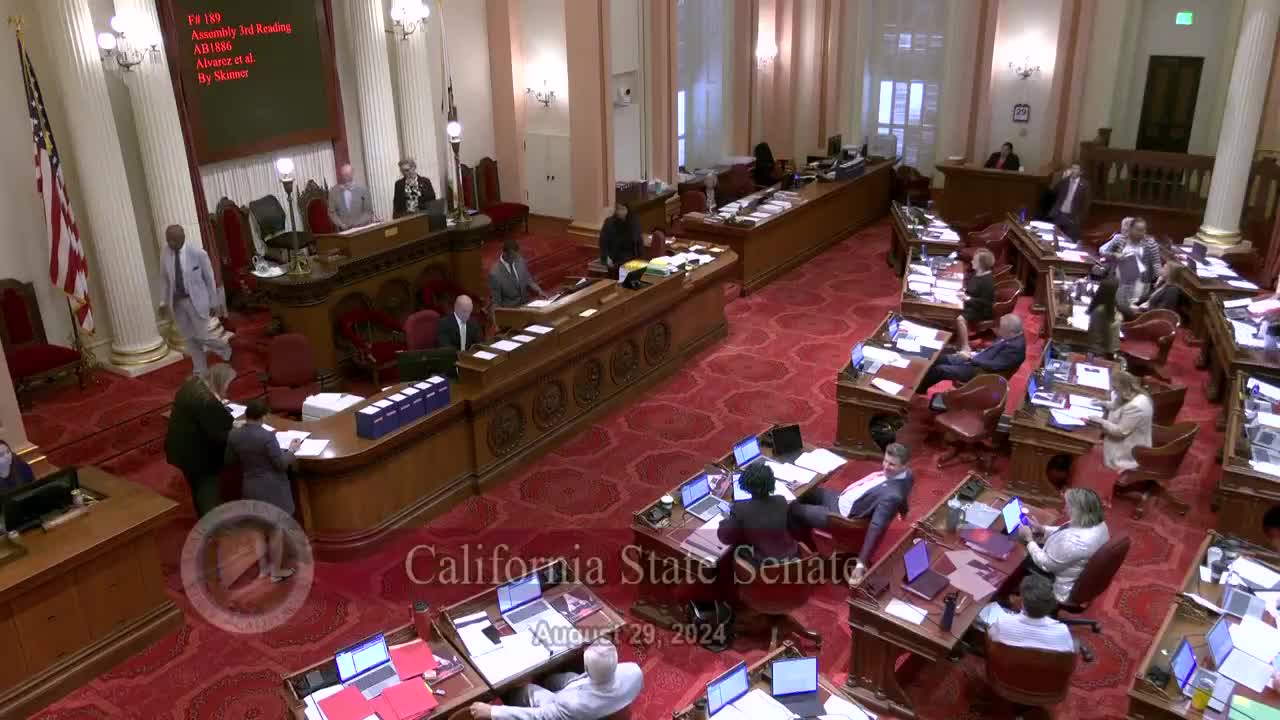
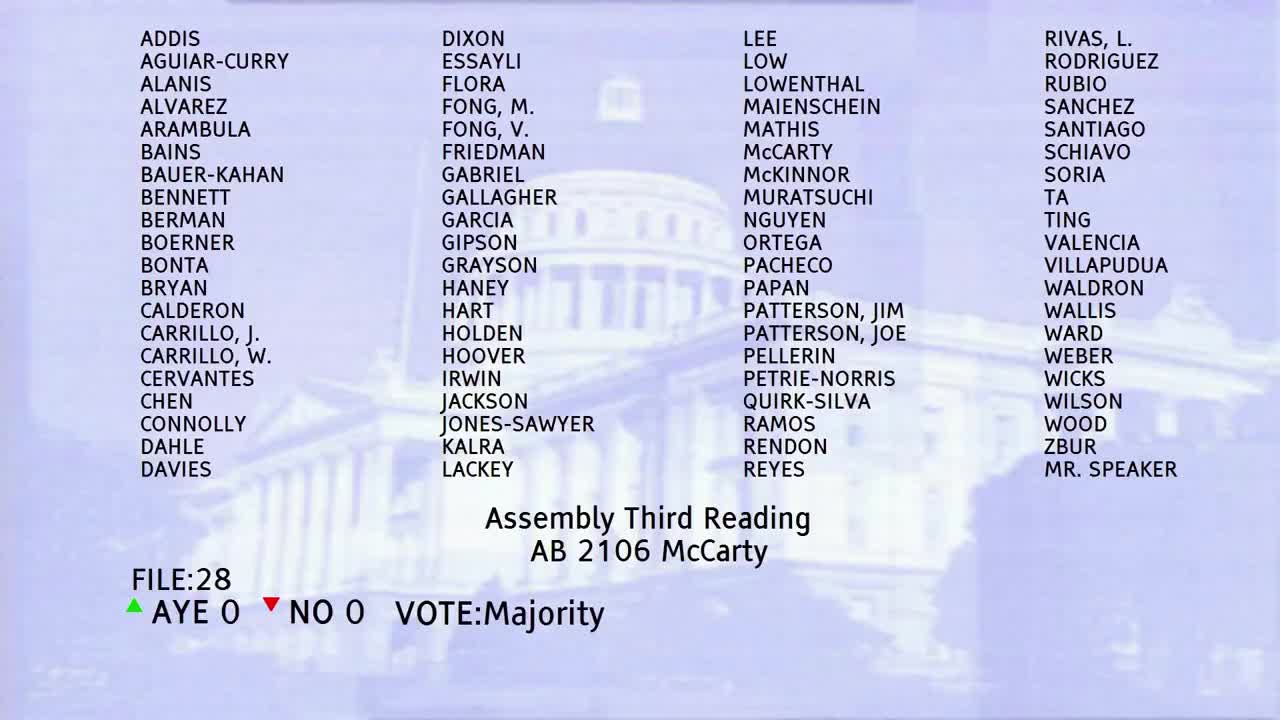
Bill Author

Bill Co-Author(s):