AB 2446: Medi-Cal: diapers.
- Session Year: 2023-2024
- House: Assembly
- Latest Version Date: 2024-09-03
Current Status:
Failed
(2024-09-27: Vetoed by Governor.)
Introduced
In Committee
First Chamber
In Committee
Second Chamber
Enacted
What does this bill do?
The bill would require Medi‑Cal to cover diapers for children older than 3 who have a physical, mental, neurological, or behavioral condition that causes incontinence, and for people under 21 when needed under federal child‑health (EPSDT) rules. Coverage would be limited to an appropriate supply based on the person’s age and diagnosed condition and would only take effect if required federal approvals, federal funding, and a state appropriation are obtained.
The summary is provided by generative AI which can make mistakes. For original language, please view the details in the table below.
Existing law establishes the Medi-Cal program, which is administered by the State Department of Health Care Services and under which qualified low-income individuals receive health care services. The Medi-Cal program is, in part, governed by, and funded pursuant to, federal Medicaid program provisions. Under existing law, incontinence medical supplies are covered by the Medi-Cal program.
This bill would establish diapers as a covered Medi-Cal benefit for a child greater than 3 years of age who has been diagnosed with a condition, as specified, that contributes to incontinence, and for an individual under 21 years of age if necessary to correct or ameliorate a condition pursuant to certain federal standards. The bill would limit the provided diapers to an appropriate supply based on the diagnosed condition and the age of the Medi-Cal beneficiary.
The bill would require the department to seek any necessary federal approvals to implement these provisions. The bill would condition implementation of these provisions on receipt of any necessary federal approvals, the availability of federal financial participation, and an appropriation by the Legislature.
Existing law establishes the Medi-Cal program, which is administered by the State Department of Health Care Services and under which qualified low-income individuals receive health care services. The Medi-Cal program is, in part, governed by, and funded pursuant to, federal Medicaid program provisions. Existing law establishes a schedule of covered benefits under the Medi-Cal program, including incontinence supplies. Under existing law, incontinence medical supplies are covered by the Medi-Cal program.
This bill would add to the schedule of Medi-Cal benefits diapers for infants or toddlers with certain conditions, such as a urinary tract infection and diseases of the skin. The bill would establish diapers as a covered benefit for a child greater than 3 years of age who has been diagnosed with a condition that contributes to incontinence and would establish diapers as a covered benefit for individuals under 21 years of age, if necessary to correct or ameliorate a condition pursuant to specified standards. The bill would limit the diapers provided pursuant to these provisions to an appropriate supply based on the diagnosed condition and the age of the beneficiary. The bill would require the department to seek any necessary federal approval to implement this section. The bill would make these provisions contingent upon an appropriation by the Legislature.This bill would establish diapers as a covered Medi-Cal benefit for a child greater than 3 years of age who has been diagnosed with a condition, as specified, that contributes to incontinence, and for an individual under 21 years of age if necessary to correct or ameliorate a condition pursuant to certain federal standards. The bill would limit the provided diapers to an appropriate supply based on the diagnosed condition and the age of the Medi-Cal beneficiary.
The bill would require the department to seek any necessary federal approvals to implement these provisions. The bill would condition implementation of these provisions on receipt of any necessary federal approvals, the availability of federal financial participation, and an appropriation by the Legislature.
Existing law establishes the Medi-Cal program, which is administered by the State Department of Health Care Services and under which qualified low-income individuals receive health care services. The Medi-Cal program is, in part, governed by, and funded pursuant to, federal Medicaid program provisions. Existing law establishes a schedule of covered benefits under the Medi-Cal program, including incontinence supplies.
This bill would add to the schedule of Medi-Cal benefits diapers for infants or toddlers with certain conditions, such as a urinary tract infection and diseases of the skin. The bill would establish diapers as a covered benefit for a child greater than 3 years of age who has been diagnosed with a condition that contributes to incontinence and would establish diapers as a covered benefit for individuals under 21 years of age, if necessary to correct or ameliorate a condition pursuant to specified standards. The bill would limit the diapers provided pursuant to these provisions to an appropriate supply based on the diagnosed condition and the age of the beneficiary. The bill would require the department to seek any necessary federal approval to implement this section. The bill would make these provisions contingent upon an appropriation by the Legislature.
Existing law establishes the Medi-Cal program, which is administered by the State Department of Health Care Services and under which qualified low-income individuals receive health care services. The Medi-Cal program is, in part, governed by, and funded pursuant to, federal Medicaid program provisions. Existing law establishes a schedule of covered benefits under the Medi-Cal program, including incontinence supplies.
This bill would add to the schedule of Medi-Cal benefits diapers for infants or toddlers with certain conditions, such as a urinary tract infection and colic, among others. diseases of the skin. The bill would establish diapers as a covered benefit for a child greater than 3 years of age who has been diagnosed with a condition that contributes to incontinence and would establish diapers as a covered benefit for individuals under 21 years of age, if necessary to correct or ameliorate a condition pursuant to specified standards. The bill would limit the diapers provided pursuant to these provisions to an appropriate supply based on the diagnosed condition and the age of the beneficiary. The bill would require the department to seek any necessary federal approval to implement this section.
Existing law establishes the Medi-Cal program, which is administered by the State Department of Health Care Services and under which qualified low-income individuals receive healthcare health care services. The Medi-Cal program is, in part, governed by, and funded pursuant to, federal Medicaid program provisions. Existing law establishes a schedule of covered benefits under the Medi-Cal program, including incontinence supplies.
This bill would add to the schedule of Medi-Cal benefits diapers for infants or toddlers with certain conditions, such as a urinary tract infection and colic, among others. The bill would establish diapers as a covered benefit for a child greater than 3 years of age who has been screened for or diagnosed with a condition that contributes to incontinence and would establish diapers as a covered benefit for individuals under 21 years of age, if necessary to correct or ameliorate a condition pursuant to specified standards. The bill would require the department to seek any necessary federal approval to implement this section.
Existing law establishes the Medi-Cal program, which is administered by the State Department of Health Care Services and under which qualified low-income individuals receive healthcare services. The Medi-Cal program is, in part, governed by, and funded pursuant to, federal Medicaid program provisions. Existing law establishes a schedule of covered benefits under the Medi-Cal program, including incontinence supplies.
This bill would add to the schedule of Medi-Cal benefits diapers for infants or toddlers with certain conditions, such as a urinary tract infection and colic, among others. The bill would establish diapers as a covered benefit for a child greater than 3 years of age who has been screened for or diagnosed with a condition that contributes to incontinence. incontinence and would establish diapers as a covered benefit for individuals under 21 years of age, if necessary to correct or ameliorate a condition pursuant to specified standards. The bill would require the department to seek any and all available federal funding to implement this provision and would implement these provision only to the extent that the department obtains any necessary federal approvals or waivers. any necessary federal approval to implement this section.
Existing law establishes the Medi-Cal program, which is administered by the State Department of Health Care Services and under which qualified low-income individuals receive healthcare services. The Medi-Cal program is, in part, governed by, and funded pursuant to, federal Medicaid program provisions. Existing law establishes a schedule of covered benefits under the Medi-Cal program, including incontinence supplies.
This bill would add to the schedule of Medi-Cal benefits diapers for infants or toddlers with certain conditions, such as a urinary tract infection and colic, among others. The bill would establish diapers as a covered benefit for a child greater than 3 years of age with a condition that contributes to incontinence. The bill would require the department to seek any and all available federal funding to implement this provision and would implement these provision only to the extent that the department obtains any necessary federal approvals or waivers.
(a)Notwithstanding any other law, diapers are a covered Medi-Cal benefit for any child greater than three years of age who has been diagnosed with a physical, mental, neurological, or behavioral health condition that contributes to incontinence.
(b)Notwithstanding any other law, diapers are a covered Medi-Cal benefit for individuals under 21 years of age if necessary to correct or ameliorate a condition pursuant to the Early and Periodic Screening, Diagnostic, and Treatment (EPSDT) standards set forth under subdivision (b) of Section 14059.5 and under Section 1905(r) of the federal Social Security Act (42 U.S.C. Sec. 1396d(r)).
(c)Diapers provided pursuant to this section shall be limited to an appropriate supply based on the diagnosed condition and the age of the Medi-Cal beneficiary.
(d)The department shall seek any necessary federal approvals to implement this section. This section shall be implemented only to the extent that any necessary federal approvals are obtained and that federal financial participation is available and not otherwise jeopardized.
(e)Implementation of this section is contingent upon an appropriation by the Legislature.
(a)Notwithstanding any other law, diapers are a covered Medi-Cal benefit for any child greater than three years of age who has been diagnosed with a physical, mental, neurological, or behavioral health condition that contributes to incontinence.
(c)(b)Notwithstanding any other law, diapers are a covered Medi-Cal benefit for individuals under 21 years of age if necessary to correct or ameliorate a condition pursuant to the Early and Periodic Screening, Diagnostic, and Treatment (EPSDT) standards set forth under subdivision (b) of Section 14059.5 and under Section 1905(r) of the federal Social Security Act (42 U.S.C. Sec. 1396d(r)).
(d)(c)Diapers provided pursuant to this section shall be limited to an appropriate supply based on the diagnosed condition and the age of the Medi-Cal beneficiary.
(e)(d)The department shall seek any necessary federal approval approvals to implement this section. This section shall be implemented only to the extent that any necessary federal approvals are obtained and that federal financial participation is available and not otherwise jeopardized.
(f)(e)Implementation of this section is contingent upon an appropriation by the Legislature.
(a)Diapers are a covered benefit for infants or toddlers with either of the following conditions:
(1)Urinary tract infection.
(2)Any disease of the skin that, in the judgment of a clinician, is related to inadequate diaper hygiene and is at risk of reoccurrence that could be substantially mitigated by a prescription for diapers.
(b)Notwithstanding any other law, diapers are a covered benefit for any child greater than three years of age who has been diagnosed with a physical, mental, neurological, or behavioral health condition that contributes to incontinence.
(c)Notwithstanding any other law, diapers are a covered benefit for individuals under 21 years of age if necessary to correct or ameliorate a condition pursuant to the Early and Periodic Screening, Diagnostic, and Treatment standards set forth under subdivision (b) of Section 14059.5 and under Section 1905(r) of the Social Security Act (42 U.S.C. Sec. 1396d(r)).
(d)Diapers provided pursuant to this section shall be limited to an appropriate supply based on the diagnosed condition and the age of the beneficiary.
(e)The department shall seek any necessary federal approval to implement this section.
(f)Implementation of this section is contingent upon an appropriation by the Legislature.
(a)Diapers are a covered benefit for infants or toddlers with any either of the following conditions:
(1)Urinary tract infection.
(2)Colic. (3)(2)Any disease of the skin that, in the judgment of a clinician, is related to inadequate diaper hygiene and is at risk of reoccurrence that could be substantially mitigated by a prescription for diapers.
(b)Notwithstanding any other law, diapers are a covered benefit for any child greater than three years of age who has been diagnosed with a physical, mental, neurological, or behavioral health condition that contributes to incontinence.
(c)Notwithstanding any other law, diapers are a covered benefit for individuals under 21 years of age if necessary to correct or ameliorate a condition pursuant to the Early and Periodic Screening, Diagnostic, and Treatment standards set forth under subdivision (b) of Section 14059.5 and under Section 1905(r) of the Social Security Act (42 U.S.C. Sec. 1396d(r)).
(d)Diapers provided pursuant to this section shall be limited to an appropriate supply based on the diagnosed condition and the age of the beneficiary.
(d)(e)The department shall seek any necessary federal approval to implement this section.
(a)Diapers are a covered benefit for infants or toddlers with any of the following conditions:
(1)Urinary tract infection.
(2)Colic.
(3)Any disease of the skin that, in the judgment of a clinician, is related to inadequate diaper hygiene and is at risk of reoccurrence that could be substantially mitigated by a prescription for diapers.
(b)Notwithstanding any other law, diapers are a covered benefit for any child greater than three years of age who has been screened for or diagnosed with a physical, mental, neurological, or behavioral health condition that contributes to incontinence.
(c)Notwithstanding any other law, diapers are a covered benefit for individuals under 21 years of age if necessary to correct or ameliorate a condition pursuant to the Early and Periodic Screening, Diagnostic, and Treatment standards set forth under subdivision (b) of Section 14059.5 and under Section 1905(r) of the Social Security Act (42 U.S.C. Sec. 1396d(r)).
(d)The department shall seek any necessary federal approval to implement this section.
(a)Diapers are a covered benefit for infants or toddlers with any of the following conditions:
(1)Urinary tract infection.
(2)Colic.
(3)Any disease of the skin that, in the judgment of a clinician, is related to inadequate diaper hygiene and is at risk of reoccurrence that could be substantially mitigated by a prescription for diapers.
(b)(1)Notwithstanding any other law, diapers are a covered benefit for any child greater than three years of age who has been screened for or diagnosed or for whom a diagnosis is being sought for with a physical, mental, neurological, or behavioral health condition that contributes to incontinence.
(2)For the purposes of this subdivision, mental health condition includes exposure to any traumatic event or other factor that is delaying development of or disrupting appropriate toileting behavior.(c)Notwithstanding any other law, diapers are a covered benefit for individuals under 21 years of age if necessary to correct or ameliorate a condition pursuant to the Early and Periodic Screening, Diagnostic, and Treatment standards set forth under subdivision (b) of Section 14059.5 and under Section 1905(r) of the Social Security Act (42 U.S.C. Sec. 1396d(r)).
(c)(d)The department shall seek and is authorized to use any and all available federal funding, including, but not limited to, funding available through the Early and Periodic Screening, Diagnosis, and Treatment program, pursuant to Section 1396a or 1396d of Title 42 of the United States Code, or a waiver pursuant to Section 1315 of Title 42 of the United States Codes, to implement this section. any necessary federal approval to implement this section.
(d)This section shall be implemented only to the extent that the department obtains any necessary federal approvals or waivers.(a)Diapers are a covered benefit for infants or toddlers with any of the following conditions:
(1)Urinary tract infection.
(2)Colic.
(3)Any disease of the skin that, in the judgment of a clinician, is related to inadequate diaper hygiene and is at risk of reoccurrence that could be substantially mitigated by a prescription for diapers.
(b)(1)Notwithstanding any other law, diapers are a covered benefit for any child greater than three years of age who has been diagnosed or for whom a diagnosis is being sought for a physical, mental, neurological, or behavioral health condition that contributes to incontinence.
(2)For the purposes of this subdivision, mental health condition includes exposure to any traumatic event or other factor that is delaying development of or disrupting appropriate toileting behavior.
(c)The department shall seek and is authorized to use any and all available federal funding, including, but not limited to, funding available through the Early and Periodic Screening, Diagnosis, and Treatment program, pursuant to Section 1396a or 1396d of Title 42 of the United States Code, or a waiver pursuant to Section 1315 of Title 42 of the United States Codes, to implement this section.
(d)This section shall be implemented only to the extent that the department obtains any necessary federal approvals or waivers.
|
Date
|
Status
|
|---|---|
| Sep 27, 2024 | Vetoed by Governor. |
| Sep 11, 2024 | Enrolled and presented to the Governor at 4 p.m. |
| Aug 29, 2024 | Senate amendments concurred in. To Engrossing and Enrolling. (Ayes 74. Noes 0.). |
| Aug 29, 2024 | Assembly Rule 77 suspended. |
| Aug 28, 2024 | In Assembly. Concurrence in Senate amendments pending. May be considered on or after August 30 pursuant to Assembly Rule 77. |
| Aug 28, 2024 | Read third time. Passed. Ordered to the Assembly. (Ayes 38. Noes 0.). |
| Aug 26, 2024 | Read second time. Ordered to third reading. |
| Aug 23, 2024 | Read third time and amended. Ordered to second reading. |
| Aug 19, 2024 | Read second time. Ordered to third reading. |
| Aug 15, 2024 | Read second time and amended. Ordered returned to second reading. |
| Aug 15, 2024 | From committee: Amend, and do pass as amended. (Ayes 7. Noes 0.) (August 15). |
| Aug 5, 2024 | In committee: Referred to APPR suspense file. |
| Jun 26, 2024 | From committee: Do pass and re-refer to Com. on APPR. (Ayes 11. Noes 0.) (June 26). Re-referred to Com. on APPR. |
| May 29, 2024 | Referred to Com. on HEALTH. |
| May 22, 2024 | In Senate. Read first time. To Com. on RLS. for assignment. |
| May 21, 2024 | Read third time. Passed. Ordered to the Senate. (Ayes 71. Noes 0. Page 5374.) |
| May 20, 2024 | Read second time. Ordered to third reading. |
| May 16, 2024 | Read second time and amended. Ordered returned to second reading. |
| May 16, 2024 | From committee: Amend, and do pass as amended. (Ayes 11. Noes 0.) (May 16). |
| May 16, 2024 | Assembly Rule 63 suspended. |
| Apr 17, 2024 | In committee: Set, first hearing. Referred to APPR. suspense file. |
| Apr 8, 2024 | Re-referred to Com. on APPR. |
| Apr 4, 2024 | Read second time and amended. |
| Apr 3, 2024 | From committee: Amend, and do pass as amended and re-refer to Com. on APPR. (Ayes 15. Noes 0.) (April 2). |
| Mar 20, 2024 | Re-referred to Com. on HEALTH. |
| Mar 19, 2024 | From committee chair, with author's amendments: Amend, and re-refer to Com. on HEALTH. Read second time and amended. |
| Feb 26, 2024 | Referred to Com. on HEALTH. |
| Feb 14, 2024 | From printer. May be heard in committee March 15. |
| Feb 13, 2024 | Read first time. To print. |
|
Date
|
Description
|
Location
|
Votes
|
|
|---|---|---|---|---|
| Aug 29, 2024 | AB 2446 Ortega Concurrence in Senate Amendments | Assembly Floor |
Passed |
|
| Aug 28, 2024 | Assembly 3rd Reading AB2446 Ortega et al. By Blakespear | Senate Floor |
Passed |
|
| Aug 15, 2024 | Do pass as amended | Senate Standing Committee on Appropriations |
Passed |
|
| Aug 5, 2024 | Placed on suspense file | Senate Standing Committee on Appropriations |
Passed |
|
| Jun 26, 2024 | Do pass, but first be re-referred to the Committee on [Appropriations] | Senate Standing Committee on Health |
Passed |
|
| May 21, 2024 | AB 2446 Ortega Assembly Third Reading | Assembly Floor |
Passed |
|
| May 16, 2024 | Do pass as amended. | Assembly Standing Committee on Appropriations |
Passed |
|
| Apr 2, 2024 | Do pass as amended and be re-referred to the Committee on [Appropriations] | Assembly Standing Committee on Health |
Passed |
This list shows positions taken on this bill by organizations on the date displayed, which is linked to the original source.
Positions by individuals are not included.
|
Organization
|
Position
|
Date
|
|---|---|---|
| Association Of Regional Center Agencies | ** Support | |
| California Academy Of Family Physicians | ** Support | |
| California Association of Diaper Banks | * Support | Apr 2, 2024 |
| California Association Of Food Banks | ** Support | |
| California Association Of Medical Product Suppliers | ** Support | |
| Community Child Care Council of Alameda County | ** Support | |
| East Bay Leadership Council | ** Support | |
| Educate. Advocate. | ** Support | |
| Emergency Food Bank of Stockton/San Joaquin County | ** Support | |
| Equal Rights Advocates | ** Support | |
| First 5 Alameda County | ** Support | |
| Food Bank of Santa Barbara County | ** Support | |
| Food for People, the Food Bank for Humboldt County | ** Support | |
| Food in Need of Distribution Food Bank | ** Support | |
| Food Share | ** Support | |
| Food Share of Ventura County | ** Support | |
| Glide | ** Support | |
| Good+ Foundation | ** Support | |
| GRACE/End Child Poverty | ** Support | |
| Help a Mother Out | ** Support | |
| Junior League of Orange County | ** Support | |
| Junior Leagues of California State Public Affairs Committee | ** Support | |
| Los Angeles Regional Food Bank | ** Support | |
| National Council Of Jewish Women Los Angeles | ** Support | |
| National Health Law Program | ** Support | |
| Nurse-Family Partnership | ** Support | |
| San Diego Food Bank | ** Support | |
| Second Harvest Food Bank of Orange County | ** Support | |
| The Children's Partnership | * Support | Jun 26, 2024 |
| The National Service Office for Nurse-Family Partnership and Child First | ** Support | |
| The Women's Building | ** Support | |
| western center on law & poverty | ** Support |
GOVERNOR'S VETO
GV Bill Id:AB 2446
Author:(Ortega)
As Enrolled Ver:September 3, 2024
2/3 vote
SUMMARY
Requires Medi-Cal to cover diapers for children under 21 years of age, if necessary to correct or ameliorate a condition under pursuant to federal Medicaid requirements, limits diapers to an appropriate supply based on the diagnosed condition and the age of the beneficiary, and makes implementation contingent on a budget appropriation.
Senate Amendments
Remove two specific conditions that would qualify infants or toddlers for diapers through Medi-Cal, and make implementation of the bill contingent on a budget appropriation.
Governor's Veto Message
This bill would expand existing Medi-Cal coverage of diapers to include individuals greater than 3 years old with a physical, mental, neurological, or behavioral health condition that contributes to incontinence, and members less than 21 years old to correct or ameliorate a condition pursuant to the Early and Periodic Screening, Diagnostic, and Treatment (EPSDT) standards.
I deeply appreciate and share the author's commitment to assisting low-income Californians with access to affordable diapers for their families and thank the author for her focus on this important issue. However, diapers are already covered under existing Medi-Cal benefits when used for the management of a medical condition that causes incontinence. Specifically, children under 5 years old may receive medically necessary diapers as a covered EPSDT benefit, and diapers for youth 5 years to 21 years old with a chronic condition that causes incontinence are also covered.
While this bill largely overlaps with existing coverage, the standards applied would expand coverage to include conditions that contribute to incontinence. This change results in significant and ongoing General Fund costs for the Medi-Cal program that should be evaluated as a part of the annual budget process.
In partnership with the Legislature this year, my Administration has enacted a balanced budget that avoids deep program cuts to vital services and protected investments in education, health care, climate, public safety, housing, and social service programs that millions of Californians rely on. It is important to remain disciplined when considering bills with significant fiscal implications that are not included in the budget, such as this measure.
COMMENTS
- Diaper Need. According to the Center for Budget and Policy Priorities (CBPP), diaper need is the struggle to afford a sufficient supply of diapers required to keep a child clean, dry, and healthy. On average, CBPP notes, diapers cost nearly $100 per month. According to the First 5 Center for Children's Policy, diaper access and affordability are essential components of a child's basic needs.
- Medi-Cal Coverage of Benefits and Medical Necessity. Medi-Cal provides a comprehensive set of health benefits, which may be accessed as medically necessary. Medi-Cal covers a core set of federally required health care benefits as well as a number of optional benefits. The overwhelming majority of benefits are federally approved and covered under California's Medi-Cal State Plan, which means the state can receive federal matching funds for the services. The state can add or remove benefits by filing an amendment to the state plan, called a State Plan Amendment (SPA). An SPA is reviewed and must be approved by the federal government in order to add or modify a benefit.
- Medical Necessity under Early and Periodic Screening, Diagnostic, and Treatment (EPSDT) Benefit. A different, more generous medical necessity standard applies for children under 21 years of age, under the EPSDT benefit. For children under 21, state law references the standards set forth under the federal law establishing EPSDT. This law requires coverage of any benefit or service that can be covered under Medicaid that is necessary to "correct or ameliorate" a child's health condition. The EPSDT benefit also requires a comprehensive array of prevention, diagnostic, and treatment services for individuals under the age of 21 who are enrolled in Medicaid.
- Current Medi-Cal Policy on Coverage of Diapers. Medi-Cal covers incontinence products as medical supplies, including diapers, when prescribed by a physician, nurse practitioner, clinical nurse specialist, or a physician assistant within their scope of practice, for use in chronic pathologic conditions that cause the recipient's incontinence.
The Medi-Cal Provider Manual, "Incontinence Medical Supplies," states that Medi-Cal does not reimburse for incontinence supplies for recipients younger than age five. However, it also states, paradoxically, that Medi-Cal may reimburse for incontinence supplies through EPSDT, where the incontinence is due to a chronic physical or mental condition, including cerebral palsy and developmental delay, and at an age when the child would normally be expected to achieve continence. Therefore, although circumstances exist where coverage of diapers may be required under EPSDT, and the Department of Health Care Services (DHCS) coverage policy acknowledges this eventuality, it is unclear how this EPSDT entitlement can be effectuated, based on the policy statement that Medi-Cal does not reimburse for incontinence supplies for children under five and the lack of clear billing guidance for this situation. Current DHCS policy also does not acknowledge the possibility of coverage based on conditions related to inadequate diaper hygiene, as this proposed in this bill. Under certain circumstances, such as severe diaper rash, it appears reasonable that diapers could potentially be considered a medical supply necessary to correct or ameliorate a health condition under EPSDT, even before an infant or toddler achieves continence.
- DHCS Update in May 2024 on Medi-Cal Coverage of Diapers. Supplemental Reporting Language included in the 2023-24 Budget Act required, on or before May 15, 2024, DHCS to provide an update to staff in the relevant budget and policy committees of the Legislature and the Legislative Analyst's Office on potential options for a federal Medicaid 1115 waiver to reimburse the cost of diapers for infants and toddlers under the age of three in Medi-Cal. DHCS provided the update verbally on May 13, 2024 and indicated the department has not identified any Medicaid program that has added diapers as covered benefits broadly available to infants and toddlers through a Medicaid waiver or SPA. However, this bill addresses narrower circumstances whereby infants and toddlers have a specific medical need for diapers.
According to the Author
Children under 21 who are covered under Medi-Cal with a health condition caused by insufficient access to clean diapers should have access to prescription diapers through this program. Specifically, the author notes that although California is taking advantage of EPSDT for many services provided to children under 21, the Medi-Cal provider manual clearly states Medi-Cal does not reimburse for incontinence supplies for recipients younger than age five. The author argues this is not only restrictive, but also by default means that the current Medi-Cal standards do not align with EPSDT requirements. The author contends this bill utilizes the existing federal EPSDT entitlement to expand access to much-needed diaper assistance for California children and families stuck in an endless loop of poverty. This bill is cosponsored by GRACE/End Child Poverty and the California Association of Food Banks.
Arguments in Support
Sponsors note diaper need is a human rights issue and also an issue of equity, as Latino and Black households face poverty at much higher rates than white households. Sponsors argue this bill will help address this inequity by enacting a policy to support diaper needs for low-income families on Medi-Cal, one-half of whom are Hispanic. Western Center on Law and Poverty (WCLP) writes in support that the inability to afford diapers has painful consequences for an entire family, and that when diapers are kept on longer than suggested, babies can have painful conditions like urinary tract infection or severe diaper rash. WCLP also notes diaper need is linked with food insecurity, parental stress, and lost wages or time at school for caregivers.
Arguments in Opposition
There is no known opposition.
FISCAL COMMENTS
Unknown ongoing costs in the Medi-Cal program to provide the benefit, and unknown ongoing costs for the DHCS for state administration (General Fund and federal funds).
VOTES
ASM HEALTH: 15-0-1
YES: Bonta, Waldron, Aguiar-Curry, Arambula, Wendy Carrillo, Flora, Haney, Jones-Sawyer, Maienschein, Joe Patterson, Rodriguez, Sanchez, Santiago, Schiavo, Weber
ABS, ABST OR NV: McCarty
ASM APPROPRIATIONS: 11-0-4
YES: Wicks, Arambula, Bryan, Calderon, Wendy Carrillo, Mike Fong, Grayson, Haney, Hart, Pellerin, Villapudua
ABS, ABST OR NV: Sanchez, Dixon, Jim Patterson, Ta
ASSEMBLY FLOOR: 71-0-9
YES: Addis, Aguiar-Curry, Alanis, Alvarez, Arambula, Bains, Bauer-Kahan, Bennett, Berman, Boerner, Bonta, Bryan, Calderon, Juan Carrillo, Wendy Carrillo, Chen, Connolly, Davies, Dixon, Flora, Mike Fong, Vince Fong, Garcia, Gipson, Grayson, Haney, Hart, Hoover, Irwin, Jackson, Jones-Sawyer, Kalra, Lackey, Lee, Low, Lowenthal, Maienschein, McCarty, McKinnor, Muratsuchi, Stephanie Nguyen, Ortega, Pacheco, Papan, Jim Patterson, Joe Patterson, Pellerin, Petrie-Norris, Quirk-Silva, Ramos, Rendon, Reyes, Rodriguez, Blanca Rubio, Sanchez, Santiago, Schiavo, Soria, Ta, Ting, Valencia, Villapudua, Waldron, Wallis, Ward, Weber, Wicks, Wilson, Wood, Zbur, Robert Rivas
ABS, ABST OR NV: Cervantes, Megan Dahle, Essayli, Friedman, Gabriel, Gallagher, Holden, Mathis, Luz Rivas
SENATE FLOOR: 39-0-1
YES: Allen, Archuleta, Ashby, Atkins, Becker, Blakespear, Bradford, Caballero, Cortese, Dahle, Dodd, Durazo, Eggman, Glazer, Gonzalez, Grove, Hurtado, Jones, Laird, Limón, McGuire, Menjivar, Min, Newman, Nguyen, Niello, Ochoa Bogh, Padilla, Portantino, Roth, Rubio, Seyarto, Skinner, Smallwood-Cuevas, Stern, Umberg, Wahab, Wiener, Wilk
ABS, ABST OR NV: Alvarado-Gil
ASSEMBLY FLOOR: 74-0-5
YES: A Addis, Aguiar-Curry, Alanis, Alvarez, Arambula, Bains, Bauer-Kahan, Bennett, Berman, Boerner, Bonta, Bryan, Calderon, Juan Carrillo, Wendy Carrillo, Chen, Connolly, Megan Dahle, Davies, Dixon, Flora, Mike Fong, Friedman, Gabriel, Gallagher, Garcia, Gipson, Grayson, Haney, Hart, Holden, Hoover, Irwin, Jackson, Jones-Sawyer, Kalra, Lackey, Lee, Low, Lowenthal, Maienschein, McCarty, McKinnor, Muratsuchi, Stephanie Nguyen, Pacheco, Papan, Jim Patterson, Joe Patterson, Pellerin, Petrie-Norris, Quirk-Silva, Ramos, Rendon, Reyes, Luz Rivas, Rodriguez, Blanca Rubio, Sanchez, Santiago, Schiavo, Soria, Ta, Ting, Valencia, Villapudua, Waldron, Wallis, Ward, Weber, Wicks, Wilson, Wood, Robert Rivas
ABS, ABST OR NV: Cervantes, Essayli, Mathis, Ortega, Zbur
UPDATED
VERSION: September 3, 2024
CONSULTANT: Lisa Murawski / HEALTH / (916) 319-2097 FN: 0005139
CONCURRENCE IN SENATE AMENDMENTS
CSA1 Bill Id:AB 2446
Author:(Ortega)
As Amended Ver:August 23, 2024
Majority vote
SUMMARY
Requires Medi-Cal to cover diapers for children under 21 years of age, if necessary to correct or ameliorate a condition under pursuant to federal Medicaid requirements, limits diapers to an appropriate supply based on the diagnosed condition and the age of the beneficiary, and makes implementation contingent on a budget appropriation.
Senate Amendments
Remove two specific conditions that would qualify infants or toddlers for diapers through Medi-Cal, and make implementation of the bill contingent on a budget appropriation.
COMMENTS
- Diaper Need. According to the Center for Budget and Policy Priorities (CBPP), diaper need is the struggle to afford a sufficient supply of diapers required to keep a child clean, dry, and healthy. On average, CBPP notes, diapers cost nearly $100 per month. According to the First 5 Center for Children's Policy, diaper access and affordability are essential components of a child's basic needs.
- Medi-Cal Coverage of Benefits and Medical Necessity. Medi-Cal provides a comprehensive set of health benefits, which may be accessed as medically necessary. Medi-Cal covers a core set of federally required health care benefits as well as a number of optional benefits. The overwhelming majority of benefits are federally approved and covered under California's Medi-Cal State Plan, which means the state can receive federal matching funds for the services. The state can add or remove benefits by filing an amendment to the state plan, called a State Plan Amendment (SPA). An SPA is reviewed and must be approved by the federal government in order to add or modify a benefit.
- Medical Necessity under Early and Periodic Screening, Diagnostic, and Treatment (EPSDT) Benefit. A different, more generous medical necessity standard applies for children under 21 years of age, under the EPSDT benefit. For children under 21, state law references the standards set forth under the federal law establishing EPSDT. This law requires coverage of any benefit or service that can be covered under Medicaid that is necessary to "correct or ameliorate" a child's health condition. The EPSDT benefit also requires a comprehensive array of prevention, diagnostic, and treatment services for individuals under the age of 21 who are enrolled in Medicaid.
- Current Medi-Cal Policy on Coverage of Diapers. Medi-Cal covers incontinence products as medical supplies, including diapers, when prescribed by a physician, nurse practitioner, clinical nurse specialist, or a physician assistant within their scope of practice, for use in chronic pathologic conditions that cause the recipient's incontinence.
The Medi-Cal Provider Manual, "Incontinence Medical Supplies," states that Medi-Cal does not reimburse for incontinence supplies for recipients younger than age five. However, it also states, paradoxically, that Medi-Cal may reimburse for incontinence supplies through EPSDT, where the incontinence is due to a chronic physical or mental condition, including cerebral palsy and developmental delay, and at an age when the child would normally be expected to achieve continence. Therefore, although circumstances exist where coverage of diapers may be required under EPSDT, and the Department of Health Care Services (DHCS) coverage policy acknowledges this eventuality, it is unclear how this EPSDT entitlement can be effectuated, based on the policy statement that Medi-Cal does not reimburse for incontinence supplies for children under five and the lack of clear billing guidance for this situation. Current DHCS policy also does not acknowledge the possibility of coverage based on conditions related to inadequate diaper hygiene, as this proposed in this bill. Under certain circumstances, such as severe diaper rash, it appears reasonable that diapers could potentially be considered a medical supply necessary to correct or ameliorate a health condition under EPSDT, even before an infant or toddler achieves continence.
- DHCS Update in May 2024 on Medi-Cal Coverage of Diapers. Supplemental Reporting Language included in the 2023-24 Budget Act required, on or before May 15, 2024, DHCS to provide an update to staff in the relevant budget and policy committees of the Legislature and the Legislative Analyst's Office on potential options for a federal Medicaid 1115 waiver to reimburse the cost of diapers for infants and toddlers under the age of three in Medi-Cal. DHCS provided the update verbally on May 13, 2024 and indicated the department has not identified any Medicaid program that has added diapers as covered benefits broadly available to infants and toddlers through a Medicaid waiver or SPA. However, this bill addresses narrower circumstances whereby infants and toddlers have a specific medical need for diapers.
According to the Author
Children under 21 who are covered under Medi-Cal with a health condition caused by insufficient access to clean diapers should have access to prescription diapers through this program. Specifically, the author notes that although California is taking advantage of EPSDT for many services provided to children under 21, the Medi-Cal provider manual clearly states Medi-Cal does not reimburse for incontinence supplies for recipients younger than age five. The author argues this is not only restrictive, but also by default means that the current Medi-Cal standards do not align with EPSDT requirements. The author contends this bill utilizes the existing federal EPSDT entitlement to expand access to much-needed diaper assistance for California children and families stuck in an endless loop of poverty. This bill is cosponsored by GRACE/End Child Poverty and the California Association of Food Banks.
Arguments in Support
Sponsors note diaper need is a human rights issue and also an issue of equity, as Latino and Black households face poverty at much higher rates than white households. Sponsors argue this bill will help address this inequity by enacting a policy to support diaper needs for low-income families on Medi-Cal, one-half of whom are Hispanic. Western Center on Law and Poverty (WCLP) writes in support that the inability to afford diapers has painful consequences for an entire family, and that when diapers are kept on longer than suggested, babies can have painful conditions like urinary tract infection or severe diaper rash. WCLP also notes diaper need is linked with food insecurity, parental stress, and lost wages or time at school for caregivers.
Arguments in Opposition
There is no known opposition.
FISCAL COMMENTS
Unknown ongoing costs in the Medi-Cal program to provide the benefit, and unknown ongoing costs for the DHCS for state administration (General Fund and federal funds).
VOTES:
ASM HEALTH: 15-0-1
YES: Bonta, Waldron, Aguiar-Curry, Arambula, Wendy Carrillo, Flora, Haney, Jones-Sawyer, Maienschein, Joe Patterson, Rodriguez, Sanchez, Santiago, Schiavo, Weber
ABS, ABST OR NV: McCarty
ASM APPROPRIATIONS: 11-0-4
YES: Wicks, Arambula, Bryan, Calderon, Wendy Carrillo, Mike Fong, Grayson, Haney, Hart, Pellerin, Villapudua
ABS, ABST OR NV: Sanchez, Dixon, Jim Patterson, Ta
ASSEMBLY FLOOR: 71-0-9
YES: Addis, Aguiar-Curry, Alanis, Alvarez, Arambula, Bains, Bauer-Kahan, Bennett, Berman, Boerner, Bonta, Bryan, Calderon, Juan Carrillo, Wendy Carrillo, Chen, Connolly, Davies, Dixon, Flora, Mike Fong, Vince Fong, Garcia, Gipson, Grayson, Haney, Hart, Hoover, Irwin, Jackson, Jones-Sawyer, Kalra, Lackey, Lee, Low, Lowenthal, Maienschein, McCarty, McKinnor, Muratsuchi, Stephanie Nguyen, Ortega, Pacheco, Papan, Jim Patterson, Joe Patterson, Pellerin, Petrie-Norris, Quirk-Silva, Ramos, Rendon, Reyes, Rodriguez, Blanca Rubio, Sanchez, Santiago, Schiavo, Soria, Ta, Ting, Valencia, Villapudua, Waldron, Wallis, Ward, Weber, Wicks, Wilson, Wood, Zbur, Robert Rivas
ABS, ABST OR NV: Cervantes, Megan Dahle, Essayli, Friedman, Gabriel, Gallagher, Holden, Mathis, Luz Rivas
SENATE FLOOR: 39-0-1
YES: Allen, Archuleta, Ashby, Atkins, Becker, Blakespear, Bradford, Caballero, Cortese, Dahle, Dodd, Durazo, Eggman, Glazer, Gonzalez, Grove, Hurtado, Jones, Laird, Limón, McGuire, Menjivar, Min, Newman, Nguyen, Niello, Ochoa Bogh, Padilla, Portantino, Roth, Rubio, Seyarto, Skinner, Smallwood-Cuevas, Stern, Umberg, Wahab, Wiener, Wilk
ABS, ABST OR NV: Alvarado-Gil
UPDATED
VERSION: August 23, 2024
CONSULTANT: Lisa Murawski / HEALTH / (916) 319-2097 FN: 0004576
CONCURRENCE IN SENATE AMENDMENTS
CSA1 Bill Id:AB 2446
Author:(Ortega)
As Amended Ver:August 23, 2024
Majority vote
SUMMARY
Requires Medi-Cal to cover diapers for children under 21 years of age, if necessary to correct or ameliorate a condition under pursuant to federal Medicaid requirements, limits diapers to an appropriate supply based on the diagnosed condition and the age of the beneficiary, and makes implementation contingent on a budget appropriation.
Senate Amendments
Remove two specific conditions that would qualify infants or toddlers for diapers through Medi-Cal, and make implementation of the bill contingent on a budget appropriation.
COMMENTS
- Diaper Need. According to the Center for Budget and Policy Priorities (CBPP), diaper need is the struggle to afford a sufficient supply of diapers required to keep a child clean, dry, and healthy. On average, CBPP notes, diapers cost nearly $100 per month. According to the First 5 Center for Children's Policy, diaper access and affordability are essential components of a child's basic needs.
- Medi-Cal Coverage of Benefits and Medical Necessity. Medi-Cal provides a comprehensive set of health benefits, which may be accessed as medically necessary. Medi-Cal covers a core set of federally required health care benefits as well as a number of optional benefits. The overwhelming majority of benefits are federally approved and covered under California's Medi-Cal State Plan, which means the state can receive federal matching funds for the services. The state can add or remove benefits by filing an amendment to the state plan, called a State Plan Amendment (SPA). An SPA is reviewed and must be approved by the federal government in order to add or modify a benefit.
- Medical Necessity under Early and Periodic Screening, Diagnostic, and Treatment (EPSDT) Benefit. A different, more generous medical necessity standard applies for children under 21 years of age, under the EPSDT benefit. For children under 21, state law references the standards set forth under the federal law establishing EPSDT. This law requires coverage of any benefit or service that can be covered under Medicaid that is necessary to "correct or ameliorate" a child's health condition. The EPSDT benefit also requires a comprehensive array of prevention, diagnostic, and treatment services for individuals under the age of 21 who are enrolled in Medicaid.
- Current Medi-Cal Policy on Coverage of Diapers. Medi-Cal covers incontinence products as medical supplies, including diapers, when prescribed by a physician, nurse practitioner, clinical nurse specialist, or a physician assistant within their scope of practice, for use in chronic pathologic conditions that cause the recipient's incontinence.
The Medi-Cal Provider Manual, "Incontinence Medical Supplies," states that Medi-Cal does not reimburse for incontinence supplies for recipients younger than age five. However, it also states, paradoxically, that Medi-Cal may reimburse for incontinence supplies through EPSDT, where the incontinence is due to a chronic physical or mental condition, including cerebral palsy and developmental delay, and at an age when the child would normally be expected to achieve continence. Therefore, although circumstances exist where coverage of diapers may be required under EPSDT, and the Department of Health Care Services (DHCS) coverage policy acknowledges this eventuality, it is unclear how this EPSDT entitlement can be effectuated, based on the policy statement that Medi-Cal does not reimburse for incontinence supplies for children under five and the lack of clear billing guidance for this situation. Current DHCS policy also does not acknowledge the possibility of coverage based on conditions related to inadequate diaper hygiene, as this proposed in this bill. Under certain circumstances, such as severe diaper rash, it appears reasonable that diapers could potentially be considered a medical supply necessary to correct or ameliorate a health condition under EPSDT, even before an infant or toddler achieves continence.
- DHCS Update in May 2024 on Medi-Cal Coverage of Diapers. Supplemental Reporting Language included in the 2023-24 Budget Act required, on or before May 15, 2024, DHCS to provide an update to staff in the relevant budget and policy committees of the Legislature and the Legislative Analyst's Office on potential options for a federal Medicaid 1115 waiver to reimburse the cost of diapers for infants and toddlers under the age of three in Medi-Cal. DHCS provided the update verbally on May 13, 2024 and indicated the department has not identified any Medicaid program that has added diapers as covered benefits broadly available to infants and toddlers through a Medicaid waiver or SPA. However, this bill addresses narrower circumstances whereby infants and toddlers have a specific medical need for diapers.
According to the Author
Children under 21 who are covered under Medi-Cal with a health condition caused by insufficient access to clean diapers should have access to prescription diapers through this program. Specifically, the author notes that although California is taking advantage of EPSDT for many services provided to children under 21, the Medi-Cal provider manual clearly states Medi-Cal does not reimburse for incontinence supplies for recipients younger than age five. The author argues this is not only restrictive, but also by default means that the current Medi-Cal standards do not align with EPSDT requirements. The author contends this bill utilizes the existing federal EPSDT entitlement to expand access to much-needed diaper assistance for California children and families stuck in an endless loop of poverty. This bill is cosponsored by GRACE/End Child Poverty and the California Association of Food Banks.
Arguments in Support
Sponsors note diaper need is a human rights issue and also an issue of equity, as Latino and Black households face poverty at much higher rates than white households. Sponsors argue this bill will help address this inequity by enacting a policy to support diaper needs for low-income families on Medi-Cal, one-half of whom are Hispanic. Western Center on Law and Poverty (WCLP) writes in support that the inability to afford diapers has painful consequences for an entire family, and that when diapers are kept on longer than suggested, babies can have painful conditions like urinary tract infection or severe diaper rash. WCLP also notes diaper need is linked with food insecurity, parental stress, and lost wages or time at school for caregivers.
Arguments in Opposition
There is no known opposition.
FISCAL COMMENTS
Unknown ongoing costs in the Medi-Cal program to provide the benefit, and unknown ongoing costs for the DHCS for state administration (General Fund and federal funds).
VOTES:
ASM HEALTH: 15-0-1
YES: Bonta, Waldron, Aguiar-Curry, Arambula, Wendy Carrillo, Flora, Haney, Jones-Sawyer, Maienschein, Joe Patterson, Rodriguez, Sanchez, Santiago, Schiavo, Weber
ABS, ABST OR NV: McCarty
ASM APPROPRIATIONS: 11-0-4
YES: Wicks, Arambula, Bryan, Calderon, Wendy Carrillo, Mike Fong, Grayson, Haney, Hart, Pellerin, Villapudua
ABS, ABST OR NV: Sanchez, Dixon, Jim Patterson, Ta
ASSEMBLY FLOOR: 71-0-9
YES: Addis, Aguiar-Curry, Alanis, Alvarez, Arambula, Bains, Bauer-Kahan, Bennett, Berman, Boerner, Bonta, Bryan, Calderon, Juan Carrillo, Wendy Carrillo, Chen, Connolly, Davies, Dixon, Flora, Mike Fong, Vince Fong, Garcia, Gipson, Grayson, Haney, Hart, Hoover, Irwin, Jackson, Jones-Sawyer, Kalra, Lackey, Lee, Low, Lowenthal, Maienschein, McCarty, McKinnor, Muratsuchi, Stephanie Nguyen, Ortega, Pacheco, Papan, Jim Patterson, Joe Patterson, Pellerin, Petrie-Norris, Quirk-Silva, Ramos, Rendon, Reyes, Rodriguez, Blanca Rubio, Sanchez, Santiago, Schiavo, Soria, Ta, Ting, Valencia, Villapudua, Waldron, Wallis, Ward, Weber, Wicks, Wilson, Wood, Zbur, Robert Rivas
ABS, ABST OR NV: Cervantes, Megan Dahle, Essayli, Friedman, Gabriel, Gallagher, Holden, Mathis, Luz Rivas
UPDATED
VERSION: August 23, 2024
CONSULTANT: Lisa Murawski / HEALTH / (916) 319-2097 FN: 0004576
SENATE RULES COMMITTEE Office of Senate Floor Analyses (916) 651-1520 Fax: (916) 327-4478 | AB 2446 |
THIRD READING
Bill No: AB 2446
Author: Ortega (D), et al.
Amended: 8/23/24 in Senate
Vote: 21
SENATE HEALTH COMMITTEE: 11-0, 6/26/24
AYES: Roth, Nguyen, Glazer, Gonzalez, Grove, Hurtado, Limón, Menjivar, Rubio, Smallwood-Cuevas, Wiener
SENATE APPROPRIATIONS COMMITTEE: 7-0, 8/15/24
AYES: Caballero, Jones, Ashby, Becker, Bradford, Seyarto, Wahab
ASSEMBLY FLOOR: 71-0, 5/21/24 - See last page for vote
SUBJECT: Medi-Cal: diapers
SOURCE: California Association of Food Banks
GRACE/End Child Poverty
DIGEST:
This bill lowers the minimum age that diapers may be used to address incontinence as a Medi-Cal covered benefit from age five to age three, subject to federal approval.
Senate Floor Amendments of 8/23/24 remove diapers as a covered Medi-Cal benefit for infants with urinary tract infections or to address skin conditions caused by insufficient diapers. The amendments also make implementation of the bill contingent upon the receipt of federal approval and federal financial participation.
ANALYSIS:
Existing federal law:
- Establishes the Medicaid program to enable each state to furnish medical assistance on behalf of individuals whose income and resources are insufficient to meet the costs of necessary medical services. Requires states to submit a state plan for medical assistance describing the coverage of mandatory and optional populations and benefits. [42 USC §1396, et seq.]
- Requires coverage for individuals under age 21 of all necessary health care, diagnostic services, treatment, and other measures to correct or ameliorate defects and physical and mental illnesses and conditions discovered by the screening services, whether or not such services are covered under the State plan, known as the Early and Periodic Screening, Diagnosis, and Treatment (EPSDT) benefit. [42 USC §1396(d)]
- Authorizes the Health and Human Services (HHS) Secretary to waive Medicaid state plan requirements (with the exception of citizenship and requirements of another agency) to the extent necessary to carry out a demonstration or experimental project furthering the goals of the program. [42 USC §1315]
Existing state law:
- Establishes the Medi-Cal program, administered by the Department of Health Care Services (DHCS), and under which qualified low-income individuals receive health care services. [Welfare & Institutions Code (WIC) §14000, et seq.]
- Establishes a schedule of benefits under the Medi-Cal program, which includes benefits required under federal law and benefits provided at state option but for which federal financial participation through Medicaid is available. The schedule of benefits include all medically necessary services covered under the federal EPSDT benefit for individuals under 21 years of age. [WIC §14132, §14059.5]
- Establishes Medi-Cal coverage of medical supplies, including those for treating incontinence. [WIC §14125.1]
This bill:
- Establishes Medi-Cal coverage of diapers for any child greater than three years of age diagnosed with a physical, mental, neurological, or behavioral health condition that contributes to incontinence.
- Specifies that diapers are a covered benefit for individuals under 21 years of age if necessary to correct or ameliorate a condition pursuant to the EPSDT standards in federal law.
- Limits diapers provided to an appropriate supply based on the diagnosed condition and the age of the beneficiary.
- Requires DHCS to seek any necessary federal approvals to implement this section.
- Conditions implementation of this bill upon an appropriation by the Legislature, receipt of federal approval, and receipt of federal financial participation.
Comments
- Author’s statement. According to the author, “it is unacceptable that in California in 2024, families have to choose between feeding their families and buying diapers for their infants, especially since there is already the federal EPSDT program that addresses the exact issue of medically necessary diaper access. This bill simply utilizes an existing federal program to expand access to much-needed diaper assistance for California children and families stuck in the endless loop of poverty.”
- Medicaid coverage of diapers. The federal Medicaid program, which governs the operation of Medi-Cal in California, contains three different types of covered benefits: mandatory benefits that all states must cover, optional benefits that a state may cover by including the benefits in its Medicaid state plan, and benefits that are not on either list. Diapers are currently covered as an optional benefit when used for treating incontinence for recipients as prescribed by a medical provider within their scope of practice for chronic pathologic conditions that cause the recipient’s incontinence. According to the Medi-Cal provider manual, Medi-Cal does not reimburse for incontinence supplies for recipients under age five. However, the manual also states that Medi-Cal may reimburse for incontinence supplies through the EPSDT benefit when the incontinence is due to a chronic physical or mental condition, including cerebral palsy and developmental delay, and at an age when the child would normally be expected to achieve continence. It should be noted that EPSDT services are a mandatory federal benefit, though not all states cover the associated medical supplies.
- Supplemental report to the Legislature. The Supplemental Report of the 2023-2024 Budget Act contained a request for DHCS to provide an update to legislative staff on potential options to submit a federal waiver to reimburse the cost of diapers for Medicaid beneficiaries by May 15, 2024. On May 13, 2024, DHCS provided an oral report to legislative staff where they indicated that they did not believe that diapers could be a covered Medicaid benefit because common household items were typically excluded from coverage. In addition, DHCS noted that coverage of medical supplies is based on medical necessity, and diapers for infants and toddlers without an identified medical need would not be considered medically necessary. DHCS indicated that were California able to obtain a federal waiver in order to cover diapers, it would take anywhere from four to seven years to implement the program, and longer if they used a contracted vendor to distribute the diapers, given the current timelines for federal approval and the time necessary to update their systems. They also gave estimates, based on their existing experience in providing incontinence supplies to older recipients, on the cost to provide the benefit to the entire Medi-Cal population aged 0-36 months (assuming that infants 0-12 months would be using ten diapers a day and toddlers 12-36 months would be using six). The benefit in this bill would be limited to a much smaller population who meets specified criteria, but DHCS’ estimated monthly cost of $75 per recipient could still apply. This amount is less than most families spend on diapers per month due to the volume discount and rebates that DHCS would be able to obtain.
- Coverage of diapers in other state Medicaid programs. On May 17, 2024, CMS approved waivers for two states to start covering diapers for infants. Tennessee sought an amendment to its existing 1115 waiver to add 100 diapers per month for all children under age two in households below 100% of the federal poverty level until 2030. In its approval letter, CMS wrote that for infants and toddlers, a key benefit to adequate diaper supply is preventing diaper dermatitis, otherwise known as diaper rash, and UTIs. According to CMS, diaper rash is one of the most common medical conditions for infants and toddlers, and changing diapers frequently is the mainstay of recommendations to prevent this condition. Diaper need has been associated with increased health care utilization for UTIs. CMS also pointed to studies that show there may be parental mental health benefits associated with having access to a sufficient supply of diapers, as diaper need is associated with worse maternal mental health outcomes. CMS also approved Delaware’s request to extend an existing 1115 waiver for another five years with an expanded 12-week postpartum benefit that included the coverage of home-delivered meals, up to eighty diapers per week, and one pack of baby wipes. CMS used the same rationale to justify the inclusion of diapers stating that enhancing coverage of diapers supports families with infants by ensuring an adequate supply of diapers and therefore preventing avoidable health care utilization, improving overall infant health, as well as reducing parental stress. Delaware’s approval, as part of an entire waiver extension, took almost 18 months, while Tennessee’s waiver amendment took only six months to approve.
In both approval letters, CMS also stated that diapers may be covered by states for children under EPSDT when medically necessary due to incontinence issues. Thus, this limited diaper benefit should be approved as a permanent Medi-Cal benefit without the need for a waiver. Currently, most other states that cover diapers for children under EPSDT still have a minimum age, usually three years old, and still generally require incontinence to be the reason that diapers are covered rather than another medical problem related to insufficient diapers. This bill lowers the minimum age for diapers used to treat incontinence from five years of age to three.
FISCAL EFFECT: Appropriation: No Fiscal Com.: Yes Local: No
According to the Senate Appropriations Committee, this fiscal impact of this bill would be unknown ongoing costs in the Medi-Cal program to provide the benefit, and unknown ongoing costs for DHCS for state administration (General Fund and federal funds).
SUPPORT: (Verified 8/12/24)
California Association of Food Banks (co-source)
GRACE/End Child Poverty (co-source)
Association of Regional Center Agencies
California Academy of Family Physicians
California Association of Medical Product Suppliers
Community Child Care Council of Alameda County
East Bay Leadership Council
Educate. Advocate.
Emergency Food Bank of Stockton/San Joaquin County
Equal Rights Advocates
First 5 Alameda County
Food for People, the Food Bank for Humboldt County
Food in Need of Distribution Food Bank
Food Share of Ventura County
Foodbank of Santa Barbara County
GLIDE
Good + Foundation
Help a Mother Out
Junior League of Orange County
Junior Leagues of California State Public Affairs Committee
Los Angeles Regional Food Bank
National Council of Jewish Women Los Angeles
National Health Law Program
Nurse-Family Partnership
San Diego Food Bank
Second Harvest Food Bank of Orange County
The National Service Office for Nurse-Family Partnership and Child First
The Women's Building
Western Center on Law & Poverty
OPPOSITION: (Verified 8/12/24)
None received
ARGUMENTS IN SUPPORT: GRACE/End Child Poverty and the California Association of Food Banks write that the current definition of “medically necessary” as applied to diapers in California is overly restrictive and leaves out many children younger than five who face other medical conditions. They also write that according to the National Diaper Bank Network, 47% of families in the U.S. reported not having enough diapers for their babies to stay clean without having to cut back on other necessities. Finally, they point to the various consequences of unmet diaper need on the entire family. In addition to a child suffering from UTIs or diaper dermatitis; the rest of the family can experience hunger, caregivers may experience depression, stress, and anxiety, which can also impact children; and families may be unable to use daycare given the diaper requirements at daycares. Parenting students and workers then miss school or work when they cannot use daycare due to lack of diapers and the state ultimately pays more in health care costs due to the health issues related to the lack of diapers. Finally, the co-sponsors note that diaper need disproportionately affects Latino and Black households who face poverty at higher levels in California.
ASSEMBLY FLOOR: 71-0, 5/21/24
AYES: Addis, Aguiar-Curry, Alanis, Alvarez, Arambula, Bains, Bauer-Kahan, Bennett, Berman, Boerner, Bonta, Bryan, Calderon, Juan Carrillo, Wendy Carrillo, Chen, Connolly, Davies, Dixon, Flora, Mike Fong, Vince Fong, Garcia, Gipson, Grayson, Haney, Hart, Hoover, Irwin, Jackson, Jones-Sawyer, Kalra, Lackey, Lee, Low, Lowenthal, Maienschein, McCarty, McKinnor, Muratsuchi, Stephanie Nguyen, Ortega, Pacheco, Papan, Jim Patterson, Joe Patterson, Pellerin, Petrie-Norris, Quirk-Silva, Ramos, Rendon, Reyes, Rodriguez, Blanca Rubio, Sanchez, Santiago, Schiavo, Soria, Ta, Ting, Valencia, Villapudua, Waldron, Wallis, Ward, Weber, Wicks, Wilson, Wood, Zbur, Robert Rivas
NO VOTE RECORDED: Cervantes, Megan Dahle, Essayli, Friedman, Gabriel, Gallagher, Holden, Mathis, Luz Rivas
Prepared by: Jen Flory / HEALTH / (916) 651-4111
8/25/24 13:35:31
**** END ****
SENATE RULES COMMITTEE Office of Senate Floor Analyses (916) 651-1520 Fax: (916) 327-4478 | AB 2446 |
THIRD READING
Bill No: AB 2446
Author: Ortega (D), et al.
Amended: 8/15/24 in Senate
Vote: 21
SENATE HEALTH COMMITTEE: 11-0, 6/26/24
AYES: Roth, Nguyen, Glazer, Gonzalez, Grove, Hurtado, Limón, Menjivar, Rubio, Smallwood-Cuevas, Wiener
SENATE APPROPRIATIONS COMMITTEE: 7-0, 8/15/24
AYES: Caballero, Jones, Ashby, Becker, Bradford, Seyarto, Wahab
ASSEMBLY FLOOR: 71-0, 5/21/24 - See last page for vote
SUBJECT: Medi-Cal: diapers
SOURCE: California Association of Food Banks (co-sponsor)
GRACE/End Child Poverty (co-sponsor)
DIGEST:
The bill establishes diapers as a Medi-Cal covered benefit to address urinary tract infections or skin diseases related to diaper hygiene for infants and toddlers, and lowers the minimum age that diapers may be used to address incontinence from five to three, subject to federal approval.
ANALYSIS:
Existing federal law:
- Establishes the Medicaid program to enable each state to furnish medical assistance on behalf of individuals whose income and resources are insufficient to meet the costs of necessary medical services. Requires states to submit a state plan for medical assistance describing the coverage of mandatory and optional populations and benefits. [42 USC §1396, et seq.]
- Requires coverage for individuals under age 21 of all necessary health care, diagnostic services, treatment, and other measures to correct or ameliorate defects and physical and mental illnesses and conditions discovered by the screening services, whether or not such services are covered under the State plan, known as the Early and Periodic Screening, Diagnosis, and Treatment (EPSDT) benefit. [42 USC §1396(d)]
- Authorizes the Health and Human Services (HHS) Secretary to waive Medicaid state plan requirements (with the exception of citizenship and requirements of another agency) to the extent necessary to carry out a demonstration or experimental project furthering the goals of the program. [42 USC §1315]
Existing state law:
- Establishes the Medi-Cal program, administered by the Department of Health Care Services (DHCS), and under which qualified low-income individuals receive health care services. [Welfare & Institutions Code (WIC) §14000, et seq.]
- Establishes a schedule of benefits under the Medi-Cal program, which includes benefits required under federal law and benefits provided at state option but for which federal financial participation through Medicaid is available. The schedule of benefits include all medically necessary services covered under the federal EPSDT benefit for individuals under 21 years of age. [WIC §14132, §14059.5]
- Establishes Medi-Cal coverage of medical supplies, including those for treating incontinence. [WIC §14125.1]
This bill:
- Establishes diapers as a covered Medi-Cal benefit for infants or toddlers with either a urinary tract infection (UTI) or any disease of the skin, which in the judgment of a clinician, is related to inadequate diaper hygiene and is at risk of reoccurrence that could be substantially mitigated by a prescription for diapers.
- Establishes Medi-Cal coverage of diapers for any child greater than three years of age diagnosed with a physical, mental, neurological, or behavioral health condition that contributes to incontinence.
- Specifies that diapers are a covered benefit for individuals under 21 years of age if necessary to correct or ameliorate a condition pursuant to the EPSDT standards in federal law.
- Limits diapers provided to an appropriate supply based on the diagnosed condition and the age of the beneficiary.
- Requires DHCS to seek any necessary federal approvals to implement this section.
- Conditions implementation of this bill upon an appropriation by the Legislature.
Comments
- Author’s statement. According to the author, it is unacceptable that in California in 2024, families have to choose between feeding their families and buying diapers for their infants, especially since there is already the federal EPSDT program that addresses the exact issue of medically necessary diaper access. This bill simply utilizes an existing federal program to expand access to much-needed diaper assistance for California children and families stuck in the endless loop of poverty.
- Medicaid coverage of diapers. The federal Medicaid program, which governs the operation of Medi-Cal in California, contains three different types of covered benefits: mandatory benefits that all states must cover, optional benefits that a state may cover by including the benefits in its Medicaid state plan, and benefits that are not on either list. Diapers are currently covered as an optional benefit when used for treating incontinence for recipients as prescribed by a medical provider within their scope of practice for chronic pathologic conditions that cause the recipient’s incontinence. According to the Medi-Cal provider manual, Medi-Cal does not reimburse for incontinence supplies for recipients under age five. However, the manual also states that Medi-Cal may reimburse for incontinence supplies through the EPSDT benefit when the incontinence is due to a chronic physical or mental condition, including cerebral palsy and developmental delay, and at an age when the child would normally be expected to achieve continence. It should be noted that EPSDT services are a mandatory federal benefit, though not all states cover the associated medical supplies.
For the third category of Medicaid benefits, those that are neither mandatory nor optional, the state would be required to pay the entire cost of the benefit unless there were some other mechanism to draw down federal funding. The federal Center for Medicare and Medicaid Services (CMS) published guidance in November of 2023 on how states can cover health-related social needs, which are an individual’s unmet, adverse social conditions that contribute to poor health outcomes, using federal Medicaid dollars, which included housing and nutrition supports as allowable services. Because the mechanism used to cover these services is often a Medicaid waiver, which is federal permission to waive certain Medicaid rules for a demonstration project, or discretionary initiatives, California could apply for coverage of diapers under one of these theories. However, as this bill also limits the coverage of diapers to infants or toddlers with either a UTI or a skin disease related to inadequate diaper hygiene, the benefit could potentially also be added to California’s Medicaid State Plan through a State Plan Amendment under the EPSDT benefit, which would give CMS even less discretion in approving the benefit.
- Supplemental report to the Legislature. The Supplemental Report of the 2023-2024 Budget Act contained a request for DHCS to provide an update to legislative staff on potential options to submit a federal waiver to reimburse the cost of diapers for Medicaid beneficiaries by May 15, 2024. On May 13, 2024, DHCS provided an oral report to legislative staff where they indicated that they did not believe that diapers could be a covered Medicaid benefit because common household items were typically excluded from coverage. In addition, DHCS noted that coverage of medical supplies is based on medical necessity, and diapers for infants and toddlers without an identified medical need would not be considered medically necessary. DHCS indicated that were California able to obtain a federal waiver in order to cover diapers, it would take anywhere from four to seven years to implement the program, and longer if they used a contracted vendor to distribute the diapers, given the current timelines for federal approval and the time necessary to update their systems. They also gave estimates, based on their existing experience in providing incontinence supplies to older recipients, on the cost to provide the benefit to the entire Medi-Cal population aged 0-36 months (assuming that infants 0-12 months would be using ten diapers a day and toddlers 12-36 months would be using six). The benefit in this bill would be limited to a much smaller population who meets specified criteria, but DHCS’ estimated monthly cost of $75 per recipient could still apply. This amount is less than most families spend on diapers per month due to the volume discount and rebates that DHCS would be able to obtain.
- Coverage of diapers in other state Medicaid programs. On May 17, 2024, CMS approved waivers for two states to start covering diapers for infants. Tennessee sought an amendment to its existing 1115 waiver to add 100 diapers per month for all children under age two in households below 100% of the federal poverty level until 2030. In its approval letter, CMS wrote that for infants and toddlers, a key benefit to adequate diaper supply is preventing diaper dermatitis, otherwise known as diaper rash, and UTIs. According to CMS, diaper rash is one of the most common medical conditions for infants and toddlers, and changing diapers frequently is the mainstay of recommendations to prevent this condition. Diaper need has been associated with increased health care utilization for UTIs. CMS also pointed to studies that show there may be parental mental health benefits associated with having access to a sufficient supply of diapers, as diaper need is associated with worse maternal mental health outcomes. CMS also approved Delaware’s request to extend an existing 1115 waiver for another five years with an expanded 12-week postpartum benefit that included the coverage of home-delivered meals, up to eighty diapers per week, and one pack of baby wipes. CMS used the same rationale to justify the inclusion of diapers stating that enhancing coverage of diapers supports families with infants by ensuring an adequate supply of diapers and therefore preventing avoidable health care utilization, improving overall infant health, as well as reducing parental stress. Delaware’s approval, as part of an entire waiver extension, took almost 18 months, while Tennessee’s waiver amendment took only six months to approve.
In both approval letters, CMS also stated that diapers may be covered by states for children under EPSDT when medically necessary due to incontinence issues. Although in both cases CMS was approving waivers providing diapers in order to avoid future medical costs related to UTIs and diaper dermatitis, it appears the question of whether a more limited benefit of providing diapers to treat UTIs and diaper dermatitis as part of the existing EPSDT benefit has not been considered. Thus, at a minimum, California may be able to get this diaper benefit approved via an amendment to its existing 1115 waiver; it may even be possible to have this limited diaper benefit approved as a permanent Medi-Cal benefit. Currently, most other states that cover diapers for children under EPSDT still have a minimum age, usually three years old, and still generally require incontinence to be the reason that diapers are covered rather than another medical problem related to insufficient diapers. This bill also lowers the minimum age for diapers used to treat incontinence from five years of age to three.
FISCAL EFFECT: Appropriation: No Fiscal Com.: Yes Local: No
According to the Senate Appropriations Committee, this fiscal impact of this bill would be unknown ongoing costs in the Medi-Cal program to provide the benefit, and unknown ongoing costs for DHCS for state administration (General Fund and federal funds).
SUPPORT: (Verified 8/12/24)
California Association of Food Banks (co-source)
GRACE/End Child Poverty (co-source)
Association of Regional Center Agencies
California Academy of Family Physicians
California Association of Medical Product Suppliers
Community Child Care Council of Alameda County
East Bay Leadership Council
Educate. Advocate.
Emergency Food Bank of Stockton/San Joaquin County
Equal Rights Advocates
First 5 Alameda County
Food for People, the Food Bank for Humboldt County
Food in Need of Distribution Food Bank
Food Share of Ventura County
Foodbank of Santa Barbara County
GLIDE
Good + Foundation
Help a Mother Out
Junior League of Orange County
Junior Leagues of California State Public Affairs Committee
Los Angeles Regional Food Bank
National Council of Jewish Women Los Angeles
National Health Law Program
Nurse-Family Partnership
San Diego Food Bank
Second Harvest Food Bank of Orange County
The National Service Office for Nurse-Family Partnership and Child First
The Women's Building
Western Center on Law & Poverty
OPPOSITION: (Verified 8/12/24)
None received
ARGUMENTS IN SUPPORT: GRACE/End Child Poverty and the California Association of Food Banks write that the current definition of “medically necessary” as applied to diapers in California is overly restrictive and leaves out many children younger than five who face other medical conditions. They also write that according to the National Diaper Bank Network, 47% of families in the U.S. reported not having enough diapers for their babies to stay clean without having to cut back on other necessities. Finally, they point to the various consequences of unmet diaper need on the entire family. In addition to the baby suffering from UTIs or diaper dermatitis; the rest of the family can experience hunger, caregivers may experience depression, stress, and anxiety, which can also impact children; and families may be unable to use daycare given the diaper requirements at daycares. Parenting students and workers then miss school or work when they cannot use daycare due to lack of diapers and the state ultimately pays more in health care costs due to the health issues related to the lack of diapers. Finally, the co-sponsors note that diaper need disproportionately affects Latino and Black households who face poverty at higher levels in California.
ASSEMBLY FLOOR: 71-0, 5/21/24
AYES: Addis, Aguiar-Curry, Alanis, Alvarez, Arambula, Bains, Bauer-Kahan, Bennett, Berman, Boerner, Bonta, Bryan, Calderon, Juan Carrillo, Wendy Carrillo, Chen, Connolly, Davies, Dixon, Flora, Mike Fong, Vince Fong, Garcia, Gipson, Grayson, Haney, Hart, Hoover, Irwin, Jackson, Jones-Sawyer, Kalra, Lackey, Lee, Low, Lowenthal, Maienschein, McCarty, McKinnor, Muratsuchi, Stephanie Nguyen, Ortega, Pacheco, Papan, Jim Patterson, Joe Patterson, Pellerin, Petrie-Norris, Quirk-Silva, Ramos, Rendon, Reyes, Rodriguez, Blanca Rubio, Sanchez, Santiago, Schiavo, Soria, Ta, Ting, Valencia, Villapudua, Waldron, Wallis, Ward, Weber, Wicks, Wilson, Wood, Zbur, Robert Rivas
NO VOTE RECORDED: Cervantes, Megan Dahle, Essayli, Friedman, Gabriel, Gallagher, Holden, Mathis, Luz Rivas
Prepared by: Jen Flory / HEALTH / (916) 651-4111
8/18/24 17:50:06
**** END ****
SENATE COMMITTEE ON
Senator Anna Caballero, Chair
2023 - 2024 Regular Session
AB 2446 (Ortega) - Medi-Cal: diapers
Version: | Policy Vote: |
Urgency: | Mandate: |
Hearing Date: | Consultant: |
Bill Summary:
AB 2446 would establish diapers as a Medi-Cal covered benefit, as specified.
*********** ANALYSIS ADDENDUM – SUSPENSE FILE ***********
The following information is revised to reflect amendments
adopted by the committee on August 15, 2024
Fiscal Impact:
Unknown ongoing costs in the Medi-Cal program to provide the benefit, and unknown ongoing costs for the Department of Health Care Services (DHCS) for state administration (General Fund and federal funds).
Committee Amendments:
Make the provisions contingent upon an appropriation by the Legislature.
-- END --
SENATE COMMITTEE ON APPROPRIATIONS
Senator Anna Caballero, Chair
2023 - 2024 Regular Session
AB 2446 (Ortega) - Medi-Cal: diapers
Version: May 16, 2024 | Policy Vote: HEALTH 11 - 0 |
Urgency: No | Mandate: No |
Hearing Date: August 5, 2024 | Consultant: Agnes Lee |
Bill Summary:
AB 2446 would establish diapers as a Medi-Cal covered benefit, as specified.
Fiscal Impact:
Unknown ongoing costs in the Medi-Cal program to provide the benefit, and unknown ongoing costs for the Department of Health Care Services (DHCS) for state administration (General Fund and federal funds).
Background:
The Medi-Cal program provides health care services to qualified low-income individuals. The federal Early and Periodic Screening, Diagnosis, and Treatment (EPSDT) program requires coverage for individuals under age 21 of all necessary health care, diagnostic services, treatment, and other measures to correct or ameliorate defects and physical and mental illnesses and conditions discovered by the screening services. The schedule of Medi-Cal benefits includes all medically necessary services covered under the federal EPSDT requirement.
The federal Medicaid program, which governs the operation of Medi-Cal in California, contains three different types of covered benefits: mandatory benefits that all states must cover, optional benefits that a state may cover by including the benefits in its Medicaid state plan, and benefits that are not on either list. Diapers are currently covered as an optional benefit when used for treating incontinence for recipients as prescribed by a medical provider within their scope of practice for chronic pathologic conditions that cause the recipient’s incontinence. According to the Medi-Cal provider manual, Medi-Cal does not reimburse for incontinence supplies for recipients under age five. However, the manual also states that Medi-Cal may reimburse for incontinence supplies through the EPSDT benefit when the incontinence is due to a chronic physical or mental condition, including cerebral palsy and developmental delay, and at an age when the child would normally be expected to achieve continence.
For the third category of Medicaid benefits, those that are neither mandatory nor optional, the state would be required to pay the entire cost of the benefit unless there were some other mechanism to draw down federal funding. The mechanism used to cover these services is often a Medicaid waiver, which is federal permission to waive certain Medicaid rules for a demonstration project or discretionary initiatives. On May 17, 2024, the federal government approved Medicaid waivers for two other states, Tennessee and Delaware, to start covering diapers for infants under specified conditions.
Proposed Law:
Specific provisions of the bill would:
- Establish diapers as a covered Medi-cal benefit for infants or toddlers with either of the following conditions:
- Urinary tract infection.
- Any disease of the skin that, in the judgment of a clinician, is related to inadequate diaper hygiene and is at risk of reoccurrence that could be substantially mitigated by a prescription for diapers.
- Establish diapers as a covered Medi-Cal benefit for any child greater than three years of age who has been diagnosed with a physical, mental, neurological, or behavioral health condition that contributes to incontinence.
- Establish diapers as a covered Medi-Cal benefit for individuals under 21 years of age if necessary to correct or ameliorate a condition pursuant to the federal EPSDT program.
- Specify that diapers are limited to an appropriate supply based on the diagnosed condition and the age of the beneficiary.
- Require DHCS to seek any necessary federal approval to implement the provisions.
-- END --
SENATE COMMITTEE ON HEALTH
Senator Richard Roth, Chair
BILL NO: AB 2446
AUTHOR: | Ortega | ||
VERSION: | May 16, 2024 | ||
HEARING DATE: | June 26, 2024 | ||
CONSULTANT: | Jen Flory | ||
SUBJECT: Medi-Cal: diapers
SUMMARY:
Establishes diapers as a Medi-Cal covered benefit to address urinary tract infections or skin diseases related to diaper hygiene for infants and toddlers, and lowers the minimum age that diapers may be used to address incontinence from five to three, subject to federal approval.
Existing federal law:
- Establishes the Medicaid program to enable each state to furnish medical assistance on behalf of individuals whose income and resources are insufficient to meet the costs of necessary medical services. Requires states to submit a state plan for medical assistance describing the coverage of mandatory and optional populations and benefits. [42 USC §1396, et seq.]
- Requires coverage for individuals under age 21 of all necessary health care, diagnostic services, treatment, and other measures to correct or ameliorate defects and physical and mental illnesses and conditions discovered by the screening services, whether or not such services are covered under the State plan, known as the Early and Periodic Screening, Diagnosis, and Treatment (EPSDT) benefit. [42 USC §1396(d)]
- Authorizes the Health and Human Services (HHS) Secretary to waive Medicaid state plan requirements (with the exception of citizenship and requirements of another agency) to the extent necessary to carry out a demonstration or experimental project furthering the goals of the program. [42 USC §1315]
Existing state law:
- Establishes the Medi-Cal program, administered by the Department of Health Care Services (DHCS), and under which qualified low-income individuals receive health care services. [WIC §14000, et seq.]
- Establishes a schedule of benefits under the Medi-Cal program, which includes benefits required under federal law and benefits provided at state option but for which federal financial participation through Medicaid is available. The schedule of benefits include all medically necessary services covered under the federal EPSDT benefit for individuals under 21 years of age. [WIC §14132, §14059.5]
- Establishes Medi-Cal coverage of medical supplies, including those for treating incontinence. [WIC §14125.1]
This bill:
- Establishes diapers as a covered Medi-Cal benefit for infants or toddlers with either a urinary tract infection (UTI) or any disease of the skin, which in the judgment of a clinician, is related to inadequate diaper hygiene and is at risk of reoccurrence that could be substantially mitigated by a prescription for diapers.
- Establishes Medi-Cal coverage of diapers for any child greater than three years of age diagnosed with a physical, mental, neurological, or behavioral health condition that contributes to incontinence.
- Specifies that diapers are a covered benefit for individuals under 21 years of age if necessary to correct or ameliorate a condition pursuant to the EPSDT standards in federal law.
- Limits diapers provided to an appropriate supply based on the diagnosed condition and the age of the beneficiary.
- Requires DHCS to seek any necessary federal approvals to implement this section.
FISCAL EFFECT:
According to the Assembly Appropriations Committee, this bill would have costs of an unknown amount, potentially in the low- to mid-millions of dollars to DHCS to cover diapers as required by this bill, and to seek federal approval if necessary (General Fund, federal funds).
PRIOR VOTES:
Assembly Floor: | 71 - 0 |
Assembly Appropriations Committee: | 11 - 0 |
Assembly Health Committee: | 15 - 0 |
COMMENTS:
- Author’s statement. According to the author, it is unacceptable that in California in 2024, families have to choose between feeding their families and buying diapers for their infants, especially since there is already the federal EPSDT program that addresses the exact issue of medically necessary diaper access. This bill simply utilizes an existing federal program to expand access to much-needed diaper assistance for California children and families stuck in the endless loop of poverty.
- Medicaid coverage of diapers. The federal Medicaid program, which governs the operation of Medi-Cal in California, contains three different types of covered benefits: mandatory benefits that all states must cover, optional benefits that a state may cover by including the benefits in its Medicaid state plan, and benefits that are not on either list. Diapers are currently covered as an optional benefit when used for treating incontinence for recipients as prescribed by a medical provider within their scope of practice for chronic pathologic conditions that cause the recipient’s incontinence. According to the Medi-Cal provider manual, Medi-Cal does not reimburse for incontinence supplies for recipients under age five. However, the manual also states that Medi-Cal may reimburse for incontinence supplies through the EPSDT benefit when the incontinence is due to a chronic physical or mental condition, including cerebral palsy and developmental delay, and at an age when the child would normally be expected to achieve continence. It should be noted that EPSDT services are a mandatory federal benefit, though not all states cover the associated medical supplies.
For the third category of Medicaid benefits, those that are neither mandatory nor optional, the state would be required to pay the entire cost of the benefit unless there were some other mechanism to draw down federal funding. The federal Center for Medicare and Medicaid Services (CMS) published guidance in November of 2023 on how states can cover health-related social needs, which are an individual’s unmet, adverse social conditions that contribute to poor health outcomes, using federal Medicaid dollars, which included housing and nutrition supports as allowable services. Because the mechanism used to cover these services is often a Medicaid waiver, which is federal permission to waive certain Medicaid rules for a demonstration project, or discretionary initiatives, California could apply for coverage of diapers under one of these theories. However, as this bill also limits the coverage of diapers to infants or toddlers with either a UTI or a skin disease related to inadequate diaper hygiene, the benefit could potentially also be added to California’s Medicaid State Plan through a State Plan Amendment under the EPSDT benefit, which would give CMS even less discretion in approving the benefit.
- Supplemental report to the Legislature. The Supplemental Report of the 2023-2024 Budget Act contained a request for DHCS to provide an update to legislative staff on potential options to submit a federal waiver to reimburse the cost of diapers for Medicaid beneficiaries by May 15, 2024. On May 13, 2024, DHCS provided an oral report to legislative staff where they indicated that they did not believe that diapers could be a covered Medicaid benefit because common household items were typically excluded from coverage. In addition, DHCS noted that coverage of medical supplies is based on medical necessity, and diapers for infants and toddlers without an identified medical need would not be considered medically necessary. DHCS indicated that were California able to obtain a federal waiver in order to cover diapers, it would take anywhere from four to seven years to implement the program, and longer if they used a contracted vendor to distribute the diapers, given the current timelines for federal approval and the time necessary to update their systems. They also gave estimates, based on their existing experience in providing incontinence supplies to older recipients, on the cost to provide the benefit to the entire Medi-Cal population aged 0-36 months (assuming that infants 0-12 months would be using ten diapers a day and toddlers 12-36 months would be using six). The benefit in this bill would be limited to a much smaller population who meets specified criteria, but DHCS’ estimated monthly cost of $75 per recipient could still apply. This amount is less than most families spend on diapers per month due to the volume discount and rebates that DHCS would be able to obtain.
- Coverage of diapers in other state Medicaid programs. On May 17, 2024, CMS approved waivers for two states to start covering diapers for infants. Tennessee sought an amendment to its existing 1115 waiver to add 100 diapers per month for all children under age two in households below 100% of the federal poverty level until 2030. In its approval letter, CMS wrote that for infants and toddlers, a key benefit to adequate diaper supply is preventing diaper dermatitis, otherwise known as diaper rash, and UTIs. According to CMS, diaper rash is one of the most common medical conditions for infants and toddlers, and changing diapers frequently is the mainstay of recommendations to prevent this condition. Diaper need has been associated with increased health care utilization for UTIs. CMS also pointed to studies that show there may be parental mental health benefits associated with having access to a sufficient supply of diapers, as diaper need is associated with worse maternal mental health outcomes. CMS also approved Delaware’s request to extend an existing 1115 waiver for another five years with an expanded 12-week postpartum benefit that included the coverage of home-delivered meals, up to eighty diapers per week, and one pack of baby wipes. CMS used the same rationale to justify the inclusion of diapers stating that enhancing coverage of diapers supports families with infants by ensuring an adequate supply of diapers and therefore preventing avoidable health care utilization, improving overall infant health, as well as reducing parental stress. Delaware’s approval, as part of an entire waiver extension, took almost 18 months, while Tennessee’s waiver amendment took only six months to approve.
In both approval letters, CMS also stated that diapers may be covered by states for children under EPSDT when medically necessary due to incontinence issues. Although in both cases CMS was approving waivers providing diapers in order to avoid future medical costs related to UTIs and diaper dermatitis, it appears the question of whether a more limited benefit of providing diapers to treat UTIs and diaper dermatitis as part of the existing EPSDT benefit has not been considered. Thus, at a minimum, California may be able to get this diaper benefit approved via an amendment to its existing 1115 waiver; it may even be possible to have this limited diaper benefit approved as a permanent Medi-Cal benefit. Currently, most other states that cover diapers for children under EPSDT still have a minimum age, usually three years old, and still generally require incontinence to be the reason that diapers are covered rather than another medical problem related to insufficient diapers. This bill would also lower the minimum age for diapers used to treat incontinence from five years of age to three.
- Related legislation. A number of bills this session add additional Medi-Cal benefits:
- SB 980 (Wahab) would make dental implants a Medi-Cal benefit when other prosthetics are not an alternative and allow lab-processed crowns to be used on anterior teeth. SB 980 is pending in the Assembly Appropriations Committee.
- SB 953 (Menjivar) would have added menstrual products as a covered Medi-Cal benefit, subject to federal approval and financial participation. SB 953 was held on the Senate Appropriations suspense file.
- AB 1975 (Bonta) makes medically supportive food and nutrition interventions a Medi-Cal benefit in both the Medi-Cal managed care and fee-for-service delivery systems. AB 1975 is set for hearing on June 24, 2024 in the Senate Appropriations Committee.
- Prior legislation. AB 480 (Gonzalez Fletcher, Chapter 690, Statutes of 2017) created a $30 per month diaper benefit as a welfare-to-work supportive service within the CalWORKS program, for children under 36 months of age.
AB 492 (Gonzalez of 2016) proposed a $50 diaper supportive service per child two years old or younger in a CalWORKs, Welfare-to-Work family. AB 492 was vetoed by Governor Brown, who stated that it should be considered in the budget process.
AB 1516 (Gonzalez of 2014) proposed adding an $80 cash aid supplement per child under two in a CalWORKs family with intent language the Legislature intended to empower beneficiaries of public assistance programs with young children in diapers to return to the workforce by removing the obstacles in obtaining diapers necessary to take advantage of free or subsidized child care. AB 1516 was held on the Senate Appropriations Committee suspense file.
- Support. Co-sponsors GRACE/End Child Poverty and the California Association of Food Banks write that the current definition of “medically necessary” as applied to diapers in California is overly restrictive and leaves out many children younger than five who face other medical conditions. They also write that according to the National Diaper Bank Network, 47% of families in the U.S. reported not having enough diapers for their babies to stay clean without having to cut back on other necessities. Finally, they point to the various consequences of unmet diaper need on the entire family. In addition to the baby suffering from UTIs or diaper dermatitis; the rest of the family can experience hunger, caregivers may experience depression, stress, and anxiety, which can also impact children; and families may be unable to use daycare given the diaper requirements at daycares. Parenting students and workers then miss school or work when they cannot use daycare due to lack of diapers and the state ultimately pays more in health care costs due to the health issues related to the lack of diapers. Finally, the co-sponsors note that diaper need disproportionately affects Latino and Black households who face poverty at higher levels in California.
SUPPORT AND OPPOSITION:
Support: California Association of Food Banks (co-sponsor)
GRACE/End Child Poverty (co-sponsor)
Association of Regional Center Agencies
California Academy of Family Physicians
California Association of Medical Product Suppliers
Community Child Care Council of Alameda County
Educate. Advocate.
Emergency Food Bank of Stockton/San Joaquin County
Equal Rights Advocates
First 5 Alameda County
Food for People, the Food Bank for Humboldt County
Food in Need of Distribution Food Bank
Food Share of Ventura County
Foodbank of Santa Barbara County
GLIDE
Help a Mother Out
Junior League of Orange County
Junior Leagues of California State Public Affairs Committee
National Council of Jewish Women Los Angeles
National Health Law Program
Nurse-Family Partnership
San Diego Food Bank
Second Harvest Food Bank of Orange County
The National Service Office for Nurse-Family Partnership and Child First
The Women's Building
Western Center on Law & Poverty
Oppose: None received.
-- END --
ASSEMBLY THIRD READING
ATR Bill Id:AB 2446
Author:(Ortega)
As Amended Ver:May 16, 2024
Majority vote
SUMMARY
Requires Medi-Cal to cover diapers for children under certain conditions and limits diapers to an appropriate supply based on the diagnosed condition and the age of the beneficiary.
Major Provisions
COMMENTS
- Diaper Need. According to the Center for Budget and Policy Priorities (CBPP), diaper need is the struggle to afford a sufficient supply of diapers required to keep a child clean, dry, and healthy. On average, CBPP notes, diapers cost nearly $100 per month. According to the First 5 Center for Children's Policy, diaper access and affordability are essential components of a child's basic needs.
- Medi-Cal Coverage of Benefits and Medical Necessity. Medi-Cal provides a comprehensive set of health benefits, which may be accessed as medically necessary. Medi-Cal covers a core set of federally required health care benefits as well as a number of optional benefits. The overwhelming majority of benefits are federally approved and covered under California's Medi-Cal State Plan, which means the state can receive federal matching funds for the services. The state can add or remove benefits by filing an amendment to the state plan, called a State Plan Amendment (SPA). An SPA is reviewed and must be approved by the federal government in order to add or modify a benefit.
- Medical Necessity under Early and Periodic Screening, Diagnostic, and Treatment (EPSDT) Benefit. A different, more generous medical necessity standard applies for children under 21 years of age, under the EPSDT benefit. For children under 21, state law references the standards set forth under the federal law establishing EPSDT. This law requires coverage of any benefit or service that can be covered under Medicaid that is necessary to "correct or ameliorate" a child's health condition. The EPSDT benefit also requires a comprehensive array of prevention, diagnostic, and treatment services for individuals under the age of 21 who are enrolled in Medicaid.
- Current Medi-Cal Policy on Coverage of Diapers. Medi-Cal covers incontinence products as medical supplies, including diapers, when prescribed by a physician, nurse practitioner, clinical nurse specialist, or a physician assistant within their scope of practice, for use in chronic pathologic conditions that cause the recipient's incontinence.
The Medi-Cal Provider Manual, "Incontinence Medical Supplies," states that Medi-Cal does not reimburse for incontinence supplies for recipients younger than age five. However, it also states, paradoxically, that Medi-Cal may reimburse for incontinence supplies through EPSDT, where the incontinence is due to a chronic physical or mental condition, including cerebral palsy and developmental delay, and at an age when the child would normally be expected to achieve continence. Therefore, although circumstances exist where coverage of diapers may be required under EPSDT, and DHCS coverage policy acknowledges this eventuality, it is unclear how this EPSDT entitlement can be effectuated, based on the policy statement that Medi-Cal does not reimburse for incontinence supplies for children under five and the lack of clear billing guidance for this situation. Current DHCS policy also does not acknowledge the possibility of coverage based on conditions related to inadequate diaper hygiene, as this proposed in this bill. Under certain circumstances, such as severe diaper rash, it appears reasonable that diapers could potentially be considered a medical supply necessary to correct or ameliorate a health condition under EPSDT, even before an infant or toddler achieves continence.
- DHCS Update in May 2024 on Medi-Cal Coverage of Diapers. Supplemental Reporting Language included in the 2023-24 Budget Act required, on or before May 15, 2024, DHCS to provide an update to staff in the relevant budget and policy committees of the Legislature and the Legislative Analyst's Office on potential options for a federal Medicaid 1115 waiver to reimburse the cost of diapers for infants and toddlers under the age of three in Medi-Cal. DHCS provided the update verbally on May 13, 2024 and indicated the department has not identified any Medicaid program that has added diapers as covered benefits broadly available to infants and toddlers through a Medicaid waiver or SPA. However, this bill addresses narrower circumstances whereby infants and toddlers have a specific medical need for diapers.
According to the Author
Children under 21 who are covered under Medi-Cal with a health condition caused by insufficient access to clean diapers should have access to prescription diapers through this program. Specifically, the author notes that although California is taking advantage of EPSDT for many services provided to children under 21, the Medi-Cal provider manual clearly states Medi-Cal does not reimburse for incontinence supplies for recipients younger than age five. The author argues this is not only restrictive, but also by default means that the current Medi-Cal standards do not align with EPSDT requirements. The author contends this bill utilizes the existing federal EPSDT entitlement to expand access to much-needed diaper assistance for California children and families stuck in an endless loop of poverty. This bill is cosponsored by GRACE/End Child Poverty and the California Association of Food Banks.
Arguments in Support
Sponsors note diaper need is a human rights issue and also an issue of equity, as Latino and Black households face poverty at much higher rates than white households. Sponsors argue this bill will help address this inequity by enacting a policy to support diaper needs for low-income families on Medi-Cal, one-half of whom are Hispanic. Western Center on Law and Poverty (WCLP) writes in support that the inability to afford diapers has painful consequences for an entire family, and that when diapers are kept on longer than suggested, babies can have painful conditions like UTI or severe diaper rash. WCLP also notes diaper need is linked with food insecurity, parental stress, and lost wages or time at school for caregivers.
Arguments in Opposition
There is no known opposition.
FISCAL COMMENTS
According to the Assembly Appropriations Committee:
Costs of an unknown amount, potentially in the low- to mid-millions of dollars to DHCS to cover diapers as required by this bill, and to seek federal approval if necessary (General Fund, federal funds).
According to the Legislative Analyst's Office, the General Fund faces a structural deficit in the tens of billions of dollars over the next several fiscal years.
VOTES
ASM HEALTH: 15-0-1
YES: Bonta, Waldron, Aguiar-Curry, Arambula, Wendy Carrillo, Flora, Haney, Jones-Sawyer, Maienschein, Joe Patterson, Rodriguez, Sanchez, Santiago, Schiavo, Weber
ABS, ABST OR NV: McCarty
ASM APPROPRIATIONS: 11-0-4
YES: Wicks, Arambula, Bryan, Calderon, Wendy Carrillo, Mike Fong, Grayson, Haney, Hart, Pellerin, Villapudua
ABS, ABST OR NV: Sanchez, Dixon, Jim Patterson, Ta
UPDATED
VERSION: May 16, 2024
CONSULTANT: Lisa Murawski / HEALTH / (916) 319-2097 FN: 0003369
Date of Hearing: April 17, 2024
ASSEMBLY COMMITTEE ON APPROPRIATIONS
Buffy Wicks, Chair
ABPCA Bill Id:AB 2446
Author:(Ortega) – As Amended Ver:April 4, 2024
Policy Committee: | Health | Vote: | 15 - 0 |
|
| ||
|
|
Urgency: No State Mandated Local Program: No Reimbursable: No
SUMMARY:
This bill adds to the list of Medi-Cal benefits diapers for: (1) infants and toddlers with urinary tract infection, colic, or a skin disease related to inadequate diaper hygiene, as specified, (2) children older than three years who have been diagnosed with a condition that contributes to incontinence, or (3) individuals younger than 21 years, if needed to correct or ameliorate a condition. The bill also requires the Department of Health Care Services (DHCS) to seek any necessary federal approval to implement the provisions of this bill.
FISCAL EFFECT:
Costs of an unknown amount, potentially in the low millions of dollars to DHCS to cover diapers as required by this bill, and to seek federal approval if necessary (General Fund, federal funds).
According to the Legislative Analyst’s Office, the General Fund faces a structural deficit in the tens of billions of dollars over the next several fiscal years.
COMMENTS:
- Purpose. This bill is sponsored by GRACE/End Child Poverty and the California Association of Food Banks. According to the author:
It is unacceptable that in California in 2024, families are having to choose between feeding their families and buying diapers for their infants. Especially since there is already a federal program such as [Early and Periodic Screening, Diagnostic and Treatment (EPSDT)] that addresses the exact issue of medically necessary diaper access. AB 2446 simply utilizes an existing federal program to expand access to much-needed diaper assistance for California children and families stuck in the endless loop of poverty.
- Background.
EPSDT Program. The federal EPSDT program requires state Medicaid programs to cover periodic and as-needed medical, vision, hearing and dental screening and services, as well as any other Medicaid service, if the service is needed to “correct or ameliorate” defects and physical and mental illnesses and conditions discovered by the screening services, whether or not such services are covered under the state Medicaid plan. In California, Medi-Cal enrollees under 21 years of age are eligible for EPSDT benefits.
Medi-Cal Conflict. Medi-Cal covers diapers for children five years and older when a physician has verified medical necessity. The Medi-Cal provider manual clearly states Medi-Cal does not reimburse for incontinence supplies for recipients younger than age five. The provider manual also states that Medi-Cal may reimburse for incontinence supplies through EPSDT, if the incontinence is due to a chronic physical or mental condition, including cerebral palsy and developmental delay, and at an age when the child would normally be expected to achieve continence. Thus, it is unclear how this EPSDT entitlement can be effectuated for children under age five, given Medi-Cal’s stated policy to not reimburse for incontinence supplies for children under five. DHCS policy also does not acknowledge the possibility of coverage based on conditions related to inadequate diaper hygiene, as proposed in this bill. Under certain circumstances, such as severe diaper rash, diapers might be considered medically necessary to correct or ameliorate a health condition under EPSDT.
Analysis Prepared by: Allegra Kim / APPR. / (916) 319-2081
Date of Hearing: April 2, 2024
ASSEMBLY COMMITTEE ON HEALTH
Mia Bonta, Chair
ABPCA Bill Id:AB 2446
Author:((Ortega) – As Amended Ver:March 19, 2024
SUBJECT: Medi-Cal: diapers.
SUMMARY: This bill requires Medi-Cal to cover diapers for children under certain conditions. Specifically, this bill:
- Makes diapers a covered Medi-Cal benefit for infants or toddlers with any of the following conditions:
- Urinary tract infection (UTI);
- Colic; or,
- Any disease of the skin that, in the judgment of a clinician, is related to inadequate diaper hygiene and is at risk of reoccurrence that could be substantially mitigated by a prescription for diapers.
- Makes diapers a covered Medi-Cal benefit for any child greater than three years of age who has been screened for or diagnosed with a physical, mental, neurological, or behavioral health condition that contributes to incontinence.
- Notwithstanding any other law, makes diapers a Medi-Cal covered benefit for individuals under 21 years of age if necessary to correct or ameliorate a condition pursuant to federal law (specifically, federal requirements for children’s Medicaid services under Early and Periodic Screening, Diagnostic, and Treatment (EPSDT).)
- Requires the Department of Health Care Services (DHCS) to seek any necessary federal approval to implement this section.
EXISTING FEDERAL LAW requires state Medicaid programs to cover, under EPSDT, periodic and as-needed medical, vision, hearing and dental screening and services, as well as any other Medicaid service, if the service is needed to “correct or ameliorate” defects and physical and mental illnesses and conditions discovered by the screening services, whether or not such services are covered under the state plan. [42 United States Code § 1396d(r)]
EXISTING STATE LAW:
- Establishes the Medi-Cal Program, administered by DHCS, to provide comprehensive health benefits to low-income individuals who meet specified eligibility criteria. [Welfare and Institutions Code (WIC) § 14000 et seq.]
- Establishes a schedule of benefits under the Medi-Cal program, which includes federally required and optional Medicaid benefits, subject to utilization controls. [WIC § 14132]
- Establishes EPSDT as a Medi-Cal benefit for any individual under 21 years of age is covered, consistent with the requirements of federal law, as specified. [WIC §14132(v)]
- Establishes Medi-Cal coverage of medical supplies, including those for treating incontinence. [WIC § 14125.1]
- Establishes medical necessity standards in Medi-Cal for individuals both under and over the age of 21. [WIC § 14059.5]
- Establishes the California Advancing and Innovating Medi-Cal (CalAIM) Act, and requires the implementation of CalAIM to support the following goals:
- Identify and manage the risk and needs of Medi-Cal beneficiaries through whole-person-care approaches and addressing social determinants of health;
- Transition and transform the Medi-Cal program to a more consistent and seamless system by reducing complexity and increasing flexibility; and,
- Improve quality outcomes, reduce health disparities, and drive delivery system transformation and innovation through value-based initiatives, modernization of systems, and payment reform. [WIC §14184.100]
- Authorizes Community Supports, under CalAIM, that a Medi-Cal managed care plan may elect to cover. Specifies Community Supports are provided “in lieu of” typical Medi-Cal covered services, in accordance with the federally approved CalAIM Terms and Conditions. [WIC §14184.206]
FISCAL EFFECT: Unknown. This bill has not yet been analyzed by a fiscal committee.
COMMENTS:
- PURPOSE OF THIS BILL. According to the author, children under 21 who are covered under Medi-Cal with a health condition caused by insufficient access to clean diapers should have access to prescription diapers through this program. The author contends it is unacceptable that in California in 2024, families are having to choose between feeding their families and buying diapers for their infants, especially since federal EPSDT requirements address medically necessary diaper access. Specifically, the author notes that although California is taking advantage of EPSDT for many services provided to children under 21, the Medi-Cal provider manual clearly states Medi-Cal does not reimburse for incontinence supplies for recipients younger than age five. The author argues this is not only restrictive, but also by default means that the current Medi-Cal standards do not align with EPSDT requirements. The author contends this bill utilizes the existing federal EPSDT entitlement to expand access to much-needed diaper assistance for California children and families stuck in an endless loop of poverty. This bill is cosponsored by GRACE/End Child Poverty and the California Association of Food Banks.
- BACKGROUND.
- Diaper Need. According to the Center for Budget and Policy Priorities (CBPP), diaper need is the struggle to afford a sufficient supply of diapers required to keep a child clean, dry, and healthy. On average, CBPP notes, diapers cost nearly $100 per month. According to the First 5 Center for Children’s Policy, diaper access and affordability are essential components of a child’s basic needs. Without consistent diaper changes, babies run the risk of infection, diaper rashes, urinary tract infections, and other significant health problems that may require medical attention. The federal Administration for Children and Families (AFDC) notes geographic barriers worsen diaper need for low-income families in California, most commercial laundry facilities do not allow cloth diapers, and cost-saving measures like buying in bulk are infeasible due to the distance needed to travel to big box stores.
According to a study by the National Diaper Bank Network, “Diaper Check 2023: Diaper Insecurity among U.S. Children and Families: Major Findings:”
- Diaper need forces families to cut back on other essentials. Forty-six percent of families with diaper need reported reducing other expenditures to afford diapers, with most of those households cutting back in multiple areas. The most common cutback was entertainment outside the home (fifty-six percent). Other common areas for cutbacks included food (thirty-five percent) and utilities (nineteen percent);
- Diaper need is associated with stress and worry. Seventy percent of the respondents reporting diaper need said that they were stressed or anxious about their responsibilities as a parent or caregiver. Fifty-three percent said they felt judged as a bad parent/caregiver because they could not afford diapers;
- Diaper need impacts daily life. Families with diaper need reported more instances of unmet health needs; stress and anxiety; limitations on free time and social contact; and barriers to work;
- Diaper need intersects with food insecurity. More than a quarter of respondents (twenty-eight percent) who reported diaper need said that they skipped meals so that they could afford more diapers; and,
- Diaper need results in parents missing work and losing wages. One in four parents and caregivers with diaper need reported having to miss work or school because they did not have enough diapers to drop their child off at childcare, and reported missing, on average, more than five workdays in the past 30 days.
- Solutions for Diaper Need. A patchwork of programs and initiatives address diaper need. These programs are generally not universally accessible to those experiencing diaper need, and are often not adequately resourced to cover the total cost of diapers.
- Diaper Banks. Similar to food banks and often administered in tandem with or by food banks, diaper banks provide diapers to families who need them, based on the supply, capacity, and policies of the distributing entity. For instance, the Sacramento Food Bank and Family Services is a participant in the National Diaper Bank Network. Its website lists 18 distribution locations in the Sacramento region, which all have various policies, including some that require appointments, registration, or photo ID. County-administered distribution locations in the Sacramento region require participation in assistance programs such as CalFresh, Medi-Cal, or CalWORKS.
- Federal Grants. California was awarded $1.2 million from the federal AFDC in the second cohort of grantees for the Diaper Distribution Pilot, which was launched in 2022. Under the pilot, the California Community Action Partnership Association is partnering with the National Diaper Bank Network and five local agencies to distribute diapers and connect families with other anti-poverty programs. Federal legislation has been introduced to create an additional demonstration program to distribute diapers.
- Cash Assistance Programs. The CBPP published a fact sheet in 2021 titled, “End Diaper Need and Period Poverty: Families Need Cash Assistance to Meet Basic Needs.” As it pertains to diapers, the fact sheet recommends policymakers should expand Temporary Assistance for Needy Families, increasing benefits and easing accessibility, to ensure families can afford personal care products, as well continue the expansion of the Child Tax Credit that provided an increased credit as a monthly cash benefit to the lowest-income families. California has added a diaper benefit to the CalWORKS program, as described below.
- Medicaid Managed Care Plan Programs. Some health insurers have programs to address diaper need. For instance, UnitedHealthcare Community Plan of Tennessee works with providers and local resources to give free diapers to Medicaid families for completing critical health actions such as well-child visits and immunizations. UnitedHealthcare notes babies are healthier, parents and kids receive the care and daily staples they need, UnitedHealthcare lowers costly claims related to diaper rash, and providers see more patients. Similarly, Priority Health, a Medicaid managed care plan in Michigan, offers a perk for mothers who participate in the state’s Maternal Infant Health Program and attend their postpartum appointment. Participants receive two free bags of diapers delivered to their home and are eligible for additional diaper discounts.
- Diaper Assistance in CalWORKS and 2017 Report. Pursuant to a Supplemental Reporting Language (SRL) requirement included in the 2016-17 Budget Act, the California Department of Social Services (DSS) released a report, “Summary of Options for the Provision of Diaper Assistance to Low-Income Families.” The report summarized seven potential delivery methods that were considered by DSS. Ultimately, AB 480 (Gonzalez Fletcher), Chapter 690, Statutes of 2017, implemented one of the options: a diaper benefit as a welfare-to-work supportive service within the CalWORKS program. The benefit provides $30 per month to assist with diaper cost for children under 36 months of age.
In the report, Medi-Cal coverage was reviewed and the option was dismissed, per the following analysis in the report:
“California currently allows for diapers to be prescribed and funded under Medi-Cal for children five and older when a doctor has verified a medically necessary reason for the diaper. Many other states allow for children three and older to receive this benefit funded (mostly) by federal Medicaid dollars. While it may be possible for the state to lower the age restriction, this delivery option would only benefit children with a medically-based need for diapers and not infants. Given this limitation, this method was not further evaluated.”
- Medi-Cal Coverage of Benefits and Medical Necessity. Medi-Cal provides a comprehensive set of health benefits, which may be accessed as medically necessary. Medi-Cal covers a core set of federally required health care benefits as well as a number of optional benefits. The overwhelming majority of benefits are federally approved and covered under California’s Medi-Cal State Plan, which means the state can receive federal financial participation (FFP), or federal matching funds, for the services. The state can add or remove benefits by filing an amendment to the state plan, called a State Plan Amendment (SPA). A SPA is reviewed and must be approved by the federal Centers for Medicare and Medicaid Services (CMS) for a change to Medicaid benefits to be effectuated.
As noted, Medi-Cal benefits are covered when medically necessary. For many benefits, medical necessity is determined by the health care provider. For some benefits, a beneficiary must meet predefined criteria defined by the department to establish medical necessity. Medical necessity may also be established on a case-by-case basis through the Treatment Authorization Review process in the Fee-for-Service Medi-Cal program, or through the utilization review process of a Medi-Cal managed care plan.
- Medi-Cal Coverage of Benefits and Medical Necessity. Medi-Cal provides a comprehensive set of health benefits, which may be accessed as medically necessary. Medi-Cal covers a core set of federally required health care benefits as well as a number of optional benefits. The overwhelming majority of benefits are federally approved and covered under California’s Medi-Cal State Plan, which means the state can receive federal financial participation (FFP), or federal matching funds, for the services. The state can add or remove benefits by filing an amendment to the state plan, called a State Plan Amendment (SPA). A SPA is reviewed and must be approved by the federal Centers for Medicare and Medicaid Services (CMS) for a change to Medicaid benefits to be effectuated.
For individuals 21 years of age or older, a service is “medically necessary” or a “medical necessity” when it is reasonable and necessary to protect life, to prevent significant illness or significant disability, or to alleviate severe pain.
- Medical Necessity under EPSDT. A different, more generous medical necessity standard applies for children under 21 years of age under the EPSDT benefit. For children under 21, state law references the standards set forth under the federal law establishing EPSDT (see Existing Federal Law, above). This law requires coverage of any benefit or service that can be covered under Medicaid that is necessary to “correct or ameliorate” a child’s health condition. The EPSDT benefit also requires a comprehensive array of prevention, diagnostic, and treatment services for individuals under the age of 21 who are enrolled in Medicaid.
- Current Medi-Cal Policy on Coverage of Diapers. Medi-Cal covers incontinence products as medical supplies, including diapers, when prescribed by a physician, nurse practitioner, clinical nurse specialist, or a physician assistant within their scope of practice, for use in chronic pathologic conditions that cause the recipient’s incontinence.
The Medi-Cal Provider Manual, “Incontinence Medical Supplies,” states that Medi-Cal does not reimburse for incontinence supplies for recipients younger than age five. However, it also states, paradoxically, that Medi-Cal may reimburse for incontinence supplies through EPSDT, where the incontinence is due to a chronic physical or mental condition, including cerebral palsy and developmental delay, and at an age when the child would normally be expected to achieve continence. Therefore, although circumstances exist where coverage of diapers may be required under EPSDT, and DHCS coverage policy acknowledges this eventuality, it is unclear how this EPSDT entitlement can be effectuated, based on the policy statement that Medi-Cal does not reimburse for incontinence supplies for children under five and the lack of clear billing guidance for this situation. Current DHCS policy also does not acknowledge the possibility of coverage based on conditions related to inadequate diaper hygiene, as this proposed in this bill. Under certain circumstances, such as severe diaper rash, it appears reasonable that diapers could potentially be considered a medical supply necessary to correct or ameliorate a health condition under EPSDT. - Urinary Incontinence (UI) in Children. According to the National Kidney and Urologic Diseases Information Clearinghouse of the National Institutes of Health, UI is the loss of bladder control, which results in the accidental loss of urine. In children under age three, it’s normal to not have full bladder control. As children get older, they become more able to control their bladder. Wetting in younger children is common and not considered UI, so daytime UI is not usually diagnosed until age five or six, and nighttime UI is not usually diagnosed until age seven. Incontinence in children over the age of three may be caused by a wide range of underlying medical conditions, mental health conditions such as anxiety, and behavioral factors such as infrequent voiding (hold urine for prolonged periods of time).
- Health-Related Social Needs (HRSN) and Community Supports under Medi-Cal. Beyond coverage of diapers as medical necessity to address an individual child’s health condition under EPSDT, diaper need could potentially be considered a HRSN. According to CMS, HRSN are an individual’s unmet, adverse social conditions that contribute to poor health. However, the extent to which California could receive federal approval to cover diapers as a HRSN is unclear.
In general, coverage of services under Medicaid/Medi-Cal is limited to medically necessary health care services, supplies, drugs, and equipment. However, the federal government allows various flexibilities to cover other types of benefits. Since the time DSS reviewed the option to cover diapers under Medi-Cal, the state has added coverage of 14 supportive services that address HRSN, through implementation of the CalAIM initiative. These so-called Community Supports include, for example, housing support services, medically tailored meals, and physical modifications to the home to reduce the risk of asthma or falls. DHCS has a pre-approved list of Community Supports that can be provided by Medi-Cal managed care plans.
Community Supports, as defined through CalAIM, are alternative services to those covered under the Medi-Cal State Plan, but are delivered by a different provider or in a different setting than is described in the State Plan. This method of covering alternatives to traditional medical services is also called “In Lieu of Services and Settings” (ILOS) by CMS. According to CMS, ILOS is one of the federal authorities states can use to address HRSN in Medicaid programs. Importantly, the Community Supports can only be covered if the state determines they are medically appropriate and cost-effective substitutes or settings for services covered under the state’s Medicaid State Plan. Cost-effectiveness is measured on a population basis, based on a managed care plan’s overall expenditures on ILOS services; states do not need to prove the provision of an ILOS service is cost-effective for each beneficiary of a service. As the author and sponsors of this bill point out, there is a mechanism by which providing diapers for children suffering from certain conditions could reduce health care expenditures, for instance, for treatment of skin rashes and UTIs.
To support states in addressing HRSN generally, in November 2023, CMS published a document titled “Coverage of HRSN Services in Medicaid and the Children’s Health Insurance Program.” It discusses a variety of authorities states can use to address HRSN, including ILOS; however, it does not specifically list diapers or similar products as an intervention eligible for federal approval under any of the available authorities. However, a forthcoming analysis by DHCS should illuminate whether the ILOS/ Community Supports approach or a different approach may be viable, as explained below.
- DHCS Update Due in May 2024 on Medi-Cal Coverage of Diapers. SRL included in the 2023-24 Budget Act, requires, on or before May 15, 2024, DHCS to provide an update to staff in the relevant budget and policy committees of the Legislature and the Legislative Analyst’s Office, through a meeting to be conducted at mutually agreed upon times, on potential options for a federal Medicaid 1115 waiver to reimburse the cost of diapers for infants and toddlers under the age of three in Medi-Cal. The SRL specifies the update may include a discussion of the following components:
- A summary of existing 1115 waivers in other states that cover the cost of diapers for infants and toddlers in Medicaid;
- Potential options for California to implement a program to cover the cost of diapers for infant and toddler Medi-Cal beneficiaries;
- The potential steps and timeline for the department to submit a waiver for such a program to CMS; and,
- A multiyear fiscal estimate of the new program.
- DHCS Update Due in May 2024 on Medi-Cal Coverage of Diapers. SRL included in the 2023-24 Budget Act, requires, on or before May 15, 2024, DHCS to provide an update to staff in the relevant budget and policy committees of the Legislature and the Legislative Analyst’s Office, through a meeting to be conducted at mutually agreed upon times, on potential options for a federal Medicaid 1115 waiver to reimburse the cost of diapers for infants and toddlers under the age of three in Medi-Cal. The SRL specifies the update may include a discussion of the following components:
The SRL also requires a similar update related to Medi-Cal coverage of period products (e.g., menstrual pads). DHCS has indicated that it will not be ready with its update before the policy committee deadline.
- SUPPORT. GRACE/End Child Poverty in California and the California Association of Food Banks, cosponsors of this bill, note diaper need is a human rights issue and also an issue of equity, as Latino and Black households face poverty at much higher rates than white households. Cosponsors argue this bill will help address this inequity by enacting a policy to support diaper needs for low-income families on Medi-Cal, one-half of whom are Hispanic. Western Center on Law and Poverty (WCLP) writes in support that the inability to afford diapers has painful consequences for an entire family, and that when diapers are kept on longer than suggested, babies can have painful conditions like UTI or severe diaper rash. WCLP also notes diaper need is linked with food insecurity, parental stress, and lost wages or time at school for caregivers.
- RELATED LEGISLATION. SB 953 (Menjivar) adds menstrual products as a covered Medi-Cal benefit, subject to federal approval and FFP, and requires DHCS to seek any necessary federal approvals to implement the benefit. SB 953 is pending in the Senate Appropriations Committee.
- PREVIOUS LEGISLATION.
- AB 480 created a $30 per month diaper benefit as a welfare-to-work supportive service within the CalWORKS program, for children under 36 months of age.
- AB 492 (Gonzalez), of 2016, proposed a $50 diaper supportive service per child two years old or younger in a CalWORKs, Welfare-to-Work family. AB 492 was vetoed by Governor Brown, who voiced concern about the bill’s cost and a desire to consider spending proposals through the budget process.
- AB 1516 (Gonzalez), of 2014, proposed adding an $80 cash aid supplement per child under two in a CalWORKs family. AB 1516 was held on the Suspense File of the Senate Appropriations Committee.
- POLICY COMMENT. This bill correctly identifies an inconsistency between current Medi-Cal coverage criteria and EPSDT requirements, and defines minimum guidelines that should help ensure more consistent coverage under EPSDT based on an individual child’s medical conditions. The forthcoming DHCS update that is expected to be available by May 15, 2024, as required by SRL and explained above, should also address broader coverage options for diapers through a federal waiver. The author may wish to review DHCS’s update, when available, to assess whether it contains information pertinent to this bill.
- CLARIFYING AMENDMENT. To clarify the coverage criteria for diapers for a child greater than three years of age, the author and Committee have agreed to strike the provision allowing coverage for a child “screened for” a condition that contributes to incontinence, given that a child screened for a condition does not necessarily have the condition. The amendment reads as follows:
(b) Notwithstanding any other law, diapers are a covered benefit for any child greater than three years of age who has been screened for or diagnosed with a physical, mental, neurological, or behavioral health condition that contributes to incontinence.
REGISTERED SUPPORT / OPPOSITION:
Support
California Association of Food Banks (cosponsor)
GRACE - End Child Poverty in California (cosponsor)
Association of Regional Center Agencies
Food Share
Glide
Help a Mother Out
National Health Law Program
San Diego Food Bank
Food for People, the Food Bank for Humboldt County
Western Center on Law & Poverty, Inc.
Opposition
None on file.
Analysis Prepared by: Lisa Murawski / HEALTH / (916) 319-2097
Discussed in Hearing
 2MIN
Assembly Floor
 48SEC
Senate Floor
 49SEC
Senate Standing Committee on Appropriations
 2MIN
Senate Standing Committee on Health
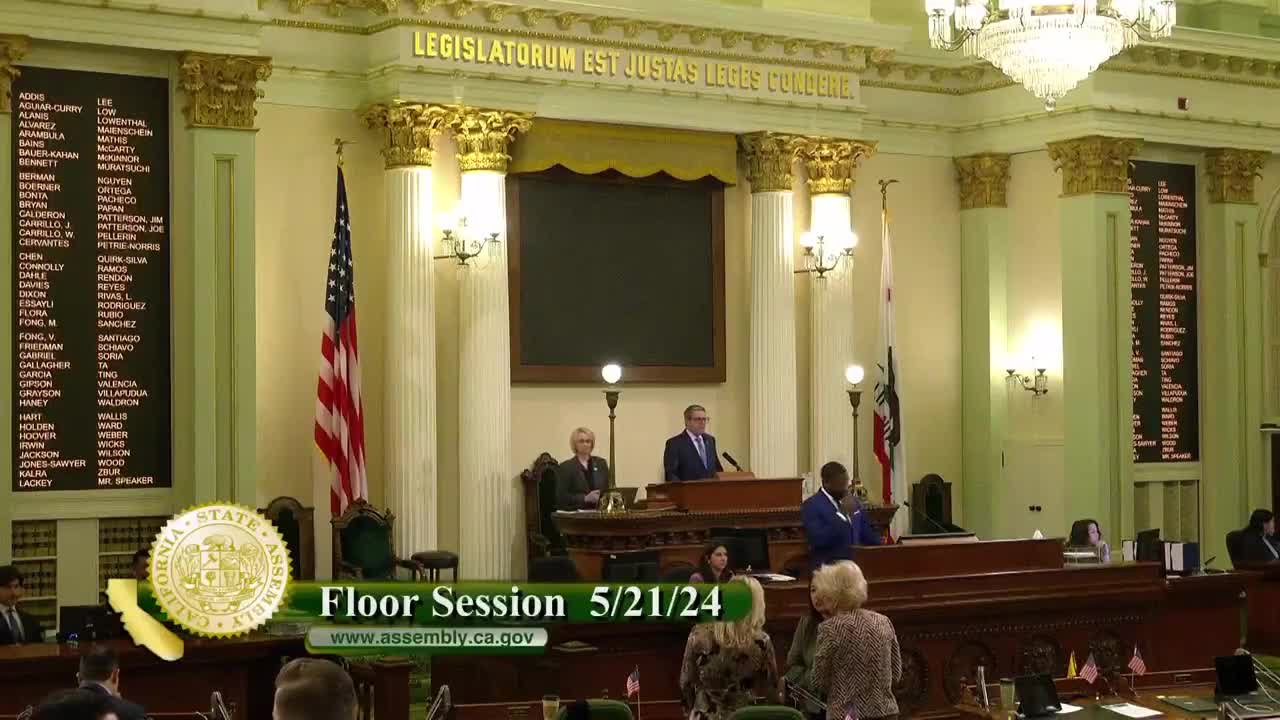 59SEC
Assembly Floor
 9MIN
Assembly Standing Committee on Health
Bill Author

Bill Co-Author(s):