AB 2447: California State University: fiscal transparency: internet website.
- Session Year: 2023-2024
- House: Assembly
- Latest Version Date: 2024-09-03
Current Status:
Failed
(2024-09-29: Vetoed by Governor.)
Introduced
In Committee
First Chamber
In Committee
Second Chamber
Enacted
Existing law establishes the California State University, under the administration of the Trustees of the California State University, as one of the segments of public postsecondary education in the state. Existing law requires the trustees to control and expend all money appropriated for the support and maintenance of the university.
This bill, the California State University Transparency Act of 2024, would require the California State University to develop and maintain, on or before July 1, 2026, an internet website that allows the public to search and aggregate information on the expenditures and transfers of any state funds by the California State University in amounts that exceed $25,000, as specified. The bill would require the internet website to include, among other things, the ability of a user to provide input to the California State University regarding the internet websites utility and the ability of a user to provide recommendations to the California State University for internet website improvements.
Existing law establishes the California State University, under the administration of the Trustees of the California State University, as one of the segments of public postsecondary education in the state. Existing law requires the trustees to control and expend all money appropriated for the support and maintenance of the university.
This bill, the California State University Transparency Act of 2024, would require the California State University to develop and maintain, on or before July 1, 2026, an internet website that allows the public to search and aggregate information on the expenditures and transfers of any state funds by the California State University in amounts that exceed $10,000, $25,000, as specified. The bill would require the internet website to include, among other things, the ability of a user to provide input to the California State University regarding the internet websites utility and the ability of a user to provide recommendations to the California State University for internet website improvements.
Existing law establishes the California State University, under the administration of the Trustees of the California State University, as one of the segments of public postsecondary education in the state. Existing law requires the trustees to control and expend all money appropriated for the support and maintenance of the university.
This bill, the California State University Transparency Act of 2024, would require the California State University to develop and maintain, on or before July 1, 2026, an internet website that allows the public to search and aggregate information on the expenditures and transfers of any state funds by the California State University in amounts that exceed $10,000, as specified. The bill would require the internet website to include, among other things, the ability of a user to provide input to the California State University regarding the internet websites utility and the ability of a user to provide recommendations to the California State University for internet website improvements.
Existing law establishes the California State University, under the administration of the Trustees of the California State University, as one of the segments of public postsecondary education in the state. Existing law requires the trustees to control and expend all money appropriated for the support and maintenance of the university.
This bill, the California State University Transparency Act of 2024, would require the California State University to develop and maintain, on or before July 1, 2025, 2026, an internet website that allows the public to search and aggregate information on the expenditures and transfers of any state funds by the California State University in amounts that exceed $1,000, $10,000, as specified. The bill would require the internet website to include, among other things, the ability of a user to provide input to the California State University regarding the internet websites utility and the ability of a user to provide recommendations to the California State University for internet website improvements.
Existing law establishes the California State University, under the administration of the Trustees of the California State University, as one of the segments of public postsecondary education in the state. Existing law requires the trustees to control and expend all money appropriated for the support and maintenance of the university.
This bill, the California State University Transparency Act of 2024, would require the California State University to develop and maintain, on or before July 1, 2025, an internet website that allows the public to search and aggregate information on the expenditures and transfers of any state funds by the California State University in amounts that exceed $1,000, as specified. The bill would require the internet website to include, among other things, the ability of a user to provide input to the California State University regarding the internet websites utility and the ability of a user to provide recommendations to the California State University for internet website improvements.
Existing law establishes the California State University, under the administration of the Trustees of the California State University, as one of the segments of public postsecondary education in the state. Existing law authorizes the Trustees of the California State University to transmit any revenues, including fees and charges required by the trustees, received by the trustees from extension programs, special session, and other self-supporting instructional programs to the Treasurer and if transmitted, requires the revenues to be deposited in the State University Continuing Education Revenue Fund, a continuously appropriated fund. Existing law appropriates all revenues from that fund to the trustees for the support and development of self-supporting instructional programs of the California State University.The bill would instead appropriate all revenues from the State University Continuing Education Revenue Fund to the trustees for the support and development of instructional programs of the California State University. By expanding the scope of an existing appropriation, the bill would make an appropriation.Existing law requires the chief fiscal officer of each campus of the California State University to deposit and maintain in specified trust accounts, or in the continuously appropriated California State University Trust Fund, specified moneys received in connection with certain sources or purposes, including fees for extension programs, special sessions, and other self-supporting instructional programs.This bill would authorize the trustees to transmit the revenues received by the trustees from extension programs, special session, or self-supporting instructional programs to the chief fiscal officer of a university campus, and would require those transmitted moneys to be deposited in specified trust accounts or in the continuously appropriated California State University Trust Fund. By adding a potential source of revenue to a continuously appropriated fund, the bill would make an appropriation.Existing law establishes the California State University, under the administration of the Trustees of the California State University, as one of the segments of public postsecondary education in the state. Existing law authorizes the Trustees of the California State University to transmit any revenues, including fees and charges required by the trustees, received by the trustees from extension programs, special session, and other self-supporting instructional programs to the Treasurer and if transmitted, requires the revenues to be deposited in the State University Continuing Education Revenue Fund, a continuously appropriated fund. Existing law appropriates all revenues from that fund to the trustees for the support and development of self-supporting instructional programs of the California State University.
The bill would instead appropriate all revenues from the State University Continuing Education Revenue Fund to the trustees for the support and development of instructional programs of the California State University. By expanding the scope of an existing appropriation, the bill would make an appropriation.
Existing law requires the chief fiscal officer of each campus of the California State University to deposit and maintain in specified trust accounts, or in the continuously appropriated California State University Trust Fund, specified moneys received in connection with certain sources or purposes, including fees for extension programs, special sessions, and other self-supporting instructional programs.
This bill would authorize the trustees to transmit the revenues received by the trustees from extension programs, special session, or self-supporting instructional programs to the chief fiscal officer of a university campus, and would require those transmitted moneys to be deposited in specified trust accounts or in the continuously appropriated California State University Trust Fund. By adding a potential source of revenue to a continuously appropriated fund, the bill would make an appropriation.
This article shall be known, and may be cited, as the California State University Transparency Act of 2024.
89765.5.As used in this article, the following definitions apply:
(a)California State University fiscal transparency internet website or fiscal transparency internet website means an internet website that allows the public to search and aggregate information on expenditures of state funds, and that is accessible from the California State University internet home page.
(b)Expenditure of state funds means the expenditure or transfer of any state funds by the California State University in an amount that exceeds twenty-five thousand dollars ($25,000) in the form of, including, but not limited to, any of the following:
(1)Grants.
(2)Contracts.
(3)Subcontracts.
(4)Purchase orders.
(5)Investments.
89766.(a)On or before July 1, 2026, the California State University shall develop and maintain a California State University fiscal transparency internet website that is accessible by the public at no cost, and that includes all of the following:
(1)(A)Except as provided in subparagraph (B), for each expenditure of state funds, information on the expenditure that includes, but is not limited to, all of the following information:
(i)The name and address of each office or business entity that receives funds, or other fund recipient. The information disclosed pursuant to this subparagraph shall not include the name of an individual person.
(ii)The amount of the expenditure.
(iii)The type of transaction.
(iv)The identity of the department, office, or other entity of the California State University making the expenditure.
(v)The program and type of expenditure.
(vi)A description of the purpose of the expenditure.
(vii)A description of any item purchased pursuant to the expenditure.
(viii)Any other information deemed relevant by the Department of Finance or the Governors office.
(B)For each expenditure that is a transfer of state funds in the form of investments, information on the investments that includes only the total amount of the transfer and the source of the funds.
(2)The ability for a user to view information on the fiscal transparency internet website in a format that is searchable and the ability for a user to download and manage that information with appropriate software.
(3)The ability of a user to provide input to the California State University regarding the utility of the fiscal transparency internet website.
(4)The ability of a user to provide recommendations to the California State University for improvements to the fiscal transparency internet website.
(b)On or before July 1, 2026, the fiscal transparency internet website shall include information on the expenditure of state funds for the 202526 fiscal year. On and after July 1, 2026, the fiscal transparency internet website shall be updated monthly to include information on the expenditure of state funds for the most recently completed month.
(c)The California State University shall fully cooperate with the Department of Finance and the Governors office in compiling and providing all information necessary to comply with this section.
(d)This section does not require the disclosure of confidential information or the disclosure of information that is otherwise exempt from disclosure under state or federal law.
This article shall be known, and may be cited, as the California State University Transparency Act of 2024.
89765.5.As used in this article, the following definitions apply:
(a)California State University fiscal transparency internet website or fiscal transparency internet website means an internet website that allows the public to search and aggregate information on expenditures of state funds, and that is accessible from the California State University internet home page.
(b)Expenditure of state funds means the expenditure or transfer of any state funds by the California State University in an amount that exceeds twenty-five thousand dollars ($25,000) in the form of, including, but not limited to, any of the following:
(1)Grants.
(2)Contracts.
(3)Subcontracts.
(4)Purchase orders.
(5)Investments.
89766.(a)On or before July 1, 2026, the California State University shall develop and maintain a California State University fiscal transparency internet website that is accessible by the public at no cost, and that includes all of the following:
(1)For (A)Except as provided in subparagraph (B), for each expenditure of state funds, information on the expenditure that includes, but is not limited to, all of the following information:
(A)(i)The name and address of each office or business entity that receives funds, or other fund recipient. The information disclosed pursuant to this subparagraph shall not include the name of an individual person.
(B)(ii)The amount of the expenditure.
(C)(iii)The type of transaction.
(D)(iv)The identity of the department, office, or other entity of the California State University making the expenditure.
(E)(v)The program and type of expenditure.
(F)(vi)A description of the purpose of the expenditure.
(G)(vii)A description of any item purchased pursuant to the expenditure.
(H)(viii)Any other information deemed relevant by the Department of Finance or the Governors office.
(B)For each expenditure that is a transfer of state funds in the form of investments, information on the investments that includes only the total amount of the transfer and the source of the funds.
(2)The ability for a user to view information on the fiscal transparency internet website in a format that is searchable and the ability for a user to download and manage that information with appropriate software.
(3)The ability of a user to provide input to the California State University regarding the utility of the fiscal transparency internet website.
(4)The ability of a user to provide recommendations to the California State University for improvements to the fiscal transparency internet website.
(b)On or before July 1, 2026, the fiscal transparency internet website shall include information on the expenditure of state funds for the 202526 fiscal year. On and after July 1, 2026, the fiscal transparency internet website shall be updated monthly to include information on the expenditure of state funds for the most recently completed month.
(c)The California State University shall fully cooperate with the Department of Finance and the Governors office in compiling and providing all information necessary to comply with this section.
(d)This section does not require the disclosure of confidential information or the disclosure of information that is otherwise exempt from disclosure under state or federal law.
This article shall be known, and may be cited, as the California State University Transparency Act of 2024.
89765.5.As used in this article, the following definitions apply:
(a)California State University fiscal transparency internet website or fiscal transparency internet website means an internet website that allows the public to search and aggregate information on expenditures of state funds, and that is accessible from the California State University internet homepage. home page.
(b)Expenditure of state funds means the expenditure or transfer of any state funds by the California State University in an amount that exceeds ten thousand dollars ($10,000) twenty-five thousand dollars ($25,000) in the form of, including, but not limited to, any of the following:
(1)Grants.
(2)Contracts.
(3)Subcontracts.
(4)Purchase orders.
(5)Investments.
89766.(a)On or before July 1, 2026, the California State University shall develop and maintain a California State University fiscal transparency internet website that is accessible by the public at no cost, and that includes all of the following:
(1)For each expenditure of state funds, information on the expenditure that includes, but is not limited to, all of the following information:
(A)The name and address of each office or business entity that receives funds, or other fund recipient. The information disclosed pursuant to this subparagraph shall not include the name of an individual person.
(B)The amount of the expenditure.
(C)The type of transaction.
(D)The identity of the department, office, or other entity of the California State University making the expenditure.
(E)The program and type of expenditure.
(F)A description of the purpose of the expenditure.
(G)A description of any item purchased pursuant to the expenditure.
(H)Any other information deemed relevant by the Department of Finance or the Governors office.
(2)The ability for a user to view information on the fiscal transparency internet website in a format that is searchable and the ability for a user to download and manage that information with appropriate software.
(3)The ability of a user to provide input to the California State University regarding the utility of the fiscal transparency internet website.
(4)The ability of a user to provide recommendations to the California State University for improvements to the fiscal transparency internet website.
(b)On or before July 1, 2026, the fiscal transparency internet website shall include information on the expenditure of state funds for the 202526 fiscal year. On and after July 1, 2026, the fiscal transparency internet website shall be updated monthly to include information on the expenditure of state funds for the most recently completed month.
(c)The California State University shall fully cooperate with the Department of Finance and the Governors office in compiling and providing all information necessary to comply with this section.
(d)This section does not require the disclosure of confidential information or the disclosure of information that is otherwise exempt from disclosure under state or federal law.
This article shall be known, and may be cited, as the California State University Transparency Act of 2024.
89765.5.As used in this article, the following definitions apply:
(a)California State University expenditures fiscal transparency internet website or expenditures fiscal transparency internet website means an internet website that allows the public to search and aggregate information on expenditures of state funds, and that is accessible from the California State University internet homepage.
(b)Expenditure of state funds means the expenditure or transfer of any state funds by the California State University in an amount that exceeds ten thousand dollars ($10,000) in the form of, including, but not limited to, any of the following:
(1)Grants.
(2)Contracts.
(3)Subcontracts.
(4)Purchase orders.
(5)Investments.
(6)Expenditures from a reserve account for use in the event of any revenue fluctuations.89766.(a)On or before July 1, 2026, the California State University shall develop and maintain a California State University expenditures fiscal transparency internet website that is accessible by the public at no cost, and that includes all of the following:
(1)For each expenditure of state funds, information on the expenditure that includes, but is not limited to, all of the following information:
(A)The name and office or business address of each office or business entity that receives funds, or other fund recipient. The information disclosed pursuant to this subparagraph shall not include the name of an individual person.
(B)The amount of the expenditure.
(C)The type of transaction.
(D)The identity of the department, office, or other entity of the California State University making the expenditure.
(E)The budget program source for the program and type of expenditure.
(F)A description of the purpose of the expenditure.
(G)A description of any item purchased pursuant to the expenditure.
(H)Any other information deemed relevant by the Department of Finance or the Governors office.
(2)The ability for a user to view information on the expenditures fiscal transparency internet website in a format that is searchable and the ability for a user to download and manage that information with appropriate software.
(3)The ability of a user to provide input to the California State University regarding the utility of the expenditures fiscal transparency internet website.
(4)The ability of a user to provide recommendations to the California State University for improvements to the expenditures fiscal transparency internet website.
(b)On or before July 1, 2026, the expenditures fiscal transparency internet website shall include information on the expenditure of state funds for the 202526 fiscal year. On and after July 1, 2026, the expenditures fiscal transparency internet website shall be updated monthly to include information on the expenditure of state funds for the most recently completed month.
(c)The California State University shall fully cooperate with the Department of Finance and the Governors office in compiling and providing all information necessary to comply with this section.
(d)This section does not require the disclosure of confidential information or the disclosure of information that is otherwise exempt from disclosure under state or federal law.
This article shall be known, and may be cited, as the California State University Transparency Act of 2024.
89765.5.As used in this article, the following definitions apply:
(a)California State University expenditures internet website or expenditures internet website means an internet website that allows the public to search and aggregate information on expenditures of state funds, and that is accessible from the California State University internet homepage.
(b)Expenditure of state funds means the expenditure or transfer of any state funds by the California State University in an amount that exceeds one ten thousand dollars ($1,000) ($10,000) in the form of, including, but not limited to, any of the following:
(1)Grants.
(2)Contracts.
(3)Subcontracts.
(4)Purchase orders.
(5)Investments.
(6)Expenditures from a reserve account for use in the event of any revenue fluctuations.
89766.(a)On or before July 1, 2025, 2026, the California State University shall develop and maintain a California State University expenditures internet website that is accessible by the public at no cost, and that includes all of the following:
(1)For each expenditure of state funds, information on the expenditure that includes, but is not limited to, all of the following information:
(A)The name and principal location or residence office or business address of each entity that receives funds, or other fund recipient.
(B)The amount of the expenditure.
(C)The type of transaction.
(D)The identity of the department, office, or other entity of the California State University making the expenditure.
(E)The budget program source for the expenditure.
(F)A description of the purpose of the expenditure.
(G)A description of any item purchased pursuant to the expenditure.
(H)Any other information deemed relevant by the Department of Finance or the Governors office.
(2)The ability for a user to view information on the expenditures internet website in a format that is searchable and the ability for a user to download and manage that information with appropriate software.
(3)The ability of a user to provide input to the California State University regarding the utility of the expenditures internet website.
(4)The ability of a user to provide recommendations to the California State University for improvements to the expenditures internet website.
(b)On or before July 1, 2025, 2026, the expenditures internet website shall include information on the expenditure of state funds for the 202425 202526 fiscal year. On and after July 1, 2025, 2026, the expenditures internet website shall be updated monthly to include information on the expenditure of state funds for the most recently completed month.
(c)The California State University shall fully cooperate with the Department of Finance and the Governors office in compiling and providing all information necessary to comply with this section.
(d)This section does not require the disclosure of confidential information or the disclosure of information that is otherwise exempt from disclosure under state or federal law.
This article shall be known, and may be cited, as the California State University Transparency Act of 2024.
89765.5.As used in this article, the following definitions apply:
(a)California State University expenditures internet website or expenditures internet website means an internet website that allows the public to search and aggregate information on expenditures of state funds, and that is accessible from the California State University internet homepage.
(b)Expenditure of state funds means the expenditure or transfer of any state funds by the California State University in an amount that exceeds one thousand dollars ($1,000) in the form of, including, but not limited to, any of the following:
(1)Grants.
(2)Contracts.
(3)Subcontracts.
(4)Purchase orders.
(5)Investments.
(6)Expenditures from a reserve account for use in the event of any revenue fluctuations.
89766.(a)On or before July 1, 2025, the California State University shall develop and maintain a California State University expenditures internet website that is accessible by the public at no cost, and that includes all of the following:
(1)For each expenditure of state funds, information on the expenditure that includes, but is not limited to, all of the following information:
(A)The name and principal location or residence of each entity that receives funds, or other fund recipient.
(B)The amount of the expenditure.
(C)The type of transaction.
(D)The identity of the department, office, or other entity of the California State University making the expenditure.
(E)The budget program source for the expenditure.
(F)A description of the purpose of the expenditure.
(G)A description of any item purchased pursuant to the expenditure.
(H)Any other information deemed relevant by the Department of Finance or the Governors office.
(2)The ability for a user to view information on the expenditures internet website in a format that is searchable and the ability for a user to download and manage that information with appropriate software.
(3)The ability of a user to provide input to the California State University regarding the utility of the expenditures internet website.
(4)The ability of a user to provide recommendations to the California State University for improvements to the expenditures internet website.
(b)On or before July 1, 2025, the expenditures internet website shall include information on the expenditure of state funds for the 202425 fiscal year. On and after July 1, 2025, the expenditures internet website shall be updated monthly to include information on the expenditure of state funds for the most recently completed month.
(c)The California State University shall fully cooperate with the Department of Finance and the Governors office in compiling and providing all information necessary to comply with this section.
(d)This section does not require the disclosure of confidential information or the disclosure of information that is otherwise exempt from disclosure under state or federal law.
SECTION 1.Section 89704 of the Education Code is amended to read:89704.(a)Notwithstanding any other law, revenues received by the Trustees of the California State University from extension programs, special session, or self-supporting instructional programs, including but not limited to, fees and charges required by the trustees, may be transmitted to either of the following:(1)The Treasurer and, if transmitted, shall be deposited by that officer in the State Treasury to the credit of the State University Continuing Education Revenue Fund, which is hereby created, and which is hereby designated as successor to the State College Extension Program Revenue Fund.(2)The chief fiscal officer of one or more campuses of the California State University, and, if transmitted, shall be deposited by the chief fiscal officer in accordance with Section 89721.(b)All revenues are hereby appropriated, without regard to fiscal years, to the trustees for the support and development of instructional programs of the California State University. However, proposed expenditures or obligations to be incurred during any fiscal year from the State University Continuing Education Revenue Fund, other than expenditures or obligations authorized by subdivision (d), shall be contained in the budget submitted for that fiscal year by the Governor pursuant to Section 12 of Article IV of the Constitution, and shall be subject to Article 2 (commencing with Section 13320) of Chapter 3 of Part 3 of Division 3 of Title 2 of the Government Code.(c)Moneys in the State University Continuing Education Revenue Fund may be invested by the Treasurer, upon approval of the trustees, in those eligible securities listed in Section 16430 of the Government Code. All interest or other earnings received pursuant to the investments shall be deposited to the credit of the State University Continuing Education Revenue Fund.(d)All revenues received by the trustees under this section may be pledged for the acquisition, construction, and improvement of facilities for extension programs, special session, and other self-supporting instructional programs pursuant to the State University Revenue Bond Act of 1947 (Article 2 (commencing with Section 90010) of Chapter 8), and may also be pledged to supplement other revenue funded projects relating to debt obligations issued by the trustees pursuant to the State University Revenue Bond Act of 1947.SEC. 2.Section 89721 of the Education Code is amended to read:89721.Notwithstanding any other law, the chief fiscal officer of each campus of the California State University shall deposit into and maintain in local trust accounts or in trust accounts in accordance with Sections 16305 to 16305.7, inclusive, of the Government Code, or in the California State University Trust Fund, moneys received in connection with the following sources or purposes:(a)Gifts, bequests, devises, and donations received under Section 89720.(b)Any student loan or scholarship fund program, including but not limited to, student loan programs of the state, federal government, including programs referred to in Section 89723, local government, or private sources.(c)Advance payment for anticipated expenditures or encumbrances in connection with federal grants or contracts.(d)Room, board, and similar expenses of students enrolled in the international program of the California State University.(e)Cafeteria replacement funds.(f)Miscellaneous receipts in the nature of deposits subject to return upon approval of a proper application.(g)Fees and charges for services, materials, and facilities authorized by Section 89700 if these fees or charges are required of those persons who, at their option, use the services or facilities, or are provided the materials, for which the fees or charges are made. Fees and charges so received and deposited shall be used solely to meet the costs of providing these services, materials, and facilities.(h)Fees for instructionally related activities as defined by the trustees and as authorized by Section 89700 and revenues derived from the conduct of the instructionally related activities. The trustees shall have all authority necessary to administer and use the fees and revenues received and deposited to support such instructionally related activities.(i)Fees for parking, health facilities or health services, and for extension programs, special sessions, or self-supporting instructional programs.(j)Revenue received by the trustees from the California State Lottery Education Fund pursuant to Section 8880.5 of the Government Code.(k)Moneys received by the trustees for research, workshops, conferences, institutes, and special projects.(l)Moneys collected as higher education fees and income from students of any campus of the California State University and from other persons pursuant to Section 89700. The Controller shall have the authority to audit the expenditure of these funds.(a)Notwithstanding any other provision of law, revenues received by the Trustees of the California State University from extension programs, special session, and other or self-supporting instructional programs, including but not limited to, fees and charges required by the trustees, may be transmitted to either of the following:
the
(1)The Treasurer and, if transmitted, shall be deposited by that officer in the State Treasury to the credit of the State University Continuing Education Revenue Fund, which is hereby created, and which is hereby designated as successor to the State College Extension Program Revenue Fund.
(2)The chief fiscal officer of one or more campuses of the California State University, and, if transmitted, shall be deposited by the chief fiscal officer in accordance with Section 89721.
(b)All revenues are hereby appropriated, without regard to fiscal years, to the trustees for the support and development of self-supporting instructional programs of the California State University. However, proposed expenditures or obligations to be incurred during any fiscal year from the State University Continuing Education Revenue Fund, other than expenditures or obligations authorized by subdivision (d), shall be contained in the budget submitted for that fiscal year by the Governor pursuant to Section 12 of Article IV of the Constitution, and shall be subject to Article 2 (commencing with Section 13320) of Chapter 3 of Part 3 of Division 3 of Title 2 of the Government Code.
(c)Moneys in the State University Continuing Education Revenue Fund may be invested by the Treasurer, upon approval of the trustees, in those eligible securities listed in Section 16430 of the Government Code. All interest or other earnings received pursuant to the investments shall be deposited to the credit of the State University Continuing Education Revenue Fund.
(d)All revenues received by the trustees under this section may be pledged for the acquisition, construction, and improvement of facilities for extension programs, special session, and other self-supporting instructional programs pursuant to the State University Revenue Bond Act of 1947 (Article 2 (commencing with Section 90010) of Chapter 8), and may also be pledged to supplement other revenue funded projects relating to debt obligations issued by the trustees pursuant to the State University Revenue Bond Act of 1947.
SEC. 2.Section 89721 of the Education Code is amended to read:89721.Notwithstanding any other provision of law, the chief fiscal officer of each campus of the California State University shall deposit into and maintain in local trust accounts or in trust accounts in accordance with Sections 16305 to 16305.7, inclusive, of the Government Code, or in the California State University Trust Fund, moneys received in connection with the following sources or purposes:
(a)Gifts, bequests, devises, and donations received under Section 89720.
(b)Any student loan or scholarship fund program, including but not limited to, student loan programs of the state, federal government (including government, including programs referred to in Section 89723), 89723, local government, or private sources.
(c)Advance payment for anticipated expenditures or encumbrances in connection with federal grants or contracts.
(d)Room, board, and similar expenses of students enrolled in the international program of the California State University.
(e)Cafeteria replacement funds.
(f)Miscellaneous receipts in the nature of deposits subject to return upon approval of a proper application.
(g)Fees and charges for services, materials, and facilities authorized by Section 89700 if these fees or charges are required of those persons who, at their option, use the services or facilities, or are provided the materials, for which the fees or charges are made. Fees and charges so received and deposited shall be used solely to meet the costs of providing these services, materials, and facilities.
(h)Fees for instructionally related activities as defined by the trustees and as authorized by Section 89700 and revenues derived from the conduct of the instructionally related activities. The trustees shall have all authority necessary to administer and use the fees and revenues received and deposited to support such instructionally related activities.
(i)Fees for parking, health facilities or health services, and for extension programs, special sessions, and other or self-supporting instructional programs.
(j)Revenue received by the trustees from the California State Lottery Education Fund pursuant to Section 8880.5 of the Government Code.
(k)Moneys received by the trustees for research, workshops, conferences, institutes, and special projects.
(l)Moneys collected as higher education fees and income from students of any campus of the California State University and from other persons pursuant to Section 89700. The Controller shall have the authority to audit the expenditure of these funds.
|
Date
|
Status
|
|---|---|
| Sep 29, 2024 | Vetoed by Governor. |
| Sep 11, 2024 | Enrolled and presented to the Governor at 4 p.m. |
| Aug 29, 2024 | Senate amendments concurred in. To Engrossing and Enrolling. (Ayes 74. Noes 0.). |
| Aug 29, 2024 | Assembly Rule 77 suspended. |
| Aug 28, 2024 | In Assembly. Concurrence in Senate amendments pending. May be considered on or after August 30 pursuant to Assembly Rule 77. |
| Aug 28, 2024 | Read third time. Passed. Ordered to the Assembly. (Ayes 35. Noes 1.). |
| Aug 26, 2024 | Read second time. Ordered to third reading. |
| Aug 23, 2024 | Read third time and amended. Ordered to second reading. |
| Aug 19, 2024 | Read second time. Ordered to third reading. |
| Aug 15, 2024 | Read second time and amended. Ordered returned to second reading. |
| Aug 15, 2024 | From committee: Amend, and do pass as amended. (Ayes 7. Noes 0.) (August 15). |
| Jul 1, 2024 | In committee: Referred to suspense file. |
| Jun 18, 2024 | Read second time and amended. Re-referred to Com. on APPR. |
| Jun 17, 2024 | From committee: Amend, and do pass as amended and re-refer to Com. on APPR. (Ayes 5. Noes 1.) (June 12). |
| May 29, 2024 | Referred to Com. on ED. |
| May 21, 2024 | In Senate. Read first time. To Com. on RLS. for assignment. |
| May 20, 2024 | Read third time. Passed. Ordered to the Senate. (Ayes 70. Noes 0. Page 5316.) |
| May 9, 2024 | Read second time. Ordered to third reading. |
| May 8, 2024 | From committee: Do pass. (Ayes 15. Noes 0.) (May 8). |
| Apr 29, 2024 | Re-referred to Com. on APPR. |
| Apr 25, 2024 | Read second time and amended. |
| Apr 24, 2024 | From committee: Amend, and do pass as amended and re-refer to Com. on APPR. (Ayes 8. Noes 0.) (April 23). |
| Mar 20, 2024 | Re-referred to Com. on HIGHER ED. |
| Mar 19, 2024 | From committee chair, with author's amendments: Amend, and re-refer to Com. on HIGHER ED. Read second time and amended. |
| Mar 18, 2024 | Referred to Com. on HIGHER ED. |
| Feb 14, 2024 | From printer. May be heard in committee March 15. |
| Feb 13, 2024 | Read first time. To print. |
|
Date
|
Description
|
Location
|
Votes
|
|
|---|---|---|---|---|
| Aug 29, 2024 | AB 2447 Valencia Concurrence in Senate Amendments | Assembly Floor |
Passed |
|
| Aug 28, 2024 | Assembly 3rd Reading AB2447 Valencia By Durazo | Senate Floor |
Passed |
|
| Aug 15, 2024 | Do pass as amended | Senate Standing Committee on Appropriations |
Passed |
|
| Jul 1, 2024 | Placed on suspense file | Senate Standing Committee on Appropriations |
Passed |
|
| Jun 12, 2024 | Do pass as amended, but first amend, and re-refer to the Committee on [Appropriations] | Senate Standing Committee on Education |
Passed |
|
| May 20, 2024 | AB 2447 Valencia Assembly Third Reading | Assembly Floor |
Passed |
|
| May 8, 2024 | Do pass. | Assembly Standing Committee on Appropriations |
Passed |
|
| Apr 23, 2024 | Do pass as amended and be re-referred to the Committee on [Appropriations] | Assembly Standing Committee on Higher Education |
Passed |
This list shows positions taken on this bill by organizations on the date displayed, which is linked to the original source.
Positions by individuals are not included.
|
Organization
|
Position
|
Date
|
|---|---|---|
| Academic Senate of the CSU | * Against Unless Amend | Apr 23, 2024 |
| California Faculty Association | ** Support | |
| California State University | ** Against |
GOVERNOR'S VETO
GV Bill Id:AB 2447
Author:(Valencia)
As Enrolled Ver:September 3, 2024
2/3 vote
SUMMARY
Requires the California State University (CSU) to develop and maintain, on or before July 1, 2026, a fiscal transparency internet website that allows the public to search and aggregate information on the expenditures and transfers of funds by the CSU in amounts that exceed $25,000, as specified.
Senate Amendments:
Amendments taken in the Senate:
- Designates the CSU's internet website created pursuant to this bill as a fiscal transparency website.
- Specifies that information disclosed on the website will not include the name of individual persons.
- Requires that. for each expenditure that is a transfer of state funds in the form of investments, information on the investments will include only the total amount of the transfer and the source of the funds
Governor’s Veto Message
This bill requires the California State University (CSU) to develop and maintain a fiscal transparency website displaying expenditures and transfers of state funds in amounts greater than $25,000 by July 1, 2026.
The CSU voluntarily maintains a Fiscal Transparency Portal, accessible to the public, that provides data largely consistent with this bill. The existing database presents aggregate data on expenditures of $50,000 or more over the past five fiscal years, broken down by program and by expense type. Including additional transactions greater than $25,000 would place additional cost pressures on the CSU budget at a time when the system is preparing to implement ongoing state appropriations reductions.
In partnership with the Legislature this year, my Administration has enacted a balanced budget that avoids deep program cuts to vital services and protected investments in education, health care, climate, public safety, housing, and social service programs that millions of Californians rely on. It is important to remain disciplined when considering bills with significant fiscal implications that are not included in the budget, such as this measure.
COMMENTS
CSU Audit. In May of 2020 the State Auditor released audit report 2019-114 California State University: The Mandatory Fees Its Campuses Charge Receive Little Oversight Yet They Represent an Increasing Financial Burden to Students. The report found that the growth in mandatory fees has made the CSU campuses increasingly expensive for students. Since academic year 2011–12, the trustees have increased tuition by only $270, or 5%, in academic year 2017–18, from $5,472 to $5,742. This stability in tuition costs is largely the result of the tuition freezes the Legislature negotiated with the CSU as part of the annual state budget process, during which the Legislature increased state funding to the CSU system. In contrast, from academic years 2011–12 through 2019–20, total mandatory fees on average across all 23 CSU campuses increased from $1,047 to $1,633, or 56%.
The report also found that CSU's approach to managing mandatory fees did not ensure adequate accountability. Although campuses must obtain approval from the CSU Office of the Chancellor to establish new mandatory fees, campus presidents did not need approval to increase the amount of existing fees. In addition, the Chancellor's Office's systemwide fee policy contained only vague requirements that allow campuses to request approval for proposed mandatory fees or increase existing fees without justifying specific fee amounts. As a result, the State Auditor found that campuses did not sufficiently justify their needs when determining and setting the amount of proposed fees or increases to existing fees. Campuses also did not sufficiently demonstrate that they had no other way to pay for those needs.
According to the Author
According to the author, "AB 2447, the California State University Transparency Act of 2024, will allow the legislature to hold the CSU accountable for their expenditures of state funds. The bill will require the CSU to disclose specific data for their contracts, subcontracts, purchase orders, investments and any expenditure from a reserve account. The data will identify the recipients of expenditures, the amount awarded, the type of transaction, the CSU office or department making the expenditure, the budget program source for the expenditure, a description of the purpose of the expenditure, and a description of the item purchased. Greater transparency of the CSU's expenditures is necessary to understand how the system spends taxpayer dollars, and to ensure that they are investing in students, faculty and staff."
The author cited the CSU audit, and noted that "in September 2023, the CSU Board of Trustees approved a system wide tuition hike, with 6% increases in tuition for five consecutive years starting with the 2024-25 academic year, further increasing students’ financial burden. In January 2024, CSU faculty organized a system-wide strike after their attempts to increase faculty salaries through collective bargaining were unsuccessful. The CSU and faculty have since come to an agreement for salary increases. However, it would be helpful to have more details on the CSU's financial obligations and spending to understand the high cost of fees, tuition, and the reluctance for increasing faculty salaries."
Arguments in Support
The California Faculty Association, the sponsors of AB 2447, argue that the bill "mandates the CSU to make their expenditures of state funds publicly available on the internet…marking a significant step towards enhancing transparency and accountability within one of the nation's largest public education institutions. The CSU system, with an operating budget of $8.1 billion for the fiscal year 2023-24, receives substantial funding from the state General Fund, tuition and mandatory fees, and California State Lottery Ticket sales, among other sources. Despite the critical role that these funds play in supporting the CSU's operating costs—including instruction, academic support, student services, and financial aid—a state audit released in May 2020 highlighted a concerning lack of oversight on the expenditures of mandatory fees, which have been a financial burden to students. These fees, not covered by financial aid grants and scholarships, contribute to the financial strain on students and their families, many of whom resort to paying these fees out of pocket or through student loans. The audit's findings, coupled with the CSU Board of Trustees' recent decision to approve a system-wide tuition hike, underscore the urgent need for greater financial transparency to ensure that the funds are being used effectively to support the CSU's core functions…this level of transparency will empower students, parents, taxpayers, and legislators to see how allocated state funds are spent and assess the outcomes of these expenditures."
Arguments in Opposition
The CSU Chancellor's Office expressed opposition, writing that "The CSU shares the author's goal of increased transparency and accountability and has demonstrated this shared priority through our Transparency & Accountability website. The public is currently able to track all expenditures over $50,000, annual financial statements, external financial audit reports, and utilize a financial transparency portal that allows one to customize CSU finance searches by year, university, and fund on this site. However, the CSU remains opposed to AB 2447 as it maintains a number of provisions that would be incredibly difficult to implement and would provide little to no public benefit."
FISCAL COMMENTS
According to the Senate Committee of Appropriations:
While CSU already maintains a Financial Transparency Portal that provides aggregate data on expenditures of $50,000 or more over the past five fiscal years and categorizes expenditures by program and by expense type, the CSU Office of the Chancellor estimates General Fund costs of $602,000 to comply with the bill's requirements. Of this amount, $90,000 would be to hire a financial analyst to develop and maintain reporting standards, train university staff, and respond help desk service tickets; 12,000 for quarterly trainings during the first year of implementation and annually thereafter; and $500,000 for an investment manager custom reporting tool to provide the information required for all mutual fund trade transactions. Further, the CSU indicates that in order to manage the granular level of detail that is to be included with each transaction and the monthly updates required by this bill, some campuses may need to purchase software which would cost approximately $70,000 per license.
VOTES
ASM HIGHER EDUCATION: 8-0-3
YES: Mike Fong, Arambula, Boerner, Chen, Irwin, Jackson, Low, Muratsuchi
ABS, ABST OR NV: Ta, Essayli, Quirk-Silva
ASM APPROPRIATIONS: 15-0-0
YES: Wicks, Sanchez, Arambula, Bryan, Calderon, Wendy Carrillo, Dixon, Mike Fong, Friedman, Haney, Hart, Jim Patterson, Pellerin, Ta, Villapudua
ASSEMBLY FLOOR: 70-0-10
YES: Addis, Aguiar-Curry, Alanis, Bains, Bauer-Kahan, Bennett, Berman, Boerner, Bonta, Bryan, Calderon, Juan Carrillo, Wendy Carrillo, Chen, Connolly, Davies, Dixon, Flora, Mike Fong, Vince Fong, Friedman, Garcia, Gipson, Grayson, Haney, Hart, Holden, Hoover, Irwin, Jackson, Jones-Sawyer, Kalra, Lackey, Lee, Low, Lowenthal, Maienschein, McCarty, McKinnor, Muratsuchi, Ortega, Pacheco, Papan, Jim Patterson, Joe Patterson, Pellerin, Petrie-Norris, Quirk-Silva, Ramos, Rendon, Reyes, Rodriguez, Blanca Rubio, Sanchez, Santiago, Schiavo, Soria, Ta, Ting, Valencia, Villapudua, Waldron, Wallis, Ward, Weber, Wicks, Wilson, Wood, Zbur, Robert Rivas
ABS, ABST OR NV: Alvarez, Arambula, Cervantes, Megan Dahle, Essayli, Gabriel, Gallagher, Mathis, Stephanie Nguyen, Luz Rivas
SENATE FLOOR: 35-1-4
YES: Ashby, Atkins, Blakespear, Bradford, Caballero, Cortese, Dahle, Dodd, Durazo, Eggman, Gonzalez, Grove, Hurtado, Jones, Laird, Limón, McGuire, Menjivar, Min, Newman, Nguyen, Niello, Ochoa Bogh, Padilla, Portantino, Roth, Rubio, Seyarto, Skinner, Smallwood-Cuevas, Stern, Umberg, Wahab, Wiener, Wilk
NO: Glazer
ABS, ABST OR NV: Allen, Alvarado-Gil, Archuleta, Becker
ASSEMBLY FLOOR: 74-0-5
YES: Addis, Aguiar-Curry, Alanis, Alvarez, Arambula, Bains, Bauer-Kahan, Bennett, Berman, Boerner, Bonta, Bryan, Calderon, Juan Carrillo, Wendy Carrillo, Chen, Connolly, Megan Dahle, Davies, Dixon, Flora, Mike Fong, Friedman, Gabriel, Garcia, Gipson, Grayson, Haney, Hart, Holden, Hoover, Irwin, Jackson, Jones-Sawyer, Kalra, Lackey, Lee, Low, Lowenthal, Maienschein, Mathis, McCarty, McKinnor, Muratsuchi, Stephanie Nguyen, Pacheco, Papan, Jim Patterson, Joe Patterson, Pellerin, Petrie-Norris, Quirk-Silva, Ramos, Rendon, Reyes, Luz Rivas, Rodriguez, Blanca Rubio, Sanchez, Santiago, Schiavo, Soria, Ta, Ting, Valencia, Villapudua, Waldron, Wallis, Ward, Weber, Wicks, Wilson, Wood, Robert Rivas
ABS, ABST OR NV: Cervantes, Essayli, Gallagher, Ortega, Zbur
UPDATED
VERSION: September 3, 2024
CONSULTANT: Kevin Powers / HIGHER ED. / (916) 319-3960 FN: 0005193
CONCURRENCE IN SENATE AMENDMENTS
CSA1 Bill Id:AB 2447
Author:(Valencia)
As Amended Ver:August 23, 2024
Majority vote
SUMMARY
Requires the California State University (CSU) to develop and maintain, on or before July 1, 2026, a fiscal transparency internet website that allows the public to search and aggregate information on the expenditures and transfers of funds by the CSU in amounts that exceed $25,000, as specified.
Senate Amendments
Amendments taken in the Senate:
- Designates the CSU's internet website created pursuant to this bill as a fiscal transparency website.
- Specifies that information disclosed on the website will not include the name of individual persons.
- Requires that. for each expenditure that is a transfer of state funds in the form of investments, information on the investments will include only the total amount of the transfer and the source of the funds
COMMENTS
CSU Audit. In May of 2020 the State Auditor released audit report 2019-114 California State University: The Mandatory Fees Its Campuses Charge Receive Little Oversight Yet They Represent an Increasing Financial Burden to Students. The report found that the growth in mandatory fees has made the CSU campuses increasingly expensive for students. Since academic year 2011–12, the trustees have increased tuition by only $270, or 5%, in academic year 2017–18, from $5,472 to $5,742. This stability in tuition costs is largely the result of the tuition freezes the Legislature negotiated with the CSU as part of the annual state budget process, during which the Legislature increased state funding to the CSU system. In contrast, from academic years 2011–12 through 2019–20, total mandatory fees on average across all 23 CSU campuses increased from $1,047 to $1,633, or 56%.
The report also found that CSU's approach to managing mandatory fees did not ensure adequate accountability. Although campuses must obtain approval from the CSU Office of the Chancellor to establish new mandatory fees, campus presidents did not need approval to increase the amount of existing fees. In addition, the Chancellor's Office's systemwide fee policy contained only vague requirements that allow campuses to request approval for proposed mandatory fees or increase existing fees without justifying specific fee amounts. As a result, the State Auditor found that campuses did not sufficiently justify their needs when determining and setting the amount of proposed fees or increases to existing fees. Campuses also did not sufficiently demonstrate that they had no other way to pay for those needs.
According to the Author
According to the author, "AB 2447, the California State University Transparency Act of 2024, will allow the legislature to hold the CSU accountable for their expenditures of state funds. The bill will require the CSU to disclose specific data for their contracts, subcontracts, purchase orders, investments and any expenditure from a reserve account. The data will identify the recipients of expenditures, the amount awarded, the type of transaction, the CSU office or department making the expenditure, the budget program source for the expenditure, a description of the purpose of the expenditure, and a description of the item purchased. Greater transparency of the CSU's expenditures is necessary to understand how the system spends taxpayer dollars, and to ensure that they are investing in students, faculty and staff."
The author cited the CSU audit, and noted that "in September 2023, the CSU Board of Trustees approved a system wide tuition hike, with 6% increases in tuition for five consecutive years starting with the 2024-25 academic year, further increasing students' financial burden. In January 2024, CSU faculty organized a system-wide strike after their attempts to increase faculty salaries through collective bargaining were unsuccessful. The CSU and faculty have since come to an agreement for salary increases. However, it would be helpful to have more details on the CSU's financial obligations and spending to understand the high cost of fees, tuition, and the reluctance for increasing faculty salaries."
Arguments in Support
The California Faculty Association, the sponsors of AB 2447, argue that the bill "mandates the CSU to make their expenditures of state funds publicly available on the internet…marking a significant step towards enhancing transparency and accountability within one of the nation's largest public education institutions. The CSU system, with an operating budget of $8.1 billion for the fiscal year 2023-24, receives substantial funding from the state General Fund, tuition and mandatory fees, and California State Lottery Ticket sales, among other sources. Despite the critical role that these funds play in supporting the CSU's operating costs—including instruction, academic support, student services, and financial aid—a state audit released in May 2020 highlighted a concerning lack of oversight on the expenditures of mandatory fees, which have been a financial burden to students. These fees, not covered by financial aid grants and scholarships, contribute to the financial strain on students and their families, many of whom resort to paying these fees out of pocket or through student loans. The audit's findings, coupled with the CSU Board of Trustees' recent decision to approve a system-wide tuition hike, underscore the urgent need for greater financial transparency to ensure that the funds are being used effectively to support the CSU's core functions…this level of transparency will empower students, parents, taxpayers, and legislators to see how allocated state funds are spent and assess the outcomes of these expenditures."
Arguments in Opposition
The CSU Chancellor's Office expressed opposition, writing that "The CSU shares the author's goal of increased transparency and accountability and has demonstrated this shared priority through our Transparency & Accountability website. The public is currently able to track all expenditures over $50,000, annual financial statements, external financial audit reports, and utilize a financial transparency portal that allows one to customize CSU finance searches by year, university, and fund on this site. However, the CSU remains opposed to AB 2447 as it maintains a number of provisions that would be incredibly difficult to implement and would provide little to no public benefit."
FISCAL COMMENTS
According to the Senate Committee of Appropriations:
While CSU already maintains a Financial Transparency Portal that provides aggregate data on expenditures of $50,000 or more over the past five fiscal years and categorizes expenditures by program and by expense type, the CSU Office of the Chancellor estimates General Fund costs of $602,000 to comply with the bill's requirements. Of this amount, $90,000 would be to hire a financial analyst to develop and maintain reporting standards, train university staff, and respond help desk service tickets; 12,000 for quarterly trainings during the first year of implementation and annually thereafter; and $500,000 for an investment manager custom reporting tool to provide the information required for all mutual fund trade transactions. Further, the CSU indicates that in order to manage the granular level of detail that is to be included with each transaction and the monthly updates required by this bill, some campuses may need to purchase software which would cost approximately $70,000 per license.
VOTES:
ASM HIGHER EDUCATION: 8-0-3
YES: Mike Fong, Arambula, Boerner, Chen, Irwin, Jackson, Low, Muratsuchi
ABS, ABST OR NV: Ta, Essayli, Quirk-Silva
ASM APPROPRIATIONS: 15-0-0
YES: Wicks, Sanchez, Arambula, Bryan, Calderon, Wendy Carrillo, Dixon, Mike Fong, Friedman, Haney, Hart, Jim Patterson, Pellerin, Ta, Villapudua
ASSEMBLY FLOOR: 70-0-10
YES: Addis, Aguiar-Curry, Alanis, Bains, Bauer-Kahan, Bennett, Berman, Boerner, Bonta, Bryan, Calderon, Juan Carrillo, Wendy Carrillo, Chen, Connolly, Davies, Dixon, Flora, Mike Fong, Vince Fong, Friedman, Garcia, Gipson, Grayson, Haney, Hart, Holden, Hoover, Irwin, Jackson, Jones-Sawyer, Kalra, Lackey, Lee, Low, Lowenthal, Maienschein, McCarty, McKinnor, Muratsuchi, Ortega, Pacheco, Papan, Jim Patterson, Joe Patterson, Pellerin, Petrie-Norris, Quirk-Silva, Ramos, Rendon, Reyes, Rodriguez, Blanca Rubio, Sanchez, Santiago, Schiavo, Soria, Ta, Ting, Valencia, Villapudua, Waldron, Wallis, Ward, Weber, Wicks, Wilson, Wood, Zbur, Robert Rivas
ABS, ABST OR NV: Alvarez, Arambula, Cervantes, Megan Dahle, Essayli, Gabriel, Gallagher, Mathis, Stephanie Nguyen, Luz Rivas
SENATE FLOOR: 35-1-4
YES: Ashby, Atkins, Blakespear, Bradford, Caballero, Cortese, Dahle, Dodd, Durazo, Eggman, Gonzalez, Grove, Hurtado, Jones, Laird, Limón, McGuire, Menjivar, Min, Newman, Nguyen, Niello, Ochoa Bogh, Padilla, Portantino, Roth, Rubio, Seyarto, Skinner, Smallwood-Cuevas, Stern, Umberg, Wahab, Wiener, Wilk
NO: Glazer
ABS, ABST OR NV: Allen, Alvarado-Gil, Archuleta, Becker
UPDATED
VERSION: August 23, 2024
CONSULTANT: Kevin J. Powers / HIGHER ED. / (916) 319-3960 FN: 0004771
CONCURRENCE IN SENATE AMENDMENTS
CSA1 Bill Id:AB 2447
Author:(Valencia)
As Amended Ver:August 23, 2024
Majority vote
SUMMARY
Requires the California State University (CSU) to develop and maintain, on or before July 1, 2026, a fiscal transparency internet website that allows the public to search and aggregate information on the expenditures and transfers of funds by the CSU in amounts that exceed $25,000, as specified.
Senate Amendments
Amendments taken in the Senate:
- Designates the CSU's internet website created pursuant to this bill as a fiscal transparency website.
- Specifies that information disclosed on the website will not include the name of individual persons.
- Requires that. for each expenditure that is a transfer of state funds in the form of investments, information on the investments will include only the total amount of the transfer and the source of the funds
COMMENTS
CSU Audit. In May of 2020 the State Auditor released audit report 2019-114 California State University: The Mandatory Fees Its Campuses Charge Receive Little Oversight Yet They Represent an Increasing Financial Burden to Students. The report found that the growth in mandatory fees has made the CSU campuses increasingly expensive for students. Since academic year 2011–12, the trustees have increased tuition by only $270, or 5%, in academic year 2017–18, from $5,472 to $5,742. This stability in tuition costs is largely the result of the tuition freezes the Legislature negotiated with the CSU as part of the annual state budget process, during which the Legislature increased state funding to the CSU system. In contrast, from academic years 2011–12 through 2019–20, total mandatory fees on average across all 23 CSU campuses increased from $1,047 to $1,633, or 56%.
The report also found that CSU's approach to managing mandatory fees did not ensure adequate accountability. Although campuses must obtain approval from the CSU Office of the Chancellor to establish new mandatory fees, campus presidents did not need approval to increase the amount of existing fees. In addition, the Chancellor's Office's systemwide fee policy contained only vague requirements that allow campuses to request approval for proposed mandatory fees or increase existing fees without justifying specific fee amounts. As a result, the State Auditor found that campuses did not sufficiently justify their needs when determining and setting the amount of proposed fees or increases to existing fees. Campuses also did not sufficiently demonstrate that they had no other way to pay for those needs.
According to the Author
According to the author, "AB 2447, the California State University Transparency Act of 2024, will allow the legislature to hold the CSU accountable for their expenditures of state funds. The bill will require the CSU to disclose specific data for their contracts, subcontracts, purchase orders, investments and any expenditure from a reserve account. The data will identify the recipients of expenditures, the amount awarded, the type of transaction, the CSU office or department making the expenditure, the budget program source for the expenditure, a description of the purpose of the expenditure, and a description of the item purchased. Greater transparency of the CSU's expenditures is necessary to understand how the system spends taxpayer dollars, and to ensure that they are investing in students, faculty and staff."
The author cited the CSU audit, and noted that "in September 2023, the CSU Board of Trustees approved a system wide tuition hike, with 6% increases in tuition for five consecutive years starting with the 2024-25 academic year, further increasing students' financial burden. In January 2024, CSU faculty organized a system-wide strike after their attempts to increase faculty salaries through collective bargaining were unsuccessful. The CSU and faculty have since come to an agreement for salary increases. However, it would be helpful to have more details on the CSU's financial obligations and spending to understand the high cost of fees, tuition, and the reluctance for increasing faculty salaries."
Arguments in Support
The California Faculty Association, the sponsors of AB 2447, argue that the bill "mandates the CSU to make their expenditures of state funds publicly available on the internet…marking a significant step towards enhancing transparency and accountability within one of the nation's largest public education institutions. The CSU system, with an operating budget of $8.1 billion for the fiscal year 2023-24, receives substantial funding from the state General Fund, tuition and mandatory fees, and California State Lottery Ticket sales, among other sources. Despite the critical role that these funds play in supporting the CSU's operating costs—including instruction, academic support, student services, and financial aid—a state audit released in May 2020 highlighted a concerning lack of oversight on the expenditures of mandatory fees, which have been a financial burden to students. These fees, not covered by financial aid grants and scholarships, contribute to the financial strain on students and their families, many of whom resort to paying these fees out of pocket or through student loans. The audit's findings, coupled with the CSU Board of Trustees' recent decision to approve a system-wide tuition hike, underscore the urgent need for greater financial transparency to ensure that the funds are being used effectively to support the CSU's core functions…this level of transparency will empower students, parents, taxpayers, and legislators to see how allocated state funds are spent and assess the outcomes of these expenditures."
Arguments in Opposition
The CSU Chancellor's Office expressed opposition, writing that "The CSU shares the author's goal of increased transparency and accountability and has demonstrated this shared priority through our Transparency & Accountability website. The public is currently able to track all expenditures over $50,000, annual financial statements, external financial audit reports, and utilize a financial transparency portal that allows one to customize CSU finance searches by year, university, and fund on this site. However, the CSU remains opposed to AB 2447 as it maintains a number of provisions that would be incredibly difficult to implement and would provide little to no public benefit."
FISCAL COMMENTS
According to the Senate Committee of Appropriations:
While CSU already maintains a Financial Transparency Portal that provides aggregate data on expenditures of $50,000 or more over the past five fiscal years and categorizes expenditures by program and by expense type, the CSU Office of the Chancellor estimates General Fund costs of $602,000 to comply with the bill's requirements. Of this amount, $90,000 would be to hire a financial analyst to develop and maintain reporting standards, train university staff, and respond help desk service tickets; 12,000 for quarterly trainings during the first year of implementation and annually thereafter; and $500,000 for an investment manager custom reporting tool to provide the information required for all mutual fund trade transactions. Further, the CSU indicates that in order to manage the granular level of detail that is to be included with each transaction and the monthly updates required by this bill, some campuses may need to purchase software which would cost approximately $70,000 per license.
VOTES:
ASM HIGHER EDUCATION: 8-0-3
YES: Mike Fong, Arambula, Boerner, Chen, Irwin, Jackson, Low, Muratsuchi
ABS, ABST OR NV: Ta, Essayli, Quirk-Silva
ASM APPROPRIATIONS: 15-0-0
YES: Wicks, Sanchez, Arambula, Bryan, Calderon, Wendy Carrillo, Dixon, Mike Fong, Friedman, Haney, Hart, Jim Patterson, Pellerin, Ta, Villapudua
ASSEMBLY FLOOR: 70-0-10
YES: Addis, Aguiar-Curry, Alanis, Bains, Bauer-Kahan, Bennett, Berman, Boerner, Bonta, Bryan, Calderon, Juan Carrillo, Wendy Carrillo, Chen, Connolly, Davies, Dixon, Flora, Mike Fong, Vince Fong, Friedman, Garcia, Gipson, Grayson, Haney, Hart, Holden, Hoover, Irwin, Jackson, Jones-Sawyer, Kalra, Lackey, Lee, Low, Lowenthal, Maienschein, McCarty, McKinnor, Muratsuchi, Ortega, Pacheco, Papan, Jim Patterson, Joe Patterson, Pellerin, Petrie‑Norris, Quirk-Silva, Ramos, Rendon, Reyes, Rodriguez, Blanca Rubio, Sanchez, Santiago, Schiavo, Soria, Ta, Ting, Valencia, Villapudua, Waldron, Wallis, Ward, Weber, Wicks, Wilson, Wood, Zbur, Robert Rivas
ABS, ABST OR NV: Alvarez, Arambula, Cervantes, Megan Dahle, Essayli, Gabriel, Gallagher, Mathis, Stephanie Nguyen, Luz Rivas
UPDATED
VERSION: August 23, 2024
CONSULTANT: Kevin J. Powers / HIGHER ED. / (916) 319-3960 FN: 0004771
SENATE RULES COMMITTEE Office of Senate Floor Analyses (916) 651-1520 Fax: (916) 327-4478 | AB 2447 |
THIRD READING
Bill No: AB 2447
Author: Valencia (D)
Amended: 8/23/24 in Senate
Vote: 21
SENATE EDUCATION COMMITTEE: 5-1, 6/12/24
AYES: Newman, Cortese, Gonzalez, Limón, Wilk
NOES: Glazer
NO VOTE RECORDED: Ochoa Bogh
SENATE APPROPRIATIONS COMMITTEE: 7-0, 8/15/24
AYES: Caballero, Jones, Ashby, Becker, Bradford, Seyarto, Wahab
ASSEMBLY FLOOR: 70-0, 5/20/24 - See last page for vote
SUBJECT: California State University: fiscal transparency: internet website
SOURCE: California Faculty Association
DIGEST:
This bill requires the California State University (CSU) to develop and maintain an internet website that allows the public to search and aggregate information on the expenditures and transfers of any state funds by the CSU in amounts that exceed $25,000, as specified.
Senate Floor Amendments of 8/23/24 clarify that, for transfers of state funds in the form of investments, the fiscal transparency internet website shall include only the total amount of the transfer and the source of the funds.
ANALYSIS:
Existing law:
- Confers upon the CSU Trustees the powers, duties, and functions with respect to the management, administration, control of the CSU system and provides that the Trustees are responsible for the rule of government of their appointees and employees. (Education Code (EC) Sections 66606 and 89500, et seq.)
- Requires the CSU Trustees to control and expend all money appropriated for the support and maintenance of the CSU, and all money received as donations, as specified. (EC Section 89750)
This bill:
- Defines “CSU fiscal transparency internet website” or “fiscal transparency internet website” as an internet website that allows the public to search and aggregate information on expenditures of state funds, and that is accessible from the CSU internet homepage.
- Defines “Expenditure of state funds” as the expenditure or transfer of any state funds by the CSU in an amount that exceeds ten thousand dollars ($10,000) in the form of, including, but not limited to, any of the following:
- Grants;
- Contracts;
- Subcontracts;
- Purchase orders;
- Investments; and,
- Requires the CSU, on or before July 1, 2026, to develop and maintain a CSU expenditures internet website that is accessible by the public at no cost, and that includes all of the following:
- For each expenditure of state funds, information on the expenditure that includes, but is not limited to, all of the following information:
- The name and address of each office or business fund recipient, excluding the name of any individual person.
- The amount of the expenditure.
- The type of transaction.
- The identity of the department, office, or other entity of the CSU making the expenditure.
- The program and type of expenditure.
- A description of the purpose of the expenditure.
- A description of any item purchased pursuant to the expenditure.
- Any other information deemed relevant by the Department of Finance or the Governor’s Office.
- The ability for a user to view information on the fiscal transparency internet website in a format that is searchable and the ability for a user to download and manage that information with appropriate software.
- The ability of a user to provide input to the CSU regarding the utility of the fiscal transparency internet website.
- The ability of a user to provide recommendations to the CSU for improvements to the expenditures internet website.
- For each expenditure of state funds, information on the expenditure that includes, but is not limited to, all of the following information:
- Requires that, on or before July 1, 2026, the fiscal transparency internet website must include information on the expenditure of state funds for the 2025-26 fiscal year. On and after July 1, 2026, the fiscal transparency internet website will be updated monthly to include information on the expenditure of state funds for the most recently completed month.
- Requires the CSU to fully cooperate with the Department of Finance and the Governor’s Office in compiling and providing all information necessary to comply with this section.
- Specifies that the internet website, for each expenditure that is a transfer of state funds in the form of investments, shall include information on the investments that includes only the total amount of the transfer and the source of funds.
- Specifies that the provisions do not require the disclosure of confidential information or the disclosure of information that is otherwise exempt from disclosure under state or federal law.
Comments
- Need for the bill. According to the author, “AB 2447, the California State University Transparency Act of 2024, will allow the legislature to hold the CSU accountable for their expenditures of state funds. The bill will require the CSU to disclose specific data for their contracts, subcontracts, purchase orders, investments and any expenditure from a reserve account. The data will identify the recipients of expenditures, the amount awarded, the type of transaction, the CSU office or department making the expenditure, the budget program source for the expenditure, a description of the purpose of the expenditure, and a description of the item purchased. Greater transparency of the CSU’s expenditures is necessary to understand how the system spends taxpayer dollars, and to ensure that they are investing in students, faculty and staff.”
- CSU Audit. In May of 2020 the State Auditor released audit report 2019-114 California State University: The Mandatory Fees Its Campuses Charge Receive Little Oversight Yet They Represent an Increasing Financial Burden to Students. The report found that the growth in mandatory fees has made the CSU campuses increasingly expensive for students. Since academic year 2011–12, the trustees have increased tuition by only $270, or 5%, in academic year 2017–18, from $5,472 to $5,742. This stability in tuition costs is largely the result of the tuition freezes the Legislature negotiated with the CSU as part of the annual state budget process, during which the Legislature increased state funding to the CSU system. In contrast, from academic years 2011–12 through 2019–20, total mandatory fees on average across all 23 CSU campuses increased from $1,047 to $1,633, or 56%.
The report also found that CSU’s approach to managing mandatory fees did not ensure adequate accountability. Although campuses must obtain approval from the CSU Office of the Chancellor to establish new mandatory fees, campus presidents did not need approval to increase the amount of existing fees. In addition, the Chancellor’s Office’s systemwide fee policy contained only vague requirements that allow campuses to request approval for proposed mandatory fees or increase existing fees without justifying specific fee amounts. As a result, the State Auditor found that campuses did not sufficiently justify their needs when determining and setting the amount of proposed fees or increases to existing fees. Campuses also did not sufficiently demonstrate that they had no other way to pay for those needs.
The author cited the CSU audit, and noted that “in September 2023, the CSU Board of Trustees approved a system wide tuition hike, with 6% increases in tuition for five consecutive years starting with the 2024-25 academic year, further increasing students’ financial burden. In January 2024, CSU faculty organized a system-wide strike after their attempts to increase faculty salaries through collective bargaining were unsuccessful. The CSU and faculty have since come to an agreement for salary increases. However, it would be helpful to have more details on the CSU’s financial obligations and spending to understand the high cost of fees, tuition, and the reluctance for increasing faculty salaries.”
- Existing CSU Financial Transparency Portal. As part of an existing effort to maintain financial transparency, CSU already maintains a Financial Transparency Portal that provides aggregate data on expenditures of $50,000 or more over the past five fiscal years. This portal categorizes expenditures by program (such as instruction, institutional support, and student services) and by expense type (including salaries, benefits, and student financial aid).
Given that CSU is already using these categories in their existing reports, the implementation of the new website proposed by this bill does not appear to require significantly more work from CSU. The current categorization system is comprehensive and mostly aligns with the proposed requirements of the bill.
Staff notes that this bill might not yield much more detail beyond what is already available through the existing Financial Transparency Portal. While the proposed website would include more granular transparency measures, and lower the expenditure reporting threshold to $25,000, the added value may be limited.
FISCAL EFFECT: Appropriation: No Fiscal Com.: Yes Local: No
According to the Senate Appropriations Committee, while CSU already maintains a Financial Transparency Portal that provides aggregate data on expenditures of $50,000 or more over the past five fiscal years and categorizes expenditures by program and by expense type, the CSU Office of the Chancellor estimates General Fund costs of $602,000 to comply with the bill’s requirements. Of this amount, $90,000 would be to hire a financial analyst to develop and maintain reporting standards, train university staff, and respond help desk service tickets; 12,000 for quarterly trainings during the first year of implementation and annually thereafter; and $500,000 for an investment manager custom reporting tool to provide the information required for all mutual fund trade transactions. Further, the CSU indicates that in order to manage the granular level of detail that is to be included with each transaction and the monthly updates required by this bill, some campuses may need to purchase software which would cost approximately $70,000 per license.
SUPPORT: (Verified 8/23/24)
California Faculty Association (source)
OPPOSITION: (Verified 8/23/24)
California State University
ARGUMENTS IN SUPPORT: The California Faculty Association, the sponsors of AB 2447, argue that the bill “mandates the CSU to make their expenditures of state funds publicly available on the internet by July 1, 2025, marking a significant step towards enhancing transparency and accountability within one of the nation's largest public education institutions. The CSU system, with an operating budget of $8.1 billion for the fiscal year 2023-24, receives substantial funding from the state General Fund, tuition and mandatory fees, and California State Lottery Ticket sales, among other sources. Despite the critical role that these funds play in supporting the CSU's operating costs—including instruction, academic support, student services, and financial aid—a state audit released in May 2020 highlighted a concerning lack of oversight on the expenditures of mandatory fees, which have been a financial burden to students. These fees, not covered by financial aid grants and scholarships, contribute to the financial strain on students and their families, many of whom resort to paying these fees out of pocket or through student loans. The audit's findings, coupled with the CSU Board of Trustees' recent decision to approve a system-wide tuition hike, underscore the urgent need for greater financial transparency to ensure that the funds are being used effectively to support the CSU's core functions…this level of transparency will empower students, parents, taxpayers, and legislators to see how allocated state funds are spent and assess the outcomes of these expenditures.”
ARGUMENTS IN OPPOSITION: The CSU writes, “The CSU shares the author’s goal of increased transparency and accountability and has demonstrated this shared priority through our Transparency & Accountability website. The public is currently able to track all expenditures over $50,000, annual financial statements, external financial audit reports, and utilize a financial transparency portal that allows one to customize CSU finance searches by year, university, and fund on this site.”
ASSEMBLY FLOOR: 70-0, 5/20/24
AYES: Addis, Aguiar-Curry, Alanis, Bains, Bauer-Kahan, Bennett, Berman, Boerner, Bonta, Bryan, Calderon, Juan Carrillo, Wendy Carrillo, Chen, Connolly, Davies, Dixon, Flora, Mike Fong, Vince Fong, Friedman, Garcia, Gipson, Grayson, Haney, Hart, Holden, Hoover, Irwin, Jackson, Jones-Sawyer, Kalra, Lackey, Lee, Low, Lowenthal, Maienschein, McCarty, McKinnor, Muratsuchi, Ortega, Pacheco, Papan, Jim Patterson, Joe Patterson, Pellerin, Petrie-Norris, Quirk-Silva, Ramos, Rendon, Reyes, Rodriguez, Blanca Rubio, Sanchez, Santiago, Schiavo, Soria, Ta, Ting, Valencia, Villapudua, Waldron, Wallis, Ward, Weber, Wicks, Wilson, Wood, Zbur, Robert Rivas
NO VOTE RECORDED: Alvarez, Arambula, Cervantes, Megan Dahle, Essayli, Gabriel, Gallagher, Mathis, Stephanie Nguyen, Luz Rivas
Prepared by: Ian Johnson / ED. / (916) 651-4105
8/25/24 13:35:32
**** END ****
SENATE RULES COMMITTEE Office of Senate Floor Analyses (916) 651-1520 Fax: (916) 327-4478 | AB 2447 |
THIRD READING
Bill No: AB 2447
Author: Valencia (D)
Amended: 8/15/24 in Senate
Vote: 21
SENATE EDUCATION COMMITTEE: 5-1, 6/12/24
AYES: Newman, Cortese, Gonzalez, Limón, Wilk
NOES: Glazer
NO VOTE RECORDED: Ochoa Bogh
SENATE APPROPRIATIONS COMMITTEE: 7-0, 8/15/24
AYES: Caballero, Jones, Ashby, Becker, Bradford, Seyarto, Wahab
ASSEMBLY FLOOR: 70-0, 5/20/24 - See last page for vote
SUBJECT: California State University: fiscal transparency: internet website
SOURCE: California Faculty Association
DIGEST:
This bill requires the California State University (CSU) to develop and maintain an internet website that allows the public to search and aggregate information on the expenditures and transfers of any state funds by the CSU in amounts that exceed $25,000, as specified.
ANALYSIS:
Existing law:
- Confers upon the CSU Trustees the powers, duties, and functions with respect to the management, administration, control of the CSU system and provides that the Trustees are responsible for the rule of government of their appointees and employees. (Education Code (EC) Sections 66606 and 89500, et seq.)
- Requires the CSU Trustees to control and expend all money appropriated for the support and maintenance of the CSU, and all money received as donations, as specified. (EC Section 89750)
This bill:
- Defines “CSU fiscal transparency internet website” or “fiscal transparency internet website” as an internet website that allows the public to search and aggregate information on expenditures of state funds, and that is accessible from the CSU internet homepage.
- Defines “Expenditure of state funds” as the expenditure or transfer of any state funds by the CSU in an amount that exceeds ten thousand dollars ($10,000) in the form of, including, but not limited to, any of the following:
- Grants;
- Contracts;
- Subcontracts;
- Purchase orders;
- Investments; and,
- Requires the CSU, on or before July 1, 2026, to develop and maintain a CSU expenditures internet website that is accessible by the public at no cost, and that includes all of the following:
- For each expenditure of state funds, information on the expenditure that includes, but is not limited to, all of the following information:
- The name and address of each office or business fund recipient, excluding the name of any individual person.
- The amount of the expenditure.
- The type of transaction.
- The identity of the department, office, or other entity of the CSU making the expenditure.
- The program and type of expenditure.
- A description of the purpose of the expenditure.
- A description of any item purchased pursuant to the expenditure.
- Any other information deemed relevant by the Department of Finance or the Governor’s Office.
- The ability for a user to view information on the fiscal transparency internet website in a format that is searchable and the ability for a user to download and manage that information with appropriate software.
- The ability of a user to provide input to the CSU regarding the utility of the fiscal transparency internet website.
- The ability of a user to provide recommendations to the CSU for improvements to the expenditures internet website.
- For each expenditure of state funds, information on the expenditure that includes, but is not limited to, all of the following information:
- Requires that, on or before July 1, 2026, the fiscal transparency internet website must include information on the expenditure of state funds for the 2025-26 fiscal year. On and after July 1, 2026, the fiscal transparency internet website will be updated monthly to include information on the expenditure of state funds for the most recently completed month.
- Requires the CSU to fully cooperate with the Department of Finance and the Governor’s Office in compiling and providing all information necessary to comply with this section.
- Specifies that the provisions do not require the disclosure of confidential information or the disclosure of information that is otherwise exempt from disclosure under state or federal law.
Comments
- Need for the bill. According to the author, “AB 2447, the California State University Transparency Act of 2024, will allow the legislature to hold the CSU accountable for their expenditures of state funds. The bill will require the CSU to disclose specific data for their contracts, subcontracts, purchase orders, investments and any expenditure from a reserve account. The data will identify the recipients of expenditures, the amount awarded, the type of transaction, the CSU office or department making the expenditure, the budget program source for the expenditure, a description of the purpose of the expenditure, and a description of the item purchased. Greater transparency of the CSU’s expenditures is necessary to understand how the system spends taxpayer dollars, and to ensure that they are investing in students, faculty and staff.”
- CSU Audit. In May of 2020 the State Auditor released audit report 2019-114 California State University: The Mandatory Fees Its Campuses Charge Receive Little Oversight Yet They Represent an Increasing Financial Burden to Students. The report found that the growth in mandatory fees has made the CSU campuses increasingly expensive for students. Since academic year 2011–12, the trustees have increased tuition by only $270, or 5%, in academic year 2017–18, from $5,472 to $5,742. This stability in tuition costs is largely the result of the tuition freezes the Legislature negotiated with the CSU as part of the annual state budget process, during which the Legislature increased state funding to the CSU system. In contrast, from academic years 2011–12 through 2019–20, total mandatory fees on average across all 23 CSU campuses increased from $1,047 to $1,633, or 56%.
The report also found that CSU’s approach to managing mandatory fees did not ensure adequate accountability. Although campuses must obtain approval from the CSU Office of the Chancellor to establish new mandatory fees, campus presidents did not need approval to increase the amount of existing fees. In addition, the Chancellor’s Office’s systemwide fee policy contained only vague requirements that allow campuses to request approval for proposed mandatory fees or increase existing fees without justifying specific fee amounts. As a result, the State Auditor found that campuses did not sufficiently justify their needs when determining and setting the amount of proposed fees or increases to existing fees. Campuses also did not sufficiently demonstrate that they had no other way to pay for those needs.
The author cited the CSU audit, and noted that “in September 2023, the CSU Board of Trustees approved a system wide tuition hike, with 6% increases in tuition for five consecutive years starting with the 2024-25 academic year, further increasing students’ financial burden. In January 2024, CSU faculty organized a system-wide strike after their attempts to increase faculty salaries through collective bargaining were unsuccessful. The CSU and faculty have since come to an agreement for salary increases. However, it would be helpful to have more details on the CSU’s financial obligations and spending to understand the high cost of fees, tuition, and the reluctance for increasing faculty salaries.”
- Existing CSU Financial Transparency Portal. As part of an existing effort to maintain financial transparency, CSU already maintains a Financial Transparency Portal that provides aggregate data on expenditures of $50,000 or more over the past five fiscal years. This portal categorizes expenditures by program (such as instruction, institutional support, and student services) and by expense type (including salaries, benefits, and student financial aid).
Given that CSU is already using these categories in their existing reports, the implementation of the new website proposed by this bill does not appear to require significantly more work from CSU. The current categorization system is comprehensive and mostly aligns with the proposed requirements of the bill.
Staff notes that this bill might not yield much more detail beyond what is already available through the existing Financial Transparency Portal. While the proposed website would include more granular transparency measures, and lower the expenditure reporting threshold to $25,000, the added value may be limited.
FISCAL EFFECT: Appropriation: No Fiscal Com.: Yes Local: No
According to the Senate Appropriations Committee, while CSU already maintains a Financial Transparency Portal that provides aggregate data on expenditures of $50,000 or more over the past five fiscal years and categorizes expenditures by program and by expense type, the CSU Office of the Chancellor estimates General Fund costs of $602,000 to comply with the bill’s requirements. Of this amount, $90,000 would be to hire a financial analyst to develop and maintain reporting standards, train university staff, and respond help desk service tickets; 12,000 for quarterly trainings during the first year of implementation and annually thereafter; and $500,000 for an investment manager custom reporting tool to provide the information required for all mutual fund trade transactions. Further, the CSU indicates that in order to manage the granular level of detail that is to be included with each transaction and the monthly updates required by this bill, some campuses may need to purchase software which would cost approximately $70,000 per license.
SUPPORT: (Verified 8/16/24)
California Faculty Association (source)
OPPOSITION: (Verified 8/16/24)
California State University
ARGUMENTS IN SUPPORT: The California Faculty Association, the sponsors of AB 2447, argue that the bill “mandates the CSU to make their expenditures of state funds publicly available on the internet by July 1, 2025, marking a significant step towards enhancing transparency and accountability within one of the nation's largest public education institutions. The CSU system, with an operating budget of $8.1 billion for the fiscal year 2023-24, receives substantial funding from the state General Fund, tuition and mandatory fees, and California State Lottery Ticket sales, among other sources. Despite the critical role that these funds play in supporting the CSU's operating costs—including instruction, academic support, student services, and financial aid—a state audit released in May 2020 highlighted a concerning lack of oversight on the expenditures of mandatory fees, which have been a financial burden to students. These fees, not covered by financial aid grants and scholarships, contribute to the financial strain on students and their families, many of whom resort to paying these fees out of pocket or through student loans. The audit's findings, coupled with the CSU Board of Trustees' recent decision to approve a system-wide tuition hike, underscore the urgent need for greater financial transparency to ensure that the funds are being used effectively to support the CSU's core functions…this level of transparency will empower students, parents, taxpayers, and legislators to see how allocated state funds are spent and assess the outcomes of these expenditures.”
ARGUMENTS IN OPPOSITION: The CSU writes, “The CSU shares the author’s goal of increased transparency and accountability and has demonstrated this shared priority through our Transparency & Accountability website. The public is currently able to track all expenditures over $50,000, annual financial statements, external financial audit reports, and utilize a financial transparency portal that allows one to customize CSU finance searches by year, university, and fund on this site.”
ASSEMBLY FLOOR: 70-0, 5/20/24
AYES: Addis, Aguiar-Curry, Alanis, Bains, Bauer-Kahan, Bennett, Berman, Boerner, Bonta, Bryan, Calderon, Juan Carrillo, Wendy Carrillo, Chen, Connolly, Davies, Dixon, Flora, Mike Fong, Vince Fong, Friedman, Garcia, Gipson, Grayson, Haney, Hart, Holden, Hoover, Irwin, Jackson, Jones-Sawyer, Kalra, Lackey, Lee, Low, Lowenthal, Maienschein, McCarty, McKinnor, Muratsuchi, Ortega, Pacheco, Papan, Jim Patterson, Joe Patterson, Pellerin, Petrie-Norris, Quirk-Silva, Ramos, Rendon, Reyes, Rodriguez, Blanca Rubio, Sanchez, Santiago, Schiavo, Soria, Ta, Ting, Valencia, Villapudua, Waldron, Wallis, Ward, Weber, Wicks, Wilson, Wood, Zbur, Robert Rivas
NO VOTE RECORDED: Alvarez, Arambula, Cervantes, Megan Dahle, Essayli, Gabriel, Gallagher, Mathis, Stephanie Nguyen, Luz Rivas
Prepared by: Ian Johnson / ED. / (916) 651-4105
8/18/24 17:50:07
**** END ****
SENATE COMMITTEE ON
Senator Anna Caballero, Chair
2023 - 2024 Regular Session
AB 2447 (Valencia) - California State University: fiscal transparency: internet website
Version: | Policy Vote: |
Urgency: | Mandate: |
Hearing Date: | Consultant: |
Bill Summary:
This bill requires the California State University (CSU) to develop and maintain an internet website that allows the public to search and aggregate information on the expenditures and transfers of any state funds by the CSU in amounts that exceed $10,000, as specified.
*********** ANALYSIS ADDENDUM – SUSPENSE FILE ***********
The following information is revised to reflect amendments
adopted by the committee on August 15, 2024
Fiscal Impact:
While CSU already maintains a Financial Transparency Portal that provides aggregate data on expenditures of $50,000 or more over the past five fiscal years and categorizes expenditures by program and by expense type, the CSU Office of the Chancellor estimates General Fund costs of $602,000 to comply with the bill’s requirements. Of this amount, $90,000 would be to hire a financial analyst to develop and maintain reporting standards, train university staff, and respond help desk service tickets; 12,000 for quarterly trainings during the first year of implementation and annually thereafter; and $500,000 for an investment manager custom reporting tool to provide the information required for all mutual fund trade transactions. Further, the CSU indicates that in order to manage the granular level of detail that is to be included with each transaction and the monthly updates required by this bill, some campuses may need to purchase software which would cost approximately $70,000 per license.
Committee Amendments:
Change the threshold for expenditures that would need to be reported from an amount that exceeds $10,000 to an amount that exceeds $25,000.
-- END --
SENATE COMMITTEE ON
Senator Anna Caballero, Chair
2023 - 2024 Regular Session
AB 2447 (Valencia) - California State University: fiscal transparency: internet website
Version: | Policy Vote: |
Urgency: | Mandate: |
Hearing Date: | Consultant: |
Bill Summary:
This bill requires the California State University (CSU) to develop and maintain an internet website that allows the public to search and aggregate information on the expenditures and transfers of any state funds by the CSU in amounts that exceed $10,000, as specified.
Fiscal Impact:
While CSU already maintains a Financial Transparency Portal that provides aggregate data on expenditures of $50,000 or more over the past five fiscal years and categorizes expenditures by program and by expense type, the CSU Office of the Chancellor estimates General Fund costs of $602,000 to comply with the bill’s requirements. Of this amount, $90,000 would be to hire a financial analyst to develop and maintain reporting standards, train university staff, and respond help desk service tickets; 12,000 for quarterly trainings during the first year of implementation and annually thereafter; and $500,000 for an investment manager custom reporting tool to provide the information required for all mutual fund trade transactions. Further, the CSU indicates that in order to manage the granular level of detail that is to be included with each transaction and the monthly updates required by this bill, some campuses may need to purchase software which would cost approximately $70,000 per license.
Background:
Existing law confers upon the CSU Trustees the powers, duties, and functions with respect to the management, administration, control of the CSU system and provides that the Trustees are responsible for the rule of government of their appointees and employees. Existing law requires the CSU Trustees to control and expend all money appropriated for the support and maintenance of the CSU, and all money received as donations, as specified.
Proposed Law:
This bill requires the CSU, on or before July 1, 2026, to develop and maintain a CSU expenditures internet website that is accessible by the public at no cost, and that includes all of the following:
- For each expenditure of state funds, information on the expenditure that includes, but is not limited to, all of the following information:
- The name and principal location or residence of each entity that receives funds, or other fund recipient.
- The amount of the expenditure.
- The type of transaction.
- The identity of the department, office, or other entity of the CSU making the expenditure.
- The program and expense type for the expenditure.
- A description of the purpose of the expenditure.
- A description of any item purchased pursuant to the expenditure.
- Any other information deemed relevant by the Department of Finance or the Governor’s Office.
- The ability for a user to view information on the expenditures internet website in a format that is searchable and the ability for a user to download and manage that information with appropriate software.
- The ability of a user to provide input to the CSU regarding the utility of the expenditures internet website.
- The ability of a user to provide recommendations to the CSU for improvements to the expenditures internet website.
This bill requires that, on or before July 1, 2026, the expenditures internet website must include information on the expenditure of state funds for the 2025-26 fiscal year. On and after July 1, 2026, the expenditures internet website will be updated monthly to include information on the expenditure of state funds for the most recently completed month.
This bill requires the CSU to fully cooperate with the Department of Finance and the Governor’s Office in compiling and providing all information necessary to comply with this section, and specifies that the provisions do not require the disclosure of confidential information or the disclosure of information that is otherwise exempt from disclosure under state or federal law.
This bill defines “CSU fiscal transparency internet website” or “expenditures internet website” as an internet website that allows the public to search and aggregate information on expenditures of state funds, and that is accessible from the CSU internet homepage. It also defines “Expenditure of state funds” as the expenditure or transfer of any state funds by the CSU in an amount that exceeds ten thousand dollars ($10,000) in the form of, including, but not limited to, any of the following: grants; contracts; subcontracts; purchase orders; and investments.
Staff Comments:
The California Faculty Association, the sponsors of AB 2447, indicates that the bill “mandates the CSU to make their expenditures of state funds publicly available on the internet by July 1, 2025, marking a significant step towards enhancing transparency and accountability within one of the nation's largest public education institutions. The CSU system, with an operating budget of $8.1 billion for the fiscal year 2023-24, receives substantial funding from the state General Fund, tuition and mandatory fees, and California State Lottery Ticket sales, among other sources. Despite the critical role that these funds play in supporting the CSU's operating costs—including instruction, academic support, student services, and financial aid—a state audit released in May 2020 highlighted a concerning lack of oversight on the expenditures of mandatory fees, which have been a financial burden to students. These fees, not covered by financial aid grants and scholarships, contribute to the financial strain on students and their families, many of whom resort to paying these fees out of pocket or through student loans. The audit's findings, coupled with the CSU Board of Trustees' recent decision to approve a system-wide tuition hike, underscore the urgent need for greater financial transparency to ensure that the funds are being used effectively to support the CSU's core functions…this level of transparency will empower students, parents, taxpayers, and legislators to see how allocated state funds are spent and assess the outcomes of these expenditures.”
-- END --
SENATE COMMITTEE ON EDUCATION
Senator Josh Newman, Chair
2023 - 2024 Regular
Bill No: AB 2447 Hearing Date: June 12, 2024
Author: | |||
Version: | April 25, 2024 | ||
Urgency: | No | Fiscal: | Yes |
Consultant: | Ian Johnson | ||
Subject: California State University: expenditures: internet website.
SUMMARY
This bill requires the California State University (CSU) to develop and maintain an internet website that allows the public to search and aggregate information on the expenditures and transfers of any state funds by the CSU in amounts that exceed $10,000, as specified.
BACKGROUND
Existing law:
- Confers upon the CSU Trustees the powers, duties, and functions with respect to the management, administration, control of the CSU system and provides that the Trustees are responsible for the rule of government of their appointees and employees. (Education Code (EC) Sections 66606 and 89500, et seq.)
- Requires the CSU Trustees to control and expend all money appropriated for the support and maintenance of the CSU, and all money received as donations, as specified. (EC Section 89750)
ANALYSIS
This bill:
- Defines “CSU expenditures internet website” or “expenditures internet website” as an internet website that allows the public to search and aggregate information on expenditures of state funds, and that is accessible from the CSU internet homepage.
- Defines “Expenditure of state funds” as the expenditure or transfer of any state funds by the CSU in an amount that exceeds ten thousand dollars ($10,000) in the form of, including, but not limited to, any of the following:
- Grants;
- Contracts;
- Subcontracts;
- Purchase orders;
- Investments; and,
- Expenditures from a reserve account for use in the event of any revenue fluctuations.
- Requires the CSU, on or before July 1, 2026, to develop and maintain a CSU expenditures internet website that is accessible by the public at no cost, and that includes all of the following:
- For each expenditure of state funds, information on the expenditure that includes, but is not limited to, all of the following information:
- The name and principal location or residence of each entity that receives funds, or other fund recipient.
- The amount of the expenditure.
- The type of transaction.
- The identity of the department, office, or other entity of the CSU making the expenditure.
- The budget program source for the expenditure.
- A description of the purpose of the expenditure.
- A description of any item purchased pursuant to the expenditure.
- Any other information deemed relevant by the Department of Finance or the Governor’s Office.
- The ability for a user to view information on the expenditures internet website in a format that is searchable and the ability for a user to download and manage that information with appropriate software.
- The ability of a user to provide input to the CSU regarding the utility of the expenditures internet website.
- The ability of a user to provide recommendations to the CSU for improvements to the expenditures internet website.
- For each expenditure of state funds, information on the expenditure that includes, but is not limited to, all of the following information:
- Requires that, on or before July 1, 2026, the expenditures internet website must include information on the expenditure of state funds for the 2025-26 fiscal year. On and after July 1, 2026, the expenditures internet website will be updated monthly to include information on the expenditure of state funds for the most recently completed month.
- Requires the CSU to fully cooperate with the Department of Finance and the Governor’s Office in compiling and providing all information necessary to comply with this section.
- Specifies that the provisions do not require the disclosure of confidential information or the disclosure of information that is otherwise exempt from disclosure under state or federal law.
STAFF COMMENTS
- Need for the bill. According to the author, “AB 2447, the California State University Transparency Act of 2024, will allow the legislature to hold the CSU accountable for their expenditures of state funds. The bill will require the CSU to disclose specific data for their contracts, subcontracts, purchase orders, investments and any expenditure from a reserve account. The data will identify the recipients of expenditures, the amount awarded, the type of transaction, the CSU office or department making the expenditure, the budget program source for the expenditure, a description of the purpose of the expenditure, and a description of the item purchased. Greater transparency of the CSU’s expenditures is necessary to understand how the system spends taxpayer dollars, and to ensure that they are investing in students, faculty and staff.”
- CSU Audit. In May of 2020 the State Auditor released audit report 2019-114 California State University: The Mandatory Fees Its Campuses Charge Receive Little Oversight Yet They Represent an Increasing Financial Burden to Students. The report found that the growth in mandatory fees has made the CSU campuses increasingly expensive for students. Since academic year 2011–12, the trustees have increased tuition by only $270, or 5%, in academic year 2017–18, from $5,472 to $5,742. This stability in tuition costs is largely the result of the tuition freezes the Legislature negotiated with the CSU as part of the annual state budget process, during which the Legislature increased state funding to the CSU system. In contrast, from academic years 2011–12 through 2019–20, total mandatory fees on average across all 23 CSU campuses increased from $1,047 to $1,633, or 56%.
The report also found that CSU’s approach to managing mandatory fees did not ensure adequate accountability. Although campuses must obtain approval from the CSU Office of the Chancellor to establish new mandatory fees, campus presidents did not need approval to increase the amount of existing fees. In addition, the Chancellor’s Office’s systemwide fee policy contained only vague requirements that allow campuses to request approval for proposed mandatory fees or increase existing fees without justifying specific fee amounts. As a result, the State Auditor found that campuses did not sufficiently justify their needs when determining and setting the amount of proposed fees or increases to existing fees. Campuses also did not sufficiently demonstrate that they had no other way to pay for those needs.
The author cited the CSU audit, and noted that “in September 2023, the CSU Board of Trustees approved a system wide tuition hike, with 6% increases in tuition for five consecutive years starting with the 2024-25 academic year, further increasing students’ financial burden. In January 2024, CSU faculty organized a system-wide strike after their attempts to increase faculty salaries through collective bargaining were unsuccessful. The CSU and faculty have since come to an agreement for salary increases. However, it would be helpful to have more details on the CSU’s financial obligations and spending to understand the high cost of fees, tuition, and the reluctance for increasing faculty salaries.”
- Existing CSU Financial Transparency Portal. As part of an existing effort to maintain financial transparency, CSU already maintains a Financial Transparency Portal that provides aggregate data on expenditures of $50,000 or more over the past five fiscal years. This portal categorizes expenditures by program (such as instruction, institutional support, and student services) and by expense type (including salaries, benefits, and student financial aid).
Given that CSU is already using these categories in their existing reports, the implementation of the new website proposed by this bill does not appear to require significantly more work from CSU. The current categorization system is comprehensive and mostly aligns with the proposed requirements of the bill.
Staff notes that this bill might not yield much more detail beyond what is already available through the existing Financial Transparency Portal. While the proposed website would include more granular transparency measures, and lower the expenditure reporting threshold to $10,000, the added value may be limited.
- Arguments in support. The California Faculty Association, the sponsors of AB 2447, argue that the bill “mandates the CSU to make their expenditures of state funds publicly available on the internet by July 1, 2025, marking a significant step towards enhancing transparency and accountability within one of the nation's largest public education institutions. The CSU system, with an operating budget of $8.1 billion for the fiscal year 2023-24, receives substantial funding from the state General Fund, tuition and mandatory fees, and California State Lottery Ticket sales, among other sources. Despite the critical role that these funds play in supporting the CSU's operating costs—including instruction, academic support, student services, and financial aid—a state audit released in May 2020 highlighted a concerning lack of oversight on the expenditures of mandatory fees, which have been a financial burden to students. These fees, not covered by financial aid grants and scholarships, contribute to the financial strain on students and their families, many of whom resort to paying these fees out of pocket or through student loans. The audit's findings, coupled with the CSU Board of Trustees' recent decision to approve a system-wide tuition hike, underscore the urgent need for greater financial transparency to ensure that the funds are being used effectively to support the CSU's core functions…this level of transparency will empower students, parents, taxpayers, and legislators to see how allocated state funds are spent and assess the outcomes of these expenditures.”
- Arguments in opposition. The CSU writes, “The CSU shares the author’s goal of increased transparency and accountability and has demonstrated this shared priority through our Transparency & Accountability website. The public is currently able to track all expenditures over $50,000, annual financial statements, external financial audit reports, and utilize a financial transparency portal that allows one to customize CSU finance searches by year, university, and fund on this site.
“However, the CSU remains opposed to AB 2447 as it maintains a number of provisions that would be incredibly difficult to implement and would provide little to no public benefit. As an example, the proposed requirement to report expenditures in excess of $10,000 would result in more than 30,000 data points, which is why the CSU currently reports expenditures over $50,000. Additionally, AB 2447 contains a provision that would allow the Department of Finance and the Governor’s Office to request any information they choose to be included in the published expenditures. This provision lacks specificity and is subject to change, preventing the CSU from knowing what information should be captured to satisfy the provisions of this bill. Lastly, the bill treats investments as expenditures which is not appropriate or feasible. The CSU is required by law to invest in mutual funds, under which transactions are made consistently by a fund manager. Therefore, we would not be able to produce the same required content for expenditures as required under this bill for investment transactions via mutual funds.”
- Committee amendments. CSU has expressed several concerns regarding this bill. Firstly, the CSU does not make expenditures from reserve accounts, so including these components in an expense reporting bill is inconsistent. Secondly, to ensure privacy and protect individuals, particularly staff and students, the bill should not single out particular recipients. For instance, a faculty member receiving a grant for research could be targeted if specific details are publicly disclosed. Lastly, CSU does not budget from "budget programs" but rather allocates money from revenue, which means the current structure of the bill may not align with their financial practices.
To address these concerns, the author has proposed, and staff concurs with, the following amendments:
- Strike reference to “expenditure internet website” and replace with “fiscal transparency website”—to more accurately reflect what information the bill is capturing.
- Strike “expenditures from reserve accounts.”
- Clarify that funds provided to: (1) faculty members should specify “faculty member” and the office the faculty member works in, and (2) an individual student should specify “individual student.”
- Replace “budget program source” with “program and expense type.”
Even with the committee amendments, CSU has remaining concerns with the bill. According to CSU, including investments is problematic because state law mandates investing in mutual funds, which involves constant transactions. Additionally, the "budget program source" requirement is unnecessary if a description of the transaction remains in the bill. Finally, allowing the Department of Finance (DOF) or the Governor’s Office (GO) to request any information without limits could lead to demands for irrelevant or unavailable data, making compliance difficult.
Staff notes that the provision allowing DOF or the GO to request any other information deemed relevant is overly broad. The author should consider specifying what data would be of interest to DOF or the GO or strike the provision entirely to ensure clarity and feasibility in compliance.
SUPPORT
California Faculty Association (Sponsor)
OPPOSITION
California State University
-- END --
ASSEMBLY THIRD READING
ATR Bill Id:AB 2447
Author:(Valencia)
As Amended Ver:April 25, 2024
Majority vote
SUMMARY
Requires the California State University (CSU) to develop and maintain, on or before July 1, 2026, an internet website that allows the public to search and aggregate information on the expenditures and transfers of any state funds by the CSU in amounts that exceed $10,000, as specified.
Major Provisions
- Establishes the CSU Transparency Act of 2024.
- Makes the following definitions:
- "CSU expenditures internet website" or "expenditures internet website" means an internet website that allows the public to search and aggregate information on expenditures of state funds, and that is accessible from the CSU internet homepage.
- "Expenditure of state funds" means the expenditure or transfer of any state funds by the CSU in an amount that exceeds one thousand dollars ($10,000) in the form of, including, but not limited to, any of the following:
- Grants;
- Contracts;
- Subcontracts;
- Purchase orders;
- Investments; and,
- Expenditures from a reserve account for use in the event of any revenue fluctuations.
- Requires that on or before July 1, 2026, the CSU must develop and maintain a CSU expenditures internet website that is accessible by the public at no cost, and that includes all of the following:
- For each expenditure of state funds, information on the expenditure that includes, but is not limited to, all of the following information:
- The name and office or business address or residence of each entity that receives funds, or other fund recipient.
- The amount of the expenditure.
- The type of transaction.
- The identity of the department, office, or other entity of the California State University making the expenditure.
- The budget program source for the expenditure.
- A description of the purpose of the expenditure.
- A description of any item purchased pursuant to the expenditure.
- Any other information deemed relevant by the Department of Finance or the Governor's office.
- The ability for a user to view information on the expenditures internet website in a format that is searchable and the ability for a user to download and manage that information with appropriate software.
- The ability of a user to provide input to the California State University regarding the utility of the expenditures internet website.
- The ability of a user to provide recommendations to the California State University for improvements to the expenditures internet website.
- For each expenditure of state funds, information on the expenditure that includes, but is not limited to, all of the following information:
- Requires that, on or before July 1, 2026, the expenditures internet website must include information on the expenditure of state funds for the 2025–26 fiscal year. On and after July 1, 2026, the expenditures internet website will be updated monthly to include information on the expenditure of state funds for the most recently completed month.
- Requires the CSU to fully cooperate with the Department of Finance and the Governor's office in compiling and providing all information necessary to comply with this section.
- Specifies that the provisions do not require the disclosure of confidential information or the disclosure of information that is otherwise exempt from disclosure under state or federal law.
COMMENTS
CSU Audit. In May of 2020 the State Auditor released audit report 2019-114 California State University: The Mandatory Fees Its Campuses Charge Receive Little Oversight Yet They Represent an Increasing Financial Burden to Students. The report found that the growth in mandatory fees has made the CSU campuses increasingly expensive for students. Since academic year 2011–12, the trustees have increased tuition by only $270, or 5%, in academic year 2017–18, from $5,472 to $5,742. This stability in tuition costs is largely the result of the tuition freezes the Legislature negotiated with the CSU as part of the annual state budget process, during which the Legislature increased state funding to the CSU system. In contrast, from academic years 2011–12 through 2019–20, total mandatory fees on average across all 23 CSU campuses increased from $1,047 to $1,633, or 56%.
The report also found that CSU's approach to managing mandatory fees did not ensure adequate accountability. Although campuses must obtain approval from the CSU Office of the Chancellor to establish new mandatory fees, campus presidents did not need approval to increase the amount of existing fees. In addition, the Chancellor's Office's systemwide fee policy contained only vague requirements that allow campuses to request approval for proposed mandatory fees or increase existing fees without justifying specific fee amounts. As a result, the State Auditor found that campuses did not sufficiently justify their needs when determining and setting the amount of proposed fees or increases to existing fees. Campuses also did not sufficiently demonstrate that they had no other way to pay for those needs.
According to the Author
According to the author, "AB 2447, the California State University Transparency Act of 2024, will allow the legislature to hold the CSU accountable for their expenditures of state funds. The bill will require the CSU to disclose specific data for their contracts, subcontracts, purchase orders, investments and any expenditure from a reserve account. The data will identify the recipients of expenditures, the amount awarded, the type of transaction, the CSU office or department making the expenditure, the budget program source for the expenditure, a description of the purpose of the expenditure, and a description of the item purchased. Greater transparency of the CSU's expenditures is necessary to understand how the system spends taxpayer dollars, and to ensure that they are investing in students, faculty, and staff."
The author cited the CSU audit, and noted that "in September 2023, the CSU Board of Trustees approved a system wide tuition hike, with 6% increases in tuition for five consecutive years starting with the 2024-25 academic year, further increasing students' financial burden. In January 2024, CSU faculty organized a system-wide strike after their attempts to increase faculty salaries through collective bargaining were unsuccessful. The CSU and faculty have since come to an agreement for salary increases. However, it would be helpful to have more details on the CSU's financial obligations and spending to understand the high cost of fees, tuition, and the reluctance for increasing faculty salaries."
Arguments in Support
The California Faculty Association, the sponsors of this bill, argue that the bill "mandates the CSU to make their expenditures of state funds publicly available on the internet…marking a significant step towards enhancing transparency and accountability within one of the nation's largest public education institutions. The CSU system, with an operating budget of $8.1 billion for the fiscal year 2023-24, receives substantial funding from the state General Fund, tuition and mandatory fees, and California State Lottery Ticket sales, among other sources. Despite the critical role that these funds play in supporting the CSU's operating costs—including instruction, academic support, student services, and financial aid—a state audit released in May 2020 highlighted a concerning lack of oversight on the expenditures of mandatory fees, which have been a financial burden to students. These fees, not covered by financial aid grants and scholarships, contribute to the financial strain on students and their families, many of whom resort to paying these fees out of pocket or through student loans. The audit's findings, coupled with the CSU Board of Trustees' recent decision to approve a system-wide tuition hike, underscore the urgent need for greater financial transparency to ensure that the funds are being used effectively to support the CSU's core functions…this level of transparency will empower students, parents, taxpayers, and legislators to see how allocated state funds are spent and assess the outcomes of these expenditures."
Arguments in Opposition
None on file.
FISCAL COMMENTS
According to the Assembly Committee on Appropriations:
Minor and absorbable General Fund costs to CSU to comply with this bill's requirements. Currently, CSU maintains a website accessible to the public to review any expenditures in excess of $50,000. CSU indicates the requirements of this bill do not depart significantly from its current practices.
VOTES
ASM HIGHER EDUCATION: 8-0-3
YES: Mike Fong, Arambula, Boerner, Chen, Irwin, Jackson, Low, Muratsuchi
ABS, ABST OR NV: Ta, Essayli, Quirk-Silva
ASM APPROPRIATIONS: 15-0-0
YES: Wicks, Sanchez, Arambula, Bryan, Calderon, Wendy Carrillo, Dixon, Mike Fong, Friedman, Haney, Hart, Jim Patterson, Pellerin, Ta, Villapudua
UPDATED
VERSION: April 25, 2024
CONSULTANT: Kevin J. Powers / HIGHER ED. / (916) 319-3960 FN: 0002911
Date of Hearing: May 8, 2024
ASSEMBLY COMMITTEE ON APPROPRIATIONS
Buffy Wicks, Chair
ABPCA Bill Id:AB 2447
Author:(Valencia) – As Amended Ver:April 25, 2024
Policy Committee: | Higher Education | Vote: | 8 - 0 |
|
| ||
|
|
Urgency: No State Mandated Local Program: No Reimbursable: No
SUMMARY:
This bill requires, by July 1, 2026, the California State University (CSU) to develop and maintain a CSU expenditures website that provides detailed information related to the transfer of any state funds by CSU in an amount that exceeds $10,000. The information on the website is to be in a format that is searchable and is to provide the ability for a user to download the information. In addition, beginning July 1, 2026, the website is to be updated monthly.
Specifically, for each expenditure of state funds over $10,000, the website is to include the following information:
- The name and office or business address of each entity that receives funds.
- The amount of the expenditure.
- The type of transaction.
- The identity of the department, office, or other entity of CSU making the expenditure.
- The budget program source for the expenditure.
- A description of the purpose of the expenditure.
- A description of any item purchased pursuant to the expenditure.
- Any other information deemed relevant by the Department of Finance or the Governor’s office.
FISCAL EFFECT:
Minor and absorbable General Fund costs to CSU to comply with this bill’s requirements. Currently, CSU maintains a website accesbile to the public to review any expenditures in excess of $50,000. CSU indicates the requirements of this bill do not depart significantly from its current practices.
COMMENTS:
Background. The CSU Board of Trustees approved a systemwide tuition hike, beginning in the 2024-25 academic year, with 6% increases in tuition for five consecutive years. In January 2024, CSU faculty organized a systemwide strike after talks to increase wages failed. Since that time, CSU and faculty have negotiated salary increases and other benefits. The author of this bill indicates that despite this agreement, “it would be helpful to have more details on the CSU’s financial obligations and spending to understand the high cost of fees, tuition, and the reluctance for increasing faculty salaries.” This bill is sponsored by California Faculty Association.
Analysis Prepared by: Natasha Collins / APPR. / (916) 319-2081
Date of Hearing: April 23, 2024
ASSEMBLY COMMITTEE ON HIGHER EDUCATION
Mike Fong, Chair
ABPCA Bill Id:AB 2447 (
Author:Valencia) – As Amended Ver:March 19, 2024
SUBJECT: California State University: expenditures: internet website
SUMMARY: Requires the California State University (CSU) to develop and maintain, on or before July 1, 2025, an internet website that allows the public to search and aggregate information on the expenditures and transfers of any state funds by the California State University in amounts that exceed $1,000, as specified. Specifically, this bill:
- Establishes the CSU Transparency Act of 2024.
- Makes the following definitions:
- “CSU expenditures internet website” or “expenditures internet website” means an internet website that allows the public to search and aggregate information on expenditures of state funds, and that is accessible from the CSU internet homepage.
- “Expenditure of state funds” means the expenditure or transfer of any state funds by the CSU in an amount that exceeds one thousand dollars ($1,000) in the form of, including, but not limited to, any of the following:
- Grants;
- Contracts;
- Subcontracts;
- Purchase orders;
- Investments; and,
- Expenditures from a reserve account for use in the event of any revenue fluctuations.
- Requires that on or before July 1, 2025, the CSU must develop and maintain a CSU expenditures internet website that is accessible by the public at no cost, and that includes all of the following:
- For each expenditure of state funds, information on the expenditure that includes, but is not limited to, all of the following information:
- The name and principal location or residence of each entity that receives funds, or other fund recipient.
- The amount of the expenditure.
- The type of transaction.
- The identity of the department, office, or other entity of the California State University making the expenditure.
- The budget program source for the expenditure.
- A description of the purpose of the expenditure.
- A description of any item purchased pursuant to the expenditure.
- Any other information deemed relevant by the Department of Finance or the Governor’s office.
- The ability for a user to view information on the expenditures internet website in a format that is searchable and the ability for a user to download and manage that information with appropriate software.
- The ability of a user to provide input to the California State University regarding the utility of the expenditures internet website.
- The ability of a user to provide recommendations to the California State University for improvements to the expenditures internet website.
- For each expenditure of state funds, information on the expenditure that includes, but is not limited to, all of the following information:
- Requires that, on or before July 1, 2025, the expenditures internet website must include information on the expenditure of state funds for the 2024–25 fiscal year. On and after July 1, 2025, the expenditures internet website will be updated monthly to include information on the expenditure of state funds for the most recently completed month.
- Requires the CSU to fully cooperate with the Department of Finance and the Governor’s office in compiling and providing all information necessary to comply with this section.
- Specifies that the provisions do not require the disclosure of confidential information or the disclosure of information that is otherwise exempt from disclosure under state or federal law.
EXISTING LAW:
- Confers upon the CSU Trustees the powers, duties, and functions with respect to the management, administration, control of the CSU system and provides that the Trustees are responsible for the rule of government of their appointees and employees. (Education Code (EDC) Sections 66606 and 89500, et seq.)
- Requires the CSU Trustees to control and expend all money appropriated for the support and maintenance of the CSU, and all money received as donations, as specified. (EDC Section 89750)
FISCAL EFFECT: Unknown
COMMENTS: Purpose. According to the author, “AB 2447, the California State University Transparency Act of 2024, will allow the legislature to hold the CSU accountable for their expenditures of state funds. The bill will require the CSU to disclose specific data for their contracts, subcontracts, purchase orders, investments and any expenditure from a reserve account. The data will identify the recipients of expenditures, the amount awarded, the type of transaction, the CSU office or department making the expenditure, the budget program source for the expenditure, a description of the purpose of the expenditure, and a description of the item purchased. Greater transparency of the CSU’s expenditures is necessary to understand how the system spends taxpayer dollars, and to ensure that they are investing in students, faculty and staff.”
CSU Audit. In May of 2020 the State Auditor released audit report 2019-114 California State University: The Mandatory Fees Its Campuses Charge Receive Little Oversight Yet They Represent an Increasing Financial Burden to Students. The report found that the growth in mandatory fees has made the CSU campuses increasingly expensive for students. Since academic year 2011–12, the trustees have increased tuition by only $270, or 5%, in academic year 2017–18, from $5,472 to $5,742. This stability in tuition costs is largely the result of the tuition freezes the Legislature negotiated with the CSU as part of the annual state budget process, during which the Legislature increased state funding to the CSU system. In contrast, from academic years 2011–12 through 2019–20, total mandatory fees on average across all 23 CSU campuses increased from $1,047 to $1,633, or 56%.
The report also found that CSU’s approach to managing mandatory fees did not ensure adequate accountability. Although campuses must obtain approval from the CSU Office of the Chancellor to establish new mandatory fees, campus presidents did not need approval to increase the amount of existing fees. In addition, the Chancellor’s Office’s systemwide fee policy contained only vague requirements that allow campuses to request approval for proposed mandatory fees or increase existing fees without justifying specific fee amounts. As a result, the State Auditor found that campuses did not sufficiently justify their needs when determining and setting the amount of proposed fees or increases to existing fees. Campuses also did not sufficiently demonstrate that they had no other way to pay for those needs.
The author cited the CSU audit, and noted that “in September 2023, the CSU Board of Trustees approved a system wide tuition hike, with 6% increases in tuition for five consecutive years starting with the 2024-25 academic year, further increasing students’ financial burden. In January 2024, CSU faculty organized a system-wide strike after their attempts to increase faculty salaries through collective bargaining were unsuccessful. The CSU and faculty have since come to an agreement for salary increases. However, it would be helpful to have more details on the CSU’s financial obligations and spending to understand the high cost of fees, tuition, and the reluctance for increasing faculty salaries.”
Arguments in support. The California Faculty Association, the sponsors of AB 2447, argue that the bill “mandates the CSU to make their expenditures of state funds publicly available on the internet by July 1, 2025, marking a significant step towards enhancing transparency and accountability within one of the nation's largest public education institutions. The CSU system, with an operating budget of $8.1 billion for the fiscal year 2023-24, receives substantial funding from the state General Fund, tuition and mandatory fees, and California State Lottery Ticket sales, among other sources. Despite the critical role that these funds play in supporting the CSU's operating costs—including instruction, academic support, student services, and financial aid—a state audit released in May 2020 highlighted a concerning lack of oversight on the expenditures of mandatory fees, which have been a financial burden to students. These fees, not covered by financial aid grants and scholarships, contribute to the financial strain on students and their families, many of whom resort to paying these fees out of pocket or through student loans. The audit's findings, coupled with the CSU Board of Trustees' recent decision to approve a system-wide tuition hike, underscore the urgent need for greater financial transparency to ensure that the funds are being used effectively to support the CSU's core functions…this level of transparency will empower students, parents, taxpayers, and legislators to see how allocated state funds are spent and assess the outcomes of these expenditures.”
Committee comments. Committee Staff notes that the CSU maintains on its Accountability and Transparency website a list of all expenditures over $50,000. Specifically, the website includes financial statements going back to the 1990s, all internal audits, accessibility information, and Native American Graves Protection and Repatriation Act (NAGPRA) compliance.
Committee staff also notes that the $1,000 dollar threshold proposed is extremely low, and has the potential overwhelm any system with comparatively minor costs. The current language also contains requirements that may put the personal information of aid recipients, to include their name and address, on the website. Finally, the July 1, 2025 implementation date is likely untenable, and would give CSU less than a year to implement the policy.
The Committee has recommended, and the author has accepted, the following amendments:
- Increase the threshold in the definition of “expenditure of state funds” means the expenditure or transfer of any state funds by the CSU from $1,000 dollars to $10,000 dollars.
- Change the language requiring that the “name and principal location or residence of each entity” be given to the “name and office or business address of each entity.”
- Delay implementation of the bill by one year, to July 1, 2026.
REGISTERED SUPPORT / OPPOSITION:
Support
California Faculty Association
Opposition
None on file
Analysis Prepared by: Kevin J. Powers / HIGHER ED. / (916) 319-3960
Discussed in Hearing
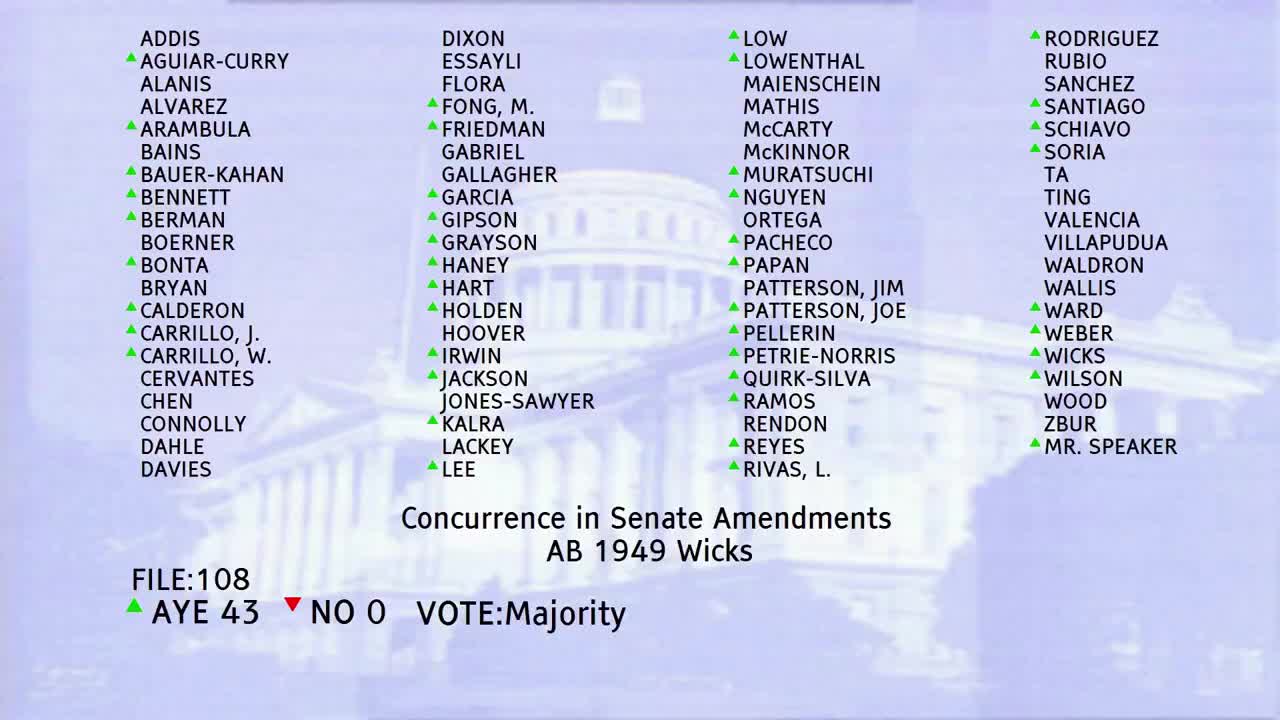 46SEC
Assembly Floor
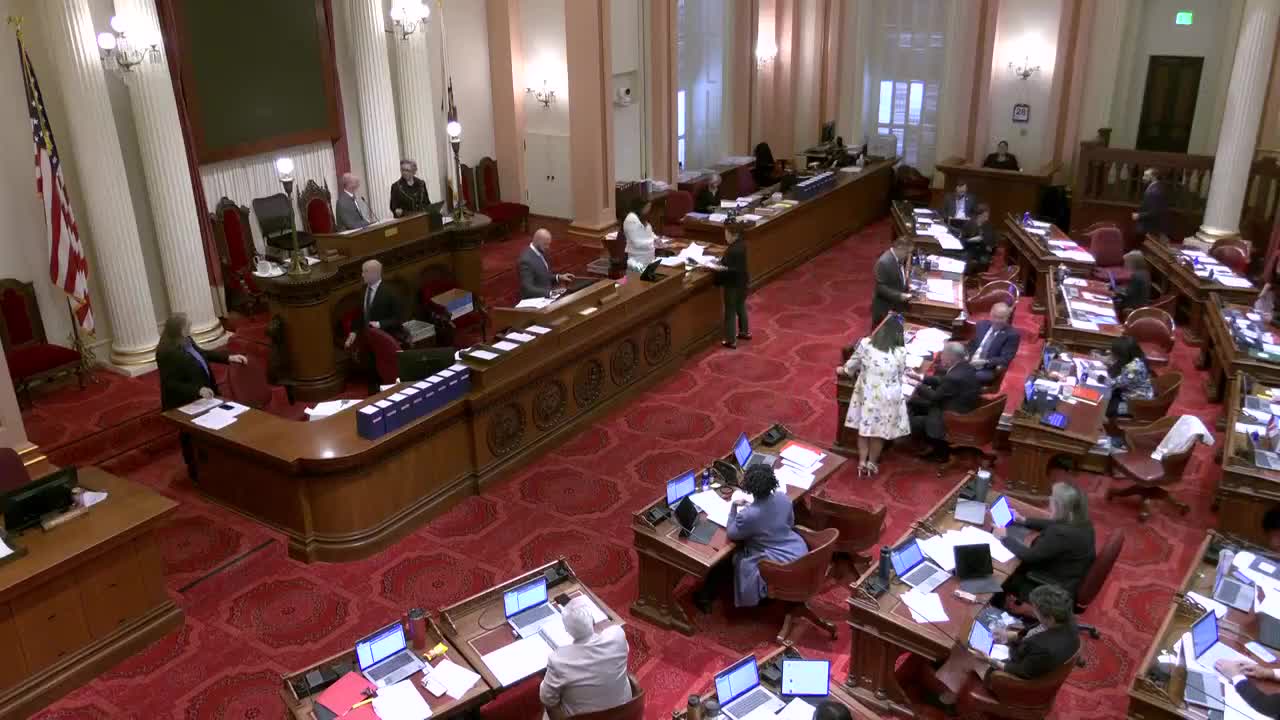 2MIN
Senate Floor
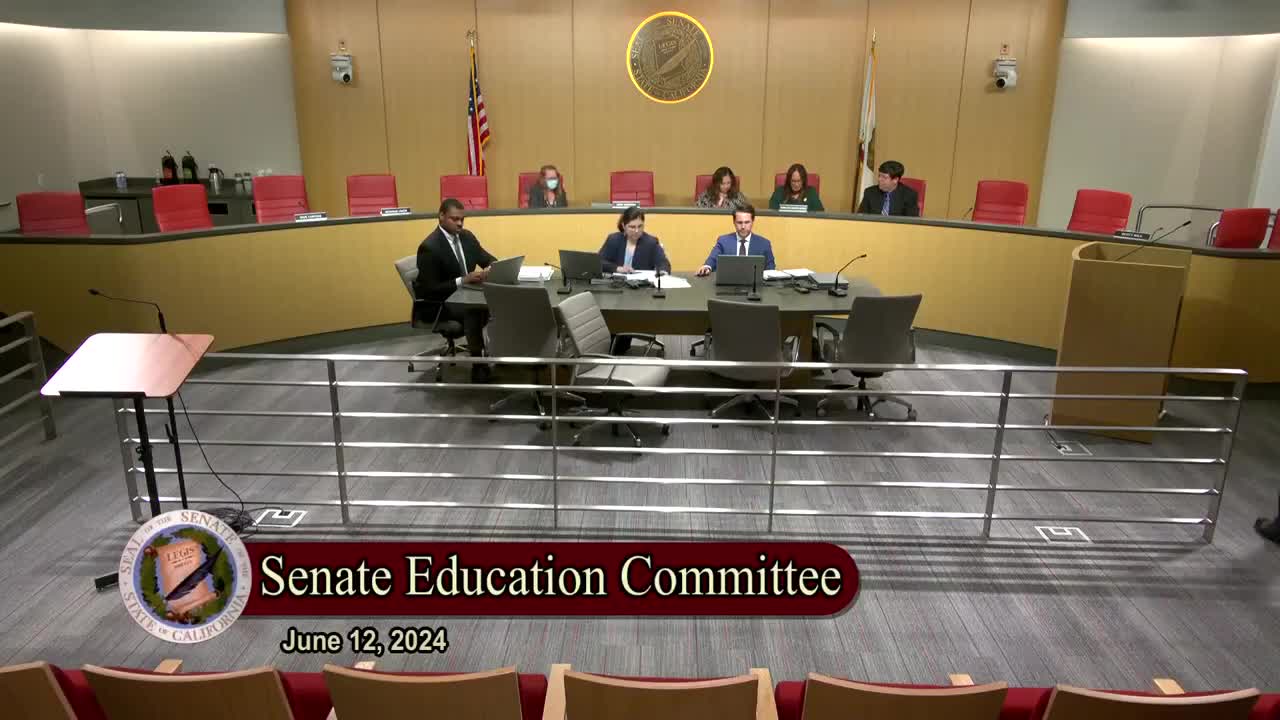 19MIN
Senate Standing Committee on Education
 56SEC
Assembly Floor
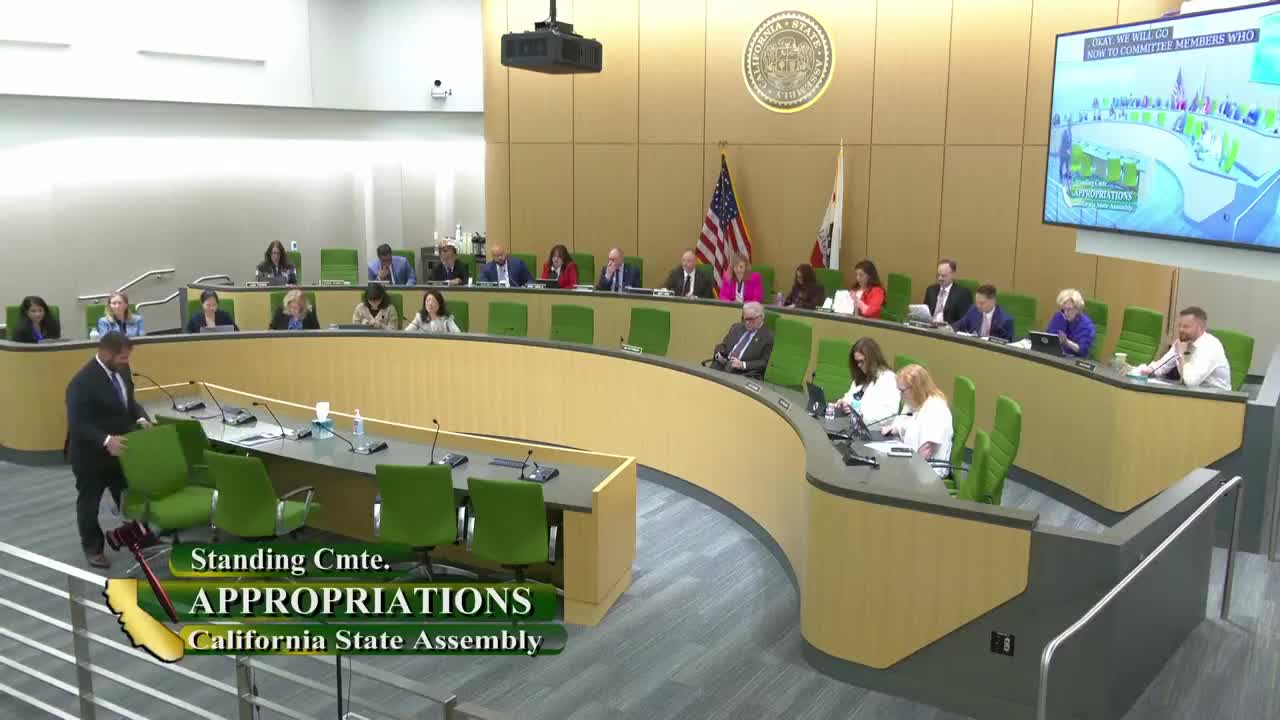 1MIN
Assembly Standing Committee on Appropriations
 4MIN
Assembly Standing Committee on Higher Education
 53SEC
Assembly Standing Committee on Higher Education
 40SEC
Assembly Standing Committee on Higher Education
Bill Author

Bill Co-Author(s):