AB 2457: Sacramento Municipal Utility District: nonstock security.
- Session Year: 2023-2024
- House: Assembly
- Latest Version Date: 2024-09-22
Current Status:
Passed
(2024-09-22: Chaptered by Secretary of State - Chapter 400, Statutes of 2024.)
Introduced
In Committee
First Chamber
In Committee
Second Chamber
Enacted
What does this bill do?
The bill lets the Sacramento Municipal Utility District hold nonstock ownership interests in private companies when those interests are part of buying goods or services or are given as payment for services or access to district facilities. It raises the total number of allowed acquisitions from three to six and keeps a limit that any single acquisition be no more than 3% of the district’s annual revenue. The board must adopt policies to prevent conflicts, use any profits to benefit ratepayers, and the program is extended through 2035.
The summary is provided by generative AI which can make mistakes. For original language, please view the details in the table below.
The Municipal Utility District Act authorizes the formation of a municipal utility district and authorizes a district to acquire, construct, own, operate, control, or use works for supplying the inhabitants of the district and public agencies with light, water, electricity, heat, transportation, telephone service, or other means of communication, or means for the collection, treatment, or disposition of garbage, sewage, or refuse matter.
Existing law authorizes the Sacramento Municipal Utility District to operate a pilot project, until January 1, 2025, to allow the board of directors of the district to hold nonstock security in a corporation or other private entity if acquired as part of a procurement of goods or services from that entity, if (1) no separate funding is expended solely for the nonstock security, and (2) the value of the nonstock security acquisition, at the time of the acquisition, does not exceed 3% of the districts annual revenue in the fiscal year the district makes the acquisition. Existing law authorizes the governing board of the district to sell or otherwise dispose of the nonstock security when, in its judgment, it is in the best interests of the district to do so. Existing law limits the pilot program to 3 acquisitions and requires that any profit or gain earned by the acquisitions be used to benefit the districts ratepayers.
This bill would increase the acquisition limit to 6 acquisitions. The bill would repeal the program on January 1, 2035, rather than January 1, 2025. The bill would authorize the board of directors of the district to also hold nonstock security in a corporation or other private entity as full or partial consideration for providing that entity services or access to district facilities.
This bill would make legislative findings and declarations as to the necessity of a special statute for the Sacramento Municipal Utility District.
The Municipal Utility District Act authorizes the formation of a municipal utility district and authorizes a district to acquire, construct, own, operate, control, or use works for supplying the inhabitants of the district and public agencies with light, water, electricity, heat, transportation, telephone service, or other means of communication, or means for the collection, treatment, or disposition of garbage, sewage, or refuse matter.
Existing law authorizes the Sacramento Municipal Utility District to operate a pilot project, until January 1, 2025, to allow the board of directors of the district to hold nonstock security in a corporation or other private entity if acquired as part of a procurement of goods or services from that entity, if (1) no separate funding is expended solely for the nonstock security, and (2) the value of the nonstock security acquisition, at the time of the acquisition, does not exceed 3% of the districts annual revenue in the fiscal year the district makes the acquisition. Existing law authorizes the governing board of the district to sell or otherwise dispose of the nonstock security when, in its judgment, it is in the best interests of the district to do so. Existing law limits the pilot program to 3 acquisitions and requires that any profit or gain earned by the acquisitions be used to benefit the districts ratepayers.
This bill would delete the 3-acquisition limit and increase the acquisition limit to 6 acquisitions. The bill would repeal the program on January 1, 2035, rather than January 1, 2025. The bill would authorize the board of directors of the district to also hold nonstock security in a corporation or other private entity as full or partial consideration for providing that entity services or access to district facilities.
This bill would make legislative findings and declarations as to the necessity of a special statute for the Sacramento Municipal Utility District.
The Municipal Utility District Act authorizes the formation of a municipal utility district and authorizes a district to acquire, construct, own, operate, control, or use works for supplying the inhabitants of the district and public agencies with light, water, electricity, heat, transportation, telephone service, or other means of communication, or means for the collection, treatment, or disposition of garbage, sewage, or refuse matter.
Existing law authorizes the Sacramento Municipal Utility District to operate a pilot project, until January 1, 2025, to allow the board of directors of the district to hold nonstock security in a corporation or other private entity if acquired as part of a procurement of goods or services from that entity, if (1) no separate funding is expended solely for the nonstock security, and (2) the value of the nonstock security acquisition, at the time of the acquisition, does not exceed 3% of the districts annual revenue in the fiscal year the district makes the acquisition. Existing law authorizes the governing board of the district to sell or otherwise dispose of the nonstock security when, in its judgment, it is in the best interests of the district to do so. Existing law limits the pilot program to 3 acquisitions and requires that any profit or gain earned by the acquisitions be used to benefit the districts ratepayers.
This bill would delete the 3-acquisition limit and delete the pilot projects repeal date, thereby making it a permanent program. would repeal the program on January 1, 2035, rather than January 1, 2025. The bill would authorize the board of directors of the district to also hold nonstock security in a corporation or other private entity as full or partial consideration for providing that entity services or access to district facilities.
This bill would make legislative findings and declarations as to the necessity of a special statute for the Sacramento Municipal Utility District.
The Municipal Utility District Act authorizes the formation of a municipal utility district and authorizes a district to acquire, construct, own, operate, control, or use works for supplying the inhabitants of the district and public agencies with light, water, electricity, heat, transportation, telephone service, or other means of communication, or means for the collection, treatment, or disposition of garbage, sewage, or refuse matter.
Existing law authorizes the Sacramento Municipal Utility District to operate a pilot project, until January 1, 2025, to allow the board of directors of the district to hold nonstock security in a corporation or other private entity if acquired as part of a procurement of goods or services from that entity, if (1) no separate funding is expended solely for the nonstock security, and (2) the value of the nonstock security acquisition, at the time of the acquisition, does not exceed 3% of the districts annual revenue in the fiscal year the district makes the acquisition. Existing law authorizes the governing board of the district to sell or otherwise dispose of the nonstock security when, in its judgment, it is in the best interests of the district to do so. Existing law limits the pilot program to 3 acquisitions and requires that any profit or gain earned by the acquisitions be used to benefit the districts ratepayers.
This bill would delete the 3-acquisition limit and delete the pilot projects repeal date, thereby making it a permanent program. The bill would authorize the board of directors of the district to also hold nonstock security in a corporation or other private entity as full or partial consideration for providing that entity services or access to district facilities.
This bill would make legislative findings and declarations as to the necessity of a special statute for the Sacramento Municipal Utility District.
(a)For purposes of this section, security has the same meaning as defined in Section 25019 of the Corporations Code.
(b)The Sacramento Municipal Utility District may operate a program under which the board of directors of the district may hold nonstock security in a corporation or other private entity if acquired as part of a procurement of goods or services from that entity, or as full or partial consideration for providing that entity services or access to district facilities, if separate funding is not expended solely for the nonstock security. The board of directors of the district may sell or otherwise dispose of the nonstock security when, in its judgment, it is in the best interests of the district to do so.
(c)Before exercising the authority described in subdivision (b), the districts board of directors shall do all of the following:
(1)Make all of the following findings:
(A)The acquisition furthers the purposes of the district, pursuant to this division.
(B)The acquisition is in the interest of the districts ratepayers and the public.
(2)Establish a policy governing acquisitions that includes, but is not limited to, all of the following:
(A)Procedures for preventing conflicts of interest and violations of Article 4 (commencing with Section 1090) of Chapter 1 of Division 4 of Title 1 of the Government Code.
(B)Procedures for determining how much of an acquisition to accept in lieu of, or in addition to, other forms of remuneration, in order to ensure the district secures a reasonable return on any intellectual property or other resources it provides the private entity.
(C)Procedures governing the approval process for accepting any acquisitions.
(D)Procedures that ensure acquisition of a nonstock security does not unduly influence the amount paid for the associated goods and services.
(3)Post the policy described in paragraph (2) on the districts internet website.
(4)Adopt a resolution at a regular meeting of the board stating the intent of the board to exercise the authority described in subdivision (b).
(d)The authority described in subdivision (b) shall be limited to a total of six acquisitions. Any profit or other gain earned by an acquisition shall be used to benefit the districts ratepayers.
(e)The value, at the time of acquisition, of any single nonstock security acquired pursuant to the authority described in subdivision (b) shall be limited to no more than 3 percent of the districts annual revenue in the fiscal year the district makes the acquisition.
(f)This section shall remain in effect only until January 1, 2035, and as of that date is repealed.
SEC. 2.The Legislature finds and declares that a special statute is necessary and that a general statute cannot be made applicable within the meaning of Section 16 of Article IV of the California Constitution because of the unique needs of the Sacramento Municipal Utility District regarding nonstock security interests in private entities with which the district partners to further its purposes.
(a)For purposes of this section, security has the same meaning as defined in Section 25019 of the Corporations Code.
(b)The Sacramento Municipal Utility District may operate a program under which the board of directors of the district may hold nonstock security in a corporation or other private entity if acquired as part of a procurement of goods or services from that entity, or as full or partial consideration for providing that entity services or access to district facilities, if separate funding is not expended solely for the nonstock security. The board of directors of the district may sell or otherwise dispose of the nonstock security when, in its judgment, it is in the best interests of the district to do so.
(c)Before exercising the authority described in subdivision (b), the districts board of directors shall do all of the following:
(1)Make all of the following findings:
(A)The acquisition furthers the purposes of the district, pursuant to this division.
(B)The acquisition is in the interest of the districts ratepayers and the public.
(2)Establish a policy governing acquisitions that includes, but is not limited to, all of the following:
(A)Procedures for preventing conflicts of interest and violations of Article 4 (commencing with Section 1090) of Chapter 1 of Division 4 of Title 1 of the Government Code.
(B)Procedures for determining how much of an acquisition to accept in lieu of, or in addition to, other forms of remuneration, in order to ensure the district secures a reasonable return on any intellectual property or other resources it provides the private entity.
(C)Procedures governing the approval process for accepting any acquisitions.
(D)Procedures that ensure acquisition of a nonstock security does not unduly influence the amount paid for the associated goods and services.
(3)Post the policy described in paragraph (2) on the districts internet website.
(4)Adopt a resolution at a regular meeting of the board stating the intent of the board to exercise the authority described in subdivision (b).
(d)Any The authority described in subdivision (b) shall be limited to a total of six acquisitions. Any profit or other gain earned by an acquisition shall be used to benefit the districts ratepayers.
(e)The value, at the time of acquisition, of any single nonstock security acquired pursuant to the authority described in subdivision (b) shall be limited to no more than 3 percent of the districts annual revenue in the fiscal year the district makes the acquisition.
(f)This section shall remain in effect only until January 1, 2035, and as of that date is repealed.
SEC. 2.The Legislature finds and declares that a special statute is necessary and that a general statute cannot be made applicable within the meaning of Section 16 of Article IV of the California Constitution because of the unique needs of the Sacramento Municipal Utility District regarding nonstock security interests in private entities with which the district partners to further its purposes.
(a)For purposes of this section, security has the same meaning as defined in Section 25019 of the Corporations Code.
(b)The Sacramento Municipal Utility District may operate a program under which the board of directors of the district may hold nonstock security in a corporation or other private entity if acquired as part of a procurement of goods or services from that entity, or as full or partial consideration for providing that entity services or access to district facilities, if separate funding is not expended solely for the nonstock security. The board of directors of the district may sell or otherwise dispose of the nonstock security when, in its judgment, it is in the best interests of the district to do so.
(c)Before exercising the authority described in subdivision (b), the districts board of directors shall do all of the following:
(1)Make all of the following findings:
(A)The acquisition furthers the purposes of the district, pursuant to this division.
(B)The acquisition is in the interest of the districts ratepayers and the public.
(2)Establish a policy governing acquisitions that includes, but is not limited to, all of the following:
(A)Procedures for preventing conflicts of interest and violations of Article 4 (commencing with Section 1090) of Chapter 1 of Division 4 of Title 1 of the Government Code.
(B)Procedures for determining how much of an acquisition to accept in lieu of, or in addition to, other forms of remuneration, in order to ensure the district secures a reasonable return on any intellectual property or other resources it provides the private entity.
(C)Procedures governing the approval process for accepting any acquisitions.
(D)Procedures that ensure acquisition of a nonstock security does not unduly influence the amount paid for the associated goods and services.
(3)Post the policy described in paragraph (2) on the districts internet website.
(4)Adopt a resolution at a regular meeting of the board stating the intent of the board to exercise the authority described in subdivision (b).
(d)Any profit or other gain earned by an acquisition shall be used to benefit the districts ratepayers.
(e)The value, at the time of acquisition, of any single nonstock security acquired pursuant to the authority described in subdivision (b) shall be limited to no more than 3 percent of the districts annual revenue in the fiscal year the district makes the acquisition.
(f)This section shall remain in effect only until January 1, 2035, and as of that date is repealed.
SEC. 2.The Legislature finds and declares that a special statute is necessary and that a general statute cannot be made applicable within the meaning of Section 16 of Article IV of the California Constitution because of the unique needs of the Sacramento Municipal Utility District regarding nonstock security interests in private entities with which the district partners to further its purposes.
(a)For purposes of this section, security has the same meaning as defined in Section 25019 of the Corporations Code.
(b)The Sacramento Municipal Utility District is authorized to may operate a pilot project to allow program under which the board of directors of the district to may hold nonstock security in a corporation or other private entity if acquired as part of a procurement of goods or services from that entity, provided that no or as full or partial consideration for providing that entity services or access to district facilities, if separate funding is not expended solely for the nonstock security. The board of directors of the district may sell or otherwise dispose of the nonstock security when, in its judgment, it is in the best interests of the district to do so.
(c)Before exercising the authority described in subdivision (b), the districts board of directors shall do all of the following:
(1)Make the following findings:
(A)The acquisition furthers the purposes of the district, pursuant to the Municipal Utility District Act. this division.
(B)The acquisition is in the interest of the districts ratepayers and the public.
(2)Establish a policy governing acquisitions that shall include, includes, but is not be limited to, all of the following:
(A)Procedures for preventing conflicts of interest and violations of Article 4 (commencing with Section 1090) of Chapter 1 of Division 4 of Title 1 of the Government Code.
(B)Procedures for determining how much of an acquisition to accept in lieu of, or in addition to, other forms of remuneration, in order to ensure the district secures a reasonable return on any intellectual property or other resources it provides the private entity.
(C)Procedures governing the approval process for accepting any acquisitions.
(D)Procedures that ensure acquisition of a nonstock security does not unduly influence the amount paid for the associated goods and services.
(3)Post the policy described in paragraph (2) on the districts internet website.
(4)Adopt a resolution at a regular meeting of the board stating the intent of the board to exercise the authority described in subdivision (b).
(d)The authority described in subdivision (b) shall be limited to a total of three acquisitions. Any profit or other gain earned by these acquisitions an acquisition shall be used to benefit the districts ratepayers.
(e)The value, at the time of acquisition, of any single nonstock security acquired pursuant to the authority described in subdivision (b) shall be limited to no more that than 3 percent of the districts annual revenue in the fiscal year the district makes the acquisition.
(f)This section shall remain in effect only until January 1, 2025, and as of that date is repealed.SEC. 2.The Legislature finds and declares that a special statute is necessary and that a general statute cannot be made applicable within the meaning of Section 16 of Article IV of the California Constitution because of the unique needs of the Sacramento Municipal Utility District regarding nonstock security interests in private entities with which the district partners to further its purposes.
|
Date
|
Status
|
|---|---|
| Sep 22, 2024 | Chaptered by Secretary of State - Chapter 400, Statutes of 2024. |
| Sep 22, 2024 | Approved by the Governor. |
| Aug 27, 2024 | Enrolled and presented to the Governor at 12 p.m. |
| Aug 20, 2024 | In Assembly. Ordered to Engrossing and Enrolling. |
| Aug 20, 2024 | Read third time. Passed. Ordered to the Assembly. (Ayes 40. Noes 0. Page 5228.). |
| Jun 27, 2024 | Read second time. Ordered to third reading. |
| Jun 26, 2024 | From committee: Do pass. (Ayes 7. Noes 0.) (June 26). |
| May 29, 2024 | Referred to Com. on L. GOV. |
| May 21, 2024 | In Senate. Read first time. To Com. on RLS. for assignment. |
| May 20, 2024 | Read third time. Passed. Ordered to the Senate. (Ayes 67. Noes 1. Page 5309.) |
| May 6, 2024 | Read second time. Ordered to third reading. |
| May 2, 2024 | Read second time and amended. Ordered returned to second reading. |
| May 1, 2024 | From committee: Amend, and do pass as amended. (Ayes 8. Noes 1.) (May 1). |
| Apr 4, 2024 | Re-referred to Com. on L. GOV. |
| Apr 3, 2024 | Read second time and amended. |
| Apr 2, 2024 | From committee: Amend, and do pass as amended and re-refer to Com. on L. GOV. (Ayes 8. Noes 0.) (April 1). |
| Mar 18, 2024 | Re-referred to Coms. on B. & F. and L. GOV. pursuant to Assembly Rule 96. |
| Feb 26, 2024 | Referred to Coms. on L. GOV. and B. & F. |
| Feb 14, 2024 | From printer. May be heard in committee March 15. |
| Feb 13, 2024 | Read first time. To print. |
|
Date
|
Description
|
Location
|
Votes
|
|
|---|---|---|---|---|
| Aug 20, 2024 | Assembly 3rd Reading AB2457 McCarty By Niello | Senate Floor |
Passed |
|
| Jun 26, 2024 | Do pass | Senate Standing Committee on Local Government |
Passed |
|
| May 20, 2024 | AB 2457 McCarty Assembly Third Reading | Assembly Floor |
Passed |
|
| May 1, 2024 | Do pass as amended. | Assembly Standing Committee on Local Government |
Passed |
|
| Apr 1, 2024 | Do pass as amended and be re-referred to the Committee on [Local Government] | Assembly Standing Committee on Banking and Finance |
Passed |
This list shows positions taken on this bill by organizations on the date displayed, which is linked to the original source.
Positions by individuals are not included.
|
Organization
|
Position
|
Date
|
|---|---|---|
| Association City of Sacramento | ** Support | |
| California Asian Pacific Chamber Of Commerce | ** Support | |
| California Electric Transportation Coalition | ** Support | |
| California Municipal Utilities Association | ** Support | |
| California Special Districts | ** Support | |
| City Of Sacramento | * Support | Jun 26, 2024 |
| Climate and Energy Natural Resources Defense Council | ** Support | |
| Elk Grove Chamber Of Commerce | ** Support | |
| Natomas Chamber of Commerce | ** Support | |
| Natural Resources Defense Council | ** Support | |
| North Sacramento Chamber of Commerce | ** Support | |
| Rancho Cordova Area Chamber of Commerce | ** Support | |
| Sacramento Area Council Of Governments | ** Support | |
| Sacramento Asian Chamber of Commerce | * Support | Apr 1, 2024 |
| Sacramento Asian Pacific Chamber of Commerce | ** Support | |
| Sacramento Black Chamber Of Commerce | ** Support | |
| Sacramento Hispanic Chamber of Commerce | ** Support | |
| Sacramento Metropolitan Air Quality Management District | ** Support | |
| Sacramento Metropolitan Chamber of Commerce | ** Support | |
| Sacramento Municipal Utility District | ** Support | |
| slavic-american chamber of commerce | ** Support |
SENATE RULES COMMITTEE Office of Senate Floor Analyses (916) 651-1520 Fax: (916) 327-4478 | AB 2457 |
THIRD READING
Bill No: AB 2457
Author: McCarty (D)
Amended: 5/2/24 in Assembly
Vote: 21
SENATE LOCAL GOVERNMENT COMMITTEE: 7-0, 6/26/24
AYES: Durazo, Seyarto, Dahle, Glazer, Skinner, Wahab, Wiener
ASSEMBLY FLOOR: 67-1, 5/20/24 - See last page for vote
SUBJECT: Sacramento Municipal Utility District: nonstock security
SOURCE: Author
DIGEST:
This bill extends the sunset date of the Sacramento Municipal Utility District’s (SMUD) existing nonstock security program by ten years and doubles the number of acquisitions SMUD can make under this program from three to six.
ANALYSIS:
Existing law:
- Allows SMUD to operate a pilot project, until January 1, 2025, to hold nonstock securities in a corporation or other private entity. Under the program, SMUD must acquire the security as part of a procurement of goods or services from an entity and cannot spend separate funding solely to acquire the security.
- Limits SMUD to three acquisitions under the pilot program and the value of any single acquisition cannot exceed 3% of SMUD's annual revenues.
- Requires the SMUD Board, before finalizing an acquisition, to make findings demonstrating the acquisition aligns with the district's purposes and is in the interest of its ratepayers. Additionally, SMUD is required to establish a policy outlining procedures, at a minimum, for:
- Preventing conflicts of interest;
- Specifying how much of an acquisition to accept in lieu of, or in addition to, other forms of compensation to ensure a reasonable return on investment;
- Governing the approval process for these acquisitions; and
- Ensuring the acquisition of nonstock securities does not unduly influence the amount paid for goods and services.
This bill:
- Extends the sunset date of SMUD’s nonstock security program to January 1, 2035.
- Doubles the number of acquisitions SMUD is permitted to make from three to six.
- Allows SMUD to also hold nonstock securities in a corporation or other private entity it receives as full or partial consideration for providing that entity with services or access to district facilities.
Background
- Local governments and securities. The term “security” describes a variety of financial instruments, such as stocks, bonds, or other types of products that involve an investment of money with an expectation of a profit once the investment is sold. Generally, a company or government will issue a security to raise capital or funds. One prevalent type of security is the common stock, a type of equity security that represents ownership of the issuing company.
Article XVI, Section 6 of the California Constitution explicitly prohibits the Legislature from authorizing the state or any political subdivision to subscribe for or become a stockholder in any corporation. However, there are limited exceptions to this prohibition, including provisions for irrigation districts, tort liability, and insurance pooling arrangements.
When investing, reinvesting, purchasing, acquiring, exchanging, selling, or managing public funds, state law outlines local agencies’ investment objectives, also known as the prudent investor standard. The primary objective is to safeguard the principal of the funds under the local agency’s control. The secondary objective is to meet the liquidity needs of the depositor. The final objective is to achieve a return on the funds under its control.
- Stock warrants. A stock warrant is an agreement to allow someone to acquire a certain number of shares of stock at a predetermined price until a specified expiration date. This gives the buyer the right to buy the stock at the agreed-upon “exercise price” regardless of the stock's market value on the actual day of purchase. Whether the transaction is profitable depends on whether the investor is buying the stock above, at, or below the stock’s market price. Generally, investors like stock warrants because they are not required to buy the stock at the agreed-upon exercise – or actually any – price.
Importantly, being a stock warrant holder is not the same as being a stockholder. A stock warrant holder cannot receive dividends and cannot vote as a shareholder. Companies typically issue warrants to attract investors or incentivize third parties, such as SMUD, to engage in a strategic relationship or invest in the company's long-term viability.
- Sacramento Municipal Utility District. AB 689 (McCarty) of 2019 authorized the Sacramento Municipal Utility District (SMUD) to operate a pilot project allowing it to hold nonstock securities in a corporation or other private entity if the utility acquired the security as part of a procurement of goods or services from that entity and did not use separate funding solely to acquire the security. The bill capped the number of acquisitions SMUD could make under the pilot program at three and the value of any single acquisition cannot exceed 3% of SMUD’s annual revenues.
Before finalizing an acquisition, the SMUD board must make findings demonstrating the acquisition aligns with the district's purposes and is in the interest of its ratepayers. SMUD is also required to establish a policy outlining procedures, at a minimum, for:
- Preventing conflicts of interest;
- Specifying how much of an acquisition to accept in lieu of, or in addition to, other forms of compensation in order to ensure a reasonable return on investment;
- Governing the approval process for these acquisitions; and
- Ensuring the acquisition of nonstock securities does not unduly influence the amount paid for goods and services.
The pilot program, which allows the SMUD board of directors to sell or otherwise dispose of the nonstock security when the board deems it is in the best interests of SMUD to do so, expires on January 1, 2025.
- SMUD’s single acquisition. SMUD has completed one acquisition under the pilot program – as part of a collaboration between SMUD and ESS, self-described as a “long-duration energy storage” company, the two parties entered into a stock warrant agreement. In 2022, ESS issued a warrant for up to 500,000 shares of ESS common stock at an exercise price of $4.296 per share, and the vesting of those shares will depend on certain commercial milestones being met by December 31, 2030. SMUD’s agreement with ESS is unique because SMUD cannot legally exercise its right to purchase the shares. SMUD, barred by the California Constitution from owning stock of a private company, can only resell this warrant to another investor.
Comments
- Purpose of the bill. According to the author, “SMUD has set a very ambitious goal to completely remove carbon emissions from its power supply by 2030 while keeping any rate increases below inflation. In order to achieve this goal and state-mandated clean energy targets, SMUD has been working with, and will continue to work with, innovative companies on technologies to fill gaps in the clean energy transition. Working with these companies and financially benefitting from it keeps SMUD rates low for its ratepayers. This means extending AB 689’s authority will continue to help SMUD and the state reach its climate goals and benefit ratepayers.”
- Raising the cap. Under the original pilot program, SMUD could only enter three nonstock security transactions and this measure allows it to enter up to six transactions over the next decade. While SMUD has only completed one acquisition to date, the utility asserts future acquisitions are already in progress and lifting the cap to six is necessary to accomplish its goals.
- A long pilot program. This measure proposes turning a five year pilot program into a 15-year pilot program. While AB 689, which established the original program, did not call for any type of report to be done, generally most pilot programs require some evidence of success to be provided before the Legislature agrees to extend, expand, or make permanent the pilot program. Here, while it is clear SMUD would like to extend the program, no information has been provided relative to how well the program is working for SMUD’s ratepayers and what benefits it has seen – or is projected to see in the future.
- Meeting carbon and clean energy goals, realizing financial benefits, attracting jobs. SMUD, as the sponsor of this bill, asserts that by extending the current pilot program for an additional ten years, it will allow the utility to meet its carbon and clean energy goals, realize financial benefits, attract jobs to the region, and provide financial benefits to ratepayers.
The utility hopes to accomplish this by entering into partnerships with companies – many of which are small start-up ventures – to test and develop new technologies the utility may be able to benefit from in the future. SMUD says it will enter into these partnerships with or without this bill, but this bill will allow its ratepayers to benefit financially should any of these technologies be developed to the point where they are commercially viable.
That’s because if SMUD can accept these “stock warrants,” it can at some point sell the warrants to willing buyers and profit from the sale. As noted earlier, the California Constitution precludes SMUD – or any governmental entity – from receiving, buying, or owning stock in a company. One way around this prohibition is for SMUD to accept these stock warrants, which function similarly (though not identically) to options to buy stock at a set price for a fixed period of time. At some point, if the company is successful, SMUD will sell the option – not the stock, because SMUD doesn’t actually own the stock – it has to another entity and profit from the arbitrage.
Using SMUD’s current option to buy 500,000 shares of ESS common stock at an exercise price of $4.296 a share as an example, if hypothetically the price of the stock on the open market was $26 per share and SMUD was able to sell its option to a third party for $26 per share, SMUD would make $13 million. The buyer of SMUD’s option could then exercise the option to buy the actual stock at $4.296 per share and hold it for however long it wanted. Presumably, the buyer would want to see the market price rise above $30.296 per share to ensure it at least broken even on the transaction (since it paid $26 per share to SMUD for the stock warrant and $4.296 per share to actually buy the stock at the stock warrant price).
- What’s the downside? Isn’t there always a downside? According to SMUD, the only true downside is the potential loss of time and perhaps the cost of missed opportunity. It may enter into a partnership with a company where the technology they are looking to develop doesn’t pan out – and/or the stock warrant doesn’t rise in value, or rises in value after the window of time SMUD was given to sell the warrant has expired. In any of those cases, the utility has not lost any money out of its ratepayers’ pockets, it simply may not have reaped benefits it may have enjoyed had it entered into different partnerships
- The barter system. This bill adds a provision to allow SMUD to take nonstock securities in exchange for “providing that entity services or access to district facilities.” Presumably, SMUD either provides this access to its partners right now for free or in exchange for a fee. The provision of this bill would allow the utility to accept stock warrants or other nonstock securities in exchange for access to SMUD’s facilities or services.
FISCAL EFFECT: Appropriation: No Fiscal Com.: No Local: No
SUPPORT: (Verified 6/26/24)
California Asian Pacific Chamber of Commerce
California Electric Transportation Coalition
California Municipal Utilities Association
California Special Districts
Association City of Sacramento
Climate and Energy Natural Resources Defense Council
Elk Grove Chamber of Commerce
Natomas Chamber of Commerce
Natural Resources Defense Council
North Sacramento Chamber of Commerce
Rancho Cordova Area Chamber of Commerce
Sacramento Area Council of Governments
Sacramento Asian Pacific Chamber of Commerce
Sacramento Black Chamber of Commerce
Sacramento Hispanic Chamber of Commerce
Sacramento Metropolitan Air Quality Management District
Sacramento Metropolitan Chamber of Commerce
Sacramento Municipal Utility District
Slavic-American Chamber of Commerce
OPPOSITION: (Verified 6/26/24)
None received
ARGUMENTS IN SUPPORT: According to SMUD:
“SMUD is the nation’s sixth largest not-for-profit, community-owned electric utility, serving Sacramento country for over 75 years. SMUD has an aspirational goal to completely remove carbon from its portfolio by 2030. In order to meet SMUD’s zero carbon goal, as well as the state’s clean energy goals, substantial investment will be needed in new technologies, grid modernization, electric transportation, and related initiatives. New technological advances will be imperative to reaching their audacious goals, and SMUD will continue to partner with private sector companies to develop needed technologies. Monetization of SMUD’s intellectual value that can be realized through a security interest in these companies is a prudent way for SMUD to help offset rate increases, bringing direct value back to their customers.
“AB 2457 will provide SMUD the ability to monetize its intellectual value and time spent with companies to help develop pioneering energy products, services, and programs that benefit SMUD customers, the Sacramento community, and the state. Given that SMUD will not pay for the nonstock equity and will not spend any money to exercise the nonstock equity, there is no additional risks or losses for SMUD if the company does not commercially succeed. There are only potential economic benefits if the partnering company succeeds. It is important to reiterate that SMUD will continue with these partnerships with or without this authority, as they need the innovative technologies and resources to meet their 2030 goal, as well as the state’s clean energy goals.”
ASSEMBLY FLOOR: 67-1, 5/20/24
AYES: Addis, Aguiar-Curry, Alanis, Alvarez, Bains, Bauer-Kahan, Bennett, Berman, Boerner, Bonta, Bryan, Calderon, Juan Carrillo, Wendy Carrillo, Chen, Connolly, Davies, Dixon, Flora, Mike Fong, Friedman, Garcia, Gipson, Grayson, Haney, Hart, Holden, Hoover, Irwin, Jackson, Jones-Sawyer, Kalra, Lee, Low, Lowenthal, Maienschein, McCarty, McKinnor, Muratsuchi, Ortega, Pacheco, Papan, Joe Patterson, Pellerin, Petrie-Norris, Quirk-Silva, Ramos, Rendon, Reyes, Rodriguez, Blanca Rubio, Santiago, Schiavo, Soria, Ta, Ting, Valencia, Villapudua, Waldron, Wallis, Ward, Weber, Wicks, Wilson, Wood, Zbur, Robert Rivas
NOES: Essayli
NO VOTE RECORDED: Arambula, Cervantes, Megan Dahle, Vince Fong, Gabriel, Gallagher, Lackey, Mathis, Stephanie Nguyen, Jim Patterson, Luz Rivas, Sanchez
Prepared by: Evan Goldberg / L. GOV. / (916) 651-4119
6/27/24 15:38:53
**** END ****
SENATE COMMITTEE ON LOCAL GOVERNMENT
Senator María Elena Durazo, Chair
2023 - 2024 Regular
Bill No: | AB 2457 | Hearing Date: | 6/26/24 |
Author: | McCarty | Fiscal: | No |
Version: | 5/2/24 | Consultant: | Goldberg |
Sacramento Municipal Utility District: nonstock security
Extends the sunset date of the Sacramento Municipal Utility District’s (SMUD) existing nonstock security program and doubles the number of acquisitions SMUD can make under this program.
Background
Local governments and securities. The term “security” describes a variety of financial instruments, such as stocks, bonds, or other types of products that involve an investment of money with an expectation of a profit once the investment is sold. Generally, a company or government will issue a security to raise capital or funds. One prevalent type of security is the common stock, a type of equity security that represents ownership of the issuing company.
Article XVI, Section 6 of the California Constitution explicitly prohibits the Legislature from authorizing the state or any political subdivision to subscribe for or become a stockholder in any corporation. However, there are limited exceptions to this prohibition, including provisions for irrigation districts, tort liability, and insurance pooling arrangements.
When investing, reinvesting, purchasing, acquiring, exchanging, selling, or managing public funds, state law outlines local agencies’ investment objectives, also known as the prudent investor standard. The primary objective is to safeguard the principal of the funds under the local agency’s control. The secondary objective is to meet the liquidity needs of the depositor. The final objective is to achieve a return on the funds under its control.
Stock warrants. A stock warrant is an agreement to allow someone to acquire a certain number of shares of stock at a predetermined price until a specified expiration date. This gives the buyer the right to buy the stock at the agreed-upon “exercise price” regardless of the stock's market value on the actual day of purchase. Whether the transaction is profitable depends on whether the investor is buying the stock above, at, or below the stock’s market price. Generally, investors like stock warrants because they are not required to buy the stock at the agreed-upon exercise – or actually any – price.
Importantly, being a stock warrant holder is not the same as being a stockholder. A stock warrant holder cannot receive dividends and cannot vote as a shareholder. Companies typically issue warrants to attract investors or incentivize third parties, such as SMUD, to engage in a strategic relationship or invest in the company's long-term viability.
Sacramento Municipal Utility District. AB 689 (McCarty) of 2019 authorized Sacramento Municipal Utility District (SMUD) to operate a pilot project allowing it to hold nonstock securities in a corporation or other private entity if the utility acquired the security as part of a procurement of goods or services from that entity and did not use separate funding solely to acquire the security. The bill capped the number of acquisitions SMUD could make under the pilot program at three and the value of any single acquisition cannot exceed 3% of SMUD’s annual revenues.
Before finalizing an acquisition, the SMUD board must make findings demonstrating the acquisition aligns with the district's purposes and is in the interest of its ratepayers. SMUD is also required to establish a policy outlining procedures, at a minimum, for:
- Preventing conflicts of interest;
- Specifying how much of an acquisition to accept in lieu of, or in addition to, other forms of compensation in order to ensure a reasonable return on investment;
- Governing the approval process for these acquisitions; and
- Ensuring the acquisition of nonstock securities does not unduly influence the amount paid for goods and services.
.
The pilot program, which allows the SMUD board of directors to sell or otherwise dispose of the nonstock security when the board deems it is in the best interests of SMUD to do so, expires on January 1, 2025.
SMUD’s single acquisition. SMUD has completed one acquisition under the pilot program – as part of a collaboration between SMUD and ESS, self-described as a “long-duration energy storage” company, the two parties entered into a stock warrant agreement. In 2022, ESS issued a warrant for up to 500,000 shares of ESS common stock at an exercise price of $4.296 per share, and the vesting of those shares will depend on certain commercial milestones being met by December 31, 2030. SMUD’s agreement with ESS is unique because SMUD cannot legally exercise its right to purchase the shares. SMUD, barred by the California Constitution from owning stock of a private company, can only resell this warrant to another investor.
The author would like to extend the pilot program for ten years, increase the number of acquisitions SMUD is allowed to make under the program, and make other technical changes.
Proposed Law
Assembly Bill 2457 changes current law by:
- Extending the sunset date of SMUD’s nonstock security program to January 1, 2035;
- Doubling the number of acquisitions SMUD is permitted to make from three to six; and
- Allowing SMUD to also hold nonstock security in a corporation or other private entity it receives as full or partial consideration for providing that entity with services or access to district facilities.
Comments
1. Purpose of the bill. According to the author, “SMUD has set a very ambitious goal to completely remove carbon emissions from its power supply by 2030 while keeping any rate increases below inflation. In order to achieve this goal and state-mandated clean energy targets, SMUD has been working with, and will continue to work with, innovative companies on technologies to fill gaps in the clean energy transition. Working with these companies and financially benefitting from it keeps SMUD rates low for its ratepayers. This means extending AB 689’s authority will continue to help SMUD and the state reach its climate goals and benefit ratepayers.”
2. Raising the cap. Under the original pilot program, SMUD could only enter three nonstock security transactions and this measure allows it to enter up to six transactions over the next decade. While SMUD has only completed one acquisition to date, the utility asserts future acquisitions are already in progress and lifting the cap to six is necessary to accomplish its goals.
3. A long pilot program. This measure proposes turning a 5-year pilot program into a 15-year pilot program. While AB 689, which established the original program, did not call for any type of report to be done, generally most pilot programs require some evidence of success to be provided before the Legislature agrees to extend, expand, or make permanent the pilot program. Here, while it is clear SMUD would like to extend the program, no information has been provided relative to how well the program is working for SMUD’s ratepayers and what benefits it has seen – or is projected to see in the future. The Committee may wish to consider if it is appropriate to extend and expand a program where no information has been provided relative to how it is working.
4. Meeting carbon and clean energy goals, realizing financial benefits, attracting jobs. SMUD, as the sponsor of this bill, asserts that by extending the current pilot program for an additional ten years, it will allow the utility to meet its carbon and clean energy goals, realize financial benefits, attract jobs to the region, and provide financial benefits to ratepayers.
The utility says it hopes to accomplish this by entering into partnerships with companies – many of which are small start-up ventures – to test and develop new technologies the utility may be able to benefit from in the future. SMUD says it will enter into these partnerships with or without this bill, but AB 2457 will allow its ratepayers to benefit financially should any of these technologies be developed to the point where they are commercially viable.
That’s because if SMUD can accept these “stock warrants,” it can at some point sell the warrants to willing buyers and profit from the sale. As noted earlier, the California Constitution precludes SMUD – or any governmental entity – from receiving, buying, or owning stock in a company. One way around this prohibition is for SMUD to accept these stock warrants, which function similarly (though not identically) to options to buy stock at a set price for a fixed period of time. At some point, if the company is successful, SMUD will sell the option – not the stock, because SMUD doesn’t actually own the stock – it has to another entity and profit from the arbitrage.
Using SMUD’s current option to buy 500,000 shares of ESS common stock at an exercise price of $4.296 a share as an example, if hypothetically the price of the stock on the open market was $26 per share and SMUD was able to sell its option to a third party for $26 per share, SMUD would make $13 million. The buyer of SMUD’s option could then exercise the option to buy the actual stock at $4.296 per share and hold it for however long it wanted. Presumably, the buyer would want to see the market price rise above $30.296 per share to ensure it at least broken even on the transaction (since it paid $26 per share to SMUD for the stock warrant and $4.296 per share to actually buy the stock at the stock warrant price).
5. What’s the downside? Isn’t there always a downside? According to SMUD, the only true downside is the potential loss of time and perhaps the cost of missed opportunity. It may enter into a partnership with a company where the technology they are looking to develop doesn’t pan out – and/or the stock warrant doesn’t rise in value, or rises in value after the window of time SMUD was given to sell the warrant has expired. In any of those cases, the utility has not lost any money out of its ratepayers’ pockets, it simply may not have reaped benefits it may have enjoyed had it entered into different partnerships.
6. The barter system. The bill adds a provision to allow SMUD to take nonstock securities in exchange for “providing that entity services or access to district facilities.” Presumably, SMUD either provides this access to its partners right now for free or in exchange for a fee. This provision of the bill would allow the utility to accept stock warrants or other nonstock securities in exchange for access to SMUD’s facilities or services.
Assembly Actions
Assembly Banking & Finance Committee: 8-0
Assembly Local Government Committee: 8-1
Assembly Floor: 67-1
Support and Opposition (6/21/24)
Support: California Asian Pacific Chamber of Commerce
California Electric Transportation Coalition
California Municipal Utilities Association (CMUA)
California Special Districts Association
City of Sacramento
Climate and Energy Natural Resources Defense Council
Elk Grove Chamber of Commerce
Natomas Chamber of Commerce
Natural Resources Defense Council (NRDC)
North Sacramento Chamber of Commerce
Rancho Cordova Area Chamber of Commerce
Sacramento Area Council of Governments
Sacramento Asian Pacific Chamber of Commerce
Sacramento Black Chamber of Commerce
Sacramento Hispanic Chamber of Commerce
Sacramento Metropolitan Air Quality Management District
Sacramento Metropolitan Chamber of Commerce
Sacramento Municipal Utility District (SMUD)
Slavic-American Chamber of Commerce
Opposition: None submitted.
-- END --
ASSEMBLY THIRD READING
ATR Bill Id:AB 2457
Author:(McCarty)
As Amended Ver:May 2, 2024
Majority vote
SUMMARY
Extends the sunset date of the Sacramento Municipal Utility District's (SMUDs) existing nonstock security program and increases the limit of the number of acquisitions SMUD can make under this program.
Major Provisions
- Extends the sunset date of SMUDs nonstock security program until January 1, 2035.
- Increases the program's limit of three acquisitions to six.
- Authorizes the board of directors of SMUD to also hold nonstock security in a corporation or other private entity as full or partial consideration for providing that entity services or access to district facilities.
- Makes numerous technical changes.
COMMENTS
Local Governments and Securities. A security is a term used to describe a variety of financial instruments, such as stocks, bonds, or other types of products that involve an investment of money with an expectation of a profit from the efforts of someone other than the investor. Generally, a company or government will issue a security to raise capital or funds. One prevalent type of security is the common stock, a type of equity security that represents ownership of the issuing company.
The California Constitution restricts a local agency's ability to directly own common stock. Article XVI, Section 6 of the California Constitution explicitly prohibits the Legislature from authorizing the state or any political subdivision to subscribe for or become a stockholder in any corporation. However, there are limited exceptions, including provisions for irrigation districts, tort liability, and insurance pooling arrangements.
When investing, reinvesting, purchasing, acquiring, exchanging, selling, or managing public funds, state law outlines local agencies' investment objectives, also known as the prudent investor standard. The primary objective is to safeguard the principal of the funds under the local agency's control. The secondary objective is to meet the liquidity needs of the depositor. The final objective is to achieve a return on the funds under its control.
AB 689 of 2019. AB 689 (McCarty), Chapter 230, Statutes of 2019, authorized SMUD to operate a pilot project, until January 1, 2025, to hold nonstock securities in a corporation or other private entity if the utility acquires that security as part of a procurement of goods or services from that entity so long as it does not spend separate funding solely to acquire the security. SMUD can only make three acquisitions, and the value of any single acquisition cannot exceed 3% of SMUD's annual revenues.
Before finalizing an acquisition, the SMUD board must make findings demonstrating that the acquisition aligns with the district's purposes and is in the interest of its ratepayers. Additionally, SMUD is required to establish a policy outlining procedures, at a minimum, for:
- Preventing conflicts of interest.
- Specifying how much of an acquisition to accept in lieu of, or in addition to, other forms of compensation in order to ensure a reasonable return on investment.
Governing the approval process for these acquisitions.- Ensuring the acquisition of nonstock securities does not unduly influence the amount paid for goods and services.
Warrants. A stock warrant is an agreement between a company and a purchaser enabling the acquisition of shares at a predetermined price until a specified expiration date. Upon meeting the conditions outlined in the warrant agreement, the buyer gains the right to purchase the stocks at the agreed-upon "exercise price," irrespective of the stock's market value. The profitability of a stock warrant depends on whether it allows the investor to buy the stock below its current market price. A warrant is desirable for investors because they are not obligated to go through with the purchase.
Importantly, a stock warrant does not confer upon the warrantholder the same rights and privileges as a stockholder. A warrantholder cannot receive dividends and cannot vote as a shareholder. Instead, companies typically issue warrants to attract investors or incentivize third parties, such as SMUD, to engage in a strategic relationship or invest in the company's long-term viability.
ESS Acquisition. SMUD has completed one Pilot Program acquisition to date. As part of the collaboration between SMUD and ESS, self-described as a "long-duration energy storage" company, the two parties entered into a stock warrant agreement. In 2022, ESS issued a warrant for up to 500,000 shares of ESS common stock at an exercise price of $4.296 a share, and the vesting of those shares will depend on the achievement of certain commercial milestones through December 31, 2030.[1] SMUD's agreement with ESS is unique because SMUD cannot legally exercise its right to purchase the shares. SMUD, barred by the California Constitution from owning stock of a private company, can only resell this warrant to another investor. Section 2.6 of the SMUD-ESS warrant agreement directly addresses this tension:
"The Company acknowledges that SMUD, a municipal utility district and political subdivision of the state California, is prohibited from subscribing for stock, or to becoming a stockholder in any corporation per Article XVI, Section 6 of the California Constitution.…Accordingly, the Company and SMUD agree that in no event shall SMUD be entitled to exercise any portion of this Warrant until such time as SMUD is entitled to hold stock securities without violating the Stock Prohibition and the Company shall not issue any Shares directly to SMUD. Nothing in this Section 2.7 shall limit SMUD's ability to assign and transfer this Warrant to another Holder pursuant to Sections 6.3 and 6.4 below or limit the ability of such subsequent Holder to exercise this Warrant."
According to the Author
According to the author, "SMUD has set a very ambitious goal to completely remove carbon emissions from its power supply by 2030 while keeping any rate increases below inflation. In order to achieve this goal and state-mandated clean energy targets, SMUD has been working with, and will continue to work with, innovative companies on technologies to fill gaps in the clean energy transition. Working with these companies and financially benefitting from it keeps SMUD rates low for its ratepayers. This means extending AB 689's authority will continue to help SMUD and the state reach its climate goals and benefit ratepayers."
Arguments in Support
SMUD, the sponsor of this bill, and a coalition of supporters proclaim that, "SMUD is the nation's sixth largest not-for-profit, community-owned electric utility, serving Sacramento country for over 75 years. SMUD has an aspirational goal to completely remove carbon from its portfolio by 2030. In order to meet SMUD's zero carbon goal, as well as the state's clean energy goals, substantial investment will be needed in new technologies, grid modernization, electric transportation, and related initiatives. New technological advances will be imperative to reaching their audacious goals, and SMUD will continue to partner with private sector companies to develop needed technologies. Monetization of SMUD's intellectual value that can be realized through a security interest in these companies is a prudent way for SMUD to help offset rate increases, bringing direct value back to our customers.
"AB 2457 will provide SMUD the ability to monetize its intellectual value and time spent with companies to help develop pioneering energy products, services, and programs that benefit SMUD customers, the Sacramento community, and the state. Given that SMUD will not pay for the nonstock equity and will not spend any money to exercise the nonstock equity, there is no additional risks or losses for SMUD if the company does not commercially succeed. There are only potential economic benefits if the partnering company succeeds. It is important to reiterate that SMUD will continue with these partnerships with or without this authority, as they need the innovative technologies and resources to meet their 2030 goal, as well as the state's clean energy goals.
"Allowing SMUD to participate in these deals helps promote the clean energy economy in California. Developing these new technologies with SMUD encourages these companies to build a presence here. This allows for compounding benefits from these arrangements, including new jobs and investment in the region.
"SMUD exercised this new authority by entering into an agreement with a long duration energy storage provider, and SMUD is currently negotiating an agreement in the medium and heavy duty zero emission vehicle space. SMUD has developed an extensive and public process for the acquisition review through SMUD's publicly-elected board of directors."
Arguments in Opposition
None on file.
FISCAL COMMENTS
None.
VOTES
ASM BANKING AND FINANCE: 8-0-1
YES: Grayson, Chen, Dixon, Mike Fong, Maienschein, Petrie-Norris, Blanca Rubio, Soria
ABS, ABST OR NV: Cervantes
ASM LOCAL GOVERNMENT: 8-1-0
YES: Juan Carrillo, Waldron, Haney, Kalra, Pacheco, Ramos, Ward, Wilson
NO: Essayli
UPDATED
VERSION: May 2, 2024
CONSULTANT: Jimmy MacDonald / L. GOV. / (916) 319-3958 FN: 0002859
https://www.sec.gov/Archives/edgar/data/1819438/000162828023005933/ghw-20221231.htm ↑
Date of Hearing: May 1, 2024
ASSEMBLY COMMITTEE ON LOCAL GOVERNMENT
Juan Carrillo, Chair
ABPCA Bill Id:AB 2457 (
Author:McCarty) – As Amended Ver:April 3, 2024
SUBJECT: Sacramento Municipal Utility District: nonstock security.
SUMMARY: Extends the sunset date of the Sacramento Municipal Utility District’s (SMUDs) existing nonstock security program and removes the limit on the number of acquisitions SMUD can make under this program. Specifically, this bill:
- Extends the sunset date of SMUDs nonstock security program until January 1, 2035.
- Deletes the program’s limit of three acquisitions.
- Authorizes the board of directors of SMUD to also hold nonstock security in a corporation or other private entity as full or partial consideration for providing that entity services or access to district facilities.
- Makes numerous technical changes.
- Finds and declares that a special statute is necessary and that a general statute cannot be made applicable because of the unique needs of SMUD regarding nonstock security interests in private entities with which the district partners to further its purposes.
EXISTING LAW:
- Authorizes local officials to invest a portion of local agencies’ temporarily idle funds in a variety of financial instruments, including securities [Government Code (GC) §§ 53600-53610]
- Defines security to include a variety of tools including stocks and nonstock securities, such as certificates of deposit or certificates of interest or participation in any profit-sharing agreement (Corporations Code § 25019).
- Prevents the Legislature from authorizing the state or local agencies from holding stock in a corporation, but provides limited exceptions for irrigation districts, public agencies that join together to process workers’ compensation claims, unemployment compensation, tort liability, or insurance pooling arrangements (Section 6 of Article 16 of the California Constitution).
- Authorizes, until January 1, 2025, SMUD to operate a pilot program under which the board of directors may hold nonstock security in a corporation or other private entity if acquired as part of procurement of goods or services from that entity, so long as no separate funding is expended solely for the nonstock security. The SMUD board of directors may sell or otherwise dispose of the nonstock security when, in its judgment, it is in the best interests of SMUD to do so. (GC § 12773).
FISCAL EFFECT: None.
COMMENTS:
- Bill Summary and Author’s Statement. This bill extends the sunset date of SMUDs existing nonstock security program until January 1, 2035, and removes the limit on the number of acquisitions SMUD can make under this program. SMUD is the sponsor of this bill.
According to the author, “SMUD has set a very ambitious goal to completely remove carbon emissions from its power supply by 2030 while keeping any rate increases below inflation. In order to achieve this goal and state-mandated clean energy targets, SMUD has been working with, and will continue to work with, innovative companies on technologies to fill gaps in the clean energy transition. Working with these companies and financially benefitting from it keeps SMUD rates low for its ratepayers. This means extending AB 689’s authority will continue to help SMUD and the state reach its climate goals and benefit ratepayers.”
- Local Governments and Securities. A security is a term used to describe a variety of financial instruments, such as stocks, bonds, or other types of products that involve an investment of money with an expectation of a profit from the efforts of someone other than the investor. Generally, a company or government will issue a security to raise capital or funds. One prevalent type of security is the common stock, a type of equity security that represents ownership of the issuing company.
The California Constitution restricts a local agency’s ability to directly own common stock. Article 16, Section 6 of the California Constitution explicitly prohibits the Legislature from authorizing the state or any political subdivision to subscribe for or become a stockholder in any corporation. However, there are limited exceptions, including provisions for irrigation districts, tort liability, and insurance pooling arrangements.
When investing, reinvesting, purchasing, acquiring, exchanging, selling, or managing public funds, state law outlines local agencies’ investment objectives, also known as the prudent investor standard. The primary objective is to safeguard the principal of the funds under the local agency’s control. The secondary objective is to meet the liquidity needs of the depositor. The final objective is to achieve a return on the funds under its control.
- AB 689 of 2019. AB 689 (McCarty), Chapter 230, Statutes of 2019, authorized SMUD to operate a pilot project, until January 1, 2025, to hold nonstock securities in a corporation or other private entity if the utility acquires that security as part of a procurement of goods or services from that entity so long as it does not spend separate funding solely to acquire the security. SMUD can only make three acquisitions, and the value of any single acquisition cannot exceed 3% of SMUD’s annual revenues.
Before finalizing an acquisition, the SMUD board must make findings demonstrating that the acquisition aligns with the district's purposes and is in the interest of its ratepayers. Additionally, SMUD is required to establish a policy outlining procedures, at a minimum, for:
- Preventing conflicts of interest.
- Specifying how much of an acquisition to accept in lieu of, or in addition to, other forms of compensation in order to ensure a reasonable return on investment.
- Governing the approval process for these acquisitions.
- Ensuring the acquisition of nonstock securities does not unduly influence the amount paid for goods and services.
- Preventing conflicts of interest.
- Warrants. A stock warrant is an agreement between a company and a purchaser enabling the acquisition of shares at a predetermined price until a specified expiration date. Upon meeting the conditions outlined in the warrant agreement, the buyer gains the right to purchase the stocks at the agreed-upon "exercise price," irrespective of the stock's market value. The profitability of a stock warrant depends on whether it allows the investor to buy the stock below its current market price. A warrant is desirable for investors because they are not obligated to go through with the purchase.
Importantly, a stock warrant does not confer upon the warrantholder the same rights and privileges as a stockholder. A warrantholder cannot receive dividends and cannot vote as a shareholder. Instead, companies typically issue warrants to attract investors or incentivize third parties, such as SMUD, to engage in a strategic relationship or invest in the company's long-term viability.
- ESS Acquisition. SMUD has completed one Pilot Program acquisition to date. As part of the collaboration between SMUD and ESS, self-described as a “long-duration energy storage” company, the two parties entered into a stock warrant agreement. In 2022, ESS issued a warrant for up to 500,000 shares of ESS common stock at an exercise price of $4.296 a share, and the vesting of those shares will depend on the achievement of certain commercial milestones through December 31, 2030.[1] SMUD’s agreement with ESS is unique because SMUD cannot legally exercise its right to purchase the shares. SMUD, barred by the California Constitution from owning stock of a private company, can only resell this warrant to another investor. Section 2.6 of the SMUD-ESS warrant agreement directly addresses this tension:
“The Company acknowledges that SMUD, a municipal utility district and political subdivision of the state California, is prohibited from subscribing for stock, or to becoming a stockholder in any corporation per Article XVI Section 6 of the California Constitution.…Accordingly, the Company and SMUD agree that in no event shall SMUD be entitled to exercise any portion of this Warrant until such time as SMUD is entitled to hold stock securities without violating the Stock Prohibition and the Company shall not issue any Shares directly to SMUD. Nothing in this Section 2.7 shall limit SMUD’s ability to assign and transfer this Warrant to another Holder pursuant to Sections 6.3 and 6.4 below or limit the ability of such subsequent Holder to exercise this Warrant.”
- Policy Consideration. AB 689 established the nonstock security program for SMUD and imposed a 5-year sunset date and an acquisition limit of three on the program. To date, SMUD has only completed one acquisition, and this bill would remove the acquisition limitation. While the sponsor has noted that future acquisitions are already in progress, is there enough information to determine whether the acquisition cap should be eliminated? The Committee may wish to consider if an acquisition cap should be reinstated until more information on SMUD’s nonstock security program is available to the Legislature.
- Committee Amendment. In order to respond to the policy consideration above, the Committee may wish to amend this bill as follows:
12773(d). Any The authority described in subdivision (b) shall be limited to a total of six acquisitions. Any profit or other gain earned by an acquisition shall be used to benefit the district’s ratepayers.
- Arguments in Support. SMUD, the sponsor of this bill, and a coalition of supporters proclaim that, “SMUD is the nation’s sixth largest not-for-profit, community-owned electric utility, serving Sacramento country for over 75 years. SMUD has an aspirational goal to completely remove carbon from its portfolio by 2030. In order to meet SMUD’s zero carbon goal, as well as the state’s clean energy goals, substantial investment will be needed in new technologies, grid modernization, electric transportation, and related initiatives. New technological advances will be imperative to reaching their audacious goals, and SMUD will continue to partner with private sector companies to develop needed technologies. Monetization of SMUD’s intellectual value that can be realized through a security interest in these companies is a prudent way for SMUD to help offset rate increases, bringing direct value back to our customers.
“AB 2457 will provide SMUD the ability to monetize its intellectual value and time spent with companies to help develop pioneering energy products, services, and programs that benefit SMUD customers, the Sacramento community, and the state. Given that SMUD will not pay for the nonstock equity and will not spend any money to exercise the nonstock equity, there is no additional risks or losses for SMUD if the company does not commercially succeed. There are only potential economic benefits if the partnering company succeeds. It is important to reiterate that SMUD will continue with these partnerships with or without this authority, as they need the innovative technologies and resources to meet their 2030 goal, as well as the state’s clean energy goals.
“Allowing SMUD to participate in these deals helps promote the clean energy economy in California. Developing these new technologies with SMUD encourages these companies to build a presence here. This allows for compounding benefits from these arrangements, including new jobs and investment in the region.
“SMUD exercised this new authority by entering into an agreement with a long duration energy storage provider, and SMUD is currently negotiating an agreement in the medium and heavy duty zero emission vehicle space. SMUD has developed an extensive and public process for the acquisition review through SMUD’s publicly-elected board of directors.”
- Arguments in Opposition. None on file.
- Double-Referral. This bill was double-referred to the Assembly Banking and Finance Committee, where it passed on 8-0 vote on April 1, 2024.
REGISTERED SUPPORT / OPPOSITION:
Support
Sacramento Municipal Utility District [SPONSOR]
California Asian Pacific Chamber of Commerce
California Electric Transportation Coalition
California Municipal Utilities Association
California Special Districts Association
Elk Grove Chamber of Commerce
Natomas Chamber of Commerce
North Sacramento Chamber of Commerce
Rancho Cordova Chamber of Commerce
Sacramento Asian Pacific Chamber of Commerce
Sacramento Black Chamber of Commerce
Sacramento Hispanic Chamber of Commerce
Sacramento Metropolitan Chamber of Commerce
Slavic-American Chamber of Commerce
Opposition
None on file
Analysis Prepared by: Jimmy MacDonald / L. GOV. / (916) 319-3958
https://www.sec.gov/Archives/edgar/data/1819438/000162828023005933/ghw-20221231.htm ↑
Date of Hearing: April 1, 2024
ASSEMBLY COMMITTEE ON BANKING AND FINANCE
Timothy Grayson, Chair
ABPCA Bill Id:AB 2457 (
Author:McCarty) – As Introduced Ver:February 13, 2024
SUBJECT: Sacramento Municipal Utility District: nonstock security
SUMMARY: Makes permanent a temporary Sacramento Municipal Utility District (SMUD) program allowing SMUD to acquire a nonstock security interest in a corporation or private company under specified circumstances.
Specifically, this bill:
- Removes the January 1, 2025, sunset date for statutory provisions authorizing SMUD to operate a pilot program (Pilot Program) under which the board of directors may hold nonstock security in a corporation or other private entity if acquired as part of procurement of goods or services from that entity, so long as no separate funding is expended solely for the nonstock security.
- Removes the Pilot Program’s three-acquisition cap, thereby allowing the SMUD board to make more than three nonstock security acquisitions.
- Makes other assorted technical and conforming changes.
EXISTING LAW:
- Authorizes local officials to invest a portion of local agencies’ temporarily idle funds in a variety of financial instruments, including securities.
- Defines security to include a variety of tools including stocks and nonstock securities, such as certificates of deposit or certificates of interest or participation in any profit-sharing agreement.
- Prevents the Legislature from authorizing the state or local agencies from holding stock in a corporation, but provides limited exceptions for irrigation districts, public agencies that join together to process workers’ compensation claims, unemployment compensation, tort liability, or insurance pooling arrangements (Section 6 of Article 16 of the California Constitution).
- Authorizes, until January 1, 2025, SMUD to operate a pilot program under which the board of directors may hold nonstock security in a corporation or other private entity if acquired as part of procurement of goods or services from that entity, so long as no separate funding is expended solely for the nonstock security. The SMUD board of directors may sell or otherwise dispel of the nonstock security when, in its judgment, it is in the best interests of SMUD to do so. (Gov. Code Section 12773).
FISCAL EFFECT: Unknown. This bill is keyed Nonfiscal by Legislative Counsel.
COMMENTS:
- Purpose
According to the author:
SMUD has set a very ambitious goal to completely remove carbon emissions from its power supply by 2030 while keeping any rate increases below inflation. In order to achieve this goal and state-mandated clean energy targets, SMUD has been working with, and will continue to work with, innovative companies on technologies to fill gaps in the clean energy transition. Working with these companies and financially benefitting from it keeps SMUD rates low for its ratepayers. This means extending AB 689’s authority will continue to help SMUD and the state reach its climate goals and benefit ratepayers.
- Overview: Securities and limits on local governments
A security is a term used to describe a variety of financial instruments, such as stocks, bonds, or other types of products that involve an investment of money with an expectation of a profit from the efforts of someone other than the investor. Generally, a company or government will issue a security to raise capital or funds. One prevalent type of security is the common stock, a type of equity security that represents ownership of the issuing company.
The California Constitution restricts a local agency’s ability to directly own common stock. Article 16, Section 6 of the California Constitution explicitly prohibits the Legislature from authorizing the state or any political subdivision to subscribe for or become a stockholder in any corporation. However, there are limited exceptions, including provisions for irrigation districts, tort liability, and insurance pooling arrangements.
Limitations on state and local agencies’ ability to make certain types of investments serve several purposes. Firstly, these limitations prevent corruption, self-dealing, and situations where government officials may face conflicts of interest in decisions made on behalf of residents. Secondly, they can safeguard public funds, particularly in scenarios where investments may perform poorly.
- Overview: SMUD Pilot Program
AB 689 (McCarty), Chapter 230, Statutes of 2019, authorizes SMUD, until January 1, 2025, to hold nonstock securities in a corporation or other private entity if the utility acquires that security as part of a procurement of goods or services from that entity so long as it does not spend separate funding solely to acquire the security. SMUD can only make three acquisitions, and the value of any single acquisition cannot exceed 3% of SMUD’s annual revenues.
Before finalizing an acquisition, the SMUD board must make findings demonstrating that the acquisition aligns with the district's purposes and is in the interest of its ratepayers. Additionally, SMUD is required to establish a policy outlining procedures, at a minimum, for:
- Preventing conflicts of interest.
- Specifying how much of an acquisition to accept in lieu of, or in addition to, other forms of compensation in order to ensure a reasonable return on investment.
- Governing the approval process for these acquisitions.
- Ensuring the acquisition of nonstock securities does not unduly influence the amount paid for goods and services.
The primary motivation behind the Pilot Program is to provide SMUD with additional opportunities to monetize its intellectual value and achieve a greater return on investment in the products and services it helps develop. In this way, the Pilot Program treats SMUD akin to a university or start-up incubator, supporting private enterprises in growing and entering the market.
Prior to AB 689’s passage, SMUD had reported collaborating with private companies through contractual arrangements to develop new energy products, services, and programs, such as rooftop solar, energy storage, or data analytics. However, SMUD noted that the compensation methods for these arrangements, such as direct payments or royalty agreements, imposed limitations on SMUD's return and, in many cases, were impracticable or infeasible.
As of the publication of this analysis, SMUD has only completed one Pilot Program acquisition: In 2022, SMUD acquired a warrant for 500,000 shares of common stock at an exercise price of $4.296 per share. Further details about the ESS agreement are provided in Staff Comment #4.
- Details of the ESS acquisition.
- Overview.
ESS describes itself as a “long-duration energy storage company specializing in iron flow battery technology" whose batteries provide flexibility to grid operators and energy assurance for commercial and industry customers.
In 2022, SMUD and ESS entered into an agreement for ESS to supply up to 2 GWh of long-duration energy storage over the next four years. Under the agreement, ESS will set up facilities for battery system assembly, operations, and maintenance support, and expand workforce training through the Center of Excellence. At the time of the deal, ESS was described by one media outlet as the “largest-ever US flow battery purchase.”[1]
As part of the collaboration between SMUD and ESS, the latter entered into a stock warrant agreement with SMUD. Under this agreement, ESS issued a warrant for up to 500,000 shares of ESS’ common stock at an exercise price of $4.296 a share, and the vesting of those shares will depend on the achievement of certain commercial milestones through December 31, 2030.[2]
- How does a stock warrant work?
A stock warrant is an agreement between a company and a purchaser enabling the acquisition of shares at a predetermined price until a specified expiration date. Upon meeting the conditions outlined in the warrant agreement, the buyer gains the right to purchase the stocks at the agreed-upon "exercise price," irrespective of the stock's market value. The profitability of a stock warrant depends on whether it allows the investor to buy the stock below its current market price, and a warrant is desirable for investors because they are not obligated to go through with the purchase.
Importantly, a stock warrant does not confer upon the warrantholder the same rights and privileges as a stockholder. A warrantholder cannot receive dividends and cannot vote as a shareholder. Instead, companies typically issue warrants to attract investors or incentivize third parties, such as SMUD, to engage in a strategic relationship or invest in the company's long-term viability.
SMUD’s agreement with ESS is unique because, as noted in Comment #2, SMUD cannot legally exercise its right to purchase the shares. SMUD, barred by the California Constitution from owning stock of a private company, can only resell this warrant to another investor. Section 2.7 of the SMUD-ESS warrant agreement directly addresses this tension, specifying that nothing stops SMUD from assigning or transferring the warrant to another party:
The Company acknowledges that SMUD, a municipal utility district and political subdivision of the state California, is prohibited from subscribing for stock, or to becoming a stockholder in any corporation per Article XVI Section 6 of the California Constitution.…Accordingly, the Company and SMUD agree that in no event shall SMUD be entitled to exercise any portion of this Warrant until such time as SMUD is entitled to hold stock securities without violating the Stock Prohibition and the Company shall not issue any Shares directly to SMUD. Nothing in this Section 2.7 shall limit SMUD’s ability to assign and transfer this Warrant to another Holder pursuant to Sections 6.3 and 6.4 below or limit the ability of such subsequent Holder to exercise this Warrant.
- Support
SMUD, along with a coalition of economic development groups and chambers of commerce, write in support of AB 2457. The coalition letter states:
AB 2457 will provide SMUD the ability to monetize its intellectual value and time spent with companies to help develop pioneering energy products, services, and programs that benefit SMUD customers, the Sacramento community, and the state. Given that SMUD will not pay for the nonstock equity and will not spend any money to exercise the nonstock equity, there is no additional risks or losses for SMUD if the company does not commercially succeed. There are only potential economic benefits if the partnering company succeeds. It is important to reiterate that SMUD will continue with these partnerships with or without this authority, as they need the innovative technologies and resources to meet their 2030 goal, as well as the state’s clean energy goals.
- Next steps and suggested amendments
A key question for committee members is whether the details of the ESS acquisition justifies making the Pilot Program a permanent authority for SMUD without further legislative review, as the current version of AB 2457 allows. The ESS acquisition is the only data point thus far, and even this lone data point is incomplete since SMUD has not sold the ESS warrant to another investor. Moreover, to the extent that SMUD acquires other variations of nonstock securities as part of these agreements, the specifics of those agreements may need additional review.
Due to the above considerations, the committee recommends a 10-year sunset, which extends the program rather than making it permanent. Additional legislative oversight over this authority is warranted, and a 10-year extension will give SMUD additional time and flexibility to pursue these agreements and provide additional evidence of their impact. Specifically, the committee recommends adding the following subdivision to Section 12773 of the Public Utilities Code:
(f) This section shall remain in effect only until January 1, 2035, and as of that date is repealed.
REGISTERED SUPPORT / OPPOSITION:
Support
California Asian Pacific Chamber of Commerce
California Electric Transportation Coalition
California Municipal Utilities Association (CMUA)
California Special Districts Association
Elk Grove Chamber of Commerce
Natomas Chamber of Commerce
North Sacramento Chamber of Commerce
Rancho Cordova Area Chamber of Commerce
Sacramento Asian Pacific Chamber of Commerce
Sacramento Black Chamber of Commerce
Sacramento Hispanic Chamber of Commerce
Sacramento Metropolitan Chamber of Commerce
Sacramento Municipal Utility District
Slavic-american Chamber of Commerce
Opposition
None on file.
Analysis Prepared by: Luke Reidenbach / B. & F. / (916) 319-3081
Discussed in Hearing
 3MIN
Senate Floor
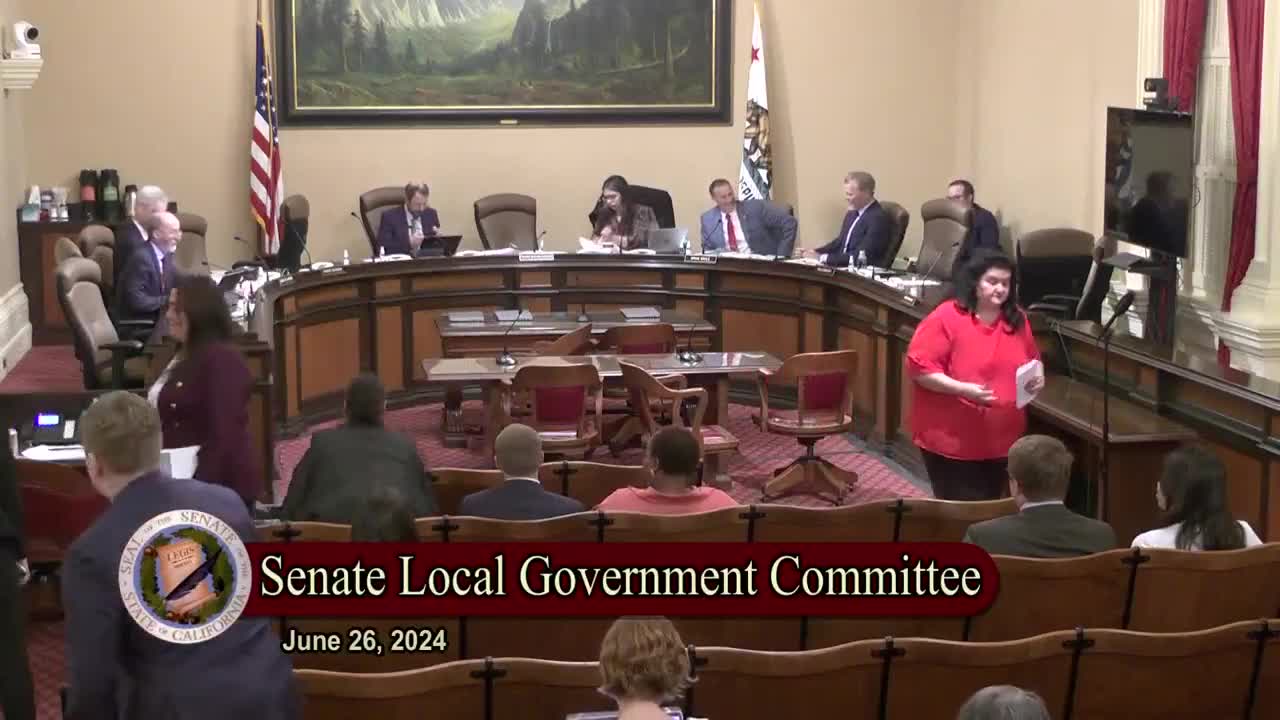 5MIN
Senate Standing Committee on Local Government
 50SEC
Assembly Floor
 5MIN
Assembly Standing Committee on Local Government
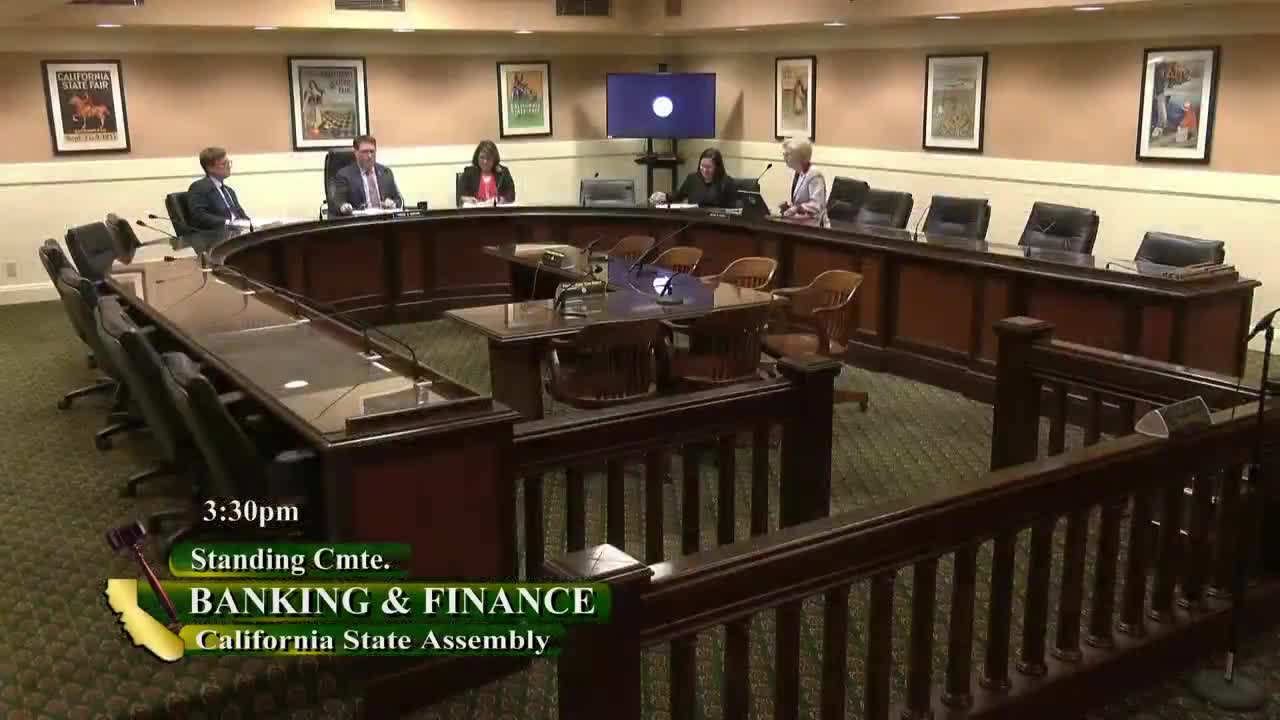 5MIN
Assembly Standing Committee on Banking and Finance
Bill Author

Bill Co-Author(s):