AB 2467: Health care coverage for menopause.
- Session Year: 2023-2024
- House: Assembly
- Latest Version Date: 2024-09-04
Current Status:
Failed
(2024-09-28: Vetoed by Governor.)
Introduced
In Committee
First Chamber
In Committee
Second Chamber
Enacted
Existing law, the Knox-Keene Health Care Service Plan Act of 1975, provides for the licensure and regulation of health care service plans by the Department of Managed Health Care and makes a willful violation of the act a crime. Existing law also provides for the regulation of health insurers by the Department of Insurance. Existing law sets forth specified coverage requirements for health care service plan contracts and health insurance policies.
This bill would require a health care service plan contract or health insurance policy, except as specified, to include coverage for evaluation and treatment options for perimenopause and menopause. The bill would require a health care service plan or health insurer to annually provide clinical care recommendations, as specified, for hormone therapy to all contracted primary care providers who treat individuals with perimenopause and menopause. Because a willful violation of these provisions by a health care service plan would be a crime, the bill would impose a state-mandated local program.
The California Constitution requires the state to reimburse local agencies and school districts for certain costs mandated by the state. Statutory provisions establish procedures for making that reimbursement.
This bill would provide that no reimbursement is required by this act for a specified reason.
Existing law, the Knox-Keene Health Care Service Plan Act of 1975, provides for the licensure and regulation of health care service plans by the Department of Managed Health Care and makes a willful violation of the act a crime. Existing law also provides for the regulation of health insurers by the Department of Insurance. Existing law sets forth specified coverage requirements for health care service plan contracts and health insurance policies.
This bill would require a health care service plan contract or health insurance policy, except for a specialized contract or policy, that is issued, amended, or renewed on or after January 1, 2025, as specified, to include coverage for evaluation and treatment options for perimenopause and menopause. The bill would require a health care service plan or health insurer to annually provide clinical care recommendations, as specified, for hormone therapy to all contracted primary care providers who treat individuals with perimenopause and menopause. Because a willful violation of these provisions by a health care service plan would be a crime, the bill would impose a state-mandated local program.
The California Constitution requires the state to reimburse local agencies and school districts for certain costs mandated by the state. Statutory provisions establish procedures for making that reimbursement.
This bill would provide that no reimbursement is required by this act for a specified reason.
Existing law, the Knox-Keene Health Care Service Plan Act of 1975, provides for the licensure and regulation of health care service plans by the Department of Managed Health Care and makes a willful violation of the act a crime. Existing law also provides for the regulation of health insurers by the Department of Insurance. Existing law sets forth specified coverage requirements for health care service plan contracts and health insurance policies.
This bill would require a health care service plan contract or health insurance policy, except for a specialized contract or policy, that is issued, amended, or renewed on or after January 1, 2025, to include coverage for treatment of evaluation and treatment options for perimenopause and menopause. The bill would require a health care service plan or health insurer to annually provide clinical care recommendations, as specified, for hormone therapy to all contracted primary care providers who treat individuals with perimenopause and menopause. Because a willful violation of these provisions by a health care service plan would be a crime, the bill would impose a state-mandated local program.
The California Constitution requires the state to reimburse local agencies and school districts for certain costs mandated by the state. Statutory provisions establish procedures for making that reimbursement.
This bill would provide that no reimbursement is required by this act for a specified reason.
Existing law, the Knox-Keene Health Care Service Plan Act of 1975, provides for the licensure and regulation of health care service plans by the Department of Managed Health Care and makes a willful violation of the act a crime. Existing law also provides for the regulation of health insurers by the Department of Insurance. Existing law sets forth specified coverage requirements for health care service plan contracts and health insurance policies.
This bill would require a health care service plan contract or health insurance policy, except for a specialized contract or policy, that is issued, amended, or renewed on or after January 1, 2025, to include coverage for treatment of perimenopause and menopause. Because a willful violation of these provisions by a health care service plan would be a crime, the bill would impose a state-mandated local program.
The California Constitution requires the state to reimburse local agencies and school districts for certain costs mandated by the state. Statutory provisions establish procedures for making that reimbursement.
This bill would provide that no reimbursement is required by this act for a specified reason.
Existing law, the Knox-Keene Health Care Service Plan Act of 1975, provides for the licensure and regulation of health care service plans by the Department of Managed Health Care and makes a willful violation of the act a crime. Existing law also provides for the regulation of health insurers by the Department of Insurance. Existing law sets forth specified coverage requirements for health care service plan contracts and health insurance policies.
This bill would require a health care service plan contract or health insurance policy, except for a specialized contract or policy, that is issued, amended, or renewed on or after January 1, 2025, to include coverage for treatment of perimenopause and menopause. Because a willful violation of these provisions by a health care service plan would be a crime, the bill would impose a state-mandated local program.
The California Constitution requires the state to reimburse local agencies and school districts for certain costs mandated by the state. Statutory provisions establish procedures for making that reimbursement.
This bill would provide that no reimbursement is required by this act for a specified reason.
Existing law, the Knox-Keene Health Care Service Plan Act of 1975, provides for the licensure and regulation of health care service plans by the Department of Managed Health Care and makes a willful violation of the act a crime. Existing law also provides for the regulation of health insurers by the Department of Insurance. Existing law sets forth specified coverage requirements for health care service plan contracts and health insurance policies.
This bill would require a health care service plan contract or health insurance policy, except for a specialized contract or policy, that is issued, amended, or renewed on or after January 1, 2025, to include coverage for treatment of perimenopause and menopause. Because a willful violation of these provisions by a health care service plan would be a crime, the bill would impose a state-mandated local program.
The California Constitution requires the state to reimburse local agencies and school districts for certain costs mandated by the state. Statutory provisions establish procedures for making that reimbursement.
This bill would provide that no reimbursement is required by this act for a specified reason.
Existing law establishes various programs to support the health of Californians, including programs to support the health of pregnant women, children, and older adults.This bill would state the intent of the Legislature to enact legislation relating to menopause.Existing law establishes various programs to support the health of Californians, including programs to support the health of pregnant women, children, and older adults.
This bill would state the intent of the Legislature to enact legislation relating to menopause.
(a)A health care service plan contract, except for a specialized health care service plan contract, that is issued, amended, or renewed on or after January 1, 2025, shall include coverage for evaluation and treatment options for perimenopause and menopause, as is deemed medically necessary by the treating health care provider without utilization management, that includes, but is not limited to, all of the following:
(1)At least one option in each formulation of, and the associated method of administration for, federal Food and Drug Administration-regulated systemic hormone therapy.
(2)At least one option in each formulation of, and the associated method of administration for, nonhormonal medications for each menopause symptom.
(3)At least one option in each formulation of, and the associated method of administration for, treatment for genitourinary syndrome of menopause.
(4)At least one from each class of medications approved to prevent and treat osteoporosis.
(b)Coverage required under this section includes authority for the treating provider to adjust the dose of a drug consistent with clinical care recommendations.
(c)A health care service plan shall annually provide current clinical care recommendations for hormone therapy from the Menopause Society or other nationally recognized professional associations to all contracted primary care providers who treat enrollees with perimenopause and menopause. A health care service plan shall encourage primary care providers to review those recommendations.
(d)For purposes of this section, the following terms have the following meanings:
(1)Formulation means all of the following:
(A)A tablet or capsule.
(B)A transdermal patch.
(C)A topical spray.
(D)A cream, gel, or lotion.
(E)A vaginal suppository, cream, or silicone ring.
(2)Method of administration means administering a formulation via an oral, topical, vaginal, subcutaneous, injectable, or intravenous route of administration.
(e)Coverage for the evaluation and treatment options for perimenopause and menopause shall be provided without discrimination on the basis of gender expression or identity.
(f)Nothing in this section shall be construed to limit coverage for medically necessary outpatient prescription drugs pursuant to Section 1342.71 or any other provision under this chapter.
(g)This section shall not apply to Medi-Cal managed care plans that contract with the State Department of Health Care Services pursuant to Chapter 7 (commencing with Section 14000) of, Chapter 8 (commencing with Section 14200) of, or Chapter 8.75 (commencing with Section 14591) of, Part 3 of Division 9 of the Welfare and Institutions Code.
SEC. 2.Section 10123.1962 is added to the Insurance Code, to read:10123.1962.(a)A health insurance policy, except for a specialized health insurance policy, that is issued, amended, or renewed on or after January 1, 2025, shall include coverage for evaluation and treatment options for perimenopause and menopause, as is deemed medically necessary by the treating health care provider without utilization management, that includes, but is not limited to, all of the following:
(1)At least one option in each formulation of, and the associated method of administration for, federal Food and Drug Administration-regulated systemic hormone therapy.
(2)At least one option in each formulation of, and the associated method of administration for, nonhormonal medications for each menopause symptom.
(3)At least one option in each formulation of, and the associated method of administration for, treatment for genitourinary syndrome of menopause.
(4)At least one from each class of medications approved to prevent and treat osteoporosis.
(b)Coverage required under this section includes authority for the treating provider to adjust the dose of a drug consistent with clinical care recommendations.
(c)A health insurer shall annually provide current clinical care recommendations for hormone therapy from the Menopause Society or other nationally recognized professional associations to all contracted primary care providers who treat insureds with perimenopause and menopause. A health insurer shall encourage primary care providers to review those recommendations.
(d)For purposes of this section, the following terms have the following meanings:
(1)Formulation means all of the following:
(A)A tablet or capsule.
(B)A transdermal patch.
(C)A topical spray.
(D)A cream, gel, or lotion.
(E)A vaginal suppository, cream, or silicone ring.
(2)Method of administration means administering a formulation via an oral, topical, vaginal, subcutaneous, injectable, or intravenous route of administration.
(e)Coverage for the evaluation and treatment options for perimenopause and menopause shall be provided without discrimination on the basis of gender expression or identity.
(f)Nothing in this section shall be construed to limit coverage for medically necessary outpatient prescription drugs pursuant to Section 10123.193 or any other provision under this chapter.
SEC. 3.No reimbursement is required by this act pursuant to Section 6 of Article XIIIB of the California Constitution because the only costs that may be incurred by a local agency or school district will be incurred because this act creates a new crime or infraction, eliminates a crime or infraction, or changes the penalty for a crime or infraction, within the meaning of Section 17556 of the Government Code, or changes the definition of a crime within the meaning of Section 6 of Article XIIIB of the California Constitution.
(a)A health care service plan contract, except for a specialized health care service plan contract, that is issued, amended, or renewed on or after January 1, 2025, shall include coverage for evaluation and treatment options for perimenopause and menopause, as is deemed medically necessary by the treating health care provider without utilization management, that includes, but is not limited to, all of the following:
(1)At least one option in each formulation of, and the associated method of administration for, federal Food and Drug Administration-regulated systemic hormone therapy.
(2)At least one option in each formulation of, and the associated method of administration for, nonhormonal medications for each menopause symptom.
(3)At least one option in each formulation of, and the associated method of administration for, treatment for genitourinary syndrome of menopause.
(4)At least one from each class of medications approved to prevent and treat osteoporosis.
(b)Coverage required under this section includes authority for the treating provider to adjust the dose of a drug consistent with clinical care recommendations.
(c)A health care service plan shall annually provide current clinical care recommendations for hormone therapy from the Menopause Society or other nationally recognized professional associations to all contracted primary care providers who treat enrollees with perimenopause and menopause. A health care service plan shall encourage primary care providers to review those recommendations.
(d)For purposes of this section, the following terms have the following meanings:
(1)Formulation means all of the following:
(A)A tablet or capsule.
(B)A transdermal patch.
(C)A topical spray.
(D)A cream, gel, or lotion.
(E)A vaginal suppository, cream, or silicone ring.
(2)Method of administration means administering a formulation via an oral, topical, vaginal, subcutaneous, injectable, or intravenous route of administration.
(e)Coverage for the evaluation and treatment options for perimenopause and menopause shall be provided without discrimination on the basis of gender expression or identity.
(f)Nothing in this section shall be construed to limit coverage for medically necessary outpatient prescription drugs pursuant to Section 1342.71 or any other provision under this chapter.
(g)This section shall not apply to Medi-Cal managed care plans that contract with the State Department of Health Care Services pursuant to Chapter 7 (commencing with Section 14000) of, Chapter 8 (commencing with Section 14200) of, or Chapter 8.75 (commencing with Section 14591) of, Part 3 of Division 9 of the Welfare and Institutions Code.
SEC. 2.Section 10123.1962 is added to the Insurance Code, to read:10123.1962.(a)A health insurance policy, except for a specialized health insurance policy, that is issued, amended, or renewed on or after January 1, 2025, shall include coverage for evaluation and treatment options for perimenopause and menopause, as is deemed medically necessary by the treating health care provider without utilization management, that includes, but is not limited to, all of the following:
(1)At least one option in each formulation of, and the associated method of administration for, federal Food and Drug Administration-regulated systemic hormone therapy.
(2)At least one option in each formulation of, and the associated method of administration for, nonhormonal medications for each menopause symptom.
(3)At least one option in each formulation of, and the associated method of administration for, treatment for genitourinary syndrome of menopause.
(4)At least one from each class of medications approved to prevent and treat osteoporosis.
(b)Coverage required under this section includes authority for the treating provider to adjust the dose of a drug consistent with clinical care recommendations.
(c)A health insurer shall annually provide current clinical care recommendations for hormone therapy from the Menopause Society or other nationally recognized professional associations to all contracted primary care providers who treat insureds with perimenopause and menopause. A health insurer shall encourage primary care providers to review those recommendations.
(d)For purposes of this section, the following terms have the following meanings:
(1)Formulation means all of the following:
(A)A tablet or capsule.
(B)A transdermal patch.
(C)A topical spray.
(D)A cream, gel, or lotion.
(E)A vaginal suppository, cream, or silicone ring.
(2)Method of administration means administering a formulation via an oral, topical, vaginal, subcutaneous, injectable, or intravenous route of administration.
(e)Coverage for the evaluation and treatment options for perimenopause and menopause shall be provided without discrimination on the basis of gender expression or identity.
(f)Nothing in this section shall be construed to limit coverage for medically necessary outpatient prescription drugs pursuant to Section 10123.193 or any other provision under this chapter.
SEC. 3.No reimbursement is required by this act pursuant to Section 6 of Article XIIIB of the California Constitution because the only costs that may be incurred by a local agency or school district will be incurred because this act creates a new crime or infraction, eliminates a crime or infraction, or changes the penalty for a crime or infraction, within the meaning of Section 17556 of the Government Code, or changes the definition of a crime within the meaning of Section 6 of Article XIIIB of the California Constitution.
(a)A health care service plan contract, except for a specialized health care service plan contract, that is issued, amended, or renewed on or after January 1, 2025, shall include coverage for evaluation and treatment options for perimenopause and menopause, as is deemed medically necessary by the treating health care provider without utilization management, that includes, but is not limited to, all of the following:
(1)At least one option in each formulation of, and the associated method of administration for, federal Food and Drug Administration-regulated systemic hormone therapy.
(2)At least one option in each formulation of, and the associated method of administration for, nonhormonal medications for each menopause symptom.
(3)At least one option in each formulation of, and the associated method of administration for, treatment for genitourinary syndrome of menopause.
(4)At least one from each class of medications approved to prevent and treat osteoporosis.
(b)Coverage required under this section includes authority for the treating provider to adjust the dose of a drug consistent with clinical care recommendations.
(c)A health care service plan shall annually provide current clinical care recommendations for hormone therapy from the Menopause Society or other nationally recognized professional associations to all contracted primary care providers who treat enrollees with perimenopause and menopause. A health care service plan shall encourage primary care providers to review those recommendations.
(d)For purposes of this section, the following terms have the following meanings:
(1)Formulation means all of the following:
(A)A tablet or capsule.
(B)A transdermal patch.
(C)A topical spray.
(D)A cream, gel, or lotion.
(E)A vaginal suppository, cream, or silicone ring.
(2)Method of administration means administering a formulation via an oral, topical, vaginal, subcutaneous, injectable, or intravenous route of administration.
(e)Coverage for the evaluation and treatment options for perimenopause and menopause shall be provided without discrimination on the basis of gender expression or identity.
(f)Nothing in this section shall be construed to limit coverage for medically necessary outpatient prescription drugs pursuant to Section 1342.71 or any other provision under this chapter.
SEC. 2.Section 10123.1962 is added to the Insurance Code, to read:10123.1962.(a)A health insurance policy, except for a specialized health insurance policy, that is issued, amended, or renewed on or after January 1, 2025, shall include coverage for evaluation and treatment options for perimenopause and menopause, as is deemed medically necessary by the treating health care provider without utilization management, that includes, but is not limited to, all of the following:
(1)At least one option in each formulation of, and the associated method of administration for, federal Food and Drug Administration-regulated systemic hormone therapy.
(2)At least one option in each formulation of, and the associated method of administration for, nonhormonal medications for each menopause symptom.
(3)At least one option in each formulation of, and the associated method of administration for, treatment for genitourinary syndrome of menopause.
(4)At least one from each class of medications approved to prevent and treat osteoporosis.
(b)Coverage required under this section includes authority for the treating provider to adjust the dose of a drug consistent with clinical care recommendations.
(c)A health insurer shall annually provide current clinical care recommendations for hormone therapy from the Menopause Society or other nationally recognized professional associations to all contracted primary care providers who treat insureds with perimenopause and menopause. A health insurer shall encourage primary care providers to review those recommendations.
(d)For purposes of this section, the following terms have the following meanings:
(1)Formulation means all of the following:
(A)A tablet or capsule.
(B)A transdermal patch.
(C)A topical spray.
(D)A cream, gel, or lotion.
(E)A vaginal suppository, cream, or silicone ring.
(2)Method of administration means administering a formulation via an oral, topical, vaginal, subcutaneous, injectable, or intravenous route of administration.
(e)Coverage for the evaluation and treatment options for perimenopause and menopause shall be provided without discrimination on the basis of gender expression or identity.
(f)Nothing in this section shall be construed to limit coverage for medically necessary outpatient prescription drugs pursuant to Section 10123.193 or any other provision under this chapter.
SEC. 3.No reimbursement is required by this act pursuant to Section 6 of Article XIIIB of the California Constitution because the only costs that may be incurred by a local agency or school district will be incurred because this act creates a new crime or infraction, eliminates a crime or infraction, or changes the penalty for a crime or infraction, within the meaning of Section 17556 of the Government Code, or changes the definition of a crime within the meaning of Section 6 of Article XIIIB of the California Constitution.
A health care service plan contract, except for a specialized health care service plan contract, that is issued, amended, or renewed on or after January 1, 2025, shall include coverage for treatment of perimenopause and menopause that includes, but is not limited to, all of the following:
(a)Hormone therapy, including, but not limited to, combination estrogen and hormone medicines, combination estrogen and progestin medicines, and estrogen-only medicines.
(b)Low-dose antidepressants.
(c)Anticonvulsants.
(d)Vaginal estrogen.
(e)Medications to prevent or treat osteoporosis.
(f)Nonhormonal medications for vasomotor-related symptoms.
(g)Topical hormone therapy.
(h)Bioidentical hormones. federal Food and Drug Administration-approved bioidentical hormones.
SEC. 2.Section 10123.1962 is added to the Insurance Code, to read:10123.1962.A health insurance policy, except for a specialized health insurance policy, that is issued, amended, or renewed on or after January 1, 2025, shall include coverage for treatment of perimenopause and menopause that includes, but is not limited to, all of the following:
(a)Hormone therapy, including, but not limited to, combination estrogen and hormone medicines, combination estrogen and progestin medicines, and estrogen-only medicines.
(b)Low-dose antidepressants.
(c)Anticonvulsants.
(d)Vaginal estrogen.
(e)Medications to prevent or treat osteoporosis.
(f)Nonhormonal medications for vasomotor-related symptoms.
(g)Topical hormone therapy.
(h)Bioidentical hormones. federal Food and Drug Administration-approved bioidentical hormones.
SEC. 3.No reimbursement is required by this act pursuant to Section 6 of Article XIIIB of the California Constitution because the only costs that may be incurred by a local agency or school district will be incurred because this act creates a new crime or infraction, eliminates a crime or infraction, or changes the penalty for a crime or infraction, within the meaning of Section 17556 of the Government Code, or changes the definition of a crime within the meaning of Section 6 of Article XIIIB of the California Constitution.
A health care service plan contract, except for a specialized health care service plan contract, that is issued, amended, or renewed on or after January 1, 2025, shall include coverage for treatment of perimenopause and menopause that includes, but is not limited to, all of the following:
(a)Hormone therapy, including, but not limited to, combination estrogen and hormone medicines, combination estrogen and progestin medicines, and estrogen-only medicines.
(b)Low-dose antidepressants.
(c)Anticonvulsants.
(d)Vaginal estrogen.
(e)Medications to prevent or treat osteoporosis.
(f)Fezolinetant (Veozah) or other hormone-free options.(f)Nonhormonal medications for vasomotor-related symptoms.
(g)Topical hormone therapy.
(h)Bioidentical hormones.
SEC. 2.Section 10123.1962 is added to the Insurance Code, to read:10123.1962.A health insurance policy, except for a specialized health insurance policy, that is issued, amended, or renewed on or after January 1, 2025, shall include coverage for treatment of perimenopause and menopause that includes, but is not limited to, all of the following:
(a)Hormone therapy, including, but not limited to, combination estrogen and hormone medicines, combination estrogen and progestin medicines, and estrogen-only medicines.
(b)Low-dose antidepressants.
(c)Anticonvulsants.
(d)Vaginal estrogen.
(e)Medications to prevent or treat osteoporosis.
(f)Fezolinetant (Veozah) or other hormone-free options.(f)Nonhormonal medications for vasomotor-related symptoms.
(g)Topical hormone therapy.
(h)Bioidentical hormones.
SEC. 3.No reimbursement is required by this act pursuant to Section 6 of Article XIIIB of the California Constitution because the only costs that may be incurred by a local agency or school district will be incurred because this act creates a new crime or infraction, eliminates a crime or infraction, or changes the penalty for a crime or infraction, within the meaning of Section 17556 of the Government Code, or changes the definition of a crime within the meaning of Section 6 of Article XIIIB of the California Constitution.
A health care service plan contract, except for a specialized health care service plan contract, that is issued, amended, or renewed on or after January 1, 2025, shall include coverage for treatment of perimenopause and menopause that includes, but is not limited to, all of the following:
(a)Hormone therapy, including, but not limited to, combination estrogen and hormone medicines, combination estrogen and progestin medicines, and estrogen-only medicines.
(b)Low-dose antidepressants.
(c)Anticonvulsants.
(d)Vaginal estrogen.
(e)Medications to prevent or treat osteoporosis.
(f)Fezolinetant (Veozah) or other hormone-free options.
(g)Topical hormone therapy.
(h)Bioidentical hormones.
SEC. 2.Section 10123.1962 is added to the Insurance Code, to read:10123.1962.A health insurance policy, except for a specialized health insurance policy, that is issued, amended, or renewed on or after January 1, 2025, shall include coverage for treatment of perimenopause and menopause that includes, but is not limited to, all of the following:
(a)Hormone therapy, including, but not limited to, combination estrogen and hormone medicines, combination estrogen and progestin medicines, and estrogen-only medicines.
(b)Low-dose antidepressants.
(c)Anticonvulsants.
(d)Vaginal estrogen.
(e)Medications to prevent or treat osteoporosis.
(f)Fezolinetant (Veozah) or other hormone-free options.
(g)Topical hormone therapy.
(h)Bioidentical hormones.
SEC. 3.No reimbursement is required by this act pursuant to Section 6 of Article XIIIB of the California Constitution because the only costs that may be incurred by a local agency or school district will be incurred because this act creates a new crime or infraction, eliminates a crime or infraction, or changes the penalty for a crime or infraction, within the meaning of Section 17556 of the Government Code, or changes the definition of a crime within the meaning of Section 6 of Article XIIIB of the California Constitution.
SECTION 1.It is the intent of the Legislature to enact legislation relating to menopause.It is the intent of the Legislature to enact legislation relating to menopause.
|
Date
|
Status
|
|---|---|
| Sep 28, 2024 | Vetoed by Governor. |
| Sep 11, 2024 | Enrolled and presented to the Governor at 4 p.m. |
| Aug 30, 2024 | Senate amendments concurred in. To Engrossing and Enrolling. (Ayes 76. Noes 0.). |
| Aug 30, 2024 | In Assembly. Concurrence in Senate amendments pending. |
| Aug 29, 2024 | Read third time. Passed. Ordered to the Assembly. (Ayes 34. Noes 1.). |
| Aug 26, 2024 | Read second time. Ordered to third reading. |
| Aug 23, 2024 | Read third time and amended. Ordered to second reading. |
| Aug 19, 2024 | Read second time. Ordered to third reading. |
| Aug 15, 2024 | From committee: Do pass. (Ayes 5. Noes 0.) (August 15). |
| Aug 5, 2024 | In committee: Referred to APPR suspense file. |
| Jul 3, 2024 | From committee: Do pass and re-refer to Com. on APPR. (Ayes 9. Noes 0.) (July 3). Re-referred to Com. on APPR. |
| Jun 26, 2024 | From committee chair, with author's amendments: Amend, and re-refer to committee. Read second time, amended, and re-referred to Com. on HEALTH. |
| Jun 5, 2024 | Referred to Com. on HEALTH. |
| May 24, 2024 | In Senate. Read first time. To Com. on RLS. for assignment. |
| May 23, 2024 | Read third time. Passed. Ordered to the Senate. (Ayes 70. Noes 0. Page 5630.) |
| May 20, 2024 | Read third time and amended. Ordered to third reading. (Page 5324.) |
| May 20, 2024 | Read second time. Ordered to third reading. |
| May 20, 2024 | Assembly Rule 69(b)(1) suspended. (Page 5324.) |
| May 16, 2024 | From committee: Do pass. (Ayes 15. Noes 0.) (May 16). |
| May 8, 2024 | In committee: Set, first hearing. Referred to APPR. suspense file. |
| Apr 29, 2024 | Re-referred to Com. on APPR. |
| Apr 25, 2024 | Read second time and amended. |
| Apr 24, 2024 | From committee: Amend, and do pass as amended and re-refer to Com. on APPR. (Ayes 16. Noes 0.) (April 23). |
| Mar 6, 2024 | Re-referred to Com. on HEALTH. |
| Mar 4, 2024 | Referred to Com. on HEALTH. |
| Mar 4, 2024 | From committee chair, with author's amendments: Amend, and re-refer to Com. on HEALTH. Read second time and amended. |
| Feb 14, 2024 | From printer. May be heard in committee March 15. |
| Feb 13, 2024 | Read first time. To print. |
|
Date
|
Description
|
Location
|
Votes
|
|
|---|---|---|---|---|
| Aug 30, 2024 | AB 2467 Bauer-Kahan Concurrence in Senate Amendments | Assembly Floor |
Passed |
|
| Aug 29, 2024 | Assembly 3rd Reading AB2467 Bauer-Kahan et al. By Eggman | Senate Floor |
Passed |
|
| Aug 15, 2024 | Do pass | Senate Standing Committee on Appropriations |
Passed |
|
| Aug 5, 2024 | Placed on suspense file | Senate Standing Committee on Appropriations |
Passed |
|
| Jul 3, 2024 | Do pass, but first be re-referred to the Committee on [Appropriations] | Senate Standing Committee on Health |
Passed |
|
| May 23, 2024 | AB 2467 Bauer-Kahan Assembly Third Reading | Assembly Floor |
Passed |
|
| May 16, 2024 | Do pass. | Assembly Standing Committee on Appropriations |
Passed |
|
| Apr 23, 2024 | Do pass as amended and be re-referred to the Committee on [Appropriations] | Assembly Standing Committee on Health |
Passed |
This list shows positions taken on this bill by organizations on the date displayed, which is linked to the original source.
Positions by individuals are not included.
|
Organization
|
Position
|
Date
|
|---|---|---|
| America'S Health Insurance Plans | ** Against | |
| American College Of Obstetricians And Gynecologists District Ix | ** Support | |
| Association Of California Life & Health Insurance Companies | ** Against | |
| Astellas Pharma US, Inc. | ** Support | |
| Bayer US, LLC | ** Support | |
| California Association Of Health Plans | ** Against | |
| California Life Sciences | ** Support | |
| City of Glendale | ** Support | |
| National Women's Political Caucus of California | ** Support | |
| None | * Support | Apr 23, 2024 |
| Not applicable | * Support | Apr 23, 2024 |
| Planned Parenthood Affiliates Of California | ** Support |
GOVERNOR'S VETO
GV Bill Id:AB 2467
Author:(Bauer-Kahan)
As Enrolled Ver:September 4, 2024
2/3 vote
SUMMARY
Requires health plan contract or insurance policy coverage for the evaluation and treatment options for perimenopause and menopause, as is deemed medically necessary by the treating health care provider without utilization management (UM).
Senate Amendments
- Specify coverage to include, but not be limited to, all of the following:
- At least one option in each formulation of, and the associated method of administration for, federal Food and Drug Administration (FDA)-regulated systemic hormone therapy; and,
- At least one option in each formulation of, and the associated method of administration for, nonhormonal medications for each menopause symptom;
- At least one option in each formulation of, and the associated method of administration for, treatment for genitourinary syndrome of menopause; and,
- At least one from each class of medications approved to prevent and treat osteoporosis.
- Add authority for the treating provider to adjust the dose of a drug consistent with clinical care recommendations.
- Require a health plan or insurer to annually provide current clinical care recommendations for hormone therapy from the Menopause Society or other nationally recognized professional associations to all contracted primary care providers who treat enrollees with perimenopause and menopause and encourage primary care providers to review those recommendations.
- Provide for coverage for the evaluation and treatment options for perimenopause and menopause to be provided without discrimination on the basis of gender expression or identity.
- Exempt Medi-Cal managed care plans that contract with the Department of Health Care Services.
Governor's Veto Message
This bill would require health plans to cover the costs of evaluation and treatment options for perimenopause and menopause, without utilization review, and require this coverage to include at least one option in each formulation of specified perimenopause and menopause treatments. Health plans would also be required to provide clinical care recommendations for hormone therapy to contracted primary care providers annually.
I appreciate the author's intent to ensure access to comprehensive and up-to-date treatment of perimenopause and menopause. However, this bill's expansive coverage mandate in conjunction with a prohibition on UM is too far-reaching. Health plans use UM to ensure enrollees receive the right care at the right time, which is especially important when there are new and emerging treatments. Further, a mandate to cover non-FDA approved treatments, without UM, is unprecedented. These factors, in conjunction with ambiguities in the bill for undefined terms, raise concerns for cost containment and bill implementation.
I encourage the Legislature and stakeholders to continue to work towards a more tailored solution that can improve access to perimenopause and menopause care, inform patients of their options, and encourage providers to stay informed of the latest clinical care recommendations.
COMMENTS
According to the California Health Benefits Review Program (CHBRP), menopause is part of the normal aging process in which menstruation has ceased for 12 consecutive months. This transition to a new stage of life (rather than a condition or disease) is experienced by every woman and most often occurs naturally between ages 45 and 55 years but may occur between ages 40 and 64 years (median age 51 years).
This bill, as introduced, addresses one particular drug and multiple bill-identified therapeutic categories of drugs. This bill was subsequently amended to remove reference to a specific brand name prescription. CHBRP considered some subcategories and some additional drugs. CHBRP approached the bill-identified therapeutic category "bioidentical hormones" as two subcategories: compounded bioidenticals and manufactured bioidenticals. CHBRP did so because manufactured bioidenticals have approval from the FDA, though compounded bioidenticals do not, and clinical recommendations are very different for the two subcategories. Within the bill-identified therapeutic category "vaginal estrogen," CHBRP included multiple particular drugs because one example, estradiol ring (Femring), is a high-dose vaginal estrogen. As a treatment, it is not interchangeable with the other examples of vaginal estrogen, which are low-dose estrogen. Although it does not fit into a bill-defined therapeutic category, CHBRP has included a focus on ospemifene because it is the only nonhormonal, oral alternative to low-dose vaginal estrogen for the treatment of genitourinary syndrome of menopause (GSM). The bill-identified therapeutic category "hormone therapy" specifies combination estrogen and progestin as a treatment as well as estrogen-only drugs. Estrogen-only drugs are often accompanied by a progestin-only prescription (separate pills that are, effectively, the combination treatment) and so CHBRP has included progestin-only drugs as a focus in this analysis.
- CHBRP analysis. CHBRP's analysis of this bill includes the following:
- Impact on expenditures. For enrollees in Department of Managed Health Care (DMHC)-regulated plans and California Department of Insurance (CDI)-regulated policies, this bill would increase total premiums paid (by employers and enrollees) and cost sharing, though it would decrease expenses for noncovered benefits. This would result in an increase of total net annual expenditures for enrollees with DMHC-regulated plans and CDI-regulated policies of $3,993,000 (0.0025%). CHBRP projects no change to copayments or coinsurance rates but does project increases in utilization of some drugs and therefore an increase in enrollee cost sharing. Increases in utilization of covered benefits are a combination of reductions in utilization that was paid for out of pocket at baseline that would be covered under this bill postmandate and new utilization due to increased take-up with increases in coverage.
- Medical effectiveness. Commonly referenced guidelines indicate that hormone therapy remains the most effective treatment for vasomotor symptoms (VMS) and GSM, and has been shown to prevent bone loss and fractures. Hormone therapy risks depend on type, dose, duration of use, route of administration, timing of initiation, and whether a progestogen is used. There is clear and convincing evidence that low-dose vaginal estrogen for the treatment of GSM is effective. There is limited evidence that compounded bioidentical hormones are effective treatment for menopause symptoms. Use of compounded bioidentical hormones is only recommended for patients with an allergy to an active pharmaceutical ingredient or inactive ingredient of a drug product approved by the FDA or documented requirement for a different dosage form than available. This is due to serious concerns about the safety, efficacy, and standardization of these drugs, which are not regulated by the FDA. There is a preponderance of evidence that fezolinetant is effective for treatment of VMS. There is a preponderance of evidence that ospemifene improved symptoms of GSM.
- Utilization. At baseline, 13.2 million enrollees have an outpatient pharmacy benefit regulated by DMHC or CDI. Among the specific drugs that CHBRP identified as treatments for menopause symptoms, an estimated 7% of enrollees in DMHC-regulated plans and CDI-regulated policies have coverage for fezolinetant and 15% have coverage for ospemifene at baseline. For other drugs and categories, baseline coverage ranges from 92% to 100%, and would increase to or remain at 100% for all if this bill were enacted. Because CHBRP is concerned with estimating the marginal impact of this bill, the utilization analyses focus on drugs and treatments for which enrollees in DMHC-regulated plans and CDI-regulated policies did not have 100% coverage at baseline. As current utilization for both is nearly entirely as a non-covered benefit, the increase in benefit coverage would be expected to increase utilization for fezolinetant (231%) and ospemifene (187%). Utilization of other drugs and treatments would be expected to increase in proportion to the increase in benefit coverage.
- Public health. Within the first year postmandate, CHBRP finds that this bill would reduce or abate menopause symptoms for women receiving the additional 15,400 (30-day) prescriptions (which might translate to ~1,250 women, assuming each received one prescription for 12 consecutive months).
- Long-term impacts. CHBRP does not anticipate any additional changes postmandate that are different from the new levels of coverage established under this bill. If a lower-cost drug option were to become available, DMHC-regulated plans and CDI-regulated policies could shift to covering those options, which would potentially reduce overall costs. The long-term public health impacts of this bill are expected to be similar to those described in the short-term impact section. Most bill-specified drug categories (where most prescriptions are concentrated) are already covered at baseline. Therefore, CHBRP anticipates that a limited number of women (especially those with hormone-sensitive cancer experience) will continue to access the newly covered categories.
According to the Author
This bill mandates coverage for healthcare treatment plans for people experiencing perimenopause and menopause related symptoms. Treatment for menopause has changed over the years. Eighty four percent of those experiencing menopause are not using the same treatment that their mother or grandmother used, yet the array of treatments available are not widely publicized. It is time for treatments to be made accessible and cost efficient for those that experience perimenopause and menopause. The author concludes that menopause is not just a personal experience; it's a public health issue that deserves our attention and action.
Arguments in Support
The National Women's Political Caucus of California (NWPC-CA) writes that this bill helps to eliminate sex and gender-based inequity. Reproductive freedom is far more than the choice to end a pregnancy; it is access to the entire range of health care services that girls and women need throughout their lives. Neither menstruation nor menopause -the beginning and end of the reproductive cycle in women—have had the health care focus they need. Coverage of medical appointments, medications, and other health care support for issues related directly to menopause is not a given in health care plans, but it should be for any person who can experience menopause. NWPC-CA concludes that this bill would do much to prevent that care being overlooked and not accessible to all who need it.
Arguments in Opposition
The Department of Finance (DOF) is opposed to this bill as it results in costs not included in the state's fiscal plan and may potentially result in General Fund costs. Additionally, this bill may add pressures to departments as they are currently evaluating and implementing efficiencies resulting from the statewide, ongoing reductions to departmental operational budgets adopted in the 2024 Budget. Finally, this bill could lead to increases in utilization of services and potential additional cost pressures for health plans and insurers, including potentially Medi-Cal. These costs would likely be passed on to consumers through higher premiums. Existing law established the Office of Health Care Affordability (OHCA) to slow healthcare spending and address prevailing cost drivers. While this bill in and of itself would not likely have a material impact on this state policy objective, DOF notes this constraint given that the potential sum total of all bills may materially impact this policy. Additionally, creating new costs will challenge the ability of health plans and insurers to meet specified cost targets identified by OHCA. This bill aims to make coverage of perimenopause and menopause more accessible and cost efficient. CHBRP completed an analysis based on the April 16, 2024, version on this bill and noted that individuals experiencing symptoms of menopause already have coverage of various drugs and medical care.
FISCAL COMMENTS
According to the Senate Appropriations Committee, DMHC estimates costs of approximately $980,000 in 2025-26, $966,000 in 2026-27, $967,000 in 2027-28, $968,000 in 2028-29, and $969,000 in 2029-30 and annually thereafter for state administration (Managed Care Fund). CDI estimates costs of $6,000 in 2024-25, $18,000 in 2025-26, and $5,000 in 2026-27 and ongoing thereafter for state administration (Insurance Fund). Unknown, potential ongoing General Fund costs for increased CalPERS health plan premiums.
VOTES
ASM HEALTH: 16-0-0
YES: Bonta, Waldron, Aguiar-Curry, Arambula, Wendy Carrillo, Flora, Haney, Jones-Sawyer, Maienschein, McCarty, Joe Patterson, Rodriguez, Sanchez, Santiago, Schiavo, Weber
ASM APPROPRIATIONS: 15-0-0
YES: Wicks, Sanchez, Arambula, Bryan, Calderon, Wendy Carrillo, Dixon, Mike Fong, Grayson, Haney, Hart, Jim Patterson, Pellerin, Ta, Villapudua
ASSEMBLY FLOOR: 70-0-10
YES: Addis, Aguiar-Curry, Alanis, Alvarez, Arambula, Bains, Bauer-Kahan, Bennett, Berman, Boerner, Bonta, Bryan, Calderon, Juan Carrillo, Wendy Carrillo, Chen, Connolly, Davies, Dixon, Mike Fong, Vince Fong, Friedman, Gabriel, Garcia, Gipson, Grayson, Haney, Hart, Hoover, Irwin, Jackson, Jones-Sawyer, Kalra, Lackey, Lee, Low, Lowenthal, Maienschein, McCarty, McKinnor, Muratsuchi, Stephanie Nguyen, Ortega, Pacheco, Papan, Jim Patterson, Joe Patterson, Pellerin, Petrie-Norris, Quirk-Silva, Ramos, Rendon, Reyes, Rodriguez, Sanchez, Santiago, Schiavo, Soria, Ta, Ting, Valencia, Villapudua, Waldron, Wallis, Ward, Weber, Wilson, Wood, Zbur, Robert Rivas
ABS, ABST OR NV: Cervantes, Megan Dahle, Essayli, Flora, Gallagher, Holden, Mathis, Luz Rivas, Blanca Rubio, Wicks
SENATE FLOOR: 34-1-5
YES: Allen, Alvarado-Gil, Archuleta, Ashby, Atkins, Becker, Blakespear, Bradford, Caballero, Cortese, Dodd, Durazo, Eggman, Glazer, Gonzalez, Hurtado, Laird, Limón, McGuire, Menjivar, Min, Newman, Nguyen, Padilla, Portantino, Roth, Rubio, Skinner, Smallwood-Cuevas, Stern, Umberg, Wahab, Wiener, Wilk
NO: Grove
ABS, ABST OR NV: Dahle, Jones, Niello, Ochoa Bogh, Seyarto
ASSEMBLY FLOOR: 76-0-3
YES: Addis, Aguiar-Curry, Alanis, Alvarez, Arambula, Bains, Bauer-Kahan, Bennett, Berman, Boerner, Bonta, Bryan, Calderon, Juan Carrillo, Wendy Carrillo, Chen, Connolly, Megan Dahle, Davies, Dixon, Flora, Mike Fong, Friedman, Gabriel, Gallagher, Garcia, Gipson, Grayson, Haney, Hart, Holden, Hoover, Irwin, Jackson, Jones-Sawyer, Kalra, Lackey, Lee, Low, Lowenthal, Maienschein, Mathis, McCarty, McKinnor, Muratsuchi, Stephanie Nguyen, Pacheco, Papan, Jim Patterson, Joe Patterson, Pellerin, Petrie-Norris, Quirk-Silva, Ramos, Rendon, Reyes, Luz Rivas, Rodriguez, Blanca Rubio, Sanchez, Santiago, Schiavo, Soria, Ta, Ting, Valencia, Villapudua, Waldron, Wallis, Ward, Weber, Wicks, Wilson, Wood, Zbur, Robert Rivas
ABS, ABST OR NV: Cervantes, Essayli, Ortega
UPDATED
VERSION: September 4, 2024
CONSULTANT: Kristene Mapile / HEALTH / (916) 319-2097 FN: 0005145
CONCURRENCE IN SENATE AMENDMENTS
CSA1 Bill Id:AB 2467
Author:(Bauer-Kahan)
As Amended Ver:August 23, 2024
Majority vote
SUMMARY
Requires health plan contract or insurance policy coverage for the evaluation and treatment options for perimenopause and menopause, as is deemed medically necessary by the treating health care provider without utilization management.
Senate Amendments
- Specify coverage to include, but not be limited to, all of the following:
- At least one option in each formulation of, and the associated method of administration for, federal Food and Drug Administration (FDA)-regulated systemic hormone therapy; and,
- At least one option in each formulation of, and the associated method of administration for, nonhormonal medications for each menopause symptom;
- At least one option in each formulation of, and the associated method of administration for, treatment for genitourinary syndrome of menopause; and,
- At least one from each class of medications approved to prevent and treat osteoporosis.
- Add authority for the treating provider to adjust the dose of a drug consistent with clinical care recommendations.
- Require a health plan or insurer to annually provide current clinical care recommendations for hormone therapy from the Menopause Society or other nationally recognized professional associations to all contracted primary care providers who treat enrollees with perimenopause and menopause and encourage primary care providers to review those recommendations.
- Provide for coverage for the evaluation and treatment options for perimenopause and menopause to be provided without discrimination on the basis of gender expression or identity.
- Exempt Medi-Cal managed care plans that contract with the Department of Health Care Services.
COMMENTS
According to the California Health Benefits Review Program (CHBRP), menopause is part of the normal aging process in which menstruation has ceased for 12 consecutive months. This transition to a new stage of life (rather than a condition or disease) is experienced by every woman and most often occurs naturally between ages 45 and 55 years but may occur between ages 40 and 64 years (median age 51 years).
This bill, as introduced, addresses one particular drug and multiple bill-identified therapeutic categories of drugs. This bill was subsequently amended to remove reference to a specific brand name prescription. CHBRP considered some subcategories and some additional drugs. CHBRP approached the bill-identified therapeutic category "bioidentical hormones" as two subcategories: compounded bioidenticals and manufactured bioidenticals. CHBRP did so because manufactured bioidenticals have approval from the FDA, though compounded bioidenticals do not, and clinical recommendations are very different for the two subcategories. Within the bill-identified therapeutic category "vaginal estrogen," CHBRP included multiple particular drugs because one example, estradiol ring (Femring), is a high-dose vaginal estrogen. As a treatment, it is not interchangeable with the other examples of vaginal estrogen, which are low-dose estrogen. Although it does not fit into a bill-defined therapeutic category, CHBRP has included a focus on ospemifene because it is the only nonhormonal, oral alternative to low-dose vaginal estrogen for the treatment of genitourinary syndrome of menopause (GSM). The bill-identified therapeutic category "hormone therapy" specifies combination estrogen and progestin as a treatment as well as estrogen-only drugs. Estrogen-only drugs are often accompanied by a progestin-only prescription (separate pills that are, effectively, the combination treatment) and so CHBRP has included progestin-only drugs as a focus in this analysis.
- CHBRP analysis. CHBRP's analysis of this bill includes the following:
- Impact on expenditures. For enrollees in Department of Managed Health Care (DMHC)-regulated plans and California Department of Insurance (CDI)-regulated policies, this bill would increase total premiums paid (by employers and enrollees) and cost sharing, though it would decrease expenses for noncovered benefits. This would result in an increase of total net annual expenditures for enrollees with DMHC-regulated plans and CDI-regulated policies of $3,993,000 (0.0025%). CHBRP projects no change to copayments or coinsurance rates but does project increases in utilization of some drugs and therefore an increase in enrollee cost sharing. Increases in utilization of covered benefits are a combination of reductions in utilization that was paid for out of pocket at baseline that would be covered under this bill postmandate and new utilization due to increased take-up with increases in coverage.
- Medical effectiveness. Commonly referenced guidelines indicate that hormone therapy remains the most effective treatment for vasomotor symptoms (VMS) and GSM, and has been shown to prevent bone loss and fractures. Hormone therapy risks depend on type, dose, duration of use, route of administration, timing of initiation, and whether a progestogen is used. There is clear and convincing evidence that low-dose vaginal estrogen for the treatment of GSM is effective. There is limited evidence that compounded bioidentical hormones are effective treatment for menopause symptoms. Use of compounded bioidentical hormones is only recommended for patients with an allergy to an active pharmaceutical ingredient or inactive ingredient of a drug product approved by the FDA or documented requirement for a different dosage form than available. This is due to serious concerns about the safety, efficacy, and standardization of these drugs, which are not regulated by the FDA. There is a preponderance of evidence that fezolinetant is effective for treatment of VMS. There is a preponderance of evidence that ospemifene improved symptoms of GSM.
- Utilization. At baseline, 13.2 million enrollees have an outpatient pharmacy benefit regulated by DMHC or CDI. Among the specific drugs that CHBRP identified as treatments for menopause symptoms, an estimated 7% of enrollees in DMHC-regulated plans and CDI-regulated policies have coverage for fezolinetant and 15% have coverage for ospemifene at baseline. For other drugs and categories, baseline coverage ranges from 92% to 100%, and would increase to or remain at 100% for all if this bill were enacted. Because CHBRP is concerned with estimating the marginal impact of this bill, the utilization analyses focus on drugs and treatments for which enrollees in DMHC-regulated plans and CDI-regulated policies did not have 100% coverage at baseline. As current utilization for both is nearly entirely as a non-covered benefit, the increase in benefit coverage would be expected to increase utilization for fezolinetant (231%) and ospemifene (187%). Utilization of other drugs and treatments would be expected to increase in proportion to the increase in benefit coverage.
- Public health. Within the first year postmandate, CHBRP finds that this bill would reduce or abate menopause symptoms for women receiving the additional 15,400 (30-day) prescriptions (which might translate to ~1,250 women, assuming each received one prescription for 12 consecutive months).
- Long-term impacts. CHBRP does not anticipate any additional changes postmandate that are different from the new levels of coverage established under this bill. If a lower-cost drug option were to become available, DMHC-regulated plans and CDI-regulated policies could shift to covering those options, which would potentially reduce overall costs. The long-term public health impacts of this bill are expected to be similar to those described in the short-term impact section. Most bill-specified drug categories (where most prescriptions are concentrated) are already covered at baseline. Therefore, CHBRP anticipates that a limited number of women (especially those with hormone-sensitive cancer experience) will continue to access the newly covered categories.
According to the Author
This bill mandates coverage for healthcare treatment plans for people experiencing perimenopause and menopause related symptoms. Treatment for menopause has changed over the years. Eighty four percent of those experiencing menopause are not using the same treatment that their mother or grandmother used, yet the array of treatments available are not widely publicized. It is time for treatments to be made accessible and cost efficient for those that experience perimenopause and menopause. The author concludes that menopause is not just a personal experience; it's a public health issue that deserves our attention and action.
Arguments in Support
The National Women's Political Caucus of California (NWPC-CA) writes that this bill helps to eliminate sex and gender-based inequity. Reproductive freedom is far more than the choice to end a pregnancy; it is access to the entire range of health care services that girls and women need throughout their lives. Neither menstruation nor menopause -the beginning and end of the reproductive cycle in women—have had the health care focus they need. Coverage of medical appointments, medications, and other health care support for issues related directly to menopause is not a given in health care plans, but it should be for any person who can experience menopause. NWPC-CA concludes that this bill would do much to prevent that care being overlooked and not accessible to all who need it.
Arguments in Opposition
The Department of Finance (DOF) is opposed to this bill as it results in costs not included in the state's fiscal plan and may potentially result in General Fund costs. Additionally, this bill may add pressures to departments as they are currently evaluating and implementing efficiencies resulting from the statewide, ongoing reductions to departmental operational budgets adopted in the 2024 Budget. Finally, this bill could lead to increases in utilization of services and potential additional cost pressures for health plans and insurers, including potentially Medi-Cal. These costs would likely be passed on to consumers through higher premiums. Existing law established the Office of Health Care Affordability (OHCA) to slow healthcare spending and address prevailing cost drivers. While this bill in and of itself would not likely have a material impact on this state policy objective, DOF notes this constraint given that the potential sum total of all bills may materially impact this policy. Additionally, creating new costs will challenge the ability of health plans and insurers to meet specified cost targets identified by OHCA. This bill aims to make coverage of perimenopause and menopause more accessible and cost efficient. CHBRP completed an analysis based on the April 16, 2024, version on this bill and noted that individuals experiencing symptoms of menopause already have coverage of various drugs and medical care.
FISCAL COMMENTS
According to the Senate Appropriations Committee, DMHC estimates costs of approximately $980,000 in 2025-26, $966,000 in 2026-27, $967,000 in 2027-28, $968,000 in 2028-29, and $969,000 in 2029-30 and annually thereafter for state administration (Managed Care Fund). CDI estimates costs of $6,000 in 2024-25, $18,000 in 2025-26, and $5,000 in 2026-27 and ongoing thereafter for state administration (Insurance Fund). Unknown, potential ongoing General Fund costs for increased CalPERS health plan premiums.
VOTES:
ASM HEALTH: 16-0-0
YES: Bonta, Waldron, Aguiar-Curry, Arambula, Wendy Carrillo, Flora, Haney, Jones-Sawyer, Maienschein, McCarty, Joe Patterson, Rodriguez, Sanchez, Santiago, Schiavo, Weber
ASM APPROPRIATIONS: 15-0-0
YES: Wicks, Sanchez, Arambula, Bryan, Calderon, Wendy Carrillo, Dixon, Mike Fong, Grayson, Haney, Hart, Jim Patterson, Pellerin, Ta, Villapudua
ASSEMBLY FLOOR: 70-0-10
YES: Addis, Aguiar-Curry, Alanis, Alvarez, Arambula, Bains, Bauer-Kahan, Bennett, Berman, Boerner, Bonta, Bryan, Calderon, Juan Carrillo, Wendy Carrillo, Chen, Connolly, Davies, Dixon, Mike Fong, Vince Fong, Friedman, Gabriel, Garcia, Gipson, Grayson, Haney, Hart, Hoover, Irwin, Jackson, Jones-Sawyer, Kalra, Lackey, Lee, Low, Lowenthal, Maienschein, McCarty, McKinnor, Muratsuchi, Stephanie Nguyen, Ortega, Pacheco, Papan, Jim Patterson, Joe Patterson, Pellerin, Petrie-Norris, Quirk-Silva, Ramos, Rendon, Reyes, Rodriguez, Sanchez, Santiago, Schiavo, Soria, Ta, Ting, Valencia, Villapudua, Waldron, Wallis, Ward, Weber, Wilson, Wood, Zbur, Robert Rivas
ABS, ABST OR NV: Cervantes, Megan Dahle, Essayli, Flora, Gallagher, Holden, Mathis, Luz Rivas, Blanca Rubio, Wicks
SENATE FLOOR: 34-1-5
YES: Allen, Alvarado-Gil, Archuleta, Ashby, Atkins, Becker, Blakespear, Bradford, Caballero, Cortese, Dodd, Durazo, Eggman, Glazer, Gonzalez, Hurtado, Laird, Limón, McGuire, Menjivar, Min, Newman, Nguyen, Padilla, Portantino, Roth, Rubio, Skinner, Smallwood-Cuevas, Stern, Umberg, Wahab, Wiener, Wilk
NO: Grove
ABS, ABST OR NV: Dahle, Jones, Niello, Ochoa Bogh, Seyarto
UPDATED
VERSION: August 23, 2024
CONSULTANT: Kristene Mapile / HEALTH / (916) 319-2097 FN: 0004673
SENATE RULES COMMITTEE Office of Senate Floor Analyses (916) 651-1520 Fax: (916) 327-4478 | AB 2467 |
THIRD READING
Bill No: AB 2467
Author: Bauer-Kahan (D), et al.
Amended: 8/23/24 in Senate
Vote: 21
SENATE HEALTH COMMITTEE: 9-0, 7/3/24
AYES: Roth, Glazer, Gonzalez, Hurtado, Limón, Menjivar, Rubio, Smallwood-Cuevas, Wiener
NO VOTE RECORDED: Nguyen, Grove
SENATE APPROPRIATIONS COMMITTEE: 5-0, 8/15/24
AYES: Caballero, Ashby, Becker, Bradford, Wahab
NO VOTE RECORDED: Jones, Seyarto
ASSEMBLY FLOOR: 70-0, 5/23/24 - See last page for vote
SUBJECT: Health care coverage for menopause
SOURCE: Author
DIGEST:
This bill requires a health plan contract or insurance policy to include coverage for evaluation and treatment options for perimenopause and menopause, as is deemed medically necessary by the treating health care provider without utilization management, as specified.
Senate Floor Amendments of 8/23/24 exempt from this bill Medi-Cal managed care plans that contract with the State Department of Health Care Services, as specified.
ANALYSIS:
Existing law:
- Establishes the Department of Managed Health Care (DMHC) to regulate health plans under the Knox-Keene Health Care Service Plan Act of 1975 (Knox-Keene Act); California Department of Insurance (CDI) to regulate health and other insurance; and, the Department of Health Care Services (DHCS) to administer the Medi-Cal program. [Health and Safety Code (HSC) §1340, et seq., Insurance Code (INS) §106, et seq., and Welfare and Institutions Code (WIC) §14000, et seq.]
- Requires a health plan contract that provides coverage for outpatient prescription drugs to cover medically necessary prescription drugs, including nonformulary drugs determined to be medically necessary consistent with the Knox-Keene Act. [HSC §1342.71]
- Prohibits a health plan contract from limiting or excluding coverage for a drug for an enrollee if the drug previously had been approved for coverage by the plan for an enrollee’s medical condition and the plan’s prescribing provider continues to prescribe the drug for the medical condition, provided that the drug is appropriately prescribed and is considered safe and effective for treating the enrollee’s condition. This does not: preclude the prescriber from prescribing another covered drug that is medically appropriate or a generic substitution; apply to off-label use of drugs; or, prohibit a health plan/insurer from charging a copayment or a deductible or from setting forth, by contract, limitations on maximum coverage of prescription drug benefits. [HSC §1367.22]
This bill:
- Requires a health plan contract or insurance policy, except for a specialized health plan contract or insurance policy, that is issued, amended, or renewed on or after January 1, 2025, to include coverage for evaluation and treatment options for perimenopause and menopause, as is deemed medically necessary by the treating health care provider without utilization management, that includes, but is not limited to, all of the following:
- At least one option in each formulation of, and the associated method of administration for, federal Food and Drug Administration (FDA)-regulated systemic hormone therapy.
- At least one option in each formulation of, and the associated method of administration for, nonhormonal medications for each menopause symptom.
- At least one option in each formulation of, and the associated method of administration for, treatment for genitourinary syndrome of menopause.
- At least one from each class of medications approved to prevent and treat osteoporosis.
- Defines “formulation” as: a tablet or capsule; transdermal patch; topical spray; cream, gel, or lotion; vaginal suppository cream; or, silicone ring. Defines “method of administration” as administering a formulation via: an oral; topical; vaginal; subcutaneous; injectable; or, intravenous route of administration.
- Requires coverage to include authority for the treating provider to adjust the dose of a drug consistent with clinical care recommendations.
- Requires coverage for the evaluation and treatment options for perimenopause and menopause to be provided without discrimination on the basis of gender expression or identity.
- Indicates nothing in this bill should be construed to limit coverage for medically necessary outpatient prescription drugs pursuant to existing law.
- Requires a health plan or insurer to annually provide current clinical care recommendations for hormone therapy from the Menopause Society or other nationally recognized professional associations to all contracted primary care providers who treat enrollees or insureds with perimenopause and menopause. Requires a health plan or insurer to encourage primary care providers to review those recommendations.
Comments
- Author’s statement. According to the author, this bill mandates coverage for healthcare treatment plans for people experiencing perimenopause and menopause related symptoms. Treatment for menopause has changed over the years. Eighty-four percent of those experiencing menopause are not using the same treatment that their mother or grandmother used, yet the array of treatments available are not widely publicized. It is time for treatments to be made accessible and cost efficient for those that experience perimenopause and menopause. Menopause isn't just a personal experience; it's a public health issue that deserves our attention and action.
- Background. According to the World Health Organization (WHO), menopause is a natural part of aging that marks the end of a person’s reproductive years. Natural menopause occurs after twelve consecutive months without menstruation, in cases where there are no other obvious physiological or pathological causes. Many women experience menopause between the ages of 45 and 55 years, and in North America the average age is 51. Over one million women in the U.S. experience menopause each year, as reported by the National Institute on Aging in 2022. There are four stages of menopause: pre-menopause, perimenopause, menopause, and post-menopause. Pre-menopause refers to when a person is having their regular menstrual cycle. Perimenopause, also known as the menopausal transition, is the time period from when the signs of gradual changes in the menstrual cycle are first observed to one year after the final menstrual period. Many refer to perimenopause as a “second puberty,” as it causes hormonal changes and other symptoms that can last several years and affect a person’s physical, emotional, mental, and social well-being in everyday life. Menopause occurs after a person has not had their period for twelve consecutive months; and, post-menopause is the final phase of menopause transition that indicates the official end of ovulation or menstruation for a person. Knowledge gaps around menopausal symptoms and treatments exist, preventing providers from and midlife patients to prepare for what to expect during menopause transition. This knowledge gap sometimes results in providers being wary of prescribing certain treatments for patients (like hormone therapy and testosterone) to address menopause symptoms based on flawed studies and stigmatization of treating sexual functioning for women. These gaps also cause some patients to not understand what is happening to their body, which may make it difficult for them to engage with their health care team.
- American College of Obstetricians and Gynecologists (ACOG) guidelines. ACOG is a professional membership organization for OB/GYNs that produces guidelines for healthcare professionals and educational materials for patients. ACOG recently released an updated guideline on the Management of Menopausal Symptoms for healthcare providers outlining menopause transition, as well as various clinical considerations and recommendations in treating the needs of menopausal patients. The ACOG guidelines list hormone therapy as the most effective therapy for vasomotor symptoms related to menopause, but emphasizes that low-dose and ultra-low systemic doses of estrogen is safer than prescribing standard doses. For non-hormonal medications effective in treating vasomotor symptoms, the guidelines highlight low dosages of antidepressants, clonidine, and gabapentin. The guidelines state that alternative methods such as herbal supplements, vitamins, and lifestyle modifications are not proven to assist with alieving severity of the symptoms.
- California Health Benefits Review Program (CHBRP) report. CHBRP reviewed the April 16, 2024 version of this bill. According to CHBRP, for the drugs included in the April 16, 2024 CHBRP report, the set generally recommended for treatment of menopause, the report’s discussion of medical effectiveness and projection of impacts on utilization and costs remain relevant. However, the prohibition of utilization management and the assignment of medical necessity determination exclusively to the provider would likely create additional (higher) fiscal impacts. The magnitude of fiscal impact is unknown, as is the potential set of additional drugs and additional treatments are unknown. Key findings from the April 16, 2024 report are below.
- Swan Study. The longitudinal Study of Women’s Health Across the Nation (SWAN) released findings that differentiated between symptoms attributable to menopause and those attributable to the general aging process. Genitourinary (vaginal atrophy and/or dryness) and vasomotor symptoms (night sweats, hot flushes [colloquially called hot flashes]) are the two most commonly reported symptoms and can occur throughout the menopausal stages. The genitourinary syndrome of menopause (GSM) includes symptoms such as dysuria (burning, stinging, itching during urination), and dyspareunia (painful intercourse due to vaginal dryness or atrophy). For those who experience moderate-to-severe vasomotor symptoms, sleep disruption and insomnia can occur which, in turn, may affect memory, cognition, and mood (irritability or depression). Memory and cognition (without sleep disruption) may decline during the early menopausal stage, but decrements can reverse during later menopause. There is mixed evidence as to whether menopause reduces physical functioning, changes to skin and hair, and decreased libido. Urinary incontinence and urinary tract infections may be related to the general aging process or to changes during menopause transition.
- Treatments. Hormone therapy treats the two primary symptoms of menopause: Vasomotor symptoms and GSM. Vasomotor symptoms such as hot flashes/night sweats are treated with higher-dose systemic hormone therapy (which also may reduce bone loss) while GSM symptoms are treated with low-dose vaginal estrogen. Nonhormonal treatments can also treat vasomotor symptoms (e.g., antidepressants, anticonvulsants) and GSM (ospemifene). Some women may experience side effects from systemic hormone therapy, prefer not to take hormone therapy, or have other conditions (such as high risk for or a history of breast cancer) that preclude use of hormone therapy. There are a number of documented side effects from systemic hormone therapy that may affect patients (e.g., breast tenderness, headache, heavy nonmenstrual vaginal bleeding, upset stomach, vomiting, fluid retention, and swelling). Potential side effects from low-dose hormone therapy include those for high-dose systemic therapy as well as weight gain, fatigue, cold-/flu-like symptoms, hair loss, etc. Estrogen plus progestin treatments are known to increase the risk of blood clots, heart attack, and stroke, especially in older women, and may increase the risk of breast cancer. Some nonpharmacologic treatments such as cognitive behavioral therapy, hypnosis, and mindfulness-based stress reduction may have beneficial effects on menopause symptoms.
- Coverage. There are approximately 5 million women aged 40 to 64 years in California, many of whom experience mild, moderate, or severe menopause symptoms for a few months to more than 12 years. Currently 13,162,000 enrollees have an outpatient pharmacy benefit regulated by the DMHC or CDI. Among them, at baseline, 7% have coverage for fezolinetant and 15% have coverage for ospemifene. For other drugs and categories, baseline coverage ranges from 92% to 100%. Postmandate, coverage for these drugs and categories would be 100%.
- Medical effectiveness. Hormone-free drugs may be appropriate for patients with significant risk factors including high risk or history of breast cancer or other estrogen dependent cancers that make hormone therapy inadvisable and therefore, alternate drugs are needed. There is a preponderance of evidence for the effectiveness of fezolinetant as well as ospemifene, and limited evidence for the effectiveness of high-dose vaginal estrogen. More broadly, commonly referenced clinical guidelines indicate that systemic hormonal therapy and nonhormonal therapy can be effective.
- Swan Study. The longitudinal Study of Women’s Health Across the Nation (SWAN) released findings that differentiated between symptoms attributable to menopause and those attributable to the general aging process. Genitourinary (vaginal atrophy and/or dryness) and vasomotor symptoms (night sweats, hot flushes [colloquially called hot flashes]) are the two most commonly reported symptoms and can occur throughout the menopausal stages. The genitourinary syndrome of menopause (GSM) includes symptoms such as dysuria (burning, stinging, itching during urination), and dyspareunia (painful intercourse due to vaginal dryness or atrophy). For those who experience moderate-to-severe vasomotor symptoms, sleep disruption and insomnia can occur which, in turn, may affect memory, cognition, and mood (irritability or depression). Memory and cognition (without sleep disruption) may decline during the early menopausal stage, but decrements can reverse during later menopause. There is mixed evidence as to whether menopause reduces physical functioning, changes to skin and hair, and decreased libido. Urinary incontinence and urinary tract infections may be related to the general aging process or to changes during menopause transition.
FISCAL EFFECT: Appropriation: No Fiscal Com.: Yes Local: Yes
According to the Senate Appropriations Committee:
- DMHC estimates costs of approximately $980,000 in 2025-26, $966,000 in 2026-27, $967,000 in 2027-28, $968,000 in 2028-29, and $969,000 in 2029-30 and annually thereafter for state administration (Managed Care Fund).
- CDI estimates costs of $6,000 in 2024-25, $18,000 in 2025-26, and $5,000 in 2026-27 and ongoing thereafter for state administration (Insurance Fund).
- Unknown, potential ongoing General Fund costs for increased CalPERS health plan premiums.
SUPPORT: (Verified 8/7/24)
American College of Obstetricians and Gynecologists District IX
California Life Sciences
City of Glendale
National Women's Political Caucus of California
Planned Parenthood Affiliates of California
OPPOSITION: (Verified 8/7/24)
America's Health Insurance Plans
Association of California Life & Health Insurance Companies
California Association of Health Plans
ARGUMENTS IN SUPPORT: The American College of Obstetricians and Gynecologists District IX writes to treat menopause symptoms; many women may not have adequate access to effective treatments due to the lack of insurance coverage. Hormone therapy, non-hormonal treatments, and other medical interventions can be prohibitively expensive without insurance support. Ensuring insurance coverage for menopause treatments is not only a matter of improving quality of life for millions of women but also a public health imperative. By ensuring that all women have access to appropriate care, we can reduce the long-term health complications associated with untreated menopausal symptoms. Individualized treatment plans for menopausal women are important, as no single treatment is suitable for all. Therefore, it is crucial that insurance coverage is comprehensive and flexible enough to accommodate the diverse needs of women undergoing menopause. This bill aligns with our commitment to gender equality and healthcare equity. It acknowledges the unique health challenges faced by women and ensures that they receive the care they deserve. Planned Parenthood Affiliates of California writes the medical expenses associated with menopause underscores the lack of healthcare coverage options that are offered to Californian’s experiencing perimenopause or menopause. This bill would require an expansion of treatment coverage for those experiencing perimenopause or menopause and they are proud to support this bill. The National Women’s Political Caucus of California writes reproductive freedom is far more than the choice to end a pregnancy; it is access to the entire range of health care services that girls and women need throughout their lives. Neither menstruation nor menopause—the beginning and end of the reproductive cycle in women—have had the health care focus they need. Coverage of medical appointments, medications, and other health care support for issues related directly to menopause is not a given in health care plans, but it should be for any person who can experience menopause. This bill would do much to prevent that care from being overlooked and not accessible to all who need it.
ARGUMENTS IN OPPOSITION: This is one of six bills the California Association of Health Plans, the Association of California Life and Health Insurance Companies, and America’s Health Insurance Plans (opponents) have indicated they oppose because they are mandates for health plans and insurers to cover specific services, as well as bills that eliminate cost-sharing and limit utilization management. Benefit mandates impose a one-size-fits-all approach to medical care and benefit design driven by the legislature rather than consumer choice. These bills will lead to higher premiums, harming affordability and access for small businesses and individual market consumers. State mandates increase costs of coverage – especially for families who buy coverage without subsidies, small business owners who cannot or do not wish to self-insure, and California taxpayers who foot the bill for the state’s share of those mandates. Health plans compete for business based on innovative benefit designs that increase access to care, improve quality, and contain costs. The opponents urge legislators to also consider the cumulative impacts of these mandates on premiums and access to coverage. All of these bills will increase costs and limit employer flexibility. Faced with higher costs, employers must make difficult decisions about whether to absorb premium increases or seek alternative coverage options. The legislature created the Office of Health Care Affordability to contain cost drivers. With this office in place and the state budget deficit, the legislature should take a wait-and-see approach when considering costly mandates. Benefit mandates that do not promote evidence-based medicine can lead to lower quality care, over or misutilization of services, and higher costs for treatments that may be ineffective, less safe, or higher cost than other, new, or trusted services.
ASSEMBLY FLOOR: 70-0, 5/23/24
AYES: Addis, Aguiar-Curry, Alanis, Alvarez, Arambula, Bains, Bauer-Kahan, Bennett, Berman, Boerner, Bonta, Bryan, Calderon, Juan Carrillo, Wendy Carrillo, Chen, Connolly, Davies, Dixon, Mike Fong, Vince Fong, Friedman, Gabriel, Garcia, Gipson, Grayson, Haney, Hart, Hoover, Irwin, Jackson, Jones-Sawyer, Kalra, Lackey, Lee, Low, Lowenthal, Maienschein, McCarty, McKinnor, Muratsuchi, Stephanie Nguyen, Ortega, Pacheco, Papan, Jim Patterson, Joe Patterson, Pellerin, Petrie-Norris, Quirk-Silva, Ramos, Rendon, Reyes, Rodriguez, Sanchez, Santiago, Schiavo, Soria, Ta, Ting, Valencia, Villapudua, Waldron, Wallis, Ward, Weber, Wilson, Wood, Zbur, Robert Rivas
NO VOTE RECORDED: Cervantes, Megan Dahle, Essayli, Flora, Gallagher, Holden, Mathis, Luz Rivas, Blanca Rubio, Wicks
Prepared by: Teri Boughton / HEALTH / (916) 651-4111
8/25/24 13:35:33
**** END ****
SENATE RULES COMMITTEE Office of Senate Floor Analyses (916) 651-1520 Fax: (916) 327-4478 | AB 2467 |
THIRD READING
Bill No: AB 2467
Author: Bauer-Kahan (D)
Amended: 6/26/24 in Senate
Vote: 21
SENATE HEALTH COMMITTEE: 9-0, 7/3/24
AYES: Roth, Glazer, Gonzalez, Hurtado, Limón, Menjivar, Rubio, Smallwood-Cuevas, Wiener
NO VOTE RECORDED: Nguyen, Grove
SENATE APPROPRIATIONS COMMITTEE: 5-0, 8/15/24
AYES: Caballero, Ashby, Becker, Bradford, Wahab
NO VOTE RECORDED: Jones, Seyarto
ASSEMBLY FLOOR: 70-0, 5/23/24 - See last page for vote
SUBJECT: Health care coverage for menopause
SOURCE: Author
DIGEST:
This bill requires a health plan contract or insurance policy to include coverage for evaluation and treatment options for perimenopause and menopause, as is deemed medically necessary by the treating health care provider without utilization management, as specified.
ANALYSIS:
Existing law:
- Establishes the Department of Managed Health Care (DMHC) to regulate health plans under the Knox-Keene Health Care Service Plan Act of 1975 (Knox-Keene Act); California Department of Insurance (CDI) to regulate health and other insurance; and, the Department of Health Care Services (DHCS) to administer the Medi-Cal program. [HSC §1340, et seq., INS §106, et seq., and WIC §14000, et seq.]
- Requires a health plan contract that provides coverage for outpatient prescription drugs to cover medically necessary prescription drugs, including nonformulary drugs determined to be medically necessary consistent with the Knox-Keene Act. [HSC §1342.71]
- Prohibits a health plan contract from limiting or excluding coverage for a drug for an enrollee if the drug previously had been approved for coverage by the plan for an enrollee’s medical condition and the plan’s prescribing provider continues to prescribe the drug for the medical condition, provided that the drug is appropriately prescribed and is considered safe and effective for treating the enrollee’s condition. This does not: preclude the prescriber from prescribing another covered drug that is medically appropriate or a generic substitution; apply to off-label use of drugs; or, prohibit a health plan/insurer from charging a copayment or a deductible or from setting forth, by contract, limitations on maximum coverage of prescription drug benefits. [HSC §1367.22]
This bill:
- Requires a health plan contract or insurance policy, except for a specialized health plan contract or insurance policy, that is issued, amended, or renewed on or after January 1, 2025, to include coverage for evaluation and treatment options for perimenopause and menopause, as is deemed medically necessary by the treating health care provider without utilization management, that includes, but is not limited to, all of the following:
- At least one option in each formulation of, and the associated method of administration for, federal Food and Drug Administration (FDA)-regulated systemic hormone therapy.
- At least one option in each formulation of, and the associated method of administration for, nonhormonal medications for each menopause symptom.
- At least one option in each formulation of, and the associated method of administration for, treatment for genitourinary syndrome of menopause.
- At least one from each class of medications approved to prevent and treat osteoporosis.
- Defines “formulation” as: a tablet or capsule; transdermal patch; topical spray; cream, gel, or lotion; vaginal suppository cream; or, silicone ring. Defines “method of administration” as administering a formulation via: an oral; topical; vaginal; subcutaneous; injectable; or, intravenous route of administration.
- Requires coverage to include authority for the treating provider to adjust the dose of a drug consistent with clinical care recommendations.
- Requires coverage for the evaluation and treatment options for perimenopause and menopause to be provided without discrimination on the basis of gender expression or identity.
- Indicates nothing in this bill should be construed to limit coverage for medically necessary outpatient prescription drugs pursuant to existing law.
- Requires a health plan or insurer to annually provide current clinical care recommendations for hormone therapy from the Menopause Society or other nationally recognized professional associations to all contracted primary care providers who treat enrollees or insureds with perimenopause and menopause. Requires a health plan or insurer to encourage primary care providers to review those recommendations.
Comments
- Author’s statement. According to the author, this bill mandates coverage for healthcare treatment plans for people experiencing perimenopause and menopause related symptoms. Treatment for menopause has changed over the years. Eighty-four percent of those experiencing menopause are not using the same treatment that their mother or grandmother used, yet the array of treatments available are not widely publicized. It is time for treatments to be made accessible and cost efficient for those that experience perimenopause and menopause. Menopause isn't just a personal experience; it's a public health issue that deserves our attention and action.
- Background. According to the World Health Organization (WHO), menopause is a natural part of aging that marks the end of a person’s reproductive years. Natural menopause occurs after twelve consecutive months without menstruation, in cases where there are no other obvious physiological or pathological causes. Many women experience menopause between the ages of 45 and 55 years, and in North America the average age is 51. Over one million women in the U.S. experience menopause each year, as reported by the National Institute on Aging in 2022. There are four stages of menopause: pre-menopause, perimenopause, menopause, and post-menopause. Pre-menopause refers to when a person is having their regular menstrual cycle. Perimenopause, also known as the menopausal transition, is the time period from when the signs of gradual changes in the menstrual cycle are first observed to one year after the final menstrual period. Many refer to perimenopause as a “second puberty,” as it causes hormonal changes and other symptoms that can last several years and affect a person’s physical, emotional, mental, and social well-being in everyday life. Menopause occurs after a person has not had their period for twelve consecutive months; and, post-menopause is the final phase of menopause transition that indicates the official end of ovulation or menstruation for a person. Knowledge gaps around menopausal symptoms and treatments exist, preventing providers from and midlife patients to prepare for what to expect during menopause transition. This knowledge gap sometimes results in providers being wary of prescribing certain treatments for patients (like hormone therapy and testosterone) to address menopause symptoms based on flawed studies and stigmatization of treating sexual functioning for women. These gaps also cause some patients to not understand what is happening to their body, which may make it difficult for them to engage with their health care team.
- American College of Obstetricians and Gynecologists (ACOG) guidelines. ACOG is a professional membership organization for OB/GYNs that produces guidelines for healthcare professionals and educational materials for patients. ACOG recently released an updated guideline on the Management of Menopausal Symptoms for healthcare providers outlining menopause transition, as well as various clinical considerations and recommendations in treating the needs of menopausal patients. The ACOG guidelines list hormone therapy as the most effective therapy for vasomotor symptoms related to menopause, but emphasizes that low-dose and ultra-low systemic doses of estrogen is safer than prescribing standard doses. For non-hormonal medications effective in treating vasomotor symptoms, the guidelines highlight low dosages of antidepressants, clonidine, and gabapentin. The guidelines state that alternative methods such as herbal supplements, vitamins, and lifestyle modifications are not proven to assist with alieving severity of the symptoms.
- California Health Benefits Review Program (CHBRP) report. CHBRP reviewed the April 16, 2024 version of this bill. According to CHBRP, for the drugs included in the April 16, 2024 CHBRP report, the set generally recommended for treatment of menopause, the report’s discussion of medical effectiveness and projection of impacts on utilization and costs remain relevant. However, the prohibition of utilization management and the assignment of medical necessity determination exclusively to the provider would likely create additional (higher) fiscal impacts. The magnitude of fiscal impact is unknown, as is the potential set of additional drugs and additional treatments are unknown. Key findings from the April 16, 2024 report are below.
- Swan Study. The longitudinal Study of Women’s Health Across the Nation (SWAN) released findings that differentiated between symptoms attributable to menopause and those attributable to the general aging process. Genitourinary (vaginal atrophy and/or dryness) and vasomotor symptoms (night sweats, hot flushes [colloquially called hot flashes]) are the two most commonly reported symptoms and can occur throughout the menopausal stages. The genitourinary syndrome of menopause (GSM) includes symptoms such as dysuria (burning, stinging, itching during urination), and dyspareunia (painful intercourse due to vaginal dryness or atrophy). For those who experience moderate-to-severe vasomotor symptoms, sleep disruption and insomnia can occur which, in turn, may affect memory, cognition, and mood (irritability or depression). Memory and cognition (without sleep disruption) may decline during the early menopausal stage, but decrements can reverse during later menopause. There is mixed evidence as to whether menopause reduces physical functioning, changes to skin and hair, and decreased libido. Urinary incontinence and urinary tract infections may be related to the general aging process or to changes during menopause transition.
- Treatments. Hormone therapy treats the two primary symptoms of menopause: Vasomotor symptoms and GSM. Vasomotor symptoms such as hot flashes/night sweats are treated with higher-dose systemic hormone therapy (which also may reduce bone loss) while GSM symptoms are treated with low-dose vaginal estrogen. Nonhormonal treatments can also treat vasomotor symptoms (e.g., antidepressants, anticonvulsants) and GSM (ospemifene). Some women may experience side effects from systemic hormone therapy, prefer not to take hormone therapy, or have other conditions (such as high risk for or a history of breast cancer) that preclude use of hormone therapy. There are a number of documented side effects from systemic hormone therapy that may affect patients (e.g., breast tenderness, headache, heavy nonmenstrual vaginal bleeding, upset stomach, vomiting, fluid retention, and swelling). Potential side effects from low-dose hormone therapy include those for high-dose systemic therapy as well as weight gain, fatigue, cold-/flu-like symptoms, hair loss, etc. Estrogen plus progestin treatments are known to increase the risk of blood clots, heart attack, and stroke, especially in older women, and may increase the risk of breast cancer. Some nonpharmacologic treatments such as cognitive behavioral therapy, hypnosis, and mindfulness-based stress reduction may have beneficial effects on menopause symptoms.
- Coverage. There are approximately 5 million women aged 40 to 64 years in California, many of whom experience mild, moderate, or severe menopause symptoms for a few months to more than 12 years. Currently 13,162,000 enrollees have an outpatient pharmacy benefit regulated by the DMHC or CDI. Among them, at baseline, 7% have coverage for fezolinetant and 15% have coverage for ospemifene. For other drugs and categories, baseline coverage ranges from 92% to 100%. Postmandate, coverage for these drugs and categories would be 100%.
- Medical effectiveness. CHBRP relied on systematic reviews and clinical guidelines for findings regarding treatments for menopause symptoms that are already covered and are typically prescribed for menopause symptoms as standards of care backed by strong scientific evidence, as previously discussed in the clinical guidelines. Hormone-free drugs may be appropriate for patients with significant risk factors including high risk or history of breast cancer or other estrogen dependent cancers that make hormone therapy inadvisable and therefore, alternate drugs are needed. There is a preponderance of evidence for the effectiveness of fezolinetant as well as ospemifene, and limited evidence for the effectiveness of high-dose vaginal estrogen. More broadly, commonly referenced clinical guidelines indicate that systemic hormonal therapy and nonhormonal therapy can be effective.
- Essential health benefits. CHBRP believes this bill would not exceed essential health benefits under the Affordable Care Act and the state would not have to defray the cost of the mandate.
- Swan Study. The longitudinal Study of Women’s Health Across the Nation (SWAN) released findings that differentiated between symptoms attributable to menopause and those attributable to the general aging process. Genitourinary (vaginal atrophy and/or dryness) and vasomotor symptoms (night sweats, hot flushes [colloquially called hot flashes]) are the two most commonly reported symptoms and can occur throughout the menopausal stages. The genitourinary syndrome of menopause (GSM) includes symptoms such as dysuria (burning, stinging, itching during urination), and dyspareunia (painful intercourse due to vaginal dryness or atrophy). For those who experience moderate-to-severe vasomotor symptoms, sleep disruption and insomnia can occur which, in turn, may affect memory, cognition, and mood (irritability or depression). Memory and cognition (without sleep disruption) may decline during the early menopausal stage, but decrements can reverse during later menopause. There is mixed evidence as to whether menopause reduces physical functioning, changes to skin and hair, and decreased libido. Urinary incontinence and urinary tract infections may be related to the general aging process or to changes during menopause transition.
FISCAL EFFECT: Appropriation: No Fiscal Com.: Yes Local: Yes
According to the Senate Appropriations Committee:
- DMHC estimates costs of approximately $980,000 in 2025-26, $966,000 in 2026-27, $967,000 in 2027-28, $968,000 in 2028-29, and $969,000 in 2029-30 and annually thereafter for state administration (Managed Care Fund).
- CDI estimates costs of $6,000 in 2024-25, $18,000 in 2025-26, and $5,000 in 2026-27 and ongoing thereafter for state administration (Insurance Fund).
- Unknown, potential ongoing General Fund costs for increased CalPERS health plan premiums.
SUPPORT: (Verified 8/7/24)
American College of Obstetricians and Gynecologists District IX
California Life Sciences
National Women's Political Caucus of California
Planned Parenthood Affiliates of California
OPPOSITION: (Verified 8/7/24)
America's Health Insurance Plans
Association of California Life & Health Insurance Companies
California Association of Health Plans
ARGUMENTS IN SUPPORT: The American College of Obstetricians and Gynecologists District IX writes to treat menopause symptoms; many women may not have adequate access to effective treatments due to the lack of insurance coverage. Hormone therapy, non-hormonal treatments, and other medical interventions can be prohibitively expensive without insurance support. Ensuring insurance coverage for menopause treatments is not only a matter of improving quality of life for millions of women but also a public health imperative. By ensuring that all women have access to appropriate care, we can reduce the long-term health complications associated with untreated menopausal symptoms. Individualized treatment plans for menopausal women are important, as no single treatment is suitable for all. Therefore, it is crucial that insurance coverage is comprehensive and flexible enough to accommodate the diverse needs of women undergoing menopause. This bill aligns with our commitment to gender equality and healthcare equity. It acknowledges the unique health challenges faced by women and ensures that they receive the care they deserve. Planned Parenthood Affiliates of California writes the medical expenses associated with menopause underscores the lack of healthcare coverage options that are offered to Californian’s experiencing perimenopause or menopause. This bill would require an expansion of treatment coverage for those experiencing perimenopause or menopause and they are proud to support this bill. The National Women’s Political Caucus of California writes reproductive freedom is far more than the choice to end a pregnancy; it is access to the entire range of health care services that girls and women need throughout their lives. Neither menstruation nor menopause—the beginning and end of the reproductive cycle in women—have had the health care focus they need. Coverage of medical appointments, medications, and other health care support for issues related directly to menopause is not a given in health care plans, but it should be for any person who can experience menopause. This bill would do much to prevent that care from being overlooked and not accessible to all who need it.
ARGUMENTS IN OPPOSITION: This is one of six bills the California Association of Health Plans, the Association of California Life and Health Insurance Companies, and America’s Health Insurance Plans (opponents) have indicated they oppose because they are mandates for health plans and insurers to cover specific services, as well as bills that eliminate cost-sharing and limit utilization management. Benefit mandates impose a one-size-fits-all approach to medical care and benefit design driven by the legislature rather than consumer choice. These bills will lead to higher premiums, harming affordability and access for small businesses and individual market consumers. State mandates increase costs of coverage – especially for families who buy coverage without subsidies, small business owners who cannot or do not wish to self-insure, and California taxpayers who foot the bill for the state’s share of those mandates. Health plans compete for business based on innovative benefit designs that increase access to care, improve quality, and contain costs. The opponents urge legislators to also consider the cumulative impacts of these mandates on premiums and access to coverage. All of these bills will increase costs and limit employer flexibility. Faced with higher costs, employers must make difficult decisions about whether to absorb premium increases or seek alternative coverage options. The legislature created the Office of Health Care Affordability to contain cost drivers. With this office in place and the state budget deficit, the legislature should take a wait-and-see approach when considering costly mandates. Benefit mandates that do not promote evidence-based medicine can lead to lower quality care, over or misutilization of services, and higher costs for treatments that may be ineffective, less safe, or higher cost than other, new, or trusted services.
ASSEMBLY FLOOR: 70-0, 5/23/24
AYES: Addis, Aguiar-Curry, Alanis, Alvarez, Arambula, Bains, Bauer-Kahan, Bennett, Berman, Boerner, Bonta, Bryan, Calderon, Juan Carrillo, Wendy Carrillo, Chen, Connolly, Davies, Dixon, Mike Fong, Vince Fong, Friedman, Gabriel, Garcia, Gipson, Grayson, Haney, Hart, Hoover, Irwin, Jackson, Jones-Sawyer, Kalra, Lackey, Lee, Low, Lowenthal, Maienschein, McCarty, McKinnor, Muratsuchi, Stephanie Nguyen, Ortega, Pacheco, Papan, Jim Patterson, Joe Patterson, Pellerin, Petrie-Norris, Quirk-Silva, Ramos, Rendon, Reyes, Rodriguez, Sanchez, Santiago, Schiavo, Soria, Ta, Ting, Valencia, Villapudua, Waldron, Wallis, Ward, Weber, Wilson, Wood, Zbur, Robert Rivas
NO VOTE RECORDED: Cervantes, Megan Dahle, Essayli, Flora, Gallagher, Holden, Mathis, Luz Rivas, Blanca Rubio, Wicks
Prepared by: Teri Boughton / HEALTH / (916) 651-4111
8/18/24 9:19:11
**** END ****
SENATE COMMITTEE ON
Senator Anna Caballero, Chair
2023 - 2024 Regular Session
AB 2467 (Bauer-Kahan) - Health care coverage for menopause
Version: | Policy Vote: |
Urgency: | Mandate: |
Hearing Date: | Consultant: |
Bill Summary:
AB 2467 would require health plans and insurers to provide coverage for evaluation and treatment options for perimenopause and menopause, as specified.
Fiscal Impact:
- The Department of Managed Health Care (DMHC) estimates costs of approximately $980,000 in 2025-26, $966,000 in 2026-27, $967,000 in 2027-28, $968,000 in 2028-29, and $969,000 in 2029-30 and annually thereafter for state administration (Managed Care Fund).
- The California Department of Insurance (CDI) estimates costs of $6,000 in 2024-25, $18,000 in 2025-26, and $5,000 in 2026-27 and ongoing thereafter for state administration (Insurance Fund).
- Unknown, potential ongoing General Fund costs for increased CalPERS health plan premiums.
Background:
The DMHC regulates health plans under the Knox-Keene Act and the CDI regulates health insurance. Current law requires DMHC-regulated health plans that provide coverage for outpatient prescription drugs to cover medically necessary prescription drugs, including nonformulary drugs determined to be medically necessary consistent with the Knox-Keene Act. If a health plan or insurer that provides coverage for prescription drugs fails to respond to a prior authorization or step therapy exception request within 72 hours for non-urgent requests, and within 24 hours if exigent circumstances exist, upon the receipt of a completed form, the request is deemed granted. Current law also requires a health plan or insurer to expeditiously grant a request for a step therapy exception if the provider submits the necessary justification and clinical detail, as specified.
The American College of Obstetricians and Gynecologists (ACOG) is a professional membership organization for OB/GYNs that produces guidelines for healthcare professionals and educational materials for patients. ACOG recently released an updated guideline on the Management of Menopausal Symptoms for healthcare providers outlining menopause transition, as well as various clinical considerations and recommendations in treating the needs of menopausal patients. ACOG states that vasomotor symptoms and vaginal symptoms are primary symptoms that menopausal patients most frequently request for treatment. The guidelines list hormone therapy as the most effective therapy for vasomotor symptoms related to menopause, but emphasizes that low-dose and ultra-low systemic doses of estrogen is safer than prescribing standard doses. For non-hormonal medications effective in treating vasomotor symptoms, the guidelines highlight low dosages of antidepressants, clonidine, and gabapentin. The guidelines state that alternative methods such as herbal supplements, vitamins, and lifestyle modifications are not proven to assist with alieving severity of the symptoms.
Proposed Law:
Specific provisions of the bill would:
- Require health plans and insurers to include coverage for evaluation and treatment options for perimenopause and menopause, as is deemed medically necessary by the treating health care provider without utilization management, that includes, but is not limited to, all of the following:
- At least one option in each formulation of, and the associated method of administration for, federal Food and Drug Administration-regulated systemic hormone therapy.
- At least one option in each formulation of, and the associated method of administration for, nonhormonal medications for each menopause symptom.
- At least one option in each formulation of, and the associated method of administration for, treatment for genitourinary syndrome of menopause.
- At least one from each class of medications approved to prevent and treat osteoporosis.
- Provide that the coverage includes authority for the treating provider to adjust the dose of a drug consistent with clinical care recommendations.
- Require health plans and insurers to annually provide current clinical care recommendations for hormone therapy from the Menopause Society or other nationally recognized professional associations to all contracted primary care providers who treat enrollees/insureds with perimenopause and menopause.
Staff Comments:
The California Health Benefits Review Program (CHBRP) analysis of AB 2467 (March 4, 2024 version) estimated an increase of total net annual expenditures for enrollees with DMHC-regulated plans and CDI-regulated policies of $3,993,000. This included an increase in CalPERS employer premiums of $340,000. However, CHBRP indicates that based on the June 26, 2024 version of the bill, “For the drugs included in the CHBRP analysis, the set generally recommended for treatment of menopause, the analysis’ discussion of medical effectiveness and projection of impacts on utilization and costs remain relevant. However, the prohibition of utilization management and the assignment of medical necessity determination exclusively to the provider would likely create additional (higher) fiscal impacts. The magnitude of fiscal impact is unknown, as is the potential set of additional drugs and additional treatments are unknown.”
-- END --
SENATE COMMITTEE ON HEALTH
Senator Richard Roth, Chair
BILL NO: AB 2467
AUTHOR: | Bauer-Kahan | ||
VERSION: | June 26, 2024 | ||
HEARING DATE: | July 3, 2024 | ||
CONSULTANT: | Teri Boughton | ||
SUBJECT: Health care coverage for menopause
SUMMARY:
Requires a health plan contract or insurance policy to include coverage for evaluation and treatment options for perimenopause and menopause, as is deemed medically necessary by the treating health care provider without utilization management, as specified.
Existing law:
- Establishes the Department of Managed Health Care (DMHC) to regulate health plans under the Knox-Keene Health Care Service Plan Act of 1975 (Knox-Keene Act); California Department of Insurance (CDI) to regulate health and other insurance; and, the Department of Health Care Services (DHCS) to administer the Medi-Cal program. [HSC §1340, et seq., INS §106, et seq., and WIC §14000, et seq.]
- Requires a health plan contract that provides coverage for outpatient prescription drugs to cover medically necessary prescription drugs, including nonformulary drugs determined to be medically necessary consistent with the Knox-Keene Act. [HSC §1342.71]
- Prohibits a health plan contract from limiting or excluding coverage for a drug for an enrollee if the drug previously had been approved for coverage by the plan for an enrollee’s medical condition and the plan’s prescribing provider continues to prescribe the drug for the medical condition, provided that the drug is appropriately prescribed and is considered safe and effective for treating the enrollee’s condition. This does not: preclude the prescriber from prescribing another covered drug that is medically appropriate or a generic substitution; apply to off-label use of drugs; or, prohibit a health plan/insurer from charging a copayment or a deductible or from setting forth, by contract, limitations on maximum coverage of prescription drug benefits. [HSC §1367.22]
- Requires every health plan that provides prescription drug benefits to maintain an expeditious process by which prescribing providers may obtain authorization for a medically necessary nonformulary prescription drug. Requires any plan that disapproves a request by a prescribing provider to obtain authorization for a nonformulary drug to provide the reasons for the disapproval in a notice provided to the enrollee. Requires the notice to indicate that the enrollee may file a grievance with the plan if the enrollee objects to the disapproval, including any alternative drug or treatment offered by the plan. [HSC §1367.24]
- Requires, if a health plan or insurer that provides coverage for prescription drugs or a contracted physician group fails to respond to a prior authorization or step therapy exception request, within 72 hours for nonurgent requests, and within 24 hours if exigent circumstances exist, upon the receipt of a completed request form, the request to be deemed granted. [HSC §1367.241 and INS §10123.191]
- Requires a health plan or insurer to expeditiously grant a request for a step therapy exception within the time limits described in 6) above if the provider submits the necessary justification and clinical detail, as specified, when the enrollee or insured is stable on a prescription drug selected by the prescribing provider for the medical condition under consideration while covered by their current or previous health coverage or Medicaid. [HSC §1367.206 and INS §10123.201]
- Requires health plans to establish and maintain a system approved by DMHC under which enrollees may submit grievances to the plan. Requires a plan’s response to also comply with federal requirements. [HSC §1368]
- Establishes an Independent Medical Review (IMR) process, under which enrollee and insured grievances involving a disputed health care service are eligible for review. Defines “disputed health care service” as any health care service eligible for coverage and payment under the contract that has been denied, modified, or delayed by a decision of the plan/insurer, or contracting provider, in whole or in part due to a finding that the service is not medically necessary. [HSC §1374.30 and INS §10169]
This bill:
- Requires a health plan contract or insurance policy, except for a specialized health plan contract or insurance policy, that is issued, amended, or renewed on or after January 1, 2025, to include coverage for evaluation and treatment options for perimenopause and menopause, as is deemed medically necessary by the treating health care provider without utilization management, that includes, but is not limited to, all of the following:
- At least one option in each formulation of, and the associated method of administration for, federal Food and Drug Administration (FDA)-regulated systemic hormone therapy.
- At least one option in each formulation of, and the associated method of administration for, nonhormonal medications for each menopause symptom.
- At least one option in each formulation of, and the associated method of administration for, treatment for genitourinary syndrome of menopause.
- At least one from each class of medications approved to prevent and treat osteoporosis.
- Defines “formulation” as: a tablet or capsule; transdermal patch; topical spray; cream, gel, or lotion; vaginal suppository cream; or, silicone ring. Defines “method of administration” as administering a formulation via: an oral; topical; vaginal; subcutaneous; injectable; or, intravenous route of administration.
- Requires coverage to include authority for the treating provider to adjust the dose of a drug consistent with clinical care recommendations.
- Requires coverage for the evaluation and treatment options for perimenopause and menopause to be provided without discrimination on the basis of gender expression or identity.
- Indicates nothing in this bill should be construed to limit coverage for medically necessary outpatient prescription drugs pursuant to existing law.
- Requires a health plan or insurer to annually provide current clinical care recommendations for hormone therapy from the Menopause Society or other nationally recognized professional associations to all contracted primary care providers who treat enrollees or insureds with perimenopause and menopause. Requires a health plan or insurer to encourage primary care providers to review those recommendations.
FISCAL EFFECT:
- According to the Assembly Appropriations Committee,
- According to the Assembly Appropriations Committee, CHBRP writes that this bill increases employer premiums in CalPERS by $340,000. If the state pays 60% of this increase, the cost to the state is $204,000 (Public Employees Health Care Fund, special funds).
- DMHC estimates the total cost of this bill to be approximately $64,000 in fiscal year (FY) 2025-26 and $133,000 in FY 2026-27 and annually thereafter (Managed Care Fund). DMHC's Office of Plan Monitoring anticipates additional workload to develop and maintain survey methodologies and provide clinical and statistical review during routine and follow up survey activities for compliance with the requirements set forth in this bill.
- Costs of approximately $11,000 in FY 2024-25 to CDI (Insurance Fund).
This bill has been amended since the Assembly Appropriations Committee analyzed the bill and it is unclear if the amendments would change the fiscal analysis.
PRIOR VOTES:
Assembly Floor: | 70 - 0 |
Assembly Appropriations Committee: | 15 - 0 |
Assembly Health Committee: | 16 - 0 |
COMMENTS:
- Author’s statement. According to the author, this bill mandates coverage for healthcare treatment plans for people experiencing perimenopause and menopause related symptoms. Treatment for menopause has changed over the years. Eighty-four percent of those experiencing menopause are not using the same treatment that their mother or grandmother used, yet the array of treatments available are not widely publicized. It is time for treatments to be made accessible and cost efficient for those that experience perimenopause and menopause. Menopause isn't just a personal experience; it's a public health issue that deserves our attention and action.
- Background. According to the World Health Organization (WHO), menopause is a natural part of aging that marks the end of a person’s reproductive years. Natural menopause occurs after twelve consecutive months without menstruation, in cases where there are no other obvious physiological or pathological causes. Many women experience menopause between the ages of 45 and 55 years, and in North America the average age is 51. Some individuals may experience premature or early menopause due to certain illness and conditions that affect ovarian functions, bilateral oophorectomy (the removal of both ovaries and fallopian tubes) that leads to surgical menopause, or other factors such as family history, smoking, and chemotherapy. Over one million women in the U.S. experience menopause each year, as reported by the National Institute on Aging in 2022. There are four stages of menopause: pre-menopause, perimenopause, menopause, and post-menopause. Pre-menopause refers to when a person is having their regular menstrual cycle. Perimenopause, also known as the menopausal transition, is the time period from when the signs of gradual changes in the menstrual cycle are first observed to one year after the final menstrual period. Many refer to perimenopause as a “second puberty,” as it causes hormonal changes and other symptoms that can last several years and affect a person’s physical, emotional, mental, and social well-being in everyday life. Menopause occurs after a person has not had their period for twelve consecutive months; and, post-menopause is the final phase of menopause transition that indicates the official end of ovulation or menstruation for a person. Knowledge gaps around menopausal symptoms and treatments exist, preventing providers from and midlife patients to prepare for what to expect during menopause transition. This knowledge gap sometimes results in providers being wary of prescribing certain treatments for patients (like hormone therapy and testosterone) to address menopause symptoms based on flawed studies and stigmatization of treating sexual functioning for women. These gaps also cause some patients to not understand what is happening to their body, which may make it difficult for them to engage with their health care team.
- Joint hearing. The Senate Health Committee and the Assembly Select Committee on Reproductive Health held a hearing on Menopause: Access to Treatment and Coverage on May 8, 2024, where medical and academic experts and community members examined menopause, its symptoms and available treatments and therapy, knowledge of healthcare providers’ patients, disparities in experiences among people of color, and health insurance coverage. A primary conclusion from the hearing is that California should prioritize destigmatizing menopause by improving the educational curriculum for health care providers, researching the impact of menopause on a person’s health, understanding the disparities of experiences among people of color, and continuing coverage of treatments proven to effectively treat menopause transition symptoms.
- American College of Obstetricians and Gynecologists (ACOG) guidelines. ACOG is a professional membership organization for OB/GYNs that produces guidelines for healthcare professionals and educational materials for patients. ACOG recently released an updated guideline on the Management of Menopausal Symptoms for healthcare providers outlining menopause transition, as well as various clinical considerations and recommendations in treating the needs of menopausal patients. ACOG states that vasomotor symptoms and vaginal symptoms are primary symptoms that menopausal patients most frequently request for treatment. The guidelines list hormone therapy as the most effective therapy for vasomotor symptoms related to menopause, but emphasizes that low-dose and ultra-low systemic doses of estrogen is safer than prescribing standard doses. For non-hormonal medications effective in treating vasomotor symptoms, the guidelines highlight low dosages of antidepressants, clonidine, and gabapentin. The guidelines state that alternative methods such as herbal supplements, vitamins, and lifestyle modifications are not proven to assist with alieving severity of the symptoms.
- California Health Benefits Review Program (CHBRP) report. AB 1996 (Thomson, Chapter 795, Statutes of 2002) requests the University of California to assess legislation proposing a mandated benefit or service and prepare a written analysis with relevant data on the medical, economic, and public health impacts of proposed health plan and health insurance benefit mandate legislation. CHBRP was created in response to AB 1996, and reviewed the April 16, 2024 version of this bill. According to CHBRP, for the drugs included in the April 16, 2024 CHBRP report, the set generally recommended for treatment of menopause, the report’s discussion of medical effectiveness and projection of impacts on utilization and costs remain relevant. However, the prohibition of utilization management and the assignment of medical necessity determination exclusively to the provider would likely create additional (higher) fiscal impacts. The magnitude of fiscal impact is unknown, as is the potential set of additional drugs and additional treatments are unknown. Key findings from the April 16, 2024 report are below.
- Swan Study. The longitudinal Study of Women’s Health Across the Nation (SWAN) released findings that differentiated between symptoms attributable to menopause and those attributable to the general aging process. Genitourinary (vaginal atrophy and/or dryness) and vasomotor symptoms (night sweats, hot flushes [colloquially called hot flashes]) are the two most commonly reported symptoms and can occur throughout the menopausal stages. The genitourinary syndrome of menopause (GSM) includes symptoms such as dysuria (burning, stinging, itching during urination), and dyspareunia (painful intercourse due to vaginal dryness or atrophy). For those who experience moderate-to-severe vasomotor symptoms, sleep disruption and insomnia can occur which, in turn, may affect memory, cognition, and mood (irritability or depression). Memory and cognition (without sleep disruption) may decline during the early menopausal stage, but decrements can reverse during later menopause. There is mixed evidence as to whether menopause reduces physical functioning, changes to skin and hair, and decreased libido. Urinary incontinence and urinary tract infections may be related to the general aging process or to changes during menopause transition.
- Treatments. Hormone therapy treats the two primary symptoms of menopause: Vasomotor symptoms and GSM. Vasomotor symptoms such as hot flashes/night sweats are treated with higher-dose systemic hormone therapy (which also may reduce bone loss) while GSM symptoms are treated with low-dose vaginal estrogen. Nonhormonal treatments can also treat vasomotor symptoms (e.g., antidepressants, anticonvulsants) and GSM (ospemifene). Some women may experience side effects from systemic hormone therapy, prefer not to take hormone therapy, or have other conditions (such as high risk for or a history of breast cancer) that preclude use of hormone therapy. There are a number of documented side effects from systemic hormone therapy that may affect patients (e.g., breast tenderness, headache, heavy nonmenstrual vaginal bleeding, upset stomach, vomiting, fluid retention, and swelling). Potential side effects from low-dose hormone therapy include those for high-dose systemic therapy as well as weight gain, fatigue, cold-/flu-like symptoms, hair loss, etc. Estrogen plus progestin treatments are known to increase the risk of blood clots, heart attack, and stroke, especially in older women, and may increase the risk of breast cancer. Some nonpharmacologic treatments such as cognitive behavioral therapy, hypnosis, and mindfulness-based stress reduction may have beneficial effects on menopause symptoms.
- Coverage. There are approximately 5 million women aged 40 to 64 years in California, many of whom experience mild, moderate, or severe menopause symptoms for a few months to more than 12 years. Currently 13,162,000 enrollees have an outpatient pharmacy benefit regulated by the DMHC or CDI. Among them, at baseline, 7% have coverage for fezolinetant and 15% have coverage for ospemifene. For other drugs and categories, baseline coverage ranges from 92% to 100%. Postmandate, coverage for these drugs and categories would be 100%.
- Medical effectiveness. CHBRP relied on systematic reviews and clinical guidelines for findings regarding treatments for menopause symptoms that are already covered and are typically prescribed for menopause symptoms as standards of care backed by strong scientific evidence, as previously discussed in the clinical guidelines. The medical effectiveness review includes findings from evidence on the effectiveness of high- and low-dose vaginal estrogens, compounded bioidentical hormones, and hormone-free therapies including fezolinetant and ospemifene. Hormone-free drugs may be appropriate for patients with significant risk factors including high risk or history of breast cancer or other estrogen dependent cancers that make hormone therapy inadvisable and therefore, alternate drugs are needed. There is a preponderance of evidence for the effectiveness of fezolinetant as well as ospemifene, and limited evidence for the effectiveness of high-dose vaginal estrogen. More broadly, commonly referenced clinical guidelines indicate that systemic hormonal therapy and nonhormonal therapy can be effective.
- Essential health benefits. CHBRP believes this bill would not exceed essential health benefits under the Affordable Care Act and the state would not have to defray the cost of the mandate.
- Other states. Nevada requires that health insurance that covers prescription drugs or devices include coverage for any type of hormone replacement therapy that is approved by the FDA and is lawfully prescribed or ordered in Nevada. Illinois requires coverage for medically necessary hormone therapy treatment to treat menopause that has been induced by a hysterectomy.
- Swan Study. The longitudinal Study of Women’s Health Across the Nation (SWAN) released findings that differentiated between symptoms attributable to menopause and those attributable to the general aging process. Genitourinary (vaginal atrophy and/or dryness) and vasomotor symptoms (night sweats, hot flushes [colloquially called hot flashes]) are the two most commonly reported symptoms and can occur throughout the menopausal stages. The genitourinary syndrome of menopause (GSM) includes symptoms such as dysuria (burning, stinging, itching during urination), and dyspareunia (painful intercourse due to vaginal dryness or atrophy). For those who experience moderate-to-severe vasomotor symptoms, sleep disruption and insomnia can occur which, in turn, may affect memory, cognition, and mood (irritability or depression). Memory and cognition (without sleep disruption) may decline during the early menopausal stage, but decrements can reverse during later menopause. There is mixed evidence as to whether menopause reduces physical functioning, changes to skin and hair, and decreased libido. Urinary incontinence and urinary tract infections may be related to the general aging process or to changes during menopause transition.
- Related legislation. AB 2169 (Bauer-Kahan) authorizes a licensed health care professional to adjust the dose or frequency of a drug to meet the specific medical needs of an enrollee or insured without prior authorization or subsequent utilization management, no more than two times, if the drug has previously been approved for coverage by the plan or insurer and the prescribing provider continues to prescribe the drug. Prohibits a health plan or insurer from limiting or excluding coverage if the enrollee or insured has been continuously using a prescription drug selected by the prescribing provider for the medical condition while covered by their current or previous health coverage. AB 2169 is pending in the Senate Appropriations Committee.
AB 2270 (Maienschein) requires various health professional licensing boards to consider including a course in menopausal mental or physical health to standards and requirements for licensee continuing education. AB 2270 is pending on the Senate Floor.
- Support. The American College of Obstetricians and Gynecologists District IX writes to treat menopause symptoms; many women may not have adequate access to effective treatments due to the lack of insurance coverage. Hormone therapy, non-hormonal treatments, and other medical interventions can be prohibitively expensive without insurance support. Ensuring insurance coverage for menopause treatments is not only a matter of improving quality of life for millions of women but also a public health imperative. By ensuring that all women have access to appropriate care, we can reduce the long-term health complications associated with untreated menopausal symptoms. Individualized treatment plans for menopausal women are important, as no single treatment is suitable for all. Therefore, it is crucial that insurance coverage is comprehensive and flexible enough to accommodate the diverse needs of women undergoing menopause. This bill aligns with our commitment to gender equality and healthcare equity. It acknowledges the unique health challenges faced by women and ensures that they receive the care they deserve. Planned Parenthood Affiliates of California writes the medical expenses associated with menopause underscores the lack of healthcare coverage options that are offered to Californian’s experiencing perimenopause or menopause. This bill would require an expansion of treatment coverage for those experiencing perimenopause or menopause and they are proud to support this bill. The National Women’s Political Caucus of California writes reproductive freedom is far more than the choice to end a pregnancy; it is access to the entire range of health care services that girls and women need throughout their lives. Neither menstruation nor menopause—the beginning and end of the reproductive cycle in women—have had the health care focus they need. Coverage of medical appointments, medications, and other health care support for issues related directly to menopause is not a given in health care plans, but it should be for any person who can experience menopause. This bill would do much to prevent that care from being overlooked and not accessible to all who need it.
- Opposition. This is one of six bills the California Association of Health Plans, the Association of California Life and Health Insurance Companies, and America’s Health Insurance Plans (opponents) have indicated they oppose because they are mandates for health plans and insurers to cover specific services, as well as bills that eliminate cost-sharing and limit utilization management. Benefit mandates impose a one-size-fits-all approach to medical care and benefit design driven by the legislature rather than consumer choice. These bills will lead to higher premiums, harming affordability and access for small businesses and individual market consumers. State mandates increase costs of coverage – especially for families who buy coverage without subsidies, small business owners who cannot or do not wish to self-insure, and California taxpayers who foot the bill for the state’s share of those mandates. Health plans compete for business based on innovative benefit designs that increase access to care, improve quality, and contain costs. The opponents urge legislators to also consider the cumulative impacts of these mandates on premiums and access to coverage. All of these bills will increase costs and limit employer flexibility. Faced with higher costs, employers must make difficult decisions about whether to absorb premium increases or seek alternative coverage options. The legislature created the Office of Health Care Affordability to contain cost drivers. With this office in place and the state budget deficit, the legislature should take a wait-and-see approach when considering costly mandates. Benefit mandates that do not promote evidence-based medicine can lead to lower quality care, over or misutilization of services, and higher costs for treatments that may be ineffective, less safe, or higher cost than other, new, or trusted services.
- Amendments. Further amendments may be necessary.
- This bill should be amended to clarify that it applies to health plans and insurers that cover outpatient prescription drugs.
- The bill may need further clarifications to ensure that medical necessity decisions are based on evidence based clinical guidelines.
- Medi-Cal managed care plans may need an exemption as drug benefits are carved out of their contracts with DHCS.
SUPPORT AND OPPOSITION:
Support: American College of Obstetricians and Gynecologists District IX
Astellas Pharma Us, INC.
Bayer US, LLC
California Life Sciences
National Women's Political Caucus of California
Planned Parenthood Affiliates of California
Oppose: America's Health Insurance Plans
Association of California Life & Health Insurance Companies
California Association of Health Plans
-- END --
ASSEMBLY THIRD READING
ATR Bill Id:AB 2467
Author:(Bauer-Kahan)
As Amended Ver:April 25, 2024
Majority vote
SUMMARY
Requires health plan contract or insurance policy coverage for the treatment of perimenopause and menopause, including but not limited to all of the following: hormone therapy, including, but not limited to, combination estrogen and hormone medicines, combination estrogen and progestin medicines, and estrogen-only medicines; low-dose antidepressants; anticonvulsants; vaginal estrogen; medications to prevent or treat osteoporosis; nonhormonal medications for vasomotor-related symptoms; topical hormone therapy; and, bioidentical hormones.
Major Provisions
COMMENTS
According to the California Health Benefits Review Program (CHBRP), menopause is part of the normal aging process in which menstruation has ceased for 12 consecutive months. This transition to a new stage of life (rather than a condition or disease) is experienced by every woman and most often occurs naturally between ages 45 and 55 years but may occur between ages 40 and 64 years (median age 51 years).
This bill, as introduced, addresses one particular drug and multiple bill-identified therapeutic categories of drugs. This bill was subsequently amended to remove reference to a specific brand name prescription. CHBRP considered some subcategories and some additional drugs. CHBRP approached the bill-identified therapeutic category "bioidentical hormones" as two subcategories: compounded bioidenticals and manufactured bioidenticals. CHBRP did so because manufactured bioidenticals have approval from the Food and Drug Administration (FDA), though compounded bioidenticals do not, and clinical recommendations are very different for the two subcategories. Within the bill-identified therapeutic category "vaginal estrogen," CHBRP included multiple particular drugs because one example, estradiol ring (Femring), is a high-dose vaginal estrogen. As a treatment, it is not interchangeable with the other examples of vaginal estrogen, which are low-dose estrogen. Although it does not fit into a bill-defined therapeutic category, CHBRP has included a focus on ospemifene because it is the only nonhormonal, oral alternative to low-dose vaginal estrogen for the treatment of genitourinary syndrome of menopause (GSM). The bill-identified therapeutic category "hormone therapy" specifies combination estrogen and progestin as a treatment as well as estrogen-only drugs. Estrogen-only drugs are often accompanied by a progestin-only prescription (separate pills that are, effectively, the combination treatment) and so CHBRP has included progestin-only drugs as a focus in this analysis.
- CHBRP analysis. CHBRP's analysis of this bill includes the following:
- Impact on expenditures. For enrollees in Department of Managed Health Care (DMHC)-regulated plans and California Department of Insurance (CDI)-regulated policies, this bill would increase total premiums paid (by employers and enrollees) and cost sharing, though it would decrease expenses for noncovered benefits. This would result in an increase of total net annual expenditures for enrollees with DMHC-regulated plans and CDI-regulated policies of $3,993,000 (0.0025%). CHBRP projects no change to copayments or coinsurance rates but does project increases in utilization of some drugs and therefore an increase in enrollee cost sharing. Increases in utilization of covered benefits are a combination of reductions in utilization that was paid for out of pocket at baseline that would be covered under this bill postmandate and new utilization due to increased take-up with increases in coverage.
- Medical effectiveness. Commonly referenced guidelines indicate that hormone therapy remains the most effective treatment for vasomotor symptoms (VMS) and GSM, and has been shown to prevent bone loss and fractures. Hormone therapy risks depend on type, dose, duration of use, route of administration, timing of initiation, and whether a progestogen is used. There is clear and convincing evidence that low-dose vaginal estrogen for the treatment of GSM is effective. There is limited evidence that compounded bioidentical hormones are effective treatment for menopause symptoms. Use of compounded bioidentical hormones is only recommended for patients with an allergy to an active pharmaceutical ingredient or inactive ingredient of a drug product approved by the FDA or documented requirement for a different dosage form than available. This is due to serious concerns about the safety, efficacy, and standardization of these drugs, which are not regulated by the FDA. There is a preponderance of evidence that fezolinetant is effective for treatment of VMS. There is a preponderance of evidence that ospemifene improved symptoms of GSM.
- Utilization. At baseline, 13.2 million enrollees have an outpatient pharmacy benefit regulated by DMHC or CDI. Among the specific drugs that CHBRP identified as treatments for menopause symptoms, an estimated 7% of enrollees in DMHC-regulated plans and CDI-regulated policies have coverage for fezolinetant and 15% have coverage for ospemifene at baseline. For other drugs and categories, baseline coverage ranges from 92% to 100%, and would increase to or remain at 100% for all if this bill were enacted. Because CHBRP is concerned with estimating the marginal impact of this bill, the utilization analyses focus on drugs and treatments for which enrollees in DMHC-regulated plans and CDI-regulated policies did not have 100% coverage at baseline. As current utilization for both is nearly entirely as a non-covered benefit, the increase in benefit coverage would be expected to increase utilization for fezolinetant (231%) and ospemifene (187%). Utilization of other drugs and treatments would be expected to increase in proportion to the increase in benefit coverage.
- Public health. Within the first year postmandate, CHBRP finds that this bill would reduce or abate menopause symptoms for women receiving the additional 15,400 (30-day) prescriptions (which might translate to ~1,250 women, assuming each received one prescription for 12 consecutive months).
- Long-term impacts. CHBRP does not anticipate any additional changes postmandate that are different from the new levels of coverage established under this bill. If a lower-cost drug option were to become available, DMHC-regulated plans and CDI-regulated policies could shift to covering those options, which would potentially reduce overall costs. The long-term public health impacts of this bill are expected to be similar to those described in the short-term impact section. Most bill-specified drug categories (where most prescriptions are concentrated) are already covered at baseline. Therefore, CHBRP anticipates that a limited number of women (especially those with hormone-sensitive cancer experience) will continue to access the newly covered categories.
According to the Author
This bill mandates coverage for healthcare treatment plans for people experiencing perimenopause and menopause related symptoms. Treatment for menopause has changed over the years. 84% of those experiencing menopause are not using the same treatment that their mother or grandmother used, yet the array of treatments available are not widely publicized. It is time for treatments to be made accessible and cost efficient for those that experience perimenopause and menopause. The author concludes that menopause is not just a personal experience; it's a public health issue that deserves our attention and action.
Arguments in Support
The National Women's Political Caucus of California (NWPC-CA) writes that this bill helps to eliminate sex and gender-based inequity. Reproductive freedom is far more than the choice to end a pregnancy; it is access to the entire range of health care services that girls and women need throughout their lives. Neither menstruation nor menopause -the beginning and end of the reproductive cycle in women—have had the health care focus they need. Coverage of medical appointments, medications, and other health care support for issues related directly to menopause is not a given in health care plans, but it should be for any person who can experience menopause. NWPC-CA concludes that this bill would do much to prevent that care being overlooked and not accessible to all who need it.
Arguments in Opposition
The California Association of Health Plans (CAHP), the Association of California Life and Health Insurance Companies (ACLHIC), and America's Health Insurance Plans (AHIP) oppose mandates for health plans and insurers to cover specific services, as well as bills that eliminate cost sharing and limit utilization management, which have similar cost impacts as coverage mandates. Moreover, they will increase costs, reduce choice and competition, and further incent some employers and individuals to avoid state regulation by seeking alternative coverage options. These bills will lead to higher premiums, harming affordability and access for small businesses and individual market consumers. CAHP, ACLHIC, and AHIP write that state mandates increase costs of coverage, especially for families who buy coverage without subsidies, small business owners who cannot or do not wish to self-insure, and California taxpayers who foot the bill for the state's share of those mandates.
FISCAL COMMENTS
- According to the Assembly Appropriations Committee, CHBRP writes that this bill increases employer premiums in CalPERS by $340,000. If the state pays 60% of this increase, the cost to the state is $204,000 (Public Employees Health Care Fund, special funds).
- DMHC estimates the total cost of this bill to be approximately $64,000 in fiscal year (FY) 2025-26 and $133,000 in FY 2026-27 and annually thereafter (Managed Care Fund). DMHC's Office of Plan Monitoring anticipates additional workload to develop and maintain survey methodologies and provide clinical and statistical review during routine and follow up survey activities for compliance with the requirements set forth in this bill.
- Costs of approximately $11,000 in FY 2024-25 to CDI (Insurance Fund).
According to the Legislative Analyst's Office, the General Fund faces a structural deficit in the tens of billions of dollars over the next several fiscal years.
VOTES
ASM HEALTH: 16-0-0
YES: Bonta, Waldron, Aguiar-Curry, Arambula, Wendy Carrillo, Flora, Haney, Jones-Sawyer, Maienschein, McCarty, Joe Patterson, Rodriguez, Sanchez, Santiago, Schiavo, Weber
ASM APPROPRIATIONS: 15-0-0
YES: Wicks, Sanchez, Arambula, Bryan, Calderon, Wendy Carrillo, Dixon, Mike Fong, Grayson, Haney, Hart, Jim Patterson, Pellerin, Ta, Villapudua
UPDATED
VERSION: April 25, 2024
CONSULTANT: Kristene Mapile / HEALTH / (916) 319-2097 FN: 0003142
ASSEMBLY THIRD READING
ATR Bill Id:AB 2467
Author:(Bauer-Kahan)
As Amended Ver:May 20, 2024
Majority vote
SUMMARY
Requires health plan contract or insurance policy coverage for the treatment of perimenopause and menopause, including but not limited to all of the following: hormone therapy, including, but not limited to, combination estrogen and hormone medicines, combination estrogen and progestin medicines, and estrogen-only medicines; low-dose antidepressants; anticonvulsants; vaginal estrogen; medications to prevent or treat osteoporosis; nonhormonal medications for vasomotor-related symptoms; topical hormone therapy; and, federal Food and Drug Administration (FDA)-approved bioidentical hormones.
Major Provisions
COMMENTS
According to the California Health Benefits Review Program (CHBRP), menopause is part of the normal aging process in which menstruation has ceased for 12 consecutive months. This transition to a new stage of life (rather than a condition or disease) is experienced by every woman and most often occurs naturally between ages 45 and 55 years but may occur between ages 40 and 64 years (median age 51 years).
This bill, as introduced, addresses one particular drug and multiple bill-identified therapeutic categories of drugs. This bill was subsequently amended to remove reference to a specific brand name prescription. CHBRP considered some subcategories and some additional drugs. CHBRP approached the bill-identified therapeutic category "bioidentical hormones" as two subcategories: compounded bioidenticals and manufactured bioidenticals. CHBRP did so because manufactured bioidenticals have approval from the FDA, though compounded bioidenticals do not, and clinical recommendations are very different for the two subcategories. Within the bill-identified therapeutic category "vaginal estrogen," CHBRP included multiple particular drugs because one example, estradiol ring (Femring), is a high-dose vaginal estrogen. As a treatment, it is not interchangeable with the other examples of vaginal estrogen, which are low-dose estrogen. Although it does not fit into a bill-defined therapeutic category, CHBRP has included a focus on ospemifene because it is the only nonhormonal, oral alternative to low-dose vaginal estrogen for the treatment of genitourinary syndrome of menopause (GSM). The bill-identified therapeutic category "hormone therapy" specifies combination estrogen and progestin as a treatment as well as estrogen-only drugs. Estrogen-only drugs are often accompanied by a progestin-only prescription (separate pills that are, effectively, the combination treatment) and so CHBRP has included progestin-only drugs as a focus in this analysis.
- CHBRP analysis. CHBRP's analysis of this bill includes the following:
- Impact on expenditures. For enrollees in Department of Managed Health Care (DMHC)-regulated plans and California Department of Insurance (CDI)-regulated policies, this bill would increase total premiums paid (by employers and enrollees) and cost sharing, though it would decrease expenses for noncovered benefits. This would result in an increase of total net annual expenditures for enrollees with DMHC-regulated plans and CDI-regulated policies of $3,993,000 (0.0025%). CHBRP projects no change to copayments or coinsurance rates but does project increases in utilization of some drugs and therefore an increase in enrollee cost sharing. Increases in utilization of covered benefits are a combination of reductions in utilization that was paid for out of pocket at baseline that would be covered under this bill postmandate and new utilization due to increased take-up with increases in coverage.
- Medical effectiveness. Commonly referenced guidelines indicate that hormone therapy remains the most effective treatment for vasomotor symptoms (VMS) and GSM, and has been shown to prevent bone loss and fractures. Hormone therapy risks depend on type, dose, duration of use, route of administration, timing of initiation, and whether a progestogen is used. There is clear and convincing evidence that low-dose vaginal estrogen for the treatment of GSM is effective. There is limited evidence that compounded bioidentical hormones are effective treatment for menopause symptoms. Use of compounded bioidentical hormones is only recommended for patients with an allergy to an active pharmaceutical ingredient or inactive ingredient of a drug product approved by the FDA or documented requirement for a different dosage form than available. This is due to serious concerns about the safety, efficacy, and standardization of these drugs, which are not regulated by the FDA. There is a preponderance of evidence that fezolinetant is effective for treatment of VMS. There is a preponderance of evidence that ospemifene improved symptoms of GSM.
- Utilization. At baseline, 13.2 million enrollees have an outpatient pharmacy benefit regulated by DMHC or CDI. Among the specific drugs that CHBRP identified as treatments for menopause symptoms, an estimated 7% of enrollees in DMHC-regulated plans and CDI-regulated policies have coverage for fezolinetant and 15% have coverage for ospemifene at baseline. For other drugs and categories, baseline coverage ranges from 92% to 100%, and would increase to or remain at 100% for all if this bill were enacted. Because CHBRP is concerned with estimating the marginal impact of this bill, the utilization analyses focus on drugs and treatments for which enrollees in DMHC-regulated plans and CDI-regulated policies did not have 100% coverage at baseline. As current utilization for both is nearly entirely as a non-covered benefit, the increase in benefit coverage would be expected to increase utilization for fezolinetant (231%) and ospemifene (187%). Utilization of other drugs and treatments would be expected to increase in proportion to the increase in benefit coverage.
- Public health. Within the first year postmandate, CHBRP finds that this bill would reduce or abate menopause symptoms for women receiving the additional 15,400 (30-day) prescriptions (which might translate to ~1,250 women, assuming each received one prescription for 12 consecutive months).
- Long-term impacts. CHBRP does not anticipate any additional changes postmandate that are different from the new levels of coverage established under this bill. If a lower-cost drug option were to become available, DMHC-regulated plans and CDI-regulated policies could shift to covering those options, which would potentially reduce overall costs. The long-term public health impacts of this bill are expected to be similar to those described in the short-term impact section. Most bill-specified drug categories (where most prescriptions are concentrated) are already covered at baseline. Therefore, CHBRP anticipates that a limited number of women (especially those with hormone-sensitive cancer experience) will continue to access the newly covered categories.
According to the Author
This bill mandates coverage for healthcare treatment plans for people experiencing perimenopause and menopause related symptoms. Treatment for menopause has changed over the years. Eighty four percent of those experiencing menopause are not using the same treatment that their mother or grandmother used, yet the array of treatments available are not widely publicized. It is time for treatments to be made accessible and cost efficient for those that experience perimenopause and menopause. The author concludes that menopause is not just a personal experience; it's a public health issue that deserves our attention and action.
Arguments in Support
The National Women's Political Caucus of California (NWPC-CA) writes that this bill helps to eliminate sex and gender-based inequity. Reproductive freedom is far more than the choice to end a pregnancy; it is access to the entire range of health care services that girls and women need throughout their lives. Neither menstruation nor menopause -the beginning and end of the reproductive cycle in women—have had the health care focus they need. Coverage of medical appointments, medications, and other health care support for issues related directly to menopause is not a given in health care plans, but it should be for any person who can experience menopause. NWPC-CA concludes that this bill would do much to prevent that care being overlooked and not accessible to all who need it.
Arguments in Opposition
The California Association of Health Plans (CAHP), the Association of California Life and Health Insurance Companies (ACLHIC), and America's Health Insurance Plans (AHIP) oppose mandates for health plans and insurers to cover specific services, as well as bills that eliminate cost sharing and limit utilization management, which have similar cost impacts as coverage mandates. Moreover, they will increase costs, reduce choice and competition, and further incent some employers and individuals to avoid state regulation by seeking alternative coverage options. These bills will lead to higher premiums, harming affordability and access for small businesses and individual market consumers. CAHP, ACLHIC, and AHIP write that state mandates increase costs of coverage, especially for families who buy coverage without subsidies, small business owners who cannot or do not wish to self-insure, and California taxpayers who foot the bill for the state's share of those mandates.
FISCAL COMMENTS
- According to the Assembly Appropriations Committee, CHBRP writes that this bill increases employer premiums in CalPERS by $340,000. If the state pays 60% of this increase, the cost to the state is $204,000 (Public Employees Health Care Fund, special funds).
- DMHC estimates the total cost of this bill to be approximately $64,000 in fiscal year (FY) 2025-26 and $133,000 in FY 2026-27 and annually thereafter (Managed Care Fund). DMHC's Office of Plan Monitoring anticipates additional workload to develop and maintain survey methodologies and provide clinical and statistical review during routine and follow up survey activities for compliance with the requirements set forth in this bill.
- Costs of approximately $11,000 in FY 2024-25 to CDI (Insurance Fund).
According to the Legislative Analyst's Office, the General Fund faces a structural deficit in the tens of billions of dollars over the next several fiscal years.
VOTES
ASM HEALTH: 16-0-0
YES: Bonta, Waldron, Aguiar-Curry, Arambula, Wendy Carrillo, Flora, Haney, Jones-Sawyer, Maienschein, McCarty, Joe Patterson, Rodriguez, Sanchez, Santiago, Schiavo, Weber
ASM APPROPRIATIONS: 15-0-0
YES: Wicks, Sanchez, Arambula, Bryan, Calderon, Wendy Carrillo, Dixon, Mike Fong, Grayson, Haney, Hart, Jim Patterson, Pellerin, Ta, Villapudua
UPDATED
VERSION: May 20, 2024
CONSULTANT: Kristene Mapile / HEALTH / (916) 319-2097 FN: 0003449
Date of Hearing: May 8, 2024
ASSEMBLY COMMITTEE ON APPROPRIATIONS
Buffy Wicks, Chair
ABPCA Bill Id:AB 2467
Author:(Bauer-Kahan) – As Amended Ver:April 25, 2024
Policy Committee: | Health | Vote: | 16 - 0 |
|
| ||
|
|
Urgency: No State Mandated Local Program: Yes Reimbursable: No
SUMMARY:
This bill requires a health plan contract or insurance policy to include coverage for treatment of perimenopause and menopause, including hormone therapy, as specified, low-dose antidepressants, anticonvulsants, vaginal estrogen, medications to prevent or treat osteoporosis,
nonhormonal medications for vasomotor-related symptoms, topical hormone therapy, and bioidentical hormones.
FISCAL EFFECT:
- According to the California Health Benefits Review Program (CHBRP), this bill increases employer premiums in the California Public Employees Retirement System (CalPERS) by $340,000. If the state pays 60% of this increase, the cost to the state is $204,000 (Public Employees Health Care Fund, special funds).
- The Department of Managed Health Care (DMHC) estimates the total cost of this bill to be approximately $64,000 in fiscal year (FY) 2025-26 and $133,000 in FY 2026-27 and annually thereafter (Managed Care Fund). DMHC’s Office of Plan Monitoring (OPM) anticipates additional workload to develop and maintain survey methodologies and provide clinical and statistical review during routine and follow up survey activities for compliance with the requirements set forth in this bill.
- Costs of approximately $11,000 in FY 2024-25 to the Department of Insurance (Insurance Fund).
According to the Legislative Analyst’s Office, the General Fund faces a structural deficit in the tens of billions of dollars over the next several fiscal years.
COMMENTS:
- Purpose. According to the author:
AB 2467 mandates coverage for healthcare treatment plans for people experiencing perimenopause and menopause related symptoms. Treatment for menopause has changed over the years. 84% of those experiencing menopause are not using the same treatment that their mother or grandmother used, yet the array of treatments available are not widely publicized. It is time for treatments to be made accessible and cost efficient for those that experience perimenopause and menopause. Menopause isn't just a personal experience; it's a public health issue that deserves our attention and action.
- Background. According to CHBRP, menopause is a transition to a new life stage and is experienced by every woman, most often between ages 45 and 55 years, but may occur between ages 40 and 64 years. During menopause, the ovaries produce less estrogen and progesterone as they stop releasing eggs. The decrease in hormone levels is what often leads to symptoms that prompt requests for treatment.
- Effects on Costs. CHBRP states that although all 22.3 million enrollees in plans and policies regulated by DMHC or CDI have health insurance that would be subject to this bill, this bill would only affect the 13.2 million who have a pharmacy benefit regulated by DMHC or CDI. CHBRP estimates this bill increases total net annual expenditures by $3.99 million. Of this, $2.91 million would be premiums for employer-sponsored insurance and health plans, $340,000 would be premiums for CalPERS coverage, $672,000 would be premiums paid by enrollees in individually purchased coverage, and $917,000 would be premiums paid by enrollees for group insurance.
- Effects on Utilization. Most therapeutic categories specified in this bill are already covered at baseline for 100% of enrollees and insureds. For categories with less than 100% coverage at baseline, CHBRP projects this bill will result in an additional 15,880 30-day prescriptions being dispensed in the first year of implementation. These new prescriptions would include high-dose vaginal estrogen rings, hormone-free treatments (fezolinetant and ospemifine), and compounded bioidentical hormones. CHBRP estimates the enrollees using these newly covered prescriptions would save about $841,000. CHBRP explains that the 15,880 prescriptions could mean about 1,323 women received one prescription for 12 months. These treatments would improve quality of life for women by reducing genitourinary syndrome of menopause symptoms (such as vaginal dryness, vulvovaginal atrophy, burning and itching during urination, and painful intercourse), or vasomotor symptoms such as hot flashes and night sweats.
Analysis Prepared by: Allegra Kim / APPR. / (916) 319-2081
Date of Hearing: April 23, 2024
ASSEMBLY COMMITTEE ON HEALTH
Mia Bonta, Chair
ABPCA Bill Id:AB 2467
Author:((Bauer-Kahan) – As Amended Ver:March 4, 2024
SUBJECT: Health care coverage for menopause.
SUMMARY: Requires health plan contract or insurance policy coverage for the treatment of perimenopause and menopause, as specified. Specifically, this bill requires a health plan contract or insurance policy, as specified, to include coverage for treatment of perimenopause and menopause that includes, but is not limited to, all of the following:
- Hormone therapy, including, but not limited to, combination estrogen and hormone medicines, combination estrogen and progestin medicines, and estrogen-only medicines;
- Low-dose antidepressants;
- Anticonvulsants;
- Vaginal estrogen;
- Medications to prevent or treat osteoporosis;
- Fezolinetant (Veozah) or other hormone-free options;
- Topical hormone therapy; and,
- Bioidentical hormones.
EXISTING LAW:
- Establishes the Department of Managed Health Care (DMHC) to regulate health plans under the Knox-Keene Health Care Service Plan Act of 1975 and the California Department of Insurance (CDI) to regulate health insurers. [Health and Safety Code (HSC) §1340, et seq., and Insurance Code (INS) §106, et seq.]
- Establishes as California's essential health benefits (EHBs) benchmark under the Patient Protection and Affordable Care Act (ACA), the Kaiser Small Group Health Maintenance Organization, existing California health insurance mandates, and the 10 ACA mandated benefits, including prescription drug coverage. [HSC §1367.005 and INS §10112.27]
- Prohibits, with respect to an individual or group health plan contract or health insurance policy that covers EHBs, the copayment, coinsurance, or any other form of cost sharing for a covered outpatient prescription drug for an individual prescription for a supply of up to 30 days from exceeding $250; for a product with an actuarial value at or equivalent to a Bronze level, limits cost sharing to not more than $500 for a supply of up to 30 days; and for a high deductible health plan the $250 or $500 limits apply only after an enrollee’s deductible is met. [HSC §1342.73 and INS §10123.1932]
- Defines “basic health care services” as all of the following:
- Physician services, including consultation and referral;
- Hospital inpatient services and ambulatory care services;
- Diagnostic laboratory and therapeutic radiologic services;
- Home health services;
- Preventive health services;
- Emergency health care services, including ambulance and ambulance transport services and out-of-area coverage; and,
- Hospice care, as specified. [HSC §1345]
- Requires the criteria or guidelines used by health plans and insurers, or any entities with which plans or insurers contract for utilization review or utilization management functions, to determine whether to authorize, modify, or deny health care services to:
- Be developed with involvement from actively practicing health care providers;
- Be consistent with sound clinical principles and processes;
- Be evaluated, and updated if necessary, at least annually;
- If used as the basis of a decision to modify, delay, or deny services in a specified case under review, be disclosed to the provider and the enrollee or insured in that specified case; and,
- Be available to the public upon request. [HSC §1363.5 and INS §10123.135]
- Requires reviews, for purposes of Independent Medical Review (IMR), to determine whether the disputed health care service was medically necessary based on the specific medical needs of the enrollee or insured and any of the following:
- Peer-reviewed scientific and medical evidence regarding the effectiveness of the disputed service;
- Nationally recognized professional standards;
- Expert opinion;
- Generally accepted standards of medical practice; or,
- Treatments that are likely to provide a benefit to a patient for conditions for which other treatments are not clinically efficacious. [HSC §1374.33 and INS §10169.3]
- Requires every health plan or disability insurer that covers hospital, medical, or surgical benefits and health plan to provide an external IMR to examine the plan’s or insurer’s coverage decisions regarding experimental or investigational therapies for an individual with a life-threatening or seriously debilitating condition, as specified. [HSC §1370.4 and INS §10145.3]
FISCAL EFFECT: Unknown. This bill has not yet been analyzed by a fiscal committee.
COMMENTS:
- PURPOSE OF THIS BILL. According to the author, this bill mandates coverage for healthcare treatment plans for people experiencing perimenopause and menopause related symptoms. Treatment for menopause has changed over the years. Eighty four percent of those experiencing menopause are not using the same treatment that their mother or grandmother used, yet the array of treatments available are not widely publicized. It is time for treatments to be made accessible and cost efficient for those that experience perimenopause and menopause. The author concludes that menopause is not just a personal experience; it's a public health issue that deserves our attention and action.
- BACKGROUND. According to the California Health Benefits Review Program (CHBRP), menopause is part of the normal aging process in which menstruation has ceased for 12 consecutive months. This transition to a new stage of life (rather than a condition or disease) is experienced by every woman and most often occurs naturally between ages 45 and 55 years but may occur between ages 40 and 64 years (median age 51 years). There are three clinical stages of the menopause transition:
- Perimenopause is when menstruation becomes irregular in frequency, duration, and bleeding intensity for an average of one to three years before periods stop completely; and,
- Menopause is the complete cessation of menstruation for 12 consecutive months; average at menopause: 51 years.
- Postmenopause is defined as the point after which no menstruation has occurred for one year. Physiologically, during the menopause transition (whether naturally or clinically induced), the ovaries produce less estrogen and progesterone as they stop releasing eggs. Once a woman achieves menopause, she can no longer become pregnant without significant medical intervention. The decrease in the hormonal levels may lead to bothersome symptoms prompting requests for treatment.
This bill addresses one particular drug and multiple bill-identified therapeutic categories of drugs. CHBRP considered some subcategories and some additional drugs. CHBRP approached the bill-identified therapeutic category “bioidentical hormones” as two subcategories: compounded bioidenticals and manufactured bioidenticals. CHBRP did so because manufactured bioidenticals have approval from the Food and Drug Administration (FDA), though compounded bioidenticals do not, and clinical recommendations are very different for the two subcategories. Within the bill-identified therapeutic category “vaginal estrogen,” CHBRP included multiple particular drugs because one example, estradiol ring (Femring), is a high-dose vaginal estrogen. As a treatment, it is not interchangeable with the other examples of vaginal estrogen, which are low-dose estrogen. Although it does not fit into a bill-defined therapeutic category, CHBRP has included a focus on ospemifene because it is the only nonhormonal, oral alternative to low-dose vaginal estrogen for the treatment of genitourinary syndrome of menopause (GSM). The bill-identified therapeutic category “hormone therapy” specifies combination estrogen and progestin as a treatment as well as estrogen-only drugs. Estrogen-only drugs are often accompanied by a progestin-only prescription (separate pills that are, effectively, the combination treatment) and so CHBRP has included progestin-only drugs as a focus in this analysis. The table below describes the treatment mandated in this bill and includes the CHBRP assigned therapeutic drug categories, administration, and symptoms:
AB 2467-Specified Language for Drug Treatments of Menopause Symptoms | Therapeutic Categories Assigned by CHBRP for Analysis | Routes of Administration & Dosage Form | Menopause Symptoms Treated | Notes |
Hormonal Drug Therapy | ||||
Hormone therapy (e.g., combination estrogen and hormone drugs, combination estrogen and progestin, and estrogen only) |
| Oral tablet or capsule | VMS, GSM | Systemic treatment. Estrogen-only drugs recommended only for women who have had a hysterectomy because of the marked increased risk of uterine cancer when estrogen is taken alone. Progesterone-only drugs are co- prescribed with estrogen-only drugs to reduce risk of uterine cancer. Combination hormone can have significant negative side effects; can have side benefit of reducing bone loss. |
Topical estrogen |
| Transdermal patch, spray, cream/gel/ lotion | VMS, GSM | Systemic treatment. |
Vaginal estrogen |
| |||
| Vaginal silicone ring only | VMS, GMS | Only one vaginal ring product uses high-dose estrogen that absorbs systemically to treat VMS. | |
| Vaginal silicone ring, suppository, or cream | GSM only | Most vaginal estrogens are locally applied and have a lower dose that has local effects. | |
Bioidentical hormonesa |
| Oral tablet/capsule, spray, cream/gel, lotion | VMS, GSM | Custom compounded at a compounding pharmacy that are plant-derived natural hormones (not FDA regulated); may vary in doses across and between pharmacies. |
Nonhormonal Drug Therapy | ||||
Other hormone-free options | Ospemifene | Oral tablet | GSM | Systemic treatment. May increase risk of blood clots. |
Fezolinetant | Fezolinetant | Oral tablet | VMS only | Appropriate for women wanting treatment for VMS who have contraindication to hormone therapy due to high risk of or have/had hormone-sensitive cancers. |
Low-dose antidepressants | Antidepressants (SSRI and SNRI) | Oral tablet/capsule | VMS only | Appropriate for women wanting treatment for VMS who have contraindications to hormone therapy (high risk due to hormone- sensitive cancers). |
Anticonvulsants | Anticonvulsants | Oral tablet/capsule | VMS only | Appropriate for women wanting treatment for VMS who have contraindications to hormone therapy (high risk due to hormone- sensitive cancers). |
Medications to prevent or treat osteoporosis | Medications to prevent or treat osteoporosis | Oral tablet/capsule, injection, intravenous, subcutaneous | Bone loss | Slow bone loss or encourage bone regrowth by improving bone density and strength. Side effects may include stomach upset, heart burn, and other serious outcomes. |
- CHBRP analysis. AB 1996 (Thomson), Chapter 795, Statutes of 2002, requests the University of California to assess legislation proposing a mandated benefit or service and prepare a written analysis with relevant data on the medical, economic, and public health impacts of proposed health plan and health insurance benefit mandate legislation. CHBRP was created in response to AB 1996. SB 125 (Hernandez), Chapter 9, Statutes of 2015, added an impact assessment on EHBs, and legislation that impacts health insurance benefit designs, cost sharing, premiums, and other health insurance topics. CHBRP’s analysis of this bill includes the following:
- Impact on expenditures. For enrollees in DMHC-regulated plans and CDI-regulated policies, this bill would increase total premiums paid (by employers and enrollees) and cost sharing, though it would decrease expenses for noncovered benefits. This would result in an increase of total net annual expenditures for enrollees with DMHC-regulated plans and CDI-regulated policies of $3,993,000 (0.0025%). CHBRP projects no change to copayments or coinsurance rates but does project increases in utilization of some drugs and therefore an increase in enrollee cost sharing. Increases in utilization of covered benefits are a combination of reductions in utilization that was paid for out of pocket at baseline that would be covered under this bill postmandate and new utilization due to increased take-up with increases in coverage.
- EHBs. This bill does not appear to exceed the EHB definition.
- Medical effectiveness. Commonly referenced guidelines indicate that hormone therapy remains the most effective treatment for vasomotor symptoms (VMS) and GSM, and has been shown to prevent bone loss and fractures. Hormone therapy risks depend on type, dose, duration of use, route of administration, timing of initiation, and whether a progestogen is used. There is clear and convincing evidence that low-dose vaginal estrogen for the treatment of GSM is effective. There is limited evidence that compounded bioidentical hormones are effective treatment for menopause symptoms. Use of compounded bioidentical hormones is only recommended for patients with an allergy to an active pharmaceutical ingredient or inactive ingredient of a drug product approved by the FDA or documented requirement for a different dosage form than available. This is due to serious concerns about the safety, efficacy, and standardization of these drugs, which are not regulated by the FDA. There is a preponderance of evidence that fezolinetant is effective for treatment of VMS. There is a preponderance of evidence that ospemifene improved symptoms of GSM.
- Utilization. At baseline, 13.2 million enrollees have an outpatient pharmacy benefit regulated by DMHC or CDI. Among the specific drugs that CHBRP identified as treatments for menopause symptoms, an estimated 7% of enrollees in DMHC-regulated plans and CDI-regulated policies have coverage for fezolinetant and 15% have coverage for ospemifene at baseline. For other drugs and categories, baseline coverage ranges from 92% to 100%, and would increase to or remain at 100% for all if this bill were enacted. Because CHBRP is concerned with estimating the marginal impact of this bill, the utilization analyses focus on drugs and treatments for which enrollees in DMHC-regulated plans and CDI-regulated policies did not have 100% coverage at baseline. As current utilization for both is nearly entirely as a non-covered benefit, the increase in benefit coverage would be expected to increase utilization for fezolinetant (231%) and ospemifene (187%). Utilization of other drugs and treatments would be expected to increase in proportion to the increase in benefit coverage.
- Public health. Within the first year postmandate, CHBRP finds that this bill would reduce or abate menopause symptoms for women receiving the additional 15,400 (30-day) prescriptions (which might translate to ~1,250 women, assuming each received one prescription for 12 consecutive months).
- Long-term impacts. CHBRP does not anticipate any additional changes postmandate that are different from the new levels of coverage established under this bill. If a lower-cost drug option were to become available, DMHC-regulated plans and CDI-regulated policies could shift to covering those options, which would potentially reduce overall costs. The long-term public health impacts of this bill are expected to be similar to those described in the short-term impact section. Most bill-specified drug categories (where most prescriptions are concentrated) are already covered at baseline. Therefore, CHBRP anticipates that a limited number of women (especially those with hormone-sensitive cancer experience) will continue to access the newly covered categories.
- CHBRP analysis. AB 1996 (Thomson), Chapter 795, Statutes of 2002, requests the University of California to assess legislation proposing a mandated benefit or service and prepare a written analysis with relevant data on the medical, economic, and public health impacts of proposed health plan and health insurance benefit mandate legislation. CHBRP was created in response to AB 1996. SB 125 (Hernandez), Chapter 9, Statutes of 2015, added an impact assessment on EHBs, and legislation that impacts health insurance benefit designs, cost sharing, premiums, and other health insurance topics. CHBRP’s analysis of this bill includes the following:
- SUPPORT. The National Women’s Political Caucus of California (NWPC-CA) writes that this bill helps to eliminate sex and gender-based inequity. Reproductive freedom is far more than the choice to end a pregnancy; it is access to the entire range of health care services that girls and women need throughout their lives. Neither menstruation nor menopause -the beginning and end of the reproductive cycle in women—have had the health care focus they need. Coverage of medical appointments, medications, and other health care support for issues related directly to menopause is not a given in health care plans, but it should be for any person who can experience menopause. NWPC-CA concludes that this bill would do much to prevent that care being overlooked and not accessible to all who need it.
- OPPOSITION. The California Association of Health Plans (CAHP), the Association of California Life and Health Insurance Companies (ACLHIC), and America’s Health Insurance Plans (AHIP) oppose mandates for health plans and insurers to cover specific services, as well as bills that eliminate cost sharing and limit utilization management, which have similar cost impacts as coverage mandates. Moreover, they will increase costs, reduce choice and competition, and further incent some employers and individuals to avoid state regulation by seeking alternative coverage options. These bills will lead to higher premiums, harming affordability and access for small businesses and individual market consumers. CAHP, ACLHIC, and AHIP write that state mandates increase costs of coverage, especially for families who buy coverage without subsidies, small business owners who cannot or do not wish to self-insure, and California taxpayers who foot the bill for the state’s share of those mandates.
- RELATED LEGISLATION. AB 2914 (Bonta) and SB 1290 (Roth) state the intent of the Legislature to review California’s EHB benchmark plan. AB 2914 is pending in Assembly Health Committee. SB 1290 is pending in Senate Appropriations Committee.
- PREVIOUS LEGISLATION. SB 523 (Leyva), Chapter 630, Statutes of 2022, establishes the Contraceptive Equity Act of 2022, and makes various changes to expand coverage of contraceptives by a health plan contract or health insurance policy issued, amended, renewed, or delivered on and after January 1, 2024, including requiring a health plan or health insurer to provide point-of-sale coverage for over-the-counter FDA-approved contraceptive drugs, devices, and products at in-network pharmacies without cost sharing or medical management restrictions.
- AUTHOR’S AMENDMENTS. The author wishes to amend this bill to delete references to brand name prescription drugs.
REGISTERED SUPPORT / OPPOSITION:
Support
Astellas Pharma US, INC.
Bayer US LLC
California Life Sciences
National Women's Political Caucus of California
Opposition
America’s Health Insurance Plans
Association of California Life and Health Insurance Companies
California Association of Health Plans
Analysis Prepared by: Kristene Mapile / HEALTH / (916) 319-2097
Discussed in Hearing
 1MIN
Assembly Floor
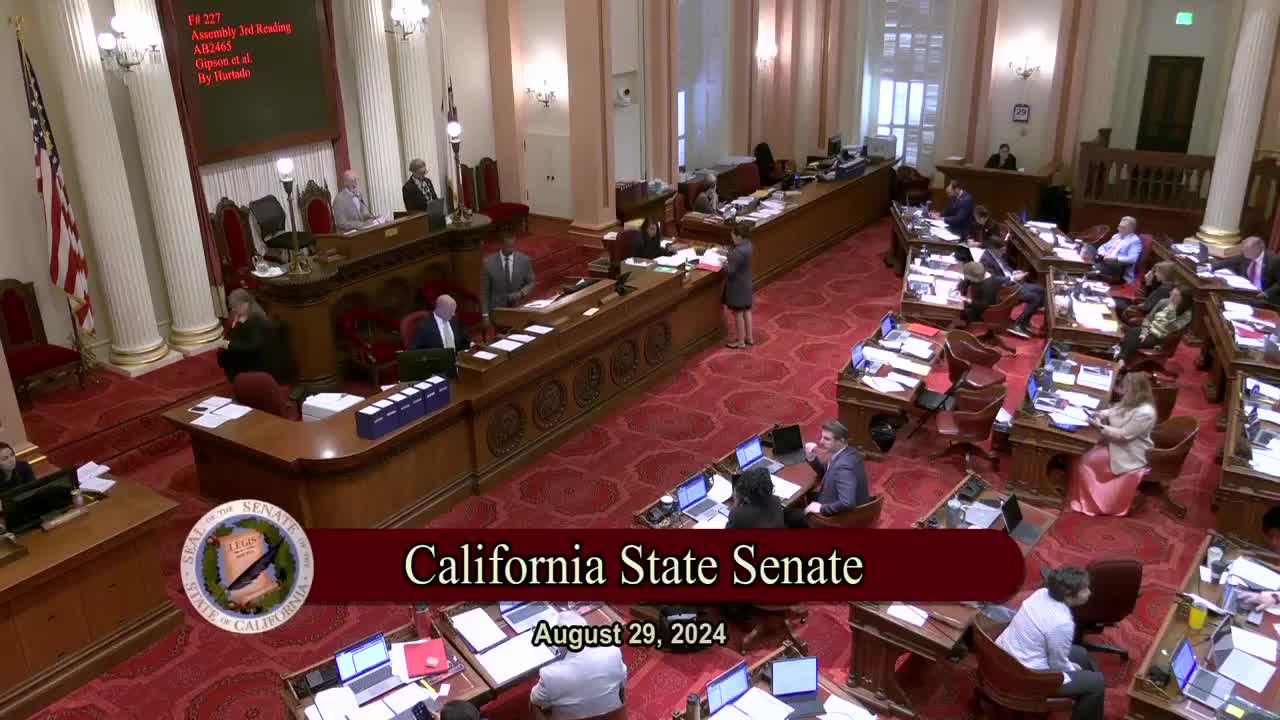 2MIN
Senate Floor
 1MIN
Senate Standing Committee on Appropriations
 11MIN
Senate Standing Committee on Health
 1MIN
Assembly Floor
 15MIN
Assembly Standing Committee on Health
 55SEC
Assembly Standing Committee on Health
Bill Author

Bill Co-Author(s):