AB 2481: Social media-related threats: reporting.
- Session Year: 2023-2024
- House: Assembly
- Latest Version Date: 2024-09-28
Current Status:
Passed
(2024-09-28: Chaptered by Secretary of State - Chapter 832, Statutes of 2024.)
Introduced
In Committee
First Chamber
In Committee
Second Chamber
Enacted
What does this bill do?
This bill requires large social media platforms to create a verified‑reporter system and a special reporting process for content that threatens the health or safety of minors. School principals and licensed mental health professionals can be verified, and verified reporters get a dedicated contact, may upload screenshots, receive confirmation and tracking, and must get a substantive response within 72 hours (24 hours for severe risks) with severe cases reviewed by a real person. Platforms must also publish yearly public data on how many verified‑reporter reports they received, the types of threats reported, and the share that led to action.
The summary is provided by generative AI which can make mistakes. For original language, please view the details in the table below.
The Cyberbullying Protection Act requires a social media platform to disclose all cyberbullying reporting procedures in the social media platforms terms of service and to establish a mechanism within its internet-based service that allows an individual, whether or not that individual has a profile on the internet-based service, to report cyberbullying or any content that violates the existing terms of service. Existing law requires the reporting mechanism to allow, but not require, an individual to upload a screenshot of the content that contains cyberbullying or violates the terms of service.
This bill would, beginning January 1, 2026, require a social media platform to disclose all social media-related threat reporting procedures for certain verified reporters in the social media platforms terms of service. The bill would define social media-related threat to mean content posted on a social media platform that promotes, incites, facilitates, or perpetrates any of certain things, including cyberbullying, suicide, and drug trafficking.
This bill would require a large social media platform, as defined, to, among other things, create a process to verify certain individuals as verified reporters, including a school principal, as specified. The bill would require, in addition to any other reporting mechanism required by state law, a large social media platform to create a process by which a verified reporter can make a report of a social media-related threat or a violation of the large social media platforms terms of service that in the verified reporters opinion poses a risk or a severe risk to the health and safety of a minor. The bill would require a large social media platform that receives a report from a verified reporter to, on a publicly accessible internet website, report annually on, among other things, the total number of reports from a verified reporter received for the calendar year.
The Cyberbullying Protection Act requires a social media platform to disclose all cyberbullying reporting procedures in the social media platforms terms of service and to establish a mechanism within its internet-based service that allows an individual, whether or not that individual has a profile on the internet-based service, to report cyberbullying or any content that violates the existing terms of service. Existing law requires the reporting mechanism to allow, but not require, an individual to upload a screenshot of the content that contains cyberbullying or violates the terms of service.
This bill would, beginning January 1, 2026, require a social media platform to disclose all social media-related threat reporting procedures for certain verified reporters in the social media platforms terms of service. The bill would define social media-related threat to mean content posted on a social media platform that promotes, incites, facilitates, or perpetrates any of certain things, including cyberbullying, suicide, and drug trafficking.
This bill would require a large social media platform, as defined, to, among other things, create a process to verify certain individuals as verified reporters, including a school principal, as specified. The bill would require require, in addition to any other reporting mechanism required by state law, a large social media platform to create a process by which a verified reporter can make a report of a social media-related threat or a violation of the large social media platforms terms of service that in the verified reporters opinion poses a risk or a severe risk to the health and safety of a minor. The bill would require a large social media platform that receives a report from a verified reporter to, on a publicly accessible internet website, report annually on, among other things, the total number of reports from a verified reporter received for the calendar year.
The Cyberbullying Protection Act requires a social media platform to disclose all cyberbullying reporting procedures in the social media platforms terms of service and to establish a mechanism within its internet-based service that allows an individual, whether or not that individual has a profile on the internet-based service, to report cyberbullying or any content that violates the existing terms of service. Existing law requires the reporting mechanism to allow, but not require, an individual to upload a screenshot of the content that contains cyberbullying or violates the terms of service.
This bill would would, beginning January 1, 2026, require a social media platform to establish a mechanism within its internet-based service that allows an individual, whether or not that individual has a profile on the social media platform, to report a social media-related threat or any content that violates the social media platforms terms of service. The bill would require the reporting mechanism to meet certain criteria, including that the mechanism offers an electronic point of contact specific to matters involving harms to a minor. disclose all social media-related threat reporting procedures for certain verified reporters in the social media platforms terms of service. The bill would define social media-related threat to mean content posted on a social media platform that promotes, incites, facilitates, or perpetrates any of certain things, including cyberbullying, suicide, and drug trafficking.
This bill would require a large social media platform, as defined, to, among other things, create a process to verify certain individuals as verified reporters, including a school principal or counselor, principal, as specified. The bill would require a large social media platform to create a process by which a verified reporter can make a report of a social media-related threat or a violation of the large social media platforms terms of service that in the verified reporters opinion poses a risk or a severe risk to the health and safety of a minor. The bill would require a large social media platform that receives a report from a verified reporter to, on a publicly accessible internet website, report annually on, among other things, the total number of reports from a verified reporter received for the calendar year.
This bill would authorize a person who has, pursuant to the bill, made a report with respect to which a violation of the bill occurred or a person who, as a result of a social media platforms actions or omissions, was unable to make a report to bring a civil action for a violation of the bills provisions and would authorize a court to award certain relief in a successful civil action, including statutory damages not to exceed $10,000 per violation.The Cyberbullying Protection Act requires a social media platform to disclose all cyberbullying reporting procedures in the social media platforms terms of service and to establish a mechanism within its internet-based service that allows an individual, whether or not that individual has a profile on the internet-based service, to report cyberbullying or any content that violates the existing terms of service. Existing law requires the reporting mechanism to allow, but not require, an individual to upload a screenshot of the content that contains cyberbullying or violates the terms of service.
This bill would require a social media platform to establish a mechanism within its internet-based service that allows an individual, whether or not that individual has a profile on the social media platform, to report a social media-related threat or any content that violates the social media platforms terms of service. The bill would require the reporting mechanism to meet certain criteria, including that the mechanism offers an electronic point of contact specific to matters involving harms to a minor. The bill would define social media-related threat to mean content posted on a social media platform that promotes, incites, facilitates, or perpetrates any of certain things, including cyberbullying, suicide, and drug trafficking.
This bill would require a large social media platform, as defined, to, among other things, create a process to verify certain individuals as verified reporters, including a school principal or counselor, as specified. The bill would require a large social media platform to create a process by which a verified reporter can make a report of a social media-related threat or a violation of the large social media platforms terms of service that in the verified reporters opinion poses a risk or a severe risk to the health and safety of a minor. The bill would require a large social media platform that receives a report from a verified reporter to, on a publicly accessible internet website, report annually on, among other things, the total number of reports from a verified reporter received for the calendar year.
This bill would authorize a minor to a person who has, pursuant to the bill, made a report with respect to which a violation of the bill occurred or a person who, as a result of a social media platforms actions or omissions, was unable to make a report to bring a civil action for a violation of the bills provisions. provisions and would authorize a court to award certain relief in a successful civil action, including statutory damages not to exceed $10,000 per violation.
The Cyberbullying Protection Act requires a social media platform to disclose all cyberbullying reporting procedures in the social media platforms terms of service and to establish a mechanism within its internet-based service that allows an individual, whether or not that individual has a profile on the internet-based service, to report cyberbullying or any content that violates the existing terms of service. Existing law requires the reporting mechanism to allow, but not require, an individual to upload a screenshot of the content that contains cyberbullying or violates the terms of service.
This bill would require a social media platform to establish a mechanism within its internet-based service that allows an individual, whether or not that individual has a profile on the social media platform, to report a social media-related threat or any content that violates the social media platforms terms of service. The bill would require the reporting mechanism to meet certain criteria, including that the mechanism offers an electronic point of contact specific to matters involving harms to a minor. The bill would define social media-related threat to mean content posted on a social media platform that promotes, incites, facilitates, or perpetrates any of certain things, including cyberbullying, suicide, and drug trafficking.
This bill would require a large social media platform, as defined, to, among other things, create a readily accessible and easy-to-use process to verify certain individuals as verified reporters, including a school principal or counselor, as specified. The bill would require a large social media platform to create a process by which a verified reporter can make a report of a social media-related threat or a violation of the large social media platforms terms of service that in the verified reporters opinion poses a risk or a severe risk to the health and safety of a minor. The bill would require a large social media platform that receives a report from a verified reporter to, on a publicly accessible internet website, report annually on, among other things, the total number of reports from a verified reporter received for the calendar year.
This bill would authorize a minor to bring a civil action for a violation of the bills provisions.
The Cyberbullying Protection Act requires a social media platform to disclose all cyberbullying reporting procedures in the social media platforms terms of service and to establish a mechanism within its internet-based service that allows an individual, whether or not that individual has a profile on the internet-based service, to report cyberbullying or any content that violates the existing terms of service. Existing law requires the reporting mechanism to allow, but not require, an individual to upload a screenshot of the content that contains cyberbullying or violates the terms of service.
This bill would require a social media platform to establish a mechanism within its internet-based service that allows an individual, whether or not that individual has a profile on the social media platform, to report a social media-related threat or any content that violates the social media platforms terms of service. The bill would require the reporting mechanism to meet certain criteria, including that the mechanism offers an electronic point of contact specific to matters involving harms to a minor. The bill would define social media-related threat to mean content posted on a social media platform that promotes, incites, facilitates, or perpetrates any of certain things, including cyberbullying, suicide, and drug trafficking.
This bill would require a large social media platform, as defined, to, among other things, create a readily accessible and easy-to-use process to verify certain individuals as verified reporters, including a school principal or counselor, as specified. The bill would require a large social media platform to create a process by which a verified reporter can make a report of a social media-related threat or a violation of the large social media platforms terms of service that in the verified reporters opinion poses a risk or a severe risk to the health and safety of a minor. The bill would require a large social media platform that receives a report from a verified reporter to, on a publicly accessible internet website, report annually on, among other things, the total number of reports from a verified reporter received for the calendar year.
This bill would make a social media platform liable for a civil penalty of not more than $75,000 for each intentional violation, to be assessed and recovered in a civil action brought by any person, including, but not limited to, a parent or legal guardian of a minor, who submits a report of cyberbullying to the social media platform, a city attorney, a district attorney, or a county counsel, or in the name of the people of the State of California by the Attorney General.This bill would authorize a minor to bring a civil action for a violation of the bills provisions.
The Cyberbullying Protection Act, Act requires a social media platform to disclose all cyberbullying reporting procedures in the social media platforms terms of service and to establish a mechanism within its internet-based service that allows an individual, whether or not that individual has a profile on the internet-based service, to report cyberbullying or any content that violates the existing terms of service. Existing law requires the reporting mechanism to allow, but not require, an individual to upload a screenshot of the content that contains cyberbullying or violates the terms of service.
This bill would recast those provisions to expand them to apply to reporting procedures and internet-based mechanisms for reporting require a social media platform to establish a mechanism within its internet-based service that allows an individual, whether or not that individual has a profile on the social media platform, to report a social media-related threat, as defined, threat or any content that violates the social media platforms terms of service. The bill would require the reporting mechanism to meet additional certain criteria, including that the mechanism offers an electronic point of contact specific to matters involving harms to a minor. The bill would define social media-related threat to mean content posted on a social media platform that promotes, incites, facilitates, or perpetrates any of certain things, including cyberbullying, suicide, and drug trafficking.
This bill would require a large social media platform, as defined, to, among other things, create a readily accessible and easy-to-use process to verify certain individuals as verified reporters, including a school principal or counselor, as specified. The bill would require a large social media platform to create a process by which a verified reporter can make a report of a social media-related threat or a violation of the large social media platforms terms of service that in the verified reporters opinion poses a risk or a severe risk to the health and safety of a minor. The bill would require a large social media platform that receives a report from a verified reporter to, on a publicly accessible internet website, report annually on, among other things, the total number of reports from a verified reporter received for the calendar year.
Existing law excludes a social media platform that is controlled by a business entity that generated less than $100,000,000 in gross revenue during the preceding calendar year or to a social media platform whose primary function is to allow users to play video games from the Cyberbullying Protection Act.This bill would repeal that exclusion.This bill would declare that its provision are severable.This bill would make a social media platform liable for a civil penalty of not more than $75,000 for each intentional violation, to be assessed and recovered in a civil action brought by any person, including, but not limited to, a parent or legal guardian of a minor, who submits a report of cyberbullying to the social media platform, a city attorney, a district attorney, or a county counsel, or in the name of the people of the State of California by the Attorney General.
Existing law, the Cyberbullying Protection Act, requires a social media platform to disclose all cyberbullying reporting procedures in the social media platforms terms of service and to establish a mechanism within its internet-based service that allows an individual, whether or not that individual has a profile on the internet-based service, to report cyberbullying or any content that violates the existing terms of service. Existing law requires the reporting mechanism to allow, but not require, an individual to upload a screenshot of the content that contains cyberbullying or violates the terms of service.
This bill would recast those provisions to expand them to apply to reporting procedures and internet-based mechanisms for reporting a social media-related threat, as defined, or any content that violates the social media platforms terms of service. The bill would require the reporting mechanism to meet additional criteria, including that the mechanism offers an electronic point of contact specific to matters involving harms to a minor. The bill would define social media-related threat to mean content posted on a social media platform that promotes, incites, facilitates, or perpetrates any of certain things, including cyberbullying, suicide, and drug trafficking.
This bill would require a large social media platform, as defined, to, among other things, create a readily accessible and easy-to-use process to verify certain individuals as verified reporters, including a school principal or counselor, as specified. The bill would require a large social media platform to create a process by which a verified reporter can make a report of a social media-related threat or a violation of the large social media platforms terms of service that in the verified reporters opinion poses a risk or a severe risk to the health and safety of a minor. The bill would require a large social media platform that receives a report from a verified reporter to, on a publicly accessible internet website, report annually on, among other things, the total number of reports from a verified reporter received for the calendar year.
Existing law excludes a social media platform that is controlled by a business entity that generated less than $100,000,000 in gross revenue during the preceding calendar year or to a social media platform whose primary function is to allow users to play video games from the Cyberbullying Protection Act.
This bill would repeal that exclusion.
This bill would declare that its provision are severable.
Existing law authorizes a physician who is not a citizen, but who seeks postgraduate study in an approved medical school or academic medical center, to be permitted to participate in the professional activities of the department or division in the medical school or academic medical center to which they are appointed, if they meet certain requirements and, among other things, wear a visible name tag containing the title visiting fellow, as specified.This bill would make nonsubstantive changes to those provisions.Existing law authorizes a physician who is not a citizen, but who seeks postgraduate study in an approved medical school or academic medical center, to be permitted to participate in the professional activities of the department or division in the medical school or academic medical center to which they are appointed, if they meet certain requirements and, among other things, wear a visible name tag containing the title visiting fellow, as specified.
This bill would make nonsubstantive changes to those provisions.
For purposes of this chapter:
(a)(1)Content means statements or comments made by users and media, including audio, pictures, video, and text, that are created, posted, shared, or otherwise interacted with by users on an internet-based service or application.
(2)Content does not include media put on a service or application exclusively for the purpose of cloud storage, transmitting files, or file collaboration.
(b)Cyberbullying means any severe or pervasive conduct made by an electronic act or acts, as defined in paragraph (2) of subdivision (r) of Section 48900 of the Education Code and Section 22589, committed by a person directed toward another person that has or can be reasonably predicted to have the effect of one or more of the following:
(1)Placing a reasonable person in fear of bodily harm or harm to that persons property.
(2)Causing a reasonable person to experience a substantially detrimental effect on the persons physical or mental health.
(3)Causing a reasonable person to experience substantial interference with the persons academic performance.
(4)Causing a reasonable person to experience substantial interference with the persons ability to participate in or benefit from the services, activities, or privileges provided by a school.
(c)(1)Large social media platform means a social media platform that meets all of the following criteria:
(A)The social media platforms terms of service do not prohibit the use of the social media platform by a child.
(B)The social media platform includes features that enable a child to share images, text, or video through the internet with other users of the social media platform whom the child has met, identified, or become aware of solely through the use of the social media platform.
(C)The social media platform has more than 100,000,000 monthly global active users or generates more than one billion dollars ($1,000,000,000) in gross revenue per year, adjusted yearly for inflation.
(2)Large social media platform does not include any of the following:
(A)A service that primarily serves to facilitate the sale or provision of professional services or the sale of commercial products.
(B)A service that primarily provides news or information and does not offer the ability for content to be sent by a user directly to a child.
(C)A service that has features that enable a user who communicates directly with a child through a message, including a text, audio, or video message, not otherwise available to other users of the service, to add other users to that message that the child may not have otherwise met, identified, or become aware of solely through the use of the service and does not have any features described in subparagraph (B) of paragraph (1).
(d)Public or semipublic internet-based service or application does not include a service or application used to facilitate communication within a business or enterprise among employees or affiliates of the business or enterprise, if access to the service or application is restricted to employees or affiliates of the business or enterprise using the service or application.
(e)Risk means a social media-related threat that more likely than not will cause harm to a child.
(f)Severe risk means a social media-related threat that more likely than not will cause serious bodily or mental harm to a child.
(g)Social media platform has the same meaning as defined in Section 22675.
(h)Social media-related threat means content that promotes, incites, facilitates, or perpetrates any of the following:
(1)Suicide.
(2)Disordered eating.
(3)Drug trafficking.
(4)Substance abuse.
(5)Fraud.
(6)Human trafficking punishable pursuant to Section 236.1 of the Penal Code.
(7)Sexual abuse.
(8)Cyberbullying.
(9)Harassment.
(10)Distribution of harmful matter, as defined by Section 313 of the Penal Code.
(i)Substantively respond means to inform a person who makes a report pursuant to Section 22588.3 that the content being reported meets either of the following criteria:
(1)The content does not violate the terms of service of the large social media platform.
(2)The content violates the terms and conditions of the large social media platform.
(j)Terms of service means a public-facing policy or set of policies adopted by a social media platform that specifies, at least, the user behavior and activities that are permitted on the social media platform and the user behavior and activities that may result in the social media platform taking action against the user or content.
(k)Verified reporter means an individual described in, and verified by, the process required by subdivision (b) of Section 22588.3.
22588.3.(a)A social media platform shall disclose all social media-related threat reporting procedures for verified reporters described in subdivision (b) in the social media platforms terms of service.
(b)A large social media platform shall create a process to verify both of the following individuals as verified reporters:
(1)A principal, or a position of similar responsibility, of any school lawfully operating any programs from kindergarten and grades 1 to 12, inclusive, in the state.
(2)A mental health professional licensed pursuant to California law who provides mental health services to minors in the state.
(c)In addition to any other reporting mechanism required by state law, a large social media platform shall create a process by which a verified reporter can make a report of a social media-related threat or a violation of the large social media platforms terms of service that in the verified reporters opinion poses a risk or a severe risk to the health and safety of a minor that does all of the following:
(1)Enables, but does not require, an individual to upload a screenshot of the content that contains a social media-related threat or violates the terms of service.
(2)Provides all verified reporters with an electronic point of contact specific to matters involving harms to a minor.
(3)Provides confirmation of the receipt of a submitted report and a means to track that report.
(d)A large social media platform shall do both of the following:
(1)Establish an internal process to receive and substantively respond within 72 hours, or within 24 hours if the report is of a severe risk, to a report by a verified reporter of content the verified reporter deems to be a risk to a minor.
(2)Ensure that a report submitted by a verified reporter and deemed by the verified reporter to be of a severe risk receives a review by a natural person.
(e)A large social media platform that receives a report from a verified reporter shall, on a publicly accessible internet website, report annually on all of the following:
(1)The total number of reports from a verified reporter received for the calendar year.
(2)The percentages of each social media-related threat that formed the basis for the total number of reports from verified reporters for the calendar year.
(3)The percentage of reports from verified reporters for which the large social media platform took further action.
(f)A large social media platform shall not require a verified reporter to reverify the verified reporters qualifications pursuant to subdivision (b) more often than once every two years.
22588.4.This chapter shall become operative on January 1, 2026.
SEC. 2.(a)The provisions of this act are intended to complement and augment, not replace or diminish, federal or state protections in the field of social media safety, including Chapter 22.2.9 (commencing with Section 22589) of Division 8.
(b)The duties and obligations imposed by this act are cumulative with any other duties or obligations imposed under other law and shall not be construed to relieve any party from any duties or obligations imposed under other law.
SEC. 3.The provisions of this act are severable. If any provision of this act or its application is held invalid, that invalidity shall not affect other provisions or applications that can be given effect without the invalid provision or application.
For purposes of this chapter:
(a)(1)Content means statements or comments made by users and media, including audio, pictures, video, and text, that are created, posted, shared, or otherwise interacted with by users on an internet-based service or application.
(2)Content does not include media put on a service or application exclusively for the purpose of cloud storage, transmitting files, or file collaboration.
(b)Cyberbullying means any severe or pervasive conduct made by an electronic act or acts, as defined in paragraph (2) of subdivision (r) of Section 48900 of the Education Code and Section 22589, committed by a person directed toward another person that has or can be reasonably predicted to have the effect of one or more of the following:
(1)Placing a reasonable person in fear of bodily harm or harm to that persons property.
(2)Causing a reasonable person to experience a substantially detrimental effect on the persons physical or mental health.
(3)Causing a reasonable person to experience substantial interference with the persons academic performance.
(4)Causing a reasonable person to experience substantial interference with the persons ability to participate in or benefit from the services, activities, or privileges provided by a school.
(c)(1)Large social media platform means a social media platform that meets all of the following criteria:
(A)The social media platforms terms of service do not prohibit the use of the social media platform by a child.
(B)The social media platform includes features that enable a child to share images, text, or video through the internet with other users of the social media platform whom the child has met, identified, or become aware of solely through the use of the social media platform.
(C)The social media platform has more than 100,000,000 monthly global active users or generates more than one billion dollars ($1,000,000,000) in gross revenue per year, adjusted yearly for inflation.
(2)Large social media platform does not include any of the following:
(A)A service that primarily serves to facilitate the sale or provision of professional services or the sale of commercial products.
(B)A service that primarily provides news or information and does not offer the ability for content to be sent by a user directly to a child.
(C)A service that has features that enable a user who communicates directly with a child through a message, including a text, audio, or video message, not otherwise available to other users of the service, to add other users to that message that the child may not have otherwise met, identified, or become aware of solely through the use of the service and does not have any features described in subparagraph (B) of paragraph (1).
(d)Public or semipublic internet-based service or application does not include a service or application used to facilitate communication within a business or enterprise among employees or affiliates of the business or enterprise, if access to the service or application is restricted to employees or affiliates of the business or enterprise using the service or application.
(e)Risk means a social media-related threat that more likely than not will cause harm to a child.
(f)Severe risk means a social media-related threat that more likely than not will cause serious bodily or mental harm to a child.
(g)Social media platform has the same meaning as defined in Section 22675.
(h)Social media-related threat means content that promotes, incites, facilitates, or perpetrates any of the following:
(1)Suicide.
(2)Disordered eating.
(3)Drug trafficking.
(4)Substance abuse.
(5)Fraud.
(6)Human trafficking punishable pursuant to Section 236.1 of the Penal Code.
(7)Sexual abuse.
(8)Cyberbullying.
(9)Harassment.
(10)Distribution of harmful matter, as defined by Section 313 of the Penal Code.
(i)Substantively respond means to inform a person who makes a report pursuant to Section 22588.3 that the content being reported meets either of the following criteria:
(1)The content does not violate the terms and conditions of service of the large social media platform.
(2)The content violates the terms and conditions of the large social media platform.
(j)Terms of service means a public-facing policy or set of policies adopted by a social media platform that specifies, at least, the user behavior and activities that are permitted on the social media platform and the user behavior and activities that may result in the social media platform taking action against the user or content.
(k)Verified reporter means an individual described in, and verified by, the process required by subdivision (b) of Section 22588.3.
22588.3.(a)A social media platform shall disclose all social media-related threat reporting procedures for verified reporters described in subdivision (b) in the social media platforms terms of service.
(b)A large social media platform shall create a process to verify both of the following individuals as verified reporters:
(1)A principal, or a position of similar responsibility, of any school lawfully operating any programs from kindergarten and grades 1 to 12, inclusive, in the state.
(2)A mental health professional licensed pursuant to California law who provides mental health services to minors in the state.
(c)In addition to the mechanism any other reporting mechanism required by Section 22589.1, state law, a large social media platform shall create a process by which a verified reporter can make a report of a social media-related threat or a violation of the large social media platforms terms of service that in the verified reporters opinion poses a risk or a severe risk to the health and safety of a minor that does all of the following:
(1)Enables, but does not require, an individual to upload a screenshot of the content that contains a social media-related threat or violates the terms of service.
(2)Provides all verified reporters with an electronic point of contact specific to matters involving harms to a minor.
(3)Provides confirmation of the receipt of a submitted report and a means to track that report.
(d)A large social media platform shall do both of the following:
(1)Establish an internal process to receive and substantively respond within 72 hours, or within 24 hours if the report is of a severe risk, to a report by a verified reporter of content the verified reporter deems to be a risk to a minor.
(2)Ensure that a report submitted by a verified reporter and deemed by the verified reporter to be of a severe risk receives a review by a natural person.
(e)A large social media platform that receives a report from a verified reporter shall, on a publicly accessible internet website, report annually on all of the following:
(1)The total number of reports from a verified reporter received for the calendar year.
(2)The percentages of each social media-related threat that formed the basis for the total number of reports from verified reporters for the calendar year.
(3)The percentage of reports from verified reporters for which the large social media platform took further action.
(f)A large social media platform shall not require a verified reporter to reverify the verified reporters qualifications pursuant to subdivision (b) more often than once every two years.
22588.4.This chapter shall become operative on January 1, 2026.
SEC. 2.(a)The provisions of this act are intended to complement and augment, not replace or diminish, federal or state protections in the field of social media safety, including Chapter 22.2.9 (commencing with Section 22589) of Division 8.
(b)The duties and obligations imposed by this act are cumulative with any other duties or obligations imposed under other law and shall not be construed to relieve any party from any duties or obligations imposed under other law.
SEC. 3.The provisions of this act are severable. If any provision of this act or its application is held invalid, that invalidity shall not affect other provisions or applications that can be given effect without the invalid provision or application.
For purposes of this chapter:
(a)(1)Content means statements or comments made by users and media, including audio, pictures, video, and text, that are created, posted, shared, or otherwise interacted with by users on an internet-based service or application.
(2)Content does not include media put on a service or application exclusively for the purpose of cloud storage, transmitting files, or file collaboration.
(b)Cyberbullying means any severe or pervasive conduct made by an electronic act or acts, as defined in paragraph (2) of subdivision (r) of Section 48900 of the Education Code, Code and Section 22589, committed by a person directed toward another person that has or can be reasonably predicted to have the effect of one or more of the following:
(1)Placing a reasonable person in fear of bodily harm or harm to that persons property.
(2)Causing a reasonable person to experience a substantially detrimental effect on the persons physical or mental health.
(3)Causing a reasonable person to experience substantial interference with the persons academic performance.
(4)Causing a reasonable person to experience substantial interference with the persons ability to participate in or benefit from the services, activities, or privileges provided by a school.
(c)(1)Large social media platform means a social media platform that meets all of the following criteria:
(A)The social media platforms terms of service do not prohibit the use of the social media platform by a child.
(B)The social media platform includes features that enable a child to share images, text, or video through the internet with other users of the social media platform whom the child has met, identified, or become aware of solely through the use of the social media platform.
(C)The social media platform has more than 100,000,000 monthly global active users or generates more than one billion dollars ($1,000,000,000) in gross revenue per year, adjusted yearly for inflation.
(2)Large social media platform does not include any of the following:
(A)A service that primarily serves to facilitate the sale or provision of professional services or the sale of commercial products.
(B)A service that primarily provides news or information and does not offer the ability for content to be sent by a user directly to a child.
(C)A service that has features that enable a user who communicates directly with a child through a message, including a text, audio, or video message, not otherwise available to other users of the service, to add other users to that message that the child may not have otherwise met, identified, or become aware of solely through the use of the service and does not have any features described in subparagraph (B) of paragraph (1).
(d)Public or semipublic internet-based service or application does not include a service or application used to facilitate communication within a business or enterprise among employees or affiliates of the business or enterprise, if access to the service or application is restricted to employees or affiliates of the business or enterprise using the service or application.
(e)Risk means a social media-related threat that more likely than not will cause harm to a child.
(e)(f)Severe risk means a social media-related threat that more likely than not will cause serious bodily or mental harm to a child.
(f)(g)Social media platform means a public or semipublic internet-based service or application that has users in California and that meets both of the following criteria: has the same meaning as defined in Section 22675.
(1)(A)A substantial function of the service or application is to connect users in order to allow users to interact socially with each other within the service or application.(B)A service or application that provides email or direct messaging services shall not be considered to meet this criterion on the basis of that function alone.(2)The service or application allows users to do all of the following:(A)Construct a public or semipublic profile for purposes of signing into and using the service or application.(B)Populate a list of other users with whom an individual shares a social connection within the system.(C)Create or post content viewable by other users, including, but not limited to, on message boards, in chat rooms, or through a landing page or main feed that presents the user with content generated by other users.(g)(h)Social media-related threat means content that promotes, incites, facilitates, or perpetrates any of the following:
(1)Suicide.
(2)Disordered eating.
(3)Drug trafficking.
(4)Substance abuse.
(5)Fraud.
(6)Human trafficking punishable pursuant to Section 236.1 of the Penal Code.
(7)Sexual abuse.
(8)Cyberbullying.
(9)Harassment.
(10)Distribution of harmful matter, as defined by Section 313 of the Penal Code.
(11)Academic dishonesty.(12)An offense punishable pursuant to Section 653.2 of the Penal Code.(13)An offense punishable pursuant to Section 530.5 of the Penal Code.(14)An offense punishable pursuant to Section 529 of the Penal Code.(h)(i)Substantively respond means to inform a person who makes a report pursuant to Section 22588.3 that the content being reported meets either of the following criteria:
(1)The content does not violate the terms and conditions of the social media platform or the large social media platform.
(2)The content violates the terms and conditions of the social media platform or the large social media platform.
(i)(j)Terms of service means a public-facing policy or set of policies adopted by a social media platform that specifies, at least, the user behavior and activities that are permitted on the social media platform and the user behavior and activities that may result in the social media platform taking action against the user or content.
22588.3.(a)A social media platform shall disclose all social media-related threat reporting procedures for verified reporters described in subdivision (b) in the social media platforms terms of service.
(b)A social media platform shall establish a mechanism within its internet-based service that allows an individual, whether or not that individual has a profile on the social media platform, to report a social media-related threat or any content that violates the social media platforms terms of service that meets all of the following criteria:(1)The mechanism enables, but does not require, an individual to upload a screenshot of the content that contains a social media-related threat or violates the terms of service.(2)The mechanism offers an electronic point of contact specific to matters involving harms to a minor.(3)The mechanism provides confirmation of the receipt of a submitted report and a means to track that report.(c)(1)A large social media platform shall establish an internal process to receive and substantively respond to a submitted report within 10 days of the receipt of the report.(2)A social media platform that is not a large social media platform shall establish an internal process to receive and substantively respond to a submitted report within 21 days of the receipt of the report.(d)(b)A large social media platform shall create a process to verify all both of the following individuals as verified reporters:
(1)A principal, or a position of similar responsibility, of any school lawfully operating any programs from kindergarten and grades 1 to 12, inclusive, in the state.
(2)A school counselor, or position of similar responsibility, of any school lawfully operating any programs from kindergarten and grades 1 to 12, inclusive, in the state.(3)(2)A licensed mental health professional licensed pursuant to California law who provides mental health services to minors in the state.
(e)A(c)In addition to the mechanism required by Section 22589.1, a large social media platform shall create a process by which a verified reporter can make a report of a social media-related threat or a violation of the large social media platforms terms of service that in the verified reporters opinion poses a risk or a severe risk to the health and safety of a minor. minor that does all of the following:
(1)Enables, but does not require, an individual to upload a screenshot of the content that contains a social media-related threat or violates the terms of service.
(2)Provides all verified reporters with an electronic point of contact specific to matters involving harms to a minor.
(3)Provides confirmation of the receipt of a submitted report and a means to track that report.
(f)(d)A large social media platform shall do all both of the following:
(1)Establish an internal process to receive and substantively respond within 72 hours, or within 24 hours if the report is of a severe risk, to a report by a verified reporter of content the verified reporter deems to be a risk to a minor.
(2)Preserve content reported by a verified reporter for a period of at least six months from the date of the report.(3)(2)Ensure that a report submitted by a verified reporter and deemed by the verified reporter to be of a severe risk receives a review by a natural person.
(g)(e)A large social media platform that receives a report from a verified reporter shall, on a publicly accessible internet website, report annually on all of the following:
(1)The total number of reports from a verified reporter received for the calendar year.
(2)The percentages of each social media-related threats threat that formed the basis for the total number of reports from a verified reporter reporters for the calendar year.
(3)The percentage of reports from verified reporters for which the large social media platform took further action.
(h)(f)A large social media platform shall not require a verified reporter to reverify the verified reporters qualifications pursuant to subdivision (d) (b) more often than once every two years.
22588.4.(a)(1)Actions for relief pursuant to this chapter may be brought in a civil action by either of the following:(A)A person who has, pursuant to this chapter, made a report with respect to which a violation of this chapter occurred.(B)A person who, as a result of a social media platforms actions or omissions, was unable to make a report pursuant to this chapter.(2)In a successful action brought pursuant to this subdivision, the court may order any of the following relief:(A)Statutory damages not to exceed ten thousand dollars ($10,000) per violation. (B)Injunctive relief. (C)Reasonable attorneys fees and costs to a prevailing plaintiff.(b)Each day a social media platform is in violation of this chapter constitutes a separate violation.(c)(1)The remedies provided by this section are in addition to any other civil, criminal, and administrative remedies, penalties, or sanctions provided by law and do not supplant, but are cumulative to, other remedies, penalties, or sanctions.(2)The duties and obligations imposed by this section are cumulative with any other duties or obligations imposed under other law and shall not be construed to relieve any party from any duties or obligations imposed under other law.22588.4.This chapter shall become operative on January 1, 2026.
SEC. 2.(a)The provisions of this act are intended to complement and augment, not replace or diminish, federal or state protections in the field of social media safety. safety, including Chapter 22.2.9 (commencing with Section 22589) of Division 8.
(b)The duties and obligations imposed by this act are cumulative with any other duties or obligations imposed under other law and shall not be construed to relieve any party from any duties or obligations imposed under other law.
SEC. 3.The provisions of this act are severable. If any provision of this act or its application is held invalid, that invalidity shall not affect other provisions or applications that can be given effect without the invalid provision or application.
For purposes of this chapter:
(a)(1)Content means statements or comments made by users and media, including audio, pictures, video, and text, that are created, posted, shared, or otherwise interacted with by users on an internet-based service or application.
(2)Content does not include media put on a service or application exclusively for the purpose of cloud storage, transmitting files, or file collaboration.
(b)Cyberbullying means any severe or pervasive conduct made by an electronic act or acts, as defined in paragraph (2) of subdivision (r) of Section 48900 of the Education Code, committed by a person directed toward another person that has or can be reasonably predicted to have the effect of one or more of the following:
(1)Placing a reasonable person in fear of bodily harm or harm to that persons property.
(2)Causing a reasonable person to experience a substantially detrimental effect on the persons physical or mental health.
(3)Causing a reasonable person to experience substantial interference with the persons academic performance.
(4)Causing a reasonable person to experience substantial interference with the persons ability to participate in or benefit from the services, activities, or privileges provided by a school.
(c)(1)Large social media platform means a social media platform that meets all of the following criteria:
(A)The social media platforms terms of service do not prohibit the use of the social media platform by a child.
(B)The social media platform includes features that enable a child to share images, text, or video through the internet with other users of the social media platform whom the child has met, identified, or become aware of solely through the use of the social media platform.
(C)The social media platform has more than 100,000,000 monthly global active users or generates more than one billion dollars ($1,000,000,000) in gross revenue per year, adjusted yearly for inflation.
(2)Large social media platform does not include any of the following:
(A)A service that primarily serves to facilitate the sale or provision of professional services or the sale of commercial products.
(B)A service that primarily provides news or information and does not offer the ability for content to be sent by a user directly to a child.
(C)A service that has features that enable a user who communicates directly with a child through a message, including a text, audio, or video message, not otherwise available to other users of the service, to add other users to that message that the child may not have otherwise met, identified, or become aware of solely through the use of the service and does not have any features described in subparagraph (B) of paragraph (1).
(d)Public or semipublic internet-based service or application does not include a service or application used to facilitate communication within a business or enterprise among employees or affiliates of the business or enterprise, if access to the service or application is restricted to employees or affiliates of the business or enterprise using the service or application.
(e)Severe risk means a social media-related threat that more likely than not will cause serious bodily or mental harm to a child.
(f)Social media platform means a public or semipublic internet-based service or application that has users in California and that meets both of the following criteria:
(1)(A)A substantial function of the service or application is to connect users in order to allow users to interact socially with each other within the service or application.
(B)A service or application that provides email or direct messaging services shall not be considered to meet this criterion on the basis of that function alone.
(2)The service or application allows users to do all of the following:
(A)Construct a public or semipublic profile for purposes of signing into and using the service or application.
(B)Populate a list of other users with whom an individual shares a social connection within the system.
(C)Create or post content viewable by other users, including, but not limited to, on message boards, in chat rooms, or through a landing page or main feed that presents the user with content generated by other users.
(g)Social media-related threat means content that promotes, incites, facilitates, or perpetrates any of the following:
(1)Suicide.
(2)Disordered eating.
(3)Drug trafficking.
(4)Substance abuse.
(5)Fraud.
(6)Human trafficking punishable pursuant to Section 236.1 of the Penal Code.
(7)Sexual abuse.
(8)Cyberbullying.
(9)Harassment.
(10)Distribution of harmful matter, as defined by Section 313 of the Penal Code.
(11)Academic dishonesty.
(12)An offense punishable pursuant to Section 653.2 of the Penal Code.
(13)An offense punishable pursuant to Section 530.5 of the Penal Code.
(14)An offense punishable pursuant to Section 529 of the Penal Code.
(h)Substantively respond means to inform a person who makes a report pursuant to Section 22588.3 that the content being reported meets either of the following criteria:
(1)The content does not violate the terms and conditions of the social media platform or the large social media platform.
(2)The content violates the terms and conditions of the social media platform or the large social media platform.
(i)Terms of service means a public-facing policy or set of policies adopted by a social media platform that specifies, at least, the user behavior and activities that are permitted on the social media platform and the user behavior and activities that may result in the social media platform taking action against the user or content.
22588.3.(a)A social media platform shall disclose all social media-related threat reporting procedures in the social media platforms terms of service.
(b)A social media platform shall establish a mechanism within its internet-based service that allows an individual, whether or not that individual has a profile on the social media platform, to report a social media-related threat or any content that violates the social media platforms terms of service that meets all of the following criteria:
(1)The mechanism enables, but does not require, an individual to upload a screenshot of the content that contains a social media-related threat or violates the terms of service.
(2)The mechanism offers an electronic point of contact specific to matters involving harms to a minor.
(3)The mechanism provides confirmation of the receipt of a submitted report and a means to track that report.
(c)(1)A large social media platform shall establish an internal process to receive and substantively respond to a submitted report within 10 days of the receipt of the report.
(2)A social media platform that is not a large social media platform shall establish an internal process to receive and substantively respond to a submitted report within 21 days of the receipt of the report.
(d)A large social media platform shall create a process to verify all of the following individuals as verified reporters:
(1)A principal, or a position of similar responsibility, of any school lawfully operating any programs from kindergarten and grades 1 to 12, inclusive, in the state.
(2)A school counselor, or position of similar responsibility, of any school lawfully operating any programs from kindergarten and grades 1 to 12, inclusive, in the state.
(3)A licensed mental health professional who provides mental health services to minors in the state.
(e)A large social media platform shall create a process by which a verified reporter can make a report of a social media-related threat or a violation of the large social media platforms terms of service that in the verified reporters opinion poses a risk or a severe risk to the health and safety of a minor.
(f)A large social media platform shall do all of the following:
(1)Establish an internal process to receive and substantively respond within 72 hours, or within 24 hours if the report is of a severe risk, to a report by a verified reporter of content the verified reporter deems to be a risk to a minor.
(2)Preserve content reported by a verified reporter for a period of at least six months from the date of the report.
(3)Ensure that a report submitted by a verified reporter and deemed by the verified reporter to be of a severe risk receives a review by a natural person.
(g)A large social media platform that receives a report from a verified reporter shall, on a publicly accessible internet website, report annually on all of the following:
(1)The total number of reports from a verified reporter received for the calendar year.
(2)The percentages of social media-related threats that formed the basis for the total number of reports from a verified reporter for the calendar year.
(3)The percentage of reports from verified reporters for which the large social media platform took further action.
(h)A large social media platform shall not require a verified reporter to reverify the verified reporters qualifications pursuant to subdivision (d) more often than once every two years.
22588.4.(a)(1)Actions for relief pursuant to this chapter may be brought by a minor in a civil action. in a civil action by either of the following:
(A)A person who has, pursuant to this chapter, made a report with respect to which a violation of this chapter occurred.
(B)A person who, as a result of a social media platforms actions or omissions, was unable to make a report pursuant to this chapter.
(2)In a successful action brought pursuant to this subdivision, the court may order injunctive relief to obtain compliance with this chapter and may award reasonable attorneys fees and costs to the prevailing plaintiff. any of the following relief:
(A)Statutory damages not to exceed ten thousand dollars ($10,000) per violation.
(B)Injunctive relief.
(C)Reasonable attorneys fees and costs to a prevailing plaintiff.
(b)Each day a social media platform is in violation of this chapter constitutes a separate violation.
(c)(1)The remedies provided by this section are in addition to any other civil, criminal, and administrative remedies, penalties, or sanctions provided by law and do not supplant, but are cumulative to, other remedies, penalties, or sanctions.
(2)The duties and obligations imposed by this section are cumulative with any other duties or obligations imposed under other law and shall not be construed to relieve any party from any duties or obligations imposed under other law.
SEC. 2.The provisions of this act are intended to complement and augment, not replace or diminish, federal protections in the field of social media safety.
SEC. 3.The provisions of this act are severable. If any provision of this act or its application is held invalid, that invalidity shall not affect other provisions or applications that can be given effect without the invalid provision or application.
For purposes of this chapter:
(a)(1)Content means statements or comments made by users and media, including audio, pictures, video, and text, that are created, posted, shared, or otherwise interacted with by users on an internet-based service or application.
(2)Content does not include media put on a service or application exclusively for the purpose of cloud storage, transmitting files, or file collaboration.
(b)Cyberbullying means any severe or pervasive conduct made by an electronic act or acts, as defined in paragraph (2) of subdivision (r) of Section 48900 of the Education Code, committed by a person directed toward another person that has or can be reasonably predicted to have the effect of one or more of the following:
(1)Placing a reasonable person in fear of bodily harm or harm to that persons property.
(2)Causing a reasonable person to experience a substantially detrimental effect on the persons physical or mental health.
(3)Causing a reasonable person to experience substantial interference with the persons academic performance.
(4)Causing a reasonable person to experience substantial interference with the persons ability to participate in or benefit from the services, activities, or privileges provided by a school.
(c)(1)Large social media platform means a social media platform that meets all of the following criteria:
(A)The social media platforms terms of service do not prohibit the use of the social media platform by a child.
(B)The social media platform includes features that enable a child to share images, text, or video through the internet with other users of the social media platform whom the child has met, identified, or become aware of solely through the use of the social media platform.
(C)The social media platform has more than 100,000,000 monthly global active users or generates more than one billion dollars ($1,000,000,000) in gross revenue per year, adjusted yearly for inflation.
(2)Large social media platform does not include any of the following:
(A)A service that primarily serves to facilitate the sale or provision of professional services or the sale of commercial products.
(B)A service that primarily provides news or information and does not offer the ability for content to be sent by a user directly to a child.
(C)A service that has features that enable a user who communicates directly with a child through a message, including a text, audio, or video message, not otherwise available to other users of the service, to add other users to that message that the child may not have otherwise met, identified, or become aware of solely through the use of the service and does not have any features described in subparagraph (B) of paragraph (1).
(d)Public or semipublic internet-based service or application does not include a service or application used to facilitate communication within a business or enterprise among employees or affiliates of the business or enterprise, if access to the service or application is restricted to employees or affiliates of the business or enterprise using the service or application.
(e)Severe risk means a social media-related threat that more likely than not will cause serious bodily or mental harm to a child.
(f)Social media platform means a public or semipublic internet-based service or application that has users in California and that meets both of the following criteria:
(1)(A)A substantial function of the service or application is to connect users in order to allow users to interact socially with each other within the service or application.
(B)A service or application that provides email or direct messaging services shall not be considered to meet this criterion on the basis of that function alone.
(2)The service or application allows users to do all of the following:
(A)Construct a public or semipublic profile for purposes of signing into and using the service or application.
(B)Populate a list of other users with whom an individual shares a social connection within the system.
(C)Create or post content viewable by other users, including, but not limited to, on message boards, in chat rooms, or through a landing page or main feed that presents the user with content generated by other users.
(g)Social media-related threat means any content that promotes, incites, facilitates, or perpetrates: perpetrates any of the following:
(1)Suicide.
(2)Disordered eating.
(3)Drug trafficking.
(4)Substance abuse.
(5)Fraud.
(6)Human trafficking punishable pursuant to Section 236.1 of the Penal Code.
(7)Sexual abuse.
(8)Cyberbullying.
(9)Harassment.
(10)Distribution of harmful matter, as defined by Section 313 of the Penal Code.
(11)Academic dishonesty.
(12)An offense punishable pursuant to Section 653.2 of the Penal Code.
(13)An offense punishable pursuant to Section 530.5 of the Penal Code.
(14)An offense punishable pursuant to Section 529 of the Penal Code.
(h)Substantively respond means to inform a person who makes a report pursuant to Section 22588.3 that the content being reported meets either of the following criteria:
(1)The content does not violate the terms and conditions of the social media platform or the large social media platform.
(2)The content violates the terms and conditions of the social media platform or the large social media platform.
(h)(i)Terms of service means a public-facing policy or set of policies adopted by a social media platform that specifies, at least, the user behavior and activities that are permitted on the social media platform and the user behavior and activities that may result in the social media platform taking action against the user or content.
22588.3.(a)A social media platform shall disclose all social media-related threat reporting procedures in the social media platforms terms of service.
(b)A social media platform shall establish a mechanism within its internet-based service that allows an individual, whether or not that individual has a profile on the social media platform, to report a social media-related threat or any content that violates the social media platforms terms of service that meets all of the following criteria:
(1)The mechanism enables, but does not require, an individual to upload a screenshot of the content that contains a social media-related threat or violates the terms of service.
(2)The mechanism offers an electronic point of contact specific to matters involving harms to a minor.
(3)The mechanism provides confirmation of the receipt of a submitted report and a means to track that report.
(c)(1)Except as provided in paragraph (3), a A large social media platform shall establish an internal process to receive and substantively respond to a submitted report within 10 days of the receipt of the report.
(2)Except as provided in paragraph (3), a A social media platform that is not a large social media platform shall establish an internal process to receive and substantively respond to a submitted report within 21 days of the receipt of the report.
(3)If a submitted report concerns an imminent threat to the safety of a minor, a social media platform may respond as quickly as necessary to mitigate the danger posed by the imminent threat.(d)A large social media platform shall create a readily accessible and easy-to-use process to verify all of the following individuals as verified reporters:
(1)A principal, or a position of similar responsibility, of any school lawfully operating any programs from kindergarten and grades 1 to 12, inclusive, in the state.
(2)A school counselor, or position of similar responsibility, of any school lawfully operating any programs from kindergarten and grades 1 to 12, inclusive, in the state.
(3)A licensed mental health professional who provides mental health services to minors in the state.
(e)A large social media platform shall create a process by which a verified reporter can make a report of a social media-related threat or a violation of the large social media platforms terms of service that in the verified reporters opinion poses a risk or a severe risk to the health and safety of a minor.
(f)A large social media platform shall do all of the following:
(1)Establish an internal process to receive and substantively respond within 72 hours, or within 24 hours if the report is of a severe risk, to a report by a verified reporter of content the verified reporter deems to be a risk to a minor.
(2)Preserve content reported by a verified reporter for a period of at least six months from the date of the report.
(3)Ensure that a report submitted by a verified reporter and deemed by the verified reporter to be of a severe risk receives a review by a natural person.
(g)A large social media platform that receives a report from a verified reporter shall, on a publicly accessible internet website, report annually on all of the following:
(1)The total number of reports from a verified reporter received for the calendar year.
(2)The percentages of social media-related threats that formed the basis for the total number of reports from a verified reporter for the calendar year.
(3)The percentage of reports from verified reporters for which the large social media platform took further action.
(h)A large social media platform shall not require a verified reporter to reverify the verified reporters qualifications pursuant to subdivision (d) more often than once every two years.
22588.4.(a)(1)Actions for relief pursuant to this chapter may be brought by a minor in a civil action.
(2)In a successful action brought pursuant to this subdivision, the court may order injunctive relief to obtain compliance with this chapter and may award reasonable attorneys fees and costs to the prevailing plaintiff.
(b)Each day a social media platform is in violation of this chapter constitutes a separate violation.
(c)(1)The remedies provided by this section are in addition to any other civil, criminal, and administrative remedies, penalties, or sanctions provided by law and do not supplant, but are cumulative to, other remedies, penalties, or sanctions.
(2)The duties and obligations imposed by this section are cumulative with any other duties or obligations imposed under other law and shall not be construed to relieve any party from any duties or obligations imposed under other law.
SEC. 2.The provisions of this act are intended to complement and augment, not replace or diminish, federal protections in the field of social media safety.
SEC. 3.The provisions of this act are severable. If any provision of this act or its application is held invalid, that invalidity shall not affect other provisions or applications that can be given effect without the invalid provision or application.
For purposes of this chapter:
(a)(1)Content means statements or comments made by users and media, including audio, pictures, video, and text, that are created, posted, shared, or otherwise interacted with by users on an internet-based service or application.
(2)Content does not include media put on a service or application exclusively for the purpose of cloud storage, transmitting files, or file collaboration.
(b)Cyberbullying means any severe or pervasive conduct made by an electronic act or acts, as defined in paragraph (2) of subdivision (r) of Section 48900 of the Education Code, committed by a person directed toward another person that has or can be reasonably predicted to have the effect of one or more of the following:
(1)Placing a reasonable person in fear of bodily harm or harm to that persons property.
(2)Causing a reasonable person to experience a substantially detrimental effect on the persons physical or mental health.
(3)Causing a reasonable person to experience substantial interference with the persons academic performance.
(4)Causing a reasonable person to experience substantial interference with the persons ability to participate in or benefit from the services, activities, or privileges provided by a school.
(c)(1)Large social media platform means a social media platform that meets all of the following criteria:
(A)The social media platforms terms of service do not prohibit the use of the social media platform by a child.
(B)The social media platform includes features that enable a child to share images, text, or video through the internet with other users of the social media platform whom the child has met, identified, or become aware of solely through the use of the social media platform.
(C)The social media platform has more than 100,000,000 monthly global active users or generates more than one billion dollars ($1,000,000,000) in gross revenue per year, adjusted yearly for inflation.
(2)Large social media platform does not include any of the following:
(A)A service that primarily serves to facilitate the sale or provision of professional services or the sale of commercial products.
(B)A service that primarily provides news or information and does not offer the ability for content to be sent by a user directly to a child.
(C)A service that has features that enable a user who communicates directly with a child through a message, including a text, audio, or video message, not otherwise available to other users of the service, to add other users to that message that the child may not have otherwise met, identified, or become aware of solely through the use of the service and does not have any features described in subparagraph (B) of paragraph (1).
(d)Public or semipublic internet-based service or application does not include a service or application used to facilitate communication within a business or enterprise among employees or affiliates of the business or enterprise, if access to the service or application is restricted to employees or affiliates of the business or enterprise using the service or application.
(e)Severe risk means a social media-related threat that more likely than not will cause serious bodily or mental harm to a child.
(f)Social media platform means a public or semipublic internet-based service or application that has users in California and that meets both of the following criteria:
(1)(A)A substantial function of the service or application is to connect users in order to allow users to interact socially with each other within the service or application.
(B)A service or application that provides email or direct messaging services shall not be considered to meet this criterion on the basis of that function alone.
(2)The service or application allows users to do all of the following:
(A)Construct a public or semipublic profile for purposes of signing into and using the service or application.
(B)Populate a list of other users with whom an individual shares a social connection within the system.
(C)Create or post content viewable by other users, including, but not limited to, on message boards, in chat rooms, or through a landing page or main feed that presents the user with content generated by other users.
(g)Social media-related threat means any content that promotes, incites, facilitates, or perpetrates:
(1)Suicide.
(2)Disordered eating.
(3)Drug trafficking.
(4)Substance abuse.
(5)Fraud.
(6)Human trafficking punishable pursuant to Section 236.1 of the Penal Code.
(7)Sexual abuse.
(8)Cyberbullying.
(9)Harassment.
(10)Distribution of harmful matter, as defined by Section 313 of the Penal Code.
(11)Academic dishonesty.
(12)An offense punishable pursuant to Section 653.2 of the Penal Code.
(13)An offense punishable pursuant to Section 530.5 of the Penal Code.
(14)An offense punishable pursuant to Section 529 of the Penal Code.
(h)Terms of service means a public-facing policy or set of policies adopted by a social media platform that specifies, at least, the user behavior and activities that are permitted on the social media platform and the user behavior and activities that may result in the social media platform taking action against the user or content.
22588.3.(a)A social media platform shall disclose all social media-related threat reporting procedures in the social media platforms terms of service.
(b)A social media platform shall establish a mechanism within its internet-based service that allows an individual, whether or not that individual has a profile on the social media platform, to report a social media-related threat or any content that violates the social media platforms terms of service that meets all of the following criteria:
(1)The mechanism enables, but does not require, an individual to upload a screenshot of the content that contains a social media-related threat or violates the terms of service.
(2)The mechanism offers an electronic point of contact specific to matters involving harms to a minor.
(3)The mechanism provides confirmation of the receipt of a submitted report and a means to track that report.
(c)(1)Except as provided in paragraph (3), a large social media platform shall establish an internal process to receive and substantively respond to a submitted report within 10 days of the receipt of the report.
(2)Except as provided in paragraph (3), a social media platform that is not a large social media platform shall establish an internal process to receive and substantively respond to a submitted report within 21 days of the receipt of the report.
(3)If a submitted report concerns an imminent threat to the safety of a minor, a social media platform may respond as quickly as necessary to mitigate the danger posed by the imminent threat.
(d)A large social media platform shall create a readily accessible and easy-to-use process to verify all of the following individuals as verified reporters:
(1)A principal, or a position of similar responsibility, of any school lawfully operating any programs from kindergarten and grades 1 to 12, inclusive, in the state.
(2)A school counselor, or position of similar responsibility, of any school lawfully operating any programs from kindergarten and grades 1 to 12, inclusive, in the state.
(3)A licensed mental health professional who provides mental health services to minors in the state.
(e)A large social media platform shall create a process by which a verified reporter can make a report of a social media-related threat or a violation of the large social media platforms terms of service that in the verified reporters opinion poses a risk or a severe risk to the health and safety of a minor.
(f)A large social media platform shall do all of the following:
(1)Establish an internal process to receive and substantively respond within 72 hours, or within 24 hours if the report is of a severe risk, to a report by a verified reporter of content the verified reporter deems to be a risk to a minor.
(2)Preserve content reported by a verified reporter for a period of at least six months from the date of the report.
(3)Ensure that a report submitted by a verified reporter and deemed by the verified reporter to be of a severe risk receives a review by a natural person.
(g)A large social media platform that receives a report from a verified reporter shall, on a publicly accessible internet website, report annually on all of the following:
(1)The total number of reports from a verified reporter received for the calendar year.
(2)The percentages of social media-related threats that formed the basis for the total number of reports from a verified reporter for the calendar year.
(3)The percentage of reports from verified reporters for which the large social media platform took further action.
(h)A large social media platform shall not require a verified reporter to reverify the verified reporters qualifications pursuant to subdivision (d) more often than once every two years.
22588.4.(a)(1)A social media platform that violates this chapter shall be liable for a civil penalty of not more than seventy-five thousand dollars ($75,000) for each intentional violation, which shall be assessed and recovered in a civil action brought by any person, including, but not limited to, a parent or legal guardian of a minor, who submits a report of cyberbullying to the social media platform, a city attorney, a district attorney, or a county counsel, or in the name of the people of the State of California by the Attorney General.22588.4.(a)(1)Actions for relief pursuant to this chapter may be brought by a minor in a civil action.
(b)Each day a social media platform is in violation of this chapter constitutes a separate violation.
(c)(1)The remedies provided by this section are in addition to any other civil, criminal, and administrative remedies, penalties, or sanctions provided by law and do not supplant, but are cumulative to, other remedies, penalties, or sanctions.
(2)The duties and obligations imposed by this section are cumulative with any other duties or obligations imposed under other law and shall not be construed to relieve any party from any duties or obligations imposed under other law.
SEC. 2.The provisions of this act are intended to complement and augment, not replace or diminish, federal protections in the field of social media safety.
SEC. 3.The provisions of this act are severable. If any provision of this act or its application is held invalid, that invalidity shall not affect other provisions or applications that can be given effect without the invalid provision or application.
For purposes of this chapter:
(a)(1)Content means statements or comments made by users and media, including audio, pictures, video, and text, that are created, posted, shared, or otherwise interacted with by users on an internet-based service or application.
(2)Content does not include media put on a service or application exclusively for the purpose of cloud storage, transmitting files, or file collaboration.
(b)Cyberbullying means any severe or pervasive conduct made by an electronic act or acts, as defined in paragraph (2) of subdivision (r) of Section 48900 of the Education Code, committed by a person directed toward another person that has or can be reasonably predicted to have the effect of one or more of the following:
(1)Placing a reasonable person in fear of bodily harm or harm to that persons property.
(2)Causing a reasonable person to experience a substantially detrimental effect on the persons physical or mental health.
(3)Causing a reasonable person to experience substantial interference with the persons academic performance.
(4)Causing a reasonable person to experience substantial interference with the persons ability to participate in or benefit from the services, activities, or privileges provided by a school.
(c)(1)Large social media platform means a social media platform that meets all of the following criteria:
(A)The social media platforms terms of service do not prohibit the use of the social media platform by a child.
(B)The social media platform includes features that enable a child to share images, text, or video through the internet with other users of the social media platform whom the child has met, identified, or become aware of solely through the use of the social media platform.
(C)The social media platform has more than 100,000,000 monthly global active users or generates more than one billion dollars ($1,000,000,000) in gross revenue per year, adjusted yearly for inflation.
(2)Large social media platform does not include any of the following:
(A)A service that primarily serves to facilitate the sale or provision of professional services or the sale of commercial products.
(B)A service that primarily provides news or information and does not offer the ability for content to be sent by a user directly to a child.
(C)A service that has features that enable a user who communicates directly with a child through a message, including a text, audio, or video message, not otherwise available to other users of the service, to add other users to that message that the child may not have otherwise met, identified, or become aware of solely through the use of the service and does not have any features described in subparagraph (B) of paragraph (1).
(d)Public or semipublic internet-based service or application does not include a service or application used to facilitate communication within a business or enterprise among employees or affiliates of the business or enterprise, if access to the service or application is restricted to employees or affiliates of the business or enterprise using the service or application.
(e)Severe risk means a social media-related threat that more likely than not will cause serious bodily or mental harm to a child.
(f)Social media platform means a public or semipublic internet-based service or application that has users in California and that meets both of the following criteria:
(1)(A)A substantial function of the service or application is to connect users in order to allow users to interact socially with each other within the service or application.
(B)A service or application that provides email or direct messaging services shall not be considered to meet this criterion on the basis of that function alone.
(2)The service or application allows users to do all of the following:
(A)Construct a public or semipublic profile for purposes of signing into and using the service or application.
(B)Populate a list of other users with whom an individual shares a social connection within the system.
(C)Create or post content viewable by other users, including, but not limited to, on message boards, in chat rooms, or through a landing page or main feed that presents the user with content generated by other users.
(g)Social media-related threat means any content that promotes, incites, facilitates, or perpetrates:
(1)Suicide.
(2)Disordered eating.
(3)Drug trafficking.
(4)Substance abuse.
(5)Fraud.
(6)Human trafficking punishable pursuant to Section 236.1 of the Penal Code.
(7)Sexual abuse.
(8)Cyberbullying.
(9)Harassment.
(10)Distribution of harmful matter, as defined by Section 313 of the Penal Code.
(11)Academic dishonesty.
(12)An offense punishable pursuant to Section 653.2 of the Penal Code.
(13)An offense punishable pursuant to Section 530.5 of the Penal Code.
(14)An offense punishable pursuant to Section 529 of the Penal Code.
(h)Terms of service means a public-facing policy or set of policies adopted by a social media platform that specifies, at least, the user behavior and activities that are permitted on the social media platform and the user behavior and activities that may result in the social media platform taking action against the user or content.
22588.3.(a)A social media platform shall disclose all social media-related threat reporting procedures in the social media platforms terms of service.
(b)A social media platform shall establish a mechanism within its internet-based service that allows an individual, whether or not that individual has a profile on the social media platform, to report a social media-related threat or any content that violates the social media platforms terms of service that meets all of the following criteria:
(1)The mechanism enables, but does not require, an individual to upload a screenshot of the content that contains a social media-related threat or violates the terms of service.
(2)The mechanism offers an electronic point of contact specific to matters involving harms to a minor.
(3)The mechanism provides confirmation of the receipt of a submitted report and a means to track that report.
(c)(1)Except as provided in paragraph (3), a large social media platform shall establish an internal process to receive and substantively respond to a submitted report within 10 days of the receipt of the report.
(2)Except as provided in paragraph (3), a social media platform that is not a large social media platform shall establish an internal process to receive and substantively respond to a submitted report within 21 days of the receipt of the report.
(3)If a submitted report concerns an imminent threat to the safety of a minor, a social media platform may respond as quickly as necessary to mitigate the danger posed by the imminent threat.
(d)A large social media platform shall create a readily accessible and easy-to-use process to verify all of the following individuals as verified reporters:
(1)A principal, or a position of similar responsibility, of any school lawfully operating any programs from kindergarten and grades 1 to 12, inclusive, in the state.
(2)A school counselor, or position of similar responsibility, of any school lawfully operating any programs from kindergarten and grades 1 to 12, inclusive, in the state.
(3)A licensed mental health professional who provides mental health services to minors in the state.
(e)A large social media platform shall create a process by which a verified reporter can make a report of a social media-related threat or a violation of the large social media platforms terms of service that in the verified reporters opinion poses a risk or a severe risk to the health and safety of a minor.
(f)A large social media platform shall do all of the following:
(1)Establish an internal process to receive and substantively respond within 72 hours, or within 24 hours if the report is of a severe risk, to a report by a verified reporter of content the verified reporter deems to be a risk to a minor.
(2)Preserve content reported by a verified reporter for a period of at least six months from the date of the report.
(3)Ensure that a report submitted by a verified reporter and deemed by the verified reporter to be of a severe risk receives a review by a natural person.
(g)A large social media platform that receives a report from a verified reporter shall, on a publicly accessible internet website, report annually on all of the following:
(1)The total number of reports from a verified reporter received for the calendar year.
(2)The percentages of social media-related threats that formed the basis for the total number of reports from a verified reporter for the calendar year.
(3)The percentage of reports from verified reporters for which the large social media platform took further action.
(h)A large social media platform shall not require a verified reporter to reverify the verified reporters qualifications pursuant to subdivision (d) more often than once every two years.
22588.4.(a)(1)A social media platform that violates this chapter shall be liable for a civil penalty of not more than seventy-five thousand dollars ($75,000) for each intentional violation, which shall be assessed and recovered in a civil action brought by any person, including, but not limited to, a parent or legal guardian of a minor, who submits a report of cyberbullying to the social media platform, a city attorney, a district attorney, or a county counsel, or in the name of the people of the State of California by the Attorney General.
(2)In a successful action brought pursuant to this subdivision, the court may order injunctive relief to obtain compliance with this chapter and may award reasonable attorneys fees and costs to the prevailing plaintiff.
(b)Each day a social media platform is in violation of this chapter constitutes a separate violation.
(c)(1)The remedies provided by this section are in addition to any other civil, criminal, and administrative remedies, penalties, or sanctions provided by law and do not supplant, but are cumulative to, other remedies, penalties, or sanctions.
(2)The duties and obligations imposed by this section are cumulative with any other duties or obligations imposed under other law and shall not be construed to relieve any party from any duties or obligations imposed under other law.
SECTION 1.Section 22589 of the Business and Professions Code is amended to read:22589.For purposes of this chapter:(a)(1)Content means statements or comments made by users and media, including audio, pictures, video, and text, that are created, posted, shared, or otherwise interacted with by users on an internet-based service or application.(2)Content does not include media put on a service or application exclusively for the purpose of cloud storage, transmitting files, or file collaboration.(b)Cyberbullying means any severe or pervasive conduct made by an electronic act or acts, as defined in paragraph (2) of subdivision (r) of Section 48900 of the Education Code, committed by a pupil or group of pupils directed toward one or more pupils that has or can be reasonably predicted to have the effect of one or more of the following:(1)Placing a reasonable pupil or pupils in fear of harm to that pupils or those pupils person or property.(2)Causing a reasonable pupil to experience a substantially detrimental effect on the pupils physical or mental health.(3)Causing a reasonable pupil to experience substantial interference with the pupils academic performance.(4)Causing a reasonable pupil to experience substantial interference with the pupils ability to participate in or benefit from the services, activities, or privileges provided by a school.(c)(1)Large social media platform means a social media platform that meets all of the following criteria:(A)The social media platforms terms of service do not prohibit the use of the social media platform by a child.(B)The social media platform includes features that enable a child to share images, text, or video through the internet with other users of the social media platform whom the child has met, identified, or become aware of solely through the use of the social media platform.(C)The social media platform has more than 100,000,000 monthly global active users or generates more than one billion dollars ($1,000,000,000) in gross revenue per year, adjusted yearly for inflation.(2)Large social media platform does not include any of the following:(A)A service that primarily serves to facilitate the sale or provision of professional services or the sale of commercial products.(B)A service that primarily provides news or information and does not offer the ability for content to be sent by a user directly to a child.(C)A service that has features that enable a user who communicates directly with a child through a message, including a text, audio, or video message, not otherwise available to other users of the service, to add other users to that message that the child may not have otherwise met, identified, or become aware of solely through the use of the service and does not have any features described in subparagraph (B) of paragraph (1).(d)Public or semipublic internet-based service or application does not include a service or application used to facilitate communication within a business or enterprise among employees or affiliates of the business or enterprise, if access to the service or application is restricted to employees or affiliates of the business or enterprise using the service or application.(e)Social media platform means a public or semipublic internet-based service or application that has users in California and that meets both of the following criteria:(1)(A)A substantial function of the service or application is to connect users in order to allow users to interact socially with each other within the service or application.(B)A service or application that provides email or direct messaging services shall not be considered to meet this criterion on the basis of that function alone.(2)The service or application allows users to do all of the following:(A)Construct a public or semipublic profile for purposes of signing into and using the service or application.(B)Populate a list of other users with whom an individual shares a social connection within the system.(C)Create or post content viewable by other users, including, but not limited to, on message boards, in chat rooms, or through a landing page or main feed that presents the user with content generated by other users.(f)Social media-related threat means content posted on a social media platform that promotes, incites, facilitates, or perpetrates any of the following:(1)Suicide.(2)Disordered eating.(3)Drug trafficking.(4)Substance abuse.(5)Fraud.(6)Human trafficking punishable pursuant to Section 236.1 of the Penal Code.(7)Sexual abuse.(8)Cyberbullying.(9)Harassment.(10)Distribution of harmful matter, as defined by Section 313 of the Penal Code.(11)Academic dishonesty.(12)An offense punishable pursuant to Section 653.2 of the Penal Code.(13)An offense punishable pursuant to Section 530.5 of the Penal Code.(14)An offense punishable pursuant to Section 529 of the Penal Code.(g)Terms of service means a public-facing policy or set of policies adopted by a social media platform that specifies, at least, the user behavior and activities that are permitted on the social media platform and the user behavior and activities that may result in the social media platform taking action against the user or content.SEC. 2.Section 22589.1 of the Business and Professions Code is amended to read:22589.1.(a)A social media platform shall disclose all social media-related threat reporting procedures in the social media platforms terms of service.(b)A social media platform shall establish a mechanism within its internet-based service that allows an individual, whether or not that individual has a profile on the social media platform, to report a social media-related threat or any content that violates the social media platforms terms of service that meets all of the following criteria:(1)The mechanism enables, but does not require, an individual to upload a screenshot of the content that contains a social media-related threat or violates the terms of service.(2)The mechanism offers an electronic point of contact specific to matters involving harms to a minor.(3)The mechanism provides confirmation of the receipt of a submitted report and a means to track that report.(c)(1)Except as provided in paragraph (3), a large social media platform shall establish an internal process to receive and substantively respond to a submitted report within 10 days of the receipt of the report.(2)Except as provided in paragraph (3), a social media platform that is not a large social media platform shall establish an internal process to receive and substantively respond to a submitted report within 21 days of the receipt of the report.(3)If a submitted report concerns an imminent threat to the safety of a minor, a social media platform shall respond as quickly as necessary to mitigate the danger posed by the imminent threat.(d)A large social media platform shall create a readily accessible and easy-to-use process to verify all of the following individuals as verified reporters:(A)A principal, or a position of similar responsibility, of a K12 school lawfully operating in the state.(B)A school counselor, or position of similar responsibility, of a K12 school lawfully operating in the state.(C)A licensed mental health professional who provides mental health services to minors in the state.(e)A large social media platform shall create a process by which a verified reporter can make a report of a social media-related threat or a violation of the large social media platforms terms of service that in the verified reporters opinion poses a risk or a severe risk to the health and safety of a minor.(f)A large social media platform shall do all of the following:(1)Establish an internal process to receive and substantively respond within 72 hours, or within 24 hours if the report is of a severe risk, to a report by a verified reporter of content the verified reporter deems to be a risk to a minor.(2)Preserve content reported by a verified reporter for a period of at least 6 months from the date of the report.(3)Ensure that a report submitted by a verified reporter and deemed by the verified reporter to be of a severe risk receives a review by a natural person.(g)A large social media platform that receives a report from a verified reporter shall, on a publicly accessible internet website, report annually on all of the following:(1)The total number of reports from a verified reporter received for the calendar year.(2)The percentages of social media-related threats that formed the basis for the total number of reports from a verified reporter for the calendar year.(3)The percentage of reports from verified reporters for which the large social media platform took further action.SEC. 3.Section 22589.3 of the Business and Professions Code is amended to read:22589.3.(a)(1)A social media platform that violates a requirement of this chapter shall be liable for a civil penalty of not more than seven thousand five hundred dollars ($7,500) for each intentional violation, which shall be assessed and recovered in a civil action brought in the name of the people of the State of California by the Attorney General.(2)In a successful action brought by the Attorney General to enforce this chapter, the court may order injunctive relief to obtain compliance with this chapter.(b)For purposes of this section, each day a social media platform is in violation of a requirement of this chapter constitutes a separate violation.SEC. 4.Section 22589.4 of the Business and Professions Code is repealed.SEC. 5.SEC. 2.The provisions of this act are intended to complement and augment, not replace or diminish, federal protections in the field of social media safety.
SEC. 6.SEC. 3.The provisions of this act are severable. If any provision of this act or its application is held invalid, that invalidity shall not affect other provisions or applications that can be given effect without the invalid provision or application.
For purposes of this chapter, the following definitions apply: chapter:
(a)(1)Content means statements or comments made by users and media media, including audio, pictures, video, and text, that are created, posted, shared, or otherwise interacted with by users on an internet-based service or application.
(2)Content does not include media put on a service or application exclusively for the purpose of cloud storage, transmitting files, or file collaboration.
(b)Cyberbullying means any severe or pervasive conduct made by an electronic act or acts, as defined in paragraph (2) of subdivision (r) of Section 48900 of the Education Code, committed by a pupil or group of pupils directed toward one or more pupils that has or can be reasonably predicted to have the effect of one or more of the following:
(1)Placing a reasonable pupil or pupils in fear of harm to that pupils or those pupils person or property.
(2)Causing a reasonable pupil to experience a substantially detrimental effect on the pupils physical or mental health.
(3)Causing a reasonable pupil to experience substantial interference with the pupils academic performance.
(4)Causing a reasonable pupil to experience substantial interference with the pupils ability to participate in or benefit from the services, activities, or privileges provided by a school.
(c)(1)Large social media platform means a social media platform that meets all of the following criteria:
(A)The social media platforms terms of service do not prohibit the use of the social media platform by a child.
(B)The social media platform includes features that enable a child to share images, text, or video through the internet with other users of the social media platform whom the child has met, identified, or become aware of solely through the use of the social media platform.
(C)The social media platform has more than 100,000,000 monthly global active users or generates more than one billion dollars ($1,000,000,000) in gross revenue per year, adjusted yearly for inflation.
(2)Large social media platform does not include any of the following:
(A)A service that primarily serves to facilitate the sale or provision of professional services or the sale of commercial products.
(B)A service that primarily provides news or information and does not offer the ability for content to be sent by a user directly to a child.
(C)A service that has features that enable a user who communicates directly with a child through a message, including a text, audio, or video message, not otherwise available to other users of the service, to add other users to that message that the child may not have otherwise met, identified, or become aware of solely through the use of the service and does not have any features described in subparagraph (B) of paragraph (1).
(d)Public or semipublic internet-based service or application does not include a service or application used to facilitate communication within a business or enterprise among employees or affiliates of the business or enterprise, if access to the service or application is restricted to employees or affiliates of the business or enterprise using the service or application.
(c)(e)Social media platform means a public or semipublic internet-based service or application that has users in California and that meets both of the following criteria:
(1)(A)A substantial function of the service or application is to connect users in order to allow users to interact socially with each other within the service or application.
(B)A service or application that provides email or direct messaging services shall not be considered to meet this criterion on the basis of that function alone.
(2)The service or application allows users to do all of the following:
(A)Construct a public or semipublic profile for purposes of signing into and using the service or application.
(B)Populate a list of other users with whom an individual shares a social connection within the system.
(C)Create or post content viewable by other users, including, but not limited to, on message boards, in chat rooms, or through a landing page or main feed that presents the user with content generated by other users.
(d)Public or semipublic internet-based service or application excludes a service or application used to facilitate communication within a business or enterprise among employees or affiliates of the business or enterprise, provided that access to the service or application is restricted to employees or affiliates of the business or enterprise using the service or application.(f)Social media-related threat means content posted on a social media platform that promotes, incites, facilitates, or perpetrates any of the following:
(1)Suicide.
(2)Disordered eating.
(3)Drug trafficking.
(4)Substance abuse.
(5)Fraud.
(6)Human trafficking punishable pursuant to Section 236.1 of the Penal Code.
(7)Sexual abuse.
(8)Cyberbullying.
(9)Harassment.
(10)Distribution of harmful matter, as defined by Section 313 of the Penal Code.
(11)Academic dishonesty.
(12)An offense punishable pursuant to Section 653.2 of the Penal Code.
(13)An offense punishable pursuant to Section 530.5 of the Penal Code.
(14)An offense punishable pursuant to Section 529 of the Penal Code.
(e)(g)Terms of service means a public-facing policy or set of policies adopted by a social media platform that specifies, at least, the user behavior and activities that are permitted on the social media platform and the user behavior and activities that may result in the social media platform taking action against the user or content.
SEC. 2.Section 22589.1 of the Business and Professions Code is amended to read:22589.1.(a)A social media platform shall disclose all cyberbullying social media-related threat reporting procedures in the social media platforms terms of service.
(b)A social media platform shall establish a mechanism within its internet-based service that allows any an individual, whether or not that individual has a profile on the internet-based service, social media platform, to report cyberbullying a social media-related threat or any content that violates the existing social media platforms terms of service. The reporting mechanism shall allow, but not require, an individual to upload a screenshot of the content that contains cyberbullying or violates the terms of service. service that meets all of the following criteria:
(1)The mechanism enables, but does not require, an individual to upload a screenshot of the content that contains a social media-related threat or violates the terms of service.
(2)The mechanism offers an electronic point of contact specific to matters involving harms to a minor.
(3)The mechanism provides confirmation of the receipt of a submitted report and a means to track that report.
(c)(1)Except as provided in paragraph (3), a large social media platform shall establish an internal process to receive and substantively respond to a submitted report within 10 days of the receipt of the report.
(2)Except as provided in paragraph (3), a social media platform that is not a large social media platform shall establish an internal process to receive and substantively respond to a submitted report within 21 days of the receipt of the report.
(3)If a submitted report concerns an imminent threat to the safety of a minor, a social media platform shall respond as quickly as necessary to mitigate the danger posed by the imminent threat.
(d)A large social media platform shall create a readily accessible and easy-to-use process to verify all of the following individuals as verified reporters:
(A)A principal, or a position of similar responsibility, of a K12 school lawfully operating in the state.
(B)A school counselor, or position of similar responsibility, of a K12 school lawfully operating in the state.
(C)A licensed mental health professional who provides mental health services to minors in the state.
(e)A large social media platform shall create a process by which a verified reporter can make a report of a social media-related threat or a violation of the large social media platforms terms of service that in the verified reporters opinion poses a risk or a severe risk to the health and safety of a minor.
(f)A large social media platform shall do all of the following:
(1)Establish an internal process to receive and substantively respond within 72 hours, or within 24 hours if the report is of a severe risk, to a report by a verified reporter of content the verified reporter deems to be a risk to a minor.
(2)Preserve content reported by a verified reporter for a period of at least 6 months from the date of the report.
(3)Ensure that a report submitted by a verified reporter and deemed by the verified reporter to be of a severe risk receives a review by a natural person.
(g)A large social media platform that receives a report from a verified reporter shall, on a publicly accessible internet website, report annually on all of the following:
(1)The total number of reports from a verified reporter received for the calendar year.
(2)The percentages of social media-related threats that formed the basis for the total number of reports from a verified reporter for the calendar year.
(3)The percentage of reports from verified reporters for which the large social media platform took further action.
SEC. 3.Section 22589.3 of the Business and Professions Code is amended to read:22589.3.(a)(1)Any A social media platform that violates a requirement of this chapter shall be liable for a civil penalty of not more than seven thousand five hundred dollars ($7,500) for each intentional violation, which shall be assessed and recovered in a civil action brought in the name of the people of the State of California by the Attorney General.
(2)In a successful action brought by the Attorney General to enforce this chapter, the court may order injunctive relief to obtain compliance with this chapter.
(b)For purposes of this section, each day a social media platform is in violation of a requirement of this chapter constitutes a separate violation.
(c)This section shall become operative September 1, 2023.SEC. 4.Section 22589.4 of the Business and Professions Code is repealed.22589.4.This chapter shall not apply to either of the following:(a)A social media platform that is controlled by a business entity that generated less than one hundred million dollars ($100,000,000) in gross revenue during the preceding calendar year.(b)A social media platform whose primary function is to allow users to play video games.SEC. 5.The provisions of this act are intended to complement and augment, not replace or diminish, federal protections in the field of social media safety.
SEC. 6.The provisions of this act are severable. If any provision of this act or its application is held invalid, that invalidity shall not affect other provisions or applications that can be given effect without the invalid provision or application.
SECTION 1.Section 2111 of the Business and Professions Code is amended to read:2111.(a)Physicians who are not citizens, but who meet the requirements of subdivision (b) and who seek postgraduate study in an approved medical school or academic medical center may, after receipt of an appointment from the dean of the California medical school, or dean or chief medical officer of an academic medical center, and application to and approval by the board, be permitted to participate in the professional activities of the department or division in the medical school or academic medical center to which they are appointed. The physician shall be under the direction of the head of the department to which the physician is appointed, supervised by the medical center staff of the medical school or academic medical center, and known for these purposes as a visiting fellow. The visiting fellow shall wear a visible name tag containing the title visiting fellow when they provide clinical services.(b)(1)Application for approval shall be made on a form prescribed by the division and shall be accompanied by a fee fixed by the board in an amount necessary to recover the actual application processing costs of the program. The application shall show that the person does not immediately qualify for a physicians and surgeons certificate under this chapter and that the person has completed at least three years of postgraduate basic residency requirements. The application shall include a written statement of the recruitment procedures followed by the medical school or academic medical center before offering the appointment to the applicant.(2)Approval shall be granted only for appointment to one medical school or academic medical center, and a physician shall not be granted more than one approval for the same period of time.(3)Approval may be granted for a maximum of three years and shall be renewed annually. The medical school or academic medical center shall submit a request for renewal on a form prescribed by the board, which shall be accompanied by a renewal fee fixed by the board in an amount necessary to recover the actual application processing costs of the program.(c)Except to the extent authorized by this section, the visiting fellow may not engage in the practice of medicine. The visiting fellow or the medical school or academic medical center shall not assess any charge for the medical services provided by the visiting fellow, and the visiting fellow shall not receive any other compensation therefor.(d)The time spent under appointment in a medical school or academic medical center pursuant to this section shall not be used to meet the requirements for licensure.(e)(1)The board shall notify both the visiting fellow and the dean of the appointing medical school or the dean or chief medical officer of the academic medical center of any complaint made about the visiting fellow.(2)The board may terminate its approval of an appointment for any act that would be grounds for discipline if done by a licensee. The board shall provide both the visiting fellow and the dean of the medical school or dean or chief medical officer of the academic medical center with a written notice of termination including the basis for that termination. The visiting fellow may, within 30 days after the date of the notice of termination, file a written appeal to the board. The appeal shall include any documentation the visiting fellow wishes to present to the board.(f)This section shall not preclude any United States citizen who has received a medical degree from a medical school located in a foreign country and recognized by the board from participating in any program established pursuant to this section.(g)A visiting fellow approved pursuant to this section before January 1, 2021, who participates in the professional activities of the department or division in an academic medical center shall be deemed to be appointed to that academic medical center as though the initial application had been sponsored by the academic medical center.(h)As used in this section, academic medical center has the same meaning as defined in subdivision (a) of Section 2168.(i)The permit authorized by this section may be canceled in any of the following circumstances:(1)Upon request by the permit holder.(2)Upon request by an authorized representative of the sponsoring facility or institution.(3)By the board after the permit has expired and is no longer eligible for renewal.(a)Physicians who are not citizens citizens, but who meet the requirements of subdivision (b) and who seek postgraduate study in an approved medical school or academic medical center may, after receipt of an appointment from the dean of the California medical school, or dean or chief medical officer of an academic medical center, and application to and approval by the board, be permitted to participate in the professional activities of the department or division in the medical school or academic medical center to which they are appointed. The physician shall be under the direction of the head of the department to which the physician is appointed, supervised by the medical center staff of the medical school or academic medical center, and known for these purposes as a visiting fellow. The visiting fellow shall wear a visible name tag containing the title visiting fellow when the visiting fellow provides they provide clinical services.
(b)(1)Application for approval shall be made on a form prescribed by the division and shall be accompanied by a fee fixed by the board in an amount necessary to recover the actual application processing costs of the program. The application shall show that the person does not immediately qualify for a physicians and surgeons certificate under this chapter and that the person has completed at least three years of postgraduate basic residency requirements. The application shall include a written statement of the recruitment procedures followed by the medical school or academic medical center before offering the appointment to the applicant.
(2)Approval shall be granted only for appointment to one medical school or academic medical center, and a physician shall not be granted more than one approval for the same period of time.
(3)Approval may be granted for a maximum of three years and shall be renewed annually. The medical school or academic medical center shall submit a request for renewal on a form prescribed by the board, which shall be accompanied by a renewal fee fixed by the board in an amount necessary to recover the actual application processing costs of the program.
(c)Except to the extent authorized by this section, the visiting fellow may not engage in the practice of medicine. The visiting fellow or the medical school or academic medical center shall not assess any charge for the medical services provided by the visiting fellow, and the visiting fellow shall not receive any other compensation therefor.
(d)The time spent under appointment in a medical school or academic medical center pursuant to this section shall not be used to meet the requirements for licensure.
(e)(1)The board shall notify both the visiting fellow and the dean of the appointing medical school or the dean or chief medical officer of the academic medical center of any complaint made about the visiting fellow.
(2)The board may terminate its approval of an appointment for any act that would be grounds for discipline if done by a licensee. The board shall provide both the visiting fellow and the dean of the medical school or dean or chief medical officer of the academic medical center with a written notice of termination including the basis for that termination. The visiting fellow may, within 30 days after the date of the notice of termination, file a written appeal to the board. The appeal shall include any documentation the visiting fellow wishes to present to the board.
(f)This section shall not preclude any United States citizen who has received a medical degree from a medical school located in a foreign country and recognized by the board from participating in any program established pursuant to this section.
(g)A visiting fellow approved pursuant to this section before January 1, 2021, who participates in the professional activities of the department or division in an academic medical center shall be deemed to be appointed to that academic medical center as though the initial application had been sponsored by the academic medical center.
(h)As used in this section, academic medical center has the same meaning as defined in subdivision (a) of Section 2168.
(i)The permit authorized by this section may be canceled in any of the following circumstances:
(1)Upon request by the permit holder.
(2)Upon request by an authorized representative of the sponsoring facility or institution.
(3)By the board after the permit has expired and is no longer eligible for renewal.
|
Date
|
Status
|
|---|---|
| Sep 28, 2024 | Chaptered by Secretary of State - Chapter 832, Statutes of 2024. |
| Sep 28, 2024 | Approved by the Governor. |
| Sep 13, 2024 | Enrolled and presented to the Governor at 4 p.m. |
| Aug 31, 2024 | Senate amendments concurred in. To Engrossing and Enrolling. (Ayes 58. Noes 0.). |
| Aug 30, 2024 | In Assembly. Concurrence in Senate amendments pending. |
| Aug 29, 2024 | Read third time. Passed. Ordered to the Assembly. (Ayes 30. Noes 2.). |
| Aug 26, 2024 | Read second time. Ordered to third reading. |
| Aug 23, 2024 | Read third time and amended. Ordered to second reading. |
| Aug 5, 2024 | Read second time and amended. Ordered to third reading. |
| Jul 3, 2024 | From committee: Amend, and do pass as amended. (Ayes 10. Noes 0.) (July 2). |
| Jun 5, 2024 | Referred to Com. on JUD. |
| May 23, 2024 | In Senate. Read first time. To Com. on RLS. for assignment. |
| May 22, 2024 | Read third time. Passed. Ordered to the Senate. (Ayes 46. Noes 0. Page 5510.) |
| May 8, 2024 | Read second time. Ordered to third reading. |
| May 7, 2024 | Read second time and amended. Ordered returned to second reading. |
| May 6, 2024 | From committee: Amend, and do pass as amended. (Ayes 6. Noes 0.) (April 30). |
| Apr 24, 2024 | Re-referred to Com. on P. & C.P. |
| Apr 23, 2024 | Re-referred to Com. on P. & C.P. |
| Apr 23, 2024 | From committee chair, with author's amendments: Amend, and re-refer to Com. on P. & C.P. Read second time and amended. |
| Apr 22, 2024 | From committee chair, with author's amendments: Amend, and re-refer to Com. on P. & C.P. Read second time and amended. |
| Apr 16, 2024 | Re-referred to Com. on P. & C.P. |
| Apr 15, 2024 | From committee chair, with author's amendments: Amend, and re-refer to Com. on P. & C.P. Read second time and amended. |
| Apr 1, 2024 | Re-referred to Com. on P. & C.P. |
| Mar 21, 2024 | Referred to Coms. on P. & C.P. and PUB. S. |
| Mar 21, 2024 | From committee chair, with author's amendments: Amend, and re-refer to Com. on P. & C.P. Read second time and amended. |
| Feb 14, 2024 | From printer. May be heard in committee March 15. |
| Feb 13, 2024 | Read first time. To print. |
|
Date
|
Description
|
Location
|
Votes
|
|
|---|---|---|---|---|
| Aug 31, 2024 | AB 2481 Lowenthal Concurrence in Senate Amendments | Assembly Floor |
Passed |
|
| Aug 29, 2024 | Assembly 3rd Reading AB2481 Lowenthal et al. By Stern | Senate Floor |
Passed |
|
| Jul 2, 2024 | Do pass as amended | Senate Standing Committee on Judiciary |
Passed |
|
| May 22, 2024 | AB 2481 Lowenthal Assembly Third Reading | Assembly Floor |
Passed |
|
| Apr 30, 2024 | Do pass as amended. | Assembly Standing Committee on Privacy and Consumer Protection |
Passed |
This list shows positions taken on this bill by organizations on the date displayed, which is linked to the original source.
Positions by individuals are not included.
|
Organization
|
Position
|
Date
|
|---|---|---|
| Association Of California School Administrators | ** Support | |
| Buckets Over Bullying | ** Support | |
| California Chamber Of Commerce | ** Against | |
| California Teachers Association | ** Support | |
| CFT- a Union of Educators & Classified Professionals, Aft, Afl-cio | ** Support | |
| Chamber Of Progress | ** Against | |
| Childrens Advocacy Institute | ** Support | |
| Computer & Communications Industry Association | ** Against | |
| Computer Communications Industry Association | * Against | Jul 2, 2024 |
| Electronic Frontier Foundation | ** Against | |
| Organization for Social Media Safety | ** Support | |
| Technet | ** Against | |
| Tri-County Chamber Alliance | ** Against |
CONCURRENCE IN SENATE AMENDMENTS
CSA1 Bill Id:AB 2481
Author:(Lowenthal)
As Amended Ver:August 23, 2024
Majority vote
SUMMARY
Beginning January 1, 2026, requires certain social media platforms to establish a process to designate "verified reporters"—a principal or other school official of similar responsibility or a mental health professional—and to establish a mechanism by which verified reporters may report "social media-related threats"—content posted on a social media platform that promotes, incites, facilitates, or perpetrates certain enumerated harmful outcomes. The platform must establish an internal process to receive and substantively respond as to whether such content violates the platform's terms and conditions within 72 hours, or 24 hours if the report is of a severe risk, in which case a natural person must review the report. Platforms must annually post on their websites information relating to reports received by verified reporters.
Senate Amendments
Remove requirements applicable to platforms that do not meet certain criteria, including having less than 100 million monthly global users or generating more than one billion dollars in gross revenue per year. Remove enforcement provisions. Make other minor and technical changes.
COMMENTS
Social media threats. According to the recent U.S. Surgeon General's advisory on the impact of social media on children's mental health:
[T]he current body of evidence indicates that while social media may have benefits for some children and adolescents, there are ample indicators that social media can also have a profound risk of harm to the mental health and well-being of children and adolescents. At this time, we do not yet have enough evidence to determine if social media is sufficiently safe for children and adolescents.[1]
Whereas the European Union requires platforms to take down certain illegal content, Section 230 of the Communications Decency Act of 1996 provides civil immunity for online platforms based on third-party content and for the removal of content in certain circumstances.[2] As the United States Department of Justice has stated, "[t]he combination of significant technological changes since 1996 and the expansive interpretation that courts have given Section 230. . . has left online platforms both immune for a wide array of illicit activity on their services and free to moderate content with little transparency or accountability."[3] Social media platforms in the United States thus have virtually no duty to remove deplorable, tortious, or even criminal content such as hate speech, harassment, misinformation, criminal incitement, sexually predatory content, and drug trafficking.[4] Inadequate content moderation exposes users, particularly adolescents, to enormous risks.
Cyberbullying Protection Act. AB 2879 (Low; Chap. 700, Stats. 2022) added the Cyberbullying Protection Act (CPA), which requires social media platforms to establish a reporting mechanism for the reporting of cyberbullying and other conduct that violates the platform's terms of service. The reporting mechanism must include two features: it must be useable by individuals who do not have an account on the platform, and it must permit, but not require, the report to include a screenshot of the problematic post. These measures are designed to make the mechanism as useful as possible for, e.g., a parent who might not have an account on a particular platform but who wishes to protect their child. Platforms are also required to disclose in their terms of service the procedures for using the reporting mechanism. The Attorney General is authorized to bring suit against platforms for intentional failure to comply and seek a $7,500 per day, per violation civil penalty.
According to the Author
Severe, pervasive harm is being inflicted on California's youth through social media, yet social media platforms continue to fail in providing a minimally sufficient response to the threats. That failure includes a generally inadequate system of responding to dangerous content. Seriously dangerous content, including severe cyberbullying, fraud, and stalking, remain on platforms even after reports from at-risk, targeted youth. Either the social media platform provides no response or the response comes far too late after significant harm has been done. AB 2481 will provide new protection for social media users requiring social media platforms to provide timely responses to reported content. It also creates a verified reporter mechanism through which our trusted school leaders and licensed mental health professionals can report content that in their professional judgment represents a material risk to a child user's health and safety. Such reports will trigger an expedited human review by the social media platform.
Arguments in Support
The bill's sponsor, the Organization for Social Media Safety, writes:
California's educational leaders and licensed mental health professionals regularly bear direct witness to severe harms being inflicted upon youth due to content on social media; while having no means to address such content and protect the children in their care. By creating a verified reporter process, California can enable its trusted professionals with their expert, experienced judgment to alert social media platforms to impending, severe risk facing children. Under the bill, social media platforms will have the reasonable, necessary obligation of reviewing and responding to these experts' professional assessments of imminent risk in a timely manner.
Arguments in Opposition
Computer & Communications Industry Association, California Chamber of Commerce, and TechNet jointly write:
AB 2481 requires a "large social media platform" to establish an internal process to receive and "substantively respond" to a "verified reporter" if they submit content deemed to be a risk to a minor within 72 hours unless the reported content is deemed to be a "severe risk." In those scenarios, a large social media platform must respond within 24 hours. Additionally, a covered platform must respond "as quickly as necessary" to mitigate the danger posed by an "imminent threat." While we appreciate that the bill has been amended to clarify expectations for covered platforms regarding how to "substantively respond", the bill still lacks clear definitions for other terms such as "severe risk," "as quickly as necessary," and "imminent threat". These vague terms would pose significant challenges for covered platforms to comply.
FISCAL COMMENTS
No fiscal impact.
VOTES:
ASM PRIVACY AND CONSUMER PROTECTION: 6-0-5
YES: Bauer-Kahan, Bryan, Lowenthal, Ortega, Ward, Wicks
ABS, ABST OR NV: Joe Patterson, Chen, Dixon, Irwin, Wilson
ASSEMBLY FLOOR: 46-0-34
YES: Addis, Aguiar-Curry, Alanis, Alvarez, Arambula, Bauer-Kahan, Bennett, Berman, Boerner, Bonta, Bryan, Connolly, Mike Fong, Gabriel, Garcia, Gipson, Haney, Hart, Jackson, Jones-Sawyer, Kalra, Lee, Low, Lowenthal, Maienschein, McCarty, McKinnor, Muratsuchi, Ortega, Papan, Pellerin, Ramos, Rendon, Reyes, Santiago, Schiavo, Soria, Ting, Valencia, Waldron, Ward, Weber, Wicks, Wood, Zbur, Robert Rivas
ABS, ABST OR NV: Bains, Calderon, Juan Carrillo, Wendy Carrillo, Cervantes, Chen, Megan Dahle, Davies, Dixon, Essayli, Flora, Vince Fong, Friedman, Gallagher, Grayson, Holden, Hoover, Irwin, Lackey, Mathis, Stephanie Nguyen, Pacheco, Jim Patterson, Joe Patterson, Petrie-Norris, Quirk-Silva, Luz Rivas, Rodriguez, Blanca Rubio, Sanchez, Ta, Villapudua, Wallis, Wilson
SENATE FLOOR: 31-3-6
YES: Allen, Ashby, Atkins, Becker, Blakespear, Bradford, Caballero, Cortese, Dodd, Durazo, Eggman, Glazer, Gonzalez, Hurtado, Laird, Limón, McGuire, Menjivar, Min, Newman, Padilla, Portantino, Roth, Rubio, Skinner, Smallwood-Cuevas, Stern, Umberg, Wahab, Wiener, Wilk
NO: Archuleta, Dahle, Jones
ABS, ABST OR NV: Alvarado-Gil, Grove, Nguyen, Niello, Ochoa Bogh, Seyarto
UPDATED
VERSION: August 23, 2024
CONSULTANT: Josh Tosney / P. & C.P. / (916) 319-2200 FN: 0005011
"Social Media and Youth Mental Health: The U.S. Surgeon General's Advisory" (May 23, 2023) p. 4, https://www.hhs.gov/sites/default/files/sg-youth-mental-health-social-media-advisory.pdf. ↑
47 U.S.C. § 230. ↑
"Section 230—Nurturing Innovation or Fostering Unaccountability" (June, 2020), https://www.justice.gov/ag/file/1072971/dl?inline=. ↑
See Rustad and Koenig, "The Case for a CDA Section 230 Notice-and-Takedown Duty" (Spring, 2023) 23 Nev.L.J. 533; Hoffman, "Fentanyl Tainted Pills Bought on Social Media Cause Youth Drug Deaths to Soar" (May 19, 2022) N.Y. Times, https://www.nytimes.com/2022/05/19/health/pills-fentanyl-social-media.html. ↑
SENATE RULES COMMITTEE Office of Senate Floor Analyses (916) 651-1520 Fax: (916) 327-4478 | AB 2481 |
THIRD READING
Bill No: AB 2481
Author: Lowenthal (D), et al.
Amended: 8/23/24 in Senate
Vote: 21
SENATE JUDICIARY COMMITTEE: 10-0, 7/2/24
AYES: Umberg, Wilk, Allen, Ashby, Caballero, Durazo, Laird, Roth, Stern, Wahab
NO VOTE RECORDED: Niello
ASSEMBLY FLOOR: 46-0, 5/22/24 - See last page for vote
SUBJECT: Social media-related threats: reporting
SOURCE: Organization for Social Media Safety
DIGEST:
This bill requires social media platforms to establish a mechanism for “verified reporters” to report “social media-related threats” and to substantively respond to such reports, as provided. Platforms are also required to disclose these procedures in their terms of service and post annual reports detailing reports from verified reporters.
Senate Floor Amendments of 8/23/24 clarify the scope of the bill and provide a definition for “verified reporter.”
ANALYSIS:
Existing federal law:
- Provides a right to free speech and expression. (U.S. Const., 1st amend; Cal. Const., art 1, § 2)
- Provides that no provider or user of an interactive computer service shall be treated as the publisher or speaker of any information provided by another information content provider. (Title 47 United States Code (U.S.C.) § 230(c)(1))
- Provides that no provider or user of an interactive computer service shall be held liable on account of:
- Any action voluntarily taken in good faith to restrict access to or availability of material that users consider to be obscene, lewd, lascivious, filthy, excessively violent, harassing, or otherwise objectionable, whether or not such material is constitutionally protected.
- Any action taken to enable or make available to content providers or others the technical means to restrict access to material described above. (Title 47 U.S.C. § 230(c)(2))
- Defines “interactive computer service,” for purposes of 2) and 3), as any information service, system, or access software provider that provides or enables computer access by multiple users to a computer server, including specifically a service or system that provides access to the Internet and such systems operated or services offered by libraries or educational institutions. (Title 47 U.S.C. § 230(f)(2))
Existing state law:
- Establishes the Student Cyberbullying Protection Act, which requires a social media platform to disclose all cyberbullying reporting procedures in its terms of service. The Act only applies to platforms that generated more than $100,000,000 in gross revenue during the preceding calendar year. (Bus. & Prof. Code § 22589 et seq.)
- Requires a social media platform to establish a mechanism within its internet-based service that allows any individual, whether or not that individual has a profile on the internet-based service, to report cyberbullying or any content that violates the existing terms of service. The reporting mechanism must allow, but not require, an individual to upload a screenshot of the content that contains cyberbullying or violates the terms of service. (Bus. & Prof. Code § 22589.1)
- Defines “cyberbullying” as any severe or pervasive conduct made by an electronic act or acts, as defined, committed by a pupil or group of pupils directed toward one or more pupils that has or can reasonably be predicted to have specified effects. (Bus. & Prof. Code § 22589)
- Provides that the Attorney General may bring an action against a social media platform that intentionally violates the provisions of the Act and to recover a civil penalty of up to $7,500 for each intentional violation per day that the violation was incurred. The Attorney General may also seek injunctive relief. (Bus. & Prof. Code § 22589.3)
- Provides that a pupil cannot be suspended or expelled for an act of bullying or cyberbullying unless the act is related to a school activity or school attendance occurring within a school under the jurisdiction of the superintendent of the school district or principal or occurring within any other school district, which includes being on school grounds, going to or coming from school, during the lunch period whether on or off campus, and during, or while going to or coming from, a school-sponsored activity. (Education Code § 48900(s))
- Requires a social media platform to provide, in a mechanism that is reasonably accessible to users, a means for a user who is a California resident to report material to the platform that the user reasonably believes meets all of the following criteria:
- The reported material is child sexual assault material.
- The reporting user is an identifiable minor depicted in the reported material.
- The reported material is displayed, stored, or hosted on the social media platform. (Civil (Civ.) Code § 3273.66)
- Requires platforms to respond and take specified actions in response to reports above and subject them to liability for violations in actions brought by reporters. (Civ. Code §§ 3273.66, 3273.67)
This bill:
- Requires a social media platform, as defined, to disclose all social media-related threat reporting procedures for verified reporters in their terms of service.
- Requires a large social media platform to create a process to verify all of the following individuals as verified reporters:
- A principal, or a position of similar responsibility, of any school lawfully operating any programs from kindergarten and grades one to 12, inclusive, in the state.
- A California-licensed mental health professional who provides mental health services to minors in the state.
- Requires a large social media platform to create a process by which a verified reporter can make a report of a social media-related threat or a violation of the large social media platform’s terms of service that in the verified reporter’s opinion poses a risk or a severe risk to the health and safety of a minor.
- Requires these platforms to do all of the following in connection with this process:
- Establish an internal process to receive and substantively respond within 72 hours, or within 24 hours if the report is of a severe risk, to a report by a verified reporter of content the verified reporter deems to be a risk to a minor.
- Ensure that a report submitted by a verified reporter and deemed by the verified reporter to be of a severe risk receives a review by a natural person.
- Requires a large social media platform that receives a report from a verified reporter to report annually, on a publicly accessible internet website, all of the following:
- The total number of reports from a verified reporter received for the calendar year.
- The percentages of social media-related threats that formed the basis for the total number of reports from a verified reporter for the calendar year.
- The percentage of reports from verified reporters for which the large social media platform took further action.
- Prohibits a large social media platform from requiring a verified reporter to reverify the verified reporter’s qualifications more often than once every two years.
- Defines the relevant terms, including:
- “Risk” means a social media-related threat that more likely than not will cause harm to a child.
- “Severe risk” means a social media-related threat that more likely than not will cause serious bodily or mental harm to a child.
- “Social media-related threat” means content that promotes, incites, facilitates, or perpetrates specified conduct.
- “Substantively respond” means to inform a person who makes a report whether the content being reported violates the platform’s terms of service.
- “Verified reporter” means an individual described in, and verified by, the process required hereby.
- Clarifies that the duties, obligations, and remedies are cumulative and do not interfere with any others that exist.
- Includes a severability clause and delays the operative date to January 1, 2026.
Background
Given the reach of social media platforms and the increasing role they play in many children’s lives, concerns have arisen over the connection between social media usage and mental health, drug use, and other self-harming conduct. Social media has also opened up new avenues for bullies of all ages to harass their victims; research indicates that cyberbullying is now common among teens and tweens.
This bill looks to expand on other social media reporting mechanism laws by requiring social media platforms to develop mechanisms for verified individuals to report “social media-related threats” and to “substantively respond” to such reports within specified timelines. This bill is sponsored by the Organization for Social Media Safety and supported by the Children’s Advocacy Institute and CFT-A Union of Educators & Classified Professionals, AFT, AFL-CIO. It is opposed by various industry associations, including the Tri-County Chamber Alliance. For a more thorough examination of this bill, please see the relevant Senate Judiciary Committee analysis.
Comments
In the U.S. Surgeon General’s advisory, he provides a number of suggestions for responding to the crisis, including the following recommendation for what technology companies can do, “Create effective and timely systems and processes to adjudicate requests and complaints from young people, families, educators, and others to address online abuse, harmful content and interactions, and other threats to children’s health and safety. Social media platforms should take these complaints seriously, thoroughly investigate and consider them, and respond in a timely and transparent manner.”
This bill attempts to do just that by requiring social media platforms to establish mechanisms for reporting “social media-related threats,” defined as content that promotes, incites, facilitates, or perpetrates any of the following:
- Suicide.
- Disordered eating.
- Drug trafficking.
- Substance abuse.
- Fraud.
- Human trafficking punishable pursuant to Section 236.1 of the Penal Code.
- Sexual abuse.
- Cyberbullying.
- Harassment.
- Distribution of harmful matter, as defined by Section 313 of the Penal Code.
Large social media platforms, defined as social media platforms that have more than 100 million monthly active users or generate more than $1 billion in gross annual revenue and that meet other criteria, are required to verify the following individuals for this status:
- A principal, or a position of similar responsibility, of any school lawfully operating any programs from kindergarten and grades one to 12, inclusive, in the state.
- A California-licensed mental health professional who provides mental health services to minors in the state.
The verified reporter process must allow reporters to make a report of a social media-related threat or a violation of the large social media platform’s terms of service that in the verified reporter’s opinion poses a risk to the health and safety of a minor. Large platforms must establish an internal process to receive and substantively respond within 72 hours, or within 24 hours if the report is of a severe risk, to a report by a verified reporter of content the reporter deems to be a risk to a minor. “Severe risk” is a social media-related threat that more likely than not will cause serious bodily or mental harm to a child. These reports of severe risks are required to receive review by a natural person. Platforms are require to annually report on their websites statistics regarding reports from verified reporters.
According to the author, “Severe, pervasive harm is being inflicted on California’s youth through social media, yet social media platforms continue to fail in providing a minimally sufficient response to the threats. That failure includes a generally inadequate system of responding to dangerous content. Seriously dangerous content, including severe cyberbullying, fraud, and stalking, remain on platforms even after reports from at-risk, targeted youth. Either the social media platform provides no response or the response comes far too late after significant harm has done. AB 2481 will provide new protection for social media users requiring social media platforms to provide timely responses to reported content. It also creates a verified reporter mechanism through which our trusted school leaders and licensed mental health professionals can report content that in their professional judgment represents a material risk to a child user’s health and safety. Such reports will trigger an expedited human review by the social media platform.”
FISCAL EFFECT: Appropriation: No Fiscal Com.: No Local: No
SUPPORT: (Verified 8/26/24)
Organization for Social Media Safety (source)
Association of California School Administrators
Buckets over Bullying
California Teachers Association
CFT- A Union of Educators & Classified Professionals, AFT, AFL-CIO
Children’s Advocacy Institute
OPPOSITION: (Verified 8/26/24)
California Chamber of Commerce
Computer & Communications Industry Association
Electronic Frontier Foundation
Technet
Tri-County Chamber Alliance
ARGUMENTS IN SUPPORT: The Children’s Advocacy Institute asserts:
AB 2481’s approach to threats to children online is a sensible one. It creates a two-tiered reporting mechanism for “social media-related threats,” meaning content posted on a social media platform that promotes, incites, facilitates, or perpetrates certain listed harms. As current law permits “any individual” to report cyberbullying, this bill would be able to report such threats to social media platforms and receive a response under specified timeframes as to whether the content violates the platform’s terms and conditions.
Regarding the biggest social media platforms, “verified reporters” consisting of school counselors, principals, and licensed mental health professionals would be entitled to expedited review of any reports of social media-related threats. Reports of severe risks from verified reporters must be undertaken by a human. Large platforms would be required to annually post on their websites information relating to reports received by verified reporters.
ARGUMENTS IN OPPOSITION: The Tri-County Chamber Alliance states:
While we support measures to protect minors online, AB 2481’s approach places undue burdens on social media platforms, potentially disrupting the tech industry’s growth and economic contributions to the state. We recommend reconsidering the bill and exploring alternative solutions that achieve the same protective goals without imposing excessive regulatory demands.
ASSEMBLY FLOOR: 46-0, 5/22/24
AYES: Addis, Aguiar-Curry, Alanis, Alvarez, Arambula, Bauer-Kahan, Bennett, Berman, Boerner, Bonta, Bryan, Connolly, Mike Fong, Gabriel, Garcia, Gipson, Haney, Hart, Jackson, Jones-Sawyer, Kalra, Lee, Low, Lowenthal, Maienschein, McCarty, McKinnor, Muratsuchi, Ortega, Papan, Pellerin, Ramos, Rendon, Reyes, Santiago, Schiavo, Soria, Ting, Valencia, Waldron, Ward, Weber, Wicks, Wood, Zbur, Robert Rivas
NO VOTE RECORDED: Bains, Calderon, Juan Carrillo, Wendy Carrillo, Cervantes, Chen, Megan Dahle, Davies, Dixon, Essayli, Flora, Vince Fong, Friedman, Gallagher, Grayson, Holden, Hoover, Irwin, Lackey, Mathis, Stephanie Nguyen, Pacheco, Jim Patterson, Joe Patterson, Petrie-Norris, Quirk-Silva, Luz Rivas, Rodriguez, Blanca Rubio, Sanchez, Ta, Villapudua, Wallis, Wilson
Prepared by: Christian Kurpiewski / JUD. / (916) 651-4113
8/26/24 17:01:14
**** END ****
SENATE RULES COMMITTEE Office of Senate Floor Analyses (916) 651-1520 Fax: (916) 327-4478 | AB 2481 |
THIRD READING
Bill No: AB 2481
Author: Lowenthal (D), et al.
Amended: 5/7/24 in Assembly
Vote: 21
SENATE JUDICIARY COMMITTEE: 10-0, 7/2/24
AYES: Umberg, Wilk, Allen, Ashby, Caballero, Durazo, Laird, Roth, Stern, Wahab
NO VOTE RECORDED: Niello
ASSEMBLY FLOOR: 46-0, 5/22/24 - See last page for vote
SUBJECT: Social media-related threats: reporting
SOURCE: Organization for Social Media Safety
DIGEST:
This bill requires social media platforms to establish a mechanism for “verified reporters” to report “social media-related threats” and to substantively respond to such reports, as provided. Platforms are also required to disclose these procedures in their terms of service and post annual reports detailing reports from verified reporters.
ANALYSIS:
Existing federal law:
- Provides a right to free speech and expression. (U.S. Const., 1st amend; Cal. Const., art 1, § 2)
- Provides that no provider or user of an interactive computer service shall be treated as the publisher or speaker of any information provided by another information content provider. (Title 47 United States Code (U.S.C.) § 230(c)(1))
- Provides that no provider or user of an interactive computer service shall be held liable on account of:
- Any action voluntarily taken in good faith to restrict access to or availability of material that users consider to be obscene, lewd, lascivious, filthy, excessively violent, harassing, or otherwise objectionable, whether or not such material is constitutionally protected.
- Any action taken to enable or make available to content providers or others the technical means to restrict access to material described above. (Title 47 U.S.C. § 230(c)(2))
- Defines “interactive computer service,” for purposes of 2) and 3), as any information service, system, or access software provider that provides or enables computer access by multiple users to a computer server, including specifically a service or system that provides access to the Internet and such systems operated or services offered by libraries or educational institutions. (Title 47 U.S.C. § 230(f)(2))
Existing state law:
- Establishes the Student Cyberbullying Protection Act, which requires a social media platform to disclose all cyberbullying reporting procedures in its terms of service. The Act only applies to platforms that generated more than $100,000,000 in gross revenue during the preceding calendar year. (Bus. & Prof. Code § 22589 et seq.)
- Requires a social media platform to establish a mechanism within its internet-based service that allows any individual, whether or not that individual has a profile on the internet-based service, to report cyberbullying or any content that violates the existing terms of service. The reporting mechanism must allow, but not require, an individual to upload a screenshot of the content that contains cyberbullying or violates the terms of service. (Bus. & Prof. Code § 22589.1)
- Defines “cyberbullying” as any severe or pervasive conduct made by an electronic act or acts, as defined, committed by a pupil or group of pupils directed toward one or more pupils that has or can reasonably be predicted to have specified effects. (Bus. & Prof. Code § 22589)
- Provides that the Attorney General may bring an action against a social media platform that intentionally violates the provisions of the Act and to recover a civil penalty of up to $7,500 for each intentional violation per day that the violation was incurred. The Attorney General may also seek injunctive relief. (Bus. & Prof. Code § 22589.3)
- Provides that a pupil cannot be suspended or expelled for an act of bullying or cyberbullying unless the act is related to a school activity or school attendance occurring within a school under the jurisdiction of the superintendent of the school district or principal or occurring within any other school district, which includes being on school grounds, going to or coming from school, during the lunch period whether on or off campus, and during, or while going to or coming from, a school-sponsored activity. (Education Code § 48900(s))
- Requires a social media platform to provide, in a mechanism that is reasonably accessible to users, a means for a user who is a California resident to report material to the platform that the user reasonably believes meets all of the following criteria:
- The reported material is child sexual assault material.
- The reporting user is an identifiable minor depicted in the reported material.
- The reported material is displayed, stored, or hosted on the social media platform. (Civil (Civ.) Code § 3273.66)
- Requires platforms to respond and take specified actions in response to reports above and subject them to liability for violations in actions brought by reporters. (Civ. Code §§ 3273.66, 3273.67)
This bill:
- Requires a social media platform, as defined, to disclose all social media-related threat reporting procedures for verified reporters in their terms of service.
- Requires a large social media platform to create a process to verify all of the following individuals as verified reporters:
- A principal, or a position of similar responsibility, of any school lawfully operating any programs from kindergarten and grades one to 12, inclusive, in the state.
- A California-licensed mental health professional who provides mental health services to minors in the state.
- Requires a large social media platform to create a process by which a verified reporter can make a report of a social media-related threat or a violation of the large social media platform’s terms of service that in the verified reporter’s opinion poses a risk or a severe risk to the health and safety of a minor.
- Requires these platforms to do all of the following in connection with this process:
- Establish an internal process to receive and substantively respond within 72 hours, or within 24 hours if the report is of a severe risk, to a report by a verified reporter of content the verified reporter deems to be a risk to a minor.
- Ensure that a report submitted by a verified reporter and deemed by the verified reporter to be of a severe risk receives a review by a natural person.
- Requires a large social media platform that receives a report from a verified reporter to report annually, on a publicly accessible internet website, all of the following:
- The total number of reports from a verified reporter received for the calendar year.
- The percentages of social media-related threats that formed the basis for the total number of reports from a verified reporter for the calendar year.
- The percentage of reports from verified reporters for which the large social media platform took further action.
- Prohibits a large social media platform from requiring a verified reporter to reverify the verified reporter’s qualifications more often than once every two years.
- Defines the relevant terms, including:
- “Risk” means a social media-related threat that more likely than not will cause harm to a child.
- “Severe risk” means a social media-related threat that more likely than not will cause serious bodily or mental harm to a child.
- “Social media-related threat” means content that promotes, incites, facilitates, or perpetrates specified conduct.
- “Substantively respond” means to inform a person who makes a report whether the content being reported violates the platform’s terms and conditions.
- Clarifies that the duties, obligations, and remedies are cumulative and do not interfere with any others that exist.
- Includes a severability clause and delays the operative date to January 1, 2026.
Background
Given the reach of social media platforms and the increasing role they play in many children’s lives, concerns have arisen over the connection between social media usage and mental health, drug use, and other self-harming conduct. Social media has also opened up new avenues for bullies of all ages to harass their victims; research indicates that cyberbullying is now common among teens and tweens.
This bill looks to expand on other social media reporting mechanism laws by requiring social media platforms to develop mechanisms for verified individuals to report “social media-related threats” and to “substantively respond” to such reports within specified timelines. This bill is sponsored by the Organization for Social Media Safety and supported by the Children’s Advocacy Institute and CFT-A Union of Educators & Classified Professionals, AFT, AFL-CIO. It is opposed by various industry associations, including the Tri-County Chamber Alliance. For a more thorough examination of this bill, please see the relevant Senate Judiciary Committee analysis.
Comments
In the U.S. Surgeon General’s advisory, he provides a number of suggestions for responding to the crisis, including the following recommendation for what technology companies can do, “Create effective and timely systems and processes to adjudicate requests and complaints from young people, families, educators, and others to address online abuse, harmful content and interactions, and other threats to children’s health and safety. Social media platforms should take these complaints seriously, thoroughly investigate and consider them, and respond in a timely and transparent manner.”
This bill attempts to do just that by requiring social media platforms to establish mechanisms for reporting “social media-related threats,” defined as content that promotes, incites, facilitates, or perpetrates any of the following:
- Suicide.
- Disordered eating.
- Drug trafficking.
- Substance abuse.
- Fraud.
- Human trafficking punishable pursuant to Section 236.1 of the Penal Code.
- Sexual abuse.
- Cyberbullying.
- Harassment.
- Distribution of harmful matter, as defined by Section 313 of the Penal Code.
Large social media platforms, defined as social media platforms that have more than 100 million monthly active users or generate more than $1 billion in gross annual revenue and that meet other criteria, are required to verify the following individuals for this status:
- A principal, or a position of similar responsibility, of any school lawfully operating any programs from kindergarten and grades one to 12, inclusive, in the state.
- A California-licensed mental health professional who provides mental health services to minors in the state.
The verified reporter process must allow reporters to make a report of a social media-related threat or a violation of the large social media platform’s terms of service that in the verified reporter’s opinion poses a risk to the health and safety of a minor. Large platforms must establish an internal process to receive and substantively respond within 72 hours, or within 24 hours if the report is of a severe risk, to a report by a verified reporter of content the reporter deems to be a risk to a minor. “Severe risk” is a social media-related threat that more likely than not will cause serious bodily or mental harm to a child. These reports of severe risks are required to receive review by a natural person. Platforms are require to annually report on their websites statistics regarding reports from verified reporters.
According to the author, “Severe, pervasive harm is being inflicted on California’s youth through social media, yet social media platforms continue to fail in providing a minimally sufficient response to the threats. That failure includes a generally inadequate system of responding to dangerous content. Seriously dangerous content, including severe cyberbullying, fraud, and stalking, remain on platforms even after reports from at-risk, targeted youth. Either the social media platform provides no response or the response comes far too late after significant harm has done. AB 2481 will provide new protection for social media users requiring social media platforms to provide timely responses to reported content. It also creates a verified reporter mechanism through which our trusted school leaders and licensed mental health professionals can report content that in their professional judgment represents a material risk to a child user’s health and safety. Such reports will trigger an expedited human review by the social media platform.”
FISCAL EFFECT: Appropriation: No Fiscal Com.: No Local: No
SUPPORT: (Verified 7/9/24)
Organization for Social Media Safety (source)
Association of California School Administrators
Buckets over Bullying
CFT- A Union of Educators & Classified Professionals, AFT, AFL-CIO
Children’s Advocacy Institute
OPPOSITION: (Verified 7/9/24)
California Chamber of Commerce
Computer & Communications Industry Association
Electronic Frontier Foundation
Technet
Tri-County Chamber Alliance
ARGUMENTS IN SUPPORT: The Children’s Advocacy Institute asserts:
AB 2481’s approach to threats to children online is a sensible one. It creates a two-tiered reporting mechanism for “social media-related threats,” meaning content posted on a social media platform that promotes, incites, facilitates, or perpetrates certain listed harms. As current law permits “any individual” to report cyberbullying, this bill would be able to report such threats to social media platforms and receive a response under specified timeframes as to whether the content violates the platform’s terms and conditions.
Regarding the biggest social media platforms, “verified reporters” consisting of school counselors, principals, and licensed mental health professionals would be entitled to expedited review of any reports of social media-related threats. Reports of severe risks from verified reporters must be undertaken by a human. Large platforms would be required to annually post on their websites information relating to reports received by verified reporters.
ARGUMENTS IN OPPOSITION: The Tri-County Chamber Alliance states:
While we support measures to protect minors online, AB 2481’s approach places undue burdens on social media platforms, potentially disrupting the tech industry’s growth and economic contributions to the state. We recommend reconsidering the bill and exploring alternative solutions that achieve the same protective goals without imposing excessive regulatory demands.
ASSEMBLY FLOOR: 46-0, 5/22/24
AYES: Addis, Aguiar-Curry, Alanis, Alvarez, Arambula, Bauer-Kahan, Bennett, Berman, Boerner, Bonta, Bryan, Connolly, Mike Fong, Gabriel, Garcia, Gipson, Haney, Hart, Jackson, Jones-Sawyer, Kalra, Lee, Low, Lowenthal, Maienschein, McCarty, McKinnor, Muratsuchi, Ortega, Papan, Pellerin, Ramos, Rendon, Reyes, Santiago, Schiavo, Soria, Ting, Valencia, Waldron, Ward, Weber, Wicks, Wood, Zbur, Robert Rivas
NO VOTE RECORDED: Bains, Calderon, Juan Carrillo, Wendy Carrillo, Cervantes, Chen, Megan Dahle, Davies, Dixon, Essayli, Flora, Vince Fong, Friedman, Gallagher, Grayson, Holden, Hoover, Irwin, Lackey, Mathis, Stephanie Nguyen, Pacheco, Jim Patterson, Joe Patterson, Petrie-Norris, Quirk-Silva, Luz Rivas, Rodriguez, Blanca Rubio, Sanchez, Ta, Villapudua, Wallis, Wilson
Prepared by: Christian Kurpiewski / JUD. / (916) 651-4113
7/31/24 15:30:48
**** END ****
Senator Thomas Umberg, Chair
2023-2024 Regular Session
Bill No: AB 2481 (Author:Lowenthal)
Version: May 7, 2024
Hearing Date: July 2, 2024
Fiscal: No
Urgency: No
Consultant: CK
SUBJECT
Social media-related threats: reporting
DIGEST
This bill requires social media platforms to establish reporting mechanisms, including expedited reporting from “verified reporters,” for “social media-related threats” and to substantively respond to such reports, as provided. Platforms are also required to disclose these procedures in their terms of service and post annual reports detailing reports from verified reporters.
EXECUTIVE SUMMARY
Social media can connect people—for good or for ill. Survey data found that overall screen use among teens and tweens increased by 17 percent from 2019 to 2021, with the number of hours spent online spiking sharply during the pandemic. A recent report found that nearly all teens, 95 percent, use social media.
Given the reach of social media platforms and the increasing role they play in many children’s lives, concerns have arisen over the connection between social media usage and mental health, drug use, and other self-harming conduct. Social media has also opened up new avenues for bullies of all ages to harass their victims; research indicates that cyberbullying is now common among teens and tweens.
This bill looks to expand on other social media reporting mechanism laws by requiring social media platforms to develop mechanisms for individuals to report “social media-related threats” and to “substantively respond” to such reports within specified timelines. An expedited process shall be provided for reporters that are verified by the platforms, including school principals and licensed mental health providers.
This bill is supported by the Children’s Advocacy Institute and CFT. It is opposed by various industry associations, including the Tri-County Chamber Alliance.
PROPOSED CHANGES TO THE LAW
Existing federal law:
- Provides a right to free speech and expression. (U.S. Const., 1st amend; Cal. Const., art 1, § 2.)
- Provides that no provider or user of an interactive computer service shall be treated as the publisher or speaker of any information provided by another information content provider. (47 U.S.C. § 230(c)(1).)
- Provides that no provider or user of an interactive computer service shall be held liable on account of:
- Any action voluntarily taken in good faith to restrict access to or availability of material that users consider to be obscene, lewd, lascivious, filthy, excessively violent, harassing, or otherwise objectionable, whether or not such material is constitutionally protected.
- Any action taken to enable or make available to content providers or others the technical means to restrict access to material described above. (47 U.S.C. § 230(c)(2).)
- Defines “interactive computer service,” for purposes of 2) and 3), as any information service, system, or access software provider that provides or enables computer access by multiple users to a computer server, including specifically a service or system that provides access to the Internet and such systems operated or services offered by libraries or educational institutions. (47 U.S.C. § 230(f)(2).)
Existing state law:
- Establishes the Student Cyberbullying Protection Act, which requires a social media platform to disclose all cyberbullying reporting procedures in its terms of service. The Act only applies to platforms that generated more than $100,000,000 in gross revenue during the preceding calendar year. (Bus. & Prof. Code § 22589 et seq.)
- Requires a social media platform to establish a mechanism within its internet-based service that allows any individual, whether or not that individual has a profile on the internet-based service, to report cyberbullying or any content that violates the existing terms of service. The reporting mechanism must allow, but not require, an individual to upload a screenshot of the content that contains cyberbullying or violates the terms of service. (Bus. & Prof. Code § 22589.1.)
- Defines “cyberbullying” as any severe or pervasive conduct made by an electronic act or acts, as defined, committed by a pupil or group of pupils directed toward one or more pupils that has or can reasonably be predicted to have the effect of one or more of the following:
- Placing a reasonable pupil or pupils in fear of harm of their person or property,
- Causing a reasonable pupil to experience a substantially detrimental effect on the pupil’s physical or mental health,
- Causing a reasonable pupil to experience substantial interference with the pupil’s academic performance, or
- Causing a reasonable pupil to experience substantial interference with the pupil’s ability to participate in or benefit from the services, activities, or privileges provided by a school. (Bus. & Prof. Code § 22589.)
- Provides that the Attorney General may bring an action against a social media platform that intentionally violates the provisions of the Act and to recover a civil penalty of up to $7,500 for each intentional violation per day that the violation was incurred. The Attorney General may also seek injunctive relief. (Bus. & Prof. Code § 22589.3.)
- Defines an “electronic act,” as the creation or transmission originated on or off the schoolsite, by means of an electronic device of a communication, including, a post on a social network internet website. (Ed. Code § 48900(r)(2).)
- Provides that a pupil cannot be suspended or expelled for an act of bullying or cyberbullying unless the act is related to a school activity or school attendance occurring within a school under the jurisdiction of the superintendent of the school district or principal or occurring within any other school district, which includes being on school grounds, going to or coming from school, during the lunch period whether on or off campus, and during, or while going to or coming from, a school-sponsored activity. (Ed. Code § 48900(s).)
- Requires a social media platform to provide, in a mechanism that is reasonably accessible to users, a means for a user who is a California resident to report material to the platform that the user reasonably believes meets all of the following criteria:
- The reported material is child sexual assault material (CSAM);
- The reporting user is an identifiable minor depicted in the reported material;
- The reported material is displayed, stored, or hosted on the social media platform. (Civ. Code § 3273.66.)
- Requires platforms to respond and take specified actions in response to reports above and subject them to liability for violations in actions brought by reporters. (Civ. Code §§ 3273.66, 3273.67.)
This bill:
- Requires a social media platform, as defined, to disclose all social media-related threat reporting procedures in their terms of service.
- Requires platforms to establish a mechanism that allows an individual, whether or not that individual has a profile, to report a social media-related threat or any content that violates the social media platform’s terms of service that meets specified criteria.
- Requires a large social media platform to establish an internal process to receive and substantively respond to a submitted report within 10 days of the receipt of the report. A social media platform that is not a large social media platform shall establish an internal process to receive and substantively respond to a submitted report within 21 days of the receipt of the report.
- Requires a large social media platform to create a process to verify all of the following individuals as verified reporters:
- A principal, or a position of similar responsibility, of any school lawfully operating any programs from kindergarten and grades 1 to 12, inclusive, in the state.
- A school counselor, or position of similar responsibility, of any school lawfully operating any programs from kindergarten and grades 1 to 12, inclusive, in the state.
- A licensed mental health professional who provides mental health services to minors in the state.
- Requires a large social media platform to create a process by which a verified reporter can make a report of a social media-related threat or a violation of the large social media platform’s terms of service that in the verified reporter’s opinion poses a risk or a severe risk to the health and safety of a minor.
- Requires these platforms to do all of the following in connection with this process:
- Establish an internal process to receive and substantively respond within 72 hours, or within 24 hours if the report is of a severe risk, to a report by a verified reporter of content the verified reporter deems to be a risk to a minor.
- Preserve content reported by a verified reporter for a period of at least six months from the date of the report.
- Ensure that a report submitted by a verified reporter and deemed by the verified reporter to be of a severe risk receives a review by a natural person.
- Requires a large social media platform that receives a report from a verified reporter to report annually, on a publicly accessible internet website, all of the following:
- The total number of reports from a verified reporter received for the calendar year.
- The percentages of social media-related threats that formed the basis for the total number of reports from a verified reporter for the calendar year.
- The percentage of reports from verified reporters for which the large social media platform took further action.
- Prohibits a large social media platform from requiring a verified reporter to reverify the verified reporter’s qualifications more often than once every two years.
- Defines the relevant terms, including:
- “Large social media platform” means a social media platform that meets all of the following criteria:
- The social media platform’s terms of service do not prohibit the use of the social media platform by a child.
- The social media platform includes features that enable a child to share images, text, or video through the internet with other users of the social media platform whom the child has met, identified, or become aware of solely through the use of the social media platform.
- The social media platform has more than 100,000,000 monthly global active users or generates more than one billion dollars ($1,000,000,000) in gross revenue per year, adjusted yearly for inflation.
- “Severe risk” means a social media-related threat that more likely than not will cause serious bodily or mental harm to a child.
- “Social media-related threat” means content that promotes, incites, facilitates, or perpetrates any of the following:
- Suicide.
- Disordered eating.
- Drug trafficking.
- Substance abuse.
- Fraud.
- Human trafficking punishable pursuant to Section 236.1 of the Penal Code.
- Sexual abuse.
- Cyberbullying.
- Harassment.
- Distribution of harmful matter, as defined by Section 313 of the Penal Code.
- Academic dishonesty.
- An offense punishable pursuant to Section 653.2 of the Penal Code.
- An offense punishable pursuant to Section 530.5 of the Penal Code.
- An offense punishable pursuant to Section 529 of the Penal Code.
- “Substantively respond” means to inform a person who makes a report that the content being reported meets either of the following criteria:
- The content does not violate the terms and conditions of the social media platform or the large social media platform.
- The content violates the terms and conditions of the social media platform or the large social media platform.
- “Large social media platform” means a social media platform that meets all of the following criteria:
- Authorizes civil actions seeking statutory penalties of up to $10,000 per violation per day the violation persists, along with injunctive relief and attorneys’ fees and costs. Such actions may be brought by either of the following:
- A person who has, pursuant to this chapter, made a report with respect to which a violation of this chapter occurred.
- A person who, as a result of a social media platform’s actions or omissions, was unable to make a report pursuant to this chapter.
- Clarifies that the duties, obligations, and remedies are cumulative and do not interfere with any others that exist.
- Includes a severability clause.
COMMENTS
- Social media and children
The effects of social media on our mental health and what should and can be done about it are pressing policy and societal questions that have become increasingly urgent. Evidence shows that engagement on social media has a clear effect on our emotions and with 95 percent of teens reporting some usage of social media, the issue has prompted the United States Surgeon General to issue a mental health advisory:
At this time, we do not yet have enough evidence to determine if social media is sufficiently safe for children and adolescents. We must acknowledge the growing body of research about potential harms, increase our collective understanding of the risks associated with social media use, and urgently take action to create safe and healthy digital environments that minimize harm and safeguard children’s and adolescents’ mental health and well-being during critical stages of development.[1]
A meta-analysis of research on social networking site (SNS) use concluded the studies supported an association between problematic SNS use and psychiatric disorder symptoms, particularly in adolescents.[2] The study found most associations were with depression and anxiety.
In addition, cyberbullying—bullying tactics made through online means—is remarkably prevalent. Studies suggest that around 15 percent of teens and tweens have experienced cyberbullying.[3] Bullying of any kind is associated with negative health effects, but cyberbullying presents unique risks to its victims in light of the nature of social media and the internet in general. Social media platforms can be used to create a false profile for a person, disseminate embarrassing photos or videos, or engage in bullying anonymously in ways that are not available in the real world. Without a reliable mechanism to report cyberbullying, parents and other concerned adults might not have alternative means to protect their children from ongoing online harassment.
Many believe that social media platforms are not doing enough to combat this and reporting reveals that it is not a lack of awareness of the problem, as a series of startling revelations unfolded after a Facebook whistle-blower, Frances Haugen, began sharing internal documents. The Wall Street Journal published many of the findings:
About a year ago, teenager Anastasia Vlasova started seeing a therapist. She had developed an eating disorder, and had a clear idea of what led to it: her time on Instagram.
She joined the platform at 13, and eventually was spending three hours a day entranced by the seemingly perfect lives and bodies of the fitness influencers who posted on the app.
“When I went on Instagram, all I saw were images of chiseled bodies, perfect abs and women doing 100 burpees in 10 minutes,” said Ms. Vlasova, now 18, who lives in Reston, Va.
Around that time, researchers inside Instagram, which is owned by Facebook Inc., were studying this kind of experience and asking whether it was part of a broader phenomenon. Their findings confirmed some serious problems.
“Thirty-two percent of teen girls said that when they felt bad about their bodies, Instagram made them feel worse,” the researchers said in a March 2020 slide presentation posted to Facebook’s internal message board, reviewed by The Wall Street Journal. “Comparisons on Instagram can change how young women view and describe themselves.”
For the past three years, Facebook has been conducting studies into how its photo-sharing app affects its millions of young users. Repeatedly, the company’s researchers found that Instagram is harmful for a sizable percentage of them, most notably teenage girls.
“We make body image issues worse for one in three teen girls,” said one slide from 2019, summarizing research about teen girls who experience the issues.
“Teens blame Instagram for increases in the rate of anxiety and depression,” said another slide. “This reaction was unprompted and consistent across all groups.”
Among teens who reported suicidal thoughts, 13% of British users and 6% of American users traced the desire to kill themselves to Instagram, one presentation showed.
Expanding its base of young users is vital to the company’s more than $100 billion in annual revenue, and it doesn’t want to jeopardize their engagement with the platform.
More than 40% of Instagram’s users are 22 years old and younger, and about 22 million teens log onto Instagram in the U.S. each day . . . .[4]
The released documents from Instagram make clear that “Facebook is acutely aware that the products and systems central to its business success routinely fail”:
The features that Instagram identifies as most harmful to teens appear to be at the platform’s core.
The tendency to share only the best moments, a pressure to look perfect and an addictive product can send teens spiraling toward eating disorders, an unhealthy sense of their own bodies and depression, March 2020 internal research states. It warns that the Explore page, which serves users photos and videos curated by an algorithm, can send users deep into content that can be harmful.
“Aspects of Instagram exacerbate each other to create a perfect storm,” the research states.[5]
The referenced documents revealed that Facebook’s own internal research found “1 in 8 of its users reported compulsive social media use that interfered with their sleep, work, and relationships— what the social media platform calls ‘problematic use’ but is more commonly known as ‘internet addiction.’”[6]
- Responding to the crisis
In the U.S. Surgeon General’s advisory, he provides a number of suggestions for responding to the crisis, including the following recommendation for what technology companies can do:
Create effective and timely systems and processes to adjudicate requests and complaints from young people, families, educators, and others to address online abuse, harmful content and interactions, and other threats to children’s health and safety. Social media platforms should take these complaints seriously, thoroughly investigate and consider them, and respond in a timely and transparent manner.
This bill attempts to do just that by requiring social media platforms to establish mechanisms for reporting “social media-related threats,” defined as content that promotes, incites, facilitates, or perpetrates any of the following:
- Suicide.
- Disordered eating.
- Drug trafficking.
- Substance abuse.
- Fraud.
- Human trafficking punishable pursuant to Section 236.1 of the Penal Code.
- Sexual abuse.
- Cyberbullying.
- Harassment.
- Distribution of harmful matter, as defined by Section 313 of the Penal Code.
- Academic dishonesty.
- An offense punishable pursuant to Section 653.2 of the Penal Code.
- An offense punishable pursuant to Section 530.5 of the Penal Code.
- An offense punishable pursuant to Section 529 of the Penal Code.
Platforms must establish a mechanism for any individual, whether or not they are a user of the platform, to report social media-related threats or any content that violates the platform’s terms of service. This mechanism is required to meet specified criteria and platforms are required to “substantively respond” within a specified time frame depending on their size, as provided.
“Substantively respond” means to inform a person who makes a report that the content being reported meets either of the following criteria:
- The content does not violate the terms and conditions of the social media platform or the large social media platform.
- The content violates the terms and conditions of the social media platform or the large social media platform.
The bill also provides for a separate reporting process for “verified reporters.” Large social media platforms, defined as social media platforms that have more than 100 million monthly active users or generate more than $1 billion in gross annual revenue and that meet other criteria, are required to verify the following individuals for this status:
- A principal, or a position of similar responsibility, of any school lawfully operating any programs from kindergarten and grades 1 to 12, inclusive, in the state.
- A school counselor, or position of similar responsibility, of any school lawfully operating any programs from kindergarten and grades 1 to 12, inclusive, in the state.
- A licensed mental health professional who provides mental health services to minors in the state.
The verified reporter process must allow reporters to make a report of a social media-related threat or a violation of the large social media platform’s terms of service that in the verified reporter’s opinion poses a risk to the health and safety of a minor. Large platforms must establish an internal process to receive and substantively respond within 72 hours, or within 24 hours if the report is of a severe risk, to a report by a verified reporter of content the reporter deems to be a risk to a minor. “Severe risk” is a social media-related threat that more likely than not will cause serious bodily or mental harm to a child. These reports of severe risks are required to receive review by a natural person. Platforms are require to annually report on their websites statistics regarding reports from verified reporters.
Those unable to make a report due to a violation of these provisions and those making a report with respect to which a violation occurs are authorized to bring a civil action against platforms for statutory damages not to exceed $10,000 per violation per day the violation persists, in addition to injunctive relief and fees and costs.
According to the author:
Severe, pervasive harm is being inflicted on California’s youth through social media, yet social media platforms continue to fail in providing a minimally sufficient response to the threats. That failure includes a generally inadequate system of responding to dangerous content. Seriously dangerous content, including severe cyberbullying, fraud, and stalking, remain on platforms even after reports from at-risk, targeted youth. Either the social media platform provides no response or the response comes far too late after significant harm has done. AB 2481 will provide new protection for social media users requiring social media platforms to provide timely responses to reported content. It also creates a verified reporter mechanism through which our trusted school leaders and licensed mental health professionals can report content that in their professional judgment represents a material risk to a child user’s health and safety. Such reports will trigger an expedited human review by the social media platform.
Writing in support, the Children’s Advocacy Institute asserts:
AB 2481’s approach to threats to children online is a sensible one. It creates a two-tiered reporting mechanism for “social media-related threats,” meaning content posted on a social media platform that promotes, incites, facilitates, or perpetrates certain listed harms. As current law permits “any individual” to report cyberbullying, this bill would be able to report such threats to social media platforms and receive a response under specified timeframes as to whether the content violates the platform’s terms and conditions.
Regarding the biggest social media platforms, “verified reporters” consisting of school counselors, principals, and licensed mental health professionals would be entitled to expedited review of any reports of social media-related threats. Reports of severe risks from verified reporters must be undertaken by a human. Large platforms would be required to annually post on their websites information relating to reports received by verified reporters.
- Amendments to focus the approach of the bill
Concerns have been raised about the approach of the bill, its breadth, and its enforcement mechanism. Writing in opposition, the Tri-County Chamber Alliance states:
While we support measures to protect minors online, AB 2481’s approach places undue burdens on social media platforms, potentially disrupting the tech industry’s growth and economic contributions to the state. We recommend reconsidering the bill and exploring alternative solutions that achieve the same protective goals without imposing excessive regulatory demands.
In response to opposition concerns, the author has agreed to a series of amendments that will focus the bill on the most problematic threats being flagged by trusted reporters. These amendments involve the following:
- Removing the requirement to establish a mechanism for any individual to report social media-related threats.
- Removing the private right of action.
- Narrowing the scope of what is considered a social media-related threat.
- Removing school counselors and “positions of similar responsibility” from the list of verified reporters.
- Removing the requirement to preserve content reported by verified reporters.
- Delaying implementation by one year.
- Other technical and clarifying amendments, including honing definitions within the bill.
SUPPORT
CFT
Children’s Advocacy Institute
OPPOSITION
California Chamber of Commerce
Computer & Communications Industry Association
Electronic Frontier Foundation
Technet
Tri-County Chamber Alliance
RELATED LEGISLATION
Pending Legislation:
SB 918 (Umberg, 2024) requires a social media platform to, at all times, make available by telephone to a law enforcement agency a law enforcement liaison for the purpose of receiving, and responding to, requests for information. It requires a social media platform to comply with a search warrant within 72 hours if the search warrant is provided to the social media platform by a law enforcement agency and the subject of the search warrant is information associated with an account on the social media platform and that information is controlled by a user of the social media platform. SB 918 is currently in the Assembly Privacy and Consumer Protection Committee.
SB 976 (Skinner, 2024) prohibits operators of “internet-based services or applications” from providing “addictive feeds,” as those terms are defined, to minors without parental consent and from sending notifications to minors at night and during school hours without parental consent, as provided. This bill requires operators to make available to parents a series of protective measures for controlling access to and features of the platform for their children. This bill also requires reporting on data regarding children on their platforms, as specified. SB 976 is currently in the Assembly Privacy and Consumer Protection Committee.
SB 981 (Wahab, 2024) requires social media platforms to provide a mechanism for reporting “digital identity theft,” essentially the posting of nonconsensual, sexual deepfakes; and requires platforms to timely respond and investigate and to block instances of this material, as provided. SB 981 is currently in the Assembly Privacy and Consumer Protection Committee.
SB 1504 (Stern, 2024) amends the Cyberbullying Protection Act by requiring social media platforms to respond to reports of cyberbullying and disclose final determinations. It authorizes the parents or legal guardians of minors who report violations to bring civil actions for those violations and increases the applicable penalty tenfold. SB 1504 is currently in the Assembly Judiciary Committee.
Prior Legislation:
SB 287 (Skinner, 2023) would have subjected social media platforms to civil liability for damages caused by their designs, algorithms, or features, as provided. It would have provided a safe harbor where certain auditing practices are carried out. SB 287 was held in the Senate Appropriations Committee.
AB 1394 (Wicks, Ch. 579, Stats. 2023) required social media platforms to provide a reporting mechanism for suspected child sexual abuse material and requires them to permanently block the material, as provided. It also prohibits platforms from knowingly facilitating, aiding, or abetting minor’s commercial sexual exploitation.
SB 1056 (Umberg, Ch. 881, Stats. 2022) required a social media platform, as defined, to clearly and conspicuously state whether it has a mechanism for reporting violent posts, as defined; and allows a person who is the target, or who believes they are the target, of a violent post to seek an injunction to have the violent post removed.
AB 587 (Gabriel, Ch. 269, Stats. 2022) required social media companies, as defined, to post their terms of service and report certain information to the Attorney General on a quarterly basis.
AB 1628 (Ramos, Ch. 432, Stats. 2022) required a social media platform, as defined, that operates in this state to create and publicly post a policy statement including specified information pertaining to the use of the platform to illegally distribute controlled substances, until January 1, 2028.
AB 2273 (Wicks, Ch. 320, Stats. 2022) established the California Age-Appropriate Design Code Act, placing a series of obligations and restriction on businesses that provide online services, products, or features likely to be accessed by a child.
AB 2408 (Cunningham, 2022) would have prohibited a social media platform from using a design, feature, or affordance that the platform knew, or which by the exercise of reasonable care it should have known, causes child users to become addicted to the platform. AB 2408 died in the Senate Appropriations Committee.
AB 1114 (Gallagher, 2021) would have required a social media company located in California to develop a policy or mechanism to address content or communications that constitute unprotected speech, including obscenity, incitement of imminent lawless action, and true threats, or that purport to state factual information that is demonstrably false. AB 1114 died in the Assembly Arts, Entertainment, Sports, Tourism, and Internet Media Committee.
SB 388 (Stern, 2021) would have required a social media platform company, as defined, that, in combination with each subsidiary and affiliate of the service, has 25,000,000 or more unique monthly visitors or users for a majority of the preceding 12 months, to report to the Department of Justice by April 1, 2022, and annually thereafter, certain information relating to its efforts to prevent, mitigate the effects of, and remove potentially harmful content. This bill died in the Senate Judiciary Committee.
PRIOR VOTES:
Assembly Floor (Ayes 46, Noes 0)
Assembly Privacy and Consumer Protection Committee (Ayes 6, Noes 0)
**************
U.S. Surgeon General’s Advisory, Social Media and Youth Mental Health (May 23, 2023) https://www.hhs.gov/sites/default/files/sg-youth-mental-health-social-media-advisory.pdf. All internet citations are current as of June 22, 2024. ↑
Ibid. ↑
See Basile, et al., Interpersonal Violence Victimization Among High School Students—Youth Risk Behavior Survey, United States, 2019, CDC National Center for Injury Prevention and Control, Division of Violence Prevention (Aug. 21, 2020), at p. 1; Patchin & Hinduja, Tween Cyberbullying in 2020, Cyberbullying Research Center (2020) at p. 4. ↑
Georgia Wells et al., Facebook Knows Instagram Is Toxic for Teen Girls, Company Documents Show (September 14, 2021) The Wall Street Journal, https://www.wsj.com/articles/facebook-knows-instagram-is-toxic-for-teen-girls-company-documents-show-11631620739?mod=article_inline. ↑
Ibid. ↑
Kim Lyons, Facebook reportedly is aware of the level of ‘problematic use’ among its users (November 6, 2021) The Verge, www.theverge.com/2021/11/6/22766935/facebook-meta-aware-problematic-use-addiction-wellbeing. ↑
ASSEMBLY THIRD READING
ATR Bill Id:AB 2481
Author:(Lowenthal)
As Amended Ver:April 23, 2024
Majority vote
SUMMARY
Creates a two-tiered reporting mechanism for "social media-related threats" —content posted on a social media platform that promotes, incites, facilitates, or perpetrates certain enumerated harmful outcomes. Any person would be able to report such threats to social media platforms and receive a response under specified timeframes as to whether the content violates the platform's terms and conditions. Additionally, with regard to the biggest social media platforms, certain "verified reporters"—school counselors, principals, and licensed mental health professionals—would be entitled to expedited review of any reports of social media-related threats. Reports of severe risks from verified reporters must be undertaken by a human. Large platforms would be required to annually post on their websites information relating to reports received by verified reporters. Enforced via a private right of action.
Major Provisions
- Defines "social media-related threat" as content that promotes, incites, facilitates, or perpetrates any of the following: suicide, disordered eating, drug trafficking, substance abuse, fraud, human trafficking, sexual abuse, cyberbullying, harassment, academic dishonesty, stalking, or identity theft.
- Requires a social media platform to disclose all media-related threat reporting procedures in the social media platform's terms of service.
- Requires a social media platform to establish a mechanism within its internet-based service that allows an individual, whether or not they have a profile on the platform, to report a "social media-related threat" or any content that violates the social media platform's terms of service that meets all of the following:
- The mechanism enables, but does not require an individual to upload a screenshot of the content that contains a social media-related threat or violates the terms of service.
- The mechanism offers an electronic point of contact specific to matters involving harms to a minor.
- The mechanism provides confirmation of the receipt of a submitted report and a means to track that report.
- Requires a "large social media platform" —those with 100 million monthly global active users or $1 billion in gross revenue per year—to establish an internal process to receive and "substantively respond" —by informing the person whether the content violates the platform's terms and conditions—to a submitted report within 10 days of receipt of the report. Social media platforms not reaching those thresholds must respond within 21 days.
- Requires a large social media platform to create a process by which principals (or positions of similar responsibility), school counselors (or positions of similar responsibility), and licensed mental health professionals who serve minors in the state may be designated as verified reporters who can report social media-related threats or violations of the platform's terms of service that, in the verified reporter's opinion, poses a risk or a severe risk to the health and safety of a minor.
- Requires large social media platforms to receive and substantively respond within 72 hours to reported social media-related threats, or within 24 hours if the report is of a severe risk to a minor. Requires the platform to retain the content for at least six months. Requires that review of severe risks are by a natural person.
- Requires large social media platforms that receive reports from verified reporters to annually report on the total number of reports received, the percentages of social media-related threats that formed the basis for the total number of reports from a verified reporter for the calendar year, and the percentage of reports from verified reporters for which the large social media platform took further action.
- Provides for enforcement by a person who made a report, or was denied the opportunity to make one, via a civil action for damages of up to $10,000 per violation, per day.
COMMENTS
Social media threats. According to the recent U.S. Surgeon General's advisory on the impact of social media on children's mental health:
[T]he current body of evidence indicates that while social media may have benefits for some children and adolescents, there are ample indicators that social media can also have a profound risk of harm to the mental health and well-being of children and adolescents. At this time, we do not yet have enough evidence to determine if social media is sufficiently safe for children and adolescents.[1]
Whereas the European Union requires platforms to take down certain illegal content, Section 230 of the Communications Decency Act of 1996 provides civil immunity for online platforms based on third-party content and for the removal of content in certain circumstances.[2] As the United States Department of Justice has stated, "[t]he combination of significant technological changes since 1996 and the expansive interpretation that courts have given Section 230. . . has left online platforms both immune for a wide array of illicit activity on their services and free to moderate content with little transparency or accountability."[3] Social media platforms in the United States thus have virtually no duty to remove deplorable, tortious, or even criminal content such as hate speech, harassment, misinformation, criminal incitement, sexually predatory content, and drug trafficking.[4] Inadequate content moderation exposes users, particularly adolescents, to enormous risks.
Comparison to the Cyberbullying Protection Act. AB 2879 (Low, Chapter 700, Statutes of 2022) added the Cyberbullying Protection Act (CPA), which requires social media platforms to establish a reporting mechanism for the reporting of cyberbullying and other conduct that violates the platform's terms of service. The reporting mechanism must include two features: it must be useable by individuals who do not have an account on the platform, and it must permit, but not require, the report to include a screenshot of the problematic post. These measures are designed to make the mechanism as useful as possible for, e.g., a parent who might not have an account on a particular platform but who wishes to protect their child. Platforms are also required to disclose in their terms of service the procedures for using the reporting mechanism. The Attorney General is authorized to bring suit against platforms for intentional failure to comply and seek a $7,500 per day, per violation civil penalty.
This bill encompasses a much wider range of harmful content. Whereas the CPA applies only to "severe or pervasive" conduct, this bill applies to conduct that "promotes, incites, facilitates, or perpetrates" one of several enumerated harms: suicide, disordered eating, drug trafficking, substance abuse, fraud, human trafficking, sexual abuse, cyberbullying, harassment, academic dishonesty, stalking or identity theft. This bill also imposes an affirmative requirement that social media platforms "substantively respond" to reporters as follows:
- For reporters who are not "verified reporters," responses must be made within 10 days by large social media platforms (those with over 100 million users or $1 billion in global revenues) or 21 days by smaller social media platforms.
- For "verified reporters"—school counselors, principals, and licensed mental health professionals—large social media platforms must respond within 72 hours. However, if the reporter deems the risk severe, the large social media platform must respond within 24 hours and review must be undertaken by a human being. Smaller social media platforms are not subject to requirements relating to verified reporters.
Large social media platforms must annually report on the total number of reports from verified reporters, the percentage of threat types that formed the basis for the total number of reports, and the percentage of threats for which the platform took further action. Finally, instead of enforcement by a public prosecutor for $7,500 per day, per violation, the bill grants a private right of action for up to $10,000 per day, per violation. Such actions may be brought by a person who made a report or was denied the opportunity to do so.
According to the Author
Severe, pervasive harm is being inflicted on California's youth through social media, yet social media platforms continue to fail in providing a minimally sufficient response to the threats. That failure includes a generally inadequate system of responding to dangerous content. Seriously dangerous content, including severe cyberbullying, fraud, and stalking, remain on platforms even after reports from at-risk, targeted youth. Either the social media platform provides no response or the response comes far too late after significant harm has been done. AB 2481 will provide new protection for social media users requiring social media platforms to provide timely responses to reported content. It also creates a verified reporter mechanism through which our trusted school leaders and licensed mental health professionals can report content that in their professional judgment represents a material risk to a child user's health and safety. Such reports will trigger an expedited human review by the social media platform.
Arguments in Support
The bill's sponsor, the Organization for Social Media Safety, writes:
California's educational leaders and licensed mental health professionals regularly bear direct witness to severe harms being inflicted upon youth due to content on social media; while having no means to address such content and protect the children in their care. By creating a verified reporter process, California can enable its trusted professionals with their expert, experienced judgment to alert social media platforms to impending, severe risk facing children. Under the bill, social media platforms will have the reasonable, necessary obligation of reviewing and responding to these experts' professional assessments of imminent risk in a timely manner.
Arguments in Opposition
Computer & Communications Industry Association, California Chamber of Commerce, and TechNet jointly write:
AB 2481 requires a "large social media platform" to establish an internal process to receive and "substantively respond" to a "verified reporter" if they submit content deemed to be a risk to a minor within 72 hours unless the reported content is deemed to be a "severe risk." In those scenarios, a large social media platform must respond within 24 hours. Additionally, a covered platform must respond "as quickly as necessary" to mitigate the danger posed by an "imminent threat." While we appreciate that the bill has been amended to clarify expectations for covered platforms regarding how to "substantively respond", the bill still lacks clear definitions for other terms such as "severe risk," "as quickly as necessary," and "imminent threat". These vague terms would pose significant challenges for covered platforms to comply.
FISCAL COMMENTS
No fiscal impact.
VOTES
ASM PRIVACY AND CONSUMER PROTECTION: 6-0-5
YES: Bauer-Kahan, Bryan, Lowenthal, Ortega, Ward, Wicks
ABS, ABST OR NV: Joe Patterson, Chen, Dixon, Irwin, Wilson
UPDATED
VERSION: April 23, 2024
CONSULTANT: Josh Tosney / P. & C.P. / (916) 319-2200 FN: 0002893
"Social Media and Youth Mental Health: The U.S. Surgeon General's Advisory" (May 23, 2023) p. 4, https://www.hhs.gov/sites/default/files/sg-youth-mental-health-social-media-advisory.pdf. ↑
47 U.S.C. § 230. ↑
"Section 230—Nurturing Innovation or Fostering Unaccountability" (June, 2020), https://www.justice.gov/ag/file/1072971/dl?inline=. ↑
See Rustad and Koenig, "The Case for a CDA Section 230 Notice-and-Takedown Duty" (Spring, 2023) 23 Nev.L.J. 533; Hoffman, "Fentanyl Tainted Pills Bought on Social Media Cause Youth Drug Deaths to Soar" (May 19, 2022) N.Y. Times, https://www.nytimes.com/2022/05/19/health/pills-fentanyl-social-media.html. ↑
Date of Hearing: April 30, 2024
ASSEMBLY COMMITTEE ON PRIVACY AND CONSUMER PROTECTION
Rebecca Bauer-Kahan, Chair
ABPCA Bill Id:AB 2481 (
Author:Lowenthal) – As Amended Ver:April 23, 2024
AS PROPOSED TO BE AMENDED
SUBJECT: Social media-related threats: reporting
SYNOPSIS
According to the Surgeon General, “[t]he current body of evidence indicates that while social media may have benefits for some children and adolescents, there are ample indicators that social media can also have a profound risk of harm to the mental health and well-being of children and adolescents. At this time, we do not yet have enough evidence to determine if social media is sufficiently safe for children and adolescents.” Existing law, the Cyberbullying Protection Act requires social media platforms to disclose their cyberbullying reporting procedures and to implement a reporting mechanism for the reporting of cyberbullying between pupils as well as other conduct that violates the platform’s terms of service. The Attorney General is authorized to bring suit against platforms for intentional failure to comply and seek a civil penalty of $7,500 per day, per violation.
This bill, modeled after the Cyberbullying Protection Act, would establish the Youth Social Media Protection Act, which would create a two-tiered reporting mechanism for “social media-related threats” —content posted on a social media platform that promotes, incites, facilitates, or perpetrates certain things, including cyberbullying, suicide, and drug trafficking. Under the bill, any person would be able to report such threats to social media platforms and would be entitled to receive a response as to whether the content violates the platform’s terms and conditions. Additionally, with regard to the biggest social media platforms, certain “verified reporters”—school counselors, principals, and licensed mental health professionals—would be entitled to expedited review of any reports of social media-related threats. In cases where the reporter deems the risk severe, a human must review the content. Those platforms would be required to annually post on their websites information relating to reports received by verified reporters. The bill’s provisions are enforceable by a private right of action.
The bill is sponsored by the Organization for Social Media Safety, which argues social media platforms are failing to properly respond to harmful content, at the expense of millions of children, and thus a more robust reporting system requiring an actual affirmative response from the platform is necessary.
The bill is opposed by a coalition of industry associations—Computer & Communications Industry Association, California Chamber of Commerce, and TechNet—as well as Electronic Frontier Foundation. Some of their concerns have been addressed by recent amendments that clarify the scope of a platform’s obligation to respond; the prior version of the bill arguably required platforms to remove certain offending content. As amended, the bill requires nothing more than a response to the reporter as to whether the content violates the platform’s terms and conditions. Still, concerns persist over the breadth of the bill’s dual reporting mechanisms as well as the private right of action, the combination of which, in their view, could chill protected speech. Committee amendments specify that standing to bring suit under the bill is limited to reporters and cap damages for individual violations at $10,000.
SUMMARY: Creates a two-tiered reporting mechanism for “social media-related threats” —content posted on a social media platform that promotes, incites, facilitates, or perpetrates certain enumerated harmful outcomes. Any person would be able to report such threats to social media platforms and receive a response under specified timeframes as to whether the content violates the platform’s terms and conditions. Additionally, with regard to the biggest social media platforms, certain “verified reporters”—school counselors, principals, and licensed mental health professionals—would be entitled to expedited review of any reports of social media-related threats. Reports of severe risks from verified reporters must be undertaken by a human. Large platforms would be required to annually post on their websites information relating to reports received by verified reporters. Enforced via a private right of action. Specifically, this bill:
- Defines “social media-related threat” as content that promotes, incites, facilitates, or perpetrates any of the following: suicide, disordered eating, drug trafficking, substance abuse, fraud, human trafficking, sexual abuse, cyberbullying, harassment, academic dishonesty, stalking, or identity theft.
- Requires a social media platform to disclose all media-related threat reporting procedures in the social media platform’s terms of service.
- Requires a social media platform to establish a mechanism within its internet-based service that allows an individual, whether or not they have a profile on the platform, to report a “social media-related threat” or any content that violates the social media platform’s terms of service that meets all of the following:
- The mechanism enables, but does not require an individual to upload a screenshot of the content that contains a social media-related threat or violates the terms of service.
- The mechanism offers an electronic point of contact specific to matters involving harms to a minor.
- The mechanism provides confirmation of the receipt of a submitted report and a means to track that report.
- Requires a “large social media platform” —those with 100 million monthly global active users or $1 billion in gross revenue per year—to establish an internal process to receive and “substantively respond” —by informing the person whether the content violates the platform’s terms and conditions—to a submitted report within 10 days of receipt of the report. Social media platforms not reaching those thresholds must respond within 21 days.
- Requires a large social media platform to create a process by which principals (or positions of similar responsibility), school counselors (or positions of similar responsibility), and licensed mental health professionals who serve minors in the state may be designated as verified reporters who can report social media-related threats or violations of the platform’s terms of service that, in the verified reporter’s opinion, poses a risk or a severe risk to the health and safety of a minor.
- Requires large social media platforms to receive and substantively respond within 72 hours to reported social media-related threats, or within 24 hours if the report is of a severe risk to a minor. Requires the platform to retain the content for at least six months. Requires that review of severe risks are by a natural person.
- Requires large social media platforms that receive reports from verified reporters to annually report on the total number of reports received, the percentages of social media-related threats that formed the basis for the total number of reports from a verified reporter for the calendar year, and the percentage of reports from verified reporters for which the large social media platform took further action.
- Provides for enforcement via a civil action with no specified statutory damages. Specifies that each day a social media platform is in violation of the bill’s provisions constitutes a separate violation.
EXISTING LAW:
- Establishes the Cyberbullying Protection Act, which requires a social media platform to disclose all cyberbullying reporting procedures in its terms of service. The Act only applies to platforms that generated more than $100,000,000 in gross revenue during the preceding calendar year. (Bus. & Prof. Code § 22589 et seq.)
- Requires a social media platform to establish a mechanism within its internet-based service that allows any individual, whether or not that individual has a profile on the internet-based service, to report cyberbullying or any content that violates the existing terms of service. The reporting mechanism must allow, but not require, an individual to upload a screenshot of the content that contains cyberbullying or violates the terms of service. (Bus. & Prof. Code § 22589.1.)
- Defines “cyberbullying” as any severe or pervasive conduct made by an electronic act or acts, as defined, committed by a pupil or group of pupils directed toward one or more pupils that has or can reasonably be predicted to have the effect of one or more of the following:
- Placing a reasonable pupil or pupils in fear of harm of their person or property,
- Causing a reasonable pupil to experience a substantially detrimental effect on the pupil’s physical or mental health,
- Causing a reasonable pupil to experience substantial interference with the pupil’s academic performance, or
- Causing a reasonable pupil to experience substantial interference with the pupil’s ability to participate in or benefit from the services, activities, or privileges provided by a school. (Bus. & Prof. Code § 22589.)
- Provides that the Attorney General may bring an action against a social media platform that intentionally violates the provisions of the Act and to recover a civil penalty of up to $7,500 for each intentional violation per day that the violation was incurred. The Attorney General may also seek injunctive relief. (Bus. & Prof. Code § 22589.3.)
- Defines “social media platform” as a public or semipublic internet-based service or application that has users in California and that meets both of the following criteria:
- A substantial function of the service or application is to connect users in order to allow them to interact socially with each other within the service or application. (A service or application that provides email or direct messaging services does not meet this criterion based solely on that function.)
- The service or application allows users to do all of the following:
- Construct a public or semipublic profile for purposes of signing into and using the service or application.
- Populate a list of other users with whom an individual shares a social connection within the system.
- Create or post content viewable by other users, including, but not limited to, on message boards, in chat rooms, or through a landing page or main feed that presents the user with content generated by other users. (Bus. & Prof. Code § 22945(a)(3).)
FISCAL EFFECT: As currently in print, the bill is keyed non-fiscal.
COMMENTS:
1) Author’s statement. According to the author:
Severe, pervasive harm is being inflicted on California’s youth through social media, yet social media platforms continue to fail in providing a minimally sufficient response to the threats. That failure includes a generally inadequate system of responding to dangerous content. Seriously dangerous content, including severe cyberbullying, fraud, and stalking, remain on platforms even after reports from at-risk, targeted youth. Either the social media platform provides no response or the response comes far too late after significant harm has done. AB 2481 will provide new protection for social media users requiring social media platforms to provide timely responses to reported content. It also creates a verified reporter mechanism through which our trusted school leaders and licensed mental health professionals can report content that in their professional judgment represents a material risk to a child user’s health and safety. Such reports will trigger an expedited human review by the social media platform.
2) Social media threats. From 2010 to 2019, “rates of [youth] depression and anxiety—fairly stable during the 2000s—rose by more than 50 percent in many studies” and “[t]he suicide rate rose 48 percent for adolescents ages 10 to 19.” This trend tracks “the years when adolescents in rich countries traded their flip phones for smartphones and moved much more of their social lives online—particularly onto social-media platforms designed for virality and addiction.”[1]
According to the recent U.S. Surgeon General’s advisory on the impact of social media on children’s mental health, social media use by youth is nearly universal. Up to 95% of youth ages 13-17 report using a social media platform, with more than a third saying they use social media “almost constantly.” Although age 13 is commonly the required minimum age used by social media platforms in the U.S., nearly 40% of children ages 8–12 use social media. As of 2021, the Surgeon General notes that 8th and 10th graders spent an average of 3.5 hours per day on social media.[2]
Adolescents, in a critical formative period of brain development, are especially vulnerable to the mental health impacts of social media. Among these impacts are increased neuroticism and anxiety, higher rates of depression, lower self-esteem, decreased attention spans, impulsivity, and brain patterns that resemble attention-deficit hyperactivity disorder.[3] The studies reviewed by the Surgeon General’s Office point to a higher risk of harm in adolescent girls and those already experiencing poor mental health. The Surgeon General concludes:
[T]he current body of evidence indicates that while social media may have benefits for some children and adolescents, there are ample indicators that social media can also have a profound risk of harm to the mental health and well-being of children and adolescents. At this time, we do not yet have enough evidence to determine if social media is sufficiently safe for children and adolescents.[4]
Whereas the European Union requires platforms to take down certain illegal content, Section 230 of the Communications Decency Act of 1996 provides civil immunity for online platforms based on third-party content and for the removal of content in certain circumstances.[5] As the United States Department of Justice has stated, “[t]he combination of significant technological changes since 1996 and the expansive interpretation that courts have given Section 230. . . has left online platforms both immune for a wide array of illicit activity on their services and free to moderate content with little transparency or accountability.”[6] Social media platforms in the United States thus have virtually no duty to remove deplorable, tortious, or even criminal content such as hate speech, harassment, misinformation, criminal incitement, sexually predatory content, and drug trafficking.[7] Inadequate content moderation exposes users, particularly adolescents, to enormous risks.
The author and sponsors point to a number of relatively recent studies that show the prevalence of the various types of harmful content on social media:
- Cyberbullying: A 2022 Pew Research Center survey found “Nearly half of U.S. teens ages 13 to 17 (46%) report ever experiencing at least one of six cyberbullying behaviors.”[8]
- Self-harm: A 2018 review of several studies found that, compared to non-victims, victims of cyberbullying were more than twice as likely to engage in self harm or exhibit suicidal behaviors.[9]
- Disordered eating: In 2022, the Center for Countering Digital Hate found that TikTok recommended eating disorder and self-harm content to new teen accounts within minutes.[10]
- “Sexting”: A 2019 study found that approximately 13% of students reported sending, and 18.5% reported receiving, a sexually explicit or sexually suggestive image or video.[11]
- Hate speech: According to a 2018 report by Common Sense Media, “nearly two-thirds (64 percent) of teen social media users in 2018 say they ‘often’ or ‘sometimes’ come across racist, sexist, homophobic, or religious-based hate content in social media; one in five (21 percent) say they ‘often’ do so.”[12]
- Illicit substances: A 2019 study found that “[o]ne in four young people (24%) reported that they see illicit drugs advertised for sale on social media.”[13]
- Sextortion: A 2018 study found that “[a]pproximately 5% of students reported that they had been the victim of sextortion.”[14]
The author and sponsor also point to an annual survey by the Anti-Defamation League (ADL). In 2023, ADL reported that “online hate and harassment rose sharply for adults and teens ages 13-17.” According to ADL, reports of online harassment for teens had increased 36% to 51% for teens. Overall, reports of each type of hate and harassment increased by nearly every measure and within almost every demographic group.”[15] ADL recommends that social media platforms take three key steps to mitigate hate and harassment:
- Push hate out of the mainstream by enacting strong policies against hate and harassment and enforce them transparently, equitably, and at scale.
- Support targets of harassment through use of trust and safety teams, by ensuring reporting features are effective, and by implementing anti-hate by design and principles.
- Foster trust and accountability by being transparent with users, lawmakers, and civil society.[16]
3) Failure to respond. A major impetus for this bill arises from widespread reports about the lack of responsiveness of social media platforms to complaints from parents and caretakers of children about harmful content on the platforms. The bill’s sponsor, the Organization for Social Media Safety, cites statistics from a 2021 ADL survey:
- 41% of respondents who experienced a physical threat stated that the platform took no action on a threatening post, an increase from the 38% who had reported a similar lack of action the year before.
- 38% said they did not flag the threatening post to the platform, up from 33% the prior year.
- Only 14% of those who experienced a physical threat said the platform deleted the threatening content, a significant drop from 22% the prior year.
- Just 17% of those who experienced a physical threat stated that the platform blocked the perpetrator who posted the content, a sharp decrease from the prior year’s 28%.[17]
The sponsor concludes: “Seriously dangerous content, including severe cyberbullying, fraud, and stalking, either indefinitely remain on platforms even after reports from at-risk, targeted youth, or the response from reports come far too late after significant harm has done.”
In opposition, Computer & Communications Industry Association, California Chamber of Commerce, and TechNet jointly write to detail current content moderation practices:
Responsible digital service providers have already taken aggressive steps to moderate dangerous and illegal content, consistent with their terms of service. The companies deliver on the commitments made to their user communities with a mix of automated tools and human review. Doing so is an evolving industry practice: since its launch, the Digital Trust & Safety Partnership (DTSP) has quickly developed and executed initial assessments of how participating companies implement the DTSP Best Practices Framework, which provides a roadmap to increase trust and safety online meaningfully. (Footnote omitted.)
The framework referenced by opposition includes the following commitments:
- Anticipate the risks for misuse as part of product design, and develop ways to prevent misuse or abuse.
- Adopt rules for user conduct and content that are clear and consistent.
- Enforce the rules. The framework includes examples of best practices for enforcement operations, including investing in wellness and resilience of teams dealing with sensitive materials.
- Keep up with changing risks and review whether policies are effective in limiting harmful content or conduct.
- Report periodically on actions taken on complaints, enforcement and other activities related to trust and safety.[18]
4) Comparison to the Cyberbullying Protection Act. AB 2879 (Low; Chap. 700, Stats. 2022) added the Cyberbullying Protection Act (CPA), which requires social media platforms to establish a reporting mechanism for the reporting of cyberbullying and other conduct that violates the platform’s terms of service. The reporting mechanism must include two features: it must be useable by individuals who do not have an account on the platform, and it must permit, but not require, the report to include a screenshot of the problematic post. These measures are designed to make the mechanism as useful as possible for, e.g., a parent who might not have an account on a particular platform but who wishes to protect their child. Platforms are also required to disclose in their terms of service the procedures for using the reporting mechanism. The Attorney General is authorized to bring suit against platforms for intentional failure to comply and seek a $7,500 per day, per violation civil penalty.
This bill encompasses a much wider range of harmful content. Whereas the CPA applies only to “severe or pervasive” conduct, this bill applies to conduct that “promotes, incites, facilitates, or perpetrates” one of several enumerated harms: suicide, disordered eating, drug trafficking, substance abuse, fraud, human trafficking, sexual abuse, cyberbullying, harassment, academic dishonesty, stalking or identity theft. This bill also imposes an affirmative requirement that social media platforms “substantively respond” to reporters as follows:
- For reporters who are not “verified reporters,” responses must be made within 10 days by large social media platforms (those with over 100 million users or $1 billion in global revenues) or 21 days by smaller social media platforms.
- For “verified reporters”—school counselors, principals, and licensed mental health professionals—large social media platforms must respond within 72 hours. However, if the reporter deems the risk severe, the large social media platform must respond within 24 hours and review must be undertaken by a human being. Smaller social media platforms are not subject to specific requirements relating to verified reporters.
Large social media platforms must annually report on the total number of reports from verified reporters, the percentage of threat types that formed the basis for the total number of reports, and the percentage of threats for which the platform took further action. Finally, instead of enforcement by a public prosecutor for $7,500 per day per violation, the bill grants a private right of action for unspecified damages.
Meanwhile, related legislation is progressing in the Senate. SB 1504 (Stern) expands the Cyberbullying Protection Act by, in part, extending its reach to cover cyberbullying of any minor by any person and establishing a timeline and process for the platform’s response to those reports. The bill increases the civil penalties to $75,000 per violation per day and authorizes anyone reporting cyberbullying to bring civil actions to recover those penalties. The bill also includes a non-exclusive list of content that meets the definition of “severe or pervasive conduct,” an element of cyberbullying. The bill is pending in the Senate Appropriations Committee.
5) Concerns over breadth. Under the bill, a “social media-related threat” is defined as anything that could lead to suicide, disordered eating, drug trafficking, substance abuse, fraud, human trafficking, sexual abuse, cyberbullying, harassment, academic dishonesty, stalking or identity theft. Opponents argue these terms are vague and subjective. In opposition, Electronic Frontier Foundation writes:
Defining “social media related threat” as content that “promotes, incites, facilitates, or perpetrates,” a broad category of content that includes suicide, disordered eating, drug trafficking, and substance abuse is both vague and overbroad. Californians do not agree, and never have agreed about what types of content “promote, incite, facilitate, or perpetrate,” for example, may be considered disordered eating. People of all ages may wish to see content about losing weight that is not problematic or does not encourage eating disorders. Does a news article about policing policy around an open-air drug market in a San Francisco neighborhood facilitate drug trafficking? A “social media related threat” is incredibly subjective.
A.B. 2481’s broad authorization for private reporting exacerbates this problem. When any individual can report, an incredible degree of variance is created on what is reported. Children’s health, safety, and sexuality, for example, are the subject of widespread debate largely because there is no general consensus in California or otherwise about what is harmful to children. Elected officials in both California and other states have said that access to LGBTQ+ content harms children. More than 20 states have passed recent laws that ban the provision of gender-affirming care to minors. A.B. 2481 could empower anti-LGBTQ+ advocates to report content on gender-affirming care as sexual abuse, and then force platforms to substantively respond. (Footnotes omitted.)
While it is possible that abusive reports could be made over content that is beneficial to vulnerable communities, the bill requires nothing more than a “substantive response” from a social media platform—that is, the platform, within a given timeframe, must inform the reporter as to whether the content violates its terms of service. It is unlikely that LGBTQ+ content, such as information about gender-affirming care for minors, would actually violate the terms of service of any mainstream social media platform.
Nevertheless, the sheer breadth of the types of content covered under this bill could dilute the bill’s effectiveness and cause significant implementation challenges, even for ultra-profitable platforms. While each of these categories is a compelling concern, going forward the author may wish to consider narrowing the bill’s scope to focus on content that poses the highest risk.
6) Section 230. Section 230 states, “No provider or user of an interactive computer service shall be treated as the publisher or speaker of any information provided by another information content provider.”[19] That section also provides a safe harbor for “any action voluntarily taken in good faith to restrict access to or availability of material that the provider or user considers to be obscene, lewd, lascivious, filthy, excessively violent, harassing, or otherwise objectionable, whether or not such material is constitutionally protected.”[20] Finally, it provides that “[n]o cause of action may be brought and no liability may be imposed under any State or local law that is inconsistent with this section.”[21]
Through this statute, “Congress intended to create a blanket immunity from tort liability for online republication of third party content.”[22] “The courts have consistently construed CDA Section 230 to eliminate all tort liability against websites, search engines, and other online intermediaries arising out of third-party postings on their services. The result is that large gatekeepers such as Facebook, Google, Twitter, and YouTube have no duty to respond to takedown notices, even if the deplorable content is a continuing tort or crime.”[23]
Because this bill merely requires a platform to provide a mechanism for reporting social media-related threats and to disclose whether such threats violate the platform’s terms of service, the bill does not treat a platform “as the publisher or speaker,” nor hold it liable, for such content. Section 230 is thus not plainly implicated by this bill.
7) First Amendment. The United States and California Constitutions prohibit abridging, among other fundamental rights, freedom of speech.[24] This bill does not expressly regulate speech; it simply provides a mechanism for reporting harmful content and requires the platform to disclose to the reporter whether the content violates its terms and conditions. As noted above, industry opponents to the bill have indicated they are already taking “aggressive steps to moderate dangerous and illegal content, consistent with their terms of service.” Thus, if the content violates the terms of service, the platform would, apparently, already be disposed to remove such content; as such, it seems that the only difference the bill would make with regard to content moderation is to accelerate a process that platforms are already supposedly undertaking.
Industry opponents also suggest that the provision in the bill that requires expedited human response for verified reporters unduly intrudes on the First Amendment. They reference Murthy v. Missouri,[25] a case pending before the United States Supreme Court involving the issue of whether the Biden administration’s “jawboning” efforts to pressure social media platforms to restrict misinformation about the COVID-19 vaccine amounted to a violation of users’ free speech rights. Opponents write:
In that case, the Biden Administration is arguing that their communications with social media companies regarding user generated content were not coercive and did not violate the First Amendment because their reports were treated the same as any other report and did not receive priority treatment. In contrast, AB 2481 would create a streamlined process and elevate reports from K-12 principals and school counselors. The upcoming decision in Murthy will provide more guidance in this area but this bill seems to be at odds with the arguments made by the Biden Administration.
But this argument assumes that the power of local K-12 school officials and children’s therapists to cow social media platforms into censoring speech is somehow comparable to that of officials from a Presidential Administration.
Finally, the bill implicates free speech principles by requiring social media platforms to report on the total number of reports received, the percentages of social media-related threats that formed the basis for the total number of reports from a verified reporter for the calendar year, and the percentage of reports from verified reporters for which the large social media platform took further action. Because the right to speak encompasses the right not to speak, this provision implicates the First Amendment.[26] Compelled speech in the commercial context, however, is subjected to much less exacting scrutiny than in other arenas; a law concerning commercial speech is generally upheld if the law advances a substantial government interest and directly advances that interest.[27]
Here, the state’s interest in protecting children from social media-related threats is clearly substantial, and the requirement that large social media platforms detail the volume of, and response to, such content appears to directly advance this interest by ensuring transparency and accountability in the implementation of the bill’s provisions.
8) Amendments. The author has agreed to clarify the bill’s enforcement provisions by specifying who has standing and capping damages awarded for violations at $10,000. The amendments are as follows:
22588.4. (a) (1) Actions for relief pursuant to this chapter may be brought by a minor in a civil action. by either of the following:
- Any person who has, pursuant to this chapter, made a report for which a violation of this chapter occurred.
- Any person who, as a result of a social media platform’s actions or omissions, was denied the opportunity to make a report permitted under this chapter.
(2) In a successful action brought pursuant to this subdivision, the court may order injunctive relief to obtain compliance with this chapter and may award up to $10,000 per violation as well as reasonable attorney’s fees and costs to the prevailing plaintiff.
(b) Each day a social media platform is in violation of this chapter constitutes a separate violation.
(c) (1) The remedies provided by this section are in addition to any other civil, criminal, and administrative remedies, penalties, or sanctions provided by law and do not supplant, but are cumulative to, other remedies, penalties, or sanctions.
(2) The duties and obligations imposed by this section are cumulative with any other duties or obligations imposed under other law and shall not be construed to relieve any party from any duties or obligations imposed under other law.
9) Related legislation. SB 1504 (Stern) expands the Cyberbullying Protection Act by, in part, extending its reach to cover cyberbullying of any minor by any person and establishing a timeline and process for the platform’s response to those reports. The bill increases the civil penalties to $75,000 per violation per day and authorizes anyone reporting cyberbullying to bring civil actions to recover those penalties. The bill also includes a non-exclusive list of content that meets the definition of “severe or pervasive conduct,” an element of cyberbullying. The bill is pending in the Senate Appropriations Committee.
ARGUMENTS IN SUPPORT:
The bill’s sponsor, the Organization for Social Media Safety, writes:
AB 2481 requires social media platforms to provide timely responses to reported content. It also creates a verified reporter mechanism through which school leaders and licensed mental health professionals can report content that in their professional judgment represents a material risk to a child user. Such reports will trigger an expedited human review by the social media platform.
California’s educational leaders and licensed mental health professionals regularly bear direct witness to severe harms being inflicted upon youth due to content on social media; while having no means to address such content and protect the children in their care. By creating a verified reporter process, California can enable its trusted professionals with their expert, experienced judgment to alert social media platforms to impending, severe risk facing children. Under the bill, social media platforms will have the reasonable, necessary obligation of reviewing and responding to these experts’ professional assessments of imminent risk in a timely manner.
The extent of harm that social media is inflicting upon children is severe. And even with rising awareness of these harms over recent years and various legislative efforts, the risk to children’s health and welfare from social media use continues. The status quo is simply unacceptable; we must enable a workable system to report risks to children.
ARGUMENTS IN OPPOSITION:
Computer & Communications Industry Association, California Chamber of Commerce, and TechNet jointly write:
Currently, AB 2481 requires “large social media platforms” to substantively respond to a submitted report within 10 days but requires platforms that are not “large social media platforms” to substantively respond to a submitted report within 21 days. We urge legislators to reconsider a statutory definition gerrymandered around particular businesses with user thresholds and an assortment of carve-outs, and instead, craft compliance obligations that are manageable by all entities operating in the relevant sector, regardless of the number of users they have.
The application of such definitions regularly leads to ambiguities about scope. The current definition, for example, leaves questions regarding how to treat user thresholds in international markets that operate in California. Given the disproportionate penalties contemplated for compliance failures, these definitions demand greater clarity.
They further assert that:
“[V]erified reporters” are defined as a K-12 school principal, counselor, or a licensed mental health professional who provides services to minors. However, the bill lacks a clear definition of what constitutes a “readily accessible and easy-to-use verification process” to confirm the employment status claimed by these individuals. In the absence of a defined “verification process,” covered entities face a moving compliance target, risking inadvertent verification of individuals who do not qualify as “verified reporters.” Uncertainties also arise concerning potential scenarios, such as when a “verified reporter” no longer maintains their employment status. There is also no defined duration for which someone can retain their verified status. This is concerning considering there are potentially tens of thousands of people who could qualify as verified reporters under this bill.
REGISTERED SUPPORT / OPPOSITION:
Support
Organization for Social Media Safety (sponsor)
Opposition
California Chamber of Commerce
Chamber of Progress
Computer & Communications Industry Association
Computer and Communications Industry Association
Electronic Frontier Foundation
Technet
Analysis Prepared by: Josh Tosney / P. & C.P. / (916) 319-2200
Haidt, “End the Phone-Based Childhood Now” (March 13, 2024) The Atlantic, https://www.theatlantic.com/technology/archive/2024/03/teen-childhood-smartphone-use-mental-health-effects/677722/. ↑
“Social Media and Youth Mental Health: The U.S. Surgeon General’s Advisory” (May 23, 2023) p. 7, https://www.hhs.gov/sites/default/files/sg-youth-mental-health-social-media-advisory.pdf. ↑
Center for Humane Technology, “Extractive Technology is Damaging our Attention and Mental Health,” https://www.humanetech.com/attention-mental-health. ↑
“Social Media and Youth Mental Health,” supra, p. 4. ↑
47 U.S.C. § 230. ↑
“Section 230—Nurturing Innovation or Fostering Unaccountability” (June, 2020), https://www.justice.gov/ag/file/1072971/dl?inline=. ↑
See Rustad and Koenig, “The Case for a CDA Section 230 Notice-and-Takedown Duty” (Spring, 2023) 23 Nev.L.J. 533; Hoffman, “Fentanyl Tainted Pills Bought on Social Media Cause Youth Drug Deaths to Soar” (May 19, 2022) N.Y. Times, https://www.nytimes.com/2022/05/19/health/pills-fentanyl-social-media.html. ↑
Pew Research Center, Teens and Cyberbullying 2022, https://www.pewresearch.org/internet/2022/12/15/teens-and-cyberbullying-2022/. ↑
“Deadly by Design,” CCDH-Deadly-by-Design_120922.pdf (counterhate.com). ↑
Patchin and Hinduja, “The Nature and Extent of Sexting Among a National Sample of Middle and High School Students in the U.S,” https://pubmed.ncbi.nlm.nih.gov/31309428/. ↑
“Social Media, Social Life: Teens Reveal Their Experiences,” p. 15 2018-social-media-social-life-executive-summary-web.pdf (commonsensemedia.org). ↑
“DM for Details: Selling Drugs in the Age of Social Media,” DM for Details: Selling Drugs in the Age of Social Media - Volteface ↑
“Sextortion Among Adolescents: Results from a National Survey of U.S. Youth,” Sextortion Among Adolescents: Results From a National Survey of U.S. Youth - Justin W. Patchin, Sameer Hinduja, 2020 (sagepub.com) ↑
“Online Hate and Harassment: The American Experience 2023,” Online Hate and Harassment: The American Experience 2023 | Center on Extremism (adl.org) ↑
Ibid. ↑
“Online Hate and Harassment: The American Experience 2021,” Online Hate and Harassment: The American Experience 2021 | ADL ↑
McGill, “Tech giants list principles for handling harmful content” (Feb. 18, 2021) Axios https://www.axios.com/2021/02/18/tech-giants-list-principles-for-handling-harmful-content. ↑
47 U.S.C. § 230(c)(1). ↑
Id. at § 230(c)(2)(A) ↑
Id. at (e)(3). ↑
Barrett v. Rosenthal (2006) 40 Cal.4th 33, 57. ↑
The Case for a CDA Section 230 Notice-and-Takedown Duty, supra, 23 Nev.L.J. at p. 536. ↑
U.S. Const., 1st and 14th Amends; Cal. Const. art. I, § 2. ↑
Docket No. 23-411. ↑
U.S. v. United Foods, Inc. (2001) 533 U.S. 405, 410. ↑
Central Hudson Gas & Elec. Corp. v. Public Service Commission of New York (1980) 477 U.S. 556, 566. ↑
Discussed in Hearing
 1MIN
Assembly Floor
 3MIN
Senate Floor
 19MIN
Senate Standing Committee on Judiciary
 7MIN
Assembly Floor
 48SEC
Assembly Floor
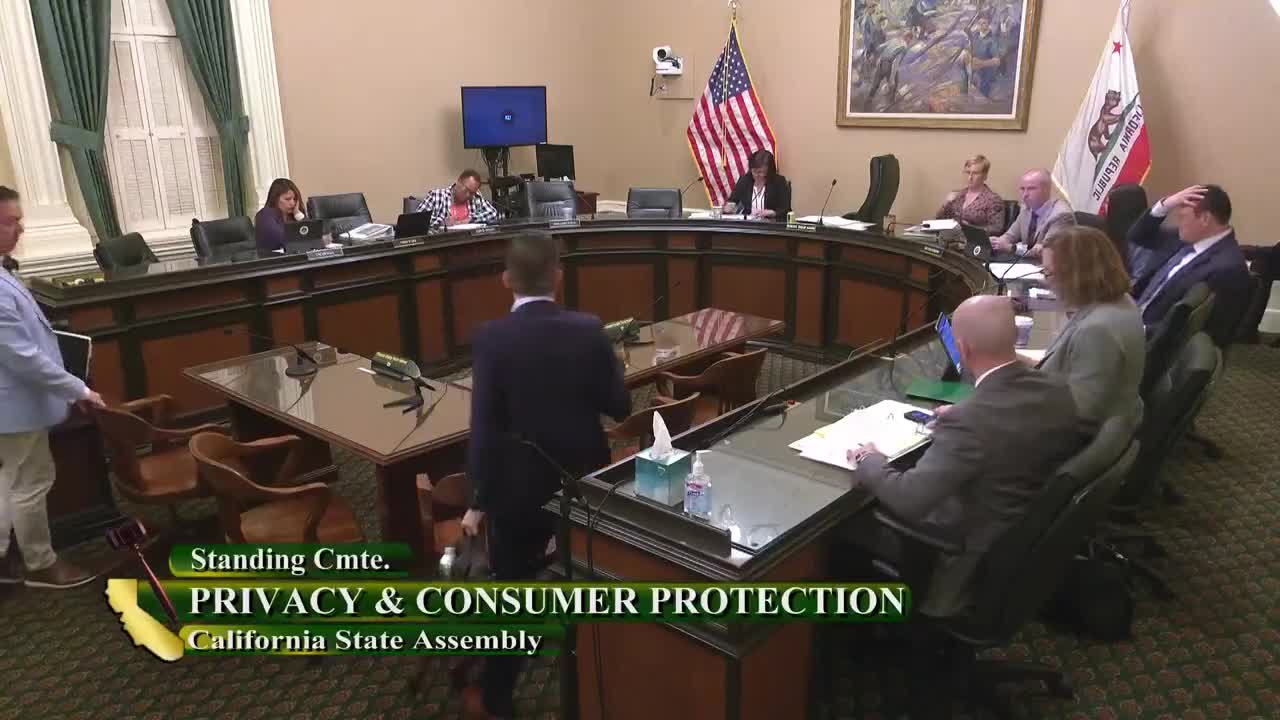 30MIN
Assembly Standing Committee on Privacy and Consumer Protection
Bill Author

Bill Co-Author(s):
