AB 2500: Student financial aid: application deadlines: postponement.
- Session Year: 2023-2024
- House: Assembly
- Latest Version Date: 2024-09-22
Current Status:
Passed
(2024-09-22: Chaptered by Secretary of State - Chapter 404, Statutes of 2024.)
Introduced
In Committee
First Chamber
In Committee
Second Chamber
Enacted
What does this bill do?
The bill requires the California Student Aid Commission to grant up to 30 extra calendar days to file state financial aid applications for students when a qualifying event (like a natural disaster, declared emergency, or labor action) affects their school district, community college district, or region, and covers programs such as Cal Grants and the Middle Class Scholarship. It lets the commission grant some extensions without a formal request, permanently allows the director to approve postponements, extends the deadline for submitting a request from 10 to 15 business days and the time to issue notice from 24 to 48 hours, and requires annual reporting on postponements.
The summary is provided by generative AI which can make mistakes. For original language, please view the details in the table below.
Existing law establishes the Student Aid Commission as the primary state agency for the administration of state-authorized student financial aid programs available to students attending all segments of postsecondary education. Existing law requires the commission to appoint a director as the chief executive officer for the commission and authorizes the commission to employ other employees as it deems necessary to carry out its functions.
Existing law, the Cal Grant Program, establishes the Cal Grant A Entitlement Awards, the Cal Grant B Entitlement Awards, the California Community College Expanded Entitlement Awards, the California Community College Transfer Entitlement Awards, the Competitive Cal Grant A and B Awards, the Cal Grant C Awards, and the Cal Grant T Awards under the administration of the commission. Existing law also establishes the Middle Class Scholarship Program under the commissions administration. Existing law establishes eligibility requirements for awards under these programs for participating students attending qualifying institutions. The eligibility requirements under these programs, as well as other financial aid programs administered by the commission, include meeting various application deadlines.
Existing law authorizes the commission to grant a postponement of an application deadline of up to 30 calendar days for any financial aid program administered by the commission, as specified. This authority applies if the commission receives a formal request to postpone a deadline from a designated educational official and the commission finds that a qualifying event, as defined, has occurred that, in the judgment of the commission, has had an adverse effect on the ability of pupils or students within a school district, community college district, or an area or region within the state, such as a city or county, to successfully complete and submit their financial aid applications by the established application deadline. Existing law requires the formal request to postpone a deadline to be submitted to the commission no later than 10 business days after the conclusion of the qualifying event and requires the commission, upon approval of a formal request, to issue a written notice of the postponement of the deadline within 24 hours. Existing law authorizes the commission, on a permanent basis, to delegate to its elected officers the authority to grant a deadline postponement, as specified.
This bill would instead require the commission to grant a postponement of an application deadline for financial aid programs administered by the commission pursuant to a formal request, as described above, and would authorize the commission to grant, without submission of a formal request, a deadline postponement for certain qualifying events, as provided. The bill would instead authorize the commission, on a permanent basis, to delegate the authority to grant a deadline postponement to the director of the commission. The bill would extend the 10-day timeline for submission of a formal request to 15 days, extend the 24-hour timeline for the commission to issue a written notice of a deadline postponement to 48 hours, and would require commission staff to annually report to specified persons and entities certain information related to deadline postponements.
Existing law establishes the Student Aid Commission as the primary state agency for the administration of state-authorized student financial aid programs available to students attending all segments of postsecondary education. Existing law requires the commission to appoint a director as the chief executive officer for the commission and authorizes the commission to employ other employees as it deems necessary to carry out its functions.
Existing law, the Cal Grant Program, establishes the Cal Grant A Entitlement Awards, the Cal Grant B Entitlement Awards, the California Community College Expanded Entitlement Awards, the California Community College Transfer Entitlement Awards, the Competitive Cal Grant A and B Awards, the Cal Grant C Awards, and the Cal Grant T Awards under the administration of the commission. Existing law also establishes the Middle Class Scholarship Program under the commissions administration. Existing law establishes eligibility requirements for awards under these programs for participating students attending qualifying institutions. The eligibility requirements under these programs, as well as other financial aid programs administered by the commission, include meeting various application deadlines.
Existing law authorizes the commission to grant a postponement of an application deadline of up to 30 calendar days for any financial aid program administered by the commission, as specified. This authority applies if the commission receives a formal request to extend a deadline from a designated educational official and the commission finds that a qualifying event, as defined, has occurred that, in the judgment of the commission, has had an adverse effect on the ability of pupils or students within a school district, community college district, or an area or region within the state, such as a city or county, to successfully complete and submit their financial aid applications by the established application deadline. Existing law requires the formal request to extend a deadline to be submitted to the commission no later than 10 business days after the conclusion of the qualifying event and requires the commission, upon approval of a formal request, to issue a written notice of the postponement of the deadline within 24 hours. Existing law authorizes the commission, on a permanent basis, to delegate to its elected officers the authority to grant a deadline postponement, as specified.
This bill would instead require the commission to grant a postponement of an application deadline for financial aid programs administered by the commission pursuant to a formal request, as described above, and would authorize the commission to grant, without submission of a formal request, a deadline postponement for certain qualifying events, as provided. The bill would instead authorize the commission, on a permanent basis, to delegate the authority to grant a deadline postponement to the director of the commission. The bill would extend the 10-day timeline for submission of a formal request to 15 days, extend the 24-hour timeline for the commission to issue a written notice of a deadline postponement to 48 hours, and would require commission staff to annually report to the commission specified persons and entities certain information related to deadline postponements.
Existing law establishes the Student Aid Commission as the primary state agency for the administration of state-authorized student financial aid programs available to students attending all segments of postsecondary education. Existing law requires the commission to appoint a director as the chief executive officer for the commission and authorizes the commission to employ other employees as it deems necessary to carry out its functions.
Existing law, the Cal Grant Program, establishes the Cal Grant A Entitlement Awards, the Cal Grant B Entitlement Awards, the California Community College Expanded Entitlement Awards, the California Community College Transfer Entitlement Awards, the Competitive Cal Grant A and B Awards, the Cal Grant C Awards, and the Cal Grant T Awards under the administration of the commission. Existing law also establishes the Middle Class Scholarship Program under the commissions administration. Existing law establishes eligibility requirements for awards under these programs for participating students attending qualifying institutions. The eligibility requirements under these programs, as well as other financial aid programs administered by the commission, include meeting various application deadlines.
Existing law authorizes the commission to grant a postponement of an application deadline of up to 30 calendar days for any financial aid program administered by the commission, as specified. This authority applies if the commission receives a formal request to extend a deadline from a designated educational official and the commission finds that a qualifying event, as defined, has occurred that, in the judgment of the commission, has had an adverse effect on the ability of pupils or students within a school district, community college district, or an area or region within the state, such as a city or county, to successfully complete and submit their financial aid applications by the established application deadline. Existing law requires the formal request to extend a deadline to be submitted to the commission no later than 10 business days after the conclusion of the qualifying event. event and requires the commission, upon approval of a formal request, to issue a written notice of the postponement of the deadline within 24 hours. Existing law authorizes the commission, on a permanent basis, to delegate to its elected officers the authority to grant a deadline postponement, as specified.
This bill would state the intent of the Legislature to enact future legislation that would, as it relates to the Student Aid Commissions authority instead require the commission to grant a postponement of an application deadline for specified financial aid programs administered by the commission pursuant to a formal request, instead grant that authority to the executive director, as described above, and would authorize the commission to grant, without submission of a formal request, a deadline postponement for certain qualifying events, as provided. The bill would instead authorize the commission, on a permanent basis, to delegate the authority to grant a deadline postponement to the director of the commission. The bill would extend the 10-day timeline for submission of a formal request to 15 days, extend the 24-hour timeline for the commission to issue a written notice of a deadline postponement to 48 hours, and would require a commission staff to annually report to the commission on extension requests, and authorize the commission to automatically grant deadline extensions for certain qualifying events. certain information related to deadline postponements.
Existing law establishes the Student Aid Commission as the primary state agency for the administration of state-authorized student financial aid programs available to students attending all segments of postsecondary education. Existing law requires the commission to appoint a director as the chief executive officer for the commission and authorizes the commission to employ other employees as it deems necessary to carry out its functions.
Existing law, the Cal Grant Program, establishes the Cal Grant A Entitlement Awards, the Cal Grant B Entitlement Awards, the California Community College Expanded Entitlement Awards, the California Community College Transfer Entitlement Awards, the Competitive Cal Grant A and B Awards, the Cal Grant C Awards, and the Cal Grant T Awards under the administration of the commission. Existing law also establishes the Middle Class Scholarship Program under the commissions administration. Existing law establishes eligibility requirements for awards under these programs for participating students attending qualifying institutions. The eligibility requirements under these programs, as well as other financial aid programs administered by the commission, include meeting various application deadlines.
Existing law authorizes the commission to grant a postponement of an application deadline of up to 30 calendar days for any financial aid program administered by the commission, as specified. This authority applies if the commission receives a formal request to extend a deadline from a designated educational official and the commission finds that a qualifying event, as defined, has occurred that, in the judgment of the commission, has had an adverse effect on the ability of pupils or students within a school district, community college district, or an area or region within the state, such as a city or county, to successfully complete and submit their financial aid applications by the established application deadline. Existing law requires the formal request to extend a deadline to be submitted to the commission no later than 10 business days after the conclusion of the qualifying event.
This bill would state the intent of the Legislature to enact future legislation that would, as it relates to the Student Aid Commissions authority to grant a postponement of an application deadline for specified financial aid programs pursuant to a formal request, instead grant that authority to the executive director, extend the 10-day timeline for submission of a formal request to 15 days, require a report to the commission on extension requests, and authorize the commission to automatically grant deadline extensions for certain qualifying events.
Notwithstanding any other law:
(a)The commission shall grant up to an additional 30 calendar days beyond an application deadline for any financial aid program administered by the commission pursuant to this part if the commission receives and approves a formal request to postpone the application deadline from either the superintendent of a school district or community college district or from the president or chancellor of a California institution of higher education that is eligible to receive state funds for student financial assistance and the commission finds that a qualifying event, as defined in subdivision (e), has occurred.
(b)Notwithstanding subdivision (a), the commission may grant up to an additional 30 calendar days beyond an application deadline for any financial aid program administered by the commission pursuant to this part if the commission finds that a qualifying event described in paragraph (2) of subdivision (e) has occurred.
(c)A postponement of an application deadline granted by the commission pursuant to this section shall apply to all financial aid applicants within the school district, community college district, or the area or region, such as a city or county, that was predominantly affected by the qualifying event.
(d)For purposes of this section, the commission may, on a permanent basis, delegate to the director of the commission the authority to grant a deadline postponement authorized by this section.
(e)For purposes of this section, a qualifying event is any event or extenuating circumstance outside of the control of the pupils or students in an affected school district, community college district, or area or region that has had an adverse effect on the ability of students within the district to successfully complete and submit their financial aid applications by an established statutory deadline. The qualifying event shall have occurred or been ongoing during the period for which financial aid applications were available to submit for the following academic year, and includes, but is not limited to, any of the following types of events:
(1)A natural disaster.
(2)A state of emergency declared by the Governor or the President of the United States.
(3)A labor action.
(f)The commission may establish procedures, which may include a standardized application form, through which a postponement of an application deadline may be requested by the individuals referenced in subdivision (a). The formal application to the commission shall be submitted no later than 15 business days after the occurrence of the qualifying event in question, or, if the qualifying event is ongoing, no later than 15 business days after the conclusion of the qualifying event, and shall include, at a minimum, all of the following:
(1)A description of the qualifying event that is the basis for the request, including how the event in question has had an adverse effect on students ability to submit their financial aid applications by the established deadline.
(2)A list of any financial aid outreach events, including, but not limited to, workshops or webinars sponsored by the commission, that have been canceled or delayed due to the qualifying event.
(3)When available, data showing that there has been, or is likely to be, a reduction in the number of students who have completed a financial aid application from the previous year.
(g)If the commission grants the postponement of an application deadline pursuant to this section, the commission shall issue a written notice of the postponement of the deadline within 48 hours of granting the postponement of the deadline. The notice shall include the approved postponed deadline, and shall be sent to all of the following or their respective designees:
(1)The individual who requested the extension pursuant to subdivision (a), if applicable.
(2)The Superintendent of Public Instruction.
(3)The Governor.
(4)The Director of Finance.
(5)The President of the University of California.
(6)The Chancellor of the California State University.
(7)The Chancellor of the California Community Colleges.
(8)The Joint Legislative Budget Committee and the chairpersons of the relevant fiscal and policy committees of the Legislature.
(h)When granting a postponement of an application deadline pursuant to this section, the commission shall post all of the following on its internet website:
(1)The approved postponed deadline.
(2)The public school district, community college district, or area or region, such as a city or county, to which the approved postponed deadline applies.
(i)The authority to grant postponements of application deadlines established pursuant to this section shall apply to all of the following programs established in statute, and any other state-funded financial aid programs administered by the commission pursuant to this part:
(1)The Cal Grant A Entitlement program established by Article 2 (commencing with Section 69434) of Chapter 1.7.
(2)The Cal Grant B Entitlement program established by Article 3 (commencing with Section 69435) of Chapter 1.7.
(3)The California Community College Transfer Cal Grant Entitlement Program established by Article 4 (commencing with Section 69436) of Chapter 1.7.
(4)The Competitive Cal Grant A and B Awards program established by Article 5 (commencing with Section 69437) of Chapter 1.7.
(5)The Middle Class Scholarship Program established by Article 22 (commencing with Section 70020).
(j)Commission staff shall annually report all of the following information to the commission, the Joint Legislative Budget Committee, and the chairpersons of the relevant fiscal and policy committees of the Legislature:
(1)The total number of deadline postponement requests that were granted pursuant to subdivision (a).
(2)The total number of statewide financial aid applications received after the established application deadline.
(3)The specific school districts, community college districts, or areas or regions within the state that received approval to submit a delayed financial aid application pursuant to subdivision (a).
(4)Information regarding whether approved deadline postponements due to a natural disaster or state of emergency were made equally available to financial aid applicants across the impacted area or region.
Notwithstanding any other law:
(a)The commission shall grant up to an additional 30 calendar days beyond an application deadline for any financial aid program administered by the commission pursuant to this part if the commission receives and approves a formal request to postpone the application deadline from either the superintendent of a school district or community college district or from the president or chancellor of a California institution of higher education that is eligible to receive state funds for student financial assistance and the commission finds that a qualifying event, as defined in subdivision (e), or other impactful event has occurred.
(b)Notwithstanding subdivision (a), the commission may grant up to an additional 30 calendar days beyond an application deadline for any financial aid program administered by the commission pursuant to this part if the commission finds that a qualifying event described in paragraph (2) of subdivision (e) has occurred.
(c)A postponement of an application deadline granted by the commission pursuant to this section shall apply to all financial aid applicants within the school district, community college district, or the area or region, such as a city or county, that was predominantly affected by the qualifying event.
(d)For purposes of this section, the commission may, on a permanent basis, delegate to the director of the commission the authority to grant a deadline postponement authorized by this section.
(e)For purposes of this section, a qualifying event is any event or extenuating circumstance outside of the control of the pupils or students in an affected school district, community college district, or area or region that has had an adverse effect on the ability of students within the district to successfully complete and submit their financial aid applications by an established statutory deadline. The qualifying event shall have occurred or been ongoing during the period for which financial aid applications were available to submit for the following academic year, and includes, but is not limited to, any of the following types of events:
(1)A natural disaster.
(2)A state of emergency declared by the Governor or the President of the United States.
(3)A labor action.
(f)The commission may establish procedures, which may include a standardized application form, through which a postponement of an application deadline may be requested by the individuals referenced in subdivision (a). The formal application to the commission shall be submitted no later than 15 business days after the occurrence of the qualifying event in question, or, if the qualifying event is ongoing, no later than 15 business days after the conclusion of the qualifying event, and shall include, at a minimum, all of the following:
(1)A description of the qualifying event that is the basis for the request, including how the event in question has had an adverse effect on students ability to submit their financial aid applications by the established deadline.
(2)A list of any financial aid outreach events, including, but not limited to, workshops or webinars sponsored by the commission, that have been canceled or delayed due to the qualifying event.
(3)When available, data showing that there has been, or is likely to be, a reduction in the number of students who have completed a financial aid application from the previous year.
(g)If the commission grants the postponement of an application deadline pursuant to this section, the commission shall issue a written notice of the postponement of the deadline within 48 hours of granting the postponement of the deadline. The notice shall include the approved postponed deadline, and shall be sent to all of the following or their respective designees:
(1)The individual who requested the extension pursuant to subdivision (a), if applicable.
(2)The Superintendent of Public Instruction.
(3)The Governor.
(4)The Director of Finance.
(5)The President of the University of California.
(6)The Chancellor of the California State University.
(7)The Chancellor of the California Community Colleges.
(8)The Joint Legislative Budget Committee and the chairpersons of the relevant fiscal and policy committees of the Legislature.
(h)When granting a postponement of an application deadline pursuant to this section, the commission shall post all of the following on its internet website:
(1)The approved postponed deadline.
(2)The public school district, community college district, or area or region, such as a city or county, to which the approved postponed deadline applies.
(i)The authority to grant postponements of application deadlines established pursuant to this section shall apply to all of the following programs established in statute, and any other state-funded financial aid programs administered by the commission pursuant to this part:
(1)The Cal Grant A Entitlement program established by Article 2 (commencing with Section 69434) of Chapter 1.7.
(2)The Cal Grant B Entitlement program established by Article 3 (commencing with Section 69435) of Chapter 1.7.
(3)The California Community College Transfer Cal Grant Entitlement Program established by Article 4 (commencing with Section 69436) of Chapter 1.7.
(4)The Competitive Cal Grant A and B Awards program established by Article 5 (commencing with Section 69437) of Chapter 1.7.
(5)The Middle Class Scholarship Program established by Article 22 (commencing with Section 70020).
(j)Commission staff shall annually report all of the following information to the commission: commission, the Joint Legislative Budget Committee, and the chairpersons of the relevant fiscal and policy committees of the Legislature:
(1)The total number of deadline postponement requests that were granted pursuant to subdivision (a).
(2)The total number of statewide financial aid applications received after the established application deadline.
(3)The specific school districts, community college districts, or areas or regions within the state that received approval to submit a delayed financial aid application pursuant to subdivision (a).
(4)Information regarding whether approved deadline postponements due to a natural disaster or state of emergency were made equally available to financial aid applicants across the impacted area or region.
Notwithstanding any other law:
(a)The commission may shall grant up to an additional 30 calendar days beyond an application deadline for any financial aid program administered by the commission pursuant to this part, at the discretion of the commission, if both of the following conditions are met: part if the commission receives and approves a formal request to postpone the application deadline from either the superintendent of a school district or community college district or from the president or chancellor of a California institution of higher education that is eligible to receive state funds for student financial assistance and the commission finds that a qualifying event, as defined in subdivision (e), or other impactful event has occurred.
(1)The commission receives a formal request to postpone the application deadline from either the superintendent of a school district or community college district or from the president or chancellor of a California institution of higher education that is eligible to receive state funds for student financial assistance.(2)The commission finds that a qualifying event, as defined in subdivision (d), has occurred that, in the judgment of the commission, has had an adverse effect on the ability of pupils or students within the school district, community college district, or an area or region within the state, such as a city or county, to successfully complete and submit their financial aid applications by the established application deadline.(b)Notwithstanding subdivision (a), the commission may grant up to an additional 30 calendar days beyond an application deadline for any financial aid program administered by the commission pursuant to this part if the commission finds that a qualifying event described in paragraph (2) of subdivision (e) has occurred.
(b)(c)A postponement of an application deadline granted by the commission under subdivision (a) pursuant to this section shall apply to all financial aid applicants within the school district, community college district, or the area or region, such as a city or county, that was predominantly affected by the qualifying event referenced in paragraph (2) of subdivision (a). event.
(c)(d)For purposes of this section, the commission may, on a permanent basis, delegate to its elected officers, which include the chairperson, vice chairperson, secretary, and any other commissioner currently serving as an elected officer, the director of the commission the authority to grant, by a unanimous decision of all such officers, the grant a deadline postponement authorized by this section.
(d)(e)For purposes of this section, a qualifying event is any event or extenuating circumstance outside of the control of the pupils or students in an affected school district, community college district, or area or region that, in the judgment of the commission, that has had an adverse effect on the ability of students within the district to successfully complete and submit their financial aid applications by an established statutory deadline. The qualifying event shall have occurred or been ongoing during the period for which financial aid applications were available to submit for the following academic year, and includes, but is not necessarily limited to, any of the following types of events:
(1)A natural disaster.
(2)A state of emergency declared by the Governor or the President of the United States.
(3)A labor action.
(e)(f)The commission may establish procedures, which may include a standardized application form, through which a postponement of an application deadline may be requested by the individuals referenced in paragraph (1) of subdivision (a). The formal application to the commission shall be submitted no later than 10 15 business days after the occurrence of the qualifying event in question, or, if the qualifying event is ongoing, no later than 10 15 business days after the conclusion of the qualifying event, and shall include, at a minimum, all of the following:
(1)A description of the qualifying event that is the basis for the request, including how the event in question has had an adverse effect on students ability to submit their financial aid applications by the established deadline.
(2)A list of any financial aid outreach events, including, but not necessarily limited to, workshops or webinars sponsored by the commission, that have been canceled or delayed due to the qualifying event.
(3)When available, data showing that there has been, or is likely to be, a reduction in the number of students who have completed a financial aid application from the previous year.
(f)(g)If the commission approves the request for a postponement of an application deadline, grants the postponement of an application deadline pursuant to this section, the commission shall issue a written notice of the postponement of the deadline within 24 48 hours of granting the request. postponement of the deadline. The notice shall include the approved postponed deadline, and shall be sent to all of the following or their respective designees:
(1)The individual who requested the extension pursuant to paragraph (1) of subdivision (a). subdivision (a), if applicable.
(2)The Superintendent of Public Instruction.
(3)The Governor.
(4)The Director of Finance.
(5)The President of the University of California.
(6)The Chancellor of the California State University.
(7)The Chancellor of the California Community Colleges.
(8)The chairpersons of the relevant fiscal and policy committees of the Legislature.
(g)(h)When approving a request for granting a postponement of an application deadline pursuant to this section, the commission shall post all of the following on its internet website:
(1)The approved postponed deadline.
(2)The public school district, community college district, or area or region, such as a city or county, to which the approved postponed deadline applies.
(h)(i)The authority to grant postponements of application deadlines established pursuant to this section shall apply to all of the following programs established in statute, as well as and any other state-funded financial aid programs administered by the commission pursuant to this part:
(1)The Cal Grant A Entitlement program established by Article 2 (commencing with Section 69434) of Chapter 1.7.
(2)The Cal Grant B Entitlement program established by Article 3 (commencing with Section 69435) of Chapter 1.7.
(3)The California Community College Transfer Cal Grant Entitlement Program established by Article 4 (commencing with Section 69436) of Chapter 1.7.
(4)The Competitive Cal Grant A and B Awards program established by Article 5 (commencing with Section 69437) of Chapter 1.7.
(5)The Middle Class Scholarship Program established by Article 22 (commencing with Section 70020).
(i)Notwithstanding subdivision (e), with respect to application deadlines for pupils or students applying for financial aid for the 201920 academic year, in response to a formal request from an individual referenced in paragraph (1) of subdivision (a) that is received no later than 10 business days after the act adding this section becomes operative, the commission may, by a unanimous vote of its elective officers as referenced in subdivision (c), retroactively postpone these deadlines in accordance with the procedures established in this section.(j)Commission staff shall annually report all of the following information to the commission:
(1)The total number of deadline postponement requests that were granted pursuant to subdivision (a).
(2)The total number of statewide financial aid applications received after the established application deadline.
(3)The specific school districts, community college districts, or areas or regions within the state that received approval to submit a delayed financial aid application pursuant to subdivision (a).
SECTION 1.It is the intent of the Legislature to enact future legislation that would, as it relates to the Student Aid Commissions authority to grant a postponement of an application deadline for specified financial aid programs pursuant to a formal request, instead grant that authority to the executive director, extend the 10-day timeline for submission of a formal request to 15 days, require a report to the commission on extension requests, and authorize the commission to automatically grant deadline extensions for certain qualifying events.It is the intent of the Legislature to enact future legislation that would, as it relates to the Student Aid Commissions authority to grant a postponement of an application deadline for specified financial aid programs pursuant to a formal request, instead grant that authority to the executive director, extend the 10-day timeline for submission of a formal request to 15 days, require a report to the commission on extension requests, and authorize the commission to automatically grant deadline extensions for certain qualifying events.
|
Date
|
Status
|
|---|---|
| Sep 22, 2024 | Chaptered by Secretary of State - Chapter 404, Statutes of 2024. |
| Sep 22, 2024 | Approved by the Governor. |
| Sep 9, 2024 | Enrolled and presented to the Governor at 3:30 p.m. |
| Aug 28, 2024 | In Assembly. Ordered to Engrossing and Enrolling. |
| Aug 28, 2024 | Read third time. Passed. Ordered to the Assembly. (Ayes 39. Noes 0.). |
| Aug 23, 2024 | Ordered to special consent calendar. |
| Aug 19, 2024 | Read second time. Ordered to third reading. |
| Aug 15, 2024 | From committee: Do pass. (Ayes 7. Noes 0.) (August 15). |
| Aug 5, 2024 | In committee: Referred to APPR suspense file. |
| Jul 3, 2024 | From committee: Do pass and re-refer to Com. on APPR with recommendation: To Consent Calendar. (Ayes 7. Noes 0.) (July 3). Re-referred to Com. on APPR. |
| May 29, 2024 | Referred to Com. on ED. |
| May 22, 2024 | In Senate. Read first time. To Com. on RLS. for assignment. |
| May 21, 2024 | Read third time. Passed. Ordered to the Senate. (Ayes 73. Noes 0. Page 5375.) |
| May 20, 2024 | Read second time. Ordered to third reading. |
| May 16, 2024 | Read second time and amended. Ordered returned to second reading. |
| May 16, 2024 | From committee: Amend, and do pass as amended. (Ayes 11. Noes 0.) (May 16). |
| May 16, 2024 | Assembly Rule 63 suspended. |
| May 8, 2024 | In committee: Set, first hearing. Referred to APPR. suspense file. |
| Apr 24, 2024 | From committee: Do pass and re-refer to Com. on APPR. with recommendation: To Consent Calendar. (Ayes 10. Noes 0.) (April 23). Re-referred to Com. on APPR. |
| Mar 20, 2024 | Re-referred to Com. on HIGHER ED. |
| Mar 19, 2024 | From committee chair, with author's amendments: Amend, and re-refer to Com. on HIGHER ED. Read second time and amended. |
| Mar 18, 2024 | Referred to Com. on HIGHER ED. |
| Feb 14, 2024 | From printer. May be heard in committee March 15. |
| Feb 13, 2024 | Read first time. To print. |
|
Date
|
Description
|
Location
|
Votes
|
|
|---|---|---|---|---|
| Aug 28, 2024 | Special Consent AB2500 Mike Fong By Limón | Senate Floor |
Passed |
|
| Aug 15, 2024 | Do pass | Senate Standing Committee on Appropriations |
Passed |
|
| Aug 5, 2024 | Placed on suspense file | Senate Standing Committee on Appropriations |
Passed |
|
| Jul 3, 2024 | Do pass, but first be re-referred to the Committee on [Appropriations] with the recommendation: To Consent Calendar | Senate Standing Committee on Education |
Passed |
|
| May 21, 2024 | AB 2500 Mike Fong Assembly Third Reading | Assembly Floor |
Passed |
|
| May 16, 2024 | Do pass as amended. | Assembly Standing Committee on Appropriations |
Passed |
|
| Apr 23, 2024 | Do pass and be re-referred to the Committee on [Appropriations] with recommendation: To Consent Calendar | Assembly Standing Committee on Higher Education |
Passed |
This list shows positions taken on this bill by organizations on the date displayed, which is linked to the original source.
Positions by individuals are not included.
|
Organization
|
Position
|
Date
|
|---|---|---|
| California Community Colleges, Chancellor's Office | ** Support | |
| California Student Aid Commission | ** Support | |
| Citrus College | ** Support | |
| Faculty Association Of California Community Colleges | ** Support | |
| Institute For College Access Success The | ** Support | |
| Institute for College Access & Success | ** Support | |
| John Burton Advocates for Youth | ** Support | |
| Lake Tahoe Community College | ** Support | |
| Mt. San Antonio College | ** Support | |
| NextGen California | ** Support | |
| North Orange Community College District | ** Support | |
| Office of the Riverside County Superintendent of Schools | ** Support | |
| Rancho Santiago Community College District | ** Support | |
| Riverside County Public K-12 School District Superintendents | ** Support | |
| Sacramento Cal-SOAP | ** Support | |
| San Bernardino Community College District | ** Support | |
| Santa Rosa Junior College Student Financial Services | ** Support | |
| Small School Districts Association | ** Support | |
| Southern California College Attainment Network | ** Support | |
| Student Senate for California Community Colleges | ** Support | |
| The Education Trust - West | ** Support | |
| Unite-LA | ** Support | |
| University of California | ** Support | |
| Young Invincibles | ** Support |
SENATE RULES COMMITTEE Office of Senate Floor Analyses (916) 651-1520 Fax: (916) 327-4478 | AB 2500 |
THIRD READING
Bill No: AB 2500
Author: Mike Fong (D)
Amended: 5/16/24 in Assembly
Vote: 21
SENATE EDUCATION COMMITTEE: 7-0, 7/3/24
AYES: Newman, Ochoa Bogh, Cortese, Glazer, Gonzalez, Smallwood-Cuevas, Wilk
SENATE APPROPRIATIONS COMMITTEE: 7-0, 8/15/24
AYES: Caballero, Jones, Ashby, Becker, Bradford, Seyarto, Wahab
ASSEMBLY FLOOR: 73-0, 5/21/24 - See last page for vote
SUBJECT: Student financial aid: application deadlines: postponement
SOURCE: California Student Aid Commission
DIGEST:
This bill requires the California Student Aid Commission (Commission) to grant up to 30 additional days beyond an application deadline for any financial aid program administered by the Commission, if the Commission receives and approves a formal request to postpone the application deadline from a local educational agency (LEA) or institution of higher education that is eligible to receive state funds for student financial assistance. It further requires that in order to grant the requested extension the Commission certify a qualifying event has occurred such as a natural disaster. Lastly, this bill authorizes the Commission to grant a financial aid program application deadline extension without it being requested if a state of emergency is declared.
ANALYSIS:
Existing law:
- Establishes the Commission for the purpose of administering specified student financial aid programs. (Education Code (EC) Section 69510, et seq.)
- Authorizes the Commission to grant up to an additional 30 calendar days beyond an application deadline for any financial aid program administered by the Commission at the discretion of the Commission, if both of the following conditions are met:
- The Commission receives a formal request to postpone the application deadline from either the superintendent of a school district or community college district (CCD) or from the president or chancellor of a California institution of higher education that is eligible to receive state funds for student financial assistance; and,
- The Commission finds that a qualifying event, as defined, has occurred that, in the judgment of the Commission, has had an adverse effect on the ability of pupils or students within the school district, CCD, or an area or region within the state, such as a city or county, to successfully complete and submit their financial aid applications by the established application deadline.
- Defines “qualifying event” to mean any event or extenuating circumstance outside of the control of the pupils or students in an affected school district, CCD, or area or region that, in the judgment of the Commission, has had an adverse effect on the ability of students within the district to successfully complete and submit their financial aid applications by an established statutory deadline. The qualifying event must have occurred or been ongoing during the period for which financial aid applications were available to submit for the following academic year, and includes, but is not necessarily limited to, any of the following types of events:
- A natural disaster;
- A state of emergency declared by the Governor or the President of the United States; and,
- A labor action.
- Authorizes the Commission to establish procedures, which may include a standardized application form, through which a postponement of an application deadline may be requested, as specified. The formal application to the Commission must be submitted no later than 10 business days after the occurrence of the qualifying event in question, or, if the qualifying event is ongoing, no later than 10 business days after the conclusion of the qualifying event, and may include, at a minimum, all of the following:
- The authority to grant postponements of application deadlines, to all of the following programs established in statute, as well as any other state-funded financial aid programs administered by the Commission:
- The Cal Grant A Entitlement Program;
- The Cal Grant B Entitlement Program established;
- The California Community College Transfer Cal Grant Entitlement Program;
- The Competitive Cal Grant A and B Awards program; and,
- The Middle Class Scholarship Program (MCS).
- The authority to grant postponements of application deadlines, to all of the following programs established in statute, as well as any other state-funded financial aid programs administered by the Commission:
- Requires the Commission, if the Commission approves the request for a postponement of an application deadline, to issue a written notice of the postponement of the deadline within 24 hours of granting the request. The notice must include the approved postponed deadline, and must be sent to all of the following or their respective designees:
- The individual who requested the extension;
- The State Superintendent of Public Instruction (SPI);
- The Governor;
- The Director of Finance;
- The President of the University of California (UC);
- The Chancellor of the California State University (CSU);
- The Chancellor of the California Community Colleges (CCC); and,
- The chairpersons of the relevant fiscal and policy committees of the Legislature.
- Requires that when the Commission approves a request for a postponement of an application deadline, the Commission must post all of the following on the Commission website:
- The approved postponed deadline; and,
- The public school district, CCD, or area or region, such as a city or county, to which the approved postponed deadline applies. (EC § 69513.2)
This bill:
- Requires the Commission to grant up to 30 additional days beyond an application deadline for any financial aid program administered by the Commission, if the Commission receives and approves a formal request to postpone the application deadline from a LEA or institution of higher education that is eligible to receive state funds for student financial assistance. In order to grant the extension the Commission is to certify a qualifying event, as defined, has occurred such as a natural disaster
- Authorizes the Commission to grant an application deadline postponement for financial aid programs, as specified, if the Governor or the President of the United States declares a state of emergency.
- Allows the Commission on a permanent basis to delegate the authority to grant a deadline postponement to the director of the Commission, this is in lieu of delegating this authority to the Commission’s elected officers.
- Provides an extra five days for a formal request to be submitted to the Commission, from 10 to 15 business days after the qualifying event has occurred or concluded.
- Requires the Commission to annually report to the Joint Legislative Budget Committee, and the chairpersons of the relevant fiscal and policy committees of the Legislature:
- Total number of deadline postponement requests that were granted.
- Total number of statewide financial aid applications received after the established application deadline.
- The specific school districts, CCDs, or areas of regions within the state that received approval to submit a delayed financial aid application.
- Information regarding whether approved deadline postponements due to a natural disaster or state emergency were made equally available to financial aid applicants across the impacted area or region.
- Makes technical and conforming changes.
Comments
- Need for the bill. According to the author, “Financial aid plays a crucial role in expanding access to higher education, which continues to be the state’s strongest tool for increasing the social mobility and financial stability of millions of families. However, sometimes due to circumstances outside of their control, thousands of eligible students submit late financial aid applications, forfeiting thousands of dollars in aid.
“By allowing CSAC’s executive director to grant extensions without a meeting of commissioners, extending the period that requests for extensions can be made, and streamlining extensions in cases of declared emergencies, this bill makes it easier for education officials to request, and for CSAC to grant, the extensions necessary for students affected by unforeseen events to get aid.”
- What is the problem? According to the Commission, between March 3 and April 1 of 2018, of the 6,343 students who submitted late financial aid applications, 4,106 (65%) would have been eligible for extensions due to emergency conditions. Students who submit late applications lose out on tens of thousands of dollars in aid. UC and CSU students are missing out on up to $19,276 and $9,718, respectively, in state aid which include Cal Grants and MCS.
The Commission further notes, “During the 2021-22 and 2022-23 school years, the Commission collaborated with universities, colleges, and local education agencies to ensure that a blanket statewide extension to the financial aid deadline could be approved due to the pandemic. Prior to this announcement, a number of institutions submitted extension requests with the majority coming from Southern California’s urban and suburban counties. In 2022-23, 17 counties submitted zero extension requests, with 16 of those counties being rural, suggesting that smaller districts are less aware of and/or able to submit extension requests due to a lack of resources. In 2023-24, despite winter storms impacting the entire state and thus making all institutions eligible, only five institutions sent requests, thus leaving over 9,500 students who submitted FASFA applications after the aid deadline ineligible for entitlement Cal Grant awards at four-year institutions. These participation gaps may be exacerbated by the barriers institutions face in sending requests.”
By empowering the executive director to approve requests directly and automatically apply extensions statewide during declared emergencies, this bill would speed up the approval process and ensure uniformity in the implementation of financial aid application extensions under extenuating circumstances.
FISCAL EFFECT: Appropriation: No Fiscal Com.: Yes Local: No
According to the Senate Appropriations Committee analysis, this bill would have the following fiscal impact:
- The CSAC estimates General Fund costs of between about $105,000 and $532,000 each year to the extent more state financial aid is granted as a result of extending financial aid deadlines in certain instances. The bill does not change eligibility for the Cal Grant programs, only the ability to pursue application deadline extensions under certain circumstances.
- The costs for CSAC to review and process the extensions would be minor and absorbable within existing resources. Additionally, the CSAC indicates that the bill could potentially yield cost savings as it simplifies and streamlines the existing manual financial aid deadline extension process which could reduce staff time involved with submitting such requests from LEAs and institutions of higher education as well as processing them at the CSAC.
SUPPORT: (Verified 8/15/24)
California Student Aid Commission (source)
California Community Colleges, Chancellor's Office
Citrus College
Faculty Association of California Community Colleges
Institute for College Access & Success
John Burton Advocates for Youth
Lake Tahoe Community College
Mt. San Antonio College
NextGen California
North Orange Community College District
Office of the Riverside County Superintendent of Schools
Rancho Santiago Community College District
Riverside County Public K-12 School District Superintendents
Sacramento Cal-SOAP
San Bernardino Community College District
Small School Districts Association
Southern California College Attainment Network
Student Senate for California Community Colleges
The Education Trust - West
Unite-LA
University of California
OPPOSITION: (Verified 8/15/24)
None received
ASSEMBLY FLOOR: 73-0, 5/21/24
AYES: Addis, Aguiar-Curry, Alanis, Alvarez, Arambula, Bains, Bauer-Kahan, Bennett, Berman, Boerner, Bonta, Bryan, Calderon, Juan Carrillo, Wendy Carrillo, Chen, Connolly, Davies, Dixon, Essayli, Flora, Mike Fong, Vince Fong, Gallagher, Garcia, Gipson, Grayson, Haney, Hart, Hoover, Irwin, Jackson, Jones-Sawyer, Kalra, Lackey, Lee, Low, Lowenthal, Maienschein, McCarty, McKinnor, Muratsuchi, Stephanie Nguyen, Ortega, Pacheco, Papan, Jim Patterson, Joe Patterson, Pellerin, Petrie-Norris, Quirk-Silva, Ramos, Rendon, Reyes, Rodriguez, Blanca Rubio, Sanchez, Santiago, Schiavo, Soria, Ta, Ting, Valencia, Villapudua, Waldron, Wallis, Ward, Weber, Wicks, Wilson, Wood, Zbur, Robert Rivas
NO VOTE RECORDED: Cervantes, Megan Dahle, Friedman, Gabriel, Holden, Mathis, Luz Rivas
Prepared by: Olgalilia Ramirez / ED. / (916) 651-4105
8/18/24 9:19:14
**** END ****
SENATE COMMITTEE ON APPROPRIATIONS
Senator Anna Caballero, Chair
2023 - 2024 Regular Session
AB 2500 (Mike Fong) - Student financial aid: application deadlines: postponement
Version: May 16, 2024 | Policy Vote: ED. 7 - 0 |
Urgency: No | Mandate: No |
Hearing Date: August 5, 2024 | Consultant: Lenin Del Castillo |
Bill Summary:
This bill requires the California Student Aid Commission (CSAC) to grant up to 30 additional days beyond an application deadline for any financial aid program administered by the CSAC if it receives and approves a formal request to postpone the application deadline from a local educational agency (LEA) or institution of higher education that is eligible to receive state funds for student financial assistance.
Fiscal Impact:
- The CSAC estimates General Fund costs of between about $105,000 and $532,000 each year to the extent more state financial aid is granted as a result of extending financial aid deadlines in certain instances. The bill does not change eligibility for the Cal Grant programs, only the ability to pursue application deadline extensions under certain circumstances.
- The costs for CSAC to review and process the extensions would be minor and absorbable within existing resources. Additionally, the CSAC indicates that the bill could potentially yield cost savings as it simplifies and streamlines the existing manual financial aid deadline extension process which could reduce staff time involved with submitting such requests from LEAs and institutions of higher education as well as processing them at the CSAC.
Background:
Existing law establishes the California Student Aid Commission as the primary state agency for the administration of state-authorized student financial aid programs available to students attending all segments of postsecondary education. It authorizes the Commission to grant up to an additional 30 calendar days beyond an application deadline for any financial aid program administered by the Commission at the discretion of the Commission, if both of the following conditions are met:
a) The Commission receives a formal request to postpone the application deadline from either the superintendent of a school district or community college district (CCD) or from the president or chancellor of a California institution of higher education that is eligible to receive state funds for student financial assistance; and,
b) The Commission finds that a qualifying event, as defined, has occurred that, in the judgment of the Commission, has had an adverse effect on the ability of pupils or students within the school district, CCD, or an area or region within the state, such as a city or county, to successfully complete and submit their financial aid applications by the established application deadline.
Existing law defines “qualifying event” to mean any event or extenuating circumstance outside of the control of the pupils or students in an affected school district, CCD, or area or region that, in the judgment of the Commission, has had an adverse effect on the ability of students within the district to successfully complete and submit their financial aid applications by an established statutory deadline. The qualifying event must have occurred or been ongoing during the period for which financial aid applications were available to submit for the following academic year, and includes, but is not necessarily limited to, any of the following types of events: a natural disaster; a state of emergency declared by the Governor or the President of the United States; and labor action.
Existing law authorizes the CSAC to establish procedures, which may include a standardized application form, through which a postponement of an application deadline may be requested, as specified. The formal application to the Commission must be submitted no later than 10 business days after the occurrence of the qualifying event in question, or, if the qualifying event is ongoing, no later than 10 business days after the conclusion of the qualifying event, and may include, at a minimum, the authority to grant postponements of application deadlines to specified programs established in statute, as well as any other state-funded financial aid programs administered by the Commission, including the Cal Grant programs and the Middle Class Scholarship Program.
Existing law requires the CSAC, if it approves the request for a postponement of an application deadline, to issue a written notice of the postponement of the deadline within 24 hours of granting the request. The notice must include the approved postponed deadline, and must be sent to specified designees, including the individual who requested the extension; the State Superintendent of Public Instruction; he Governor; and the Director of Finance.
Existing law requires that when the CSAC approves a request for a postponement of an application deadline, the Commission must post all of the following on the Commission website: the approved postponed deadline; and the public school district, CCD, or area or region, such as a city or county, to which the approved postponed deadline applies.
Proposed Law:
This bill requires the CSAC to grant up to 30 additional days beyond an application deadline for any financial aid program administered by the Commission, if the Commission receives and approves a formal request to postpone the application deadline from a LEA or institution of higher education that is eligible to receive state funds for student financial assistance. In order to grant the extension the Commission is to certify a qualifying event, as defined, has occurred. It authorizes the CSAC to grant an application deadline postponement for financial aid programs, as specified, if the Governor or the President of the United States declares a state of emergency.
This bill allows the CSAC on a permanent basis to delegate the authority to grant a deadline postponement to the director of the Commission, this is in lieu of delegating this authority to the Commission’s elected officers. It also provides an extra five days for a formal request to be submitted to the Commission, from 10 to 15 business days after the qualifying event has occurred or concluded.
This bill requires the CSAC to annually report to the Joint Legislative Budget Committee, and the chairpersons of the relevant fiscal and policy committees of the Legislature on specified information, including the total number of deadline postponement requests that were granted and the total number of statewide financial aid applications received after the established application deadline.
Related Legislation:
AB 1887 (Cervantes, Chapter 5, Statutes of 2024) an urgency measure, extended the April 2, 2024 application deadline for financial aid programs administered by the Commission by one month.
SB 117 (Committee on Budget and Fiscal Review, Chapter 50, Statutes of 2023) provides that if the FAFSA is not available on or before October 1, 2023, the application deadline for financial aid programs administered by the Commission shall be extended to April 2, 2024, for the 2024-25 award year only.
Staff Comments:
Current law authorizes the CSAC to grant and approve financial aid application extensions under certain circumstances if a financial aid applicant’s LEA or institution of higher education submits a formal request. According to the CSAC, LEAs underutilize requests for financial aid deadline extensions, resulting in students submitting late applications, leaving large amounts of financial aid on the table and contributing to lower rates of college enrollment, especially among students in rural areas of the state.
This bill requires the CSAC to grant up to 30 additional days beyond an application deadline for any financial aid program administered by CSAC, if it receives a formal request to postpone the application deadline from an or institution of higher education. The bill also gives school districts and IHEs an additional five days to submit a request for a financial aid extension for their students after a qualifying event.
-- END --
SENATE COMMITTEE ON EDUCATION
Senator Josh Newman, Chair
2023 - 2024 Regular
Bill No: Hearing Date: July 3, 2024
Author: | Mike Fong | ||
Version: |
| ||
Urgency: | Fiscal: | ||
Consultant: | |||
Subject: .
SUMMARY
This bill requires the California Student Aid Commission (Commission) to grant up to 30 additional days beyond an application deadline for any financial aid program administered by the Commission, if the Commission receives and approves a formal request to postpone the application deadline from a local educational agency (LEA) or institution of higher education that is eligible to receive state funds for student financial assistance. It further requires that in order to grant the requested extension the Commission certify a qualifying event has occurred such as a natural disaster. Lastly, this bill authorizes the Commission to grant a financial aid program application deadline extension without it being requested if a state of emergency is declared.
BACKGROUND
Existing law:
- Establishes the Commission for the purpose of administering specified student financial aid programs. (Education Code (EC) Section 69510, et seq.)
2) Authorizes the Commission to grant up to an additional 30 calendar days beyond
an application deadline for any financial aid program administered by the Commission at the discretion of the Commission, if both of the following conditions are met:
a) The Commission receives a formal request to postpone the application deadline from either the superintendent of a school district or community college district (CCD) or from the president or chancellor of a California institution of higher education that is eligible to receive state funds for student financial assistance; and,
b) The Commission finds that a qualifying event, as defined, has occurred that, in the judgment of the Commission, has had an adverse effect on the ability of pupils or students within the school district, CCD, or an area or region within the state, such as a city or county, to successfully complete and submit their financial aid applications by the established application deadline.
3) Defines “qualifying event” to mean any event or extenuating circumstance outside of the control of the pupils or students in an affected school district, CCD, or area or region that, in the judgment of the Commission, has had an adverse effect on the ability of students within the district to successfully complete and submit their financial aid applications by an established statutory deadline. The qualifying event must have occurred or been ongoing during the period for which financial aid applications were available to submit for the following academic year, and includes, but is not necessarily limited to, any of the following types of events:
a) A natural disaster;
b) A state of emergency declared by the Governor or the President of the United States; and,
c) A labor action.
4) Authorizes the Commission to establish procedures, which may include a standardized application form, through which a postponement of an application deadline may be requested, as specified. The formal application to the Commission must be submitted no later than 10 business days after the occurrence of the qualifying event in question, or, if the qualifying event is ongoing, no later than 10 business days after the conclusion of the qualifying event, and may include, at a minimum, all of the following:
a) The authority to grant postponements of application deadlines, to all of the following programs established in statute, as well as any other state-funded financial aid programs administered by the Commission:
i) The Cal Grant A Entitlement Program;
ii) The Cal Grant B Entitlement Program established;
iii) The California Community College Transfer Cal Grant Entitlement Program;
iv) The Competitive Cal Grant A and B Awards program; and,
v) The Middle Class Scholarship Program (MCS).
5) Requires the Commission, if the Commission approves the request for a postponement of an application deadline, to issue a written notice of the postponement of the deadline within 24 hours of granting the request. The notice must include the approved postponed deadline, and must be sent to all of the following or their respective designees:
a) The individual who requested the extension;
b) The State Superintendent of Public Instruction (SPI);
c) The Governor;
d) The Director of Finance;
e) The President of the University of California (UC);
f) The Chancellor of the California State University (CSU);
g) The Chancellor of the California Community Colleges (CCC); and,
h) The chairpersons of the relevant fiscal and policy committees of the Legislature.
6) Requires that when the Commission approves a request for a postponement of an application deadline, the Commission must post all of the following on the Commission website:
a) The approved postponed deadline; and,
b) The public school district, CCD, or area or region, such as a city or county, to which the approved postponed deadline applies. (EC § 69513.2)
ANALYSIS
This bill:
- Requires the Commission to grant up to 30 additional days beyond an application deadline for any financial aid program administered by the Commission, if the Commission receives and approves a formal request to postpone the application deadline from a LEA or institution of higher education that is eligible to receive state funds for student financial assistance. In order to grant the extension the Commission is to certify a qualifying event, as defined, has occurred such as a natural disaster
- Authorizes the Commission to grant an application deadline postponement for financial aid programs, as specified, if the Governor or the President of the United States declares a state of emergency.
- Allows the Commission on a permanent basis to delegate the authority to grant a deadline postponement to the director of the Commission, this is in lieu of delegating this authority to the Commission’s elected officers.
- Provides an extra five days for a formal request to be submitted to the Commission, from 10 to 15 business days after the qualifying event has occurred or concluded.
- Requires the Commission to annually report to the Joint Legislative Budget Committee, and the chairpersons of the relevant fiscal and policy committees of the Legislature:
- Total number of deadline postponement requests that were granted.
- Total number of statewide financial aid applications received after the
established application deadline.
- The specific school districts, CCDs, or areas of
regions within the state that received approval to submit a delayed financial aid application.
- Information regarding whether approved deadline postponements due to a
natural disaster or state emergency were made equally available to financial aid applicants across the impacted area or region.
- Makes technical and conforming changes.
STAFF COMMENTS
- Need for the bill. According to the author, “Financial aid plays a crucial role in expanding access to higher education, which continues to be the state’s strongest tool for increasing the social mobility and financial stability of millions of families. However, sometimes due to circumstances outside of their control, thousands of eligible students submit late financial aid applications, forfeiting thousands of dollars in aid.
“By allowing CSAC’s executive director to grant extensions without a meeting of commissioners, extending the period that requests for extensions can be made, and streamlining extensions in cases of declared emergencies, this bill makes it easier for education officials to request, and for CSAC to grant, the extensions necessary for students affected by unforeseen events to get aid.”
- What is the problem? According to the Commission, between March 3rd and April 1st of 2018, of the 6,343 students who submitted late financial aid applications, 4,106 (65%) would have been eligible for extensions due to emergency conditions. Students who submit late applications lose out on tens of thousands of dollars in aid. UC and CSU students are missing out on up to $19,276 and $9,718, respectively, in state aid which include Cal Grants and MCS.
The Commission further notes, “During the 2021-22 and 2022-23 school years, the Commission collaborated with universities, colleges, and local education agencies to ensure that a blanket statewide extension to the financial aid deadline could be approved due to the pandemic. Prior to this announcement, a number of institutions submitted extension requests with the majority coming from Southern California’s urban and suburban counties. In 2022-23, 17 counties submitted zero extension requests, with 16 of those counties being rural, suggesting that smaller districts are less aware of and/or able to submit extension requests due to a lack of resources. In 2023-24, despite winter storms impacting the entire state and thus making all institutions eligible, only five institutions sent requests, thus leaving over 9,500 students who submitted FASFA applications after the aid deadline ineligible for entitlement Cal Grant awards at four-year institutions. These participation gaps may be exacerbated by the barriers institutions face in sending requests.”
By empowering the executive director to approve requests directly and automatically apply extensions statewide during declared emergencies, this bill would speed up the approval process and ensure uniformity in the implementation of financial aid application extensions under extenuating circumstances.
- Related legislation.
AB 1887 (Cervantes, Chapter 5, Statutes of 2024) an urgency measure, extended the April 2, 2024 application deadline for financial aid programs administered by the Commission by one month.
SUPPORT
California Student Aid Commission (Sponsor)
California Community Colleges, Chancellor's Office
Faculty Association of California Community Colleges
Institute for College Access & Success
John Burton Advocates for Youth
Lake Tahoe Community College
NextGen California
Office of the Riverside County Superintendent of Schools
Rancho Santiago Community College District
Riverside County Public K-12 School District Superintendents
Sacramento Cal-SOAP
San Bernardino Community College District
Small School Districts Association
Southern California College Attainment Network
Student Senate for California Community Colleges
The Education Trust - West
University of California
OPPOSITION
None received
-- END --
ASSEMBLY THIRD READING
ATR Bill Id:AB 2500
Author:(Mike Fong)
As Amended Ver:May 16, 2024
Majority vote
SUMMARY
Authorizes, the California Student Aid Commission (CSAC) to grant a 30-day deadline extension to applicants in regions that experience a qualifying event, such as a natural disaster on a permanent basis. Gives school districts and institutions of higher education (IHEs) an additional five days to submit a request for a financial aid extension for their students after a qualifying event, as defined.
Major Provisions
- Authorizes the CSAC director to approve extension requests, as enumerated in the summary above.
- Provides an extra five days for a formal request to be submitted to CSAC, from 10 business days after the qualifying event, as enumerated in the summary above, has occurred or concluded to 15 business days.
- Requires CSAC to annually report to the Joint Legislative Budget Committee, and the chairpersons of the relevant fiscal and policy committees of the Legislature:
- Total number of deadline postponement requests that were granted;
- Total number of statewide financial aid applications received after the established application deadline;
- The specific school districts, community college districts, or areas or regions within the state that received approval to submit a delayed financial aid application, as specified; and,
- Information regarding whether approved deadline postponements due to a natural disaster or state of emergency were made equally available to financial aid applicants across the impacted area or region.
- Makes clarifying and technical changes to existing law.
COMMENTS
Existing law authorizes CSAC to grant and approve financial aid application extensions if local educational agencies (LEAs) and IHEs submit formal requests. According to CSAC, LEAs have been underutilizing requests for financial aid deadline extensions. This has resulted in students submitting late applications, leaving large amounts of financial aid on the table and contributing to lower rates of college enrollment, especially among students in rural areas of the State.
Please refer to the policy committee analysis for further discussion.
Further, CSAC indicates that between March 3 and April 1, 2018, of the 6,343 students who submitted late financial aid applications, 4,106 (65%) would have been eligible for extensions due to emergency conditions. Students who submit late applications lose out on tens of thousands of dollars in aid. Students attending the UC and CSU are missing out on up to $19,276 and $9,718 in state aid (Cal Grants and MCS) respectively.
According to CSAC, in 2022-23, 17 eligible counties submitted zero extension requests, with 16 of them being rural counties. The majority of extension requests came from urban and suburban counties in Southern California. Rural counties saw a higher percentage of students submitting late applications, 32% more compared to urban, and 20% more compared to suburban.
Lastly, in 2023-24, only 775 (6.5%) of the possible 10,342 eligible students benefited from the extensions.
This measure makes it easier for education officials to request, and for CSAC to grant, the extensions necessary for students affected by unforeseen events to receive financial aid. It allows CSAC's executive director to grant extensions without a meeting of commissioners, extends the period that requests for extensions can be made, and streamlines extensions in cases of declared emergencies.
According to the Author
"Financial aid plays a crucial role in expanding access to higher education, which continues to be the state's strongest tool for increasing the social mobility and financial stability of millions of families. However, sometimes due to circumstances outside of their control, thousands of eligible students submit late financial aid applications, forfeiting thousands of dollars in aid."
The author notes that, "higher education is a proven tool for social and economic mobility, and equity. Rural students in particular, in addition to smaller school districts, are underrepresented in higher education for a number of reasons - social stigma, distance to institutions of higher education, access to the internet, and more. CSAC's data shows that rural districts are not utilizing extension requests despite being eligible, experiencing a higher percentage of late applications and less aid being awarded. This bill helps underrepresented students access higher education."
Arguments in Support
According to CSAC, sponsors of this measure, "this bill amends statutes established by AB 1774 (Bonta, 2019) that allow the Commission to grant extensions of up to 30 days to the financial aid deadline in certain qualifying events. AB 2500 streamlines and adds flexibility to the extension request process for institutions, while improving the Commission's ability to quickly review such requests."
Further, CSAC states that, "AB 2500 increases the efficiency of this process through authorizing the Executive Director of the Commission to approve requests, automatically applying extensions in the case of emergencies declared by the Governor or President, and adding additional time for school districts and institutions of higher education to submit requests. The amendments are a step forward in ensuring equitable access to higher education by giving students affected by emergencies the time they need to apply for financial aid. Especially for smaller, rural school districts that may not be aware of this option, these amendments would help increase participation and student access to thousands of dollars in state aid that would otherwise be left unused."
Arguments in Opposition
None on file.
FISCAL COMMENTS
According to the Assembly Committee on Appropriations:
- Minor and absorbable General Fund costs to CSAC to review and grant extensions and report information to the Legislature.
- Ongoing General Fund costs, potentially between about $100,000 and $550,000 annually, to the extent more state financial aid is granted as a result of extending financial aid deadlines in certain instances.
- According to the Legislative Analyst's Office, the General Fund faces a structural deficit in the tens of billions of dollars over the next several fiscal years.
VOTES
ASM HIGHER EDUCATION: 10-0-1
YES: Mike Fong, Ta, Arambula, Boerner, Chen, Essayli, Irwin, Jackson, Low, Muratsuchi
ABS, ABST OR NV: Quirk-Silva
ASM APPROPRIATIONS: 11-0-4
YES: Wicks, Arambula, Bryan, Calderon, Wendy Carrillo, Mike Fong, Grayson, Haney, Hart, Pellerin, Villapudua
ABS, ABST OR NV: Sanchez, Dixon, Jim Patterson, Ta
UPDATED
VERSION: May 16, 2024
CONSULTANT: Jeanice Warden / HIGHER ED. / (916) 319-3960 FN: 0003415
Date of Hearing: May 8, 2024
ASSEMBLY COMMITTEE ON APPROPRIATIONS
Buffy Wicks, Chair
ABPCA Bill Id:AB 2500
Author:(Mike Fong) – As Amended Ver:March 19, 2024
Policy Committee: | Higher Education | Vote: | 10 - 0 |
|
| ||
|
|
Urgency: No State Mandated Local Program: No Reimbursable: No
SUMMARY:
This bill requires the California Student Aid Commission (CSAC) to grant up to 30 additional days beyond an application deadline for any financial aid program administered by CSAC, if CSAC receives a formal request to postpone the application deadline from a local educational agency (LEA) or institution of higher education (IHE) that is eligible to receive CSAC funds. In order to grant the extension, CSAC must certify a qualifying event has occurred, such as a natural disaster.
The bill also gives school districts and IHEs an additional five days to submit a request for a financial aid extension for their students after a qualifying event. In addition, this bill requires CSAC to annually report the total number of deadline postponement requests that were granted and the total number of statewide financial aid applications received after the established application deadline.
FISCAL EFFECT:
- Minor and absorbable General Fund costs to CSAC to review and grant extensions.
- Ongoing General Fund costs, potentially between about $100,000 and $550,000 annually, to the extent more state financial aid is granted as a result of extending financial aid deadlines in certain instances.
According to the Legislative Analyst’s Office, the General Fund faces a structural deficit in the tens of billions of dollars over the next several fiscal years.
COMMENTS:
- Purpose. According to CSAC, the sponsor of this measure, “AB 2500 streamlines and adds flexibility to the extension request process for institutions, while improving the Commission’s ability to quickly review such requests.”
- Background. CSAC administers state financial aid programs, including the Cal Grant program. The Cal Grant program provides over $2 billion annually in financial aid to postsecondary students.
Current law authorizes CSAC to grant and approve financial aid application extensions in certain circumstances if a financial aid applicant’s LEA or IHE submits a formal request that it do so. According to CSAC, LEAs underutilize requests for financial aid deadline extensions, resulting in students submitting late applications, leaving large amounts of financial aid on the table and contributing to lower rates of college enrollment, especially among students in rural areas of the state.
Analysis Prepared by: Natasha Collins / APPR. / (916) 319-2081
Date of Hearing: April 23, 2024
ASSEMBLY COMMITTEE ON HIGHER EDUCATION
Mike Fong, Chair
ABPCA Bill Id:AB 2500 (
Author:Mike Fong) – As Amended Ver:March 19, 2024
SUBJECT: Student financial aid: application deadlines: postponement.
SUMMARY: Authorizes, the California Student Aid Commission (CSAC) to grant a 30-day deadline extension to applicants in regions that experience a qualifying event, such as a natural disaster on a permanent basis. Gives school districts and institutions of higher education (IHEs) an additional five days to submit a request for a financial aid extension for their students after a qualifying event, as defined. Specifically, this bill:
- Authorizes the CSAC director to approve extension requests, as enumerated in the summary above.
- Provides an extra five days for a formal request to be submitted to CSAC, from 10 business days after the qualifying event, as enumerated in the summary above, has occurred or concluded to 15 business days.
- Requires CSAC to annually report:
- Total number of deadline postponement requests that were granted; and,
- Total number of statewide financial aid applications received after the established application deadline.
- Makes clarifying and technical changes to existing law.
EXISTING LAW:
- Establishes the CSAC for the purpose of administering specified student financial aid programs (Education Code (EC) Section 69510, et seq.).
- Authorizes CSAC to grant up to an additional 30 calendar days beyond an application deadline for any financial aid program administered by CSAC at the discretion of CSAC, if both of the following conditions are met:
- The CSAC receives a formal request to postpone the application deadline from either the superintendent of a school district or community college district or from the president or chancellor of a California institution of higher education that is eligible to receive state funds for student financial assistance; and,
- The CSAC finds that a qualifying event, as defined, has occurred that, in the judgment of CSAC, has had an adverse effect on the ability of pupils or students within the school district, community college district (CCD), or an area or region within the state, such as a city or county, to successfully complete and submit their financial aid applications by the established application deadline.
- Defines “qualifying event” to mean any event or extenuating circumstance outside of the control of the pupils or students in an affected school district, CCD, or area or region that, in the judgment of CSAC, has had an adverse effect on the ability of students within the district to successfully complete and submit their financial aid applications by an established statutory deadline. The qualifying event must have occurred or been ongoing during the period for which financial aid applications were available to submit for the following academic year, and includes, but is not necessarily limited to, any of the following types of events:
- A natural disaster;
- A state of emergency declared by the Governor or the President of the United States; and,
- A labor action.
- Authorizes CSAC to establish procedures, which may include a standardized application form, through which a postponement of an application deadline may be requested, as specified. The formal application to CSAC must be submitted no later than 10 business days after the occurrence of the qualifying event in question, or, if the qualifying event is ongoing, no later than 10 business days after the conclusion of the qualifying event, and may include, at a minimum, all of the following:
- The authority to grant postponements of application deadlines, to all of the following programs established in statute, as well as any other state-funded financial aid programs administered by CSAC:
- The Cal Grant A Entitlement Program;
- The Cal Grant B Entitlement Program established;
- The California Community College Transfer Cal Grant Entitlement Program;
- The Competitive Cal Grant A and B Awards program; and,
- The Middle Class Scholarship Program (MCS).
- The authority to grant postponements of application deadlines, to all of the following programs established in statute, as well as any other state-funded financial aid programs administered by CSAC:
- Requires CASC, if CSAC approves the request for a postponement of an application deadline, to issue a written notice of the postponement of the deadline within 24 hours of granting the request. The notice must include the approved postponed deadline, and must be sent to all of the following or their respective designees:
- The individual who requested the extension;
- The State Superintendent of Public Instruction;
- The Governor;
- The Director of Finance;
- The President of the University of California (UC);
- The Chancellor of the California State University (CSU);
- The Chancellor of the California Community Colleges (CCC); and,
- The chairpersons of the relevant fiscal and policy committees of the Legislature.
- Requires that when CSAC approves a request for a postponement of an application deadline, CSAC must post all of the following on the CSAC website:
- The approved postponed deadline; and,
- The public school district, CCD, or area or region, such as a city or county, to which the approved postponed deadline applies (EC Section 69513.2).
FISCAL EFFECT: Unknown
COMMENTS: Background. Existing law authorizes CSAC to grant and approve financial aid application extensions if local educational agencies (LEAs) and IHEs submit formal requests. According to CSAC, LEAs have been underutilizing requests for financial aid deadline extensions. This has resulted in students submitting late applications, leaving large amounts of financial aid on the table and contributing to lower rates of college enrollment, especially among students in rural areas of the State.
Further, CSAC indicates that between March 3 and April 1, 2018, of the 6,343 students who submitted late financial aid applications, 4,106 (65%) would have been eligible for extensions due to emergency conditions. Students who submit late applications lose out on tens of thousands of dollars in aid. Students attending the UC and CSU are missing out on up to $19,276 and $9,718 in state aid (Cal Grants and MCS) respectively.
According to CSAC, in 2022-23, 17 eligible counties submitted zero extension requests, with 16 of them being rural counties. The majority of extension requests came from urban and suburban counties in Southern California. Rural counties saw a higher percentage of students submitting late applications, 32% more compared to urban, and 20% more compared to suburban.
Lastly, in 2023-24, only 775 (6.5%) of the possible 10,342 eligible students benefited from the extensions.
Purpose of this measure. According to the author, “financial aid plays a crucial role in expanding access to higher education, which continues to be the state’s strongest tool for increasing the social mobility and financial stability of millions of families. However, sometimes due to circumstances outside of their control, thousands of eligible students submit late financial aid applications, forfeiting thousands of dollars in aid.”
This measure makes it easier for education officials to request, and for CSAC to grant, the extensions necessary for students affected by unforeseen events to receive financial aid. It allows CSAC’s executive director to grant extensions without a meeting of commissioners, extends the period that requests for extensions can be made, and streamlines extensions in cases of declared emergencies.
The author notes that, “higher education is a proven tool for social and economic mobility, and equity. Rural students in particular, in addition to smaller school districts, are underrepresented in higher education for a number of reasons - social stigma, distance to institutions of higher education, access to the internet, and more. CSAC’s data shows that rural districts are not utilizing extension requests despite being eligible, experiencing a higher percentage of late applications and less aid being awarded. This bill helps underrepresented students access higher education.”
Arguments in support. According to CSAC, sponsors of this measure, “this bill amends statutes established by AB 1774 (Bonta, 2019) that allow the Commission to grant extensions of up to 30 days to the financial aid deadline in certain qualifying events. AB 2500 streamlines and adds flexibility to the extension request process for institutions, while improving the Commission’s ability to quickly review such requests.”
Further, CSAC states that, “AB 2500 increases the efficiency of this process through authorizing the Executive Director of the Commission to approve requests, automatically applying extensions in the case of emergencies declared by the Governor or President, and adding additional time for school districts and institutions of higher education to submit requests. The amendments are a step forward in ensuring equitable access to higher education by giving students affected by emergencies the time they need to apply for financial aid. Especially for smaller, rural school districts that may not be aware of this option, these amendments would help increase participation and student access to thousands of dollars in state aid that would otherwise be left unused.”
Prior legislation. AB 1774 (Rob Bonta), Chapter 524, Statutes of 2019, in part, authorizes CSAC to postpone an application deadline of up to 30 calendar days for any financial aid program it administers for regions that have experienced natural disasters, states of emergency, or labor actions.
REGISTERED SUPPORT / OPPOSITION:
Support
California Student Aid Commission (Sponsor)
Citrus College
Faculty Association of California Community Colleges
Institute for College Access & Success; the
John Burton Advocates for Youth
Lake Tahoe Community College
Mt. San Antonio College
Office of The Riverside County Superintendent of Schools
Riverside County Public K-12 School District Superintendents
Santa Rosa Junior College Student Financial Services
Southern California College Attainment Network
Unite-LA, Inc.
University of California
Young Invincibles
Opposition
None on file.
Analysis Prepared by: Jeanice Warden / HIGHER ED. / (916) 319-3960
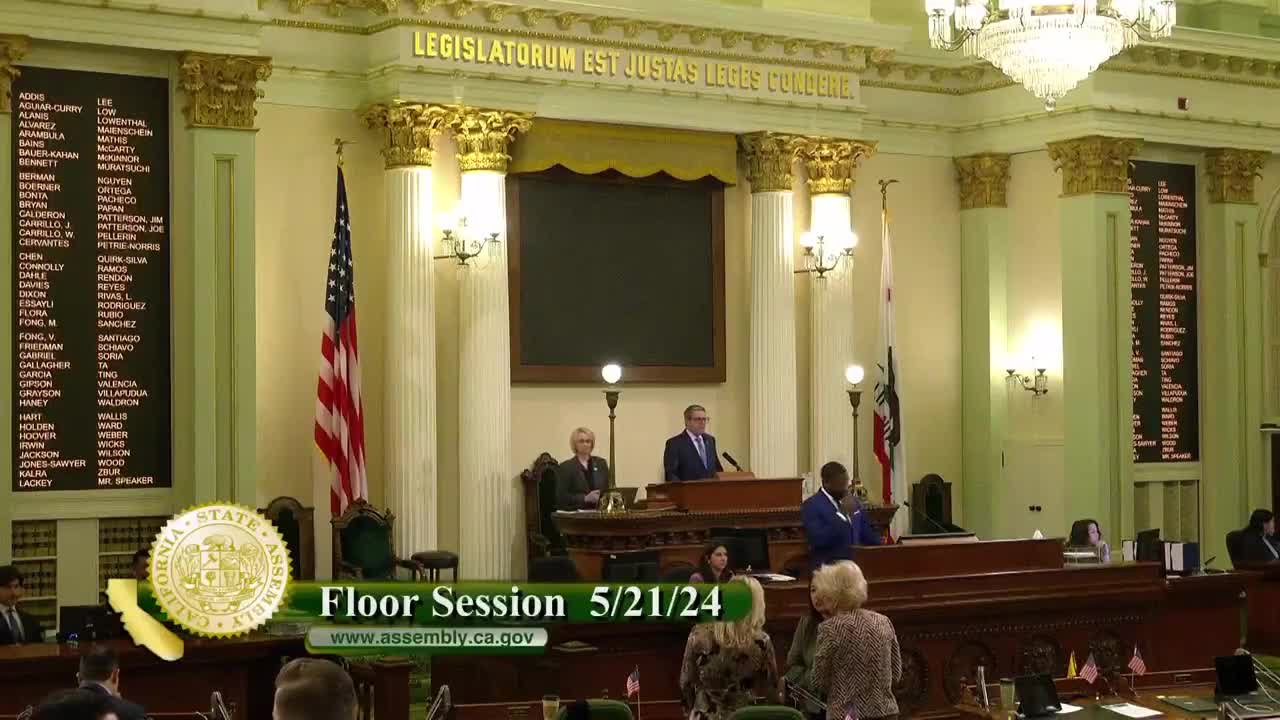
Bill Author

Bill Co-Author(s):