AB 2508: Student financial aid: California Kids Investment and Development Savings (KIDS) Program: foster youth.
- Session Year: 2023-2024
- House: Assembly
- Latest Version Date: 2024-09-26
Current Status:
Passed
(2024-09-26: Chaptered by Secretary of State - Chapter 622, Statutes of 2024.)
Introduced
In Committee
First Chamber
In Committee
Second Chamber
Enacted
Existing law establishes the California Kids Investment and Development Savings (KIDS) Program, under the administration of the Scholarshare Investment Board (board), for purposes of expanding access to higher education through savings. Existing law, for the 202122 fiscal year, requires a KIDS Account to be established for all unduplicated pupils enrolled at a school district, public charter school, state special school, or other local educational agency, if one has not already been established for them, and requires the account to receive an enhanced deposit of $500. Existing law, for the 202122 fiscal year, requires an eligible pupil who is also a foster youth, as defined, to receive an additional enhanced deposit of $500.
Existing law, commencing with the 202223 fiscal year, requires a KIDS Account to be opened for all unduplicated pupils enrolled at a school district, public charter school, state special school, or other local educational agency when the pupil is enrolled in first grade, if an account has not already been established for them, and requires the account to receive an enhanced deposit of $500. Existing law, commencing with the 202223 fiscal year, requires an eligible first grade pupil who is also a foster youth, as defined, to receive an additional enhanced deposit of $500.
This bill, commencing with the 202526 fiscal year and subject to an appropriation by the Legislature, would (1) require a KIDS Account to be opened for a pupil who is a foster youth and is enrolled in any of grades 1 to 12, inclusive, at a school district, public charter school, state special school, or other local educational agency, if an account has not already been established for them, and would require the account to receive a one-time enhanced deposit of $500, and (2) require an additional enhanced deposit of $500 for those foster youth who did not previously receive the above-described deposits for unduplicated pupils in the 202122 fiscal year and unduplicated pupils in the first grade commencing with the 202223 fiscal year, as provided. The bill would limit the one-time enhanced deposits provided by the bill to the KIDS Accounts of those foster youth that had not already received one of the above-described enhanced deposits for foster youth. The bill would make these new provisions relating to enhanced deposits for foster youth inoperative on January 1, 2029.
Existing law establishes the California Kids Investment and Development Savings (KIDS) Program, under the administration of the Scholarshare Investment Board (board), for purposes of expanding access to higher education through savings. Existing law, for the 202122 fiscal year, requires a KIDS Account to be established for all unduplicated pupils enrolled at a school district, public charter school, state special school, or other local educational agency, if one has not already been established for them, and requires the account to receive an enhanced deposit of $500. Existing law, for the 202122 fiscal year, requires an eligible pupil who is also a foster youth, as defined, to receive an additional enhanced deposit of $500.
Existing law, commencing with the 202223 fiscal year, requires a KIDS Account to be opened for all unduplicated pupils enrolled at a school district, public charter school, state special school, or other local educational agency when the pupil is enrolled in first grade, if an account has not already been established for them, and requires the account to receive an enhanced deposit of $500. Existing law, commencing with the 202223 fiscal year, requires an eligible first grade pupil who is also a foster youth, as defined, to receive an additional enhanced deposit of $500.
This bill, commencing with the 202526 fiscal year and subject to an appropriation by the Legislature, would (1) require a KIDS Account to be opened for a pupil who is a foster youth and is enrolled in any of grades 1 to 12, inclusive, at a school district, public charter school, state special school, or other local educational agency, if an account has not already been established for them, and would require the account to receive a one-time enhanced deposit of $500, and (2) authorize require an additional enhanced deposit of $500 for those foster youth who did not previously receive the above-described deposits for unduplicated pupils in the 202122 fiscal year and unduplicated pupils in the first grade commencing with the 202223 fiscal year, as provided. The bill would limit the one-time enhanced deposits provided by the bill to the KIDS Accounts of those foster youth that had not already received one of the above-described enhanced deposits for foster youth. The bill would, commencing with the 202526 fiscal year, require the board to collaborate with the State Department of Education to establish a process to enable a foster youth pupil who met any of the above-described eligibility criteria related to enhanced deposits for foster youth, but who did not receive the applicable enhanced deposit due to a failure in the identification process, to subsequently receive the enhanced deposit. would make these new provisions relating to enhanced deposits for foster youth inoperative on January 1, 2029.
Existing law authorizes the board to consider marketing the program to California residents, as provided, and requires the board to annually report to the Department of Finance and the Legislature information pertaining to the programs implementation, as provided.This bill would require any marketing efforts developed by the board to include specific strategies to reach foster youth, and would require the annual reports to include specified information about foster pupils or homeless youth, as provided.Existing law establishes the California Kids Investment and Development Savings (KIDS) Program, under the administration of the Scholarshare Investment Board (board), for purposes of expanding access to higher education through savings. Existing law, for the 202122 fiscal year, requires a KIDS Account to be established for all unduplicated pupils enrolled at a school district, public charter school, state special school, or other local educational agency, if one has not already been established for them, and requires the account to receive an enhanced deposit of $500. Existing law, for the 202122 fiscal year, requires an eligible pupil who is also a foster youth, as defined, to receive an additional enhanced deposit of $500.
Existing law, commencing with the 202223 fiscal year, requires a KIDS Account to be opened for all unduplicated pupils enrolled at a school district, public charter school, state special school, or other local educational agency when the pupil is enrolled in first grade, if an account has not already been established for them, and requires the account to receive an enhanced deposit of $500. Existing law, commencing with the 202223 fiscal year, requires an eligible first grade pupil who is also a foster youth, as defined, to receive an additional enhanced deposit of $500.
This bill, commencing with the 202526 fiscal year and subject to an appropriation by the Legislature, would (1) require a KIDS Account to be opened for a pupil who is a foster youth and is enrolled in any of grades 1 to 12, inclusive, at a school district, public charter school, state special school, or other local educational agency, if an account has not already been established for them, and would require the account to receive a one-time enhanced deposit of $500, and (2) authorize an additional enhanced deposit of $500 for those foster youth who did not previously receive the above-described deposits for unduplicated pupils in the 202122 fiscal year and unduplicated pupils in the first grade commencing with the 202223 fiscal year, as provided. The bill would limit the one-time enhanced deposit deposits provided by the bill to the KIDS Accounts of those foster youth that had not already received one of the above-described enhanced deposits for foster youth. The bill would, commencing with the 202526 fiscal year, require the board to collaborate with the State Department of Education to establish a process to enable a foster youth pupil who met any of the above-described eligibility criteria related to enhanced deposits for foster youth, but who did not receive the applicable enhanced deposit due to a failure in the identification process, to subsequently receive the enhanced deposit.
Existing law authorizes the board to consider marketing the program to California residents, as provided, and requires the board to annually report to the Department of Finance and the Legislature information pertaining to the programs implementation, as provided.
This bill would require any marketing efforts developed by the board to include specific strategies to reach foster youth, and would require the annual reports to include specified information about foster pupils or homeless youth, as provided.
Existing law establishes the California Kids Investment and Development Savings (KIDS) Program, under the administration of the Scholarshare Investment Board (board), for purposes of expanding access to higher education through savings. Existing law, for the 202122 fiscal year, requires a KIDS Account to be established for all unduplicated pupils enrolled at a school district, public charter school, state special school, or other local educational agency, if one has not already been established for them, and requires the account to receive an enhanced deposit of $500. Existing law, for the 202122 fiscal year, requires an eligible pupil who is also a foster youth, as defined, to receive an additional enhanced deposit of $500.
Existing law, commencing with the 202223 fiscal year, requires a KIDS Account to be opened for all unduplicated pupils enrolled at a school district, public charter school, state special school, or other local educational agency when the pupil is enrolled in first grade, if an account has not already been established for them, and requires the account to receive an enhanced deposit of $500. Existing law, commencing with the 202223 fiscal year, requires an eligible first grade pupil who is also a foster youth, as defined, to receive an additional enhanced deposit of $500.
This bill, commencing with the 202526 fiscal year and subject to an appropriation by the Legislature, would require a KIDS Account to be opened for a pupil who is a foster youth and is enrolled in any of grades 1 to 12, inclusive, at a school district, public charter school, state special school, or other local educational agency, if an account has not already been established for them, and would require the account to receive a one-time enhanced deposit of $500, as provided. The bill would limit the one-time enhanced deposit provided by the bill to the KIDS Accounts of those foster youth that had not already received one of the above-described enhanced deposits for foster youth.
(a)(1)For the 202122 fiscal year, through the program, all of the following shall occur:
(A)Each pupil enrolled in grades 1 to 12, inclusive, on the State Department of Educations official census day in the 202122 fiscal year who meets the requirements to be considered an unduplicated pupil for purposes of paragraph (2) of subdivision (b) of Section 2574 or paragraph (1) of subdivision (b) of Section 42238.02 and who is enrolled at a school district, public charter school, state special school, or other local educational agency, shall have a KIDS Account established on the pupils behalf, unless the pupils KIDS Account has already been established pursuant to Section 69996.3, and shall receive an enhanced deposit into the pupils KIDS Account in the amount of five hundred dollars ($500).
(B)In addition to the amount allocated pursuant to subparagraph (A), the KIDS Account of each eligible pupil who is also a foster youth, as defined under subdivision (b) of Section 42238.01, shall receive an enhanced deposit of an additional five hundred dollars ($500).
(C)In addition to the amount allocated pursuant to subparagraphs (A) and (B), the KIDS Account of each eligible pupil who is also a homeless pupil meeting the definition of homeless children and youths in subsection (2) of Section 725 of the federal McKinney-Vento Homeless Assistance Act (42 U.S.C. Sec. 11434a(2)) shall receive an enhanced deposit of an additional five hundred dollars ($500).
(2)Commencing with the 202223 fiscal year, through the program, all of the following shall occur:
(A)Each pupil who meets all of the following conditions shall have a KIDS Account opened on their behalf, unless their account has already been established pursuant to Section 69996.3, and shall receive an enhanced deposit into their KIDS Account in the amount of five hundred dollars ($500):
(i)The pupil is enrolled in first grade on the State Department of Educations official census day in the applicable fiscal year.
(ii)The pupil meets the requirements to be considered an unduplicated pupil for purposes of paragraph (2) of subdivision (b) of Section 2574 or paragraph (1) of subdivision (b) of Section 42238.02.
(iii)The pupil is enrolled at a school district, public charter school, state special school, or other local educational agency.
(B)In addition to the amount allocated pursuant to subparagraph (A), the KIDS Account of each pupil who meets the requirements of subparagraph (A) and is also a foster youth, as defined under subdivision (b) of Section 42238.01, shall receive an enhanced deposit of an additional five hundred dollars ($500).
(C)In addition to the amount allocated pursuant to subparagraphs (A) and (B), the KIDS Account of each pupil who meets the requirements of subparagraph (A) and is also a homeless pupil under the definition of homeless children and youths in subsection (2) of Section 725 of the federal McKinney-Vento Homeless Assistance Act (42 U.S.C. Sec. 11434a(2)) shall receive an enhanced deposit of an additional five hundred dollars ($500).
(D)For pupils for whom a KIDS Account has already been established pursuant to Section 69996.3 and who are also eligible for an enhanced deposit pursuant to this paragraph, the enhanced deposit shall be deposited in the KIDS Account in which funding for that pupil is currently held.
(3)(A)Commencing with the 202526 fiscal year, and subject to an appropriation by the Legislature, through the program, both of the following shall occur:
(i)(I)Each pupil who is a foster youth, as defined under subdivision (b) of Section 42238.01, and is enrolled in any of grades 1 to 12, inclusive, at a school district, public charter school, state special school, or other local educational agency, shall have a KIDS Account opened on their behalf, unless their account has already been established pursuant to Section 69996.3, and shall receive an enhanced deposit of an additional five hundred dollars ($500).
(II)Each foster youth pupil described in subclause (I) who did not previously receive a deposit pursuant to either subparagraph (A) of paragraph (1) of subdivision (a), or subparagraph (A) of paragraph (2) of subdivision (a), shall further receive an enhanced deposit of five hundred dollars ($500) in addition to the deposit pursuant to subclause (I).
(III)Upon receiving an enhanced deposit pursuant to subclause (I) or (II) in any fiscal year, a pupil shall not be eligible for an enhanced deposit pursuant to subclause (I) or (II) in any subsequent fiscal year.
(ii)For pupils for whom a KIDS Account has already been established pursuant to Section 69996.3 and who are also eligible for an enhanced deposit pursuant to this subparagraph, the enhanced deposit shall be deposited in the KIDS Account in which funding for that pupil is currently held.
(B)This paragraph shall become inoperative on January 1, 2029.
(4)(A)A pupil who receives an enhanced deposit into their KIDS Account pursuant to paragraph (1) or (2) may only have one enhanced deposit made into their existing or newly established KIDS Account pursuant to this article, except as provided for in subparagraph (B). A pupil shall not have more than one KIDS Account established for them pursuant to this article.
(B)Notwithstanding subparagraph (A), a pupil who receives an enhanced deposit into their KIDS Account pursuant to subparagraph (A) or (C) of paragraph (1), or a pupil who receives an enhanced deposit pursuant to subparagraph (A) or (C) of paragraph (2), may also receive enhanced deposits pursuant to paragraph (3).
(b)(1)The board shall collaborate with the State Department of Education, or other relevant governmental agencies, to identify eligible pupils for the purpose of establishing KIDS Accounts or making an enhanced deposit into existing KIDS Accounts pursuant to this section. To the extent feasible, the State Department of Education shall annually provide necessary data using census day data in a secure manner for the board to fulfill its obligations pursuant to this article, including, but not necessarily limited to, eligible pupils names, pupil identification, birth dates, grade levels, contact information of parents or legal guardians, and eligibility information. For purposes of this subdivision, the information received by the board shall be considered necessary to facilitate the establishment or enhancement of KIDS Accounts, or the establishment of a notification process for parents or legal guardians of eligible pupils.
(2)The board shall comply with federal and state laws to protect individual privacy, including, but not limited to, the Information Practices Act of 1977 (Chapter 1 (commencing with Section 1798) of Title 1.8 of Part 4 of Division 3 of the Civil Code) and all of the following federal statutes:
(A)The Family Educational Rights and Privacy Act of 1974 (Public Law 93-380, as amended).
(B)The Health Insurance Portability and Accountability Act of 1996 (Public Law 104-191, as amended).
(C)The Higher Education Act of 1965 (Public Law 89-329, as amended).
(3)Notwithstanding any other law, individual records or source data associated with the establishment of a KIDS Account pursuant to this article shall not be subject to disclosure under the California Public Records Act (Division 10 (commencing with Section 7920.000) of Title 1 of the Government Code).
(c)The Legislature finds and declares that undocumented persons are eligible for KIDS Accounts within the meaning of subsection (d) of Section 1621 of Title 8 of the United States Code.
(d)It is the intent of the Legislature to appropriate state funding in the annual Budget Act to support the establishment of a KIDS Account for any eligible pupil who meets, or could meet in a future year, the requirements to be exempt from nonresident tuition pursuant to subdivision (a) of Section 68130.5.
(e)(1)For the 202324 and 202425 fiscal years, the board shall partner with the Los Angeles Unified School District and the Riverside County Office of Education, including the 23 school districts in the County of Riverside, to explore ways to increase participation in the KIDS Program.
(2)As permissible under federal and state data privacy and data security laws, the board shall provide the local educational agencies specified in paragraph (1) with the statewide student identifiers of pupils within their respective jurisdictions who have not yet engaged with the KIDS Account established on their behalf commencing with the 202122 fiscal year. The board shall provide data at least three times per year to the extent feasible. Upon receipt of this data, the local educational agencies shall be responsible for complying with all applicable federal and state data privacy and data security laws relating to pupil record information.
(3)The board shall comply with federal and state laws to protect individual privacy, including, but not limited to, the Information Practices Act of 1977 (Chapter 1 (commencing with Section 1798) of Title 1.8 of Part 4 of Division 3 of the Civil Code) and all of the following federal statutes:
(A)The Family Educational Rights and Privacy Act of 1974 (Public Law 93-380, as amended).
(B)The Health Insurance Portability and Accountability Act of 1996 (Public Law 104-191, as amended).
(C)The Higher Education Act of 1965 (Public Law 89-329, as amended).
(4)(A)On or before September 30, 2025, the board, in collaboration with the local educational agencies specified in paragraph (1), shall submit a report to the Department of Finance and the Legislature, pursuant to Section 9795 of the Government Code. The report shall include, at a minimum, all of the following:
(i)The number of KIDS Program participants within the jurisdictions of the partnering local educational agencies that have registered on the programs online portal and the number that have linked their KIDS Account to a Scholarshare 529 account.
(ii)The number of KIDS Program participants within the jurisdictions of the partnering local educational agencies that have requested a distribution of funds for qualified higher education expenses and the total amount of those payments.
(iii)A comparison of the rates specified in clauses (i) and (ii) with the rates of KIDS Program participants statewide.
(iv)As provided by the partnering local educational agencies, a description of the outreach strategies they implemented that were aimed at increasing participation in the KIDS Program, along with any information available on the direct impact of each of those strategies.
(v)Recommendations for improving KIDS Program structure and outreach in collaboration with local educational agencies.
(B)The board may include this information in its annual report on the KIDS Program pursuant to subdivision (c) of Section 69996.6.
(5)This subdivision shall become inoperative on July 1, 2025.
(a)(1)For the 202122 fiscal year, through the program, all of the following shall occur:
(A)Each pupil enrolled in grades 1 to 12, inclusive, on the State Department of Educations official census day in the 202122 fiscal year who meets the requirements to be considered an unduplicated pupil for purposes of paragraph (2) of subdivision (b) of Section 2574 or paragraph (1) of subdivision (b) of Section 42238.02 and who is enrolled at a school district, public charter school, state special school, or other local educational agency, shall have a KIDS Account established on the pupils behalf, unless the pupils KIDS Account has already been established pursuant to Section 69996.3, and shall receive an enhanced deposit into the pupils KIDS Account in the amount of five hundred dollars ($500).
(B)In addition to the amount allocated pursuant to subparagraph (A), the KIDS Account of each eligible pupil who is also a foster youth, as defined under subdivision (b) of Section 42238.01, shall receive an enhanced deposit of an additional five hundred dollars ($500).
(C)In addition to the amount allocated pursuant to subparagraphs (A) and (B), the KIDS Account of each eligible pupil who is also a homeless pupil meeting the definition of homeless children and youths in subsection (2) of Section 725 of the federal McKinney-Vento Homeless Assistance Act (42 U.S.C. Sec. 11434a(2)) shall receive an enhanced deposit of an additional five hundred dollars ($500).
(2)Commencing with the 202223 fiscal year, through the program, all of the following shall occur:
(A)Each pupil who meets all of the following conditions shall have a KIDS Account opened on their behalf, unless their account has already been established pursuant to Section 69996.3, and shall receive an enhanced deposit into their KIDS Account in the amount of five hundred dollars ($500):
(i)The pupil is enrolled in first grade on the State Department of Educations official census day in the applicable fiscal year.
(ii)The pupil meets the requirements to be considered an unduplicated pupil for purposes of paragraph (2) of subdivision (b) of Section 2574 or paragraph (1) of subdivision (b) of Section 42238.02.
(iii)The pupil is enrolled at a school district, public charter school, state special school, or other local educational agency.
(B)In addition to the amount allocated pursuant to subparagraph (A), the KIDS Account of each pupil who meets the requirements of subparagraph (A) and is also a foster youth, as defined under subdivision (b) of Section 42238.01, shall receive an enhanced deposit of an additional five hundred dollars ($500).
(C)In addition to the amount allocated pursuant to subparagraphs (A) and (B), the KIDS Account of each pupil who meets the requirements of subparagraph (A) and is also a homeless pupil under the definition of homeless children and youths in subsection (2) of Section 725 of the federal McKinney-Vento Homeless Assistance Act (42 U.S.C. Sec. 11434a(2)) shall receive an enhanced deposit of an additional five hundred dollars ($500).
(D)For pupils for whom a KIDS Account has already been established pursuant to Section 69996.3 and who are also eligible for an enhanced deposit pursuant to this paragraph, the enhanced deposit shall be deposited in the KIDS Account in which funding for that pupil is currently held.
(3)(A)Commencing with the 202526 fiscal year, and subject to an appropriation by the Legislature, through the program, both of the following shall occur:
(A)(i)Each(i)(I)Each pupil who is a foster youth, as defined under subdivision (b) of Section 42238.01, and is enrolled in any of grades 1 to 12, inclusive, at a school district, public charter school, state special school, or other local educational agency, shall have a KIDS Account opened on their behalf, unless their account has already been established pursuant to Section 69996.3, and shall receive an enhanced deposit of an additional five hundred dollars ($500).
(ii)(II)Each foster youth pupil described in clause (i) subclause (I) who did not previously receive a deposit pursuant to either subparagraph (A) of paragraph (1) of subdivision (a), or subparagraph (A) of paragraph (2) of subdivision (a), shall further receive an enhanced deposit of five hundred dollars ($500) in addition to the deposit pursuant to clause (i). subclause (I).
(iii)(III)Upon receiving an enhanced deposit pursuant to clause (i) or (ii) subclause (I) or (II) in any fiscal year, a pupil shall not be eligible for an enhanced deposit pursuant to clause (i) or (ii) subclause (I) or (II) in any subsequent fiscal year.
(B)(ii)For pupils for whom a KIDS Account has already been established pursuant to Section 69996.3 and who are also eligible for an enhanced deposit pursuant to this paragraph, subparagraph, the enhanced deposit shall be deposited in the KIDS Account in which funding for that pupil is currently held.
(B)This paragraph shall become inoperative on January 1, 2029.
(4)(A)A pupil who receives an enhanced deposit into their KIDS Account pursuant to paragraph (1) or (2) may only have one enhanced deposit made into their existing or newly established KIDS Account pursuant to this article, except as provided for in subparagraph (B). A pupil shall not have more than one KIDS Account established for them pursuant to this article.
(B)Notwithstanding subparagraph (A), a pupil who receives an enhanced deposit into their KIDS Account pursuant to subparagraph (A) or (C) of paragraph (1), or a pupil who receives an enhanced deposit pursuant to subparagraph (A) or (C) of paragraph (2), may also receive enhanced deposits pursuant to paragraph (3).
(b)(1)The board shall collaborate with the State Department of Education, or other relevant governmental agencies, to identify eligible pupils for the purpose of establishing KIDS Accounts or making an enhanced deposit into existing KIDS Accounts pursuant to this section. To the extent feasible, the State Department of Education shall annually provide necessary data using census day data in a secure manner for the board to fulfill its obligations pursuant to this article, including, but not necessarily limited to, eligible pupils names, pupil identification, birth dates, grade levels, contact information of parents or legal guardians, and eligibility information. For purposes of this subdivision, the information received by the board shall be considered necessary to facilitate the establishment or enhancement of KIDS Accounts, or the establishment of a notification process for parents or legal guardians of eligible pupils.
(2)Commencing with the 202526 fiscal year, the board shall collaborate with the State Department of Education to establish a process to enable a foster youth pupil who met the eligibility criteria to receive an enhanced deposit into their KIDS Account pursuant to subparagraph (B) of paragraph (1) of subdivision (a), subparagraph (B) of paragraph (2) of subdivision (a), or paragraph (3) of subdivision (a), but who did not receive this enhanced deposit due to a failure in the identification process, to subsequently receive the enhanced deposit.(3)(2)The board shall comply with federal and state laws to protect individual privacy, including, but not limited to, the Information Practices Act of 1977 (Chapter 1 (commencing with Section 1798) of Title 1.8 of Part 4 of Division 3 of the Civil Code) and all of the following federal statutes:
(A)The Family Educational Rights and Privacy Act of 1974 (Public Law 93-380, as amended).
(B)The Health Insurance Portability and Accountability Act of 1996 (Public Law 104-191, as amended).
(C)The Higher Education Act of 1965 (Public Law 89-329, as amended).
(4)(3)Notwithstanding any other law, individual records or source data associated with the establishment of a KIDS Account pursuant to this article shall not be subject to disclosure under the California Public Records Act (Division 10 (commencing with Section 7920.000) of Title 1 of the Government Code).
(c)The Legislature finds and declares that undocumented persons are eligible for KIDS Accounts within the meaning of subsection (d) of Section 1621 of Title 8 of the United States Code.
(d)It is the intent of the Legislature to appropriate state funding in the annual Budget Act to support the establishment of a KIDS Account for any eligible pupil who meets, or could meet in a future year, the requirements to be exempt from nonresident tuition pursuant to subdivision (a) of Section 68130.5.
(e)(1)For the 202324 and 202425 fiscal years, the board shall partner with the Los Angeles Unified School District and the Riverside County Office of Education, including the 23 school districts in the County of Riverside, to explore ways to increase participation in the KIDS Program.
(2)As permissible under federal and state data privacy and data security laws, the board shall provide the local educational agencies specified in paragraph (1) with the statewide student identifiers of pupils within their respective jurisdictions who have not yet engaged with the KIDS Account established on their behalf commencing with the 202122 fiscal year. The board shall provide data at least three times per year to the extent feasible. Upon receipt of this data, the local educational agencies shall be responsible for complying with all applicable federal and state data privacy and data security laws relating to pupil record information.
(3)The board shall comply with federal and state laws to protect individual privacy, including, but not limited to, the Information Practices Act of 1977 (Chapter 1 (commencing with Section 1798) of Title 1.8 of Part 4 of Division 3 of the Civil Code) and all of the following federal statutes:
(A)The Family Educational Rights and Privacy Act of 1974 (Public Law 93-380, as amended).
(B)The Health Insurance Portability and Accountability Act of 1996 (Public Law 104-191, as amended).
(C)The Higher Education Act of 1965 (Public Law 89-329, as amended).
(4)(A)On or before September 30, 2025, the board, in collaboration with the local educational agencies specified in paragraph (1), shall submit a report to the Department of Finance and the Legislature, pursuant to Section 9795 of the Government Code. The report shall include, at a minimum, all of the following:
(i)The number of KIDS Program participants within the jurisdictions of the partnering local educational agencies that have registered on the programs online portal and the number that have linked their KIDS Account to a Scholarshare 529 account.
(ii)The number of KIDS Program participants within the jurisdictions of the partnering local educational agencies that have requested a distribution of funds for qualified higher education expenses and the total amount of those payments.
(iii)A comparison of the rates specified in clauses (i) and (ii) with the rates of KIDS Program participants statewide.
(iv)As provided by the partnering local educational agencies, a description of the outreach strategies they implemented that were aimed at increasing participation in the KIDS Program, along with any information available on the direct impact of each of those strategies.
(v)Recommendations for improving KIDS Program structure and outreach in collaboration with local educational agencies.
(B)The board may include this information in its annual report on the KIDS Program pursuant to subdivision (c) of Section 69996.6.
(5)This subdivision shall become inoperative on July 1, 2025.
The board may consider marketing the program to California residents. The board may include in its marketing efforts information designed to educate California residents about the benefits of saving for higher education and information to help them decide the combination of savings strategies that may be appropriate for them. Any marketing efforts developed by the board shall include specific strategies to reach foster youth.
SEC. 2.Section 69996.6 of the Education Code is amended to read:69996.6.(a)The California Kids Investment and Development Savings Program Fund is hereby established in the State Treasury. Notwithstanding Section 13340 of the Government Code, except for moneys derived from the federal American Rescue Plan Act, moneys in the fund shall be continuously appropriated, without regard to fiscal years, to the board for the program. The fund shall be the initial repository of all appropriations, gifts, or other financial assets received by the board in connection with operation of the program.
(b)(1)Subject to available funding, the program shall be implemented on or before July 1, 2022. The board may establish an implementation timeline for the program based on available funding. If the board does not secure adequate funds to implement the program before July 2, 2022, program implementation may be delayed while the board makes good faith efforts to secure necessary funding. The board may accept gifts, grants, awards, matching contributions, interest income, and appropriations from individuals, businesses, state and local governmental entities, and third-party sources for the program on terms the board deems advisable.
(2)Before the program is implemented and throughout the programs operation, the board may authorize a county, city, nonprofit organization, or any other entity operating a local child savings account program to provide input to the program established pursuant to this article. The input may include, but is not limited to, information on any of the following:
(A)Infrastructure and systems development.
(B)Outreach and coordination with local child savings account programs.
(C)Program incentives to promote equity.
(D)Administrative fees and caps.
(E)Contribution strategies.
(F)Program accessibility, including language, identification, and banking access.
(c)On or before June 30, 2023, and on or before September 30 annually thereafter, the board shall report to the Department of Finance and the Legislature, pursuant to Section 9795 of the Government Code, information pertaining to the programs implementation. The report shall include, at a minimum, all of the following:
(1)Detailed program expenditure information, including the amount of funds expended to establish KIDS Accounts pursuant to this article in the previous five fiscal years. This shall include the number of pupils who received augmented payments based on status as foster youth or homeless pupils.
(2)The number of KIDS Accounts opened and state and nonstate contributions made to KIDS Accounts.
(3)Information about how parents were notified pursuant to subdivision (b) of Section 69996.3.
(4)The number of parents or legal guardians who engage with KIDS Accounts by verifying receipt of information provided to them pursuant to paragraph (2) of subdivision (b) of Section 69996.3, establishing separate accounts pursuant to Article 19 (commencing with Section 69980), or engaging with KIDS Accounts by other means approved by the board. This shall include a disaggregation of the number of parents or legal guardians of pupils who received augmented payments based on status as foster youth or homeless pupils who engage with KIDS Accounts.
(5)A description of the boards efforts and success in soliciting philanthropic or nonstate money to support the program.
(6)A description of the boards marketing of the program. program, including any efforts to reach foster youth.
(7)The rate of investment return earned by the money authorized by this article in the previous five fiscal years.
(8)To the extent that information is available and can be disclosed without providing any opportunity to associate the information with particular individuals, the board shall include information on the ethnicity, gender, and family income of account recipients.
(9)Recommendations for improving the program.
SECTION 1.SEC. 3.Section 69996.9 of the Education Code is amended to read:69996.9.(a)(1)For the 202122 fiscal year, through the program, all of the following shall occur:
(A)Each pupil enrolled in grades 1 to 12, inclusive, on the State Department of Educations official census day in the 202122 fiscal year who meets the requirements to be considered an unduplicated pupil for purposes of paragraph (2) of subdivision (b) of Section 2574 or paragraph (1) of subdivision (b) of Section 42238.02 and who is enrolled at a school district, public charter school, state special school, or other local educational agency, shall have a KIDS Account established on the pupils behalf, unless the pupils KIDS Account has already been established pursuant to Section 69996.3, and shall receive an enhanced deposit into the pupils KIDS Account in the amount of five hundred dollars ($500).
(B)In addition to the amount allocated pursuant to subparagraph (A), the KIDS Account of each eligible pupil who is also a foster youth, as defined under subdivision (b) of Section 42238.01, shall receive an enhanced deposit of an additional five hundred dollars ($500).
(C)In addition to the amount allocated pursuant to subparagraphs (A) and (B), the KIDS Account of each eligible pupil who is also a homeless pupil meeting the definition of homeless children and youths in subsection (2) of Section 725 of the federal McKinney-Vento Homeless Assistance Act (42 U.S.C. Sec. 11434a(2)) shall receive an enhanced deposit of an additional five hundred dollars ($500).
(2)Commencing with the 202223 fiscal year, through the program, all of the following shall occur:
(A)Each pupil who meets all of the following conditions shall have a KIDS Account opened on their behalf, unless their account has already been established pursuant to Section 69996.3, and shall receive an enhanced deposit into their KIDS Account in the amount of five hundred dollars ($500):
(i)The pupil is enrolled in first grade on the State Department of Educations official census day in the applicable fiscal year.
(ii)The pupil meets the requirements to be considered an unduplicated pupil for purposes of paragraph (2) of subdivision (b) of Section 2574 or paragraph (1) of subdivision (b) of Section 42238.02.
(iii)The pupil is enrolled at a school district, public charter school, state special school, or other local educational agency.
(B)In addition to the amount allocated pursuant to subparagraph (A), the KIDS Account of each pupil who meets the requirements of subparagraph (A) and is also a foster youth, as defined under subdivision (b) of Section 42238.01, shall receive an enhanced deposit of an additional five hundred dollars ($500).
(C)In addition to the amount allocated pursuant to subparagraphs (A) and (B), the KIDS Account of each pupil who meets the requirements of subparagraph (A) and is also a homeless pupil under the definition of homeless children and youths in subsection (2) of Section 725 of the federal McKinney-Vento Homeless Assistance Act (42 U.S.C. Sec. 11434a(2)) shall receive an enhanced deposit of an additional five hundred dollars ($500).
(D)For pupils for whom a KIDS Account has already been established pursuant to Section 69996.3 and who are also eligible for an enhanced deposit pursuant to this paragraph, the enhanced deposit shall be deposited in the KIDS Account in which funding for that pupil is currently held.
(3)Commencing with the 202526 fiscal year, and subject to an appropriation by the Legislature, through the program, both of the following shall occur:
(A)(i)Each pupil who is a foster youth, as defined under subdivision (b) of Section 42238.01, and is enrolled in any of grades 1 to 12, inclusive, at a school district, public charter school, state special school, or other local educational agency, shall have a KIDS Account opened on their behalf, unless their account has already been established pursuant to Section 69996.3, and shall receive an enhanced deposit of an additional five hundred dollars ($500).
(ii)Each foster youth pupil described in clause (i) who did not previously receive a deposit pursuant to either subparagraph (A) of paragraph (1) of subdivision (a), or subparagraph (A) of paragraph (2) of subdivision (a), shall further receive an enhanced deposit of five hundred dollars ($500) in addition to the deposit pursuant to clause (i).
(ii)(iii)Upon receiving an enhanced deposit pursuant to clause (i) or (ii) in any fiscal year, a pupil shall not be eligible for an enhanced deposit pursuant to clause (i) or (ii) in any subsequent fiscal year.
(B)For pupils for whom a KIDS Account has already been established pursuant to Section 69996.3 and who are also eligible for an enhanced deposit pursuant to this paragraph, the enhanced deposit shall be deposited in the KIDS Account in which funding for that pupil is currently held.
(4)(A)A pupil who receives an enhanced deposit into their KIDS Account pursuant to paragraph (1) or (2) may only have one enhanced deposit made into their existing or newly established KIDS Account pursuant to this article, except as provided for in subparagraph (B). A pupil shall not have more than one KIDS Account established for them pursuant to this article.
(5)(B)Notwithstanding subparagraph (A), a pupil who receives an enhanced deposit into their KIDS Account pursuant to subparagraph (A) or (C) of paragraph (1), or a pupil who receives an enhanced deposit pursuant to subparagraph (A) or (C) of paragraph (2), may also receive a single enhanced deposit enhanced deposits pursuant to paragraph (3).
(b)(1)The board shall collaborate with the State Department of Education, or other relevant governmental agencies, to identify eligible pupils for the purpose of establishing KIDS Accounts or making an enhanced deposit into existing KIDS Accounts pursuant to this section. To the extent feasible, the State Department of Education shall annually provide necessary data using census day data in a secure manner for the board to fulfill its obligations pursuant to this article, including, but not necessarily limited to, eligible pupils names, pupil identification, birth dates, grade levels, contact information of parents or legal guardians, and eligibility information. For purposes of this subdivision, the information received by the board shall be considered necessary to facilitate the establishment or enhancement of KIDS Accounts, or the establishment of a notification process for parents or legal guardians of eligible pupils.
(2)Commencing with the 202526 fiscal year, the board shall collaborate with the State Department of Education to establish a process to enable a foster youth pupil who met the eligibility criteria to receive an enhanced deposit into their KIDS Account pursuant to subparagraph (B) of paragraph (1) of subdivision (a), subparagraph (B) of paragraph (2) of subdivision (a), or paragraph (3) of subdivision (a), but who did not receive this enhanced deposit due to a failure in the identification process, to subsequently receive the enhanced deposit.
(2)(3)The board shall comply with federal and state laws to protect individual privacy, including, but not limited to, the Information Practices Act of 1977 (Chapter 1 (commencing with Section 1798) of Title 1.8 of Part 4 of Division 3 of the Civil Code) and all of the following federal statutes:
(A)The Family Educational Rights and Privacy Act of 1974 (Public Law 93-380, as amended).
(B)The Health Insurance Portability and Accountability Act of 1996 (Public Law 104-191, as amended).
(C)The Higher Education Act of 1965 (Public Law 89-329, as amended).
(3)(4)Notwithstanding any other law, individual records or source data associated with the establishment of a KIDS Account pursuant to this article shall not be subject to disclosure under the California Public Records Act (Division 10 (commencing with Section 7920.000) of Title 1 of the Government Code).
(c)The Legislature finds and declares that undocumented persons are eligible for KIDS Accounts within the meaning of subsection (d) of Section 1621 of Title 8 of the United States Code.
(d)It is the intent of the Legislature to appropriate state funding in the annual Budget Act to support the establishment of a KIDS Account for any eligible pupil who meets, or could meet in a future year, the requirements to be exempt from nonresident tuition pursuant to subdivision (a) of Section 68130.5.
(e)(1)For the 202324 and 202425 fiscal years, the board shall partner with the Los Angeles Unified School District and the Riverside County Office of Education, including the 23 school districts in the County of Riverside, to explore ways to increase participation in the KIDS Program.
(2)As permissible under federal and state data privacy and data security laws, the board shall provide the local educational agencies specified in paragraph (1) with the statewide student identifiers of pupils within their respective jurisdictions who have not yet engaged with the KIDS Account established on their behalf commencing with the 202122 fiscal year. The board shall provide data at least three times per year to the extent feasible. Upon receipt of this data, the local educational agencies shall be responsible for complying with all applicable federal and state data privacy and data security laws relating to pupil record information.
(3)The board shall comply with federal and state laws to protect individual privacy, including, but not limited to, the Information Practices Act of 1977 (Chapter 1 (commencing with Section 1798) of Title 1.8 of Part 4 of Division 3 of the Civil Code) and all of the following federal statutes:
(A)The Family Educational Rights and Privacy Act of 1974 (Public Law 93-380, as amended).
(B)The Health Insurance Portability and Accountability Act of 1996 (Public Law 104-191, as amended).
(C)The Higher Education Act of 1965 (Public Law 89-329, as amended).
(4)(A)On or before September 30, 2025, the board, in collaboration with the local educational agencies specified in paragraph (1), shall submit a report to the Department of Finance and the Legislature, pursuant to Section 9795 of the Government Code. The report shall include, at a minimum, all of the following:
(i)The number of KIDS Program participants within the jurisdictions of the partnering local educational agencies that have registered on the programs online portal and the number that have linked their KIDS Account to a Scholarshare 529 account.
(ii)The number of KIDS Program participants within the jurisdictions of the partnering local educational agencies that have requested a distribution of funds for qualified higher education expenses and the total amount of those payments.
(iii)A comparison of the rates specified in clauses (i) and (ii) with the rates of KIDS Program participants statewide.
(iv)As provided by the partnering local educational agencies, a description of the outreach strategies they implemented that were aimed at increasing participation in the KIDS Program, along with any information available on the direct impact of each of those strategies.
(v)Recommendations for improving KIDS Program structure and outreach in collaboration with local educational agencies.
(B)The board may include this information in its annual report on the KIDS Program pursuant to subdivision (c) of Section 69996.6.
(5)This subdivision shall become inoperative on July 1, 2025.
(a)(1)For the 202122 fiscal year, through the program, all of the following shall occur:
(A)Each pupil enrolled in grades 1 to 12, inclusive, on the State Department of Educations official census day in the 202122 fiscal year who meets the requirements to be considered an unduplicated pupil for purposes of paragraph (1) (2) of subdivision (b) of Section 2574 or paragraph (1) of subdivision (b) of Section 42238.02 and who is enrolled at a school district, public charter school, state special school, or other local educational agency, shall have a KIDS Account established on the pupils behalf, unless the pupils KIDS Account has already been established pursuant to Section 69996.3, and shall receive an enhanced deposit into the pupils KIDS Account in the amount of five hundred dollars ($500).
(B)In addition to the amount allocated pursuant to subparagraph (A), the KIDS Account of each eligible pupil who is also a foster youth, as defined under subdivision (b) of Section 42238.01, shall receive an enhanced deposit of an additional five hundred dollars ($500).
(C)In addition to the amount allocated pursuant to subparagraphs (A) and (B), the KIDS Account of each eligible pupil who is also a homeless pupil meeting the definition of homeless children and youths in subsection (2) of Section 725 of the federal McKinney-Vento Homeless Assistance Act (42 U.S.C. Sec. 11434a(2)) shall receive an enhanced deposit of an additional five hundred dollars ($500).
(2)Commencing with the 202223 fiscal year, through the program, all of the following shall occur:
(A)Each pupil who meets all of the following conditions shall have a KIDS Account opened on their behalf, unless their account has already been established pursuant to Section 69996.3, and shall receive an enhanced deposit into their KIDS Account in the amount of five hundred dollars ($500):
(i)The pupil is enrolled in first grade on the State Department of Educations official census day in the applicable fiscal year.
(ii)The pupil meets the requirements to be considered an unduplicated pupil for purposes of paragraph (1) (2) of subdivision (b) of Section 2574 or paragraph (1) of subdivision (b) of Section 42238.02.
(iii)The pupil is enrolled at a school district, public charter school, state special school, or other local educational agency.
(B)In addition to the amount allocated pursuant to subparagraph (A), the KIDS Account of each pupil who meets the requirements of subparagraph (A) and is also a foster youth, as defined under subdivision (b) of Section 42238.01, shall receive an enhanced deposit of an additional five hundred dollars ($500).
(C)In addition to the amount allocated pursuant to subparagraphs (A) and (B), the KIDS Account of each pupil who meets the requirements of subparagraph (A) and is also a homeless pupil under the definition of homeless children and youths in subsection (2) of Section 725 of the federal McKinney-Vento Homeless Assistance Act (42 U.S.C. Sec. 11434a(2)) shall receive an enhanced deposit of an additional five hundred dollars ($500).
(D)For pupils for whom a KIDS Account has already been established pursuant to Section 69996.3 and who are also eligible for an enhanced deposit pursuant to this paragraph, the enhanced deposit shall be deposited in the KIDS Account in which funding for that pupil is currently held.
(3)Commencing with the 202526 fiscal year, and subject to an appropriation by the Legislature, through the program, both of the following shall occur:
(A)(i)Each pupil who is a foster youth, as defined under subdivision (b) of Section 42238.01, and is enrolled in any of grades 1 to 12, inclusive, at a school district, public charter school, state special school, or other local educational agency, shall have a KIDS Account opened on their behalf, unless their account has already been established pursuant to Section 69996.3, and shall receive an enhanced deposit of an additional five hundred dollars ($500).
(ii)Upon receiving an enhanced deposit pursuant to clause (i) in any fiscal year, a pupil shall not be eligible for an enhanced deposit pursuant to clause (i) in any subsequent fiscal year.
(B)For pupils for whom a KIDS Account has already been established pursuant to Section 69996.3 and who are also eligible for an enhanced deposit pursuant to this paragraph, the enhanced deposit shall be deposited in the KIDS Account in which funding for that pupil is currently held.
(3)(4)A pupil who receives an enhanced deposit into their KIDS Account pursuant to paragraph (1) or (2) may only have one enhanced deposit made into their existing or newly established KIDS Account pursuant to this article. article, except as provided for in subparagraph (B). A pupil shall not have more than one KIDS Account established for them pursuant to this article.
(5)Notwithstanding subparagraph (A), a pupil who receives an enhanced deposit into their KIDS Account pursuant to subparagraph (A) or (C) of paragraph (1), or a pupil who receives an enhanced deposit pursuant to subparagraph (A) or (C) of paragraph (2), may also receive a single enhanced deposit pursuant to paragraph (3).
(b)(1)The board shall collaborate with the State Department of Education, or other relevant governmental agencies, to identify eligible pupils for the purpose of establishing KIDS Accounts or making an enhanced deposit into existing KIDS Accounts pursuant to this section. To the extent feasible, the State Department of Education shall annually provide necessary data using census day data in a secure manner for the board to fulfill its obligations pursuant to this article, including, but not necessarily limited to, eligible pupils names, pupil identification, birth dates, grade levels, contact information of parents or legal guardians, and eligibility information. For purposes of this subdivision, the information received by the board shall be considered necessary to facilitate the establishment or enhancement of KIDS Accounts, or the establishment of a notification process for parents or legal guardians of eligible pupils.
(2)The board shall comply with federal and state laws to protect individual privacy, including, but not limited to, the Information Practices Act of 1977 (Chapter 1 (commencing with Section 1798) of Title 1.8 of Part 4 of Division 3 of the Civil Code) and all of the following federal statutes:
(A)The Family Educational Rights and Privacy Act of 1974 (Public Law 93-380, as amended).
(B)The Health Insurance Portability and Accountability Act of 1996 (Public Law 104-191, as amended).
(C)The Higher Education Act of 1965 (Public Law 89-329, as amended).
(3)Notwithstanding any other law, individual records or source data associated with the establishment of a KIDS Account pursuant to this article shall not be subject to disclosure under the California Public Records Act (Division 10 (commencing with Section 7920.000) of Title 1 of the Government Code).
(c)The Legislature finds and declares that undocumented persons are eligible for KIDS Accounts within the meaning of subsection (d) of Section 1621 of Title 8 of the United States Code.
(d)It is the intent of the Legislature to appropriate state funding in the annual Budget Act to support the establishment of a KIDS Account for any eligible pupil who meets, or could meet in a future year, the requirements to be exempt from nonresident tuition pursuant to subdivision (a) of Section 68130.5.
(e)(1)For the 202324 and 202425 fiscal years, the board shall partner with the Los Angeles Unified School District and the Riverside County Office of Education, including the 23 school districts in the County of Riverside, to explore ways to increase participation in the KIDS Program.
(2)As permissible under federal and state data privacy and data security laws, the board shall provide the local educational agencies specified in paragraph (1) with the statewide student identifiers of pupils within their respective jurisdictions who have not yet engaged with the KIDS Account established on their behalf commencing with the 202122 fiscal year. The board shall provide data at least three times per year to the extent feasible. Upon receipt of this data, the local educational agencies shall be responsible for complying with all applicable federal and state data privacy and data security laws relating to pupil record information.
(3)The board shall comply with federal and state laws to protect individual privacy, including, but not limited to, the Information Practices Act of 1977 (Chapter 1 (commencing with Section 1798) of Title 1.8 of Part 4 of Division 3 of the Civil Code) and all of the following federal statutes:
(A)The Family Educational Rights and Privacy Act of 1974 (Public Law 93-380, as amended).
(B)The Health Insurance Portability and Accountability Act of 1996 (Public Law 104-191, as amended).
(C)The Higher Education Act of 1965 (Public Law 89-329, as amended).
(4)(A)On or before September 30, 2025, the board, in collaboration with the local educational agencies specified in paragraph (1), shall submit a report to the Department of Finance and the Legislature, pursuant to Section 9795 of the Government Code. The report shall include, at a minimum, all of the following:
(i)The number of KIDS Program participants within the jurisdictions of the partnering local educational agencies that have registered on the programs online portal and the number that have linked their KIDS Account to a Scholarshare 529 account.
(ii)The number of KIDS Program participants within the jurisdictions of the partnering local educational agencies that have requested a distribution of funds for qualified higher education expenses and the total amount of those payments.
(iii)A comparison of the rates specified in clauses (i) and (ii) with the rates of KIDS Program participants statewide.
(iv)As provided by the partnering local educational agencies, a description of the outreach strategies they implemented that were aimed at increasing participation in the KIDS Program, along with any information available on the direct impact of each of those strategies.
(v)Recommendations for improving KIDS Program structure and outreach in collaboration with local educational agencies.
(B)The board may include this information in its annual report on the KIDS Program pursuant to subdivision (c) of Section 69996.6.
(5)This subdivision shall become inoperative on July 1, 2025.
|
Date
|
Status
|
|---|---|
| Sep 26, 2024 | Chaptered by Secretary of State - Chapter 622, Statutes of 2024. |
| Sep 26, 2024 | Approved by the Governor. |
| Sep 11, 2024 | Enrolled and presented to the Governor at 4 p.m. |
| Aug 29, 2024 | Senate amendments concurred in. To Engrossing and Enrolling. (Ayes 76. Noes 0.). |
| Aug 28, 2024 | In Assembly. Concurrence in Senate amendments pending. May be considered on or after August 30 pursuant to Assembly Rule 77. |
| Aug 28, 2024 | Assembly Rule 77 suspended. |
| Aug 27, 2024 | Read third time. Passed. Ordered to the Assembly. (Ayes 40. Noes 0.). |
| Aug 26, 2024 | Read second time. Ordered to third reading. |
| Aug 23, 2024 | Read third time and amended. Ordered to second reading. |
| Aug 19, 2024 | Read second time. Ordered to third reading. |
| Aug 15, 2024 | From committee: Do pass. (Ayes 6. Noes 0.) (August 15). |
| Aug 5, 2024 | In committee: Referred to APPR suspense file. |
| Jul 2, 2024 | From committee: Do pass and re-refer to Com. on APPR with recommendation: To Consent Calendar. (Ayes 5. Noes 0.) (July 1). Re-referred to Com. on APPR. |
| Jun 26, 2024 | From committee: Do pass and re-refer to Com. on HUMAN S. (Ayes 7. Noes 0.) (June 26). Re-referred to Com. on HUMAN S. |
| Jun 5, 2024 | Referred to Coms. on ED. and HUMAN S. |
| May 23, 2024 | In Senate. Read first time. To Com. on RLS. for assignment. |
| May 22, 2024 | Read third time. Passed. Ordered to the Senate. (Ayes 72. Noes 0. Page 5484.) |
| May 20, 2024 | Read second time. Ordered to third reading. |
| May 16, 2024 | From committee: Do pass. (Ayes 15. Noes 0.) (May 16). |
| May 8, 2024 | In committee: Set, first hearing. Referred to APPR. suspense file. |
| Apr 24, 2024 | From committee: Do pass and re-refer to Com. on APPR. with recommendation: To Consent Calendar. (Ayes 6. Noes 0.) (April 23). Re-referred to Com. on APPR. |
| Apr 10, 2024 | From committee: Do pass and re-refer to Com. on HUM. S. with recommendation: To Consent Calendar. (Ayes 11. Noes 0.) (April 9). Re-referred to Com. on HUM. S. |
| Apr 2, 2024 | Re-referred to Com. on HIGHER ED. |
| Apr 1, 2024 | From committee chair, with author's amendments: Amend, and re-refer to Com. on HIGHER ED. Read second time and amended. |
| Mar 11, 2024 | Referred to Coms. on HIGHER ED. and HUM. S. |
| Feb 14, 2024 | From printer. May be heard in committee March 15. |
| Feb 13, 2024 | Read first time. To print. |
|
Date
|
Description
|
Location
|
Votes
|
|
|---|---|---|---|---|
| Aug 29, 2024 | AB 2508 McCarty Concurrence in Senate Amendments | Assembly Floor |
Passed |
|
| Aug 27, 2024 | Assembly 3rd Reading AB2508 McCarty et al. By Limón | Senate Floor |
Passed |
|
| Aug 15, 2024 | Do pass | Senate Standing Committee on Appropriations |
Passed |
|
| Aug 5, 2024 | Placed on suspense file | Senate Standing Committee on Appropriations |
Passed |
|
| Jul 1, 2024 | Do pass, but first be re-referred to the Committee on [Appropriations] with the recommendation: To Consent Calendar | Senate Standing Committee on Human Services |
Passed |
|
| Jun 26, 2024 | Do pass, but first be re-referred to the Committee on [Human Services] | Senate Standing Committee on Education |
Passed |
|
| May 22, 2024 | AB 2508 McCarty Assembly Third Reading | Assembly Floor |
Passed |
|
| May 16, 2024 | Do pass. | Assembly Standing Committee on Appropriations |
Passed |
|
| Apr 23, 2024 | Do pass and be re-referred to the Committee on [Appropriations] with recommendation: To Consent Calendar | Assembly Standing Committee on Human Services |
Passed |
|
| Apr 9, 2024 | Do pass and be re-referred to the Committee on [Human Services] with recommendation: To Consent Calendar | Assembly Standing Committee on Higher Education |
Passed |
This list shows positions taken on this bill by organizations on the date displayed, which is linked to the original source.
Positions by individuals are not included.
|
Organization
|
Position
|
Date
|
|---|---|---|
| Alameda County Office Of Education | ** Support | |
| All Saints Church Foster Care Project | ** Support | |
| Alliance for Children's Rights | ** Support | |
| Allies for Every Child | ** Support | |
| Better Youth | ** Support | |
| Bill Wilson Center | ** Support | |
| Butte College Inspiring Scholars | ** Support | |
| California Alliance of Caregivers | ** Support | |
| California Alliance Of Child And Family Services | * Support | Jun 26, 2024 |
| California Association Of Christian Colleges And Universities | ** Support | |
| California Child Savings Account Coalition | ** Support | |
| California Competes: Higher Education for a Strong Economy | ** Support | |
| California Federation Of Teachers | ** Support | |
| CASA of Los Angeles | ** Support | |
| Children Now | ** Support | |
| Children'S Law Center Of California | ** Support | |
| Children's Legal Services of San Diego | ** Support | |
| ChildrenS Institute | ** Support | |
| City College of San Francisco - Guardian Scholars Program | ** Support | |
| City of Alameda | ** Support | |
| cleanearth4kids.org | ** Support | |
| Clovis Community College - EOPS | ** Support | |
| Doing Good Works | ** Support | |
| East Bay Children's Law Offices | ** Support | |
| Eco-Sustainability Peeps | * Support | Jun 26, 2024 |
| Excite Credit Union | ** Support | |
| Folsom Lake College | * Support | Jun 26, 2024 |
| Former Foster Youth | * Support | Jun 26, 2024 |
| Foster Greatness | ** Support | |
| Fresno City College - Nextup Program | ** Support | |
| Fullerton College - FYSI Program | ** Support | |
| Haven Of Hope | ** Support | |
| John Burton Advocates for Youth | ** Support | |
| Los Angeles County Office Of Education | ** Support | |
| Modesto Junior College - Nextup Program | ** Support | |
| Napa Valley College - Nextup Program | ** Support | |
| National Center for Youth Law | ** Support | |
| Norco College | ** Support | |
| Norco College - Special Funded Programs | ** Support | |
| Northern California College Promise Coalition | ** Support | |
| Office of the Riverside County Superintendent of Schools | ** Support | |
| Optimist Youth Homes & Family Services | ** Support | |
| Orangewood Foundation | ** Support | |
| Oxnard College - EOPS | ** Support | |
| Pasadena City College-next Up Program | ** Support | |
| Peacock Acres, Inc. | ** Support | |
| Pepperdine - Seaver College | ** Support | |
| Promesa Behavioral Health | ** Support | |
| Quest Program | ** Support | |
| Reedley College | ** Support | |
| Riverside City College Guardian Scholars Program | ** Support | |
| San Bernardino County Superintendent Of Schools | ** Support | |
| San Diego Youth Services | ** Support | |
| San Mateo Special Education Local Plan Area | ** Support | |
| Schoolhouse Connection | ** Support | |
| Seneca Family of Agencies | ** Support | |
| Skyline College | ** Support | |
| St Anne's Family Services | ** Support | |
| Students Rising Above | ** Support | |
| Taft College - EOPS Program | ** Support | |
| Tlc Child and Family Services Transition Age Youth Housing Programs | ** Support | |
| UC Student Association | * Support | Jun 26, 2024 |
| University of California, Riverside - Office of Foster Youth Support Services | ** Support | |
| Woodland Community College Foster & Kinship Care Education | ** Support |
CONCURRENCE IN SENATE AMENDMENTS
CSA1 Bill Id:AB 2508
Author:(McCarty)
As Amended Ver:August 23, 2024
Majority vote
SUMMARY
Requires the Scholarshare Investment Board (SIB), subject to appropriation and until January 1, 2029, to open a California Kids Investment and Development Savings Program (CalKIDS) account for a student in the foster care system in grades one to 12 if an account has not already been established; and, requires the account of a student in the foster care system to receive a one-time enhanced deposit of $500. It further authorizes the additional enhanced deposit of $500 for those foster youth who did not previously receive an enhanced deposit that was previously provided to low-income students.
Senate Amendments
- Reduce administrative duties by removing provisions relating to developing procedures to reach and identify eligible foster youth to ensure receipt of an enhanced deposit.
- Add a sunset date.
- Make clarifying and technical changes.
COMMENTS
CalKIDS Program and Fund. Enacted in the 2019-20 State Budget, CalKIDS was designed to expand access to higher education through savings with tools like ScholarShare 529, California's official tax-advantaged college savings plan. CalKIDS is administered by the SIB, an agency of the State of California, and was initially established to automatically provide newborns in California with college savings accounts, including seed deposits and other potential financial rewards.
In 2021, CalKIDS was expanded significantly to include 3.7 million low-income public school students enrolled in grades one through 12, inclusive, who qualify for free or reduced lunch, are homeless, or are in foster care. First graders who are identified as low-income receive an additional $500, and first graders who are foster youth or homeless receive an additional $500 augmentation in their account. Currently, they must be in first grade when they are identified to receive an additional $500 deposit. If a student becomes a foster child as a fifth grader for example, they will have missed the chance to benefit from the augmented deposit for foster youth through the CalKIDS Program.
Further, the State Budget Act of 2023 provided $8 million from previously allocated funding to support a statewide integrated marketing campaign comprised of advertising, public relations, and community outreach elements, including a focus on low-income and disadvantaged communities. Additionally, the State Budget Act of 2023 increased the amount the ScholarShare Board can provide in seed grants for newborns from $25 to $100, and clarified Legislative intent that the State Department of Public Health and the ScholarShare Board enter into a data-sharing agreement that promotes data privacy and security.
The investments provided in CalKIDS accounts can be a steppingstone to building a new savings behavior for families and serve as a tangible demonstration of the state's commitment to children in reaching the goal of higher education.
However, even with the State's financial allocation to support an integrated marketing campaign, according to a March 19, 2024 article in EdSource: Few low-income Californians claiming kids' free money in college savings accounts, EdSource, on March 6, 2024, CalKIDS announced that 300,000 students and families – a fraction of the 3.6 million eligible across the state, have accessed the state-funded account. According to EdSource, that translates to about 8.3% of eligible students statewide. The article contends that CalKIDS is underutilized because eligible families lack awareness about its existence.
According to the SIB, in its June 30, 2023, CalKIDS Annual Report, overtime, CalKIDS will provide further insights into the successes and challenges of the Program. Until then, SIB staff remain engaged and committed to ensuring each eligible CalKIDS participant is aware of the free money available for college and the commitment the State has made in their path to higher education.
Foster youth. According to the Children's Law Center of California (CLC), a child in California is placed in the foster care system nearly 100 times a day. Many of these children enter foster care, because they have been abused, neglected, or abandoned by their parents or guardians. Further, CLC estimates that there are over 60,000 children in the foster care system in California.
CalKIDS remains relatively unknown, despite millions of dollars being allocated to increase the marketing of CalKIDS. Committee Staff understands from the leading supporters of this measure, the John Burton Advocates for Youth (JBAY), that, if this measure is signed into law, in order to ensure foster youth are made aware that they are eligible to benefit from CalKIDS, JBAY will conduct a major outreach campaign, ensuring that foster youth are aware of the resource. According to JBAY, foster youth often fall through the cracks given the level of instability, however, there are many systems that touch these students that can be leverages to spread awareness.
JBAY will use private funding secured from philanthropy to develop and implement the outreach efforts.
According to the Author
"College savings accounts are one of the best, proven ways of increasing the likelihood that a student will go to college; even with savings of less than $500, a child is 25% more likely to enroll in college and 64% more likely to graduate than a child with no savings."
The author states that, "AB 2508 expands CalKIDS eligibility to all foster youth, in first through 12th grade. Each foster child enrolled in public school will receive an additional $500 in their college savings account."
The author states that, "research shows that 93% of foster youth want to attend college, but only 10% will graduate with a two-year or four-year degree by the age of 23. Unfortunately, for foster youth, the financial resources, mentorship, support, stability, and guidance needed to complete postsecondary education or training programs are not common. Most foster youth face extreme poverty. One study found that the most common reason that foster youth chose not to attend college was because of affordability and their need to work. Foster youth are some of the most vulnerable students who need additional services and programs to further their education."
Arguments in Support
According to the JBAY, "children and youth enter foster care due to serious abuse and neglect. This trauma is often compounded by the instability they experience while in foster care, through placement and school changes. Despite these challenges, research shows that 93% of foster youth in California want to attend college."
Further, JBAY states that, "most foster youth face extreme poverty and have neither a financial nor emotional safety net in place. One study found that the most common reason that foster youth chose not to attend college was because of affordability and their need to work. Together, these lead to poor educational outcomes, most notably low rates of college completion: in California, only 10% of foster youth will graduate with a two-year or four-year degree by the age of 23 compared to 36% of their non-foster youth peers. Foster youth are some of the most vulnerable students who need additional services and programs to further their education."
Lastly, JBAY finds that, "AB 2508 will expand CalKIDS eligibility to all foster youth in first through 12th grades so that each student will receive an additional $500 in their college savings account, thereby increasing the likelihood that foster youth have the necessary resources to reach their educational goals."
Arguments in Opposition
None on file.
FISCAL COMMENTS
According to the Senate Committee on Appropriations:
- While the bill’s provisions would be subject to an appropriation, it could result in one-time General Fund cost pressure of approximately $6 million in the first year of implementation to create CalKIDS accounts for newly eligible pupils who entered the foster care system, and ongoing General Fund costs of about $2.4 million each year to provide $500 to each eligible youth who enters foster care (an estimated 4,858 pupils). A recent CalKIDS report to the Legislature indicates that of the $2.07 billion that was provided to the program through the 2022-23 fiscal year, $1.8 billion was spent through March 2023. To the extent there are sufficient program funds available, the proposed changes could be covered by these funds.
- The State Treasurer’s Office (CTO) estimates General Fund costs of about $178,000 and 1.0 position for the Scholarshare Investment Board to implement the bill’s requirements.
- There could be additional, unknown General Fund costs to the Scholarshare Investment Board to establish a process to better identify foster youth for enhanced deposits. The California Department of Education does not anticipate any workload costs to implement the bill’s provisions.
VOTES:
ASM HIGHER EDUCATION: 11-0-0
YES: Mike Fong, Ta, Arambula, Boerner, Chen, Essayli, Irwin, Jackson, Low, Muratsuchi, Quirk-Silva
ASM HUMAN SERVICES: 6-0-1
YES: Lee, Essayli, Calderon, Gipson, Jackson, Ortega
ABS, ABST OR NV: Mathis
ASM APPROPRIATIONS: 15-0-0
YES: Wicks, Sanchez, Arambula, Bryan, Calderon, Wendy Carrillo, Dixon, Mike Fong, Grayson, Haney, Hart, Jim Patterson, Pellerin, Ta, Villapudua
ASSEMBLY FLOOR: 72-0-8
YES: Addis, Aguiar-Curry, Alanis, Alvarez, Arambula, Bains, Bauer-Kahan, Bennett, Berman, Boerner, Bonta, Bryan, Juan Carrillo, Wendy Carrillo, Chen, Connolly, Davies, Dixon, Flora, Mike Fong, Vince Fong, Gabriel, Gallagher, Garcia, Gipson, Grayson, Haney, Hart, Hoover, Irwin, Jackson, Jones-Sawyer, Kalra, Lackey, Lee, Low, Lowenthal, Maienschein, McCarty, McKinnor, Muratsuchi, Stephanie Nguyen, Ortega, Pacheco, Papan, Jim Patterson, Joe Patterson, Pellerin, Petrie-Norris, Quirk-Silva, Ramos, Rendon, Reyes, Rodriguez, Blanca Rubio, Sanchez, Santiago, Schiavo, Soria, Ta, Ting, Valencia, Villapudua, Waldron, Wallis, Ward, Weber, Wicks, Wilson, Wood, Zbur, Robert Rivas
ABS, ABST OR NV: Calderon, Cervantes, Megan Dahle, Essayli, Friedman, Holden, Mathis, Luz Rivas
SENATE FLOOR: 40-0-0
YES: Allen, Alvarado-Gil, Archuleta, Ashby, Atkins, Becker, Blakespear, Bradford, Caballero, Cortese, Dahle, Dodd, Durazo, Eggman, Glazer, Gonzalez, Grove, Hurtado, Jones, Laird, Limón, McGuire, Menjivar, Min, Newman, Nguyen, Niello, Ochoa Bogh, Padilla, Portantino, Roth, Rubio, Seyarto, Skinner, Smallwood-Cuevas, Stern, Umberg, Wahab, Wiener, Wilk
UPDATED
VERSION: August 23, 2024
CONSULTANT: Jeanice Warden / HIGHER ED. / (916) 319-3960 FN: 0004768
SENATE RULES COMMITTEE Office of Senate Floor Analyses (916) 651-1520 Fax: (916) 327-4478 | AB 2508 |
THIRD READING
Bill No: AB 2508
Author: McCarty (D), et al.
Amended: 8/23/24 in Senate
Vote: 21
SENATE EDUCATION COMMITTEE: 7-0, 6/26/24
AYES: Newman, Ochoa Bogh, Cortese, Glazer, Gonzalez, Smallwood-Cuevas, Wilk
SENATE HUMAN SERVICES COMMITTEE: 5-0, 7/1/24
AYES: Alvarado-Gil, Ochoa Bogh, Blakespear, Limón, Menjivar
SENATE APPROPRIATIONS COMMITTEE: 6-0, 8/15/24
AYES: Caballero, Jones, Ashby, Becker, Seyarto, Wahab
NO VOTE RECORDED: Bradford
ASSEMBLY FLOOR: 72-0, 5/22/24 - See last page for vote
SUBJECT: Student financial aid: California Kids Investment and Development Savings (KIDS) Program: foster youth
SOURCE: John Burton Advocates for Youth
DIGEST:
This bill, subject to appropriation and until January 1, 2029, requires the Scholarshare Investment Board (SIB) to open a California Kids Investment and Development Savings Program (CalKIDS) account for a student in the foster care system in grades one to 12 if an account has not already been established and requires the account of a student in the foster care system to receive a one-time enhanced deposit of $500. It further authorizes the additional enhanced deposit of $500 for those foster youth who did not previously receive an enhanced deposit that was previously provided to low-income students.
Senate Floor Amendments of 8/23/24 reduce administrative duties by removing provisions relating to developing procedures to reach and identify eligible foster youth to ensure receipt of an enhanced deposit. The amendments additionally add a sunset date.
ANALYSIS:
Existing law:
- Establishes the CalKIDS Program, under the administration of the SIB, for purposes of expanding access to higher education through savings.
- Requires, for the 2021–22 fiscal year, that a CalKIDS Account be established for all unduplicated pupils enrolled at a school district, public charter school, state special school, or other local educational agency (LEA), if one has not already been established for them, and requires the account to receive an enhanced deposit of $500.
- Requires, for the 2021–22 fiscal year, an eligible pupil who is also a foster youth, as defined, to receive an additional enhanced deposit of $500.
- Requires, commencing with the 2022–23 fiscal year, that a CalKIDS Account to be opened for all unduplicated pupils enrolled at a school district, public charter school, state special school, or other LEA when the pupil is enrolled in first grade, if an account has not already been established for them, and requires the account to receive an enhanced deposit of $500.
- Requires, commencing with the 2022–23 fiscal year, that an eligible first grade pupil who is also a foster youth, as defined, to receive an additional enhanced deposit of $500.
- Authorizes the SIB to consider marketing the CalKIDS Program to California residents, as provided, and requires the SIB to annually report to the Department of Finance and the Legislature information pertaining to the program’s implementation, as provided. (Education Code § 69996.5, et seq.)
This bill:
- Requires, until January 1, 2029, and subject to an appropriation by the Legislature, through the CalKIDS Program that both of the following to occur:
- Each student who is a foster youth and is enrolled in any of grades 1-12, inclusive, at a school district, public charter school, state special school, or other LEA, to have a CalKIDS Account opened on their behalf, unless their account has already been established, and to receive an enhanced deposit of an additional $500.
- Each foster youth, as described in a) above, who did not previously receive a deposit in their CalKIDS Account in first grade, to further receive an enhanced deposit of $500 in addition to the deposit described in a) above.
- Specifies that upon receiving an enhanced deposit pursuant to 1) above in any fiscal year, a student is not eligible for an enhanced deposit, as described in 1) above, in any subsequent fiscal year.
- Requires, for students for whom a CalKIDS Account has already been established and who are also eligible for an enhanced deposit, that the enhanced deposit be deposited in the CalKIDS Account in which funding for those students is currently held.
- Permits a student who has already received an enhanced deposit into their KIDS Account or a student who receives an enhanced deposit due to their status as a homeless student, to also receive enhanced deposits commencing with the 2025-26 fiscal year.
Comments
- Need for the bill. According to the author, “College saving accounts are one of the best, proven ways of increasing the likelihood that a student will go to college. An overwhelming majority of foster youth want to attend college, but only a small fraction of them will get to due to the high costs of higher education. CalKIDS is an incredible program that provides all California public students with a College Savings Account. AB 2508 ensures that all foster youth will be able to fully benefit from the CalKIDS program, by guaranteeing they receive an additional $500 in their accounts.”
- CalKIDS Program and Fund. Enacted in the 2019-20 State Budget, CalKIDS was designed to expand access to higher education through savings with tools like ScholarShare 529, California’s official tax-advantaged college savings plan. CalKIDS is administered by the SIB, an agency of the State of California, and was initially established to automatically provide newborns in California with college savings accounts, including seed deposits and other potential financial rewards. However, in 2021, CalKIDS was expanded significantly to include 3.7 million low-income public school students enrolled in grades one through 12 who qualify for free or reduced lunch, are homeless, or are in foster care.
The investments provided in CalKIDS accounts can be a stepping stone to building a new savings behavior for families and serve as a tangible demonstration of the state’s commitment to supporting children in reaching the goal of higher education.
Each CalKIDS account will be seeded with a minimum deposit held in the ScholarShare 529 college savings plan or another investment mechanism in which money can potentially grow and eventually be used for a range of postsecondary expenses. This statewide program—which is part of a growing child savings accounts movement—provides universal eligibility, automatic enrollment, investment growth potential, and opportunities for progressive subsidies for our most vulnerable Californians.
- How foster youth access the program. More than 60,000 children are currently in the foster care system in California. Many of these children enter foster care due to abuse, neglect, or abandonment by their parents or guardians. Approximately 46% of foster youth enter the system after the age of 6. Under the CalKIDS program, all children receive an initial deposit. First graders who are identified as low-income receive an additional $500, while foster youth and homeless first graders receive an additional $500 augmentation in their account, bringing their total to $1,000. Current law provides for CDE to identify students who are eligible for the enhanced deposits in first grade on the official census day in the applicable fiscal year. The proponents of this measure argue that it does not account for students who move into the foster care system after the first grade. This bill seeks to address this issue by ensuring that students who transition into foster care in a later grade, such as a fifth grader, will have missed the chance to benefit from the augmented deposit for foster youth through the CalKIDS program.
FISCAL EFFECT: Appropriation: No Fiscal Com.: Yes Local: No
According to the Senate Appropriations Committee:
- While the bill’s provisions would be subject to an appropriation, it could result in one-time General Fund cost pressure of approximately $6 million in the first year of implementation to create CalKIDS accounts for newly eligible pupils who entered the foster care system, and ongoing General Fund costs of about $2.4 million each year to provide $500 to each eligible youth who enters foster care (an estimated 4,858 pupils). A recent CalKIDS report to the Legislature indicates that of the $2.07 billion that was provided to the program through the 2022-23 fiscal year, $1.8 billion was spent through March 2023. To the extent there are sufficient program funds available, the proposed changes could be covered by these funds.
- The State Treasurer’s Office (CTO) estimates General Fund costs of about $178,000 and 1.0 position for the Scholarshare Investment Board to implement the bill’s requirements.
- There could be additional, unknown General Fund costs to the Scholarshare Investment Board to establish a process to better identify foster youth for enhanced deposits. The California Department of Education does not anticipate any workload costs to implement the bill’s provisions.
SUPPORT: (Verified 8/23/24)
John Burton Advocates for Youth (source)
Alameda County Office of Education
Alliance for Children's Rights
Allies for Every Child
Better Youth
Bill Wilson Center
Butte College Inspiring Scholars
California Alliance of Caregivers
California Association of Christian Colleges and Universities
California Child Savings Account Coalition
California Federation of Teachers
Children Now
Children's Law Center of California
City of Alameda
CleanEarth4Kids.org
Doing Good Works
Excite Credit Union
Fresno City College - Nextup Program
Los Angeles County Office of Education
Modesto Junior College - Nextup Program
Napa Valley College - Nextup Program
National Center for Youth Law
Norco College
Northern California College Promise Coalition
Office of the Riverside County Superintendent of Schools
Optimist Youth Homes & Family Services
Pepperdine - Seaver College
Promesa Behavioral Health
Quest Program
Reedley College
School House Connection
Seneca Family of Agencies
Skyline College
ST. Anne's Family Services
TLC Child and Family Services Transition Age Youth Housing Programs
University of California, Riverside - Office of Foster Youth Support Services
OPPOSITION: (Verified 8/23/24)
None received
ASSEMBLY FLOOR: 72-0, 5/22/24
AYES: Addis, Aguiar-Curry, Alanis, Alvarez, Arambula, Bains, Bauer-Kahan, Bennett, Berman, Boerner, Bonta, Bryan, Juan Carrillo, Wendy Carrillo, Chen, Connolly, Davies, Dixon, Flora, Mike Fong, Vince Fong, Gabriel, Gallagher, Garcia, Gipson, Grayson, Haney, Hart, Hoover, Irwin, Jackson, Jones-Sawyer, Kalra, Lackey, Lee, Low, Lowenthal, Maienschein, McCarty, McKinnor, Muratsuchi, Stephanie Nguyen, Ortega, Pacheco, Papan, Jim Patterson, Joe Patterson, Pellerin, Petrie-Norris, Quirk-Silva, Ramos, Rendon, Reyes, Rodriguez, Blanca Rubio, Sanchez, Santiago, Schiavo, Soria, Ta, Ting, Valencia, Villapudua, Waldron, Wallis, Ward, Weber, Wicks, Wilson, Wood, Zbur, Robert Rivas
NO VOTE RECORDED: Calderon, Cervantes, Megan Dahle, Essayli, Friedman, Holden, Mathis, Luz Rivas
Prepared by: Olgalilia Ramirez / ED. / (916) 651-4105
8/25/24 13:35:35
**** END ****
SENATE RULES COMMITTEE Office of Senate Floor Analyses (916) 651-1520 Fax: (916) 327-4478 | AB 2508 |
THIRD READING
Bill No: AB 2508
Author: McCarty (D)
Amended: 4/1/24 in Assembly
Vote: 21
SENATE EDUCATION COMMITTEE: 7-0, 6/26/24
AYES: Newman, Ochoa Bogh, Cortese, Glazer, Gonzalez, Smallwood-Cuevas, Wilk
SENATE HUMAN SERVICES COMMITTEE: 5-0, 7/1/24
AYES: Alvarado-Gil, Ochoa Bogh, Blakespear, Limón, Menjivar
SENATE APPROPRIATIONS COMMITTEE: 6-0, 8/15/24
AYES: Caballero, Jones, Ashby, Becker, Seyarto, Wahab
NO VOTE RECORDED: Bradford
ASSEMBLY FLOOR: 72-0, 5/22/24 - See last page for vote
SUBJECT: Student financial aid: California Kids Investment and Development Savings (KIDS) Program: foster youth
SOURCE: John Burton Advocates for Youth
DIGEST:
This bill, subject to appropriation, requires the Scholarshare Investment Board (SIB) to open a California Kids Investment and Development Savings Program (CalKIDS) account for a student in the foster care system in grades one to 12 if an account has not already been established and requires the account of a student in the foster care system to receive a one-time enhanced deposit of $500. It further authorizes the additional enhanced deposit of $500 for those foster youth who did not previously receive an enhanced deposit that was previously provided to low-income students.
ANALYSIS:
Existing law:
- Establishes the CalKIDS Program, under the administration of the SIB, for purposes of expanding access to higher education through savings;
- Requires, for the 2021–22 fiscal year, that a CalKIDS Account be established for all unduplicated pupils enrolled at a school district, public charter school, state special school, or other local educational agency (LEA), if one has not already been established for them, and requires the account to receive an enhanced deposit of $500;
- Requires, for the 2021–22 fiscal year, an eligible pupil who is also a foster youth, as defined, to receive an additional enhanced deposit of $500;
- Requires, commencing with the 2022–23 fiscal year, that a CalKIDS Account to be opened for all unduplicated pupils enrolled at a school district, public charter school, state special school, or other LEA when the pupil is enrolled in first grade, if an account has not already been established for them, and requires the account to receive an enhanced deposit of $500;
- Requires, commencing with the 2022–23 fiscal year, that an eligible first grade pupil who is also a foster youth, as defined, to receive an additional enhanced deposit of $500; and,
- Authorizes the SIB to consider marketing the CalKIDS Program to California residents, as provided, and requires the SIB to annually report to the Department of Finance and the Legislature information pertaining to the program’s implementation, as provided. (Education Code § 69996.5, et seq.)
This bill:
- Requires, commencing with the 2025-26 fiscal year, and subject to an appropriation by the Legislature, through the CalKIDS Program that both of the following to occur:
- Each student who is a foster youth and is enrolled in any of grades 1-12, inclusive, at a school district, public charter school, state special school, or other LEA, to have a CalKIDS Account opened on their behalf, unless their account has already been established, and to receive an enhanced deposit of an additional $500.
- Each foster youth, as described in a) above, who did not previously receive a deposit in their CalKIDS Account in first grade, to further receive an enhanced deposit of $500 in addition to the deposit described in a) above.
- Specifies that upon receiving an enhanced deposit pursuant to 1) above in any fiscal year, a student is not eligible for an enhanced deposit, as described in 1) above, in any subsequent fiscal year.
- Requires, for students for whom a CalKIDS Account has already been established and who are also eligible for an enhanced deposit, that the enhanced deposit be deposited in the CalKIDS Account in which funding for those students is currently held.
- Permits a student who has already received an enhanced deposit into their KIDS Account or a student who receives an enhanced deposit due to their status as a homeless student, to also receive enhanced deposits commencing with the 2025-26 fiscal year.
- Requires the SIB, commencing with the 2025–26 fiscal year, to collaborate with the California Department of Education (CDE) to establish a process to enable a foster youth student who met the specified eligibility criteria to receive an enhanced deposit into their CalKIDS account, but who did not receive this enhanced deposit due to a failure in the identification process, to subsequently receive the enhanced deposit.
- Requires the annual report that is submitted to the Department of Finance and the Legislature pertaining to implementation to also include:
- The number of pupils who received augmented payments based on status as foster youth or homeless student.
- A disaggregation of the number of parents or legal guardians of pupils who received augmented payments based on status as foster youth or homeless pupils who engage with CalKIDS Accounts.
- Efforts to reach foster youth within the description of the SIB’s marketing of the CalKIDS Program.
- Requires any marketing efforts developed by the SIB to include specific strategies to reach foster youth, as specified.
Comments
- Need for the bill. According to the author, “College saving accounts are one of the best, proven ways of increasing the likelihood that a student will go to college. An overwhelming majority of foster youth want to attend college, but only a small fraction of them will get to due to the high costs of higher education. CalKIDS is an incredible program that provides all California public students with a College Savings Account. AB 2508 ensures that all foster youth will be able to fully benefit from the CalKIDS program, by guaranteeing they receive an additional $500 in their accounts.”
- CalKIDS Program and Fund. Enacted in the 2019-20 State Budget, CalKIDS was designed to expand access to higher education through savings with tools like ScholarShare 529, California’s official tax-advantaged college savings plan. CalKIDS is administered by the SIB, an agency of the State of California, and was initially established to automatically provide newborns in California with college savings accounts, including seed deposits and other potential financial rewards. However, in 2021, CalKIDS was expanded significantly to include 3.7 million low-income public school students enrolled in grades one through 12 who qualify for free or reduced lunch, are homeless, or are in foster care.
The investments provided in CalKIDS accounts can be a stepping stone to building a new savings behavior for families and serve as a tangible demonstration of the state’s commitment to supporting children in reaching the goal of higher education.
Each CalKIDS account will be seeded with a minimum deposit held in the ScholarShare 529 college savings plan or another investment mechanism in which money can potentially grow and eventually be used for a range of postsecondary expenses. This statewide program—which is part of a growing child savings accounts movement—provides universal eligibility, automatic enrollment, investment growth potential, and opportunities for progressive subsidies for our most vulnerable Californians.
- How foster youth access the program. More than 60,000 children are currently in the foster care system in California. Many of these children enter foster care due to abuse, neglect, or abandonment by their parents or guardians. Approximately 46% of foster youth enter the system after the age of 6. Under the CalKIDS program, all children receive an initial deposit. First graders who are identified as low-income receive an additional $500, while foster youth and homeless first graders receive an additional $500 augmentation in their account, bringing their total to $1,000. Current law provides for CDE to identify students who are eligible for the enhanced deposits in first grade on the official census day in the applicable fiscal year. The proponents of this measure argue that it does not account for students who move into the foster care system after the first grade. This bill seeks to address this issue by ensuring that students who transition into foster care in a later grade, such as a fifth grader, will have missed the chance to benefit from the augmented deposit for foster youth through the CalKIDS program. The bill additionally establishes a process for enabling foster youth who met the eligibility criteria but who did not receive the enhanced deposit due to a failure in the identification process to subsequently receive the enhanced deposit.
FISCAL EFFECT: Appropriation: No Fiscal Com.: Yes Local: No
According to the Senate Appropriations Committee, this bill would have the following fiscal impact:
- While the bill’s provisions would be subject to an appropriation, it could result in one-time General Fund cost pressure of approximately $6 million in the first year of implementation to create CalKIDS accounts for newly eligible pupils who entered the foster care system, and ongoing General Fund costs of about $2.4 million each year to provide $500 to each eligible youth who enters foster care (an estimated 4,858 pupils). A recent CalKIDS report to the Legislature indicates that of the $2.07 billion that was provided to the program through the 2022-23 fiscal year, $1.8 billion was spent through March 2023. To the extent there are sufficient program funds available, the proposed changes could be covered by these funds.
- The State Treasurer’s Office (CTO) estimates General Fund costs of about $178,000 and 1.0 position for the Scholarshare Investment Board to implement the bill’s requirements.
- There could be additional, unknown General Fund costs to the Scholarshare Investment Board to establish a process to better identify foster youth for enhanced deposits. The California Department of Education does not anticipate any workload costs to implement the bill’s provisions.
SUPPORT: (Verified 8/15/24)
John Burton Advocates for Youth (Source)
Alameda County Office of Education
Alliance for Children's Rights
Allies for Every Child
Better Youth
Bill Wilson Center
Butte College Inspiring Scholars
California Alliance of Caregivers
California Association of Christian Colleges and Universities
California Child Savings Account Coalition
California Federation of Teachers
Children Now
Children's Law Center of California
City of Alameda
CleanEarth4Kids.org
Doing Good Works
Excite Credit Union
Fresno City College - Nextup Program
Los Angeles County Office of Education
Modesto Junior College - Nextup Program
Napa Valley College - Nextup Program
National Center for Youth Law
Norco College
Northern California College Promise Coalition
Office of the Riverside County Superintendent of Schools
Optimist Youth Homes & Family Services
Pepperdine - Seaver College
Promesa Behavioral Health
Quest Program
Reedley College
School House Connection
Seneca Family of Agencies
Skyline College
ST. Anne's Family Services
TLC Child and Family Services Transition Age Youth Housing Programs
University of California, Riverside - Office of Foster Youth Support Services
OPPOSITION: (Verified 8/15/24)
None received
ASSEMBLY FLOOR: 72-0, 5/22/24
AYES: Addis, Aguiar-Curry, Alanis, Alvarez, Arambula, Bains, Bauer-Kahan, Bennett, Berman, Boerner, Bonta, Bryan, Juan Carrillo, Wendy Carrillo, Chen, Connolly, Davies, Dixon, Flora, Mike Fong, Vince Fong, Gabriel, Gallagher, Garcia, Gipson, Grayson, Haney, Hart, Hoover, Irwin, Jackson, Jones-Sawyer, Kalra, Lackey, Lee, Low, Lowenthal, Maienschein, McCarty, McKinnor, Muratsuchi, Stephanie Nguyen, Ortega, Pacheco, Papan, Jim Patterson, Joe Patterson, Pellerin, Petrie-Norris, Quirk-Silva, Ramos, Rendon, Reyes, Rodriguez, Blanca Rubio, Sanchez, Santiago, Schiavo, Soria, Ta, Ting, Valencia, Villapudua, Waldron, Wallis, Ward, Weber, Wicks, Wilson, Wood, Zbur, Robert Rivas
NO VOTE RECORDED: Calderon, Cervantes, Megan Dahle, Essayli, Friedman, Holden, Mathis, Luz Rivas
Prepared by: Olgalilia Ramirez / ED. / (916) 651-4105
8/19/24 17:46:27
**** END ****
SENATE COMMITTEE ON
Senator Anna Caballero, Chair
2023 - 2024 Regular Session
AB 2508 (McCarty) - Student financial aid: California Kids Investment and Development Savings (KIDS) Program: foster youth
Version: | Policy Vote: |
Urgency: | Mandate: |
Hearing Date: | Consultant: |
Bill Summary:
This bill, subject to appropriation, requires the Scholarshare Investment Board (SIB) to open a California Kids Investment and Development Savings Program (CalKIDS) account for a student in the foster care system in grades one to 12 if an account has not already been established. This bill also requires the account of a student in the foster care system to receive a one-time enhanced deposit of $500.
Fiscal Impact:
- While the bill’s provisions would be subject to an appropriation, it could result in one-time General Fund cost pressure of approximately $6 million in the first year of implementation to create CalKIDS accounts for newly eligible pupils who entered the foster care system, and ongoing General Fund costs of about $2.4 million each year to provide $500 to each eligible youth who enters foster care (an estimated 4,858 pupils). A recent CalKIDS report to the Legislature indicates that of the $2.07 billion that was provided to the program through the 2022-23 fiscal year, $1.8 billion was spent through March 2023. To the extent there are sufficient program funds available, the proposed changes could be covered by these funds.
- The State Treasurer’s Office (CTO) estimates General Fund costs of about $178,000 and 1.0 position for the Scholarshare Investment Board to implement the bill’s requirements.
- There could be additional, unknown General Fund costs to the Scholarshare Investment Board to establish a process to better identify foster youth for enhanced deposits. The California Department of Education does not anticipate any workload costs to implement the bill’s provisions.
Background:
Existing law establishes the CalKIDS Program, under the administration of the SIB, for purposes of expanding access to higher education through savings with tools like Scholarshare 529, California’s office tax-advantaged college savings plan. The CalKIDS Program requires, for the 2021–22 fiscal year, that a CalKIDS Account be established for all unduplicated pupils enrolled at a school district, public charter school, state special school, or other local educational agency (LEA), if one has not already been established for them, and requires the account to receive an enhanced deposit of $500. Existing law also requires, for the 2021–22 fiscal year, an eligible pupil who is also a foster youth, as defined, to receive an additional enhanced deposit of $500;
Existing law requires, commencing with the 2022–23 fiscal year, that a CalKIDS
Account to be opened for all unduplicated pupils enrolled at a school district, public charter school, state special school, or other LEA when the pupil is enrolled in first grade if an account has not already been established for them, and requires the account to receive an enhanced deposit of $500. Existing law also requires, commencing with the 2022–23 fiscal year,that an eligible first grade grade pupil who is also a foster youth, as defined, to receive an additional enhanced deposit of $500.
Proposed Law:
This bill requires, commencing with the 2025-26 fiscal year, and subject to an appropriation by the Legislature, through the CalKIDS Program that both of the following to occur:
- Each student who is a foster youth and is enrolled in any of grades 1-12, inclusive, at a school district, public charter school, state special school, or other LEA, to have a CalKIDS Account opened on their behalf, unless their account has already been established, and to receive an enhanced deposit of an additional $500.
- Each foster youth, as described in a) above, who did not previously receive a deposit in their CalKIDS Account in first grade, to further receive an enhanced deposit of $500 in addition to the deposit described in a) above.
This bill specifies that upon receiving an enhanced deposit in any fiscal year, a student is not eligible for an enhanced deposit in any subsequent fiscal year.
This bill requires, for students for whom a CalKIDS Account has already been established and who are also eligible for an enhanced deposit, that the enhanced deposit be deposited in the CalKIDS Account in which funding for those students is currently held. It permits a student who has already received an enhanced deposit into their KIDS Account or a student who receives an enhanced deposit due to their status as a homeless student, to also receive enhanced deposits commencing with the 2025-26 fiscal year.
This bill requires the SIB, commencing with the 2025–26 fiscal year, to collaborate with the California Department of Education to establish a process to enable a foster youth student who met the specified eligibility criteria to receive an enhanced deposit into their CalKIDS account, but who did not receive this enhanced deposit due to a failure in the identification process, to subsequently receive the enhanced deposit.
This bill requires the annual report that is submitted to the Department of Finance and the Legislature pertaining to implementation to also include: the number of pupils who received augmented payments based on status as foster youth or homeless student; a disaggregation of the number of parents or legal guardians of pupils who received augmented payments based on status as foster youth or homeless pupils who engage with CalKIDS Accounts; and efforts to reach foster youth within the description of the SIB’s marketing of the CalKIDS Program. It also requires any marketing efforts developed by the SIB to include specific strategies to reach foster youth, as specified.
Related Legislation:
AB 2821 (Nazarian, Chapter 164, Statutes of 2022) delayed the submission of the CalKIDS Program implementation report by the SIB to the Department of Finance and the Legislature from June 30, 2022, and annually thereafter, to June 30, 2023, and annually thereafter.
Staff Comments:
The CalKIDS Program was designed to expand access to higher education through savings with tools like ScholarShare 529. Children born in California on or after July 1, 2022, are awarded a CalKIDS college savings account with an initial deposit of $100. Beginning in the 2021-22 fiscal year, first graders who are identified as low-income receive an additional $500. Beginning in the 2022-23 fiscal year, foster youth who entered the first grade receive an additional $500 augmentation in their account.
This bill provides a one-time $500 enhancement under the program to pupils who are in the foster care system at any time in grades one through 12, rather than only pupils who are in the foster care system during the first grade.
-- END --
SENATE COMMITTEE ON HUMAN SERVICES
Senator Alvarado-Gil, Chair
2023 - 2024 Regular
Bill No: | AB 2508 | ||
Author: | McCarty | ||
Version: | April 1, 2024 | Hearing Date: | July 1, 2024 |
Urgency: | No | Fiscal: | Yes |
Consultant: | Naima Ford Antal | ||
Subject: Student financial aid: California Kids Investment and Development Savings (CalKIDS) Program: foster youth
SUMMARY
This bill creates a mechanism that allows foster youth who did not previously have a CalKIDS saving account, or have one but did not receive enhanced deposits they are eligible for as foster youth, to have an account created and/or enhanced deposits allocated, upon appropriation by the Legislature. The bill also requires marketing of the CalKIDS program directly to foster youth and updates reporting requirements to include data on foster youth enrollment and marketing efforts.
ABSTRACT
Existing Law:
- Establishes a state and local system of child welfare services, including foster care, for children who have been adjudged by the court to be at risk of abuse and neglect or to have been abused or neglected, as specified. (WIC 202)
- Establishes the CalKIDS program. (Education Code (EDC) 69996)
- Defines “KIDS Account” as an account in which designated funding for eligible children is held. (EDC 69996.2(h))
- Defines “seed deposit” as an initial contribution into an account for a child born on or after July 1, 2020. (EDC 69996.2(k))
- Authorizes each eligible child born on or after July 1, 2020, who is a California resident at the time of birth and is a member of a low-income household, to be eligible for CalKIDS and requires the State Department of Public Health to notify parents of eligible children about the CalKIDS program. (EDC 69996.3(b))
- Upon appropriation by the Legislature, requires the Scholarshare Board to make seed deposits into subaccounts for eligible children, as specified. (EDC 69996.3(f))
- Allows the Scholarshare Investment Board to consider marketing programs to California residents about the program. (EDC 69996.5))
- Authorizes each pupil enrolled in grades 1 to 12, inclusive, on the State Department of Education’s official census day in the 2021–22 fiscal year who meets the requirements to be considered an unduplicated pupil for purposes of the Local Control Funding Formula and who is enrolled at a school district, public charter school, state special school, or other local educational agency, to have a KIDS Account established on the pupil’s behalf, with an enhanced deposit of $500. (EDC 69996.9(a)(1)(A))
- Authorizes each eligible pupil who is also a foster youth receive an enhanced deposit of an additional $500 in addition to the enhanced amount allocated pursuant to (8) above. (EDC 69996.9(a)(1)(B))
This Bill:
- Requires any marketing efforts developed by the Scholarshare Investment Board to include specific strategies to reach foster youth.
- Requires the annual report to the legislature about the CalKIDS program implementation to also include the number of pupils who received augmented payments based on status as foster youth or homeless pupils, a disaggregation of the number of parents or legal guardians of pupils who received augmented payments based on status as foster youth or homeless pupils who engage with KIDS Accounts, and any marketing efforts to reach foster youth.
- Requires, starting the 2025–26 fiscal year, and subject to appropriation by the Legislature, the Scholarshare Investment Board to open a KIDS Account for every eligible foster youth, unless one has already been opened, a allocate an enhanced deposit of $500.
- Requires each foster youth who did not already receive an enhanced deposit under previous sections to receive an enhanced deposit of $500 and but prohibits a student from receiving additional enhanced deposits in subsequent fiscal years.
- If a foster youth already has a KIDS Account but are eligible for additional enhanced deposits they have not received, the enhanced deposit must be deposited into their account.
- Starting with the 2025–26 fiscal year, the Scholarshare Investment Board shall collaborate with the State Department of Education to establish a process to enable a foster youth pupil who met the eligibility criteria to receive an enhanced deposit into their KIDS Account pursuant to the new requirements create by this bill, but did not receive that deposit, to receive it.
FISCAL IMPACT
According to Assembly Appropriations Committee analysis:
- “One-time General Fund costs of $6 million in the first year of implementation to provide $500 to eligible pupils who entered the foster care system during the 2022-23, 2023-24, or 2024-25 fiscal years (an estimated 7,312 pupils) and eligible pupils entering foster care in the 2025-26 fiscal year (an estimated 4,858 pupils). Ongoing General Fund costs of about $2.4 million annually to provide $500 to each eligible youth who enters foster care (an estimated 4,858 pupils). To the extent foster youth were not identified for past account enhancements for low-income pupils for which they qualified, additional one-time costs to provide such enhancements. These costs will likely be minor.
“A recent CalKIDS report to the Legislature indicates, of the $2.07 billion that was provided to the program through the 2022-23 fiscal year, $1.8 billion was spent through March 2023. To the extent these funds are still available, the enhancement proposed by this bill could be covered by these funds, if the Legislature appropriates funding toward this purpose.
- “Unknown, though likely minor, ongoing costs to the Scholarshare Investment Board for (a) administrative costs to provide a one-time enhanced deposit to foster youths’ CalKIDS accounts, (b) marketing efforts to reach foster youth, and (c) including certain additional information in annual expenditure information.
- “Unknown General Fund costs to the California Department of Education and the Scholarshare Investment Board to establish a process to better identify foster youth for enhanced deposits. Costs will depend on the process determined by the agencies. For example, establishing or improving pupil data tracking systems could result in costs.”
BACKGROUND AND DISCUSSION
Purpose of the Bill:
According to the author, “College saving accounts are one of the best, proven ways of increasing the likelihood that a student will go to college. An overwhelming majority of foster youth want to attend college, but only a small fraction of them will get to due to the high costs of higher education. CalKIDS is an incredible program that provides all California public students with a College Savings Account. AB 2508 ensures that all foster youth will be able to fully benefit from the CalKIDS program, by guaranteeing they receive an additional $500 in their accounts.”
Child Welfare Services (CWS)
California’s CWS system is an essential component of the state’s safety net. Social workers in each county who receive reports of abuse or neglect, investigate and resolve those reports. When a case is substantiated, a family is either provided with services to ensure a child’s well-being and avoid court involvement, or a child is removed and placed into foster care.
Abused and neglected children who have been removed from their homes fall under the jurisdiction of the county’s juvenile dependency court. The dependency court holds legal jurisdiction over the child, while the child is served by a CWS system social worker. This system seeks to ensure the safety and protection of these children, and where possible, preserve and strengthen families through visitation and family reunification. The CWS system provides multiple opportunities for the custody of a foster child, or the child’s placement outside of the home, to be evaluated, reviewed and determined by the judicial system, in consultation with the child’s social worker to help provide the best possible services to the child. It is the state’s goal to reunify a foster child or youth with their biological family whenever possible. In instances where reunification is not possible, it is the state’s goal to provide a permanent placement alternative, such as adoption or guardianship, with other relatives or nonrelative extended family members, or with Resource Families. In 2023, the state’s child welfare agencies received 433,571 reports of abuse or neglect and 18,147 children were removed from their homes and placed into foster care via the CWS system. As of January 1, 2024, there were 43,633 children in the CWS system in California.
Foster Youth and College Enrollment
According to the John Burton Advocates for Youth, “93% of foster youth state they want to attend college, [but] just 4% of former foster youth obtain a bachelor’s degree by age 26, as compared to 50% of the same-age non-foster youth population.”[1] The report also emphasizes the importance of financial aid to disadvantaged youth. “One of the single most effective interventions in the life of a low-income student is ensuring access to adequate financial aid. According to research from the Public Policy Institute of California, students who receive grants and scholarships are more likely to earn a bachelor’s degree than otherwise similar students.”[2] Studies have also found that “foster youth worked more hours on average than their non-foster youth peers. Moreover, foster youth were less likely to have a checking or savings account, and they carried a higher average balance on credit cards.”[3]
California Kids Investment and Development Savings Program (CalKIDS)
CalKIDS is a state run college savings account program that provides newborns and eligible low- income public school children with between $500 and $1,500. According to the Scholarshare Investment Board, “children with a college savings account are three times more likely to enroll in college and nearly four times more likely to graduate than children with no savings.”[4] The fund was created by SB 77 (Senate Committee on Budget and Fiscal Review, Chapter 53, Statutes of 2019), which required the Scholarshare Investment Board to create a 529 account for eligible children and make a seed deposit into each account for qualified higher education expenses associated with the attendance of the child at an eligible institution of higher education. When a child enrolls in an accredited institution of higher education and provides proof to the Scholarshare Investment Board, the board will make a payment to the institution from the savings account as a state scholarship. The funds can be used for “tuition, fees, books, some room and board costs, and some equipment required for attendance.”[5] If the student doesn’t have tuition or fees owed to the institution, the institution can give those funds directly to the student for eligible high education expenses. To be enrolled, a child needs to meet either of the following eligibility requirements by age:
- Newborn children: Born in California on or after July 1, 2022; or
- School-Age children: On October 6, 2021, identified as low-income, foster youth, homeless, a migrant, or English language learner in the first through 12th grade enrolled in a California public school and recorded as a public school student on the California Department of Education’s Census Day, in October 2021.
- Starting academic year 2022-2023 and each year thereafter, be identified as low-income, foster youth, homeless, a migrant, or English language learner in the first grade and recorded as a public school student on the California Department of Education’s Census Day of that year.[6]
Therefore, in 2024 and beyond, being identified as a foster youth, based on information the California Department of Education received from CDSS, qualifies a child for CalKIDS if they are in foster care in the first grade. This bill allows foster youth to receive the $500 seed deposit in any grade, one time.
Awards are applied as follows:
- Up to $1,500 for School-Age Children:
- $500 Automatic Deposit: All eligible low-income public school students in grades 1-12.
- $500 Additional Deposit: Eligible low-income public school students in grades 1-12 identified as foster youth.
- $500 Additional Deposit: Eligible low-income public school students in grades 1-12 identified as homeless.
- Up to $100 for Newborn Children:
- $25 Automatic Deposit: Every eligible child born on or after July 1, 2022.
- $25 Additional Deposit: Those who register on the program’s online portal.
- $50 Additional Deposit: Those who link a new or existing Scholarshare 529 account to the CalKIDS account.
Related/Prior Legislation:
SB 860 (Beall, Chapter 231, Statutes of 2020) modifies elements of the Foster Youth Services Coordinating Program relative to ensuring program participants complete the Free Application for Federal Student Aid or the California Dream Act Application and the reporting of information about the completion of those financial aid applications.
SB 77 (Senate Committee on Budget and Fiscal Review, Chapter 53, Statutes of 2019) established the CalKIDS Program.
AB 1567 (Holden, Chapter 763, Statutes of 2017) requires CDSS and county welfare departments, in coordination with the California State University and the California Community Colleges, to share relevant data, upon acceptance of a foster youth, at a CSU campus or community college, to ensure that the foster youth is offered access and enrollment in programs offered by his or her campus.
AB 34 (Nazarian, 2017) would have established the Children’s Savings Account Program, which would open a 529 account for all children born in California after 2018. AB 34 was held on the Assembly Appropriations Committee suspense file.
COMMENTS
This bill requires the Scholarshare Investment Board to make several changes to ensure foster youth have CalKIDS accounts and are aware of the financial support available to them through the CalKIDS program. Foster youth face many challenges when trying to access higher education, including lack of financial support. CalKIDS was established based on research that shows having access to financial support can make a difference between going to college or not. Currently, students can only receive seed deposits based on their low income, foster youth, or homelessness status on census day in the first grade. If a student becomes a foster youth after the first grade they are no longer eligible. This bill takes steps to make sure foster youth have access to this supportive program with the enhanced deposits to access upon enrollment into college or other institution of higher learning no matter what grade they are in when they enter the foster care system.
PRIOR VOTES
Assembly Floor: | 72 - 0 |
Assembly Appropriations Committee: | 15 - 0 |
Assembly Higher Education Committee: | 11 - 0 |
POSITIONS
Support:
Alameda County Office of Education
Alliance for Children's Rights
California Alliance of Caregivers
Cft- a Union of Educators & Classified Professionals, Aft, Afl-cio
City of Alameda
Cleanearth4kids.org
Los Angeles County Office of Education
Office of The Riverside County Superintendent of Schools
Schoolhouse Connection
Seneca Family of Agencies
Oppose:
None
-- END --
https://www.cacollegepathways.org/wp-content/uploads/2015/09/Stepping-Up-FINAL.pdf ↑
ibid ↑
Gross, Jacob (2016). Challenges and Experiences of Former Foster Youth in Postsecondary Education
(WISCAPE POLICY BRIEF). Madison, WI: University of Wisconsin–Madison, Wisconsin Center for the
Advancement of Postsecondary Education (WISCAPE). ↑
https://calkids.org/wp-content/uploads/2023/08/CalKIDS-Program-Information-Guide-8.1.23.pdf ↑
https://calkids.org/wp-content/uploads/2023/08/CalKIDS-Program-Information-Guide-8.1.23.pdf ↑
ibid ↑
SENATE COMMITTEE ON EDUCATION
Senator Josh Newman, Chair
2023 - 2024 Regular
Bill No: Hearing Date: June 26, 2024
Author: | McCarty | ||
Version: |
| ||
Urgency: | Fiscal: | ||
Consultant: | |||
Subject: .
NOTE: This bill has been referred to the Committees on Education and Health and Human Services. A "do pass" motion should include referral to the Committee on Health and Human Services.
SUMMARY
This bill, subject to appropriation, requires the Scholarshare Investment Board (SIB) to open a California Kids Investment and Development Savings Program (CalKIDS) account for a student in the foster care system in grades one to 12 if an account has not already been established and requires the account of a student in the foster care system to receive a one-time enhanced deposit of $500. It further authorizes the additional enhanced deposit of $500 for those foster youth who did not previously receive an enhanced deposit that was previously provided to low-income students.
BACKGROUND
Existing law:
1) Establishes the CalKIDS Program, under the administration of the SIB, for
purposes of expanding access to higher education through savings;
2) Requires, for the 2021–22 fiscal year, that a CalKIDS Account be established for all unduplicated pupils enrolled at a school district, public charter school, state special school, or other local educational agency (LEA), if one has not already been established for them, and requires the account to receive an enhanced deposit of $500;
3) Requires, for the 2021–22 fiscal year, an eligible pupil who is also a foster youth, as defined, to receive an additional enhanced deposit of $500;
4) Requires, commencing with the 2022–23 fiscal year, that a CalKIDS Account to be opened for all unduplicated pupils enrolled at a school district, public charter school, state special school, or other LEA when the pupil is enrolled in first grade, if an account has not already been established for them, and requires the account to receive an enhanced deposit of $500;
5) Requires, commencing with the 2022–23 fiscal year, that an eligible first grade pupil who is also a foster youth, as defined, to receive an additional enhanced deposit of $500; and,
6) Authorizes the SIB to consider marketing the CalKIDS Program to California residents, as provided, and requires the SIB to annually report to the Department of Finance and the Legislature information pertaining to the program’s implementation, as provided. (Education Code § 69996.5, et seq.)
ANALYSIS
This bill:
- Requires, commencing with the 2025-26 fiscal year, and subject to an appropriation by the Legislature, through the CalKIDS Program that both of the following to occur:
a) Each student who is a foster youth and is enrolled in any of grades 1-12,
inclusive, at a school district, public charter school, state special school, or other LEA, to have a CalKIDS Account opened on their behalf, unless their account has already been established, and to receive an enhanced deposit of an additional $500.
b) Each foster youth, as described in a) above, who did not previously receive a deposit in their CalKIDS Account in first grade, to further receive an enhanced deposit of $500 in addition to the deposit described in a) above.
- Specifies that upon receiving an enhanced deposit pursuant to 1) above in any fiscal year, a student is not eligible for an enhanced deposit, as described in 1) above, in any subsequent fiscal year.
- Requires, for students for whom a CalKIDS Account has already been established and who are also eligible for an enhanced deposit, that the enhanced deposit be deposited in the CalKIDS Account in which funding for those students is currently held.
- Permits a student who has already received an enhanced deposit into their KIDS Account or a student who receives an enhanced deposit due to their status as a homeless student, to also receive enhanced deposits commencing with the 2025-26 fiscal year.
- Requires the SIB, commencing with the 2025–26 fiscal year, to collaborate with the California Department of Education (CDE) to establish a process to enable a foster youth student who met the specified eligibility criteria to receive an enhanced deposit into their CalKIDS account, but who did not receive this enhanced deposit due to a failure in the identification process, to subsequently receive the enhanced deposit.
- Requires the annual report that is submitted to the Department of Finance and the Legislature pertaining to implementation to also include:
- The number of pupils who received augmented payments based on status
as foster youth or homeless student.
- A disaggregation of the number of parents or legal guardians of pupils
who received augmented payments based on status as foster youth or homeless pupils who engage with CalKIDS Accounts.
- Efforts to reach foster youth within the description of the SIB’s marketing
of the CalKIDS Program.
- Requires any marketing efforts developed by the SIB to include specific strategies to reach foster youth, as specified.
STAFF COMMENTS
- Need for the bill. According to the author, “College saving accounts are one of the best, proven ways of increasing the likelihood that a student will go to college. An overwhelming majority of foster youth want to attend college, but only a small fraction of them will get to due to the high costs of higher education. CalKIDS is an incredible program that provides all California public students with a College Savings Account. AB 2508 ensures that all foster youth will be able to fully benefit from the CalKIDS program, by guaranteeing they receive an additional $500 in their accounts.”
- CalKIDS Program and Fund. Enacted in the 2019-20 State Budget, CalKIDS was designed to expand access to higher education through savings with tools like ScholarShare 529, California’s official tax-advantaged college savings plan. CalKIDS is administered by the SIB, an agency of the State of California, and was initially established to automatically provide newborns in California with college savings accounts, including seed deposits and other potential financial rewards. However, in 2021, CalKIDS was expanded significantly to include 3.7 million low-income public school students enrolled in grades one through 12 who qualify for free or reduced lunch, are homeless, or are in foster care.
The investments provided in CalKIDS accounts can be a stepping stone to building a new savings behavior for families and serve as a tangible demonstration of the state’s commitment to supporting children in reaching the goal of higher education.
Each CalKIDS account will be seeded with a minimum deposit held in the ScholarShare 529 college savings plan or another investment mechanism in which money can potentially grow and eventually be used for a range of postsecondary expenses. This statewide program—which is part of a growing child savings accounts movement—provides universal eligibility, automatic enrollment, investment growth potential, and opportunities for progressive subsidies for our most vulnerable Californians.
- How foster youth access the program. More than 60,000 children are currently in the foster care system in California. Many of these children enter foster care due to abuse, neglect, or abandonment by their parents or guardians. Approximately 46% of foster youth enter the system after the age of 6. Under the CalKIDS program, all children receive an initial deposit. First graders who are identified as low-income receive an additional $500, while foster youth and homeless first graders receive an additional $500 augmentation in their account, bringing their total to $1,000. Current law provides for CDE to identify students who are eligible for the enhanced deposits in first grade on the official census day in the applicable fiscal year. The proponents of this measure argue that it does not account for students who move into the foster care system after the first grade. This bill seeks to address this issue by ensuring that students who transition into foster care in a later grade, such as a fifth grader, will have missed the chance to benefit from the augmented deposit for foster youth through the CalKIDS program. The bill additionally establishes a process for enabling foster youth who met the eligibility criteria but who did not receive the enhanced deposit due to a failure in the identification process to subsequently receive the enhanced deposit.
- Prior legislation.
AB 2821 (Nazarian, Chapter 164, Statutes of 2022) delayed the submission of the CalKIDS Program implementation report by the SIB to the Department of Finance and the Legislature from June 30, 2022, and annually thereafter, to June 30, 2023, and annually thereafter.
AB 2548 (Nazarian, 2022) which was vetoed by the Governor, would have, increased the initial seed deposit for the CalKIDS Program from at least $25 to at least $100. AB 2548 was vetoed by the Governor whose message read, in par:
“This bill, starting in the 2024-25 fiscal year and upon appropriation by the Legislature, would increase the initial newborn recipient seed deposit for the California Kids Investment and Development Savings (CalKIDS) Program from at least $25 to at least $100. CalKIDS is an important tool that gives California's kids a jump start on saving for college or career training. I appreciate the author's leadership and partnership to establish this program and his advocacy to expand it. While I appreciate the intent of the bill, it creates an estimated $33.8 million in ongoing cost pressures not contemplated in the budget. With our state facing lower-than-expected revenues over the first few months of this fiscal year, it is important to remain disciplined when it comes to spending, particularly spending that is ongoing. We must prioritize existing obligations and priorities, including education, health care, public safety and safety-net programs. The Legislature sent measures with potential costs of well over $20 billion in one-time spending commitments and more than $10 billion in ongoing commitments not accounted for in the state budget. Bills with significant cost pressures, such as this measure, should be considered and accounted for as part of the annual budget process. For these reasons, I cannot sign this bill.”
SB 77 (Senate Committee on Budget and Fiscal Review, Chapter 53, Statutes of 2019) established the CalKIDS Program.
AB 15 (Nazarian of 2019), would have automatically established a ScholarShare 529 college savings account for every child born in California after January 1, 2020, subject to available funding. AB 15 was held by the Senate Committee on Rules.
AB 34 (Nazarian, 2017) would have established a 529 college savings account for every child born in California after January 1, 2018. AB 34 was held on the Suspense File in the Assembly Committee on Appropriations.
SUPPORT
John Burton Advocates for Youth (Sponsor)
Alameda County Office of Education
Alliance for Children's Rights
California Alliance of Caregivers
California Child Savings Account Coalition
California Federation of Teachers
Children Now
CleanEarth4Kids.org
Doing Good Works
Excite Credit Union
Fresno City College - Nextup Program
Los Angeles County Office of Education
National Center for Youth Law
Norco College
Northern California College Promise Coalition
Office of the Riverside County Superintendent of Schools
Optimist Youth Homes & Family Services
SchoolHouse Connection
Seneca Family of Agencies
TLC Child and Family Services Transition Age Youth Housing Programs
OPPOSITION
None received
-- END --
ASSEMBLY THIRD READING
ATR Bill Id:AB 2508
Author:(McCarty)
As Amended Ver:April 1, 2024
Majority vote
SUMMARY
Expands California Kids Investment and Development Savings (KIDS) Program (CalKIDS) eligibility to all foster youth, in grades one through 12, inclusive. Each foster child enrolled in public school will receive an additional $500 in their college savings account.
Major Provisions
- Stipulates that, commencing with the 2025–26 fiscal year, and subject to an appropriation by the Legislature, through the CalKIDS Program, both of the following must occur:
- Each pupil who is a foster youth, as defined under subdivision, and is enrolled in any of grades one to 12, inclusive, at a school district, public charter school, state special school, or other local educational agency, will have a KIDS Account opened on their behalf, unless their account has already been established, and must receive an enhanced deposit of an additional $500; and,
- Each foster youth, as specified, who did not previously receive a deposit, as specified, must further receive an enhanced deposit of $500 in addition to the deposit, as specified.
- Stipulates that upon receiving an enhanced deposit as specified, in any fiscal year, a pupil may not be eligible for an enhanced deposit, as specified, in any subsequent fiscal year.
- Requires that for pupils for whom a KIDS Account has already been established who are also eligible for an enhanced deposit, the enhanced deposit must be deposited in the KIDS Account in which funding for that pupil is currently held.
- Authorizes that a pupil who receives an enhanced deposit into their KIDS Account pursuant or a pupil who receives an enhanced deposit pursuant to subparagraph may also receive enhanced deposits, as specified.
- Requires the ScholarShare Investment Board (SIB), commencing with the 2025–26 fiscal year, to collaborate with the California Department of Education to establish a process to enable a foster youth pupil who met the eligibility criteria to receive an enhanced deposit into their KIDS Account, as specified, but who did not receive this enhanced deposit due to a failure in the identification process, to subsequently receive the enhanced deposit.
- Requires that the annual CalKIDS report, as specified, include:
- The number of pupils who received augmented payments based on status as foster youth or homeless pupils;
- A disaggregation of the number of parents or legal guardians of pupils who received augmented payments based on status as foster youth or homeless pupils who engage with KIDS Accounts; and,
- Efforts of the SIBs marketing must include any efforts to reach foster youth.
- Makes technical and clarifying changes.
COMMENTS
CalKIDS Program and Fund. Enacted in the 2019-20 State Budget, CalKIDS was designed to expand access to higher education through savings with tools like ScholarShare 529, California's official tax-advantaged college savings plan. CalKIDS is administered by the SIB, an agency of the State of California, and was initially established to automatically provide newborns in California with college savings accounts, including seed deposits and other potential financial rewards.
In 2021, CalKIDS was expanded significantly to include 3.7 million low-income public school students enrolled in grades one through 12, inclusive, who qualify for free or reduced lunch, are homeless, or are in foster care. First graders who are identified as low-income receive an additional $500, and first graders who are foster youth or homeless receive an additional $500 augmentation in their account. Currently, they must be in first grade when they are identified to receive an additional $500 deposit. If a student becomes a foster child as a fifth grader for example, they will have missed the chance to benefit from the augmented deposit for foster youth through the CalKIDS Program.
Further, the State Budget Act of 2023 provided $8 million from previously allocated funding to support a statewide integrated marketing campaign comprised of advertising, public relations, and community outreach elements, including a focus on low-income and disadvantaged communities. Additionally, the State Budget Act of 2023 increased the amount the ScholarShare Board can provide in seed grants for newborns from $25 to $100, and clarified Legislative intent that the State Department of Public Health and the ScholarShare Board enter into a data-sharing agreement that promotes data privacy and security.
The investments provided in CalKIDS accounts can be a steppingstone to building a new savings behavior for families and serve as a tangible demonstration of the state's commitment to children in reaching the goal of higher education.
However, even with the State's financial allocation to support an integrated marketing campaign, according to a March 19, 2024 article in EdSource: Few low-income Californians claiming kids' free money in college savings accounts | EdSource, on March 6, 2024, CalKIDS announced that 300,000 students and families – a fraction of the 3.6 million eligible across the state, have accessed the state-funded account. According to EdSource, that translates to about 8.3% of eligible students statewide. The article contends that CalKIDS is underutilized because eligible families lack awareness about its existence.
According to the SIB, in its June 30, 2023, CalKIDS Annual Report, overtime, CalKIDS will provide further insights into the successes and challenges of the Program. Until then, SIB staff remain engaged and committed to ensuring each eligible CalKIDS participant is aware of the free money available for college and the commitment the State has made in their path to higher education. The table below reflects the CalKIDS program expenditures over the past three fiscal years.
 Source: CalKIDS June 30, 2023 Annual Report
Foster youth. According to the Children's Law Center of California (CLC), a child in California is placed in the foster care system nearly 100 times a day. Many of these children enter foster care, because they have been abused, neglected, or abandoned by their parents or guardians. Further, CLC estimates that there are over 60,000 children in the foster care system in California.
As noted in the Background of CalKIDS section of this analysis, CalKIDS remains relatively unknown, despite millions of dollars being allocated to increase the marketing of CalKIDS. Committee Staff understands from the leading supporters of this measure, the John Burton Advocates for Youth (JBAY), that, if this measure is signed into law, in order to ensure foster youth are made aware that they are eligible to benefit from CalKIDS, JBAY will conduct a major outreach campaign, ensuring that foster youth are aware of the resource. According to JBAY, foster youth often fall through the cracks given the level of instability, however, there are many systems that touch these students that can be leverages to spread awareness.
JBAY will use private funding secured from philanthropy to develop and implement the outreach efforts.
According to the Author
"College savings accounts are one of the best, proven ways of increasing the likelihood that a student will go to college; even with savings of less than $500, a child is 25% more likely to enroll in college and 64% more likely to graduate than a child with no savings."
The author states that, "AB 2508 expands CalKIDS eligibility to all foster youth, in first through 12th grade. Each foster child enrolled in public school will receive an additional $500 in their college savings account."
The author states that, "research shows that 93% of foster youth want to attend college, but only 10% will graduate with a two-year or four-year degree by the age of 23. Unfortunately, for foster youth, the financial resources, mentorship, support, stability, and guidance needed to complete postsecondary education or training programs are not common. Most foster youth face extreme poverty. One study found that the most common reason that foster youth chose not to attend college was because of affordability and their need to work. Foster youth are some of the most vulnerable students who need additional services and programs to further their education."
Arguments in Support
According to the JBAY, "children and youth enter foster care due to serious abuse and neglect. This trauma is often compounded by the instability they experience while in foster care, through placement and school changes. Despite these challenges, research shows that 93% of foster youth in California want to attend college."
Further, JBAY states that, "most foster youth face extreme poverty and have neither a financial nor emotional safety net in place. One study found that the most common reason that foster youth chose not to attend college was because of affordability and their need to work. Together, these lead to poor educational outcomes, most notably low rates of college completion: in California, only 10% of foster youth will graduate with a two-year or four-year degree by the age of 23 compared to 36% of their non-foster youth peers. Foster youth are some of the most vulnerable students who need additional services and programs to further their education."
Lastly, JBAY finds that, "AB 2508 will expand CalKIDS eligibility to all foster youth in first through 12th grades so that each student will receive an additional $500 in their college savings account, thereby increasing the likelihood that foster youth have the necessary resources to reach their educational goals."
Arguments in Opposition
None on file.
FISCAL COMMENTS
According to the Assembly Committee on Appropriations:
- One-time General Fund costs of $6 million in the first year of implementation to provide $500 to eligible pupils who entered the foster care system during the 2022-23, 2023-24, or 2024-25 fiscal years (an estimated 7,312 pupils) and eligible pupils entering foster care in the 2025-26 fiscal year (an estimated 4,858 pupils). Ongoing General Fund costs of about $2.4 million annually to provide $500 to each eligible youth who enters foster care (an estimated 4,858 pupils). To the extent foster youth were not identified for past account enhancements for low-income pupils for which they qualified, additional one-time costs to provide such enhancements. These costs will likely be minor.
- Unknown, though likely minor, ongoing costs to the SIB.
- Unknown General Fund costs to the California Department of Education and the SIB to establish a process to better identify foster youth for enhanced deposits. Costs will depend on the process determined by the agencies. For example, establishing or improving pupil data tracking systems could result in costs.
- According to the Legislative Analyst's Office, the General Fund faces a structural deficit in the tens of billions of dollars over the next several fiscal years.
VOTES
ASM HIGHER EDUCATION: 11-0-0
YES: Mike Fong, Ta, Arambula, Boerner, Chen, Essayli, Irwin, Jackson, Low, Muratsuchi, Quirk-Silva
ASM HUMAN SERVICES: 6-0-1
YES: Lee, Essayli, Calderon, Gipson, Jackson, Ortega
ABS, ABST OR NV: Mathis
ASM APPROPRIATIONS: 15-0-0
YES: Wicks, Sanchez, Arambula, Bryan, Calderon, Wendy Carrillo, Dixon, Mike Fong, Grayson, Haney, Hart, Jim Patterson, Pellerin, Ta, Villapudua
UPDATED
VERSION: April 1, 2024
CONSULTANT: Jeanice Warden / HIGHER ED. / (916) 319-3960 FN: 0003248
Date of Hearing: May 8, 2024
ASSEMBLY COMMITTEE ON APPROPRIATIONS
Buffy Wicks, Chair
ABPCA Bill Id:AB 2508
Author:(McCarty) – As Amended Ver:April 1, 2024
Policy Committee: | Higher Education | Vote: | 11 - 0 |
Human Services | 6 - 0 | ||
|
|
Urgency: No State Mandated Local Program: No Reimbursable: No
SUMMARY:
This bill, subject to appropriation, requires the Scholarshare Investment Board to open a California Kids Investment and Development Savings Program (CalKIDS) account for a pupil in the foster care system in grades one to 12 if an account has not already been established and requires the account of a pupil in the foster care system to receive a one-time enhanced deposit of $500. The bill also authorizes an additional enhanced deposit of $500 for those foster youth who did not previously receive an enhanced deposit that was previously provided to low-income pupils.
Specifically, this bill:
- Requires, commencing with the 2025-26 fiscal year, and subject to an appropriation by the Legislature, the Scholarshare Investment Board to:
- Open a CalKIDS savings account for a pupil who is a foster youth and is enrolled in any of grades one to 12 at a local educational agency (LEA), if an account has not already been established for them, and provide a one-time enhanced deposit of $500 in each account.
- Make an additional $500 deposit into a pupil who is a foster youth’s account to the extent a foster did not receive the past enhancement of $500 that was provided low-income pupils.
- Requires the Scholarshare Investment Board’s marketing efforts for CalKIDS to include specific strategies to reach foster youth.
- Requires the Scholarshare Investment Board’s annually reported expenditure information to include a description of specific strategies to reach foster youth, the number of pupils who receive augmented payment based on their status as a foster youth or homeless pupils, and a disaggregation of the number of parents or legal guardians of pupils who received augmented payments based on status as foster youth or homeless pupils.
- Requires, beginning in the 2025-26 fiscal year, the Scholarshare Investment Board to collaborate with the California Department of Education to establish a process to ensure foster youth pupils who met eligibility criteria for enhanced deposits but did not receive such deposits due to failures in the identification process, to receive the enhanced deposits.
FISCAL EFFECT:
- One-time General Fund costs of $6 million in the first year of implementation to provide $500 to eligible pupils who entered the foster care system during the 2022-23, 2023-24, or 2024-25 fiscal years (an estimated 7,312 pupils) and eligible pupils entering foster care in the 2025-26 fiscal year (an estimated 4,858 pupils). Ongoing General Fund costs of about $2.4 million annually to provide $500 to each eligible youth who enters foster care (an estimated 4,858 pupils). To the extent foster youth were not identified for past account enhancements for low-income pupils for which they qualified, additional one-time costs to provide such enhancements. These costs will likely be minor.
A recent CalKIDS report to the Legislature indicates, of the $2.07 billion that was provided to the program through the 2022-23 fiscal year, $1.8 billion was spent through March 2023. To the extent these funds are still available, the enhancement proposed by this bill could be covered by these funds, if the Legislature appropriates funding toward this purpose.
- Unknown, though likely minor, ongoing costs to the Scholarshare Investment Board for (a) administrative costs to provide a one-time enhanced deposit to foster youths’ CalKIDS accounts, (b) marketing efforts to reach foster youth, and (c) including certain additional information in annual expenditure information.
- Unknown General Fund costs to the California Department of Education and the Scholarshare Investment Board to establish a process to better identify foster youth for enhanced deposits. Costs will depend on the process determined by the agencies. For example, establishing or improving pupil data tracking systems could result in costs.
According to the Legislative Analyst’s Office, the General Fund faces a structural deficit in the tens of billions of dollars over the next several fiscal years.
COMMENTS:
- Purpose. According the sponsor of this bill, John Burton Advocates for Youth:
One study found that the most common reason that foster youth chose not to attend college was because of affordability and their need to work. Together, these lead to poor educational outcomes, most notably low rates of college completion…College savings accounts are one of the best, proven ways of increasing the likelihood that a pupil will go to college. Even with savings of less than $500, a child is 25% more likely to enroll in college and 64% more likely to graduate than a child with no savings….AB 2508 will expand CalKIDS eligibility to all foster youth in first through twelfth grades…thereby increasing the likelihood that foster youth have the necessary resources to reach their educational goals.
- Background. Enacted in the 2019-20 State Budget, CalKIDS was designed to expand access to higher education through savings with tools like ScholarShare 529, California’s official tax-advantaged college savings plan. CalKIDS is administered by the Scholarshare Investment Board, a state agency. Children born in California on or after July 1, 2022, are awarded a CalKIDS college savings account with an initial deposit of $100. Beginning in the 2021-22 fiscal year, first graders who are identified as low-income receive an additional $500. Beginning in the 2022-23 fiscal year, foster youth who entered the first grade receive an additional $500 augmentation in their account. However, approximately 46% of all foster youth enter the system after the age of six, resulting in nearly half of foster youth not receiving this enhancement.
This bill provides a one-time $500 CalKIDS account enhancement to pupils who are in the foster care system at any time in grades one through 12, rather than only pupils who are in the foster care system during the first grade.
Analysis Prepared by: Natasha Collins / APPR. / (916) 319-2081
Date of Hearing: April 23, 2024
ASSEMBLY COMMITTEE ON HUMAN SERVICES
Alex Lee, Chair
ABPCA Bill Id:AB 2508 (
Author:McCarty) – As Amended Ver:April 1, 2024
SUBJECT: Student financial aid: California Kids Investment and Development Savings (KIDS) Program: foster youth
SUMMARY: Expands eligibility for the California Kids Investment and Development Savings (CalKIDS) Program to include foster youth who are identified in grades 1-12. Specifically, this bill:
- Requires, commencing with the 2025-26 fiscal year, and subject to an appropriation by the Legislature, through the CalKIDS Program, both of the following to occur:
- Each pupil who is a foster youth and is enrolled in any of grades 1-12, inclusive, at a school district, public charter school, state special school, or other local educational agency (LEA), to have a California Kids Investment and Development Savings (KIDS) Account opened on their behalf, unless their account has already been established, and to receive an enhanced deposit of an additional $500; and,
- Each foster youth, as described in a) above, who did not previously receive a deposit in their KIDS Account, to further receive an enhanced deposit of $500 in addition to the deposit described in a) above.
- Specifies that upon receiving an enhanced deposit pursuant to 1) above in any fiscal year, a pupil is not eligible for an enhanced deposit, as described in 1) above, in any subsequent fiscal year.
- Requires, for pupils for whom a KIDS Account has already been established and who are also eligible for an enhanced deposit, the enhanced deposit to be deposited in the KIDS Account in which funding for that pupil is currently held.
- Permits a pupil who has already received an enhanced deposit into their KIDS Account or a pupil who receives an enhanced deposit due to their status as a homeless pupil, to also receive enhanced deposits commencing with the 2025-26 fiscal year.
- Requires the ScholarShare Investment Board (SIB), commencing with the 2025–26 fiscal year, to collaborate with the California Department of Education (CDE) to establish a process to enable a foster youth pupil who met the specified eligibility criteria to receive an enhanced deposit into their KIDS Account, but who did not receive this enhanced deposit due to a failure in the identification process, to subsequently receive the enhanced deposit.
- Requires the annual report that is submitted to the Department of Finance and the Legislature pertaining to implementation, also include:
- The number of pupils who received augmented payments based on status as foster youth or homeless pupils;
- A disaggregation of the number of parents or legal guardians of pupils who received augmented payments based on status as foster youth or homeless pupils who engage with KIDS Accounts; and,
- Efforts to reach foster youth within the description of the SIB’s marketing of the CalKIDS Program.
- Requires any marketing efforts developed by the SIB to include specific strategies to reach foster youth.
EXISTING LAW:
- Establishes the CalKIDS Program, under the administration of the SIB, for purposes of expanding access to higher education through savings and specifies the following:
- Required, for the 2021-22 fiscal year, a KIDS Account be established for all unduplicated pupils enrolled at a school district, public charter school, state special school, or other LEA, if one had not already been established for them, and required the account to receive an enhanced deposit of $500;
- Required, for the 2021-22 fiscal year, an eligible pupil who is also a foster youth, as defined, to receive an additional enhanced deposit of $500;
- Required, commencing with the 2022-23 fiscal year, a KIDS Account to be opened for all unduplicated pupils enrolled at a school district, public charter school, state special school, or other LEA when the pupil is enrolled in first grade, if an account had not already been established for them, and required the account to receive an enhanced deposit of $500;
- Required, commencing with the 2022-23 fiscal year, that an eligible first grade pupil who is also a foster youth, as defined, to receive an additional enhanced deposit of $500; and,
- Authorizes the SIB to consider marketing the CalKIDS Program to California residents, as provided, and requires the SIB to annually report to the Department of Finance and the Legislature information pertaining to the program’s implementation, as provided. (Education Code [EDC] § 69996.5 et seq.).
- Required each pupil enrolled in grades 1-12 on CDE’s official census day in the 2021-22 fiscal year who met the requirements to be considered an unduplicated pupil and who was enrolled at a school district, public charter school, state special school, or other LEA, to have a KIDS Account established on the pupil’s behalf, unless the pupil’s KIDS Account has already been established, and receive an enhanced deposit into the pupil’s KIDS Account in the amount of $500. (EDC 69996.9 § (a)(1)(A))
- Required, in addition to the amount allocated pursuant to 2) above, the KIDS Account of each eligible pupil who is also a foster youth, as defined, to receive an enhanced deposit of an additional $500. (EDC 69996.9 § (a)(1)(B))
- Required, in addition to the amount allocated pursuant to 2) and 3) above, the KIDS Account of each eligible pupil who is also a homeless pupil meeting the definition of “homeless children and youths” as defined in the federal McKinney-Vento Homeless Assistance Act, to receive an enhanced deposit of an additional $500. (EDC § 69996.9(a)(1)(C))
- Specified that commencing with the 2022-23 fiscal year, through the CalKIDS Program, all of the following were required to occur:
- Each pupil who met all of the following conditions had a KIDS Account opened on their behalf, unless their account has already been established, and received an enhanced deposit into their KIDS Account in the amount of $500:
- The pupil is enrolled in first grade on CDE’s official census day in the applicable fiscal year;
- The pupil meets the requirements to be considered an unduplicated pupil; and,
- The pupil is enrolled at a school district, public charter school, state special school, or other LEA. (EDC § 69996.9(a)(2)(A))
- Specified that in addition to the amount allocated pursuant to 5) above, the KIDS Account of each pupil who met the requirements of 5) above, and is also a foster youth, as defined, shall receive an enhanced deposit of an additional $500. (EDC § 69996.9(a)(2)(B))
- Specified that in addition to the amount allocated pursuant to 5) and 6) above, the KIDS Account of each pupil who met the requirements of 5) above and is also a homeless pupil under the definition of “homeless children and youths” in the federal McKinney-Vento Homeless Assistance Act shall receive an enhanced deposit of an additional $500. (EDC § 69996.9(a)(2)(C))
- Defines “foster child” to mean any of the following:
- A child who has been removed from their home and taken into temporary custody;
- A child who is the subject of a petition, as defined, whether or not the child has been removed from their home;
- A dependent child of the court of an Indian tribe, consortium of tribes, or tribal organization who is the subject of a petition filed in the tribal court pursuant to the tribal court’s jurisdiction in accordance with the tribe’s law; or,
- A child who is the subject of a voluntary placement agreement, as defined. (EDC § 48853.5(a))
FISCAL EFFECT: Unknown, this bill has not been analyzed by a fiscal committee.
COMMENTS:
Background: CalKIDS is a California state program that helps children save for college or career training after high school. Children born in California on or after July 1, 2022, are all awarded a CalKIDS college savings account with an initial deposit in it.
CalKIDS was enacted in the 2019-20 Budget Act, and was designed to expand access to higher education through savings with tools like ScholarShare 529, which is California’s official tax-advantaged college savings plan. CalKIDS is administered by the SIB, within the State Treasurer’s Office, and was initially established to automatically provide newborns in California with college savings accounts, including seed deposits and other potential financial rewards.
Since its enactment, CalKIDS has been significantly expanded to also include low-income public school students in grades 1-12. First graders who are identified as low-income receive an additional $500, and first graders who are foster youth or homeless receive an additional $500 augmentation in their account. Currently, they must be in first grade when they are identified to receive an additional $500 deposit. If a student becomes a foster child as a fifth grader, for example, they will have missed the chance to benefit from the augmented deposit for foster youth through the CalKIDS Program.
Currently, in order for a foster youth to be eligible for the extra funding, they must be identified in the first grade. However, approximately 46% of foster youth enter the system after six years of age. The average age of a foster child entering foster care is between seven and eight years of age, which means almost half of foster children enter the foster care system after first grade - leaving them ineligible to receive the extra funding in their KIDS accounts. This bill will ensure foster children will be eligible for the extra $500, regardless of when they entered the system.
Child Welfare Services. The purpose of California’s child welfare services system is to protect children from abuse and neglect and provide for their health and safety. When children are identified as being at risk of abuse, neglect or abandonment, county juvenile courts hold legal jurisdiction; these children are served by the child welfare system through the appointment of a social worker. Through this system, there are multiple opportunities for the custody of the child, or their placement outside of the home, to be evaluated, reviewed and determined by the judicial system, in consultation with the child’s social worker, to help provide the best possible services to the child. The child welfare system seeks to help children who have been removed from their homes reunify with their parents or guardians, whenever appropriate. However, the court may determine that an alternate permanent placement is more fitting and give preference to relatives or nonrelative extended family members. As of January 1, 2024, there are 43,633 youth between birth and 20 years of age in foster care.
Author’s Statement: According to the Author, “College saving accounts are one of the best, proven ways of increasing the likelihood that a student will go to college. An overwhelming majority of foster youth want to attend college, but only a small fraction of them will get to due to the high costs of higher education. CalKIDS is an incredible program that provides all California public students with a College Savings Account. [This bill] ensures that all foster youth will be able to fully benefit from the CalKIDS program, by guaranteeing they receive an additional $500 in their accounts.”
Equity Implications: Research included in a 2017 policy brief put together by the John Burton Advocates for Youth (JBAY) shows that 93% of foster youth want to attend college, but only 10% will graduate with a 2-year or 4-year degree by 23 years of age. Foster youth are some of the most vulnerable students who need additional services and programs to further their education. College savings accounts are one of the best, proven ways of increasing the likelihood that a student will go to college. Even with savings of less than $500, a child is 25% more likely to enroll in college and 64% more likely to graduate than a child with no savings. The provisions of this bill seek to make secondary education more accessible to foster youth regardless of when they entered the system.
Double referral: This bill was previously heard in the Assembly Higher Education Committee on April 9, 2024, and was approved on consent with an 11-0 vote.
RELATED AND PRIOR LEGISLATION:
SB 77 (Committee on Budget and Fiscal Review), Chapter 53, Statutes of 2019, established the CalKIDS Program.
REGISTERED SUPPORT / OPPOSITION:
Support
John Burton Advocates for Youth (Sponsor)
Alameda County Office of Education
Alliance for Children's Rights
California Alliance of Caregivers
California Alliance of Child and Family Services
California Child Savings Account Coalition
California Competes: Higher Education for A Strong Economy
California Federation of Teachers AFL-CIO
CASA of Los Angeles
Children Now
Children's Law Center of California
City College of San Francisco - Guardian Scholars Program
Clovis Community College - EOPS
East Bay Children's Law Offices
Excite Credit Union
Fullerton College - FYSI Program
Haven of Hope
Los Angeles County Office of Education
National Center for Youth Law
Northern California College Promise Coalition
Office of The Riverside County Superintendent of Schools
Optimist Youth Homes & Family Services
Orangewood Foundation
Oxnard College - EOPS
San Diego Youth Services
SchoolHouse Connection
Seneca Family of Agencies
Skyline College
Students Rising Above
TLC Child and Family Services Transition Age Youth Housing Programs
Woodland Community College Foster & Kinship Care Education
Opposition
None on file.
Analysis Prepared by: Jessica Langtry / HUM. S. / (916) 319-2089
Date of Hearing: April 9, 2024
ASSEMBLY COMMITTEE ON HIGHER EDUCATION
Mike Fong, Chair
ABPCA Bill Id:AB 2508 (
Author:McCarty) – As Amended Ver:April 1, 2024
[Note: This bill is double referred to the Assembly Committee on Human Services and will be heard by that Committee as it relates to issues under its jurisdiction.]
SUBJECT: Student financial aid: California Kids Investment and Development Savings (KIDS) Program: foster youth.
SUMMARY: Expands California Kids Investment and Development Savings (KIDS) Program (CalKIDS) eligibility to all foster youth, in grades one through 12, inclusive. Each foster child enrolled in public school will receive an additional $500 in their college savings account. Specifically, this bill:
- Stipulates that, commencing with the 2025–26 fiscal year, and subject to an appropriation by the Legislature, through the CalKIDS Program, both of the following must occur:
- Each pupil who is a foster youth, as defined under subdivision, and is enrolled in any of grades one to 12, inclusive, at a school district, public charter school, state special school, or other local educational agency, will have a KIDS Account opened on their behalf, unless their account has already been established, and must receive an enhanced deposit of an additional $500; and,
- Each foster youth, as specified, who did not previously receive a deposit, as specified, must further receive an enhanced deposit of $500 in addition to the deposit, as specified.
- Stipulates that upon receiving an enhanced deposit as specified, in any fiscal year, a pupil may not be eligible for an enhanced deposit, as specified, in any subsequent fiscal year.
- Requires that for pupils for whom a KIDS Account has already been established who are also eligible for an enhanced deposit, the enhanced deposit must be deposited in the KIDS Account in which funding for that pupil is currently held.
- Authorizes that a pupil who receives an enhanced deposit into their KIDS Account pursuant or a pupil who receives an enhanced deposit pursuant to subparagraph may also receive enhanced deposits, as specified.
- Requires the ScholarShare Investment Board (SIB), commencing with the 2025–26 fiscal year, to collaborate with the California Department of Education to establish a process to enable a foster youth pupil who met the eligibility criteria to receive an enhanced deposit into their KIDS Account, as specified, but who did not receive this enhanced deposit due to a failure in the identification process, to subsequently receive the enhanced deposit.
- Requires that the annual CalKIDS report, as specified, include:
- The number of pupils who received augmented payments based on status as foster youth or homeless pupils;
- A disaggregation of the number of parents or legal guardians of pupils who received augmented payments based on status as foster youth or homeless pupils who engage with KIDS Accounts; and,
- Efforts of the SIBs marketing must include any efforts to reach foster youth.
- Makes technical and clarifying changes.
EXISTING LAW:
- Establishes the CalKIDS Program, under the administration of the SIB, for purposes of expanding access to higher education through savings;
- Requires, for the 2021–22 fiscal year, that a KIDS Account be established for all unduplicated pupils enrolled at a school district, public charter school, state special school, or other local educational agency, if one has not already been established for them, and requires the account to receive an enhanced deposit of $500;
- Requires, for the 2021–22 fiscal year, an eligible pupil who is also a foster youth, as defined, to receive an additional enhanced deposit of $500;
- Requires, commencing with the 2022–23 fiscal year, that a KIDS Account to be opened for all unduplicated pupils enrolled at a school district, public charter school, state special school, or other local educational agency when the pupil is enrolled in first grade, if an account has not already been established for them, and requires the account to receive an enhanced deposit of $500;
- Requires, commencing with the 2022–23 fiscal year, that an eligible first grade pupil who is also a foster youth, as defined, to receive an additional enhanced deposit of $500; and,
- Authorizes the SIB to consider marketing the CalKIDS Program to California residents, as provided, and requires the SIB to annually report to the Department of Finance and the Legislature information pertaining to the program’s implementation, as provided (Education Code Section 69996.5, et seq.).
FISCAL EFFECT: Unknown
COMMENTS: Purpose of the measure. According to the author, “college savings accounts are one of the best, proven ways of increasing the likelihood that a student will go to college; even with savings of less than $500, a child is 25% more likely to enroll in college and 64% more likely to graduate than a child with no savings.”
CalKIDS Program and Fund. Enacted in the 2019-20 State Budget, CalKIDS was designed to expand access to higher education through savings with tools like ScholarShare 529, California’s official tax-advantaged college savings plan. CalKIDS is administered by the SIB, an agency of the State of California, and was initially established to automatically provide newborns in California with college savings accounts, including seed deposits and other potential financial rewards.
In 2021, CalKIDS was expanded significantly to include 3.7 million low-income public school students enrolled in grades one through 12, inclusive, who qualify for free or reduced lunch, are homeless, or are in foster care. First graders who are identified as low-income receive an additional $500, and first graders who are foster youth or homeless receive an additional $500 augmentation in their account. Currently, they must be in first grade when they are identified to receive an additional $500 deposit. If a student becomes a foster child as a fifth grader for example, they will have missed the chance to benefit from the augmented deposit for foster youth through the CalKIDS Program.
The author states that, “AB 2508 expands CalKIDS eligibility to all foster youth, in first through twelfth grade. Each foster child enrolled in public school will receive an additional $500 in their college savings account.”
Further, the State Budget Act of 2023 provided $8 million from previously allocated funding to support a statewide integrated marketing campaign comprised of advertising, public relations, and community outreach elements, including a focus on low-income and disadvantaged communities. Additionally, the State Budget Act of 2023 increased the amount the ScholarShare Board can provide in seed grants for newborns from $25 to $100, and clarified Legislative intent that the State Department of Public Health and the ScholarShare Board enter into a data-sharing agreement that promotes data privacy and security.
The investments provided in CalKIDS accounts can be a steppingstone to building a new savings behavior for families and serve as a tangible demonstration of the state’s commitment to children in reaching the goal of higher education.
However, even with the State’s financial allocation to support an integrated marketing campaign, according to a March 19, 2024 article in EdSource: Few low-income Californians claiming kids’ free money in college savings accounts | EdSource, on March 6, 2024, CalKIDS announced that 300,000 students and families – a fraction of the 3.6 million eligible across the state, have accessed the state-funded account. According to EdSource, that translates to about 8.3% of eligible students statewide. The article contends that CalKIDS is underutilized because eligible families lack awareness about its existence.
According to the SIB, in its June 30, 2023 CalKIDS Annual Report, overtime, CalKIDS will provide further insights into the successes and challenges of the Program. Until then, SIB staff remain engaged and committed to ensuring each eligible CalKIDS participant is aware of the free money available for college and the commitment the State has made in their path to higher education. The table below reflects the CalKIDS program expenditures over the past three fiscal years.
Source: CalKIDS June 30, 2023 Annual Report
Foster youth. According to the Children’s Law Center of California (CLC), a child in California is placed in the foster care system nearly 100 times a day. Many of these children enter foster care, because they have been abused, neglected, or abandoned by their parents or guardians. Further, CLC estimates that there are over 60,000 children in the foster care system in California.
The author states that, “Research shows that 93% of foster youth want to attend college, but only 10% will graduate with a 2-year or 4-year degree by the age of 23. Unfortunately, for foster youth, the financial resources, mentorship, support, stability, and guidance needed to complete postsecondary education or training programs are not common. Most foster youth face extreme poverty. One study found that the most common reason that foster youth chose not to attend college was because of affordability and their need to work. Foster youth are some of the most vulnerable students who need additional services and programs to further their education.”
Committee comments. As noted in the Background of CalKIDS section of this analysis, CalKIDS remains relatively unknown, despite millions of dollars being allocated to increase the marketing of CalKIDS. Committee Staff understands from the leading supporters of this measure, the John Burton Advocates for Youth (JBAY), that, if this measure is signed into law, in order to ensure foster youth are made aware that they are eligible to benefit from CalKIDS, JBAY will conduct a major outreach campaign, ensuring that foster youth are aware of the resource. According to JBAY, foster youth often fall through the cracks given the level of instability, however, there are many systems that touch these students that can be leverages to spread awareness.
Committee Staff understands that JBAY will use private funding secured from philanthropy to develop and implement the outreach efforts.
Arguments in support. According to the JBAY, “children and youth enter foster care due to serious abuse and neglect. This trauma is often compounded by the instability they experience while in foster care, through placement and school changes. Despite these challenges, research shows that 93% of foster youth in California want to attend college.”
Further, JBAY states that, “most foster youth face extreme poverty and have neither a financial nor emotional safety net in place. One study found that the most common reason that foster youth chose not to attend college was because of affordability and their need to work. Together, these lead to poor educational outcomes, most notably low rates of college completion: in California, only 10% of foster youth will graduate with a 2-year or 4-year degree by the age of 23 compared to 36% of their non-foster youth peers. Foster youth are some of the most vulnerable students who need additional services and programs to further their education.”
Lastly, JBAY finds that, “AB 2508 will expand CalKIDS eligibility to all foster youth in first through twelfth grades so that each student will receive an additional $500 in their college savings account, thereby increasing the likelihood that foster youth have the necessary resources to reach their educational goals.”
Prior legislation. AB 2821 (Nazarian), Chapter 164, Statutes of 2022, delays the submission of the CalKIDS Program implementation report by the SIB to the Department of Finance and the Legislature from June 30, 2022, and annually thereafter, to June 30, 2023, and annually thereafter.
AB 2548 (Nazarian) of the 2021-22 Legislative Session, which was vetoed by the Governor, would have, increased the initial seed deposit for the CalKIDS Program from at least $25 to at least $100. The Governor’s veto message said the following:
“This bill, starting in the 2024-25 fiscal year and upon appropriation by the Legislature, would increase the initial newborn recipient seed deposit for the California Kids Investment and Development Savings (CalKIDS) Program from at least $25 to at least $100. CalKIDS is an important tool that gives California's kids a jump start on saving for college or career training. I appreciate the author's leadership and partnership to establish this program and his advocacy to expand it. While I appreciate the intent of the bill, it creates an estimated $33.8 million in ongoing cost pressures not contemplated in the budget. With our state facing lower-than-expected revenues over the first few months of this fiscal year, it is important to remain disciplined when it comes to spending, particularly spending that is ongoing. We must prioritize existing obligations and priorities, including education, health care, public safety and safety-net programs. The Legislature sent measures with potential costs of well over $20 billion in one-time spending commitments and more than $10 billion in ongoing commitments not accounted for in the state budget. Bills with significant cost pressures, such as this measure, should be considered and accounted for as part of the annual budget process. For these reasons, I cannot sign this bill.”
SB 77 (Senate Committee on Budget and Fiscal Review), Chapter 53, Statutes of 2019, established the CalKIDS Program.
AB 15 (Nazarian) of 2019, which was not referred by the Senate Committee on Rules, would have automatically established a ScholarShare 529 college savings account for every child born in California after January 1, 2020, subject to available funding.
AB 34 (Nazarian) of 2017, which was held on the Suspense File in the Assembly Committee on Appropriations, would have established a 529 college savings account for every child born in California after January 1, 2018.
REGISTERED SUPPORT / OPPOSITION:
Support
Alameda County Office of Education
All Saints Church Foster Care Project
Alliance for Children's Rights
California Alliance of Child and Family Services
California Child Savings Account Coalition
California Competes: Higher Education for A Strong Economy
CASA of Los Angeles
Children Now
Children’s Institute
Children's Legal Services of San Diego
City College of San Francisco - Guardian Scholars Program
Clovis Community College - EOPS
Doing Good Works
Excite Credit Union
Foster Greatness
Fullerton College - FYSI Program
Haven of Hope
John Burton Advocates for Youth
Los Angeles County Office of Education
National Center for Youth Law
Norco College - Special Funded Programs
Northern California College Promise Coalition
Orangewood Foundation
Oxnard College - EOPS
Pasadena City College-next Up Program
Peacock Acres, Inc.
Riverside City College - Guardian Scholars Program
San Bernardino County Superintendent of Schools
San Diego Youth Services
San Mateo Special Education Local Plan Area
Schoolhouse Connection
Skyline College
Taft College - EOPS Program
TLC Child and Family Services Transition Age Youth Housing Programs
Opposition
None on file.
Analysis Prepared by: Jeanice Warden / HIGHER ED. / (916) 319-3960
Discussed in Hearing
 45SEC
Assembly Floor
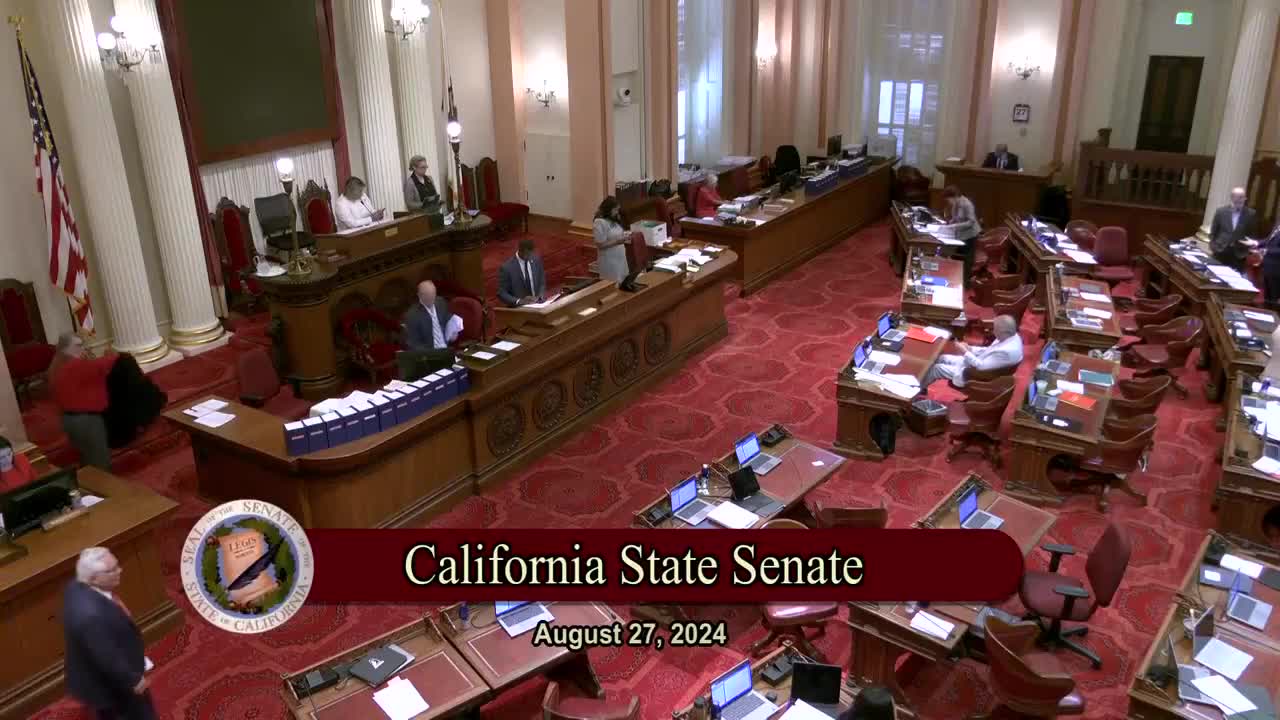 2MIN
Senate Floor
 53SEC
Senate Standing Committee on Appropriations
 10MIN
Senate Standing Committee on Education
Bill Author

Bill Co-Author(s):
