AB 2552: Pesticides: anticoagulant rodenticides.
- Session Year: 2023-2024
- House: Assembly
- Latest Version Date: 2024-09-25
Current Status:
Passed
(2024-09-25: Chaptered by Secretary of State - Chapter 571, Statutes of 2024.)
Introduced
In Committee
First Chamber
In Committee
Second Chamber
Enacted
Existing law regulates the use of pesticides and authorizes the Director of Pesticide Regulation to adopt regulations to govern the possession, sale, or use of pesticides, as prescribed. Existing law prohibits the use of a second-generation anticoagulant rodenticide and diphacinone, as defined, in a wildlife habitat area, as defined. Existing law prohibits the use of a second-generation anticoagulant rodenticide in the state until the director certifies to the Secretary of State that, among other things, the Department of Pesticide Regulation, in consultation with the Department of Fish and Wildlife, has adopted any additional restrictions necessary to ensure a trend of statistically significant reductions to the detectable levels of second-generation anticoagulant rodenticides or any of their metabolites, as provided. Existing law also prohibits the use of diphacinone in the state until the director certifies to the Secretary of State that the Department of Pesticide Regulation has completed any pending reevaluation of diphacinone and, in consultation with, and with the concurrence of, the Department of Fish and Wildlife, has adopted any additional restrictions that are necessary to ensure a trend of statistically significant reductions to the detectable levels of diphacinone or any of its metabolites, as provided. Existing law exempts the use of a second-generation anticoagulant rodenticide or diphacinone from these prohibitions under certain circumstances, including for agricultural activities. Existing law requires the director, and each county agricultural commissioner under the direction and supervision of the director, to enforce the provisions regulating the use of pesticides. A violation of these provisions is a misdemeanor.
This bill would additionally prohibit the use of a first-generation anticoagulant rodenticide, defined as a pesticide product containing the active ingredients diphacinone, chlorophacinone, or warfarin, in a wildlife habitat area, as specified. The bill would prohibit the use of chlorophacinone or warfarin in the state and would require chlorophacinone and warfarin to be considered restricted materials, unless that prohibition is suspended by the director, as specified. By imposing additional duties on county agricultural commissioners, and expanding the scope of a crime, this bill would impose a state-mandated local program.
This bill would make a person who sells or uses a first-generation anticoagulant rodenticide or second-generation anticoagulant rodenticide in violation of the above-described provisions liable for a civil penalty not to exceed $25,000 per day for each violation, in addition to any other penalty established by law. The bill would require recovered civil penalties to be deposited into the Department of Pesticide Regulation Fund, and would require those funds to be available for expenditure for specified purposes.
The California Constitution requires the state to reimburse local agencies and school districts for certain costs mandated by the state. Statutory provisions establish procedures for making that reimbursement.
This bill would provide that with regard to certain mandates no reimbursement is required by this act for a specified reason.
With regard to any other mandates, this bill would provide that, if the Commission on State Mandates determines that the bill contains costs so mandated by the state, reimbursement for those costs shall be made pursuant to the statutory provisions noted above.
Existing law regulates the use of pesticides and authorizes the Director of Pesticide Regulation to adopt regulations to govern the possession, sale, or use of pesticides, as prescribed. Existing law prohibits the use of a second-generation anticoagulant rodenticide and diphacinone, as defined, in a wildlife habitat area, as defined. Existing law prohibits the use of a second-generation anticoagulant rodenticide in the state until the director certifies to the Secretary of State that, among other things, the Department of Pesticide Regulation, in consultation with the Department of Fish and Wildlife, has adopted any additional restrictions necessary to ensure significant reductions to the detectable levels of second-generation anticoagulant rodenticides or any of their metabolites, as provided. Existing law also prohibits the use of diphacinone in the state until the director certifies to the Secretary of State that the Department of Pesticide Regulation has completed any pending reevaluation of diphacinone and, in consultation with, and with the concurrence of, the Department of Fish and Wildlife, has adopted any additional restrictions that are necessary to ensure significant reductions to the detectable levels of diphacinone or any of its metabolites, as provided. Existing law exempts the use of a second-generation anticoagulant rodenticide or diphacinone from these prohibitions under certain circumstances, including for agricultural activities. Existing law requires the director, and each county agricultural commissioner under the direction and supervision of the director, to enforce the provisions regulating the use of pesticides. A violation of these provisions is a misdemeanor.
This bill would additionally prohibit the use of a first-generation anticoagulant rodenticide, defined as a pesticide product containing the active ingredients diphacinone, chlorophacinone, or warfarin, in a wildlife habitat area, as specified. The bill would prohibit the use of chlorophacinone or warfarin in the state and would require chlorophacinone and warfarin to be considered restricted materials, unless that prohibition is suspended by the director, as specified. By imposing additional duties on county agricultural commissioners, and expanding the scope of a crime, this bill would impose a state-mandated local program.
This bill would make a person who sells or uses a first-generation anticoagulant rodenticide or second-generation anticoagulant rodenticide in violation of the above-described provisions liable for a civil penalty not to exceed $25,000 per day for each violation, in addition to any other penalty established by law. The bill would authorize the Attorney General, in the name of the people of the state and by request of certain departments or officials, to bring an action against a person who is alleged to be in violation of the above-described provisions, as specified. The bill would require recovered civil penalties to be deposited into the Poison-Free Wildlife Account, which the bill would establish in the Wildlife Restoration Fund, Department of Pesticide Regulation Fund, and would require those funds to be available for expenditure, upon appropriation by the Legislature, expenditure for specified purposes.
The California Constitution requires the state to reimburse local agencies and school districts for certain costs mandated by the state. Statutory provisions establish procedures for making that reimbursement.
This bill would provide that with regard to certain mandates no reimbursement is required by this act for a specified reason.
With regard to any other mandates, this bill would provide that, if the Commission on State Mandates determines that the bill contains costs so mandated by the state, reimbursement for those costs shall be made pursuant to the statutory provisions noted above.
Existing law regulates the use of pesticides and authorizes the Director of Pesticide Regulation to adopt regulations to govern the possession, sale, or use of pesticides, as prescribed. Existing law prohibits the use of a second-generation anticoagulant rodenticide and diphacinone, as defined, in a wildlife habitat area, as defined. Existing law prohibits the use of a second-generation anticoagulant rodenticide in the state until the director certifies to the Secretary of State that, among other things, the Department of Pesticide Regulation, in consultation with the Department of Fish and Wildlife, has adopted any additional restrictions necessary to ensure significant reductions to the detectable levels of second-generation anticoagulant rodenticides or any of their metabolites, as provided. Existing law also prohibits the use of diphacinone in the state until the director certifies to the Secretary of State that the Department of Pesticide Regulation has completed any pending reevaluation of diphacinone and, in consultation with, and with the concurrence of, the Department of Fish and Wildlife, has adopted any additional restrictions that are necessary to ensure significant reductions to the detectable levels of diphacinone or any of its metabolites, as provided. Existing law exempts the use of a second-generation anticoagulant rodenticide or diphacinone from these prohibitions under certain circumstances, including for agricultural activities. Existing law requires the director, and each county agricultural commissioner under the direction and supervision of the director, to enforce the provisions regulating the use of pesticides. A violation of these provisions is a misdemeanor.
This bill would additionally prohibit the use of a first-generation anticoagulant rodenticide, defined as a pesticide product containing the active ingredients diphacinone, chlorophacinone, or warfarin, in a wildlife habitat area, as specified. The bill would prohibit the use of chlorophacinone or warfarin in the state and would require chlorophacinone and warfarin to be considered restricted materials, unless that prohibition is suspended by the director, as specified. By imposing additional duties on county agricultural commissioners, and expanding the scope of a crime, this bill would impose a state-mandated local program.
This bill would make a person who sells or uses a first-generation anticoagulant rodenticide or second-generation anticoagulant rodenticide in violation of the above-described provisions liable for a civil penalty not to exceed $25,000 per day for each violation, in addition to any other penalty established by law. The bill would authorize the Attorney General, in the name of the people of the state and by request of certain departments or officials, to bring an action against a person who is alleged to be in violation of the above-described provisions, as specified. The bill would require recovered civil penalties to be deposited into the Poison-Free Wildlife Account, which the bill would establish in the Wildlife Restoration Fund, and would require those funds to be available for expenditure, upon appropriation by the Legislature, for specified purposes.
The California Constitution requires the state to reimburse local agencies and school districts for certain costs mandated by the state. Statutory provisions establish procedures for making that reimbursement.
This bill would provide that with regard to certain mandates no reimbursement is required by this act for a specified reason.
With regard to any other mandates, this bill would provide that, if the Commission on State Mandates determines that the bill contains costs so mandated by the state, reimbursement for those costs shall be made pursuant to the statutory provisions noted above.
Existing law regulates the use of pesticides and authorizes the Director of Pesticide Regulation to adopt regulations to govern the possession, sale, or use of pesticides, as prescribed. Existing law prohibits the use of a second-generation anticoagulant rodenticide and diphacinone, as defined, in a wildlife habitat area, as defined. Existing law prohibits the use of a second-generation anticoagulant rodenticide in the state until the director certifies to the Secretary of State that, among other things, the Department of Pesticide Regulation, in consultation with the Department of Fish and Wildlife, has adopted any additional restrictions necessary to ensure significant reductions to the detectable levels of second-generation anticoagulant rodenticides or any of their metabolites, as provided. Existing law also prohibits the use of diphacinone in the state until the director certifies to the Secretary of State that the Department of Pesticide Regulation has completed any pending reevaluation of diphacinone and, in consultation with, and with the concurrence of, the Department of Fish and Wildlife, has adopted any additional restrictions that are necessary to ensure significant reductions to the detectable levels of diphacinone or any of its metabolites, as provided. Existing law exempts the use of a second-generation anticoagulant rodenticide or diphacinone from these prohibitions under certain circumstances, including for agricultural activities. Existing law requires the director, and each county agricultural commissioner under the direction and supervision of the director, to enforce the provisions regulating the use of pesticides. A violation of these provisions is a misdemeanor.
This bill would additionally prohibit the use of a second-generation anticoagulant rodenticide within 2,500 feet of a wildlife habitat area, and prohibit the use of first-generation anticoagulant rodenticide, defined as a pesticide product containing the active ingredients diphacinone, chlorophacinone, or warfarin, in a wildlife habitat area or within 2,500 feet of a wildlife habitat area, as specified. The bill would prohibit the use of chlorophacinone or warfarin in the state and would require chlorophacinone and warfarin to be considered restricted materials, unless that prohibition is suspended by the director, as specified. By imposing additional duties on county agricultural commissioners, and expanding the definition scope of a crime, this bill would impose a state-mandated local program.
This bill would make a person who sells or uses a first-generation anticoagulant rodenticide or second-generation anticoagulant rodenticide in violation of the above-described provisions liable for a civil penalty not to exceed $25,000 per day for each violation, in addition to any other penalty established by law. The bill would authorize the Attorney General, in the name of the people of the state and by request of certain departments or officials, to bring an action against a person who is alleged to be in violation of the above-described provisions, as specified. The bill would require recovered civil penalties to be deposited into the Poison-Free Wildlife Account, which the bill would establish in the Wildlife Restoration Fund, and would require those funds to be available for expenditure, upon appropriation by the Legislature, for specified purposes.
The California Constitution requires the state to reimburse local agencies and school districts for certain costs mandated by the state. Statutory provisions establish procedures for making that reimbursement.
This bill would provide that with regard to certain mandates no reimbursement is required by this act for a specified reason.
With regard to any other mandates, this bill would provide that, if the Commission on State Mandates determines that the bill contains costs so mandated by the state, reimbursement for those costs shall be made pursuant to the statutory provisions noted above.
Existing law regulates the use of pesticides and authorizes the Director of Pesticide Regulation to adopt regulations to govern the possession, sale, or use of pesticides, as prescribed. Existing law prohibits the use of a second-generation anticoagulant rodenticide and diphacinone, as defined, in a wildlife habitat area, as defined. Existing law prohibits the use of a second-generation anticoagulant rodenticide in the state until the director certifies to the Secretary of State that, among other things, the Department of Pesticide Regulation, in consultation with the Department of Fish and Wildlife, has adopted any additional restrictions necessary to ensure significant reductions to the detectable levels of second-generation anticoagulant rodenticides or any of their metabolites, as provided. Existing law also prohibits the use of diphacinone in the state until the director certifies to the Secretary of State that the Department of Pesticide Regulation has completed any pending reevaluation of diphacinone and, in consultation with, and with the concurrence of, the Department of Fish and Wildlife, has adopted any additional restrictions that are necessary to ensure significant reductions to the detectable levels of diphacinone or any of its metabolites, as provided. Existing law exempts the use of a second-generation anticoagulant rodenticide or diphacinone from these prohibitions under certain circumstances, including for agricultural activities. Existing law requires the director, and each county agricultural commissioner under the direction and supervision of the director, to enforce the provisions regulating the use of pesticides. A violation of these provisions is a misdemeanor.
This bill would additionally prohibit the use of a second-generation anticoagulant rodenticide within 2,500 feet of a wildlife habitat area, and prohibit the use of first-generation anticoagulant rodenticide, defined as a pesticide product containing the active ingredients diphacinone, chlorophacinone, or warfarin, in a wildlife habitat area or within 2,500 feet of a wildlife habitat area, as specified. The bill would prohibit the use of chlorophacinone or warfarin in the state and would require chlorophacinone and warfarin to be considered restricted materials, unless that prohibition is suspended by the director, as specified. By imposing additional duties on county agricultural commissioners, and expanding the definition of a crime, this bill would impose a state-mandated local program.
This bill would make a person who sells or uses a first-generation anticoagulant rodenticide or second-generation anticoagulant rodenticide in violation of the above-described provisions liable for a civil penalty not to exceed $25,000 per day for each violation, in addition to any other penalty established by law. The bill would authorize any person to commence a civil suit to enjoin the Attorney General, in the name of the people of the state and by request of certain departments or officials, to bring an action against a person who is alleged to be in violation of the above-described provisions, as specified. The bill would require recovered civil penalties to be deposited into the Poison-Free Wildlife Account, which the bill would establish in the Wildlife Restoration Fund, and would require those funds to be available for expenditure, upon appropriation by the Legislature, for specified purposes.
The California Constitution requires the state to reimburse local agencies and school districts for certain costs mandated by the state. Statutory provisions establish procedures for making that reimbursement.
This bill would provide that with regard to certain mandates no reimbursement is required by this act for a specified reason.
With regard to any other mandates, this bill would provide that, if the Commission on State Mandates determines that the bill contains costs so mandated by the state, reimbursement for those costs shall be made pursuant to the statutory provisions noted above.
Existing law regulates the use of pesticides and authorizes the Director of Pesticide Regulation to adopt regulations to govern the possession, sale, or use of pesticides, as prescribed. Existing law prohibits the use of a second-generation anticoagulant rodenticide and diphacinone, as defined, in a wildlife habitat area, as defined. Existing law prohibits the use of a second-generation anticoagulant rodenticide in the state until the director certifies to the Secretary of State that, among other things, the Department of Pesticide Regulation, in consultation with the Department of Fish and Wildlife, has adopted any additional restrictions necessary to ensure significant reductions to the detectable levels of second-generation anticoagulant rodenticides or any of their metabolites, as provided. Existing law also prohibits the use of diphacinone in the state until the director certifies to the Secretary of State that the Department of Pesticide Regulation has completed any pending reevaluation of diphacinone and, in consultation with, and with the concurrence of, the Department of Fish and Wildlife, has adopted any additional restrictions that are necessary to ensure significant reductions to the detectable levels of diphacinone or any of its metabolites, as provided. Existing law exempts the use of a second-generation anticoagulant rodenticide or diphacinone from these prohibitions under certain circumstances, including for agricultural activities. Existing law requires the director, and each county agricultural commissioner under the direction and supervision of the director, to enforce the provisions regulating the use of pesticides. A violation of these provisions is a misdemeanor.
This bill would expand the definition of a wildlife habitat area to include an open-space land, as defined. The bill would additionally prohibit the use of a second-generation anticoagulant rodenticide within 2,500 feet of a wildlife habitat area, and prohibit the use of first-generation anticoagulant rodenticide, defined as a pesticide product containing the active ingredients diphacinone, chlorophacinone, or warfarin, in a wildlife habitat area or within 2,500 feet of a wildlife habitat area, as specified. The bill would prohibit the use of chlorophacinone or warfarin in the state and would require chlorophacinone and warfarin to be considered restricted materials, unless that prohibition is suspended by the director, as specified. By imposing additional duties on county agricultural commissioners, and expanding the definition of a crime, this bill would impose a state-mandated local program.
This bill would make a person who sells or uses a first-generation anticoagulant rodenticide or second-generation anticoagulant rodenticide in violation of the above-described provisions liable for a civil penalty not to exceed $25,000 per day for each violation, in addition to any other penalty established by law. The bill would authorize any person to commence a civil suit to enjoin a person who is alleged to be in violation of the above-described provisions, as specified. The bill would require recovered civil penalties to be deposited into the Poison-Free Wildlife Account, which the bill would establish in the Wildlife Restoration Fund, and would require those funds to be available for expenditure, upon appropriation by the Legislature, for specified purposes.
The California Constitution requires the state to reimburse local agencies and school districts for certain costs mandated by the state. Statutory provisions establish procedures for making that reimbursement.
This bill would provide that with regard to certain mandates no reimbursement is required by this act for a specified reason.
With regard to any other mandates, this bill would provide that, if the Commission on State Mandates determines that the bill contains costs so mandated by the state, reimbursement for those costs shall be made pursuant to the statutory provisions noted above.
Existing law regulates the use of pesticides and authorizes the Director of Pesticide Regulation to adopt regulations to govern the possession, sale, or use of pesticides, as prescribed. Existing law prohibits the use of a second-generation anticoagulant rodenticide and diphacinone, as defined, in a wildlife habitat area, as defined. Existing law prohibits the use of a second-generation anticoagulant rodenticide in the state until the director certifies to the Secretary of State that, among other things, the Department of Pesticide Regulation, in consultation with the Department of Fish and Wildlife, has adopted any additional restrictions necessary to ensure significant reductions to the detectable levels of second-generation anticoagulant rodenticides or any of their metabolites, as provided. Existing law also prohibits the use of diphacinone in the state until the director certifies to the Secretary of State that the Department of Pesticide Regulation has completed any pending reevaluation of diphacinone and, in consultation with, and with the concurrence of, the Department of Fish and Wildlife, has adopted any additional restrictions that are necessary to ensure significant reductions to the detectable levels of diphacinone or any of its metabolites, as provided. Existing law exempts the use of a second-generation anticoagulant rodenticide or diphacinone from these prohibitions under certain circumstances, including for agricultural activities. Existing law requires the director, and each county agricultural commissioner under the direction and supervision of the director, to enforce the provisions regulating the use of pesticides. A violation of these provisions is a misdemeanor.
This bill would expand the definition of a wildlife habitat area to include an open-space land, as defined. The bill would additionally prohibit the use of a second-generation anticoagulant rodenticide within 5,000 2,500 feet of a wildlife habitat area, and prohibit the use of first-generation anticoagulant rodenticide, defined as a pesticide product containing the active ingredients diphacinone, chlorophacinone, or warfarin, in a wildlife habitat area or within 5,000 2,500 feet of a wildlife habitat area, as specified. The bill would prohibit the use of chlorophacinone or warfarin in the state and would require chlorophacinone and warfarin to be considered restricted materials, unless that prohibition is suspended by the director, as specified. By imposing additional duties on county agricultural commissioners, and expanding the definition of a crime, this bill would impose a state-mandated local program.
This bill would make a person who sells or uses a first-generation anticoagulant rodenticide or second-generation anticoagulant rodenticide in violation of the above-described provisions liable for a civil penalty not to exceed $25,000 per day for each violation, in addition to any other penalty established by law. The bill would authorize any person to commence a civil suit to enjoin a person who is alleged to be in violation of the above-described provisions, as specified. The bill would require recovered civil penalties to be deposited into the Poison-Free Wildlife Account, which the bill would establish in the Wildlife Restoration Fund, and would require those funds to be available for expenditure, upon appropriation by the Legislature, for specified purposes.
The California Constitution requires the state to reimburse local agencies and school districts for certain costs mandated by the state. Statutory provisions establish procedures for making that reimbursement.
This bill would provide that with regard to certain mandates no reimbursement is required by this act for a specified reason.
With regard to any other mandates, this bill would provide that, if the Commission on State Mandates determines that the bill contains costs so mandated by the state, reimbursement for those costs shall be made pursuant to the statutory provisions noted above.
Existing law regulates the use of pesticides and authorizes the Director of Pesticide Regulation to adopt regulations to govern the possession, sale, or use of pesticides, as prescribed. Existing law prohibits the use of a second-generation anticoagulant rodenticide and diphacinone, as defined, in a wildlife habitat area. area, as defined. Existing law prohibits the use of a second-generation anticoagulant rodenticide in the state until the director certifies to the Secretary of State that, among other things, the Department of Pesticide Regulation, in consultation with the Department of Fish and Wildlife, has adopted any additional restrictions necessary to ensure significant reductions to the detectable levels of second-generation anticoagulant rodenticides or any of their metabolites, as provided. Existing law also prohibits the use of diphacinone in the state until the director certifies to the Secretary of State that the Department of Pesticide Regulation has completed any pending reevaluation of diphacinone and, in consultation with, and with the concurrence of, the Department of Fish and Wildlife, has adopted any additional restrictions that are necessary to ensure significant reductions to the detectable levels of diphacinone or any of its metabolites, as provided. Existing law exempts the use of a second-generation anticoagulant rodenticide or diphacinone from these prohibitions under certain circumstances, including for agricultural activities. Existing law requires the director, and each county agricultural commissioner under the direction and supervision of the director, to enforce the provisions regulating the use of pesticides. A violation of these provisions is a misdemeanor.
This bill would expand the definition of a wildlife habitat area to include an open-space land, as defined. The bill would additionally prohibit the use of a second-generation anticoagulant rodenticide within 5,000 feet of a wildlife habitat area, and prohibit the use of first-generation anticoagulant rodenticide, defined as a pesticide product containing the active ingredients diphacinone, chlorophacinone, or warfarin, in a wildlife habitat area or within 5,000 feet of a wildlife habitat area, as specified. The bill would prohibit the use of chlorophacinone or warfarin in the state and would require chlorophacinone and warfarin to be considered restricted materials, unless that prohibition is suspended by the director, as specified. By imposing additional duties on county agricultural commissioners, and expanding the definition of a crime, this bill would impose a state-mandated local program.
This bill would make a person who sells or uses a first-generation anticoagulant rodenticide or second-generation anticoagulant rodenticide in violation of the above-described provisions liable for a civil penalty not to exceed $25,000 per day for each violation, in addition to any other penalty established by law. The bill would authorize any person to commence a civil suit to enjoin a person who is alleged to be in violation of the above-described provisions, as specified. The bill would require recovered civil penalties to be deposited into the Poison-Free Wildlife Account, which the bill would establish in the Wildlife Restoration Fund, and would require those funds to be available for expenditure, upon appropriation by the Legislature, for specified purposes.
The California Constitution requires the state to reimburse local agencies and school districts for certain costs mandated by the state. Statutory provisions establish procedures for making that reimbursement.
This bill would provide that with regard to certain mandates no reimbursement is required by this act for a specified reason.
With regard to any other mandates, this bill would provide that, if the Commission on State Mandates determines that the bill contains costs so mandated by the state, reimbursement for those costs shall be made pursuant to the statutory provisions noted above.
Existing law regulates the use of pesticides and authorizes the Director of Pesticide Regulation to adopt regulations to govern the possession, sale, or use of pesticides, as prescribed. Existing law prohibits the use of a second-generation anticoagulant rodenticide and diphacinone, as defined, in a wildlife habitat area. Existing law prohibits the use of a second-generation anticoagulant rodenticide in the state until the director certifies to the Secretary of State that, among other things, the Department of Pesticide Regulation, in consultation with the Department of Fish and Wildlife, has adopted any additional restrictions necessary to ensure significant reductions to the detectable levels of second-generation anticoagulant rodenticides or any of their metabolites, as provided. Existing law also prohibits the use of diphacinone in the state until the director certifies to the Secretary of State that the Department of Pesticide Regulation has completed any pending reevaluation of diphacinone and, in consultation with, and with the concurrence of, the Department of Fish and Wildlife, has adopted any additional restrictions that are necessary to ensure significant reductions to the detectable levels of diphacinone or any of its metabolites, as provided. Existing law exempts the use of a second-generation anticoagulant rodenticide or diphacinone from these prohibitions under certain circumstances, including for agricultural activities. Existing law requires the director, and each county agricultural commissioner under the direction and supervision of the director, to enforce the provisions regulating the use of pesticides. A violation of these provisions is a misdemeanor.
This bill would expand the definition of a wildlife habitat area to include an open-space land, as defined. The bill would additionally prohibit the use of a second-generation anticoagulant rodenticide within 5,000 feet of a wildlife habitat area, and prohibit the use of first-generation anticoagulant rodenticide, defined as a pesticide product containing the active ingredients diphacinone, chlorophacinone, or warfarin, in a wildlife habitat area or within 5,000 feet of a wildlife habitat area, as specified. The bill would prohibit the use of chlorophacinone or warfarin in the state and would require chlorophacinone and warfarin to be considered restricted materials, unless that prohibition is suspended by the director, as specified. By imposing additional duties on county agricultural commissioners, and expanding the definition of a crime, this bill would impose a state-mandated local program.
This bill would make a person who sells or uses a first-generation anticoagulant rodenticide or second-generation anticoagulant rodenticide in violation of the above-described provisions liable for a civil penalty not to exceed $25,000 per day for each violation, in addition to any other penalty established by law. The bill would authorize any person to commence a civil suit to enjoin a person who is alleged to be in violation of the above-described provisions, as specified. The bill would require recovered civil penalties to be deposited into the Poison-Free Wildlife Account, which the bill would establish in the Wildlife Restoration Fund, and would require those funds to be available for expenditure, upon appropriation by the Legislature, for specified purposes.
The California Constitution requires the state to reimburse local agencies and school districts for certain costs mandated by the state. Statutory provisions establish procedures for making that reimbursement.
This bill would provide that with regard to certain mandates no reimbursement is required by this act for a specified reason.
With regard to any other mandates, this bill would provide that, if the Commission on State Mandates determines that the bill contains costs so mandated by the state, reimbursement for those costs shall be made pursuant to the statutory provisions noted above.
(a)The Legislature finds and declares all of the following:
(1)Wildlife, including birds of prey, mountain lions, bobcats, fishers, foxes, coyotes, and endangered species, such as the northern spotted owl, pacific fisher, and San Joaquin kit fox, are an irreplaceable part of Californias natural ecosystems. As predators of small mammals, they play an important role in regulating and controlling the population of rodents throughout the state to improve public health and welfare.
(2)Millions of people annually visit California for purposes of viewing and photographing wildlife, and these visits contribute millions of dollars to Californias economy.
(3)Urban areas are increasingly being used by predatory mammals and birds of prey, and the public enjoys seeing these animals and values them and the ecosystem services they provide.
(4)The ecosystem services provided by native wildlife predators are a public trust, just like clean air and water. We, as California residents, are obligated to conserve these wildlife populations for future generations of Californians.
(5)Consistent with this obligation, and as set forth in Executive Order No. N-82-20 and codified by the Legislature in Section 71450 of the Public Resources Code, it is the policy of the state to conserve at least 30 percent of Californias land and coastal waters by 2030 in a manner that protects and restores biodiversity, enables enduring conservation measures on a broad range of landscapes, builds climate resilience, reduces risk from extreme climate events, and contributes to the states efforts to combat climate change.
(6)Protection and restoration of biodiversity, consistent with Executive Order No. N-82-20 and Section 71450 of the Public Resources Code, requires implementation of science-based measures to limit the use of anticoagulant rodenticides, which cause direct mortality and chronic long-term health impacts for natural predators, nontarget organisms, and endangered species.
(7)Rodenticides can be counterproductive to rodent control by poisoning, harming, and killing natural predators that help regulate rodent populations throughout California.
(8)Animals are capable of experiencing pain, stress, and fear, as well as pleasure, equanimity, and social bonds. Animals are able to subjectively feel and perceive the world around them, have intrinsic value, and deserve to be treated with compassion and to enjoy a quality of life that reflects their intrinsic value.
(9)The Legislature has an interest in ensuring that human activities are conducted in a manner that minimizes pain, stress, fear, and suffering for animals and reflects their intrinsic value.
(10)Exposure to anticoagulant rodenticides can cause pain, stress, fear, suffering, and sometimes death to animals, such as mountain lions, bobcats, owls, and foxes, that are not the intended targets of rodenticides. These animals have a right to a life free of poison.
(b)This act shall be known, and may be cited, as the Poison-Free Wildlife Act.
SEC. 2.Section 12978.7 of the Food and Agricultural Code is amended to read:12978.7.(a)For purposes of this section, the following terms have the following meanings:
(1)Chlorophacinone means a pesticide product containing chlorophacinone.
(2)Diphacinone means a pesticide product containing diphacinone.
(3)First-generation anticoagulant rodenticide means a pesticide product containing any of the following active ingredients:
(A)Diphacinone.
(B)Chlorophacinone.
(C)Warfarin.
(4)Integrated pest management has the same meaning as defined in Section 11401.7.
(5)Second-generation anticoagulant rodenticide means a pesticide product containing any of the following active ingredients:
(A)Brodifacoum.
(B)Bromadiolone.
(C)Difenacoum.
(D)Difethialone.
(6)Sustainable pest management has the same meaning as defined in Section 11412.
(7)Warfarin means a pesticide product containing warfarin.
(8)Wildlife habitat area means a park or wildlife refuge managed by a state agency, regional government, or quasi-government agency, or by a special district.
(b)Except as provided in subdivision (g), and notwithstanding subdivisions (c), (d), and (e), the use of a second-generation anticoagulant rodenticide or first-generation anticoagulant rodenticide is prohibited in a wildlife habitat area.
(c)Except as provided in subdivision (g) or (h), the use of a second-generation anticoagulant rodenticide is prohibited in this state until the director makes the certification described in subdivision (i).
(d)Except as provided in subdivision (g) or (h), the use of diphacinone is prohibited in this state and diphacinone shall be considered a restricted material pursuant to Section 14004.5 until the director makes the certification described in subdivision (j).
(e)Except as provided in subdivision (g) or (h), the use of chlorophacinone or warfarin is prohibited in this state and chlorophacinone and warfarin shall be considered restricted materials pursuant to Section 14004.5. The director may suspend the prohibition if the director makes the certification described in subdivision (k). Nothing in this subdivision or subdivision (k) requires the department to suspend the prohibition on chlorophacinone or warfarin described in this subdivision, complete a reevaluation of chlorophacinone or warfarin, or adopt any additional restrictions on chlorophacinone or warfarin.
(f)State agencies are directed to encourage federal agencies to comply with subdivisions (b) to (e), inclusive.
(g)This section does not apply to any of the following:
(1)The use of a second-generation anticoagulant rodenticide or first-generation anticoagulant rodenticide by a governmental agency employee who complies with Section 106925 of the Health and Safety Code, who uses a second-generation anticoagulant rodenticide or first-generation anticoagulant rodenticide for public health activities.
(2)The use of a second-generation anticoagulant rodenticide or first-generation anticoagulant rodenticide otherwise prohibited by this section when used by an employee or contractor of a governmental agency or public utility, as defined in Section 216 of the Public Utilities Code, for purposes of protecting water supply and hydroelectric energy generating infrastructure and facilities in a manner that is consistent with all otherwise applicable federal and state laws and regulations.
(3)The use of a second-generation anticoagulant rodenticide or first-generation anticoagulant rodenticide by a mosquito or vector control district formed under Chapter 1 (commencing with Section 2000) of Division 3 or Chapter 8 (commencing with Section 2800) of Division 3 of the Health and Safety Code to protect the public health.
(4)The use of a second-generation anticoagulant rodenticide or first-generation anticoagulant rodenticide for the eradication of nonnative invasive species inhabiting or found to be present on offshore islands in a manner that is consistent with all otherwise applicable federal and state laws and regulations.
(5)The use of a second-generation anticoagulant rodenticide or first-generation anticoagulant rodenticide that the Department of Fish and Wildlife determines is required to control or eradicate an invasive rodent population for the protection of threatened or endangered species or their habitats.
(6)The use of a second-generation anticoagulant rodenticide or first-generation anticoagulant rodenticide to control an actual or potential rodent infestation associated with a public health need, as determined by a supporting declaration from the State Public Health Officer or a local public health officer. For purposes of this section, a public health need is an urgent, nonroutine situation posing a significant risk to human health in which it is documented that other rodent control alternatives, including nonchemical alternatives, are inadequate to control the rodent infestation.
(7)The use of a second-generation anticoagulant rodenticide or first-generation anticoagulant rodenticide for research that the department funds, pursuant to Section 6025.5, to protect the food system and the environment.
(8)The use of a second-generation anticoagulant rodenticide or first-generation anticoagulant rodenticide for research purposes related to the reevaluation described in paragraph (1) of subdivision (i), paragraph (1) of subdivision (j), or paragraph (1) of subdivision (k). Before using a second-generation anticoagulant rodenticide or first-generation anticoagulant rodenticide in the manner described in this paragraph, a written authorization for research shall be obtained from the director. The director may specify the conditions in the authorization for research under which the research shall be conducted. The director may terminate, amend, or refuse to issue an authorization for research if the director determines any of the following:
(A)The research may involve a hazard to the environment.
(B)The research may be used for purposes unrelated to pesticide data development.
(C)A violation of the authorization for research, prior authorization for research, or Division 6 (commencing with Section 11401) or this division, or a regulation adopted pursuant to either or both of those divisions, has occurred in connection with the research.
(h)(1)This section does not apply to the use of a second-generation anticoagulant rodenticide or first-generation anticoagulant rodenticide in either of the following locations:
(A)A medical waste generator, as defined in Section 117705 of the Health and Safety Code.
(B)A facility registered annually and subject to inspection under Section 510 of the Federal Food, Drug, and Cosmetic Act (21 U.S.C. Sec. 360 et seq.) and compliant with the Federal Insecticide, Fungicide, and Rodenticide Act (7 U.S.C. Sec. 136 et seq.).
(2)The prohibitions in subdivisions (c), (d), and (e) do not apply to the use of a second-generation anticoagulant rodenticide or first-generation anticoagulant rodenticide for agricultural activities, as defined in Section 564.
(3)For purposes of paragraph (2), agricultural activities include activities conducted in any of the following locations:
(A)A warehouse used to store foods for human or animal consumption.
(B)An agricultural food production site, including, but not limited to, a slaughterhouse or cannery.
(C)A factory, brewery, or winery.
(D)An agricultural production site housing water storage and conveyance facilities.
(E)An agricultural production site housing rights-of-way and other transportation infrastructure.
(i)After the director determines that both of the following conditions have occurred, the director shall certify to the Secretary of State that determination:
(1)The department has completed the reevaluation of second-generation anticoagulant rodenticides, as commenced by the department on March 12, 2019, pursuant to California Notice 2019-03 (Notice of Final Decision to Begin Reevaluation of Second-Generation Anticoagulant Rodenticides).
(2)Consistent with the requirements of this division and regulations adopted pursuant to this division, the department, in consultation with, and with the concurrence of, the Department of Fish and Wildlife, has adopted any additional restrictions that are necessary to ensure a trend of statistically significant reductions in the percentage of wildlife exposed or mean concentration values of detectable levels of second-generation anticoagulant rodenticides or any of their metabolites in tested tissues of a scientifically representative sample of wildlife. These restrictions shall include a requirement to implement sustainable pest management and integrated pest management practices, such as biological control, habitat manipulation, and modification of cultural practices, before the use of second-generation anticoagulant rodenticides. The department, in concurrence with the Department of Fish and Wildlife, shall make a finding that the restrictions are necessary based on the best available science, which may include reviewing data and studying samples of certain species and their populations as proxies for all potentially impacted species and populations.
(j)After the director determines that both of the following conditions have occurred, the director shall certify to the Secretary of State that determination:
(1)The department has completed any pending reevaluation of diphacinone.
(2)Consistent with the requirements of this division and regulations adopted pursuant to this division, the department, in consultation with, and with the concurrence of, the Department of Fish and Wildlife, has adopted any additional restrictions that are necessary to ensure a trend of statistically significant reductions in the percentage of wildlife exposed or mean concentration values of detectable levels of diphacinone or any of its metabolites in tested tissues of a scientifically representative sample of wildlife. These restrictions shall include a requirement to implement sustainable pest management and integrated pest management practices, such as biological control, habitat manipulation, and modification of cultural practices, before the use of diphacinone. The department, in concurrence with the Department of Fish and Wildlife, shall make a finding that the restrictions are necessary based upon the best available science, which may include reviewing data and studying samples of certain species and their populations as proxies for all potentially impacted species and populations. Substantial evidence supporting the restrictions, including any requirement to implement alternatives, shall, to the extent feasible, include, but not be limited to, analysis regarding exposure pathways, sublethal effects, species sensitivity, and the cumulative and synergistic effects of exposure to anticoagulant rodenticides, including lethal and sublethal effects on wildlife, including rare, sensitive, special status, threatened, or endangered species.
(k)If the director determines that both of the following conditions have occurred, the director shall certify to the Secretary of State that determination:
(1)The department has completed a reevaluation of chlorophacinone or warfarin, respectively.
(2)Consistent with the requirements of this division and regulations adopted pursuant to this division, the department, in consultation with, and with the concurrence of, the Department of Fish and Wildlife, has adopted any additional restrictions necessary to ensure a trend of statistically significant reductions in the percentage of wildlife exposed or mean concentration values of detectable levels of chlorophacinone or warfarin, respectively, or any of their metabolites, in tested tissues of a scientifically representative sample of wildlife. These restrictions shall include a requirement to implement sustainable pest management and integrated pest management practices, such as biological control, habitat manipulation, and modification of cultural practices, before the use of chlorophacinone or warfarin, respectively. The department, in concurrence with the Department of Fish and Wildlife, shall make a finding that the restrictions are necessary based on the best available science, which may include reviewing data and studying samples of certain species and their populations as proxies for all potentially impacted species and populations. Substantial evidence supporting the restrictions, including any requirement to implement alternatives, shall, to the extent feasible, include, but not be limited to, analysis regarding exposure pathways, sublethal effects, species sensitivity, and the cumulative and synergistic effects of exposure to anticoagulant rodenticides, including lethal and sublethal effects on wildlife, including rare, sensitive, special status, threatened, or endangered species.
SEC. 3.Section 12997.8 is added to the Food and Agricultural Code, to read:12997.8.(a)(1)A person who sells or uses a first-generation anticoagulant rodenticide or second-generation anticoagulant rodenticide in violation of Section 12978.7 or any regulations adopted pursuant to that section is liable for a civil penalty not to exceed twenty-five thousand dollars ($25,000) per day for each violation, in addition to any other penalty established by law.
(2)In an action brought pursuant to paragraph (1), the court may enjoin the unlawful sale or use of a first-generation anticoagulant rodenticide or second-generation anticoagulant rodenticide, and may compel specific performance of an act or course of conduct necessary to protect a person, animal, crop, or property.
(b)(1)Civil penalties recovered pursuant to this section shall be deposited into the Department of Pesticide Regulation Fund, and shall be available for expenditure to cover the departments costs in administering and enforcing this section and Section 12978.7.
(2)Any remaining civil penalties, after covering the costs described in paragraph (1), shall be available for expenditure for the purposes described in Section 6027.1.
SEC. 4.No reimbursement is required by this act pursuant to Section 6 of Article XIIIB of the California Constitution for certain costs that may be incurred by a local agency or school district because, in that regard, this act creates a new crime or infraction, eliminates a crime or infraction, or changes the penalty for a crime or infraction, within the meaning of Section 17556 of the Government Code, or changes the definition of a crime within the meaning of Section 6 of Article XIIIB of the California Constitution.
However, if the Commission on State Mandates determines that this act contains other costs mandated by the state, reimbursement to local agencies and school districts for those costs shall be made pursuant to Part 7 (commencing with Section 17500) of Division 4 of Title 2 of the Government Code.
(a)The Legislature finds and declares all of the following:
(1)Wildlife, including birds of prey, mountain lions, bobcats, fishers, foxes, coyotes, and endangered species, such as the northern spotted owl, pacific fisher, and San Joaquin kit fox, are an irreplaceable part of Californias natural ecosystems. As predators of small mammals, they play an important role in regulating and controlling the population of rodents throughout the state to improve public health and welfare.
(2)Millions of people annually visit California for purposes of viewing and photographing wildlife, and these visits contribute millions of dollars to Californias economy.
(3)Urban areas are increasingly being used by predatory mammals and birds of prey, and the public enjoys seeing these animals and values them and the ecosystem services they provide.
(4)The ecosystem services provided by native wildlife predators are a public trust, just like clean air and water. We, as California residents, are obligated to conserve these wildlife populations for future generations of Californians.
(5)Consistent with this obligation, and as set forth in Executive Order No. N-82-20 and codified by the Legislature in Section 71450 of the Public Resources Code, it is the policy of the state to conserve at least 30 percent of Californias land and coastal waters by 2030 in a manner that protects and restores biodiversity, enables enduring conservation measures on a broad range of landscapes, builds climate resilience, reduces risk from extreme climate events, and contributes to the states efforts to combat climate change.
(6)Protection and restoration of biodiversity, consistent with Executive Order No. N-82-20 and Section 71450 of the Public Resources Code, requires implementation of science-based measures to limit the use of anticoagulant rodenticides, which cause direct mortality and chronic long-term health impacts for natural predators, nontarget organisms, and endangered species.
(7)Rodenticides can be counterproductive to rodent control by poisoning, harming, and killing natural predators that help regulate rodent populations throughout California.
(8)Animals are capable of experiencing pain, stress, and fear, as well as pleasure, equanimity, and social bonds. Animals are able to subjectively feel and perceive the world around them, have intrinsic value, and deserve to be treated with compassion and to enjoy a quality of life that reflects their intrinsic value.
(9)The Legislature has an interest in ensuring that human activities are conducted in a manner that minimizes pain, stress, fear, and suffering for animals and reflects their intrinsic value.
(10)Exposure to anticoagulant rodenticides can cause pain, stress, fear, suffering, and sometimes death to animals, such as mountain lions, bobcats, owls, and foxes, that are not the intended targets of rodenticides. These animals have a right to a life free of poison.
(b)This act shall be known, and may be cited, as the Poison-Free Wildlife Act.
SEC. 2.Section 12978.7 of the Food and Agricultural Code is amended to read:12978.7.(a)For purposes of this section, the following terms have the following meanings:
(1)Chlorophacinone means a pesticide product containing chlorophacinone.
(2)Diphacinone means a pesticide product containing diphacinone.
(3)First-generation anticoagulant rodenticide means a pesticide product containing any of the following active ingredients:
(A)Diphacinone.
(B)Chlorophacinone.
(C)Warfarin.
(4)Integrated pest management means an ecosystem-based strategy that focuses on long-term prevention of pests or their damage through a combination of techniques, such as biological control, habitat manipulation, modification of cultural practices, and use of resistant varieties. Pesticides are used only after monitoring indicates pesticides are needed according to established guidelines, and treatments are made with the goal of removing only the target organism. Pest control materials are selected and applied in a manner that minimizes risks to human health, beneficial and nontarget organisms, and the environment. has the same meaning as defined in Section 11401.7.
(5)Second-generation anticoagulant rodenticide means a pesticide product containing any of the following active ingredients:
(A)Brodifacoum.
(B)Bromadiolone.
(C)Difenacoum.
(D)Difethialone.
(6)Sustainable pest management has the same meaning as defined in Section 11412.
(6)(7)Warfarin means a pesticide product containing warfarin.
(7)(8)Wildlife habitat area means a park or wildlife refuge managed by a state agency, regional government, or quasi-government agency, or by a special district.
(b)Except as provided in subdivision (g), and notwithstanding subdivisions (c), (d), and (e), the use of a second-generation anticoagulant rodenticide or first-generation anticoagulant rodenticide is prohibited in a wildlife habitat area.
(c)Except as provided in subdivision (g) or (h), the use of a second-generation anticoagulant rodenticide is prohibited in this state until the director makes the certification described in subdivision (i).
(d)Except as provided in subdivision (g) or (h), the use of diphacinone is prohibited in this state and diphacinone shall be considered a restricted material pursuant to Section 14004.5 until the director makes the certification described in subdivision (j).
(e)Except as provided in subdivision (g) or (h), the use of chlorophacinone or warfarin is prohibited in this state and chlorophacinone and warfarin shall be considered restricted materials pursuant to Section 14004.5. The director may suspend the prohibition if the director makes the certification described in subdivision (k). Nothing in this subdivision or subdivision (k) requires the department to suspend the prohibition on chlorophacinone or warfarin described in this subdivision, complete a reevaluation of chlorophacinone or warfarin, or adopt any additional restrictions on chlorophacinone or warfarin.
(f)State agencies are directed to encourage federal agencies to comply with subdivisions (b) to (e), inclusive.
(g)This section does not apply to any of the following:
(1)The use of a second-generation anticoagulant rodenticide or first-generation anticoagulant rodenticide by a governmental agency employee who complies with Section 106925 of the Health and Safety Code, who uses a second-generation anticoagulant rodenticide or first-generation anticoagulant rodenticide for public health activities.
(2)The use of a second-generation anticoagulant rodenticide or first-generation anticoagulant rodenticide otherwise prohibited by this section when used by an employee or contractor of a governmental agency or public utility, as defined in Section 216 of the Public Utilities Code, for purposes of protecting water supply and hydroelectric energy generating infrastructure and facilities in a manner that is consistent with all otherwise applicable federal and state laws and regulations.
(3)The use of a second-generation anticoagulant rodenticide or first-generation anticoagulant rodenticide by a mosquito or vector control district formed under Chapter 1 (commencing with Section 2000) of Division 3 or Chapter 8 (commencing with Section 2800) of Division 3 of the Health and Safety Code to protect the public health.
(4)The use of a second-generation anticoagulant rodenticide or first-generation anticoagulant rodenticide for the eradication of nonnative invasive species inhabiting or found to be present on offshore islands in a manner that is consistent with all otherwise applicable federal and state laws and regulations.
(5)The use of a second-generation anticoagulant rodenticide or first-generation anticoagulant rodenticide that the Department of Fish and Wildlife determines is required to control or eradicate an invasive rodent population for the protection of threatened or endangered species or their habitats.
(6)The use of a second-generation anticoagulant rodenticide or first-generation anticoagulant rodenticide to control an actual or potential rodent infestation associated with a public health need, as determined by a supporting declaration from the State Public Health Officer or a local public health officer. For purposes of this section, a public health need is an urgent, nonroutine situation posing a significant risk to human health in which it is documented that other rodent control alternatives, including nonchemical alternatives, are inadequate to control the rodent infestation.
(7)The use of a second-generation anticoagulant rodenticide or first-generation anticoagulant rodenticide for research that the department funds, pursuant to Section 6025.5, to protect the food system and the environment.
(7)(8)The use of a second-generation anticoagulant rodenticide or first-generation anticoagulant rodenticide for research purposes related to the reevaluation described in paragraph (1) of subdivision (i), paragraph (1) of subdivision (j), or paragraph (1) of subdivision (k). Before using a second-generation anticoagulant rodenticide or first-generation anticoagulant rodenticide in the manner described in this paragraph, a written authorization for research shall be obtained from the director. The director may specify the conditions in the authorization for research under which the research shall be conducted. The director may terminate, amend, or refuse to issue an authorization for research if the director determines any of the following:
(A)The research may involve a hazard to the environment.
(B)The research may be used for purposes unrelated to pesticide data development.
(C)A violation of the authorization for research, prior authorization for research, or Division 6 (commencing with Section 11401) or this division, or a regulation adopted pursuant to either or both of those divisions, has occurred in connection with the research.
(h)(1)This section does not apply to the use of a second-generation anticoagulant rodenticide or first-generation anticoagulant rodenticide in either of the following locations:
(A)A medical waste generator, as defined in Section 117705 of the Health and Safety Code.
(B)A facility registered annually and subject to inspection under Section 510 of the Federal Food, Drug, and Cosmetic Act (21 U.S.C. Sec. 360 et seq.) and compliant with the Federal Insecticide, Fungicide, and Rodenticide Act (7 U.S.C. Sec. 136 et seq.).
(2)The prohibitions in subdivisions (c), (d), and (e) do not apply to the use of a second-generation anticoagulant rodenticide or first-generation anticoagulant rodenticide for agricultural activities, as defined in Section 564.
(3)For purposes of paragraph (2), agricultural activities include activities conducted in any of the following locations:
(A)A warehouse used to store foods for human or animal consumption.
(B)An agricultural food production site, including, but not limited to, a slaughterhouse or cannery.
(C)A factory, brewery, or winery.
(D)An agricultural production site housing water storage and conveyance facilities.
(E)An agricultural production site housing rights-of-way and other transportation infrastructure.
(i)After the director determines that both of the following conditions have occurred, the director shall certify to the Secretary of State that determination:
(1)The department has completed the reevaluation of second-generation anticoagulant rodenticides, as commenced by the department on March 12, 2019, pursuant to California Notice 2019-03 (Notice of Final Decision to Begin Reevaluation of Second-Generation Anticoagulant Rodenticides).
(2)Consistent with the requirements of this division and regulations adopted pursuant to this division, the department, in consultation with, and with the concurrence of, the Department of Fish and Wildlife, has adopted any additional restrictions that are necessary to ensure a trend of statistically significant reductions in the percentage of wildlife exposed or mean concentration values of detectable levels of second-generation anticoagulant rodenticides or any of their metabolites in tested tissues of a scientifically representative sample of wildlife. These restrictions shall include a requirement to implement sustainable pest management and integrated pest management alternatives, practices, such as biological control, habitat manipulation, and modification of cultural practices, before the use of second-generation anticoagulant rodenticides. The department, in concurrence with the Department of Fish and Wildlife, shall make a finding that the restrictions are necessary based on the best available science, which may include reviewing data and studying samples of certain species and their populations as proxies for all potentially impacted species and populations.
(j)After the director determines that both of the following conditions have occurred, the director shall certify to the Secretary of State that determination:
(1)The department has completed any pending reevaluation of diphacinone.
(2)Consistent with the requirements of this division and regulations adopted pursuant to this division, the department, in consultation with, and with the concurrence of, the Department of Fish and Wildlife, has adopted any additional restrictions that are necessary to ensure a trend of statistically significant reductions in the percentage of wildlife exposed or mean concentration values of detectable levels of diphacinone or any of its metabolites in tested tissues of a scientifically representative sample of wildlife. These restrictions shall include a requirement to implement sustainable pest management and integrated pest management alternatives, practices, such as biological control, habitat manipulation, and modification of cultural practices, before the use of diphacinone. The department, in concurrence with the Department of Fish and Wildlife, shall make a finding that the restrictions are necessary based upon the best available science, which may include reviewing data and studying samples of certain species and their populations as proxies for all potentially impacted species and populations. Substantial evidence supporting the restrictions, including any requirement to implement alternatives, shall, to the extent feasible, include, but not be limited to, analysis regarding exposure pathways, sublethal effects, species sensitivity, and the cumulative and synergistic effects of exposure to anticoagulant rodenticides, including lethal and sublethal effects on wildlife, including rare, sensitive, special status, threatened, or endangered species.
(k)If the director determines that both of the following conditions have occurred, the director shall certify to the Secretary of State that determination:
(1)The department has completed a reevaluation of chlorophacinone or warfarin, respectively.
(2)Consistent with the requirements of this division and regulations adopted pursuant to this division, the department, in consultation with, and with the concurrence of, the Department of Fish and Wildlife, has adopted any additional restrictions necessary to ensure a trend of statistically significant reductions in the percentage of wildlife exposed or mean concentration values of detectable levels of chlorophacinone or warfarin, respectively, or any of their metabolites, in tested tissues of a scientifically representative sample of wildlife. These restrictions shall include a requirement to implement sustainable pest management and integrated pest management alternatives, practices, such as biological control, habitat manipulation, and modification of cultural practices, before the use of chlorophacinone or warfarin, respectively. The department, in concurrence with the Department of Fish and Wildlife, shall make a finding that the restrictions are necessary based on the best available science, which may include reviewing data and studying samples of certain species and their populations as proxies for all potentially impacted species and populations. Substantial evidence supporting the restrictions, including any requirement to implement alternatives, shall, to the extent feasible, include, but not be limited to, analysis regarding exposure pathways, sublethal effects, species sensitivity, and the cumulative and synergistic effects of exposure to anticoagulant rodenticides, including lethal and sublethal effects on wildlife, including rare, sensitive, special status, threatened, or endangered species.
SEC. 3.Section 12997.8 is added to the Food and Agricultural Code, to read:12997.8.(a)(1)A person who sells or uses a first-generation anticoagulant rodenticide or second-generation anticoagulant rodenticide in violation of Section 12978.7 or any regulations adopted pursuant to that section is liable for a civil penalty not to exceed twenty-five thousand dollars ($25,000) per day for each violation, in addition to any other penalty established by law.
(2)In an action brought pursuant to paragraph (1), the court may enjoin the unlawful sale or use of a first-generation anticoagulant rodenticide or second-generation anticoagulant rodenticide, and may compel specific performance of an act or course of conduct necessary to protect a person, animal, crop, or property.
(3)Actions may be brought pursuant to this subdivision by the Attorney General in the name of the people of the state by request of the department, the Department of Fish and Wildlife, or the Department of Food and Agriculture, or by a city attorney, a county counsel, or a city prosecutor in a city or city and county having a full-time city prosecutor.(b)A prevailing plaintiff in an action brought pursuant to this section shall be entitled to an award of reasonable attorneys fees and costs.(c)Civil penalties recovered pursuant to this section shall be deposited into the Poison-Free Wildlife Account, which is hereby established in the Wildlife Restoration Fund, and shall be available for expenditure, upon appropriation by the Legislature, as follows:(1)Forty percent for the purposes described in Section 1771 of the Fish and Game Code.(2)Forty percent for the purposes described in Section 1301 of the Fish and Game Code.(3)Twenty percent for the purposes described in Section 1773.1 of the Fish and Game Code.(d)An action brought pursuant to this section shall be commenced within two years of the occurrence of the violation.(b)(1)Civil penalties recovered pursuant to this section shall be deposited into the Department of Pesticide Regulation Fund, and shall be available for expenditure to cover the departments costs in administering and enforcing this section and Section 12978.7.
(2)Any remaining civil penalties, after covering the costs described in paragraph (1), shall be available for expenditure for the purposes described in Section 6027.1.
SEC. 4.No reimbursement is required by this act pursuant to Section 6 of Article XIIIB of the California Constitution for certain costs that may be incurred by a local agency or school district because, in that regard, this act creates a new crime or infraction, eliminates a crime or infraction, or changes the penalty for a crime or infraction, within the meaning of Section 17556 of the Government Code, or changes the definition of a crime within the meaning of Section 6 of Article XIIIB of the California Constitution.
However, if the Commission on State Mandates determines that this act contains other costs mandated by the state, reimbursement to local agencies and school districts for those costs shall be made pursuant to Part 7 (commencing with Section 17500) of Division 4 of Title 2 of the Government Code.
(a)The Legislature finds and declares all of the following:
(1)Wildlife, including birds of prey, mountain lions, bobcats, fishers, foxes, coyotes, and endangered species, such as the northern spotted owl, pacific fisher, and San Joaquin kit fox, are an irreplaceable part of Californias natural ecosystems. As predators of small mammals, they play an important role in regulating and controlling the population of rodents throughout the state to improve public health and welfare.
(2)Millions of people annually visit California for purposes of viewing and photographing wildlife, and these visits contribute millions of dollars to Californias economy.
(3)Urban areas are increasingly being used by predatory mammals and birds of prey, and the public enjoys seeing these animals and values them and the ecosystem services they provide.
(4)The ecosystem services provided by native wildlife predators are a public trust, just like clean air and water. We, as California residents, are obligated to conserve these wildlife populations for future generations of Californians.
(5)Consistent with this obligation, and as set forth in Executive Order No. N-82-20 and codified by the Legislature in Section 71450 of the Public Resources Code, it is the policy of the state to conserve at least 30 percent of Californias land and coastal waters by 2030 in a manner that protects and restores biodiversity, enables enduring conservation measures on a broad range of landscapes, builds climate resilience, reduces risk from extreme climate events, and contributes to the states efforts to combat climate change.
(6)Protection and restoration of biodiversity, consistent with Executive Order No. N-82-20 and Section 71450 of the Public Resources Code, requires implementation of science-based measures to limit the use of anticoagulant rodenticides, which cause direct mortality and chronic long-term health impacts for natural predators, nontarget organisms, and endangered species.
(7)Rodenticides can be counterproductive to rodent control by poisoning, harming, and killing natural predators that help regulate rodent populations throughout California.
(8)Animals are capable of experiencing pain, stress, and fear, as well as pleasure, equanimity, and social bonds. Animals are able to subjectively feel and perceive the world around them, have intrinsic value, and deserve to be treated with compassion and to enjoy a quality of life that reflects their intrinsic value.
(9)The Legislature has an interest in ensuring that human activities are conducted in a manner that minimizes pain, stress, fear, and suffering for animals and reflects their intrinsic value.
(10)Exposure to anticoagulant rodenticides can cause pain, stress, fear, suffering, and sometimes death to animals, such as mountain lions, bobcats, owls, and foxes, that are not the intended targets of rodenticides. These animals have a right to a life free of poison.
(b)This act shall be known, and may be cited, as the Poison-Free Wildlife Act.
SEC. 2.Section 12978.7 of the Food and Agricultural Code is amended to read:12978.7.(a)For purposes of this section, the following terms have the following meanings:
(1)Chlorophacinone means a pesticide product containing chlorophacinone.
(2)Diphacinone means a pesticide product containing diphacinone.
(3)First-generation anticoagulant rodenticide means a pesticide product containing any of the following active ingredients:
(A)Diphacinone.
(B)Chlorophacinone.
(C)Warfarin.
(4)Integrated pest management means an ecosystem-based strategy that focuses on long-term prevention of pests or their damage through a combination of techniques, such as biological control, habitat manipulation, modification of cultural practices, and use of resistant varieties. Pesticides are used only after monitoring indicates pesticides are needed according to established guidelines, and treatments are made with the goal of removing only the target organism. Pest control materials are selected and applied in a manner that minimizes risks to human health, beneficial and nontarget organisms, and the environment.
(5)Second-generation anticoagulant rodenticide means a pesticide product containing any of the following active ingredients:
(A)Brodifacoum.
(B)Bromadiolone.
(C)Difenacoum.
(D)Difethialone.
(6)Warfarin means a pesticide product containing warfarin.
(7)Wildlife habitat area means a park or wildlife refuge managed by a state agency, regional government, or quasi-government agency, or by a special district.
(b)Except as provided in subdivision (g), and notwithstanding subdivisions (c), (d), and (e), the use of a second-generation anticoagulant rodenticide or first-generation anticoagulant rodenticide is prohibited in a wildlife habitat area.
(c)Except as provided in subdivision (g) or (h), the use of a second-generation anticoagulant rodenticide is prohibited in this state until the director makes the certification described in subdivision (i).
(d)Except as provided in subdivision (g) or (h), the use of diphacinone is prohibited in this state and diphacinone shall be considered a restricted material pursuant to Section 14004.5 until the director makes the certification described in subdivision (j).
(e)Except as provided in subdivision (g) or (h), the use of chlorophacinone or warfarin is prohibited in this state and chlorophacinone and warfarin shall be considered restricted materials pursuant to Section 14004.5. The director may suspend the prohibition if the director makes the certification described in subdivision (k). Nothing in this subdivision or subdivision (k) requires the department to suspend the prohibition on chlorophacinone or warfarin described in this subdivision, complete a reevaluation of chlorophacinone or warfarin, or adopt any additional restrictions on chlorophacinone or warfarin.
(f)State agencies are directed to encourage federal agencies to comply with subdivisions (b) to (e), inclusive.
(g)This section does not apply to any of the following:
(1)The use of a second-generation anticoagulant rodenticide or first-generation anticoagulant rodenticide by a governmental agency employee who complies with Section 106925 of the Health and Safety Code, who uses a second-generation anticoagulant rodenticide or first-generation anticoagulant rodenticide for public health activities.
(2)The use of a second-generation anticoagulant rodenticide or first-generation anticoagulant rodenticide otherwise prohibited by this section when used by an employee or contractor of a governmental agency employee or public utility, as defined in Section 216 of the Public Utilities Code, for the purposes of protecting water supply and hydroelectric energy generating infrastructure and facilities in a manner that is consistent with all otherwise applicable federal and state laws and regulations.
(3)The use of a second-generation anticoagulant rodenticide or first-generation anticoagulant rodenticide by a mosquito or vector control district formed under Chapter 1 (commencing with Section 2000) of Division 3 or Chapter 8 (commencing with Section 2800) of Division 3 of the Health and Safety Code to protect the public health.
(4)The use of a second-generation anticoagulant rodenticide or first-generation anticoagulant rodenticide for the eradication of nonnative invasive species inhabiting or found to be present on offshore islands in a manner that is consistent with all otherwise applicable federal and state laws and regulations.
(5)The use of a second-generation anticoagulant rodenticide or first-generation anticoagulant rodenticide that the Department of Fish and Wildlife determines is required to control or eradicate an invasive rodent population for the protection of threatened or endangered species or their habitats.
(6)The use of a second-generation anticoagulant rodenticide or first-generation anticoagulant rodenticide to control an actual or potential rodent infestation associated with a public health need, as determined by a supporting declaration from the State Public Health Officer or a local public health officer. For purposes of this section, a public health need is an urgent, nonroutine situation posing a significant risk to human health in which it is documented that other rodent control alternatives, including nonchemical alternatives, are inadequate to control the rodent infestation.
(7)The use of a second-generation anticoagulant rodenticide or first-generation anticoagulant rodenticide for research purposes related to the reevaluation described in paragraph (1) of subdivision (i), paragraph (1) of subdivision (j), or paragraph (1) of subdivision (k). Before using a second-generation anticoagulant rodenticide or first-generation anticoagulant rodenticide in the manner described in this paragraph, a written authorization for research shall be obtained from the director. The director may specify the conditions in the authorization for research under which the research shall be conducted. The director may terminate, amend, or refuse to issue an authorization for research if the director determines any of the following:
(A)The research may involve a hazard to the environment.
(B)The research may be used for purposes unrelated to pesticide data development.
(C)A violation of the authorization for research, prior authorization for research, or Division 6 (commencing with Section 11401) or this division, or a regulation adopted pursuant to either or both of those divisions, has occurred in connection with the research.
(h)(1)This section does not apply to the use of a second-generation anticoagulant rodenticide or first-generation anticoagulant rodenticide in either of the following locations:
(A)A medical waste generator, as defined in Section 117705 of the Health and Safety Code.
(B)A facility registered annually and subject to inspection under Section 510 of the Federal Food, Drug, and Cosmetic Act (21 U.S.C. Sec. 360 et seq.) and compliant with the Federal Insecticide, Fungicide, and Rodenticide Act (7 U.S.C. Sec. 136 et seq.).
(2)The prohibitions in subdivisions (c), (d), and (e) do not apply to the use of a second-generation anticoagulant rodenticide or first-generation anticoagulant rodenticide for agricultural activities, as defined in Section 564.
(3)For purposes of paragraph (2), agricultural activities include activities conducted in any of the following locations:
(A)A warehouse used to store foods for human or animal consumption.
(B)An agricultural food production site, including, but not limited to, a slaughterhouse or cannery.
(C)A factory, brewery, or winery.
(D)An agricultural production site housing water storage and conveyance facilities.
(E)An agricultural production site housing rights-of-way and other transportation infrastructure.
(i)After the director determines that both of the following conditions have occurred, the director shall certify to the Secretary of State that determination:
(1)The department has completed the reevaluation of second-generation anticoagulant rodenticides, as commenced by the department on March 12, 2019, pursuant to California Notice 2019-03 (Notice of Final Decision to Begin Reevaluation of Second-Generation Anticoagulant Rodenticides).
(2)Consistent with the requirements of this division and regulations adopted pursuant to this division, the department, in consultation with, and with the concurrence of, the Department of Fish and Wildlife, has adopted any additional restrictions that are necessary to ensure a trend of statistically significant reductions in the mean concentration values of detectable levels of second-generation anticoagulant rodenticides or any of their metabolites in tested tissues of a scientifically representative sample of wildlife. These restrictions shall include a requirement to implement integrated pest management alternatives, such as biological control, habitat manipulation, and modification of cultural practices, before the use of second-generation anticoagulant rodenticides. The department, in concurrence with the Department of Fish and Wildlife, shall make a finding that the restrictions are necessary based on the best available science, which may include reviewing data and studying samples of certain species and their populations as proxies for all potentially impacted species and populations.
(j)After the director determines that both of the following conditions have occurred, the director shall certify to the Secretary of State that determination:
(1)The department has completed any pending reevaluation of diphacinone.
(2)Consistent with the requirements of this division and regulations adopted pursuant to this division, the department, in consultation with, and with the concurrence of, the Department of Fish and Wildlife, has adopted any additional restrictions that are necessary to ensure a trend of statistically significant reductions in the mean concentration values of detectable levels of diphacinone or any of its metabolites in tested tissues of a scientifically representative sample of wildlife. These restrictions shall include a requirement to implement integrated pest management alternatives, such as biological control, habitat manipulation, and modification of cultural practices, before the use of diphacinone. The department, in concurrence with the Department of Fish and Wildlife, shall make a finding that the restrictions are necessary based upon the best available science, which may include reviewing data and studying samples of certain species and their populations as proxies for all potentially impacted species and populations. Substantial evidence supporting the restrictions, including any requirement to implement alternatives, shall, to the extent feasible, include, but not be limited to, analysis regarding exposure pathways, sublethal effects, species sensitivity, and the cumulative and synergistic effects of exposure to anticoagulant rodenticides, including lethal and sublethal effects on wildlife, including rare, sensitive, special status, threatened, or endangered species.
(k)If the director determines that both of the following conditions have occurred, the director shall certify to the Secretary of State that determination:
(1)The department has completed a reevaluation of chlorophacinone or warfarin, respectively.
(2)Consistent with the requirements of this division and regulations adopted pursuant to this division, the department, in consultation with, and with the concurrence of, the Department of Fish and Wildlife, has adopted any additional restrictions necessary to ensure a trend of statistically significant reductions in the mean concentration values of detectable levels of chlorophacinone or warfarin, respectively, or any of their metabolites, in tested tissues of a scientifically representative sample of wildlife. These restrictions shall include a requirement to implement integrated pest management alternatives, such as biological control, habitat manipulation, and modification of cultural practices, before the use of chlorophacinone or warfarin, respectively. The department, in concurrence with the Department of Fish and Wildlife, shall make a finding that the restrictions are necessary based on the best available science, which may include reviewing data and studying samples of certain species and their populations as proxies for all potentially impacted species and populations. Substantial evidence supporting the restrictions, including any requirement to implement alternatives, shall, to the extent feasible, include, but not be limited to, analysis regarding exposure pathways, sublethal effects, species sensitivity, and the cumulative and synergistic effects of exposure to anticoagulant rodenticides, including lethal and sublethal effects on wildlife, including rare, sensitive, special status, threatened, or endangered species.
SEC. 3.Section 12997.8 is added to the Food and Agricultural Code, to read:12997.8.(a)(1)A person who sells or uses a first-generation anticoagulant rodenticide or second-generation anticoagulant rodenticide in violation of Section 12978.7 or any regulations adopted pursuant to that section is liable for a civil penalty not to exceed twenty-five thousand dollars ($25,000) per day for each violation, in addition to any other penalty established by law.
(2)In an action brought pursuant to paragraph (1), the court may enjoin the unlawful sale or use of a first-generation anticoagulant rodenticide or second-generation anticoagulant rodenticide, and may compel specific performance of an act or course of conduct necessary to protect a person, animal, crop, or property.
(3)Actions may be brought pursuant to this subdivision by the Attorney General in the name of the people of the state by request of the department, the Department of Fish and Wildlife, or the Department of Food and Agriculture, or by a city attorney, a county counsel, or a city prosecutor in a city or city and county having a full-time city prosecutor.
(b)A prevailing plaintiff in an action brought pursuant to this section shall be entitled to an award of reasonable attorneys fees and costs.
(c)Civil penalties recovered pursuant to this section shall be deposited into the Poison-Free Wildlife Account, which is hereby established in the Wildlife Restoration Fund, and shall be available for expenditure, upon appropriation by the Legislature, as follows:
(1)Forty percent for the purposes described in Section 1771 of the Fish and Game Code.
(2)Forty percent for the purposes described in Section 1301 of the Fish and Game Code.
(3)Twenty percent for the purposes described in Section 1773.1 of the Fish and Game Code.
(d)An action brought pursuant to this section shall be commenced within two years of the occurrence of the violation.
SEC. 4.No reimbursement is required by this act pursuant to Section 6 of Article XIIIB of the California Constitution for certain costs that may be incurred by a local agency or school district because, in that regard, this act creates a new crime or infraction, eliminates a crime or infraction, or changes the penalty for a crime or infraction, within the meaning of Section 17556 of the Government Code, or changes the definition of a crime within the meaning of Section 6 of Article XIIIB of the California Constitution.
However, if the Commission on State Mandates determines that this act contains other costs mandated by the state, reimbursement to local agencies and school districts for those costs shall be made pursuant to Part 7 (commencing with Section 17500) of Division 4 of Title 2 of the Government Code.
(a)The Legislature finds and declares all of the following:
(1)Wildlife, including birds of prey, mountain lions, bobcats, fishers, foxes, coyotes, and endangered species, such as the northern spotted owl, pacific fisher, and San Joaquin kit fox, are an irreplaceable part of Californias natural ecosystems. As predators of small mammals, they play an important role in regulating and controlling the population of rodents throughout the state to improve public health and welfare.
(2)Millions of people annually visit California for purposes of viewing and photographing wildlife, and these visits contribute millions of dollars to Californias economy.
(3)Urban areas are increasingly being used by predatory mammals and birds of prey, and the public enjoys seeing these animals and values them and the ecosystem services they provide.
(4)The ecosystem services provided by native wildlife predators are a public trust, just like clean air and water. We, as California residents, are obligated to conserve these wildlife populations for future generations of Californians.
(5)Consistent with this obligation, and as set forth in Executive Order No. N-82-20 and codified by the Legislature in Section 71450 of the Public Resources Code, it is the policy of the state to conserve at least 30 percent of Californias land and coastal waters by 2030 in a manner that protects and restores biodiversity, enables enduring conservation measures on a broad range of landscapes, builds climate resilience, reduces risk from extreme climate events, and contributes to the states efforts to combat climate change.
(6)Protection and restoration of biodiversity, consistent with Executive Order No. N-82-20 and Section 71450 of the Public Resources Code, requires implementation of science-based measures to limit the use of anticoagulant rodenticides, which cause direct mortality and chronic long-term health impacts for natural predators, nontarget organisms, and endangered species.
(7)Rodenticides can be counterproductive to rodent control by poisoning, harming, and killing natural predators that help regulate rodent populations throughout California.
(8)Animals are capable of experiencing pain, stress, and fear, as well as pleasure, equanimity, and social bonds. Animals are able to subjectively feel and perceive the world around them, have intrinsic value, and deserve to be treated with compassion and to enjoy a quality of life that reflects their intrinsic value.
(9)The Legislature has an interest in ensuring that human activities are conducted in a manner that minimizes pain, stress, fear, and suffering for animals and reflects their intrinsic value.
(10)Exposure to anticoagulant rodenticides can cause pain, stress, fear, suffering, and sometimes death to animals, such as mountain lions, bobcats, owls, and foxes, that are not the intended targets of rodenticides. These animals have a right to a life free of poison.
(b)This act shall be known, and may be cited, as the Poison-Free Wildlife Act.
SEC. 2.Section 12978.7 of the Food and Agricultural Code is amended to read:12978.7.(a)For purposes of this section, the following terms have the following meanings:
(1)Chlorophacinone means a pesticide product containing chlorophacinone.
(2)Diphacinone means a pesticide product containing diphacinone.
(3)First-generation anticoagulant rodenticide means a pesticide product containing any of the following active ingredients:
(A)Diphacinone.
(B)Chlorophacinone.
(C)Warfarin.
(4)Integrated pest management means an ecosystem-based strategy that focuses on long-term prevention of pests or their damage through a combination of techniques, such as biological control, habitat manipulation, modification of cultural practices, and use of resistant varieties. Pesticides are used only after monitoring indicates pesticides are needed according to established guidelines, and treatments are made with the goal of removing only the target organism. Pest control materials are selected and applied in a manner that minimizes risks to human health, beneficial and nontarget organisms, and the environment.
(5)Second-generation anticoagulant rodenticide means a pesticide product containing any of the following active ingredients:
(A)Brodifacoum.
(B)Bromadiolone.
(C)Difenacoum.
(D)Difethialone.
(6)Warfarin means a pesticide product containing warfarin.
(7)Wildlife habitat area means a park or wildlife refuge managed by a state agency, regional government, or quasi-government agency, or by a special district.
(b)Except as provided in subdivision (g) or paragraph (1) of subdivision (h), (g), and notwithstanding subdivisions (c), (d), and (e), the use of a second-generation anticoagulant rodenticide or first-generation anticoagulant rodenticide is prohibited in a wildlife habitat area or within 2,500 feet of a wildlife habitat area.
(c)Except as provided in subdivision (g) or (h), the use of a second-generation anticoagulant rodenticide is prohibited in this state until the director makes the certification described in subdivision (i).
(d)Except as provided in subdivision (g) or (h), the use of diphacinone is prohibited in this state and diphacinone shall be considered a restricted material pursuant to Section 14004.5 until the director makes the certification described in subdivision (j).
(e)Except as provided in subdivision (g) or (h), the use of chlorophacinone or warfarin is prohibited in this state and chlorophacinone and warfarin shall be considered restricted materials pursuant to Section 14004.5. The director may suspend the prohibition if the director makes the certification described in subdivision (k). Nothing in this subdivision or subdivision (k) requires the department to suspend the prohibition on chlorophacinone or warfarin described in this subdivision, complete a reevaluation of chlorophacinone or warfarin, or adopt any additional restrictions on chlorophacinone or warfarin.
(f)State agencies are directed to encourage federal agencies to comply with subdivisions (b) to (e), inclusive.
(g)This section does not apply to any of the following:
(1)The use of a second-generation anticoagulant rodenticide or first-generation anticoagulant rodenticide by a governmental agency employee who complies with Section 106925 of the Health and Safety Code, who uses a second-generation anticoagulant rodenticide or first-generation anticoagulant rodenticide for public health activities.
(2)The use of a second-generation anticoagulant rodenticide or first-generation anticoagulant rodenticide otherwise prohibited by this section when used by a governmental agency employee for the purposes of protecting water supply infrastructure and facilities in a manner that is consistent with all otherwise applicable federal and state laws and regulations.
(3)The use of a second-generation anticoagulant rodenticide or first-generation anticoagulant rodenticide by a mosquito or vector control district formed under Chapter 1 (commencing with Section 2000) of Division 3 or Chapter 8 (commencing with Section 2800) of Division 3 of the Health and Safety Code to protect the public health.
(4)The use of a second-generation anticoagulant rodenticide or first-generation anticoagulant rodenticide for the eradication of nonnative invasive species inhabiting or found to be present on offshore islands in a manner that is consistent with all otherwise applicable federal and state laws and regulations.
(5)The use of a second-generation anticoagulant rodenticide or first-generation anticoagulant rodenticide that the Department of Fish and Wildlife determines is required to control or eradicate an invasive rodent population for the protection of threatened or endangered species or their habitats.
(6)The use of a second-generation anticoagulant rodenticide or first-generation anticoagulant rodenticide to control an actual or potential rodent infestation associated with a public health need, as determined by a supporting declaration from the State Public Health Officer or a local public health officer. For purposes of this section, a public health need is an urgent, nonroutine situation posing a significant risk to human health in which it is documented that other rodent control alternatives, including nonchemical alternatives, are inadequate to control the rodent infestation.
(7)The use of a second-generation anticoagulant rodenticide or first-generation anticoagulant rodenticide for research purposes related to the reevaluation described in paragraph (1) of subdivision (i), paragraph (1) of subdivision (j), or paragraph (1) of subdivision (k). Before using a second-generation anticoagulant rodenticide or first-generation anticoagulant rodenticide in the manner described in this paragraph, a written authorization for research shall be obtained from the director. The director may specify the conditions in the authorization for research under which the research shall be conducted. The director may terminate, amend, or refuse to issue an authorization for research if the director determines any of the following:
(A)The research may involve a hazard to the environment.
(B)The research may be used for purposes unrelated to pesticide data development.
(C)A violation of the authorization for research, prior authorization for research, or Division 6 (commencing with Section 11401) or this division, or a regulation adopted pursuant to either or both of those divisions, has occurred in connection with the research.
(h)(1)This section does not apply to the use of a second-generation anticoagulant rodenticide or first-generation anticoagulant rodenticide in either of the following locations:
(A)A medical waste generator, as defined in Section 117705 of the Health and Safety Code.
(B)A facility registered annually and subject to inspection under Section 510 of the Federal Food, Drug, and Cosmetic Act (21 U.S.C. Sec. 360 et seq.) and compliant with the Federal Insecticide, Fungicide, and Rodenticide Act (7 U.S.C. Sec. 136 et seq.).
(2)The prohibitions in subdivisions (c), (d), and (e) do not apply to the use of a second-generation anticoagulant rodenticide or first-generation anticoagulant rodenticide for agricultural activities, as defined in Section 564.
(3)For purposes of paragraph (2), agricultural activities include activities conducted in any of the following locations:
(A)A warehouse used to store foods for human or animal consumption.
(B)An agricultural food production site, including, but not limited to, a slaughterhouse or cannery.
(C)A factory, brewery, or winery.
(D)An agricultural production site housing water storage and conveyance facilities.
(E)An agricultural production site housing rights-of-way and other transportation infrastructure.
(i)After the director determines that both of the following conditions have occurred, the director shall certify to the Secretary of State that determination:
(1)The department has completed the reevaluation of second-generation anticoagulant rodenticides, as commenced by the department on March 12, 2019, pursuant to California Notice 2019-03 (Notice of Final Decision to Begin Reevaluation of Second-Generation Anticoagulant Rodenticides).
(2)Consistent with the requirements of this division and regulations adopted pursuant to this division, the department, in consultation with, and with the concurrence of, the Department of Fish and Wildlife, has adopted any additional restrictions that are necessary to ensure a trend of statistically significant reductions in the mean concentration values of detectable levels of second-generation anticoagulant rodenticides or any of their metabolites in tested tissues of a scientifically representative sample of wildlife. These restrictions shall include a requirement to implement integrated pest management alternatives, such as biological control, habitat manipulation, and modification of cultural practices, before the use of second-generation anticoagulant rodenticides. The department, in concurrence with the Department of Fish and Wildlife, shall make a finding that the restrictions are necessary based on the best available science, which may include reviewing data and studying samples of certain species and their populations as proxies for all potentially impacted species and populations.
(j)After the director determines that both of the following conditions have occurred, the director shall certify to the Secretary of State that determination:
(1)The department has completed any pending reevaluation of diphacinone.
(2)Consistent with the requirements of this division and regulations adopted pursuant to this division, the department, in consultation with, and with the concurrence of, the Department of Fish and Wildlife, has adopted any additional restrictions that are necessary to ensure a trend of statistically significant reductions in the mean concentration values of detectable levels of diphacinone or any of its metabolites in tested tissues of a scientifically representative sample of wildlife. These restrictions shall include a requirement to implement integrated pest management alternatives, such as biological control, habitat manipulation, and modification of cultural practices, before the use of diphacinone. The department, in concurrence with the Department of Fish and Wildlife, shall make a finding that the restrictions are necessary based upon the best available science, which may include reviewing data and studying samples of certain species and their populations as proxies for all potentially impacted species and populations. Substantial evidence supporting the restrictions, including any requirement to implement alternatives, shall, to the extent feasible, include, but not be limited to, analysis regarding exposure pathways, sublethal effects, species sensitivity, and the cumulative and synergistic effects of exposure to anticoagulant rodenticides, including lethal and sublethal effects on wildlife, including rare, sensitive, special status, threatened, or endangered species.
(k)If the director determines that both of the following conditions have occurred, the director shall certify to the Secretary of State that determination:
(1)The department has completed a reevaluation of chlorophacinone or warfarin, respectively.
(2)Consistent with the requirements of this division and regulations adopted pursuant to this division, the department, in consultation with, and with the concurrence of, the Department of Fish and Wildlife, has adopted any additional restrictions necessary to ensure a trend of statistically significant reductions in the mean concentration values of detectable levels of chlorophacinone or warfarin, respectively, or any of their metabolites, in tested tissues of a scientifically representative sample of wildlife. These restrictions shall include a requirement to implement integrated pest management alternatives, such as biological control, habitat manipulation, and modification of cultural practices, before the use of chlorophacinone or warfarin, respectively. The department, in concurrence with the Department of Fish and Wildlife, shall make a finding that the restrictions are necessary based on the best available science, which may include reviewing data and studying samples of certain species and their populations as proxies for all potentially impacted species and populations. Substantial evidence supporting the restrictions, including any requirement to implement alternatives, shall, to the extent feasible, include, but not be limited to, analysis regarding exposure pathways, sublethal effects, species sensitivity, and the cumulative and synergistic effects of exposure to anticoagulant rodenticides, including lethal and sublethal effects on wildlife, including rare, sensitive, special status, threatened, or endangered species.
SEC. 3.Section 12997.8 is added to the Food and Agricultural Code, to read:12997.8.(a)(1)A person who sells or uses a first-generation anticoagulant rodenticide or second-generation anticoagulant rodenticide in violation of Section 12978.7 or any regulations adopted pursuant to that section is liable for a civil penalty not to exceed twenty-five thousand dollars ($25,000) per day for each violation, in addition to any other penalty established by law.
(2)In an action brought pursuant to paragraph (1), the court may enjoin the unlawful sale or use of a first-generation anticoagulant rodenticide or second-generation anticoagulant rodenticide, and may compel specific performance of an act or course of conduct necessary to protect a person, animal, crop, or property.
(3)Actions may be brought pursuant to this subdivision by the Attorney General in the name of the people of the state by request of the department, the Department of Fish and Wildlife, or the Department of Food and Agriculture, or by a city attorney, a county counsel, or a city prosecutor in a city or city and county having a full-time city prosecutor.
(b)A prevailing plaintiff in an action brought pursuant to this section shall be entitled to an award of reasonable attorneys fees and costs.
(c)Civil penalties recovered pursuant to this section shall be deposited into the Poison-Free Wildlife Account, which is hereby established in the Wildlife Restoration Fund, and shall be available for expenditure, upon appropriation by the Legislature, as follows:
(1)Forty percent for the purposes described in Section 1771 of the Fish and Game Code.
(2)Forty percent for the purposes described in Section 1301 of the Fish and Game Code.
(3)Twenty percent for the purposes described in Section 1773.1 of the Fish and Game Code.
(d)An action brought pursuant to this section shall be commenced within two years of the occurrence of the violation.
SEC. 4.No reimbursement is required by this act pursuant to Section 6 of Article XIIIB of the California Constitution for certain costs that may be incurred by a local agency or school district because, in that regard, this act creates a new crime or infraction, eliminates a crime or infraction, or changes the penalty for a crime or infraction, within the meaning of Section 17556 of the Government Code, or changes the definition of a crime within the meaning of Section 6 of Article XIIIB of the California Constitution.
However, if the Commission on State Mandates determines that this act contains other costs mandated by the state, reimbursement to local agencies and school districts for those costs shall be made pursuant to Part 7 (commencing with Section 17500) of Division 4 of Title 2 of the Government Code.
(a)The Legislature finds and declares all of the following:
(1)Wildlife, including birds of prey, mountain lions, bobcats, fishers, foxes, coyotes, and endangered species, such as the northern spotted owl, pacific fisher, and San Joaquin kit fox, are an irreplaceable part of Californias natural ecosystems. As predators of small mammals, they play an important role in regulating and controlling the population of rodents throughout the state to improve public health and welfare.
(2)Millions of people annually visit California for purposes of viewing and photographing wildlife, and these visits contribute millions of dollars to Californias economy.
(3)Urban areas are increasingly being used by predatory mammals and birds of prey, and the public enjoys seeing these animals and values them and the ecosystem services they provide.
(4)The ecosystem services provided by native wildlife predators are a public trust, just like clean air and water. We, as California residents, are obligated to conserve these wildlife populations for future generations of Californians.
(5)Consistent with this obligation, and as set forth in Executive Order No. N-82-20 and codified by the Legislature in Section 71450 of the Public Resources Code, it is the policy of the state to conserve at least 30 percent of Californias land and coastal waters by 2030 in a manner that protects and restores biodiversity, enables enduring conservation measures on a broad range of landscapes, builds climate resilience, reduces risk from extreme climate events, and contributes to the states efforts to combat climate change.
(6)Protection and restoration of biodiversity, consistent with Executive Order No. N-82-20 and Section 71450 of the Public Resources Code, requires implementation of science-based measures to limit the use of anticoagulant rodenticides, which cause direct mortality and chronic long-term health impacts for natural predators, nontarget organisms, and endangered species.
(7)Rodenticides can be counterproductive to rodent control by poisoning, harming, and killing natural predators that help regulate rodent populations throughout California.
(8)Animals are capable of experiencing pain, stress, and fear, as well as pleasure, equanimity, and social bonds. Animals are able to subjectively feel and perceive the world around them, have intrinsic value, and deserve to be treated with compassion and to enjoy a quality of life that reflects their intrinsic value.
(9)The Legislature has an interest in ensuring that human activities are conducted in a manner that minimizes pain, stress, fear, and suffering for animals and reflects their intrinsic value.
(10)Exposure to anticoagulant rodenticides can cause pain, stress, fear, suffering, and sometimes death to animals, such as mountain lions, bobcats, owls, and foxes, that are not the intended targets of rodenticides. These animals have a right to a life free of poison.
(b)This act shall be known, and may be cited, as the Poison-Free Wildlife Act.
SEC. 2.Section 12978.7 of the Food and Agricultural Code is amended to read:12978.7.(a)For purposes of this section, the following terms have the following meanings:
(1)Chlorophacinone means a pesticide product containing chlorophacinone.
(2)Diphacinone means a pesticide product containing diphacinone.
(3)First-generation anticoagulant rodenticide means a pesticide product containing any of the following active ingredients:
(A)Diphacinone.
(B)Chlorophacinone.
(C)Warfarin.
(4)Integrated pest management means an ecosystem-based strategy that focuses on long-term prevention of pests or their damage through a combination of techniques, such as biological control, habitat manipulation, modification of cultural practices, and use of resistant varieties. Pesticides are used only after monitoring indicates pesticides are needed according to established guidelines, and treatments are made with the goal of removing only the target organism. Pest control materials are selected and applied in a manner that minimizes risks to human health, beneficial and nontarget organisms, and the environment.
(5)Second-generation anticoagulant rodenticide means a pesticide product containing any of the following active ingredients:
(A)Brodifacoum.
(B)Bromadiolone.
(C)Difenacoum.
(D)Difethialone.
(6)Warfarin means a pesticide product containing warfarin.
(7)Wildlife habitat area means a park or wildlife refuge managed by a state agency, regional government, or quasi-government agency, or by a special district.
(b)Except as provided in subdivision (g) or paragraph (1) of subdivision (h), and notwithstanding subdivisions (c), (d), and (e), the use of a second-generation anticoagulant rodenticide or first-generation anticoagulant rodenticide is prohibited in a wildlife habitat area or within 2,500 feet of a wildlife habitat area.
(c)Except as provided in subdivision (g) or (h), the use of a second-generation anticoagulant rodenticide is prohibited in this state until the director makes the certification described in subdivision (i).
(d)Except as provided in subdivision (g) or (h), the use of diphacinone is prohibited in this state and diphacinone shall be considered a restricted material pursuant to Section 14004.5 until the director makes the certification described in subdivision (j).
(e)Except as provided in subdivision (g) or (h), the use of chlorophacinone or warfarin is prohibited in this state and chlorophacinone and warfarin shall be considered restricted materials pursuant to Section 14004.5. The director may suspend the prohibition if the director makes the certification described in subdivision (k). Nothing in this subdivision or subdivision (k) requires the department to suspend the prohibition on chlorophacinone or warfarin described in this subdivision, complete a reevaluation of chlorophacinone or warfarin, or adopt any additional restrictions on chlorophacinone or warfarin.
(f)State agencies are directed to encourage federal agencies to comply with subdivisions (b) to (e), inclusive.
(g)This section does not apply to any of the following:
(1)The use of a second-generation anticoagulant rodenticide or first-generation anticoagulant rodenticide by a governmental agency employee who complies with Section 106925 of the Health and Safety Code, who uses a second-generation anticoagulant rodenticide or first-generation anticoagulant rodenticide for public health activities.
(2)The use of a second-generation anticoagulant rodenticide or first-generation anticoagulant rodenticide otherwise prohibited by this section when used by a governmental agency employee for the purposes of protecting water supply infrastructure and facilities in a manner that is consistent with all otherwise applicable federal and state laws and regulations.
(3)The use of a second-generation anticoagulant rodenticide or first-generation anticoagulant rodenticide by a mosquito or vector control district formed under Chapter 1 (commencing with Section 2000) of Division 3 or Chapter 8 (commencing with Section 2800) of Division 3 of the Health and Safety Code to protect the public health.
(4)The use of a second-generation anticoagulant rodenticide or first-generation anticoagulant rodenticide for the eradication of nonnative invasive species inhabiting or found to be present on offshore islands in a manner that is consistent with all otherwise applicable federal and state laws and regulations.
(5)The use of a second-generation anticoagulant rodenticide or first-generation anticoagulant rodenticide that the Department of Fish and Wildlife determines is required to control or eradicate an invasive rodent population for the protection of threatened or endangered species or their habitats.
(6)The use of a second-generation anticoagulant rodenticide or first-generation anticoagulant rodenticide to control an actual or potential rodent infestation associated with a public health need, as determined by a supporting declaration from the State Public Health Officer or a local public health officer. For purposes of this section, a public health need is an urgent, nonroutine situation posing a significant risk to human health in which it is documented that other rodent control alternatives, including nonchemical alternatives, are inadequate to control the rodent infestation.
(7)The use of a second-generation anticoagulant rodenticide or first-generation anticoagulant rodenticide for research purposes related to the reevaluation described in paragraph (1) of subdivision (i), paragraph (1) of subdivision (j), or paragraph (1) of subdivision (k). Before using a second-generation anticoagulant rodenticide or first-generation anticoagulant rodenticide in the manner described in this paragraph, a written authorization for research shall be obtained from the director. The director may specify the conditions in the authorization for research under which the research shall be conducted. The director may terminate, amend, or refuse to issue an authorization for research if the director determines any of the following:
(A)The research may involve a hazard to the environment.
(B)The research may be used for purposes unrelated to pesticide data development.
(C)A violation of the authorization for research, prior authorization for research, or Division 6 (commencing with Section 11401) or this division, or a regulation adopted pursuant to either or both of those divisions, has occurred in connection with the research.
(h)(1)This section does not apply to the use of a second-generation anticoagulant rodenticide or first-generation anticoagulant rodenticide in either of the following locations:
(A)A medical waste generator, as defined in Section 117705 of the Health and Safety Code.
(B)A facility registered annually and subject to inspection under Section 510 of the Federal Food, Drug, and Cosmetic Act (21 U.S.C. Sec. 360 et seq.) and compliant with the Federal Insecticide, Fungicide, and Rodenticide Act (7 U.S.C. Sec. 136 et seq.).
(2)The prohibitions in subdivisions (c), (d), and (e) do not apply to the use of a second-generation anticoagulant rodenticide or first-generation anticoagulant rodenticide for agricultural activities, as defined in Section 564.
(3)For purposes of paragraph (2), agricultural activities include activities conducted in any of the following locations:
(A)A warehouse used to store foods for human or animal consumption.
(B)An agricultural food production site, including, but not limited to, a slaughterhouse or cannery.
(C)A factory, brewery, or winery.
(D)An agricultural production site housing water storage and conveyance facilities.
(E)An agricultural production site housing rights-of-way and other transportation infrastructure.
(i)After the director determines that both of the following conditions have occurred, the director shall certify to the Secretary of State that determination:
(1)The department has completed the reevaluation of second-generation anticoagulant rodenticides, as commenced by the department on March 12, 2019, pursuant to California Notice 2019-03 (Notice of Final Decision to Begin Reevaluation of Second-Generation Anticoagulant Rodenticides).
(2)Consistent with the requirements of this division and regulations adopted pursuant to this division, the department, in consultation with, and with the concurrence of, the Department of Fish and Wildlife, has adopted any additional restrictions that are necessary to ensure a trend of statistically significant reductions in the mean concentration values of detectable levels of second-generation anticoagulant rodenticides or any of their metabolites in tested tissues of a scientifically representative sample of wildlife. These restrictions shall include a requirement to implement integrated pest management alternatives, such as biological control, habitat manipulation, and modification of cultural practices, before the use of second-generation anticoagulant rodenticides. The department, in concurrence with the Department of Fish and Wildlife, shall make a finding that the restrictions are necessary based on the best available science, which may include reviewing data and studying samples of certain species and their populations as proxies for all potentially impacted species and populations.
(j)After the director determines that both of the following conditions have occurred, the director shall certify to the Secretary of State that determination:
(1)The department has completed any pending reevaluation of diphacinone.
(2)Consistent with the requirements of this division and regulations adopted pursuant to this division, the department, in consultation with, and with the concurrence of, the Department of Fish and Wildlife, has adopted any additional restrictions that are necessary to ensure a trend of statistically significant reductions in the mean concentration values of detectable levels of diphacinone or any of its metabolites in tested tissues of a scientifically representative sample of wildlife. These restrictions shall include a requirement to implement integrated pest management alternatives, such as biological control, habitat manipulation, and modification of cultural practices, before the use of diphacinone. The department, in concurrence with the Department of Fish and Wildlife, shall make a finding that the restrictions are necessary based upon the best available science, which may include reviewing data and studying samples of certain species and their populations as proxies for all potentially impacted species and populations. Substantial evidence supporting the restrictions, including any requirement to implement alternatives, shall, to the extent feasible, include, but not be limited to, analysis regarding exposure pathways, sublethal effects, species sensitivity, and the cumulative and synergistic effects of exposure to anticoagulant rodenticides, including lethal and sublethal effects on wildlife, including rare, sensitive, special status, threatened, or endangered species.
(k)If the director determines that both of the following conditions have occurred, the director shall certify to the Secretary of State that determination:
(1)The department has completed a reevaluation of chlorophacinone or warfarin, respectively.
(2)Consistent with the requirements of this division and regulations adopted pursuant to this division, the department, in consultation with, and with the concurrence of, the Department of Fish and Wildlife, has adopted any additional restrictions necessary to ensure a trend of statistically significant reductions in the mean concentration values of detectable levels of chlorophacinone or warfarin, respectively, or any of their metabolites, in tested tissues of a scientifically representative sample of wildlife. These restrictions shall include a requirement to implement integrated pest management alternatives, such as biological control, habitat manipulation, and modification of cultural practices, before the use of chlorophacinone or warfarin, respectively. The department, in concurrence with the Department of Fish and Wildlife, shall make a finding that the restrictions are necessary based on the best available science, which may include reviewing data and studying samples of certain species and their populations as proxies for all potentially impacted species and populations. Substantial evidence supporting the restrictions, including any requirement to implement alternatives, shall, to the extent feasible, include, but not be limited to, analysis regarding exposure pathways, sublethal effects, species sensitivity, and the cumulative and synergistic effects of exposure to anticoagulant rodenticides, including lethal and sublethal effects on wildlife, including rare, sensitive, special status, threatened, or endangered species.
SEC. 3.Section 12997.8 is added to the Food and Agricultural Code, to read:12997.8.(a)(1)A person who sells or uses a first-generation anticoagulant rodenticide or second-generation anticoagulant rodenticide in violation of Section 12978.7 or any regulations adopted pursuant to that section is liable for a civil penalty not to exceed twenty-five thousand dollars ($25,000) per day for each violation, in addition to any other penalty established by law. The civil penalty may be assessed and recovered in a civil action brought in any court of competent jurisdiction for each individual sale or use, and separate civil penalties for the exposure of each person or animal to a first-generation anticoagulant rodenticide or second-generation anticoagulant rodenticide.
(2)A person may commence a civil suit to enjoin a person who is alleged to be in violation of Section 12978.7 or regulations adopted pursuant to that section and to seek civil penalties. The suit may be brought by any person on their own behalf or on behalf of individual animals, wildlife, wildlife species, or any representative thereof that are at risk of being killed, injured, harassed, or harmed by the unlawful sale or use of a first-generation anticoagulant rodenticide or second-generation anticoagulant rodenticide. For purposes of this paragraph, harassment includes creating a likelihood of injury to an animal by annoying it to such an extent as to disrupt normal behavioral patterns, including, but not limited to, breeding, feeding, or sheltering.(b)An action shall only be commenced pursuant to subdivision (a) if both of the following conditions are satisfied:(1)Sixty days have passed since written notice of the alleged violation has been given to the department and any alleged violator.(2)The department, the Attorney General, a district attorney, a city attorney, or a prosecutor has not commenced or diligently prosecuted a civil or criminal action for the alleged violation.(c)A person who brings an action pursuant to subdivision (a) shall notify the Attorney General and the department that the action has been filed within 60 days of filing the action.(d)A person who brings an action pursuant to subdivision (a) shall, after the action is dismissed or settled or a judgment is entered for the action, report the dismissal or the results of the settlement or judgment and the final disposition of the case to the Attorney General.(2)In an action brought pursuant to paragraph (1), the court may enjoin the unlawful sale or use of a first-generation anticoagulant rodenticide or second-generation anticoagulant rodenticide, and may compel specific performance of an act or course of conduct necessary to protect a person, animal, crop, or property.
(3)Actions may be brought pursuant to this subdivision by the Attorney General in the name of the people of the state by request of the department, the Department of Fish and Wildlife, or the Department of Food and Agriculture, or by a city attorney, a county counsel, or a city prosecutor in a city or city and county having a full-time city prosecutor.
(e)A person who prevails in an action brought pursuant to subdivision (a) shall(b)A prevailing plaintiff in an action brought pursuant to this section shall be entitled to an award of reasonable attorneys fees and costs.
(f)In an action brought pursuant to subdivision (a), the court may enjoin the unlawful sale or use of a first-generation anticoagulant rodenticide or second-generation anticoagulant rodenticide, and may compel specific performance of an act or course of conduct necessary to protect a person, animal, crop, or property. In addition to the civil penalty described in subdivision (a), the court may award medical costs and pain, suffering, and emotional distress damages on behalf of animals or persons that result from the violation.(g)(c)Civil penalties recovered pursuant to subdivision (a) this section shall be deposited into the Poison-Free Wildlife Account, which is hereby established in the Wildlife Restoration Fund, and shall be available for expenditure, upon appropriation by the Legislature, as follows:
(1)Forty percent for the purposes described in Section 1771 of the Fish and Game Code.
(2)Forty percent for the purposes described in Section 1301 of the Fish and Game Code.
(3)Twenty percent for the purposes described in Section 1773.1 of the Fish and Game Code.
(h)(d)An action brought pursuant to this section shall be commenced within two years of the occurrence of the violation.
SEC. 4.No reimbursement is required by this act pursuant to Section 6 of Article XIIIB of the California Constitution for certain costs that may be incurred by a local agency or school district because, in that regard, this act creates a new crime or infraction, eliminates a crime or infraction, or changes the penalty for a crime or infraction, within the meaning of Section 17556 of the Government Code, or changes the definition of a crime within the meaning of Section 6 of Article XIIIB of the California Constitution.
However, if the Commission on State Mandates determines that this act contains other costs mandated by the state, reimbursement to local agencies and school districts for those costs shall be made pursuant to Part 7 (commencing with Section 17500) of Division 4 of Title 2 of the Government Code.
(a)The Legislature finds and declares all of the following:
(1)Wildlife, including birds of prey, mountain lions, bobcats, fishers, foxes, coyotes, and endangered species, such as the northern spotted owl, pacific fisher, and San Joaquin kit fox, are an irreplaceable part of Californias natural ecosystems. As predators of small mammals, they play an important role in regulating and controlling the population of rodents throughout the state to improve public health and welfare.
(2)Millions of people annually visit California for purposes of viewing and photographing wildlife, and these visits contribute millions of dollars to Californias economy.
(3)Urban areas are increasingly being used by predatory mammals and birds of prey, and the public enjoys seeing these animals and values them and the ecosystem services they provide.
(4)The ecosystem services provided by native wildlife predators are a public trust, just like clean air and water. We, as California residents, are obligated to conserve these wildlife populations for future generations of Californians.
(5)Consistent with this obligation, and as set forth in Executive Order No. N-82-20 and codified by the Legislature in Section 71450 of the Public Resources Code, it is the policy of the state to conserve at least 30 percent of Californias land and coastal waters by 2030 in a manner that protects and restores biodiversity, enables enduring conservation measures on a broad range of landscapes, builds climate resilience, reduces risk from extreme climate events, and contributes to the states efforts to combat climate change.
(6)Protection and restoration of biodiversity, consistent with Executive Order No. N-82-20 and Section 71450 of the Public Resources Code, requires implementation of science-based measures to limit the use of anticoagulant rodenticides, which cause direct mortality and chronic long-term health impacts for natural predators, nontarget organisms, and endangered species.
(7)Rodenticides can be counterproductive to rodent control by poisoning, harming, and killing natural predators that help regulate rodent populations throughout California.
(8)Animals are capable of experiencing pain, stress, and fear, as well as pleasure, equanimity, and social bonds. Animals are able to subjectively feel and perceive the world around them, have intrinsic value, and deserve to be treated with compassion and to enjoy a quality of life that reflects their intrinsic value.
(9)The Legislature has an interest in ensuring that human activities are conducted in a manner that minimizes pain, stress, fear, and suffering for animals and reflects their intrinsic value.
(10)Exposure to anticoagulant rodenticides can cause pain, stress, fear, suffering, and sometimes death to animals, such as mountain lions, bobcats, owls, and foxes, that are not the intended targets of rodenticides. These animals have a right to a life free of poison.
(b)This act shall be known, and may be cited, as the Poison-Free Wildlife Act.
SEC. 2.Section 12978.7 of the Food and Agricultural Code is amended to read:12978.7.(a)For purposes of this section, the following terms have the following meanings:
(1)Chlorophacinone means a pesticide product containing chlorophacinone.
(2)Diphacinone means a pesticide product containing diphacinone.
(3)First-generation anticoagulant rodenticide means a pesticide product containing any of the following active ingredients:
(A)Diphacinone.
(B)Chlorophacinone.
(C)Warfarin.
(4)Integrated pest management means an ecosystem-based strategy that focuses on long-term prevention of pests or their damage through a combination of techniques, such as biological control, habitat manipulation, modification of cultural practices, and use of resistant varieties. Pesticides are used only after monitoring indicates pesticides are needed according to established guidelines, and treatments are made with the goal of removing only the target organism. Pest control materials are selected and applied in a manner that minimizes risks to human health, beneficial and nontarget organisms, and the environment.
(5)Second-generation anticoagulant rodenticide means a pesticide product containing any of the following active ingredients:
(A)Brodifacoum.
(B)Bromadiolone.
(C)Difenacoum.
(D)Difethialone.
(6)Warfarin means a pesticide product containing warfarin.
(7)Wildlife habitat area means a park or wildlife refuge managed by a state agency, regional government, or quasi-government agency, or by a special district, or an open-space land as defined in paragraph (1), (3), or (4) of subdivision (h) of Section 65560 of the Government Code. Open-space or other land primarily used or managed for agricultural purposes is not a wildlife habitat area, even if that land is also used or managed in a manner that supports fish or wildlife. Wildlife habitat area does not include land subject to a utility easement. district.
(b)Except as provided in subdivision (g) or paragraph (1) of subdivision (h), and notwithstanding subdivisions (c), (d), and (e), the use of a second-generation anticoagulant rodenticide or first-generation anticoagulant rodenticide is prohibited in a wildlife habitat area or within 2,500 feet of a wildlife habitat area.
(c)Except as provided in subdivision (g) or (h), the use of a second-generation anticoagulant rodenticide is prohibited in this state until the director makes the certification described in subdivision (i).
(d)Except as provided in subdivision (g) or (h), the use of diphacinone is prohibited in this state and diphacinone shall be considered a restricted material pursuant to Section 14004.5 until the director makes the certification described in subdivision (j).
(e)Except as provided in subdivision (g) or (h), the use of chlorophacinone or warfarin is prohibited in this state and chlorophacinone and warfarin shall be considered restricted materials pursuant to Section 14004.5. The director may suspend the prohibition if the director makes the certification described in subdivision (k). Nothing in this subdivision or subdivision (k) requires the department to suspend the prohibition on chlorophacinone or warfarin described in this subdivision, complete a reevaluation of chlorophacinone or warfarin, or adopt any additional restrictions on chlorophacinone or warfarin.
(f)State agencies are directed to encourage federal agencies to comply with subdivisions (b) to (e), inclusive.
(g)This section does not apply to any of the following:
(1)The use of a second-generation anticoagulant rodenticide or first-generation anticoagulant rodenticide by a governmental agency employee who complies with Section 106925 of the Health and Safety Code, who uses a second-generation anticoagulant rodenticide or first-generation anticoagulant rodenticide for public health activities.
(2)The use of a second-generation anticoagulant rodenticide or first-generation anticoagulant rodenticide otherwise prohibited by this section when used by a governmental agency employee for the purposes of protecting water supply infrastructure and facilities in a manner that is consistent with all otherwise applicable federal and state laws and regulations.
(3)The use of a second-generation anticoagulant rodenticide or first-generation anticoagulant rodenticide by a mosquito or vector control district formed under Chapter 1 (commencing with Section 2000) of Division 3 or Chapter 8 (commencing with Section 2800) of Division 3 of the Health and Safety Code to protect the public health.
(4)The use of a second-generation anticoagulant rodenticide or first-generation anticoagulant rodenticide for the eradication of nonnative invasive species inhabiting or found to be present on offshore islands in a manner that is consistent with all otherwise applicable federal and state laws and regulations.
(5)The use of a second-generation anticoagulant rodenticide or first-generation anticoagulant rodenticide that the Department of Fish and Wildlife determines is required to control or eradicate an invasive rodent population for the protection of threatened or endangered species or their habitats.
(6)The use of a second-generation anticoagulant rodenticide or first-generation anticoagulant rodenticide to control an actual or potential rodent infestation associated with a public health need, as determined by a supporting declaration from the State Public Health Officer or a local public health officer. For purposes of this section, a public health need is an urgent, nonroutine situation posing a significant risk to human health in which it is documented that other rodent control alternatives, including nonchemical alternatives, are inadequate to control the rodent infestation.
(7)The use of a second-generation anticoagulant rodenticide or first-generation anticoagulant rodenticide for research purposes related to the reevaluation described in paragraph (1) of subdivision (i), paragraph (1) of subdivision (j), or paragraph (1) of subdivision (k). Before using a second-generation anticoagulant rodenticide or first-generation anticoagulant rodenticide in the manner described in this paragraph, a written authorization for research shall be obtained from the director. The director may specify the conditions in the authorization for research under which the research shall be conducted. The director may terminate, amend, or refuse to issue an authorization for research if the director determines any of the following:
(A)The research may involve a hazard to the environment.
(B)The research may be used for purposes unrelated to pesticide data development.
(C)A violation of the authorization for research, prior authorization for research, or Division 6 (commencing with Section 11401) or this division, or a regulation adopted pursuant to either or both of those divisions, has occurred in connection with the research.
(h)(1)This section does not apply to the use of a second-generation anticoagulant rodenticide or first-generation anticoagulant rodenticide in either of the following locations:
(A)A medical waste generator, as defined in Section 117705 of the Health and Safety Code.
(B)A facility registered annually and subject to inspection under Section 510 of the Federal Food, Drug, and Cosmetic Act (21 U.S.C. Sec. 360 et seq.) and compliant with the Federal Insecticide, Fungicide, and Rodenticide Act (7 U.S.C. Sec. 136 et seq.).
(2)The prohibitions in subdivisions (c), (d), and (e) do not apply to the use of a second-generation anticoagulant rodenticide or first-generation anticoagulant rodenticide for agricultural activities, as defined in Section 564.
(3)For purposes of paragraph (2), agricultural activities include activities conducted in any of the following locations:
(A)A warehouse used to store foods for human or animal consumption.
(B)An agricultural food production site, including, but not limited to, a slaughterhouse or cannery.
(C)A factory, brewery, or winery.
(D)An agricultural production site housing water storage and conveyance facilities.
(E)An agricultural production site housing rights-of-way and other transportation infrastructure.
(i)After the director determines that both of the following conditions have occurred, the director shall certify to the Secretary of State that determination:
(1)The department has completed the reevaluation of second-generation anticoagulant rodenticides, as commenced by the department on March 12, 2019, pursuant to California Notice 2019-03 (Notice of Final Decision to Begin Reevaluation of Second-Generation Anticoagulant Rodenticides).
(2)Consistent with the requirements of this division and regulations adopted pursuant to this division, the department, in consultation with, and with the concurrence of, the Department of Fish and Wildlife, has adopted any additional restrictions that are necessary to ensure a trend of statistically significant reductions in the mean concentration values of detectable levels of second-generation anticoagulant rodenticides or any of their metabolites in tested tissues of a scientifically representative sample of wildlife. These restrictions shall include a requirement to implement integrated pest management alternatives, such as biological control, habitat manipulation, and modification of cultural practices, before the use of second-generation anticoagulant rodenticides. The department, in concurrence with the Department of Fish and Wildlife, shall make a finding that the restrictions are necessary based on the best available science, which may include reviewing data and studying samples of certain species and their populations as proxies for all potentially impacted species and populations.
(j)After the director determines that both of the following conditions have occurred, the director shall certify to the Secretary of State that determination:
(1)The department has completed any pending reevaluation of diphacinone.
(2)Consistent with the requirements of this division and regulations adopted pursuant to this division, the department, in consultation with, and with the concurrence of, the Department of Fish and Wildlife, has adopted any additional restrictions that are necessary to ensure a trend of statistically significant reductions in the mean concentration values of detectable levels of diphacinone or any of its metabolites in tested tissues of a scientifically representative sample of wildlife. These restrictions shall include a requirement to implement integrated pest management alternatives, such as biological control, habitat manipulation, and modification of cultural practices, before the use of diphacinone. The department, in concurrence with the Department of Fish and Wildlife, shall make a finding that the restrictions are necessary based upon the best available science, which may include reviewing data and studying samples of certain species and their populations as proxies for all potentially impacted species and populations. Substantial evidence supporting the restrictions, including any requirement to implement alternatives, shall, to the extent feasible, include, but not be limited to, analysis regarding exposure pathways, sublethal effects, species sensitivity, and the cumulative and synergistic effects of exposure to anticoagulant rodenticides, including lethal and sublethal effects on wildlife, including rare, sensitive, special status, threatened, or endangered species.
(k)If the director determines that both of the following conditions have occurred, the director shall certify to the Secretary of State that determination:
(1)The department has completed a reevaluation of chlorophacinone or warfarin, respectively.
(2)Consistent with the requirements of this division and regulations adopted pursuant to this division, the department, in consultation with, and with the concurrence of, the Department of Fish and Wildlife, has adopted any additional restrictions necessary to ensure a trend of statistically significant reductions in the mean concentration values of detectable levels of chlorophacinone or warfarin, respectively, or any of their metabolites, in tested tissues of a scientifically representative sample of wildlife. These restrictions shall include a requirement to implement integrated pest management alternatives, such as biological control, habitat manipulation, and modification of cultural practices, before the use of chlorophacinone or warfarin, respectively. The department, in concurrence with the Department of Fish and Wildlife, shall make a finding that the restrictions are necessary based on the best available science, which may include reviewing data and studying samples of certain species and their populations as proxies for all potentially impacted species and populations. Substantial evidence supporting the restrictions, including any requirement to implement alternatives, shall, to the extent feasible, include, but not be limited to, analysis regarding exposure pathways, sublethal effects, species sensitivity, and the cumulative and synergistic effects of exposure to anticoagulant rodenticides, including lethal and sublethal effects on wildlife, including rare, sensitive, special status, threatened, or endangered species.
SEC. 3.Section 12997.8 is added to the Food and Agricultural Code, to read:12997.8.(a)(1)A person who sells or uses a first-generation anticoagulant rodenticide or second-generation anticoagulant rodenticide in violation of Section 12978.7 or any regulations adopted pursuant to that section is liable for a civil penalty not to exceed twenty-five thousand dollars ($25,000) per day for each violation, in addition to any other penalty established by law. The civil penalty may be assessed and recovered in a civil action brought in any court of competent jurisdiction for each individual sale or use, and separate civil penalties for the exposure of each person or animal to a first-generation anticoagulant rodenticide or second-generation anticoagulant rodenticide.
(2)A person may commence a civil suit to enjoin a person who is alleged to be in violation of Section 12978.7 or regulations adopted pursuant to that section and to seek civil penalties. The suit may be brought by any person on their own behalf or on behalf of individual animals, wildlife, wildlife species, or any representative thereof that are at risk of being killed, injured, harassed, or harmed by the unlawful sale or use of a first-generation anticoagulant rodenticide or second-generation anticoagulant rodenticide. For purposes of this paragraph, harassment includes creating a likelihood of injury to an animal by annoying it to such an extent as to disrupt normal behavioral patterns, including, but not limited to, breeding, feeding, or sheltering.
(b)An action shall only be commenced pursuant to subdivision (a) if both of the following conditions are satisfied:
(1)Sixty days have passed since written notice of the alleged violation has been given to the department and any alleged violator.
(2)The department, the Attorney General, a district attorney, a city attorney, or a prosecutor has not commenced or diligently prosecuted a civil or criminal action for the alleged violation.
(c)A person who brings an action pursuant to subdivision (a) shall notify the Attorney General and the department that the action has been filed within 60 days of filing the action.
(d)A person who brings an action pursuant to subdivision (a) shall, after the action is dismissed or settled or a judgment is entered for the action, report the dismissal or the results of the settlement or judgment and the final disposition of the case to the Attorney General.
(e)A person who prevails in an action brought pursuant to subdivision (a) shall be entitled to an award of reasonable attorneys fees and costs.
(f)In an action brought pursuant to subdivision (a), the court may enjoin the unlawful sale or use of a first-generation anticoagulant rodenticide or second-generation anticoagulant rodenticide, and may compel specific performance of an act or course of conduct necessary to protect a person, animal, crop, or property. In addition to the civil penalty described in subdivision (a), the court may award medical costs and pain, suffering, and emotional distress damages on behalf of animals or persons that result from the violation.
(g)Civil penalties recovered pursuant to subdivision (a) shall be deposited into the Poison-Free Wildlife Account, which is hereby established in the Wildlife Restoration Fund, and shall be available for expenditure, upon appropriation by the Legislature, as follows:
(1)Forty percent for the purposes described in Section 1771 of the Fish and Game Code.
(2)Forty percent for the purposes described in Section 1301 of the Fish and Game Code.
(3)Twenty percent for the purposes described in Section 1773.1 of the Fish and Game Code.
(h)An action brought pursuant to this section shall be commenced within two years of the occurrence of the violation.
SEC. 4.No reimbursement is required by this act pursuant to Section 6 of Article XIIIB of the California Constitution for certain costs that may be incurred by a local agency or school district because, in that regard, this act creates a new crime or infraction, eliminates a crime or infraction, or changes the penalty for a crime or infraction, within the meaning of Section 17556 of the Government Code, or changes the definition of a crime within the meaning of Section 6 of Article XIIIB of the California Constitution.
However, if the Commission on State Mandates determines that this act contains other costs mandated by the state, reimbursement to local agencies and school districts for those costs shall be made pursuant to Part 7 (commencing with Section 17500) of Division 4 of Title 2 of the Government Code.
(a)The Legislature finds and declares all of the following:
(1)Wildlife, including birds of prey, mountain lions, bobcats, fishers, foxes, coyotes, and endangered species, such as the northern spotted owl, pacific fisher, and San Joaquin kit fox, are an irreplaceable part of Californias natural ecosystems. As predators of small mammals, they play an important role in regulating and controlling the population of rodents throughout the state to improve public health and welfare.
(2)Millions of people annually visit California for purposes of viewing and photographing wildlife, and these visits contribute millions of dollars to Californias economy.
(3)Urban areas are increasingly being used by predatory mammals and birds of prey, and the public enjoys seeing these animals and values them and the ecosystem services they provide.
(4)The ecosystem services provided by native wildlife predators are a public trust, just like clean air and water. We, as California residents, are obligated to conserve these wildlife populations for future generations of Californians.
(5)Consistent with this obligation, and as set forth in Executive Order No. N-82-20 and codified by the Legislature in Section 71450 of the Public Resources Code, it is the policy of the state to conserve at least 30 percent of Californias land and coastal waters by 2030 in a manner that protects and restores biodiversity, enables enduring conservation measures on a broad range of landscapes, builds climate resilience, reduces risk from extreme climate events, and contributes to the states efforts to combat climate change.
(6)Protection and restoration of biodiversity, consistent with Executive Order No. N-82-20 and Section 71450 of the Public Resources Code, requires implementation of science-based measures to limit the use of anticoagulant rodenticides, which cause direct mortality and chronic long-term health impacts for natural predators, nontarget organisms, and endangered species.
(7)Rodenticides can be counterproductive to rodent control by poisoning, harming, and killing natural predators that help regulate rodent populations throughout California.
(8)Animals are capable of experiencing pain, stress, and fear, as well as pleasure, equanimity, and social bonds. Animals are able to subjectively feel and perceive the world around them, have intrinsic value, and deserve to be treated with compassion and to enjoy a quality of life that reflects their intrinsic value.
(9)The Legislature has an interest in ensuring that human activities are conducted in a manner that minimizes pain, stress, fear, and suffering for animals and reflects their intrinsic value.
(10)Exposure to anticoagulant rodenticides can cause pain, stress, fear, suffering, and sometimes death to animals, such as mountain lions, bobcats, owls, and foxes, that are not the intended targets of rodenticides. These animals have a right to a life free of poison.
(b)This act shall be known, and may be cited, as the Poison-Free Wildlife Act.
SEC. 2.Section 12978.7 of the Food and Agricultural Code is amended to read:12978.7.(a)For purposes of this section, the following terms have the following meanings:
(1)Chlorophacinone means a pesticide product containing chlorophacinone.
(2)Diphacinone means a pesticide product containing diphacinone.
(3)First-generation anticoagulant rodenticide means a pesticide product containing any of the following active ingredients:
(A)Diphacinone.
(B)Chlorophacinone.
(C)Warfarin.
(4)Integrated pest management means an ecosystem-based strategy that focuses on long-term prevention of pests or their damage through a combination of techniques, such as biological control, habitat manipulation, modification of cultural practices, and use of resistant varieties. Pesticides are used only after monitoring indicates pesticides are needed according to established guidelines, and treatments are made with the goal of removing only the target organism. Pest control materials are selected and applied in a manner that minimizes risks to human health, beneficial and nontarget organisms, and the environment.
(5)Second-generation anticoagulant rodenticide means a pesticide product containing any of the following active ingredients:
(A)Brodifacoum.
(B)Bromadiolone.
(C)Difenacoum.
(D)Difethialone.
(6)Warfarin means a pesticide product containing warfarin.
(7)Wildlife habitat area means a park or wildlife refuge managed by a state agency, regional government, or quasi-government agency, or by a special district district, or an open-space land as defined in paragraph (1), (3), or (4) of subdivision (h) of Section 65560 of the Government Code. Open-space or other land primarily used or managed for agricultural purposes is not a wildlife habitat area, even if that land is also used or managed in a manner that supports fish or wildlife. Wildlife habitat area does not include land subject to a utility easement.
(b)Except as provided in subdivision (g) or paragraph (1) of subdivision (h), and notwithstanding subdivisions (c), (d), and (e), the use of a second-generation anticoagulant rodenticide or first-generation anticoagulant rodenticide is prohibited in a wildlife habitat area or within 5,000 2,500 feet of a wildlife habitat area.
(c)Except as provided in subdivision (g) or (h), the use of a second-generation anticoagulant rodenticide is prohibited in this state until the director makes the certification described in subdivision (i).
(d)Except as provided in subdivision (g) or (h), the use of diphacinone is prohibited in this state and diphacinone shall be considered a restricted material pursuant to Section 14004.5 until the director makes the certification described in subdivision (j).
(e)Except as provided in subdivision (g) or (h), the use of chlorophacinone or warfarin is prohibited in this state and chlorophacinone and warfarin shall be considered restricted materials pursuant to Section 14004.5. The director may suspend the prohibition if the director makes the certification described in subdivision (k). Nothing in this subdivision or subdivision (k) requires the department to suspend the prohibition on chlorophacinone or warfarin described in this subdivision, complete a reevaluation of chlorophacinone or warfarin, or adopt any additional restrictions on chlorophacinone or warfarin.
(f)State agencies are directed to encourage federal agencies to comply with subdivisions (b) to (e), inclusive.
(g)This section does not apply to any of the following:
(1)The use of a second-generation anticoagulant rodenticide or first-generation anticoagulant rodenticide by a governmental agency employee who complies with Section 106925 of the Health and Safety Code, who uses a second-generation anticoagulant rodenticide or first-generation anticoagulant rodenticide for public health activities.
(2)The use of a second-generation anticoagulant rodenticide or first-generation anticoagulant rodenticide otherwise prohibited by this section when used by a governmental agency employee for the purposes of protecting water supply infrastructure and facilities in a manner that is consistent with all otherwise applicable federal and state laws and regulations.
(3)The use of a second-generation anticoagulant rodenticide or first-generation anticoagulant rodenticide by a mosquito or vector control district formed under Chapter 1 (commencing with Section 2000) of Division 3 or Chapter 8 (commencing with Section 2800) of Division 3 of the Health and Safety Code to protect the public health.
(4)The use of a second-generation anticoagulant rodenticide or first-generation anticoagulant rodenticide for the eradication of nonnative invasive species inhabiting or found to be present on offshore islands in a manner that is consistent with all otherwise applicable federal and state laws and regulations.
(5)The use of a second-generation anticoagulant rodenticide or first-generation anticoagulant rodenticide that the Department of Fish and Wildlife determines is required to control or eradicate an invasive rodent population for the protection of threatened or endangered species or their habitats.
(6)The use of a second-generation anticoagulant rodenticide or first-generation anticoagulant rodenticide to control an actual or potential rodent infestation associated with a public health need, as determined by a supporting declaration from the State Public Health Officer or a local public health officer. For purposes of this section, a public health need is an urgent, nonroutine situation posing a significant risk to human health in which it is documented that other rodent control alternatives, including nonchemical alternatives, are inadequate to control the rodent infestation.
(7)The use of a second-generation anticoagulant rodenticide or first-generation anticoagulant rodenticide for research purposes related to the reevaluation described in paragraph (1) of subdivision (i), paragraph (1) of subdivision (j), or paragraph (1) of subdivision (k). Before using a second-generation anticoagulant rodenticide or first-generation anticoagulant rodenticide in the manner described in this paragraph, a written authorization for research shall be obtained from the director. The director may specify the conditions in the authorization for research under which the research shall be conducted. The director may terminate, amend, or refuse to issue an authorization for research if the director determines any of the following:
(A)The research may involve a hazard to the environment.
(B)The research may be used for purposes unrelated to pesticide data development.
(C)A violation of the authorization for research, prior authorization for research, or Division 6 (commencing with Section 11401) or this division, or a regulation adopted pursuant to either or both of those divisions, has occurred in connection with the research.
(h)(1)This section does not apply to the use of a second-generation anticoagulant rodenticide or first-generation anticoagulant rodenticide in either of the following locations:
(A)A medical waste generator, as defined in Section 117705 of the Health and Safety Code.
(B)A facility registered annually and subject to inspection under Section 510 of the Federal Food, Drug, and Cosmetic Act (21 U.S.C. Sec. 360 et seq.) and compliant with the Federal Insecticide, Fungicide, and Rodenticide Act (7 U.S.C. Sec. 136 et seq.).
(2)The prohibitions in subdivisions (c), (d), and (e) do not apply to the use of a second-generation anticoagulant rodenticide or first-generation anticoagulant rodenticide for agricultural activities, as defined in Section 564.
(3)For purposes of paragraph (2), agricultural activities include activities conducted in any of the following locations:
(A)A warehouse used to store foods for human or animal consumption.
(B)An agricultural food production site, including, but not limited to, a slaughterhouse or cannery.
(C)A factory, brewery, or winery.
(D)An agricultural production site housing water storage and conveyance facilities.
(E)An agricultural production site housing rights-of-way and other transportation infrastructure.
(i)After the director determines that both of the following conditions have occurred, the director shall certify to the Secretary of State that determination:
(1)The department has completed the reevaluation of second-generation anticoagulant rodenticides, as commenced by the department on March 12, 2019, pursuant to California Notice 2019-03 (Notice of Final Decision to Begin Reevaluation of Second-Generation Anticoagulant Rodenticides).
(2)Consistent with the requirements of this division and regulations adopted pursuant to this division, the department, in consultation with, and with the concurrence of, the Department of Fish and Wildlife, has adopted any additional restrictions that are necessary to ensure a trend of statistically significant reductions in the mean concentration values of detectable levels of second-generation anticoagulant rodenticides or any of their metabolites in tested tissues of a scientifically representative sample of wildlife. These restrictions shall include a requirement to implement integrated pest management alternatives, such as biological control, habitat manipulation, and modification of cultural practices, before the use of second-generation anticoagulant rodenticides. The department, in concurrence with the Department of Fish and Wildlife, shall make a finding that the restrictions are necessary based on the best available science, which may include reviewing data and studying samples of certain species and their populations as proxies for all potentially impacted species and populations.
(j)After the director determines that both of the following conditions have occurred, the director shall certify to the Secretary of State that determination:
(1)The department has completed any pending reevaluation of diphacinone.
(2)Consistent with the requirements of this division and regulations adopted pursuant to this division, the department, in consultation with, and with the concurrence of, the Department of Fish and Wildlife, has adopted any additional restrictions that are necessary to ensure a trend of statistically significant reductions in the mean concentration values of detectable levels of diphacinone or any of its metabolites in tested tissues of a scientifically representative sample of wildlife. These restrictions shall include a requirement to implement integrated pest management alternatives, such as biological control, habitat manipulation, and modification of cultural practices, before the use of diphacinone. The department, in concurrence with the Department of Fish and Wildlife, shall make a finding that the restrictions are necessary based upon the best available science, which may include reviewing data and studying samples of certain species and their populations as proxies for all potentially impacted species and populations. Substantial evidence supporting the restrictions, including any requirement to implement alternatives, shall, to the extent feasible, include, but not be limited to, analysis regarding exposure pathways, sublethal effects, species sensitivity, and the cumulative and synergistic effects of exposure to anticoagulant rodenticides, including lethal and sublethal effects on wildlife, including rare, sensitive, special status, threatened, or endangered species.
(k)If the director determines that both of the following conditions have occurred, the director shall certify to the Secretary of State that determination:
(1)The department has completed a reevaluation of chlorophacinone or warfarin, respectively.
(2)Consistent with the requirements of this division and regulations adopted pursuant to this division, the department, in consultation with, and with the concurrence of, the Department of Fish and Wildlife, has adopted any additional restrictions necessary to ensure a trend of statistically significant reductions in the mean concentration values of detectable levels of chlorophacinone or warfarin, respectively, or any of their metabolites, in tested tissues of a scientifically representative sample of wildlife. These restrictions shall include a requirement to implement integrated pest management alternatives, such as biological control, habitat manipulation, and modification of cultural practices, before the use of chlorophacinone or warfarin, respectively. The department, in concurrence with the Department of Fish and Wildlife, shall make a finding that the restrictions are necessary based on the best available science, which may include reviewing data and studying samples of certain species and their populations as proxies for all potentially impacted species and populations. Substantial evidence supporting the restrictions, including any requirement to implement alternatives, shall, to the extent feasible, include, but not be limited to, analysis regarding exposure pathways, sublethal effects, species sensitivity, and the cumulative and synergistic effects of exposure to anticoagulant rodenticides, including lethal and sublethal effects on wildlife, including rare, sensitive, special status, threatened, or endangered species.
SEC. 3.Section 12997.8 is added to the Food and Agricultural Code, to read:12997.8.(a)(1)A person who sells or uses a first-generation anticoagulant rodenticide or second-generation anticoagulant rodenticide in violation of Section 12978.7 or any regulations adopted pursuant to that section is liable for a civil penalty not to exceed twenty-five thousand dollars ($25,000) per day for each violation, in addition to any other penalty established by law. The civil penalty may be assessed and recovered in a civil action brought in any court of competent jurisdiction for each individual sale or use, and separate civil penalties for the exposure of each person or animal to a first-generation anticoagulant rodenticide or second-generation anticoagulant rodenticide.
(2)A person may commence a civil suit to enjoin a person who is alleged to be in violation of Section 12978.7 or regulations adopted pursuant to that section and to seek civil penalties. The suit may be brought by any person on their own behalf or on behalf of individual animals, wildlife, wildlife species, or any representative thereof that are at risk of being killed, injured, harassed, or harmed by the unlawful sale or use of a first-generation anticoagulant rodenticide or second-generation anticoagulant rodenticide. For purposes of this paragraph, harassment includes creating a likelihood of injury to an animal by annoying it to such an extent as to disrupt normal behavioral patterns, including, but not limited to, breeding, feeding, or sheltering.
(b)An action shall only be commenced pursuant to subdivision (a) if both of the following conditions are satisfied:
(1)Sixty days have passed since written notice of the alleged violation has been given to the department and any alleged violator.
(2)The department, the Attorney General, a district attorney, a city attorney, or a prosecutor has not commenced or diligently prosecuted a civil or criminal action for the alleged violation.
(c)A person who brings an action pursuant to subdivision (a) shall notify the Attorney General and the department that the action has been filed within 60 days of filing the action.
(d)A person who brings an action pursuant to subdivision (a) shall, after the action is dismissed or settled or a judgment is entered for the action, report the dismissal or the results of the settlement or judgment and the final disposition of the case to the Attorney General.
(e)A person who prevails in an action brought pursuant to subdivision (a) shall be entitled to an award of reasonable attorneys fees and costs.
(f)In an action brought pursuant to subdivision (a), the court may enjoin the unlawful sale or use of a first-generation anticoagulant rodenticide or second-generation anticoagulant rodenticide, and may compel specific performance of an act or course of conduct necessary to protect a person, animal, crop, or property. In addition to the civil penalty described in subdivision (a), the court may award medical costs and pain, suffering, and emotional distress damages on behalf of animals or persons that result from the violation.
(g)Civil penalties recovered pursuant to subdivision (a) shall be deposited into the Poison-Free Wildlife Account, which is hereby established in the Wildlife Restoration Fund, and shall be available for expenditure, upon appropriation by the Legislature, as follows:
(1)Forty percent for the purposes described in Section 1771 of the Fish and Game Code.
(2)Forty percent for the purposes described in Section 1301 of the Fish and Game Code.
(3)Twenty percent for the purposes described in Section 1773.1 of the Fish and Game Code.
(h)An action brought pursuant to this section shall be commenced within two years of the occurrence of the violation.
SEC. 4.No reimbursement is required by this act pursuant to Section 6 of Article XIIIB of the California Constitution for certain costs that may be incurred by a local agency or school district because, in that regard, this act creates a new crime or infraction, eliminates a crime or infraction, or changes the penalty for a crime or infraction, within the meaning of Section 17556 of the Government Code, or changes the definition of a crime within the meaning of Section 6 of Article XIIIB of the California Constitution.
However, if the Commission on State Mandates determines that this act contains other costs mandated by the state, reimbursement to local agencies and school districts for those costs shall be made pursuant to Part 7 (commencing with Section 17500) of Division 4 of Title 2 of the Government Code.
(a)The Legislature finds and declares all of the following:
(1)Wildlife, including birds of prey, mountain lions, bobcats, fishers, foxes, coyotes, and endangered species, such as the northern spotted owl, pacific fisher, and San Joaquin kit fox, are an irreplaceable part of Californias natural ecosystems. As predators of small mammals, they play an important role in regulating and controlling the population of rodents throughout the state to improve public health and welfare.
(2)Millions of people annually visit California for purposes of viewing and photographing wildlife, and these visits contribute millions of dollars to Californias economy.
(3)Urban areas are increasingly being used by predatory mammals and birds of prey, and the public enjoys seeing these animals and values them and the ecosystem services they provide.
(4)The ecosystem services provided by native wildlife predators are a public trust, just like clean air and water. We, as California residents, are obligated to conserve these wildlife populations for future generations of Californians.
(5)Consistent with this obligation, and as set forth in Executive Order No. N-82-20 and codified by the Legislature in Section 71450 of the Public Resources Code, it is the policy of the state to conserve at least 30 percent of Californias land and coastal waters by 2030 in a manner that protects and restores biodiversity, enables enduring conservation measures on a broad range of landscapes, builds climate resilience, reduces risk from extreme climate events, and contributes to the states efforts to combat climate change.
(6)Protection and restoration of biodiversity, consistent with Executive Order No. N-82-20 and Section 71450 of the Public Resources Code, requires implementation of science-based measures to limit the use of anticoagulant rodenticides, which cause direct mortality and chronic long-term health impacts for natural predators, nontarget organisms, and endangered species.
(7)Rodenticides can be counterproductive to rodent control by poisoning, harming, and killing natural predators that help regulate rodent populations throughout California.
(8)Animals are capable of experiencing pain, stress, and fear, as well as pleasure, equanimity, and social bonds. Animals are able to subjectively feel and perceive the world around them, have intrinsic value, and deserve to be treated with compassion and to enjoy a quality of life that reflects their intrinsic value.
(9)The Legislature has an interest in ensuring that human activities are conducted in a manner that minimizes pain, stress, fear, and suffering for animals and reflects their intrinsic value.
(10)Exposure to anticoagulant rodenticides can cause pain, stress, fear, suffering, and sometimes death to animals, such as mountain lions, bobcats, owls, and foxes, that are not the intended targets of rodenticides. These animals have a right to a life free of poison.
(b)This act shall be known, and may be cited, as the Poison-Free Wildlife Act.
SEC. 2.Section 12978.7 of the Food and Agricultural Code is amended to read:12978.7.(a)For purposes of this section, the following terms have the following meanings:
(1)Chlorophacinone means a pesticide product containing chlorophacinone.
(2)Diphacinone means a pesticide product containing diphacinone.
(3)First-generation anticoagulant rodenticide means a pesticide product containing any of the following active ingredients:
(A)Diphacinone.
(B)Chlorophacinone.
(C)Warfarin.
(4)Integrated pest management means an ecosystem-based strategy that focuses on long-term prevention of pests or their damage through a combination of techniques, such as biological control, habitat manipulation, modification of cultural practices, and use of resistant varieties. Pesticides are used only after monitoring indicates pesticides are needed according to established guidelines, and treatments are made with the goal of removing only the target organism. Pest control materials are selected and applied in a manner that minimizes risks to human health, beneficial and nontarget organisms, and the environment.
(5)Second-generation anticoagulant rodenticide means a pesticide product containing any of the following active ingredients:
(A)Brodifacoum.
(B)Bromadiolone.
(C)Difenacoum.
(D)Difethialone.
(6)Warfarin means a pesticide product containing warfarin.
(7)Wildlife habitat area means a park or wildlife refuge managed by a state agency, regional government, or quasi-government agency, or by a special district or an open-space land as defined in paragraph (1), (3), or (4) of subdivision (h) of Section 65560 of the Government Code.
(b)Except as provided in subdivision (g) or paragraph (1) of subdivision (h), and notwithstanding subdivisions (c), (d), and (e), the use of a second-generation anticoagulant rodenticide or first-generation anticoagulant rodenticide is prohibited in a wildlife habitat area or within 5,000 feet of a wildlife habitat area.
(c)Except as provided in subdivision (g) or (h), the use of a second-generation anticoagulant rodenticide is prohibited in this state until the director makes the certification described in subdivision (i).
(d)Except as provided in subdivision (g) or (h), the use of diphacinone is prohibited in this state and diphacinone shall be considered a restricted material pursuant to Section 14004.5 until the director makes the certification described in subdivision (j).
(e)Except as provided in subdivision (g) or (h), the use of chlorophacinone or warfarin is prohibited in this state and chlorophacinone and warfarin shall be considered restricted materials pursuant to Section 14004.5. The director may suspend the prohibition if the director makes the certification described in subdivision (k). Nothing in this subdivision or subdivision (k) requires the department to suspend the prohibition on chlorophacinone or warfarin described in this subdivision, complete a reevaluation of chlorophacinone or warfarin, or adopt any additional restrictions on chlorophacinone or warfarin.
(f)State agencies are directed to encourage federal agencies to comply with subdivisions (b) to (e), inclusive.
(g)This section does not apply to any of the following:
(1)The use of a second-generation anticoagulant rodenticide or first-generation anticoagulant rodenticide by a governmental agency employee who complies with Section 106925 of the Health and Safety Code, who uses a second-generation anticoagulant rodenticide or first-generation anticoagulant rodenticide for public health activities.
(2)The use of a second-generation anticoagulant rodenticide or first-generation anticoagulant rodenticide otherwise prohibited by this section when used by a governmental agency employee for the purposes of protecting water supply infrastructure and facilities in a manner that is consistent with all otherwise applicable federal and state laws and regulations.
(3)The use of a second-generation anticoagulant rodenticide or first-generation anticoagulant rodenticide by a mosquito or vector control district formed under Chapter 1 (commencing with Section 2000) of Division 3 or Chapter 8 (commencing with Section 2800) of Division 3 of the Health and Safety Code to protect the public health.
(4)The use of a second-generation anticoagulant rodenticide or first-generation anticoagulant rodenticide for the eradication of nonnative invasive species inhabiting or found to be present on offshore islands in a manner that is consistent with all otherwise applicable federal and state laws and regulations.
(5)The use of a second-generation anticoagulant rodenticide or first-generation anticoagulant rodenticide that the Department of Fish and Wildlife determines is required to control or eradicate an invasive rodent population for the protection of threatened or endangered species or their habitats.
(6)The use of a second-generation anticoagulant rodenticide or first-generation anticoagulant rodenticide to control an actual or potential rodent infestation associated with a public health need, as determined by a supporting declaration from the State Public Health Officer or a local public health officer. For purposes of this section, a public health need is an urgent, nonroutine situation posing a significant risk to human health in which it is documented that other rodent control alternatives, including nonchemical alternatives, are inadequate to control the rodent infestation.
(7)The use of a second-generation anticoagulant rodenticide or first-generation anticoagulant rodenticide for research purposes related to the reevaluation described in paragraph (1) of subdivision (i), paragraph (1) of subdivision (j), or paragraph (1) of subdivision (k). Before using a second-generation anticoagulant rodenticide or first-generation anticoagulant rodenticide in the manner described in this paragraph, a written authorization for research shall be obtained from the director. The director may specify the conditions in the authorization for research under which the research shall be conducted. The director may terminate, amend, or refuse to issue an authorization for research if the director determines any of the following:
(A)The research may involve a hazard to the environment.
(B)The research may be used for purposes unrelated to pesticide data development.
(C)A violation of the authorization for research, prior authorization for research, or Division 6 (commencing with Section 11401) or this division, or a regulation adopted pursuant to either or both of those divisions, has occurred in connection with the research.
(h)(1)This section does not apply to the use of a second-generation anticoagulant rodenticide or first-generation anticoagulant rodenticide in either of the following locations:
(A)A medical waste generator, as defined in Section 117705 of the Health and Safety Code.
(B)A facility registered annually and subject to inspection under Section 510 of the Federal Food, Drug, and Cosmetic Act (21 U.S.C. Sec. 360 et seq.) and compliant with the Federal Insecticide, Fungicide, and Rodenticide Act (7 U.S.C. Sec. 136 et seq.).
(2)The prohibitions in subdivisions (c), (d), and (e) do not apply to the use of a second-generation anticoagulant rodenticide or first-generation anticoagulant rodenticide for agricultural activities, as defined in Section 564.
(3)For purposes of paragraph (2), agricultural activities include activities conducted in any of the following locations:
(A)A warehouse used to store foods for human or animal consumption.
(B)An agricultural food production site, including, but not limited to, a slaughterhouse or cannery.
(C)A factory, brewery, or winery.
(D)An agricultural production site housing water storage and conveyance facilities.
(E)An agricultural production site housing rights-of-way and other transportation infrastructure.
(i)After the director determines that both of the following conditions have occurred, the director shall certify to the Secretary of State that determination:
(1)The department has completed the reevaluation of second-generation anticoagulant rodenticides, as commenced by the department on March 12, 2019, pursuant to California Notice 2019-03 (Notice of Final Decision to Begin Reevaluation of Second-Generation Anticoagulant Rodenticides).
(2)Consistent with the requirements of this division and regulations adopted pursuant to this division, the department, in consultation with, and with the concurrence of, the Department of Fish and Wildlife, has adopted any additional restrictions that are necessary to ensure a trend of statistically significant reductions in the mean concentration values of detectable levels of second-generation anticoagulant rodenticides or any of their metabolites in tested tissues of a scientifically representative sample of wildlife. These restrictions may shall include a requirement to implement alternatives, such as integrated pest management, integrated pest management alternatives, such as biological control, habitat manipulation, and modification of cultural practices, before the use of second-generation anticoagulant rodenticides. The department, in concurrence with the Department of Fish and Wildlife, shall make a finding that the restrictions are necessary based on the best available science, which may include reviewing data and studying samples of certain species and their populations as proxies for all potentially impacted species and populations.
(j)After the director determines that both of the following conditions have occurred, the director shall certify to the Secretary of State that determination:
(1)The department has completed any pending reevaluation of diphacinone.
(2)Consistent with the requirements of this division and regulations adopted pursuant to this division, the department, in consultation with, and with the concurrence of, the Department of Fish and Wildlife, has adopted any additional restrictions that are necessary to ensure a trend of statistically significant reductions in the mean concentration values of detectable levels of diphacinone or any of its metabolites in tested tissues of a scientifically representative sample of wildlife. These restrictions may shall include a requirement to implement alternatives, such as integrated pest management, integrated pest management alternatives, such as biological control, habitat manipulation, and modification of cultural practices, before the use of diphacinone. The department, in concurrence with the Department of Fish and Wildlife, shall make a finding that the restrictions are necessary based upon the best available science, which may include reviewing data and studying samples of certain species and their populations as proxies for all potentially impacted species and populations. Substantial evidence supporting the restrictions, including any requirement to implement alternatives, shall, to the extent feasible, include, but not be limited to, analysis regarding exposure pathways, sublethal effects, species sensitivity, and the cumulative and synergistic effects of exposure to anticoagulant rodenticides, including lethal and sublethal effects on wildlife, including rare, sensitive, special status, threatened, or endangered species.
(k)If the director determines that both of the following conditions have occurred, the director shall certify to the Secretary of State that determination:
(1)The department has completed a reevaluation of chlorophacinone or warfarin, respectively.
(2)Consistent with the requirements of this division and regulations adopted pursuant to this division, the department, in consultation with, and with the concurrence of, the Department of Fish and Wildlife, has adopted any additional restrictions necessary to ensure a trend of statistically significant reductions in the mean concentration values of detectable levels of chlorophacinone or warfarin, respectively, or any of their metabolites, in tested tissues of a scientifically representative sample of wildlife. These restrictions may shall include a requirement to implement alternatives, such as integrated pest management, integrated pest management alternatives, such as biological control, habitat manipulation, and modification of cultural practices, before the use of chlorophacinone or warfarin, respectively. The department, in concurrence with the Department of Fish and Wildlife, shall make a finding that the restrictions are necessary based on the best available science, which may include reviewing data and studying samples of certain species and their populations as proxies for all potentially impacted species and populations. Substantial evidence supporting the restrictions, including any requirement to implement alternatives, shall, to the extent feasible, include, but not be limited to, analysis regarding exposure pathways, sublethal effects, species sensitivity, and the cumulative and synergistic effects of exposure to anticoagulant rodenticides, including lethal and sublethal effects on wildlife, including rare, sensitive, special status, threatened, or endangered species.
SEC. 3.Section 12997.8 is added to the Food and Agricultural Code, to read:12997.8.(a)(1)A person who sells or uses a first-generation anticoagulant rodenticide or second-generation anticoagulant rodenticide in violation of Section 12978.7 or any regulations adopted pursuant to that section is liable for a civil penalty not to exceed twenty-five thousand dollars ($25,000) per day for each violation, in addition to any other penalty established by law. The civil penalty may be assessed and recovered in a civil action brought in any court of competent jurisdiction for each individual sale or use, and separate civil penalties for the exposure of each person or animal to a first-generation anticoagulant rodenticide or second-generation anticoagulant rodenticide.
(2)A person may commence a civil suit to enjoin a person who is alleged to be in violation of Section 12978.7 or regulations adopted pursuant to that section and to seek civil penalties. The suit may be brought by any person on their own behalf or on behalf of individual animals, wildlife, wildlife species, or any representative thereof that are at risk of being killed, injured, harassed, or harmed by the unlawful sale or use of a first-generation anticoagulant rodenticide or second-generation anticoagulant rodenticide. For purposes of this paragraph, harassment includes creating a likelihood of injury to an animal by annoying it to such an extent as to disrupt normal behavioral patterns, including, but not limited to, breeding, feeding, or sheltering.
(b)An action shall only be commenced pursuant to subdivision (a) if both of the following conditions are satisfied:
(1)60 Sixty days have passed since written notice of the alleged violation has been given to the department and any alleged violator.
(2)The department, the Attorney General, a district attorney, a city attorney, or a prosecutor has not commenced or diligently prosecuted a civil or criminal action for the alleged violation.
(c)A person who brings an action pursuant to subdivision (a) shall notify the Attorney General and the department that the action has been filed within 60 days of filing the action.
(d)A person who brings an action pursuant to subdivision (a) shall, after the action is dismissed or settled or a judgment is entered for the action, report the dismissal or the results of the settlement or judgment and the final disposition of the case to the Attorney General.
(e)A person who prevails in an action brought pursuant to subdivision (a) shall be entitled to an award of reasonable attorneys fees and costs.
(f)In an action brought pursuant to subdivision (a), the court may enjoin the unlawful sale or use of a first-generation anticoagulant rodenticide or second-generation anticoagulant rodenticide, and may compel specific performance of an act or course of conduct necessary to protect a person, animal, crop, or property. In addition to the civil penalty described in subdivision (a), the court may award medical costs and pain, suffering, and emotional distress damages on behalf of animals or persons that result from the violation.
(g)Civil penalties recovered pursuant to subdivision (a) shall be deposited into the Poison-Free Wildlife Account, which is hereby established in the Wildlife Restoration Fund, and shall be available for expenditure, upon appropriation by the Legislature, as follows:
(1)40 Forty percent for the purposes described in Section 1771 of the Fish and Game Code.
(2)40 Forty percent for the purposes described in Section 1301 of the Fish and Game Code.
(3)20 Twenty percent for the purposes described in Section 1773.1 of the Fish and Game Code.
(h)An action brought pursuant to this section shall be commenced within two years of the occurrence of the violation.
SEC. 4.No reimbursement is required by this act pursuant to Section 6 of Article XIIIB of the California Constitution for certain costs that may be incurred by a local agency or school district because, in that regard, this act creates a new crime or infraction, eliminates a crime or infraction, or changes the penalty for a crime or infraction, within the meaning of Section 17556 of the Government Code, or changes the definition of a crime within the meaning of Section 6 of Article XIIIB of the California Constitution.
However, if the Commission on State Mandates determines that this act contains other costs mandated by the state, reimbursement to local agencies and school districts for those costs shall be made pursuant to Part 7 (commencing with Section 17500) of Division 4 of Title 2 of the Government Code.
(a)The Legislature finds and declares all of the following:
(1)Wildlife, including birds of prey, mountain lions, bobcats, fishers, foxes, coyotes, and endangered species, such as the northern spotted owl, pacific fisher, and San Joaquin kit fox, are an irreplaceable part of Californias natural ecosystems. As predators of small mammals, they play an important role in regulating and controlling the population of rodents throughout the state to improve public health and welfare.
(2)Millions of people annually visit California for purposes of viewing and photographing wildlife, and these visits contribute millions of dollars to Californias economy.
(3)Urban areas are increasingly being used by predatory mammals and birds of prey, and the public enjoys seeing these animals and values them and the ecosystem services they provide.
(4)The ecosystem services provided by native wildlife predators are a public trust, just like clean air and water. We, as California residents, are obligated to conserve these wildlife populations for future generations of Californians.
(5)Consistent with this obligation, and as set forth in Executive Order No. N-82-20 and codified by the Legislature in Section 71450 of the Public Resources Code, it is the policy of the state to conserve at least 30 percent of Californias land and coastal waters by 2030 in a manner that protects and restores biodiversity, enables enduring conservation measures on a broad range of landscapes, builds climate resilience, reduces risk from extreme climate events, and contributes to the states efforts to combat climate change.
(6)Protection and restoration of biodiversity, consistent with Executive Order No. N-82-20 and Section 71450 of the Public Resources Code, requires implementation of science-based measures to limit the use of anticoagulant rodenticides, which cause direct mortality and chronic long-term health impacts for natural predators, nontarget organisms, and endangered species.
(7)Rodenticides can be counterproductive to rodent control by poisoning, harming, and killing natural predators that help regulate rodent populations throughout California.
(8)Animals are capable of experiencing pain, stress, and fear, as well as pleasure, equanimity, and social bonds. Animals are able to subjectively feel and perceive the world around them, have intrinsic value, and deserve to be treated with compassion and to enjoy a quality of life that reflects their intrinsic value.
(9)The Legislature has an interest in ensuring that human activities are conducted in a manner that minimizes pain, stress, fear, and suffering for animals and reflects their intrinsic value.
(10)Exposure to anticoagulant rodenticides can cause pain, stress, fear, suffering, and sometimes death to animals, such as mountain lions, bobcats, owls, and foxes, that are not the intended targets of rodenticides. These animals have a right to a life free of poison.
(b)This act shall be known, and may be cited, as the Poison-Free Wildlife Act.
SEC. 2.Section 12978.7 of the Food and Agricultural Code is amended to read:12978.7.(a)For purposes of this section, the following terms have the following meanings:
(1)Chlorophacinone means a pesticide product containing chlorophacinone.
(1)(2)Diphacinone means any a pesticide product containing diphacinone.
(3)First-generation anticoagulant rodenticide means a pesticide product containing any of the following active ingredients:
(A)Diphacinone.
(B)Chlorophacinone.
(C)Warfarin.
(2)(4)Integrated pest management means an ecosystem-based strategy that focuses on long-term prevention of pests or their damage through a combination of techniques, such as biological control, habitat manipulation, modification of cultural practices, and use of resistant varieties. Pesticides are used only after monitoring indicates pesticides are needed according to established guidelines, and treatments are made with the goal of removing only the target organism. Pest control materials are selected and applied in a manner that minimizes risks to human health, beneficial and nontarget organisms, and the environment.
(3)(5)Second-generation anticoagulant rodenticide means any a pesticide product containing any of the following active ingredients:
(A)Brodifacoum.
(B)Bromadiolone.
(C)Difenacoum.
(D)Difethialone.
(6)Warfarin means a pesticide product containing warfarin.
(4)(7)Wildlife habitat area means any a park or wildlife refuge managed by a state agency, regional government, or quasi-government agency, or by a special district. district or an open-space land as defined in paragraph (1), (3), or (4) of subdivision (h) of Section 65560 of the Government Code.
(b)Except as provided in subdivision (f), (g) or paragraph (1) of subdivision (h), and notwithstanding subdivision (c), subdivisions (c), (d), and (e), the use of any a second-generation anticoagulant rodenticide or diphacinone first-generation anticoagulant rodenticide is prohibited in a wildlife habitat area. area or within 5,000 feet of a wildlife habitat area.
(c)Except as provided in subdivision (f) or (g), (g) or (h), the use of any a second-generation anticoagulant rodenticide is prohibited in this state until the director makes the certification described in subdivision (h). (i).
(d)Except as provided in subdivision (f) or (g), (g) or (h), the use of diphacinone is prohibited in this state and diphacinone shall be considered a restricted material pursuant to Section 14004.5 until the director makes the certification described in subdivision (i). (j).
(e)Except as provided in subdivision (g) or (h), the use of chlorophacinone or warfarin is prohibited in this state and chlorophacinone and warfarin shall be considered restricted materials pursuant to Section 14004.5. The director may suspend the prohibition if the director makes the certification described in subdivision (k). Nothing in this subdivision or subdivision (k) requires the department to suspend the prohibition on chlorophacinone or warfarin described in this subdivision, complete a reevaluation of chlorophacinone or warfarin, or adopt any additional restrictions on chlorophacinone or warfarin.
(e)(f)State agencies are directed to encourage federal agencies to comply with subdivisions (b) to (d), (e), inclusive.
(f)(g)This section does not apply to any of the following:
(1)The use of a second-generation anticoagulant rodenticides or diphacinone rodenticide or first-generation anticoagulant rodenticide by any a governmental agency employee who complies with Section 106925 of the Health and Safety Code, who uses a second-generation anticoagulant rodenticides or diphacinone rodenticide or first-generation anticoagulant rodenticide for public health activities.
(2)The use of a second-generation anticoagulant rodenticides or diphacinone rodenticide or first-generation anticoagulant rodenticide otherwise prohibited by this section when used by any a governmental agency employee for the purposes of protecting water supply infrastructure and facilities in a manner that is consistent with all otherwise applicable federal and state laws and regulations.
(3)The use of a second-generation anticoagulant rodenticides or diphacinone rodenticide or first-generation anticoagulant rodenticide by a mosquito or vector control district formed under Chapter 1 (commencing with Section 2000) of Division 3 or Chapter 8 (commencing with Section 2800) of Division 3 of the Health and Safety Code to protect the public health.
(4)The use of any a second-generation anticoagulant rodenticides or diphacinone rodenticide or first-generation anticoagulant rodenticide for the eradication of nonnative invasive species inhabiting or found to be present on offshore islands in a manner that is consistent with all otherwise applicable federal and state laws and regulations.
(5)The use of any a second-generation anticoagulant rodenticide or diphacinone first-generation anticoagulant rodenticide that the Department of Fish and Wildlife determines is required to control or eradicate an invasive rodent population for the protection of threatened or endangered species or their habitats.
(6)The use of any a second-generation anticoagulant rodenticide or diphacinone first-generation anticoagulant rodenticide to control an actual or potential rodent infestation associated with a public health need, as determined by a supporting declaration from the State Public Health Officer or a local public health officer. For purposes of this section, a public health need is an urgent, nonroutine situation posing a significant risk to human health in which it is documented that other rodent control alternatives, including nonchemical alternatives, are inadequate to control the rodent infestation.
(7)The use of any a second-generation anticoagulant rodenticide or diphacinone first-generation anticoagulant rodenticide for research purposes related to the reevaluation described in paragraph (1) of subdivision (h) or (i), paragraph (1) of subdivision (i). (j), or paragraph (1) of subdivision (k). Before using a second-generation anticoagulant rodenticide or diphacinone first-generation anticoagulant rodenticide in the manner described in this paragraph, a written authorization for research shall be obtained from the director. The director may specify the conditions in the authorization for research under which the research shall be conducted. The director may terminate, amend, or refuse to issue an authorization for research if the director determines any of the following:
(A)The research may involve a hazard to the environment.
(B)The research may be used for purposes unrelated to pesticide data development.
(C)A violation of the authorization for research, prior authorization for research, or Division 6 (commencing with Section 11401) or this division, or a regulation adopted pursuant to either or both of those divisions, has occurred in connection with the research.
(g)(h)(1)This section does not apply to the use of a second-generation anticoagulant rodenticides or diphacinone rodenticide or first-generation anticoagulant rodenticide in either of the following locations:
(A)A medical waste generator, as defined in Section 117705 of the Health and Safety Code.
(B)A facility registered annually and subject to inspection under Section 510 of the Federal Food, Drug, and Cosmetic Act (21 U.S.C. Sec. 360 et seq.) and compliant with the Federal Insecticide, Fungicide, and Rodenticide Act (7 U.S.C. Sec. 136 et seq.).
(2)This section does The prohibitions in subdivisions (c), (d), and (e) do not apply to the use of a second-generation anticoagulant rodenticides or diphacinone rodenticide or first-generation anticoagulant rodenticide for agricultural activities, as defined in Section 564.
(3)For purposes of paragraph (2), agricultural activities include activities conducted in any of the following locations:
(A)A warehouse used to store foods for human or animal consumption.
(B)An agricultural food production site, including, but not limited to, a slaughterhouse or cannery.
(C)A factory, brewery, or winery.
(D)An agricultural production site housing water storage and conveyance facilities.
(E)An agricultural production site housing rights-of-way and other transportation infrastructure.
(h)(i)After the director determines that both of the following conditions have occurred, the director shall certify to the Secretary of State that determination:
(1)The department has completed the reevaluation of second-generation anticoagulant rodenticides, as commenced by the department on March 12, 2019, pursuant to California Notice 2019-03 (Notice (Notice of Final Decision to Begin Reevaluation of Second-Generation Anticoagulant Rodenticides). Rodenticides).
(2)Consistent with the requirements of this division and regulations adopted pursuant to this division, the department, in consultation with, and with the concurrence of, the Department of Fish and Wildlife, has adopted any additional restrictions that are necessary to ensure a trend of statistically significant reductions in the mean concentration values of detectable levels of second-generation anticoagulant rodenticides or any of their metabolites in tested tissues of a scientifically representative sample of wildlife. These restrictions may include a requirement to implement alternatives, such as integrated pest management, before the use of second-generation anticoagulant rodenticides. The department, in concurrence with the Department of Fish and Wildlife, shall make a finding that the restrictions are necessary based upon on the best available science, which may include reviewing data and studying samples of certain species and their populations as proxies for all potentially impacted species and populations.
(i)(j)After the director determines that both of the following conditions have occurred, the director shall certify to the Secretary of State that determination:
(1)The department has completed any pending reevaluation of diphacinone.
(2)Consistent with the requirements of this division and regulations adopted pursuant to this division, the department, in consultation with, and with the concurrence of, the Department of Fish and Wildlife, has adopted any additional restrictions that are necessary to ensure a trend of statistically significant reductions in the mean concentration values of detectable levels of diphacinone or any of its metabolites in tested tissues of a scientifically representative sample of wildlife. These restrictions may include a requirement to implement alternatives, such as integrated pest management, before the use of diphacinone. The department, in concurrence with the Department of Fish and Wildlife, shall make a finding that the restrictions are necessary based upon the best available science, which may include reviewing data and studying samples of certain species and their populations as proxies for all potentially impacted species and populations. Substantial evidence supporting the restrictions, including any requirement to implement alternatives, shall, to the extent feasible, include, but not be limited to, analysis regarding exposure pathways, sublethal effects, species sensitivity, and the cumulative and synergistic effects of exposure to anticoagulant rodenticides, including lethal and sublethal effects on wildlife, including rare, sensitive, special status, threatened, or endangered species.
(k)If the director determines that both of the following conditions have occurred, the director shall certify to the Secretary of State that determination:
(1)The department has completed a reevaluation of chlorophacinone or warfarin, respectively.
(2)Consistent with the requirements of this division and regulations adopted pursuant to this division, the department, in consultation with, and with the concurrence of, the Department of Fish and Wildlife, has adopted any additional restrictions necessary to ensure a trend of statistically significant reductions in the mean concentration values of detectable levels of chlorophacinone or warfarin, respectively, or any of their metabolites, in tested tissues of a scientifically representative sample of wildlife. These restrictions may include a requirement to implement alternatives, such as integrated pest management, before the use of chlorophacinone or warfarin, respectively. The department, in concurrence with the Department of Fish and Wildlife, shall make a finding that the restrictions are necessary based on the best available science, which may include reviewing data and studying samples of certain species and their populations as proxies for all potentially impacted species and populations. Substantial evidence supporting the restrictions, including any requirement to implement alternatives, shall, to the extent feasible, include, but not be limited to, analysis regarding exposure pathways, sublethal effects, species sensitivity, and the cumulative and synergistic effects of exposure to anticoagulant rodenticides, including lethal and sublethal effects on wildlife, including rare, sensitive, special status, threatened, or endangered species.
SEC. 3.Section 12997.8 is added to the Food and Agricultural Code, to read:12997.8.(a)(1)A person who sells or uses a first-generation anticoagulant rodenticide or second-generation anticoagulant rodenticide in violation of Section 12978.7 or any regulations adopted pursuant to that section is liable for a civil penalty not to exceed twenty-five thousand dollars ($25,000) per day for each violation, in addition to any other penalty established by law. The civil penalty may be assessed and recovered in a civil action brought in any court of competent jurisdiction for each individual sale or use, and separate civil penalties for the exposure of each person or animal to a first-generation anticoagulant rodenticide or second-generation anticoagulant rodenticide.
(2)A person may commence a civil suit to enjoin a person who is alleged to be in violation of Section 12978.7 or regulations adopted pursuant to that section and to seek civil penalties. The suit may be brought by any person on their own behalf or on behalf of individual animals, wildlife, wildlife species, or any representative thereof that are at risk of being killed, injured, harassed, or harmed by the unlawful sale or use of a first-generation anticoagulant rodenticide or second-generation anticoagulant rodenticide. For purposes of this paragraph, harassment includes creating a likelihood of injury to an animal by annoying it to such an extent as to disrupt normal behavioral patterns, including, but not limited to, breeding, feeding, or sheltering.
(b)An action shall only be commenced pursuant to subdivision (a) if both of the following conditions are satisfied:
(1)60 days have passed since written notice of the alleged violation has been given to the department and any alleged violator.
(2)The department, the Attorney General, a district attorney, a city attorney, or a prosecutor has not commenced or diligently prosecuted a civil or criminal action for the alleged violation.
(c)A person who brings an action pursuant to subdivision (a) shall notify the Attorney General and the department that the action has been filed within 60 days of filing the action.
(d)A person who brings an action pursuant to subdivision (a) shall, after the action is dismissed or settled or a judgment is entered for the action, report the dismissal or the results of the settlement or judgment and the final disposition of the case to the Attorney General.
(e)A person who prevails in an action brought pursuant to subdivision (a) shall be entitled to an award of reasonable attorneys fees and costs.
(f)In an action brought pursuant to subdivision (a), the court may enjoin the unlawful sale or use of a first-generation anticoagulant rodenticide or second-generation anticoagulant rodenticide, and may compel specific performance of an act or course of conduct necessary to protect a person, animal, crop, or property. In addition to the civil penalty described in subdivision (a), the court may award medical costs and pain, suffering, and emotional distress damages on behalf of animals or persons that result from the violation.
(g)Civil penalties recovered pursuant to subdivision (a) shall be deposited into the Poison-Free Wildlife Account, which is hereby established in the Wildlife Restoration Fund, and shall be available for expenditure, upon appropriation by the Legislature, as follows:
(1)40 percent for the purposes described in Section 1771 of the Fish and Game Code.
(2)40 percent for the purposes Section 1301 of the Fish and Game Code.
(3)20 percent for the purposes described in Section 1773.1 of the Fish and Game Code.
(h)An action brought pursuant to this section shall be commenced within two years of the occurrence of the violation.
SEC. 4.No reimbursement is required by this act pursuant to Section 6 of Article XIIIB of the California Constitution for certain costs that may be incurred by a local agency or school district because, in that regard, this act creates a new crime or infraction, eliminates a crime or infraction, or changes the penalty for a crime or infraction, within the meaning of Section 17556 of the Government Code, or changes the definition of a crime within the meaning of Section 6 of Article XIIIB of the California Constitution.
However, if the Commission on State Mandates determines that this act contains other costs mandated by the state, reimbursement to local agencies and school districts for those costs shall be made pursuant to Part 7 (commencing with Section 17500) of Division 4 of Title 2 of the Government Code.
|
Date
|
Status
|
|---|---|
| Sep 25, 2024 | Chaptered by Secretary of State - Chapter 571, Statutes of 2024. |
| Sep 25, 2024 | Approved by the Governor. |
| Sep 11, 2024 | Enrolled and presented to the Governor at 4 p.m. |
| Aug 29, 2024 | Senate amendments concurred in. To Engrossing and Enrolling. (Ayes 49. Noes 16.). |
| Aug 29, 2024 | Assembly Rule 77 suspended. |
| Aug 28, 2024 | In Assembly. Concurrence in Senate amendments pending. May be considered on or after August 30 pursuant to Assembly Rule 77. |
| Aug 28, 2024 | Read third time. Passed. Ordered to the Assembly. (Ayes 28. Noes 11.). |
| Aug 19, 2024 | Read second time. Ordered to third reading. |
| Aug 15, 2024 | Read second time and amended. Ordered returned to second reading. |
| Aug 15, 2024 | From committee: Amend, and do pass as amended. (Ayes 5. Noes 1.) (August 15). |
| Aug 12, 2024 | In committee: Referred to APPR suspense file. |
| Aug 5, 2024 | From committee chair, with author's amendments: Amend, and re-refer to committee. Read second time, amended, and re-referred to Com. on APPR. |
| Jul 31, 2024 | In committee: Hearing postponed by committee. |
| Jun 27, 2024 | Read second time and amended. Re-referred to Com. on APPR. |
| Jun 26, 2024 | From committee: Amend, and do pass as amended and re-refer to Com. on APPR. (Ayes 9. Noes 2.) (June 25). |
| Jun 19, 2024 | From committee: Do pass and re-refer to Com. on N.R. & W. (Ayes 4. Noes 3.) (June 19). Re-referred to Com. on N.R. & W. |
| Jun 5, 2024 | Referred to Coms. on E.Q. and N.R. & W. |
| May 24, 2024 | In Senate. Read first time. To Com. on RLS. for assignment. |
| May 23, 2024 | Read third time. Passed. Ordered to the Senate. (Ayes 48. Noes 14. Page 5607.) |
| May 20, 2024 | Read second time. Ordered to third reading. |
| May 16, 2024 | Joint Rule 62(a), file notice suspended. (Page 5215.) |
| May 16, 2024 | From committee: Do pass. (Ayes 10. Noes 4.) (May 16). |
| May 15, 2024 | In committee: Set, first hearing. Referred to APPR. suspense file. |
| Apr 25, 2024 | Re-referred to Com. on APPR. |
| Apr 24, 2024 | Read second time and amended. |
| Apr 23, 2024 | From committee: Amend, and do pass as amended and re-refer to Com. on APPR. (Ayes 9. Noes 2.) (April 23). |
| Apr 18, 2024 | Re-referred to Com. on JUD. |
| Apr 17, 2024 | Read second time and amended. |
| Apr 16, 2024 | From committee: Amend, and do pass as amended and re-refer to Com. on JUD. (Ayes 8. Noes 4.) (April 16). |
| Apr 10, 2024 | From committee: Do pass and re-refer to Com. on W., P., & W. (Ayes 4. Noes 2.) (April 9). Re-referred to Com. on W., P., & W. |
| Apr 8, 2024 | Re-referred to Com. on E.S. & T.M. |
| Apr 4, 2024 | From committee chair, with author's amendments: Amend, and re-refer to Com. on E.S. & T.M. Read second time and amended. |
| Apr 2, 2024 | Re-referred to Com. on E.S. & T.M. |
| Apr 1, 2024 | From committee chair, with author's amendments: Amend, and re-refer to Com. on E.S. & T.M. Read second time and amended. |
| Mar 11, 2024 | Referred to Coms. on E.S. & T.M., W., P., & W. and JUD. |
| Feb 15, 2024 | From printer. May be heard in committee March 16. |
| Feb 14, 2024 | Read first time. To print. |
|
Date
|
Description
|
Location
|
Votes
|
|
|---|---|---|---|---|
| Aug 29, 2024 | AB 2552 Friedman Concurrence in Senate Amendments | Assembly Floor |
Passed |
|
| Aug 28, 2024 | Assembly 3rd Reading AB2552 Friedman By Allen | Senate Floor |
Passed |
|
| Aug 15, 2024 | Do pass as amended | Senate Standing Committee on Appropriations |
Passed |
|
| Aug 12, 2024 | Placed on suspense file | Senate Standing Committee on Appropriations |
Passed |
|
| Jun 25, 2024 | Do pass as amended, but first amend, and re-refer to the Committee on [Appropriations] | Senate Standing Committee on Natural Resources and Water |
Passed |
|
| Jun 19, 2024 | Do pass, but first be re-referred to the Committee on [Natural Resources and Water] | Senate Standing Committee on Environmental Quality |
Passed |
|
| May 23, 2024 | AB 2552 Friedman Assembly Third Reading | Assembly Floor |
Passed |
|
| May 16, 2024 | Do pass. | Assembly Standing Committee on Appropriations |
Passed |
|
| Apr 23, 2024 | Do pass as amended and be re-referred to the Committee on [Appropriations] | Assembly Standing Committee on Judiciary |
Passed |
|
| Apr 16, 2024 | Do pass as amended and be re-referred to the Committee on [Judiciary] | Assembly Standing Committee on Water, Parks, and Wildlife |
Passed |
|
| Apr 9, 2024 | Do pass and be re-referred to the Committee on [Water, Parks, and Wildlife] | Assembly Standing Committee on Environmental Safety and Toxic Materials |
Passed |
This list shows positions taken on this bill by organizations on the date displayed, which is linked to the original source.
Positions by individuals are not included.
|
Organization
|
Position
|
Date
|
|---|---|---|
| A Voice for Choice Advocacy | * Support | Jun 25, 2024 |
| Activist San Diego | * Support | Jun 25, 2024 |
| Agricultural Council Of California | ** Against | |
| All About Owls | ** Support | |
| Allman Alliance | * Against | Apr 9, 2024 |
| Allman Alliance | * Against | Apr 23, 2024 |
| Almond Alliance of California | ** Against | |
| American Pistachio Growers | ** Against | |
| Animal Legal Defense Fund | ** Support | |
| Animazonia Wildlife Foundation | ** Support | |
| Arroyos & Foothills Conservancy | ** Support | |
| Association Of California Egg Farmers | ** Against | |
| Audubon California | * Support | Jun 25, 2024 |
| Berkeley Law Animal Law and Advocacy Program | * Support | Jun 19, 2024 |
| Brentwood Alliance of Canyons & Hillsides | ** Support | |
| Ca Urban Streams Partnership | ** Support | |
| California Agricultural Commissioners & Sealers Association | ** Against | |
| California Association Of Pest Control Advisers | ** Against | |
| California Association Of Professional Scientists | ** Support | |
| California Association Of Wheat Growers | ** Against | |
| California Association Of Winegrape Growers | ** Against | |
| California Bean Shippers Association | ** Against | |
| California Business Properties Association | ** Against | |
| California Cattlemen'S Association | ** Against | |
| California Chamber Of Commerce | * Neutral | Apr 23, 2024 |
| California Citrus Mutual | ** Against | |
| California Cotton Ginners and Growers Association | ** Against | |
| California Environmental Voters | ** Support | |
| California Farm Bureau | * Against | Apr 23, 2024 |
| California Fresh Fruit Association | ** Against | |
| California Grain and Feed Association | ** Against | |
| California Invasive Plant Council | * Support | Jun 25, 2024 |
| California League of Food Producers | ** Against | |
| California Manufacturers And Technology Association | * Against | Apr 23, 2024 |
| California Pear Growers Association | ** Against | |
| California Product Stewardship Council | * Support | Jun 25, 2024 |
| California Rice Commission | ** Against | |
| California Seed Association | ** Against | |
| California State Floral Association | ** Against | |
| California Strawberry Commission | ** Against | |
| California Tomato Growers Association | ** Against | |
| California Walnut Commission | ** Against | |
| California Warehouse Association | ** Against | |
| California Wildlife Center | ** Support | |
| Californians for Pesticide Reform | ** Support | Apr 9, 2024 |
| Canyon Back Alliance | ** Support | |
| Center For Biological Diversity | ** Support | |
| Citizens for Los Angeles Wildlife | ** Support | |
| City of Agoura Hills | ** Support | |
| City of Davis | * Support | Jun 25, 2024 |
| City Of Laguna Beach | ** Support | |
| City Of Sacramento | * Support | Apr 16, 2024 |
| Clark Pest Control | * Against | Apr 9, 2024 |
| Clark Pest Control | * Against | Apr 23, 2024 |
| Clark Pest Control | * Against | Jun 25, 2024 |
| cleanearth4kids.org | ** Support | |
| Coastal Ranches Conservancy | ** Support | |
| David H. Smith Conservation Research | * Support | Apr 9, 2024 |
| Defenders Of Wildlife | ** Support | |
| Defiance Canyon Raptor Rescue | ** Support | |
| East Bay Zoological Society | ** Support | |
| Eco-Sustainability Peeps | * Support | Jun 25, 2024 |
| Endangered Habitats League | ** Support | |
| Environment California | * Support | Jun 25, 2024 |
| Environmental Defense Center | ** Support | |
| EWG | * Support | Jun 19, 2024 |
| Facts Beyond Pesticides | * Support | Jun 25, 2024 |
| Felidae Conservation Fund | ** Support | |
| Filoli Gardens | ** Support | |
| Frac Tracker Alliance | * Support | Jun 25, 2024 |
| Friends Of Griffith Park | ** Support | |
| Friends Of Plumas Wilderness | ** Support | |
| Grandparents Acting Together | * Support | Jun 25, 2024 |
| greenspace - the cambria land trust | ** Support | |
| Hamilton Raptor Center | * Support | Apr 9, 2024 |
| Hamilton Raptor Center | * Support | Apr 16, 2024 |
| Hamilton Raptor Center | * Support | Apr 16, 2024 |
| Happy Hen Animal Sanctuary | ** Support | |
| Hills for Everyone | ** Support | |
| Household and Commercial Products Association | ** Against | |
| Humane Wildlife Control | ** Support | |
| In Defense of Animals | ** Support | |
| International Fund for Animal Welfare | ** Support | |
| Jelly's Place Animal Rescue | * Support | Apr 9, 2024 |
| Jelly's Place Animal Rescue | * Support | Jun 19, 2024 |
| Klamath Siskiyou Connectivity Project | ** Support | |
| Kyotousa | ** Support | |
| Marin Moms Advocating Sustainability | * Support | Jun 25, 2024 |
| Mickaboo Companion Bird Rescue | * Support | Apr 9, 2024 |
| Mickaboo Companion Bird Rescue | * Support | Apr 9, 2024 |
| Midpeninsula Regional Open Space District | ** Support | |
| Midpoint Regional Open Space District | * Support | Jun 25, 2024 |
| Mojave Desert Land Trust | ** Support | |
| Morro Coast Audubon Society | ** Support | |
| Mountain Lion Foundation | ** Support | |
| Mountains Recreation And Conservation Authority | ** Support | |
| National Association for Wildlife Emergency Services | ** Support | |
| NCCA | * Support | Jun 25, 2024 |
| Neighborly Pest Management | * Against | Apr 9, 2024 |
| NOMA | * Support | Jun 25, 2024 |
| Non Toxic Communities | * Support | Jun 25, 2024 |
| None | * Support | Apr 9, 2024 |
| North County Equity and Justice | * Support | Jun 25, 2024 |
| Nutrien Ag Solutions | * Against | Apr 9, 2024 |
| Oakland Museum Of California | ** Support | |
| Ojai Raptor Center | ** Support | |
| Old Agoura Homeowners | ** Support | |
| Pacific Egg and Poultry Association | ** Against | |
| Pathways for Wildlife | ** Support | |
| Pest Control Operators Of California | ** Against | |
| Pesticide Action Network | * Support | Apr 9, 2024 |
| Poison Free Agoura | ** Support | |
| Poison Free Conejo Valley | ** Support | |
| Poison Free Malibu | ** Support | |
| Preserve Wild Santee | ** Support | |
| Project Coyote | ** Support | |
| Raptors Are The Solution | ** Support | |
| Rentokil Terminix | * Against | Apr 9, 2024 |
| Responsible Industry for A Sound Environment - Rise | ** Against | |
| Rodent Alliance of Tiny Scurriers | ** Support | |
| Rodenticide Task Force | ** Against | |
| Rodenticide Task Force | * Against | Jun 21, 2024 |
| Rodenticide Task Force | * Against | Jun 25, 2024 |
| Safe Ag Safe Schools | * Support | Jun 25, 2024 |
| Samson Advisors | ** Against | Apr 9, 2024 |
| San Bernardino Valley Audubon Society | ** Support | |
| San Diego Humane Society | ** Support | |
| Save Joshua Tree Wildlife | ** Support | |
| SC Wildlands | ** Support | |
| Sea And Sage Audubon Society | ** Support | |
| Shaw Yoder Antwih Schmelzer Lange Inc | * Support | Apr 9, 2024 |
| Sierra Club California | * Support | Apr 9, 2024 |
| SoCal 350 Climate Action | ** Support | |
| Social Compassion In Legislation | ** Support | |
| Teranga Ranch Wildlife | ** Support | |
| The Cougar Fund | ** Support | |
| The Escondido Creek Conservancy | ** Support | |
| The Human Society Of The United States | ** Support | |
| The Nature of Wildworks | ** Support | |
| The River Otter Ecology Project | ** Support | |
| The Wildlands Conservancy | ** Support | |
| Thousand Oaks City Of | ** Support | |
| UC Davis | * Support | Jun 25, 2024 |
| UnchainedTV | ** Support | |
| united neighborhoods for los angeles | ** Support | |
| Urban Wildlife Research Project | ** Support | |
| Valley Improvement Projects | * Support | Apr 9, 2024 |
| Ventura Land Trust | ** Support | |
| Voters for Animal Rights | ** Support | |
| W Strategies LLC | * Support | Apr 9, 2024 |
| Western Agricultural Processors Association | ** Against | |
| Western Growers Association | ** Against | |
| Western Plant Health Association | ** Against | |
| Wild Care Wildlife Hospital | * Support | Apr 9, 2024 |
| Wild Earth Guardians | ** Support | |
| Wildlife Emergency Services | ** Support | |
| WISDOM Good Works | ** Support | |
| WISDOM Good Works | * Support | Jun 19, 2024 |
| Wishtoyo Foundation | ** Support | |
| Women United for Animal Welfare | ** Support | |
| Yard Smart | * Support | Jun 25, 2024 |
| Yeagersville Wildlife Rescue | * Support | Jun 19, 2024 |
CONCURRENCE IN SENATE AMENDMENTS
CSA1 Bill Id:AB 2552
Author:(Friedman)
As Amended Ver:August 15, 2024
Majority vote
SUMMARY
Expands the existing prohibition on the use of anticoagulant rodenticides to include a prohibition on the use of the first-generation anticoagulant rodenticides (FGARs) chlorophacinone and warfarin, and imposes civil penalties on the unlawful use of FGARs and second-generation anticoagulant rodenticides (SGARs).
Senate Amendments
- Delete provisions that would have exempted the use of a SGAR or FGAR by a medical waste generator, as specified, in a wildlife habitat area.
- Delete the prohibition of the use of a SGAR or FGAR within 2,500 feet of a wildlife habitat area.
- Allow the use of a SGAR or FGAR for vertebrate pest control research that the Department of Pesticide Regulation (DPR) funds to protect the food system and the environment.
- Delete provisions that would have authorized actions brought pursuant to the provisions of this bill by a city attorney, a county counsel, or a city prosecutor in a city or city and county having a full-time city prosecutor.
- Delete the provision that a plaintiff who prevails in an action brought pursuant to the provisions of this bill is entitled to an award of reasonable attorney's fees and costs.
- Delete provisions that would have required the civil penalties recovered pursuant to this bill be deposited into several specified funds, and instead require the funds to be deposited into the Department of Pesticide Regulation Fund to cover DPR's costs in administering and enforcing rodenticide prohibitions and restrictions.
- Require that any remaining civil penalties, after covering the costs described above, be available for expenditure for vertebrate pest control research.
- Delete the requirement that an action brought pursuant to provisions of this bill be commenced within two years of the occurrence of the violation.
- Make other technical and conforming changes.
COMMENTS
Rodents: Rodents native to California play an important ecological role, and are a major food source for predators and scavengers. Some types of rodents, especially non-native species like Norway rats, roof rats, and house mice, however, are pests when they infest houses, threaten public health, and destroy property. The most important and effective steps in eliminating and preventing rodent infestations are keeping living spaces clean; preventing rodent access; and, eliminating potential nesting areas (sanitation and exclusion). Other options to control rodent infestations include lethal traps, live traps, and chemical control (rodenticides).
Rodenticides: Rodenticides are pesticides designed to kill rodents through ingestion, but the ingestion of, or sometimes contact with, rodenticides can have the same type of effect on any mammal. Contact with rodenticides can also affect birds and fish. Many rodenticides cause secondary poisoning, which can occur if a non-target animal consumes another animal that has been poisoned by a pesticide, and the predator is then weakened or dies as a result of exposure to the poisoned prey. Most of the rodenticides used in the U.S. are anticoagulant compounds, either first or second generation, that interfere with blood clotting and cause death from excessive bleeding.
SGARs: SGARs are more likely than FGARs to kill after a single night's feeding, and tend to remain in animal tissue longer than first-generation compounds. SGARS are no longer nationally registered for use in products geared toward consumers and are registered only for the commercial pest control and structural pest control markets. Certain SGAR ingredients have been prohibited for many uses in California since January 1, 2021.
FGARs: FGARs include chlorophacinone, diphacinone, and warfarin and were developed as rodenticides before 1970. Diphacinone has been prohibited for many uses in California since January 1, 2024.
Dangers of rodenticides: Poison baits used to control rodents have injured and killed thousands of nontarget wild animals and pets throughout California. While all rodenticides pose a threat to nontarget animals, anticoagulant rodenticides have been found to be a particular problem, especially due to secondary exposure. In addition to secondary exposure due to consuming poisoned rodents, large predators, such as mountain lions, can additionally be impacted by consuming smaller predators that have preyed upon poisoned rodents.
Recent legislation restricting the use of rodenticides: To address the concerns posed by exposure to anticoagulant rodenticides, Governor Gavin Newsom signed AB 1788 (Bloom, Chapter 250, Statues of 2020), which prohibits the use of the four SGARs throughout the state, with some exemptions, including for public health and agricultural activities, until DPR completes its SGAR reevaluation and adopts additional restrictions to minimize impacts on nontarget wildlife. The provisions of AB 1788 went into effect on January 1, 2021. Last year, Governor Gavin Newsom signed AB 1322 (Friedman, Chapter 836, Statutes of 2023), which prohibits the use of the FGAR diphacinone in the state (with exemptions) until DPR completes a reevaluation and adopts further restrictions on its use, as specified. The provisions of AB 1322 went into effect on January 1, 2024.
This bill: AB 2552 builds upon existing statute that prohibits many uses of SGARs and the FGAR diphacinone by prohibiting the use of the remaining FGARs, chlorophacinone and warfarin, in wildlife habitat areas, except for use for specified health and safety activities. Like existing statute for SGARs and diphacinone, the bill also prohibits, except for specified health, safety and agricultural activities, the use of chlorophacinone and warfarin throughout the state until the director of DPR makes a certification that DPR has completed a reevaluation of chlorophacinone and warfarin, respectively, and has adopted restrictions to protect wildlife, as specified.
According to the Author
"The Poison-Free Wildlife Act (AB 2552) builds upon previous legislation restricting some of the most dangerous rodenticides, anticoagulant rodenticides, which have been linked to widespread poisonings of non-target wildlife, pets, and children. AB 2552 adds the remaining First Generation Anticoagulant Rodenticides to the existing rodenticide moratorium to better protect wildlife from unintentional poisoning, while maintaining exceptions for their use to protect public health, water supplies and agriculture."
Arguments in Support
A coalition of supporters, including 60 environmental, animal welfare, and community groups, writes, "AB 2552 is narrowly targeted to the most dangerous class of rodenticides until state regulators can develop better safeguards on their use and specifically exempts agricultural activities, public health protections, water supply infrastructure, biotech, and emergency pest infestations… Anticoagulant rodenticides pose an unreasonable risk to children and pets. The National Poison Data System documented over 2,300 cases of anticoagulant rodenticide poisoning of children under the age of 6 years old in one year alone… More than 100 pets needlessly die each year due to rodenticide exposure. Anticoagulant rodenticides pose an unreasonable risk to wildlife. [DPR] has documented anticoagulant rodenticide poisonings in at least 38 different nontarget species in California such as eagles, hawks, falcons, owls, bobcats, mountain lions, and even the imperiled San Joaquin kit fox, northern spotted owl, and California condor. The problem is so severe that over half of wildlife tested in California are exposed to rodenticides… There is a wide array of cost-effective alternatives available on the market today to better address rodent infestations. Sealing buildings and eliminating food and water sources are a necessary first step. Sustainable rodent control strategies that involve snap traps, electric traps, fertility control, and other non-toxic methods can then be implemented to address any infestations. Several types of less toxic rodenticides are available as well."
Arguments in Opposition
A coalition of opponents, including pesticide manufacturers, pest control operators, and agricultural trade organizations, writes, "… Pesticide products are already heavily regulated, evaluated, and restricted as appropriate at the federal and state level… But rather than utilize this established and thorough process to scientifically evaluate the need for further restrictions on rodenticide use, AB 2552 unilaterally prohibits use of the first-generation anticoagulant rodenticides warfarin and chlorophacinone in the state. … Existing law places a prohibition on use, with limited exemptions, on second-generation anticoagulants and diphacinone. AB 2552 would add two other first-generation anticoagulants, warfarin and chlorophacinone, to this existing ban. …Because rats and rodents do not stay within the confines of a habitat area and are nuisance pests seeking high population areas, a ban would have substantial impact to the safety of nearby communities. …An appropriate pest management program will use the appropriate pesticide at the right time, in the right environment, under the right circumstances, including not using a product if not warranted. Arbitrarily removing pesticide tools undermines this holistic approach…The provisions of AB 2552 do not follow the scientific process, threaten public health, are inconsistent with [integrated pest management] practices and impose new penalty standards on rodenticide use."
FISCAL COMMENTS
According to the Senate Appropriations Committee, enactment of this bill could result in one-time costs of $258,000 and ongoing costs of $193,000 annually to DPR for one position to handle anticipated increases in follow-ups and complaints associated with investigating sales and restricted materials; ongoing revenue loss to DPR of an unknown amount, likely in the thousands of dollars annually, due to a reduction in registration and renewal fees as well as in the mill assessment collected by DPR for pesticide products that contain chlorophacinone and warfarin; ongoing revenue loss of an unknown amount for the Vertebrate Pest Control Research Advisory Committee at the California Department of Food and Agriculture due to forgone FGAR surcharges; costs of an unknown but potentially significant amount to the Department of Justice resulting from increased referrals from its client, DPR; cost pressures to the courts to adjudicate enforcement actions filed by public prosecutors; unknown, potentially significant costs to county agricultural commissioners for expanded mitigation, inspection, and enforcement related activities; and, potential revenue impacts due to the extent civil penalties created by this bill are collected.
VOTES:
ASM ENVIRONMENTAL SAFETY AND TOXIC MATERIALS: 4-2-1
YES: Garcia, Connolly, McKinnor, Reyes
NO: Hoover, Ta
ABS, ABST OR NV: Papan
ASM WATER, PARKS, AND WILDLIFE: 8-4-3
YES: Papan, Bennett, Bonta, Garcia, Hart, Luz Rivas, Schiavo, Weber
NO: Alanis, Gallagher, Davies, Ta
ABS, ABST OR NV: Addis, Alvarez, Villapudua
ASM JUDICIARY: 9-2-1
YES: Kalra, Bauer-Kahan, Bryan, Connolly, Haney, Maienschein, McKinnor, Pacheco, Reyes
NO: Dixon, Sanchez
ABS, ABST OR NV: Waldron
ASM APPROPRIATIONS: 10-4-1
YES: Wicks, Arambula, Bryan, Calderon, Wendy Carrillo, Mike Fong, Grayson, Haney, Hart, Pellerin
NO: Sanchez, Dixon, Jim Patterson, Ta
ABS, ABST OR NV: Villapudua
ASSEMBLY FLOOR: 48-14-18
YES: Addis, Arambula, Bauer-Kahan, Bennett, Berman, Boerner, Bonta, Bryan, Calderon, Juan Carrillo, Connolly, Mike Fong, Friedman, Gabriel, Garcia, Gipson, Grayson, Haney, Hart, Irwin, Jones-Sawyer, Kalra, Lee, Low, Lowenthal, Maienschein, McCarty, McKinnor, Muratsuchi, Ortega, Pacheco, Papan, Pellerin, Petrie-Norris, Quirk-Silva, Ramos, Rendon, Reyes, Santiago, Schiavo, Ting, Ward, Weber, Wicks, Wilson, Wood, Zbur, Robert Rivas
NO: Alanis, Chen, Davies, Dixon, Flora, Vince Fong, Gallagher, Hoover, Lackey, Jim Patterson, Joe Patterson, Sanchez, Ta, Wallis
ABS, ABST OR NV: Aguiar-Curry, Alvarez, Bains, Wendy Carrillo, Cervantes, Megan Dahle, Essayli, Holden, Jackson, Mathis, Stephanie Nguyen, Luz Rivas, Rodriguez, Blanca Rubio, Soria, Valencia, Villapudua, Waldron
SENATE FLOOR: 28-11-1
YES: Allen, Archuleta, Ashby, Becker, Blakespear, Bradford, Caballero, Cortese, Durazo, Eggman, Gonzalez, Laird, Limón, McGuire, Menjivar, Min, Newman, Padilla, Portantino, Roth, Rubio, Skinner, Smallwood-Cuevas, Stern, Umberg, Wahab, Wiener, Wilk
NO: Atkins, Dahle, Dodd, Glazer, Grove, Hurtado, Jones, Nguyen, Niello, Ochoa Bogh, Seyarto
ABS, ABST OR NV: Alvarado-Gil
UPDATED
VERSION: August 15, 2024
CONSULTANT: Shannon McKinney / E.S. & T.M. / (916) 319-3965 FN: 0004928
CONCURRENCE IN SENATE AMENDMENTS
CSA1 Bill Id:AB 2552
Author:(Friedman)
As Amended Ver:August 15, 2024
Majority vote
SUMMARY
Expands the existing prohibition on the use of anticoagulant rodenticides to include a prohibition on the use of the first-generation anticoagulant rodenticides (FGARs) chlorophacinone and warfarin, and imposes civil penalties on the unlawful use of FGARs and second-generation anticoagulant rodenticides (SGARs).
Senate Amendments
- Delete provisions that would have exempted the use of a SGAR or FGAR by a medical waste generator, as specified, in a wildlife habitat area.
- Delete the prohibition of the use of a SGAR or FGAR within 2,500 feet of a wildlife habitat area.
- Allow the use of a SGAR or FGAR for vertebrate pest control research that the Department of Pesticide Regulation (DPR) funds to protect the food system and the environment.
- Delete provisions that would have authorized actions brought pursuant to the provisions of this bill by a city attorney, a county counsel, or a city prosecutor in a city or city and county having a full-time city prosecutor.
- Delete the provision that a plaintiff who prevails in an action brought pursuant to the provisions of this bill is entitled to an award of reasonable attorney's fees and costs.
- Delete provisions that would have required the civil penalties recovered pursuant to this bill be deposited into several specified funds, and instead require the funds to be deposited into the Department of Pesticide Regulation Fund to cover DPR's costs in administering and enforcing rodenticide prohibitions and restrictions.
- Require that any remaining civil penalties, after covering the costs described above, be available for expenditure for vertebrate pest control research.
- Delete the requirement that an action brought pursuant to provisions of this bill be commenced within two years of the occurrence of the violation.
- Make other technical and conforming changes.
COMMENTS
Rodents: Rodents native to California play an important ecological role, and are a major food source for predators and scavengers. Some types of rodents, especially non-native species like Norway rats, roof rats, and house mice, however, are pests when they infest houses, threaten public health, and destroy property. The most important and effective steps in eliminating and preventing rodent infestations are keeping living spaces clean; preventing rodent access; and, eliminating potential nesting areas (sanitation and exclusion). Other options to control rodent infestations include lethal traps, live traps, and chemical control (rodenticides).
Rodenticides: Rodenticides are pesticides designed to kill rodents through ingestion, but the ingestion of, or sometimes contact with, rodenticides can have the same type of effect on any mammal. Contact with rodenticides can also affect birds and fish. Many rodenticides cause secondary poisoning, which can occur if a non-target animal consumes another animal that has been poisoned by a pesticide, and the predator is then weakened or dies as a result of exposure to the poisoned prey. Most of the rodenticides used in the U.S. are anticoagulant compounds, either first or second generation, that interfere with blood clotting and cause death from excessive bleeding.
SGARs: SGARs are more likely than FGARs to kill after a single night's feeding, and tend to remain in animal tissue longer than first-generation compounds. SGARS are no longer nationally registered for use in products geared toward consumers and are registered only for the commercial pest control and structural pest control markets. Certain SGAR ingredients have been prohibited for many uses in California since January 1, 2021.
FGARs: FGARs include chlorophacinone, diphacinone, and warfarin and were developed as rodenticides before 1970. Diphacinone has been prohibited for many uses in California since January 1, 2024.
Dangers of rodenticides: Poison baits used to control rodents have injured and killed thousands of nontarget wild animals and pets throughout California. While all rodenticides pose a threat to nontarget animals, anticoagulant rodenticides have been found to be a particular problem, especially due to secondary exposure. In addition to secondary exposure due to consuming poisoned rodents, large predators, such as mountain lions, can additionally be impacted by consuming smaller predators that have preyed upon poisoned rodents.
Recent legislation restricting the use of rodenticides: To address the concerns posed by exposure to anticoagulant rodenticides, Governor Gavin Newsom signed AB 1788 (Bloom, Chapter 250, Statues of 2020), which prohibits the use of the four SGARs throughout the state, with some exemptions, including for public health and agricultural activities, until DPR completes its SGAR reevaluation and adopts additional restrictions to minimize impacts on nontarget wildlife. The provisions of AB 1788 went into effect on January 1, 2021. Last year, Governor Gavin Newsom signed AB 1322 (Friedman, Chapter 836, Statutes of 2023), which prohibits the use of the FGAR diphacinone in the state (with exemptions) until DPR completes a reevaluation and adopts further restrictions on its use, as specified. The provisions of AB 1322 went into effect on January 1, 2024.
This bill: AB 2552 builds upon existing statute that prohibits many uses of SGARs and the FGAR diphacinone by prohibiting the use of the remaining FGARs, chlorophacinone and warfarin, in wildlife habitat areas, except for use for specified health and safety activities. Like existing statute for SGARs and diphacinone, the bill also prohibits, except for specified health, safety and agricultural activities, the use of chlorophacinone and warfarin throughout the state until the director of DPR makes a certification that DPR has completed a reevaluation of chlorophacinone and warfarin, respectively, and has adopted restrictions to protect wildlife, as specified.
According to the Author
"The Poison-Free Wildlife Act (AB 2552) builds upon previous legislation restricting some of the most dangerous rodenticides, anticoagulant rodenticides, which have been linked to widespread poisonings of non-target wildlife, pets, and children. AB 2552 adds the remaining First Generation Anticoagulant Rodenticides to the existing rodenticide moratorium to better protect wildlife from unintentional poisoning, while maintaining exceptions for their use to protect public health, water supplies and agriculture."
Arguments in Support
A coalition of supporters, including 60 environmental, animal welfare, and community groups, writes, "AB 2552 is narrowly targeted to the most dangerous class of rodenticides until state regulators can develop better safeguards on their use and specifically exempts agricultural activities, public health protections, water supply infrastructure, biotech, and emergency pest infestations… Anticoagulant rodenticides pose an unreasonable risk to children and pets. The National Poison Data System documented over 2,300 cases of anticoagulant rodenticide poisoning of children under the age of 6 years old in one year alone… More than 100 pets needlessly die each year due to rodenticide exposure. Anticoagulant rodenticides pose an unreasonable risk to wildlife. [DPR] has documented anticoagulant rodenticide poisonings in at least 38 different nontarget species in California such as eagles, hawks, falcons, owls, bobcats, mountain lions, and even the imperiled San Joaquin kit fox, northern spotted owl, and California condor. The problem is so severe that over half of wildlife tested in California are exposed to rodenticides… There is a wide array of cost-effective alternatives available on the market today to better address rodent infestations. Sealing buildings and eliminating food and water sources are a necessary first step. Sustainable rodent control strategies that involve snap traps, electric traps, fertility control, and other non-toxic methods can then be implemented to address any infestations. Several types of less toxic rodenticides are available as well."
Arguments in Opposition
A coalition of opponents, including pesticide manufacturers, pest control operators, and agricultural trade organizations, writes, "… Pesticide products are already heavily regulated, evaluated, and restricted as appropriate at the federal and state level… But rather than utilize this established and thorough process to scientifically evaluate the need for further restrictions on rodenticide use, AB 2552 unilaterally prohibits use of the first-generation anticoagulant rodenticides warfarin and chlorophacinone in the state. … Existing law places a prohibition on use, with limited exemptions, on second-generation anticoagulants and diphacinone. AB 2552 would add two other first-generation anticoagulants, warfarin and chlorophacinone, to this existing ban. …Because rats and rodents do not stay within the confines of a habitat area and are nuisance pests seeking high population areas, a ban would have substantial impact to the safety of nearby communities. …An appropriate pest management program will use the appropriate pesticide at the right time, in the right environment, under the right circumstances, including not using a product if not warranted. Arbitrarily removing pesticide tools undermines this holistic approach…The provisions of AB 2552 do not follow the scientific process, threaten public health, are inconsistent with [integrated pest management] practices and impose new penalty standards on rodenticide use."
FISCAL COMMENTS
According to the Senate Appropriations Committee, enactment of this bill could result in one-time costs of $258,000 and ongoing costs of $193,000 annually to DPR for one position to handle anticipated increases in follow-ups and complaints associated with investigating sales and restricted materials; ongoing revenue loss to DPR of an unknown amount, likely in the thousands of dollars annually, due to a reduction in registration and renewal fees as well as in the mill assessment collected by DPR for pesticide products that contain chlorophacinone and warfarin; ongoing revenue loss of an unknown amount for the Vertebrate Pest Control Research Advisory Committee at the California Department of Food and Agriculture due to forgone FGAR surcharges; costs of an unknown but potentially significant amount to the Department of Justice resulting from increased referrals from its client, DPR; cost pressures to the courts to adjudicate enforcement actions filed by public prosecutors; unknown, potentially significant costs to county agricultural commissioners for expanded mitigation, inspection, and enforcement related activities; and, potential revenue impacts due to the extent civil penalties created by this bill are collected.
VOTES:
ASM ENVIRONMENTAL SAFETY AND TOXIC MATERIALS: 4-2-1
YES: Garcia, Connolly, McKinnor, Reyes
NO: Hoover, Ta
ABS, ABST OR NV: Papan
ASM WATER, PARKS, AND WILDLIFE: 8-4-3
YES: Papan, Bennett, Bonta, Garcia, Hart, Luz Rivas, Schiavo, Weber
NO: Alanis, Gallagher, Davies, Ta
ABS, ABST OR NV: Addis, Alvarez, Villapudua
ASM JUDICIARY: 9-2-1
YES: Kalra, Bauer-Kahan, Bryan, Connolly, Haney, Maienschein, McKinnor, Pacheco, Reyes
NO: Dixon, Sanchez
ABS, ABST OR NV: Waldron
ASM APPROPRIATIONS: 10-4-1
YES: Wicks, Arambula, Bryan, Calderon, Wendy Carrillo, Mike Fong, Grayson, Haney, Hart, Pellerin
NO: Sanchez, Dixon, Jim Patterson, Ta
ABS, ABST OR NV: Villapudua
ASSEMBLY FLOOR: 48-14-18
YES: Addis, Arambula, Bauer-Kahan, Bennett, Berman, Boerner, Bonta, Bryan, Calderon, Juan Carrillo, Connolly, Mike Fong, Friedman, Gabriel, Garcia, Gipson, Grayson, Haney, Hart, Irwin, Jones-Sawyer, Kalra, Lee, Low, Lowenthal, Maienschein, McCarty, McKinnor, Muratsuchi, Ortega, Pacheco, Papan, Pellerin, Petrie-Norris, Quirk-Silva, Ramos, Rendon, Reyes, Santiago, Schiavo, Ting, Ward, Weber, Wicks, Wilson, Wood, Zbur, Robert Rivas
NO: Alanis, Chen, Davies, Dixon, Flora, Vince Fong, Gallagher, Hoover, Lackey, Jim Patterson, Joe Patterson, Sanchez, Ta, Wallis
ABS, ABST OR NV: Aguiar-Curry, Alvarez, Bains, Wendy Carrillo, Cervantes, Megan Dahle, Essayli, Holden, Jackson, Mathis, Stephanie Nguyen, Luz Rivas, Rodriguez, Blanca Rubio, Soria, Valencia, Villapudua, Waldron
UPDATED
VERSION: August 15, 2024
CONSULTANT: Shannon McKinney / E.S. & T.M. / (916) 319-3965 FN: 0004928
SENATE RULES COMMITTEE Office of Senate Floor Analyses (916) 651-1520 Fax: (916) 327-4478 | AB 2552 |
THIRD READING
Bill No: AB 2552
Author: Friedman (D)
Amended: 8/15/24 in Senate
Vote: 21
SENATE ENVIRONMENTAL QUALITY COMMITTEE: 4-3, 6/19/24
AYES: Allen, Gonzalez, Menjivar, Skinner
NOES: Dahle, Hurtado, Nguyen
SENATE NATURAL RES. & WATER COMMITTEE: 9-2, 6/25/24
AYES: Min, Allen, Dahle, Eggman, Grove, Laird, Limón, Padilla, Stern
NOES: Seyarto, Hurtado
SENATE APPROPRIATIONS COMMITTEE: 5-1, 8/15/24
AYES: Caballero, Ashby, Becker, Bradford, Wahab
NOES: Jones
NO VOTE RECORDED: Seyarto
ASSEMBLY FLOOR: 48-14, 5/23/24 - See last page for vote
SUBJECT: Pesticides: anticoagulant rodenticides
SOURCE: Animal Legal Defense Fund
Center for Biological Diversity
Raptors are the Solution
DIGEST:
This bill expands the existing prohibition on the use of anticoagulant rodenticides to include the use of the first-generation anticoagulant rodenticides (FGARs) chlorophacinone and warfarin, and imposes civil penalties on the unlawful use of FGARs and second-generation anticoagulant rodenticides (SGARs), as specified.
ANALYSIS:
Existing law:
- Authorizes the state's pesticide regulatory program and mandates the Department of Pesticide Regulation (DPR) to, among other things, provide for the proper, safe, and efficient use of pesticides essential for the production of food and fiber; for the protection of public health and safety; and, for the protection of the environment from environmentally harmful pesticides by prohibiting, regulating, or ensuring proper stewardship of those pesticides (Food and Agriculture Code (FAC) § 11401 et seq.).
- Defines "second generation anticoagulant rodenticide" (SGAR) as any pesticide product containing any of the following active ingredients: brodifacoum, bromadiolone, difenacoum, or difethialone (FAC § 12978.7(a)).
- Prohibits, except as specified, the use of a SGAR in a wildlife habitat area, as defined (FAC § 12978.7(b)).
- Prohibits, except for specified health and safety activities, the use of a SGAR in the state until the director of DPR makes a certification that DPR has completed a reevaluation of SGARs and has adopted restrictions to protect wildlife, as specified (FAC § 12978.7(c)).
- Prohibits, except for specified health and safety and agricultural activities, the use of the FGAR diphacinone in the state and designates diphacinone as a restricted material until the director of DPR makes a certification that DPR has completed a reevaluation of SGARs and has adopted restrictions to protect wildlife, as specified (FAC § 12978.7 (d and i)).
- Permits the use of SGARs and diphacinone for public health activities, to protect water supply infrastructure, for mosquito and vector control, to eradicate nonnative invasive species, for research purposes related to the reevaluation of SGARs, for medical waste generators, for facilities for producing drugs or medical devices, and for agricultural activities (FAC § 12978.7 (e – f)).
This bill:
- Makes findings and declarations about the public value of wildlife, conservation, and biodiversity policy, the intrinsic value of animals, and the deleterious impact of rodenticides on animals, including non-target animals.
- Defines an FGAR as a pesticide product containing any of the following active ingredients: diphacinone, chlorophacinone, or warfarin.
- Prohibits, except for use for specified health, safety, and agricultural activities, the use of chlorophacinone and warfarin in the state unless the prohibition is suspended by the director of the Department of Pesticide Regulation (DPR), as specified.
- Authorizes the director of DPR to suspend the prohibition on chlorophacinone and warfarin if the director certifies that DPR has completed a reevaluation of chlorophacinone and warfarin and that DPR has adopted restrictions necessary to reduce harm to wildlife from the allowable use of chlorophacinone and warfarin, as specified.
- Designates chlorophacinone and warfarin as restricted materials.
- Provides that a person who sells or uses an FGAR or an SGAR in violation of this bill is liable for a civil penalty not to exceed $25,000 per day for each violation, in addition to any other penalty established by law.
- Provides that a court may enjoin the unlawful sale or use of an FGAR or an SGAR, and may compel specific performance of an act or course of conduct necessary to protect a person, animal, crop, or property.
- Specifies that any civil penalties recovered pursuant to the bill will be deposited into the DPR Fund for expenditure to cover the department’s costs in administering and enforcing the prohibition or for other specified activities.
Background
- Rodents. Many species of rodents inhabit California, including squirrels, chipmunks, beavers, gophers, rats, and mice. Rodents native to California play an important ecological role and are a major food source for predators and scavengers. Some types of rodents, especially non-native species, however, are pests when they infest houses, threaten public health, and destroy property. These rodents damage and destroy critical habitats, native plants and animals, crops, property, and food supplies. They also can spread diseases to humans both directly and indirectly, posing a serious risk to public health.
- Rodenticides. Rodenticides are pesticides designed to kill rodents that can have significant impacts on property, crops, and food supplies, as well as spread diseases. Though rodenticides are designed to target these pests, the ingestion of, or sometimes contact with, rodenticides can have the same type of effect on any mammal. Rodenticides are usually formulated as baits that are designed to attract rodents, but these baits can also be attractive to nontarget wildlife, children, and pets. Additionally, many rodenticides cause secondary poisoning risks to predators. According to the United States Environmental Protection Agency (U.S. EPA), most of the rodenticides used in the United States are anticoagulant compounds, either first or second-generation, that interfere with blood clotting and cause death from excessive bleeding. Death typically occurs between four days and two weeks after rodents begin to feed on the bait.
- First- versus second-generation anticoagulant rodenticides (FGARs and SGARS). Anticoagulant rodenticides are a category of blood-thinning rodent poisons that cause animals to slowly bleed to death. Anticoagulant rodenticides are classified as either first-generation or second-generation. First-generation anticoagulant rodenticides (FGARs) were developed before the 1970s and lose their initial effectiveness over time and require the pest to feed multiple times. An apparent developed resistance by rats and mice to FGARS eventually led to the development of the second-generation anticoagulant rodenticides (SGARs) beginning in the 1970s.
FGARs include diphacinone (already prohibited in California as a result of the chaptering of AB 1322, Friedman, in 2023), as well as chlorophacinone and warfarin (the subject of this bill). Chlorophacinone, diphacinone, and warfarin are registered to control rats and mice in the United States. Chlorophacinone and warfarin lethality generally require that an animal consumes multiple doses of the bait over several days and are thus known as multiple-dose anticoagulants. This bill proposes to expand this prohibition to cover the use of the remaining two FGARs chlorophacinone and warfarin as well.
SGARs include brodifacoum, bromadiolone, difenacoum, and difethialone. SGARs are more likely than FGARs to kill after a single night's feeding and tend to remain in animal tissues longer than first-generation compounds. Because of this, SGARs pose greater risks to nontarget species that might feed on bait only once or that might feed upon animals that have eaten the bait.
- California’s legislation restricting the use of anticoagulant rodenticides. To address the concerns posed by exposure to anticoagulant rodenticides, in 2014, Governor Gavin Newsom signed AB 1788 (Bloom Chapter 250, Statutes of 2020), which prohibits the use of all four SGARs throughout the state, with some exemptions, including for public health and agricultural activities, until DPR completes its SGAR reevaluation and adopts additional restrictions to minimize impacts on nontarget wildlife. Last year, Governor Gavin Newsom signed AB 1322 (Friedman, Chapter 836, Statutes of 2023), which prohibits the use of the FGAR diphacinone in the state (with exemptions) until DPR completes a reevaluation and adopts further restrictions on its use.
This bill proposes to restrict or prohibit the use of the remaining FGARs, chlorophacinone and warfarin. Like existing statute, the bill prohibits, except for specified health, safety and agricultural activities, the use of chlorophacinone and warfarin throughout the state until the director of DPR makes a certification that DPR has completed a reevaluation of chlorophacinone and warfarin and has adopted restrictions to protect wildlife, as specified. This bill also requires the department’s restrictions to include a requirement to implement sustainable pest management and integrated pest management before the use of anticoagulant rodenticides.
- Diverse rodenticide use in California. Rodenticides can be used in a number of both urban and agricultural settings for rodent management. AB 1788 (Bloom, Chapter 250, Statutes of 2020), the prohibition on SGARs, included several exemptions, including for agricultural activities, such as a warehouse used to store foods for human or animal consumption or an agricultural food production site, for governmental agency employees for the purposes of protecting water supply infrastructure, or for a public health need, among other exemptions.
Comments
- Purpose of Bill. According to the author, "The Poison-Free Wildlife Act (AB 2552) builds upon previous legislation restricting some of the most dangerous rodenticides, anticoagulant rodenticides, which have been linked to widespread poisonings of non-target wildlife, pets, and children. AB 2552 adds the remaining First Generation Anticoagulant Rodenticides to the existing rodenticide moratorium to better protect wildlife from unintentional poisoning, while maintaining exceptions for their use to protect public health, water supplies and agriculture."
- Dangers of anticoagulant rodenticides to target and non-target species. The function of a rodenticide is to kill rodents that may be sources of contamination or spread disease (a target species). Unfortunately, according to the Department of Fish and Wildlife (DFW), the use of poison baits to control rodents has injured and killed thousands of wild animals and pets throughout California. While all rodenticides pose a threat to nontarget animals, anticoagulant rodenticides have been found to pose a particular problem, especially due to secondary exposure, throughout the state. Secondary exposure occurs if an animal consumes another animal that has been poisoned by a pesticide. The predator is then weakened or dies as a result of exposure to the poisoned prey. Large predators, such as mountain lions, can additionally be impacted by consuming smaller predators that have preyed upon poisoned rodents. There is significant evidence of anticoagulant rodenticide residues in the remains of nontarget species such as mountain lions, bobcats, owls, and condors. A 2023 DFW report documenting necropsies on wildlife remains showed that 81% of wildlife tested in 2022 were exposed to anticoagulant rodenticides.
- Alternatives to anticoagulant rodenticides. According to DFW and DPR, the most effective and safest ways to address rodent issues are through exclusion and sanitation—by eliminating factors that allow rodents to reproduce and thrive. DPR notes that rodenticides do not eradicate rodents and may not reduce their numbers for long. In addition to exclusion and sanitation, traps and electrocution devices can also be employed to address rodent pests. The sponsors of the bill also point to rodent fertility control as a potential alternative, which appears to already be in use by the city of San Francisco. While sanitation and exclusion are the most effective methods for long-term rodent control, should the prohibition on warfarin and chlorophacinone be enacted through this bill, acute toxicant rodenticides would still be allowed and would likely be the only chemical tool for rodent management.
- Balancing public and wildlife safety. This takes an important step to protect California’s fragile and unique wildlife. A statewide prohibition of all FGARs and SGARs in wildlife areas and buffer zones, as well as a prohibition on the use of chlorophacinone and warfarin until DPR completes a reevaluation, would very likely reduce exposures. Passing this bill would mean that all anticoagulant rodenticides are restricted or prohibited in California in these areas.
This bill retains several exemptions for uses of rodenticides that are currently exempted under AB 1788 (Bloom, Chapter 250, Statutes of 2020). Anticoagulant rodenticides are permitted for use by: governmental agencies or public utilities to protect water supply and hydroelectric energy generating infrastructure; offshore islands to eradicate nonnative invasive species; any rodent infestation associated with a public health need, as determined by the State Public Health Officer or a local public health officer; among others (the full list of covered exemptions is in Section 12978.7(g) and (h)(1) of the bill). Agricultural activities, as defined, are exempt from the prohibition, except for within a wildlife habitat area, which mirrors the existing exemption from AB 1788. The bill would also add an exemption for the use of an anticoagulant rodenticide for research that DPR funds to protect the food system and the environment.
FISCAL EFFECT: Appropriation: No Fiscal Com.: Yes Local: Yes
According to the Senate Appropriations Committee:
- The Department of Pesticide Regulation (DPR) estimates one-time costs of $258,000 and ongoing costs of $193,000 annually (DPR Fund) for one position to handle anticipated increases in follow-ups and complaints associated with investigating sales and restricted materials.
- Ongoing revenue loss to DPR of an unknown amount, likely in the thousands of dollars annually (DPR Fund), due to a reduction in registration and renewal fees as well as in the mill assessment collected by DPR for pesticide products that contain chlorophacinone and warfarin (DPR Fund).
- Ongoing revenue loss of an unknown amount for the Vertebrate Pest Control Research Advisory Committee (VPCRAC) at the California Department of Food and Agriculture (CDFA) due to forgone FGAR surcharges. According to CDFA, this bill would impact the department’s Vertebrate Pest Control Program (VPCP). VPCRAC is directly funded by a surcharge associated with the sale of FGARs. By reducing FGAR sales, CDFA notes this bill would result in a loss of funding for the program.
- The Department of Justice (DOJ) anticipates costs of an unknown but potentially significant amount (Legal Services Revolving Fund) resulting from increased referrals from its client, DPR. Costs to DOJ would be reimbursable through direct billings to the client agency, and the bill would entitle a prevailing plaintiff in an action brought pursuant to this bill to an award of reasonable attorney’s fees and costs.
- Cost pressures (Trial Court Trust Fund, General Fund) to the courts to adjudicate enforcement actions filed by public prosecutors. Actual costs will depend on the number of violations and the number of cases filed by prosecutors. It generally costs approximately $1,000 to operate a courtroom for one hour. If 10 cases are filed statewide and each requires two days of court time to resolve, the resulting workload cost to the courts would be about $160,000. Although courts are not funded on the basis of workload, increased pressure on the Trial Court Trust Fund may create a need for increased funding for courts from the General Fund. The Governor’s 2024-25 budget proposed $83.1 million ongoing from the General Fund to backfill declining revenue to the Trial Court Trust Fund.
- To the extent the Commission on State Mandates determines the costs to county agricultural commissioners for expanded mitigation, inspection, and enforcement related activities are reimbursable state mandates, unknown, potentially significant costs (General Fund or DPR Fund).
- To the extent civil penalties created by this bill are collected, potential revenue impacts of an unknown amount (DPR Fund and VPCRA) depending on the number of violations and the level of enforcement brought by the AG and other public prosecutors.
SUPPORT: (Verified 8/16/24)
Animal Legal Defense Fund (co-source)
Center for Biological Diversity (co-source)
Raptors are The Solution (co-source)
All About Owls
Animazonia Wildlife Foundation
Arroyos & Foothills Conservancy
Brentwood Alliance of Canyons & Hillsides
CA Urban Streams Partnership
California Association of Professional Scientists
California Environmental Voters
California Wildlife Center
Canyon Back Alliance
Citizen for Los Angeles Wildlife
Citizens for Los Angeles Wildlife (CLAW)
Cleanearth4kids.org
Coastal Ranches Conservancy
Defenders of Wildlife
Endangered Habitats League
Environmental Defense Center
Felidae Conservation Fund
Friends of Griffith Park
Friends of Plumas Wilderness
Greenspace - the Cambria Land Trust
Happy Hen Animal Sanctuary
Hills for Everyone
Humane Wildlife Control
In Defense of Animals
International Fund for Animal Welfare
Klamath Siskiyou Connectivity Project
Kyotousa
Midpeninsula Regional Open Space District
Mojave Desert Land Trust
Morro Coast Audubon Society
Mountain Lion Foundation
National Association for Wildlife Emergency Services
Ojai Raptor Center
Old Agoura Homeowners
Pathways for Wildlife
Poison Free Agoura
Poison Free Conejo Valley
Poison Free Malibu
Preserve Wild Santee
Project Coyote
San Bernardino Valley Audubon Society
San Diego Humane Society
Save Joshua Tree Wildlife
Sc Wildlands
Sea and Sage Audubon Society
So Cal 350 Climate Action
Social Compassion in Legislation
Teranga Ranch Wildlife
The Cougar Fund
The Escondido Creek Conservancy
The Human Society of The United States
The Nature of Wildworks
The River Otter Ecology Project
The Wildlands Conservancy
Thousand Oaks; City of
Unchainedtv
United Neighborhoods for Los Angeles (UN4LA)
Urban Wildlife Research Project
Ventura Land Trust
Voters for Animal Rights
Wildearth Guardians
Wisdom Good Works
Wishtoyo Foundation
Women United for Animal Welfare
OPPOSITION: (Verified 8/16/24)
Agricultural Council of California
Almond Alliance of California
American Pistachio Growers
Association of California Egg Farmers
California Agricultural Commissioners & Sealers Association
California Association of Pest Control Advisers
California Association of Wheat Growers
California Association of Winegrape Growers
California Bean Shippers Association
California Business Properties Association
California Cattlemen's Association
California Citrus Mutual
California Cotton Ginners and Growers Association
California Fresh Fruit Association
California Grain and Feed Association
California League of Food Producers
California Pear Growers Association
California Rice Commission
California Seed Association
California State Floral Association
California Strawberry Commission
California Tomato Growers Association
California Walnut Commission
California Warehouse Association
Household and Commercial Products Association
Pacific Egg and Poultry Association
Pest Control Operators of California
Responsible Industry for A Sound Environment - Rise
Rodenticide Task Force
Western Agricultural Processors Association
Western Growers Association
Western Plant Health Association
ARGUMENTS IN SUPPORT: According to a coalition of wildlife and environmental supporters, including the sponsors of the bill, “AB 2552 extends the existing moratorium on dangerous anticoagulant rodenticides to include the entire class of anticoagulant rodenticides, buffer zones to better protect wildlife habitat areas, and civil penalties for public enforcement of legal violations. AB 2552 is narrowly targeted to the most dangerous class of rodenticides until state regulators can develop better safeguards on their use and specifically exempts agricultural activities, public health protections, water supply infrastructure, biotech, and emergency pest infestations.
“In a recent editoral, the Los Angeles Times endorsed AB 2552 as “crucial to ridding the environment of these toxins that kill wildlife and pets and have been known to poison people—usually children—as well.” In 2023, the California Department of Fish and Wildlife found that 81% of animals tested had exposure to anticoagulant rodenticides, including 88.2% of tested birds with 56.7% dying as a result of anticoagulant poisoning. Greater restrictions are needed.”
ARGUMENTS IN OPPOSITION: According to a coalition of agricultural and industry members, “Because California conducts its own review after a product is approved for use by U.S. EPA, products sought to be sold and used in California must also be approved by the Department of Pesticide Regulation (DPR), which considers the ingredients of the pesticides, crops, or sites where they’re to be used, the amount, frequency, and timing of use, among other things. DPR can impose additional standards for licensed applications, use mitigations, and restrictions or prohibit uses entirely. This is in addition to the localized oversight and enforcement of product uses at the County level. And at any time, should users, researchers or generally interested parties raise concerns about products and their impacts to human health, the environment, or nontarget species, they can submit additional data to DPR which can draw products into reevaluation and lead to subsequent restrictions, mitigations, or prohibitions.
“But rather than utilize this established and thorough process to scientifically evaluate the need for further restrictions on rodenticide use, AB 2552 unilaterally prohibits use of the first-generation anticoagulant rodenticides, warfarin and chlorophacinone in the state. It then states that DPR may (but is not obligated) permit use, under incredibly limited circumstances, only after it has completed reevaluations. It also mandates that restrictions must achieve a near-impossible standard for levels in wildlife samples (with questionable sampling methodology). The bill specifies that DPR is not obligated to complete any reevaluations but, should it do so, and find that no additional restrictions are warranted, both warfarin and chlorophacinone would still be automatically and arbitrarily deemed restricted use products, without scientific justification.”
ASSEMBLY FLOOR: 48-14, 5/23/24
AYES: Addis, Arambula, Bauer-Kahan, Bennett, Berman, Boerner, Bonta, Bryan, Calderon, Juan Carrillo, Connolly, Mike Fong, Friedman, Gabriel, Garcia, Gipson, Grayson, Haney, Hart, Irwin, Jones-Sawyer, Kalra, Lee, Low, Lowenthal, Maienschein, McCarty, McKinnor, Muratsuchi, Ortega, Pacheco, Papan, Pellerin, Petrie-Norris, Quirk-Silva, Ramos, Rendon, Reyes, Santiago, Schiavo, Ting, Ward, Weber, Wicks, Wilson, Wood, Zbur, Robert Rivas
NOES: Alanis, Chen, Davies, Dixon, Flora, Vince Fong, Gallagher, Hoover, Lackey, Jim Patterson, Joe Patterson, Sanchez, Ta, Wallis
NO VOTE RECORDED: Aguiar-Curry, Alvarez, Bains, Wendy Carrillo, Cervantes, Megan Dahle, Essayli, Holden, Jackson, Mathis, Stephanie Nguyen, Luz Rivas, Rodriguez, Blanca Rubio, Soria, Valencia, Villapudua, Waldron
Prepared by: Holly Rudel / E.Q. / (916) 651-4108
8/19/24 17:46:28
**** END ****
SENATE COMMITTEE ON
Senator Anna Caballero, Chair
2023 - 2024 Regular Session
AB 2552 (Friedman) - Pesticides: anticoagulant rodenticides
Version: | Policy Vote: |
Urgency: | Mandate: |
Hearing Date: | Consultant: |
Bill Summary:
This bill would expand the existing prohibition on the use of anticoagulant rodenticides to include the use of the first-generation anticoagulant rodenticides (FGARs) chlorophacinone and warfarin, and impose civil penalties on the unlawful use of FGARs and second-generation anticoagulant rodenticides (SGARs), as specified.
*********** ANALYSIS ADDENDUM – SUSPENSE FILE ***********
The following information is revised to reflect amendments
adopted by the committee on August 15, 2024
Fiscal Impact:
- The Department of Pesticide Regulation (DPR) estimates one-time costs of $258,000 and ongoing costs of $193,000 annually (DPR Fund) for one position to handle anticipated increases in follow-ups and complaints associated with investigating sales and restricted materials.
- Ongoing revenue loss to DPR of an unknown amount, likely in the thousands of dollars annually (DPR Fund), due to a reduction in registration and renewal fees as well as in the mill assessment collected by DPR for pesticide products that contain chlorophacinone and warfarin (DPR Fund).
- Ongoing revenue loss of an unknown amount for the Vertebrate Pest Control Research Advisory Committee (VPCRAC) at the California Department of Food and Agriculture (CDFA) due to forgone FGAR surcharges. According to CDFA, this bill would impact the department’s Vertebrate Pest Control Program (VPCP). VPCRAC is directly funded by a surcharge associated with the sale of FGARs. By reducing FGAR sales, CDFA notes this bill would result in a loss of funding for the program.
- The Department of Justice (DOJ) anticipates costs of an unknown but potentially significant amount (Legal Services Revolving Fund) resulting from increased referrals from its client, DPR. Costs to DOJ would be reimbursable through direct billings to the client agency, and the bill would entitle a prevailing plaintiff in an action brought pursuant to this bill to an award of reasonable attorney’s fees and costs.
- Cost pressures (Trial Court Trust Fund, General Fund) to the courts to adjudicate enforcement actions filed by public prosecutors. Actual costs will depend on the number of violations and the number of cases filed by prosecutors. It generally costs approximately $1,000 to operate a courtroom for one hour. If 10 cases are filed statewide and each requires two days of court time to resolve, the resulting workload cost to the courts would be about $160,000. Although courts are not funded on the basis of workload, increased pressure on the Trial Court Trust Fund may create a need for increased funding for courts from the General Fund. The Governor’s 2024-25 budget proposed $83.1 million ongoing from the General Fund to backfill declining revenue to the Trial Court Trust Fund.
- To the extent the Commission on State Mandates determines the costs to county agricultural commissioners for expanded mitigation, inspection, and enforcement related activities are reimbursable state mandates, unknown, potentially significant costs (General Fund or DPR Fund).
- To the extent civil penalties created by this bill are collected, potential revenue impacts of an unknown amount (DPR Fund and VPCRA) depending on the number of violations and the level of enforcement brought by the AG and other public prosecutors.
Author Amendments:
These amendments would reallocate civil penalty revenue to the DPR Fund and the Vertebrate Pest Control Research Account for use, upon appropriation, by CDPR and CDFA to cover reasonable administration, operational, and enforcement costs associated with implementing the provisions of this bill and vertebrate pest control research activities, respectively. They would also exempt CDFA from provisions of this bill.
-- END --
SENATE COMMITTEE ON APPROPRIATIONS
Senator Anna Caballero, Chair
2023 - 2024 Regular Session
AB 2552 (Friedman) - Pesticides: anticoagulant rodenticides
Version: August 5, 2024 | Policy Vote: E.Q. 4 - 3, N.R. & W. 9 - 2 |
Urgency: No | Mandate: Yes |
Hearing Date: August 12, 2024 | Consultant: Ashley Ames |
Bill Summary:
This bill would expand the existing prohibition on the use of anticoagulant rodenticides to include the use of the first-generation anticoagulant rodenticides (FGARs) chlorophacinone and warfarin, and impose civil penalties on the unlawful use of FGARs and second-generation anticoagulant rodenticides (SGARs), as specified.
Fiscal Impact:
- The Department of Pesticide Regulation (DPR) estimates one-time costs of $258,000 and ongoing costs of $193,000 annually (DPR Fund) for one position to handle anticipated increases in follow-ups and complaints associated with investigating sales and restricted materials.
- Ongoing revenue loss to DPR of an unknown amount, likely in the thousands of dollars annually (DPR Fund), due to a reduction in registration and renewal fees as well as in the mill assessment collected by DPR for pesticide products that contain chlorophacinone and warfarin (DPR Fund).
- Ongoing revenue loss of an unknown amount for the Vertebrate Pest Control Research Advisory Committee (VPCRAC) at the California Department of Food and Agriculture (CDFA) due to forgone FGAR surcharges. According to CDFA, this bill would impact the department’s Vertebrate Pest Control Program (VPCP). VPCRAC is directly funded by a surcharge associated with the sale of FGARs. By reducing FGAR sales, CDFA notes this bill would result in a loss of funding for the program.
- The Department of Justice (DOJ) anticipates costs of an unknown but potentially significant amount (Legal Services Revolving Fund) resulting from increased referrals from its client, DPR. Costs to DOJ would be reimbursable through direct billings to the client agency, and the bill would entitle a prevailing plaintiff in an action brought pursuant to this bill to an award of reasonable attorney’s fees and costs.
- Cost pressures (Trial Court Trust Fund, General Fund) to the courts to adjudicate enforcement actions filed by public prosecutors. Actual costs will depend on the number of violations and the number of cases filed by prosecutors. It generally costs approximately $1,000 to operate a courtroom for one hour. If 10 cases are filed statewide and each requires two days of court time to resolve, the resulting workload cost to the courts would be about $160,000. Although courts are not funded on the basis of workload, increased pressure on the Trial Court Trust Fund may create a need for increased funding for courts from the General Fund. The Governor’s 2024-25 budget proposed $83.1 million ongoing from the General Fund to backfill declining revenue to the Trial Court Trust Fund.
- To the extent the Commission on State Mandates determines the costs to county agricultural commissioners for expanded mitigation, inspection, and enforcement related activities are reimbursable state mandates, unknown, potentially significant costs (General Fund or DPR Fund).
- To the extent civil penalties created by this bill are collected, potential revenue impacts of an unknown amount (Poison-Free Wildlife Account) depending on the number of violations and the level of enforcement brought by the AG and other public prosecutors.
Background:
Anticoagulant rodenticides are a category of blood-thinning rodent poisons that cause animals to slowly bleed to death through internal hemorrhaging, loss of blood due to wounds that cannot clot, or by contributing to chronic disease or organ dysfunction. Anticoagulant rodenticides are classified as either first-generation or second-generation. FGARs were developed before the 1970s, lose their initial effectiveness over time and require the pest to feed multiple times. An apparent developed resistance by rats and mice to FGARS eventually led to the development of SGARs beginning in the 1970s. FGARs and SGARs share a similar mechanism of action, but SGARS have increased toxicity, prolonged half-lives, and persistence in fats.
According to the California Department of Fish and Wildlife (CDFW), the use of poison baits to control rodents has injured and killed thousands of wild animals and pets throughout California. While all rodenticides pose a threat to nontarget animals, anticoagulant rodenticides have been found to pose a particular problem, especially due to secondary exposure, throughout the state. Secondary exposure occurs if an animal consumes another animal that has been poisoned by a pesticide, and the scavenger or predator is then weakened or dies as a result of exposure to the poisoned prey. Large predators, such as mountain lions, can additionally be impacted by consuming smaller predators that have preyed upon poisoned rodents.
CDFW’s 2023 "Pesticide Exposures & Mortalities in Nontarget Wildlife," which documents necropsies on wildlife remains, indicates that 81% of wildlife tested in 2022 were exposed to anticoagulant rodenticides.
According to CDFW and DPR, the most effective and safest ways to address rodent issues are by eliminating factors that allow rodents to reproduce and thrive. DPR notes that rodenticides do not eradicate rodents and may not reduce their numbers for long. If there is an area-wide population of rodents, rodents from the edges move into the available space vacated by the poisoned rodents. Rodent numbers surge when people leave unpicked fruit on trees and pet food outside. Rodents find shelter when people ignore clutter and overgrown vines and allow access inside houses and garages.
To address these issues, DPR and CDFW suggest that people who have identified a rodent population eliminate rodent entrances to the structure (seal holes, fill cracks, and install door sweeps); remove brush piles and debris near the structure; and, remove other food sources, such as pet food, wild bird seed, and fruit from trees. In addition to exclusion and sanitation, traps and electrocution devices can also be employed to address rodent pests.
Proposed Law:
This bill would expand the existing prohibition on the use of anticoagulant rodenticides to include the FGARs chlorophacinone and warfarin, and would impose civil penalties on the unlawful use of FGARs and SGARs. Specifically, this bill would:
- Define an FGAR as a pesticide product containing any of the following active ingredients: diphacinone, chlorophacinone, or warfarin.
- Prohibit, except for use for specified health and safety activities, the use of chlorophacinone or warfarin in a wildlife habitat area.
- Prohibit, except for use for specified health, safety, and agricultural activities, the use of chlorophacinone and warfarin in the state unless the prohibition is suspended by the director of DPR, as specified.
- Authorize the director of DPR to suspend the prohibition on chlorophacinone and warfarin if the director certifies that DPR has completed a reevaluation of chlorophacinone and warfarin and that DPR has adopted restrictions necessary to reduce harm to wildlife from the allowable use of chlorophacinone and warfarin, as specified.
- Designate chlorophacinone and warfarin as restricted materials.
- Provide that a person who sells or uses an FGAR or an SGAR in violation of this bill is liable for a civil penalty not to exceed $25,000 per day for each violation, in addition to any other penalty established by law.
- Provide that a court may enjoin the unlawful sale or use of an FGAR or an SGAR, and may compel specific performance of an act or course of conduct necessary to protect a person, animal, crop, or property.
- Provide that actions described by this bill may be brought by specified public attorneys in the name of the people of the state or by request of DPR, CDFW, or CDFA.
- Authorize a prevailing plaintiff to receive an award of reasonable attorney's fees and costs and provide that civil penalties recovered pursuant to this bill are to be deposited into the Poison-Free Wildlife Account, which this bill establishes, and be available for expenditure, upon appropriation by the Legislature, as specified.
- Make related findings and declarations.
Related Legislation:
AB 2509 (Kalra, 2024) would define IPM to mean an ecosystem-based strategy that focuses on long-term prevention of pests or their damage through a combination of techniques such as biological control, habitat manipulation, modification of cultural practices, and use of resistant varieties.
AB 1322 (Friedman, Chapter 836, Statutes of 2023) prohibits the use of the FGAR diphacinone in wildlife habitat areas and prohibits the use of diphacinone in the state until DPR has completed a reevaluation and developed and adopted further restrictions on its use. Makes changes to existing restrictions on the use of SGARs consistent with those placed on diphacinone.
AB 1788 (Bloom, Chapter 250, Statutes of 2020) prohibits the use of SGARs until the director of DPR certifies a completed reevaluation of SGARs.
AB 1687 (Bloom, 2017) would have prohibited the use of any pesticide that contains one or more of nine specified active ingredients (including all FGARs and SGARs and some acute toxicants). AB 1687 was referred to the Assembly Environmental Safety and Toxic Materials Committee but never heard at the request of the author.
AB 2596 (Bloom, 2016) would have prohibited the use of SGARs. AB 2596 was referred to the Assembly Environmental Safety and Toxic Materials Committee but never heard at the request of the author.
AB 2657 (Bloom, Chapter 475, Statutes of 2014) prohibits the use of SGARs in wildlife habitat areas.
Staff Comments:
According to CDFA, this bill would impact the department’s Vertebrate Pest Control Program. CDFA is required to establish the VPCP to investigate effective, economical, and environmentally safer alternative methods for the control of vertebrate pests. The Vertebrate Pest Control Research Advisory Committee (VPCRAC) sets priorities for vertebrate pest research projects and recommends research projects that should be funded. VPCRAC is directly funded by a surcharge associated with the sale of FGARs. By reducing FGAR sales, CDFA notes this bill would result in a loss of funding for the program. According to CDFA, in FY 2022-23, county sales for diphacinone alone totaled $197,065. Administrative and research support through the CDFA VPCRAC program totaled $291,585. Currently, CDFA-VPCRAC funding supports one position and all associated operational and administrative program costs, including the manufacturing positions at county offices who work on behalf of CDFA.
-- END --
SENATE COMMITTEE ON NATURAL RESOURCES AND WATER
Senator Dave Min, Chair
2023 - 2024 Regular
Bill No: AB 2552 Hearing Date: June 25, 2024
Author: | |||
Version: | Amended | ||
Urgency: | Fiscal: | ||
Consultant: | |||
Subject: Pesticides: anticoagulant rodenticides
SUMMARY
This bill would expand the existing prohibition on the use of anticoagulant rodenticides to include the use of the first-generation anticoagulant rodenticides (FGARs) chlorophacinone and warfarin, and impose civil penalties on the unlawful use of FGARs and second-generation anticoagulant rodenticides (SGARs).
BACKGROUND AND EXISTING LAW
Background:
Rodents. Many species of rodents inhabit California, including squirrels, chipmunks, beavers, gophers, rats, and mice. Rodents native to California play an important ecological role and are a major food source for predators and scavengers, including hawks, eagles, foxes, coyotes, and bobcats. Some types of rodents, especially non-native species like Norway rats, roof rats, and house mice, however, are pests when they infest houses, threaten public health, and destroy property. These rodents damage and destroy critical habitat, native plants and animals, crops, property, and food supplies. They also can spread diseases such as hantavirus, leptospirosis, and salmonella to humans both directly and indirectly, posing a serious risk to public health.
Rodenticides. Rodenticides are pesticides designed to kill rodents, but the ingestion of, or sometimes contact with, rodenticides can have the same type of effect on any mammal. Contact with rodenticides can also affect birds and fish. Rodenticides are usually formulated as baits that are designed to attract rodents, but these baits can also be attractive to nontarget wildlife, children, and pets. Additionally, many rodenticides cause secondary poisoning risks to predators. According to the United States Environmental Protection Agency (U.S. EPA), most of the rodenticides used in the United States are anticoagulant compounds, either first or second generation, that interfere with blood clotting and cause death from excessive bleeding. Death typically occurs between four days and two weeks after rodents begin to feed on the bait.
First- and second-generation anticoagulant rodenticides (FGARs and SGARs). Anticoagulant rodenticides are a category of blood-thinning rodent poisons that cause animals to slowly bleed to death through internal hemorrhaging, loss of blood due to wounds that cannot clot, or by contributing to chronic disease or organ dysfunction. Anticoagulant rodenticides are classified as either first-generation or second-generation. FGARs were developed before the 1970s, lose their initial effectiveness over time and require the pest to feed multiple times. An apparent developed resistance by rats and mice to FGARS eventually led to the development of SGARs beginning in the 1970s. FGARs and SGARs share a similar mechanism of action, but SGARS have increased toxicity, prolonged half-lives, and persistence in fats.
Dangers of rodenticides. According to the California Department of Fish and Wildlife (CDFW), the use of poison baits to control rodents has injured and killed thousands of wild animals and pets throughout California. While all rodenticides pose a threat to nontarget animals, anticoagulant rodenticides have been found to pose a particular problem, especially due to secondary exposure, throughout the state. Secondary exposure occurs if an animal consumes another animal that has been poisoned by a pesticide, and the scavenger or predator is then weakened or dies as a result of exposure to the poisoned prey. Large predators, such as mountain lions, can additionally be impacted by consuming smaller predators that have preyed upon poisoned rodents.
CDFW’s 2023 "Pesticide Exposures & Mortalities in Nontarget Wildlife," which documents necropsies on wildlife remains, indicates that 81% of wildlife tested in 2022 were exposed to anticoagulant rodenticides.
Alternatives to rodenticides. According to CDFW and Department of Pesticide Regulation (DPR), the most effective and safest ways to address rodent issues are by eliminating factors that allow rodents to reproduce and thrive. DPR notes that rodenticides do not eradicate rodents and may not reduce their numbers for long. If there is an area-wide population of rodents, rodents from the edges move into the available space vacated by the poisoned rodents. Rodent numbers surge when people leave unpicked fruit on trees and pet food outside. Rodents find shelter when people ignore clutter and overgrown vines and allow access inside houses and garages.
To address these issues, DPR and CDFW suggest that people who have identified a rodent population eliminate rodent entrances to the structure (seal holes, fill cracks, and install door sweeps); remove brush piles and debris near the structure; and, remove other food sources, such as pet food, wild bird seed, and fruit from trees. In addition to exclusion and sanitation, traps and electrocution devices can also be employed to address rodent pests.
Integrated Pest Management (IPM). The U.S. EPA, along with the Centers for Disease Control and Prevention and many pest control professionals, believe that prevention is the most effective way to control disease-carrying pests and their associated public health risks. The combination of preventive measures and reduced-risk treatment methods to reduce the reliance on, and therefore the corresponding risk from, the use of chemical pesticides is generally known as IPM. Best practices of IPM include, but are not limited to, minimizing access to food and water, closing off entryways, and using pesticide products that minimize risk of exposure to non-targets.
The University of California IPM Program created and endorses the following definition of IPM:
IPM is an ecosystem-based strategy that focuses on long-term prevention of pests or their damage through a combination of techniques such as biological control, habitat manipulation, modification of cultural practices, and use of resistant varieties. Pesticides are used only after monitoring indicates they are needed according to established guidelines, and treatments are made with the goal of removing only the target organism. Pest control materials are selected and applied in a manner that minimizes risks to human health, beneficial and nontarget organisms, and the environment.
Existing law:
- Authorizes the state's pesticide regulatory program and mandates DPR to, among other things, provide for the proper, safe, and efficient use of pesticides essential for the production of food and fiber; for the protection of public health and safety; and, for the protection of the environment from environmentally harmful pesticides by prohibiting, regulating, or ensuring proper stewardship of those pesticides. Food and Agriculture Code (FAC) §§11401 et seq..
- Defines an SGAR as any pesticide product containing any of the following active ingredients: brodifacoum, bromadiolone, difenacoum, or difethialone. FAC §12978.7(a).
- Prohibits, except as specified, the use of an SGAR in a wildlife habitat area, as defined. FAC §12978.7(b).
- Prohibits, except for specified health and safety activities, the use of an SGAR in the state until the director of DPR makes a certification that DPR has completed a reevaluation of SGARs and has adopted restrictions to protect wildlife, as specified. FAC §12978.7(c).
- Prohibits, except for specified health and safety and agricultural activities, the use of the FGAR diphacinone in the state and designates diphacinone as a restricted material until the director of DPR makes a certification that DPR has completed a reevaluation of SGARs and has adopted restrictions to protect wildlife, as specified. FAC §12978.7 (d and i).
- Permits the use of SGARs and diphacinone for public health activities, to protect water supply infrastructure, for mosquito and vector control, to eradicate nonnative invasive species, for research purposes related to the reevaluation of SGARs, for medical waste generators, for facilities for producing drugs or medical devices, and for agricultural activities. FAC §12978.7 (e – f).
- Defines, for the purposes of the SGAR and diphacinone prohibitions, “wildlife habitat area” as any park or wildlife refuge managed by a state agency, regional government, or quasi-government agency, or by a special district. FAC §12978.7(a)(4).
- Defines, for the purposes of the SGAR and diphacinone prohibitions, a "public health need" as an urgent, nonroutine situation posing a significant risk to human health in which it is documented that other rodent control alternatives, including nonchemical alternatives, are inadequate to control the rodent infestation. FAC §12978.7(e).
- Designates as “restricted materials” pesticides containing brodifacoum, bromadiolone, difenacoum, and difethialone. Title 3, California Code of Regulations §6400.
PROPOSED LAW
This bill would:
- Define an FGAR as a pesticide product containing any of the following active ingredients: diphacinone, chlorophacinone, or warfarin.
- Prohibit, except for use for specified health and safety activities, the use of chlorophacinone or warfarin in a wildlife habitat area and within 2,500 feet of a wildlife habitat area.
- Prohibit, except for use for specified health, safety, and agricultural activities, the use of chlorophacinone and warfarin in the state unless the prohibition is suspended by the director of DPR, as specified.
- Authorize the director of DPR to suspend the prohibition on chlorophacinone and warfarin if the director certifies that DPR has completed a reevaluation of chlorophacinone and warfarin and that DPR has adopted restrictions necessary to reduce harm to wildlife from the allowable use of chlorophacinone and warfarin, as specified.
- Designate chlorophacinone and warfarin as restricted materials.
- Provide that a person who sells or uses an FGAR or an SGAR in violation of this bill is liable for a civil penalty not to exceed $25,000 per day for each violation, in addition to any other penalty established by law.
- Provide that a court may enjoin the unlawful sale or use of an FGAR or an SGAR, and may compel specific performance of an act or course of conduct necessary to protect a person, animal, crop, or property.
- Provide that actions described by this bill may be brought by specified public attorneys in the name of the people of the state or by request of DPR, CDFW, or the California Department of Food and Agriculture (CDFA).
- Authorize a prevailing plaintiff to receive an award of reasonable attorney's fees and costs and provide that civil penalties recovered pursuant to this bill are to be deposited into the Poison-Free Wildlife Account, which this bill establishes, and be available for expenditure, upon appropriation by the Legislature, as specified.
- Make findings and declarations about the public value of wildlife, conservation, and biodiversity policy, the intrinsic value of animals, and the deleterious impact of rodenticides on animals, including non-target animals.
ARGUMENTS IN SUPPORT
According to the author, “The Poison-Free Wildlife Act (AB 2552) builds upon previous legislation restricting some of the most dangerous rodenticides, anticoagulant rodenticides, which have been linked to widespread poisonings of non-target wildlife, pets, and children. AB 2552 adds the remaining First Generation Anticoagulant Rodenticides to the existing rodenticide moratorium to better protect wildlife from unintentional poisoning, while maintaining exceptions for their use to protect public health, water supplies and agriculture. The bill also prohibits the use of anticoagulant rodenticides within 2,500 feet of a wildlife habitat area."
ARGUMENTS IN OPPOSITION
According to the Pest Control Operators of California (PCOC), this bill would add four primary points that add considerable challenges to rodent control. These include the following:
- The severe reduction of first-generation anticoagulant rodenticides with the active ingredients Chlorophacinone and Warfarin;
- Categorizing first-generation anticoagulant rodenticides as restricted materials;
- Permitting civil action for violations; and
- 2,500 foot buffer zones.
PCOC concludes that they agree “...that the protection of California’s wildlife and precious ecosystems is paramount, but this bill seeks to forego scientific conclusion, and legislate over the established regulatory authorities charged with performing these very investigations. For these reasons, we oppose AB 2552.”
COMMENTS
Dual referral. This bill was referred to the Senate Environmental Quality Committee and this Committee. The former committee passed the bill 4-3 on June 19, 2024, without amendments. Elements of the bill that are within this Committee’s jurisdiction are primarily related to expanding the existing anticoagulant rodenticide ban to include FGARs in wildlife habitat areas and the addition of the 2,500 foot buffer zone around these areas. As such, the discussion below primarily focuses on these elements.
Conservation buffer zones. The importance of buffer zones in conservation management has long been recognized as being essential for protecting and maintaining the integrity of a protected area. Buffer zones are clearly delineated areas outside a protected area and adjacent to its boundaries which contribute to the protection, conservation, management, and sustainability of the area. Although buffer zones are not regarded as part of the protected area, they should be seen as an integral component to the protection, conservation, and management of a protected area.
Despite extensive scientific literature on the functions and design of buffer zones, and a general consensus of the value of these zones and their direct importance to the environment, there is still much conflict and debate as to their most appropriate design and implementation. Additionally, the size of buffer zones may vary greatly depending on the type of protected habitat and wildlife. For example, according to the US Forest Service, buffer zones of 250 to 1000 feet for upland landscapes around wetlands have been recommended for turtles and amphibians. For wildlife reserves or parks, recommended buffer zones may need to be several miles wide.[1]
The buffer zone around wildlife habitat areas proposed in this bill appears to align with the conservation management approach of reducing human disturbances to wildlife and important habitat areas. Specifically, AB 2552 would reduce the deleterious exposure to poisons introduced by humans around important habitat for wildlife. However, the size of the buffer needed is likely to be highly dependent on the specific location and the species targeted for protection. Additionally, conservation buffer zones would typically entail several human-activity limitations such as certain land-use and development restrictions. However, this bill sets a single statewide standard of a 2,500 foot buffer for rodenticide prohibition. It is unclear whether this is the appropriate size because creating a buffer where the prohibition of a harmful substance to wildlife is a somewhat novel approach that has not been studied by the scientific community. For example, in certain landscapes where wildlife do not venture from a protected area into a developed one, this prohibition is likely too large. On the other hand, for widely traveled birds of prey, mountain lions, and other animals, this buffer size is likely not large enough.
Expanding rodenticide ban in wildlife habitat areas. AB 2657 (Bloom, Chapter 475, Statutes of 2014) prohibits the use of SGARs in wildlife habitat areas. This bill would expand on AB 2657 by also banning FGARs in wildlife habitat areas and adding a 2,500-foot buffer prohibiting both around wildlife habitat areas. The bill would retain several exemptions for uses of rodenticides that are currently exempted under AB 1788 (Bloom, Chapter 250, Statutes of 2020). Anticoagulant rodenticides are permitted for use: by governmental agencies to protect water supply infrastructure; on offshore islands to eradicate nonnative invasive species; and for any rodent infestation associated with a public health need, as determined by the State Public Health Officer or a local public health officer; among others (the full list of covered exemptions is in Section 12978.7(g) and (h)(1) of the bill). These uses would still be allowed in wildlife habitat areas and the 2,500-foot buffer zone.
However, it is unclear what impact the addition of the 2,500-foot buffer zone would have on existing activities within those new buffer zones. For instance, it is unclear what impact these new prohibitions would have on existing agricultural or commercial activities within the designated zones. Additionally, it is also unclear how landowners will be informed as to whether or not they are located within 2,500 feet of a wildlife habitat area and are now subject to new prohibitions and potential civil penalties.
Requiring alternatives first. Contemporary wildlife management strategies are moving towards requirements to implement nonlethal or less harmful strategies prior to approving kill permits as a last resort. For example, in 2023, the CDFW director issued an updated and modernized beaver depredation policy that (1) requires CDFW to document all nonlethal measures taken by the landowner to prevent damage prior to requesting a depredation permit; (2) requires landowners to implement feasible nonlethal corrective actions to prevent future beaver damage; (3) requires CDFW to determine whether a property is located within the range of listed species and add permit terms and conditions to protect native wildlife; and, (4) assures that CDFW will continue to prioritize issuing depredation permits in cases of imminent threat to public safety. Similarly, the 2021 Budget Act appropriated $3 million to CDFW to develop a
Wolf–Livestock Compensation Pilot Program to help minimize the impact of wolves on livestock producers by paying for direct livestock losses, nonlethal deterrents, and human presence.
The IPM strategy aligns with the contemporary approach to managing wildlife by requiring alternative approaches prior to using pesticides as a last resort.
Author amendments. The Committee wave may wish to consider approving proposed amendments on behalf of the author that were submitted to the Committee past the author amendment deadline. These amendments would remove the 2,500-foot buffer zone from wildlife habitat areas. See Amendment 1.
Addressing challenges raised by buffer zones. Should the author seek to address concerns raised about buffer zones around wildlife habitat areas in the future, the author may wish to consider the following:
- Require study on appropriate buffer zone sizes. As mentioned above, conservation management science is clear that buffer zones around protected areas play an essential part of protecting the habitat and wildlife in those areas. However, the size of buffer zones should be science-based, dependent on specific landscapes and species, and take into account potential detrimental impacts to existing infrastructure and activities in the proposed buffer zones.
- Implement IMP strategies for activities within the buffer zones. This bill would exempt some activities from the rodenticide ban in the buffer zones, while not others such as food storage and food production. Rather than considering which activities are exempt or banned from using rodenticides within the buffer zones, the author may want to consider moving towards implementing IMP strategies. Requiring alternatives according to the IMP strategy prior to applying rodenticides can move the conversation away from who is banned and who is exempt, and into a more equitable treatment of various types of activities.
- Notification requirements for landowners located within the buffer zones. Across the state, agricultural, commercial, and residential landowners would be exposed to civil penalties if they use a prohibited rodenticide if their property is located in the buffer zone. However, it is unclear how these landowners will know whether they are within the buffer zone, what the new restrictions are, and that violating these restrictions will expose them to civil penalties.
Prior legislation.
AB 2509 (Kalra, 2024) would define IPM to mean an ecosystem-based strategy that focuses on long-term prevention of pests or their damage through a combination of techniques such as biological control, habitat manipulation, modification of cultural practices, and use of resistant varieties. This bill is set for hearing in this Committee on June 25, 2024.
AB 1322 (Friedman, Chapter 836, Statutes of 2023) prohibits the use of the FGAR diphacinone in wildlife habitat areas and prohibits the use of diphacinone in the state until DPR has completed a reevaluation and developed and adopted further restrictions on its use. Makes changes to existing restrictions on the use of SGARs consistent with those placed on diphacinone.
AB 1788 (Bloom, Chapter 250, Statutes of 2020) prohibits the use of SGARs until the director of DPR certifies a completed reevaluation of SGARs.
AB 1687 (Bloom, 2017) would have prohibited the use of any pesticide that contains one or more of nine specified active ingredients (including all FGARs and SGARs and some acute toxicants). AB 1687 was referred to the Assembly Environmental Safety and Toxic Materials Committee but never heard at the request of the author.
AB 2596 (Bloom, 2016) would have prohibited the use of SGARs. AB 2596 was referred to the Assembly Environmental Safety and Toxic Materials Committee but never heard at the request of the author.
AB 2657 (Bloom, Chapter 475, Statutes of 2014) prohibits the use of SGARs in wildlife habitat areas.
SUGGESTED AMENDMENTS
AMENDMENT 1:
Section 12978.7 (b) Except as provided in subdivision (g) or paragraph (1) of subdivision (h), and notwithstanding subdivisions (c), (d), and (e), the use of a second-generation anticoagulant rodenticide or first-generation anticoagulant rodenticide is prohibited in a wildlife habitat area or within 2,500 feet of a wildlife habitat area.
SUPPORT
Center for Biological Diversity (co-sponsor)
Animal Legal Defense Fund (co-sponsor)
Raptors are the Solution (co-sponsor)
All About Owls
Animazonia Wildlife Foundation
Arroyos & Foothills Conservancy
Brentwood Alliance of Canyons & Hillsides
CA Urban Streams Partnership
California Association of Professional Scientists
California Environmental Voters (formerly CLCV)
California Wildlife Center
Canyon Back Alliance
Citizen for Los Angeles Wildlife
Citizens for Los Angeles Wildlife (CLAW)
City of Thousand Oaks
Cleanearth4kids.org
Coastal Ranches Conservancy
Defenders of Wildlife
Endangered Habitats League
Environmental Defense Center
Felidae Conservation Fund
Friends of Griffith Park
Friends of Plumas Wilderness
Greenspace - the Cambria Land Trust
Happy Hen Animal Sanctuary
Hills for Everyone
Humane Wildlife Control
In Defense of Animals
International Fund for Animal Welfare
Klamath Siskiyou Connectivity Project
Kyotousa
Midpeninsula Regional Open Space District
Mojave Desert Land Trust
Morro Coast Audubon Society
Mountain Lion Foundation
National Association for Wildlife Emergency Services
Ojai Raptor Center
Old Agoura Homeowners
Pathways for Wildlife
Poison Free Agoura
Poison Free Conejo Valley
Poison Free Malibu
Preserve Wild Santee
Project Coyote
Raptors are the Solution
San Bernardino Valley Audubon Society
San Diego Humane Society
San Joaquin Valley Air Pollution Control District
Save Joshua Tree Wildlife
SC Wildlands
Sea and Sage Audubon Society
So Cal 350 Climate Action
Social Compassion in Legislation
Teranga Ranch Wildlife
The Cougar Fund
The Escondido Creek Conservancy
The Human Society of the United States
The Nature of Wildworks
The River Otter Ecology Project
The Wildlands Conservancy
Unchainedtv
United Neighborhoods for Los Angeles (UN4LA)
Urban Wildlife Research Project
Ventura Land Trust
Voters for Animal Rights
Wildearth Guardians
Wisdom Good Works
Wishtoyo Foundation
Women United for Animal Welfare
OPPOSITION
Agricultural Council of California
Almond Alliance of California
American Pistachio Growers
Association of California Egg Farmers
California Agricultural Commissioners & Sealers Association
California Association of Pest Control Advisers
California Association of Wheat Growers
California Association of Winegrape Growers
California Bean Shippers Association
California Business Properties Association
California Cattlemen's Association
California Citrus Mutual
California Cotton Ginners and Growers Association
California Fresh Fruit Association
California Grain and Feed Association
California League of Food Producers
California Pear Growers Association
California Rice Commission
California Seed Association
California State Floral Association
California Strawberry Commission
California Tomato Growers Association
California Walnut Commission
California Warehouse Association
Household and Commercial Products Association
Pacific Egg and Poultry Association
Pest Control Operators of California
Responsible Industry for a Sound Environment - Rise
Rodenticide Task Force
Western Agricultural Processors Association
Western Growers Association
Western Plant Health Association
-- END --
SENATE COMMITTEE ON ENVIRONMENTAL QUALITY
Senator Allen, Chair
2023 - 2024 Regular
Bill No: AB 2552
Author: | Friedman | ||
Version: | 4/24/2024 | Hearing Date: | 6/19/2024 |
Urgency: | No | Fiscal: | Yes |
Consultant: | Holly Rudel | ||
SUBJECT: Pesticides: anticoagulant rodenticides
DIGEST: Expands the existing prohibition on the use of anticoagulant rodenticides to include the use of the first-generation anticoagulant rodenticides (FGARs) chlorophacinone and warfarin, and imposes civil penalties on the unlawful use of FGARs and second-generation anticoagulant rodenticides (SGARs).
ANALYSIS:
Existing law:
- Authorizes the state's pesticide regulatory program and mandates the Department of Pesticide Regulation (DPR) to, among other things, provide for the proper, safe, and efficient use of pesticides essential for the production of food and fiber; for the protection of public health and safety; and, for the protection of the environment from environmentally harmful pesticides by prohibiting, regulating, or ensuring proper stewardship of those pesticides (Food and Agriculture Code (FAC) § 11401 et seq.).
- Defines "second generation anticoagulant rodenticide" (SGAR) as any pesticide product containing any of the following active ingredients: brodifacoum, bromadiolone, difenacoum, or difethialone (FAC § 12978.7(a)).
- Prohibits, except as specified, the use of a SGAR in a wildlife habitat area, as defined (FAC § 12978.7(b)).
- Prohibits, except for specified health and safety activities, the use of a SGAR in the state until the director of DPR makes a certification that DPR has completed a reevaluation of SGARs and has adopted restrictions to protect wildlife, as specified (FAC § 12978.7(c)).
- Prohibits, except for specified health and safety and agricultural activities, the use of the FGAR diphacinone in the state and designates diphacinone as a restricted material until the director of DPR makes a certification that DPR has completed a reevaluation of SGARs and has adopted restrictions to protect wildlife, as specified (FAC § 12978.7 (d and i)).
- Permits the use of SGARs and diphacinone for public health activities, to protect water supply infrastructure, for mosquito and vector control, to eradicate nonnative invasive species, for research purposes related to the reevaluation of SGARs, for medical waste generators, for facilities for producing drugs or medical devices, and for agricultural activities (FAC § 12978.7 (e – f)).
- Defines, for the purposes of the SGAR and diphacinone prohibitions, “wildlife habitat area” as any park or wildlife refuge managed by a state agency, regional government, or quasi-government agency, or by a special district (FAC § 12978.7(a)(4)).
- Defines, for the purposes of the SGAR and diphacinone prohibitions, a "public health need" as an urgent, nonroutine situation posing a significant risk to human health in which it is documented that other rodent control alternatives, including nonchemical alternatives, are inadequate to control the rodent infestation (FAC § 12978.7(e)).
- Designates as “restricted materials” pesticides containing brodifacoum, bromadiolone, difenacoum, and difethialone (Title 3 California Code of Regulations § 6400).
This bill:
- Makes findings and declarations about the public value of wildlife, conservation, and biodiversity policy, the intrinsic value of animals, and the deleterious impact of rodenticides on animals, including non-target animals.
- Defines an FGAR as a pesticide product containing any of the following active ingredients: diphacinone, chlorophacinone, or warfarin.
- Prohibits, except for use for specified health and safety activities, the use of chlorophacinone or warfarin in a wildlife habitat area and within 2,500 feet of a wildlife habitat area.
- Prohibits, except for use for specified health, safety, and agricultural activities, the use of chlorophacinone and warfarin in the state unless the prohibition is suspended by the director of the Department of Pesticide Regulation (DPR), as specified.
- Authorizes the director of DPR to suspend the prohibition on chlorophacinone and warfarin if the director certifies that DPR has completed a reevaluation of chlorophacinone and warfarin and that DPR has adopted restrictions necessary to reduce harm to wildlife from the allowable use of chlorophacinone and warfarin, as specified.
- Designates chlorophacinone and warfarin as restricted materials.
- Provides that a person who sells or uses an FGAR or an SGAR in violation of this bill is liable for a civil penalty not to exceed $25,000 per day for each violation, in addition to any other penalty established by law.
- Provides that a court may enjoin the unlawful sale or use of an FGAR or an SGAR, and may compel specific performance of an act or course of conduct necessary to protect a person, animal, crop, or property.
- Provides that actions described by this bill may be brought by specified public attorneys in the name of the people of the state or by request of DPR, the Department of Fish and Wildlife, or the Department of Food and Agriculture.
- Authorizes a prevailing plaintiff to receive an award of reasonable attorney's fees and costs and provides that civil penalties recovered pursuant to this bill are to be deposited into the Poison-Free Wildlife Account, which this bill establishes, and be available for expenditure, upon appropriation by the Legislature, as specified.
Background
- Rodents. Many species of rodents inhabit California, including squirrels, chipmunks, beavers, gophers, rats, and mice. Rodents native to California play an important ecological role and are a major food source for predators and scavengers, including hawks, eagles, foxes, coyotes, and bobcats. Some types of rodents, especially non-native species like Norway rats, roof rats, and house mice, however, are pests when they infest houses, threaten public health, and destroy property. These rodents damage and destroy critical habitats, native plants and animals, crops, property, and food supplies. They also can spread diseases such as hantavirus, leptospirosis, and salmonella to humans both directly and indirectly, posing a serious risk to public health. The most important steps in eliminating and preventing rodent infestations are keeping living spaces clean; preventing rodent access; and, eliminating potential nesting areas (sanitation and exclusion). Other options to control rodent infestations include lethal traps, live traps, and chemical control (rodenticides).
- Rodenticides. Rodenticides are pesticides designed to kill rodents that can have significant impacts on property, crops, and food supplies, as well as spread diseases. Though rodenticides are designed to target these pests, the ingestion of, or sometimes contact with, rodenticides can have the same type of effect on any mammal. Contact with rodenticides can also affect birds and fish. Rodenticides are usually formulated as baits that are designed to attract rodents, but these baits can also be attractive to nontarget wildlife, children, and pets. Additionally, many rodenticides cause secondary poisoning risks to predators. According to the United States Environmental Protection Agency (U.S. EPA), most of the rodenticides used in the United States are anticoagulant compounds, either first or second-generation, that interfere with blood clotting and cause death from excessive bleeding. Death typically occurs between four days and two weeks after rodents begin to feed on the bait.
- First- versus second-generation anticoagulant rodenticides (FGARs and SGARS). Anticoagulant rodenticides are a category of blood-thinning rodent poisons that cause animals to slowly bleed to death through internal hemorrhaging, loss of blood due to wounds that cannot clot, or by contributing to chronic disease or organ dysfunction. Anticoagulant rodenticides are classified as either first-generation or second-generation. First-generation anticoagulant rodenticides (FGARs) were developed before the 1970s and lose their initial effectiveness over time and require the pest to feed multiple times. An apparent developed resistance by rats and mice to FGARS eventually led to the development of the second-generation anticoagulant rodenticides (SGARs) beginning in the 1970s. FGARs and SGARs share a similar mechanism of action, but SGARS have increased toxicity, prolonged half-lives, and persistence in fats.
FGARs include diphacinone (already prohibited in California as a result of the chaptering of AB 1322, Friedman, in 2023), as well as chlorophacinone and warfarin (the subject of this bill). Chlorophacinone, diphacinone, and warfarin are registered to control rats and mice in the United States. Chlorophacinone and warfarin lethality generally require that an animal consumes multiple doses of the bait over several days and are thus known as multiple-dose anticoagulants. This bill proposes to expand this prohibition to cover the use of the remaining two FGARs chlorophacinone and warfarin as well.
SGARs include brodifacoum, bromadiolone, difenacoum, and difethialone and were developed beginning in the 1970s to control rodents that were resistant to FGARs. SGARs are more likely than FGARs to kill after a single night's feeding and tend to remain in animal tissues longer than first-generation compounds. Because of this, SGARs pose greater risks to nontarget species that might feed on bait only once or that might feed upon animals that have eaten the bait. Due to these risks, SGARS are no longer nationally registered for use in products geared toward consumers and are registered only for the commercial pest control and structural pest control markets. Brodifacoum, bromadiolone, difenacoum, and difethialone have been prohibited for many uses in California since January 1, 2021 (AB 1788, Bloom, Chapter 250, Statutes of 2020).
There is also a third category of rodenticides, which are those considered acute toxicants. Acute toxicant rodenticides have differing ways of affecting rodents, including affecting the nervous system, causing heart and kidney failure, and reacting to stomach acid to cause rapid death. In this category, bromethalin, zinc phosphide, and strychnine kill rodents after one feeding, often within a few hours. Formulated as baits, they are highly toxic to people, pets, and wildlife.
- California’s legislation restricting the use of anticoagulant rodenticides. To address the concerns posed by exposure to anticoagulant rodenticides, in 2014, Governor Gavin Newsom signed AB 1788 (Bloom) Chapter 250, Statues of 2020, which prohibits the use of all four SGARs throughout the state, with some exemptions, including for public health and agricultural activities, until DPR completes its SGAR reevaluation and adopts additional restrictions to minimize impacts on nontarget wildlife. Last year, Governor Gavin Newsom signed AB 1322 (Friedman) Chapter 836, Statutes of 2023, which prohibits the use of the FGAR diphacinone in the state (with exemptions) until DPR completes a reevaluation and adopts further restrictions on its use.
AB 2552 proposes to restrict or prohibit the use of the remaining FGARs, chlorophacinone and warfarin. Like existing statute, the bill prohibits, except for specified health, safety and agricultural activities, the use of chlorophacinone and warfarin throughout the state until the director of DPR makes a certification that DPR has completed a reevaluation of chlorophacinone and warfarin and has adopted restrictions to protect wildlife, as specified. AB 2552 also expands the existing prohibition on FGAR and SGAR use in wildlife areas to include a 2,500-foot buffer zone.
- Diverse rodenticide use in California. Rodenticides can be used in a number of both urban and agricultural settings for rodent management. AB 1788 (Bloom, Chapter 250, Statutes of 2020), the prohibition on SGARs, included several exemptions, including for agricultural activities, such as a warehouse used to store foods for human or animal consumption or an agricultural food production site, for governmental agency employees for the purposes of protecting water supply infrastructure, or for a public health need, among other exemptions.
- Public health pesticides. The Federal Insecticide, Fungicide, and Rodenticide Act (FIFRA) is a comprehensive act that dictates, among other provisions, federal Environmental Protection Agency (US EPA) rodenticide policy. FIFRA defines public health pesticides as “any minor use pesticide product registered for use and used predominantly in public health programs for vector control or other recognized health protection uses…” Rats and other rodents frequently carry fleas, which themselves may carry pathogenic microorganisms, and are an important vector to control from a public health perspective. According to a 2010 study in the Journal of the American Mosquito Control Association, an average of 1.75 million pounds of public health pesticides were used annually in California, accounting for less than 1% of total state pesticide use. Of these, the vast majority were used to control mosquitoes. The US EPA formally recognizes rats as a “pest of significant public health importance.”
In 2022, the EPA issued an interim decision for its review of rodenticide safety for 11 rodenticides, including the seven anticoagulant rodenticides that are included in this bill. According to their website, “EPA is proposing mitigation measures to protect human health and mitigate ecological risk to non-target organisms, including potential effects on federally listed endangered and threatened (i.e., listed) species.” The final evaluation is expected to be completed in November 2024. This will be followed by a formal consultation with the U.S. Fish and Wildlife Service.
- Integrated Pest Management. The US EPA, along with the Centers for Disease Control and Prevention (CDC) and many pest control professionals, believes that prevention is the most effective way to control disease-carrying pests and their associated public health risks. The combination of preventive measures and reduced-risk treatment methods to reduce the reliance on, and therefore the corresponding risk from, the use of chemical pesticides is generally known as Integrated Pest Management (IPM). Best practices of IPM include, but are not limited to, minimizing access to food and water, closing off entryways, and using pesticide products that minimize risk of exposure to non-targets.
Comments
- Purpose of Bill. According to the author, "The Poison-Free Wildlife Act (AB 2552) builds upon previous legislation restricting some of the most dangerous rodenticides, anticoagulant rodenticides, which have been linked to widespread poisonings of non-target wildlife, pets, and children. AB 2552 adds the remaining First Generation Anticoagulant Rodenticides to the existing rodenticide moratorium to better protect wildlife from unintentional poisoning, while maintaining exceptions for their use to protect public health, water supplies and agriculture. The bill also prohibits the use of anticoagulant rodenticides within 2,500 feet of a wildlife habit area."
- Dangers of anticoagulant rodenticides to target and non-target species. The function of a rodenticide is to kill rodents that may be sources of contamination or spread disease (a target species). Unfortunately, according to the Department of Fish and Wildlife (DFW), the use of poison baits to control rodents has injured and killed thousands of wild animals and pets throughout California. While all rodenticides pose a threat to nontarget animals, anticoagulant rodenticides have been found to pose a particular problem, especially due to secondary exposure, throughout the state. Secondary exposure occurs if an animal consumes another animal that has been poisoned by a pesticide. The predator is then weakened or dies as a result of exposure to the poisoned prey. Large predators, such as mountain lions, can additionally be impacted by consuming smaller predators that have preyed upon poisoned rodents. There is significant evidence of anticoagulant rodenticide residues in the remains of nontarget species such as mountain lions, bobcats, owls, and condors. A 2023 DFW report documenting necropsies on wildlife remains showed that 81% of wildlife tested in 2022 were exposed to anticoagulant rodenticides.
In addition to prohibiting the use of chlorophacinone or warfarin until DPR completes a reevaluation and makes a determination that appropriate restrictions (as specified) have been set, AB 2552 would prohibit the use of any FGAR or SGAR in wildlife habitat areas or within 2,500 feet of a wildlife habitat area. This is recognition of the fact that nontarget wildlife, especially birds, have large hunting radii and thus may be exposed to anticoagulant rodenticides from consuming prey outside of a designated wildlife habitat area. Opponents of the bill raise concerns that this buffer zone (about half a mile) is too wide of an area and would encompass large swaths of the state.
- Alternatives to anticoagulant rodenticides. According to DFW and DPR, the most effective and safest ways to address rodent issues are through exclusion and sanitation—by eliminating factors that allow rodents to reproduce and thrive. DPR notes that rodenticides do not eradicate rodents and may not reduce their numbers for long. If there is an area-wide population of rodents, rodents from the edges move into the available space vacated by the poisoned rodents. Rodent numbers surge when people leave unpicked fruit on trees and pet food outside. Rodents find shelter when people ignore clutter and overgrown vines and allow access inside houses and garages.
To address these issues, DPR and DFW suggest that people who have identified a rodent population eliminate rodent entrances to the structure (seal holes, fill cracks, and install door sweeps); remove brush piles and debris near the structure; and, remove other food sources, such as pet food, wild bird seed, and fruit from trees. In addition to exclusion and sanitation, traps and electrocution devices can also be employed to address rodent pests. The sponsors of the bill also point to rodent fertility control as a potential alternative, which appears to already be in use by the city of San Francisco.
While sanitation and exclusion are the most effective methods for long-term rodent control, should the prohibition on warfarin and chlorophacinone be enacted through this bill, acute toxicant rodenticides would still be allowed and would likely be the only chemical tool for rodent management. Under the provisions of the bill, rodenticides with the active ingredients bromethalin, zinc phosphide, strychnine, and cholecalciferol, can still be used, with some restrictions based on container size and specific uses. These rodenticides all carry risks. For example, bromethalin, a nerve toxicant that is designed to kill in a single feeding, causes symptoms such as lack of coordination, tremors, seizures, paralysis, and often death. Should a child or pet ingest bromethalin, antidotes do not exist. Zinc phosphide kills rodents quickly because their stomach acid reacts with phosphide to produce toxic phosphine gas. Predators and scavengers can be poisoned if they eat enough of the gut content of animals recently killed with zinc phosphide. Strychnine is a neurotoxin that acts as an antagonist of glycine receptors, resulting in uncontrollable muscle contractions. A lethal dose of strychnine can cause convulsions that lead to rapid asphyxiation and death. DFW reports that it has seen an increase in the number of strychnine-related wildlife losses in recent years.
By prohibiting and restricting FGARs and SGARs, it seems likely that consumers and pesticide applicators will simply turn to other chemical rodent controls, such as acute toxicants, when specific rodenticides are prohibited. Given the intent of AB 2552 is to protect wildlife from the harmful effects of toxic chemicals, it would seem that setting more robust requirements for IPM models in conjunction with specific chemical bans would be dually effective in meeting that goal.
- Balancing public and wildlife safety. AB 2552 takes an important step to protect California’s fragile and unique wildlife. A statewide prohibition of all FGARs and SGARs in wildlife areas and buffer zones, as well as a prohibition on the use of chlorophacinone and warfarin until DPR completes a reevaluation, would very likely reduce exposures. Passing AB 2552 would mean that all anticoagulant rodenticides are restricted or prohibited in California in these areas.
AB 2552 retains several exemptions for uses of rodenticides that are currently exempted under AB 1788 (Bloom, Chapter 250, Statutes of 2020). Anticoagulant rodenticides are permitted for use by: governmental agencies to protect water supply infrastructure; offshore islands to eradicate nonnative invasive species; any rodent infestation associated with a public health need, as determined by the State Public Health Officer or a local public health officer; among others (the full list of covered exemptions is in Section 12978.7(g) and (h)(1) of the bill). These uses would still be allowed in Wildlife Habitat Areas and the 2,500-foot buffer zone.
So then, what are some use cases that are notably not exempt from the prohibition in wildlife habitats and the buffer zone? Agricultural activities (as defined in Section 12978.7(h)(2) and (3) are still subject to the prohibition, meaning they would not be allowed to use any anticoagulant rodenticide. Investor-owned utilities would also not be exempt, meaning only local publicly owned utilities (operated by the government) would be allowed to use anticoagulant rodenticides.
Opposition to the bill raises concerns about the public health consequences and impact on agricultural production of such a prohibition, given that rats and mice can contaminate or destroy food or cause significant damage to irrigation lines or dams due to burrowing rodents. Of note, only agricultural facilities within a wildlife habitat area and the 2,500-foot buffer zone would be subject to the prohibition. Supporters, including the sponsors of the bill, point to numerous alternatives, especially IPM controls such as exclusion, sanitation, and physical controls, or fertility control products to reduce rodent populations. They contend that AB 2552 builds upon existing legislation that has allowed the pest control industry to adapt to the use of new products without demonstrated data about upticks in rodent outbreaks while continuing to allow exceptions for threats from rodents to public health or agriculture.
- Enforcement authorities. AB 2552 authorizes specified public attorneys to bring legal action at the request of DPR, DFW, or the Department of Food and Agriculture (CDFA), or in the name of the people. A person in violation of this prohibition may be liable for a civil penalty not to exceed $25,000 per day. These penalties are to be deposited into the Poison-Free Wildlife Account, which is established under this bill. As written, the bill expands which departments can request action by a public prosecutor. Currently, DPR can take civil enforcement action through the Attorney General’s Office for any violations of pesticide-related prohibitions. There is currently a Memorandum of Understanding between DPR, the County Agricultural Commissioners, and DFW that establishes procedures for coordinating investigations of incidents involving injury or dealth of non-target fish and wildlife. The author may wish to consider amending the bill to reflect the existing coordinative enforcement processes between DPR, CDFA, and DFW.
Related/Prior Legislation
AB 1963 (Friedman, 2024), prohibits the use of pesticide products containing paraquat dichloride until DPR has completed a reevaluation and determined to set appropriate restrictions on its use. This bill is set to be heard in the Senate Environmental Quality Committee on June 19.
AB 1322 (Friedman, Chapter 836, Statutes of 2023) prohibits the use of the FGAR diphacinone in wildlife habitat areas and prohibits the use of diphacinone in the state until DPR has completed a reevaluation and developed and adopted further restrictions on its use. Makes changes to existing restrictions on the use of SGARs consistent with those placed on diphacinone.
AB 1788 (Bloom, Chapter 250, Statutes of 2020) prohibits the use of SGARs until the director of DPR certifies a completed reevaluation of SGARs.
AB 1687 (Bloom, 2017) would have prohibited the use of any pesticide that contains one or more of nine specified active ingredients (including all FGARs and SGARs and some acute toxicants). AB 1687 was referred to the Assembly Environmental Safety and Toxic Materials Committee but never heard at the request of the author.
AB 2596 (Bloom, 2016) would have prohibited the use of SGARs. AB 2596 was referred to the Assembly Environmental Safety and Toxic Materials Committee but never heard at the request of the author.
AB 2657 (Bloom, Chapter 475, Statutes of 2014) prohibits the use of SGARs in wildlife habitat areas.
DOUBLE REFERRAL:
If this measure is approved by the Senate Environmental Quality Committee, the do pass motion must include the action to re-refer the bill to the Senate Natural Resources and Water Committee.
SOURCE:
Center for Biological Diversity, Raptors are the Solution, Animal Legal Defense Fund
SUPPORT:
All About Owls
Animal Legal Defense Fund
Animazonia Wildlife Foundation
Arroyos & Foothills Conservancy
Brentwood Alliance of Canyons & Hillsides
CA Urban Streams Partnership
California Environmental Voters (formerly Clcv)
California Wildlife Center
Canyon Back Alliance
Center for Biological Diversity
Citizen for Los Angeles Wildlife
Citizens for Los Angeles Wildlife (CLAW)
Cleanearth4kids.org
Coastal Ranches Conservancy
Defenders of Wildlife
Endangered Habitats League
Environmental Defense Center
Felidae Conservation Fund
Friends of Griffith Park
Friends of Plumas Wilderness
Greenspace - the Cambria Land Trust
Happy Hen Animal Sanctuary
Hills for Everyone
Humane Wildlife Control
In Defense of Animals
International Fund for Animal Welfare
Klamath Siskiyou Connectivity Project
Kyotousa
Midpeninsula Regional Open Space District
Mojave Desert Land Trust
Morro Coast Audubon Society
Mountain Lion Foundation
National Association for Wildlife Emergency Services
Ojai Raptor Center
Old Agoura Homeowners
Pathways for Wildlife
Poison Free Agoura
Poison Free Conejo Valley
Poison Free Malibu
Preserve Wild Santee
Project Coyote
Raptors are The Solution
San Bernardino Valley Audubon Society
San Diego Humane Society
Save Joshua Tree Wildlife
Sc Wildlands
Sea and Sage Audubon Society
So Cal 350 Climate Action
Social Compassion in Legislation
Teranga Ranch Wildlife
The Cougar Fund
The Escondido Creek Conservancy
The Human Society of The United States
The Nature of Wildworks
The River Otter Ecology Project
The Wildlands Conservancy
Unchainedtv
United Neighborhoods for Los Angeles (UN4LA)
Urban Wildlife Research Project
Ventura Land Trust
Voters for Animal Rights
Wildearth Guardians
Wisdom Good Works
Wishtoyo Foundation
Women United for Animal Welfare
OPPOSITION:
Agricultural Council of California
Almond Alliance of California
American Pistachio Growers
Association of California Egg Farmers
California Agricultural Commissioners & Sealers Association
California Association of Pest Control Advisers
California Association of Wheat Growers
California Association of Winegrape Growers
California Bean Shippers Association
California Business Properties Association
California Cattlemen's Association
California Citrus Mutual
California Cotton Ginners and Growers Association
California Fresh Fruit Association
California Grain and Feed Association
California League of Food Producers
California Pear Growers Association
California Rice Commission
California Seed Association
California State Floral Association
California Strawberry Commission
California Tomato Growers Association
California Walnut Commission
California Warehouse Association
Household and Commercial Products Association
Pacific Egg and Poultry Association
Responsible Industry for A Sound Environment - Rise
Rodenticide Task Force
Western Agricultural Processors Association
Western Growers Association
Western Plant Health Association
ARGUMENTS IN SUPPORT:
According to a coalition of wildlife and environmental supporters, including the sponsors of the bill, “AB 2552 extends the existing moratorium on dangerous anticoagulant rodenticides to include the entire class of anticoagulant rodenticides, buffer zones to better protect wildlife habitat areas, and civil penalties for public enforcement of legal violations. AB 2552 is narrowly targeted to the most dangerous class of rodenticides until state regulators can develop better safeguards on their use and specifically exempts agricultural activities, public health protections, water supply infrastructure, biotech, and emergency pest infestations.
“In a recent editoral, the Los Angeles Times endorsed AB 2552 as “crucial to ridding the environment of these toxins that kill wildlife and pets and have been known to poison people—usually children—as well.” In 2023, the California Department of Fish and Wildlife found that 81% of animals tested had exposure to anticoagulant rodenticides, including 88.2% of tested birds with 56.7& dying as a result of anticoagulant poisoning. Greater restrictions are needed.”
ARGUMENTS IN OPPOSITION:
According to a coalition of agricultural and industry members, “Because California conducts its own review after a product is approved for use by U.S. EPA, products sought to be sold and used in California must also be approved by the Department of Pesticide Regulation (DPR), which considers the ingredients of the pesticides, crops, or sites where they’re to be used, the amount, frequency, and timing of use, among other things. DPR can impose additional standards for licensed applications, use mitigations, and restrictions or prohibit uses entirely. This is in addition to the localized oversight and enforcement of product uses at the County level. And at any time, should users, researchers or generally interested parties raise concerns about products and their impacts to human health, the environment, or nontarget species, they can submit additional data to DPR which can draw products into reevaluation and lead to subsequent restrictions, mitigations, or prohibitions.
“But rather than utilize this established and thorough process to scientifically evaluate the need for further restrictions on rodenticide use, AB 2552 unilaterally prohibits use of the first-generation anticoagulant rodenticides, warfarin and chlorophacinone in the state. It then states that DPR may (but is not obligated) permit use, under incredibly limited circumstances, only after it has completed reevaluations. It also mandates that restrictions must achieve a near-impossible standard for levels in wildlife samples (with questionable sampling methodology). The bill specifies that DPR is not obligated to complete any reevaluations but, should it do so, and find that no additional restrictions are warranted, both warfarin and chlorophacinone would still be automatically and arbitrarily deemed restricted use products, without scientific justification.”
-- END --
ASSEMBLY THIRD READING
ATR Bill Id:AB 2552
Author:(Friedman)
As Amended Ver:April 24, 2024
Majority vote
SUMMARY
Expands the existing prohibition on the use of anticoagulant rodenticides to include the use of the first-generation anticoagulant rodenticides (FGARs) chlorophacinone and warfarin, and imposes civil penalties on the unlawful use of FGARs and second-generation anticoagulant rodenticides (SGARs).
Major Provisions
- Defines an FGAR as a pesticide product containing any of the following active ingredients: diphacinone, chlorophacinone, or warfarin.
- Prohibits, except for use for specified health and safety activities, the use of chlorophacinone or warfarin in a wildlife habitat area and within 2,500 feet of a wildlife habitat area.
- Prohibits, except for use for specified health, safety, and agricultural activities, the use of chlorophacinone and warfarin in the state unless the prohibition is suspended by the director of the Department of Pesticide Regulation (DPR), as specified.
- Authorizes the director of DPR to suspend the prohibition on chlorophacinone and warfarin if the director certifies that DPR has completed a reevaluation of chlorophacinone and warfarin and that DPR has adopted restrictions necessary to reduce harm to wildlife from the allowable use of chlorophacinone and warfarin, as specified.
- Designates chlorophacinone and warfarin as restricted materials.
- Provides that a person who sells or uses an FGAR or an SGAR in violation of this bill is liable for a civil penalty not to exceed $25,000 per day for each violation, in addition to any other penalty established by law.
- Provides that a court may enjoin the unlawful sale or use of an FGAR or an SGAR, and may compel specific performance of an act or course of conduct necessary to protect a person, animal, crop, or property.
- Provides that actions described by this bill may be brought by specified public attorneys.
- Authorizes a prevailing plaintiff to receive an award of reasonable attorney's fees and costs and provides that civil penalties recovered pursuant to this bill are to be deposited into the Poison-Free Wildlife Account, which this bill establishes, and be available for expenditure, upon appropriation by the Legislature, as specified.
COMMENTS
Rodents: Rodents native to California play an important ecological role, and are a major food source for predators and scavengers. Some types of rodents, especially non-native species like Norway rats, roof rats, and house mice, however, are pests when they infest houses, threaten public health, and destroy property. The most important and effective steps in eliminating and preventing rodent infestations are keeping living spaces clean; preventing rodent access; and, eliminating potential nesting areas (sanitation and exclusion). Other options to control rodent infestations include lethal traps, live traps, and chemical control (rodenticides).
Rodenticides: Rodenticides are pesticides designed to kill rodents through ingestion, but the ingestion of, or sometimes contact with, rodenticides can have the same type of effect on any mammal. Contact with rodenticides can also affect birds and fish. Many rodenticides cause secondary poisoning, which can occur if a non-target animal consumes another animal that has been poisoned by a pesticide, and the predator is weakened or dies as a result of exposure to the poisoned prey. Most of the rodenticides used in the U.S. are anticoagulant compounds, either first or second generation, that interfere with blood clotting and cause death from excessive bleeding.
SGARs: SGARs are more likely than FGARs to kill after a single night's feeding, and tend to remain in animal tissue longer than first-generation compounds. SGARS are no longer nationally registered for use in products geared toward consumers and are registered only for the commercial pest control and structural pest control markets. Certain SGAR ingredients have been prohibited for many uses in California since January 1, 2021.
FGARs: FGARs include chlorophacinone, diphacinone, and warfarin and were developed as rodenticides before 1970. Diphacinone has been prohibited for many uses in California since January 1, 2024.
Dangers of rodenticides: Poison baits used to control rodents have injured and killed thousands of nontarget wild animals and pets throughout California. While all rodenticides pose a threat to nontarget animals, anticoagulant rodenticides have been found to be a particular problem, especially due to secondary exposure. In addition to secondary exposure due to consuming poisoned rodents, large predators, such as mountain lions, can additionally be impacted by consuming smaller predators that have preyed upon poisoned rodents.
Recent legislation restricting the use of rodenticides: To address the concerns posed by exposure to anticoagulant rodenticides, in 2014, Governor Gavin Newsom signed AB 1788 (Bloom) Chapter 250, Statues of 2020, which prohibits the use of the four SGARs throughout the state, with some exemptions, including for public health and agricultural activities, until DPR completes its SGAR reevaluation and adopts additional restrictions to minimize impacts on nontarget wildlife. The provisions of AB 1788 went into effect on January 1, 2021. Last year, Governor Gavin Newsom signed AB 1322 (Friedman) Chapter 836, Statutes of 2023, which prohibits the use of the FGAR diphacinone in the state (with exemptions) until DPR completes a reevaluation and adopts further restrictions on its use, as specified. The provisions of AB 1322 went into effect on January 1, 2024.
This bill: AB 2552 builds upon existing statute that prohibits many uses of SGARs and the FGAR diphacinone by prohibiting the use of the remaining FGARs, chlorophacinone and warfarin, in wildlife habitat areas, except for use for specified health and safety activities. Like existing statute for SGARs and diphacinone, the bill also prohibits, except for specified health, safety and agricultural activities, the use of chlorophacinone and warfarin throughout the state until the director of DPR makes a certification that DPR has completed a reevaluation of chlorophacinone and warfarin, respectively, and has adopted restrictions to protect wildlife, as specified.
According to the Author
"The Poison-Free Wildlife Act (AB 2552) builds upon previous legislation restricting some of the most dangerous rodenticides, anticoagulant rodenticides, which have been linked to widespread poisonings of non-target wildlife, pets, and children. AB 2552 adds the remaining First Generation Anticoagulant Rodenticides to the existing rodenticide moratorium to better protect wildlife from unintentional poisoning, while maintaining exceptions for their use to protect public health, water supplies and agriculture. The bill also prohibits the use of anticoagulant rodenticides within 2,500 feet of a wildlife habit area."
Arguments in Support
A coalition of supporters, including environmental and animal welfare organizations and community groups, writes, "AB 2552 is narrowly targeted to the most dangerous class of rodenticides until state regulators can develop better safeguards on their use and specifically exempts agricultural activities, public health protections, water supply infrastructure, biotech, and emergency pest infestations… In 2023, the California Department of Fish and Wildlife found that 81% of animals tested had exposure to anticoagulant rodenticides, including 88.2% of tested birds with 56.7% dying as a result of anticoagulant rodenticide poisoning. Greater restrictions are needed… Anticoagulant rodenticides pose an unreasonable risk to children and pets. The National Poison Data System documented over 2,300 cases of anticoagulant rodenticide poisoning of children under the age of 6 years old in one year alone… More than 100 pets needlessly die each year due to rodenticide exposure. More protections for California families are necessary… Anticoagulant rodenticides pose an unreasonable risk to wildlife. [DPR] has documented anticoagulant rodenticide poisonings in at least 38 different nontarget species in California such as eagles, hawks, falcons, owls, bobcats, mountain lions, and even the imperiled San Joaquin kit fox, northern spotted owl, and California condor. The problem is so severe that over half of wildlife tested in California are exposed to rodenticides… There is a wide array of cost-effective alternatives available on the market today to better address rodent infestations. Sealing buildings and eliminating food and water sources are a necessary first step. Sustainable rodent control strategies that involve snap traps, electric traps, fertility control, and other non-toxic methods can then be implemented to address any infestations. Several types of less toxic rodenticides are available as well."
Arguments in Opposition
A coalition of opponents, including pesticide manufacturers, pest control operators, and agricultural trade organizations, writes, "…products sought to be sold and used in California must also be approved by [DPR], which considers the ingredients of the pesticides, crops, or sites where they're to be used, the amount, frequency and timing of use, among other things... But rather than utilize this established and thorough process to scientifically evaluate the need for further restrictions on rodenticide use, AB 2552 unilaterally prohibits use of the first-generation anticoagulant rodenticides warfarin and chlorophacinone in the state. …This additional prohibition is not required to be substantiated by a finding of wildlife species impact, a reevaluation by DPR, or any other state specified scientific method. This arbitrary, one-half mile buffer zone around these newly determined areas would have substantial impact to the safety of nearby communities and in many counties, serve as a de facto ban. … Between expansive new buffer zones and increased litigation risk, AB 2552 significantly erodes the exemptions for agriculture if production sites, storage or food processing is occurring within the 2,500-foot buffer zone, which will result in significant public health, food safety, and security risks, and other impacts to agricultural production. …Arbitrarily removing pesticide tools undermines [integrated pest management's] holistic approach. To that end, AB 2552 foregoes these principles rather than being consistent with them."
FISCAL COMMENTS
According to the Assembly Appropriations Committee, enactment of this bill could have the following fiscal effects: ongoing annual costs to DPR of an unknown amount, likely in the hundreds of thousands of dollars, for workload associated with product compliance and enforcement and the potential development and adoption of mitigation measures; annual revenue loss to DPR of an unknown amount, likely in the thousands of dollars, due to a reduction in registration and renewal fees as well as in the mill assessment collected by DPR for pesticide products that contain chlorophacinone and warfarin; loss of funding for the Department of Food Agriculture's Vertebrate Pest Control Research Advisory Committee, which is directly funded by a surcharge associated with the sale of FGARs; costs of an unknown but potentially significant amount for the Department of Justice resulting from increased referrals from its client, DPR, relating to client representation and litigation arising from this bill; cost pressures to the courts to adjudicate enforcement actions filed by public prosecutors; unknown costs to county agricultural commissioners for expanded mitigation, inspection, and enforcement related activities; costs to the Department of Fish and Wildlife of an unknown, likely minor, amount; and, penalty revenue of an unknown amount resulting from enforcement actions brought by public prosecutors.
VOTES
ASM ENVIRONMENTAL SAFETY AND TOXIC MATERIALS: 4-2-1
YES: Garcia, Connolly, McKinnor, Reyes
NO: Hoover, Ta
ABS, ABST OR NV: Papan
ASM WATER, PARKS, AND WILDLIFE: 8-4-3
YES: Papan, Bennett, Bonta, Garcia, Hart, Luz Rivas, Schiavo, Weber
NO: Alanis, Gallagher, Davies, Ta
ABS, ABST OR NV: Addis, Alvarez, Villapudua
ASM JUDICIARY: 9-2-1
YES: Kalra, Bauer-Kahan, Bryan, Connolly, Haney, Maienschein, McKinnor, Pacheco, Reyes
NO: Dixon, Sanchez
ABS, ABST OR NV: Waldron
ASM APPROPRIATIONS: 10-4-1
YES: Wicks, Arambula, Bryan, Calderon, Wendy Carrillo, Mike Fong, Grayson, Haney, Hart, Pellerin
NO: Sanchez, Dixon, Jim Patterson, Ta
ABS, ABST OR NV: Villapudua
UPDATED
VERSION: April 24, 2024
CONSULTANT: Shannon McKinney / E.S. & T.M. / (916) 319-3965 FN: 0002986
Date of Hearing: May 15, 2024
ASSEMBLY COMMITTEE ON APPROPRIATIONS
Buffy Wicks, Chair
ABPCA Bill Id:AB 2552
Author:(Friedman) – As Amended Ver:April 24, 2024
Policy Committee: | Environmental Safety and Toxic Materials | Vote: | 4 - 2 |
Water, Parks and Wildlife | 8 - 4 | ||
Judiciary | 9 - 2 |
Urgency: No State Mandated Local Program: Yes Reimbursable: Yes
SUMMARY:
This bill expands an existing prohibition on the use of anticoagulant rodenticides to cover the use of first-generation anticoagulant rodenticides (FGARs) and imposes civil penalties on the unlawful use of FGARs or second-generation anticoagulant rodenticides (SGARs).
Specifically, this bill, among other things:
- Defines an FGAR as a pesticide product containing any of the following active ingredients: diphacinone, chlorophacinone, or warfarin.
- Prohibits, except as specified, the use of chlorophacinone or warfarin in a wildlife habitat area.
- Prohibits, except as specified, the use of SGARs or FGARs within 2,500 feet of a wildlife habitat area.
- Prohibits, except as specified, the use of chlorophacinone and warfarin in the state unless the prohibition is suspended by the director of the Department of Pesticide Regulation (DPR), as specified. Designates chlorophacinone and warfarin as restricted materials.
- Provides that a person who sells or uses an FGAR or an SGAR in violation of this bill or any regulations adopted pursuant to this bill is liable for a civil penalty not to exceed $25,000 per day for each violation, in addition to any other penalty established by law.
- Provides that actions seeking the civil penalties described in 5, above, may be brought by the Attorney General (AG) in the name of the people of the state by request of the Department of Fish and Wildlife (DFW), DPR, or the Department of Food and Agriculture (CDFA), or by a city attorney, by a county counsel, or by a city prosecutor in a city or city and county having a full-time city prosecutor.
- Provides that, in addition to the civil penalties described in 5, above, a public prosecutor described in 6, above, may seek injunctive relief to protect a person, animal, crop, or property.
- Authorizes a prevailing plaintiff in an action brought pursuant to 5, above, to receive an award of reasonable attorney’s fees and costs.
- Provides that civil penalties recovered pursuant to 5, above, are to be deposited into the Poison-Free Wildlife Account, which this bill establishes in the Wildlife Restoration Fund, and shall be available for expenditure, upon appropriation by the Legislature, as specified.
FISCAL EFFECT:
1) DPR estimates ongoing annual costs of an unknown amount, likely in the hundreds of thousands of dollars (DPR Fund), for workload associated with product compliance and enforcement and the potential development and adoption of mitigation measures.
Annual revenue loss to DPR of an unknown amount, likely in the thousands of dollars, due to a reduction in registration and renewal fees as well as in the mill assessment collected by DPR for pesticide products that contain chlorophacinone and warfarin (DPR Fund).
According to the Legislative Analyst’s Office, the DPR Fund is in a structural deficit – with its ongoing revenues failing to keep pace with its increased expenditures – and is projected to be insolvent in fiscal year (FY) 2024-25. As part of the FY 2024-25 budget, the Governor proposes to increase the mill assessment – a tax levied on pesticides when first sold into or within the state – to address the structural deficit within the DPR Fund and to support various programmatic expansions for the department.
2) According to CDFA, this bill impacts the department’s Vertebrate Pest Control Program (VPCP). CDFA is required to establish the VPCP to investigate effective, economical, and environmentally safer alternative methods for the control of vertebrate pests. The Vertebrate Pest Control Research Advisory Committee (VPCRAC) sets priorities for vertebrate pest research projects and recommends research projects that should be funded. VPCRAC is directly funded by a surcharge associated with the sale of FGARs. By reducing FGAR sales, CDFA notes this bill will result in a loss of funding for the program. CDFA-VPCRAC funding supports 2.5 positions and all associated operational and administrative program costs. CDFA contends there is no reasonable alternative product available that will fill the void created by a reduction of FGAR products in the marketplace, and the revenues generated by FGAR sales encompass the entirety of CDFA’s programmatic activities.
3) The Department of Justice (DOJ) anticipates costs of an unknown but potentially significant amount (Legal Services Revolving Fund) resulting from increased referrals from its client, DPR, relating to client representation and litigation arising from this bill. Costs to DOJ will be reimbursable through direct billings to the client agency, and the bill entitles a prevailing plaintiff in an action brought pursuant to this bill to an award of reasonable attorney’s fees and costs.
4) Cost pressures (Trial Court Trust Fund, General Fund) to the courts to adjudicate enforcement actions filed by public prosecutors. Actual costs will depend on the number of violations and the number of cases filed by prosecutors. It generally costs approximately $1,000 to operate a courtroom for one hour. If 10 cases are filed statewide and each requires two days of court time to resolve, the resulting workload cost to the courts would be about $160,000. Although courts are not funded on the basis of workload, increased pressure on the Trial Court Trust Fund may create a need for increased funding for courts from the General Fund. The Governor’s 2024-25 budget proposes $83.1 million ongoing from the General Fund to backfill declining revenue to the Trial Court Trust Fund.
5) Costs of an unknown amount (General Fund or DPR Fund) to the extent the Commission on State Mandates determines the costs to county agricultural commissioners for expanded mitigation, inspection, and enforcement related activities are reimbursable state mandates. According to the Legislative Analyst’s Office, the General Fund faces a structural deficit in the tens of billions of dollars over the next several fiscal years.
6) Costs to DFW of an unknown, likely minor, amount.
7) Penalty revenue of an unknown amount (Poison-Free Wildlife Account) depending on the number of violations and the level of enforcement brought by the AG and other public prosecutors.
COMMENTS:
1) Purpose. According to the author:
The Poison-Free Wildlife Act (AB 2552) builds upon previous legislation restricting some of the most dangerous rodenticides, anticoagulant rodenticides, which have been linked to widespread poisonings of non-target wildlife, pets, and children. AB 2552 adds the remaining First Generation Anticoagulant Rodenticides…to the existing rodenticide moratorium to better protect wildlife from unintentional poisoning, while maintaining exceptions for their use to protect public health, water supplies and agriculture. The bill also prohibits the use of anticoagulant rodenticides within 2,500 feet of a wildlife habit area.
2) Background. Rodenticides are pesticides designed to kill rodents through ingestion, but the ingestion of, or sometimes contact with, rodenticides can have the same type of effect on any mammal. Contact with rodenticides can also affect birds and fish. Many rodenticides cause secondary poisoning, which can occur if a non-target animal consumes another animal that has been poisoned by a pesticide, and the predator is weakened or dies as a result of exposure to the poisoned prey. Most of the rodenticides used in the U.S. are anticoagulant compounds, either first or second generation, that interfere with blood clotting and cause death from excessive bleeding.
SGARs. SGARs are more likely than FGARs to kill after a single night's feeding, and tend to remain in animal tissue longer than first-generation compounds. SGARS are no longer nationally registered for use in products geared toward consumers and are registered only for the commercial pest control and structural pest control markets. Certain SGAR ingredients have been prohibited for many uses in California since January 1, 2021.
FGARs. FGARs include chlorophacinone, diphacinone, and warfarin and were developed as rodenticides before 1970. Diphacinone has been prohibited for many uses in California since January 1, 2024. This bill proposes to expand this prohibition to also cover the use of chlorophacinone and warfarin. The bill adopts the existing law’s exceptions to the prohibition for agricultural use, various public health uses, and use required by federal law. This bill authorize DPR to study the prohibition and reauthorize the use of the prohibited chemicals in limited circumstances.
3) Related Legislation. AB 1322 (Friedman), Chapter 836, Statutes of 2023, prohibits the use of the FGAR diphacinone in wildlife habitat areas and prohibits the use of diphacinone in the state until DPR has completed a reevaluation and developed and adopted further restrictions on its use. AB 1322 also makes changes to existing restrictions on the use of SGARs consistent with those placed on diphacinone.
Analysis Prepared by: Nikita Koraddi / APPR. / (916) 319-2081
Date of Hearing: April 23, 2024
ASSEMBLY COMMITTEE ON JUDICIARY
Ash Kalra, Chair
ABPCA Bill Id:AB 2552
Author:Friedman – As Amended Ver:April 17, 2024
As Proposed to be Amended
SUBJECT: Pesticides: anticoagulant rodenticides
KEY ISSUES:
- should the use of specified first generation ANTICOAGULANT RODENTICIDES be prohibited in this state?
- should the unlawful use of prohibited anticoagulant rodenticides be punishable by the imposition of a civil penalty sought by a government prosecutor?
SYNOPSIS
Invasive rodent species can pose a significant threat to public health and California’s native habitats. These rodents can carry and expose humans, pets, and wildlife to hantavirus, leptospirosis, and salmonella. Additionally, these invasive rodents can infest homes and businesses and wreak havoc on sensitive native plants and other fragile ecosystems. Seeking to combat these rodents, for decades, humans have been using anticoagulant rodenticides to eliminate unwanted rodent populations. Unfortunately, a growing body of evidence is suggesting that these anticoagulant rodenticides can be toxic to wildlife and pets that eat a rodent that has previously consumed bait laced with an anticoagulant rodenticide. In fact, the Department of Fish and Wildlife contends that exposure to anticoagulant rodenticides has led to the unnecessary death of thousands of wildlife and pets in recent years. Accordingly, in 2014, state regulators banned the use of highly lethal second generation anticoagulant rodenticides.
Recognizing that dangerous first generation anticoagulant rodenticides remain on the market, this bill would ban the use of these chemicals in most instances. The bill provides a carve out, most notably for public health reasons, on the prohibition of the use of first generation rodenticide. This measure also permits rodenticide use in agricultural settings subject to a buffer zone around habitat areas. Of note to this Committee, as proposed to be amended, this measure adopts a civil penalty regime to be enforced by the Attorney General, city attorneys, and county counsels in consultation with state regulators.
This measure is supported by a broad coalition of animal and environmental advocates. The supporters of this measure highlight the risks anticoagulant rodenticides pose to wildlife, pets, and crops. They argue that less toxic alternatives can control the rodent population without unnecessary risk. This bill is opposed by a coalition of agricultural and business advocates. The opposition argues there is insufficient scientific evidence to ban the use of first generation rodenticides. The opposition is also stridently opposed to this bill being enforced through the use of a private right of action. Proposed committee amendments will eliminate the private right of action in favor of government enforcement. While these amendments appear to address all of the opposition’s concerns relevant to this Committee’s jurisdiction, it is unclear if they are sufficient to wholly remove opposition to this bill. The bill was previously heard and approved by both the Committee on Environmental Safety and Toxic Materials, as well as the Committee on Water, Parks, and Wildlife.
SUMMARY: Enhances the existing law’s prohibition on the use of specified anticoagulant rodenticides, and imposes civil penalties on the unlawful use of first or second generation anticoagulant rodenticides. Specifically, this bill:
- Prohibits the use of a first-generation anticoagulant rodenticide in a wildlife habitat area or within 2,500 feet of a wildlife habitat area, except as specified.
- Prohibits the use of rodenticide containing chlorophacinone or warfarin and deems the product a restricted material.
- Provides that the Director of the Department of Pesticide Regulation may suspend the provisions of 2) if specified findings are made.
- Exempts from the prohibition of 2) the following uses of rodenticide:
- By a governmental agency employee who uses the rodenticide for public health purposes;
- By a mosquito or vector control district to protect public health;
- For the eradication of nonnative invasive species inhabiting or found to be present on offshore islands in a manner that is consistent with all otherwise applicable federal and state laws and regulations;
- Whenever the Department of Fish and Wildlife determines the use of rodenticide is required to control or eradicate an invasive rodent population for the protection of threatened or endangered species or their habitats;
- To control an actual or potential rodent infestation associated with a public health need, as determined by a supporting declaration from the State Public Health Officer or a local public health officer;
- For the purposes of assisting the Director of the Department of Pesticide Regulation to reevaluating the uses of rodenticide, as specified;
- By a medical waste generator, as specified; and
- By a facility registered and annually inspected pursuant to the Federal Food, Drug, and Cosmetic Act.
- Provides that the prohibition of 2) does not apply to agricultural activities, except use in wildlife habitat areas and the 2,500 foot buffer zone, including use at the following locations:
- A warehouse used to store foods for human or animal consumption;
- An agricultural food production site, including, but not limited to, a slaughterhouse or cannery;
- A factory, brewery, or winery;
- An agricultural production site housing water storage and conveyance facilities; and
- An agricultural production site housing rights-of-way and other transportation infrastructure.
- Authorizes the Director of the Department of Pesticide Regulation to suspend the prohibition on the use of first-generation anticoagulant rodenticides if the Director makes a determination and certifies that both of the following have occurred:
- The Department of Pesticide Regulation has completed a reevaluation of chlorophacinone or warfarin, respectively; and
- The Department of Pesticide Regulation, in consultation with, and with the concurrence of, the Department of Fish and Wildlife, has adopted any additional restrictions necessary to ensure a trend of statistically significant reductions in the mean concentration values of detectable levels of chlorophacinone or warfarin, respectively, or any of their metabolites, in tested tissues of a scientifically representative sample of wildlife, and that these restrictions include a requirement to implement integrated pest management alternatives, such as biological control, habitat manipulation, and modification of cultural practices, before the use of chlorophacinone or warfarin, respectively.
- Provides that a person who sells or uses a first-generation anticoagulant rodenticide or second-generation anticoagulant rodenticide in violation of this bill or any regulations adopted pursuant to this bill is liable for a civil penalty not to exceed twenty-five thousand dollars ($25,000) per day for each violation, in addition to any other penalty established by law.
- Provides that actions seeking the civil penalties described in 7) may be brought by the Attorney General in the name of the people of the state by request of the Department of Fish and Wildlife, the Department of Pesticide Regulation or the Department of Food and Agriculture, or by a city attorney, by a county counsel, or by a city prosecutor in a city or city and county having a full-time city prosecutor.
- Provides that in addition to the civil penalties described in 7) a public prosecutor described in 8) may seek injunctive relief to protect a person, animal, crop, or property.
- Authorizes a prevailing plaintiff in an action brought pursuant to 7) to receive an award of reasonable attorney’s fees and costs.
- Provides that civil penalties recovered pursuant to7) are to be deposited into the Poison-Free Wildlife Account and may be appropriated by the Legislature, as specified.
- Defines the following terms:
- “Chlorophacinone” means a pesticide product containing chlorophacinone;
- “First-generation anticoagulant rodenticide” means a pesticide product containing diphacinone, chlorophacinone, or warfarin;
- “Warfarin” means a pesticide product containing warfarin.
- Adopts various findings and declarations.
- Adopts standard language related to the imposition of a state mandated local program.
EXISTING LAW:
- Authorizes the Department of Pesticide Regulation to, among other things, provide for the proper, safe, and efficient use of pesticides essential for the production of food and fiber, for the protection of public health and safety, for the protection of the environment from environmentally harmful pesticides, and to assure agricultural and pest control workers safe working conditions where pesticides are present by prohibiting, regulating, or otherwise ensuring proper stewardship of those pesticides. (Food and Agriculture Code Section 11401 et seq.)
- Defines "second generation anticoagulant rodenticide" as any pesticide product containing any of the following active ingredients: brodifacoum, bromadiolone, difenacoum, or difethialone. (Food and Agriculture Code Section 12978.7 (a).)
- Prohibits, generally, the use of a second generation anticoagulant rodenticide in a wildlife habitat area. (Food and Agriculture Code Section 12978.7 (b).)
- Prohibits, generally, the use of diphacinone (a first generation anticoagulant rodenticide) in the state and designates diphacinone as a restricted material until the Director of the Department of Pesticide Regulation makes a certification that the Department has completed a reevaluation of second generation anticoagulant rodenticides. (Food and Agriculture Code Section 12978.7 (d).)
- Defines for the purposes of 3) “wildlife habitat area” as any park or wildlife refuge managed by a state agency, regional government, or quasi-government agency, or by a special district. (Food and Agriculture Code Section 12978.7 (e).)
- Defines “emotional distress” for the purposes of assessing civil damages to include suffering, anguish, fright, horror, grief, anxiety, worry, shock, humiliation, and shame. (Cal. Civil Jury Instructions CACI No. 1620.)
- Clarifies that domestic partners are entitled to recover damages for negligent infliction of emotional distress to the same extent that spouses are entitled to do so under California law. (Civil Code Section 1714.1.)
FISCAL EFFECT: As currently in print this bill is keyed fiscal.
COMMENTS: When many Californians think of rodents, they frequently conjure images of invasive household pests like roof rats and house mice. However, rodents actually encompass a large classification of native wild animals including squirrels, chipmunks, beavers, and gophers. Many wild rodents are an important part of the state’s ecology and the food chain for other wildlife. Accordingly, if these rodents are poisoned using highly toxic rodenticide, the impacts can reverberate through the ecosystem. Accordingly, this bill seeks to limit the use of highly toxic rodenticides to better protect all wildlife. In support of this bill, the author states:
The Poison-Free Wildlife Act (AB 2552) builds upon previous legislation restricting some of the most dangerous rodenticides, anticoagulant rodenticides, which have been linked to widespread poisonings of non-target wildlife, pets, and children. AB 2552 adds the remaining First Generation Anticoagulant Rodenticides (“First Generation Anticoagulants” or “FGARs”), chlorophacinone and warfarin, to the existing rodenticide moratorium to better protect wildlife from unintentional poisoning, while maintaining exceptions for their use to protect public health, water supplies and agriculture. The bill also prohibits the use of anticoagulant rodenticides within 2,500 feet of a wildlife habit area. It further allows community members to bring legal action against illegal use or sale of anticoagulant rodenticides to reduce enforcement costs on state and local officials.
Although native rodent populations help support California’s natural environment, invasive rodents can pose significant public health and ecological threats. California’s large rodent population consists of a variety of native and non-native species. Native rodents, including squirrels, chipmunks, beavers, and gophers, play an important role in maintaining the health of many of this state’s natural ecosystems. For example, California’s native squirrel population plays a critical role in pollinating plants and dispersing seeds through California’s woodlands. Additionally, these small animals are a vital cog in the state’s wildlife food chain, as they are a critical food source for hawks, eagles, foxes, coyotes, and bobcats.
However, unlike their native relatives, non-native rodents pose significant threats to public health and the natural environment. Invasive rodents, including Norway rats, roof rats, and house mice, can pose significant public health threats when they infest residential or commercial properties. These rodents can carry, and expose humans and household pets to, viral and bacterial diseases including hantavirus, leptospirosis, and salmonella. Additionally, non-native rodents are known to damage native plant life, endanger smaller native mammal species, and destroy crops and aspects of some buildings.
Given the scope of the threats posed by non-native rodents, several state agencies are tasked with managing rodent-related issues. The Department of Fish and Wildlife ensures that non-native species do not harm native populations. The Department of Food and Agriculture sets rules related to dealing with rodent issues as they pertain to crops and livestock rearing. Finally, because rodent management has frequently required chemical interventions, the Department of Pesticide Regulation oversees the rodenticides utilized to manage rodent populations.
Although effective, rodenticide can be highly toxic to several types of wildlife. Given the significant threat that rodents pose to public health, humans have sought to manage rodent populations for hundreds of years. In the last 50 years, the use of chemical rodenticides has grown significantly. Prior to the 1970s, scientists discovered that anticoagulant chemicals work well on many unwanted rodent populations. One such chemical, warfarin, while safe at low doses in humans, can be toxic to rodents. As an anticoagulant, the drug interferes with blood clotting and eventually kills rodents through excessive bleeding. However, because of the concentration of warfarin used in rodent traps, as well as the chemical’s reaction with a rodent’s natural body chemistry, typically these first generation anticoagulants require a rodent to feed on the bait multiple times before the chemical is successful.
Seeking to expedite the speed by which rodents were killed using rodenticides, in the 1970s, a second generation of chemicals was introduced to the market. These stronger compounds were significantly more likely to kill a rodent after one feeding, and even if the animal survived, the compounds would linger in the animal for a far greater period of time. Within short order, however, the collateral risks of the second generation anticoagulant drugs became apparent. In the event a rodent that ingested the anticoagulant was subsequently eaten by another predator, the high concentration of the anticoagulant in the rodent would transfer the chemicals to the other predator. Due to the strength and concentration of the chemicals, scientists were quickly discovering these rodenticides were unintentionally poisoning other wildlife. Indeed, the Department of Fish and Wildlife suggests that unintentional exposure to anticoagulant rodenticides has killed thousands of wild animals as well as pets across California.
Seeking to reduce the harm posed by anticoagulant rodenticides, in 2011, the Department of Fish and Wildlife requested that the Department of Pesticide Regulation designate all second generation anticoagulant rodenticides restricted materials. In 2014, after studying the issue, the Department of Pesticide Regulation did just that. Subsequent legislation, AB 1788 (Bloom) Chap. 250, Stats. 2020, codified this designation. By designating second generation anticoagulants as restricted materials, the law deems these chemicals to have a high potential to cause harm to public health, farm workers, domestic animals, honeybees, the environment, wildlife, or crops compared to other pesticides. Accordingly, with certain exceptions, these rodenticides may only be purchased and used by or under the supervision of, a certified commercial or private applicator under a permit issued by the County Agricultural Commissioner. However, first generation anticoagulants have never been designated restricted materials, and despite their similar risks to wildlife and pets, may still be used in California without significant regulation or oversight.
This bill recognizes the ongoing threat to wildlife, pets, and human health posed by exposure to first generation anticoagulant rodenticides. Building on the existing legal framework related to second generation anticoagulants adopted by AB 1788, this measure would prohibit the use of a rodenticide that contains anticoagulant chemicals, including diphacinone, chlorophacinone, or warfarin. The bill adopts the existing law’s exception to the prohibition for agricultural use, various public health uses, and use required by federal law. This bill would authorize the Department of Pesticide Regulation to study the prohibition and reauthorize the use of these chemicals in limited circumstances.
This measure additionally adopts a civil enforcement regime for all anticoagulant pesticides. As proposed to be amended, the bill would authorize public prosecutors, including the Attorney General, City Attorneys and County Counsels, to work with the Department of Pesticide Regulation, the Department of Fish and Wildlife, and the Department of Food and Agriculture, to seek civil penalties against any party utilizing anticoagulant rodenticides in violation of the law. Recognizing the severity of the harm posed by anticoagulant rodenticides, the bill would authorize civil penalties up to $25,000 per day for each day that a violation occurs. Additionally, the bill authorizes public prosecutors to seek injunctive relief when such actions are necessary to protect a person, animal, crop, or property. Finally, this bill authorizes the awarding of attorney’s costs and fees to a prevailing government entity and specifies how penalty revenues are to be allocated between enforcement agencies.
Proposed amendments significantly narrow and recast the enforcement provisions of this measure. As currently in print, this bill proposes a sweeping enforcement scheme with overlapping government enforcement and a broad private right of action. Much of the existing enforcement language appears to be loosely based on Proposition 65, the state’s chemical warning statute. Unfortunately, the measure in print was not wholly clear as to which entity possessed the right to sue at a given point in time. Additionally, the measure in print goes above and beyond Proposition 65, and most existing civil causes of action, by permitting any person to sue on behalf of any animal and seek emotional distress damages on behalf of the animal. This would represent one of the largest expansion of emotional distress damages in state law, as typically, even relatives are unable to seek emotional distress damages on behalf of deceased loved ones in civil actions.
Recognizing that the existing enforcement mechanisms are extremely broad and not entirely clear, the author is prudently proposing to eliminate the existing private right of action and adopt an enforcement mechanism exclusively relying on government enforcement of the prohibition on the use of anticoagulant rodenticides. The new enforcement mechanism will permit city attorneys, county counsel, and the Attorney General to work with the Department of Fish and Wildlife, Department of Pesticide Regulation, and the Department of Food and Agriculture to enforce this bill. The bill authorizes a $25,000 per violation per day penalty and permits injunctive relief. These amendments strike the balance between enforcing the important prohibitions of this bill and preventing potentially frivolous lawsuits between neighbors or other landowners using this measure as a proxy to fight unrelated issues.
Accordingly, the proposed Section 12997.8 of the Food and Agriculture Code will now read as follows:
(a) (1) A person who sells or uses a first-generation anticoagulant rodenticide or second-generation anticoagulant rodenticide in violation of Section 12978.7 or any regulations adopted pursuant to that section is liable for a civil penalty not to exceed twenty-five thousand dollars ($25,000) per day for each violation, in addition to any other penalty established by law. The civil penalty may be assessed and recovered in a civil action brought in any court of competent jurisdiction for each individual sale or use, and separate civil penalties for the exposure of each person or animal to a first-generation anticoagulant rodenticide or second-generation anticoagulant rodenticide.
(2) Actions may be brought pursuant to the subdivision by the Attorney General in the name of the people of the state by request of the Department of Fish and Wildlife, the Department of Pesticide Regulation or the Department of Food and Agriculture, or by a city attorney, by a county counsel, or by a city prosecutor in a city or city and county having a full-time city prosecutor.
(3) In an action brought pursuant to paragraph (1) the court may enjoin the unlawful sale or use of a first-generation anticoagulant rodenticide or second-generation anticoagulant rodenticide, and may compel specific performance of an act or course of conduct necessary to protect a person, animal, crop, or property.
(2) (A person may commence a civil suit to enjoin a person who is alleged to be in violation of Section 12978.7 or regulations adopted pursuant to that section and to seek civil penalties. The suit may be brought by any person on their own behalf or on behalf of individual animals wildlife, wildlife species, or any representative thereof that are at risk of being killed, injured, harassed, or harmed by the unlawful sale or use of a first-generation anticoagulant rodenticide or second-generation anticoagulant rodenticideFor purposes of this paragraph, “harassment” includes creating a likelihood of injury to an animal by annoying it to such an extent as to disrupt normal behavioral patterns, including, but not limited to, breeding, feeding, or sheltering.
(b) An action shall only be commenced pursuant to subdivision (a) if both of the following conditions are satisfied:
(1) Sixty days have passed since written notice of the alleged violation has been given to the department and any alleged violator.
(2) The department, the Attorney General, a district attorney, a city attorney, or a prosecutor has not commenced or diligently prosecuted a civil or criminal action for the alleged violation.
(c) A person who brings an action pursuant to subdivision (a) shall notify the Attorney General and the department that the action has been filed within 60 days of filing the action.
(d) A person who brings an action pursuant to subdivision (a) shall, after the action is dismissed or settled or a judgment is entered for the action, report the dismissal or the results of the settlement or judgment and the final disposition of the case to the Attorney General.
(b) A prevailing plaintiff in an action brought pursuant to this section
(e) A person who prevails in an action brought pursuant to subdivision (a) shall be entitled to an award of reasonable attorney’s fees and costs.
(f) In addition to the civil penalty described in subdivision (a), the court may award medical costs and pain, suffering, and emotional distress damages on behalf of animals or persons that result from the violation.
(c) (g) Civil penalties recovered pursuant to this section subdivision (a) shall be deposited into the Poison-Free Wildlife Account, which is hereby established in the Wildlife Restoration Fund, and shall be available for expenditure, upon appropriation by the Legislature, as follows:
(1) Forty percent for the purposes described in Section 1771 of the Fish and Game Code.
(2) Forty percent for the purposes described in Section 1301 of the Fish and Game Code.
(3) Twenty percent for the purposes described in Section 1773.1 of the Fish and Game Code.
(h) An action brought pursuant to this section shall be commenced within two years of the occurrence of the violation.
Although opposition to this measure raised several areas of concern with the bill, the private right of action was giving the opponents of this measure significant consternation. By eliminating the private right of action, these amendments appear to mollify a great many of the concerns raised to this Committee by the opponents. Although it is unclear if the amendments will remove any opposition to this measure, they do appear to address the oppositions concerns that are within the jurisdiction of this Committee.
Finally, as the bill progresses, the author and proponents of the bill note that they are seeking to develop a process whereby members of the public may notify public prosecutors and state regulators about potential violations of the prohibition on the use of anticoagulant rodenticides. Given the ongoing budget pressures facing the state, the proponents of this measure want to engage with these stakeholders to ensure the notice provisions can be efficiently implemented. Given that those provisions are not entirely within the scope of this Committee’s jurisdiction, the Committee will continue to monitor these discussions but does not feel compelled to add notice provisions to the bill at this time.
ARGUMENTS IN SUPPORT: This measure is supported by a broad range of environmental and animal rights advocates as well as several regional land trusts. A coalition letter in support of this measure states:
Anticoagulant rodenticides pose an unreasonable risk to children and pets. The National Poison Data System documented over 2,300 cases of anticoagulant rodenticide poisoning of children under the age of 6 years old in one year alone. Rodenticides pose an unreasonable risk to pets and domestic animals as well. More than 100 pets needlessly die each year due to rodenticide exposure. More protections for California families are necessary.
Anticoagulant rodenticides pose an unreasonable risk to wildlife. The California Department of Pesticide Regulation has documented anticoagulant rodenticide poisonings in at least 38 different non-target species in California such as eagles, hawks, falcons, owls, bobcats, mountain lions, and even the imperiled San Joaquin kit fox, northern spotted owl, and California condor. The problem is so severe that over half of wildlife tested in California are exposed to rodenticides.vi A national study found that 96 percent of bald eagles—our national bird—have been exposed to anticoagulant rodenticides and that 77 percent of golden eagles have been exposed.
There is a wide array of cost-effective alternatives available on the market today to better address rodent infestations. Sealing buildings and eliminating food and water sources are a necessary first step. Sustainable rodent control strategies that involve snap traps, electric traps, fertility control, and other non-toxic methods can then be implemented to address any infestations. Several types of less toxic rodenticides are available as well.
ARGUMENTS IN OPPOSITION: This bill, specifically the measure in print, is opposed by a board range of business and agricultural interests. As noted, it appears that the proposed amendments do address some of the opposition’s concerns, however some are likely to remain. The opposition coalition jointly writes:
Pesticide products are already heavily regulated, evaluated, and restricted as appropriate at the federal and state level. Federal law requires that before selling or distributing a pesticide in the United States, a person or company must obtain a registration from the U.S. Environmental Protection Agency (EPA). Before registering a new pesticide or new use for a registered pesticide, EPA must first ensure that the pesticide, when used according to label directions, can be used with a reasonable certainty of no harm to human health and without posing unreasonable risks to the environment, which includes non-target species.
Because California conducts its own review after a product is approved for use by U.S. EPA, products sought to be sold and used in California must also be approved by the Department of Pesticide Regulation (DPR), which considers the ingredients of the pesticides, crops, or sites where they’re to be used, the amount, frequency, and timing of use, among other things. DPR can impose additional standards for licensed applications, use mitigations, and restrictions or prohibit uses entirely. This is in addition to the localized oversight and enforcement of product uses at the County level. And at any time, should users, researchers or generally interested parties raise concerns about products and their impacts to human health, the environment, or nontarget species, they can submit additional data to DPR which can draw products into reevaluation and lead to subsequent restrictions, mitigations, or prohibitions.
But rather than utilize this established and thorough process to scientifically evaluate the need for further restrictions on rodenticide use, AB 2552 unilaterally prohibits use of the first-generation anticoagulant rodenticides, warfarin and chlorophacinone in the state. It then states that DPR may (but is not obligated) permit use, under incredibly limited circumstances, only after it has completed reevaluations. It also mandates that restrictions must achieve a near-impossible standard for levels in wildlife samples (with questionable sampling methodology). The bill specifies that DPR is not obligated to complete any reevaluations but, should it do so, and find that no additional restrictions are warranted, both warfarin and chlorophacinone would still be automatically and arbitrarily deemed restricted use products, without scientific justification.
AB 2552 includes an expansive private right of action, where any person can bring a lawsuit against anyone who they allege is violating the provisions of this bill and can seek damages and attorneys’ fees. Furthermore, the bill confers the ability for a person to sue on behalf of an animal that might be exposed to harm but does not actually require proof of such harm. This unprecedented approach turns the injury requirement normally required in litigation on its head by allowing individuals to sue over conjecture or conceptual harm. In addition, the notice requirement before a suit is filed is similar to that seen in other contexts and is often used to leverage settlements outside of court, where would-be plaintiffs can obtain arbitrary monetary awards without proving their case to a court. Creating this new private right of action will lead to numerous, expensive, and frivolous lawsuits against entities who sell or use rodenticides.
When used properly, pesticides protect people, plants, and homes from pests with public health impacts. The safety of consumers and the environment is the highest priority for this coalition. The provisions of AB 2552 do not follow the scientific process, threaten food safety, are inconsistent with IPM practices and impose new legal risks on rodenticide use.
REGISTERED SUPPORT / OPPOSITION:
Support
A Voice for Choice Advocacy
All About Owls
Animal Legal Defense Fund
Animazonia Wildlife Foundation
Arroyos & Foothills Conservancy
Brentwood Alliance of Canyons & Hillsides
California Environmental Voters
California Urban Streams Partnership
California Wildlife Center
Canyon Back Alliance
Center for Biological Diversity
Citizens for Los Angeles Wildlife
City of Agoura Hills
City of Laguna Beach
Cleanearth4kids.org
Coastal Ranches Conservancy
Defenders of Wildlife
Defiance Canyon Raptor Rescue
East Bay Zoological Society
Endangered Habitats League
Felidae Conservation Fund
Filoli Gardens
Friends of Griffith Park
Friends of Plumas Wilderness
Greenspace - the Cambria Land Trust
Happy Hen Animal Sanctuary
Hills for Everyone
In Defense of Animals
International Fund for Animal Welfare
Klamath Siskiyou Connectivity Project
Kyotousa
Midpeninsula Regional Open Space District
Mojave Desert Land Trust
Morro Coast Audubon Society
Mountain Lion Foundation
Mountains Recreation and Conservation Authority
Oakland Museum of California
Ojai Raptor Center
Old Agoura Homeowners
Pathways for Wildlife
Poison Free Agoura
Poison Free Conejo Valley
Poison Free Malibu
Preserve Wild Santee
Project Coyote
Raptors are The Solution
San Bernardino Valley Audubon Society
San Diego Humane Society
Save Joshua Tree Wildlife
SC Wildlands
Sea and Sage Audubon Society
Socal350 Climate Action
Social Compassion in Legislation
Teranga Ranch Wildlife
The Cougar Fund
The Escondido Creek Conservancy
The Human Society of The United States
The Nature of Wildworks
The River Otter Ecology Project
The Wildlands Conservancy
Unchainedtv
United Neighborhoods for Los Angeles (UN4LA)
Urban Wildlife Research Project
Ventura Land Trust
Voters for Animal Rights
Wild Earth Guardians
Wildlife Emergency Services
Wishtoyo Foundation
Women United for Animal Welfare
Opposition
Agricultural Council of California
Almond Alliance of California
American Pistachio Growers
Association of California Egg Farmers
California Agricultural Commissioners & Sealers Association
California Association of Pest Control Advisers
California Association of Wheat Growers
California Association of Winegrape Growers
California Bean Shippers Association
California Business Properties Association
California Cattlemen's Association
California Chamber of Commerce
California Citrus Mutual
California Cotton Ginners and Growers Association
California Fresh Fruit Association
California Grain & Feed Association
California League of Food Producers
California Pear Growers Association
California Rice Commission
California Seed Association
California State Floral Association
California Strawberry Commission
California Tomato Growers Association
California Walnut Commission
California Warehouse Association
Household and Commercial Products Association
Pacific Egg and Poultry Association
Pest Control Operators of California
Responsible Industry for A Sound Environment
Rodenticide Task Force
Western Agricultural Processors Association
Western Growers Association
Western Plant Health Association
Analysis Prepared by: Nicholas Liedtke / JUD. / (916) 319-2334
Date of Hearing: April 16, 2024
ASSEMBLY COMMITTEE ON WATER, PARKS, AND WILDLIFE
Diane Papan, Chair
ABPCA Bill Id:AB 2552 (
Author:Friedman) – As Amended Ver:April 4, 2024
SUBJECT: Pesticides: first-generation anticoagulant rodenticides
SUMMARY: Expands an existing prohibition on the use of anticoagulant rodenticides to cover the use of the first-generation anticoagulant rodenticides (FGAR) chlorophacinone and warfarin. Specifically, this bill:
- Defines FGAR as a pesticide product containing any of the following active ingredients: diphacinone, chlorophacinone, or warfarin.
- Expands the definition of "wildlife habitat area" for purposes of prohibitions on the use of FGARs and second-generation anticoagulant rodenticides (SGAR) to include open-space land for the preservation of natural resources, outdoor recreation, and public health and safety. Excludes land primarily used or managed for agricultural purposes and lands subject to a utility easement from the definition of “wildlife habitat area.”
- Prohibits, except for use for specified health and safety activities, the use of chlorophacinone or warfarin in a wildlife habitat area.
- Prohibits, except for use for specified health and safety activities, the use of SGARs of FGARs within 2,500 feet of a wildlife habitat area.
- Prohibits, except for specified health and safety and agricultural activities (see #8, below), the use of chlorophacinone and warfarin in the state unless the director of the Department of Pesticide Regulation (DPR) takes the actions specified in #6, below.
- Authorizes the director of DPR to suspend the prohibition on chlorophacinone and warfarin if the director makes a determination and certifies that both of the following have occurred:
- DPR has completed a reevaluation of chlorophacinone and warfarin; and,
- DPR, in consultation with, and with the concurrence of, the Department of Fish and Wildlife (DFW), has adopted any additional restrictions necessary to ensure a trend of statistically significant reductions in the mean concentration values of detectable levels of chlorophacinone or warfarin, respectively, or any of their metabolites, in tested tissues of a scientifically representative sample of wildlife. These additional restrictions shall be based on substantial evidence and include:
- Implementation of integrated pest management alternatives before the use of chlorophacinone or warfarin is allowed; and
- A finding, made in concurrence with DFW, that the restrictions are necessary based on the best available science.
- Designates chlorophacinone and warfarin as restricted materials.
- Permits the use of chlorophacinone and warfarin in the following activities:
- Use by any governmental agency employee for mosquito or vector control or for public health activities;
- Use by any governmental agency employee to protect water supply infrastructure and facilities;
- Use for the eradication of nonnative invasive species inhabiting or found to be present on offshore islands;
- Use to control an actual or potential rodent infestation associated with a public health need, as defined, as determined by a supporting declaration from the State Public Health Officer or a local public health officer;
- Use, following a specified authorization process, for research purposes related to the reevaluation of SGARs;
- Use at a medical waste generator;
- Use at a facility for producing drugs or medical devices; and
- Use relating to agricultural activities (except in a wildlife habitat area or within 2,500 feet of a wildlife habitat area).
- Specifies that biological control, habitat manipulation, and modification of cultural practices are considered to be integrated pest management alternatives.
- Provides that a person who sells or uses a FGAR or SGAR in violation of prohibitions is liable for a civil penalty not to exceed twenty-five thousand dollars ($25,000) per day for each violation. Authorizes the civil penalty to be assessed and recovered in a civil action brought in any court of competent jurisdiction for each individual sale or use, and separate civil penalties for the exposure of each person or animal to a FGAR or SGAR.
- Authorizes a person to commence a civil suit to enjoin a person who is alleged to be in violation of the FGAR or SGAR prohibitions and to seek civil penalties. Authorizes the suit to be brought by any person on their own behalf or on behalf of individual animals, wildlife, wildlife species, or any representative thereof that are at risk of being killed, injured, harassed, or harmed by the unlawful sale or use of a FGAR or SGAR.
- Provides that a person may commence a civil action only if both of the following conditions are satisfied:
- Sixty days have passed since written notice of the alleged violation has been given to DPR and any alleged violator; and
- DPR, the Attorney General, a district attorney, a city attorney, or a prosecutor has not commenced or diligently prosecuted a civil or criminal action for the alleged violation.
- Requires a person who brings an action pursuant to the provisions of this bill to notify the Attorney General and DPR that the action has been filed within 60 days of filing the action.
- Requires a person who brings an action pursuant to this bill, after the action is dismissed or settled or a judgment is entered for the action, to report the dismissal or the results of the settlement or judgment and the final disposition of the case to the Attorney General.
- Provides that a person who prevails in an action brought pursuant to this bill is entitled to an award of reasonable attorney’s fees and costs.
- Authorizes a court, in an action brought pursuant to this bill, to enjoin the unlawful sale or use of a FGAR or SGAR, and to compel specific performance of an act or course of conduct necessary to protect a person, animal, crop, or property.
- Authorizes a court, in addition to the civil penalty described in #10, above, to award medical costs and pain, suffering, and emotional distress damages on behalf of animals or persons that result from the violation.
- Requires that civil penalties recovered pursuant to this bill be deposited into the Poison-Free Wildlife Account (established by this bill) and requires that the penalty monies be available for expenditure, upon appropriation by the Legislature, as follows:
- 40% for the support of programs for endangered and rare animals and native plant species, related conservation and enhancement programs, and programs for those species that may be candidates for determination as endangered or rare;
- 40% to acquire and restore to the highest possible level, and maintain in a state of high productivity, those areas that can be most successfully used to sustain wildlife and which will provide adequate and suitable recreation; and
- 20% for the recovery and rehabilitation of injured, sick, or orphaned wildlife, and for conservation education.
- Requires that a civil action be commenced within two years of the violation.
- Makes legislative findings about the public value of wildlife, conservation and biodiversity policy, the intrinsic value of animals, and the deleterious impact of rodenticides on animals, including nontarget animals.
- Makes technical and conforming changes.
EXISTING LAW:
- Authorizes the state's pesticide regulatory program and mandates DPR to, among other things, provide for the proper, safe, and efficient use of pesticides essential for the production of food and fiber; for the protection of public health and safety; and, for the protection of the environment from environmentally harmful pesticides by prohibiting, regulating, or ensuring proper stewardship of those pesticides [Food and Agriculture Code (FAC) § 11401 et seq.].
- Defines "second generation anticoagulant rodenticide" (SGAR) as any pesticide product containing any of the following active ingredients: brodifacoum, bromadiolone, difenacoum, or difethialone [FAC § 12978.7(a)].
- Prohibits, except as specified, the use of a SGAR in a wildlife habitat area, as defined [FAC § 12978.7(b)].
- Prohibits, except for specified health and safety activities, the use of a SGAR in the state until the director of DPR makes a certification that DPR has completed a reevaluation of SGARs and has adopted restrictions to protect wildlife, as specified [FAC § 12978.7(c)].
- Prohibits, except for specified health and safety and agricultural activities, the use of the FGAR diphacinone in the state and designates diphacinone as a restricted material until the director of DPR makes a certification that DPR has completed a reevaluation of SGARs and has adopted restrictions to protect wildlife, as specified [FAC § 12978.7 (d and i)].
- Permits the use of SGARs and diphacinone for public health activities, to protect water supply infrastructure, for mosquito and vector control, to eradicate nonnative invasive species, for research purposes related to the reevaluation of SGARs, for medical waste generators, for facilities for producing drugs or medical devices, and for agricultural activities [FAC § 12978.7 (e – f)].
- Defines, for the purposes of the SGAR and diphacinone prohibitions, “wildlife habitat area” as any park or wildlife refuge managed by a state agency, regional government, or quasi-government agency, or by a special district [FAC § 12978.7(a)(4)].
- Defines, for the purposes of the SGAR and diphacinone prohibitions, a "public health need" as an urgent, nonroutine situation posing a significant risk to human health in which it is documented that other rodent control alternatives, including nonchemical alternatives, are inadequate to control the rodent infestation [FAC § 12978.7(e)].
- Designates as “restricted materials” pesticides containing brodifacoum, bromadiolone, difenacoum, and difethialone (Title 3 California Code of Regulations § 6400).
FISCAL EFFECT: Unknown. This bill is keyed fiscal.
COMMENTS:
- Purpose of this bill. This bill expands an existing prohibition on the use of anticoagulant rodenticides to include the FGARs chlorophacinone and warfarin. According to the author, "California needs to continue applying common-sense restrictions on some of the most dangerous rat poisons. By empowering community members to bring legal action on their own behalf or behalf of animal harmed by the illegal use or sale of anticoagulant rodenticides, [this bill] takes a thoughtful approach to better protect our wildlife and families. There are also a range of cost-effective alternatives to the most dangerous rat poisons for sale today that don't threaten some of California's most iconic wildlife like mountain lions and eagles."
- Background. Many species of rodents inhabit California, including squirrels, chipmunks, beavers, gophers, rats, and mice. Rodents native to California play an important ecological role and are a major food source for predators and scavengers, including hawks, eagles, foxes, coyotes, and bobcats. Some types of rodents, especially non-native species like Norway rats, roof rats, and house mice, however, are pests when they infest houses, threaten public health, and destroy property. These rodents damage and destroy critical habitat, native plants and animals, crops, property, and food supplies. They also can spread diseases such as hantavirus, leptospirosis, and salmonella to humans both directly and indirectly, posing a serious risk to public health.
Rodenticides. Rodenticides are pesticides designed to kill rodents, but the ingestion of, or sometimes contact with, rodenticides can have the same type of effect on any mammal. Contact with rodenticides can also affect birds and fish. Rodenticides are usually formulated as baits that are designed to attract rodents, but these baits can also be attractive to nontarget wildlife, children, and pets. Additionally, many rodenticides cause secondary poisoning risks to predators. According to the United States Environmental Protection Agency (U.S. EPA), most of the rodenticides used in the United States are anticoagulant compounds, either first or second generation, that interfere with blood clotting and cause death from excessive bleeding. Death typically occurs between four days and two weeks after rodents begin to feed on the bait.
FGARs. These include chlorophacinone, diphacinone, and warfarin and were developed as rodenticides before 1970. Chlorophacinone and warfarin lethality generally requires that an animal consumes multiple doses of the bait over several days. These are known as a multiple-dose anticoagulants. Chlorophacinone, diphacinone, and warfarin are registered to control rats and mice in the United States. Diphacinone has been prohibited for many uses in California since January 1, 2024. This bill proposes expand this prohibition to cover the use of chlorophacinone and warfarin as well.
SGARs. These include brodifacoum, bromadiolone, difenacoum, and difethialone and were developed beginning in the 1970s to control rodents that were resistant to FGARs. SGARs are more likely than FGARs to kill after a single night's feeding, and tend to remain in animal tissues longer than first-generation compounds. Because of this, SGARs pose greater risks to nontarget species that might feed on bait only once or that might feed upon animals that have eaten the bait. Due to these risks, SGARS are no longer nationally registered for use in products geared toward consumers and are registered only for the commercial pest control and structural pest control markets. Brodifacoum, bromadiolone, difenacoum, and difethialone have been prohibited for many uses in California since January 1, 2021.
Dangers of rodenticides. According to DFW, the use of poison baits to control rodents has injured and killed thousands of wild animals and pets throughout California. While all rodenticides pose a threat to nontarget animals, anticoagulant rodenticides have been found to pose a particular problem, especially due to secondary exposure, throughout the state. Secondary exposure occurs if an animal consumes another animal that has been poisoned by a pesticide, and the predator is then weakened or dies as a result of exposure to the poisoned prey. Large predators, such as mountain lions, can additionally be impacted by consuming smaller predators that have preyed upon poisoned rodents.
DFW’s 2023 "Pesticide Exposures & Mortalities in Nontarget Wildlife," which documents necropsies on wildlife remains, indicates that 81% of wildlife tested in 2022 were exposed to anticoagulant rodenticides, and DFW’s 2022 "Pesticide Exposures & Mortalities in Nontarget Wildlife," indicates that 70% of wildlife tested in 2021 (post enactment of AB 1788) were exposed to anticoagulant rodenticides.
According to the National Pesticide Information Center, chlorophacinone is one of the rodenticides that pose the greatest secondary poisoning risks for wild mammals, dogs, and cats. The National Pesticide Information Center notes that both birds and mammals are of low risk of secondary poisoning from warfarin. U.S. EPA’s 2020 analysis, "Seven Anticoagulant Rodenticides: Draft Ecological Risk Assessment for Registration Review," found, "On a subacute dietary exposure basis, the FGARs range from highly toxic (chlorophacinone) to moderately toxic (warfarin and diphacinone) to birds."
Alternatives to rodenticides. According to DFW and DPR, the most effective and safest ways to address rodent issues are through exclusion and sanitation—by eliminating factors that allow rodents to reproduce and thrive. DPR notes that rodenticides do not eradicate rodents and may not reduce their numbers for long. If there is an area-wide population of rodents, rodents from the edges move into the available space vacated by the poisoned rodents. Rodent numbers surge when people leave unpicked fruit on trees and pet food outside. Rodents find shelter when people ignore clutter and overgrown vines and allow access inside houses and garages.
To address these issues, DPR and DFW suggest that people who have identified a rodent population eliminate rodent entrances to the structure (seal holes, fill cracks, and install door sweeps); remove brush piles and debris near the structure; and, remove other food sources, such as pet food, wild bird seed, and fruit from trees. In addition to exclusion and sanitation, traps and electrocution devices can also be employed to address rodent pests. The sponsors of the bill also point to rodent fertility control as a potential alternative, which appears to already be in use by the city of San Francisco. - Arguments in support. This bill is sponsored by the Center for Biological Diversity, Animal Legal Defense Fund, and Raptors are the Solution (sponsors) who argue that “anticoagulant rodenticides pose an unreasonable risk to wildlife.” The sponsors cite a number of studies that demonstrate that poisoning of non-target species is common; 2023 data from DFW “found that 81% of animals tested had exposure to anticoagulant rodenticides, including 88.2% of tested birds with 56.7% dying as a result of anticoagulant poisoning.” The sponsors maintain that anticoagulant rodenticides also pose a significant risk to children, citing 2021 data from The National Poison Data System documenting over 2,300 cases where a child under the age of six was poisoned by anticoagulant rodenticides. Finally, the sponsors contend that there are viable alternatives to anticoagulant rodenticides available today: “There is a wide array of cost-effective alternatives available on the market today to better address rodent infestations. Sealing buildings and eliminating food and water sources are a necessary first step. Sustainable rodent control strategies that involve snap traps, electric traps, fertility control, and other non-toxic methods can then be implemented to address any infestations. Several types of less toxic rodenticides are available as well.”
- Arguments in opposition. A coalition of agricultural trade associations (ag coalition) opposes this bill maintaining that California already has robust review and regulation of pesticide use by DPR. The ag coalition argues that this bill circumvents this established process and “unilaterally prohibits use of the first-generation anticoagulant rodenticides warfarin and chlorophacinone in the state.” The ag coalition notes that the U.S. EPA is currently undergoing a review process of anticoagulant rodenticides to assess the need for additional measures to protect non-target species. This review is expected to be completed by the end of the year and the ag coalition contends that this bill is premature. The ag coalition also objects to the expansion of the definition of “wildlife habitat area” and asserts this expansion will preclude the use of anticoagulant rodenticides at recreation areas where rodent-human interactions can result in disease transmittal to humans. In addition, the ag coalition argues that the buffer zone added by this bill “is not required to be substantiated by a finding of wildlife species impact, a reevaluation by DPR, or any other state specified scientific method.” Finally, the ag coalition asserts that this bill will be detrimental to the agriculture industry and diminish food safety.
- Policy consideration. This bill establishes civil penalties for violations of existing prohibitions on SGARs and diphacinone and for the new prohibitions on chlorophacinone and warfarin. In addition, this bill creates a private right of action that a person may exercise on behalf of themselves or an animal if DPR, the Attorney General, a district attorney, city attorney, or prosecutor has not commenced a civil or criminal action within 60 days of an alleged violation of the prohibitions on the use of FGARs or SGARs. These enforcement provisions are within the jurisdiction of the Assembly Judiciary Committee and will be addressed in greater detail should this bill pass out of this Committee.
- Proposed committee amendments. This bill significantly expands the definition of “wildlife habitat area” through the incorporation by reference of “open-space land” as defined in Government Code § 65560(h)(1), (3), and (4). The extent of this expansion is not completely clear, but tens of thousands of acres of land, including privately held land, that a local agency has zoned as “open-space land” would now fall under the definition of “wildlife habitat area.” When combined with the 2,500 foot buffer zone in this bill, large swaths of land in the state that are not currently subject to the prohibition on the use of FGARs and SGARs will now be so. Given the uncertainty about how much more land would be captured under this expanded definition, the Committee may wish to ask the author to retain the definition of “wildlife habitat area” under existing law. The following accomplishes this:
Amend § 12978.7(a)(7) of the Food and Agricultural Code to read:
“Wildlife habitat area” means a park or wildlife refuge managed by a state agency, regional government, or quasi-government agency, or by a special district, or an open-space land as defined in paragraph (1), (3), or (4) of subdivision (h) of Section 65560 of the Government Code. Open-space or other land primarily used or managed for agricultural purposes is not a wildlife habitat area, even if that land is also used or managed in a manner that supports fish or wildlife. “Wildlife habitat area” does not include land subject to a utility easement. - Triple-referral. This bill has also been referred to the Assembly Environmental Safety and Toxic Materials Committee and the Assembly Judiciary Committee. This bill passed the Assembly Environmental Safety and Toxic Materials Committee by a vote of 4 to 2 on April 9, 2024.
- Related legislation. AB 1322 (Friedman), Chapter 836, Statutes of 2023, prohibits the use of the FGAR diphacinone in wildlife habitat areas and prohibits the use of diphacinone in the state until DPR has completed a reevaluation and developed and adopted further restrictions on its use. Makes changes to existing restrictions on the use of SGARs consistent with those placed on diphacinone.
AB 1298 (Bloom), Chapter 479, Statutes of 2021, makes technical corrections related to the prohibition of the use of SGARs.
AB 1788 (Bloom), Chapter 250, Statutes of 2020, prohibits the use of SGARs until the director of DPR certifies a completed reevaluation of SGARs.
AB 2422 (Bloom) of 2018 would have prohibited the use, except as specified, of any pesticide that contains an anticoagulant. AB 2422 was referred to this Committee, but never heard the request of the author.
AB 1687 (Bloom) of 2017 would have prohibited the use of any pesticide that contains one or more of nine specified active ingredients (including all FGARs and SGARs and some acute toxicants). AB 1687 was referred to the Assembly Environmental Safety and Toxic Materials Committee, but never heard at the request of the author.
AB 2596 (Bloom) of 2016 would have prohibited the use of SGARs. AB 2596 was referred to the Assembly Environmental Safety and Toxic Materials Committee, but never heard at the request of the author.
AB 2657 (Bloom), Chapter 475, Statutes of 2014, prohibits the use of SGARs in wildlife habitat areas.
REGISTERED SUPPORT / OPPOSITION:
Support
Animal Legal Defense Fund (co-sponsor)
Center for Biological Diversity (co-sponsor)
Raptors are the Solution (co-sponsor)
A Voice for Choice Advocacy
All About Owls
Animazonia Wildlife Foundation
Arroyos & Foothills Conservancy
Brentwood Alliance of Canyons & Hillsides
California Association of Professional Scientists
California Wildlife Center
Canyon Back Alliance
City of Agoura Hills
Cleanearth4kids.org
Coastal Ranches Conservancy
Defenders of Wildlife
Defiance Canyon Raptor Rescue
Endangered Habitats League
Felidae Conservation Fund
Filoli Gardens
Friends of Griffith Park
Friends of Plumas Wilderness
Greenspace - the Cambria Land Trust
Happy Hen Animal Sanctuary
Hills for Everyone
Humane Wildlife Control
In Defense of Animals
International Fund for Animal Welfare
Klamath Siskiyou Connectivity Project
Mojave Desert Land Trust
Morro Coast Audubon Society
Mountain Lion Foundation
Oakland Museum of California
Ojai Raptor Center
Old Agoura Homeowners
Pathways for Wildlife
Poison Free Agoura
Poison Free Conejo Valley
Poison Free Malibu
Preserve Wild Santee
Project Coyote
Rodent Alliance of Tiny Scurriers
San Bernardino Valley Audubon Society
San Diego Humane Society
Save Joshua Tree Wildlife
SC Wildlands
Socal 350 Climate Action
Social Compassion in Legislation
Teranga Ranch Wildlife
The Cougar Fund
The Escondido Creek Conservancy
The Human Society of The United States
The Nature of Wildworks
The River Otter Ecology Project
The Wildlands Conservancy
Unchainedtv
United Neighborhoods for Los Angeles
Urban Wildlife Research Project
Ventura Land Trust
Voters for Animal Rights
Wild Earth Guardians
Wildlife Emergency Services
Wishtoyo Foundation
Women United for Animal Welfare
Opposition
Almond Alliance of California
American Pistachio Growers
Association of California Egg Farmers
California Agricultural Commissioners & Sealers Association
California Association of Pest Control Advisers
California Association of Wheat Growers
California Association of Winegrape Growers
California Bean Shippers Association
California Business Properties Association
California Cattlemen's Association
California Citrus Mutual
California Cotton Ginners and Growers Association
California Fresh Fruit Association
California Grain & Feed Association
California League of Food Producers
California Pear Growers Association
California Rice Commission
California Seed Association
California State Floral Association
California Strawberry Commission
California Tomato Growers Association
California Walnut Commission
California Warehouse Association
Household and Commercial Products Association
Pacific Egg and Poultry Association
Pest Control Operators of California
Responsible Industry for A Sound Environment - Rise
Rodenticide Task Force
Western Agricultural Processors Association
Western Growers Association
Western Plant Health Association
Analysis Prepared by: Pablo Garza / W., P., & W. / (916) 319-2096
Date of Hearing: April 9, 2024
ASSEMBLY COMMITTEE ON ENVIRONMENTAL SAFETY AND TOXIC MATERIALS
Eduardo Garcia, Chair
ABPCA Bill Id:AB 2552 (
Author:Friedman) – As Amended Ver:April 4, 2024
SUBJECT: Pesticides: anticoagulant rodenticides
SUMMARY: Prohibits the use of the anticoagulant rodenticides chlorophacinone and warfarin, as specified; expands the definition of wildlife habitat area; and authorizes any person, on their own behalf or on behalf of individual animals, wildlife, or wildlife species, to commence a civil suit to enjoin a person who is alleged to be in violation of prohibitions on anticoagulant rodenticides. Specifically, this bill:
- Makes legislative findings about the public value of wildlife, conservation and biodiversity policy, the intrinsic value of animals, and the deleterious impact of rodenticides on animals, including nontarget animals
- Defines "first-generation anticoagulant rodenticide" (FGAR) as a pesticide product containing any of the following active ingredients: diphacinone, chlorophacinone, and warfarin.
- Expands the existing statutory definition of "wildlife habitat area" to include open-space land, including:
- Open space for the preservation of natural resources, including, but not limited to, areas required for the preservation of plant and animal life, including habitat for fish and wildlife species; areas required for ecologic and other scientific study purposes; rivers, streams, bays, and estuaries; and coastal beaches, lakeshores, banks of rivers and streams, and watershed lands;
- Open space for outdoor recreation, including, but not limited to, areas of outstanding scenic, historic, and cultural value; areas particularly suited for park and recreation purposes, including access to lakeshores, beaches, and rivers and streams; and areas that serve as links between major recreation and open-space reservations, including utility easements, banks of rivers and streams, trails, and scenic highway corridors; and,
- Open space for public health and safety, including, but not limited to, areas that require special management or regulation because of hazardous or special conditions such as earthquake fault zones, unstable soil areas, flood plains, watersheds, areas presenting high fire risks, areas required for the protection of water quality and water reservoirs, and areas required for the protection and enhancement of air quality.
- Exempts open-space or other land primarily used or managed for agricultural purposes, even if that land is also used or managed in a manner that supports fish or wildlife, from the definition of “wildlife habitat area.”
- Exempts land subject to a utility easement from the definition of “wildlife habitat area.”
- Prohibits, except for use for specified health and safety activities, the use of the FGARs chlorophacinone or warfarin in a wildlife habitat area.
- Prohibits, except for use for specified health and safety activities, the use of second-generation anticoagulant rodenticides (SGARs) and FGARs within 2,500 feet of a wildlife habitat area.
- Prohibits, except for specified health and safety and agricultural activities, the use of chlorophacinone and warfarin in the state unless the director of the Department of Pesticide Regulation (DPR) takes the actions specified below.
- Authorizes the director of DPR to suspend the prohibition on chlorophacinone and warfarin if the director makes a determination and certifies that both of the following have occurred:
- DPR has completed a reevaluation of chlorophacinone and warfarin, respectively; and,
- DPR, in consultation with, and with the concurrence of, the Department of Fish and Wildlife (DFW), has adopted any additional restrictions necessary to ensure a trend of statistically significant reductions in the mean concentration values of detectable levels of chlorophacinone or warfarin, respectively, or any of their metabolites, in tested tissues of a scientifically representative sample of wildlife.
- Requires the restrictions to include implementation of integrated pest management alternatives, such as biological control, habitat manipulation, and modification of cultural practices, before the use of chlorophacinone or warfarin, respectively is allowed.
- Requires DPR, in concurrence with DFW, to make a finding that the restrictions are necessary based on the best available science, which may include reviewing data and studying samples of certain species and their populations as proxies for all potentially impacted species and populations.
- Requires that substantial evidence supporting the restrictions, including any requirement to implement alternatives, to the extent feasible, include, but not be limited to, analysis regarding exposure pathways, sublethal effects, species sensitivity, and the cumulative and synergistic effects of exposure to anticoagulant rodenticides, including lethal and sublethal effects on wildlife, including rare, sensitive, special status, threatened, or endangered species..
- Provides that nothing in this bill requires DPR to suspend the prohibition on chlorophacinone or warfarin, complete a reevaluation of chlorophacinone or warfarin, or adopt any additional restrictions on chlorophacinone or warfarin.
- Designates chlorophacinone and warfarin as restricted materials.
- Exempts the following activities, among others, from the prohibition on the use of chlorophacinone and warfarin:
- The use of chlorophacinone and warfarin by any governmental agency employee for mosquito or vector control or for public health activities;
- The use of chlorophacinone and warfarin by any governmental agency employee to protect water supply infrastructure and facilities;
- The use of chlorophacinone and warfarin for the eradication of nonnative invasive species inhabiting or found to be present on offshore islands;
- The use of chlorophacinone and warfarin to control an actual or potential rodent infestation associated with a public health need, as defined, as determined by a supporting declaration from the State Public Health Officer or a local public health officer; and,
- The use, following a specified authorization process, of chlorophacinone and warfarin for research purposes related to the reevaluation of SGARs.
- Exempts the following locations from the prohibition on the use of chlorophacinone and warfarin in the state and from the use of all FGARs and SGARs in wildlife habitat areas:
- A medical waste generator; and,
- A facility for producing drugs or medical devices
- Exempts, outside of use in wildlife habitat areas and the 2,500 foot buffer zone, agricultural activities from the prohibition on the use of chlorophacinone and warfarin, including activities at the following locations: a warehouse used to store foods for human or animal consumption; an agricultural food production site, including, but not limited to, a slaughterhouse or cannery; a factory, brewery, or winery; an agricultural production site housing water storage and conveyance facilities; and an agricultural production site housing rights-of-way and other transportation infrastructure.
- Modifies current statute to specify that biological control, habitat manipulation, and modification of cultural practices are activities considered to be integrated pest management alternatives, which are required to be implemented if the Director or DPR takes action to suspend the prohibition on SGARs and diphacinone, as specified.
- Provides that a person who sells or uses a FGAR or SGAR in violation of existing statute or of the provisions of this bill, or any related regulations, is liable for a civil penalty not to exceed twenty-five thousand dollars ($25,000) per day for each violation, in addition to any other penalty established by law. Authorizes the civil penalty to be assessed and recovered in a civil action brought in any court of competent jurisdiction for each individual sale or use, and separate civil penalties for the exposure of each person or animal to a FGAR or SGAR.
- Authorizes a person to commence a civil suit to enjoin a person who is alleged to be in violation of the FGAR or SGAR prohibitions in existing statute or pursuant to this bill, or of related regulations, and to seek civil penalties. Authorizes the suit to be brought by any person on their own behalf or on behalf of individual animals, wildlife, wildlife species, or any representative thereof that are at risk of being killed, injured, harassed, or harmed by the unlawful sale or use of a FGAR or SGAR.
- Defines, for purposes of the above provision, "harassment" as including creating a likelihood of injury to an animal by annoying it to such an extent as to disrupt normal behavioral patterns, including, but not limited to, breeding, feeding, or sheltering.
- Provides that the above actions shall only be commenced if both of the following conditions are satisfied:
- Sixty days have passed since written notice of the alleged violation has been given to DPR and any alleged violator; and,
- DPR, the Attorney General, a district attorney, a city attorney, or a prosecutor has not commenced or diligently prosecuted a civil or criminal action for the alleged violation.
- Requires a person who brings an action pursuant to the provisions of this bill to notify the Attorney General and DPR that the action has been filed within 60 days of filing the action.
- Requires a person who brings an action pursuant to the provisions of this bill, after the action is dismissed or settled or a judgment is entered for the action, to report the dismissal or the results of the settlement or judgment and the final disposition of the case to the Attorney General.
- Provides that a person who prevails in an action brought pursuant to the provisions of this bill is be entitled to an award of reasonable attorney’s fees and costs.
- Authorizes a court, in an action brought pursuant to the provisions of this bill, to enjoin the unlawful sale or use of a FGAR or SGAR, and to compel specific performance of an act or course of conduct necessary to protect a person, animal, crop, or property.
- Authorizes a court, in addition to the civil penalty described above, to award medical costs and pain, suffering, and emotional distress damages on behalf of animals or persons that result from the violation.
- Requires that civil penalties recovered pursuant to the provisions of this bill be deposited into the Poison-Free Wildlife Account, which the bill establishes in the Wildlife Restoration Fund, and requires that the penalty monies be available for expenditure, upon appropriation by the Legislature, as follows:
- Forty percent for the support of programs for endangered and rare animals and native plant species, related conservation and enhancement programs, and programs for those species that may be candidates for determination as endangered or rare;
- Forty percent to acquire and restore to the highest possible level, and maintain in a state of high productivity, those areas that can be most successfully used to sustain wildlife and which will provide adequate and suitable recreation; and,
- Twenty percent for the recovery and rehabilitation of injured, sick, or orphaned wildlife, and for conservation education.
- Requires that an action brought pursuant to the provisions of this bill be commenced within two years of the occurrence of the violation.
- Makes other technical and conforming changes to existing statute.
EXISTING LAW:
- Authorizes the state's pesticide regulatory program and mandates DPR to, among other things, provide for the proper, safe, and efficient use of pesticides essential for the production of food and fiber; for the protection of public health and safety; and, for the protection of the environment from environmentally harmful pesticides by prohibiting, regulating, or ensuring proper stewardship of those pesticides. (Food and Agriculture Code (FAC) § 11401 et seq.)
- Defines "second generation anticoagulant rodenticide" (SGAR) as any pesticide product containing any of the following active ingredients: brodifacoum, bromadiolone, difenacoum, or difethialone. (FAC § 12978.7(a)(3))
- Defines “wildlife habitat area” as any park or wildlife refuge managed by a state agency, regional government, or quasi-government agency, or by a special district. (FAC § 12978.7(a)(4))
- Prohibits, except for specified health and safety activities, the use of a SGAR or diphacinone in a wildlife habitat area, as defined. (FAC § 12978.7 (b))
- Prohibits, except for specified health and safety and agricultural activities, the use of a SGAR in the state until the director of DPR makes a certification that DPR has completed a reevaluation of SGARs and has adopted restrictions to protect wildlife, as specified. (FAC § 12978.7 (c and h))
- Prohibits, except for specified health and safety and agricultural activities, the use of the FGAR diphacinone in the state and designates diphacinone as a restricted material until the director of DPR makes a certification that DPR has completed a reevaluation of SGARs and has adopted restrictions to protect wildlife, as specified. (FAC § 12978.7 (d and i))
- Lists exemptions to the prohibition of the use of SGARs and diphacinone, as specified, including for public health activities; to protect water supply infrastructure; for mosquito and vector control; to eradicate nonnative invasive species; for research purposes related to the reevaluation of SGARs; for medical waste generators; for facilities for producing drugs or medical devices; and, for agricultural activities. (FAC § 12978.7 (f - g))
- Defines, for the purposes of the SGAR and diphacinone prohibitions, a "public health need" as an urgent, nonroutine situation posing a significant risk to human health in which it is documented that other rodent control alternatives, including nonchemical alternatives, are inadequate to control the rodent infestation. (FAC § 12978.7 (f))
- Designates as restricted materials pesticides containing brodifacoum, bromadiolone, difenacoum, and difethialone. (Title 3 California Code of Regulations (CCR), § 6400)
FISCAL EFFECT: Unknown.
COMMENTS:
Need for the bill: According to the author, "California needs to continue applying common-sense restrictions on some of the most dangerous rat poisons. By empowering community members to bring legal action on their own behalf or behalf of animal harmed by the illegal use or sale of anticoagulant rodenticides, AB 2552 takes a thoughtful approach to better protect our wildlife and families. There are also a range of cost-effective alternatives to the most dangerous rat poisons for sale today that don't threaten some of California's most iconic wildlife like mountain lions and eagles."
Rodents: Many species of rodents inhabit California, including squirrels, chipmunks, beavers, gophers, rats, and mice. Rodents native to California play an important ecological role, and are a major food source for predators and scavengers, including hawks, eagles, foxes, coyotes, and bobcats. Some types of rodents, especially non-native species like Norway rats, roof rats, and house mice, however, are pests when they infest houses, threaten public health, and destroy property. These rodents damage and destroy critical habitat, native plants and animals, crops, property, and food supplies. They also can spread diseases to humans both directly and indirectly, including hantavirus, leptospirosis, and salmonella, posing a serious risk to public health.
Rodent control: According to the United States Environmental Protection (US EPA), the most important and effective steps in eliminating and preventing rodent infestations are keeping living spaces clean; preventing rodent access; and, eliminating potential nesting areas (sanitation and exclusion). Other options to control rodent infestations include lethal traps, live traps, and chemical control (rodenticides).
Rodenticides: Rodenticides are pesticides designed to kill rodents, but the ingestion of, or sometimes contact with, rodenticides can have the same type of effect on any mammal. Contact with rodenticides can also affect birds and fish. Rodenticides are usually formulated as baits that are designed to attract rodents, but these baits can also be attractive to nontarget wildlife, children, and pets. Additionally, many rodenticides cause secondary poisoning risks to predators.
According to the US EPA, most of the rodenticides used in the United States are anticoagulant compounds, either first or second generation, that interfere with blood clotting and cause death from excessive bleeding. Death typically occurs between four days and two weeks after rodents begin to feed on the bait.
FGARs include the anticoagulants that were developed as rodenticides before 1970. These compounds are much more toxic when feeding occurs on several successive days rather than on one day only. Chlorophacinone, diphacinone, and warfarin are FGARs that are registered to control rats and mice in the United States. Diphacinone has been prohibited for many uses in California since January 1, 2024. This bill proposes to prohibit the use of chlorophacinone, and warfarin for many uses, as well.
SGARs were developed beginning in the 1970s to control rodents that were resistant to FGARs. SGARs are more likely than FGARs to kill after a single night's feeding, and tend to remain in animal tissues longer than do first-generation compounds. Because of this, SGARs pose greater risks to nontarget species that might feed on bait only once or that might feed upon animals that have eaten the bait. Due to these risks, in the United States, SGARS are no longer nationally registered for use in products geared toward consumers and are registered only for the commercial pest control and structural pest control markets. SGARs registered in the United States include brodifacoum, bromadiolone, difenacoum, and difethialone. These four SGARs have been prohibited for many uses in California since January 1, 2021.
The third category of rodenticides consists of those considered acute toxicants. Acute toxicant rodenticides have differing ways of affecting rodents, including affecting the nervous system, causing heart and kidney failure, and reacting to stomach acid to cause rapid death. In this category, bromethalin, zinc phosphide, and strychnine kill rodents after one feeding, often within a few hours. Formulated as baits, they are highly toxic to people, pets, and wildlife. Cholecalciferol, another acute toxicant, usually requires multiple feedings to kill rodents.
Dangers of rodenticides: According to DFW, the use of poison baits to control rodents has injured and killed thousands of wild animals and pets throughout California. While all rodenticides pose a threat to nontarget animals, anticoagulant rodenticides have been found to pose a particular problem, especially due to secondary exposure, throughout the state.
Secondary exposure occurs if an animal consumes another animal that has been poisoned by a pesticide, and the predator is then weakened or dies as a result of exposure to the poisoned prey. Large predators, such as mountain lions, can additionally be impacted by consuming smaller predators that have preyed upon poisoned rodents.
Pesticides do not always have to kill an animal to cause serious harm. Instead, a pesticide may have sublethal effects, such as making the animal sick, changing its behavior, or changing its ability to reproduce or survive stress. There is evidence of sublethal effects of anticoagulant rodenticide exposure in many species of predatory animals in California, including raptors, coyotes, bobcats, and mountain lions.
California-restricted materials designation for SGARs: In July 2011, DFW requested that DPR designate all SGARs as California-restricted materials in order to mitigate nontarget wildlife exposure. DFW reported that dozens of species are impacted by anticoagulant pesticides, including the golden eagle, great-horned owl, Cooper’s hawk, American kestrel, black bear, fisher, red fox, gray fox, San Joaquin kit fox (federally endangered), coyote, mountain lion, bobcat, and badger.
Restricted materials are pesticides deemed to have a higher potential to cause harm to public health, farm workers, domestic animals, honeybees, the environment, wildlife, or crops compared to other pesticides. With certain exceptions, restricted materials may be purchased and used only by, or under the supervision of, a certified commercial or private applicator under a permit issued by the County Agricultural Commissioner.
In response to DFW’s 2011 request, DPR obtained wildlife incident and mortality data from between 1995 and 2011, which it analyzed together with land use data and rodenticide use and sales data between 2006 and 2010. It found that of the mammals and bird tested, 74.8 percent had residues of one or more anticoagulant rodenticide (FGARs and SGARs). Of the animals that tested positive for at least one anticoagulant rodenticide, 97.6 percent had residues of at least one SGAR, while 17.7 percent had residues of at least one FGAR. After reviewing the data obtained from both urban and rural areas, DPR found that SGAR exposure and toxicity to nontarget wildlife is a statewide problem, regardless of the setting, and, on March 18, 2014, DPR designated the SGAR active ingredients brodifacoum, bromadiolone, difenacoum, and difethialone as California-restricted materials with specified use restrictions.
This bill: This bill designates the FGARs chlorophacinone and warfarin as restricted materials. Previous legislation, AB 1322 (Friedman, Chapter 836, Statutes of 2023), designated the FGAR diphacinone as a restricted material. The intent of these provisions is that any allowed uses of these three chemicals be restricted to purchase and use only by, or under the supervision of, a certified commercial or private applicator under a permit issued by the County Agricultural Commissioner.
DPR’s reevaluation of SGARs: In addition to DPR’s restricted materials designation of SGARs, in 2014, the Legislature passed, and Governor Edmund G. Brown Jr. signed, AB 2657 (Bloom, Chapter 475, Statutes of 2014), which prohibits the use of the four SGARs in wildlife habitat areas, defined at the time as any state park, state wildlife refuge, or state conservancy. The provisions of this bill went into effect on January 1, 2015.
According to DPR, after designating SGARs as restricted materials in 2014, and after AB 2657 went into effect (but before subsequent legislation further restricting SGARs or any FGARs went into effect), DPR continued to receive reports claiming that SGARs may have caused, or are likely to have caused, significant adverse impacts to nontarget wildlife. Under 3 CCR § 6220, the Director of DPR is required to investigate such reports and if the investigation finds that the pesticide caused or is likely to cause significant adverse impacts, the Director is required to begin a reevaluation of the pesticide.
DPR’s investigation on the potential significant adverse impacts of anticoagulant rodenticides found that while SGAR use patterns changed since 2014, reported rates of nontarget wildlife exposure to SGARs had not decreased. Based on the investigation, the Director found that a significant adverse impact had occurred or is likely to occur from the use of SGARs and noticed, on March 12, 2019, its final decision to begin reevaluation of SGAR pesticide products. The SGAR reevaluation involves 74 pesticide products and 15 registrants, from whom DPR required submission of existing data related to nontarget wildlife exposure. In 2023, DPR reported that its scientists completed their review of registrant identified data, data on file, and public literature, and that they were meeting with stakeholders to refine a mitigation strategy. DPR has not provided a time frame for completion of the revaluation of SGARs.
DPR’s reevaluation of the FGAR, diphacinone: On May 17, 2023, DPR issued a notice of its proposed decision to begin reevaluation of pesticide products containing the active ingredients diphacinone and diphacinone sodium salt (collectively referred to as diphacinone). At the same time, DPR issued a public report that concluded that there have been substantial increases in diphacinone exposure rates to nontarget wildlife, identified chemical toxicity from diphacinone exposure to mammals and birds, and that diphacinone has the potential to bioaccumulate. These factors, along with increases in sales and use data in recent years, suggests that significant adverse impacts to nontarget wildlife have occurred or are likely to occur from use of diphacinone. On October 3, 2023, DPR issued a notice of its final decision to begin reevaluation of diphacinone. DPR has not provided a time frame for completion of the revaluation of diphacinone.
Recent legislation restricting the use of rodenticides: Following the enactment of AB 2657 in 2014, Governor Gavin Newsom signed AB 1788 (Bloom, Chapter 250, Statues of 2020), which prohibits the use of the four SGARs throughout the state, with some exemptions, including for public health and agricultural activities, until DPR completes its SGAR reevaluation and adopts additional restrictions to minimize impacts on nontarget wildlife. The provisions of AB 2657 went into effect on January 1, 2021.
Last year, Governor Gavin Newsom signed AB 1322 (Friedman, Chapter 836, Statutes of 2023), which prohibits the use of the FGAR diphacinone in wildlife habitat areas, the definition of which was expanded to include a park or wildlife refuge managed by a regional government or quasi-government agency, or by a special district, and prohibits the use of diphacinone in the state (with exemptions) unless DPR completes a reevaluation and adopts further restrictions on its use, as specified. The bill also made changes to existing restrictions on the use of SGARs consistent with those placed on diphacinone. The provisions of AB 1322 went into effect on January 1, 2024.
This bill: AB 2552 builds upon existing statute that prohibits many uses of SGARs and the FGAR diphacinone, by prohibiting the use of the remaining FGARs, chlorophacinone and warfarin, in wildlife habitat areas, except for use for specified health and safety activities. Like existing statute for SGARs and diphacinone, the bill also prohibits, except for specified health, safety and agricultural activities, the use of chlorophacinone and warfarin throughout the state unless the director of DPR makes a certification that DPR has completed a reevaluation of chlorophacinone and warfarin, respectively, and has adopted restrictions to protect wildlife, as specified.
The bill also expands the definition of "wildlife habitat area" to include open-space land, and creates a new 2,500 foot buffer zone around wildlife habitat areas in which the use of SGARs and FGARs are prohibited, except for certain health and safety activities.
Chlorophacinone and warfarin: Chlorophacinone and warfarin are both first generation anticoagulants (FGARs), which, like all anticoagulant pesticides, work by preventing blood clotting. Animals that eat anticoagulant rodenticides die from internal hemorrhaging (bleeding), usually within a few days. Chlorophacinone and warfarin lethality generally requires that an animal consumes multiple doses of the bait over several days. These are known as a multiple-dose anticoagulants.
According to the National Pesticide Information Center, chlorophacinone is one of the rodenticides that pose the greatest secondary poisoning risks for wild mammals, dogs, and cats. The National Pesticide Information Center notes that both birds and mammals are of low risk of secondary poisoning from warfarin. US EPA’s 2020 analysis, "Seven Anticoagulant Rodenticides: Draft Ecological Risk Assessment for Registration Review," found, "On a subacute dietary exposure basis, the FGARs range from highly toxic (chlorophacinone) to moderately toxic (warfarin and diphacinone) to birds."
While trends of rodenticide use and exposure are emerging since AB 1788 prohibited many uses of SGARs in the state in January 2021, and AB 1322 prohibited many uses of diphacinone in the state in January 2024, the sponsors of the bill point to numerous studies indicating continued anticoagulant rodenticide exposure to nontarget wildlife as illustrations of the necessity of the bill. Additionally, DFWs recent reports on pesticide exposures in nontarget wildlife continue to find alarming exposure rates. For example, DFW’s 2023 "Pesticide Exposures & Mortalities in Nontarget Wildlife," which documents necropsies on wildlife remains, indicates that 81 percent of wildlife tested in 2022 were exposed to anticoagulant rodenticides, and DFW’s 2022 "Pesticide Exposures & Mortalities in Nontarget Wildlife," indicates that 70 percent of wildlife tested in 2021 (post enactment of AB 1788) were exposed to anticoagulant rodenticides.
Alternatives to rodenticides: According to DFW and DPR, the most effective and safest ways to address rodent issues are through exclusion and sanitation—by eliminating factors that allow rodents to reproduce and thrive. DPR notes that rodenticides do not eradicate rodents and may not reduce their numbers for long. If there is an area-wide population of rodents, rodents from the edges move into the available space vacated by the poisoned rodents. Rodent numbers surge when people leave unpicked fruit on trees and pet food outside. Rodents find shelter when people ignore clutter and overgrown vines and allow access inside houses and garages.
To address these issues, DPR and DFW suggest that people who have identified a rodent population eliminate rodent entrances to the structure (seal holes, fill cracks, and install door sweeps); remove brush piles and debris near the structure; and, remove other food sources, such as pet food, wild bird seed, and fruit from trees. In addition to exclusion and sanitation, traps and electrocution devices can also be employed to address rodent pests. The sponsors of the bill also point to rodent fertility control as a potential alternative, which appears to already be in use by the city of San Francisco.
Unintended consequences? While sanitation and exclusion are the most effective methods for long-term rodent control, should the prohibition on warfarin and chlorophacinone be enacted though this bill, acute toxicant rodenticides would still be allowed. Under the provisions of the bill, rodenticides with the active ingredients bromethalin, zinc phosphide, strychnine, and cholecalciferol, can still be used, with some restrictions based on container size and specific uses. These rodenticides all carry risks. For example, bromethalin, a nerve toxicant that is designed to kill in a single feeding, causes symptoms such as lack of coordination, tremors, seizures, paralysis, and often death. Should a child or pet ingest bromethalin, antidotes do not exist. Zinc phosphide kills rodents quickly because their stomach acid reacts with phosphide to produce toxic phosphine gas. Predators and scavengers can be poisoned if they eat enough of the gut content of animals recently killed with zinc phosphide. Strychnine is a neurotoxin that acts as an antagonist of glycine receptors, resulting in uncontrollable muscle contractions. A lethal dose of strychnine can cause convulsions that lead to rapid asphyxiation and death. DFW reports that it has seen an increase in the number of strychnine-related wildlife losses in recent years. Finally, high doses of cholecalciferol raise blood calcium levels and cause heart and kidney failure in rodents. Secondary poisoning cases related to cholecalciferol are less frequent than for other rodenticides, but it is not a very effective tool for rodent control.
Policy consideration- Integrated Pest Management: The March 26, 2019, Assembly Environmental Safety and Toxic Materials Committee analysis for AB 1788 (Bloom, Chapter 250, Statutes of 2020), stated, "Should the prohibition on SGARs in this bill be enacted without corresponding requirements for or support of an integrated pest management approach to rodent management, it is likely that the use of FGARs and acute toxicants to control rodents would increase… Instituting stronger state support of, or requirements for, integrated pest management approaches to rodent control would likely reduce the use of rodenticides overall." Unfortunately, the predictions in the analysis appear to have come true. An analysis provided by the sponsors of this bill of DFW’s reports on documented pesticide exposure and toxicosis in California’s fish and wildlife from January 2015 to February 2023, shows that exposure rates to SGARs before AB 1788, which prohibited many uses of SGARs, averaged 75.2% across examined years, and decreased to 64.9% after it was in effect. At the same time, exposure rates to FGARs averaged 41.3% before AB 1788 was in effect, and increased to 54.4% after it was in effect.
According to the University of California Statewide Integrated Pest Management Program, integrated pest management, or IPM, is a process used to solve pest problems while minimizing risks to people and the environment. IPM is an ecosystem-based strategy that focuses on long-term prevention of pests or their damage through a combination of techniques such as biological control, habitat manipulation, modification of cultural practices, and use of resistant varieties. Pesticides are used only after monitoring indicates they are needed, according to established guidelines, and treatments are made with the goal of removing only the target organism. Pest control materials are selected and applied in a manner that minimizes risks to human health, beneficial and nontarget organisms, and the environment.
While use patterns for SGARs and diphacinone, especially, are still evolving, it appears that rodenticide exposure in nontarget wildlife overall is continuing at high rates. Unless the state institutes comprehensive IPM strategies for controlling rodent pests, it remains likely that consumers and pesticide applicators will simply turn to other chemical rodent controls when specific rodenticides are prohibited. To significantly reduce primary and secondary rodenticide poisoning of nontarget wildlife, the state should adopt stringent and comprehensive IPM policies.
Enforcement provisions: This bill creates a civil penalty program for violations of existing prohibitions on SGARs and diphacinone and for the new prohibitions on chlorophacinone and warfarin. Under the provisions of the bill, a person who sells or uses a FGAR or SGAR in violation of existing statute or provisions of this bill, or any related regulations, is liable for a civil penalty not to exceed twenty-five thousand dollars ($25,000) per day for each violation, in addition to any other penalty established by law. The bill authorizes the civil penalty to be assessed and recovered in a civil action brought in any court of competent jurisdiction for each individual sale or use, and separate civil penalties for the exposure of each person or animal to a FGAR or SGAR.
AB 2552 additionally authorizes a person to commence a civil suit to enjoin a person who is alleged to be in violation of the FGAR or SGAR prohibitions in existing statute or pursuant to this bill, or of related regulations, and to seek civil penalties. The suit can be brought by any person on their own behalf or on behalf of individual animals, wildlife, wildlife species, or any representative thereof that are at risk of being killed, injured, harassed, or harmed by the unlawful sale or use of a FGAR or SGAR.
Civil penalties recovered pursuant to the provisions of the bill be deposited into the Poison-Free Wildlife Account, which the bill establishes in the Wildlife Restoration Fund, and requires that the penalty monies be available for expenditure, upon appropriation by the Legislature, for specified programs for endangered and rare animals and native plant species, related conservation and enhancement programs, and programs for those species that may be candidates for determination as endangered or rare; to acquire, restore and maintain in a state of high productivity those areas that can be most successfully used to sustain wildlife and which will provide adequate and suitable recreation; and, for the recovery and rehabilitation of injured, sick, or orphaned wildlife, and for conservation education.
These enforcement authorities, and other provisions of the bill, will be further analyzed by the Assembly Judiciary Committee and the Assembly Water, Park, and Wildlife Committee, should this bill be approved by the Assembly Environmental Safety and Toxic Materials Committee.
Arguments in support: A coalition of supporters writes,
"AB 2552 extends the existing moratorium on dangerous anticoagulant rodenticides to include the entire class of anticoagulant rodenticides, buffer zones to better protect wildlife habitat areas, and a public interest citizen suit provision to increase enforcement while reducing the burden on government agencies. AB 2552 is narrowly targeted to the most dangerous class of rodenticides until state regulators can develop better safeguards on their use and specifically exempts agricultural activities, public health protections, water supply infrastructure, biotech, and emergency pest infestations.
In a recent editorial, the Los Angeles Times endorsed AB 2552 as "crucial to ridding the environment of these toxins that kill wildlife and pets and have been known to poison people — usually children — as well." In 2023, the California Department of Fish and Wildlife found that 81% of animals tested had exposure to anticoagulant rodenticides, including 88.2% of tested birds with 56.7% dying as a result of anticoagulant rodenticide poisoning. Greater restrictions are needed.
Anticoagulant rodenticides pose an unreasonable risk to children and pets. The National Poison Data System documented over 2,300 cases of anticoagulant rodenticide poisoning of children under the age of 6 years old in one year alone. Rodenticides pose an unreasonable risk to pets and domestic animals as well. More than 100 pets needlessly die each year due to rodenticide exposure. More protections for California families are necessary.
Anticoagulant rodenticides pose an unreasonable risk to wildlife. [DPR] has documented anticoagulant rodenticide poisonings in at least 38 different nontarget species in California such as eagles, hawks, falcons, owls, bobcats, mountain lions, and even the imperiled San Joaquin kit fox, northern spotted owl, and California condor. The problem is so severe that over half of wildlife tested in California are exposed to rodenticides. A national study found that 96 percent of bald eagles—our national bird—have been exposed to anticoagulant rodenticides and that 77 percent of golden eagles have been exposed.
There is a wide array of cost-effective alternatives available on the market today to better address rodent infestations. Sealing buildings and eliminating food and water sources are a necessary first step. Sustainable rodent control strategies that involve snap traps, electric traps, fertility control, and other non-toxic methods can then be implemented to address any infestations. Several types of less toxic rodenticides are available as well."
Arguments in opposition: A coalition of opponents writes,
"…products sought to be sold and used in California must also be approved by [DPR], which considers the ingredients of the pesticides, crops, or sites where they’re to be used, the amount, frequency and timing of use, among other things... But rather than utilize this established and thorough process to scientifically evaluate the need for further restrictions on rodenticide use, AB 2552 unilaterally prohibits use of the first-generation anticoagulant rodenticides warfarin and chlorophacinone in the state.
…Currently, the U.S. EPA is undergoing a review process to evaluate the need for measures specifically intended to protect nontarget organisms, including for first generation anticoagulant rodenticides… AB 2552 disregards this more comprehensive approach to rodenticide risk management. Therefore, due to these ongoing federal actions, the California Legislature should not undertake any further legislative actions regarding rodenticides.
…This additional prohibition [in the expanded wildlife habitat areas and new buffer zone] is not required to be substantiated by a finding of wildlife species impact, a reevaluation by DPR, or any other state specified scientific method. This arbitrary, near one-mile buffer zone around these newly determined areas would have substantial impact to the safety of nearby communities and in many counties, serve as a de facto ban.
…Between new definitions for wildlife habitat areas, expansive new buffer zones, and increased litigation risk, AB 2552 significantly erodes the exemptions for agriculture if production sites, storage or food processing is occurring within the 5,000-foot buffer zone, which will result in significant public health, food safety, and security risks, and other impacts to agricultural production.
…Arbitrarily removing pesticide tools undermines this [IPM] holistic approach. To that end, AB 2552 foregoes these principles rather than being consistent with them.
…the bill confers the ability for a person to sue on behalf of an animal that might be exposed to harm but does not actually require proof of such harm. This unprecedented approach turns the injury requirement normally required in litigation on its head by allowing individuals to sue over conjecture or conceptual harm. In addition, the notice requirement before a suit is filed is similar to that seen in other contexts and is often used to leverage settlements outside of court, where would-be plaintiffs can obtain arbitrary monetary awards without proving their case to a court. Creating this new private right of action will lead to numerous, expensive, and frivolous lawsuits against entities who sell or use rodenticides."
Triple referral: This bill has been referred to the Assembly Committee on Environmental Safety and Toxic Materials, the Assembly Committee on Water, Parks, and Wildlife, and the Assembly Committee on Judiciary. Should the Assembly Committee on Environmental Safety and Toxic Materials approve this bill, it will be referred to the Assembly Committee on Water, Parks, and Wildlife.
Recent related legislation:
- AB 1322 (Friedman, Chapter 836, Statutes of 2023). Prohibits the use of the FGAR diphacinone in wildlife habitat areas, as defined, and prohibits the use of diphacinone in the state until DPR has completed a reevaluation and developed and adopted further restrictions on its use. Makes changes to existing restrictions on the use of SGARs consistent with those placed on diphacinone.
- AB 1298 (Bloom, Chapter 479, Statutes of 2021). Corrects a drafting error in AB 1788 (Bloom, Chapter 250, Statutes of 2020) related to the prohibition of the use of SGARs.
- AB 1788 (Bloom, Chapter 250, Statutes of 2020). Prohibits the use of SGARs until the director of DPR certifies a completed reevaluation of SGARs.
- AB 2422 (Bloom, 2018). Would have prohibited the use, except as specified, of any pesticide that contains an anticoagulant. The Assembly Water, Parks, and Wildlife Committee hearing on this bill was cancelled at the request of the author and the bill subsequently died on file.
- AB 1687 (Bloom, 2017). Would have prohibited the use of any pesticide that contains one or more of nine specified active ingredients (including all first and second generation anticoagulant rodenticides and some acute toxicants). The Assembly Committee on Environmental Safety and Toxic Materials hearing on this bill was cancelled at the request of the author and the bill subsequently died on file.
- AB 2596 (Bloom, 2016). Would have prohibited the use of second generation anticoagulant rodenticides. The Assembly Committee on Environmental Safety and Toxic Materials hearing on this bill was cancelled at the request of the author and the bill subsequently died on file.
- AB 2657 (Bloom, Chapter 475, Statutes of 2014). Prohibits the use of second generation anticoagulant rodenticides in wildlife habitat areas, as defined.
REGISTERED SUPPORT / OPPOSITION:
Support
A Voice for Choice Advocacy
All About Owls
Animal Legal Defense Fund
Animazonia Wildlife Foundation
Arroyos & Foothills Conservancy
Brentwood Alliance of Canyons & Hillsides
California Association of Professional Scientists
California Wildlife Center
Canyon Back Alliance
Center for Biological Diversity
City of Agoura Hills
Cleanearth4kids.org
Coastal Ranches Conservancy
Defenders of Wildlife
Defiance Canyon Raptor Rescue
Endangered Habitats League
Felidae Conservation Fund
Filoli Gardens
Friends of Griffith Park
Friends of Plumas Wilderness
Greenspace - the Cambria Land Trust
Happy Hen Animal Sanctuary
Hills for Everyone
Humane Wildlife Control
In Defense of Animals
International Fund for Animal Welfare
Klamath Siskiyou Connectivity Project
Mojave Desert Land Trust
Morro Coast Audubon Society
Mountain Lion Foundation
Oakland Museum of California
Ojai Raptor Center
Old Agoura Homeowners
Pathways for Wildlife
Poison Free Agoura
Poison Free Conejo Valley
Poison Free Malibu
Preserve Wild Santee
Project Coyote
Raptors are The Solution
San Bernardino Valley Audubon Society
San Diego Humane Society
Save Joshua Tree Wildlife
SC Wildlands
SoCal 350 Climate Action
Social Compassion in Legislation
Teranga Ranch Wildlife
The Cougar Fund
The Escondido Creek Conservancy
The Human Society of The United States
The Nature of Wildworks
The River Otter Ecology Project
The Wildlands Conservancy
Unchainedtv
United Neighborhoods for Los Angeles (UN4LA)
Urban Wildlife Research Project
Ventura Land Trust
Voters for Animal Rights
Wild Earth Guardians
Wildlife Emergency Services
Wishtoyo Foundation
Women United for Animal Welfare (WUFAW)
Opposition
Almond Alliance of California
American Pistachio Growers
Association of California Egg Farmers
California Agricultural Commissioners & Sealers Association
California Association of Pest Control Advisers
California Association of Wheat Growers
California Association of Winegrape Growers
California Bean Shippers Association
California Business Properties Association
California Cattlemen's Association
California Citrus Mutual
California Cotton Ginners and Growers Association
California Fresh Fruit Association
California Grain & Feed Association
California League of Food Producers
California Pear Growers Association
California Rice Commission
California Seed Association
California State Floral Association
California Strawberry Commission
California Tomato Growers Association
California Walnut Commission
California Warehouse Association
Household and Commercial Products Association
Pacific Egg and Poultry Association
Pest Control Operators of California
Responsible Industry for A Sound Environment - RISE
Rodenticide Task Force
Western Agricultural Processors Association
Western Growers Association
Western Plant Health Association
Analysis Prepared by: Shannon McKinney / E.S. & T.M. /
Discussed in Hearing
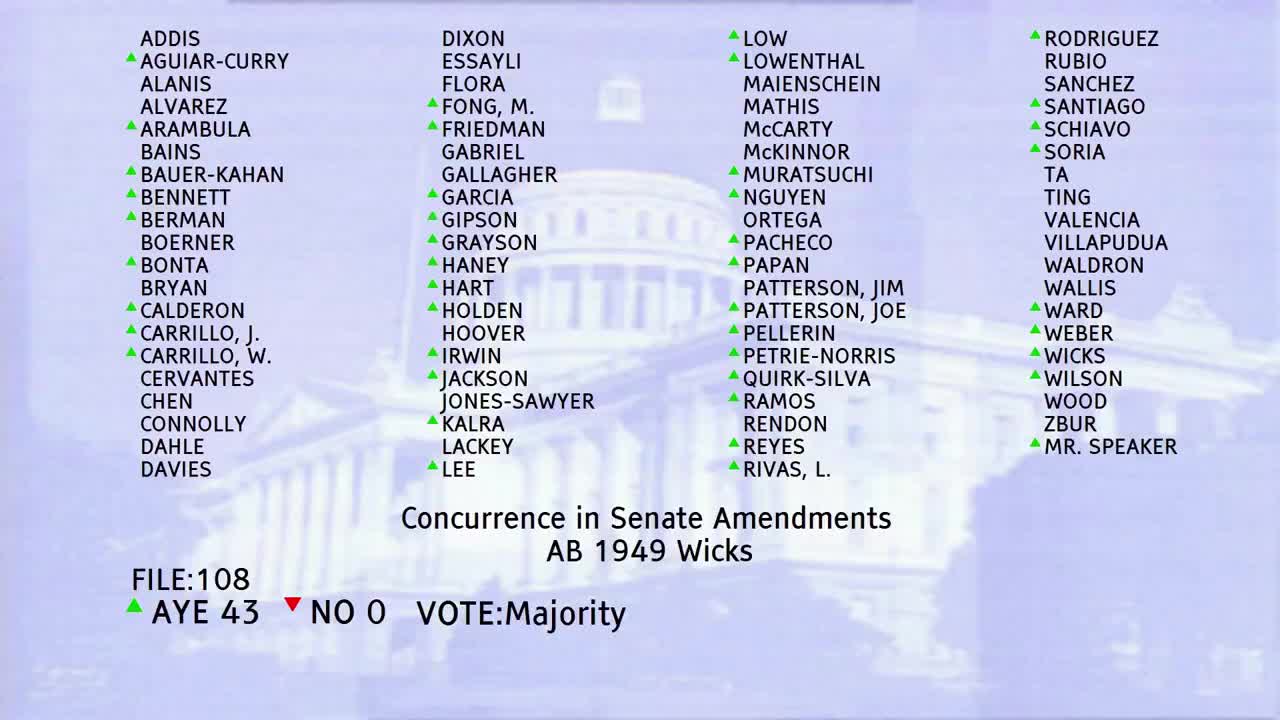 1MIN
Assembly Floor
 2MIN
Senate Floor
 1MIN
Senate Standing Committee on Appropriations
 18MIN
Senate Standing Committee on Natural Resources and Water
 31MIN
Senate Standing Committee on Environmental Quality
 3MIN
Assembly Floor
 18MIN
Assembly Standing Committee on Judiciary
 14SEC
Assembly Standing Committee on Judiciary
Bill Author

Bill Co-Author(s):