AB 2620: California Commission on Aging.
- Session Year: 2023-2024
- House: Assembly
- Latest Version Date: 2024-09-21
Current Status:
Passed
(2024-09-21: Chaptered by Secretary of State - Chapter 334, Statutes of 2024.)
Introduced
In Committee
First Chamber
In Committee
Second Chamber
Enacted
What does this bill do?
The bill reshapes the California Commission on Aging by reducing membership from 25 to 18 and changing how members are chosen, affecting older Californians, adults with disabilities, caregivers, and service providers. It requires most members to be age 60 or older and lets both consumers and providers with professional, lived, or academic experience in health, housing, long‑term care, or caregiving serve. The commission is an advisory body under state open‑meeting law, will meet four times a year, and will advise on state and federal programs and rulemaking affecting older adults and caregivers.
The summary is provided by generative AI which can make mistakes. For original language, please view the details in the table below.
Existing law, the Mello-Granlund Older Californians Act, establishes the California Commission on Aging, comprised of 25 members, appointed as specified, including 19 members appointed by the Governor. Existing law requires the commission to be comprised of actual consumers of services provided under the federal Older Americans Act. Under existing law, the commissions mission is, among other things, to serve as the principal advocate body in the state on behalf of older individuals, to participate with and advise the California Department of Aging in various ways relating to the State Plan on Aging, and to develop a method for the selection of delegates to the statewide legislative meeting of senior advocates. Existing law sets forth the duties and powers of the commission, including participating with the department in training workshops for community, regional, and statewide senior advocates, to help older individuals to understand legislative, regulatory, and program implementation processes, and meeting at least 6 times annually in order to study problems of older individuals and present findings and make recommendations.
This bill would reduce the number of members of the commission to 18, and require 12 members to be appointed by the Governor, with at least 2 appointed from a list of nominees submitted by, among others, area agency on aging directors and the Area Agency on Aging Advisory Council of California. The bill would require the members of the commission be comprised of consumers and providers of services under the federal Older Americans Act, instead of just consumers, who have professional, lived, or academic expertise both within and outside of the field of aging, in specified areas, including health, behavioral health, and housing.
The bill would clarify that the commission is an advisory commission as described by the Bagley-Keene Open Meeting Act, and is therefore subject to applicable teleconferencing provisions. The bill would revise the existing duties and purpose of the commission by removing the requirement that the commission develop a method for the selection of delegates to the statewide legislative meeting of senior advocates. The bill would also revise the duties of the commission to require, among other things, the commissions advisory participation in consideration of initiatives for programs and services affecting older adults, adults with disabilities, and caregivers, as well as to monitor and, when deemed appropriate, engage in federal advocacy efforts on, among others, federal rulemaking packages affecting older adults, adults with disabilities, and caregivers. The bill would also reduce the annual meetings of the commission from 6 to 4.
(a)(1)There is in the state government the California Commission on Aging.
(2)The commission shall be composed of 18 persons, as follows:
(A)Twelve persons shall be appointed by the Governor. At least 2 of the 12 persons shall be appointed by the Governor from nominees submitted by, among others, area agency on aging directors and the Area Agency on Aging Advisory Council of California, also known as the Triple-A Council of California.
(B)Three persons appointed by the Speaker of the Assembly.
(C)Three persons appointed by the Senate Rules Committee.
(3)The commission shall be comprised of a majority of members 60 years of age or older.
(4)The commission shall be comprised of actual consumers and providers of services under the federal Older Americans Act (42 U.S.C. Sec. 3001, et seq.), as amended, with professional, lived, or academic expertise both within and outside of the field of aging, including, but not limited to, health, behavioral health, Alzheimers and related dementias, long-term services and supports, long-term care, housing, transportation, independent living, workforce development, caregiving, elder justice, information technology, and economic security, among others.
(5)The commission shall be composed of representatives of the geographic, cultural, economic, and other social factors in the state.
(b)The commission composition requirements shall be complied with as vacancies occur.
(c)For the purposes of conducting meetings pursuant to the Bagley-Keene Open Meeting Act (Article 9 (commencing with Section 11120) of Chapter 1 of Part 1 of Division 3 of Title 2 of the Government Code), the commission is an advisory commission within the meaning of subdivision (b) of Section 11123.5 of the Government Code and, therefore, subject to Section 11123.5 of the Government Code.
SEC. 2.Section 9201 of the Welfare and Institutions Code is amended to read:9201.The term of office of members of the commission shall be three years. Members shall not serve more than two full terms and shall be appointed for staggered terms. The members shall select one of their members to serve as chairperson and one of their members to serve as vice chairperson on an annual basis.
A commissioner who fails to attend two consecutive monthly meetings or who fails to attend four meetings per year, without having given written excuse acceptable to the commission, shall cause the commission to notify the appointing authority, and the appointing authority may declare the position vacant.
SEC. 3.Section 9202 of the Welfare and Institutions Code is amended to read:9202.The duties and functions of the commission shall include, but not be limited to, all of the following:
(a)Serve as the principal advocate body in the state on behalf of older individuals, including, but not limited to, advisory participation in the consideration of all legislation, regulations, and initiatives made by state and federal departments and agencies relating to programs and services that affect older adults, adults with disabilities, and caregivers.
(b)Participate with the department in training workshops for community, regional and statewide aging and disability advocates, to promote greater understanding of the legislative, regulatory, and program implementation processes.
(c)Prepare, publish, and disseminate information, findings, and recommendations regarding the health and well-being of older individuals.
(d)Actively participate and advise the department in the development and preparation of the State Plan on Aging, conduct public hearings on the State Plan on Aging, review and comment on the state plan, and monitor the progress of the plans implementation.
(e)Meet at least four times annually in order to study problems of older individuals and present findings and make recommendations.
(f)Hold hearings throughout the state, that may include conducting an annual statewide hearing inviting all departments administering programs affecting older adults, adults with disabilities, and caregivers, in order to gather information and advise the Governor, Legislature, department, and agencies on all levels of government regarding solutions to problems confronting older individuals and the most effective use of existing resources and available services for individuals.
(g)Hire an executive director, who will, within budgetary limits, hire staff as may be necessary for the commission to fulfill its duties.
(h)Perform other duties as may be required by statute, regulation, resolution, or executive order.
(i)Meet and consult with the Area Agency on Aging Advisory Council of California in order to exchange information, and assist in training, planning, and development of advocacy skills.
(j)Monitor and, when deemed appropriate, engage in federal advocacy efforts that may include, but not be limited to, providing comments on federal Older Americans Act reauthorizations and federal rulemaking packages impacting older adults, adults with disabilities, and caregivers.
(a)(1)There is in the state government the California Commission on Aging.
(2)The commission shall be composed of 25 18 persons, as follows:
(A)Nineteen Twelve persons shall be appointed by the Governor. Nine of the 19 At least 2 of the 12 persons shall be appointed by the Governor from lists of nominees submitted by the area agency on aging advisory councils. At least five names shall be submitted as nominees for each vacancy. by, among others, area agency on aging directors and the Area Agency on Aging Advisory Council of California, also known as the Triple-A Council of California.
(B)Three persons appointed by the Speaker of the Assembly.
(C)Three persons appointed by the Senate Rules Committee.
(3)The commission shall be comprised of a majority of members 60 years of age or older.
(4)The commission shall be comprised of actual consumers and providers of services under the federal Older Americans Act (42 U.S.C. Sec. 3001, et seq.), as amended. amended, with professional, lived, or academic expertise both within and outside of the field of aging, including, but not limited to, health, behavioral health, Alzheimers and related dementias, long-term services and supports, long-term care, housing, transportation, independent living, workforce development, caregiving, elder justice, information technology, and economic security, among others.
(5)The commission shall be composed of representatives of the geographic, cultural, economic, and other social factors in the state.
(b)The commission composition requirements shall be complied with as vacancies occur.
(c)For the purposes of conducting meetings pursuant to the Bagley-Keene Open Meeting Act (Article 9 (commencing with Section 11120) of Chapter 1 of Part 1 of Division 3 of Title 2 of the Government Code), the commission is an advisory commission within the meaning of subdivision (b) of Section 11123.5 of the Government Code and, therefore, subject to Section 11123.5 of the Government Code.
SEC. 2.Section 9201 of the Welfare and Institutions Code is amended to read:9201.The term of office of members of the commission shall be three years. Members shall not serve more than two terms, full terms and shall be appointed for staggered terms. The members shall select one of their members to serve as chairperson and one of their members to serve as vice chairperson on an annual basis.
A commissioner who fails to attend two consecutive monthly meetings or who fails to attend four meetings per year, without having given written excuse acceptable to the commission, shall cause the commission to notify the appointing authority, and the appointing authority may declare the position vacant.
SEC. 3.Section 9202 of the Welfare and Institutions Code is amended to read:9202.The duties and functions of the commission shall be to do include, but not be limited to, all of the following:
(a)Serve as the principal advocate body in the state on behalf of older individuals, including, but not limited to, advisory participation in the consideration of all legislation and regulations legislation, regulations, and initiatives made by state and federal departments and agencies relating to programs and services that affect older individuals. adults, adults with disabilities, and caregivers.
(b)Participate with the department in training workshops for community, regional and statewide senior aging and disability advocates, to help older individuals understand promote greater understanding of the legislative, regulatory, and program implementation processes.
(c)Prepare, publish, and disseminate information, findings, and recommendations regarding the health and well-being of older individuals.
(d)Actively participate and advise the department in the development and preparation of the State Plan on Aging, conduct public hearings on the State Plan on Aging, review and comment on the state plan, and monitor the progress of the plans implementation.
(e)Meet at least six four times annually in order to study problems of older individuals and present findings and make recommendations.
(f)Hold hearings throughout the state, that may include conducting an annual statewide hearing inviting all departments administering programs affecting seniors, older adults, adults with disabilities, and caregivers, in order to gather information and advise the Governor, Legislature, department, and agencies on all levels of government regarding solutions to problems confronting older individuals and the most effective use of existing resources and available services for individuals.
(g)Hire an executive director and, director, who will, within budgetary limits, hire such staff as may be necessary for the commission to fulfill its duties.
(h)Develop, in cooperation with the department, a method for the selection of delegates to the statewide legislative meeting of senior advocates.(i)(h)Perform other duties as may be required by statute, regulation, or resolution. resolution, or executive order.
(j)(i)Meet and consult with the area agency on aging advisory councils Area Agency on Aging Advisory Council of California in order to exchange information, and assist in training, planning, and development of advocacy skills.
(j)Monitor and, when deemed appropriate, engage in federal advocacy efforts that may include, but not be limited to, providing comments on federal Older Americans Act reauthorizations and federal rulemaking packages impacting older adults, adults with disabilities, and caregivers.
|
Date
|
Status
|
|---|---|
| Sep 21, 2024 | Chaptered by Secretary of State - Chapter 334, Statutes of 2024. |
| Sep 21, 2024 | Approved by the Governor. |
| Aug 28, 2024 | Enrolled and presented to the Governor at 4 p.m. |
| Aug 22, 2024 | In Assembly. Ordered to Engrossing and Enrolling. |
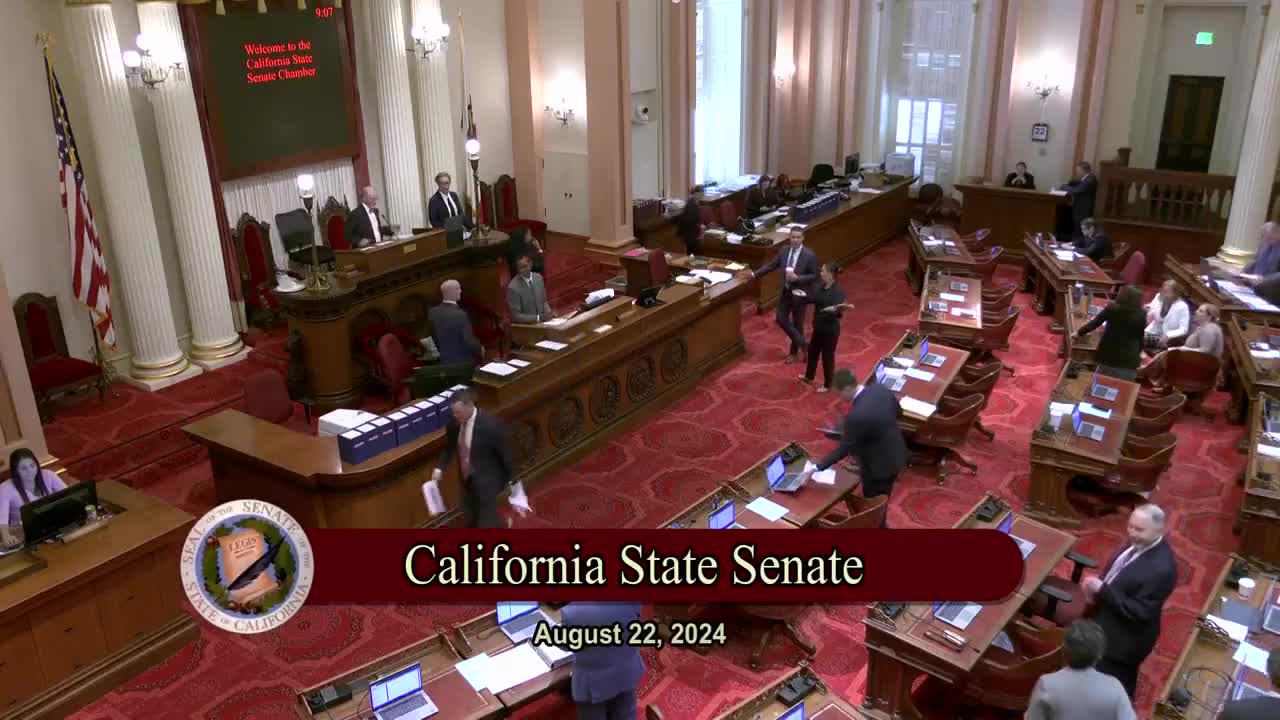
| Aug 22, 2024 | Read third time. Passed. Ordered to the Assembly. (Ayes 33. Noes 0. Page 5295.). |
| Jun 18, 2024 | Read second time. Ordered to third reading. |
| Jun 17, 2024 | From committee: Be ordered to second reading pursuant to Senate Rule 28.8. |
| Jun 4, 2024 | From committee: Do pass and re-refer to Com. on APPR. (Ayes 4. Noes 0.) (June 3). Re-referred to Com. on APPR. |
| May 22, 2024 | Referred to Com. on HUMAN S. |
| May 9, 2024 | In Senate. Read first time. To Com. on RLS. for assignment. |
| May 9, 2024 | Read third time. Passed. Ordered to the Senate. (Ayes 65. Noes 0. Page 5160.) |
| May 2, 2024 | Read second time. Ordered to Consent Calendar. |
| May 1, 2024 | From committee: Do pass. To Consent Calendar. (Ayes 14. Noes 0.) (May 1). |
| Apr 17, 2024 | From committee: Do pass and re-refer to Com. on APPR. (Ayes 5. Noes 0.) (April 16). Re-referred to Com. on APPR. |
| Mar 4, 2024 | Referred to Com. on AGING & L.T.C. |
| Feb 15, 2024 | From printer. May be heard in committee March 16. |
| Feb 14, 2024 | Read first time. To print. |
|
Date
|
Description
|
Location
|
Votes
|
|
|---|---|---|---|---|
| Aug 22, 2024 | Assembly 3rd Reading AB2620 Bains By Roth | Senate Floor |
Passed |
|
| Jun 3, 2024 | Do pass, but first be re-referred to the Committee on [Appropriations] | Senate Standing Committee on Human Services |
Passed |
|
| May 9, 2024 | AB 2620 Bains Consent Calendar Second Day Regular Session | Assembly Floor |
Passed |
|
| May 1, 2024 | Do pass. To Consent Calendar. | Assembly Standing Committee on Appropriations |
Passed |
|
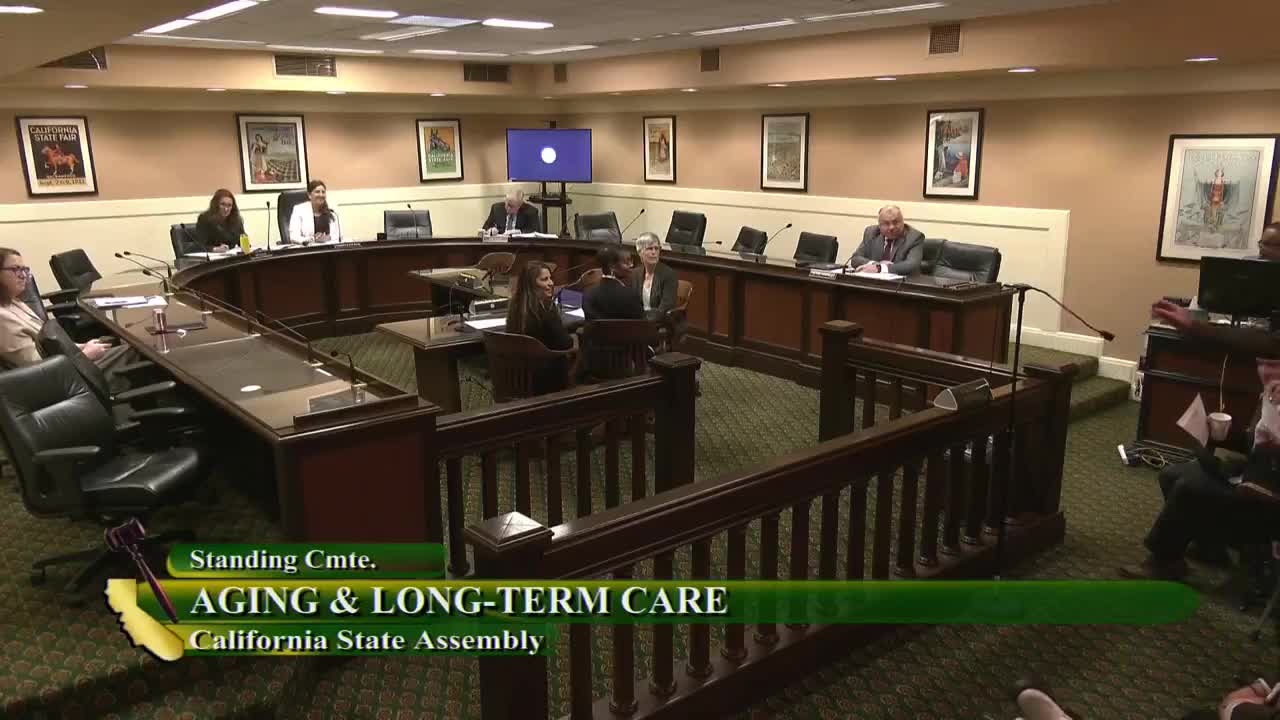
| Apr 16, 2024 | Do pass and be re-referred to the Committee on [Appropriations] | Assembly Standing Committee on Aging and Long-Term Care |
Passed |
This list shows positions taken on this bill by organizations on the date displayed, which is linked to the original source.
Positions by individuals are not included.
|
Organization
|
Position
|
Date
|
|---|---|---|
| Alzheimer's Association | * Support | Jun 3, 2024 |
| California Assisted Living Association | * Support | Apr 16, 2024 |
| California Association Of Area Agencies On Aging | * Support | Apr 16, 2024 |
| California Commission on Aging | ** Support | |
| California Retired Teachers Association | ** Support |
SENATE RULES COMMITTEE Office of Senate Floor Analyses (916) 651-1520 Fax: (916) 327-4478 | AB 2620 |
THIRD READING
Bill No: AB 2620
Author: Bains (D)
Introduced: 2/14/24
Vote: 21
SENATE HUMAN SERVICES COMMITTEE: 4-0, 6/3/24
AYES: Alvarado-Gil, Ochoa Bogh, Blakespear, Menjivar
NO VOTE RECORDED: Hurtado
SENATE APPROPRIATIONS COMMITTEE: Senate Rule 28.8
ASSEMBLY FLOOR: 65-0, 5/9/24 (Consent) - See last page for vote
SUBJECT: California Commission on Aging
SOURCE: California Commission on Aging
DIGEST:
This bill reduces the number of members on the California Commission on Aging (Commission) from 25 to 18, clarifies the Commission is an advisory commission, and reduces the annual meetings from six to four.
ANALYSIS:
Existing Law:
- Establishes, in federal law, the Older Americans Act (OAA), which promotes the well-being of Americans 60 years old and above through services and programs designed to meet their needs. (Title 42 United States Code § 3001, et seq.)
- Establishes the Bagley-Keene-Open Meeting Act (Bagley-Keene), which requires proceedings of public agencies be conducted openly so the public may remain informed. (Government Code § 1120 et seq.)
- Establishes the Mello-Granlund Older Californians Act, which establishes California Department of Aging, and sets forth its duties and powers, including, among other things, entering into a contract for the development of information and materials to educate Californians on the concept of “aging in place.” (Welfare and Institutions Code (WIC) § 9100 et seq.)
- Establishes in the state government the Commission and sets forth requirements for the Commission composition, terms of office for the members of the Commission and the duties and functions of the Commission. (WIC § 9200 et seq.)
- Defines “older individual” or “elderly” as a person 60 years of age or older, except where this provision is inconsistent with federal requirements. (WIC § 9018)
- Requires the Secretary of the California Health and Human Services Agency, in coordination with the Director of California Department of Aging, to lead the development and implementation of the Master Plan for Aging established pursuant to Executive Order N-14-19. (WIC § 9850)
This bill:
- Reduces the number of members on the Commission from 25 to 18.
- Reduces the number of members appointed by the Governor from 19 to 12.
- Requires two of the 12, rather than nine of the 18, persons appointed by the Governor be chosen from nominees submitted by area agency on aging directors and the Area Agency on Aging Advisory Council of California (Triple-A Council of California), among others.
- Expands who the Commission shall be comprised of from only actual consumers to both actual consumers and providers of services, with professional, lived or academic expertise both within and outside of the field of aging.
- Provides that for purposes of conducting meetings pursuant to the Bagley-Keene Open Meeting Act, the Commission is an advisory commission.
- Revises the existing duties and purposes of the Commission.
- Reduces the annual meeting requirements from six to four.
Comments
- According to the author, “I represent an area that has often been kept from participating in statewide boards and commissions because travel is prohibitive. This can also impact those who are aging and people living with disabilities. Requiring expertise related to aging allows for more meaningful advocacy, but I can’t stress enough the importance of geographic diversity as well. Not all Californians are aging the same across the state. The flexibilities allowed in AB 2620 will open up the entire Commission to greater participation.”
- Aging California and the Master Plan for Aging California is projected to be home to 10.8 million people age 60 and older in 2030. This is nearly twice as many people age 60 and older as there were in 2010. Additionally, by 2030 one out of every four Californians will be older adults. The state is making efforts to meet the needs of this growing population. In January 2021, the Newsom Administration published its Master Plan for Aging, which is intended to be a ten year blue-print for state government, local government, the private sector, and philanthropy to prepare the state for the coming demographic changes and “continue California’s leadership in aging, disability, and equity.” The Master Plan for Aging outlines five goals, twenty-three strategies, and over 100 initiatives. The five goals of the Master Plan are: housing for all ages and stages; health reimagined; inclusion and equity, not isolation; caregiving that works; and affording aging.
- California Commission on Aging (The Commission). The Commission website states “The California Commission on Aging was established in 1973 by the Burton Act. It was confirmed in the original Older Californians Act of 1980 and reconfirmed in the Mello-Granlund Older Californians Act of 1996. It is comprised of 25 commissioners; 19 appointed by the Governor, 3 appointed by the Speaker of the Assembly, and 3 by the Senate Rules Committee. All Commissioners serve three year terms as volunteers.”
The Commission serves to advocate in the state on behalf of older individuals, including advisory participation in the consideration of all legislation and regulations made by state and federal departments and agencies relating to programs and services that affect older individuals. As such it is the principal advisory body to the Governor, State Legislature, and State, Federal and local departments and agencies on issues affecting older individuals in order to ensure a quality of life for older Californians.
According to the Commission, since its inception in 1973, they have never had all of the gubernatorial appointed seats filled, making it difficult to secure a quorum and conduct business. Since the late 1980s, the most members present at any meeting has been eighteen.
Related/Prior Legislation
AB 2800 (Granlund, Chapter 1097, Statutes of 1996), expanded the Older Californians Act by establishing new programs and making structural changes including defining the roles of the Commission.
FISCAL EFFECT: Appropriation: No Fiscal Com.: Yes Local: No
SUPPORT: (Verified 6/17/24)
California Commission on Aging (source)
California Assisted Living Association
California Long Term Care Ombudsman Association
California Retired Teachers Association
California Women's Law Center
Calpace
Elderly Care Everywhere
OPPOSITION: (Verified 6/17/24)
None received
ASSEMBLY FLOOR: 65-0, 5/9/24
AYES: Addis, Aguiar-Curry, Alanis, Alvarez, Arambula, Bauer-Kahan, Bennett, Berman, Boerner, Bonta, Bryan, Calderon, Juan Carrillo, Wendy Carrillo, Chen, Connolly, Davies, Dixon, Essayli, Mike Fong, Vince Fong, Friedman, Gallagher, Garcia, Gipson, Hart, Holden, Hoover, Irwin, Jackson, Jones-Sawyer, Kalra, Lackey, Lee, Lowenthal, Maienschein, McCarty, McKinnor, Muratsuchi, Ortega, Pacheco, Papan, Jim Patterson, Joe Patterson, Pellerin, Quirk-Silva, Ramos, Rendon, Reyes, Rodriguez, Blanca Rubio, Sanchez, Santiago, Soria, Ta, Valencia, Villapudua, Waldron, Ward, Weber, Wicks, Wilson, Wood, Zbur, Robert Rivas
NO VOTE RECORDED: Bains, Cervantes, Megan Dahle, Flora, Gabriel, Grayson, Haney, Low, Mathis, Stephanie Nguyen, Petrie-Norris, Luz Rivas, Schiavo, Ting, Wallis
Prepared by: Heather Hopkins / HUMAN S. / (916) 651-1524
6/18/24 10:59:43
SENATE COMMITTEE ON HUMAN SERVICES
Senator Alvarado-Gil, Chair
2023 - 2024 Regular
Bill No: | AB 2620 | ||
Author: | Bains | ||
Version: | February 14, 2024 | Hearing Date: | June 3, 2024 |
Urgency: | No | Fiscal: | Yes |
Consultant: | Heather Hopkins | ||
Subject: California Commission on Aging
SUMMARY
This bill reduces the number of members on the California Commission on Aging (Commission) from 25 to 18, clarifies the Commission is an advisory commission, and reduces the annual meetings from six to four.
ABSTRACT
Existing Law:
- Establishes, in federal law, the Older Americans Act (OAA), which promotes the well-being of Americans 60 years old and above through services and programs designed to meet their needs. (42 United States Code (USC.) 3001, et seq.)
- Establishes the Bagley-Keene-Open Meeting Act (Bagley-Keene), which requires proceedings of public agencies be conducted openly so the public may remain informed. (Gov’t Code 1120 et seq.)
- Establishes the Mello-Granlund Older Californians Act, which establishes California Department of Aging, and sets forth its duties and powers, including, among other things, entering into a contract for the development of information and materials to educate Californians on the concept of “aging in place.” (WIC 9100 et seq.)
- Establishes in the state government the Commission and sets forth requirements for the Commission composition, terms of office for the members of the Commission and the duties and functions of the Commission. (WIC 9200 et seq.)
- Defines “older individual” or “elderly” as a person 60 years of age or older, except where this provision is inconsistent with federal requirements. (WIC 9018)
- Requires the Secretary of the California Health and Human Services Agency, in coordination with the Director of California Department of Aging, to lead the development and implementation of the Master Plan for Aging established pursuant to Executive Order N-14-19. (WIC 9850)
This Bill:
- Reduces the number of members on the Commission from 25 to 18.
- Reduces the number of members appointed by the Governor from 19 to 12.
- Requires two of the 12, rather than nine of the 18, persons appointed by the Governor be chosen from nominees submitted by area agency on aging directors and the Area Agency on Aging Advisory Council of California (Triple-A Council of California), among others.
- Expands who the Commission shall be comprised of from only actual consumers to both actual consumers and providers of services, with professional, lived or academic expertise both within and outside of the field of aging.
- Provides that for purposes of conducting meetings pursuant to the Bagley-Keene Open Meeting Act, the Commission is an advisory commission.
- Revises the existing duties and purposes of the Commission.
- Reduces the annual meeting requirements from six to four.
FISCAL IMPACT
According to the Assembly Appropriations Committee analysis, “No state costs. The Commission expects to implement the changes within existing resources.”
BACKGROUND AND DISCUSSION
Purpose of the Bill:
According to the author, “I represent an area that has often been kept from participating in statewide boards and commissions because travel is prohibitive. This can also impact those who are aging and people living with disabilities. Requiring expertise related to aging allows for more meaningful advocacy, but I can’t stress enough the importance of geographic diversity as well. Not all Californians are aging the same across the state. The flexibilities allowed in AB 2620 will open up the entire Commission to greater participation.”
Aging California and the Master Plan for Aging
California is projected to be home to 10.8 million people age 60 and older in 2030. This is nearly twice as many people age 60 and older as there were in 2010. Additionally, by 2030 one out of every four Californians will be older adults. The state is making efforts to meet the needs of this growing population. In January 2021, the Newsom Administration published its Master Plan for Aging, which is intended to be a ten year blue-print for state government, local government, the private sector, and philanthropy to prepare the state for the coming demographic changes and “continue California’s leadership in aging, disability, and equity.” The Master Plan for Aging outlines five goals, twenty-three strategies, and over 100 initiatives. The five goals of the Master Plan are: housing for all ages and stages; health reimagined; inclusion and equity, not isolation; caregiving that works; and affording aging.
California Commission on Aging
The Commission website states “The California Commission on Aging was established in 1973 by the Burton Act. It was confirmed in the original Older Californians Act of 1980 and reconfirmed in the Mello-Granlund Older Californians Act of 1996. It is comprised of 25 commissioners; 19 appointed by the Governor, 3 appointed by the Speaker of the Assembly, and 3 by the Senate Rules Committee. All Commissioners serve three year terms as volunteers.”
The Commission serves to advocate in the state on behalf of older individuals, including advisory participation in the consideration of all legislation and regulations made by state and federal departments and agencies relating to programs and services that affect older individuals. As such it is the principal advisory body to the Governor, State Legislature, and State, Federal and local departments and agencies on issues affecting older individuals in order to ensure a quality of life for older Californians.
According to the Commission, since its inception in 1973, they have never had all of the gubernatorial appointed seats filled, making it difficult to secure a quorum and conduct business. Since the late 1980s, the most members present at any meeting has been eighteen.
Related/Prior Legislation:
AB 2800 (Granlund, Chapter 1097, Statutes of 1996), expanded the Older Californians Act by establishing new programs and making structural changes including defining the roles of the Commission.
COMMENTS
This bill seeks to make the Commission more inclusive and efficient. It addresses the issue of a lack of quorum, both because appointed seats are often vacant and absences for illness and other reasons, by reducing the number of members from 25 to 18, ensuring a quorum is present more frequently. Further, this bill will clarify that the Commission is advisory, making it possible for members to attend remotely. This allow people from all corners of California to participate without having to travel long distances.
PRIOR VOTES
| |
Assembly Floor: | 65 - 0 |
Assembly Appropriations Committee: | 14 - 0 |
Assembly Aging and Long Term Care Committee: | 5 - 0 |
POSITIONS
Support:
California Commission on Aging (Sponsor)
California Assisted Living Association
California Long Term Care Ombudsman Association (CLTCOA)
California Retired Teachers Association
Oppose:
None
-- END --
Date of Hearing: May 1, 2024
ASSEMBLY COMMITTEE ON APPROPRIATIONS
Buffy Wicks, Chair
ABPCA Bill Id:AB 2620
Author:(Bains) – As Introduced Ver:February 14, 2024
Policy Committee: | Aging and Long Term Care | Vote: | 5 - 0 |
|
| ||
|
|
Urgency: No State Mandated Local Program: No Reimbursable: No
SUMMARY:
This bill modifies the composition, duties, and functions of the California Commission on Aging (Commission). The bill also clarifies the Commission’s status as an “advisory commission” for purposes of teleconferencing pursuant to the Bagley-Keene Open Meeting Act.
Specifically, this bill:
- Reduces from 25 to 18, the number of members on the Commission and reduces from 19 to 12, the number of members appointed by the Governor. Requires at least two of the 12 members appointed by the Governor be from nominees submitted by, among others, area agency on aging (AAA) directors and the Area Agency on Aging Advisory Council of California, also known as the Triple-A Council of California.
- Requires the members of the Commission be comprised of consumers and providers of services under the federal Older Americans Act (OAA), with professional, lived, or academic expertise both within and outside of the field of aging, as specified.
- Declares the Commission is an “advisory commission” as described by the Bagley-Keene Open Meeting Act (Bagley-Keene) for purposes of teleconferencing.
- Modifies the duties and functions of the Commission as follows:
- Expands the Commission’s existing advisory duties to also include advocacy on behalf of adults with disabilities and caregivers, in addition to older adults.
- Expands the scope of the Commission’s advisory duties to also include advising on initiatives made by state and federal agencies, in addition to legislation and regulations.
- Reduces the Commission’s annual meeting requirements from six meetings to four meetings.
- Adds the duty to monitor and, when deemed appropriate, engage in federal advocacy efforts that may include, but not be limited to, providing comments on federal Older Americans Act reauthorizations and federal rulemaking packages impacting older adults, adults with disabilities, and caregivers.
FISCAL EFFECT:
No state costs. The Commission expects to implement the changes within existing resources.
COMMENTS:
- Purpose. According to the author:
I represent an area that has often been kept from participating in statewide boards and commissions because travel is prohibitive. This can also impact those who are aging and people living with disabilities. Requiring expertise related to aging allows for more meaningful advocacy, but I can’t stress enough the importance of geographic diversity as well. Not all Californians are aging the same across the state. The flexibilities allowed in [this bill] will open up the entire Commission to greater participation.
- Background. Existing law, the Mello-Granlund Older Californians Act, establishes the Commission, which serves as the principal advocate in the state on behalf of older individuals, including in an advisory capacity on legislation and state and federal regulations relating to programs and services that affect older individuals. The Commission is comprised of 25 commissioners; 19 appointed by the Governor, three appointed by the Speaker of the Assembly, and three by the Senate Rules Committee. All commissioners serve three-year terms as volunteers. According to the Commission, sponsor of this bill, the positions appointed by the Governor have never been completely filled, making it difficult to secure a quorum and conduct business. The Commission explains:
While the Commission is required in law to be composed of 25 commissioners, the full commission is rarely composed of more than 18 commissioners. Quorum requirements hold that a majority of the body, including vacancies, must be present at meetings. Administrative delays in the confirmation process and the regular “terming off” of members means the total number of filled vacancies can vary. As a result, having just a few members with excused absences or unexpected emergencies can mean that a meeting cannot take place-even if well over a majority of the current members are in attendance.
Existing law, Bagley-Keene, requires all meetings of a state body, including state boards and commissions, be open and public, and requires these bodies publicly notice their meetings, prepare agendas, accept public testimony, and conduct their meetings in public unless specifically authorized by the act. Bagley-Keene authorizes a state body to hold public meetings through teleconference, subject to specified notice and accessibility requirements.
Existing law additionally authorizes, until January 1, 2026, a state body that is an advisory board, advisory commission, or similar multimember advisory body, to hold an open meeting by teleconference pursuant an alternative set of provisions designed to provide greater flexibility for state body members to participate. This bill clarifies the Commission’s status as an advisory commission under the Bagley-Keene definition and therefore subject to the applicable alternative teleconferencing provisions.
Analysis Prepared by: Jennifer Swenson / APPR. / (916) 319-2081
Date of Hearing: April 16, 2024
ASSEMBLY COMMITTEE ON AGING AND LONG-TERM CARE
Jasmeet Bains, Chair
ABPCA Bill Id:AB 2620 (
Author:Bains) – As Introduced Ver:February 14, 2024
SUBJECT: California Commission on Aging
SUMMARY: Makes statutory changes to the California Commission on Aging (Commission). Specifically, this bill:
- Reduces the number of members on the Commission from 25 to 18.
- Requires 12 members to be appointed by the Governor, and further mandates at least 2 of the 12 persons be appointed by the Governor from nominees submitted by, among others, area agency on aging (AAA) directors and the Area Agency on Aging Advisory Council of California, also known as the Triple-A Council of California.
- Requires the members of the Commission be comprised of consumers and providers of services under the federal Older Americans Act (OAA), with professional, lived, or academic expertise both within and outside of the field of aging, including, but not limited to:
- Health;
- Behavioral health;
- Alzheimer’s and related dementias;
- Long-term services and supports;
- Long-term care;
- Housing;
- Transportation;
- Independent living;
- Workforce development;
- Caregiving;
- Elder justice;
- Information technology; and,
- Economic security, among others.
- Clarifies the Commission is an ‘advisory commission” as described by the Bagley-Keene Open Meetings Act (Bagley-Keene).
- Revises the existing duties and purpose of the Commission.
- Reduces the annual meeting requirements from 6 to 4.
EXISTING LAW:
- Establishes, in federal law, the Older Americans Act (OAA), which promotes the well-being of Americans 60 years old and above through services and programs designed to meet their needs. (42 United States Code (USC.) § 3001, et seq.)
- Establishes the Bagley-Keene-Open Meeting Act (Bagley-Keene), which requires proceedings of public agencies be conducted openly so the public may remain informed. (GOV § 1120 et seq.)
- Establishes the Mello-Granlund Older Californians Act (Act), which establishes CDA, and sets forth its duties and powers, including, among other things, entering into a contract for the development of information and materials to educate Californians on the concept of “aging in place.” (WIC § 9100 et seq.)
- Establishes in the state government the Commission and sets forth requirements for the Commission composition, terms of office for the members of the Commission and the duties and functions of the Commission. (WIC § 9200 et seq.)
- Defines “Older individual” or “elderly” as a person 60 years of age or older, except where this provision is inconsistent with federal requirements. (WIC § 9018)
- Requires the Secretary of the California Health and Human Services Agency, in coordination with the Director of CDA, to lead the development and implementation of the MPA established pursuant to Executive Order N-14-19. (WIC § 9850)
FISCAL EFFECT: This bill has not yet been analyzed by a fiscal committee.
COMMENTS:
Author’s Statement: “I represent an area that has often been kept from participating in statewide boards and commissions because travel is prohibitive. This can also impact those who are aging and people living with disabilities. Requiring expertise related to aging allows for more meaningful advocacy, but I can’t stress enough the importance of geographic diversity as well. Not all Californians are aging the same across the state. The flexibilities allowed in AB 2620 will open up the entire Commission to greater participation.”
BACKGROUND
The Commission website states “The California Commission on Aging was established in 1973 by the Burton Act. It was confirmed in the original Older Californians Act of 1980 and reconfirmed in the Mello-Granlund Older Californians Act of 1996. It is comprised of 25 commissioners; 19 appointed by the Governor, 3 appointed by the Speaker of the Assembly, and 3 by the Senate Rules Committee. All Commissioners serve three year terms as volunteers.
The Commission serves as "the principal advocate in the state on behalf of older individuals, including, but not limited to, advisory participation in the consideration of all legislation and regulations made by state and federal departments and agencies relating to programs and services that affect older individuals." As such it is the principal advisory body to the Governor, State Legislature, and State, Federal and local departments and agencies on issues affecting older individuals in order to ensure a quality of life for older Californians so they may live with dignity in their chosen environment.”
According to the Commission, since its inception in 1973, they have never had all of the gubernatorial appointed seats filled, making it difficult to secure a quorum and conduct business.
California’s aging population is growing faster than any other age group. By 2030, over 25 percent of the population in California will be 60 and older.[1] The population in the state is becoming more racially and ethnically diverse, and yet the COVID-19 pandemic impacted Californians disparately.
California is projected to be one of the fastest growing States in the nation in total population. In 2016, California comprised 12 percent of the nation's population[2] and is expected to grow 30 percent by the year 2060 (an increase of 11.7 million people.[3] In California, the population aged 60 years and over is expected to grow more than three times as fast as the total population and this growth will vary by region.
The population over age 60 will have an overall increase of 166 percent during the period from 2010 to 2060. More than half the counties will have over a 100 percent increase in this age group. Nearly half of these counties will have growth rates of over 150 percent. These counties are located throughout the central and southern areas of the State. The influence of the 60 and over age group on California is expected to emerge most strongly between 2010 to 2030.3
The population over age 85 will increase at an even a faster rate than those over 60 years of age, having an overall increase of 489 percent during the period from 2010 to 2060. Counties can expect to experience even higher growth rates after 2020. In particular, the influence of the 85 and over age group on California will emerge most strongly between 2030 to 2040 as the first of the baby boomers reach 85 years of age.3
Life expectancy continues to rise,[4] however during 2019-2021 overall life expectancy for Californians fell from 81.4 years to 78.4 years. For Hispanics, life expectancy declined by nearly 6 years, a difference three times greater than their white counterparts. And the difference between those in California’s highest and lowest income brackets increased by three-and-a-half years to greater than 15 years (11.5 years before the pandemic to more than 15 years in 2021).[5]
Master Plan for Aging: In January of 2021, the Governor released his Master Plan for Aging (MPA). The MPA prioritizes the health and well-being of older Californians and the need for policies that promote healthy aging. The MPA serves as a blueprint for state government, local government, the private sector, and philanthropy to prepare the state for the coming demographic changes and continue California’s leadership in aging, disability, and equity.
After work began on the MPA, the COVID-19 pandemic reached California. The virus disproportionately harmed older and other at-risk adults, and it strained aging and disability services that were perpetually underfunded. Worldwide, older adults have experienced unprecedented death rates. California’s diverse population saw disproportionate numbers, particularly among Latino, Black and Asian Pacific Islander communities and those living in nursing homes. The pandemic intensified social isolation.
The work plan laid out in the MPA three years after its release continues to highlight the urgent needs facing California’s older adults, people with disabilities, their families, caregivers advocates and the workforce supporting these populations..
In 2024-5, the MPA outlines five bold goals and currently seeks to advance 95 initiatives to build a California for All Ages by 2030. Each initiative features a designated area of focus; to deliver, to analyze and to communicate. It also includes a Data Dashboard on Aging to measure progress. AB 2620 would allow the Commission to continue their important advocacy and informational work and influence all of the five bold goals:
- Goal One: Housing for All Ages and Stages
- Goal Two: Health Reimagined
- Goal Three: Inclusion and Equity, Not Isolation
- Goal Four: Caregiving That Works
- Goal Five: Affording Aging
Argument in Support: The Commission, the sponsor of the bill, writes, “While the Commission is required in law to be composed of 25 commissioners, the full commission is rarely composed of more than 18 commissioners. Quorum requirement hold that a majority of the body, including vacancies, must be present at meetings. Administrative delays in the confirmation process and the regular “terming off” of members means the total number of filled vacancies can vary. As a result, having just a few members with excused absences or unexpected emergencies can mean that a meeting cannot take place-even if well over a majority of the current members are in attendance.”
Argument in Opposition: None.
REGISTERED SUPPORT / OPPOSITION:
Support
California Commission on Aging (sponsor)
Alzheimer’s Association
California Retired Teachers Association
Opposition
None on file.
Analysis Prepared by: Elizabeth Fuller / AGING & L.T.C. / (916) 319-3990
Discussed in Hearing
 1MIN
Senate Floor
 7MIN
Senate Standing Committee on Human Services
 4MIN
Assembly Standing Committee on Aging and Long-Term Care
Bill Author

Bill Co-Author(s):