AB 2632: Planning and zoning: thrift retail stores.
- Session Year: 2023-2024
- House: Assembly
- Latest Version Date: 2024-09-27
Current Status:
Passed
(2024-09-27: Chaptered by Secretary of State - Chapter 728, Statutes of 2024.)
Introduced
In Committee
First Chamber
In Committee
Second Chamber
Enacted
(1)Existing law, the Planning and Zoning Law, among other things, requires the legislative body of each county and city to adopt a comprehensive, long-term general plan for the physical development of the county or city and of any land outside its boundaries that relates to its planning. Existing law authorizes the legislative body, if it deems it to be in the public interest, to amend all or part of an adopted general plan, as provided. Existing law also authorizes the legislative body of any county or city, pursuant to specified procedures, to adopt ordinances that, among other things, regulate the use of buildings, structures, and land as between industry, business, residences, open space, and other purposes.
This bill would prohibit a local agency, as defined, from treating a thrift retail store, as defined, differently from a nonthrift retail store engaged in the sale of new items that are similar to items sold by a thrift retail store for purposes of zoning, development standards, or permitting, except as specified. The bill would allow a local agency to require that thrift retail stores meet certain aesthetic or design standards, as prescribed. The bill would prohibit a local agency from prohibiting a thrift retail store from receiving used and donated items for sale in the store or other thrift retail stores, or reuse or recycling, or both reuse and recycling, through other means.
By imposing additional duties on local officials, the bill would impose a state-mandated local program.
The bill would specify that nothing in its provisions shall be construed to, among other things, prohibit the adoption or enforcement of reasonable local rules or ordinances on retail establishments engaged in the sale of new items that are similar to items sold by a thrift retail store.
(2)The bill would include findings that changes proposed by this bill address a matter of statewide concern rather than a municipal affair and, therefore, apply to all cities, including charter cities.
(3)The California Constitution requires the state to reimburse local agencies and school districts for certain costs mandated by the state. Statutory provisions establish procedures for making that reimbursement.
This bill would provide that no reimbursement is required by this act for a specified reason.
(1)Existing law, the Planning and Zoning Law, among other things, requires the legislative body of each county and city to adopt a comprehensive, long-term general plan for the physical development of the county or city and of any land outside its boundaries that relates to its planning. Existing law authorizes the legislative body, if it deems it to be in the public interest, to amend all or part of an adopted general plan, as provided. Existing law also authorizes the legislative body of any county or city, pursuant to specified procedures, to adopt ordinances that, among other things, regulate the use of buildings, structures, and land as between industry, business, residences, open space, and other purposes.
This bill would prohibit a city, including a charter city, a county, or a city and county, local agency, as defined, from treating a thrift retail store, as defined, differently from a nonthrift retail store engaged in the sale of new items that are similar to items sold by a thrift retail store for purposes of zoning, development standards, or permitting. permitting, except as specified. The bill would allow a city, county, or city and county local agency to require that thrift retail stores meet certain aesthetic or design standards, as prescribed. The bill would prohibit a city, including a charter city, a county, or a city and county, local agency from prohibiting a thrift retail store from receiving used and donated items for sale in the store or other thrift retail stores, or reuse or recycling, or both reuse and recycling, through other means.
By imposing additional duties on local officials, the bill would impose a state-mandated local program.
The bill would specify that nothing in its provisions shall be construed to, among other things, prohibit the adoption or enforcement of reasonable local rules or ordinances on retail establishments engaged in the sale of new items that are similar to items sold by a thrift retail store.
(2)The bill would include findings that changes proposed by this bill address a matter of statewide concern rather than a municipal affair and, therefore, apply to all cities, including charter cities.
(3)The California Constitution requires the state to reimburse local agencies and school districts for certain costs mandated by the state. Statutory provisions establish procedures for making that reimbursement.
This bill would provide that no reimbursement is required by this act for a specified reason.
(1)Existing law, the Planning and Zoning Law, among other things, requires the legislative body of each county and city to adopt a comprehensive, long-term general plan for the physical development of the county or city and of any land outside its boundaries that relates to its planning. Existing law authorizes the legislative body, if it deems it to be in the public interest, to amend all or part of an adopted general plan, as provided. Existing law also authorizes the legislative body of any county or city, pursuant to specified procedures, to adopt ordinances that, among other things, regulate the use of buildings, structures, and land as between industry, business, residences, open space, and other purposes.
This bill would prohibit a city, including a charter city, a county, or a city and county, from treating a thrift retail store, as defined, differently from a nonthrift retail store for purposes of zoning, development standards, or permitting. The bill would allow a city, county, or city and county to require that thrift retail stores meet certain aesthetic or design standards, as prescribed. The bill would prohibit a city, including a charter city, a county, or a city and county, from prohibiting a thrift retail store from receiving used and donated items for sale in the store or other thrift retail stores, or reuse or recycling, or both reuse and recycling, through other means.
By imposing additional duties on local officials, the bill would impose a state-mandated local program.
(2)The bill would include findings that changes proposed by this bill address a matter of statewide concern rather than a municipal affair and, therefore, apply to all cities, including charter cities.
(3)The California Constitution requires the state to reimburse local agencies and school districts for certain costs mandated by the state. Statutory provisions establish procedures for making that reimbursement.
This bill would provide that no reimbursement is required by this act for a specified reason.
(a)The Legislature finds and declares all of the following:
(1)The 2020 annual report, as published by the Department of Resources Recycling and Recovery, found that California is falling far short of the state diversion goal of 75 percent in 2020.
(2)A significant portion of the waste stream into California landfills is composed of clothing and household goods that have not reached the end of their usefulness. Discarded clothing remains the largest source of textile waste in the world, with the average United States citizen throwing away 81 pounds of clothing each year, 95 percent of which could have been reworn or repurposed. Yet, 85 percent of this material ends up in landfills. According to the Ellen MacArthur Foundation, one garbage truck of textiles is landfilled or incinerated every second.
(3)California faces a growing problem in siting and approving sufficient landfill space. Landfill siting and the expansion of current landfill facilities are controversial and landfills create the potential for significant adverse environmental impacts.
(4)Discarding still-usable clothing and household goods increase greenhouse gas emissions by stimulating production of replacement goods and adding greenhouse gas emissions along the continuum of product manufacture, transportation, warehousing, and delivery.
(5)Recent years have seen an increase in consumer interest in purchasing used clothing and smaller household items from retail establishments that specialize in selling such goods, commonly referred to as thrifting and thrift retail establishments. Thrift accounted for approximately 60 percent of the total secondhand market in 2021. As of June 2022, more than one in three shoppers in the United States, and nearly one-half of Canadian shoppers, surveyed reported caring more about the environmental impact of their apparel choices today than they did three years ago.
(6)Thrift retail establishments are identical to other retail establishments in terms of local impacts on traffic, parking, and other land use topics. In addition, given that thrift establishments divert reusable goods from landfills in furtherance of important statewide policy, those establishments provide environmental benefits that nonthrift retail establishments do not.
(b)Therefore, it is the intent of the Legislature that local governments be prohibited from classifying or otherwise treating thrift retail establishments differently than nonthrift retail establishments, subject to certain limitations contained in this article.
65631.For purposes of this article, the following definitions apply:
(a)Thrift retail store means a retail store and related donation facilities engaged primarily in the sale of secondhand clothing, shoes, apparel, toys, and standard household goods, including furniture, fixtures, and small household appliances, and the collection of those goods for resale. Thrift retail store does not include the sale of large household appliances such as refrigerators or stoves and does not include the sale of cars or anything automotive-related.
(b)Local agency means a city, including a charter city, a county, or a city and county.
65632.(a)Except as provided by subdivisions (c) to (e), inclusive, a local agency shall not treat a thrift retail store differently from a nonthrift retail store engaged in the sale of new items that are similar to items sold by a thrift retail store for purposes of zoning, development standards, including, but not limited to, height, size, parking requirements, or setbacks from adjacent uses, or permitting. A local agency may also require that thrift retail stores meet certain aesthetic or design standards, including design review approval, provided those standards or design review, or both, are also required of nonthrift retail stores.
(b)A local agency shall not prohibit a thrift retail store from receiving used and donated items for sale in the store or other thrift retail stores, or reuse or recycling, or both reuse and recycling, through other means.
(c)Nothing in this section shall be construed to prohibit the adoption or enforcement of reasonable local rules or ordinances on retail establishments engaged in the sale of new items that are similar to items sold by a thrift retail store.
(d)Nothing in this section shall be construed to prohibit the adoption or enforcement of reasonable local rules or ordinances on the collection or receipt of used and donated items by a thrift retail store, including, but not limited to, reasonable local rules or ordinances related to any of the following:
(1)Requirements that the delivery of goods or donations is conducted within a specified area of the premises of a thrift retail store.
(2)Requirements that any donation be accepted only during business hours.
(3)Requirements that the donation process is operated by employees of the thrift retail store and that the donations of goods from the public are collected and received by employees of the thrift retail store.
(4)Limitations on the square footage or percentage of the thrift retail store premises within which collecting and receiving activities are conducted.
(5)Requirements applicable to the operation of equipment associated with the collection, receipt, processing, or disposal of used and donated goods.
(6)Enforcement of health and safety standards including, but not limited to, standards relating to shopping center ingress and egress or the enforcement of illegal dumping.
(e)Nothing in this section shall be construed to limit or otherwise affect the ability of a local agency to adopt or enforce any local rules or ordinances on businesses other than thrift retail stores.
SEC. 2.The Legislature finds and declares that reducing the waste stream of discarded clothing and household goods to state landfills by facilitating the siting of thrift retail establishments is a matter of statewide concern and is not a municipal affair as that term is used in Section 5 of Article XI of the California Constitution. Therefore, Section 1 of this act, adding Article 10.11 (commencing with Section 65630) to Chapter 3 of Division 1 of Title 7 of the Government Code, applies to all cities, including charter cities.
SEC. 3.No reimbursement is required by this act pursuant to Section 6 of Article XIIIB of the California Constitution because a local agency or school district has the authority to levy service charges, fees, or assessments sufficient to pay for the program or level of service mandated by this act, within the meaning of Section 17556 of the Government Code.
(a)The Legislature finds and declares all of the following:
(1)The 2020 annual report, as published by the Department of Resources Recycling and Recovery, found that California is falling far short of the state diversion goal of 75 percent in 2020.
(2)A significant portion of the waste stream into California landfills is composed of clothing and household goods that have not reached the end of their usefulness. Discarded clothing remains the largest source of textile waste in the world, with the average United States citizen throwing away 81 pounds of clothing each year, 95 percent of which could have been reworn or repurposed. Yet, 85 percent of this material ends up in landfills. According to the Ellen MacArthur Foundation, one garbage truck of textiles is landfilled or incinerated every second.
(3)California faces a growing problem in siting and approving sufficient landfill space. Landfill siting and the expansion of current landfill facilities are controversial and landfills create the potential for significant adverse environmental impacts.
(4)Discarding still-usable clothing and household goods increase greenhouse gas emissions by stimulating production of replacement goods and adding greenhouse gas emissions along the continuum of product manufacture, transportation, warehousing, and delivery.
(5)Recent years have seen an increase in consumer interest in purchasing used clothing and smaller household items from retail establishments that specialize in selling such goods, commonly referred to as thrifting and thrift retail establishments. Thrift accounted for approximately 60 percent of the total secondhand market in 2021. As of June 2022, more than one in three shoppers in the United States, and nearly one-half of Canadian shoppers, surveyed reported caring more about the environmental impact of their apparel choices today than they did three years ago.
(6)Thrift retail establishments are identical to other retail establishments in terms of local impacts on traffic, parking, and other land use topics. In addition, given that thrift establishments divert reusable goods from landfills in furtherance of important statewide policy, those establishments provide environmental benefits that nonthrift retail establishments do not.
(b)Therefore, it is the intent of the Legislature that local governments be prohibited from classifying or otherwise treating thrift retail establishments differently than nonthrift retail establishments, subject to certain limitations contained in this article.
65631.For purposes of this article, the following definitions apply:
(a)Thrift retail store means a retail store and related donation facilities engaged primarily in the sale of secondhand clothing, shoes, apparel, toys, and standard household goods, including furniture, fixtures, and small household appliances, and the collection of those goods for resale. Thrift retail store does not include the sale of large household appliances such as refrigerators or stoves and does not include the sale of cars or anything automotive-related.
(b)Local agency means a city, including a charter city, a county, or a city and county.
65632.(a)Except as provided by subdivisions (c) to (e), inclusive, a local agency shall not treat a thrift retail store differently from a nonthrift retail store engaged in the sale of new items that are similar to items sold by a thrift retail store for purposes of zoning, development standards, including, but not limited to, height, size, parking requirements, or setbacks from adjacent uses, or permitting. A local agency may also require that thrift retail stores meet certain aesthetic or design standards, including design review approval, provided those standards or design review, or both, are also required of nonthrift retail stores.
(b)A local agency shall not prohibit a thrift retail store from receiving used and donated items for sale in the store or other thrift retail stores, or reuse or recycling, or both reuse and recycling, through other means.
(c)Nothing in this section shall be construed to prohibit the adoption or enforcement of reasonable local rules or ordinances on retail establishments engaged in the sale of new items that are similar to items sold by a thrift retail store.
(d)Nothing in this section shall be construed to prohibit the adoption or enforcement of reasonable local rules or ordinances on the collection or receipt of used and donated items by a thrift retail store, including, but not limited to, reasonable local rules or ordinances related to any of the following:
(1)Requirements that the delivery of goods from nonpassenger vehicles or donations is conducted within a specified area of the premises of a thrift retail store.
(2)Requirements that any donation be accepted only during business hours.
(2)(3)Requirements that the donation process is operated by employees of the thrift retail store and that the donations of goods from the public are collected and received by employees of the thrift retail store.
(3)(4)Limitations on the square footage or percentage of the thrift retail store premises within which collecting and receiving activities are conducted.
(4)(5)Requirements applicable to the operation of equipment associated with the collection, receipt, processing, or disposal of used and donated goods.
(5)(6)Enforcement of health and safety standards including, but not limited to, standards relating to shopping center ingress and egress or the enforcement of illegal dumping, as generally applied to retail establishments. dumping.
(e)Nothing in this section shall be construed to limit or otherwise affect the ability of a local agency to adopt or enforce any local rules or ordinances on businesses other than thrift retail stores.
SEC. 2.The Legislature finds and declares that reducing the waste stream of discarded clothing and household goods to state landfills by facilitating the siting of thrift retail establishments is a matter of statewide concern and is not a municipal affair as that term is used in Section 5 of Article XI of the California Constitution. Therefore, Section 1 of this act, adding Article 10.11 (commencing with Section 65630) to Chapter 3 of Division 1 of Title 7 of the Government Code, applies to all cities, including charter cities.
SEC. 3.No reimbursement is required by this act pursuant to Section 6 of Article XIIIB of the California Constitution because a local agency or school district has the authority to levy service charges, fees, or assessments sufficient to pay for the program or level of service mandated by this act, within the meaning of Section 17556 of the Government Code.
(a)The Legislature finds and declares all of the following:
(1)The 2020 annual report, as published by the Department of Resources Recycling and Recovery, found that California is falling far short of the state diversion goal of 75 percent in 2020.
(2)A significant portion of the waste stream into California landfills is composed of clothing and household goods that have not reached the end of their usefulness. Discarded clothing remains the largest source of textile waste in the world, with the average United States citizen throwing away 81 pounds of clothing each year, 95 percent of which could have been reworn or repurposed. Yet, 85 percent of this material ends up in landfills. According to the Ellen MacArthur Foundation, one garbage truck of textiles is landfilled or incinerated every second.
(3)California faces a growing problem in siting and approving sufficient landfill space. Landfill siting and the expansion of current landfill facilities are controversial and landfills create the potential for significant adverse environmental impacts.
(4)Discarding still-usable clothing and household goods increase greenhouse gas emissions by stimulating production of replacement goods and adding greenhouse gas emissions along the continuum of product manufacture, transportation, warehousing, and delivery.
(5)Recent years have seen an increase in consumer interest in purchasing used clothing and smaller household items from retail establishments that specialize in selling such goods, commonly referred to as thrifting and thrift retail establishments. Thrift accounted for approximately 60 percent of the total secondhand market in 2021. As of June 2022, more than one in three shoppers in the United States, and nearly one-half of Canadian shoppers, surveyed reported caring more about the environmental impact of their apparel choices today than they did three years ago.
(6)Thrift retail establishments are identical to other retail establishments in terms of local impacts on traffic, parking, and other land use topics. In addition, given that thrift establishments divert reusable goods from landfills in furtherance of important statewide policy, those establishments provide environmental benefits that nonthrift retail establishments do not.
(b)Therefore, it is the intent of the Legislature that local governments be prohibited from classifying or otherwise treating thrift retail establishments differently than nonthrift retail establishments, subject to certain limitations contained in this article.
65631.As used in this article, thrift For purposes of this article, the following definitions apply:
(a)Thrift retail store means a retail store and related donation facilities engaged primarily in the sale of secondhand clothing, shoes, apparel, toys, and standard household goods, such as including furniture, fixtures, and small household appliances, and the collection of those goods for resale. Thrift retail store does not include the sale of large household appliances such as refrigerators or stoves and does not include the sale of cars or anything automotive-related.
(b)Local agency means a city, including a charter city, a county, or a city and county.
65632.(a)A city, including a charter city, a county, or a city and county, Except as provided by subdivisions (c) to (e), inclusive, a local agency shall not treat a thrift retail store differently from a nonthrift retail store engaged in the sale of new items that are similar to items sold by a thrift retail store for purposes of zoning, development standards, including, but not limited to, height, size, parking requirements, or setbacks from adjacent uses, or permitting. A city, county, or city and county may local agency may also require that thrift retail stores meet certain aesthetic or design standards, including design review approval, provided those standards or design review, or both, are also required of nonthrift retail stores.
(b)A city, including a charter city, a county, or a city and county, local agency shall not prohibit a thrift retail store from receiving used and donated items for sale in the store or other thrift retail stores, or reuse or recycling, or both reuse and recycling, through other means.
(c)Nothing in this section shall be construed to prohibit the adoption or enforcement of reasonable local rules or ordinances on retail establishments engaged in the sale of new items that are similar to items sold by a thrift retail store.
(d)Nothing in this section shall be construed to prohibit the adoption or enforcement of reasonable local rules or ordinances on the collection or receipt of used and donated items by a thrift retail store, including, but not limited to, reasonable local rules or ordinances related to any of the following:
(1)Requirements that the delivery of goods from nonpassenger vehicles is conducted within a specified area of the premises of a thrift retail store.
(2)Requirements that the donation process is operated by employees of the thrift retail store and that the donations of goods from the public are collected and received by employees of the thrift retail store.
(3)Limitations on the square footage or percentage of the thrift retail store premises within which collecting and receiving activities are conducted.
(4)Requirements applicable to the operation of equipment associated with the collection, receipt, processing, or disposal of used and donated goods.
(5)Enforcement of health and safety standards including, but not limited to, standards relating to shopping center ingress and egress or the enforcement of illegal dumping, as generally applied to retail establishments.
(e)Nothing in this section shall be construed to limit or otherwise affect the ability of a local agency to adopt or enforce any local rules or ordinances on businesses other than thrift retail stores.
SEC. 2.The Legislature finds and declares that reducing the waste stream of discarded clothing and household goods to state landfills by facilitating the siting of thrift retail establishments is a matter of statewide concern and is not a municipal affair as that term is used in Section 5 of Article XI of the California Constitution. Therefore, Section 1 of this act, adding Article 10.11 (commencing with Section 65630) to Chapter 3 of Division 1 of Title 7 of the Government Code, applies to all cities, including charter cities.
SEC. 3.No reimbursement is required by this act pursuant to Section 6 of Article XIIIB of the California Constitution because a local agency or school district has the authority to levy service charges, fees, or assessments sufficient to pay for the program or level of service mandated by this act, within the meaning of Section 17556 of the Government Code.
(a)The Legislature finds and declares all of the following:
(1)The 2020 annual report, as published by the Department of Resources Recycling and Recovery, found that California is falling far short of the state diversion goal of 75 percent in 2020.
(2)A significant portion of the waste stream into California landfills is composed of clothing and household goods that have not reached the end of their usefulness. Discarded clothing remains the largest source of textile waste in the world, with the average United States citizen throwing away 81 pounds of clothing each year, 95 percent of which could have been reworn or repurposed. Yet, 85 percent of this material ends up in landfills. According to the Ellen MacArthur Foundation, one garbage truck of textiles is landfilled or incinerated every second.
(3)California faces a growing problem in siting and approving sufficient landfill space. Landfill siting and the expansion of current landfill facilities are controversial and landfills create the potential for significant adverse environmental impacts.
(4)Discarding still-usable clothing and household goods increase greenhouse gas emissions by stimulating production of replacement goods and adding greenhouse gas emissions along the continuum of product manufacture, transportation, warehousing, and delivery.
(5)Recent years have seen an increase in consumer interest in purchasing used clothing and smaller household items from retail establishments that specialize in selling such goods, commonly referred to as thrifting and thrift retail establishments. Thrift accounted for approximately 60 percent of the total secondhand market in 2021. As of June 2022, more than one in three shoppers in the United States, and nearly one-half of Canadian shoppers, surveyed reported caring more about the environmental impact of their apparel choices today than they did three years ago.
(6)Thrift retail establishments are identical to other retail establishments in terms of local impacts on traffic, parking, and other land use topics. In addition, given that thrift establishments divert reusable goods from landfills in furtherance of important statewide policy, those establishments provide environmental benefits that nonthrift retail establishments do not.
(b)Therefore, it is the intent of the Legislature that local governments be prohibited from classifying or otherwise treating thrift retail establishments differently than nonthrift retail establishments, subject to certain limitations contained in this article.
65631.As used in this article, thrift retail store means a retail store and related donation facilities engaged primarily in the sale of secondhand clothing, shoes, apparel, toys, and standard household goods, such as furniture, fixtures, and small household appliances, and the collection of those goods for resale. Thrift retail store does not include the sale of large household appliances such as refrigerators or stoves and does not include the sale of cars or anything automotive-related.
65632.(a)A city, including a charter city, a county, or a city and county, shall not treat a thrift retail store differently from a nonthrift retail store for purposes of zoning, development standards, including, but not limited to, height, size, parking requirements, or setbacks from adjacent uses, or permitting. A city, county, or city and county may require that thrift retail stores meet certain aesthetic or design standards, including design review approval, provided those standards or design review, or both, are also required of nonthrift retail stores.
(b)A city, including a charter city, a county, or a city and county, shall not prohibit a thrift retail store from receiving used and donated items for sale in the store or other thrift retail stores, or reuse or recycling, or both reuse and recycling, through other means.
SEC. 2.The Legislature finds and declares that reducing the waste stream of discarded clothing and household goods to state landfills by facilitating the siting of thrift retail establishments is a matter of statewide concern and is not a municipal affair as that term is used in Section 5 of Article XI of the California Constitution. Therefore, Section 1 of this act, adding Article 10.11 (commencing with Section 65630) to Chapter 3 of Division 1 of Title 7 of the Government Code, applies to all cities, including charter cities.
SEC. 3.No reimbursement is required by this act pursuant to Section 6 of Article XIIIB of the California Constitution because a local agency or school district has the authority to levy service charges, fees, or assessments sufficient to pay for the program or level of service mandated by this act, within the meaning of Section 17556 of the Government Code.
|
Date
|
Status
|
|---|---|
| Sep 27, 2024 | Chaptered by Secretary of State - Chapter 728, Statutes of 2024. |
| Sep 27, 2024 | Approved by the Governor. |
| Sep 9, 2024 | Enrolled and presented to the Governor at 3:30 p.m. |
| Aug 28, 2024 | Senate amendments concurred in. To Engrossing and Enrolling. (Ayes 77. Noes 0.). |
| Aug 28, 2024 | In Assembly. Concurrence in Senate amendments pending. May be considered on or after August 30 pursuant to Assembly Rule 77. |
| Aug 28, 2024 | Assembly Rule 77 suspended. |
| Aug 27, 2024 | Read third time. Passed. Ordered to the Assembly. (Ayes 36. Noes 2.). |
| Aug 6, 2024 | Read second time. Ordered to third reading. |
| Aug 5, 2024 | From committee: Be ordered to second reading pursuant to Senate Rule 28.8. |
| Jul 2, 2024 | Read second time and amended. Re-referred to Com. on APPR. |
| Jul 1, 2024 | From committee: Amend, and do pass as amended and re-refer to Com. on APPR. (Ayes 6. Noes 1.) (June 26). |
| May 29, 2024 | Referred to Com. on L. GOV. |
| May 22, 2024 | In Senate. Read first time. To Com. on RLS. for assignment. |
| May 21, 2024 | Read third time. Passed. Ordered to the Senate. (Ayes 71. Noes 0. Page 5445.) |
| May 16, 2024 | Read second time. Ordered to Consent Calendar. |
| May 15, 2024 | From committee: Do pass. To Consent Calendar. (Ayes 15. Noes 0.) (May 15). |
| Apr 23, 2024 | Re-referred to Com. on APPR. |
| Apr 22, 2024 | Read second time and amended. |
| Apr 18, 2024 | From committee: Amend, and do pass as amended and re-refer to Com. on APPR. (Ayes 9. Noes 0.) (April 17). |
| Mar 4, 2024 | Referred to Com. on L. GOV. |
| Feb 15, 2024 | From printer. May be heard in committee March 16. |
| Feb 14, 2024 | Read first time. To print. |
|
Date
|
Description
|
Location
|
Votes
|
|
|---|---|---|---|---|
| Aug 28, 2024 | AB 2632 Wilson Concurrence in Senate Amendments | Assembly Floor |
Passed |
|
| Aug 27, 2024 | Assembly 3rd Reading AB2632 Wilson et al. By Skinner | Senate Floor |
Passed |
|
| Jun 26, 2024 | Do pass as amended, but first amend, and re-refer to the Committee on [Appropriations] | Senate Standing Committee on Local Government |
Passed |
|
| May 21, 2024 | AB 2632 Wilson Consent Calendar Second Day Regular Session | Assembly Floor |
Passed |
|
| May 15, 2024 | Do pass. To Consent Calendar. | Assembly Standing Committee on Appropriations |
Passed |
|
| Apr 17, 2024 | Do pass as amended and be re-referred to the Committee on [Appropriations] | Assembly Standing Committee on Local Government |
Passed |
This list shows positions taken on this bill by organizations on the date displayed, which is linked to the original source.
Positions by individuals are not included.
|
Organization
|
Position
|
Date
|
|---|---|---|
| Acxiom Advisors | * Support | Jun 26, 2024 |
| Aids Healthcare Foundation | ** Support | |
| Association of California Goodwills | ** Against | |
| Axiom Advisors | * Support | Apr 17, 2024 |
| California State Association Of Counties | ** Against | |
| City of Brentwood | ** Against | |
| City of Thousand Oaks | ** Against | |
| League Of California Cities | ** Against | |
| Partners & Advocates for Remarkable Children & Adults | ** Support | |
| Rural County Representatives of California | ** Against | |
| Savers | ** Support | |
| Savers, Value Village | * Support | Apr 17, 2024 |
CONCURRENCE IN SENATE AMENDMENTS
CSA1 Bill Id:AB 2632
Author:(Wilson)
As Amended Ver:July 2, 2024
Majority vote
SUMMARY
Prohibits a local agency from treating a thrift store differently from a retail store that sells similar new items.
Senate Amendments
- Require all deliveries of goods or donations to be conducted with a specified area of the premises of a retail store.
- Require that any donation be accepted only during business hours.
- Authorizes a local agency to enforce health and safety standards which include the enforcement of illegal dumping.
COMMENTS
- Integrated Waste Management Act. The Integrated Waste Management Act (Act) requires waste diversion from landfill or transformation facilities through source reduction, recycling, and composting activities identified in city, county and regional agency Source Reduction and Recycling Elements (SRRE). In addition to the SRREs, local jurisdictions are also required to prepare additional solid waste planning documents. These include the Household Hazardous Waste Element (HHWE), the Nondisposal Facility Element (NDFE), the Countywide Siting Elements (CSE), and the Countywide Integrated Waste Management Plan (CIWMP). The NDFEs are to be consistent with the implementation of a local jurisdiction's SRRE. However, it is the SRREs that are required to have an implementation schedule which shows the diversion of 25% and 50% through source reduction, recycling and composting activities.
Under the CSE, counties are required to prepare a CSE that describes areas that may be used for developing new disposal facilities. The element also provides an estimate of the total permitted disposal capacity needed for a 15-year period if counties determine that their existing disposal capacity will be exhausted within 15 years or if additional capacity is desired
- Trash and Garbage and Waste, Oh My! In State of Disposal and Recycling in California for Calendar Year 2020, CalRecycle reported that California's overall waste generation was about 77.4 million tons and, of that, 40 million tons went to landfill. Of the total materials generated, 52% were sent to landfill, 17% were exported as recyclables, 12% were composted, anaerobically digested or mulched, and another 13% were recycled.
According to CalRecycle's 2020 Facility-Based Characterization of Solid Waste in California report, textiles were the sixth most prevalent material type disposed by single-family residences in 2018. California disposed of nearly 1.2 million metric tons of textiles in 2018, making up about 3% of California's total waste stream. CalRecycle indicates that up to 95% of California's textile waste is reusable or recyclable. In order to recycle or reuse the fabric, the item must have the material tag attached to identify the type of material. Without tags, it becomes impractical to determine the blends used in each product making them essentially unrecyclable.
- Talkin' Trash. Although current law requires that local government at local governments divert at least 50% of waste by 2000 through various means, some local governments have achieved higher percentages of waste diversion. Alameda County has set a waste diversion goal of 89% by 2020, they have achieved currently achieved a diversion rate of 81%. One of the strategies Alameda County is attempting to create a zero waste culture and has considered second-hand stores and thrift shops as a way to cultivate this culture.
Los Angeles County has set a goal of 80% diversion by 2025 and 90% by 2035. These targeted diversion rates would be implemented through various strategies and initiatives. One initiative that seeks to institutionalize waste prevent and source reductions identifies that the promotion of thrift stores and repair shops is a way to prevent waste.
- It was ninety-nine cents. The bill raises the issue that retail stores are treated differently than the retail stores of similar items. In the adoption of commercial zoning districts, some cities have written thrift stores out of the permitted uses allowed in that zone even though retail stores and antique shops are permitted uses in the same zones.
However, the California Constitution allows cities and counties to "make and enforce within its limits, all local, police, sanitary and other ordinances and regulations not in conflict with general laws." It is from this fundamental power (commonly called the police power) that cities and counties derive their authority to regulate behavior to preserve the health, safety, and welfare of the public—including land use authority. Local governments use their police power to enact zoning ordinances that shape development, such as setting maximum heights and densities for housing units, minimum numbers of required parking spaces, setbacks to preserve privacy, and lot coverage ratios to increase open space, among others. These ordinances can also include conditions on development to address community impacts or other particular site-specific considerations. Local governments have broad authority to define the specific approval processes needed to satisfy these considerations, including the permits the developer must obtain.
According to the Author
"Used clothing is a significant portion of the waste Californians produce. McKinsey estimates that in one year alone, Californians will purchase 780,000 tons of apparel, 740,000 tons of which will ultimately end up in landfills. The growth in fast fashion and the ready availability of new, affordable clothes mean this unsustainable cycle will continue.
"Because less than 1% of clothing is made into new clothing the solution to textile waste lies in reuse and the circular economy. Moreover, one person's trash may well be another's treasure. People who shop at secondhand stores are both environmental heroes and economically smart. Despite this, some jurisdictions hold stereotypical and false beliefs that thrift store shoppers are less valuable or more problematic than shoppers of full price retail stores, and sometimes use zoning and ordinances to exclude thrift stores from their shopping districts.
"This bill to remove these unjustified prohibitions against secondhand stores will encourage the reduction of apparel waste by preventing local jurisdictions from continuing to treat thrift stores differently from other retailers."
Arguments in Support
Savers Value Village, sponsor of the bill, writes in support, "[T]his bill will prevent local governments from unfairly inhibiting thrift stores through land use policies that prohibit thrift stores outright or that place unique burdens on retail stores that sell pre-owned goods, which do not apply equally to other retail establishments of similar size and scale. Many such restrictions are based on outdated, biased, and discriminatory beliefs about thrift stores' customers.
"Contrary to these outdated views, Savers thrift stores today are frequented by Californians of all backgrounds, generations, and income levels and sell everything from pre-owned designer handbags to quality clothing for families as well as housewares such as toasters. Fueled by strong secular trends, the reuse economy and thrifting community are growing. Savers recently completed its latest thrift industry survey in the U.S. and Canada. The results continue to demonstrate the growing popularity of thrift. In the past year, nearly 90% of consumers in the survey reported they have engaged in the thrift cycle as a shopper, donor, or both.
"Furthermore, Savers stores are indistinguishable from other retailers of similar size. Not only do the environmental impacts of the construction and operation of thrift stores like Savers present no unique traffic, safety, or other impacts, Savers stores alone kept more than 24 million pounds of waste out of California's landfills in 2022.
Arguments in Opposition
Association of California Goodwills write in opposition, "Founded over 120 years ago, Goodwill is the oldest thrift retail store in existence. To fund the majority of our mission services, Goodwills accept product donations that we reuse, resell and repurpose, diverting millions of
pounds from community landfills every year.
"In order to localize our mission, there are 13 individual Goodwills throughout California that each serve the mission in a way that benefits the individual communities of California. To that end, our local Goodwills have deep, vested interest in the communities we serve and believe AB 2632 is unnecessary as we have not experienced the problems this bill is trying to solve.
"We look forward to working with the author to instead address challenges of the non-profit thrift retail store community that will foster greater collaboration with local agencies while deepening our impact in the communities we serve."
FISCAL COMMENTS
According to the Senate Appropriations Committee, pursuant to Senate Rule 28.8, negligible state costs.
VOTES:
ASM LOCAL GOVERNMENT: 9-0-0
YES: Juan Carrillo, Waldron, Alanis, Haney, Kalra, Pacheco, Ramos, Ward, Wilson
ASM APPROPRIATIONS: 15-0-0
YES: Wicks, Sanchez, Arambula, Bryan, Calderon, Wendy Carrillo, Dixon, Mike Fong, Grayson, Haney, Hart, Jim Patterson, Pellerin, Ta, Villapudua
ASSEMBLY FLOOR: 71-0-9
YES: Addis, Aguiar-Curry, Alanis, Alvarez, Arambula, Bains, Bauer-Kahan, Bennett, Berman, Boerner, Bonta, Bryan, Juan Carrillo, Wendy Carrillo, Chen, Connolly, Davies, Dixon, Essayli, Flora, Mike Fong, Vince Fong, Gallagher, Garcia, Gipson, Grayson, Haney, Hart, Hoover, Irwin, Jackson, Jones-Sawyer, Kalra, Lackey, Lee, Low, Lowenthal, Maienschein, McCarty, McKinnor, Muratsuchi, Stephanie Nguyen, Ortega, Pacheco, Jim Patterson, Joe Patterson, Pellerin, Petrie-Norris, Quirk-Silva, Ramos, Rendon, Reyes, Rodriguez, Blanca Rubio, Sanchez, Santiago, Schiavo, Soria, Ta, Ting, Valencia, Villapudua, Waldron, Wallis, Ward, Weber, Wicks, Wilson, Wood, Zbur, Robert Rivas
ABS, ABST OR NV: Calderon, Cervantes, Megan Dahle, Friedman, Gabriel, Holden, Mathis, Papan, Luz Rivas
SENATE FLOOR: 37-2-1
YES: Allen, Archuleta, Ashby, Atkins, Becker, Blakespear, Bradford, Caballero, Cortese, Dahle, Dodd, Durazo, Eggman, Glazer, Gonzalez, Grove, Hurtado, Jones, Laird, Limón, McGuire, Menjivar, Min, Newman, Nguyen, Ochoa Bogh, Padilla, Portantino, Roth, Rubio, Seyarto, Skinner, Smallwood-Cuevas, Stern, Umberg, Wiener, Wilk
NO: Niello, Wahab
ABS, ABST OR NV: Alvarado-Gil
UPDATED
VERSION: July 2, 2024
CONSULTANT: Linda Rios / L. GOV. / (916) 319-3958 FN: 0004702
SENATE RULES COMMITTEE Office of Senate Floor Analyses (916) 651-1520 Fax: (916) 327-4478 | AB 2632 |
THIRD READING
Bill No: AB 2632
Author: Wilson (D), et al.
Amended: 7/2/24 in Senate
Vote: 21
SENATE LOCAL GOVERNMENT COMMITTEE: 6-1, 6/26/24
AYES: Durazo, Seyarto, Dahle, Glazer, Skinner, Wiener
NOES: Wahab
SENATE APPROPRIATIONS COMMITTEE: Senate Rule 28.8
ASSEMBLY FLOOR: 71-0, 5/21/24 (Consent) - See last page for vote
SUBJECT: Planning and zoning: thrift retail stores
SOURCE: Savers
DIGEST:
This bill prohibits a local agency from treating a thrift store differently from a retail store that sells similar new items.
ANALYSIS:
Existing law:
- Requires the legislative body of each county and city to adopt a comprehensive, long-term general plan for the physical development of the county or city and of any land outside its boundaries that relates to its planning.
- Authorizes legislative body to amend all or part of an adopted general plan, as provided.
- Authorizes legislative body, under specified procedures, to adopt ordinances that regulate the use of buildings, structures, and land as between industry, business, residences, open space, and other purposes.
This bill:
- Prohibits local agencies, which is defined to include cities, charter cities, and counties, from treating a thrift retail store differently from a nonthrift retail store. Specifically:
- Provides that local agencies cannot treat thrift stores differently for purposes of zoning, development standards, including, but not limited to, height, size, parking requirements, or setbacks from adjacent uses or permitting. A local agency may require thrift retail stores meet certain aesthetic or design standards, including design review approval, provided those standards or design review, or both, are also required of nonthrift retail stores; and
- Prohibits local agencies from prohibiting thrift retail store from receiving used and donated items for sale in the store or other thrift retail stores, or reuse or recycling, or both reuse or recycling through other means.
- Allows local agencies to adopt or enforce reasonable local rules or ordinances on retail establishments engaged in the sale of new items that are similar to items sold by a thrift retail store, and they can adopt or enforce reasonable local rules or ordinances on the collection or receipt of used and donated items by a thrift retail store, including:
- Requiring that the delivery of goods or donations is conducted within a specified area of the premise of a thrift retail store;
- Requiring that any donation be accepted only during business hous;
- Requiring the donation process be operated by employees of the thrift store and that the donations of goods from the public are collected and received by employees of the thrift retail store;
- Limiting the square footage or percentage of thrift retail store premises within which collecting and receiving activities are conducted;
- Requirements applicable to the operation of equipment associated with the collection, receipt, processing or disposal of used and donated goods; and
- Enforcement of health and safety standards including, but not limited to, standards relating to shopping center ingress and egress or the enforcement of illegal dumping.
- Defines thrift stores and also includes findings and declarations to support its purposes.
Background:
- Planning and Zoning Law. Planning and approving development, such as buildings for housing or businesses, is mainly a local responsibility. The California Constitution allows cities and counties to “make and enforce within its limits, all local, police, sanitary, and other ordinances and regulations not in conflict with general laws.” It is from this fundamental power (commonly called the police power) that cities and counties derive their authority to regulate behavior to preserve health, safety, and welfare of the public – including land use authority.
State law provides additional powers and duties for cities and counties regarding land use. The Planning and Zoning Law requires every county and city to adopt a general plan that sets out planned uses for all of the area covered by the plan. A general plan must include specified mandatory “elements.” Cities’ and counties’ major land decisions –including most zoning ordinances and other aspects of development permitting – must be consistent with their general plans. The Planning and Zoning Law also establishes a planning agency in each city and county, which may be a separate planning commission, administrative body, or the legislative body of the city or county itself. Cities and counties must provide a path to appeal a decision to the planning commission and/or the city council or county board of supervisors.
- Zoning and approval process. Local governments use their police power to enact zoning and ordinances that shape development. These ordinances can also include conditions on development to address aesthetics, community impacts, or other particular site-specific considerations.
Local government have broad authority to define the specific approval process needed to satisfy these considerations. Some projects can be permitted by city or county planning staff “ministerially” or without further approval from elected officials, but most large projects require “discretionary” approvals from local governments, such as a conditional use permit or a change in zoning laws. This process requires hearings by the local planning commission and public notice and may require additional approvals.
- CalRecycle and Landfills. According to a report by the Department of Resource Recovery and Recycling (CalRecycle), 2021 Disposal-Facility-Based Characterization of Solid Waste in California, Californians sent 40 million tons to the landfill, from that 3.3 percent was textile waste or about a million tons from single family residential and 3 percent from commercial and multi-family residential. Textile waste is considered to be the 8th most prevalent material type disposed by single-family residence.
Thrift stores have increased uptick in popularity in recent years, particularly among younger individuals who are embracing the reuse of garments that are not at the end of their textile life. Thrift stores provide an alternative avenue for reuse of some textiles and other goods that may otherwise go to landfills. There are a couple of Southern California cities that currently do not permit or have a conditional/restrictive use in their commercial planning zones for thrift stores/secondhand stores. Some examples are the city of Corona, Granada Hills, and Culver City. In Corona, their municipal code prohibits thrift stores in a restricted commercial zone. In that same zone, they allow antique shops, clothes and apparel wearing shops, and department stores. In Granada Hills, under their Specific Plan specifically prohibits secondhand clothing and thrift stores in all. In Culver City, their municipal code prohibits secondhand stores in four out of six zoning districts but allows general retail in all six.
Comments
- Purpose of the bill. According to the author, “Used clothing is a significant portion of the waste Californians produce. McKinsey estimates that in one year alone, Californians will purchase 780,000 tons of apparel, 740,000 tons of which will ultimately end up in landfills. The growth in fast fashion and the ready availability of new, affordable clothes mean this unsustainable cycle will continue.
“Because less than 1% of clothing is made into new clothing the solution to textile waste lies in reuse and the circular economy. Moreover, one person’s trash may well be another’s treasure. People who shop at secondhand stores are both environmental heroes and economically smart. Despite this, some jurisdictions hold stereotypical and false beliefs that thrift store shoppers are less valuable or more problematic than shoppers of full price retail stores, and sometimes use zoning and ordinances to exclude thrift stores from their shopping districts.
“This bill to remove these unjustified prohibitions against secondhand stores will encourage the reduction of apparel waste by preventing local jurisdictions from continuing to treat thrift stores differently from other retailers.”
- Local powers. The California Constitution grants cities and counties with the ability to regulate land uses within their jurisdictions, on the theory that elected city councils and boards of supervisors are best positioned to understand the concerns and specific local conditions. This bill raises the issue that local agencies treat thrift retail stores differently than retail stores of similar items. As noted above, some jurisdictions limit the areas where thrift stores can be located. In some local agencies, their adopted commercial zoning language prohibits secondhand use stores or require a conditional use permit to operate. Through that conditional use permitting process the local agency might want to require retail establishments, thrift and nonthrift, to have security guards. This could help address the community concern of the retail theft happening across the state. Thieves are targeting small businesses, restaurants, big retail stores and secondhand stores. By requiring security from the retail establishment is more a matter of health and safety of the community. However, in these same jurisdictions, thrift stores do exist in other areas and local agencies have the power to change their municipal code if the agency sees a need for a thrift store within their jurisdiction. This bill overrides this authority by generally prohibiting local governments from imposing requirements specific to thrift stores. Should the Legislature leave the decisions of how to regulate thrift stores up to cities and counties?
- Ninety-nine cents. In some cases, the Legislature has intervened in local permitting where there are important statewide concerns to be addressed. For example, the Legislature has enacted scores of bills in recent years to address the state’s housing shortage. Many of these bills have focused on expanding private production of housing by overriding local planning limitations or processes. In exchange for this benefit to private entities, the state has made sure that the public also receives a community benefit: often in the form of affordable housing or having high paying jobs by meeting labor standards. This bill provides a benefit to all thrift stores, including private, for-profit entities, but it is unclear the extent to which these entities actually divert goods from landfills and provide a community benefit. For example, Savers, the sponsor of this measure, is the largest for-profit thrift retailer chain in the world, generating more than $1 billion in annual revenue. Currently, no other entities, especially nonprofits or small nonprofits, have raised an issue where local governments have not relaxed zoning laws so they can operate a thrift store. Does changing zoning law for thrift stores fairly balance private and public benefits? The Committee may wish to consider amending this bill to focus its provisions on types of thrift stores, such as smaller independent operations, or non-profit organizations, that provide greater public benefits.
- Do they really ban? In the examples listed above that some Southern California cities do not allow for thrift stores or only allow them in certain zones even though other similar retail is allowed, needs to be further examined. In Corona, one can find four thrift stores including two with donation centers. In Granada Hills, there are two thrift stores, with one operating a donation center. In Culver City, there are two thrift stores, one of which accepts donations. Most of these examples, thrift stores are a nonprofit organization, small business, or a charity organization that help divert waste and give proceeds to a good cause. In these three examples, local agencies were able to relax zoning regulations to allow thrift stores to operate. It also demonstrates that thrift businesses and local agencies can work together to achieve a community benefit. Should the Legislature intervene and apply a one-size fits all to all local agencies?
- I love trash. The main distinction between a thrift retail store and nonthrift retail store is how they receive their goods that they sell—donation of second-hand goods versus receipt of new goods. Fundamentally, the receipt of second-hand goods poses unique challenges that do not apply to stores that only sell new goods, including but not limited to:
- Traffic impacts: donations from individual passenger vehicles can cause traffic especially when donated goods need to be handed to an employee. Vehicles can form an extensive line or wrap around the building. Traffic also increases during certain times of the year, especially around spring cleaning or the holidays.
- Illegal dumping: individuals may have missed the cut off time to drop of donations and might just leave their donated goods at the door, leaving the thrift store employees to take care of it the next day.
- Trash compacters: some thrift store locations have approved trash compacters inside their store. It has been noted by some customers that the noise coming from the heavy machinery is bothersome. It hurts their ears and neighborhoods complain about the noise and the rattling due to the crushing of big furniture items
Related/Prior Legislation
SB 707 (Newman) enacts the Responsible Textile Recovery Act of 2024. The bill is currently pending in the Assembly Appropriations Committee. This bill would require a producer of apparel or textile articles to form and join a producer responsibility organization and submit a complete plan for collection, transportation, repair, sorting and recycling and safe proper management of apparel and textiles articles.
FISCAL EFFECT: Appropriation: No Fiscal Com.: Yes Local: Yes
SUPPORT: (Verified 8/6/24)
Savers (Source)
Aids Healthcare Foundation
Partners & Advocates for Remarkable Children & Adults
OPPOSITION: (Verified 8/6/24)
Association of California Goodwills
California State Association of Counties
City of Brentwood
City of Thousand Oaks
League of California Cities
Rural County Representatives of California
ASSEMBLY FLOOR: 71-0, 5/21/24
AYES: Addis, Aguiar-Curry, Alanis, Alvarez, Arambula, Bains, Bauer-Kahan, Bennett, Berman, Boerner, Bonta, Bryan, Juan Carrillo, Wendy Carrillo, Chen, Connolly, Davies, Dixon, Essayli, Flora, Mike Fong, Vince Fong, Gallagher, Garcia, Gipson, Grayson, Haney, Hart, Hoover, Irwin, Jackson, Jones-Sawyer, Kalra, Lackey, Lee, Low, Lowenthal, Maienschein, McCarty, McKinnor, Muratsuchi, Stephanie Nguyen, Ortega, Pacheco, Jim Patterson, Joe Patterson, Pellerin, Petrie-Norris, Quirk-Silva, Ramos, Rendon, Reyes, Rodriguez, Blanca Rubio, Sanchez, Santiago, Schiavo, Soria, Ta, Ting, Valencia, Villapudua, Waldron, Wallis, Ward, Weber, Wicks, Wilson, Wood, Zbur, Robert Rivas
NO VOTE RECORDED: Calderon, Cervantes, Megan Dahle, Friedman, Gabriel, Holden, Mathis, Papan, Luz Rivas
Prepared by: Itzel Vargas / L. GOV. / (916) 651-4119
8/7/24 17:56:48
**** END ****
SENATE COMMITTEE ON LOCAL GOVERNMENT
Senator María Elena Durazo, Chair
2023 - 2024 Regular
Bill No: | AB 2632 | Hearing Date: | 6/26/24 |
Author: | Wilson | Fiscal: | Yes |
Version: | 4/22/24 | Consultant: | Vargas |
Planning and zoning: thrift retail stores
Prohibits a local agency from treating a thrift store differently from a retail store that sells similar new items.
Background
Planning and approving development, such as buildings for housing or businesses, is mainly a local responsibility. The California Constitution allows cities and counties to “make and enforce within its limits, all local, police, sanitary, and other ordinances and regulations not in conflict with general laws.” It is from this fundamental power (commonly called the police power) that cities and counties derive their authority to regulate behavior to preserve health, safety, and welfare of the public – including land use authority.
Planning and Zoning Law. State law provides additional powers and duties for cities and counties regarding land use. The Planning and Zoning Law requires every county and city to adopt a general plan that sets out planned uses for all of the area covered by the plan. A general plan must include specified mandatory “elements.” Cities’ and counties’ major land decisions –including most zoning ordinances and other aspects of development permitting – must be consistent with their general plans. The Planning and Zoning Law also establishes a planning agency in each city and county, which may be a separate planning commission, administrative body, or the legislative body of the city or county itself. Cities and counties must provide a path to appeal a decision to the planning commission and/or the city council or county board of supervisors.
Zoning and approval process. Local governments use their police power to enact zoning and ordinances that shape development. These ordinances can also include conditions on development to address aesthetics, community impacts, or other particular site-specific considerations.
Local government have broad authority to define the specific approval process needed to satisfy these considerations. Some projects can be permitted by city or county planning staff “ministerially” or without further approval from elected officials, but most large projects require “discretionary” approvals from local governments, such as a conditional use permit or a change in zoning laws. This process requires hearings by the local planning commission and public notice and may require additional approvals.
CalRecycle and Landfills. According to a report by the Department of Resource Recovery and Recycling (CalRecycle), 2021 Disposal-Facility-Based Characterization of Solid Waste in California, Californians sent 40 million tons to the landfill, from that 3.3 percent was textile waste or about a million tons from single family residential and 3 percent from commercial and multi-family residential. Textile waste is considered to be the 8th most prevalent material type disposed by single-family residence.
Thrift stores have increased uptick in popularity in recent years, particularly among younger individuals who are embracing the reuse of garments that are not at the end of their textile life. Thrift stores provide an alternative avenue for reuse of some textiles and other goods that may otherwise go to landfills. There are a couple of Southern California cities that currently do not permit or have a conditional/restrictive use in their commercial planning zones for thrift stores/secondhand stores. Some examples are the city of Corona, Granada Hills, and Culver City. In Corona, their municipal code prohibits thrift stores in a restricted commercial zone. In that same zone, they allow antique shops, clothes and apparel wearing shops, and department stores. In Granada Hills, under their Specific Plan specifically prohibits secondhand clothing and thrift stores in all. In Culver City, their municipal code prohibits secondhand stores in four out of six zoning districts but allows general retail in all six.
Savers/Value Village would like to have local agencies treat thrift stores and nonthrift stores the same.
Proposed Law
Assembly Bill 2632 prohibits local agencies, which is defined to include cities, charter cities, and counties, from treating a thrift retail store differently from a nonthrift retail store. Specifically, the bill:
- Provides that local agencies cannot treat thrift stores differently for purposes of zoning, development standards, including, but not limited to, height, size, parking requirements, or setbacks from adjacent uses or permitting. A local agency may require thrift retail stores meet certain aesthetic or design standards, including design review approval, provided those standards or design review, or both, are also required of nonthrift retail stores; and
- Prohibits local agencies from prohibiting thrift retail store from receiving used and donated items for sale in the store or other thrift retail stores, or reuse or recycling, or both reuse or recycling through other means.
However, the bill allows local agencies to adopt or enforce reasonable local rules or ordinances on retail establishments engaged in the sale of new items that are similar to items sold by a thrift retail store, and they can adopt or enforce reasonable local rules or ordinances on the collection or receipt of used and donated items by a thrift retail store, including:
- Requiring that the delivery of goods from nonpassenger vehicles is conducted within a specified area of the premise of a thrift retail store;
- Requiring the donation process be operated by employees of the thrift store and that the donations of goods from the public are collected and received by employees of the thrift retail store;
- Limiting the square footage or percentage of thrift retail store premises within which collecting and receiving activities are conducted;
- Requirements applicable to the operation of equipment associated with the collection, receipt, processing or disposal of used and donated goods; and
- Enforcement of health and safety standards including, but not limited to, standards relating to shopping center ingress and egress or the enforcement of illegal dumping, as generally applied to retail establishments.
The bill defines thrift stores and also includes findings and declarations to support its purposes.
Comments
1. Purpose of the bill. According to the author, “Used clothing is a significant portion of the waste Californians produce. McKinsey estimates that in one year alone, Californians will purchase 780,000 tons of apparel, 740,000 tons of which will ultimately end up in landfills. The growth in fast fashion and the ready availability of new, affordable clothes mean this unsustainable cycle will continue.
“Because less than 1% of clothing is made into new clothing the solution to textile waste lies in reuse and the circular economy. Moreover, one person’s trash may well be another’s treasure. People who shop at secondhand stores are both environmental heroes and economically smart. Despite this, some jurisdictions hold stereotypical and false beliefs that thrift store shoppers are less valuable or more problematic than shoppers of full price retail stores, and sometimes use zoning and ordinances to exclude thrift stores from their shopping districts.
“This bill to remove these unjustified prohibitions against secondhand stores will encourage the reduction of apparel waste by preventing local jurisdictions from continuing to treat thrift stores differently from other retailers.”
2. Local powers. The California Constitution grants cities and counties with the ability to regulate land uses within their jurisdictions, on the theory that elected city councils and boards of supervisors are best positioned to understand the concerns and specific local conditions. AB 2632 raises the issue that local agencies treat thrift retail stores differently than retail stores of similar items. As noted above, some jurisdictions limit the areas where thrift stores can be located. In some local agencies, their adopted commercial zoning language prohibits secondhand use stores or require a conditional use permit to operate. Through that conditional use permitting process the local agency might want to require retail establishments, thrift and nonthrift, to have security guards. This could help address the community concern of the retail theft happening across the state. Thieves are targeting small businesses, restaurants, big retail stores and secondhand stores. By requiring security from the retail establishment is more a matter of health and safety of the community. However, in these same jurisdictions, thrift stores do exist in other areas and local agencies have the power to change their municipal code if the agency sees a need for a thrift store within their jurisdiction. AB 2632 overrides this authority by generally prohibiting local governments from imposing requirements specific to thrift stores. Should the Legislature leave the decisions of how to regulate thrift stores up to cities and counties?
3. Ninety-nine cents. In some cases, the Legislature has intervened in local permitting where there are important statewide concerns to be addressed. For example, the Legislature has enacted scores of bills in recent years to address the state’s housing shortage. Many of these bills have focused on expanding private production of housing by overriding local planning limitations or processes. In exchange for this benefit to private entities, the state has made sure that the public also receives a community benefit: often in the form of affordable housing or having high paying jobs by meeting labor standards. AB 2632 would provide a benefit to all thrift stores, including private, for-profit entities, but it is unclear the extent to which these entities actually divert goods from landfills and provide a community benefit. For example, Savers, the sponsor of this measure, is the largest for-profit thrift retailer chain in the world, generating more than $1 billion in annual revenue. Currently, no other entities, especially nonprofits or small nonprofits, have raised an issue where local governments have not relaxed zoning laws so they can operate a thrift store. Does changing zoning law for thrift stores fairly balance private and public benefits? The Committee may wish to consider amending AB 2632 to focus its provisions on types of thrift stores, such as smaller independent operations, or non-profit organizations, that provide greater public benefits.
4. Do they really ban? In the examples listed above that some Southern California cities do not allow for thrift stores or only allow them in certain zones even though other similar retail is allowed, needs to be further examined. In Corona, one can find four thrift stores including two with donation centers. In Granada Hills, there are two thrift stores, with one operating a donation center. In Culver City, there are two thrift stores, one of which accepts donations. Most of these examples, thrift stores are a nonprofit organization, small business, or a charity organization that help divert waste and give proceeds to a good cause. In these three examples, local agencies were able to relax zoning regulations to allow thrift stores to operate. It also demonstrates that thrift businesses and local agencies can work together to achieve a community benefit. Should the Legislature intervene and apply a one-size fits all to all local agencies?
5. I love trash. The main distinction between a thrift retail store and nonthrift retail store is how they receive their goods that they sell—donation of second-hand goods versus receipt of new goods. Fundamentally, the receipt of second-hand goods poses unique challenges that do not apply to stores that only sell new goods, including but not limited to:
- Traffic impacts: donations from individual passenger vehicles can cause traffic especially when donated goods need to be handed to an employee. Vehicles can form an extensive line or wrap around the building. Traffic also increases during certain times of the year, especially around spring cleaning or the holidays.
- Illegal dumping: individuals may have missed the cut off time to drop of donations and might just leave their donated goods at the door, leaving the thrift store employees to take care of it the next day.
- Trash compacters: some thrift store locations have approved trash compacters inside their store. It has been noted by some customers that the noise coming from the heavy machinery is bothersome. It hurts their ears and neighborhoods complain about the noise and the rattling due to the crushing of big furniture items. [1]
Due to the unique differences that thrift retail and nonthrift retail poses, the committee may wish to consider adding a size limitation on the retail space so local governments can use their police powers if accepting donations works for the commercial zone and residents. While AB 2632 allows local governments to impose some restrictions on donations, several of its provisions are unclear and may unintentionally limit the ability of cities and counties to impose important health and safety measures on thrift store donations. To minimize the effects on surrounding communities, the Committee may wish to consider amending AB 2632 to allow local governments to impose additional restrictions on the collection and receipt of goods, including to:
- Modify the language allowing regulation of collection of goods to include all delivery of goods, which would include individual donations and commercial trucks;
- Allow local governments to prohibit receipt of donations from individuals at larger locations;
- Add that thrift stores can only accept goods during business hours only; and
- Remove the language “as generally applied to retail establishments” to make it more clear that local agencies can enforce health and safety standards as the need arises.
7. Related legislation. SB 707 (Newman) enacts the Responsible Textile Recovery Act of 2024. The measure is currently pending in the Assembly Natural Resources Committee. This bill would require a producer of apparel or textile articles to form and join a producer responsibility organization and submit a complete plan for collection, transportation, repair, sorting and recycling and safe proper management of apparel and textiles articles.
Assembly Actions
Assembly Local Government Committee: 9-0
Assembly Appropriations Committee: 15-0
Assembly Floor: 71-0
Support and Opposition
(6/21/24)
Support: Savers (Sponsor)
Aids Healthcare Foundation
Partners & Advocates for Remarkable Children & Adults
Opposition: California State Association of Counties (CSAC)
League of California Cities
Rural County Representatives of California (RCRC)
-- END --
https://www.yelp.com/biz/savers-walnut-creek-2?hrid=u8Bb9PBBP2Te84wWkxDsWQ&utm_campaign=www_review_share_popup&utm_medium=copy_link&utm_source=(direct) ↑
Date of Hearing: May 15, 2024
ASSEMBLY COMMITTEE ON APPROPRIATIONS
Buffy Wicks, Chair
ABPCA Bill Id:AB 2632
Author:(Wilson) – As Amended Ver:April 22, 2024
Policy Committee: | Local Government | Vote: | 9 - 0 |
|
| ||
|
|
Urgency: No State Mandated Local Program: Yes Reimbursable: No
SUMMARY:
This bill prohibits a local agency from treating a thrift retail store differently from a non-thrift retail store engaged in the sale of new, similar items, for purposes of zoning, development standards, or permitting.
Specifically, this bill:
- Defines “thrift retail store” to mean a retail store and related donation facilities engaged primarily in the sale of secondhand clothing, shoes, apparel, toys, and standard household goods, including furniture, fixtures, and small household appliances, and the collection of those goods for resale. “Thrift retail store” does not include the sale of large household appliances such as refrigerators or stoves and does not include the sale of cars or anything automotive-related.
- Prohibits a local agency from treating a thrift retail store differently from a retail store engaged in the sale of new items that are similar to items sold by a thrift retail store for purposes of zoning, development standards, including, but not limited to, height, size, parking requirements, or setbacks from adjacent uses, or permitting. A local agency may require that thrift retail stores meet certain aesthetic or design standards, including design review approval, provided those standards or design review, or both, are also required of nonthrift retail stores.
- Prohibits a local agency from prohibiting a thrift retail store from receiving used and donated items for sale in the store or other thrift retail stores, or reuse or recycling, or both reuse or recycling, through other means.
- Provides nothing in this bill prohibits the adoption or enforcement of reasonable local rules or ordinances on retail establishments engaged in the sale of new items that are similar to items sold by a thrift retail store.
- Provides nothing in this bill prohibits the adoption or enforcement of reasonable local rules or ordinances on the collection or receipt of used and donated items by a thrift retail store, as specified.
FISCAL EFFECT:
Local costs resulting from this bill are not reimbursable by the state because local agencies have general authority to charge and adjust planning and permitting fees to cover their administrative expenses associated with new planning mandates.
COMMENTS:
- Purpose. According to the author:
Used clothing is a significant portion of the waste Californians produce. McKinsey estimates that in one year alone, Californians will purchase 780,000 tons of apparel, 740,000 tons of which will ultimately end up in landfills. The growth in fast fashion and the ready availability of new, affordable clothes mean this unsustainable cycle will continue. People who shop at secondhand stores are both environmental heroes and economically smart. Despite this, some jurisdictions hold stereotypical and false beliefs that thrift store shoppers are less valuable or more problematic than shoppers of full price retail stores, and sometimes use zoning and ordinances to exclude thrift stores from their shopping districts. This bill [seeks to] remove these unjustified prohibitions against secondhand stores will encourage the reduction of apparel waste by preventing local jurisdictions from continuing to treat thrift stores differently from other retailers.
- Background. According to CalRecycle's 2020 Facility-Based Characterization of Solid Waste in California report, textiles were the sixth most prevalent material type disposed by single-family residences in 2018. California disposed of nearly 1.2 million metric tons of textiles in 2018, making up about 3% of California's total waste stream. CalRecycle indicates up to 95% of California's textile waste is reusable or recyclable. In order to recycle or reuse the fabric, the item must have the material tag attached to identify the type of material. Without tags, it becomes impractical to determine the blends used in each product making them essentially unrecyclable.
Although current law requires local governments divert at least 50% of waste through various means, some local governments have achieved higher percentages. Los Angeles County set a goal of 80% diversion by 2025 and 90% by 2035. These targeted diversion rates are being implemented through various strategies and initiatives. One initiative that seeks to institutionalize waste prevention and source reductions identifies the promotion of thrift stores and repair shops is a way to prevent waste.
Analysis Prepared by: Jennifer Swenson / APPR. / (916) 319-2081
Date of Hearing: April 17, 2024
ASSEMBLY COMMITTEE ON LOCAL GOVERNMENT
Juan Carrillo, Chair
ABPCA Bill Id:AB 2632 (
Author:Wilson) – As Introduced Ver:February 14, 2024
SUBJECT: Planning and zoning: thrift retail stores
SUMMARY: Prohibits a local government from treating a thrift retail store differently from a retailer that sells similar goods. Specifically, this bill:
- Defines “thrift retail store” to mean a retail store and related donation facilities engaged primarily in the sale of secondhand clothing, shoes, apparel, toys, and standard household goods, such as furniture, fixtures, and small household appliances, and the collection of those goods for resale. “Thrift retail store” does not include the sale of large household appliances such as refrigerators or stoves and does not include the sale of cars or anything automotive-related.
- Prohibits a city, including a charter city, a county, or city and county from treating a thrift retail store differently from a retail store for purposes of zoning, development standards, including, but not limited to, height, size, parking requirements, or setbacks from adjacent uses, or permitting. A city, county, or city and county may require that thrift retail stores meet certain aesthetic or design standards, including design review approval, provided those standards or design review, or both, are also required of nonthrift retail stores.
- Prohibits a city, including a charter city, a county, or a city and county from prohibiting a thrift retail stores from receiving used and donated items for sale in the store or other thrift retail stores, or reuse or recycling, or both reuse or recycling, through other means.
- Contains a number of findings and declarations, including that a significant portion of the waste stream into California landfills is composed of clothing and households goods that have not reached the end of their usefulness and that thrift retail establishments diverts reusable goods from landfills which furthers statewide policy.
- Finds and declares that reducing waste streams of discarded clothing and households goods to state lands is a matter of statewide concern and not a municipal affair. Therefore, the bill applies to all cities, including charter cities.
- Provides that no reimbursement is required by this bill because the only costs that may be incurred by a local agency or school district under this bill would result from a legislative mandate that is within the scope of paragraph (7) of subdivision (b) of Section 3 of Article 1 of the California Constitution.
FISCAL EFFECT: This bill is keyed fiscal and contains a state-mandated local program.
COMMENTS:
- Bill Summary. This bill would prohibit a local government from treating a thrift retail store differently from a retailer that sells similar goods. The bill allows a local government to require that thrift retail stores meet certain aesthetic or design standards, including design review approval. Under this bill, a local government can not prohibit a thrift retail store from receiving used and donated items for sale in the store or other thrift retail stores, or reuse or recycling, or both reuse or recycling. The bill is sponsored by Savers Value Village.
- Author’s Statement. According to the author, “Used clothing is a significant portion of the waste Californians produce. McKinsey estimates that in one year alone, Californians will purchase 780,000 tons of apparel, 740,000 tons of which will ultimately end up in landfills. The growth in fast fashion and the ready availability of new, affordable clothes mean this unsustainable cycle will continue.
“Because less than 1% of clothing is made into new clothing the solution to textile waste lies in reuse and the circular economy. Moreover, one person’s trash may well be another’s treasure. People who shop at secondhand stores are both environmental heroes and economically smart. Despite this, some jurisdictions hold stereotypical and false beliefs that thrift store shoppers are less valuable or more problematic than shoppers of full price retail stores, and sometimes use zoning and ordinances to exclude thrift stores from their shopping districts.
“This bill to remove these unjustified prohibitions against secondhand stores will encourage the reduction of apparel waste by preventing local jurisdictions from continuing to treat thrift stores differently from other retailers.” - Integrated Waste Management Act. The Integrated Waste Management Act (Act) requires waste diversion from landfill or transformation facilities through source reduction, recycling, and composting activities identified in city, county and regional agency Source Reduction and Recycling Elements (SRRE). In addition to the SRREs, local jurisdictions are also required to prepare additional solid waste planning documents. These include the Household Hazardous Waste Element (HHWE), the Nondisposal Facility Element (NDFE), the Countywide Siting Elements (CSE), and the Countywide Integrated Waste Management Plan (CIWMP). The NDFEs are to be consistent with the implementation of a local jurisdiction’s SRRE. However, it is the SRREs that are required to have an implementation schedule which shows the diversion of 25 percent and 50 percent through source reduction, recycling and composting activities.
Under the CSE, counties are required to prepare a CSE that describes areas that may be used for developing new disposal facilities. The element also provides an estimate of the total permitted disposal capacity needed for a 15-year period if counties determine that their existing disposal capacity will be exhausted within 15 years or if additional capacity is desired
- Trash and Garbage and Waste, Oh My! In State of Disposal and Recycling in California for Calendar Year 2020, CalRecycle reported that California’s overall waste generation was about 77.4 million tons and, of that, 40 million tons went to landfill. Of the total materials generated, 52% were sent to landfill, 17% were exported as recyclables, 12% were composted, anaerobically digested or mulched, and another 13% were recycled.
According to CalRecycle's 2020 Facility-Based Characterization of Solid Waste in California report, textiles were the sixth most prevalent material type disposed by single-family residences in 2018. California disposed of nearly 1.2 million metric tons of textiles in 2018, making up about 3% of California's total waste stream. CalRecycle indicates that up to 95% of California's textile waste is reusable or recyclable. In order to recycle or reuse the fabric, the item must have the material tag attached to identify the type of material. Without tags, it becomes impractical to determine the blends used in each product making them essentially unrecyclable.
- Talkin’ Trash. Although current law requires that local government at local governments divert at least 50% of waste by 2000 through various means, some local governments have achieved higher percentages of waste diversion. Alameda County has set a waste diversion goal of 89% by 2020, they have achieved currently achieved a diversion rate of 81%. One of the strategies Alameda County is attempting to create a zero waste culture and has considered second-hand stores and thrift shops as a way to cultivate this culture.
Los Angeles County has set a goal of 80% diversion by 2025 and 90% by 2035. These targeted diversion rates would be implemented through various strategies and initiatives. One initiative that seeks to institutionalize waste prevent and source reductions identifies that the promotion of thrift stores and repair shops is a way to prevent waste. - It was ninety-nine cents. The bill raises the issue that retail stores are treated differently than the retail stores of similar items. In the adoption of commercial zoning districts, some cities have written thrift stores out of the permitted uses allowed in that zone even though retail stores and antique shops are permitted uses in the same zones.
However, the California Constitution allows cities and counties to “make and enforce within its limits, all local, police, sanitary and other ordinances and regulations not in conflict with general laws.” It is from this fundamental power (commonly called the police power) that cities and counties derive their authority to regulate behavior to preserve the health, safety, and welfare of the public—including land use authority. Local governments use their police power to enact zoning ordinances that shape development, such as setting maximum heights and densities for housing units, minimum numbers of required parking spaces, setbacks to preserve privacy, and lot coverage ratios to increase open space, among others. These ordinances can also include conditions on development to address community impacts or other particular site-specific considerations. Local governments have broad authority to define the specific approval processes needed to satisfy these considerations, including the permits the developer must obtain. - Policy Considerations. Though thrift stores may provide benefits to the community like waste diversion and providing affordable household items and clothes for sale, the Constitution vests local governments with discretion to regulate uses of land to promote health and safety within their jurisdiction. The bill requires local governments to treat thrift retail the same as retail stores that sell new items. While the two uses of land are similar enough in the sale of items, how the stores acquire items requires further consideration. A thrift store may receive donations from institutions, other stores, and individuals. Donations collection can range from walk-in only to curbside pick-up to freight drop-off. The Committee may wish to consider the operational differences between a retail store receiving new items and a thrift retail store receiving donated items.
- Committee Amendments. In order to address the policy consideration outlined above, the committee may wish to amend the bill as follows:
65631. As used in this article, For purposes of this article, “thrift retail store” means a retail store and related donation facilities engaged primarily in the sale of secondhand clothing, shoes, apparel, toys, and standard household goods, such as furniture, fixtures, and small household appliances, and the collection of those goods for resale. “Thrift retail store” does not include the sale of large household appliances such as refrigerators or stoves and does not include the sale of cars or anything automotive-related.
(b) “Local agency” means a city, including a charter city, a county, or a city and county.
65632. (a) Except as provided by subdivision (c),(d), and (e), A city, including a charter city, a county, or a city and county, a local agency shall not treat a thrift retail store differently from a nonthrift retail store engaged in the sale of sale of new items that similar to items sold by a thrift retail store similar new items for purposes of zoning, development standards, including, but not limited to, height, size, parking requirements, or setbacks from adjacent uses, or permitting. A city, county, or city and county local agency may also require that thrift retail stores meet certain aesthetic or design standards, including design review approval, provided those standards or design review, or both, are also required of nonthrift retail stores.
(b) A city, including a charter city, a county, or a city and county, local agency shall not prohibit a thrift retail store from receiving used and donated items for sale in the store or other thrift retail stores, or reuse or recycling, or both reuse and recycling, through other means.
(c) Nothing in this section shall be construed to prohibit the adoption or enforcement of reasonable local rules and ordinances as applied to retail establishments engaging in the sale of new items that similar to items sold by a thrift retail store.
(d) Nothing in this section shall be construed to prohibit the adoption or enforcement of reasonable regulations on the collection or receiving of used and donated items by a thrift retail store, including but not limited to, reasonable regulations related to:
- Requirements that the delivery of goods from non-passenger vehicles be conducted within a specified area of the thrift retail store premises.
- Requirements that the donation process is operated by employees the thrift retail store and that donations of goods from the public be collected and received by thrift store employees.
- Limitations upon the square footage or percentage of the thrift retail store premises within which collection and receiving activities are conducted.
- Requirements applicable to the operation of equipment associated with the collection, receiving, processing or disposal of used and donated items.
- Enforcement of health and safety standards including, but not limited to, shopping center ingress and egress or the enforcement of illegal dumping, as generally applied to retail.
(e) Nothing in this section shall be construed to limit or otherwise affect the ability of a local agency to adopt or enforce any local rules and ordinances on businesses other than thrift retail stores as defined in section 65631.
- Previous Legislation. SB 1187 (Kamlager), Chapter 616, Statutes of 2022, required CalRecycle to establish a three year pilot project located in Los Angeles and Ventura Counties with garment manufacturers to study and report on the feasibility of recycling fabric.
AB 939 (Sher), Chapter 1095, Statutes of 1989, established the California Integrated Waste Management Act and required cities, counties, and approved regional solid waste management agencies responsible for enacting plans and implementing programs to divert 25 percent of their solid waste by 1995 and 50 percent by year 2000. Later legislation mandates the 50 percent diversion requirement be achieved every year. - Arguments in Support. None on file.
- Arguments in Opposition. None on file.
REGISTERED SUPPORT / OPPOSITION:
Support
None on file.
Opposition
None on file.
Analysis Prepared by: Linda Rios / L. GOV. / (916) 319-3958
Discussed in Hearing
 51SEC
Assembly Floor
 2MIN
Senate Floor
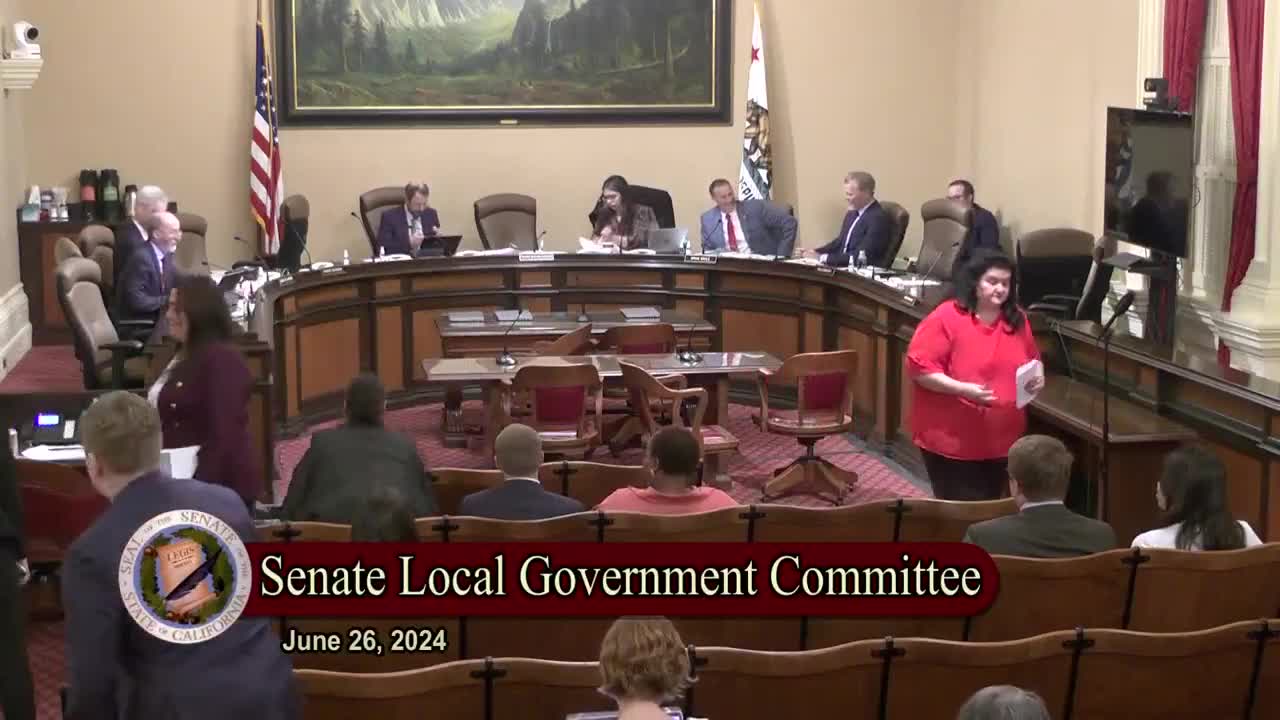 9MIN
Senate Standing Committee on Local Government
 5MIN
Assembly Standing Committee on Local Government
Bill Author


