AB 2664: Foster youth.
- Session Year: 2023-2024
- House: Assembly
- Latest Version Date: 2024-09-22
Current Status:
Passed
(2024-09-22: Chaptered by Secretary of State - Chapter 412, Statutes of 2024.)
Introduced
In Committee
First Chamber
In Committee
Second Chamber
Enacted
What does this bill do?
This bill changes when a child is treated as entering foster care in cases where a judge first lets the child stay with a parent but later removes the child after a new custody petition. It makes the entry date the earlier of the later petition’s jurisdictional hearing or 60 days after that removal, says that later disposition counts as the initial disposition for certain reunification rules, and sets the removal date for permanency review timing as the day a social worker took the child into custody on that later petition.
The summary is provided by generative AI which can make mistakes. For original language, please view the details in the table below.
Existing law requires a child to be deemed to have entered foster care on the earlier of the date of a jurisdictional hearing or the date 60 days following when the child was initially removed from the physical custody of their parent or guardian.
This bill would require that, when the court orders the custody of a child to be retained by the parent or guardian at disposition, even if the child was initially detained, and then subsequently removes the child at disposition on a petition brought pursuant to a subsequent petition, as specified, the child is deemed to have entered foster care on the earlier of the date of the jurisdictional hearing held pursuant to the subsequent petition or the date that is 60 days after the date the child was initially removed from the physical custody of their parent or guardian on a subsequent petition. The bill would require that the disposition on a subsequent petition be considered the initial disposition for specified circumstances. The bill would require, for purposes of calculating the date of a continued permanency review hearing or a subsequent permanency review hearing, as specified, the child is deemed to have been originally removed from the physical custody of their parent or guardian on the date they were taken into custody by the social worker based on a subsequent petition, as specified. By allowing additional reunification services and increasing the duties on county social workers, this bill would create a state-mandated local program.
The California Constitution requires the state to reimburse local agencies and school districts for certain costs mandated by the state. Statutory provisions establish procedures for making that reimbursement.
This bill would provide that no reimbursement is required by this act for a specified reason.
Existing law requires a child to be deemed to have entered foster care on the earlier of the date of a jurisdictional hearing or the date 60 days following when the child was initially removed from the physical custody of their parent or guardian.
This bill would require that, when a child is returned to the home of the parent or guardian at a dispositional hearing, as provided, and then subsequently removed through a subsequent petition, the child be deemed to have entered foster care on the earlier of the jurisdictional hearing held as a result of the subsequent petition or the date that is 60 days after the child was initially removed from the physical custody of their parent or guardian via the subsequent petition. The bill would also require that, when a child is returned to the home of the parent or guardian at a dispositional hearing, as provided, and then subsequently removed through a subsequent petition, the child be deemed to have been originally removed from the physical custody of their parent or guardian on the date they were taken into custody by the social worker via the subsequent petition. when the court orders the custody of a child to be retained by the parent or guardian at disposition, even if the child was initially detained, and then subsequently removes the child at disposition on a petition brought pursuant to a subsequent petition, as specified, the child is deemed to have entered foster care on the earlier of the date of the jurisdictional hearing held pursuant to the subsequent petition or the date that is 60 days after the date the child was initially removed from the physical custody of their parent or guardian on a subsequent petition. The bill would require that the disposition on a subsequent petition be considered the initial disposition for specified circumstances. The bill would require, for purposes of calculating the date of a continued permanency review hearing or a subsequent permanency review hearing, as specified, the child is deemed to have been originally removed from the physical custody of their parent or guardian on the date they were taken into custody by the social worker based on a subsequent petition, as specified. By allowing additional reunification services and increasing the duties on county social workers, this bill would create a state-mandated local program.
The California Constitution requires the state to reimburse local agencies and school districts for certain costs mandated by the state. Statutory provisions establish procedures for making that reimbursement.This bill would provide that, if the Commission on State Mandates determines that the bill contains costs mandated by the state, reimbursement for those costs shall be made pursuant to the statutory provisions noted above.The California Constitution requires the state to reimburse local agencies and school districts for certain costs mandated by the state. Statutory provisions establish procedures for making that reimbursement.
This bill would provide that no reimbursement is required by this act for a specified reason.
Existing law requires a child to be deemed to have entered foster care on the earlier of the date of a jurisdictional hearing or the date 60 days following when the child was initially removed from the physical custody of their parent or guardian.
This bill would require that, when a child is returned to the home of the parent or guardian at a dispositional hearing, as provided, and then subsequently removed through a subsequent petition, the child be deemed to have entered foster care on the earlier of the jurisdictional hearing held as a result of the subsequent petition or the date that is 60 days after the child was initially removed from the physical custody of their parent or guardian via the subsequent petition. The bill would also require that, when a child is returned to the home of the parent or guardian at a dispositional hearing, as provided, and then subsequently removed through a subsequent petition, the child be deemed to have been originally removed from the physical custody of their parent or guardian on the date they were taken into custody by the social worker via the subsequent petition. By allowing additional reunification services and increasing the duties on county social workers, this bill would create a state-mandated local program.
The California Constitution requires the state to reimburse local agencies and school districts for certain costs mandated by the state. Statutory provisions establish procedures for making that reimbursement.
This bill would provide that, if the Commission on State Mandates determines that the bill contains costs mandated by the state, reimbursement for those costs shall be made pursuant to the statutory provisions noted above.
Existing law requires a child to be deemed to have entered foster care on the earlier of the date of a jurisdictional hearing or the date 60 days following when the child was initially removed from the physical custody of their parent or guardian.
This bill would require that, when a child is returned to the home of the parent or guardian at a dispositional hearing, as provided, and then subsequently removed through a subsequent petition, the child be deemed to have entered foster care on the earlier of the jurisdictional hearing held as a result of the subsequent petition or the date that is 60 days after the child was initially removed from the physical custody of their parent or guardian via the subsequent petition. By allowing additional reunification services and increasing the duties on county social workers, this bill would create a state-mandated local program.
The California Constitution requires the state to reimburse local agencies and school districts for certain costs mandated by the state. Statutory provisions establish procedures for making that reimbursement.
This bill would provide that, if the Commission on State Mandates determines that the bill contains costs mandated by the state, reimbursement for those costs shall be made pursuant to the statutory provisions noted above.
(a)Except as provided in subdivision (b), regardless of their age, a child shall be deemed to have entered foster care on the earlier of the date of the jurisdictional hearing held pursuant to Section 356 or the date that is 60 days after the date on which the child was initially removed from the physical custody of their parent or guardian.
(b)(1)When the court orders the custody of a child to be retained by the parent or guardian at disposition, even if the child was initially detained, and then subsequently removes the child at disposition on a petition brought under Section 342 or 387, the child is deemed to have entered foster care on the earlier of the date of the jurisdictional hearing held pursuant to Section 342 or 387 or the date that is 60 days after the date the child was initially removed from the physical custody of their parent or guardian on a petition brought under Section 342 or 387.
(2)The disposition on a petition brought under Section 342 or 387 shall be considered the initial disposition for purposes of paragraph (1) of subdivision (e) of Section 366.21.
(c)For the purpose of calculating the date of a continued permanency review hearing pursuant to paragraph (1) or (2) of subdivision (g) of Section 366.21 or a subsequent permanency review hearing pursuant to paragraph (1) of subdivision (b) of Section 366.22, the child shall be deemed to have been originally removed from the physical custody of their parent or guardian on the date they were taken into custody by the social worker based on a petition brought under Section 342 or 387.
SEC. 2.To the extent that this act has an overall effect of increasing the costs already borne by a local agency for programs or levels of service mandated by the 2011 Realignment Legislation within the meaning of Section 36 of Article XIII of the California Constitution, it shall apply to local agencies only to the extent that the state provides annual funding for the cost increase. Any new program or higher level of service provided by a local agency pursuant to this act above the level for which funding has been provided shall not require a subvention of funds by the state or otherwise be subject to Section 6 of Article XIIIB of the California Constitution.
(a)Except as provided in subdivision (b), regardless of their age, a child shall be deemed to have entered foster care on the earlier of the date of the jurisdictional hearing held pursuant to Section 356 or the date that is 60 days after the date on which the child was initially removed from the physical custody of their parent or guardian.
(b)When a child is returned to the home of the parent or guardian at the dispositional hearing pursuant to a petition brought under Section 300 and subsequently removed through a petition brought under Section 342 or 387, the child shall be deemed to have entered foster care on the earlier of the date of the jurisdictional hearing held pursuant to Section 342 or 387 or the date that is 60 days after the date the child was initially removed from the physical custody of their parent or guardian via the petition brought under Section 342 or 387.(c)When a child is returned to the home of the parent or guardian at the dispositional hearing pursuant to a petition brought under Section 300 and subsequently removed through a petition brought under Section 342 or 387, the child shall be deemed to have been originally removed from the physical custody of their parent or guardian on the date they were taken into custody by the social worker via the petition brought under Section 342 or 387.(b)(1)When the court orders the custody of a child to be retained by the parent or guardian at disposition, even if the child was initially detained, and then subsequently removes the child at disposition on a petition brought under Section 342 or 387, the child is deemed to have entered foster care on the earlier of the date of the jurisdictional hearing held pursuant to Section 342 or 387 or the date that is 60 days after the date the child was initially removed from the physical custody of their parent or guardian on a petition brought under Section 342 or 387.
(2)The disposition on a petition brought under Section 342 or 387 shall be considered the initial disposition for purposes of paragraph (1) of subdivision (e) of Section 366.21.
(c)For the purpose of calculating the date of a continued permanency review hearing pursuant to paragraph (1) or (2) of subdivision (g) of Section 366.21 or a subsequent permanency review hearing pursuant to paragraph (1) of subdivision (b) of Section 366.22, the child shall be deemed to have been originally removed from the physical custody of their parent or guardian on the date they were taken into custody by the social worker based on a petition brought under Section 342 or 387.
SEC. 2.If the Commission on State Mandates determines that this act contains costs mandated by the state, reimbursement to local agencies and school districts for those costs shall be made pursuant to Part 7 (commencing with Section 17500) of Division 4 of Title 2 of the Government Code.SEC. 2.To the extent that this act has an overall effect of increasing the costs already borne by a local agency for programs or levels of service mandated by the 2011 Realignment Legislation within the meaning of Section 36 of Article XIII of the California Constitution, it shall apply to local agencies only to the extent that the state provides annual funding for the cost increase. Any new program or higher level of service provided by a local agency pursuant to this act above the level for which funding has been provided shall not require a subvention of funds by the state or otherwise be subject to Section 6 of Article XIIIB of the California Constitution.
(a)Except as provided in subdivision (b), regardless of their age, a child shall be deemed to have entered foster care on the earlier of the date of the jurisdictional hearing held pursuant to Section 356 or the date that is 60 days after the date on which the child was initially removed from the physical custody of their parent or guardian.
(b)When a child is returned to the home of the parent or guardian at the dispositional hearing pursuant to a petition brought under Section 300 and subsequently removed through a petition brought under Section 342 or 387, the child shall be deemed to have entered foster care on the earlier of the date of the jurisdictional hearing held pursuant to Section 342 or 387 or the date that is 60 days after the date the child was initially removed from the physical custody of their parent or guardian via the petition brought under Section 342 or 387.
(c)When a child is returned to the home of the parent or guardian at the dispositional hearing pursuant to a petition brought under Section 300 and subsequently removed through a petition brought under Section 342 or 387, the child shall be deemed to have been originally removed from the physical custody of their parent or guardian on the date they were taken into custody by the social worker via the petition brought under Section 342 or 387.
SEC. 2.If the Commission on State Mandates determines that this act contains costs mandated by the state, reimbursement to local agencies and school districts for those costs shall be made pursuant to Part 7 (commencing with Section 17500) of Division 4 of Title 2 of the Government Code.
Regardless of his or her (a)Except as provided in subdivision (b), regardless of their age, a child shall be deemed to have entered foster care on the earlier of the date of the jurisdictional hearing held pursuant to Section 356 or the date that is 60 days after the date on which the child was initially removed from the physical custody of his or her their parent or guardian.
(b)When a child is returned to the home of the parent or guardian at the dispositional hearing pursuant to a petition brought under Section 300 and subsequently removed through a petition brought under Section 342 or 387, the child shall be deemed to have entered foster care on the earlier of the date of the jurisdictional hearing held pursuant to Section 342 or 387 or the date that is 60 days after the date the child was initially removed from the physical custody of their parent or guardian via the petition brought under Section 342 or 387.
SEC. 2.If the Commission on State Mandates determines that this act contains costs mandated by the state, reimbursement to local agencies and school districts for those costs shall be made pursuant to Part 7 (commencing with Section 17500) of Division 4 of Title 2 of the Government Code.
|
Date
|
Status
|
|---|---|
| Sep 22, 2024 | Chaptered by Secretary of State - Chapter 412, Statutes of 2024. |
| Sep 22, 2024 | Approved by the Governor. |
| Sep 11, 2024 | Enrolled and presented to the Governor at 4 p.m. |
| Aug 29, 2024 | Senate amendments concurred in. To Engrossing and Enrolling. (Ayes 76. Noes 0.). |
| Aug 29, 2024 | Assembly Rule 77 suspended. |
| Aug 28, 2024 | In Assembly. Concurrence in Senate amendments pending. May be considered on or after August 30 pursuant to Assembly Rule 77. |
| Aug 28, 2024 | Read third time. Passed. Ordered to the Assembly. (Ayes 39. Noes 0.). |
| Aug 26, 2024 | Read second time. Ordered to third reading. |
| Aug 23, 2024 | Read third time and amended. Ordered to second reading. |
| Aug 8, 2024 | Ordered to third reading. |
| Aug 8, 2024 | From Consent Calendar. |
| Aug 6, 2024 | Read second time. Ordered to Consent Calendar. |
| Aug 5, 2024 | From committee: Be ordered to second reading file pursuant to Senate Rule 28.8 and ordered to Consent Calendar. |
| Jul 3, 2024 | Read second time and amended. Re-referred to Com. on APPR. |
| Jul 3, 2024 | From committee: Amend, and do pass as amended and re-refer to Com. on APPR with recommendation: To Consent Calendar. (Ayes 11. Noes 0.) (July 2). |
| Jun 18, 2024 | From committee: Do pass and re-refer to Com. on JUD. with recommendation: To Consent Calendar. (Ayes 5. Noes 0.) (June 17). Re-referred to Com. on JUD. |
| May 22, 2024 | Referred to Coms. on HUMAN S. and JUD. |
| May 9, 2024 | In Senate. Read first time. To Com. on RLS. for assignment. |
| May 9, 2024 | Read third time. Passed. Ordered to the Senate. (Ayes 65. Noes 0. Page 5160.) |
| May 2, 2024 | Read second time. Ordered to Consent Calendar. |
| May 1, 2024 | From committee: Do pass. To Consent Calendar. (Ayes 14. Noes 0.) (May 1). |
| Apr 16, 2024 | From committee: Do pass and re-refer to Com. on APPR. with recommendation: To Consent Calendar. (Ayes 12. Noes 0.) (April 16). Re-referred to Com. on APPR. |
| Apr 3, 2024 | From committee: Do pass and re-refer to Com. on JUD. (Ayes 7. Noes 0.) (April 2). Re-referred to Com. on JUD. |
| Mar 4, 2024 | Referred to Coms. on HUM. S. and JUD. |
| Feb 15, 2024 | From printer. May be heard in committee March 16. |
| Feb 14, 2024 | Read first time. To print. |
|
Date
|
Description
|
Location
|
Votes
|
|
|---|---|---|---|---|
| Aug 29, 2024 | AB 2664 Bryan Concurrence in Senate Amendments | Assembly Floor |
Passed |
|
| Aug 28, 2024 | Assembly 3rd Reading AB2664 Bryan By Glazer | Senate Floor |
Passed |
|
| Jul 2, 2024 | Do pass as amended, but first amend, and re-refer to the Committee on [Appropriations] with the recommendation: To Consent Calendar | Senate Standing Committee on Judiciary |
Passed |
|
| Jun 17, 2024 | Do pass, but first be re-referred to the Committee on [Judiciary] with the recommendation: To Consent Calendar | Senate Standing Committee on Human Services |
Passed |
|
| May 9, 2024 | AB 2664 Bryan Consent Calendar Second Day Regular Session | Assembly Floor |
Passed |
|
| May 1, 2024 | Do pass. To Consent Calendar. | Assembly Standing Committee on Appropriations |
Passed |
|
| Apr 16, 2024 | Do pass and be re-referred to the Committee on [Appropriations] with recommendation: To Consent Calendar | Assembly Standing Committee on Judiciary |
Passed |
|
| Apr 2, 2024 | Do pass and be re-referred to the Committee on [Judiciary] | Assembly Standing Committee on Human Services |
Passed |
This list shows positions taken on this bill by organizations on the date displayed, which is linked to the original source.
Positions by individuals are not included.
|
Organization
|
Position
|
Date
|
|---|---|---|
| A New Way of Life Reentry Project | ** Support | |
| Aouon Orange County | ** Support | |
| California Alliance of Caregivers | ** Support | |
| Children'S Law Center Of California | ** Support | |
| Coalition of California Welfare Rights Organization | * Support | Apr 2, 2024 |
| Dependency Advocacy Center | ** Support | |
| Dependency Legal Services | ** Support | |
| Families Inspiring Reentry & Reunification 4 Everyone | ** Support | |
| John Burton Advocates for Youth | ** Support | |
| Los Angeles Dependency Lawyers, Inc. | ** Support | |
| Steinberg Institute | ** Support | |
| The Law Offices of Dale Wilson | ** Support |
CONCURRENCE IN SENATE AMENDMENTS
CSA1 Bill Id:AB 2664
Author:(Bryan)
As Amended Ver:August 23, 2024
Majority vote
SUMMARY
Clarifies the dates a child will be deemed to have entered foster care for the purpose of establishing timelines for the provision of reunification services.
Senate Amendments
Clarify when a child is returned to the home of the parent or guardian at the dispositional hearing and subsequently removed through a petition, the child shall be deemed to have been originally removed from the physical custody of their parent or guardian on the date they were taken into custody by the social worker via the subsequent petition.
COMMENTS
Background: Child Welfare Services. California's child welfare services system was established with the goal of protecting youth from abuse and neglect and is designed to provide safety, health, and the overall well-being of children. When a child is identified as being at risk of abuse or neglect, reports can be made to either law enforcement or a county child welfare agency. Often, these reports are submitted by mandated reporters who are legally required to report suspicion of child abuse or neglect due to their profession, such as a teacher or healthcare provider. When a mandated reporter submits a report to either law enforcement or the county child welfare agency, a social worker determines whether the allegation is of suspected abuse, neglect, or exploitation, and creates a case plan which includes the provision of relevant services. The child's social worker and the court collaborate to evaluate and review the circumstances of each case, seeking either reunification or placement outside of the home as a way for the child to achieve permanency.
The court will then determine whether the allegations can be substantiated and if the child can safely remain at home. If the court orders a child to be placed outside of the home, the parent usually receives court-ordered family reunification services. Upon completion of the services, in addition to making any changes or improvements described in the case plan, the court may dismiss the child's court case and the county welfare department case will also be closed. If a parent does not participate in the services set forth in the reunification plan, the court can terminate the services, and therefore change the reunification goal to one of finding a permanent home with a caring adult.
California's child welfare services are administered by the 58 individual counties with each county organizing and operating its own program of child protection based on local needs while adhering to state and federal regulations. When a child welfare case is open, counties are the primary governmental entity interacting with children and families when addressing issues of child abuse and neglect and are responsible, either directly or through providers, for obtaining or providing the interventions and relevant services to protect children and assist families with issues related to child abuse and neglect.
The California Department of Social Services secures federal funding to support child welfare services programs, provides statewide best practices training for social workers, and conducts program regulatory oversight and administration, and is responsible for the development of policy while also providing direct services such as adoption placements.
As of April 1, 2024, there were 42,321 youth from birth up to the age of 21 in foster care in California.
Juvenile Dependency Removal Processes. When there is suspicion of child abuse or neglect, and a social worker has completed an investigation there are four possible outcomes: 1) no action taken because there was no evidence of abuse neglect that requires court involvement; 2) voluntary services are offered that are designed to assist a parent to better care for a child; 3) the child remains in a parent's custody, but petition with the court is filed to ask the court to open a case to protect the child; or 4) the child is removed from the home and a petition is filed that asks the court to open a case.
When a child is removed from the home, the initial court hearing must happen the same day the petition is filed and is called a detention hearing. When a child is not removed from the home, an initial court hearing takes place within 15 days after the petition.
Following the initial or detention hearing, a jurisdiction hearing takes place. At the jurisdiction hearing, the judge will decide whether the allegations in the petition are true. If the judge decides the allegations are true, the child will become a dependent of the court. It is important to note that becoming a dependent of the court does not mean a child must live without their parents. Meaning, if a child was temporarily removed at the detention hearing, then they could be ordered to return back home to parent(s). Temporary removal hearings and dispositional hearings might happen months apart or they might happen at the same time.
Proceeding the jurisdictional hearing, there is a disposition hearing. Disposition hearings are where the judge will decide the next best steps, also called a reunification plan.
Reunification Services. When children are removed from their families and placed into foster care, county child welfare agencies are required to help reunify families by providing reunification services, with a limited number of statutory exceptions. For example, reunification services are not required when the parent is suffering from a mental disability that renders the parent incapable of using the services, or if the parent has caused the death of another child through abuse or neglect. Reunification services give parents the opportunity to fix the problems that led to the removal of their children, before their parental rights are permanently terminated and their children are eligible for adoption. Parents struggling with substance use are given access to treatment programs and drug court. Other parents are given mental health care, parenting classes, and other vital services.
Because dependency court runs on strict timelines, parents are given only a limited amount of time, sometimes as little as six months, to reunify with the children before there is a request to initiate the termination of their parental rights. For most families, the maximum amount of time to reunify with children in foster care is 18 months.
A recent appellate case (In re Damian L. (2023) 90 Cal. App. 5th 357) specifically addressed whether statutory timelines change based upon whether a parent is granted family maintenance or family reunification services at disposition. At issue in this case was whether additional reunification services should have been provided to the mother for her two dependent children when subsequent petitions to remove the children from her home were filed based on new information.
According to the brief, it was found that the court had erred by not considering the entire time period since the children's initial removal when calculating the 18-month limit on reunification services, and as result, the mother had received approximately 26 months of services after the children were initially taken into protective custody. This case suggested that because of a temporary removal, families could be timed out of reunification services, despite never actually receiving these services and that a parent could run out of time to reunify with their children, without ever receiving the full services included in the reunification process. As part of the case, the court reviewed the specific statutory language and broader statutory context and concluded that "[d]elays in the timing of one hearing should not affect either the timing of subsequent hearings or the length of services to be ordered." (Tonya M., supra, 42 Cal.4th at p. 846.)
This bill clarifies the timelines for the provision of family reunification services by specifying that when a child is returned to their home after a dispositional hearing, and subsequently removed through another petition as a result of new facts or circumstances or a modification of a previous order, the child is deemed to have entered foster care on the earlier of two dates: the jurisdictional hearing held pursuant to the subsequent petition, or the date that is 60 days after the date the child was initially removed from the physical custody of their parent via the subsequent petition. By clarifying this timeline, families who are receiving family reunification services can be assured of when the provision of services will begin and end.
Equity Implications: The provisions of this bill clarify the timelines for when a child has "entered foster care" by applying the same criteria used in cases determining whether a child is considered a dependent, to proceedings where a child is subsequently removed through another petition as a result of new facts or circumstances or a modification of a previous order. By clarifying that the criteria for determining the date a foster child has entered into care is the same for subsequent petitions, all families will have the same amount of time to correct and address any of the issues that brought them into the child welfare system.
Research has indicated that the majority of families involved with the child welfare system have incomes below the federal poverty line, are overrepresented by certain racial and ethnic groups, and are often single-parent households living in low-income neighborhoods. These families are dependent on the services they receive in order to stabilize their lives and when courts determine that social service agencies have deprived parents of the resources they are entitled to, there is no expectation to extend services beyond the 18-month timeline unless a parent is incarcerated, participating in a substance abuse program, or a parent is subject to an immigration hold. This bill will include families who were not given reasonable time to utilize services as a circumstance that will permit courts to grant an extension of services.
According to the Author
"[This bill] will prevent counties from prematurely terminating a parent's right to their child by clarifying that the deadline for family reunification should not start until the dispositional hearing where reunification services are actually ordered. For years, this has been the practice across counties in California; however, a recent court case created confusion around these timelines, leading to situations where parents are losing months of critical time needed to work toward reunifying with their child. For a system that only affords parents 6 to 18 months to fight for their child, every day counts. This bill will ensure that parents are actually granted the time that is already promised to them by law."
Arguments in Support
According to Co-Sponsor, Children's Law Center of California, "This bill is a technical fix to clarify the date a child enters foster care when determining the reunification timeline for a family. . . California has enacted its own timelines, often providing more stringent requirements than the federal standards, to ensure that children are either returned swiftly to their parents or provided with another permanent plan for their childhood. The Welfare and Institutions Code (WIC) specifically outlines calculations for each of the status review hearings during the reunification period (6-month, 12-month, and 18-month), all three of which are calculated differently but are expressly outlined in the code. Unfortunately, a recent appellate court case has called this scheme into question. In re Damian L (90 Cal. App. 5th 357), the court found that children removed at detention but returned to their parent shortly after at the dispositional hearing, were subject to the same timeline constraints as children who continued to be in foster care after a removal order and an order for reunification."
Arguments in Opposition
None on file.
FISCAL COMMENTS
According to the Senate Appropriations Committee, pursuant to Senate Rule 28.8, the July 3, 2024, version of this bill would result in negligible state costs.
VOTES:
ASM HUMAN SERVICES: 7-0-0
YES: Lee, Essayli, Calderon, Gipson, Jackson, Ta, Ortega
ASM JUDICIARY: 12-0-0
YES: Kalra, Dixon, Bauer-Kahan, Bryan, Connolly, Haney, Maienschein, McKinnor, Pacheco, Reyes, Sanchez, Waldron
ASM APPROPRIATIONS: 14-0-1
YES: Wicks, Sanchez, Arambula, Bryan, Calderon, Wendy Carrillo, Dixon, Mike Fong, Grayson, Haney, Hart, Pellerin, Ta, Villapudua
ABS, ABST OR NV: Jim Patterson
ASSEMBLY FLOOR: 65-0-15
YES: Addis, Aguiar-Curry, Alanis, Alvarez, Arambula, Bauer-Kahan, Bennett, Berman, Boerner, Bonta, Bryan, Calderon, Juan Carrillo, Wendy Carrillo, Chen, Connolly, Davies, Dixon, Essayli, Mike Fong, Vince Fong, Friedman, Gallagher, Garcia, Gipson, Hart, Holden, Hoover, Irwin, Jackson, Jones-Sawyer, Kalra, Lackey, Lee, Lowenthal, Maienschein, McCarty, McKinnor, Muratsuchi, Ortega, Pacheco, Papan, Jim Patterson, Joe Patterson, Pellerin, Quirk-Silva, Ramos, Rendon, Reyes, Rodriguez, Blanca Rubio, Sanchez, Santiago, Soria, Ta, Valencia, Villapudua, Waldron, Ward, Weber, Wicks, Wilson, Wood, Zbur, Robert Rivas
ABS, ABST OR NV: Bains, Cervantes, Megan Dahle, Flora, Gabriel, Grayson, Haney, Low, Mathis, Stephanie Nguyen, Petrie-Norris, Luz Rivas, Schiavo, Ting, Wallis
SENATE FLOOR: 39-0-1
YES: Allen, Archuleta, Ashby, Atkins, Becker, Blakespear, Bradford, Caballero, Cortese, Dahle, Dodd, Durazo, Eggman, Glazer, Gonzalez, Grove, Hurtado, Jones, Laird, Limón, McGuire, Menjivar, Min, Newman, Nguyen, Niello, Ochoa Bogh, Padilla, Portantino, Roth, Rubio, Seyarto, Skinner, Smallwood-Cuevas, Stern, Umberg, Wahab, Wiener, Wilk
ABS, ABST OR NV: Alvarado-Gil
UPDATED
VERSION: August 23, 2024
CONSULTANT: Jessica Langtry / HUM. S. / (916) 319-2089 FN: 0004893
CONCURRENCE IN SENATE AMENDMENTS
CSA1 Bill Id:AB 2664
Author:(Bryan)
As Amended Ver:August 23, 2024
Majority vote
SUMMARY
Clarifies the dates a child will be deemed to have entered foster care for the purpose of establishing timelines for the provision of reunification services.
Senate Amendments
Clarify when a child is returned to the home of the parent or guardian at the dispositional hearing and subsequently removed through a petition, the child shall be deemed to have been originally removed from the physical custody of their parent or guardian on the date they were taken into custody by the social worker via the subsequent petition.
COMMENTS
Background: Child Welfare Services. California's child welfare services system was established with the goal of protecting youth from abuse and neglect and is designed to provide safety, health, and the overall well-being of children. When a child is identified as being at risk of abuse or neglect, reports can be made to either law enforcement or a county child welfare agency. Often, these reports are submitted by mandated reporters who are legally required to report suspicion of child abuse or neglect due to their profession, such as a teacher or healthcare provider. When a mandated reporter submits a report to either law enforcement or the county child welfare agency, a social worker determines whether the allegation is of suspected abuse, neglect, or exploitation, and creates a case plan which includes the provision of relevant services. The child's social worker and the court collaborate to evaluate and review the circumstances of each case, seeking either reunification or placement outside of the home as a way for the child to achieve permanency.
The court will then determine whether the allegations can be substantiated and if the child can safely remain at home. If the court orders a child to be placed outside of the home, the parent usually receives court-ordered family reunification services. Upon completion of the services, in addition to making any changes or improvements described in the case plan, the court may dismiss the child's court case and the county welfare department case will also be closed. If a parent does not participate in the services set forth in the reunification plan, the court can terminate the services, and therefore change the reunification goal to one of finding a permanent home with a caring adult.
California's child welfare services are administered by the 58 individual counties with each county organizing and operating its own program of child protection based on local needs while adhering to state and federal regulations. When a child welfare case is open, counties are the primary governmental entity interacting with children and families when addressing issues of child abuse and neglect and are responsible, either directly or through providers, for obtaining or providing the interventions and relevant services to protect children and assist families with issues related to child abuse and neglect.
The California Department of Social Services secures federal funding to support child welfare services programs, provides statewide best practices training for social workers, and conducts program regulatory oversight and administration, and is responsible for the development of policy while also providing direct services such as adoption placements.
As of April 1, 2024, there were 42,321 youth from birth up to the age of 21 in foster care in California.
Juvenile Dependency Removal Processes. When there is suspicion of child abuse or neglect, and a social worker has completed an investigation there are four possible outcomes: 1) no action taken because there was no evidence of abuse neglect that requires court involvement; 2) voluntary services are offered that are designed to assist a parent to better care for a child; 3) the child remains in a parent's custody, but petition with the court is filed to ask the court to open a case to protect the child; or 4) the child is removed from the home and a petition is filed that asks the court to open a case.
When a child is removed from the home, the initial court hearing must happen the same day the petition is filed and is called a detention hearing. When a child is not removed from the home, an initial court hearing takes place within 15 days after the petition.
Following the initial or detention hearing, a jurisdiction hearing takes place. At the jurisdiction hearing, the judge will decide whether the allegations in the petition are true. If the judge decides the allegations are true, the child will become a dependent of the court. It is important to note that becoming a dependent of the court does not mean a child must live without their parents. Meaning, if a child was temporarily removed at the detention hearing, then they could be ordered to return back home to parent(s). Temporary removal hearings and dispositional hearings might happen months apart or they might happen at the same time.
Proceeding the jurisdictional hearing, there is a disposition hearing. Disposition hearings are where the judge will decide the next best steps, also called a reunification plan.
Reunification Services. When children are removed from their families and placed into foster care, county child welfare agencies are required to help reunify families by providing reunification services, with a limited number of statutory exceptions. For example, reunification services are not required when the parent is suffering from a mental disability that renders the parent incapable of using the services, or if the parent has caused the death of another child through abuse or neglect. Reunification services give parents the opportunity to fix the problems that led to the removal of their children, before their parental rights are permanently terminated and their children are eligible for adoption. Parents struggling with substance use are given access to treatment programs and drug court. Other parents are given mental health care, parenting classes, and other vital services.
Because dependency court runs on strict timelines, parents are given only a limited amount of time, sometimes as little as six months, to reunify with the children before there is a request to initiate the termination of their parental rights. For most families, the maximum amount of time to reunify with children in foster care is 18 months.
A recent appellate case (In re Damian L. (2023) 90 Cal. App. 5th 357) specifically addressed whether statutory timelines change based upon whether a parent is granted family maintenance or family reunification services at disposition. At issue in this case was whether additional reunification services should have been provided to the mother for her two dependent children when subsequent petitions to remove the children from her home were filed based on new information.
According to the brief, it was found that the court had erred by not considering the entire time period since the children's initial removal when calculating the 18-month limit on reunification services, and as result, the mother had received approximately 26 months of services after the children were initially taken into protective custody. This case suggested that because of a temporary removal, families could be timed out of reunification services, despite never actually receiving these services and that a parent could run out of time to reunify with their children, without ever receiving the full services included in the reunification process. As part of the case, the court reviewed the specific statutory language and broader statutory context and concluded that "[d]elays in the timing of one hearing should not affect either the timing of subsequent hearings or the length of services to be ordered." (Tonya M., supra, 42 Cal.4th at p. 846.)
This bill clarifies the timelines for the provision of family reunification services by specifying that when a child is returned to their home after a dispositional hearing, and subsequently removed through another petition as a result of new facts or circumstances or a modification of a previous order, the child is deemed to have entered foster care on the earlier of two dates: the jurisdictional hearing held pursuant to the subsequent petition, or the date that is 60 days after the date the child was initially removed from the physical custody of their parent via the subsequent petition. By clarifying this timeline, families who are receiving family reunification services can be assured of when the provision of services will begin and end.
Equity Implications: The provisions of this bill clarify the timelines for when a child has "entered foster care" by applying the same criteria used in cases determining whether a child is considered a dependent, to proceedings where a child is subsequently removed through another petition as a result of new facts or circumstances or a modification of a previous order. By clarifying that the criteria for determining the date a foster child has entered into care is the same for subsequent petitions, all families will have the same amount of time to correct and address any of the issues that brought them into the child welfare system.
Research has indicated that the majority of families involved with the child welfare system have incomes below the federal poverty line, are overrepresented by certain racial and ethnic groups, and are often single-parent households living in low-income neighborhoods. These families are dependent on the services they receive in order to stabilize their lives and when courts determine that social service agencies have deprived parents of the resources they are entitled to, there is no expectation to extend services beyond the 18-month timeline unless a parent is incarcerated, participating in a substance abuse program, or a parent is subject to an immigration hold. This bill will include families who were not given reasonable time to utilize services as a circumstance that will permit courts to grant an extension of services.
According to the Author
"[This bill] will prevent counties from prematurely terminating a parent's right to their child by clarifying that the deadline for family reunification should not start until the dispositional hearing where reunification services are actually ordered. For years, this has been the practice across counties in California; however, a recent court case created confusion around these timelines, leading to situations where parents are losing months of critical time needed to work toward reunifying with their child. For a system that only affords parents 6 to 18 months to fight for their child, every day counts. This bill will ensure that parents are actually granted the time that is already promised to them by law."
Arguments in Support
According to Co-Sponsor, Children's Law Center of California, "This bill is a technical fix to clarify the date a child enters foster care when determining the reunification timeline for a family. . . California has enacted its own timelines, often providing more stringent requirements than the federal standards, to ensure that children are either returned swiftly to their parents or provided with another permanent plan for their childhood. The Welfare and Institutions Code (WIC) specifically outlines calculations for each of the status review hearings during the reunification period (6-month, 12-month, and 18-month), all three of which are calculated differently but are expressly outlined in the code. Unfortunately, a recent appellate court case has called this scheme into question. In re Damian L (90 Cal. App. 5th 357), the court found that children removed at detention but returned to their parent shortly after at the dispositional hearing, were subject to the same timeline constraints as children who continued to be in foster care after a removal order and an order for reunification."
Arguments in Opposition
None on file.
FISCAL COMMENTS
According to the Senate Appropriations Committee, pursuant to Senate Rule 28.8, the July 3, 2024, version of this bill would result in negligible state costs.
VOTES:
ASM HUMAN SERVICES: 7-0-0
YES: Lee, Essayli, Calderon, Gipson, Jackson, Ta, Ortega
ASM JUDICIARY: 12-0-0
YES: Kalra, Dixon, Bauer-Kahan, Bryan, Connolly, Haney, Maienschein, McKinnor, Pacheco, Reyes, Sanchez, Waldron
ASM APPROPRIATIONS: 14-0-1
YES: Wicks, Sanchez, Arambula, Bryan, Calderon, Wendy Carrillo, Dixon, Mike Fong, Grayson, Haney, Hart, Pellerin, Ta, Villapudua
ABS, ABST OR NV: Jim Patterson
ASSEMBLY FLOOR: 65-0-15
YES: Addis, Aguiar-Curry, Alanis, Alvarez, Arambula, Bauer-Kahan, Bennett, Berman, Boerner, Bonta, Bryan, Calderon, Juan Carrillo, Wendy Carrillo, Chen, Connolly, Davies, Dixon, Essayli, Mike Fong, Vince Fong, Friedman, Gallagher, Garcia, Gipson, Hart, Holden, Hoover, Irwin, Jackson, Jones-Sawyer, Kalra, Lackey, Lee, Lowenthal, Maienschein, McCarty, McKinnor, Muratsuchi, Ortega, Pacheco, Papan, Jim Patterson, Joe Patterson, Pellerin, Quirk-Silva, Ramos, Rendon, Reyes, Rodriguez, Blanca Rubio, Sanchez, Santiago, Soria, Ta, Valencia, Villapudua, Waldron, Ward, Weber, Wicks, Wilson, Wood, Zbur, Robert Rivas
ABS, ABST OR NV: Bains, Cervantes, Megan Dahle, Flora, Gabriel, Grayson, Haney, Low, Mathis, Stephanie Nguyen, Petrie-Norris, Luz Rivas, Schiavo, Ting, Wallis
UPDATED
VERSION: August 23, 2024
CONSULTANT: Jessica Langtry / HUM. S. / (916) 319-2089 FN: 0004893
SENATE RULES COMMITTEE Office of Senate Floor Analyses (916) 651-1520 Fax: (916) 327-4478 | AB 2664 |
THIRD READING
Bill No: AB 2664
Author: Bryan (D)
Amended: 8/23/24 in Senate
Vote: 21
SENATE HUMAN SERVICES COMMITTEE: 5-0, 6/17/24
AYES: Alvarado-Gil, Ochoa Bogh, Blakespear, Hurtado, Menjivar
SENATE JUDICIARY COMMITTEE: 11-0, 7/2/24
AYES: Umberg, Wilk, Allen, Ashby, Caballero, Durazo, Laird, Niello, Roth, Stern, Wahab
SENATE APPROPRIATIONS COMMITTEE: Senate Rule 28.8
ASSEMBLY FLOOR: 65-0, 5/9/24 (Consent) - See last page for vote
SUBJECT: Foster youth
SOURCE: Children's Law Center of California
Dependency Legal Services
Los Angeles Dependency Lawyers, INC.
DIGEST:
This bill clarifies the date a child has entered the hild welfare system for purposes of reunification timelines. Specifically, it clarifies that if a child is returned to the parent or guardian’s home at a disposition hearing and then a subsequent petition is brought, the operative dates for purposes of reunification, review hearings, and permanency hearings are the dates on which the child was removed from custody pursuant to, or the filing of, the subsequent petition.
Senate Floor Amendments of 8/23/24 clarify that—in cases when a child was detained prior to the initial dispositional hearing, returned to the parent or guardian’s custody at the dispositional hearing, and then removed from custody on a subsequent petition—the timelines for reunification and for review and permanency hearings run from the date of the jurisdictional hearing on the subsequent petition or the date on which the child was initially removed from the parent or guardian’s custody on the subsequent petition.
ANALYSIS:
Existing law:
- States that the purpose of juvenile dependency law is to provide maximum safety and protection for children who are currently being physically, sexually, or emotionally abused, neglected, or exploited, and to ensure the safety, protection, and physical and emotional wellbeing of children who are at risk of harm. Provides that the focus must be on the preservation of the family as well as the safety, protection, and physical and emotional well-being of the child. (WIC 300.2)
- Provides that a child may become a dependent of the juvenile court and be removed from their parent or guardian if the child has suffered, or there is a substantial risk that the child will suffer, serious physical harm inflicted non-accidentally upon the child by the child’s parent or guardian. (WIC 300(a))
- Requires the court, if at the initial hearing, the juvenile court orders a child removed from their parent due to abuse or neglect, to order that child welfare reunification services be provided to the family as soon as possible in order to reunify the child with their family, if appropriate. (WIC 319(e))
- Requires a social worker, whenever the social worker has cause to believe that there was or is within the county a person described in WIC 300, to immediately make any investigation they deem necessary to determine whether child welfare services should be offered to the family and whether proceedings in the juvenile court should be commenced. Further, requires the social worker, if they determine that it is appropriate to offer child welfare services to the family, to make a referral to those services. (WIC 328(a))
- Provides that any minor found to fall under Section 300 and the petitioner alleges new facts or circumstances, other than those under which the original petition was sustained, sufficient to state that the minor is a person described in Section 300, the petitioner shall file a subsequent petition. (WIC 342(a))
- Requires the court, at the dispositional hearing, to order a social worker to provide child welfare services to a child who has been removed from their parents' custody and to the parents in order to support the goal of reunification, for a specified time period, except under certain circumstances. Provides that children and families in the child welfare system should typically receive a full six months of reunification services if the child is under three years of age, and twelve months if the child is over three years of age, but that may be extended up to 18 or 24 months, as provided. (WIC 361.5(a))
- Authorizes the court, if a child is adjudged a dependent child of the court on the ground that the child is a person described by WIC 300, to make any and all reasonable orders for the care, supervision, custody, conduct, maintenance, and support of the child, including medical treatment, subject to further order of the court. (WIC 362(a))
- Authorizes the court, if a child is adjudged a dependent child of the court on the ground that the child is a person described by WIC 300, to make any and all reasonable orders for the care, supervision, custody, conduct, maintenance, and support of the child, including medical treatment, subject to further order of the court. (WIC 362(a))
- Requires the supplemental petition shall be filed by the social worker in the original matter and shall contain a concise statement of facts sufficient to support the conclusion that the previous disposition has not been effective in the rehabilitation or protection of the child. (WIC 387(b))
This bill:
- Provides that, when a court orders the custody of a child to be retained by a parent or guardian at disposition, even if the child was initially detained, and then subsequently removes the child at disposition on a subsequent petition, the child is deemed to have entered foster care on the date of the dispositional hearing on the subsequent petition or 60 days after the child was initially removed from the parent or guardian’s physical custody pursuant to the subsequent petition, whichever is earlier.
- Clarifies that the disposition on a subsequent petition shall be considered the initial disposition for purposes of calculating the time to the six-month review hearing.
- Provides that, for purposes of calculating the date of a continued permanency review hearing or subsequent permanency review hearing in a case in which a child was returned to the custody of their parent or guardian at the disposition hearing and then removed from custody under a subsequent petition, the child is deemed to have been originally removed from the physical custody of their parent or guardian on the date they were taken into custody by the social worker based on the subsequent petition.
Comments
Author’s statement. According to the author, “AB 2664 will prevent counties from prematurely terminating a parent's right to their child by clarifying that the deadline for family reunification should not start until the dispositional hearing where reunification services are actually ordered. For years, this has been the practice across counties in California; however, a recent court case created confusion around these timelines, leading to situations where parents are losing months of critical time needed to work toward reunifying with their child. For a system that only affords parents 6 to 18 months to fight for their child, every day counts. This bill will ensure that parents are actually granted the time that is already promised to them by law.”
Child Welfare Services (CWS) The CWS system is an essential component of the state’s safety net. Social workers in each county who receive reports of abuse or neglect, investigate and resolve those reports. When a case is substantiated, a family is either provided with services to ensure a child’s well-being and avoid court involvement, or a child is removed and placed into foster care. In 2023, the state’s child welfare agencies received 433,571 reports of abuse or neglect. Of these, 47,845 reports contained allegations that were substantiated and 18,147 children were removed from their homes and placed into foster care via the CWS system.
After the county child welfare department becomes involved with families, approximately 12 months of services are provided to children who are able to remain safely in their home while the family receives services. This is considered family preservation services and the child does not come under the jurisdiction of the juvenile dependency court during this time.
If it is determined that a child cannot remain in the home, even with family preservation and support services, the child comes under the jurisdiction of the county’s juvenile dependency court while the family is served by a CWS system social worker. This system seeks to ensure the safety and protection of these children, and where possible, preserve and strengthen families through visitation and family reunification. It is the state’s goal to reunify a foster child or youth with their biological family whenever possible.
Generally, if a child cannot be safely returned home after the time allotted for reunification services ends, the court terminates the parental rights of the child’s parents. The child’s case plan then focuses on permanency services, in an effort to connect the child to a permanent placement through adoption or guardianship. If an adoption or guardianship is not established, a child may remain in long-term foster care. The child is always supposed to be placed in the most family like setting, with short-term residential treatment programs used only as necessary to provide intensive services. A child remains eligible for services for the length of their time in the child welfare system, time limits relate to the provision of services to the child’s parents.
In some circumstances, existing law allows the court to not provide reunification services at all, and parental rights are terminated without the opportunity for reunification. These circumstances include, but are not limited to the following examples: when the whereabouts of the parent are unknown; when the parent is suffering from a mental disability, as provided, that renders the parent incapable of utilizing those services; when the parent caused the death of another child through abuse or neglect; after a finding of severe sexual abuse; when the parent has been convicted of a violent felony, as provided; and in some instances where a prior child of the parent became a dependent of the court and was unable to reunify.
Timelines in CWS A critical piece of cases within the CWS are the statutory timelines. Generally, a maximum of 12 months of services are provided to families calculated from the date the child entered foster care, which is defined in WIC 361.49 as the date of the jurisdiction hearing or 60 days after initial removal, whichever is earlier. It is this statute this bill seeks to amend, to clarify that the timelines for reunification and hearings run from dates relating to the subsequent petition, not the initial petition. According to the author, this change is necessary due to confusion caused by recent case law.
In the case of In re Damian L. (2023) 90 Cal. App. 5th 357, the court held that the juvenile court erred when it ordered additional reunification services as mother had already received 26 months of services. A critical issue in that case was how the date the child entered foster care was calculated. The timeline in that case was as follows:
- September 2019 – children were first removed from home
- June 2020 – disposition held after a number of continuances, children were returned to mother with family maintenance services ordered
- January 2021 – children removed from home after mother tested positive for methamphetamines and placed with maternal grandmother
- November 2021 – disposition hearing and reunification services order and a 12-month review hearing set for March 2022.
The county opposed reunification services ordered at the November 2021 hearing, arguing the statutory guidelines should start from the September 2019. The county contended that the juvenile court erred in ordering reunification services more than 24 months after the children were first taken from the home in September of 2019. The appellate court held that the juvenile court erred in ordering reunification services, explaining the juvenile court should have considered the entire time period since the children’s initial removal when calculating the 18-month statutory time limit on reunification services.
This bill is intended to return the statute to the generally understood status quo ante, whereby (1) reunification timelines will run from the earlier of the date of the jurisdictional hearing on the subsequent petition or 60 days from the date that the child was initially removed from the custody of their parent or guardian on the subsequent petition; (2) the timing of the six-month review hearing runs from the date of the disposition on the subsequent petition; and (3) the timing of the permanency review and continued permanency review hearings runs from the date that the child was taken into custody by the social worker based on the subsequent petition.
Related/Prior Legislation
AB 954 (Bryan, Chapter 552, Statutes of 2023) prohibited a parent or guardian’s participation in court-ordered child welfare services from being considered to be noncompliant when there is evidence they are unable to pay for a service, or that payment for a service would create an undue financial hardship.
SB 1085 (Kamlager, Chapter 832, Statutes 2022) prohibited a child from being found to be within the jurisdiction of the juvenile court on that basis solely due to indigence or other conditions of financial difficulty.
AB 2341 (Maze, Chapter 457, Statutes of 2008) changed the statutes governing reunification services to ensure that children and families in the child welfare system should receive a full six months of reunification services.worker via the subsequent petition.
FISCAL EFFECT: Appropriation: No Fiscal Com.: Yes Local: Yes
SUPPORT: (Verified 8/26/24)
Children's Law Center of California (co-source)
Dependency Legal Services (co-source)
Los Angeles Dependency Lawyers, INC. (co-source)
A New Way of Life Reentry Project
California Alliance of Caregivers
Steinberg Institute
OPPOSITION: (Verified 8/26/24)
None received
ASSEMBLY FLOOR: 65-0, 5/9/24
AYES: Addis, Aguiar-Curry, Alanis, Alvarez, Arambula, Bauer-Kahan, Bennett, Berman, Boerner, Bonta, Bryan, Calderon, Juan Carrillo, Wendy Carrillo, Chen, Connolly, Davies, Dixon, Essayli, Mike Fong, Vince Fong, Friedman, Gallagher, Garcia, Gipson, Hart, Holden, Hoover, Irwin, Jackson, Jones-Sawyer, Kalra, Lackey, Lee, Lowenthal, Maienschein, McCarty, McKinnor, Muratsuchi, Ortega, Pacheco, Papan, Jim Patterson, Joe Patterson, Pellerin, Quirk-Silva, Ramos, Rendon, Reyes, Rodriguez, Blanca Rubio, Sanchez, Santiago, Soria, Ta, Valencia, Villapudua, Waldron, Ward, Weber, Wicks, Wilson, Wood, Zbur, Robert Rivas
NO VOTE RECORDED: Bains, Cervantes, Megan Dahle, Flora, Gabriel, Grayson, Haney, Low, Mathis, Stephanie Nguyen, Petrie-Norris, Luz Rivas, Schiavo, Ting, Wallis
Prepared by: Allison Whitt Meredith / JUD. / (916) 651-4113
8/26/24 11:53:18
**** END ****
SENATE RULES COMMITTEE Office of Senate Floor Analyses (916) 651-1520 Fax: (916) 327-4478 | AB 2664 |
THIRD READING
Bill No: AB 2664
Author: Bryan (D)
Amended: 7/3/24 in Senate
Vote: 21
SENATE HUMAN SERVICES COMMITTEE: 5-0, 6/17/24
AYES: Alvarado-Gil, Ochoa Bogh, Blakespear, Hurtado, Menjivar
SENATE JUDICIARY COMMITTEE: 11-0, 7/2/24
AYES: Umberg, Wilk, Allen, Ashby, Caballero, Durazo, Laird, Niello, Roth, Stern, Wahab
ASSEMBLY FLOOR: 65-0, 5/9/24 (Consent) - See last page for vote
SUBJECT: Foster youth
SOURCE: Children's Law Center of California
Dependency Legal Services
Los Angeles Dependency Lawyers, INC.
DIGEST:
This bill clarifies the date a child has entered the child welfare system for purposes of reunification timelines. Specifically, it clarifies that if a child is returned to the parent or guardian’s home at a disposition hearing and then a subsequent petition is brought, the child is deemed to have entered care on the date of the jurisdiction hearing for the subsequent petition or 60 days after the child was initially removed from physical custody of their parent or guardian via a subsequent petition, whichever is earlier.
ANALYSIS:
Existing Law
- States that the purpose of juvenile dependency law is to provide maximum safety and protection for children who are currently being physically, sexually, or emotionally abused, neglected, or exploited, and to ensure the safety, protection, and physical and emotional wellbeing of children who are at risk of harm. Provides that the focus must be on the preservation of the family as well as the safety, protection, and physical and emotional well-being of the child. (WIC 300.2)
- Provides that a child may become a dependent of the juvenile court and be removed from their parent or guardian if the child has suffered, or there is a substantial risk that the child will suffer, serious physical harm inflicted non-accidentally upon the child by the child’s parent or guardian. (WIC 300(a))
- Requires the court, if at the initial hearing, the juvenile court orders a child removed from their parent due to abuse or neglect, to order that child welfare reunification services be provided to the family as soon as possible in order to reunify the child with their family, if appropriate. (WIC 319(e))
- Requires a social worker, whenever the social worker has cause to believe that there was or is within the county a person described in WIC 300, to immediately make any investigation they deem necessary to determine whether child welfare services should be offered to the family and whether proceedings in the juvenile court should be commenced. Further, requires the social worker, if they determine that it is appropriate to offer child welfare services to the family, to make a referral to those services. (WIC 328(a))
- Provides that any minor found to fall under Section 300 and the petitioner alleges new facts or circumstances, other than those under which the original petition was sustained, sufficient to state that the minor is a person described in Section 300, the petitioner shall file a subsequent petition. (WIC 342(a))
- Requires the court, at the dispositional hearing, to order a social worker to provide child welfare services to a child who has been removed from their parents' custody and to the parents in order to support the goal of reunification, for a specified time period, except under certain circumstances. Provides that children and families in the child welfare system should typically receive a full six months of reunification services if the child is under three years of age, and twelve months if the child is over three years of age, but that may be extended up to 18 or 24 months, as provided. (WIC 361.5(a))
- Authorizes the court, if a child is adjudged a dependent child of the court on the ground that the child is a person described by WIC 300, to make any and all reasonable orders for the care, supervision, custody, conduct, maintenance, and support of the child, including medical treatment, subject to further order of the court. (WIC 362(a))
- Authorizes the court, if a child is adjudged a dependent child of the court on the ground that the child is a person described by WIC 300, to make any and all reasonable orders for the care, supervision, custody, conduct, maintenance, and support of the child, including medical treatment, subject to further order of the court. (WIC 362(a))
- Requires the supplemental petition shall be filed by the social worker in the original matter and shall contain a concise statement of facts sufficient to support the conclusion that the previous disposition has not been effective in the rehabilitation or protection of the child. (WIC 387(b))
This bill:
- Provides that when a child is returned to the home of a parent or guardian at a disposition hearing and then a subsequent petition is brought, the child shall be deemed to have entered care on the earlier of the date of the jurisdiction hearing held for the subsequent petition or the day that is 60 days after the date the child was initially removed from the physical custody of their parent or guardian via a subsequent petition.
- Provides that when a child is returned to the home of the parent or guardian at the dispositional hearing and then a subsequent petition is brought, the child shall be deemed to have been originally removed from the physical custody of their parent or guardian on the date they were taken into custody by the social worker via the subsequent petition.
Comments
Author’s statement. According to the author, “AB 2664 will prevent counties from prematurely terminating a parent's right to their child by clarifying that the deadline for family reunification should not start until the dispositional hearing where reunification services are actually ordered. For years, this has been the practice across counties in California; however, a recent court case created confusion around these timelines, leading to situations where parents are losing months of critical time needed to work toward reunifying with their child. For a system that only affords parents 6 to 18 months to fight for their child, every day counts. This bill will ensure that parents are actually granted the time that is already promised to them by law.”
Child Welfare Services (CWS) The CWS system is an essential component of the state’s safety net. Social workers in each county who receive reports of abuse or neglect, investigate and resolve those reports. When a case is substantiated, a family is either provided with services to ensure a child’s well-being and avoid court involvement, or a child is removed and placed into foster care. In 2023, the state’s child welfare agencies received 433,571 reports of abuse or neglect. Of these, 47,845 reports contained allegations that were substantiated and 18,147 children were removed from their homes and placed into foster care via the CWS system.
After the county child welfare department becomes involved with families, approximately 12 months of services are provided to children who are able to remain safely in their home while the family receives services. This is considered family preservation services and the child does not come under the jurisdiction of the juvenile dependency court during this time.
If it is determined that a child cannot remain in the home, even with family preservation and support services, the child comes under the jurisdiction of the county’s juvenile dependency court while the family is served by a CWS system social worker. This system seeks to ensure the safety and protection of these children, and where possible, preserve and strengthen families through visitation and family reunification. It is the state’s goal to reunify a foster child or youth with their biological family whenever possible.
Generally, if a child cannot be safely returned home after the time allotted for reunification services ends, the court terminates the parental rights of the child’s parents. The child’s case plan then focuses on permanency services, in an effort to connect the child to a permanent placement through adoption or guardianship. If an adoption or guardianship is not established, a child may remain in long-term foster care. The child is always supposed to be placed in the most family like setting, with short-term residential treatment programs used only as necessary to provide intensive services. A child remains eligible for services for the length of their time in the child welfare system, time limits relate to the provision of services to the child’s parents.
In some circumstances, existing law allows the court to not provide reunification services at all, and parental rights are terminated without the opportunity for reunification. These circumstances include, but are not limited to the following examples: when the whereabouts of the parent are unknown; when the parent is suffering from a mental disability, as provided, that renders the parent incapable of utilizing those services; when the parent caused the death of another child through abuse or neglect; after a finding of severe sexual abuse; when the parent has been convicted of a violent felony, as provided; and in some instances where a prior child of the parent became a dependent of the court and was unable to reunify.
Timelines in CWS A critical piece of cases within the CWS are the statutory timelines. Generally, a maximum of 12 months of services are provided to families calculated from the date the child entered foster care, which is defined in WIC 361.49 as the date of the jurisdiction hearing or 60 days after initial removal, whichever is earlier. It is this statute this bill seeks to amend to specify that when a child is returned to the home of a parent or guardian at a disposition hearing and then a subsequent petition is brought, the child shall be deemed to have entered care on the date of the jurisdiction hearing held for the subsequent petition or the day that is 60 days after the date the child was initially removed from the physical custody of their parent or guardian via a subsequent petition, whichever is earlier. According to the author, this change is necessary due to confusion caused by recent case law.
In the case of In re Damian L. (2023) 90 Cal. App. 5th 357, the court held that the juvenile court erred when it ordered additional reunification services as mother had already received 26 months of services. A critical issue in that case was how the date the child entered foster care was calculated. The timeline in that case was as follows:
- September 2019 – children were first removed from home
- June 2020 – disposition held after a number of continuances, children were returned to mother with family maintenance services ordered
- January 2021 – children removed from home after mother tested positive for methamphetamines and placed with maternal grandmother
- November 2021 – disposition hearing and reunification services order and a 12-month review hearing set for March 2022.
The county opposed reunification services ordered at the November 2021 hearing, arguing the statutory guidelines should start from the September 2019. The county contended that the juvenile court erred in ordering reunification services more than 24 months after the children were first taken from the home in September of 2019. The appellate court held that the juvenile court erred in ordering reunification services, explaining the juvenile court should have considered the entire time period since the children’s initial removal when calculating the 18-month statutory time limit on reunification services.
Related/Prior Legislation:
AB 954 (Bryan, Chapter 552, Statutes of 2023) prohibited a parent or guardian’s participation in court-ordered child welfare services from being considered to be noncompliant when there is evidence they are unable to pay for a service, or that payment for a service would create an undue financial hardship.
SB 1085 (Kamlager, Chapter 832, Statutes 2022) prohibited a child from being found to be within the jurisdiction of the juvenile court on that basis solely due to indigence or other conditions of financial difficulty.
AB 2341 (Maze, Chapter 457, Statutes of 2008) changed the statutes governing reunification services to ensure that children and families in the child welfare system should receive a full six months of reunification services.
FISCAL EFFECT: Appropriation: No Fiscal Com.: Yes Local: Yes
SUPPORT: (Verified 8/5/24)
Children's Law Center of California (co-source)
Dependency Legal Services (co-source)
Los Angeles Dependency Lawyers, INC. (co-source)
A New Way of Life Reentry Project
California Alliance of Caregivers
Steinberg Institute
OPPOSITION: (Verified 8/5/24
None received
ASSEMBLY FLOOR: 65-0, 5/9/24
AYES: Addis, Aguiar-Curry, Alanis, Alvarez, Arambula, Bauer-Kahan, Bennett, Berman, Boerner, Bonta, Bryan, Calderon, Juan Carrillo, Wendy Carrillo, Chen, Connolly, Davies, Dixon, Essayli, Mike Fong, Vince Fong, Friedman, Gallagher, Garcia, Gipson, Hart, Holden, Hoover, Irwin, Jackson, Jones-Sawyer, Kalra, Lackey, Lee, Lowenthal, Maienschein, McCarty, McKinnor, Muratsuchi, Ortega, Pacheco, Papan, Jim Patterson, Joe Patterson, Pellerin, Quirk-Silva, Ramos, Rendon, Reyes, Rodriguez, Blanca Rubio, Sanchez, Santiago, Soria, Ta, Valencia, Villapudua, Waldron, Ward, Weber, Wicks, Wilson, Wood, Zbur, Robert Rivas
NO VOTE RECORDED: Bains, Cervantes, Megan Dahle, Flora, Gabriel, Grayson, Haney, Low, Mathis, Stephanie Nguyen, Petrie-Norris, Luz Rivas,
Schiavo, Ting, Wallis
Prepared by: Heather Hopkins / HUMAN S. / (916) 651-1524
8/7/24 17:56:48
**** END ****
Senator Thomas Umberg, Chair
2023-2024 Regular Session
Bill No: AB 2664 (Author:Bryan)
Version: February 14, 2024
Hearing Date: July 2, 2024
Fiscal: Yes
Urgency: No
Consultant: AWM
SUBJECT
Foster youth
DIGEST
This bill clarifies that, if a dependent child is returned to the custody of their parent or at a disposition hearing, and then a subsequent petition is brought to remove the child again, the child is deemed to have entered care on the date of the jurisdictional hearing on the subsequent petition or 60 days after the child was initially removed from physical custody of their parent or guardian via a subsequent petition, whichever is earlier.
EXECUTIVE SUMMARY
California’s child welfare system is responsible for ensuring the protection and safety of children at risk of abuse, neglect, or abandonment. When it is necessary for the state to remove a child from their parent’s custody, the primary objective of the child welfare system is to reunify the child with their family, if doing so is consistent with the best interests of the child. To that end, in most cases a juvenile court orders reunification services—such as counseling for the family, and parenting classes or drug or alcohol treatment for the child’s parents—before making a final determination regarding parental rights. Depending on the circumstances, these services may be provided for a period of as little as six months and, in rare cases, up to two years. If a child is returned to their parent’s custody at the dispositional hearing, however, reunification services are unnecessary; the court instead orders family maintenance services, which are intended to address the issues that led to the juvenile court’s jurisdiction.
Last year, a Court of Appeal opinion held that the timeline for the provision of reunification services is running even in cases where a child was returned to their parent’s custody at the dispositional hearing. (See In re Damian L. (2023) 90 Cal.App.5th 357 (Damian L.).) As a result, if a child is subsequently taken into custody under a supplemental petition, the time the child spent in the parent’s custody would be counted against the parent’s reunification time frame—even though no reunification services were being provided. According to the author and sponsor, this approach turns the intent of reunification services on its head; a parent could end up with as few as 60 days of reunification services before the county moved to permanently place their child with someone else.
This bill is intended to clarify the statutes establishing the time frames for reunification services to make clear that, when a child is returned to their parent’s custody at the disposition and a supplemental petition is subsequently filed, the timeline for reunification services runs from the earlier of the date that the jurisdictional hearing on the supplemental petition was held, or the date that the child was initially removed from custody pursuant to that supplemental petition. The author has agreed amendments to ensure that it addresses all of the language interpreted in the Damian L. opinion.
This bill is sponsored by the Children’s Law Center, Dependency Legal Services, and Los Angeles Dependency Lawyers, Inc., and is supported by the California Alliance of Caregivers. This Committee has not received timely opposition to this bill. The Senate Human Services Committee passed this bill with a vote of 5-0.
PROPOSED CHANGES TO THE LAW
Existing law:
- Establishes the juvenile court, which has jurisdiction over minors who are suffering or at substantial risk of suffering harm or abuse and may adjudge the minor to be a dependent of the court. (Welf. & Inst. Code, § 300.)
- Provides that the purpose of the juvenile court and the dependency system is to provide the maximum safety and protection for children who are currently being physically, sexually, or emotionally abused, being neglected, or being exploited, and to ensure the safety, protection, and physical and emotional well-being of children who are at risk of that harm. This safety, protection, and physical and emotional well-being may include the provision of a full array of social and health services to help the child and family and to prevent the reabuse of children. (Welf. & Inst. Code, § 300.2.)
- Provides that, after a petition is filed alleging that a child is under the jurisdiction of the juvenile court, the court shall make a finding on the petition. If it found that the minor is not within the jurisdiction, the court shall dismiss the petition; if it is found that the child is within the jurisdiction, the court shall make findings and issue an order accordingly. (Welf. & Inst. Code, §§ 345, 356.)
- Establishes a series of hearings for a child found to be under the jurisdiction of the juvenile court, as follows:[1]
- Following the jurisdictional hearing, the court shall hear evidence on the question of the proper disposition to be made of the child (the “dispositional hearing”). (Welf. & Inst. Code, § 358.)
- Six months after the dispositional hearing, but no later than 12 months after the date the child entered foster care pursuant to 5), whichever is earlier, the court shall hold a review hearing. The court shall order the return of the child to the physical custody of their parent unless the court finds, by a preponderance of the evidence, that the return of the child would create a substantial risk of detriment to the safety, protection, or physical or emotional well-being of the child. (Welf. & Inst. Code, § 366.21(e).)
- No later than 12 months after the date the child entered foster care pursuant to 5), the court shall hold a permanency hearing. At the permanency hearing, the court shall determine the permanent plan for the child, which shall include a determination of whether the child will be returned to their home, and if so, when, within the time limits set forth in 7). The court shall order the return of the child to the physical custody of their parent unless the court finds, by a preponderance of the evidence, that the return of the child would create a substantial risk of detriment to the safety, protection, or physical or emotional well-being of the child. (Welf. & Inst. Code, § 361.21(f).)
- If the child was not returned to the custody of a parent at the permanency hearing, the court shall either:
- Continue the case for six months for a permanency review hearing; the court may do so only if it finds there is a substantial probability that the child will be returned to the physical custody of the parent within the extended time period or that reasonable services were not provided to the parent (Welf. & Inst. Code, § 361.21(g)(1)); or
- Order a hearing on the termination of parental rights or that the child remain in foster care, as provided (Welf. & Inst. Code, § 366.21(g)(4), (5)).
- When a case has been continued for a permanency review hearing, the hearing shall occur within 18 months after the date the custody of their parent. The court shall order the return of the child to the physical custody of their parent unless the court finds, by a preponderance of the evidence, that the return of the child would create a substantial risk of detriment to the safety, protection, or physical or emotional well-being of the child. If the court finds that the child should not be returned to the custody of their parent, the court shall either:
- Order a permanency hearing to be held, in order to determine whether adoption or continued foster placement is most appropriate for the child; or
- If the court determines by clear and convincing evidence that the best interests of the child would be met by the provision of additional reunification services to a parent who is making significant and consistent progress, as specified, continue the case for up to six months for a subsequent permanency review hearing. (Welf. & Inst. Code, § 366.22(a), (b).)
- If the court continues the permanency review hearing, the court must hold the continued hearing within 24 months of the date that the child was originally taken from the physical custody of their parent. At that hearing, the court must either return the child to the custody of the parent or order a permanency hearing to be held. (Welf. & Inst. Code, § 366.22(b).)
- Provides that, regardless of their age, a child shall be deemed to have entered foster care on the earlier of the date of the jurisdictional hearing held pursuant to 3) or the date that is 60 days after the date on which the child was initially removed from the physical custody of their parent or guardian. [2] (Welf. & Inst. Code, § 361.49.)
- Requires a court, when a child has been removed from the custody of their parents, to order the social worker to provide child welfare services to the child and the child’s parents, including family reunification services, subject to specified exceptions. (Welf. & Inst. Code, § 361.5(a).)
- Provides that family reunification services provided pursuant to 6) shall be provided as follows:
- For a child who, on the date of initial removal from the physical custody of the parent, was three years of age or older, court-ordered services shall be provided beginning with the dispositional hearing and ending 12 months after the child entered foster care as provided, unless the child is returned to the home of the parent. (Welf. & Inst. Code, § 361.5(a)(1)(A).)
- For a child who, on the date of initial removal from the physical custody of the child’s parent or guardian, was under three years of age, court-ordered services shall be provided for a period of six months from the dispositional hearing as provided, but not longer than 12 months from the date the child entered foster care, as provided, unless the child is returned to the home of the parent. (Welf. & Inst. Code, §§ 361.5(a)(1)(B).)
- Court-ordered services may be extended up to a maximum time period not to exceed 18 months after the date the child was originally removed from the physical custody of the parent if it can be shown, at the permanency hearing, that the permanent plan for the child is that the child will be returned and safely maintained in the home within the extended time period, as provided. (Welf. & Inst. Code, § 361.5(a)(3)(A).)
- Court-ordered services may be extended up to a maximum time period not to exceed 24 months after the date the child was originally moved from physical custody of their parent if it is shown, at the permanency review hearing, that the permanent plan for the child is that the child will be returned and safely maintained in the home within the extended time period, as provided. (Welf. & Inst. Code, § 361.5(a)(4)(A).)
- Provides that a supplemental petition relating to a child who has been declared a dependent of the juvenile court shall be filed as follows:
- In any case where the county alleges new facts or circumstances, other than those under which the original petition was sustained, sufficient to give the juvenile court jurisdiction over the child, the county shall file a subsequent petition. Unless specifically provided, all procedures and hearings required for an original petition are applicable to this subsequent petition. (Welf. & Inst. Code, § 342.)
- In any case where an order is necessary to change or modify a previous order by removing a child from the custody of a parent, guardian, relative, or friend and directing the child to a foster home or an institutional setting, a supplemental petition must be filed by the social worker setting forth facts sufficient to support the conclusion that the previous disposition was not effective. (Welf. & Inst. Code, § 387.)
This bill:
- States that, when a child is returned to the home of their parent at the dispositional hearing pursuant to an initial petition and subsequently removed from the parent’s home pursuant to a supplemental petition brought under Welfare and Institution Code sections 342 or 387, the child shall be deemed to have entered foster care on the earlier of the date of the jurisdictional hearing held pursuant to the supplemental petition or the date that is 60 days after the date the child was initially removed from the physical custody of their parent via the supplemental petition.
COMMENTS
- Author’s comment
According to the author:
AB 2664 will prevent counties from prematurely terminating a parent's right to their child by clarifying that the deadline for family reunification should not start until the dispositional hearing where reunification services are actually ordered. For years, this has been the practice across counties in California; however, a recent court case created confusion around these timelines, leading to situations where parents are losing months of critical time needed to work toward reunifying with their child. For a system that only affords parents 6 to 18 months to fight for their child, every day counts. This bill will ensure that parents are actually granted the time that is already promised to them by law.
2. Background on the dependency process and the timeline for reunification
The overarching purpose of the juvenile court is to provide for the protection and safety of the public and each child under the court’s jurisdiction and, where possible, to preserve and strengthen the child’s family ties so that a child is removed from their parent’s custody only when necessary for the child’s welfare or the safety and protection of the public.[3] The juvenile court may determine that a child is a dependent of the court if the child has suffered, or is at risk of suffering, serious physical harm, abuse, or neglect.[4] “ ‘Although the harm or risk of harm to the child [for jurisdictional purposes] must generally be the result of an act, omission or inability of one of the parents or guardians, the central focus of dependency jurisdiction is clearly on the child rather than the parent.’ ”[5]
Once a child has been declared a dependent of the juvenile court, the court holds a dispositional hearing.[6] “Generally, the court chooses between allowing the child to remain in the home with protective services in place and removing the child from the home while the parent engaged in services to facilitate reunification.”[7] Services for a parent who retains custody over their child are called “family maintenance services”; services for a parent who loses custody over their child are called “reunification services.” “Reunification services implement the law’s strong preference for maintaining the family relationships if at all possible…because services enable parents to demonstrate parental fitness and so regain custody of their dependent children.”[8]
The interest in family preservation, however, is balanced “with the child’s interest in the prompt resolution of [their] custody status and long-term placement.”[9] To that end, the Welfare and Institutions Code section 361.5 (Section 361.5) sets time limits on the provision of reunification services as follows:
- For a child who was, on the initial date of removal, three years of age or older, reunification services shall be provided beginning with the initial dispositional hearing and ending 12 months after the date the child entered foster care, as set forth in Welfare and Institutions Code section 361.49 (Section 361.49), unless the parent is returned to the home of the parent.[10]
- For a child who was, on the initial date of removal, under three years of age, court-ordered services shall be provided for a period of six months from the dispositional hearing, but not longer than 12 months from the date the child entered foster care, as set forth in Section 361.49, unless the child is returned to the home of the parent. [11]
- Court-ordered services may be extended to a maximum time period not to exceed 18 months after the date the child was originally removed from the physical custody of their parent, if it can be shown that there is a substantial probability that the child will be returned to the custody of their parent.[12]
- In rare cases, court-ordered services may be extended to a maximum time period not to exceed 24 months after the date the child was originally removed from the physical custody of their parent, if it is shown, by clear and convincing evidence, that the best interest of the child is served by the provision of reunification services to a parent, as specified.[13]
At each status review hearing—generally held at six-month intervals to align with the reunification services timeline—the court must determine whether the child can be returned to their parent’s custody and whether reasonable reunification services were provided to the parent.[14] If the court determines that reunification services have not been successful, the court must terminate reunification efforts and set the matter for a permanency hearing to implement a permanent plan for the child’s custody.[15]
Finally, if the child is returned to the custody of the parent at the dispositional hearing or at a status reviewing, but subsequent facts require the child to be removed from the parent’s custody again, the county must file a supplemental petition.[16] The procedures and hearings required for a supplemental petition are the same as those for an original petition.[17]
3. The In re Damian L. opinion
In April 2023, the Fifth District Court of Appeal issued In re Damian L.,[18] which addressed the provision of reunification services when a child was removed from the custody of their parent, then returned to the parent’s custody at the dispositional hearing, then was removed again on a subsequent petition.[19] Prior to In re Damian L., there was no published authority on Section 361.5’s time limit on services continues to run even when a child is returned to their parent’s custody.[20]
In In re Damian L., the children were removed from the mother’s custody in September 2019.[21] At the dispositional hearing, which wasn’t held until June 2020 due to a number of continuances, the children were returned to the mother’s home and the court ordered family maintenance services.[22] In January 2021, the child was removed from the home again and a supplemental petition was filed.[23] At the dispositional hearing on the supplemental petition in November 2021, the court ordered reunification services and set a 12-month review hearing for March 2022.[24] The county welfare department objected to the provision of services, arguing that, because it had been more than 24 months since the September 2019 initial removal, the mother was no longer entitled to reunification services.[25] The county appealed the order granting reunifications services.[26]
The Court of Appeal held that, as a matter of statutory interpretation, the 18-month and 24-month time limits on reunification services run from the date of the initial removal, even when a child is returned to their parent’s custody at the dispositional hearing.[27] The opinion states that “[o]nce a child is initially removed from their parent’s custody, a deadline is set, and it is not reset if the parent regains custody at some point during the time period.”[28] Thus, “[t]he usual requirement of 12 months of court-ordered services in [Section 361.5] is still constrained by the 18-month outer limit.”[29]
4. This bill is intended to ensure that, when a child is returned to their parent’s custody at a dispositional hearing, the clock does not start running on reunification services
According to the author, sponsor, and stakeholders, the Damian L. holding is predicated on an overly harsh interpretation of Section 361.5—one that ignores the implications for families who are undergoing family maintenance. Because Damian L. ties the provision of reunification services to the initial date of removal under the original petition, it creates a situation where the reunification timeline is running even while the child is living at home with their parent. As explained by the Children’s Law Center of California, one of the bill’s sponsors:
This legal fiction may require courts to start looking for permanency options, including termination of parental rights and adoption, based on compliance with foster care timelines for children residing in the home of the parents until a subsequent removal. A child could have been in foster care for less than 60 days but considered “timed out” of reunification for the purpose of the timeline at a subsequent removal.
The result of Damian L.—sharply curtailing the availability of reunification services for parents who, at the dispositional hearing, were deemed fit to resume custody of their children—seems contrary to the state’s preference for family preservation whenever possible.[30] Nevertheless, it does appear that the Section 361.5 time frames are not expressly tied to the first petition under which reunification services are ordered, leaving the statute susceptible to Damian L.’s interpretation.
This bill is intended to ensure that the reunification timeline does not begin when a child is returned to their parent’s custody at the dispositional hearing. Under this approach, if a child is subsequently removed from their parent’s custody under a supplemental petition, the reunification timeline runs from the events connected to that removal—avoiding the perverse result of a parent who recently lost custody of their child being eligible for only a few months of reunification services before losing their child entirely. This approach also avoids prejudicing noncustodial parents, who might not have learned of the child’s removal from the other parent’s custody until long after the initial removal.
To be clear, this bill would not change the reunification services timeline for a parent who regains custody at some point after the dispositional hearing. In those cases, reunification services would already have been ordered at the dispositional hearing; this bill is not intended to start and stop the timeline every time a child is returned home. Instead, this bill merely clarifies that the reunification services clock does not start running at the dispositional hearing when a child is returned home at that point. The author has agreed to minor amendments to ensure that the bill addresses all of the statutory language interpreted by the Damian L. opinion.
5. Amendments
As noted above, the author has agreed to amend the bill to ensure that it addresses all of the language interpreted in the Damian L. opinion. The amendments are as follows, subject to any nonsubstantive changes the Office of Legislative Counsel may make:
Amendment
At page 2, after line 17, insert:
(c) When a child is returned to the home of the parent or guardian at the dispositional hearing pursuant to a petition brought under Section 300 and subsequently removed through a petition brought under Section 342 or 387, the child shall be deemed to have been originally removed from the physical custody of their parent or guardian on the date they were taken into custody by the social worker via the petition filed under Section 342 or 387.
6. Arguments in support
According to Dependency Legal Services, one of the bill’s co-sponsors:
The Adoptions and Safe Families Act (ASFA) created a federal statutory scheme of timelines to ensure that children do not languish in foster care. Under these guidelines, families that are ordered into reunification services are given a very limited period of time to complete their case plan to remedy the problems that resulted in child welfare intervention and to provide a safe home for their children. California has enacted its own timelines, often providing more stringent requirements than the federal standards, to ensure that children are either returned swiftly to their parents or provided with another permanent plan for their childhood. The Welfare and Institutions Code (WIC) specifically outlines calculations for each of the status review hearings during the reunification period (6-month, 12-month, and 18-month), all three of which are calculated differently but are expressly outlined in the code.
Unfortunately, a recent appellate court case has called this scheme into question. In re Damian L (90 Cal. App. 5th 357), the court found that children removed at detention but returned to their parent shortly after at the dispositional hearing, were subject to the same timeline constraints as children who continued to be in foster care after a removal order and an order for reunification.
This recent holding presents several problems. First, it treats children living at home with their parent as if they continue to languish in foster care…
Moreover, it presents a significant due process problem for non-custodial parents. Those parents could be ineligible for reunification services based on the timeline, even though they had never been offered assistance by the county child welfare department. Their children could be removed and they could immediately face the termination of their parental rights, without being offered a single service to reunify.
SUPPORT
Children’s Law Center of California (co-sponsor)
Dependency Legal Services (co-sponsor)
Los Angeles Dependency Lawyers, Inc. (co-sponsor)
California Alliance of Caregivers
OPPOSITION
None received
RELATED LEGISLATION
Pending legislation: AB 2282 (McKinnor, 2024) modifies the provision applying a presumption against ordering reunification services for a parent whose child has been taken from the parent’s custody, in cases where the parent has been convicted of a violent felony, as defined, to apply only where the parent has been convicted of a violent felony against a child. AB 2282 is pending before this Committee.
Prior legislation:
AB 1134 (McKinnor, 2023) would have modified the provision applying a presumption against ordering reunification services for a parent whose child has been taken from the parent’s custody, in cases where the parent has been convicted of a violent felony, as defined, to apply only where the parent has been convicted of a violent felony against a child under the custody of the parent. AB 1134 died in the Assembly Judiciary Committee.
AB 937 (McKinnor, Ch. 458, Stats. 2023) required a juvenile court to extend reunification services for an additional 6 months if it determines, at the 18-month hearing, that reasonable services had not been provided.
AB 2866 (Cunningham, Ch. 165, Stats. 2022) required a juvenile court, when determining whether reasonable reunification services were provided at the 6-month and 12-month hearings, to make that determination by clear and convincing evidence.
AB 2159 (Bryan, Ch. 691, Stats. 2022) prohibited the denial of reunification services to a parent who is in custody prior to conviction, as specified.
PRIOR VOTES:
Senate Human Services Committee (Ayes 5, Noes 0)
Assembly Floor (Ayes 65, Noes 0)
Assembly Appropriations Committee (Ayes 14, Noes 0)
Assembly Judiciary Committee (Ayes 12, Noes 0)
Assembly Human Services Committee (Ayes 7, Noes 0)
**************
This is a summary that omits many of the contingent details, including the different findings and burdens of proof applicable when the child in question is an Indian child, as defined. Because this bill addresses the timing of the provision of services, the general timeline should suffice. ↑
Going forward, this analysis uses “parent” to include “guardian.” ↑
Welf. & Inst. Code, § 202(a). ↑
Id., § 300. ↑
In re R.T., 3 Cal.5th 622, 626. ↑
See Welf. & Inst. Code, § 358. ↑
In re E.E. (2020) 49 Cal.App.5th 195, 205. ↑
Michael G. v. Superior Court (2023) 14 Cal.5th 609, 624 (cleaned up). ↑
Id. at p. 625. ↑
Welf. & Inst. Code, § 361.5(a)(1)(A). ↑
Id., § 361.5(a)(2)(B). ↑
Id., §§ 361.5(a)(3), 366.21(g). ↑
Id., §§ 361.5(a)(4), 366.22(b). ↑
Michael G., supra, 14 Cal.5th at p. 625. ↑
Welf. & Inst. Code, §§ 366.21, 366.22. ↑
Welf. & Inst. Code, §§ 342, 387. ↑
Id., § 342(b). ↑
90 Cal.App.5th 357. ↑
Id. at p. 367. ↑
Ibid. ↑
Id. at p. 361. ↑
Id. at p. 364. ↑
Id. at p. 365. ↑
Id. at pp. 368. ↑
Id. at p. 367. ↑
Id. at p. 368. ↑
Id. at p. 376. ↑
Ibid. ↑
Id. at p. 375. While the appeal of the order for reunification services was pending, the mother was awarded sole legal and physical custody of the children and the juvenile court’s jurisdiction was terminated (id. at p. 371 & n. 2), meaning the reunification services ordered by the trial court—and prohibited under Damian L.’s holding—were successful. ↑
E.g., In re Nolan W. (2009) 45 Cal.4th 1217, 1228. ↑
SENATE COMMITTEE ON HUMAN SERVICES
Senator Alvarado-Gil, Chair
2023 - 2024 Regular
Bill No: | AB 2664 | ||
Author: | Bryan | ||
Version: | February 14, 2024 | Hearing Date: | June 17, 2024 |
Urgency: | No | Fiscal: | Yes |
Consultant: | Heather Hopkins | ||
Subject: Foster youth
SUMMARY
This bill clarifies the date a child has entered the child welfare system for purposes of reunification timelines. Specifically, it clarifies that if a child is returned to the parent or guardian’s home at a disposition hearing and then a subsequent petition is brought, the child is deemed to have entered care on the date of the jurisdiction hearing for the subsequent petition or 60 days after the child was initially removed from physical custody of their parent or guardian via a subsequent petition, whichever is earlier.
ABSTRACT
Existing Law:
- Establishes the juvenile court with jurisdiction over children who are subject to abuse or neglect. (WIC 300 et seq.)
- States that the purpose of juvenile dependency law is to provide maximum safety and protection for children who are currently being physically, sexually, or emotionally abused, neglected, or exploited, and to ensure the safety, protection, and physical and emotional wellbeing of children who are at risk of harm. Provides that the focus must be on the preservation of the family as well as the safety, protection, and physical and emotional well-being of the child. (WIC 300.2)
- Provides that a child may become a dependent of the juvenile court and be removed from their parent or guardian if the child has suffered, or there is a substantial risk that the child will suffer, serious physical harm inflicted non-accidentally upon the child by the child’s parent or guardian. (WIC 300(a))
- Provides that a child may become a dependent of the juvenile court and be removed from their parent or guardian if the child has suffered, or there is a substantial risk that the child will suffer, serious physical harm or illness, as a result of the failure or inability of the child’s parent or guardian to adequately supervise or protect the child, or the willful or negligent failure of the child’s parent or guardian to adequately supervise or protect the child from the conduct of the custodian with whom the child has been left, or by the willful or negligent failure of the parent or guardian to provide the child with adequate food, clothing, shelter, or medical treatment, or by the inability of the parent or guardian to provide regular care for the child due to the parent’s or guardian’s mental illness, developmental disability, or substance abuse. Provides that, notwithstanding these factors, a child does not become a dependent of the juvenile court solely due to the lack of emergency shelter for the family or the failure of the child’s parent or alleged parent to seek court orders for custody of the child. (WIC 300(b))
- Provides for additional conditions that would lead to jurisdiction over a dependent child, including for a child who is suffering serious emotional damage, or is at substantial risk of suffering serious emotional damage, as a result of the conduct of the parent or guardian or who has no parent or guardian capable of providing appropriate care; and has been sexually abused, or there is a substantial risk that the child will be sexually abused, by the child’s parent or guardian or a member of the child’s household, or the parent or guardian has failed to adequately protect the child from sexual abuse when the parent or guardian knew or reasonably should have known that the child was in danger of sexual abuse. (WIC 300(c)-(j))
- Requires the court, if at the initial hearing, the juvenile court orders a child removed from their parent due to abuse or neglect, to order that child welfare reunification services be provided to the family as soon as possible in order to reunify the child with their family, if appropriate. (WIC 319(e))
- Requires a social worker, whenever the social worker has cause to believe that there was or is within the county a person described in WIC 300, to immediately make any investigation they deem necessary to determine whether child welfare services should be offered to the family and whether proceedings in the juvenile court should be commenced. Further, requires the social worker, if they determine that it is appropriate to offer child welfare services to the family, to make a referral to those services. (WIC 328(a))
- Provides that any minor found to fall under Section 300 and the petitioner alleges new facts or circumstances, other than those under which the original petition was sustained, sufficient to state that the minor is a person described in Section 300, the petitioner shall file a subsequent petition. (WIC 342(a))
- Requires the court, at the dispositional hearing, to order a social worker to provide child welfare services to a child who has been removed from their parents' custody and to the parents in order to support the goal of reunification, for a specified time period, except under certain circumstances. Provides that children and families in the child welfare system should typically receive a full six months of reunification services if the child is under three years of age, and twelve months if the child is over three years of age, but that may be extended up to 18 or 24 months, as provided. (WIC 361.5(a))
- Authorizes the court, if a child is adjudged a dependent child of the court on the ground that the child is a person described by WIC 300, to make any and all reasonable orders for the care, supervision, custody, conduct, maintenance, and support of the child, including medical treatment, subject to further order of the court. (WIC 362(a))
- Authorizes the court, when it appears to the court that a parent or guardian of the child desires counsel but is presently financially unable to afford and cannot for that reason employ counsel, the court to appoint counsel, as provided. (WIC 317(a))
- Authorizes the court, if a child is adjudged a dependent child of the court on the ground that the child is a person described by WIC 300, to make any and all reasonable orders for the care, supervision, custody, conduct, maintenance, and support of the child, including medical treatment, subject to further order of the court. (WIC 362(a))
- Authorizes the court, at any time after a petition has been filed, to join in the juvenile court proceedings, any agency that the court determines has failed to meet a legal obligation to provide services to a child for whom a petition has been filed under WIC 300, regardless of the status of the adjudication. (WIC 362(b)(1))
- Permits the juvenile court to direct any reasonable orders to the parents or guardians of the child who is the subject of any proceedings as the court deems necessary and proper. Permits that order to include a direction to participate in a counseling or education program, including, but not limited to, a parent education and parenting program operated by a community college, school district, or other appropriate agency designated by the court. Authorizes a foster parent or relative with whom the child is placed to be directed to participate in such a program in cases in which the court deems participation is appropriate and in the child’s best interest. Requires the program in which a parent or guardian is required to participate to be designed to eliminate those conditions that led to the court’s finding that the child is a person described by WIC 300. (WIC 362(d))
- Authorizes the juvenile court, if a child is adjudged a dependent child of the court, to direct any reasonable orders to the parents or guardians of the child who is the subject of any proceedings to ensure the child’s regular school attendance and to make reasonable efforts to obtain educational services necessary to meet the specific needs of the child. (WIC 362(e))
- Requires every hearing in which an order is made placing a child under the supervision of the juvenile court pursuant to WIC 300, and in which the child is not removed from the physical custody of their parent or guardian, to be continued to a specific future date not to exceed six months after the date of the original dispositional hearing. (WIC 364(a))
- Requires a permanency hearing to be held no later than 12 months after the date the child entered foster care and requires the court, at the permanency hearing, to determine the permanent plan for the child, which shall include a determination of whether the child will be returned to the child’s home and, if so, when, within specified time limits. Requires the court, after considering the relevant and admissible evidence, to order the return of the child to the physical custody of their parent or legal guardian unless the court finds, by a preponderance of the evidence, that the return of the child to their parent or legal guardian would create a substantial risk of detriment to the safety, protection, or physical or emotional well-being of the child. Requires the social worker to have the burden of establishing that detriment. (WIC 366.21(f))
- Requires the juvenile court, excepting certain specified conditions, if a child is not returned to the parent or guardian at the permanency review hearing, to hold a hearing to determine whether adoption, guardianship, or continued placement in foster care is the most appropriate plan for the child. Requires the court to determine whether reasonable services have been offered or provided to the parent or legal guardian. Sets forth examples of circumstances that would not, in or of themselves, be deemed a failure to provide reasonable services. (WIC 366.22(a))
- Requires a court to establish, by clear and convincing evidence, that reasonable reunification services have been provided to the parent prior to ordering a hearing to terminate parental rights. (WIC 366.22(b)(3)(C))
- Provides that an order changing or modifying a previous order by removing a child from the physical custody of a parent, guardian, relative, or friend and directing placement in a foster home, or commitment to a private or county institution, shall be made only after noticed hearing upon a supplemental petition. (WIC 387(a))
- Requires the supplemental petition shall be filed by the social worker in the original matter and shall contain a concise statement of facts sufficient to support the conclusion that the previous disposition has not been effective in the rehabilitation or protection of the child. (WIC 387(b))
This Bill:
- Provides that when a child is returned to the home of a parent or guardian at a disposition hearing and then a subsequent petition is brought, the child shall be deemed to have entered care on the earlier of the date of the jurisdiction hearing held for the subsequent petition or the day that is 60 days after the date the child was initially removed from the physical custody of their parent or guardian via a subsequent petition.
FISCAL IMPACT
According to the Assembly Appropriations Committee, “The California Department of Social Services anticipates no additional costs.
“The language in the bill could be interpreted to restart the reunification clock each time a child re-enters foster care on a subsequent petition, if reunification services had been previously offered. While perhaps not the author’s intent, this interpretation could result in General Fund costs for county social worker time to the extent additional reunification services are offered. The author may wish to clarify. Although these are state-mandated costs, they are not reimbursable, but instead must be funded by the state pursuant to Proposition 30.
“Proposition 30 (2012) requires legislation enacted after September 30, 2012, that has an overall effect of increasing the costs already borne by a local agency for programs or levels of service mandated by realignment (including child welfare services and foster care) to apply only to local agencies to the extent the state provides annual funding for the cost increase.”
BACKGROUND AND DISCUSSION
Purpose of the Bill:
According to the author, “AB 2664 will prevent counties from prematurely terminating a parent's right to their child by clarifying that the deadline for family reunification should not start until the dispositional hearing where reunification services are actually ordered. For years, this has been the practice across counties in California; however, a recent court case created confusion around these timelines, leading to situations where parents are losing months of critical time needed to work toward reunifying with their child. For a system that only affords parents 6 to 18 months to fight for their child, every day counts. This bill will ensure that parents are actually granted the time that is already promised to them by law.”
Child Welfare Services (CWS)
The CWS system is an essential component of the state’s safety net. Social workers in each county who receive reports of abuse or neglect, investigate and resolve those reports. When a case is substantiated, a family is either provided with services to ensure a child’s well-being and avoid court involvement, or a child is removed and placed into foster care. In 2023, the state’s child welfare agencies received 433,571 reports of abuse or neglect. Of these, 47,845 reports contained allegations that were substantiated and 18,147 children were removed from their homes and placed into foster care via the CWS system.
After the county child welfare department becomes involved with families, approximately 12 months of services are provided to children who are able to remain safely in their home while the family receives services. This is considered family preservation services and the child does not come under the jurisdiction of the juvenile dependency court during this time.
If it is determined that a child cannot remain in the home, even with family preservation and support services, the child comes under the jurisdiction of the county’s juvenile dependency court while the family is served by a CWS system social worker. This system seeks to ensure the safety and protection of these children, and where possible, preserve and strengthen families through visitation and family reunification. It is the state’s goal to reunify a foster child or youth with their biological family whenever possible.
Generally, if a child cannot be safely returned home after the time allotted for reunification services ends, the court terminates the parental rights of the child’s parents. The child’s case plan then focuses on permanency services, in an effort to connect the child to a permanent placement through adoption or guardianship. If an adoption or guardianship is not established, a child may remain in long-term foster care. The child is always supposed to be placed in the most family like setting, with short-term residential treatment programs used only as necessary to provide intensive services. A child remains eligible for services for the length of their time in the child welfare system, time limits relate to the provision of services to the child’s parents.
In some circumstances, existing law allows the court to not provide reunification services at all, and parental rights are terminated without the opportunity for reunification. These circumstances include, but are not limited to the following examples: when the whereabouts of the parent are unknown; when the parent is suffering from a mental disability, as provided, that renders the parent incapable of utilizing those services; when the parent caused the death of another child through abuse or neglect; after a finding of severe sexual abuse; when the parent has been convicted of a violent felony, as provided; and in some instances where a prior child of the parent became a dependent of the court and was unable to reunify.
Timelines in CWS
A critical piece of cases within the CWS are the statutory timelines. Generally, a maximum of 12 months of services are provided to families calculated from the date the child entered foster care, which is defined in WIC 361.49 as the date of the jurisdiction hearing or 60 days after initial removal, whichever is earlier. It is this statute this bill seeks to amend to specify that when a child is returned to the home of a parent or guardian at a disposition hearing and then a subsequent petition is brought, the child shall be deemed to have entered care on the date of the jurisdiction hearing held for the subsequent petition or the day that is 60 days after the date the child was initially removed from the physical custody of their parent or guardian via a subsequent petition, whichever is earlier. According to the author, this change is necessary due to confusion caused by recent case law.
In the case of In re Damian L. (2023) 90 Cal. App. 5th 357, the court held that the juvenile court erred when it ordered additional reunification services as mother had already received 26 months of services. A critical issue in that case was how the date the child entered foster care was calculated. The timeline in that case was as follows:
- September 2019 – children were first removed from home
- June 2020 – disposition held after a number of continuances, children were returned to mother with family maintenance services ordered
- January 2021 – children removed from home after mother tested positive for methamphetamines and placed with maternal grandmother
- November 2021 – disposition hearing and reunification services order and a 12-month review hearing set for March 2022.
The county opposed reunification services ordered at the November 2021 hearing, arguing the statutory guidelines should start from the September 2019. The county contended that the juvenile court erred in ordering reunification services more than 24 months after the children were first taken from the home in September of 2019. The appellate court held that the juvenile court erred in ordering reunification services, explaining the juvenile court should have considered the entire time period since the children’s initial removal when calculating the 18-month statutory time limit on reunification services.
Related/Prior Legislation:
AB 954 (Bryan, Chapter 552, Statutes of 2023) prohibits a parent or guardian’s participation in
court-ordered child welfare services from being considered to be noncompliant when there is
evidence they are unable to pay for a service, or that payment for a service would create an
undue financial hardship.
SB 1085 (Kamlager, Chapter 832, Statutes 2022) prohibited a child from being found to be
within the jurisdiction of the juvenile court on that basis solely due to indigence or other
conditions of financial difficulty.
AB 706 (Committee on Human Services, Chapter 120, Statutes of 2009) made technical,
clarifying, and conforming changes to provisions related to providing reunification services and
scheduling of juvenile court review hearings, and established that regardless of their age, a child
is deemed to have entered foster care on the earlier of the date of the jurisdictional hearing or the
date that is 60 days after the date on which the child was initially removed from the physical
custody of their parent or guardian.
AB 2341 (Maze, Chapter 457, Statutes of 2008) changed the statutes governing reunification
services to ensure that children and families in the child welfare system should receive a full six
months of reunification services.
COMMENTS
This bill seeks to clarify the statute that determines when a child is deemed to have entered foster care to make it clear that the time when children are returned home under family maintenance does not count toward the 18-month time limit on reunification services. The goal of limitations on family reunification services is to ensure children do not languish in foster care. Excluding time spent in family maintenance from this timeline still fulfills the goals of the CWS of the protection of children and keeping families together whenever possible.
PRIOR VOTES
| |
Assembly Floor: | 65 - 0 |
Assembly Appropriations Committee: | 14 - 0 |
Assembly Human Services Committee: | 7 - 0 |
POSITIONS
Support:
Children's Law Center of California (Sponsor)
Los Angeles Dependency Lawyers, INC. (Sponsor)
Dependency Legal Services (Co-Sponsor)
A New Way of Life Reentry Project
California Alliance of Caregivers
Steinberg Institute
Oppose:
None
-- END --
Date of Hearing: May 1, 2024
ASSEMBLY COMMITTEE ON APPROPRIATIONS
Buffy Wicks, Chair
ABPCA Bill Id:AB 2664
Author:(Bryan) – As Introduced Ver:February 14, 2024
Policy Committee: | Human Services | Vote: | 7 - 0 |
Judiciary | 12 - 0 | ||
|
|
Urgency: No State Mandated Local Program: Yes Reimbursable: Yes
SUMMARY:
This bill clarifies the date a child will be deemed to have entered foster care for the purpose of establishing timelines for eligibility for reunification services.
Specifically, this bill provides, when a child is returned to the home of the parent or guardian after a dispositional hearing, and subsequently removed through another petition as a result of new facts or circumstances or modification of a previous order, the child is deemed to have entered foster care on the date of the jurisdictional hearing held pursuant to the subsequent removal, or 60 days after the subsequent removal, whichever is earlier.
FISCAL EFFECT:
- The California Department of Social Services anticipates no additional costs.
- The language in the bill could be interpreted to restart the reunification clock each time a child re-enters foster care on a subsequent petition, if reunification services had been previously offered. While perhaps not the author’s intent, this interpretation could result in General Fund costs for county social worker time to the extent additional reunification services are offered. The author may wish to clarify. Although these are state-mandated costs, they are not reimbursable, but instead must be funded by the state pursuant to Proposition 30.
Proposition 30 (2012) requires legislation enacted after September 30, 2012, that has an overall effect of increasing the costs already borne by a local agency for programs or levels of service mandated by realignment (including child welfare services and foster care) to apply only to local agencies to the extent the state provides annual funding for the cost increase.
COMMENTS:
- Purpose. According to the author:
[This bill] will prevent counties from prematurely terminating a parent's right to their child by clarifying that the deadline for family reunification should not start until the dispositional hearing where reunification services are actually ordered. For years, this has been the practice across counties in California; however, a recent court case created confusion around these timelines, leading to situations where parents are losing months of critical time needed to work toward reunifying with their child. For a system that only affords parents 6 to 18 months to fight for their child, every day counts. This bill will ensure that parents are actually granted the time that is already promised to them by law.
- Background. When the court removes a child from the custody of a parent and declares the child a “dependent,” the court must ordinarily order family reunification services designed to resolve the problem that led to removal. The court typically orders these services at a dispositional hearing, which must occur no later than 60 days after removal. Reunification services cannot continue after the 12-month permanency review hearing, unless the court finds that an additional six months of services will lead to successful reunification. If the problems are not resolved within the prescribed timeframe, then services will be discontinued and the court will order a permanent plan that provides for adoption and termination of parental rights. This bill addresses the question of when to start the clock for “timing out” of reunification services, particularly when a child is removed from the home a second time. According to the Assembly Committee on Judiciary analysis:
Recently, in In re Damian L. (2023) 90 Cal. App. 5th 357, a California appellate court adopted a strict reading that prohibits continuing reunification services beyond 12 months after initial removal, even though in this case reunification services were not ordered at the initial dispositional hearing. According to the brief, it was found that the court had erred by not considering the entire time period since the children’s initial removal when calculating the 18-month limit on reunification services. This case suggested that because of a temporary removal, families could be timed out of reunification services, despite never actually receiving these services and that a parent could run out of time to reunify with their children, without ever receiving the full services included in the reunification process. As part of the case, the court reviewed the specific statutory language and broader statutory context and concluded that “[d]elays in the timing of one hearing should not affect either the timing of subsequent hearings or the length of services to be ordered.” (Tonya M., supra, 42 Cal.4th at p. 846.)
According to the author and the dependency attorneys who support this bill, In re Damian L. unsettled the more flexible approach that courts have adopted in practice.
This bill clarifies the timelines for the provision of family reunification services by specifying when a child is returned to their home after a dispositional hearing, and subsequently removed, the child is deemed to have entered foster care on the date the jurisdictional hearing relating to the subsequent petition, or 60 days after the second removal, whichever is earlier.
Analysis Prepared by: Jennifer Swenson / APPR. / (916) 319-2081
Date of Hearing: April 2, 2024
ASSEMBLY COMMITTEE ON HUMAN SERVICES
Alex Lee, Chair
ABPCA Bill Id:AB 2664 (
Author:Bryan) – As Introduced Ver:February 14, 2024
SUBJECT: Foster youth
SUMMARY: Clarifies the dates a child will be deemed to have entered foster care for the purpose of establishing timelines for the provision of reunification services. Specifically, this bill, specifies, when a child is returned to their home after a dispositional hearing, and subsequently removed through another petition as a result of new facts or circumstances or a modification of a previous order, the child is deemed to have entered foster care on the jurisdictional hearing held pursuant to the subsequent petition, or the date that is 60 days after the date the child was initially removed from the physical custody of their parent via the subsequent petition, whichever date is earlier.
EXISTING LAW:
State law:
- Establishes the juvenile court with jurisdiction over children who are subject to abuse or neglect. (Welfare & Institutions Code [WIC] §§ 300 et seq.)
- Establishes that the purpose of the juvenile court dependency system is the maximum safety and protection for children who are currently being abused, neglected, or exploited. Provides that the focus is on the preservation of the family, as well as the safety, protection, and physical and emotional well-being of the child. (WIC § 300.2.)
- Requires if, at the initial hearing the juvenile court orders a child removed from their parent or guardian due to abuse or neglect, the court to order child welfare reunification services to the family as soon as possible in order to reunify the child with their family, if appropriate. (WIC § 319(e))
- Specifies that in any case in which a minor has been found to be a under the jurisdiction of the dependency court, and the petitioner alleges new facts or circumstances, other than those under which the original petition was sustained, sufficient to state that the minor is a dependent, the petitioner is required to file a subsequent petition. (WIC § 342)
- Requires an order changing or modifying a previous order by removing a child from the physical custody of a parent, guardian, relative, or friend and directing placement in a foster home, or commitment to a private or county institution, to be made only after noticed hearing upon a supplemental petition. (WIC § 387)
- Outlines the court’s actions after hearing evidence in a case involving a minor and requires the court to make a finding as to whether a minor is a dependent and the specific instances under which the petition is sustained. If the court does not find the minor to a dependent, the court is required to dismiss the petition and to discharge the minor from any detention or restriction theretofore ordered. If the court finds that the minor is a dependent, the court is required to make and enter its findings and order accordingly. (WIC § 356)
- Specifies that regardless of their age, a child is deemed to have entered foster care on the earlier of two dates: either the jurisdictional hearing or the date that is 60 days after the date on which the child was initially removed from the physical custody of their parent or guardian. (WIC § 361.49)
- States that the Legislature has recognized that a parent who has a child removed for neglect, abuse or substantial risk thereof, in most cases should be provided with services to assist the parent in overcoming the problems that led to removal. (WIC § 361.5.)
- Requires the court, at the dispositional hearing, to order a social worker to provide child welfare services to a child who has been removed from their parents' custody, and to the parents in order to support the goal of reunification, for a specified time period, except under certain circumstances. Provides that children and families in the child welfare services system should typically receive a full six months of reunification services if the child is under three years of age, and twelve months if the child is over three years of age, but that may be extended up to 18 or 24 months, as provided. (WIC § 361.5(a))
- Specifies that reunification services need not be provided if the court finds, by clear and convincing evidence, that specified conditions exist, including circumstances where the parent is suffering from a mental disability that renders them incapable of using the reunification services; the parent has caused the death of another child through abuse or neglect; the child or a sibling has been adjudicated a dependent as the result of physical or sexual abuse; the parent has been convicted of a violent felony; or, the parent has a history of drug or alcohol abuse and has failed to comply with treatment programs, as provided. (WIC § 361.5(b))
- Prevents a court from ordering reunification services for a parent in specified situations, including the situations set forth in 9) above, unless the court finds, by clear and convincing evidence, that reunification is in the child's best interest. (WIC § 361.5(c))
- Requires the court, if a parent or guardian is incarcerated, institutionalized, or detained by the United States Department of Homeland Security (DHS), or has been deported to the parent’s or guardian’s country of origin, to order reasonable reunification services unless the court determines, by clear and convincing evidence, those services would be detrimental to the child. (WIC § 361.5(e))
- Requires a permanency planning hearing to occur within 18 months after the date the child was originally removed from the physical custody of their parent. (WIC § 366.22(a)(1))
- Allows the court to postpone the permanency review hearing for up to six months when it is in the child's best interests to have additional services provided to any of the following: a parent or guardian making significant progress in a substance abuse treatment program; a parent who was either a minor parent or a dependent parent at the time of the initial hearing and is making significant progress in establishing a safe home for the child's return; or a parent who was recently discharged from incarceration, institutionalization, or the custody of DHS and is making significant progress in establishing a safe home for the child's return. (WIC § 366.22(b))
Federal law:
- Establishes the Adoption and Safe Families Act (AFSA) which sets specific timeframes for permanency hearings among other provisions related to reunification efforts. AFSA also requires state plans for foster care and adoption assistance to include procedures for criminal records checks for prospective foster and adoptive parents. (Public Law 105-89)
- Defines “family preservation services” to mean services for children and families designed to help families at risk or in crisis, including service programs designed to help children safely return to families from which they have been removed; intensive family preservation programs to help children at risk of foster care placement remain safely with their families; service programs designed to provide follow-up care to families to whom a child has been returned after a foster care placement; respite care of children to provide temporary relief for parents and other caregivers; services designed to improve parenting skills, family budgeting, coping with stress, health, and nutrition; and infant safe haven programs. (42 United States Code 629a § 431)
FISCAL EFFECT: Unknown, this bill has not been analyzed by a fiscal committee.
COMMENTS:
Background: Child Welfare Services. California’s child welfare services system was established with the goal of protecting youth from abuse and neglect and is designed to provide safety, health, and overall well-being of children. When a child is identified as being at risk of abuse or neglect, reports can be made to either law enforcement or a county child welfare agency. Often, these reports are submitted by mandated reporters who are legally required to report suspicion of child abuse or neglect due to their profession, such as a teacher or healthcare provider. When a mandated reporter submits a report to either law enforcement or the county child welfare agency, a social worker determines whether the allegation is of suspected abuse, neglect, or exploitation, and creates a case plan which includes the provision of relevant services. The child's social worker and the court collaborate to evaluate and review the circumstances of each case, seeking either reunification or placement outside of the home as a way for the child to achieve permanency.
The court will then determine whether the allegations can be substantiated and if the child can safely remain at home. If the court orders a child to be placed outside of the home, the parent usually receives court-ordered family reunification services. Upon completion of the services, in addition to making any changes or improvements described in the case plan, the court may dismiss the child’s court case and the county welfare department case will also be closed. If a parent does not participate in the services set forth in the reunification plan, the court can terminate the services, and therefore change the reunification goal to one of finding a permanent home with a caring adult.
California's child welfare services are administered by the 58 individual counties with each county organizing and operating its own program of child protection based on local needs while adhering to state and federal regulations. When a child welfare case is open, counties are the primary governmental entity interacting with children and families when addressing issues of child abuse and neglect and are responsible, either directly or through providers, for obtaining or providing the interventions and relevant services to protect children and assist families with issues related to child abuse and neglect.
The California Department of Social Services secures federal funding to support child welfare services programs, provides statewide best practices training for social workers, and conducts program regulatory oversight and administration, and is responsible for the development of policy while also providing direct services such as adoption placements.
As of October 1, 2023, there were 45,044 youth from birth up to the age of 21 in foster care in California.
Juvenile Dependency Removal Processes. When there is suspicion of child abuse or neglect, and a social worker has completed an investigation there are four possible outcomes: 1) no action taken because there was no evidence of abuse neglect that requires court involvement; 2) voluntary services are offered that are designed to assist a parent better care for a child; 3) the child remains in a parent’s custody, but petition with the court is filed to ask the court to open a case to protect your child; or 4) the child is removed from the home and a petition is filed that asks the court to open a case.
When a child is removed from the home, the initial court hearing must happen the same day the petition is filed and is called a detention hearing. When a child is not removed from the home, an initial court hearing takes place within 15 days after the petition.
Following the initial or detention hearing, a jurisdiction hearing takes place. At the jurisdiction hearing the judge will decide whether the allegations in the petition are true. If the judge decides the allegations are true, the child will become a dependent of the court. It is important to note that becoming a dependent of the court does not mean a child must live without their parents. Meaning, if a child was temporarily removed at the detention hearing, then they could be ordered to return back home to parent(s). Temporary removal hearings and dispositional hearings might happen months apart or they might happen at the same time.
Proceeding the jurisdictional hearing, there is a disposition hearing. Disposition hearings are where the judge will decide the next best steps, also called a reunification plan.
Reunification Services. When children are removed from their families and placed into foster care, county child welfare agencies are required to help reunify families by providing reunification services, with a limited number of statutory exceptions. For example, reunification services are not required when the parent is suffering from a mental disability that renders the parent incapable of using the services, or if the parent has caused the death of another child through abuse or neglect. Reunification services give parents the opportunity to fix the problems that led to the removal of their children, before their parental rights are permanently terminated and their children are eligible for adoption. Parents struggling with substance use are given access to treatment programs and drug court. Other parents are given mental health care, parenting classes, and other vital services.
Because dependency court runs on strict timelines, parents are given only a limited amount of time, sometimes as little as six months, to reunify with the children before there is a request to initiate the termination of their parental rights. For most families, the maximum amount of time to reunify with children in foster care is 18 months.
A recent appellate case (In re Damian L. (2023) 90 Cal. App. 5th 357) specifically addressed whether statutory timelines change based upon whether a parent is granted family maintenance or family reunification services at disposition. At issue in this case was whether additional reunification services should have been provided to the mother for her two dependent children when subsequent petitions to remove the children from her home were filed based on new information.
According to the brief, it was found that the court had erred by not considering the entire time period since the children’s initial removal when calculating the 18-month limit on reunification services, and as result, the mother had received approximately 26 months of services after the children were initially taken into protective custody. This case suggested that because of a temporary removal, families could be timed out of reunification services, despite never actually receiving these services and that a parent could run out of time to reunify with their children, without ever receiving the full services included in the reunification process. As part of the case, the court reviewed the specific statutory language and broader statutory context and concluded that “[d]elays in the timing of one hearing should not affect either the timing of subsequent hearings or the length of services to be ordered.” (Tonya M., supra, 42 Cal.4th at p. 846.)
This bill clarifies the timelines for the provision of family reunification services by specifying that when a child is returned to their home after a dispositional hearing, and subsequently removed through another petition as a result of new facts or circumstances or a modification of a previous order, the child is deemed to have entered foster care on the earlier of two dates: the jurisdictional hearing held pursuant to the subsequent petition, or the date that is 60 days after the date the child was initially removed from the physical custody of their parent via the subsequent petition. By clarifying this timeline, families who are receiving family reunification services can be assured of when the provision of services will begin and end.
Author’s Statement: According to the Author, “[This bill] will prevent counties from prematurely terminating a parent's right to their child by clarifying that the deadline for family reunification should not start until the dispositional hearing where reunification services are actually ordered. For years, this has been the practice across counties in California; however, a recent court case created confusion around these timelines, leading to situations where parents are losing months of critical time needed to work toward reunifying with their child. For a system that only affords parents 6 to 18 months to fight for their child, every day counts. This bill will ensure that parents are actually granted the time that is already promised to them by law.”
Equity Implications: The provisions of this bill clarify the timelines for when a child has “entered foster care” by applying the same criteria used in cases determining whether a child is considered a dependent, to proceedings where a child is subsequently removed through another petition as a result of new facts or circumstances or a modification of a previous order. By clarifying that the criteria for determining the date a foster child has entered into care is the same for subsequent petitions, all families will have the same amount of time to correct and address any of the issues that brought them into the child welfare system.
Research has indicated that the majority of families involved with the child welfare system have incomes below the federal poverty line, are overrepresented by certain racial and ethnic groups, and are often single-parent households living in low-income neighborhoods. These families are dependent on the services they receive in order to stabilize their lives and when courts determine that social service agencies have deprived parents of the resources they are entitled to, there is no expectation to extend services beyond the 18-month timeline unless a parent is incarcerated, participating in a substance abuse program, or a parent is subject to an immigration hold. This bill will include families who were not given reasonable time to utilize services as a circumstance that will permit courts to grant an extension of services.
Double referral: Should this bill pass out of this committee, it will be referred to the Assembly Judiciary Committee.
RELATED AND PRIOR LEGISLATION:
AB 954 (Bryan), Chapter 552, Statutes of 2023, prohibits a parent or guardian’s participation in court-ordered child welfare services from being considered to be noncompliant when there is evidence they are unable to pay for a service, or that payment for a service would create an undue financial hardship.
SB 1085 (Kamlager), Chapter 832, Statutes of 2022, prohibited a child from being found to be a dependent of the juvenile court solely due to: homelessness; indigence or other conditions of financial difficulty, including, but not limited to, poverty or the inability to provide or obtain clothing, home or property repair, or childcare. SB 1085 also stated legislative intent that families not be subject to the jurisdiction of the juvenile court nor should children be separated from their parents based on conditions of financial difficulty, including but not limited to, a lack of food, clothing, shelter or childcare.
AB 706 (Committee on Human Services), Chapter 120, Statutes of 2009, made technical, clarifying, and conforming changes to provisions related to providing reunification services and scheduling of juvenile court review hearings, and established that regardless of their age, a child is deemed to have entered foster care on the earlier of the date of the jurisdictional hearing or the date that is 60 days after the date on which the child was initially removed from the physical custody of their parent or guardian.
AB 2341 (Maze), Chapter 457, Statutes of 2008 changed the statutes governing reunification services to ensure that children and families in the child welfare system should receive a full six months of reunification services if the child is under three years of age, and twelve months if the child is over three years of age.
REGISTERED SUPPORT / OPPOSITION:
Support
Children's Law Center of California (Co-Sponsor)
Dependency Legal Services (Co-Sponsor)
Los Angeles Dependency Lawyers, INC. (Co-Sponsor)
Aouon Orange County
California Alliance of Caregivers
Dependency Advocacy Center
John Burton Advocates for Youth
The Law Offices of Dale Wilson
Opposition
None on file
Analysis Prepared by: Jessica Langtry / HUM. S. / (916) 319-2089
Date of Hearing: April 16, 2024
ASSEMBLY COMMITTEE ON JUDICIARY
Ash Kalra, Chair
ABPCA Bill Id:AB 2664
Author:(Bryan) – As Introduced Ver:February 14, 2024
proposed consent
SUBJECT: Foster youth
KEY ISSUE: should the timeline for family reunification services be modified so it does not start until the dispositional hearing that orders reunification services, thereby leading to fewer children “timing out” of family reunification?
SYNOPSIS
When the court removes a child from the custody of a parent and declares the child a “dependent,” the court must ordinarily order “family reunification services” designed to resolve the problem that led to removal. The court typically orders these services at a “dispositional hearing” which must occur no later than 60 days after removal. Reunification services cannot continue after the 12-month permanency review hearing, unless the court finds that an additional six months of services will lead to successful reunification. If the problems are not resolved within the prescribed timeframe, then services will be discontinued and the court will order a permanent plan that provides for adoption and termination of parental rights. Reunification services represent the state’s goal of keeping children with their birth family; the time limits represent the state’s equally strong interest that children not linger in foster care indefinitely.
This bill concerns the question of when to start the clock for “timing out” of reunification services. A strict reading of the relevant statute suggests that the clock starts when a child is first removed from the home, but in practice using the initial removal date can lead to inequitable results. For example, suppose a child is removed from the home because of a parent’s drug problem, but at the dispositional hearing the court returns the child to the parent’s custody without ever ordering reunification services. Suppose a few months later the parent relapses and the child is removed from the home again. Do the 12-months of reunification services begin with the first or second removal date? Does it matter that the court never ordered reunification services at the dispositional hearing? A recent appellate court decision adopted a strict reading that prohibits continuing reunification services beyond 12 months after initial removal, subject to permitted extensions, even if the parent was not offered reunification services. According to dependency attorneys, the ruling unsettled the more flexible approach that courts adopt in practice. This bill would clarify that, when a child is returned to the home at the dispositional hearing, and subsequently removed from the home a second time, the child shall be deemed to have entered foster care on the date of the jurisdictional hearing relating to the second removal, or 60 days after the second removal, whichever is earlier.
This bill passed out of the Assembly Human Services Committee on a 7-0 vote. The bill is co-sponsored by the Children’s Law Center of California, Dependency Legal Services, and Los Angeles Dependency Services and supported by groups advocating for foster youth and their families. There is no registered opposition to the bill.
SUMMARY: Provides that when a child is returned to the home of the parent or guardian at the dispositional hearing pursuant to a dependency petition and is subsequently removed through a dependency petition alleging new facts or modifying a previous order, the child shall be deemed to have entered foster care on the date of the jurisdictional hearing held pursuant to the subsequent removal or 60 days after the date the subsequent removal, whichever is earlier.
EXISTING LAW:
- Establishes that the purpose of the juvenile court dependency system is the maximum safety and protection for children who are currently being abused, neglected, or exploited. Provides that the focus is on the preservation of the family, as well as the safety, protection, and physical and emotional well-being of the child. (Welfare & Institutions Code Section 300.2. Subject section numbers reference this code unless otherwise indicated.)
- Requires the court, when it orders a child removed from their parent or guardian due to abuse or neglect, to order reunification services to the family as soon as possible in order to reunify the child with their family, if appropriate. (Section 319 (e).)
- Specifies that in any case in which a minor has been found to be under the jurisdiction of the dependency court, and the petitioner alleges new facts or circumstances, other than those under which the original petition was sustained, sufficient to state that the minor is a dependent, the petitioner is required to file a subsequent petition. (Section 342.)
- Requires an order changing or modifying a previous order by removing a child from the physical custody of a parent, guardian, relative, or friend and directing placement in a foster home, or commitment to a private or county institution, to be made only after noticed hearing upon a supplemental petition. (Section 387.)
- Outlines the court’s actions after hearing evidence in a case involving a minor and requires the court to make a finding as to whether a minor is a dependent and the specific instances under which the petition is sustained. If the court does not find that the minor is a dependent, the court is required to dismiss the petition and to discharge the minor from any detention or restriction previously ordered. If the court finds that the minor is a dependent, the court is required to make and enter its findings and order accordingly. (Section 356.)
- Specifies that regardless of their age, a child is deemed to have entered foster care on the earlier of two dates: either the jurisdictional hearing or the date that is 60 days after the date on which the child was initially removed from the physical custody of their parent or guardian. (Section 361.49.)
- States that the Legislature has recognized that a parent who has a child removed for neglect, abuse or substantial risk thereof, in most cases should be provided with services to assist the parent in overcoming the problems that led to removal. (Section 361.5.)
- Requires the court, at the dispositional hearing, to order a social worker to provide child welfare services to a child who has been removed from their parents' custody, and to the parents in order to support the goal of reunification, for a specified time period, except under certain circumstances. Provides that children and families in the child welfare services system should typically receive a full six months of reunification services if the child is under three years of age, and twelve months if the child is over three years of age, but that may be extended up to 18 or 24 months, as provided. (Section 361.5 (a).)
- Specifies that reunification services need not be provided if the court finds, by clear and convincing evidence, that specified conditions exist, including circumstances where the parent is suffering from a mental disability that renders them incapable of using the reunification services; the parent has caused the death of another child through abuse or neglect; the child or a sibling has been adjudicated a dependent as the result of physical or sexual abuse; the parent has been convicted of a violent felony; or, the parent has a history of drug or alcohol abuse and has failed to comply with treatment programs, as provided. (Section 361.5 (b).)
- Prevents a court from ordering reunification services for a parent in specified situations, including the situations set forth in 9) above, unless the court finds, by clear and convincing evidence, that reunification is in the child's best interest. (Section 361.5 (c).)
- Requires the court, if a parent or guardian is incarcerated, institutionalized, or detained by the United States Department of Homeland Security (DHS), or has been deported to the parent’s or guardian’s country of origin, to order reasonable reunification services unless the court determines, by clear and convincing evidence, those services would be detrimental to the child. (Section 361.5 (e).)
- Requires a permanency planning hearing to occur within 18 months after the date the child was originally removed from the physical custody of their parent. (Section 366.22 (a)(1).)
- Allows the court to postpone the permanency review hearing for up to six months when it is in the child's best interests to have additional services provided to any of the following: a parent or guardian making significant progress in a substance abuse treatment program; a parent who was either a minor parent or a dependent parent at the time of the initial hearing and is making significant progress in establishing a safe home for the child's return; or a parent who was recently discharged from incarceration, institutionalization, or the custody of DHS and is making significant progress in establishing a safe home for the child's return. (Section 366.22 (b).)
- Establishes, under federal law, the Adoption and Safe Families Act (AFSA), which, among other things related to reunification efforts, sets specific timeframes for permanency hearings. (Public Law 105-89.)
- Defines “family preservation services” to mean services for children and families designed to help families at risk or in crisis, including service programs designed to help children safely return to families from which they have been removed; intensive family preservation programs to help children at risk of foster care placement remain safely with their families; service programs designed to provide follow-up care to families to whom a child has been returned after a foster care placement; respite care of children to provide temporary relief for parents and other caregivers; services designed to improve parenting skills, family budgeting, coping with stress, health, and nutrition; and infant safe haven programs. (42 U.S.C. 629a Section 431.)
FISCAL EFFECT: As currently in print this bill is keyed fiscal.
COMMENTS: According to the author, “AB 2664 will prevent counties from prematurely terminating a parent's right to their child by clarifying that the deadline for family reunification should not start until the dispositional hearing where reunification services are actually ordered. For years, this has been the practice across counties in California; however, a recent court case created confusion around these timelines, leading to situations where parents are losing months of critical time needed to work toward reunifying with their child. For a system that only affords parents 6 to 18 months to fight for their child, every day counts. This bill will ensure that parents are actually granted the time that is already promised to them by law.”
When to start the reunification services clock. Existing law authorizes a court to declare a child a “dependent” of the court if the child has suffered, or is at substantial risk of suffering, serious harm due to the abuse or neglect of a parent or guardian. This process often begins after a police officer or social worker, having found an at-risk child, files a dependency petition with the court. Subject to the court’s findings, the child either returns to the home, or remains in custody while the court holds a series of additional hearings. At the initial hearing, often called the detention or petition hearing, the court, based on the evidence presented in the petition and any testimony, decides whether to return the child to the custody of the parent or detain the child pending jurisdictional and disposition hearings. At the jurisdictional hearing the juvenile court determines whether the child meets the criteria of a “dependent” as set forth in Section 300 of the Welfare & Institutions Code, and thereby establishes that it has jurisdiction of the child.
At the “disposition hearing” the court focuses on the parent’s ability to care for the child and what services the child and family need in order to reunify the family as soon as possible. The court either returns the child to the family or the child enters the foster care system. If the child is returned to the parent’s custody, the court may order up to 12 months “family maintenance services” if the court finds that living in the home poses no risk to the child and the family would benefit from the family maintenance services. However, if the child cannot be safely returned to the home, the child remains in the foster care system but the court orders “reunification services” to address the problems that led to removal. Reunification services may include, among other things, parenting classes, anger management training, or drug or alcohol counseling. Typically the family receives six months of reunification services for a child that is under three years of age and 12 months of services for a child who is three years of age or older.
If the child remains in the foster care system, existing law requires the court to conduct a status review hearing at least every six months to consider whether the child can be returned to the custody of parents or guardian, or remain in foster care. Although California provides its own timeframes for these review hearings, state guidelines must generally comply with the timeframes established by the federal Adoption and Safe Families Act (ASFA). At the 12-month review hearing, the court decides if the child will return to the parent’s custody or if reunification services will be terminated and a “permanency plan” ordered for the child. If the court finds that an additional six months of reunification services will succeed in reuniting the family, the permanency plan may be delayed until an 18-month status review, and under rare circumstances the court may add an additional six months with a 24-month status review. If the child cannot be returned to the family, the ultimate goal of the permanency plan is to facilitate a permanent adoption, which in turn entails the termination of parental rights. Consistent with ASFA, as well as state policy, the purpose of reunification services and periodic status reviews is to provide an opportunity to reunite children with parents if at all possible; however, both ASFA and state policy want to ensure that hearings and reunification services do not continue indefinitely, leaving the child in limbo. At some point, the child should “time out” of reunification services, for the services will either succeed in reunifying the family or they will not.
This bill concerns the question of when to start the clock for “timing out” of reunification services. A strict reading of the relevant statute suggests that the clock starts when a child is first removed from the home or from the time of the initial jurisdiction hearing, but in practice using the initial removal date can lead to inequitable results. For example, suppose a child is removed from the home because of a parent’s drug problem, but at the dispositional hearing the court returns the child to the parent’s custody without ever ordering reunification services. Suppose several months later the parent relapses and the child is removed from the home again. Does the 12-months of reunification services begin with the first or second removal date? Does it matter that the court never ordered reunification services at the first dispositional hearing? Is it fair for someone to time-out of reunification services when they have never been offered such services, or because delays in holding hearings.
Recently, in In re Damian L. (2023) 90 Cal. App. 5th 357, a California appellate court adopted a strict reading that prohibits continuing reunification services beyond 12 months after initial removal, even though in this case reunification services were not ordered at the initial dispositional hearing. The children were first removed from the home in September 2019, and after a series of continuations a disposition hearing was finally held in June of 2020, which found that the mother did not pose a substantial danger to her children; the children were returned to her custody, but with the court ordering family maintenance services, including parenting classes and counseling. However, when the mother subsequently tested positive for methamphetamines, the children were once again taken from the home in January 2021, and placed with a maternal grandmother. At a subsequent disposition hearing in November 2021, related to the second removal, the juvenile court ordered reunification services with a 12-month review hearing set for March 2022. At this point, the county child welfare agency opposed continued reunification services, arguing that “statutory timelines do not change based upon whether a parent is granted family maintenance services or family reunification services at disposition,” and the county contended that the juvenile court erred in ordering reunification services more than 24 months after the children were first taken from the home in September of 2019. (In re Damian, at 368.) The mother argued that she was entitled to 12 months of reunification services after the children’s removal in the May 2021 disposition hearing. The appellate court reversed the juvenile court decision, holding that the statutory time limits for reunification services (whether 12-months, 18-months, or 24-months), “are calculated from the date the child was originally removed from physical custody of the child’s parent,” citing the language in Welfare & Institutions Code Sections 361.5 (a)(3)(A) and (a)(4)(A). (Id. at 382-383.)
According to the author and the dependency attorneys who support this bill, In re Damian L. unsettled the more flexible approach that courts have adopted in practice. Indeed, the juvenile court in this case had, in its discretion, allowed a mother to receive reunification services beyond the outer time limits because of repeated continuations of hearings, the return of the children to her custody with family maintenance services, and a subsequent removal. At no point did she receive family reunification services prior to the final, contested disposition hearing. It is important to stress that the appellate court’s decision was a matter of statutory interpretation, and the Legislature is free to change the words of the statute to better clarify present legislative intent. This bill would do just that. It would clarify that, when a child is returned to the home at the dispositional hearing, and subsequently removed, the child shall be deemed to have entered foster care on the date of the jurisdictional hearing relating to the subsequent removal, or 60 days after the second removal, whichever is earlier.
ARGUMENTS IN SUPPORT: Dependency Legal Services (DLS), one of the co-sponsors of the bill, describes this bill as “a technical fix to clarify that the date a child enters foster care when determining the reunification timeline for a family.” DLS point out that federal law creates a “statutory scheme of timelines to ensure that children do not languish in foster care.” Under these guidelines, “families that are ordered into reunification services are given a very limited period of time” to remedy the problems that led to their child’s removal from the home. California’s “more stringent requirements” require status review hearings at 6 months, 12 months, and 18 months; the starting point for all three review hearings “are calculated differently but are expressly outlined in the code.” However, DLS notes, “a recent appellate court case has called this scheme into question. In re Damian L. (90 Cal. App. 5th 357), the court found that a child removed at detention but returned to their parent shortly after the dispositional hearing, were subject to the same timeline constraints as children who continued to be in foster care after a removal order and order for reunification.” According to DLS, this “legal fiction may require courts to start looking for permanency options, including termination of parental rights and adoption . . . [so that] a child could have been in foster care for less than 60 days but considered ‘timed out’ of reunification [services],” even though those services were never even offered to the parent.
REGISTERED SUPPORT / OPPOSITION:
Support
Children’s Law Center of California (co-sponsor)
Dependency Legal Services (co-sponsor)
Los Angeles Dependency Lawyers (co-sponsor)
California Alliance of Caregivers
Dependency Advocacy Center
Families Inspiring Reentry Reunification 4 Everyone
Steinberg Institute
The Law Offices of Dale Wilson
Opposition
None on file
Analysis Prepared by: Tom Clark / JUD. / (916) 319-2334
Date of Hearing: April 2, 2024
ASSEMBLY COMMITTEE ON HUMAN SERVICES
Alex Lee, Chair
ABPCA Bill Id:AB 2664 (
Author:Bryan) – As Introduced Ver:February 14, 2024
SUBJECT: Foster youth
SUMMARY: Clarifies the dates a child will be deemed to have entered foster care for the purpose of establishing timelines for the provision of reunification services. Specifically, this bill:
Specifies, when a child is returned to their home after a dispositional hearing, and subsequently removed through another petition as a result of new facts or circumstances or a modification of a previous order, the child is deemed to have entered foster care on the jurisdictional hearing held pursuant to the subsequent petition, or the date that is 60 days after the date the child was initially removed from the physical custody of their parent, whichever date is earlier.
EXISTING LAW:
State law:
- Establishes the juvenile court with jurisdiction over children who are subject to abuse or neglect. (Welfare & Institutions Code [WIC] §§ 300 et seq.)
- Establishes that the purpose of the juvenile court dependency system is the maximum safety and protection for children who are currently being abused, neglected, or exploited. Provides that the focus is on the preservation of the family, as well as the safety, protection, and physical and emotional well-being of the child. (WIC § 300.2.)
- Requires if, at the initial hearing the juvenile court orders a child removed from their parent or guardian due to abuse or neglect, the court to order child welfare reunification services to the family as soon as possible in order to reunify the child with their family, if appropriate. (WIC § 319(e))
- Specifies that in any case in which a minor has been found to be a under the jurisdiction of the dependency court, and the petitioner alleges new facts or circumstances, other than those under which the original petition was sustained, sufficient to state that the minor is a dependent, the petitioner is required to file a subsequent petition. (WIC § 342)
- Requires an order changing or modifying a previous order by removing a child from the physical custody of a parent, guardian, relative, or friend and directing placement in a foster home, or commitment to a private or county institution, to be made only after noticed hearing upon a supplemental petition. (WIC § 387)
- Outlines the court’s actions after hearing evidence in a case involving a minor and requires the court to make a finding as to whether a minor is a dependent and the specific instances under which the petition is sustained. If the court does not find the minor to a dependent, the court is required to dismiss the petition and to discharge the minor from any detention or restriction theretofore ordered. If the court finds that the minor is a dependent, the court is required to make and enter its findings and order accordingly. (WIC § 356)
- Specifies that regardless of their age, a child is deemed to have entered foster care on the earlier of two dates: either the jurisdictional hearing or the date that is 60 days after the date on which the child was initially removed from the physical custody of their parent or guardian. (WIC § 361.49)
- States that the Legislature has recognized that a parent who has a child removed for neglect, abuse or substantial risk thereof, in most cases should be provided with services to assist the parent in overcoming the problems that led to removal. (WIC § 361.5.)
- Requires the court, at the dispositional hearing, to order a social worker to provide child welfare services to a child who has been removed from their parents' custody, and to the parents in order to support the goal of reunification, for a specified time period, except under certain circumstances. Provides that children and families in the child welfare services system should typically receive a full six months of reunification services if the child is under three years of age, and twelve months if the child is over three years of age, but that may be extended up to 18 or 24 months, as provided. (WIC § 361.5(a))
- Specifies that reunification services need not be provided if the court finds, by clear and convincing evidence, that specified conditions exist, including circumstances where the parent is suffering from a mental disability that renders them incapable of using the reunification services; the parent has caused the death of another child through abuse or neglect; the child or a sibling has been adjudicated a dependent as the result of physical or sexual abuse; the parent has been convicted of a violent felony; or, the parent has a history of drug or alcohol abuse and has failed to comply with treatment programs, as provided. (WIC § 361.5(b))
- Prevents a court from ordering reunification services for a parent in specified situations, including the situations set forth in 9) above, unless the court finds, by clear and convincing evidence, that reunification is in the child's best interest. (WIC § 361.5(c))
- Requires the court, if a parent or guardian is incarcerated, institutionalized, or detained by the United States Department of Homeland Security (DHS), or has been deported to the parent’s or guardian’s country of origin, to order reasonable reunification services unless the court determines, by clear and convincing evidence, those services would be detrimental to the child. (WIC § 361.5(e))
- Requires a permanency planning hearing to occur within 18 months after the date the child was originally removed from the physical custody of their parent. (WIC § 366.22(a)(1))
- Allows the court to postpone the permanency review hearing for up to six months when it is in the child's best interests to have additional services provided to any of the following: a parent or guardian making significant progress in a substance abuse treatment program; a parent who was either a minor parent or a dependent parent at the time of the initial hearing and is making significant progress in establishing a safe home for the child's return; or a parent who was recently discharged from incarceration, institutionalization, or the custody of DHS and is making significant progress in establishing a safe home for the child's return. (WIC § 366.22(b))
Federal law:
- Establishes the Adoption and Safe Families Act (AFSA) which sets specific timeframes for permanency hearings among other provisions related to reunification efforts. AFSA also requires state plans for foster care and adoption assistance to include procedures for criminal records checks for prospective foster and adoptive parents. (Public Law 105-89)
- Defines “family preservation services” to mean services for children and families designed to help families at risk or in crisis, including service programs designed to help children safely return to families from which they have been removed; intensive family preservation programs to help children at risk of foster care placement remain safely with their families; service programs designed to provide follow-up care to families to whom a child has been returned after a foster care placement; respite care of children to provide temporary relief for parents and other caregivers; services designed to improve parenting skills, family budgeting, coping with stress, health, and nutrition; and infant safe haven programs. (42 United States Code 629a § 431)
FISCAL EFFECT: Unknown, this bill has not been analyzed by a fiscal committee.
COMMENTS:
Background: Child Welfare Services. California’s child welfare services system was established with the goal of protecting youth from abuse and neglect and is designed to provide safety, health, and overall well-being of children. When a child is identified as being at risk of abuse or neglect, reports can be made to either law enforcement or a county child welfare agency. Often, these reports are submitted by mandated reporters who are legally required to report suspicion of child abuse or neglect due to their profession, such as a teacher or healthcare provider. When a mandated reporter submits a report to either law enforcement or the county child welfare agency, a social worker determines whether the allegation is of suspected abuse, neglect, or exploitation, and creates a case plan which includes the provision of relevant services. The child's social worker and the court collaborate to evaluate and review the circumstances of each case, seeking either reunification or placement outside of the home as a way for the child to achieve permanency.
The court will then determine whether the allegations can be substantiated and if the child can safely remain at home. If the court orders a child to be placed outside of the home, the parent usually receives court-ordered family reunification services. Upon completion of the services, in addition to making any changes or improvements described in the case plan, the court may dismiss the child’s court case and the county welfare department case will also be closed. If a parent does not participate in the services set forth in the reunification plan, the court can terminate the services, and therefore change the reunification goal to one of finding a permanent home with a caring adult.
California's child welfare services are administered by the 58 individual counties with each county organizing and operating its own program of child protection based on local needs while adhering to state and federal regulations. When a child welfare case is open, counties are the primary governmental entity interacting with children and families when addressing issues of child abuse and neglect and are responsible, either directly or through providers, for obtaining or providing the interventions and relevant services to protect children and assist families with issues related to child abuse and neglect.
The California Department of Social Services secures federal funding to support child welfare services programs, provides statewide best practices training for social workers, and conducts program regulatory oversight and administration, and is responsible for the development of policy while also providing direct services such as adoption placements.
As of October 1, 2023, there were 45,044 youth from birth up to the age of 21 in foster care in California.
Juvenile Dependency Removal Processes. When there is suspicion of child abuse or neglect, and a social worker has completed an investigation there are four possible outcomes: 1) no action taken because there was no evidence of abuse neglect that requires court involvement; 2) voluntary services are offered that are designed to assist a parent better care for a child; 3) the child remains in a parent’s custody, but petition with the court is filed to ask the court to open a case to protect your child; or 4) the child is removed from the home and a petition is filed that asks the court to open a case.
When a child is removed from the home, the initial court hearing must happen the same day the petition is filed and is called a detention hearing. When a child is not removed from the home, an initial court hearing takes place within 15 days after the petition.
Following the initial or detention hearing, a jurisdiction hearing takes place. At the jurisdiction hearing the judge will decide whether the allegations in the petition are true. If the judge decides the allegations are true, the child will become a dependent of the court. It is important to note that becoming a dependent of the court does not mean a child must live without their parents. Meaning, if a child was temporarily removed at the detention hearing, then they could be ordered to return back home to parent(s). Temporary removal hearings and dispositional hearings might happen months apart or they might happen at the same time.
Proceeding the jurisdictional hearing, there is a disposition hearing. Disposition hearings are where the judge will decide the next best steps, also called a reunification plan.
Reunification Services. When children are removed from their families and placed into foster care, county child welfare agencies are required to help reunify families by providing reunification services, with a limited number of statutory exceptions. For example, reunification services are not required when the parent is suffering from a mental disability that renders the parent incapable of using the services, or if the parent has caused the death of another child through abuse or neglect. Reunification services give parents the opportunity to fix the problems that led to the removal of their children, before their parental rights are permanently terminated and their children are eligible for adoption. Parents struggling with substance use are given access to treatment programs and drug court. Other parents are given mental health care, parenting classes, and other vital services.
Because dependency court runs on strict timelines, parents are given only a limited amount of time, sometimes as little as six months, to reunify with the children before there is a request to initiate the termination of their parental rights. For most families, the maximum amount of time to reunify with children in foster care is 18 months.
A recent appellate case (In re Damian L. (2023) 90 Cal. App. 5th 357) specifically addressed whether statutory timelines change based upon whether a parent is granted family maintenance or family reunification services at disposition. At issue in this case was whether additional reunification services should have been provided to the mother for her two dependent children when subsequent petitions to remove the children from her home were filed based on new information.
According to the brief, it was found that the court had erred by not considering the entire time period since the children’s initial removal when calculating the 18-month limit on reunification services, and as result, the mother had received approximately 26 months of services after the children were initially taken into protective custody. This case suggested that because of a temporary removal, families could be timed out of reunification services, despite never actually receiving these services and that a parent could run out of time to reunify with their children, without ever receiving the full services included in the reunification process. As part of the case, the court reviewed the specific statutory language and broader statutory context and concluded that “[d]elays in the timing of one hearing should not affect either the timing of subsequent hearings or the length of services to be ordered.” (Tonya M., supra, 42 Cal.4th at p. 846.)
This bill clarifies the timelines for the provision of family reunification services by specifying that when a child is returned to their home after a dispositional hearing, and subsequently removed through another petition as a result of new facts or circumstances or a modification of a previous order, the child is deemed to have entered foster care on the earlier of two dates: the jurisdictional hearing held pursuant to the subsequent petition, or the date that is 60 days after the date the child was initially removed from the physical custody of their parent. By clarifying this timeline, families who are receiving family reunification services can be assured of when the provision of services will begin and end.
Author’s Statement: According to the Author, “[This bill] will prevent counties from prematurely terminating a parent's right to their child by clarifying that the deadline for family reunification should not start until the dispositional hearing where reunification services are actually ordered. For years, this has been the practice across counties in California; however, a recent court case created confusion around these timelines, leading to situations where parents are losing months of critical time needed to work toward reunifying with their child. For a system that only affords parents 6 to 18 months to fight for their child, every day counts. This bill will ensure that parents are actually granted the time that is already promised to them by law.”
Equity Implications: The provisions of this bill clarify the timelines for when a child has “entered foster care” by applying the same criteria used in cases determining whether a child is considered a dependent, to proceedings where a child is subsequently removed through another petition as a result of new facts or circumstances or a modification of a previous order. By clarifying that the criteria for determining the date a foster child has entered into care is the same for subsequent petitions, all families will have the same amount of time to correct and address any of the issues that brought them into the child welfare system.
Research has indicated that the majority of families involved with the child welfare system have incomes below the federal poverty line, are overrepresented by certain racial and ethnic groups, and are often single-parent households living in low-income neighborhoods. These families are dependent on the services they receive in order to stabilize their lives and when courts determine that social service agencies have deprived parents of the resources they are entitled to, there is no expectation to extend services beyond the 18-month timeline unless a parent is incarcerated, participating in a substance abuse program, or a parent is subject to an immigration hold. This bill will include families who were not given reasonable time to utilize services as a circumstance that will permit courts to grant an extension of services.
Double referral: Should this bill pass out of this committee, it will be referred to the Assembly Judiciary Committee.
RELATED AND PRIOR LEGISLATION:
AB 954 (Bryan), Chapter 552, Statutes of 2023, prohibits a parent or guardian’s participation in court-ordered child welfare services from being considered to be noncompliant when there is evidence they are unable to pay for a service, or that payment for a service would create an undue financial hardship.
SB 1085 (Kamlager), Chapter 832, Statutes of 2022, prohibited a child from being found to be a dependent of the juvenile court solely due to: homelessness; indigence or other conditions of financial difficulty, including, but not limited to, poverty or the inability to provide or obtain clothing, home or property repair, or childcare. SB 1085 also stated legislative intent that families not be subject to the jurisdiction of the juvenile court nor should children be separated from their parents based on conditions of financial difficulty, including but not limited to, a lack of food, clothing, shelter or childcare.
AB 706 (Committee on Human Services), Chapter 120, Statutes of 2009, made technical, clarifying, and conforming changes to provisions related to providing reunification services and scheduling of juvenile court review hearings, and established that regardless of their age, a child is deemed to have entered foster care on the earlier of the date of the jurisdictional hearing or the date that is 60 days after the date on which the child was initially removed from the physical custody of their parent or guardian.
AB 2341 (Maze), Chapter 457, Statutes of 2008 changed the statutes governing reunification services to ensure that children and families in the child welfare system should receive a full six months of reunification services if the child is under three years of age, and twelve months if the child is over three years of age.
REGISTERED SUPPORT / OPPOSITION:
Support
Children's Law Center of California (Co-Sponsor)
Dependency Legal Services (Co-Sponsor)
Los Angeles Dependency Lawyers, INC. (Co-Sponsor)
Aouon Orange County
California Alliance of Caregivers
Dependency Advocacy Center
John Burton Advocates for Youth
The Law Offices of Dale Wilson
Opposition
None on file
Analysis Prepared by: Jessica Langtry / HUM. S. / (916) 319-2089
Discussed in Hearing
 39SEC
Assembly Floor
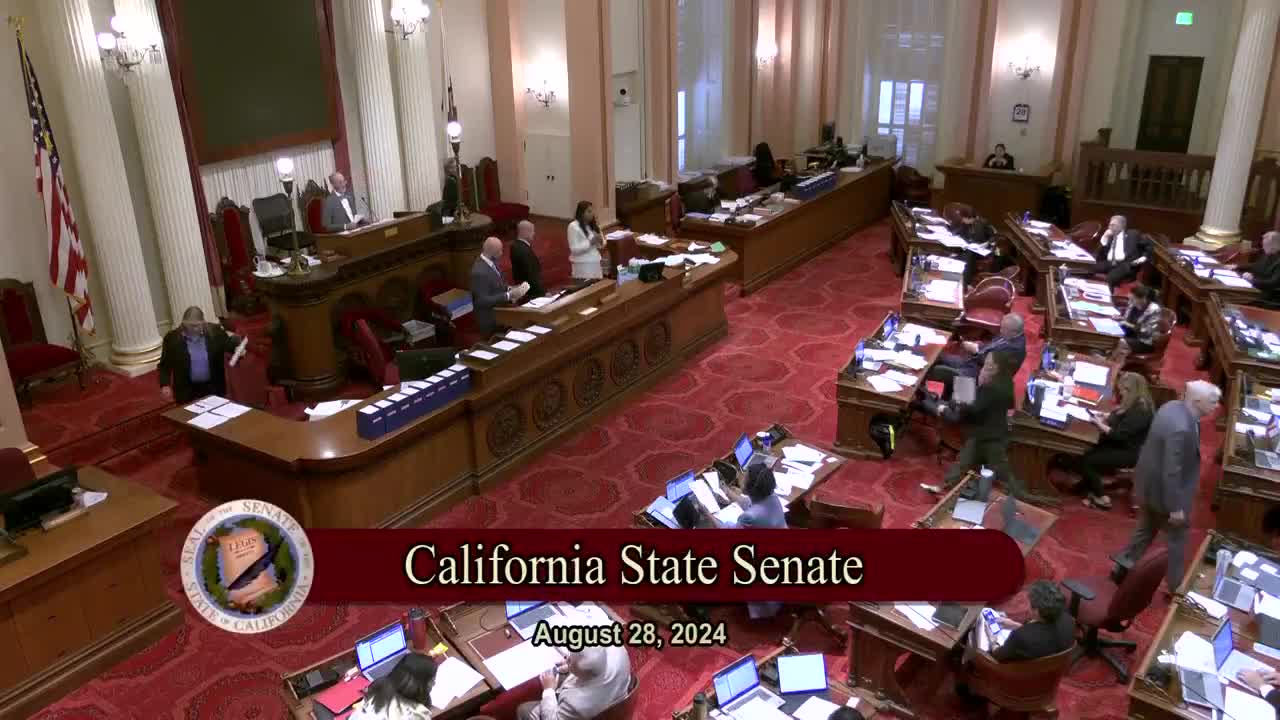 2MIN
Senate Floor
 9MIN
Assembly Standing Committee on Human Services
Bill Author

Bill Co-Author(s):