AB 2669: Toll bridges: tolls.
- Session Year: 2023-2024
- House: Assembly
- Latest Version Date: 2024-09-27
Current Status:
Passed
(2024-09-27: Chaptered by Secretary of State - Chapter 731, Statutes of 2024.)
Introduced
In Committee
First Chamber
In Committee
Second Chamber
Enacted
What does this bill do?
The bill prohibits charging tolls to pedestrians, bicyclists, and people using personal micromobility devices (for example, electric scooters) on toll bridges managed by a district, the state, or the state highway system when such travel is allowed. An exception allows tolls if the bridge was under construction on or after January 1, 2025 and the tolls are used to pay for the bridge’s construction.
The summary is provided by generative AI which can make mistakes. For original language, please view the details in the table below.
Existing law provides for the construction and operation of various toll bridges by the state, the Golden Gate Bridge, Highway and Transportation District, and private entities that have entered into a franchise agreement with the state.
This bill would prohibit a toll from being imposed on the passage of a pedestrian, bicycle, or personal micromobility device over these various toll bridges, unless the bridge was under construction on or after January 1, 2025, and the tolls are used to fund the cost of constructing the bridge.
Existing law provides for the construction and operation of various toll bridges by the state, the Golden Gate Bridge, Highway and Transportation District, and private entities that have entered into a franchise agreement with the state.
This bill would prohibit a toll from being imposed on the passage of a pedestrian, bicycle, or personal micromobility device over these various toll bridges, unless the bridge was under construction on or before after January 1, 2025, and the tolls are used to fund the cost of constructing the bridge.
Existing law provides for the construction and operation of various toll bridges by the state, the Golden Gate Bridge, Highway and Transportation District, and private entities that have entered into a franchise agreement with the state.
This bill would prohibit a toll from being imposed on the passage of a pedestrian, bicycle, or personal micromobility device over these various toll bridges. bridges, unless the bridge was under construction on or before January 1, 2025, and the tolls are used to fund the cost of constructing the bridge.
Existing law provides for the construction and operation of various toll bridges by the state, the Golden Gate Bridge, Highway and Transportation District, and private entities that have entered into a franchise agreement with the state.
This bill would prohibit a toll from being imposed on the passage of a pedestrian, bicycle, or personal micromobility device over these various toll bridges.
(a)Except as provided in subdivision (b), no toll shall be imposed on the passage of a pedestrian, a bicycle, or a personal micromobility device, as defined in Section 1940.41 of the Civil Code, over any bridge that is under the jurisdiction of the district, on which the travel of pedestrians, bicycles, or personal micromobility devices is otherwise authorized.
(b)Subdivision (a) shall not apply if the bridge was under construction on or after January 1, 2025, and if the tolls are used to fund the cost of constructing the bridge.
SEC. 2.Section 30114 is added to the Streets and Highways Code, immediately following Section 30113, to read:30114.(a)Except as provided in subdivision (b), no toll shall be imposed on the passage of a pedestrian, a bicycle, or a personal micromobility device, as defined in Section 1940.41 of the Civil Code, over any state-owned bridge, on which the travel of pedestrians, bicycles, or personal micromobility devices is otherwise authorized, and on which tolls are imposed on the passage of motor vehicles.
(b)Subdivision (a) shall not apply if the bridge was under construction on or after January 1, 2025, and if the tolls are used to fund the cost of constructing the bridge.
SEC. 3.Section 30814 is added to the Streets and Highways Code, immediately following Section 30813, to read:30814.(a)Except as provided in subdivision (b), no toll shall be imposed on the passage of a pedestrian, a bicycle, or a personal micromobility device, as defined in Section 1940.41 of the Civil Code, over any bridge that is part of the state highway system, on which the travel of pedestrians, bicycles, or personal micromobility devices is otherwise authorized, and on which tolls are imposed on the passage of motor vehicles, including any bridge constructed pursuant to a franchise granted under this article.
(b)Subdivision (a) shall not apply if the bridge was under construction on or after January 1, 2025, and if the tolls are used to fund the cost of constructing the bridge.
(a)Except as provided in subdivision (b), no toll shall be imposed on the passage of a pedestrian, a bicycle, or a personal micromobility device, as defined in Section 1940.41 of the Civil Code, over any bridge that is under the jurisdiction of the district, on which the travel of pedestrians, bicycles, or personal micromobility devices is otherwise authorized.
(b)Subdivision (a) shall not apply if the bridge was under construction on or before after January 1, 2025, and if the tolls are used to fund the cost of constructing the bridge.
SEC. 2.Section 30114 is added to the Streets and Highways Code, immediately following Section 30113, to read:30114.(a)Except as provided in subdivision (b), no toll shall be imposed on the passage of a pedestrian, a bicycle, or a personal micromobility device, as defined in Section 1940.41 of the Civil Code, over any state-owned bridge, on which the travel of pedestrians, bicycles, or personal micromobility devices is otherwise authorized, and on which tolls are imposed on the passage of motor vehicles.
(b)Subdivision (a) shall not apply if the bridge was under construction on or before after January 1, 2025, and if the tolls are used to fund the cost of constructing the bridge.
SEC. 3.Section 30814 is added to the Streets and Highways Code, immediately following Section 30813, to read:30814.(a)Except as provided in subdivision (b), no toll shall be imposed on the passage of a pedestrian, a bicycle, or a personal micromobility device, as defined in Section 1940.41 of the Civil Code, over any bridge that is part of the state highway system, on which the travel of pedestrians, bicycles, or personal micromobility devices is otherwise authorized, and on which tolls are imposed on the passage of motor vehicles, including any bridge constructed pursuant to a franchise granted under this article.
(b)Subdivision (a) shall not apply if the bridge was under construction on or before after January 1, 2025, and if the tolls are used to fund the cost of constructing the bridge.
No (a)Except as provided in subdivision (b), no toll shall be imposed on the passage of a pedestrian, a bicycle, or a personal micromobility device, as defined in Section 1940.41 of the Civil Code, over any bridge that is under the jurisdiction of the district, on which the travel of pedestrians, bicycles, or personal micromobility devices is otherwise authorized.
(b)Subdivision (a) shall not apply if the bridge was under construction on or before January 1, 2025, and if the tolls are used to fund the cost of constructing the bridge.
SEC. 2.Section 30114 is added to the Streets and Highways Code, immediately following Section 30113, to read:30114.No (a)Except as provided in subdivision (b), no toll shall be imposed on the passage of a pedestrian, a bicycle, or a personal micromobility device, as defined in Section 1940.41 of the Civil Code, over any state-owned bridge, on which the travel of pedestrians, bicycles, or personal micromobility devices is otherwise authorized, and on which tolls are imposed on the passage of motor vehicles.
(b)Subdivision (a) shall not apply if the bridge was under construction on or before January 1, 2025, and if the tolls are used to fund the cost of constructing the bridge.
SEC. 3.Section 30814 is added to the Streets and Highways Code, immediately following Section 30813, to read:30814.No (a)Except as provided in subdivision (b), no toll shall be imposed on the passage of a pedestrian, a bicycle, or a personal micromobility device, as defined in Section 1940.41 of the Civil Code, over any bridge that is part of the state highway system, on which the travel of pedestrians, bicycles, or personal micromobility devices is otherwise authorized, and on which tolls are imposed on the passage of motor vehicles, including any bridge constructed pursuant to a franchise granted under this article.
(b)Subdivision (a) shall not apply if the bridge was under construction on or before January 1, 2025, and if the tolls are used to fund the cost of constructing the bridge.
No toll shall be imposed on the passage of a pedestrian, a bicycle, or a personal micromobility device, as defined in Section 1940.41 of the Civil Code, over any bridge that is under the jurisdiction of the district, on which the travel of pedestrians, bicycles, or personal micromobility devices is otherwise authorized.
SEC. 2.Section 30114 is added to the Streets and Highways Code, immediately following Section 30113, to read:30114.No toll shall be imposed on the passage of a pedestrian, a bicycle, or a personal micromobility device, as defined in Section 1940.41 of the Civil Code, over any state-owned bridge, on which the travel of pedestrians, bicycles, or personal micromobility devices is otherwise authorized, and on which tolls are imposed on the passage of motor vehicles.
SEC. 3.Section 30814 is added to the Streets and Highways Code, immediately following Section 30813, to read:30814.No toll shall be imposed on the passage of a pedestrian, a bicycle, or a personal micromobility device, as defined in Section 1940.41 of the Civil Code, over any bridge that is part of the state highway system, on which the travel of pedestrians, bicycles, or personal micromobility devices is otherwise authorized, and on which tolls are imposed on the passage of motor vehicles, including any bridge constructed pursuant to a franchise granted under this article.
|
Date
|
Status
|
|---|---|
| Sep 27, 2024 | Chaptered by Secretary of State - Chapter 731, Statutes of 2024. |
| Sep 27, 2024 | Approved by the Governor. |
| Sep 3, 2024 | Enrolled and presented to the Governor at 3:30 p.m. |
| Aug 26, 2024 | In Assembly. Ordered to Engrossing and Enrolling. |
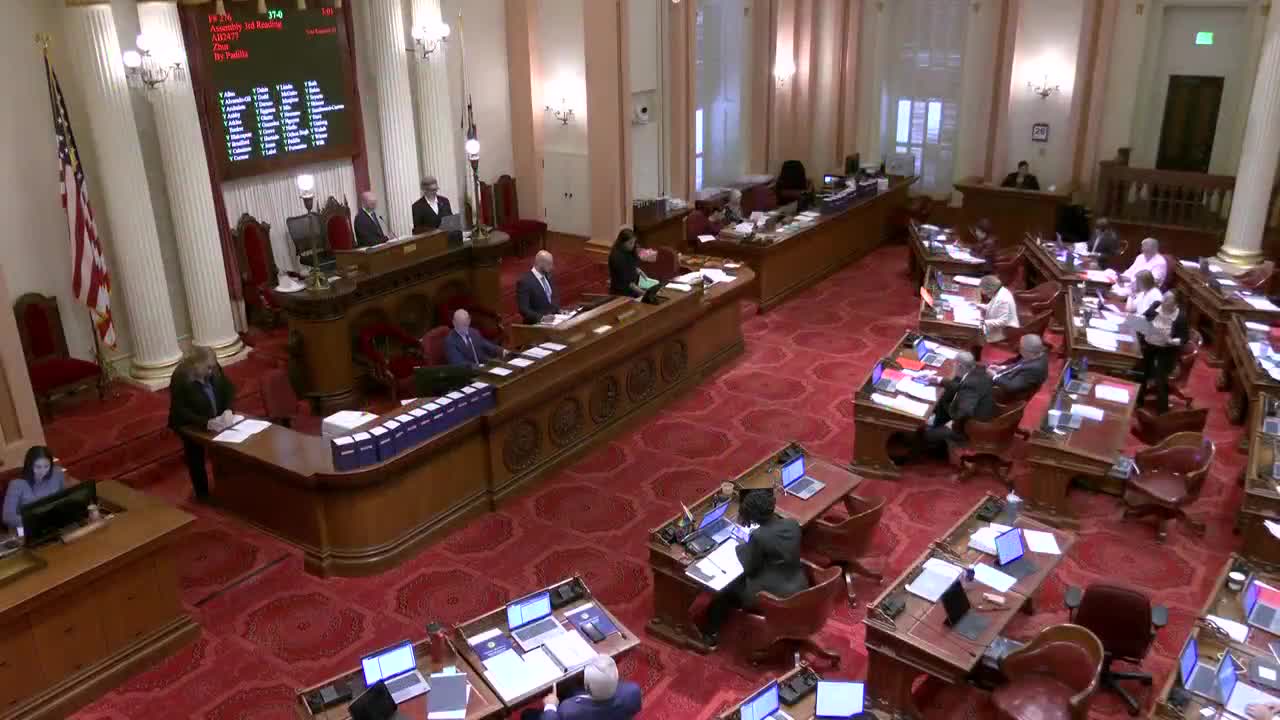
| Aug 26, 2024 | Read third time. Passed. Ordered to the Assembly. (Ayes 31. Noes 7.). |
| Aug 19, 2024 | Read second time. Ordered to third reading. |
| Aug 15, 2024 | From committee: Do pass. (Ayes 5. Noes 2.) (August 15). |
| Jun 24, 2024 | In committee: Referred to suspense file. |
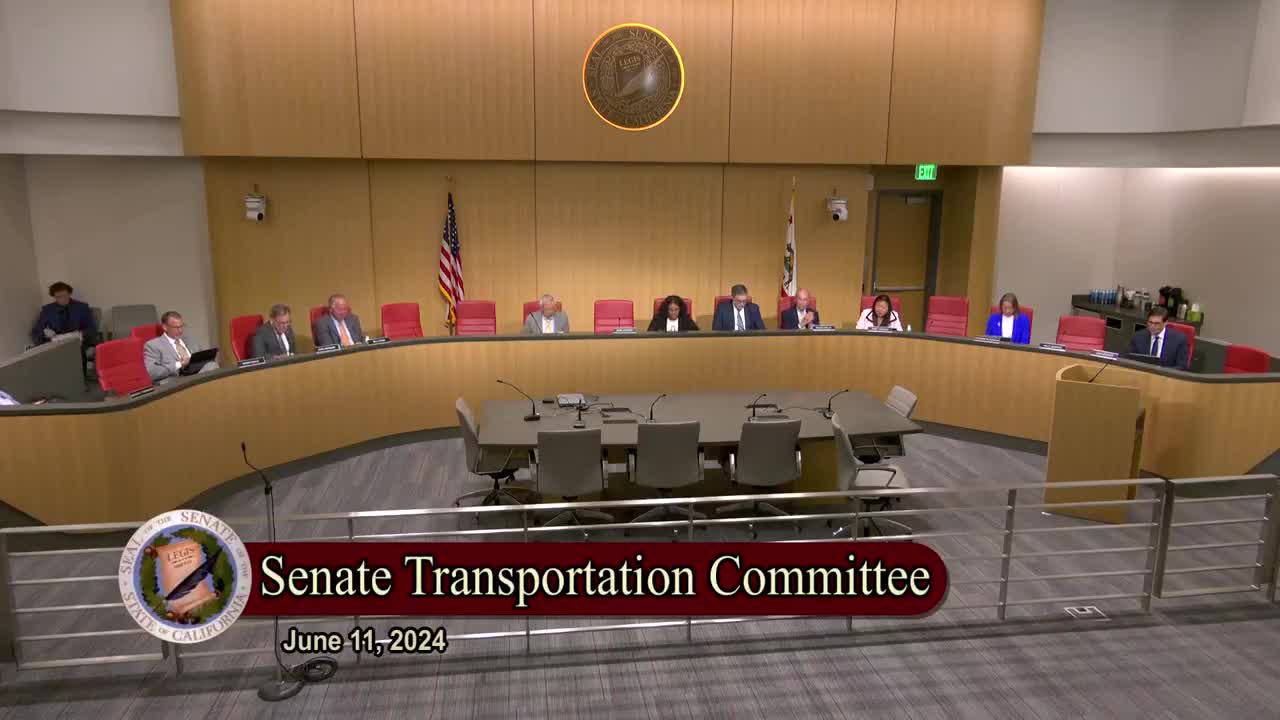
| Jun 12, 2024 | From committee: Do pass and re-refer to Com. on APPR. (Ayes 11. Noes 2.) (June 11). Re-referred to Com. on APPR. |
| Jun 5, 2024 | Referred to Com. on TRANS. |
| May 23, 2024 | In Senate. Read first time. To Com. on RLS. for assignment. |
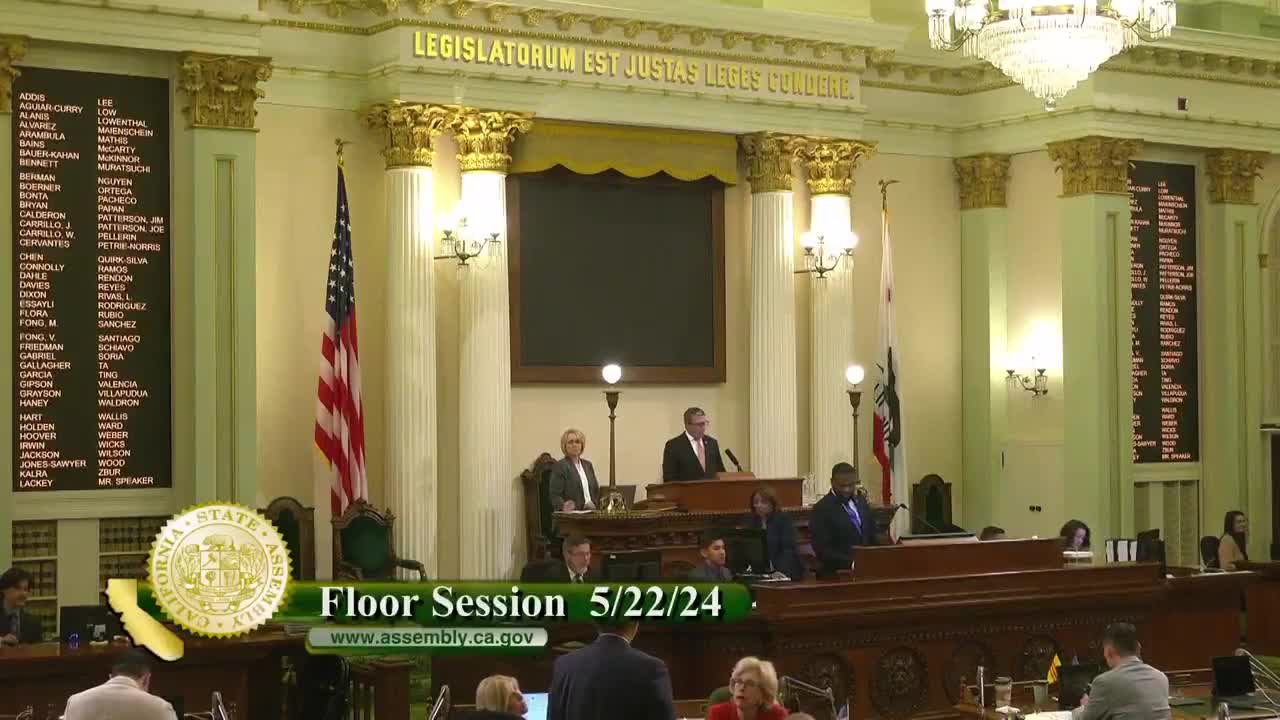
| May 22, 2024 | Read third time. Passed. Ordered to the Senate. (Ayes 65. Noes 0. Page 5496.) |
| May 20, 2024 | Read second time. Ordered to third reading. |
| May 16, 2024 | From committee: Do pass. (Ayes 13. Noes 2.) (May 16). |
| Apr 24, 2024 | In committee: Set, first hearing. Referred to APPR. suspense file. |
| Apr 9, 2024 | From committee: Do pass and re-refer to Com. on APPR. (Ayes 14. Noes 0.) (April 8). Re-referred to Com. on APPR. |
| Apr 3, 2024 | Re-referred to Com. on TRANS. |
| Apr 2, 2024 | From committee chair, with author's amendments: Amend, and re-refer to Com. on TRANS. Read second time and amended. |
| Apr 1, 2024 | Re-referred to Com. on TRANS. |
| Mar 21, 2024 | From committee chair, with author's amendments: Amend, and re-refer to Com. on TRANS. Read second time and amended. |
| Mar 4, 2024 | Referred to Com. on TRANS. |
| Feb 15, 2024 | From printer. May be heard in committee March 16. |
| Feb 14, 2024 | Read first time. To print. |
|
Date
|
Description
|
Location
|
Votes
|
|
|---|---|---|---|---|
| Aug 26, 2024 | Assembly 3rd Reading AB2669 Ting By Dodd | Senate Floor |
Passed |
|
| Aug 15, 2024 | Do pass | Senate Standing Committee on Appropriations |
Passed |
|
| Jun 24, 2024 | Placed on suspense file | Senate Standing Committee on Appropriations |
Passed |
|
| Jun 11, 2024 | Do pass, but first be re-referred to the Committee on [Appropriations] | Senate Standing Committee on Transportation |
Passed |
|
| May 22, 2024 | AB 2669 Ting Assembly Third Reading | Assembly Floor |
Passed |
|
| May 16, 2024 | Do pass. | Assembly Standing Committee on Appropriations |
Passed |
|
| Apr 8, 2024 | Do pass and be re-referred to the Committee on [Appropriations] | Assembly Standing Committee on Transportation |
Passed |
This list shows positions taken on this bill by organizations on the date displayed, which is linked to the original source.
Positions by individuals are not included.
|
Organization
|
Position
|
Date
|
|---|---|---|
| California Bicycle Coalition | ** Support | |
| City of Alameda | ** Support | |
| Junior Philanthropist Foundation | * Support | Jun 11, 2024 |
| Marin County Bicycle Coalition | ** Support | |
| San Francisco Bicycle Coalition | ** Support | |
| Streets for All | ** Support |
SENATE RULES COMMITTEE Office of Senate Floor Analyses (916) 651-1520 Fax: (916) 327-4478 | AB 2669 |
THIRD READING
Bill No: AB 2669
Author: Ting (D)
Amended: 4/2/24 in Assembly
Vote: 21
SENATE TRANSPORTATION COMMITTEE: 11-2, 6/11/24
AYES: Cortese, Allen, Archuleta, Becker, Blakespear, Dodd, Gonzalez, Limón, Newman, Portantino, Umberg
NOES: Niello, Nguyen
NO VOTE RECORDED: Dahle, Seyarto
SENATE APPROPRIATIONS COMMITTEE: 5-2, 8/15/24
AYES: Caballero, Ashby, Becker, Bradford, Wahab
NOES: Jones, Seyarto
ASSEMBLY FLOOR: 65-0, 5/22/24 - See last page for vote
SUBJECT: Toll bridges: tolls
SOURCE: California Bicycle Coalition
Marin County Bicycle Coalition
San Francisco Bicycle Coalition
DIGEST:
This bill provides that no toll shall be imposed on the passage of a pedestrian, a bicycle or a personal mobility device over any bridge on which tolls are imposed on motor vehicles that is under the jurisdiction of a district or any state owned bridge or any bridge that is part of the state highway system pursuant to a franchise agreement. This bill provides that the prohibition on tolls shall not apply if the bridge was under construction on or after January 1, 2025 and if the tolls are used to fund the cost of constructing the bridge.
ANALYSIS:
Existing law:
- Prohibits, through AB 40 (Ting, Chapter 550, Statutes of 2015) a toll from being imposed on the passage of a pedestrian or bicycle over any bridge on which tolls are imposed on the passage of motor vehicles that is under the jurisdiction of a district or any state owned bridge or over any bridge that is part of the state highway system pursuant to a franchise agreement. The prohibition sunset on January 1, 2021. Personal micromobility devices were not identified in that legislation.
- Establishes the Golden Gate Bridge, Highway and Transportation District (GGBHTD), which owns and maintains the Golden Gate Bridge and two unified public transit systems, Golden Gate Transit and Golden Gate Ferry (SHC 27500). The district provides transit services without support of a local sales tax or dedicated general funds thus supporting its transit services with surplus bridge toll revenue. The district’s bus and ferry operations are funded 50 percent by surplus bridge tolls and 20 percent by transit fares. Citing a $220 million deficit over five years, the district approved toll increases projected to raise approximately $140 million.
- Creates the Bay Area Toll Authority (BATA) to administer the base $1 toll for the San Francisco Oakland Bay area’s seven state owned bridges. BATA operates under the Metropolitan Transportation Commission. In 2005, BATA’s responsibilities were expanded to include administration of all toll revenue and joint oversight of the toll bridge construction program in conjunction with the Department of Transportation (Caltrans) and the California Transportation Commission.
This bill:
- Extends a prohibition on the imposition of pedestrian and bicycle tolls on specific bridges that commenced January 1, 2016 and sunset January 1, 2021.
- Would not apply if the bridge was under construction on or after January 1, 2025, and if the tolls are used to fund the cost of constructing the bridge.
Comments
- Purpose of the bill. According to the author’s office, “The Golden Gate Bridge is recognizable around the world as a California landmark treasured by local residents and tourists alike. The bridge is a transportation and recreation corridor between San Francisco and Marin County and is crossed by tens of millions of people each year. For the past 50+ years, pedestrians and bicyclists have been able to cross the bridge free of charge. This policy has kept state-owned bridges open and accessible to all individuals while exemplifying California’s commitment to carbon emissions and fostering sustainable transportation alternatives. AB 2669 will enshrine the prohibition of state-owned bridges from imposing any tolls for pedestrian and bicyclist use of sidewalks. This bill will preserve an incentive for people to pursue emission-free methods of active transportation that are good for our environment and our health, while ensuring protecting free access for pedestrians and bicyclists for all of California’s bridges.”
- Bridges - State and District. California has eight toll bridges, seven of which are owned by the state: Antioch Bridge, Benicia Martinez Bridge, Carquinez Bridge, Dumbarton Bridge, Richmond San Rafael Bridge, San Francisco Oakland Bay Bridge and San Mateo Hayward Bridge. Of the eight bridges affected by this bill, only the San Mateo Hayward Bridge does not have pedestrian and bicyclist access. The San Francisco Oakland Bay Bridge has limited access. At present, none of the bridges toll for pedestrians or bicyclists.
- Golden Gate. The Golden Gate Bridge, Highway and Transportation District owns and maintains the Golden Gate Bridge and two unified public transit systems, Golden Gate Transit and Golden Gate Ferry. The district provides transit services without support of a local sales tax or dedicated general funds thus supporting its transit services with surplus bridge toll revenue. The district’s bus and ferry operations are funded 50 percent by surplus bridge tolls and 20 percent by transit fares. Citing a $220 million deficit over five years, the district approved motor vehicle toll increases projected to raise approximately $140 million. The new toll program will go into effect on July 1, 2024, and will increase tolls for most customers by $0.50 per year over the next five years, generating approximately $139 million over that period of time (a little more than half of the projected $220 million shortfall). The Board did not consider imposing tolls on pedestrian or bicycle access as an option to address the current operating deficits. This bill would permanently prevent the imposition of tolls on pedestrians and bicyclists as part of the solution to the GG District’s ongoing budget deficits.
FISCAL EFFECT: Appropriation: No Fiscal Com.: Yes Local: No
According to the Senate Appropriations Committee, prohibiting the imposition of tolls on the passage of a pedestrian, bicycle, or personal micromobility device on the Golden Gate Bridge and state-owned toll bridges could result in foregone revenues and future cost pressures to the extent such tolls could otherwise be used to pay for pedestrian and bicycle capital improvements or bridge maintenance. (State Highway Account, Bay Area Toll Account, local toll bridge accounts)
SUPPORT: (Verified 8/17/24)
California Bicycle Coalition (co-source)
Marin County Bicycle Coalition (co-source)
San Francisco Bicycle Coalition (co-source)
Streets for All
City of Alameda
OPPOSITION: (Verified 8/17/24)
None received
ASSEMBLY FLOOR: 65-0, 5/22/24
AYES: Addis, Aguiar-Curry, Alanis, Alvarez, Arambula, Bains, Bauer-Kahan, Bennett, Berman, Boerner, Bonta, Bryan, Juan Carrillo, Wendy Carrillo, Chen, Connolly, Davies, Mike Fong, Gabriel, Garcia, Gipson, Grayson, Haney, Hart, Hoover, Irwin, Jackson, Jones-Sawyer, Kalra, Lackey, Lee, Low, Lowenthal, Maienschein, McCarty, McKinnor, Muratsuchi, Stephanie Nguyen, Ortega, Pacheco, Papan, Pellerin, Petrie-Norris, Quirk-Silva, Ramos, Rendon, Reyes, Rodriguez, Blanca Rubio, Santiago, Schiavo, Soria, Ta, Ting, Valencia, Villapudua, Waldron, Wallis, Ward, Weber, Wicks, Wilson, Wood, Zbur, Robert Rivas
NO VOTE RECORDED: Calderon, Cervantes, Megan Dahle, Dixon, Essayli, Flora, Vince Fong, Friedman, Gallagher, Holden, Mathis, Jim Patterson, Joe Patterson, Luz Rivas, Sanchez
Prepared by: Jacob O'Connor / TRANS. / (916) 651-4121
8/18/24 17:50:12
**** END ****
SENATE COMMITTEE ON APPROPRIATIONS
Senator Anna Caballero, Chair
2023 - 2024 Regular Session
AB 2669 (Ting) - Toll bridges: tolls
Version: April 2, 2024 | Policy Vote: TRANS. 11 - 2 |
Urgency: No | Mandate: No |
Hearing Date: June 24, 2024 | Consultant: Mark McKenzie |
Bill Summary:
AB 2669 would prohibit the imposition of tolls on the passage of a pedestrian, bicycle, or personal micromobility device over specified toll bridges. This prohibition would not apply if the bridge is under construction on or after January 1, 2025, and the tolls are used to fund the cost of constructing the bridge.
Fiscal Impact:
- Prohibiting the imposition of tolls on the passage of a pedestrian, bicycle, or personal micromobility device on the Golden Gate Bridge and state-owned toll bridges could result in foregone revenues and future cost pressures, potentially in the millions, to the extent such tolls could otherwise be used to pay for pedestrian and bicycle capital improvements or bridge maintenance. (State Highway Account, Bay Area Toll Account, local toll bridge accounts)
Background:
There are currently seven state-owned toll bridges, and one other toll bridge, the Golden Gate, which is owned and operated by the Golden Gate Bridge, Highway, and Transportation District (GG District). Pedestrians and bicycles are currently allowed to cross the Golden Gate Bridge and all but one of the seven state-owned toll bridges (the San Mateo Hayward Bridge). The San Francisco Oakland Bay Bridge has limited pedestrian and bicycle access. Currently, tolls are not charged for pedestrian, bicycle, or personal microbility device access to any of the state’s existing toll bridges.
Proposed Law:
AB 2669 would prohibit the imposition of a toll on the passage of a pedestrian, bicycle, or personal micromobility device over any state-owned bridge, any bridge on the state highway system, or any bridge under the jurisdiction of the GG District, on which the travel of pedestrians, bicycles, or personal micromobility devices is otherwise authorized and tolls are imposed on the passage of motor vehicles. This prohibition would not apply if the bridge was under construction on or after January 1, 2025, and the tolls are used to fund the cost of constructing the bridge.
Related Legislation:
AB 40 (Ting), Chap. 550/2015, prohibited the imposition of tolls on the passage of pedestrians or bicyclists on specified toll bridges from January 1, 2016 until January 1, 2021.
AB 748 (Wolk), which was vetoed by Governor Schwarzenegger in 2005, is a nearly identical bill that would have temporarily prohibited the imposition of tolls on pedestrians and bicyclists on toll bridges until 2009. The veto message, in part, stated the following:
“…this bill would inappropriately usurp control from the local governing body, the Golden Gate Highway and Transportation District. Since the District has been authorized to operate and maintain the bridge, the state should not tie its hands by foreclosing certain funding options.”
Staff Comments:
This bill would prohibit the imposition of tolls on the passage of a pedestrian, bicycle, or personal micromobility device over any existing toll bridge or facility that is under the jurisdiction of the GG District or Caltrans, owned by the state, or constructed under a franchise agreement with the state.
The GG District currently faces a projected deficit of approximately $220 million over its five-year operating budget. To address this shortfall, the GG District’s Board voted on March 22, 2024 to approve a new five-year toll program that will provide funding for bridge operations and maintenance and bus and ferry transit services. The new toll program will go into effect on July 1, 2024, and will increase tolls for most customers by $0.50 per year over the next five years, generating approximately $139 million over that period of time (a little more than half of the projected $220 million shortfall). The Board did not consider imposing tolls on pedestrian or bicycle access as an option to address the current operating deficits. Although pedestrians paid a sidewalk toll from 1937 until 1970, and the GG District has considered reinstating a toll for pedestrian and bicycle access several times in more recent years to address chronic deficits, the district has not elected to impose a toll on those bridge users over the past 54 years. This bill would permanently prevent the imposition of tolls on pedestrians and bicyclists as part of the solution to the GG District’s ongoing budget deficits.
There are no current plans to impose tolls on pedestrians or bicyclists for passage on state-owned toll bridges. As such, there would be no immediate or near-term state impacts. However, there is nothing in current law to prevent the imposition of such tolls in the future to pay for capital investments in pedestrian and bicycle facilities on toll bridges. Precluding the imposition of these tolls would require these costs to be covered by drivers who pay tolls, thereby creating potential cost pressures on state and local toll bridge accounts.
-- END --
SENATE COMMITTEE ON TRANSPORTATION
Senator Dave Cortese, Chair
2023 - 2024 Regular
Bill No: Hearing Date: 6/11/2024
Author: | Ting | ||
Version: | 4/2/2024 Amended | ||
Urgency: | No | Fiscal: | Yes |
Consultant: | Bob Franzoia | ||
SUBJECT:
DIGEST: This bill would provide that no toll shall be imposed on the passage of a pedestrian, a bicycle or a personal micromobility device over any bridge on which tolls are imposed on the passage of motor vehicles that is under the jurisdiction of a district or any state owned bridge or over any bridge that is part of the state highway system pursuant to a franchise agreement. This bill provides that the prohibition on tolls shall not apply if the bridge was under construction on or after January 1, 2025 and if the tolls are used to fund the cost of constructing the bridge.
ANALYSIS:
Existing law:
- Chapter 550, Statutes of 2015 (AB 40, Ting) prohibited a toll from being imposed on the passage of a pedestrian or bicycle over any bridge on which tolls are imposed on the passage of motor vehicles that is under the jurisdiction of a district or any state owned bridge or over any bridge that is part of the state highway system pursuant to a franchise agreement. The prohibition sunset on January 1, 2021. Personal micromobility devices were not identified in that legislation.
- Establishes the Golden Gate Bridge, Highway and Transportation District (GGBHTD), which owns and maintains the Golden Gate Bridge and two unified public transit systems, Golden Gate Transit and Golden Gate Ferry (SHC 27500). The district provides transit services without support of a local sales tax or dedicated general funds thus supporting its transit services with surplus bridge toll revenue. The district’s bus and ferry operations are funded 50 percent by surplus bridge tolls and 20 percent by transit fares. Citing a $220 million deficit over five years, the district approved toll increases projected to raise approximately $140 million.
- Created the Bay Area Toll Authority (BATA) to administer the base $1 toll for the San Francisco Oakland Bay area’s seven state owned bridges. BATA operates under the Metropolitan Transportation Commission. In 2005, BATA’s responsibilities were expanded to include administration of all toll revenue and joint oversight of the toll bridge construction program in conjunction with the Department of Transportation (Caltrans) and the California Transportation Commission.
This bill:
- Would extend a prohibition on the imposition of pedestrian and bicycle tolls on specific bridges that commenced January 1, 2016 and sunset January 1, 2021.
- Would not apply if the bridge was under construction on or after January 1, 2025, and if the tolls are used to fund the cost of constructing the bridge.
COMMENTS:
- Bridges - State and District. California has eight toll bridges, seven of which are owned by the state: Antioch Bridge, Benicia Martinez Bridge, Carquinez Bridge, Dumbarton Bridge, Richmond San Rafael Bridge, San Francisco Oakland Bay Bridge and San Mateo Hayward Bridge. Of the eight bridges affected by this bill, only the San Mateo Hayward Bridge does not have pedestrian and bicyclist access. The San Francisco Oakland Bay Bridge has limited access. At present, none of the bridges toll for pedestrians or bicyclists.
- Tolls. The GGBHTD once charged tolls on a per-passenger basis, and it cost a nickel extra for every person in a car in excess of the driver and four riders. The district also charged a nickel for pedestrians with bicycles which could be pushed, not ridden. Estimates indicate the Golden Gate Bridge is utilized daily by 10,000 pedestrians and 6,000 bicyclists (5,840,000 annually).
- Personal and Micromobility Devices. A personal micromobility device is a device powered by the physical exertion of the rider or an electric motor and is designed to transport one individual or one adult accompanied by up to three minors. (CIV 1940.41) A micromobility device means a bicycle, electric bicycle or motorized scooter as those terms are defined and described in in Division 1 (commencing with Section 100) of the Vehicle Code.
Related Legislation:
AB 748 (Wolk, 2005). Would have prohibited a toll from being imposed on the passage of a pedestrian or bicycle over toll bridges that are part of the state highway system, under the jurisdiction of Caltrans, or under the jurisdiction of the GGBHTD. AB 748 was vetoed by Governor Schwarzenegger stating, "I strongly encourage Californians to use bicycling and walking as modes of transportation when possible because of the physical fitness benefit, as well as the congestion mitigation and air quality benefits. However, this bill would inappropriately usurp control from the local governing body, the Golden Gate Highway and Transportation District. Since the District has been authorized to operate and maintain the bridge, the state should not tie its hands by foreclosing certain funding options."
FISCAL EFFECT: Appropriation: No Fiscal Com.: Yes Local: No
POSITIONS: (Communicated to the committee before noon on Wednesday,
June 5, 2024.)
SUPPORT:
California Bicycle Coalition
Marin County Bicycle Coalition
San Francisco Bicycle Coalition
OPPOSITION:
None received
ARGUMENTS IN SUPPORT: Assemblymember Ting states this bill would enshrine the prohibition of state owned bridges from imposing any tolls for pedestrian and bicyclist use of sidewalks, unless the bridge was under construction on or after January 1, 2025. This bill would promote non-vehicular forms of transportation across all bridges that improve air quality, combat climate change, and ensure equitable access.
ARGUMENTS IN OPPOSITION: None received
-- END --
ASSEMBLY THIRD READING
ATR Bill Id:AB 2669
Author:(Ting)
As Amended Ver:April 2, 2024
Majority vote
SUMMARY
Prohibits a toll from being charged for passage of a pedestrian, a bicycle, or a personal micromobility device on any bridge in the Golden Gate Bridge, Highway, and Transportation District (GGBHTD), any state-owned bridge, and any bridge that private entities have entered into a franchise agreement with the state, unless the bridge was under construction on or after January 1, 2025, and the tolls are used to fund the cost of constructing the bridge.
Major Provisions
COMMENTS
California has eight toll bridges, all located in the San Francisco Bay Area. Seven of those bridges — the Antioch Bridge, the Benicia/Martinez Bridge, the Carquinez Bridge, the Dumbarton Bridge, the Richmond-San Rafael Bridge, the San Francisco-Oakland Bay Bridge, and the San Mateo Hayward Bridge — are owned by the state. The eighth bridge is owned and operated by GGBHTD. Of these bridges, five currently have pedestrian and bicycle access: the Golden Gate, the Antioch, the Benicia-Martinez, the Carquinez, and the Dumbarton bridges. There is currently no toll for pedestrians or bicyclists on any of the state-owned toll bridges or the Golden Gate Bridge.
When the Golden Gate Bridge first opened in 1937, pedestrians had to pay five cents to cross. The sidewalk toll eventually rose to 10 cents before being abolished in 1970. At that time, vehicle crossings were $0.50.
Approximately a decade ago, the GGBHTD's board approved a study to determine whether a pedestrian/bicyclist toll would be feasible and helpful in light of the district's budget woes. According to the district, about 6,000 cyclists and 10,000 pedestrians cross the bridge on a good weather day. Sidewalk access fees were just one consideration in a 45-point plan to help GGBHTD remain solvent, as they faced fiscal challenges for unfunded capital needs and an operating deficit at that time. Opposition to this toll, resulted in GGBHTD withdrawing the proposal.
Similarly, the GGBHTD currently faces fiscal challenges, but the board has no plans to pursue a sidewalk toll. To address fiscal needs, the district is working within the region on transit funding solutions, and discussing the possibility of increasing vehicle tolls.
Currently, there are only four bridges in the United States that collect pedestrian tolls. They are all border crossings: the Rainbow Bridge at Niagara Falls and three bridges linking El Paso, Texas with Ciudad, Juarez.
Committee Comments: Not charging a toll for pedestrians, cyclists, and micromobility devices crossing bridges helps to support the state's goal of increasing active transportation to help reduce greenhouse gas emissions. However, revenue from these tolls can be used to pay for maintenance and other costs, such as debt service, improvements to the corridor, and seismic retrofitting of bridges.
This bill would allow the state and locals to retain the authority to set tolls for bridges under construction and beginning construction after January 1, 2025. These tolls could be used to fund the cost of building new infrastructure.
To achieve the goals of both 1) funding the cost of new bridges and 2) encouraging active transportation on those bridges; if there was a desire to impose a toll, tolls could be set that are lower for pedestrians, cyclists, and micromobility devices than for vehicles.
According to the Author
"The Golden Gate Bridge is recognizable around the world as a California landmark treasured by local residents and tourists alike. The bridge is a transportation and recreation corridor between San Francisco and Marin County and is crossed by tens of millions of people each year. For the past 50+ years, pedestrians and bicyclists have been able to cross the bridge free of charge. This policy has kept state-owned bridges open and accessible to all individuals while exemplifying California's commitment to carbon emissions and fostering sustainable transportation alternatives. [This bill] will enshrine the prohibition of state-owned bridges from imposing any tolls for pedestrian and bicyclist use of sidewalks. This bill will preserve an incentive for people to pursue emission-free methods of active transportation that are good for our environment and our health, while ensuring protecting free access for pedestrians and bicyclists for all of California's bridges."
Arguments in Support
The San Francisco Bike Coalition writing in support states "Removing tolls for people biking and walking has kept many bridges open and accessible to all individuals while exemplifying California's commitment to cutting carbon emissions and fostering sustainable transportation alternatives. Free public access to bridges across the state has also bolstered decades of work to promote public recreation by linking together a network of parks, paths, and trails.
We strongly support this legislation that would promote non-vehicular forms of transportation across all bridges that improve air quality, combat climate change, and ensure equitable access."
Arguments in Opposition
None on file
FISCAL COMMENTS
According to the Assembly Appropriations Committee, this bill could result in foregone state revenue of a significant amount. However, this committee is unaware of plans to impose tolls on pedestrians or bicyclists to cross the Golden Gate Bridge or any of the state's existing toll bridges.
VOTES
ASM TRANSPORTATION: 14-0-1
YES: Wilson, Davies, Aguiar-Curry, Berman, Juan Carrillo, Hart, Hoover, Jackson, Lowenthal, Papan, Ting, Wallis, Ward, Wicks
ABS, ABST OR NV: Sanchez
ASM APPROPRIATIONS: 13-2-0
YES: Wicks, Sanchez, Arambula, Bryan, Calderon, Wendy Carrillo, Mike Fong, Grayson, Haney, Hart, Pellerin, Ta, Villapudua
NO: Dixon, Jim Patterson
UPDATED
VERSION: April 2, 2024
CONSULTANT: Farra Bracht / TRANS. / (916) 319-2093 FN: 0003034
Date of Hearing: April 24, 2024
ASSEMBLY COMMITTEE ON APPROPRIATIONS
Buffy Wicks, Chair
ABPCA Bill Id:AB 2669
Author:(Ting) – As Amended Ver:April 2, 2024
Policy Committee: | Transportation | Vote: | 14 - 0 |
|
| ||
|
|
Urgency: No State Mandated Local Program: No Reimbursable: No
SUMMARY:
This bill prohibits the charging of a toll for passage of a pedestrian, a bicycle or a personal micromobility device over any bridge that is under the jurisdiction of the Golden Gate Bridge, Highway and Transportation District, owned by the state of California or subject to a franchise agreement between the state and private entities, unless the bridge was under construction on or after January 1, 2025, and the tolls are used to fund the cost of constructing the bridge.
FISCAL EFFECT:
This bill could result in foregone state revenue of a significant amount. However, this committee is unaware of plans to impose tolls on pedestrians or bicyclists to cross the Golden Gate Bridge or any of the state’s existing toll bridges.
COMMENTS:
There are eight toll bridges in California. Seven are owned and controlled by state. The eighth is owned and controlled by the Golden Gate Bridge, Highway and Transportation District. All are in the San Francisco Bay Area. None charges a toll for passage of a pedestrian, a bicycle or a personal micromobility device.
About a decade ago the Golden Gate Bridge, Highway and Transportation District faced considerable financial difficulty. The authority overseeing the district, in response, considered imposing a toll on pedestrians and bicyclists who cross the bridge. As Time Magazine reported (see https://time.com/3535150/officials-consider-golden-gate-bridge-toll-for-pedestrians/):
The body that oversees the bridge, known as the Golden Gate Bridge, Highway and Transportation District, says that if no changes are made to current operations, they expect to be running at a deficit of $33 million in five years, up to $210 million in 10 years. The authority recently committed to new projects like helping to fund a $76 million suicide net, in addition to paying for expensive upkeep that will make the bridge more resistant to earthquakes.
Ultimately, the district did not impose a toll on pedestrians or bicyclists crossing the Golden Gate Bridge.
Today, the district is again facing financial difficulty. This committee is unaware of a proposal to newly consider charging pedestrians or bicyclists to cross the Golden Gate Bridge, or any other of the state’s existing toll bridges. Nonetheless, the author wants to ensure no such tolls are imposed. According to the author:
The Golden Gate Bridge is recognizable around the world as a California landmark treasured by local residents and tourists alike. The bridge is a transportation and recreation corridor between San Francisco and Marin County and is crossed by tens of millions of people each year. For the past 50+ years, pedestrians and bicyclists have been able to cross the bridge free of charge. This policy has kept state-owned bridges open and accessible to all individuals while exemplifying California’s commitment to carbon emissions and fostering sustainable transportation alternatives. AB 2669 will enshrine the prohibition of state-owned bridges from imposing any tolls for pedestrian and bicyclist use of sidewalks. This bill will preserve an incentive for people to pursue emission-free methods of active transportation that are good for our environment and our health, while ensuring protecting free access for pedestrians and bicyclists for all of California’s bridges.
Analysis Prepared by: Jay Dickenson / APPR. / (916) 319-2081
Date of Hearing: April 8, 2024
ASSEMBLY COMMITTEE ON TRANSPORTATION
Lori D. Wilson, Chair
ABPCA Bill Id:AB 2669 (
Author:Ting) – As Introduced Ver:February 14, 2024
SUBJECT: Toll bridges: tolls
SUMMARY: Prohibits a toll from being charged for passage of a pedestrian, a bicycle, or a personal micromobility device on any bridge in the Golden Gate Bridge, Highway, and Transportation District (GGBHTD), any state-owned bridge, and any bridge that private entities have entered into a franchise agreement with the state, unless the bridge was under construction on or after January 1, 2025, and the tolls are used to fund the cost of constructing the bridge.
EXISTING LAW:
- Created the California Transportation Commission (CTC) and assigned it all responsibility previously assigned to the California Toll Bridge Authority, including directing and authorizing the Department of Transportation (Caltrans) to build toll bridges. (Streets and Highways Code (SHC) 30150)
- Created the Bay Area Toll Authority (BATA) to administer the base $1 auto toll for the San Francisco Bay area’s seven state-owned toll bridges. BATA operates under the Metropolitan Transportation Commission. In 2005, BATA’s responsibilities were expanded to include administration of all toll revenues and joint oversight of the toll bridge construction program along with Caltrans and the CTC. (SHC 30101-30109)
- Requires Caltrans and CTC to consider the inclusion of bicycle and pedestrian facilities on each new toll bridge designed and constructed, including appropriate connections. These facilities are required to be included on each new bridge if the commission finds that they are economically and physically feasible. (SHC 30112)
- Established the Golden Gate Bridge, Highway, and Transportation District (GGBHTD) which owns and operates the Golden Gate Bridge and sets tolls. (SHC 27500-27512)
FISCAL EFFECT: Unknown
COMMENTS: California has eight toll bridges, all located in the San Francisco Bay Area. Seven of those bridges — the Antioch Bridge, the Benicia/Martinez Bridge, the Carquinez Bridge, the Dumbarton Bridge, the Richmond-San Rafael Bridge, the San Francisco-Oakland Bay Bridge, and the San Mateo Hayward Bridge — are owned by the state. The eighth bridge is owned and operated by GGBHTD. Of these bridges, five currently have pedestrian and bicycle access: the Golden Gate, the Antioch, the Benicia-Martinez, the Carquinez, and the Dumbarton bridges. There is currently no toll for pedestrians or bicyclists on any of the state-owned toll bridges or the Golden Gate Bridge.
According to the author, “The Golden Gate Bridge is recognizable around the world as a California landmark treasured by local residents and tourists alike. The bridge is a transportation and recreation corridor between San Francisco and Marin County and is crossed by tens of millions of people each year. For the past 50+ years, pedestrians and bicyclists have been able to cross the bridge free of charge. This policy has kept state-owned bridges open and accessible to all individuals while exemplifying California’s commitment to carbon emissions and fostering sustainable transportation alternatives. AB 2669 will enshrine the prohibition of state-owned bridges from imposing any tolls for pedestrian and bicyclist use of sidewalks. This bill will preserve an incentive for people to pursue emission-free methods of active transportation that are good for our environment and our health, while ensuring protecting free access for pedestrians and bicyclists for all of California’s bridges.”
When the Golden Gate Bridge first opened in 1937, pedestrians had to pay five cents to cross. The sidewalk toll eventually rose to 10 cents before being abolished in 1970. At that time, vehicle crossings were $0.50.
Approximately a decade ago, the GGBHTD’s board approved a study to determine whether a pedestrian/bicyclist toll would be feasible and helpful in light of the district’s budget woes. According to the district, about 6,000 cyclists and 10,000 pedestrians cross the bridge on a good weather day. Sidewalk access fees were just one consideration in a 45-point plan to help GGBHTD remain solvent, as they faced fiscal challenges for unfunded capital needs and an operating deficit at that time. Opposition to this toll, resulted in GGBHTD withdrawing the proposal.
Similarly, the GGBHTD currently faces fiscal challenges, but the board has no plans to pursue a sidewalk toll. To address fiscal needs, the district is working within the region on transit funding solutions, and discussing the possibility of increasing vehicle tolls.
Currently, there are only four bridges in the United States that collect pedestrian tolls. They are all border crossings: the Rainbow Bridge at Niagara Falls and three bridges linking El Paso, Texas with Ciudad, Juarez.
The San Francisco Bike Coalition writing in support states “Removing tolls for people biking and walking has kept many bridges open and accessible to all individuals while exemplifying California’s commitment to cutting carbon emissions and fostering sustainable transportation alternatives. Free public access to bridges across the state has also bolstered decades of work to promote public recreation by linking together a network of parks, paths, and trails.
We strongly support this legislation that would promote non-vehicular forms of transportation across all bridges that improve air quality, combat climate change, and ensure equitable access.”
Committee Comments: Not charging a toll for pedestrians, cyclists, and micromobility devices crossing bridges helps to support the state’s goal of increasing active transportation to help reduce greenhouse gas emissions. However, revenue from these tolls can be used to pay for maintenance and other costs, such as debt service, improvements to the corridor, and seismic retrofitting of bridges.
This bill would allow the state and locals to retain the authority to set tolls for bridges under construction and beginning construction after January 1, 2025. These tolls could be used to fund the cost of building new infrastructure.
To achieve the goals of both 1) funding the cost of new bridges and 2) encouraging active transportation on those bridges; if there was a desire to impose a toll, tolls could be set that are lower for pedestrians, cyclists, and micromobility devices than for vehicles.
REGISTERED SUPPORT / OPPOSITION:
Support
California Bicycle Coalition
Marin County Bicycle Coalition
San Francisco Bicycle Coalition
Streets for All
Opposition
None on file
Analysis Prepared by: Farra Bracht / TRANS. / (916) 319-2093
Discussed in Hearing
 2MIN
Senate Floor
 4MIN
Senate Standing Committee on Transportation
 56SEC
Assembly Floor
 5MIN
Assembly Standing Committee on Transportation
Bill Author

Bill Co-Author(s):