AB 267: Fire protection: tents: nonflammable materials.
- Session Year: 2023-2024
- House: Assembly
- Latest Version Date: 2023-10-13
Current Status:
Passed
(2023-10-13: Chaptered by Secretary of State - Chapter 798, Statutes of 2023.)
Introduced
In Committee
First Chamber
In Committee
Second Chamber
Enacted
What does this bill do?
The bill raises from 10 to 15 the number of people that triggers California’s flame‑retardant rules for tents and similar fabric enclosures, affecting event operators, tent makers, and sellers. It exempts tents made for children’s play, camping, backpacking, or mountaineering, requires tents intended for fewer than 15 occupants to be made of flame‑retardant fabric and labeled, treats tents made entirely of synthetic fibers as flame‑retardant, and makes manufacturers responsible for any harm if they fail to use or label flame‑retardant materials.
The summary is provided by generative AI which can make mistakes. For original language, please view the details in the table below.
Existing law establishes the Office of the State Fire Marshal in the Department of Forestry and Fire Protection and requires the office to aid in the enforcement of specified laws and ordinances relating to fires or fire prevention and protection. Existing law requires the State Fire Marshal to prepare and adopt rules and regulations establishing minimum requirements for the prevention of fire and panic in connection with the use of tents, awnings, or other fabric enclosures. Existing law provides that it is unlawful for any person, firm, or corporation to establish, maintain, or operate a specified event in or under which 10 or more persons may gather for any lawful purpose in any tent, awning, or other fabric enclosure unless a tent, awning, or other fabric enclosure, and all auxiliary tents, curtains, drops, awnings, and all decorative materials, are made from a nonflammable material or are treated and maintained in a flame-retardant condition. Existing law provides specified exceptions to the above-described provision.
This bill would instead apply the above-described requirement relating to tents to a gathering of 15 or more persons. The bill would expand the exceptions to the above-described requirement by including any tent designed or manufactured for childrens play, camping, backpacking, or mountaineering.
Existing law provides that it is unlawful for any person to sell or offer for sale any tent designed and intended for use for occupancy by less than 10 persons unless the tent is made from flame-retardant fabrics or materials approved by the State Fire Marshal. Existing law requires all tents manufactured for sale in this state to be flame retardant, as provided.
This bill would instead provide that it is unlawful for any person to manufacture, sell, or offer for sale any tent designed and intended for use for occupancy by less than 15 persons unless the tent is made from flame-retardant fabrics, as provided. The bill would, for purposes of this provision, provide that a tent that is constructed with fabric entirely from synthetic fibers shall be classified as being made from flame-retardant fabrics or materials. The bill would delete the requirement that all tents manufactured for sale in this state be flame retardant, as provided.
Existing law establishes the Office of the State Fire Marshal in the Department of Forestry and Fire Protection and requires the office to aid in the enforcement of specified laws and ordinances relating to fires or fire prevention and protection. Existing law requires the State Fire Marshal to prepare and adopt rules and regulations establishing minimum requirements for the prevention of fire and panic in connection with the use of tents, awnings, or other fabric enclosures. Existing law provides that it is unlawful for any person, firm, or corporation to establish, maintain, or operate a specified event in or under which 10 or more persons may gather for any lawful purpose in any tent, awning, or other fabric enclosure unless a tent, awning, or other fabric enclosure, and all auxiliary tents, curtains, drops, awnings, and all decorative materials, are made from a nonflammable material or are treated and maintained in a flame-retardant condition. Existing law provides specified exceptions to the above-described provision.
This bill would increase the amount of persons to 11 who may gather for any lawful purpose in any such tent, awning, or other fabric enclosure. instead apply the above-described requirement relating to tents to a gathering of 15 or more persons. The bill would expand the exceptions to the above-described provision requirement by including any tent designed or manufactured for childrens play, camping, backpacking, or mountaineering.
Existing law provides that it is unlawful for any person to sell or offer for sale any tent designed and intended for use for occupancy by less than 10 persons unless the tent is made from flame-retardant fabrics or materials approved by the State Fire Marshal. Existing law requires all tents manufactured for sale in this state to be flame retardant, as provided.
This bill would instead provide that it is unlawful for any person to manufacture, sell, or offer for sale any tent designed and intended for use for occupancy by less than 11 15 persons unless the tent is made from flame-retardant fabrics, as provided. The bill would, for purposes of this provision, provide that a tent that meets specified flammability standards for tents established by the American Society for Testing and Materials is constructed with fabric entirely from synthetic fibers shall be classified as being made from flame-retardant fabrics or materials. The bill would delete the requirement that all tents manufactured for sale in this state be flame retardant, as provided.
Existing law establishes the Office of the State Fire Marshal in the Department of Forestry and Fire Protection and requires the office to aid in the enforcement of specified laws and ordinances relating to fires or fire prevention and protection. Existing law requires the State Fire Marshal to prepare and adopt rules and regulations establishing minimum requirements for the prevention of fire and panic in connection with the use of tents, awnings, or other fabric enclosures. Existing law provides that it is unlawful for any person, firm, or corporation to establish, maintain, or operate a specified event in or under which 10 or more persons may gather for any lawful purpose in any tent, awning, or other fabric enclosure unless a tent, awning, or other fabric enclosure, and all auxiliary tents, curtains, drops, awnings, and all decorative materials, are made from a nonflammable material or are treated and maintained in a flame-retardant condition. Existing law provides specified exceptions to the above-described provision.
This bill would increase the amount of persons to 11 who may gather for any lawful purpose in any such tent, awning, or other fabric enclosure. The bill would expand the exceptions to the above-described provision by including any tent designed or manufactured for childrens play, camping, backpacking, or mountaineering.
Existing law provides that it is unlawful for any person to sell or offer for sale any tent designed and intended for use for occupancy by less than 10 persons unless the tent is made from flame-retardant fabrics or materials approved by the State Fire Marshal. Existing law requires all tents manufactured for sale in this state to be flame retardant, as provided.
This bill would instead provide that it is unlawful for any person to manufacture, sell, or offer for sale any tent designed and intended for use for occupancy by less than 11 persons unless the tent is made from flame-retardant fabrics, as provided. The bill would, for purposes of this provision, provide that a tent that meets specified flammability standards for tents established by the American Society for Testing and Materials shall be classified as being made from flame-retardant fabrics or materials. The bill would delete the requirement that all tents manufactured for sale in this state be flame retardant, as provided.
Existing law creates the Office of the State Fire Marshal in the Department of Forestry and Fire Protection to foster, promote, and develop ways and means of protecting life and property against fire and panic.This bill would make a nonsubstantive change to this provision.Existing law creates the Office of the State Fire Marshal in the Department of Forestry and Fire Protection to foster, promote, and develop ways and means of protecting life and property against fire and panic.
This bill would make a nonsubstantive change to this provision.
(a) It is unlawful for any person, firm, or corporation to establish, maintain, or operate any circus, side show, carnival, tent show, theater, skating rink, dance hall, or a similar exhibition, production, engagement, or offering or other place of assemblage in or under which 15 or more persons may gather for any lawful purpose, in any tent, awning, or other fabric enclosure unless a tent, awning, or other fabric enclosure, and all auxiliary tents, curtains, drops, awnings, and all decorative materials, are made from a nonflammable material or are treated and maintained in a flame-retardant condition. This subdivision shall not apply to tents designed or manufactured for childrens play, camping, backpacking, or mountaineering, or those used to conduct committal services on the grounds of a cemetery, nor shall this subdivision apply to tents, awnings, or other fabric enclosures erected and used within a sound stage, or other similar structural enclosure that is equipped with an overhead automatic sprinkler system.
(b) It shall be unlawful for any person to manufacture, sell, or offer for sale any tent designed and intended for use for occupancy by less than 15 persons unless the tent is made from flame-retardant fabrics or materials approved by the State Fire Marshal. A tent described in this subdivision shall be labeled in a manner specified by the State Fire Marshal. Any manufacturer of tents for sale in this state who fails to use flame-retardant fabrics or materials or who fails to label them as specified by the State Fire Marshal shall be strictly liable for any damage that occurs to any person as a result of a violation of this section.
(c) (1)Flame retardant, as used in this section, means a fabric or material resistant to flame or fire to the extent that it will successfully withstand standard fire-resistive tests adopted and promulgated by the State Fire Marshal.
(2)Notwithstanding paragraph (1), for purposes of subdivision (b), a tent that is constructed with fabric entirely from synthetic fibers shall be classified as being made from flame-retardant fabrics or materials.
(a) It is unlawful for any person, firm, or corporation to establish, maintain, or operate any circus, side show, carnival, tent show, theater, skating rink, dance hall, or a similar exhibition, production, engagement, or offering or other place of assemblage in or under which 11 15 or more persons may gather for any lawful purpose, in any tent, awning, or other fabric enclosure unless a tent, awning, or other fabric enclosure, and all auxiliary tents, curtains, drops, awnings, and all decorative materials, are made from a nonflammable material or are treated and maintained in a flame-retardant condition. This subdivision shall not apply to tents designed or manufactured for childrens play, camping, backpacking, or mountaineering, or those used to conduct committal services on the grounds of a cemetery, nor shall this subdivision apply to tents, awnings, or other fabric enclosures erected and used within a sound stage, or other similar structural enclosure that is equipped with an overhead automatic sprinkler system.
(b) It shall be unlawful for any person to manufacture, sell, or offer for sale any tent designed and intended for use for occupancy by less than 11 15 persons unless the tent is made from flame-retardant fabrics or materials approved by the State Fire Marshal. A tent described in this subdivision shall be labeled in a manner specified by the State Fire Marshal. Any manufacturer of tents for sale in this state who fails to use flame-retardant fabrics or materials or who fails to label them as specified by the State Fire Marshal shall be strictly liable for any damage that occurs to any person as a result of a violation of this section.
(c) (1)Flame retardant, as used in this section, means a fabric or material resistant to flame or fire to the extent that it will successfully withstand standard fire-resistive tests adopted and promulgated by the State Fire Marshal.
(2)Notwithstanding paragraph (1), for purposes of subdivision (b), a tent that meets flammability standards for tents established by the American Society for Testing and Materials F3431-20, Standard Specification for Determining Flammability Materials for Recreational Camping Tents and Warning Labels for Associated Hazards, including any subsequent revisions, is constructed with fabric entirely from synthetic fibers shall be classified as being made from flame-retardant fabrics or materials.
(a) It is unlawful for any person, firm firm, or corporation to establish, maintain maintain, or operate any circus, side show, carnival, tent show, theater, skating rink, dance hall, or a similar exhibition, production, engagement engagement, or offering or other place of assemblage in or under which 10 11 or more persons may gather for any lawful purpose, in any tent, awning awning, or other fabric enclosure unless a tent, awning awning, or other fabric enclosure, and all auxiliary tents, curtains, drops, awnings awnings, and all decorative materials, are made from a nonflammable material or are treated and maintained in a flame-retardant condition. This subdivision shall not apply to tents designed or manufactured for childrens play, camping, backpacking, or mountaineering, or those used to conduct committal services on the grounds of a cemetery, nor shall this subdivision apply to tents, awnings awnings, or other fabric enclosures erected and used within a sound stage, or other similar structural enclosure which that is equipped with an overhead automatic sprinkler system.
(b) One year after the adoption of regulations by the State Fire Marshal, but not later than July 1, 1976, it It shall be unlawful for any person to sell manufacture, sell, or offer for sale any tent designed and intended for use for occupancy by less than 10 11 persons unless the tent is made from flame-retardant fabrics or materials approved by the State Fire Marshal. One year after the adoption of regulations by the State Fire Marshal, but not later than July 1, 1976, all tents manufactured for sale in this state shall be flame retardant and A tent described in this subdivision shall be labeled in a manner specified by the State Fire Marshal. Any manufacturer of tents for sale in this state who fails to use flame-retardant fabrics or materials or who fails to label them as specified by the State Fire Marshal shall be strictly liable for any damage which that occurs to any person as a result of a violation of this section.
(c) (1)Flame retardant, as used in this section, means a fabric or material resistant to flame or fire to the extent that it will successfully withstand standard fire-resistive tests adopted and promulgated by the State Fire Marshal.
(2)Notwithstanding paragraph (1), for purposes of subdivision (b), a tent that meets flammability standards for tents established by the American Society for Testing and Materials F3431-20, Standard Specification for Determining Flammability Materials for Recreational Camping Tents and Warning Labels for Associated Hazards, including any subsequent revisions, shall be classified as being made from flame-retardant fabrics or materials.
SECTION 1.Section 13100.1 of the Health and Safety Code is amended to read:13100.1.The functions of the office shall be to foster, promote, and develop ways and means of protecting life and property against fire and panic.The functions of the office shall be to foster, promote promote, and develop ways and means of protecting life and property against fire and panic.
|
Date
|
Status
|
|---|---|
| Oct 13, 2023 | Chaptered by Secretary of State - Chapter 798, Statutes of 2023. |
| Oct 13, 2023 | Approved by the Governor. |
| Sep 13, 2023 | Enrolled and presented to the Governor at 3 p.m. |
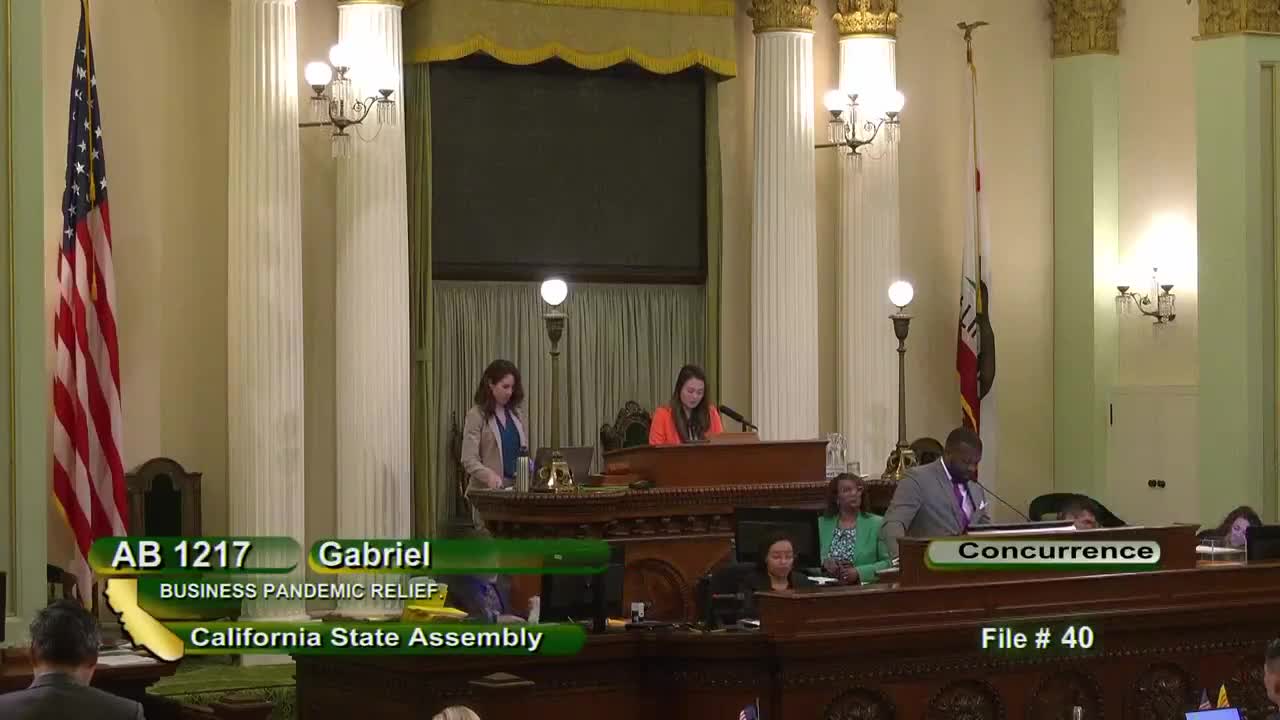
| Sep 7, 2023 | Senate amendments concurred in. To Engrossing and Enrolling. (Ayes 79. Noes 0. Page 3038.). |
| Sep 7, 2023 | Assembly Rule 77 suspended. (Page 3011.) |
| Sep 6, 2023 | In Assembly. Concurrence in Senate amendments pending. May be considered on or after September 8 pursuant to Assembly Rule 77. |
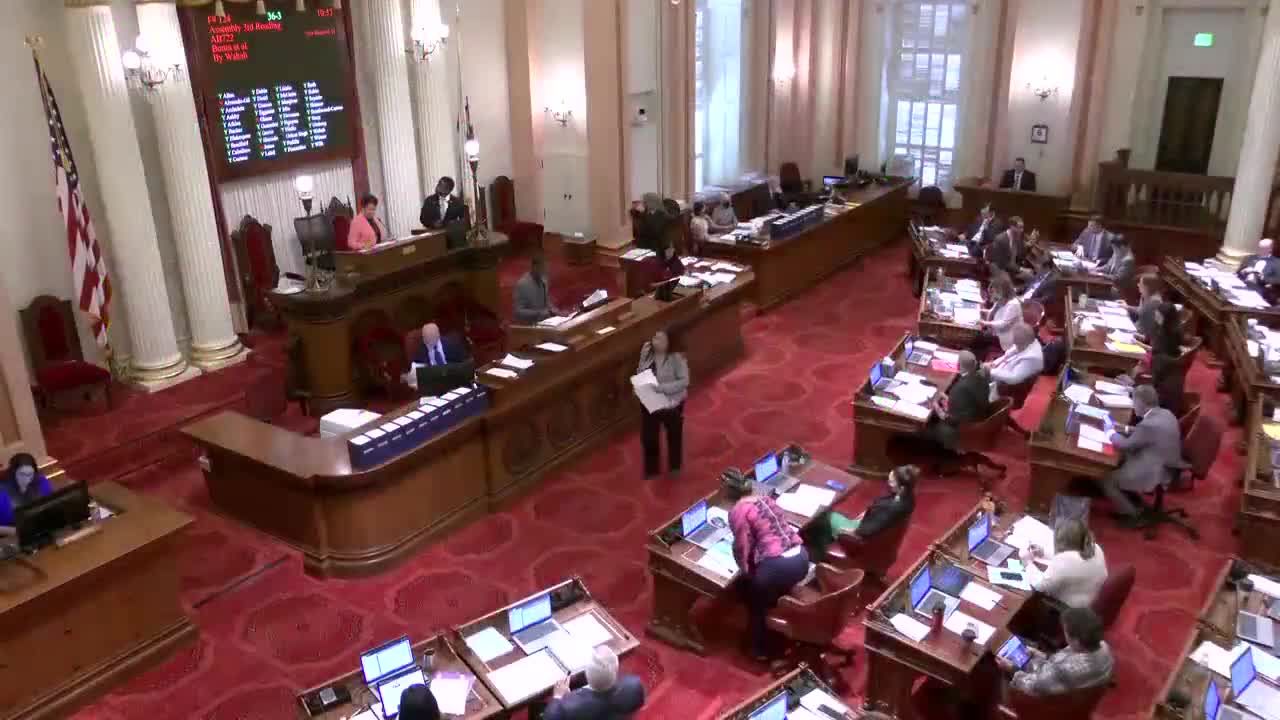
| Sep 6, 2023 | Read third time. Passed. Ordered to the Assembly. (Ayes 40. Noes 0. Page 2392.). |
| Aug 15, 2023 | Read second time. Ordered to third reading. |
| Aug 14, 2023 | From committee: Be ordered to second reading pursuant to Senate Rule 28.8. |
| Jul 5, 2023 | From committee chair, with author's amendments: Amend, and re-refer to committee. Read second time, amended, and re-referred to Com. on APPR. |
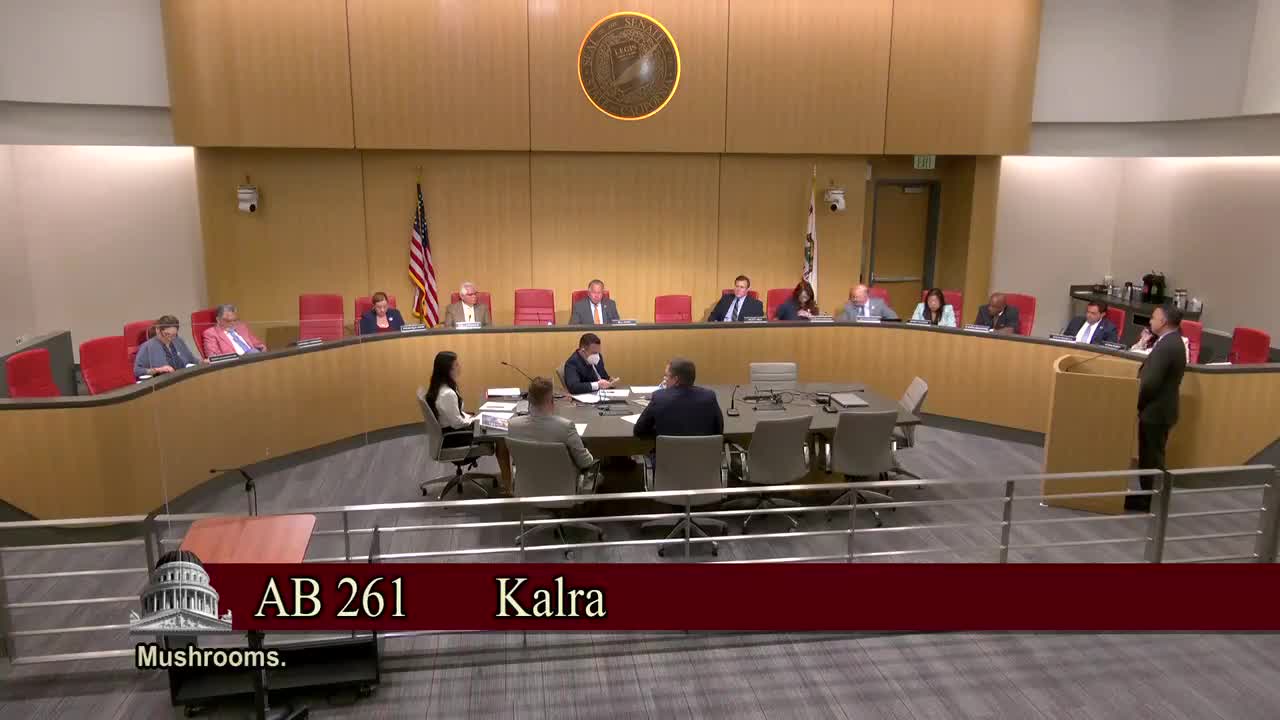
| Jun 13, 2023 | From committee: Do pass and re-refer to Com. on APPR. (Ayes 14. Noes 0.) (June 13). Re-referred to Com. on APPR. |
| May 10, 2023 | Referred to Com. on G.O. |
| Apr 27, 2023 | In Senate. Read first time. To Com. on RLS. for assignment. |
| Apr 27, 2023 | Read third time. Passed. Ordered to the Senate. (Ayes 79. Noes 0. Page 1362.) |
| Apr 20, 2023 | Read second time. Ordered to Consent Calendar. |
| Apr 19, 2023 | From committee: Do pass. To Consent Calendar. (Ayes 14. Noes 0.) (April 19). |
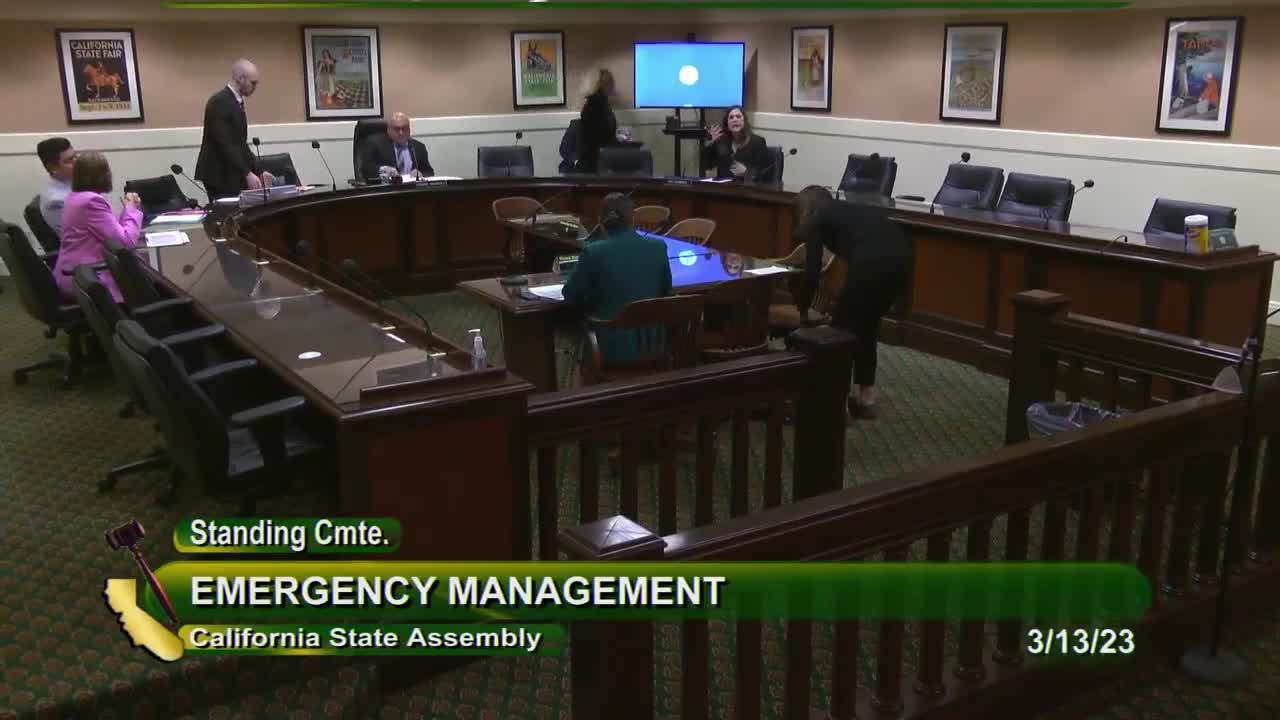
| Mar 14, 2023 | From committee: Do pass and re-refer to Com. on APPR. (Ayes 7. Noes 0.) (March 13). Re-referred to Com. on APPR. |
| Feb 13, 2023 | Re-referred to Com. on E.M. |
| Feb 9, 2023 | Referred to Com. on E.M. |
| Feb 9, 2023 | From committee chair, with author's amendments: Amend, and re-refer to Com. on E.M. Read second time and amended. |
| Jan 24, 2023 | From printer. May be heard in committee February 23. |
| Jan 23, 2023 | Read first time. To print. |
|
Date
|
Description
|
Location
|
Votes
|
|
|---|---|---|---|---|
| Sep 7, 2023 | AB 267 Bauer-Kahan Concurrence in Senate Amendments | Assembly Floor |
Passed |
|
| Sep 6, 2023 | Assembly 3rd Reading AB267 Bauer-Kahan By Glazer | Senate Floor |
Passed |
|
| Jun 13, 2023 | Do pass, but first be re-referred to the Committee on [Appropriations] | Senate Standing Committee on Governmental Organization |
Passed |
|
| Apr 27, 2023 | AB 267 Bauer-Kahan Consent Calendar Second Day Regular Session | Assembly Floor |
Passed |
|
| Apr 19, 2023 | Do pass. To Consent Calendar. | Assembly Standing Committee on Appropriations |
Passed |
|
| Mar 13, 2023 | Do pass and be re-referred to the Committee on [Appropriations] | Assembly Standing Committee on Emergency Management |
Passed |
This list shows positions taken on this bill by organizations on the date displayed, which is linked to the original source.
Positions by individuals are not included.
|
Organization
|
Position
|
Date
|
|---|---|---|
| Alpine Parrot, PBC | ** Support | |
| Breast Cancer Prevention Partners | ** Support | |
| California Outdoor Recreation Partners | * Support | Jun 13, 2023 |
| California Outdoor Recreation Partnership | ** Support | |
| California Professional Fire Fighters | * Support | Jun 13, 2023 |
| California Professional Firefighters | ** Support | |
| Columbia Sportswear Company | ** Support | |
| Green Science Policy Institute | ** Support | |
| Hilleberg the Tentmaker | ** Support | |
| HipCamp | ** Support | |
| Intrinsic Advances Materials | ** Support | |
| Little Kamper | ** Support | |
| Marmot | ** Support | |
| Marmot | * Support | Jun 13, 2023 |
| NEMO Equipment Company | ** Support | |
| Outdoor Industry Association | ** Support | |
| Recreational Equipment, Inc. | ** Support | |
| REI | ** Support | |
| San Francisco Bay Wildlife Society | ** Support | |
| Sierra Business Council | ** Support | |
| Swrve | ** Support | |
| Tahoe Backcountry Alliance | ** Support | |
| The North Face | ** Support | |
| Thule Group | ** Support | |
| Toad & Co | ** Support | |
| Toad & Co. | ** Support |
CONCURRENCE IN SENATE AMENDMENTS
CSA1 Bill Id:AB 267
Author:(Bauer-Kahan)
As Amended Ver:July 5, 2023
Majority vote
SUMMARY
This bill revises flame retardant standards for fabric enclosures, such as tents to now: establish flame retardant regulations, as specified, must apply to a fabric enclosure, such as a tent, designed for 15 or more persons; provide exemptions for tents designed for children's play, camping, backpacking, or mountaineering; establish any tent for sale and designed for less than 15 persons must be made from flame retardant fabrics, as specified; and establish tents constructed with fabric entirely from synthetic fibers, be classified as being made from flame retardant fabrics or materials.
Senate Amendments
- Raises the minimum occupancy of fabric enclosures required to meet flame retardant regulations, as specified, from 11 persons or more to 15 persons or more.
- Raises the maximum occupancy of fabric enclosures required to be made from flame retardant fabrics from less than 11 persons to less than 15 persons.
- Removes the provision establishing fabric enclosures that meet non-flammability standards established by the American Society for Testing and Materials be classified as being made from flame-retardant fabrics or materials.
- Replaces the above provision by establishing tents constructed with fabric entirely from synthetic fibers be classified as being made from flame-retardant fabrics or materials.
COMMENTS
Equity Impact: According to the author's staff, "The harms of these chemicals are worst for children, who are at a key developmental stage when exposed, and often disproportionately come in contact with, chemical treatments for tents. Children handle tent fabrics while camping and often do not adequately wash their hands before handling food or placing their hands around their face. Children also directly handle indoor play tents, which are treated with these FR chemicals solely to meet this outdated requirement. There is no evidence that these indoor play tents are reasonably or foreseeably exposed to an elevated risk of harm."
Flame Retardant Chemicals: Flame retardant chemicals, used since the 1970s, are chemicals added to a product to slow or prevent fire. According to the National Institute of Environmental Health Sciences (NIEHS), FRs can offer benefits fire protection benefits when added to some products, but a growing body of evidence asserts many of these chemicals can cause adverse health effects to animals and humans. Examples of the adverse health effects include endocrine and thyroid disruption, impacts to the immune system, reproductive toxicity, cancer, and adverse effects on fetal and child development and on neurologic function. There are several flame retardant chemicals listed in California, through Proposition 65, known to cause cancer, birth defects, or other reproductive harm.
Canvas Products Association International: The Canvas Products Association International (CPAI) is a trade organization comprised of fabric product manufacturers and suppliers. In the 1970s, CPAI created CPAI-84, a voluntary fire safety standard for tents. However, this standard was developed for large and small tents made of highly-flammable, waxed cotton canvas. These types of tents could ignite and burn down in less than a minute if a fire or heat source ignited upon this type of tent. Canvas is no longer the primary material used in tents. The majority of tents are made of synthetic, light-weight materials, such as polyester and nylon, which are significantly less flammable than canvas.
According to the Author
According to the author, "Chemical treatments for camping and play tents are unnecessarily serving as harmful sources of toxic exposure to certain flame-retardant chemicals. Children, in particular, must be protected from these potentially endocrine disrupting chemicals. The science is clear that the addition of these chemicals is unnecessary and provides no meaningful safety benefit. Rather, it is time to modernize the code and remove these unnecessary toxic chemicals from our requirements."
Arguments in Support
Writing in support, the California Outdoor Recreation Partnership state, "California is one of just six states left with flammability requirements that lead to flame retardant (FR) use for outdoor camping and children's play tents of all sizes. Internationally, Australia, the European Union, Japan, Korea and most other similarly industrialized counties do not treat camping tents sold to their citizens with FR chemicals. Available data from governmental and academic sources in these countries demonstrate that no statistical difference has been observed in the reported number of fires, injuries, or deaths, with or without these harmful FR chemicals."
Arguments in Opposition
None on file.
FISCAL COMMENTS
The Senate Committee on Appropriations sent this bill to the Senate Floor pursuant to Senate Rule 28.8, which stipulates that if the Chair determines that any state costs of a bill are not significant, the measure will be sent directly to the Senate Floor without a hearing.
VOTES:
ASM EMERGENCY MANAGEMENT: 7-0-0
YES: Rodriguez, Waldron, Aguiar-Curry, Alvarez, Calderon, Megan Dahle, Schiavo
ASM APPROPRIATIONS: 14-0-2
YES: Holden, Megan Dahle, Calderon, Wendy Carrillo, Dixon, Mike Fong, Hart, Lowenthal, Mathis, Papan, Robert Rivas, Sanchez, Weber, Wilson
ABS, ABST OR NV: Bryan, Pellerin
ASSEMBLY FLOOR: 79-0-1
YES: Addis, Aguiar-Curry, Alanis, Alvarez, Arambula, Bains, Bauer-Kahan, Bennett, Berman, Boerner, Bonta, Bryan, Calderon, Juan Carrillo, Wendy Carrillo, Cervantes, Chen, Connolly, Megan Dahle, Davies, Dixon, Essayli, Flora, Mike Fong, Vince Fong, Friedman, Gabriel, Gallagher, Garcia, Gipson, Grayson, Haney, Hart, Holden, Hoover, Irwin, Jackson, Jones- Sawyer, Kalra, Lackey, Lee, Low, Lowenthal, Maienschein, Mathis, McCarty, McKinnor, Muratsuchi, Stephanie Nguyen, Ortega, Pacheco, Papan, Joe Patterson, Pellerin, Petrie-Norris, Quirk-Silva, Ramos, Reyes, Luz Rivas, Robert Rivas, Rodriguez, Blanca Rubio, Sanchez, Santiago, Schiavo, Soria, Ta, Ting, Valencia, Villapudua, Waldron, Wallis, Ward, Weber, Wicks, Wilson, Wood, Zbur, Rendon
ABS, ABST OR NV: Jim Patterson
SENATE FLOOR: 40-0-0
YES: Allen, Alvarado-Gil, Archuleta, Ashby, Atkins, Becker, Blakespear, Bradford, Caballero, Cortese, Dahle, Dodd, Durazo, Eggman, Glazer, Gonzalez, Grove, Hurtado, Jones, Laird, Limón, McGuire, Menjivar, Min, Newman, Nguyen, Niello, Ochoa Bogh, Padilla, Portantino, Roth, Rubio, Seyarto, Skinner, Smallwood-Cuevas, Stern, Umberg, Wahab, Wiener, Wilk
UPDATED
VERSION: July 5, 2023
CONSULTANT: Ryan Fleming / E.M. / (916) 319-3802 FN: 0001524
SENATE RULES COMMITTEE Office of Senate Floor Analyses (916) 651-1520 Fax: (916) 327-4478 | AB 267 |
THIRD READING
Bill No: AB 267
Author: Bauer-Kahan (D)
Amended: 7/5/23 in Senate
Vote: 21
SENATE GOVERNMENTAL ORG. COMMITTEE: 14-0, 6/13/23
AYES: Dodd, Wilk, Alvarado-Gil, Archuleta, Ashby, Bradford, Glazer, Nguyen, Ochoa Bogh, Padilla, Portantino, Roth, Rubio, Seyarto
NO VOTE RECORDED: Jones
SENATE APPROPRIATIONS COMMITTEE: Senate Rule 28.8
ASSEMBLY FLOOR: 79-0, 4/27/23 (Consent) - See last page for vote
SUBJECT: Fire protection: tents: nonflammable materials
SOURCE: Author
DIGEST:
This bill adjusts fire safety regulations for fabric structures such as tents by raising the gathering size limit from 10 to 15 people before non-flammability rules apply and provides exceptions for certain types of tents designed for children's play, camping, backpacking, or mountaineering. This bill also stipulates that tents intended for less than 15 occupants must meet specific flammability standards to be classified as flame-retardant, including that such a tent constructed with fabric entirely from synthetic fibers shall be classified as being made from flame-retardant fabrics or materials.
ANALYSIS:
Existing law:
- Prohibits any person, firm, or corporation to establish, maintain, or operate any circus, side show, carnival, tent show, theater, skating rink, dance hall, or similar exhibition, production, engagement, or offering or other place of assemblage in or under which 10 or more persons gather in any tent, awning, or other fabric enclosure unless the tent, awning, or other fabric enclosure are made from a nonflammable material or are treated and maintained in a flame-retardant condition, as specified.
- Exempts tents used to conduct committal services on the grounds of a cemetery and tents, awnings, and other fabric enclosures erected and used within a sound state, or other similar structural enclosure which is equipped with an overhead automatic sprinkler system.
- Prohibits any person to sell or offer for sale any tent designed and intended for use for occupancy by less than 10 people unless the tent is made from flame-retardant fabrics or materials approved by the State Fire Marshal (SFM), as specified.
- Defines “flame retardant” to mean a fabric or material resistant to flame or fire to the extent that it will successfully withstand fire-resistive tests adopted and promulgated by the SFM.
This bill:
- Increases the number of people from 10 to 15 who may gather for any lawful purpose in any tent, awning, or other fabric enclosure, without flame retardant requirements, as specified.
- Increases the occupancy requirement, from less than 10 to less than 15 persons, for tents that are unlawful to manufacture, sell, or offer for sale unless made from flame retardant fabrics or materials.
- Expands the existing exception to requiring flame retardant treatment for funeral tents to include any tent designed or manufactured for children’s play, camping, backpacking, or mountaineering.
- Provides that, for the purposes of the above requirements for tents designed and intended for use for occupancy by less than 15 persons, a tent that is constructed with fabric entirely from synthetic fibers shall be classified as being made from flame-retardant fabrics or materials.
Background
- Author Statement. According to the author’s office, “Chemical treatments for camping and play tents are unnecessary and harmful sources of toxic exposure. Children must be protected from these potentially endocrine disrupting chemicals. The science is clear that the addition of these chemicals is unnecessary. It’s time to remove them from our requirements.”
- Flame Retardant Chemicals. Flame retardant chemicals (FRCs), used since the 1970s, are chemicals added to a product to slow or prevent fire. According to the National Institute of Environmental Health Sciences, FRCs can offer benefits fire protection when added to some products, but a growing body of evidence asserts many of these chemicals can cause adverse health effects to animals and humans. Examples of the adverse health effects include endocrine and thyroid disruption, impacts to the immune system, reproductive toxicity, cancer, and adverse effects on fetal and child development and on neurologic function. There are several FRCs listed in California, through Proposition 65, known to cause cancer, birth defects, or other reproductive harm.
In the 1970s, the Canvas Products Association International (CPAI) created a voluntary fire safety standard for tents named CPAI-84. The impetus for CPAI-84 is believed to be a major Hartford circus tent fire, one of the worst fire disasters in United States history during an afternoon performance of the Ringling Bros. and Barnum & Bailey Circus that was attended by 6,000 to 8,000 people. The fire killed at least 167 people, and more than 700 were injured. It was the deadliest disaster ever recorded in Connecticut.
Today, most tents in the market are made of synthetic, light-weight materials, such as polyester and nylon. Such materials are known to textile technologists to have significantly lower flammability characteristics compared to the paraffin-coated (waxed) cotton canvas for which the original CPAI-84 test method was designed by the by canvas manufacturers association.
California, along with Louisiana, Michigan, Minnesota, New Jersey, and New York presently have flame retardant requirements for outdoor camping and children’s play tents of all sizes. Australia, the European Union, Japan, Korea, and most other similarly industrialized countries do not treat camping tents sold to their citizens with FRCs, arguing that there is no statistical difference observed in the reported number of fires, injuries, or deaths.
- American Society for Testing and Materials F3431-20. The American Society for Testing and Materials F3431-20 guidelines titled “Standard Specification for Determining Flammability Materials for Recreational Camping Tents and Warning Labels for Associated Hazards” is used for testing how flammable the materials used in outdoor camping tents are. These guidelines aim to make sure that the materials used to make these tents do not easily catch fire and thereby pose a risk to people using them.
However, these guidelines are not meant for all types of tents or similar products. For example, they don't apply to tents intended only for indoor use, tents used mainly for business purposes, or products that fall under certain U.S. fire and safety codes. They also don't apply to things like baby boats with sunshades, car ports, children’s indoor play tents, garden greenhouses, hammocks, and packaging materials like tent bags, among other items.
This set of guidelines is an update to an older set of standards, CPAI-84, and is considered the standard for such testing. However, it is up to the user of these standards to establish safe, health, and environmental practices and determine if there are any regulatory limitations before using them.
These guidelines are designed to predict the fire hazard under a specific set of conditions, not necessarily all possible fire conditions. They also provide a way to assess the fire risk by considering both the potential for harm in fire scenarios and the likelihood of those scenarios occurring. But if the real-life conditions are different from those assumed in these guidelines, they can't be used to assess fire risk.
- California State Fire Marshal. The mission of the SFM is to protect life and property through the development and application of fire prevention engineering, education and enforcement. They assist the California Department of Forestry and Fire Protection’s (CalFIRE) broader mission through fire prevention efforts. This is achieved by regulating buildings, controlling substances and products that may cause injuries, death or destruction by fire, providing direction for fire prevention in wildland areas, regulating hazardous liquid pipelines, developing and reviewing regulations and building standards, and by providing training and education in fire protection. In relation to this bill, the SFM is responsible for approving flame retardant standards for tents.
Comments
This bill raises the threshold of occupancy for tents requiring FRCs from 10 to 15 persons. This exempts smaller tents from the need to use such materials. While this change may seem minor, supporters contend that increasing the minimum number of people for a gathering from 10 to 15 raises the number of gatherings that will be exempt from existing FRC regulations, reducing the regulatory burden for smaller events.
Additionally, this bill specifically exempts any tents designed or manufactured for children’s play, camping, backpacking, or mountaineering from FRC requirements. Supporters argue that these newly exempted tents are typically used in contexts with fewer fire hazards, or they may be designed with materials inherently more resistant to flame. Therefore, applying the same fire safety standards as larger, more permanent structures may not be necessary or practical.
This bill specifies, for purposes of classifying tents designed and intended for use for occupancy by less than 15 persons, that a tent constructed with fabric entirely from synthetic fibers shall be classified as being made from flame-retardant fabrics or materials.
Related/Prior Legislation
SB 504 (Dodd, 2023) requires CalFire to give priority under the Fire Prevention Grant Program to any local governmental entity qualified to perform defensible space assessments, as specified, that reports defensible space and home hardening assessment data to CalFire, as specified. Further, this bill removes the qualifier “burning under average weather conditions” from the defensible space requirement that fuels be maintained and spaced in a condition so that a wildfire burning under those conditions would be unlikely to ignite the structure. (Pending in the Assembly Natural Resources Committee)
AB 246 (Papan, 2023) prohibits, commencing January 1, 2025, a person from manufacturing, distributing, selling, or offering for sale in the state any menstrual products that contain regulated perfluoroalkyl and polyfluoroalkyl substances (PFAS). (Pending on the Senate Floor)
AB 347 (Ting, 2023) requires the Department of Toxic Substances Control (DTSC) to enforce certain laws that restrict chemicals in juvenile products, cleaning products, and food packaging and cookware. (Pending in the Senate Appropriations Committee)
AB 496 (Friedman, 2023) prohibits, commencing January 1, 2027, a person or entity from manufacturing, selling, delivering, holding, or offering for sale in commerce any cosmetic product that contains any of the ingredients specified in the bill. (Pending on the Senate Floor)
AB 727 (Weber, 2023) prohibits, commencing January 1, 2025, a person or entity from manufacturing or selling a cleaning product containing PFAS, as specified. (Pending in the Senate Appropriations Committee)
AB 1423 (Schiavo, 2023) prohibits, commencing January 1, 2025, the manufacturing or sale of artificial turf or a synthetic surface that resembles grass (covered surface) that contains PFAS, and prohibits, commencing January 1, 2024, certain entities from purchasing or installing artificial turf that contains PFAS. (Pending in the Senate Appropriations Committee)
FISCAL EFFECT: Appropriation: No Fiscal Com.: Yes Local: No
SUPPORT: (Verified 8/14/23)
Alpine Parrot, PBC
Breast Cancer Prevention Partners
California Outdoor Recreation Partnership
California Professional Firefighters
Columbia Sportswear Company
Green Science Policy Institute
Hilleberg the Tentmaker
Hipcamp
Intrinsic Advances Materials
Little Kamper
Marmot
NEMO Equipment Company
Outdoor Industry Association
Recreational Equipment, Inc.
San Francisco Bay Wildlife Society
Sierra Business Council
Swrve
Tahoe Backcountry Alliance
The North Face
Thule Group
Toad & Co.
OPPOSITION: (Verified 8/14/23)
None received
ARGUMENTS IN SUPPORT: In support of this bill, the California Outdoor Recreation Partnership writes that, “California is one of just six states left with flammability requirements that lead to flame retardant (FR) use for outdoor camping and children’s play tents of all sizes. Internationally, Australia, the European Union, Japan, Korea and most other similarly industrialized counties do not treat camping tents sold to their citizens with FR chemicals. Available data from governmental and academic sources in these countries demonstrate that no statistical difference has been observed in the reported number of fires, injuries, or deaths, with or without these harmful FR chemicals.”
Further, supporters argue that, “outdated performance and label requirements from 1975 effectively require the use of FR chemicals to comply. FRs commonly added to tents, such as TDCPP, TCPP, TCEP, & TPHP, are associated with neurological and reproductive harm as well as cancer. To further sustainability goals and decrease exposure to unnecessary FR chemicals among factory workers and the public, the outdoor industry is seeking to update this requirement. In the 1970s, the Canvas Products Association International (CPAI) created a voluntary fire safety standard – originally intended for canvass tents – named CPAI-84. The impetus for CPAI-84 is believed to be a major Hartford circus tent fire and similar incidents. At that time, both large event tents and smaller camping tents were typically made of highly-flammable, paraffin-coated (waxed) cotton canvas, and some could burn completely in under a minute if campers used propane-powered stoves, lights, or heating appliances inside of their tents. Today, most tents in the market are made of synthetic, light-weight materials, such as polyester and nylon. Such materials are known to textile technologists to have significantly lower flammability characteristics compared to the paraffin-coated (waxed) cotton canvas for which the original CPAI-84 test method was designed by the canvas manufacturers association.”
ASSEMBLY FLOOR: 79-0, 4/27/23
AYES: Addis, Aguiar-Curry, Alanis, Alvarez, Arambula, Bains, Bauer-Kahan, Bennett, Berman, Boerner, Bonta, Bryan, Calderon, Juan Carrillo, Wendy Carrillo, Cervantes, Chen, Connolly, Megan Dahle, Davies, Dixon, Essayli, Flora, Mike Fong, Vince Fong, Friedman, Gabriel, Gallagher, Garcia, Gipson, Grayson, Haney, Hart, Holden, Hoover, Irwin, Jackson, Jones-Sawyer, Kalra, Lackey, Lee, Low, Lowenthal, Maienschein, Mathis, McCarty, McKinnor, Muratsuchi, Stephanie Nguyen, Ortega, Pacheco, Papan, Joe Patterson, Pellerin, Petrie-Norris, Quirk-Silva, Ramos, Reyes, Luz Rivas, Robert Rivas, Rodriguez, Blanca Rubio, Sanchez, Santiago, Schiavo, Soria, Ta, Ting, Valencia, Villapudua, Waldron, Wallis, Ward, Weber, Wicks, Wilson, Wood, Zbur, Rendon
NO VOTE RECORDED: Jim Patterson
Prepared by: Brian Duke / G.O. / (916) 651-1530
8/16/23 14:38:18
**** END ****
SENATE COMMITTEE ON GOVERNMENTAL ORGANIZATION
Senator Bill Dodd
Chair
2023 - 2024 Regular
Bill No: 267 Hearing Date: 6/13/2023
Author: | |||
Version: | 2/9/2023 Amended | ||
Urgency: | No | Fiscal: | Yes |
Consultant: | Brian Duke | ||
SUBJECT: Fire protection: tents: nonflammable materials
DIGEST: This bill adjusts fire safety regulations for fabric structures such as tents by raising the gathering size limit from 10 to 11 people before non-flammability rules apply and provides exceptions for certain types of tents designed for children's play, camping, backpacking, or mountaineering. This bill also stipulates that tents intended for less than 11 occupants must meet specific flammability standards to be classified as flame-retardant, as specified.
ANALYSIS:
Existing law:
- Makes it illegal for any person, firm, or corporation to establish, maintain, or operate any circus, side show, carnival, tent show, theater, skating rink, dance hall, or similar exhibition, production, engagement, or offering or other place of assemblage in or under which 10 or more persons gather in any tent, awning, or other fabric enclosure unless the tent, awning, or other fabric enclosure are made from a nonflammable material or are treated and maintained in a flame-retardant condition, as specified.
- Exempts tents used to conduct committal services on the grounds of a cemetery and tents, awnings, and other fabric enclosures erected and used within a sound state, or other similar structural enclosure which is equipped with an overhead automatic sprinkler system.
- Makes it illegal for any person to sell or offer for sale any tent designed and intended for use for occupancy by less than 10 people unless the tent is made from flame-retardant fabrics or materials approved by the State Fire Marshal (SFM), as specified.
- Defines “flame retardant” to mean a fabric or material resistant to flame or fire to the extent that it will successfully withstand fire-resistive tests adopted and promulgated by the SFM.
This bill:
- Increases the number of people from 10 to 11 who may gather for any lawful purpose in any tent, awning, or other fabric enclosure, without flame retardant requirements, as specified.
- Increases the occupancy requirement, from less than 10 to less than 11 persons, for tents that are unlawful to manufacture, sell, or offer for sale unless made from flame retardant fabrics or materials
- Expands the existing exception to requiring flame retardant treatment for funeral tents to include any tent designed or manufactured for children’s play, camping, backpacking, or mountaineering.
- Provides that the classification of flame-retardant fabrics or materials include tents that meet flammability standards established by the American Society for Testing and Materials F3431-20, “Standard Specification for Determining Flammability Materials for Recreational Camping Tents and Warning Labels for Associated Hazards,” as specified.
Background
Author Statement. According to the author’s office, “chemical treatments for camping and play tents are unnecessary and harmful sources of toxic exposure. Children must be protected from these potentially endocrine disrupting chemicals. The science is clear that the addition of these chemicals is unnecessary. It’s time to remove them from our requirements.”
Flame Retardant Chemicals. Flame retardant chemicals (FRCs), used since the 1970s, are chemicals added to a product to slow or prevent fire. According to the National Institute of Environmental Health Sciences (NIEHS), FRCs can offer benefits fire protection when added to some products, but a growing body of evidence asserts many of these chemicals can cause adverse health effects to animals and humans. Examples of the adverse health effects include endocrine and thyroid disruption, impacts to the immune system, reproductive toxicity, cancer, and adverse effects on fetal and child development and on neurologic function. There are several FRCs listed in California, through Proposition 65, known to cause cancer, birth defects, or other reproductive harm.
In the 1970s, the Canvas Products Association International (CPAI) created a voluntary fire safety standard for tents named CPAI-84. The impetus for CPAI-84 is believed to be a major Hartford circus tent fire, one of the worst fire disasters in United States history during an afternoon performance of the Ringling Bros. and Barnum & Bailey Circus that was attended by 6,000 to 8,000 people. The fire killed at least 167 people, and more than 700 were injured. It was the deadliest disaster ever recorded in Connecticut.
Today, most tents in the market are made of synthetic, light-weight materials, cush as polyester and nylon. Such materials are known to textile technologists to have significantly lower flammability characteristics compared to the paraffin-coated (waxed) cotton canvas for which the original CPAI-84 test method was designed by the by canvas manufacturers association.
California, along with Louisiana, Michigan, Minnesota, New Jersey, and New York presently have flame retardant requirements for outdoor camping and children’s play tents of all sizes. Australia, the European Union, Japan, Korea, and most other similarly industrialized countries do not treat camping tents sold to their citizens with FRCs, arguing that there is no statistical difference observed in the reported number of fires, injuries, or deaths.
American Society for Testing and Materials F3431-20. The American Society for Testing and Materials (ASTM) F3431-20 guidelines titled “Standard Specification for Determining Flammability Materials for Recreational Camping Tents and Warning Labels for Associated Hazards,” is used for testing how flammable the materials used in outdoor camping tents are. These guidelines aim to make sure that the materials used to make these tents do not easily catch fire and thereby pose a risk to people using them.
However, these guidelines are not meant for all types of tents or similar products. For example, they don't apply to tents intended only for indoor use, tents used mainly for business purposes, or products that fall under certain U.S. fire and safety codes. They also don't apply to things like baby boats with sunshades, car ports, children’s indoor play tents, garden greenhouses, hammocks, and packaging materials like tent bags, among other items.
This set of guidelines is an update to an older set of standards, CPAI-84, and is considered the standard for such testing. However, it is up to the user of these standards to establish safe, health, and environmental practices and determine if there are any regulatory limitations before using them.
These guidelines are designed to predict the fire hazard under a specific set of conditions, not necessarily all possible fire conditions. They also provide a way to assess the fire risk by considering both the potential for harm in fire scenarios and the likelihood of those scenarios occurring. But if the real-life conditions are different from those assumed in these guidelines, they can't be used to assess fire risk.
California State Fire Marshal. The mission of the SFM is to protect life and property through the development and application of fire prevention engineering, education and enforcement. They assist the California Department of Forestry and Fire Protection’s (CalFIRE) broader mission through fire prevention efforts. This is achieved by regulating buildings, controlling substances and products that may cause injuries, death or destruction by fire, providing direction for fire prevention in wildland areas, regulating hazardous liquid pipelines, developing and reviewing regulations and building standards, and by providing training and education in fire protection. In relation to this bill, the SFM is responsible for approving flame retardant standards for tents.
We’re Going to Need a Bigger Tent. This bill raises the threshold of occupancy for tents requiring FRCs from 10 to 11 persons. This exempts smaller tents from the need to use such materials. While this change may seem minor, supporters contend that increasing the minimum number of people for a gathering from 10 to 11 raises the number of gatherings that will be exempt from existing FRC regulations, reducing the regulatory burden for smaller events.
Additionally, this bill specifically exempts any tents designed or manufactured for children’s play, camping, backpacking, or mountaineering from FRC requirements. Supporters argue that these newly exempted tents are typically used in contexts with fewer fire hazards, or they may be designed with materials inherently more resistant to flame. Therefore, applying the same fire safety standards as larger, more permanent structures may not be necessary or practical.
Prior/Related Legislation
SB 504 (Dodd, 2023) requires CalFire to give priority under the Fire Prevention Grant Program to any local governmental entity qualified to perform defensible space assessments, as specified, that reports defensible space and home hardening assessment data to CalFire, as specified. Further, this bill removes the qualifier “burning under average weather conditions” from the defensible space requirement that fuels be maintained and spaced in a condition so that a wildfire burning under those conditions would be unlikely to ignite the structure. (Pending in the Assembly Natural Resources Committee)
AB 246 (Papan, 2023) prohibits, commencing January 1, 2025, a person from manufacturing, distributing, selling, or offering for sale in the state any menstrual products that contain regulated perfluoroalkyl and polyfluoroalkyl substances (PFAS). (Pending in the Senate Environmental Quality Committee)
AB 347 (Ting, 2023) requires the Department of Toxic Substances Control (DTSC) to enforce certain laws that restrict chemicals in juvenile products, cleaning products, and food packaging and cookware. (Pending Referral in the Senate Rules Committee)
AB 496 (Friedman, 2023) prohibits, commencing January 1, 2027, a person or entity from manufacturing, selling, delivering, holding, or offering for sale in commerce any cosmetic product that contains any of the ingredients specified in the bill. (Pending in the Senate Environmental Quality Committee)
AB 727 (Weber, 2023) prohibits, commencing January 1, 2025, a person or entity from manufacturing or selling a cleaning product containing PFAS, as specified. (Pending in the Senate Environmental Quality Committee)
AB 1423 (Schiavo, 2023) prohibits, commencing January 1, 2025, the manufacturing or sale of artificial turf or a synthetic surface that resembles grass (covered surface) that contains PFAS, and prohibits, commencing January 1, 2024, certain entities from purchasing or installing artificial turf that contains PFAS. (Pending referral in the Senate Rules Committee)
FISCAL EFFECT: Appropriation: Fiscal Com.: Local:
SUPPORT:
Alpine Parrot, PBC
Breast Cancer Prevention Partners
California Outdoor Recreation Partnership
Columbia Sportswear Company
Green Science Policy Institute
Hilleberg the Tentmaker
Hipcamp
Intrinsic Advances Materials (Ciclo)
Little Kamper
Marmot
NEMO Equipment Company
Outdoor Industry Association
REI
San Francisco Bay Wildlife Society
Sierra Business Council
Swrve
Tahoe Backcountry Alliance
The North Face
Thule Group
Toad & Co
OPPOSITION:
None received
ARGUMENTS IN SUPPORT: In support of the bill, the California Outdoor Recreation Partnership writes that, “California is one of just six states left with flammability requirements that lead to flame retardant (FR) use for outdoor camping and children’s play tents of all sizes. Internationally, Australia, the European Union, Japan, Korea and most other similarly industrialized counties do not treat camping tents sold to their citizens with FR chemicals. Available data from governmental and academic sources in these countries demonstrate that no statistical difference has been observed in the reported number of fires, injuries, or deaths, with or without these harmful FR chemicals.”
Further, supporters argue that, “outdated performance and label requirements from 1975 effectively require the use of FR chemicals to comply. FRs commonly added to tents, such as TDCPP, TCPP, TCEP, & TPHP, are associated with neurological and reproductive harm as well as cancer. To further sustainability goals and decrease exposure to unnecessary FR chemicals among factory workers and the public, the outdoor industry is seeking to update this requirement. In the 1970s, the Canvas Products Association International (CPAI) created a voluntary fire safety standard – originally intended for canvass tents – named CPAI-84. The impetus for CPAI-84 is believed to be a major Hartford circus tent fire and similar incidents. At that time, both large event tents and smaller camping tents were typically made of highly-flammable, paraffin-coated (waxed) cotton canvas, and some could burn completely in under a minute if campers used propane-powered stoves, lights, or heating appliances inside of their tents. Today, most tents in the market are made of synthetic, light-weight materials, such as polyester and nylon. Such materials are known to textile technologists to have significantly lower flammability characteristics compared to the paraffin-coated (waxed) cotton canvas for which the original CPAI-84 test method was designed by the canvas manufacturers association.”
Date of Hearing: April 19, 2023
ASSEMBLY COMMITTEE ON APPROPRIATIONS
Chris Holden, Chair
ABPCA Bill Id:AB 267
Author:(Bauer-Kahan) – As Amended Ver:February 9, 2023
Policy Committee: | Emergency Management | Vote: | 7 - 0 |
|
| ||
|
|
Urgency: No State Mandated Local Program: No Reimbursable: No
SUMMARY:
This bill revises flame retardant standards for tents.
Specifically, this bill:
- Prohibits the operation of specified exhibitions, productions, or engagements where 11 or more persons, instead of 10 or more persons, gather in a tent, unless the tent meets nonflammable or flame retardant standards.
- Exempts tents designed or manufactured for children’s play, camping, backpacking, or mountaineering from the above-described prohibition.
- Prohibits the sale of a tent designed and intended for an occupancy of less than 11 persons, instead of less than 10 persons, unless the tent is made from flame retardant fabrics or materials approved by the State Fire Marshal (SFM), and also prohibits the manufacture of such tents.
- Provides that a tent meeting specified flammability standards for tents established by the American Society for Testing and Materials (ASTM) must be classified as being made from flame retardant fabrics or materials.
FISCAL EFFECT:
Minor and absorbable costs to the SFM to develop new regulations under the Flame Retardant Program (Licensing and Certification Fund). Any enforcement costs would be borne by local jurisdictions responsible for enforcing SFM regulations.
COMMENTS:
- Purpose. According to the author:
Chemical treatments for camping and play tents are unnecessarily serving as harmful sources of toxic exposure to certain flame-retardant chemicals. Children, in particular, must be protected from these potentially endocrine disrupting chemicals. The science is clear that the addition of these chemicals is unnecessary and provides no meaningful safety benefit. Rather, it is time to modernize the code and remove these unnecessary toxic chemicals from our requirements.
This bill is supported by outdoor recreation organizations and companies.
- Flame Retardant Chemicals. Flame retardant chemicals added to a product to slow or prevent fire can also cause adverse health effects in animals and humans. For example, several flame retardant chemicals trigger California’s Proposition 65 (1986) warnings about chemicals known to cause cancer, birth defects, or other reproductive harm. Existing law requires the SFM to promulgate rules establishing minimum requirements for fire prevention, including flame retardant standards for tents. However, it is the responsibility of local entities to enforce SFM regulations with their jurisdictions.
- ASTM International Standards. ASTM International is one of the world’s largest standards developing organizations, with 30,000 members across 150 countries using “good science, good engineering and good judgement to improve performance in manufacturing and materials, products and processes, systems and services.” This bill requires the SFM to classify a tent designed and intended for an occupancy of less than 11 persons as being made from flame-retardant fabrics or materials, if the tent meets flammability standards for tents established by the ASTM F3431-20, “Standard Specification for Determining Flammability Materials for Recreational Camping Tents and Warning Labels for Associated Hazards,” including any subsequent revisions. The copyrighted ASTM standard covers requirements and test methods for outdoor recreational camping tents (not products intended for indoor use only, shelter, or commercial purposes), including controlled small flame test methods intended to specify tent materials do not present an unreasonable risk of flammability and injury to occupants.
- Group Gathering Prohibition. This bill also exempts tents designed or manufactured for children’s play, camping, backpacking, or mountaineering from an existing prohibition on operating a group event under a tent, awning, or other fabric enclosure that does not meet specified flammability standards. However, the language should be revised if the author’s intent is to ensure existing law does not conflict with this bill’s purpose of make camping and play tents less toxic for children, since this proposed change revises the conditions under which a group may gather under a tent, rather than the composition of the tent itself.
- Prior Legislation. AB 2998 (Bloom), Chapter 924, Statutes of 2018, prohibited the sale of new juvenile products, mattresses, or upholstered furniture containing specified levels of flame retardant chemicals.
Analysis Prepared by: Irene Ho / APPR. / (916) 319-2081
Date of Hearing: March 13, 2023
ASSEMBLY COMMITTEE ON EMERGENCY MANAGEMENT
Freddie Rodriguez, Chair
ABPCA Bill Id:AB 267 (
Author:Bauer-Kahan) – As Amended Ver:February 9, 2023
SUBJECT: Fire protection: tents: nonflammable materials
SUMMARY: This bill exempts any tent for more than 11 persons and is designed or manufactured for children’s play, camping, backpacking, or mountaineering from requiring flame retardant treatment and establishes that any tent for less than 11 persons, which meets flammability standards established by the American Society for Testing and Materials, be classified as being made from flame-retardant fabrics or materials approved by the State Fire Marshall. Specifically, this bill:
- Increases the amount of persons, from less than 10 to less than 11, who may gather for any lawful purpose in any tent, awning, or other fabric enclosure without meeting non-flammability requirements, as specified.
- Creates an exception to requiring flame retardant treatment for any tent designed or manufactured for children’s play, camping, backpacking, or mountaineering designed for more than 11 persons
- Increases the occupancy requirement, from less than 10 to less than 11 persons, for tents that are unlawful to manufacture, sell, or offer for sale unless made from flame retardant fabrics or materials
- Provides that tents manufactured, sold, or offered and intended for less than 11 persons and meet specified flammability standards for tents established by the American Society for Testing and Materials (F3431-20, “Standard Specification for Determining Flammability Materials for Recreational Camping Tents and Warning Labels for Associated Hazards) shall be classified as being made from flame-retardant fabrics or materials
EXISTING LAW:
- Establishes the Office of the State Fire Marshal and the State Fire Marshal in the Department of Forestry and Fire Protection (Health and Safety Code 13100)
- Requires the State Fire Marshal to aid in the enforcement of all laws and ordinances, any rules and regulations, as specified. (Health and Safety Code 13104)
- Requires the State Fire Marshal to prepare and adopt rules and regulations establishing minimum requirements for the prevention of fire and panic in connection with the use of tents, awnings, or other fabric enclosures. (Health and Safety Code 13115)
- Provides it is unlawful for any person, firm, or corporation to establish, maintain, or operate an event in which 10 or more persons may gather for any lawful purpose in any tent, awning, or other fabric enclosure unless it is made from a nonflammable material or treated with a flame-retardant condition, with exceptions as specified. (Health and Safety Code 13115)
- Provides it is unlawful for any person to sell any tent designed and intended for use for occupancy by less than 10 persons unless the tent is made from flame-retardant fabrics or materials approved by the State Fire Marshal. (Health and Safety Code 13115)
- Requires all tents manufactured for sale in this state to be flame retardant, as provided. (Health and Safety Code 13115)
FISCAL EFFECT: A fiscal committee has not analyzed this bill.
COMMENTS:
Purpose of the bill: According to the author, “Chemical treatments for camping and play tents are unnecessarily serving as harmful sources of toxic exposure to certain flame-retardant chemicals. Children, in particular, must be protected from these potentially endocrine disrupting chemicals. The science is clear that the addition of these chemicals is unnecessary and provides no meaningful safety benefit. Rather, it is time to modernize the code and remove these unnecessary toxic chemicals from our requirements.”
Equity Impact: According to the author’s staff, “The harms of these chemicals are worst for children, who are at a key developmental stage when exposed, and often disproportionately come in contact with, chemical treatments for tents. Children handle tent fabrics while camping and often do not adequately wash their hands before handling food or placing their hands around their face. Children also directly handle indoor play tents, which are treated with these FR chemicals solely to meet this outdated requirement. There is no evidence that these indoor play tents are reasonably or foreseeably exposed to an elevated risk of harm.”
Flame Retardant Chemicals: Flame retardant chemicals, used since the 1970s, are chemicals added to a product to slow or prevent fire. According to the National Institute of Environmental Health Sciences (NIEHS), FRs can offer benefits fire protection benefits when added to some products, but a growing body of evidence asserts many of these chemicals can cause adverse health effects to animals and humans. Examples of the adverse health effects include endocrine and thyroid disruption, impacts to the immune system, reproductive toxicity, cancer, and adverse effects on fetal and child development and on neurologic function. There are several flame retardant chemicals listed in California, through Proposition 65, known to cause cancer, birth defects, or other reproductive harm.
State Fire Marshal: The mission of the State Fire Marshal’s office is to protect life and property through the development and application of fire prevention engineering, education and enforcement. They assist CAL FIRE’s broader mission through fire prevention efforts. This is achieved by regulating buildings, controlling substances and products that may cause injuries, death or destruction by fire, providing direction for fire prevention in wildland areas, regulating hazardous liquid pipelines, developing and reviewing regulations and building standards, and by providing training and education in fire protection. In relation to this bill, the State Fire Marshall is responsible for approving flame retardant standards for tents.
Canvas Products Association International: The Canvas Products Association International (CPAI) is a trade organization comprised of fabric product manufacturers and suppliers. In the 1970s, CPAI created CPAI-84, a voluntary fire safety standard for tents. However, this standard was developed for large and small tents made of highly-flammable, waxed cotton canvas. These types of tents could ignite and burn down in less than a minute if a fire or heat source ignited upon this type of tent. Canvas is no longer the primary material used in tents. The majority of tents are made of synthetic, light-weight materials, such as polyester and nylon, which are significantly less flammable than canvas.
American Society for Testing and Materials (ASTM) International: ASTM International is a nonprofit entity that develops and publishes technical standards for testing and classifying materials of all kinds. ASTM has developed over 12,000 standards— many of which are used in over 140 countries, including the United States where ASTM serves as the administrator for the United States Technical Advisory Group. They also serve as the administrator for the International Organization for Standardization Technical Committee and their subcommittees.
ASTM F3431-20, Standard Specification for Determining Flammability Materials for Recreational Camping Tents and Warning Labels for Associated Hazards: According to ASTM, “This specification covers requirements and contains test methods for outdoor recreational camping tents for persons. These requirements include controlled small flame test methods for materials used to manufacture tents. The requirements are intended to specify materials that do not present an unreasonable risk of flammability and injury to occupants.”
Arguments in Support: Writing in support, the California Outdoor Recreation Partnership states, “On behalf of California Outdoor Recreation Partnership, we are proud to support AB 267-Fire protection: tents: nonflammable materials. Currently under code for the Office of the State Fire Marshal, tent manufacturers must add flame retardants, known to be toxic to humans, in order to meet an outdated requirement. AB 267 seeks to address this issue by changing the code so flame retardants are not needed in tents with an occupancy of 10 or fewer. AB 267 is necessary to ensure a healthy outdoor recreation community and protect the environment from harmful man-made chemicals.”
They continue “Currently California is one of just six states left with flammability requirements that lead to flame retardant (FR) use for outdoor camping and children’s play tents of all sizes. Internationally, Australia, the European Union, Japan, Korea and most other similarly industrialized countries do not treat camping tents sold to their citizens with FR chemicals. Available data from governmental and academic sources in these countries demonstrate that no statistical difference has been observed in the reported number of fires, injuries, or deaths, with or without these harmful FR chemicals.”
Prior and Related Legislation:
AB 2998 Bloom (Chapter 3 of Division 8 of the Business and Professions Code, relating to business. 2018) prohibits the sale of new juvenile products, mattresses, or upholstered furniture that contains flame retardant chemicals.
SB 1019 (Leno, Chapter 862, Statutes of 2014), requires an upholstered furniture manufacturer to indicate on the product label whether or not a product contains added flame retardant chemicals; requires manufacturers to retain documentation of whether or not flame retardant chemicals were added to the product, and provide that documentation to the Bureau of Electronic and Appliance Repair (Bureau); and authorized the Bureau to assess fines for violations of the above provisions.
AB 127 (Skinner, Chapter 579, Statutes of 2013), requires the State Fire Marshal, in consultation with the Bureau, to review the flammability standards for building insulation materials, including whether the flammability standards for some insulation materials can only be met with the addition of chemical flame retardants and requires, if deemed appropriate by the State Fire Marshal based on this review, the State Fire Marshal to, by July 1, 2015, propose, for consideration by the Building Standards Commission, updated insulation flammability standards.
AB 2197 (Mitchell of 2012), would have required Bureau to revise regulations to require all seating furniture sold or offered for sale to meet a smolder flammability test rather than an open flame-test. (This bill was held in the Assembly Committee on Environmental Safety and Toxic Materials.)
SB 147 (Leno of 2011), would have required the Bureau, on or before March 1, 2013, to modify the requirements for flammability of residential upholstered furniture to include a smolder flammability test as an alternative method of compliance. (This bill was voted down in the Senate Committee on Business, Professions and Economic Development.) The intent of this bill and AB 2197 of 2012 was implemented through regulation through the adoption of TB 117-2013.
SB 1291 (Leno of 2010), would have required the Department of Toxic Substances Control to include, as a chemical under consideration in the Green Chemistry process, any chemical that is used, or is proposed to be used, as a flame retardant. (This bill was held on the Senate Floor.)
SB 772 (Leno of 2009) would have exempted “juvenile products,” as defined, from the fire retardant requirements pursuant to federal law and the regulations of the Bureau, except that the Bureau could have, by regulation modified this exemption if the Bureau determined that any juvenile products posed a serious fire hazard. (This bill was held in the Assembly Committee on Appropriations.)
REGISTERED SUPPORT / OPPOSITION:
Support
California Outdoor Recreation Partnership
Opposition
None on file.
Analysis Prepared by: Ryan Fleming / E.M. / (916) 319-3802
Discussed in Hearing
 1MIN
Assembly Floor
 44SEC
Senate Floor
 6MIN
Senate Standing Committee on Governmental Organization
 5MIN
Assembly Standing Committee on Emergency Management
Bill Author

Bill Co-Author(s):