AB 279: San Gabriel Basin Water Quality Authority: annual pumping right assessment.
- Session Year: 2023-2024
- House: Assembly
- Latest Version Date: 2023-10-13
Current Status:
Passed
(2023-10-13: Chaptered by Secretary of State - Chapter 799, Statutes of 2023.)
Introduced
In Committee
First Chamber
In Committee
Second Chamber
Enacted
What does this bill do?
This bill raises the maximum annual pumping right assessment the San Gabriel Basin Water Quality Authority can charge from $10 to $20 per acre-foot for people and companies who pump groundwater. The authority may use the money to build or buy facilities, pay debts, cover administrative costs, and fund operations and maintenance, but it will only charge for operations and maintenance if other funding can't be found, and it won't charge when water is taken under an approved conjunctive use storage agreement (an agreement to store water with the basin's watermaster).
The summary is provided by generative AI which can make mistakes. For original language, please view the details in the table below.
Existing law, the San Gabriel Basin Water Quality Authority Act, establishes the San Gabriel Basin Water Quality Authority and provides for its powers and duties. Among other things, the act authorizes the authority to impose an annual pumping right assessment for specified purposes in an amount not to exceed $10 per acre-foot.
This bill would increase the maximum allowable annual pumping right assessment to $20 per acre-foot.
Existing law, the San Gabriel Basin Water Quality Authority Act, establishes the San Gabriel Basin Water Quality Authority and provides for its powers and duties. Among other things, the act authorizes the authority to impose an annual pumping right assessment for specified purposes in an amount not to exceed $10 per acre-foot.
This bill would increase the maximum allowable annual pumping right assessment to $20 per acre-foot on and after July 1, 2025, to $23 per acre-foot on and after July 1, 2030, and to $27 per acre-foot on and after July 1, 2035. acre-foot.
Existing law, the San Gabriel Basin Water Quality Authority Act, establishes the San Gabriel Basin Water Quality Authority and provides for its powers and duties. Among other things, the act authorizes the authority to impose an annual pumping right assessment for specified purposes in an amount not to exceed $10 per acre-foot.
This bill would increase the maximum allowable annual pumping right assessment to $20 per acre-foot on and after July 1, 2025, to $23 per acre-foot on and after July 1, 2030, and to $27 per acre-foot on and after July 1, 2035.
The authority may impose an annual pumping right assessment, not to exceed twenty dollars ($20) per acre-foot, to construct facilities and acquire property, to retire promissory notes, bond anticipation notes, bonds and certificate of participation and other evidences of indebtedness, to pay for administrative costs, and to pay for operations and maintenance of projects constructed by and for the authority. The authority shall impose an assessment pursuant to this section for operation and maintenance purposes only if, and to the extent that, money for operation and maintenance purposes is not received from other sources after reasonable efforts have been made to secure that funding. However, no assessment shall be imposed for water extracted pursuant to a conjunctive use storage agreement between the producer and the watermaster, which the authority has approved.
The authority may impose an annual pumping right assessment, not to exceed twenty dollars ($20) per acre-foot, to construct facilities and acquire property, to retire promissory notes, bond anticipation notes, bonds and certificate of participation and other evidences of indebtedness, to pay for administrative costs, and to pay for operations and maintenance of projects constructed by and for the authority. The authority shall impose an assessment pursuant to this section for operation and maintenance purposes only if, and to the extent that, money for operation and maintenance purposes is not received from other sources after reasonable efforts have been made to secure that funding. However, no assessment shall be imposed for water extracted pursuant to a conjunctive use storage agreement between the producer and the watermaster, which the authority has approved.
(a)The authority may impose an annual pumping right assessment, not to exceed ten twenty dollars ($10) ($20) per acre-foot, only until July 1, 2025, and not to exceed the amount specified in subdivision (b) on and after July 1, 2025, to construct facilities and acquire property, to retire promissory notes, bond anticipation notes, bonds and certificate of participation and other evidences of indebtedness, to pay for administrative costs, and to pay for operations and maintenance of projects constructed by and for the authority. The authority shall impose an assessment pursuant to this section for operation and maintenance purposes only if, and to the extent that, money for operation and maintenance purposes is not received from other sources after reasonable efforts have been made to secure that funding. However, no assessment shall be imposed for water extracted pursuant to a conjunctive use storage agreement between the producer and the watermaster, which the authority has approved.
(b)The annual pumping right assessment imposed by the authority shall not exceed the following amounts:(1)On and after July 1, 2025, and before July 1, 2030, twenty dollars ($20) per acre-foot.(2)On and after July 1, 2030, and before July 1, 2035, twenty-three dollars ($23) per acre-foot.(3)On and after July 1, 2035, twenty-seven dollars ($27) per acre-foot.(a)The authority may impose an annual pumping right assessment, not to exceed ten dollars ($10) per acre-foot, only until July 1, 2025, and not to exceed the amount specified in subdivision (b) on and after July 1, 2025, to construct facilities and acquire property, to retire promissory notes, bond anticipation notes, bonds and certificate of participation and other evidences of indebtedness, to pay for administrative costs, and to pay for operations and maintenance of projects constructed by and for the authority. The authority shall impose an assessment pursuant to this section for operation and maintenance purposes only if, and to the extent that, money for operation and maintenance purposes is not received from other sources after reasonable efforts have been made to secure that funding. However, no assessment shall be imposed for water extracted pursuant to a conjunctive use storage agreement between the producer and the watermaster, which the authority has approved.
(b)The annual pumping right assessment imposed by the authority shall not exceed the following amounts:
(1)On and after July 1, 2025, and before July 1, 2030, twenty dollars ($20) per acre-foot.
(2)On and after July 1, 2030, and before July 1, 2035, twenty-three dollars ($23) per acre-foot.
(3)On and after July 1, 2035, twenty-seven dollars ($27) per acre-foot.
|
Date
|
Status
|
|---|---|
| Oct 13, 2023 | Chaptered by Secretary of State - Chapter 799, Statutes of 2023. |
| Oct 13, 2023 | Approved by the Governor. |
| Sep 12, 2023 | Enrolled and presented to the Governor at 2 p.m. |
| Sep 5, 2023 | In Assembly. Ordered to Engrossing and Enrolling. |
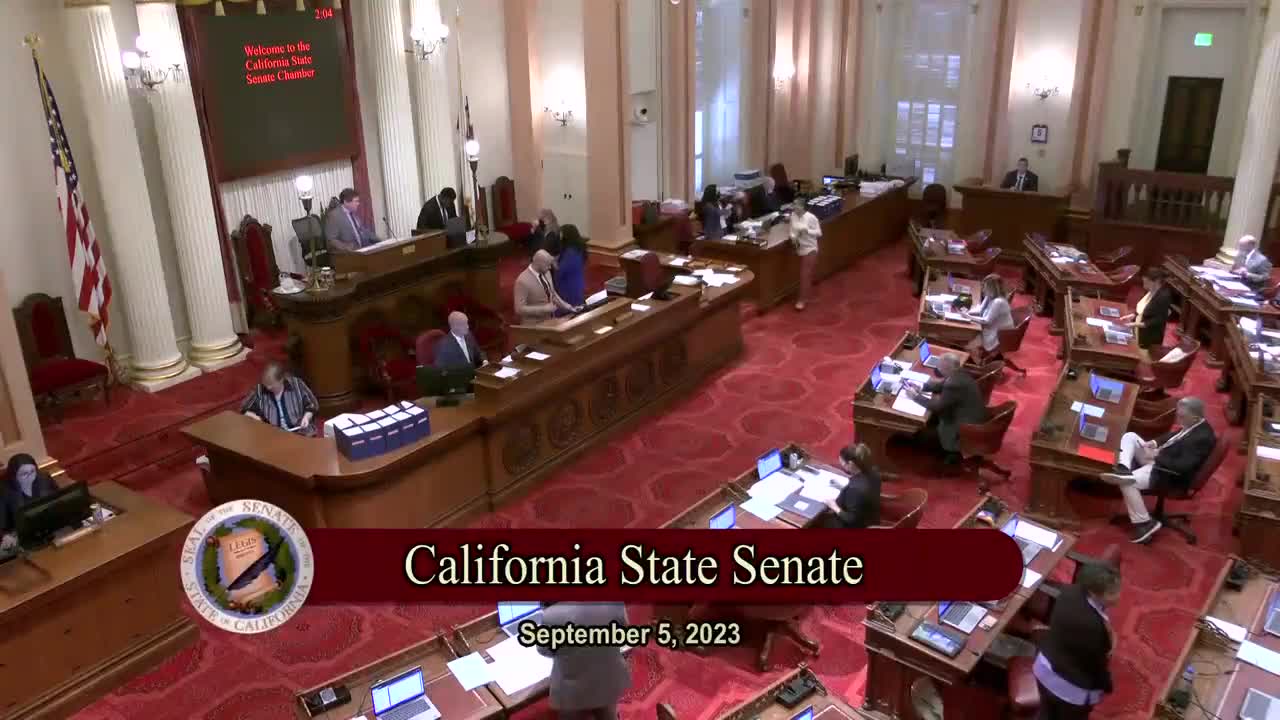
| Sep 5, 2023 | Read third time. Passed. Ordered to the Assembly. (Ayes 38. Noes 0. Page 2351.). |
| Jun 8, 2023 | Read second time. Ordered to third reading. |
| Jun 7, 2023 | From committee: Do pass. (Ayes 6. Noes 0.) (June 7). |
| May 17, 2023 | Referred to Com. on E.Q. |
| Apr 10, 2023 | In Senate. Read first time. To Com. on RLS. for assignment. |
| Apr 10, 2023 | Read third time. Passed. Ordered to the Senate. (Ayes 67. Noes 0. Page 1073.) |
| Mar 16, 2023 | Read second time. Ordered to third reading. |
| Mar 15, 2023 | From committee: Do pass. (Ayes 8. Noes 0.) (March 14). |
| Feb 9, 2023 | Re-referred to Com. on E.S. & T.M. |
| Feb 8, 2023 | From committee chair, with author's amendments: Amend, and re-refer to Com. on E.S. & T.M. Read second time and amended. |
| Feb 2, 2023 | Referred to Com. on E.S. & T.M. |
| Jan 25, 2023 | From printer. May be heard in committee February 24. |
| Jan 24, 2023 | Read first time. To print. |
|
Date
|
Description
|
Location
|
Votes
|
|
|---|---|---|---|---|
| Sep 5, 2023 | Assembly 3rd Reading AB279 Blanca Rubio et al. By Rubio | Senate Floor |
Passed |
|
| Jun 7, 2023 | Do pass | Senate Standing Committee on Environmental Quality |
Passed |
|
| Apr 10, 2023 | AB 279 Blanca Rubio Assembly Third Reading | Assembly Floor |
Passed |
|
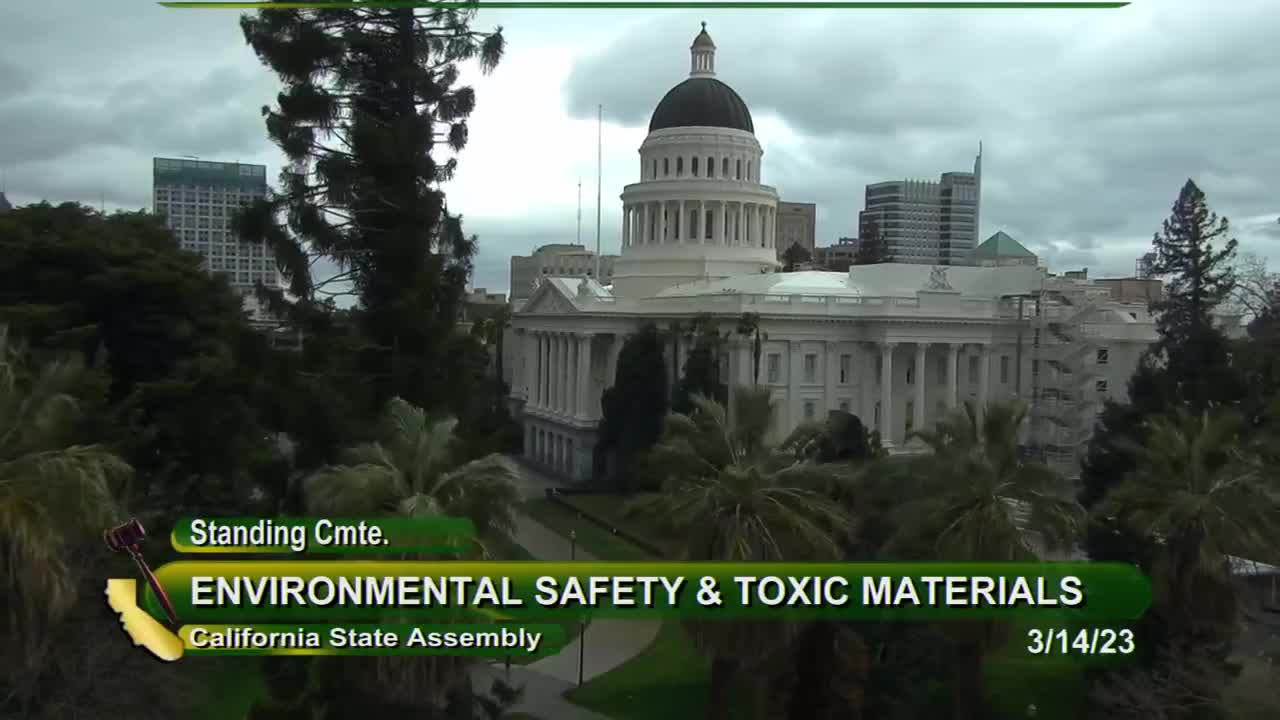
| Mar 14, 2023 | Do pass. | Assembly Standing Committee on Environmental Safety and Toxic Materials |
Passed |
This list shows positions taken on this bill by organizations on the date displayed, which is linked to the original source.
Positions by individuals are not included.
|
Organization
|
Position
|
Date
|
|---|---|---|
| Association Of California Water Agencies | ** Support | |
| Bellflower Somerset Mutual Water Company | ** Support | |
| California Domestic Water Company | ** Support | |
| California Groundwater Coalition | * Support | Mar 14, 2023 |
| California Special Districts Association | ** Support | |
| City Of Azusa | ** Support | |
| City of La Puente | ** Support | |
| Puente Basin Water Agency | ** Support | |
| Rowland Water District | ** Support | |
| San Gabriel Basin Water Quality Authority | ** Support | |
| San Gabriel Valley Municipal Water District | ** Support | |
| San Gabriel Valley Water Association | ** Support | |
| San Gabriel Valley Water Company | ** Support | |
| Upper San Gabriel Valley Municipal Water District | ** Support | |
| Walnut Valley Water District | ** Support |
SENATE RULES COMMITTEE Office of Senate Floor Analyses (916) 651-1520 Fax: (916) 327-4478 | AB 279 |
THIRD READING
Bill No: AB 279
Author: Blanca Rubio (D), et al.
Amended: 2/8/23 in Assembly
Vote: 21
SENATE ENVIRONMENTAL QUALITY COMMITTEE: 6-0, 6/7/23
AYES: Allen, Dahle, Gonzalez, Hurtado, Menjivar, Skinner
NO VOTE RECORDED: Nguyen
ASSEMBLY FLOOR: 67-0, 4/10/23 - See last page for vote
SUBJECT: San Gabriel Basin Water Quality Authority: annual pumping right assessment
SOURCE: San Gabriel Basin Water Quality Authority
DIGEST: This bill raises the maximum amount the San Gabriel Basin Water Quality Authority (Authority) can impose for an annual pumping assessment from $10 to $20.
ANALYSIS:
Existing law:
- Establishes the San Gabriel Basin Water Quality Authority Act (Act) (Chapter 776, Statutes of 1992 (Water Code (WC) Appendix, §134-101, et seq.)) which:
- Requires the Authority to develop and adopt a basin-wide groundwater quality management and remediation plan that includes certain components, such as characterization of Basin contamination, development and implementation of a comprehensive Basin cleanup plan, a financing plan, and a public information and participation plan.
- Establishes election procedures for electing members to the Authority.
- Requires the Authority to provide a status report to the State Water Resources Control Board (State Water Board) and the Los Angeles Regional Water Quality Control Board every six months on activities undertaken pursuant to the Basin groundwater quality management and remediation plan. Requires the status report to include certain information, such as an overview of contamination, coordination with other agencies, funding from potentially responsible parties and other sources, status of certain plans, and project activities information.
- Sunsets the Act on July 1, 2050.
2) Authorizes the Authority to impose an annual pumping right assessment, not to exceed $10 per acre-foot, to construct facilities and acquire property, pay debt, pay administrative costs, and to pay for operations and maintenance of projects constructed by and for the Authority. (WC § Appendix 134-605)
This bill increases the maximum amount the Authority can impose for an annual pumping assessment from $10 to $20.
Background
- The San Gabriel Valley. The San Gabriel Valley is a suburban, largely-developed portion of Los Angeles County containing more than one million residents and covering more than 170 square miles.
The San Gabriel Valley is also a distinct watershed shaped by local mountains, rivers, streams and other geological formations. A major, natural source of water for the Valley are the San Gabriel River and streams, ponds, lakes, dams, and reservoirs connected to it that are located either in the San Gabriel Mountains or the Valley itself. Beneath the Valley is the San Gabriel Basin, the primary source of water for the San Gabriel Valley's water supply system.
- The San Gabriel Valley Basin Superfund site. As the Authority affectionately refers to it in the January 22, 2019, Section 406 San Gabriel Basin Groundwater Quality Management and Remediation Plan, the San Gabriel Valley’s groundwater basin "has the dubious distinction of being one of the most contaminated in the nation." The Basin’s groundwater is contaminated from ground disposal—dating back to World War II— of volatile organic compounds (VOCs) used primarily as solvents in industrial and commercial activities.
The seriousness of the groundwater contamination problem became evident when high concentrations of VOCs were discovered in Azusa in 1979 near a major industrial complex. That led the United States Environmental Protection Agency (US EPA) to place four portions of the basin on the National Priorities List in 1984 under authority of the Comprehensive Environmental Response, Compensation, and Liability Act of 1980 (CERCLA), also known as the federal Superfund program. These areas are referred to as operable units under CERCLA. Currently, there are six active operable (treatment) units within the San Gabriel Valley Basin: Baldwin Park, El Monte, South El Monte, Puente Valley, Area 3, and Whittier Narrows.
Finding that there was no existing local entity with all of the necessary authority and jurisdiction to coordinate an effective cleanup program, the Legislature created the San Gabriel Basin Water Quality Authority Act in 1992 (SB 1679, Russell, Chapter 776, Statutes of 1992) to develop, finance, and implement groundwater treatment programs in the San Gabriel Basin. Pursuant to the Act, the Authority is under the direction and leadership of a seven-member board. The board is comprised of one member from each of the overlying municipal water districts, one from a city with prescriptive water pumping rights, one from a city without prescriptive water pumping rights, and two members representing water producers in the San Gabriel Basin.
The mission of the Authority is to coordinate, plan, and implement groundwater quality management programs to efficiently remediate groundwater contamination, address the problem of the migration of contaminated groundwater within the San Gabriel Basin, protect and promote the beneficial use of groundwater supplies, and assist in preventing future contamination.
When the Act was created in 1992, the Authority was authorized to impose an annual pumping right assessment, not to exceed $35 per acre-foot, to construct facilities and acquire property, pay debt, pay administrative costs, and to pay for operations and maintenance of projects constructed by and for the Authority. However, the Act, specifically the cap for the pumping assessment, has been amended over the years. The last time it was amended was by SB 334 (Romero, Chapter 192, Statutes of 2003) which set the cap for a pumping assessment at $10 per acre-foot.
- Cleanup status. Groundwater continues to be an important source of drinking water to residents and businesses in the San Gabriel Valley. Local water utilities continue to pump water from clean areas, and, in locations affected by pollution, utilities have installed water treatment equipment to remove pollutants.
The Authority implements the cleanup under a Cooperative Agreement with the US EPA. The agreement funds groundwater extraction and treatment systems operated by the City of Monterey Park, San Gabriel Valley Water Company, and Golden State Water Company.
After the pollution was discovered in 1979, the US EPA's Superfund program estimated that it would cost $800 million over 30 years to remove all of the contaminants from the Basin. Since the inception of the Authority in 1993, its sponsored projects have led to the removal of nearly 102 tons of contaminants from the San Gabriel Valley Basin and have treated 1,904,699 acre-feet of groundwater.
- Funding mix. The Authority receives funding from various sources: state, federal, the pumping assessment, and from the parties responsible for contaminating the San Gabriel Basin. Over the years, the Authority has received approximately $60-$70 million from the state (including bond funding), $100 million from the federal government, and approximately $700 million from parties responsible for the contamination. Additionally, the current pumping assessment generates about $2.3 million annually.
Comments
- Purpose of Bill. According to the author, "I am authoring the bill as a result of a groundswell of local support to maintain the highest level of cleanup activity in the basin. My constituents deserve nothing less than a clean source of local drinking water and the state would benefit from the further cleanup of the basin in that it would reduce the pressure on further importation. Water resilience in the San Gabriel Valley is a goal widely held. It has been too long since an adjustment of the cap has been made and with greatly escalating costs in part due to the delays from the supply chain crisis now is the time to make the minor adjustment."
- Provides flexibility and needed funding. With the recent extension of the existence of the Authority until 2050, AB 279 provides the Authority with flexibility for long-term planning by allowing the cap on the pumping assessment to increase from $10 per acre foot to $20 per acre foot. As mentioned above, the current assessment was established in 2003 and hasn’t been updated in 20 years. The increased assessment would also help address emerging contaminant issues, construction of treatment facilities, conducting assessments, and matching funding for state and federal grants, according to the WQA.
It is important to note that the Authority is continuing its effort to recoup costs from parties responsible for the contamination and continuing to work with both the state and federal government on additional funding.
Related/Prior Legislation
AB 2163 (Blanca Rubio, Chapter 234, Statutes of 2022) recognized the reality that the remaining contamination of the groundwater in the San Gabriel Basin will take decades to cleanup and therefore extended the existence of the Authority from 2030 to 2050. The bill extended the sunset from July 1, 2030, to July 1, 2050, for the Authority.
SB 413 (Rubio, Chapter 370, Statutes of 2019) required the Authority to annually update and incorporate a status report on activities related to its basin-wide groundwater quality management and remediation plan to the State Water Board and the Los Angeles Regional Water Quality Control Board.
SB 429 (Hernández, Chapter 214, Statutes of 2013) extended the sunset date on the Act from July 1, 2017, to July 1, 2030.
FISCAL EFFECT: Appropriation: No Fiscal Com.: No Local: No
SUPPORT: (Verified 6/8/23)
San Gabriel Basin Water Quality Authority (source)
Association of California Water Agencies
Bellflower Somerset Mutual Water Company
California Special Districts Association
Puente Basin Water Agency
Rowland Water District
Upper San Gabriel Valley Municipal Water District
Walnut Valley Water District
OPPOSITION: (Verified 6/8/23)
None received
ASSEMBLY FLOOR: 67-0, 4/10/23
AYES: Addis, Aguiar-Curry, Alanis, Alvarez, Arambula, Bains, Bennett, Berman, Boerner Horvath, Bonta, Calderon, Juan Carrillo, Wendy Carrillo, Cervantes, Connolly, Megan Dahle, Dixon, Flora, Mike Fong, Vince Fong, Friedman, Gabriel, Gallagher, Garcia, Gipson, Grayson, Haney, Hart, Holden, Hoover, Irwin, Jackson, Jones-Sawyer, Kalra, Lackey, Lee, Low, Lowenthal, Maienschein, Mathis, McCarty, Muratsuchi, Stephanie Nguyen, Ortega, Pacheco, Papan, Joe Patterson, Pellerin, Ramos, Reyes, Luz Rivas, Robert Rivas, Rodriguez, Blanca Rubio, Santiago, Schiavo, Soria, Ting, Villapudua, Waldron, Wallis, Ward, Weber, Wicks, Wood, Zbur, Rendon
NO VOTE RECORDED: Bauer-Kahan, Bryan, Chen, Davies, Essayli, McKinnor, Jim Patterson, Petrie-Norris, Quirk-Silva, Sanchez, Ta, Valencia, Wilson
Prepared by: Gabrielle Meindl / E.Q. / (916) 651-4108
6/9/23 9:49:07
**** END ****
SENATE COMMITTEE ON ENVIRONMENTAL QUALITY
Senator Allen, Chair
2023 - 2024 Regular
Bill No: AB 279
Author: | Blanca Rubio | ||
Version: | 2/8/2023 | Hearing Date: | 6/7/2023 |
Urgency: | No | Fiscal: | No |
Consultant: | Gabrielle Meindl | ||
SUBJECT: San Gabriel Basin Water Quality Authority: annual pumping right assessment
DIGEST: Raises the maximum amount the San Gabriel Basin Water Quality Authority (Authority) can impose for an annual pumping assessment from ten dollars to twenty dollars.
ANALYSIS:
Existing law:
- Pursuant to the San Gabriel Basin Water Quality Authority Act (Act) (Chapter 776, Statutes of 1992 (Water Code (WC) Appendix, §134-101, et seq.)):
- Requires the Authority to develop and adopt a basin-wide groundwater quality management and remediation plan that includes certain components, such as characterization of Basin contamination, development and implementation of a comprehensive Basin cleanup plan, a financing plan, and a public information and participation plan.
- Establishes election procedures for electing members to the Authority.
- Requires the Authority to provide a status report to the State Water Resources Control Board (State Water Board) and the Los Angeles Regional Water Quality Control Board every six months on activities undertaken pursuant to the Basin groundwater quality management and remediation plan. Requires the status report to include certain information, such as an overview of contamination, coordination with other agencies, funding from potentially responsible parties and other sources, status of certain plans, and project activities information.
- Sunsets the Act on July 1, 2050.
2) Authorizes the Authority to impose an annual pumping right assessment, not to exceed ten dollars per acre-foot, to construct facilities and acquire property, pay debt, pay administrative costs, and to pay for operations and maintenance of projects constructed by and for the Authority. (WC § Appendix 134-605)
This bill:
- Increases the maximum amount the Authority can impose for an annual pumping assessment from ten dollars to twenty dollars.
Background
- The San Gabriel Valley. The San Gabriel Valley is a suburban, largely-developed portion of Los Angeles County containing more than one million residents and covering more than 170 square miles.
The San Gabriel Valley is also a distinct watershed shaped by local mountains, rivers, streams and other geological formations. A major, natural source of water for the Valley are the San Gabriel River and streams, ponds, lakes, dams, and reservoirs connected to it that are located either in the San Gabriel Mountains or the Valley itself. Beneath the Valley is the San Gabriel Basin, the primary source of water for the San Gabriel Valley's water supply system.
- The San Gabriel Valley Basin Superfund site. As the Authority affectionately refers to it in the January 22, 2019, Section 406 San Gabriel Basin Groundwater Quality Management and Remediation Plan, the San Gabriel Valley’s groundwater basin "has the dubious distinction of being one of the most contaminated in the nation." The Basin’s groundwater is contaminated from ground disposal—dating back to World War II— of volatile organic compounds (VOCs) used primarily as solvents in industrial and commercial activities.
The seriousness of the groundwater contamination problem became evident when high concentrations of VOCs were discovered in Azusa in 1979 near a major industrial complex. That led the United States Environmental Protection Agency (US EPA) to place four portions of the basin on the National Priorities List in 1984 under authority of the Comprehensive Environmental Response, Compensation, and Liability Act of 1980 (CERCLA), also known as the federal Superfund program. These areas are referred to as operable units under CERCLA. Currently, there are six active operable (treatment) units within the San Gabriel Valley Basin: Baldwin Park, El Monte, South El Monte, Puente Valley, Area 3, and Whittier Narrows.
Finding that there was no existing local entity with all of the necessary authority and jurisdiction to coordinate an effective cleanup program, the Legislature created the San Gabriel Basin Water Quality Authority Act in 1992 (Russell, Chapter 776, Statutes of 1992) to develop, finance, and implement groundwater treatment programs in the San Gabriel Basin. Pursuant to the Act, the Authority is under the direction and leadership of a seven-member board. The board is comprised of one member from each of the overlying municipal water districts, one from a city with prescriptive water pumping rights, one from a city without prescriptive water pumping rights, and two members representing water producers in the San Gabriel Basin.
The mission of the Authority is to coordinate, plan, and implement groundwater quality management programs to efficiently remediate groundwater contamination, address the problem of the migration of contaminated groundwater within the San Gabriel Basin, protect and promote the beneficial use of groundwater supplies, and assist in preventing future contamination.
When the Act was created in 1992, the Authority was authorized to impose an annual pumping right assessment, not to exceed thirty-five dollars per acre-foot, to construct facilities and acquire property, pay debt, pay administrative costs, and to pay for operations and maintenance of projects constructed by and for the Authority. However, the Act, specifically the cap for the pumping assessment, has been amended over the years. The last time it was amended was by SB 334 (Romero, Chapter 192, Statutes of 2003) which set the cap for a pumping assessment at ten dollars per acre-foot.
- Cleanup status. Groundwater continues to be an important source of drinking water to residents and businesses in the San Gabriel Valley. Local water utilities continue to pump water from clean areas, and, in locations affected by pollution, utilities have installed water treatment equipment to remove pollutants.
The Authority implements the cleanup under a Cooperative Agreement with the US EPA. The agreement funds groundwater extraction and treatment systems operated by the City of Monterey Park, San Gabriel Valley Water Company, and Golden State Water Company.
After the pollution was discovered in 1979, the US EPA's Superfund program estimated that it would cost $800 million over 30 years to remove all of the contaminants from the Basin. Since the inception of the Authority in 1993, its sponsored projects have led to the removal of nearly 102 tons of contaminants from the San Gabriel Valley Basin and have treated 1,904,699 acre-feet of groundwater.
- Funding mix. The Authority receives funding from various sources: state, federal, the pumping assessment, and from the parties responsible for contaminating the San Gabriel Basin. Over the years, the Authority has received approximately $60-$70 million from the state (including bond funding), $100 million from the federal government, and approximately $700 million from parties responsible for the contamination. Additionally, the current pumping assessment generates about $2.3 million annually.
- Recent legislation. AB 2163 (Blanca Rubio, Chapter 234, Statutes of 2022) recognized the reality that the remaining contamination of the groundwater in the San Gabriel Basin will take decades to cleanup and therefore extended the existence of the Authority from 2030 to 2050.
Comments
- Purpose of Bill. According to the author, "I am authoring the bill as a result of a groundswell of local support to maintain the highest level of cleanup activity in the basin. My constituents deserve nothing less than a clean source of local drinking water and the state would benefit from the further cleanup of the basin in that it would reduce the pressure on further importation. Water resilience in the San Gabriel Valley is a goal widely held. It has been too long since an adjustment of the cap has been made and with greatly escalating costs in part due to the delays from the supply chain crisis now is the time to make the minor adjustment."
- Provides flexibility and needed funding. With the recent extension of the existence of the Authority until 2050, AB 279 provides the Authority with flexibility for long-term planning by allowing the cap on the pumping assessment to increase from $10 per acre foot to $20 per acre foot. As mentioned above, the current assessment was established in 2003 and hasn’t been updated in 20 years. The increased assessment would also help address emerging contaminant issues, construction of treatment facilities, conducting assessments, and matching funding for state and federal grants, according to the WQA.
It is important to note that the Authority is continuing its effort to recoup costs from parties responsible for the contamination and continuing to work with both the state and federal government on additional funding.
Related/Prior Legislation
AB 2163 (Rubio, Chapter 234, Statutes of 2022) extends the sunset from July 1, 2030 to July 1, 2050 for the Authority.
SB 413 (Rubio, Chapter 370, Statutes of 2019) requires the Authority to annually update and incorporate a status report on activities related to its basin-wide groundwater quality management and remediation plan to the State Water Board and the Los Angeles Regional Water Quality Control Board.
SB 429 (Hernández, Chapter 214, Statutes of 2013) extends the sunset date on the Act from July 1, 2017, to July 1, 2030.
SOURCE:
San Gabriel Basin Water Quality Authority
SUPPORT:
Association of California Water Agencies (ACWA)
Bellflower Somerset Mutual Water Company
California Special Districts Association
Puente Basin Water Agency
Rowland Water District
San Gabriel Basin Water Quality Authority
Upper San Gabriel Valley Municipal Water District
Walnut Valley Water District
OPPOSITION:
None received
ARGUMENTS IN SUPPORT:
According to the sponsor, the San Gabriel Basin Water Quality Authority, "[…] AB 279 would increase the annually maximum allowed pumping assessment from $10 to $20. The Authority's mission is to plan, coordinate, and provide funding for the cleanup of the San Gabriel Groundwater Basin. The Basin is known as one of the largest superfund sites in the country. Since its inception, the Authority has been instrumental in facilitating funding agreements with responsible parties to pay for the cleanup, accelerating the implementation of basin cleanup projects, and acquiring state and federal funding to further reduce the cleanup cost burden to local residents. Overall, the Basin is a local drinking water source to over 1.4 million residents in the San Gabriel Valley, including over 400,000 residents living within disadvantaged communities. Therefore, the Authority is requesting an increase in the maximum assessment allowable up to $20 [per acre foot] for the potential to address future needs of the Basin cleanup in coordination with our regional, state, and federal partners."
- END --
ASSEMBLY THIRD READING
ATR Bill Id:AB 279
Author:(Blanca Rubio)
As Amended Ver:February 8, 2023
Majority vote
SUMMARY
Raises the maximum amount the San Gabriel Basin Water Quality Authority (Authority) can impose for an annual pumping assessment from $10 to $20.
Major Provisions
COMMENTS
The San Gabriel Valley Basin Superfund site: As the Authority affectionately refers to it in the January 22, 2019, Section 406 San Gabriel Basin Groundwater Quality Management and Remediation Plan, the San Gabriel Valley's groundwater basin "has the dubious distinction of being one of the most contaminated in the nation." The Basin's groundwater is contaminated from ground disposal—dating back to World War II—of volatile organic compounds (VOCs) used primarily as solvents in industrial and commercial activities.
Finding that there was no existing local entity with all of the necessary authority and jurisdiction to coordinate an effective cleanup program, the Legislature created the San Gabriel Basin Water Quality Authority Act in 1992 (Russell), Chapter 776, Statutes of 1992 to develop, finance, and implement groundwater treatment programs in the San Gabriel Basin. Pursuant to the Act, the Authority is under the direction and leadership of a seven-member board. The board is comprised of one member from each of the overlying municipal water districts, one from a city with prescriptive water pumping rights, one from a city without prescriptive water pumping rights, and two members representing water producers in the San Gabriel Basin.
The mission of the Authority is to coordinate, plan, and implement groundwater quality management programs to efficiently remediate groundwater contamination, address the problem of the migration of contaminated groundwater within the San Gabriel Basin, protect and promote the beneficial use of groundwater supplies, and assist in preventing future contamination.
When the Act was created in 1992, the Authority was authorized to impose an annual pumping right assessment, not to exceed $35 per acre-foot, to construct facilities and acquire property, pay debt, pay administrative costs, and to pay for operations and maintenance of projects constructed by and for the Authority. However, the Act, specifically the cap for the pumping assessment, has been amended over the years. The last time it was amended was by SB 334 (Romero), Chapter 192, Statutes of 2003 which set the cap for a pumping assessment at $10 per acre-foot.
Cleanup status: Groundwater continues to be an important source of drinking water to residents and businesses in the San Gabriel Valley. Local water utilities continue to pump water from clean areas, and, in locations affected by pollution, utilities have installed water treatment equipment to remove pollutants.
The Authority implements the cleanup under a Cooperative Agreement with the United States Environmental Protection Agency (US EPA). The agreement funds groundwater extraction and treatment systems operated by the City of Monterey Park, San Gabriel Valley Water Company, and Golden State Water Company.
After the pollution was discovered in 1979, the US EPA's Superfund program estimated that it would cost $800 million over 30 years to remove all of the contaminants from the Basin. Since the inception of the Authority in 1993, its sponsored projects have led to the removal of nearly 102 tons of contaminants from the San Gabriel Valley Basin and have treated 1,904,699 acre-feet of groundwater.
Funding mix: The Authority receives funding from various sources: state and federal dollars, the pumping assessment, and from the parties responsible for contaminating the San Gabriel Basin. Over the years, the Authority has received approximately $60-$70 million from the state (including bond funding), $100 million from the federal government, and approximately $700 million from parties responsible for the contamination. Additionally, the current pumping assessment generates about $2.3 million annually.
Recent legislation: AB 2163 (Blanca Rubio), Chapter 234, Statutes of 2022 recognized the reality that the remaining contamination of the groundwater in the San Gabriel Basin will take decades to cleanup and therefore extended the existence of the Authority from 2030 to 2050.
This bill: With the recent extension of the existence of the Authority until 2050, this bill provides the Authority with flexibility for long-term planning by allowing the cap on the pumping assessment to increase from $10 per acre foot to $20 per acre foot. It is important to note that the Authority is continuing its effort to recoup costs from parties responsible for the contamination and continuing to work with both the state and federal government on additional funding.
According to the Author
"I am authoring the bill as a result of a groundswell of local support to maintain the highest level of cleanup activity in the basin. My constituents deserve nothing less than a clean source of local drinking water and the state would benefit from the further cleanup of the basin in that it would reduce the pressure on further importation. Water resilience in the San Gabriel Valley is a goal widely held. It has been too long since an adjustment of the cap has been made and with greatly escalating costs in part due to the delays from the supply chain crisis now is the time to make the minor adjustment."
Arguments in Support
According to the sponsor, the San Gabriel Basin Water Quality Authority: "[…]AB 279 would increase the annually maximum allowed pumping assessment from $10 to $20. The Authority's mission is to plan, coordinate, and provide funding for the cleanup of the San Gabriel Groundwater Basin. The Basin is known as one of the largest superfund sites in the country. Since its inception, the Authority has been instrumental in facilitating funding agreements with responsible parties to pay for the cleanup, accelerating the implementation of basin cleanup projects, and acquiring state and federal funding to further reduce the cleanup cost burden to local residents. Overall, the Basin is a local drinking water source to over 1.4 million residents in the San Gabriel Valley, including over 400,000 residents living within disadvantaged communities. Therefore, the Authority is requesting an increase in the maximum assessment allowable up to $20 [per acre foot] for the potential to address future needs of the Basin cleanup in coordination with our regional, state, and federal partners."
Arguments in Opposition
None on file.
FISCAL COMMENTS
This bill is keyed non-fiscal.
VOTES
ASM ENVIRONMENTAL SAFETY AND TOXIC MATERIALS: 8-0-1
YES: Lee, Hoover, Arambula, Bauer-Kahan, Connolly, McKinnor, Pacheco, Zbur
ABS, ABST OR NV: Ta
UPDATED
VERSION: February 8, 2023
CONSULTANT: Josh Tooker / E.S. & T.M. / (916) 319-3965 FN: 0000025
Date of Hearing: March 14, 2023
ASSEMBLY COMMITTEE ON ENVIRONMENTAL SAFETY AND TOXIC MATERIALS
Alex Lee, Chair
ABPCA Bill Id:AB 279 (
Author:Blanca Rubio) – As Amended Ver:February 8, 2023
SUBJECT: San Gabriel Basin Water Quality Authority: annual pumping right assessment
SUMMARY: Raises the maximum amount the San Gabriel Basin Water Quality Authority (Authority) can impose for an annual pumping assessment from ten dollars to twenty dollars.
EXISTING LAW:
- Pursuant to the San Gabriel Basin Water Quality Authority Act (Act) (Chapter 776, Statutes of 1992 (Water Code (WC) Appendix, §134-101, et seq.)):
- Requires the Authority to develop and adopt a basin-wide groundwater quality management and remediation plan that includes certain components, such as characterization of Basin contamination, development and implementation of a comprehensive Basin cleanup plan, a financing plan, and a public information and participation plan.
- Establishes election procedures for electing members to the Authority.
- Requires the Authority to provide a status report to the State Water Resources Control Board (State Water Board) and the Los Angeles Regional Water Quality Control Board every six months on activities undertaken pursuant to the Basin groundwater quality management and remediation plan. Requires the status report to include certain information, such as an overview of contamination, coordination with other agencies, funding from potentially responsible parties and other sources, status of certain plans, and project activities information.
- Sunsets the Act on July 1, 2050.
2) Authorizes the Authority to impose an annual pumping right assessment, not to exceed ten dollars per acre-foot, to construct facilities and acquire property, pay debt, pay administrative costs, and to pay for operations and maintenance of projects constructed by and for the Authority. (WC § Appendix 134-605)
FISCAL EFFECT: Unknown.
COMMENTS:
Need for the bill: According to the author, "I am authoring the bill as a result of a groundswell of local support to maintain the highest level of cleanup activity in the basin. My constituents deserve nothing less than a clean source of local drinking water and the state would benefit from the further cleanup of the basin in that it would reduce the pressure on further importation. Water resilience in the San Gabriel Valley is a goal widely held. It has been too long since an adjustment of the cap has been made and with greatly escalating costs in part due to the delays from the supply chain crisis now is the time to make the minor adjustment."
The San Gabriel Valley: The San Gabriel Valley is a suburban, largely-developed portion of Los Angeles County containing more than one million residents and covering more than 170 square miles.
The San Gabriel Valley is also a distinct watershed shaped by local mountains, rivers, streams and other geological formations. A major, natural source of water for the Valley are the San Gabriel River and streams, ponds, lakes, dams, and reservoirs connected to it that are located either in the San Gabriel Mountains or the Valley itself. Beneath the Valley is the San Gabriel Basin, the primary source of water for the San Gabriel Valley's water supply system.
The San Gabriel Valley Basin Superfund site: As the Authority affectionately refers to it in the January 22, 2019, Section 406 San Gabriel Basin Groundwater Quality Management and Remediation Plan, the San Gabriel Valley’s groundwater basin "has the dubious distinction of being one of the most contaminated in the nation." The Basin’s groundwater is contaminated from ground disposal—dating back to World War II— of volatile organic compounds (VOCs) used primarily as solvents in industrial and commercial activities.
The seriousness of the groundwater contamination problem became evident when high concentrations of VOCs were discovered in Azusa in 1979 near a major industrial complex. That led the United States Environmental Protection Agency (US EPA) to place four portions of the basin on the National Priorities List in 1984 under authority of the Comprehensive Environmental Response, Compensation, and Liability Act of 1980 (CERCLA), also known as the federal Superfund program. These areas are referred to as operable units under CERCLA. Currently, there are six active operable (treatment) units within the San Gabriel Valley Basin: Baldwin Park, El Monte, South El Monte, Puente Valley, Area 3, and Whittier Narrows.
Finding that there was no existing local entity with all of the necessary authority and jurisdiction to coordinate an effective cleanup program, the Legislature created the San Gabriel Basin Water Quality Authority Act in 1992 (Russell, Chapter 776, Statutes of 1992) to develop, finance, and implement groundwater treatment programs in the San Gabriel Basin. Pursuant to the Act, the Authority is under the direction and leadership of a seven-member board. The board is comprised of one member from each of the overlying municipal water districts, one from a city with prescriptive water pumping rights, one from a city without prescriptive water pumping rights, and two members representing water producers in the San Gabriel Basin.
The mission of the Authority is to coordinate, plan, and implement groundwater quality management programs to efficiently remediate groundwater contamination, address the problem of the migration of contaminated groundwater within the San Gabriel Basin, protect and promote the beneficial use of groundwater supplies, and assist in preventing future contamination.
When the Act was created in 1992, the Authority was authorized to impose an annual pumping right assessment, not to exceed thirty-five dollars per acre-foot, to construct facilities and acquire property, pay debt, pay administrative costs, and to pay for operations and maintenance of projects constructed by and for the Authority. However, the Act, specifically the cap for the pumping assessment, has been amended over the years. The last time it was amended was by SB 334 (Romero, Chapter 192, Statutes of 2003) which set the cap for a pumping assessment at ten dollars per acre-foot.
Cleanup status: Groundwater continues to be an important source of drinking water to residents and businesses in the San Gabriel Valley. Local water utilities continue to pump water from clean areas, and, in locations affected by pollution, utilities have installed water treatment equipment to remove pollutants.
The Authority implements the cleanup under a Cooperative Agreement with the US EPA. The agreement funds groundwater extraction and treatment systems operated by the City of Monterey Park, San Gabriel Valley Water Company, and Golden State Water Company.
After the pollution was discovered in 1979, the US EPA's Superfund program estimated that it would cost $800 million over 30 years to remove all of the contaminants from the Basin. Since the inception of the Authority in 1993, its sponsored projects have led to the removal of nearly 102 tons of contaminants from the San Gabriel Valley Basin and have treated 1,904,699 acre-feet of groundwater.
Funding mix: The Authority receives funding from various sources: state, federal, the pumping assessment, and from the parties responsible for contaminating the San Gabriel Basin. Over the years, the Authority has received approximately $60-$70 million from the state (including bond funding), $100 million from the federal government, and approximately $700 million from parties responsible for the contamination. Additionally, the current pumping assessment generates about $2.3 million annually.
Recent legislation: AB 2163 (Blanca Rubio, Chapter 234, Statutes of 2022) recognized the reality that the remaining contamination of the groundwater in the San Gabriel Basin will take decades to cleanup and therefore extended the existence of the Authority from 2030 to 2050.
This bill: With the recent extension of the existence of the Authority until 2050, AB 279 provides the Authority with flexibility for long-term planning by allowing the cap on the pumping assessment to increase from $10 per acre foot to $20 per acre foot. It is important to note that the Authority is continuing its effort to recoup costs from parties responsible for the contamination and continuing to work with both the state and federal government on additional funding.
Arguments in Support:
According to the sponsor, the San Gabriel Basin Water Quality Authority, "[…]AB 279 would increase the annually maximum allowed pumping assessment from $10 to $20. The Authority's mission is to plan, coordinate, and provide funding for the cleanup of the San Gabriel Groundwater Basin. The Basin is known as one of the largest superfund sites in the country. Since its inception, the Authority has been instrumental in facilitating funding agreements with responsible parties to pay for the cleanup, accelerating the implementation of basin cleanup projects, and acquiring state and federal funding to further reduce the cleanup cost burden to local residents. Overall, the Basin is a local drinking water source to over 1.4 million residents in the San Gabriel Valley, including over 400,000 residents living within disadvantaged communities. Therefore, the Authority is requesting an increase in the maximum assessment allowable up to $20 [per acre foot] for the potential to address future needs of the Basin cleanup in coordination with our regional, state, and federal partners."
Arguments in Opposition:
None on file.
Related Legislation:
- AB 2163 (Rubio, Chapter 234, Statutes of 2022). Extended the sunset from July 1, 2030 to July 1, 2050 for the Authority.
- SB 413 (Rubio, Chapter 370, Statutes of 2019). Requires the Authority to annually update and incorporate a status report on activities related to its basin-wide groundwater quality management and remediation plan to the State Water Board and the Los Angeles Regional Water Quality Control Board.
- SB 429 (Hernández, Chapter 214, Statutes of 2013). Extended the sunset date on the Act from July 1, 2017, to July 1, 2030.
- AB 1010 (Hernández, Chapter 404, Statutes of 2007). Extended the sunset date on the Act from July 1, 2010, to July 1, 2017. Required the Authority, commencing April 1, 2008, and on at least a quarterly basis thereafter, to update its Internet Web site with information regarding its activities undertaken pursuant to the basin-wide groundwater quality management and remediation plan. Required the Authority to submit by March 31, 2008, and every 6 months thereafter, a status report on its activities undertaken pursuant to the plan to the State Water Board and the Los Angeles Regional Water Quality Control Board.
- SB 334 (Romero, Chapter 192, Statutes of 2003). Extended the sunset date on the Act from July 1, 2005, to July 1, 2010. Deleted a consultation requirement relating to the status report. Authorizes the Authority to impose an annual pumping right assessment in an amount that does not exceed $10 per acre-foot.
- AB 2544 (Calderon, Chapter 905, Statutes of 2000). Extended the sunset date on the Act from July 1, 2002, to July 1, 2005. Required the appointment to the board of the Authority of two additional producer members and their alternates, pursuant to specified procedures, and prescribes their terms of office.
- AB 2173 (Margett, Chapter 281, Statutes of 1996). Extended the sunset date on the Act from January 1, 1998, to July 1, 2002. Decreased the authorized pumping right assessment from $35 per acre-foot to $20 per acre-foot, and authorized the Authority to adopt, by resolution, rules and regulations for the collection of pumping right assessments.
- SB 1679 (Russell, Chapter 776, Statutes of 1992). Enacted the Act.
REGISTERED SUPPORT / OPPOSITION:
Support
San Gabriel Basin Water Quality Authority (Sponsor)
Association of California Water Agencies (ACWA)
California Domestic Water Company
City of Azusa
City of La Puente
San Gabriel Valley Municipal Water District
San Gabriel Valley Water Association
San Gabriel Valley Water Company
Upper San Gabriel Valley Municipal Water District
Opposition
None on file.
Analysis Prepared by: Josh Tooker / E.S. & T.M. /
Discussed in Hearing
 3MIN
Senate Floor
 1MIN
Assembly Floor
 9MIN
Assembly Standing Committee on Environmental Safety and Toxic Materials
Bill Author

Bill Co-Author(s):
