AB 2837: Civil actions: enforcement of money judgments.
- Session Year: 2023-2024
- House: Assembly
- Latest Version Date: 2024-09-24
Current Status:
Passed
(2024-09-24: Chaptered by Secretary of State - Chapter 514, Statutes of 2024.)
Introduced
In Committee
First Chamber
In Committee
Second Chamber
Enacted
Existing law defines what types of property are subject to and exempt from the enforcement of money judgments, as specified, including certain retirement plans. Existing law also requires judgment creditors seeking to enforce money judgments to provide notice to judgment debtors, as specified. Existing law provides rules for claiming exemptions from the enforcement of money judgments and provides requirements for the adjudication of such exemptions. Existing law defines personal debt for the purposes of renewing the period of enforceability of a judgment to mean money due or owing or alleged to be due or owing from a natural person arising out of a transaction in which the money, property, insurance, or services which are the subject of the transaction are primarily for the debtors personal, family, or household purposes.
This bill would expand the types of retirement plans exempt from money judgments, as specified, and exempt such property to the extent necessary to provide specified support for, and satisfy tax obligations of, the judgment debtor. The bill would revise the enforcement provisions described above by requiring a judgment creditor to take additional steps to verify a judgment debtors address and provide notice of enforcement to a judgment debtor, by requiring a court to order the return of exempt property that has been levied upon, and limiting the time period during which an earnings withholding order may be enforced and the frequency with which such an order may be sought. The bill would require a financial institution to protect from levy cumulatively exempt funds belonging to the debtor and held in multiple accounts. The bill would generally apply these revised enforcement provisions to cases in which the judgment creditor seeks to enforce judgment based on recovery of personal debt described above.
This bill would incorporate additional changes to Section 703.580 of the Code of Civil Procedure proposed by AB 3283 to be operative only if this bill and AB 3283 are enacted and this bill is enacted last.
Existing law defines what types of property are subject to and exempt from the enforcement of money judgments, as specified, including certain retirement plans. Existing law also requires judgment creditors seeking to enforce money judgments to provide notice to judgment debtors, as specified. Existing law provides rules for claiming exemptions from the enforcement of money judgments and provides requirements for the adjudication of such exemptions. Existing law defines personal debt for the purposes of renewing the period of enforceability of a judgment to mean money due or owing or alleged to be due or owing from a natural person arising out of a transaction in which the money, property, insurance, or services which are the subject of the transaction are primarily for the debtors personal, family, or household purposes.
This bill would expand the types of retirement plans exempt from money judgments, as specified, and exempt such property to the extent necessary to provide specified support for, and satisfy tax obligations of, the judgment debtor. The bill would revise the enforcement provisions described above by requiring a judgment creditor to take additional steps to verify a judgment debtors address and provide notice of enforcement to a judgment debtor, by requiring a court to order the return of exempt property that has been levied upon, and limiting the time period during which an earnings withholding order may be enforced and the frequency with which such an order may be sought. The bill would require a financial institution to protect from levy cumulatively exempt funds belonging to the debtor and held in multiple accounts. The bill would generally apply these revised enforcement provisions to cases in which the judgment creditor seeks to enforce judgment based on recovery of personal debt described above.
Existing law defines what types of property are subject to and exempt from the enforcement of money judgments, as specified, including certain retirement plans. Existing law also requires judgment creditors seeking to enforce money judgments to provide notice to judgment debtors, as specified. Existing law provides rules for claiming exemptions from the enforcement of money judgments and provides requirements for the adjudication of such exemptions. Existing law defines personal debt for the purposes of renewing the period of enforceability of a judgment to mean money due or owing or alleged to be due or owing from a natural person arising out of a transaction in which the money, property, insurance, or services which are the subject of the transaction are primarily for the debtors personal, family, or household purposes.
This bill would expand the types of retirement plans exempt from money judgments, as specified, and exempt such property to the extent necessary to provide specified support for, and satisfy tax obligations of, the judgment debtor. The bill would revise the enforcement provisions described above by requiring a judgment creditor to take additional steps to verify a judgment debtors address and provide notice of enforcement to a judgment debtor, by requiring a court to order the return of exempt property that has been levied upon, and limiting the time period during which an earnings withholding order may be enforced and the frequency with which such an order may be sought. The bill would require a financial institution to protect from levy cumulatively exempt funds belonging to the debtor and held in multiple accounts. The bill would generally except money levied on to satisfy certain debts, such as a judgment owed for child or spousal support, from these provisions. The bill would generally apply these revised enforcement provisions to cases in which the judgment creditor seeks to enforce judgment based on recovery of personal debt described above.
Existing law defines what types of property are subject to and exempt from the enforcement of money judgments, as specified. specified, including certain retirement plans. Existing law also requires judgment creditors seeking to enforce money judgments to provide notice to judgment debtors, as specified. Existing law provides rules for claiming exemptions from the enforcement of money judgments and provides requirements for the adjudication of such exemptions.
This bill would expand the types of retirement plans exempt from money judgments, as specified. specified, and exempt such property to the extent necessary to provide specified support for, and satisfy tax obligations of, the judgment debtor. The bill would require judgment creditors and levying officers to provide the judgment debtor with more notice of enforcement and specifies that additional expenses caused by those increased notice requirements are not recoverable. The bill would also increase the protections of exempt property from execution, as specified. revise the enforcement provisions described above by requiring a judgment creditor to take additional steps to verify a judgment debtors address and provide notice of enforcement to a judgment debtor, by requiring a court to order the return of exempt property that has been levied upon, and limiting the time period during which an earnings withholding order may be enforced and the frequency with which such an order may be sought. The bill would require a financial institution to protect from levy cumulatively exempt funds belonging to the debtor and held in multiple accounts. The bill would generally except money levied on to satisfy certain debts, such as a judgment owed for child or spousal support, from these provisions.
Existing law defines what types of property are subject to and exempt from the enforcement of money judgments, as specified. Existing law also requires judgment creditors seeking to enforce money judgments to provide notice to judgment debtors, as specified. Existing law provides rules for claiming exemptions from the enforcement of money judgments and provides requirements for the adjudication of such exemptions.
This bill would expand the types of retirement plans exempt from money judgments, as specified. The bill would require judgment creditors and levying officers to provide the judgment debtor with more notice of enforcement and specifies that additional expenses caused by those increased notice requirements are not recoverable. The bill would also increase the protections of exempt property from execution, as specified.
Existing law authorizes a court to establish and operate, in accordance with the rules and policy of the Judicial Council, an interactive computer system to enable and assist a pro per litigant to prepare standardized pro per court documents for use in specified civil actions.This bill would make a technical, nonsubstantive change to this provision.Existing law authorizes a court to establish and operate, in accordance with the rules and policy of the Judicial Council, an interactive computer system to enable and assist a pro per litigant to prepare standardized pro per court documents for use in specified civil actions.
This bill would make a technical, nonsubstantive change to this provision.
(a)If the levying officer is required by any provision of this title to serve any writ, order, notice, or other paper on any person, the judgment creditor shall include in the instructions to the levying officer the correct name and address of the person. The judgment creditor shall use reasonable diligence to ascertain the correct name and address of the person.
(b)(1)Where the judgment upon which the writ is issued is for personal debt, as defined in subdivision (d) of Section 683.110, this subdivision shall apply.
(2)The judgment creditor shall also provide the levying officer with a declaration stating that the judgment creditor has verified using reasonable diligence within the past 12 months that the judgment debtors address is correct to the best of the declarants knowledge, and describing the verification dates and the methods used, which may include, but are not limited to, the following methods:
(A)Receipt of correspondence from the judgment debtor, dated no more than 12 months before the execution of the declaration, that includes a return address or other comparable verification of the judgment debtors address.
(B)Transmittal of a letter by certified mail, or other method of transmission through the United States Postal Service providing a return receipt, to the judgment debtors address, with a return receipt dated no more than 12 months before the execution of the declaration that is signed by the judgment debtor.
(C)Verification of the judgment debtors current address by a commercial address verification service, including skip-tracing, or, if reasonably available, a public record database, followed by dispatch of a letter, by first-class mail to the verified address, that was not returned to sender.
(3)The levying officer shall not accept or serve any writ, order, notice, or other paper on any person if the judgment creditor fails to provide a declaration as described in paragraph (2).
(4)Upon notice by the judgment debtor that the requirements of this section have not been met, the court shall stay the notice of levy or earnings withholding order until the requirements of this section have been satisfied.
(5)The judgment creditors cost of verification of the judgment debtors address is not recoverable.
(6)The judgment creditor shall file with the court the signed declaration within five business days after delivering the declaration to the levying officer.
(c)Unless the levying officer has actual knowledge that the name or address included in the instructions is incorrect, the levying officer shall rely on the instructions in serving the writ, order, notice, or other paper on the person.
SEC. 2.Section 685.070 of the Code of Civil Procedure is amended to read:685.070.(a)The judgment creditor may claim under this section the following costs of enforcing a judgment, which shall not include costs exempted under this title:
(1)Statutory fees for preparing and issuing, and recording and indexing, an abstract of judgment or a certified copy of a judgment.
(2)Statutory fees for filing a notice of judgment lien on personal property.
(3)Statutory fees for issuing a writ for the enforcement of the judgment to the extent that the fees are not satisfied pursuant to Section 685.050.
(4)Statutory costs of the levying officer for performing the duties under a writ to the extent that the costs are not satisfied pursuant to Section 685.050 and the statutory fee of the levying officer for performing the duties under the Wage Garnishment Law to the extent that the fee has not been satisfied pursuant to the wage garnishment.
(5)Costs incurred in connection with any proceeding under Chapter 6 (commencing with Section 708.010) of Division 2 that have been approved as to amount, reasonableness, and necessity by the judge or referee conducting the proceeding.
(6)Attorneys fees, if allowed by Section 685.040.
(b)Before the judgment is fully satisfied but not later than two years after the costs have been incurred, the judgment creditor claiming costs under this section shall file a memorandum of costs with the court clerk and serve a copy on the judgment debtor. Service shall be made personally or by mail. The memorandum of costs shall be executed under oath by a person who has knowledge of the facts and shall state that to the persons best knowledge and belief the costs are correct, are reasonable and necessary, and have not been satisfied.
(c)Within 10 days after the memorandum of costs is served on the judgment debtor, the judgment debtor may apply to the court on noticed motion to have the costs taxed by the court. The notice of motion shall be served on the judgment creditor. Service shall be made personally or by mail. The court shall make an order allowing or disallowing the costs to the extent justified under the circumstances of the case.
(d)If no motion to tax costs is made within the time provided in subdivision (c), the costs claimed in the memorandum are allowed.
(e)If a memorandum of costs for the costs specified in subdivision (a) is filed at the same time as an application for a writ of execution, these statutory costs not already allowed by the court in an amount not to exceed one hundred dollars ($100) in the aggregate may be included in the amount specified in the writ of execution, subject to subsequent disallowance as ordered by the court pursuant to a motion to tax if filed by the debtor. The memorandum of costs shall contain the following statement: The fees sought under this memorandum may be disallowed by a court upon a motion to tax filed by the debtor notwithstanding the fees having been included in the writ of execution. The inclusion of the above costs in the writ of execution or the pendency of the motion to tax on these costs shall not be cause for the clerk of the court to delay issuing the writ of execution or for the levying officer to delay enforcing the writ of execution.
(f)Section 1013, extending the time within which a right may be exercised or an act may be done, applies to this section.
SEC. 3.Section 703.510 of the Code of Civil Procedure is amended to read:703.510.(a)Except as otherwise provided by statute, property that has been levied upon may be claimed to be exempt as provided in this article.
(b)If property in a deposit account that is exempt without making a claim, as described in subdivision (b) of Section 704.080 or subdivision (a) of Section 704.220, is levied upon, the property shall be released by the financial institution holding the judgment debtors deposit account within five business days of the financial institution receiving written notice from the judgment debtor setting forth the facts supporting the exemption without the necessity of making a claim under this title. The judgment debtors written notice to the financial institution shall be served via first-class mail on the judgment creditor or judgment creditors attorney of record within five business days of notice being sent by the judgment debtor to the financial institution. The written notice shall be addressed to the financial institution identified pursuant to subdivision (c) or (d) of Section 684.110.
(c)If property that is exempt without making a claim is levied upon, other than the property in a deposit account described in subdivision (b), the property may be released pursuant to the exemption procedure provided in this article.
SEC. 4.Section 703.570 of the Code of Civil Procedure is amended to read:703.570.(a)The hearing on the motion shall be held not later than 30 days from the date the notice of motion was filed with the court unless continued by the court for good cause. Where the judgment upon which the writ is issued is for personal debt, as defined in subdivision (d) of Section 683.110, if the hearing is delayed by the court and cannot be set within 30 days of notice of the motion, a party may seek by ex parte application, and the court shall issue, an order staying any levy or garnishment with respect to the property subject to the claim of exemption until the hearing occurs.
(b)Not less than 10 days prior to the hearing, the judgment creditor shall serve a notice of the hearing and a copy of the notice of opposition to the claim of exemption on the claimant and on the judgment debtor, if other than the claimant. Service shall be made personally or by mail.
SEC. 5.Section 703.580 of the Code of Civil Procedure is amended to read:703.580.(a)The claim of exemption and notice of opposition to the claim of exemption constitute the pleadings, subject to the power of the court to permit amendments in the interest of justice.
(b)At a hearing under this section, the exemption claimant has the burden of proof.
(c)The claim of exemption is deemed controverted by the notice of opposition to the claim of exemption and both shall be received in evidence. If no other evidence is offered, the court, if satisfied that sufficient facts are shown by the claim of exemption (including the financial statement if one is required) and the notice of opposition, may make its determination thereon. If a claim of exemption asserts that money in a judgment debtors deposit account is or was necessary for the support of the judgment debtor and the spouse and dependents of the judgment debtor as provided in Section 704.225, the court shall review the judgment debtors financial statement and make findings thereon. If not satisfied, the court may order the hearing continued for the production of other evidence, oral or documentary.
(d)At the conclusion of the hearing, the court shall determine by order whether or not the property is exempt in whole or in part.
(1)Subject to Section 703.600, the order is determinative of the right of the judgment creditor to apply the property to the satisfaction of the judgment.
(2)Where the judgment upon which the writ is issued is for personal debt, as defined in subdivision (d) of Section 683.110, the court shall order the return of any property that was exempt without the need for a claim and that was levied upon within the 12 months preceding the date of the order on the claim of exemption. This paragraph does not limit a judges authority to order, for good cause, the return of any exempt property taken more than 12 months preceding the date of the order on the claim of exemption.
(3)Where the judgment upon which the writ is issued is for personal debt, as defined in subdivision (d) of Section 683.110, the court shall order the return of any property that the debtor has demonstrated would have been exempt by claim of exemption and that was levied upon within the six months preceding the date of the order on the claim of exemption. This paragraph does not limit a judges authority to order, for good cause, the return of any exempt property taken more than six months preceding the date of the order on the claim of exemption.
(4)If property is exempt without the need for a claim under this title or as a result of a claim of exemption, the court shall order the return of the exempt property from the levying officer, judgment creditor, or other person who is in possession of the property, to the judgment debtor. A levying officer shall return the exempt property within 20 business days of receipt of notice of the order. A judgment creditor shall return the exempt property within 10 business days of entry of the order.
(e)The court clerk shall promptly transmit a certified copy of the order to the levying officer. Subject to Section 703.610, the levying officer shall, in compliance with the order, release the property or apply the property to the satisfaction of the money judgment.
(f)Unless otherwise ordered by the court, if an exemption is not determined within the time provided by Section 703.570, the property claimed to be exempt shall be released.
SEC. 5.5.Section 703.580 of the Code of Civil Procedure is amended to read:703.580.(a)The claim of exemption and notice of opposition to the claim of exemption do not constitute an appearance pursuant to Section 1014. The power of the court over the exemption claimant is limited to determining the claim of exemption.
(b)At a hearing under this section, the exemption claimant has the burden of proof.
(c)The claim of exemption is deemed controverted by the notice of opposition to the claim of exemption and both shall be received in evidence. If no other evidence is offered, the court, if satisfied that sufficient facts are shown by the claim of exemption (including the financial statement if one is required) and the notice of opposition, may make its determination thereon. If a claim of exemption asserts that money in a judgment debtors deposit account is or was necessary for the support of the judgment debtor and the spouse and dependents of the judgment debtor as provided in Section 704.225, the court shall review the judgment debtors financial statement and make findings thereon. If not satisfied, the court may order the hearing continued for the production of other evidence, oral or documentary.
(d)At the conclusion of the hearing, the court shall determine by order whether or not the property is exempt in whole or in part.
(1)Subject to Section 703.600, the order is determinative of the right of the judgment creditor to apply the property to the satisfaction of the judgment.
(2)Where the judgment upon which the writ is issued is for personal debt, as defined in subdivision (d) of Section 683.110, the court shall order the return of any property that was exempt without the need for a claim and that was levied upon within the 12 months preceding the date of the order on the claim of exemption. This paragraph does not limit a judges authority to order, for good cause, the return of any exempt property taken more than 12 months preceding the date of the order on the claim of exemption.
(3)Where the judgment upon which the writ is issued is for personal debt, as defined in subdivision (d) of Section 683.110, the court shall order the return of any property that the debtor has demonstrated would have been exempt by claim of exemption and that was levied upon within the six months preceding the date of the order on the claim of exemption. This paragraph does not limit a judges authority to order, for good cause, the return of any exempt property taken more than six months preceding the date of the order on the claim of exemption.
(4)If property is exempt without the need for a claim under this title or as a result of a claim of exemption, the court shall order the return of the exempt property from the levying officer, judgment creditor, or other person who is in possession of the property, to the judgment debtor. A levying officer shall return the exempt property within 20 business days of receipt of notice of the order. A judgment creditor shall return the exempt property within 10 business days of entry of the order.
(e)The court clerk shall promptly transmit a certified copy of the order to the levying officer. Subject to Section 703.610, the levying officer shall, in compliance with the order, release the property or apply the property to the satisfaction of the money judgment.
(f)Unless otherwise ordered by the court, if an exemption is not determined within the time provided by Section 703.570, the property claimed to be exempt shall be released.
SEC. 6.Section 703.610 of the Code of Civil Procedure is amended to read:703.610.(a)Except as otherwise provided by statute or ordered by the court, the levying officer shall not release, sell, or otherwise dispose of the property for which an exemption is claimed until an appeal is waived, the time to file an appeal has expired, or the exemption is finally determined.
(b)At any time while the exemption proceedings are pending, upon motion of the judgment creditor or a claimant, or upon its own motion, the court may make any orders for disposition of the property that may be proper under the circumstances of the case, except that such order may not require the release to the judgment creditor of property that would be exempt without a claim of exemption. The order may be modified or vacated by the court at any time during the pendency of the exemption proceedings upon any terms that are just, except that such order may not require the release to the judgment creditor of property that would be exempt without a claim of exemption.
(c)If an appeal of the determination of a claim of exemption is taken, notice of the appeal shall be given to the levying officer and the levying officer shall hold, release, or dispose of the property in accordance with the provisions governing enforcement and stay of enforcement of money judgments pending appeal. Where the judgment upon which the writ is issued is for personal debt, as defined in subdivision (d) of Section 683.110, if an earnings withholding order has been served upon the judgment debtors employer, notice of the appeal shall also be given to the judgment debtors employer who shall, upon receipt of the notice, immediately suspend any further garnishment of the judgment debtors wages for the pendency of the appeal and until ordered by the court to resume garnishment.
SEC. 7.Section 704.115 of the Code of Civil Procedure is amended to read:704.115.(a)As used in this section, retirement plan means:
(1)Private retirement plans, including, but not limited to, union retirement plans.
(2)Profit-sharing plans designed and used for retirement purposes.
(3)Self-employed retirement plans and individual retirement annuities or accounts provided for in the Internal Revenue Code of 1986, as amended, including individual retirement accounts qualified under Section 408 or 408A of that code, to the extent the amounts held in the plans, annuities, or accounts do not exceed the maximum amounts exempt from federal income taxation under that code.
(4)Retirement funds to the extent that those funds are in a fund or account that is exempt from taxation under Sections 403, 414, or 457 of the Internal Revenue Code of 1986, as amended, to the extent the amounts held in the plans, annuities, or accounts do not exceed the maximum amounts exempt from federal income taxation under that code and are not otherwise exempt under federal law.
(b)All amounts held, controlled, or in process of distribution by a retirement plan, for the payment of benefits as an annuity, pension, retirement allowance, disability payment, or death benefit from a retirement plan are exempt.
(c)Notwithstanding subdivision (b), where an amount described in subdivision (b) becomes payable to a person and is sought to be applied to the satisfaction of a judgment for child, family, or spousal support against that person:
(1)Except as provided in paragraph (2), the amount is exempt only to the extent that the court determines under subdivision (c) of Section 703.070.
(2)If the amount sought to be applied to the satisfaction of the judgment is payable periodically, the amount payable is subject to an earnings assignment order for support as defined in Section 706.011 or any other applicable enforcement procedure, but the amount to be withheld pursuant to the assignment order or other procedure shall not exceed the amount permitted to be withheld on an earnings withholding order for support under Section 706.052.
(d)After payment, the amounts described in subdivision (b) and all contributions and interest thereon returned to any member of a retirement plan are exempt.
(e)(1)Notwithstanding subdivisions (b) and (d), except as provided in subdivision (f), the amounts described in paragraphs (3) and (4) of subdivision (a) are exempt only to the extent necessary to provide for the support of the judgment debtor when the judgment debtor retires and for the support of the spouse and dependents of the judgment debtor, taking into account all resources that are likely to be available for the support of the judgment debtor when the judgment debtor retires.
(2)For personal debt, as defined in subdivision (d) of Section 683.110, the amount necessary to provide for the support of the judgment debtor cannot be, unless otherwise provided by federal law, less than the amount listed in subsection (n) of Section 522 of Title 11 of the United States Code, as adjusted in accordance with subsection (b) of Section 104 of Title 11 of the United States Code. The exempt amount may be aggregated across all retirement plans in the judgment debtors name. The exempt amount may be reduced to the extent that such value is attributable to any portion of any property the debtor disposed of with the intent to hinder, delay, or defraud a creditor, and that the debtor could not have exempted at the time the debtor so disposed of the property.
(3)In determining the amount to be exempt under this subdivision, the court shall allow the judgment debtor such additional amount as is necessary to pay any federal and state income taxes owed as a result of the application of funds in a retirement plan to the satisfaction of the money judgment.
(f)Where the amounts described in paragraphs (3) and (4) of subdivision (a) are payable periodically, the amount of the periodic payment that may be applied to the satisfaction of a money judgment is the amount that may be withheld from a like amount of earnings under Chapter 5 (commencing with Section 706.010) (Wage Garnishment Law). To the extent a lump-sum distribution from an individual retirement account is treated differently from a periodic distribution under this subdivision, any lump-sum distribution from an account qualified under Section 408A of the Internal Revenue Code shall be treated the same as a lump-sum distribution from an account qualified under Section 408 of the Internal Revenue Code for purposes of determining whether any of that payment may be applied to the satisfaction of a money judgment.
SEC. 8.Section 704.220 of the Code of Civil Procedure is amended to read:704.220.(a)Money in the judgment debtors deposit account in an amount equal to or less than the minimum basic standard of adequate care for a family of four for Region 1, established by Section 11452 of the Welfare and Institutions Code and as annually adjusted by the State Department of Social Services pursuant to Section 11453 of the Welfare and Institutions Code, is exempt without making a claim.
(b)(1)Subdivision (a) does not preclude or reduce a judgment debtors right to any other exemption provided by state or federal law.
(2)If the financial institution holding the judgment debtors deposit account has actual knowledge that the judgment debtor is entitled to one or more exemptions that the financial institution is required to apply pursuant to federal law or state law other than that set forth in subdivision (a), the following shall apply:
(A)If the sum of the amount of money in the deposit account that would be exempt from levy under the additional exemptions is less than or equal to the amount set forth in subdivision (a), the additional exemptions described in this paragraph shall be considered encompassed within the exemption set forth in subdivision (a) and subdivision (a) shall apply.
(B)If the sum of the amount of money in the deposit account that would be exempt from levy under the additional exemptions is greater than the amount set forth in subdivision (a), subdivision (a) shall not apply and instead money in the deposit account equal to or less than the sum of the additional exemptions is exempt without making a claim.
(c)Subdivision (a) does not apply to money levied upon to satisfy any of the following:
(1)A levy to satisfy a judgment for wages owed, child support, or spousal support. For purposes of this paragraph, wages owed includes damages and penalties.
(2)A provision of the Public Resources Code, Revenue and Taxation Code, or Unemployment Insurance Code.
(3)A warrant or notice of levy issued by the state, or any department or agency thereof, for the collection of a liability.
(d)A levy against a judgment debtors deposit account shall include a written description of the requirements of this section.
(e)(1)The exemption applies per debtor, not per account.
(2)If a judgment debtor holds an interest in multiple accounts at a single financial institution, the judgment creditor or judgment debtor may file an ex parte application in the superior court in which the judgment was entered for a hearing to establish how and to which account the exemption should be applied. Subject to a service of an order issued in that hearing, if any, the financial institution may determine how and to which account the exemption should be applied. This paragraph does not create a cause of action against a judgment creditor who executes a levy or against a financial institution that complies with a levy pursuant to the courts determination.
(3)If a judgment debtor holds an interest in multiple accounts at two or more financial institutions, the judgment creditor shall, and the judgment debtor may, file an ex parte application in the superior court in which the judgment was entered for a hearing to establish how and to which account the exemption should be applied. Subject to a service of an order issued in that hearing, if any, the financial institutions shall comply with the levy subject to the exemption. This paragraph does not create a cause of action against a judgment creditor who executes a levy or against a financial institution which complies with a levy pursuant to the courts determination.
(4)Notwithstanding paragraph (2), if a judgment debtor holds multiple accounts at a single financial institution, and those accounts cumulatively contain an amount less than or equal to the amount specified in subdivision (a), the financial institution shall protect the full amount in those accounts.
(5)Notwithstanding paragraph (2), if a judgment debtor holds multiple accounts at a single financial institution, and each of those accounts contains an amount less than the amount specified in subdivision (a) but the accounts cumulatively contain an amount greater than the amount specified in subdivision (a), the financial institution shall protect an aggregate amount equal to the amount specified in subdivision (a).
(f)Subdivision (e) of Section 700.140 applies to a financial institution acting under this section.
(g)The Judicial Council shall amend or adopt all forms necessary to implement this section. The forms shall clearly delineate the amount of funds exempt from levy by a financial institution, including funds exempted by this section.
(h)This section shall become operative on September 1, 2020.
SEC. 9.Section 706.021 of the Code of Civil Procedure is amended to read:706.021.Notwithstanding any other provision of this title, a levy of execution upon the earnings of an employee shall be made by service of an earnings withholding order upon the employer and judgment debtor in accordance with this chapter.
SEC. 10.Section 706.022 of the Code of Civil Procedure is amended to read:706.022.(a)A judgment creditor shall not enforce an earnings withholding order beyond the period of enforceability as defined in Section 683.020 or, if renewed, as provided for in subdivision (c) of Section 683.120. As used in this section, withholding period means the period which commences on the 30th day after service of an earnings withholding order upon the judgment debtor. If a claim of exemption is filed with the levying officer, and the employer is given actual notice before the close of business on the 29th day after the service of the earnings withholding order on the judgment debtor, the withholding period commences on the 45th day after service of the earnings withholding order on the judgment debtor. The withholding period shall continue until the earliest of the following dates:
(1)The date the employer has withheld the full amount required to satisfy the order.
(2)The date of termination specified in a court order served on the employer.
(3)The date of termination specified in a notice of termination served on the employer by the levying officer.
(4)The date of termination of a dormant or suspended earnings withholding order as determined pursuant to Section 706.032.
(b)Except as otherwise provided by statute, an employer shall withhold the amounts required by an earnings withholding order from all earnings of the employee payable for any pay period of the employee which ends during the withholding period.
(c)An employer is not liable for any amounts withheld and paid over to the levying officer pursuant to an earnings withholding order prior to service upon the employer pursuant to paragraph (2) or (3) of subdivision (a).
SEC. 11.Section 706.103 of the Code of Civil Procedure is amended to read:706.103.(a)The levying officer shall serve upon the designated employer all of the following:
(1)The original and one copy of the earnings withholding order.
(2)The form for the employers return.
(3)The notice to the employee of the earnings withholding order.
(4)A copy of the form that the judgment debtor may use to make a claim of exemption.
(5)A copy of the form the judgment debtor may use to provide a financial statement.
(b)At the time the levying officer makes service pursuant to subdivision (a), the levying officer shall provide the employer with a copy of the employers instructions referred to in Section 706.127. The Judicial Council may adopt rules prescribing the circumstances when compliance with this subdivision is not required.
(c)No earnings withholding order shall be served upon the employer after the time specified in subdivision (b) of Section 699.530.
SEC. 12.Section 706.105 of the Code of Civil Procedure is amended to read:706.105.(a)A judgment debtor may claim an exemption under Section 706.051 under either of the following circumstances:
(1)No prior hearing has been held with respect to the earnings withholding order.
(2)There has been a material change in circumstances since the time of the last prior hearing on the earnings withholding order.
(b)A claim of exemption shall be made by filing with the levying officer an original and one copy of (1) the judgment debtors claim of exemption and (2) the judgment debtors financial statement.
(c)Upon filing of the claim of exemption, the levying officer shall promptly send to the judgment creditor, at the address stated in the application for the earnings withholding order, by first-class mail, postage prepaid, all of the following:
(1)A copy of the claim of exemption.
(2)A copy of the financial statement.
(3)A notice of claim of exemption. The notice shall state that the claim of exemption has been filed and that the earnings withholding order will be terminated, or modified to reflect the amount of earnings claimed to be exempt in the claim of exemption, unless a notice of opposition to the claim of exemption is filed with the levying officer by the judgment creditor within 10 days after the date of the mailing of the notice of claim of exemption.
(d)A judgment creditor who desires to contest a claim of exemption shall, within 10 days after the date of the mailing of the notice of claim of exemption, file with the levying officer a notice of opposition to the claim of exemption.
(e)If a notice of opposition to the claim of exemption is filed with the levying officer within the 10-day period, the judgment creditor is entitled to a hearing on the claim of exemption. If the judgment creditor desires a hearing on the claim of exemption, the judgment creditor shall file a notice of motion for an order determining the claim of exemption with the court within 10 days after the date the levying officer mailed the notice of claim of exemption. If the notice of motion is so filed, the hearing on the motion shall be held not later than 30 days from the date the notice of motion was filed unless continued by the court for good cause. Where the judgment upon which the writ is issued is for personal debt, as defined in subdivision (d) of Section 683.110, if the hearing is delayed by the court and cannot be set within 30 days of notice of the motion, a party may seek by ex parte application, and the court shall issue, an order staying any levy or garnishment with respect to the property subject to the claim of exemption until the hearing occurs. At the time prescribed by subdivision (b) of Section 1005, the judgment creditor shall give written notice of the hearing to the levying officer and shall serve a notice of the hearing and a copy of the notice of opposition to the claim of exemption on the judgment debtor and, if the claim of exemption so requested, on the attorney for the judgment debtor. Service is deemed made when the notice of the hearing and a copy of the notice of opposition to the claim of exemption are deposited in the mail, postage prepaid, addressed to the judgment debtor at the address stated in the claim of exemption and, if service on the attorney for the judgment debtor was requested in the claim of exemption, to the attorney at the address stated in the claim of exemption. The judgment creditor shall file proof of the service with the court. After receiving the notice of the hearing and before the date set for the hearing, the levying officer shall file the claim of exemption and the notice of opposition to the claim of exemption with the court.
(f)If the levying officer does not receive a notice of opposition to the claim of exemption within the 10-day period after the date of mailing of the notice of claim of exemption and a notice of the hearing not later than 10 days after the filing of the notice of opposition to the claim of exemption, the levying officer shall serve on the employer one of the following:
(1)A notice that the earnings withholding order has been terminated if all of the judgment debtors earnings were claimed to be exempt.
(2)A modified earnings withholding order that reflects the amount of earnings claimed to be exempt in the claim of exemption if only a portion of the judgment debtors earnings was claimed to be exempt.
(g)If, after hearing, the court orders that the earnings withholding order be modified or terminated, the clerk shall promptly transmit a certified copy of the order to the levying officer who shall promptly serve on the employer of the judgment debtor (1) a copy of the modified earnings withholding order or (2) a notice that the earnings withholding order has been terminated.
(1)Where the judgment debtors wages are exempt without making a claim, the court shall terminate or modify the earnings withholding order, and shall order the return by a date certain of all of the judgment debtors exempt wages. Where the judgment upon which the writ is issued is for personal debt, as defined in subdivision (d) of Section 683.110, the court shall order the return by a date certain of any wages that were exempt without the need for a claim and that were garnished for up to 12 months preceding the date of the order on the claim of exemption. This paragraph does not limit a judges authority to order, for good cause, the return of any exempt property taken more than 12 months preceding the date of the order on the claim of exemption.
(2)Where the judgment debtors wages are exempt as the result of a claim of exemption, the court shall terminate or modify the earnings withholding order, and shall order the return by a date certain of all of the judgment debtors exempt wages. Where the judgment upon which the writ is issued is for personal debt, as defined in subdivision (d) of Section 683.110, the court shall order the return by a date certain any wages that the debtor has demonstrated would have been exempt by claim of exemption and that were garnished for up to six months preceding the date of the order on the claim of exemption. This paragraph does not limit a judges authority to order, for good cause, the return of any exempt property taken more than six months preceding the date of the order on the claim of exemption.
(3)If the court determines that any amount withheld pursuant to the earnings withholding order should be paid to the judgment debtor, the court shall order the levying officer, judgment creditor, or other person, who is in possession of the property, to return the exempt property to the judgment debtor. A levying officer shall return the exempt property within 20 business days of receipt of notice of the order. A judgment creditor shall return the exempt property within 10 business days of entry of the order.
(h)If the earnings withholding order is terminated by the court, unless the court otherwise orders or unless there is a material change of circumstances since the time of the last prior hearing on the earnings withholding order, the judgment creditor may not apply for another earnings withholding order directed to the same employer with respect to the same judgment debtor for a period of 100 days following the date of service of the earnings withholding order or 60 days after the date of the termination of the order, whichever is later. Where the judgment upon which the writ is issued is for personal debt, as defined in subdivision (d) of Section 683.110, the judgment creditor may not apply for another earnings withholding order directed to the same employer with respect to the same judgment debtor for a period of 100 days following the date of service of the earnings withholding order or 60 days after the date of the termination of the order, whichever is later.
(i)If an employer has withheld and paid over amounts pursuant to an earnings withholding order after the date of termination of the order but prior to the receipt of notice of its termination, the judgment debtor may recover those amounts only from the levying officer if the levying officer still holds those amounts or, if those amounts have been paid over to the judgment creditor, from the judgment creditor. If the employer has withheld amounts pursuant to an earnings withholding order after termination of the order but has not paid over those amounts to the levying officer, the employer shall pay those amounts to the judgment debtor within five business days of the end of the next pay period.
(j)An appeal lies from any court order under this section denying a claim of exemption or modifying or terminating an earnings withholding order. An appeal by the judgment creditor from an order modifying or terminating the earnings withholding order does not stay the order from which the appeal is taken. Notwithstanding the appeal, until the order modifying or terminating the earnings withholding order is set aside or modified, the order allowing the claim of exemption in whole or in part shall be given the same effect as if the appeal had not been taken.
(k)This section does not apply to a withholding order for support or a withholding order for taxes.
SEC. 13.Section 5.5 of this bill incorporates amendments to Section 703.580 of the Code of Civil Procedure proposed by both this bill and Assembly Bill 3283. That section of this bill shall only become operative if (1) both bills are enacted and become effective on or before January 1, 2025, (2) each bill amends Section 703.580 of the Code of Civil Procedure, and (3) this bill is enacted after Assembly Bill 3283, in which case Section 5 of this bill shall not become operative.
(a)If the levying officer is required by any provision of this title to serve any writ, order, notice, or other paper on any person, the judgment creditor shall include in the instructions to the levying officer the correct name and address of the person. The judgment creditor shall use reasonable diligence to ascertain the correct name and address of the person.
(b)(1)Where the judgment upon which the writ is issued is for personal debt, as defined in subdivision (d) of Section 683.110, this subdivision shall apply.
(2)The judgment creditor shall also provide the levying officer with a declaration stating that the judgment creditor has verified using reasonable diligence within the past 12 months that the judgment debtors address is correct, using reasonable diligence correct to the best of the declarants knowledge, and describing the verification dates and the methods used, which may include include, but are not limited to, the following methods:
(A)Receipt of correspondence from the judgment debtor, dated no more than 12 months before the execution of the declaration, that includes a return address or other comparable verification of the judgment debtors address.
(B)Transmittal of a letter by certified mail mail, or other method of transmission through the United States Postal Service providing a return receipt, to the judgment debtors address, with a return receipt dated no more than 12 months before the execution of the declaration that is signed by the judgment debtor.
(C)Verification of the judgment debtors current address by a commercial address verification service, including skip-tracing, or, if reasonably available, a public record database, followed by dispatch of a letter, by first-class mail to the verified address, that was not returned to sender.
(3)The levying officer shall not accept or serve any writ, order, notice, or other paper on any person if the judgment creditor fails to provide a declaration as described in paragraph (2).
(4)Upon notice by the judgment debtor that the requirements of this section have not been met, the court shall stay the notice of levy or earnings withholding order until the requirements of this section have been satisfied.
(5)The judgment creditors cost of verification of the judgment debtors address is not recoverable.
(6)The judgment creditor shall file with the court the signed declaration within five business days after delivering the declaration to the levying officer.
(c)Unless the levying officer has actual knowledge that the name or address included in the instructions is incorrect, the levying officer shall rely on the instructions in serving the writ, order, notice, or other paper on the person.
SEC. 2.Section 685.070 of the Code of Civil Procedure is amended to read:685.070.(a)The judgment creditor may claim under this section the following costs of enforcing a judgment, which shall not include costs exempted under this title:
(1)Statutory fees for preparing and issuing, and recording and indexing, an abstract of judgment or a certified copy of a judgment.
(2)Statutory fees for filing a notice of judgment lien on personal property.
(3)Statutory fees for issuing a writ for the enforcement of the judgment to the extent that the fees are not satisfied pursuant to Section 685.050.
(4)Statutory costs of the levying officer for performing the duties under a writ to the extent that the costs are not satisfied pursuant to Section 685.050 and the statutory fee of the levying officer for performing the duties under the Wage Garnishment Law to the extent that the fee has not been satisfied pursuant to the wage garnishment.
(5)Costs incurred in connection with any proceeding under Chapter 6 (commencing with Section 708.010) of Division 2 that have been approved as to amount, reasonableness, and necessity by the judge or referee conducting the proceeding.
(6)Attorneys fees, if allowed by Section 685.040.
(b)Before the judgment is fully satisfied but not later than two years after the costs have been incurred, the judgment creditor claiming costs under this section shall file a memorandum of costs with the court clerk and serve a copy on the judgment debtor. Service shall be made personally or by mail. The memorandum of costs shall be executed under oath by a person who has knowledge of the facts and shall state that to the persons best knowledge and belief the costs are correct, are reasonable and necessary, and have not been satisfied.
(c)Within 10 days after the memorandum of costs is served on the judgment debtor, the judgment debtor may apply to the court on noticed motion to have the costs taxed by the court. The notice of motion shall be served on the judgment creditor. Service shall be made personally or by mail. The court shall make an order allowing or disallowing the costs to the extent justified under the circumstances of the case.
(d)If no motion to tax costs is made within the time provided in subdivision (c), the costs claimed in the memorandum are allowed.
(e)If a memorandum of costs for the costs specified in subdivision (a) is filed at the same time as an application for a writ of execution, these statutory costs not already allowed by the court in an amount not to exceed one hundred dollars ($100) in the aggregate may be included in the amount specified in the writ of execution, subject to subsequent disallowance as ordered by the court pursuant to a motion to tax if filed by the debtor. The memorandum of costs shall contain the following statement: The fees sought under this memorandum may be disallowed by a court upon a motion to tax filed by the debtor notwithstanding the fees having been included in the writ of execution. The inclusion of the above costs in the writ of execution or the pendency of the motion to tax on these costs shall not be cause for the clerk of the court to delay issuing the writ of execution or for the levying officer to delay enforcing the writ of execution.
(f)Section 1013, extending the time within which a right may be exercised or an act may be done, applies to this section.
SEC. 3.Section 703.510 of the Code of Civil Procedure is amended to read:703.510.(a)Except as otherwise provided by statute, property that has been levied upon may be claimed to be exempt as provided in this article.
(b)If property in a deposit account that is exempt without making a claim, as described in subdivision (b) of Section 704.080 or subdivision (a) of Section 704.220, is levied upon, the property shall be released by the financial institution holding the judgment debtors deposit account within five business days of the financial institution receiving written notice from the judgment debtor setting forth the facts supporting its the exemption without the necessity of making a claim under this title. The judgment debtors written notice to the financial institution shall be served via first-class mail on the judgment creditor or judgment creditors attorney of record within five business days of notice being given sent by the judgment debtor to the financial institution. The written notice shall be addressed to the financial institution identified pursuant to subdivisions subdivision (c) or (d) of Section 684.110.
(c)If property that is exempt without making a claim is levied upon, other than the property in a deposit account described in subdivision (b), the property may be released pursuant to the exemption procedure provided in this article.
SEC. 4.Section 703.570 of the Code of Civil Procedure is amended to read:703.570.(a)The hearing on the motion shall be held not later than 30 days from the date the notice of motion was filed with the court unless continued by the court for good cause. Where the judgment upon which the writ is issued is for personal debt, as defined in subdivision (d) of Section 683.110, if the hearing is delayed by the court and cannot be set within 30 days of notice of the motion, a party may seek by ex parte application, and the court shall issue, an order staying any levy or garnishment with respect to the property subject to the claim of exemption until the hearing occurs.
(b)Not less than 10 days prior to the hearing, the judgment creditor shall serve a notice of the hearing and a copy of the notice of opposition to the claim of exemption on the claimant and on the judgment debtor, if other than the claimant. Service shall be made personally or by mail.
SEC. 5.Section 703.580 of the Code of Civil Procedure is amended to read:703.580.(a)The claim of exemption and notice of opposition to the claim of exemption constitute the pleadings, subject to the power of the court to permit amendments in the interest of justice.
(b)At a hearing under this section, the exemption claimant has the burden of proof.
(c)The claim of exemption is deemed controverted by the notice of opposition to the claim of exemption and both shall be received in evidence. If no other evidence is offered, the court, if satisfied that sufficient facts are shown by the claim of exemption (including the financial statement if one is required) and the notice of opposition, may make its determination thereon. If a claim of exemption asserts that money in a judgment debtors deposit account is or was necessary for the support of the judgment debtor and the spouse and dependents of the judgment debtor as provided in Section 704.225, the court shall review the judgment debtors financial statement and make findings thereon. If not satisfied, the court may order the hearing continued for the production of other evidence, oral or documentary.
(d)At the conclusion of the hearing, the court shall determine by order whether or not the property is exempt in whole or in part.
(1)Subject to Section 703.600, the order is determinative of the right of the judgment creditor to apply the property to the satisfaction of the judgment.
(2)If property is exempt without the need for a claim under this title, the court shall order the return of the exempt property from the levying officer or judgment creditor to the judgment debtor within five business days of the entry of the order. Where the judgment upon which the writ is issued is for personal debt, as defined in subdivision (d) of Section 683.110, the court shall order the return of any property that was exempt without the need for a claim and that was levied upon within the 12 months preceding the date of the order on the claim of exemption. This paragraph does not limit a judges authority to order, for good cause, the return of any exempt property taken more than 12 months preceding the date of the order on the claim of exemption.
(3)If property is exempt as a result of a claim of exemption, the court shall order the return of the exempt property from the levying officer or judgment creditor to the judgment debtor within five business days of the entry of the order. Where the judgment upon which the writ is issued is for personal debt, as defined in subdivision (d) of Section 683.110, the court shall order the return of any property that the debtor has demonstrated would have been exempt by claim of exemption and that was levied upon within the six months preceding the date of the order on the claim of exemption. This paragraph does not limit a judges authority to order, for good cause, the return of any exempt property taken more than six months preceding the date of the order on the claim of exemption.
(4)If property is exempt without the need for a claim under this title or as a result of a claim of exemption, the court shall order the return of the exempt property from the levying officer, judgment creditor, or other person who is in possession of the property, to the judgment debtor. A levying officer shall return the exempt property within 20 business days of receipt of notice of the order. A judgment creditor shall return the exempt property within 10 business days of entry of the order.
(e)The court clerk shall promptly transmit a certified copy of the order to the levying officer. Subject to Section 703.610, the levying officer shall, in compliance with the order, release the property or apply the property to the satisfaction of the money judgment.
(f)Unless otherwise ordered by the court, if an exemption is not determined within the time provided by Section 703.570, the property claimed to be exempt shall be released.
SEC. 5.5.Section 703.580 of the Code of Civil Procedure is amended to read:703.580.(a)The claim of exemption and notice of opposition to the claim of exemption do not constitute the pleadings, subject to the power of the court to permit amendments in the interest of justice. an appearance pursuant to Section 1014. The power of the court over the exemption claimant is limited to determining the claim of exemption.
(b)At a hearing under this section, the exemption claimant has the burden of proof.
(c)The claim of exemption is deemed controverted by the notice of opposition to the claim of exemption and both shall be received in evidence. If no other evidence is offered, the court, if satisfied that sufficient facts are shown by the claim of exemption (including the financial statement if one is required) and the notice of opposition, may make its determination thereon. If a claim of exemption asserts that money in a judgment debtors deposit account is or was necessary for the support of the judgment debtor and the spouse and dependents of the judgment debtor as provided in Section 704.225, the court shall review the judgment debtors financial statement and make findings thereon. If not satisfied, the court shall may order the hearing continued for the production of other evidence, oral or documentary.
(d)At the conclusion of the hearing, the court shall determine by order whether or not the property is exempt in whole or in part. Subject to Section 703.600, the order is determinative of the right of the judgment creditor to apply the property to the satisfaction of the judgment. No findings are required in a proceeding under this section.
(1)Subject to Section 703.600, the order is determinative of the right of the judgment creditor to apply the property to the satisfaction of the judgment.
(2)Where the judgment upon which the writ is issued is for personal debt, as defined in subdivision (d) of Section 683.110, the court shall order the return of any property that was exempt without the need for a claim and that was levied upon within the 12 months preceding the date of the order on the claim of exemption. This paragraph does not limit a judges authority to order, for good cause, the return of any exempt property taken more than 12 months preceding the date of the order on the claim of exemption.
(3)Where the judgment upon which the writ is issued is for personal debt, as defined in subdivision (d) of Section 683.110, the court shall order the return of any property that the debtor has demonstrated would have been exempt by claim of exemption and that was levied upon within the six months preceding the date of the order on the claim of exemption. This paragraph does not limit a judges authority to order, for good cause, the return of any exempt property taken more than six months preceding the date of the order on the claim of exemption.
(4)If property is exempt without the need for a claim under this title or as a result of a claim of exemption, the court shall order the return of the exempt property from the levying officer, judgment creditor, or other person who is in possession of the property, to the judgment debtor. A levying officer shall return the exempt property within 20 business days of receipt of notice of the order. A judgment creditor shall return the exempt property within 10 business days of entry of the order.
(e)The court clerk shall promptly transmit a certified copy of the order to the levying officer. Subject to Section 703.610, the levying officer shall, in compliance with the order, release the property or apply the property to the satisfaction of the money judgment.
(f)Unless otherwise ordered by the court, if an exemption is not determined within the time provided by Section 703.570, the property claimed to be exempt shall be released.
SEC. 6.Section 703.610 of the Code of Civil Procedure is amended to read:703.610.(a)Except as otherwise provided by statute or ordered by the court, the levying officer shall not release, sell, or otherwise dispose of the property for which an exemption is claimed until an appeal is waived, the time to file an appeal has expired, or the exemption is finally determined.
(b)At any time while the exemption proceedings are pending, upon motion of the judgment creditor or a claimant, or upon its own motion, the court may make any orders for disposition of the property that may be proper under the circumstances of the case, except that such order may not require the release to the judgment creditor of property that would be exempt without a claim of exemption. The order may be modified or vacated by the court at any time during the pendency of the exemption proceedings upon any terms that are just, except that such order may not require the release to the judgment creditor of property that would be exempt without a claim of exemption.
(c)If an appeal of the determination of a claim of exemption is taken, notice of the appeal shall be given to the levying officer and the levying officer shall hold, release, or dispose of the property in accordance with the provisions governing enforcement and stay of enforcement of money judgments pending appeal. Where the judgment upon which the writ is issued is for personal debt, as defined in subdivision (d) of Section 683.110, if an earnings withholding order has been served upon the judgment debtors employer, notice of the appeal shall also be given to the judgment debtors employer who shall, upon receipt of the notice, immediately suspend any further garnishment of the judgment debtors wages for the pendency of the appeal and until ordered by the court to resume garnishment.
SEC. 7.Section 704.115 of the Code of Civil Procedure is amended to read:704.115.(a)As used in this section, retirement plan means:
(1)Private retirement plans, including, but not limited to, union retirement plans.
(2)Profit-sharing plans designed and used for retirement purposes.
(3)Self-employed retirement plans and individual retirement annuities or accounts provided for in the Internal Revenue Code of 1986, as amended, including individual retirement accounts qualified under Section 408 or 408A of that code, to the extent the amounts held in the plans, annuities, or accounts do not exceed the maximum amounts exempt from federal income taxation under that code.
(4)Retirement funds to the extent that those funds are in a fund or account that is exempt from taxation under Sections 403, 414, or 457 of the Internal Revenue Code of 1986, as amended, to the extent the amounts held in the plans, annuities, or accounts do not exceed the maximum amounts exempt from federal income taxation under that code and are not otherwise exempt under federal law.
(b)All amounts held, controlled, or in process of distribution by a retirement plan, for the payment of benefits as an annuity, pension, retirement allowance, disability payment, or death benefit from a retirement plan are exempt.
(c)Notwithstanding subdivision (b), where an amount described in subdivision (b) becomes payable to a person and is sought to be applied to the satisfaction of a judgment for child, family, or spousal support against that person:
(1)Except as provided in paragraph (2), the amount is exempt only to the extent that the court determines under subdivision (c) of Section 703.070.
(2)If the amount sought to be applied to the satisfaction of the judgment is payable periodically, the amount payable is subject to an earnings assignment order for support as defined in Section 706.011 or any other applicable enforcement procedure, but the amount to be withheld pursuant to the assignment order or other procedure shall not exceed the amount permitted to be withheld on an earnings withholding order for support under Section 706.052.
(d)After payment, the amounts described in subdivision (b) and all contributions and interest thereon returned to any member of a retirement plan are exempt.
(e)(1)Notwithstanding subdivisions (b) and (d), except as provided in subdivision (f), the amounts described in paragraphs (3) and (4) of subdivision (a) are exempt only to the extent necessary to provide for the support of the judgment debtor when the judgment debtor retires and for the support of the spouse and dependents of the judgment debtor, taking into account all resources that are likely to be available for the support of the judgment debtor when the judgment debtor retires.
(2)For personal debt, as defined in subdivision (d) of Section 683.110, the amount necessary to provide for the support of the judgment debtor cannot be, unless otherwise provided by federal law, less than the amount listed in subsection (n) of Section 522 of Title 11 of the United States Code, as adjusted in accordance with subsection (b) of Section 104 of Title 11 of the United States Code. The exempt amount may be aggregated across all retirement plans in the judgment debtors name. The exempt amount may be reduced to the extent that such value is attributable to any portion of any property the debtor disposed of with the intent to hinder, delay, or defraud a creditor, and that the debtor could not have exempted at the time the debtor so disposed of the property.
(3)In determining the amount to be exempt under this subdivision, the court shall allow the judgment debtor such additional amount as is necessary to pay any federal and state income taxes owed as a result of the application of funds in a retirement plan to the satisfaction of the money judgment.
(f)Where the amounts described in paragraphs (3) and (4) of subdivision (a) are payable periodically, the amount of the periodic payment that may be applied to the satisfaction of a money judgment is the amount that may be withheld from a like amount of earnings under Chapter 5 (commencing with Section 706.010) (Wage Garnishment Law). To the extent a lump-sum distribution from an individual retirement account is treated differently from a periodic distribution under this subdivision, any lump-sum distribution from an account qualified under Section 408A of the Internal Revenue Code shall be treated the same as a lump-sum distribution from an account qualified under Section 408 of the Internal Revenue Code for purposes of determining whether any of that payment may be applied to the satisfaction of a money judgment.
SEC. 8.Section 704.220 of the Code of Civil Procedure is amended to read:704.220.(a)Money in the judgment debtors deposit account in an amount equal to or less than the minimum basic standard of adequate care for a family of four for Region 1, established by Section 11452 of the Welfare and Institutions Code and as annually adjusted by the State Department of Social Services pursuant to Section 11453 of the Welfare and Institutions Code, is exempt without making a claim.
(b)(1)Subdivision (a) does not preclude or reduce a judgment debtors right to any other exemption provided by state or federal law.
(2)If the financial institution holding the judgment debtors deposit account has actual knowledge that the judgment debtor is entitled to one or more exemptions that the financial institution is required to apply pursuant to federal law or state law other than that set forth in subdivision (a), the following shall apply:
(A)If the sum of the amount of money in the deposit account that would be exempt from levy under the additional exemptions is less than or equal to the amount set forth in subdivision (a), the additional exemptions described in this paragraph shall be considered encompassed within the exemption set forth in subdivision (a) and subdivision (a) shall apply.
(B)If the sum of the amount of money in the deposit account that would be exempt from levy under the additional exemptions is greater than the amount set forth in subdivision (a), subdivision (a) shall not apply and instead money in the deposit account equal to or less than the sum of the additional exemptions is exempt without making a claim.
(c)Subdivision (a) does not apply to money levied upon to satisfy any of the following:
(1)A levy to satisfy a judgment for wages owed, child support, or spousal support. For purposes of this paragraph, wages owed includes damages and penalties.
(2)A provision of the Public Resources Code, Revenue and Taxation Code, or Unemployment Insurance Code.
(3)A warrant or notice of levy issued by the state, or any department or agency thereof, for the collection of a liability.
(d)A levy against a judgment debtors deposit account shall include a written description of the requirements of this section.
(e)(1)The exemption applies per debtor, not per account.
(2)If a judgment debtor holds an interest in multiple accounts at a single financial institution, the judgment creditor or judgment debtor may file an ex parte application in the superior court in which the judgment was entered for a hearing to establish how and to which account the exemption should be applied. Subject to a service of an order issued in that hearing, if any, the financial institution may determine how and to which account the exemption should be applied. This paragraph does not create a cause of action against a judgment creditor who executes a levy or against a financial institution that complies with a levy pursuant to the courts determination.
(3)If a judgment debtor holds an interest in multiple accounts at two or more financial institutions, the judgment creditor shall, and the judgment debtor may, file an ex parte application in the superior court in which the judgment was entered for a hearing to establish how and to which account the exemption should be applied. Subject to a service of an order issued in that hearing, if any, the financial institutions shall comply with the levy subject to the exemption. This paragraph does not create a cause of action against a judgment creditor who executes a levy or against a financial institution which complies with a levy pursuant to the courts determination.
(4)Notwithstanding paragraph (2), if a judgment debtor holds multiple accounts at a single financial institution, and those accounts cumulatively contain an amount less than or equal to the amount specified in subdivision (a), the financial institution shall protect the full amount in those accounts.
(5)Notwithstanding paragraph (2), if a judgment debtor holds multiple accounts at a single financial institution, and each of those accounts contains an amount less than the amount specified in subdivision (a) but the accounts cumulatively contain an amount greater than the amount specified in subdivision (a), the financial institution shall protect an aggregate amount equal to the amount specified in subdivision (a).
(f)Subdivision (e) of Section 700.140 applies to a financial institution acting under this section.
(g)The Judicial Council shall amend or adopt all forms necessary to implement this section. The forms shall clearly delineate the amount of funds exempt from levy by a financial institution, including funds exempted by this section.
(h)This section shall become operative on September 1, 2020.
SEC. 9.Section 706.021 of the Code of Civil Procedure is amended to read:706.021.Notwithstanding any other provision of this title, a levy of execution upon the earnings of an employee shall be made by service of an earnings withholding order upon the employer and judgment debtor in accordance with this chapter.
SEC. 10.Section 706.022 of the Code of Civil Procedure is amended to read:706.022.(a)A judgment creditor shall not enforce an earnings withholding order beyond the period of enforceability as defined in Section 683.020 or, if renewed, as provided for in subdivision (c) of Section 683.120. As used in this section, withholding period means the period which commences on the 30th day after service of an earnings withholding order upon the judgment debtor. If a claim of exemption is filed with the levying officer, and the employer is given actual notice before the close of business on the 29th day after the service of the earnings withholding order on the judgment debtor, the withholding period commences on the 45th day after service of the earnings withholding order on the judgment debtor. The withholding period shall continue until the earliest of the following dates:
(1)The date the employer has withheld the full amount required to satisfy the order.
(2)The date of termination specified in a court order served on the employer.
(3)The date of termination specified in a notice of termination served on the employer by the levying officer.
(4)The date of termination of a dormant or suspended earnings withholding order as determined pursuant to Section 706.032.
(b)Except as otherwise provided by statute, an employer shall withhold the amounts required by an earnings withholding order from all earnings of the employee payable for any pay period of the employee which ends during the withholding period.
(c)An employer is not liable for any amounts withheld and paid over to the levying officer pursuant to an earnings withholding order prior to service upon the employer pursuant to paragraph (2) or (3) of subdivision (a).
SEC. 11.Section 706.103 of the Code of Civil Procedure is amended to read:706.103.(a)The levying officer shall serve upon the designated employer all of the following:
(1)The original and one copy of the earnings withholding order.
(2)The form for the employers return.
(3)The notice to the employee of the earnings withholding order.
(4)A copy of the form that the judgment debtor may use to make a claim of exemption.
(5)A copy of the form the judgment debtor may use to provide a financial statement.
(b)The levying officer shall serve upon the judgment debtor, via first-class mail, at the same time or before serving the designated employer, all of the following:(1)The original and one copy of the earnings withholding order.(2)The form for the employers return.(3)The notice to the employee of the earnings withholding order.(4)A copy of the form that the judgment debtor may use to make a claim of exemption.(5)A copy of the form the judgment debtor may use to provide a financial statement.(c)(b)At the time the levying officer makes service pursuant to subdivision (a), the levying officer shall provide the employer with a copy of the employers instructions referred to in Section 706.127. The Judicial Council may adopt rules prescribing the circumstances when compliance with this subdivision is not required.
(d)(c)No earnings withholding order shall be served upon the employer after the time specified in subdivision (b) of Section 699.530.
SEC. 12.Section 706.105 of the Code of Civil Procedure is amended to read:706.105.(a)A judgment debtor may claim an exemption under Section 706.051 under either of the following circumstances:
(1)No prior hearing has been held with respect to the earnings withholding order.
(2)There has been a material change in circumstances since the time of the last prior hearing on the earnings withholding order.
(b)A claim of exemption shall be made by filing with the levying officer an original and one copy of (1) the judgment debtors claim of exemption and (2) the judgment debtors financial statement.
(c)Upon filing of the claim of exemption, the levying officer shall promptly send to the judgment creditor, at the address stated in the application for the earnings withholding order, by first-class mail, postage prepaid, all of the following:
(1)A copy of the claim of exemption.
(2)A copy of the financial statement.
(3)A notice of claim of exemption. The notice shall state that the claim of exemption has been filed and that the earnings withholding order will be terminated, or modified to reflect the amount of earnings claimed to be exempt in the claim of exemption, unless a notice of opposition to the claim of exemption is filed with the levying officer by the judgment creditor within 10 days after the date of the mailing of the notice of claim of exemption.
(d)A judgment creditor who desires to contest a claim of exemption shall, within 10 days after the date of the mailing of the notice of claim of exemption, file with the levying officer a notice of opposition to the claim of exemption.
(e)If a notice of opposition to the claim of exemption is filed with the levying officer within the 10-day period, the judgment creditor is entitled to a hearing on the claim of exemption. If the judgment creditor desires a hearing on the claim of exemption, the judgment creditor shall file a notice of motion for an order determining the claim of exemption with the court within 10 days after the date the levying officer mailed the notice of claim of exemption. If the notice of motion is so filed, the hearing on the motion shall be held not later than 30 days from the date the notice of motion was filed unless continued by the court for good cause. Where the judgment upon which the writ is issued is for personal debt, as defined in subdivision (d) of Section 683.110, if the hearing is delayed by the court and cannot be set within 30 days of notice of the motion, a party may seek by ex parte application, and the court shall issue, an order staying any levy or garnishment with respect to the property subject to the claim of exemption until the hearing occurs. At the time prescribed by subdivision (b) of Section 1005, the judgment creditor shall give written notice of the hearing to the levying officer and shall serve a notice of the hearing and a copy of the notice of opposition to the claim of exemption on the judgment debtor and, if the claim of exemption so requested, on the attorney for the judgment debtor. Service is deemed made when the notice of the hearing and a copy of the notice of opposition to the claim of exemption are deposited in the mail, postage prepaid, addressed to the judgment debtor at the address stated in the claim of exemption and, if service on the attorney for the judgment debtor was requested in the claim of exemption, to the attorney at the address stated in the claim of exemption. The judgment creditor shall file proof of the service with the court. After receiving the notice of the hearing and before the date set for the hearing, the levying officer shall file the claim of exemption and the notice of opposition to the claim of exemption with the court.
(f)If the levying officer does not receive a notice of opposition to the claim of exemption within the 10-day period after the date of mailing of the notice of claim of exemption and a notice of the hearing not later than 10 days after the filing of the notice of opposition to the claim of exemption, the levying officer shall serve on the employer one of the following:
(1)A notice that the earnings withholding order has been terminated if all of the judgment debtors earnings were claimed to be exempt.
(2)A modified earnings withholding order that reflects the amount of earnings claimed to be exempt in the claim of exemption if only a portion of the judgment debtors earnings was claimed to be exempt.
(g)If, after hearing, the court orders that the earnings withholding order be modified or terminated, the clerk shall promptly transmit a certified copy of the order to the levying officer who shall promptly serve on the employer of the judgment debtor (1) a copy of the modified earnings withholding order or (2) a notice that the earnings withholding order has been terminated.
(1)Where the judgment debtors wages are exempt without making a claim, the court shall terminate or modify the earnings withholding order, and shall order the return by a date certain of all of the judgment debtors exempt wages. Where the judgment upon which the writ is issued is for personal debt, as defined in subdivision (d) of Section 683.110, the court shall order the return by a date certain of any wages that were exempt without the need for a claim and that were garnished for up to 12 months preceding the date of the order on the claim of exemption. This paragraph does not limit a judges authority to order, for good cause, the return of any exempt property taken more than 12 months preceding the date of the order on the claim of exemption.
(2)Where the judgment debtors wages are exempt as the result of a claim of exemption, the court shall terminate or modify the earnings withholding order, and shall order the return by a date certain of all of the judgment debtors exempt wages. Where the judgment upon which the writ is issued is for personal debt, as defined in subdivision (d) of Section 683.110, the court shall order the return by a date certain any wages that the debtor has demonstrated would have been exempt by claim of exemption and that were garnished for up to six months preceding the date of the order on the claim of exemption. This paragraph does not limit a judges authority to order, for good cause, the return of any exempt property taken more than six months preceding the date of the order on the claim of exemption.
(3)If the court determines that any amount withheld pursuant to the earnings withholding order should be paid to the judgment debtor, the court shall order the levying officer or judgment creditor officer, judgment creditor, or other person, who is in possession of the property, to return the exempt property to the judgment debtor within five days of the order being entered. debtor. A levying officer shall return the exempt property within 20 business days of receipt of notice of the order. A judgment creditor shall return the exempt property within 10 business days of entry of the order.
(h)If the earnings withholding order is terminated by the court, unless the court otherwise orders or unless there is a material change of circumstances since the time of the last prior hearing on the earnings withholding order, the judgment creditor may not apply for another earnings withholding order directed to the same employer with respect to the same judgment debtor for a period of 100 days following the date of service of the earnings withholding order or 60 days after the date of the termination of the order, whichever is later. Where the judgment upon which the writ is issued is for personal debt, as defined in subdivision (d) of Section 683.110, the judgment creditor may not apply for another earnings withholding order directed to the same employer with respect to the same judgment debtor for a period of 100 days following the date of service of the earnings withholding order or 60 days after the date of the termination of the order, whichever is later.
(i)If an employer has withheld and paid over amounts pursuant to an earnings withholding order after the date of termination of the order but prior to the receipt of notice of its termination, the judgment debtor may recover those amounts only from the levying officer if the levying officer still holds those amounts or, if those amounts have been paid over to the judgment creditor, from the judgment creditor. If the employer has withheld amounts pursuant to an earnings withholding order after termination of the order but has not paid over those amounts to the levying officer, the employer shall pay those amounts to the judgment debtor within five business days of the end of the next pay period.
(j)An appeal lies from any court order under this section denying a claim of exemption or modifying or terminating an earnings withholding order. An appeal by the judgment creditor from an order modifying or terminating the earnings withholding order does not stay the order from which the appeal is taken. Notwithstanding the appeal, until the order modifying or terminating the earnings withholding order is set aside or modified, the order allowing the claim of exemption in whole or in part shall be given the same effect as if the appeal had not been taken.
(k)This section does not apply to a withholding order for support or a withholding order for taxes.
SEC. 13.Section 5.5 of this bill incorporates amendments to Section 703.580 of the Code of Civil Procedure proposed by both this bill and Assembly Bill 3283. That section of this bill shall only become operative if (1) both bills are enacted and become effective on or before January 1, 2025, (2) each bill amends Section 703.580 of the Code of Civil Procedure, and (3) this bill is enacted after Assembly Bill 3283, in which case Section 5 of this bill shall not become operative.
(a)(1)If the levying officer is required by any provision of this title to serve any writ, order, notice, or other paper on any person, the judgment creditor shall include in the instructions to the levying officer the correct name and address of the person. The judgment creditor shall use reasonable diligence to ascertain the correct name and address of the person.
(2)(b)(1)Where the judgment upon which the writ is issued is for personal debt, as defined in subdivision (d) of Section 683.110, this subdivision shall apply.
(3)(2)The judgment creditor shall also provide the levying officer an affidavit, signed under penalty of perjury, which shall be filed by the judgment creditor in the case within two business days of providing the affidavit to the levying officer, stating that the judgment creditor has verified the judgment debtors address by at least one of the following three methods: with a declaration stating that the judgment creditor has verified within the past 12 months that the judgment debtors address is correct, using reasonable diligence and describing the verification dates and the methods used, which may include the following methods:
(A)Receipt of correspondence from the judgment debtor, dated no more than two 12 months before the execution of the affidavit, declaration, that includes a return address or other comparable verification of the judgment debtors address.
(B)Transmittal of certified mail to the judgment debtors address, with a return receipt dated no more than two 12 months before the execution of the affidavit declaration that is signed by the judgment debtor.
(C)Verification of the judgment debtors current address as current by a commercial address verification service service, including skip-tracing, or, if reasonably available, a public record database, followed by dispatch of a letter, by first-class mail to the verified address, that was not returned to sender.
(4)(3)The levying officer shall not accept or serve any writ, order, notice, or other paper on any person if the judgment creditor fails to provide a signed affidavit declaration as described in this subdivision. paragraph (2).
(5)(4)Upon notice by the judgment debtor that the requirements of this section have not been met, the court shall stay the notice of levy or earnings withholding order until the requirements of this section have been satisfied. If the notice of levy or earnings withholding order was issued after a default judgment, the court shall vacate the writ without prejudice and the clerk shall not accept the writ unless it is filed with an affidavit satisfying the requirements of paragraph (3) of subdivision (a).
(6)(5)The judgment creditors cost of verification of the judgment debtors address is not recoverable.
(b)(6)The judgment creditor shall file with the court the signed declaration within five business days after delivering the declaration to the levying officer.
(c)Unless the levying officer has actual knowledge that the name or address included in the instructions is incorrect, the levying officer shall rely on the instructions in serving the writ, order, notice, or other paper on the person.
SEC. 2.Section 685.070 of the Code of Civil Procedure is amended to read:685.070.(a)The judgment creditor may claim under this section the following costs of enforcing a judgment, which shall not include costs exempted under this title:
(1)Statutory fees for preparing and issuing, and recording and indexing, an abstract of judgment or a certified copy of a judgment.
(2)Statutory fees for filing a notice of judgment lien on personal property.
(3)Statutory fees for issuing a writ for the enforcement of the judgment to the extent that the fees are not satisfied pursuant to Section 685.050.
(4)Statutory costs of the levying officer for performing the duties under a writ to the extent that the costs are not satisfied pursuant to Section 685.050 and the statutory fee of the levying officer for performing the duties under the Wage Garnishment Law to the extent that the fee has not been satisfied pursuant to the wage garnishment.
(5)Costs incurred in connection with any proceeding under Chapter 6 (commencing with Section 708.010) of Division 2 that have been approved as to amount, reasonableness, and necessity by the judge or referee conducting the proceeding.
(6)Attorneys fees, if allowed by Section 685.040.
(b)Before the judgment is fully satisfied but not later than two years after the costs have been incurred, the judgment creditor claiming costs under this section shall file a memorandum of costs with the court clerk and serve a copy on the judgment debtor. Service shall be made personally or by mail. The memorandum of costs shall be executed under oath by a person who has knowledge of the facts and shall state that to the persons best knowledge and belief the costs are correct, are reasonable and necessary, and have not been satisfied.
(c)Within 10 days after the memorandum of costs is served on the judgment debtor, the judgment debtor may apply to the court on noticed motion to have the costs taxed by the court. The notice of motion shall be served on the judgment creditor. Service shall be made personally or by mail. The court shall make an order allowing or disallowing the costs to the extent justified under the circumstances of the case.
(d)If no motion to tax costs is made within the time provided in subdivision (c), the costs claimed in the memorandum are allowed.
(e)If a memorandum of costs for the costs specified in subdivision (a) is filed at the same time as an application for a writ of execution, these statutory costs not already allowed by the court in an amount not to exceed one hundred dollars ($100) in the aggregate may be included in the amount specified in the writ of execution, subject to subsequent disallowance as ordered by the court pursuant to a motion to tax if filed by the debtor. The memorandum of costs shall contain the following statement: The fees sought under this memorandum may be disallowed by a court upon a motion to tax filed by the debtor notwithstanding the fees having been included in the writ of execution. The inclusion of the above costs in the writ of execution or the pendency of the motion to tax on these costs shall not be cause for the clerk of the court to delay issuing the writ of execution or for the levying officer to delay enforcing the writ of execution.
(f)Section 1013, extending the time within which a right may be exercised or an act may be done, applies to this section.
SEC. 3.Section 703.510 of the Code of Civil Procedure is amended to read:703.510.(a)Except as otherwise provided by statute, property that has been levied upon may be claimed to be exempt as provided in this article.
(b)If property in a deposit account that is exempt without making a claim, as described in subdivision (b) of Section 704.080 or subdivision (a) of Section 704.220, is levied upon, the property shall be released by the financial institution holding the judgment debtors deposit account within five business days of receiving written notice from the judgment debtor requesting its release with an explanation of setting forth the facts supporting its exemption without the necessity of making a claim under this title. The judgment debtors written notice to the financial institution shall be served via first-class mail on the judgment creditor or judgment creditors attorney of record within five business days of notice being given to the financial institution. The written notice shall be addressed to the financial institution identified pursuant to subdivisions (c) or (d) of Section 684.110.
(c)If property, property that is exempt without making a claim is levied upon, other than the property in a deposit account described in subdivision (b), that is exempt without making a claim is levied upon, the property may be released pursuant to the exemption procedure provided in this article.
SEC. 4.Section 703.570 of the Code of Civil Procedure is amended to read:703.570.(a)The hearing on the motion shall be held not later than 30 days from the date the notice of motion was filed with the court unless continued by the court for good cause. Where the judgment upon which the writ is issued is for personal debt, as defined in subdivision (d) of Section 683.110, if the hearing is delayed by the court for good cause and cannot be set within 30 days of notice of the motion, a party may seek by ex parte application, and the court shall issue issue, an order staying any levy or garnishment with respect to the property subject to the claim of exemption until the hearing occurs.
(b)Not less than 10 days prior to the hearing, the judgment creditor shall serve a notice of the hearing and a copy of the notice of opposition to the claim of exemption on the claimant and on the judgment debtor, if other than the claimant. Service shall be made personally or by mail.
SEC. 5.Section 703.580 of the Code of Civil Procedure is amended to read:703.580.(a)The claim of exemption and notice of opposition to the claim of exemption constitute the pleadings, subject to the power of the court to permit amendments in the interest of justice.
(b)At a hearing under this section, the exemption claimant has the burden of proof.
(c)The claim of exemption is deemed controverted by the notice of opposition to the claim of exemption and both shall be received in evidence. If no other evidence is offered, the court, if satisfied that sufficient facts are shown by the claim of exemption (including the financial statement if one is required) and the notice of opposition, may make its determination thereon. If a claim of exemption asserts that money in a judgment debtors deposit account is or was necessary for the support of the judgment debtor and the spouse and dependents of the judgment debtor as provided in Section 704.225, the court shall review the judgment debtors financial statement and make findings thereon. If not satisfied, the court may order the hearing continued for the production of other evidence, oral or documentary.
(d)At the conclusion of the hearing, the court shall determine by order whether or not the property is exempt in whole or in part.
(1)Subject to Section 703.600, the order is determinative of the right of the judgment creditor to apply the property to the satisfaction of the judgment.
(2)If property is exempt without the need for a claim under this title, the court shall order the return of the exempt property from the levying officer or judgment creditor to the judgment debtor within five business days of the entry of the order. Where the judgment upon which the writ is issued is for personal debt, as defined in section subdivision (d) of Section 683.110, the court shall order the return of any property that is was exempt without the need for a claim and that was levied upon within the 18 12 months preceding the date of the order on the claim of exemption. This paragraph does not limit a judges authority to order, for good cause, the return of any exempt property taken more than 12 months preceding the date of the order on the claim of exemption.
(3)If property is exempt as a result of a claim of exemption, the court shall order the return of the exempt property from the levying officer or judgment creditor to the judgment debtor within five business days of the entry of the order. Where the judgment upon which the writ is issued is for personal debt, as defined in subdivision (d) of Section 683.110, the court shall order the return of any property that is the debtor has demonstrated would have been exempt by claim of exemption and that was levied upon within the 12 six months preceding the date of the order on the claim of exemption. This paragraph does not limit a judges authority to order, for good cause, the return of any exempt property taken more than six months preceding the date of the order on the claim of exemption.
(e)The court clerk shall promptly transmit a certified copy of the order to the levying officer. Subject to Section 703.610, the levying officer shall, in compliance with the order, release the property or apply the property to the satisfaction of the money judgment.
(f)Unless otherwise ordered by the court, if an exemption is not determined within the time provided by Section 703.570, the property claimed to be exempt shall be released.
SEC. 6.Section 703.610 of the Code of Civil Procedure is amended to read:703.610.(a)Except as otherwise provided by statute or ordered by the court, the levying officer shall not release, sell, or otherwise dispose of the property for which an exemption is claimed until an appeal is waived, the time to file an appeal has expired, or the exemption is finally determined.
(b)At any time while the exemption proceedings are pending, upon motion of the judgment creditor or a claimant, or upon its own motion, the court may make any orders for disposition of the property that may be proper under the circumstances of the case, except that such order may not require the release to the judgment creditor of property that would be exempt without a claim of exemption. The order may be modified or vacated by the court at any time during the pendency of the exemption proceedings upon any terms that are just, except that such order may not require the release to the judgment creditor of property that would be exempt without a claim of exemption.
(c)If an appeal of the determination of a claim of exemption is taken, notice of the appeal shall be given to the levying officer and the levying officer shall hold, release, or dispose of the property in accordance with the provisions governing enforcement and stay of enforcement of money judgments pending appeal. Where the judgment upon which the writ is issued is for personal debt, as defined in subdivision (d) of Section 683.110, if an earnings withholding order has been served upon the judgment debtors employer, notice of the appeal shall also be given to the judgment debtors employer who shall, upon receipt of the notice, immediately suspend any further garnishment of the judgment debtors wages for the pendency of the appeal and until ordered by the court to resume garnishment.
SEC. 7.Section 704.115 of the Code of Civil Procedure is amended to read:704.115.(a)As used in this section, retirement plan means a plan, account, arrangement, or scheme established or utilized for the primary purpose of providing financial resources to an individual during their retirement years. This definition encompasses all such plans recognized by state or federal law, including those that offer tax advantages, deferred income, employer contributions, or individual savings intended for use after the individual ceases full-time employment. The term retirement plan includes the following: means:
(1)Retirement Private retirement plans, including, but not limited to, union retirement plans.
(2)Profit-sharing plans designed and used for retirement purposes.
(3)Self-employed retirement plans and individual retirement annuities or accounts provided for in the Internal Revenue Code of 1986, as amended, including individual retirement accounts qualified under Section 408 or 408A of that code, to the extent the amounts held in the plans, annuities, or accounts do not exceed the maximum amounts exempt from federal income taxation under that code.
(4)Deferred annuity plans as defined in subsection (b) of Section 403 of Title 26 of the United State Code.(5)Governmental retirement plans for federal, state, or local public employees or military employees, including, but not limited to, the Thrift Savings Plan (TSP) defined in Section 8432 of Title 5 of the United States Code.(6)Deferred compensation plans available to state or local public employees or certain non-profit employees as defined in Section 457 of Title 26 of the United States Code.(7)Pension plans, including both defined benefit and defined contribution plans as defined in Section 1002 of Title 29 of the United States Code.(8)Nonqualified deferred compensation plans (NQDCs) as defined in Section 409A of Title 26 of the United States Code.(9)Any other retirement or deferred income arrangement recognized for tax-deferral or similar purposes under federal or state law.(4)Retirement funds to the extent that those funds are in a fund or account that is exempt from taxation under Sections 403, 414, or 457 of the Internal Revenue Code of 1986, as amended, to the extent the amounts held in the plans, annuities, or accounts do not exceed the maximum amounts exempt from federal income taxation under that code and are not otherwise exempt under federal law.
(b)All amounts held, controlled, or in process of distribution by a retirement plan, for the payment of benefits as an annuity, pension, retirement allowance, disability payment, or death benefit from a retirement plan are exempt.
(c)Notwithstanding subdivision (b), where an amount described in subdivision (b) becomes payable to a person and is sought to be applied to the satisfaction of a judgment for child, family, or spousal support against that person:
(1)Except as provided in paragraph (2), the amount is exempt only to the extent that the court determines under subdivision (c) of Section 703.070.
(2)If the amount sought to be applied to the satisfaction of the judgment is payable periodically, the amount payable is subject to an earnings assignment order for support as defined in Section 706.011 or any other applicable enforcement procedure, but the amount to be withheld pursuant to the assignment order or other procedure shall not exceed the amount permitted to be withheld on an earnings withholding order for support under Section 706.052.
(d)After payment, the amounts described in subdivision (b) and all contributions and interest thereon returned to any member of a retirement plan are exempt.
(e)(1)Notwithstanding subdivisions (b) and (d), except as provided in subdivision (f), the amounts described in paragraph (3) paragraphs (3) and (4) of subdivision (a) are exempt only to the extent necessary to provide for the support of the judgment debtor when the judgment debtor retires and for the support of the spouse and dependents of the judgment debtor, taking into account all resources that are likely to be available for the support of the judgment debtor when the judgment debtor retires.
(2)For personal debt, as defined in subdivision (d) of Section 683.110, the amount necessary to provide for the support of the judgment debtor cannot be, unless otherwise provided by federal law, less than the amount listed in subsection (n) of Section 522 of Title 11 of the United States Code, as adjusted in accordance with subsection (b) of Section 104 of Title 11 of the United States Code. The exempt amount may be aggregated across all retirement plans in the judgment debtors name. The exempt amount may be reduced to the extent that such value is attributable to any portion of any property the debtor disposed of with the intent to hinder, delay, or defraud a creditor, and that the debtor could not have exempted at the time the debtor so disposed of the property.
(3)In determining the amount to be exempt under this subdivision, the court shall allow the judgment debtor such additional amount as is necessary to pay any federal and state income taxes owed as a result of the application of funds in a retirement plan to the satisfaction of the money judgment.
(f)Where the amounts described in paragraph (3) paragraphs (3) and (4) of subdivision (a) are payable periodically, the amount of the periodic payment that may be applied to the satisfaction of a money judgment is the amount that may be withheld from a like amount of earnings under Chapter 5 (commencing with Section 706.010) (Wage Garnishment Law). To the extent a lump-sum distribution from an individual retirement account is treated differently from a periodic distribution under this subdivision, any lump-sum distribution from an account qualified under Section 408A of the Internal Revenue Code shall be treated the same as a lump-sum distribution from an account qualified under Section 408 of the Internal Revenue Code for purposes of determining whether any of that payment may be applied to the satisfaction of a money judgment.
SEC. 8.Section 704.220 of the Code of Civil Procedure is amended to read:704.220.(a)Money in the judgment debtors deposit account in an amount equal to or less than the minimum basic standard of adequate care for a family of four for Region 1, established by Section 11452 of the Welfare and Institutions Code and as annually adjusted by the State Department of Social Services pursuant to Section 11453 of the Welfare and Institutions Code, is exempt without making a claim.
(b)(1)Subdivision (a) does not preclude or reduce a judgment debtors right to any other exemption provided by state or federal law.
(2)If the financial institution holding the judgment debtors deposit account has actual knowledge that the judgment debtor is entitled to one or more exemptions that the financial institution is required to apply pursuant to federal law or state law other than that set forth in subdivision (a), the following shall apply:
(A)If the sum of the amount of money in the deposit account that would be exempt from levy under the additional exemptions is less than or equal to the amount set forth in subdivision (a), the additional exemptions described in this paragraph shall be considered encompassed within the exemption set forth in subdivision (a) and subdivision (a) shall apply.
(B)If the sum of the amount of money in the deposit account that would be exempt from levy under the additional exemptions is greater than the amount set forth in subdivision (a), subdivision (a) shall not apply and instead money in the deposit account equal to or less than the sum of the additional exemptions is exempt without making a claim.
(c)Subdivision (a) does not apply to money levied upon to satisfy any of the following:
(1)A levy to satisfy a judgment for wages owed, child support, or spousal support. For purposes of this paragraph, wages owed includes damages and penalties.
(2)A provision of the Public Resources Code, Revenue and Taxation Code, or Unemployment Insurance Code.
(3)A warrant or notice of levy issued by the state, or any department or agency thereof, for the collection of a liability.
(d)A levy against a judgment debtors deposit account shall include a written description of the requirements of this section.
(e)(1)The exemption applies per debtor, not per account.
(2)If a judgment debtor holds an interest in multiple accounts at a single financial institution, the judgment creditor or judgment debtor may file an ex parte application in the superior court in which the judgment was entered for a hearing to establish how and to which account the exemption should be applied. Subject to a service of an order issued in that hearing, if any, the financial institution may determine how and to which account the exemption should be applied. This paragraph does not create a cause of action against a judgment creditor who executes a levy or against a financial institution that complies with a levy pursuant to the courts determination.
(3)If a judgment debtor holds an interest in multiple accounts at two or more financial institutions, the judgment creditor shall, and the judgment debtor may, file an ex parte application in the superior court in which the judgment was entered for a hearing to establish how and to which account the exemption should be applied. Subject to a service of an order issued in that hearing, if any, the financial institutions shall comply with the levy subject to the exemption. This paragraph does not create a cause of action against a judgment creditor who executes a levy or against a financial institution which complies with a levy pursuant to the courts determination.
(4)Notwithstanding paragraph (2), if a judgment debtor holds multiple accounts at a single financial institution, and those accounts cumulatively contain an amount less than or equal to the amount specified in subdivision (a), the financial institution shall protect the full amount in those accounts.
(5)Notwithstanding paragraph (2), if a judgment debtor holds multiple accounts at a single financial institution, and each of those accounts contains an amount less than the amount specified in subdivision (a) but the accounts cumulatively contain an amount greater than the amount specified in subdivision (a), the financial institution shall protect an aggregate amount equal to the amount specified in subdivision (a).
(f)Subdivision (e) of Section 700.140 applies to a financial institution acting under this section.
(g)The Judicial Council shall amend or adopt all forms necessary to implement this section. The forms shall clearly delineate the amount of funds exempt from levy by a financial institution, including funds exempted by this section.
(h)This section shall become operative on September 1, 2020.
SEC. 9.Section 706.021 of the Code of Civil Procedure is amended to read:706.021.Notwithstanding any other provision of this title, a levy of execution upon the earnings of an employee shall be made by service of an earnings withholding order upon the employer and judgment debtor in accordance with this chapter.
SEC. 10.Section 706.022 of the Code of Civil Procedure is amended to read:706.022.(a)A judgment creditor shall not enforce an earnings withholding order more than 10 years after the date of entry of a money judgment as provided beyond the period of enforceability as defined in Section 683.020 or more than 5 years after the renewal of such a judgment or, if renewed, as provided for in subdivision (c) of Section 683.120. As used in this section, withholding period means the period which commences on the 45th 30th day after service of an earnings withholding order upon the judgment debtor and which continues debtor. If a claim of exemption is filed with the levying officer, and the employer is given actual notice before the close of business on the 29th day after the service of the earnings withholding order on the judgment debtor, the withholding period commences on the 45th day after service of the earnings withholding order on the judgment debtor. The withholding period shall continue until the earliest of the following dates:
(1)The date the employer has withheld the full amount required to satisfy the order.
(2)The date of termination specified in a court order served on the employer.
(3)The date of termination specified in a notice of termination served on the employer by the levying officer.
(4)The date of termination of a dormant or suspended earnings withholding order as determined pursuant to Section 706.032.
(b)Except as otherwise provided by statute, an employer shall withhold the amounts required by an earnings withholding order from all earnings of the employee payable for any pay period of the employee which ends during the withholding period.
(c)An employer is not liable for any amounts withheld and paid over to the levying officer pursuant to an earnings withholding order prior to service upon the employer pursuant to paragraph (2) or (3) of subdivision (a).
SEC. 11.Section 706.103 of the Code of Civil Procedure is amended to read:706.103.(a)The levying officer shall serve upon the judgment debtor, via first-class mail through the United States Postal Service, return receipt requested, at the same time or before serving the designated employer, all of the following:706.103.(a)The levying officer shall serve upon the designated employer all of the following:
(1)The original and one copy of the earnings withholding order.
(2)The form for the employers return.
(3)The notice to the employee of the earnings withholding order.
(4)A copy of the form that the judgment debtor may use to make a claim of exemption.
(5)A copy of the form the judgment debtor may use to provide a financial statement.
(b)The levying officer shall serve upon the judgment debtor, via first-class mail, at the same time or before serving the designated employer, all of the following:
(1)The original and one copy of the earnings withholding order.
(2)The form for the employers return.
(3)The notice to the employee of the earnings withholding order.
(4)A copy of the form that the judgment debtor may use to make a claim of exemption.
(5)A copy of the form the judgment debtor may use to provide a financial statement.
(b)(c)At the time the levying officer makes service pursuant to subdivision (a), the levying officer shall provide the employer with a copy of the employers instructions referred to in Section 706.127. The Judicial Council may adopt rules prescribing the circumstances when compliance with this subdivision is not required.
(c)(d)No earnings withholding order shall be served upon the employer after the time specified in subdivision (b) of Section 699.530.
SEC. 12.Section 706.105 of the Code of Civil Procedure is amended to read:706.105.(a)A judgment debtor may claim an exemption under Section 706.051 under either of the following circumstances:
(1)No prior hearing has been held with respect to the earnings withholding order.
(2)There has been a material change in circumstances since the time of the last prior hearing on the earnings withholding order.
(b)A claim of exemption shall be made by filing with the levying officer an original and one copy of (1) the judgment debtors claim of exemption and (2) the judgment debtors financial statement.
(c)Upon filing of the claim of exemption, the levying officer shall promptly send to the judgment creditor, at the address stated in the application for the earnings withholding order, by first-class mail, postage prepaid, all of the following:
(1)A copy of the claim of exemption.
(2)A copy of the financial statement.
(3)A notice of claim of exemption. The notice shall state that the claim of exemption has been filed and that the earnings withholding order will be terminated, or modified to reflect the amount of earnings claimed to be exempt in the claim of exemption, unless a notice of opposition to the claim of exemption is filed with the levying officer by the judgment creditor within 10 days after the date of the mailing of the notice of claim of exemption.
(d)A judgment creditor who desires to contest a claim of exemption shall, within 10 days after the date of the mailing of the notice of claim of exemption, file with the levying officer a notice of opposition to the claim of exemption.
(e)If a notice of opposition to the claim of exemption is filed with the levying officer within the 10-day period, the judgment creditor is entitled to a hearing on the claim of exemption. If the judgment creditor desires a hearing on the claim of exemption, the judgment creditor shall file a notice of motion for an order determining the claim of exemption with the court within 10 days after the date the levying officer mailed the notice of claim of exemption. If the notice of motion is so filed, the hearing on the motion shall be held not later than 30 days from the date the notice of motion was filed unless continued by the court for good cause. Where the judgment upon which the writ is issued is for personal debt, as defined in subdivision (d) of Section 683.110, if the hearing is delayed by the court for good cause and cannot be set within 30 days of notice of the motion, then the court shall issue a party may seek by ex parte application, and the court shall issue, an order staying any levy or garnishment with respect to the property subject to the claim of exemption until the hearing occurs. At the time prescribed by subdivision (b) of Section 1005, the judgment creditor shall give written notice of the hearing to the levying officer and shall serve a notice of the hearing and a copy of the notice of opposition to the claim of exemption on the judgment debtor and, if the claim of exemption so requested, on the attorney for the judgment debtor. Service is deemed made when the notice of the hearing and a copy of the notice of opposition to the claim of exemption are deposited in the mail, postage prepaid, addressed to the judgment debtor at the address stated in the claim of exemption and, if service on the attorney for the judgment debtor was requested in the claim of exemption, to the attorney at the address stated in the claim of exemption. The judgment creditor shall file proof of the service with the court. After receiving the notice of the hearing and before the date set for the hearing, the levying officer shall file the claim of exemption and the notice of opposition to the claim of exemption with the court.
(f)If the levying officer does not receive a notice of opposition to the claim of exemption within the 10-day period after the date of mailing of the notice of claim of exemption and a notice of the hearing not later than 10 days after the filing of the notice of opposition to the claim of exemption, the levying officer shall serve on the employer one of the following:
(1)A notice that the earnings withholding order has been terminated if all of the judgment debtors earnings were claimed to be exempt.
(2)A modified earnings withholding order that reflects the amount of earnings claimed to be exempt in the claim of exemption if only a portion of the judgment debtors earnings was claimed to be exempt.
(g)If, after hearing, the court orders that the earnings withholding order be modified or terminated, the clerk shall promptly transmit a certified copy of the order to the levying officer who shall promptly serve on the employer of the judgment debtor (1) a copy of the modified earnings withholding order or (2) a notice that the earnings withholding order has been terminated.
(1)Where the judgment debtors wages are exempt without making a claim, the court shall terminate or modify the earnings withholding order, and shall order the return by a date certain of all of the judgment debtors exempt wages. Where the judgment upon which the writ is issued is for personal debt, as defined in subdivision (d) of Section 683.110, the court shall order the return by a date certain of all of the judgment debtors exempt wages of any wages that were exempt without the need for a claim and that were garnished for up to 18 12 months preceding the date of the order on the claim of exemption. This paragraph does not limit a judges authority to order, for good cause, the return of any exempt property taken more than 12 months preceding the date of the order on the claim of exemption.
(2)Where the judgment debtors wages are exempt as the result of a claim of exemption, the court shall terminate or modify the earnings withholding order, and shall order the return by a date certain of all of the judgment debtors exempt wages. Where the judgment upon which the writ is issued is for personal debt, as defined in subdivision (d) of Section 683.110, the court shall order the return by a date certain of all of the judgment debtors exempt wages any wages that the debtor has demonstrated would have been exempt by claim of exemption and that were garnished for up to 12 six months preceding the date of the order on the claim of exemption. This paragraph does not limit a judges authority to order, for good cause, the return of any exempt property taken more than six months preceding the date of the order on the claim of exemption.
(3)If the court determines that any amount withheld pursuant to the earnings withholding order should be paid to the judgment debtor, the court shall order the levying officer or judgment creditor to return the exempt property to the judgment debtor within five days of the order being entered.
(h)If the earnings withholding order is terminated by the court, unless the court otherwise orders or unless there is a material change of circumstances since the time of the last prior hearing on the earnings withholding order, the judgment creditor may not apply for another earnings withholding order directed to the same employer with respect to the same judgment debtor for a period of 100 days following the date of service of the earnings withholding order or 60 days after the date of the termination of the order, whichever is later. Where the judgment upon which the writ is issued is for personal debt, as defined in subdivision (d) of Section 683.110, the judgment creditor may not apply for another earnings withholding order directed to the same employer with respect to the same judgment debtor for a period of 100 days following the date of service of the earnings withholding order or 60 days after the date of the termination of the order, whichever is later.
(i)If an employer has withheld and paid over amounts pursuant to an earnings withholding order after the date of termination of the order but prior to the receipt of notice of its termination, the judgment debtor may recover those amounts only from the levying officer if the levying officer still holds those amounts or, if those amounts have been paid over to the judgment creditor, from the judgment creditor. If the employer has withheld amounts pursuant to an earnings withholding order after termination of the order but has not paid over those amounts to the levying officer, the employer shall pay those amounts to the judgment debtor within five business days of the end of the next pay period.
(j)An appeal lies from any court order under this section denying a claim of exemption or modifying or terminating an earnings withholding order. An appeal by the judgment creditor from an order modifying or terminating the earnings withholding order does not stay the order from which the appeal is taken. Notwithstanding the appeal, until the order modifying or terminating the earnings withholding order is set aside or modified, the order allowing the claim of exemption in whole or in part shall be given the same effect as if the appeal had not been taken.
(k)This section does not apply to a withholding order for support or a withholding order for taxes.
SEC. 13.Section 706.127 of the Code of Civil Procedure is amended to read:706.127.(a)The Judicial Council shall prepare employers instructions for employers and revise or supplement these instructions to reflect changes in the law or rules regulating the withholding of earnings.(b)Except to the extent that they are included in the forms required to be provided by the employer to the levying officer, the Judicial Council shall publish and provide to the levying officers copies of the employers instructions.(a)(1)If the levying officer is required by any provision of this title to serve any writ, order, notice, or other paper on any person, the judgment creditor shall include in the instructions to the levying officer the correct name and address of the person. The judgment creditor shall use reasonable diligence to ascertain the correct name and address of the person.
(2)Where the judgment upon which the writ is issued is for personal debt, as defined in subdivision (d) of Section 683.110, this subdivision shall apply.
(2)(3)The judgment creditor shall also provide the levying officer an affidavit, signed under penalty of perjury, which shall be filed by the judgment creditor in the case within two business days of providing the affidavit to the levying officer, stating that the judgment creditor has verified the judgment debtors address by at least one of the following three methods:
(A)Receipt of correspondence from the judgment debtor, dated no more than two months before the execution of the affidavit, that includes a return address or other comparable verification of the judgment debtors address.
(B)Transmittal of certified mail to the judgment debtors address, with a return receipt dated no more than two months before the execution of the affidavit that is signed by the judgment debtor.
(C)Verification of the judgment debtors address as current by a commercial address verification service or, if reasonably available, a public record database, followed by dispatch of a letter, by first-class mail to the verified address, that was not returned to sender.
(3)(4)The levying officer shall not accept or serve any writ, order, notice, or other paper on any person if the judgment creditor fails to provide a signed affidavit as described in this subdivision.
(5)Upon notice by the judgment debtor that the requirements of this section have not been met, the court shall stay the notice of levy or earnings withholding order until the requirements of this section have been satisfied. If the notice of levy or earnings withholding order was issued after a default judgment, the court shall vacate the writ without prejudice and the clerk shall not accept the writ unless it is filed with an affidavit satisfying the requirements of paragraph (3) of subdivision (a).
(6)The judgment creditors cost of verification of the judgment debtors address is not recoverable.
(b)Unless the levying officer has actual knowledge that the name or address included in the instructions is incorrect, the levying officer shall rely on the instructions in serving the writ, order, notice, or other paper on the person.
(c)Upon notice by the judgment debtor that the requirements of this section have not been met, the court shall stay the notice of levy or earnings withholding order until the requirements of this section have been satisfied. If the notice of levy or earnings withholding order was issued after a default judgment, the court shall vacate the writ without prejudice and the clerk shall not accept the writ unless it is filed with an affidavit satisfying the requirements of paragraph (2) of subdivision (a).(d)The judgment creditors cost of verification of the judgment debtors address is not recoverable.(e)Paragraph (2) of subdivision (a) and subdivision (c) shall not apply if service is for the collection of a debt covered by the exemptions described in subdivision (c) of Section 704.220.SEC. 2.Section 685.070 of the Code of Civil Procedure is amended to read:685.070.(a)The judgment creditor may claim under this section the following costs of enforcing a judgment, which shall not include costs exempted under this title:
(1)Statutory fees for preparing and issuing, and recording and indexing, an abstract of judgment or a certified copy of a judgment.
(2)Statutory fees for filing a notice of judgment lien on personal property.
(3)Statutory fees for issuing a writ for the enforcement of the judgment to the extent that the fees are not satisfied pursuant to Section 685.050.
(4)Statutory costs of the levying officer for performing the duties under a writ to the extent that the costs are not satisfied pursuant to Section 685.050 and the statutory fee of the levying officer for performing the duties under the Wage Garnishment Law to the extent that the fee has not been satisfied pursuant to the wage garnishment.
(5)Costs incurred in connection with any proceeding under Chapter 6 (commencing with Section 708.010) of Division 2 that have been approved as to amount, reasonableness, and necessity by the judge or referee conducting the proceeding.
(6)Attorneys fees, if allowed by Section 685.040.
(b)Before the judgment is fully satisfied but not later than two years after the costs have been incurred, the judgment creditor claiming costs under this section shall file a memorandum of costs with the court clerk and serve a copy on the judgment debtor. Service shall be made personally or by mail. The memorandum of costs shall be executed under oath by a person who has knowledge of the facts and shall state that to the persons best knowledge and belief the costs are correct, are reasonable and necessary, and have not been satisfied.
(c)Within 10 days after the memorandum of costs is served on the judgment debtor, the judgment debtor may apply to the court on noticed motion to have the costs taxed by the court. The notice of motion shall be served on the judgment creditor. Service shall be made personally or by mail. The court shall make an order allowing or disallowing the costs to the extent justified under the circumstances of the case.
(d)If no motion to tax costs is made within the time provided in subdivision (c), the costs claimed in the memorandum are allowed.
(e)If a memorandum of costs for the costs specified in subdivision (a) is filed at the same time as an application for a writ of execution, these statutory costs not already allowed by the court in an amount not to exceed one hundred dollars ($100) in the aggregate may be included in the amount specified in the writ of execution, subject to subsequent disallowance as ordered by the court pursuant to a motion to tax if filed by the debtor. The memorandum of costs shall contain the following statement: The fees sought under this memorandum may be disallowed by a court upon a motion to tax filed by the debtor notwithstanding the fees having been included in the writ of execution. The inclusion of the above costs in the writ of execution or the pendency of the motion to tax on these costs shall not be cause for the clerk of the court to delay issuing the writ of execution or for the levying officer to delay enforcing the writ of execution.
(f)Section 1013, extending the time within which a right may be exercised or an act may be done, applies to this section.
SEC. 3.Section 703.510 of the Code of Civil Procedure is amended to read:703.510.(a)Except as otherwise provided by statute, property that has been levied upon may be claimed to be exempt as provided in this article.
(b)If property in a deposit account that is exempt without making a claim, as described in subdivision (b) of Section 704.080 or subdivision (a) of Section 704.220, is levied upon, the property shall be released by the financial institution holding the judgment debtors deposit account within five business days of receiving written notice from the judgment debtor requesting its release with an explanation of its exemption without making a claim under this title. The judgment debtors written notice to the financial institution shall be served via first-class mail on the judgment creditor or judgment creditors attorney of record within five business days of notice being given to the financial institution.
(c)If property, other than the property in a deposit account described in subdivision (b), that is exempt without making a claim is levied upon, the property may be released pursuant to the exemption procedure provided in this article.
SEC. 4.Section 703.570 of the Code of Civil Procedure is amended to read:703.570.(a)The hearing on the motion shall be held not later than 30 days from the date the notice of motion was filed with the court unless continued by the court for good cause. If Where the judgment upon which the writ is issued is for personal debt, as defined in subdivision (d) of Section 683.110, if the hearing is delayed by the court for good cause and cannot be set within 30 days of notice of the motion, the court shall issue an order staying any levy or garnishment with respect to the property subject to the claim of exemption until the hearing occurs. However, the court shall not issue a stay if the levy or garnishment is for collection of a debt covered by the exemptions described in subdivision (c) of Section 704.220.
(b)Not less than 10 days prior to the hearing, the judgment creditor shall serve a notice of the hearing and a copy of the notice of opposition to the claim of exemption on the claimant and on the judgment debtor, if other than the claimant. Service shall be made personally or by mail.
SEC. 5.Section 703.580 of the Code of Civil Procedure is amended to read:703.580.(a)The claim of exemption and notice of opposition to the claim of exemption constitute the pleadings, subject to the power of the court to permit amendments in the interest of justice.
(b)At a hearing under this section, the exemption claimant has the burden of proof.
(c)The claim of exemption is deemed controverted by the notice of opposition to the claim of exemption and both shall be received in evidence. If no other evidence is offered, the court, if satisfied that sufficient facts are shown by the claim of exemption (including the financial statement if one is required) and the notice of opposition, may make its determination thereon. If a claim of exemption asserts that money in a judgment debtors deposit account is or was necessary for the support of the judgment debtor and the spouse and dependents of the judgment debtor as provided in Section 704.225, the court shall review the judgment debtors financial statement and make findings thereon. If not satisfied, the court may order the hearing continued for the production of other evidence, oral or documentary.
(d)At the conclusion of the hearing, the court shall determine by order whether or not the property is exempt in whole or in part.
(1)Subject to Section 703.600, the order is determinative of the right of the judgment creditor to apply the property to the satisfaction of the judgment.
(2)If property is exempt without the need for a claim under this title, the court shall order the return of the exempt property from the levying officer or judgment creditor to the judgment debtor within five business days of the entry of the order. The Where the judgment upon which the writ is issued is for personal debt, as defined in section subdivision (d) of Section 683.110, the court shall order the return of any property that is exempt without the need for a claim that was levied upon within the 18 months preceding the date of the order on the claim of exemption. The court shall not order the return of property preceding the date of the order if the levy is for the collection of a debt covered by the exemptions described in subdivision (c) of Section 704.220.
(3)If property is exempt as a result of a claim of exemption, the court shall order the return of the exempt property from the levying officer or judgment creditor to the judgment debtor within five business days of the entry of the order. The Where the judgment upon which the writ is issued is for personal debt, as defined in subdivision (d) of Section 683.110, the court shall order the return of any property that is exempt by claim of exemption that was levied upon within the 12 months preceding the date of the order on the claim of exemption. The court shall not order the return of property preceding the date of the order if the levy is for the collection of a debt covered by the exemptions described in subdivision (c) of Section 704.220.
(e)The court clerk shall promptly transmit a certified copy of the order to the levying officer. Subject to Section 703.610, the levying officer shall, in compliance with the order, release the property or apply the property to the satisfaction of the money judgment.
(f)Unless otherwise ordered by the court, if an exemption is not determined within the time provided by Section 703.570, the property claimed to be exempt shall be released.
SEC. 6.Section 703.610 of the Code of Civil Procedure is amended to read:703.610.(a)Except as otherwise provided by statute or ordered by the court, the levying officer shall not release, sell, or otherwise dispose of the property for which an exemption is claimed until an appeal is waived, the time to file an appeal has expired, or the exemption is finally determined.
(b)At any time while the exemption proceedings are pending, upon motion of the judgment creditor or a claimant, or upon its own motion, the court may make any orders for disposition of the property that may be proper under the circumstances of the case, except that such order may not require the release to the judgment creditor of property that would be exempt without a claim of exemption. The order may be modified or vacated by the court at any time during the pendency of the exemption proceedings upon any terms that are just, except that such order may not require the release to the judgment creditor of property that would be exempt without a claim of exemption.
(c)If an appeal of the determination of a claim of exemption is taken, notice of the appeal shall be given to the levying officer and the levying officer shall hold, release, or dispose of the property in accordance with the provisions governing enforcement and stay of enforcement of money judgments pending appeal. If Where the judgment upon which the writ is issued is for personal debt, as defined in subdivision (d) of Section 683.110, if an earnings withholding order has been served upon the judgment debtors employer, notice of the appeal shall also be given to the judgment debtors employer who shall, upon receipt of the notice, immediately suspend any further garnishment of the judgment debtors wages for the pendency of the appeal and until ordered by the court to resume garnishment. However, the employer shall not suspend garnishment if the garnishment is for the collection of a debt covered by the exemptions described in subdivision (c) of Section 704.220.
SEC. 7.Section 704.115 of the Code of Civil Procedure is amended to read:704.115.(a)As used in this section, retirement plan means a plan, account, arrangement, or scheme established or utilized for the primary purpose of providing financial resources to an individual during their retirement years. This definition encompasses all such plans recognized by state or federal law, including those that offer tax advantages, deferred income, employer contributions, or individual savings intended for use after the individual ceases full-time employment. The term retirement plan includes the following:
(1)Private retirement Retirement plans, including, but not limited to, union retirement plans.
(2)Profit-sharing plans designed and used for retirement purposes.
(3)Self-employed retirement plans and individual retirement annuities or accounts provided for in the Internal Revenue Code of 1986, as amended, including individual retirement accounts qualified under Section 408 or 408A of that code, to the extent the amounts held in the plans, annuities, or accounts do not exceed the maximum amounts exempt from federal income taxation under that code.
(4)Deferred annuity plans as defined in subsection (b) of Section 403 of Title 26 of the United State Code.
(5)Governmental retirement plans for federal, state, or local public employees or military employees, including, but not limited to, the Thrift Savings Plan (TSP) defined in Section 8432 of Title 5 of the United States Code.
(6)Deferred compensation plans available to state or local public employees or certain non-profit employees as defined in Section 457 of Title 26 of the United States Code.
(7)Pension plans, including both defined benefit and defined contribution plans as defined in Section 1002 of Title 29 of the United States Code.
(8)Nonqualified deferred compensation plans (NQDCs) as defined in Section 409A of Title 26 of the United States Code.
(9)Any other retirement or deferred income arrangement recognized for tax-deferral or similar purposes under federal or state law.
(b)All amounts held, controlled, or in process of distribution by a private retirement plan, for the payment of benefits as an annuity, pension, retirement allowance, disability payment, or death benefit from a private retirement plan are exempt.
(c)Notwithstanding subdivision (b), where an amount described in subdivision (b) becomes payable to a person and is sought to be applied to the satisfaction of a judgment for child, family, or spousal support against that person:
(1)Except as provided in paragraph (2), the amount is exempt only to the extent that the court determines under subdivision (c) of Section 703.070.
(2)If the amount sought to be applied to the satisfaction of the judgment is payable periodically, the amount payable is subject to an earnings assignment order for support as defined in Section 706.011 or any other applicable enforcement procedure, but the amount to be withheld pursuant to the assignment order or other procedure shall not exceed the amount permitted to be withheld on an earnings withholding order for support under Section 706.052.
(d)After payment, the amounts described in subdivision (b) and all contributions and interest thereon returned to any member of a private retirement plan are exempt.
(e)(1)Notwithstanding subdivisions (b) and (d), for consumer debts, as defined in subdivision (b) of Section 337a, unless otherwise provided by federal law, retirement income is exempt up to the amount listed in subsection (n) of Section 522 of Title 11 of the United States Code, as adjusted in accordance with subsection (b) of Section 104 of Title 11 of the United States Code. The exempt amount may be aggregated across all retirement plans in the judgment debtors name. Any retirement income above the exempt amount listed in subsection (n) of Section 522 of Title 11 of the United States Code is Notwithstanding subdivisions (b) and (d), except as provided in subdivision (f), the amounts described in paragraph (3) of subdivision (a) are exempt only to the extent necessary to provide for the support of the judgment debtor when the judgment debtor retires and for the support of the spouse and dependents of the judgment debtor, taking into account all resources that are likely to be available for the support of the judgment debtor when the judgment debtor retires.
(2)Notwithstanding subdivisions (b), (d) and paragraph (1) of this subdivision, except as provided in subdivision (f), the amounts described in paragraph (3) of subdivision (a) are exempt only to the extent necessary to provide for the support of the judgment debtor when the judgment debtor retires and for the support of the spouse and dependents of the judgment debtor, taking into account all resources that are likely to be available for the support of the judgment debtor when the judgment debtor retires.For personal debt, as defined in subdivision (d) of Section 683.110, the amount necessary to provide for the support of the judgment debtor cannot be, unless otherwise provided by federal law, less than the amount listed in subsection (n) of Section 522 of Title 11 of the United States Code, as adjusted in accordance with subsection (b) of Section 104 of Title 11 of the United States Code. The exempt amount may be aggregated across all retirement plans in the judgment debtors name.
(3)In determining the amount to be exempt under this subdivision, the court shall allow the judgment debtor such additional amount as is necessary to pay any federal and state income taxes owed as a result of the application of funds in a retirement plan to the satisfaction of the money judgment.
(f)Where the amounts described in paragraph (3) of subdivision (a) are payable periodically, the amount of the periodic payment that may be applied to the satisfaction of a money judgment is the amount that may be withheld from a like amount of earnings under Chapter 5 (commencing with Section 706.010) (Wage Garnishment Law). To the extent a lump-sum distribution from an individual retirement account is treated differently from a periodic distribution under this subdivision, any lump-sum distribution from an account qualified under Section 408A of the Internal Revenue Code shall be treated the same as a lump-sum distribution from an account qualified under Section 408 of the Internal Revenue Code for purposes of determining whether any of that payment may be applied to the satisfaction of a money judgment.
SEC. 8.Section 704.220 of the Code of Civil Procedure is amended to read:704.220.(a)Money in the judgment debtors deposit account in an amount equal to or less than the minimum basic standard of adequate care for a family of four for Region 1, established by Section 11452 of the Welfare and Institutions Code and as annually adjusted by the State Department of Social Services pursuant to Section 11453 of the Welfare and Institutions Code, is exempt without making a claim.
(b)(1)Subdivision (a) does not preclude or reduce a judgment debtors right to any other exemption provided by state or federal law.
(2)If the financial institution holding the judgment debtors deposit account has actual knowledge that the judgment debtor is entitled to one or more exemptions that the financial institution is required to apply pursuant to federal law or state law other than that set forth in subdivision (a), the following shall apply:
(A)If the sum of the amount of money in the deposit account that would be exempt from levy under the additional exemptions is less than or equal to the amount set forth in subdivision (a), the additional exemptions described in this paragraph shall be considered encompassed within the exemption set forth in subdivision (a) and subdivision (a) shall apply.
(B)If the sum of the amount of money in the deposit account that would be exempt from levy under the additional exemptions is greater than the amount set forth in subdivision (a), subdivision (a) shall not apply and instead money in the deposit account equal to or less than the sum of the additional exemptions is exempt without making a claim.
(c)Subdivision (a) does not apply to money levied upon to satisfy any of the following:
(1)A levy to satisfy a judgment for wages owed, child support, or spousal support. For purposes of this paragraph, wages owed includes damages and penalties.
(2)A provision of the Public Resources Code, Revenue and Taxation Code, or Unemployment Insurance Code.
(3)A warrant or notice of levy issued by the state, or any department or agency thereof, for the collection of a liability.
(d)A levy against a judgment debtors deposit account shall include a written description of the requirements of this section.
(e)(1)The exemption applies per debtor, not per account.
(2)If a judgment debtor holds an interest in multiple accounts at a single financial institution, the judgment creditor or judgment debtor may file an ex parte application in the superior court in which the judgment was entered for a hearing to establish how and to which account the exemption should be applied. Subject to a service of an order issued in that hearing, if any, the financial institution may determine how and to which account the exemption should be applied. This paragraph does not create a cause of action against a judgment creditor who executes a levy or against a financial institution that complies with a levy pursuant to the courts determination.
(3)If a judgment debtor holds an interest in multiple accounts at two or more financial institutions, the judgment creditor shall, and the judgment debtor may, file an ex parte application in the superior court in which the judgment was entered for a hearing to establish how and to which account the exemption should be applied. Subject to a service of an order issued in that hearing, if any, the financial institutions shall comply with the levy subject to the exemption. This paragraph does not create a cause of action against a judgment creditor who executes a levy or against a financial institution which complies with a levy pursuant to the courts determination.
(4)Notwithstanding paragraph (2), if a judgment debtor holds multiple accounts at a single financial institution, and those accounts cumulatively contain an amount less than or equal to the amount specified in subdivision (a), the financial institution shall protect the full amount in those accounts.
(5)Notwithstanding paragraph (2), if a judgment debtor holds multiple accounts at a single financial institution, and each of those accounts contains an amount less than the amount specified in subdivision (a) but the accounts cumulatively contain an amount greater than the amount specified in subdivision (a), the financial institution shall protect an aggregate amount equal to the amount specified in subdivision (a).
(f)Subdivision (e) of Section 700.140 applies to a financial institution acting under this section.
(g)The Judicial Council shall amend or adopt all forms necessary to implement this section. The forms shall clearly delineate the amount of funds exempt from levy by a financial institution, including funds exempted by this section.
(h)This section shall become operative on September 1, 2020.
SEC. 9.Section 706.021 of the Code of Civil Procedure is amended to read:706.021.Notwithstanding any other provision of this title, a levy of execution upon the earnings of an employee shall be made by service of an earnings withholding order upon the employer and judgment debtor in accordance with this chapter.
SEC. 10.Section 706.022 of the Code of Civil Procedure is amended to read:706.022.(a)A judgment creditor shall not enforce an earnings withholding order more than 10 years after the date of entry of a money judgment as provided in Section 683.020 or more than 5 years after the renewal of such a judgment as provided for in subdivision (c) of Section 683.120. As used in this section, withholding period means the period which commences on the 45th day after service of an earnings withholding order upon the judgment debtor and which continues until the earliest of the following dates:
(1)The date the employer has withheld the full amount required to satisfy the order.
(2)The date of termination specified in a court order served on the employer.
(3)The date of termination specified in a notice of termination served on the employer by the levying officer.
(4)The date of termination of a dormant or suspended earnings withholding order as determined pursuant to Section 706.032.
(b)Except as otherwise provided by statute, an employer shall withhold the amounts required by an earnings withholding order from all earnings of the employee payable for any pay period of the employee which ends during the withholding period.
(c)An employer is not liable for any amounts withheld and paid over to the levying officer pursuant to an earnings withholding order prior to service upon the employer pursuant to paragraph (2) or (3) of subdivision (a).
SEC. 11.Section 706.103 of the Code of Civil Procedure is amended to read:706.103.(a)The levying officer shall serve upon the judgment debtor, via first-class mail through the United States Postal Service, return receipt requested, at the same time or before serving the designated employer, all of the following:
(1)The original and one copy of the earnings withholding order.
(2)The form for the employers return.
(3)The notice to the employee of the earnings withholding order.
(4)A copy of the form that the judgment debtor may use to make a claim of exemption.
(5)A copy of the form the judgment debtor may use to provide a financial statement.
(b)At the time the levying officer makes service pursuant to subdivision (a), the levying officer shall provide the employer with a copy of the employers instructions referred to in Section 706.127. The Judicial Council may adopt rules prescribing the circumstances when compliance with this subdivision is not required.
(c)No earnings withholding order shall be served upon the employer after the time specified in subdivision (b) of Section 699.530.
SEC. 12.Section 706.105 of the Code of Civil Procedure is amended to read:706.105.(a)A judgment debtor may claim an exemption under Section 706.051 under either of the following circumstances:
(1)No prior hearing has been held with respect to the earnings withholding order.
(2)There has been a material change in circumstances since the time of the last prior hearing on the earnings withholding order.
(b)A claim of exemption shall be made by filing with the levying officer an original and one copy of (1) the judgment debtors claim of exemption and (2) the judgment debtors financial statement.
(c)Upon filing of the claim of exemption, the levying officer shall promptly send to the judgment creditor, at the address stated in the application for the earnings withholding order, by first-class mail, postage prepaid, all of the following:
(1)A copy of the claim of exemption.
(2)A copy of the financial statement.
(3)A notice of claim of exemption. The notice shall state that the claim of exemption has been filed and that the earnings withholding order will be terminated, or modified to reflect the amount of earnings claimed to be exempt in the claim of exemption, unless a notice of opposition to the claim of exemption is filed with the levying officer by the judgment creditor within 10 days after the date of the mailing of the notice of claim of exemption.
(d)A judgment creditor who desires to contest a claim of exemption shall, within 10 days after the date of the mailing of the notice of claim of exemption, file with the levying officer a notice of opposition to the claim of exemption.
(e)If a notice of opposition to the claim of exemption is filed with the levying officer within the 10-day period, the judgment creditor is entitled to a hearing on the claim of exemption. If the judgment creditor desires a hearing on the claim of exemption, the judgment creditor shall file a notice of motion for an order determining the claim of exemption with the court within 10 days after the date the levying officer mailed the notice of claim of exemption. If the notice of motion is so filed, the hearing on the motion shall be held not later than 30 days from the date the notice of motion was filed unless continued by the court for good cause. If Where the judgment upon which the writ is issued is for personal debt, as defined in subdivision (d) of Section 683.110, if the hearing is delayed by the court for good cause and cannot be set within 30 days of notice of the motion, then the court shall issue an order staying any levy or garnishment with respect to the property subject to the claim of exemption until the hearing occurs. The court shall not issue a stay if the levy or garnishment is for the collection of a debt covered by the exemptions described in subdivision (c) of Section 704.220. At the time prescribed by subdivision (b) of Section 1005, the judgment creditor shall give written notice of the hearing to the levying officer and shall serve a notice of the hearing and a copy of the notice of opposition to the claim of exemption on the judgment debtor and, if the claim of exemption so requested, on the attorney for the judgment debtor. Service is deemed made when the notice of the hearing and a copy of the notice of opposition to the claim of exemption are deposited in the mail, postage prepaid, addressed to the judgment debtor at the address stated in the claim of exemption and, if service on the attorney for the judgment debtor was requested in the claim of exemption, to the attorney at the address stated in the claim of exemption. The judgment creditor shall file proof of the service with the court. After receiving the notice of the hearing and before the date set for the hearing, the levying officer shall file the claim of exemption and the notice of opposition to the claim of exemption with the court.
(f)If the levying officer does not receive a notice of opposition to the claim of exemption within the 10-day period after the date of mailing of the notice of claim of exemption and a notice of the hearing not later than 10 days after the filing of the notice of opposition to the claim of exemption, the levying officer shall serve on the employer one of the following:
(1)A notice that the earnings withholding order has been terminated if all of the judgment debtors earnings were claimed to be exempt.
(2)A modified earnings withholding order that reflects the amount of earnings claimed to be exempt in the claim of exemption if only a portion of the judgment debtors earnings was claimed to be exempt.
(g)If, after hearing, the court orders that the earnings withholding order be modified or terminated, the clerk shall promptly transmit a certified copy of the order to the levying officer who shall promptly serve on the employer of the judgment debtor (1) a copy of the modified earnings withholding order or (2) a notice that the earnings withholding order has been terminated.
(1)Where the judgment debtors wages are exempt without making a claim, the court shall terminate or modify the earnings withholding order, and shall order the return by a date certain of all of the judgment debtors exempt wages wages. Where the judgment upon which the writ is issued is for personal debt, as defined in subdivision (d) of Section 683.110, the court shall order the return by a date certain of all of the judgment debtors exempt wages for up to 18 months preceding the date of the order on the claim of exemption. However, the court shall not issue an order to return the judgment debtors wages if the earning withholdings order is for the collection of a debt covered by the exemptions described in subdivision (c) of Section 704.220.
(2)Where the judgment debtors wages are exempt as the result of a claim of exemption, the court shall terminate or modify the earnings withholding order, and shall order the return by a date certain of all of the judgment debtors exempt wages for up to 12 months preceding the date of the order on the claim of exemption. However, the court shall not issue an order to return the judgment debtors wages if the earning withholdings order is for the collection of a debt covered by the exemptions described in subdivision (c) of Section 704.220. wages. Where the judgment upon which the writ is issued is for personal debt, as defined in subdivision (d) of Section 683.110, the court shall order the return by a date certain of all of the judgment debtors exempt wages for up to 12 months preceding the date of the order on the claim of exemption.
(3)If the court determines that any amount withheld pursuant to the earnings withholding order should be paid to the judgment debtor, the court shall order the levying officer or judgment creditor to return the exempt property to the judgment debtor within five days of the order being entered.
(h)If the earnings withholding order is terminated by the court, unless the court otherwise orders or unless there is a material change of circumstances since the time of the last prior hearing on the earnings withholding order, the judgment creditor may not apply for another earnings withholding order directed to the same employer with respect to the same judgment debtor for a period of 180 100 days following the date of service of the earnings withholding order or 120 60 days after the date of the termination of the order, whichever is later. Where the judgment upon which the writ is issued is for personal debt, as defined in subdivision (d) of Section 683.110, the judgment creditor may not apply for another earnings withholding order directed to the same employer with respect to the same judgment debtor for a period of 100 days following the date of service of the earnings withholding order or 60 days after the date of the termination of the order, whichever is later.
(i)If an employer has withheld and paid over amounts pursuant to an earnings withholding order after the date of termination of the order but prior to the receipt of notice of its termination, the judgment debtor may recover those amounts only from the levying officer if the levying officer still holds those amounts or, if those amounts have been paid over to the judgment creditor, from the judgment creditor. If the employer has withheld amounts pursuant to an earnings withholding order after termination of the order but has not paid over those amounts to the levying officer, the employer shall pay those amounts to the judgment debtor within five business days of the end of the next pay period.
(j)An appeal lies from any court order under this section denying a claim of exemption or modifying or terminating an earnings withholding order. An appeal by the judgment creditor from an order modifying or terminating the earnings withholding order does not stay the order from which the appeal is taken. Notwithstanding the appeal, until the order modifying or terminating the earnings withholding order is set aside or modified, the order allowing the claim of exemption in whole or in part shall be given the same effect as if the appeal had not been taken.
(k)This section does not apply to a withholding order for support or a withholding order for taxes.
SEC. 13.Section 706.127 of the Code of Civil Procedure is amended to read:706.127.(a)The Judicial Council shall prepare employers instructions for employers and revise or supplement these instructions to reflect changes in the law or rules regulating the withholding of earnings.
(b)Except to the extent that they are included in the forms required to be provided by the employer to the levying officer, the Judicial Council shall publish and provide to the levying officers copies of the employers instructions.
(a)(1)If the levying officer is required by any provision of this title to serve any writ, order, notice, or other paper on any person, the judgment creditor shall include in the instructions to the levying officer the correct name and address of the person. The judgment creditor shall use reasonable diligence to ascertain the correct name and address of the person. The
(2)The judgment creditor shall also provide the levying officer an affidavit, signed under penalty of perjury, which must also shall be filed by the judgment creditor in the case, case within two business days of providing the affidavit to the levying officer, stating that the judgment creditor has verified the judgment debtors address by at least one of the following three methods:
(A)Receipt of correspondence from the judgment debtor, dated no more than two months before the execution of the affidavit, that includes a return address or other comparable verification of the judgment debtors address.
(B)Transmittal of certified mail to the judgment debtors address, with a return receipt dated no more than two months before the execution of the affidavit that is signed by the judgment debtor.
(C)Dispatch of a letter by first class mail to an address for the judgment debtor that has not been returned to sender and has been verified as current by a commercial address verification service and, if reasonably available, a public record such as a property tax roll, postal service address database, or a state motor vehicle registry.(C)Verification of the judgment debtors address as current by a commercial address verification service or, if reasonably available, a public record database, followed by dispatch of a letter, by first-class mail to the verified address, that was not returned to sender.
(2)(3)The levying officer shall not accept or serve any writ, order, notice, or other paper on any person if the judgment creditor fails to provide a signed affidavit as described in this subdivision.
(b)Unless the levying officer has actual knowledge that the name or address included in the instructions is incorrect, the levying officer shall rely on the instructions in serving the writ, order, notice, or other paper on the person.
(c)Upon motion of the judgment debtor alleging that a judgment creditor violated the requirements of this section, and upon the courts granting of that motion, the judgment creditor shall be liable for a penalty of treble damages and the judgment debtors reasonable attorneys fees and costs incurred in connection with the motion.(1)Damages include but are not limited to the funds withheld from the judgment debtor as a result of enforcement of a writ outlined under this title.(2)For the purpose of calculating damages, the amount of funds withheld shall be calculated based on the total amount levied regardless of whether the funds are being held by the levying officer, have been paid to the judgment creditor, or were later returned as exempt from withholding.(c)Upon notice by the judgment debtor that the requirements of this section have not been met, the court shall stay the notice of levy or earnings withholding order until the requirements of this section have been satisfied. If the notice of levy or earnings withholding order was issued after a default judgment, the court shall vacate the writ without prejudice and the clerk shall not accept the writ unless it is filed with an affidavit satisfying the requirements of paragraph (2) of subdivision (a).
(d)The judgment creditors cost of verification of the judgment debtors address is not recoverable.
(e)Paragraph (2) of subdivision (a) and subdivision (c) shall not apply if service is for the collection of a debt covered by the exemptions described in subdivision (c) of Section 704.220.
SEC. 2.Section 685.070 of the Code of Civil Procedure is amended to read:685.070.(a)The judgment creditor may claim under this section the following costs of enforcing a judgment, which shall not include costs exempted under this title:
(1)Statutory fees for preparing and issuing, and recording and indexing, an abstract of judgment or a certified copy of a judgment.
(2)Statutory fees for filing a notice of judgment lien on personal property.
(3)Statutory fees for issuing a writ for the enforcement of the judgment to the extent that the fees are not satisfied pursuant to Section 685.050.
(4)Statutory costs of the levying officer for performing the duties under a writ to the extent that the costs are not satisfied pursuant to Section 685.050 and the statutory fee of the levying officer for performing the duties under the Wage Garnishment Law to the extent that the fee has not been satisfied pursuant to the wage garnishment.
(5)Costs incurred in connection with any proceeding under Chapter 6 (commencing with Section 708.010) of Division 2 that have been approved as to amount, reasonableness, and necessity by the judge or referee conducting the proceeding.
(6)Attorneys fees, if allowed by Section 685.040.
(b)Before the judgment is fully satisfied but not later than two years after the costs have been incurred, the judgment creditor claiming costs under this section shall file a memorandum of costs with the court clerk and serve a copy on the judgment debtor. Service shall be made personally or by mail. The memorandum of costs shall be executed under oath by a person who has knowledge of the facts and shall state that to the persons best knowledge and belief the costs are correct, are reasonable and necessary, and have not been satisfied.
(c)Within 10 days after the memorandum of costs is served on the judgment debtor, the judgment debtor may apply to the court on noticed motion to have the costs taxed by the court. The notice of motion shall be served on the judgment creditor. Service shall be made personally or by mail. The court shall make an order allowing or disallowing the costs to the extent justified under the circumstances of the case.
(d)If no motion to tax costs is made within the time provided in subdivision (c), the costs claimed in the memorandum are allowed.
(e)If a memorandum of costs for the costs specified in subdivision (a) is filed at the same time as an application for a writ of execution, these statutory costs not already allowed by the court in an amount not to exceed one hundred dollars ($100) in the aggregate may be included in the amount specified in the writ of execution, subject to subsequent disallowance as ordered by the court pursuant to a motion to tax if filed by the debtor. The memorandum of costs shall contain the following statement: The fees sought under this memorandum may be disallowed by a court upon a motion to tax filed by the debtor notwithstanding the fees having been included in the writ of execution. The inclusion of the above costs in the writ of execution or the pendency of the motion to tax on these costs shall not be cause for the clerk of the court to delay issuing the writ of execution or for the levying officer to delay enforcing the writ of execution.
(f)Section 1013, extending the time within which a right may be exercised or an act may be done, applies to this section.
SEC. 3.Section 703.510 of the Code of Civil Procedure is amended to read:703.510.(a)Except as otherwise provided by statute, property that has been levied upon may be claimed to be exempt as provided in this article.
(b)If property in a deposit account that is exempt without making a claim, as described in subdivision (b) of Section 704.080 or subdivision (a) of Section 704.220, is levied upon, the property shall be released by the financial institution holding the judgment debtors deposit account within five business days of receiving written notice from the judgment debtor requesting its release. release with an explanation of its exemption without making a claim under this title. The judgment debtors written notice to the financial institution shall be served via first-class mail on the judgment creditor or judgment creditors attorney of record within five business days of notice being given to the financial institution.
(c)If property, other than the property in a deposit account described in subdivision (b), that is exempt without making a claim is levied upon, the property may be released pursuant to the exemption procedure provided in this article.
SEC. 4.Section 703.570 of the Code of Civil Procedure is amended to read:703.570.(a)The hearing on the motion shall be held not later than 30 days from the date the notice of motion was filed with the court unless continued by the court for good cause. If the hearing is delayed by the court for good cause and cannot be set within 30 days of notice of the motion, the court shall issue an order staying any levy or garnishment with respect to the property subject to the claim of exemption until the hearing occurs. However, the court shall not issue a stay if the levy or garnishment is for collection of a debt covered by the exemptions described in subdivision (c) of Section 704.220.
(b)Not less than 10 days prior to the hearing, the judgment creditor shall serve a notice of the hearing and a copy of the notice of opposition to the claim of exemption on the claimant and on the judgment debtor, if other than the claimant. Service shall be made personally or by mail.
SEC. 5.Section 703.580 of the Code of Civil Procedure is amended to read:703.580.(a)The claim of exemption and notice of opposition to the claim of exemption constitute the pleadings, subject to the power of the court to permit amendments in the interest of justice.
(b)At a hearing under this section, the exemption claimant has the burden of proof.
(c)The claim of exemption is deemed controverted by the notice of opposition to the claim of exemption and both shall be received in evidence. If no other evidence is offered, the court, if satisfied that sufficient facts are shown by the claim of exemption (including the financial statement if one is required) and the notice of opposition, may make its determination thereon. If a claim of exemption asserts that money in a judgment debtors deposit account is or was necessary for the support of the judgment debtor and the spouse and dependents of the judgment debtor as provided in Section 704.225, the court shall review the judgment debtors financial statement and make findings thereon. If not satisfied, the court shall may order the hearing continued for the production of other evidence, oral or documentary.
(d)At the conclusion of the hearing, the court shall determine by order whether or not the property is exempt in whole or in part.
(1)Subject to Section 703.600, the order is determinative of the right of the judgment creditor to apply the property to the satisfaction of the judgment.
(2)If property is exempt without the need for a claim under this title, the court shall order the return of the exempt property from the levying officer or judgment creditor to the judgment debtor within five business days of the entry of the order. The court shall order the return of any property that is exempt without the need for a claim that was levied upon within the 18 months preceding the date of the order. order on the claim of exemption. The court shall not order the return of property preceding the date of the order if the levy is for the collection of a debt covered by the exemptions described in subdivision (c) of Section 704.220.
(3)If property is exempt as a result of a claim of exemption, the court shall order the return of the exempt property from the levying officer or judgment creditor to the judgment debtor within five business days of the entry of the order. The court shall order the return of any property that is exempt by claim of exemption that was levied upon within the 12 months preceding the date of the order. order on the claim of exemption. The court shall not order the return of property preceding the date of the order if the levy is for the collection of a debt covered by the exemptions described in subdivision (c) of Section 704.220.
(e)The court clerk shall promptly transmit a certified copy of the order to the levying officer. Subject to Section 703.610, the levying officer shall, in compliance with the order, release the property or apply the property to the satisfaction of the money judgment.
(f)Unless otherwise ordered by the court, if an exemption is not determined within the time provided by Section 703.570, the property claimed to be exempt shall be released.
SEC. 6.Section 703.610 of the Code of Civil Procedure is amended to read:703.610.(a)Except as otherwise provided by statute or ordered by the court, the levying officer shall not release, sell, or otherwise dispose of the property for which an exemption is claimed until an appeal is waived, the time to file an appeal has expired, or the exemption is finally determined.
(b)At any time while the exemption proceedings are pending, upon motion of the judgment creditor or a claimant, or upon its own motion, the court may make any orders for disposition of the property that may be proper under the circumstances of the case, except that such order may not require the release to the judgment creditor of property that would be exempt without a claim of exemption. The order may be modified or vacated by the court at any time during the pendency of the exemption proceedings upon any terms that are just, except that such order may not require the release to the judgment creditor of property that would be exempt without a claim of exemption.
(c)If an appeal of the determination of a claim of exemption is taken, notice of the appeal shall be given to the levying officer and the levying officer shall hold, release, or dispose of the property in accordance with the provisions governing enforcement and stay of enforcement of money judgments pending appeal. If an earnings withholding order has been served upon the judgment debtors employer, notice of the appeal shall also be given to the judgment debtors employer who shall, upon receipt of the notice, immediately suspend any further garnishment of the judgment debtor employees debtors wages for the pendency of the appeal and until ordered by the court to resume garnishment. However, the employer shall not suspend garnishment if the garnishment is for the collection of a debt covered by the exemptions described in subdivision (c) of Section 704.220.
SEC. 7.Section 704.115 of the Code of Civil Procedure is amended to read:704.115.(a)As used in this section, retirement plan means a plan, account, arrangement, or scheme established or utilized for the primary purpose of providing financial resources to an individual during their retirement years. This definition encompasses all such plans recognized by state or federal law, including those that offer tax advantages, deferred income, employer contributions, or individual savings intended for use after the individual ceases full-time employment. The term retirement plan includes the following:
(1)Private retirement plans, including, but not limited to, union retirement plans.
(2)Profit-sharing plans designed and used for retirement purposes.
(3)Self-employed retirement plans and individual retirement annuities or accounts provided for in the Internal Revenue Code of 1986, as amended, including individual retirement accounts qualified under Section 408 or 408A of that code, to the extent the amounts held in the plans, annuities, or accounts do not exceed the maximum amounts exempt from federal income taxation under that code.
(4)Deferred annuity plans as defined in subsection (b) of Section 403 of Title 26 of the United State Code.
(5)Governmental retirement plans for federal, state, or local public employees or military employees, including but not limited to including, but not limited to, the Thrift Savings Plan (TSP) defined in Section 8432 of Title 5 of the United States Code.
(6)Deferred compensation plans available to state or local public employees or certain non-profit employees as defined in Section 457 of Title 26 of the United States Code.
(7)Pension plans, including both defined benefit and defined contribution plans as defined in Section 1002 of Title 29 of the United States Code.
(8)Nonqualified deferred compensation plans (NQDCs) as defined in Section 409A of Title 26 of the United States Code.
(9)Any other retirement or deferred income arrangement recognized for tax-deferral or similar purposes under federal or state law.
(b)All amounts held, controlled, or in process of distribution by a private retirement plan, for the payment of benefits as an annuity, pension, retirement allowance, disability payment, or death benefit from a private retirement plan are exempt.
(c)Notwithstanding subdivision (b), where an amount described in subdivision (b) becomes payable to a person and is sought to be applied to the satisfaction of a judgment for child, family, or spousal support against that person:
(1)Except as provided in paragraph (2), the amount is exempt only to the extent that the court determines under subdivision (c) of Section 703.070.
(2)If the amount sought to be applied to the satisfaction of the judgment is payable periodically, the amount payable is subject to an earnings assignment order for support as defined in Section 706.011 or any other applicable enforcement procedure, but the amount to be withheld pursuant to the assignment order or other procedure shall not exceed the amount permitted to be withheld on an earnings withholding order for support under Section 706.052.
(d)After payment, the amounts described in subdivision (b) and all contributions and interest thereon returned to any member of a private retirement plan are exempt.
(e)(1)Notwithstanding subdivisions (b) and (d), for consumer debts, as defined in subdivision (b) of Section 337a, unless otherwise provided by federal law, retirement income is exempt up to the amount listed in subsection (n) of Section 522 of Title 11 of the United States Code, as adjusted in accordance with subsection (b) of Section 104 of Title 11 of the United States Code. The exempt amount may be aggregated across all retirement plans in the judgment debtors name. Any retirement income above the exempt amount listed in subsection (n) of Section 522 of Title 11 of the United States Code is exempt only to the extent necessary to provide for the support of the judgment debtor when the judgment debtor retires and for the support of the spouse and dependents of the judgment debtor, taking into account all resources that are likely to be available for the support of the judgment debtor when the judgment debtor retires. In determining the amount to be exempt under this subdivision, the court shall allow the judgment debtor such additional amount as is necessary to pay any federal and state income taxes owed as a result of the application of funds in a retirement plan to the satisfaction of the money judgment.
(2)Notwithstanding subdivisions (b), (d) and paragraph (1) of this subdivision, except as provided in subdivision (f), the amounts described in paragraph (3) of subdivision (a) are exempt only to the extent necessary to provide for the support of the judgment debtor when the judgment debtor retires and for the support of the spouse and dependents of the judgment debtor, taking into account all resources that are likely to be available for the support of the judgment debtor when the judgment debtor retires.
(3)In determining the amount to be exempt under this subdivision, the court shall allow the judgment debtor such additional amount as is necessary to pay any federal and state income taxes owed as a result of the application of funds in a retirement plan to the satisfaction of the money judgment.
(f)Where the amounts described in paragraph (3) of subdivision (a) are payable periodically, the amount of the periodic payment that may be applied to the satisfaction of a money judgment is the amount that may be withheld from a like amount of earnings under Chapter 5 (commencing with Section 706.010) (Wage Garnishment Law). To the extent a lump-sum distribution from an individual retirement account is treated differently from a periodic distribution under this subdivision, any lump-sum distribution from an account qualified under Section 408A of the Internal Revenue Code shall be treated the same as a lump-sum distribution from an account qualified under Section 408 of the Internal Revenue Code for purposes of determining whether any of that payment may be applied to the satisfaction of a money judgment.
SEC. 8.Section 704.220 of the Code of Civil Procedure is amended to read:704.220.(a)Money in the judgment debtors deposit account in an amount equal to or less than the minimum basic standard of adequate care for a family of four for Region 1, established by Section 11452 of the Welfare and Institutions Code and as annually adjusted by the State Department of Social Services pursuant to Section 11453 of the Welfare and Institutions Code, is exempt without making a claim.
(b)(1)Subdivision (a) does not preclude or reduce a judgment debtors right to any other exemption provided by state or federal law.
(2)If the financial institution holding the judgment debtors deposit account has actual knowledge that the judgment debtor is entitled to one or more exemptions that the financial institution is required to apply pursuant to federal law or state law other than that set forth in subdivision (a), the following shall apply:
(A)If the sum of the amount of money in the deposit account that would be exempt from levy under the additional exemptions is less than or equal to the amount set forth in subdivision (a), the additional exemptions described in this paragraph shall be considered encompassed within the exemption set forth in subdivision (a) and subdivision (a) shall apply.
(B)If the sum of the amount of money in the deposit account that would be exempt from levy under the additional exemptions is greater than the amount set forth in subdivision (a), subdivision (a) shall not apply and instead money in the deposit account equal to or less than the sum of the additional exemptions is exempt without making a claim.
(c)Subdivision (a) does not apply to money levied upon to satisfy any of the following:
(1)A levy to satisfy a judgment for wages owed, child support, or spousal support. For purposes of this paragraph, wages owed includes damages and penalties.
(2)A provision of the Public Resources Code, Revenue and Taxation Code, or Unemployment Insurance Code.
(3)A warrant or notice of levy issued by the state, or any department or agency thereof, for the collection of a liability.
(d)A levy against a judgment debtors deposit account shall include a written description of the requirements of this section.
(e)(1)The exemption applies per debtor, not per account.
(2)If a judgment debtor holds an interest in multiple accounts at a single financial institution, the judgment creditor or judgment debtor may file an ex parte application in the superior court in which the judgment was entered for a hearing to establish how and to which account the exemption should be applied. Subject to a service of an order issued in that hearing, if any, the financial institution may determine how and to which account the exemption should be applied. This paragraph does not create a cause of action against a judgment creditor who executes a levy or against a financial institution that complies with a levy pursuant to the courts determination.
(3)If a judgment debtor holds an interest in multiple accounts at two or more financial institutions, the judgment creditor shall, and the judgment debtor may, file an ex parte application in the superior court in which the judgment was entered for a hearing to establish how and to which account the exemption should be applied. Subject to a service of an order issued in that hearing, if any, the financial institutions shall comply with the levy subject to the exemption. This paragraph does not create a cause of action against a judgment creditor who executes a levy or against a financial institution which complies with a levy pursuant to the courts determination.
(4)Notwithstanding paragraph (2), if a judgment debtor holds multiple accounts at a single financial institution, and those accounts cumulatively contain an amount less than or equal to the amount specified in subdivision (a), the financial institution shall protect the full amount in those accounts.
(5)Notwithstanding paragraph (2), if a judgment debtor holds multiple accounts at a single financial institution, and each of those accounts contains an amount less than the amount specified in subdivision (a) but the accounts cumulatively contain an amount greater than the amount specified in subdivision (a), the financial institution shall protect an aggregate amount equal to the amount specified in subdivision (a).
(f)Subdivision (e) of Section 700.140 applies to a financial institution acting under this section.
(g)The Judicial Council shall amend or adopt all forms necessary to implement this section. The forms shall clearly delineate the amount of funds exempt from levy by a financial institution, including funds exempted by this section.
(h)This section shall become operative on September 1, 2020.
SEC. 9.Section 706.021 of the Code of Civil Procedure is amended to read:706.021.Notwithstanding any other provision of this title, a levy of execution upon the earnings of an employee shall be made by service of an earnings withholding order upon the employer and judgment debtor employee in accordance with this chapter.
SEC. 10.Section 706.022 of the Code of Civil Procedure is amended to read:706.022.(a)A judgment creditor shall not enforce an earnings withholding order more than 10 years after the date of entry of a money judgment as provided in Section 683.020 or 5 years after the renewal of such a judgment as provided for in subdivision (c) of Section 683.120. As used in this section, withholding period means the period which commences on the 60th 45th day after service of an earnings withholding order upon the judgment debtor employee and which continues until the earliest of the following dates:
(1)The date the employer has withheld the full amount required to satisfy the order.
(2)The date of termination specified in a court order served on the employer.
(3)The date of termination specified in a notice of termination served on the employer by the levying officer.
(4)The date of termination of a dormant or suspended earnings withholding order as determined pursuant to Section 706.032.
(b)Except as otherwise provided by statute, an employer shall withhold the amounts required by an earnings withholding order from all earnings of the employee payable for any pay period of the employee which ends during the withholding period.
(c)An employer is not liable for any amounts withheld and paid over to the levying officer pursuant to an earnings withholding order prior to service upon the employer pursuant to paragraph (2) or (3) of subdivision (a).
SEC. 11.Section 706.103 of the Code of Civil Procedure is amended to read:706.103.(a)The levying officer shall serve upon the judgment debtor employee, debtor, via first-class mail through the United States Postal Service, return receipt requested, at the same time or before serving the designated employer, all of the following:
(1)The original and one copy of the earnings withholding order.
(2)The form for the employers return.
(3)The notice to the employee of the earnings withholding order.
(4)A copy of the form that the judgment debtor may use to make a claim of exemption.
(5)A copy of the form the judgment debtor may use to provide a financial statement.
(b)At the time the levying officer makes service pursuant to subdivision (a), the levying officer shall provide the employer with a copy of the employers instructions referred to in Section 706.127. The Judicial Council may adopt rules prescribing the circumstances when compliance with this subdivision is not required.
(c)No earnings withholding order shall be served upon the employer after the time specified in subdivision (b) of Section 699.530.
SEC. 12.Section 706.105 of the Code of Civil Procedure is amended to read:706.105.(a)A judgment debtor may claim an exemption under Section 706.051 under either of the following circumstances:
(1)No prior hearing has been held with respect to the earnings withholding order.
(2)There has been a material change in circumstances since the time of the last prior hearing on the earnings withholding order.
(b)A claim of exemption shall be made by filing with the levying officer an original and one copy of (1) the judgment debtors claim of exemption and (2) the judgment debtors financial statement.
(c)Upon filing of the claim of exemption, the levying officer shall promptly send to the judgment creditor, at the address stated in the application for the earnings withholding order, by first-class mail, postage prepaid, all of the following:
(1)A copy of the claim of exemption.
(2)A copy of the financial statement.
(3)A notice of claim of exemption. The notice shall state that the claim of exemption has been filed and that the earnings withholding order will be terminated, or modified to reflect the amount of earnings claimed to be exempt in the claim of exemption, unless a notice of opposition to the claim of exemption is filed with the levying officer by the judgment creditor within 10 days after the date of the mailing of the notice of claim of exemption.
(d)A judgment creditor who desires to contest a claim of exemption shall, within 10 days after the date of the mailing of the notice of claim of exemption, file with the levying officer a notice of opposition to the claim of exemption.
(e)If a notice of opposition to the claim of exemption is filed with the levying officer within the 10-day period, the judgment creditor is entitled to a hearing on the claim of exemption. If the judgment creditor desires a hearing on the claim of exemption, the judgment creditor shall file a notice of motion for an order determining the claim of exemption with the court within 10 days after the date the levying officer mailed the notice of claim of exemption. If the notice of motion is so filed, the hearing on the motion shall be held not later than 30 days from the date the notice of motion was filed unless continued by the court for good cause. If the hearing is delayed by the court for good cause and cannot be set within 30 days of notice of the motion, then the court shall issue an order staying any levy or garnishment with respect to the property subject to the claim of exemption until the hearing occurs. The court shall not issue a stay if the levy or garnishment is for the collection of a debt covered by the exemptions described in subdivision (c) of Section 704.220. At the time prescribed by subdivision (b) of Section 1005, the judgment creditor shall give written notice of the hearing to the levying officer and shall serve a notice of the hearing and a copy of the notice of opposition to the claim of exemption on the judgment debtor and, if the claim of exemption so requested, on the attorney for the judgment debtor. Service is deemed made when the notice of the hearing and a copy of the notice of opposition to the claim of exemption are deposited in the mail, postage prepaid, addressed to the judgment debtor at the address stated in the claim of exemption and, if service on the attorney for the judgment debtor was requested in the claim of exemption, to the attorney at the address stated in the claim of exemption. The judgment creditor shall file proof of the service with the court. After receiving the notice of the hearing and before the date set for the hearing, the levying officer shall file the claim of exemption and the notice of opposition to the claim of exemption with the court.
(f)If the levying officer does not receive a notice of opposition to the claim of exemption within the 10-day period after the date of mailing of the notice of claim of exemption and a notice of the hearing not later than 10 days after the filing of the notice of opposition to the claim of exemption, the levying officer shall serve on the employer one of the following:
(1)A notice that the earnings withholding order has been terminated if all of the judgment debtors earnings were claimed to be exempt.
(2)A modified earnings withholding order that reflects the amount of earnings claimed to be exempt in the claim of exemption if only a portion of the judgment debtors earnings was claimed to be exempt.
(g)If, after hearing, the court orders that the earnings withholding order be modified or terminated, the clerk shall promptly transmit a certified copy of the order to the levying officer who shall promptly serve on the employer of the judgment debtor (1) a copy of the modified earnings withholding order or (2) a notice that the earnings withholding order has been terminated.
(1)Where the judgment debtors wages are exempt without making a claim, the court shall terminate or modify the earnings withholding order, and shall order the return by a date certain of all of the judgment debtors exempt wages for up to 18 months preceding the date of the order. order on the claim of exemption. However, the court shall not issue an order to return the judgment debtors wages if the earning withholdings order is for the collection of a debt covered by the exemptions described in subdivision (c) of Section 704.220.
(2)Where the judgment debtors wages are exempt as the result of a claim of exemption, the court shall terminate or modify the earnings withholding order, and shall order the return by a date certain of all of the judgment debtors exempt wages for up to 12 months preceding the date of the order. order on the claim of exemption. However, the court shall not issue an order to return the judgment debtors wages if the earning withholdings order is for the collection of a debt covered by the exemptions described in subdivision (c) of Section 704.220.
(3)If the court determines that any amount withheld pursuant to the earnings withholding order should be paid to the judgment debtor, the court shall order the person who holds that amount to pay it the levying officer or judgment creditor to return the exempt property to the judgment debtor within five days of the order being entered.
(h)If the earnings withholding order is terminated by the court, unless the court otherwise orders or unless there is a material change of circumstances since the time of the last prior hearing on the earnings withholding order, the judgment creditor may not apply for another earnings withholding order directed to the same employer with respect to the same judgment debtor for a period of 180 days following the date of service of the earnings withholding order or 120 days after the date of the termination of the order, whichever is later.
(i)If an employer has withheld and paid over amounts pursuant to an earnings withholding order after the date of termination of the order but prior to the receipt of notice of its termination, the judgment debtor may recover those amounts only from the levying officer if the levying officer still holds those amounts or, if those amounts have been paid over to the judgment creditor, from the judgment creditor. If the employer has withheld amounts pursuant to an earnings withholding order after termination of the order but has not paid over those amounts to the levying officer, the employer shall pay those amounts to the judgment debtor within five business days of the end of the next pay period.
(j)An appeal lies from any court order under this section denying a claim of exemption or modifying or terminating an earnings withholding order. An appeal by the judgment creditor from an order modifying or terminating the earnings withholding order does not stay the order from which the appeal is taken. Notwithstanding the appeal, until the order modifying or terminating the earnings withholding order is set aside or modified, the order allowing the claim of exemption in whole or in part shall be given the same effect as if the appeal had not been taken.
(k)This section does not apply to a withholding order for support or a withholding order for taxes.
SEC. 13.Section 706.127 of the Code of Civil Procedure is amended to read:706.127.(a)The Judicial Council shall prepare employers instructions for employers and revise or supplement these instructions to reflect changes in the law or rules regulating the withholding of earnings.
(b)Except to the extent that they are included in the forms required to be provided by the employer to the levying officer, the Judicial Council shall publish and provide to the levying officers copies of the employers instructions.
(c)An earnings withholding order shall not be served upon the employer after the time specified in subdivision (b) of Section 699.530.(a)(1)If the levying officer is required by any provision of this title to serve any writ, order, notice, or other paper on any person, the judgment creditor shall include in the instructions to the levying officer the correct name and address of the person. The judgment creditor shall use reasonable diligence to ascertain the correct name and address of the person. The judgment creditor shall provide the levying officer an affidavit, signed under penalty of perjury, which must also be filed in the case, stating that the judgment creditor has verified the judgment debtors address by at least one of the following three methods:
(A)Receipt of correspondence from the judgment debtor, dated no more than two months before the execution of the affidavit, that includes a return address or other comparable verification of the judgment debtors address.
(B)Transmittal of certified mail to the judgment debtors address, with a return receipt dated no more than two months before the execution of the affidavit that is signed by the judgment debtor.
(C)Dispatch of a letter by first class mail to an address for the judgment debtor that has not been returned to sender and has been verified as current by a commercial address verification service and, if reasonably available, a public record such as a property tax roll, postal service address database, or a state motor vehicle registry.
(2)The levying officer shall not accept or serve any writ, order, notice, or other paper on any person if the judgment creditor fails to provide a signed affidavit as described in this subdivision.
(b)Unless the levying officer has actual knowledge that the name or address included in the instructions is incorrect, the levying officer shall rely on the instructions in serving the writ, order, notice, or other paper on the person.
(c)Upon motion of the judgment debtor alleging that a judgment creditor violated the requirements of this section, and upon the courts granting of that motion, the judgment creditor shall be liable for a penalty of treble damages and the judgment debtors reasonable attorneys fees and costs incurred in connection with the motion.
(1)Damages include but are not limited to the funds withheld from the judgment debtor as a result of enforcement of a writ outlined under this title.
(2)For the purpose of calculating damages, the amount of funds withheld shall be calculated based on the total amount levied regardless of whether the funds are being held by the levying officer, have been paid to the judgment creditor, or were later returned as exempt from withholding.
(d)The judgment creditors cost of verification of the judgment debtors address is not recoverable.
SEC. 2.Section 685.070 of the Code of Civil Procedure is amended to read:685.070.(a)The judgment creditor may claim under this section the following costs of enforcing a judgment: judgment, which shall not include costs exempted under this title:
(1)Statutory fees for preparing and issuing, and recording and indexing, an abstract of judgment or a certified copy of a judgment.
(2)Statutory fees for filing a notice of judgment lien on personal property.
(3)Statutory fees for issuing a writ for the enforcement of the judgment to the extent that the fees are not satisfied pursuant to Section 685.050.
(4)Statutory costs of the levying officer for performing the duties under a writ to the extent that the costs are not satisfied pursuant to Section 685.050 and the statutory fee of the levying officer for performing the duties under the Wage Garnishment Law to the extent that the fee has not been satisfied pursuant to the wage garnishment.
(5)Costs incurred in connection with any proceeding under Chapter 6 (commencing with Section 708.010) of Division 2 that have been approved as to amount, reasonableness, and necessity by the judge or referee conducting the proceeding.
(6)Attorneys fees, if allowed by Section 685.040.
(b)Before the judgment is fully satisfied but not later than two years after the costs have been incurred, the judgment creditor claiming costs under this section shall file a memorandum of costs with the court clerk and serve a copy on the judgment debtor. Service shall be made personally or by mail. The memorandum of costs shall be executed under oath by a person who has knowledge of the facts and shall state that to the persons best knowledge and belief the costs are correct, are reasonable and necessary, and have not been satisfied.
(c)Within 10 days after the memorandum of costs is served on the judgment debtor, the judgment debtor may apply to the court on noticed motion to have the costs taxed by the court. The notice of motion shall be served on the judgment creditor. Service shall be made personally or by mail. The court shall make an order allowing or disallowing the costs to the extent justified under the circumstances of the case.
(d)If no motion to tax costs is made within the time provided in subdivision (c), the costs claimed in the memorandum are allowed.
(e)If a memorandum of costs for the costs specified in subdivision (a) is filed at the same time as an application for a writ of execution, these statutory costs not already allowed by the court in an amount not to exceed one hundred dollars ($100) in the aggregate may be included in the amount specified in the writ of execution, subject to subsequent disallowance as ordered by the court pursuant to a motion to tax if filed by the debtor. The memorandum of costs shall contain the following statement: The fees sought under this memorandum may be disallowed by a court upon a motion to tax filed by the debtor notwithstanding the fees having been included in the writ of execution. The inclusion of the above costs in the writ of execution or the pendency of the motion to tax on these costs shall not be cause for the clerk of the court to delay issuing the writ of execution or for the levying officer to delay enforcing the writ of execution.
(f)Section 1013, extending the time within which a right may be exercised or an act may be done, applies to this section.
SEC. 3.Section 703.510 of the Code of Civil Procedure is amended to read:703.510.(a)Except as otherwise provided by statute, property that has been levied upon may be claimed to be exempt as provided in this article.
(b)If property in a deposit account that is exempt without making a claim claim, as described in subdivision (b) of Section 704.080 or subdivision (a) of Section 704.220, is levied upon, it may the property shall be released pursuant to the exemption procedure provided in this article. by the financial institution holding the judgment debtors deposit account within five days of receiving written notice from the judgment debtor requesting its release.
(c)If property, other than the property in a deposit account described in subdivision (b), that is exempt without making a claim is levied upon, the property may be released pursuant to the exemption procedure provided in this article.
SEC. 4.Section 703.570 of the Code of Civil Procedure is amended to read:703.570.(a)The hearing on the motion shall be held not later than 30 days from the date the notice of motion was filed with the court unless continued by the court for good cause. If the hearing is delayed by the court for good cause and cannot be set within 30 days of notice of the motion, the court shall issue an order staying any levy or garnishment until the hearing occurs.
(b)Not less than 10 days prior to the hearing, the judgment creditor shall serve a notice of the hearing and a copy of the notice of opposition to the claim of exemption on the claimant and on the judgment debtor, if other than the claimant. Service shall be made personally or by mail.
SEC. 5.Section 703.580 of the Code of Civil Procedure is amended to read:703.580.(a)The claim of exemption and notice of opposition to the claim of exemption constitute the pleadings, subject to the power of the court to permit amendments in the interest of justice.
(b)At a hearing under this section, the exemption claimant has the burden of proof.
(c)The claim of exemption is deemed controverted by the notice of opposition to the claim of exemption and both shall be received in evidence. If no other evidence is offered, the court, if satisfied that sufficient facts are shown by the claim of exemption (including the financial statement if one is required) and the notice of opposition, may make its determination thereon. If a claim of exemption asserts that money in a judgment debtors deposit account is necessary for the support of the judgment debtor and the spouse and dependents of the judgment debtor as provided in Section 704.225, the court shall review the judgment debtors financial statement and make findings thereon. If not satisfied, the court shall order the hearing continued for the production of other evidence, oral or documentary.
(d)At the conclusion of the hearing, the court shall determine by order whether or not the property is exempt in whole or in part. Subject to Section 703.600, the order is determinative of the right of the judgment creditor to apply the property to the satisfaction of the judgment. No findings are required in a proceeding under this section.
(1)Subject to Section 703.600, the order is determinative of the right of the judgment creditor to apply the property to the satisfaction of the judgment.
(2)If property is exempt without the need for a claim under this title, the court shall order the return of the exempt property from the levying officer or judgment creditor to the judgment debtor within five business days of the entry of the order. The court shall order the return of any property that is exempt without the need for a claim that was levied upon within the 18 months preceding the date of the order.
(3)If property is exempt as a result of a claim of exemption, the court shall order the return of the exempt property from the levying officer or judgment creditor to the judgment debtor within five business days of the entry of the order. The court shall order the return of any property that is exempt by claim of exemption that was levied upon within the 12 months preceding the date of the order.
(e)The court clerk shall promptly transmit a certified copy of the order to the levying officer. Subject to Section 703.610, the levying officer shall, in compliance with the order, release the property or apply the property to the satisfaction of the money judgment.
(f)Unless otherwise ordered by the court, if an exemption is not determined within the time provided by Section 703.570, the property claimed to be exempt shall be released.
SEC. 6.Section 703.610 of the Code of Civil Procedure is amended to read:703.610.(a)Except as otherwise provided by statute or ordered by the court, the levying officer shall not release, sell, or otherwise dispose of the property for which an exemption is claimed until an appeal is waived, the time to file an appeal has expired, or the exemption is finally determined.
(b)At any time while the exemption proceedings are pending, upon motion of the judgment creditor or a claimant, or upon its own motion, the court may make any orders for disposition of the property that may be proper under the circumstances of the case. case, except that such order may not require the release to the judgment creditor of property that would be exempt without a claim of exemption. The order may be modified or vacated by the court at any time during the pendency of the exemption proceedings upon any terms that are just. just, except that such order may not require the release to the judgment creditor of property that would be exempt without a claim of exemption.
(c)If an appeal of the determination of a claim of exemption is taken, notice of the appeal shall be given to the levying officer and the levying officer shall hold, release, or dispose of the property in accordance with the provisions governing enforcement and stay of enforcement of money judgments pending appeal. If an earnings withholding order has been served upon the judgment debtors employer, notice of the appeal shall also be given to the judgment debtors employer who shall, upon receipt of the notice, immediately suspend any further garnishment of the judgment debtor employees wages for the pendency of the appeal and until ordered to resume garnishment.
SEC. 7.Section 704.115 of the Code of Civil Procedure is amended to read:704.115.(a)As used in this section, private retirement plan means a plan, account, arrangement, or scheme established or utilized for the primary purpose of providing financial resources to an individual during their retirement years. This definition encompasses all such plans recognized by state or federal law, including those that offer tax advantages, deferred income, employer contributions, or individual savings intended for use after the individual ceases full-time employment. The term retirement plan means: includes the following:
(1)Private retirement plans, including, but not limited to, union retirement plans.
(2)Profit-sharing plans designed and used for retirement purposes.
(3)Self-employed retirement plans and individual retirement annuities or accounts provided for in the Internal Revenue Code of 1986, as amended, including individual retirement accounts qualified under Section 408 or 408A of that code, to the extent the amounts held in the plans, annuities, or accounts do not exceed the maximum amounts exempt from federal income taxation under that code.
(4)Deferred annuity plans as defined in subsection (b) of Section 403 of Title 26 of the United State Code.
(5)Governmental retirement plans for federal, state, or local public employees or military employees, including but not limited to the Thrift Savings Plan (TSP) defined in Section 8432 of Title 5 of the United States Code.
(6)Deferred compensation plans available to state or local public employees or certain non-profit employees as defined in Section 457 of Title 26 of the United States Code.
(7)Pension plans, including both defined benefit and defined contribution plans as defined in Section 1002 of Title 29 of the United States Code.
(8)Nonqualified deferred compensation plans (NQDCs) as defined in Section 409A of Title 26 of the United States Code.
(9)Any other retirement or deferred income arrangement recognized for tax-deferral or similar purposes under federal or state law.
(b)All amounts held, controlled, or in process of distribution by a private retirement plan, for the payment of benefits as an annuity, pension, retirement allowance, disability payment, or death benefit from a private retirement plan are exempt.
(c)Notwithstanding subdivision (b), where an amount described in subdivision (b) becomes payable to a person and is sought to be applied to the satisfaction of a judgment for child, family, or spousal support against that person:
(1)Except as provided in paragraph (2), the amount is exempt only to the extent that the court determines under subdivision (c) of Section 703.070.
(2)If the amount sought to be applied to the satisfaction of the judgment is payable periodically, the amount payable is subject to an earnings assignment order for support as defined in Section 706.011 or any other applicable enforcement procedure, but the amount to be withheld pursuant to the assignment order or other procedure shall not exceed the amount permitted to be withheld on an earnings withholding order for support under Section 706.052.
(d)After payment, the amounts described in subdivision (b) and all contributions and interest thereon returned to any member of a private retirement plan are exempt.
(e)Notwithstanding subdivisions (b) and (d), except unless otherwise provided by federal law, retirement income is exempt up to the amount listed in subsection (n) of Section 522 of Title 11 of the United States Code, as provided adjusted in subdivision (f), accordance with subsection (b) of Section 104 of Title 11 of the amounts described United States Code. The exempt amount may be aggregated across all retirement plans in paragraph (3) the judgment debtors name. Any retirement income above the exempt amount listed in subsection (n) of subdivision (a) are Section 522 of Title 11 of the United States Code is exempt only to the extent necessary to provide for the support of the judgment debtor when the judgment debtor retires and for the support of the spouse and dependents of the judgment debtor, taking into account all resources that are likely to be available for the support of the judgment debtor when the judgment debtor retires. In determining the amount to be exempt under this subdivision, the court shall allow the judgment debtor such additional amount as is necessary to pay any federal and state income taxes payable owed as a result of the applying application of an amount described in paragraph (3) of subdivision (a) funds in a retirement plan to the satisfaction of the money judgment.
(f)Where the amounts described in paragraph (3) of subdivision (a) are payable periodically, the amount of the periodic payment that may be applied to the satisfaction of a money judgment is the amount that may be withheld from a like amount of earnings under Chapter 5 (commencing with Section 706.010) (Wage Garnishment Law). To the extent a lump-sum distribution from an individual retirement account is treated differently from a periodic distribution under this subdivision, any lump-sum distribution from an account qualified under Section 408A of the Internal Revenue Code shall be treated the same as a lump-sum distribution from an account qualified under Section 408 of the Internal Revenue Code for purposes of determining whether any of that payment may be applied to the satisfaction of a money judgment.
SEC. 8.Section 704.220 of the Code of Civil Procedure is amended to read:704.220.(a)Money in the judgment debtors deposit account in an amount equal to or less than the minimum basic standard of adequate care for a family of four for Region 1, established by Section 11452 of the Welfare and Institutions Code and as annually adjusted by the State Department of Social Services pursuant to Section 11453 of the Welfare and Institutions Code, is exempt without making a claim.
(b)(1)Subdivision (a) does not preclude or reduce a judgment debtors right to any other exemption provided by state or federal law.
(2)If the financial institution holding the judgment debtors deposit account has actual knowledge that the judgment debtor is entitled to one or more exemptions that the financial institution is required to apply pursuant to federal law or state law other than that set forth in subdivision (a), the following shall apply:
(A)If the sum of the amount of money in the deposit account that would be exempt from levy under the additional exemptions is less than or equal to the amount set forth in subdivision (a), the additional exemptions described in this paragraph shall be considered encompassed within the exemption set forth in subdivision (a) and subdivision (a) shall apply.
(B)If the sum of the amount of money in the deposit account that would be exempt from levy under the additional exemptions is greater than the amount set forth in subdivision (a), subdivision (a) shall not apply and instead money in the deposit account equal to or less than the sum of the additional exemptions is exempt without making a claim.
(c)Subdivision (a) does not apply to money levied upon to satisfy any of the following:
(1)A levy to satisfy a judgment for wages owed, child support, or spousal support. For purposes of this paragraph, wages owed includes damages and penalties.
(2)A provision of the Public Resources Code, Revenue and Taxation Code, or Unemployment Insurance Code.
(3)A warrant or notice of levy issued by the state, or any department or agency thereof, for the collection of a liability.
(d)A levy against a judgment debtors deposit account shall include a written description of the requirements of this section.
(e)(1)The exemption applies per debtor, not per account.
(2)If a judgment debtor holds an interest in multiple accounts at a single financial institution, the judgment creditor or judgment debtor may file an ex parte application in the superior court in which the judgment was entered for a hearing to establish how and to which account the exemption should be applied. Subject to a service of an order issued in that hearing, if any, the financial institution may determine how and to which account the exemption should be applied. This paragraph does not create a cause of action against a judgment creditor who executes a levy or against a financial institution that complies with a levy pursuant to the courts determination.
(3)If a judgment debtor holds an interest in multiple accounts at two or more financial institutions, the judgment creditor shall, and the judgment debtor may, file an ex parte application in the superior court in which the judgment was entered for a hearing to establish how and to which account the exemption should be applied. Subject to a service of an order issued in that hearing, if any, the financial institutions shall comply with the levy subject to the exemption. This paragraph does not create a cause of action against a judgment creditor who executes a levy or against a financial institution which complies with a levy pursuant to the courts determination.
(4)Notwithstanding paragraph (2), if a judgment debtor holds multiple accounts at a single financial institution, and those accounts cumulatively contain an amount less than or equal to the amount specified in subdivision (a), the financial institution shall protect the full amount in those accounts.
(5)Notwithstanding paragraph (2), if a judgment debtor holds multiple accounts at a single financial institution, and each of those accounts contains an amount less than the amount specified in subdivision (a) but the accounts cumulatively contain an amount greater than the amount specified in subdivision (a), the financial institution shall protect an aggregate amount equal to the amount specified in subdivision (a).
(f)Subdivision (e) of Section 700.140 applies to a financial institution acting under this section.
(g)The Judicial Council shall amend or adopt all forms necessary to implement this section. The forms shall clearly delineate the amount of funds exempt from levy by a financial institution, including funds exempted by this section.
(h)This section shall become operative on September 1, 2020.
SEC. 9.Section 706.021 of the Code of Civil Procedure is amended to read:706.021.Notwithstanding any other provision of this title, a levy of execution upon the earnings of an employee shall be made by service of an earnings withholding order upon the employer and judgment debtor employee in accordance with this chapter.
SEC. 10.Section 706.022 of the Code of Civil Procedure is amended to read:706.022.(a)A judgment creditor shall not enforce an earnings withholding order more than 10 years after the date of entry of a money judgment as provided in Section 683.020 or 5 years after the renewal of such a judgment as provided for in subdivision (c) of Section 683.120. As used in this section, withholding period means the period which commences on the 10th 60th day after service of an earnings withholding order upon the employer judgment debtor employee and which continues until the earliest of the following dates:
(1)The date the employer has withheld the full amount required to satisfy the order.
(2)The date of termination specified in a court order served on the employer.
(3)The date of termination specified in a notice of termination served on the employer by the levying officer.
(4)The date of termination of a dormant or suspended earnings withholding order as determined pursuant to Section 706.032.
(b)Except as otherwise provided by statute, an employer shall withhold the amounts required by an earnings withholding order from all earnings of the employee payable for any pay period of the employee which ends during the withholding period.
(c)An employer is not liable for any amounts withheld and paid over to the levying officer pursuant to an earnings withholding order prior to service upon the employer pursuant to paragraph (2) or (3) of subdivision (a).
SEC. 11.Section 706.103 of the Code of Civil Procedure is amended to read:706.103.(a)The levying officer shall serve upon the judgment debtor employee, at the same time or before serving the designated employer employer, all of the following:
(1)The original and one copy of the earnings withholding order.
(2)The form for the employers return.
(3)The notice to employee of earnings withholding order.
(4)A copy of the form that the judgment debtor may use to make a claim of exemption.
(5)A copy of the form the judgment debtor may use to provide a financial statement.
(b)At the time the levying officer makes service pursuant to subdivision (a), the levying officer shall provide the employer with a copy of the employers instructions referred to in Section 706.127. The Judicial Council may adopt rules prescribing the circumstances when compliance with this subdivision is not required.
(c)No earnings withholding order shall be served upon the employer after the time specified in subdivision (b) of Section 699.530.
SEC. 12.Section 706.105 of the Code of Civil Procedure is amended to read:706.105.(a)A judgment debtor may claim an exemption under Section 706.051 under either of the following circumstances:
(1)No prior hearing has been held with respect to the earnings withholding order.
(2)There has been a material change in circumstances since the time of the last prior hearing on the earnings withholding order.
(b)A claim of exemption shall be made by filing with the levying officer an original and one copy of (1) the judgment debtors claim of exemption and (2) the judgment debtors financial statement.
(c)Upon filing of the claim of exemption, the levying officer shall promptly send to the judgment creditor, at the address stated in the application for the earnings withholding order, by first-class mail, postage prepaid, all of the following:
(1)A copy of the claim of exemption.
(2)A copy of the financial statement.
(3)A notice of claim of exemption. The notice shall state that the claim of exemption has been filed and that the earnings withholding order will be terminated, or modified to reflect the amount of earnings claimed to be exempt in the claim of exemption, unless a notice of opposition to the claim of exemption is filed with the levying officer by the judgment creditor within 10 days after the date of the mailing of the notice of claim of exemption.
(d)A judgment creditor who desires to contest a claim of exemption shall, within 10 days after the date of the mailing of the notice of claim of exemption, file with the levying officer a notice of opposition to the claim of exemption.
(e)If a notice of opposition to the claim of exemption is filed with the levying officer within the 10-day period, the judgment creditor is entitled to a hearing on the claim of exemption. If the judgment creditor desires a hearing on the claim of exemption, the judgment creditor shall file a notice of motion for an order determining the claim of exemption with the court within 10 days after the date the levying officer mailed the notice of claim of exemption. If the notice of motion is so filed, the hearing on the motion shall be held not later than 30 days from the date the notice of motion was filed unless continued by the court for good cause. If the hearing is delayed by the court for good cause and cannot be set within 30 days of notice of the motion, then the court shall issue an order staying any levy or garnishment until the hearing occurs. At the time prescribed by subdivision (b) of Section 1005, the judgment creditor shall give written notice of the hearing to the levying officer and shall serve a notice of the hearing and a copy of the notice of opposition to the claim of exemption on the judgment debtor and, if the claim of exemption so requested, on the attorney for the judgment debtor. Service is deemed made when the notice of the hearing and a copy of the notice of opposition to the claim of exemption are deposited in the mail, postage prepaid, addressed to the judgment debtor at the address stated in the claim of exemption and, if service on the attorney for the judgment debtor was requested in the claim of exemption, to the attorney at the address stated in the claim of exemption. The judgment creditor shall file proof of the service with the court. After receiving the notice of the hearing and before the date set for the hearing, the levying officer shall file the claim of exemption and the notice of opposition to the claim of exemption with the court.
(f)If the levying officer does not receive a notice of opposition to the claim of exemption within the 10-day period after the date of mailing of the notice of claim of exemption and a notice of the hearing not later than 10 days after the filing of the notice of opposition to the claim of exemption, the levying officer shall serve on the employer one of the following:
(1)A notice that the earnings withholding order has been terminated if all of the judgment debtors earnings were claimed to be exempt.
(2)A modified earnings withholding order that reflects the amount of earnings claimed to be exempt in the claim of exemption if only a portion of the judgment debtors earnings was claimed to be exempt.
(g)If, after hearing, the court orders that the earnings withholding order be modified or terminated, the clerk shall promptly transmit a certified copy of the order to the levying officer who shall promptly serve on the employer of the judgment debtor (1) a copy of the modified earnings withholding order or (2) a notice that the earnings withholding order has been terminated. The court may order that the earnings withholding order be terminated as of a date that precedes the date of hearing. If the court determines that any amount withheld pursuant to the earnings withholding order shall be paid to the judgment debtor, the court shall make an order directing the person who holds that amount to pay it promptly to the judgment debtor.
(1)Where the judgment debtors wages are exempt without making a claim, the court shall terminate or modify the earnings withholding order, and shall order the return by a date certain of all of the judgment debtors exempt wages for up to 18 months preceding the date of the order.
(2)Where the judgment debtors wages are exempt as the result of a claim of exemption, the court shall terminate or modify the earnings withholding order, and shall order the return by a date certain of all of the judgment debtors exempt wages for up to 12 months preceding the date of the order.
(3)If the court determines that any amount withheld pursuant to the earnings withholding order should be paid to the judgment debtor, the court shall order the person who holds that amount to pay it to the judgment debtor within five days of the order being entered.
(h)If the earnings withholding order is terminated by the court, unless the court otherwise orders or unless there is a material change of circumstances since the time of the last prior hearing on the earnings withholding order, the judgment creditor may not apply for another earnings withholding order directed to the same employer with respect to the same judgment debtor for a period of 100 180 days following the date of service of the earnings withholding order or 60 120 days after the date of the termination of the order, whichever is later.
(i)If an employer has withheld and paid over amounts pursuant to an earnings withholding order after the date of termination of the order but prior to the receipt of notice of its termination, the judgment debtor may recover those amounts only from the levying officer if the levying officer still holds those amounts or, if those amounts have been paid over to the judgment creditor, from the judgment creditor. If the employer has withheld amounts pursuant to an earnings withholding order after termination of the order but has not paid over those amounts to the levying officer, the employer shall promptly pay those amounts to the judgment debtor. debtor within five business days of the end of the next pay period.
(j)An appeal lies from any court order under this section denying a claim of exemption or modifying or terminating an earnings withholding order. An appeal by the judgment creditor from an order modifying or terminating the earnings withholding order does not stay the order from which the appeal is taken. Notwithstanding the appeal, until the order modifying or terminating the earnings withholding order is set aside or modified, the order allowing the claim of exemption in whole or in part shall be given the same effect as if the appeal had not been taken.
(k)This section does not apply to a withholding order for support or a withholding order for taxes.
SEC. 13.Section 706.127 of the Code of Civil Procedure is amended to read:706.127.(a)The Judicial Council shall prepare employers instructions for employers and revise or supplement these instructions to reflect changes in the law or rules regulating the withholding of earnings.
(b)Except to the extent that they are included in the forms required to be provided by the employer to the levying officer, the Judicial Council shall publish and provide to the levying officers copies of the employers instructions.
(c)An earnings withholding order shall not be served upon the employer after the time specified in subdivision (b) of Section 699.530.
SECTION 1.Section 1062.20 of the Code of Civil Procedure is amended to read:1062.20.(a)In accordance with the rules and policy of the Judicial Council, each court may establish and operate an interactive computer system to enable and assist a pro per litigant to prepare standardized pro per court documents for use in the following civil actions:(1)Enforcement of court orders, including orders for visitation, child custody, and property division.(2)Landlord and tenant actions.(3)Uncontested dissolution of marriage.(4)Probate of a will.(b)The computer system may also provide standardized information to users, including, but not limited to, information regarding calculations for child and spousal support payments that meet the requirements described in Section 3830 of the Family Code, court procedures, rights and responsibilities of landlords and tenants, and alternative dispute resolution.(c)The court may contract with a private entity to establish and operate the program and collect any fees described in subdivision (d).(d)The court may establish and collect fees from the program not to exceed the reasonable costs to establish and operate the program.(a)In accordance with the rules and policy of the Judicial Council, each court may establish and operate an interactive computer system to enable and assist a pro per litigant to prepare standardized pro per court documents for use in the following civil actions:
(1)Enforcement of court orders, including orders for visitation, child custody, and property division.
(2)Landlord and tenant actions.
(3)Uncontested dissolution of marriage.
(4)Probate of a will.
(b)The computer system may also provide standardized information to users, including, but not limited to, information regarding calculations for child and spousal support payments that meet the requirements described in Section 3830 of the Family Code, court procedures, rights and responsibilities of landlords and tenants, and alternative dispute resolution.
(c)The court may contract with a private entity to establish and operate the program and collect any fees described in subdivision (d).
(d)The court may establish and collect fees from the program not to exceed the reasonable costs to establish and operate the program.
|
Date
|
Status
|
|---|---|
| Sep 24, 2024 | Chaptered by Secretary of State - Chapter 514, Statutes of 2024. |
| Sep 24, 2024 | Approved by the Governor. |
| Sep 13, 2024 | Enrolled and presented to the Governor at 4 p.m. |
| Aug 31, 2024 | Senate amendments concurred in. To Engrossing and Enrolling. (Ayes 58. Noes 15.). |
| Aug 31, 2024 | In Assembly. Concurrence in Senate amendments pending. |
| Aug 30, 2024 | Read third time. Passed. Ordered to the Assembly. (Ayes 30. Noes 9.). |
| Aug 20, 2024 | Read second time. Ordered to third reading. |
| Aug 19, 2024 | Read third time and amended. Ordered to second reading. |
| Jul 2, 2024 | Read second time and amended. Ordered to third reading. |
| Jul 1, 2024 | From committee: Amend, and do pass as amended. (Ayes 9. Noes 2.) (June 25). |
| May 29, 2024 | Referred to Com. on JUD. |
| May 21, 2024 | In Senate. Read first time. To Com. on RLS. for assignment. |
| May 20, 2024 | Read third time. Passed. Ordered to the Senate. (Ayes 55. Noes 13. Page 5306.) |
| May 6, 2024 | Read second time. Ordered to third reading. |
| May 2, 2024 | Read second time and amended. Ordered returned to second reading. |
| May 1, 2024 | From committee: Amend, and do pass as amended. (Ayes 9. Noes 3.) (April 30). |
| Apr 29, 2024 | Re-referred to Com. on JUD. |
| Apr 25, 2024 | From committee chair, with author's amendments: Amend, and re-refer to Com. on JUD. Read second time and amended. |
| Apr 11, 2024 | In committee: Set, first hearing. Hearing canceled at the request of author. |
| Apr 1, 2024 | Re-referred to Com. on JUD. |
| Mar 21, 2024 | Referred to Com. on JUD. |
| Mar 21, 2024 | From committee chair, with author's amendments: Amend, and re-refer to Com. on JUD. Read second time and amended. |
| Feb 16, 2024 | From printer. May be heard in committee March 17. |
| Feb 15, 2024 | Read first time. To print. |
|
Date
|
Description
|
Location
|
Votes
|
|
|---|---|---|---|---|
| Aug 31, 2024 | AB 2837 Bauer-Kahan Concurrence in Senate Amendments | Assembly Floor |
Passed |
|
| Aug 30, 2024 | Assembly 3rd Reading AB2837 Bauer-Kahan By Limón | Senate Floor |
Passed |
|
| Jun 25, 2024 | Do pass as amended | Senate Standing Committee on Judiciary |
Passed |
|
| May 20, 2024 | AB 2837 Bauer-Kahan Assembly Third Reading | Assembly Floor |
Passed |
|
| Apr 30, 2024 | Do pass as amended. | Assembly Standing Committee on Judiciary |
Passed |
This list shows positions taken on this bill by organizations on the date displayed, which is linked to the original source.
Positions by individuals are not included.
|
Organization
|
Position
|
Date
|
|---|---|---|
| California Association for Microbusiness Opportunity | ** Support | |
| California Association Of Collectors | ** Against | |
| California Association of Judgment Professionals | * Against | Jun 25, 2024 |
| California Association of Judgment Professionals | * Against | Apr 30, 2024 |
| California Association of Judgment Professionals | ** Against | |
| California Bankers Association | ** Against | |
| California Creditors Bar Association | ** Against | |
| California Low-Income Consumer Coalition | ** Support | |
| Cameo - California Association for Micro Enterprise Opportunity | ** Support | |
| Community Legal Services of East Palo Alto | * Support | Jun 25, 2024 |
| Consumer Attorneys Of California | ** Support | |
| Consumer Federation Of California | ** Support | |
| East Bay Community Law Center | ** Support | |
| Encore Capital | * Neutral | Jun 25, 2024 |
| Housing and Economic Rights Advocates | ** Support | |
| Interwest Judgment Recovery | * Against | Apr 30, 2024 |
| Interwest Legal | * Against | Apr 30, 2024 |
| Legal Aid Society of San Diego | ** Support | |
| National Consumer Law Center | ** Support | |
| Neighborhood Legal Services of Los Angeles County | ** Support | |
| Public Counsel | * Support | Jun 25, 2024 |
| Receivables Management Association, Inc. | ** Against |
CONCURRENCE IN SENATE AMENDMENTS
CSA1 Bill Id:AB 2837
Author:(Bauer-Kahan)
As Amended Ver:August 19, 2024
Majority vote
SUMMARY
Places certain safeguards and timelines on bank levies, wage garnishment, and claims of exemption.
- Requires the judgment creditor to provide the levying officer a declaration stating that within the past 12 months the judgment creditor verified the judgment debtor's address is correct to the best of the declarant’s knowledge, using reasonably diligence and describing the verification dates and the methods used.
- Requires the judgment creditor to verify the judgment debtor's address as provided in 1), including by at least one of the following methods:
- Receipt of correspondence from the judgment debtor, dates no more than 12 months before the execution of the declaration that includes a return address or other comparable verification of the judgment debtor's address.
- Transmittal of certified mail, or other method of transmission through the United States Postal Service providing return receipt to the judgment debtor's address, with a return receipt date no more than 12 months before the execution of the declaration that is signed by the judgment debtor.
- Verification of the judgment debtor's current address by a commercial address verification service or, if reasonably available, a public record database. This must be followed by a dispatch of a letter, by first class mail to the verified address that was not returned to sender.
- Prohibits the levying officer from accepting or serving any writ, order, notice, or other paper on any person if the judgment creditor fails to provide a declaration as described in 1)-2).
- Provides that upon notice by the judgment debtor that the requirements in 1)-2) have not been met, the court is required to stay the notice of levy or earnings withholding order until the requirements have been satisfied.
- Provides that the judgment creditor's cost of verification of the judgment debtor's address as required in 1)-2) is not recoverable.
- Requires the judgment creditor to file with the court the signed declaration within five business days after delivering the declaration to the levying officer.
- Establishes that if property is exempt without making a claim, as provided, is levied upon, then that exempt property must be released by the financial institution holding the judgment debtor's deposit account within five business days of receiving written notice from the judgment debtor setting forth the facts supporting its exemption.
- Requires that the notice in 7) be addressed to the financial institution, as provided.
- Establishes that if the claim of exemption hearing is delayed for good cause and cannot be set within 30 days of notice of the motion, the court must issue an order staying any levy or garnishment with respect to the property subject to the claim of exemption until the hearing occurs.
- Provides that if a hearing for collection of personal debt, as defined, is delayed by the court, a party may seek an ex parte stay of levy or garnishment.
- Establishes that if property is exempt without the need for a claim of exemption or as a result of the claim of exemption, the court must order the return of the exempt property from the levying officer, judgment creditor, or other person who is in possession of the property to the judgment debtor.
- Requires a judgment creditor to return exempt property within 10 business days of entry of the order of exemption; requires return of exempt property by levying officer within 20 business days of receipt of order of exemption.
- Requires the court to order the return of any property or wages that are exempt without the need for a claim of exemption, and that were levied upon or garnished within the 12 months preceding the date of the order on the claim of exemption. Clarifies that a court may order, for good cause, the return of any exempt property taken more than 12 months prior.
- Requires the court to order the return of any property or wages that are exempt by claim of exemption, and that were garnished or levied upon within the 6 months preceding the date of the order on the claim of exemption. Clarifies that a court may order, for good cause, the return of any exempt property taken more than 6 months prior.
- Provides that when a claim of exemption asserts that money in a judgment debtor’s deposit account is or was necessary for the support of the judgment debtor and the spouse and dependents of the judgment debtor as provided, the court must review and make findings based on the judgment debtor's financial statement, or order the hearing continued for more evidence.
- Establishes that at the end of a claim of exemption, the order determines the creditor's right to apply the property to satisfaction of the judgment.
- Provides that immediately upon receiving notice of an appeal of the determination of a claim of exemption, a debtor's employer must suspend any further garnishment of the debtor's wages for the pendency of the appeal and until ordered by the court to resume garnishment.
- Clarifies that the definition of "retirement plan" includes retirement funds to the extent they are in an account or fund that is tax-exempt and do not exceed the federally-allowable limit.
- Establishes that if a judgment debtor holds multiple accounts at a single financial institution, and those accounts cumulatively contain an amount less than or equal to the minimum basic standard of adequate care for a family of four, as provided, the financial institution is required to protect the full amount in those accounts.
- Establishes that if a judgment debtor holds multiple accounts at a single financial institution, and those accounts cumulatively contain an amount greater than or equal to the minimum basic standard of adequate care for a family of four, as provided, the financial institution is required to protect the an aggregate amount less than or equal to the minimum basic standard, as provided.
- Amends the definition of "withholding period" to be the period which commences on the 30th day after service of an earnings withholding order upon the judgment debtor and which continues until the provided period.
- Clarifies that if a claim of exemption is filed with the levying officer, and the employer is given actual notice before the close of business on the 29th day after the service of the earnings withholding order on the judgment debtor, the withholding period commences on the 45th day after service of the earnings withholding order on the judgment debtor.
- Establishes that if an earnings withholding order is terminated by the court, as provided, the judgment creditor may not apply for another earnings withholdings order directed to the same employer with respect to the same judgment debtor for the later of 100 days following the date of service of the earnings withholding order or 60 days after the date of termination of the order.
- Establishes that if an employer has over-withheld earnings after termination of the order, but has not yet paid those amounts to the levying officer, the employer must pay those amounts to the judgment debtor within five business days of the end of the next pay period.
- Adopts chaptering amendments to resolve conflict with AB 3283.
Senate Amendments
Clarify safeguards and timelines related to bank levies, wage garnishment, and claims of exemption and adopt chaptering amendments.
COMMENTS
California state law contains robust debt collection laws. Over the past decade, the Legislature has adopted laws limiting garnishment amounts, placing exemptions on bank levies, reducing interest charges, and making alterations to the order of examination processes. These changes were intended to protect judgment debtors, many of whom are the most vulnerable low-income Californians. This measure builds on these legislative achievements, by introducing certain safeguards, establishing set timelines, and adopting processes to ensure the debt collection process is working in accordance with the law. Nothing in this bill would eliminate a debtor’s legal obligation to repay debts.
According to the Author
California has already protected basic needs in proceedings where debtors are subject to wage garnishing. Current practice, however, makes it exceptionally challenging to sufficiently withhold income. Existing legislation outlines specific amounts and types of income exempt from wage garnishment and bank levy. Navigating the process of filing a Claim of Exemption can be complicated, compounded by errors made by employers and banks in calculating deducted amounts. Particularly in California, a significant portion of low-income residents don't even know there are debt collection proceedings until wages or bank accounts are garnished, thus depriving them of the chance to defend themselves. Consequently, individuals face delays of weeks or months in reclaiming funds that are essential for their daily lives, leaving them vulnerable to bill defaults, further debt accumulation, housing instability, or food insecurity. Moreover, outdated laws regarding exemptions on retirement savings further exacerbate the situation, leaving judges to speculate on necessary retirement funds without updates since 2000. AB 2837 protects debtors from losing their basic needs by preserving their retirement savings, ensuring due process and accuracy in wage garnishments and bank levies, and providing that amounts wrongfully seized are returned in full.
Arguments in Support
The California Low-Income Consumer Coalition, the bill's sponsor, along with a coalition of economic justice advocacy groups, explain the importance of this measure:
AB 2837 would instate the California Post-Judgement Fairness Act and protect low-income consumers who are subject to a debt collection judgment by preserving retirement savings, ensuring due process and accuracy in wage garnishments and bank levies, and providing that amounts wrongfully seized are returned in full.
Part of the problem lies within [sic] the notification process. Too many low-income Californians are unaware that there is a debt collection case against them until money is seized from their wages or bank account. About 70% of California debt collection cases result in a default judgment, meaning that most consumers sued for debt never have a chance to defend themselves in court, and judgment is entered against them in their absence. This especially impacts Black and Hispanic borrowers in California, against whom these cases are disproportionately filed. When a debt collector tries to garnish a consumer's wages to enforce a judgment, the consumer's employer is required to notify the consumer and calculate the legally garnishable amount, and/or the consumer's bank must correctly calculate the amount that is exempt from levy.
However, there is no clear recourse for consumers who do not receive the required notice, whose wages are over-garnished, or whose bank accounts are over-levied. Even when consumers receive proper notice, the vast majority struggle to find legal assistance in time to file a Claim of Exemption before money is taken. As a result, consumers are deprived of money that they need to survive and must wait weeks or even months for a hearing to get these funds back – if they ever recover them at all. This waiting period can force them to leave bills unpaid, lose housing, or go without necessities like food or medication. In addition, the law regarding exemptions on retirement savings has not been updated since 2000 and forces judges to guess at how much a consumer will need in order to retire.
Arguments in Opposition
The California Association of Collectors is opposed to AB 2837, claiming that it introduces unreasonable burdens on creditors and collectors while failing to adequately protect the interests of debtors. They oppose the introduced version of the bill for the following reasons:
One of the key issues with AB 2837 is the imposition of new, unrealistic notice requirements for creditors or collectors before the sheriff can serve a levy, writ, notice, or other document. The proposed methods of verifying a debtor's address are impractical and burdensome.
FISCAL COMMENTS
None.
VOTES:
ASM JUDICIARY: 9-3-0
YES: Kalra, Bauer-Kahan, Bryan, Connolly, Haney, Maienschein, McKinnor, Pacheco, Reyes
NO: Dixon, Essayli, Sanchez
ASSEMBLY FLOOR: 55-13-12
YES: Addis, Aguiar-Curry, Bains, Bauer-Kahan, Bennett, Berman, Boerner, Bonta, Bryan, Calderon, Juan Carrillo, Wendy Carrillo, Connolly, Mike Fong, Friedman, Garcia, Gipson, Grayson, Haney, Hart, Holden, Irwin, Jackson, Jones-Sawyer, Kalra, Lee, Low, Lowenthal, Maienschein, McCarty, McKinnor, Muratsuchi, Ortega, Pacheco, Papan, Pellerin, Petrie-Norris, Quirk-Silva, Ramos, Rendon, Reyes, Rodriguez, Santiago, Schiavo, Soria, Ting, Valencia, Waldron, Ward, Weber, Wicks, Wilson, Wood, Zbur, Robert Rivas
NO: Alanis, Chen, Davies, Dixon, Essayli, Flora, Vince Fong, Gallagher, Hoover, Lackey, Joe Patterson, Sanchez, Wallis
ABS, ABST OR NV: Alvarez, Arambula, Cervantes, Megan Dahle, Gabriel, Mathis, Stephanie Nguyen, Jim Patterson, Luz Rivas, Blanca Rubio, Ta, Villapudua
SENATE FLOOR: 31-9-0
YES: Allen, Archuleta, Ashby, Atkins, Becker, Blakespear, Bradford, Caballero, Cortese, Dodd, Durazo, Eggman, Glazer, Gonzalez, Hurtado, Laird, Limón, McGuire, Menjivar, Min, Newman, Padilla, Portantino, Roth, Rubio, Skinner, Smallwood-Cuevas, Stern, Umberg, Wahab, Wiener
NO: Alvarado-Gil, Dahle, Grove, Jones, Nguyen, Niello, Ochoa Bogh, Seyarto, Wilk
UPDATED
VERSION: August 19, 2024
CONSULTANT: Shiran Zohar / JUD. / (916) 319-2334 FN: 0004772
SENATE RULES COMMITTEE Office of Senate Floor Analyses (916) 651-1520 Fax: (916) 327-4478 | AB 2837 |
THIRD READING
Bill No: AB 2837
Author: Bauer-Kahan (D)
Amended: 8/19/24 in Senate
Vote: 21
SENATE JUDICIARY COMMITTEE: 9-2, 6/25/24
AYES: Umberg, Allen, Ashby, Caballero, Durazo, Laird, Roth, Stern, Wahab
NOES: Wilk, Niello
ASSEMBLY FLOOR: 55-13, 5/20/24 - See last page for vote
SUBJECT: Civil actions: enforcement of money judgments
SOURCE: California Low-Income Consumer Coalition
DIGEST:
This bill makes a number of changes to the Enforcements of Judgments Law (EJL) relating to service, property exempt from collection, and wage garnishment.
Senate Floor amendments of 8/19/24 respond to stakeholder concerns from existing opposition and from stakeholders that have remained officially neutral, by modifying and removing certain of the bill’s new obligations relating to debt collection and wage garnishment; and add double-jointing language to avoid a chaptering conflict with AB 3283.
ANALYSIS:
Existing law:
- Establishes the EJL, which sets forth the procedures and requirements for the enforcement of judgments for money, possession of real or personal property, or requiring specific performance. (Code Civ. Proc., pt. 2, tit. 9, §§ 680.010 et seq.)
- Provides that, if the levying officer is required by any provision of the EJL to serve any writ, order, notice, or other paper on any person, the judgment creditor shall include in the instructions to the levying officer the correct name and address of the person.
- The judgment creditor shall use reasonable diligence to ascertain the correct name and address of the person.
- Unless the levying officer has actual knowledge that the name or address included in the instructions is incorrect, the levying officer shall rely on the instructions in serving the writ, order, notice, or other paper on the person. (Code Civ. Proc., § 684.130.)
- Provides that certain moneys and property are exempt from collection to enforce a money judgment. (Code Civ. Proc., pt. 2, tit. 9, div. 2, ch. 4, §§ 703.010 et seq.)
- Establishes procedures by which property that has been levied upon may be claimed to be exempt and released from the levy, including:
- If a judgment debtor serves the judgment creditor with a claim of exemption, the judgment creditor may file a notice of opposition to the claim of exemption and notice a motion for an order determining the claim.
- The hearing on the motion shall be heard not later than 30 days from the date the notice of motion was filed with the court, unless continued by the court for good cause; the judgment creditor must serve a notice of the hearing and a copy of the notice of opposition to the claim of exemption on the claimant and on the judgment debtor. Unless ordered by the court, if the exemption is not determined within this timeframe, the property claimed to be exempt shall be released.
- The exemption claimant has the burden of proof at the hearing; after receiving evidence, the court shall determine whether the property is exempt in whole or in part. (Code Civ. Proc., §§ 703.510-703.610.)
- Provides that all amounts held, controlled, on in process of distribution by a private retirement plan, as defined, for the payment of benefits as an annuity, pension, retirement allowance, disability payment, or death benefit from a private retirement plan are exempt from levy, subject to certain exceptions, to the extent necessary to provide for the support of the judgment debtor when the judgment debtor retires and for the support of the spouse and dependents of the judgment debtor, taking into account all of the resources that are likely to be available for the support of the judgment debtor when they retire. (Code Civ. Proc., § 704.115.)
- Provides that money in the judgment debtor’s deposit account in an amount equal to or less than the minimum basic standard of adequate care for a family of four, as provided in the Welfare and Institutions Code and as annually adjusted, is exempt without making a claim, except for specified types of debts.
- This exemption does not preclude or reduce a judgment debtor’s right to any other exemption provided by state or federal law.
- If the financial institution holding the judgment debtor’s deposit account has actual knowledge that the judgment debtor is entitled to one or more exemptions that the financial institution is required to apply pursuant to other existing law, the amounts subject to exemption shall be exempt without making a claim. (Code Civ. Proc., § 704.220.)
- Establishes the Wage Garnishment Law (WGL) within the EJL, which sets forth the procedures and requirements by which an employer can be required to withhold an employee’s wages in satisfaction of the employee’s judgment debt, including. The “withholding period” commences the 10th day after service of an earnings withholding order upon the employer and continues until the employer has withheld the full amount to satisfy the order, the date of termination as specified by court order, or other specified events. (Code Civ. Proc., pt. 2, tit. 9, div. 2, ch. 5, §§ 706.020 et seq.)
- Provides that the portion of the judgment debtor’s earnings that the judgment debtor process is necessary for the support of the judgment debtor or their family, if supported by the judgment debtor, is exempt from levy under the WGL. (Code Civ. Proc., § 706.051.)
- Requires a levying officer to serve specified WGL documents upon the designated employer, including the original and copy of the earnings withholding order, the form for the employer’s return, the notice to the employee, and copies of specified forms. (Code Civ. Proc., § 706.103.)
- Establishes procedures by which a judgment debtor can file a claim of exemption for property subject to levy or wages garnished under the WGL, and by which a court can rule on that claim of exemption. (Code Civ. Proc., §§ 703.510-703.610, 706.105.)
This bill:
- Requires a judgment creditor, when the judgment creditor seeks to have a levying officer serve a writ of attachment based on a judgment for personal debt, to provide to the levying officer and file with the court declaration stating that the judgment creditor has verified, using reasonable diligence, within the last 12 months, that the judgment debtor’s address is correct to the best of the declarant’s knowledge, and describing the dates and methods of verification used, which may include methods such as skip-tracing or receipt of recent correspondence from the debtor.
- Prohibits a levying officer from accepting or serving a writ, order, notice, or other paper on any person if the judgment creditor fails to provide a signed affidavit pursuant to 1).
- Clarifies that the itemized costs a judgment creditor may claim as costs of enforcing a judgment do not include costs specifically exempted in statute from recovery.
- Requires, if property in a deposit account that is exempt without making a claim, as provided, is levied upon, the property shall be released by the financial institution holding the judgment debtor’s account within five business days of the financial institution receiving written notice form the judgment debtor setting forth the facts supporting its exemption without making a claim, as specified.
- Permits a party, when a hearing on a motion to determine the validity of a claim of exemption from levied property or a wage garnishment order arising from a judgment for a personal debt is delayed by the court and cannot be set within 30 days of notice of the motion, to submit an ex parte application to continue the hearing; upon the application, the court shall issue an order staying any levy or garnishment with respect to the property subject to the claim of exemption until the hearing occurs.
- Requires the court, if a claim of exemption asserts that money in a judgment debtor’s deposit account is or was necessary for the support of the judgment debtor or their spouse and dependents, as provided, to review and make findings on the debtor’s financial statement; the court may continue the hearing for the production of other evidence if the court is not satisfied that sufficient facts have been established.
- Requires the court, if it finds that property or money garnished through a wage garnishment order is exempt without the need for a claim, to order the return of the exempt property from the levying officer, employer, judgment creditor, or other person in possession of the property to the judgment debtor; the levying office must return the property within 20 business days of receipt of the notice of order, and the judgment debtor must return the property within 10 business days of entry of the order.
- Requires, when a judgment upon which a writ is issued is for a personal debt, the court to return any property that is exempt without the need for a claim that was levied within the 12 months preceding the date of the order on the claim of exemption.
- Requires the court, if property or money garnished through a wage garnishment order is exempt as a result of a claim of exemption, to order the return of the exempt property from the levying officer or judgment creditor to the judgment debtor within five business days of the entry of the order; if the judgment upon which the writ is issued is for a personal debt, the court shall order the return of any property that exempt by claim of exemption that was levied upon within the six months preceding the date of the order on the claim of exemption.
- Provides that nothing in 8) or 9) limits a judge’s authority to order, for good cause, the return of exempt property taken outside the 12-month or 6-month windows.
- Clarifies that a court may not make any order for the disposition of property while the exemption process is pending if the property would be exempt without a claim of exemption.
- Provides that, if an earnings withholding order has been served upon the judgment debtor’s employer for a judgment for a personal debt, then notice of any appeal of the determination of a claim of exemption must also be served on the debtor’s employer, and the employer shall, upon receipt of the notice, immediately suspend any further garnishment of the judgment debtor’s wages for the pendency of the appeal and until ordered by the court to resume garnishment.
- Expands the definition of “private retirement plan” to “retirement plan,” to include all private retirement plans and other specified retirement funds covered by federal law.
- Provides that the amounts exempted within a retirement plan may be reduced to the extent that such value is attributable to any portion of any property the debtor disposed of with the intent to hinder, delay, or defraud a creditor, and that the debtor could not have exempted at the time the debtor so disposed of the property.
- Requires a financial institution, if a judgment debtor holds multiple accounts at the financial institution, and those accounts cumulatively contain less than or equal to the maximum permitted for the personal necessity exemption, the financial institution shall protect the full amount in those accounts; if the accounts cumulatively contain more than the maximum personal necessity exemption, the financial institution shall protect an aggregate amount equal to the personal necessity exemption.
- Prohibits a judgment creditor from enforcing an earnings withholding order beyond the statutory periods of enforceability for judgments and renewed judgments.
- Extends the commencement date of the “withholding period” for an earnings withholding order to the 30th day after service of an earnings withholding order upon the judgment debtor, unless the debtor files a claim of exemption by the 29th day and provides actual notice to the employer, in which case the commencement date shall be the 45th day after the service of the order.
- Requires, when a hearing on a claim of exemption for an order for wage garnishment is continued for good cause and cannot be set within 30 days of notice of the motion, the court to issue order staying any levy or garnishment with respect to the property subject to the claim until the hearing occurs.
- Deletes the provision authorizing a court to order that an earnings withholding order be terminated as of a date that predates the claim of exemption hearing.
- Provides that, if the court orders an earnings withholding order terminated and the debt is a personal debt, the judgment creditor may not apply for another earnings withholding directed to the same employer and for the same judgment creditor for a period of 100 days after the service of the order or 60 days after the termination date, whichever is later.
- Requires an employer, if they have withheld earnings after the order was terminated but before learning of the termination, to return those amounts to the judgment debtor within five business days of the end of the next pay period.
- Adds Section 5.5 of the bill to avoid a chaptering-out conflict with AB 3283 (Committee on Judiciary).
- Makes nonsubstantive technical and conforming changes.
Comments
Current law establishes the EJL, which establishes procedures for the enforcement of judgments and collection of debts, including through levies on the debtors bank accounts and garnishments of a debtor’s wages. Current law also permits debtors to shield themselves from onerous debt collection activity, through property exemptions, and provides debtors with a mechanism to claim property as exempt and seek the return of improperly collected property.
According to the author and sponsor, this bill is intended to modify existing debt-collection procedures and exemptions to ensure that consumers are adequately able to defend their rights and not be subjected to excessive collections. To do so, this bill changes a number of existing provisions relating to service, the exemption process, and what funds may be exempted.
FISCAL EFFECT: Appropriation: No Fiscal Com.: No Local: No
SUPPORT: (Verified 8/19/24)
California Low-Income Consumer Coalition (source)
California Association for Microbusiness Opportunity
Consumer Federation of California
East Bay Community Law Center
Housing and Economic Rights Advocates
Legal Aid Society of San Diego
National Consumer Law Center
Neighborhood Legal Services of Los Angeles County
OPPOSITION: (Verified 8/19/24)
California Association of Collectors
California Association of Judgment Professionals
California Bankers Association
California Creditor Bar Association
Receivables Management Association, Inc.
ARGUMENTS IN SUPPORT: According to a coalition of the bill’s supporters:
AB 2837 would amend existing law to make the system work the way it is supposed to. The bill would:
- Clarify the Calculation of Exempt Retirement Funds by clarifying that all retirement savings accounts and pensions are exempt from collection up to an amount tied to the federal bankruptcy limits, which are updated every three years. This change will align California law with federal bankruptcy law.
- Strengthen Notice of Wage Garnishment/Levy by ensuring that the levying officer (i.e., sheriff) sends the wage garnishment order to the consumer at the same time it is sent to their employer, and by requiring debt collectors to verify the consumer’s address before providing the documents to the sheriff.
- Provide Express Remedies for Over-Garnished/-Levied Judgment Consumers by (1) making explicit the courts’ currently implied authority to order the return of over-garnished funds, and (2) requiring courts to order the return of all funds needed by judgment debtors to support themselves and their families.
- Clarify Bank Levy Procedures for Automatically Exempt Funds by (1) allowing consumers to request return of automatically exempt funds in the bank’s possession and (2) clarifying that the exempt amount of funds must be applied to the total across all bank accounts.
ARGUMENTS IN OPPOSITION: According to a coalition of the bill’s opponents:
One of the key issues with AB 2837 is the imposition of new, unrealistic notice requirements for judgement creditors before the sheriff can serve a levy, writ, notice, or other document. The proposed methods of verifying a debtor's address are impractical and burdensome. Similarly, relying on certified mail responses or third-party verification services poses significant challenges, especially considering the lack of accessibility to databases such as property tax rolls or motor vehicle registries.
Additionally, the proposed extension of the period from 10 days to 60 days for starting an earnings withholding order is impractical and could lead to the expiration of the writ before payment is received by the sheriff's department. This delay in garnishment initiation not only risks additional costs for debtors but also undermines the effectiveness of the legal process.
AB 2837 as drafted includes a provision for courts to order the return of money collected within the last 12 to 18 months. This retroactive measure fails to consider changes in a debtor's financial situation over time and could unjustly penalize judgement creditors for a debtor’s failure to file appropriate exemption requests.
ASSEMBLY FLOOR: 55-13, 5/20/24
AYES: Addis, Aguiar-Curry, Bains, Bauer-Kahan, Bennett, Berman, Boerner, Bonta, Bryan, Calderon, Juan Carrillo, Wendy Carrillo, Connolly, Mike Fong, Friedman, Garcia, Gipson, Grayson, Haney, Hart, Holden, Irwin, Jackson, Jones-Sawyer, Kalra, Lee, Low, Lowenthal, Maienschein, McCarty, McKinnor, Muratsuchi, Ortega, Pacheco, Papan, Pellerin, Petrie-Norris, Quirk-Silva, Ramos, Rendon, Reyes, Rodriguez, Santiago, Schiavo, Soria, Ting, Valencia, Waldron, Ward, Weber, Wicks, Wilson, Wood, Zbur, Robert Rivas
NOES: Alanis, Chen, Davies, Dixon, Essayli, Flora, Vince Fong, Gallagher, Hoover, Lackey, Joe Patterson, Sanchez, Wallis
NO VOTE RECORDED: Alvarez, Arambula, Cervantes, Megan Dahle, Gabriel, Mathis, Stephanie Nguyen, Jim Patterson, Luz Rivas, Blanca Rubio, Ta, Villapudua
Prepared by: Allison Whitt Meredith / JUD. / (916) 651-4113
8/20/24 17:28:44
**** END ****
SENATE RULES COMMITTEE Office of Senate Floor Analyses (916) 651-1520 Fax: (916) 327-4478 | AB 2837 |
THIRD READING
Bill No: AB 2837
Author: Bauer-Kahan (D)
Amended: 7/2/24 in Senate
Vote: 21
SENATE JUDICIARY COMMITTEE: 9-2, 6/25/24
AYES: Umberg, Allen, Ashby, Caballero, Durazo, Laird, Roth, Stern, Wahab
NOES: Wilk, Niello
ASSEMBLY FLOOR: 55-13, 5/20/24 - See last page for vote
SUBJECT: Civil actions: enforcement of money judgments
SOURCE: California Low-Income Consumer Coalition
DIGEST:
This bill makes a number of changes to the Enforcements of Judgments Law (EJL) relating to service, property exempt from collection, and wage garnishment.
ANALYSIS:
Existing law:
- Establishes the EJL, which sets forth the procedures and requirements for the enforcement of judgments for money, possession of real or personal property, or requiring specific performance. (Code Civ. Proc., pt. 2, tit. 9, §§ 680.010 et seq.)
- Provides that, if the levying officer is required by any provision of the EJL to serve any writ, order, notice, or other paper on any person, the judgment creditor shall include in the instructions to the levying officer the correct name and address of the person.
- The judgment creditor shall use reasonable diligence to ascertain the correct name and address of the person.
- Unless the levying officer has actual knowledge that the name or address included in the instructions is incorrect, the levying officer shall rely on the instructions in serving the writ, order, notice, or other paper on the person. (Code Civ. Proc., § 684.130.)
- Provides that certain moneys and property are exempt from collection to enforce a money judgment. (Code Civ. Proc., pt. 2, tit. 9, div. 2, ch. 4, §§ 703.010 et seq.)
- Establishes procedures by which property that has been levied upon may be claimed to be exempt and released from the levy, including:
- If a judgment debtor serves the judgment creditor with a claim of exemption, the judgment creditor may file a notice of opposition to the claim of exemption and notice a motion for an order determining the claim.
- The hearing on the motion shall be heard not later than 30 days from the date the notice of motion was filed with the court, unless continued by the court for good cause; the judgment creditor must serve a notice of the hearing and a copy of the notice of opposition to the claim of exemption on the claimant and on the judgment debtor. Unless ordered by the court, if the exemption is not determined within this timeframe, the property claimed to be exempt shall be released.
- The exemption claimant has the burden of proof at the hearing; after receiving evidence, the court shall determine whether the property is exempt in whole or in part. (Code Civ. Proc., §§ 703.510-703.610.)
- Provides that all amounts held, controlled, on in process of distribution by a private retirement plan, as defined, for the payment of benefits as an annuity, pension, retirement allowance, disability payment, or death benefit from a private retirement plan are exempt from levy, subject to certain exceptions, to the extent necessary to provide for the support of the judgment debtor when the judgment debtor retires and for the support of the spouse and dependents of the judgment debtor, taking into account all of the resources that are likely to be available for the support of the judgment debtor when they retire. (Code Civ. Proc., § 704.115.)
- Provides that money in the judgment debtor’s deposit account in an amount equal to or less than the minimum basic standard of adequate care for a family of four, as provided in the Welfare and Institutions Code and as annually adjusted, is exempt without making a claim, except for specified types of debts.
- This exemption does not preclude or reduce a judgment debtor’s right to any other exemption provided by state or federal law.
- If the financial institution holding the judgment debtor’s deposit account has actual knowledge that the judgment debtor is entitled to one or more exemptions that the financial institution is required to apply pursuant to other existing law, the amounts subject to exemption shall be exempt without making a claim. (Code Civ. Proc., § 704.220.)
- Establishes the Wage Garnishment Law (WGL) within the EJL, which sets forth the procedures and requirements by which an employer can be required to withhold an employee’s wages in satisfaction of the employee’s judgment debt, including. The “withholding period” commences the 10th day after service of an earnings withholding order upon the employer and continues until the employer has withheld the full amount to satisfy the order, the date of termination as specified by court order, or other specified events. (Code Civ. Proc., pt. 2, tit. 9, div. 2, ch. 5, §§ 706.020 et seq.)
- Provides that the portion of the judgment debtor’s earnings that the judgment debtor process is necessary for the support of the judgment debtor or their family, if supported by the judgment debtor, is exempt from levy under the WGL. (Code Civ. Proc., § 706.051.)
- Requires a levying officer to serve specified WGL documents upon the designated employer, including the original and copy of the earnings withholding order, the form for the employer’s return, the notice to the employee, and copies of specified forms. (Code Civ. Proc., § 706.103.)
- Establishes procedures by which a judgment debtor can file a claim of exemption for property subject to levy or wages garnished under the WGL, and by which a court can rule on that claim of exemption. (Code Civ. Proc., §§ 703.510-703.610, 706.105.)
This bill:
- Requires a judgment creditor, when the judgment creditor seeks to have a levying officer serve a writ of attachment based on a judgment for personal debt, to provide to the levying officer and file with the court declaration stating that the judgment creditor has verified the judgment debtor’s address within the last 12 months by at least one of the following methods:
- Receipt of return correspondence from the judgment debtor, dated no more than 12 months before the execution of an affidavit, that includes a return address or other comparable verification of the judgment debtor’s address.
- Transmittal of certified mail to the judgment debtor’s address, with a return receipt signed by the judgment debtor and dated no more than 12 months before the execution of the affidavit.
- Verification of the judgment debtor’s current address by a commercial address verification service, including ski[p tracing, or, if reasonably available, a public record database, followed by dispatch of a letter, by first class mail to the verified address, that was not returned to sender.
- Prohibits a levying officer from accepting or serving a writ, order, notice, or other paper on any person if the judgment creditor fails to provide a signed affidavit pursuant to 1).
- Clarifies that the itemized costs a judgment creditor may claim as costs of enforcing a judgment do not include costs specifically exempted in statute from recovery.
- Requires, if property in a deposit account that is exempt without making a claim, as provided, is levied upon, the property shall be released by the financial institution holding the judgment debtor’s account within five business days of receiving written notice form the judgment debtor setting forth the facts supporting its exemption without making a claim, as specified.
- Permits a party, when a hearing on a motion to determine the validity of a claim of exemption from levied property or a wage garnishment order arising from a judgment for a personal debt is delayed by the court and cannot be set within 30 days of notice of the motion, to submit an ex parte application to continue the hearing; upon the application, the court shall issue an order staying any levy or garnishment with respect to the property subject to the claim of exemption until the hearing occurs.
- Requires the court, if a claim of exemption asserts that money in a judgment debtor’s deposit account is or was necessary for the support of the judgment debtor or their spouse and dependents, as provided, to review and make findings on the debtor’s financial statement; the court may continue the hearing for the production of other evidence if the court is not satisfied that sufficient facts have been established.
- Requires the court, if it finds that property or money garnished through a wage garnishment order is exempt without the need for a claim, to order the return of the exempt property from the levying officer, employer, or judgment creditor to the judgment debtor within five business days of the entry of the order; when the judgment upon which the writ is issued is for a personal debt, the court shall return any property that is exempt without the need for a claim that was levied within the 12 months preceding the date of the order on the claim of exemption.
- Requires the court, if property or money garnished through a wage garnishment order is exempt as a result of a claim of exemption, to order the return of the exempt property from the levying officer or judgment creditor to the judgment debtor within five business days of the entry of the order; if the judgment upon which the writ is issued is for a personal debt, the court shall order the return of any property that exempt by claim of exemption that was levied upon within the six months preceding the date of the order on the claim of exemption.
- Provides that nothing in 7) or 8) limits a judge’s authority to order, for good cause, the return of exempt property taken outside the 12-month or 6-month windows.
- Clarifies that a court may not make any order for the disposition of property while the exemption process is pending if the property would be exempt without a claim of exemption.
- Provides that, if an earnings withholding order has been served upon the judgment debtor’s employer for a judgment for a personal debt, then notice of any appeal of the determination of a claim of exemption must also be served on the debtor’s employer, and the employer shall, upon receipt of the notice, immediately suspend any further garnishment of the judgment debtor’s wages for the pendency of the appeal and until ordered by the court to resume garnishment.
- Expands the definition of “private retirement plan” to “retirement plan,” to include all private retirement plans and other specified retirement funds covered by federal law.
- Provides that the amounts exempted within a retirement plan may be reduced to the extent that such value is attributable to any portion of any property the debtor disposed of with the intent to hinder, delay, or defraud a creditor, and that the debtor could not have exempted at the time the debtor so disposed of the property.
- Requires a financial institution, if a judgment debtor holds multiple accounts at the financial institution, and those accounts cumulatively contain less than or equal to the maximum permitted for the personal necessity exemption, the financial institution shall protect the full amount in those accounts; if the accounts cumulatively contain more than the maximum personal necessity exemption, the financial institution shall protect an aggregate amount equal to the personal necessity exemption.
- Prohibits a judgment creditor from enforcing an earnings withholding order beyond the statutory periods of enforceability for judgments and renewed judgments.
- Extends the commencement date of the “withholding period” for an earnings withholding order to the 30th day after service of an earnings withholding order upon the judgment debtor, unless the debtor files a claim of exemption by the 29th day and provides actual notice to the employer, in which case the commencement date shall be the 45th day after the service of the order.
- Requires the levying officer to the same documents served on the employer relating to an earnings withholding order, via first-class mail, return receipt requested, at or before the time the employer is served.
- Requires, when a hearing on a claim of exemption for an order for wage garnishment is continued for good cause and cannot be set within 30 days of notice of the motion, the court to issue order staying any levy or garnishment with respect to the property subject to the claim until the hearing occurs.
- Deletes the provision authorizing a court to order that an earnings withholding order be terminated as of a date that predates the claim of exemption hearing.
- Provides that, if the court orders an earnings withholding order terminated and the debt is a personal debt, the judgment creditor may not apply for another earnings withholding directed to the same employer and for the same judgment creditor for a period of 100 days after the service of the order or 60 days after the termination date, whichever is later.
- Requires an employer, if they have withheld earnings after the order was terminated but before learning of the termination, to return those amounts to the judgment debtor within five business days of the end of the next pay period.
- Makes nonsubstantive technical and conforming changes.
Comments
Current law establishes the EJL, which establishes procedures for the enforcement of judgments and collection of debts, including through levies on the debtors bank accounts and garnishments of a debtor’s wages. Current law also permits debtors to shield themselves from onerous debt collection activity, through property exemptions, and provides debtors with a mechanism to claim property as exempt and seek the return of improperly collected property.
According to the author and sponsor, this bill is intended to modify existing debt-collection procedures and exemptions to ensure that consumers are adequately able to defend their rights and not be subjected to excessive collections. To do so, this bill changes a number of existing provisions relating to service, the exemption process, and what funds may be exempted.
FISCAL EFFECT: Appropriation: No Fiscal Com.: No Local: No
SUPPORT: (Verified 7/1/24)
California Low-Income Consumer Coalition (source)
California Association for Microbusiness Opportunity
Consumer Federation of California
East Bay Community Law Center
Housing and Economic Rights Advocates
Legal Aid Society of San Diego
National Consumer Law Center
Neighborhood Legal Services of Los Angeles County
OPPOSITION: (Verified 7/1/24)
California Association of Collectors
California Association of Judgment Professionals
California Bankers Association
California Creditor Bar Association
Receivables Management Association, Inc.
ARGUMENTS IN SUPPORT: According to a coalition of the bill’s supporters:
AB 2837 would amend existing law to make the system work the way it is supposed to. The bill would:
- Clarify the Calculation of Exempt Retirement Funds by clarifying that all retirement savings accounts and pensions are exempt from collection up to an amount tied to the federal bankruptcy limits, which are updated every three years. This change will align California law with federal bankruptcy law.
- Strengthen Notice of Wage Garnishment/Levy by ensuring that the levying officer (i.e., sheriff) sends the wage garnishment order to the consumer at the same time it is sent to their employer, and by requiring debt collectors to verify the consumer’s address before providing the documents to the sheriff.
- Provide Express Remedies for Over-Garnished/-Levied Judgment Consumers by (1) making explicit the courts’ currently implied authority to order the return of over-garnished funds, and (2) requiring courts to order the return of all funds needed by judgment debtors to support themselves and their families.
- Clarify Bank Levy Procedures for Automatically Exempt Funds by (1) allowing consumers to request return of automatically exempt funds in the bank’s possession and (2) clarifying that the exempt amount of funds must be applied to the total across all bank accounts.
ARGUMENTS IN OPPOSITION: According to a coalition of the bill’s opponents:
One of the key issues with AB 2837 is the imposition of new, unrealistic notice requirements for judgement creditors before the sheriff can serve a levy, writ, notice, or other document. The proposed methods of verifying a debtor's address are impractical and burdensome. Similarly, relying on certified mail responses or third-party verification services poses significant challenges, especially considering the lack of accessibility to databases such as property tax rolls or motor vehicle registries.
Additionally, the proposed extension of the period from 10 days to 60 days for starting an earnings withholding order is impractical and could lead to the expiration of the writ before payment is received by the sheriff's department. This delay in garnishment initiation not only risks additional costs for debtors but also undermines the effectiveness of the legal process.
AB 2837 as drafted includes a provision for courts to order the return of money collected within the last 12 to 18 months. This retroactive measure fails to consider changes in a debtor's financial situation over time and could unjustly penalize judgement creditors for a debtor’s failure to file appropriate exemption requests.
ASSEMBLY FLOOR: 55-13, 5/20/24
AYES: Addis, Aguiar-Curry, Bains, Bauer-Kahan, Bennett, Berman, Boerner, Bonta, Bryan, Calderon, Juan Carrillo, Wendy Carrillo, Connolly, Mike Fong, Friedman, Garcia, Gipson, Grayson, Haney, Hart, Holden, Irwin, Jackson, Jones-Sawyer, Kalra, Lee, Low, Lowenthal, Maienschein, McCarty, McKinnor, Muratsuchi, Ortega, Pacheco, Papan, Pellerin, Petrie-Norris, Quirk-Silva, Ramos, Rendon, Reyes, Rodriguez, Santiago, Schiavo, Soria, Ting, Valencia, Waldron, Ward, Weber, Wicks, Wilson, Wood, Zbur, Robert Rivas
NOES: Alanis, Chen, Davies, Dixon, Essayli, Flora, Vince Fong, Gallagher, Hoover, Lackey, Joe Patterson, Sanchez, Wallis
NO VOTE RECORDED: Alvarez, Arambula, Cervantes, Megan Dahle, Gabriel, Mathis, Stephanie Nguyen, Jim Patterson, Luz Rivas, Blanca Rubio, Ta, Villapudua
Prepared by: Allison Whitt Meredith / JUD. / (916) 651-4113
7/2/24 15:16:47
**** END ****
Senator Thomas Umberg, Chair
2023-2024 Regular Session
Bill No: AB 2837 (Author:Bauer-Kahan)
Version: May 2, 2024
Hearing Date: June 25, 2024
Fiscal: No
Urgency: No
Consultant: AWM
SUBJECT
Civil actions: enforcement of money judgments
DIGEST
This bill makes a number of changes to the Enforcements of Judgments Law (EJL) relating to service, property exempt from collection, and wage garnishment.
EXECUTIVE SUMMARY
Current law establishes the EJL, which establishes procedures for the enforcement of judgments and collection of debts, including through levies on the debtors bank accounts and garnishments of a debtor’s wages. Current law also permits debtors to shield themselves from onerous debt collection activity, through property exemptions, and provides debtors with a mechanism to claim property as exempt and seek the return of improperly collected property.
According to the author and sponsor, this bill is intended to modify existing debt-collection procedures and exemptions to ensure that consumers are adequately able to defend their rights and not be subjected to excessive collections. To do so, this bill changes a number of existing provisions relating to service, the exemption process, and what funds may be exempted. In response to stakeholder concerns, the author has proposed amendments that clarify and narrow certain portions of the bill. A full mock-up of the proposed amendments is set forth in the Appendix to this analysis.
This bill is sponsored by the California Low-Income Consumer Coalition and is supported by California Association for Microbusiness Opportunity, the Consumer Federation of California, East Bay Community Law Center, Housing and Economic Rights Advocates, Legal Aid Society of San Diego, the National Consumer Law Center, and Neighborhood Legal Services of Los Angeles County. This bill is opposed by the California Association of Collectors, the California Association of Judgment Professionals, the California Bankers Association, the California Creditor Bar Association, and Receivables Management Association, Inc.
PROPOSED CHANGES TO THE LAW
Existing law:
- Establishes the EJL, which sets forth the procedures and requirements for the enforcement of judgments for money, possession of real or personal property, or requiring specific performance. (Code Civ. Proc., pt. 2, tit. 9, §§ 680.010 et seq.)
- Defines the following relevant terms:
- “Deposit account” means a demand, time, savings, passbook, or similar account maintained with a bank; it does not include investment property or accounts evidenced by instrument. (Code Civ. Proc., § 680.170; Corp. Code, § 9102(a)(29).)
- “Judgment” means a judgment, order, or decree entered in a court of this state. (Code Civ. Proc., § 680.230.)
- “Judgment creditor” means a the person in whose favor a judgment is entered or, if there is an assignee of record, means the assignee of record; unless otherwise specified, the term also includes a guardian or conservator of the estate, personal representative, or other successor in interest of the judgment creditor or assignee of record. (Code Civ. Proc., § 680.240.)
- “Judgment debtor” means the person against whom a judgment is entered. (Code Civ. Proc., § 680.250.)
- “Levying officer” means the sheriff or marshal. (Code Civ. Proc., § 680.260.)
- “Personal debt” means money due or owing or alleged to be due or owing from a natural person arising out of a transaction in which the money, property, insurance, or services which are the subject of the transaction are primarily for the debtor’s personal, family, or household purposes. (Code Civ. Proc., § 683.110(d)(3).)
- “Private retirement plan” means: (1) private retirement plans, including union retirement plans; (2) profit-sharing plans designed and used for retirement purposes; (3) self-employed retirement plans and individual retirement annuities or accounts provide for in the Internal Revenue Code, including individual retirement accounts, to the extent the amounts held in the plans, annuities, or accounts do not exceed the maximum amounts exempt from federal income taxation. (Code Civ. Proc., § 704.115.)
- Provides that, if the levying officer is required by any provision of the EJL to serve any writ, order, notice, or other paper on any person, the judgment creditor shall include in the instructions to the levying officer the correct name and address of the person.
- The judgment creditor shall use reasonable diligence to ascertain the correct name and address of the person.
- Unless the levying officer has actual knowledge that the name or address included in the instructions is incorrect, the levying officer shall rely on the instructions in serving the writ, order, notice, or other paper on the person. (Code Civ. Proc., § 684.130.)
- Permits a judgment creditor to claim specified costs as costs of enforcing a judgment, including statutory filing fees and for the levying officer to perform service. (Code Civ. Proc., § 685.070.)
- Provides that certain moneys and property are exempt from collection to enforce a money judgment. (Code Civ. Proc., pt. 2, tit. 9, div. 2, ch. 4, §§ 703.010 et seq.)
- Establishes procedures by which property that has been levied upon may be claimed to be exempt and released from the levy, including:
- If a judgment debtor serves the judgment creditor with a claim of exemption, the judgment creditor may file a notice of opposition to the claim of exemption and notice a motion for an order determining the claim.
- The hearing on the motion shall be heard not later than 30 days from the date the notice of motion was filed with the court, unless continued by the court for good cause; the judgment creditor must serve a notice of the hearing and a copy of the notice of opposition to the claim of exemption on the claimant and on the judgment debtor. Unless ordered by the court, if the exemption is not determined within this timeframe, the property claimed to be exempt shall be released.
- The exemption claimant has the burden of proof at the hearing; after receiving evidence, the court shall determine whether the property is exempt in whole or in part.
- Except as otherwise provided, the levying officer shall not release, sell, or otherwise dispose of the property for which an exemption is claimed until an appeal is waived, the time to appeal has expired, or the exemption is finally determined.
- At any time in the proceeding, upon motion of the judgment creditor or a claimant, or on its own motion, the court may make any orders for disposition of the property that may be proper under the circumstances of the case, and the order may be modified upon any terms that are just.
- If an appeal is taken, notice of the appeal shall be given to the levying officer and the levying officer shall hold, release, or dispose of the property as provided in provisions governing enforcement and stay of enforcement of money judgments pending appeal. (Code Civ. Proc., §§ 703.510-703.610.)
- Provides that all amounts held, controlled, on in process of distribution by a private retirement plan, for the payment of benefits as an annuity, pension, retirement allowance, disability payment, or death benefit from a private retirement plan are exempt under 5), subject to certain exceptions, to the extent necessary to provide for the support of the judgment debtor when the judgment debtor retires and for the support of the spouse and dependents of the judgment debtor, taking into account all of the resources that are likely to be available for the support of the judgment debtor when they retire. (Code Civ. Proc., § 704.115.)
- Provides that money in the judgment debtor’s deposit account in an amount equal to or less than the minimum basic standard of adequate care for a family of four, as provided in the Welfare and Institutions Code and as annually adjusted, is exempt without making a claim, except for specified types of debts.
- This exemption does not preclude or reduce a judgment debtor’s right to any other exemption provided by state or federal law.
- If the financial institution holding the judgment debtor’s deposit account has actual knowledge that the judgment debtor is entitled to one or more exemptions that the financial institution is required to apply pursuant to other existing law, the amounts subject to exemption shall be exempt without making a claim. (Code Civ. Proc., § 704.220.)
- Establishes the Wage Garnishment Law (WGL) within the EJL, which sets forth the procedures and requirements by which an employer can be required to withhold an employee’s wages in satisfaction of the employee’s judgment debt, including:
- A levy of execution upon the earnings of an employee shall be made by service of an earnings withholding order upon the employer, as provided.
- The “withholding period” commences the 10th day after service of an earnings withholding order upon the employer and continues until the employer has withheld the full amount to satisfy the order, the date of termination as specified by court order, or other specified events. (Code Civ. Proc., pt. 2, tit. 9, div. 2, ch. 5, §§ 706.020 et seq.)
- Provides that the portion of the judgment debtor’s earnings that the judgment debtor process is necessary for the support of the judgment debtor or their family, if supported by the judgment debtor, is exempt from levy under the WGL. (Code Civ. Proc., § 706.051.)
- Requires a levying officer to serve specified WGL documents upon the designated employer, including the original and copy of the earnings withholding order, the form for the employer’s return, the notice to the employee, and copies of specified forms. (Code Civ. Proc., § 706.103.)
- Establishes the procedure for a judgment debtor to claim an exemption under 10), including:
- The judgment debtor may file a claim of exemption with the levying officer, along with their financial statement; the levying officer shall send the documents to the judgment creditor.
- If the judgment creditor desires to contest the exemption, it may file a notice of opposition within 10 days of receiving the claim and request a hearing on the notice of exemption.
- The court shall hold the hearing on the motion not later than 30 days from the date the motion was filed unless the court continues the hearing for good cause.
- If, after the hearing, the court orders that the earnings withholding order be modified or terminated, the clerk shall promptly transmit a certified copy of the order to the levying officer who shall promptly serve the employer of the judgment debtor with a copy of the modified order.
- The court may order that the earnings withholding order be terminated as of a date that precedes the date of the hearing; if the court determines that any amount withheld shall be paid to the judgment debtor, the court shall make an order directing the person who holds that amount to pay it promptly to the judgment debtor.
- If an earnings withholding order is terminated by the court, the judgment creditor may not apply for another earnings withholding order directed to the same employer for the same judgment debtor for a period of 100 days, unless the court orders otherwise or there is a material change in circumstances.
- If the employer has held withheld amounts pursuant to an earnings withholding order after termination of the order but before receiving notice of the termination, the employer must promptly pay those amounts to the judgment debtor. (Code Civ. Proc., § 706.105.)
This bill:
- Requires a judgment creditor, when the judgment creditor seeks to have a levying officer serve a writ of attachment based on a judgment for personal debt, to provide to the levying officer and file with the court an affidavit, signed under penalty of perjury, stating that the judgment creditor has verified the judgment debtor’s address by at least one of the following methods:
- Receipt of return correspondence from the judgment debtor, dated no more than two months before the execution of an affidavit, that includes a return address or other comparable verification of the judgment debtor’s address.
- Transmittal of certified mail to the judgment debtor’s address, with a return receipt signed by the judgment debtor and dated no more than two months before the execution of the affidavit.
- Verification of the judgment debtor’s address as current by a commercial address verification service or, if reasonably available, a public record database, followed by dispatch of a letter, by first class mail to the verified address, that was not returned to sender.
- Prohibits a levying officer from accepting or serving a writ, order, notice, or other paper on any person if the judgment creditor fails to provide a signed affidavit pursuant to 1).
- Requires a court, upon notice by the judgment debtor that the requirements of 1) or 2) have not been met, to stay the notice of levy or earnings withholding order until the requirements have been satisfied. If the notice of levy or earnings withholding order was issued after a default judgment, the court shall vacate the writ without prejudice and the court shall not accept a writ unless it is filed with an affidavit satisfying the requirements of 1).
- Provides that a judgment creditor’s cost of verifying the judgment debtor’s address is not recoverable.
- Clarifies that the itemized costs a judgment creditor may claim as costs of enforcing a judgment do not include costs specifically exempted in statute from recovery.
- Requires, if property in a deposit account that is exempt without making a claim, as provided, is levied upon, the property shall be released by the financial institution holding the judgment debtor’s account within five business days of receiving written notice form the judgment debtor requesting its release and explaining its exemption without making a claim.
- The judgment debtor’s written notice to the financial institution must be served via first-class mail on the judgment creditor or judgment creditor’s attorney of record within five business days of notice being given to the financial institution.
- If property, other than the property in a deposit account exempt without making a claim, as provided, is levied upon, the property may be released pursuant to the existing exemption procedure.
- Requires the court, when a hearing on a motion to determine the validity of a claim of exemption arising from a judgment for a personal debt is delayed by the court for good cause and cannot be set within 30 days of notice of the motion, to issue an order staying any levy or garnishment with respect to the property subject to the claim of exemption until the hearing occurs.
- Requires the court, if a claim of exemption asserts that money in a judgment debtor’s deposit account is or was necessary for the support of the judgment debtor or their spouse and dependents, as provided, to review and make findings on the debtor’s financial statement; the court may continue the hearing for the production of other evidence if the court is not satisfied that sufficient facts have been established.
- Requires the court, if it finds that property is exempt without the need for a claim, to order the return of the exempt property from the levying officer or judgment creditor to the judgment debtor within five business days of the entry of the order; when the judgment upon which the writ is issued is for a personal debt, the court shall return any property that is exempt without the need for a claim that was levied within the 18 months preceding the date of the order on the claim of exemption.
- Requires the court, if property is exempt as a result of a claim of exemption, to order the return of the exempt property from the levying officer or judgment creditor to the judgment debtor within five business days of the entry of the order; if the judgment upon which the writ is issued is for a personal debt, the court shall order the return of any property that exempt by claim of exemption that was levied upon within the 12 months preceding the date of the order on the claim of exemption.
- Clarifies that a court may not make any order for the disposition of property while the exemption process is pending if the property would be exempt without a claim of exemption.
- Provides that, if an earnings withholding order has been served upon the judgment debtor’s employer for a judgment for a personal debt, then notice of any appeal of the determination of a claim of exemption must also be served on the debtor’s employer, and the employer shall, upon receipt of the notice, immediately suspend any further garnishment of the judgment debtor’s wages for the pendency of the appeal and until ordered by the court to resume garnishment.
- Expands the definition “of retirement plan” to “retirement plan,” defined as a plan, account, arrangement, or scheme established or utilized for the primary purpose of providing financial resources to an individual during their retirement years, encompassing all such plans recognized by state or federal law, including those that offer tax advantages, deferred income, employer contributions, or individual savings intended for use after the individual ceases full-time employment, and adds to the list included retirement plans:
- Deferred annuity plans, as defined.
- Governmental retirement plans for federal, state, or local public employees or military employees, including the Thrift Savings Plan.
- Deferred compensation plans available to state or local employees and certain nonprofit employees, as defined.
- Pension plans, including both benefit and defined contribution plans, as defined.
- Nonqualified deferred compensation plans, as defined.
- Any other retirement or deferred income arrangement recognized for tax-deferral or other similar purposes under federal state law.
- Provides that, for the purpose of exempting from collection, from a self-employed retirement plan or individual retirement annuity account,[1] in satisfaction of a personal debt, the amount necessary to provide for the support of the judgment debtor, the amount cannot be, unless otherwise provided by law, less than the amount listed in 11 U.S.C. § 522(n), as adjusted in accordance with 11 U.S.C. § 104(b), and that the exempted amount may be aggregated across all retirement plans in the judgment debtor’s name.
- Requires a financial institution, if a judgment debtor holds multiple accounts at the financial institution, and those accounts cumulatively contain less than or equal to the maximum permitted for the personal necessity exemption, the financial institution shall protect the full amount in those accounts; if the accounts cumulatively contain more than the maximum personal necessity exemption, the financial institution shall protect an aggregate amount equal to the personal necessity exemption.
- Prohibits a judgment creditor from enforcing an earnings withholding order more than 10 years after the date of entry of a money judgment, as provided, or more than 5 years after the renewal of such a judgment, as provided.
- Extends the “withholding period” for an earnings withholding order to the 45th day after service of an earnings withholding order upon the judgment debtor.
- Requires the levying officer to the same documents served on the employer relating to an earnings withholding order, via first-class mail, return receipt requested, at or before the time the employer is served.
- Requires, when a hearing on a claim of exemption for an order for wage garnishment is continued for good cause and cannot be set within 30 days of notice of the motion, the court to issue order staying any levy or garnishment with respect to the property subject to the claim until the hearing occurs.
- Deletes the provision authorizing a court to order that an earnings withholding order be terminated as of a date that predates the claim of exemption hearing.
- Requires, in a proceeding to determine whether wages are exempt from a wage withholding order:
- When the wages are exempt without making a claim, the court to terminate or modify the earnings withholding order, and shall order the return by a date certain of all of the judgment debtor’s exempt wages; if the judgment is for a personal debt, the court shall order the return by a date certain of all the judgment debtor’s exempt wages for up to 18 months preceding the date of the order on the claim of exemption.
- When the judgment debtor’s wages are exempt as the result of a claim of exemption, the court shall terminate or modify the exemption withholding order and shall order the return by a date certain of all the judgment debtor’s exempt wages; if the judgment is for a personal debt, the court shall order the return by a date certain of all of the judgment debtor’s exempt wages for up to 12 months preceding the date of the order on the claim of exemption.
- Provides that, if the court orders an earnings withholding order terminated and the debt is a personal debt, the judgment creditor may not apply for another earnings withholding directed to the same employer and for the same judgment creditor for a period of 100 days after the service of the order or 60 days after the termination date, whichever is later.
- Requires an employer, if they have withheld earnings after the order was terminated but before learning of the termination, to return those amounts to the judgment debtor within five business days of the end of the next pay period.
- Makes nonsubstantive technical and conforming changes.
COMMENTS
- Author’s comment
According to the author:
California has already protected basic needs in proceedings where debtors are subject to wage garnishing. Current practice, however, makes it exceptionally challenging to sufficiently withhold income. Existing legislation outlines specific amounts and types of income exempt from wage garnishment and bank levy. Navigating the process of filing a Claim of Exemption can be complicated, compounded by errors made by employers and banks in calculating deducted amounts. Particularly in California, a significant portion of low-income residents don’t even know there are debt collection proceedings until wages or bank accounts are garnished, thus depriving them of the chance to defend themselves. Consequently, individuals face delays of weeks or months in reclaiming funds that are essential for their daily lives, leaving them vulnerable to bill defaults, further debt accumulation, housing instability, or food insecurity. Moreover, outdated laws regarding exemptions on retirement savings further exacerbate the situation, leaving judges to speculate on necessary retirement funds without updates since 2000. AB 2837 protects debtors from losing their basic needs by preserving their retirement savings, ensuring due process and accuracy in wage garnishments and bank levies, and providing that amounts wrongfully seized are returned in full.
2. Background on enforcing money judgments in California
Under the EJL, a “money judgment” is that part of a judgment which requires the payment of money.[2] A “judgment creditor” is the person in whose favor a judgment is rendered, and a “judgment debtor” is the person against whom a judgment is rendered.[3]
The EJL provides several avenues through which a judgment creditor may collect on the debt, including a levy on the judgment debtor’s deposit accounts held with a bank or financial institution.[4] The EJL provides a number of types of property that is exempted from collection under the EJL, including amounts in specified retirement accounts, to the extent the court deems will be necessary to support the judgment debtor in retirement.[5] If a judgment debtor believes certain amounts are exempt, they must serve a claim of exemption on the judgment creditor; if the judgment creditor disagrees, they must file a notice of opposition with the court.[6] The court must hold a hearing on the motion within 30 days of receiving the notice, unless it continues the hearing for good cause.[7]
The WGL, as part of the EJL, authorizes a judgment creditor to seek garnishment of a judgment debtor’s wages to satisfy a money judgment, whereby the employer withholds money from the debtor employee’s paycheck and sends the money to the creditor.[8] The WGL exempts certain portions of a judgment debtor’s paycheck from wage garnishment, and sets a maximum amount of a judgment debtor’s disposable income that may be garnished.[9] A garnishment order under the WGL is served on the judgment debtor’s employer; after receiving notice, the judgment debtor may serve a notice of exemption on the judgment creditor, who may seek to have the court rule on the claim of exemption.[10]
3. The prevalence of consumer debt and the business of debt collection
According to a recent report, 68 million adults in the country have debt in collections.[11] Medical debt is the most common type of debt that results in the debtor being contacted by a creditor, though the amounts are often relatively small; pre-pandemic, the average amount of debt in collections was $1,175.[12] Perhaps counterintuitively, given the cost of postsecondary education, individuals aged 70 years and older have experienced the most significant increase in their debt load.[13] White consumers are more likely than others to have wealth-building debt, such as a mortgage; this is both the result of, and a contributor to, the racial wealth gap.[14]
In many cases, consumers with personal or household debt are ill-equipped to defend against lawsuits brought against them. Debt-collection suits are a business unto itself:
Beginning in the late 1990s and early 2000s, amidst a general boom in the debt-buying industry, a new type of debt-collection company began emerging with a business model centered around litigation and highly routinized, low-cost-per-case systems for filing complaints, obtaining judgments, and proceeding with garnishments.[15]
This business model thrives in part because defendants in debt-collection suits almost never appear in court, thereby permitting the plaintiff to prevail on a default judgment.[16] Reports estimate that between 60 and 95 percent of debt-collection lawsuits are entered by default, with most estimates on the higher end.[17] Evidence suggests that some of the default rate “relates to inadequate or improper service” by the judgment creditor.[18] And even when defendants do appear, they are very unlikely to be represented by counsel—estimates of the percentage of represented defendants never goes above single digits—placing them at a considerable disadvantage.[19]
This disadvantage continues when a judgment order is entered and the creditor seeks to collect through levies and wage garnishment orders. While current law provides exemptions from collection or garnishment—to protect the judgment debtor’s wages as needed to allow them to pay for their basic living necessities, and to protect a portion of their retirement funds—the burden is on the judgment claimant to submit a claim of exemption if they believe the judgment creditor is trying to collect on exempted funds.[20] If the judgment creditor seeks to challenge the claim of exemption, the procedure goes back to court, at which the judgment debtor again has to navigate the court system.
The sponsor of the bill, the California Low-Income Consumer Coalition, states that current law is lacking in several respects:
[T]here is no clear recourse for consumers who do not receive the required notice, whose wages are over-garnished, or whose bank accounts are over-levied. Even when consumers receive proper notice, the vast majority struggle to find legal assistance in time to file a Claim of Exemption before money is taken. As a result, consumers are deprived of money that they need to survive and must wait weeks or even months for a hearing to get these funds back – if they ever recover them at all.
4. This bill modifies the EJL and WGL to add protections for judgment debtors, with special protections for judgments arising from a personal debt
This bill is intended to modify existing debt-collection procedures and exemptions to ensure that consumers are adequately able to defend their rights and not subjected to excessive collections. To do so, this bill changes a number of existing provisions relating to service, the exemption process, and what funds may be exempted. The author has also proposed amendments to most of these provisions, discussed in Part 5 and set forth in the Appendix this analysis.
a. Address verification
This bill requires, for a judgment arising from a personal debt, a judgment creditor to verify the judgment debtor’s address in one of three ways: through recent correspondence with the judgment debtor that included their return address; through transmittal of certified mail to the judgment debtor with a returned receipt; or through a commercial verification service. The judgment creditor must provide an affidavit, signed under penalty of perjury, to the levying officer and file the affidavit with the court.
If the plaintiff informs the court that the judgment creditor did not satisfy the requirement, the court must stay collection until they have been satisfied. The bill also provides that the address verification costs are not recoverable by the creditor.
b. Extended timelines
This bill requires a court, when it continues a hearing on a challenge to a judgment debtor’s claim of exemption past 30 days from the filing of the notice of motion, to order the levy or garnishment order stayed until the hearing can be held. The bill also extends the period before an earnings withholding order takes effect after being served on a judgment debtor’s employer—from 10 days to 45 days—to give the judgment debtor time to seek an exemption.
c. Exempt property or funds
This bill establishes a five-day timeline for a levying officer or judgment creditor to return property that a court orders was subject to an exemption. The bill also adds new requirements for the return of property that was exempt, when the judgment arises for a personal debt: for property that was exempt without the need to file a claim of exemption, but nevertheless collected in the prior 18 months, the court must order the return of that property; and for property that was exempt pursuant to a proper claim of exemption, but nevertheless collected in the prior 12 months, the court must order the return of that property.
Additionally, this bill requires a financial institution to release a judgment debtor’s property, being held pursuant to a levy, upon receiving notice from the judgment debtor that the property is subject to an exemption.
This bill also exempts from collection moneys held in specified retirement accounts, up to an amount tied to federal bankruptcy collection limits. This provision replaces the current subjective process whereby the court is tasked with determining how much the judgment debtor is likely to need for retirement. Additionally, the bill clarifies that, if the judgment debtor has moneys in multiple retirement accounts, the total exemption amount may be aggregated across all of the retirement accounts in the judgment debtor’s name.
d. Procedural changes
This bill prohibits a judgment creditor from enforcing an earnings withholding order more than 10 years after the date of entry of judgment or more than 5 years after the renewal of the judgment. The bill also requires the judgment creditor to serve an earnings withholding order and related documents at or before the time they serve the judgment debtor’s employer.
5. Amendments
After discussions with stakeholders and Committee staff, the author has proposed significant amendments to every provision of the bill about which the opposition has expressed concern. The proposed amendments include:
- Changing the address verification requirement to a declaration, rather than an attestation; clarifying that address verification may be accomplished through skip-tracing methods already used by many debt collectors; expanding the look-back period for the address verification period from 2 to 12 months; and clarifying that the declaration may be filed after delivering the verification to the levying officer.
- Clarifies that a judgment debtor’s notice of exemption to a financial institution must contain facts supporting the exemption, and that the notice should be served on the financial institution at an address identified by the financial institution pursuant to Code of Civil Procedure section 684.110(c) or (d).
- For situations when a hearing on a determination of a request for exemption cannot be set for 30 days from the date the notice was filed, changing the requirement that the court automatically continue the hearing for 30 days to a provision permitting the judgment debtor to seek a continuance through an ex parte application.
- Shortening the time windows for the mandated return of property that was collected under a levy or wage garnishment order despite being exempt, in connection with a judgment arising from a personal debt: the time window for the return of property that was exempt without filing an exemption is reduced from 18 months to 12 months; and the time window for the return of property that was exempt pursuant to a notice of exemption is reduced from 12 months to 6 months. The amendments also state that nothing prohibits the court from ordering, for good cause, exempt funds further back in time.
- Modifying and clarifying the definitions of “retirement plan” and “private retirement plan,” including by clarifying that the accounts exempt from collections are those identified in the Internal Revenue Code.
- Providing that moneys held in retirement plans are not exempt from collection to the extent the moneys were transferred to avoid collection, and the moneys were not otherwise exempt.
- Tying the period during which an earnings withholding order may be enforced to the statutory provisions setting forth the time frames during which a judgment is enforceable, to ensure the time frames remain consistent.
- Shortening the period, after the service of an earnings withholding order is served, until the order takes effect.
- Making technical changes, including re-adding existing law that was inadvertently deleted in the bill, and removing Section 13 of the bill, which no longer makes changes to the statute.
A full mock-up of the proposed amendments is set forth in the Appendix to this analysis.
6. Arguments in support
According to a coalition of the bill’s supporters:
AB 2837 would amend existing law to make the system work the way it is supposed to. The bill would:
- Clarify the Calculation of Exempt Retirement Funds by clarifying that all retirement savings accounts and pensions are exempt from collection up to an amount tied to the federal bankruptcy limits, which are updated every three years. This change will align California law with federal bankruptcy law.
- Strengthen Notice of Wage Garnishment/Levy by ensuring that the levying officer (i.e., sheriff) sends the wage garnishment order to the consumer at the same time it is sent to their employer, and by requiring debt collectors to verify the consumer’s address before providing the documents to the sheriff.
- Provide More Time for Debtors to Request Exemptions by extending (from 10 days to 60 days) the period before an employer starts withholding and allowing stays if there are procedural delays. This adjustment will allow time for (1) the consumer to file the Claim of Exemption or dispute an error, (2) the creditor or debt collector to file an opposition, if any, (3) a hearing to be held, and (4) the updated order to be served on the employer.
- Provide Express Remedies for Over-Garnished/-Levied Judgment Consumers by (1) making explicit the courts’ currently implied authority to order the return of over-garnished funds, and (2) requiring courts to order the return of all funds needed by judgment debtors to support themselves and their families.
- Clarify Bank Levy Procedures for Automatically Exempt Funds by (1) allowing consumers to request return of automatically exempt funds in the bank’s possession and (2) clarifying that the exempt amount of funds must be applied to the total across all bank accounts.
7. Arguments in opposition
According to a coalition of the bill’s opponents:
One of the key issues with AB 2837 is the imposition of new, unrealistic notice requirements for judgement creditors before the sheriff can serve a levy, writ, notice, or other document. The proposed methods of verifying a debtor's address are impractical and burdensome. Similarly, relying on certified mail responses or third-party verification services poses significant challenges, especially considering the lack of accessibility to databases such as property tax rolls or motor vehicle registries.
Additionally, the proposed extension of the period from 10 days to 60 days for starting an earnings withholding order is impractical and could lead to the expiration of the writ before payment is received by the sheriff's department. This delay in garnishment initiation not only risks additional costs for debtors but also undermines the effectiveness of the legal process.
AB 2837 as drafted includes a provision for courts to order the return of money collected within the last 12 to 18 months. This retroactive measure fails to consider changes in a debtor's financial situation over time and could unjustly penalize judgement creditors for a debtor’s failure to file appropriate exemption requests.
SUPPORT
California Low-Income Consumer Coalition (sponsor)
California Association for Microbusiness Opportunity
Consumer Federation of California
East Bay Community Law Center
Housing and Economic Rights Advocates
Legal Aid Society of San Diego
National Consumer Law Center
Neighborhood Legal Services of Los Angeles County
OPPOSITION
California Association of Collectors
California Association of Judgment Professionals
California Bankers Association
California Creditor Bar Association
Receivables Management Association, Inc.
RELATED LEGISLATION
Pending Legislation: AB 3283 (Committee on Judiciary, 2024) provides that a claim of exemption and notice of opposition to a claim of exemption do not constitute an appearance in a civil action, and provides that the court’s power over the exemption claimant is limited to determining the claim of exemption. AB 3283 is pending on the Senate Floor.
Prior Legislation:
AB 1414 (Kalra, Ch. 688, Stats. 2023) prohibited the use of common counts in actions for collection of consumer debt, and excludes consumer debt from the definition of “book account.”
AB 1119 (Wicks, Ch. 562, Stats. 2023) exempted judgment debtors from being subject to arrest and punishment for contempt for failing to appear at a debtor’s examination in a case concerning consumer debt and provided a separate process for meeting the same goals of the in person examination.
SB 1477 (Wieckowski, Ch. 849, Stats. 2022) modified the formula for determining what portion of judgment debtor’s wages can be garnished in order to satisfy a judgment for persons, beginning September 1, 2023, so that the lesser of (1) twenty percent of the person’s disposable earnings, or (2) 40 percent by which the person’s weekly disposable earnings exceed 48 times the prevailing minimum hourly wage.
SB 616 (Wieckowski, Ch. 552, Stats. 2019) extended and clarified a deposit account holder’s timeline for filing a claim of exemption when a judgment creditor seeks to extract money from the account through a levy; and established an automatic exemption from bank account levies, with specified exceptions, of no more than the minimum basic standard of adequate care for a family of four, as defined and annually adjusted by the State Department of Social Services.
SB 187 (Wieckowski, Ch. 545, Stats. 2019) amended the Rosenthal Fair Debt Collection Practices Act to remove the exception for attorneys in the definition of “debt collector” and clarify that the definition of “consumer debt” includes mortgage debt.
SB 501 (Wieckowski, Ch. 800, Stats. 2015) reduced the maximum amount of a judgment debtor’s weekly disposable earnings subject to levy under an earnings withholding order to the lesser of twenty-five percent of the individual’s weekly disposable earnings or fifty percent of the amount by which the individual’s disposable earnings for the week exceed 40 times the state minimum hourly wage, or applicable local minimum hourly wage, if higher.
PRIOR VOTES:
Assembly Floor (Ayes 55, Noes 13)
Assembly Judiciary Committee (Ayes 9, Noes 3)
**************
Appendix
The author’s proposed amendments are set forth below, subject to any nonsubstantive changes the Office of Legislative Counsel make. Additions are in italics and underline; deletions are in strikethrough.
The people of the State of California do enact as follows:
SECTION 1. Section 684.130 of the Code of Civil Procedure is amended to read:
684.130. (a) (1) If the levying officer is required by any provision of this title to serve any writ, order, notice, or other paper on any person, the judgment creditor shall include in the instructions to the levying officer the correct name and address of the person. The judgment creditor shall use reasonable diligence to ascertain the correct name and address of the person.
(b)(1)(2) Where the judgment upon which the writ is issued is for personal debt, as defined in subdivision (d) of Section 683.110, this subdivision shall apply.
(2)(3) The judgment creditor shall also provide the levying officer a declaration an affidavit, signed under penalty of perjury, which shall be filed by the judgment creditor in the case within two business days of providing the affidavit to the levying officer, stating that the judgment creditor has verified within the past 12 months the judgment debtor’s address is the correct address, using reasonable diligence and describing the verification method(s) used and the date(s) of the verification, which may include but is not limited to by at least one of the following three methods:
(A) Receipt of correspondence from the judgment debtor, dated no more than two twelve months before the execution of the declarationaffidavit that includes a return address or other comparable verification of the judgment debtor’s address.
(B) Transmittal of certified mail to the judgment debtor’s address, with a return receipt dated no more than two twelve months before the execution of the declarationaffidavit that is signed by the judgment debtor.
(C) Verification of the judgment debtor’s address as current by a commercial address verification service, including but not limited to skip-tracing, or, if reasonably available, a public record database, followed by dispatch of a letter, by first-class mail to the verified address, that was not returned to sender.
(3) The levying officer shall not accept or serve any writ, order, notice, or other paper on any person if the judgment creditor fails to provide a signed declarationaffidavit as described in Section 2 of this subdivision.
(4)(5) Upon notice by the judgment debtor that the requirements of this section have not been met, the court shall stay the notice of levy or earnings withholding order until the requirements of this section have been satisfied. If the notice of levy or earnings withholding order was issued after a default judgment, the court shall vacate the writ without prejudice and the clerk shall not accept the writ unless it is filed with an affidavit satisfying the requirements of paragraph (3) of subdivision (a).
(5)(6) The judgment creditor’s cost of verification of the judgment debtor’s address is not recoverable. The judgment creditor shall file with the court the signed declaration within five business days after delivering the declaration to the levying officer.
(b) Unless the levying officer has actual knowledge that the name or address included in the instructions is incorrect, the levying officer shall rely on the instructions in serving the writ, order, notice, or other paper on the person.
SEC. 2. Section 685.070 of the Code of Civil Procedure is amended to read:
685.070. (a) The judgment creditor may claim under this section the following costs of enforcing a judgment, which shall not include costs exempted under this title:
(1) Statutory fees for preparing and issuing, and recording and indexing, an abstract of judgment or a certified copy of a judgment.
(2) Statutory fees for filing a notice of judgment lien on personal property.
(3) Statutory fees for issuing a writ for the enforcement of the judgment to the extent that the fees are not satisfied pursuant to Section 685.050.
(4) Statutory costs of the levying officer for performing the duties under a writ to the extent that the costs are not satisfied pursuant to Section 685.050 and the statutory fee of the levying officer for performing the duties under the Wage Garnishment Law to the extent that the fee has not been satisfied pursuant to the wage garnishment.
(5) Costs incurred in connection with any proceeding under Chapter 6 (commencing with Section 708.010) of Division 2 that have been approved as to amount, reasonableness, and necessity by the judge or referee conducting the proceeding.
(6) Attorney’s fees, if allowed by Section 685.040.
(b) Before the judgment is fully satisfied but not later than two years after the costs have been incurred, the judgment creditor claiming costs under this section shall file a memorandum of costs with the court clerk and serve a copy on the judgment debtor. Service shall be made personally or by mail. The memorandum of costs shall be executed under oath by a person who has knowledge of the facts and shall state that to the person’s best knowledge and belief the costs are correct, are reasonable and necessary, and have not been satisfied.
(c) Within 10 days after the memorandum of costs is served on the judgment debtor, the judgment debtor may apply to the court on noticed motion to have the costs taxed by the court. The notice of motion shall be served on the judgment creditor. Service shall be made personally or by mail. The court shall make an order allowing or disallowing the costs to the extent justified under the circumstances of the case.
(d) If no motion to tax costs is made within the time provided in subdivision (c), the costs claimed in the memorandum are allowed.
(e) If a memorandum of costs for the costs specified in subdivision (a) is filed at the same time as an application for a writ of execution, these statutory costs not already allowed by the court in an amount not to exceed one hundred dollars ($100) in the aggregate may be included in the amount specified in the writ of execution, subject to subsequent disallowance as ordered by the court pursuant to a motion to tax if filed by the debtor. The memorandum of costs shall contain the following statement: “The fees sought under this memorandum may be disallowed by a court upon a motion to tax filed by the debtor notwithstanding the fees having been included in the writ of execution.” The inclusion of the above costs in the writ of execution or the pendency of the motion to tax on these costs shall not be cause for the clerk of the court to delay issuing the writ of execution or for the levying officer to delay enforcing the writ of execution.
(f) Section 1013, extending the time within which a right may be exercised or an act may be done, applies to this section.
SEC. 3. Section 703.510 of the Code of Civil Procedure is amended to read:
703.510. (a) Except as otherwise provided by statute, property that has been levied upon may be claimed to be exempt as provided in this article.
(b) If property in a deposit account that is exempt without making a claim, as described in subdivision (b) of Section 704.080 or subdivision (a) of Section 704.220, is levied upon, the property shall be released by the financial institution holding the judgment debtor’s deposit account within five business days of receiving written notice from the judgment debtor containing the facts supporting requesting its release with an explanation of its exemption without the necessity of making a claim under this title. The judgment debtor’s written notice to the financial institution shall be served via first-class mail on the judgment creditor or judgment creditor’s attorney of record within five business days of notice being given to the financial institution. The written notice should be addressed to the financial institution at the address for the financial institution identified pursuant to the provisions of California Code of Civil Procedure Section 684.110 (c) or (d).
(c) If property that is exempt without making a claim is levied upon, other than the property in a deposit account described in subdivision (b), that is exempt without making a claim is levied upon, the property may be released pursuant to the exemption procedure provided in this article.
SEC. 4. Section 703.570 of the Code of Civil Procedure is amended to read:
703.570. (a) The hearing on the motion shall be held not later than 30 days from the date the notice of motion was filed with the court unless continued by the court for good cause. Where the judgment upon which the writ is issued is for personal debt, as defined in subdivision (d) of Section 683.110, if the hearing is delayed by the court for good cause and cannot be set within 30 days of notice of the motion, a party may seek by ex parte application and the court shall issue an order staying any levy or garnishment with respect to the property subject to the claim of exemption until the hearing occurs.
(b) Not less than 10 days prior to the hearing, the judgment creditor shall serve a notice of the hearing and a copy of the notice of opposition to the claim of exemption on the claimant and on the judgment debtor, if other than the claimant. Service shall be made personally or by mail.
SEC. 5. Section 703.580 of the Code of Civil Procedure is amended to read:
703.580. (a) The claim of exemption and notice of opposition to the claim of exemption constitute the pleadings, subject to the power of the court to permit amendments in the interest of justice.
(b) At a hearing under this section, the exemption claimant has the burden of proof.
(c) The claim of exemption is deemed controverted by the notice of opposition to the claim of exemption and both shall be received in evidence. If no other evidence is offered, the court, if satisfied that sufficient facts are shown by the claim of exemption (including the financial statement if one is required) and the notice of opposition, may make its determination thereon. If a claim of exemption asserts that money in a judgment debtor’s deposit account is or was necessary for the support of the judgment debtor and the spouse and dependents of the judgment debtor as provided in Section 704.225, the court shall review the judgment debtor’s financial statement and make findings thereon. If not satisfied, the court may order the hearing continued for the production of other evidence, oral or documentary.
(d) At the conclusion of the hearing, the court shall determine by order whether or not the property is exempt in whole or in part.
(1) Subject to Section 703.600, the order is determinative of the right of the judgment creditor to apply the property to the satisfaction of the judgment.
(2) If property is exempt without the need for a claim under this title, the court shall order the return of the exempt property from the levying officer or judgment creditor to the judgment debtor within five business days of the entry of the order. Where the judgment upon which the writ is issued is for personal debt, as defined in section subdivision (d) of Section 683.110, the court shall order the return of any property that is was exempt without the need for a claim and that was levied upon within the 18 12 months preceding the date of the order on the claim of exemption. Nothing in this paragraph shall limit a judge’s authority to order for good cause the return of any exempt property taken more than 12 months preceding the date of the order on the claim of exemption.
(3) If property is exempt as a result of a claim of exemption, the court shall order the return of the exempt property from the levying officer or judgment creditor to the judgment debtor within five business days of the entry of the order. Where the judgment upon which the writ is issued is for personal debt, as defined in subdivision (d) of Section 683.110, the court shall order the return of any property that the debtor has demonstrated would have beenis exempt by claim of exemption and that was levied upon within the 12 6 months preceding the date of the order on the claim of exemption. Nothing in this paragraph shall limit a judge’s authority to order for good cause the return of any exempt property taken more than 6 months preceding the date of the order on the claim of exemption.
(e) The court clerk shall promptly transmit a certified copy of the order to the levying officer. Subject to Section 703.610, the levying officer shall, in compliance with the order, release the property or apply the property to the satisfaction of the money judgment.
(f) Unless otherwise ordered by the court, if an exemption is not determined within the time provided by Section 703.570, the property claimed to be exempt shall be released.
SEC. 6. Section 703.610 of the Code of Civil Procedure is amended to read:
703.610. (a) Except as otherwise provided by statute or ordered by the court, the levying officer shall not release, sell, or otherwise dispose of the property for which an exemption is claimed until an appeal is waived, the time to file an appeal has expired, or the exemption is finally determined.
(b) At any time while the exemption proceedings are pending, upon motion of the judgment creditor or a claimant, or upon its own motion, the court may make any orders for disposition of the property that may be proper under the circumstances of the case, except that such order may not require the release to the judgment creditor of property that would be exempt without a claim of exemption. The order may be modified or vacated by the court at any time during the pendency of the exemption proceedings upon any terms that are just, except that such order may not require the release to the judgment creditor of property that would be exempt without a claim of exemption.
(c) If an appeal of the determination of a claim of exemption is taken, notice of the appeal shall be given to the levying officer and the levying officer shall hold, release, or dispose of the property in accordance with the provisions governing enforcement and stay of enforcement of money judgments pending appeal. Where the judgment upon which the writ is issued is for personal debt, as defined in subdivision (d) of Section 683.110, if an earnings withholding order has been served upon the judgment debtor’s employer, notice of the appeal shall also be given to the judgment debtor’s employer who shall, upon receipt of the notice, immediately suspend any further garnishment of the judgment debtor’s wages for the pendency of the appeal and until ordered by the court to resume garnishment.
SEC. 7. Section 704.115 of the Code of Civil Procedure is amended to read:
704.115. (a) As used in this section, “retirement plan” means a plan, account, arrangement, or scheme established or utilized for the primary purpose of providing financial resources to an individual during their retirement years. This definition encompasses all such plans recognized by state or federal law, including those that offer tax advantages, deferred income, employer contributions, or individual savings intended for use after the individual ceases full-time employment. The term “retirement plan” includes the following:
(1) Retirement Private retirement plans, including, but not limited to, union retirement plans.
(2) Profit-sharing plans designed and used for retirement purposes.
(3) Self-employed retirement plans and individual retirement annuities or accounts provided for in the Internal Revenue Code of 1986, as amended, including individual retirement accounts qualified under Section 408 or 408A of that code, to the extent the amounts held in the plans, annuities, or accounts do not exceed the maximum amounts exempt from federal income taxation under that code.
(4) Retirement funds to the extent that those funds are in a fund or account that is exempt from taxation under section 403, 414, or 457 of the Internal Revenue Code of 1986 as amended, to the extent the amounts held in the plans, annuities, or accounts do not exceed the maximum amounts exempt from federal income taxation under that code and are not otherwise exempt under federal law.Deferred annuity plans as defined in subsection (b) of Section 403 of Title 26 of the United State Code.
(5) Governmental retirement plans for federal, state, or local public employees or military employees, including, but not limited to, the Thrift Savings Plan (TSP) defined in Section 8432 of Title 5 of the United States Code.
(6) Deferred compensation plans available to state or local public employees or certain non-profit employees as defined in Section 457 of Title 26 of the United States Code.
(7) Pension plans, including both defined benefit and defined contribution plans as defined in Section 1002 of Title 29 of the United States Code.
(8) Nonqualified deferred compensation plans (NQDCs) as defined in Section 409A of Title 26 of the United States Code.
(9) Any other retirement or deferred income arrangement recognized for tax-deferral or similar purposes under federal or state law.
(b) All amounts held, controlled, or in process of distribution by a private retirement plan, for the payment of benefits as an annuity, pension, retirement allowance, disability payment, or death benefit from a private retirement plan are exempt.
(c) Notwithstanding subdivision (b), where an amount described in subdivision (b) becomes payable to a person and is sought to be applied to the satisfaction of a judgment for child, family, or spousal support against that person:
(1) Except as provided in paragraph (2), the amount is exempt only to the extent that the court determines under subdivision (c) of Section 703.070.
(2) If the amount sought to be applied to the satisfaction of the judgment is payable periodically, the amount payable is subject to an earnings assignment order for support as defined in Section 706.011 or any other applicable enforcement procedure, but the amount to be withheld pursuant to the assignment order or other procedure shall not exceed the amount permitted to be withheld on an earnings withholding order for support under Section 706.052.
(d) After payment, the amounts described in subdivision (b) and all contributions and interest thereon returned to any member of a private retirement plan are exempt.
(e) (1) Notwithstanding subdivisions (b) and (d), except as provided in subdivision (f), the amounts described in paragraph (3) and (4) of subdivision (a) are exempt only to the extent necessary to provide for the support of the judgment debtor when the judgment debtor retires and for the support of the spouse and dependents of the judgment debtor, taking into account all resources that are likely to be available for the support of the judgment debtor when the judgment debtor retires.
(2) For personal debt, as defined in subdivision (d) of Section 683.110, the amount necessary to provide for the support of the judgment debtor cannot be, unless otherwise provided by federal law, less than the amount listed in subsection (n) of Section 522 of Title 11 of the United States Code, as adjusted in accordance with subsection (b) of Section 104 of Title 11 of the United States Code. The exempt amount may be aggregated across all retirement plans in the judgment debtor’s name. The exempt amount may be reduced to the extent that such value is attributable to any portion of any property the debtor disposed of with the intent to hinder, delay, or defraud a creditor, and that the debtor could not have exempted at the time the debtor so disposed of the property.
(3) In determining the amount to be exempt under this subdivision, the court shall allow the judgment debtor such additional amount as is necessary to pay any federal and state income taxes owed as a result of the application of funds in a retirement plan to the satisfaction of the money judgment.
(f) Where the amounts described in paragraph (3) and (4) of subdivision (a) are payable periodically, the amount of the periodic payment that may be applied to the satisfaction of a money judgment is the amount that may be withheld from a like amount of earnings under Chapter 5 (commencing with Section 706.010) (Wage Garnishment Law). To the extent a lump-sum distribution from an individual retirement account is treated differently from a periodic distribution under this subdivision, any lump-sum distribution from an account qualified under Section 408A of the Internal Revenue Code shall be treated the same as a lump-sum distribution from an account qualified under Section 408 of the Internal Revenue Code for purposes of determining whether any of that payment may be applied to the satisfaction of a money judgment.
SEC. 8. Section 704.220 of the Code of Civil Procedure is amended to read:
704.220. (a) Money in the judgment debtor’s deposit account in an amount equal to or less than the minimum basic standard of adequate care for a family of four for Region 1, established by Section 11452 of the Welfare and Institutions Code and as annually adjusted by the State Department of Social Services pursuant to Section 11453 of the Welfare and Institutions Code, is exempt without making a claim.
(b) (1) Subdivision (a) does not preclude or reduce a judgment debtor’s right to any other exemption provided by state or federal law.
(2) If the financial institution holding the judgment debtor’s deposit account has actual knowledge that the judgment debtor is entitled to one or more exemptions that the financial institution is required to apply pursuant to federal law or state law other than that set forth in subdivision (a), the following shall apply:
(A) If the sum of the amount of money in the deposit account that would be exempt from levy under the additional exemptions is less than or equal to the amount set forth in subdivision (a), the additional exemptions described in this paragraph shall be considered encompassed within the exemption set forth in subdivision (a) and subdivision (a) shall apply.
(B) If the sum of the amount of money in the deposit account that would be exempt from levy under the additional exemptions is greater than the amount set forth in subdivision (a), subdivision (a) shall not apply and instead money in the deposit account equal to or less than the sum of the additional exemptions is exempt without making a claim.
(c) Subdivision (a) does not apply to money levied upon to satisfy any of the following:
(1) A levy to satisfy a judgment for wages owed, child support, or spousal support. For purposes of this paragraph, “wages owed” includes damages and penalties.
(2) A provision of the Public Resources Code, Revenue and Taxation Code, or Unemployment Insurance Code.
(3) A warrant or notice of levy issued by the state, or any department or agency thereof, for the collection of a liability.
(d) A levy against a judgment debtor’s deposit account shall include a written description of the requirements of this section.
(e) (1) The exemption applies per debtor, not per account.
(2) If a judgment debtor holds an interest in multiple accounts at a single financial institution, the judgment creditor or judgment debtor may file an ex parte application in the superior court in which the judgment was entered for a hearing to establish how and to which account the exemption should be applied. Subject to a service of an order issued in that hearing, if any, the financial institution may determine how and to which account the exemption should be applied. This paragraph does not create a cause of action against a judgment creditor who executes a levy or against a financial institution that complies with a levy pursuant to the court’s determination.
(3) If a judgment debtor holds an interest in multiple accounts at two or more financial institutions, the judgment creditor shall, and the judgment debtor may, file an ex parte application in the superior court in which the judgment was entered for a hearing to establish how and to which account the exemption should be applied. Subject to a service of an order issued in that hearing, if any, the financial institutions shall comply with the levy subject to the exemption. This paragraph does not create a cause of action against a judgment creditor who executes a levy or against a financial institution which complies with a levy pursuant to the court’s determination.
(4) Notwithstanding paragraph (2), if a judgment debtor holds multiple accounts at a single financial institution, and those accounts cumulatively contain an amount less than or equal to the amount specified in subdivision (a), the financial institution shall protect the full amount in those accounts.
(5) Notwithstanding paragraph (2), if a judgment debtor holds multiple accounts at a single financial institution, and each of those accounts contains an amount less than the amount specified in subdivision (a) but the accounts cumulatively contain an amount greater than the amount specified in subdivision (a), the financial institution shall protect an aggregate amount equal to the amount specified in subdivision (a).
(f) Subdivision (e) of Section 700.140 applies to a financial institution acting under this section.
(g) The Judicial Council shall amend or adopt all forms necessary to implement this section. The forms shall clearly delineate the amount of funds exempt from levy by a financial institution, including funds exempted by this section.
(h) This section shall become operative on September 1, 2020.
SEC. 9. Section 706.021 of the Code of Civil Procedure is amended to read:
706.021. Notwithstanding any other provision of this title, a levy of execution upon the earnings of an employee shall be made by service of an earnings withholding order upon the employer and judgment debtor in accordance with this chapter.
SEC. 10. Section 706.022 of the Code of Civil Procedure is amended to read:
706.022. (a) A judgment creditor shall not enforce an earnings withholding order more than 10 years after the date of entry of a money judgment as provided beyond the period of enforceability as defined in Section 683.020 or more than 5 years after the renewal of such a judgment if renewed as provided for in subdivision (c) of Section 683.120. As used in this section, “withholding period” means the period which commences on the 4530th day after service of an earnings withholding order upon the judgment debtor with the levying officer, upon actual notice to the employer before the close of business on the 29th day after the service of the earnings withholding order on the judgment debtor, the period that commences on the 45th day after service of the earnings withholding order on the judgment debtor. The withholding period shall and which continues until the earliest of the following dates:
(1) The date the employer has withheld the full amount required to satisfy the order.
(2) The date of termination specified in a court order served on the employer.
(3) The date of termination specified in a notice of termination served on the employer by the levying officer.
(4) The date of termination of a dormant or suspended earnings withholding order as determined pursuant to Section 706.032.
(b) Except as otherwise provided by statute, an employer shall withhold the amounts required by an earnings withholding order from all earnings of the employee payable for any pay period of the employee which ends during the withholding period.
(c) An employer is not liable for any amounts withheld and paid over to the levying officer pursuant to an earnings withholding order prior to service upon the employer pursuant to paragraph (2) or (3) of subdivision (a).
SEC. 11. Section 706.103 of the Code of Civil Procedure is amended to read:
706.103. (a) The levying officer shall serve upon the designated employer all of the following:
(1) The original and one copy of the earnings withholding order.
(2) The form for the employer’s return.
(3) The notice to the employee of the earnings withholding order.
(4) A copy of the form that the judgment debtor may use to make a claim of exemption.
(5) A copy of the form the judgment debtor may use to provide a financial statement.
(b) The levying officer shall serve upon the judgment debtor, via first-class mail through the United States Postal Service, return receipt requested, at the same time or before serving the designated employer, all of the following:
(1) The original and one copy of the earnings withholding order.
(2) The form for the employer’s return.
(3) The notice to the employee of the earnings withholding order.
(4) A copy of the form that the judgment debtor may use to make a claim of exemption.
(5) A copy of the form the judgment debtor may use to provide a financial statement.
(c) (b) At the time the levying officer makes service pursuant to subdivision (a), the levying officer shall provide the employer with a copy of the employer’s instructions referred to in Section 706.127. The Judicial Council may adopt rules prescribing the circumstances when compliance with this subdivision is not required.
(d) (c) No earnings withholding order shall be served upon the employer after the time specified in subdivision (b) of Section 699.530.
SEC. 12. Section 706.105 of the Code of Civil Procedure is amended to read:
706.105. (a) A judgment debtor may claim an exemption under Section 706.051 under either of the following circumstances:
(1) No prior hearing has been held with respect to the earnings withholding order.
(2) There has been a material change in circumstances since the time of the last prior hearing on the earnings withholding order.
(b) A claim of exemption shall be made by filing with the levying officer an original and one copy of (1) the judgment debtor’s claim of exemption and (2) the judgment debtor’s financial statement.
(c) Upon filing of the claim of exemption, the levying officer shall promptly send to the judgment creditor, at the address stated in the application for the earnings withholding order, by first-class mail, postage prepaid, all of the following:
(1) A copy of the claim of exemption.
(2) A copy of the financial statement.
(3) A notice of claim of exemption. The notice shall state that the claim of exemption has been filed and that the earnings withholding order will be terminated, or modified to reflect the amount of earnings claimed to be exempt in the claim of exemption, unless a notice of opposition to the claim of exemption is filed with the levying officer by the judgment creditor within 10 days after the date of the mailing of the notice of claim of exemption.
(d) A judgment creditor who desires to contest a claim of exemption shall, within 10 days after the date of the mailing of the notice of claim of exemption, file with the levying officer a notice of opposition to the claim of exemption.
(e) If a notice of opposition to the claim of exemption is filed with the levying officer within the 10-day period, the judgment creditor is entitled to a hearing on the claim of exemption. If the judgment creditor desires a hearing on the claim of exemption, the judgment creditor shall file a notice of motion for an order determining the claim of exemption with the court within 10 days after the date the levying officer mailed the notice of claim of exemption. If the notice of motion is so filed, the hearing on the motion shall be held not later than 30 days from the date the notice of motion was filed unless continued by the court for good cause. Where the judgment upon which the writ is issued is for personal debt, as defined in subdivision (d) of Section 683.110, if the hearing is delayed by the court for good cause and cannot be set within 30 days of notice of the motion, then a party may seek by ex parte application and the court shall issue an order staying any levy or garnishment with respect to the property subject to the claim of exemption until the hearing occurs. At the time prescribed by subdivision (b) of Section 1005, the judgment creditor shall give written notice of the hearing to the levying officer and shall serve a notice of the hearing and a copy of the notice of opposition to the claim of exemption on the judgment debtor and, if the claim of exemption so requested, on the attorney for the judgment debtor. Service is deemed made when the notice of the hearing and a copy of the notice of opposition to the claim of exemption are deposited in the mail, postage prepaid, addressed to the judgment debtor at the address stated in the claim of exemption and, if service on the attorney for the judgment debtor was requested in the claim of exemption, to the attorney at the address stated in the claim of exemption. The judgment creditor shall file proof of the service with the court. After receiving the notice of the hearing and before the date set for the hearing, the levying officer shall file the claim of exemption and the notice of opposition to the claim of exemption with the court.
(f) If the levying officer does not receive a notice of opposition to the claim of exemption within the 10-day period after the date of mailing of the notice of claim of exemption and a notice of the hearing not later than 10 days after the filing of the notice of opposition to the claim of exemption, the levying officer shall serve on the employer one of the following:
(1) A notice that the earnings withholding order has been terminated if all of the judgment debtor’s earnings were claimed to be exempt.
(2) A modified earnings withholding order that reflects the amount of earnings claimed to be exempt in the claim of exemption if only a portion of the judgment debtor’s earnings was claimed to be exempt.
(g) If, after hearing, the court orders that the earnings withholding order be modified or terminated, the clerk shall promptly transmit a certified copy of the order to the levying officer who shall promptly serve on the employer of the judgment debtor (1) a copy of the modified earnings withholding order or (2) a notice that the earnings withholding order has been terminated.
(1) Where the judgment debtor’s wages are exempt without making a claim, the court shall terminate or modify the earnings withholding order, and shall order the return by a date certain of all of the judgment debtor’s exempt wages. Where the judgment upon which the writ is issued is for personal debt, as defined in subdivision (d) of Section 683.110, the court shall order the return by a date certain any wages that were exempt without the need for a claim and that were garnished of all of the judgment debtor’s exempt wages for up to 1218 months preceding the date of the order on the claim of exemption. Nothing in this paragraph shall limit a judge’s authority to order for good cause the return of any exempt property taken more than 12 months preceding the date of the order on the claim of exemption.
(2) Where the judgment debtor’s wages are exempt as the result of a claim of exemption, the court shall terminate or modify the earnings withholding order, and shall order the return by a date certain of all of the judgment debtor’s exempt wages. Where the judgment upon which the writ is issued is for personal debt, as defined in subdivision (d) of Section 683.110, the court shall order the return by a date certain any wages that the debtor has demonstrated would have been exempt by claim of exemption and that were garnished of all of the judgment debtor’s exempt wages for up to 126 months preceding the date of the order on the claim of exemption. Nothing in this paragraph shall limit a judge’s authority to order for good cause the return of any exempt property taken more than 6 months preceding the date of the order on the claim of exemption.
(3) If the court determines that any amount withheld pursuant to the earnings withholding order should be paid to the judgment debtor, the court shall order the levying officer or judgment creditor to return the exempt property to the judgment debtor within five days of the order being entered.
(h) If the earnings withholding order is terminated by the court, unless the court otherwise orders or unless there is a material change of circumstances since the time of the last prior hearing on the earnings withholding order, the judgment creditor may not apply for another earnings withholding order directed to the same employer with respect to the same judgment debtor for a period of 100 days following the date of service of the earnings withholding order or 60 days after the date of the termination of the order, whichever is later. Where the judgment upon which the writ is issued is for personal debt, as defined in subdivision (d) of Section 683.110, the judgment creditor may not apply for another earnings withholding order directed to the same employer with respect to the same judgment debtor for a period of 100 days following the date of service of the earnings withholding order or 60 days after the date of the termination of the order, whichever is later.
(i) If an employer has withheld and paid over amounts pursuant to an earnings withholding order after the date of termination of the order but prior to the receipt of notice of its termination, the judgment debtor may recover those amounts only from the levying officer if the levying officer still holds those amounts or, if those amounts have been paid over to the judgment creditor, from the judgment creditor. If the employer has withheld amounts pursuant to an earnings withholding order after termination of the order but has not paid over those amounts to the levying officer, the employer shall pay those amounts to the judgment debtor within five business days of the end of the next pay period.
(j) An appeal lies from any court order under this section denying a claim of exemption or modifying or terminating an earnings withholding order. An appeal by the judgment creditor from an order modifying or terminating the earnings withholding order does not stay the order from which the appeal is taken. Notwithstanding the appeal, until the order modifying or terminating the earnings withholding order is set aside or modified, the order allowing the claim of exemption in whole or in part shall be given the same effect as if the appeal had not been taken.
(k) This section does not apply to a withholding order for support or a withholding order for taxes.
SEC. 13. Section 706.127 of the Code of Civil Procedure is amended to read:
706.127. (a) The Judicial Council shall prepare “employer’s instructions” for employers and revise or supplement these instructions to reflect changes in the law or rules regulating the withholding of earnings.
(b) Except to the extent that they are included in the forms required to be provided by the employer to the levying officer, the Judicial Council shall publish and provide to the levying officers copies of the employer’s instructions.
This provision, as currently in print, does not add to its scope the other categories of retirement plans being added by the bill; the amendments proposed by the author address this issue. ↑
Code Civ. Proc., § 680.270. ↑
Id., §§ 680.240, 680.250. ↑
Id., §§ 700.130, 700.140, 700.170. ↑
Id., § 704.115. ↑
Id., § 703.510-703.610. ↑
Id., § 703.570. ↑
Id., §§ 706.020 et seq ↑
Id., §§ 706.051, 706.100-706.109. ↑
Id., § 706.105. ↑
Aspen Institute Financial Security Program, A Financial Security Threat in the Courtroom (Sept. 2021), p.. 1, available at https://www.aspeninstitute.org/publications/how-unpaid-bills-end-up-in-court/. All links in this analysis are current as of June 20, 2024. ↑
Id. at pp. 2 , 3. ↑
Id. at p. 4. ↑
Ibid. ↑
Wilf-Townsend, Assembly-Line Plaintiffs, 135 Harv. L. Rev. 1704, 1719 (May 2022). In California, the ten plaintiffs that filed the most lawsuits accounted for over 25 percent of all the civil suits filed in the state. (Id. at p. 1729.) ↑
Id. at p. 1721. ↑
Ibid. ↑
Ibid. ↑
Id. at p. 1722; see also Pew, How Debt Collectors are Transforming the Business of State Courts (May 6, 2020), available at https://www.pewtrusts.org/en/research-and-analysis/reports/2020/05/how-debt-collectors-are-transforming-the-business-of-state-courts. ↑
Code Civ. Proc., §§ 704.115, 706.105. ↑
ASSEMBLY THIRD READING
ATR Bill Id:AB 2837
Author:(Bauer-Kahan)
As Amended Ver:May 02, 2024
Majority vote
SUMMARY
Places certain safeguards and timelines on bank levies, wage garnishment, and claims of exemption.
Major Provisions
- Requires the judgment creditor to provide the levying officer an affidavit, signed under penalty of perjury, which must be filed by the judgment creditor in the debt collection case within two business days of providing the affidavit to the levying officer, stating that the judgment creditor verified the judgment debtor's address.
- Requires the judgment creditor to verify the judgment debtor's address as provided in 1) by at least one of the following methods:
- Receipt of correspondence from the judgment debtor, dates no more than two months before the execution of the affidavit that includes a return address or other comparable verification of the judgment debtor's address.
- Transmittal of certified mail to the judgment debtor's address, with a return receipt date no more than two months before the execution of the affidavit that is signed by the judgment debtor.
- Verification of the judgment debtor's address as current by a commercial address verification service or, if reasonably available, a public record database. This must be followed by a dispatch of a letter, by first class mail to the verified address that was not returned to sender.
- Prohibits the levying officer from accepting or serving any writ, order, notice, or other paper on any person if the judgment creditor fails to provide a signed affidavit as described in 1)-2).
- Provides that upon notice by the judgment debtor that the requirements in 1)-2) have not been met, the court is required to stay the notice of levy or earnings withholding order until the requirements have been satisfied.
- Establishes that if the notice of levy or earnings withholding order was issued after a default judgment, the writ must be vacated without prejudice. The writ must not be accepted by the clerk unless filed with an affidavit satisfying the requirements in 1)-2).
- Provides that the judgment creditor's cost of verification of the judgment debtor's address as required in 1)-2) is not recoverable.
- Exempts the collection of personal debt, as provided, from the address-verification affidavit requirement in 1)-4).
- Establishes that if property is exempt without making a claim, as provided, is levied upon, then that exempt property must be released by the financial institution holding the judgment debtor's deposit account within five business days of receiving written notice from the judgment debtor requesting its release with an explanation of its exempt status.
- Establishes that if the claim of exemption hearing is delayed for good cause and cannot be set within 30 days of notice of the motion, the court must issue an order staying any levy or garnishment with respect to the property subject to the claim of exemption until the hearing occurs. Prohibits the court from staying the levy or garnishment for collection of personal debt, as provided.
- Establishes that if property is exempt without the need for a claim of exemption, the court must order the return of the exempt property from the levying officer or judgment creditor to the judgment debtor within five business days of the entry of the order.
- Requires the court to order the return of any property or wages that are exempt without the need for a claim of exemption, and that were levied upon or garnished within the 18 months preceding the date of the order on the claim of exemption.
- Establishes that if property is exempt as a result of a claim of exemption, the court must order the return of the exempt property from the levying officer or judgment creditor to the judgment debtor within five business days of the entry of the order.
- Requires the court to order the return of any property or wages that are exempt by claim of exemption, and that were garnished or levied upon within the 12 months preceding the date of the order on the claim of exemption.
- Establishes that if an earnings withholding order has been served upon the judgment debtor's employer, then notice of any appeal of the determination of a claim of exemption must also be served on the debtor's employer.
- Provides that immediately upon receiving notice of an appeal of the determination of a claim of exemption, a debtor's employer must suspend any further garnishment of the debtor's wages for the pendency of the appeal and until ordered by the court to resume garnishment.
- Defines "retirement plan" as a plan, account, arrangement, or scheme established or utilized for the primary purpose of providing financial resources to an individual during their retirement years.
- Clarifies that the definition of "retirement plan" encompasses all such plans recognized by state or federal law, including those that offer tax advantages, deferred income, employer contributions, or individual savings intended for use after the individual ceases full-time employment.
- Expands the categories of retirement plans to include the following:
- Deferred annuity plans as defined in subsection (b) of Section 403 of Title 26 of the United States Code.
- Governmental retirement plans for federal, state, or local public employees or military employees, including but not limited to the Thrift Savings Plan (TSP) defined in Section 8432 of Title 5 of the United States Code.
- Deferred compensation plans available to state or local public employees or certain non-profit employees as defined in Section 457 of Title 26 of the United States Code.
- Pension plans, including both defined benefit and defined contribution plans as defined in Section 1002 of Title 29 of the United States Code.
- Nonqualified deferred compensation plans (NQDCs) as defined in Section 409A of Title 26 of the United States Code.
- Any other retirement or deferred income arrangement recognized for tax-deferral or similar purposes under federal or state law.
- Establishes that if a judgment debtor holds multiple accounts at a single financial institution, and those accounts cumulatively contain an amount less than or equal to the minimum basic standard of adequate care for a family of four, as provided, the financial institution is required to protect the full amount in those accounts.
- Establishes that if a judgment debtor holds multiple accounts at a single financial institution, and those accounts cumulatively contain an amount greater than or equal to the minimum basic standard of adequate care for a family of four, as provided, the financial institution is required to protect the an aggregate amount less than or equal to the minimum basic standard, as provided.
- Amends the definition of "withholding period" to be the period which commences on the 45th day after service of an earnings withholding order upon the judgment debtor and which continues until the provided period.
- Establishes that if an earnings withholding order is terminated by the court, as provided, the judgment creditor may not apply for another earnings withholdings order directed to the same employer with respect to the same judgment debtor for the later of 100 days following the date of service of the earnings withholding order or 60 days after the date of termination of the order.
- Establishes that if an employer has over-withheld earnings after termination of the order, but has not yet paid those amounts to the levying officer, the employer must pay those amounts to the judgment debtor within five business days of the end of the next pay period.
COMMENTS
According to the Author
California has already protected basic needs in proceedings where debtors are subject to wage garnishing. Current practice, however, makes it exceptionally challenging to sufficiently withhold income. Existing legislation outlines specific amounts and types of income exempt from wage garnishment and bank levy. Navigating the process of filing a Claim of Exemption can be complicated, compounded by errors made by employers and banks in calculating deducted amounts. Particularly in California, a significant portion of low-income residents don't even know there are debt collection proceedings until wages or bank accounts are garnished, thus depriving them of the chance to defend themselves. Consequently, individuals face delays of weeks or months in reclaiming funds that are essential for their daily lives, leaving them vulnerable to bill defaults, further debt accumulation, housing instability, or food insecurity. Moreover, outdated laws regarding exemptions on retirement savings further exacerbate the situation, leaving judges to speculate on necessary retirement funds without updates since 2000. AB 2837 protects debtors from losing their basic needs by preserving their retirement savings, ensuring due process and accuracy in wage garnishments and bank levies, and providing that amounts wrongfully seized are returned in full.
Arguments in Support
The California Low-Income Consumer Coalition, the bill's sponsor, along with a coalition of economic justice advocacy groups, explain the importance of this measure:
AB 2837 would instate the California Post-Judgement Fairness Act and protect low-income consumers who are subject to a debt collection judgment by preserving retirement savings, ensuring due process and accuracy in wage garnishments and bank levies, and providing that amounts wrongfully seized are returned in full.
Part of the problem lies within [sic] the notification process. Too many low-income Californians are unaware that there is a debt collection case against them until money is seized from their wages or bank account. About 70% of California debt collection cases result in a default judgment, meaning that most consumers sued for debt never have a chance to defend themselves in court, and judgment is entered against them in their absence. This especially impacts Black and Hispanic borrowers in California, against whom these cases are disproportionately filed. When a debt collector tries to garnish a consumer's wages to enforce a judgment, the consumer's employer is required to notify the consumer and calculate the legally garnishable amount, and/or the consumer's bank must correctly calculate the amount that is exempt from levy.
However, there is no clear recourse for consumers who do not receive the required notice, whose wages are over-garnished, or whose bank accounts are over-levied. Even when consumers receive proper notice, the vast majority struggle to find legal assistance in time to file a Claim of Exemption before money is taken. As a result, consumers are deprived of money that they need to survive and must wait weeks or even months for a hearing to get these funds back – if they ever recover them at all. This waiting period can force them to leave bills unpaid, lose housing, or go without necessities like food or medication. In addition, the law regarding exemptions on retirement savings has not been updated since 2000 and forces judges to guess at how much a consumer will need in order to retire.
Arguments in Opposition
The California Association of Collectors is opposed to AB 2837, claiming that it introduces unreasonable burdens on creditors and collectors while failing to adequately protect the interests of debtors. They oppose the introduced version of the bill for the following reasons:
One of the key issues with AB 2837 is the imposition of new, unrealistic notice requirements for creditors or collectors before the sheriff can serve a levy, writ, notice, or other document. The proposed methods of verifying a debtor's address are impractical and burdensome.
FISCAL COMMENTS
None.
VOTES
ASM JUDICIARY: 9-3-0
YES: Kalra, Bauer-Kahan, Bryan, Connolly, Haney, Maienschein, McKinnor, Pacheco, Reyes
NO: Dixon, Essayli, Sanchez
UPDATED
VERSION: May 02, 2024
CONSULTANT: Shiran Zohar / JUD. / (916) 319-2334 FN: 0002817
Date of Hearing: April 30, 2024
ASSEMBLY COMMITTEE ON JUDICIARY
Ash Kalra, Chair
ABPCA Bill Id:AB 2837
Author:(Bauer-Kahan) – As Amended Ver:April 25, 2024
As Proposed to be Amended
SUBJECT: Civil actions: enforcement of money judgments
KEY ISSUE: should existing law be amended to strengthen notices of wage garnishment and bank levies; provide more time for debtors to request exemptions; clarify bank levy and garnishment procedures; and provide express remedies for over-garnished or over-levied judgments?
SYNOPSIS
California state law contains robust debt collection laws. Over the past decade, the Legislature has adopted laws limiting garnishment amounts, placing exemptions on bank levies, reducing interest charges, and making alterations to the order of examination processes. These changes were intended to protect judgment debtors, many of whom are the most vulnerable low-income Californians. This measure builds on these legislative achievements, by introducing certain safeguards, establishing set timelines, and adopting processes to ensure that the debt collection process is working in accordance with the law. Nothing in this bill would eliminate a debtor’s legal obligation to repay debts. This measure is sponsored by the California Low-Income Consumer Coalition and supported by a broad coalition of public interest organizations, consumer protection organizations, and a variety of legal services groups. As the measure is proposed to be amended, the Consumer Attorney of California are also in support. The proposed amendments are incorporated into the SUMMARY below and discussed throughout the analysis. The California Association of Collectors and the California Association of Judgment Professionals remain opposed to the bill.
SUMMARY: Places certain safeguards and timelines on bank levies, wage garnishment, and claims of exemption. Specifically, this bill:
- Requires the judgment creditor to provide the levying officer an affidavit, signed under penalty of perjury, which must be filed by the judgment creditor in the debt collection case within two business days of providing the affidavit to the levying officer, stating that the judgment creditor verified the judgment debtor’s address.
- Requires the judgment creditor to verify the judgment debtor’s address as provided in 1) by at least one of the following methods:
- Receipt of correspondence from the judgment debtor, dates no more than two months before the execution of the affidavit that includes a return address or other comparable verification of the judgment debtor’s address.
- Transmittal of certified mail to the judgment debtor’s address, with a return receipt date no more than two months before the execution of the affidavit that is signed by the judgment debtor.
- Verification of the judgment debtor’s address as current by a commercial address verification service or, if reasonably available, a public record database. This must be followed by a dispatch of a letter, by first class mail to the verified address that was not returned to sender.
- Prohibits the levying officer from accepting or serving any writ, order, notice, or other paper on any person if the judgment creditor fails to provide a signed affidavit as described in 1)-2).
- Provides that upon notice by the judgment debtor that the requirements in 1)-2) have not been met, the court is required to stay the notice of levy or earnings withholding order until the requirements have been satisfied.
- Establishes that if the notice of levy or earnings withholding order was issued after a default judgment, the writ must be vacated without prejudice. The writ must not be accepted by the clerk unless filed with an affidavit satisfying the requirements in 1)-2).
- Provides that the judgment creditor’s cost of verification of the judgment debtor’s address as required in 1)-2) is not recoverable.
- Exempts the collection of personal debt, as provided, from the address-verification affidavit requirement in 1)-4).
- Establishes that if property is exempt without making a claim, as provided, is levied upon, then that exempt property must be released by the financial institution holding the judgment debtor’s deposit account within five business days of receiving written notice from the judgment debtor requesting its release with an explanation of its exempt status.
- Provides that the notice required in 8) must be served via first class mail on the judgment creditor or their attorney of record within five days of notice being given to the financial institution.
- Establishes that if the claim of exemption hearing is delayed for good cause and cannot be set within 30 days of notice of the motion, the court must issue an order staying any levy or garnishment with respect to the property subject to the claim of exemption until the hearing occurs. Prohibits the court from staying the levy or garnishment for collection of personal debt, as provided.
- Establishes that if a claim of exemption asserts that money in a judgment debtor’s deposit account is or was necessary for the support of the judgment debtor and the spouse and dependents, as provided, the court must review and make findings on the debtor’s financial statement.
- Provides that a court, if unsatisfied by the financial statement of the debtor in substantiating the claim of exemption, may order the claim of exemption hearing continued for the production of other evidence.
- Establishes that if property is exempt without the need for a claim of exemption, the court must order the return of the exempt property from the levying officer or judgment creditor to the judgment debtor within five business days of the entry of the order.
- Requires the court to order the return of any property that is exempt without the need for a claim of exemption, and that was levied upon within the 18 months preceding the date of the order on the claim of exemption.
- Establishes that if property is exempt as a result of a claim of exemption, the court must order the return of the exempt property from the levying officer or judgment creditor to the judgment debtor within five business days of the entry of the order.
- Requires the court to order the return of any property that is exempt by claim of exemption, and that was levied upon within the 12 months preceding the date of the order on the claim of exemption.
- Exempts personal debt, as provided, from the requirements in 13)-16).
- Establishes that if an earnings withholding order has been served upon the judgment debtor’s employer, then notice of any appeal of the determination of a claim of exemption must also be served on the debtor’s employer.
- Provides that immediately upon receiving notice of an appeal of the determination of a claim of exemption, a debtor’s employer must suspend any further garnishment of the debtor’s wages for the pendency of the appeal and until ordered by the court to resume garnishment.
- Exempts personal debt, as provided, from the requirements in 18)-19).
- Defines “retirement plan” as a plan, account, arrangement, or scheme established or utilized for the primary purpose of providing financial resources to an individual during their retirement years.
- Clarifies that the definition of “retirement plan” encompasses all such plans recognized by state or federal law, including those that offer tax advantages, deferred income, employer contributions, or individual savings intended for use after the individual ceases full-time employment.
- Expands the categories of retirement plans to include the following:
- Deferred annuity plans as defined in subsection (b) of Section 403 of Title 26 of the United State Code.
- Governmental retirement plans for federal, state, or local public employees or military employees, including but not limited to the Thrift Savings Plan (TSP) defined in Section 8432 of Title 5 of the United States Code.
- Deferred compensation plans available to state or local public employees or certain non-profit employees as defined in Section 457 of Title 26 of the United States Code.
- Pension plans, including both defined benefit and defined contribution plans as defined in Section 1002 of Title 29 of the United States Code.
- Nonqualified deferred compensation plans (NQDCs) as defined in Section 409A of Title 26 of the United States Code.
- Any other retirement or deferred income arrangement recognized for tax-deferral or similar purposes under federal or state law.
- Establishes that for consumer debt, as defined, retirement income is exempt up to the statutory limits, as provided under federal law.
- Establishes that the exempt amount in 24) may be aggregated across all retirement plans in the judgment debtor’s name.
- Provides that any retirement income above the exempt amount, as provided, is exempt only to the extent necessary to provide for the support of the judgment debtor when the judgment debtor retires and for the support of the spouse and dependents of the judgment debtor.
- Establishes that if a judgment debtor holds multiple accounts at a single financial institution, and those accounts cumulatively contain an amount less than or equal to the minimum basic standard of adequate care for a family of four, as provided, the financial institution is required to protect the full amount in those accounts.
- Establishes that if a judgment debtor holds multiple accounts at a single financial institution, and those accounts cumulatively contain an amount greater than or equal to the minimum basic standard of adequate care for a family of four, as provided, the financial institution is required to protect the an aggregate amount less than or equal to the minimum basic standard, as provided.
- Establishes that a levy of execution upon the earnings of an employee must be made by service of an earnings withholding order upon the employer and the judgment debtor.
- Prohibits a judgment creditor from enforcing an earnings withholding order more than 10 years after the date of entry of a money judgment, as provided.
- Prohibits a judgment creditor from enforcing an earnings withholding order more than five years after the renewal of a money judgment, as provided.
- Amends the definition of “withholding period” to be the period which commences on the 45th day after service of an earnings withholding order upon the judgment debtor and which continues until the provided period.
- Requires the levying officer to serve upon the judgment debtor via USPS first class mail, return receipt requested, at the same time or before serving the designated employer, the earnings withholding order and ancillary documents, as provided.
- Deletes a requirement that a court may order that the earnings withholding order be terminated as of a date that predates the claim of exemption hearing.
- Deletes a requirement that court must make an order directing the person who holds any withheld amount that is owed to the debtor to pay it promptly to the debtor.
- Establishes that where the judgment debtor’s wages are exempt without making a claim, the court must terminate or modify the earnings withholding order, and must order the return by a date certain of all of the judgment debtor’s exempt wages for up to 18 months preceding the date of the order on the claim of exemption.
- Establishes that where the judgment debtor’s wages are exempt as a result of a claim of exemption, the court must terminate or modify the earnings withholding order, and must order the return by a date certain of all of the judgment debtor’s exempt wages for up to 12 months preceding the date of the order on the claim of exemption.
- Exempts personal debt, as provided, from the requirements in 36)-37).
- Establishes that if an earnings withholding order is terminated by the court, as provided, the judgment creditor may not apply for another earnings withholdings order directed to the same employer with respect to the same judgment debtor for the later of 100 days following the date of service of the earnings withholding order or 60 days after the date of termination of the order.
- Establishes that if an employer has over-withheld earnings after termination of the order, but has not yet paid those amounts to the levying officer, the employer must pay those amounts to the judgment debtor within five business days of the end of the next pay period.
EXISTING LAW:
- Establishes that if a levying officer is required to serve any notice or order on any person, the judgment creditor must include in the instructions to the levying officer the correct name and address of the person. (Code of Civil Procedure Section 684.130 (a). All further statutory references are to the Code of Civil Procedure, unless otherwise provided.)
- Provides that the judgment creditor must use reasonable diligence to ascertain the correct name and address of the person. (Ibid.)
- Provides that unless the levying officer has actual knowledge that the name or address included in the instructions is incorrect, the levying officer must rely on the instructions in serving the notice or order. (Id. at (b).)
- Establishes that a judgment creditor is entitled to the reasonable and necessary costs of enforcing a judgment, as provided. Reasonable and necessary costs do not include attorney’s fees, unless otherwise provided. (Sections 685.040, 685.070.)
- Provides that when a writ is served by a levying officer or registered process server, the costs for that service, as determined, are added to the judgment. (Section 685.095.)
- Provides for certain extensions of time within which a right may be exercised or an act may be done. (Section 1013.)
- Establishes that property that has been levied upon may be claimed to be exempt, except as provided. (Section 703.510 (a).)
- Establishes that if property is exempt without making a claim is levied upon, it may be released pursuant to the exemption procedure, as provided. (Section 703.510 (b).)
- Establishes procedures, as provided, for a claimant to make a claim of exemption. (Sections 703.520-703.560.)
- Requires the hearing on a claim of exemption to take place no later than 30 days from the date the notice of motion was filed, absent good cause. (Section 703.570 (a).)
- Establishes that the claim of exemption, the debtor seeking the exemption has the burden of proof. (Section 703.580 (b).)
- Establishes that the claim of exemption is deemed controverted by the notice of opposition to the claim of exemption. Provides that if no other evidence is offered, the court, if satisfied, may make its determination on the claim. If not satisfied, the court may continue the hearing for more evidence. (Section 703.580 (c).)
- Provides that at the conclusion of the claim of exemption hearing, the court determines by order whether or not property is exempt from collection in whole or in part. (Section 703.580 (d).)
- Establishes that a deposit account is exempt without making a claim of exemption in certain circumstances, including for certain monetary amounts where one depositor is the designated payee of directly deposited public benefits or social security payments. (Section 704.080 (b).)
- Establishes that money in the judgment debtor’s deposit account in an amount equal or less than the minimum basic standard of adequate care for a family of four, as provided, is exempt without making a claim. (Section 704.220 (a).)
- Clarifies that the automatic exemption in 15) does not preclude or reduce a judgment debtor’s right to any other exemption, as provided. (Section 704.220 (b).)
- Establishes that the automatic exemption in 14) does not apply to money levied upon to satisfy any of the following:
- A levy to satisfy a judgment for wages owed, child support, or spousal support. For purposes of this paragraph, “wages owed” includes damages and penalties.
- A provision of the Public Resources Code, Revenue and Taxation Code, or Unemployment Insurance Code.
- A warrant or notice of levy issued by the state, or any department or agency thereof, for the collection of a liability. (Section 704.220 (c).)
- Defines “private retirement plan” as:
- Private retirement plans, including, but not limited to, union retirement plans.
- Profit-sharing plans designed and used for retirement purposes.
- Self-employed retirement plans and individual retirement annuities or accounts provided for in the Internal Revenue Code of 1986, as amended, including individual retirement accounts qualified under Section 408 or 408A of that code, to the extent the amounts held in the plans, annuities, or accounts do not exceed the maximum amounts exempt from federal income taxation under that code. (Section 704.115 (a).)
- Establishes that all amounts held, controlled, or in process of distribution by a private retirement plan, for the payment of benefits as an annuity, pension, retirement allowance, disability payment, or death benefit from a private retirement plan are exempt. (Section 704.115 (b).)
- Establishes that the private retirement plan exemptions in 19) do not apply to satisfaction of a judgment for child, family, or spousal support against that person, as provided. (Section 704.115 (c).)
- Establishes that a levy of execution upon the earnings of an employee is made by service of an earnings withholding order upon the employer. (Section 706.021.)
- Establishes that upon the expiration of 10 years after the date of entry of judgement or a judgment for possession or sale of property:
- The judgment may not be enforced.
- All enforcement procedures pursuant to the judgment or to a writ or order issued pursuant to the judgment shall cease.
- Any lien created by an enforcement procedure pursuant to the judgment is extinguished. (Section 683.020.)
- Establishes that a judgment creditor may renew the judgment only once, and extends the period of enforceability of the judgment as renewed for a period of five years from the date the application is filed. (Section 683.120 (c).)
- Requires the levying officer to serve the designated employer all of the following:
- The original and one copy of the earnings withholding order.
- The form for the employer’s return.
- The notice to employee of earnings withholding order.
- A copy of the form that the judgment debtor may use to make a claim of exemption.
- A copy of the form the judgment debtor may use to provide a financial statement. (Section 706.103 (a).)
- Establishes that if a notice of opposition to the claim of exemption is filed with the levying officer within the 10-day period, the judgment creditor is entitled to a hearing on the claim of exemption. If the judgment creditor desires a hearing on the claim of exemption, the judgment creditor shall file a notice of motion for an order determining the claim of exemption with the court within 10 days after the date the levying officer mailed the notice of claim of exemption. If the notice of motion is so filed, the hearing on the motion shall be held not later than 30 days from the date the notice of motion was filed unless continued by the court for good cause. (Section 706.115 (e).)
- Establishes that if, after hearing, the court orders the earnings withholding modified or terminated, a clerk must promptly transmit to the levying officer, who must promptly serve on the employer. (Section 706.115 (f).)
- Establishes that a court may order that the earnings withholding order be terminated as of a date that precedes the date of hearing. (Ibid.)
- Provides that if the court determines that any amount withheld pursuant to the earnings withholding order shall be paid to the judgment debtor, the court must make an order directing the person who holds that amount to pay it promptly to the judgment debtor. (Ibid.)
- Defines “personal debt” as money due or owing or alleged to be due or owing from a natural person arising out of a transaction in which the money, property, insurance, or services which are the subject of the transaction are primarily for the debtor’s personal, family, or household purposes. (Section 683.110 (a).)
FISCAL EFFECT: As currently in print this bill is keyed non-fiscal.
COMMENTS: California state law contains robust debt collection laws. Over the past decade, the Legislature has adopted laws limiting garnishment amounts, placing exemptions on bank levies, reducing interest charges, and making alterations to the order of examination processes. These changes were intended to protect judgment debtors, many of whom are the most vulnerable low-income Californians. This measure builds on these legislative achievements, by introducing certain safeguards, establishing set timelines, and adopting processes to ensure the debt collection process is working in accordance with the law. Nothing in this bill would eliminate a debtor’s legal obligation to repay debts. The author explains:
California has already protected basic needs in proceedings where debtors are subject to wage garnishing. Current practice, however, makes it exceptionally challenging to sufficiently withhold income. Existing legislation outlines specific amounts and types of income exempt from wage garnishment and bank levy. Navigating the process of filing a Claim of Exemption can be complicated, compounded by errors made by employers and banks in calculating deducted amounts. Particularly in California, a significant portion of low-income residents don’t even know there are debt collection proceedings until wages or bank accounts are garnished, thus depriving them of the chance to defend themselves. Consequently, individuals face delays of weeks or months in reclaiming funds that are essential for their daily lives, leaving them vulnerable to bill defaults, further debt accumulation, housing instability, or food insecurity. Moreover, outdated laws regarding exemptions on retirement savings further exacerbate the situation, leaving judges to speculate on necessary retirement funds without updates since 2000. AB 2837 protects debtors from losing their basic needs by preserving their retirement savings, ensuring due process and accuracy in wage garnishments and bank levies, and providing that amounts wrongfully seized are returned in full.
Background re: debts in collections. An estimated 29% of adults in California have a debt in collections: a past-due account that the original creditor has written off or otherwise deemed uncollectable, reported as such to a credit reporting agency, and then placed with a third-party debt collector or sold to a third-party debt buyer in a last-ditch attempt at collecting the debt.
Debts in collections may arise from a variety of sources, including medical bills, credit cards, auto loans, student loans, and utility bills. Because they can harm a debtor’s credit score, and impair the search for employment and housing, debts in collection are typically taken as a sign of financial distress. (See Hassani & McKernan, 71 million US adults have debt in collections, Urban Institute (Jul. 19 2018), available at https://www.urban.org/urban-wire/71-million-us-adults-have-debt-collections; see also Ratcliffe, et al., Delinquent Debt in America, Urban Institute (Jul. 30, 2014), available at https://www.urban.org/
sites/default/files/publication/22811/413191-delinquent-debt-in-america_0.pdf.)
Creditors typically begin trying to collect debts in collections through informal methods such as writing to debtors and contacting them by phone. If these methods are unsuccessful, creditors can sue debtors for unpaid debts and any accrued interest. Collections actions, among the most common form of lawsuit, are generally a one-sided affair. One study showed that 85% of the defendants in the collection actions surveyed did not file an answer, and only 2% were represented by attorneys. (See Peter A. Holland, Junk Justice: A Statistical Analysis of 4,400 Lawsuits Filed by Debt Buyers (2014) 26 Loyola Consumer L. Rev. 179, 208.) As a result, nearly all collection actions result in a judgment entered in favor of the creditor, in the amount sought by the creditor. Interest accrues on these debts at the statutory rate of 10% simple interest per year from the date when the judgment is entered.
Judgment collection process. California law provides a creditor with a variety of methods to collect on a judgment against a debtor. Typical collection methods include garnishing the debtor’s wages, seizing and selling the debtor’s personal property, placing a lien on any real property that a debtor owns, and seizing funds from a debtor’s bank account.
Bank levy. After obtaining a debt judgment, the creditor can request a bank levy. Creditors typically obtain bank account information in one of two ways. They may possess a check from the debtor (this is one of the reasons that debt collectors implore debtors to “pay just $5” towards a debt), or use a skip tracing service: a commercial operation that aggregates information from a variety of sources in order to pinpoint debtors’ assets.
Once a creditor has identified a bank account that it wishes to levy, the creditor obtains a document (known as a “writ of execution”) from the court, which describes the judgment owed by the debtor. The creditor then provides the writ to the sheriff in the county where the bank account is located or the bank is headquartered. The sheriff, in turn, personally delivers the writ to the bank and mails a copy to the debtor. When it receives the writ, the bank collects a levy fee for itself and then freezes the money in the account, so that no withdrawals can be made and no checks can be honored. As a practical matter, because delivery is faster than mail, the funds are frozen before the debtor has notice of the levy, so the debtor has no opportunity to withdraw the funds beforehand. The bank must then, within 10 days, turn over any levied funds to the sheriff, who in turn conveys the funds to the creditor.
Wage Garnishment. A wage garnishment is a seizure of a percentage of a debtor’s paycheck in order to repay a creditor. When the judgment creditor obtains an earnings withholding order and serves it on the employer, the employer must transmit all of the employee’s wages not exempted from garnishment directly to the judgment creditor until the debt is repaid, or the debtor quits or is fired. The primary exemption for wages otherwise subject to garnishment is the disposable earnings limitation. A judgment debtor’s “disposable earnings” is all of their net wages that is not subject to some other exemption, such as where the debtor’s wages are also subject to a levy for court-ordered child support. Because taking all of a judgment debtor’s disposable earnings would leave them without funds to provide for basic necessities, like food and shelter, the disposable income limitation sets a maximum amount of the debtor’s disposable income that is subject to garnishment, based on an hourly-wage-based formula.
The claim of exemption process. California law provides debtors with a process—known as the claim of exemption—to submit documents to the sheriff asking that levied funds be returned because these funds are necessary to support the debtor and the debtor’s family.
The claim of exemption process works as follows. Within 15 days after the sheriff mails a copy of the writ of execution to the debtor, the debtor must complete and submit a claim of exemption form, together with a financial statement form showing the debtor’s monthly income and expenses, to the sheriff. Once completed, these forms are meant to establish how much of the levied funds the debtor and the debtor’s family need to meet their monthly needs, such as rent, food, medicine, and transportation. If these forms reach the sheriff within the 15-day window, the sheriff mails the forms, instead of the levied funds, to the creditor. The creditor has 10 days from mailing in which to decide whether to contest the claim of exemption. If the sheriff does not hear from the creditor within 10 days, the sheriff will return the levied funds to the debtor’s bank. In other words, in the speediest scenario, the debtor will have been without access to the levied funds for approximately 30 days before they are returned.
Alternately, the creditor can decide to contest the claim of exemption by filing an opposition to the claim of exemption with the court, which then sets a date for a court to hear the dispute. The court is supposed to set the hearing within 30 days of the creditor’s request, but has the discretion to change the date as it sees fit. Once the date is set, the creditor must mail the notice of opposition and notice of the hearing to the sheriff and the debtor, again, within the 10-day window.
At the hearing, the court is supposed to review the debtor’s claim of exemption and financial statement, the creditor’s opposition, and hear arguments from both sides as to the debtor’s need for the funds. The court then decides how much, if any, of the levied funds the debtor is entitled to, and issues an order to the sheriff to distribute the levied funds to the creditor and debtor accordingly. There is no time limit on when the sheriff must process the order and distribute the levied funds to the parties, so it is difficult to know when any funds will be returned to the debtor’s bank account. It can take many months before debtors once again have access to their levied funds.
Exempt property. Property and wages may be automatically exempt from debt collection or exempt subject to a debtor’s claim of exemption. Existing law automatically limits the amount that can be levied against a bank account and the amount that can be garnished from a debtor’s wages, set according to a percentage of their disposable weekly earnings. (AB 1477, Wieckowski, Chap. 849, Stats. 2022.) Other categories of property that are generally automatically exempt from collection include things such as social security income, which is entirely exempt and retirement accounts, which may be exempt except when the debt is for spousal or child support. In addition to these automatic exemptions, courts have discretion to exempt additional funds and assets if consumers who have judgments against them show that they need that money to support themselves and their dependents.
The problem. According to the sponsors, “under the current system, learning of and exercising their right within the timeframe to prevent garnishment is simply too difficult, as is recovering any funds that a court may determine should not have been garnished.” Furthermore, “there is no clear recourse for consumers who do not receive the required notice, whose wages are over-garnished, or whose bank accounts are over-levied.” And the law regarding retirement accounts in collection has not been amended in over two decades, resulting in complications for judges trying to determine how much of the retirement accounts, and which ones, a debtor might need in order to retire.
This bill does numerous things: First, it provides more meaningful notice of levies before they occur, by requiring creditors to take additional steps to verify a debtor’s addresses to help ensure that the creditor receives notice before the sheriff can execute a levy. Second, it establishes clear timelines and processes for challenging and remedying over-collection. Finally, it expands the types of retirement plans that are exempt from money judgments and exempts certain property necessary to provide for, and pay, the tax obligations of the debtor.
Address verification. Too many low-income Californians are unaware that there is a debt collection case against them until money is seized from their wages or bank account. About 70% of California debt collection cases result in a default judgment, meaning that most consumers sued for debt never have a chance to defend themselves in court; and judgment is entered against them in their absence. They might not find out about the collection judgment against them until their wages are being garnished. This bill attempts to strength the notice requirement, by requiring a creditor to take additional steps to verify a debtor’s address before the levying officer can serve a writ of execution.
Under existing law, the judgment creditor is required to use “reasonable diligence” in ascertaining the contact information of the debtor. This bill requires that the creditor prove their diligence, by filing a sworn affidavit identifying which of the three enumerated methods they used to verify the debtor’s information. This bill prohibits the levying officer from serving any writ of execution until the creditor complies with the address verification requirement. A debtor that challenges the creditor’s compliance with the requirement may file notice with the court, and the court is required to stay the levy until it is satisfied that the creditor has indeed fulfilled their address verification requirement.
Remedy for over-garnished/over-levied judgments. Under existing law, there is no clear recourse for debtors whose wages are over-garnished or property that has been over-levied. This measure provides clear processes for what happens when over-collection occurs: if the property is exempt (but was nevertheless collected) then the creditor must return the exempt property within 5 business days of any such order. The measure also requires the court to look back 12 months (if exempt subject to a claim) or 18 months (if automatically exempt) to see how much was over-collected during that time period and returned. The sponsors point to the importance of these “look back” periods considering the length of time the collection process might take.
Consider an example of the following debtor whose income level is so low that under California law, their wages should be entirely garnishment-proof. Their wages are nevertheless garnished. The debtor is reeling from the successful collection action against them and now has to figure out how to stop their wages from being garnished. Like most defendants in a collection action, they do not have legal representation. They must find legal help, which they cannot afford, so they try to find help with one of the few non-profits in the state that deal with debt collection. By the time they have figured out how to file a claim of exemption, months may have passed as their wages continue being garnished. This money is statutorily exempt from collection because it is essential to their survival, but it is nevertheless being collected. The debtor files a claim of exemption, the claim of exemption is opposed by the creditor, and the court delays setting the hearing for a claim of exemption for good cause. These delays could mean that more months go by where a debtor has mistakenly had their wages garnished. This bill would ensure that in those instances, once a court finally makes a determination on a claim of exemption, the over-levied or over-garnished property is returned to the debtor for the entirety of the period where their property was mistakenly collected—up to 12 months for debt that was subject to a claim, or 18 months for debt that was automatically exempt.
Reforms for bank levy/wage garnishment procedures. Under existing law, there is no time certain when a banking institution must return the over-levied money. This measure establishes that property in a deposit account that is exempt must be released by a financial institution within five business days of receiving written notice by the debtor. The measure also extends (from 10 days to 45 days) the period before an employer starts withholding, which will give the debtor time to file a claim of exemption and for the creditor to engage in meaningful opposition before the “bleeding starts” and the debtor’s wages are being garnished.
Reforms for claims of exemption. As described above, the claim of exemption process can be lengthy and may deprive a debtor of exempt funds for an extended period of time. In order to minimize the amount of time the debtor would be without access to property that should be exempt, if the hearing is delayed by the court and cannot be set within 30 days of the motion, the court is required to stay levy/garnishment until the hearing occurs.
Amended definition of exempt retirement funds. This measure amends the definition of “retirement account” to encompass all retirement plans recognized by state or federal law, including those that offer tax advantages, deferred income, employer contributions, or individual savings intended for use after the individual ceases full-time employment.
Author’s amendments. The author and certain stakeholders have agreed to the following amendments to limit the bill to personal debt, as defined under existing law. The amendments below reflect that agreement. Other amendments are purely technical and non-substantive.
683.130(a) (1) If the levying officer is required by any provision of this title to serve any writ, order, notice, or other paper on any person, the judgment creditor shall include in the instructions to the levying officer the correct name and address of the person. The judgment creditor shall use reasonable diligence to ascertain the correct name and address of the person.
(2) Where the judgment upon which the writ is issued is for “personal debt” as defined in Section 683.110(d), this subsection shall apply.
(3) (2) The judgment creditor shall also provide the levying officer an affidavit, signed under penalty of perjury, which must also shall be filed by the judgment creditor in the case, case within two business days of providing the affidavit to the levying officer, stating that the judgment creditor has verified the judgment debtor’s address by at least one of the following three methods:
...
(3) (4) The levying officer shall not accept or serve any writ, order, notice, or other paper on any person if the judgment creditor fails to provide a signed affidavit as described in this subdivision.
(5) Upon notice by the judgment debtor that the requirements of this section have not been met, the court shall stay the notice of levy or earnings withholding order until the requirements of this section have been satisfied. If the notice of levy or earnings withholding order was issued after a default judgment, the court shall vacate the writ without prejudice and the clerk shall not accept the writ unless it is filed with an affidavit satisfying the requirements of paragraph (2) of subdivision (a).
(d) (6) The judgment creditor’s cost of verification of the judgment debtor’s address is not recoverable.
(b) Unless the levying officer has actual knowledge that the name or address included in the instructions is incorrect, the levying officer shall rely on the instructions in serving the writ, order, notice, or other paper on the person.
(c) Upon motion of the judgment debtor alleging that a judgment creditor violated the requirements of this section, and upon the court’s granting of that motion, the judgment creditor shall be liable for a penalty of treble damages and the judgment debtor’s reasonable attorney’s fees and costs incurred in connection with the motion.
(1) Damages include but are not limited to the funds withheld from the judgment debtor as a result of enforcement of a writ outlined under this title.
(2) For the purpose of calculating damages, the amount of funds withheld shall be calculated based on the total amount levied regardless of whether the funds are being held by the levying officer, have been paid to the judgment creditor, or were later returned as exempt from withholding.
(c) Upon notice by the judgment debtor that the requirements of this section have not been met, the court shall stay the notice of levy or earnings withholding order until the requirements of this section have been satisfied. If the notice of levy or earnings withholding order was issued after a default judgment, the court shall vacate the writ without prejudice and the clerk shall not accept the writ unless it is filed with an affidavit satisfying the requirements of paragraph (2) of subdivision (a).
(d) The judgment creditor’s cost of verification of the judgment debtor’s address is not recoverable.
(e) Paragraph (2) of subdivision (a) and subdivision (c) shall not apply if service is for the collection of a debt covered by the exemptions described in subdivision (c) of Section 704.220.
…
703.570. (a) The hearing on the motion shall be held not later than 30 days from the date the notice of motion was filed with the court unless continued by the court for good cause. If Where the judgment upon which the writ is issued is for “personal debt” as defined in Section 683.110(d), if the hearing is delayed by the court for good cause and cannot be set within 30 days of notice of the motion, the court shall issue an order staying any levy or garnishment with respect to the property subject to the claim of exemption until the hearing occurs. However, the court shall not issue a stay if the levy or garnishment is for the collection of a debt covered by the exemptions in Section 704.220(c).
…
703.580 (d)(2) If property is exempt without the need for a claim under this title, the court shall order the return of the exempt property from the levying officer or judgment creditor to the judgment debtor within five business days of the entry of the order. Where the judgment upon which the writ is issued is for “personal debt” as defined in Section 683.110(d), the court shall order the return of any property that is exempt without the need for a claim that was levied upon within the 18 months preceding the date of the order on the claim of exemption. The court shall not order the return of property preceding the date of the order if the levy is for the collection of a debt covered by the exemptions described in subdivision (c) of Section 704.220.
(3) If property is exempt as a result of a claim of exemption, the court shall order the return of the exempt property from the levying officer or judgment creditor to the judgment debtor within five business days of the entry of the order. Where the judgment upon which the writ is issued is for “personal debt” as defined in Section 683.110(d), the court shall order the return of any property that is exempt by claim of exemption that was levied upon within the 12 months preceding the date of the order on the claim of exemption. The court shall not order the return of property preceding the date of the order if the levy is for the collection of a debt covered by the exemptions described in subdivision (c) of Section 704.220.
…
703.610(c) (c) If an appeal of the determination of a claim of exemption is taken, notice of the appeal shall be given to the levying officer and the levying officer shall hold, release, or dispose of the property in accordance with the provisions governing enforcement and stay of enforcement of money judgments pending appeal. Where the judgment upon which the writ is issued is for “personal debt” as defined in Section 683.110(d), if an earnings withholding order has been served upon the judgment debtor’s employer, notice of the appeal shall also be given to the judgment debtor’s employer who shall, upon receipt of the notice, immediately suspend any further garnishment of the judgment debtor’s wages for the pendency of the appeal and until ordered by the court to resume garnishment. However, the employer shall not suspend garnishment if the garnishment is for the collection of a debt covered by the exemptions described in subdivision (c) of Section 704.220.
704.115. (a) As used in this section, “retirement plan” means a plan, account, arrangement, or scheme established or utilized for the primary purpose of providing financial resources to an individual during their retirement years. This definition encompasses all such plans recognized by state or federal law, including those that offer tax advantages, deferred income, employer contributions, or individual savings intended for use after the individual ceases full-time employment. The term “retirement plan” includes the following:
(1) Private rRetirement plans, including, but not limited to, union retirement plans.
…
(b) All amounts held, controlled, or in process of distribution by a private retirement plan, for the payment of benefits as an annuity, pension, retirement allowance, disability payment, or death benefit from a private retirement plan are exempt.
…
(d) After payment, the amounts described in subdivision (b) and all contributions and interest thereon returned to any member of a private retirement plan are exempt.
(e)(1) Notwithstanding subdivisions (b) and (d), except as provided in subdivision (f), the amounts described in paragraph (3) of subdivision (a) are exempt only to the extent necessary to provide for the support of the judgment debtor when the judgment debtor retires and for the support of the spouse and dependents of the judgment debtor, taking into account all resources that are likely to be available for the support of the judgment debtor when the judgment debtor retires.
(2) Except that, for “personal debt” as defined in Section 683.110(d), the amount necessary to provide for the support of the judgment debtor cannot be, unless otherwise provided by federal law, less than Notwithstanding subdivisions (b) and (d), for consumer debts, as defined in subdivision (b) of Section 337a, unless otherwise provided by federal law, retirement income is exempt up to the amount listed in subsection (n) of Section 522 of Title 11 of the United States Code, as adjusted in accordance with subsection (b) of Section 104 of Title 11 of the United States Code. The exempt amount may be aggregated across all retirement plans in the judgment debtor’s name. Any retirement income above the exempt amount listed in subsection (n) of Section 522 of Title 11 of the United States Code is exempt only to the extent necessary to provide for the support of the judgment debtor when the judgment debtor retires and for the support of the spouse and dependents of the judgment debtor, taking into account all resources that are likely to be available for the support of the judgment debtor when the judgment debtor retires.
…
706.022 (a) A judgment creditor shall not enforce an earnings withholding order more than 10 years after the date of entry of a money judgment as provided in Section 683.020 or more than 5 years after the renewal of such a judgment as provided for in subdivision (c) of Section 683.120. As used in this section, “withholding period” means the period which commences on the 45th day after service of an earnings withholding order upon the judgment debtor and which continues until the earliest of the following dates:
…
706.105(e) If a notice of opposition to the claim of exemption is filed with the levying officer within the 10-day period, the judgment creditor is entitled to a hearing on the claim of exemption. If the judgment creditor desires a hearing on the claim of exemption, the judgment creditor shall file a notice of motion for an order determining the claim of exemption with the court within 10 days after the date the levying officer mailed the notice of claim of exemption. If the notice of motion is so filed, the hearing on the motion shall be held not later than 30 days from the date the notice of motion was filed unless continued by the court for good cause. Where the judgment upon which the writ is issued is for “personal debt” as defined in Section 683.110(d), if the hearing is delayed by the court for good cause and cannot be set within 30 days of notice of the motion, then the court shall issue an order staying any levy or garnishment with respect to the property subject to the claim of exemption until the hearing occurs. No stay shall be issued if the levy or garnishment is for the collection of a debt covered by the exemptions in Section 704.220(c). At the time prescribed by subdivision (b) of Section 1005, the judgment creditor shall give written notice of the hearing to the levying officer and shall serve a notice of the hearing and a copy of the notice of opposition to the claim of exemption on the judgment debtor and, if the claim of exemption so requested, on the attorney for the judgment debtor. Service is deemed made when the notice of the hearing and a copy of the notice of opposition to the claim of exemption are deposited in the mail, postage prepaid, addressed to the judgment debtor at the address stated in the claim of exemption and, if service on the attorney for the judgment debtor was requested in the claim of exemption, to the attorney at the address stated in the claim of exemption. The judgment creditor shall file proof of the service with the court. After receiving the notice of the hearing and before the date set for the hearing, the levying officer shall file the claim of exemption and the notice of opposition to the claim of exemption with the court.
(g)(1) Where the judgment debtor’s wages are exempt without making a claim, the court shall terminate or modify the earnings withholding order, and shall order the return by a date certain of all of the judgment debtor’s exempt wages. Where the judgment upon which the writ is issued is for “personal debt” as defined in Section 683.110(d), the court shall order the return by a date certain of all of the judgment debtor’s exempt wages for up to 18 months preceding the date of the order on the claim of exemption. However, the court shall not issue an order to return the judgment debtor’s wages if the earning withholdings order is for the collection of a debt covered by the exemptions described in subdivision (c) of Section 704.220.
(2) Where the judgment debtor’s wages are exempt as the result of a claim of exemption, the court shall terminate or modify the earnings withholding order, and shall order the return by a date certain of all of the judgment debtor’s exempt wages. Where the judgment upon which the writ is issued is for “personal debt” as defined in Section 683.110(d), the court shall order the return by a date certain of all of the judgment debtor’s exempt wages for up to 12 months preceding the date of the order on the claim of exemption. However, the court shall not issue an order to return the judgment debtor’s wages if the earning withholdings order is for the collection of a debt covered by the exemptions described in subdivision (c) of Section 704.220.
(h) If the earnings withholding order is terminated by the court, unless the court otherwise orders or unless there is a material change of circumstances since the time of the last prior hearing on the earnings withholding order, the judgment creditor may not apply for another earnings withholding order directed to the same employer with respect to the same judgment debtor for a period of 180 100 days following the date of service of the earnings withholding order or 120 60 days after the date of the termination of the order, whichever is later. Where the judgment upon which the writ is issued is for “personal debt” as defined in Section 683.110(d), the judgment creditor may not apply for another earnings withholding order directed to the same employer with respect to the same judgment debtor for a period of 100 days following the date of service of the earnings withholding order or 60 days after the date of the termination of the order, whichever is later.
ARGUMENTS IN SUPPORT: The California Low-Income Consumer Coalition, the bill’s sponsor, along with a coalition of economic justice advocacy groups, explain the importance of this measure:
AB 2837 would instate the California Post-Judgement Fairness Act and protect low-income consumers who are subject to a debt collection judgment by preserving retirement savings, ensuring due process and accuracy in wage garnishments and bank levies, and providing that amounts wrongfully seized are returned in full.
Current state law contains certain safeguards, but they are difficult to access and have not provided the protection needed by consumers who are struggling financially. For example, California law exempts certain amounts and types of income from wage garnishment and bank levy. In addition to these automatic exemptions, courts have discretion to exempt additional funds and assets if consumers who have judgments against them show that they need that money to support themselves and their dependents. In order to obtain this additional protection, consumers must file a Claim of Exemption. But, under the current system, learning of and exercising their right within the timeframe to prevent garnishment is simply too difficult, as is recovering any funds that a court may determine should not have been garnished.
Part of the problem lies within [sic] the notification process. Too many low-income Californians are unaware that there is a debt collection case against them until money is seized from their wages or bank account. About 70% of California debt collection cases result in a default judgment, meaning that most consumers sued for debt never have a chance to defend themselves in court, and judgment is entered against them in their absence. This especially impacts Black and Hispanic borrowers in California, against whom these cases are disproportionately filed. When a debt collector tries to garnish a consumer’s wages to enforce a judgment, the consumer’s employer is required to notify the consumer and calculate the legally garnishable amount, and/or the consumer’s bank must correctly calculate the amount that is exempt from levy.
However, there is no clear recourse for consumers who do not receive the required notice, whose wages are over-garnished, or whose bank accounts are over-levied. Even when consumers receive proper notice, the vast majority struggle to find legal assistance in time to file a Claim of Exemption before money is taken. As a result, consumers are deprived of money that they need to survive and must wait weeks or even months for a hearing to get these funds back – if they ever recover them at all. This waiting period can force them to leave bills unpaid, lose housing, or go without necessities like food or medication. In addition, the law regarding exemptions on retirement savings has not been updated since 2000 and forces judges to guess at how much a consumer will need in order to retire.
The Consumer Attorneys of California support the bill as proposed to be amended:
Current law exempts certain amounts and types of income from wage garnishment and bank levy to protect Californians sued by debt collectors to ensure they can still support themselves and their families. In addition to these automatic exemptions, judgment debtors can ask courts to exempt additional funds if a person needs that money for necessities. But the process for filing a Claim of Exemption is complicated, errors can occur, and sometimes debt collectors fail to comply with the required notice before garnishing income.
Currently there is no clear recourse for people who do not receive the legally required notice, whose wages or over garnished, or whose bank accounts are over levied. As a result, people lose money that they need to survive and must wait weeks or even months to get the funds back. This waiting period can force them to miss bills, accrue further debt, lose housing, or go without necessities like food. AB 2837 seeks to remedy these problems by strengthening the notice requirements, provide remedies for over garnished or over levied individuals, and other safeguards for vulnerable Californians.
ARGUMENTS IN OPPOSITION: The California Association of Collectors is opposed to AB 2837, claiming that it introduces unreasonable burdens on creditors and collectors while failing to adequately protect the interests of debtors. They oppose the introduced version of the bill for the following reasons:
One of the key issues with AB 2837 is the imposition of new, unrealistic notice requirements for creditors or collectors before the sheriff can serve a levy, writ, notice, or other document. The proposed methods of verifying a debtor's address are impractical and burdensome. Similarly, relying on certified mail responses or third-party verification services poses significant challenges, especially considering the lack of accessibility to databases such as property tax rolls or motor vehicle registries.
Furthermore, the provision in AB 2837 that mandates treble damages for any failure to comply with the new notice requirements is overly punitive and disregards the element of intent. Strict liability penalties of this nature can disproportionately affect creditors and collectors, even for unintentional errors.
Additionally, the proposed extension of the period from 10 days to 60 days for starting an earnings withholding order is impractical and could lead to the expiration of the writ before payment is received by the sheriff's department. This delay in garnishment initiation not only risks additional costs for debtors but also undermines the effectiveness of the legal process.
AB 2837 as drafted includes a provision for courts to order the return of money collected within the last 12 to 18 months. This retroactive measure fails to consider changes in a debtor's financial situation over time and could unjustly penalize creditors and collectors.
REGISTERED SUPPORT / OPPOSITION:
Support
California Low-income Consumer Coalition (sponsor)
Cameo - California Association for Micro Enterprise Opportunity
Consumer Attorneys of California
Consumer Federation of California
East Bay Community Law Center
Housing and Economic Rights Advocates (HERA)
Legal Aid Society of San Diego
National Consumer Law Center, INC.
Neighborhood Legal Services of Los Angeles County
Opposition
California Association of Collectors, INC
California Association of Judgment Professionals
Analysis Prepared by: Shiran Zohar / JUD. / (916) 319-2334


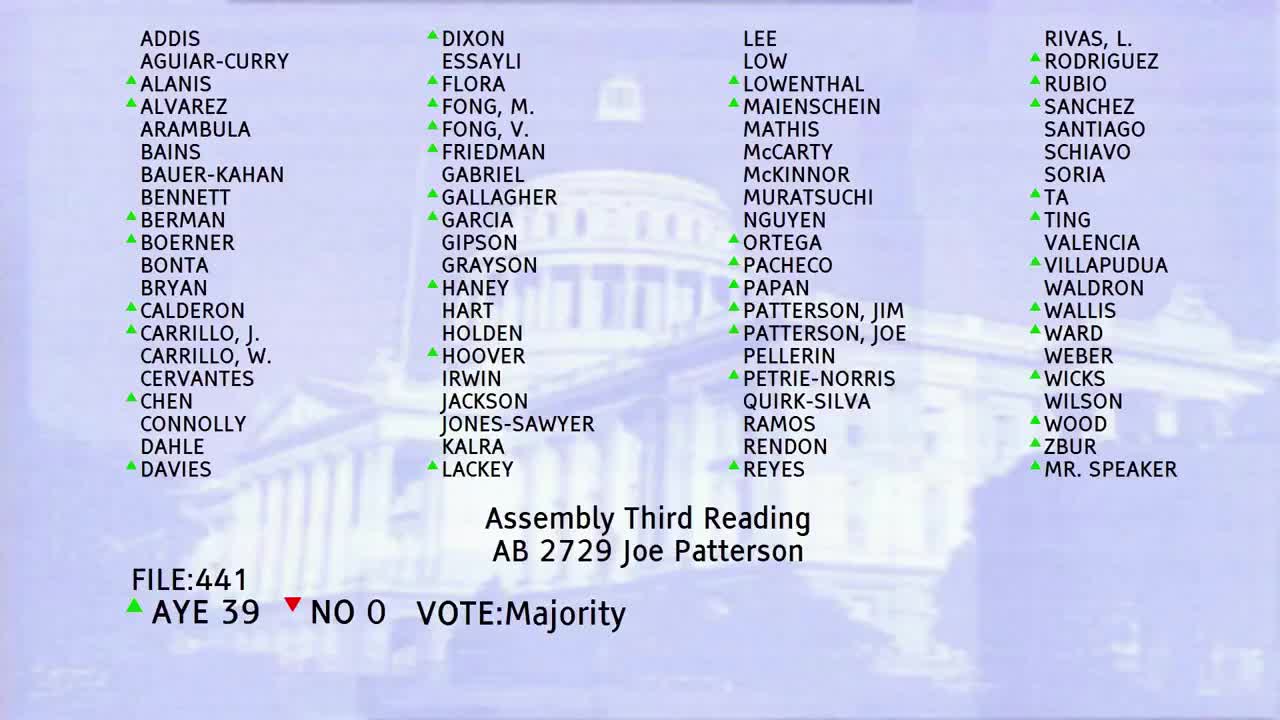
Bill Author

Bill Co-Author(s):