AB 2843: Health care coverage: rape and sexual assault.
- Session Year: 2023-2024
- House: Assembly
- Latest Version Date: 2024-09-29
Current Status:
Passed
(2024-09-29: Chaptered by Secretary of State - Chapter 971, Statutes of 2024.)
Introduced
In Committee
First Chamber
In Committee
Second Chamber
Enacted
Existing law, the Knox-Keene Health Care Service Plan Act of 1975, provides for the licensure and regulation of health care service plans by the Department of Managed Health Care and makes a willful violation of the act a crime. Existing law provides for the regulation of health insurers by the Department of Insurance.
Existing law requires a victim of sexual assault who seeks a medical evidentiary examination to be provided with one, as specified. Existing law prohibits costs incurred by a qualified health care professional, hospital, clinic, sexual assault forensic examination team, or other emergency medical facility for the medical evidentiary examination portion of the examination of the victim of a sexual assault, as described in a specified protocol, when the examination is performed as specified, from being charged directly or indirectly to the victim of the assault.
This bill would require a health care service plan or health insurance policy that is issued, amended, renewed, or delivered on or after July 1, 2025, to provide coverage without cost sharing for emergency room medical care and followup health care treatment for an enrollee or insured who is treated following a rape or sexual assault for the first 9 months after the enrollee initiates treatment, as specified. The bill would prohibit a health care service plan or health insurer from requiring, as a condition of providing coverage, (1) an enrollee or insured to file a police report, (2) charges to be brought against an assailant, (3) or an assailant to be convicted of rape or sexual assault. Because a violation of the bill by a health care service plan would be a crime, the bill would impose a state-mandated local program.
The California Constitution requires the state to reimburse local agencies and school districts for certain costs mandated by the state. Statutory provisions establish procedures for making that reimbursement.
This bill would provide that no reimbursement is required by this act for a specified reason.
Existing law, the Knox-Keene Health Care Service Plan Act of 1975, provides for the licensure and regulation of health care service plans by the Department of Managed Health Care and makes a willful violation of the act a crime. Existing law provides for the regulation of health insurers by the Department of Insurance.
Existing law requires a victim of sexual assault who seeks a medical evidentiary examination to be provided with one, as specified. Existing law prohibits costs incurred by a qualified health care professional, hospital, clinic, sexual assault forensic examination team, or other emergency medical facility for the medical evidentiary examination portion of the examination of the victim of a sexual assault, as described in a specified protocol, when the examination is performed as specified, from being charged directly or indirectly to the victim of the assault.
This bill would require a health care service plan or health insurance policy that is issued, amended, renewed, or delivered on or after July 1, 2025, to provide coverage without cost sharing for emergency room medical care and followup health care treatment for an enrollee or insured who is treated following a rape or sexual assault for the first 9 months after the enrollee initiates treatment, as specified. The bill would prohibit a health care service plan or health insurer from requiring, as a condition of providing coverage, (1) an enrollee or insured to file a police report, (2) charges to be brought against an assailant, (3) or an assailant to be convicted of rape or sexual assault. Because a violation of the bill by a health care service plan would be a crime, the bill would impose a state-mandated local program.
The California Constitution requires the state to reimburse local agencies and school districts for certain costs mandated by the state. Statutory provisions establish procedures for making that reimbursement.
This bill would provide that no reimbursement is required by this act for a specified reason.
Existing law, the Knox-Keene Health Care Service Plan Act of 1975, provides for the licensure and regulation of health care service plans by the Department of Managed Health Care and makes a willful violation of the act a crime. Existing law provides for the regulation of health insurers by the Department of Insurance.
Existing law requires a victim of sexual assault who seeks a medical evidentiary examination to be provided with one, as specified. Existing law prohibits costs incurred by a qualified health care professional, hospital, clinic, sexual assault forensic examination team, or other emergency medical facility for the medical evidentiary examination portion of the examination of the victim of a sexual assault, as described in a specified protocol, when the examination is performed as specified, from being charged directly or indirectly to the victim of the assault.
This bill would require a health care service plan or health insurance policy that is issued, amended, renewed, or delivered on or after January July 1, 2025, to provide coverage without cost sharing for emergency room medical care and followup health care treatment for an enrollee or insured who is treated following a rape or sexual assault. assault for the first 9 months after the enrollee initiates treatment, as specified. The bill would prohibit a health care service plan or health insurer from requiring, as a condition of providing coverage, (1) an enrollee or insured to file a police report, (2) charges to be brought against an assailant, (3) or an assailant to be convicted of rape or sexual assault. Because a violation of the bill by a health care service plan would be a crime, the bill would impose a state-mandated local program.
The California Constitution requires the state to reimburse local agencies and school districts for certain costs mandated by the state. Statutory provisions establish procedures for making that reimbursement.
This bill would provide that no reimbursement is required by this act for a specified reason.
Existing law, the Knox-Keene Health Care Service Plan Act of 1975, provides for the licensure and regulation of health care service plans by the Department of Managed Health Care and makes a willful violation of the act a crime. Existing law provides for the regulation of health insurers by the Department of Insurance.
Existing law requires a victim of sexual assault who seeks a medical evidentiary examination to be provided with one, as specified. Existing law prohibits costs incurred by a qualified health care professional, hospital, clinic, sexual assault forensic examination team, or other emergency medical facility for the medical evidentiary examination portion of the examination of the victim of a sexual assault, as described in a specified protocol, when the examination is performed as specified, from being charged directly or indirectly to the victim of the assault.
This bill would require a health care service plan or health insurance policy that is issued, amended, renewed, or delivered on or after January 1, 2025, to provide coverage without cost sharing for emergency room medical care and follow-up followup health care treatment for an enrollee or insured who is treated following a rape or sexual assault. The bill would prohibit a health care service plan or health insurer from requiring, as a condition of providing coverage, (1) an enrollee or insured to file a police report, (2) charges to be brought against an assailant, (3) or an assailant to be convicted of rape or sexual assault. Because a violation of the bill by a health care service plan would be a crime, the bill would impose a state-mandated local program.
The California Constitution requires the state to reimburse local agencies and school districts for certain costs mandated by the state. Statutory provisions establish procedures for making that reimbursement.
This bill would provide that no reimbursement is required by this act for a specified reason.
Existing law, the Knox-Keene Health Care Service Plan Act of 1975, provides for the licensure and regulation of health care service plans by the Department of Managed Health Care and makes a willful violation of the act a crime. Existing law provides for the regulation of health insurers by the Department of Insurance.
Existing law requires a victim of sexual assault who seeks a medical evidentiary examination to be provided with one, as specified. Existing law prohibits costs incurred by a qualified health care professional, hospital, clinic, sexual assault forensic examination team, or other emergency medical facility for the medical evidentiary examination portion of the examination of the victim of a sexual assault, as described in a specified protocol, when the examination is performed as specified, from being charged directly or indirectly to the victim of the assault.
This bill would require a health care service plan or health insurance policy that is issued, amended, renewed, or delivered on or after January 1, 2025, to provide coverage without cost sharing for emergency room medical care and follow-up health care treatment for an enrollee or insured who is treated following a rape or sexual assault. The bill would prohibit a health care service plan or health insurer from requiring, as a condition of providing coverage, (1) an enrollee or insured to file a police report, (2) charges to be brought against an assailant, (3) or an assailant to be convicted of rape or sexual assault. Because a violation of the bill by a health care service plan would be a crime, the bill would impose a state-mandated local program.
The California Constitution requires the state to reimburse local agencies and school districts for certain costs mandated by the state. Statutory provisions establish procedures for making that reimbursement.
This bill would provide that no reimbursement is required by this act for a specified reason.
The Legislature finds and declares all of the following:
(a)The Center for Disease Control and Preventions National Intimate Partner and Sexual Violence Survey published in 2017 reported that one in four American women reported they were subjected to a completed or attempted rape at least once in their life. One in three women are injured during their assault. About 1 in 26 American men reported being subjected to a completed or attempted rape in their lifetime.
(b)In 2022, the New England Journal of Medicine reported that only 20 percent of sexual assault survivors seek medical care, which includes the collection of forensic evidence via rape kits. Survivors may not seek care or report because they know their attacker and fear retribution, or because they may feel shame. Many do not seek medical care because of the high cost of emergency room visits, despite the fact that forensic evidence collection and other services are provided without cost to the survivor.
(c)Findings indicate that indigenous people are more likely to experience rape or sexual assault. Findings also note that transgender students experience higher rates of rape or sexual assault than nontransgender students.
(d)In 2022, the Journal of the American Medical Association reported that sexual assault survivors from the lowest income quartile by ZIP Code were overrepresented in emergency department visits. Survivors 18 to 25 years of age accounted for 41.2 percent to 48.6 percent of emergency department visits following rapes and sexual assaults.
(e)The average costs for medical care following a rape or sexual assault is $3,673. For pregnant survivors, those costs average closer to $4,500.
(f)Insured survivors pay about 14 percent of emergency room costs out of pocket.
(g)High-cost medical care expenses not only discourage sexual assault reporting, but the lack of reporting also prevents a survivor from seeking justice and prevents law enforcement from obtaining the evidence necessary to bring an assailant to justice.
(h)Moreover, without the evidentiary tools to remove sexual predators from society, serial rapists are enabled to continue to commit violent, traumatic crimes against individuals.
(i)According to the Rape, Assault and Incest National Network (RAINN), only 25 perpetrators out of every 1,000 rapes will serve time for their crime.
SEC. 2.Section 1367.37 is added to the Health and Safety Code, to read:1367.37.(a)(1)A health care service plan contract issued, amended, or renewed on or after July 1, 2025, excluding a specialized health care service plan contract, shall provide coverage for emergency room medical care and followup health care treatment for an enrollee who is treated following a rape or sexual assault, as defined in Sections 261, 261.6, 263, 263.1, 286, 287, and 288.7 of the Penal Code, without imposing cost sharing, including copayments, coinsurance, or deductibles, for the first nine months after the enrollee initiates treatment.
(2)For the purposes of this section, followup health care treatment includes medical or surgical services for the diagnosis, prevention, or treatment of medical conditions arising from an instance of rape or sexual assault.
(3)The waiver of the imposition of cost sharing pursuant to paragraph (1) shall only apply if the enrollees treating provider submits all requests for claims payments using accurate diagnosis codes specific to rape or sexual assault.
(b)A health care service plan shall not require any of the following to provide coverage under this section:
(1)An enrollee to file a police report on the rape or sexual assault.
(2)Charges to be brought against an assailant.
(3)An assailant to be convicted of an offense listed in subdivision (a).
(c)(1)This section does not authorize an enrollee to receive followup health care treatment required to be covered by this section if treatment is furnished by a nonparticipating provider, except as specified in paragraphs (2) and (3).
(2)A plan shall arrange for the provision of followup health care treatment required by this section from providers outside the plans network if those services are unavailable within the network to ensure timely access to covered health care services consistent with Section 1367.03.
(3)A plan shall cover followup health care treatment if those services are for emergency services and care as defined in Section 1317.1.
(d)For a health care service plan contract that meets the definition of a high deductible health plan set forth in Section 223(c)(2) of Title 26 of the United States Code, this section shall only apply once an enrollees deductible has been satisfied for the year.
(e)Cost sharing includes any copayment, coinsurance, or deductible, or any other form of cost sharing paid by the enrollee other than premium or share of premium.
(f)Coverage provided under this section is coverage of sensitive services provided to a protected individual as those terms are defined in Section 56.05 and pursuant to Section 56.107 of the Civil Code.
SEC. 3.Section 10123.211 is added to the Insurance Code, to read:10123.211.(a)(1)A health insurance policy that is issued, amended, or renewed on or after July 1, 2025, excluding a specialized health insurance policy, shall provide coverage for emergency room medical care and followup health care treatment for an insured who is treated following a rape or sexual assault, as defined in Sections 261, 261.6, 263, 263.1, 286, 287, and 288.7 of the Penal Code, without imposing cost sharing, including copayments, coinsurance, or deductibles, for the first nine months after the enrollee initiates treatment.
(2)For the purposes of this section, followup health care treatment includes medical or surgical services for the diagnosis, prevention, or treatment of medical conditions arising from an instance of rape or sexual assault.
(3)The waiver of the imposition of cost sharing pursuant to paragraph (1) shall only apply if the enrollees treating provider submits all requests for claims payments using accurate diagnosis codes specific to rape or sexual assault.
(b)A health insurer shall not require any of the following to provide coverage under this section:
(1)An insured to file a police report on the rape or sexual assault.
(2)Charges to be brought against an assailant.
(3)An assailant to be convicted of an offense listed in subdivision (a).
(c)(1)This section does not authorize an insured to receive followup health care treatment required to be covered by this section if treatment is furnished by a nonparticipating provider, except as specified in paragraphs (2) and (3).
(2)A health insurer shall arrange for the provision of followup health care treatment required by this section from providers outside the insurers network if those services are unavailable within the network to ensure timely access to covered health care services consistent with Section 10133.54.
(3)A health insurer shall cover followup health care treatment if those services are for emergency services and care as defined in Section 1317.1 of the Health and Safety Code.
(d)For a health insurance policy that meets the definition of a high deductible health plan set forth in Section 223(c)(2) of Title 26 of the United States Code, this section shall only apply once an enrollees deductible has been satisfied for the year.
(e)Cost sharing includes any copayment, coinsurance, or deductible, or any other form of cost sharing paid by the insured other than premium or share of premium.
(f)This section does not apply to specialized health insurance, Medicare supplement insurance, CHAMPUS supplement insurance, or TRI-CARE supplement insurance, or to hospital indemnity, accident-only, or specified disease insurance.
(g)Coverage provided under this section is coverage of sensitive services provided to a protected individual as those terms are defined in Section 791.02 and pursuant to Section 791.29.
SEC. 4.No reimbursement is required by this act pursuant to Section 6 of Article XIIIB of the California Constitution because the only costs that may be incurred by a local agency or school district will be incurred because this act creates a new crime or infraction, eliminates a crime or infraction, or changes the penalty for a crime or infraction, within the meaning of Section 17556 of the Government Code, or changes the definition of a crime within the meaning of Section 6 of Article XIIIB of the California Constitution.
The Legislature finds and declares all of the following:
(a)The Center for Disease Control and Preventions National Intimate Partner and Sexual Violence Survey published in 2017 reported that one in four American women reported they were subjected to a completed or attempted rape at least once in their life. One in three women are injured during their assault. About 1 in 26 American men reported being subjected to a completed or attempted rape in their lifetime.
(b)In 2022, the New England Journal of Medicine reported that only 20 percent of sexual assault survivors seek medical care, which includes the collection of forensic evidence via rape kits. Survivors may not seek care or report because they know their attacker and fear retribution, or because they may feel shame. Many do not seek medical care because of the high cost of emergency room visits, despite the fact that forensic evidence collection and other services are provided without cost to the survivor.
(c)Findings indicate that indigenous people are more likely to experience rape or sexual assault. Findings also note that transgender students experience higher rates of rape or sexual assault than nontransgender students.
(d)In 2022, the Journal of the American Medical Association reported that sexual assault survivors from the lowest income quartile by ZIP Code were overrepresented in emergency department visits. Survivors 18 to 25 years of age accounted for 41.2 percent to 48.6 percent of emergency department visits following rapes and sexual assaults.
(e)The average costs for medical care following a rape or sexual assault is $3,673. For pregnant survivors, those costs average closer to $4,500.
(f)Insured survivors pay about 14 percent of emergency room costs out of pocket.
(g)High-cost medical care expenses not only discourage sexual assault reporting, but the lack of reporting also prevents a survivor from seeking justice and prevents law enforcement from obtaining the evidence necessary to bring an assailant to justice.
(h)Moreover, without the evidentiary tools to remove sexual predators from society, serial rapists are enabled to continue to commit violent, traumatic crimes against individuals.
(i)According to the Rape, Assault and Incest National Network (RAINN), only 25 perpetrators out of every 1,000 rapes will serve time for their crime.
SEC. 2.Section 1367.37 is added to the Health and Safety Code, to read:1367.37.(a)(1)A health care service plan contract issued, amended, or renewed on or after July 1, 2025, excluding a specialized health care service plan contract, shall provide coverage for emergency room medical care and followup health care treatment for an enrollee who is treated following a rape or sexual assault, as defined in Sections 261, 261.6, 263, 263.1, 286, 287, and 288.7 of the Penal Code, without imposing cost sharing, including copayments, coinsurance, or deductibles, for the first nine months after the enrollee initiates treatment.
(2)For the purposes of this section, followup health care treatment includes medical or surgical services for the diagnosis, prevention, or treatment of medical conditions arising from an instance of rape or sexual assault.
(3)The waiver of the imposition of cost sharing pursuant to paragraph (1) shall only apply if the enrollees treating provider submits all requests for claims payments using accurate diagnosis codes specific to rape or sexual assault.
(b)A health care service plan shall not require any of the following to provide coverage under this section:
(1)An enrollee to file a police report on the rape or sexual assault.
(2)Charges to be brought against an assailant.
(3)An assailant to be convicted of an offense listed in subdivision (a).
(c)(1)This section does not authorize an enrollee to receive followup health care treatment required to be covered by this section if treatment is furnished by a nonparticipating provider, except as specified in paragraphs (2) and (3).
(2)A plan shall arrange for the provision of followup health care treatment required by this section from providers outside the plans network if those services are unavailable within the network to ensure timely access to covered health care services consistent with Section 1367.03.
(3)A plan shall cover followup health care treatment if those services are for emergency services and care as defined in Section 1317.1.
(d)For a health care service plan contract that meets the definition of a high deductible health plan set forth in Section 223(c)(2) of Title 26 of the United States Code, this section shall only apply once an enrollees deductible has been satisfied for the year.
(e)Cost sharing includes any copayment, coinsurance, or deductible, or any other form of cost sharing paid by the enrollee other than premium or share of premium.
(f)Coverage provided under this section is coverage of sensitive services provided to a protected individual as those terms are defined in Section 56.05 and pursuant to Section 56.107 of the Civil Code.
SEC. 3.Section 10123.211 is added to the Insurance Code, to read:10123.211.(a)(1)A health insurance policy that is issued, amended, or renewed on or after July 1, 2025, excluding a specialized health insurance policy, shall provide coverage for emergency room medical care and followup health care treatment for an insured who is treated following a rape or sexual assault, as defined in Sections 261, 261.6, 263, 263.1, 286, 287, and 288.7 of the Penal Code, without imposing cost sharing, including copayments, coinsurance, or deductibles, for the first nine months after the enrollee initiates treatment.
(2)For the purposes of this section, followup health care treatment includes medical or surgical services for the diagnosis, prevention, or treatment of medical conditions arising from an instance of rape or sexual assault.
(3)The waiver of the imposition of cost sharing pursuant to paragraph (1) shall only apply if the enrollees treating provider submits all requests for claims payments using accurate diagnosis codes specific to rape or sexual assault.
(b)A health insurer shall not require any of the following to provide coverage under this section:
(1)An insured to file a police report on the rape or sexual assault.
(2)Charges to be brought against an assailant.
(3)An assailant to be convicted of an offense listed in subdivision (a).
(c)(1)This section does not authorize an insured to receive followup health care treatment required to be covered by this section if treatment is furnished by a nonparticipating provider, except as specified in paragraphs (2) and (3).
(2)A health insurer shall arrange for the provision of followup health care treatment required by this section from providers outside the insurers network if those services are unavailable within the network to ensure timely access to covered health care services consistent with Section 10133.54.
(3)A health insurer shall cover followup health care treatment if those services are for emergency services and care as defined in Section 1317.1 of the Health and Safety Code.
(d)For a health insurance policy that meets the definition of a high deductible health plan set forth in Section 223(c)(2) of Title 26 of the United States Code, this section shall only apply once an enrollees deductible has been satisfied for the year.
(e)Cost sharing includes any copayment, coinsurance, or deductible, or any other form of cost sharing paid by the insured other than premium or share of premium.
(f)This section does not apply to specialized health insurance, Medicare supplement insurance, CHAMPUS supplement insurance, or TRI-CARE supplement insurance, or to hospital indemnity, accident-only, or specified disease insurance.
(g)Coverage provided under this section is coverage of sensitive services provided to a protected individual as those terms are defined in Section 791.02 and pursuant to Section 791.29.
SEC. 4.No reimbursement is required by this act pursuant to Section 6 of Article XIIIB of the California Constitution because the only costs that may be incurred by a local agency or school district will be incurred because this act creates a new crime or infraction, eliminates a crime or infraction, or changes the penalty for a crime or infraction, within the meaning of Section 17556 of the Government Code, or changes the definition of a crime within the meaning of Section 6 of Article XIIIB of the California Constitution.
The Legislature finds and declares all of the following:
(a)The Center for Disease Control and Preventions National Intimate Partner and Sexual Violence Survey published in 2017 reported that one in four American women reported they were subjected to a completed or attempted rape at least once in their life. One in three women are injured during their assault. About 1 in 26 American men reported being subjected to a completed or attempted rape in their lifetime.
(b)In 2022, the New England Journal of Medicine reported that only 20 percent of sexual assault survivors seek medical care, which includes the collection of forensic evidence via rape kits. Survivors may not seek care or report because they know their attacker and fear retribution, or because they may feel shame. Many do not seek medical care because of the high cost of emergency room visits, despite the fact that forensic evidence collection and other services are provided without cost to the survivor.
(c)Findings indicate that indigenous people are more likely to experience rape or sexual assault. Findings also note that transgender students experience higher rates of rape or sexual assault than nontransgender students.
(d)In 2022, the Journal of the American Medical Association reported that sexual assault survivors from the lowest income quartile by ZIP code Code were overrepresented in emergency department visits. Survivors 18 to 25 years of age accounted for 41.2 percent to 48.6 percent of emergency department visits following rapes and sexual assaults.
(e)The average costs for medical care following a rape or sexual assault is $3,673. For pregnant survivors, those costs average closer to $4,500.
(f)Insured survivors pay about 14 percent of emergency room costs out of pocket.
(g)High-cost medical care expenses not only discourage sexual assault reporting, but the lack of reporting also prevents a survivor from seeking justice and prevents law enforcement from obtaining the evidence necessary to bring an assailant to justice.
(h)Moreover, without the evidentiary tools to remove sexual predators from society, serial rapists are enabled to continue to commit violent, traumatic crimes against individuals.
(i)According to the Rape, Assault and Incest National Network (RAINN), only 25 perpetrators out of every 1,000 rapes will serve time for their crime.
SEC. 2.Section 1367.37 is added to the Health and Safety Code, to read:1367.37.(a)(1)A health care service plan contract issued, amended, or renewed on or after January July 1, 2025, excluding a specialized health care service plan contract, shall provide coverage for emergency room medical care and followup health care treatment for an enrollee who is treated following a rape or sexual assault, as defined in Sections 261, 261.6, 263, 263.1, 286, 287, and 288.7 of the Penal Code, without imposing cost sharing, including copayments and deductibles. copayments, coinsurance, or deductibles, for the first nine months after the enrollee initiates treatment.
(2)For the purposes of this section, followup health care treatment includes medical or surgical services for the diagnosis, prevention, or treatment of medical conditions arising from an instance of rape or sexual assault.
(3)The waiver of the imposition of cost sharing pursuant to paragraph (1) shall only apply if the enrollees treating provider submits all requests for claims payments using accurate diagnosis codes specific to rape or sexual assault.
(b)A health care service plan shall not require any of the following to provide coverage under this section:
(1)An enrollee to file a police report on the rape or sexual assault.
(2)Charges to be brought against an assailant.
(3)An assailant to be convicted of an offense listed in subdivision (a).
(c)(1)This section does not authorize an enrollee to receive followup health care treatment required to be covered by this section if treatment is furnished by a nonparticipating provider, except as specified in paragraph (2). paragraphs (2) and (3).
(2)A plan shall arrange for the provision of followup health care treatment required by this section from providers outside the plans network if those services are unavailable within the network to ensure timely access to covered health care services consistent with Section 1367.03.
(3)A plan shall cover followup health care treatment if those services are for emergency services and care as defined in Section 1317.1.
(d)For a health care service plan contract that meets the definition of a high deductible health plan set forth in Section 223(c)(2) of Title 26 of the United States Code, this section shall only apply once an enrollees deductible has been satisfied for the year.
(e)Cost sharing includes any copayment, coinsurance, or deductible, or any other form of cost sharing paid by the enrollee other than premium or share of premium.
(f)Coverage provided under this section is coverage of sensitive services provided to a protected individual as those terms are defined in Section 56.05 and pursuant to Section 56.107 of the Civil Code.
SEC. 3.Section 10123.211 is added to the Insurance Code, to read:10123.211.(a)(1)A health insurance policy that is issued, amended, or renewed on or after January July 1, 2025, excluding a specialized health insurance policy, shall provide coverage for emergency room medical care and followup health care treatment for an insured who is treated following a rape or sexual assault, as defined in Sections 261, 261.6, 263, 263.1, 286, 287, and 288.7 of the Penal Code, without imposing cost sharing, including copayments and deductibles. copayments, coinsurance, or deductibles, for the first nine months after the enrollee initiates treatment.
(2)For the purposes of this section, followup health care treatment includes medical or surgical services for the diagnosis, prevention, or treatment of medical conditions arising from an instance of rape or sexual assault.
(3)The waiver of the imposition of cost sharing pursuant to paragraph (1) shall only apply if the enrollees treating provider submits all requests for claims payments using accurate diagnosis codes specific to rape or sexual assault.
(b)A health insurer shall not require any of the following to provide coverage under this section:
(1)An insured to file a police report on the rape or sexual assault.
(2)Charges to be brought against an assailant.
(3)An assailant to be convicted of an offense listed in subdivision (a).
(c)(1)This section does not authorize an insured to receive followup health care treatment required to be covered by this section if treatment is furnished by a nonparticipating provider, except as specified in paragraph (2). paragraphs (2) and (3).
(2)A health insurer shall arrange for the provision of followup health care treatment required by this section from providers outside the insurers network if those services are unavailable within the network to ensure timely access to covered health care services consistent with Section 10133.54.
(3)A health insurer shall cover followup health care treatment if those services are for emergency services and care as defined in Section 1317.1 of the Health and Safety Code.
(d)For a health insurance policy that meets the definition of a high deductible health plan set forth in Section 223(c)(2) of Title 26 of the United States Code, this section shall only apply once an enrollees deductible has been satisfied for the year.
(e)Cost sharing includes any copayment, coinsurance, or deductible, or any other form of cost sharing paid by the insured other than premium or share of premium.
(f)This section does not apply to specialized health insurance, Medicare supplement insurance, CHAMPUS supplement insurance, or TRI-CARE supplement insurance, or to hospital indemnity, accident-only, or specified disease insurance.
(g)Coverage provided under this section is coverage of sensitive services provided to a protected individual as those terms are defined in Section 791.02 and pursuant to Section 791.29.
SEC. 4.No reimbursement is required by this act pursuant to Section 6 of Article XIIIB of the California Constitution because the only costs that may be incurred by a local agency or school district will be incurred because this act creates a new crime or infraction, eliminates a crime or infraction, or changes the penalty for a crime or infraction, within the meaning of Section 17556 of the Government Code, or changes the definition of a crime within the meaning of Section 6 of Article XIIIB of the California Constitution.
The Legislature finds and declares all of the following:
(a)The Center for Disease Control and Preventions National Intimate Partner and Sexual Violence Survey published in 2017 reported that one in four American women reported they were subjected to a completed or attempted rape at least once in their life. One in three women are injured during their assault. About 1 in 26 American men reported being subjected to a completed or attempted rape in their lifetime.
(b)In 2022, the New England Journal of Medicine reported that only 20 percent of sexual assault survivors seek medical care, which includes the collection of forensic evidence via rape kits. Survivors may not seek care or report because they know their attacker and fear retribution, or because they may feel shame. Many do not seek medical care because of the high cost of emergency room visits, despite the fact that forensic evidence collection and other services are provided without cost to the survivor.
(c)Findings indicate that indigenous people are more likely to experience rape or sexual assault. Findings also notes note that transgender students experience higher rates of rape or sexual assault than nontransgender students.
(d)In 2022, the Journal of the American Medical Association reported that sexual assault survivors from the lowest income quartile by zip ZIP code were overrepresented in emergency department visits. Survivors 18 to 25 years of age accounted for 41.2 percent to 48.6 percent of emergency department visits following rapes and sexual assaults.
(e)The average costs for medical care following a rape or sexual assault is $3,673. For pregnant survivors, those costs average closer to $4,500.
(f)Insured survivors pay about 14 percent of emergency room costs out of pocket.
(g)High-cost medical care expenses not only discourage sexual assault reporting, but the lack of reporting also prevents a survivor from seeking justice and prevents law enforcement from obtaining the evidence necessary to bring an assailant to justice.
(h)Moreover, without the evidentiary tools to remove sexual predators from society, serial rapists are enabled to continue to commit violent, traumatic crimes against individuals.
(i)According to the Rape, Assault and Incest National Network (RAINN), only 25 perpetrators out of every 1000 1,000 rapes will serve time for their crime.
SEC. 2.Section 1367.37 is added to the Health and Safety Code, to read:1367.37.(a)A health care service plan contract issued, amended, or renewed on or after January 1, 2025, excluding a specialized health care service plan contract, shall provide coverage for emergency room medical care and follow-up followup health care treatment for an enrollee who is treated following a rape or sexual assault, as defined in Sections 261, 261.6, 263, 263.1, 286, 287, and 288.7 of the Penal Code, without imposing cost sharing, including copayments and deductibles.
(b)A health care service plan shall not require any of the following to provide coverage under this section:
(1)An enrollee to file a police report on the rape or sexual assault.
(2)Charges to be brought against an assailant.
(3)An assailant to be convicted of an offense listed in subdivision (a).
(c)(1)This section does not authorize an enrollee to receive the services followup health care treatment required to be covered by this section if those services are treatment is furnished by a nonparticipating provider, except as specified in paragraph (2).
(2)A plan shall arrange for the provision of services followup health care treatment required by this section from providers outside the plans network if those services are unavailable within the network to ensure timely access to covered health care services consistent with Section 1367.03.
(d)For a health care service plan contract that meets the definition of a high deductible health plan set forth in Section 223(c)(2) of Title 26 of the United States Code, this section shall only apply once an enrollees deductible has been satisfied for the year.
(d)(e)Cost sharing includes any copayment, coinsurance, or deductible, or any other form of cost sharing paid by the enrollee other than premium or share of premium.
(f)Coverage provided under this section is coverage of sensitive services provided to a protected individual as those terms are defined in Section 56.05 and pursuant to Section 56.107 of the Civil Code.
SEC. 3.Section 10123.211 is added to the Insurance Code, to read:10123.211.(a)A health insurance policy that is issued, amended, or renewed on or after January 1, 2025, excluding a specialized health insurance policy, shall provide coverage for emergency room medical care and follow-up followup health care treatment for an insured who is treated following a rape or sexual assault, as defined in Sections 261, 261.6, 263, 263.1, 286, 287, and 288.7 of the Penal Code, without imposing cost sharing, including copayments and deductibles.
(b)A health insurer shall not require any of the following to provide coverage under this section:
(1)An insured to file a police report on the rape or sexual assault.
(2)Charges to be brought against an assailant.
(3)An assailant to be convicted of an offense listed in subdivision (a).
(c)(1)This section does not authorize an insured to receive the services followup health care treatment required to be covered by this section if those services are treatment is furnished by a nonparticipating provider, except as specified in paragraph (2).
(2)A health insurer shall arrange for the provision of services followup health care treatment required by this section from providers outside the insurers network if those services are unavailable within the network to ensure timely access to covered health care services consistent with Section 10133.54.
(d)For a health insurance policy that meets the definition of a high deductible health plan set forth in Section 223(c)(2) of Title 26 of the United States Code, this section shall only apply once an enrollees deductible has been satisfied for the year.
(d)(e)Cost sharing includes any copayment, coinsurance, or deductible, or any other form of cost sharing paid by the insured other than premium or share of premium.
(e)(f)This section does not apply to specialized health insurance, Medicare supplement insurance, CHAMPUS supplement insurance, or TRI-CARE supplement insurance, or to hospital indemnity, accident-only, or specified disease insurance.
(g)Coverage provided under this section is coverage of sensitive services provided to a protected individual as those terms are defined in Section 791.02 and pursuant to Section 791.29.
SEC. 4.No reimbursement is required by this act pursuant to Section 6 of Article XIIIB of the California Constitution because the only costs that may be incurred by a local agency or school district will be incurred because this act creates a new crime or infraction, eliminates a crime or infraction, or changes the penalty for a crime or infraction, within the meaning of Section 17556 of the Government Code, or changes the definition of a crime within the meaning of Section 6 of Article XIIIB of the California Constitution.
The Legislature finds and declares all of the following:
(a)The Center for Disease Control and Preventions National Intimate Partner and Sexual Violence Survey published in 2017 reported that one in four American women reported they were subjected to a completed or attempted rape at least once in their life. One in three women are injured during their assault. About 1 in 26 American men reported being subjected to a completed or attempted rape in their lifetime.
(b)In 2022, the New England Journal of Medicine reported that only 20 percent of sexual assault survivors seek medical care, which includes the collection of forensic evidence via rape kits. Survivors may not seek care or report because they know their attacker and fear retribution, or because they may feel shame. Many do not seek medical care because of the high cost of emergency room visits, despite the fact that forensic evidence collection and other services are provided without cost to the survivor.
(c)Findings indicate that indigenous people are more likely to experience rape or sexual assault. Findings also notes that transgender students experience higher rates of rape or sexual assault than nontransgender students.
(d)In 2022, the Journal of the American Medical Association reported that sexual assault survivors from the lowest income quartile by zip code were overrepresented in emergency department visits. Survivors 18 to 25 years of age accounted for 41.2 percent to 48.6 percent of emergency department visits following rapes and sexual assaults.
(e)The average costs for medical care following a rape or sexual assault is $3,673. For pregnant survivors, those costs average closer to $4,500.
(f)Insured survivors pay about 14 percent of emergency room costs out of pocket.
(g)High-cost medical care expenses not only discourage sexual assault reporting, but the lack of reporting also prevents a survivor from seeking justice and prevents law enforcement from obtaining the evidence necessary to bring an assailant to justice.
(h)Moreover, without the evidentiary tools to remove sexual predators from society, serial rapists are enabled to continue to commit violent, traumatic crimes against individuals.
(i)According to the Rape, Assault and Incest National Network (RAINN), only 25 perpetrators out of every 1000 rapes will serve time for their crime.
SEC. 2.Section 1367.37 is added to the Health and Safety Code, to read:1367.37.(a)A health care service plan contract issued, amended, or renewed on or after January 1, 2025, excluding a specialized health care service plan contract, shall provide coverage for emergency room medical care and follow-up health care treatment for an enrollee who is treated following a rape or sexual assault, as defined in Sections 261, 261.6, 263, 263.1, and 288.7 of the Penal Code, without imposing cost sharing, including copayments and deductibles.
(b)A health care service plan shall not require any of the following to provide coverage under this section:
(1)An enrollee to file a police report on the rape or sexual assault.
(2)Charges to be brought against an assailant.
(3)An assailant to be convicted of an offense listed in subdivision (a).
(c)(1)This section does not authorize an enrollee to receive the services required to be covered by this section if those services are furnished by a nonparticipating provider, except as specified in paragraph (2).
(2)A plan shall arrange for the provision of services required by this section from providers outside the plans network if those services are unavailable within the network to ensure timely access to covered health care services consistent with Section 1367.03.
(d)Cost sharing includes any copayment, coinsurance, or deductible, or any other form of cost sharing paid by the enrollee other than premium or share of premium.
SEC. 3.Section 10123.211 is added to the Insurance Code, to read:10123.211.(a)A health insurance policy that is issued, amended, or renewed on or after January 1, 2025, excluding a specialized health insurance policy, shall provide coverage for emergency room medical care and follow-up health care treatment for an insured who is treated following a rape or sexual assault, as defined in Sections 261, 261.6, 263, 263.1, and 288.7 of the Penal Code, without imposing cost sharing, including copayments and deductibles.
(b)A health insurer shall not require any of the following to provide coverage under this section:
(1)An insured to file a police report on the rape or sexual assault.
(2)Charges to be brought against an assailant.
(3)An assailant to be convicted of an offense listed in subdivision (a).
(c)(1)This section does not authorize an insured to receive the services required to be covered by this section if those services are furnished by a nonparticipating provider, except as specified in paragraph (2).
(2)A health insurer shall arrange for the provision of services required by this section from providers outside the insurers network if those services are unavailable within the network to ensure timely access to covered health care services consistent with Section 10133.54.
(d)Cost sharing includes any copayment, coinsurance, or deductible, or any other form of cost sharing paid by the insured other than premium or share of premium.
(e)This section does not apply to specialized health insurance, Medicare supplement insurance, CHAMPUS supplement insurance, or TRI-CARE supplement insurance, or to hospital indemnity, accident-only, or specified disease insurance.
SEC. 4.No reimbursement is required by this act pursuant to Section 6 of Article XIIIB of the California Constitution because the only costs that may be incurred by a local agency or school district will be incurred because this act creates a new crime or infraction, eliminates a crime or infraction, or changes the penalty for a crime or infraction, within the meaning of Section 17556 of the Government Code, or changes the definition of a crime within the meaning of Section 6 of Article XIIIB of the California Constitution.
|
Date
|
Status
|
|---|---|
| Sep 29, 2024 | Chaptered by Secretary of State - Chapter 971, Statutes of 2024. |
| Sep 29, 2024 | Approved by the Governor. |
| Sep 11, 2024 | Enrolled and presented to the Governor at 4 p.m. |
| Aug 29, 2024 | Senate amendments concurred in. To Engrossing and Enrolling. (Ayes 74. Noes 0.). |
| Aug 29, 2024 | Assembly Rule 77 suspended. |
| Aug 28, 2024 | In Assembly. Concurrence in Senate amendments pending. May be considered on or after August 30 pursuant to Assembly Rule 77. |
| Aug 28, 2024 | Read third time. Passed. Ordered to the Assembly. (Ayes 39. Noes 0.). |
| Aug 26, 2024 | Read second time. Ordered to third reading. |
| Aug 23, 2024 | Read third time and amended. Ordered to second reading. |
| Aug 12, 2024 | Ordered to third reading. |
| Aug 12, 2024 | From Consent Calendar. |
| Aug 6, 2024 | Read second time. Ordered to Consent Calendar. |
| Aug 5, 2024 | From committee: Be ordered to second reading file pursuant to Senate Rule 28.8 and ordered to Consent Calendar. |
| Jul 3, 2024 | Read second time and amended. Re-referred to Com. on APPR. |
| Jul 3, 2024 | From committee: Amend, and do pass as amended and re-refer to Com. on APPR with recommendation: To Consent Calendar. (Ayes 11. Noes 0.) (July 3). |
| Jun 18, 2024 | In committee: Set, second hearing. Hearing canceled at the request of author. |
| Jun 10, 2024 | In committee: Set, first hearing. Hearing canceled at the request of author. |
| May 29, 2024 | Referred to Com. on HEALTH. |
| May 16, 2024 | In Senate. Read first time. To Com. on RLS. for assignment. |
| May 16, 2024 | Read third time. Passed. Ordered to the Senate. (Ayes 71. Noes 0.) |
| May 9, 2024 | Read second time. Ordered to Consent Calendar. |
| May 8, 2024 | From committee: Do pass. To Consent Calendar. (Ayes 15. Noes 0.) (May 8). |
| Apr 24, 2024 | From committee: Do pass and re-refer to Com. on APPR. with recommendation: To Consent Calendar. (Ayes 16. Noes 0.) (April 23). Re-referred to Com. on APPR. |
| Mar 4, 2024 | Referred to Com. on HEALTH. |
| Feb 16, 2024 | From printer. May be heard in committee March 17. |
| Feb 15, 2024 | Read first time. To print. |
|
Date
|
Description
|
Location
|
Votes
|
|
|---|---|---|---|---|
| Aug 29, 2024 | AB 2843 Petrie-Norris Concurrence in Senate Amendments | Assembly Floor |
Passed |
|
| Aug 28, 2024 | Assembly 3rd Reading AB2843 Petrie-Norris et al. By Rubio | Senate Floor |
Passed |
|
| Jul 3, 2024 | Do pass as amended, but first amend, and re-refer to the Committee on [Appropriations] with the recommendation: To Consent Calendar | Senate Standing Committee on Health |
Passed |
|
| May 16, 2024 | AB 2843 Petrie-Norris Consent Calendar Second Day Regular Session | Assembly Floor |
Passed |
|
| May 8, 2024 | Do pass. To Consent Calendar. | Assembly Standing Committee on Appropriations |
Passed |
|
| Apr 23, 2024 | Do pass and be re-referred to the Committee on [Appropriations] with recommendation: To Consent Calendar | Assembly Standing Committee on Health |
Passed |
This list shows positions taken on this bill by organizations on the date displayed, which is linked to the original source.
Positions by individuals are not included.
|
Organization
|
Position
|
Date
|
|---|---|---|
| American Association Of University Women California | ** Support | |
| American Association of University Women San Jose | ** Support | |
| American College Of Obstetricians And Gynecologists District Ix | ** Support | |
| California Academy Of Family Physicians | ** Support | |
| California Nurses Association | ** Support | |
| California Pan-Ethnic Health Network | ** Support | |
| CALIFORNIA PRIMARY CARE ASSOCIATION ADVOCATES | ** Support | |
| California Women's Law Center | ** Support | |
| Equal Rights Advocates | ** Support | |
| Family Assistance Program | ** Support | |
| Feminist Majority | ** Support | |
| Health Access California | ** Support | |
| Indivisible Ca: Statestrong | ** Support | |
| Joyful Heart Foundation | ** Support | |
| Lieutenant Governor Eleni Kounalakis | ** Support | |
| Lumina Alliance | ** Support | |
| National Health Law Program | ** Support | |
| Planned Parenthood Affiliates Of California | ** Support | |
| Sacramento LGBT Community Center | ** Support | |
| San Francisco Black and Jewish Unity Coalition | ** Support | |
| Valorus | ** Support | |
| Western Center on Law & Poverty, INC. | ** Support |
CONCURRENCE IN SENATE AMENDMENTS
CSA1 Bill Id:AB 2843
Author:(Petrie-Norris)
As Amended Ver:August 23, 2024
Majority vote
SUMMARY
Requires a health plan or insurer to provide coverage for emergency room medical care and followup treatment for an enrollee or insured who is treated following a rape or sexual assault without cost sharing for the first nine months after the enrollee or insured initiates treatment.
Senate Amendments
Limit cost sharing, coinsurance, or deductibles, for the first nine months after the enrollee or insured initiates treatment. Require the waiver of the imposition of cost sharing to only apply if the enrollee or insured's treatment provider submits all requests for claims payments using accurate diagnosis codes specific to rate or sexual assault. Define followup health care treatment to include medical or surgical services for the diagnosis, prevention, or treatment of medical conditions arising from an instance of rape or sexual assault. Clarify that this bill does not authorize an enrollee or insurer to receive followup health care treatment if treatment is furnished by a nonparticipating provider, as specified. Specify that for a health plan contract that meets the definition of a high deductible health plan, require this bill to only apply once an enrollee's deductible has been satisfied for the year. Provide that coverage under this bill is coverage of sensitive services provided to a protected individual as those terms defined in existing law. Delay implementation to July 1, 2025.
COMMENTS
According to the California Health Benefits Review Program (CHBRP), California law requires all public and private general acute care hospitals to comply with certain standards for the examination and treatment of victims of sexual assault and attempted sexual assault, including child abuse. Hospitals that cannot comply with these standards must adopt a protocol for the immediate referral of these victims to a local hospital that is able to do so. The minimum standards include: notification of law enforcement authorities; use of statutory protocols if conducting an forensic medical exam (FME); consent for a physical examination, treatment, and collection of evidence; taking a history of sexual assault; and, for those adults and minor victims of sexual assault that consent to an FME, a physical examination and collection, preservation, and disposition of evidence through specified protocols. With regard to costs of medical services and treatments related to sexual assault, existing law states that an any costs incurred by a qualified health care professional, hospital, clinic, sexual assault FME team, or other emergency medical facility examination related to an FME are prohibited from being charged directly or indirectly to the sexual assault victim. These costs must be treated as a local cost and charged to and reimbursed within 60 days by the local law enforcement agency in whose jurisdiction the alleged sexual assault was committed. California law further clarifies that the costs for FMEs may be reimbursed regardless of whether a victim chooses to report the sexual assault to law enforcement. It should be noted that if a sexual assault victim chooses not to undergo an FME, under existing law, any medical services received by the victim as a result of the sexual assault may be subject to cost sharing. California law also requires county hospitals to provide victims of sexual assault with testing for venereal disease and pregnancy without charge, as well as information regarding assistance available from the California Victim Compensation Board.
Sexual assault victims may choose to receive medical, counseling, and other support services in places of service other than their primary care physician's office, the emergency department (ED), or other hospital settings. For example, they may prefer to receive services at a rape crisis center or other independent sexual assault service providers. Many of these organizations offer free medical or behavioral health services to victims of sexual assault and may be able to provide patients with privacy that they may not otherwise receive if they used services through health insurance. For instance, the victim may be a minor who does not wish to disclose the sexual assault to a parent due to shame, or they may be a victim of intimate partner violence and fear retaliation. CHBRP assumes many enrollees who receive sexual assault services at rape crisis centers and other locations outside their primary health insurance network may continue to do so, even if this bill was enacted, due to personal reasons unrelated to cost.
- CHBRP analysis. CHBRP's analysis of this bill includes the following:
- Assumptions. Under California law, all sexual assault victims are entitled to an FME from a trained medical professional, free of charge, regardless of whether they choose to report the assault to the police. Follow-up services are not covered. All FMEs conducted by any qualified health care professional are reimbursable through local law enforcement agencies. Therefore, CHBRP assumes that services associated with an FME would be reimbursed by the local law enforcement agency, so CHBRP does not include those costs or services in this analysis.
- Utilization. At baseline, CHBRP estimates 402 enrollees utilize sexual assault services without an ED visit, and 644 enrollees utilize these services with an ED visit. CHBRP assumes this bill would result in a 3% increase in utilization of services due to new users, and a 5% increased utilization of services by enrollees who used them at baseline. Thus, postmandate, CHBRP estimates 415 enrollees would use sexual assault services without an ED visit, and 663 enrollees would use services with an ED visit.
- Impact on expenditures. CHBRP estimates this bill would result in an increase $600,000 (0.0004%) of total net annual expenditures for enrollees with DMHC-regulated plans and CDI-regulated policies. This is due to a $1,051,000 increase in premiums paid by employers and enrollees, and an estimated $451,000 reduction in cost sharing. At baseline, CHBRP estimates enrollees who receive sexual assault services without an ED visit are responsible for, on average, $170 in cost sharing, and those with an ED visit are responsible for, on average, $594 in cost sharing. Postmandate, all enrollees would have $0 in cost sharing, regardless of whether their services were delivered in an ED.
- CalPERS. For enrollees associated with the California Public Employees' Retirement System (CalPERS) in DMHC-regulated plans, CHBRP estimates that this bill would increase premiums for employer-sponsored and CalPERS employer insurance premiums by about $34,000 (0.0005%) postmandate.
- Covered California. CHBRP estimates that this bill would result in an increase in premiums for enrollees of individually purchased Covered California plans of about $268,000 (0.0013%). The reduction in cost sharing per user in these plans would be $250 and $1,200 for those without an ED visit and with an ED visit, respectively.
- Number of Uninsured in California. Since the change in average premiums does not exceed 1% for any market segment, CHBRP estimates this bill would have no measurable impact on the number of uninsured persons.
- Medical effectiveness. See Assembly Health Analysis for additional information.
- Public health. In the first year postmandate, although a small increase in utilization of ED and follow-up services among enrollees is expected, the public health impact of this bill is unknown due to insufficient evidence regarding the impact of cost sharing on enrollees' utilization of these services. However, at the person-level, enrollees who seek care at the ED following a sexual assault may have impactful reductions in out-of-pocket costs due to having no cost sharing postmandate, in addition to health and quality of life improvements.
- Long-term impacts. CHBRP estimates that after the initial one year postmandate period, annual cost-sharing savings to enrollees would likely be similar to the first year. It is possible that long-term utilization for follow-up services for sexual assault would increase with the elimination of cost sharing due to this bill. With regard to behavioral health follow-up care, CHBRP notes that there is a significant supply-side barrier with a shortage of behavioral health professionals that may not be able to meet any increased demand for follow-up mental health care for sexual assault. There could be a potential for improved mental health for enrollees for whom cost was a barrier at baseline to receiving services if in the longer term, they choose to continue receiving behavioral health services due to the elimination of cost sharing as a barrier. If the reduced cost barriers resulting from this bill enables better access to behavioral health services following a sexual assault for enrollees, it could potentially reduce the risk of developing post-traumatic stress disorder (PTSD) and subsequent long-term mental health consequences for those enrollees.
According to the Author
After experiencing the trauma of sexual assault, cost should not be a factor in a person's decision to seek care, evidence gathering, and hopefully reporting. Furthermore, the bureaucracy of paying for medical debt means that invoices related to post-rape medical care may force survivors to disclose their assault to others in their home, including partners, children, and parents, before they are emotionally prepared to do so. The author concludes that incurring debt for post-assault medical care also suggests to survivors they are responsible for their assault.
Arguments in Support
The American Association of University Women California (AAUW), sponsor of this bill, states that this bill will ensure rape survivors can access emergency medical care and forensic exams. Sexual violence is a traumatic assault perpetrated by partners, individuals known to survivors, and by strangers. Sexual violence has short and long-term health impacts for survivors, including PTSD, suicidal ideation and suicidal attempts. Approximately 70% of rape or sexual assault victims experience moderate to severe distress, a larger percentage than for any other violent crime. Women make up 90% of all rape victims, however, under-reporting is rampant. Eighty percent of rapes are reported by white women, yet women of color are more likely to have been assaulted and are unfortunately reluctant to report. Men and the LGTBQ+ community are likewise subject to underreporting, as more than half of all transgender people have experienced intimate partner violence. Men, on the other hand, are socialized to believe that they cannot be victims of sexual violence. AAUW writes that cost presents a structural barrier for rape survivors who wish to access medical care and those who wish to pursue charges to bring their predator to justice, including those who are from historically marginalized groups. This barrier also creates significant challenges to law enforcement and ultimately, to their ability to bring the perpetrator to justice. While forensic exams and rape kits are free, other costs associated with an ED visit are not. This bill ensures that those individuals who wish to report a rape and those who wish to file charges will have the benefit of a rape kit test and forensic exam to provide evidence to secure more convictions for acts of sexual violence. Moreover, they can receive the medical and health care they need following a traumatic sexual attack. In many cases, health care invoices related to post-rape medical care may endanger survivors who live with their rapist, such as a spouse, domestic partner, or roommate when an invoice is mailed to their home. AAUW concludes that this bill will also likely increase the potential for identification, arrest, and conviction of sexual predators.
Arguments in Opposition
According to the Department of Finance (DOF), this bill results in costs and cost pressures not included in the state's fiscal plan. Additionally, removing cost sharing requirements for specific types of services sets concerning precedent for additional services to be treated in the same manner. Finance also notes concerns with removing cost sharing requirements as this could lead to increases in utilization of services and potential additional cost pressures for health plans and insurers. These costs would likely be passed on to consumers through higher premiums. Existing law established the Office of Health Care Affordability (OHCA) to slow healthcare spending and address prevailing cost drivers. While this bill in and of itself would not likely have a material impact on this state policy objective, DOF notes this constraint given that the potential sum total of all bills may materially impact this policy. Additionally, creating new costs could challenge the ability of health plans and insurers to meet specified cost targets identified by the OHCA.
FISCAL COMMENTS
According to the Senate Appropriations Committee, pursuant to Senate Rule 28.8, negligible state costs.
VOTES:
ASM HEALTH: 16-0-0
YES: Bonta, Waldron, Aguiar-Curry, Arambula, Wendy Carrillo, Flora, Haney, Jones-Sawyer, Maienschein, McCarty, Joe Patterson, Rodriguez, Sanchez, Santiago, Schiavo, Weber
ASM APPROPRIATIONS: 15-0-0
YES: Wicks, Sanchez, Arambula, Bryan, Calderon, Wendy Carrillo, Dixon, Mike Fong, Friedman, Haney, Hart, Jim Patterson, Pellerin, Ta, Villapudua
ASSEMBLY FLOOR: 71-0-9
YES: Aguiar-Curry, Alanis, Arambula, Bains, Bauer-Kahan, Bennett, Berman, Boerner, Bonta, Bryan, Calderon, Juan Carrillo, Wendy Carrillo, Chen, Connolly, Davies, Dixon, Essayli, Mike Fong, Friedman, Gabriel, Gallagher, Garcia, Grayson, Haney, Hart, Holden, Hoover, Jackson, Jones-Sawyer, Kalra, Lackey, Lee, Low, Lowenthal, Maienschein, McCarty, McKinnor, Muratsuchi, Stephanie Nguyen, Ortega, Pacheco, Papan, Jim Patterson, Joe Patterson, Pellerin, Petrie-Norris, Quirk-Silva, Ramos, Rendon, Reyes, Luz Rivas, Rodriguez, Blanca Rubio, Sanchez, Santiago, Schiavo, Soria, Ta, Ting, Valencia, Villapudua, Waldron, Wallis, Ward, Weber, Wicks, Wilson, Wood, Zbur, Robert Rivas
ABS, ABST OR NV: Addis, Alvarez, Cervantes, Megan Dahle, Flora, Vince Fong, Gipson, Irwin, Mathis
SENATE FLOOR: 39-0-1
YES: Allen, Archuleta, Ashby, Atkins, Becker, Blakespear, Bradford, Caballero, Cortese, Dahle, Dodd, Durazo, Eggman, Glazer, Gonzalez, Grove, Hurtado, Jones, Laird, Limón, McGuire, Menjivar, Min, Newman, Nguyen, Niello, Ochoa Bogh, Padilla, Portantino, Roth, Rubio, Seyarto, Skinner, Smallwood-Cuevas, Stern, Umberg, Wahab, Wiener, Wilk
ABS, ABST OR NV: Alvarado-Gil
UPDATED
VERSION: July 3, 2024
CONSULTANT: Kristene Mapile / HEALTH / (916) 319-2097 FN: 0004675
CONCURRENCE IN SENATE AMENDMENTS
CSA1 Bill Id:AB 2843
Author:(Petrie-Norris)
As Amended Ver:August 23, 2024
Majority vote
SUMMARY
Requires a health plan or insurer to provide coverage for emergency room medical care and followup treatment for an enrollee or insured who is treated following a rape or sexual assault without cost sharing for the first nine months after the enrollee or insured initiates treatment.
Senate Amendments
Limit cost sharing, coinsurance, or deductibles, for the first nine months after the enrollee or insured initiates treatment. Require the waiver of the imposition of cost sharing to only apply if the enrollee or insured's treatment provider submits all requests for claims payments using accurate diagnosis codes specific to rate or sexual assault. Define followup health care treatment to include medical or surgical services for the diagnosis, prevention, or treatment of medical conditions arising from an instance of rape or sexual assault. Clarify that this bill does not authorize an enrollee or insurer to receive followup health care treatment if treatment is furnished by a nonparticipating provider, as specified. Specify that for a health plan contract that meets the definition of a high deductible health plan, require this bill to only apply once an enrollee's deductible has been satisfied for the year. Provide that coverage under this bill is coverage of sensitive services provided to a protected individual as those terms defined in existing law. Delay implementation to July 1, 2025.
COMMENTS
According to the California Health Benefits Review Program (CHBRP), California law requires all public and private general acute care hospitals to comply with certain standards for the examination and treatment of victims of sexual assault and attempted sexual assault, including child abuse. Hospitals that cannot comply with these standards must adopt a protocol for the immediate referral of these victims to a local hospital that is able to do so. The minimum standards include: notification of law enforcement authorities; use of statutory protocols if conducting an forensic medical exam (FME); consent for a physical examination, treatment, and collection of evidence; taking a history of sexual assault; and, for those adults and minor victims of sexual assault that consent to an FME, a physical examination and collection, preservation, and disposition of evidence through specified protocols. With regard to costs of medical services and treatments related to sexual assault, existing law states that an any costs incurred by a qualified health care professional, hospital, clinic, sexual assault FME team, or other emergency medical facility examination related to an FME are prohibited from being charged directly or indirectly to the sexual assault victim. These costs must be treated as a local cost and charged to and reimbursed within 60 days by the local law enforcement agency in whose jurisdiction the alleged sexual assault was committed. California law further clarifies that the costs for FMEs may be reimbursed regardless of whether a victim chooses to report the sexual assault to law enforcement. It should be noted that if a sexual assault victim chooses not to undergo an FME, under existing law, any medical services received by the victim as a result of the sexual assault may be subject to cost sharing. California law also requires county hospitals to provide victims of sexual assault with testing for venereal disease and pregnancy without charge, as well as information regarding assistance available from the California Victim Compensation Board.
Sexual assault victims may choose to receive medical, counseling, and other support services in places of service other than their primary care physician's office, the emergency department (ED), or other hospital settings. For example, they may prefer to receive services at a rape crisis center or other independent sexual assault service providers. Many of these organizations offer free medical or behavioral health services to victims of sexual assault and may be able to provide patients with privacy that they may not otherwise receive if they used services through health insurance. For instance, the victim may be a minor who does not wish to disclose the sexual assault to a parent due to shame, or they may be a victim of intimate partner violence and fear retaliation. CHBRP assumes many enrollees who receive sexual assault services at rape crisis centers and other locations outside their primary health insurance network may continue to do so, even if this bill was enacted, due to personal reasons unrelated to cost.
- CHBRP analysis. CHBRP's analysis of this bill includes the following:
- Assumptions. Under California law, all sexual assault victims are entitled to an FME from a trained medical professional, free of charge, regardless of whether they choose to report the assault to the police. Follow-up services are not covered. All FMEs conducted by any qualified health care professional are reimbursable through local law enforcement agencies. Therefore, CHBRP assumes that services associated with an FME would be reimbursed by the local law enforcement agency, so CHBRP does not include those costs or services in this analysis.
- Utilization. At baseline, CHBRP estimates 402 enrollees utilize sexual assault services without an ED visit, and 644 enrollees utilize these services with an ED visit. CHBRP assumes this bill would result in a 3% increase in utilization of services due to new users, and a 5% increased utilization of services by enrollees who used them at baseline. Thus, postmandate, CHBRP estimates 415 enrollees would use sexual assault services without an ED visit, and 663 enrollees would use services with an ED visit.
- Impact on expenditures. CHBRP estimates this bill would result in an increase $600,000 (0.0004%) of total net annual expenditures for enrollees with DMHC-regulated plans and CDI-regulated policies. This is due to a $1,051,000 increase in premiums paid by employers and enrollees, and an estimated $451,000 reduction in cost sharing. At baseline, CHBRP estimates enrollees who receive sexual assault services without an ED visit are responsible for, on average, $170 in cost sharing, and those with an ED visit are responsible for, on average, $594 in cost sharing. Postmandate, all enrollees would have $0 in cost sharing, regardless of whether their services were delivered in an ED.
- CalPERS. For enrollees associated with the California Public Employees' Retirement System (CalPERS) in DMHC-regulated plans, CHBRP estimates that this bill would increase premiums for employer-sponsored and CalPERS employer insurance premiums by about $34,000 (0.0005%) postmandate.
- Covered California. CHBRP estimates that this bill would result in an increase in premiums for enrollees of individually purchased Covered California plans of about $268,000 (0.0013%). The reduction in cost sharing per user in these plans would be $250 and $1,200 for those without an ED visit and with an ED visit, respectively.
- Number of Uninsured in California. Since the change in average premiums does not exceed 1% for any market segment, CHBRP estimates this bill would have no measurable impact on the number of uninsured persons.
- Medical effectiveness. See Assembly Health Analysis for additional information.
- Public health. In the first year postmandate, although a small increase in utilization of ED and follow-up services among enrollees is expected, the public health impact of this bill is unknown due to insufficient evidence regarding the impact of cost sharing on enrollees' utilization of these services. However, at the person-level, enrollees who seek care at the ED following a sexual assault may have impactful reductions in out-of-pocket costs due to having no cost sharing postmandate, in addition to health and quality of life improvements.
- Long-term impacts. CHBRP estimates that after the initial one year postmandate period, annual cost-sharing savings to enrollees would likely be similar to the first year. It is possible that long-term utilization for follow-up services for sexual assault would increase with the elimination of cost sharing due to this bill. With regard to behavioral health follow-up care, CHBRP notes that there is a significant supply-side barrier with a shortage of behavioral health professionals that may not be able to meet any increased demand for follow-up mental health care for sexual assault. There could be a potential for improved mental health for enrollees for whom cost was a barrier at baseline to receiving services if in the longer term, they choose to continue receiving behavioral health services due to the elimination of cost sharing as a barrier. If the reduced cost barriers resulting from this bill enables better access to behavioral health services following a sexual assault for enrollees, it could potentially reduce the risk of developing post-traumatic stress disorder (PTSD) and subsequent long-term mental health consequences for those enrollees.
According to the Author
After experiencing the trauma of sexual assault, cost should not be a factor in a person's decision to seek care, evidence gathering, and hopefully reporting. Furthermore, the bureaucracy of paying for medical debt means that invoices related to post-rape medical care may force survivors to disclose their assault to others in their home, including partners, children, and parents, before they are emotionally prepared to do so. The author concludes that incurring debt for post-assault medical care also suggests to survivors they are responsible for their assault.
Arguments in Support
The American Association of University Women California (AAUW), sponsor of this bill, states that this bill will ensure rape survivors can access emergency medical care and forensic exams. Sexual violence is a traumatic assault perpetrated by partners, individuals known to survivors, and by strangers. Sexual violence has short and long-term health impacts for survivors, including PTSD, suicidal ideation and suicidal attempts. Approximately 70% of rape or sexual assault victims experience moderate to severe distress, a larger percentage than for any other violent crime. Women make up 90% of all rape victims, however, under-reporting is rampant. Eighty percent of rapes are reported by white women, yet women of color are more likely to have been assaulted and are unfortunately reluctant to report. Men and the LGTBQ+ community are likewise subject to underreporting, as more than half of all transgender people have experienced intimate partner violence. Men, on the other hand, are socialized to believe that they cannot be victims of sexual violence. AAUW writes that cost presents a structural barrier for rape survivors who wish to access medical care and those who wish to pursue charges to bring their predator to justice, including those who are from historically marginalized groups. This barrier also creates significant challenges to law enforcement and ultimately, to their ability to bring the perpetrator to justice. While forensic exams and rape kits are free, other costs associated with an ED visit are not. This bill ensures that those individuals who wish to report a rape and those who wish to file charges will have the benefit of a rape kit test and forensic exam to provide evidence to secure more convictions for acts of sexual violence. Moreover, they can receive the medical and health care they need following a traumatic sexual attack. In many cases, health care invoices related to post-rape medical care may endanger survivors who live with their rapist, such as a spouse, domestic partner, or roommate when an invoice is mailed to their home. AAUW concludes that this bill will also likely increase the potential for identification, arrest, and conviction of sexual predators.
Arguments in Opposition
According to the Department of Finance (DOF), this bill results in costs and cost pressures not included in the state's fiscal plan. Additionally, removing cost sharing requirements for specific types of services sets concerning precedent for additional services to be treated in the same manner. Finance also notes concerns with removing cost sharing requirements as this could lead to increases in utilization of services and potential additional cost pressures for health plans and insurers. These costs would likely be passed on to consumers through higher premiums. Existing law established the Office of Health Care Affordability (OHCA) to slow healthcare spending and address prevailing cost drivers. While this bill in and of itself would not likely have a material impact on this state policy objective, DOF notes this constraint given that the potential sum total of all bills may materially impact this policy. Additionally, creating new costs could challenge the ability of health plans and insurers to meet specified cost targets identified by the OHCA.
FISCAL COMMENTS
According to the Senate Appropriations Committee, pursuant to Senate Rule 28.8, negligible state costs.
VOTES:
ASM HEALTH: 16-0-0
YES: Bonta, Waldron, Aguiar-Curry, Arambula, Wendy Carrillo, Flora, Haney, Jones-Sawyer, Maienschein, McCarty, Joe Patterson, Rodriguez, Sanchez, Santiago, Schiavo, Weber
ASM APPROPRIATIONS: 15-0-0
YES: Wicks, Sanchez, Arambula, Bryan, Calderon, Wendy Carrillo, Dixon, Mike Fong, Friedman, Haney, Hart, Jim Patterson, Pellerin, Ta, Villapudua
ASSEMBLY FLOOR: 71-0-9
YES: Aguiar-Curry, Alanis, Arambula, Bains, Bauer-Kahan, Bennett, Berman, Boerner, Bonta, Bryan, Calderon, Juan Carrillo, Wendy Carrillo, Chen, Connolly, Davies, Dixon, Essayli, Mike Fong, Friedman, Gabriel, Gallagher, Garcia, Grayson, Haney, Hart, Holden, Hoover, Jackson, Jones-Sawyer, Kalra, Lackey, Lee, Low, Lowenthal, Maienschein, McCarty, McKinnor, Muratsuchi, Stephanie Nguyen, Ortega, Pacheco, Papan, Jim Patterson, Joe Patterson, Pellerin, Petrie-Norris, Quirk-Silva, Ramos, Rendon, Reyes, Luz Rivas, Rodriguez, Blanca Rubio, Sanchez, Santiago, Schiavo, Soria, Ta, Ting, Valencia, Villapudua, Waldron, Wallis, Ward, Weber, Wicks, Wilson, Wood, Zbur, Robert Rivas
ABS, ABST OR NV: Addis, Alvarez, Cervantes, Megan Dahle, Flora, Vince Fong, Gipson, Irwin, Mathis
UPDATED
VERSION: July 3, 2024
CONSULTANT: Kristene Mapile / HEALTH / (916) 319-2097 FN: 0004675
SENATE RULES COMMITTEE Office of Senate Floor Analyses (916) 651-1520 Fax: (916) 327-4478 | AB 2843 |
THIRD READING
Bill No: AB 2843
Author: Petrie-Norris (D), et al.
Amended: 8/23/24 in Senate
Vote: 21
SENATE HEALTH COMMITTEE: 11-0, 7/3/24
AYES: Roth, Nguyen, Glazer, Gonzalez, Grove, Hurtado, Limón, Menjivar, Rubio, Smallwood-Cuevas, Wiener
SENATE APPROPRIATIONS COMMITTEE: Senate Rule 28.8
ASSEMBLY FLOOR: 71-0, 5/16/24 (Consent) - See last page for vote
SUBJECT: Health care coverage: rape and sexual assault
SOURCE: American Association of University Women – California
DIGEST:
This bill requires health plan and insurance coverage without cost-sharing for emergency room medical care and follow-up treatment for rape or sexual assault.
Senate Floor Amendments of 8/23/24 the bill implementation to July 1, 2025 and limit the prohibition on cost-sharing to the first nine months and only when the enrollee’s treating provider submits all requests for claims payments using accurate diagnosis codes specific to rape or sexual assault. Define “follow-up health care treatment” to include medical or surgical services for the diagnosis, prevention, or treatment of medical conditions arising from an instance of rape or sexual assault. Require a plan to cover follow-up health care treatment if those services are for emergency services and care, as defined.
ANALYSIS:
Existing law:
- Establishes the Department of Managed Health Care (DMHC) to regulate health plans under the Knox-Keene Health Care Service Plan Act of 1975 (Knox-Keene Act); California Department of Insurance (CDI) to regulate health and other insurance; and, the Department of Health Care Services (DHCS) to administer the Medi-Cal program. [HSC §1340, et seq., INS §106, et seq., and WIC §14000, et seq.]
- Defines rape as an act of sexual intercourse accomplished under specified circumstances such as when it is accomplished against a person’s will, if a person is prevented from resisting because of intoxication, if a person is unconscious of the nature of the act, if a person is unable to consent because of mental disorder or disability, including willful and lewd or lascivious acts with a child, as specified. [PEN §261, §261.6, §263, §263.1, and §288.7]
- Defines a “confidential communications request” as a request by a subscriber or enrollee that health plan communications containing medical information be communicated to them at a specific mail or email address or specific telephone number, as designated by the subscriber or enrollee. Defines “protected individual” as any adult covered by the subscriber’s health plan or, a minor who can consent to a health care service without the consent of a parent or legal guardian. Specifies that “protected individual” does not include an individual who lacks the capacity to give informed consent for health care pursuant to existing law. [CIV §56.05]
- Defines “sensitive services” as all health care services related to mental or behavioral health, sexual and reproductive health, sexually transmitted infections, substance use disorder, gender affirming care, and intimate partner violence, and includes mental health treatment or counseling services; residential shelter services; medical care related to the prevention or treatment of pregnancy; diagnosis or treatment related to infectious, contagious, or communicable disease; prevention of sexually transmitted diseases; and HIV services, obtained by a patient at or above the minimum age specified for consenting to the service. [CIV §56.05 and INS §791.02]
- Prohibits a health plan or insurer from requiring a protected individual to obtain the policyholder’s authorization to receive sensitive services or to submit a claim for sensitive services if the protected individual has the right to consent to care. Prohibits a health plan or insurer from disclosing medical information related to sensitive health care services provided to a protected individual to the policyholder, primary subscriber, or any plan enrollees other than the protected individual receiving care, absent an express written authorization of the protected individual receiving care. Establishes a process for plans and insurers to manage confidential communications requests. [CIV §56.107 and INS §791.29]
This bill:
- Requires a health plan contract or health insurance policy issued, amended, or renewed on or after July 1, 2025, excluding a specialized health care service plan contract or policy, to provide coverage for emergency room medical care and follow-up health care treatment for an enrollee or insured who is treated following a rape or sexual assault, as defined in existing law, without imposing cost-sharing, including copayments, coinsurance, or deductibles for the first nine months after the enrollee or insured initiates treatment.
- Defines “follow-up health care treatment” includes medical or surgical services for the diagnosis, prevention, or treatment of medical conditions arising from an instance of rape or sexual assault. Requires coverage of follow-up health care treatment if those services are for emergency services and care, as defined.
- Requires the waiver of cost-sharing only if the treating provider submits all requests for claims payments using accurate diagnosis codes specific to rape or sexual assault.
- Defines cost-sharing to include any copayment, coinsurance, or deductible, or any other form of cost-sharing paid by the enrollee or insured other than premium or share of premium. For a “high deductible health plan,” as defined, the cost-sharing provisions apply once an enrollee’s or insured’s deductible has been satisfied.
- Prohibits a health plan or insurer from requiring any of the following to provide coverage under this bill:
- An enrollee or insured to file a police report on the rape or sexual assault;
- Charges to be brought against an assailant; or,
- An assailant to be convicted.
- Permits an enrollee or insured to receive services from providers outside of plan’s network if the services are unavailable within the network to ensure timely access to covered health care services consistent with timely access requirements.
- Makes coverage under this bill coverage of sensitive services provided to a protected individual, as defined in existing law.
Comments
- Author’s statement. According to the author, “after experiencing the trauma of sexual assault, cost should not be a factor in a person’s decision to seek care, evidence gathering, and hopefully reporting. Furthermore, the bureaucracy of paying for medical debt means that invoices related to post-rape medical care may force survivors to disclose their assault to others in their home, including partners, children, and parents, before they are emotionally prepared to do so. Incurring debt for post-assault medical care also suggests to survivors that they are responsible for their assault.”
- Disparities. The California Health Benefits Review Program (CHBRP) indicates that in 2016-17, American Indian/Alaskan Native and multiracial women experienced sexual assault disproportionally compared to other ethnic/racial groups. Almost 44% of American Indian/Alaska Native women, 48% of multiracial women, 29% of Black women, 28% of Latina women, 28% of White women, and 17% of Asian or Native Hawaiian/Pacific Islander women reported rape in their lifetime. Among men in the U.S., 6.3% of multiracial men reported rape in their lifetime compared to 3% of Latino men, 3% of Black men, and 4% of White men. Black female victims of sexual assault have been less likely to report victimization because of cross-cultural barriers such as negative attitudes toward victims of sexual assault and culture-specific barriers such as stereotypes about Black women’s sexuality, sexual and economic oppression, and protection of Black male perpetrators. Barriers to medical care and forensic medical exams (FME) following a sexual assault disproportionally impact racial/ethnic groups that are minoritized. Non–English-speaking victims of sexual assault have difficulty obtaining FMEs, and Black women and American Indian women access sexual assault services fewer times than White women, who report the highest rates of medical care.
- Background on sexual assault in California. According to CHBRP, between 2016 and 2017 in California, the lifetime prevalence of rape among women was estimated to be 37% and among men was estimated to be 3%. In 2022, 14,346 rapes and attempted rapes (36.8 rapes per 100,000 persons) were reported to law enforcement in California. In 2022, there were 1,360 nonfatal emergency department (ED) visits for adult and child sexual assaults (confirmed and suspected) among privately insured Californians. Ninety percent of the victims identified as female and 10% identified as male, and most victims were White (40%) or Latino (36%) followed by Black (11%) and Asian (4%).
- Uncovered bills. A New England Journal of Medicine “Correspondence” reports on uncovered medical bills after sexual assault and found that emergency department charges averaged $3,551 and victims abused during pregnancy incurred the highest charges of $4,553. Additionally, it was reported that privately insured victims pay on average 14% of emergency department costs out of pocket.
- CHBRP report key findings.
- Assumptions. One of the services a victim of sexual assault may choose to receive is a sexual assault FME. FMEs are designed to provide health care services and collect evidence of the sexual assault. Under existing law, all sexual assault victims are entitled to an FME from a trained medical professional, free of charge, regardless of whether they choose to report the assault to the police. Follow-up services are not covered. All FMEs conducted by any qualified health care professional are reimbursable through local law enforcement agencies. Therefore, CHBRP assumes that services associated with an FME would be reimbursed by the local law enforcement agency, so CHBRP does not include those costs or services in this analysis. CHBRP assumes follow up health care treatment includes any medical nonemergency services related to a sexual assault, i.e., those services that are not associated with an ED visit, including prescription drugs. Examples include testing for sexually transmitted infections, pregnancy testing, behavioral health counseling, ongoing prescription drugs, and any pregnancy care that may occur outside of the ED.
- Medical effectiveness.
- CHBRP found there is insufficient evidence to assess how cost-sharing, requirements of criminal justice involvement, and requirements to use in-network providers impact enrollees’ use of emergency room medical care and follow-up treatment for sexual assault. This does not indicate that these requirements do not have an impact; solely that no evidence was located.
- There is a preponderance of evidence that behavioral health treatment is effective at reducing symptoms of post-traumatic stress disorder (PTSD) and depression among adults who have experienced sexual assault, as well as reducing symptoms of PTSD, anxiety, depression, and internalizing behavior among children and adolescents who have experienced sexual assault, when compared to no or minimal treatment.
- There is a preponderance of evidence that some behavioral health treatments are more effective at reducing mental health symptoms among adults and children/adolescents who have experienced sexual assault.
- Trauma-focused interventions yield significant reductions in PTSD and depression symptoms at three-month post-treatment compared to non–trauma-focused interventions among adults who have experienced sexual assault.
- Cognitive behavioral therapy is more effective than child-centered therapy at reducing symptoms of PTSD, anxiety, depression, and social functioning as well as internalizing behavior and sexualized behavior, among children and adolescents who have experienced sexual assault.
- Interpersonal therapy is more effective at reducing symptoms of PTSD than prolonged exposure or relaxation therapy for adult victims of sexual assault.
- Utilization. This bill would result in a 3% increase in utilization of services due to new users, and a 5% increased utilization of services by enrollees who used these services at baseline. Thus, post mandate, CHBRP estimates 415 enrollees would use sexual assault services without an ED visit, and 663 enrollees would use an ED visit.
- Medi-Cal. CHBRP indicates Medi-Cal enrollees have full coverage for emergency and follow-up services for sexual assault and do not generally have cost-sharing so there is no impact to Medi-Cal because of this bill.
- Impact on expenditures. CHBRP estimates this bill would result in an increase of $600,000 (0.0004%) total net annual expenditures for enrollees with DMHC-regulated plans and CDI-regulated policies. This is due to a $1,051,000 increase in premiums paid by employers and enrollees, and an estimated $451,000 reduction in cost-sharing. At baseline, CHBRP estimates enrollees who receive sexual assault services without an ED visit are responsible for, on average, $170 in cost-sharing, and those with an ED visit are responsible for, on average, $594 in cost-sharing. Post mandate, all enrollees would have $0 in cost-sharing, regardless of whether their services were delivered in an ED.
FISCAL EFFECT: Appropriation: No Fiscal Com.: Yes Local: Yes
SUPPORT: (Verified 8/5/24)
American Association of University Women – California (source)
American Association of University Women – San Jose
American College of Obstetricians and Gynecologists District IX
California Academy of Family Physicians
California Nurses Association
California Pan-Ethnic Health Network
California Primary Care Association Advocates
California Women's Law Center
Equal Rights Advocates
Family Assistance Program
Feminist Majority
Health Access California
Indivisible CA: StateStrong
Joyful Heart Foundation
Lieutenant Governor Eleni Kounalakis
Lumina Alliance
National Health Law Program
Planned Parenthood Affiliates of California
Sacramento LGBT Community Center
San Francisco Black and Jewish Unity Coalition
ValorUS
Western Center on Law & Poverty, INC.
OPPOSITION: (Verified 8/5/24)
None received
ARGUMENTS IN SUPPORT: According to this bill’s sponsor, the American Association of University Women California, this bill removes the issue of cost-sharing as a barrier to a rape survivor seeking care and forensic testing. While forensic exams and rape kits are free, other costs associated with an emergency room visit are not. This bill ensures that those individuals who wish to report a rape and those who wish to file charges will have the benefit of a rape kit test and forensic exam to provide evidence to secure more convictions for acts of sexual violence. Moreover, they can receive the medical and health care they need following a traumatic sexual attack. In many cases, health care invoices related to post-rape medical care may endanger survivors who live with their rapist, such as a spouse, domestic partner, or roommate when an invoice is mailed to their home. Likewise, an invoice for cost-sharing may force a rape survivor to disclose their assault to others in their home, including children, a partner, or parents, before they are emotionally prepared to do so. Incurring debt for post-assault medical care also suggests to survivors they are responsible for their assault. This bill will also likely increase the potential for identification, arrest, and conviction of sexual predators. The California Pan-Ethnic Health Network writes sexual violence disproportionately impacts communities of color, especially Black and Indigenous women, and LBGTQ+ individuals. Institutional racism creates additional barriers for communities of color to seek care after a traumatic event. Reducing cost barriers to emergency medical and follow-up care and removing law enforcement involvement as a condition of receiving care will help ensure California’s Black, Indigenous, and Communities of Color can safely access the care they need to heal.
ASSEMBLY FLOOR: 71-0, 5/16/24
AYES: Aguiar-Curry, Alanis, Arambula, Bains, Bauer-Kahan, Bennett, Berman, Boerner, Bonta, Bryan, Calderon, Juan Carrillo, Wendy Carrillo, Chen, Connolly, Davies, Dixon, Essayli, Mike Fong, Friedman, Gabriel, Gallagher, Garcia, Grayson, Haney, Hart, Holden, Hoover, Jackson, Jones-Sawyer, Kalra, Lackey, Lee, Low, Lowenthal, Maienschein, McCarty, McKinnor, Muratsuchi, Stephanie Nguyen, Ortega, Pacheco, Papan, Jim Patterson, Joe Patterson, Pellerin, Petrie-Norris, Quirk-Silva, Ramos, Rendon, Reyes, Luz Rivas, Rodriguez, Blanca Rubio, Sanchez, Santiago, Schiavo, Soria, Ta, Ting, Valencia, Villapudua, Waldron, Wallis, Ward, Weber, Wicks, Wilson, Wood, Zbur, Robert Rivas
NO VOTE RECORDED: Addis, Alvarez, Cervantes, Megan Dahle, Flora, Vince Fong, Gipson, Irwin, Mathis
Prepared by: Teri Boughton / HEALTH / (916) 651-4111
8/25/24 13:35:48
**** END ****
SENATE RULES COMMITTEE Office of Senate Floor Analyses (916) 651-1520 Fax: (916) 327-4478 | AB 2843 |
THIRD READING
Bill No: AB 2843
Author: Petrie-Norris (D), et al.
Amended: 7/3/24 in Senate
Vote: 21
SENATE HEALTH COMMITTEE: 11-0, 7/3/24
AYES: Roth, Nguyen, Glazer, Gonzalez, Grove, Hurtado, Limón, Menjivar, Rubio, Smallwood-Cuevas, Wiener
ASSEMBLY FLOOR: 71-0, 5/16/24 (Consent) - See last page for vote
SUBJECT: Health care coverage: rape and sexual assault
SOURCE: American Association of University Women – California
DIGEST: This bill requires health plan and insurance coverage without cost-sharing for emergency room medical care and follow-up treatment for rape or sexual assault.
ANALYSIS:
Existing law:
- Establishes the Department of Managed Health Care (DMHC) to regulate health plans under the Knox-Keene Health Care Service Plan Act of 1975 (Knox-Keene Act); California Department of Insurance (CDI) to regulate health and other insurance; and, the Department of Health Care Services (DHCS) to administer the Medi-Cal program. [HSC §1340, et seq., INS §106, et seq., and WIC §14000, et seq.]
- Defines rape as an act of sexual intercourse accomplished under specified circumstances such as when it is accomplished against a person’s will, if a person is prevented from resisting because of intoxication, if a person is unconscious of the nature of the act, if a person is unable to consent because of mental disorder or disability, including willful and lewd or lascivious acts with a child, as specified. [PEN §261, §261.6, §263, §263.1, and §288.7]
- Defines a “confidential communications request” as a request by a subscriber or enrollee that health plan communications containing medical information be communicated to them at a specific mail or email address or specific telephone number, as designated by the subscriber or enrollee. Defines “protected individual” as any adult covered by the subscriber’s health plan or, a minor who can consent to a health care service without the consent of a parent or legal guardian. Specifies that “protected individual” does not include an individual who lacks the capacity to give informed consent for health care pursuant to existing law. [CIV §56.05]
- Defines “sensitive services” as all health care services related to mental or behavioral health, sexual and reproductive health, sexually transmitted infections, substance use disorder, gender affirming care, and intimate partner violence, and includes mental health treatment or counseling services; residential shelter services; medical care related to the prevention or treatment of pregnancy; diagnosis or treatment related to infectious, contagious, or communicable disease; prevention of sexually transmitted diseases; and HIV services, obtained by a patient at or above the minimum age specified for consenting to the service. [CIV §56.05 and INS §791.02]
- Prohibits a health plan or insurer from requiring a protected individual to obtain the policyholder’s authorization to receive sensitive services or to submit a claim for sensitive services if the protected individual has the right to consent to care. Prohibits a health plan or insurer from disclosing medical information related to sensitive health care services provided to a protected individual to the policyholder, primary subscriber, or any plan enrollees other than the protected individual receiving care, absent an express written authorization of the protected individual receiving care. Establishes a process for plans and insurers to manage confidential communications requests. [CIV §56.107 and INS §791.29]
This bill:
- Requires a health plan contract or health insurance policy issued, amended, or renewed on or after January 1, 2025, excluding a specialized health care service plan contract or policy, to provide coverage for emergency room medical care and follow-up health care treatment for an enrollee or insured who is treated following a rape or sexual assault, as defined in existing law, without imposing cost-sharing, including copayments and deductibles. Defines cost-sharing to include any copayment, coinsurance, or deductible, or any other form of cost-sharing paid by the enrollee or insured other than premium or share of premium. For a “high deductible health plan,” as defined, the cost-sharing provisions apply once an enrollee’s or insured’s deductible has been satisfied.
- Prohibits a health plan or insurer from requiring any of the following to provide coverage under this bill:
- An enrollee or insured to file a police report on the rape or sexual assault;
- Charges to be brought against an assailant; or,
- An assailant to be convicted.
- Permits an enrollee or insured to receive services from providers outside of plan’s network if the services are unavailable within the network to ensure timely access to covered health care services consistent with timely access requirements.
- Makes coverage under this bill coverage of sensitive services provided to a protected individual, as defined in existing law.
Comments
- Author’s statement. According to the author, after experiencing the trauma of sexual assault, cost should not be a factor in a person’s decision to seek care, evidence gathering, and hopefully reporting. Furthermore, the bureaucracy of paying for medical debt means that invoices related to post-rape medical care may force survivors to disclose their assault to others in their home, including partners, children, and parents, before they are emotionally prepared to do so. Incurring debt for post-assault medical care also suggests to survivors that they are responsible for their assault.
- Disparities. The California Health Benefits Review Program (CHBRP) indicates that in 2016-17, American Indian/Alaskan Native and multiracial women experienced sexual assault disproportionally compared to other ethnic/racial groups. Almost 44% of American Indian/Alaska Native women, 48% of multiracial women, 29% of Black women, 28% of Latina women, 28% of White women, and 17% of Asian or Native Hawaiian/Pacific Islander women reported rape in their lifetime. Among men in the U.S., 6.3% of multiracial men reported rape in their lifetime compared to 3% of Latino men, 3% of Black men, and 4% of White men. Black female victims of sexual assault have been less likely to report victimization because of cross-cultural barriers such as negative attitudes toward victims of sexual assault and culture-specific barriers such as stereotypes about Black women’s sexuality, sexual and economic oppression, and protection of Black male perpetrators. Barriers to medical care and forensic medical exams (FME) following a sexual assault disproportionally impact racial/ethnic groups that are minoritized. Non–English-speaking victims of sexual assault have difficulty obtaining FMEs, and Black women and American Indian women access sexual assault services fewer times than White women, who report the highest rates of medical care.
- Background on sexual assault in California. According to CHBRP, between 2016 and 2017 in California, the lifetime prevalence of rape among women was estimated to be 37% and among men was estimated to be 3%. In 2022, 14,346 rapes and attempted rapes (36.8 rapes per 100,000 persons) were reported to law enforcement in California. In 2022, there were 1,360 nonfatal emergency department (ED) visits for adult and child sexual assaults (confirmed and suspected) among privately insured Californians. Ninety percent of the victims identified as female and 10% identified as male, and most victims were White (40%) or Latino (36%) followed by Black (11%) and Asian (4%).
- Uncovered bills. A New England Journal of Medicine “Correspondence” reports on uncovered medical bills after sexual assault and found that emergency department charges averaged $3,551 and victims abused during pregnancy incurred the highest charges of $4,553. Additionally, it was reported that privately insured victims pay on average 14% of emergency department costs out of pocket.
- CHBRP report key findings.
- Assumptions. One of the services a victim of sexual assault may choose to receive is a sexual assault FME. FMEs are designed to provide health care services and collect evidence of the sexual assault. Under existing law, all sexual assault victims are entitled to an FME from a trained medical professional, free of charge, regardless of whether they choose to report the assault to the police. Follow-up services are not covered. All FMEs conducted by any qualified health care professional are reimbursable through local law enforcement agencies. Therefore, CHBRP assumes that services associated with an FME would be reimbursed by the local law enforcement agency, so CHBRP does not include those costs or services in this analysis. CHBRP assumes follow up health care treatment includes any medical nonemergency services related to a sexual assault, i.e., those services that are not associated with an ED visit, including prescription drugs. Examples include testing for sexually transmitted infections, pregnancy testing, behavioral health counseling, ongoing prescription drugs, and any pregnancy care that may occur outside of the ED.
- Medical effectiveness.
- CHBRP found there is insufficient evidence to assess how cost-sharing, requirements of criminal justice involvement, and requirements to use in-network providers impact enrollees’ use of emergency room medical care and follow-up treatment for sexual assault. This does not indicate that these requirements do not have an impact; solely that no evidence was located.
- There is a preponderance of evidence that behavioral health treatment is effective at reducing symptoms of post-traumatic stress disorder (PTSD) and depression among adults who have experienced sexual assault, as well as reducing symptoms of PTSD, anxiety, depression, and internalizing behavior among children and adolescents who have experienced sexual assault, when compared to no or minimal treatment.
- There is a preponderance of evidence that some behavioral health treatments are more effective at reducing mental health symptoms among adults and children/adolescents who have experienced sexual assault.
- Trauma-focused interventions yield significant reductions in PTSD and depression symptoms at three-month post-treatment compared to non–trauma-focused interventions among adults who have experienced sexual assault.
- Cognitive behavioral therapy is more effective than child-centered therapy at reducing symptoms of PTSD, anxiety, depression, and social functioning as well as internalizing behavior and sexualized behavior, among children and adolescents who have experienced sexual assault.
- Interpersonal therapy is more effective at reducing symptoms of PTSD than prolonged exposure or relaxation therapy for adult victims of sexual assault.
- Utilization. This bill would result in a 3% increase in utilization of services due to new users, and a 5% increased utilization of services by enrollees who used these services at baseline. Thus, post mandate, CHBRP estimates 415 enrollees would use sexual assault services without an ED visit, and 663 enrollees would use an ED visit.
- Medi-Cal. CHBRP indicates Medi-Cal enrollees have full coverage for emergency and follow-up services for sexual assault and do not generally have cost-sharing so there is no impact to Medi-Cal because of this bill.
- Impact on expenditures. CHBRP estimates this bill would result in an increase of $600,000 (0.0004%) total net annual expenditures for enrollees with DMHC-regulated plans and CDI-regulated policies. This is due to a $1,051,000 increase in premiums paid by employers and enrollees, and an estimated $451,000 reduction in cost-sharing. At baseline, CHBRP estimates enrollees who receive sexual assault services without an ED visit are responsible for, on average, $170 in cost-sharing, and those with an ED visit are responsible for, on average, $594 in cost-sharing. Post mandate, all enrollees would have $0 in cost-sharing, regardless of whether their services were delivered in an ED.
- Essential health benefits. CHBRP believes this bill would not exceed essential health benefits under the Affordable Care Act and the state would not have to defray the cost of the mandate.
- Other states. According to CHBRP, at least five states (Maryland, Nebraska, North Carolina, Ohio, and Oregon) prohibit providers from billing a victim’s private insurance or billing the victim directly for an FME and follow-up services. Providers must bill the appropriate state program for reimbursement. Two states, Illinois and Vermont, have laws that require private insurance and/or the state to cover the cost of medical services, including cost-sharing, for victims of sexual assault. Illinois requires reimbursement to hospitals or other health care facilities or providers for emergency contraception, follow-up health care including laboratory services and pharmacy services rendered within 180 days of the initial visit, and appropriate medications including post-exposure prophylaxis (PEP). Providers are required to furnish the services without charge to the victim, and instructions for payment vary based on the victim’s insurance status. The provider is able to bill the victim’s private insurance for the delivered services, and then any amounts that would be charged to the victim because of cost-sharing or denials of claims could be submitted to the Illinois Sexual Assault Emergency Treatment Program of the Department of Healthcare and Family Services. CHBRP did not identify any states with pending legislation on cost-sharing associated with sexual assault emergency and follow-up services. Some states have proposed legislation on the subject of sexual assault; however, the bills do not relate directly to payment for medical services or prescription drugs and are therefore not included.
FISCAL EFFECT: Appropriation: No Fiscal Com.: Yes Local: Yes
SUPPORT: (Verified 8/5/24)
American Association of University Women – California (source)
American Association of University Women – San Jose
American College of Obstetricians and Gynecologists District IX
California Academy of Family Physicians
California Nurses Association
California Pan-Ethnic Health Network
California Primary Care Association Advocates
California Women's Law Center
Equal Rights Advocates
Family Assistance Program
Feminist Majority
Health Access California
Indivisible CA: StateStrong
Joyful Heart Foundation
Lieutenant Governor Eleni Kounalakis
Lumina Alliance
National Health Law Program
Planned Parenthood Affiliates of California
Sacramento LGBT Community Center
San Francisco Black and Jewish Unity Coalition
ValorUS
Western Center on Law & Poverty, INC.
OPPOSITION: (Verified 8/5/24)
None received
ARGUMENTS IN SUPPORT: According to this bill’s sponsor, the American Association of University Women California, this bill removes the issue of cost-sharing as a barrier to a rape survivor seeking care and forensic testing. While forensic exams and rape kits are free, other costs associated with an emergency room visit are not. This bill ensures that those individuals who wish to report a rape and those who wish to file charges will have the benefit of a rape kit test and forensic exam to provide evidence to secure more convictions for acts of sexual violence. Moreover, they can receive the medical and health care they need following a traumatic sexual attack. In many cases, health care invoices related to post-rape medical care may endanger survivors who live with their rapist, such as a spouse, domestic partner, or roommate when an invoice is mailed to their home. Likewise, an invoice for cost-sharing may force a rape survivor to disclose their assault to others in their home, including children, a partner, or parents, before they are emotionally prepared to do so. Incurring debt for post-assault medical care also suggests to survivors they are responsible for their assault. This bill will also likely increase the potential for identification, arrest, and conviction of sexual predators. The California Pan-Ethnic Health Network writes sexual violence disproportionately impacts communities of color, especially Black and Indigenous women, and LBGTQ+ individuals. Institutional racism creates additional barriers for communities of color to seek care after a traumatic event. Reducing cost barriers to emergency medical and follow-up care and removing law enforcement involvement as a condition of receiving care will help ensure California’s Black, Indigenous, and Communities of Color can safely access the care they need to heal.
ASSEMBLY FLOOR: 71-0, 5/16/24
AYES: Aguiar-Curry, Alanis, Arambula, Bains, Bauer-Kahan, Bennett, Berman, Boerner, Bonta, Bryan, Calderon, Juan Carrillo, Wendy Carrillo, Chen, Connolly, Davies, Dixon, Essayli, Mike Fong, Friedman, Gabriel, Gallagher, Garcia, Grayson, Haney, Hart, Holden, Hoover, Jackson, Jones-Sawyer, Kalra, Lackey, Lee, Low, Lowenthal, Maienschein, McCarty, McKinnor, Muratsuchi, Stephanie Nguyen, Ortega, Pacheco, Papan, Jim Patterson, Joe Patterson, Pellerin, Petrie-Norris, Quirk-Silva, Ramos, Rendon, Reyes, Luz Rivas, Rodriguez, Blanca Rubio, Sanchez, Santiago, Schiavo, Soria, Ta, Ting, Valencia, Villapudua, Waldron, Wallis, Ward, Weber, Wicks, Wilson, Wood, Zbur, Robert Rivas
NO VOTE RECORDED: Addis, Alvarez, Cervantes, Megan Dahle, Flora, Vince Fong, Gipson, Irwin, Mathis
Prepared by: Teri Boughton / HEALTH / (916) 651-4111
8/14/24 16:47:39
**** END ****
SENATE RULES COMMITTEE Office of Senate Floor Analyses (916) 651-1520 Fax: (916) 327-4478 | AB 2843 |
CONSENT
Bill No: AB 2843
Author: Petrie-Norris (D), et al.
Amended: 7/3/24 in Senate
Vote: 21
SENATE HEALTH COMMITTEE: 11-0, 7/3/24
AYES: Roth, Nguyen, Glazer, Gonzalez, Grove, Hurtado, Limón, Menjivar, Rubio, Smallwood-Cuevas, Wiener
ASSEMBLY FLOOR: 71-0, 5/16/24 (Consent) - See last page for vote
SUBJECT: Health care coverage: rape and sexual assault
SOURCE: American Association of University Women – California
DIGEST: This bill requires health plan and insurance coverage without cost-sharing for emergency room medical care and follow-up treatment for rape or sexual assault.
ANALYSIS:
Existing law:
- Establishes the Department of Managed Health Care (DMHC) to regulate health plans under the Knox-Keene Health Care Service Plan Act of 1975 (Knox-Keene Act); California Department of Insurance (CDI) to regulate health and other insurance; and, the Department of Health Care Services (DHCS) to administer the Medi-Cal program. [HSC §1340, et seq., INS §106, et seq., and WIC §14000, et seq.]
- Defines rape as an act of sexual intercourse accomplished under specified circumstances such as when it is accomplished against a person’s will, if a person is prevented from resisting because of intoxication, if a person is unconscious of the nature of the act, if a person is unable to consent because of mental disorder or disability, including willful and lewd or lascivious acts with a child, as specified. [PEN §261, §261.6, §263, §263.1, and §288.7]
- Defines a “confidential communications request” as a request by a subscriber or enrollee that health plan communications containing medical information be communicated to them at a specific mail or email address or specific telephone number, as designated by the subscriber or enrollee. Defines “protected individual” as any adult covered by the subscriber’s health plan or, a minor who can consent to a health care service without the consent of a parent or legal guardian. Specifies that “protected individual” does not include an individual who lacks the capacity to give informed consent for health care pursuant to existing law. [CIV §56.05]
- Defines “sensitive services” as all health care services related to mental or behavioral health, sexual and reproductive health, sexually transmitted infections, substance use disorder, gender affirming care, and intimate partner violence, and includes mental health treatment or counseling services; residential shelter services; medical care related to the prevention or treatment of pregnancy; diagnosis or treatment related to infectious, contagious, or communicable disease; prevention of sexually transmitted diseases; and HIV services, obtained by a patient at or above the minimum age specified for consenting to the service. [CIV §56.05 and INS §791.02]
- Prohibits a health plan or insurer from requiring a protected individual to obtain the policyholder’s authorization to receive sensitive services or to submit a claim for sensitive services if the protected individual has the right to consent to care. Prohibits a health plan or insurer from disclosing medical information related to sensitive health care services provided to a protected individual to the policyholder, primary subscriber, or any plan enrollees other than the protected individual receiving care, absent an express written authorization of the protected individual receiving care. Establishes a process for plans and insurers to manage confidential communications requests. [CIV §56.107 and INS §791.29]
This bill:
- Requires a health plan contract or health insurance policy issued, amended, or renewed on or after January 1, 2025, excluding a specialized health care service plan contract or policy, to provide coverage for emergency room medical care and follow-up health care treatment for an enrollee or insured who is treated following a rape or sexual assault, as defined in existing law, without imposing cost-sharing, including copayments and deductibles. Defines cost-sharing to include any copayment, coinsurance, or deductible, or any other form of cost-sharing paid by the enrollee or insured other than premium or share of premium. For a “high deductible health plan,” as defined, the cost-sharing provisions apply once an enrollee’s or insured’s deductible has been satisfied.
- Prohibits a health plan or insurer from requiring any of the following to provide coverage under this bill:
- An enrollee or insured to file a police report on the rape or sexual assault;
- Charges to be brought against an assailant; or,
- An assailant to be convicted.
- Permits an enrollee or insured to receive services from providers outside of plan’s network if the services are unavailable within the network to ensure timely access to covered health care services consistent with timely access requirements.
- Makes coverage under this bill coverage of sensitive services provided to a protected individual, as defined in existing law.
Comments
- Author’s statement. According to the author, after experiencing the trauma of sexual assault, cost should not be a factor in a person’s decision to seek care, evidence gathering, and hopefully reporting. Furthermore, the bureaucracy of paying for medical debt means that invoices related to post-rape medical care may force survivors to disclose their assault to others in their home, including partners, children, and parents, before they are emotionally prepared to do so. Incurring debt for post-assault medical care also suggests to survivors that they are responsible for their assault.
- Disparities. The California Health Benefits Review Program (CHBRP) indicates that in 2016-17, American Indian/Alaskan Native and multiracial women experienced sexual assault disproportionally compared to other ethnic/racial groups. Almost 44% of American Indian/Alaska Native women, 48% of multiracial women, 29% of Black women, 28% of Latina women, 28% of White women, and 17% of Asian or Native Hawaiian/Pacific Islander women reported rape in their lifetime. Among men in the U.S., 6.3% of multiracial men reported rape in their lifetime compared to 3% of Latino men, 3% of Black men, and 4% of White men. Black female victims of sexual assault have been less likely to report victimization because of cross-cultural barriers such as negative attitudes toward victims of sexual assault and culture-specific barriers such as stereotypes about Black women’s sexuality, sexual and economic oppression, and protection of Black male perpetrators. Barriers to medical care and forensic medical exams (FME) following a sexual assault disproportionally impact racial/ethnic groups that are minoritized. Non–English-speaking victims of sexual assault have difficulty obtaining FMEs, and Black women and American Indian women access sexual assault services fewer times than White women, who report the highest rates of medical care.
- Background on sexual assault in California. According to CHBRP, between 2016 and 2017 in California, the lifetime prevalence of rape among women was estimated to be 37% and among men was estimated to be 3%. In 2022, 14,346 rapes and attempted rapes (36.8 rapes per 100,000 persons) were reported to law enforcement in California. In 2022, there were 1,360 nonfatal emergency department (ED) visits for adult and child sexual assaults (confirmed and suspected) among privately insured Californians. Ninety percent of the victims identified as female and 10% identified as male, and most victims were White (40%) or Latino (36%) followed by Black (11%) and Asian (4%).
- Uncovered bills. A New England Journal of Medicine “Correspondence” reports on uncovered medical bills after sexual assault and found that emergency department charges averaged $3,551 and victims abused during pregnancy incurred the highest charges of $4,553. Additionally, it was reported that privately insured victims pay on average 14% of emergency department costs out of pocket.
- CHBRP report key findings.
- Assumptions. One of the services a victim of sexual assault may choose to receive is a sexual assault FME. FMEs are designed to provide health care services and collect evidence of the sexual assault. Under existing law, all sexual assault victims are entitled to an FME from a trained medical professional, free of charge, regardless of whether they choose to report the assault to the police. Follow-up services are not covered. All FMEs conducted by any qualified health care professional are reimbursable through local law enforcement agencies. Therefore, CHBRP assumes that services associated with an FME would be reimbursed by the local law enforcement agency, so CHBRP does not include those costs or services in this analysis. CHBRP assumes follow up health care treatment includes any medical nonemergency services related to a sexual assault, i.e., those services that are not associated with an ED visit, including prescription drugs. Examples include testing for sexually transmitted infections, pregnancy testing, behavioral health counseling, ongoing prescription drugs, and any pregnancy care that may occur outside of the ED.
- Medical effectiveness.
- CHBRP found there is insufficient evidence to assess how cost-sharing, requirements of criminal justice involvement, and requirements to use in-network providers impact enrollees’ use of emergency room medical care and follow-up treatment for sexual assault. This does not indicate that these requirements do not have an impact; solely that no evidence was located.
- There is a preponderance of evidence that behavioral health treatment is effective at reducing symptoms of post-traumatic stress disorder (PTSD) and depression among adults who have experienced sexual assault, as well as reducing symptoms of PTSD, anxiety, depression, and internalizing behavior among children and adolescents who have experienced sexual assault, when compared to no or minimal treatment.
- There is a preponderance of evidence that some behavioral health treatments are more effective at reducing mental health symptoms among adults and children/adolescents who have experienced sexual assault.
- Trauma-focused interventions yield significant reductions in PTSD and depression symptoms at three-month post-treatment compared to non–trauma-focused interventions among adults who have experienced sexual assault.
- Cognitive behavioral therapy is more effective than child-centered therapy at reducing symptoms of PTSD, anxiety, depression, and social functioning as well as internalizing behavior and sexualized behavior, among children and adolescents who have experienced sexual assault.
- Interpersonal therapy is more effective at reducing symptoms of PTSD than prolonged exposure or relaxation therapy for adult victims of sexual assault.
- Utilization. This bill would result in a 3% increase in utilization of services due to new users, and a 5% increased utilization of services by enrollees who used these services at baseline. Thus, post mandate, CHBRP estimates 415 enrollees would use sexual assault services without an ED visit, and 663 enrollees would use an ED visit.
- Medi-Cal. CHBRP indicates Medi-Cal enrollees have full coverage for emergency and follow-up services for sexual assault and do not generally have cost-sharing so there is no impact to Medi-Cal because of this bill.
- Impact on expenditures. CHBRP estimates this bill would result in an increase of $600,000 (0.0004%) total net annual expenditures for enrollees with DMHC-regulated plans and CDI-regulated policies. This is due to a $1,051,000 increase in premiums paid by employers and enrollees, and an estimated $451,000 reduction in cost-sharing. At baseline, CHBRP estimates enrollees who receive sexual assault services without an ED visit are responsible for, on average, $170 in cost-sharing, and those with an ED visit are responsible for, on average, $594 in cost-sharing. Post mandate, all enrollees would have $0 in cost-sharing, regardless of whether their services were delivered in an ED.
- Essential health benefits. CHBRP believes this bill would not exceed essential health benefits under the Affordable Care Act and the state would not have to defray the cost of the mandate.
- Other states. According to CHBRP, at least five states (Maryland, Nebraska, North Carolina, Ohio, and Oregon) prohibit providers from billing a victim’s private insurance or billing the victim directly for an FME and follow-up services. Providers must bill the appropriate state program for reimbursement. Two states, Illinois and Vermont, have laws that require private insurance and/or the state to cover the cost of medical services, including cost-sharing, for victims of sexual assault. Illinois requires reimbursement to hospitals or other health care facilities or providers for emergency contraception, follow-up health care including laboratory services and pharmacy services rendered within 180 days of the initial visit, and appropriate medications including post-exposure prophylaxis (PEP). Providers are required to furnish the services without charge to the victim, and instructions for payment vary based on the victim’s insurance status. The provider is able to bill the victim’s private insurance for the delivered services, and then any amounts that would be charged to the victim because of cost-sharing or denials of claims could be submitted to the Illinois Sexual Assault Emergency Treatment Program of the Department of Healthcare and Family Services. CHBRP did not identify any states with pending legislation on cost-sharing associated with sexual assault emergency and follow-up services. Some states have proposed legislation on the subject of sexual assault; however, the bills do not relate directly to payment for medical services or prescription drugs and are therefore not included.
FISCAL EFFECT: Appropriation: No Fiscal Com.: Yes Local: Yes
SUPPORT: (Verified 8/5/24)
American Association of University Women – California (source)
American Association of University Women – San Jose
American College of Obstetricians and Gynecologists District IX
California Academy of Family Physicians
California Nurses Association
California Pan-Ethnic Health Network
California Primary Care Association Advocates
California Women's Law Center
Equal Rights Advocates
Family Assistance Program
Feminist Majority
Health Access California
Indivisible CA: StateStrong
Joyful Heart Foundation
Lieutenant Governor Eleni Kounalakis
Lumina Alliance
National Health Law Program
Planned Parenthood Affiliates of California
Sacramento LGBT Community Center
San Francisco Black and Jewish Unity Coalition
ValorUS
Western Center on Law & Poverty, INC.
OPPOSITION: (Verified 8/5/24)
None received
ARGUMENTS IN SUPPORT: According to this bill’s sponsor, the American Association of University Women California, this bill removes the issue of cost-sharing as a barrier to a rape survivor seeking care and forensic testing. While forensic exams and rape kits are free, other costs associated with an emergency room visit are not. This bill ensures that those individuals who wish to report a rape and those who wish to file charges will have the benefit of a rape kit test and forensic exam to provide evidence to secure more convictions for acts of sexual violence. Moreover, they can receive the medical and health care they need following a traumatic sexual attack. In many cases, health care invoices related to post-rape medical care may endanger survivors who live with their rapist, such as a spouse, domestic partner, or roommate when an invoice is mailed to their home. Likewise, an invoice for cost-sharing may force a rape survivor to disclose their assault to others in their home, including children, a partner, or parents, before they are emotionally prepared to do so. Incurring debt for post-assault medical care also suggests to survivors they are responsible for their assault. This bill will also likely increase the potential for identification, arrest, and conviction of sexual predators. The California Pan-Ethnic Health Network writes sexual violence disproportionately impacts communities of color, especially Black and Indigenous women, and LBGTQ+ individuals. Institutional racism creates additional barriers for communities of color to seek care after a traumatic event. Reducing cost barriers to emergency medical and follow-up care and removing law enforcement involvement as a condition of receiving care will help ensure California’s Black, Indigenous, and Communities of Color can safely access the care they need to heal.
ASSEMBLY FLOOR: 71-0, 5/16/24
AYES: Aguiar-Curry, Alanis, Arambula, Bains, Bauer-Kahan, Bennett, Berman, Boerner, Bonta, Bryan, Calderon, Juan Carrillo, Wendy Carrillo, Chen, Connolly, Davies, Dixon, Essayli, Mike Fong, Friedman, Gabriel, Gallagher, Garcia, Grayson, Haney, Hart, Holden, Hoover, Jackson, Jones-Sawyer, Kalra, Lackey, Lee, Low, Lowenthal, Maienschein, McCarty, McKinnor, Muratsuchi, Stephanie Nguyen, Ortega, Pacheco, Papan, Jim Patterson, Joe Patterson, Pellerin, Petrie-Norris, Quirk-Silva, Ramos, Rendon, Reyes, Luz Rivas, Rodriguez, Blanca Rubio, Sanchez, Santiago, Schiavo, Soria, Ta, Ting, Valencia, Villapudua, Waldron, Wallis, Ward, Weber, Wicks, Wilson, Wood, Zbur, Robert Rivas
NO VOTE RECORDED: Addis, Alvarez, Cervantes, Megan Dahle, Flora, Vince Fong, Gipson, Irwin, Mathis
Prepared by: Teri Boughton / HEALTH / (916) 651-4111
8/7/24 17:59:24
**** END ****
SENATE COMMITTEE ON HEALTH
Senator Richard Roth, Chair
BILL NO: AB 2843
AUTHOR: | Petrie-Norris | ||
VERSION: | February 15, 2024 | ||
HEARING DATE: | July 3, 2024 | ||
CONSULTANT: | Teri Boughton | ||
SUBJECT: Health care coverage: rape and sexual assault
SUMMARY:
Requires health plan and insurance coverage without cost-sharing for emergency room medical care and follow-up treatment for rape or sexual assault.
Existing law:
- Establishes the Department of Managed Health Care (DMHC) to regulate health plans under the Knox-Keene Health Care Service Plan Act of 1975 (Knox-Keene Act); California Department of Insurance (CDI) to regulate health and other insurance; and, the Department of Health Care Services (DHCS) to administer the Medi-Cal program. [HSC §1340, et seq., INS §106, et seq., and WIC §14000, et seq.]
- Defines rape as an act of sexual intercourse accomplished under specified circumstances such as when it is accomplished against a person’s will, if a person is prevented from resisting because of intoxication, if a person is unconscious of the nature of the act, if a person is unable to consent because of mental disorder or disability, including willful and lewd or lascivious acts with a child, as specified. [PEN §261, §261.6, §263, §263.1, and §288.7]
- Defines a “confidential communications request” as a request by a subscriber or enrollee that health plan communications containing medical information be communicated to them at a specific mail or email address or specific telephone number, as designated by the subscriber or enrollee. Defines “protected individual” as any adult covered by the subscriber’s health plan or, a minor who can consent to a health care service without the consent of a parent or legal guardian. Specifies that “protected individual” does not include an individual whot lacks the capacity to give informed consent for health care pursuant to existing law. [CIV §56.05]
- Defines “sensitive services” as all health care services related to mental or behavioral health, sexual and reproductive health, sexually transmitted infections, substance use disorder, gender affirming care, and intimate partner violence, and includes mental health treatment or counseling services; residential shelter services; medical care related to the prevention or treatment of pregnancy; diagnosis or treatment related to infectious, contagious, or communicable disease; prevention of sexually transmitted diseases; and HIV services, obtained by a patient at or above the minimum age specified for consenting to the service. [CIV §56.05 and INS §791.02]
- Prohibits a health plan or insurer from requiring a protected individual to obtain the policyholder’s authorization to receive sensitive services or to submit a claim for sensitive services if the protected individual has the right to consent to care. Prohibits a health plan or insurer from disclosing medical information related to sensitive health care services provided to a protected individual to the policyholder, primary subscriber, or any plan enrollees other than the protected individual receiving care, absent an express written authorization of the protected individual receiving care. Establishes a process for plans and insurers to manage confidential communications requests. [CIV §56.107 and INS §791.29]
This bill:
- Requires a health plan contract or health insurance policy issued, amended, or renewed on or after January 1, 2025, excluding a specialized health care service plan contract or policy, to provide coverage for emergency room medical care and follow-up health care treatment for an enrollee or insured who is treated following a rape or sexual assault, as defined in existing law, without imposing cost-sharing, including copayments and deductibles. Defines cost-sharing to include any copayment, coinsurance, or deductible, or any other form of cost-sharing paid by the enrollee or insured other than premium or share of premium.
- Prohibits a health plan or insurer from requiring any of the following to provide coverage under this bill:
- An enrollee or insured to file a police report on the rape or sexual assault;
- Charges to be brought against an assailant; or,
- An assailant to be convicted.
- Permits an enrollee or insured to receive services from providers outside of plan’s network if the services are unavailable within the network to ensure timely access to covered health care services consistent with timely access requirements.
FISCAL EFFECT:
Annual costs of approximately $20,000 to the California Public Employees’ Retirement System (CalPERS) for increases in employer-sponsored health plan and insurance premiums (Public Employees Health Care Fund, special funds). The California Health Benefits Review Program (CHBRP) estimates this bill would increase CalPERS premiums by about $34,000; the state pays about 60% of these. Minor and absorbable costs to the DMHC and CDI.
PRIOR VOTES:
Assembly Floor: | 71 - 0 |
Assembly Appropriations Committee: | 15 - 0 |
Assembly Health Committee: | 16 - 0 |
COMMENTS:
- Author’s statement. According to the author, after experiencing the trauma of sexual assault, cost should not be a factor in a person’s decision to seek care, evidence gathering, and hopefully reporting. Furthermore, the bureaucracy of paying for medical debt means that invoices related to post-rape medical care may force survivors to disclose their assault to others in their home, including partners, children, and parents, before they are emotionally prepared to do so. Incurring debt for post-assault medical care also suggests to survivors that they are responsible for their assault.
- Disparities. CHBRP indicates that in 2016-17, American Indian/Alaskan Native and multiracial women experienced sexual assault disproportionally compared to other ethnic/racial groups. Almost 44% of American Indian/Alaska Native women, 48% of multiracial women, 29% of Black women, 28% of Latina women, 28% of White women, and 17% of Asian or Native Hawaiian/Pacific Islander women reported rape in their lifetime. Among men in the U.S., 6.3% of multiracial men reported rape in their lifetime compared to 3% of Latino men, 3% of Black men, and 4% of White men. Black female victims of sexual assault have been less likely to report victimization because of cross-cultural barriers such as negative attitudes toward victims of sexual assault and culture-specific barriers such as stereotypes about Black women’s sexuality, sexual and economic oppression, and protection of Black male perpetrators. Barriers to medical care and forensic medical exams (FME) following a sexual assault disproportionally impact racial/ethnic groups that are minoritized. Non–English-speaking victims of sexual assault have difficulty obtaining FMEs, and Black women and American Indian women access sexual assault services fewer times than White women, who report the highest rates of medical care.
- Background on sexual assault in California. According to CHBRP, between 2016 and 2017 in California, the lifetime prevalence of rape among women was estimated to be 37% and among men was estimated to be 3%. In 2022, 14,346 rapes and attempted rapes (36.8 rapes per 100,000 persons) were reported to law enforcement in California. In 2022, there were 1,360 nonfatal emergency department (ED) visits for adult and child sexual assaults (confirmed and suspected) among privately insured Californians. Ninety percent of the victims identified as female and 10% identified as male, and most victims were White (40%) or Latino (36%) followed by Black (11%) and Asian (4%).
- Uncovered bills. A New England Journal of Medicine “Correspondence” reports on uncovered medical bills after sexual assault and found that emergency department charges averaged $3,551 and victims abused during pregnancy incurred the highest charges of $4,553. Additionally, it was reported that privately insured victims pay on average 14% of emergency department costs out of pocket.
- CHBRP report. AB 1996 (Thomson, Chapter 795, Statutes of 2002) requests the University of California to assess legislation proposing a mandated benefit or service and prepare a written analysis with relevant data on the medical, economic, and public health impacts of proposed health plan and health insurance benefit mandate legislation. CHBRP was created in response to AB 1996, and reviewed this bill. Key findings include:
- Assumptions. One of the services a victim of sexual assault may choose to receive is a sexual assault FME. FMEs are designed to provide health care services and collect evidence of the sexual assault. Under existing law, all sexual assault victims are entitled to an FME from a trained medical professional, free of charge, regardless of whether they choose to report the assault to the police. Follow-up services are not covered. All FMEs conducted by any qualified health care professional are reimbursable through local law enforcement agencies. Therefore, CHBRP assumes that services associated with an FME would be reimbursed by the local law enforcement agency, so CHBRP does not include those costs or services in this analysis. CHBRP assumes follow up health care treatment includes any medical nonemergency services related to a sexual assault, i.e., those services that are not associated with an ED visit, including prescription drugs. Examples include testing for sexually transmitted infections, pregnancy testing, behavioral health counseling, ongoing prescription drugs, and any pregnancy care that may occur outside of the ED.
- Medical effectiveness.
- CHBRP found there is insufficient evidence to assess how cost-sharing, requirements of criminal justice involvement, and requirements to use in-network providers impact enrollees’ use of emergency room medical care and follow-up treatment for sexual assault. This does not indicate that these requirements do not have an impact; solely that no evidence was located.
- There is a preponderance of evidence that behavioral health treatment is effective at reducing symptoms of post-traumatic stress disorder (PTSD) and depression among adults who have experienced sexual assault, as well as reducing symptoms of PTSD, anxiety, depression, and internalizing behavior among children and adolescents who have experienced sexual assault, when compared to no or minimal treatment.
- There is a preponderance of evidence that some behavioral health treatments are more effective at reducing mental health symptoms among adults and children/adolescents who have experienced sexual assault.
- Trauma-focused interventions yield significant reductions in PTSD and depression symptoms at three-months post-treatment compared to non–trauma-focused interventions among adults who have experienced sexual assault.
- Cognitive behavioral therapy is more effective than child-centered therapy at reducing symptoms of PTSD, anxiety, depression, and social functioning as well as internalizing behavior and sexualized behavior, among children and adolescents who have experienced sexual assault.
- Interpersonal therapy is more effective at reducing symptoms of PTSD than prolonged exposure or relaxation therapy for adult victims of sexual assault.
- Utilization. This bill would result in a 3% increase in utilization of services due to new users, and a 5% increased utilization of services by enrollees who used these services at baseline. Thus, post mandate, CHBRP estimates 415 enrollees would use sexual assault services without an ED visit, and 663 enrollees would use an ED visit.
- Medi-Cal. CHBRP indicates Medi-Cal enrollees have full coverage for emergency and follow-up services for sexual assault and do not generally have cost-sharing so there is no impact to Medi-Cal because of this bill.
- Impact on expenditures. CHBRP estimates this bill would result in an increase of $600,000 (0.0004%) total net annual expenditures for enrollees with DMHC-regulated plans and CDI-regulated policies. This is due to a $1,051,000 increase in premiums paid by employers and enrollees, and an estimated $451,000 reduction in cost-sharing. At baseline, CHBRP estimates enrollees who receive sexual assault services without an ED visit are responsible for, on average, $170 in cost-sharing, and those with an ED visit are responsible for, on average, $594 in cost-sharing. Post mandate, all enrollees would have $0 in cost-sharing, regardless of whether their services were delivered in an ED.
- Essential health benefits. CHBRP believes this bill would not exceed essential health benefits under the Affordable Care Act and the state would not have to defray the cost of the mandate.
- Assumptions. One of the services a victim of sexual assault may choose to receive is a sexual assault FME. FMEs are designed to provide health care services and collect evidence of the sexual assault. Under existing law, all sexual assault victims are entitled to an FME from a trained medical professional, free of charge, regardless of whether they choose to report the assault to the police. Follow-up services are not covered. All FMEs conducted by any qualified health care professional are reimbursable through local law enforcement agencies. Therefore, CHBRP assumes that services associated with an FME would be reimbursed by the local law enforcement agency, so CHBRP does not include those costs or services in this analysis. CHBRP assumes follow up health care treatment includes any medical nonemergency services related to a sexual assault, i.e., those services that are not associated with an ED visit, including prescription drugs. Examples include testing for sexually transmitted infections, pregnancy testing, behavioral health counseling, ongoing prescription drugs, and any pregnancy care that may occur outside of the ED.
- Other states. According to CHBRP, at least five states (Maryland, Nebraska, North Carolina, Ohio, and Oregon) prohibit providers from billing a victim’s private insurance or billing the victim directly for an FME and follow-up services. Providers must bill the appropriate state program for reimbursement. Two states, Illinois and Vermont, have laws that require private insurance and/or the state to cover the cost of medical services, including cost-sharing, for victims of sexual assault. Illinois requires reimbursement to hospitals or other health care facilities or providers for emergency contraception, follow-up health care including laboratory services and pharmacy services rendered within 180 days of the initial visit, and appropriate medications including post-exposure prophylaxis (PEP). Providers are required to furnish the services without charge to the victim, and instructions for payment vary based on the victim’s insurance status. The provider is able to bill the victim’s private insurance for the delivered services, and then any amounts that would be charged to the victim because of cost-sharing or denials of claims could be submitted to the Illinois Sexual Assault Emergency Treatment Program of the Department of Healthcare and Family Services. CHBRP did not identify any states with pending legislation on cost-sharing associated with sexual assault emergency and follow-up services. Some states have proposed legislation on the subject of sexual assault; however, the bills do not relate directly to payment for medical services or prescription drugs and are therefore not included.
- Prior legislation. AB1184 (Chiu, Chapter 190, Statutes of 2021) revises and recasts provisions of existing law that require health plans and insurers to accommodate requests for confidential communication of medical information to instead require health plans and insurers to accommodate confidential communication requests regardless of whether it involves sensitive services or a situation in which disclosure would endanger the individual. Requires health plans/insurers to direct all communications regarding a protected individual receipt of sensitive health care services directly to the protected individual, and prohibits the disclosure of that information to the policyholder without the authorization of the protected individual. Requires health plans/insurers to notify insureds/enrollees that they may submit a confidential communication requests and how they may submit a confidential communication requests, and requires information about confidential communication requests to be provided upon initial enrollment and on the plan/insurer’s website, and in other specified instances.
SB 138 (Hernandez, Chapter 444, Statutes of 2013) requires health plans and insurers to take specified steps to protect the confidentiality of an insured individual’s medical information for purposes of sensitive services, or if disclosure of that information will endanger an individual.
- Support. According to this bill’s sponsor, the American Association of University Women California, this bill removes the issue of cost-sharing as a barrier to a rape survivor seeking care and forensic testing. While forensic exams and rape kits are free, other costs associated with an emergency room visit are not. This bill ensures that those individuals who wish to report a rape and those who wish to file charges will have the benefit of a rape kit test and forensic exam to provide evidence to secure more convictions for acts of sexual violence. Moreover, they can receive the medical and health care they need following a traumatic sexual attack. In many cases, health care invoices related to post-rape medical care may endanger survivors who live with their rapist, such as a spouse, domestic partner, or roommate when an invoice is mailed to their home. Likewise, an invoice for cost-sharing may force a rape survivor to disclose their assault to others in their home, including children, a partner, or parents, before they are emotionally prepared to do so. Incurring debt for post-assault medical care also suggests to survivors they are responsible for their assault. This bill will also likely increase the potential for identification, arrest, and conviction of sexual predators. The California Pan-Ethnic Health Network writes sexual violence disproportionately impacts communities of color, especially Black and Indigenous women, and LBGTQ+ individuals. Institutional racism creates additional barriers for communities of color to seek care after a traumatic event. Reducing cost barriers to emergency medical and follow-up care and removing law enforcement involvement as a condition of receiving care will help ensure California’s Black, Indigenous, and Communities of Color can safely access the care they need to heal.
- Support as proposed to be amended. According to the California Nurses Association, another issue for rape survivors is the concern about receiving information and invoices associated with an emergency room visit at their residence. An invoice for cost sharing can be a triggering event for the rape survivor and may also place them in danger if the survivor lives with their rapist. Additionally, an invoice that arrives at the home may force a rape survivor to disclose their assault to others in their home when they may not be or may not wish to disclose the assault at all. The author and sponsor are working on technical implementation amendments to ensure health plans are able to protect the privacy of rape survivors. Additional amendments will clarify that there will be no cost-sharing for out-of-network emergency medical care following a rape. Follow-up care will be required in network, unless specialized care is necessary and not available within the plan’s network.
- Amendments.
- An amendment is needed to clarify that an enrollee or insured is authorized to receive emergency services and care from an out of network/nonparticipating provider and other clarifying changes suggested by CDI.
- Technical assistance from Covered California suggests the following amendments be added to Sections 2 and 3 to recognize unique issues around cost-sharing and high deductible health plans:
(d) For a health care service plan contract that meets the definition of a “high deductible health plan” set forth in Section 223(c)(2) of Title 26 of the United States Code, this section shall only apply once an enrollee’s deductible has been satisfied for the year.
(d) For a health insurance policy that meets the definition of a “high deductible health plan” set forth in Section 223(c) (2) of Title 26 of the United States Code, this section shall only apply once an enrollee’s deductible has been satisfied for the year.
- An amendment may be needed to ensure that care described in this bill qualifies for a confidential communication request under existing law.
SUPPORT AND OPPOSITION:
Support: American Association of University Women – California (sponsor)
American Association of University Women – San Jose
American College of Obstetricians and Gynecologists District IX
California Academy of Family Physicians
California Nurses Association
California Pan-Ethnic Health Network
California Primary Care Association Advocates
California Women's Law Center
Equal Rights Advocates
Family Assistance Program
Feminist Majority
Health Access California
Indivisible CA: StateStrong
Joyful Heart Foundation
Lumina Alliance
National Health Law Program
Office of Lieutenant Governor Eleni Kounalakis
Planned Parenthood Affiliates of California
Sacramento LGBT Community Center
San Francisco Black and Jewish Unity Coalition
ValorUS
Western Center on Law & Poverty, INC.
Oppose: None received
-- END --
Date of Hearing: May 8, 2024
ASSEMBLY COMMITTEE ON APPROPRIATIONS
Buffy Wicks, Chair
ABPCA Bill Id:AB 2843
Author:(Petrie-Norris) – As Introduced Ver:February 15, 2024
Policy Committee: | Health | Vote: | 16 - 0 |
|
| ||
|
|
Urgency: No State Mandated Local Program: Yes Reimbursable: No
SUMMARY:
This bill requires a health plan or insurance policy to provide coverage for emergency room medical care and follow-up health care for an enrollee who is treated following a rape or sexual assault, as defined, without imposing cost sharing, including copayments and deductibles.
This bill prohibits the health plan or insurance policy from requiring:
- The enrollee or insured to file a police report on the rape or sexual assault.
- Charges be brought against an assailant.
- An assailant be convicted of an offense.
The bill clarifies that it does not authorize an insured to receive the services required to be covered by this section if those services are furnished by a nonparticipating provider.
The bill requires a health plan or insurer to arrange for the provision of services required by this section from providers outside the insurer’s network if those services are unavailable to ensure timely access to covered health care services within the network.
FISCAL EFFECT:
Annual costs of approximately $20,000 to the California Public Employees’ Retirement System (CalPERS) for increases in employer-sponsored health plan and insurance premiums (Public Employees Health Care Fund, special funds). The California Health Benefits Review Program (CHBRP) estimates this bill would increase CalPERS premiums by about $34,000; the state pays about 60% of these.
Minor and absorbable costs to the Department of Managed Health Care and the Department of Insurance.
COMMENTS:
- Purpose. The American Association of University Women California is the sponsor of this bill. According to the author:
After experiencing the trauma of sexual assault, cost should not be a factor in a person’s decision to seek care, evidence gathering, and hopefully reporting. Furthermore, the bureaucracy of paying for medical debt means that invoices related to post-rape medical care may force survivors to disclose their assault to others in their home, including partners, children, and parents, before they are emotionally prepared to do so. Incurring debt for post-assault medical care also suggests to survivors they are responsible for their assault.
- Background. According to CHBRP, California law requires all public and private general acute care hospitals to comply with certain standards for the examination and treatment of victims of sexual assault and attempted sexual assault, including child abuse. Hospitals that cannot comply with these standards must adopt a protocol for the immediate referral of these victims to a local hospital that is able to do so. The minimum standards include: notification of law enforcement authorities; use of statutory protocols if conducting a forensic medical exam (FME); consent for a physical examination, treatment, and collection of evidence; taking a history of sexual assault; and, for those adults and minor victims of sexual assault that consent to an FME, a physical examination and collection, preservation, and disposition of evidence through specified protocols.
Statute prohibits a qualified health care professional, hospital, clinic, sexual assault FME team, or other emergency medical facility examination related to an FME from charging, either directly or indirectly, the sexual assault victim for medical services and treatments related to sexual assault. These costs must be treated as a local cost and charged to and reimbursed within 60 days by the local law enforcement agency in whose jurisdiction the alleged sexual assault was committed. California law further clarifies that the costs for FMEs may be reimbursed regardless of whether a victim chooses to report the sexual assault to law enforcement. If a sexual assault victim chooses not to undergo an FME, under existing law, any medical services received by the victim as a result of the sexual assault may be subject to cost sharing. California law also requires county hospitals to provide victims of sexual assault with testing for sexually transmitted infections and pregnancy without charge, as well as information regarding assistance available from the California Victim Compensation Board.
Sexual assault victims may choose to receive medical, counseling, and other support services in places of service other than their primary care physician’s office, the ED, or other hospital settings. For example, they may prefer to receive services at a rape crisis center or other independent sexual assault service providers. Many of these organizations offer free medical or behavioral health services to victims of sexual assault and may be able to provide patients with privacy that they may not otherwise receive if they used services through health insurance. CHBRP assumes many enrollees who receive sexual assault services at rape crisis centers and other locations outside their primary health insurance network may continue to do so, even if this bill is enacted, due to personal reasons unrelated to cost.
- Costs of Sexual Assault-related Services. At baseline, CHBRP estimates enrollees who receive sexual assault services without an emergency department (ED) visit are responsible for, on average, $170 in cost sharing, and those with an ED visit are responsible for, on average, $594 in cost sharing. This bill reduces cost sharing to $0 for all enrollees, regardless of whether their services were delivered in an ED.
Analysis Prepared by: Allegra Kim / APPR. / (916) 319-2081
Date of Hearing: April 23, 2024
ASSEMBLY COMMITTEE ON HEALTH
Mia Bonta, Chair
ABPCA Bill Id:AB 2843
Author:((Petrie-Norris) – As Introduced Ver:February 15, 2024
SUBJECT: Health care coverage: rape and sexual assault.
SUMMARY: Requires a health plan or insurer to provide coverage for emergency room medical care and follow up treatment for an enrollee or insured who is treated following a rape or sexual assault without cost sharing. Specifically, this bill:
- Requires a health plan contract or insurance policy to provide coverage for emergency room medical care and follow-up health care treatment for an enrollee who is treated following a rape or sexual assault, as defined, without imposing cost sharing, including copayments and deductibles.
- Prohibits a health plan or insurer from requiring any of the following to provide coverage under this bill:
- An enrollee or insured to file a police report on the rape or sexual assault;
- Charges to be brought against an assailant; and,
- An assailant to be convicted of an offense in 1) above.
- Prohibits this bill from authorizing an enrollee or insured to receive the services required to be covered by this bill if those services are furnished by a nonparticipating provider, except as specified in 4) below.
- Requires a plan or insurer to arrange for the provision of services required by this bill from providers outside the plan’s network if those services are unavailable within the network to ensure timely access to covered health care services.
- Defines cost sharing to include any copayment, coinsurance, or deductible, or any other form of cost sharing paid by the enrollee or insured other than premium or share of premium.
- Exempts specialized health plan and insurance, Medicare supplement insurance, supplement insurance, or TRI-CARE supplement insurance, or to hospital indemnity, accident-only, or specified disease insurance.
- Makes various findings and declarations including:
- The Center for Disease Control and Prevention’s National Intimate Partner and Sexual Violence Survey published in 2017 reported that one in four American women reported they were subjected to a completed or attempted rape at least once in their life. One in three women are injured during their assault. About one in 26 American men reported being subjected to a completed or attempted rape in their lifetime;
- The average costs for medical care following a rape or sexual assault is $3,673. For pregnant survivors, those costs average closer to $4,500;
- Insured survivors pay about 14% of emergency department (ED) costs out of pocket; and,
- High-cost medical care expenses not only discourage sexual assault reporting, but the lack of reporting also prevents a survivor from seeking justice and prevents law enforcement from obtaining the evidence necessary to bring an assailant to justice.
EXISTING LAW:
- Establishes the Department of Managed Health Care (DMHC) to regulate health plans under the Knox-Keene Health Care Service Plan Act of 1975 and the California Department of Insurance (CDI) to regulate health insurers. [Health and Safety Code (HSC) § 1340, et seq., and (Insurance Code (INS) § 106, et seq.]
- Establishes as California's essential health benefits (EHBs) benchmark under the Patient Protection and Affordable Care Act (ACA), the Kaiser Small Group Health Maintenance Organization, existing California health insurance mandates, and the ten ACA mandated benefits. [HSC § 1367.005 and INS § 10112.27]
- Defines “basic health care services” as all of the following:
- Physician services, including consultation and referral;
- Hospital inpatient services and ambulatory care services;
- Diagnostic laboratory and therapeutic radiologic services;
- Home health services;
- Preventive health services;
- Emergency health care services, including ambulance and ambulance transport services and out-of-area coverage; and,
- Hospice care, as specified. [HSC § 1345]
FISCAL EFFECT: Unknown. This bill has not yet been analyzed by a fiscal committee.
COMMENTS:
- PURPOSE OF THIS BILL. According to the author, after experiencing the trauma of sexual assault, cost should not be a factor in a person’s decision to seek care, evidence gathering, and hopefully reporting. Furthermore, the bureaucracy of paying for medical debt means that invoices related to post-rape medical care may force survivors to disclose their assault to others in their home, including partners, children, and parents, before they are emotionally prepared to do so. The author concludes that incurring debt for post-assault medical care also suggests to survivors they are responsible for their assault.
- BACKGROUND. According to the California Health Benefits Review Program (CHBRP), California law requires all public and private general acute care hospitals to comply with certain standards for the examination and treatment of victims of sexual assault and attempted sexual assault, including child abuse. Hospitals that cannot comply with these standards must adopt a protocol for the immediate referral of these victims to a local hospital that is able to do so. The minimum standards include: notification of law enforcement authorities; use of statutory protocols if conducting an forensic medical exam (FME); consent for a physical examination, treatment, and collection of evidence; taking a history of sexual assault; and, for those adults and minor victims of sexual assault that consent to an FME, a physical examination and collection, preservation, and disposition of evidence through specified protocols. With regard to costs of medical services and treatments related to sexual assault, existing law states that an any costs incurred by a qualified health care professional, hospital, clinic, sexual assault FME team, or other emergency medical facility examination related to an FME are prohibited from being charged directly or indirectly to the sexual assault victim. These costs must be treated as a local cost and charged to and reimbursed within 60 days by the local law enforcement agency in whose jurisdiction the alleged sexual assault was committed. California law further clarifies that the costs for FMEs may be reimbursed regardless of whether a victim chooses to report the sexual assault to law enforcement. It should be noted that if a sexual assault victim chooses not to undergo an FME, under existing law, any medical services received by the victim as a result of the sexual assault may be subject to cost sharing. California law also requires county hospitals to provide victims of sexual assault with testing for venereal disease and pregnancy without charge, as well as information regarding assistance available from the California Victim Compensation Board.
Sexual assault victims may choose to receive medical, counseling, and other support services in places of service other than their primary care physician’s office, the ED, or other hospital settings. For example, they may prefer to receive services at a rape crisis center or other independent sexual assault service providers. Many of these organizations offer free medical or behavioral health services to victims of sexual assault and may be able to provide patients with privacy that they may not otherwise receive if they used services through health insurance. For instance, the victim may be a minor who does not wish to disclose the sexual assault to a parent due to shame, or they may be a victim of intimate partner violence and fear retaliation. CHBRP assumes many enrollees who receive sexual assault services at rape crisis centers and other locations outside their primary health insurance network may continue to do so, even if this bill was enacted, due to personal reasons unrelated to cost.
- CHBRP analysis. AB 1996 (Thomson), Chapter 795, Statutes of 2002, requests the University of California to assess legislation proposing a mandated benefit or service and prepare a written analysis with relevant data on the medical, economic, and public health impacts of proposed health plan and health insurance benefit mandate legislation. CHBRP was created in response to AB 1996. SB 125 (Hernandez), Chapter 9, Statutes of 2015, added an impact assessment on EHBs, and legislation that impacts health insurance benefit designs, cost sharing, premiums, and other health insurance topics. CHBRP’s analysis of this bill includes the following:
- Assumptions. Under California law, all sexual assault victims are entitled to an FME from a trained medical professional, free of charge, regardless of whether they choose to report the assault to the police. Follow-up services are not covered. All FMEs conducted by any qualified health care professional are reimbursable through local law enforcement agencies. Therefore, CHBRP assumes that services associated with an FME would be reimbursed by the local law enforcement agency, so CHBRP does not include those costs or services in this analysis.
- Utilization. At baseline, CHBRP estimates 402 enrollees utilize sexual assault services without an ED visit, and 644 enrollees utilize these services with an ED visit. CHBRP assumes this bill would result in a 3% increase in utilization of services due to new users, and a 5% increased utilization of services by enrollees who used them at baseline. Thus, postmandate, CHBRP estimates 415 enrollees would use sexual assault services without an ED visit, and 663 enrollees would use services with an ED visit.
- Impact on expenditures. CHBRP estimates this bill would result in an increase $600,000 (0.0004%) of total net annual expenditures for enrollees with DMHC-regulated plans and CDI-regulated policies. This is due to a $1,051,000 increase in premiums paid by employers and enrollees, and an estimated $451,000 reduction in cost sharing. At baseline, CHBRP estimates enrollees who receive sexual assault services without an ED visit are responsible for, on average, $170 in cost sharing, and those with an ED visit are responsible for, on average, $594 in cost sharing. Postmandate, all enrollees would have $0 in cost sharing, regardless of whether their services were delivered in an ED.
- CalPERS. For enrollees associated with the California Public Employees’ Retirement System (CalPERS) in DMHC-regulated plans, CHBRP estimates that this bill would increase premiums for employer-sponsored and CalPERS employer insurance premiums by about $34,000 (0.0005%) postmandate.
- Covered California. CHBRP estimates that this bill would result in an increase in premiums for enrollees of individually purchased Covered California plans of about $268,000 (0.0013%). The reduction in cost sharing per user in these plans would be $250 and $1,200 for those without an ED visit and with an ED visit, respectively.
- Number of Uninsured in California. Since the change in average premiums does not exceed 1% for any market segment, CHBRP estimates this bill would have no measurable impact on the number of uninsured persons.
- Medical effectiveness. To assess the impact of cost sharing, requirements of criminal justice involvement, and requirements to use in-network providers impact enrollees’ use of emergency and follow-up services after sexual assault, CHBRP examined health care utilization (such as, ED visits or visits for mental health services) as the outcome of interest. To assess the effectiveness of behavioral health treatment following sexual assault on enrollees’ mental health, CHBRP examined physiological, behavioral, functional, and quality of life measures (such as, post-traumatic stress disorder (PTSD) symptoms, anxiety, depression, social functioning) as outcomes of interest. CHBRP found there is insufficient evidence to assess how cost sharing, requirements of criminal justice involvement, and requirements to use in-network providers impact enrollees’ use of emergency room medical care and follow-up treatment for sexual assault. This does not indicate that these requirements do not have an impact; solely that no evidence was located. There is a preponderance of evidence that behavioral health treatment is effective at reducing symptoms of PTSD and depression among adults who have experienced sexual assault, as well as reducing symptoms of PTSD, anxiety, depression, and internalizing behavior among children and adolescents who have experienced sexual assault, when compared to no or minimal treatment. There is a preponderance of evidence that some behavioral health treatments are more effective at reducing mental health symptoms among adults and children/adolescents who have experienced sexual assault.
- Trauma-focused interventions yield significant reductions in PTSD and depression symptoms at three-months post-treatment compared to non–trauma-focused interventions among adults who have experienced sexual assault.
- Cognitive behavioral therapy is more effective than child-centered therapy at reducing symptoms of PTSD, anxiety, depression, and social functioning as well as internalizing behavior and sexualized behavior, among children and adolescents who have experienced sexual assault. Internalizing behaviors are those directed inwards towards oneself, such as worry, somatic symptoms, avoidance, and suicide. Child-centered therapy focuses on enabling the child to identify their feelings by providing them with the opportunities to recognize, clarify, and express those feelings (e.g., through play).
- Interpersonal therapy is more effective at reducing symptoms of PTSD than prolonged exposure or relaxation therapy for adult victims of sexual assault.
- Public health. In the first year postmandate, although a small increase in utilization of ED and follow-up services among enrollees is expected, the public health impact of this bill is unknown due to insufficient evidence regarding the impact of cost sharing on enrollees’ utilization of these services. However, at the person-level, enrollees who seek care at the ED following a sexual assault may have impactful reductions in out-of-pocket costs due to having no cost sharing postmandate, in addition to health and quality of life improvements.
- Long-term impacts. CHBRP estimates that after the initial one year postmandate period, annual cost-sharing savings to enrollees would likely be similar to the first year. It is possible that long-term utilization for follow-up services for sexual assault would increase with the elimination of cost sharing due to this bill. With regard to behavioral health follow-up care, CHBRP notes that there is a significant supply-side barrier with a shortage of behavioral health professionals that may not be able to meet any increased demand for follow-up mental health care for sexual assault. There could be a potential for improved mental health for enrollees for whom cost was a barrier at baseline to receiving services if in the longer term, they choose to continue receiving behavioral health services due to the elimination of cost sharing as a barrier. If the reduced cost barriers resulting from this bill enables better access to behavioral health services following a sexual assault for enrollees, it could potentially reduce the risk of developing PTSD and subsequent long-term mental health consequences for those enrollees.
- CHBRP analysis. AB 1996 (Thomson), Chapter 795, Statutes of 2002, requests the University of California to assess legislation proposing a mandated benefit or service and prepare a written analysis with relevant data on the medical, economic, and public health impacts of proposed health plan and health insurance benefit mandate legislation. CHBRP was created in response to AB 1996. SB 125 (Hernandez), Chapter 9, Statutes of 2015, added an impact assessment on EHBs, and legislation that impacts health insurance benefit designs, cost sharing, premiums, and other health insurance topics. CHBRP’s analysis of this bill includes the following:
- SUPPORT. The American Association of University Women California (AAUW), sponsor of this bill, states that this bill will ensure rape survivors can access emergency medical care and forensic exams. Sexual violence is a traumatic assault perpetrated by partners, individuals known to survivors, and by strangers. Sexual violence has short and long-term health impacts for survivors, including PTSD, suicidal ideation and suicidal attempts. Approximately 70% of rape or sexual assault victims experience moderate to severe distress, a larger percentage than for any other violent crime. Women make up 90% of all rape victims, however, under-reporting is rampant. Eighty percent of rapes are reported by white women, yet women of color are more likely to have been assaulted and are unfortunately reluctant to report. Men and the LGTBQ+ community are likewise subject to underreporting, as more than half of all transgender people have experienced intimate partner violence. Men, on the other hand, are socialized to believe that they cannot be victims of sexual violence. AAUW writes that cost presents a structural barrier for rape survivors who wish to access medical care and those who wish to pursue charges to bring their predator to justice, including those who are from historically marginalized groups. This barrier also creates significant challenges to law enforcement and ultimately, to their ability to bring the perpetrator to justice. While forensic exams and rape kits are free, other costs associated with an ED visit are not. This bill ensures that those individuals who wish to report a rape and those who wish to file charges will have the benefit of a rape kit test and forensic exam to provide evidence to secure more convictions for acts of sexual violence. Moreover, they can receive the medical and health care they need following a traumatic sexual attack. In many cases, health care invoices related to post-rape medical care may endanger survivors who live with their rapist, such as a spouse, domestic partner, or roommate when an invoice is mailed to their home. AAUW concludes that this bill will also likely increase the potential for identification, arrest, and conviction of sexual predators.
- PREVIOUS LEGISLATION. SB 523 (Leyva), Chapter 630, Statutes of 2022, establishes the contraceptive Equity Act of 2022, and makes various changes to expand coverage of contraceptives by a health plan contract or health insurance policy issued, amended, renewed, or delivered on and after January 1, 2024, including requiring a health care service plan or health insurer to provide point-of-sale coverage for over-the-counter federal Food and Drug Administration-approved contraceptive drugs, devices, and products at in-network pharmacies without cost sharing or medical management restrictions.
REGISTERED SUPPORT / OPPOSITION:
Support
American Association of University Women – California (sponsor)
California Women's Law Center
Equal Rights Advocates
Family Assistance Program
Indivisible Ca: StateStrong
Lumina Alliance
Planned Parenthood Affiliates of California
SF Black and Jewish Unity Coalition
VALORCalifornia / ValorUs
Western Center on Law & Poverty, INC.
Opposition
None on file.
Analysis Prepared by: Kristene Mapile / HEALTH / (916) 319-2097
Discussed in Hearing
View Older Hearings
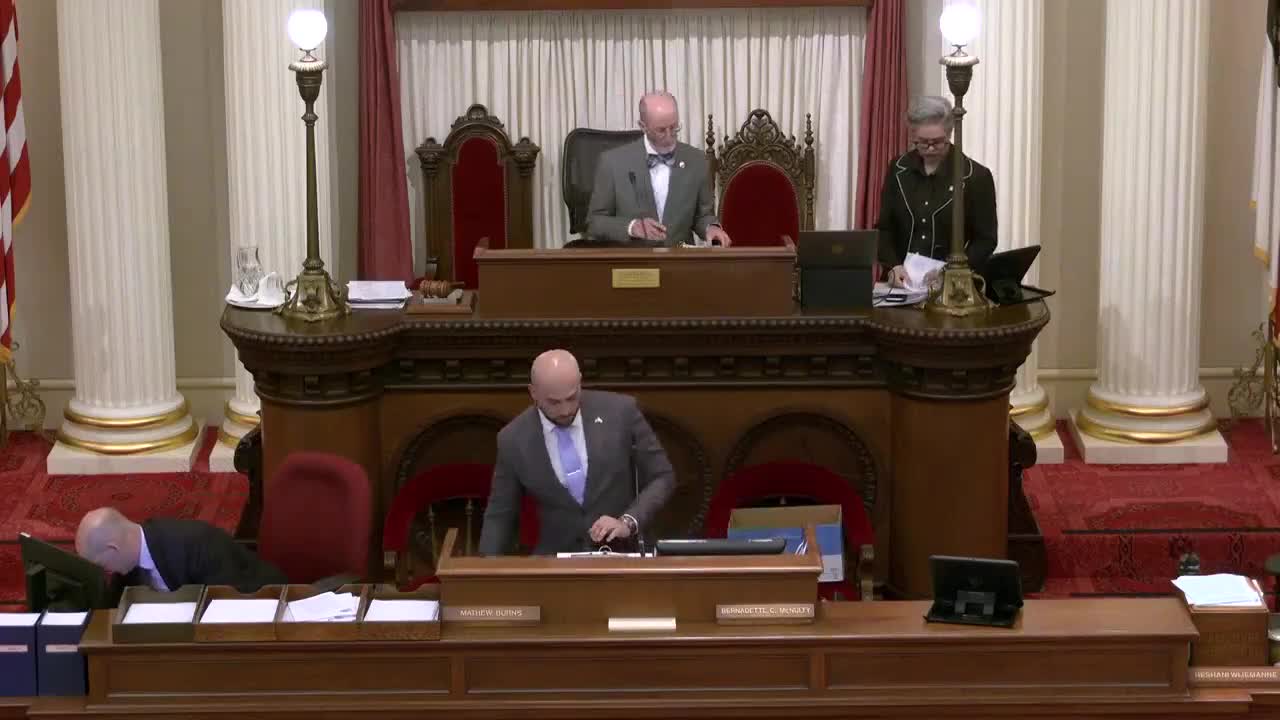
Bill Author
Bill Co-Author(s):