AB 2851: Metal shredding facilities: fence-line air quality monitoring.
- Session Year: 2023-2024
- House: Assembly
- Latest Version Date: 2024-09-27
Current Status:
Passed
(2024-09-27: Chaptered by Secretary of State - Chapter 743, Statutes of 2024.)
Introduced
In Committee
First Chamber
In Committee
Second Chamber
Enacted
What does this bill do?
The bill requires metal shredding facilities to do facilitywide fence‑line air quality and hazardous‑waste monitoring and to report the results to the state and local health agencies. Local air districts, working with the Department of Toxic Substances Control and the Office of Environmental Health Hazard Assessment, must set monitoring rules, health‑based threshold levels for contaminants (such as lead, zinc, cadmium, and nickel), actions to take if thresholds are exceeded, and community notification procedures. The Department of Toxic Substances Control must collect annual fees from metal shredders to cover its and OEHHA’s costs and must collect and analyze light fibrous material at fence lines.
The summary is provided by generative AI which can make mistakes. For original language, please view the details in the table below.
Existing law defines a fence-line monitoring system, for purposes of specified laws requiring the monitoring of toxic air contaminants from nonvehicular sources, to mean monitoring equipment that measures and records air pollutant concentrations at or adjacent to a stationary source that may be useful for detecting or estimating emissions of pollutants from the source, including the quantity of fugitive emissions, and in supporting enforcement efforts.
Existing law requires the Department of Toxic Substances Control to adopt, and revise when appropriate, standards and regulations for the management of hazardous wastes to protect against hazards to the public health, to domestic livestock, to wildlife, or to the environment, including the operation of metal shredding facilities for appliance recycling. Existing law authorizes the department to collect an annual fee from all metal shredding facilities that are subject to the requirements of the hazardous waste control laws, and to deposit those fees into a subaccount in the Hazardous Waste Control Account. Existing law makes those moneys available to the department, upon appropriation by the Legislature, to reimburse the departments costs to implement the hazardous waste control laws applicable to metal shredding facilities.
Existing law establishes the State Air Resources Board as the state agency with primary jurisdiction over the regulation of air pollution. Existing law generally designates air pollution control districts and air quality management districts with the primary responsibility for the control of air pollution from all sources other than vehicular sources.
This bill would require, instead of authorize, the department to collect the above-described annual fee from all metal shredding facilities that are subject to the requirements of the hazardous waste control laws, and would require the department to set the fee schedule at a rate sufficient to also reimburse the Office of Environmental Health Hazard Assessment for its costs to implement these provisions, as provided. The bill would make the moneys in the subaccount additionally available, upon appropriation by the Legislature, to the office for its costs to implement these provisions, as provided. The bill would require an air district the jurisdiction of which includes metal shredding facilities, in consultation with the department and the office, on or before January 1, 2027, to develop requirements for facilitywide fence-line air quality monitoring at metal shredding facilities, as provided. The bill would require the air district to, among other things, develop threshold levels, in consultation with the office, for airborne contaminants, as specified, and, on or before July 1, 2027, to adopt regulations to implement, interpret, or make specific the requirements of the bill. The bill would authorize the air district to be reimbursed for these costs pursuant to its fee authority. The bill would require the department to require metal shredding facilities to monitor and report to the department hazardous waste constituents requested by the department and would authorize metal shredding facilities to report the results of that monitoring to local public health departments, as provided. The bill would also require the department to collect and analyze light fibrous material at the fence lines to determine the potential for release of hazardous waste. The bill would require the department, on or before July 1, 2027, to develop a community notification procedure, as provided. By imposing new duties on air districts and local public health departments, the bill would impose a state-mandated local program.
The California Constitution requires the state to reimburse local agencies and school districts for certain costs mandated by the state. Statutory provisions establish procedures for making that reimbursement.
This bill would provide that with regard to certain mandates no reimbursement is required by this act for a specified reason.
With regard to any other mandates, this bill would provide that, if the Commission on State Mandates determines that the bill contains costs so mandated by the state, reimbursement for those costs shall be made pursuant to the statutory provisions noted above.
Existing law defines a fence-line monitoring system, for purposes of specified laws requiring the monitoring of toxic air contaminants from nonvehicular sources, to mean monitoring equipment that measures and records air pollutant concentrations at or adjacent to a stationary source that may be useful for detecting or estimating emissions of pollutants from the source, including the quantity of fugitive emissions, and in supporting enforcement efforts.
Existing law requires the Department of Toxic Substances Control to adopt, and revise when appropriate, standards and regulations for the management of hazardous wastes to protect against hazards to the public health, to domestic livestock, to wildlife, or to the environment, including the operation of metal shredding facilities for appliance recycling. Existing law authorizes the department to collect an annual fee from all metal shredding facilities that are subject to the requirements of the hazardous waste control laws, and to deposit those fees into a subaccount in the Hazardous Waste Control Account. Existing law makes those moneys available to the department, upon appropriation by the Legislature, to reimburse the departments costs to implement the hazardous waste control laws applicable to metal shredding facilities. Existing law exempts a metal shredding facility that pays this annual fee from specified other hazardous waste fees.
Existing law establishes the State Air Resources Board as the state agency with primary jurisdiction over the regulation of air pollution. Existing law generally designates air pollution control districts and air quality management districts with the primary responsibility for the control of air pollution from all sources other than vehicular sources.
This bill would require, instead of authorize, the department to collect the above-described annual fee from all metal shredding facilities that are subject to the requirements of the hazardous waste control laws, and would require the department to set the fee schedule at a rate sufficient to also reimburse the Office of Environmental Health Hazard Assessment for its costs to implement certain provisions of the bill described below, these provisions, as provided. The bill would make the moneys in the subaccount additionally available, upon appropriation by the Legislature, to the office for its costs to implement certain provisions of the bill described below. The bill would revise the exemptions for those metal shredding facilities from other hazardous waste fees described above. these provisions, as provided. The bill would require an air district the jurisdiction of which includes metal shredding facilities, in consultation with the department and the office, on or before January 1, 2027, to develop requirements for facilitywide fence line air quality monitoring at metal shredding facilities, as provided. The bill would require the air district to, among other things, develop threshold levels, in consultation with the office, for airborne contaminants, as specified, and, on or before July 1, 2027, to adopt regulations to implement, interpret, or make specific the requirements of the bill. The bill would authorize the air district to be reimbursed for these costs pursuant to its fee authority. The bill would require the department to require metal shredding facilities to monitor and report to the department hazardous waste constituents requested by the department and authorize metal shredding facilities to report the results of that monitoring to local public health departments, as provided. The bill would also require the department to collect and analyze light fibrous material at the fence lines to determine the potential for release of hazardous waste. The bill would require the department, on or before July 1, 2027, to develop community notification procedures, as provided. By imposing new duties on air districts and local public health departments, the bill would impose a state-mandated local program.
The California Constitution requires the state to reimburse local agencies and school districts for certain costs mandated by the state. Statutory provisions establish procedures for making that reimbursement.
This bill would provide that with regard to certain mandates no reimbursement is required by this act for a specified reason.
With regard to any other mandates, this bill would provide that, if the Commission on State Mandates determines that the bill contains costs so mandated by the state, reimbursement for those costs shall be made pursuant to the statutory provisions noted above.
Existing law defines a fence-line monitoring system, for purposes of specified laws requiring the monitoring of toxic air contaminants from nonvehicular sources, to mean monitoring equipment that measures and records air pollutant concentrations at or adjacent to a stationary source that may be useful for detecting or estimating emissions of pollutants from the source, including the quantity of fugitive emissions, and in supporting enforcement efforts.
Existing law requires the Department of Toxic Substances Control to adopt, and revise when appropriate, standards and regulations for the management of hazardous wastes to protect against hazards to the public health, to domestic livestock, to wildlife, or to the environment, including the operation of metal shredding facilities for appliance recycling. Existing law authorizes the department to collect an annual fee from all metal shredding facilities that are subject to the requirements of the hazardous waste control laws, and to deposit those fees into a subaccount in the Hazardous Waste Control Account. Existing law makes those moneys available to the department, upon appropriation by the Legislature, to reimburse the departments costs to implement the hazardous waste control laws applicable to metal shredder shredding facilities. Existing law exempts a metal shredding facility that pays this annual fee from specified other hazardous waste fees.
Existing law establishes the State Air Resources Board as the state agency with primary jurisdiction over the regulation of air pollution. Existing law generally designates air pollution control districts and air quality management districts with the primary responsibility for the control of air pollution from all sources other than vehicular sources.
This bill would require, instead of authorize, the department to collect the above-described annual fee from all metal shredding facilities that are subject to the requirements of the hazardous waste control laws, and would require the department to set the fee schedule at a rate sufficient to also reimburse the Office of Environmental Health Hazard Assessment for its costs to implement certain provisions of the bill described below, as provided. The bill would make the moneys in the subaccount additionally available, upon appropriation by the Legislature, to the office for its costs to implement certain provisions of the bill described below. The bill would revise the exemptions for those metal shredding facilities from other hazardous waste fees described above. The bill would require, on or before January 1, 2027, require an air district the jurisdiction of which includes metal shredding facilities, in consultation with the department and the Office of Environmental Health Hazard Assessment, office, on or before January 1, 2027, to develop requirements for facilitywide fence line air quality monitoring at metal shredding facilities, as provided. The bill would require an the air district to to, among other things, develop threshold levels, in consultation with the office, for airborne contaminants, as specified, and, on or before July 1, 2027, to adopt regulations to implement, interpret, or make specific the requirements of the bill. The bill would authorize the air district to be reimbursed for these costs pursuant to its fee authority. The bill would require the department to require metal shredding facilities to monitor and report to the department hazardous waste constituents requested by the department. department and authorize metal shredding facilities to report the results of that monitoring to local public health departments, as provided. The bill would also require the department to collect and analyze light fibrous material at the fence lines to determine the potential for release of hazardous waste. The bill would require the department, on or before July 1, 2027, and the air districts to develop community notification procedures, as provided. The bill would authorize the department, and require the air districts to require metal shredding facilities, to report the results of monitoring to local public health departments, as provided. The bill would also authorize any reasonable regulatory costs incurred by the air districts, the department, or the office in implementing the bills requirements to be reimbursed from the revenues from the above-described annual fee. By imposing new duties on air districts and local public health departments, the bill would impose a state-mandated local program.
The California Constitution requires the state to reimburse local agencies and school districts for certain costs mandated by the state. Statutory provisions establish procedures for making that reimbursement.This bill would provide that, if the Commission on State Mandates determines that the bill contains costs mandated by the state, reimbursement for those costs shall be made pursuant to the statutory provisions noted above.The California Constitution requires the state to reimburse local agencies and school districts for certain costs mandated by the state. Statutory provisions establish procedures for making that reimbursement.
This bill would provide that with regard to certain mandates no reimbursement is required by this act for a specified reason.
With regard to any other mandates, this bill would provide that, if the Commission on State Mandates determines that the bill contains costs so mandated by the state, reimbursement for those costs shall be made pursuant to the statutory provisions noted above.
Existing law defines a fence-line monitoring system, for purposes of specified laws requiring the monitoring of toxic air contaminants from nonvehicular sources, to mean monitoring equipment that measures and records air pollutant concentrations at or adjacent to a stationary source that may be useful for detecting or estimating emissions of pollutants from the source, including the quantity of fugitive emissions, and in supporting enforcement efforts.
Existing law requires the Department of Toxic Substances Control to adopt, and revise when appropriate, standards and regulations for the management of hazardous wastes to protect against hazards to the public health, to domestic livestock, to wildlife, or to the environment, including the operation of metal shredding facilities for appliance recycling. Existing law authorizes the department to collect an annual fee from all metal shredding facilities that are subject to the requirements of the hazardous waste control laws, and to deposit those fees into a subaccount in the Hazardous Waste Control Account. Existing law makes those moneys available to the department, upon appropriation by the Legislature, to reimburse the departments costs to implement the hazardous waste control laws applicable to metal shredder facilities. Existing law exempts a metal shredding facility that pays this annual fee from specified other hazardous waste fees.
Existing law establishes the State Air Resources Board as the state agency with primary jurisdiction over the regulation of air pollution. Existing law generally designates air pollution control districts and air quality management districts with the primary responsibility for the control of air pollution from all sources other than vehicular sources.
This bill would require, instead of authorize, the department to collect the above-described annual fee from all metal shredding facilities that are subject to the requirements of the hazardous waste control laws, as provided. The bill would require, on or before July 1, 2025, the department, in consultation with affected local air pollution control and air quality management districts, to develop requirements for facilitywide fence-line air quality monitoring at metal shredding facilities. Those requirements would include, among other things, monitoring light fibrous material, lead, zinc, cadmium, and any other substance required to be monitored by the department, and a requirement that, if the monitoring indicates a potential adverse impact on air quality or public health, the local public health department issue a community notification, as provided. The bill would also require all metal shredding facilities that are subject to the hazardous waste control laws to implement the fence-line air quality monitoring requirements. The bill would require the department to oversee and enforce the implementation of the fence-line air quality monitoring requirements on or before December 31, 2025. The bill would revise the exemptions for those metal shredding facilities from other hazardous waste fees described above. The bill would require, on or before January 1, 2027, an air district the jurisdiction of which includes metal shredding facilities, in consultation with the department and the Office of Environmental Health Hazard Assessment, to develop requirements for facilitywide fence line air quality monitoring at metal shredding facilities, as provided. The bill would require an air district to develop threshold levels, in consultation with the office, for airborne contaminants, as specified, and, on or before July 1, 2027, to adopt regulations to implement, interpret, or make specific the requirements of the bill. The bill would require the department to require metal shredding facilities to monitor and report to the department hazardous waste constituents requested by the department. The bill would also require the department to collect and analyze light fibrous material at the fence lines to determine the potential for release of hazardous waste. The bill would require the department, on or before July 1, 2027, and the air districts to develop community notification procedures, as provided. The bill would authorize the department, and require the air districts to require metal shredding facilities, to report the results of monitoring to local public health departments, as provided. The bill would also authorize any reasonable regulatory costs incurred by the department air districts, the department, or the office in implementing the bills requirements to be reimbursed from the subaccount in the Hazardous Waste Control Account. revenues from the above-described annual fee. By imposing new duties on local public health departments, the bill would impose a state-mandated local program.
The California Constitution requires the state to reimburse local agencies and school districts for certain costs mandated by the state. Statutory provisions establish procedures for making that reimbursement.
This bill would provide that, if the Commission on State Mandates determines that the bill contains costs mandated by the state, reimbursement for those costs shall be made pursuant to the statutory provisions noted above.
Existing law defines a fence-line monitoring system, for purposes of specified laws requiring the monitoring of toxic air contaminants from nonvehicular sources, to mean monitoring equipment that measures and records air pollutant concentrations at or adjacent to a stationary source that may be useful for detecting or estimating emissions of pollutants from the source, including the quantity of fugitive emissions, and in supporting enforcement efforts.
Existing law requires the Department of Toxic Substances Control to adopt, and revise when appropriate, standards and regulations for the management of hazardous wastes to protect against hazards to the public health, to domestic livestock, to wildlife, or to the environment, including the operation of metal shredding facilities for appliance recycling. Existing law authorizes the department to collect an annual fee from all metal shredding facilities that are subject to the requirements of the hazardous waste control laws, and to deposit those fees into a subaccount in the Hazardous Waste Control Account. Existing law makes those moneys available to the department, upon appropriation by the Legislature, to reimburse the departments costs to implement the hazardous waste control laws applicable to metal shredder facilities.
This bill would require, instead of authorize, the department to collect the above-described annual fee from all metal shredding facilities that are subject to the requirements of the hazardous waste control laws, as provided. The bill would require, on or before July 1, 2025, the department, in consultation with affected local air pollution control and air quality management districts, to develop requirements for facilitywide fenceline fence-line air quality monitoring at metal shredding facilities. Those requirements would include, among other things, monitoring light fibrous material, lead, zinc, cadmium, and any other substance required to be monitored by the department, and a requirement that, if the monitoring indicates a potential adverse impact on air quality or public health, the local public health department issue a community notification, as provided. The bill would also require all metal shredding facilities that are subject to the hazardous waste control laws to implement the fenceline fence-line air quality monitoring requirements. The bill would require the department to oversee and enforce the implementation of the fenceline fence-line air quality monitoring requirements on or before December 31, 2025. The bill would also authorize any regulatory costs incurred by the department in implementing the bills requirements to be reimbursed from the subaccount in the Hazardous Waste Control Account. By imposing new duties on local public health departments, the bill would impose a state-mandated local program.
The California Constitution requires the state to reimburse local agencies and school districts for certain costs mandated by the state. Statutory provisions establish procedures for making that reimbursement.
This bill would provide that, if the Commission on State Mandates determines that the bill contains costs mandated by the state, reimbursement for those costs shall be made pursuant to the statutory provisions noted above.
Existing law defines a fence-line monitoring system, for purposes of specified laws requiring the monitoring of toxic air contaminants from nonvehicular sources, to mean monitoring equipment that measures and records air pollutant concentrations at or adjacent to a stationary source that may be useful for detecting or estimating emissions of pollutants from the source, including the quantity of fugitive emissions, and in supporting enforcement efforts.
Existing law requires the Department of Toxic Substances Control to adopt, and revise when appropriate, standards and regulations for the management of hazardous wastes to protect against hazards to the public health, to domestic livestock, to wildlife, or to the environment, including the operation of metal shredding facilities for appliance recycling. Existing law authorizes the department to collect an annual fee from all metal shredding facilities that are subject to the requirements of the hazardous waste control laws, and to deposit those fees into a subaccount in the Hazardous Waste Control Account. Existing law makes those moneys available to the department, upon appropriation by the Legislature, to reimburse the departments costs to implement the hazardous waste control laws applicable to metal shredder facilities.
This bill would require, on or before July 1, 2025, the department, in consultation with the state board and affected local air pollution control and air quality management districts, to develop standards requirements for facilitywide fenceline air quality monitoring at metal shredding facilities. The bill would require the standards to require monitoring of specified substances, such as lead and zinc. facilities. Those requirements would include, among other things, monitoring light fibrous material, lead, zinc, cadmium, and any other substance required to be monitored by the department, and a requirement that, if the monitoring indicates a potential adverse impact on air quality or public health, the local public health department issue a community notification, as provided. The bill would also require each local public health department to issue a community notification regarding the adverse impacts on air quality and public health as a result of the operation of metal shredding facilities in that jurisdiction, as provided, and to provide a biannual assessment to the local governmental entity for the jurisdiction in which the metal shredding facility is located. all metal shredding facilities that are subject to the hazardous waste control laws to implement the fenceline air quality monitoring requirements. The bill would require the department to ensure the successful oversee and enforce the implementation of those the fenceline air quality monitoring standards requirements on or before December 31, 2025. The bill would also authorize any regulatory costs incurred by the department in implementing the bills requirements to be reimbursed from the subaccount in the Hazardous Waste Control Account. By imposing new duties on local public health departments, the bill would impose a state-mandated local program.
The California Constitution requires the state to reimburse local agencies and school districts for certain costs mandated by the state. Statutory provisions establish procedures for making that reimbursement.
This bill would provide that, if the Commission on State Mandates determines that the bill contains costs mandated by the state, reimbursement for those costs shall be made pursuant to the statutory provisions noted above.
Existing law imposes various limitations on emissions of air contaminants for the control of air pollution from vehicular and nonvehicular sources. Existing law generally designates the State Air Resources Board as the state agency with the primary responsibility for the control of vehicular air pollution and air pollution control and air quality management districts with the primary responsibility for the control of air pollution from all sources other than vehicular sources.
Existing law defines a fence-line monitoring system, for purposes of specified laws requiring the monitoring of toxic air contaminants from nonvehicular sources, to mean monitoring equipment that measures and records air pollutant concentrations at or adjacent to a stationary source that may be useful for detecting or estimating emissions of pollutants from the source, including the quantity of fugitive emissions, and in supporting enforcement efforts.
This bill would express the intent of the Legislature to enact future legislation that would establish a fence-line monitoring standard for all metal shredding facilities in this state.Existing law requires the Department of Toxic Substances Control to adopt, and revise when appropriate, standards and regulations for the management of hazardous wastes to protect against hazards to the public health, to domestic livestock, to wildlife, or to the environment, including the operation of metal shredding facilities for appliance recycling.
This bill would require, on or before July 1, 2025, the department, in consultation with the state board and affected local air pollution control and air quality management districts, to develop standards for facilitywide fenceline air quality monitoring at metal shredding facilities. The bill would require the standards to require monitoring of specified substances, such as lead and zinc. The bill would also require each local public health department to issue a community notification regarding the adverse impacts on air quality and public health as a result of the operation of metal shredding facilities in that jurisdiction, as provided, and to provide a biannual assessment to the local governmental entity for the jurisdiction in which the metal shredding facility is located. The bill would require the department to ensure the successful implementation of those fenceline air quality monitoring standards on or before December 31, 2025. By imposing new duties on local public health departments, the bill would impose a state-mandated local program.
The California Constitution requires the state to reimburse local agencies and school districts for certain costs mandated by the state. Statutory provisions establish procedures for making that reimbursement.
This bill would provide that, if the Commission on State Mandates determines that the bill contains costs mandated by the state, reimbursement for those costs shall be made pursuant to the statutory provisions noted above.
Existing law imposes various limitations on emissions of air contaminants for the control of air pollution from vehicular and nonvehicular sources. Existing law generally designates the State Air Resources Board as the state agency with the primary responsibility for the control of vehicular air pollution and air pollution control and air quality management districts with the primary responsibility for the control of air pollution from all sources other than vehicular sources.
Existing law defines a fence-line monitoring system, for purposes of specified laws requiring the monitoring of toxic air contaminants from nonvehicular sources, to mean monitoring equipment that measures and records air pollutant concentrations at or adjacent to a stationary source that may be useful for detecting or estimating emissions of pollutants from the source, including the quantity of fugitive emissions, and in supporting enforcement efforts.
This bill would express the intent of the Legislature to enact future legislation that would establish a fence-line monitoring standard for all metal shredding facilities in this state.
(a)The department shall collect an annual fee from all metal shredding facilities that are subject to the requirements of this chapter or to the alternative management standards adopted pursuant to Section 25150.82. The department shall establish and adopt regulations necessary to administer this fee and to establish a fee schedule that is set at a rate sufficient to reimburse the costs of the department and the Office of Environmental Health Hazard Assessment to implement this chapter and Section 41514.6, as applicable to metal shredding facilities. The fee schedule established by the department may be updated periodically as necessary and shall provide for the assessment of no more than the reasonable and necessary costs of the department and the Office of Environmental Health Hazard Assessment to implement this chapter and Section 41514.6, as applicable to metal shredding facilities.
(b)The Controller shall establish a separate subaccount in the Hazardous Waste Control Account. The fees collected pursuant to this section shall be deposited into the subaccount and be available for expenditure by the department or Office of Environmental Health Hazard Assessment upon appropriation by the Legislature.
(c)A regulation adopted pursuant to this section may be adopted as an emergency regulation in accordance with Chapter 3.5 (commencing with Section 11340) of Part 1 of Division 3 of Title 2 of the Government Code, and for the purposes of that chapter, including Section 11349.6 of the Government Code, the adoption of these regulations is an emergency and shall be considered by the Office of Administrative Law as necessary for the immediate preservation of the public peace, health, safety, and general welfare. Notwithstanding Chapter 3.5 (commencing with Section 11340) of Part 1 of Division 3 of Title 2 of the Government Code, an emergency regulation adopted by the department pursuant to this section shall be filed with, but not be repealed by, the Office of Administrative Law and shall remain in effect for a period of two years or until revised by the department, whichever occurs sooner.
(d)(1)A metal shredding facility paying an annual fee in accordance with this section shall be exempt from the following fees as the fees pertain to metal shredding activities and the generation, handling, management, transportation, and disposal of metal shredder waste:
(A)A fee imposed pursuant to Section 25205.7.
(B)A disposal fee imposed pursuant to Section 25174.1 until July 1, 2022.
(C)A facility fee imposed pursuant to Section 25205.2.
(D)A fee imposed pursuant to Section 25205.5.
(E)A transportable treatment unit fee imposed pursuant to Section 25205.14 until July 1, 2022, and Section 25205.2 on and after July 1, 2022.
(2)A metal shredding facility is not exempt from the fees listed in paragraph (1) for any other hazardous waste the metal shredding facility generates and handles.
SEC. 2.Section 25150.87 is added to the Health and Safety Code, to read:25150.87.(a)(1)The department shall require metal shredding facilities to do both of the following:
(A)Monitor hazardous waste constituents requested by the department.
(B)Report the results of the monitoring required pursuant to subparagraph (A) to the department. The facilities may also report those results to the local public health department.
(2)The department shall collect and analyze light fibrous material at the fence lines to determine the potential for release of hazardous waste.
(b)All metal shredding facilities subject to this section shall implement the facilitywide fence-line hazardous waste constituent monitoring requirements developed pursuant to this section.
(c)On or before July 1, 2027, the department shall develop a procedure for community notification of the public for the area in which the metal shredding facility is located, if monitoring pursuant to paragraph (1) of subdivision (a) indicates any release of light fibrous material.
(d)On or before January 1, 2027, the department shall develop regulations to implement, interpret, or make specific this section.
(e)The department shall oversee and enforce the implementation of subdivision (a) pursuant to Article 8 (commencing with Section 25180).
(f)Any reasonable regulatory costs incurred by the department in implementing this section may be reimbursed by the fee on metal shredding facilities imposed pursuant to subdivision (a) of Section 25150.84.
SEC. 3.Section 41514.6 is added to the Health and Safety Code, to read:41514.6.(a)On or before January 1, 2027, a district the jurisdiction of which includes metal shredding facilities, in consultation with the Department of Toxic Substances Control and the Office of Environmental Health Hazard Assessment, shall develop requirements for facilitywide fence-line air quality monitoring at metal shredding facilities, as defined in Section 25150.82, that are subject to Section 25150.84 and this section.
(b)The requirements developed pursuant to subdivision (a) shall include, but not be limited to, all of the following:
(1)Development of threshold levels, in consultation with the Office of Environmental Health Hazard Assessment, for airborne contaminants, including, but not limited to, lead, zinc, cadmium, and nickel, at the fence lines of metal shredding facilities that are protective of air quality and public health. The threshold levels shall follow health guidance values adopted by the Office of Environmental Health Hazard Assessment, if available.
(2)Development of threshold levels for community notification of potential adverse impact on public health based on the threshold values developed pursuant to paragraph (1).
(3)Development of actions, in consultation with the Department of Toxic Substances Control, to be taken by metal shredding facilities if threshold levels developed pursuant to paragraph (1) are exceeded, and a method of enforcing those actions.
(4)Development of community notification procedures to inform the public in areas in which the metal shredding facility is located, if the monitoring required pursuant to this subdivision indicates the threshold levels developed pursuant to paragraph (2) were exceeded.
(5)Reporting the results of the monitoring required pursuant to this subdivision to the district and the local public health department.
(c)All metal shredding facilities subject to this section shall implement the facilitywide fence-line air quality monitoring developed pursuant to this section.
(d)On or before July 1, 2027, a district the jurisdiction of which includes metal shredding facilities shall adopt regulations to implement, interpret, or make specific the requirements pursuant to this section.
(e)A district the jurisdiction of which includes metal shredding facilities shall oversee and enforce the compliance of metal shredding facilities with regulations adopted pursuant to subdivision (d).
(f)Any reasonable regulatory costs incurred by a district in implementing this section may be reimbursed pursuant to its fee authority.
(g)The Office of Environmental Health Hazard Assessments costs to implement this section shall be reimbursed from the subaccount established in the Hazardous Waste Control Account pursuant to Section 25150.84.
SEC. 4.No reimbursement is required by this act pursuant to Section 6 of Article XIII B of the California Constitution for certain costs because a local agency or school district has the authority to levy service charges, fees, or assessments sufficient to pay for the program or level of service mandated by this act, within the meaning of Section 17556 of the Government Code.
However, if the Commission on State Mandates determines that this act contains other costs mandated by the state, reimbursement to local agencies and school districts for those costs shall be made pursuant to Part 7 (commencing with Section 17500) of Division 4 of Title 2 of the Government Code.
(a)The department shall collect an annual fee from all metal shredding facilities that are subject to the requirements of this chapter or to the alternative management standards adopted pursuant to Section 25150.82. The department shall establish and adopt regulations necessary to administer this fee and to establish a fee schedule that is set at a rate sufficient to reimburse the departments costs to implement this chapter, and the Office of Environmental Health Hazard Assessments costs to implement costs of the department and the Office of Environmental Health Hazard Assessment to implement this chapter and Section 41514.6, as applicable to metal shredding facilities. The fee schedule established by the department may be updated periodically as necessary and shall provide for the assessment of no more than the reasonable and necessary costs of the department and the Office of Environmental Health Hazard Assessment to implement this chapter, and the Office of Environmental Health Hazard Assessments costs to implement chapter and Section 41514.6, as applicable to metal shredding facilities.
(b)The Controller shall establish a separate subaccount in the Hazardous Waste Control Account. The fees collected pursuant to this section shall be deposited into the subaccount and be available for expenditure by the department or Office of Environmental Health Hazard Assessment upon appropriation by the Legislature.
(c)A regulation adopted pursuant to this section may be adopted as an emergency regulation in accordance with Chapter 3.5 (commencing with Section 11340) of Part 1 of Division 3 of Title 2 of the Government Code, and for the purposes of that chapter, including Section 11349.6 of the Government Code, the adoption of these regulations is an emergency and shall be considered by the Office of Administrative Law as necessary for the immediate preservation of the public peace, health, safety, and general welfare. Notwithstanding Chapter 3.5 (commencing with Section 11340) of Part 1 of Division 3 of Title 2 of the Government Code, an emergency regulation adopted by the department pursuant to this section shall be filed with, but not be repealed by, the Office of Administrative Law and shall remain in effect for a period of two years or until revised by the department, whichever occurs sooner.
(d)(1)A metal shredding facility paying an annual fee in accordance with this section shall be exempt from both of the following fees as the fees pertain to metal shredding activities and the generation, handling, management, transportation, and disposal of metal shredder waste:
(A)A fee imposed pursuant to Section 25205.7.
(B)A disposal fee imposed pursuant to Section 25174.1 until July 1, 2022.
(B)(C)A facility fee imposed pursuant to Sections 25205.2.1 and 25205.17 to 25205.21, inclusive. Section 25205.2.
(D)A fee imposed pursuant to Section 25205.5.
(E)A transportable treatment unit fee imposed pursuant to Section 25205.14 until July 1, 2022, and Section 25205.2 on and after July 1, 2022.
(2)A metal shredding facility is not exempt from the fees listed in paragraph (1) for any other hazardous waste the metal shredding facility generates and handles.
SEC. 2.Section 25150.87 is added to the Health and Safety Code, to read:25150.87.(a)(1)The department shall require metal shredding facilities to do both of the following:
(A)Monitor hazardous waste constituents requested by the department.
(B)Report the results of the monitoring required pursuant to subparagraph (A) to the department. The facilities may also report those results to the local public health department.
(2)The department shall collect and analyze light fibrous material at the fence lines to determine the potential for release of hazardous waste.
(b)All metal shredding facilities subject to this section shall implement the facilitywide fence-line hazardous waste constituent monitoring requirements developed pursuant to this section.
(c)On or before July 1, 2027, the department shall develop a procedure for community notification of the public for the area in which the metal shredding facility is located, if monitoring pursuant to paragraph (1) of subdivision (a) indicates any release of light fibrous material.
(d)On or before January 1, 2027, the department shall develop regulations to implement, interpret, or make specific this section.
(e)The department shall oversee and enforce the implementation of subdivision (a) pursuant to Article 8 (commencing with Section 25180).
(f)Any reasonable regulatory costs incurred by the department in implementing this section may be reimbursed by the fee on metal shredding facilities imposed pursuant to subdivision (a) of Section 25150.84.
SEC. 3.Section 41514.6 is added to the Health and Safety Code, to read:41514.6.(a)On or before January 1, 2027, a district the jurisdiction of which includes metal shredding facilities, in consultation with the Department of Toxic Substances Control and the Office of Environmental Health Hazard Assessment, shall develop requirements for facilitywide fence-line air quality monitoring at metal shredding facilities, as defined in Section 25150.82, that are subject to Section 25150.84 and this section.
(b)The requirements developed pursuant to subdivision (a) shall include, but not be limited to, all of the following:
(1)Development of threshold levels, in consultation with the Office of Environmental Health Hazard Assessment, for airborne contaminants, including, but not limited to, lead, zinc, cadmium, and nickel, at the fence lines of metal shredding facilities that are protective of air quality and public health. The threshold levels shall follow health guidance values adopted by the Office of Environmental Health Hazard Assessment, if available.
(2)Development of threshold levels for community notification of potential adverse impact on public health based on the threshold values developed pursuant to paragraph (1).
(3)Development of actions, in consultation with the Department of Toxic Substances Control, to be taken by metal shredding facilities if threshold levels developed pursuant to paragraph (1) are exceeded, and a method of enforcing those actions.
(4)Development of community notification procedures to inform the public in areas in which the metal shredding facility is located, if the monitoring required pursuant to this subdivision indicates the threshold levels developed pursuant to paragraph (2) were exceeded.
(5)Reporting the results of the monitoring required pursuant to this subdivision to the district and the local public health department.
(c)All metal shredding facilities subject to this section shall implement the facilitywide fence-line air quality monitoring developed pursuant to this section.
(d)On or before July 1, 2027, a district the jurisdiction of which includes metal shredding facilities shall adopt regulations to implement, interpret, or make specific the requirements pursuant to this section.
(e)A district the jurisdiction of which includes metal shredding facilities shall oversee and enforce the compliance of metal shredding facilities with regulations adopted pursuant to subdivision (d).
(f)Any reasonable regulatory costs incurred by a district in implementing this section may be reimbursed pursuant to its fee authority.
(g)The Office of Environmental Health Hazard Assessments costs to implement this section shall be reimbursed from the subaccount established in the Hazardous Waste Control Account pursuant to Section 25150.84.
SEC. 4.No reimbursement is required by this act pursuant to Section 6 of Article XIII B of the California Constitution for certain costs because a local agency or school district has the authority to levy service charges, fees, or assessments sufficient to pay for the program or level of service mandated by this act, within the meaning of Section 17556 of the Government Code.
However, if the Commission on State Mandates determines that this act contains other costs mandated by the state, reimbursement to local agencies and school districts for those costs shall be made pursuant to Part 7 (commencing with Section 17500) of Division 4 of Title 2 of the Government Code.
(a)The department shall collect an annual fee from all metal shredding facilities that are subject to the requirements of this chapter or to the alternative management standards adopted pursuant to Section 25150.82. The department shall establish and adopt regulations necessary to administer this fee and to establish a fee schedule that is set at a rate sufficient to reimburse the departments costs to implement this chapter chapter, and the Office of Environmental Health Hazard Assessments costs to implement Section 41514.6, as applicable to metal shredder shredding facilities. The fee schedule established by the department may be updated periodically as necessary and shall provide for the assessment of no more than the reasonable and necessary costs of the department to implement this chapter, and the Office of Environmental Health Hazard Assessments costs to implement Section 41514.6, as applicable to metal shredder shredding facilities.
(b)The Controller shall establish a separate subaccount in the Hazardous Waste Control Account. The fees collected pursuant to this section shall be deposited into the subaccount and be available for expenditure by the department or Office of Environmental Health Hazard Assessment upon appropriation by the Legislature.
(c)A regulation adopted pursuant to this section may be adopted as an emergency regulation in accordance with Chapter 3.5 (commencing with Section 11340) of Part 1 of Division 3 of Title 2 of the Government Code, and for the purposes of that chapter, including Section 11349.6 of the Government Code, the adoption of these regulations is an emergency and shall be considered by the Office of Administrative Law as necessary for the immediate preservation of the public peace, health, safety, and general welfare. Notwithstanding Chapter 3.5 (commencing with Section 11340) of Part 1 of Division 3 of Title 2 of the Government Code, an emergency regulation adopted by the department pursuant to this section shall be filed with, but not be repealed by, the Office of Administrative Law and shall remain in effect for a period of two years or until revised by the department, whichever occurs sooner.
(d)(1)A metal shredding facility paying an annual fee in accordance with this section shall be exempt from both of the following fees as the fees pertain to metal shredding activities and the generation, handling, management, transportation, and disposal of metal shredder waste:
(A)An environmental fee imposed pursuant to Sections 25205.6 and 25205.6.1.(B)A generation and handling fee imposed pursuant to Sections 25174.8, 25205.5, 25205.5.01, and 25205.22.(A)A fee imposed pursuant to Section 25205.7.
(C)(B)A facility fee imposed pursuant to Sections 25205.2.1 and 25205.17 to 25205.21, inclusive.
(D)A manifest reprocessing fee imposed pursuant to Section 25160.5.(2)A metal shredding facility is not exempt from the fees listed in paragraph (1) for any other hazardous waste the metal shredding facility generates and handles.
SEC. 2.Section 25150.87 is added to the Health and Safety Code, to read:25150.87.(a)(1)The department shall require metal shredding facilities to do both of the following:
(A)Monitor hazardous waste constituents requested by the department.
(B)Report the results of the monitoring required pursuant to subdivision (b) of Section 41514.6 subparagraph (A) to the department. The facilities may also report those results to the local public health department.
(2)The department shall collect and analyze light fibrous material at the fence lines to determine the potential for release of hazardous waste.
(b)All metal shredding facilities subject to this section shall implement the facilitywide fence-line air quality monitoring and light fibrous material hazardous waste constituent monitoring requirements developed pursuant to this section.
(c)On or before July 1, 2027, the department shall develop a procedure for community notification of the public for the area in which the metal shredding facility is located, if monitoring pursuant to paragraph (1) of subdivision (a) indicates any release of light fibrous material.
(d)On or before January 1, 2027, the department shall develop regulations to implement, interpret, or make specific this section.
(d)(e)The department shall oversee and enforce the implementation of subdivision (a) pursuant to Article 8 (commencing with Section 25180).
(e)(f)Any reasonable regulatory costs incurred by the department and the Office of Environmental Health Hazard Assessment in implementing this section may be reimbursed by the fee on metal shredding facilities imposed pursuant to subdivision (a) of Section 25150.84.
SEC. 3.Section 41514.6 is added to the Health and Safety Code, to read:41514.6.(a)On or before January 1, 2027, a district the jurisdiction of which includes metal shredding facilities, in consultation with the Department of Toxic Substances Control and the Office of Environmental Health Hazard Assessment, shall develop requirements for facilitywide fence-line air quality monitoring at metal shredding facilities, as defined in Section 25150.82, that are subject to Section 25150.84 and this section.
(b)The requirements developed pursuant to subdivision (a) shall include, but not be limited to, all of the following:
(1)Development of threshold levels, in consultation with the Office of Environmental Health Hazard Assessment, for airborne contaminants, including, but not limited to, lead, zinc, cadmium, and nickel, at the fence lines of metal shredding facilities that are protective of air quality and public health. The threshold levels shall follow health guidance values adopted by the Office of Environmental Health Hazard Assessment, if available.
(2)Development of threshold levels for community notification of potential adverse impact on public health. health based on the threshold values developed pursuant to paragraph (1).
(3)Development of actions, in consultation with the Department of Toxic Substances Control, to be taken by metal shredding facilities if threshold levels developed pursuant to paragraph (1) are exceeded, and a method of enforcing those actions.
(4)Development of community notification procedures to inform the public in areas in which the metal shredding facility is located, if the monitoring required pursuant to this subdivision indicates the threshold levels developed pursuant to paragraph (2) were exceeded.
(5)Reporting the results of the monitoring required pursuant to this subdivision to the district and the local public health department.
(c)All metal shredding facilities subject to this section shall implement the facilitywide fence-line air quality monitoring developed pursuant to this section.
(d)On or before July 1, 2027, a district whose the jurisdiction of which includes metal shredding facilities shall adopt regulations to implement, interpret, or make specific the requirements of Section 25150.84 and this section. pursuant to this section.
(e)A district the jurisdiction of which includes metal shredding facilities shall oversee and enforce the compliance of metal shredding facilities with regulations adopted pursuant to subdivision (d).
(f)Any reasonable regulatory costs incurred by a district in implementing this section may be reimbursed by the fee on metal shredding facilities imposed pursuant to subdivision (a) of Section 25150.84. pursuant to its fee authority.
(g)The Office of Environmental Health Hazard Assessments costs to implement this section shall be reimbursed from the subaccount established in the Hazardous Waste Control Account pursuant to Section 25150.84.
SEC. 4.If the Commission on State Mandates determines that this act contains costs mandated by the state, reimbursement to local agencies and school districts for those costs shall be made pursuant to Part 7 (commencing with Section 17500) of Division 4 of Title 2 of the Government Code.SEC. 4.No reimbursement is required by this act pursuant to Section 6 of Article XIII B of the California Constitution for certain costs because a local agency or school district has the authority to levy service charges, fees, or assessments sufficient to pay for the program or level of service mandated by this act, within the meaning of Section 17556 of the Government Code.
However, if the Commission on State Mandates determines that this act contains other costs mandated by the state, reimbursement to local agencies and school districts for those costs shall be made pursuant to Part 7 (commencing with Section 17500) of Division 4 of Title 2 of the Government Code.
(a)The department shall collect an annual fee from all metal shredding facilities that are subject to the requirements of this chapter or to the alternative management standards adopted pursuant to Section 25150.82. The department shall establish and adopt regulations necessary to administer this fee and to establish a fee schedule that is set at a rate sufficient to reimburse the departments costs to implement this chapter as applicable to metal shredder facilities. The fee schedule established by the department may be updated periodically as necessary and shall provide for the assessment of no more than the reasonable and necessary costs of the department to implement this chapter, as applicable to metal shredder facilities.
(b)The Controller shall establish a separate subaccount in the Hazardous Waste Control Account. The fees collected pursuant to this section shall be deposited into the subaccount and be available for expenditure by the department upon appropriation by the Legislature.
(c)A regulation adopted pursuant to this section may be adopted as an emergency regulation in accordance with Chapter 3.5 (commencing with Section 11340) of Part 1 of Division 3 of Title 2 of the Government Code, and for the purposes of that chapter, including Section 11349.6 of the Government Code, the adoption of these regulations is an emergency and shall be considered by the Office of Administrative Law as necessary for the immediate preservation of the public peace, health, safety, and general welfare. Notwithstanding Chapter 3.5 (commencing with Section 11340) of Part 1 of Division 3 of Title 2 of the Government Code, an emergency regulation adopted by the department pursuant to this section shall be filed with, but not be repealed by, the Office of Administrative Law and shall remain in effect for a period of two years or until revised by the department, whichever occurs sooner.
(d)(1)A metal shredding facility paying an annual fee in accordance with this section shall be exempt from the following fees as the fees pertain to metal shredding activities and the generation, handling, management, transportation, and disposal of metal shredder waste:
(A)A fee imposed pursuant to Section 25205.7.(B)A disposal fee imposed pursuant to Section 25174.1 until July 1, 2022.(C)A facility fee imposed pursuant to Section 25205.2.(D)A fee imposed pursuant to Section 25205.5.(E)A transportable treatment unit fee imposed pursuant to Section 25205.14 until July 1, 2022, and Section 25205.2 on and after July 1, 2022.(A)An environmental fee imposed pursuant to Sections 25205.6 and 25205.6.1.
(B)A generation and handling fee imposed pursuant to Sections 25174.8, 25205.5, 25205.5.01, and 25205.22.
(C)A facility fee imposed pursuant to Sections 25205.2.1 and 25205.17 to 25205.21, inclusive.
(D)A manifest reprocessing fee imposed pursuant to Section 25160.5.
(2)A metal shredding facility is not exempt from the fees listed in paragraph (1) for any other hazardous waste the metal shredding facility generates and handles.
SEC. 2.Section 25150.87 is added to the Health and Safety Code, to read:25150.87.(a)On or before July 1, 2025, the department, in consultation with affected local air pollution control and air quality management districts, shall develop requirements for facilitywide fence-line air quality monitoring at metal shredding facilities, as defined in Section 25150.82, that are subject to this chapter.(b)The requirements developed pursuant to subdivision (a) shall include, but not be limited to, all of the following:(1)Monitoring of light fibrous material, lead, zinc, cadmium, nickel, and any other substance required to be monitored by the department.(2)Monitoring at prescribed frequencies of substances monitored pursuant to paragraph (1).(3)Reporting on the results of the monitoring required pursuant to this subdivision to the department, the local air district or local air quality management district, and the local public health department.(4)If the monitoring required pursuant to this subdivision indicates a potential adverse impact on air quality or public health, requiring the local public health department to issue a community notification to the public for the area in which the metal shredding facility is located that informs the public that the facility is causing the potential adverse impact on air quality or public health.(c)All metal shredding facilities subject to this chapter shall implement the facilitywide fence-line air quality monitoring requirements developed pursuant to this section.(d)The department shall oversee and enforce the implementation of the facilitywide fence-line air quality monitoring requirements developed pursuant to this section on or before December 31, 2025.(e)Any regulatory costs incurred by the department in implementing this section may be reimbursed by the fee on metal shredding facilities imposed pursuant to subdivision (a) of Section 25150.84.SEC. 2.Section 25150.87 is added to the Health and Safety Code, to read:25150.87.(a)(1)The department shall require metal shredding facilities to do both of the following:
(A)Monitor hazardous waste constituents requested by the department.
(B)Report the results of the monitoring required pursuant to subdivision (b) of Section 41514.6 to the department. The facilities may also report those results to the local public health department.
(2)The department shall collect and analyze light fibrous material at the fence lines to determine the potential for release of hazardous waste.
(b)All metal shredding facilities subject to this section shall implement the facilitywide fence-line air quality monitoring and light fibrous material monitoring requirements developed pursuant to this section.
(c)On or before July 1, 2027, the department shall develop a procedure for community notification of the public for the area in which the metal shredding facility is located, if monitoring pursuant to paragraph (1) of subdivision (a) indicates any release of light fibrous material.
(d)The department shall oversee and enforce the implementation of subdivision (a) pursuant to Article 8 (commencing with Section 25180).
(e)Any reasonable regulatory costs incurred by the department and the Office of Environmental Health Hazard Assessment in implementing this section may be reimbursed by the fee on metal shredding facilities imposed pursuant to subdivision (a) of Section 25150.84.
SEC. 3.Section 41514.6 is added to the Health and Safety Code, to read:41514.6.(a)On or before January 1, 2027, a district the jurisdiction of which includes metal shredding facilities, in consultation with the Department of Toxic Substances Control and the Office of Environmental Health Hazard Assessment, shall develop requirements for facilitywide fence-line air quality monitoring at metal shredding facilities, as defined in Section 25150.82, that are subject to Section 25150.84 and this section.
(b)The requirements developed pursuant to subdivision (a) shall include, but not be limited to, all of the following:
(1)Development of threshold levels, in consultation with the Office of Environmental Health Hazard Assessment, for airborne contaminants, including, but not limited to, lead, zinc, cadmium, and nickel, at the fence lines of metal shredding facilities that are protective of air quality and public health.
(2)Development of threshold levels for community notification of potential adverse impact on public health.
(3)Development of actions, in consultation with the Department of Toxic Substances Control, to be taken by metal shredding facilities if threshold levels developed pursuant to paragraph (1) are exceeded, and a method of enforcing those actions.
(4)Development of community notification procedures to inform the public in areas in which the metal shredding facility is located, if the monitoring required pursuant to this subdivision indicates the threshold levels developed pursuant to paragraph (2) were exceeded.
(5)Reporting the results of the monitoring required pursuant to this subdivision to the district and the local public health department.
(c)All metal shredding facilities subject to this section shall implement the facilitywide fence-line air quality monitoring developed pursuant to this section.
(d)On or before July 1, 2027, a district whose jurisdiction includes metal shredding facilities shall adopt regulations to implement, interpret, or make specific the requirements of Section 25150.84 and this section.
(e)A district the jurisdiction of which includes metal shredding facilities shall oversee and enforce the compliance of metal shredding facilities with regulations adopted pursuant to subdivision (d).
(f)Any reasonable regulatory costs incurred by a district in implementing this section may be reimbursed by the fee on metal shredding facilities imposed pursuant to subdivision (a) of Section 25150.84.
SEC. 3.SEC. 4.If the Commission on State Mandates determines that this act contains costs mandated by the state, reimbursement to local agencies and school districts for those costs shall be made pursuant to Part 7 (commencing with Section 17500) of Division 4 of Title 2 of the Government Code.
(a)The department is authorized to shall collect an annual fee from all metal shredding facilities that are subject to the requirements of this chapter or to the alternative management standards adopted pursuant to Section 25150.82. The department shall establish and adopt regulations necessary to administer this fee and to establish a fee schedule that is set at a rate sufficient to reimburse the departments costs to implement this chapter as applicable to metal shredder facilities. The fee schedule established by the department may be updated periodically as necessary and shall provide for the assessment of no more than the reasonable and necessary costs of the department to implement this chapter, as applicable to metal shredder facilities.
(b)The Controller shall establish a separate subaccount in the Hazardous Waste Control Account. The fees collected pursuant to this section shall be deposited into the subaccount and be available for expenditure by the department upon appropriation by the Legislature.
(c)A regulation adopted pursuant to this section may be adopted as an emergency regulation in accordance with Chapter 3.5 (commencing with Section 11340) of Part 1 of Division 3 of Title 2 of the Government Code, and for the purposes of that chapter, including Section 11349.6 of the Government Code, the adoption of these regulations is an emergency and shall be considered by the Office of Administrative Law as necessary for the immediate preservation of the public peace, health, safety, and general welfare. Notwithstanding Chapter 3.5 (commencing with Section 11340) of Part 1 of Division 3 of Title 2 of the Government Code, an emergency regulation adopted by the department pursuant to this section shall be filed with, but not be repealed by, the Office of Administrative Law and shall remain in effect for a period of two years or until revised by the department, whichever occurs sooner.
(d)(1)A metal shredding facility paying an annual fee in accordance with this section shall be exempt from the following fees as the fees pertain to metal shredding activities and the generation, handling, management, transportation, and disposal of metal shredder waste:
(A)A fee imposed pursuant to Section 25205.7.
(B)A disposal fee imposed pursuant to Section 25174.1 until July 1, 2022.
(C)A facility fee imposed pursuant to Section 25205.2.
(D)A fee imposed pursuant to Section 25205.5.
(E)A transportable treatment unit fee imposed pursuant to Section 25205.14 until July 1, 2022, and Section 25205.2 on and after July 1, 2022.
(2)A metal shredding facility is not exempt from the fees listed in paragraph (1) for any other hazardous waste the metal shredding facility generates and handles.
SECTION 1.SEC. 2.Section 25150.87 is added to the Health and Safety Code, to read:25150.87.(a)On or before July 1, 2025, the department, in consultation with affected local air pollution control and air quality management districts, shall develop requirements for facilitywide fenceline fence-line air quality monitoring at metal shredding facilities, as defined in Section 25150.82, that are subject to this chapter.
(b)The requirements developed pursuant to subdivision (a) shall include, but not be limited to, all of the following:
(1)Monitoring of light fibrous material, lead, zinc, cadmium, nickel, and any other substance required to be monitored by the department.
(2)Monitoring at prescribed frequencies of substances monitored pursuant to paragraph (1).
(3)Reporting on the results of the monitoring required pursuant to this subdivision to the department, the local air district or local air quality management district, and the local public health department.
(4)If the monitoring required pursuant to this subdivision indicates a potential adverse impact on air quality or public health, requiring the local public health department to issue a community notification to the public for the area in which the metal shredding facility is located that informs the public that the facility is causing the potential adverse impact on air quality or public health.
(c)All metal shredding facilities subject to this chapter shall implement the facilitywide fenceline fence-line air quality monitoring requirements developed pursuant to this section.
(d)The department shall oversee and enforce the implementation of the facilitywide fenceline fence-line air quality monitoring requirements developed pursuant to this section on or before December 31, 2025.
(e)Any regulatory costs incurred by the department in implementing this section may be reimbursed by the fee on metal shredding facilities imposed pursuant to subdivision (a) of Section 25150.84.
SEC. 2.SEC. 3.If the Commission on State Mandates determines that this act contains costs mandated by the state, reimbursement to local agencies and school districts for those costs shall be made pursuant to Part 7 (commencing with Section 17500) of Division 4 of Title 2 of the Government Code.
(a)On or before July 1, 2025, the department, in consultation with the State Air Resources Board and affected local air pollution control and air quality management districts, shall develop standards requirements for facilitywide fenceline air quality monitoring at metal shredding facilities, as defined in Section 25150.82, that are subject to this chapter.
(b)The standards requirements developed pursuant to subdivision (a) shall do include, but not be limited to, all of the following:
(1)Require monitoring of the following substances previously identified by the department: Monitoring of light fibrous material, lead, zinc, cadmium, and nickel. These standards may also require the monitoring of additional substances. nickel, and any other substance required to be monitored by the department.
(2)Require each local public health department to issue a community notification regarding the adverse impacts on air quality and public health as a result of the operation of metal shredding facilities in that jurisdiction and assist in identifying the underlying causes of the air pollution.(3)Require each local public health department to provide a biannual assessment to the local governmental entity for the jurisdiction in which the metal shredding facility is located.(2)Monitoring at prescribed frequencies of substances monitored pursuant to paragraph (1).
(3)Reporting on the results of the monitoring required pursuant to this subdivision to the department, the local air district or local air quality management district, and the local public health department.
(4)If the monitoring required pursuant to this subdivision indicates a potential adverse impact on air quality or public health, requiring the local public health department to issue a community notification to the public for the area in which the metal shredding facility is located that informs the public that the facility is causing the potential adverse impact on air quality or public health.
(c)All metal shredding facilities subject to this chapter shall implement the facilitywide fenceline air quality monitoring requirements developed pursuant to this section.
(c)(d)The department shall ensure the successful oversee and enforce the implementation of the facilitywide fenceline air quality monitoring standards requirements developed pursuant to this section on or before December 31, 2025.
(e)Any regulatory costs incurred by the department in implementing this section may be reimbursed by the fee on metal shredding facilities imposed pursuant to subdivision (a) of Section 25150.84.
SEC. 2.If the Commission on State Mandates determines that this act contains costs mandated by the state, reimbursement to local agencies and school districts for those costs shall be made pursuant to Part 7 (commencing with Section 17500) of Division 4 of Title 2 of the Government Code.
(a)On or before July 1, 2025, the department, in consultation with the State Air Resources Board and affected local air pollution control and air quality management districts, shall develop standards for facilitywide fenceline air quality monitoring at metal shredding facilities, as defined in Section 25150.82, that are subject to this chapter.
(b)The standards developed pursuant to subdivision (a) shall do all of the following:
(1)Require monitoring of the following substances previously identified by the department: light fibrous material, lead, zinc, cadmium, and nickel. These standards may also require the monitoring of additional substances.
(2)Require each local public health department to issue a community notification regarding the adverse impacts on air quality and public health as a result of the operation of metal shredding facilities in that jurisdiction and assist in identifying the underlying causes of the air pollution.
(3)Require each local public health department to provide a biannual assessment to the local governmental entity for the jurisdiction in which the metal shredding facility is located.
(c)The department shall ensure the successful implementation of the facilitywide fenceline air quality monitoring standards developed pursuant to this section on or before December 31, 2025.
SEC. 2.If the Commission on State Mandates determines that this act contains costs mandated by the state, reimbursement to local agencies and school districts for those costs shall be made pursuant to Part 7 (commencing with Section 17500) of Division 4 of Title 2 of the Government Code.
SECTION 1.It is the intent of the Legislature to enact future legislation that would establish a fence-line monitoring standard for all metal shredding facilities in this state.It is the intent of the Legislature to enact future legislation that would establish a fence-line monitoring standard for all metal shredding facilities in this state.
|
Date
|
Status
|
|---|---|
| Sep 27, 2024 | Chaptered by Secretary of State - Chapter 743, Statutes of 2024. |
| Sep 27, 2024 | Approved by the Governor. |
| Sep 13, 2024 | Enrolled and presented to the Governor at 4 p.m. |
| Aug 31, 2024 | Senate amendments concurred in. To Engrossing and Enrolling. (Ayes 59. Noes 12.). |
| Aug 31, 2024 | In Assembly. Concurrence in Senate amendments pending. |
| Aug 31, 2024 | Read third time. Passed. Ordered to the Assembly. (Ayes 31. Noes 7.). |
| Aug 28, 2024 | Read second time. Ordered to third reading. |
| Aug 27, 2024 | Read third time and amended. Ordered to second reading. |
| Aug 27, 2024 | Joint Rule 61 suspended. (Ayes 30. Noes 9.) |
| Aug 26, 2024 | Read second time. Ordered to third reading. |
| Aug 23, 2024 | Read third time and amended. Ordered to second reading. |
| Aug 19, 2024 | Read second time. Ordered to third reading. |
| Aug 15, 2024 | From committee: Do pass. (Ayes 5. Noes 2.) (August 15). |
| Aug 5, 2024 | In committee: Referred to APPR suspense file. |
| Jul 3, 2024 | Read second time and amended. Re-referred to Com. on APPR. |
| Jul 3, 2024 | From committee: Amend, and do pass as amended and re-refer to Com. on APPR. (Ayes 5. Noes 0.) (July 3). |
| Jun 5, 2024 | Referred to Com. on E.Q. |
| May 24, 2024 | In Senate. Read first time. To Com. on RLS. for assignment. |
| May 23, 2024 | Read third time. Passed. Ordered to the Senate. (Ayes 57. Noes 13. Page 5610.) |
| May 20, 2024 | Read second time. Ordered to third reading. |
| May 16, 2024 | Read second time and amended. Ordered returned to second reading. |
| May 16, 2024 | From committee: Amend, and do pass as amended. (Ayes 11. Noes 4.) (May 16). |
| May 16, 2024 | Assembly Rule 63 suspended. |
| May 8, 2024 | In committee: Set, first hearing. Referred to APPR. suspense file. |
| Apr 23, 2024 | From committee: Do pass and re-refer to Com. on APPR. (Ayes 8. Noes 2.) (April 22). Re-referred to Com. on APPR. |
| Apr 10, 2024 | From committee: Do pass and re-refer to Com. on NAT. RES. (Ayes 5. Noes 2.) (April 9). Re-referred to Com. on NAT. RES. |
| Apr 8, 2024 | Re-referred to Com. on E.S. & T.M. |
| Apr 4, 2024 | From committee chair, with author's amendments: Amend, and re-refer to Com. on E.S. & T.M. Read second time and amended. |
| Apr 1, 2024 | Re-referred to Com. on E.S. & T.M. |
| Mar 21, 2024 | Referred to Coms. on E.S. & T.M. and NAT. RES. |
| Mar 21, 2024 | From committee chair, with author's amendments: Amend, and re-refer to Com. on E.S. & T.M. Read second time and amended. |
| Feb 16, 2024 | From printer. May be heard in committee March 17. |
| Feb 15, 2024 | Read first time. To print. |
|
Date
|
Description
|
Location
|
Votes
|
|
|---|---|---|---|---|
| Aug 31, 2024 | AB 2851 Bonta Concurrence in Senate Amendments | Assembly Floor |
Passed |
|
| Aug 31, 2024 | Assembly 3rd Reading AB2851 Bonta By Laird | Senate Floor |
Passed |
|
| Aug 15, 2024 | Do pass | Senate Standing Committee on Appropriations |
Passed |
|
| Aug 5, 2024 | Placed on suspense file | Senate Standing Committee on Appropriations |
Passed |
|
| Jul 3, 2024 | Do pass as amended, but first amend, and re-refer to the Committee on [Appropriations] | Senate Standing Committee on Environmental Quality |
Passed |
|
| May 23, 2024 | AB 2851 Bonta Assembly Third Reading | Assembly Floor |
Passed |
|
| May 16, 2024 | Do pass as amended. | Assembly Standing Committee on Appropriations |
Passed |
|
| Apr 22, 2024 | Do pass and be re-referred to the Committee on [Appropriations] | Assembly Standing Committee on Natural Resources |
Passed |
|
| Apr 9, 2024 | Do pass and be re-referred to the Committee on [Natural Resources] | Assembly Standing Committee on Environmental Safety and Toxic Materials |
Passed |
This list shows positions taken on this bill by organizations on the date displayed, which is linked to the original source.
Positions by individuals are not included.
|
Organization
|
Position
|
Date
|
|---|---|---|
| A Voice for Choice Advocacy | ** Support | |
| Bay Area Air Quality Management District | ** Support | |
| Bay Area Quality Management District | * Support | Jul 3, 2024 |
| California Environmental Voters | ** Support | |
| Center on Race, Poverty & the Environment | ** Support | |
| Clean Earth 4 Kids | ** Support | |
| cleanearth4kids.org | ** Support | |
| Coalition For Clean Air | ** Support | |
| Families Advocating for Chemical and Toxics Safety | ** Support | |
| Natural Resources Defense Council | ** Support | |
| NRDC | ** Support | |
| Sa Recycling | * Against Unless Amend | Apr 22, 2024 |
| San Francisco Baykeeper | ** Support | |
| Sierra Club | ** Support | |
| South Coast Air Quality and Management District | * For If Amend | Jul 3, 2024 |
| Treva Reid- Oakland City Councilmember | ** Support | |
| Valley Improvement Projects | * Support | Apr 9, 2024 |
| West Coast Chapter-Institute Of Scrap Recycling Industries | ** Against | |
| West Oakland Cultural Action Network | ** Support | |
| West Oakland Environmental Indicators Project | * Support | Apr 22, 2024 |
| West Oakland Neighbors | ** Support |
CONCURRENCE IN SENATE AMENDMENTS
CSA1 Bill Id:AB 2851
Author:(Bonta)
As Amended Ver:August 27, 2024
Majority vote
SUMMARY
Requires the Department of Toxic Substances Control (DTSC) to require metal shredding facilities to: monitor hazardous waste constituents, report on the results of that monitoring, and implement facility-wide fence-line hazardous waste constituent monitoring requirements.
Senate Amendments
1) Require DTSC to require metal shredding facilities to: monitor hazardous waste constituents, report on the results of that monitoring, and implement facility-wide fence-line hazardous waste constituent monitoring requirements.
2) Require DTSC, on or before July 1, 2027, to develop a procedure for community notification of the public for the area in which the metal shredding facility is located, if monitoring indicates any release of light fibrous material (LFM).
3) Require DTSC, on or before January 1, 2027, to develop regulations to implement, interpret, or make specific this bill.
4) Require, on or before January 1, 2027, an air district, if their jurisdiction includes a metal shredding facility, in consultation with DTSC and the Office of Environmental Health Hazard Assessment, to develop requirements for facility-wide fence-line air quality monitoring at metal shredding facilities.
COMMENTS
Metal shredder facilities: California law defines a "metal shredding facility" as an operation that uses a shredding technique to process end-of-life vehicles, appliances, and other forms of scrap metal to facilitate the separation and sorting of ferrous metals, nonferrous metals, and other recyclable materials from non-recyclable materials. A "metal shredding facility" does not include a feeder yard, a metal crusher, or a metal baler, if that facility does not otherwise conduct metal shredding operations. As such, most scrap metal recycling facilities would not be subject to any proposed regulations meant to manage the waste generated from metal shredding facilities.
Metal shredder waste: The shredding of scrap metal (e.g., end-of-life vehicles) results in a mixture of recyclable materials (e.g., ferrous metals and nonferrous metals) and non-recyclable material (i.e., metal shredder waste). Aggregate is generated after the initial separation of ferrous metals and consists of nonferrous metals that can be further recovered and metal shredder waste. Metal shredder waste consists mainly of glass, fiber, rubber, automobile fluids, dirt, and plastics in automobiles and household appliances that remain after the recyclable metals have been removed. Because scrap metal contains regulated hazardous constituents, it can contaminate and ultimately cause metal shredder waste to exhibit a characteristic of hazardous waste for toxicity. In a 2002 draft report on auto shredder waste, DTSC showed that metal shredder waste often exceeded the soluble threshold limit concentrations for lead, cadmium, and zinc.
Legislation to address impacts of metal shredding facilities: In 2014, Senator Jerry Hill introduced SB 1249 (Chapter 756, Statutes of 2014) based in part on concerns about metal shredder safety due to recent fires at metal shredding facilities in his district, but also in response to the historic concerns about metal shredding facilities and their potential impact on the environment. The intent of the bill was that the conditional nonhazardous waste classifications, as documented through the historical "f letters," be revoked and that metal shredding facilities be thoroughly evaluated and regulated to ensure adequate protection of human health and the environment. SB 1249 was signed by the Governor and authorized DTSC to develop alternative management standards (different from a hazardous waste facility permit) if, after a comprehensive evaluation of metal shredding facilities, DTSC determined that alternative management standards were warranted.
DTSC's implementation of SB 1249: DTSC's implementation of SB 1249 included: conducting a comprehensive evaluation of metal shredding facilities and metal shredder waste; determining if alternative management standards specific to metal shredding facilities could be developed to ensure that the management, treatment and disposal practices related to metal shredder waste are protective of human health and the environment; preparing an analysis of activities to which the alternative standards will apply and to make available to the public, before any regulations are adopted; and, adopting emergency regulations establishing a fee schedule to reimburse DTSC's costs for the evaluation, analysis, and regulatory development for metal shredding facilities.
As part of this implementation, in January 2015, DTSC developed a three-year work plan to implement SB 1249. The work plan includes development of a treatability study on metal shredder wastes to demonstrate the highest level of treatment that can be achieved with the current technology, and an assessment of the potential for treated or untreated metal shredder waste to migrate off-site and impact residents or business occupants in the areas surrounding metal shredding facilities and landfills that accept metal shredder waste.
As part of the work plan, DTSC approved air monitoring summary reports for metal shredding facilities located in Bakersfield, Redwood City, and Terminal Island. Air sampling was conducted at the facilities during October 2016 to assess the potential for offsite emissions associated with the metal shredding operations.
DTSC oversight of metal shredders: DTSC has inspected and taken various enforcement actions on metal shredder facilities, as well as metal recyclers. One facility to note is Schnitzer Steel Industries, Inc. (now known as Radius Recycling), located in Oakland, Alameda County.
Schnitzer Steel owns and operates a scrap metal recovery and recycling facility, located at 1101 Embarcadero West, Oakland, California 94607 (Facility), occupying approximately 33.2 acres adjacent to the Oakland Inner Harbor waterfront and the Port of Oakland. The Facility is bounded on the south by the Oakland Inner Harbor, to the east and west by the Port of Oakland (Howard Terminal and Roundhouse Terminal respectively), and, to the north by Embarcadero West and Union Pacific Railroad tracks. Radius Recycling is the new brand and assumed name of Schnitzer Steel as of July 2023.
Schnitzer Steel's operations at the Facility include, but are not limited to: collecting, sorting, and transporting waste metal containing materials using conveyor belts and heavy equipment; shredding end-of-life automobiles, appliances, and other recyclable metal containing items; shearing recyclable metals; preparing and sorting ferrous and non-ferrous metal recycling feedstock; stockpiling of unprocessed feedstock, metal shredder aggregate (partially sorted shredder output) and processed metal; chemically treating residue from the metal shredding and separation operations; and loading of processed materials for disposition.
In 2012, the Alameda County District Attorney's Office, in consultation with DTSC and the California Department of Fish and Wildlife, initiated an investigation of the area surrounding the Facility in response to alleged releases of LFM. On February 3, 2021, a Stipulation for Entry of Final Judgement and Order on Consent (Stipulation) was filed and approved by the Alameda County Superior Court. Schnitzer Steel agreed to a $4.1 million settlement over allegations that it violated the state's environmental laws.
Due to concerns about ongoing releases of LFM, DTSC's Office of Criminal Investigations conducted an air monitoring study and collected samples of LFM from the ground in the areas surrounding the Facility from December 2020 to May 2023.
On February 23, 2021, DTSC ordered Schnitzer Steel, through a formal enforcement action, to clean up contamination both on site and within the surrounding community, modify the Facility as needed to prevent releases, and submit a plan to control immediate threats from metal shredding practices.
On March 30, 2022, a joint letter from DTSC, the Attorney General's Office, and the Alameda County District Attorney's Office (the "People"), was sent to Schnitzer Steel notifying them of continued off-site releases and deposition of LFM from the Facility and how they are in violation of the February 3, 2021 Stipulation. The letter included actions Schnitzer Steel must take to stop these releases. After multiple rounds of communication and DTSC's observations that LFM releases are still occurring, a final cease and desist LFM letter was sent to Schnitzer Steel by the People on July 31, 2023.
On August 9, 2023, a fire started in an unprocessed scrap metal pile at Schnitzer Steel's Facility. The next morning, DTSC inspectors responded to investigate the fire and all hazardous waste generated as a result of the fire. DTSC inspectors interviewed facility personnel, inspected the scrap metal pile, and collected samples from the fire impacted metal pile and water runoff samples. DTSC issued violations to Schnitzer Steel for failure to operate the facility to minimize the possibility of a fire and for failure to immediately notify the State Office of Emergency Services that the facility had a fire. DTSC's investigation is ongoing, and DTSC continues to collaborate with other regulatory agencies on this incident.
Currently Schnitzer Steel's hazardous waste treatment operations are being conducted under an Interim Status authority overseen by DTSC. This allows Schnitzer Steel to conduct hazardous waste treatment at the Facility until DTSC issues a decision on Schnitzer Steel's permit application.
Schnitzer Steel is an example of a metal shredding facility that has had multiple enforcement actions brought against it over the years by DTSC. Additionally, this example shows the potential for metal shredding facilities to cause off-site impacts into neighboring communities. AB 2851 requires fence-line air quality monitoring of metal shredding facilities in order to ideally prevent off-site impacts, but at the least, promptly notify the nearby community of harmful releases from metal shredding facilities.
This bill: AB 2851 requires DTSC to require metal shredding facilities to: monitor hazardous waste constituents, report on the result of that monitoring, and implement facility-wide fence-line hazardous waste constituent monitoring. Additionally, the bill requires air districts, that have a metal shredding facility in their jurisdiction and in consultation with DTSC and OEHHA, to develop requirements for facility-wide fence-line air quality monitoring at metal shredding facilities. The bill sets up a process for communities near metal shredding facilities to be notified if there is a release of light fibrous material or if there is an exceedance of thresholds established by the air district.
According to the Author
"Metal shredding facilities are disproportionately located in our most vulnerable and underserved communities already suffering from a disproportionate amount of pollution exposure, and in turn, disparate health impacts. AB 2851 will push forward the state's commitment in advancing environmental justice and equity for those who are impacted the most by toxic emissions. AB 2851 is needed to help support the creation of standards for metal shredders. Fence-line monitoring will give local municipalities an awareness of the ongoing sources of potential pollution and the community notification will benefit all who are living in the surrounding neighborhoods."
Arguments in Support
According to the West Oakland Environmental Indicators Project (WOEIP),
"The WOEIP is proud to support Assembly Bill 2851. This bill requires all metal shredders in California to install a fence-line air monitoring system and to establish a community notification standard so that neighboring communities are alerted of toxic emissions.
Over the last decades, The Department of Toxic Substances has concluded that shredder waste exceeds the state regulatory thresholds for lead, zinc, and cadmium. The operations at metal shredding facilities have resulted in toxic fires and the current accountability mechanism is to pay for these violations and penalties. AB 2851 will ensure that metal shredders take more seriously internal operations to prevent toxic fires from occurring. Installing fence-line monitoring is an essential first step in ensuring compliance with air quality standards.
Metal shredding facilities are in our vulnerable and underserved communities already suffering from a disproportionate amount of pollution. AB 2851 will push forward your strong desire to advance environmental justice and equity for those impacted the most by toxic emissions."
Arguments in Opposition
None on file.
FISCAL COMMENTS
According to the Senate Appropriations Committee, enactment of this bill could cost DTSC $1.2 million in fiscal year 2026-27 and $1 million annually thereafter to implement provisions of this bill. OEHHA estimates ongoing costs of $203,000 annually to develop the health guidance values for airborne contaminants, which air districts would use in developing threshold levels protective of air quality and public health and threshold levels for community notification of potential adverse impact on public health.
VOTES:
ASM ENVIRONMENTAL SAFETY AND TOXIC MATERIALS: 5-2-0
YES: Garcia, Connolly, McKinnor, Papan, Reyes
NO: Hoover, Ta
ASM NATURAL RESOURCES: 8-2-1
YES: Bryan, Bauer-Kahan, Friedman, Kalra, Muratsuchi, Pellerin, Wicks, Wood
NO: Hoover, Joe Patterson
ABS, ABST OR NV: Flora
ASM APPROPRIATIONS: 11-4-0
YES: Wicks, Arambula, Bryan, Calderon, Wendy Carrillo, Mike Fong, Grayson, Haney, Hart, Pellerin, Villapudua
NO: Sanchez, Dixon, Jim Patterson, Ta
ASSEMBLY FLOOR: 57-13-10
YES: Addis, Aguiar-Curry, Alvarez, Arambula, Bains, Bauer-Kahan, Bennett, Berman, Boerner, Bonta, Bryan, Calderon, Juan Carrillo, Wendy Carrillo, Connolly, Mike Fong, Friedman, Gabriel, Garcia, Gipson, Grayson, Haney, Hart, Irwin, Jackson, Jones-Sawyer, Kalra, Lee, Low, Lowenthal, Maienschein, McCarty, McKinnor, Muratsuchi, Stephanie Nguyen, Ortega, Pacheco, Papan, Pellerin, Petrie-Norris, Quirk-Silva, Ramos, Rendon, Reyes, Rodriguez, Santiago, Ting, Valencia, Villapudua, Waldron, Ward, Weber, Wicks, Wilson, Wood, Zbur, Robert Rivas
NO: Alanis, Chen, Davies, Dixon, Flora, Vince Fong, Gallagher, Hoover, Jim Patterson, Joe Patterson, Sanchez, Ta, Wallis
ABS, ABST OR NV: Cervantes, Megan Dahle, Essayli, Holden, Lackey, Mathis, Luz Rivas, Blanca Rubio, Schiavo, Soria
UPDATED
VERSION: August 27, 2024
CONSULTANT: Josh Tooker / E.S. & T.M. / (916) 319-3965 FN: 0005052
SENATE RULES COMMITTEE Office of Senate Floor Analyses (916) 651-1520 Fax: (916) 327-4478 | AB 2851 |
THIRD READING
Bill No: AB 2851
Author: Bonta (D)
Amended: 8/27/24 in Senate
Vote: 21
SENATE ENVIRONMENTAL QUALITY COMMITTEE: 5-0, 7/3/24
AYES: Allen, Gonzalez, Hurtado, Menjivar, Skinner
NO VOTE RECORDED: Dahle, Nguyen
SENATE APPROPRIATIONS COMMITTEE: 5-2, 8/15/24
AYES: Caballero, Ashby, Becker, Bradford, Wahab
NOES: Jones, Seyarto
ASSEMBLY FLOOR: 57-13, 5/23/24 - See last page for vote
SUBJECT: Metal shredding facilities: fence-line air quality monitoring
SOURCE: Author
DIGEST:
This bill requires, on or before January 1, 2027, an air district the jurisdiction of which includes metal shredding facilities to develop requirements for facilitywide fence-line air quality monitoring at metal shredding facilities, as provided. This bill requires the Department of Toxic Substances Control (DTSC) to require metal shredding facilities to monitor and report to the department hazardous waste constituents requested by the department.
Senate Floor Amendments of 8/27/24 reinstate fee exemption language for metal shredding facilities in existing law and make other clarifying and technical changes.
Existing law:
- Requires DTSC to enforce the standards within the Hazardous Waste Control Law (HWCL) and the regulations adopted by DTSC pursuant to the HWCL. (Health and Safety Code (HSC) § 25180)
- Authorizes DTSC to deny, suspend, or revoke any permit, registration, or certificate applied for, or issued pursuant to, the HWCL. (HSC § 25186)
- Authorizes DTSC, in consultation with the Department of Resources Recycling and Recovery, the State Water Resources Control Board, and affected local air quality management districts, to adopt regulations establishing management standards for metal shredding facilities for hazardous waste management activities within DTSC's jurisdiction as an alternative to the requirements specified in the HWCL. (The authority to adopt regulations for alternative management standards expired on January 1, 2018). (HSC § 25150.82 (c))
This bill:
- Requires, instead of authorizes, DTSC to collect an annual fee from all metal shredding facilities that are subject to the requirements of the hazardous waste control laws, and would require the department to set the fee schedule at a rate sufficient to additionally reimburse OEHHA for its costs to implement these provisions, as provided.
- Stipulates that DTSC require metal shredding facilities conduct the following:
- Monitor hazardous waste constituents requested by the department.
- Report on the results of the required monitoring to DTSC.
- Requires DTSC to collect and analyze light fibrous material at the fenceline of metal shredding facilities to determine the potential for release of hazardous waste.
- Requires, on or before January 1, 2027, local air pollution control and air quality management districts with metal shredding facilities in their districts, in consultation with the department and OEHHA, to develop requirements for facility-wide fence-line air quality monitoring at metal shredding facilities. Stipulates the requirements include, but not be limited to:
- Development of threshold levels for airborne contaminants, including, but not limited to, lead, zinc, cadmium, and nickel, at the fencelines of metal shredding facilities that are protective of air quality and public health.
- Development of threshold levels for community notification of potential adverse impact on public health, as provided.
- Development of actions to be taken by metal shredding facilities if threshold levels developed pursuant to paragraph (i) are exceeded, and a method of enforcing those actions.
- Development of community notification procedures to inform the public if the monitoring required pursuant to this subdivision indicates exceedance of the established threshold levels.
- Reporting on the results of the monitoring required pursuant to this subdivision to the local air district or local air quality management district and the local public health department.
- Requires, on or before January 1, 2027, local air pollution control and air quality management districts with metal shredding facilities in their districts to adopt regulations to implement, interpret, or make specific the requirements of this measure.
- Requires all metal shredding facilities implement the facilitywide fence-line hazardous waste constituent monitoring requirements developed pursuant to this measure.
- Requires the local air pollution control and air quality management districts to oversee and enforce the implementation of the actions required of metal shredding facilities developed in regulations.
- Requires DTSC to oversee and enforce the implementation of actions required of metal shredding facilities for monitoring of hazardous waste.
- On or before January 1, 2027, requires DTSC to develop a community notification procedure if monitoring indicates any release of light fibrous material and develop regulations to implement, interpret, or make specific DTSC’s responsibilities under the bill.
- Specifies that any regulatory costs incurred by the air districts in implementing this bill may be reimbursed pursuant to its fee authority.
Background
- Metal shredder facilities. California law defines a "metal shredding facility" as an operation that uses a shredding technique to process end-of-life vehicles, appliances, and other forms of scrap metal to facilitate the separation and sorting of ferrous metals, nonferrous metals, and other recyclable materials from non-recyclable materials. A "metal shredding facility" does not include a feeder yard, a metal crusher, or a metal baler, if that facility does not otherwise conduct metal shredding operations. As such, most scrap metal recycling facilities would not be subject to any proposed regulations meant to manage the waste generated from metal shredding facilities.
- Metal shredder waste. The shredding of scrap metal (e.g., end-of-life vehicles) results in a mixture of recyclable materials (e.g., ferrous metals and nonferrous metals) and non-recyclable material (i.e., metal shredder waste). Aggregate is generated after the initial separation of ferrous metals and consists of nonferrous metals that can be further recovered and metal shredder waste. Metal shredder waste consists mainly of glass, fiber, rubber, automobile fluids, dirt, and plastics in automobiles and household appliances that remain after the recyclable metals have been removed. Because scrap metal contains regulated hazardous constituents, it can contaminate and ultimately cause metal shredder waste to exhibit a characteristic of hazardous waste for toxicity. In a 2002 draft report on auto shredder waste, DTSC showed that metal shredder waste often exceeded the soluble threshold limit concentrations (STLCs) for lead, cadmium, and zinc.
- Non-hazardous waste classification granted to metal shredding facilities. Based on the hazardous characteristics of metal shredder waste, in many instances, metal shredding facilities are hazardous waste generators and are thus subject to hazardous waste requirements, including permitting, transportation, and disposal. In the late 1980s, in an effort to relieve metal shredding facilities of these requirements, the Department of Health Services (DHS) (the predecessor of DTSC) determined that the metal treatment fixation technologies were capable of lowering the soluble concentrations of metal shredder waste such that the treated metal shredder waste was rendered insignificant as a hazard to human health and safety, livestock, and wildlife. Seven metal shredding facilities applied for and were granted nonhazardous waste classification letters by DHS and later DTSC if they used the metal treatment fixation technologies. The authority to issue these classifications is found in subdivision (f) of Section 66260.200 of Title 22 of the California Code of Regulations, and these determinations are now known as "f letters." These classifications ultimately allowed treated metal shredder waste to be handled, transported, and disposed of as non-hazardous waste in class III landfills (i.e., solid (nonhazardous) waste landfills).
- Legislation to address impacts of metal shredding facilities. In 2014, Senator Jerry Hill introduced SB 1249 based in part on concerns about metal shredder safety due to recent fires at metal shredding facilities in his district, but also in response to the historic concerns about metal shredding facilities and their potential impact on the environment. The intent of the bill was that the conditional nonhazardous waste classifications, as documented through the historical "f letters," be revoked and that metal shredding facilities be thoroughly evaluated and regulated to ensure adequate protection of human health and the environment. SB 1249 (Hill, Chapter 756, Statutes of 2014 ) was signed by the Governor and authorized DTSC to develop alternative management standards (different from a hazardous waste facility permit) if, after a comprehensive evaluation of metal shredding facilities, DTSC determined that alternative management standards were warranted.
- DTSC's implementation of SB 1249. DTSC's implementation of SB 1249 included: conducting a comprehensive evaluation of metal shredding facilities and metal shredder waste; determining if alternative management standards specific to metal shredding facilities could be developed to ensure that the management, treatment, and disposal practices related to metal shredder waste are protective of human health and the environment; preparing an analysis of activities to which the alternative standards will apply and to make available to the public before any regulations are adopted; and, adopting emergency regulations establishing a fee schedule to reimburse DTSC's costs for the evaluation, analysis, and regulatory development for metal shredding facilities.
As part of this implementation, in January 2015, DTSC developed a three-year work plan to implement SB 1249. The work plan includes development of a treatability study on metal shredder wastes to demonstrate the highest level of treatment that can be achieved with the current technology and an assessment of the potential for treated or untreated metal shredder waste to migrate off-site and impact residents or business occupants in the areas surrounding metal shredding facilities and landfills that accept metal shredder waste.
- DTSC adopts regulations covering metal shredding facilities. On October 26, 2021, DTSC announced regulations had been adopted by the Office of Administrative Law that oversee the operations of metal shredding facilities. According to DTSC, "In response to ongoing concerns about hazardous waste releases from metal shredders, the state Department of Toxic Substances Control (DTSC) is taking new steps to protect human health, the environment and vulnerable communities from impacts associated with metal shredding operations. These impacts include improper hazardous waste storage, soil contamination, and releases of hazardous waste into surrounding communities.
“On Monday, the Office of Administrative Law approved DTSC’s emergency regulations, which clarify California’s definition of scrap metal. Based on this approval, DTSC requires metal shredders to monitor environmental conditions and provide financial assurance to address environmental concerns. Metal shredding facilities that generate and treat metal shredder aggregate will now need to apply for authorization from DTSC to continue those activities.
“Most scrap metal in California comes from old vehicles, appliances, construction and demolition materials, and manufacturing. Metal shredding facilities process the scrap to separate metals by type and separate out non-metal material. DTSC conducted a comprehensive analysis of California’s metal shredding industry, initiated by SB 1249, which identifies repeated examples of hazardous waste violations – often in communities already burdened by multiple sources of pollution. DTSC will replace the emergency regulations with permanent regulations developed through public input and the administrative law process."
SB 1249 authorized, until 2018, DTSC to adopt management standards different from a hazardous waste facilities permit, if DTSC determined it was safe to do so. With that authorization having expired, DTSC adopted emergency regulations to permit metal shredding facilities in order to regulate these facilities.
Comments
Purpose of the bill. According to the author, “Metal Shredding facilities are disproportionately located in our most vulnerable and underserved communities already suffering from a disproportionate amount of pollution exposure, and in turn, can contribute to disparate health impacts. AB 2851 will push forward the state’s commitment to advancing environmental justice and equity for those impacted the most by toxic emissions. AB 2851 is the first step in accountability for the metal shredding industry. Fenceline monitoring will give local municipalities an awareness of the ongoing sources of potential pollution and the community notification will benefit all living in the surrounding neighborhoods.”
FISCAL EFFECT: Appropriation: No Fiscal Com.: Yes Local: Yes
According to the Senate Appropriations Committee analysis: DTSC estimates ongoing costs of $1.2 million in fiscal year 2026-27 and $1 million annually thereafter (Hazardous Waste Control Account [HWCA]) and 3 positions to implement provisions of this bill. DTSC notes that should it be granted rulemaking authority to enact these provisions, costs would be incurred beginning in fiscal year 2025-26 instead of 2026-27.
The Office of Environmental Health Hazard Assessment (OEHHA) estimates ongoing costs of $203,000 annually (HWCA) to develop the health guidance values for airborne contaminants, which air districts would use in developing threshold levels protective of air quality and public health and threshold levels for community notification of potential adverse impact on public health.
To the extent additional annual fees are collected by DTSC as a result of being required by this bill, potential increased revenues of an unknown amount (HWCA). Currently, DTSC is authorized to collect an annual fee from metal shredding facilities subject to the requirements of SB 1249 (Hill, Chapter 756, Statutes of 2014). However, to date, DTSC has not adopted regulations for the metal shredding facility fee, despite the authority existing in statute. This bill would not authorize but require DTSC to collect annual fees.
By imposing new duties on local public health departments, this bill imposes a state-mandated local program. These costs would potentially be reimbursable by the state, subject to a determination by the Commission on State Mandates (General Fund).
SUPPORT: (Verified 8/28/24)
Bay Area Air Quality Management District
California Environmental Voters (formerly Clcv)
Clean Earth 4 Kids
Cleanearth4kids.org
Coalition for Clean Air
Families Advocating for Chemical and Toxics Safety
Nrdc
San Francisco Baykeeper
Sierra Club
Treva Reid- Oakland City Councilmember
West Oakland Neighbors
OPPOSITION: (Verified 8/28/24)
None received
ASSEMBLY FLOOR: 57-13, 5/23/24
AYES: Addis, Aguiar-Curry, Alvarez, Arambula, Bains, Bauer-Kahan, Bennett, Berman, Boerner, Bonta, Bryan, Calderon, Juan Carrillo, Wendy Carrillo, Connolly, Mike Fong, Friedman, Gabriel, Garcia, Gipson, Grayson, Haney, Hart, Irwin, Jackson, Jones-Sawyer, Kalra, Lee, Low, Lowenthal, Maienschein, McCarty, McKinnor, Muratsuchi, Stephanie Nguyen, Ortega, Pacheco, Papan, Pellerin, Petrie-Norris, Quirk-Silva, Ramos, Rendon, Reyes, Rodriguez, Santiago, Ting, Valencia, Villapudua, Waldron, Ward, Weber, Wicks, Wilson, Wood, Zbur, Robert Rivas
NOES: Alanis, Chen, Davies, Dixon, Flora, Vince Fong, Gallagher, Hoover, Jim Patterson, Joe Patterson, Sanchez, Ta, Wallis
NO VOTE RECORDED: Cervantes, Megan Dahle, Essayli, Holden, Lackey, Mathis, Luz Rivas, Blanca Rubio, Schiavo, Soria
Prepared by: Gabrielle Meindl / E.Q. / (916) 651-4108
8/28/24 20:34:43
**** END ****
SENATE RULES COMMITTEE Office of Senate Floor Analyses (916) 651-1520 Fax: (916) 327-4478 | AB 2851 |
THIRD READING
Bill No: AB 2851
Author: Bonta (D)
Amended: 8/23/24 in Senate
Vote: 21
SENATE ENVIRONMENTAL QUALITY COMMITTEE: 5-0, 7/3/24
AYES: Allen, Gonzalez, Hurtado, Menjivar, Skinner
NO VOTE RECORDED: Dahle, Nguyen
SENATE APPROPRIATIONS COMMITTEE: 5-2, 8/15/24
AYES: Caballero, Ashby, Becker, Bradford, Wahab
NOES: Jones, Seyarto
ASSEMBLY FLOOR: 57-13, 5/23/24 - See last page for vote
SUBJECT: Metal shredding facilities: fence-line air quality monitoring
SOURCE: Author
DIGEST:
This bill requires, on or before January 1, 2027, an air district the jurisdiction of which includes metal shredding facilities to develop requirements for facilitywide fence-line air quality monitoring at metal shredding facilities, as provided. This bill requires the Department of Toxic Substances Control (DTSC) to require metal shredding facilities to monitor and report to the department hazardous waste constituents requested by the department.
Senate Floor Amendments of 8/23/24 grant DTSC the authority to develop regulations for the provisions pertaining to the department; revise provisions regarding exemptions for metal shredders from other DTSC fees; clarify DTSC authority to reimburse and the mechanism by which to reimburse the Office of Environmental Health Hazard Assessment (OEHHA); require metal shredding facilities to report the results of hazardous waste constituent monitoring to DTSC, if any; require regulatory costs incurred air districts to be reimbursed from the appropriate fee structure associated with the district, rather than a subaccount under DTSC’s Hazardous Waste Control Account (HWCA); and clarify OEHHA’s role in developing threshold levels for airborne contaminants and the process by which that would occur.
Existing law:
- Requires DTSC to enforce the standards within the Hazardous Waste Control Law (HWCL) and the regulations adopted by DTSC pursuant to the HWCL. (Health and Safety Code (HSC) § 25180)
- Authorizes DTSC to deny, suspend, or revoke any permit, registration, or certificate applied for, or issued pursuant to, the HWCL. (HSC § 25186)
- Authorizes DTSC, in consultation with the Department of Resources Recycling and Recovery, the State Water Resources Control Board, and affected local air quality management districts, to adopt regulations establishing management standards for metal shredding facilities for hazardous waste management activities within DTSC's jurisdiction as an alternative to the requirements specified in the HWCL. (The authority to adopt regulations for alternative management standards expired on January 1, 2018). (HSC § 25150.82 (c))
This bill:
- Requires, instead of authorizes, DTSC to collect an annual fee from all metal shredding facilities that are subject to the requirements of the hazardous waste control laws, and would require the department to set the fee schedule at a rate sufficient to additionally reimburse OEHHA for its costs to implement certain provisions of the bill, as provided.
- Stipulates that DTSC require metal shredding facilities conduct the following:
- Monitor hazardous waste constituents requested by the department.
- Report on the results of the required monitoring to DTSC.
- Requires DTSC to collect and analyze light fibrous material at the fenceline of metal shredding facilities to determine the potential for release of hazardous waste.
- Requires, on or before January 1, 2027, local air pollution control and air quality management districts with metal shredding facilities in their districts, in consultation with the department and OEHHA, to develop requirements for facility-wide fence-line air quality monitoring at metal shredding facilities. Stipulates the requirements include, but not be limited to:
- Development of threshold levels for airborne contaminants, including, but not limited to, lead, zinc, cadmium, and nickel, at the fencelines of metal shredding facilities that are protective of air quality and public health.
- Development of threshold levels for community notification of potential adverse impact on public health, as provided.
- Development of actions to be taken by metal shredding facilities if threshold levels developed pursuant to paragraph (i) are exceeded, and a method of enforcing those actions.
- Development of community notification procedures to inform the public if the monitoring required pursuant to this subdivision indicates exceedance of the established threshold levels.
- Reporting on the results of the monitoring required pursuant to this subdivision to the local air district or local air quality management district and the local public health department.
- Requires, on or before January 1, 2027, local air pollution control and air quality management districts with metal shredding facilities in their districts to adopt regulations to implement, interpret, or make specific the requirements of this measure.
- Requires all metal shredding facilities implement the facilitywide fence-line hazardous waste constituent monitoring requirements developed pursuant to this measure.
- Requires the local air pollution control and air quality management districts to oversee and enforce the implementation of the actions required of metal shredding facilities developed in regulations.
- Requires DTSC to oversee and enforce the implementation of actions required of metal shredding facilities for monitoring of hazardous waste.
- On or before January 1, 2027, requires DTSC to develop a community notification procedure if monitoring indicates any release of light fibrous material and develop regulations to implement, interpret, or make specific DTSC’s responsibilities under the bill.
- Specifies that any regulatory costs incurred by the air districts or the department in implementing this bill may be reimbursed pursuant to its fee authority.
Background
- Metal shredder facilities. California law defines a "metal shredding facility" as an operation that uses a shredding technique to process end-of-life vehicles, appliances, and other forms of scrap metal to facilitate the separation and sorting of ferrous metals, nonferrous metals, and other recyclable materials from non-recyclable materials. A "metal shredding facility" does not include a feeder yard, a metal crusher, or a metal baler, if that facility does not otherwise conduct metal shredding operations. As such, most scrap metal recycling facilities would not be subject to any proposed regulations meant to manage the waste generated from metal shredding facilities.
- Metal shredder waste. The shredding of scrap metal (e.g., end-of-life vehicles) results in a mixture of recyclable materials (e.g., ferrous metals and nonferrous metals) and non-recyclable material (i.e., metal shredder waste). Aggregate is generated after the initial separation of ferrous metals and consists of nonferrous metals that can be further recovered and metal shredder waste. Metal shredder waste consists mainly of glass, fiber, rubber, automobile fluids, dirt, and plastics in automobiles and household appliances that remain after the recyclable metals have been removed. Because scrap metal contains regulated hazardous constituents, it can contaminate and ultimately cause metal shredder waste to exhibit a characteristic of hazardous waste for toxicity. In a 2002 draft report on auto shredder waste, DTSC showed that metal shredder waste often exceeded the soluble threshold limit concentrations (STLCs) for lead, cadmium, and zinc.
- Non-hazardous waste classification granted to metal shredding facilities. Based on the hazardous characteristics of metal shredder waste, in many instances, metal shredding facilities are hazardous waste generators and are thus subject to hazardous waste requirements, including permitting, transportation, and disposal. In the late 1980s, in an effort to relieve metal shredding facilities of these requirements, the Department of Health Services (DHS) (the predecessor of DTSC) determined that the metal treatment fixation technologies were capable of lowering the soluble concentrations of metal shredder waste such that the treated metal shredder waste was rendered insignificant as a hazard to human health and safety, livestock, and wildlife. Seven metal shredding facilities applied for and were granted nonhazardous waste classification letters by DHS and later DTSC if they used the metal treatment fixation technologies. The authority to issue these classifications is found in subdivision (f) of Section 66260.200 of Title 22 of the California Code of Regulations, and these determinations are now known as "f letters." These classifications ultimately allowed treated metal shredder waste to be handled, transported, and disposed of as non-hazardous waste in class III landfills (i.e., solid (nonhazardous) waste landfills).
- Legislation to address impacts of metal shredding facilities. In 2014, Senator Jerry Hill introduced SB 1249 based in part on concerns about metal shredder safety due to recent fires at metal shredding facilities in his district, but also in response to the historic concerns about metal shredding facilities and their potential impact on the environment. The intent of the bill was that the conditional nonhazardous waste classifications, as documented through the historical "f letters," be revoked and that metal shredding facilities be thoroughly evaluated and regulated to ensure adequate protection of human health and the environment. SB 1249 (Hill, Chapter 756, Statutes of 2014 ) was signed by the Governor and authorized DTSC to develop alternative management standards (different from a hazardous waste facility permit) if, after a comprehensive evaluation of metal shredding facilities, DTSC determined that alternative management standards were warranted.
- DTSC's implementation of SB 1249. DTSC's implementation of SB 1249 included: conducting a comprehensive evaluation of metal shredding facilities and metal shredder waste; determining if alternative management standards specific to metal shredding facilities could be developed to ensure that the management, treatment, and disposal practices related to metal shredder waste are protective of human health and the environment; preparing an analysis of activities to which the alternative standards will apply and to make available to the public before any regulations are adopted; and, adopting emergency regulations establishing a fee schedule to reimburse DTSC's costs for the evaluation, analysis, and regulatory development for metal shredding facilities.
As part of this implementation, in January 2015, DTSC developed a three-year work plan to implement SB 1249. The work plan includes development of a treatability study on metal shredder wastes to demonstrate the highest level of treatment that can be achieved with the current technology and an assessment of the potential for treated or untreated metal shredder waste to migrate off-site and impact residents or business occupants in the areas surrounding metal shredding facilities and landfills that accept metal shredder waste.
- DTSC adopts regulations covering metal shredding facilities. On October 26, 2021, DTSC announced regulations had been adopted by the Office of Administrative Law that oversee the operations of metal shredding facilities. According to DTSC, "In response to ongoing concerns about hazardous waste releases from metal shredders, the state Department of Toxic Substances Control (DTSC) is taking new steps to protect human health, the environment and vulnerable communities from impacts associated with metal shredding operations. These impacts include improper hazardous waste storage, soil contamination, and releases of hazardous waste into surrounding communities.
“On Monday, the Office of Administrative Law approved DTSC’s emergency regulations, which clarify California’s definition of scrap metal. Based on this approval, DTSC requires metal shredders to monitor environmental conditions and provide financial assurance to address environmental concerns. Metal shredding facilities that generate and treat metal shredder aggregate will now need to apply for authorization from DTSC to continue those activities.
“Most scrap metal in California comes from old vehicles, appliances, construction and demolition materials, and manufacturing. Metal shredding facilities process the scrap to separate metals by type and separate out non-metal material. DTSC conducted a comprehensive analysis of California’s metal shredding industry, initiated by SB 1249, which identifies repeated examples of hazardous waste violations – often in communities already burdened by multiple sources of pollution. DTSC will replace the emergency regulations with permanent regulations developed through public input and the administrative law process."
SB 1249 authorized, until 2018, DTSC to adopt management standards different from a hazardous waste facilities permit, if DTSC determined it was safe to do so. With that authorization having expired, DTSC adopted emergency regulations to permit metal shredding facilities in order to regulate these facilities.
Comments
Purpose of Bill. According to the author, “Metal Shredding facilities are disproportionately located in our most vulnerable and underserved communities already suffering from a disproportionate amount of pollution exposure, and in turn, can contribute to disparate health impacts. AB 2851 will push forward the state’s commitment to advancing environmental justice and equity for those impacted the most by toxic emissions. AB 2851 is the first step in accountability for the metal shredding industry. Fenceline monitoring will give local municipalities an awareness of the ongoing sources of potential pollution and the community notification will benefit all living in the surrounding neighborhoods.”
FISCAL EFFECT: Appropriation: No Fiscal Com.: Yes Local: Yes
According to the Senate Appropriations Committee analysis: DTSC estimates ongoing costs of $1.2 million in fiscal year 2026-27 and $1 million annually thereafter (Hazardous Waste Control Account [HWCA]) and 3 positions to implement provisions of this bill. DTSC notes that should it be granted rulemaking authority to enact these provisions, costs would be incurred beginning in fiscal year 2025-26 instead of 2026-27.
The Office of Environmental Health Hazard Assessment (OEHHA) estimates ongoing costs of $203,000 annually (HWCA) to develop the health guidance values for airborne contaminants, which air districts would use in developing threshold levels protective of air quality and public health and threshold levels for community notification of potential adverse impact on public health.
To the extent additional annual fees are collected by DTSC as a result of being required by this bill, potential increased revenues of an unknown amount (HWCA). Currently, DTSC is authorized to collect an annual fee from metal shredding facilities subject to the requirements of SB 1249 (Hill, Chapter 756, Statutes of 2014). However, to date, DTSC has not adopted regulations for the metal shredding facility fee, despite the authority existing in statute. This bill would not authorize but require DTSC to collect annual fees.
By imposing new duties on local public health departments, this bill imposes a state-mandated local program. These costs would potentially be reimbursable by the state, subject to a determination by the Commission on State Mandates (General Fund).
SUPPORT: (Verified 8/23/24)
California Environmental Voters (formerly CLCV)
Clean Earth 4 Kids
Cleanearth4kids.org
Coalition for Clean Air
Families Advocating for Chemical and Toxics Safety
NRDC
San Francisco Baykeeper
Sierra Club
Treva Reid- Oakland City Councilmember
West Oakland Neighbors
OPPOSITION: (Verified 8/23/24)
West Coast Chapter-institute of Scrap Recycling Industries
ASSEMBLY FLOOR: 57-13, 5/23/24
AYES: Addis, Aguiar-Curry, Alvarez, Arambula, Bains, Bauer-Kahan, Bennett, Berman, Boerner, Bonta, Bryan, Calderon, Juan Carrillo, Wendy Carrillo, Connolly, Mike Fong, Friedman, Gabriel, Garcia, Gipson, Grayson, Haney, Hart, Irwin, Jackson, Jones-Sawyer, Kalra, Lee, Low, Lowenthal, Maienschein, McCarty, McKinnor, Muratsuchi, Stephanie Nguyen, Ortega, Pacheco, Papan, Pellerin, Petrie-Norris, Quirk-Silva, Ramos, Rendon, Reyes, Rodriguez, Santiago, Ting, Valencia, Villapudua, Waldron, Ward, Weber, Wicks, Wilson, Wood, Zbur, Robert Rivas
NOES: Alanis, Chen, Davies, Dixon, Flora, Vince Fong, Gallagher, Hoover, Jim Patterson, Joe Patterson, Sanchez, Ta, Wallis
NO VOTE RECORDED: Cervantes, Megan Dahle, Essayli, Holden, Lackey, Mathis, Luz Rivas, Blanca Rubio, Schiavo, Soria
Prepared by: Gabrielle Meindl / E.Q. / (916) 651-4108
8/25/24 13:35:49
**** END ****
SENATE RULES COMMITTEE Office of Senate Floor Analyses (916) 651-1520 Fax: (916) 327-4478 | AB 2851 |
THIRD READING
Bill No: AB 2851
Author: Bonta (D)
Amended: 7/3/24 in Senate
Vote: 21
SENATE ENVIRONMENTAL QUALITY COMMITTEE: 5-0, 7/3/24
AYES: Allen, Gonzalez, Hurtado, Menjivar, Skinner
NO VOTE RECORDED: Dahle, Nguyen
SENATE APPROPRIATIONS COMMITTEE: 5-2, 8/15/24
AYES: Caballero, Ashby, Becker, Bradford, Wahab
NOES: Jones, Seyarto
ASSEMBLY FLOOR: 57-13, 5/23/24 - See last page for vote
SUBJECT: Metal shredding facilities: fence-line air quality monitoring
SOURCE: Author
DIGEST:
This bill requires, on or before January 1, 2027, an air district the jurisdiction of which includes metal shredding facilities to develop requirements for facilitywide fence line air quality monitoring at metal shredding facilities, as provided. This bill requires the Department of Toxic Substances Control (DTSC) to require metal shredding facilities to monitor and report to the department hazardous waste constituents requested by the department.
ANALYSIS:
Existing law:
- Requires DTSC to enforce the standards within the Hazardous Waste Control Law (HWCL) and the regulations adopted by DTSC pursuant to the HWCL. (Health and Safety Code (HSC) § 25180)
- Authorizes DTSC to deny, suspend, or revoke any permit, registration, or certificate applied for, or issued pursuant to, the HWCL. (HSC § 25186)
- Authorizes DTSC, in consultation with the Department of Resources Recycling and Recovery, the State Water Resources Control Board, and affected local air quality management districts, to adopt regulations establishing management standards for metal shredding facilities for hazardous waste management activities within DTSC's jurisdiction as an alternative to the requirements specified in the HWCL. (The authority to adopt regulations for alternative management standards expired on January 1, 2018). (HSC § 25150.82 (c))
This bill:
- Requires, instead of authorizes, DTSC to collect an annual fee from all metal shredding facilities that are subject to the requirements of the hazardous waste control laws, as provided.
- Stipulates that DTSC require metal shredding facilities conduct the following
- Monitor hazardous waste constituents requested by the department.
- Report on the results of the required monitoring to DTSC.
- Requires DTSC to collect and analyze light fibrous material at the fenceline of metal shredding facilities to determine the potential for release of hazardous waste.
- Requires, on or before January 1, 2027, local air pollution control and air quality management districts with metal shredding facilities in their districts, in consultation with the department and the Office of Environmental Health Hazard Assessment (OEHHA), to develop requirements for facility-wide fence-line air quality monitoring at metal shredding facilities. Stipulates the requirements include, but not be limited to:
- Development of threshold levels for airborne contaminants, including, but not limited to, lead, zinc, cadmium, and nickel, at the fencelines of metal shredding facilities that are protective of air quality and public health.
- Development of threshold levels for community notification of potential adverse impact on public health.
- Development of actions to be taken by metal shredding facilities if threshold levels developed pursuant to paragraph (i) are exceeded, and a method of enforcing those actions.
- Development of community notification procedures to inform the public if the monitoring required pursuant to this subdivision indicates exceedance of the established threshold levels.
- Reporting on the results of the monitoring required pursuant to this subdivision to the local air district or local air quality management district and the local public health department.
- Requires, on or before January 1, 2027, local air pollution control and air quality management districts with metal shredding facilities in their districts to adopt regulations to implement, interpret, or make specific this measure.
- Requires all metal shredding facilities implement the facilitywide fence-line air quality monitoring and light fibrous material monitoring requirements developed pursuant to this measure.
- Requires the local air pollution control and air quality management districts to oversee and enforce the implementation of the actions required of metal shredding facilities developed in regulations.
- Requires DTSC to oversee and enforce the implementation of actions required of metal shredding facilities for monitoring of hazardous waste.
- On or before January 1, 2027, requires DTSC to develop a community notification procedure if monitoring indicates any release of light fibrous material.
- Specifies that any regulatory costs incurred by the air districts or the department in implementing this bill may be reimbursed by the fee on metal shredding facilities.
Background
- Metal shredder facilities. California law defines a "metal shredding facility" as an operation that uses a shredding technique to process end-of-life vehicles, appliances, and other forms of scrap metal to facilitate the separation and sorting of ferrous metals, nonferrous metals, and other recyclable materials from non-recyclable materials. A "metal shredding facility" does not include a feeder yard, a metal crusher, or a metal baler, if that facility does not otherwise conduct metal shredding operations. As such, most scrap metal recycling facilities would not be subject to any proposed regulations meant to manage the waste generated from metal shredding facilities.
- Metal shredder waste. The shredding of scrap metal (e.g., end-of-life vehicles) results in a mixture of recyclable materials (e.g., ferrous metals and nonferrous metals) and non-recyclable material (i.e., metal shredder waste). Aggregate is generated after the initial separation of ferrous metals and consists of nonferrous metals that can be further recovered and metal shredder waste. Metal shredder waste consists mainly of glass, fiber, rubber, automobile fluids, dirt, and plastics in automobiles and household appliances that remain after the recyclable metals have been removed. Because scrap metal contains regulated hazardous constituents, it can contaminate and ultimately cause metal shredder waste to exhibit a characteristic of hazardous waste for toxicity. In a 2002 draft report on auto shredder waste, DTSC showed that metal shredder waste often exceeded the soluble threshold limit concentrations (STLCs) for lead, cadmium, and zinc.
- Non-hazardous waste classification granted to metal shredding facilities. Based on the hazardous characteristics of metal shredder waste, in many instances, metal shredding facilities are hazardous waste generators and are thus subject to hazardous waste requirements, including permitting, transportation, and disposal. In the late 1980s, in an effort to relieve metal shredding facilities of these requirements, the Department of Health Services (DHS) (the predecessor of DTSC) determined that the metal treatment fixation technologies were capable of lowering the soluble concentrations of metal shredder waste such that the treated metal shredder waste was rendered insignificant as a hazard to human health and safety, livestock, and wildlife. Seven metal shredding facilities applied for and were granted nonhazardous waste classification letters by DHS and later DTSC if they used the metal treatment fixation technologies. The authority to issue these classifications is found in subdivision (f) of Section 66260.200 of Title 22 of the California Code of Regulations, and these determinations are now known as "f letters." These classifications ultimately allowed treated metal shredder waste to be handled, transported, and disposed of as non-hazardous waste in class III landfills (i.e., solid (nonhazardous) waste landfills).
- Legislation to address impacts of metal shredding facilities. In 2014, Senator Jerry Hill introduced SB 1249 based in part on concerns about metal shredder safety due to recent fires at metal shredding facilities in his district, but also in response to the historic concerns about metal shredding facilities and their potential impact on the environment. The intent of the bill was that the conditional nonhazardous waste classifications, as documented through the historical "f letters," be revoked and that metal shredding facilities be thoroughly evaluated and regulated to ensure adequate protection of human health and the environment. SB 1249 (Hill, Chapter 756, Statutes of 2014 ) was signed by the Governor and authorized DTSC to develop alternative management standards (different from a hazardous waste facility permit) if, after a comprehensive evaluation of metal shredding facilities, DTSC determined that alternative management standards were warranted.
- DTSC's implementation of SB 1249. DTSC's implementation of SB 1249 included: conducting a comprehensive evaluation of metal shredding facilities and metal shredder waste; determining if alternative management standards specific to metal shredding facilities could be developed to ensure that the management, treatment, and disposal practices related to metal shredder waste are protective of human health and the environment; preparing an analysis of activities to which the alternative standards will apply and to make available to the public before any regulations are adopted; and, adopting emergency regulations establishing a fee schedule to reimburse DTSC's costs for the evaluation, analysis, and regulatory development for metal shredding facilities.
As part of this implementation, in January 2015, DTSC developed a three-year work plan to implement SB 1249. The work plan includes development of a treatability study on metal shredder wastes to demonstrate the highest level of treatment that can be achieved with the current technology and an assessment of the potential for treated or untreated metal shredder waste to migrate off-site and impact residents or business occupants in the areas surrounding metal shredding facilities and landfills that accept metal shredder waste.
- DTSC adopts regulations covering metal shredding facilities. On October 26, 2021, DTSC announced regulations had been adopted by the Office of Administrative Law that oversee the operations of metal shredding facilities. According to DTSC, "In response to ongoing concerns about hazardous waste releases from metal shredders, the state Department of Toxic Substances Control (DTSC) is taking new steps to protect human health, the environment and vulnerable communities from impacts associated with metal shredding operations. These impacts include improper hazardous waste storage, soil contamination, and releases of hazardous waste into surrounding communities.
“On Monday, the Office of Administrative Law approved DTSC’s emergency regulations, which clarify California’s definition of scrap metal. Based on this approval, DTSC requires metal shredders to monitor environmental conditions and provide financial assurance to address environmental concerns. Metal shredding facilities that generate and treat metal shredder aggregate will now need to apply for authorization from DTSC to continue those activities.
“Most scrap metal in California comes from old vehicles, appliances, construction and demolition materials, and manufacturing. Metal shredding facilities process the scrap to separate metals by type and separate out non-metal material. DTSC conducted a comprehensive analysis of California’s metal shredding industry, initiated by SB 1249, which identifies repeated examples of hazardous waste violations – often in communities already burdened by multiple sources of pollution. DTSC will replace the emergency regulations with permanent regulations developed through public input and the administrative law process."
SB 1249 authorized, until 2018, DTSC to adopt management standards different from a hazardous waste facilities permit, if DTSC determined it was safe to do so. With that authorization having expired, DTSC adopted emergency regulations to permit metal shredding facilities in order to regulate these facilities.
Comments
Purpose of Bill. According to the author, “Metal Shredding facilities are disproportionately located in our most vulnerable and underserved communities already suffering from a disproportionate amount of pollution exposure, and in turn, can contribute to disparate health impacts. AB 2851 will push forward the state’s commitment to advancing environmental justice and equity for those impacted the most by toxic emissions. AB 2851 is the first step in accountability for the metal shredding industry. Fenceline monitoring will give local municipalities an awareness of the ongoing sources of potential pollution and the community notification will benefit all living in the surrounding neighborhoods.”
FISCAL EFFECT: Appropriation: No Fiscal Com.: Yes Local: Yes
According to the Senate Appropriations Committee analysis: DTSC estimates ongoing costs of $1.2 million in fiscal year 2026-27 and $1 million annually thereafter (Hazardous Waste Control Account [HWCA]) and 3 positions to implement provisions of this bill. DTSC notes that should it be granted rulemaking authority to enact these provisions, costs would be incurred beginning in fiscal year 2025-26 instead of 2026-27.
The Office of Environmental Health Hazard Assessment (OEHHA) estimates ongoing costs of $203,000 annually (HWCA) to develop the health guidance values for airborne contaminants, which air districts would use in developing threshold levels protective of air quality and public health and threshold levels for community notification of potential adverse impact on public health.
To the extent additional annual fees are collected by DTSC as a result of being required by this bill, potential increased revenues of an unknown amount (HWCA). Currently, DTSC is authorized to collect an annual fee from metal shredding facilities subject to the requirements of SB 1249 (Hill, Chapter 756, Statutes of 2014). However, to date, DTSC has not adopted regulations for the metal shredding facility fee, despite the authority existing in statute. This bill would not authorize but require DTSC to collect annual fees.
By imposing new duties on local public health departments, this bill imposes a state-mandated local program. These costs would potentially be reimbursable by the state, subject to a determination by the Commission on State Mandates (General Fund).
SUPPORT: (Verified 8/15/24)
California Environmental Voters
Clean Earth 4 Kids
Cleanearth4kids.org
Coalition for Clean Air
Families Advocating for Chemical and Toxics Safety
Nrdc
San Francisco Baykeeper
Sierra Club
Treva Reid- Oakland City Councilmember
West Oakland Neighbors
OPPOSITION: (Verified 8/15/24)
West Coast Chapter-institute of Scrap Recycling Industries
ASSEMBLY FLOOR: 57-13, 5/23/24
AYES: Addis, Aguiar-Curry, Alvarez, Arambula, Bains, Bauer-Kahan, Bennett, Berman, Boerner, Bonta, Bryan, Calderon, Juan Carrillo, Wendy Carrillo, Connolly, Mike Fong, Friedman, Gabriel, Garcia, Gipson, Grayson, Haney, Hart, Irwin, Jackson, Jones-Sawyer, Kalra, Lee, Low, Lowenthal, Maienschein, McCarty, McKinnor, Muratsuchi, Stephanie Nguyen, Ortega, Pacheco, Papan, Pellerin, Petrie-Norris, Quirk-Silva, Ramos, Rendon, Reyes, Rodriguez, Santiago, Ting, Valencia, Villapudua, Waldron, Ward, Weber, Wicks, Wilson, Wood, Zbur, Robert Rivas
NOES: Alanis, Chen, Davies, Dixon, Flora, Vince Fong, Gallagher, Hoover, Jim Patterson, Joe Patterson, Sanchez, Ta, Wallis
NO VOTE RECORDED: Cervantes, Megan Dahle, Essayli, Holden, Lackey, Mathis, Luz Rivas, Blanca Rubio, Schiavo, Soria
Prepared by: Gabrielle Meindl / E.Q. / (916) 651-4108
8/18/24 12:30:22
**** END ****
SENATE COMMITTEE ON
Senator Anna Caballero, Chair
2023 - 2024 Regular Session
AB 2851 (Bonta) - Metal shredding facilities: fence-line air quality monitoring
Version: | Policy Vote: |
Urgency: | Mandate: |
Hearing Date: | Consultant: |
Bill Summary:
This bill would require, rather than authorize, the Department of Toxic Substances Control (DTSC) to collect an annual fee from all metal shredding facilities that are subject to the requirements of the hazardous waste control laws, as provided.
Fiscal Impact:
- DTSC estimates ongoing costs of $1.2 million in fiscal year 2026-27 and $1 million annually thereafter (Hazardous Waste Control Account [HWCA]) and 3 positions to implement provisions of this bill. DTSC notes that should it be granted rulemaking authority to enact these provisions, costs would be incurred beginning in fiscal year 2025-26 instead of 2026-27.
- The Office of Environmental Health Hazard Assessment (OEHHA) estimates ongoing costs of $203,000 annually (HWCA) to develop the health guidance values for airborne contaminants, which air districts would use in developing threshold levels protective of air quality and public health and threshold levels for community notification of potential adverse impact on public health.
- To the extent additional annual fees are collected by DTSC as a result of being required by this bill, potential increased revenues of an unknown amount (HWCA). Currently, DTSC is authorized to collect an annual fee from metal shredding facilities subject to the requirements of SB 1249 (Hill, Chapter 756, Statutes of 2014). However, to date, DTSC has not adopted regulations for the metal shredding facility fee, despite the authority existing in statute. This bill would not authorize but require DTSC to collect annual fees.
- By imposing new duties on local public health departments, this bill imposes a state-mandated local program. These costs would potentially be reimbursable by the state, subject to a determination by the Commission on State Mandates (General Fund).
Background:
California Hazardous Waste Control Law (HWCL). The HWCL is the state's program that implements and enforces federal hazardous waste law in California and directs DTSC to oversee and implement the state's hazardous waste laws and regulations. Any person who stores, treats, or disposes of hazardous waste must obtain a permit from DTSC. The HWCL covers the entire management of hazardous waste, including hazardous waste generation, management, transportation, and ultimately disposal into a state or federal authorized facility.
Metal shredder facilities. California law defines a "metal shredding facility" as an operation that uses a shredding technique to process end-of-life vehicles, appliances, and other forms of scrap metal to facilitate the separation and sorting of ferrous metals, nonferrous metals, and other recyclable materials from non-recyclable materials. A "metal shredding facility" does not include a feeder yard, a metal crusher, or a metal baler, if that facility does not otherwise conduct metal shredding operations. As such, most scrap metal recycling facilities would not be subject to any proposed regulations meant to manage the waste generated from metal shredding facilities.
Metal shredder waste. The shredding of scrap metal (e.g., end-of-life vehicles) results in a mixture of recyclable materials (e.g., ferrous metals and nonferrous metals) and non-recyclable material (i.e., metal shredder waste). Aggregate is generated after the initial separation of ferrous metals and consists of nonferrous metals that can be further recovered and metal shredder waste. Metal shredder waste consists mainly of glass, fiber, rubber, automobile fluids, dirt, and plastics in automobiles and household appliances that remain after the recyclable metals have been removed. Because scrap metal contains regulated hazardous constituents, it can contaminate and ultimately cause metal shredder waste to exhibit a characteristic of hazardous waste for toxicity. In a 2002 draft report on auto shredder waste, DTSC showed that metal shredder waste often exceeded the soluble threshold limit concentrations (STLCs) for lead, cadmium, and zinc.
Legislation to address impacts of metal shredding facilities. In 2014, Senator Jerry Hill introduced SB 1249 based in part on concerns about metal shredder safety due to recent fires at metal shredding facilities in his district, but also in response to the historic concerns about metal shredding facilities and their potential impact on the environment. The intent of the bill was that the conditional nonhazardous waste classifications, as documented through the historical "f letters," be revoked and that metal shredding facilities be thoroughly evaluated and regulated to ensure adequate protection of human health and the environment. SB 1249 (Hill, Chapter 756, Statutes of 2014 ) was signed by the Governor and authorized DTSC to develop alternative management standards (different from a hazardous waste facility permit) if, after a comprehensive evaluation of metal shredding facilities, DTSC determined that alternative management standards were warranted.
DTSC's implementation of SB 1249. DTSC's implementation of SB 1249 included: conducting a comprehensive evaluation of metal shredding facilities and metal shredder waste; determining if alternative management standards specific to metal shredding facilities could be developed to ensure that the management, treatment, and disposal practices related to metal shredder waste are protective of human health and the environment; preparing an analysis of activities to which the alternative standards will apply and to make available to the public before any regulations are adopted; and, adopting emergency regulations establishing a fee schedule to reimburse DTSC's costs for the evaluation, analysis, and regulatory development for metal shredding facilities.
Proposed Law:
This bill would require DTSC, in consultation with local air pollution control districts and air quality management districts, to develop and implement facility-wide fence-line air quality monitoring at metal shredding facilities. Specifically, this bill would:
- Require all metal shredding facilities, subject to the HWCL, to implement the facility-wide fence-line air quality monitoring requirements developed pursuant to this bill.
- Require, on or before December 31, 2025, DTSC to oversee and enforce the implementation of the facility-wide fence-line air quality monitoring requirements developed pursuant to this bill.
- Require, rather than authorize, DTSC to collect an annual fee from all metal shredding facilities that are subject to the requirements of the hazardous waste control laws, as provided.
- Authorize DTSC to be reimbursed for any regulatory costs incurred in implementing the provisions of this bill through the existing fee that DTSC can impose on metal shredding facilities under the HWCL
Related Legislation:
SB 1234 (Allen, 2024) establishes a comprehensive scheme for the regulation of metal shredding facilities.
SB 1249 (Hill, Chapter 756, Statutes of 2014) authorizes DTSC to adopt regulations establishing management standards for hazardous waste management activities at metal shredding facilities until January 1, 2018.
Staff Comments:
HWCA is experiencing a substantial revenue shortfall. The fees that support this fund are annually set by the Board of Environmental Safety based on DTSC’s appropriated budget and the amount of hazardous waste that is generated in the state. Any increase to DTSC’s expenditure authority from HWCA will likely result in increases to the fees that support this fund.
This bill would require DTSC to collect funds from the metal shredding facilities subject to the requirements of this bill and deposit the funds into a subaccount HWCA. DTSC recommends the funds instead be deposited into the existing subaccount, the Hazardous Waste Facility Account, as this subaccount is already used for DTSC’s regulatory and oversight responsibilities of authorized facilities.
-- END --
SENATE COMMITTEE ON APPROPRIATIONS
Senator Anna Caballero, Chair
2023 - 2024 Regular Session
AB 2851 (Bonta) - Metal shredding facilities: fence-line air quality monitoring
Version: July 3, 2024 | Policy Vote: E.Q. 5 - 0 |
Urgency: No | Mandate: Yes |
Hearing Date: August 5, 2024 | Consultant: Ashley Ames |
Bill Summary:
This bill would require, rather than authorize, the Department of Toxic Substances Control (DTSC) to collect an annual fee from all metal shredding facilities that are subject to the requirements of the hazardous waste control laws, as provided.
Fiscal Impact:
- DTSC estimates ongoing costs of $1.2 million in fiscal year 2026-27 and $1 million annually thereafter (Hazardous Waste Control Account [HWCA]) and 3 positions to implement provisions of this bill. DTSC notes that should it be granted rulemaking authority to enact these provisions, costs would be incurred beginning in fiscal year 2025-26 instead of 2026-27.
- To the extent additional annual fees are collected by DTSC as a result of being required by this bill, potential increased revenues of an unknown amount (HWCA). Currently, DTSC is authorized to collect an annual fee from metal shredding facilities subject to the requirements of SB 1249 (Hill, Chapter 756, Statutes of 2014). However, to date, DTSC has not adopted regulations for the metal shredding facility fee, despite the authority existing in statute. This bill would not authorize but require DTSC to collect annual fees.
- By imposing new duties on local public health departments, this bill imposes a state-mandated local program. These costs would potentially be reimbursable by the state, subject to a determination by the Commission on State Mandates (General Fund).
Background:
California Hazardous Waste Control Law (HWCL). The HWCL is the state's program that implements and enforces federal hazardous waste law in California and directs DTSC to oversee and implement the state's hazardous waste laws and regulations. Any person who stores, treats, or disposes of hazardous waste must obtain a permit from DTSC. The HWCL covers the entire management of hazardous waste, including hazardous waste generation, management, transportation, and ultimately disposal into a state or federal authorized facility.
Metal shredder facilities. California law defines a "metal shredding facility" as an operation that uses a shredding technique to process end-of-life vehicles, appliances, and other forms of scrap metal to facilitate the separation and sorting of ferrous metals, nonferrous metals, and other recyclable materials from non-recyclable materials. A "metal shredding facility" does not include a feeder yard, a metal crusher, or a metal baler, if that facility does not otherwise conduct metal shredding operations. As such, most scrap metal recycling facilities would not be subject to any proposed regulations meant to manage the waste generated from metal shredding facilities.
Metal shredder waste. The shredding of scrap metal (e.g., end-of-life vehicles) results in a mixture of recyclable materials (e.g., ferrous metals and nonferrous metals) and non-recyclable material (i.e., metal shredder waste). Aggregate is generated after the initial separation of ferrous metals and consists of nonferrous metals that can be further recovered and metal shredder waste. Metal shredder waste consists mainly of glass, fiber, rubber, automobile fluids, dirt, and plastics in automobiles and household appliances that remain after the recyclable metals have been removed. Because scrap metal contains regulated hazardous constituents, it can contaminate and ultimately cause metal shredder waste to exhibit a characteristic of hazardous waste for toxicity. In a 2002 draft report on auto shredder waste, DTSC showed that metal shredder waste often exceeded the soluble threshold limit concentrations (STLCs) for lead, cadmium, and zinc.
Legislation to address impacts of metal shredding facilities. In 2014, Senator Jerry Hill introduced SB 1249 based in part on concerns about metal shredder safety due to recent fires at metal shredding facilities in his district, but also in response to the historic concerns about metal shredding facilities and their potential impact on the environment. The intent of the bill was that the conditional nonhazardous waste classifications, as documented through the historical "f letters," be revoked and that metal shredding facilities be thoroughly evaluated and regulated to ensure adequate protection of human health and the environment. SB 1249 (Hill, Chapter 756, Statutes of 2014 ) was signed by the Governor and authorized DTSC to develop alternative management standards (different from a hazardous waste facility permit) if, after a comprehensive evaluation of metal shredding facilities, DTSC determined that alternative management standards were warranted.
DTSC's implementation of SB 1249. DTSC's implementation of SB 1249 included: conducting a comprehensive evaluation of metal shredding facilities and metal shredder waste; determining if alternative management standards specific to metal shredding facilities could be developed to ensure that the management, treatment, and disposal practices related to metal shredder waste are protective of human health and the environment; preparing an analysis of activities to which the alternative standards will apply and to make available to the public before any regulations are adopted; and, adopting emergency regulations establishing a fee schedule to reimburse DTSC's costs for the evaluation, analysis, and regulatory development for metal shredding facilities.
Proposed Law:
This bill would require DTSC, in consultation with local air pollution control districts and air quality management districts, to develop and implement facility-wide fence-line air quality monitoring at metal shredding facilities. Specifically, this bill would:
- Require all metal shredding facilities, subject to the HWCL, to implement the facility-wide fence-line air quality monitoring requirements developed pursuant to this bill.
- Require, on or before December 31, 2025, DTSC to oversee and enforce the implementation of the facility-wide fence-line air quality monitoring requirements developed pursuant to this bill.
- Require, rather than authorize, DTSC to collect an annual fee from all metal shredding facilities that are subject to the requirements of the hazardous waste control laws, as provided.
- Authorize DTSC to be reimbursed for any regulatory costs incurred in implementing the provisions of this bill through the existing fee that DTSC can impose on metal shredding facilities under the HWCL
Related Legislation:
SB 1234 (Allen, 2024) establishes a comprehensive scheme for the regulation of metal shredding facilities.
SB 1249 (Hill, Chapter 756, Statutes of 2014) authorizes DTSC to adopt regulations establishing management standards for hazardous waste management activities at metal shredding facilities until January 1, 2018.
Staff Comments:
HWCA is experiencing a substantial revenue shortfall. The fees that support this fund are annually set by the Board of Environmental Safety based on DTSC’s appropriated budget and the amount of hazardous waste that is generated in the state. Any increase to DTSC’s expenditure authority from HWCA will likely result in increases to the fees that support this fund.
This bill would require DTSC to collect funds from the metal shredding facilities subject to the requirements of this bill and deposit the funds into a subaccount HWCA. DTSC recommends the funds instead be deposited into the existing subaccount, the Hazardous Waste Facility Account, as this subaccount is already used for DTSC’s regulatory and oversight responsibilities of authorized facilities.
-- END --
SENATE COMMITTEE ON ENVIRONMENTAL QUALITY
Senator Allen, Chair
2023 - 2024 Regular
Bill No. | AB 2851 | Hearing Date: | 7/3/2024 |
Author: | Bonta | ||
Version: | 5/16/2024 | ||
Urgency: | No | Fiscal: | Yes |
Consultant: | Gabrielle Meindl | ||
SUBJECT: Metal shredding facilities: fence-line air quality monitoring
DIGEST: Requires the Department of Toxic Substances Control (DTSC), in consultation with local air pollution control districts and air quality management districts, to develop and implement facility-wide fence-line air quality monitoring at metal shredding facilities.
ANALYSIS:
Existing law:
- Requires DTSC to enforce the standards within the Hazardous Waste Control Law (HWCL) and the regulations adopted by DTSC pursuant to the HWCL. (Health and Safety Code (HSC) § 25180)
- Authorizes DTSC to deny, suspend, or revoke any permit, registration, or certificate applied for, or issued pursuant to, the HWCL. (HSC § 25186)
- Authorizes DTSC, in consultation with the Department of Resources Recycling and Recovery, the State Water Resources Control Board, and affected local air quality management districts, to adopt regulations establishing management standards for metal shredding facilities for hazardous waste management activities within DTSC's jurisdiction as an alternative to the requirements specified in the HWCL. (The authority to adopt regulations for alternative management standards expired on January 1, 2018). (HSC § 25150.82 (c))
- Authorizes DTSC to collect an annual fee from all metal shredding facilities that are subject to the requirements of the HWCL or to the alternative management standards adopted pursuant to HSC § 25150.82. Requires DTSC to establish and adopt regulations necessary to administer this fee and to establish a fee schedule that is set at a rate sufficient to reimburse DTSC's costs to implement the HWCL as applicable to metal shredder facilities. Authorizes the fee schedule established by DTSC to be updated periodically as necessary and requires the assessment to be no more than the reasonable and necessary cost of DTSC to implement the HWCL, as applicable to metal shredder facilities. (HSC § 25150.84 (a))
- Defines "metal shredding facility" as an operation that uses a shredding technique to process end-of-life vehicles, appliances, and other forms of scrap metal to facilitate the separation and sorting of ferrous metals, nonferrous metals, and other recyclable materials from nonrecyclable materials that are components of the end-of-life vehicles, appliances, and other forms of scrap metal. "Metal shredding facility" does not include a feeder yard, a metal crusher, or a metal baler, if that facility does not otherwise conduct metal shredding operations. (HSC § 25150.82 (b))
This bill:
- Requires, on or before July 1, 2025, DTSC, in consultation with affected local air pollution control and air quality management districts, to develop requirements for facility-wide fence-line air quality monitoring at metal shredding facilities.
- Provides that the requirements developed pursuant to this bill include, but are not limited to, the following:
- Monitoring of light fibrous material, lead, zinc, cadmium, nickel, and any other substance required to be monitored by DTSC;
- Monitoring at prescribed frequencies of the substances that are required to be monitored;
- Reporting on the results of the monitoring required pursuant to this bill to DTSC, the local air district or local air quality management district, and the local public health department; and,
- A requirement on the local public health department, if the monitoring required pursuant to this bill indicates a potential adverse impact on air quality or public health, to issue a community notification to the public for the area in which the metal shredding facility is located that informs the public that the facility is causing the potential adverse impact on air quality or public health.
- Requires all metal shredding facilities, subject to the HWCL, to implement the facility-wide fence-line air quality monitoring requirements developed pursuant to this bill.
- Requires, on or before December 31, 2025, DTSC to oversee and enforce the implementation of the facility-wide fence-line air quality monitoring requirements developed pursuant to this bill.
- Requires, instead of authorizes, the department to collect an annual fee from all metal shredding facilities that are subject to the requirements of the hazardous waste control laws, as provided.
- Authorizes DTSC to be reimbursed for any regulatory costs incurred in implementing the provisions of this bill through the existing fee that DTSC can impose on metal shredding facilities under the HWCL.
Background
- California Hazardous Waste Control Law (HWCL). The HWCL is the state's program that implements and enforces federal hazardous waste law in California and directs DTSC to oversee and implement the state's hazardous waste laws and regulations. Any person who stores, treats, or disposes of hazardous waste must obtain a permit from DTSC. The HWCL covers the entire management of hazardous waste, including hazardous waste generation, management, transportation, and ultimately disposal into a state or federal authorized facility.
- Metal shredder facilities. California law defines a "metal shredding facility" as an operation that uses a shredding technique to process end-of-life vehicles, appliances, and other forms of scrap metal to facilitate the separation and sorting of ferrous metals, nonferrous metals, and other recyclable materials from non-recyclable materials. A "metal shredding facility" does not include a feeder yard, a metal crusher, or a metal baler, if that facility does not otherwise conduct metal shredding operations. As such, most scrap metal recycling facilities would not be subject to any proposed regulations meant to manage the waste generated from metal shredding facilities.
- Metal shredder waste. The shredding of scrap metal (e.g., end-of-life vehicles) results in a mixture of recyclable materials (e.g., ferrous metals and nonferrous metals) and non-recyclable material (i.e., metal shredder waste). Aggregate is generated after the initial separation of ferrous metals and consists of nonferrous metals that can be further recovered and metal shredder waste. Metal shredder waste consists mainly of glass, fiber, rubber, automobile fluids, dirt, and plastics in automobiles and household appliances that remain after the recyclable metals have been removed. Because scrap metal contains regulated hazardous constituents, it can contaminate and ultimately cause metal shredder waste to exhibit a characteristic of hazardous waste for toxicity. In a 2002 draft report on auto shredder waste, DTSC showed that metal shredder waste often exceeded the soluble threshold limit concentrations (STLCs) for lead, cadmium, and zinc.
- Non-hazardous waste classification granted to metal shredding facilities. Based on the hazardous characteristics of metal shredder waste, in many instances, metal shredding facilities are hazardous waste generators and are thus subject to hazardous waste requirements, including permitting, transportation, and disposal. In the late 1980s, in an effort to relieve metal shredding facilities of these requirements, the Department of Health Services (DHS) (the predecessor of DTSC) determined that the metal treatment fixation technologies were capable of lowering the soluble concentrations of metal shredder waste such that the treated metal shredder waste was rendered insignificant as a hazard to human health and safety, livestock, and wildlife. Seven metal shredding facilities applied for and were granted nonhazardous waste classification letters by DHS and later DTSC if they used the metal treatment fixation technologies. The authority to issue these classifications is found in subdivision (f) of Section 66260.200 of Title 22 of the California Code of Regulations, and these determinations are now known as "f letters." These classifications ultimately allowed treated metal shredder waste to be handled, transported, and disposed of as non-hazardous waste in class III landfills (i.e., solid (nonhazardous) waste landfills).
- Legislation to address impacts of metal shredding facilities. In 2014, Senator Jerry Hill introduced SB 1249 based in part on concerns about metal shredder safety due to recent fires at metal shredding facilities in his district, but also in response to the historic concerns about metal shredding facilities and their potential impact on the environment. The intent of the bill was that the conditional nonhazardous waste classifications, as documented through the historical "f letters," be revoked and that metal shredding facilities be thoroughly evaluated and regulated to ensure adequate protection of human health and the environment. SB 1249 (Hill, Chapter 756, Statutes of 2014 ) was signed by the Governor and authorized DTSC to develop alternative management standards (different from a hazardous waste facility permit) if, after a comprehensive evaluation of metal shredding facilities, DTSC determined that alternative management standards were warranted.
- DTSC's implementation of SB 1249. DTSC's implementation of SB 1249 included: conducting a comprehensive evaluation of metal shredding facilities and metal shredder waste; determining if alternative management standards specific to metal shredding facilities could be developed to ensure that the management, treatment, and disposal practices related to metal shredder waste are protective of human health and the environment; preparing an analysis of activities to which the alternative standards will apply and to make available to the public before any regulations are adopted; and, adopting emergency regulations establishing a fee schedule to reimburse DTSC's costs for the evaluation, analysis, and regulatory development for metal shredding facilities.
- As part of this implementation, in January 2015, DTSC developed a three-year work plan to implement SB 1249. The work plan includes development of a treatability study on metal shredder wastes to demonstrate the highest level of treatment that can be achieved with the current technology and an assessment of the potential for treated or untreated metal shredder waste to migrate off-site and impact residents or business occupants in the areas surrounding metal shredding facilities and landfills that accept metal shredder waste.
As part of the work plan, DTSC approved air monitoring summary reports for metal shredding facilities located in Bakersfield, Redwood City, and Terminal Island. Air sampling was conducted at the facilities during October 2016 to assess the potential for offsite emissions associated with the metal shredding operations.
- DTSC oversight of metal shredders. DTSC has inspected and taken various enforcement actions on metal shredder facilities, as well as metal recyclers. One facility to note is Schnitzer Steel Industries, Inc. (now known as Radius Recycling) located in Oakland, Alameda County.
Schnitzer Steel owns and operates a scrap metal recovery and recycling facility, located at 1101 Embarcadero West, Oakland, California 94607 (Facility), occupying approximately 33.2 acres adjacent to the Oakland Inner Harbor waterfront and the Port of Oakland. The Facility is bounded on the south by the Oakland Inner Harbor, to the east and west by the Port of Oakland (Howard Terminal and Roundhouse Terminal respectively), and, to the north by Embarcadero West and Union Pacific Railroad tracks. Radius Recycling is the new brand and assumed name of Schnitzer Steel as of July 2023.
Schnitzer Steel’s operations at the Facility include, but are not limited to: collecting, sorting, and transporting waste metallic-containing materials using conveyor belts and heavy equipment; shredding end-of-life automobiles, appliances, and other recyclable metal-containing items; shearing recyclable metals; preparing and sorting ferrous and non-ferrous metal recycling feedstock; stockpiling of unprocessed feedstock, metal shredder aggregate (partially sorted shredder output) and processed metal; chemically treating residue from the metal shredding and separation operations; and loading of processed materials for disposition.
In 2012, the Alameda County District Attorney’s Office, in consultation with DTSC and the California Department of Fish and Wildlife, initiated an investigation of the area surrounding the Facility in response to alleged releases of light fibrous material (LFM). On February 3, 2021, a Stipulation for Entry of Final Judgement and Order on Consent (Stipulation) was filed and approved by the Alameda County Superior Court. Schnitzer Steel agreed to a $4.1 million settlement over allegations that it violated the state’s environmental laws.
Due to concerns about ongoing releases of LFM, DTSC’s Office of Criminal Investigations conducted an air monitoring study and collected samples of LFM from the ground in the areas surrounding the Facility from December 2020 to May 2023.
On February 23, 2021, DTSC ordered Schnitzer Steel, through a formal enforcement action, to clean up contamination both on-site and within the surrounding community, modify the facility as needed to prevent releases and submit a plan to control immediate threats from metal shredding practices.
On March 30, 2022, a joint letter from DTSC, the Attorney General’s Office, and the Alameda County District Attorney’s Office (the "People"), was sent to Schnitzer Steel notifying them of continued off-site releases and deposition of LFM from the Facility and how they are in violation of the February 3, 2021 Stipulation. The letter included actions Schnitzer Steel must take to stop these releases. After multiple rounds of communication and DTSC’s observations that LFM releases are still occurring, a final cease and desist LFM letter was sent to Schnitzer Steel by the People on July 31, 2023.
On August 9, 2023, a fire started in an unprocessed scrap metal pile at Schnitzer Steel’s Facility. The next morning, DTSC inspectors responded to investigate the fire and all hazardous waste generated as a result of the fire. DTSC inspectors interviewed facility personnel, inspected the scrap metal pile, and collected samples from the fire-impacted metal pile and water runoff samples. DTSC issued violations to Schnitzer Steel for failure to operate the facility to minimize the possibility of a fire and for failure to immediately notify the State Office of Emergency Services that the facility had a fire. DTSC’s investigation is ongoing.
Currently, Schnitzer Steel’s hazardous waste treatment operations are being conducted under an Interim Status authority overseen by DTSC. This allows Schnitzer Steel to conduct hazardous waste treatment at the Facility until DTSC issues a decision on Schnitzer Steel’s permit application.
Schnitzer Steel is an example of a metal shredding facility that has had multiple enforcement actions brought against it over the years by DTSC. Additionally, this example shows the potential for metal shredding facilities to cause off-site impacts on neighboring communities. AB 2851 requires fence-line air quality monitoring of metal shredding facilities in order to, ideally prevent off-site impacts, but at the least, promptly notify the nearby community of harmful releases from metal shredding facilities.
- DTSC enforcement action on metal shredders and metal recyclers. On March 28, 2022, DTSC announced it had ordered the operators of Sims Metal Management in Redwood City to determine the extent of toxic pollution coming from their facility and to clean it up. According to DTSC's announcement:
"The facility is within two miles of several day care centers, parks, hospitals, schools, and homes, and DTSC is concerned about potential health impacts on those populations. The 12-acre recycling and shredding operation is adjacent to Redwood Creek, a public trail and two islands that are part of the Don Edwards San Francisco Bay National Wildlife Refuge. Redwood Creek leads into San Francisco Bay.
“Sims receives, sorts, separates and stores bulk metal scrap for sale and export, and operates a conveyor that deposits the material onto ships. The business located near the Port of Redwood City has a history of violating hazardous waste laws, including releasing elevated levels of lead, zinc and cadmium both on- and off-site. As recently as 2019, DTSC inspectors discovered hazardous waste levels of toxic chemicals in several places within facility grounds. Inspectors also found buildup of light fibrous materials, a hazardous substance, on the facility’s pavement and near its operations.
“The investigation and cleanup evaluation will include recent and historical release at the facility, including any impacts from a March 9 fire. This enforcement order is the latest in a string of similar actions by DTSC against metal recyclers and shredders statewide. Many of these operations are in neighborhoods that suffer from high amounts of pollution, according to CalEnviroScreen, an online tool that identifies vulnerable communities.
“Under the enforcement order, the named parties must meet certain deadlines and submit required investigation reports to DTSC, including a plan for cleaning up contamination. DTSC will notify the surrounding community so residents can weigh in on the proposed cleanup plan."
This example of DTSC's enforcement action on Sims Metal Management in Redwood City, illustrates how close some of these metal shredding facilities are to schools, homes, and parks. One of the major goals of AB 2851 is to protect those people living, working and going to school near metal shredding facilities and if needed inform them of any adverse health impacts caused by a metal shredding facility.
- DTSC adopts regulations covering metal shredding facilities. On October 26, 2021, DTSC announced regulations had been adopted by the Office of Administrative Law that oversee the operations of metal shredding facilities. According to DTSC,
"In response to ongoing concerns about hazardous waste releases from metal shredders, the state Department of Toxic Substances Control (DTSC) is taking new steps to protect human health, the environment and vulnerable communities from impacts associated with metal shredding operations. These impacts include improper hazardous waste storage, soil contamination, and releases of hazardous waste into surrounding communities.
“On Monday, the Office of Administrative Law approved DTSC’s emergency regulations, which clarify California’s definition of scrap metal. Based on this approval, DTSC requires metal shredders to monitor environmental conditions and provide financial assurance to address environmental concerns. Metal shredding facilities that generate and treat metal shredder aggregate will now need to apply for authorization from DTSC to continue those activities.
“Most scrap metal in California comes from old vehicles, appliances, construction and demolition materials, and manufacturing. Metal shredding facilities process the scrap to separate metals by type and separate out non-metal material.
“DTSC conducted a comprehensive analysis of California’s metal shredding industry, initiated by SB 1249, which identifies repeated examples of hazardous waste violations – often in communities already burdened by multiple sources of pollution. DTSC will replace the emergency regulations with permanent regulations developed through public input and the administrative law process."
SB 1249 authorized, until 2018, DTSC to adopt management standards different from a hazardous waste facilities permit, if DTSC determined it was safe to do so. With that authorization having expired, DTSC adopted emergency regulations to permit metal shredding facilities in order to regulate these facilities.
Comments
- Purpose of Bill. According to the author, “Metal Shredding facilities are disproportionately located in our most vulnerable and underserved communities already suffering from a disproportionate amount of pollution exposure, and in turn, can contribute to disparate health impacts. AB 2851 will push forward the state’s commitment to advancing environmental justice and equity for those impacted the most by toxic emissions. AB 2851 is the first step in accountability for the metal shredding industry. Fenceline monitoring will give local municipalities an awareness of the ongoing sources of potential pollution and the community notification will benefit all living in the surrounding neighborhoods.”
- Addressing off-site impacts of metal shredding facilities. AB 2851 requires DTSC, in consultation with local air districts, to develop and implement facility-wide fence-line air quality monitoring at metal shredding facilities. Metal shredding facilities have had numerous enforcement actions brought against them, including for causing contamination in the communities near these facilities. This bill is being proposed to help address potential off-site impacts of metal shredding facilities.
- Who should take the lead? DTSC has the authority to prevent releases of hazardous waste pursuant to the Hazardous Waste Control Laws. When hazardous waste is released or may be released and disposed of via air pathways, DTSC has the authority to monitor it. Of the five substances required to be monitored in the bill, only “light fibrous material” is considered a hazardous substance. Given this limitation, it could make sense to task local air pollution control and air quality management districts with the requirements to develop requirements for fence-line air quality monitoring at metal shredding facilities, in consultation with the department for non-hazardous substances.
- Importance of establishing thresholds. A key element currently missing from the bill is the development of threshold levels for airborne contaminants at these facilities. Basing community notification on any exceedances of established thresholds could better inform the public of adverse impacts on public health and trigger enforcement action by the local air district.
- Concerns from South Coast Air Quality Management District (South Coast AQMD). South Coast AQMD has concerns that the timelines in the bill “are too short and that the bill is too broad as currently drafted. It is also a concern that DTSC is the agency required to do the fence-line monitoring, as this is not their primary area of expertise. If air districts were to be more involved in the monitoring efforts, then it would take substantial air district resources to implement, including possible rulemaking and monitoring planning, prior to full implementation.” To address these concerns, South Coast AQMD suggests the following: adding provisions to the bill that require local air districts to be reimbursed by DTSC or the metal shredding facility for any costs air districts incur in implementing the provisions of this bill; establishing a longer timeframe to initiate air monitoring, and deleting light fibrous material from the list of items to be included in the facility fence-line monitoring requirements.
- Committee amendments. To address the concerns in comments 3, 4, and 5, Staff recommends the committee adopt the bolded amendments below:
- Require, on or before January 1, 2027, local air pollution control and air quality management districts with metal shredding facilities in their districts, in consultation with the department and the Office of Environmental Health Hazard Assessment (OEHHA), to develop requirements for facility-wide fence-line air quality monitoring at metal shredding facilities.
- Stipulate the requirements developed pursuant to (a) include, but not be limited to:
- Development of threshold levels for airborne contaminants, including, but not limited to, lead, zinc, cadmium, and nickel, at the fencelines of metal shredding facilities that are protective of air quality and public health.
- Development of threshold levels for community notification of potential adverse impact on public health.
- Development of actions to be taken by metal shredding facilities if threshold levels developed pursuant to paragraph (i) are exceeded, and a method of enforcing those actions.
- Development of community notification procedures to inform the public if the monitoring required pursuant to this subdivision indicates exceedance of the established threshold levels.
- Reporting on the results of the monitoring required pursuant to this subdivision to the local air district or local air quality management district and the local public health department.
- Require the department to collect and analyze light fibrous material at the fenceline to determine the potential for release of hazardous waste.
- Stipulate that the department require metal shredding facilities conduct the following:
- Monitor hazardous waste constituents requested by the department.
- Report on the results of the monitoring required pursuant to this subdivision to the department and may report to the local public health department.
- Require all metal shredding facilities implement the facilitywide fence-line air quality monitoring and light fibrous material monitoring requirements developed pursuant to this measure.
- Require, on or before January 1, 2027, local air pollution control and air quality management districts with metal shredding facilities in their districts to adopt regulations to implement, interpret, or make specific this measure.
- Require the local air pollution control and air quality management districts to oversee and enforce the implementation of the actions required of metal shredding facilities developed in regulations pursuant to (b) above.
- Require the department to oversee and enforce the implementation of actions required of metal shredding facilities pursuant to (d) above for monitoring of hazardous waste.
- On or before January 1, 2027, require the department to develop a community notification procedure if monitoring indicates any release of light fibrous material.
- Specify that any regulatory costs incurred by the air districts or the department in implementing this bill may be reimbursed by the fee on metal shredding facilities.
- Make a number of technical fixes related to code sections and fee names.
- Require, on or before January 1, 2027, local air pollution control and air quality management districts with metal shredding facilities in their districts, in consultation with the department and the Office of Environmental Health Hazard Assessment (OEHHA), to develop requirements for facility-wide fence-line air quality monitoring at metal shredding facilities.
Related/Prior Legislation
SB 1234 (Allen, 2024) establishes a comprehensive scheme for the regulation of metal shredding facilities. This bill is currently pending in the Assembly Appropriations Committee.
SB 1249 (Hill, Chapter 756, Statutes of 2014) authorizes DTSC to adopt regulations establishing management standards for hazardous waste management activities at metal shredding facilities until January 1, 2018.
SOURCE:
Author
SUPPORT:
California Environmental Voters (formerly Clcv)
Clean Earth 4 Kids
Coalition for Clean Air
Families Advocating for Chemical and Toxics Safety
Nrdc
San Francisco Baykeeper
Sierra Club
Treva Reid- Oakland City Councilmember
West Oakland Neighbors
1 Individual
OPPOSITION:
West Coast Chapter-institute of Scrap Recycling Industries
ARGUMENTS IN SUPPORT:
According to the neighborhood group for the Clawson-McClymonds neighborhood in West Oakland, “In the middle of our neighborhood is the main facility of a global metals recycling and refining corporation. It has been the subject of various regulatory actions, including by the regional air district. All the neighbors around it are aware of its periodic emissions, which have been documented to include lead, zinc and cadmium. There have been off-and-on attempts to do private air monitoring around this facility, but more comprehensive and verifiable efforts are needed. We hope that is what AB 2851 will do and why it might be helpful for our neighborhood and others like it. Therefore we give our strong endorsement to AB2851 and urge its passage.”
ARGUMENTS IN OPPOSITION:
According to The Recycled Materials Association – West Coast Chapter (ReMA), “The following issues still need to be addressed before ReMA can remove its opposition to AB 285l: The bill, as amended, still inappropriately places the primary responsibility for development of fence line monitoring programs with the Department of Toxic Substances Control, in consultation with local air pollution control and air quality management districts. Subdivision (a) should be amended to reverse this order, placing primary
responsibility for development and oversight of these programs with the local air
pollution control and air quality management districts, in consultation with DTSC. Air districts have the necessary expertise and experience relating to these monitoring systems, allowing for more timely, accurate and efficient achievement of the bill's objectives, which should be focused on the potential air quality impacts of metal shredding facilities. These programs can be administered by existing air district staff, eliminating the need to duplicate that same air quality expertise within DTSC. To this end, the bill should be placed in the California Clean Air Act, in the section of the Health & Safety Code that sets forth the authority and duties of local air pollution control and air quality management districts.
Authority for enforcement of the monitoring requirements should also reside with the local air pollution control and air quality management districts, rather than DTSC.”
Positions reflect letters received by noon one week prior to the hearing.
-- END --
ASSEMBLY THIRD READING
ATR Bill Id:AB 2851
Author:(Bonta)
As Amended Ver:May 16, 2024
Majority vote
SUMMARY
Requires the Department of Toxic Substances Control (DTSC), in consultation with local air pollution control districts and air quality management districts, to develop and implement facility-wide fence-line air quality monitoring at metal shredding facilities.
Major Provisions
COMMENTS
California Hazardous Waste Control Law (HWCL): The HWCL is the state's program that implements and enforces federal hazardous waste law in California and directs DTSC to oversee and implement the state's hazardous waste laws and regulations. Any person who stores, treats, or disposes of hazardous waste must obtain a permit from DTSC. The HWCL covers the entire management of hazardous waste, including hazardous waste generation, management, transportation, and ultimately disposal into a state or federal authorized facility.
Metal shredder facilities: California law defines a "metal shredding facility" as an operation that uses a shredding technique to process end-of-life vehicles, appliances, and other forms of scrap metal to facilitate the separation and sorting of ferrous metals, nonferrous metals, and other recyclable materials from non-recyclable materials. A "metal shredding facility" does not include a feeder yard, a metal crusher, or a metal baler, if that facility does not otherwise conduct metal shredding operations. As such, most scrap metal recycling facilities would not be subject to any proposed regulations meant to manage the waste generated from metal shredding facilities.
Metal shredder waste: The shredding of scrap metal (e.g., end-of-life vehicles) results in a mixture of recyclable materials (e.g., ferrous metals and nonferrous metals) and non-recyclable material (i.e., metal shredder waste). Aggregate is generated after the initial separation of ferrous metals and consists of nonferrous metals that can be further recovered and metal shredder waste. Metal shredder waste consists mainly of glass, fiber, rubber, automobile fluids, dirt, and plastics in automobiles and household appliances that remain after the recyclable metals have been removed. Because scrap metal contains regulated hazardous constituents, it can contaminate and ultimately cause metal shredder waste to exhibit a characteristic of hazardous waste for toxicity. In a 2002 draft report on auto shredder waste, DTSC showed that metal shredder waste often exceeded the soluble threshold limit concentrations for lead, cadmium, and zinc.
Non-hazardous waste classification granted to metal shredding facilities: Based on the hazardous characteristics of metal shredder waste, in many instances, metal shredding facilities are hazardous waste generators and are thus subject to hazardous waste requirements, including permitting, transportation and disposal. In the late 1980's, in an effort to relieve metal shredding facilities of these requirements, the Department of Health Services (DHS) (the predecessor of DTSC) determined that the metal treatment fixation technologies were capable of lowering the soluble concentrations of metal shredder waste such that the treated metal shredder waste was rendered insignificant as a hazard to human health and safety, livestock and wildlife. Seven metal shredding facilities applied for and were granted nonhazardous waste classification letters by DHS and later DTSC if they used the metal treatment fixation technologies. The authority to issue these classifications is found in subdivision (f) of Section 66260.200 of Title 22 of the California Code of Regulations, and these determinations are now known as "f letters." These classifications ultimately allowed treated metal shredder waste to be handled, transported and disposed of as non-hazardous waste in class III landfills (i.e., solid (nonhazardous) waste landfills).
Legislation to address impacts of metal shredding facilities: In 2014, Senator Jerry Hill introduced SB 1249 based in part on concerns about metal shredder safety due to recent fires at metal shredding facilities in his district, but also in response to the historic concerns about metal shredding facilities and their potential impact on the environment. The intent of the bill was that the conditional nonhazardous waste classifications, as documented through the historical "f letters," be revoked and that metal shredding facilities be thoroughly evaluated and regulated to ensure adequate protection of the human health and the environment. SB 1249 (Hill) Chapter 756, Statutes of 2014 was signed by the Governor and authorized DTSC to develop alternative management standards (different from a hazardous waste facility permit) if, after a comprehensive evaluation of metal shredding facilities, DTSC determined that alternative management standards were warranted.
DTSC's implementation of SB 1249: DTSC's implementation of SB 1249 included: conducting a comprehensive evaluation of metal shredding facilities and metal shredder waste; determining if alternative management standards specific to metal shredding facilities could be developed to ensure that the management, treatment and disposal practices related to metal shredder waste are protective of human health and the environment; preparing an analysis of activities to which the alternative standards will apply and to make available to the public before any regulations are adopted; and, adopting emergency regulations establishing a fee schedule to reimburse DTSC's costs for the evaluation, analysis, and regulatory development for metal shredding facilities.
As part of this implementation, in January 2015, DTSC developed a three-year work plan to implement SB 1249. The work plan includes development of a treatability study on metal shredder wastes to demonstrate the highest level of treatment that can be achieved with the current technology, and an assessment of the potential for treated or untreated metal shredder waste to migrate off-site and impact residents or business occupants in the areas surrounding metal shredding facilities and landfills that accept metal shredder waste.
As part of the work plan DTSC approved air monitoring summary reports for metal shredding facilities located in Bakersfield, Redwood City, and Terminal Island. Air sampling was conducted at the facilities during October 2016 to assess the potential for offsite emissions associated with the metal shredding operations.
DTSC oversight of metal shredders: DTSC has inspected and taken various enforcement actions on metal shredder facilities, as well as metal recyclers. One facility to note is Schnitzer Steel Industries, Inc. (now known as Radius Recycling) located in Oakland, Alameda County.
Schnitzer Steel owns and operates a scrap metal recovery and recycling facility, located at 1101 Embarcadero West, Oakland, California 94607 (Facility), occupying approximately 33.2 acres adjacent to the Oakland Inner Harbor waterfront and the Port of Oakland. The Facility is bounded on the south by the Oakland Inner Harbor, to the east and west by the Port of Oakland (Howard Terminal and Roundhouse Terminal respectively), and, to the north by Embarcadero West and Union Pacific Railroad tracks. Radius Recycling is the new brand and assumed name of Schnitzer Steel as of July 2023.
Schnitzer Steel's operations at the Facility include, but are not limited to: collecting, sorting, and transporting waste metal containing materials using conveyor belts and heavy equipment; shredding end-of-life automobiles, appliances, and other recyclable metal containing items; shearing recyclable metals; preparing and sorting ferrous and non-ferrous metal recycling feedstock; stockpiling of unprocessed feedstock, metal shredder aggregate (partially sorted shredder output) and processed metal; chemically treating residue from the metal shredding and separation operations; and loading of processed materials for disposition.
In 2012, the Alameda County District Attorney's Office, in consultation with DTSC and the California Department of Fish and Wildlife, initiated an investigation of the area surrounding the Facility in response to alleged releases of light fibrous material (LFM). On February 3, 2021, a Stipulation for Entry of Final Judgement and Order on Consent (Stipulation) was filed and approved by the Alameda County Superior Court. Schnitzer Steel agreed to a $4.1 million settlement over allegations that it violated the state's environmental laws.
Due to concerns about ongoing releases of LFM, DTSC's Office of Criminal Investigations conducted an air monitoring study and collected samples of LFM from the ground in the areas surrounding the Facility from December 2020 to May 2023.
On February 23, 2021, DTSC ordered Schnitzer Steel, through a formal enforcement action, to clean up contamination both on site and within the surrounding community, modify the facility as needed to prevent releases, and submit a plan to control immediate threats from metal shredding practices.
On March 30, 2022, a joint letter from DTSC, the Attorney General's Office, and the Alameda County District Attorney's Office (the "People"), was sent to Schnitzer Steel notifying them of continued off-site releases and deposition of LFM from the Facility and how they are in violation of the February 3, 2021 Stipulation. The letter included actions Schnitzer Steel must take to stop these releases. After multiple rounds of communication and DTSC's observations that LFM releases are still occurring, a final cease and desist LFM letter was sent to Schnitzer Steel by the People on July 31, 2023.
On August 9, 2023, a fire started in an unprocessed scrap metal pile at Schnitzer Steel's Facility. The next morning, DTSC inspectors responded to investigate the fire and all hazardous waste generated as a result of the fire. DTSC inspectors interviewed facility personnel, inspected the scrap metal pile, and collected samples from the fire impacted metal pile and water runoff samples. DTSC issued violations to Schnitzer Steel for failure to operate the facility to minimize the possibility of a fire and for failure to immediately notify the State Office of Emergency Services that the facility had a fire. DTSC's investigation is ongoing, and DTSC continues to collaborate with other regulatory agencies on this incident.
Currently Schnitzer Steel's hazardous waste treatment operations are being conducted under an Interim Status authority overseen by DTSC. This allows Schnitzer Steel to conduct hazardous waste treatment at the Facility until DTSC issues a decision on Schnitzer Steel's permit application.
Schnitzer Steel is an example of a metal shredding facility that has had multiple enforcement actions brought against it over the years by DTSC. Additionally, this example shows the potential for metal shredding facilities to cause off-site impacts into neighboring communities. AB 2851 requires fence-line air quality monitoring of metal shredding facilities in order to ideally prevent off-site impacts, but at the least, promptly notify the nearby community of harmful releases from metal shredding facilities.
This bill: AB 2851 requires DTSC, in consultation with local air districts, to develop and implement facility-wide fence-line air quality monitoring at metal shredding facilities. This bill is being proposed to help address potential off-site impacts of metal shredding facilities. Metal shredding facilities have had various enforcement actions brought against them, including for causing contamination in the communities near these facilities. This bill is consistent with DTSC's implementation of SB 1249 and DTSC's efforts to regulate and enforce hazardous waste laws and regulations on metal shredding facilities.
According to the Author
"Metal shredding facilities are disproportionately located in our most vulnerable and underserved communities already suffering from a disproportionate amount of pollution exposure, and in turn, disparate health impacts. AB 2851 will push forward the state's commitment in advancing environmental justice and equity for those who are impacted the most by toxic emissions. AB 2851 is needed to help support the creation of standards for metal shredders. Fence-line monitoring will give local municipalities an awareness of the ongoing sources of potential pollution and the community notification will benefit all who are living in the surrounding neighborhoods."
Arguments in Support
According to the West Oakland Environmental Indicators Project (WOEIP),
"The WOEIP is proud to support Assembly Bill 2851. This bill requires all metal shredders in California to install a fence-line air monitoring system and to establish a community notification standard so that neighboring communities are alerted of toxic emissions.
Over the last decades, The Department of Toxic Substances has concluded that shredder waste exceeds the state regulatory thresholds for lead, zinc, and cadmium. The operations at metal shredding facilities have resulted in toxic fires and the current accountability mechanism is to pay for these violations and penalties. AB 2851 will ensure that metal shredders take more seriously internal operations to prevent toxic fires from occurring. Installing fence-line monitoring is an essential first step in ensuring compliance with air quality standards.
Metal shredding facilities are in our vulnerable and underserved communities already suffering from a disproportionate amount of pollution. AB 2851 will push forward your strong desire to advance environmental justice and equity for those impacted the most by toxic emissions."
Arguments in Opposition
According to the West Coast Chapter of the Institute of Scrap Recycling Industries, Inc.,
"The development of fence-line monitoring standards should be left to local air pollution control districts and air quality management districts that already regulate emissions from metal shredding facilities through the issuance of authorities to construct/permits to operate and the imposition of regulatory standards.
Metal shredding facilities are typically located in highly industrialized areas or next to major thoroughfares with multiple stationary and mobile sources of air emissions. Prior efforts to distinguish the emissions from metal shredding facilities from those of other sources operating in the area have received significant technical criticism, and the results have been deemed unreliable. Any community notification must be based on the results of actual monitoring results that demonstrate on a reliable basis, over appropriate periods of time, that existing air quality standards are in fact exceeded by a specific metal shredder facility and that the emissions pose a threat to the surrounding community as demonstrated through air dispersion modeling."
FISCAL COMMENTS
According to the Assembly Appropriations Committee, enactment of this bill could cost DTSC initial one-time costs of approximately $3 million to establish the program required in the bill, however the bill requires DTSC to collect an annual fee from metal shredding facilities to recoup its regulatory costs and these fees may offset DTSC's costs by an unknown amount.
VOTES
ASM ENVIRONMENTAL SAFETY AND TOXIC MATERIALS: 5-2-0
YES: Garcia, Connolly, McKinnor, Papan, Reyes
NO: Hoover, Ta
ASM NATURAL RESOURCES: 8-2-1
YES: Bryan, Bauer-Kahan, Friedman, Kalra, Muratsuchi, Pellerin, Wicks, Wood
NO: Hoover, Joe Patterson
ABS, ABST OR NV: Flora
ASM APPROPRIATIONS: 11-4-0
YES: Wicks, Arambula, Bryan, Calderon, Wendy Carrillo, Mike Fong, Grayson, Haney, Hart, Pellerin, Villapudua
NO: Sanchez, Dixon, Jim Patterson, Ta
UPDATED
VERSION: May 16, 2024
CONSULTANT: Josh Tooker / E.S. & T.M. / (916) 319-3965 FN: 0003341
Date of Hearing: May 8, 2024
ASSEMBLY COMMITTEE ON APPROPRIATIONS
Buffy Wicks, Chair
ABPCA Bill Id:AB 2851
Author:(Bonta) – As Amended Ver:April 4, 2024
Policy Committee: | Environmental Safety and Toxic Materials | Vote: | 5 - 2 |
Natural Resources | 8 - 2 | ||
|
|
Urgency: No State Mandated Local Program: Yes Reimbursable: Yes
SUMMARY:
This bill requires the Department of Toxic Substances Control (DTSC), in consultation with local air districts, to develop requirements for facility-wide fence-line air quality monitoring at metal shredding facilities, as specified.
Specifically, this bill:
- Requires DTSC, on or before July 1, 2025, in consultation with affected local air districts, to develop requirements for facility-wide fence-line air quality monitoring at metal shredding facilities. Provides that the requirements must include:
a) Monitoring of light fibrous material, lead, zinc, cadmium, nickel, and any other substance required to be monitored by DTSC.
b) Monitoring at prescribed frequencies of the substances that are required to be monitored.
c) Reporting on the results of the monitoring required pursuant to this bill to DTSC, the local air district, and the local public health department.
d) A requirement on the local public health department, if the monitoring required pursuant to this bill indicates a potential adverse impact on air quality or public health, to issue a community notification to the public for the area in which the metal shredding facility is located that informs the public that the facility is causing the potential adverse impact on air quality or public health.
3) Requires all metal shredding facilities subject to the Hazardous Waste Control Law to implement the facility-wide fence-line air quality monitoring requirements developed pursuant to this bill.
4) Requires DTSC, on or before December 31, 2025, to oversee and enforce the implementation of the facility-wide fence-line air quality monitoring requirements.
5) Authorizes DTSC to be reimbursed for any regulatory costs incurred in implementing the provisions of this bill by the fee on metal shredding facilities imposed pursuant to existing law.
FISCAL EFFECT:
1) Ongoing annual costs of an unknown but potentially significant amount for DTSC to develop, oversee, and enforce the facility-wide fence-line air quality monitoring requirements. At a minimum, DTSC anticipates an initial one-time cost of approximately $3 million to establish the program followed by ongoing costs of an unknown amount (Hazardous Waste Control Account (HWCA)).
HWCA is experiencing a substantial revenue shortfall. The fees that support this fund are annually set by the Board of Environmental Safety based on DTSC’s appropriated budget and the amount of hazardous waste that is generated in the state. Any increase to DTSC’s expenditure authority from HWCA will likely result in increases to the fees that support this fund.
DTSC is authorized to collect an annual fee from metal shredding facilities subject to the requirements of SB 1249 (Hill), Chapter 756, Statutes of 2014, and this bill authorizes DTSC to recoup its regulatory and implementation costs associated with this bill from the fee. However, to date, DTSC has not adopted regulations for the metal shredding facility fee, despite the authority existing in statute.
- By imposing new duties on local public health departments, this bill imposes a state-mandated local program. These costs are potentially reimbursable by the state, subject to a determination by the Commission on State Mandates (General Fund). According to the Legislative Analyst’s Office, the General Fund faces a structural deficit in the tens of billions of dollars over the next several fiscal years.
COMMENTS:
1) Purpose. According to the author:
Metal shredding facilities are disproportionately located in our most vulnerable and underserved communities already suffering from a disproportionate amount of pollution exposure, and in turn, disparate health impacts. AB 2851 will push forward the state’s commitment in advancing environmental justice and equity for those who are impacted the most by toxic emissions. AB 2851 is needed to help support the creation of standards for metal shredders. Fence-line monitoring will give local municipalities an awareness of the ongoing sources of potential pollution and the community notification will benefit all who are living in the surrounding neighborhoods.
2) Background. Based on the hazardous characteristics of metal shredder waste, in many instances, metal shredding facilities are hazardous waste generators and subject to the state’s hazardous waste requirements, including permitting, transportation, and disposal. In the late 1980’s, in an effort to relieve metal shredding facilities of these requirements, the Department of Health Services (DHS), the predecessor of DTSC, determined that metal treatment fixation technologies were capable of lowering the soluble concentrations of metal shredder waste such that the treated metal shredder waste was rendered insignificant as a hazard to human health and safety, livestock, and wildlife. Seven metal shredding facilities applied for and were granted nonhazardous waste classification letters by DHS and later DTSC if they used the metal treatment fixation technologies. These classifications ultimately allowed treated metal shredder waste to be handled, transported, and disposed of as non-hazardous waste in class III, or solid (nonhazardous) waste, landfills.
In 2014, Senator Jerry Hill introduced SB 1249 based in part on concerns about metal shredder safety due to recent fires at metal shredding facilities in his district, but also in response to historic concerns about metal shredding facilities and their potential impact on the environment. The bill intended to revoke these facilities’ nonhazardous waste classifications and subject facilities to thorough evaluation and regulation to ensure adequate protection of human health and the environment. SB 1249 (Hill), Chapter 756, Statutes of 2014, authorized DTSC to develop alternative management standards (different from a hazardous waste facility permit) if, after a comprehensive evaluation of metal shredding facilities, DTSC determined that alternative management standards were warranted.
In January 2015, DTSC developed a three-year work plan to implement SB 1249. The work plan includes development of a treatability study on metal shredder waste to demonstrate the highest level of treatment that can be achieved with the current technology, and an assessment of the potential for treated or untreated metal shredder waste to migrate offsite and impact residents or business occupants in the areas surrounding metal shredding facilities and landfills that accept metal shredder waste. As part of the work plan, DTSC approved air monitoring summary reports for metal shredding facilities located in Bakersfield, Redwood City, and Terminal Island. Air sampling was conducted at these facilities in October 2016 to assess the potential for offsite emissions associated with metal shredding operations.
SB 1249 authorized, until 2018, DTSC to adopt management standards different from a hazardous waste facilities permit, if DTSC determined it was safe to do so. With that authorization having expired, DTSC adopted emergency regulations in 2021 to permit metal shredding facilities in order to regulate these facilities.
DTSC has inspected and taken various enforcement actions against metal shredder facilities, as well as metal recyclers, including Schnitzer Steel Industries, Inc. (now known as Radius Recycling) located in Oakland, in the author’s district. For more information about the history of this facility, its offsite impacts on neighboring communities, and DTSC’s enforcement history, please see the Assembly Environmental Safety and Toxic Materials Committee analysis of this bill. This bill requires fence-line air quality monitoring at metal shredding facilities to, ideally, prevent offsite impacts, but at the least, promptly notify the nearby community of harmful releases from these facilities.
Analysis Prepared by: Nikita Koraddi / APPR. / (916) 319-2081
Date of Hearing: April 22, 2024
ASSEMBLY COMMITTEE ON NATURAL RESOURCES
Isaac G. Bryan, Chair
ABPCA Bill Id:AB 2851 (
Author:Bonta) – As Amended Ver:April 4, 2024
SUBJECT: Metal shredding facilities: fence-line air quality monitoring
SUMMARY: Requires the Department of Toxic Substances Control (DTSC), in consultation with local air districts, to develop requirements for facility-wide fence-line air quality monitoring at metal shredding facilities, as specified.
EXISTING LAW:
- Requires DTSC to enforce the standards within the Hazardous Waste Control Law (HWCL) and the regulations adopted by DTSC pursuant to the HWCL. (Health and Safety Code (HSC) 25180)
- Authorizes DTSC to deny, suspend, or revoke any permit, registration, or certificate applied for, or issued pursuant to, the HWCL. (HSC 25186)
- Authorizes DTSC, in consultation with the Department of Resources Recycling and Recovery, the State Water Resources Control Board, and affected local air districts, to adopt regulations establishing management standards for metal shredding facilities for hazardous waste management activities within DTSC's jurisdiction as an alternative to the requirements specified in the HWCL. (The authority to adopt regulations for alternative management standards expired on January 1, 2018). (HSC 25150.82(c))
- Authorizes DTSC to collect an annual fee from all metal shredding facilities that are subject to the requirements of the HWCL or to the alternative management standards adopted pursuant to HSC 25150.82. Requires DTSC to establish and adopt regulations necessary to administer this fee and to establish a fee schedule that is set at a rate sufficient to reimburse DTSC's costs to implement the HWCL as applicable to metal shredder facilities. Authorizes the fee schedule established by DTSC to be updated periodically as necessary and requires the assessment to be no more than the reasonable and necessary cost of DTSC to implement the HWCL, as applicable to metal shredder facilities. (HSC 25150.84 (a))
- Defines “metal shredding facility” as an operation that uses a shredding technique to process end-of-life vehicles, appliances, and other forms of scrap metal to facilitate the separation and sorting of ferrous metals, nonferrous metals, and other recyclable materials from non-recyclable materials that are components of the end-of-life vehicles, appliances, and other forms of scrap metal. “Metal shredding facility” does not include a feeder yard, a metal crusher, or a metal baler, if that facility does not otherwise conduct metal shredding operations. (HSC 25150.82(b))
- Requires air districts to adopt and enforce rules and regulations to achieve and maintain the state and federal ambient air quality standards in all areas affected by non-vehicular emission sources under their jurisdiction. (HSC 40001)
- Authorizes each air district to adopt rules and regulations to require the owner or the operator of any air pollution emission source to take such action as the district may determine to be reasonable for the determination of the amount of such emission from such source. (HSC 41511)
- Authorizes an air pollution control officer to require from an applicant for, or the holder of, any permit provided for by the regulations of the district board, such information, analyses, plans, or specifications which will disclose the nature, extent, quantity, or degree of air contaminants which are, or may be, discharged by the source for which the permit was issued or applied. (HSC 42303)
- Requires, pursuant AB 1647 (Muratsuchi), Chapter 589, Statutes of 2017, the owner or operator of all petroleum refineries in California to, on or before January 1, 2020, install, operate, and maintain a fence-line monitoring system in accordance with guidance provided by the appropriate air district, as specified. (HSC 42705.6)
THIS BILL:
- Requires, on or before July 1, 2025, DTSC, in consultation with affected local air districts, to develop requirements for facility-wide fence-line air quality monitoring at metal shredding facilities.
2) Provides that the requirements developed pursuant to this bill include, but are not limited to, the following:
a) Monitoring of light fibrous material, lead, zinc, cadmium, nickel, and any other substance required to be monitored by DTSC;
b) Monitoring at prescribed frequencies of the substances that are required to be monitored;
c) Reporting on the results of the monitoring required pursuant to this bill to DTSC, the local air district, and the local public health department; and,
d) A requirement on the local public health department, if the monitoring required pursuant to this bill indicates a potential adverse impact on air quality or public health, to issue a community notification to the public for the area in which the metal shredding facility is located that informs the public that the facility is causing the potential adverse impact on air quality or public health.
3) Requires all metal shredding facilities, subject to the HWCL, to implement the facility-wide fence-line air quality monitoring requirements developed pursuant to this bill.
4) Requires, on or before December 31, 2025, DTSC to oversee and enforce the implementation of the facility-wide fence-line air quality monitoring requirements developed pursuant to this bill.
5) Authorizes DTSC to be reimbursed for any regulatory costs incurred in implementing the provisions of this bill through the existing fee that DTSC can impose on metal shredding facilities under the HWCL.
FISCAL EFFECT: Unknown
COMMENTS:
- Background. The shredding of scrap metal results in a mixture of recyclable materials (e.g., ferrous metals and nonferrous metals) and non-recyclable material (i.e., metal shredder waste). Aggregate is generated after the initial separation of ferrous metals and consists of nonferrous metals that can be further recovered and metal shredder waste. Metal shredder waste consists mainly of glass, fiber, rubber, automobile fluids, dirt and plastics in automobiles and household appliances that remain after the recyclable metals have been removed. Because scrap metal contains regulated hazardous constituents, it can contaminate and ultimately cause metal shredder waste to exhibit a characteristic of hazardous waste for toxicity. In a 2002 draft report on auto shredder waste, DTSC showed that metal shredder waste often exceeded the soluble threshold limit concentrations for lead, cadmium, and zinc.
Based on the hazardous characteristics of metal shredder waste, in many instances, metal shredding facilities are hazardous waste generators and are thus subject to hazardous waste requirements, including permitting, transportation and disposal. In the late 1980’s, in an effort to relieve metal shredding facilities of these requirements, the Department of Health Services (DHS) (the predecessor of DTSC) determined that the metal treatment fixation technologies were capable of lowering the soluble concentrations of metal shredder waste such that the treated metal shredder waste was rendered insignificant as a hazard to human health and safety, livestock and wildlife. Seven metal shredding facilities applied for and were granted nonhazardous waste classification letters by DHS and later DTSC if they used the metal treatment fixation technologies. The authority to issue these classifications is found in subdivision (f) of Section 66260.200 of Title 22 of the California Code of Regulations, and these determinations are now known as “f letters.” These classifications ultimately allowed treated metal shredder waste to be handled, transported and disposed of as non-hazardous waste in class III landfills (i.e., solid (nonhazardous) waste landfills).
In 2014, Senator Jerry Hill introduced SB 1249 based in part on concerns about metal shredder safety due to fires at metal shredding facilities in his district, but also in response to the historic concerns about metal shredding facilities and their potential impact on the environment. The intent of the bill was that the conditional nonhazardous waste classifications, as documented through the historical “f letters,” be revoked and that metal shredding facilities be thoroughly evaluated and regulated to ensure adequate protection of the human health and the environment. SB 1249 authorized DTSC to develop alternative management standards (different from a hazardous waste facility permit) if, after a comprehensive evaluation of metal shredding facilities, DTSC determined that alternative management standards were warranted.
DTSC's implementation of SB 1249 included: conducting a comprehensive evaluation of metal shredding facilities and metal shredder waste; determining if alternative management standards specific to metal shredding facilities could be developed to ensure that the management, treatment and disposal practices related to metal shredder waste are protective of human health and the environment; preparing an analysis of activities to which the alternative standards will apply and to make available to the public before any regulations are adopted; and, adopting emergency regulations establishing a fee schedule to reimburse DTSC's costs for the evaluation, analysis, and regulations for metal shredding facilities.
As part this implementation, in January 2015, DTSC developed a three-year work plan to implement SB 1249. The work plan includes development of a treatability study on metal shredder wastes to demonstrate the highest level of treatment that can be achieved with the current technology, and an assessment of the potential for treated or untreated metal shredder waste to migrate off-site and impact residents or business occupants in the areas surrounding metal shredding facilities and landfills that accept metal shredder waste.
As part of the work plan, DTSC approved air monitoring summary reports for metal shredding facilities located in Bakersfield, Redwood City, and Terminal Island. Air sampling was conducted at the facilities during October 2016 to assess the potential for offsite emissions associated with the metal shredding operations.
DTSC has inspected and taken various enforcement actions on metal shredder facilities, as well as metal recyclers. One facility to note is Schnitzer Steel (now known as Radius Recycling) located at the Port of Oakland, adjacent to the West Oakland community.
Operations at the Schnitzer/Radius facility include, but are not limited to: collecting, sorting, and transporting waste metallic containing materials using conveyor belts and heavy equipment; shredding end-of-life automobiles, appliances, and other recyclable metal containing items; shearing recyclable metals; preparing and sorting ferrous and non-ferrous metal recycling feedstock; stockpiling of unprocessed feedstock, metal shredder aggregate (partially sorted shredder output) and processed metal; chemically treating residue from the metal shredding and separation operations; and loading of processed materials for disposition.
In 2012, the Alameda County District Attorney’s Office, in consultation with DTSC and the California Department of Fish and Wildlife, initiated an investigation of the area surrounding the facility in response to alleged releases of light fibrous material (LFM). On February 3, 2021, a Stipulation for Entry of Final Judgement and Order on Consent (Stipulation) was filed and approved by the Alameda County Superior Court. Schnitzer agreed to a $4.1 million settlement over allegations that it violated the state’s environmental laws.
Due to concerns about ongoing releases of LFM, DTSC’s Office of Criminal Investigations conducted an air monitoring study and collected samples of LFM from the ground in the areas surrounding the facility from December 2020 to May 2023.
On February 23, 2021, DTSC ordered Schnitzer, through a formal enforcement action, to clean up contamination both on site and within the surrounding community, modify the facility as needed to prevent releases, and submit a plan to control immediate threats from metal shredding practices.
On March 30, 2022, a joint letter from DTSC, the Attorney General’s Office, and the Alameda County District Attorney’s Office (the "People"), was sent to Schnitzer notifying them of continued off-site releases and deposition of LFM from the facility and how they are in violation of the February 3, 2021 Stipulation. The letter included actions Schnitzer Steel must take to stop these releases. After multiple rounds of communication and DTSC’s observations that LFM releases are still occurring, a final cease and desist LFM letter was sent to Schnitzer Steel by the People on July 31, 2023.
On August 9, 2023, a fire started in an unprocessed scrap metal pile at the facility. The next morning, DTSC inspectors responded to investigate the fire and all hazardous waste generated as a result of the fire. DTSC inspectors interviewed facility personnel, inspected the scrap metal pile, and collected samples from the fire impacted metal pile and water runoff samples. DTSC issued violations to Schnitzer for failure to operate the facility to minimize the possibility of a fire and for failure to immediately notify the State Office of Emergency Services that the facility had a fire. DTSC’s investigation is ongoing.
Currently Schnitzer’s hazardous waste treatment operations are being conducted under an Interim Status authority overseen by DTSC. This allows Schnitzer to conduct hazardous waste treatment at the Facility until DTSC issues a decision on Schnitzer’s permit application.
- Author’s statement:
Metal shredding facilities are disproportionately located in our most vulnerable and underserved communities already suffering from a disproportionate amount of pollution exposure, and in turn, disparate health impacts. AB 2851 will push forward the state’s commitment in advancing environmental justice and equity for those who are impacted the most by toxic emissions. AB 2851 is needed to help support the creation of standards for metal shredders. Fence-line monitoring will give local municipalities an awareness of the ongoing sources of potential pollution and the community notification will benefit all who are living in the surrounding neighborhoods
- Double referral. This bill was approved by the Environmental Safety and Toxic Materials Committee on April 9 by a vote of 5-2.
REGISTERED SUPPORT / OPPOSITION:
Support
A Voice for Choice Advocacy
California Environmental Voters
Center on Race, Poverty & the Environment
CleanEarth4Kids.org
Natural Resources Defense Council
West Oakland Cultural Action Network
West Oakland Environmental Indicators Project
West Oakland Neighbors
Opposition
West Coast Chapter-Institute of Scrap Recycling Industries (unless amended)
Analysis Prepared by: Lawrence Lingbloom / NAT. RES. /
Date of Hearing: April 9, 2024
ASSEMBLY COMMITTEE ON ENVIRONMENTAL SAFETY AND TOXIC MATERIALS
Eduardo Garcia, Chair
ABPCA Bill Id:AB 2851 (
Author:Bonta) – As Amended Ver:April 4, 2024
SUBJECT: Metal shredding facilities: fence-line air quality monitoring
SUMMARY: Requires the Department of Toxic Substances Control (DTSC), in consultation with local air pollution control districts and air quality management districts, to develop and implement facility-wide fence-line air quality monitoring at metal shredding facilities. Specifically, this bill:
1) Requires, on or before July 1, 2025, DTSC, in consultation with affected local air pollution control and air quality management districts, to develop requirements for facility-wide fence-line air quality monitoring at metal shredding facilities.
2) Provides that the requirements developed pursuant to this bill include, but are not limited to, the following:
a) Monitoring of light fibrous material, lead, zinc, cadmium, nickel, and any other substance required to be monitored by DTSC;
b) Monitoring at prescribed frequencies of the substances that are required to be monitored;
c) Reporting on the results of the monitoring required pursuant to this bill to DTSC, the local air district or local air quality management district, and the local public health department; and,
d) A requirement on the local public health department, if the monitoring required pursuant to this bill indicates a potential adverse impact on air quality or public health, to issue a community notification to the public for the area in which the metal shredding facility is located that informs the public that the facility is causing the potential adverse impact on air quality or public health.
3) Requires all metal shredding facilities, subject to the Hazardous Waste Control Law (HWCL), to implement the facility-wide fence-line air quality monitoring requirements developed pursuant to this bill.
4) Requires, on or before December 31, 2025, DTSC to oversee and enforce the implementation of the facility-wide fence-line air quality monitoring requirements developed pursuant to this bill.
5) Authorizes DTSC to be reimbursed for any regulatory costs incurred in implementing the provisions of this bill through the existing fee that DTSC can impose on metal shredding facilities under the HWCL.
EXISTING LAW:
1) Requires DTSC to enforce the standards within the HWCL and the regulations adopted by DTSC pursuant to the HWCL. (Health and Safety Code (HSC) § 25180)
2) Authorizes DTSC to deny, suspend, or revoke any permit, registration, or certificate applied for, or issued pursuant to, the HWCL. (HSC § 25186)
3) Authorizes DTSC to issue permits for the use and operation of one or more hazardous waste management units at a facility that meets the standards adopted pursuant to the HWCL. (HSC § 25200 (a))
4) Requires DTSC to impose conditions on each permit specifying the types of hazardous wastes that may be accepted for transfer, storage, treatment, or disposal. (HSC § 25200 (a))
5) Authorizes DTSC, in consultation with the Department of Resources Recycling and Recovery, the State Water Resources Control Board, and affected local air quality management districts, to adopt regulations establishing management standards for metal shredding facilities for hazardous waste management activities within DTSC's jurisdiction as an alternative to the requirements specified in the HWCL. (The authority to adopt regulations for alternative management standards expired on January 1, 2018). (HSC § 25150.82 (c))
6) Authorizes DTSC to collect an annual fee from all metal shredding facilities that are subject to the requirements of the HWCL or to the alternative management standards adopted pursuant to HSC § 25150.82. Requires DTSC to establish and adopt regulations necessary to administer this fee and to establish a fee schedule that is set at a rate sufficient to reimburse DTSC's costs to implement the HWCL as applicable to metal shredder facilities. Authorizes the fee schedule established by DTSC to be updated periodically as necessary and requires the assessment to be no more than the reasonable and necessary cost of DTSC to implement the HWCL, as applicable to metal shredder facilities. (HSC § 25150.84 (a))
7) Defines "metal shredding facility" as an operation that uses a shredding technique to process end-of-life vehicles, appliances, and other forms of scrap metal to facilitate the separation and sorting of ferrous metals, nonferrous metals, and other recyclable materials from nonrecyclable materials that are components of the end-of-life vehicles, appliances, and other forms of scrap metal. "Metal shredding facility" does not include a feeder yard, a metal crusher, or a metal baler, if that facility does not otherwise conduct metal shredding operations. (HSC § 25150.82 (b))
FISCAL EFFECT: Unknown.
COMMENTS:
Need for the bill: According to the author, "Metal shredding facilities are disproportionately located in our most vulnerable and underserved communities already suffering from a disproportionate amount of pollution exposure, and in turn, disparate health impacts. AB 2851 will push forward the state’s commitment in advancing environmental justice and equity for those who are impacted the most by toxic emissions. AB 2851 is needed to help support the creation of standards for metal shredders. Fence-line monitoring will give local municipalities an awareness of the ongoing sources of potential pollution and the community notification will benefit all who are living in the surrounding neighborhoods."
California Hazardous Waste Control Law (HWCL): The HWCL is the state's program that implements and enforces federal hazardous waste law in California and directs DTSC to oversee and implement the state's hazardous waste laws and regulations. Any person who stores, treats, or disposes of hazardous waste must obtain a permit from DTSC. The HWCL covers the entire management of hazardous waste, including hazardous waste generation, management, transportation, and ultimately disposal into a state or federal authorized facility.
DTSC's hazardous waste management permitting program: DTSC is responsible for administering the hazardous waste facility permitting program established under the HWCL and the federal Resource Conservation and Recovery Act (RCRA). The core activities of the permitting program include: Review of RCRA and non-RCRA hazardous waste permit applications to ensure safe design and operation; issuance and denial of operating permits; issuance of post-closure permits; approval and denial of permit modifications; issuance and denial of emergency permits; review and approval of closure plans; oversight of approved closure plans; and, ensuring a public process on the permitting of hazardous waste facilities.
DTSC's hazardous waste management enforcement program: DTSC's inspection and enforcement responsibilities include its delegated authority under RCRA, California's HWCL, and state laws pertaining to toxics in packaging, toxic substances in consumer products, and disposal of universal wastes, such as electronic waste. Core activities of DTSC's hazardous waste management program include routine compliance inspections and targeted compliance inspections. Routine compliance inspections involve review of submitted data and reports, as well as physical observation, testing, and evaluation of regulated facilities. Targeted compliance inspections involve review of specific units or processes in response to focused concerns or to inform permitting decisions, as well as analysis of current and historical compliance.
Metal shredder facilities: California law defines a "metal shredding facility" as an operation that uses a shredding technique to process end-of-life vehicles, appliances, and other forms of scrap metal to facilitate the separation and sorting of ferrous metals, nonferrous metals, and other recyclable materials from non-recyclable materials. A "metal shredding facility" does not include a feeder yard, a metal crusher, or a metal baler, if that facility does not otherwise conduct metal shredding operations. As such, most scrap metal recycling facilities would not be subject to any proposed regulations meant to manage the waste generated from metal shredding facilities.
Metal shredder waste: The shredding of scrap metal (e.g., end-of-life vehicles) results in a mixture of recyclable materials (e.g., ferrous metals and nonferrous metals) and non-recyclable material (i.e., metal shredder waste). Aggregate is generated after the initial separation of ferrous metals and consists of nonferrous metals that can be further recovered and metal shredder waste. Metal shredder waste consists mainly of glass, fiber, rubber, automobile fluids, dirt and plastics in automobiles and household appliances that remain after the recyclable metals have been removed. Because scrap metal contains regulated hazardous constituents, it can contaminate and ultimately cause metal shredder waste to exhibit a characteristic of hazardous waste for toxicity. In a 2002 draft report on auto shredder waste, DTSC showed that metal shredder waste often exceeded the soluble threshold limit concentrations (STLCs) for lead, cadmium, and zinc.
Non-hazardous waste classification granted to metal shredding facilities: Based on the hazardous characteristics of metal shredder waste, in many instances, metal shredding facilities are hazardous waste generators and are thus subject to hazardous waste requirements, including permitting, transportation and disposal. In the late 1980’s, in an effort to relieve metal shredding facilities of these requirements, the Department of Health Services (DHS) (the predecessor of DTSC) determined that the metal treatment fixation technologies were capable of lowering the soluble concentrations of metal shredder waste such that the treated metal shredder waste was rendered insignificant as a hazard to human health and safety, livestock and wildlife. Seven metal shredding facilities applied for and were granted nonhazardous waste classification letters by DHS and later DTSC if they used the metal treatment fixation technologies. The authority to issue these classifications is found in subdivision (f) of Section 66260.200 of Title 22 of the California Code of Regulations, and these determinations are now known as "f letters." These classifications ultimately allowed treated metal shredder waste to be handled, transported and disposed of as non-hazardous waste in class III landfills (i.e., solid (nonhazardous) waste landfills).
Legislation to address impacts of metal shredding facilities: In 2014, Senator Jerry Hill introduced SB 1249 based in part on concerns about metal shredder safety due to recent fires at metal shredding facilities in his district, but also in response to the historic concerns about metal shredding facilities and their potential impact on the environment. The intent of the bill was that the conditional nonhazardous waste classifications, as documented through the historical "f letters," be revoked and that metal shredding facilities be thoroughly evaluated and regulated to ensure adequate protection of the human health and the environment. SB 1249 (Hill, Chapter 756, Statutes of 2014 ) was signed by the Governor and authorized DTSC to develop alternative management standards (different from a hazardous waste facility permit) if, after a comprehensive evaluation of metal shredding facilities, DTSC determined that alternative management standards were warranted.
DTSC's implementation of SB 1249: DTSC's implementation of SB 1249 included: conducting a comprehensive evaluation of metal shredding facilities and metal shredder waste; determining if alternative management standards specific to metal shredding facilities could be developed to ensure that the management, treatment and disposal practices related to metal shredder waste are protective of human health and the environment; preparing an analysis of activities to which the alternative standards will apply and to make available to the public before any regulations are adopted; and, adopting emergency regulations establishing a fee schedule to reimburse DTSC's costs for the evaluation, analysis, and regulatory development for metal shredding facilities.
As part this implementation, in January 2015, DTSC developed a three-year work plan to implement SB 1249. The work plan includes development of a treatability study on metal shredder wastes to demonstrate the highest level of treatment that can be achieved with the current technology, and an assessment of the potential for treated or untreated metal shredder waste to migrate off-site and impact residents or business occupants in the areas surrounding metal shredding facilities and landfills that accept metal shredder waste.
As part of the work plan DTSC approved air monitoring summary reports for metal shredding facilities located in Bakersfield, Redwood City, and Terminal Island. Air sampling was conducted at the facilities during October 2016 to assess the potential for offsite emissions associated with the metal shredding operations.
DTSC oversight of metal shredders: DTSC has inspected and taken various enforcement actions on metal shredder facilities, as well as metal recyclers. One facility to note is Schnitzer Steel Industries, Inc. (now known as Radius Recycling) located in Oakland, Alameda County.
Schnitzer Steel owns and operates a scrap metal recovery and recycling facility, located at 1101 Embarcadero West, Oakland, California 94607 (Facility), occupying approximately 33.2 acres adjacent to the Oakland Inner Harbor waterfront and the Port of Oakland. The Facility is bounded on the south by the Oakland Inner Harbor, to the east and west by the Port of Oakland (Howard Terminal and Roundhouse Terminal respectively), and, to the north by Embarcadero West and Union Pacific Railroad tracks. Radius Recycling is the new brand and assumed name of Schnitzer Steel as of July 2023.
Schnitzer Steel’s operations at the Facility include, but are not limited to: collecting, sorting, and transporting waste metallic containing materials using conveyor belts and heavy equipment; shredding end-of-life automobiles, appliances, and other recyclable metal containing items; shearing recyclable metals; preparing and sorting ferrous and non-ferrous metal recycling feedstock; stockpiling of unprocessed feedstock, metal shredder aggregate (partially sorted shredder output) and processed metal; chemically treating residue from the metal shredding and separation operations; and loading of processed materials for disposition.
In 2012, the Alameda County District Attorney’s Office, in consultation with DTSC and the California Department of Fish and Wildlife, initiated an investigation of the area surrounding the Facility in response to alleged releases of light fibrous material (LFM). On February 3, 2021, a Stipulation for Entry of Final Judgement and Order on Consent (Stipulation) was filed and approved by the Alameda County Superior Court. Schnitzer Steel agreed to a $4.1 million settlement over allegations that it violated the state’s environmental laws.
Due to concerns about ongoing releases of LFM, DTSC’s Office of Criminal Investigations conducted an air monitoring study and collected samples of LFM from the ground in the areas surrounding the Facility from December 2020 to May 2023.
On February 23, 2021, DTSC ordered Schnitzer Steel, through a formal enforcement action, to clean up contamination both on site and within the surrounding community, modify the facility as needed to prevent releases, and submit a plan to control immediate threats from metal shredding practices.
On March 30, 2022, a joint letter from DTSC, the Attorney General’s Office, and the Alameda County District Attorney’s Office (the "People"), was sent to Schnitzer Steel notifying them of continued off-site releases and deposition of LFM from the Facility and how they are in violation of the February 3, 2021 Stipulation. The letter included actions Schnitzer Steel must take to stop these releases. After multiple rounds of communication and DTSC’s observations that LFM releases are still occurring, a final cease and desist LFM letter was sent to Schnitzer Steel by the People on July 31, 2023.
On August 9, 2023, a fire started in an unprocessed scrap metal pile at Schnitzer Steel’s Facility. The next morning, DTSC inspectors responded to investigate the fire and all hazardous waste generated as a result of the fire. DTSC inspectors interviewed facility personnel, inspected the scrap metal pile, and collected samples from the fire impacted metal pile and water runoff samples. DTSC issued violations to Schnitzer Steel for failure to operate the facility to minimize the possibility of a fire and for failure to immediately notify the State Office of Emergency Services that the facility had a fire. DTSC’s investigation is ongoing, and we continue to collaborate with other regulatory agencies on this incident.
Currently Schnitzer Steel’s hazardous waste treatment operations are being conducted under an Interim Status authority overseen by DTSC. This allows Schnitzer Steel to conduct hazardous waste treatment at the Facility until DTSC issues a decision on Schnitzer Steel’s permit application.
Schnitzer Steel is an example of a metal shredding facility that has had multiple enforcement actions brought against it over the years by DTSC. Additionally, this example shows the potential for metal shredding facilities to cause off-site impacts into neighboring communities. AB 2851 requires fence-line air quality monitoring of metal shredding facilities in order to, ideally prevent off-site impacts, but at the least, promptly notify the nearby community of harmful releases from metal shredding facilities.
DTSC enforcement action on metal shredders and metal recyclers: On March 28, 2022, DTSC announced it had ordered the operators of Sims Metal Management in Redwood City to determine the extent of toxic pollution coming from their facility and to clean it up. According to DTSC's announcement:
"The facility is within two miles of several day care centers, parks, hospitals, schools and homes, and DTSC is concerned about potential health impacts on those populations. The 12-acre recycling and shredding operation is adjacent to Redwood Creek, a public trail and two islands that are part of the Don Edwards San Francisco Bay National Wildlife Refuge. Redwood Creek leads into San Francisco Bay.
Sims receives, sorts, separates and stores bulk metal scrap for sale and export, and operates a conveyor that deposits the material onto ships. The business located near the Port of Redwood City has a history of violating hazardous waste laws, including releasing elevated levels of lead, zinc and cadmium both on- and off-site. As recently as 2019, DTSC inspectors discovered hazardous waste levels of toxic chemicals in several places within facility grounds. Inspectors also found buildup of light fibrous materials, a hazardous substance, on the facility’s pavement and near its operations.
The investigation and cleanup evaluation will include recent and historical release at the facility, including any impacts from a March 9 fire. This enforcement order is the latest in a string of similar actions by DTSC against metal recyclers and shredders statewide. Many of these operations are in neighborhoods that suffer from high amounts of pollution, according to CalEnviroScreen, an online tool that identifies vulnerable communities.
Under the enforcement order, the named parties must meet certain deadlines and submit required investigation reports to DTSC, including a plan for cleaning up contamination. DTSC will notify the surrounding community so residents can weigh in on the proposed cleanup plan."
This example of DTSC's enforcement action on Sims Metal Management in Redwood City, illustrates how close some of these metal shredding facilities are to schools, homes, and parks. One of the major goals of AB 2851 is to protect those people living, working and going to school near metal shredding facilities and if needed inform them of any adverse health impacts caused by a metal shredding facility.
DTSC adopts regulations covering metal shredding facilities: On October 26, 2021, DTSC announced regulations had been adopted by the Office of Administrative Law that oversee the operations of metal shredding facilities. According to DTSC,
"In response to ongoing concerns about hazardous waste releases from metal shredders, the state Department of Toxic Substances Control (DTSC) is taking new steps to protect human health, the environment and vulnerable communities from impacts associated with metal shredding operations. These impacts include improper hazardous waste storage, soil contamination, and releases of hazardous waste into surrounding communities.
On Monday, the Office of Administrative Law approved DTSC’s emergency regulations, which clarify California’s definition of scrap metal. Based on this approval, DTSC requires metal shredders to monitor environmental conditions and provide financial assurance to address environmental concerns. Metal shredding facilities that generate and treat metal shredder aggregate will now need to apply for authorization from DTSC to continue those activities.
Most scrap metal in California comes from old vehicles, appliances, construction and demolition materials, and manufacturing. Metal shredding facilities process the scrap to separate metals by type and separate out non-metal material.
DTSC conducted a comprehensive analysis of California’s metal shredding industry, initiated by SB 1249, which identifies repeated examples of hazardous waste violations – often in communities already burdened by multiple sources of pollution. DTSC will replace the emergency regulations with permanent regulations developed through public input and the administrative law process."
SB 1249 authorized, until 2018, DTSC to adopt management standards different from a hazardous waste facilities permit, if DTSC determined it was safe to do so. With that authorization having expired, DTSC adopted emergency regulations to permit metal shredding facilities in order to regulate these facilities.
This bill: AB 2851 requires DTSC, in consultation with local air districts, to develop and implement facility-wide fence-line air quality monitoring at metal shredding facilities. This bill is being proposed to help address potential off-site impacts of metal shredding facilities. Metal shredding facilities have had various enforcement actions brought against them, including for causing contamination in the communities near these facilities. This bill is consistent with DTSC's implementation of SB 1249 and DTSC's efforts to regulate and enforce hazardous waste laws and regulations on metal shredding facilities.
Arguments in support: According to the West Oakland Environmental Indicators Project (WOEIP),
"The WOEIP is proud to support Assembly Bill 2851. This bill requires all metal shredders in California to install a fence-line air monitoring system and to establish a community notification standard so that neighboring communities are alerted of toxic emissions.
Over the last decades, The Department of Toxic Substances has concluded that shredder waste exceeds the state regulatory thresholds for lead, zinc, and cadmium. The operations at metal shredding facilities have resulted in toxic fires and the current accountability mechanism is to pay for these violations and penalties. AB2851 will ensure that metal shredders take more seriously internal operations to prevent toxic fires from occurring. Installing fence-line monitoring is an essential first step in ensuring compliance with air quality standards.
Metal shredding facilities are in our vulnerable and underserved communities already suffering from a disproportionate amount of pollution. AB2 851 will push forward your strong desire to advance environmental justice and equity for those impacted the most by toxic emissions."
Arguments in opposition: According to the West Coast Chapter of the Institute of Scrap Recycling Industries, Inc.,
"The development of fence-line monitoring standards should be left to local air pollution control districts and air quality management districts that already regulate emissions from metal shredding facilities through the issuance of authorities to construct/permits to operate and the imposition of regulatory standards.
Metal shredding facilities are typically located in highly industrialized areas or next to major thoroughfares with multiple stationary and mobile sources of air emissions. Prior efforts to distinguish the emissions from metal shredding facilities from those of other sources operating in the area have received significant technical criticism, and the results have been deemed unreliable. Any community notification must be based on the results of actual monitoring results that demonstrate on a reliable basis, over appropriate periods of time, that existing air quality standards are in fact exceeded by a specific metal shredder facility and that the emissions pose a threat to the surrounding community as demonstrated through air dispersion modeling."
Double-referral: Should this bill pass out of the Assembly Environmental Safety and Toxic Materials Committee, it will be re-referred to the Assembly Natural Resources Committee.
Related legislation:
SB 1249 (Hill, Chapter 756, Statutes of 2014). Authorizes DTSC to adopt regulations establishing management standards for hazardous waste management activities at metal shredding facilities until January 1, 2018.
REGISTERED SUPPORT / OPPOSITION:
Support
Cleanearth4kids.org
West Oakland Environmental Indicators Project
Opposition
West Coast Chapter-institute of Scrap Recycling Industries
Analysis Prepared by: Josh Tooker / E.S. & T.M. /
Discussed in Hearing
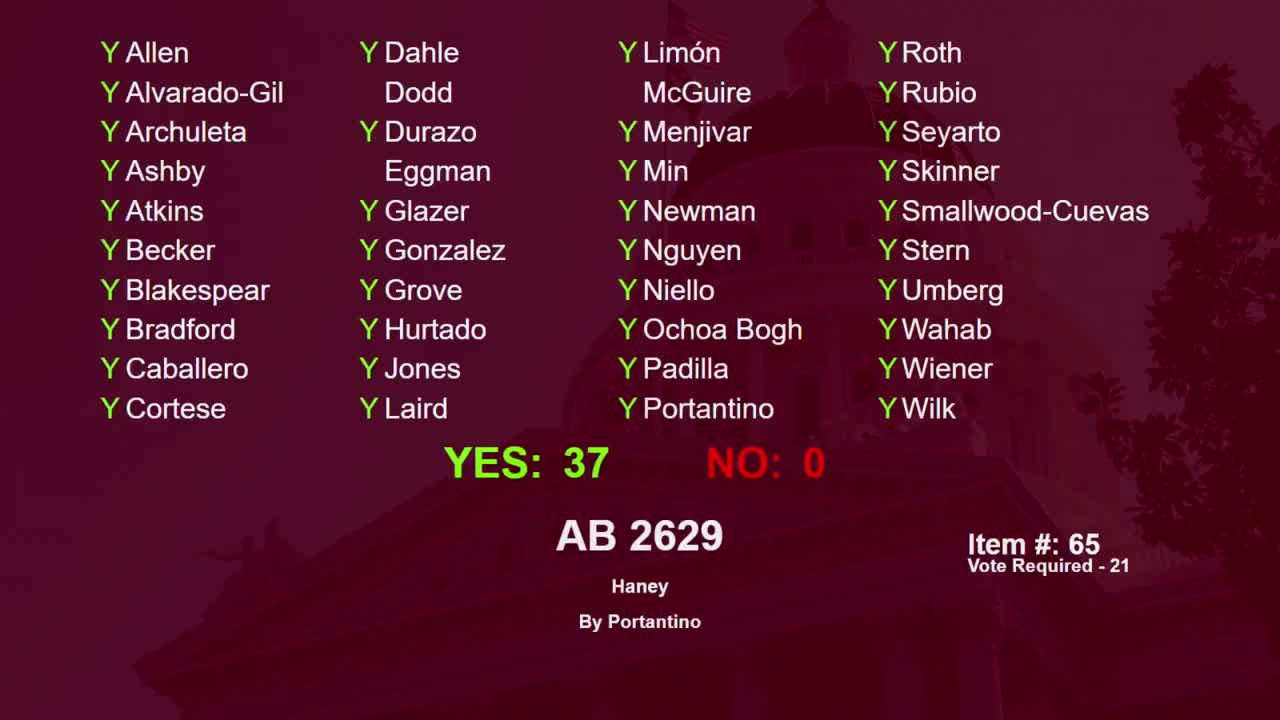 2MIN
Senate Floor
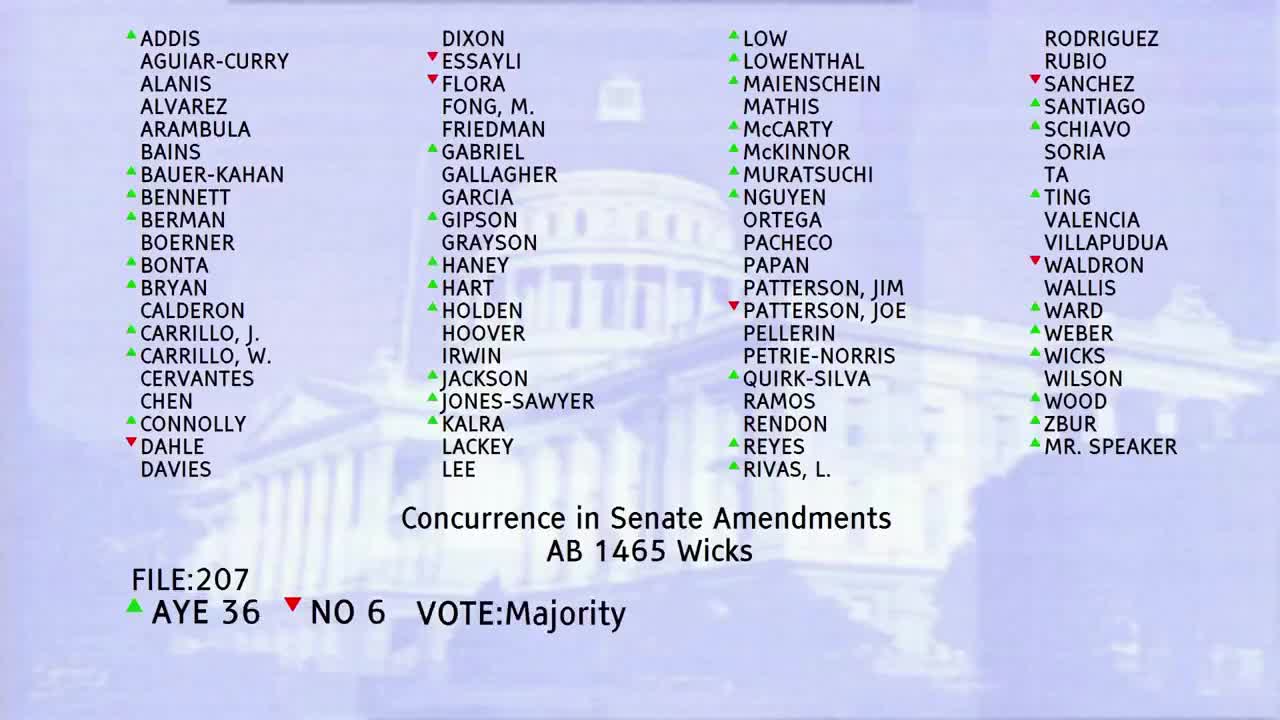 27SEC
Assembly Floor
 56SEC
Senate Standing Committee on Appropriations
 11MIN
Senate Standing Committee on Environmental Quality
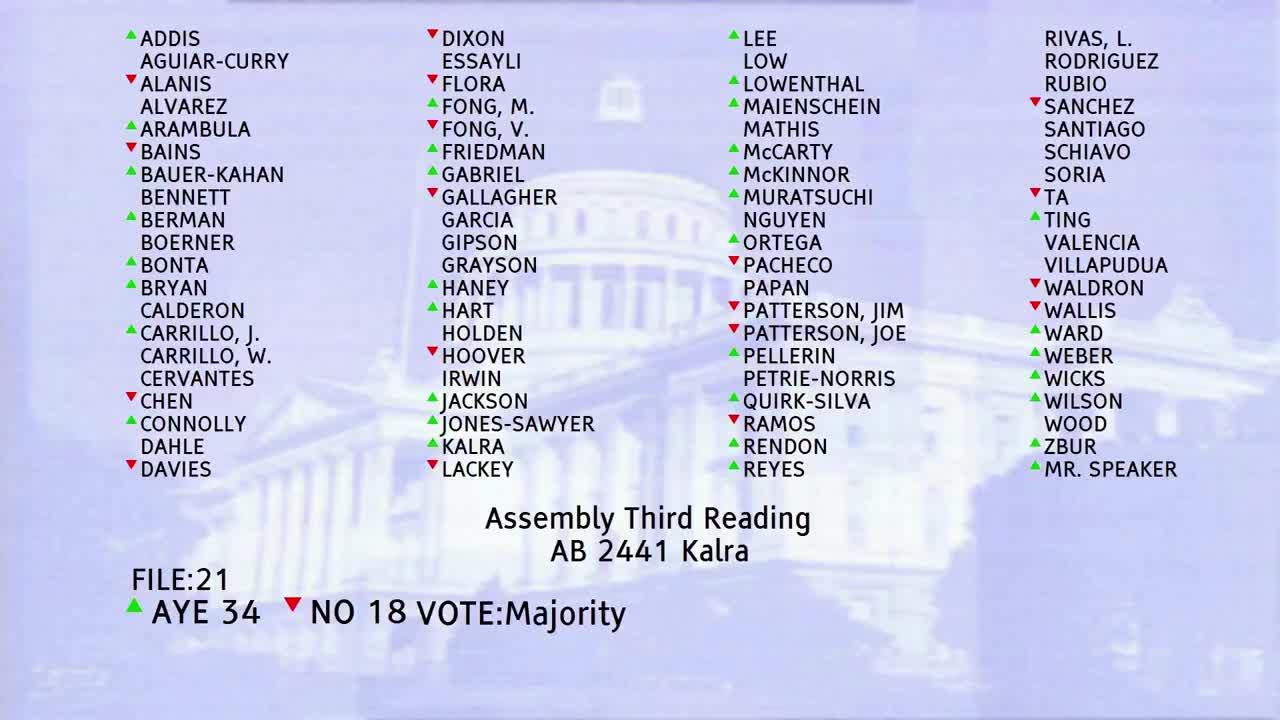 2MIN
Assembly Floor
 14MIN
Assembly Standing Committee on Natural Resources
 10MIN
Assembly Standing Committee on Environmental Safety and Toxic Materials
Bill Author

Bill Co-Author(s):