AB 2863: Automatic renewal and continuous service offers.
- Session Year: 2023-2024
- House: Assembly
- Latest Version Date: 2024-09-24
Current Status:
Passed
(2024-09-24: Chaptered by Secretary of State - Chapter 515, Statutes of 2024.)
Introduced
In Committee
First Chamber
In Committee
Second Chamber
Enacted
Existing law regulates automatic renewal offers and continuous service offers that businesses make to California consumers. Existing law defines automatic renewal for these purposes to mean a plan or arrangement in which a paid subscription or purchasing agreement is automatically renewed at the end of a definite term for a subsequent term. Existing law also defines continuous service to mean a plan or arrangement in which a subscription or purchasing agreement continues until the consumer cancels the service.
This bill would revise those definitions to include a provision of a contract containing those subscriptions or purchasing agreements and to include a plan, arrangement, or provision of a contract that contains a free-to-pay conversion. The bill would further define free-to-pay conversion to mean, in an offer or agreement to sell or provide any goods or services, a provision under which a customer receives a product or service for free for an initial period and will incur an obligation to pay for the product or service if they do not take affirmative action to cancel before the end of that period.
Existing law makes it unlawful for a business that makes an automatic renewal offer or continuous service offer to a consumer in this state to take or fail to take certain actions relating to the communication of, and consent to, the terms of the offer. In this regard, existing law requires, among other things, the business to present the terms in a clear and conspicuous manner before the subscription or purchasing agreement is fulfilled and in visual or temporal proximity to the request for consent to the offer, as specified. Existing law also requires the business to provide an acknowledgment that includes the automatic renewal offer terms or continuous service offer terms, cancellation policy, and information regarding how to cancel in a specified manner.
This bill would require the business to obtain the consumers express affirmative consent to the automatic renewal or continuous service offer terms, as defined. The bill would prohibit the business from including any information in the contract that undermines the ability of consumers to provide their affirmative consent, as specified. The bill would require the business to maintain verification of the consumers affirmative consent for at least 3 years, or one year after the contract is terminated, whichever period is longer. The bill would prohibit the misrepresentation of material facts or terms related to the transaction, as provided. The bill would also require the business to send the consumer an annual reminder that discloses, as specified, the product or service to which the automatic renewal or continuous service applies, the frequency and amount of the associated charges, and the means to cancel the service.
Existing law requires a business that makes an automatic renewal offer or continuous service offer to provide various methods for cancellation or termination, including by toll-free telephone number, email address, a postal address, another cost-effective, timely, and easy-to-use mechanism for cancellation, or online if specified requirements are met.
This bill would require the ability to cancel or terminate to be available in the same medium that the consumer used in the transaction that resulted in the activation of the automatic renewal or continuous service, or the same medium in which the consumer is accustomed to interacting with the business, as specified. The bill would require a mechanism for cancellation by toll-free telephone number to, among other things, be answered promptly during normal business hours and not obstruct or delay the consumers ability to cancel the service or feature, as specified. In this regard, the bill would also specify that it is not an obstruction or delay to provide a discount offer or other consumer benefit or to inform a consumer of the effect of the cancellation if the consumer remains able to cancel or terminate the automatic renewal or continuous service, as specified.
Existing law requires, in the case of a material change in the terms of the automatic renewal or continuous service that has been accepted by a consumer in this state, the business to provide the consumer with a clear and conspicuous notice of the material change and information regarding how to cancel in a specified manner.
This bill would additionally require, in the case of the business changing the fee, including changes the consumer affirmatively consented to in an existing plan or arrangement, the business to provide a clear and conspicuous notice of the fee change and information regarding how to cancel in a specified manner no less than 7 days and no more than 30 days before the fee change takes effect.
Existing law requires a business that made an automatic renewal or continuous service offer that includes a free gift or trial, a promotional or discounted price, or an initial term of one year or longer, as specified, to provide the consumer with a certain notice a certain number of days before the promotional period expires or the offer automatically renews, as prescribed. Existing law requires the notice to clearly and conspicuously state specified information, including that the service will automatically renew unless the consumer cancels and the method by which the consumer can cancel the service.
This bill would also require the business to provide the notice to the consumer before confirming the consumers billing information. The bill would also require the notice to include the amount or range of costs the consumer will be charged and, if applicable, the frequency of those charges a consumer will incur unless the consumer takes timely steps to prevent or stop those charges.
This bill would apply its provisions to contracts entered into, amended, or extended on or after July 1, 2025.
Existing law regulates automatic renewal offers and continuous service offers that businesses make to California consumers. Existing law defines automatic renewal for these purposes to mean a plan or arrangement in which a paid subscription or purchasing agreement is automatically renewed at the end of a definite term for a subsequent term. Existing law also defines continuous service to mean a plan or arrangement in which a subscription or purchasing agreement continues until the consumer cancels the service.
This bill would revise those definitions to include a provision of a contract containing those subscriptions or purchasing agreements and to include a plan, arrangement, or provision of a contract that contains a free-to-pay conversion. The bill would further define free-to-pay conversion to mean, in an offer or agreement to sell or provide any goods or services, a provision under which a customer receives a product or service for free for an initial period and will incur an obligation to pay for the product or service if they do not take affirmative action to cancel before the end of that period.
Existing law makes it unlawful for a business that makes an automatic renewal offer or continuous service offer to a consumer in this state to take or fail to take certain actions relating to the communication of, and consent to, the terms of the offer. In this regard, existing law requires, among other things, the business to present the terms in a clear and conspicuous manner before the subscription or purchasing agreement is fulfilled and in visual or temporal proximity to the request for consent to the offer, as specified. Existing law also requires the business to provide an acknowledgment that includes the automatic renewal offer terms or continuous service offer terms, cancellation policy, and information regarding how to cancel in a specified manner.
This bill would require the business to obtain the consumers express affirmative consent to the automatic renewal or continuous service separately from any other portion of the contract. offer terms, as defined. The bill would prohibit the business from including any information in the contract that undermines the ability of consumers to provide their affirmative consent, as specified. The bill would require the business to maintain verification of the consumers affirmative consent for at least 3 years, or one year after the contract is terminated, whichever period is longer. The bill would prohibit the misrepresentation of, or failure to disclose, material facts or terms related to the transaction, as provided. The bill would also require the business to send the consumer an annual reminder that discloses, as specified, the product or service to which the automatic renewal or continuous service applies, the frequency and amount of the associated charges, and the means to cancel the service.
Existing law requires a business that makes an automatic renewal offer or continuous service offer to provide various methods for cancellation or termination, including by toll-free telephone number, email address, a postal address, another cost-effective, timely, and easy-to-use mechanism for cancellation, or online if specified requirements are met.
This bill would require the ability to cancel or terminate to be available in the same medium that the consumer used in the transaction that resulted in the activation of the automatic renewal or continuous service, or the same medium in which the consumer is accustomed to interacting with the business, as specified. The bill would require a mechanism for cancellation by toll-free telephone number to, among other things, be answered promptly during normal business hours, as defined, hours and not obstruct or delay the consumers ability to cancel the service or feature. feature, as specified. In this regard, the bill would also specify that it is not an obstruction or delay to provide a discount offer or other consumer benefit or to inform a consumer of the effect of the cancellation if the consumer remains able to cancel or terminate the automatic renewal or continuous service. service, as specified.
Existing law requires, in the case of a material change in the terms of the automatic renewal or continuous service that has been accepted by a consumer in this state, the business to provide the consumer with a clear and conspicuous notice of the material change and information regarding how to cancel in a specified manner.
This bill would additionally require, in the case of the business changing the fee, including changes the consumer affirmatively consented to in an existing plan or arrangement, the business to provide a clear and conspicuous notice of the fee change and information regarding how to cancel in a specified manner no less than 7 days and no more than 30 days before the fee change takes effect.
Existing law requires a business that made an automatic renewal or continuous service offer that includes a free gift or trial, a promotional or discounted price, or an initial term of one year or longer, as specified, to provide the consumer with a certain notice a certain number of days before the promotional period expires or the offer automatically renews, as prescribed. Existing law requires the notice to clearly and conspicuously state specified information, including that the service will automatically renew unless the consumer cancels and the method by which the consumer can cancel the service.
This bill would also require the business to provide the notice to the consumer before confirming the consumers billing information. The bill would also require the notice to include the amount or range of costs the consumer will be charged and, if applicable, the frequency of those charges a consumer will incur unless the consumer takes timely steps to prevent or stop those charges.
This bill would apply its provisions to contracts entered into, amended, or extended on or after July 1, 2025.
Existing law regulates automatic renewal offers and continuous service offers that businesses make to California consumers. Existing law defines automatic renewal for these purposes to mean a plan or arrangement in which a paid subscription or purchasing agreement is automatically renewed at the end of a definite term for a subsequent term. Existing law also defines continuous service to mean a plan or arrangement in which a subscription or purchasing agreement continues until the consumer cancels the service.
This bill would revise those definitions to include a provision of a contract containing those subscriptions or purchasing agreements and to include a plan, arrangement, or provision of a contract that contains a free-to-pay conversion. The bill would further define free-to-pay conversion to mean, in an offer or agreement to sell or provide any goods or services, a provision under which a customer receives a product or service for free for an initial period and will incur an obligation to pay for the product or service if they do not take affirmative action to cancel before the end of that period.
Existing law makes it unlawful for a business that makes an automatic renewal offer or continuous service offer to a consumer in this state to take or fail to take certain actions relating to the communication of, and consent to, the terms of the offer. In this regard, existing law requires, among other things, the business to present the terms in a clear and conspicuous manner before the subscription or purchasing agreement is fulfilled and in visual or temporal proximity to the request for consent to the offer, as specified. Existing law also requires the business to provide an acknowledgment that includes the automatic renewal offer terms or continuous service offer terms, cancellation policy, and information regarding how to cancel in a specified manner.
This bill would require the business to obtain the consumers affirmative consent to the automatic renewal or continuous service separately from any other portion of the contract. The bill would prohibit the business from including any information in the contract that undermines the ability of consumers to provide their affirmative consent, as specified. The bill would require the business to maintain verification of the consumers affirmative consent for at least 3 years, or one year after the contract is terminated, whichever period is longer. The bill would prohibit the misrepresentation of, or failure to disclose, material facts or terms related to the transaction, as provided. The bill would also require the business to send the consumer an annual reminder that discloses, as specified, the product or service to which the automatic renewal or continuous service applies, the frequency and amount of the associated charges, and the means to cancel the service.
Existing law requires a business that makes an automatic renewal offer or continuous service offer to provide various methods for cancellation or termination, including by toll-free telephone number, email address, a postal address, another cost-effective, timely, and easy-to-use mechanism for cancellation, or online if specified requirements are met.
This bill would require the ability to cancel or terminate to be available in the same medium that the consumer used in the transaction that resulted in the activation of the automatic renewal or continuous service, or the same medium in which the consumer is accustomed to interacting with the business, as specified. The bill would require a mechanism for cancellation by toll-free telephone number to, among other things, be answered promptly during normal business hours, as defined, and not obstruct or delay the consumers ability to cancel the service or feature. In this regard, the bill would also specify that it is not an unreasonable obstruction or delay to provide a discount offer or other consumer benefit or to inform a consumer of the effect of the cancellation if the consumer remains able to cancel or terminate the automatic renewal or continuous service.
Existing law requires, in the case of a material change in the terms of the automatic renewal or continuous service that has been accepted by a consumer in this state, the business to provide the consumer with a clear and conspicuous notice of the material change and information regarding how to cancel in a specified manner.
This bill would additionally require, in the case of the business changing the fee, including changes the consumer affirmatively consented to in an existing plan or arrangement, the business to provide a clear and conspicuous notice of the fee change and information regarding how to cancel in a specified manner no less than 7 days and no more than 30 days before the fee change takes effect.
Existing law requires a business that made an automatic renewal or continuous service offer that includes a free gift or trial, a promotional or discounted price, or an initial term of one year or longer, as specified, to provide the consumer with a certain notice a certain number of days before the promotional period expires or the offer automatically renews, as prescribed. Existing law requires the notice to clearly and conspicuously state specified information, including that the service will automatically renew unless the consumer cancels and the method by which the consumer can cancel the service.
This bill would also require the business to provide the notice to the consumer before confirming the consumers billing information. The bill would also require the notice to include the amount or range of costs the consumer will be charged and, if applicable, the frequency of those charges a consumer will incur unless the consumer takes timely steps to prevent or stop those charges.
This bill would apply its provisions to contracts entered into, amended, or extended on or after January July 1, 2025.
Existing law regulates automatic renewal offers and continuous service offers that businesses make to California consumers. Existing law defines automatic renewal for these purposes to mean a plan or arrangement in which a paid subscription or purchasing agreement is automatically renewed at the end of a definite term for a subsequent term. Existing law also defines continuous service to mean a plan or arrangement in which a subscription or purchasing agreement continues until the consumer cancels the service.
This bill would revise those definitions to include a provision of a contract containing those subscriptions or purchasing agreements and to specify that those subscriptions or purchasing agreements may be free or paid. include a plan, arrangement, or provision of a contract that contains a free-to-pay conversion. The bill would further define free-to-pay conversion to mean, in an offer or agreement to sell or provide any goods or services, a provision under which a customer receives a product or service for free for an initial period and will incur an obligation to pay for the product or service if they do not take affirmative action to cancel before the end of that period.
Existing law makes it unlawful for a business that makes an automatic renewal offer or continuous service offer to a consumer in this state to take or fail to take certain actions relating to the communication of, and consent to, the terms of the offer. In this regard, existing law requires, among other things, the business to present the terms in a clear and conspicuous manner before the subscription or purchasing agreement is fulfilled and in visual or temporal proximity to the request for consent to the offer, as specified. Existing law also requires the business to provide an acknowledgment that includes the automatic renewal offer terms or continuous service offer terms, cancellation policy, and information regarding how to cancel in a specified manner.
This bill would require the business to obtain the consumers affirmative consent to the automatic renewal or continuous service separately from any other portion of the contract. The bill would prohibit the business from including any information in the contract that undermines the ability of consumers to provide their affirmative consent, as specified. The bill would require the business to maintain verification of the consumers affirmative consent for at least 3 years, or one year after the contract is terminated, whichever period is longer. The bill would prohibit the misrepresentation of, or failure to disclose, material facts or terms related to the transaction, as provided. The bill would also require the business to send the consumer an annual reminder that discloses, as specified, the product or service to which the automatic renewal or continuous service applies, the frequency and amount of the associated charges, and the means to cancel the service.
Existing law requires a business that makes an automatic renewal offer or continuous service offer to provide various methods for cancellation or termination, including by toll-free telephone number, email address, a postal address, another cost-effective, timely, and easy-to-use mechanism for cancellation, or online if specified requirements are met.
This bill would require the ability to cancel or terminate to be available in the same medium that the consumer used in the transaction that resulted in the activation of the automatic renewal or continuous service, or the same medium in which the consumer is accustomed to interacting with the business, as specified. The bill would require a mechanism for cancellation by toll-free telephone number to, among other things, be answered promptly during normal business hours, as defined, and not obstruct or delay the consumers ability to cancel the service or feature. In this regard, the bill would also specify that it is not an unreasonable obstruction or delay to provide a discount offer or other consumer benefit or to inform a consumer of the effect of the cancellation if the consumer remains able to cancel or terminate the automatic renewal or continuous service.
Existing law requires, in the case of a material change in the terms of the automatic renewal or continuous service that has been accepted by a consumer in this state, the business to provide the consumer with a clear and conspicuous notice of the material change and information regarding how to cancel in a specified manner.
This bill would additionally require, in the case of the business increasing changing the fee, including increases changes the consumer affirmatively consented to in an existing plan or arrangement, the business to provide a clear and conspicuous notice of the fee increase change and information regarding how to cancel in a specified manner no less than 45 7 days and no more than 30 days before the fee increase change takes effect.
Existing law requires a business that made an automatic renewal or continuous service offer that includes a free gift or trial, a promotional or discounted price, or an initial term of one year or longer, as specified, to provide the consumer with a certain notice a certain number of days before the promotional period expires or the offer automatically renews, as prescribed. Existing law requires the notice to clearly and conspicuously state specified information, including that the service will automatically renew unless the consumer cancels and the method by which the consumer can cancel the service.
This bill would also require the business to provide the notice to the consumer before obtaining confirming the consumers billing information. The bill would also require the notice to include the amount or range of costs the consumer will be charged and, if applicable, the frequency of those charges a consumer will incur unless the consumer takes timely steps to prevent or stop those charges.
This bill would apply its provisions to contracts entered into, amended, or extended on or after January 1, 2025.
Existing law regulates automatic renewal offers and continuous service offers that businesses make to California consumers. Existing law defines automatic renewal for these purposes to mean a plan or arrangement in which a paid subscription or purchasing agreement is automatically renewed at the end of a definite term for a subsequent term. Existing law also defines continuous service to mean a plan or arrangement in which a subscription or purchasing agreement continues until the consumer cancels the service.
This bill would revise those definitions to include a provision of a contract containing those subscriptions or purchasing agreements and to specify that those subscriptions or purchasing agreements may be free or paid.
Existing law makes it unlawful for a business that makes an automatic renewal offer or continuous service offer to a consumer in this state to take or fail to take certain actions relating to the communication of, and consent to, the terms of the offer. In this regard, existing law requires, among other things, the business to present the terms in a clear and conspicuous manner before the subscription or purchasing agreement is fulfilled and in visual or temporal proximity to the request for consent to the offer, as specified. Existing law also requires the business to provide an acknowledgment that includes the automatic renewal offer terms or continuous service offer terms, cancellation policy, and information regarding how to cancel in a specified manner.
This bill would require the business to obtain the consumers affirmative consent to the automatic renewal or continuous service separately from any other portion of the contract. The bill would prohibit the business from including any information in the contract that undermines the ability of consumers to provide their affirmative consent, as specified. The bill would require the business to maintain verification of the consumers affirmative consent for at least 3 years, or one year after the contract is terminated, whichever period is longer. The bill would prohibit the misrepresentation of, or failure to disclose, material facts or terms related to the transaction, as provided. The bill would also require the business to send the consumer an annual reminder that discloses, as specified, the product or service to which the automatic renewal or continuous service applies, the frequency and amount of the associated charges, and the means to cancel the service.
Existing law requires a business that makes an automatic renewal offer or continuous service offer to provide various methods for cancellation or termination, including by toll-free telephone number, email address, a postal address, another cost-effective, timely, and easy-to-use mechanism for cancellation, or online if specified requirements are met.
This bill would require the ability to cancel or terminate to be available in the same medium that the consumer used in the transaction that resulted in the activation of the automatic renewal or continuous service, as specified. The bill would require a mechanism for cancellation by toll-free telephone number to, among other things, be answered promptly during normal business hours, as defined, and not obstruct the ability to cancel the service or feature.
Existing law requires, in the case of a material change in the terms of the automatic renewal or continuous service that has been accepted by a consumer in this state, the business to provide the consumer with a clear and conspicuous notice of the material change and information regarding how to cancel in a specified manner.
This bill would additionally require, in the case of the business increasing the fee, including increases the consumer affirmatively consented to in an existing plan or arrangement, the business to provide a clear and conspicuous notice of the fee increase and information regarding how to cancel in a specified manner no less than 45 days before the fee increase takes effect.
Existing law requires a business that made an automatic renewal or continuous service offer that includes a free gift or trial, a promotional or discounted price, or an initial term of one year or longer, as specified, to provide the consumer with a certain notice a certain number of days before the promotional period expires or the offer automatically renews, as prescribed. Existing law requires the notice to clearly and conspicuously state specified information, including that the service will automatically renew unless the consumer cancels and the method by which the consumer can cancel the service.
This bill would also require the business to provide the notice to the consumer before obtaining the consumers billing information. The bill would also require the notice to include the amount or range of costs the consumer will be charged and, if applicable, the frequency of those charges a consumer will incur unless the consumer takes timely steps to prevent or stop those charges.
This bill would apply its provisions to contracts entered into, amended, or extended on or after January 1, 2025.
Existing law regulates automatic purchase renewals and makes it unlawful for a business that makes an automatic renewal offer or continuous service offer, as defined, to a consumer in this state to fail to present the terms in a clear and conspicuous manner before the subscription or purchasing agreement is fulfilled and in either visual or temporal proximity to the request for consent to the offer, as specified.This bill would state the intent of the Legislature to enhance consumer protections with regards to automatic subscription renewals and the termination of those automatic subscription renewals.Existing law regulates automatic purchase renewals and makes it unlawful for a business that makes an automatic renewal offer or continuous service offer, as defined, to a consumer in this state to fail to present the terms in a clear and conspicuous manner before the subscription or purchasing agreement is fulfilled and in either visual or temporal proximity to the request for consent to the offer, as specified.
This bill would state the intent of the Legislature to enhance consumer protections with regards to automatic subscription renewals and the termination of those automatic subscription renewals.
(a)For the purposes of this article, the following definitions shall apply:
(1)Automatic renewal means a plan, arrangement, or provision of a contract that contains a free-to-pay conversion or in which a paid subscription or purchasing agreement is automatically renewed at the end of a definite term for a subsequent term.
(2)Automatic renewal offer terms and continuous service offer terms means the following clear and conspicuous disclosures:
(A)That the subscription or purchasing agreement will continue until the consumer cancels.
(B)The description of the cancellation policy that applies to the offer.
(C)The recurring charges that will be charged to the consumers credit or debit card or payment account with a third party as part of the automatic renewal plan or arrangement, and that the amount of the charge may change, if that is the case, and the amount to which the charge will change, if known.
(D)The length of the automatic renewal term or that the service is continuous, unless the length of the term is chosen by the consumer.
(E)The minimum purchase obligation, if any.
(3)Clear and conspicuous or clearly and conspicuously means in larger type than the surrounding text, or in contrasting type, font, or color to the surrounding text of the same size, or set off from the surrounding text of the same size by symbols or other marks, in a manner that clearly calls attention to the language. In the case of an audio disclosure, clear and conspicuous and clearly and conspicuously means in a volume and cadence sufficient to be readily audible and understandable.
(4)Consumer means any individual who seeks or acquires, by purchase or lease, any goods, services, money, or credit for personal, family, or household purposes.
(5)Continuous service means a plan, arrangement, or provision of a contract that contains a free-to-pay conversion or in which a paid subscription or purchasing agreement continues until the consumer cancels the service.
(6)Free-to-pay conversion means, in an offer or agreement to sell or provide any goods or services, a provision under which a customer receives a product or service for free for an initial period and will incur an obligation to pay for the product or service if they do not take affirmative action to cancel before the end of that period.
(b)The amendments made to this section by the act adding this subdivision shall only apply to a contract entered into, amended, or extended under this article on or after July 1, 2025.
SEC. 2.Section 17602 of the Business and Professions Code is amended to read:17602.(a)It is unlawful for any business that makes an automatic renewal offer or continuous service offer to a consumer in this state to do any of the following:
(1)Fail to present the automatic renewal offer terms or continuous service offer terms in a clear and conspicuous manner before the subscription or purchasing agreement is fulfilled and in visual proximity, or, in the case of an offer conveyed by voice, in temporal proximity, to the request for consent to the offer. If the offer also includes a free gift or trial, the offer shall include a clear and conspicuous explanation of the price that will be charged after the trial ends or the manner in which the subscription or purchasing agreement pricing will change upon conclusion of the trial.
(2)Charge the consumers credit or debit card, or the consumers account with a third party, for an automatic renewal or continuous service without first obtaining the consumers affirmative consent to the agreement containing the automatic renewal offer terms or continuous service offer terms, including the terms of an automatic renewal offer or continuous service offer that is made at a promotional or discounted price for a limited period of time.
(3)Fail to provide an acknowledgment that includes the automatic renewal offer terms or continuous service offer terms, cancellation policy, and information regarding how to cancel in a manner that is capable of being retained by the consumer. If the automatic renewal offer or continuous service offer includes a free gift or trial, the business shall also disclose in the acknowledgment how to cancel, and allow the consumer to cancel, the automatic renewal or continuous service before the consumer pays for the goods or services.
(4)Fail to obtain the consumers express affirmative consent to the automatic renewal or continuous service offer terms.
(5)Include any information in the contract that interferes with, detracts from, contradicts, or otherwise undermines the ability of consumers to provide their affirmative consent to the automatic renewal or continuous service.
(6)Fail to maintain verification of the consumers affirmative consent for at least three years, or one year after the contract is terminated, whichever period is longer.
(7)Misrepresent, expressly or by implication, any material fact related to the transaction, including, but not limited to, the inclusion of an automatic renewal or continuous service, or any material fact related to the underlying good or service.
(8)Fail to provide a consumer with a notice, before confirming the consumers billing information and as may be required by subdivision (b), that clearly and conspicuously states all of the following:
(A)That the automatic renewal or continuous service will automatically renew unless the consumer cancels.
(B)The length and any additional terms of the renewal period.
(C)The amount or range of costs the consumer will be charged and, if applicable, the frequency of those charges a consumer will incur unless the consumer takes timely steps to prevent or stop those charges.
(D)One or more methods by which a consumer can cancel the automatic renewal or continuous service.
(E)If the notice is sent electronically, the notice shall include either a link that directs the consumer to the cancellation process, or another reasonably accessible electronic method that directs the consumer to the cancellation process if no link exists.
(F)Contact information for the business.
(b)A business shall provide a consumer with a notice as specified in paragraph (8) of subdivision (a) if either of the following is true, provided that if an automatic renewal offer or a continuous service offer requires a notice under both paragraphs (1) and (2), only the notice specified in paragraph (2) shall be required:
(1)The consumer accepted a free gift or trial, lasting for more than 31 days, that was included in an automatic renewal offer or continuous service offer or the consumer accepted an automatic renewal offer or continuous service offer at a promotional or discounted price, and the applicability of that price was more than 31 days.
(A)The notice shall be provided at least 3 days before and at most 21 days before the expiration of the predetermined period of time for which the free gift or trial, or promotional or discounted price, applies.
(B)An offer shall be exempt from the requirements under this paragraph if the consumer does not enter into the contract electronically and the business has not collected or maintained the consumers valid email address, phone number, or another means of notifying the consumer electronically.
(C)For purposes of this paragraph, free gift does not include a free promotional item or gift given by the business that differs from the subscribed product.
(2)The consumer accepted an automatic renewal offer or continuous service offer with an initial term of one year or longer, that automatically renews unless the consumer cancels the automatic renewal or continuous service. In this case, the notice shall be provided at least 15 days and not more than 45 days before the automatic renewal offer or continuous service offer renews.
(c)(1)A business that makes an automatic renewal offer or continuous service offer shall provide a toll-free telephone number, email address, a postal address if the seller directly bills the consumer, or it shall provide another cost-effective, timely, and easy-to-use mechanism for cancellation that shall be described in the acknowledgment specified in paragraph (3) of subdivision (a).
(2)(A)Subject to subparagraph (B), if a business provides a mechanism for cancellation by toll-free telephone number, the business shall answer calls promptly during normal business hours and shall not obstruct or delay the consumers ability to cancel the automatic renewal or continuous service.
(B)If a consumer leaves a voicemail with a business requesting cancellation, the business shall, within one business day, either process the requested cancellation or call the consumer back regarding the cancellation request.
(d)(1)In addition to the requirements of subdivision (b), a business that allows a consumer to accept an automatic renewal or continuous service offer online shall allow a consumer to terminate the automatic renewal or continuous service exclusively online, at will, and without engaging any further steps that obstruct or delay the consumers ability to terminate the automatic renewal or continuous service immediately. The business shall provide a method of termination that is online in the form of either of the following:
(A)A prominently located direct link or button which may be located within either a customer account or profile, or within either device or user settings.
(B)By an immediately accessible termination email formatted and provided by the business that a consumer can send to the business without additional information.
(2)The termination requirements of this subdivision apply to the automatic renewal terms and continuous service terms of the contract and the remaining provisions of the contract continue to be governed by all applicable laws and regulations.
(3)Notwithstanding paragraph (1), a business may require a consumer to enter account information or otherwise authenticate online before termination of the automatic renewal or continuous service online if the consumer has an account with the business. A consumer who is unwilling or unable to enter account information or otherwise authenticate online before termination of the automatic renewal or continuous service online shall not be precluded from authenticating or terminating the automatic renewal or continuous service offline using another method pursuant to subdivision (c).
(e)For purposes of subdivisions (c) and (d), providing a discount offer or other consumer benefit or informing a consumer of the effect of the cancellation shall not be considered an obstruction or delay, provided that the consumer remains able to cancel or terminate the automatic renewal or continuous service, as follows:
(1)If a consumer conveys a request to cancel by telephone, the business may present the consumer with a discounted offer, retention benefit, or information regarding the effect of cancellation, provided that the business first clearly and conspicuously informs the consumer that they may complete the cancellation process at any time by stating that they want to cancel or words to that effect. If the consumer states their intention to cancel or words to that effect, the business shall promptly process the cancellation and shall not otherwise obstruct or delay the consumers ability to cancel.
(2)If a consumer conveys a request to cancel by an online system, the business may display a discounted offer, retention benefit, or information regarding the effects of cancellation, provided that the business simultaneously displays a prominently located and continuously and proximately displayed direct link or button entitled click to cancel, or words to that effect, with the presentation of the discounted offer, other consumer benefit, or information. If the consumer utilizes this direct link or button, the business shall promptly process the cancellation and shall not otherwise obstruct or delay the consumers ability to proceed to cancellation.
(f)The ability to cancel or terminate an automatic renewal or continuous service pursuant to subdivision (c) or (d) shall be available to the consumer in the same medium that the consumer used in the transaction that resulted in the activation of the automatic renewal or continuous service, or the same medium in which the consumer is accustomed to interacting with the business, including, but not limited to, in person, by telephone, by mail, or by email. If the activation was by telephone, a telephone number that is capable of being retained by the consumer shall be available to the consumer to cancel or terminate the automatic renewal or continuous service. The telephone number shall be clearly and conspicuously displayed on the companys website, if applicable.
(g)(1)In the case of a material change in the terms of the automatic renewal or continuous service that has been accepted by a consumer in this state, the business shall provide the consumer with a clear and conspicuous notice of the material change and provide information regarding how to cancel in a manner that is capable of being retained by the consumer.
(2)In the case of a change in the fee charged under an existing automatic renewal or continuous service offer that has been accepted by a consumer in this state, including changes the consumer affirmatively consented to in an existing plan or arrangement, the business shall provide, no less than 7 days and no more than 30 days before the fee change takes effect, the consumer with both of the following:
(A)A clear and conspicuous notice of the fee change.
(B)Information regarding how to cancel in a manner that is capable of being retained by the consumer.
(h)(1)A business shall send an annual reminder to a consumer under an annual automatic renewal agreement or continuous service agreement with the business in the same medium that resulted in the activation of the automatic renewal or continuous service, or the same medium in which the customer is accustomed to interacting with the business, including, but not limited to, by telephone, mail, or email. For originally in-person or voice-based transactions, the business shall send the reminder by telephone, mail, or any internet-based communication.
(2)The reminder sent pursuant to this subdivision shall disclose all of the following:
(A)The product or service to which the automatic renewal or continuous service applies.
(B)The frequency and amount of charges associated with the automatic renewal or continuous service.
(C)The means to cancel the automatic renewal or continuous service.
(i)The requirements of this article shall apply only prior to the completion of the initial order for the automatic renewal or continuous service, except as follows:
(1)The requirements in paragraphs (3) and (8) of subdivision (a) may be fulfilled after completion of the initial order.
(2)The requirements in subdivision (b) may be fulfilled after completion of the initial order.
(3)The requirement in subdivision (g) shall be fulfilled prior to implementation of the material change or fee change.
(4)The requirement in subdivision (h) shall be fulfilled annually.
(j)The amendments made to this section by the act adding this subdivision shall only apply to a contract entered into, amended, or extended under this article on or after July 1, 2025.
(a)For the purposes of this article, the following definitions shall apply:
(1)Automatic renewal means a plan, arrangement, or provision of a contract that contains a free-to-pay conversion or in which a paid subscription or purchasing agreement is automatically renewed at the end of a definite term for a subsequent term.
(2)Automatic renewal offer terms and continuous service offer terms means the following clear and conspicuous disclosures:
(A)That the subscription or purchasing agreement will continue until the consumer cancels.
(B)The description of the cancellation policy that applies to the offer.
(C)The recurring charges that will be charged to the consumers credit or debit card or payment account with a third party as part of the automatic renewal plan or arrangement, and that the amount of the charge may change, if that is the case, and the amount to which the charge will change, if known.
(D)The length of the automatic renewal term or that the service is continuous, unless the length of the term is chosen by the consumer.
(E)The minimum purchase obligation, if any.
(3)Clear and conspicuous or clearly and conspicuously means in larger type than the surrounding text, or in contrasting type, font, or color to the surrounding text of the same size, or set off from the surrounding text of the same size by symbols or other marks, in a manner that clearly calls attention to the language. In the case of an audio disclosure, clear and conspicuous and clearly and conspicuously means in a volume and cadence sufficient to be readily audible and understandable.
(4)Consumer means any individual who seeks or acquires, by purchase or lease, any goods, services, money, or credit for personal, family, or household purposes.
(5)Continuous service means a plan, arrangement, or provision of a contract that contains a free-to-pay conversion or in which a paid subscription or purchasing agreement continues until the consumer cancels the service.
(6)Free-to-pay conversion means, in an offer or agreement to sell or provide any goods or services, a provision under which a customer receives a product or service for free for an initial period and will incur an obligation to pay for the product or service if they do not take affirmative action to cancel before the end of that period.
(7)Normal business hours means no fewer than 10 hours between 6 a.m. to 10 p.m., inclusive, Pacific standard time or Pacific daylight saving time, as applicable, of each day from Monday to Friday, inclusive, other than state holidays.(b)The amendments made to this section by the act adding this subdivision shall only apply to a contract entered into, amended, or extended under this article on or after July 1, 2025.
SEC. 2.Section 17602 of the Business and Professions Code is amended to read:17602.(a)It is unlawful for any business that makes an automatic renewal offer or continuous service offer to a consumer in this state to do any of the following:
(1)Fail to present the automatic renewal offer terms or continuous service offer terms in a clear and conspicuous manner before the subscription or purchasing agreement is fulfilled and in visual proximity, or, in the case of an offer conveyed by voice, in temporal proximity, to the request for consent to the offer. If the offer also includes a free gift or trial, the offer shall include a clear and conspicuous explanation of the price that will be charged after the trial ends or the manner in which the subscription or purchasing agreement pricing will change upon conclusion of the trial.
(2)Charge the consumers credit or debit card, or the consumers account with a third party, for an automatic renewal or continuous service without first obtaining the consumers affirmative consent to the agreement containing the automatic renewal offer terms or continuous service offer terms, including the terms of an automatic renewal offer or continuous service offer that is made at a promotional or discounted price for a limited period of time.
(3)Fail to provide an acknowledgment that includes the automatic renewal offer terms or continuous service offer terms, cancellation policy, and information regarding how to cancel in a manner that is capable of being retained by the consumer. If the automatic renewal offer or continuous service offer includes a free gift or trial, the business shall also disclose in the acknowledgment how to cancel, and allow the consumer to cancel, the automatic renewal or continuous service before the consumer pays for the goods or services.
(4)Fail to obtain the consumers express affirmative consent to the automatic renewal or continuous service separately from any other portion of the contract. offer terms.
(5)Include any information in the contract that interferes with, detracts from, contradicts, or otherwise undermines the ability of consumers to provide their affirmative consent to the automatic renewal or continuous service.
(6)Fail to maintain verification of the consumers affirmative consent for at least three years, or one year after the contract is terminated, whichever period is longer.
(7)Misrepresent, expressly or by implication, any material fact related to the transaction, including, but not limited to, the inclusion of an automatic renewal or continuous service, or any material fact related to the underlying good or service.
(8)Fail to provide a consumer with a notice, before confirming the consumers billing information and as may be required by subdivision (b), that clearly and conspicuously states all of the following:
(A)That the automatic renewal or continuous service will automatically renew unless the consumer cancels.
(B)The length and any additional terms of the renewal period.
(C)The amount or range of costs the consumer will be charged and, if applicable, the frequency of those charges a consumer will incur unless the consumer takes timely steps to prevent or stop those charges.
(D)One or more methods by which a consumer can cancel the automatic renewal or continuous service.
(E)If the notice is sent electronically, the notice shall include either a link that directs the consumer to the cancellation process, or another reasonably accessible electronic method that directs the consumer to the cancellation process if no link exists.
(F)Contact information for the business.
(b)A business shall provide a consumer with a notice as specified in paragraph (8) of subdivision (a) if either of the following is true, provided that if an automatic renewal offer or a continuous service offer requires a notice under both paragraphs (1) and (2), only the notice specified in paragraph (2) shall be required:
(1)The consumer accepted a free gift or trial, lasting for more than 31 days, that was included in an automatic renewal offer or continuous service offer or the consumer accepted an automatic renewal offer or continuous service offer at a promotional or discounted price, and the applicability of that price was more than 31 days.
(A)The notice shall be provided at least 3 days before and at most 21 days before the expiration of the predetermined period of time for which the free gift or trial, or promotional or discounted price, applies.
(B)An offer shall be exempt from the requirements under this paragraph if the consumer does not enter into the contract electronically and the business has not collected or maintained the consumers valid email address, phone number, or another means of notifying the consumer electronically.
(C)For purposes of this paragraph, free gift does not include a free promotional item or gift given by the business that differs from the subscribed product.
(2)The consumer accepted an automatic renewal offer or continuous service offer with an initial term of one year or longer, that automatically renews unless the consumer cancels the automatic renewal or continuous service. In this case, the notice shall be provided at least 15 days and not more than 45 days before the automatic renewal offer or continuous service offer renews.
(c)(1)A business that makes an automatic renewal offer or continuous service offer shall provide a toll-free telephone number, email address, a postal address if the seller directly bills the consumer, or it shall provide another cost-effective, timely, and easy-to-use mechanism for cancellation that shall be described in the acknowledgment specified in paragraph (3) of subdivision (a).
(2)If(2)(A)Subject to subparagraph (B), if a business provides a mechanism for cancellation by toll-free telephone number, the business shall answer calls promptly during normal business hours and shall not obstruct or delay the consumers ability to cancel the automatic renewal or continuous service.
(B)If a consumer leaves a voicemail with a business requesting cancellation, the business shall, within one business day, either process the requested cancellation or call the consumer back regarding the cancellation request.
(d)(1)In addition to the requirements of subdivision (b), a business that allows a consumer to accept an automatic renewal or continuous service offer online shall allow a consumer to terminate the automatic renewal or continuous service exclusively online, at will, and without engaging any further steps that obstruct or delay the consumers ability to terminate the automatic renewal or continuous service immediately. The business shall provide a method of termination that is online in the form of either of the following:
(A)A prominently located direct link or button which may be located within either a customer account or profile, or within either device or user settings.
(B)By an immediately accessible termination email formatted and provided by the business that a consumer can send to the business without additional information.
(2)The termination requirements of this subdivision apply to the automatic renewal terms and continuous service terms of the contract and the remaining provisions of the contract continue to be governed by all applicable laws and regulations.
(3)Notwithstanding paragraph (1), a business may require a consumer to enter account information or otherwise authenticate online before termination of the automatic renewal or continuous service online if the consumer has an account with the business. A consumer who is unwilling or unable to enter account information or otherwise authenticate online before termination of the automatic renewal or continuous service online shall not be precluded from authenticating or terminating the automatic renewal or continuous service offline using another method pursuant to subdivision (c).
(e)For purposes of subdivisions (c) and (d), providing a discount offer or other consumer benefit or informing a consumer of the effect of the cancellation shall not be considered an obstruction or delay, provided that the consumer remains able to cancel or terminate the automatic renewal or continuous service. service, as follows:
(1)If a consumer conveys a request to cancel by telephone, the business may present the consumer with a discounted offer, retention benefit, or information regarding the effect of cancellation, provided that the business first clearly and conspicuously informs the consumer that they may complete the cancellation process at any time by stating that they want to cancel or words to that effect. If the consumer states their intention to cancel or words to that effect, the business shall promptly process the cancellation and shall not otherwise obstruct or delay the consumers ability to cancel.
(2)If a consumer conveys a request to cancel by an online system, the business may display a discounted offer, retention benefit, or information regarding the effects of cancellation, provided that the business simultaneously displays a prominently located and continuously and proximately displayed direct link or button entitled click to cancel, or words to that effect, with the presentation of the discounted offer, other consumer benefit, or information. If the consumer utilizes this direct link or button, the business shall promptly process the cancellation and shall not otherwise obstruct or delay the consumers ability to proceed to cancellation.
(f)The ability to cancel or terminate an automatic renewal or continuous service pursuant to subdivision (c) or (d) shall be available to the consumer in the same medium that the consumer used in the transaction that resulted in the activation of the automatic renewal or continuous service, or the same medium in which the consumer is accustomed to interacting with the business, including, but not limited to, in person, by telephone, by mail, or by email. If the activation was by telephone, a telephone number that is capable of being retained by the consumer shall be available to the consumer to cancel or terminate the automatic renewal or continuous service. The telephone number shall be clearly and conspicuously displayed on the companys website, if applicable.
(g)(1)In the case of a material change in the terms of the automatic renewal or continuous service that has been accepted by a consumer in this state, the business shall provide the consumer with a clear and conspicuous notice of the material change and provide information regarding how to cancel in a manner that is capable of being retained by the consumer.
(2)In the case of a change in the fee charged under an existing automatic renewal or continuous service offer that has been accepted by a consumer in this state, including changes the consumer affirmatively consented to in an existing plan or arrangement, the business shall provide, no less than 7 days and no more than 30 days before the fee change takes effect, the consumer with both of the following:
(A)A clear and conspicuous notice of the fee change.
(B)Information regarding how to cancel in a manner that is capable of being retained by the consumer.
(h)(1)A business shall send an annual reminder to a consumer under an annual automatic renewal agreement or continuous service agreement with the business in the same medium that resulted in the activation of the automatic renewal or continuous service, or the same medium in which the customer is accustomed to interacting with the business, including, but not limited to, by telephone, mail, or email. For originally in-person or voice-based transactions, the business shall send the reminder by telephone, mail, or any internet-based communication.
(2)The reminder sent pursuant to this subdivision shall disclose all of the following:
(A)The product or service to which the automatic renewal or continuous service applies.
(B)The frequency and amount of charges associated with the automatic renewal or continuous service.
(C)The means to cancel the automatic renewal or continuous service.
(i)The requirements of this article shall apply only prior to the completion of the initial order for the automatic renewal or continuous service, except as follows:
(1)The requirements in paragraphs (3) and (8) of subdivision (a) may be fulfilled after completion of the initial order.
(2)The requirements in subdivision (b) may be fulfilled after completion of the initial order.
(3)The requirement in subdivision (g) shall be fulfilled prior to implementation of the material change or fee change.
(4)The requirement in subdivision (h) shall be fulfilled annually.
(j)The amendments made to this section by the act adding this subdivision shall only apply to a contract entered into, amended, or extended under this article on or after July 1, 2025.
(a)For the purposes of this article, the following definitions shall apply:
(1)Automatic renewal means a plan, arrangement, or provision of a contract that contains a free-to-pay conversion or in which a paid subscription or purchasing agreement is automatically renewed at the end of a definite term for a subsequent term.
(2)Automatic renewal offer terms means the following clear and conspicuous disclosures:
(A)That the subscription or purchasing agreement will continue until the consumer cancels.
(B)The description of the cancellation policy that applies to the offer.
(C)The recurring charges that will be charged to the consumers credit or debit card or payment account with a third party as part of the automatic renewal plan or arrangement, and that the amount of the charge may change, if that is the case, and the amount to which the charge will change, if known.
(D)The length of the automatic renewal term or that the service is continuous, unless the length of the term is chosen by the consumer.
(E)The minimum purchase obligation, if any.
(3)Clear and conspicuous or clearly and conspicuously means in larger type than the surrounding text, or in contrasting type, font, or color to the surrounding text of the same size, or set off from the surrounding text of the same size by symbols or other marks, in a manner that clearly calls attention to the language. In the case of an audio disclosure, clear and conspicuous and clearly and conspicuously means in a volume and cadence sufficient to be readily audible and understandable.
(4)Consumer means any individual who seeks or acquires, by purchase or lease, any goods, services, money, or credit for personal, family, or household purposes.
(5)Continuous service means a plan, arrangement, or provision of a contract that contains a free-to-pay conversion or in which a paid subscription or purchasing agreement continues until the consumer cancels the service.
(6)Free-to-pay conversion means, in an offer or agreement to sell or provide any goods or services, a provision under which a customer receives a product or service for free for an initial period and will incur an obligation to pay for the product or service if they do not take affirmative action to cancel before the end of that period.
(7)Normal business hours means no fewer than 12 10 hours between 6 a.m. to 10 p.m., inclusive, Pacific standard time or Pacific daylight saving time, as applicable, of each day from Monday to Friday, inclusive, other than state holidays.
(b)The amendments made to this section by the act adding this subdivision shall only apply to a contract entered into, amended, or extended under this article on or after January July 1, 2025.
SEC. 2.Section 17602 of the Business and Professions Code is amended to read:17602.(a)It is unlawful for any business that makes an automatic renewal offer or continuous service offer to a consumer in this state to do any of the following:
(1)Fail to present the automatic renewal offer terms or continuous service offer terms in a clear and conspicuous manner before the subscription or purchasing agreement is fulfilled and in visual proximity, or, in the case of an offer conveyed by voice, in temporal proximity, to the request for consent to the offer. If the offer also includes a free gift or trial, the offer shall include a clear and conspicuous explanation of the price that will be charged after the trial ends or the manner in which the subscription or purchasing agreement pricing will change upon conclusion of the trial.
(2)Charge the consumers credit or debit card, or the consumers account with a third party, for an automatic renewal or continuous service without first obtaining the consumers affirmative consent to the agreement containing the automatic renewal offer terms or continuous service offer terms, including the terms of an automatic renewal offer or continuous service offer that is made at a promotional or discounted price for a limited period of time.
(3)Fail to provide an acknowledgment that includes the automatic renewal offer terms or continuous service offer terms, cancellation policy, and information regarding how to cancel in a manner that is capable of being retained by the consumer. If the automatic renewal offer or continuous service offer includes a free gift or trial, the business shall also disclose in the acknowledgment how to cancel, and allow the consumer to cancel, the automatic renewal or continuous service before the consumer pays for the goods or services.
(4)Fail to obtain the consumers affirmative consent to the automatic renewal or continuous service separately from any other portion of the contract.
(5)Include any information in the contract that interferes with, detracts from, contradicts, or otherwise undermines the ability of consumers to provide their affirmative consent to the automatic renewal or continuous service.
(6)Fail to maintain verification of the consumers affirmative consent for at least three years, or one year after the contract is terminated, whichever period is longer.
(7)Misrepresent, expressly or by implication, any material fact related to the transaction, including, but not limited to, the inclusion of an automatic renewal or continuous service, or any material fact related to the underlying good or service.
(8)Fail to provide a consumer with a notice, before confirming the consumers billing information and as may be required by subdivision (b), that clearly and conspicuously states all of the following:
(A)That the automatic renewal or continuous service will automatically renew unless the consumer cancels.
(B)The length and any additional terms of the renewal period.
(C)The amount or range of costs the consumer will be charged and, if applicable, the frequency of those charges a consumer will incur unless the consumer takes timely steps to prevent or stop those charges.
(D)One or more methods by which a consumer can cancel the automatic renewal or continuous service.
(E)If the notice is sent electronically, the notice shall include either a link that directs the consumer to the cancellation process, or another reasonably accessible electronic method that directs the consumer to the cancellation process if no link exists.
(F)Contact information for the business.
(b)A business shall provide a consumer with a notice as specified in paragraph (8) of subdivision (a) if either of the following is true, provided that if an automatic renewal offer or a continuous service offer requires a notice under both paragraphs (1) and (2), only the notice specified in paragraph (2) shall be required:
(1)The consumer accepted a free gift or trial, lasting for more than 31 days, that was included in an automatic renewal offer or continuous service offer or the consumer accepted an automatic renewal offer or continuous service offer at a promotional or discounted price, and the applicability of that price was more than 31 days.
(A)The notice shall be provided at least 3 days before and at most 21 days before the expiration of the predetermined period of time for which the free gift or trial, or promotional or discounted price, applies.
(B)An offer shall be exempt from the requirements under this paragraph if the consumer does not enter into the contract electronically and the business has not collected or maintained the consumers valid email address, phone number, or another means of notifying the consumer electronically.
(C)For purposes of this paragraph, free gift does not include a free promotional item or gift given by the business that differs from the subscribed product.
(2)The consumer accepted an automatic renewal offer or continuous service offer with an initial term of one year or longer, that automatically renews unless the consumer cancels the automatic renewal or continuous service. In this case, the notice shall be provided at least 15 days and not more than 45 days before the automatic renewal offer or continuous service offer renews.
(c)(1)A business that makes an automatic renewal offer or continuous service offer shall provide a toll-free telephone number, email address, a postal address if the seller directly bills the consumer, or it shall provide another cost-effective, timely, and easy-to-use mechanism for cancellation that shall be described in the acknowledgment specified in paragraph (3) of subdivision (a).
(2)If a business provides a mechanism for cancellation by toll-free telephone number, the business shall answer calls promptly during normal business hours and shall not obstruct or delay the consumers ability to cancel the automatic renewal or continuous service.
(d)(1)In addition to the requirements of subdivision (b), a business that allows a consumer to accept an automatic renewal or continuous service offer online shall allow a consumer to terminate the automatic renewal or continuous service exclusively online, at will, and without engaging any further steps that obstruct or delay the consumers ability to terminate the automatic renewal or continuous service immediately. The business shall provide a method of termination that is online in the form of either of the following:
(A)A prominently located direct link or button which may be located within either a customer account or profile, or within either device or user settings.
(B)By an immediately accessible termination email formatted and provided by the business that a consumer can send to the business without additional information.
(2)The termination requirements of this subdivision apply to the automatic renewal terms and continuous service terms of the contract and the remaining provisions of the contract continue to be governed by all applicable laws and regulations.
(3)Notwithstanding paragraph (1), a business may require a consumer to enter account information or otherwise authenticate online before termination of the automatic renewal or continuous service online if the consumer has an account with the business. A consumer who is unwilling or unable to enter account information or otherwise authenticate online before termination of the automatic renewal or continuous service online shall not be precluded from authenticating or terminating the automatic renewal or continuous service offline using another method pursuant to subdivision (c).
(e)For purposes of subdivisions (c) and (d), providing a discount offer or other consumer benefit or informing a consumer of the effect of the cancellation shall not be considered unreasonable an obstruction or delay, provided that the consumer remains able to cancel or terminate the automatic renewal or continuous service.
(f)The ability to cancel or terminate an automatic renewal or continuous service pursuant to subdivision (c) or (d) shall be available to the consumer in the same medium that the consumer used in the transaction that resulted in the activation of the automatic renewal or continuous service, or the same medium in which the consumer is accustomed to interacting with the business, including, but not limited to, in person, by telephone, by mail, or by email. If the activation was by telephone, a telephone number that is capable of being retained by the consumer shall be available to the consumer to cancel or terminate the automatic renewal or continuous service. The telephone number shall be clearly and conspicuously displayed on the companys website, if applicable.
(g)(1)In the case of a material change in the terms of the automatic renewal or continuous service that has been accepted by a consumer in this state, the business shall provide the consumer with a clear and conspicuous notice of the material change and provide information regarding how to cancel in a manner that is capable of being retained by the consumer.
(2)In the case of a change in the fee charged under an existing automatic renewal or continuous service offer that has been accepted by a consumer in this state, including changes the consumer affirmatively consented to in an existing plan or arrangement, the business shall provide, no less than 7 days and no more than 30 days before the fee change takes effect, the consumer with both of the following:
(A)A clear and conspicuous notice of the fee change.
(B)Information regarding how to cancel in a manner that is capable of being retained by the consumer.
(h)(1)A business shall send an annual reminder to a consumer under an annual automatic renewal agreement or continuous service agreement with the business in the same medium that resulted in the activation of the automatic renewal or continuous service, or the same medium in which the customer is accustomed to interacting with the business, including, but not limited to, by telephone, mail, or email. For originally in-person or voice-based transactions, the business shall send the reminder by telephone, mail, or any internet-based communication.
(2)The reminder sent pursuant to this subdivision shall disclose all of the following:
(A)The product or service to which the automatic renewal or continuous service applies.
(B)The frequency and amount of charges associated with the automatic renewal or continuous service.
(C)The means to cancel the automatic renewal or continuous service.
(i)The requirements of this article shall apply only prior to the completion of the initial order for the automatic renewal or continuous service, except as follows:
(1)The requirements in paragraphs (3) and (8) of subdivision (a) may be fulfilled after completion of the initial order.
(2)The requirements in subdivision (b) may be fulfilled after completion of the initial order.
(3)The requirement in subdivision (g) shall be fulfilled prior to implementation of the material change or fee change.
(4)The requirement in subdivision (h) shall be fulfilled annually.
(j)The amendments made to this section by the act adding this subdivision shall only apply to a contract entered into, amended, or extended under this article on or after January July 1, 2025.
(a)For the purposes of this article, the following definitions shall apply:
(1)Automatic renewal means a plan, arrangement, or provision of a contract that contains a free-to-pay conversion or in which a free or paid subscription or purchasing agreement is automatically renewed at the end of a definite term for a subsequent term.
(2)Automatic renewal offer terms means the following clear and conspicuous disclosures:
(A)That the subscription or purchasing agreement will continue until the consumer cancels.
(B)The description of the cancellation policy that applies to the offer.
(C)The recurring charges that will be charged to the consumers credit or debit card or payment account with a third party as part of the automatic renewal plan or arrangement, and that the amount of the charge may change, if that is the case, and the amount to which the charge will change, if known.
(D)The length of the automatic renewal term or that the service is continuous, unless the length of the term is chosen by the consumer.
(E)The minimum purchase obligation, if any.
(3)Clear and conspicuous or clearly and conspicuously means in larger type than the surrounding text, or in contrasting type, font, or color to the surrounding text of the same size, or set off from the surrounding text of the same size by symbols or other marks, in a manner that clearly calls attention to the language. In the case of an audio disclosure, clear and conspicuous and clearly and conspicuously means in a volume and cadence sufficient to be readily audible and understandable.
(4)Consumer means any individual who seeks or acquires, by purchase or lease, any goods, services, money, or credit for personal, family, or household purposes.
(5)Continuous service means a plan, arrangement, or provision of a contract that contains a free-to-pay conversion or in which a free or paid subscription or purchasing agreement continues until the consumer cancels the service.
(6)Free-to-pay conversion means, in an offer or agreement to sell or provide any goods or services, a provision under which a customer receives a product or service for free for an initial period and will incur an obligation to pay for the product or service if they do not take affirmative action to cancel before the end of that period.
(6)(7)Normal business hours means no fewer than 12 hours between 6 a.m. to 10 p.m., inclusive, Pacific standard time or Pacific daylight saving time, as applicable, of each day from Monday to Friday, inclusive, other than state holidays.
(b)The amendments made to this section by the act adding this subdivision shall only apply to a contract entered into, amended, or extended under this article on or after January 1, 2025.
SEC. 2.Section 17602 of the Business and Professions Code is amended to read:17602.(a)It is unlawful for any business that makes an automatic renewal offer or continuous service offer to a consumer in this state to do any of the following:
(1)Fail to present the automatic renewal offer terms or continuous service offer terms in a clear and conspicuous manner before the subscription or purchasing agreement is fulfilled and in visual proximity, or, in the case of an offer conveyed by voice, in temporal proximity, to the request for consent to the offer. If the offer also includes a free gift or trial, the offer shall include a clear and conspicuous explanation of the price that will be charged after the trial ends or the manner in which the subscription or purchasing agreement pricing will change upon conclusion of the trial.
(2)Charge the consumers credit or debit card, or the consumers account with a third party, for an automatic renewal or continuous service without first obtaining the consumers affirmative consent to the agreement containing the automatic renewal offer terms or continuous service offer terms, including the terms of an automatic renewal offer or continuous service offer that is made at a promotional or discounted price for a limited period of time.
(3)Fail to provide an acknowledgment that includes the automatic renewal offer terms or continuous service offer terms, cancellation policy, and information regarding how to cancel in a manner that is capable of being retained by the consumer. If the automatic renewal offer or continuous service offer includes a free gift or trial, the business shall also disclose in the acknowledgment how to cancel, and allow the consumer to cancel, the automatic renewal or continuous service before the consumer pays for the goods or services.
(4)Fail to obtain the consumers affirmative consent to the automatic renewal or continuous service separately from any other portion of the contract.
(5)Include any information in the contract that interferes with, detracts from, contradicts, or otherwise undermines the ability of consumers to provide their affirmative consent to the automatic renewal or continuous service.
(6)Fail to maintain verification of the consumers affirmative consent for at least three years, or one year after the contract is terminated, whichever period is longer.
(7)Misrepresent, expressly or by implication, any material fact related to the transaction, including, but not limited to, the inclusion of an automatic renewal or continuous service, or any material fact related to the underlying good or service.
(8)Fail to provide a consumer with a notice, before obtaining confirming the consumers billing information and as may be required by subdivision (b), that clearly and conspicuously states all of the following:
(A)That the automatic renewal or continuous service will automatically renew unless the consumer cancels.
(B)The length and any additional terms of the renewal period.
(C)The amount or range of costs the consumer will be charged and, if applicable, the frequency of those charges a consumer will incur unless the consumer takes timely steps to prevent or stop those charges.
(D)One or more methods by which a consumer can cancel the automatic renewal or continuous service.
(E)If the notice is sent electronically, the notice shall include either a link that directs the consumer to the cancellation process, or another reasonably accessible electronic method that directs the consumer to the cancellation process if no link exists.
(F)Contact information for the business.
(b)A business shall provide a consumer with a notice as specified in paragraph (8) of subdivision (a) if either of the following is true, provided that if an automatic renewal offer or a continuous service offer requires a notice under both paragraphs (1) and (2), only the notice specified in paragraph (2) shall be required:
(1)The consumer accepted a free gift or trial, lasting for more than 31 days, that was included in an automatic renewal offer or continuous service offer or the consumer accepted an automatic renewal offer or continuous service offer at a promotional or discounted price, and the applicability of that price was more than 31 days.
(A)The notice shall be provided at least 3 days before and at most 21 days before the expiration of the predetermined period of time for which the free gift or trial, or promotional or discounted price, applies.
(B)An offer shall be exempt from the requirements under this paragraph if the consumer does not enter into the contract electronically and the business has not collected or maintained the consumers valid email address, phone number, or another means of notifying the consumer electronically.
(C)For purposes of this paragraph, free gift does not include a free promotional item or gift given by the business that differs from the subscribed product.
(2)The consumer accepted an automatic renewal offer or continuous service offer with an initial term of one year or longer, that automatically renews unless the consumer cancels the automatic renewal or continuous service. In this case, the notice shall be provided at least 15 days and not more than 45 days before the automatic renewal offer or continuous service offer renews.
(c)(1)A business that makes an automatic renewal offer or continuous service offer shall provide a toll-free telephone number, electronic mail email address, a postal address if the seller directly bills the consumer, or it shall provide another cost-effective, timely, and easy-to-use mechanism for cancellation that shall be described in the acknowledgment specified in paragraph (3) of subdivision (a).
(2)If a business provides a mechanism for cancellation by toll-free telephone number, the business shall answer calls promptly during normal business hours and shall not obstruct or delay the consumers ability to cancel, or require the consumer to engage in additional steps to cancel, cancel the automatic renewal or continuous service immediately. service.
(d)(1)In addition to the requirements of subdivision (b), a business that allows a consumer to accept an automatic renewal or continuous service offer online shall allow a consumer to terminate the automatic renewal or continuous service exclusively online, at will, and without engaging any further steps that obstruct or delay the consumers ability to terminate the automatic renewal or continuous service immediately. The business shall provide a method of termination that is online in the form of either of the following:
(A)A prominently located direct link or button which may be located within either a customer account or profile, or within either device or user settings.
(B)By an immediately accessible termination email formatted and provided by the business that a consumer can send to the business without additional information.
(2)The termination requirements of this subdivision apply to the automatic renewal terms and continuous service terms of the contract and the remaining provisions of the contract continue to be governed by all applicable laws and regulations.
(3)Notwithstanding paragraph (1), a business may require a consumer to enter account information or otherwise authenticate online before termination of the automatic renewal or continuous service online if the consumer has an account with the business. A consumer who is unwilling or unable to enter account information or otherwise authenticate online before termination of the automatic renewal or continuous service online shall not be precluded from authenticating or terminating the automatic renewal or continuous service offline using another method pursuant to subdivision (c).
(e)For purposes of subdivisions (c) and (d), providing a discount offer or other consumer benefit or informing a consumer of the effect of the cancellation shall not be considered unreasonable obstruction or delay, provided that the consumer remains able to cancel or terminate the automatic renewal or continuous service.
(e)(f)The ability to cancel or terminate an automatic renewal or continuous service pursuant to subdivision (c) or (d) shall be available to the consumer in the same medium, including, but not limited to, in person, by telephone, by mail, or by email, medium that the consumer used in the transaction that resulted in the activation of the automatic renewal or continuous service. service, or the same medium in which the consumer is accustomed to interacting with the business, including, but not limited to, in person, by telephone, by mail, or by email. If the activation was by telephone, the same a telephone number that is capable of being retained by the consumer shall be available to the consumer to cancel or terminate the automatic renewal or continuous service. The telephone number shall be clearly and conspicuously displayed on the companys website, if applicable.
(f)(g)(1)In the case of a material change in the terms of the automatic renewal or continuous service that has been accepted by a consumer in this state, the business shall provide the consumer with a clear and conspicuous notice of the material change and provide information regarding how to cancel in a manner that is capable of being retained by the consumer.
(2)In the case of a business increasing change in the fee charged under an existing annual automatic renewal or continuous service offer that has been accepted by a consumer in this state, including increases changes the consumer affirmatively consented to in an existing plan or arrangement, the business shall provide, no less than 45 7 days and no more than 30 days before the fee increase change takes effect, the consumer with both of the following:
(A)A clear and conspicuous notice of the fee increase. change.
(B)Information regarding how to cancel in a manner that is capable of being retained by the consumer.
(g)(h)(1)A business shall send an annual reminder to a consumer under an annual automatic renewal agreement or continuous service agreement with the business in the same medium, medium that resulted in the activation of the automatic renewal or continuous service, or the same medium in which the customer is accustomed to interacting with the business, including, but not limited to, by telephone, mail, or email, that the consumer usedin the transaction that resulted in the activation of the automatic renewal or continuous service. email. For originally in-person or voice-based transactions, the business shall send the reminder by telephone telephone, mail, or any internet-based communication.
(2)The reminder sent pursuant to this subdivision shall disclose all of the following:
(A)The product or service to which the automatic renewal or continuous service applies.
(B)The frequency and amount of charges associated with the automatic renewal or continuous service.
(C)The means to cancel the automatic renewal or continuous service.
(h)(i)The requirements of this article shall apply only prior to the completion of the initial order for the automatic renewal or continuous service, except as follows:
(1)The requirements in paragraphs (3) and (8) of subdivision (a) may be fulfilled after completion of the initial order.
(2)The requirements in subdivision (b) may be fulfilled after completion of the initial order.
(3)The requirement in subdivision (f) (g) shall be fulfilled prior to implementation of the material change or fee increase. change.
(4)The requirement in subdivision (g) (h) shall be fulfilled annually.
(i)This section shall become operative on July 1, 2022.(j)The amendments made to this section by the act adding this subdivision shall only apply to a contract entered into, amended, or extended under this article on or after January 1, 2025.
(a)For the purposes of this article, the following definitions shall apply:
(a)(1)Automatic renewal means a plan or arrangement plan, arrangement, or provision of a contract in which a free or paid subscription or purchasing agreement is automatically renewed at the end of a definite term for a subsequent term.
(b)(2)Automatic renewal offer terms means the following clear and conspicuous disclosures:
(1)(A)That the subscription or purchasing agreement will continue until the consumer cancels.
(2)(B)The description of the cancellation policy that applies to the offer.
(3)(C)The recurring charges that will be charged to the consumers credit or debit card or payment account with a third party as part of the automatic renewal plan or arrangement, and that the amount of the charge may change, if that is the case, and the amount to which the charge will change, if known.
(4)(D)The length of the automatic renewal term or that the service is continuous, unless the length of the term is chosen by the consumer.
(5)(E)The minimum purchase obligation, if any.
(c)(3)Clear and conspicuous or clearly and conspicuously means in larger type than the surrounding text, or in contrasting type, font, or color to the surrounding text of the same size, or set off from the surrounding text of the same size by symbols or other marks, in a manner that clearly calls attention to the language. In the case of an audio disclosure, clear and conspicuous and clearly and conspicuously means in a volume and cadence sufficient to be readily audible and understandable.
(d)(4)Consumer means any individual who seeks or acquires, by purchase or lease, any goods, services, money, or credit for personal, family, or household purposes.
(e)(5)Continuous service means a plan or arrangement plan, arrangement, or provision of a contract in which a free or paid subscription or purchasing agreement continues until the consumer cancels the service.
(6)Normal business hours means no fewer than 12 hours between 6 a.m. to 10 p.m., inclusive, Pacific standard time or Pacific daylight saving time, as applicable, of each day from Monday to Friday, inclusive, other than state holidays.
(b)The amendments made to this section by the act adding this subdivision shall only apply to a contract entered into, amended, or extended under this article on or after January 1, 2025.
SEC. 2.Section 17602 of the Business and Professions Code is amended to read:17602.(a)It is unlawful for any business that makes an automatic renewal offer or continuous service offer to a consumer in this state to do any of the following:
(1)Fail to present the automatic renewal offer terms or continuous service offer terms in a clear and conspicuous manner before the subscription or purchasing agreement is fulfilled and in visual proximity, or, in the case of an offer conveyed by voice, in temporal proximity, to the request for consent to the offer. If the offer also includes a free gift or trial, the offer shall include a clear and conspicuous explanation of the price that will be charged after the trial ends or the manner in which the subscription or purchasing agreement pricing will change upon conclusion of the trial.
(2)Charge the consumers credit or debit card, or the consumers account with a third party, for an automatic renewal or continuous service without first obtaining the consumers affirmative consent to the agreement containing the automatic renewal offer terms or continuous service offer terms, including the terms of an automatic renewal offer or continuous service offer that is made at a promotional or discounted price for a limited period of time.
(3)Fail to provide an acknowledgment that includes the automatic renewal offer terms or continuous service offer terms, cancellation policy, and information regarding how to cancel in a manner that is capable of being retained by the consumer. If the automatic renewal offer or continuous service offer includes a free gift or trial, the business shall also disclose in the acknowledgment how to cancel, and allow the consumer to cancel, the automatic renewal or continuous service before the consumer pays for the goods or services.
(4)Fail to obtain the consumers affirmative consent to the automatic renewal or continuous service separately from any other portion of the contract.
(5)Include any information in the contract that interferes with, detracts from, contradicts, or otherwise undermines the ability of consumers to provide their affirmative consent to the automatic renewal or continuous service.
(6)Fail to maintain verification of the consumers affirmative consent for at least three years, or one year after the contract is terminated, whichever period is longer.
(7)Misrepresent, expressly or by implication, any material fact related to the transaction, including, but not limited to, the inclusion of an automatic renewal or continuous service, or any material fact related to the underlying good or service.
(4)(8)Fail to provide a consumer with a notice, before obtaining the consumers billing information and as may be required by subdivision (b), that clearly and conspicuously states all of the following:
(A)That the automatic renewal or continuous service will automatically renew unless the consumer cancels.
(B)The length and any additional terms of the renewal period.
(C)The amount or range of costs the consumer will be charged and, if applicable, the frequency of those charges a consumer will incur unless the consumer takes timely steps to prevent or stop those charges.
(C)(D)One or more methods by which a consumer can cancel the automatic renewal or continuous service.
(D)(E)If the notice is sent electronically, the notice shall include either a link that directs the consumer to the cancellation process, or another reasonably accessible electronic method that directs the consumer to the cancellation process if no link exists.
(E)(F)Contact information for the business.
(b)A business shall provide a consumer with a notice as specified in paragraph (4) (8) of subdivision (a) if either of the following is true, provided that if an automatic renewal offer or a continuous service offer requires a notice under both paragraphs (1) and (2), only the notice specified in paragraph (2) shall be required:
(1)The consumer accepted a free gift or trial, lasting for more than 31 days, that was included in an automatic renewal offer or continuous service offer or the consumer accepted an automatic renewal offer or continuous service offer at a promotional or discounted price, and the applicability of that price was more than 31 days.
(A)The notice shall be provided at least 3 days before and at most 21 days before the expiration of the predetermined period of time for which the free gift or trial, or promotional or discounted price, applies.
(B)An offer shall be exempt from the requirements under this paragraph if the consumer does not enter into the contract electronically and the business has not collected or maintained the consumers valid email address, phone number, or another means of notifying the consumer electronically.
(C)For purposes of this paragraph, free gift does not include a free promotional item or gift given by the business that differs from the subscribed product.
(2)The consumer accepted an automatic renewal offer or continuous service offer with an initial term of one year or longer, that automatically renews unless the consumer cancels the automatic renewal or continuous service. In this case, the notice shall be provided at least 15 days and not more than 45 days before the automatic renewal offer or continuous service offer renews.
(c)(1)A business that makes an automatic renewal offer or continuous service offer shall provide a toll-free telephone number, electronic mail address, a postal address if the seller directly bills the consumer, or it shall provide another cost-effective, timely, and easy-to-use mechanism for cancellation that shall be described in the acknowledgment specified in paragraph (3) of subdivision (a).
(2)If a business provides a mechanism for cancellation by toll-free telephone number, the business shall answer calls promptly during normal business hours and shall not obstruct or delay the consumers ability to cancel, or require the consumer to engage in additional steps to cancel, the automatic renewal or continuous service immediately.
(d)(1)In addition to the requirements of subdivision (b), a business that allows a consumer to accept an automatic renewal or continuous service offer online shall allow a consumer to terminate the automatic renewal or continuous service exclusively online, at will, and without engaging any further steps that obstruct or delay the consumers ability to terminate the automatic renewal or continuous service immediately. The business shall provide a method of termination that is online in the form of either of the following:
(A)A prominently located direct link or button which may be located within either a customer account or profile, or within either device or user settings.
(B)By an immediately accessible termination email formatted and provided by the business that a consumer can send to the business without additional information.
(2)The termination requirements of this subdivision apply to the automatic renewal terms and continuous service terms of the contract and the remaining provisions of the contract continue to be governed by all applicable laws and regulations.
(3)Notwithstanding paragraph (1), a business may require a consumer to enter account information or otherwise authenticate online before termination of the automatic renewal or continuous service online if the consumer has an account with the business. A consumer who is unwilling or unable to enter account information or otherwise authenticate online before termination of the automatic renewal or continuous service online shall not be precluded from authenticating or terminating the automatic renewal or continuous service offline using another method pursuant to subdivision (c).
(e)The ability to cancel or terminate an automatic renewal or continuous service pursuant to subdivision (c) or (d) shall be available to the consumer in the same medium, including, but not limited to, in person, by telephone, by mail, or by email, that the consumer used in the transaction that resulted in the activation of the automatic renewal or continuous service. If the activation was by telephone, the same telephone number shall be available to the consumer to cancel or terminate the automatic renewal or continuous service.
(e)(f)(1)In the case of a material change in the terms of the automatic renewal or continuous service that has been accepted by a consumer in this state, the business shall provide the consumer with a clear and conspicuous notice of the material change and provide information regarding how to cancel in a manner that is capable of being retained by the consumer.
(2)In the case of a business increasing the fee charged under an existing annual automatic renewal or continuous service offer that has been accepted by a consumer in this state, including increases the consumer affirmatively consented to in an existing plan or arrangement, the business shall provide, no less than 45 days before the fee increase takes effect, the consumer with both of the following:
(A)A clear and conspicuous notice of the fee increase.
(B)Information regarding how to cancel in a manner that is capable of being retained by the consumer.
(g)(1)A business shall send an annual reminder to a consumer under an automatic renewal agreement or continuous service agreement with the business in the same medium, including, but not limited to, by telephone, mail, or email, that the consumer used in the transaction that resulted in the activation of the automatic renewal or continuous service. For originally in-person transactions, the business shall send the reminder by telephone or any internet-based communication.
(2)The reminder sent pursuant to this subdivision shall disclose all of the following:
(A)The product or service to which the automatic renewal or continuous service applies.
(B)The frequency and amount of charges associated with the automatic renewal or continuous service.
(C)The means to cancel the automatic renewal or continuous service.
(f)(h)The requirements of this article shall apply only prior to the completion of the initial order for the automatic renewal or continuous service, except as follows:
(1)The requirements in paragraphs (3) and (4) (8) of subdivision (a) may be fulfilled after completion of the initial order.
(2)The requirements in subdivision (b) may be fulfilled after completion of the initial order.
(3)The requirement in subdivision (e) (f) shall be fulfilled prior to implementation of the material change. change or fee increase.
(4)The requirement in subdivision (g) shall be fulfilled annually.
(g)(i)This section shall become operative on July 1, 2022.
(j)The amendments made to this section by the act adding this subdivision shall only apply to a contract entered into, amended, or extended under this article on or after January 1, 2025.
SECTION 1.It is the intent of the Legislature to enhance consumer protections with regards to automatic subscription renewals and the termination of those automatic subscription renewals. REVISIONS: HeadingLine 2.It is the intent of the Legislature to enhance consumer protections with regards to automatic subscription renewals and the termination of those automatic subscription renewals.
|
Date
|
Status
|
|---|---|
| Sep 24, 2024 | Chaptered by Secretary of State - Chapter 515, Statutes of 2024. |
| Sep 24, 2024 | Approved by the Governor. |
| Sep 9, 2024 | Enrolled and presented to the Governor at 3:30 p.m. |
| Aug 28, 2024 | Senate amendments concurred in. To Engrossing and Enrolling. (Ayes 75. Noes 0.). |
| Aug 28, 2024 | In Assembly. Concurrence in Senate amendments pending. May be considered on or after August 30 pursuant to Assembly Rule 77. |
| Aug 28, 2024 | Assembly Rule 77 suspended. |
| Aug 27, 2024 | Read third time. Passed. Ordered to the Assembly. (Ayes 35. Noes 1.). |
| Aug 26, 2024 | Read second time. Ordered to third reading. |
| Aug 23, 2024 | Read third time and amended. Ordered to second reading. |
| Jun 27, 2024 | Read second time and amended. Ordered to third reading. |
| Jun 26, 2024 | From committee: Amend, and do pass as amended. (Ayes 11. Noes 0.) (June 25). |
| Jun 17, 2024 | From committee chair, with author's amendments: Amend, and re-refer to committee. Read second time, amended, and re-referred to Com. on JUD. |
| May 29, 2024 | Referred to Com. on JUD. |
| May 16, 2024 | In Senate. Read first time. To Com. on RLS. for assignment. |
| May 16, 2024 | Read third time. Passed. Ordered to the Senate. (Ayes 65. Noes 0.) |
| May 2, 2024 | Read second time. Ordered to third reading. |
| May 1, 2024 | From committee: Do pass. (Ayes 10. Noes 0.) (April 30). |
| May 1, 2024 | Coauthors revised. |
| Apr 1, 2024 | Re-referred to Com. on P. & C.P. |
| Mar 21, 2024 | Referred to Com. on P. & C.P. |
| Mar 21, 2024 | From committee chair, with author's amendments: Amend, and re-refer to Com. on P. & C.P. Read second time and amended. |
| Feb 16, 2024 | From printer. May be heard in committee March 17. |
| Feb 15, 2024 | Read first time. To print. |
|
Date
|
Description
|
Location
|
Votes
|
|
|---|---|---|---|---|
| Aug 28, 2024 | AB 2863 Schiavo Concurrence in Senate Amendments | Assembly Floor |
Passed |
|
| Aug 27, 2024 | Assembly 3rd Reading AB2863 Schiavo et al. By Umberg | Senate Floor |
Passed |
|
| Jun 25, 2024 | Do pass as amended | Senate Standing Committee on Judiciary |
Passed |
|
| May 16, 2024 | AB 2863 Schiavo Assembly Third Reading | Assembly Floor |
Passed |
|
| Apr 30, 2024 | Do pass. | Assembly Standing Committee on Privacy and Consumer Protection |
Passed |
This list shows positions taken on this bill by organizations on the date displayed, which is linked to the original source.
Positions by individuals are not included.
|
Organization
|
Position
|
Date
|
|---|---|---|
| AlterNet | ** Against | |
| American Association Of Advertising Agencies | ** Against | |
| Association of National Advertisers | ** Against | |
| California Chamber Of Commerce | ** Against | |
| California Low-Income Consumer Coalition | ** Support | |
| California Manufacturers & Technology Association | ** Against | |
| California News Publishers Association | ** Against | |
| California Retailers Association | * Against | Apr 30, 2024 |
| CALPIRG | ** Support | |
| City of Santa Monica | ** Support | |
| Civil Justice Association Of California | ** Against | |
| Conde Nast | ** Against | |
| Consumer Attorneys Of California | ** Support | |
| Consumer Federation Of California | ** Support | |
| Craft Wine Association | ** Against | |
| Dallas Morning News | ** Against | |
| Housing and Economic Rights Advocates | ** Support | |
| Los Angeles County District Attorney | ** Support | |
| Motion Picture Association | * Against | Jun 25, 2024 |
| New York Post | ** Against | |
| News Media Alliance | ** Against | |
| Oakland Privacy | ** Support | |
| Raw Story | ** Against | |
| Rise Economy | ** Support | |
| Sacramento Business Journal | ** Against | |
| San Diego County District Attorney | ** Support | |
| San Francisco Business Times | ** Against | |
| Santa Barbara County District Attorney | ** Support | |
| Santa Clara County District Attorney | ** Support | |
| Santa Cruz County District Attorney | ** Support | |
| Santa Monica City Attorney | ** Support | |
| Silicon Valley Business Journal | ** Against | |
| Technet | ** Against | |
| Tri-County Chamber Alliance | ** Against | |
| Voices For Progress Education Fund | ** Support |
CONCURRENCE IN SENATE AMENDMENTS
CSA1 Bill Id:AB 2863
Author:(Schiavo)
As Amended Ver:August 23, 2024
Majority vote
SUMMARY
Requires that a consumer be able to cancel an automatically renewed subscription in the same manner that the consumer used to subscribe to the continuous service in the first place.
Senate Amendments
- Defines "free-to-pay conversion" to mean, in an offer or agreement to sell or provide any goods or services, a provision under which a customer receives a product or service for free for an initial period and will incur an obligation to pay for the product or service if they do not take affirmative action to cancel before the end of that period.
- Specifies that cancellation options must include the same medium in which the consumer is accustomed to interacting with the business.
- Delays the effective date to July 1, 2025.
- Includes "continuous service offer terms" within the definition of "automatic renewal offer terms."
- Deletes the definition of "normal business hours."
- Deletes the requirement that the consumer must separately consent to the automatic renewal or continuous service.
- Provides that if a consumer leaves a voicemail with a business requesting cancellation, the business shall, within one business day, either process the requested cancellation or call the consumer back regarding the cancellation request.
- Provides that if a consumer requests to cancel by telephone, the business may present the consumer with a discounted offer, retention benefit, or information regarding the effect of cancellation, provided that the business first clearly and conspicuously informs the consumer that they may complete the cancellation process at any time by stating that they want to "cancel" or words to that effect. If the consumer states their intention to "cancel" or words to that effect, the business shall promptly process the cancellation and shall not otherwise obstruct or delay the consumer's ability to cancel.
- Provides that if a consumer conveys a request to cancel by an online system, the business may display a discounted offer, retention benefit, or information regarding the effects of cancellation, provided that the business simultaneously displays a prominently located and continuously and proximately displayed direct link or button entitled "click to cancel," or words to that effect, with the presentation of the discounted offer, other consumer benefit, or information. If the consumer utilizes this direct link or button, the business shall promptly process the cancellation and shall not otherwise obstruct or delay the consumer's ability to proceed to cancellation.
COMMENTS
Businesses offering goods and services through automatic renewal agreements have increasingly pervaded most aspects of daily life. Many mobile applications are subscription-based, ranging from health and fitness apps to geographic information systems apps. Put simply, Californians have come to rely on subscription services for a plethora of good and services, including meal/ingredient delivery, entertainment, clothing selection and procurement, and even the regular replenishment of household goods, and a significant portion of these subscription services employ an auto-renewal model.
Automatic renewal is a valuable tool for businesses, creating a consistent and predictable revenue stream that they otherwise would not have if they needed to reach out to consumers to renew their subscriptions or to seek authorization to charge their credit or debit cards. One of the earliest businesses to adopt this type of model are health clubs and gyms. Consumers hoping to develop a regular fitness routine join local gyms. However, over time they often attend less frequently, until they stop all together. With gym members being automatically charged in perpetuity, the business may obtain months or even years of passive income, while not needing to provide a service to members who no longer attend. Automatic renewal also can provide benefits to consumers by allowing them to maintain uninterrupted, and often highly convenient, access to a good or service that they want or need, without the hassle of repeatedly submitting payment information.
However, as these automatically renewed subscriptions and services become more ubiquitous, the sheer volume of monthly and annual payments can cause customers to easily lose track of all of the things they are paying for – various video and music streaming services, smartphone apps, online games, food delivery memberships, magazine and newspaper subscriptions, to name a few. The practice has become so widespread that it has spawned a new industry: companies that, for a portion of the savings, will compile all of a consumer's subscriptions and cancel those that the consumer no longer uses.
According to the Author
The subscription economy is projected to become a $1.5 trillion market by 2025. However, this expansion has prompted businesses to intensely focus on enrollment and retention, leading to the creation of what is termed "manipulative subscription systems" or "dark patterns." These systems are designed to keep consumers locked into plans they may no longer need or want.
This trend has raised concerns, with instances of companies violating negative option terms and conditions drawing attention from the Federal Trade Commission (FTC). Since 2014, numerous actions against these practices including some led by the FTC. Despite legal actions, deceptive subscription practices persist. In 2023, for example, the FTC took action against Amazon, a major online retailer, for enrolling consumers in Amazon Prime without their consent and deliberately preventing them from canceling.
2022 research found that, on average, 42% of consumers forgot they were still paying for a subscription they no longer used. In addition, the research demonstrated that consumers underestimated their monthly spending on subscriptions by $133.
Arguments in Support
The Consumer Federation of California, sponsors of the bill, argue:
While automatic subscription renewals can offer some convenience, they far too often harm consumers and businesses. Consumers want and deserve transparent and understandable authorizations of consent, clear and understandable disclosure statements, and an easy way to cancel a subscription. As it stands currently, many subscriptions are almost impossible to cancel without undertaking a Kafkaesque process that frustrates consumers to no end, and does so to the direct financial benefit of corporations.
Arguments in Opposition
Writing in as "opposed unless amended," the Craft Wine Association notes:
The current language of AB 2863 captures a wide range of business models, including those that do not fit the problematic practices the bill aims to address. Wine clubs typically do not adhere to a fixed billing amount or schedule. Members often customize their shipments, adjust quantities, and change selections based on personal preferences, seasonal availability, and vintage variations. There are often multiple levels at which members join, a case per shipment, two bottles per shipment, all reds, all whites, mixed packages, etc. Due to this structured model, there is frequent communication directly with members with options for change and exit at any time.
Our members are small independent producers who would be disproportionately affected by the additional compliance costs mandated by the legislation. The requirement to maintain toll-free numbers, operate during fixed business hours, and update all promotional materials would impose significant financial strain on businesses that operate on narrow margins and are not always run on a full-time basis. 97% of the wine industry is considered craft to medium, with only 3% considered large.
For these reasons, we respectfully request that the Legislature amend AB 2863 to exclude wine clubs and equivalent alcohol beverages producers from its scope. This exemption would preserve the viability of small producers who rely on clubs as a primary means of reaching consumers and allow the bill to focus more narrowly on addressing the specific consumer protection concerns it was designed to address.
FISCAL COMMENTS
None.
VOTES:
ASM PRIVACY AND CONSUMER PROTECTION: 10-0-1
YES: Bauer-Kahan, Joe Patterson, Bryan, Chen, Irwin, Lowenthal, Ortega, Ward, Wicks, Wilson
ABS, ABST OR NV: Dixon
ASSEMBLY FLOOR: 65-0-15
YES: Aguiar-Curry, Alanis, Alvarez, Arambula, Bains, Bauer-Kahan, Bennett, Berman, Boerner, Bonta, Bryan, Calderon, Juan Carrillo, Wendy Carrillo, Connolly, Davies, Mike Fong, Friedman, Gabriel, Garcia, Grayson, Haney, Hart, Holden, Hoover, Jackson, Jones-Sawyer, Kalra, Lee, Low, Lowenthal, Maienschein, McCarty, McKinnor, Muratsuchi, Stephanie Nguyen, Ortega, Pacheco, Papan, Jim Patterson, Joe Patterson, Pellerin, Petrie-Norris, Quirk-Silva, Ramos, Rendon, Reyes, Luz Rivas, Rodriguez, Blanca Rubio, Santiago, Schiavo, Soria, Ta, Ting, Villapudua, Waldron, Wallis, Ward, Weber, Wicks, Wilson, Wood, Zbur, Robert Rivas
ABS, ABST OR NV: Addis, Cervantes, Chen, Megan Dahle, Dixon, Essayli, Flora, Vince Fong, Gallagher, Gipson, Irwin, Lackey, Mathis, Sanchez, Valencia
SENATE FLOOR: 36-1-3
YES: Allen, Alvarado-Gil, Archuleta, Ashby, Atkins, Becker, Blakespear, Bradford, Caballero, Cortese, Dahle, Dodd, Durazo, Eggman, Glazer, Gonzalez, Hurtado, Jones, Laird, Limón, McGuire, Menjivar, Newman, Nguyen, Niello, Padilla, Portantino, Roth, Rubio, Skinner, Smallwood-Cuevas, Stern, Umberg, Wahab, Wiener, Wilk
NO: Ochoa Bogh
ABS, ABST OR NV: Grove, Min, Seyarto
UPDATED
VERSION: August 23, 2024
CONSULTANT: Julie Salley / P. & C.P. / (916) 319-2200 FN: 0004879
SENATE RULES COMMITTEE Office of Senate Floor Analyses (916) 651-1520 Fax: (916) 327-4478 | AB 2863 |
THIRD READING
Bill No: AB 2863
Author: Schiavo (D), et al.
Amended: 8/23/24 in Senate
Vote: 21
SENATE JUDICIARY COMMITTEE: 11-0, 6/25/24
AYES: Umberg, Wilk, Allen, Ashby, Caballero, Durazo, Laird, Niello, Roth, Stern, Wahab
ASSEMBLY FLOOR: 65-0, 5/16/24 - See last page for vote
SUBJECT: Automatic renewal and continuous service offers
SOURCE: Consumer Federation of California
DIGEST:
This bill bolsters the consumer protections within the law governing automatic renewal and continuous services offers, including prohibitions on failing to obtain affirmative consent to the offer separate from the other terms of the contract. The bill requires more notice to consumers and a method for cancellation in the same medium as used in the initial transaction.
Senate Floor Amendments of 8/23/24 loosen requirements relating to consumer contact points and consumer consent to the terms of an automatic renewal or continuous service offer.
ANALYSIS:
Existing law:
- Expresses the intent of the Legislature to end the practice of ongoing charging of consumer credit or debit cards or third party payment accounts without the consumers’ explicit consent for ongoing shipments of a product or ongoing deliveries of service. (Bus. & Prof. Code § 17600.)
- Defines “automatic renewal” as a plan or arrangement in which a paid subscription or purchasing agreement is automatically renewed at the end of a definite term for a subsequent term. “Continuous service” is defined as a plan or arrangement in which a subscription or purchasing agreement continues until the consumer cancels the service. (Bus. & Prof. Code § 17601(a) & (e).)
- Makes it unlawful for any business that makes an automatic renewal offer or continuous service offer to a consumer in this state to fail to present the automatic renewal offer terms or continuous service offer terms in a clear and conspicuous manner before the subscription or purchasing agreement is fulfilled and in visual proximity, or in the case of an offer conveyed by voice, in temporal proximity, to the request for consent to the offer. If the offer also includes a free gift or trial, the offer shall include a clear and conspicuous explanation of the price that will be charged after the trial ends or the manner in which the subscription or purchasing agreement pricing will change upon conclusion of the trial. (Bus. & Prof. Code § 17602(a)(1).)
- Prohibits charging a consumer’s credit or debit card, or the consumer’s account with a third party, for an automatic renewal or continuous service without first obtaining the consumer’s affirmative consent to the agreement containing the automatic renewal offer terms or continuous service offer terms, including the terms of an automatic renewal offer or continuous service offer that is made at a promotional or discounted price for a limited period of time. (Bus. & Prof. Code § 17602(a)(2).)
- Requires businesses making these offers to provide an acknowledgment that includes the automatic renewal offer terms or continuous service offer terms, cancellation policy, and information regarding how to cancel in a manner that is capable of being retained by the consumer. If the automatic renewal offer or continuous service offer includes a free gift or trial, the business shall also disclose in the acknowledgment how to cancel, and allow the consumer to cancel, the automatic renewal or continuous service before the consumer pays for the goods or services. (Bus. & Prof. Code § 17602(a)(3).)
- Requires these businesses to provide a consumer with a notice, as provided for below, that clearly and conspicuously states specified information. (Bus. & Prof. Code § 17602(a)(4).)
- Requires a business to provide a consumer with a notice, as specified above if certain conditions are met. (Bus. & Prof. Code § 17602(b).)
- Requires a business that makes an automatic renewal offer or continuous service offer to provide a toll-free telephone number, email address, a postal address if the seller directly bills the consumer, or it shall provide another cost-effective, timely, and easy-to-use mechanism for cancellation that shall be described in the acknowledgment specified above. (Bus. & Prof. Code § 17602(c).)
- Requires, in addition to the above notice requirements, a business that allows a consumer to accept an automatic renewal or continuous service offer online to allow a consumer to terminate the automatic renewal or continuous service exclusively online, at will, and without engaging any further steps that obstruct or delay the consumer’s ability to terminate the automatic renewal or continuous service immediately. The business shall provide a method of termination that is online in one of two specified forms. (Bus. & Prof. Code § 17602(d)(1).)
- Applies these termination requirements only to the automatic renewal terms and continuous service terms of the contract. The remaining provisions of the contract continue to be governed by all applicable laws and regulations. (Bus. & Prof. Code § 17602(d)(2).)
- Provides that the requirements apply only prior to the completion of the initial order for the automatic renewal or continuous service, except as provided. (Bus. & Prof. Code § 17602(e).)
This bill:
- Amends the definition of “automatic renewal” to mean a plan, arrangement, or provision of a contract that contains in which a free-to-pay conversion or in which a paid subscription or purchasing agreement is automatically renewed at the end of a definite term for a subsequent term.
- Amends the definition of “continuous services” to mean a plan, arrangement, or provision of a contract that contains a free-to-pay conversion or in which a paid subscription or purchasing agreement continues until the consumer cancels the service.
- Defines the following terms:
- “Free-to-pay conversion” means, in an offer or agreement to sell or provide any goods or services, a provision under which a customer receives a product or service for free for an initial period and will incur an obligation to pay for the product or service if they do not take affirmative action to cancel before the end of that period.
- Makes it unlawful for a business that makes an automatic renewal offer or continuous service offer to do the following:
- Fail to obtain the consumer’s affirmative consent to the automatic renewal or continuous service separately from any other portion of the contract.
- Include any information in the contract that interferes with, detracts from, contradicts, or otherwise undermines the ability of consumers to provide their affirmative consent to the automatic renewal or continuous service.
- Fail to maintain verification of the consumer’s affirmative consent for at least three years, or one year after the contract is terminated, whichever period is longer.
- Misrepresent, expressly or by implication, any material fact related to the transaction, including, but not limited to, the inclusion of an automatic renewal or continuous service, or any material fact related to the underlying good or service.
- Amends the existing notice requirement to require it be provided before confirming the consumer’s billing information. The notice is also required to state the amount or range of costs the consumer will be charged and, if applicable, the frequency of those charges a consumer will incur unless the consumer takes timely steps to prevent or stop those charges.
- Requires a business, if it provides a mechanism for cancellation by toll-free telephone number, to answer calls promptly during normal business hours and prohibits the business from obstructing or delaying the consumer’s ability to cancel the automatic renewal or continuous service. If a consumer leaves a voicemail requesting cancellation, the business is required to, within one business day, either process the cancellation or call the consumer back regarding it.
- Providing a discount offer or other consumer benefit or informing a consumer of the effect of the cancellation shall not be considered obstruction or delay, provided that the consumer remains able to cancel or terminate the automatic renewal or continuous service, as specified.
- Provides that the ability to cancel or terminate an automatic renewal or continuous service shall be available to the consumer in the same medium that the consumer used in the transaction that resulted in the activation of the automatic renewal or continuous service or in the same medium in which the consumer is accustomed to interacting with the business, including in person, by telephone, by mail, or by email. If the activation was by telephone, a telephone number that is capable of being retained by the consumer shall be available to the consumer to cancel or terminate the automatic renewal or continuous service and clearly and conspicuously displayed on the company’s website.
- Provides that in the case of a change in the fee charged under an existing automatic renewal or continuous service offer accepted by a consumer in this state, including changes the consumer affirmatively consented to in an existing plan or arrangement, the business shall provide, no less than seven days and no more than 30 days before the fee change takes effect, the consumer with both of the following:
- A clear and conspicuous notice of the fee change.
- Information regarding how to cancel in a manner that is capable of being retained by the consumer.
- Requires a business to send an annual reminder to a consumer under an annual automatic renewal agreement or continuous service agreement with the business in the same medium that resulted in the activation, or in the same medium which the consumer is accustomed to interacting with the business. For originally in-person or voice-based transactions, the business shall send the reminder by telephone, mail, or any internet-based communication. This reminder must disclose all of the following:
- The product or service to which the automatic renewal or continuous service applies.
- The frequency and amount of charges associated with the automatic renewal or continuous service.
- The means to cancel the automatic renewal or continuous service.
- Provides that the requirements apply only prior to the completion of the initial order for the automatic renewal or continuous service, except as provided.
- Clarifies that these changes only apply to a contract entered into, amended, or extended on or after July 1, 2025.
Comments
An “automatic renewal” is a plan or arrangement in which a paid subscription or purchasing agreement is automatically renewed at the end of a definite term for a subsequent term. “Continuous service” is defined as a plan or arrangement in which a subscription or purchasing agreement continues until the consumer cancels the service. Existing law lays out a series of consumer protective requirements for businesses that make available automatic renewal offers or continuous service offers. For instance, they require certain notifications before renewals occur and require notices of the clear terms and conditions of such offers.
Building on those laws, this bill provides additional protections for consumers in such contractual relationships with businesses.[1] This bill makes it unlawful to engage in certain practices, including misrepresenting facts related to the transaction and failing to obtain affirmative consent to the offer separately from other portions of the contract. Among other things, the bill ensures that consumers are properly notified of the terms of their contracts and are able to cancel in the same way they signed up for the offer. This bill is sponsored by the Consumer Federation of California. It is supported by various organizations and local governmental entities, including the City of Santa Monica and the Los Angeles County District Attorney’s Office. It is opposed by various entities, including the Dallas Morning News. For a more thorough assessment of this bill, please see the Senate Judiciary Committee analysis.
FISCAL EFFECT: Appropriation: No Fiscal Com.: No Local: No
SUPPORT: (Verified 8/27/24)
Consumer Federation of California (source)
California Low-income Consumer Coalition
CALPIRG
City of Santa Monica
Consumer Attorneys of California
Housing and Economic Rights Advocates
Los Angeles County District Attorney
Oakland Privacy
Rise Economy
San Diego County District Attorney
Santa Barbara County District Attorney
Santa Clara County District Attorney
Santa Cruz County District Attorney
Santa Monica City Attorney
Voices for Progress Education Fund
OPPOSITION: (Verified 8/27/24)
AlterNet
Craft Wine Association
Dallas Morning News
Raw Story
Tri-County Chamber Alliance
ARGUMENTS IN SUPPORT: The Consumer Federation of California, the sponsor of this bill, writes:
A recent article in The New York Times reveals that some streaming services are not reminding their customers about subscription renewals, which is a clearly anti-consumer practice. This demonstrates that the renewal processes relating to these services are being purposely designed so as to make consumers forget about their renewal subscriptions.1 Such tactics burden consumers financially, especially as many streaming services are increasing their prices while simultaneously placing ads in their programs for yet another revenues stream. Overall this misleads consumers into an expense they may not be prepared for. . . .
AB 2863 updates and expands California laws to reflect the evolving world of subscription services in such a way that reflects strong pro-consumer proposals by the FTC. The bill will relieve consumers from seemingly never-ending struggles to cancel unwanted subscription payment plans. To deliver this relief, the bill creates a “click to cancel” process, mirroring that in the current FTC proposal, which would require sellers to make it as easy for consumers to cancel their enrollment as it was to sign up.
ARGUMENTS IN OPPOSITION: The Craft Wine Association writes:
The current language of AB 2863 captures a wide range of business models, including those that do not fit the problematic practices the bill aims to address. Wine clubs typically do not adhere to a fixed billing amount or schedule. Members often customize their shipments, adjust quantities, and change selections based on personal preferences, seasonal availability, and vintage variations. There are often multiple levels at which members join, a case per shipment, two bottles per shipment, all reds, all whites, mixed packages, etc. Due to this structured model, there is frequent communication directly with members with options for change and exit at any time.
ASSEMBLY FLOOR: 65-0, 5/16/24
AYES: Aguiar-Curry, Alanis, Alvarez, Arambula, Bains, Bauer-Kahan, Bennett, Berman, Boerner, Bonta, Bryan, Calderon, Juan Carrillo, Wendy Carrillo, Connolly, Davies, Mike Fong, Friedman, Gabriel, Garcia, Grayson, Haney, Hart, Holden, Hoover, Jackson, Jones-Sawyer, Kalra, Lee, Low, Lowenthal, Maienschein, McCarty, McKinnor, Muratsuchi, Stephanie Nguyen, Ortega, Pacheco, Papan, Jim Patterson, Joe Patterson, Pellerin, Petrie-Norris, Quirk-Silva, Ramos, Rendon, Reyes, Luz Rivas, Rodriguez, Blanca Rubio, Santiago, Schiavo, Soria, Ta, Ting, Villapudua, Waldron, Wallis, Ward, Weber, Wicks, Wilson, Wood, Zbur, Robert Rivas
NO VOTE RECORDED: Addis, Cervantes, Chen, Megan Dahle, Dixon, Essayli, Flora, Vince Fong, Gallagher, Gipson, Irwin, Lackey, Mathis, Sanchez, Valencia
Prepared by: Christian Kurpiewski / JUD. / (916) 651-4113
8/27/24 13:09:19
**** END ****
For insight into the practices motivating this bill, see Press Release, FTC Takes Action Against Amazon for Enrolling Consumers in Amazon Prime Without Consent and Sabotaging Their Attempts to Cancel (June 21, 2023) Federal Trade Commission, https://www.ftc.gov/news-events/news/press-releases/2023/06/ftc-takes-action-against-amazon-enrolling-consumers-amazon-prime-without-consent-sabotaging-their [as of June 15, 2024]. ↑
SENATE RULES COMMITTEE Office of Senate Floor Analyses (916) 651-1520 Fax: (916) 327-4478 | AB 2863 |
THIRD READING
Bill No: AB 2863
Author: Schiavo (D), et al.
Amended: 8/23/24 in Senate
Vote: 21
SENATE JUDICIARY COMMITTEE: 11-0, 6/25/24
AYES: Umberg, Wilk, Allen, Ashby, Caballero, Durazo, Laird, Niello, Roth, Stern, Wahab
ASSEMBLY FLOOR: 65-0, 5/16/24 - See last page for vote
SUBJECT: Automatic renewal and continuous service offers
SOURCE: Consumer Federation of California
DIGEST:
This bill bolsters the consumer protections within the law governing automatic renewal and continuous services offers, including prohibitions on failing to obtain affirmative consent to the offer separate from the other terms of the contract. The bill requires more notice to consumers and a method for cancellation in the same medium as used in the initial transaction.
Senate Floor Amendments of 8/23/24 loosen requirements relating to consumer contact points and consumer consent to the terms of an automatic renewal or continuous service offer.
ANALYSIS:
Existing law:
- Expresses the intent of the Legislature to end the practice of ongoing charging of consumer credit or debit cards or third party payment accounts without the consumers’ explicit consent for ongoing shipments of a product or ongoing deliveries of service. (Bus. & Prof. Code § 17600.)
- Defines “automatic renewal” as a plan or arrangement in which a paid subscription or purchasing agreement is automatically renewed at the end of a definite term for a subsequent term. “Continuous service” is defined as a plan or arrangement in which a subscription or purchasing agreement continues until the consumer cancels the service. (Bus. & Prof. Code § 17601(a) & (e).)
- Makes it unlawful for any business that makes an automatic renewal offer or continuous service offer to a consumer in this state to fail to present the automatic renewal offer terms or continuous service offer terms in a clear and conspicuous manner before the subscription or purchasing agreement is fulfilled and in visual proximity, or in the case of an offer conveyed by voice, in temporal proximity, to the request for consent to the offer. If the offer also includes a free gift or trial, the offer shall include a clear and conspicuous explanation of the price that will be charged after the trial ends or the manner in which the subscription or purchasing agreement pricing will change upon conclusion of the trial. (Bus. & Prof. Code § 17602(a)(1).)
- Prohibits charging a consumer’s credit or debit card, or the consumer’s account with a third party, for an automatic renewal or continuous service without first obtaining the consumer’s affirmative consent to the agreement containing the automatic renewal offer terms or continuous service offer terms, including the terms of an automatic renewal offer or continuous service offer that is made at a promotional or discounted price for a limited period of time. (Bus. & Prof. Code § 17602(a)(2).)
- Requires businesses making these offers to provide an acknowledgment that includes the automatic renewal offer terms or continuous service offer terms, cancellation policy, and information regarding how to cancel in a manner that is capable of being retained by the consumer. If the automatic renewal offer or continuous service offer includes a free gift or trial, the business shall also disclose in the acknowledgment how to cancel, and allow the consumer to cancel, the automatic renewal or continuous service before the consumer pays for the goods or services. (Bus. & Prof. Code § 17602(a)(3).)
- Requires these businesses to provide a consumer with a notice, as provided for below, that clearly and conspicuously states specified information. (Bus. & Prof. Code § 17602(a)(4).)
- Requires a business to provide a consumer with a notice, as specified above if certain conditions are met. (Bus. & Prof. Code § 17602(b).)
- Requires a business that makes an automatic renewal offer or continuous service offer to provide a toll-free telephone number, email address, a postal address if the seller directly bills the consumer, or it shall provide another cost-effective, timely, and easy-to-use mechanism for cancellation that shall be described in the acknowledgment specified above. (Bus. & Prof. Code § 17602(c).)
- Requires, in addition to the above notice requirements, a business that allows a consumer to accept an automatic renewal or continuous service offer online to allow a consumer to terminate the automatic renewal or continuous service exclusively online, at will, and without engaging any further steps that obstruct or delay the consumer’s ability to terminate the automatic renewal or continuous service immediately. The business shall provide a method of termination that is online in one of two specified forms. (Bus. & Prof. Code § 17602(d)(1).)
- Applies these termination requirements only to the automatic renewal terms and continuous service terms of the contract. The remaining provisions of the contract continue to be governed by all applicable laws and regulations. (Bus. & Prof. Code § 17602(d)(2).)
- Provides that the requirements apply only prior to the completion of the initial order for the automatic renewal or continuous service, except as provided. (Bus. & Prof. Code § 17602(e).)
This bill:
- Amends the definition of “automatic renewal” to mean a plan, arrangement, or provision of a contract that contains in which a free-to-pay conversion or in which a paid subscription or purchasing agreement is automatically renewed at the end of a definite term for a subsequent term.
- Amends the definition of “continuous services” to mean a plan, arrangement, or provision of a contract that contains a free-to-pay conversion or in which a paid subscription or purchasing agreement continues until the consumer cancels the service.
- Defines the following terms:
- “Free-to-pay conversion” means, in an offer or agreement to sell or provide any goods or services, a provision under which a customer receives a product or service for free for an initial period and will incur an obligation to pay for the product or service if they do not take affirmative action to cancel before the end of that period.
- Makes it unlawful for a business that makes an automatic renewal offer or continuous service offer to do the following:
- Fail to obtain the consumer’s affirmative consent to the automatic renewal or continuous service separately from any other portion of the contract.
- Include any information in the contract that interferes with, detracts from, contradicts, or otherwise undermines the ability of consumers to provide their affirmative consent to the automatic renewal or continuous service.
- Fail to maintain verification of the consumer’s affirmative consent for at least three years, or one year after the contract is terminated, whichever period is longer.
- Misrepresent, expressly or by implication, any material fact related to the transaction, including, but not limited to, the inclusion of an automatic renewal or continuous service, or any material fact related to the underlying good or service.
- Amends the existing notice requirement to require it be provided before confirming the consumer’s billing information. The notice is also required to state the amount or range of costs the consumer will be charged and, if applicable, the frequency of those charges a consumer will incur unless the consumer takes timely steps to prevent or stop those charges.
- Requires a business, if it provides a mechanism for cancellation by toll-free telephone number, to answer calls promptly during normal business hours and prohibits the business from obstructing or delaying the consumer’s ability to cancel the automatic renewal or continuous service. If a consumer leaves a voicemail requesting cancellation, the business is required to, within one business day, either process the cancellation or call the consumer back regarding it.
- Providing a discount offer or other consumer benefit or informing a consumer of the effect of the cancellation shall not be considered obstruction or delay, provided that the consumer remains able to cancel or terminate the automatic renewal or continuous service, as specified.
- Provides that the ability to cancel or terminate an automatic renewal or continuous service shall be available to the consumer in the same medium that the consumer used in the transaction that resulted in the activation of the automatic renewal or continuous service or in the same medium in which the consumer is accustomed to interacting with the business, including in person, by telephone, by mail, or by email. If the activation was by telephone, a telephone number that is capable of being retained by the consumer shall be available to the consumer to cancel or terminate the automatic renewal or continuous service and clearly and conspicuously displayed on the company’s website.
- Provides that in the case of a change in the fee charged under an existing automatic renewal or continuous service offer accepted by a consumer in this state, including changes the consumer affirmatively consented to in an existing plan or arrangement, the business shall provide, no less than seven days and no more than 30 days before the fee change takes effect, the consumer with both of the following:
- A clear and conspicuous notice of the fee change.
- Information regarding how to cancel in a manner that is capable of being retained by the consumer.
- Requires a business to send an annual reminder to a consumer under an annual automatic renewal agreement or continuous service agreement with the business in the same medium that resulted in the activation, or in the same medium which the consumer is accustomed to interacting with the business. For originally in-person or voice-based transactions, the business shall send the reminder by telephone, mail, or any internet-based communication. This reminder must disclose all of the following:
- The product or service to which the automatic renewal or continuous service applies.
- The frequency and amount of charges associated with the automatic renewal or continuous service.
- The means to cancel the automatic renewal or continuous service.
- Provides that the requirements apply only prior to the completion of the initial order for the automatic renewal or continuous service, except as provided.
- Clarifies that these changes only apply to a contract entered into, amended, or extended on or after July 1, 2025.
Comments
An “automatic renewal” is a plan or arrangement in which a paid subscription or purchasing agreement is automatically renewed at the end of a definite term for a subsequent term. “Continuous service” is defined as a plan or arrangement in which a subscription or purchasing agreement continues until the consumer cancels the service. Existing law lays out a series of consumer protective requirements for businesses that make available automatic renewal offers or continuous service offers. For instance, they require certain notifications before renewals occur and require notices of the clear terms and conditions of such offers.
Building on those laws, this bill provides additional protections for consumers in such contractual relationships with businesses.[1] This bill makes it unlawful to engage in certain practices, including misrepresenting facts related to the transaction and failing to obtain affirmative consent to the offer separately from other portions of the contract. Among other things, the bill ensures that consumers are properly notified of the terms of their contracts and are able to cancel in the same way they signed up for the offer. This bill is sponsored by the Consumer Federation of California. It is supported by various organizations and local governmental entities, including the City of Santa Monica and the Los Angeles County District Attorney’s Office. It is opposed by various entities, including the Dallas Morning News. For a more thorough assessment of this bill, please see the Senate Judiciary Committee analysis.
FISCAL EFFECT: Appropriation: No Fiscal Com.: No Local: No
SUPPORT: (Verified 8/26/24)
Consumer Federation of California (source)
California Low-income Consumer Coalition
CALPIRG
City of Santa Monica
Consumer Attorneys of California
Housing and Economic Rights Advocates
Los Angeles County District Attorney
Oakland Privacy
Rise Economy
San Diego County District Attorney
Santa Barbara County District Attorney
Santa Clara County District Attorney
Santa Cruz County District Attorney
Santa Monica City Attorney
Voices for Progress Education Fund
OPPOSITION: (Verified 8/26/24)
AlterNet
Conde Nast
Craft Wine Association
Dallas Morning News
New York Post
Raw Story
Sacramento Business Journal
San Francisco Business Times
Silicon Valley Business Journal
Tri-County Chamber Alliance
ARGUMENTS IN SUPPORT: The Consumer Federation of California, the sponsor of this bill, writes:
A recent article in The New York Times reveals that some streaming services are not reminding their customers about subscription renewals, which is a clearly anti-consumer practice. This demonstrates that the renewal processes relating to these services are being purposely designed so as to make consumers forget about their renewal subscriptions.1 Such tactics burden consumers financially, especially as many streaming services are increasing their prices while simultaneously placing ads in their programs for yet another revenues stream. Overall this misleads consumers into an expense they may not be prepared for. . . .
AB 2863 updates and expands California laws to reflect the evolving world of subscription services in such a way that reflects strong pro-consumer proposals by the FTC. The bill will relieve consumers from seemingly never-ending struggles to cancel unwanted subscription payment plans. To deliver this relief, the bill creates a “click to cancel” process, mirroring that in the current FTC proposal, which would require sellers to make it as easy for consumers to cancel their enrollment as it was to sign up.
ARGUMENTS IN OPPOSITION: The Craft Wine Association writes:
The current language of AB 2863 captures a wide range of business models, including those that do not fit the problematic practices the bill aims to address. Wine clubs typically do not adhere to a fixed billing amount or schedule. Members often customize their shipments, adjust quantities, and change selections based on personal preferences, seasonal availability, and vintage variations. There are often multiple levels at which members join, a case per shipment, two bottles per shipment, all reds, all whites, mixed packages, etc. Due to this structured model, there is frequent communication directly with members with options for change and exit at any time.
ASSEMBLY FLOOR: 65-0, 5/16/24
AYES: Aguiar-Curry, Alanis, Alvarez, Arambula, Bains, Bauer-Kahan, Bennett, Berman, Boerner, Bonta, Bryan, Calderon, Juan Carrillo, Wendy Carrillo, Connolly, Davies, Mike Fong, Friedman, Gabriel, Garcia, Grayson, Haney, Hart, Holden, Hoover, Jackson, Jones-Sawyer, Kalra, Lee, Low, Lowenthal, Maienschein, McCarty, McKinnor, Muratsuchi, Stephanie Nguyen, Ortega, Pacheco, Papan, Jim Patterson, Joe Patterson, Pellerin, Petrie-Norris, Quirk-Silva, Ramos, Rendon, Reyes, Luz Rivas, Rodriguez, Blanca Rubio, Santiago, Schiavo, Soria, Ta, Ting, Villapudua, Waldron, Wallis, Ward, Weber, Wicks, Wilson, Wood, Zbur, Robert Rivas
NO VOTE RECORDED: Addis, Cervantes, Chen, Megan Dahle, Dixon, Essayli, Flora, Vince Fong, Gallagher, Gipson, Irwin, Lackey, Mathis, Sanchez, Valencia
Prepared by: Christian Kurpiewski / JUD. / (916) 651-4113
8/26/24 11:53:20
**** END ****
For insight into the practices motivating this bill, see Press Release, FTC Takes Action Against Amazon for Enrolling Consumers in Amazon Prime Without Consent and Sabotaging Their Attempts to Cancel (June 21, 2023) Federal Trade Commission, https://www.ftc.gov/news-events/news/press-releases/2023/06/ftc-takes-action-against-amazon-enrolling-consumers-amazon-prime-without-consent-sabotaging-their [as of June 15, 2024]. ↑
SENATE RULES COMMITTEE Office of Senate Floor Analyses (916) 651-1520 Fax: (916) 327-4478 | AB 2863 |
THIRD READING
Bill No: AB 2863
Author: Schiavo (D), et al.
Amended: 6/27/24 in Senate
Vote: 21
SENATE JUDICIARY COMMITTEE: 11-0, 6/25/24
AYES: Umberg, Wilk, Allen, Ashby, Caballero, Durazo, Laird, Niello, Roth, Stern, Wahab
ASSEMBLY FLOOR: 65-0, 5/16/24 - See last page for vote
SUBJECT: Automatic renewal and continuous service offers
SOURCE: Consumer Federation of California
DIGEST:
This bill bolsters the consumer protections within the law governing automatic renewal and continuous services offers, including prohibitions on failing to obtain affirmative consent to the offer separate from the other terms of the contract. The bill requires more notice to consumers and a method for cancellation in the same medium as used in the initial transaction.
ANALYSIS:
Existing law:
- Expresses the intent of the Legislature to end the practice of ongoing charging of consumer credit or debit cards or third party payment accounts without the consumers’ explicit consent for ongoing shipments of a product or ongoing deliveries of service. (Bus. & Prof. Code § 17600.)
- Defines “automatic renewal” as a plan or arrangement in which a paid subscription or purchasing agreement is automatically renewed at the end of a definite term for a subsequent term. “Continuous service” is defined as a plan or arrangement in which a subscription or purchasing agreement continues until the consumer cancels the service. (Bus. & Prof. Code § 17601(a) & (e).)
- Makes it unlawful for any business that makes an automatic renewal offer or continuous service offer to a consumer in this state to fail to present the automatic renewal offer terms or continuous service offer terms in a clear and conspicuous manner before the subscription or purchasing agreement is fulfilled and in visual proximity, or in the case of an offer conveyed by voice, in temporal proximity, to the request for consent to the offer. If the offer also includes a free gift or trial, the offer shall include a clear and conspicuous explanation of the price that will be charged after the trial ends or the manner in which the subscription or purchasing agreement pricing will change upon conclusion of the trial. (Bus. & Prof. Code § 17602(a)(1).)
- Prohibits charging a consumer’s credit or debit card, or the consumer’s account with a third party, for an automatic renewal or continuous service without first obtaining the consumer’s affirmative consent to the agreement containing the automatic renewal offer terms or continuous service offer terms, including the terms of an automatic renewal offer or continuous service offer that is made at a promotional or discounted price for a limited period of time. (Bus. & Prof. Code § 17602(a)(2).)
- Requires businesses making these offers to provide an acknowledgment that includes the automatic renewal offer terms or continuous service offer terms, cancellation policy, and information regarding how to cancel in a manner that is capable of being retained by the consumer. If the automatic renewal offer or continuous service offer includes a free gift or trial, the business shall also disclose in the acknowledgment how to cancel, and allow the consumer to cancel, the automatic renewal or continuous service before the consumer pays for the goods or services. (Bus. & Prof. Code § 17602(a)(3).)
- Requires these businesses to provide a consumer with a notice, as provided for below, that clearly and conspicuously states specified information. (Bus. & Prof. Code § 17602(a)(4).)
- Requires a business to provide a consumer with a notice, as specified above if certain conditions are met. (Bus. & Prof. Code § 17602(b).)
- Requires a business that makes an automatic renewal offer or continuous service offer to provide a toll-free telephone number, email address, a postal address if the seller directly bills the consumer, or it shall provide another cost-effective, timely, and easy-to-use mechanism for cancellation that shall be described in the acknowledgment specified above. (Bus. & Prof. Code § 17602(c).)
- Requires, in addition to the above notice requirements, a business that allows a consumer to accept an automatic renewal or continuous service offer online to allow a consumer to terminate the automatic renewal or continuous service exclusively online, at will, and without engaging any further steps that obstruct or delay the consumer’s ability to terminate the automatic renewal or continuous service immediately. The business shall provide a method of termination that is online in one of two specified forms. (Bus. & Prof. Code § 17602(d)(1).)
- Applies these termination requirements only to the automatic renewal terms and continuous service terms of the contract. The remaining provisions of the contract continue to be governed by all applicable laws and regulations. (Bus. & Prof. Code § 17602(d)(2).)
- Provides that the requirements apply only prior to the completion of the initial order for the automatic renewal or continuous service, except as provided. (Bus. & Prof. Code § 17602(e).)
This bill:
- Amends the definition of “automatic renewal” to mean a plan, arrangement, or provision of a contract that contains in which a free-to-pay conversion or in which a paid subscription or purchasing agreement is automatically renewed at the end of a definite term for a subsequent term.
- Amends the definition of “continuous services” to mean a plan, arrangement, or provision of a contract that contains a free-to-pay conversion or in which a paid subscription or purchasing agreement continues until the consumer cancels the service.
- Defines the following terms:
- “Free-to-pay conversion” means, in an offer or agreement to sell or provide any goods or services, a provision under which a customer receives a product or service for free for an initial period and will incur an obligation to pay for the product or service if they do not take affirmative action to cancel before the end of that period.
- “Normal business hours” means no fewer than 10 hours between 6 a.m. to 10 p.m., inclusive, Pacific Standard Time or Pacific daylight saving time, as applicable, of each day from Monday to Friday, inclusive, other than state holidays.
- Makes it unlawful for a business that makes an automatic renewal offer or continuous service offer to do the following:
- Fail to obtain the consumer’s affirmative consent to the automatic renewal or continuous service separately from any other portion of the contract.
- Include any information in the contract that interferes with, detracts from, contradicts, or otherwise undermines the ability of consumers to provide their affirmative consent to the automatic renewal or continuous service.
- Fail to maintain verification of the consumer’s affirmative consent for at least three years, or one year after the contract is terminated, whichever period is longer.
- Misrepresent, expressly or by implication, any material fact related to the transaction, including, but not limited to, the inclusion of an automatic renewal or continuous service, or any material fact related to the underlying good or service.
- Amends the existing notice requirement to require it be provided before confirming the consumer’s billing information. The notice is also required to state the amount or range of costs the consumer will be charged and, if applicable, the frequency of those charges a consumer will incur unless the consumer takes timely steps to prevent or stop those charges.
- Requires a business, if it provides a mechanism for cancellation by toll-free telephone number, to answer calls promptly during normal business hours and prohibits the business from obstructing or delaying the consumer’s ability to cancel the automatic renewal or continuous service.
- Providing a discount offer or other consumer benefit or informing a consumer of the effect of the cancellation shall not be considered obstruction or delay, provided that the consumer remains able to cancel or terminate the automatic renewal or continuous service.
- Provides that the ability to cancel or terminate an automatic renewal or continuous service shall be available to the consumer in the same medium that the consumer used in the transaction that resulted in the activation of the automatic renewal or continuous service or in the same medium in which the consumer is accustomed to interacting with the business, including in person, by telephone, by mail, or by email. If the activation was by telephone, a telephone number that is capable of being retained by the consumer shall be available to the consumer to cancel or terminate the automatic renewal or continuous service and clearly and conspicuously displayed on the company’s website.
- Provides that in the case of a change in the fee charged under an existing automatic renewal or continuous service offer accepted by a consumer in this state, including changes the consumer affirmatively consented to in an existing plan or arrangement, the business shall provide, no less than seven days and no more than 30 days before the fee change takes effect, the consumer with both of the following:
- A clear and conspicuous notice of the fee change.
- Information regarding how to cancel in a manner that is capable of being retained by the consumer.
- Requires a business to send an annual reminder to a consumer under an annual automatic renewal agreement or continuous service agreement with the business in the same medium that resulted in the activation, or in the same medium which the consumer is accustomed to interacting with the business. For originally in-person or voice-based transactions, the business shall send the reminder by telephone, mail, or any internet-based communication. This reminder must disclose all of the following:
- The product or service to which the automatic renewal or continuous service applies.
- The frequency and amount of charges associated with the automatic renewal or continuous service.
- The means to cancel the automatic renewal or continuous service.
- Provides that the requirements apply only prior to the completion of the initial order for the automatic renewal or continuous service, except as provided.
- Clarifies that these changes only apply to a contract entered into, amended, or extended on or after July 1, 2025.
Comment
An “automatic renewal” is a plan or arrangement in which a paid subscription or purchasing agreement is automatically renewed at the end of a definite term for a subsequent term. “Continuous service” is defined as a plan or arrangement in which a subscription or purchasing agreement continues until the consumer cancels the service. Existing law lays out a series of consumer protective requirements for businesses that make available automatic renewal offers or continuous service offers. For instance, they require certain notifications before renewals occur and require notices of the clear terms and conditions of such offers.
Building on those laws, this bill provides additional protections for consumers in such contractual relationships with businesses.[1]
This bill makes it unlawful to engage in certain practices, including misrepresenting facts related to the transaction and failing to obtain affirmative consent to the offer separately from other portions of the contract. Among other things, the bill ensures that consumers are properly notified of the terms of their contracts and are able to cancel in the same way they signed up for the offer. This bill is sponsored by the Consumer Federation of California. It is supported by various organizations and local governmental entities, including the City of Santa Monica and the Los Angeles County District Attorney’s Office. It is opposed by various industry associations, including the California Chamber of Commerce and TechNet. For a more thorough assessment of this bill, please see the Senate Judiciary Committee analysis.
FISCAL EFFECT: Appropriation: No Fiscal Com.: No Local: No
SUPPORT: (Verified 6/28/24)
Consumer Federation of California (source)
California Low-income Consumer Coalition
CALPIRG
Housing and Economic Rights Advocates
Los Angeles County District Attorney
Oakland Privacy
San Diego County District Attorney
Santa Barbara County District Attorney
Santa Clara County District Attorney
Santa Cruz County District Attorney
Santa Monica City Attorney
Voices for Progress Education Fund
OPPOSITION: (Verified 6/28/24)
American Association of Advertising Agencies
Association of National Advertisers
California Chamber of Commerce
California Manufacturers & Technology Association
California News Publishers Association
Civil Justice Association of California
News Media Alliance
TechNet
Tri-County Chamber Alliance
ARGUMENTS IN SUPPORT: The Consumer Federation of California, the sponsor of this bill, writes:
A recent article in The New York Times reveals that some streaming services are not reminding their customers about subscription renewals, which is a clearly anti-consumer practice. This demonstrates that the renewal processes relating to these services are being purposely designed so as to make consumers forget about their renewal subscriptions.1 Such tactics burden consumers financially, especially as many streaming services are increasing their prices while simultaneously placing ads in their programs for yet another revenues stream. Overall this misleads consumers into an expense they may not be prepared for. . . .
AB 2863 updates and expands California laws to reflect the evolving world of subscription services in such a way that reflects strong pro-consumer proposals by the FTC. The bill will relieve consumers from seemingly never-ending struggles to cancel unwanted subscription payment plans. To deliver this relief, the bill creates a “click to cancel” process, mirroring that in the current FTC proposal, which would require sellers to make it as easy for consumers to cancel their enrollment as it was to sign up.
ARGUMENTS IN OPPOSITION: A coalition led by the California Chamber of Commerce writes:
It is not feasible to promise “prompt” phone response times regardless of circumstances. For a small- or medium-sized business, a glut of calls at 5 or 5:30pm may contribute to a slower response. Or a particularly complicated consumer request may keep an operator busy for longer than expected. These are not excuses or bad business practices – they are simply the reality of operating a business. Even for a larger business, an event outside of the employer’s control can cause phone lines to be overwhelmed, such as a power/internet outage leading to a flood of confused calls, or a news story promoting their business (generating a brief spike in demand). In these situations, has a business failed to “promptly” answer a call if they are delayed by 10 minutes? Or minutes? Or what if the manager is called away from their desk and is forced to return a call the next day? Which of those would be violation of this “prompt” requirement? These are the practical realities that AB 2863’s language fails to consider.
ASSEMBLY FLOOR: 65-0, 5/16/24
AYES: Aguiar-Curry, Alanis, Alvarez, Arambula, Bains, Bauer-Kahan, Bennett, Berman, Boerner, Bonta, Bryan, Calderon, Juan Carrillo, Wendy Carrillo, Connolly, Davies, Mike Fong, Friedman, Gabriel, Garcia, Grayson, Haney, Hart, Holden, Hoover, Jackson, Jones-Sawyer, Kalra, Lee, Low, Lowenthal, Maienschein, McCarty, McKinnor, Muratsuchi, Stephanie Nguyen, Ortega, Pacheco, Papan, Jim Patterson, Joe Patterson, Pellerin, Petrie-Norris, Quirk-Silva, Ramos, Rendon, Reyes, Luz Rivas, Rodriguez, Blanca Rubio, Santiago, Schiavo, Soria, Ta, Ting, Villapudua, Waldron, Wallis, Ward, Weber, Wicks, Wilson, Wood, Zbur, Robert Rivas
NO VOTE RECORDED: Addis, Cervantes, Chen, Megan Dahle, Dixon, Essayli, Flora, Vince Fong, Gallagher, Gipson, Irwin, Lackey, Mathis, Sanchez, Valencia
Prepared by: Christian Kurpiewski / JUD. / (916) 651-4113
6/28/24 15:19:08
**** END ****
For insight into the practices motivating this bill, see Press Release, FTC Takes Action Against Amazon for Enrolling Consumers in Amazon Prime Without Consent and Sabotaging Their Attempts to Cancel (June 21, 2023) Federal Trade Commission, https://www.ftc.gov/news-events/news/press-releases/2023/06/ftc-takes-action-against-amazon-enrolling-consumers-amazon-prime-without-consent-sabotaging-their [as of June 15, 2024]. ↑
Senator Thomas Umberg, Chair
2023-2024 Regular Session
Bill No: AB 2863 (Author:Schiavo)
Version: June 17, 2024
Hearing Date: June 25, 2024
Fiscal: No
Urgency: No
Consultant: CK
SUBJECT
Automatic renewal and continuous service offers
DIGEST
This bill bolsters the consumer protections within the law governing automatic renewal and continuous services offers, including prohibitions on failing to obtain affirmative consent to the offer separate from the other terms of the contract. The bill requires more notice to consumers and a method for cancellation in the same medium as used in the initial transaction.
EXECUTIVE SUMMARY
An “automatic renewal” is a plan or arrangement in which a paid subscription or purchasing agreement is automatically renewed at the end of a definite term for a subsequent term. “Continuous service” is defined as a plan or arrangement in which a subscription or purchasing agreement continues until the consumer cancels the service. Existing law lays out a series of consumer protective requirements for businesses that make available automatic renewal offers or continuous service offers. For instance, they require certain notifications before renewals occur and require notices of the clear terms and conditions of such offers.
Building on those laws, this bill provides additional protections for consumers in such contractual relationships with businesses. The bill makes it unlawful to engage in certain practices, including misrepresenting facts related to the transaction and failing to obtain affirmative consent to the offer separately from other portions of the contract. Among other things, the bill ensures that consumers are properly notified of the terms of their contracts and are able to cancel in the same way they signed up for the offer. The bill is sponsored by the Consumer Federation of California. It is supported by various organizations and local governmental entities, including the City of Santa Monica and the Los Angeles County District Attorney’s Office. It is opposed by various industry associations, including the California Chamber of Commerce and TechNet.
PROPOSED CHANGES TO THE LAW
Existing law:
- Expresses the intent of the Legislature to end the practice of ongoing charging of consumer credit or debit cards or third party payment accounts without the consumers’ explicit consent for ongoing shipments of a product or ongoing deliveries of service. (Bus. & Prof. Code § 17600.)
- Defines “automatic renewal” as a plan or arrangement in which a paid subscription or purchasing agreement is automatically renewed at the end of a definite term for a subsequent term. “Continuous service” is defined as a plan or arrangement in which a subscription or purchasing agreement continues until the consumer cancels the service. (Bus. & Prof. Code § 17601(a) & (e).)
- Makes it unlawful for any business that makes an automatic renewal offer or continuous service offer to a consumer in this state to fail to present the automatic renewal offer terms or continuous service offer terms in a clear and conspicuous manner before the subscription or purchasing agreement is fulfilled and in visual proximity, or in the case of an offer conveyed by voice, in temporal proximity, to the request for consent to the offer. If the offer also includes a free gift or trial, the offer shall include a clear and conspicuous explanation of the price that will be charged after the trial ends or the manner in which the subscription or purchasing agreement pricing will change upon conclusion of the trial. (Bus. & Prof. Code § 17602(a)(1).)
- Prohibits charging a consumer’s credit or debit card, or the consumer’s account with a third party, for an automatic renewal or continuous service without first obtaining the consumer’s affirmative consent to the agreement containing the automatic renewal offer terms or continuous service offer terms, including the terms of an automatic renewal offer or continuous service offer that is made at a promotional or discounted price for a limited period of time. (Bus. & Prof. Code § 17602(a)(2).)
- Requires businesses making these offers to provide an acknowledgment that includes the automatic renewal offer terms or continuous service offer terms, cancellation policy, and information regarding how to cancel in a manner that is capable of being retained by the consumer. If the automatic renewal offer or continuous service offer includes a free gift or trial, the business shall also disclose in the acknowledgment how to cancel, and allow the consumer to cancel, the automatic renewal or continuous service before the consumer pays for the goods or services. (Bus. & Prof. Code § 17602(a)(3).)
- Requires these businesses to provide a consumer with a notice, as provided for below, that clearly and conspicuously states all of the following:
- That the automatic renewal or continuous service will automatically renew unless the consumer cancels.
- The length and any additional terms of the renewal period.
- One or more methods by which a consumer can cancel the automatic renewal or continuous service.
- If the notice is sent electronically, the notice shall include either a link that directs the consumer to the cancellation process, or another reasonably accessible electronic method that directs the consumer to the cancellation process if no link exists.
- Contact information for the business. (Bus. & Prof. Code § 17602(a)(4).)
- Requires a business to provide a consumer with a notice, as specified above if either of the following is true:
- The consumer accepted a free gift or trial, lasting for more than 31 days, that was included in an automatic renewal offer or continuous service offer or the consumer accepted an automatic renewal offer or continuous service offer at a promotional or discounted price, and the applicability of that price was more than 31 days.
- The notice shall be provided at least 3 days before and at most 21 days before the expiration of the predetermined period of time for which the free gift or trial, or promotional or discounted price, applies.
- An offer shall be exempt from the requirements under this paragraph if the consumer does not enter into the contract electronically and the business has not collected or maintained the consumer’s valid email address, phone number, or another means of notifying the consumer electronically.
- For purposes of this paragraph, “free gift” does not include a free promotional item or gift given by the business that differs from the subscribed product.
- The consumer accepted an automatic renewal offer or continuous service offer with an initial term of one year or longer, that automatically renews unless the consumer cancels the automatic renewal or continuous service. In this case, the notice shall be provided at least 15 days and not more than 45 days before the automatic renewal offer or continuous service offer renews. If both conditions are met, only this notice is required. (Bus. & Prof. Code § 17602(b).)
- The consumer accepted a free gift or trial, lasting for more than 31 days, that was included in an automatic renewal offer or continuous service offer or the consumer accepted an automatic renewal offer or continuous service offer at a promotional or discounted price, and the applicability of that price was more than 31 days.
- Requires a business that makes an automatic renewal offer or continuous service offer to provide a toll-free telephone number, email address, a postal address if the seller directly bills the consumer, or it shall provide another cost-effective, timely, and easy-to-use mechanism for cancellation that shall be described in the acknowledgment specified above. (Bus. & Prof. Code § 17602(c).)
- Requires, in addition to the above notice requirements, a business that allows a consumer to accept an automatic renewal or continuous service offer online to allow a consumer to terminate the automatic renewal or continuous service exclusively online, at will, and without engaging any further steps that obstruct or delay the consumer’s ability to terminate the automatic renewal or continuous service immediately. The business shall provide a method of termination that is online in the form of either of the following:
- A prominently located direct link or button which may be located within either a customer account or profile, or within either device or user settings; or
- By an immediately accessible termination email formatted and provided by the business that a consumer can send to the business without additional information. (Bus. & Prof. Code § 17602(d)(1).)
- Applies these termination requirements only to the automatic renewal terms and continuous service terms of the contract. The remaining provisions of the contract continue to be governed by all applicable laws and regulations. (Bus. & Prof. Code § 17602(d)(2).)
- Provides that the requirements apply only prior to the completion of the initial order for the automatic renewal or continuous service, except as provided. (Bus. & Prof. Code § 17602(e).)
- Establishes, the federal Restore Online Shoppers’ Confidence Act, which prohibits certain unfair and deceptive internet sales practices, restricts negative option marketing, and provides for both federal and state enforcement. (15 U.S.C. § 8401 et seq.)
This bill:
- Amends the definition of “automatic renewal” to mean a plan, arrangement, or provision of a contract that contains in which a free-to-pay conversion or in which a paid subscription or purchasing agreement is automatically renewed at the end of a definite term for a subsequent term.
- Amends the definition of “continuous services” to mean a plan, arrangement, or provision of a contract that contains a free-to-pay conversion or in which a paid subscription or purchasing agreement continues until the consumer cancels the service.
- Defines the following terms:
- “Free-to-pay conversion” means, in an offer or agreement to sell or provide any goods or services, a provision under which a customer receives a product or service for free for an initial period and will incur an obligation to pay for the product or service if they do not take affirmative action to cancel before the end of that period.
- “Normal business hours” means no fewer than 12 hours between 6 a.m. to 10 p.m., inclusive, Pacific Standard Time or Pacific daylight saving time, as applicable, of each day from Monday to Friday, inclusive, other than state holidays.
- Makes it unlawful for a business that makes an automatic renewal offer or continuous service offer to do the following:
- Fail to obtain the consumer’s affirmative consent to the automatic renewal or continuous service separately from any other portion of the contract.
- Include any information in the contract that interferes with, detracts from, contradicts, or otherwise undermines the ability of consumers to provide their affirmative consent to the automatic renewal or continuous service.
- Fail to maintain verification of the consumer’s affirmative consent for at least three years, or one year after the contract is terminated, whichever period is longer.
- Misrepresent, expressly or by implication, any material fact related to the transaction, including, but not limited to, the inclusion of an automatic renewal or continuous service, or any material fact related to the underlying good or service.
- Amends the existing notice requirement to require it be provided before confirming the consumer’s billing information. The notice is also required to state the amount or range of costs the consumer will be charged and, if applicable, the frequency of those charges a consumer will incur unless the consumer takes timely steps to prevent or stop those charges.
- Requires a business, if it provides a mechanism for cancellation by toll-free telephone number, to answer calls promptly during normal business hours and prohibits the business from obstructing or delaying the consumer’s ability to cancel the automatic renewal or continuous service.
- Providing a discount offer or other consumer benefit or informing a consumer of the effect of the cancellation shall not be considered unreasonable obstruction or delay, provided that the consumer remains able to cancel or terminate the automatic renewal or continuous service.
- Provides that the ability to cancel or terminate an automatic renewal or continuous service shall be available to the consumer in the same medium that the consumer used in the transaction that resulted in the activation of the automatic renewal or continuous service or in the same medium in which the consumer is accustomed to interacting with the business, including in person, by telephone, by mail, or by email. If the activation was by telephone, a telephone number that is capable of being retained by the consumer shall be available to the consumer to cancel or terminate the automatic renewal or continuous service and clearly and conspicuously displayed on the company’s website.
- Provides that in the case of a change in the fee charged under an existing automatic renewal or continuous service offer accepted by a consumer in this state, including changes the consumer affirmatively consented to in an existing plan or arrangement, the business shall provide, no less than seven days and no more than 30 days before the fee change takes effect, the consumer with both of the following:
- A clear and conspicuous notice of the fee change.
- Information regarding how to cancel in a manner that is capable of being retained by the consumer.
- Requires a business to send an annual reminder to a consumer under an annual automatic renewal agreement or continuous service agreement with the business in the same medium that resulted in the activation, or in the same medium which the consumer is accustomed to interacting with the business. For originally in-person or voice-based transactions, the business shall send the reminder by telephone, mail, or any internet-based communication. This reminder must disclose all of the following:
- The product or service to which the automatic renewal or continuous service applies.
- The frequency and amount of charges associated with the automatic renewal or continuous service.
- The means to cancel the automatic renewal or continuous service.
- Provides that the requirements apply only prior to the completion of the initial order for the automatic renewal or continuous service, except as provided.
- Clarifies that these changes only apply to a contract entered into, amended, or extended on or after January 1, 2025.
COMMENTS
- Consumer protections and automatically renewing offers
When businesses began using automatic renewals for subscriptions and purchase agreements for products and services, consumer complaints began to surface regarding those automatic renewals. Consumers complained that they were unaware of and had not requested the automatic renewals until they either received a bill or a charge on their credit card. A particularly egregious example of the misuse of automatic service renewals manifested when Time, Inc. was investigated by the Attorneys General of 23 states. The investigation found Time failed to properly disclose the terms of its agreements and used misleading offers. In the wake of the investigation and subsequent settlement, California enacted SB 340 (Yee, Ch. 350, Stats. 2009) to address these issues and deter such practices.
SB 340 sought to “end the practice of ongoing charging of consumer credit or debit cards or third party payment accounts without the consumers’ explicit consent for ongoing shipments of a product or ongoing deliveries of service.” The law defines “automatic renewal” as “a plan or arrangement in which a paid subscription or purchasing agreement is automatically renewed at the end of a definite term for a subsequent term.” “Continuous service” is defined as “a plan or arrangement in which a subscription or purchasing agreement continues until the consumer cancels the service.”
Businesses were required to “present the automatic renewal offer terms or continuous service offer terms in a clear and conspicuous manner before the subscription or purchasing agreement is fulfilled and in visual proximity, or in the case of an offer conveyed by voice, in temporal proximity, to the request for consent to the offer.” Businesses were also required to obtain a consumer’s affirmative consent to the agreement containing the terms of the automatic renewal or continuous service before charging the consumer. Businesses had to provide an acknowledgment that includes the terms of the offers, the relevant cancellation policy, and “information regarding how to cancel in a manner that is capable of being retained by the consumer.” There is a special provision for offers that include a free trial, requiring the business to also disclose how to cancel and to allow the consumer to do so before the consumer pays for the goods or services. When a business makes an automatic renewal or continuous service offer, it must further provide (1) a toll-free telephone number, (2) an e-mail address, (3) a postal address, or (4) “another cost-effective, timely, and easy-to-use mechanism for cancellation.”
Despite the requirements imposed by SB 340, there were still concerns that consumers were not adequately protected from the pitfalls these practices presented. Lawsuits suggested that businesses were pushing the envelope with what was lawful, and consumers were continuing to face hurdles in cancelling agreements or fully deciphering what the terms of those agreements are. To address these issues, SB 313 (Hertzberg, Ch. 356, Stats. 2017) was enacted. It inserted additional consumer protections regarding price, terms, and cancellation to ensure consumers are entering into these types of agreements fully informed and properly enabled to cancel if they so wish.
If an automatic renewal offer or continuous service offer includes a free gift or trial, SB 313 requires that the offer include a clear and conspicuous explanation of the price that will be charged after the trial ends or the manner in which the subscription or purchasing agreement pricing will change upon conclusion of the trial. The bill also extended the requirement regarding an acknowledgement in Business and Professions Code Section 17602(a)(3) to offers that include gifts rather than just offers that include free trials.
In response to concerns that many businesses were continuing to use a variety of tactics to make cancelling subscriptions inconvenient, confusing, time consuming, or otherwise difficult, AB 390 (Berman, Ch. , Stats. 2022) was signed into law. It fortified the statute by, in part, requiring notices be sent to consumers that include the following:
- that the automatic renewal or continuous service will automatically renew unless the consumer cancels;
- the length and any additional terms of the renewal period;
- one or more methods by which a consumer can cancel the automatic renewal or continuous service;
- if the notice is sent electronically, the notice shall include either a link that directs the consumer to the cancellation process, or another reasonably accessible electronic method that directs the consumer to the cancellation process if no link exists; and contact information for the business.
- Adding additional layers of protection
With the ubiquity of automatically renewing subscriptions and services, often after an initial free or discounted trial period, most people can provide at least anecdotal evidence of the difficulty facing consumers when they try to cancel before an automatic renewal kicks in, or even fully understand the automatic renewal process in the first place. This includes struggling to cancel an online newspaper subscription or a fitness class subscription as companies require consumers to go through a byzantine process to opt out or cancel.
This bill again seeks to bolster the protections around these automatically renewing offers, which can be convenient for businesses and consumers alike, but can also be misleading and predatory.
- Notice and consent
The first focus of the bill is on ensuring consumers fully understand and consent to the terms of these contracts. The bill makes it unlawful for these businesses to fail to obtain the consumer’s affirmative consent to the automatic renewal or continuous service separately from any other portion of the contract. Businesses are prohibited from including information that interferes with or otherwise undermines the ability of a consumer to provide affirmative consent and from misrepresenting any material fact related to the transaction.
Businesses must also provide the notice established in AB 390 to consumers before confirming their billing information, which shall include additional information about the costs that will be charged the consumer. Any fee changes must also be clearly disclosed and an annual reminder is required to be sent out under annual contracts in the same medium that resulted in the initial activation or in which the consumer is accustomed to interacting with the business.
- Cancellation
Attempting to cancel an automatically renewing streaming service you no longer use or a newspaper or magazine you no longer read is unfortunately an experience most Californians have had. This bill attempts to tighten up the law to ensure that if a consumer wants to cancel, it does not take an advanced degree to do so.
Currently the statute requires a business that makes an automatic renewal offer or continuous service offer to provide a toll-free telephone number, electronic mail address, a postal address if the seller directly bills the consumer, or it shall provide another cost-effective, timely, and easy-to-use mechanism for cancellation.
Concerns have arisen that getting a hold of someone on these toll-free lines is a challenge. Therefore, this bill provides that if a business provides for a mechanism for cancellation by phone, the business shall answer calls promptly during normal business hours and shall not obstruct or delay the consumer’s ability to cancel the automatic renewal or continuous service. The bill defines “normal business hours” as no fewer than 12 hours between 6 a.m. to 10 p.m., inclusive, Pacific Standard Time or Pacific Daylight Saving Time, as applicable, of each day from Monday to Friday, inclusive, other than state holidays.
The existing law also provides that a business that allows a consumer to accept an automatic renewal or continuous service offer online shall allow a consumer to terminate the automatic renewal or continuous service exclusively online, at will, and without engaging any further steps that obstruct or delay the consumer’s ability to terminate the automatic renewal or continuous service immediately.
The bill builds on this provision and requires businesses to provide consumers the ability to cancel or terminate an automatic renewal or continuous service in the same medium that the consumer used in the transaction that resulted in the activation of the automatic renewal or continuous service or in which the consumer is accustomed to interacting with the business. If the activation was by telephone, a telephone number that is capable of being retained by the consumer shall be available to the consumer to cancel or terminate the automatic renewal or continuous service and posed on the company’s website.
The author makes the case for why such changes are necessary:
The subscription economy is projected to become a $1.5 trillion market by 2025. However, this expansion has prompted businesses to intensely focus on enrollment and retention, leading to the creation of what is termed “manipulative subscription systems” or “dark patterns.” These systems are designed to keep consumers locked into plans they may no longer need or want.
This trend has raised concerns, with instances of companies violating negative option terms and conditions drawing attention from the Federal Trade Commission (FTC). Since 2014, numerous actions [have been brought] against these practices including some led by the FTC. Despite legal actions, deceptive subscription practices persist. In 2023, for example, the FTC took action against Amazon, a major online retailer, for enrolling consumers in Amazon Prime without their consent and deliberately preventing them from canceling.
2022 research found that, on average, 42% of consumers forgot they were still paying for a subscription they no longer used. In addition, the research demonstrated that consumers underestimated their monthly spending on subscriptions by $133.
As referenced by the author, the FTC has taken recent action against Amazon for concerning practices in this space:
The Federal Trade Commission is taking action against Amazon.com, Inc. for its years-long effort to enroll consumers into its Prime program without their consent while knowingly making it difficult for consumers to cancel their subscriptions to Prime.
In a complaint filed today, the FTC charges that Amazon has knowingly duped millions of consumers into unknowingly enrolling in Amazon Prime. Specifically, Amazon used manipulative, coercive, or deceptive user-interface designs known as “dark patterns” to trick consumers into enrolling in automatically-renewing Prime subscriptions.
Amazon also knowingly complicated the cancellation process for Prime subscribers who sought to end their membership. The primary purpose of its Prime cancellation process was not to enable subscribers to cancel, but to stop them. Amazon leadership slowed or rejected changes that would’ve made it easier for users to cancel Prime because those changes adversely affected Amazon’s bottom line.
“Amazon tricked and trapped people into recurring subscriptions without their consent, not only frustrating users but also costing them significant money,” said FTC Chair Lina M. Khan. “These manipulative tactics harm consumers and law-abiding businesses alike. The FTC will continue to vigorously protect Americans from “dark patterns” and other unfair or deceptive practices in digital markets.”[1]
- Stakeholder positions
The Consumer Federation of California, the sponsor of the bill, writes:
While automatic subscription renewals can offer some convenience, they far too often harm consumers and businesses. Consumers want and deserve transparent and understandable authorizations of consent, clear and understandable disclosure statements, and an easy way to cancel a subscription. As it stands currently, many subscriptions are almost impossible to cancel without undertaking a Kafkaesque process that frustrates consumers to no end, and does so to the direct financial benefit of corporations.
A recent article in The New York Times reveals that some streaming services are not reminding their customers about subscription renewals, which is a clearly anti-consumer practice. This demonstrates that the renewal processes relating to these services are being purposely designed so as to make consumers forget about their renewal subscriptions.1 Such tactics burden consumers financially, especially as many streaming services are increasing their prices while simultaneously placing ads in their programs for yet another revenues stream. Overall this misleads consumers into an expense they may not be prepared for. . . .
AB 2863 updates and expands California laws to reflect the evolving world of subscription services in such a way that reflects strong pro-consumer proposals by the FTC. The bill will relieve consumers from seemingly never-ending struggles to cancel unwanted subscription payment plans. To deliver this relief, the bill creates a “click to cancel” process, mirroring that in the current FTC proposal, which would require sellers to make it as easy for consumers to cancel their enrollment as it was to sign up.
It should be noted that recent amendments to the bill address several of the concerns raised by opposition. However, more certainly remain. A coalition of groups in opposition, including various technology and advertising associations, express concerns with requiring affirmative consent as provided by the bill:
The bill requires a business to obtain a consumer’s affirmative consent to the automatic renewal or continuous service “separately from any other portion of the contract.” This term is unclear, as it does not specify what constitutes another “portion” of the contract. Additionally, requiring consent for an automatic renewal feature to be “separate” from consent regarding other portions would add yet another required obligation for consumers to indicate consent. This would make it more cumbersome for consumers to seamlessly agree to such an offer.
A coalition led by the California Chamber of Commerce writes in opposition:
As an initial matter, many businesses are not open 12 hours per day. This is particularly true for many small businesses who may use ongoing contracts but are not necessarily “in the office” during normal working hours, such as landscaping companies, local newspapers, or other small businesses.
In addition, it is not feasible to promise “prompt” phone response times regardless of circumstances. For a small- or medium-sized business, a glut of calls at 5 or 5:30pm may contribute to a slower response. Or a particularly complicated consumer request may keep an operator busy for longer than expected. These are not excuses or bad business practices – they are simply the reality of operating a business. Even for a larger business, an event outside of the employer’s control can cause phone lines to be overwhelmed, such as a power/internet outage leading to a flood of confused calls, or a news story promoting their business (generating a brief spike in demand). In these situations, has a business failed to “promptly” answer a call if they are delayed by 10 minutes? Or minutes? Or what if the manager is called away from their desk and is forced to return a call the next day? Which of those would be violation of this “prompt” requirement? These are the practical realities that AB 2863’s language fails to consider.
Here, we have asked for two changes: first, that we limit the duration of required coverage to 10 hours per day, to reflect the pragmatic realities of many businesses. Second, that the Author strike the obligation to “promptly” answer calls, which is vague and creates potential liability for simple business realities. Our goal with these is to ensure that AB 2863 accounts for the day-to-day reality of running a business.
The requirement for 12 hours of availability is arguably excessive. In response, the author has agreed to amendments that lower this to 10 hours.
Writing in opposition, a coalition including the Association of National Advertisers argues:
As presently drafted, AB 2863 requires many employers across California to re-write their existing contracts, re-design their online sign-up process, hire more phone operators/extend their hours, and prepare to issue new notices related to cancellation. However, it provides no delayed implementation to provide time for California’s businesses to accomplish these significant changes.
Notably, every single prior bill on this topic provided some form of delayed implementation in recognition of the complexity of updating these legal documents and business practices. We would urge that the same reality be acknowledged here and would request a one-year delay in implementation.
The bill clarifies that its changes apply only to a contract entered into, amended, or extended on or after January 1, 2025. However, given that many practices and contracts will need to be updated, the author has agreed to delay implementation by six months.
Concerns were previously raised by opposition that the requirement that a business not “obstruct or delay” a consumer’s ability to cancel did not allow for arguably consumer friendly practices like offering a discount or an additional free period. In response the author included the following provision: “providing a discount offer or other consumer benefit or informing a consumer of the effect of the cancellation shall not be considered unreasonable obstruction or delay, provided that the consumer remains able to cancel or terminate the automatic renewal or continuous service.” Opposition now points to issues with the fact that this provision uses the term “unreasonable” while the underlying requirements do not include that modifier. To harmonize the language, the author has agreed to remove “unreasonable” from this provision. It should be noted that while this provision is intended to allow some flexibility for businesses to negotiate terms that may be in the consumer’s benefit, thought should be given to whether this flexibility should be more narrowly constrained to avoid it being used as a loophole.
The California Automatic-Renewal Taskforce (CART) consists of the District Attorney Offices for the Counties of Los Angeles, San Diego, Santa Clara, Santa Cruz, and Santa Barbara, together with the Office of the City Attorney for the City of Santa Monica. It was organized to enforce the law at issue here. CART writes in support:
Your bill incorporates numerous provisions aimed at ensuring that consumers who enter into automatic purchase renewal subscriptions are fully aware of the nature of the transaction, have clearly expressed their consent thereto, and are able to cancel simply and efficiently, among other consumer-friendly features.
The two most common complaints from consumers with respect to automatically renewing products or services is that they did not realize their purchase was an automatic renewal subscription and that the subscription is difficult (and sometimes nearly impossible) to cancel.
While automatic renewal subscriptions can be useful and convenient for consumers, they have frequently become an anti-consumer business practice. Far too many subscription services have become almost impossible to cancel without maneuvering through a labyrinth of steps that are seemingly designed to frustrate the subscriber's desire to cancel a subscription they no longer want or use.
As automatic renewal agreements have become more and more common, the sheer number of automatic monthly and annual payments can cause consumers to easily lose track of all the various goods and services for which they are automatically charged. This problem has become so widespread that it has spawned a new industry of companies who, for a fee, will compile a list of a consumer's subscriptions and cancel those the consumer no longer wants or uses.
Although California has one of the most stringent auto renewal laws (ARL) in the nation, there still are loopholes in our ARL being exploited by businesses. . . .
Many of AB 2863’s requirements confirm injunction provisions that CART has required in stipulated judgments concluded with businesses in this arena.
SUPPORT
Consumer Federation of California (sponsor)
California Low-income Consumer Coalition
CALPIRG
Housing and Economic Rights Advocates
Los Angeles County District Attorney
Oakland Privacy
San Diego County District Attorney
Santa Barbara County District Attorney
Santa Clara County District Attorney
Santa Cruz County District Attorney
Santa Monica City Attorney
Voices for Progress Education Fund
OPPOSITION
American Association of Advertising Agencies
Association of National Advertisers
California Chamber of Commerce
California Manufacturers & Technology Association
California News Publishers Association
Civil Justice Association of California
News Media Alliance
TechNet
Tri-County Chamber Alliance
RELATED LEGISLATION
Pending Legislation: None known.
Prior Legislation:
AB 390 (Berman, Ch. 450, Stats. 2021) See Comment 1.
AB 1221 (Flora, Ch. 452, Stats. 2021) amended the law applicable to service contracts to allow for such contracts to cover a class of products, rather than a single product, and to be offered on a periodic basis and continue until canceled, as provided.
SB 313 (Hertzberg, Ch. 356, Stats. 2017) See Comment 1.
SB 340 (Yee, Ch. 350, Stats. 2009) See Comment 1.
PRIOR VOTES:
Assembly Floor (Ayes 65, Noes 0)
Assembly Privacy and Consumer Protection Committee (Ayes 10, Noes 0)
**************
Press Release, FTC Takes Action Against Amazon for Enrolling Consumers in Amazon Prime Without Consent and Sabotaging Their Attempts to Cancel (June 21, 2023) Federal Trade Commission, https://www.ftc.gov/news-events/news/press-releases/2023/06/ftc-takes-action-against-amazon-enrolling-consumers-amazon-prime-without-consent-sabotaging-their [as of June 15, 2024]. ↑
ASSEMBLY THIRD READING
ATR Bill Id:AB 2863
Author:(Schiavo)
As Amended Ver:March 21, 2024
Majority vote
SUMMARY
Requires that a consumer be able to cancel an automatically renewed subscription in the same manner that the consumer used to subscribe to the continuous service in the first place.
Major Provisions
- Expands the current definition of "automatic renewal" to include the provision of a contract and free subscriptions.
- Makes it unlawful for a business that makes an automatic renewal offer or continuous service offer to do any of the following:
- Fail to obtain the consumer's affirmative consent to the automatic or continual renewal separate from any other portion of the contract.
- Include information in the contract that interferes with, detracts from, contradicts, or otherwise undermines the ability of consumers to provide their affirmative consent.
- Fail to maintain verification of the consumer's affirmative consent for at least three years, or one year after the contract is terminated, whichever period is longer.
- Requires that the consumer notice be provided before obtaining the consumer's billing information and conspicuously state the amount or range of costs the consumer will be charged and the frequency of those charges.
- Requires that if a business provides for cancellation by a toll free number, the business must:
- Answer the calls promptly during normal business hours.
- Not obstruct or delay the consumer's ability to cancel.
- Not require the consumer to engage in additional steps to cancel immediately.
- Requires that the ability to cancel or terminate the renewal or continuous service be available to the consumer in the same medium that the consumer used in the transaction that resulted in the activation of the automatic renewal or continuous service in the first place.
- Requires, at least 45 days before any fee increase takes place, that a business provide the following:
- A clear and conspicuous notice of the fee increase.
- Information regarding how to cancel in a manner that is capable of being retained by the consumer.
- Requires a business to send an annual reminder to a consumer under an automatic renewal agreement or continuous service agreement in the same medium the consumer used to activate the service. If the consumer signed up in-person, the business must send a reminder by telephone or an internet-based communication.
- Requires that the annual reminder disclose the following:
- The product or service to which the automatic renewal applies.
- The frequency and amount of charges associated with the service.
- The means to cancel the service.
- Applies to any contract entered into, amended, or extended on or after January 1, 2025.
COMMENTS
Businesses offering goods and services through automatic renewal agreements have increasingly pervaded most aspects of daily life. Many mobile applications are subscription-based, ranging from health and fitness apps to geographic information systems apps. Put simply, Californians have come to rely on subscription services for a plethora of good and services, including meal/ingredient delivery, entertainment, clothing selection and procurement, and even the regular replenishment of household goods, and a significant portion of these subscription services employ an auto-renewal model.
Automatic renewal is a valuable tool for businesses, creating a consistent and predictable revenue stream that they otherwise would not have if they needed to reach out to consumers to renew their subscriptions or to seek authorization to charge their credit or debit cards. One of the earliest businesses to adopt this type of model are health clubs and gyms. Consumers hoping to develop a regular fitness routine join local gyms. However, over time they often attend less frequently, until they stop all together. With gym members being automatically charged in perpetuity, the business may obtain months or even years of passive income, while not needing to provide a service to members who no longer attend. Automatic renewal also can provide benefits to consumers by allowing them to maintain uninterrupted, and often highly convenient, access to a good or service that they want or need, without the hassle of repeatedly submitting payment information.
However, as these automatically renewed subscriptions and services become more ubiquitous, the sheer volume of monthly and annual payments can cause customers to easily lose track of all of the things they are paying for – various video and music streaming services, smartphone apps, online games, food delivery memberships, magazine and newspaper subscriptions, to name a few. The practice has become so widespread that it has spawned a new industry: companies that, for a portion of the savings, will compile all of a consumer's subscriptions and cancel those that the consumer no longer uses.
Over the last 15 years, the Legislature has taken significant steps to protect consumers when it comes to automatic renewal agreements by providing broad consumer protections pertaining to auto-renewal agreements. SB 313 (Hertzberg) Chapter 356, Statutes of 2017 increased the existing protections by providing that if an automatic renewal offer or continuous service offer includes a free gift or trial, the offer must include a clear and conspicuous explanation of the price that will be charged after the trial ends or the manner in which the pricing of the agreement will change upon conclusion of the trial. The bill also required that a consumer who accepts an auto-renewal offer online must be permitted to terminate the service exclusively online.
Most recently, Assembly Member Berman, in 2021, carried legislation that, among other provisions, required that if a business makes an automatic renewal offer or continuous service offer it must provide the consumer with a renewal notice at least 15 days and not more than 45 days before the subscription of service renews. It also required that businesses that offer a promotional or trial period for a subscription provide the consumer with a notice at least three days before and at most 21 days before the expiration of the predetermined period of time for which the free gift or trial, or promotional or discounted price, applies.
The current bill continues efforts to protect consumers who find themselves with automatically renewing subscriptions and services by doing the following:
- Creating a "click to quit" requirement. Essentially, businesses will be required to make it just as easy for a consumer to unsubscribe as it was to subscribe in the first place. Consumers would no longer have to follow multiple links or take extra steps to cancel an automatic renewal.
- Requiring clearer consent practices. A business that seeks to have a consumer enter into an automatic renewal agreement will be required to obtain affirmative consent for that automatic renewal separately from any other part of the contract.
- Requiring notifications related to the amount and range of costs the consumer may be charged. Specifically, the business will need to provide a notice that includes the amount or range of costs the consumer will be charged. In addition they need to include the frequency of those charges unless the consumer cancels the automatic renewal.
- Limiting tactics businesses can use to retain customers if cancellation is handled over the telephone. In the event a business provides a toll-free number for cancellations, that business is required to answer calls promptly during normal business hours. In addition, the business is prohibited from obstructing or delaying the consumer's request to cancel. Finally, the cancellation must take effect immediately.
According to the Author
The subscription economy is projected to become a $1.5 trillion market by 2025. However, this expansion has prompted businesses to intensely focus on enrollment and retention, leading to the creation of what is termed "manipulative subscription systems" or "dark patterns." These systems are designed to keep consumers locked into plans they may no longer need or want.
This trend has raised concerns, with instances of companies violating negative option terms and conditions drawing attention from the Federal Trade Commission (FTC). Since 2014, numerous actions against these practices including some led by the FTC. Despite legal actions, deceptive subscription practices persist. In 2023, for example, the FTC took action against Amazon, a major online retailer, for enrolling consumers in Amazon Prime without their consent and deliberately preventing them from canceling.
2022 research found that, on average, 42% of consumers forgot they were still paying for a subscription they no longer used. In addition, the research demonstrated that consumers underestimated their monthly spending on subscriptions by $133.
Arguments in Support
The Consumer Federation of California, sponsors of the bill, argue:
While automatic subscription renewals can offer some convenience, they far too often harm consumers and businesses. Consumers want and deserve transparent and understandable authorizations of consent, clear and understandable disclosure statements, and an easy way to cancel a subscription. As it stands currently, many subscriptions are almost impossible to cancel without undertaking a Kafkaesque process that frustrates consumers to no end, and does so to the direct financial benefit of corporations.
Arguments in Opposition
A coalition opposing the bill that includes the Association of National Advertisers, American Association of Advertising Agencies, California News Publishers Association, News Media Alliance, and TechNet raise several concerns, including:
The bill requires a business to obtain a consumer's affirmative consent to the automatic renewal or continuous service "separately from any other portion of the contract." This term is unclear, as it does not specify what constitutes another "portion" of the contract. Additionally, requiring consent for a automatic renewal feature to be "separate" from consent regarding other portions would add yet another required obligation for consumers to indicate consent. This would make it more cumbersome for consumers to seamlessly agree to such an offer.
FISCAL COMMENTS
None.
VOTES
ASM PRIVACY AND CONSUMER PROTECTION: 10-0-1
YES: Bauer-Kahan, Joe Patterson, Bryan, Chen, Irwin, Lowenthal, Ortega, Ward, Wicks, Wilson
ABS, ABST OR NV: Dixon
UPDATED
VERSION: March 21, 2024
CONSULTANT: Julie Salley / P. & C.P. / (916) 319-2200 FN: 0002857
Date of Hearing: April 30, 2024
ASSEMBLY COMMITTEE ON PRIVACY AND CONSUMER PROTECTION
Rebecca Bauer-Kahan, Chair
ABPCA Bill Id:AB 2863 (
Author:Schiavo) – As Amended Ver:March 21, 2024
SUBJECT: Automatic renewal and continuous service offers
SYNOPSIS
Businesses offering goods and services through automatic renewal agreements have increasingly pervaded most aspects of daily life. Many mobile applications are subscription-based, ranging from health and fitness apps to geographic information systems apps. Put simply, Californians have come to rely on subscription services for a plethora of good and services, including meal/ingredient delivery, entertainment, clothing selection and procurement, and even the regular replenishment of household goods, and a significant portion of these subscription services employ an auto-renewal model.
Automatic renewal is a valuable tool for businesses, creating a consistent and predictable revenue stream that they otherwise would not have if they needed to reach out to consumers to renew their subscriptions or to seek authorization to charge their credit or debit cards. One of the earliest businesses to adopt this type of model are health clubs and gyms. Consumers hoping to develop a regular fitness routine join local gyms. However, over time they often attend less frequently, until they stop all together. With gym members being automatically charged in perpetuity, the business may obtain months or even years of passive income, while not needing to provide a service to members who no longer attend. Automatic renewal also can provide benefits to consumers by allowing them to maintain uninterrupted, and often highly convenient, access to a good or service that they want or need, without the hassle of repeatedly submitting payment information.
However, as these automatically renewed subscriptions and services become more ubiquitous, the sheer volume of monthly and annual payments can cause customers to easily lose track of all of the things they are paying for – various video and music streaming services, smartphone apps, online games, food delivery memberships, magazine and newspaper subscriptions, to name a few. The practice has become so widespread that it has spawned a new industry: companies that, for a portion of the savings, will compile all of a consumer’s subscriptions and cancel those that the consumer no longer uses.
Over the last 15 years, the Legislature has taken significant steps to protect consumers when it comes to automatic renewal agreements by providing broad consumer protections pertaining to auto-renewal agreements. Legislation by Senator Hertzberg in 2017 increased the existing protections by providing that if an automatic renewal offer or continuous service offer includes a free gift or trial, the offer must include a clear and conspicuous explanation of the price that will be charged after the trial ends or the manner in which the pricing of the agreement will change upon conclusion of the trial. The bill also required that a consumer who accepts an auto-renewal offer online must be permitted to terminate the service exclusively online.
Most recently, Assemblymember Berman, in 2021, carried legislation that, among other provisions, required that if a business makes an automatic renewal offer or continuous service offer it must provide the consumer with a renewal notice at least 15 days and not more than 45 days before the subscription of service renews. It also required that businesses that offer a promotional or trial period for a subscription provide the consumer with a notice at least three days before and at most 21 days before the expiration of the predetermined period of time for which the free gift or trial, or promotional or discounted price, applies.
The current bill continues efforts to protect consumers who find themselves with automatically renewing subscriptions and services by doing the following:
- Creating a “click to quit” requirement. Essentially, businesses will be required to make it just as easy for a consumer to unsubscribe as it was to subscribe in the first place. Consumers would no longer have to follow multiple links or take extra steps to cancel an automatic renewal.
- Requiring clearer consent practices. A business that seeks to have a consumer enter into an automatic renewal agreement will be required to obtain affirmative consent for that automatic renewal separately from any other part of the contract.
- Requiring notifications related to the amount and range of costs the consumer may be charged. Specifically, the business will need to provide a notice that includes the amount or range of costs the consumer will be charged. In addition they need to include the frequency of those charges unless the consumer cancels the automatic renewal.
- Limiting tactics businesses can use to retain customers if cancellation is handled over the telephone. In the event a business provides a toll-free number for cancellations, that business is required to answer calls promptly during normal business hours. In addition, the business is prohibited from obstructing or delaying the consumer’s request to cancel. Finally, the cancellation must take effect immediately.
This bill is sponsored by the Consumer Federation of California and is opposed by a number of business organizations, including the California Chamber of Commerce and the Newspaper Publishers Association.
SUMMARY: Requires that a consumer be able to cancel an automatically renewed subscription in the same manner that the consumer used to subscribe to the continuous service in the first place. Specifically, this bill:
- Expands the current definition of “automatic renewal” to include the provision of a contract and free subscriptions.
- Makes it unlawful for a business that makes an automatic renewal offer or continuous service offer to do any of the following:
- Fail to obtain the consumer’s affirmative consent to the automatic or continual renewal separate from any other portion of the contract.
- Include information in the contract that interferes with, detracts from, contradicts, or otherwise undermines the ability of consumers to provide their affirmative consent.
- Fail to maintain verification of the consumer’s affirmative consent for at least three years, or one year after the contract is terminated, whichever period is longer.
- Requires that the consumer notice be provided before obtaining the consumer’s billing information and conspicuously state the amount or range of costs the consumer will be charged and the frequency of those charges.
- Requires that if a business provides for cancellation by a toll free number, the business must:
- Answer the calls promptly during normal business hours.
- Not obstruct or delay the consumer’s ability to cancel.
- Not require the consumer to engage in additional steps to cancel immediately.
- Requires that the ability to cancel or terminate the renewal or continuous service be available to the consumer in the same medium that the consumer used in the transaction that resulted in the activation of the automatic renewal or continuous service in the first place.
- Requires, at least 45 days before any fee increase takes place, that a business provide the following:
- A clear and conspicuous notice of the fee increase.
- Information regarding how to cancel in a manner that is capable of being retained by the consumer.
- Requires a business to send an annual reminder to a consumer under an automatic renewal agreement or continuous service agreement in the same medium the consumer used to activate the service. If the consumer signed up in-person, the business must send a reminder by telephone or an internet-based communication.
- Requires that the annual reminder disclose the following:
- The product or service to which the automatic renewal applies.
- The frequency and amount of charges associated with the service.
- The means to cancel the service.
- Applies to any contract entered into, amended, or extended on or after January 1, 2025.
EXISTING LAW:
- Pursuant to the federal Restore Online Shoppers’ Confidence Act, prohibits any person from charging or attempting to charge any consumer for any goods or services sold in a transaction effected on the internet through a negative option feature (i.e., opt-out), and requires that the person discloses the material terms of the transaction before obtaining a consumer’s billing information, that the person obtains the consumer’s express informed consent before charging the consumer’s method of payment for products or services through that transaction, and that the person provides simple mechanisms for a consumer to stop recurring charges from being placed on their method of payment. (15 U.S.C. § 8403.)
- Expresses the intent of the Legislature to end the practice of ongoing charging of consumer credit or debit cards or third party payment accounts without the consumers’ explicit consent for ongoing shipments of a product or ongoing deliveries of service. (Bus. & Prof. Code § 17600.)
- Prohibits a business making an automatic renewal offer or continuous service offer to a consumer from failing to present the offer terms in a clear and conspicuous manner before the subscription or purchasing agreement is fulfilled and in visual proximity, or in the case of an offer conveyed by voice, in temporal proximity, to the request for consent to the offer. (Bus. & Prof. Code § 17602(a)(1).)
- Requires, if an offer includes a free gift or trial, that the offer include a clear and conspicuous explanation of the price that will be charged after the trial ends or the manner in which the subscription or purchasing agreement pricing will change upon the conclusion of the trial. (Bus. & Prof. Code § 17602(a)(1).)
- Defines the following terms:
- “Automatic renewal” means a plan or arrangement in which a paid subscription or purchasing agreement is automatically renewed at the end of a definite term for a subsequent term.
- “Continuous service” means a plan or arrangement in which a subscription or purchasing agreement continues until the consumer cancels the service. (Bus. & Prof. Code § 17601.)
- Prohibits a business from charging the consumer’s credit or debit card, or the consumer’s account with a third party, for an automatic renewal or continuous service without first obtaining the consumer’s affirmative consent to the agreement containing the offer terms, including the terms of an offer that are made at a promotional or discounted price for a limited period of time. (Bus. & Prof. Code § 17602(a)(2).)
- Provides that in any case in which a business sends any products to a consumer under a continuous service agreement or automatic renewal of a purchase without first obtaining the consumer’s affirmative consent, the products shall be deemed an unconditional gift to the consumer without any obligation whatsoever on the consumer’s part to the business. (Bus. & Prof. Code § 17603.)
- Requires a business to provide an acknowledgement that includes the offer terms, cancellation policy, and information regarding how to cancel in a manner that is capable of being retained by the consumer. (Bus. & Prof. Code § 17602(a)(3).)
- Requires, if the offer includes a free gift or trial, that the business also disclose in the acknowledgement how to cancel, and allow the consumer to cancel, the offer before the consumer pays for the goods or services. (Bus. & Prof. Code § 17602(a)(3).)
- Requires a business that makes an offer to provide a toll-free telephone number, email address, or postal address if the seller directly bills the consumer, or another cost-effective, timely, and easy-to-use mechanism for cancellation that is described in the acknowledgement. (Bus. & Prof. Code § 17602(c).)
- Requires that a consumer who accepts an offer online be allowed to terminate the service exclusively online. (Bus. & Prof. Code § 17602(d).)
- Requires that, in the case of a material change in the terms of an automatic renewal or continuous service that has been accepted by a consumer, the business shall provide the consumer with a clear and conspicuous notice of the material change and provide information regarding how to cancel in a manner that is capable of being retained by the customer. (Bus. & Prof. Code § 17602(e).)
- Exempts from the provisions described above certain services, including: any service provided pursuant to a franchise issued by a political subdivision, as specified; any service provided by a business or its affiliate where either is regulated by the California Public Utilities Commission, the Federal Communications Commission, or the Federal Energy Regulatory Commission; any entity regulated by the Department of Insurance; alarm company operators; financial institutions; and service contract sellers and administrators regulated by the Bureau of Electronic and Appliance Repair. (Bus. & Prof. Code § 17605.)
FISCAL EFFECT: As currently in print, this bill is keyed non-fiscal.
COMMENTS:
1) Negative option marketing. The Federal Trade Commission (FTC) describes negative option marketing as a provision of a contract under which the consumer’s silence or failure to take affirmative action to reject a good or service or to cancel the agreement is interpreted as acceptance or continuing acceptance of the offer.[1] In other words, the subscription or contract is automatically renewed and the consumer is charged, absent an action taken by the consumer to cancel the service.
There are two general types of agreements that allow a business to continuously charge customers. In the case of automatic renewal agreements, the service is provided, and payments are automatically collected, for a definite term, but a new term begins automatically following the expiration of the term unless renewal is actively declined. Continuous service agreements lack a definite term, and instead continue indefinitely until a party affirmatively terminates the agreement. Businesses offering goods and services through automatic renewal agreements or continuous service agreements have increasingly pervaded most aspects of daily life. Many mobile applications are subscription-based, ranging from health and fitness apps to geographic information systems apps. Put simply, Californians have come to rely on subscription services for a plethora of good and services, including meal/ingredient delivery, entertainment, clothing selection and procurement, and even the regular replenishment of household goods, and a significant portion of these subscription services employ an auto-renewal model.
Automatic renewal is a valuable tool for businesses, creating a consistent and predictable revenue stream that they otherwise would not have if they needed to reach out to consumers to renew their subscriptions or to seek authorization to charge their credit or debit cards. One of the earliest businesses to adopt this type of model are health clubs and gyms. Consumers hoping to develop a regular fitness routine join local gyms. However, over time they often attend less frequently, until they stop all together. With gym members being automatically charged in perpetuity, the business may obtain months or even years of income, while not needing to provide a service to members who no longer attend. Auto-renewal also can provide benefits to consumers by allowing them to maintain uninterrupted, and often highly convenient, access to a good or service that they want or need, without the hassle of repeatedly submitting payment information.
However, as these auto-renewal subscriptions and services become more ubiquitous, the sheer volume of monthly and annual payments can cause customers to lose track of all of the things they are paying for – various video and music streaming services, smartphone apps, online games, food delivery memberships, magazine and newspaper subscriptions, to name a few. The practice has become so widespread that it has spawned a new industry: companies that for a portion of the savings, will compile all of a consumers subscriptions and cancel those that the consumer no longer uses.
2) Legislative work in this area. The Legislature has taken significant steps to protect consumers when it comes to automatic renewal agreements. In 2009, Governor Schwarzenegger signed into law SB 340 (Yee; Chap. 350, Stats. 2009), which established the intent of the Legislature to end the practice of ongoing charging of consumer credit and debit cards or third party payment accounts without the consumers’ explicit consent for ongoing shipments of a product or ongoing deliveries of service.
Though SB 340 provided broad protections pertaining to auto-renewal agreements, some problematic practices, many of which are associated with free trials and promotional rates, were still identified in this space that were not regulated by its provisions. Businesses often provide free gifts, trials, promotions, or discounts in order to entice consumers to become fully paying customers, but many have apparently also exploited this practice to lull consumers into incidental charges as the trial transitions without notice into a paid subscription. SB 340 required that a business provide an acknowledgement to the consumer disclosing how to cancel the subscription with any free trial and required that the consumer have an opportunity to cancel before paying for the goods or services. However, SB 340 did not specify the nature of the cancellation process. Following the passage of SB 340, several California court cases highlighted abuse of this omission. In 2014, the Santa Cruz and Santa Clara Counties’ District Attorneys’ Offices reached a $1.8 million settlement with an online fashion retailer that imposed monthly fees on users of their website along with an extraordinarily difficult-to-use cancellation process, leading many to incur charges following free trial periods. In 2015, a $2.5 million settlement was reached against LifeLock for failing to provide proper acknowledgement of the terms of the trial and the cancellation process alongside the offer, and the same year, an $80 million class action against security software company McAfee contended that the company used auto-renewal to improperly increase subscription prices.
In response to these ongoing issues, in 2017, Senator Hertzberg introduced SB 313 (Chap. 356, Stats. 2017), which aimed to further protect consumers from harmful practices associated with auto-renewal. The bill provided that if an automatic renewal offer or continuous service offer includes a free gift or trial, the offer must include a clear and conspicuous explanation of either the price that will be charged after the trial ends or the manner in which the pricing of the agreement will change upon conclusion of the trial. The bill also required that a consumer who accepts an auto-renewal offer online must be permitted to terminate the service exclusively online.
Finally, Assemblymember Berman, in 2021, followed with AB 390 (Chap. 450, Stats 2021) further strengthened the consumer protections related to automatic renewals. The bill provided that if a business makes an automatic renewal offer or continuous service offer, they must provide the consumer with a renewal notice at least 15 days and not more than 45 days before the subscription of service renews. It also required that businesses that offer a promotional or trial period for a subscription provide the consumer with a notice at least three days before and at most 21 days before the expiration of the predetermined period of time for which the free gift or trial, or promotional or discounted price, applies. Finally, it required more streamlined cancellation procedures.
3) Purpose of this bill. As part of the FTC’s ongoing review of its 1973 Negative Option Rule that it uses to combat unfair or deceptive practices related to subscriptions, memberships, and other recurring-payment programs, in March 2023, it proposed adding a “click to cancel” provision requiring sellers to make it as easy for consumers to cancel their enrollment as it was to sign up. According to the sponsors, Consumer Federation of California, this bill is modeled on several aspects of that rulemaking.
This bill seeks to strengthen the existing provisions by creating a “click to cancel” provision that requires sellers to make it as easy for consumers to cancel their enrollment as it was to sign up. In addition, it requires consumers’ affirmative consent to be enrolled in subscription services, and mandates an annual reminder of the service.
4) Author statement. According to the author:
The subscription economy is projected to become a $1.5 trillion market by 2025. However, this expansion has prompted businesses to intensely focus on enrollment and retention, leading to the creation of what is termed “manipulative subscription systems” or “dark patterns.” These systems are designed to keep consumers locked into plans they may no longer need or want.
This trend has raised concerns, with instances of companies violating negative option terms and conditions drawing attention from the Federal Trade Commission (FTC). Since 2014, numerous actions against these practices including some led by the FTC. Despite legal actions, deceptive subscription practices persist. In 2023, for example, the FTC took action against Amazon, a major online retailer, for enrolling consumers in Amazon Prime without their consent and deliberately preventing them from canceling.
2022 research found that, on average, 42% of consumers forgot they were still paying for a subscription they no longer used. In addition, the research demonstrated that consumers underestimated their monthly spending on subscriptions by $133.
5) What this bill would do. This bill makes several improvements to the consumer protections related to automatic renewals:
- Creates a “click to quit” requirement. Essentially, businesses will be required to make it just as easy for a consumer to unsubscribe as it was to subscribe in the first place. Consumers would no longer have to follow multiple links or take extra steps to cancel an automatic renewal.
- Requires clearer consent practices. A business that seeks to have a consumer enter into an automatic renewal agreement will be required to obtain affirmative consent for that automatic renewal separately from any other part of the contract.
- Requires notifications related to the amount and range of costs the consumer may be charged. Specifically, the business will need to provide a notice that includes the amount or range of costs the consumer will be charged. In addition they need to include the frequency of those charges unless the consumer cancels the automatic renewal.
- Limits tactics businesses can use if cancellation is handled over the telephone. In the event a business provides a toll-free number for cancellations, that business is required to answer calls promptly during normal business hours. In addition, the business is prohibited from obstructing or delaying the consumer’s request to cancel. Finally, the cancellation must take effect immediately.
6) Analysis. At times it seems that virtually everyone has a story about either accidentally or intentionally subscribing to a service that includes auto renewal, whether it is thinking that they are subscribing to a magazine for one year at a promotional price and being surprised when it automatically renews a year later at five times that original price or subscribing to a streaming channel and realizing after a number of months that it is not something that is being used. Whatever the situation, many people have run into challenges associated with cancelling that service. Perhaps there is no phone number printed in the magazine to call or there is no way to cancel from the smart phone app. Whatever the challenge is, businesses do not have a vested interest in making it easy to cancel.
Given the continuing struggles people are having despite long existing federal regulations that were first adopted in the 1970s and California’s on-going efforts to pass consumer-protective legislation, it appears reasonable to continue adopting policies, like those included in this legislation, that are designed to adequately inform consumers when they are entering into an automatic renewal agreement and that require businesses to make it as easy as possible for people to cancel those subscriptions when they no longer want them.
A coalition opposing the bill that includes the Association of National Advertisers, American Association of Advertising Agencies, California News Publishers Association, News Media Alliance, and TechNet raise a series of concerns, including:
- The bill requires a business to obtain a consumer’s affirmative consent to the automatic renewal or continuous service “separately from any other portion of the contract.” This term is unclear, as it does not specify what constitutes another “portion” of the contract. Additionally, requiring consent for a automatic renewal feature to be “separate” from consent regarding other portions would add yet another required obligation for consumers to indicate consent. This would make it more cumbersome for consumers to seamlessly agree to such an offer.
- [T]he bill would require the ability to cancel or terminate to be available in the same medium that the consumer used in the transaction that resulted in the activation of the automatic renewal or continuous service. It is not clear what is the “same medium.” This proposal is both overly prescriptive and vague. It is overly prescriptive because it forces sellers to interact with consumers through a certain channel, even if the context of the consumer’s relationship with the seller suggests the consumer would prefer another channel.
- [T]he bill requires businesses to maintain evidence of consumer consent for at least 3 years, or one year after a contract is terminated, whichever is later. This is unduly burdensome; for example, it appears to apply even in cases where a consumer signs up for a free trial and cancels it before the consumer is even charged. Instead of requiring businesses to maintain records that become irrelevant and unnecessary for retention, the bill should clarify that consent records do not need to be maintained if the business can show that customers have signed up for an offer only after providing their affirmative consent.
The first argument noted above expresses concern that requiring a separate affirmative consent to an automatic renewal service would make it “more cumbersome for consumers to seamlessly agree.” Arguably, this is the primary point of the bill – to make it more difficult for businesses to get their customers to opt-in to an automatic renewal agreement without clearly understanding that they are doing so.
As to the opposition’s second concern related to the “click to cancel” requirement in the bill, the language in the bill does not require that businesses only allow customers to cancel through the original medium. The business would be welcome to offer multiple cancelation methods, including one the “consumer’s relationship with the seller suggests that the consumer would prefer. . . .”
The third argument made by the opposition may have some merit, though not for the reasons they articulate. Businesses often amass mountains of data on their customers, either to sell to other vendors or to better target their marketing, including retaining information on customers who cancel their automatic renewals. If they did not keep that information, former customers would not be inundated with pleas asking them to return and offering them special promotional rates to do so. So, while it is clearly not burdensome for businesses, it is probably unnecessary to require that they retain information that they are already retaining. Going forward, the author may wish to consider whether or not they would like to eliminate this provision. However, given current business practices, it likely does no harm to retain the requirement.
ARGUMENTS IN SUPPORT
The Consumer Federation of California, sponsors of the bill, argue:
While automatic subscription renewals can offer some convenience, they far too often harm consumers and businesses. Consumers want and deserve transparent and understandable authorizations of consent, clear and understandable disclosure statements, and an easy way to cancel a subscription. As it stands currently, many subscriptions are almost impossible to cancel without undertaking a Kafkaesque process that frustrates consumers to no end, and does so to the direct financial benefit of corporations.
Since 2014, numerous enforcement actions against companies misleading consumers in this space have been undertaken by entities such as the Federal Trade Commission (FTC), with a particular focus on so-called negative option terms. In 2023, for example, the FTC took action against Amazon for enrolling consumers in Amazon Prime without their consent and then deliberately preventing them from canceling. The trend in this area is decidedly anti-consumer. Simply put, consumers should be allowed to cancel a subscription using a simple process.
REGISTERED SUPPORT / OPPOSITION:
Support
Consumer Federation of California (sponsor)
Housing and Economic Rights Advocates (HERA)
Oppose
American Association of Advertising Agencies (4A's)
Association of National Advertisers
California Chamber of Commerce
California News Publishers Association
News Media Alliance
Technet
Analysis Prepared by: Julie Salley / P. & C.P. / (916) 319-2200
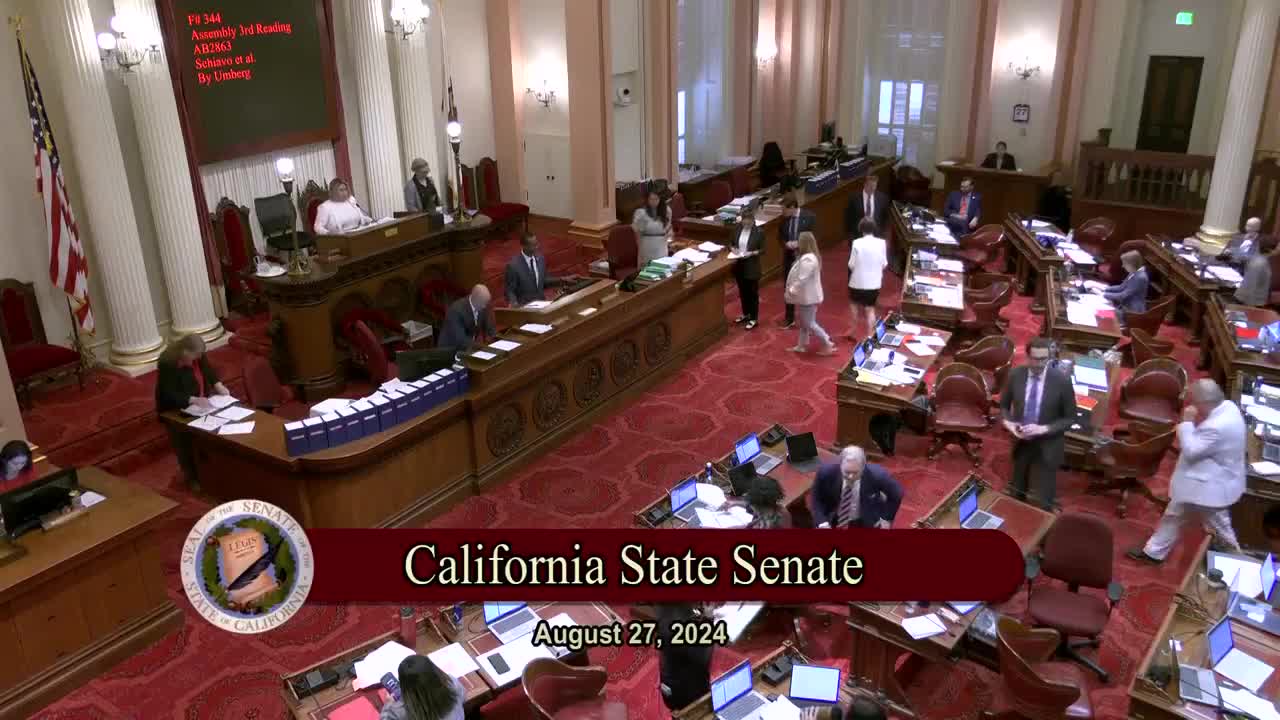
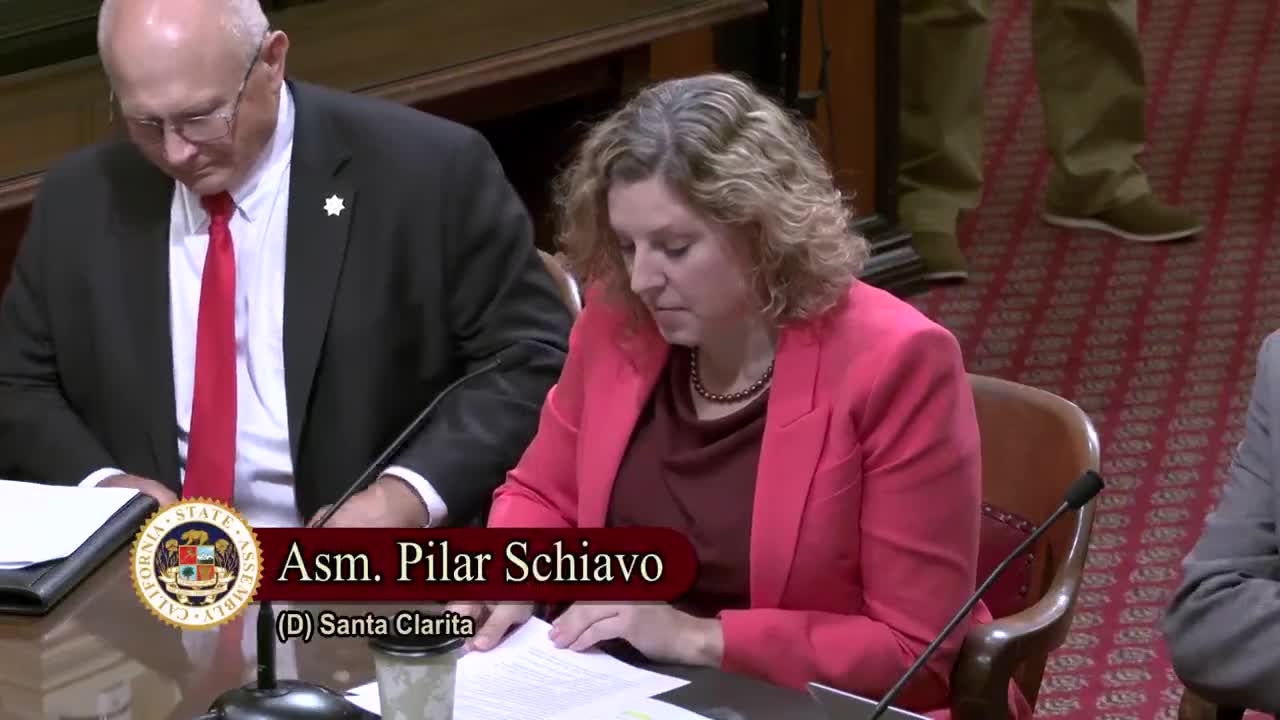
Bill Author

Bill Co-Author(s):
