AB 2865: Pupil instruction: excessive alcohol use.
- Session Year: 2023-2024
- House: Assembly
- Latest Version Date: 2024-09-20
Current Status:
Passed
(2024-09-20: Chaptered by Secretary of State - Chapter 314, Statutes of 2024.)
Introduced
In Committee
First Chamber
In Committee
Second Chamber
Enacted
Existing law prescribes required courses of study in grades 1 to 12, inclusive. Existing law requires instruction upon the nature of alcohol, narcotics, restricted dangerous drugs, and other dangerous substances to be included in the curriculum of all elementary and secondary schools, and instruction on the effects of those substances upon prenatal development to be included in the curriculum of all secondary schools, as provided. Existing law requires the governing board of the school district to adopt regulations specifying the grade or grades and the course or courses in which that instruction shall be included, as provided.
This bill would require the above-described instruction on the nature and effects of alcohol to include information about excessive alcohol use and the short-term and long-term health risks of excessive alcohol use. The bill would require this instruction to include information about excessive drinking, the immediate effects of alcohol that increase the risks of harmful health conditions, and how excessive alcohol use can lead to the development of chronic diseases and other serious problems, including alcohol-related deaths and mental health problems. By imposing obligations on local educational agencies, the bill would impose a state-mandated local program.
The California Constitution requires the state to reimburse local agencies and school districts for certain costs mandated by the state. Statutory provisions establish procedures for making that reimbursement.
This bill would provide that, if the Commission on State Mandates determines that the bill contains costs mandated by the state, reimbursement for those costs shall be made pursuant to the statutory provisions noted above.
Existing law prescribes required courses of study in grades 1 to 12, inclusive, and requires the adopted course of study to provide instruction at the appropriate elementary and secondary grade levels and subject areas in, among other things, personal and public safety and accident prevention, including, among other things, health, including venereal disease and the effects of alcohol, narcotics, drugs, and tobacco on the human body. inclusive. Existing law requires instruction upon the nature of alcohol, narcotics, restricted dangerous drugs, and other dangerous substances to be included in the curriculum of all elementary and secondary schools, and instruction on the effects of those substances upon prenatal development to be included in the curriculum of all secondary schools, as provided. Existing law requires the governing board of the school district to adopt regulations specifying the grade or grades and the course or courses in which that instruction shall be included, as provided.
This bill would make a nonsubstantive change to that provision.This bill would require the above-described instruction on the nature and effects of alcohol to include information about excessive alcohol use and the short-term and long-term health risks of excessive alcohol use. The bill would require this instruction to include information about excessive drinking, the immediate effects of alcohol that increase the risks of harmful health conditions, and how excessive alcohol use can lead to the development of chronic diseases and other serious problems, including mental health problems. By imposing obligations on local educational agencies, the bill would impose a state-mandated local program.
The California Constitution requires the state to reimburse local agencies and school districts for certain costs mandated by the state. Statutory provisions establish procedures for making that reimbursement.
This bill would provide that, if the Commission on State Mandates determines that the bill contains costs mandated by the state, reimbursement for those costs shall be made pursuant to the statutory provisions noted above.
Existing law prescribes required courses of study in grades 1 to 12, inclusive, and requires the adopted course of study to provide instruction at the appropriate elementary and secondary grade levels and subject areas in, among other things, personal and public safety and accident prevention, including, among other things, health, including venereal disease and the effects of alcohol, narcotics, drugs, and tobacco on the human body.
This bill would make a nonsubstantive change to that provision.
(a)Instruction upon the nature of alcohol, narcotics, restricted dangerous drugs as defined in Section 11032 of the Health and Safety Code, and other dangerous substances and their effects upon the human system as determined by science shall be included in the curriculum of all elementary and secondary schools.
(b)Instruction on the effects of alcohol, narcotics, restricted dangerous drugs as defined in Section 11032 of the Health and Safety Code, and other dangerous substances upon prenatal development as determined by science shall be included in the curriculum of all secondary schools.
(c)Instruction on the nature and effects of alcohol pursuant to this section shall include information about excessive alcohol use and the short-term and long-term health risks of excessive alcohol use. This instruction shall include information about excessive drinking, the immediate effects of alcohol that increase the risks of harmful health conditions, and how excessive alcohol use can lead to the development of chronic diseases and other serious problems, including alcohol-related deaths and mental health problems. The instruction about mental health problems may include instruction about depression and anxiety.
(d)The governing board of the school district shall adopt regulations specifying the grade or grades and the course or courses in which the instruction with respect to alcohol, narcotics, restricted dangerous drugs as defined in Section 11032 of the Health and Safety Code, and other dangerous substances shall be included.
(e)All persons responsible for the preparation or enforcement of courses of study shall provide for instruction on the subjects of alcohol, narcotics, restricted dangerous drugs as defined in Section 11032 of the Health and Safety Code, and other dangerous substances.
SEC. 2.If the Commission on State Mandates determines that this act contains costs mandated by the state, reimbursement to local agencies and school districts for those costs shall be made pursuant to Part 7 (commencing with Section 17500) of Division 4 of Title 2 of the Government Code.
(a)Instruction upon the nature of alcohol, narcotics, restricted dangerous drugs as defined in Section 11032 of the Health and Safety Code, and other dangerous substances and their effects upon the human system as determined by science shall be included in the curriculum of all elementary and secondary schools. Instruction
(b)Instruction on the effects of alcohol, narcotics, restricted dangerous drugs as defined in Section 11032 of the Health and Safety Code, and other dangerous substances upon prenatal development as determined by science shall be included in the curriculum of all secondary schools. The
(c)Instruction on the nature and effects of alcohol pursuant to this section shall include information about excessive alcohol use and the short-term and long-term health risks of excessive alcohol use. This instruction shall include information about excessive drinking, the immediate effects of alcohol that increase the risks of harmful health conditions, and how excessive alcohol use can lead to the development of chronic diseases and other serious problems, including mental health problems. The instruction about mental health problems may include instruction about depression and anxiety.
(d)The governing board of the school district shall adopt regulations specifying the grade or grades and the course or courses in which the instruction with respect to alcohol, narcotics, restricted dangerous drugs as defined in Section 11032 of the Health and Safety Code, and other dangerous substances shall be included. All
(e)All persons responsible for the preparation or enforcement of courses of study shall provide for instruction on the subjects of alcohol, narcotics, restricted dangerous drugs as defined in Section 11032 of the Health and Safety Code, and other dangerous substances.
SEC. 2.If the Commission on State Mandates determines that this act contains costs mandated by the state, reimbursement to local agencies and school districts for those costs shall be made pursuant to Part 7 (commencing with Section 17500) of Division 4 of Title 2 of the Government Code.
SECTION 1.Section 51202 of the Education Code is amended to read:51202.The adopted course of study shall provide instruction at the appropriate elementary and secondary grade levels and subject areas in personal and public safety and accident prevention, including emergency first aid instruction, instruction in hemorrhage control, treatment for poisoning, resuscitation techniques, and cardiopulmonary resuscitation when appropriate equipment is available; fire prevention; the protection and conservation of resources, including the necessity for the protection of our environment; and health, including venereal disease and the effects of alcohol, narcotics, drugs, and tobacco on the human body. The health instruction may include prenatal care for pregnant women and violence as a public health issue.The adopted course of study shall provide instruction at the appropriate elementary and secondary grade levels and subject areas in personal and public safety and accident prevention, including emergency first aid instruction, instruction in hemorrhage control, treatment for poisoning, resuscitation techniques, and cardiopulmonary resuscitation when appropriate equipment is available; fire prevention; the protection and conservation of resources, including the necessity for the protection of our environment; and health, including venereal disease and the effects of alcohol, narcotics, drugs, and tobacco upon on the human body. The health instruction may include prenatal care for pregnant women and violence as a public health issue.
|
Date
|
Status
|
|---|---|
| Sep 20, 2024 | Chaptered by Secretary of State - Chapter 314, Statutes of 2024. |
| Sep 20, 2024 | Approved by the Governor. |
| Sep 6, 2024 | Enrolled and presented to the Governor at 4 p.m. |
| Aug 28, 2024 | In Assembly. Ordered to Engrossing and Enrolling. |
| Aug 28, 2024 | Read third time. Passed. Ordered to the Assembly. (Ayes 40. Noes 0.). |
| Jun 25, 2024 | Read second time. Ordered to third reading. |
| Jun 24, 2024 | From committee: Be ordered to second reading pursuant to Senate Rule 28.8. |
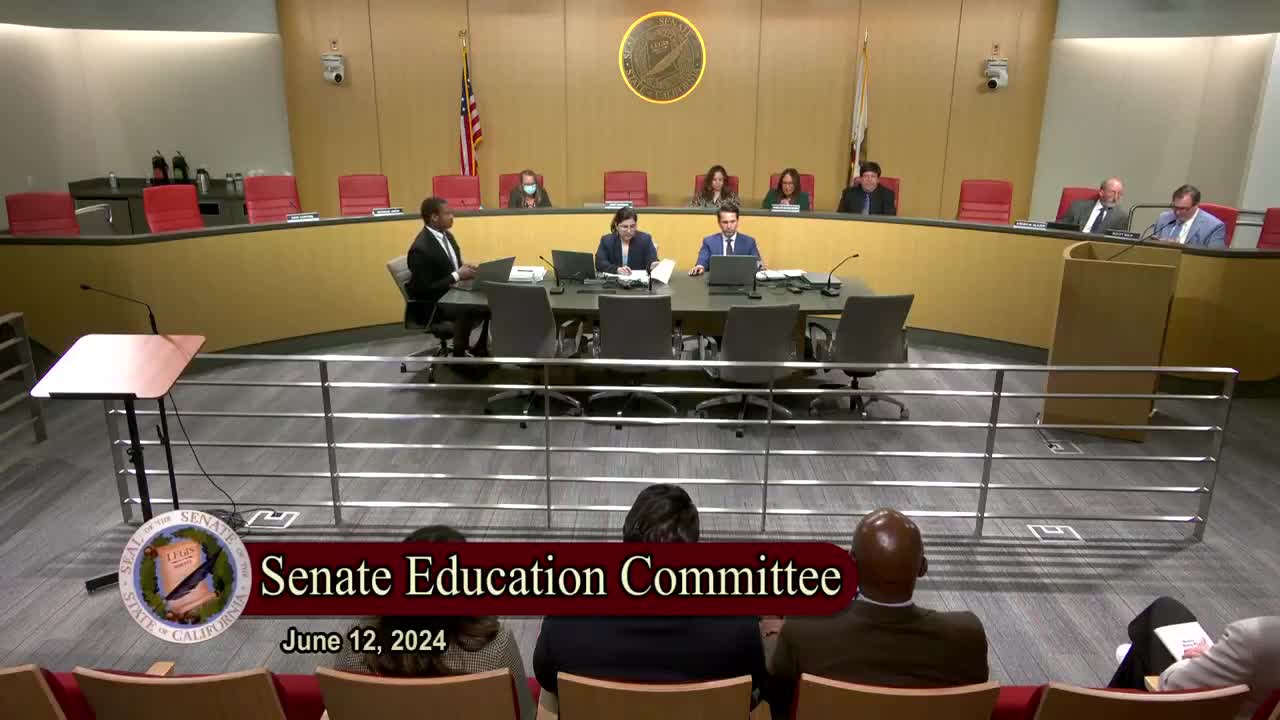
| Jun 12, 2024 | From committee: Do pass and re-refer to Com. on APPR. (Ayes 7. Noes 0.) (June 12). Re-referred to Com. on APPR. |
| May 29, 2024 | Referred to Com. on ED. |
| May 16, 2024 | In Senate. Read first time. To Com. on RLS. for assignment. |
| May 16, 2024 | Read third time. Passed. Ordered to the Senate. (Ayes 71. Noes 0.) |
| May 9, 2024 | Read second time. Ordered to Consent Calendar. |
| May 8, 2024 | From committee: Do pass. To Consent Calendar. (Ayes 15. Noes 0.) (May 8). |
| Apr 30, 2024 | Re-referred to Com. on APPR. |
| Apr 29, 2024 | Read second time and amended. |
| Apr 25, 2024 | From committee: Amend, and do pass as amended and re-refer to Com. on APPR. with recommendation: To Consent Calendar. (Ayes 7. Noes 0.) (April 24). |
| Mar 27, 2024 | In committee: Hearing postponed by committee. |
| Mar 19, 2024 | Re-referred to Com. on ED. |
| Mar 18, 2024 | Referred to Com. on ED. |
| Mar 18, 2024 | From committee chair, with author's amendments: Amend, and re-refer to Com. on ED. Read second time and amended. |
| Feb 16, 2024 | From printer. May be heard in committee March 17. |
| Feb 15, 2024 | Read first time. To print. |
|
Date
|
Description
|
Location
|
Votes
|
|
|---|---|---|---|---|
| Aug 28, 2024 | Assembly 3rd Reading AB2865 Wendy Carrillo By Limón | Senate Floor |
Passed |
|
| Jun 12, 2024 | Do pass, but first be re-referred to the Committee on [Appropriations] | Senate Standing Committee on Education |
Passed |
|
| May 16, 2024 | AB 2865 Wendy Carrillo Consent Calendar Second Day Regular Session | Assembly Floor |
Passed |
|
| May 8, 2024 | Do pass. To Consent Calendar. | Assembly Standing Committee on Appropriations |
Passed |
|
| Apr 24, 2024 | Do pass as amended, and be re-referred to the Committee on [Appropriations] with recommendation: To Consent Calendar | Assembly Standing Committee on Education |
Passed |
This list shows positions taken on this bill by organizations on the date displayed, which is linked to the original source.
Positions by individuals are not included.
SENATE RULES COMMITTEE Office of Senate Floor Analyses (916) 651-1520 Fax: (916) 327-4478 | AB 2865 |
THIRD READING
Bill No: AB 2865
Author: Wendy Carrillo (D)
Amended: 4/29/24 in Assembly
Vote: 21
SENATE EDUCATION COMMITTEE: 7-0, 6/12/24
AYES: Newman, Ochoa Bogh, Cortese, Glazer, Gonzalez, Limón, Wilk
ASSEMBLY FLOOR: 71-0, 5/16/24 (Consent) - See last page for vote
SENATE APPROPRIATIONS COMMITTEE: Senate Rule 28.8
SUBJECT: Pupil instruction: excessive alcohol use
SOURCE: Author
DIGEST:
This bill specifies that instructions on the nature and effects of alcohol, within the existing requirements, include information about the excessive use, and the short-term and long-term health risks of, alcohol.
ANALYSIS:
Existing Law:
Education Code (EC)
- Requires, within the course of study requirements for elementary and secondary schools, instruction on the nature of alcohol, narcotics, restricted dangerous drugs as defined in Section 11032 of the Health and Safety Code, and other dangerous substances and their effects upon the human system as determined by science. (EC § 51203)
- Specifies that instruction on the effects of alcohol, narcotics, restricted dangerous drugs as defined in Section 11032 of the Health and Safety Code, and other dangerous substances upon prenatal development as determined by science shall be included in the curriculum of all secondary schools. (EC § 51203)
- Requires when adopting instructional materials for use in the schools, governing boards shall include only instructional materials that accurately portray both of the following, whenever appropriate:
- Humanity’s place in ecological systems and the necessity for the protection of our environment; and
- The effects on the human system of the use of tobacco, alcohol, and narcotics and restricted dangerous drugs, as defined in Section 11032 of the Health and Safety Code, and other dangerous substances. (EC § 60041)
Health and Safety Code (HSC)
- Defines the following terms if reference is made to them unless otherwise expressly provided:
- “Narcotics” means those controlled substances classified in Schedules I and II.
- “Restricted dangerous drugs” means those controlled substances classified in Schedules III and IV.
- “Marijuana” means cannabis. (HSC § 11032)
This bill:
- Specifies instructions on the effects of alcohol, narcotics, restricted dangerous drugs as defined in Section 11032 of the HSC, and other dangerous substances upon prenatal development as determined by science shall be included in the curriculum of all secondary schools.
- Specifies that instructions on the nature and effects of alcohol, within the existing requirements, include information about excessive alcohol use and the short-term and long-term health risks of excessive alcohol use such as excessive drinking, the immediate effects of alcohol that increase the risks of harmful health conditions, and how excessive alcohol use can lead to the development of chronic diseases and other serious problems, including alcohol-related deaths and mental health problems, which may include depression and anxiety.
- Consistent with the existing requirement, the governing board of the school district shall adopt regulations specifying the grade or grades and the course or courses in which the instruction with respect to alcohol, narcotics, restricted dangerous drugs as defined in Section 11032 of the HSC, and other dangerous substances should be included.
- Requires all persons responsible for the preparation or enforcement of courses of study shall provide for instruction on the subjects of alcohol, narcotics, restricted dangerous drugs as defined in Section 11032 of the HSC, and other dangerous substances.
Comments
- Need for the bill. According to the author, “Schools are an important setting for interventions aimed at preventing alcohol use and abuse among adolescents. Early education is a critical step to avoid alcoholism and the associated harms that come with the disease. AB 2865 would require the instruction on the nature and effects of alcohol to include information about excessive alcohol use and the short-term and long-term health risks of excessive alcohol use.”
- How Curriculum, Standards, Frameworks, and Model Curricula Are Created and Adopted. The Legislature has vested the Instructional Quality Commission (IQC) and State Board of Education (SBE) with the authority to develop and adopt state curriculum and instructional materials. The IQC develops curriculum frameworks in each subject by convening expert panels, developing drafts, and holding public hearings to solicit input. Changes are frequently made in response to public comment. The SBE then adopts the frameworks in a public meeting. The SBE also adopts, in a public process, instructional materials aligned to those frameworks for grades K- eight. School district governing boards and charter schools then adopt instructional materials aligned to these standards and frameworks. Local adoption of new curricula involves significant local cost and investment of resources and professional development. These existing processes involve practitioners and experts who have an in-depth understanding of curriculum and instruction, including the full scope and sequence of the curriculum in each subject and at each grade level, constraints on instructional time and resources, and the relationship of curriculum to state assessments and other measures of student progress.
- The Effects of Alcohol on the Body. Alcohol can cause both short-term effects, such as lowered inhibitions, and long-term effects, including a weakened immune system. According to the National Institute on Alcohol Abuse and Alcoholism, excessive alcohol consumption can seriously affect one's health. Alcohol can affect the body in the following ways:
- Brain: Alcohol disrupts the brain's communication pathways, leading to changes in mood, behavior, and cognitive function.
- Heart: Excessive drinking can lead to heart problems such as cardiomyopathy, arrhythmias, stroke, and high blood pressure.
- Liver: Heavy drinking can cause liver issues, including fatty liver, alcoholic hepatitis, fibrosis, and cirrhosis.
- Pancreas: Alcohol can lead to pancreatitis, causing inflammation, swelling, and impaired digestive function.
- Cancer: Alcohol consumption is linked to an increased risk of certain types of cancer, including head and neck, esophageal, liver, breast, and colorectal cancer.
- Immune System: Drinking too much weakens the immune system, making the body more susceptible to pneumonia and tuberculosis. Additionally, excessive alcohol consumption can impair the body's ability to fight off infections for up to 24 hours after drinking.
The Alcohol-Related Disease Impact application estimates that each year, there are more than 178,000 deaths attributable to excessive alcohol use in the United States. This includes approximately 120,000 male deaths and 59,000 female deaths. These statistics make alcohol one of the leading preventable causes of death in the United States, ranking behind tobacco, poor diet, physical inactivity, and illegal drugs.
- Health Education Framework (2019). On May 8, 2019, the SBE officially adopted the 2019 Health Education Curriculum Framework for California Public Schools (the Health Education Framework) after over two years of development. The Health Education Framework is aligned to the 2008 California Health Education Content Standards, which support the development of knowledge, skills, and attitudes in eight overarching standards: (1) essential health concepts; (2) analyzing health influences; (3) accessing valid health information; (4) interpersonal communication; (5) decision making; (6) goal setting; (7) practicing health-enhancing behaviors; and (8) health promotion in six content areas of health education, including sexual health.
The current law mandates that elementary and secondary school curriculums include instruction on alcohol, narcotics, restricted dangerous drugs, and their effects on the human body based on scientific findings. For grades nine through 12, the Content Standards for Grade Levels nine through 12 include the following essential concepts:
- 9–12.1.2. Explain the impact of alcohol, tobacco, and other drug use on brain chemistry, brain function, and behavior.
- 9–12.1.1. Describe the health benefits of abstaining from or discontinuing the use of alcohol, tobacco, and other drugs.
In 2019, the SBE adopted the current Health Education Curriculum Framework. Alcohol, tobacco, and other drugs are central themes in the curriculum for each grade from kindergarten through 12th grade. The framework discusses critical competencies and concepts and provides examples of lessons related to these topics.
FISCAL EFFECT: Appropriation: No Fiscal Com.: Yes Local: Yes
SUPPORT: (Verified 6/23/24)
None received
OPPOSITION: (Verified 6/23/24)
None received
ASSEMBLY FLOOR: 71-0, 5/16/24
AYES: Aguiar-Curry, Alanis, Arambula, Bains, Bauer-Kahan, Bennett, Berman, Boerner, Bonta, Bryan, Calderon, Juan Carrillo, Wendy Carrillo, Chen, Connolly, Davies, Dixon, Essayli, Mike Fong, Friedman, Gabriel, Gallagher, Garcia, Grayson, Haney, Hart, Holden, Hoover, Jackson, Jones-Sawyer, Kalra, Lackey, Lee, Low, Lowenthal, Maienschein, McCarty, McKinnor, Muratsuchi, Stephanie Nguyen, Ortega, Pacheco, Papan, Jim Patterson, Joe Patterson, Pellerin, Petrie-Norris, Quirk-Silva, Ramos, Rendon, Reyes, Luz Rivas, Rodriguez, Blanca Rubio, Sanchez, Santiago, Schiavo, Soria, Ta, Ting, Valencia, Villapudua, Waldron, Wallis, Ward, Weber, Wicks, Wilson, Wood, Zbur, Robert Rivas
NO VOTE RECORDED: Addis, Alvarez, Cervantes, Megan Dahle, Flora, Vince Fong, Gipson, Irwin, Mathis
Prepared by: Kordell Hampton / ED. / (916) 651-4105
6/25/24 13:11:39
**** END ****
SENATE COMMITTEE ON EDUCATION
Senator Josh Newman, Chair
2023 - 2024 Regular
Bill No: AB 2865 Hearing Date: June 12, 2024
Author: | |||
Version: | April 29, 2024 | ||
Urgency: | No | Fiscal: | Yes |
Consultant: | Kordell Hampton | ||
Subject: Pupil instruction: excessive alcohol use.
SUMMARY
This bill specifies that instructions on the nature and effects of alcohol, within the existing requirements, include information about the excessive use, and the short-term and long-term health risks of, alcohol.
BACKGROUND
Existing Law:
Education Code (EC)
- Requires, within the course of study requirements for elementary and secondary schools, instruction on the nature of alcohol, narcotics, restricted dangerous drugs as defined in Section 11032 of the Health and Safety Code, and other dangerous substances and their effects upon the human system as determined by science. (EC § 51203)
- Specifies that instruction on the effects of alcohol, narcotics, restricted dangerous drugs as defined in Section 11032 of the Health and Safety Code, and other dangerous substances upon prenatal development as determined by science shall be included in the curriculum of all secondary schools. (EC § 51203)
- Requires when adopting instructional materials for use in the schools, governing boards shall include only instructional materials that accurately portray both of the following, whenever appropriate:
- Humanity’s place in ecological systems and the necessity for the protection of our environment; and
- The effects on the human system of the use of tobacco, alcohol, and narcotics and restricted dangerous drugs, as defined in Section 11032 of the Health and Safety Code, and other dangerous substances. (EC § 60041)
Health and Safety Code (HSC)
- Defines the following terms if reference is made to them unless otherwise expressly provided:
- “Narcotics” means those controlled substances classified in Schedules I and II.
- “Restricted dangerous drugs” means those controlled substances classified in Schedules III and IV.
- “Marijuana” means cannabis. (HSC § 11032)
ANALYSIS
This bill:
- Specifies instructions on the effects of alcohol, narcotics, restricted dangerous drugs as defined in Section 11032 of the HSC, and other dangerous substances upon prenatal development as determined by science shall be included in the curriculum of all secondary schools.
- Specifies that instructions on the nature and effects of alcohol, within the existing requirements, include information about excessive alcohol use and the short-term and long-term health risks of excessive alcohol use such as excessive drinking, the immediate effects of alcohol that increase the risks of harmful health conditions, and how excessive alcohol use can lead to the development of chronic diseases and other serious problems, including alcohol-related deaths and mental health problems, which may include depression and anxiety.
- Consistent with the existing requirement, the governing board of the school district shall adopt regulations specifying the grade or grades and the course or courses in which the instruction with respect to alcohol, narcotics, restricted dangerous drugs as defined in Section 11032 of the HSC, and other dangerous substances should be included.
- Requires all persons responsible for the preparation or enforcement of courses of study shall provide for instruction on the subjects of alcohol, narcotics, restricted dangerous drugs as defined in Section 11032 of the HSC, and other dangerous substances.
STAFF COMMENTS
- Need for the bill. According to the author, “Schools are an important setting for interventions aimed at preventing alcohol use and abuse among adolescents. Early education is a critical step to avoid alcoholism and the associated harms that come with the disease. AB 2865 would require the instruction on the nature and effects of alcohol to include information about excessive alcohol use and the short-term and long-term health risks of excessive alcohol use.”
- How Curriculum, Standards, Frameworks, and Model Curricula Are Created and Adopted. The Legislature has vested the Instructional Quality Commission (IQC) and State Board of Education (SBE) with the authority to develop and adopt state curriculum and instructional materials. The IQC develops curriculum frameworks in each subject by convening expert panels, developing drafts, and holding public hearings to solicit input. Changes are frequently made in response to public comment. The SBE then adopts the frameworks in a public meeting. The SBE also adopts, in a public process, instructional materials aligned to those frameworks for grades K-8. School district governing boards and charter schools then adopt instructional materials aligned to these standards and frameworks. Local adoption of new curricula involves significant local cost and investment of resources and professional development. These existing processes involve practitioners and experts who have an in-depth understanding of curriculum and instruction, including the full scope and sequence of the curriculum in each subject and at each grade level, constraints on instructional time and resources, and the relationship of curriculum to state assessments and other measures of student progress.
- The Effects of Alcohol on the Body. Alcohol can cause both short-term effects, such as lowered inhibitions, and long-term effects, including a weakened immune system. According to the National Institute on Alcohol Abuse and Alcoholism, excessive alcohol consumption can seriously affect one's health. Alcohol can affect the body in the following ways:
- Brain: Alcohol disrupts the brain's communication pathways, leading to changes in mood, behavior, and cognitive function.
- Heart: Excessive drinking can lead to heart problems such as cardiomyopathy, arrhythmias, stroke, and high blood pressure.
- Liver: Heavy drinking can cause liver issues, including fatty liver, alcoholic hepatitis, fibrosis, and cirrhosis.
- Pancreas: Alcohol can lead to pancreatitis, causing inflammation, swelling, and impaired digestive function.
- Cancer: Alcohol consumption is linked to an increased risk of certain types of cancer, including head and neck, esophageal, liver, breast, and colorectal cancer.
- Immune System: Drinking too much weakens the immune system, making the body more susceptible to pneumonia and tuberculosis. Additionally, excessive alcohol consumption can impair the body's ability to fight off infections for up to 24 hours after drinking.
The Alcohol-Related Disease Impact application estimates that each year, there are more than 178,000 deaths attributable to excessive alcohol use in the United States. This includes approximately 120,000 male deaths and 59,000 female deaths. These statistics make alcohol one of the leading preventable causes of death in the United States, ranking behind tobacco, poor diet, physical inactivity, and illegal drugs.
- Health Education Framework (2019). On May 8, 2019, the SBE officially adopted the 2019 Health Education Curriculum Framework for California Public Schools (the Health Education Framework) after over two years of development. The Health Education Framework is aligned to the 2008 California Health Education Content Standards, which support the development of knowledge, skills, and attitudes in eight overarching standards: (1) essential health concepts; (2) analyzing health influences; (3) accessing valid health information; (4) interpersonal communication; (5) decision making; (6) goal setting; (7) practicing health-enhancing behaviors; and (8) health promotion in six content areas of health education, including sexual health.
The current law mandates that elementary and secondary school curriculums include instruction on alcohol, narcotics, restricted dangerous drugs, and their effects on the human body based on scientific findings. For grades 9 through 12, the Content Standards for Grade Levels Nine through Twelve include the following essential concepts:
- 9–12.1.2. Explain the impact of alcohol, tobacco, and other drug use on brain chemistry, brain function, and behavior.
- 9–12.1.1. Describe the health benefits of abstaining from or discontinuing the use of alcohol, tobacco, and other drugs.
In 2019, the SBE adopted the current Health Education Curriculum Framework. Alcohol, tobacco, and other drugs are central themes in the curriculum for each grade from kindergarten through 12th grade. The framework discusses critical competencies and concepts and provides examples of lessons related to these topics.
- Related Legislation.
AB 2429 (Alaverz, 2024) would require any governing board of a LEA or charter school that had elected to require its pupils to complete a course in health education for graduation from high school include instruction in the dangers associated with fentanyl use, as specified, commencing the with the 2026-27 school year.
AB 1805 (Ta, 2024) would require the IQC, when the SBE adopts new instructional materials for history-social science on or after January 1, 2025, to consider providing for inclusion, in its evaluation criteria, content on the case of Mendez v. Westminster School District of Orange County.
AB 2932 (Joe Patterson, 2024) would require the IQC to consider, when the Health Framework is revised, on or after January 1, 2025, content on sextortion, as specified.
AB 2053 (Mathis, 2024) This bill requires that instruction about adolescent relationship abuse and intimate partner violence include, within the California Healthy Youth Act, the resources available to students related to adolescent relationship abuse and intimate partner violence, include the National Domestic Violence Hotline and local domestic violence hotlines that provide confidential support services for students that have experienced domestic violence or stalking, and that are available by telephone 24 hours a day.
AB 1871 (Alanis, 2024) includes personal finance within the history-social sciences area of study within the adopted course of study for grades 7 to 12.
SUPPORT
None received
OPPOSITION
None received
-- END --
Date of Hearing: May 8, 2024
ASSEMBLY COMMITTEE ON APPROPRIATIONS
Buffy Wicks, Chair
ABPCA Bill Id:AB 2865
Author:(Wendy Carrillo) – As Amended Ver:April 29, 2024
Policy Committee: | Education | Vote: | 7 - 0 |
|
| ||
|
|
Urgency: No State Mandated Local Program: Yes Reimbursable: Yes
SUMMARY:
This bill adds information related to excessive alcohol use to the requirements of instruction local education agencies (LEAs) are to provide to students related to the risks of drug and alcohol use.
FISCAL EFFECT:
Minor and absorbable Proposition 98 General Fund costs to LEAs to include information about excessive alcohol use to existing instruction related to the risks of alcohol use.
If the Commission on State Mandates determines the bill’s requirements to be a reimbursable state mandate, the state would need to reimburse these costs to LEAs or provide funding through the K-12 Mandate Block Grant.
COMMENTS:
- Purpose. According to the author:
Schools are an important setting for interventions aimed at preventing alcohol use and abuse among adolescents. Early education is a critical step to avoid alcoholism and the associated harms that come with the disease. AB 2865 would require the instruction on the nature and effects of alcohol to include information about excessive alcohol use and the short-term and long-term health risks of excessive alcohol use.
- Background. According to the World Health Organization, drinking alcohol, even in small amounts, harms one’s health. Current law requires instruction in elementary and secondary schools on the effects of alcohol to the human system, in addition to narcotics, restricted dangerous drugs, and other dangerous substances.
This bill adds to this requirement by requiring instruction on the nature and effects of alcohol to include information about excessive alcohol use and the short-term and long-term health risks of excessive alcohol use.
Analysis Prepared by: Natasha Collins / APPR. / (916) 319-2081
Date of Hearing: April 24, 2024
ASSEMBLY COMMITTEE ON EDUCATION
Al Muratsuchi, Chair
ABPCA Bill Id:AB 2865 (
Author:Wendy Carrillo) – As Amended Ver:March 18, 2024
SUBJECT: Pupil instruction: excessive alcohol use
SUMMARY: Requires instruction on the nature and effects of alcohol use to include information about excessive alcohol use and the short-term and long-term health risks of excessive alcohol use. Specifically, this bill:
- Requires instruction on the nature and effects of alcohol use to include information about excessive alcohol use and the short-term and long-term health risks of excessive alcohol use.
- Requires this instruction to include information about excessive drinking, the immediate effects of alcohol that increase the risks of harmful health conditions, and how excessive alcohol use can lead to the development of chronic diseases and other serious problems, including mental health problems. Authorizes the instruction about mental health problems to include instruction about depression and anxiety.
EXISTING LAW:
- Requires instruction on the nature of alcohol, narcotics, restricted dangerous drugs as defined, and other dangerous substances and their effects upon the human system as determined by science to be included in the curriculum of all elementary and secondary schools. Requires this instruction to be included in the curriculum of all secondary schools. Requires the governing board of a district to adopt regulations specifying the grade or grades and the course or courses in which the instruction with respect to alcohol, narcotics, restricted dangerous drugs, and other dangerous substances to be included. Requires all persons responsible for the preparation or enforcement of courses of study to provide instruction on the subjects of alcohol, narcotics, restricted dangerous drugs, and other dangerous substances. (Education Code 51203)
- Requires that instruction shall be given in elementary and secondary schools by appropriately trained instructors on drug education and the effects of the use of tobacco, alcohol, narcotics, and dangerous drugs, as defined, and other dangerous substances. (EC 51260)
- Defines an “appropriately trained instructor” as one who, based upon the determination of the site administrator, demonstrates competencies in interacting in a positive manner with children and youth; demonstrates knowledge of the properties and effects of tobacco, alcohol, narcotics, and dangerous drugs; and demonstrates skills in conducting affective education, which includes methods and techniques for helping children and youth to freely express ideas and opinions in a responsible manner and to gain an awareness of their values as they affect decisions related to drug use and misuse. (EC 51260)
- Requires that, for grades 7 to 12, instruction on drug education be conducted in conjunction with courses given on health or in any appropriate area of study. Encourages, for grades 1 through 6, instruction on drug education to be conducted in conjunction with courses on health.
- Prohibits the State Board of Education (SBE) from accrediting any teacher education institution for teacher certification purposes after the 1972–73 fiscal year unless it offers courses for prospective teachers on drug education and the effects of the use of tobacco, alcohol, narcotics, restricted dangerous drugs, and other dangerous substances. Requires the SBE to continually reevaluate approved teacher training institutions to ensure that programs are in conformance with these requirements. (EC 51261)
FISCAL EFFECT: This bill has been keyed a possible state-mandated local program by the Office of Legislative Counsel.
COMMENTS:
Need for the bill. According to the author, “Schools are an important setting for interventions aimed at preventing alcohol use and abuse among adolescents. Early education is a critical step to avoid alcoholism and the associated harms that come with the disease. AB 2865 would require the instruction on the nature and effects of alcohol to include information about excessive alcohol use and the short-term and long-term health risks of excessive alcohol use.”
Drug and alcohol prevention education in the California health curriculum. Current law requires instruction on the nature of alcohol, narcotics, restricted dangerous drugs, and other dangerous substances, and their effects upon the human system as determined by science to be included in the curriculum of all elementary and secondary schools. This bill adds to that requirement by requiring instruction on the nature and effects of alcohol to include information about excessive alcohol use and the short-term and long-term health risks of excessive alcohol use.
For grades 9 through 12, the Content Standards for Grade Levels Nine through Twelve include:
- Essential Concepts: 9–12.1.2.A Explain the impact of alcohol, tobacco, and other drug use on brain chemistry, brain function, and behavior.
- Essential Concepts: 9–12.1.1.A Describe the health benefits of abstaining from or discontinuing use of alcohol, tobacco, and other drugs.
In 2019, the SBE adopted the current Health Education Curriculum Framework. In the curriculum for each grade, from kindergarten through 12th grade, Alcohol, Tobacco, and Other Drugs (ATOD) is a major theme, with discussion of the key competencies and concepts and examples of lessons. According to the Introduction to the Health Education Curriculum Framework:
High-risk behaviors, such as unhealthy eating; inadequate physical activity; high-risk sexual and violence-related behaviors, including bullying and intimate partner violence; and usage of alcohol, tobacco, and other drugs, are often established in childhood and adolescence. Today’s youth encounter greater health challenges and more complex health-related issues at a faster pace than in previous generations (Telljohann et al. 2015). Health education teachers have the unique opportunity to make a meaningful impact and positive change for the youth of today and tomorrow by teaching students positive health behaviors, skills, and practices they will remember and apply for a lifetime.
After a new curriculum framework is adopted, the SBE typically adopts instructional materials for grades K-8, which align to the framework, but in 2020, the SBE cancelled the adoption of health instructional materials due to a lack of publisher interest.
Alcohol’s effect on health. According to the National Institute on Abuse and Alcoholism, drinking too much – on a single occasion or over time – can take a serious toll on one’s health. Alcohol can impact the body in the following ways:
- Brain: Alcohol interferes with the brain’s communication pathways and can affect the way the brain looks and works. These disruptions can change mood and behavior and make it harder to think clearly and move with coordination.
- Heart: Drinking a lot over a long time or too much on a single occasion can damage the heart, causing problems including: cardiomyopathy (stretching and drooping of heart muscle), arrhythmias (irregular heartbeat), stroke, and high blood pressure.
- Liver: Heavy drinking takes a toll on the liver and can lead to a variety of problems and liver inflammations, including: steatosis (or fatty liver), alcoholic hepatitis, fibrosis, and cirrhosis.
- Pancreas: Alcohol causes the pancreas to produce toxic substances that can eventually lead to pancreatitis, a dangerous inflammation in the pancreas that causes its swelling and pain (which may spread) and impairs its ability to make enzymes and hormones for proper digestion.
- Cancer: According to the National Cancer Institute, "There is a strong scientific consensus that alcohol consumption can cause several types of cancer. In its Report on Carcinogens, the National Toxicology Program of the US Department of Health and Human Services lists consumption of alcoholic beverages as a known human carcinogen. The evidence indicates that the more alcohol a person drinks–particularly the more alcohol a person drinks regularly over time–the higher his or her risk of developing an alcohol-associated cancer. Even those who have no more than one drink per day and people who binge drink (those who consume 4 or more drinks for women and 5 or more drinks for men in one sitting) have a modestly increased risk of some cancers. Based on data from 2009, an estimated 3.5% of cancer deaths in the United States (about 19,500 deaths) were alcohol related." Clear patterns have emerged between alcohol consumption and increased risks of certain types of cancer: head and neck, esophageal, liver, breast, and colorectal.
- Immune System: Drinking too much can weaken your immune system, making your body a much easier target for disease. Chronic drinkers are more likely to contract diseases like pneumonia and tuberculosis than people who do not drink too much. Drinking a lot on a single occasion slows your body’s ability to ward off infections – even up to 24 hours after getting drunk.
Alcohol related deaths. According to the Centers for Disease Control and Prevention, excessive alcohol use was responsible for about 178,000 deaths in the United States each year during 2020–2021 (19,743 deaths in California), or 488 deaths per day (54 deaths per day in California). For the age group of 0 to 19 years of age there were 3,028 alcohol related deaths in the United States. This was a 29% increase from 2016–17 when there were an estimated 138,000 deaths per year. These deaths result from conditions that develop from drinking over long periods of time, as well as from binge drinking (drinking too much on one occasion). Two-thirds of the deaths (about 117,000 deaths) are due to chronic conditions that develop from long-term alcohol use, including various types of cancer, heart disease, liver disease, and alcohol use disorder. One-third of these deaths (about 61,000 deaths) happen from drinking too much on one occasion, such as from motor vehicle crashes, poisonings involving substances in addition to alcohol, and suicides.
Recommended Committee Amendments. Staff recommends that the bill be amended as follows: require the instruction on the nature and effects of alcohol to include information regarding alcohol related deaths. Subdivision (c) of EC section 51203 would read:
(c) Instruction on the nature and effects of alcohol pursuant to this section shall include information about excessive alcohol use and the short-term and long-term health risks of excessive alcohol use. This instruction shall include information about excessive drinking, the immediate effects of alcohol that increase the risks of harmful health conditions, and how excessive alcohol use can lead to the development of chronic diseases and other serious problems, including mental health problems and alcohol related deaths. The instruction about mental health problems may include instruction about depression and anxiety.
Related legislation. AB 2822 (Woodruff), Chapter 540, Statutes of 1990, requires high schools to teach the adverse effects of drugs and alcohol on pregnancy.
REGISTERED SUPPORT / OPPOSITION:
Support
None on file
Opposition
None on file
Analysis Prepared by: Marguerite Ries / ED. / (916) 319-2087
Discussed in Hearing
View Older Hearings
Bill Author

Bill Co-Author(s):