AB 2872: Department of Insurance: sworn members: compensation.
- Session Year: 2023-2024
- House: Assembly
- Latest Version Date: 2024-08-28
Current Status:
Failed
(2024-09-20: Vetoed by Governor.)
Introduced
In Committee
First Chamber
In Committee
Second Chamber
Enacted
Existing law, the State Civil Service Act, regulates employment with the state and vests in the Department of Human Resources all powers, duties, and authorities necessary to operate the state civil service system in accordance with Article VII of the California Constitution, the Government Code, the merit principle, and applicable rules duly adopted by the State Personnel Board. Existing law requires the department to establish and adjust salary ranges for each class of position in the state civil service, as specified.
Existing law requires the state, in order to recruit and retain the highest qualified employees, to pay sworn members of the California Highway Patrol who are rank-and-file members of State Bargaining Unit 5 the estimated average total compensation for each corresponding rank for the Los Angeles Police Department, Los Angeles County Sheriffs Office, San Diego Police Department, Oakland Police Department, and San Francisco Police Department, as specified.
This bill would require, notwithstanding any other law, that sworn members of the Department of Insurance who are rank-and-file members of State Bargaining Unit 7 be paid the same compensation as is paid to the corresponding rank-and-file sworn peace officer employees of the Department of Justice.
Existing law, the State Civil Service Act, regulates employment with the state and vests in the Department of Human Resources all powers, duties, and authorities necessary to operate the state civil service system in accordance with Article VII of the California Constitution, the Government Code, the merit principle, and applicable rules duly adopted by the State Personnel Board. Existing law requires the department to establish and adjust salary ranges for each class of position in the state civil service, as specified.
Existing law requires the state, in order to recruit and retain the highest qualified employees, to pay sworn members of the California Highway Patrol who are rank-and-file members of State Bargaining Unit 5 the estimated average total compensation for each corresponding rank for the Los Angeles Police Department, Los Angeles County Sheriffs Office, San Diego Police Department, Oakland Police Department, and San Francisco Police Department, as specified.
Existing law requires the Insurance Commissioner to appoint supervisory and investigatory personnel within the Fraud Division of the Department of Insurance.This bill would require, notwithstanding any other law, that sworn members of the Department of Insurance who are rank-and-file members of State Bargaining Unit 7 be paid the same compensation as is paid to the corresponding rank-and-file sworn peace officer employees of the Department of Justice.
Existing law, the State Civil Service Act, regulates employment with the state and vests in the Department of Human Resources all powers, duties, and authorities necessary to operate the state civil service system in accordance with Article VII of the California Constitution, the Government Code, the merit principle, and applicable rules duly adopted by the State Personnel Board. Existing law requires the department to establish and adjust salary ranges for each class of position in the state civil service, as specified.
Existing law requires the state, in order to recruit and retain the highest qualified employees, to pay sworn members of the California Highway Patrol who are rank-and-file members of State Bargaining Unit 5 the estimated average total compensation for each corresponding rank for the Los Angeles Police Department, Los Angeles County Sheriffs Office, San Diego Police Department, Oakland Police Department, and San Francisco Police Department, as specified.
Existing law requires the Insurance Commissioner to appoint supervisory and investigatory personnel within the Fraud Division of the Department of Insurance.
This bill would require, notwithstanding any other law, that sworn members of the Department of Insurance who are rank-and-file members of State Bargaining Unit 7 be paid the same compensation as is paid to the corresponding rank-and-file sworn peace officer employees of the Department of Justice.
Existing law exempts from requirements for providing insurance set forth in the Insurance Code firefighters, police officers, and peace officers benefit and relief associations that comply with specified criteria, including, among other things, a requirement that the membership consist solely of peace officers, members of police or fire departments, and emergency medical personnel employed by fire departments, as specified. Existing law prohibits these associations from operating or doing business in the state without a certificate of authority. Existing law requires an association to renew its certificate of authority on or before July 1, 2019, and every 5 years thereafter.This bill would, instead, require an association to renew its certificate of authority within 30 days after a change in name or address or subsequent to a merger.Existing law exempts from requirements for providing insurance set forth in the Insurance Code firefighters, police officers, and peace officers benefit and relief associations that comply with specified criteria, including, among other things, a requirement that the membership consist solely of peace officers, members of police or fire departments, and emergency medical personnel employed by fire departments, as specified. Existing law prohibits these associations from operating or doing business in the state without a certificate of authority. Existing law requires an association to renew its certificate of authority on or before July 1, 2019, and every 5 years thereafter.
This bill would, instead, require an association to renew its certificate of authority within 30 days after a change in name or address or subsequent to a merger.
Notwithstanding any other law, in order to recruit and retain the highest qualified employees, the state shall pay sworn members of the Department of Insurance who are rank-and-file members of State Bargaining Unit 7 compensation paid to the corresponding rank-and-file sworn peace officer employees of the Department of Justice.
Notwithstanding any other law, in order to recruit and retain the highest qualified employees, the state shall pay sworn members of the Department of Insurance who are rank-and-file members of State Bargaining Unit 7 compensation paid to the corresponding rank-and-file sworn peace officer employees of the Department of Justice.
SECTION 1.Section 1879.2 is added to the Insurance Code, to read:1879.2.Notwithstanding any other law, in order to recruit and retain the highest qualified employees, the state shall pay sworn members of the Department of Insurance who are rank-and-file members of State Bargaining Unit 7 compensation paid to the corresponding rank-and-file sworn peace officer employees of the Department of Justice.Notwithstanding any other law, in order to recruit and retain the highest qualified employees, the state shall pay sworn members of the Department of Insurance who are rank-and-file members of State Bargaining Unit 7 compensation paid to the corresponding rank-and-file sworn peace officer employees of the Department of Justice.
SECTION 1.Section 11401 of the Insurance Code is amended to read:11401.(a)An association shall not operate or do business in this state without a certificate of authority. The commissioner shall issue a certificate of authority to any association unless the commissioner determines, after examination, that it does not comply with the provisions of this chapter. The filing fee for the application for the certificate of authority shall be one thousand four hundred ten dollars ($1,410).(b)An association shall renew its certificate of authority within 30 days after a change in name or address or subsequent to a merger.(c)(1)The commissioner may revoke the certificate of authority for an association that failed to renew its certificate of authority in compliance with subdivision (b), after giving reasonable written notice mailed to the last address of the association registered with the department.(2)The commissioner may revoke the certificate of authority for an association that has a dissolved, suspended, or otherwise inactive status according to the records of the Secretary of State, after giving reasonable written notice mailed to the last address of the association registered with the department.(3)To obtain a reissue of a certificate of authority revoked pursuant to this subdivision, an association shall apply to the commissioner pursuant to subdivision (a).(a)An association shall not operate or do business in this state without a certificate of authority. The commissioner shall issue a certificate of authority to any association unless he or she the commissioner determines, after examination, that it does not comply with the provisions of this chapter. The filing fee for the application for the certificate of authority shall be one thousand four hundred ten dollars ($1,410).
(b)(1)On or before July 1, 2019, every association shall renew its certificate of authority.(2)After July 1, 2019, an(b)An association shall renew its certificate of authority every five years from the date it previously renewed its certificate of authority. within 30 days after a change in name or address or subsequent to a merger.
(c)(1)The commissioner may revoke the certificate of authority for an association that failed to renew its certificate of authority in compliance with subdivision (b), after giving reasonable written notice mailed to the last address of the association registered with the department.
(2)The commissioner may revoke the certificate of authority for an association that has a dissolved, suspended, or otherwise inactive status according to the records of the Secretary of State, after giving reasonable written notice mailed to the last address of the association registered with the department.
(3)To obtain a reissue of a certificate of authority revoked pursuant to this subdivision, an association shall apply to the commissioner pursuant to subdivision (a).
|
Date
|
Status
|
|---|---|
| Sep 20, 2024 | Vetoed by Governor. |
| Sep 3, 2024 | Enrolled and presented to the Governor at 3:30 p.m. |
| Aug 26, 2024 | In Assembly. Ordered to Engrossing and Enrolling. |
| Aug 26, 2024 | Read third time. Passed. Ordered to the Assembly. (Ayes 31. Noes 7.). |
| Aug 19, 2024 | Read second time. Ordered to third reading. |
| Aug 15, 2024 | From committee: Do pass. (Ayes 5. Noes 2.) (August 15). |
| Aug 5, 2024 | In committee: Referred to APPR suspense file. |
| Jul 3, 2024 | From committee: Do pass and re-refer to Com. on APPR. (Ayes 5. Noes 0.) (July 3). Re-referred to Com. on APPR. |
| Jun 5, 2024 | Referred to Com. on L., P.E. & R. |
| May 24, 2024 | In Senate. Read first time. To Com. on RLS. for assignment. |
| May 23, 2024 | Read third time. Passed. Ordered to the Senate. (Ayes 70. Noes 0. Page 5647.) |
| May 20, 2024 | Read second time. Ordered to third reading. |
| May 16, 2024 | From committee: Do pass. (Ayes 13. Noes 0.) (May 16). |
| May 1, 2024 | In committee: Set, first hearing. Referred to APPR. suspense file. |
| Apr 17, 2024 | From committee: Do pass and re-refer to Com. on APPR. (Ayes 7. Noes 0.) (April 17). Re-referred to Com. on APPR. |
| Apr 11, 2024 | Re-referred to Com. on P.E. & R. |
| Apr 10, 2024 | From committee chair, with author's amendments: Amend, and re-refer to Com. on P.E. & R. Read second time and amended. |
| Apr 3, 2024 | From committee: Do pass and re-refer to Com. on P.E. & R. (Ayes 12. Noes 0.) (April 3). Re-referred to Com. on P.E. & R. |
| Mar 19, 2024 | Re-referred to Com. on INS. |
| Mar 18, 2024 | From committee chair, with author's amendments: Amend, and re-refer to Com. on INS. Read second time and amended. |
| Mar 4, 2024 | Referred to Com. on INS. |
| Feb 16, 2024 | From printer. May be heard in committee March 17. |
| Feb 15, 2024 | Read first time. To print. |
|
Date
|
Description
|
Location
|
Votes
|
|
|---|---|---|---|---|
| Aug 26, 2024 | Assembly 3rd Reading AB2872 Calderon By Laird | Senate Floor |
Passed |
|
| Aug 15, 2024 | Do pass | Senate Standing Committee on Appropriations |
Passed |
|
| Aug 5, 2024 | Placed on suspense file | Senate Standing Committee on Appropriations |
Passed |
|
| Jul 3, 2024 | Do pass, but first be re-referred to the Committee on [Appropriations] | Senate Standing Committee on Labor, Public Employment and Retirement |
Passed |
|
| May 23, 2024 | AB 2872 Calderon Assembly Third Reading | Assembly Floor |
Passed |
|
| May 16, 2024 | Do pass. | Assembly Standing Committee on Appropriations |
Passed |
|
| Apr 17, 2024 | Do pass and be re-referred to the Committee on [Appropriations] | Assembly Standing Committee on Public Employment and Retirement |
Passed |
|
| Apr 3, 2024 | Do pass and be re-referred to the Committee on [Public Employment and Retirement] | Assembly Standing Committee on Insurance |
Passed |
This list shows positions taken on this bill by organizations on the date displayed, which is linked to the original source.
Positions by individuals are not included.
|
Organization
|
Position
|
Date
|
|---|---|---|
| American Property Casualty Insurance Association | ** Support | |
| Association Of California Life & Health Insurance Companies | ** Support | |
| CA State Law Enforcement Association (CSLEA) PAC | * Against Unless Amend | Jul 3, 2024 |
| California Department of Insurance | ** Support | |
| California Pool and Spa Association | * Support | Apr 17, 2024 |
| California Statewide Law Enforcement Association | ** Support | |
| Independent Insurance Agents & Brokers of California, Inc. | ** Support | |
| Insurance Commissioner Ricardo Lara | ** Support | |
| National Association of Mutual Insurance Companies | ** Support | |
| Pacific Association Of Domestic Insurance Companies | ** Support | |
| Personal Insurance Federation Of California | ** Support | |
| Western States Regional Council or Capenters | ** Support |
GOVERNOR'S VETO
GV Bill Id:AB 2872
Author:(Calderon)
As Enrolled Ver:August 28, 2024
2/3 vote
SUMMARY
Requires that sworn members of the California Department of Insurance (CDI) who are rank-and-file members of State Bargaining Unit 7 be paid the same compensation as rank-and-file sworn peace officer employees of the California Department of Justice (DOJ).
Governor's Veto Message
This bill requires the state to pay sworn members of the California Department of Insurance who are rank-and-file members of State Bargaining Unit 7 the same compensation paid to corresponding rank-and-file sworn peace officers of the Department of Justice.
While I appreciate the author's intent, this bill effectively circumvents the collective bargaining process and the California Department of Human Resources' salary-setting authority. By setting a salary for one state department's employees, in statute, the bill limits the state's ability to consider factors that impact the state or other state employee bargaining units when proposing compensation packages through collective bargaining.
COMMENTS
California is the nation's largest insurance market and the second largest in the world. The Coalition Against Insurance Fraud (CAIF) estimates that the national economic impact of insurance fraud is $308.6 billion each year, almost $1,000 per year for every single American. Specific to California, CAIF estimates that there are $17.2 billion in economic losses in the state each year due to fraud, a cost borne by California consumers directly and passed on to consumers by affected businesses. The FBI estimates that fraud costs the average family between $400 and $700 a year in higher insurance premiums alone, to say nothing of indirect impact such as increased costs for medical care.
The CDI Fraud Division employs approximately 200 sworn officers to investigate and respond to insurance fraud negatively impacting consumers statewide. Cases of insurance fraud include injured workers dissuaded from obtaining treatment, innocent victims of staged auto collisions, and patients victimized by medical providers conducting unnecessary medical procedures for profit, among other egregious examples. Insurance fraud is complex, and CDI sworn officers work directly with local, regional, and federal law enforcement partners, as well as the insurance industry, from detection through prosecution.
Insurance fraud not only endangers the safety of innocent victims, but also drives up the cost of insurance premiums, affecting consumers statewide.
CDI is forced to close cases each year due solely to insufficient staffing. The pay inequity between CDI and DOJ positions has been identified as a major factor impacting retention of sworn officers at CDI.
As of January 31, 2024, CDI has authority to fill 179 Investigator positions. Of these authorized positions, 57 are currently vacant, resulting in a vacancy rate of almost 32%. CDI receives over 18,000 suspected fraudulent claim referrals each year, representing suspected losses exceeding $600 million.
CDI, the sponsor of this bill, has identified pay inequity between CDI Investigator and DOJ Special Agent positions a major factor impacting retention of sworn officers at CDI. The Investigator classification at issue has substantially similar job responsibilities to DOJ Special Agents. Since the DOJ special salary adjustments in September 2021 and July 2023, 11 of the 15 (73.3%) Investigator transfers out of CDI have gone to DOJ Special Agent positions.
The California Department of Personnel Administration's 2010 Modernization Project collapsed CDI's department-specific Investigator classification into a statewide Investigator consortium. Other departments, notably DOJ, were not a part of this effort and retained their own Special Agent classifications with higher pay. Once implemented, CDI noted a dramatic increase in CDI Investigators leaving for other state agencies, notably DOJ.
In early 2022, CalHR initiated a new process seeking compensation requests from state agencies, including CDI, for consideration in contract negotiations with the unions representing state rank-and-file employees. CDI participated in this process and submitted an Employee Compensation Request in May 2022 to again address the ongoing pay inequity. Unfortunately, no relief resulted from that process. Subsequent to the 2023 Special Salary Adjustments, there is a nearly 21% differential in pay between the same classification at DOJ versus at CDI. This bill addresses this pay inequity.
According to the Author
AB 2872 would help to provide a needed pay increase for Investigators at CDI. The pay inequity between CDI and other divisions has been identified as a major factor impacting retention of sworn officers at CDI. Due to the importance and complexity of insurance fraud cases, it is vital that we seek a comparable wage to support the staffing of these public safety positions with experienced Investigators.
Arguments in Support
CDI, the sponsor of this bill, states that "[by] leveling the playing field, CDI will be better able to recruit and retain Fraud Investigators to protect the public and prevent economic loss. Insurance fraud not only endangers the safety of innocent victims, but also drives up the cost of insurance premiums, affecting consumers statewide. Through the detection, investigation, and prosecution of insurance fraud offenders, CDI Fraud Investigators protect the public and ensure that the California insurance market is a safe place to do business."
Arguments in Opposition
The California Statewide Law Enforcement Association opposes the bill unless it is amended to eliminate the requirement of pay parity, provide a one-time "pay equivalence" for CDI sworn peace officers, and require the Berkeley Labor Center to perform and report on a compensation study of CDI's BU & salary scales to identify potential solutions for improving CDI BU 7 employee compensation.
"While we certainly appreciate the author's intent to increase pay for our investigators, we, unfortunately, must reject the premise that DOI Investigators pay should be tied to the DOJ Special Agent pay, on the principle that this conversation should be had solely at the collective bargaining table. To circumvent the collective bargaining process, or well-timed increases through the budget process while an MOU is in place, sets a dangerous precedent for all unions to be able to negotiate wage increases for its members."
FISCAL COMMENTS
According to the Assembly Appropriations Committee, "Costs of approximately $4.3 million in fiscal year (FY) 2024-25 and $8.5 million annually thereafter to CDI due to higher salaries for 233 investigator positions (Insurance Fund and General Fund (GF)). Costs represent increases for rank-and-file members, as well as increases for compaction between those employees and their supervisors. Additionally, cost pressures of an unknown amount to increase salaries for other lateral classifications to maintain parity."
VOTES
ASM INSURANCE: 12-0-3
YES: Calderon, Chen, Berman, Gipson, Lowenthal, Ortega, Joe Patterson, Petrie-Norris, Blanca Rubio, Valencia, Wallis, Wood
ABS, ABST OR NV: Alvarez, Bauer-Kahan, Jones-Sawyer
ASM PUBLIC EMPLOYMENT AND RETIREMENT: 7-0-0
YES: McKinnor, Lackey, Boerner, Vince Fong, Hart, Stephanie Nguyen, Luz Rivas
ASM APPROPRIATIONS: 13-0-2
YES: Wicks, Sanchez, Arambula, Bryan, Calderon, Wendy Carrillo, Mike Fong, Grayson, Haney, Hart, Jim Patterson, Pellerin, Villapudua
ABS, ABST OR NV: Dixon, Ta
ASSEMBLY FLOOR: 70-0-10
YES: Addis, Aguiar-Curry, Alanis, Alvarez, Arambula, Bains, Bauer-Kahan, Bennett, Berman, Boerner, Bonta, Bryan, Calderon, Juan Carrillo, Wendy Carrillo, Chen, Connolly, Davies, Dixon, Flora, Mike Fong, Vince Fong, Friedman, Gabriel, Garcia, Gipson, Grayson, Haney, Hart, Hoover, Irwin, Jackson, Jones-Sawyer, Kalra, Lackey, Lee, Low, Lowenthal, Maienschein, McCarty, McKinnor, Muratsuchi, Stephanie Nguyen, Ortega, Pacheco, Papan, Jim Patterson, Joe Patterson, Pellerin, Petrie-Norris, Quirk-Silva, Ramos, Rendon, Reyes, Rodriguez, Sanchez, Santiago, Schiavo, Soria, Ting, Valencia, Villapudua, Waldron, Wallis, Ward, Weber, Wilson, Wood, Zbur, Robert Rivas
ABS, ABST OR NV: Cervantes, Megan Dahle, Essayli, Gallagher, Holden, Mathis, Luz Rivas, Blanca Rubio, Ta, Wicks
SENATE FLOOR: 32-7-1
YES: Allen, Archuleta, Ashby, Atkins, Becker, Blakespear, Bradford, Caballero, Cortese, Dodd, Durazo, Eggman, Glazer, Gonzalez, Hurtado, Laird, Limón, McGuire, Menjivar, Min, Newman, Padilla, Portantino, Roth, Rubio, Skinner, Smallwood-Cuevas, Stern, Umberg, Wahab, Wiener, Wilk
NO: Alvarado-Gil, Dahle, Grove, Jones, Nguyen, Niello, Seyarto
ABS, ABST OR NV: Ochoa Bogh
UPDATED
VERSION: August 28, 2024
CONSULTANT: Claire Wendt / INS. / (916) 319-2086 FN: 0005096
SENATE RULES COMMITTEE Office of Senate Floor Analyses (916) 651-1520 Fax: (916) 327-4478 | AB 2872 |
THIRD READING
Bill No: AB 2872
Author: Calderon (D)
Amended: 4/10/24 in Assembly
Vote: 21
SENATE LABOR, PUB. EMP. & RET. COMMITTEE: 5-0, 7/3/24
AYES: Smallwood-Cuevas, Wilk, Cortese, Durazo, Laird
SENATE APPROPRIATIONS COMMITTEE: 5-2, 8/15/24
AYES: Caballero, Ashby, Becker, Bradford, Wahab
NOES: Jones, Seyarto
ASSEMBLY FLOOR: 70-0, 5/23/24 - See last page for vote
SUBJECT: Department of Insurance: sworn members: compensation
SOURCE: California Department of Insurance
Insurance Commissioner Ricardo Lara
DIGEST:
This bill requires the state to pay sworn members of the Department of Insurance (CDI) who are rank-and-file members of State Bargaining Unit (BU) 7 the same compensation paid to corresponding rank-and-file sworn peace officers of the Department of Justice (DOJ).
ANALYSIS:
Existing law:
- Requires the California Department of Human Resources (CalHR) to establish and adjust salary ranges for each class of position in the state civil service. (Government Code (GC) § 19826 (a))
- Requires CalHR, at least six months before the end of the term of an existing memorandum of understanding (MOU) or immediately upon the reopening of negotiations under an existing MOU, to submit to the parties meeting and conferring, and to the Legislature, a report containing the CalHR’s findings relating to the salaries of employees in comparable occupations in private industry and other governmental agencies. (GC § 19826 (c))
- Requires the state, to recruit and retain the highest qualified employees in specified classifications, to consider the total estimated average compensation paid to employees in comparable occupations. (GC § 19826 (c))
- Establishes the Dills Act, which provides collective bargaining rights to state employees and regulates labor relations between the state and its represented employees. (GC § 3512 et seq.)
This bill requires the state to pay CDI sworn members who are rank-and-file members of State Bargaining Unit 7, the same compensation paid to the corresponding DOJ rank-and-file sworn peace officer employees in order to recruit and retain the highest qualified employees.
Background
This bill seeks to overcome a systemic disparity in the compensation scales of CDI peace officer investigators and their special investigator colleagues at DOJ by linking the two salary scales to provide pay parity for CDI Bargaining Unit (BU) 7 peace officers. For historical reasons, CalHR did not incorporate DOJ’s special agent classification into a consolidation of investigator classifications that affected other state agencies, including CDI. This separate treatment allowed a compensation disparity to grow between the two departments. The disparity means that CDI has trouble retaining peace officers, who after receiving training and experience at CDI leave for better compensation at DOJ.
This seems, at first blush, an issue to take up in collective bargaining. The state has several instances where it must address pay inequities and readjust salary scales according to competing employers and does so through negotiations with its employees. The problem with this approach, the sponsor notes, is that even when CDI BU 7 employees obtain pay augmentations to narrow the gap between their positions and those of DOJ, DOJ quickly manages to obtain pay increases that once again grow the gap and result in further retention and recruitment problems at CDI. CDI argues that only by permanently linking the two to the same pay scales can they stabilize CDI’s turnover rates.
CDI also notes that their agents are engaged in significant law enforcement actions that seek to protect the state’s consumers from insurance fraud that include injured workers dissuaded from obtaining treatment, innocent victims of staged auto collisions, and patients victimized by medical providers conducting unnecessary medical procedures for profit, among other egregious examples. Without the proposed bill, CDI argues vacancy rates and retention issues will continue to hamper efforts to protect Californians.
Comments
According to the author, “Insurance fraud not only endangers the safety of innocent victims, but also drives up the cost of insurance premiums, affecting consumers statewide. CDI receives over 18,000 suspected fraudulent claim referrals each year, representing suspected losses exceeding $600 million. CDI is forced to close cases each year due solely to insufficient staffing. As of January 31, 2024, CDI has authority to fill 179 Investigator positions. Of these authorized positions, 57 are currently vacant, resulting in a vacancy rate of almost 32%. CDI receives over 18,000 suspected fraudulent claim referrals each year, but is forced to close cases each year due solely to insufficient staffing. CDI sworn officers work directly with local, regional, and federal law enforcement partners, as well as the insurance industry, from detection through prosecution.”
“The pay inequity between CDI Investigator and DOJ Special Agent positions has been identified as a major factor impacting retention of sworn officers at CDI. Subsequent to the 2023 Special Salary Adjustments (SSA), there is a nearly 21% differential in pay between the same classification at DOJ versus at CDI. Since the DOJ SSA in September 2021 and July 2023, 11 of the 15 (73.3%) Investigator transfers out of CDI have gone to DOJ Special Agent positions. We are aware of an additional nine (9) Investigators having recently interviewed and/or currently in the background investigation stage of the hiring process with DOJ or other law enforcement agencies.”
Related/Prior Legislation
AB 2335 (McKinnor, 2024) would require the state to do the following: (a) pay like salaries for comparable duties and responsibilities within State Civil Service to address state employee pay inequities; (b) maintain or restore the historic salary relationship among State Civil Service classifications and bargaining units to ensure that the state provides comparable pay for work that is fundamentally the same; (c) close any gender pay inequities that may exist between state civil service jobs and classifications performing like work. The bill is pending in the Senate Appropriations Committee.
AB 1677 (McKinnor, 2023) would have required the University of California, Berkeley Labor Center (UCB Labor Center) to undertake a study of the existing salary structure of rank-and-file scientists in State Bargaining Unit 10 (BU 10), and provide recommendations, if applicable, for alternative salary models for state BU 10. The Governor vetoed the bill.
AB 1254 (Flora, 2023) would require the state use a formula that would pay CAL FIRE Bargaining Unit (BU) 8 members within 15 percent of the average of the salary for corresponding ranks in 20 specified local fire departments instead of determining state firefighters’ pay through collective bargaining under the Dills Act as required by current law. The Senate Appropriations Committee is currently holding this bill under submission.
FISCAL EFFECT: Appropriation: No Fiscal Com.: Yes Local: No
According to the Senate Appropriations Committee, CDI indicates that it would incur first-year costs of $4.3 million, and $8.5 million annually thereafter, to implement the provisions of the bill (Insurance Fund and General Fund).
SUPPORT: (Verified 8/15/24)
California Department of Insurance (Co-Source)
Insurance Commissioner Ricardo Lara (Co-Source)
American Property Casualty Insurance Association
Association of California Life & Health Insurance Companies
Independent Insurance Agents & Brokers of California, INC.
National Association of Mutual Insurance Companies
Pacific Association of Domestic Insurance Companies
Personal Insurance Federation of California
Western States Regional Council of Carpenters
OPPOSITION: (Verified 8/15/24)
None received
ARGUMENTS IN SUPPORT: According to the California Insurance Commissioner Ricardo Lara:
“Due to the importance and complexity of insurance fraud cases, it is vital that we seek a comparable wage to support the staffing of these public safety positions with experienced Investigators. By leveling the playing field, CDI will be better able to recruit and retain Fraud Investigators to protect the public and prevent economic loss. Insurance fraud not only endangers the safety of innocent victims, but also drives up the cost of insurance premiums, affecting consumers statewide. Through the detection, investigation, and prosecution of insurance fraud offenders, CDI Fraud Investigators protect the public and ensure that the California insurance market is a safe place to do business.”
According to a coalition of insurance company associations including the Nation Association of Mutual Insurance companies:
“The insurance market in California is one of the largest in the world, but it is plagued by rampant fraud, which takes a heavy toll on consumers and businesses alike. The CDI plays a pivotal role in combating insurance fraud, with its Fraud Division employing approximately 200 sworn officers who investigate and respond to fraudulent activities negatively impacting consumers statewide. However, despite their crucial role, CDI officers face significant challenges due to understaffing and a lack of competitive compensation.”
“The staffing shortage is thanks in part to the substantial pay gap between CDI investigators and their counterparts at DOJ. The disparity in pay has been a major factor contributing to the retention issues faced by CDI, with a significant number of investigators leaving for higher-paying positions at DOJ.”
ARGUMENTS IN OPPOSITION:
The California Statewide Law Enforcement Association opposes the bill unless it is amended to eliminate the requirement of pay parity, provide a one-time “pay equivalence” for CDI sworn peace officers, and require the Berkeley Labor Center to perform and report on a compensation study of CDI’s BU & salary scales to identify potential solutions for improving CDI BU 7 employee compensation.
“While we certainly appreciate the author’s intent to increase pay for our investigators, we, unfortunately, must reject the premise that DOI Investigators pay should be tied to the DOJ Special Agent pay, on the principle that this conversation should be had solely at the collective bargaining table. To circumvent the collective bargaining process, or well-timed increases through the budget process while an MOU is in place, sets a dangerous precedent for all unions to be able to negotiate wage increases for its members.”
ASSEMBLY FLOOR: 70-0, 5/23/24
AYES: Addis, Aguiar-Curry, Alanis, Alvarez, Arambula, Bains, Bauer-Kahan, Bennett, Berman, Boerner, Bonta, Bryan, Calderon, Juan Carrillo, Wendy Carrillo, Chen, Connolly, Davies, Dixon, Flora, Mike Fong, Vince Fong, Friedman, Gabriel, Garcia, Gipson, Grayson, Haney, Hart, Hoover, Irwin, Jackson, Jones-Sawyer, Kalra, Lackey, Lee, Low, Lowenthal, Maienschein, McCarty, McKinnor, Muratsuchi, Stephanie Nguyen, Ortega, Pacheco, Papan, Jim Patterson, Joe Patterson, Pellerin, Petrie-Norris, Quirk-Silva, Ramos, Rendon, Reyes, Rodriguez, Sanchez, Santiago, Schiavo, Soria, Ting, Valencia, Villapudua, Waldron, Wallis, Ward, Weber, Wilson, Wood, Zbur, Robert Rivas
NO VOTE RECORDED: Cervantes, Megan Dahle, Essayli, Gallagher, Holden, Mathis, Luz Rivas, Blanca Rubio, Ta, Wicks
Prepared by: Glenn Miles / L., P.E. & R. / (916) 651-1556
8/18/24 13:37:19
**** END ****
SENATE COMMITTEE ON APPROPRIATIONS
Senator Anna Caballero, Chair
2023 - 2024 Regular Session
AB 2872 (Calderon) - Department of Insurance: sworn members: compensation
Version: April 10, 2024 | Policy Vote: L., P.E. & R. 5 - 0 |
Urgency: No | Mandate: No |
Hearing Date: August 5, 2024 | Consultant: Robert Ingenito |
Bill Summary:
AB 2872 would require the State to pay sworn members of the Department of Insurance (CDI) who are rank-and-file members of State Bargaining Unit (BU) 7 the same compensation paid to corresponding rank-and-file sworn peace officers of the Department of Justice (DOJ).
Fiscal Impact:
CDI indicates that it would incur first-year costs of $4.3 million, and $8.5 million annually thereafter, to implement the provisions of the bill (Insurance Fund and General Fund, see Staff Comments).
Background:
Currently, there exists a disparity in the compensation scales of CDI peace officer investigators and their special investigator colleagues at DOJ. For historical reasons, CalHR did not incorporate DOJ’s special agent classification into a consolidation of investigator classifications that affected other state agencies, including CDI. This separate treatment allowed a compensation disparity to grow between the two departments. Consequently, CDI has trouble retaining peace officers, who after receiving training and experience at CDI leave for better compensation at DOJ.
Proposed Law:
This bill would require the State to pay CDI sworn members who are rank-and-file members of BU 7 the same compensation paid to the corresponding DOJ rank-and-file sworn peace officer employees.
Related Legislation:
- AB 2335 (McKinnor) would require the State to do the following: (1) pay like salaries for comparable duties and responsibilities within State Civil Service to address state employee pay inequities; (2) maintain or restore the historic salary relationship among State Civil Service classifications and bargaining units to ensure that the state provides comparable pay for work that is fundamentally the same; (3) close any gender pay inequities that may exist between state civil service jobs and classifications performing like work. The bill is currently pending in this Senate Appropriations Committee.
- AB 1677 (McKinnor) would have required the University of California, Berkeley Labor Center (UCB Labor Center) to undertake a study of the existing salary structure of rank-and-file scientists in BU 10, and provide recommendations, if applicable, for alternative salary models. The Governor vetoed the bill.
- AB 1254 (Flora) would require the State use a formula that would pay CAL FIRE BU 8 members within 15 percent of the average of the salary for corresponding ranks in 20 specified local fire departments instead of determining state firefighters’ pay through collective bargaining under the Dills Act as required by current law. The bill was held under submission on the Suspense File of this Committee.
Staff Comments:
The costs noted by CDI would result from higher salaries for 233 investigator positions. Only 12 of these positions are funded by the General Fund, whose ongoing annual costs would be $356,000.
The cited costs represent increases for (1) for rank-and-file members, and (2) compaction between those employees and their supervisors. Additionally, the bill would result in cost pressures of an unknown magnitude to increase salaries for other lateral classifications to maintain parity.
-- END --
SENATE COMMITTEE ON LABOR, PUBLIC EMPLOYMENT AND RETIREMENT
Senator Lola Smallwood-Cuevas, Chair
2023 - 2024 Regular
Bill No: AB 2872 Hearing Date: July 3, 2024
Author: | Calderon | ||
Version: | April 10, 2024 | ||
Urgency: | No | Fiscal: | Yes |
Consultant: | Glenn Miles | ||
SUBJECT: Department of Insurance: sworn members: compensation.
KEY ISSUE
This bill requires the state to pay sworn members of the Department of Insurance (CDI) who are rank-and-file members of State Bargaining Unit (BU) 7 the same compensation paid to corresponding rank-and-file sworn peace officers of the Department of Justice (DOJ).
ANALYSIS
Existing law:
- Requires the California Department of Human Resources (CalHR) to establish and adjust salary ranges for each class of position in the state civil service. (Government Code (GC) § 19826 (a))
- Requires CalHR, at least six months before the end of the term of an existing memorandum of understanding (MOU) or immediately upon the reopening of negotiations under an existing MOU, to submit to the parties meeting and conferring, and to the Legislature, a report containing the CalHR’s findings relating to the salaries of employees in comparable occupations in private industry and other governmental agencies. (GC § 19826 (c))
- Requires the state, to recruit and retain the highest qualified employees in specified classifications, to consider the total estimated average compensation paid to employees in comparable occupations. (GC § 19826 (c))
- Establishes the Dills Act, which provides collective bargaining rights to state employees and regulates labor relations between the state and its represented employees. (GC § 3512 et seq.)
This bill:
Requires the state to pay CDI sworn members who are rank-and-file members of State Bargaining Unit 7, the same compensation paid to the corresponding DOJ rank-and-file sworn peace officer employees in order to recruit and retain the highest qualified employees,
COMMENTS
1. Background
This bill seeks to overcome a systemic disparity in the compensation scales of CDI peace officer investigators and their special investigator colleagues at DOJ by linking the two salary scales to provide pay parity for CDI Bargaining Unit (BU) 7 peace officers. For historical reasons, CalHR did not incorporate DOJ’s special agent classification into a consolidation of investigator classifications that affected other state agencies, including CDI. This separate treatment allowed a compensation disparity to grow between the two departments. The disparity means that CDI has trouble retaining peace officers, who after receiving training and experience at CDI leave for better compensation at DOJ.
This seems, at first blush, an issue to take up in collective bargaining. The state has several instances where it must address pay inequities and readjust salary scales according to competing employers and does so through negotiations with its employees. The problem with this approach, the sponsor notes, is that even when CDI BU 7 employees obtain pay augmentations to narrow the gap between their positions and those of DOJ, DOJ quickly manages to obtain pay increases that once again grow the gap and result in further retention and recruitment problems at CDI. CDI argues that only by permanently linking the two to the same pay scales can they stabilize CDI’s turnover rates.
CDI also notes that their agents are engaged in significant law enforcement actions that seek to protect the state’s consumers from insurance fraud that include injured workers dissuaded from obtaining treatment, innocent victims of staged auto collisions, and patients victimized by medical providers conducting unnecessary medical procedures for profit, among other egregious examples. Without the proposed bill, CDI argues vacancy rates and retention issues will continue to hamper efforts to protect Californians.
2. Need for this bill?
According to the author:
“Insurance fraud not only endangers the safety of innocent victims, but also drives up the cost of insurance premiums, affecting consumers statewide. CDI receives over 18,000 suspected fraudulent claim referrals each year, representing suspected losses exceeding $600 million. CDI is forced to close cases each year due solely to insufficient staffing.
As of January 31, 2024, CDI has authority to fill 179 Investigator positions. Of these authorized positions, 57 are currently vacant, resulting in a vacancy rate of almost 32%. CDI receives over 18,000 suspected fraudulent claim referrals each year, but is forced to close cases each year due solely to insufficient staffing. CDI sworn officers work directly with local, regional, and federal law enforcement partners, as well as the insurance industry, from detection through prosecution.”
“The pay inequity between CDI Investigator and DOJ Special Agent positions has been identified as a major factor impacting retention of sworn officers at CDI. Subsequent to the 2023 Special Salary Adjustments (SSA), there is a nearly 21% differential in pay between the same classification at DOJ versus at CDI. Since the DOJ SSA in September 2021 and July 2023, 11 of the 15 (73.3%) Investigator transfers out of CDI have gone to DOJ Special Agent positions. We are aware of an additional nine (9) Investigators having recently interviewed and/or currently in the background investigation stage of the hiring process with DOJ or other law enforcement agencies.”
3. Proponent Arguments:
According to the California Insurance Commissioner:
“Due to the importance and complexity of insurance fraud cases, it is vital that we seek a comparable wage to support the staffing of these public safety positions with experienced Investigators.”
“By leveling the playing field, CDI will be better able to recruit and retain Fraud Investigators to protect the public and prevent economic loss. Insurance fraud not only endangers the safety of innocent victims, but also drives up the cost of insurance premiums, affecting consumers statewide. Through the detection, investigation, and prosecution of insurance fraud offenders, CDI Fraud Investigators protect the public and ensure that the California insurance market is a safe place to do business.”
According to a coalition of insurance company associations including the Nation Association of Mutual Insurance companies:
“The insurance market in California is one of the largest in the world, but it is plagued by rampant fraud, which takes a heavy toll on consumers and businesses alike. The CDI plays a pivotal role in combating insurance fraud, with its Fraud Division employing approximately 200 sworn officers who investigate and respond to fraudulent activities negatively impacting consumers statewide. However, despite their crucial role, CDI officers face significant challenges due to understaffing and a lack of competitive compensation.”
“The staffing shortage is thanks in part to the substantial pay gap between CDI investigators and their counterparts at DOJ. The disparity in pay has been a major factor contributing to the retention issues faced by CDI, with a significant number of investigators leaving for higher-paying positions at DOJ.”
4. Opponent Arguments:
The California Statewide Law Enforcement Association opposes the bill unless it is amended to eliminate the requirement of pay parity, provide a one-time “pay equivalence” for CDI sworn peace officers, and require the Berkeley Labor Center to perform and report on a compensation study of CDI’s BU & salary scales to identify potential solutions for improving CDI BU 7 employee compensation.
“While we certainly appreciate the author’s intent to increase pay for our investigators, we, unfortunately, must reject the premise that DOI Investigators pay should be tied to the DOJ Special Agent pay, on the principle that this conversation should be had solely at the collective bargaining table. To circumvent the collective bargaining process, or well-timed increases through the budget process while an MOU is in place, sets a dangerous precedent for all unions to be able to negotiate wage increases for its members.”
5. Prior Legislation:
AB 2335 (McKinnor, 2024) would require the state to do the following: (1) pay like salaries for comparable duties and responsibilities within State Civil Service to address state employee pay inequities; (2) maintain or restore the historic salary relationship among State Civil Service classifications and bargaining units to ensure that the state provides comparable pay for work that is fundamentally the same; (3) close any gender pay inequities that may exist between state civil service jobs and classifications performing like work. The bill is pending in the Senate Appropriations Committee.
AB 1677 (McKinnor, 2023) would have required the University of California, Berkeley Labor Center (UCB Labor Center) to undertake a study of the existing salary structure of rank-and-file scientists in State Bargaining Unit 10 (BU 10), and provide recommendations, if applicable, for alternative salary models for state BU 10. The Governor vetoed the bill.
AB 1254 (Flora, 2023) would require the state use a formula that would pay CAL FIRE Bargaining Unit (BU) 8 members within 15 percent of the average of the salary for corresponding ranks in 20 specified local fire departments instead of determining state firefighters’ pay through collective bargaining under the Dills Act as required by current law. The Senate Appropriations Committee is currently holding this bill on its suspense file.
SUPPORT
Insurance Commissioner Ricardo Lara / California Department of Insurance (Sponsor)
American Property Casualty Insurance Association
Independent Insurance Agents & Brokers of California, INC.
National Association of Mutual Insurance Companies
Pacific Association of Domestic Insurance Companies
Personal Insurance Federation of California
Western States Regional Council of Carpenters
OPPOSITION
California Statewide Law Enforcement Association (Oppose unless amended)
-- END --
ASSEMBLY THIRD READING
ATR Bill Id:AB 2872
Author:(Calderon)
As Amended Ver:April 10, 2024
Majority vote
SUMMARY
Requires that sworn members of the California Department of Insurance (CDI) who are rank-and-file members of State Bargaining Unit 7 be paid the same compensation as rank-and-file sworn peace officer employees of the California Department of Justice (DOJ).
Major Provisions
COMMENTS
California is the nation's largest insurance market and the second largest in the world. The Coalition Against Insurance Fraud (CAIF) estimates that the national economic impact of insurance fraud is $308.6 billion each year, almost $1,000 per year for every single American. Specific to California, CAIF estimates that there are $17.2 billion in economic losses in the state each year due to fraud, a cost borne by California consumers directly and passed on to consumers by affected businesses. The FBI estimates that fraud costs the average family between $400 and $700 a year in higher insurance premiums alone, to say nothing of indirect impact such as increased costs for medical care.
The CDI Fraud Division employs approximately 200 sworn officers to investigate and respond to insurance fraud negatively impacting consumers statewide. Cases of insurance fraud include injured workers dissuaded from obtaining treatment, innocent victims of staged auto collisions, and patients victimized by medical providers conducting unnecessary medical procedures for profit, among other egregious examples. Insurance fraud is complex, and CDI sworn officers work directly with local, regional, and federal law enforcement partners, as well as the insurance industry, from detection through prosecution.
Insurance fraud not only endangers the safety of innocent victims, but also drives up the cost of insurance premiums, affecting consumers statewide.
CDI is forced to close cases each year due solely to insufficient staffing. The pay inequity between CDI and DOJ positions has been identified as a major factor impacting retention of sworn officers at CDI.
As of January 31, 2024, CDI has authority to fill 179 Investigator positions. Of these authorized positions, 57 are currently vacant, resulting in a vacancy rate of almost 32%. CDI receives over 18,000 suspected fraudulent claim referrals each year, representing suspected losses exceeding $600 million.
CDI, the sponsor of this bill, has identified pay inequity between CDI Investigator and DOJ Special Agent positions a major factor impacting retention of sworn officers at CDI. The Investigator classification at issue has substantially similar job responsibilities to DOJ Special Agents. Since the DOJ special salary adjustments in September 2021 and July 2023, 11 of the 15 (73.3%) Investigator transfers out of CDI have gone to DOJ Special Agent positions.
The California Department of Personnel Administration's 2010 Modernization Project collapsed CDI's department-specific Investigator classification into a statewide Investigator consortium. Other departments, notably DOJ, were not a part of this effort and retained their own Special Agent classifications with higher pay. Once implemented, CDI noted a dramatic increase in CDI Investigators leaving for other state agencies, notably DOJ.
In early 2022, CalHR initiated a new process seeking compensation requests from state agencies, including CDI, for consideration in contract negotiations with the unions representing state rank-and-file employees. CDI participated in this process and submitted an Employee Compensation Request in May 2022 to again address the ongoing pay inequity. Unfortunately, no relief resulted from that process. Subsequent to the 2023 Special Salary Adjustments, there is a nearly 21% differential in pay between the same classification at DOJ versus at CDI. This bill addresses this pay inequity.
According to the Author
AB 2872 would help to provide a needed pay increase for Investigators at CDI. The pay inequity between CDI and other divisions has been identified as a major factor impacting retention of sworn officers at CDI. Due to the importance and complexity of insurance fraud cases, it is vital that we seek a comparable wage to support the staffing of these public safety positions with experienced Investigators.
Arguments in Support
CDI, the sponsor of this bill, states that "[by] leveling the playing field, CDI will be better able to recruit and retain Fraud Investigators to protect the public and prevent economic loss. Insurance fraud not only endangers the safety of innocent victims, but also drives up the cost of insurance premiums, affecting consumers statewide. Through the detection, investigation, and prosecution of insurance fraud offenders, CDI Fraud Investigators protect the public and ensure that the California insurance market is a safe place to do business."
Arguments in Opposition
None on file.
FISCAL COMMENTS
According to the Assembly Appropriations Committee, "Costs of approximately $4.3 million in fiscal year (FY) 2024-25 and $8.5 million annually thereafter to CDI due to higher salaries for 233 investigator positions (Insurance Fund and General Fund (GF)). Costs represent increases for rank-and-file members, as well as increases for compaction between those employees and their supervisors. Additionally, cost pressures of an unknown amount to increase salaries for other lateral classifications to maintain parity."
VOTES
ASM INSURANCE: 12-0-3
YES: Calderon, Chen, Berman, Gipson, Lowenthal, Ortega, Joe Patterson, Petrie-Norris, Blanca Rubio, Valencia, Wallis, Wood
ABS, ABST OR NV: Alvarez, Bauer-Kahan, Jones-Sawyer
ASM PUBLIC EMPLOYMENT AND RETIREMENT: 7-0-0
YES: McKinnor, Lackey, Boerner, Vince Fong, Hart, Stephanie Nguyen, Luz Rivas
ASM APPROPRIATIONS: 13-0-2
YES: Wicks, Sanchez, Arambula, Bryan, Calderon, Wendy Carrillo, Mike Fong, Grayson, Haney, Hart, Jim Patterson, Pellerin, Villapudua
ABS, ABST OR NV: Dixon, Ta
UPDATED
VERSION: April 10, 2024
CONSULTANT: Claire Wendt / INS. / (916) 319-2086 FN: 0003042
Date of Hearing: May 1, 2024
ASSEMBLY COMMITTEE ON APPROPRIATIONS
Buffy Wicks, Chair
ABPCA Bill Id:AB 2872
Author:(Calderon) – As Amended Ver:April 10, 2024
Policy Committee: | Insurance | Vote: | 12 - 0 |
Public Employment and Retirement | 7 - 0 | ||
|
|
Urgency: No State Mandated Local Program: No Reimbursable: No
SUMMARY:
This bill requires the state to pay sworn members of the Department of Insurance (CDI) who are rank-and-file members of State Bargaining Unit (BU) 7 the same compensation paid to corresponding rank-and-file sworn peace officers of the Department of Justice (DOJ).
FISCAL EFFECT:
Costs of approximately $4.3 million in fiscal year (FY) 2024-25 and $8.5 million annually thereafter to CDI due to higher salaries for 233 investigator positions (Insurance Fund and General Fund (GF)). Costs represent increases for rank-and-file members, as well as increases for compaction between those employees and their supervisors. Additionally, cost pressures of an unknown amount to increase salaries for other lateral classifications to maintain parity.
According to the Legislative Analyst’s Office, the GF faces a structural deficit in the tens of billions of dollars over the next several FYs.
COMMENTS:
- Purpose. According to the author:
[This bill] would help to provide a needed pay increase for Investigators at the CDI. The pay inequity between CDI and other divisions has been identified as a major factor impacting retention of sworn officers at CDI. Due to the importance and complexity of insurance fraud cases, it is vital that we seek a comparable wage to support the staffing of these public safety positions with experienced Investigators.
This bill is sponsored by Insurance Commissioner Ricardo Lara and supported by various insurance associations.
- Background.
CDI Investigators. The CDI Fraud Division employs sworn officers to investigate and respond to insurance fraud, a crime that not only endangers the direct victim, but also drives up the cost of insurance premiums, impacting consumers statewide. CDI receives over 18,000 suspected fraudulent claim referrals each year, representing suspected losses exceeding $600 million. However, CDI closes cases each year, without resolution, due to insufficient staffing levels. As of January 31, 2024, 57 of CDI’s 179 authorized Investigator positions are vacant, a vacancy rate of almost 32%.
BU 7. BU 7 consists of approximately 7,774 employees who protect state land and buildings, furnish emergency services, issue licenses or permits, arrest individuals violating penal or administrative laws, and protect the public from fraudulent practices and schemes. BU 7’s current three-year memorandum of understanding (MOU) took effect on July 1, 2023, and includes three general salary increases over three years and special salary adjustments that provide salary increases for specified classifications, amongst other pay differential provisions.
BU 7 members are represented by the California Statewide Law Enforcement Association (CSLEA). Notably, CSLEA has a “support if amended” position on this bill and requests this bill specify the state pay CDI investigators “the equivalence” of DOJ Special Agents, instead of the “compensation paid” to DOJ Special Agents. CSLEA notes although it “is always supportive of efforts to enhance the pay and benefits of Unit 7 classifications both during collective bargaining and well-timed while an MOU is in place, it does not condone efforts to tie compensation between classifications via a parity requirement.”
State Pay Rates. The state’s 2010 Modernization Project collapsed CDI’s department-specific Investigator classification into a statewide investigator consortium. However, other departments, such as DOJ, were not a part of this reorganization and retained their own Special Agent classifications with a separate pay scale. This bill requires CDI investigators be paid the same compensation as DOJ special agents. As noted in the Assembly Public Employment and Retirement Committee’s analysis of this bill:
When considering that it is the Governor or its designated representative whom is responsible for negotiating with BU 7… – not the Legislature, although this bill does not propose to per se adopt a MOU for BU 7, it expands the Legislature’s role by statutorily proposing a change to the wages of the affected employees; thereby, directly placing the Legislature in the shoes of the parties lawfully identified to negotiate such matters…and does so in a manner that intrudes into and circumvents the Dills Act collective bargaining framework and process that may be viewed or construed as inappropriate and offensive to the express intents and purposes of the act.
- Related Legislation. AB 1254 (Flora) requires the state to pay BU 8 firefighters employed by the Department of Forestry and Fire Protection within 15% of the average salary for corresponding ranks in specified local fire departments. AB 1254 was held on the Senate Appropriations Committee’s suspense file.
Analysis Prepared by: Irene Ho / APPR. / (916) 319-2081
Date of Hearing: April 17, 2024
ASSEMBLY COMMITTEE ON PUBLIC EMPLOYMENT AND RETIREMENT
Tina S. McKinnor, Chair
ABPCA Bill Id:AB 2872 (
Author:Calderon) – As Amended Ver:April 10, 2024
SUBJECT: Department of Insurance: sworn members: compensation
SUMMARY: Requires that sworn members of the California Department of Insurance (CDI) who are rank-and-file members of State Bargaining Unit 7 (BU 7 – Protective Services and Public Safety) be paid the same compensation as rank-and-file sworn peace officer employees of the California Department of Justice (DOJ).
EXISTING LAW:
- Establishes the State Civil Service Act to facilitate the operation of the Constitution’s merit principle for the state civil service, and requires, pursuant to that act, state employment to be based on the merit principle; that appointments are based upon merit and fitness ascertained through practical and competitive examination, and that tenure of civil service employment is subject to good behavior.[1]
- Establishes, pursuant to Section 3, Article VII of the California Constitution, the State Personnel Board (SPB) which must enforce civil service statutes, and by majority vote of all its members, prescribe probationary periods and classifications, adopt other rules authorized by statute, and review disciplinary actions. In addition, the Executive Officer of the SPB is required to administer civil service statutes under the rules of the SPB.
- Requires the SPB to prescribe rules consistent with a merit based civil service system to govern appointments classifications, examinations, probationary periods, disciplinary actions, and other matters related to the SPB’s authority under Article VII of the California Constitution. Existing law also authorizes the SPB to conduct audits and investigations of the personnel practices of the CalHR and appointing authorities to ensure compliance with civil service policies, procedures, and statutes, and to post notices of proposed changes to regulations for public comment.[2]
- Establishes the California Department of Human Resources (CalHR), which succeeds to and is vested with the powers and duties of the former Department of Personnel Administration, to operate the state civil service system pursuant to Article VII of the California Constitution, applicable sections of the Gov. Code, the merit principle, and applicable rules adopted by the SPB.[3]
- Requires the CalHR to establish and adjust salary ranges for each class of position in the state civil service subject to any merit limits contained in Article VII of the California Constitution; however, among other things, if this conflicts with the provisions of a MOU, the MOU must be controlling.[4]
- Authorizes the CalHR to provide by rule for compensation to employees who are required to report back to work after completion of the normal workday, workweek, or when off duty, among other provisions, and establishes that the provisions within an MOU must be controlling if the aforementioned statutory provisions are in conflict, as provided, among other provisions.[5]
- Establishes that, unless otherwise provided by law, salaries of state officers and employees must be paid of the State General Fund (SGF), or other recognized state fund from which an employee’s position is funded on a uniform payroll cycle established by the CalHR.[6]
- Further establishes that, notwithstanding any other provision of law, whenever a state agency is authorized by a special or general statute to fix the salary or compensation of an employee or officer which is payable in whole or in part from state funds, the salary is subject to CalHR approval before it becomes effective and payable, except as otherwise provided, and that the Legislature may expressly provide that approval of the CalHR is not required, among other provisions.[7]
- Governs collective bargaining in the private sector under the federal National Labor Relations Act (NLRA) but leaves to the states the regulation of collective bargaining in their respective public sectors.[8]
While the NLRA and the decisions of its National Labor Relations Board (NLRB) often provide persuasive precedent in interpreting state collective bargaining law, public employees generally have no collective bargaining rights absent specific statutory authority establishing those rights.
- Provides several statutory frameworks under California law to provide public employees collective bargaining rights, govern public employer-employee relations, and limit labor strife and economic disruption in the public sector through a reasonable method of resolving disputes regarding wages, hours and other terms and conditions of employment between public employers and recognized public employee organizations or their exclusive representatives. These frameworks include the Ralph C. Dills Act (commonly referred to as the “Dills Act”) for certain state employees.[9]
- Requires, pursuant to the Dills Act, the Governor or its representatives to meet and confer in good faith regarding wages, hours, and other terms and conditions of employment with representatives of recognized employee organizations.[10]
- Establishes the Public Employment Relations Board (PERB), a quasi-judicial administrative agency charged with administering certain statutory frameworks governing employer-employee relations, resolving disputes, and enforcing the statutory duties and rights of public agency employers and employee organizations, but provides the City and County of Los Angeles a local alternative to PERB oversight. [11]
- Requires, among other things pursuant to the Dills Act, the Governor or its representative to meet and confer in good faith regarding wages, hours, and other terms and conditions of employment with representatives of recognized employee organizations to consider fully such presentations as made by the employee organization on behalf of its members prior to arriving at a determination of policy or course of action.[12]
- Requires the CalHR to provide a Dills Act MOU to the Legislative Analyst who has 10 calendar days from the date the tentative agreement is received to issue a fiscal analysis to the Legislature. Among other things, each MOU submitted by the CalHR to the Legislative Analyst must include the CalHR’s analysis of costs and savings.[13]
- Requires, pursuant to the Dills Act, the Governor and recognized employee organization to jointly prepare a written MOU for determination by the Legislature, if an agreement has been reached between them.[14]
- Authorizes either party to a MOU to reopen all or part of the agreement, if the Legislature does not approve or fully fund any provision which requires the expenditure of funds. However, this does not preclude the parties from agreeing and effecting those MOU provisions that received legislative approval or did not require legislative action.[15]
- Requires the Insurance Commissioner to appoint supervisory and investigatory personnel within the Fraud Division of CDI.[16]
FISCAL EFFECT: Unknown. This bill is flagged as fiscal by Legislative Counsel.
COMMENTS:
- Background: Need for the Bill
Among other things, information provided by the author states that, “California is the nation’s largest insurance market and the second largest in the world. The Coalition Against Insurance Fraud (CAIF) estimates that the national economic impact of insurance fraud is $308.6 billion each year, almost $1,000 per year for every single American. Specific to California, CAIF estimates that there are $17.2 billion in economic losses in the state each year due to fraud, a cost borne by California consumers directly and passed on to consumers by affected businesses. The Federal Bureau of Investigation estimates that fraud costs the average family between $400 and $700 a year in higher insurance premiums alone, to say nothing of indirect impact such as increased costs for medical care.
“Insurance fraud not only endangers the safety of innocent victims, but also drives up the cost of insurance premiums, affecting consumers statewide. The CDI receives over 18,000 suspected fraudulent claim referrals each year, representing suspected losses exceeding $600 million…,” and “…is forced to close cases each year due solely to insufficient staffing.”
In addition, “[as] of January 31, 2024, the CDI has authority to fill 179 Investigator positions. Of these authorized positions, 57 are currently vacant, resulting in a vacancy rate of almost 32 percent. The CDI receives over 18,000 suspected fraudulent claim referrals each year, but is forced to close cases each year due solely to insufficient staffing. The CDI sworn officers work directly with local, regional, and federal law enforcement partners, as well as the insurance industry, from detection through prosecution.
“The pay inequity between the CDI Investigator and DOJ Special Agent positions has been identified as a major factor impacting retention of sworn officers at the CDI. Subsequent to the 2023 Special Salary Adjustment (SSA), there is a nearly 21 percent differential in pay between the same classification at the DOJ versus at the CDI. Since the DOJ SSA in September 2021 and July 2023, 11 of the 15 (73.3 percent) Investigator transfers out of the CDI have gone to DOJ Special Agent positions. We are aware of an additional nine (9) Investigators having recently interviewed and/or currently in the background investigation stage of the hiring process with DOJ or other law enforcement agencies. This bill would align the compensation agreements for rank-and-file members of State Bargaining Unit 7 of the California Department of Insurance (CDI) with the California Department of Justice (DOJ) to address the inequity discussed above. This has been an ongoing problem for the CDI for almost two decades. Multiple Insurance Commissioners have attempted to address the pay inequity issue, pursuing various administrative and other avenues until we have reached this point of sponsoring legislation.
“This bill would align the compensation agreements for rank-and-file members of State BU 7 of the CDI the California DOJ to address [this inequity].”
- Information Regarding State Bargaining Unit 7 (Protective Services and Public Safety) and Their Current MOU
Represented by the California Statewide Law Enforcement Association (CSLEA), the approximately 7,774 full-time equivalent employees who are members of State BU 7 consists of employees protecting state lands and buildings, furnishing emergency services, issuing licenses or permits, arresting individuals violating penal or administrative laws, and protecting the public from fraudulent practices and schemes.
The Governor and BU 7 reached an agreement represented by a MOU between the parties on August 31, 2023, which was ratified by the CSLEA on September 8, 2023. This agreement, which is publicly available, is in effect from July 1, 2023, through June 30, 2026.[17] Among its provisions, the MOU includes:
- Three General Salary Increases over three years (i.e., 3 percent in 2023-24, 2 percent in 2024-25, and 2 percent (in 2025-26));
- Special Salary Adjustments that provide salary increases for specified classifications that range from 4.82 percent to 8.44 percent in 2023-24 (effective July 1, 2023);
- Top Step Pay Increases for specified classifications by a specified amount in 2023-24 that range from 2.5 percent to 8 percent (effective July 1, 2023); and,
- Various Other Pay Differentials.
- State BU 7 MOU Fiscal Analysis by the Legislative Analyst
Pursuant to its statutory obligation under existing law,[18] the Legislative Analyst’s Office (LAO) performed a fiscal analysis of State BU 7’s MOU.[19] Among other things, notable relevant items of the LAO’s analysis states the following regarding:
- Vacancy Rate Growing, Similar to Statewide Average. A decade or so ago, the average state vacancy rate hovered between 10 percent and 15 percent. Over the past few years, the statewide vacancy rate has increased significantly such that the average vacancy rate is now around 20 percent. Similar to this statewide trend, Unit 7 also has more vacant positions today than it did several years ago. Specifically, while 15 percent of Unit 7 positions were vacant in 2018, 23 percent of Unit 7 positions were vacant as of July 31, 2023.
Compensation Study. The most recent Unit 7 compensation study released by the CalHR evaluated four occupational groups represented by Unit 7: Detectives and Criminal Investigators, Forensic Science Technicians, Police and Sheriff’s Patrol Officers, and Public Safety Telecommunicators. Together, these four occupational groups account for 56 percent of Unit 7 members.[20]
Study Found Two Occupational Groups Lag Market…The study found that Detectives and Criminal Investigators as well as Police and Sheriff’s Patrol Officers represented by Unit 7 earn total compensation that lags the market by 17 percent and 49 percent, respectively.
And Two Occupational Groups Lead Market. The study found that Forensic Science Technicians and Public Safety Telecommunicators represented by Unit 7 earn total compensation that leads the market by 34 percent and 5 percent, respectively.
High Voluntary Separation Rate for Two Occupational Groups. The turnover rates for two occupational groups—Police and Sheriff’s Patrol Officers at 11 percent and Public Safety Telecommunicators at 10 percent—are higher than the statewide average of 8 percent. For both of these occupational groups, voluntary separations were the leading cause of turnover. Specifically, voluntary separations accounted for more than one-half of the turnover among Unit 7 Police and Sheriff’s Patrol Officers and more than three-fourths of the turnover among Unit 7 Public Safety Telecommunicators. This means that state employees in these two occupations are more likely to choose to leave state service without retiring and either seek employment with another employer or exit the workforce.
Administration’s Fiscal Estimate of the BU 7 MOU: Agreement Would Increase Ongoing Annual Costs by More Than $130 Million. The administration estimates that the agreement would increase annual state costs by $133 million by 2025‑26, and estimates that extending provisions of the agreement to excluded employees affiliated with Unit 7 (generally, managers and supervisors) would increase annual costs an additional $24 million.
Pay Increases: Unit 7 Average Base Pay Slightly Lower today Than 20 Years Ago. After controlling for inflation, the average Unit 7 base pay has fluctuated significantly over the past two decades. Despite this variation, however, in 2022, average base pay was 1.5 percent lower than in 2002. We do not know the cause of this variation; however, the trend could reflect shifts in the workforce over time that affect the average salary rather than a reflection of past pay increases not keeping pace with inflation. For example, we note that the age distribution of Unit 7 members today reflects a younger workforce than it did earlier in the period. Younger workers tend to have lower average salaries given they have less tenure.
Uncertainty Makes Legislative Flexibility Even More Important. By 2025‑26—the last year of this agreement—General Fund revenues could be tens of billions of dollars higher or lower than current estimates. There is significant uncertainty about economic conditions by the end of this agreement. Inflation may remain elevated, in which case the pay increases provided by this agreement might not be sufficient to preserve employees’ purchasing power. Alternatively, if inflation continues to fall, the state could end up providing pay increases above the rate of inflation under the agreement, resulting in the state potentially paying more than might be necessary. Further, labor markets could remain tight or soften. While we cannot say with certainty how these economic conditions will unfold, we have advised the Legislature to remain cautious as key economic indicators—such as the treasury bond yield curve—have signaled an economic and revenue slowdown could be forthcoming.
- Brief Background Regarding the Dills Act
The first of California’s public sector bargaining laws was enacted in 1961. Known as the “George Brown Act” or “Brown Act,” this act originally covered all public employers and recognized employees’ right to participate and be represented by employee organizations. It also granted those organizations the right to meet and confer with the employer on matters affecting employment relations prior to action being taken on such matters.
The breadth of the Brown Act was reduced over time as subsequent statutes nearly removed all employees from coverage in favor of separate public employer-employee relations statutes recognizing the inherent differences and unique needs of the various public employers and their employees throughout the California public sector.
Among these separate statutes, proponents of collective bargaining for state employees were successful when former Senator Ralph C. Dills introduced a measure (i.e., the “Dills Act”) that only covered specific employees of the state was passed in 1977 and signed into law by former Governor Edmund “Jerry” G. Brown, Jr. in July1978.
- The Purposes and Core Mechanics of Public Employee Collective Bargaining
As previously enumerated under “Existing Law,” the core purpose (and principle) of the various collective bargaining statutes governing public employer-employee relations in California, including the Dills Act governing sate employer-employee relations, is to limit labor strife and economic disruption in the public sector through a reasonable method of resolving disputes regarding wages, hours and other terms and conditions of employment between public employers and their employees or their exclusive representatives.
The core mechanics of collective bargaining are twofold: (i) each party must give up something to get something else in return to, (ii) achieve the manifestation of the art of compromise represented by a written and signed agreement that is formally executed as a MOU. Thus, achieving the agreement (i.e., contract) is identical to the common law principles of the formation of a contract (i.e., offer, acceptance, and exchange of consideration).
Here, to achieve an agreement assumes that the collective bargaining process and negotiation strategy or tactics used by both parties (i.e., employer and employee organization) are in good faith and not to reach an impasse, nor the employer driving negotiations in a manner ultimately to be able to unilaterally implement (also commonly referred to by employee organizations, as “impose”) what might be considered by the employee organization as an unfair or objectionable contract, which ultimately could lead to labor strife.
- Legislature’s Role in the Dills Act Collective Bargaining Framework and Process, and Legislative Intrusion Into, and Circumventing of, that Framework and Process
Prior to California voters’ approval of Proposition 25 in 2010, where a two-thirds vote of the Legislature was required to pass the annual Budget Act, MOUs for each State BU were adopted by the Legislature via separate “placeholder bills” authored by various Members of the Legislature, e.g., Assembly Bill 2 (Assemblymember A) for State BU 2, Senate Bill 11 (Senator Z) for State BU 11, etc. Because these bills included provisions that, to be effected, required a Budget Act appropriation, each bill containing the provisions of the MOU also required a two-thirds vote requirement of the Legislature for legislative approval.
As MOUs were expiring or had expired and collective bargaining efforts between the Governor and employee organization were ongoing, such placeholder bills were introduced and advanced through the legislative process without specific provisions pending an agreement being reached by the parties. After an agreement had been reached, the provisions of the agreement were amended into the placeholder bill for that specific BU followed by the bill advancing through the legislative process for appropriate consideration by, and approval of, the Legislature, and after legislative approval, the measures were submitted to the Governor for consideration.
Since the passage of Proposition 25, to effect the provisions of a MOU between the Governor and a State BU, separate legislative placeholder bills authored by various Members of the Legislature procedurally became unnecessary, and MOUs since that time have been adopted by the Legislature via budget Trailer Bill as part of the annual Budget Act.
Previously enumerated under “Existing Law,” the Legislature’s role in the Dills Act bargaining process is as the ultimate authority of a labor agreement. That is, the Legislature retains ultimately authority to approve or reject agreements negotiated between the Governor and a State BU. Here, the Legislature can reject an agreement by rejecting the tentative agreement submitted to it for ratification, or not appropriating funds sufficient to effect (i.e. pay) the agreement’s terms that it has already ratified.
When considering that it is the Governor or its designated representative whom is responsible for negotiating with BU 7 (as well as other State BUs) to reach an agreement – not the Legislature, although this bill does not propose to per se adopt a MOU for BU 7, it expands the Legislature’s role by statutorily proposing a change to the wages of the affected employees; thereby, directly placing the Legislature in the shoes of the parties lawfully identified to negotiate such matters within the scope of representation (i.e., wages), and does so in a manner that intrudes into and circumvents the Dills Act collective bargaining framework and process that may be viewed or construed as inappropriate and offensive to the express intents and purposes of the act.
- Wage Parity Among Certain Peace Officers and What is Proposed by this Bill
Following the entirety of the prior discussion, it is noted that existing law requires the state, to recruit and retain the highest qualified employees, to pay sworn members of the California Highway Patrol who are rank-and-file members of State BU 5 (Highway Patrol) the estimated average total compensation for each corresponding rank for the Los Angeles Police Department, Los Angeles County Sheriff’s Office, San Diego Police Department, Oakland Police Department, and San Francisco Police Department, as specified.[21]
This bill proposes a somewhat similar approach to wage parity among State BU 7 employees and DOJ rank-and-file sworn peace officers. Moreover, because this bill may provide some wage parity, it also may provide for increased recruitment and retention of the specified classification at the CDI to reduce, if not eliminate, their willful departure from the CDI, or cannibalization of, or competition for, its rank-and-file sworn personnel to other agencies in the interests of public health, safety, and welfare.
- A History of Wage Increases at Various Points in Time, Yet, Willful Departures and Vacancies Persist: Whether Review by the California State Auditor May be Necessary?
It is noted that, State BU 7 has received multiple salary increases over a number of years through various MOUs that may have, at times, brought those members closer to pay parity with the same or similar classifications at the DOJ.[22] It is also noted that information provided by the author as well as the CDI’s written correspondence to the committee regarding this bill state, among other things, that, pay inequity is “a factor” (and “major factor,” according to the CDI), impacting retention. (Emphasis.)
As such, with respect to the departures and vacancy rates at the CDI that are specific to this BU, it is currently unknown what other factors exist, if any, that also may be contributing to this challenge, and whether what is proposed by this bill ultimately may resolve the challenge. (Emphasis.) To the extent feasible or necessary, to identify what other factors, if any, that also may exist that are contributing to this challenge, perhaps a review by the California State Auditor (CSA) may be appropriate or necessary to identify those challenges, and who will provide recommendations to the CDI and Legislature for consideration, as what the CSA previously performed provided regarding the Department of Industrial Relations?[23]
- Wage Parity for CDI Sworn Officers vs. Possible Austerity Measures for Vulnerable Communities and Individuals: The State’s Current Fiscal Status
As the Legislature and the Governor negotiate matters to resolve the State’s budgetary deficit, what is proposed by this bill may add costs affecting the SGF that may exacerbate the fiscal status of the State in future years, unless the costs of this bill are covered by a non-SGF source. Further, given that tentative agreements between the Governor and a State BU must be provided to the LAO for a fiscal analysis, and again, although this bill does not include a per se BU 7 MOU, it would be of benefit to the Legislature for the LAO to review the potential financial implications of wage changes proposed by this bill in addition to those included in the BU 7 MOU.
Resolving the deficit may, in some way or many ways, negatively affect vital programs and services relating to health, social services, housing, homelessness, climate change, public education, etc., and more acutely, the programs for and services to vulnerable communities, populations, and individuals. In these regards, even if the costs of this bill are funded by a non-SGF source, what is proposed by this bill (and its timing) may publicly be viewed as a financial dichotomy of choice, regardless of the mandated and necessary public safety services provided by the CDI.
Here, the committee is informed or reminded that such fiscal/financial matters are not within its jurisdiction and the immediate commentary is only offered to contribute to the broader public policy dialogue regarding this bill. As such, these matters respectfully are deferred to the Committee on Appropriations for a determination.
- Statement by the Author
The author states that, “[this bill] would help to provide a needed pay increase for Investigators at the CDI. The pay inequity between CDI and other divisions has been identified as a major factor impacting retention of sworn officers at CDI. Due to the importance and complexity of insurance fraud cases, it is vital that we seek a comparable wage to support the staffing of these public safety positions with experienced Investigators.”
- Comments by Supporters
Among other things, including statements similar to the background information provided by the author and the statement by the author, the CDI states that, “[by] leveling the playing field, CDI will be better able to recruit and retain Fraud Investigators to protect the public and prevent economic loss. Insurance fraud not only endangers the safety of innocent victims, but also drives up the cost of insurance premiums, affecting consumers statewide. Through the detection, investigation, and prosecution of insurance fraud offenders, CDI Fraud Investigators protect the public and ensure that the California insurance market is a safe place to do business.”
Representing the property and casualty insurance companies, the Personal Insurance Federation of California states that, “[f]raud and abuse of the insurance market are high drivers of insurance prices. The role that the CDI Fraud Division plays in investigating suspected claims protects both the companies, and the broader group of policy holders. CDI has been fighting staffing shortages across multiple divisions, making it challenging for them to keep up with the demands on the departments en masse. The ability of the DOJ to offer higher compensation has been identified as a factor driving recruitment and retention issues within the fraud division. [This bill] would require that sworn members of CDI who are rank-and-file members of State BU 7 be paid the same compensation as is paid to the corresponding rank-and-file sworn peace officer employees of the DOJ.”
The Independent Insurance Agents and Brokers of California make similar statements in support of this bill.
- Comments by Opponents
None on file.
- Comments by Others
The CSLEA, representing the BU that would be affected by this bill registered a support, if amended position stating that, “[a]lthough CSLEA is always supportive of efforts to enhance the pay and benefits of BU 7 classifications both during collective bargaining and well-timed while an MOU is in place, it does not condone efforts to tie compensation between classifications via a parity requirement included in [this bill]. Instead, [we] would support language amended into [this bill] to read “the state shall pay sworn members of the Department of Insurance who are rank-and-file members of State BU 7 the equivalence of sworn agents at the Department of Justice.”
This language is acceptable with the understanding [that] there is no ongoing parity formula, leaving future salary increases to the collective bargaining process. CSLEA will gladly support [this bill] with these changes,” and “… has always and will always do what is in the best interest of State BU 7 employees and negotiate for the best pay, benefits and working conditions possible through the collective bargaining process with the State of California.
- Prior or Related Legislation
Assembly Bill 2335 (McKinnor, 2024) proposes to make changes to various existing laws relating to the state civil service, and the Commission on the Status of Women and Girls (Commission), for purposes of pay equity, among other provisions. This bill is currently pending in the Assembly Committee on Public Employment and Retirement.
Assembly Bill 1667 (McKinnor, 2023) proposed to require the University of California (UC) at Berkeley Labor Center (UCB Labor Center) to undertake a study of the existing salary structure, among other associated items, of rank-and-file scientists in State Bargaining Unit 10 (BU 10), and provide recommendations, if applicable, for alternative salary models for state BU 10, among other provisions. This bill was vetoed by the Governor stating that:
“This bill’s requirements to implement any increase in compensation resulting from the study effectively circumvents the collective bargaining process and limits the state’s ability to consider various economic factors that impact the state or BU 10 members when proposing compensation packages during negotiations.”
Assembly Bill 1254 (Flora, 2023) proposed to require comparative pay for rank-and-file state Bargaining Unit (BU) 8 firefighters employed by the California Department of Forestry and Fire Protection (CAL FIRE) similar to those of other California fire departments, as specified, and among other provisions. This bill was held in the Senate Appropriations Committee.
REGISTERED SUPPORT / OPPOSITION:
Support
Ricardo Lara, California Insurance Commissioner
Independent Insurance Agents and Brokers of California
Personal Insurance Federation of California
Support if Amended
California Statewide Law Enforcement Association
Opposition
None on file.
Analysis Prepared by: Michael Bolden / P. E. & R. / (916) 319-3957
Sections 18500 et seq. of the Gov. Code. ↑
Section 18502 (b), ibid. ↑
Section 18502 (a) of the Gov. Code. ↑
Section 19826 of the Gov. Code. ↑
Section 19849.1 of the Gov. Code. ↑
Section 19824 of the Gov. Code. ↑
Section 19825 of the Gov. Code. ↑
Sections 151 et seq., Title 29, United States Code. ↑
Sections 3512 et seq. of the Gov. Code. ↑
Section 3517 of the Gov. Code. ↑
Sections 3541 et seq. of the Gov. Code. ↑
Section 3517 of the Gov. Code. ↑
Section 19829.5 of the Gov. Code. ↑
Section 3517.5 of the Gov. Code. ↑
Section 3517.7 of the Gov. Code. ↑
Section 1879.3 of the Insurance Code. ↑
Ref. fn. 8. ↑
“MOU Fiscal Analysis: Bargaining Unit 7 (Protective Services and Public Safety.” LAO MOU Analysis, September 7, 2023. ↑
“2021 Total Compensation Report.” CalHR. ↑
Section 19827 of the Gov. Code. ↑
“Investigations of Improper Activities by State Agencies and Employees: Wasteful Decisions, Poor Contract Oversight, Overpayments, Misuse of State Resources, and Attendance Abuse.” California State Auditor, May 18, 2023. ↑
Date of Hearing: April 3, 2024
ASSEMBLY COMMITTEE ON INSURANCE
Lisa Calderon, Chair
ABPCA Bill Id:AB 2872 (
Author:Calderon) – As Amended Ver:March 18, 2024
SUBJECT: Department of Insurance: sworn members: compensation
SUMMARY: Requires that sworn members of the California Department of Insurance (CDI) who are rank-and-file members of State Bargaining Unit 7 be paid the same compensation as rank-and-file sworn peace officer employees of the California Department of Justice (DOJ).
EXISTING LAW:
- Establishes that the civil service includes every officer and employee of the state, except as otherwise provided, and that in the civil service permanent appointment and promotion must be made under a general system based on merit ascertained by competitive examination. (California Constitution, Article VII, Sections 1 and 4)
- Establishes the State Civil Service Act to promote increased economy and efficiency in the state services by providing a comprehensive personnel system for the state civil service. (Government Code Section (GOV) 18500 et seq.).
- Requires the Department of Human Resources (CalHR) to establish and adjust salary ranges for each class of position in the state civil service subject to any merit limits contained in Article VII of the California Constitution. (GOV 19826)
- Requires the Insurance Commissioner to appoint supervisory and investigatory personnel within the Fraud Division of CDI. (Insurance Code Section 1879.3)
FISCAL EFFECT: Unknown
COMMENTS:
- Purpose. California is the nation’s largest insurance market and the second largest in the world. The Coalition Against Insurance Fraud (CAIF) estimates that the national economic impact of insurance fraud is $308.6 billion each year, almost $1,000 per year for every single American. Specific to California, CAIF estimates that there are $17.2 billion in economic losses in the state each year due to fraud, a cost borne by California consumers directly and passed on to consumers by affected businesses. The FBI estimates that fraud costs the average family between $400 and $700 a year in higher insurance premiums alone, to say nothing of indirect impact such as increased costs for medical care.
The CDI Fraud Division employs approximately 200 sworn officers to investigate and respond to insurance fraud negatively impacting consumers statewide. Cases of insurance fraud include injured workers dissuaded from obtaining treatment, innocent victims of staged auto collisions, and patients victimized by medical providers conducting unnecessary medical procedures for profit, among other egregious examples. Insurance fraud is complex, and CDI sworn officers work directly with local, regional, and federal law enforcement partners, as well as the insurance industry, from detection through prosecution.
Insurance fraud not only endangers the safety of innocent victims, but also drives up the cost of insurance premiums, affecting consumers statewide.
CDI is forced to close cases each year due solely to insufficient staffing. The pay inequity between CDI and DOJ positions has been identified as a major factor impacting retention of sworn officers at CDI.
- Background. As of January 31, 2024, CDI has authority to fill 179 Investigator positions. Of these authorized positions, 57 are currently vacant, resulting in a vacancy rate of almost 32%. CDI receives over 18,000 suspected fraudulent claim referrals each year, representing suspected losses exceeding $600 million.
CDI, the sponsor of this bill, has identified pay inequity between CDI Investigator and DOJ Special Agent positions a major factor impacting retention of sworn officers at CDI. The Investigator classification at issue has substantially similar job responsibilities to DOJ Special Agents. Since the DOJ special salary adjustments in September 2021 and July 2023, 11 of the 15 (73.3%) Investigator transfers out of CDI have gone to DOJ Special Agent positions.
The California Department of Personnel Administration’s 2010 Modernization Project collapsed CDI’s department-specific Investigator classification into a statewide Investigator consortium. Other departments, notably DOJ, were not a part of this effort and retained their own Special Agent classifications with higher pay. Once implemented, CDI noted a dramatic increase in CDI Investigators leaving for other state agencies, notably DOJ.
In early 2022, CalHR initiated a new process seeking compensation requests from state agencies, including CDI, for consideration in contract negotiations with the unions representing state rank-and-file employees. CDI participated in this process and submitted an Employee Compensation Request in May 2022 to again address the ongoing pay inequity. Unfortunately, no relief resulted from that process. Subsequent to the 2023 Special Salary Adjustments, there is a nearly 21% differential in pay between the same classification at DOJ versus at CDI. This bill addresses this pay inequity.
REGISTERED SUPPORT / OPPOSITION:
Support
American Property Casualty Insurance Association
Insurance Commissioner Ricardo Lara / California Department of Insurance
National Association of Mutual Insurance Companies
Pacific Association of Domestic Insurance Companies
Personal Insurance Federation of California
Opposition
None on file
Analysis Prepared by: Claire Wendt / INS. / (916) 319-2086
Discussed in Hearing
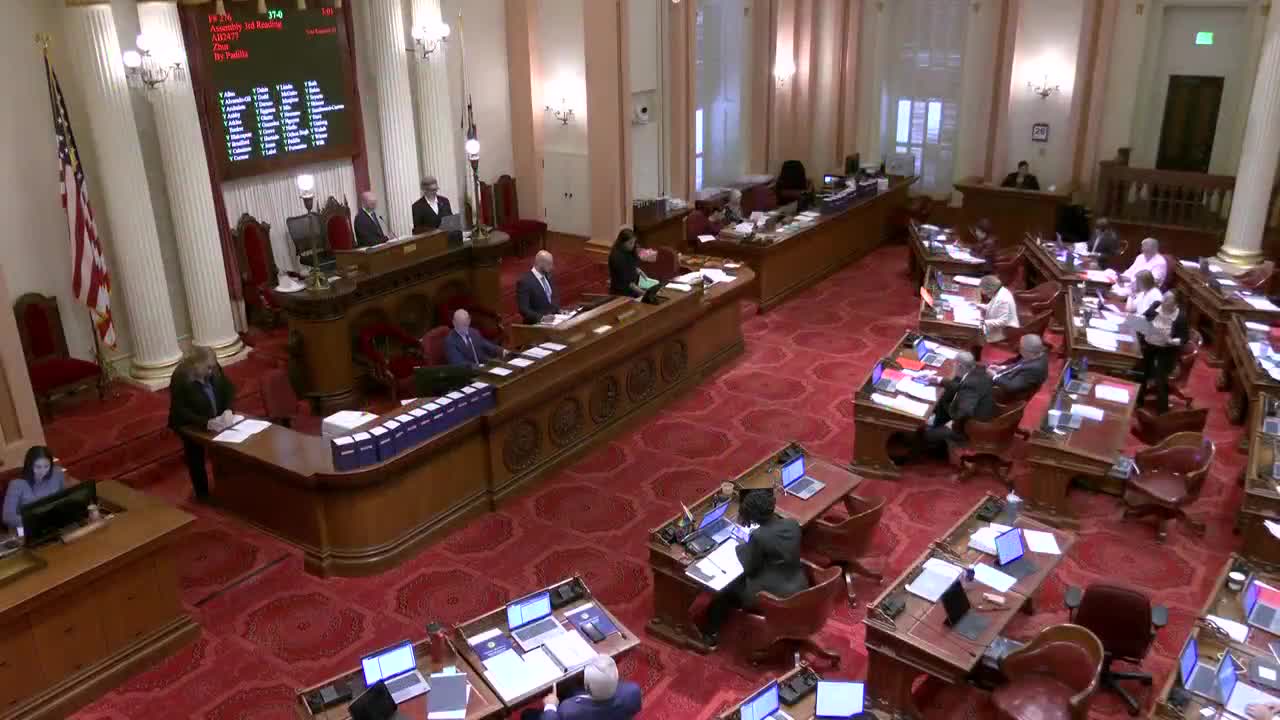 2MIN
Senate Floor
 3MIN
Senate Standing Committee on Appropriations
 16MIN
Senate Standing Committee on Labor, Public Employment and Retirement
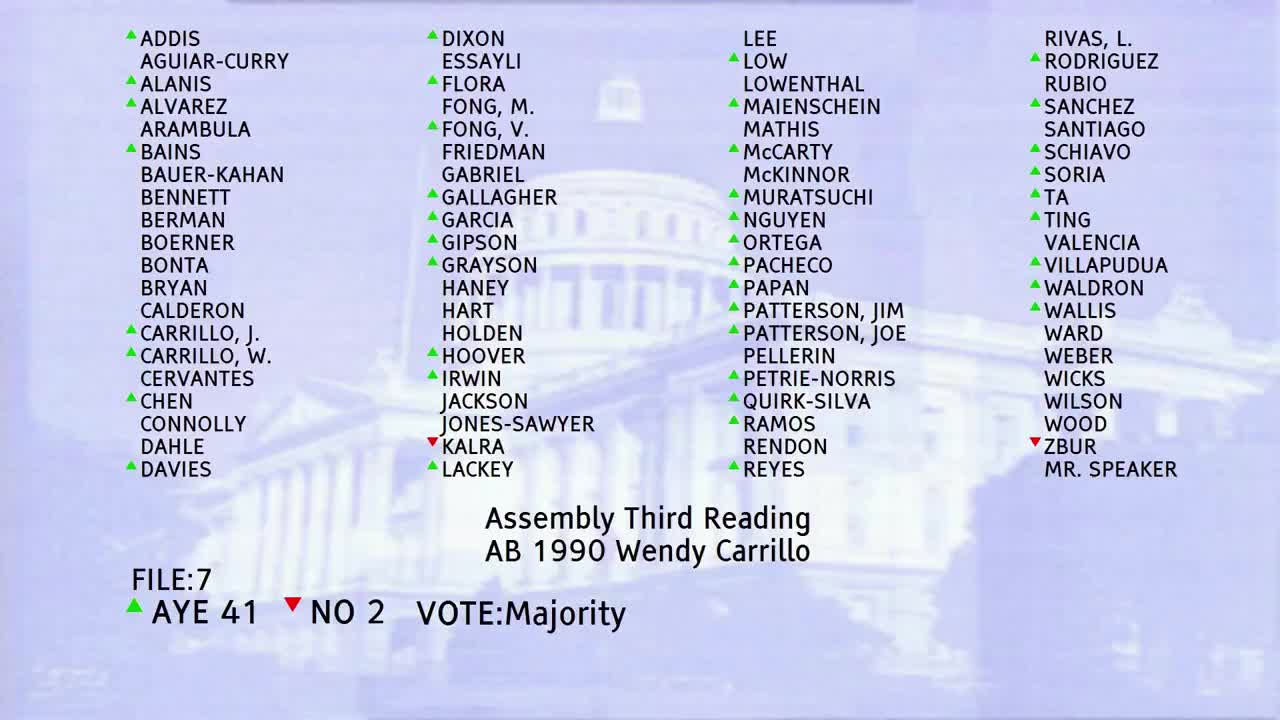 2MIN
Assembly Floor
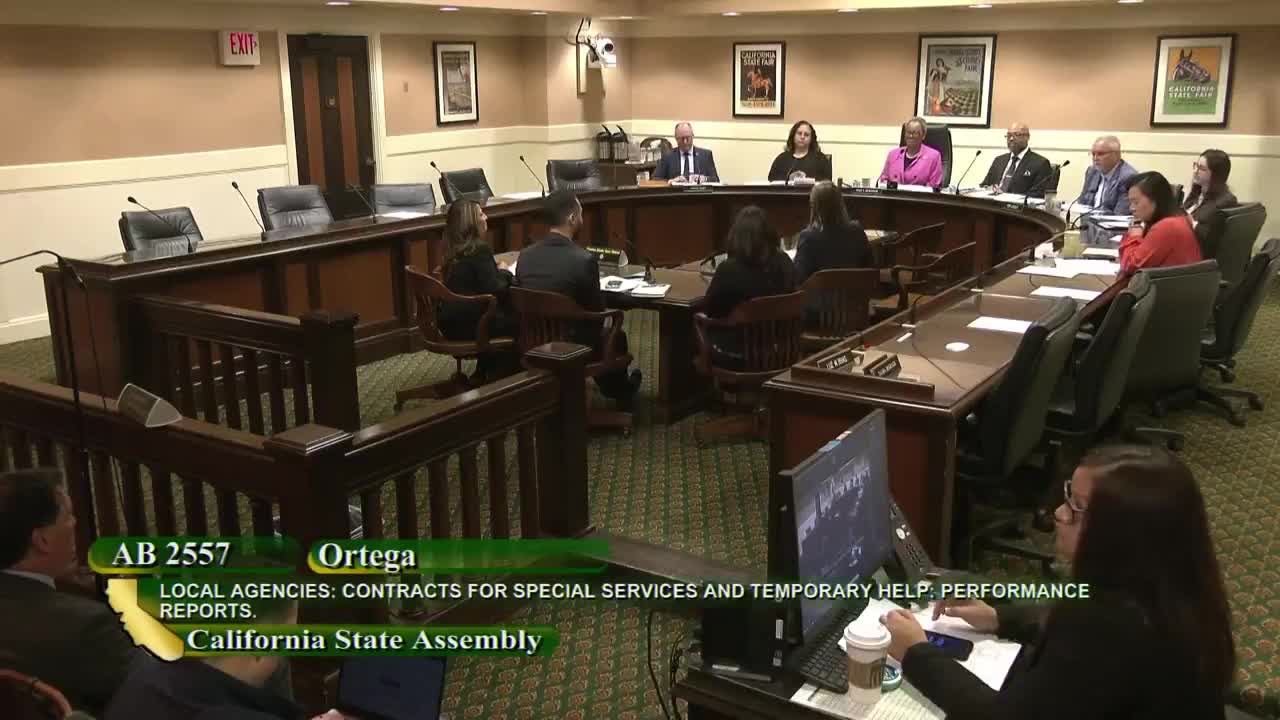 15MIN
Assembly Standing Committee on Public Employment and Retirement
 10MIN
Assembly Standing Committee on Insurance
Bill Author
Bill Co-Author(s):