AB 2873: Breaking Barriers to Employment Initiative: grants.
- Session Year: 2023-2024
- House: Assembly
- Latest Version Date: 2024-09-12
Current Status:
Passed
(2024-09-12: Chaptered by Secretary of State - Chapter 224, Statutes of 2024.)
Introduced
In Committee
First Chamber
In Committee
Second Chamber
Enacted
What does this bill do?
This bill changes how the California Workforce Development Board awards Breaking Barriers to Employment grants, letting grant applicants name a partner entity and allowing an exception if a lead applicant couldn’t secure a partner before the deadline, with no more than 15% of funds going to those exceptions. It also makes outcome tracking optional, lets applicants provide evaluation data to the board’s designee, drops an interim report and a required policy-recommendation in the final report, adds demographic and language data to the final report, and lets the board offer technical help through competitively contracted nonprofit groups.
The summary is provided by generative AI which can make mistakes. For original language, please view the details in the table below.
Existing law, the California Workforce Innovation and Opportunity Act, makes programs and services available to individuals with employment barriers and establishes the California Workforce Development Board (board) to assist the Governor in the development, oversight, and continuous improvement of Californias workforce investment system and the alignment of the education and workforce investment systems to the needs of the 21st century economy and workforce. Existing law requires the local chief elected officials in a local workforce development area to form, pursuant to specified guidelines, a local workforce development board to plan and oversee the workforce investment system and further requires the Governor to periodically certify one local board for each local area in the state.
Existing law establishes the Breaking Barriers to Employment Initiative, which establishes a grant program administered by the board to support prescribed workforce preparation, education, and training programs. Existing law requires the grant to be awarded on a competitive basis and the board to develop criteria for the selection of grant recipients, as specified. Existing law requires an application for the grant to be submitted to the board to include, among other things, designation of a lead workforce development board or community-based organization with specified experience and the designation of a service area. Existing law requires that an application that proposes to serve clients across one or more workforce development areas to include a commitment to notify each workforce development board in the proposed service area.
This bill would, instead, specify that the above-described designation is of a partner entity and would allow an exception to that designation requirement, if the lead applicant demonstrates, as prescribed, that securing a partner entity was not possible before the application deadline closed. The bill would prohibit more than 15 percent of all moneys appropriated for the above-described grants from being awarded to a lead applicant that receives the partner entity designation exception. The bill would also delete the above-described requirement to commit to notify each workforce development board in the proposed service area.
Existing law requires the board to evaluate an application based on specified criteria, including, among other things, the ability of individuals to succeed in both the broader workforce and education system and in the labor market once they transition into the broader system. Existing law requires that this be measured by tracking these individuals utilizing the existing performance monitoring systems and metrics governing relevant programs and outcomes once they transition into the broader system.
This bill would, instead, authorize, rather than require, the board to measure the above-described criteria by tracking individuals, as described above.
Existing law requires applicants to provide necessary information to the board to facilitate grant performance evaluation. Existing law requires the board to issue an interim report and a final report on the program, as specified. Existing law requires the reports to include specified information, including, among other things, policy recommendations to provide guidance to the Legislature and the Governor in scaling a permanent program.
This bill would additionally authorize grant applicants to provide the necessary information to the boards designee. The bill would remove the requirement that the board issue an interim report and would remove the requirement that the final report include the above-described recommendations. The bill would additionally require the final report to include demographic data and data on languages spoken by populations served by the grant.
Existing law authorizes the board to develop necessary policies to ensure that grants awarded under the initiative are consistent with the initiatives intent.
This bill would additionally authorize the board to provide technical assistance to grant recipients to carry out the initiative. The bill would authorize the board to provide the technical assistance by contract with a nonprofit organization, as defined, pursuant to prescribed requirements, including, among other things, evaluating proposals through a transparent and competitive process using criteria developed by the board.
Existing law, the California Workforce Innovation and Opportunity Act, makes programs and services available to individuals with employment barriers and establishes the California Workforce Development Board (board) to assist the Governor in the development, oversight, and continuous improvement of Californias workforce investment system and the alignment of the education and workforce investment systems to the needs of the 21st century economy and workforce. Existing law requires the local chief elected officials in a local workforce development area to form, pursuant to specified guidelines, a local workforce investment board to plan and oversee the workforce investment system and further requires the Governor to periodically certify one local board for each local area in the state.
Existing law establishes the Breaking Barriers to Employment Initiative, which establishes a grant program administered by the board to support prescribed workforce preparation, education, and training programs. Existing law specifies that the initiatives funding is subject to appropriation by the Legislature, as specified.This bill would delete the above-described provisions specifying the purpose of the initiative. The bill would instead specify that it is the intent of the Legislature, subject to appropriation, to provide permanent funding to the initiative to ensure its continued operation and effectiveness in addressing racial, ethnic, and social economic disparities in the labor market.Existing law establishes the Breaking Barriers to Employment Initiative, which establishes a grant program administered by the board to support prescribed workforce preparation, education, and training programs. Existing law requires the grant to be awarded on a competitive basis and the board to develop criteria for the selection of grant recipients, as specified. Existing law requires an application for the grant to be submitted to the board to include, among other things, designation of a lead workforce development board or community-based organization with specified experience and the designation of a service area. Existing law requires that an application that proposes to serve clients across one or more workforce development areas to include a commitment to notify each workforce development board in the proposed service area.
This bill would, instead, specify that the above-described designation is of a partner entity and would allow an exception to that designation requirement, if the lead applicant demonstrates, as prescribed, that securing a partner entity was not possible before the application deadline closed. The bill would prohibit more than 15 percent of all moneys appropriated for the above-described grants from being awarded to a lead applicant that receives the partner entity designation exception. The bill would also delete the above-described requirement to commit to notify each workforce development board in the proposed service area.
Existing law requires the board to evaluate an application based on specified criteria, including, among other things, the ability of individuals to succeed in both the broader workforce and education system and in the labor market once they transition into the broader system. Existing law requires that this be measured by tracking these individuals utilizing the existing performance monitoring systems and metrics governing relevant programs and outcomes once they transition into the broader system.
This bill would, instead, authorize, rather than require, the board to measure the above-described criteria by tracking individuals, as described above.
Existing law requires applicants to provide necessary information to the board to facilitate grant performance evaluation. Existing law requires the board to issue an interim report and a final report on the program, as specified. Existing law requires the reports to include specified information, including, among other things, policy recommendations to provide guidance to the Legislature and the Governor in scaling a permanent program.
This bill would additionally authorize grant applicants to provide the necessary information to the boards designee. The bill would remove the requirement that the board issue an interim report and would remove the requirement that the final report include the above-described recommendations. The bill would additionally require the final report to include demographic data and data on languages spoken by populations served by the grant.
Existing law authorizes the board to develop necessary policies to ensure that grants awarded under the initiative are consistent with the initiatives intent.
This bill would additionally authorize the board to provide technical assistance to grant recipients to carry out the initiative. The bill would authorize the board to provide the technical assistance by contract with a nonprofit organization, as defined, pursuant to prescribed requirements, including, among other things, evaluating proposals through a transparent and competitive process using criteria developed by the board.
Existing law, the California Workforce Innovation and Opportunity Act, makes programs and services available to individuals with employment barriers and establishes the California Workforce Development Board (board) to assist the Governor in the development, oversight, and continuous improvement of Californias workforce investment system and the alignment of the education and workforce investment systems to the needs of the 21st century economy and workforce. Existing law requires the local chief elected officials in a local workforce development area to form, pursuant to specified guidelines, a local workforce investment board to plan and oversee the workforce investment system and further requires the Governor to periodically certify one local board for each local area in the state.
Existing law establishes the Breaking Barriers to Employment Initiative, which establishes a grant program administered by the board to support prescribed workforce preparation, education, and training programs. Existing law specifies that the initiatives funding is subject to appropriation by the Legislature, as specified.
This bill would delete the above-described provisions specifying the purpose of the initiative. The bill would instead specify that it is the intent of the Legislature, subject to appropriation, to provide permanent funding to the initiative to ensure its continued operation and effectiveness in addressing racial, ethnic, and social economic disparities in the labor market.
Existing law requires the grant to be awarded on a competitive basis and the board to develop criteria for the selection of grant recipients, as specified. Existing law requires an application for the grant to be submitted to the board to include, among other things, designation of a lead workforce development board or community-based organization with specified experience and the designation of a service area. Existing law requires that an application that proposes to serve clients across one or more workforce development areas to include a commitment to notify each workforce development board in the proposed service area.
This bill would would, instead, specify that the above-described designation is of a partner entity and would allow an exception to that designation requirement, if the lead applicant demonstrates, as prescribed, that securing a partner entity was not possible before the application deadline closed. The bill would prohibit more than 15 percent of all moneys appropriated for the above-described grants from being awarded to a lead applicant that receives the partner entity designation exception. The bill would also delete the above-described requirement to commit to notify each workforce development board in the proposed service area.
Existing law requires the board to evaluate an application based on specified criteria, including, among other things, the ability of individuals to succeed in both the broader workforce and education system and in the labor market once they transition into the broader system. Existing law requires that this be measured by tracking these individuals utilizing the existing performance monitoring systems and metrics governing relevant programs and outcomes once they transition into the broader system.
This bill would, instead, authorize, rather than require, the board to measure the above-described criteria by tracking individuals, as described above.
Existing law requires applicants to provide necessary information to the board to facilitate grant performance evaluation. Existing law requires the board to issue an interim report and a final report on the program, as specified. Existing law requires the reports to include specified information, including, among other things, policy recommendations to provide guidance to the Legislature and the Governor in scaling a permanent program.
This bill would additionally authorize grant applicants to provide the necessary information to the boards designee. The bill would remove the requirement that the board issue an interim report and would remove the requirement that the final report include the above-described recommendations. The bill would additionally require the final report to include demographic data and data on languages spoken by populations served by the grant.
Existing law authorizes the board to develop necessary policies to ensure that grants awarded under the initiative are consistent with the initiatives intent.
This bill would additionally authorize the board to provide technical assistance to grant recipients to carry out the initiative. The bill would authorize the board to provide the technical assistance by contract with a nonprofit organization, as defined, pursuant to prescribed requirements, including, among other things, evaluating proposals through a transparent and competitive process using criteria developed by the board.
Existing law, the California Workforce Innovation and Opportunity Act, makes programs and services available to individuals with employment barriers and establishes the California Workforce Development Board (board) to assist the Governor in the development, oversight, and continuous improvement of Californias workforce investment system and the alignment of the education and workforce investment systems to the needs of the 21st century economy and workforce. Existing law requires the local chief elected officials in a local workforce development area to form, pursuant to specified guidelines, a local workforce investment board to plan and oversee the workforce investment system and further requires the Governor to periodically certify one local board for each local area in the state.
Existing law establishes the Breaking Barriers to Employment Initiative, which establishes a grant program administered by the board to support prescribed workforce preparation, education, and training programs. Existing law specifies that the initiatives funding is subject to appropriation by the Legislature, as specified.
This bill would delete the above-described provisions specifying the purpose of the initiative. The bill would instead specify that it is the intent of the Legislature, subject to appropriation, to provide permanent funding to the initiative to ensure its continued operation and effectiveness in addressing racial, ethnic, and social economic disparities in the labor market.
Existing law requires the grant to be awarded on a competitive basis and the board to develop criteria for the selection of grant recipients, as specified. Existing law requires an application for the grant to be submitted to the board to include, among other things, the designation of a service area. Existing law requires that an application that proposes to serve clients across one or more workforce development areas to include a commitment to notify each workforce development board in the proposed service area.
This bill would delete the above-described requirement to commit to notify each workforce development board in the proposed service area.
Existing law requires the board to evaluate an application based on specified criteria, including, among other things, the ability of individuals to succeed in both the broader workforce and education system and in the labor market once they transition into the broader system. Existing law requires that this be measured by tracking these individuals utilizing the existing performance monitoring systems and metrics governing relevant programs and outcomes once they transition into the broader system.
This bill would, instead, authorize, rather than require, the board to measure the above-described criteria by tracking individuals, as described above.
Existing law requires applicants to provide necessary information to the board to facilitate grant performance evaluation. Existing law requires the board to issue an interim report and a final report on the program, as specified. Existing law requires the reports to include specified information, including, among other things, policy recommendations to provide guidance to the Legislature and the Governor in scaling a permanent program.
This bill would additionally authorize grant applicants to provide the necessary information to the boards designee. The bill would remove the requirement that the board issue an interim report and would remove the requirement that the final report include the above-described recommendations. The bill would additionally require the final report to include demographic data and data on languages spoken by populations served by the grant.
Existing law authorizes the board to develop necessary policies to ensure that grants awarded under the initiative are consistent with the initiatives intent.
This bill would additionally authorize the board to provide technical assistance to grant recipients to carry out the initiative. The bill would authorize the board to provide the technical assistance by contract with a nonprofit organization, as defined, pursuant to prescribed requirements, including, among other things, evaluating proposals through a transparent and competitive process using criteria developed by the board.
(a)Funding for the initiative shall be subject to appropriation by the Legislature, but only for the purposes expressed in this article, and shall not draw from, supplant, or redirect existing state or federally funded education, workforce, or employment services programs, except that those funds may, but shall not be required to, be used as leverage with initiative funds.
(b)Implementation of the initiative shall be contingent upon the California Workforce Development Board notifying the Department of Finance that sufficient moneys have been appropriated by the Legislature for this purpose.
(c)Outreach shall be provided to prospective applicants, especially for small community-based organizations, organizations without a preexisting relationship to the local workforce boards, and organizations serving rural and small population areas.
(d)(1)Grants shall be awarded on a competitive basis.
(2)Notwithstanding any law, no more than 15 percent of all moneys appropriated by the Legislature for the award of grants under this section shall be granted to lead applicants who receive an exception under subparagraph (B) of paragraph (1) of subdivision (f).
(e)The California Workforce Development Board shall develop criteria for the selection of grant recipients that include, but are not limited to, all of the following:
(1)Grant recipients have demonstrated experience working to ensure populations who have been historically disenfranchised from the labor market have access to quality jobs in their regions.
(2)Applications shall explain the community-based organizations capacity to provide services to relevant target populations and provide evidence of this capacity.
(3)Each grant proposal shall be consistent with the purposes of the initiative.
(f)Each application shall be submitted to the California Workforce Development Board and shall, at a minimum, include all of the following:
(1)(A)Designation of a partner entity that is a lead workforce development board or community-based organization with experience in providing services consistent with the objectives of this initiative and to the populations specified, which may include, but is not limited to, faith-based, business-based, labor-based, including labor-management partnerships and labor-community partnerships, cultural-based, and services-based organizations.
(B)Notwithstanding subparagraph (A), an exception to the requirement of that subparagraph may be granted in instances where the lead applicant demonstrates, in writing to the California Workforce Development Board or the designated oversight authority as determined by the board, that securing a partner entity was not possible before the application deadline closed. However, the remaining criteria for the selection of grant recipients shall be required to be satisfied.
(2)The designation of one or more targeted populations that will be served by the grant.
(3)The designation of a service area, which may include one or more neighborhoods, local jurisdictions, regions, or statewide.
(4)An explanation of the specific purpose and goals of the grant award, the roles and responsibilities of the lead applicant and partner entities, and a discussion of how funds will be used and success will be measured, the number of individuals who will be served, and the services provided to these individuals. Documentation shall be included to demonstrate that each partnering entity has agreed to the activities in the grant proposal.
(5)A description of how the grant proposal is designed to complement the work of, and integrate the individuals being served with, the broader workforce, education, and employment system within the proposed service area, and evidence that the proposal incorporates innovative strategies or proven practices for service delivery that will lead to improved outcomes, sustainability, and systems improvement.
(6)A grant application may be submitted by a workforce development board or community-based organization as a single fiscal agent and may include additional partners.
SEC. 2.Section 14033 of the Unemployment Insurance Code is amended to read:14033.(a)The purpose of the initiative shall be to provide individuals with barriers to employment the services they need to enter, participate in, and complete broader workforce preparation, training and education programs, and, ultimately, to obtain and retain employment. Specifically, the program should strive to address racial and ethnic exclusion and inequity in the labor force and enhance racial and economic justice. Projects should create pipelines to quality jobs, upward mobility, and income security for workers historically excluded from quality jobs and economic prosperity. Special emphasis shall be given to applications that integrate individuals from target populations into career pathway programs aligned with regional labor market needs.
(b)Grants shall be evaluated using the following criteria:
(1)Ability to provide the services proposed in the grant to the number of individuals specified in the grant as evidenced by, among other things, whether the grantee completed the work proposed.
(2)Ability of individuals to successfully complete relevant programming funded under the grant as demonstrated by relevant measures directly related to the purpose of the program.
(3)Ability of individuals to transition into or be integrated into the broader workforce and education system as evidenced by employment and enrollment in relevant programs.
(4)Ability of individuals to succeed in both the broader workforce and education system and labor market once they transition into the broader system. This may be measured by tracking these individuals utilizing the existing performance monitoring systems and metrics governing relevant programs and outcomes once they transition into the broader system.
(5)Ability for program participants to inform programming on an ongoing basis and evaluate program performance and success.
(6)The degree to which program activities acknowledge and address historic racial inequity and socioeconomic barriers to labor force participation for targeted population groups.
(7)The degree to which leadership at the executive level of the lead applicant organization reflects the target populations in Section 14034.
(8)The degree to which at least 25 percent of the lead applicant organizations staff reflects the target populations in Section 14034.
(c)Grant applicants shall provide all necessary information to the California Workforce Development Board, or the boards designee, to facilitate grant performance evaluation.
(d)Grant applicants and partners may be required to participate in technical assistance activities, including, but not limited to, the convening of communities of practice to identify and help replicate evidence-based practices and to help facilitate an assessment and evaluation of grant performance and initiative success.
(e)The California Workforce Development Board shall issue a final report to be posted on its internet website. The final report shall be posted no later than one year following the completion of the program. The reports shall include, but not be limited to, the programmatic impact on the target populations, the fiscal savings associated with the program, key conclusions, the benefits conferred or realized using quantitative and qualitative data, demographic data, and data on the languages spoken by the populations served by the grant.
SEC. 3.Section 14036 of the Unemployment Insurance Code is amended to read:14036.(a)The California Workforce Development Board may develop necessary policies to ensure that grants awarded under the initiative fund are activities that are consistent with the intent of this article.
(b)(1)The California Workforce Development Board may provide technical assistance to grant recipients to carry out the initiative.
(2)The California Workforce Development Board may provide technical assistance by contract with a nonprofit organization. If the California Workforce Development Board contracts with a nonprofit organization, the California Workforce Development Board shall do both of the following:
(A)Develop criteria for the selection of the nonprofit organization.
(B)Award the contract through a transparent and competitive process, which shall include, but not be limited to, solicitation of proposals and evaluation of proposals through the criteria developed pursuant to subparagraph (A).
(c)For the purposes of this section, nonprofit organization means any private, nonprofit organization that qualifies under Section 501(c)(3) of the United States Internal Revenue Code of 1986.
(a)Funding for the initiative shall be subject to appropriation by the Legislature, but only for the purposes expressed in this article, and shall not draw from, supplant, or redirect existing state or federally funded education, workforce, or employment services programs, except that those funds may, but shall not be required to, be used as leverage with initiative funds.
(b)Implementation of the initiative shall be contingent upon the California Workforce Development Board notifying the Department of Finance that sufficient moneys have been appropriated by the Legislature for this purpose.
(c)Outreach shall be provided to prospective applicants, especially for small community-based organizations, organizations without a preexisting relationship to the local workforce boards, and organizations serving rural and small population areas.
(d)(1)Grants shall be awarded on a competitive basis.
(2)Notwithstanding any law, no more than 15 percent of all moneys appropriated by the Legislature for the award of grants under this section shall be granted to lead applicants who receive an exception under subparagraph (B) of paragraph (1) of subdivision (f).
(e)The California Workforce Development Board shall develop criteria for the selection of grant recipients that include, but are not limited to, all of the following:
(1)Grant recipients have demonstrated experience working to ensure populations who have been historically disenfranchised from the labor market have access to quality jobs in their regions.
(2)Applications shall explain the community-based organizations capacity to provide services to relevant target populations and provide evidence of this capacity.
(3)Each grant proposal shall be consistent with the purposes of the initiative.
(f)Each application shall be submitted to the California Workforce Development Board and shall, at a minimum, include all of the following:
(1)(A)Designation of a partner entity that is a lead workforce development board or community-based organization with experience in providing services consistent with the objectives of this initiative and to the populations specified, which may include, but is not limited to, faith-based, business-based, labor-based, including labor-management partnerships and labor-community partnerships, cultural-based, and services-based organizations.
(B)Notwithstanding subparagraph (A), an exception to the requirement of that subparagraph may be granted in instances where the lead applicant demonstrates, in writing to the California Workforce Development Board or the designated oversight authority as determined by the board, that securing a partner entity was not possible before the application deadline closed. However, the remaining criteria for the selection of grant recipients shall be required to be satisfied.
(2)The designation of one or more targeted populations that will be served by the grant.
(3)The designation of a service area, which may include one or more neighborhoods, local jurisdictions, regions, or statewide.
(4)An explanation of the specific purpose and goals of the grant award, the roles and responsibilities of the lead applicant and partner entities, and a discussion of how funds will be used and success will be measured, the number of individuals who will be served, and the services provided to these individuals. Documentation shall be included to demonstrate that each partnering entity has agreed to the activities in the grant proposal.
(5)A description of how the grant proposal is designed to complement the work of, and integrate the individuals being served with, the broader workforce, education, and employment system within the proposed service area, and evidence that the proposal incorporates innovative strategies or proven practices for service delivery that will lead to improved outcomes, sustainability, and systems improvement.
(6)A grant application may be submitted by a workforce development board or community-based organization as a single fiscal agent and may include additional partners.
SEC. 3.SEC. 2.Section 14033 of the Unemployment Insurance Code is amended to read:14033.(a)The purpose of the initiative shall be to provide individuals with barriers to employment the services they need to enter, participate in, and complete broader workforce preparation, training and education programs, and, ultimately, to obtain and retain employment. Specifically, the program should strive to address racial and ethnic exclusion and inequity in the labor force and enhance racial and economic justice. Projects should create pipelines to quality jobs, upward mobility, and income security for workers historically excluded from quality jobs and economic prosperity. Special emphasis shall be given to applications that integrate individuals from target populations into career pathway programs aligned with regional labor market needs.
(b)Grants shall be evaluated using the following criteria:
(1)Ability to provide the services proposed in the grant to the number of individuals specified in the grant as evidenced by, among other things, whether the grantee completed the work proposed.
(2)Ability of individuals to successfully complete relevant programming funded under the grant as demonstrated by relevant measures directly related to the purpose of the program.
(3)Ability of individuals to transition into or be integrated into the broader workforce and education system as evidenced by employment and enrollment in relevant programs.
(4)Ability of individuals to succeed in both the broader workforce and education system and labor market once they transition into the broader system. This may be measured by tracking these individuals utilizing the existing performance monitoring systems and metrics governing relevant programs and outcomes once they transition into the broader system.
(5)Ability for program participants to inform programming on an ongoing basis and evaluate program performance and success.
(6)The degree to which program activities acknowledge and address historic racial inequity and socioeconomic barriers to labor force participation for targeted population groups.
(7)The degree to which leadership at the executive level of the lead applicant organization reflects the target populations in Section 14034.
(8)The degree to which at least 25 percent of the lead applicant organizations staff reflects the target populations in Section 14034.
(c)Grant applicants shall provide all necessary information to the California Workforce Development Board, or the boards designee, to facilitate grant performance evaluation.
(d)Grant applicants and partners may be required to participate in technical assistance activities, including, but not limited to, the convening of communities of practice to identify and help replicate evidence-based practices and to help facilitate an assessment and evaluation of grant performance and initiative success.
(e)The California Workforce Development Board shall issue a final report to be posted on its internet website. The final report shall be posted no later than one year following the completion of the program. The reports shall include, but not be limited to, the programmatic impact on the target populations, the fiscal savings associated with the program, key conclusions, the benefits conferred or realized using quantitative and qualitative data, demographic data, and data on the languages spoken by the populations served by the grant.
SEC. 4.SEC. 3.Section 14036 of the Unemployment Insurance Code is amended to read:14036.(a)The California Workforce Development Board may develop necessary policies to ensure that grants awarded under the initiative fund are activities that are consistent with the intent of this article.
(b)(1)The California Workforce Development Board may provide technical assistance to grant recipients to carry out the initiative.
(2)The California Workforce Development Board may provide technical assistance by contract with a nonprofit organization. If the California Workforce Development Board contracts with a nonprofit organization, the California Workforce Development Board shall do both of the following:
(A)Develop criteria for the selection of the nonprofit organization.
(B)Award the contract through a transparent and competitive process, which shall include, but not be limited to, solicitation of proposals and evaluation of proposals through the criteria developed pursuant to subparagraph (A).
(c)For the purposes of this section, nonprofit organization means any private, nonprofit organization that qualifies under Section 501(c)(3) of the United States Internal Revenue Code of 1986.
(a)All efforts funded under this initiative are intended to supplement and be aligned with the broader workforce and education system in the State of California.
(b)It is the intent of the Legislature, subject to appropriation, to provide permanent funding to the initiative to ensure its continued operation and effectiveness in addressing racial, ethnic, and socioeconomic disparities in the labor market.
(c)The primary purpose of the initiative is to provide individuals with barriers to employment the services they need to enter, participate in, and complete broader workforce preparation, training, and education programs aligned with regional labor market needs. Those who complete these programs should have the skills and competencies necessary to successfully enter the labor market, retain employment, and earn wages that lead to self-sufficiency, and eventually, economic mobility and security.
(d)The distinguishing characteristic of the initiative is the manner in which services will be delivered at the local and regional level. Under the initiative, services shall be delivered principally through a collaborative partnership between mission-driven, community-based organizations with experience in providing services and relevant relationships to targeted populations, consistent with the objectives of this initiative and to the populations specified, which may include, but are not limited to, faith-based, business-based, labor-based, including labor-management partnerships and labor-community partnerships, cultural-based, and services-based organizations, employment social enterprises, worker centers, and local workforce development boards to strengthen the Americas Job Center of California system. The role of the community-based organizations shall be to use their expertise in working with targeted populations and employers to ensure that individuals from these targeted populations receive the necessary supplemental, supportive, remedial, and wraparound services they need to successfully enter, participate in, and complete workforce and education programs and enter, be retained, and advance in the labor market. The role of local workforce development boards is to ensure a connection between community-based organizations and the Americas Job Center of California system to integrate individuals served by community-based organizations under this initiative into the education system and broader workforce for employment.
SEC. 2.Section 14032 of the Unemployment Insurance Code is amended to read:14032.(a)Funding for the initiative shall be subject to appropriation by the Legislature, but only for the purposes expressed in this article, and shall not draw from, supplant, or redirect existing state or federally funded education, workforce, or employment services programs, except that those funds may, but shall not be required to, be used as leverage with initiative funds.
(b)Implementation of the initiative shall be contingent upon the California Workforce Development Board notifying the Department of Finance that sufficient moneys have been appropriated by the Legislature for this purpose.
(c)Outreach shall be provided to prospective applicants, especially for small community-based organizations, organizations without a preexisting relationship to the local workforce boards, and organizations serving rural and small population areas.
(d)(1)Grants shall be awarded on a competitive basis.
(2)Notwithstanding any law, no more than 15 percent of all moneys appropriated by the Legislature for the award of grants under this section shall be granted to lead applicants who receive an exception under subparagraph (B) of paragraph (1) of subdivision (f).
(e)The California Workforce Development Board shall develop criteria for the selection of grant recipients that include, but are not limited to, all of the following:
(1)Grant recipients have demonstrated experience working to ensure populations who have been historically disenfranchised from the labor market have access to quality jobs in their regions.
(2)Applications shall explain the community-based organizations capacity to provide services to relevant target populations and provide evidence of this capacity.
(3)Each grant proposal shall be consistent with the purposes of the initiative.
(f)Each application shall be submitted to the California Workforce Development Board and shall, at a minimum, include all of the following:
(1)(A)Designation of a partner entity that is a lead workforce development board or community-based organization with experience in providing services consistent with the objectives of this initiative and to the populations specified, which may include, but is not limited to, faith-based, business-based, labor-based, including labor-management partnerships and labor-community partnerships, cultural-based, and services-based organizations.
(B)Notwithstanding subparagraph (A), an exception to the requirement of that subparagraph may be granted in instances where the lead applicant demonstrates, in writing to the California Workforce Development Board or the designated oversight authority as determined by the board, that securing a partner entity was not possible before the application deadline closed. However, the remaining criteria for the selection of grant recipients shall be required to be satisfied.
(2)The designation of one or more targeted populations that will be served by the grant.
(3)The designation of a service area, which may include one or more neighborhoods, local jurisdictions, regions, or statewide.
(4)An explanation of the specific purpose and goals of the grant award, the roles and responsibilities of the lead applicant and partner entities, and a discussion of how funds will be used and success will be measured, the number of individuals who will be served, and the services provided to these individuals. Documentation shall be included to demonstrate that each partnering entity has agreed to the activities in the grant proposal.
(5)A description of how the grant proposal is designed to complement the work of, and integrate the individuals being served with, the broader workforce, education, and employment system within the proposed service area, and evidence that the proposal incorporates innovative strategies or proven practices for service delivery that will lead to improved outcomes, sustainability, and systems improvement.
(6)A grant application may be submitted by a workforce development board or community-based organization as a single fiscal agent and may include additional partners.
SEC. 3.Section 14033 of the Unemployment Insurance Code is amended to read:14033.(a)The purpose of the initiative shall be to provide individuals with barriers to employment the services they need to enter, participate in, and complete broader workforce preparation, training and education programs, and, ultimately, to obtain and retain employment. Specifically, the program should strive to address racial and ethnic exclusion and inequity in the labor force and enhance racial and economic justice. Projects should create pipelines to quality jobs, upward mobility, and income security for workers historically excluded from quality jobs and economic prosperity. Special emphasis shall be given to applications that integrate individuals from target populations into career pathway programs aligned with regional labor market needs.
(b)Grants shall be evaluated using the following criteria:
(1)Ability to provide the services proposed in the grant to the number of individuals specified in the grant as evidenced by, among other things, whether the grantee completed the work proposed.
(2)Ability of individuals to successfully complete relevant programming funded under the grant as demonstrated by relevant measures directly related to the purpose of the program.
(3)Ability of individuals to transition into or be integrated into the broader workforce and education system as evidenced by employment and enrollment in relevant programs.
(4)Ability of individuals to succeed in both the broader workforce and education system and labor market once they transition into the broader system. This may be measured by tracking these individuals utilizing the existing performance monitoring systems and metrics governing relevant programs and outcomes once they transition into the broader system.
(5)Ability for program participants to inform programming on an ongoing basis and evaluate program performance and success.
(6)The degree to which program activities acknowledge and address historic racial inequity and socioeconomic barriers to labor force participation for targeted population groups.
(7)The degree to which leadership at the executive level of the lead applicant organization reflects the target populations in Section 14034.
(8)The degree to which at least 25 percent of the lead applicant organizations staff reflects the target populations in Section 14034.
(c)Grant applicants shall provide all necessary information to the California Workforce Development Board, or the boards designee, to facilitate grant performance evaluation.
(d)Grant applicants and partners may be required to participate in technical assistance activities, including, but not limited to, the convening of communities of practice to identify and help replicate evidence-based practices and to help facilitate an assessment and evaluation of grant performance and initiative success.
(e)The California Workforce Development Board shall issue a final report to be posted on its internet website. The final report shall be posted no later than one year following the completion of the program. The reports shall include, but not be limited to, the programmatic impact on the target populations, the fiscal savings associated with the program, key conclusions, the benefits conferred or realized using quantitative and qualitative data, demographic data, and data on the languages spoken by the populations served by the grant.
SEC. 4.Section 14036 of the Unemployment Insurance Code is amended to read:14036.(a)The California Workforce Development Board may develop necessary policies to ensure that grants awarded under the initiative fund are activities that are consistent with the intent of this article.
(b)(1)The California Workforce Development Board may provide technical assistance to grant recipients to carry out the initiative.
(2)The California Workforce Development Board may provide technical assistance by contract with a nonprofit organization. If the California Workforce Development Board contracts with a nonprofit organization, the California Workforce Development Board shall do both of the following:
(A)Develop criteria for the selection of the nonprofit organization.
(B)Award the contract through a transparent and competitive process, which shall include, but not be limited to, solicitation of proposals and evaluation of proposals through the criteria developed pursuant to subparagraph (A).
(c)For the purposes of this section, nonprofit organization means any private, nonprofit organization that qualifies under Section 501(c)(3) of the United States Internal Revenue Code of 1986.
REVISIONS: HeadingLine 2.(a)All efforts funded under this initiative are intended to supplement and be aligned with the broader workforce and education system in the State of California. The initiative is intended to focus on innovative approaches to, and proven practices for, addressing racial, ethnic, and socioeconomic disparities in the labor market.
(b)It is the intent of the Legislature, subject to appropriation, to provide permanent funding to the initiative to ensure its continued operation and effectiveness in addressing racial, ethnic, and socioeconomic disparities in the labor market.
(b)(c)The primary purpose of the initiative is to provide individuals with barriers to employment the services they need to enter, participate in, and complete broader workforce preparation, training, and education programs aligned with regional labor market needs. Those who complete these programs should have the skills and competencies necessary to successfully enter the labor market, retain employment, and earn wages that lead to self-sufficiency, and eventually, economic mobility and security.
(c)(d)The distinguishing characteristic of the initiative is the manner in which services will be delivered at the local and regional level. Under the initiative, services shall be delivered principally through a collaborative partnership between mission-driven, community-based organizations with experience in providing services and relevant relationships to targeted populations, consistent with the objectives of this initiative and to the populations specified, which may include, but are not limited to, faith-based, business-based, labor-based, including labor-management partnerships and labor-community partnerships, cultural-based, and services-based organizations, employment social enterprises, worker centers, and local workforce development boards to strengthen the Americas Job Center of California system. The role of the community-based organizations shall be to use their expertise in working with targeted populations and employers to ensure that individuals from these targeted populations receive the necessary supplemental, supportive, remedial, and wraparound services they need to successfully enter, participate in, and complete workforce and education programs and enter, be retained, and advance in the labor market. The role of local workforce development boards is to ensure a connection between community-based organizations and the Americas Job Center of California system to integrate individuals served by community-based organizations under this initiative into the education system and broader workforce for employment.
SEC. 2.Section 14032 of the Unemployment Insurance Code is amended to read:14032.(a)Funding for the initiative shall be subject to appropriation by the Legislature, but only for the purposes expressed in this article, and shall not draw from, supplant, or redirect existing state or federally funded education, workforce, or employment services programs, except that those funds may, but shall not be required to, be used as leverage with initiative funds.
(b)Implementation of the initiative shall be contingent upon the California Workforce Development Board notifying the Department of Finance that sufficient moneys have been appropriated by the Legislature for this purpose.
(c)Outreach shall be provided to prospective applicants, especially for small community-based organizations, organizations without a preexisting relationship to the local workforce boards, and organizations serving rural and small population areas.
(d)Grants shall be awarded on a competitive basis.
(e)The California Workforce Development Board shall develop criteria for the selection of grant recipients that include, but are not limited to, all of the following:
(1)Grant recipients have demonstrated experience working to ensure populations who have been historically disenfranchised from the labor market have access to quality jobs in their regions.
(2)Applications shall explain the community-based organizations capacity to provide services to relevant target populations and provide evidence of this capacity.
(3)Each grant proposal shall be consistent with the purposes of the initiative.
(f)Each application shall be submitted to the California Workforce Development Board and shall, at a minimum, include all of the following:
(1)Designation of a lead workforce development board or community-based organization with experience in providing services consistent with the objectives of this initiative and to the populations specified, which may include, but is not limited to, faith-based, business-based, labor-based, including labor-management partnerships and labor-community partnerships, cultural-based, and services-based organizations.
(2)The designation of one or more targeted populations that will be served by the grant.
(3)The designation of a service area, which may include one or more neighborhoods, local jurisdictions, regions, or statewide. A grant proposal that proposes to serve clients across one or more workforce development areas shall include a commitment to notify each workforce development board in the proposed service area.
(4)An explanation of the specific purpose and goals of the grant award, the roles and responsibilities of the lead applicant and partner entities, and a discussion of how funds will be used and success will be measured, the number of individuals who will be served, and the services provided to these individuals. Documentation shall be included to demonstrate that each partnering entity has agreed to the activities in the grant proposal.
(5)A description of how the grant proposal is designed to complement the work of, and integrate the individuals being served with, the broader workforce, education, and employment system within the proposed service area, and evidence that the proposal incorporates innovative strategies or proven practices for service delivery that will lead to improved outcomes, sustainability, and systems improvement.
(6)A grant application may be submitted by a workforce development board or community-based organization as a single fiscal agent and may include additional partners.
SEC. 3.Section 14033 of the Unemployment Insurance Code is amended to read:14033.(a)The purpose of the initiative shall be to provide individuals with barriers to employment the services they need to enter, participate in, and complete broader workforce preparation, training and education programs, and, ultimately, to obtain and retain employment. Specifically, the program should strive to address racial and ethnic exclusion and inequity in the labor force and enhance racial and economic justice. Projects should create pipelines to quality jobs, upward mobility, and income security for workers historically excluded from quality jobs and economic prosperity. Special emphasis shall be given to applications that integrate individuals from target populations into career pathway programs aligned with regional labor market needs.
(b)Grants shall be evaluated using the following criteria:
(1)Ability to provide the services proposed in the grant to the number of individuals specified in the grant as evidenced by, among other things, whether the grantee completed the work proposed.
(2)Ability of individuals to successfully complete relevant programming funded under the grant as demonstrated by relevant measures directly related to the purpose of the program.
(3)Ability of individuals to transition into or be integrated into the broader workforce and education system as evidenced by employment and enrollment in relevant programs.
(4)Ability of individuals to succeed in both the broader workforce and education system and labor market once they transition into the broader system. This shall may be measured by tracking these individuals utilizing the existing performance monitoring systems and metrics governing relevant programs and outcomes once they transition into the broader system.
(5)Ability for program participants to inform programming on an ongoing basis and evaluate program performance and success.
(6)The degree to which program activities acknowledge and address historic racial inequity and socioeconomic barriers to labor force participation for targeted population groups.
(7)The degree to which leadership at the executive level of the lead applicant organization reflects the target populations in Section 14034.
(8)The degree to which at least 25 percent of the lead applicant organizations staff reflects the target populations in Section 14034.
(c)Grant applicants shall provide all necessary information to the California Workforce Development Board Board, or the boards designee, to facilitate grant performance evaluation.
(d)Grant applicants and partners may be required to participate in technical assistance activities, including, but not limited to, the convening of communities of practice to identify and help replicate evidence-based practices and to help facilitate an assessment and evaluation of grant performance and initiative success.
(e)The California Workforce Development Board shall issue an interim and a final report, report to be posted on its internet website. The interim report shall be posted no later than six months following the midpoint of the program and the The final report shall be posted no later than one year following the completion of the program. The reports shall include, but not be limited to, the programmatic impact on the target populations, the fiscal savings associated with the program, key conclusions, the benefits conferred or realized using quantitative and qualitative data, and policy recommendations to provide guidance to the Legislature and the Governor in scaling a permanent program. demographic data, and data on the languages spoken by the populations served by the grant.
SEC. 4.Section 14036 of the Unemployment Insurance Code is amended to read:14036.(a)The California Workforce Development Board may develop necessary policies to ensure that grants awarded under the initiative fund are activities that are consistent with the intent of this article.
(b)(1)The California Workforce Development Board may provide technical assistance to grant recipients to carry out the initiative.
(2)The California Workforce Development Board may provide technical assistance by contract with a nonprofit organization. If the California Workforce Development Board contracts with a nonprofit organization, the California Workforce Development Board shall do both of the following:
(A)Develop criteria for the selection of the nonprofit organization.
(B)Award the contract through a transparent and competitive process, which shall include, but not be limited to, solicitation of proposals and evaluation of proposals through the criteria developed pursuant to subparagraph (A).
(c)For the purposes of this section, nonprofit organization means any private, nonprofit organization that qualifies under Section 501(c)(3) of the United States Internal Revenue Code of 1986.
|
Date
|
Status
|
|---|---|
| Sep 12, 2024 | Chaptered by Secretary of State - Chapter 224, Statutes of 2024. |
| Sep 12, 2024 | Approved by the Governor. |
| Sep 3, 2024 | Enrolled and presented to the Governor at 3:30 p.m. |
| Aug 26, 2024 | In Assembly. Ordered to Engrossing and Enrolling. |
| Aug 26, 2024 | Read third time. Passed. Ordered to the Assembly. (Ayes 35. Noes 0.). |
| Aug 19, 2024 | Read second time. Ordered to third reading. |
| Aug 15, 2024 | From committee: Do pass. (Ayes 6. Noes 0.) (August 15). |
| Jul 1, 2024 | In committee: Referred to suspense file. |
| Jun 19, 2024 | From committee: Do pass and re-refer to Com. on APPR. (Ayes 5. Noes 0.) (June 19). Re-referred to Com. on APPR. |
| Jun 5, 2024 | Referred to Com. on L., P.E. & R. |
| May 23, 2024 | In Senate. Read first time. To Com. on RLS. for assignment. |
| May 22, 2024 | Read third time. Passed. Ordered to the Senate. (Ayes 68. Noes 0. Page 5546.) |
| May 21, 2024 | Read second time. Ordered to third reading. |
| May 20, 2024 | Read second time and amended. Ordered returned to second reading. |
| May 20, 2024 | From committee: Amend, and do pass as amended. (Ayes 13. Noes 0.) (May 16). |
| May 1, 2024 | In committee: Set, first hearing. Referred to APPR. suspense file. |
| Apr 16, 2024 | From committee: Do pass and re-refer to Com. on APPR. (Ayes 7. Noes 0.) (April 16). Re-referred to Com. on APPR. |
| Apr 16, 2024 | Coauthors revised. |
| Apr 4, 2024 | From committee: Do pass and re-refer to Com. on J., E.D., & E. (Ayes 7. Noes 0.) (April 3). Re-referred to Com. on J., E.D., & E. |
| Mar 13, 2024 | Re-referred to Com. on L. & E. |
| Mar 12, 2024 | From committee chair, with author's amendments: Amend, and re-refer to Com. on L. & E. Read second time and amended. |
| Mar 11, 2024 | Referred to Coms. on L. & E. and J., E.D., & E. |
| Feb 16, 2024 | From printer. May be heard in committee March 17. |
| Feb 15, 2024 | Read first time. To print. |
|
Date
|
Description
|
Location
|
Votes
|
|
|---|---|---|---|---|
| Aug 26, 2024 | Assembly 3rd Reading AB2873 Garcia et al. By Durazo | Senate Floor |
Passed |
|
| Aug 15, 2024 | Do pass | Senate Standing Committee on Appropriations |
Passed |
|
| Jul 1, 2024 | Placed on suspense file | Senate Standing Committee on Appropriations |
Passed |
|
| Jun 19, 2024 | Do pass, but first be re-referred to the Committee on [Appropriations] | Senate Standing Committee on Labor, Public Employment and Retirement |
Passed |
|
| May 22, 2024 | AB 2873 Garcia Assembly Third Reading | Assembly Floor |
Passed |
|
| May 16, 2024 | Do pass as amended. | Assembly Standing Committee on Appropriations |
Passed |
|
| Apr 16, 2024 | Do pass and be re-referred to the Committee on [Appropriations] | Assembly Standing Committee on Jobs, Economic Development, and the Economy |
Passed |
|
| Apr 3, 2024 | Do pass and be re-referred to the Committee on [Jobs, Economic Development, and the Economy] | Assembly Standing Committee on Labor and Employment |
Passed |
This list shows positions taken on this bill by organizations on the date displayed, which is linked to the original source.
Positions by individuals are not included.
|
Organization
|
Position
|
Date
|
|---|---|---|
| Alameda County Workforce Development Board | ** Support | |
| Alliance for Boys & Men of Color | ** Support | |
| California Association Of Local Conservation Corps | * Support | Jun 19, 2024 |
| California Black Power Network | ** Support | |
| California EDGE Coalition | ** Support | |
| California Immigrant Policy Center | ** Support | |
| california opportunity youth network | ** Support | |
| California Workforce Association | ** Support | |
| Climb Hire | ** Support | |
| Compass Family Services | ** Support | |
| Dreams for Change | ** Support | |
| El Sol Neighborhood Educational Center | ** Support | |
| Episcopal Community Services of San Francisco | ** Support | |
| Fresno Area Workforce Investment Corp. | ** Support | |
| Golden Sierra Job Training Agency | ** Support | |
| Goodwill of the San Francisco Bay | * Support | Apr 3, 2024 |
| Goodwill San Francisco Bay | ** Support | |
| Homeward Bound of Marin | ** Support | |
| Imperial County Workforce Development Board | ** Support | |
| International Rescue Committee, Sacramento | ** Support | |
| Kern County Employer’s Training Resource | ** Support | |
| Kitchens for Good | ** Support | |
| Lao Family Community Development, INC. | ** Support | |
| Love Never Fails | ** Support | |
| North Coast Opportunities | ** Support | |
| Novaworks | ** Support | |
| Pacific Asian Consortium in Employment | ** Support | |
| Power California | ** Support | |
| REDF | ** Support | |
| Richmond Works | ** Support | |
| Rise Up Industries | ** Support | |
| Riverside County Workforce Development Board | ** Support | |
| Root & Rebound | ** Support | |
| saint john's program for real change | ** Support | |
| San Francisco Bay Goodwill | * Support | Apr 16, 2024 |
| San Francisco Bay Goodwill | * Support | Jun 19, 2024 |
| San Joaquin County Worknet | ** Support | |
| Santa Barbara County Workforce Development Board | ** Support | |
| Selaco Workforce Development Board | ** Support | |
| Sonoma Family Meal | ** Support | |
| Southwest California Legislative Council | ** Support | |
| Stanislaus County Workforce Development | ** Support | |
| Starting Over, Inc. | ** Support | |
| TEAMSTERS LOCAL 1932 | ** Support | |
| Verdugo Workforce Development Board | ** Support | |
| Workforce Investment Board of Tulare County | ** Support |
SENATE RULES COMMITTEE Office of Senate Floor Analyses (916) 651-1520 Fax: (916) 327-4478 | AB 2873 |
THIRD READING
Bill No: AB 2873
Author: Garcia (D), et al.
Amended: 5/20/24 in Assembly
Vote: 21
SENATE LABOR, PUB. EMP. & RET. COMMITTEE: 5-0, 6/19/24
AYES: Smallwood-Cuevas, Wilk, Cortese, Gonzalez, Laird
SENATE APPROPRIATIONS COMMITTEE: 6-0, 8/15/24
AYES: Caballero, Jones, Ashby, Becker, Bradford, Wahab
NO VOTE RECORDED: Seyarto
ASSEMBLY FLOOR: 68-0, 5/22/24 - See last page for vote
SUBJECT: Breaking Barriers to Employment Initiative: grants
SOURCE: California Workforce Association
DIGEST:
This bill makes various changes to the application and reporting requirements for the Breaking Barriers to Employment Initiative (BBEI) under the California Workforce Development Board (CWDB), including: 1) providing an exception to the requirement that applicants partner with a lead workforce development board or experienced community based organization (CBO), 2) reserving at most 15 percent of all BBEI funds for applicants that avail themselves of this exception, and 3) deleting specified CWDB reporting requirements.
ANALYSIS:
Existing federal law:
- Enacts the Workforce Innovation and Opportunity Act (WIOA) of 2014 in order to help job seekers access employment, education, training, and support services to succeed in the labor market and to match employers with skilled workers. (29 U.S.C. §3101)
- Requires federally funded workforce programs operating under the auspices of WIOA to measure workforce program outcomes using a variety of metrics, including those pertaining to the wages and employment of program participants who have exited these programs. This is typically done using Unemployment Insurance (UI) quarterly base wage data already secured through the UI tax collection process. (29 U.S.C. §3141)
Existing state law:
- Establishes the California Workforce Development Board (CWDB), under the Labor Workforce and Development Agency, as the body responsible for assisting the Governor in the development, oversight, and continuous improvement of California’s workforce system, including its alignment to the needs of the economy and the workforce. (Unemployment Insurance Code §14010 et seq.)
- Enacts the California Workforce Innovation and Opportunity Act to make programs and services available to individuals with employment barriers. (Unemployment Insurance Code §14000 et seq.)
- Establishes the Breaking Barriers to Employment Grant Initiative (BBEI), administered by the CWDB, which provides individuals with barriers to employment services to help enter, participate in, and complete broader workforce preparation, training, and education programs aligned with regional labor market needs. Program graduates should have the skills and competencies necessary to enter the labor market and earn wages that lead to self-sufficiency and economic security. (Unemployment Insurance Code §14030 et seq.)
- Specifies that the BBEI will accomplish its goals by providing supplemental funding and services at the local and regional level through collaborative partnerships between community based organizations (CBOs) and local workforce development boards. (Unemployment Insurance Code §14031)
- Defines “individual with employment barriers” as an individual with any characteristic that substantially limits their ability to obtain employment, as specified, including low-income individuals, ex-offenders, foster youth, and single parents, among others. (Unemployment Insurance Code §14005(j)).
- Provides that activities eligible to receive BBEI funds include, but are not limited to, all of the following:
- English language improvement training
- High school diploma and GED acquisition
- Skills and vocational training that aligns with regional labor market needs
- Mental health services (Unemployment Insurance Code §14035)
- Requires the CWDB to provide outreach to prospective BBEI applicants. (Unemployment Insurance Code §14032(C))
- Requires an application for a BBEI grant submitted to the CWDB to include, but not be limited to, all of the following:
- Designation of a lead workforce development board or CBO with experience in providing services, as specified.
- The designation of one or more targeted populations that will be served by the grant.
- The designation of a service area, as specified.
- An explanation of the specific purpose and goals of the grant award, the roles and responsibilities of the lead applicant and partner entities, and a discussion of how funds will be used and success will be measured, the number of individuals who will be served, and the services provided to these individuals. (Unemployment Insurance Code §14032(f))
- Requires BBEI grants to be awarded on a competitive basis and directs the CWDB to develop criteria for selecting proposals. (Unemployment Insurance Code §14032(d))
- Requires the CWDB to evaluate grant performance based on specified criteria, including the ability of individuals to succeed once they transition into the broader workforce and education system and labor market. Requires that this be measured by tracking these individuals utilizing existing performance monitoring systems and metrics governing relevant programs and outcomes, as specified. (Unemployment Insurance Code §14033(b))
- Requires grant applicants to provide necessary information to the CWDB to facilitate grant performance evaluation, and requires the CWDB to issue an interim and final report on the program that contains specified information, including policy recommendations to provide guidance to the Legislature and Governor in scaling a permanent program. (Unemployment Insurance Code §14033 (c) and (e))
- Authorizes the board to develop necessary policies to ensure that grants awarded under the BBEI are consistent with the initiative’s intent. (Unemployment Insurance Code §14036)
This bill:
- Provides an exception to the requirement that BBEI grant applicants partner with a lead workforce development board or CBO with experience in providing services as specified, if the applicant demonstrates that securing a partner entity was not possible before the application deadline closed.
- Requires applicants who avail themselves of the exemption above to satisfy the remaining criteria for the selection of BBEI grant recipients.
- Provides that no more than 15 percent of the BBEI’s funding shall be awarded to applicants who receive an exemption under the requirement in 1) above.
- Removes the requirement that a grant proposal that proposes to serve clients across one or more workforce development areas shall include a commitment to notify each workforce development board in the proposed service area.
- Changes the grant application evaluation criterion that requires applicants to demonstrate the ability of individuals to succeed in both the broader workforce and education system and labor market once they transition into the broader system. This bill authorizes, rather than requires, this to be measured by tracking BBEI participants using existing performance monitoring systems and metrics governing relevant programs and outcomes once the individuals transition into the broader system.
- Removes the requirement that the CWDB issue an interim report no later than six months following the midpoint of a program funded by the BBEI.
- Removes the requirement that the CWDB’s final report on a program include policy recommendations to provide guidance to the Legislature and Governor, and instead requires the final report to include demographic data and data on languages spoken by populations served by the grant.
- Authorizes the board to provide technical assistance to grant recipients to carry out the BBEI, and allows the board to provide such technical assistance through a competitive contract with a nonprofit organization.
Background
Breaking Barriers to Employment Initiative (BBEI). In October 2017, the Legislature approved AB 1111 (Garcia, 2017), which established the BBEI. The purpose of the initiative is to create a grant program that provides individuals with barriers to employment the services they need to enter, participate in, and complete broader workforce preparation, training, and education programs aligned with regional labor market needs. Since its passage, the Legislature has appropriated additional funding for the program, including $15 million in 2018, $30 million in 2021, and $5 million in 2023.
The BBEI supplements existing workforce and education programs by providing services to ensure the success of individuals either preparing to enter or already enrolled in workforce and education programs. Eligible services include English language training, entrepreneurial training, work experience, mentoring, remedial education skills, mental health services, industry certifications, and more. The BBEI primarily serves populations often not eligible for other state and federal programs, for instance, undocumented Californians.
An Evaluation of AB 1111: BBEI Implementation and Early Outcomes Report (2022). As part of the evaluation of AB 1111, the Corporation for a Skilled Workforce and Social Policy Research Associates completed a report on the bill’s implementation for the CWDB[1]. The report analyzed some of the 26 BBEI grants awarded in December of 2019. The study team found that, overall, grantees accomplished many of their program goals, despite operating during the early days of the COVID-19 pandemic. For the most part, programs exceeded their enrollment goals and served the intended populations. Most participants (84 percent) received basic career services, such as job search assistance and labor market information. Furthermore, about fifty percent of participants were employed about six months after leaving the program and one-third showed measurable skill gains.
The report also identified several ways to improve the BBEI. Specifically, it highlighted the need to strengthen partnerships between CBOs and local workforce development boards, a key goal. The intention behind this is to increase participants’ dual enrollment in BBEI programs and other workforce or education programs. Although applicants are required to identify a lead partner to receive a grant, many did not maintain consistent collaboration. The study team recommended that future rounds of funding define clearer expectations for collaboration between partners and require further communication. Additionally, the team recommended refining and increasing technical assistance efforts to ensure small CBOs can participate.
Comments
This bill would provide an exception to the requirement that BBEI grant applicants partner with a lead workforce development board or experienced CBO, if the applicant demonstrates that securing a partner entity was not possible before the application deadline closed. It would also reserve, at most, 15 percent of the BBEI’s funds for applicants that avail themselves of this exception. The committee understands the concern the author is trying to address and agrees it is important to include small CBOs. However, the committee raises the following questions: Should we be awarding state money to CBOs that are unable to immediately secure a partnership?; Can we provide stronger technical assistance before we alter the partnership requirement?; Is this solution contrary to the recommendations provided in the 2022 report?
It is important to balance efforts to encourage small CBO participation with efforts to ensure state funds are responsibly spent. This bill would also delete the recently added requirement that the CWDB complete an interim report for all grant projects and allow CBOs to develop their own programmatic evaluation outcomes, outside of existing federal ones. Although initial reports find the BBEI funds were well spent, we should remain diligent.
FISCAL EFFECT: Appropriation: No Fiscal Com.: Yes Local: No
According to the Senate Appropriations Committee, The California Workforce Development Board (CWDB) indicates that, at a minimum, it would incur total administrative costs of $386,000 over the implementation period of BBEI. Additionally, CWDB anticipates a one-time cost of $150,000 to provide technical assistance (General Fund).
SUPPORT: (Verified 8/15/24)
California Workforce Association (Source)
Alameda County Workforce Development Board
Alliance for Boys & Men of Color
California Black Power Network
California Edge Coalition
California Immigrant Policy Center
California Opportunity Youth Network
Climb Hire
Compass Family Services
Dreams for Change
El Sol Neighborhood Educational Center
Episcopal Community Services of San Francisco
Fresno Area Workforce Investment Corp.
Golden Sierra Job Training Agency
Goodwill San Francisco Bay
Homeward Bound of Marin
Imperial County Workforce Development Board
International Rescue Committee, Sacramento
Kern County Employer’s Training Resource
Kitchens for Good
Lao Family Community Development, INC.
Love Never Fails
North Coast Opportunities
Novaworks
Npower California
Pacific Asian Consortium in Employment
REDF
Richmond Works
Rise Up Industries
Riverside County Workforce Development Board
Root & Rebound
Saint John's Program for Real Change
San Joaquin County Worknet
Santa Barbara County Workforce Development Board
Selaco Workforce Development Board
Sonoma Family Meal
Southwest California Legislative Council
Stanislaus County Workforce Development
Starting Over, INC.
Teamsters Local 1932
Verdugo Workforce Development Board
Workforce Investment Board of Tulare County
OPPOSITION: (Verified 8/15/24)
None received.
ARGUMENTS IN SUPPORT: According to the sponsors, the California Workforce Association, “In CWA’s conversations with Breaking Barriers coalition partners, it became clear that some smaller prospective grantees were unable to secure a local workforce board as a partner entity. This was largely due to grant timelines and the sheer demand of the program. The proposed change to Breaking Barriers through AB 2873 sets aside 15% of any future allocated funds to prospective grantees who were unable to secure a workforce board partner entity before the deadline but were able to meet all other requirements. Another concern the coalition raised involves what a CBO may consider in their programmatic outcomes. As the statute currently exists, prospective grantees must design their programmatic outcomes in a manner consistent with existing federal frameworks. A key component to Breaking Barriers is that it seeks to target populations who may not be well covered by existing programs. As such, it is difficult for CBOs who are attempting to target these populations to be competitive for the program. The proposed changes in AB 2873 seek to allow prospective grantees to measure their programmatic outcomes in ways that may not line up with existing federal frameworks.”
ASSEMBLY FLOOR: 68-0, 5/22/24
AYES: Addis, Aguiar-Curry, Alanis, Alvarez, Arambula, Bains, Bauer-Kahan, Bennett, Berman, Boerner, Bonta, Bryan, Juan Carrillo, Wendy Carrillo, Chen, Connolly, Davies, Dixon, Flora, Mike Fong, Vince Fong, Gabriel, Garcia, Gipson, Grayson, Haney, Hart, Hoover, Irwin, Jackson, Jones-Sawyer, Kalra, Lackey, Lee, Low, Lowenthal, Maienschein, McCarty, McKinnor, Muratsuchi, Stephanie Nguyen, Ortega, Pacheco, Papan, Jim Patterson, Pellerin, Petrie-Norris, Quirk-Silva, Ramos, Rendon, Reyes, Rodriguez, Blanca Rubio, Santiago, Schiavo, Soria, Ting, Valencia, Villapudua, Waldron, Wallis, Ward, Weber, Wicks, Wilson, Wood, Zbur, Robert Rivas
NO VOTE RECORDED: Calderon, Cervantes, Megan Dahle, Essayli, Friedman, Gallagher, Holden, Mathis, Joe Patterson, Luz Rivas, Sanchez, Ta
Prepared by: Emma Bruce / L., P.E. & R. / (916) 651-1556
8/18/24 13:37:20
**** END ****
Christian Geckeler, et al., “An Evaluation of AB 1111: BBEI Implementation and Early Outcomes,” CSW and SPR, May 31, 2022, An Evaluation of AB 1111: The Breaking Barriers to Employment Initiative Implementation and Early Outcomes Report ↑
SENATE COMMITTEE ON
Senator Anna Caballero, Chair
2023 - 2024 Regular Session
AB 2873 (Garcia) - Breaking Barriers to Employment Initiative: grants
Version: | Policy Vote: |
Urgency: | Mandate: |
Hearing Date: | Consultant: |
Bill Summary:
AB 2873 would make specified changes to the application and reporting requirements for the Breaking Barriers to Employment Initiative (BBEI).
Fiscal Impact:
The California Workforce Development Board (CWDB) indicates that, at a minimum, it would incur total administrative costs of $386,000 over the implementation period of BBEI. Additionally, CWDB anticipates a one-time cost of $150,000 to provide technical assistance (General Fund).
Background:
AB 1111 (E. Garcia, Chapter 824, Statutes of 2017) established BBEI, a grant program administered by CWDB to provide individuals with barriers to employment the services they need to enter, participate in, and complete broader workforce preparation, training, and education programs aligned with regional labor market needs. Grants are provided in partnership with community based organizations (CBOs) and local workforce development boards, and some eligible activities include English language improvement, GED acquisition, earn-and-learn training, industry certifications, and pre-apprenticeship programming. The Budget Act of 2018 appropriated $15 million to BBEI, resulting in 26 grants. BBEI was subsequently appropriated $30 million in 2021-22 and another $5 million in 2023-24.
A recent report identified several ways to improve BBEI. Specifically, it highlighted the need to strengthen partnerships between CBOs and local workforce development boards, a key goal to increase participants’ dual enrollment in BBEI programs and other workforce or education programs. Although applicants are required to identify a lead partner to receive a grant, many did not maintain consistent collaboration. The study team recommended that future rounds of funding define clearer expectations for collaboration between partners and require further communication. Additionally, the team recommended refining and increasing technical assistance efforts to ensure small CBOs, without a pre-existing relationship with a local workforce development board, can participate.
Proposed Law:
This bill would, among other things, do the following:
- Provide an exception to the requirement that BBEI grant applicants partner with a lead workforce development board or CBO with experience in providing services as specified, if the applicant demonstrates that securing a partner entity was not possible before the application deadline closed.
- Provide that no more than 15 percent of BBEI’s funding shall be awarded to applicants who receive an exemption under the above requirement.
- Remove the requirement that a grant proposal that proposes to serve clients across one or more workforce development areas shall include a commitment to notify each workforce development board in the proposed service area.
- Change the grant application evaluation criterion that requires applicants to demonstrate the ability of individuals to succeed in both the broader workforce and education system and labor market once they transition into the broader system. This bill would authorize, rather than require, this to be measured by tracking BBEI participants using existing performance monitoring systems and metrics governing relevant programs and outcomes once the individuals transition into the broader system.
- Remove the requirement that CWDB issue an interim report no later than six months following the midpoint of a program funded by BBEI.
- Remove the requirement that CWDB’s final report on a program include policy recommendations to provide guidance to the Legislature and Governor, and instead require the final report to include demographic data and data on languages spoken by populations served by the grant.
- Authorize CWDB to provide technical assistance to grant recipients to carry out BBEI, and the Board to provide such technical assistance through a competitive contract with a nonprofit organization.
Related Legislation:
AB 628 (E. Garcia, Chapter 323, Statutes of 2021) revised BBEI grant application requirements, evaluation criteria, eligible service populations, and allowable activities.
Staff Comments:
This bill would further modify BBEI to address issues identified during initial funding rounds, such as allowing some applicants to receive a grant without securing a partner entity and revising evaluation criteria to better reflect the needs of the intended service population.
-- END --
SENATE COMMITTEE ON LABOR, PUBLIC EMPLOYMENT AND RETIREMENT
Senator Dave Cortese, Chair
2023 - 2024 Regular
Bill No: AB 2873 Hearing Date: June 19, 2024
Author: | Garcia | ||
Version: | May 20, 2024 | ||
Urgency: | No | Fiscal: | Yes |
Consultant: | Emma Bruce | ||
SUBJECT: Breaking Barriers to Employment Initiative: grants
KEY ISSUE
This bill makes various changes to the application and reporting requirements for the Breaking Barriers to Employment Initiative (BBEI) under the California Workforce Development Board (CWDB), including: 1) providing an exception to the requirement that applicants partner with a lead workforce development board or experienced community based organization (CBO), 2) reserving at most 15 percent of all BBEI funds for applicants that avail themselves of this exception, and 3) deleting specified CWDB reporting requirements.
ANALYSIS
Existing federal law:
- Enacts the Workforce Innovation and Opportunity Act (WIOA) of 2014 in order to help job seekers access employment, education, training, and support services to succeed in the labor market and to match employers with skilled workers. WIOA coordinates employment and training services for adults, dislocated workers, and youth through grants to states that are implemented at the state and local level. (29 U.S.C. §3101)
- Requires federally funded workforce programs operating under the auspices of WIOA to measure workforce program outcomes using a variety of metrics, including those pertaining to the wages and employment of program participants who have exited these programs. This is typically done using Unemployment Insurance (UI) quarterly base wage data already secured through the UI tax collection process. (29 U.S.C. §3141)
Existing state law:
- Establishes the California Workforce Development Board (CWDB), under the Labor Workforce and Development Agency, as the body responsible for assisting the Governor in the development, oversight, and continuous improvement of California’s workforce system, including its alignment to the needs of the economy and the workforce. (Unemployment Insurance Code §14010 et seq.)
- Enacts the California Workforce Innovation and Opportunity Act to make programs and services available to individuals with employment barriers. (Unemployment Insurance Code §14000 et seq.)
- Establishes the Breaking Barriers to Employment Grant Initiative (BBEI), administered by the CWDB, which provides individuals with barriers to employment services to help enter, participate in, and complete broader workforce preparation, training, and education programs aligned with regional labor market needs. Program graduates should have the skills and competencies necessary to enter the labor market and earn wages that lead to self-sufficiency and economic security. (Unemployment Insurance Code §14030 et seq.)
- Specifies that the BBEI will accomplish its goals by providing supplemental funding and services at the local and regional level through collaborative partnerships between community based organizations (CBOs) and local workforce development boards. (Unemployment Insurance Code §14031)
- Defines “individual with employment barriers” as an individual with any characteristic that substantially limits their ability to obtain employment, as specified, including low-income individuals, ex-offenders, foster youth, and single parents, among others. (Unemployment Insurance Code §14005(j)).
- Provides that activities eligible to receive BBEI funds include, but are not limited to, all of the following:
- English language improvement training
- High school diploma and GED acquisition
- Skills and vocational training that aligns with regional labor market needs
- Industry certifications
- Mental health services (Unemployment Insurance Code §14035)
- Requires the CWDB to provide outreach to prospective BBEI applicants. (Unemployment Insurance Code §14032(C))
- Requires an application for a BBEI grant submitted to the CWDB to include, but not be limited to, all of the following:
- Designation of a lead workforce development board or CBO with experience in providing services, as specified.
- The designation of one or more targeted populations that will be served by the grant.
- The designation of a service area, as specified.
- An explanation of the specific purpose and goals of the grant award, the roles and responsibilities of the lead applicant and partner entities, and a discussion of how funds will be used and success will be measured, the number of individuals who will be served, and the services provided to these individuals. (Unemployment Insurance Code §14032(f))
- Requires BBEI grants to be awarded on a competitive basis and directs the CWDB to develop criteria for selecting proposals. (Unemployment Insurance Code §14032(d))
- Requires the CWDB to evaluate grant performance based on specified criteria, including the ability of individuals to succeed once they transition into the broader workforce and education system and labor market. Requires that this be measured by tracking these individuals utilizing existing performance monitoring systems and metrics governing relevant programs and outcomes, as specified. (Unemployment Insurance Code §14033(b))
- Requires grant applicants to provide necessary information to the CWDB to facilitate grant performance evaluation, and requires the CWDB to issue an interim and final report on the program that contains specified information, including policy recommendations to provide guidance to the Legislature and Governor in scaling a permanent program. (Unemployment Insurance Code §14033 (c) and (e))
- Authorizes the board to develop necessary policies to ensure that grants awarded under the BBEI are consistent with the initiative’s intent. (Unemployment Insurance Code §14036)
This bill:
- Provides an exception to the requirement that BBEI grant applicants partner with a lead workforce development board or CBO with experience in providing services as specified, if the applicant demonstrates that securing a partner entity was not possible before the application deadline closed.
- Requires applicants who avail themselves of the exemption above to satisfy the remaining criteria for the selection of BBEI grant recipients.
- Provides that no more than 15 percent of the BBEI’s funding shall be awarded to applicants who receive an exemption under the requirement in 1) above.
- Removes the requirement that a grant proposal that proposes to serve clients across one or more workforce development areas shall include a commitment to notify each workforce development board in the proposed service area.
- Changes the grant application evaluation criterion that requires applicants to demonstrate the ability of individuals to succeed in both the broader workforce and education system and labor market once they transition into the broader system. This bill authorizes, rather than requires, this to be measured by tracking BBEI participants using existing performance monitoring systems and metrics governing relevant programs and outcomes once the individuals transition into the broader system.
- Removes the requirement that the CWDB issue an interim report no later than six months following the midpoint of a program funded by the BBEI.
- Removes the requirement that the CWDB’s final report on a program include policy recommendations to provide guidance to the Legislature and Governor, and instead requires the final report to include demographic data and data on languages spoken by populations served by the grant.
- Authorizes the board to provide technical assistance to grant recipients to carry out the BBEI, and allows the board to provide such technical assistance through a competitive contract with a nonprofit organization.
COMMENTS
1. Background:
Breaking Barriers to Employment Initiative (BBEI):
In October 2017, the Legislature approved AB 1111 (Garcia, 2017), which established the BBEI. The purpose of the initiative is to create a grant program that provides individuals with barriers to employment the services they need to enter, participate in, and complete broader workforce preparation, training, and education programs aligned with regional labor market needs. Since its passage, the Legislature has appropriated additional funding for the program, including $15 million in 2018, $30 million in 2021, and $5 million in 2023.
The BBEI supplements existing workforce and education programs by providing services to ensure the success of individuals either preparing to enter or already enrolled in workforce and education programs. Eligible services include English language training, entrepreneurial training, work experience, mentoring, remedial education skills, mental health services, industry certifications, and more. The BBEI primarily serves populations often not eligible for other state and federal programs, for instance, undocumented Californians. These services are delivered through a collaborative partnership between mission-driven, community-based organizations with experience in providing services to the target population and local workforce development boards.
An Evaluation of AB 1111: BBEI Implementation and Early Outcomes Report (2022):
As part of the evaluation of AB 1111, the Corporation for a Skilled Workforce and Social Policy Research Associates completed a report on the bill’s implementation for the CWDB[1]. The report analyzed some of the 26 BBEI grants awarded in December of 2019. The study team found that, overall, grantees accomplished many of their program goals, despite operating during the early days of the COVID-19 pandemic. For the most part, programs exceeded their enrollment goals and served the intended populations. Most participants (84 percent) received basic career services, such as job search assistance and labor market information. Furthermore, about fifty percent of participants were employed about six months after leaving the program and one-third showed measurable skill gains.
The report also identified several ways to improve the BBEI. Specifically, it highlighted the need to strengthen partnerships between CBOs and local workforce development boards, a key goal. The intention behind this is to increase participants’ dual enrollment in BBEI programs and other workforce or education programs. Although applicants are required to identify a lead partner to receive a grant, many did not maintain consistent collaboration. The study team recommended that future rounds of funding define clearer expectations for collaboration between partners and require further communication. Additionally, the team recommended refining and increasing technical assistance efforts to ensure small CBOs, without a pre-existing relationship with a local workforce development board, can participate.
Committee Comments:
This bill would provide an exception to the requirement that BBEI grant applicants partner with a lead workforce development board or experienced CBO, if the applicant demonstrates that securing a partner entity was not possible before the application deadline closed. It would also reserve, at most, 15 percent of the BBEI’s funds for applicants that avail themselves of this exception. The committee understands the concern the author is trying to address and agrees it is important to include small CBOs. However, the committee raises the following questions: Should we be awarding state money to CBOs that are unable to immediately secure a partnership?; Can we provide stronger technical assistance before we alter the partnership requirement?; Is this solution contrary to the recommendations provided in the 2022 report?
It is important to balance efforts to encourage small CBO participation with efforts to ensure state funds are responsibly spent. This bill would also delete the recently added requirement that the CWDB complete an interim report for all grant projects and allow CBOs to develop their own programmatic evaluation outcomes, outside of existing federal ones. Although initial reports find the BBEI funds were well spent, we should remain diligent.
2. Need for this bill?
According to the author:
“AB 2873 seeks to address the challenges faced by community based organizations in accessing grant funding by setting aside 15% of future funds to community based organizations who meet all other grant requirements but were unable to secure a local board before the grant deadline. Proof needs to be submitted that attempts were made to partner with a local workforce development board in order to qualify for this funding. By allowing CBOs to submit their application without the partnership requirement ensures that organizations facing barriers in establishing partnerships still have access to funding. This change promotes equitable access to funding and encourages new partnerships to form. This bill also makes explicitly clear that programmatic outcomes need not only be developed through existing federal frameworks. This allows for broader outcomes to be considered and encourages partnerships to design workforce development programming that is more responsive to community needs. By allowing the California Workforce Development Board to holistically evaluate nonprofits who may provide technical assistance, they will be able to better address some challenges that previous grantees faced when attempting to connect with local workforce development boards.”
3. Proponent Arguments:
According to the sponsors, the California Workforce Association:
“In CWA’s conversations with Breaking Barriers coalition partners, it became clear that some smaller prospective grantees were unable to secure a local workforce board as a partner entity. This was largely due to grant timelines and the sheer demand of the program. The proposed change to Breaking Barriers through AB 2873 sets aside 15% of any future allocated funds to prospective grantees who were unable to secure a workforce board partner entity before the deadline but were able to meet all other requirements. Another concern the coalition raised involves what a CBO may consider in their programmatic outcomes. As the statute currently exists, prospective grantees must design their programmatic outcomes in a manner consistent with existing federal frameworks. A key component to Breaking Barriers is that it seeks to target populations who may not be well covered by existing programs. As such, it is difficult for CBOs who are attempting to target these populations to be competitive for the program. The proposed changes in AB 2873 seek to allow prospective grantees to measure their programmatic outcomes in ways that may not line up with existing federal frameworks.”
4. Opponent Arguments:
None received.
5. Prior Legislation:
AB 628 (Garcia, Chapter 323, Statutes of 2021), among other things, expanded the BBEI grant evaluation criteria and the list of eligible activities grants can fund, as well as required the CWDB to issue specified reports to the Legislature and the Governor on the BBEI.
SB 866 (Committee on Budget and Fiscal Review, Chapter 53, Statutes of 2018) exempted all criteria, guidelines, and polices developed by the CWDB for the administration of the BBEI from the rulemaking provisions of the Administrative Procedures Act.
AB 1111 (Garcia, Chapter 825, Statutes of 2017) established the BBEI for the purpose of assisting individuals who have multiple barriers to employment to receive the remedial education and work readiness skills that will help them to successfully participate in training, apprenticeship, or employment opportunities that will lead to self-sufficiency and economic stability.
SUPPORT
California Workforce Association (Sponsor)
Alliance for Boys and Men of Color
California Opportunity Youth Network
California Immigrant Policy Center
Goodwill of the San Francisco Bay
Southwest California Legislative Council
OPPOSITION
None received.
-- END --
Christian Geckeler, et al., “An Evaluation of AB 1111: BBEI Implementation and Early Outcomes,” CSW and SPR, May 31, 2022, An Evaluation of AB 1111: The Breaking Barriers to Employment Initiative Implementation and Early Outcomes Report ↑
ASSEMBLY THIRD READING
ATR Bill Id:AB 2873
Author:(Garcia)
As Amended Ver:May 20, 2024
Majority vote
SUMMARY
Makes changes to the application and reporting requirements for the Breaking Barriers to Employment Initiative (BBEI) under the California Workforce Development Board (board).
Major Provisions
- Deletes language regarding the primary purpose and distinguishing characteristics of the BBEI, and the role of community based organizations (CBOs) and local workforce development boards.
- Provides an exception to the requirement that BBEI grant applicants partner with a lead workforce development board or CBO with experience in providing services as specified, if the applicant demonstrates that securing a partner entity was not possible before the application deadline closed.
- Provides that no more than 15% of the BBEI's funding shall be awarded to applicants who receive an exemption under the requirement in 2) above.
- Removes the requirement that a grant proposal that proposes to serve clients across one or more workforce development areas shall include a commitment to notify each workforce development board in the proposed service area.
- Makes changes to one of the grant application evaluation criteria that requires applicants to demonstrate the ability of individuals to succeed in both the broader workforce and education system and labor market once they transition into the broader system. This bill authorizes, rather than requires, this to be measured by tracking of BBEI participants using existing performance monitoring systems and metrics governing relevant programs and outcomes once the individuals transition into the broader system.
- Removes the requirement that the board issue an interim report, and removes the requirement that the final report include policy recommendations to provide guidance to the Legislature and Governor, and instead requires the final report to include demographic data and data on languages spoken by populations served by the grant.
- Authorizes the board to provide technical assistance to grant recipients to carry out the BBEI, and allows the board to provide such technical assistance through a competitive contract with a nonprofit organization.
COMMENTS
The Legislature in 2017 approved AB 1111 (Garcia) Chapter 824, the BBEI, to assist Californians with multiple barriers to employment in receiving the services they need to enter, participate in, and complete broader workforce preparation, training, and education programs aligned with regional labor market needs. The distinguishing characteristic of this program is that services are typically provided through collaborative partnerships between CBOs and local workforce development boards.
Over the years, the Legislature has appropriated additional funding for the program, including $15 million in 2018, $30 million in 2021, and $5 million in 2023.
The bill author is running a parallel budget request for $10 million in ongoing funding for the BBEI in the 2024-2025 California State Budget.
According to the Author
"As a previous chair of JEDE Committee, Assemblymember Garcia has continued to work on bills related to job and economic development. In particular, the Breaking Barriers to Employment Initiative (BBEI) has remained a favorite of Asm. Garcia's to support and promote because of its vital work in aiding individuals that encounter employment barriers. This initiative has been successful because it is able to give individuals foundational skills necessary to not just enter the work force, but also remain employed. Consequently, individuals are able to achieve financial stability and freedom. With AB 2873, Asm. Garcia aims to make this initiative more equitable and flexible to adapt to the needs of the current state of the initiative.
BBEI was first approved by the legislature in 2017. Since then, it has become a popular initiative, with high level of interest and applicants. Due to this, many applicants are unable to secure a workforce board as a partner entity due to grant timelines and because local workforce boards cannot process the sheer volume of requests. This can easily be fixed by allowing qualified CBOs to submit their application without the partnership requirement. This way, organizations can still have access to funding. This is an unforeseen complication, but shows the success of the program. The program can be more successful once this area of the bill is expanded. Moreover, this bill makes the programmatic outcomes more flexible. This is important because many of the populations that this initiative helps, such as undocumented or formerly incarcerated populations, may not be accurately captured by the current frameworks.
Due to short grant timelines and intense interest in the Breaking Barriers program, small community-based organizations were often at a disadvantage when applying for grants. This change addresses the issue of limited partnerships and benefits organizations that may not have existing relationships with these boards, thereby promoting equity in access to funding opportunities. Further, existing statute requiring programmatic outcomes to be measured using existing frameworks, mainly the Workforce Innovation and Opportunity Act (WIOA), has led community-based organizations wishing to target two particular communities, justice involved and undocumented, to not apply for the funding. This flexibility allows CBOs to tailor their programs to better meet the needs of underserved and marginalized communities, acknowledging that the program is intended to support individuals who are ineligible for other workforce programs and may require additional needs."
Arguments in Support
The California Workforce Association, sponsor of the bill, states "In CWA's conversations with Breaking Barriers coalition partners, it became clear that some smaller prospective grantees were unable to secure a local workforce board as a partner entity. This was largely due to grant timelines and the sheer demand of the program. The proposed change to Breaking Barriers through AB 2873 sets aside 15% of any future allocated funds to prospective grantees who were unable to secure a workforce board partner entity before the deadline but were able to meet all other requirements. Any funds not used in this allocation will roll over to the next application cycle pool.
Another concern the coalition raised involves what a CBO may consider in their programmatic outcomes. As the statute currently exists, prospective grantees must design their programmatic outcomes in a manner consistent with existing federal frameworks. A key component to
Breaking Barriers is that it seeks to target populations who may not be well covered by existing programs. As such, it is difficult for CBOs attempting to target these populations to be competitive for the program. The proposed changes in AB 2873 seek to allow prospective grantees to measure their programmatic outcomes in ways that may not line up with existing federal frameworks."
Arguments in Opposition
None on file.
FISCAL COMMENTS
According to the Assembly Appropriations Committee:
- CWDB estimates minor and absorbable costs to continue administering the BBEI. Presumably, this estimate anticipates the program receives an appropriation in an amount similar to prior years, with a portion of such funds eligible to support program administration, such as a contract with a non-profit organization to provide technical assistance to grant recipients. CWDB's third-party technical assistance cost for the last cycle of grants was $500,000. Generally, a state agency's costs to administer a grant program average approximately 5% of the value of funds appropriated for the grant program.
According to the Legislative Analyst's Office, the GF faces a structural deficit in the tens of billions of dollars over the next several FYs.
VOTES
ASM LABOR AND EMPLOYMENT: 7-0-0
YES: Ortega, Flora, Alanis, Wendy Carrillo, Kalra, Ward, Zbur
ASM JOBS, ECONOMIC DEVELOPMENT, AND THE ECONOMY: 7-0-0
YES: Villapudua, Hoover, Stephanie Nguyen, Petrie-Norris, Ramos, Soria, Wallis
ASM APPROPRIATIONS: 13-0-2
YES: Wicks, Arambula, Bryan, Calderon, Wendy Carrillo, Dixon, Mike Fong, Grayson, Haney, Hart, Jim Patterson, Pellerin, Villapudua
ABS, ABST OR NV: Sanchez, Ta
UPDATED
VERSION: May 20, 2024
CONSULTANT: Erin Hickey / L. & E. / (916) 319-2733 FN: 0003289
Date of Hearing: May 1, 2024
ASSEMBLY COMMITTEE ON APPROPRIATIONS
Buffy Wicks, Chair
ABPCA Bill Id:AB 2873
Author:(Garcia) – As Amended Ver:March 12, 2024
Policy Committee: | Labor and Employment | Vote: | 7 - 0 |
Jobs, Economic Development, and the Economy | 7 - 0 | ||
|
|
Urgency: No State Mandated Local Program: No Reimbursable: No
SUMMARY:
This bill modifies the Breaking Barriers to Employment Initiative (BBEI) administered, upon appropriation, by the California Workforce Development Board (CWDB).
Specifically, this bill:
- Declares the intent of the Legislature, subject to appropriation, to provide permanent funding to the BBEI to ensure its continued operation and effectiveness in addressing racial, ethnic, and social economic disparities in the labor market.
- Provides an exception to the requirement that a BBEI grant applicant partner with a lead workforce development board or community-based organization (CBO) if the applicant demonstrates to the CWDB that securing such a partner entity was not possible before the application deadline, but prohibits more than 15% of appropriated grant funds from being awarded to such applicants.
- Revises grant evaluation criteria to authorize, rather than require, the CWDB to measure success utilizing existing performance monitoring systems and metrics governing relevant programs.
- Revises the CWDB’s final BBEI report to no longer require policy recommendations to provide guidance to the Legislature and Governor in scaling a permanent program, and instead require demographic and language data for populations served by a grant.
- Authorizes the CWDB to provide technical assistance to BBEI grant recipients, and to do so by contracting with a non-profit organization following a transparent, competitive process.
FISCAL EFFECT:
- Ongoing cost pressures in the millions of dollars to provide permanent BBEI funding (General Fund (GF)). Prior one-time appropriations for the BBEI ranged from $5 million to $30 million. The author is requesting $10 million ongoing for the BBEI in this year’s state budget.
- CWDB estimates minor and absorbable costs to continue administering the BBEI. Presumably, this estimate anticipates the program receives an appropriation in an amount similar to prior years, with a portion of such funds eligible to support program administration, such as a contract with a non-profit organization to provide technical assistance to grant recipients. CWDB’s third-party technical assistance cost for the last cycle of grants was $500,000. Generally, a state agency’s costs to administer a grant program average approximately 5% of the value of funds appropriated for the grant program.
According to the Legislative Analyst’s Office, the GF faces a structural deficit in the tens of billions of dollars over the next several FYs.
COMMENTS:
- Purpose. According to the author:
[BBEI] has become a popular initiative, with high level of interest and applicants. Due to this, many applicants are unable to secure a workforce board as a partner entity due to grant timelines and because local workforce boards cannot process the sheer volume of requests. This can easily be fixed by allowing qualified CBOs to submit their application without the partnership requirement…Moreover, this bill makes the programmatic outcomes more flexible. This is important because many of the populations that this initiative helps, such as undocumented or formerly incarcerated populations, may not be accurately captured by the current frameworks.
This bill is sponsored by the California Workforce Association and supported by social justice groups.
- BBEI. AB 1111 (E. Garcia), Chapter 824, Statutes of 2017, established the BBEI, a grant program administered by the CWDB to provide individuals with barriers to employment the services they need to enter, participate in, and complete broader workforce preparation, training, and education programs aligned with regional labor market needs. Grants are provided in partnership with CBOs and local workforce development boards, and some eligible activities include English language improvement, GED acquisition, earn-and-learn training, industry certifications, and pre-apprenticeship programming. The Budget Act of 2018 appropriated $15 million to the BBEI, resulting in 26 grants enrolling 2,510 participants. The BBEI was subsequently appropriated $30 million in 2021 and $5 million in 2023. This bill further modifies the BBEI to address issues identified during initial funding rounds, such as allowing some applicants to receive a grant without securing a partner entity and revising evaluation criteria to better reflect the needs of the intended service population.
- Prior Legislation. AB 628 (E. Garcia), Chapter 323, Statutes of 2021, revised BBEI grant application requirements, evaluation criteria, eligible service populations, and allowable activities.
Analysis Prepared by: Irene Ho / APPR. / (916) 319-2081
Date of Hearing: April 16, 2024
ASSEMBLY COMMITTEE ON JOBS, ECONOMIC DEVELOPMENT, AND THE ECONOMY
Carlos Villapudua, Chair
ABPCA Bill Id:AB 2873 (
Author:Garcia) – As Amended Ver:March 12, 2024
SUBJECT: Breaking Barriers to Employment Initiative: grants
SUMMARY: AB 2873 seeks to amend an initiative by removing specific provisions, ensuring ongoing funding, allowing exceptions to partner entity requirements, limiting funding exceptions, eliminating notification and reporting mandates, adjusting criteria measurement, mandating demographic data inclusion, and authorizing technical assistance through nonprofit contracts with transparent evaluation processes.
Specifically, this bill:
- Specifies that it is the intent of the Legislature, subject to appropriation, to provide permanent funding to the initiative to ensure its continued operation and effectiveness in addressing racial, ethnic, and social economic disparities in the labor market.
- Specifies that the Breaking Barriers to Employment Initiative is a partner entity and would allow an exception to that designation requirement, if the lead applicant demonstrates, as prescribed, that securing a partner entity was not possible before the application deadline closed.
- Prohibits more than 15 percent of all moneys appropriated for the above-described grants from being awarded to a lead applicant that receives the partner entity designation exception.
- Deletes the above-described requirement to commit to notify each workforce development board in the proposed service area.
- Authorizes, rather than require, the board to measure criteria by tracking individuals
- Authorizes grant applicants to provide the necessary information to the board’s designee.
- Removes the requirement that the board issue an interim report and would remove the requirement that the final report include the above-described recommendations.
- Requires the final report to include demographic data and data on languages spoken by populations served by the grant.
- Authorizes the board to provide technical assistance to grant recipients to carry out the initiative.
- Authorizes the board to provide the technical assistance by contract with a nonprofit organization, as defined, including, among other things, evaluating proposals through a transparent and competitive process using criteria developed by the board.
- Funding for the initiative shall be subject to appropriation by the Legislature.
EXISTING LAW:
- Existing law, the California Workforce Innovation and Opportunity Act, makes programs and services available to individuals with employment barriers and establishes the California Workforce Development Board (board) to assist the Governor in the development, oversight, and continuous improvement of California’s workforce investment system and the alignment of the education and workforce investment systems to the needs of the 21st century economy and workforce.
- Existing law requires the local chief elected officials in a local workforce development area to form, pursuant to specified guidelines, a local workforce investment board to plan and oversee the workforce investment system and further requires the Governor to periodically certify one local board for each local area in the state.
- Existing law establishes the Breaking Barriers to Employment Initiative, which establishes a grant program administered by the board to support prescribed workforce preparation, education, and training programs.
- Existing law specifies that the initiative’s funding is subject to appropriation by the Legislature, as specified.
- Existing law requires the grant to be awarded on a competitive basis and the board to develop criteria for the selection of grant recipients, as specified.
- Existing law requires an application for the grant to be submitted to the board to include, among other things
- Existing law requires that an application that proposes to serve clients across one or more workforce development areas to include a commitment to notify each workforce development board in the proposed service area.
- Existing law requires the board to evaluate an application based on specified criteria, including, among other things, the ability of individuals to succeed in both the broader workforce and education system and in the labor market once they transition into the broader system.
- Existing law requires that this be measured by tracking these individuals utilizing the existing performance monitoring systems and metrics governing relevant programs and outcomes once they transition into the broader system.
- Existing law requires applicants to provide necessary information to the board to facilitate grant performance evaluation.
- Existing law requires the board to issue an interim report and a final report on the program, as specified.
- Existing law requires the reports to include specified information, including, among other things, policy recommendations to provide guidance to the Legislature and the Governor in scaling a permanent program.
- Existing law authorizes the board to develop necessary policies to ensure that grants awarded under the initiative are consistent with the initiative’s intent.
FISCAL EFFECT: Unknown
COMMENTS: Note: This bill is double referred from the Committee on Labor and Employment.
Due to the high level of interest in the Breaking Barriers program, many applicants were unable to secure a local workforce board as a partner entity within the grant timelines. The volume of request made it difficult for local workforce boards to respond to the volume of requests. This has created a challenge for smaller Community Based Organizations (CBOs)who have not previously applied and received funding. Existing statutes require grantees to measure programmatic success in grant applications using frameworks established by the Workforce Innovation and Opportunity Act (WIOA). However, as the Breaking Barriers program aims to serve individuals traditionally underserved by these frameworks, such as immigrants and soon-to-be-released or recently released incarcerated individuals.
Previous technical assistance grants for the program were issued on a non-competitive basis. This bill would allow the California Workforce Development Board (CWDB) to evaluate future technical assistance grants on a competitive basis in order to allow for a thorough evaluation of nonprofit applicants to broaden the expertise available to support the partnership between CBOs and local workforce development boards (LWDBs).
In 2018, the Legislature appropriated $15 million to the program which resulted in 26 grants enrolling 2,510 participants before, during, and after the COVID-19 pandemic.
In 2021, the Legislature approved AB 628 (Garcia), which expanded listed populations and eligible activities eligible for funding.
Populations eligible to be served by grants include, but are not limited to, the following:
(a) Youths who are disconnected from the education system or employment.
(b) Women seeking training or education to move into nontraditional fields of employment.
(c) Displaced workers and long-term unemployed.
(d) Unskilled or under skilled, low-wage workers.
(e) Persons for whom English is not their primary language.
(f) Economically disadvantaged persons.
(g) CalWORKs participants.
(h) Persons who are incarcerated and soon to be released or formerly incarcerated.
(i) Armed services veterans.
(j) Native Americans.
(k) Migrants or seasonal farmworkers.
(l) Persons with developmental or other disabilities.
(m) Any other population with barriers to employment identified in subdivision (j) of Section 14005.
(n) Immigrants.
(o) Persons over 50 years of age who need retraining for in-demand skills.
In the same year, SB 129 appropriated $30 million to the program. In 2023, the program was appropriated an additional $5 million. The bill’s author has a budget request for $10 Million in ongoing funding for the Breaking Barriers to Employment Initiative in the 2024-2025 California State Budget.
Author Statement: “As a previous chair of JEDE Committee, Assmblymember Garcia has continued to work on bills related to job and economic development. In particular, Breaking Barriers to Employment Initiative (BBEI) has remained a favorite of Asm. Garcia’s to support and promote because of its vital work in aiding individuals that encounter employment barriers. This initiative has been successful because it is able to give individuals foundational skills necessary to not just enter the work force, but also remain employed. Consequently, individuals are able to achieve financial stability and freedom. With AB 2873, Asm. Garcia aims to make this initiative more equitable and flexible to adapt to the needs of the current state of the initiative. BBEI was first approved by the legislature in 2017. Since then, it has become a popular initiative, with high level of interest and applicants. Due to this, many applicants are unable to secure a workforce board as a partner entity due to grant timelines and because local workforce boards cannot process the sheer volume of requests. This can easily be fixed by allowing qualified CBOs to submit their application without the partnership requirement. This way, organizations can still have access to funding. This is an unforeseen complication, but shows the success of the program. The program can be more successful once this area of the bill is expanded. Moreover, this bill makes the programmatic outcomes more flexible. This is important because many of the populations that this initiative helps, such as undocumented or formerly incarcerated populations, may not be accurately captured by the current frameworks.”
Argument in Support: As stated by the Alliance for Boys and Men of Color (ABMoC), “We firmly believe that AB 2873 is a step towards economic mobility because it targets racial, ethnic, and socioeconomic disparities in the labor market by supporting workforce development, education, and training programs. It streamlines the grant process and improves reporting requirements, ensuring efficient resource allocation and effective program evaluation. Providing flexibility in selecting grant recipients and offering technical assistance encourages innovation and collaboration among organizations.
Argument in Opposition: None on file.
REGISTERED SUPPORT / OPPOSITION:
Support
Alliance for Boys and Men of Color
California Immigrant Policy Center
California Opportunity Youth Network
Opposition
None on file
Analysis Prepared by: Carla Castilla / J., E.D., & E. / (916) 319-2090
Date of Hearing: April 3, 2024
ASSEMBLY COMMITTEE ON LABOR AND EMPLOYMENT
Liz Ortega, Chair
ABPCA Bill Id:AB 2873 (
Author:Garcia) – As Amended Ver:March 12, 2024
SUBJECT: Breaking Barriers to Employment Initiative: grants
SUMMARY: Makes changes to the application and reporting requirements for the Breaking Barriers to Employment Initiative (BBEI) under the California Workforce Development Board (board).
Specifically, this bill:
- Adds language regarding the Legislature’s intent to, subject to appropriation, provide permanent funding to the BBEI.
- Provides an exception to the requirement that BBEI grant applicants partner with a lead workforce development board or community-based organization (CBO) with experience in providing services as specified, if the applicant demonstrates that securing a partner entity was not possible before the application deadline closed.
- Provides that no more than 15 percent of the BBEI’s funding shall be awarded to applicants who receive an exemption under the requirement in 2) above.
- Removes the requirement that a grant proposal that proposes to serve clients across one or more workforce development areas shall include a commitment to notify each workforce development board in the proposed service area.
- Makes changes to one of the grant application evaluation criteria that requires applicants to demonstrate the ability of individuals to succeed in both the broader workforce and education system and labor market once they transition into the broader system. This bill authorizes, rather than requires, this to be measured by tracking of BBEI participants using existing performance monitoring systems and metrics governing relevant programs and outcomes once the individuals transition into the broader system.
- Removes the requirement that the board issue an interim report, and removes the requirement that the final report include policy recommendations to provide guidance to the Legislature and Governor, and instead requires the final report to include demographic data and data on languages spoken by populations served by the grant.
- Authorizes the board to provide technical assistance to grant recipients to carry out the BBEI, and allows the board to provide such technical assistance through a competitive contract with a nonprofit organization.
EXISTING LAW:
- Establishes the board to assist the Governor in the development, oversight, and continuous improvement of California’s workforce investment system and the alignment of the education and workforce investment systems to the needs of the 21st century economy and workforce. Unemployment Insurance Code § 14010 et seq.
- Creates the California Workforce Innovation and Opportunity Act to make programs and services available to individuals with employment barriers. Unemployment Insurance Code § 14000 et seq.
- Establishes the BBEI, a grant program administered by the board to support prescribed workforce preparation, education, and training programs, and specifies that the initiative’s funding is subject to appropriation by the Legislature, as specified. Unemployment Insurance Code § 14031 et seq.
- Requires an application for the grant submitted to the board to include, among other things, designation of a lead workforce development board or community-based organization with specified experience and the designation of a service area. Unemployment Insurance Code § 14031(c).
- Requires the grant to be awarded on a competitive basis and requires the board to develop criteria for the selection of grant recipients. Unemployment Insurance Code § 14032(d) and (e).
- Requires an application that proposes to serve clients across one or more workforce development areas to include a commitment to notify each workforce development board in the proposed service area. Unemployment Insurance Code § 14032(f)(3).
- Requires the board to evaluate an application based on specified criteria including the ability of individuals to succeed once the individuals transition into the broader workforce and education system and in the labor market, and requires that this be measured by tracking these individuals utilizing the existing performance monitoring systems and metrics governing relevant programs and outcomes once they transition into the broader system. Unemployment Insurance Code § 14033(b).
- Requires grant applicants to provide necessary information to the board to facilitate grant performance evaluation, and requires the board to issue an interim and final report on the program that contains specified information, including policy recommendations to provide guidance to the Legislature and Governor in scaling a permanent program. Unemployment Insurance Code § 14033 (c) and (e).
- Authorizes the board to develop necessary policies to ensure that grants awarded under the BBEI are consistent with the initiative’s intent. Unemployment Insurance Code § 14036.
FISCAL EFFECT: Unknown
COMMENTS: Note: This bill is double referred to the Assembly Committee on Jobs, Economic Development and the Economy upon passage out of this Committee.
The Legislature in 2017 approved AB 1111 (Garcia), the BBEI, to assist Californians with multiple barriers to employment in receiving the services they need to enter, participate in, and complete broader workforce preparation, training, and education programs aligned with regional labor market needs. The distinguishing characteristic of this program is that services are typically provided through collaborative partnerships between CBOs and local workforce development boards.
Over the years, the Legislature has appropriated additional funding for the program, including $15 million in 2018, $30 million in 2021, and $5 million in 2023.
The bill author is running a parallel budget request for $10 million in ongoing funding for the BBEI in the 2024-2025 California State Budget.
According to the author, “As a previous chair of JEDE Committee, Assemblymember Garcia has continued to work on bills related to job and economic development. In particular, the Breaking Barriers to Employment Initiative (BBEI) has remained a favorite of Asm. Garcia’s to support and promote because of its vital work in aiding individuals that encounter employment barriers. This initiative has been successful because it is able to give individuals foundational skills necessary to not just enter the work force, but also remain employed. Consequently, individuals are able to achieve financial stability and freedom. With AB 2873, Asm. Garcia aims to make this initiative more equitable and flexible to adapt to the needs of the current state of the initiative.
BBEI was first approved by the legislature in 2017. Since then, it has become a popular initiative, with high level of interest and applicants. Due to this, many applicants are unable to secure a workforce board as a partner entity due to grant timelines and because local workforce boards cannot process the sheer volume of requests. This can easily be fixed by allowing qualified CBOs to submit their application without the partnership requirement. This way, organizations can still have access to funding. This is an unforeseen complication, but shows the success of the program. The program can be more successful once this area of the bill is expanded. Moreover, this bill makes the programmatic outcomes more flexible. This is important because many of the populations that this initiative helps, such as undocumented or formerly incarcerated populations, may not be accurately captured by the current frameworks.”
The author added that, “due to short grant timelines and intense interest in the Breaking Barriers program, small community-based organizations were often at a disadvantage when applying for grants. This change addresses the issue of limited partnerships and benefits organizations that may not have existing relationships with these boards, thereby promoting equity in access to funding opportunities. Further, existing statute requiring programmatic outcomes to be measured using existing frameworks, mainly the Workforce Innovation and Opportunity Act (WIOA), has led community-based organizations wishing to target two particular communities, justice involved and undocumented, to not apply for the funding. This flexibility allows CBOs to tailor their programs to better meet the needs of underserved and marginalized communities, acknowledging that the program is intended to support individuals who are ineligible for other workforce programs and may require additional needs.”
Arguments in Support
The California Workforce Association, sponsor of the bill, states “In CWA’s conversations with Breaking Barriers coalition partners, it became clear that some smaller prospective grantees were unable to secure a local workforce board as a partner entity. This was largely due to grant timelines and the sheer demand of the program. The proposed change to Breaking Barriers through AB 2873 sets aside 15% of any future allocated funds to prospective grantees who were unable to secure a workforce board partner entity before the deadline but were able to meet all other requirements. Any funds not used in this allocation will roll over to the next application cycle pool.
Another concern the coalition raised involves what a CBO may consider in their programmatic outcomes. As the statute currently exists, prospective grantees must design their programmatic outcomes in a manner consistent with existing federal frameworks. A key component to
Breaking Barriers is that it seeks to target populations who may not be well covered by existing programs. As such, it is difficult for CBOs attempting to target these populations to be competitive for the program. The proposed changes in AB 2873 seek to allow prospective grantees to measure their programmatic outcomes in ways that may not line up with existing federal frameworks.”
Arguments in Opposition
None on file.
Prior Legislation
AB 628 (Garcia) Chapter 323, Statutes of 2021, made changes to the BBEI in order to expand the initiative’s purpose to include efforts for the retention of employment as well as efforts that enhance racial and economic justice. Also revised and expanded the BBEI’s grant application requirements, evaluation criteria, list of eligible populations which the initiative can serve, and eligible activities which the initiative grants can fund.
SB 866 (Committee on Budget and Fiscal Review) Chapter 53, Statutes of 2018 exempted all criteria, guidelines, and polices development by the board for the administration of the BBEI from the rulemaking provisions of the Administrative Procedures Act.
AB 1111 (Garcia) Chapter 824, Statutes of 2017, established the BBEI for the purpose of assisting individuals who have multiple barriers to employment to receive the remedial education and work readiness skills to help them to successfully participate in training, apprenticeship, or employment opportunities that will lead to self-sufficiency and economic stability.
REGISTERED SUPPORT / OPPOSITION:
Support
California Workforce Association (Sponsor)
Alliance for Boys and Men of Color
California Immigrant Policy Center
California Opportunity Youth Network
Opposition
None on file.
Analysis Prepared by: Erin Hickey / L. & E. /
Discussed in Hearing
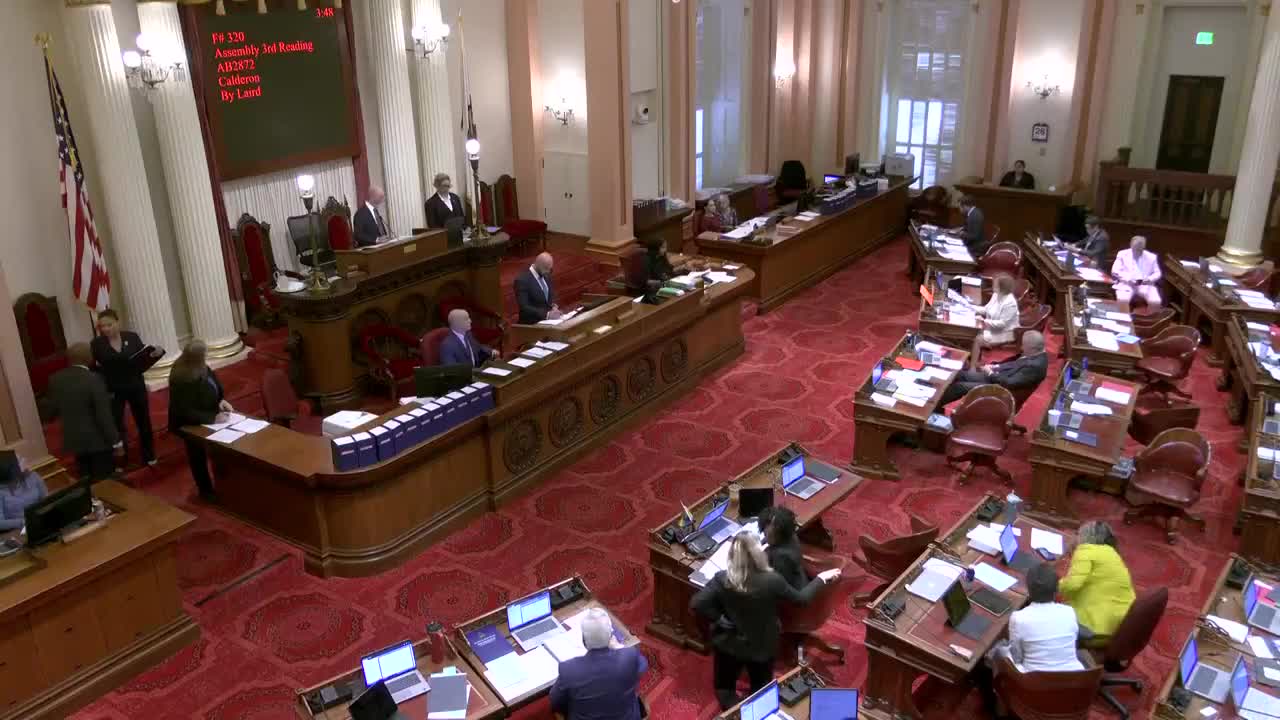 2MIN
Senate Floor
 6MIN
Senate Standing Committee on Labor, Public Employment and Retirement
 1MIN
Assembly Floor
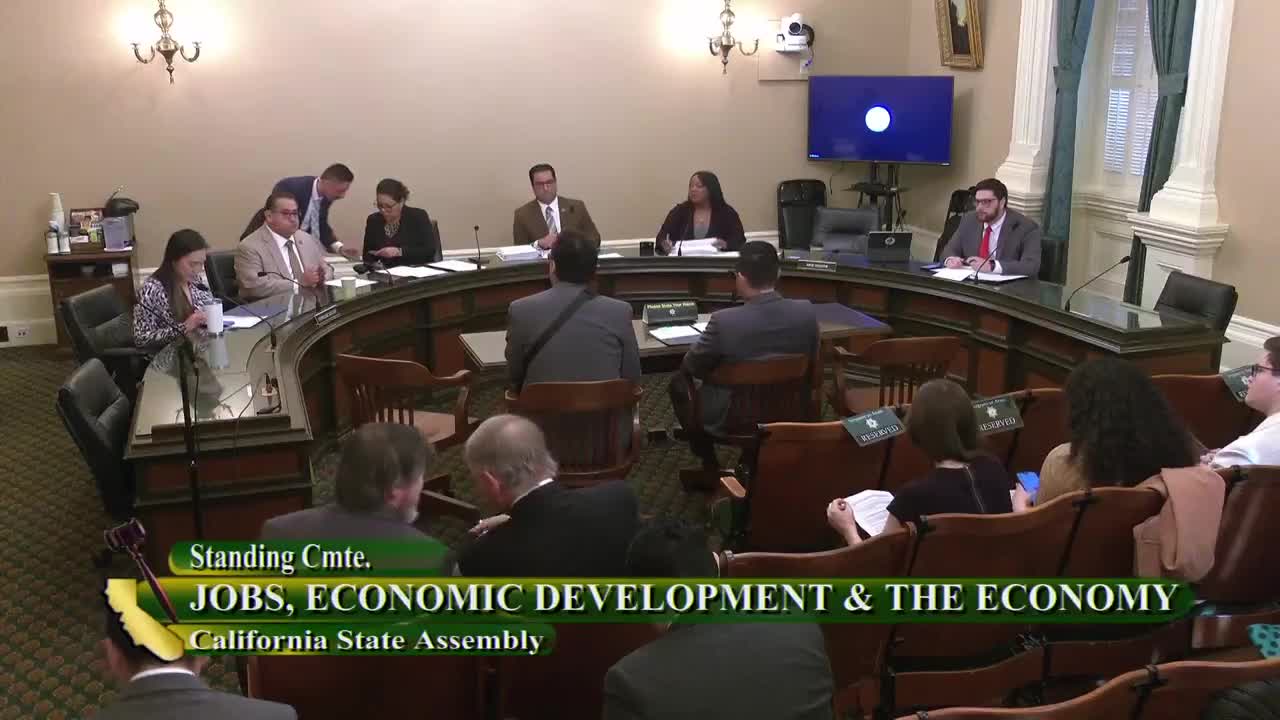 7MIN
Assembly Standing Committee on Jobs, Economic Development, and the Economy
 10MIN
Assembly Standing Committee on Labor and Employment
Bill Author


