AB 2876: Pupil instruction: media literacy: artificial intelligence literacy: curriculum frameworks: instructional materials.
- Session Year: 2023-2024
- House: Assembly
- Latest Version Date: 2024-09-29
Current Status:
Passed
(2024-09-29: Chaptered by Secretary of State - Chapter 927, Statutes of 2024.)
Introduced
In Committee
First Chamber
In Committee
Second Chamber
Enacted
What does this bill do?
The bill directs the state Instructional Quality Commission and State Board of Education to consider adding media literacy and the Model Library Standards to K–12 English language arts/English language development materials and to include media literacy in math, science, and history‑social science curriculum frameworks and in the criteria used to review instructional materials. It also requires the commission to consider adding artificial intelligence (AI) literacy — basic knowledge of how AI works, how to use it, its limits, impacts, and ethical issues — into math, science, and history‑social science frameworks and material review.
The summary is provided by generative AI which can make mistakes. For original language, please view the details in the table below.
Existing law establishes the Instructional Quality Commission and requires the commission to, among other things, recommend curriculum frameworks and the adoption of instructional materials to the State Board of Education. Existing law requires the commission to consider incorporating the Model Library Standards into the next revision of the English language arts/English language development (ELA/ELD) curriculum framework after January 1, 2024, and to also consider incorporating media literacy content at each grade level. Existing law also requires the commission to consider incorporating media literacy content into the mathematics, science, and history-social science curriculum frameworks when those frameworks are next revised after January 1, 2024. Existing law defines media literacy, for that purpose, as the ability to access, analyze, evaluate, and use media and information and encompasses the foundational skills that lead to digital citizenship.
This bill would require the commission to consider including the Model Library Standards, including media literacy content, in its criteria for evaluating instructional materials when the state board next adopts ELA/ELD instructional materials, as provided. The bill would require the commission to consider including media literacy content in its criteria for evaluating instructional materials when the state board next adopts mathematics, science, and history-social science instructional materials, as provided. The bill would also require the commission to consider incorporating Artificial Intelligence (AI) literacy content into the mathematics, science, and history-social science curriculum frameworks when those frameworks are next revised after January 1, 2025, and would require the commission to consider including AI literacy in its criteria for evaluating instructional materials when the state board next adopts mathematics, science, and history-social science instructional materials, as provided. The bill would define AI literacy for these purposes as the knowledge, skills, and attitudes associated with how artificial intelligence works, including its principles, concepts, and applications, as well as how to use artificial intelligence, including its limitations, implications, and ethical considerations.
Existing law establishes the Instructional Quality Commission and requires the commission to, among other things, recommend curriculum frameworks and the adoption of instructional materials to the State Board of Education. Existing law requires the commission to consider incorporating the Model Library Standards into the next revision of the English language arts/English language development (ELA/ELD) curriculum framework after January 1, 2024, and to also consider incorporating media literacy content at each grade level. Existing law also requires the commission to consider incorporating media literacy content into the mathematics, science, and history-social science curriculum frameworks when those frameworks are next revised after January 1, 2024. Existing law defines media literacy, for that purpose, as the ability to access, analyze, evaluate, and use media and information and encompasses the foundational skills that lead to digital citizenship.
This bill would additionally require the commission to ensure that the instructional materials for pupils in kindergarten or any of grades 1 to 8, inclusive, that it recommends to the state board for adoption after January 1, 2025, include media literacy content. require the commission to consider including the Model Library Standards, including media literacy content, in its criteria for evaluating instructional materials when the state board next adopts ELA/ELD instructional materials, as provided. The bill would require the commission to consider including media literacy content in its criteria for evaluating instructional materials when the state board next adopts mathematics, science, and history-social science instructional materials, as provided. The bill would also require the commission to consider incorporating Artificial Intelligence (AI) literacy content into the mathematics, science, and history-social science curriculum frameworks when those frameworks are next revised after January 1, 2025, and to ensure that the instructional materials for mathematics, science, and history-social science that it recommends to the state board for adoption after January 1, 2025, include AI literacy content. would require the commission to consider including AI literacy in its criteria for evaluating instructional materials when the state board next adopts mathematics, science, and history-social science instructional materials, as provided. The bill would define AI literacy for these purposes as the knowledge, skills, and attitudes associated with how artificial intelligence works, including its principles, concepts, and applications, as well as how to use artificial intelligence, including its limitations, implications, and ethical considerations.
Existing law establishes the Instructional Quality Commission and requires the commission to, among other things, recommend curriculum frameworks and the adoption of instructional materials to the State Board of Education. Existing law requires the commission to consider incorporating the Model Library Standards into the next revision of the English language arts/English language development (ELA/ELD) curriculum framework after January 1, 2024, and to also consider incorporating media literacy content at each grade level. Existing law also requires the commission to consider incorporating media literacy content into the mathematics, science, and history-social science curriculum frameworks when those frameworks are next revised after January 1, 2024. Existing law defines media literacy, for that purpose, as the ability to access, analyze, evaluate, and use media and information and encompasses the foundational skills that lead to digital citizenship.
This bill would make nonsubstantive changes to that definition of media literacy. additionally require the commission to ensure that the instructional materials for pupils in kindergarten or any of grades 1 to 8, inclusive, that it recommends to the state board for adoption after January 1, 2025, include media literacy content. The bill would also require the commission to consider incorporating Artificial Intelligence (AI) literacy content into the mathematics, science, and history-social science curriculum frameworks when those frameworks are next revised after January 1, 2025, and to ensure that the instructional materials for mathematics, science, and history-social science that it recommends to the state board for adoption after January 1, 2025, include AI literacy content. The bill would define AI literacy for these purposes as the knowledge, skills, and attitudes associated with how artificial intelligence works, including its principles, concepts, and applications, as well as how to use artificial intelligence, including its limitations, implications, and ethical considerations.
Existing law establishes the Instructional Quality Commission and requires the commission to, among other things, recommend curriculum frameworks to the State Board of Education. Existing law requires the commission to consider incorporating the Model Library Standards into the next revision of the English language arts/English language development (ELA/ELD) curriculum framework after January 1, 2024, and to also consider incorporating media literacy content at each grade level. Existing law also requires the commission to consider incorporating media literacy content into the mathematics, science, and history-social science curriculum frameworks when those frameworks are next revised after January 1, 2024. Existing law defines media literacy, for that purpose, as the ability to access, analyze, evaluate, and use media and information and encompasses the foundational skills that lead to digital citizenship.
This bill would make nonsubstantive changes to that definition of media literacy.
(a)For purposes of this section, the following definitions apply:
(1)Artificial Intelligence (AI) literacy means the knowledge, skills, and attitudes associated with how artificial intelligence works, including its principles, concepts, and applications, as well as how to use artificial intelligence, including its limitations, implications, and ethical considerations.
(2)Digital citizenship means a diverse set of skills related to current technology and social media, including the norms of appropriate, responsible, and healthy behavior.
(3)Media literacy means the ability to access, evaluate, analyze, and use media and information and encompasses the foundational skills that lead to digital citizenship.
(b)When the English language arts/English language development (ELA/ELD) curriculum framework is next revised after January 1, 2024, the commission shall consider incorporating the Model Library Standards developed pursuant to Section 18101. The commission shall also consider incorporating media literacy content at each grade level.
(c)(1)The commission shall consider incorporating media literacy content into the mathematics, science, and history-social science curriculum frameworks when those frameworks are next revised after January 1, 2024.
(2)When ELA/ELD instructional materials are next adopted by the state board after January 1, 2025, the commission shall consider including the Model Library Standards, developed pursuant to Section 18101, including media literacy content, in its criteria for evaluating instructional materials.
(3)When mathematics, science, and history-social science instructional materials are next adopted by the state board after January 1, 2025, the commission shall consider including media literacy content in its criteria for evaluating instructional materials.
(d)(1)The commission shall consider incorporating AI literacy content into the mathematics, science, and history-social science curriculum frameworks when those frameworks are next revised after January 1, 2025.
(2)When mathematics, science, and history-social science instructional materials are next adopted by the state board after January 1, 2025, the commission shall consider including AI literacy in its criteria for evaluating instructional materials.
(a)For purposes of this section, the following definitions apply:
(1)Artificial Intelligence (AI) literacy means the knowledge, skills, and attitudes associated with how artificial intelligence works, including its principles, concepts, and applications, as well as how to use artificial intelligence, including its limitations, implications, and ethical considerations.
(2)Digital citizenship means a diverse set of skills related to current technology and social media, including the norms of appropriate, responsible, and healthy behavior.
(3)Media literacy means the ability to access, evaluate, analyze, and use media and information and encompasses the foundational skills that lead to digital citizenship.
(b)When the English language arts/English language development (ELA/ELD) curriculum framework is next revised after January 1, 2024, the commission shall consider incorporating the Model Library Standards developed pursuant to Section 18101. The commission shall also consider incorporating media literacy content at each grade level.
(c)(1)The commission shall consider incorporating media literacy content into the mathematics, science, and history-social science curriculum frameworks when those frameworks are next revised after January 1, 2024.
(2)The commission shall ensure that the instructional materials for pupils in kindergarten or any of grades 1 to 8, inclusive, that it recommends to the state board for adoption after January 1, 2025, include media literacy content.(2)When ELA/ELD instructional materials are next adopted by the state board after January 1, 2025, the commission shall consider including the Model Library Standards, developed pursuant to Section 18101, including media literacy content, in its criteria for evaluating instructional materials.
(3)When mathematics, science, and history-social science instructional materials are next adopted by the state board after January 1, 2025, the commission shall consider including media literacy content in its criteria for evaluating instructional materials.
(d)(1)The commission shall consider incorporating AI literacy content into the mathematics, science, and history-social science curriculum frameworks when those frameworks are next revised after January 1, 2025.
(2)The commission shall ensure that the mathematics, science, and history-social science instructional materials for pupils in kindergarten or any of grades 1 to 8, inclusive, that it recommends to the state board for adoption after January 1, 2025, include AI literacy content.(2)When mathematics, science, and history-social science instructional materials are next adopted by the state board after January 1, 2025, the commission shall consider including AI literacy in its criteria for evaluating instructional materials.
(a)For purposes of this section, the following definitions apply:
(1)Artificial Intelligence (AI) literacy means the knowledge, skills, and attitudes associated with how artificial intelligence works, including its principles, concepts, and applications, as well as how to use artificial intelligence, including its limitations, implications, and ethical considerations.
(1)(2)Digital citizenship means a diverse set of skills related to current technology and social media, including the norms of appropriate, responsible, and healthy behavior.
(2)(3)Media literacy means the ability to access, evaluate, analyze, and use media and information and encompasses the foundational skills that lead to digital citizenship.
(b)When the English language arts/English language development (ELA/ELD) curriculum framework is next revised after January 1, 2024, the commission shall consider incorporating the Model Library Standards developed pursuant to Section 18101. The commission shall also consider incorporating media literacy content at each grade level.
(c)(1)The commission shall consider incorporating media literacy content into the mathematics, science, and history-social science curriculum frameworks when those frameworks are next revised after January 1, 2024.
(2)The commission shall ensure that the instructional materials for pupils in kindergarten or any of grades 1 to 8, inclusive, that it recommends to the state board for adoption after January 1, 2025, include media literacy content.
(d)(1)The commission shall consider incorporating AI literacy content into the mathematics, science, and history-social science curriculum frameworks when those frameworks are next revised after January 1, 2025.
(2)The commission shall ensure that the mathematics, science, and history-social science instructional materials for pupils in kindergarten or any of grades 1 to 8, inclusive, that it recommends to the state board for adoption after January 1, 2025, include AI literacy content.
(a)For purposes of this section, the following definitions apply:
(1)Digital citizenship means a diverse set of skills related to current technology and social media, including the norms of appropriate, responsible, and healthy behavior.
(2)Media literacy means the ability to access, analyze, evaluate, analyze, and use media and information and encompasses the foundational skills that lead to digital citizenship.
(b)When the English language arts/English language development (ELA/ELD) curriculum framework is next revised after January 1, 2024, the commission shall consider incorporating the Model Library Standards developed pursuant to Section 18101. The commission shall also consider incorporating media literacy content at each grade level.
(c)The commission shall consider incorporating media literacy content into the mathematics, science, and history-social science curriculum frameworks when those frameworks are next revised after January 1, 2024.
|
Date
|
Status
|
|---|---|
| Sep 29, 2024 | Chaptered by Secretary of State - Chapter 927, Statutes of 2024. |
| Sep 29, 2024 | Approved by the Governor. |
| Aug 27, 2024 | Enrolled and presented to the Governor at 12 p.m. |
| Aug 20, 2024 | In Assembly. Ordered to Engrossing and Enrolling. |
| Aug 20, 2024 | Read third time. Passed. Ordered to the Assembly. (Ayes 40. Noes 0. Page 5227.). |
| Jun 25, 2024 | Read second time. Ordered to third reading. |
| Jun 24, 2024 | From committee: Be ordered to second reading pursuant to Senate Rule 28.8. |
| Jun 12, 2024 | From committee: Do pass and re-refer to Com. on APPR. (Ayes 7. Noes 0.) (June 12). Re-referred to Com. on APPR. |
| May 22, 2024 | Referred to Com. on ED. |
| May 9, 2024 | In Senate. Read first time. To Com. on RLS. for assignment. |
| May 9, 2024 | Read third time. Passed. Ordered to the Senate. (Ayes 65. Noes 0. Page 5161.) |
| May 2, 2024 | Read second time. Ordered to Consent Calendar. |
| May 1, 2024 | From committee: Do pass. To Consent Calendar. (Ayes 14. Noes 0.) (May 1). |
| Apr 10, 2024 | Re-referred to Com. on APPR. |
| Apr 9, 2024 | Read second time and amended. |
| Apr 8, 2024 | From committee: Amend, and do pass as amended and re-refer to Com. on APPR. (Ayes 7. Noes 0.) (April 3). |
| Mar 12, 2024 | Re-referred to Com. on ED. |
| Mar 11, 2024 | Referred to Com. on ED. |
| Mar 11, 2024 | From committee chair, with author's amendments: Amend, and re-refer to Com. on ED. Read second time and amended. |
| Feb 16, 2024 | From printer. May be heard in committee March 17. |
| Feb 15, 2024 | Read first time. To print. |
|
Date
|
Description
|
Location
|
Votes
|
|
|---|---|---|---|---|
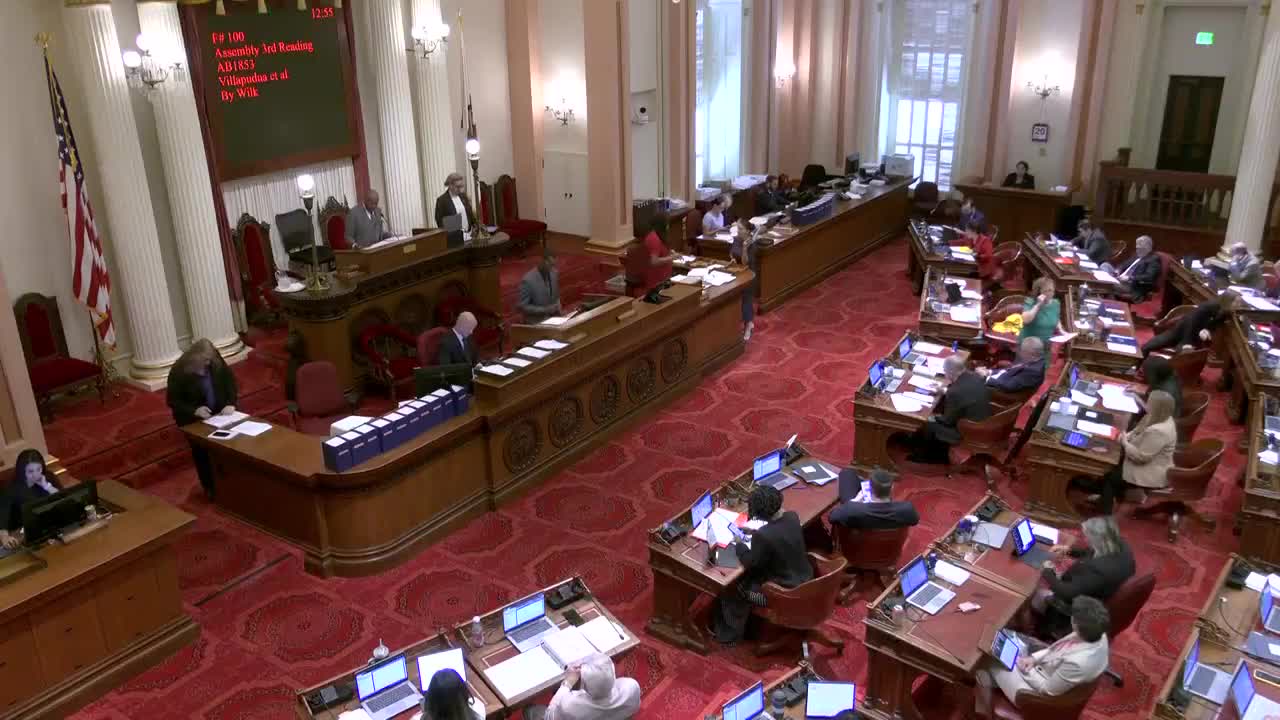
| Aug 20, 2024 | Assembly 3rd Reading AB2876 Berman et al. By Padilla | Senate Floor |
Passed |
|
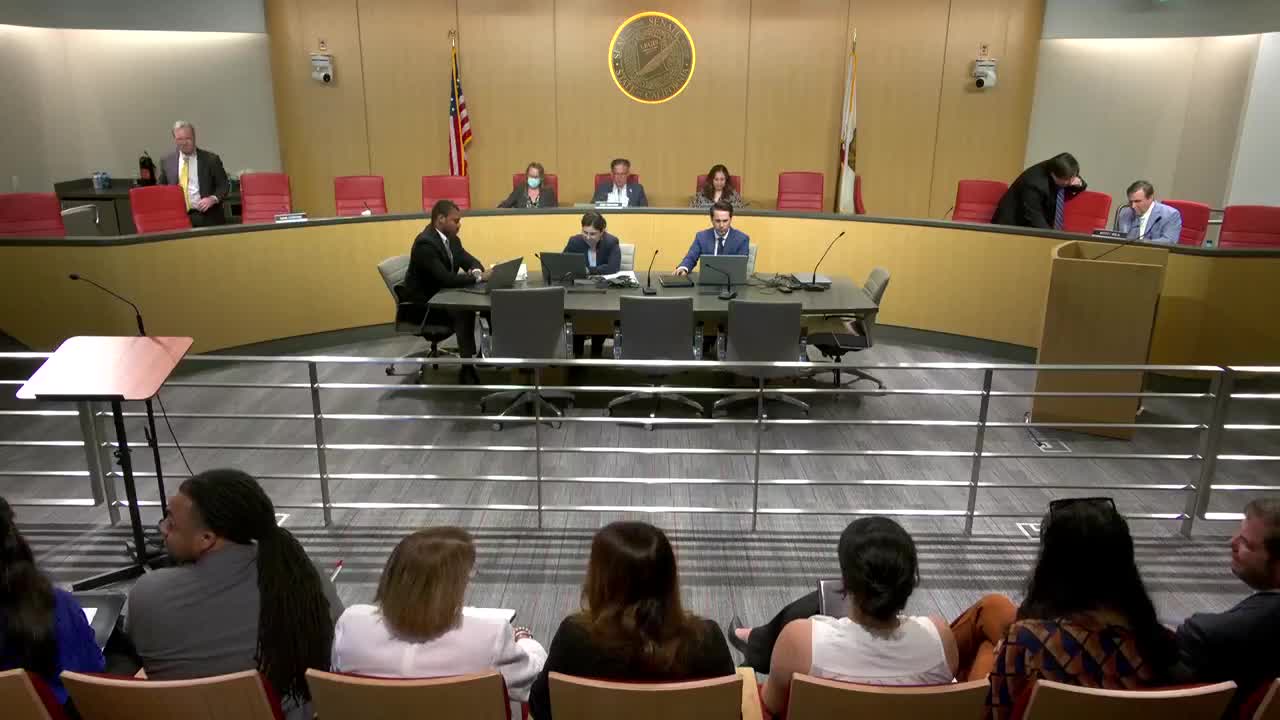
| Jun 12, 2024 | Do pass, but first be re-referred to the Committee on [Appropriations] | Senate Standing Committee on Education |
Passed |
|
| May 9, 2024 | AB 2876 Berman Consent Calendar Second Day Regular Session | Assembly Floor |
Passed |
|
| May 1, 2024 | Do pass. To Consent Calendar. | Assembly Standing Committee on Appropriations |
Passed |
|
| Apr 3, 2024 | Do pass as amended and be re-referred to the Committee on [Appropriations] | Assembly Standing Committee on Education |
Passed |
This list shows positions taken on this bill by organizations on the date displayed, which is linked to the original source.
Positions by individuals are not included.
|
Organization
|
Position
|
Date
|
|---|---|---|
| California Association Of Collectors | ** Support | |
| California Chamber Of Commerce | * Support | Jun 12, 2024 |
| Computer And Communications Industry Association | ** Support | |
| Insights Association | ** Support | |
| Los Angeles County Office Of Education | * Support | Jun 12, 2024 |
| Outschool | ** Support | |
| Outschool Inc | * Support | Apr 3, 2024 |
| Software And Information Industry Association | ** Support | |
| Technet | * Support | Jun 14, 2024 |
| ZILLOW | ** Support |
SENATE RULES COMMITTEE Office of Senate Floor Analyses (916) 651-1520 Fax: (916) 327-4478 | AB 2876 |
THIRD READING
Bill No: AB 2876
Author: Berman (D), et al.
Amended: 4/9/24 in Assembly
Vote: 21
SENATE EDUCATION COMMITTEE: 7-0, 6/12/24
AYES: Newman, Ochoa Bogh, Cortese, Glazer, Gonzalez, Limón, Wilk
SENATE APPROPRIATIONS COMMITTEE: Senate Rule 28.8
ASSEMBLY FLOOR: 65-0, 5/9/24 (Consent) - See last page for vote
SUBJECT: Pupil instruction: media literacy: artificial intelligence literacy: curriculum frameworks: instructional materials
SOURCE: California Chamber of Commerce
DIGEST:
This bill would require the Instructional Quality Commission (IQC) to consider artificial intelligence (AI) literacy, as defined, to be included in the mathematics, science, and history-social science curriculum frameworks and instructional materials, as specific.
ANALYSIS:
Existing law:
- Requires that, when the English language arts/English language development (ELA/ELD) curriculum framework is next revised, the IQC consider incorporating the Model Library Standards, and consider media literacy standards at each grade level; and requires the IQC to consider incorporating media literacy content into the mathematics, science, and history-social science curriculum frameworks when those frameworks are next revised. (Education Code (EC) § 33548 (b))
- Requires the IQC to consider developing and recommending to the State Board of Education (SBE), on or before July 31, 2019, computer science content standards for kindergarten and grades 1 to 12 pursuant to recommendations developed by a group of computer science experts. (EC § 60605.4)
- Requires the California Department of Education (CDE) to make available to local educational agencies (LEAs) on its Internet Web site a list of resources and instructional materials on media literacy, including media literacy professional development programs for teachers. (EC 51206.4(b))
- “Digital citizenship” means a diverse set of skills related to current technology and social media, including the norms of appropriate, responsible, and healthy behavior. (EC 51206.4(a)(1))
- “Media literacy” means the ability to access, analyze, evaluate, and use media and encompasses the foundational skills that lead to digital citizenship. (EC 51206.4(a)(2))
This bill:
- Requires the IQC to consider when ELA/ELD instructional materials are next adopted by the SBE after January 1, 2025, including the Model Library Standards, including media literacy content, in its criteria for evaluating instructional materials.
- Requires the IQC to consider, when mathematics, science, and history-social science instructional materials are next adopted by the SBE after January 1, 2025, including media literacy content in its criteria for evaluating instructional materials.
- Requires the IQC to consider including incorporating AI literacy content into the mathematics, science, and history-social science curriculum frameworks and in include, AI literacy in its criteria for evaluating instructional materials, when those frameworks are next revised after January 1, 2025.
- Defines “Artificial Intelligence (AI) literacy” to mean the knowledge, skills, and attitudes associated with how AI works, including its principles, concepts, and applications, as well as how to use AI, including its limitations, implications, and ethical considerations.
Comments
- Need for the bill. According to the author, “AI is not new, but it continues to rapidly evolve and become increasingly capable of dramatically transforming the way we live in ways we previously could not have imagined when the term was first coined in 1957. However, society can only achieve maximum value from AI if we know how to use it, and use it responsibly. Invariably, fear and lack of understanding of AI will only hinder efforts to harness its vast potential for good while also mitigating actual harms. In the battle to understand what is a constantly, and rapidly evolving technology, education must become a prominent focus of government and role for our educational institutions. Developing AI literacy in public schools is an imperative first step to better preparing our future public and private workforces, as a well as increasing general knowledge and awareness around the responsible use of AI. Additionally, the bill would strengthen California’s existing media literacy policies to ensure media literacy is incorporated into new instructional materials.”
- How Curriculum, Standards, Frameworks, and Model Curricula Are Created and Adopted. The Legislature has vested the IQC and SBE with the authority to develop and adopt state curriculum and instructional materials. The IQC develops curriculum frameworks in each subject by convening expert panels, developing drafts, and holding public hearings to solicit input. Changes are frequently made in response to public comment. The SBE then adopts the frameworks in a public meeting. The SBE also adopts, in a public process, instructional materials aligned to those frameworks for grades K-8. School district governing boards and charter schools then adopt instructional materials aligned to these standards and frameworks. Local adoption of new curricula involves significant local cost and investment of resources and professional development. These existing processes involve practitioners and experts who have an in-depth understanding of curriculum and instruction, including the full scope and sequence of the curriculum in each subject and at each grade level, constraints on instructional time and resources, and the relationship of curriculum to state assessments and other measures of student progress.
This bill requires the IQC to consider AI literacy to be included in the mathematics, science, and history-social science curriculum frameworks and instructional materials in the IQC’s recommendation to the SBE.
- Incorporating AI Literacy Into Multiple Frameworks. As outlined by the CDE, integrating AI skills and computer science standards into K-12 education is essential for equipping students with the requisite knowledge and abilities to navigate and contribute to an increasingly AI-driven world. This integration nurtures computational thinking, problem-solving, and innovation, thereby cultivating the potential for students to emerge as AI developers and creators. Including AI skills in the curriculum ensures that students are adequately prepared to engage with and contribute to the rapidly evolving technologies that are reshaping various industries and society.
This bill requires that requires the IQC to consider incorporating AI literacy content into the mathematics, science, and history-social science curriculum frameworks when those frameworks are next revised after January 1, 2025. It defines AI literacy to mean “the knowledge, skills, and attitudes associated with how artificial intelligence works, including its principles, concepts, and applications, as well as how to use artificial intelligence, including its limitations, implications, and ethical considerations.”
The CDE emphasizes the significance of a framework known as "The Five Big Ideas of AI" in shaping AI education to better equip students for success in college, career, and beyond. These five fundamental concepts are:
- Perception: Understanding how AI systems perceive the world is fundamental. This includes image and speech recognition, natural language understanding, and sensory data processing. Integrating this idea into education enables students to comprehend how AI systems interact with the environment.
- Representation: AI relies on data and information representation. Teaching students how data is structured and organized empowers them to work with AI models and make informed decisions about data usage and manipulation.
- Reasoning: AI systems use reasoning to make decisions and solve problems. Integrating this idea helps students develop critical thinking skills, algorithmic reasoning, and the ability to assess the logic behind AI decisions.
- Learning: Machine learning is at the core of AI. Teaching students about machine learning algorithms, training models, and the concept of learning from data prepares them to understand the AI systems that surround them.
- Societal Impact: Recognizing the societal impact of AI, including ethical considerations and bias, is essential. This idea encourages students to engage in discussions about AI's role in society and its ethical implications.
- Model School Library Standards for California Schools (2010). The California Model School Library Standards for California Schools, adopted by the SBE in 2011, incorporate “information literacy” skills, in which students “learn to access, evaluate, use, and integrate information and ideas found in print, media, and digital resources, enabling them to function in a broadly to include words (whether printed or spoken), visual images (including photographs and artwork), and music. The standards are organized into four concepts (accessing, evaluating, using, and integrating information), which contain standards spanning all of the grades. In the area of evaluating information, students are expected to be able to determine the relevance of information; assess the comprehensiveness, currency, credibility, authority, and accuracy of resources; and consider the need for additional information.
This bill requires the IQC to consider when ELA/ELD instructional materials are next adopted by the SBE after January 1, 2025, including the Model Library Standards, including media literacy content, in its criteria for evaluating instructional materials.
- What is Media Literacy? According to the National Association for Media Literacy Education, “media literacy is the ability to access, analyze, evaluate and create media in various forms.” The Center for Media Literacy offers another definition: “Media literacy empowers people to be both critical thinkers and creative producers of an increasingly wide range of messages using image, language, and sound. It is the skillful application of literacy skills to media and technology messages.”
- Current Media Literacy and Digital Citizenship Provided By CDE. CDE has provided a list of resources to help parents, administrators, and students on its website. Below are examples of the content the webpage contains:
- Digital Citizenship. According to CDE, “in an effort to lead students in the ever-changing digital world, it is important to help students take ownership of their online and offline lives. This also includes partnering with parents to empower parents and help them make smart choices with their students.” Each year, in January and October, CDE focuses on Digital Citizenship, providing resources for parents, students, and educators information for schools to meet Children's Internet Protection Act (CIPA) requirements as well as become certified.
- Technology Information Center for Administrative Leadership (TICAL).TICAL provides professional development for district and site administrators, linking them with technology to aid in day-to-day operations.
FISCAL EFFECT: Appropriation: No Fiscal Com.: Yes Local: No
SUPPORT: (Verified 6/23/24)
California Chamber of Commerce (source)
California Association of Collectors
Carlsbad Chamber of Commerce
Chino Valley Chamber of Commerce
Computer and Communications Industry Association
Cupertino Chamber of Commerce
Dana Point Chamber of Commerce
Electronic Transactions Association
Elk Grove Chamber of Commerce
Garden Grove Chamber of Commerce
Greater Bakersfield Chamber of Commerce
Greater Cornejo Valley Chamber of Commerce
Greater High Desert Chamber of Commerce
Greater Irvine Chamber of Commerce
Huntington Beach Chamber of Commerce
Insights Association
LA Cañada Flintridge Chamber of Commerce and Community Association
Laguna Niguel Chamber of Commerce
Los Angeles County Office of Education
Newport Beach Chamber of Commerce
North San Diego Business Chamber
Oceanside Chamber of Commerce
Outschool, Inc.
Pleasanton Chamber of Commerce
Redondo Beach Chamber of Commerce
Roseville Area Chamber of Commerce
San Marcos Chamber of Commerce
San Pedro Chamber of Commerce
Santee Chamber of Commerce
Simi Valley Chamber of Commerce
Software & Information Industry Association
Solvang Chamber of Commerce
South Bay Association of Chambers of Commerce
TechNet
Torrance Area Chamber of Commerce
Tulare Chamber of Commerce
Vista Chamber of Commerce
Yorba Linda Chamber of Commerce
Zillow
OPPOSITION: (Verified 6/23/24)
None received
ARGUMENTS IN SUPPORT: According to the, California Chamber of Commerce, “In November 2023, the Pew Research Center reported that “52% of Americans are more concerned than excited about AI in their daily life, compared with just 10% who say they are more excited than concerned; 36% feel a mix of excitement and concern.” And in a recent poll of likely California voters by the California Chamber of Commerce, 27% said they think AI will have a “positive impact” on their life in the next few years, while 35% said “negative impact”. Twelve percent said no impact, whereas 27% said they were not sure. Among parents specifically: 39% think AI will have a positive impact on their child’s life over the next several decades compared to 40% who said they believe it will have a negative impact. While the mixed sentiments and mistrust are entirely understandable, lack of AI literacy only makes it more difficult to counteract the challenges posed by this technology, which in turn only breeds more mistrust. Public education is the key to breaking that cycle and making AI’s potential benefits a reality while also limiting its negative outcomes. It is imperative that we prepare all students with the knowledge and skills necessary to interact with and use this groundbreaking technology responsibly. According to Education Week, experts argue that “AI literacy is something that every student needs exposure to, not just those who are planning on a career in computer science.” If they are going to be using any kind of technology in their work or lives, students are going to need this education both to succeed at work and become smart consumers and responsible citizens. AB 2876 will ensure that all K-12 students receive instruction in AI literacy by directing the Instructional Quality Commission (IQC) to incorporate AI literacy content into the mathematics, science, and history-social science curriculum frameworks when those frameworks are next revised. These materials will cover the knowledge, skills, and attitudes associated with how artificial intelligence works, including its principles, concepts, and applications, as well as how to use artificial intelligence, including its limitations, implications, and ethical considerations. Incorporating this information into existing curricula will dispel the stigma and mystique of the technology, not only helping students become more discerning and intentional users and consumers of AI, but also better positioning future generations of workers to succeed in an AI-driven workforce and hopefully inspiring the next generation of computer scientists.”
ASSEMBLY FLOOR: 65-0, 5/9/24
AYES: Addis, Aguiar-Curry, Alanis, Alvarez, Arambula, Bauer-Kahan, Bennett, Berman, Boerner, Bonta, Bryan, Calderon, Juan Carrillo, Wendy Carrillo, Chen, Connolly, Davies, Dixon, Essayli, Mike Fong, Vince Fong, Friedman, Gallagher, Garcia, Gipson, Hart, Holden, Hoover, Irwin, Jackson, Jones-Sawyer, Kalra, Lackey, Lee, Lowenthal, Maienschein, McCarty, McKinnor, Muratsuchi, Ortega, Pacheco, Papan, Jim Patterson, Joe Patterson, Pellerin, Quirk-Silva, Ramos, Rendon, Reyes, Rodriguez, Blanca Rubio, Sanchez, Santiago, Soria, Ta, Valencia, Villapudua, Waldron, Ward, Weber, Wicks, Wilson, Wood, Zbur, Robert Rivas
NO VOTE RECORDED: Bains, Cervantes, Megan Dahle, Flora, Gabriel, Grayson, Haney, Low, Mathis, Stephanie Nguyen, Petrie-Norris, Luz Rivas, Schiavo, Ting, Wallis
Prepared by: Kordell Hampton / ED. / (916) 651-4105
6/25/24 13:11:40
**** END ****
SENATE COMMITTEE ON EDUCATION
Senator Josh Newman, Chair
2023 - 2024 Regular
Bill No: Hearing Date: June 12, 2024
Author: | Berman | ||
Version: |
| ||
Urgency: | Fiscal: | ||
Consultant: | |||
Subject: .
SUMMARY
This bill would require the Instructional Quality Commission (IQC) to consider artificial intelligence (AI) literacy, as defined, to be included in the mathematics, science, and history-social science curriculum frameworks and instructional materials, as specific.
BACKGROUND
Existing Law:
Education Code (EC)
- Requires that, when the English language arts/English language development (ELA/ELD) curriculum framework is next revised, the IQC consider incorporating the Model Library Standards, and consider media literacy standards at each grade level; and requires the IQC to consider incorporating media literacy content into the mathematics, science, and history-social science curriculum frameworks when those frameworks are next revised. (EC § 33548 (b))
- Requires the IQC to consider developing and recommending to the State Board of Education (SBE), on or before July 31, 2019, computer science content standards for kindergarten and grades 1 to 12 pursuant to recommendations developed by a group of computer science experts. (EC § 60605.4)
- Requires the California Department of Education (CDE) to make available to local educational agencies (LEAs) on its Internet Web site a list of resources and instructional materials on media literacy, including media literacy professional development programs for teachers. (EC 51206.4(b))
- “Digital citizenship” means a diverse set of skills related to current technology and social media, including the norms of appropriate, responsible, and healthy behavior. (EC 51206.4(a)(1))
- “Media literacy” means the ability to access, analyze, evaluate, and use media and encompasses the foundational skills that lead to digital citizenship. (EC 51206.4(a)(2))
ANALYSIS
This bill:
- Requires the IQC to consider when ELA/ELD instructional materials are next adopted by the SBE after January 1, 2025, including the Model Library Standards, including media literacy content, in its criteria for evaluating instructional materials.
- Requires the IQC to consider, when mathematics, science, and history-social science instructional materials are next adopted by the SBE after January 1, 2025, including media literacy content in its criteria for evaluating instructional materials.
- Requires the IQC to consider including incorporating AI literacy content into the mathematics, science, and history-social science curriculum frameworks and in include, AI literacy in its criteria for evaluating instructional materials, when those frameworks are next revised after January 1, 2025.
- Defines “Artificial Intelligence (AI) literacy” to mean the knowledge, skills, and attitudes associated with how AI works, including its principles, concepts, and applications, as well as how to use AI, including its limitations, implications, and ethical considerations.
STAFF COMMENTS
- Need for the bill. According to the author, “AI is not new, but it continues to rapidly evolve and become increasingly capable of dramatically transforming the way we live in ways we previously could not have imagined when the term was first coined in 1957. However, society can only achieve maximum value from AI if we know how to use it, and use it responsibly. Invariably, fear and lack of understanding of AI will only hinder efforts to harness its vast potential for good while also mitigating actual harms. In the battle to understand what is a constantly, and rapidly evolving technology, education must become a prominent focus of government and role for our educational institutions. Developing AI literacy in public schools is an imperative first step to better preparing our future public and private workforces, as a well as increasing general knowledge and awareness around the responsible use of AI. Additionally, the bill would strengthen California’s existing media literacy policies to ensure media literacy is incorporated into new instructional materials.”
- How Curriculum, Standards, Frameworks, and Model Curricula Are Created and Adopted. The Legislature has vested the IQC and SBE with the authority to develop and adopt state curriculum and instructional materials. The IQC develops curriculum frameworks in each subject by convening expert panels, developing drafts, and holding public hearings to solicit input. Changes are frequently made in response to public comment. The SBE then adopts the frameworks in a public meeting. The SBE also adopts, in a public process, instructional materials aligned to those frameworks for grades K-8. School district governing boards and charter schools then adopt instructional materials aligned to these standards and frameworks. Local adoption of new curricula involves significant local cost and investment of resources and professional development. These existing processes involve practitioners and experts who have an in-depth understanding of curriculum and instruction, including the full scope and sequence of the curriculum in each subject and at each grade level, constraints on instructional time and resources, and the relationship of curriculum to state assessments and other measures of student progress.
This bill requires the IQC to consider AI literacy to be included in the mathematics, science, and history-social science curriculum frameworks and instructional materials in the IQC’s recommendation to the SBE.
- Incorporating AI Literacy Into Multiple Frameworks. As outlined by the CDE, integrating AI skills and computer science standards into K-12 education is essential for equipping students with the requisite knowledge and abilities to navigate and contribute to an increasingly AI-driven world. This integration nurtures computational thinking, problem-solving, and innovation, thereby cultivating the potential for students to emerge as AI developers and creators. Including AI skills in the curriculum ensures that students are adequately prepared to engage with and contribute to the rapidly evolving technologies that are reshaping various industries and society.
This bill requires that requires the IQC to consider incorporating AI literacy content into the mathematics, science, and history-social science curriculum frameworks when those frameworks are next revised after January 1, 2025. It defines AI literacy to mean “the knowledge, skills, and attitudes associated with how artificial intelligence works, including its principles, concepts, and applications, as well as how to use artificial intelligence, including its limitations, implications, and ethical considerations.”
The CDE emphasizes the significance of a framework known as "The Five Big Ideas of AI" in shaping AI education to better equip students for success in college, career, and beyond. These five fundamental concepts are:
- Perception: Understanding how AI systems perceive the world is fundamental. This includes image and speech recognition, natural language understanding, and sensory data processing. Integrating this idea into education enables students to comprehend how AI systems interact with the environment.
- Representation: AI relies on data and information representation. Teaching students how data is structured and organized empowers them to work with AI models and make informed decisions about data usage and manipulation.
- Reasoning: AI systems use reasoning to make decisions and solve problems. Integrating this idea helps students develop critical thinking skills, algorithmic reasoning, and the ability to assess the logic behind AI decisions.
- Learning: Machine learning is at the core of AI. Teaching students about machine learning algorithms, training models, and the concept of learning from data prepares them to understand the AI systems that surround them.
- Societal Impact: Recognizing the societal impact of AI, including ethical considerations and bias, is essential. This idea encourages students to engage in discussions about AI's role in society and its ethical implications.
- Model School Library Standards for California Schools (2010). The California Model School Library Standards for California Schools, adopted by the SBE in 2011, incorporate “information literacy” skills, in which students “learn to access, evaluate, use, and integrate information and ideas found in print, media, and digital resources, enabling them to function in a broadly to include words (whether printed or spoken), visual images (including photographs and artwork), and music. The standards are organized into four concepts (accessing, evaluating, using, and integrating information), which contain standards spanning all of the grades. In the area of evaluating information, students are expected to be able to determine the relevance of information; assess the comprehensiveness, currency, credibility, authority, and accuracy of resources; and consider the need for additional information.
This bill requires the IQC to consider when ELA/ELD instructional materials are next adopted by the SBE after January 1, 2025, including the Model Library Standards, including media literacy content, in its criteria for evaluating instructional materials.
- What is Media Literacy? According to the National Association for Media Literacy Education, “media literacy is the ability to access, analyze, evaluate and create media in various forms.” The Center for Media Literacy offers another definition: “Media literacy empowers people to be both critical thinkers and creative producers of an increasingly wide range of messages using image, language, and sound. It is the skillful application of literacy skills to media and technology messages.”
Current Media Literacy and Digital Citizenship Provided By CDE. CDE has provided a list of resources to help parents, administrators, and students on its website. Below are examples of the content the webpage contains:
Digital Citizenship.
According to CDE, “in an effort to lead students in the ever-changing digital world, it is important to help students take ownership of their online and offline lives. This also includes partnering with parents to empower parents and help them make smart choices with their students.” Each year, in January and October, CDE focuses on Digital Citizenship, providing resources for parents, students, and educators information for schools to meet Children's Internet Protection Act (CIPA) requirements as well as become certified.
Technology Information Center for Administrative Leadership (TICAL)
TICAL provides professional development for district and site administrators, linking them with technology to aid in day-to-day operations.
- Related Legislation.
AB 873 (Berman, Chapter 815, Statutes 2023) requires the IQC, to consider incorporating the Model Library Standards and media literacy content at each grade level when the ELA/ELD curriculum framework is next revised and media literacy content into the mathematics, science, and History – Social Sciences Framework when those frameworks are next revised after January 1, 2024.
SB 830 (Dodd, Chapter 448, Statutes of 2018) required CDE to make available to school districts on its Internet Website by July 1, 2019, a list of resources and instructional materials on media literacy, including media literacy professional development programs for teachers.
SB 135 (Dodd, 2017) would have required the IQC to develop and the SBE to adopt, reject, or modify a model curriculum in media literacy. The CDE must also make available a list of resources and instructional materials on media literacy. This bill was held in Assembly Appropriations Committee.
SB 203 (Jackson, 2017) would have required the CDE, on or before December 1, 2018, and in consultation with the Superintendent of Public Instruction (SPI) and an advisory committee, to identify best practices and recommendations for instruction in digital citizenship, Internet safety, and media literacy, and to report to the appropriate fiscal and policy committees of the Legislature on strategies to implement the best practices and recommendations statewide. This bill was held in Senate Appropriations Committee.
SUPPORT
California Chamber of Commerce (Sponsor)
California Association of Collectors
Carlsbad Chamber of Commerce
Chino Valley Chamber of Commerce
Computer and Communications Industry Association
Cupertino Chamber of Commerce
Dana Point Chamber of Commerce
Electronic Transactions Association
Elk Grove Chamber of Commerce
Garden Grove Chamber of Commerce
Greater Bakersfield Chamber of Commerce
Greater Conejo Valley Chamber of Commerce
Greater High Desert Chamber of Commerce
Greater Irvine Chamber of Commerce
Huntington Beach Chamber of Commerce
Insights Association
LA Cañada Flintridge Chamber of Commerce and Community Association
Laguna Niguel Chamber of Commerce
Los Angeles County Office of Education
Newport Beach Chamber of Commerce
North San Diego Business Chamber
Oceanside Chamber of Commerce
Outschool, Inc.
Pleasanton Chamber of Commerce
Redondo Beach Chamber of Commerce
Roseville Area Chamber of Commerce
San Marcos Chamber of Commerce
San Pedro Chamber of Commerce
Santee Chamber of Commerce
Simi Valley Chamber of Commerce
Software & Information Industry Association
Solvang Chamber of Commerce
South Bay Association of Chambers of Commerce
Technet
Torrance Area Chamber of Commerce
Tulare Chamber of Commerce
Vista Chamber of Commerce
Yorba Linda Chamber of Commerce
Zillow
OPPOSITION
Non received
-- END --
Date of Hearing: May 1, 2024
ASSEMBLY COMMITTEE ON APPROPRIATIONS
Buffy Wicks, Chair
ABPCA Bill Id:AB 2876
Author:(Berman) – As Amended Ver:April 9, 2024
Policy Committee: | Education | Vote: | 7 - 0 |
|
| ||
|
|
Urgency: No State Mandated Local Program: No Reimbursable: No
SUMMARY:
This bill requires the Instructional Quality Commission (IQC) to consider media literacy content and artificial intelligence (AI) literacy content for inclusion in certain curriculum frameworks and in its criteria for evaluating instructional materials the next time the State Board of Education (SBE) adopts certain curriculum frameworks and criteria for evaluating instructional materials.
Specifically, this bill requires, when SBE next adopts English language arts/English language development (ELA/ELD) instructional materials for schools, IQC to consider including the Model Library Standards, including media literacy content, in its criteria for evaluating instructional materials. The bill also requires, when SBE next adopts mathematics, science, and history-social science instructional materials, IQC to consider including media literacy content in its criteria for evaluating instructional materials. In addition, the bill requires, the next time SBE adopts the mathematics, science, and history-social science curriculum frameworks, IQC to consider incorporating AI literacy content. Lastly, the bill requires, the next time SBE adopts mathematics, science, and history social science instructional materials, IQC to consider including AI literacy in its criteria for evaluating instructional materials.
FISCAL EFFECT:
Minor and absorbable General Fund costs to the California Department of Education (CDE).
COMMENTS:
- Background. IQC is a state advisory body responsible for advising SBE on matters related to curriculum and instruction. One duty of IQC is to develop “curriculum frameworks” for approval by SBE. Curriculum frameworks provide guidance to schools for implementing the state’s instructional content standards. The curriculum frameworks are also used by IQC to establish criteria for its evaluation of instructional materials schools may use to teach the content standards for kindergarten through grade eight and to guide school district selection of instructional materials for grades nine through 12.
While IQC typically has adopted revised curriculum frameworks and related criteria for evaluating instructional materials every decade or so, state law does not require adoption on any specific timeline. SBE indicates it intends to soon revise and adopt updated ELA/ELD criteria for evaluating instructional materials.
IQC developed the Model School Library Standards in 2010. Media literacy content in the K-12 curriculum is primarily located in these standards. The standards are organized into four concepts: accessing information, evaluating information, using information, and integrating information. The Model School Library Standards are primarily used in school library instruction.
AI literacy is defined in this bill to mean the knowledge, skills, and attitudes associated with how AI works, including its principles, concepts, and applications, as well as how to use AI, including its limitations, implications, and ethical considerations.
This bill seeks to integrate media literacy and AI literacy into school curricula and instructional materials.
- Related Legislation. AB 873 (Berman), Chapter 815, Statutes of 2023, requires IQC, when SBE next adopts the ELA/ELD curriculum framework, to consider incorporating the Model Library Standards, including media literacy content, and requires IQC to consider incorporating media literacy content into the mathematics, science, and history-social science curriculum frameworks when those frameworks are next adopted.
AB 1805 (Ta) requires IQC to consider requiring that the evaluation criteria for the adoption of instructional materials include content related to the Mendez versus Westminster School District of Orange County case the next time SBE adopts instructional materials in history-social science for grades kindergarten through grade eight. The bill is pending on the Assembly floor.
AB 1821 (Ramos) requires IQC to consider including content on the treatment and perspectives of Native Americans during the Spanish colonization and Gold Rush period when the history-social science curriculum framework or related materials are next revised. The bill is pending on the Assembly floor.
Analysis Prepared by: Natasha Collins / APPR. / (916) 319-2081
Date of Hearing: April 3, 2024
ASSEMBLY COMMITTEE ON EDUCATION
Al Muratsuchi, Chair
ABPCA Bill Id:AB 2876 (
Author:Berman) – As Amended Ver:March 11, 2024
SUBJECT: Pupil instruction: media literacy: artificial intelligence literacy: curriculum frameworks: instructional materials
SUMMARY: Requires the Instructional Quality Commission (IQC) to ensure that instructional materials that it recommends to the State Board of Education (SBE) for adoption after January 1, 2025, include media literacy content; to consider incorporating artificial intelligence (AI) literacy content into the mathematics, science, and history-social science curriculum frameworks when those frameworks are next revised; and to ensure that the mathematics, science, and history-social science instructional materials that it recommends to the SBE for adoption after January 1, 2025, include AI literacy content. Specifically, this bill:
- Defines “AI literacy” to mean the knowledge, skills, and attitudes associated with how AI works, including its principles, concepts, and applications, as well as how to use AI, including its limitations, implications, and ethical considerations.
- Requires the IQC to ensure that the instructional materials for pupils in kindergarten or any of grades 1 to 8, inclusive, that it recommends to the SBE for adoption after January 1, 2025, include media literacy content.
- Requires the IQC to consider incorporating AI literacy content into the mathematics, science, and history-social science curriculum frameworks when those frameworks are next revised after January 1, 2025.
- Requires the IQC to ensure that the mathematics, science, and history-social science instructional materials for pupils in kindergarten or any of grades 1 to 8, inclusive, that it recommends to the SBE for adoption after January 1, 2025, include AI literacy content.
EXISTING LAW:
- Requires that, when the English language arts/English language development (ELA/ELD) curriculum framework is next revised, the IQC consider incorporating the Model Library Standards, and consider media literacy standards at each grade level; and requires the IQC to consider incorporating media literacy content into the mathematics, science, and history-social science curriculum frameworks when those frameworks are next revised.
- Defines the following terms:
- “Digital citizenship” means a diverse set of skills related to current technology and social media, including the norms of appropriate, responsible, and healthy behavior; and
- “Media literacy” means the ability to access, analyze, evaluate, and use media and encompasses the foundational skills that lead to digital citizenship. (Education Code (EC) 51206.4)
- Requires the California Department of Education (CDE), by July 1, 2019, to make available to school districts on its website a list of resources and instructional materials on media literacy, including media literacy professional development programs for teachers. (EC 51206.4)
- Requires the SBE to adopt standards, rules and regulations for school library services. (EC 180101)
- Requires the Superintendent of Public Instruction (SPI) to convene a computer science strategic implementation advisory panel to develop recommendations for a computer science strategic implementation plan, and requires the panel to submit recommendations for a strategic plan to the SBE by January 15, 2019.
- Requires the computer science plan to include, at a minimum, recommendations on all of the following:
- Broadening the pool of teachers to teach computer science;
- Defining computer science education principles that meet the needs of students in all grades; and
- Ensuring that all students have access to quality computer science courses.
- Requires the IQC to consider developing and recommending to the SBE, on or before July 31, 2019, computer science content standards for kindergarten and grades 1 to 12 pursuant to recommendations developed by a group of computer science experts.
- States that if a school district requires more than two courses in mathematics for graduation from high school, the district may award a student up to one mathematics course credit for successfully completing a “category C” approved computer science course. (EC 51225.35)
- Requires the California State University (CSU), and requests the University of California (UC), to develop guidelines for high school computer science courses that may be approved for the purposes of recognition for admission. (EC 66205.5)
- Through regulation, authorizes holders of credentials in mathematics, business, and Instructional Technology Education (ITE), as well as holders of supplementary authorizations in computer science, to teach computer science. (California Code of Regulations, Title 5, Section 80005)
FISCAL EFFECT: Unknown
COMMENTS:
Need for the bill. The author states, “AI is not new, but it continues to rapidly evolve and become increasingly capable of dramatically transforming the way we live in ways we previously could not have imagined when the term was first coined in 1957. However, society can only achieve maximum value from AI only if citizens know how to use it, and use it responsibly. Invariably, fear and lack of understanding of AI will only hinder efforts to harness its vast potential for good while also mitigating actual harms. In the battle to understand what is a constantly, and rapidly evolving technology, education must become a prominent focus of government and role for our educational institutions. Developing AI literacy in public schools is an imperative first step to better preparing our future public and private workforces, as a well as increasing general knowledge and awareness around the responsible use of AI. Additionally, the bill would strengthen California’s existing media literacy policies to ensure media literacy is incorporated into new instructional materials.”
What should students learn about AI? This bill requires that requires the IQC to consider incorporating AI literacy content into the mathematics, science, and history-social science curriculum frameworks when those frameworks are next revised after January 1, 2025. It defines AI literacy to mean “the knowledge, skills, and attitudes associated with how artificial intelligence works, including its principles, concepts, and applications, as well as how to use artificial intelligence, including its limitations, implications, and ethical considerations.”
According to the CDE, incorporating AI skills and computer science standards into K-12 education can equip students with the knowledge and abilities necessary to navigate and contribute to an increasingly AI-powered world. This integration fosters computational thinking, problem-solving, and innovation, paving the way for students to become AI developers and creators. Infusing AI skills into the curriculum ensures that students are prepared to engage with and contribute to emerging technologies that are reshaping industries and society.
The CDE notes that a framework called “The Five Big Ideas of AI” can provide “a solid foundation for AI education that aligns with the broader educational mission of preparing students for success in college/career for today and into the future.” These five ideas are:
- Perception: Understanding how AI systems perceive the world is fundamental. This includes image and speech recognition, natural language understanding, and sensory data processing. Integrating this idea into education enables students to comprehend how AI systems interact with the environment.
- Representation: AI relies on data and information representation. Teaching students how data is structured and organized empowers them to work with AI models and make informed decisions about data usage and manipulation.
- Reasoning: AI systems use reasoning to make decisions and solve problems. Integrating this idea helps students develop critical thinking skills, algorithmic reasoning, and the ability to assess the logic behind AI decisions.
- Learning: Machine learning is at the core of AI. Teaching students about machine learning algorithms, training models, and the concept of learning from data prepares them to understand the AI systems that surround them.
- Societal Impact: Recognizing the societal impact of AI, including ethical considerations and bias, is essential. This idea encourages students to engage in discussions about AI's role in society and its ethical implications.
What is media literacy? There are varying definitions of media literacy, but most identify key skills as the ability to access, analyze, evaluate, and create media in a variety of forms.
The Center for Media Literacy defines media literacy as “a 21st century approach to education. It provides a framework to access, analyze, evaluate, create and participate with messages in a variety of forms — from print to video to the Internet. Media literacy builds an understanding of the role of media in society as well as essential skills of inquiry and self-expression necessary for citizens of a democracy.”
What does media literacy education look like? The CDE lists the following examples of media literacy activities in different grade spans on its website:
- Elementary students use a library catalog to locate a book on recycling, which informs their task of photographing examples of recycling in their neighborhoods to share on their class wiki. In this example, students are accessing information through the library catalog, using it to inform their task. They are then using media to share information through photography on their class wiki—this involves production, communication, and following norms of online behavior with digital citizenship.
- Middle schoolers use a spreadsheet to organize data they collect about pets’ exercise habits, which they will analyze for a science fair project. In this example, students are using technology to use information effectively. They then analyze that information to arrive at conclusions for a project—that project will involve further skills in communication of that information to a particular audience.
- High schoolers locate articles in a database about data privacy, which is the basis for the students’ video production that gives recommendations for teens to protect personal information. In this example, students are accessing information through the database, and then analyzing that information to produce a video, involving communication skills. The topic is data privacy, which includes elements of digital citizenship.
Three additional examples of media literacy lessons from publicly available curricula are shown below:
- Through the Media Smarts curriculum (in use in Canada) students in kindergarten to third grade can learn how to identify advertising through a lesson titled “Can you spot the ad?” with the objective of teaching students about the concept of branded content, and differences between branded and non-branded images and videos in online and offline contexts.
- Through the Cyber Civics curriculum for middle school students, students learn the difference between “consuming” and “producing” media, how to read and create visual media and become less susceptible to visual manipulations, receive safety training related to the consequences of “sexting,” and learn how misinformation can spread via the Internet and social media and even find its way into the news.
- Through the Facing History and Ourselves media literacy unit titled “Facing Ferguson: News Literacy in a Digital Age,” high school students investigate the choices and challenges facing journalists as they report on a story, explore the impact of social media on the traditional news cycle and understand the role it can play in influencing public opinion and the press, develop critical thinking and news literacy skills to find reliable information to make decisions, take action, and responsibly share news through social media, and consider their role as citizens in a democracy and their responsibilities as civic participants and citizen watchdogs.
Other resources are available online, such as the curriculum developed by Common Sense Media’s K–12 Digital Citizenship Curriculum, which focuses on media balance and well-being; privacy and security; digital footprint and identity; relationships and communication; cyberbullying, digital drama and hate speech; and news and media literacy.
Research on the need for instruction in media literacy. Research on the need to provide instruction in media literacy includes:
- A 2022 Pew Research Report found that the share of teens who say they use the internet about once a day or more has grown since 2014-15. Today, 97% of teens say they use the internet daily, compared with 92% of teens in 2014-15 who said the same. The study also found that 46% of teens say they use the internet almost constantly, up from only about a quarter (24%) of teenagers who said the same in 2014-15. Social media use has also grown for younger kids. About half of parents of children ages 10 to 12 and 32% of parents of kids ages 7 to 9 reported their child used social media apps in 2021. (Clark, 2021)
- A 2019 Stanford University study gauged students’ ability to evaluate digital sources on the open internet. 96% of high school students surveyed failed to consider that ties to the fossil fuel industry might affect the credibility of a website about climate change, and more than half believed a grainy video on that claimed to show ballot stuffing (which was actually shot in Russia) constituted “strong evidence” of voter fraud in the United States. (Breakstone, 2019) Another study found that 82% of middle school students struggled to distinguish advertisements from news stories. (Wineburg, 2016)
According to the Stony Brook University Center for News Literacy, the Digital Age poses four information literacy challenges for civil society:
- The overwhelming amount of information that floods over us each day makes it difficult to sort out reliable from fabricated information;
- New technologies to create and widely share information make it possible to spread misinformation that looks like it’s from an authoritative source;
- The conflict between speed and accuracy has escalated. We all want information as quickly as possible, but accelerating the distribution of information in the Digital Era has also increased the chances that the information will be wrong; and
- The Internet and Social Media make it much easier to select only the information that supports our preexisting beliefs, reinforcing rather than challenging them.
Information literacy in California Model School Library Standards. The California Model School Library Standards for California Schools, adopted by the SBE in 2010, incorporate “information literacy” skills, in which students “learn to access, evaluate, use, and integrate information and ideas found in print, media, and digital resources, enabling them to function in a knowledge-based economy and technologically oriented society.” “Information” is defined broadly to include words (whether printed or spoken), visual images (including photographs and artwork), and music.
These standards are organized into four concepts (accessing, evaluating, using, and integrating information) which contain standards spanning all of the grades. In the area of evaluating information, students are expected to be able to determine the relevance of information; assess the comprehensiveness, currency, credibility, authority, and accuracy of resources; and consider the need for additional information.
The state’s content standards for ELA also include at least one reference to media literacy. In grades 9 -12, students are expected to learn to “Integrate multiple sources of information presented in diverse media or formats (e.g., visually, quantitatively, orally) evaluating the credibility and accuracy of each source.”
The Committee may wish to consider that significant changes in media consumed and produced by students since 2010 may necessitate a revision of these standards.
Media literacy resources listed on the CDE website. Pursuant to SB 830 (Dodd), Chapter 448, Statutes of 2018, the CDE has listed on its website resources and instructional materials on media literacy, including media literacy professional development programs for teachers. This list includes ten curriculum resources, eleven resources for professional development, and five resources for media production.
Arguments in support. TechNet writes, “AB 2876 will ensure that all K-12 students receive instruction in AI literacy by directing the Instructional Quality Commission (IQC) to incorporate AI literacy content into the mathematics, science, and history-social science curriculum frameworks when those frameworks are next revised. These materials will cover the knowledge, skills, and attitudes associated with how artificial intelligence works, including its principles, concepts, and applications, as well as how to use artificial intelligence, including its limitations, implications, and ethical considerations. Incorporating this information into existing curricula will dispel the stigma and mystique of the technology, not only helping students become more discerning and intentional users and consumers of AI, but also better positioning future generations of workers to succeed in an AI-driven workforce and hopefully inspiring the next generation of computer scientists.
The importance of this bill cannot be overstated: if California is to successfully harness the tremendous promise of this technology, it is vital that we place greater emphasis and resources on preparing students and arming them with the foundational knowledge and skills necessary to identify, understand, and successfully utilize all kinds of AI that they may encounter in their future workplaces and in their daily lives. Just like reading, writing, and arithmetic, digital literacy and AI literacy are basic skills that children need to develop if they are to succeed in the modern world.”
Recommended Committee amendments. Staff recommends that this bill be amended to require, the next time the SBE adopts instructional materials in ELA/ELD, the IQC to consider including media literacy standards in the evaluation criteria for those materials.
Related legislation. AB 873 (Berman), Chapter 815, Statutes of 2023, requires that, when the ELA/ELD curriculum framework is next revised, the IQC consider incorporating the Model Library Standards, and consider media literacy standards at each grade level; and requires the IQC to consider incorporating media literacy content into the mathematics, science, and history-social science curriculum frameworks when those frameworks are next revised.
AB 2652 (Muratsuchi) of the 2023-24 Session would require the SPI, in consultation with the SBE, to convene a working group for the purpose of exploring how AI and other forms of similarly advanced technology are currently being used in education, as specified.
SB 1235 (Gonzalez) of the 2023-24 Session would require a public institution of higher education to establish the Artificial Intelligence and Deepfake Working Group, to evaluate and advise the Legislature and the public on the relevant issues and impacts of AI and deepfakes.
AB 787 (Gabriel) of the 2023-24 Session would require the SPI, in consultation with the SBE and an advisory committee, to identify best practices and recommendations for instruction in digital citizenship and media literacy and to report these recommendations to the Legislature, and to conduct a survey on the ways in which digital citizenship and media literacy education is being integrated into the curriculum.
AB 1576 (Calderon) of the 2019-2020 Session would have required the Secretary of Government Operations to appoint participants to an AI working group on or before July 1, 2020 to evaluate the uses, risks, benefits, and legal implications associated with the development and deployment of AI by California-based businesses. This bill was held in the Senate Appropriations Committee.
AB 2284 (Gabriel) of the 2021-22 Session would have required the SPI to allocate funding to school districts, county offices of education, charter schools, and the state special schools, for the purchase of standards-aligned instructional materials in media literacy and digital literacy and for professional development in that content. This bill was held in the Assembly Appropriations Committee.
AB 2064 (Irwin) of the 2021-22 Session would have established the Media Literacy Through Critical Thinking Program in the California State Library for purposes of supporting media literacy across multiple languages for individuals and developing media literacy skills for individuals to help navigate issues of public health and representation. This bill was held in the Assembly Appropriations Committee.
SB 830 (Dodd), Chapter 448, Statutes of 2018, requires the CDE to make available to school districts on its website a list of resources and instructional materials on media literacy, including media literacy professional development programs for teachers.
SB 135 (Dodd) of the 2017-18 Session would have required the IQC to develop, and the SBE to adopt, reject, or modify, a model curriculum in media literacy. This bill was held in the Assembly Appropriations Committee.
SB 155 (Gomez) of the 2017-18 Session would have required the IQC to develop a model curriculum in media literacy, and would have required the CDE to develop an online professional development module to support the model curriculum. This bill was held in the Assembly Appropriations Committee.
SB 203 (Jackson) of the 2017-18 Session would have required the CDE to identify best practices and recommendations for instruction in digital citizenship, internet safety, and media literacy, and would have required, beginning in the 2019–20 school year, school districts to annually review their policies on those topics. This bill was held in the Senate Appropriations Committee.
SB 947 (Jackson) of the 2017-18 Session would have required the SPI, in consultation with an advisory committee, to identify best practices and recommendations for instruction in digital citizenship, internet safety, and media literacy. This bill was vetoed by the Governor, who stated:
The subject matter of this bill is more properly the responsibility of local school districts. Moreover, the topics covered here are already contained in our state's English Language and Social Science Frameworks or in the K-12 Model Library Standards.
REGISTERED SUPPORT / OPPOSITION:
Support
California Association of Collectors
California Chamber of Commerce
Computer and Communications Industry Association
Insights Association
Outschool
Software and Information Industry Association
Technet
Zillow
Opposition
None on file
Analysis Prepared by: Tanya Lieberman / ED. / (916) 319-2087
Discussed in Hearing
 2MIN
Senate Floor
 3MIN
Senate Standing Committee on Education
 11MIN
Assembly Standing Committee on Education
Bill Author

Bill Co-Author(s):
